quête:yo speed

Genres
Tout
Various - Seven Years Of Love - Part 2

'Seven Years Of Love' is our second label compilation with nine original tracks by resident artists and friends from around the world. The versatile vibe spreads across two parts, each dedicated to a certain dancefloor mood: System 108 and RadugaDiscoClub. Outstanding artwork has been created by Uno Moralez.

Part 2 is an ode to the colorful and diverse world of RadugaDiscoClub. Freaks, artists, dancers, bears, ladies and all the sexy people! On Side A it is 'Heavenly Grace' by Lipelis that seduces us first, followed by 'Angelic', a big summer track by the stalwarts from Cream Soda. With side B it goes down down down down! Simple Symmetry brothers appear for the first time on the label with 'Elephant On Speed', a fantastic story about an elephant who is feeling great. Closing the compilation is '2061' by Matias Aguayo, Comeme founder and legendary music-maker. The laid back rhythm euphoria reminds us of his earlier productions, somewhere around the era of 'Are You Really Lost' LP on KOMPAKT, but '2061' is the future.

En stock

Disponible en stock et prêt pour l'expédition

Various - Technotations Vol. 1

Various

Technotations Vol. 1

12inchTRIXTRAX2
Trix Trax
04.07.2023

Welcome back to sublabel Trix Trax, our series dedicated to sharing the Techno side of things.

After a little hiatus Trix Trax is back with a stacked four track VA, Technotations Vol. 1. Blending techno, IDM and breaks this releases showcases some of the many styles and energies the genre has to offer.

Starting off the VA, we have the track ‘Losing’ from Japanese producer MAGPOST. This loopy, hypnotic groover will add a layer of intrigue and mystery to your deep and moody sets!

Next up we have ‘Rise’ from JD Typo who’s debut EP, started off the Trix Trax series. This speedy techno cut will cause mayhem on the dance floors, nourishing souls in its wake with ethereal lush pads and vocal chops that creep in as the track progresses!

On the flip side we have a sobering track from Ukrainian producer Taras Vinnichenko called 24.02.22. Created the day Russia invaded Ukraine, t’s an auditory diary of Taras’ reaction to the unfolding of events. The crunch of the bass and breaks audate the panic and disarray on the ground.

Closing off the EP we have a unique groover from US producer Mr. Projectile who recently released an album on Wex sub label, La Luna. This crunchy and jittery cut takes you on a bass heavy, boom-filled journey of speedy techno and IDM!

On the sleeve, Sonia Malpeso delivers another whacky custom design on the front sleeve as well as a beautiful typographic showcase on the back and inner sleeve!

En stock

Disponible en stock et prêt pour l'expédition

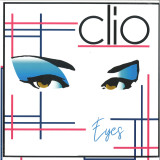
Clio - Eyes

Clio

Eyes

12inchPLT799MIX
Planet Records Classics
09.06.2023

The decade of the 80s is revived through recordings like "Eyes" that allow you to travel through the music and trigger those old emotions of innocence, joy and adventure. It's possible you don't understand a word of what they're singing in the chorus, but the song is very catchy! Maybe not even Maria Chiara Perugini knows what she sings about, but she makes you hang on to every word of her like a nursery rhyme of synths, beach and bubblegum. "Eyes" is so amazing, so mesmerizing and more and more people are discovering this italo-disco masterpiece that usually satisfies and makes fun of you at the same time. If you try playing it at 75% speed gives a hypnotic vapor wave vibe! And even more, the song would have fit well in the dance club scenes from Scarface. Beyond the words - difficult to find a text that makes sense, sometimes out of context, unundestandable even for a French listener - the piece is so surprisingly likeable for the unique tone of Clio's voice, a strange cross between teenager and adult, and the part where she spoke another language, with some really cool synthesizers, are people's favorite parts. 0:31 "Je suis bien heureuse" , 0:47 "La nuit a ses merveilles", 0:57 "Il y a de quoi y perdre la tete, pour toi, sha, pour toi", 1:36 "Je n'ai plus de bulles", 1:52 "Je vous prie applaudissement". "Eyes" by Clio contains all the emotions that a dance-pop song should contain plus the essential element of mystery, a kind of magic that takes place between the chorus and the bass line, a shot in the dark drizzly night of the Italo-Disco. made by Roberto Ferrante, a guarantee for the perfect productions of the 80s, when he was only 20 years old.

En stock

Disponible en stock et prêt pour l'expédition

Chicola - Dear Kobe / Every Pain Got A Name

Moments! Not just a music company but also a series of events under thesame name, releasing only outstanding works by musicians performing atthose events. When the award-winning producer, and an internationallyacclaimed DJ, Guy Mantzur, started a new enterprise, Moments, he had highgoals for a new endeavor. Since then, every label's release has pushed theenvelope.

According to numerology, eleven is the first of the Master numbers, and theeleventh release is nothing short of pure mastery. Tel-Aviv-based ChicoShuella, better known as Chicola, is one of the jewels in the crown of theIsraeli DJ scene. With a couple of decades under his belt and a stellarreputation, his debut brings a special touch to the label's exciting catalog.

Chico's debut on the label brings a three-track concept that takes theaudience on a twenty-minute journey. The opener, Dear Kobe, a collaborationwith Yoav, is a masterful work based on abstract emotions and spacy synthwork. The second track, Every Pain Got A Name, speeds up the tempo andreaches for the psychedelic atmosphere breaking the rules of the genre. Theclosing song is an ambient version of the middle piece, focusing on narrativelyrics and grandiosity.

Moments! Every second counts.

En stock

Disponible en stock et prêt pour l'expédition

X TERMAL / BUGGER / UMBRA - MELMAK All Stars: The Rave Years

MELMAK's new 12" is entitled All Stars: The Rave Years which gives you an idea of what to expect. These are high-tempo, dense and rave ready sounds from the drum & bass vanguard. There is plenty of space out cosmic energy to the exploratory leads of X Termal's 'Tragnal Kozze' then 'What If' (The Doulo Klan edit) is a tightly coiled stepper. Bugger lays down a hyper speed rhythm with drilling bass and slapping hits on 'No Silence Now' and Umbra's 'The Big Dumb' is a real slow-motion churner with textural synths and alien sound designs. All four are ready to get the party going in different ways.

En stock

Disponible en stock et prêt pour l'expédition

Pan-J, Roma Khropko - The Nutritionist’s Guide to the Galaxy Vol. I

Quinoa Experience, the Madrid based collective, is eager to unveil the long-anticipated first release of their new label – Quinoa Cuts - entitled “The Nutritionist’s Guide to the Galaxy, Vol. I”.

The intention behind the split E.P. is to produce a versatile, nutritious and invigorating record through the juxtaposition of the two sides.

On the A we find a ‘’Vitamin’’ side, where fresh, subtle and deep

grooves will stimulate the listeners’ appetite to get them levitating, introspectively. While the B-side, the ‘’Protein’’, is best saved for climatic dancefloor moments and muscle-building workouts.

Emerging from Tunisia, Pan-J serves us the vitamin supplements. Solid and funked-up basslines with hefty doses of swing amount to sunny and radiant minimal house productions. Colorful and engaging, his tracks will dissipate all traces of fatigue from your body. Two ritual-ready tunes with a proggy approach that don’t neglect moments of suspense.

Flip it and we find the protein powders by a Ukrainian artist Roma Khropko, co-founder of Criminal Practice – a prominent Kiev DJ collective and label. His side speeds ahead with playful organ chords, subversive solar rave fits with killer samples, sweeping percussion shifts and delightful switch-ups that send the record straight into orbit.”

En stock

Disponible en stock et prêt pour l'expédition

Atomic Compressor, Leatherface - Enculer Trez

On every copy sold 2 euros minimum goes to Mealespoirs : An NGO association who fight for Childhood rights, malnutrition and education.


lets talk about music now :
Crazy meet up between 2 monsters !
Atomic Compressor, the GTI number one composer who did the best of KSI records, and more recently a brilliant Komum brings a full side of his best recent tunes : Speed pityless kickerz bringing "le Père Noël Est une Ordure" special Thérèse édition !
On the flip you'll get Leatherface, newcomer from Cellul R production, with 2 Industrial psychedelic rolling kickerz : the first one is a C.Mantle hit combo, light kick mentalism ; and the second a powerfull Brotherhood lesson.

En stock

Disponible en stock et prêt pour l'expédition

Mr Projectile - Slow Motion Hailstorm

Mr Projectile, one of our favorite IDM producers from back in the day, has given La Luna the chance to share some of his unreleased IDM tracks from the early 2000’s. The album is an eclectic blend of ambient, IDM and experimental electronics.

These sounds are a time machine to simpler, less chaotic times and have become essential listening these days. We envision this album spinning on a sunny Sunday afternoon, filling your room with the delicate and deep textures of electronic music and soothing your uncertainty. Enjoy a nice cup of coffee and explore your thoughts as you speed through time and space. Hopefully serving as a special reminder that we are all in this madness together.

Not only is the music stellar, but we are honoured to have Marcello Raeli, an Italian artist and car designer, accompany the music with his wonderfully mind bending artwork. Marcello is an artist who has designed some of the most insanely beautiful/fast cars on the planet. Here we get to take a deep look into his mind and marvel at the incredible interconnectedness created in this piece and appreciate the sense of depth and space created for this album.

En stock

Disponible en stock et prêt pour l'expédition

BIOCHIP C - Sunblocking EP

(warehouse find)

With an extensive legacy and a list of alter egos longer than your arm, Martin Damm aka Biochip C achieves a delicate balancing act on this 11 year old record, a handful of extras copies of which were recently unearthed in what can only be described as a highly fortunate 'warehouse find'. He pulls off a delicate balancing act here, letting the abrasive, industrial punk rock side of his music off the leash to frolic unhindered, while never losing sight of the needs of dancefloor and its needs across the six tracks. Highlights? Well, the title track's speedy electrofunk is highly addictive, 'Eraser' has a driving, chunky techno edge that fans of Force Inc will love, while the double dub speed grooves of 'Knobgine' and 'Liquid Silence' are forces of nature in themselves.

En stock

Disponible en stock et prêt pour l'expédition

Charlotte de Witte - Universal Consciousness EP

Charlotte de Witte takes charge of her KNTXT label's 15th release with the new Universal Consciousness EP. It comes after Amazingblaze - Venture EP and features four more powerful and psychedelic techno cuts.

Charlotte is soon to be playing her biggest ever KNTXT party in mid April. It shall take place in her hometown of Ghent and see her play a historic 10 hour set to a vast crowd of people who shall go on an all night long journey. Also in April, Charlotte returns to London’s iconic Printworks for the first time in five years, this time with her KNTXT concept and once again is set to raise the roof. While staying busy on the road, she continues to curate the Apple Music x KNTXT page while cooking up ever fresh sounds in the studio. This latest EP is another subtle evolution in her signature style.

Says Charlotte of the EP, "following up on my latest Asura EP in September, I decided to delve a bit deeper in the world of psychedelia. All the tracks of the EP are psy inspired, some more than others. I’ve been playing these tracks for a while now in the clubs. It’s been a real pleasure to see the crowd’s reaction and see the amount of track ID requests online. This one is from me to you, I hope you enjoy my Universal Consciousness EP!"

Opener 'Satori' is dark and heavy. The chunky, raw drums hit hard and flat as the squelchy acid synths pan about the mix. An enchanting middle eastern vocal wail brings an extra trance-inducing element that is sure to lock in the hearts and minds of the crowd. The super 'Kali' is a slick and high speed piece that shows the love relation between psy trance and techno. The video game style synths peel off the groove next to alien sound effects, and the subtly evolving acid line burrows deep into your brain.

Then comes the dynamic, bouncy and acid laced-title cut ‘Universal Consciousness’. It's a fulsome tune with rubbery kicks and visceral 303 loops that will melt the mind as dancers fall into its hypnotic and tripped out spell. Last of all is 'Ahimsa' with its bright, lashing acid synths and hammering kick drums. It's the perfect mix of physical groove and psyched-out synth work, and is perfect for both sweaty basements and vast main rooms alike. When the mystical flutes come in, it takes things to another level entirely.

This is another all consuming EP of innovative techno from Charlotte de Witte.

En stock

Disponible en stock et prêt pour l'expédition

Drvg Cvltvre - Dark Omen

Drvg Cvltvre

Dark Omen

12inchNNY006
NNY
04.03.2022

Vincent Koreman a.k.a. Drvg Cvltvre has been cultivating its perfect mix of Techno, Electro and Acid for a few decades, varying speed as his gusto, without removing an iota of intensity or darkness. His high volume of work means that he publishes almost everything through his New York Haunted label, but his productions have also shone on renowned labels such as Pinkman, Viewlexx, Shipwrec, Permanent Vacation or OMNIDISC. In this new release through NNY Records, he again stands out from the rest of the producers thanks to four great tracks that move between slow, dense and epic Techno with acid touches and hazy environments (A Lion Sinester, Dead And Gone); the dirtiest and leatheriest Electro (Serbian Ballerinas) and the most abrasive and serious Acid you can find on the dance floor (You Smell Like Cheetos And Sadness).

En stock

Disponible en stock et prêt pour l'expédition

Saxon - Carpe Diem LP

Saxon

Carpe Diem LP

12inch0190296613197
Militia Guard Music
04.02.2022

SAXON GO FULL CARPE DIEM WITH THEIR LATEST STUDIO RELEASE

Saxon, those seminal British Heavy Metal Heroes hailing from Barnsley, UK, will release Carpe Diem on February 4th 2022 through Silver Lining Music. Ten titanic tracks bristling with still-clad riffery and proud intent, Carpe Diem is the statement which reminds heavy metal fans worldwide who the true masters of British Metal are, drawing on a variety of ingredients from their career to forge what is Saxon’s most dynamic release in many a year.

"It all starts with the riff,” says frontman and co-founder Biff Byford, "if the riff speaks to me, then we’re on our way. It’s a very intense album, and that’s all down to the fact that the essence of a great metal song is the riff that starts it, and this album has loads of them."

From the title track’s roll-back attack to the incessant speed and power of “Super Nova”, this is Saxon at their purest and most definitive, aggressively parading the pure metal flag and imploring fans old and new to gather and celebrate the very best of both Saxon and the genre itself. “All for One” has the stomp and pure power of a “Princess of the Night” while “The Pilgrimage” is classic “Crusader”-era Saxon. Produced by Andy Sneap (Judas Priest, Exodus, Accept and Richie Faulkner) at Backstage Recording Studios in Derbyshire with Byford with Sneap mixing and mastering, Carpe Diem strikes the ear as one of the most essential British Metal statements of the last few years, one which will ignite the joy in stalwart supporters and attract a whole new legion to the Saxon fold.
“I love that sort of fast metal. I love Princess of the Night and 20,000 FT and I try and bring that style of Saxon into the music now but in a bit more modern style” affirms Byford “but it’s the same five guys playing it and singing it, so I think we don’t really sound like an old band on records because we’re not really sitting back on our past success. We’re always trying to make a great album.”
“We want every album we make to go platinum,” says Byford defiantly. "We never make an album that we don’t expect to be fantastic because there are no laurels around here, only a commitment to the best songs and riffs we can write.” Saxon have certainly made sure to Seize the Day; be sure you join them.

En stock

Disponible en stock et prêt pour l'expédition

The Cyclist - Alabaster Thrones

Last Year's Altered Mind Opus, Sapa Inca Delirium, Showcased The Cyclist At His Most Eclectic, Spanning Ayahuasca Break-beat And Rave Jungle Pop, But His Latest Ep Returns To The Uniquely Kinetic And Shredded Mode Of Churning Electronic Rhythm He Both Named And Perfected: 'tape Throb.' Alabaster Thrones Collects Four Of Andrew Morrison's Recent And Most Vibrantly Blasted House Constructs, Tracked At His Home Studio In Birmingham, Uk During 'the Height Of Mania - A Time When I Had No Time.' The Context Translates: This Is Urgent, Accelerating Music, Shifting Gears At High Speed In Dim Twisting Tunnels. The Title Is 'a Deflation Of Grandiosity' Cribbed From Ulysses ('...a Noble Race, Rulers Of The Waves, Who Sit On Thrones Of Alabaster, Silent As The Deathless Gods'), Though Morrison's Meaning Is More Personal: 'it's A Reminder To Level Yourself And Think Of All Those Around You.' A Captivating Capsule Of Ravaged Forward Motion For A Ravaged Forward-moving Age. Mastered By Eric Hanson. Design By Britt Brown.

En stock

Disponible en stock et prêt pour l'expédition

Christian Nielsen - Over And Over

We are proud to present Christian Nielsen's debut release on Noir
Music. Noir and Christian has been friends for many years and
therefore we have been following the Danish talent closely and
waited for the perfect time and the perfect tracks to create his first
release on the label. So....here it is.....
Over and Over' sits right in between tech and techno with those
irresistible vocals that's become Christian's signature. On Speeding'
Mr. Nielsen digs a little deeper and the result is a fantastic techno-
groover which roots back to early Detroit underground. We
recommend you give in and play both.

En stock

Disponible en stock et prêt pour l'expédition

Speedy J - Walkman LP 2x12"

Speedy J

Walkman LP 2x12"

2x12inchS60
STOOR
11.05.2026out soon

Contemplating the role of the album format in an attention-deficient society, Speedy J presents Walkman -- a constantly shifting, 90-minute soundtrack to a journey of your choice. Jochem Paap's first solo album in over 20 years is a freewheeling, 20-track testament to his decades-deep studio skill and sonic versatility, running from skewed rhythmic rabbit holes to exploratory tonal abandon. For Paap, the traditional idea of the album had become obscured by listening habits and the non-stop information barrage of our digital lives. Having moved on from his breakthrough years releasing LPs and touring off the back of them, he was more inspired to develop his many-sided STOOR project and feed into a bigger artistic body of work than the temporary shelf-life of a single release. As is natural for any artist, his perspective shifted over time and he found himself drawn back to the idea of an album, realising he connected best with longer releases while he was on a walk, out for a run or generally in transit one way or another. With an endearing call back to the humble Walkman, he selected an hour and a half of material created during studio sessions at the beginning of 2025, perfectly sized to fit on two 45-minute sides of a cassette tape. As has long been the case for his studio practice, there were no fixed intentions when sitting down in the STOOR lab to start making noise -- just a wealth of experience and an expansive set of tools to start exploring with. From hours of jams Paap pulled together standout moments and moulded them into a mixtape-like narrative ranging from two-minute beat nuggets to full-tilt techno workouts and immersive ambient drops. Every sound is intentional, but the overall delivery is instinctive and curious, showing multiple new dimensions to Paap's sound and offering unpredictability at every turn. 'Arp Amp Chasm' opens the album up in a thick blanket of humming, harmonic waves with an electric emotional charge, while 'Ctrssalms17 (Cold Render)' journeys through evocative blooms of melancholic, gritty pads and rugged, half-submerged tech funk. 'Modern Birds (Origin Edit)' reaches skywards with grand sweeps of dynamic, brilliantly rendered synthesis. From the dexterous drum science of 'Drift Vector' to 'Osc Hop (Slow Collapse)'s lurching, beatless swamp of synths, on Walkman even the briefest snapshots leave an impression that lasts beyond the quick-scan cycle of the modern music experience. With his return to the album format, Paap's message is clear --put your headphones on, get outside and lose yourself in the sound of an artist constantly committed to moving forwards.

pré-commande

Cet article n'a pas encore été publié. Vous pouvez pré-commander le produit maintenant.

Kaidi Tatham - Don't Rush The Process LP

First Word Records is extremely proud to welcome back Kaidi Tatham, with a brand new 12-track album entitled 'Don't Rush The Process'.

This is Kaidi's 4th solo album under his own name, following on from 'An Insight To All Minds' (2021), 'It's A World Before You' (2018), and 'In Search Of Hope' (re-pressed in 2020), all released on First Word, along with several EPs from 2017 onwards.

To bring you up to speed, Kaidi Tatham is a legendary multi-instrumentalist born in the Midlands and based in Belfast. Once dubbed "the UK's Herbie Hancock" by Benji B, he's a virtuoso on the keys and a true innovator in sound production as one of the original creators of the Broken Beat sound. Over the years his musical prowess has blessed numerous projects, recently with the likes of DJ Jazzy Jeff, Andrew Ashong and with longtime accomplice, Dego. This in addition to session and remix work for artists such as Mulatu Astatke, Slum Village, Marcos Valle, Amy Winehouse, Soul II Soul, Nubya Garcia, Rosie Frater-Taylor and Leroy Burgess, along with First Word label mates Eric Lau, Children of Zeus, Allysha Joy and Darkhouse Family. Kaidi is also a revered DJ known for rocking parties globally, whilst his solo catalogue spans tons of EPs and releases for labels such as Dego's 2000 Black, Alex Nut's Eglo Records and Theo Parrish's Sound Signature.

This new album 'Don't Rush The Process' opens with an intro of sweet strings on 'Mystery Solved', ahead of lead title track, which is on a mid-tempo boom bap vibe, before switching to a more uptempo boogie vein, with the assistance of The Easy Access Orchestra, who also appear on 'We Chillin' Out', which is on a similar boogie tip. 'All I Need' is some gospel flavoured hip hop, whilst 'Knocknee Donkey' steps things up in a jazz-funk fashion. The second half of the album takes on a very Brazilian flavoured stance, with a set of delicious latin flavoured grooves on 'Any Flavour', 'Runnin' Tru', 'What A Dream' and 'Sooretama', the latter featuring the additional prowess of pianist Robert Mitchell. There's a touch more of the hip hop beats thrown in via 'Funky Fool' and the album closes out in inimitable Kaidi style with a short message: 'Mind Yourself'.

A hugely prolific artist, here he adds to an already impressive catalogue, a body of work that falls within the cracks of jazz and dance music, exemplifying modern British black brilliance; uncompromising, innovative, groundbreaking, intricately sophisticated and deeply funky. His fanbase expands on every release and it's no surprise that that fanbase includes a diverse set of peers such as Madlib ("ahead of his time"), Gilles Peterson ("a key part of an entire movement"), K15 ("a limitless source of inspiration") and Kyle Hall.

'Don't Rush The Process' is released on vinyl & digital worldwide, July 2022 via First Word Records.

pas en stock

Commandez maintenant et nous commanderons l'article pour vous chez notre fournisseur.


Last In: 2 years ago
PUNCH - PUNCH

PUNCH

PUNCH

12inchAGRLP27
Ancient Grease Records
08.05.2026
  • 1: Deathhead
  • 2: Devil's Candy
  • 3: Nazarene
  • 4: Signed D.c
  • 5: Times Ago
  • 6: Come Into My House
  • 7: Mean Town Blues

Punch, gegründet 1969 in Long Island, war eine ambitionierte Hardrock-Band, die mit voller Wucht spielte. Die Band, bestehend aus Dave Stein (Gesang), Ray Kusnier (Gitarre), Tony Giustra (Bass) und Pete Tudda (Schlagzeug), hatte einen Sound, der von Kritikern als ,härter als Hardrock" und ,lauter als laut" beschrieben wurde. Die Musik von Punch hat eine unerbittliche Energie, die durch klagende Gitarrenriffs und einen Gesang, der sich erst schlängelt und dann knurrt, vorangetrieben wird. Während ihrer kurzen dreijährigen Karriere stand Punch mit Illinois Speed Press aus Chicago und Elephant's Memory aus New York auf der Bühne. Sie machten sich schnell einen Namen in der Clubszene von New York, am meisten begeistert war das Publikum aber in Montreal, wo ihre kraftvollen Auftritte echt gut ankamen. Die Band nutzte riesige Lautsprecherhörner, um die Wände zum Wackeln zu bringen, und füllte den Raum mit nur drei Instrumenten, eine Technik, die auch Led Zeppelin und Mountain nutzten. Obwohl Punch nur bis 1972 existierte, wird die Musik der Band mit der Zeit immer lauter und findet eine neue Generation von Fans. Ihr kompromissloser Ansatz hat auch heute noch die gleiche Kraft und erinnert uns daran, wie roher Hardrock klang, bevor Mitte der 1970er Jahre ein ausgefeilterer Sound die Oberhand gewann.

pré-commande08.05.2026

il devrait être publié sur 08.05.2026

Twin Serpent - True Norwegian Blackgrass
  • 1: Space Heater
  • 2: Ærlig Talt
  • 3: Stellar Suicide
  • 4: Freak Flag
  • 5: Hundromshelvete
  • 6: Ain't Home No More
  • 7: Tusen Takk
  • 8: Radiophobia
  • 9: Forventninger
  • 10: Holy Ghost
  • 11: Kipu Kivi
  • 12: Anti-Nation Blues
également disponible

Black Vinyl


“Weird, rowdy and just a little bit black metal” – TWIN SERPENT’s sophomore album out in May via Svart Records Facilitating country influences and the energy of punk, Twin Serpent is a noisy but cute outsider band that manages to blur genre boundaries. Inspired by the likes of The Taxpayers and 16 Horsepower, this crust-country band applies lo-fi black metal aesthetics without having to bathe in blood. Songs about love, betrayal and defiance are delivered with acoustic to amp-wall dynamics, duelling vocal harmonies, shrieking solos and distorted banjos. The debut album Feels Like Heaven, North Of Hell (2022, Loyal Blood Records) was described by the press as genre-defying and compared to bands like GY!BE and Tom Waits. The sophomore TRUE NORWEGIAN BLACKGRASS turns the volume to twelve and the trainbeat races down the tracks at a derailing speed. Covering topics on windmill resistance, porn industry and post-Trump America accompanied by playful country punk with a twinkle in the eye, laced with cosmic and occult undertones. “We’re super happy to finally unbox our sophomore weirdo rocker! And we’re specially stoked to do so on the amazing Svart Records! This particularly hits home with Timo who was born in Finland.

There’s even a song in Finnish on the album, which came out great! The artwork is amazing and everything is there for a reason. We recorded it during the year of the serpent at Piir studio, just a 5-minute walk from our home in Svartlamon, Trondheim, NO. Vebjørn Svanberg Numme aka the wizard technician did an amazing job capturing the essence of the Twins during a hot summer week. 12 songs about love, betrayal and black holes with country licks, rock’n’roll kicks and heaps of punk attitude is the result and we’re super proud to present the first tease from it! We’ve kept things close to home as our resident artist Hanna and designer Tony did the cover art! It’s weird, rowdy and just a little bit black metal", comments the band on the new album. With a slew of sold out shows in their hometown of Trondheim, the band is delighted to spread their cosmic gospel to the people! Twin Serpent goes hard with in-your-face attitude and fits in barn dances as well as punk festivals!
pré-commande08.05.2026

il devrait être publié sur 08.05.2026

Twin Serpent - True Norwegian Blackgrass
  • 1: Space Heater
  • 2: Ærlig Talt
  • 3: Stellar Suicide
  • 4: Freak Flag
  • 5: Hundromshelvete
  • 6: Ain't Home No More
  • 7: Tusen Takk
  • 8: Radiophobia
  • 9: Forventninger
  • 10: Holy Ghost
  • 11: Kipu Kivi
  • 12: Anti-Nation Blues
également disponible

Transparent Red Vinyl


“Weird, rowdy and just a little bit black metal” – TWIN SERPENT’s sophomore album out in May via Svart Records Facilitating country influences and the energy of punk, Twin Serpent is a noisy but cute outsider band that manages to blur genre boundaries. Inspired by the likes of The Taxpayers and 16 Horsepower, this crust-country band applies lo-fi black metal aesthetics without having to bathe in blood. Songs about love, betrayal and defiance are delivered with acoustic to amp-wall dynamics, duelling vocal harmonies, shrieking solos and distorted banjos. The debut album Feels Like Heaven, North Of Hell (2022, Loyal Blood Records) was described by the press as genre-defying and compared to bands like GY!BE and Tom Waits. The sophomore TRUE NORWEGIAN BLACKGRASS turns the volume to twelve and the trainbeat races down the tracks at a derailing speed. Covering topics on windmill resistance, porn industry and post-Trump America accompanied by playful country punk with a twinkle in the eye, laced with cosmic and occult undertones. “We’re super happy to finally unbox our sophomore weirdo rocker! And we’re specially stoked to do so on the amazing Svart Records! This particularly hits home with Timo who was born in Finland.

There’s even a song in Finnish on the album, which came out great! The artwork is amazing and everything is there for a reason. We recorded it during the year of the serpent at Piir studio, just a 5-minute walk from our home in Svartlamon, Trondheim, NO. Vebjørn Svanberg Numme aka the wizard technician did an amazing job capturing the essence of the Twins during a hot summer week. 12 songs about love, betrayal and black holes with country licks, rock’n’roll kicks and heaps of punk attitude is the result and we’re super proud to present the first tease from it! We’ve kept things close to home as our resident artist Hanna and designer Tony did the cover art! It’s weird, rowdy and just a little bit black metal", comments the band on the new album. With a slew of sold out shows in their hometown of Trondheim, the band is delighted to spread their cosmic gospel to the people! Twin Serpent goes hard with in-your-face attitude and fits in barn dances as well as punk festivals!
pré-commande08.05.2026

il devrait être publié sur 08.05.2026

PETER GABRIEL - SO LP
  • A1: Red Rain
  • A2: Sledgehammer
  • A3: Don't Give Up
  • A4: That Voice Again
  • B1: Mercy Street
  • B2: Big Time
  • B3: We Do What We're Told (Milgram's 37)
  • B4: This Is The Picture (Excellent Birds)
  • B5: In Your Eyes

180 gram Vinyl
33⅓RPM Half-Speed Remaster
Includes Hi-Res Download Card

pré-commande07.05.2026

il devrait être publié sur 07.05.2026

Dale Watson - Unwanted LP
  • Willie, Waylon And Whiskey
  • She Was My Baby
  • If You Really Love Me (Outlive Me)
  • Gotta Try Harder
  • What The Hell Happened To The Cadillac
  • You've Got My Heart
  • Don't Let Honky Tonks Go
  • Just Yesterday
  • Life Is Like A Song
  • Never Mend The Broke Spoke
  • If I Can
  • Unwanted

With Texas- sized defiance and drive, he's spent four decades flying the flag for his own brand of honky-tonk, outlaw country, western swing, and rockabilly. That signature sound has a name -- "Ameripolitan" -- and its originator is Watson himself: a singer, songwriter, guitarist, producer, actor, cultural architect, and rulebreaking traditionalist for the modern world, championing the traditions that fly in the face of the homogenous mainstream. With Unwanted, he fires another doublebarreled shotgun blast of country twang and honky- tonk bang fueled by the heartaches, hard- won lessons, and high- speed thrills of a life largely logged on the road. Singing with a booming voice that could cut through the chaos of a packed dancehall, Watson runs the show like a roots-rock ringleader. He salutes his vices on the galloping "Willie Waylon and Whiskey," reflects upon a lifetime of loss with the gorgeous ballad "If You Really Loved Me (Outlive Me)," and gets wistfully contemplative on "Life is Like a Song." Entirely written and produced by Watson, Unwanted is the sound of an Ameripolitan diehard with plenty of life left in the tank, speeding toward a horizon of his own making.

pré-commande24.04.2026

il devrait être publié sur 24.04.2026

The Milk Carton Kids - Lost Cause Lover Fool
  • 1: Blue Water
  • 2: My Place Among The Stones
  • 3: A Friend Like You
  • 4: I'll Go Home From Here
  • 5: Lost Cause Lover Fool
  • 6: Blinded And Smiling
  • 7: Sad Song
  • 8: Ribbon
  • 9: Young Love
également disponible

Color Vinyl


On their seventh studio album, Lost Cause Lover Fool (due April 24th on Far Cry/Thirty Tigers), The Milk Carton Kids deliver 9 songs that, more than ever, invite listeners to lean in close and hover in the small moments the album magnifies. Much has changed since The Milk Carton Kids — Los Angeles-based singer-songwriters Kenneth Pattengale and Joey Ryan — burst on the Folk scene in 2011. And The Milk Carton Kids have changed too. But at least one constant remains. Pattengale and Ryan continue to make music that entices us turn down the volume on a chaotic world and dwell as long as possible on what matters most. With rootsy arrangements, Lost Cause Lover Fool expands on the duo’s signature minimalist sound their fans love while also, somehow, making it even smaller. Lost Cause Lover Fool begins with the lonesome pluck and strum of the banjo on “Blue Water.”

Often employed either for lightning-speed or rhythm, here the banjo is handled carefully, with reticence, so that it feels more like light cast across a stretch of grass than a whole bluegrass instrument. Lyrically, this album-opener zooms in on a snapshot of a man walking along a riverside, remembering the child that used to lay on his chest who has now grown to share his worried mind. It’s a moment so small it might easily have been dismissed, except that it holds an emotion as universal as it is fleeting. Lost Cause Lover Fool magnifies many such small moments, turns them into mesmerizing worlds, and reminds us — pleads with us — to pay attention to them as they go by.

pré-commande24.04.2026

il devrait être publié sur 24.04.2026

D’ort - An Artisan's Exhibition LP
  • A1: The Artisan
  • A2: Locked Away
  • A3: Broken
  • A4: Hopeless
  • A5: Belial's Call
  • B1: Jkm
  • B2: Silent Tears
  • B3: The Escape
  • B4: Cerridwen's Song
  • B5: A Final Wish
  • B6: Dear Warriors (Vinyl Exclusive)

The album is a conceptual work presented as an exhibition of inner emotions, told from the perspective of the Artisan: an artist seeking to express through sound what cannot be put into words.

Musically,An Artisan's Exhibitionis rooted in emotional, passionate and distinctive Frenchcore. The sound is intense yet intimate, driven by untamed energy but crafted with warmth, care and love. Rather than focusing solely on aggressive sounds or speed, the album emphasizes feeling and expression, using Frenchcore as a vessel for storytelling and emotional release. The story follows a journey from misunderstanding and exclusion to despair, anger, and ultimately insight. What begins as an uncomprehended message evolves into a confrontational struggle with emotions, where anger proves to be a misleading response. Only through learning to express his feelings does The Artisan discover his true purpose.

pré-commande24.04.2026

il devrait être publié sur 24.04.2026

Cousin Feo & Dre Mendoza - Provoleta - 5th Anniversary’ LP

BLUE & WHITE COLOUR IN COLOUR VINYL

In the culinary arts, it’s easy to overcomplicate the final product. Theme, presentation, texture…they’re important but should work to complement the raison d'etre of any food. At the end of cooking a dish, it should taste good and feed people. Some dishes, like barbeque or provoleta, resist the tendency towards hollow showmanship. One of their expressions can be more or less aesthetic, but the first purpose is to be simple and tasteful. Argentinian provoleta goes so far as to blur the line between ingredient and dish. It relies on the inherent flavor of provolone being heated at the right speed for the perfect amount of time. You can add garlic or chives or red pepper to the slice, but ultimately they serve to bring out an essence that’s already there.

Los Angeles’ Cousin Feo has developed his rapping acumen in the five years since releasing Provoleta, but returning to the project today shows that he always had the penmanship, grit and delivery that christens an emcee worthy of remembrance. Like the bubbles rising up in the appetizer that is the album’s namesake, Feo showed that true profundity is found in the simple gestures.

Since dropping the project in 2019, Cousin Feo has expanded his vision of a world where hip-hop and football, two proletarian art forms, mingle in creative and compelling ways. He has collaborated across multiple continents, chronicled football histories, aided in canonizing legends, kept the flames high in age-old rivalries and constantly forced his audience to search for the last time they heard bars this hard. In anyone else’s hands it would be too great a task.

The maturity he showed on Provoleta wasn’t nascent, it was an inherent quality forcing itself to the surface. The songs refract his experience as a working class Angeleno through the archetypes of Argentinian football legends. The kernel that unites the two worlds is hustle. When Feo was coming up, missteps had greater consequences than crashing out in the group stage and street deals had the weight of a Boca-River Plate match.

Each track uses slightly different ingredients to let Feo’s underlying talent shine. “Maradona” feels salvific, fitting for a football legend canonized from the Andes to the Alps and a Los Angeles rapper looking to inspire similar hope in the neighborhoods that raised him. On “Di Stefano” Feo massages the instrumental with the same composure of the late forward, until he pierces through the headphones like one of Di Stefano’s arrows. It’s also refreshing to hear a song celebrating Messi before his meme-ification, focusing on the universal truths contained in his footballing talent instead of using number 10 as a stand-in to make a point in a fruitless argument. And he still finds space to show deference to Batistuta, Kempes and other members of the Argentinian pantheon who’ve been erased from the popular imagination by the national team's contemporary success.

Real ones know that true players, true rappers, and true artists will always stand the attacks of time and consensus. In Provoleta’s first verse, Cousin Feo says he moves with the hand of God. Maybe one day he’ll tell the whole truth and let us know how he was able to wrestle the pen away too. Limited edition of 300 hand-numbered copies.

pré-commande17.04.2026

il devrait être publié sur 17.04.2026

L.D.F. ft Javonntte, Tilman, Böhm, Gari Romalis - Tribute To The Latin Posse EP

Italy’s own L.D.F. makes his debut on Shadow Pressings with a fresh slab of raw, analog funk—pressed strictly to wax and destined for selectors who still worship the turntable altar. With contributions from Detroit icons, Javonntte, Gary Romalis, & European groove architects Tilman & Böhm, the EP threads classic motifs through a modern underground sensibility—never nostalgic, always alive.

pas en stock

Commandez maintenant et nous commanderons l'article pour vous chez notre fournisseur.


Derniere entrée: 14 jours
B. Fleischmann - Music for Shared Rooms LP 2x12"

»Music for Shared Rooms« is B. Fleischmann’s eleventh solo album and his first since 2018. It is also not an album, or at least not in the conventional sense of the word. These 16 instrumental pieces provide a kaleidoscopic glimpse of a forward-thinking musician at home in many different musical worlds, including experimental and abstract music, pop and more classically-minded compositional forms. These pieces were culled from an archive of roughly 600 compositions for theatre pieces and films written throughout the past twelve years. The Österreichischer Filmpreis-awarded composer, however, aimed for more than simply documenting his extensive work in and with different media. To do so, he edited and re-mixed the individual recordings for this release, taking them out of their contexts and reworking them for an audience who can experience them in a different setting. »Music for Shared Rooms« makes it possible for its listeners to engage with the sounds and to fill the spaces they open up with their own imagination.

Roughly speaking, music for theatre or film can serve two functions: it either takes the lead, or underscores what is happening on stage or screen. The marvelous thing about these pieces is that they manage to do both. Fleischmann’s work as a prolific producer has always drawn on contrasts, at times combining pop sentiment with rigid experimentation, the seemingly naive with the intricate and complex. This approach also marks the tracks collected here: bringing together acoustic elements and electronic sounds, at times working with conventional structures but always de- and re-contextualising them, Fleischmann constructs a vivid dramaturgy out of discrete singular compositions, letting them interact across the record.

Take, for example, the opener »Träumerei« and the following »Brenne«: after the soothing acoustic sounds of the former, the latter quickly picks up speed with hard-hitting drum machine rhythms. It’s a stark contrast sonically and stylistically, however both tracks are tied together by a certain harmonic sensibility. This sort of dramaturgical interconnectedness of varied musical materials is the thread that runs through »Music for Shared Rooms«. A droney piece for string instruments like »Sehnsucht« is followed by a trip-hop beat, before »Schock« lives up to its title with skittering beats and piercing high frequencies. The differences between the pieces may be striking, but the progression from one to the other is subtle. It goes on like this through different moods and tempos. There’s soothing-yet-eerie piano pieces like the »Für Elise«-inspired »Der Lärmkrieg«, gentle house grooves, joyful synthesizer excursions and, finally, »Die Erde ist mir fremd geworden«, a collage of abstract textures and concrete sounds.

All these pieces create distinct situations through the juxtaposition of diverse musical elements, but are also bound together by a single vision. Writing music for theatre pieces or film requires a composer and his pieces to engage with people and their movements in space, which is exactly what Fleischmann offers on this record. He breaks down the fourth wall and invites his listeners into his world, a wide-ranging musical panorama. »Music for Shared Rooms« is indeed not an album in the conventional sense of the word, but more like a photo album in which each page opens up a new space to get lost in; recreates different scenes in which you can immerse yourself. These are shared rooms indeed.

pas en stock

Commandez maintenant et nous commanderons l'article pour vous chez notre fournisseur.


Derniere entrée: 26 jours
Guilty Razors - Complete Recordings 1977 - 1978

UILTY RAZORS, BONA FIDE PUNKS.


Writings on the topic that go off in all directions, mind-numbing lectures given by academics, and testimonies, most of them heavily doctored, from those who “lived through that era”: so many people today fantasize about the early days of punk in our country… This blessed moment when no one had yet thought of flaunting a ridiculous green mohawk, taking Sid Vicious as a hero, or – even worse – making the so-called alternative scene both festive and boorish. There was no such thing in 1976 or 1977, when it wasn’t easy to get hold of the first 45s by the Pistols or the Clash. Few people were aware of what was happening on the fringes of the fringes at the time. Malcolm McLaren was virtually unknown, and having short hair made you seem strange. Who knew then that rock music, which had taken a very bad turn since the early 1970s, would once again become an essential element of liberation? That, thanks to short and fast songs, it would once again rediscover that primitive, social side that was so hated by older generations? Who knew that, besides a few loners who read the music press (it was even better if they read it in English) and frequented the right record stores? Many of these formed bands, because it was impossible to do otherwise. We quickly went from listening to the Velvet Underground to trying to play the Stooges’ intros. It’s a somewhat collective story, even though there weren’t many people to start it.
The Guilty Razors were among those who took part in this initial upheaval in Paris. They were far from being the worst. They had something special and even released a single that was well above the national average. They also had enough songs to fill an album, the one you’re holding. In everyone’s opinion, they were definitely not among the punk impostors that followed in their wake. They were, at least, genuine and credible.

Guilty Razors, Parisian punk band (1975-1978). To understand something about their somewhat linear but very energetic sound, we might need to talk about the context in which it was born and, more broadly, recall the boredom (a theme that would become capital in punk songs) coupled with the desire to blow everything off, which were the basis for the formation of bands playing a rejuvenated rock music ; about the passion for a few records by the Kinks or the early Who, by the Stooges, by the Velvet mostly, which set you apart from the crowd.
And of course, we should remember this new wave, which was promoted by a few articles in the specialized press and some cutting-edge record stores, coming from New York or London, whose small but powerful influence could be felt in Paris and in a handful of isolated places in the provinces, lulled to sleep by so many appalling things, from Tangerine Dream to President Giscard d’Estaing...
In 1975-76, French music was, as almost always, in a sorry state ; it was still dominated by Johnny Hallyday and Sylvie Vartan. Local rock music was also rather bleak, apart from Bijou and Little Bob who tried to revive this small scene with poorly sound-engineered gigs played to almost no one.
In the working class suburbs at the time, it was mainly hard rock music played to 11 that helped people forget about their gruelling shifts at the factory. Here and there, on the outskirts of major cities, you still could find a few rockers with sideburns wearing black armbands since the death of Gene Vincent, but it wasn’t a proper mass movement, just a source of real danger to anyone they came across who wasn't like them. In August 1976, a festival unlike any other took place in Mont-de-Marsan – the First European Punk Festival as the poster said – with almost as many people on stage as in the audience. Yet, on that day, a quasi historical event happened, when, under the blazing afternoon sun, a band of unknowns called The Damned made an unprecedented noise in the arena, reminiscent of the chaotic Stooges in their early adolescence. They were the first genuine punk band to perform in our country: from then on, anything was possible, almost anything seemed permissible.

It makes sense that the four+1 members of Guilty Razors, who initially amplified acoustic guitars with crappy tape recorder microphones, would adopt punk music (pronounced paink in French) naturally and instinctively, since it combines liberating noise with speed of execution and – crucially – a very healthy sense of rebellion (the protesters of May 1968 proclaimed, and it was even a slogan, that they weren’t against old people, but against what had made them grow old. In the mid-1970s, it seemed normal and obvious that old people should now ALSO be targeted!!!).
At the time, the desire to fight back, and break down authority and apathy, was either red or black, often taking the form of leafleting, tumultuous general assemblies in the schoolyard, and massive or shabby demonstrations, most of the time overflowing with an exciting vitality that sometimes turned into fights with the riot police. Indeed, soon after the end of the Vietnam War and following Pinochet’s coup in Chile, all over France, Trotskyist and anarcho-libertarian fervour was firmly entrenched among parts of the educated youth population, who were equally rebellious and troublemakers whenever they had the chance. It should also be noted that when the single "Anarchy in the UK" was first heard, even though not many of us had access to it, both the title and its explosive sound immediately resonated with some of those troublemakers crying out for ANARCHY!!! Meanwhile, the left-wing majority still equated punks with reckless young neo-Nazis. Of course, the widely circulated photos in the mainstream press of Siouxsie Sioux with her swastikas didn’t necessarily help to win over the theorists of the Great Revolution. It took Joe Strummer to introduce The Clash as an anti-racist, anti-fascist and anti-ignorance band for the rejection of old-school revolutionaries to fade a little.

The Lycée Jean-Baptiste Say at Porte d’Auteuil, despite being located in the very posh and very exclusive 16th arrondissement of Paris, didn’t escape these "committed" upheavals, which doubled as the perfect outlet for the less timid members of this generation.
“Back then, politics were fun,” says Tristam Nada, who studied there and went on to become Guilty Razors’ frontman. “Jean-Baptiste was the leftist high-school in the neighbourhood. When the far right guys from the GUD came down there, the Communist League guys from elsewhere helped us fight them off.”
Anything that could challenge authority was fair game and of course, strikes for just about any reason would lead to increasingly frequent truancy (with a definitive farewell to education that would soon follow). Tristam Nada spent his 10th and 11th unfinished grades with José Perez, who had come from Spain, where his father, a janitor, had been sentenced to death by Franco. “José steered my tastes towards solid acts such as The Who. Like most teenagers, I had previously absorbed just about everything that came my way, from Yes to Led Zeppelin to Genesis. I was exploring… And then one day, he told me that he and his brother Carlos wanted to start a rock band.” The Perez brothers already played guitar. “Of course, they were Spanish!”, jokes their singer. “Then, somewhat reluctantly, José took up the bass and we were soon joined by Jano – who called himself Jano Homicid – who took up the rhythm guitar.” Several drummers would later join this core of not easily intimidated young guys who didn’t let adversity get the better of them.

The first rehearsals of the newly named Guilty Razors took place in the bedroom of a Perez aunt. There, the three rookies tried to cover a few standards, songs that often were an integral part of their lives. During a first, short gig, in front of a bewildered audience of tough old-school rockers, they launched into a clunky version of the Velvet Underground's “Heroin”. Challenge or recklessness? A bit of both, probably… And then, step by step, their limited repertoire expanded as they decided to write their own songs, sung in a not always very accurate or academic English, but who cared about proper grammar or the right vocabulary, since what truly mattered was to make the words sound as good as possible while playing very, very fast music? And spitting out those words in a language that left no doubt as to what it conveyed mattered as well.
Trying their hand a the kind of rock music disliked by most of the neighbourhood, making noise, being fiercely provocative: they still belonged to a tiny clique who, at this very moment, had chosen to impose this difference. And there were very few places in France or elsewhere, where one could witness the first stirrings of something that wasn’t a trend yet, let alone a movement.

In the provinces, in late 1976 or early 1977, there couldn’t be more than thirty record stores that were a bit more discerning than average, where you could hear this new kind of short-haired rock music called “punk”. The old clientele, who previously had no problem coming in to buy the latest McCartney or Aerosmith LP, now felt a little less comfortable there…
In Paris, these enlightened places were quite rare and often located nex to what would become the Forum des Halles, a big shopping mall. Between three aging sex workers, a couple of second-hand clothes shops, sellers of hippie paraphernalia and small fashion designers, the good word was loudly spread in two pioneering places – propagators of what was still only a new underground movement. Historically, the first one was the Open Market, a kind of poorly, but tastefully stocked cave. Speakers blasted out the sound of sixties garage bands from the Nuggets compilation (a crucial reference for José Perez) or the badly dressed English kids of Eddie and the Hot Rods. This black-painted den was opened a few years earlier by Marc Zermati, a character who wasn’t always in a sunny disposition, but always quite radical in his (good) choices and his opinions. He founded the independent label Skydog and was one of the promoters of the Mont-de-Marsan punk festivals. Not far from there was Harry Cover, another store more in tune with the new New York scene, which was amply covered in the house fanzine, Rock News (even though it was in it that the photos of the Sex Pistols were first published in France).
It was a favorite hang-out of the Perez brothers and Tristam Nada, as the latter explained. “It’s at Harry Cover’s that we first heard the Pistols and Clash’s 45s, and after that, we decided to start writing our first songs. If they could do it, so could we!”
The sonic shocks that were “Anarchy in the UK”, “White Riot” or the Buzzcocks’s EP, “Spiral Scratch” – which Guilty Razors' sound is reminiscent of – were soon to be amplified by an unparalleled visual shock. In April 1977, right after the release of their first LP, The Clash performed at the Palais des Glaces in Paris, during a punk night organised by Marc Zermati. For many who were there, it was the gig of a lifetime…
Of course, Guilty Razors and Tristam were in the audience: “That concert was fabulous… We Parisian punks were almost all dressed in black and white, with white shirts, skinny leather ties, bikers jackets or light jackets, etc. The Clash, on the other hand, wore colourful clothes. Well, the next day, at the Gibus, you’d spot everyone who had been at this concert, but they weren’t wearing anything black, they were all wearing colours.”

It makes sense to mention the Gibus club, as Guilty Razors often played there (sometimes in front of a hostile audience). It was also the only place in Paris that regularly scheduled new Parisian or Anglo-Saxon acts, such as Generation X, Siouxsie and the Banshees, the Slits, and Johnny Thunders who would become a kind of messed-up mascot for the venue. A little later, in 1978, the Rose Bonbon – formerly the Nashville – also attracted nightly owls in search of electric thrills… In 1977, the iconic but not necessarily excellent Asphalt Jungle often played at the Gibus, sometimes sharing the bill with Metal Urbain, the only band whose aura would later transcend the French borders (“I saw them as the French Sex Pistols,” said Geoff Travis, head of their British label Rough Trade). Already established in this small scene, Metal Urbain helped the young and restless Guilty Razors who had just arrived. Guitarist for Metal Urbain Hermann Schwartz remembers it: “They were younger than us, we were a bit like their mentors even if it’s too strong a word… At least they were credible. We thought they were good, and they had good songs which reminded of the Buzzcocks that I liked a lot. But at some point, they started hanging out with the Hells Angels. That’s when we stopped following them.”

The break-up was mutual, since, Guilty Razors, for their part, were shocked when they saw a fringe element of the audience at Metal Urbain concerts who repeatedly shouted “Sieg Heil” and gave Nazi salutes. These provocations, even still minor (the bulk of the skinhead crowd would later make their presence felt during concerts), weren’t really to the liking of the Perez brothers, whose anti-fascist convictions were firmly rooted. Some things are non-negotiable.
A few months earlier (in July 1978), Guilty Razors had nevertheless opened very successfully for Metal Urbain at the Bus Palladium, a more traditonally old-school rock night-club. But, as was sometimes the case back then, the night turned into a mass brawl when suburban rockers came to “beat up punks”.

Back then, Parisian nights weren’t always sweet and serene.

So, after opening as best as they could for The Jam (their sound having been ruined by the PA system), our local heroes were – once again – met outside by a horde of greasers out to get them. “Thankfully,” says Tristam, “we were with our roadies, motorless bikers who acted as a protective barrier. We were chased in the neighbouring streets and the whole thing ended in front of a bar, with the owner coming out with a rifle…”
Although Tristam and the Perez brothers narrowly escaped various, potentially bloody, incidents, they weren’t completely innocent of wrongdoing either. They still find amusing their mugging of two strangers in the street for example (“We were broke and we simply wanted to buy tickets for the Heartbreakers concert that night,” says Tristam). It so happened that their victims were two key figures in the rock business at the time: radio presenter Alain Manneval and music publisher Philippe Constantin. They filed a complaint and sought monetary compensation, but somehow the band’s manager, the skilful but very controversial Alexis, managed to get the complaint withdrawn and Guilty Razors ended up signing with Constantin with a substantial advance.

They also signed with Polydor and the label released in 1978 their only three-track 45, featuring “I Don't Wanna be A Rich”, “Hurts and Noises” and “Provocate” (songs that exuded perpetual rebellion and an unquenchable desire for “class” confrontation). It was a very good record, but due to a lack of promotion (radio stations didn’t play French artists singing in English), it didn’t sell very well. Only 800 copies were allegedly sold and the rest of the stock was pulped… Initially, the three tracks were to be included on a LP that never came to be, since they were dropped by Polydor (“Let’s say we sometimes caused a ruckus in their offices!” laughs Tristam.) In order to perfect the long-awaited LP, the band recorded demos of other tracks. There was a cover of Pink Floyd's “Lucifer Sam” from the Syd Barrett era – proof of an enduring love for the sixties’ greats –, “Wake Up” a hangover tale and “Bad Heart” about the Baader-Meinhof gang, whose actions had a profound impact on the era and on a generation seeking extreme dissent... On the album you’re now discovering, you can also hear five previously unreleased tracks recorded a bit later during an extended and freezing stay in Madrid, in a makeshift studio with the invaluable help of a drummer also acting as sound engineer. He was both an enthusiastic old hippie and a proper whizz at sound engineering. Here too, certain influences from the fifties and sixties (Link Wray, the Troggs) are more than obvious in the band’s music.

Shortly after a final stormy and rather barbaric (on the audience’s side) “Punk night” at the Olympia in June 1978, Tristam left the band ; his bandmates continued without him for a short while.

But like most pioneering punk bands of the era, Guilty Razors eventually split up for good after three years (besides once in Spain, they’d only played in Paris). The reason for ceasing business activities were more or less the same for everyone: there were no venues outside one’s small circuit to play this kind of rock music, which was still frightening, unknown, or of little interest to most people. The chances of recording an LP were virtually null, since major labels were only signing unoriginal but reassuring sub-Téléphone clones, and the smaller ones were only interested in progressive rock or French chanson for youth clubs. And what about self-production? No one in our small safety-pinned world had thought about it yet. There wasn’t enough money to embark on that sort of venture anyway.

So yes, the early days of punk in France were truly No Future!

pas en stock

Commandez maintenant et nous commanderons l'article pour vous chez notre fournisseur.


Derniere entrée: 32 jours
Chris Liebing - Evolver LP 2x12"

Chris Liebing's first full solo techno LP, 'Evolver' is released on 27th March 2026, via his own CLR imprint. The German techno don's LP features a host of collaborators across music, images, and artwork. Luke Slater, Charlotte De Witte, Speedy J, The Advent, Terence Fixmer, Pascal Gabriel, Daniel Miller contribute to the music, while long-time collaborators Studio Bergfors deliver design, and legendary photographer Anton Corbijn shot Liebing for the project.

The Evolver LP is the sum total of Chris Liebing's three decades at the beating heart of techno. It's the record only someone whose first break as a techno DJ was playing five hours at Sven Väth's infamous Omen in Frankfurt - and who has ridden out every twist and turn of life and subcultures since, while remaining rooted in the true school, dark, sweaty techno sweat pits of the world - could have made. It's the result of deep introspection, but it's about utter immediacy. It's the sound of someone previously driven along by compulsion and happenstance at last finding the confidence to be utterly intentional about their practice, allowing them to take the most classic, familiar, proven elements from the past and render them completely new.

Evolver is also Liebing's first completely solo album. There are collaborations, yes: with old friends from the OG techno generation, Luke Slater, Speedy J, and The Advent, all on uncompromising form, and with new generation figurehead Charlotte De Witte, who provides a thrilling narration of total surrender to the moment on acid clarion call "Symphonie des Seins". But unlike all Liebing's albums to date, there's no co-pilot. Every structure, every mixdown, every choice serves his singular vision of how his untold immersion in the surging currents of the world's greatest clubs should sound. The elements are all those forged in the white heat of Omen and Tresor in the mid 90s - brutal repetition, titanium kick drums, industrial atmospherics, but also dark rave euphoria, ever present surging acid lines just on the cusp of trance, and just enough human voices to remind you of bodies on the dance floor - but rendered with all the extraordinary accumulated skill and technological developments since then.

It's Chris's vision entirely, his musings on sound, technology, and life birthing tracks like "Roy Batty." Inspired by thoughts of AI becoming sentient and hungering for more life like Rutger Hauer's titular Blade Runner character, it was one of the first tracks to emerge and a foundation stone for the album. And in pursuit of that vision, it's built like a "proper album". The anticipation and menace of intro "Unfold" tip over into the glowing hot high drama psychedelia of "Symphonie…" then the breathless headlong rush of The Advent collab and on through an unfolding narrative that goes deep, goes dark, opens out into grand vistas, takes strange turns before finally landing on the alien landscape of… well… "Endtrack".

Not everything is pummelling on Evolver - the dazzling title track feels like you've been welcomed into the courtly dance of a higher dimension civilisation, and the audacious Speedy J collab "Shaping Frequencies" is a beatless flow that tests the boundaries between signal and noise. But for all its complexity, conceptualism, and stylistic branching out, every last part unmistakably powered by that dark techno-cavern energy above all else. All of it positively radiates the qualities of Liebing's greatest work and sets to date - but somehow even more so than before. Whether you're listening for aesthetic inspiration, cerebral stimulation or just that raw physical power, this album will sweep you up into its momentum and won't let go of you until it's done.

pas en stock

Commandez maintenant et nous commanderons l'article pour vous chez notre fournisseur.


Derniere entrée: 40 jours
Cootie Catcher - Something We All Got MC

There’s an alternate reality where everyone makes a living wage and the cleanest buses you’ve ever seen arrive every other minute. Where the most intense songs are about confessing your love to a crush at the apple orchard, and where gentle feelings and chaotic energy are inseparable best friends. This is the timeline where Cootie Catcher is right at home. This Toronto based four-piece exudes both vulnerability and unbridled excitement, creating a sound that hypercharges the open-hearted tenderness of twee pop with spiraling synths and giddy electronics. New album Something We All Got is the clearest and most vibrant reading of Cootie Catcher’s vision yet, with songs of sweetness, nervousness, and expectancy that beam out unguarded.
After releasing music made primarily in basement recording environments, Something We All Got is the band’s first flirtation with studio recording. The edges are still sharp, however, with some parts assembled from time-honored lo-fi methods and fun, personally-sourced samples seeping into the production. The sound is explosive and upbeat, with euphoric guitars, bubbly synth lines, speedy drums both played and programmed, and all other manner of sound constantly colliding. Cootie Catcher has three songwriters, Sophia Chavez, Anita Fowl, and Nolan Jakupovski, all of whom have distinctive voices but still manage to overlap in their writing on shared concerns like navigating the lines of romantic and platonic relationships, their city’s social scenes, and struggles in both the microcosmic experience of playing in a band and the zoomed-out challenges of living through late-stage capitalism.
Joy still touches every surface of Something We All Got. “Quarter Note Rock” bounces around the room in a fit of jangling guitar chords, scratched samples, and interplay between breakbeat loops and somersaulting live drums. It’s a blast of positivity even with lyrics about how disappointing it can be to meet your heroes. A smiling electro pop instrumental supports lyrics about having to step painfully away from an almost realized love on “Gingham Dress,” a song that subverts themes of domesticity as a backdrop for the dashed wilt of hopeless devotion.
Cootie Catcher rolls down hills and jumps through flaming hoops throughout Something We All Got without ever dumbing down the visceral emotions that drive these songs. There’s a palpable tension between the band’s exhilarating sonics and the raw, often uneasy sentiments expressed, but it’s an integral part of what makes them unique. Rather than hide behind the kind of calculated vagueness that plagues so much of the indie rock landscape in the time of cursed algorithms, Cootie Catcher runs full-speed toward every confusion and excitement, fearlessly direct and embracing the reality they’re in.

pré-commande03.04.2026

il devrait être publié sur 03.04.2026

12bit Jungle Out There - Right Mind EP

2026 Repress

Foundations Records has landed! A brand new label from the Foundations Series camp. Last year saw their launching F-BOMBS Records, a UK Garage and Bass focused label with a mighty debut from Swankout on the Speed Garage EP. Foundations Records will be a home to Hardcore, Jungle and all things Rave inspired.

Early support from: Pete Cannon, Billy 'Daniel' Bunter, Origin8a & Propa, T-Cuts, Vali NME, Swankout, Jay Cunning, LMajor, Chinese Daughter, Arkyn, Uplift, Drumskull, Andy Foundations.

Vintage hardware junkie, 12bit Jungle Out There (aka Kris Buckle), dusts off the Amiga and the Akai to craft authentic 90s Jungle beats. The Aussie-based Brit boasts a rich musical history that began as the guitarist for Sunscreem, sharing stages with The Prodigy, and continued with a stint alongside Soulwax favorites, Soapstarter. As a session guitarist and musical director for singer-songwriter Liam Bailey, Kris honed his craft on international stages, gaining valuable experience and deepening his musical versatility while touring with drum & bass giants Chase & Status. Recently, he's been sharing his expertise in retro Jungle production through YouTube tutorials and actively contributing to Perth's Jungle/DnB community with the high-energy SUB/Stance events.

pas en stock

Commandez maintenant et nous commanderons l'article pour vous chez notre fournisseur.


Derniere entrée: 18 jours
THE ALAN PARSONS PROJECT - EYE IN THE SKY LP

2LP 180gm heavyweight 45 RPM Audiophile Edition, Featuring a half speed remaster by Miles Showell at Abbey Road Studios, Housed in polylined inners, Printed insert with sleevenote. The Alan Parsons Project"s multi-million selling critically acclaimed album Eye In The Sky (1982) is re-issued in a variety of formats, including including this 2LP heavyweight, 45 RPM Audiophile edition. Like other Alan Parsons Project albums, there were a variety of different lead vocalists employed including Chris Rainbow, Colin Blunstone, Lenny Zakatek, Elmer Gantry as well as Eric Woolfson himself. Plus, a selection of session musicians such as guitarists Ian Bairnson and David Paton and drummer Stuart Elliott with arrangements by Andrew Powell.

pas en stock

Commandez maintenant et nous commanderons l'article pour vous chez notre fournisseur.


Derniere entrée: 41 jours
Iivana Mišukka & Arja Kastinen - Iivana Mišukka (Tape)
  • 01: Maanitus &Amp; Tšiižik
  • 02: Markka
  • 03: Melkutus
  • 04: Letška
  • 05: Kuuen Parin Hoirola
  • 06: Brišatka
  • 07: Tšiižik
  • 08: Kirkonkellot
  • 09: Kirkonkellot Korkea
  • 10: Hoirola, 3 Parin
  • 11: Lippa
  • 12: Kyngäkiža
  • 13: Ristakondra
  • 14: Vanha Polkka
  • 15: Viistoista
  • 16: Vanha Valssi
  • 17: Kiberä
  • 18: Maanitus Kuokan Kanteleella
  • 19: Tuuti Lasta Nukkumahe
également disponible

Vinyl


Death Is Not The End present a further volume of Arja Kastinen's eerie amalgamations of 110 year old wax cylinders with her own meticulously transcribed takes, this time focussing in on Armas Otto Väisänen's field recordings of kantele player Iivana Mišukka (b. 1861 d.1919).

"Ivana Mišukka (1861–1919) was one of the Karelian kantele players recorded by the folk music researcher Armas Otto Väisänen on wax cylinders in 1916 and 1917. In the early 20th century, the remote areas of Border Karelia were undergoing the final phase of a transformation in musical culture, with the ancient runo song tradition giving way to newer forms of music. This transition is reflected in Mišukka's repertoire and choice of instrument. The ancient small kantele, hollowed out of a single piece of wood, was already rare at the turn of the century. Mišukka's kantele was a new type of instrument with 26 strings, constructed of several parts, but he played it using the traditional plucking technique. Like other Border Karelian kantele players, his repertoire consisted of music rooted in runosong culture, as well as newer dances and songs from the east and west. Most of the recorded material falls into the latter category.

Ivan Bogdanov Mišukka was born out of wedlock in Suursara village, Suistamo, on 1 May 1861. He began playing the kantele at the age of five or six, quickly mastering the instrument. In adulthood, he was considered one of the area's best master players. Mišukka was landless for most of his life and lived in different parts of the Suistamo parish. His first wife, Tekla Markintytär, died in 1897 at the age of 40, and his second wife, Jevdokia Filipintytär Jeminen, died in 1907 at the age of 50. Seven children were born from the first marriage, two of whom died young. The third wife, Maria Ignatintytär Gurnan (Kuurnanen), was a well-known master of lamentations. Together with Maria, Iivana Mišukka worked as a tenant farmer in the village of Suursara. Mišukka suffered from rheumatism, which prevented him from participating in physical work like Maria. This was apparently partly the reason why Iivana Mišukka went to earn extra money by playing the kantele on gig trips. He often had other traditional artists from Suistamo as his travelling companions, such as the runosingers Konstantin Kuokka and Iivana Onoila. Iivana Mišukka died in Leppäsyrjä village, Suistamo, on 18 May 1919 at the age of 58, and his kantele was donated to Teppana Jänis.

Mišukka only used 14 of the 26 strings on his kantele, playing the same tunes either a fourth higher or lower. He tuned his kantele to the major scale using fifths, except for a low seventh scale degree on the upper strings, but not below the fundamental. Since he did not use the seventh note of the scale on the upper strings at all, he could use the major scale both lower and a fourth higher with this tuning. According to Mišukka, the sound of higher, or 'finer', strings is 'more beautiful', while that of lower ones is 'greater'. Among runosingers, the size of the thirds varied, ranging from major to minor to neutral. A similar phenomenon can be observed in kantele tunings, where the third, sixth and seventh scale degrees vary in a comparable way.

During a meeting, Väisänen suggested that Mišukka play the smaller kantele belonging to Konstantin Kuokka. The idea was to bring it closer to the horn to improve the recording quality. However, the kantele was completely out of tune, and now Mišukka tuned it to the Lydian scale (track 18).

Using the old plucking technique, Mišukka placed his right middle finger on the fundamental tone, his right index finger on the second scale degree, his left middle finger on the third scale degree and his left index finger on the fourth scale degree, and his right thumb on the fifth. The thumb also played the notes above the fifth note of the scale. As Mišukka remarked to Väisänen: 'Peigaloll' tuloo enemb ruadoa' (the thumb has to do more work). However, he did not use the seventh note of the scale on the upper strings at all. Below the fundamental note, he played the seventh and sixth notes of the scale with his right middle finger of and the fifth note of the scale with his right ring finger. This fifth scale degree below the fundamental is almost always used as a drone. Sometimes, when the melody required it, Mišukka, like other players, also varied the fingering. He would also occasionally strike the same string with the side of his fingernail after plucking it.

The wax cylinder recordings of Karelian kantele players are kept in the archives of the Finnish Literature Society in Helsinki, Finland. Copies were made of them onto reel-to-reel tapes in both the 1960s and 1980s. The 1960s copies are mono and the 1980s copies are stereo. However, not all kantele recordings from these decades have survived.

The sound of the kantele is difficult to hear in wax cylinder recordings due to its low volume, and it occasionally becomes completely obscured by noise. During the copying process, the cylinder sometimes rotates unevenly, resulting in breaks or jumps in the music. Additionally, the rotation speed of the cylinder in the copies does not correspond to the performance speed of the original music, which alters the pitch. However, since Väisänen's precise notes are available in the archive, it is possible to deduce the melodies, their speed, and the tuning level of the kantele in the recordings. Of the copies of the original recordings from the 1960s and 1980s, I have selected the one that best met the requirements of this publication and adjusted the speed of the recording to align with Väisänen's notes. To enhance the listening experience, I have replayed the songs, which now partly overlap the old recordings on this release."

— Arja Kastinen

pré-commande27.03.2026

il devrait être publié sur 27.03.2026

Iivana Mišukka & Arja Kastinen - Iivana Mišukka LP

Death Is Not The End present a further volume of Arja Kastinen's eerie amalgamations of 110 year old wax cylinders with her own meticulously transcribed takes, this time focussing in on Armas Otto Väisänen's field recordings of kantele player Iivana Mišukka (b. 1861 d.1919).

"Ivana Mišukka (1861–1919) was one of the Karelian kantele players recorded by the folk music researcher Armas Otto Väisänen on wax cylinders in 1916 and 1917. In the early 20th century, the remote areas of Border Karelia were undergoing the final phase of a transformation in musical culture, with the ancient runo song tradition giving way to newer forms of music. This transition is reflected in Mišukka's repertoire and choice of instrument. The ancient small kantele, hollowed out of a single piece of wood, was already rare at the turn of the century. Mišukka's kantele was a new type of instrument with 26 strings, constructed of several parts, but he played it using the traditional plucking technique. Like other Border Karelian kantele players, his repertoire consisted of music rooted in runosong culture, as well as newer dances and songs from the east and west. Most of the recorded material falls into the latter category.

Ivan Bogdanov Mišukka was born out of wedlock in Suursara village, Suistamo, on 1 May 1861. He began playing the kantele at the age of five or six, quickly mastering the instrument. In adulthood, he was considered one of the area's best master players. Mišukka was landless for most of his life and lived in different parts of the Suistamo parish. His first wife, Tekla Markintytär, died in 1897 at the age of 40, and his second wife, Jevdokia Filipintytär Jeminen, died in 1907 at the age of 50. Seven children were born from the first marriage, two of whom died young. The third wife, Maria Ignatintytär Gurnan (Kuurnanen), was a well-known master of lamentations. Together with Maria, Iivana Mišukka worked as a tenant farmer in the village of Suursara. Mišukka suffered from rheumatism, which prevented him from participating in physical work like Maria. This was apparently partly the reason why Iivana Mišukka went to earn extra money by playing the kantele on gig trips. He often had other traditional artists from Suistamo as his travelling companions, such as the runosingers Konstantin Kuokka and Iivana Onoila. Iivana Mišukka died in Leppäsyrjä village, Suistamo, on 18 May 1919 at the age of 58, and his kantele was donated to Teppana Jänis.

Mišukka only used 14 of the 26 strings on his kantele, playing the same tunes either a fourth higher or lower. He tuned his kantele to the major scale using fifths, except for a low seventh scale degree on the upper strings, but not below the fundamental. Since he did not use the seventh note of the scale on the upper strings at all, he could use the major scale both lower and a fourth higher with this tuning. According to Mišukka, the sound of higher, or 'finer', strings is 'more beautiful', while that of lower ones is 'greater'. Among runosingers, the size of the thirds varied, ranging from major to minor to neutral. A similar phenomenon can be observed in kantele tunings, where the third, sixth and seventh scale degrees vary in a comparable way.

During a meeting, Väisänen suggested that Mišukka play the smaller kantele belonging to Konstantin Kuokka. The idea was to bring it closer to the horn to improve the recording quality. However, the kantele was completely out of tune, and now Mišukka tuned it to the Lydian scale (track 18).

Using the old plucking technique, Mišukka placed his right middle finger on the fundamental tone, his right index finger on the second scale degree, his left middle finger on the third scale degree and his left index finger on the fourth scale degree, and his right thumb on the fifth. The thumb also played the notes above the fifth note of the scale. As Mišukka remarked to Väisänen: 'Peigaloll' tuloo enemb ruadoa' (the thumb has to do more work). However, he did not use the seventh note of the scale on the upper strings at all. Below the fundamental note, he played the seventh and sixth notes of the scale with his right middle finger of and the fifth note of the scale with his right ring finger. This fifth scale degree below the fundamental is almost always used as a drone. Sometimes, when the melody required it, Mišukka, like other players, also varied the fingering. He would also occasionally strike the same string with the side of his fingernail after plucking it.

The wax cylinder recordings of Karelian kantele players are kept in the archives of the Finnish Literature Society in Helsinki, Finland. Copies were made of them onto reel-to-reel tapes in both the 1960s and 1980s. The 1960s copies are mono and the 1980s copies are stereo. However, not all kantele recordings from these decades have survived.

The sound of the kantele is difficult to hear in wax cylinder recordings due to its low volume, and it occasionally becomes completely obscured by noise. During the copying process, the cylinder sometimes rotates unevenly, resulting in breaks or jumps in the music. Additionally, the rotation speed of the cylinder in the copies does not correspond to the performance speed of the original music, which alters the pitch. However, since Väisänen's precise notes are available in the archive, it is possible to deduce the melodies, their speed, and the tuning level of the kantele in the recordings. Of the copies of the original recordings from the 1960s and 1980s, I have selected the one that best met the requirements of this publication and adjusted the speed of the recording to align with Väisänen's notes. To enhance the listening experience, I have replayed the songs, which now partly overlap the old recordings on this release."

— Arja Kastinen

pré-commande27.03.2026

il devrait être publié sur 27.03.2026

THE ALAN PARSONS PROJECT - AMMONIA AVENUE LP

2LP 180gm heavyweight 45 RPM Audiophile Edition, Featuring a half speed remaster by Miles Showell at Abbey Road Studios, Housed in polylined inners, Printed insert with sleevenote. The Alan Parsons Project"s million selling album Ammonia Avenue (1984), is re-issued in a variety of formats including this 2LP heavyweight, 45 RPM Audiophile edition. Expertly cut by Miles Showell at Abbey Road Studios on a customised Neumann VMS 80 lathe at half speed using a 1:1 archive transfer from the original SONY 1610 format digital mastertape recorded in 1984. Like other Alan Parsons Project albums, there were a variety of different lead vocalists employed including Chris Rainbow, Colin Blunstone, Lenny Zakatek as well as Eric Woolfson himself. Plus, a selection of session musicians such as guitarists Ian Bairnson and David Paton and drummer Stuart Elliott with arrangements by Andrew Powell.

pré-commande27.03.2026

il devrait être publié sur 27.03.2026

THE ALAN PARSONS PROJECT - AMMONIA AVENUE LP

Limited Edition 180gm heavyweight clear vinyl, Half-speed remaster by Miles Showell at Abbey Road Studios, Insert contains a sleevenote featuring quotes from Alan Parsons and Eric Woolfson The Alan Parsons Project"s million selling album Ammonia Avenue (1984), is re-issued in a variety of formats including a Limited Edition Clear vinyl LP, half-speed remastered by Miles Showell at Abbey Road studios. Like other Alan Parsons Project albums, there were a variety of different lead vocalists employed including Chris Rainbow, Colin Blunstone, Lenny Zakatek as well as Eric Woolfson himself. Plus, a selection of session musicians such as guitarists Ian Bairnson and David Paton and drummer Stuart Elliott with arrangements by Andrew Powell.

pré-commande27.03.2026

il devrait être publié sur 27.03.2026

THE ALAN PARSONS PROJECT - EYE IN THE SKY LP

2LP 180gm heavyweight 45 RPM Audiophile Edition, Featuring a half speed remaster by Miles Showell at Abbey Road Studios, Housed in polylined inners, Printed insert with sleevenote. The Alan Parsons Project"s multi-million selling critically acclaimed album Eye In The Sky (1982) is re-issued in a variety of formats, including including this 2LP heavyweight, 45 RPM Audiophile edition. Like other Alan Parsons Project albums, there were a variety of different lead vocalists employed including Chris Rainbow, Colin Blunstone, Lenny Zakatek, Elmer Gantry as well as Eric Woolfson himself. Plus, a selection of session musicians such as guitarists Ian Bairnson and David Paton and drummer Stuart Elliott with arrangements by Andrew Powell.

pré-commande27.03.2026

il devrait être publié sur 27.03.2026

Geinoh Yamashirogumi - Ecophony Rinne LP

One of the most innovative and ambitious albums ever made, Genioh Yamashirogumi’s Ecophony Rinne is a sonic masterpiece featuring over 200 musicians that expanded the limits of what music and sound could do.

Before Akira there was Ecophony Rinne. Originally released in 1986, Ecophony Rinne is a four-part symphony of “ecological music” by Geinoh Yamashirogumi that married ancient tradition with technological innovation, and changed the way we listen to music in the process.

Half-speed mastered at Abbey Road by Miles Showell, Time Capsule’s high-tech analogue reissue is the first to reproduce composer Ōhashi’s ground-breaking “Hypersonic Effect” theory on vinyl, cutting frequencies beyond the realm of human hearing into wax to capture the full spectrum emotional impact of this extraordinary work.

Founded by genius polymath Tsutomu Ōhashi aka Shoji Yamashiro, Geinoh Yamashirogumi is a shapeshifting collective of over a hundred members from across disciplines. Rejecting professional musicianship, Ōhashi cultivated an ethos where neuroscientists, psychologists, doctors, journalists, engineers and students could critique society through artistic expression and pursue their research in ethnomusicological performances that spanned global traditions, Eastern spirituality and Western classical form.

Ecophony Rinne represents the pinnacle of this vision - an expansive orchestral suite made with over 200 musicians that channeled Ōhashi’s thinking about mankind’s relationship with nature, and fundamental questions of life, death and rebirth.

Here pipe organ synths made from sampled Tibetan horns sit alongside field recordings from Central African forests, Buddhist mantras circle dummy head microphones, Javanese Jegog percussion ensembles pulse like verdant ecosystems, and the acoustics of temples, caves and landscapes are conveyed in the mix. Weaving together culture, nature and technology, it is a record that vibrates with the polyphony of life on Earth.

But Ecophony Rinne was not only musically innovative. Noticing the difference between vinyl and CD versions of the album where digital reproduction limited the sound, Ōhashi developed a theory of “Hypersonic Effect”, determining that ultra-high frequencies above 20khz can impact human perception even if they are inaudible. At once a physical and a psychological experience, to listen to Ecophony Rinne is to feel music differently.

The rest is history. After its release, Ōhashi was approached by director Katsuhiro Ōtomo to produce the soundtrack for Akira, the work for which Geinoh Yamashirogumi is best known. Emerging from the shadows at last, Ecophony Rinne was its transcendental blueprint, reissued in its most complete hypersonic form on vinyl for the first time.

Rather than describe nature, Ecophony Rinne embodied it. Rather than reflect culture, Ecophony Rinne defined it. Rather than explore technology, Ecophony Rinne changed it. As a work of art, it is more relevant than ever. You won’t have heard anything like it.

pas en stock

Commandez maintenant et nous commanderons l'article pour vous chez notre fournisseur.


Derniere entrée: 46 jours
Articles par page:
N/ABPM
Vinyl