Suche:whitney johnson

Styles
Alle
  • 1
Whitney Johnson, Lia Kohl, Macie Stewart - BODY SOUND LP
  • Dawn | Pulse
  • Laundry | Blood
  • Chewing Gun
  • Door | Watch
  • Stone | Piece
  • Burning | Counting (Sleeping)
  • Shadow | Mess
  • Paper Folding | Disappearing
  • Cough | Laugh
  • Snow | Touch
  • Fog | Mirror
auch erhältlich

grapefruit colour vinyl


IARC108LP – black vinyl / IARC108LPI – indies exclusive grapefruit colour vinyl. All formats are extremely limited and orders may be subject to cutbacks.

vorbestellen20.03.2026

erscheint voraussichtlich am 20.03.2026


Last In: vor 2026 Jahren
Whitney Johnson, Lia Kohl, Macie Stewart - BODY SOUND LP

IARC108LP – black vinyl / IARC108LPI – indies exclusive grapefruit colour vinyl. All formats are extremely limited and orders may be subject to cutbacks.

vorbestellen20.03.2026

erscheint voraussichtlich am 20.03.2026


Last In: vor 2026 Jahren
WHITNEY JOHNSON & LIA  KOHL - FOR TRANSLUCENCE
  • 65: 66
  • 48: 50
  • 73: 74
  • 54: 56

The debut album from Whitney Johnson & Lia Kohl has evolved over several years from their initial practice of free improvisation on viola and cello into (for the moment), this: a neophonic orchestral expression. At once stimulating and soothing, For Translucence is a living, breathing meditation in which layers of acoustic strings, synthesizers, field recordings, radio and sine waves illuminate each other as they twine and grow.

vorbestellen28.03.2025

erscheint voraussichtlich am 28.03.2025


Last In: vor 2026 Jahren
Whitney Johnson - HAV

Whitney Johnson

HAV

12inchDCA923
DRAG CITY
27.09.2024

Whitney Johnson, alter-ego of psychoacoustic voyager Matchess, presents a new composition for sine waves, marimba, viola, Arp Odyssey and Halldorophone. Meditating on the duality of the human body (it collects/collates all the sensory info, allowing us the gift of hearing music; it is a fallible structure, wearing down often on the long path to final breakdown), Whitney compassionately radiates healing frequencies to inspire inspired response.

nicht am Lager

Bestelle jetzt und wir bestellen den Artikel für dich beim Lieferanten.


Last In: vor 17 Monaten
WINGED WHEEL - DESERT SO GREEN LP

WINGED WHEEL

DESERT SO GREEN LP

12inch12XU172-1
12XU
09.01.2026
  • A1: Canvas 11
  • A2: Canvas 2
  • A3: Speed Table
  • A4: More Frog Poems
  • A5: Beautiful Holy Jewel Home
  • B1: Canvas 8
  • B2: Bird Spells
  • B3: I See Poseurs Every Day
  • B4: The Suite Goes Quiet

“So, how did this band even happen?” That’s the question most often asked of Winged Wheel, a creatively and geographically scattered collective who have somehow congregated to make a noise that’s unexpected but undeniable. The band includes Whitney Johnson (Matchess, Circuit des Yeux), Cory Plump (Spray Paint, co-owner of the dream venue Tubby’s), Matthew J. Rolin (solo guitar wizard and half of the Powers/Rolin Duo), Steve Shelley (Sonic Youth), Lonnie Slack, and Fred Thomas (Idle Ray, Tyvek), each player living in a different city and bringing their own unique element to the group’s chain reactions. Early long distance file-trading between a few members yielded 2022’s No Island, a debut album that was accidentally really good. Good enough for the band to expand their membership and meet in person for the sessions that became 2024’s Big Hotel, a surgically-assembled murk of high energy kosmische rock with jammed-out tendencies.

Fast forward just a little and all of a sudden the band that started out as a passing idea has completed multiple tours, become a taper’s dream with sets that drift through structure and improvisation, and ridden the momentum to places unforeseen on their third album, Desert So Green. After a run of shows across the Midwest in the spring of 2025, the group settled into a studio on the outskirts of Chicago to track their next record. Though the full lineup had only been solidified for a little over a year at this point, time together on stage led to a quickly-expanding sound and a unified vision of always going somewhere new. To this end, Winged Wheel abandoned the play-now-sort-it-out-later approach of Big Hotel and instead spent hours refining flashes of inspiration into coherent songs.

vorbestellen09.01.2026

erscheint voraussichtlich am 09.01.2026


Last In: vor 2026 Jahren
TAKEHISA KOSUGI & AKIO SUZUKI - NEW SENSE OF HEARING LP

Available from Blank Forms for the first time since its original 1980 release on ALM-Uranoia, New Sense of Hearing documents a collaboration between Takehisa Kosugi and Akio Suzuki, two luminaries of Japanese experimental music in the lineage of Fluxus. Blank Forms's high-quality reissue of the sought-after, long out of print LP, is produced by musician-artist Aki Onda and mastered from the original tapes recorded on April 2, 1979, at Tokyo's Aeolian Hall. Described by Suzuki as the "culmination" of their sound,New Sense of Hearing features the two musicians improvising together in that empty Tokyo theater, Kosugi on vocals, violin, and radio transmitter and Suzuki on the Analapos, his namesake glass harmonica, spring cong, and kikkokikiriki, all apparatuses of his own invention. Suzuki and Kosugi first met at the city's Minami Gallery in 1976 on the occasion of "Sound Objects and Sound Tools," an exhibition of Suzuki's homemade instruments. Two years later, at the Festival d'Automne in Paris, Suzuki invited Kosugi to join him for a suite of performances as part of the exhibition "MA: Espace - Temps au Japon," organized by architect Arata Isozaki and composer-writer Toru Takemitsu. Suzuki and Kosugi performed together at the Musée des Arts Décoratifs, Paris, nearly fifty times, honing their approach to mutual improvisation, before traveling with the exhibition to Stockholm and New York_critic Tom Johnson wrote in the Village Voice that he had "seldom seen two performers so completely tuned in on the same types of sounds, the same performance attitude, the same philosophy, the same sense of what music ought to be."For New Sense of Hearing, the duo reunited in Japan and produced an extraordinary dispatch from their collaboration of arioso violin, echoing vocals and bangs, and metallic twangs. As Johnson observed in 1979, Kosugi and Suzuki are "in a very subtle artistic world where there can be no direct relationships. . . . Only coincidence." Takehisa Kosugi (1938-2018) was a composer, artist, and violinist from Tokyo. In 1960, Kosugi founded Group Ongaku, the country's first improvisational performance collective dedicated to Happenings, with Mieko Shiomi and Yasunao Tone. Four years later, Fluxus leader George Maciunas published Events, an eighteen-piece set of his text compositions. Between 1971 and '74, his band the Taj Mahal Travelers produced four live albums. In 1977, the Merce Cunningham Dance Company invited Kosugi to be their resident musician; from 1995 to 2011 he served as the company's musical director. The Whitney Museum of American Art presented "Takehisa Kosugi: Music Expanded," a two-day retrospective of Kosugi's work, in 2015. Akio Suzuki (b. 1941) was born in Pyongyang, North Korea, to Japanese parents. For the artist-musician's first Fluxus-style work Kaidan ni Mono wo Nageru (Throwing Things at the Stairs), 1963, Suzuki tossed a bucket of miscellaneous objects down a flight of stairs in Nagoya Station and listened to the sounds it produced. During the next decade, he would create original instruments including the Suzuki-type glass harmonica and the echo instrument Analapos. In 1976, Tokyo's Minami gallery hosted his first exhibition, "Akio Suzuki's World: Sound Objects and Sound Tools." For his 1988 performance piece Space in the Sun, Suzuki spent twenty-four hours listening to his surroundings on the meridian line which runs through Amino, Kyoto. Suzuki has performed and exhibited at many venues and music festivals, including Documenta 8 (Germany, 1987), the British Museum (2003), Musée Zadkine (France, 2004), Kunstmuseum Bonn (Germany, 2018), and the Museum of Contemporary Art Tokyo (2019).

vorbestellen11.11.2022

erscheint voraussichtlich am 11.11.2022


Last In: vor 2026 Jahren
Lee Tracy & Isaac Manning - Is it What You Want

As the sun sets on a quaint East Nashville house, a young man bares a piece of his soul. Facing the camera, sporting a silky suit jacket/shirt/slacks/fingerless gloves ensemble that announces "singer" before he's even opened his mouth, Lee Tracy Johnson settles onto his stage, the front yard. He sways to the dirge-like drum machine pulse of a synth-soaked slow jam, extends his arms as if gaining his balance, and croons in affecting, fragile earnest, "I need your love… oh baby…"

Dogs in the yard next door begin barking. A mysterious cardboard robot figure, beamed in from galaxies unknown and affixed to a tree, is less vocal. Lee doesn't acknowledge either's presence. He's busy feeling it, arms and hands gesticulating. His voice rises in falsetto over the now-quiet dogs, over the ambient noise from the street that seeps into the handheld camcorder's microphone, over the recording of his own voice played back from a boombox off-camera. After six minutes the single, continuous shot ends. In this intimate creative universe there are no re-takes. There are many more music videos to shoot, and as Lee later puts it, "The first time you do it is actually the best. Because you can never get that again. You expressing yourself from within."

"I Need Your Love" dates from a lost heyday. From some time in the '80s or early '90s, when Lee Tracy (as he was known in performance) and his music partner/producer/manager Isaac Manning committed hours upon hours of their sonic and visual ideas to tape. Embracing drum machines and synthesizers – electronics that made their personal futurism palpable – they recorded exclusively at home, live in a room into a simple cassette deck. Soul, funk, electro and new wave informed their songs, yet Lee and Isaac eschewed the confinement of conventional categories and genres, preferring to let experimentation guide them.

"Anytime somebody put out a new record they had the same instruments or the same sound," explains Isaac. "So I basically wanted to find something that's really gonna stand out away from all of the rest of 'em." Their ethos meant that every idea they came up with was at least worth trying: echoed out half-rapped exhortations over frantic techno-style beats, gospel synth soul, modal electro-funk, oddball pop reinterpretations, emo AOR balladry, nods to Prince and the Fat Boys, or arrangements that might collapse mid-song into a mess of arcade game-ish blips before rallying to reach the finish line. All of it conjoined by consistent tape hiss, and most vitally, Lee's chameleonic voice, which managed to wildly shape shift and still evoke something sincere – whether toggling between falsetto and tenor exalting Jesus's return, or punctuating a melismatic romantic adlib with a succinct, "We all know how it feels to be alone."

"People think we went to a studio," says Isaac derisively. "We never went to no studio. We didn't have the money to go to no studio! We did this stuff at home. I shot videos in my front yard with whatever we could to get things together." Sometimes Isaac would just put on an instrumental record, be it "Planet Rock" or "Don't Cry For Me Argentina" (from Evita), press "record," and let Lee improvise over it, yielding peculiar love songs, would-be patriotic anthems, or Elvis Presley or Marilyn Monroe tributes. Technical limitations and a lack of professional polish never dissuaded them. They believed they were onto something.

"That struggle," Isaac says, "made that sound sound good to me."

In the parlance of modern music criticism Lee and Isaac's dizzying DIY efforts would inevitably be described as "outsider." But "outsider" carries the burden of untold additional layers of meaning if you're Black and from the South, creating on a budget, and trying to get someone, anyone within the country music capital of the world to take your vision seriously. "What category should we put it in?" Isaac asks rhetorically. "I don't know. All I know is feeling. I ain't gonna name it nothing. It's music. If it grabs your soul and touch your heart that's what it basically is supposed to do."

=

Born in 1963, the baby boy of nine siblings, Lee Tracy spent his earliest years living amidst the shotgun houses on Nashville's south side. "We was poor, man!" he says, recalling the outhouse his family used for a bathroom and the blocks of ice they kept in the kitchen to chill perishables. "But I actually don't think I really realized I was in poverty until I got grown and started thinking about it." Lee's mom worked at the Holiday Inn; his dad did whatever he had to do, from selling fruit from a horse drawn cart to bootlegging. "We didn't have much," Lee continues, "but my mother and my father got us the things we needed, the clothes on our back." By the end of the decade with the city's urban renewal programs razing entire neighborhoods to accommodate construction of the Interstate, the family moved to Edgehill Projects. Lee remembers music and art as a constant source of inspiration for he and his brothers and sisters – especially after seeing the Jackson 5 perform on Ed Sullivan. "As a small child I just knew that was what I wanted to do."

His older brother Don began musically mentoring him, introducing Lee to a variety of instruments and sounds. "He would never play one particular type of music, like R&B," says Lee. "I was surrounded by jazz, hard rock and roll, easy listening, gospel, reggae, country music; I mean I was a sponge absorbing all of that." Lee taught himself to play drums by beating on cardboard boxes, gaining a rep around the way for his timekeeping, and his singing voice. Emulating his favorites, Earth Wind & Fire and Cameo, he formed groups with other kids with era-evocative band names like Concept and TNT Connection, and emerged as the leader of disciplined rehearsals. "I made them practice," says Lee. "We practiced and practiced and practiced. Because I wanted that perfection." By high school the most accomplished of these bands would take top prize in a prominent local talent show. It was a big moment for Lee, and he felt ready to take things to the next level. But his band-mates had other ideas.

"I don't know what happened," he says, still miffed at the memory. "It must have blew they mind after we won and people started showing notice, because it's like everybody quit! I was like, where the hell did everybody go?" Lee had always made a point of interrogating prospective musicians about their intentions before joining his groups: were they really serious or just looking for a way to pick up girls? Now he understood even more the importance of finding a collaborator just as committed to the music as he was.

=

Isaac Manning had spent much of his life immersed in music and the arts – singing in the church choir with his family on Nashville's north side, writing, painting, dancing, and working various gigs within the entertainment industry. After serving in the armed forces, in the early '70s he ran The Teenage Place, a music and performance venue that catered to the local youth. But he was forced out of town when word of one of his recreational routines created a stir beyond the safe haven of his bohemian circles.

"I was growing marijuana," Isaac explains. "It wasn't no business, I was smoking it myself… I would put marijuana in scrambled eggs, cornbread and stuff." His weed use originated as a form of self-medication to combat severe tooth pain. But when he began sharing it with some of the other young people he hung out with, some of who just so happened to be the kids of Nashville politicians, the cops came calling. "When I got busted," he remembers, "they were talking about how they were gonna get rid of me because they didn't want me saying nothing about they children because of the politics and stuff. So I got my family, took two raggedy cars, and left Nashville and went to Vegas."

Out in the desert, Isaac happened to meet Chubby Checker of "The Twist" fame while the singer was gigging at The Flamingo. Impressed by Isaac's zeal, Checker invited him to go on the road with him as his tour manager/roadie/valet. The experience gave Isaac a window into a part of the entertainment world he'd never encountered – a glimpse of what a true pop act's audience looked like. "Chubby Checker, none of his shows were played for Black folks," he remembers. "All his gigs were done at high-class white people areas." Returning home after a few years with Chubby, Isaac was properly motivated to make it in Music City. He began writing songs and scouting around Nashville for local talent anywhere he could find it with an expressed goal: "Find someone who can deliver your songs the way you want 'em delivered and make people feel what you want them to feel."

One day while walking through Edgehill Projects Isaac heard someone playing the drums in a way that made him stop and take notice. "The music was so tight, just the drums made me feel like, oh I'm-a find this person," he recalls. "So I circled through the projects until I found who it was.

"That's how I met him – Lee Tracy. When I found him and he started singing and stuff, I said, ohhh, this is somebody different."

=

Theirs was a true complementary partnership: young Lee possessed the raw talent, the older Isaac the belief. "He's really the only one besides my brother and my family that really seen the potential in me," says Lee. "He made me see that I could do it."

Isaac long being a night owl, his house also made for a fertile collaborative environment – a space where there always seemed to be a new piece of his visual art on display: paintings, illustrations, and dolls and figures (including an enigmatic cardboard robot). Lee and Issac would hang out together and talk, listen to music, conjure ideas, and smoke the herb Isaac had resumed growing in his yard. "It got to where I could trust him, he could trust me," Isaac says of their bond. They also worked together for hours on drawings, spreading larges rolls of paper on the walls and sketching faces with abstract patterns and imagery: alien-like beings, tri-horned horse heads, inverted Janus-like characters where one visage blurred into the other.

Soon it became apparent that they didn't need other collaborators; self-sufficiency was the natural way forward. At Isaac's behest Lee, already fed up with dealing with band musicians, began playing around with a poly-sonic Yamaha keyboard at the local music store. "It had everything on it – trumpet, bass, drums, organ," remembers Lee. "And that's when I started recording my own stuff."

The technology afforded Lee the flexibility and independence he craved, setting him on a path other bedroom musicians and producers around the world were simultaneously following through the '80s into the early '90s. Saving up money from day jobs, he eventually supplemented the Yamaha Isaac had gotten him with Roland and Casio drum machines and a Moog. Lee was living in an apartment in Hillside at that point caring for his dad, who'd been partially paralyzed since early in life. In the evenings up in his second floor room, the music put him in a zone where he could tune out everything and lose himself in his ideas.

"Oh I loved it," he recalls. "I would really experiment with the instruments and use a lot of different sound effects. I was looking for something nobody else had. I wanted something totally different. And once I found the sound I was looking for, I would just smoke me a good joint and just let it go, hit the record button." More potent a creative stimulant than even Isaac's weed was the holistic flow and spontaneity of recording. Between sessions at Isaac's place and Lee's apartment, their volume of output quickly ballooned.

"We was always recording," says Lee. "That's why we have so much music. Even when I went to Isaac's and we start creating, I get home, my mind is racing, I gotta start creating, creating, creating. I remember there were times when I took a 90-minute tape from front to back and just filled it up."

"We never practiced," says Isaac. "See, that was just so odd about the whole thing. I could relate to him, and tell him about the songs I had ideas for and everything and stuff. And then he would bring it back or whatever, and we'd get together and put it down." Once the taskmaster hell bent on rehearsing, Lee had flipped a full 180. Perfection was no longer an aspiration, but the enemy of inspiration.

"I seen where practicing and practicing got me," says Lee. "A lot of musicians you get to playing and they gotta stop, they have to analyze the music. But while you analyzing you losing a lot of the greatness of what you creating. Stop analyzing what you play, just play! And it'll all take shape."

=

"I hope you understood the beginning of the record because this was invented from a dream I had today… (You tell me, I'll tell you, we'll figure it out together)" – Lee Tracy and Isaac Manning, "Hope You Understand"

Lee lets loose a maniacal cackle when he acknowledges that the material that he and Isaac recorded was by anyone's estimation pretty out there. It's the same laugh that commences "Hope You Understand" – a chaotic transmission that encapsulates the duality at the heart of their music: a stated desire to reach people and a compulsion to go as leftfield as they saw fit.

"We just did it," says Lee. "We cut the music on and cut loose. I don't sit around and write. I do it by listening, get a feeling, play the music, and the lyrics and stuff just come out of me."

The approach proved adaptable to interpreting other artists' material. While recording a cover of Whitney Houston's pop ballad "Saving All My Love For You," Lee played Whitney's version in his headphones as he laid down his own vocals – partially following the lyrics, partially using them as a departure point. The end result is barely recognizable compared with the original, Lee and Isaac having switched up the time signature and reinvented the melody along the way towards morphing a slick mainstream radio standard into something that sounds solely their own.

"I really used that song to get me started," says Lee. "Then I said, well I need something else, something is missing. Something just came over me. That's when I came up with 'Is It What You Want.'"

The song would become the centerpiece of Lee and Isaac's repertoire. Pushed along by a percolating metronomic Rhythm King style beat somewhere between a military march and a samba, "Is It What You Want" finds Lee pleading the sincerity of his commitment to a potential love interest embellished by vocal tics and hiccups subtlely reminiscent of his childhood hero MJ. Absent chord changes, only synth riffs gliding in and out like apparitions, the song achieves a lingering lo-fi power that leaves you feeling like it's still playing, somewhere, even after the fade out.

"I don't know, it's like a real spiritual song," Lee reflects. "But it's not just spiritual. To me the more I listen to it it's like about everything that you do in your everyday life, period. Is it what you want? Do you want a car or you don't want a car? Do you want Jesus or do you want the Devil? It's basically asking you the question. Can't nobody answer the question but you yourself."

In 1989 Lee won a lawsuit stemming from injuries sustained from a fight he'd gotten into. He took part of the settlement money and with Isaac pressed up "Saving All My Love For You" b/w "Is It What You Want" as a 45 single. Isaac christened the label One Chance Records. "Because that's all we wanted," he says with a laugh, "one chance."

Isaac sent the record out to radio stations and major labels, hoping for it to make enough noise to get picked up nationally. But the response he and Lee were hoping for never materialized. According to Isaac the closest the single got to getting played on the radio is when a disk jock from a local station made a highly unusual announcement on air: "The dude said on the radio, 107.5 – 'We are not gonna play 'Is It What You Want.' We cracked up! Wow, that's deep.

"It was a whole racist thing that was going on," he reflects. "So we just looked over and kept on going. That was it. That was about the way it goes… If you were Black and you were living in Nashville and stuff, that's the way you got treated." Isaac already knew as much from all the times he'd brought he and Lee's tapes (even their cache of country music tunes) over to Music Row to try to drum up interest to no avail.

"Isaac, he really worked his ass off," says Lee. "He probably been to every record place down on Music Row." Nashville's famed recording and music business corridor wasn't but a few blocks from where Lee grew up. Close enough, he remembers, for him to ride his bike along its back alleys and stumble upon the occasional random treasure, like a discarded box of harmonicas. Getting in through the front door, however, still felt a world away.

"I just don't think at the time our music fell into a category for them," he concedes. "It was before its time."

=

Lee stopped making music some time in the latter part of the '90s, around the time his mom passed away and life became increasingly tough to manage. "When my mother died I had a nervous breakdown," he says, "So I shut down for a long time. I was in such a sadness frame of mind. That's why nobody seen me. I had just disappeared off the map." He fell out of touch with Isaac, and in an indication of just how bad things had gotten for him, lost track of all the recordings they'd made together. Music became a distant memory.

Fortunately, Isaac kept the faith. In a self-published collection of his poetry – paeans to some of his favorite entertainment and public figures entitled Friends and Dick Clark – he'd written that he believed "music has a life of its own." But his prescience and presence of mind were truly manifested in the fact that he kept an archive of he and Lee's work. As perfectly imperfect as "Is It What You Want" now sounds in a post-Personal Space world, Lee and Isaac's lone official release was in fact just a taste. The bulk of the Is It What You Want album is culled from the pair's essentially unheard home recordings – complete songs, half-realized experiments, Isaac's blue monologues and pronouncements et al – compiled, mixed and programmed in the loose and impulsive creative spirit of their regular get-togethers from decades ago. The rest of us, it seems, may have finally caught up to them.

On the prospect of at long last reaching a wider audience, Isaac says simply, "I been trying for a long time, it feels good." Ever the survivor, he adds, "The only way I know how to make it to the top is to keep climbing. If one leg break on the ladder, hey, you gotta fix it and keep on going… That's where I be at. I'll kill death to make it out there."

For Lee it all feels akin to a personal resurrection: "It's like I was in a tomb and the tomb was opened and I'm back… Man, it feels so great. I feel like I'm gonna jump out of my skin." Success at this stage of his life, he realizes, probably means something different than what it did back when he was singing and dancing in Isaac's front yard. "What I really mean by 'making it,'" he explains isn't just the music being heard but, "the story being told."

Occasionally Lee will pull up "Is It What You Want" on YouTube on his phone, put on his headphones, and listen. He remembers the first time he heard his recorded voice. How surreal it was, how he thought to himself, "Is that really me?" What would he say to that younger version of himself now?

"I would probably tell myself, hang in there, don't give up. Keep striving for the goal. And everything will work out."

Despite what's printed on the record label, sometimes you do get more than one chance.

nicht am Lager

Bestelle jetzt und wir bestellen den Artikel für dich beim Lieferanten.


Last In: vor 3 Jahren
Lee Tracy & Isaac Manning - Is it What You Want LP

As the sun sets on a quaint East Nashville house, a young man bares a piece of his soul. Facing the camera, sporting a silky suit jacket/shirt/slacks/fingerless gloves ensemble that announces "singer" before he's even opened his mouth, Lee Tracy Johnson settles onto his stage, the front yard. He sways to the dirge-like drum machine pulse of a synth-soaked slow jam, extends his arms as if gaining his balance, and croons in affecting, fragile earnest, "I need your love… oh baby…"

Dogs in the yard next door begin barking. A mysterious cardboard robot figure, beamed in from galaxies unknown and affixed to a tree, is less vocal. Lee doesn't acknowledge either's presence. He's busy feeling it, arms and hands gesticulating. His voice rises in falsetto over the now-quiet dogs, over the ambient noise from the street that seeps into the handheld camcorder's microphone, over the recording of his own voice played back from a boombox off-camera. After six minutes the single, continuous shot ends. In this intimate creative universe there are no re-takes. There are many more music videos to shoot, and as Lee later puts it, "The first time you do it is actually the best. Because you can never get that again. You expressing yourself from within."

"I Need Your Love" dates from a lost heyday. From some time in the '80s or early '90s, when Lee Tracy (as he was known in performance) and his music partner/producer/manager Isaac Manning committed hours upon hours of their sonic and visual ideas to tape. Embracing drum machines and synthesizers – electronics that made their personal futurism palpable – they recorded exclusively at home, live in a room into a simple cassette deck. Soul, funk, electro and new wave informed their songs, yet Lee and Isaac eschewed the confinement of conventional categories and genres, preferring to let experimentation guide them.

"Anytime somebody put out a new record they had the same instruments or the same sound," explains Isaac. "So I basically wanted to find something that's really gonna stand out away from all of the rest of 'em." Their ethos meant that every idea they came up with was at least worth trying: echoed out half-rapped exhortations over frantic techno-style beats, gospel synth soul, modal electro-funk, oddball pop reinterpretations, emo AOR balladry, nods to Prince and the Fat Boys, or arrangements that might collapse mid-song into a mess of arcade game-ish blips before rallying to reach the finish line. All of it conjoined by consistent tape hiss, and most vitally, Lee's chameleonic voice, which managed to wildly shape shift and still evoke something sincere – whether toggling between falsetto and tenor exalting Jesus's return, or punctuating a melismatic romantic adlib with a succinct, "We all know how it feels to be alone."

"People think we went to a studio," says Isaac derisively. "We never went to no studio. We didn't have the money to go to no studio! We did this stuff at home. I shot videos in my front yard with whatever we could to get things together." Sometimes Isaac would just put on an instrumental record, be it "Planet Rock" or "Don't Cry For Me Argentina" (from Evita), press "record," and let Lee improvise over it, yielding peculiar love songs, would-be patriotic anthems, or Elvis Presley or Marilyn Monroe tributes. Technical limitations and a lack of professional polish never dissuaded them. They believed they were onto something.

"That struggle," Isaac says, "made that sound sound good to me."

In the parlance of modern music criticism Lee and Isaac's dizzying DIY efforts would inevitably be described as "outsider." But "outsider" carries the burden of untold additional layers of meaning if you're Black and from the South, creating on a budget, and trying to get someone, anyone within the country music capital of the world to take your vision seriously. "What category should we put it in?" Isaac asks rhetorically. "I don't know. All I know is feeling. I ain't gonna name it nothing. It's music. If it grabs your soul and touch your heart that's what it basically is supposed to do."

=

Born in 1963, the baby boy of nine siblings, Lee Tracy spent his earliest years living amidst the shotgun houses on Nashville's south side. "We was poor, man!" he says, recalling the outhouse his family used for a bathroom and the blocks of ice they kept in the kitchen to chill perishables. "But I actually don't think I really realized I was in poverty until I got grown and started thinking about it." Lee's mom worked at the Holiday Inn; his dad did whatever he had to do, from selling fruit from a horse drawn cart to bootlegging. "We didn't have much," Lee continues, "but my mother and my father got us the things we needed, the clothes on our back." By the end of the decade with the city's urban renewal programs razing entire neighborhoods to accommodate construction of the Interstate, the family moved to Edgehill Projects. Lee remembers music and art as a constant source of inspiration for he and his brothers and sisters – especially after seeing the Jackson 5 perform on Ed Sullivan. "As a small child I just knew that was what I wanted to do."

His older brother Don began musically mentoring him, introducing Lee to a variety of instruments and sounds. "He would never play one particular type of music, like R&B," says Lee. "I was surrounded by jazz, hard rock and roll, easy listening, gospel, reggae, country music; I mean I was a sponge absorbing all of that." Lee taught himself to play drums by beating on cardboard boxes, gaining a rep around the way for his timekeeping, and his singing voice. Emulating his favorites, Earth Wind & Fire and Cameo, he formed groups with other kids with era-evocative band names like Concept and TNT Connection, and emerged as the leader of disciplined rehearsals. "I made them practice," says Lee. "We practiced and practiced and practiced. Because I wanted that perfection." By high school the most accomplished of these bands would take top prize in a prominent local talent show. It was a big moment for Lee, and he felt ready to take things to the next level. But his band-mates had other ideas.

"I don't know what happened," he says, still miffed at the memory. "It must have blew they mind after we won and people started showing notice, because it's like everybody quit! I was like, where the hell did everybody go?" Lee had always made a point of interrogating prospective musicians about their intentions before joining his groups: were they really serious or just looking for a way to pick up girls? Now he understood even more the importance of finding a collaborator just as committed to the music as he was.

=

Isaac Manning had spent much of his life immersed in music and the arts – singing in the church choir with his family on Nashville's north side, writing, painting, dancing, and working various gigs within the entertainment industry. After serving in the armed forces, in the early '70s he ran The Teenage Place, a music and performance venue that catered to the local youth. But he was forced out of town when word of one of his recreational routines created a stir beyond the safe haven of his bohemian circles.

"I was growing marijuana," Isaac explains. "It wasn't no business, I was smoking it myself… I would put marijuana in scrambled eggs, cornbread and stuff." His weed use originated as a form of self-medication to combat severe tooth pain. But when he began sharing it with some of the other young people he hung out with, some of who just so happened to be the kids of Nashville politicians, the cops came calling. "When I got busted," he remembers, "they were talking about how they were gonna get rid of me because they didn't want me saying nothing about they children because of the politics and stuff. So I got my family, took two raggedy cars, and left Nashville and went to Vegas."

Out in the desert, Isaac happened to meet Chubby Checker of "The Twist" fame while the singer was gigging at The Flamingo. Impressed by Isaac's zeal, Checker invited him to go on the road with him as his tour manager/roadie/valet. The experience gave Isaac a window into a part of the entertainment world he'd never encountered – a glimpse of what a true pop act's audience looked like. "Chubby Checker, none of his shows were played for Black folks," he remembers. "All his gigs were done at high-class white people areas." Returning home after a few years with Chubby, Isaac was properly motivated to make it in Music City. He began writing songs and scouting around Nashville for local talent anywhere he could find it with an expressed goal: "Find someone who can deliver your songs the way you want 'em delivered and make people feel what you want them to feel."

One day while walking through Edgehill Projects Isaac heard someone playing the drums in a way that made him stop and take notice. "The music was so tight, just the drums made me feel like, oh I'm-a find this person," he recalls. "So I circled through the projects until I found who it was.

"That's how I met him – Lee Tracy. When I found him and he started singing and stuff, I said, ohhh, this is somebody different."

=

Theirs was a true complementary partnership: young Lee possessed the raw talent, the older Isaac the belief. "He's really the only one besides my brother and my family that really seen the potential in me," says Lee. "He made me see that I could do it."

Isaac long being a night owl, his house also made for a fertile collaborative environment – a space where there always seemed to be a new piece of his visual art on display: paintings, illustrations, and dolls and figures (including an enigmatic cardboard robot). Lee and Issac would hang out together and talk, listen to music, conjure ideas, and smoke the herb Isaac had resumed growing in his yard. "It got to where I could trust him, he could trust me," Isaac says of their bond. They also worked together for hours on drawings, spreading larges rolls of paper on the walls and sketching faces with abstract patterns and imagery: alien-like beings, tri-horned horse heads, inverted Janus-like characters where one visage blurred into the other.

Soon it became apparent that they didn't need other collaborators; self-sufficiency was the natural way forward. At Isaac's behest Lee, already fed up with dealing with band musicians, began playing around with a poly-sonic Yamaha keyboard at the local music store. "It had everything on it – trumpet, bass, drums, organ," remembers Lee. "And that's when I started recording my own stuff."

The technology afforded Lee the flexibility and independence he craved, setting him on a path other bedroom musicians and producers around the world were simultaneously following through the '80s into the early '90s. Saving up money from day jobs, he eventually supplemented the Yamaha Isaac had gotten him with Roland and Casio drum machines and a Moog. Lee was living in an apartment in Hillside at that point caring for his dad, who'd been partially paralyzed since early in life. In the evenings up in his second floor room, the music put him in a zone where he could tune out everything and lose himself in his ideas.

"Oh I loved it," he recalls. "I would really experiment with the instruments and use a lot of different sound effects. I was looking for something nobody else had. I wanted something totally different. And once I found the sound I was looking for, I would just smoke me a good joint and just let it go, hit the record button." More potent a creative stimulant than even Isaac's weed was the holistic flow and spontaneity of recording. Between sessions at Isaac's place and Lee's apartment, their volume of output quickly ballooned.

"We was always recording," says Lee. "That's why we have so much music. Even when I went to Isaac's and we start creating, I get home, my mind is racing, I gotta start creating, creating, creating. I remember there were times when I took a 90-minute tape from front to back and just filled it up."

"We never practiced," says Isaac. "See, that was just so odd about the whole thing. I could relate to him, and tell him about the songs I had ideas for and everything and stuff. And then he would bring it back or whatever, and we'd get together and put it down." Once the taskmaster hell bent on rehearsing, Lee had flipped a full 180. Perfection was no longer an aspiration, but the enemy of inspiration.

"I seen where practicing and practicing got me," says Lee. "A lot of musicians you get to playing and they gotta stop, they have to analyze the music. But while you analyzing you losing a lot of the greatness of what you creating. Stop analyzing what you play, just play! And it'll all take shape."

=

"I hope you understood the beginning of the record because this was invented from a dream I had today… (You tell me, I'll tell you, we'll figure it out together)" – Lee Tracy and Isaac Manning, "Hope You Understand"

Lee lets loose a maniacal cackle when he acknowledges that the material that he and Isaac recorded was by anyone's estimation pretty out there. It's the same laugh that commences "Hope You Understand" – a chaotic transmission that encapsulates the duality at the heart of their music: a stated desire to reach people and a compulsion to go as leftfield as they saw fit.

"We just did it," says Lee. "We cut the music on and cut loose. I don't sit around and write. I do it by listening, get a feeling, play the music, and the lyrics and stuff just come out of me."

The approach proved adaptable to interpreting other artists' material. While recording a cover of Whitney Houston's pop ballad "Saving All My Love For You," Lee played Whitney's version in his headphones as he laid down his own vocals – partially following the lyrics, partially using them as a departure point. The end result is barely recognizable compared with the original, Lee and Isaac having switched up the time signature and reinvented the melody along the way towards morphing a slick mainstream radio standard into something that sounds solely their own.

"I really used that song to get me started," says Lee. "Then I said, well I need something else, something is missing. Something just came over me. That's when I came up with 'Is It What You Want.'"

The song would become the centerpiece of Lee and Isaac's repertoire. Pushed along by a percolating metronomic Rhythm King style beat somewhere between a military march and a samba, "Is It What You Want" finds Lee pleading the sincerity of his commitment to a potential love interest embellished by vocal tics and hiccups subtlely reminiscent of his childhood hero MJ. Absent chord changes, only synth riffs gliding in and out like apparitions, the song achieves a lingering lo-fi power that leaves you feeling like it's still playing, somewhere, even after the fade out.

"I don't know, it's like a real spiritual song," Lee reflects. "But it's not just spiritual. To me the more I listen to it it's like about everything that you do in your everyday life, period. Is it what you want? Do you want a car or you don't want a car? Do you want Jesus or do you want the Devil? It's basically asking you the question. Can't nobody answer the question but you yourself."

In 1989 Lee won a lawsuit stemming from injuries sustained from a fight he'd gotten into. He took part of the settlement money and with Isaac pressed up "Saving All My Love For You" b/w "Is It What You Want" as a 45 single. Isaac christened the label One Chance Records. "Because that's all we wanted," he says with a laugh, "one chance."

Isaac sent the record out to radio stations and major labels, hoping for it to make enough noise to get picked up nationally. But the response he and Lee were hoping for never materialized. According to Isaac the closest the single got to getting played on the radio is when a disk jock from a local station made a highly unusual announcement on air: "The dude said on the radio, 107.5 – 'We are not gonna play 'Is It What You Want.' We cracked up! Wow, that's deep.

"It was a whole racist thing that was going on," he reflects. "So we just looked over and kept on going. That was it. That was about the way it goes… If you were Black and you were living in Nashville and stuff, that's the way you got treated." Isaac already knew as much from all the times he'd brought he and Lee's tapes (even their cache of country music tunes) over to Music Row to try to drum up interest to no avail.

"Isaac, he really worked his ass off," says Lee. "He probably been to every record place down on Music Row." Nashville's famed recording and music business corridor wasn't but a few blocks from where Lee grew up. Close enough, he remembers, for him to ride his bike along its back alleys and stumble upon the occasional random treasure, like a discarded box of harmonicas. Getting in through the front door, however, still felt a world away.

"I just don't think at the time our music fell into a category for them," he concedes. "It was before its time."

=

Lee stopped making music some time in the latter part of the '90s, around the time his mom passed away and life became increasingly tough to manage. "When my mother died I had a nervous breakdown," he says, "So I shut down for a long time. I was in such a sadness frame of mind. That's why nobody seen me. I had just disappeared off the map." He fell out of touch with Isaac, and in an indication of just how bad things had gotten for him, lost track of all the recordings they'd made together. Music became a distant memory.

Fortunately, Isaac kept the faith. In a self-published collection of his poetry – paeans to some of his favorite entertainment and public figures entitled Friends and Dick Clark – he'd written that he believed "music has a life of its own." But his prescience and presence of mind were truly manifested in the fact that he kept an archive of he and Lee's work. As perfectly imperfect as "Is It What You Want" now sounds in a post-Personal Space world, Lee and Isaac's lone official release was in fact just a taste. The bulk of the Is It What You Want album is culled from the pair's essentially unheard home recordings – complete songs, half-realized experiments, Isaac's blue monologues and pronouncements et al – compiled, mixed and programmed in the loose and impulsive creative spirit of their regular get-togethers from decades ago. The rest of us, it seems, may have finally caught up to them.

On the prospect of at long last reaching a wider audience, Isaac says simply, "I been trying for a long time, it feels good." Ever the survivor, he adds, "The only way I know how to make it to the top is to keep climbing. If one leg break on the ladder, hey, you gotta fix it and keep on going… That's where I be at. I'll kill death to make it out there."

For Lee it all feels akin to a personal resurrection: "It's like I was in a tomb and the tomb was opened and I'm back… Man, it feels so great. I feel like I'm gonna jump out of my skin." Success at this stage of his life, he realizes, probably means something different than what it did back when he was singing and dancing in Isaac's front yard. "What I really mean by 'making it,'" he explains isn't just the music being heard but, "the story being told."

Occasionally Lee will pull up "Is It What You Want" on YouTube on his phone, put on his headphones, and listen. He remembers the first time he heard his recorded voice. How surreal it was, how he thought to himself, "Is that really me?" What would he say to that younger version of himself now?

"I would probably tell myself, hang in there, don't give up. Keep striving for the goal. And everything will work out."

Despite what's printed on the record label, sometimes you do get more than one chance.

nicht am Lager

Bestelle jetzt und wir bestellen den Artikel für dich beim Lieferanten.


Last In: vor 3 Jahren
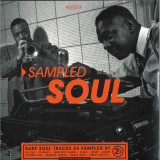
Various - Sampled Soul

Various

Sampled Soul

12inch3411176
Wagram
15.07.2022
  • A1: Charles Aznavour - Parce Que Tu Crois
  • A2: Joe Simon - Before The Night Is Over
  • A3: Ray Charles - I Got A Woman
  • A4: Timmy Thomas - Why Can't We Live Together
  • A5: Vera Hall - Trouble So Hard
  • B1: Bob & Earl - Harlem Shuffle
  • B2: Syl Johnson - I Hate I Walked Away
  • B3: Dusty Springfield - Son Of A Preacher Man
  • B4: The Persuasions - Good Times
  • B5: Johnny Mathis - Come To Me
  • B6: Millie Jackson - All The Way Lover
  • C1: Etta James - Something's Got A Hold Of Me
  • C2: C.b. & The Ten Others With Axes - Rosie
  • C3: Bobby Bland - (If Loving You Is Wrong) I Don't Want To Be Right - Album Version
  • C4: Bobby Caldwell - Open Your Eyes
  • C5: Boom Clap Bachelors - Tiden Flyver
  • C6: Galt Macdermot - Coffee Cold
  • D1: Gene Chandler - Duke Of Earl
  • D2: Marva Whitney - It's My Thing (You Can't Tell Me Who To Sock It To)
  • D3: Joe Simon - Walking Down Lonely Street
  • D4: Lowrell - Mellow Mellow (Right On)

Great compilation of soul tracks that have been sampled by artists such as Massive Attack, Kendrick Lamar, Cypress Hill, and others.


s D2. Marva Whitney - It's My Thing (You Can't Tell Me Who To Sock It To) [Album Version]

vorbestellen15.07.2022

erscheint voraussichtlich am 15.07.2022


Last In: vor 2026 Jahren
Speedometer - This Is Speedometer

Freestyle Records in association with Rare Sounds USA present a stellar repress of Speedometer's 2003 debut LP This Is Speedometer.

Originally released on Clive Johnson's Blow It Hard (started after the demise of the well-loved weekly Soho club night of the same name, and home to the New Mastersounds first releases alongside choice cuts from JTQ and others) This Is Speedometer showcased the sounds of one of the UK's premier acts in the deep funk scene of the early noughties for the first time on the long player format.

Starting out back in 1999, Speedometer started out as an instrumental quartet gigging in small clubs in the Southeast of England, paying homage to classic funk tunes by artists such as The Meters and The JB's. The band soon expanded and began writing original material, adding the highly regarded horn section and vocalists in 2001, which enabled them to deliver the powerhouse deep funk sound on display here. In addition to their own albums, singles and live shows, Speedometer have backed many US funk & soul legends including Sir Joe Quarterman, Eddie Bo, Marva Whitney, Sharon Jones & Lee Fields and more.

Now coming up on 20 years since it's original release, you can now marvel at Speedometer's classic, original soul-funk sound thanks to a sparkling new cut. Dig in!


d 04: Just Keep On (Doin the Do) feat. The Speedettes

nicht am Lager

Bestelle jetzt und wir bestellen den Artikel für dich beim Lieferanten.


Last In: vor 3 Jahren
DAMIANA - VINES

Damiana

VINES

12inchLPHAUSMO108
Hausu Mountain
30.07.2021

Natalie Chami and Whitney Johnson perform as a duo under the
name Damiana.
Both artists have built their own catalogs as multi-instrumentalist improvisers
and composers in the Chicago experimental scene, exploring the intersections
between ambient, electro-acoustic improv, and more legible songcraft based
around their voices and their work with synths and electronics -- all filtered
through their backgrounds in classical performance and education.
Chami’s solo recordings under the TALsounds moniker have appeared on labels
such as NNA Tapes, and Ba Da Bing!, and her collaborative projects include
the trio Good Willsmith. Johnson has released a series of solo LPs as Matchess
on the label Trouble in Mind, and has contributed to recordings and live performances by Ryley Walker, Circuit Des Yeux, and Tortoise’s 20th anniversary
performances of TNT, among other artists.
After meeting in the early 2010s, Chami and Johnson embarked on multiple US
tours together, and their informal duo collaborations naturally crystallized over
time into the Damiana project The duo’s debut album Vines presents their first
recordings after years of live sets and home recording sessions.
The album strikes a balance between the realms of deliberate compositional
sculpting and free-form improvisation, as Damiana’s evolving sessions of looping synth phrases and harmonized vocal lines emphasize austere beauty and
meditation as much as spectral disorientation and instrumental complexity.
While the tracks on Vines create the illusion at any given moment of a standing
cloud, often colored by Johnson’s lush viola and Chami’s effect-manipulated
electronics, a zoomed out perspective of each session reveals an undulating
story arc with contrasting emotional resonances and constantly shifting timbral
focus.
Treading the line between transportive stasis and upward motion, the duo has
honed their sense of when to push forward with a new texture or melodic
flourish without disrupting the atmospheres that they meticulously build together. Packaging: LP Black vinyl. Artwork by Heather Gabel (from the band
HIDE). Manufactured at 8Merch in Poland.

vorbestellen30.07.2021

erscheint voraussichtlich am 30.07.2021


Last In: vor 2026 Jahren
Brett Naucke - The Mansion

Brett Naucke returns to Spectrum Spools with his sophomore LP for Spectrum Spools following the "Seed" LP (SP-034) as well as a string of exceptional cassette releases on Umor Rex and Hausu Mountain.

"The Mansion" finds Naucke at the peak of his powers with a fresh array of meticulously composed psychotropic tapestries. Themes based on a childhood home, now a distant memory, reveal a mysterious narrative in mind-bending sonic detail. These complex ideas fuse conflicting states of tension and beauty with an organic acumen, each track a piece of the greater whole.

"The Mansion" is a fine mixture of contemporary concrète structure interlaced with tightly crafted melodic arrangement and hi-fidelity electronic exploration. In addition to his stalwart synthesis, Naucke employs additional personnel featuring vocal duties from Natalie Chami (of Goodwill Smith and TALsounds) and Viola sounds from Whitney Johnson (of Matchess). Field recording, piano and other various instrumentation are also carefully implemented adding a new, deeper dimension to the Naucke oeuvre.

With his most realized set of compositions yet, "The Mansion" finds Naucke at the paragon of his conceptual and sonic ethos with a work that's at once deeply meaningful and profound in it's auditory breadth.

nicht am Lager

Bestelle jetzt und wir bestellen den Artikel für dich beim Lieferanten.


Last In: vor 8 Jahren
  • 1
Artikel pro Seite:
N/ABPM
Vinyl