quête:white men don t funk

Genres
Tout
  • 1
Giovanni Damico - LAx5 / Loud And Clear 7"

The A-side puts the fun in a funky psychedelic disco stomper complete with sing-along chants and breakbeats. Imagine an overlooked KID CREOLE garage dub cut. The B-side is a fresh take on classic Italo disco with analog percussion, vintage synths and his own guitar and bass.

At this point, Southern Italy's Giovanni Damico is basically an honorary Windy City Native. I don't think he's ever been to Chicago
but he certainly has status on all sides of the City. Damico's collaborations with Chicago's Star Creature kicked have spanned the
better part of the last decade with just as many vinyl releases during that time spanning 2 LPs, 2 EPs, a handful of 7's and an appearance on the 2020's Star Creature Vibes label compilation not to mention the over 20+ 12's and a dozen appearances on labels ranging from MCDE, Lumberjacks in Hell to Kalakuta Soul, Bordelllo A Parigi, his own White Rabbit Recordings and more.
That perfect blend of Tracky Italo Early Drum Machine, Bang the Box type of Proto House Electro Soul with adventurous and ambitious beats and melody combos pulled from a range of global influencers, mixing of electronic and acoustic instruments giving some of the most full body unique compositions in dance music, each being accomplished, evolving and truly unique.

En stock

Disponible en stock et prêt pour l'expédition

Enrico Rava - Katcharpari (feat. Bruce Johnson, John Abercrombie & Chip White) LP
  • 01: Bunny&Apos;S Pie (Feat. Bruce Johnson, John Abercrombie &Amp; Chip White)
  • 02: Trial N. 5 (Feat. Bruce Johnson, John Abercrombie &Amp; Chip White)
  • 03: Dimenticare Stanca (Feat. Bruce Johnson, John Abercrombie &Amp; Chip White)
  • 04: Katcharpari (Feat. Bruce Johnson, John Abercrombie &Amp; Chip White)
  • 05: Fluid Connection (Feat. Bruce Johnson, John Abercrombie &Amp; Chip White)
  • 06: Cheerin&Apos; Cherry (Feat. Bruce Johnson, John Abercrombie &Amp; Chip White)
  • 07: Peace (Feat. Bruce Johnson, John Abercrombie &Amp; Chip White)

The breakthrough album. Enrico Rava's second solo record, recorded in Milan in January 1973 and released on the German BASF label, is nothing less than a cornerstone of Italian jazz-rock - the record that caught Manfred Eicher's attention and opened the doors to ECM. Rava himself has called it his breakthrough, and history proved him right.

The lineup is killer: John Abercrombie on guitar, Bruce Johnson on bass, Chip White on drums. Four musicians operating at the absolute peak of early seventies fusion energy - electric, cosmopolitan, burning with that particular fire that only existed in that brief window when jazz met rock and nobody knew the rules yet. Abercrombie, already on his way to becoming one of the most distinctive voices in electric jazz guitar, delivers some of his most ferocious early work here. White's drumming is relentless, pushing the music forward with an intensity that never lets up.

If Miles' Bitches Brew-era speaks to you, if Ian Carr's Nucleus gets you moving, if you know Sun Ra's Lanquidity and Don Cherry's Relativity Suite by heart - this is essential listening. Rava's vision was already fully formed: South American rhythms, Mediterranean warmth, free jazz ferocity, rock power - all flowing together without borders or categories. By the early seventies, Rava had absorbed everything - the New Thing, the European free scene, the electric revolution coming out of Miles' studio - and forged something entirely his own.

The seven tracks cover serious ground. "Bunny's Pie" introduces the music with an almost cosmic atmosphere of suspense, hovering in that liminal space before it trails off into the up-tempo vibrant frenzy of "Trial N. 5" - Abercrombie and Rava trading swirling solos at full intensity, the rhythm section locked in tight. "Dimenticare Stanca" moves from Rava's expressive balladic intro into pure funk, guitar and trumpet steering over the rhythmic drive with absolute confidence. The title track carries the lyrical feel and cadence of an Incan-Peruvian folksong - that cosmopolitan spirit made audible. "Fluid Connection" rides a funky bass riff into fusion heaven, with standout trumpet and guitar solos that build and release with perfect tension. "Cheerin' Cherry" pays homage to the great Don Cherry - Rava's spiritual mentor and fellow traveler in world music - exploring a North African soundscape that points toward the global jazz to come. Johnson's "Peace" closes the album with a minute and a half of serene, blissful calm - a moment of stillness after the storm.

This audiophile reissue - cut from the original masters, pressed by Pallas in Germany on 180gm vinyl, housed in a thick laminated hand-glued gatefold - does full justice to an album that remains a collector's holy grail.

Don't sleep on this one. Limited Edition.

pré-commande20.03.2026

il devrait être publié sur 20.03.2026

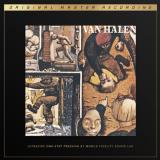
Van Halen - Fair Warning 2x12"
  • Mean Street
  • Dirty Movies
  • Sinners Swing!
  • Hear About It Later
  • Unchained
  • Push Comes To Shove
  • So This Is Love?
  • Sunday Afternoon In The Park
  • One Foot Out The Door

The song titles on Van Halen's aptly titled Fair Warning don't lie. The likes of "Unchained," "Mean Street," "Push Comes to Shove," "One Foot Out the Door," and more indicate the mood the band channels on its double-platinum 1981 record — the nastiest, darkest, and fiercest album of the group's storied career. For the fourth time in four years, Van Halen throws down the gauntlet to all challengers and emerges victorious.


Sourced from the original analog tapes, pressed on MoFi SuperVinyl at Fidelity Record Pressing, and strictly limited to 5,000 numbered copies, Mobile Fidelity's UltraDisc One-Step 180g 45RPM 2LP set plays with unfettered clarity, dynamics, and immediacy. Benefitting from superb groove definition, an ultra-low noise floor, and dead-quiet surfaces, this vinyl edition captures what went down in the studio with tremendous realism and involving presence.

Taking a more controlled approach in the studio and still completing everything in less than two weeks, Van Halen and producer Ted Templeman relied on studio amplifiers to direct the sound. Further diverging from the live-on-the-floor approach of its earlier albums, the ensemble also employed overdubs to great effect. The result: Dense, stacked architecture that underlines the hard-hitting tenor of the songs — and which comes alive like never before on this reference edition that looks as good as it sounds.

The premium packaging and gorgeous presentation befit the reissue's select status. Housed in a deluxe slipcase, it features special foil-stamped jackets and faithful-to-the-original graphics that illuminate the splendor of the recording. Aurally and visually, it is made for listeners who want to immerse themselves in everything involved with the album, including the iconic cover art adopted from William Kurelek's haunting painting, "The Maze."

Isolated frames from Kurelek's childhood-inspired work — including a man bashing his head into a brick wall, a guy pinning down an adversary as he delivers bare-fist blows to his face and others watch with apparent glee, a boy tied down on a conveyer belt and being sent through the equivalent of a meat saw — adorn the front and back covers. The sunnier visual disposition of Van Halen's prior efforts gives way to something sinister and tortured, traits reflective of the music within. The band members, too, are visually depicted not in glamorous shots but in a serious black-and-white portrait in which the quartet is clad in black leather jackets.

Tough, aggressive, stark: Fair Warning comes on like a series of bare-knuckled punches to the solar plexus and boasts lyrical narratives to match. Though not a concept record, the concise album revolves around themes of roughing it on the streets and struggling to survive amid dim prospects. Singer David Lee Roth reportedly penned many of the initial lyrics after traveling to Haiti and observing extreme poverty. The characters and situations populating Fair Warning reflect hardscrabble existence, last-chance desperation, and underlying danger.

Witness the crazies, poor folks, and hunters of “Mean Street”; the former prom queen turned pornographic actress on “Dirty Movies”; the menace and vice of “Sinners Swing!”; the streetwise hustle of “Unchained”; the isolation and alienation of “Push Comes to Shove”; the desire for escape on “One Foot Out the Door”: A carefree California beach party Fair Warning is not.

Having said he felt angry and frustrated during the sessions, guitarist Eddie Van Halen uses the forceful arrangements as a playground for his seemingly unlimited arsenal. Supported by a crack rhythm section and a hyped-up Roth, he performs with an almost impossible combination of punk-like intensity, technical finesse, lyrical fluidity, and unbridled emotion. The virtuoso was increasingly butting heads with Templeton and seeking a freedom in the studio he believed denied him.

No wonder he plays like a bat out of hell. Listen to the rapid-fire manner in which he slaps the high and low E strings on the 12th fret of his instrument on “Mean Street,” instilling the tune with funk flair and metal-spiked sharpness. For the pouty strut of “Dirty Movies,” Eddie Van Halen contributes slide guitar magic made possible after he sawed off the lower portion of a Gibson SG so he could reach further down the fretboard.

Related intensity, urgency, and daredevil momentum punctuate the surging “Sinner’s Swing!” A heavily flanged, delicately melodic introduction frames the attitudinal “Hear About It Later,” among the most creative arrangements of Van Halen’s career. And do riffs come any bigger or magnetic than those on the high-wire kick of “Unchained”? As for the out-of-left-field “Sunday in the Park,” an instrumental composed on an Electro-Harmonix micro-synthesizer: Who but Eddie Van Halen to supply creep factor in such an ingenious way?

Despite selling fewer quantities than Van Halen’s prior efforts, Fair Warning remains for many diehards the record that epitomizes all of the band’s immense strengths —Roth’s manic energy and tongue-wagging humor, Alex Van Halen’s rhythmic heartbeat-in-your-chest bombast, and Michael Anthony’s lucid bass lines included. Arriving when the New Wave of British Heavy Metal and new-wave movements were taking flight, it signaled a shot across the bow from a band determined to stay a step ahead and provide proof nobody could touch what it delivered.

More than four decades later, Fair Warning still sounds that alarm.

pré-commande

Cet article n'a pas encore été publié. Vous pouvez pré-commander le produit maintenant.

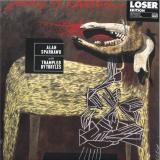
ALAN SPARHAWK - WITH TRAMPLED BY TURTLES

No one can help you build something beautiful quite like those who know you best. Alan Sparhawk knows this well. In his years in Low, he built decades of stirring music with his wife and lifelong creative partner Mimi Parker. In recent years, he has performed around Minnesota with his son Cyrus in DERECHO Rhythm Section, a funk band that also frequently features his daughter Hollis on vocals. There's an irreplaceable naturalism that comes with this kind of dynamic. Those who know you understand you. They love you. They want to help you bring your greatest passions to fruition. So it made sense that Sparhawk would turn to fellow Duluth musicians Trampled by Turtles to realize his latest record. As friends and mentees of Low's, taken under Sparhawk and Parker's wing from their earliest days as a bar band, Trampled by Turtles have performed with Sparhawk countless times over the years. The Duluth ties run deep: "There's a certain vibe that has to do with underdog syndrome, coming from a small town," Sparhawk muses. "Some of it is the weird grind and slackness that being at the mercy of Mother Nature puts in you. It humbles you." The two artists hold the kind of ironclad bond. Following Parker's passing in 2022, Trampled by Turtles invited Sparhawk to join them on tour to give him a space to be surrounded by friends. Occasionally, he would join them onstage. The outpouring of love was palpable every time they played together, a surge of warmth. When playing together is that powerful, why stop there? In winter, 2024, Sparhawk and Trampled by Turtles created With Trampled by Turtles, a record exactly as its name implies: Collective. Communal. Fraternal. Empathetic. A vessel for comfort, a reminder of the harmony that can exist when surrounded by those closest to you. Where White Roses, My God, Sparhawk's last album, plunged headfirst into electronica and radical vocal modulation, With Trampled by Turtles leans into the folk and bluegrass stylings of its backing band, Sparhawk's voice now completely unvarnished. With Trampled by Turtles is far more than just Alan Sparhawk and Trampled by Turtles. It's an affirmation of all the people who have been vital in Sparhawk's life and music, and an opportunity to hold each of their gifts into the light. It's producer Nat Harvie, who has been collaborating and performing with him for years. It's Sparhawk's daughter Hollis, who duets with her father on "Not Broken." And it's Mimi Parker, too: "Too High," "Princess Road Surgery," and "Not Broken" were all tracks she and Sparhawk had been working on in the last few years. These songs finally found a setting that stirringly commemorates them, bolstered by a full ensemble to make every note sing. Their presence is a kind of eternal connection to Parker, a way her musical grace will keep flourishing.

pas en stock

Commandez maintenant et nous commanderons l'article pour vous chez notre fournisseur.


Last In: 8 months ago
VARIOUS - NEW BREED R&B: MONEY TALKS
  • A1: Don't Try To Tell Me - Berna-Dean
  • A2: This Mornin' - The Jesse Stone Singers
  • A3: All Around The World - Vermettya Royster With James Brown's Band
  • A4: What's On Your Mind - The Four Bars
  • A5: Don't Look Now - Wilbur "Hi-Fi" White & King Kolax Band
  • A6: Money Talks - Kenny Smith
  • A7: Hey Little Girl Pt 1 - Roosevelt Lee
  • B1: Goin' Away Baby (Round Like An Apple) - Smokey Wilson
  • B2: Hey Hey Baby - T-Bone Walker
  • B3: I'm A Good Woman - The Afterglows
  • B4: You Make Me Mad - Johnny Madara
  • B5: Money Talks (Tell Me What I Say) - The Citations
  • B6: Tell Me Why - Richard Berry
  • B7: Mary Don't You Weep - The Delights

New R&B discoveries continue to emerge and entertain the many followers of the New Breed musical cult; nobody finds more than the Kent connoisseurs.
Berna Dean’s two previously unheard recordings are by far her best. They were laid down at Cosimo Matassa’s New Orleans’ studios by GNP Crescendo but eschewed in favour of two relatively average sides. The great 50s R&B songwriter Jesse Stone provides a rocker for the much-admired Jimmy Breedlove and a super-catchy ‘This Morning’ for an unknown mixed vocal group that has a joyous gospel feel. Jesse also penned ‘Private Eye’, a classic early 60s story-song, for Buddy Wilkins which was issued on Al Sears’ Tri-Ess imprint.
The title track is used twice, on two very different Fraternity recordings. Kenny Smith’s version was issued in 1964 and has many followers, but the equally meritorious Coasters-inspired composition by the Citations is newly discovered. Win Menifee’s ‘I’m Runnin’ Around’ from the same Cincinnati label comes complete with a fascinating back-story.
There are three cover versions. Vermettya Royster’s ‘All Around The World’ is backed by James Brown’s 1961 band, while Roosevelt Lee's 1970 update of the 1947-originated ‘Hey Little Girl’ funks the tune up a la Godfather of Soul. The cover that will make the biggest noise is undoubtedly west coast band the Afterglows’ version of Barbara Lynn’s evergreen dancer ‘I’m A Good Woman’ – this is a future monster.
Golden Crest provides two fabulous male vocal group sides – the swinging ‘What’s On Your Mind’ by Eddie Daye’s Four Bars and the delightful harmonies of the appropriately-named, but unknown Delights ‘Mary Don’t You Weep’.
Blues still thrived into the 70s as Albert Washington’s mean and moody ‘Case Of The Blues’ proves. Smokey Wilson took the music into the late 70s with the storming ‘Goin’ Away Baby (Round Like An Apple)’, which benefits here from a 45-style edit. His Pioneer Club on 88th Street in South Central L A provides the atmospheric photo for this collection.
More early 60s movers come from Wilbur “Hi-Fi” White with ‘Don’t Look Now’, future hit songwriter Johnny Madara’s raucous ‘You Make Me Mad’ and Big Boy Groves ‘Bucket O’ Blood’ which brilliantly describes the kind of club these tracks would fit right into.
The LP version loses a few tracks, but so many collectors have strong preferences we’ve thrown the vinyl junkies a lifeline.

pré-commande27.06.2025

il devrait être publié sur 27.06.2025

ALAN SPARHAWK - WITH TRAMPLED BY TURTLES (TAPE)

The cassette format SPCS1680 features "With Trampled by Turtles" on the A Side and last years 'White Roses, My God' SP1655 on the B Side! No one can help you build something beautiful quite like those who know you best. Alan Sparhawk knows this well. In his years in Low, he built decades of stirring music with his wife and lifelong creative partner Mimi Parker. In recent years, he has performed around Minnesota with his son Cyrus in DERECHO Rhythm Section, a funk band that also frequently features his daughter Hollis on vocals. There's an irreplaceable naturalism that comes with this kind of dynamic. Those who know you understand you. They love you. They want to help you bring your greatest passions to fruition. So it made sense that Sparhawk would turn to fellow Duluth musicians Trampled by Turtles to realize his latest record. As friends and mentees of Low's, taken under Sparhawk and Parker's wing from their earliest days as a bar band, Trampled by Turtles have performed with Sparhawk countless times over the years. The Duluth ties run deep: "There's a certain vibe that has to do with underdog syndrome, coming from a small town," Sparhawk muses. "Some of it is the weird grind and slackness that being at the mercy of Mother Nature puts in you. It humbles you." The two artists hold the kind of ironclad bond. Following Parker's passing in 2022, Trampled by Turtles invited Sparhawk to join them on tour to give him a space to be surrounded by friends. Occasionally, he would join them onstage. The outpouring of love was palpable every time they played together, a surge of warmth. When playing together is that powerful, why stop there? In winter, 2024, Sparhawk and Trampled by Turtles created With Trampled by Turtles, a record exactly as its name implies: Collective. Communal. Fraternal. Empathetic. A vessel for comfort, a reminder of the harmony that can exist when surrounded by those closest to you. Where White Roses, My God, Sparhawk's last album, plunged headfirst into electronica and radical vocal modulation, With Trampled by Turtles leans into the folk and bluegrass stylings of its backing band, Sparhawk's voice now completely unvarnished. With Trampled by Turtles is far more than just Alan Sparhawk and Trampled by Turtles. It's an affirmation of all the people who have been vital in Sparhawk's life and music, and an opportunity to hold each of their gifts into the light. It's producer Nat Harvie, who has been collaborating and performing with him for years. It's Sparhawk's daughter Hollis, who duets with her father on "Not Broken." And it's Mimi Parker, too: "Too High," "Princess Road Surgery," and "Not Broken" were all tracks she and Sparhawk had been working on in the last few years. These songs finally found a setting that stirringly commemorates them, bolstered by a full ensemble to make every note sing. Their presence is a kind of eternal connection to Parker, a way her musical grace will keep flourishing.

pré-commande30.05.2025

il devrait être publié sur 30.05.2025

Earth, Wind And Fire - Brazilian Rhyme / Runnin' (re-edited By Danny Krivit)

Repress!

The word 'classic' gets thrown around a lot these days, often abused and attached to things that don't deserve the tag.
I think we can all agree that an outfit like Earth, Wind & Fire are truly deserving of such an accolade, since their first tentative steps in the early 1970's as an outfit the Chicago, IL pioneers have made themselves a force to be reckoned with and have sold over 90,000,000 units worldwide! Fusing together Jazz, Funk, Soul, African and Brazilian sounds EWF have been at the top of their game for decades, seeing them inducted into the legendary 'rock n roll hall of fame' at the turn of the millennium. Respect due. On this special, legit 12" reissue we are treated to 2 stellar reworkings by one of Disco and modern dance music's most respected names - Danny Krivit. Danny's tenure in dance music has almost been as long as EWF's themselves so it makes sense that he's on deck to breathe some dancefloor magic into their cult classics 'Brazilian Rhyme' and 'Runnin'. Both tracks are massive club anthems with them being generously sampled over the years and featuring in the playlists of too numerous to mention DJ's and selectors. Both of these amazing edits are extremely sought after and have been legally reissued by Above Board Distribution in conjunction with Danny Krivit and the legal rights holders - Sony Music Entertainment. This high quality repress features original Columbia white label Disco promo artwork and has been remastered from Sony's original sources by Optimum Mastering, Bristol UK.

pas en stock

Commandez maintenant et nous commanderons l'article pour vous chez notre fournisseur.


Last In: 13 months ago
Patrick Cowley - Afternooners 2x12"

Dark Entries and Honey Soundsystem Records have teamed up once more to release the final volume of gay porn soundtracks by San Francisco-based musician and producer, Patrick Cowley. One of the most revolutionary and influential figures in the canon of disco, Cowley created his own brand of Hi-NRG dance music, The San Francisco Sound.' Born in Buffalo, NY on October 19, 1950, Patrick moved to San Francisco in 1971 to study at the City College of San Francisco. He founded the Electronic Music Lab at the school, where he would make experimental soundtracks by blending various types of music and adapting them to the synthesizer.

By the mid-70's, Patrick's synthesis techniques landed him a job composing and producing songs for disco superstar Sylvester, including hits like You Make Me Feel (Mighty Real)', Dance Disco Heat' and Stars.' This helped Patrick obtain more work as a remixer and producer. His 18-minute long remix of Donna Summer's I Feel Love' and his production work with edgy New Wave band Indoor Life were both of particular note. By 1981, Patrick had released a string of dance 12 singles, like Menergy' and Megatron Man'. He also had founded Megatone Records, the label upon which he released his debut album, Menergy'. Around this time Patrick was hospitalized and diagnosed with an unknown illness: that which would later be called AIDS. Throughout 1982, he recorded two more Hi-NRG hits, Do You Wanna Funk' for Sylvester, and Right On Target' for Paul Parker, as well as a second solo album Mind Warp'. On November 12, 1982, he passed away.

In 1979 Patrick was contacted by John Coletti, owner of famed gay porn company Fox Studio in Los Angeles. Patrick jumped on this offer and sent reels of his college compositions from the 70s to John in LA. Coletti then used a variable speed oscillator to adjust the pitch and speed of Patrick's songs in-sync with the film scenes. The result was the VHS collections Muscle Up' and School Daze' released in 1979 and 1980. Afternooners' is the third collection of Cowley's instrumental songs, recorded in May 1982. These recordings were culled from two 23-minute reels in the Fox Studio vaults. All songs were originally untitled, so we've used the titles from Fox Studio's 8mm film loops. This compilation also includes three bonus tracks found in the archives of fellow Megatone Records recording artist Paul Parker and the attic of teenage friend Lily Bartels. Influenced by Tomita, Wendy Carlos, and Giorgio Moroder, Patrick crafted a singular sound from his collection of synthesizers, percussion, modified guitars, and hand-built equipment. The listener enters a world of forbidden vices, evocative of Patrick's time spent in the bathhouses of San Francisco. The songs on Afternooners' reflect the advances of the equipment available at the onset of the 1980s. Cowley's unadulterated electronic forms are stripped down and dubbed up. Lush electronic percussion, soaring synthesizer riffs and low slung funk grooves comingle on these magnificent soundscapes.

Featuring 70 minutes of music never before released on vinyl. All songs have been remastered by George Horn at Fantasy Studios in Berkeley, CA. The vinyl is housed in a gatefold jacket designed by Berlin-based artist Gwenael Rattke, featuring black and white photos of Patrick in his studio that opens to a full color array of x-rated scenes from the Fox Studio vaults. Included is a fold-out poster featuring a handmade collage using photography and xeroxed graphics of classic gay porn imagery and an essay from Drew Daniel of Matmos. For Patrick's 67th birthday, Dark Entries and Honey Soundsystem Records present a glimpse into the futuristic world of a young genius. These recordings shed a new light on the experimental side of a disco legend who was taken too soon.

pas en stock

Commandez maintenant et nous commanderons l'article pour vous chez notre fournisseur.


Last In: 5 months ago
Ceeofunk - Devil Dance / Anthem Edit 7"

The unstoppable funk machine from the french Alps has just finished the production of a new 7 inch record!

Limited edition of 300 copies, so don't sleep on it!
Totally handmade covers with love and care (and a couple of friends to help us). White or brown kraft covers with manually screen printed front cover and hand stamped back covers!
You just have to chose your colors or catch them all.

Au menu! Two tracks you maybe heard about... a supa laidback track with a huge Moog bass (that reminds us a kind of Flashlight like track...), ladies and gentlemen DEVIL DANCE! On the B side, the real Ceeofunk Anthem (always played at the very end of their concert) where the super catchy bass meets the funky high pitched guitar on a signature groove you won't forget! ANTHEM EDIT!

pas en stock

Commandez maintenant et nous commanderons l'article pour vous chez notre fournisseur.


Last In: 2 years ago
Brian Auger's Oblivion Express - Complete Oblivion LP 6x12"
 
39

Brian Auger’s Oblivion Express was the phoenix that rose from the ashes of sixties combo The Trinity. Fusing R&B, jazz, soul and funk, keyboard maestro Brian Auger created a new breed of music that took the US and the UK by storm. Auger’s unique experimentation culminated in rhythm-infused jazz funk that united Black and white ’70s audiences. The 6 studio albums that make up Complete Oblivion illustrate the group’s diverse musical influences and progression, from the 1970 self titled debut’s heavy jazz-rock to the jazz fusion, latin and disco tinged Reinforcements from 1975 - this process no doubt powered by the groups’ evolving line up, which included guitarists Jim Mullen and Jack Mills, drummers Robbie McIntosh & Steve Ferrone, bassists Barry Dean and Clive Chaman and vocalist Alex Ligertwood. The musical highlights within Complete Oblivion are many, but particular highlights to mention have to be Total Eclipse (Oblivion Express), Fill Your Head With Laugher (A Better Land), the blistering cover of Eddie Harris’ Freedom Jazz Dance (Second Wind), the Barry Dean composition Whenever You're Ready, the version of Marvin Gaye’s Inner City Blues (Closer To It), Beginning Again (Straight Ahead) and the mind bending keyboard tour de force Brain Damage (Reinforcements). Given the groups legendary status among fellow musicians such as Zucchero and Herbie Hancock, DJ’s like Kenny Dope and Gilles Peterson and Auger’s legion of fans worldwide - that mission was fully accomplished - or to put it another way, in the words of super fans The Beastie Boys: “Those who remain oblivious to the obvious delights of Brian Auger’s Oblivion Express do so at their own risk!”

pré-commande20.10.2023

il devrait être publié sur 20.10.2023

Meatraffle - Base And Superstructure LP
également disponible

Red Vinyl


South London ne-er-do-wells Meatraffle make huge strides forward with this third album of funky trumpet-laced street pop combining a caustic wit with a tender heart. “The best band in the country bar none!” Fat White Family // “A collective of individuals who refuse to be pigeonholed…..they conjure a rich, imaginative and often simply funny world” The Quietus // “Humorous alt-punk…potent…surreal” CLASH // “Their direct and confrontational attitude has not been seen since punk really grabbed England by the balls” FAR OUT // “Your mind will be liberated” Louder Than War // Meatraffle are thrilled to announce they will be releasing 'Base and Superstructure', their third studio album on Blang Records on 29.09.2023. Recorded during lockdown, produced & mixed by Meatraffle keyboardist Chris OC, Dante Traynor (SWEAT, Fat White Family 'Feet'), additional mixing by Angelica Björnsson (Hi - Texas feat. Wu Tang Clan) and mastered by Dean Honer (Eccentronic Research Council, I Monster, The Moonlandingz), ‘Base and Superstructure’ marks a new sonic departure for the band rightly acknowledged as godfathers of the now infamous South London scene, centred around the Windmill in Brixton. The band will be touring in support of the new album later in the year. Founded in 2014, Meatraffle have toured extensively across the UK and Europe as both a headline act and support to the likes of Fat White Family, Sleaford Mods and Warmduscher. Festival appearances include SXSW, Green Man and Liverpool Psych Fest. In addition to their previous two LPs ('Hi Fi Classics' and 'Bastard Music'), the band have released singles on Dan Carey's Speedy Wunderground and Moshi Moshi, plus numerous remixes including 'Meatraffle on the Moon' by the one and only Andrew Weatherall. The band have also played sessions for Marc Riley (BBC 6Music) plus regular plays from other 6Music DJs including Iggy Pop, Gideon Coe and Amy Lamé. “We were looking for labels for a while, sending out demos to small ‘indie’ labels to which we often had the response, “we really like it but we’re not signing anyone at the moment”, which feels like the new “don’t call us we’ll call you!”... We knew we had a good record so didn’t get knocked back and knew it would be a climb as many of these small and large ‘indie’ or ‘alternative’ labels can be even more conservative than the mainstream, I guess having less money and therefore having to ‘play it safe’. We bumped into Blang one night at The George Tavern and instantly had a good feeling about them…and guess what? They loved the music!” - Meatraffle frontman, Zsa Zsa Sapien. Genre-bending independent label Blang Records is a wildly non-commercial label firmly rooted in the DIY/anything goes attitude of punk and antifolk, and has remained consistent in its commitment to releasing outsider music by the likes of David Cronenberg's Wife, Jack Medley's Secure Men, Brix & The Extricated, Milk Kan, Thomas Truax and many more. Live Dates: 13th July 2023 - Peckham Audio, London w/SLEAZE, Brian Destiny, Neuro Placid (headline show).

pré-commande13.10.2023

il devrait être publié sur 13.10.2023

Meatraffle - Base And Superstructure LP
également disponible

Black Vinyl


South London ne-er-do-wells Meatraffle make huge strides forward with this third album of funky trumpet-laced street pop combining a caustic wit with a tender heart. “The best band in the country bar none!” Fat White Family // “A collective of individuals who refuse to be pigeonholed…..they conjure a rich, imaginative and often simply funny world” The Quietus // “Humorous alt-punk…potent…surreal” CLASH // “Their direct and confrontational attitude has not been seen since punk really grabbed England by the balls” FAR OUT // “Your mind will be liberated” Louder Than War // Meatraffle are thrilled to announce they will be releasing 'Base and Superstructure', their third studio album on Blang Records on 29.09.2023. Recorded during lockdown, produced & mixed by Meatraffle keyboardist Chris OC, Dante Traynor (SWEAT, Fat White Family 'Feet'), additional mixing by Angelica Björnsson (Hi - Texas feat. Wu Tang Clan) and mastered by Dean Honer (Eccentronic Research Council, I Monster, The Moonlandingz), ‘Base and Superstructure’ marks a new sonic departure for the band rightly acknowledged as godfathers of the now infamous South London scene, centred around the Windmill in Brixton. The band will be touring in support of the new album later in the year. Founded in 2014, Meatraffle have toured extensively across the UK and Europe as both a headline act and support to the likes of Fat White Family, Sleaford Mods and Warmduscher. Festival appearances include SXSW, Green Man and Liverpool Psych Fest. In addition to their previous two LPs ('Hi Fi Classics' and 'Bastard Music'), the band have released singles on Dan Carey's Speedy Wunderground and Moshi Moshi, plus numerous remixes including 'Meatraffle on the Moon' by the one and only Andrew Weatherall. The band have also played sessions for Marc Riley (BBC 6Music) plus regular plays from other 6Music DJs including Iggy Pop, Gideon Coe and Amy Lamé. “We were looking for labels for a while, sending out demos to small ‘indie’ labels to which we often had the response, “we really like it but we’re not signing anyone at the moment”, which feels like the new “don’t call us we’ll call you!”... We knew we had a good record so didn’t get knocked back and knew it would be a climb as many of these small and large ‘indie’ or ‘alternative’ labels can be even more conservative than the mainstream, I guess having less money and therefore having to ‘play it safe’. We bumped into Blang one night at The George Tavern and instantly had a good feeling about them…and guess what? They loved the music!” - Meatraffle frontman, Zsa Zsa Sapien. Genre-bending independent label Blang Records is a wildly non-commercial label firmly rooted in the DIY/anything goes attitude of punk and antifolk, and has remained consistent in its commitment to releasing outsider music by the likes of David Cronenberg's Wife, Jack Medley's Secure Men, Brix & The Extricated, Milk Kan, Thomas Truax and many more. Live Dates: 13th July 2023 - Peckham Audio, London w/SLEAZE, Brian Destiny, Neuro Placid (headline show).

pré-commande13.10.2023

il devrait être publié sur 13.10.2023

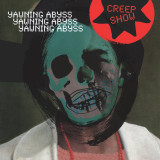
Creep Show - Yawning Abyss

Creep Show

Yawning Abyss

12inchBELLA1474V
Bella Union
16.06.2023

In the five years since Creep Show’s acclaimed Mr Dynamite album was released it’s fair to say that we’ve all been through a fair bit. Sitting here, in 2023, things don’t seem to be getting any better. There’s the cost of living crisis and political meltdowns; we're in deep water with global warming and to top it all there’s a war on our doorstep.

Back in 2018 everything seemed less complicated. Sure, there was stuff to get riled about, but we knew nothing about what was to come. Mr Dynamite was a fairground ride into the dark corners of a world that was on the brink of being blitzed in a blender. It was a record teetering on the edge. Five years down the line you’d expect the follow-up, Yawning Abyss, would double-down and bring the white-knuckled, teeth-gritted fury of the last five years to the boil. And yet….

A quick recap? No problem. Wrangler + John Grant = Creep Show. And Creep Show? “A band of musical misfits who have found a voice or two”, says Wrangler’s Ben “Benge” Edwards, whose Bond villain studio on the edge of a moorland is Creep Show Grand Central as well as home to an analogue synth arsenal that could sink ships.

Wrangler have known each other for a while. Tunng’s electronics wizard Phil Winter and Cabaret Voltaire’s trailblazing, pioneering frontman Stephen Mallinder go way back, while Phil and Benge crossed paths in the 21st century when they seemed to be increasingly in the same venues at the same times. Meanwhile, Mal had been living in Australia since the mid-90s and when, in 2007, he returned to the UK his old pal Phil suggested he meet Benge and the three of them immediately began working together.

Wrangler collectively bumped into Grant at their soundcheck for Sheffield’s Sensoria Festival in 2014 where they were playing with Carter Tutti. A friendship blossomed and when they were invited to perform together for Rough Trade’s 40th anniversary show at London’s Barbican in 2016, well, they jumped at the chance... and Creep Show was born.

Let’s talk about the new album... What is the ‘Yawning Abyss’? You might well ask. According to Mal, it’s “a cosmic event horizon that I can see from my attic window when stand on a chair”. Yeah. Thanks.

“On this album”, offers Benge, feet firmly on the floor, “Wrangler wrangled some vintage synths, mostly Roland, Moog, and the ‘Crystal Machine’ - then John Grant joined in the fun at Memetune Studios where lots of musical experiments were carried out. Then Mal and John ran off to Iceland with the master tapes and recorded a load of madcap vocals. Back at Memetune, me and Phil were left to try and make sense of it all. Which wasn’t hard because what they did in Iceland was totally magnificent.”

Which kind of brings us back to where we began. You’d imagine ‘Yawning Abyss’ would be blowing steam out of its furious ears. Mr Dynamite but kicking a wasps nest. Repeatedly. And yet…

Opener ‘The Bellows’ comes on like a modular ‘Radio Ga Ga’, the singalong ‘Moneyback’ (“You want your money back? / I didn’t think so”) sounds like Godley & Creme’s ‘Snack Attack’ meets Prince Charles And The City Beat Band (“Pennies, pounds, dollar bills, signed agreements, death wills”). ‘Yahtzee!’ is an unhinged electro breakdance party in four minutes and nine seconds.

Where Mr Dynamite was menace, a mélange of mangled voices, with Grant and Mallinder being heavily treated, pitched up or down, rendering their contributions largely indistinguishable, Yawning Abyss takes a more direct approach. You hesitate to say feelgood, but there’s a skip in the step here for sure.

The title track plays John Grant’s vocal straight. Completely. It’s good, so very good. Like ‘Axel F’ covered by Vangelis. The delicious shimmering synths of ‘Bungalow’ also plays those Grant pipes with a straight bat. ‘Matinee’ delves into darker, very funky territory. With Mal upfront it comes on like ‘The Crackdown’. Choice lyric: “You are starting to breakdown / And it’s so fun for me to see / You should have thought of that / You should have come prepared / You can see what’s happening and you look a little scared”.

So, you know, not all feelgood. But it does feel good. It’s probably best to draw your own conclusions... This is Creep Show after all.

pré-commande16.06.2023

il devrait être publié sur 16.06.2023

Lee Tracy & Isaac Manning - Is it What You Want

As the sun sets on a quaint East Nashville house, a young man bares a piece of his soul. Facing the camera, sporting a silky suit jacket/shirt/slacks/fingerless gloves ensemble that announces "singer" before he's even opened his mouth, Lee Tracy Johnson settles onto his stage, the front yard. He sways to the dirge-like drum machine pulse of a synth-soaked slow jam, extends his arms as if gaining his balance, and croons in affecting, fragile earnest, "I need your love… oh baby…"

Dogs in the yard next door begin barking. A mysterious cardboard robot figure, beamed in from galaxies unknown and affixed to a tree, is less vocal. Lee doesn't acknowledge either's presence. He's busy feeling it, arms and hands gesticulating. His voice rises in falsetto over the now-quiet dogs, over the ambient noise from the street that seeps into the handheld camcorder's microphone, over the recording of his own voice played back from a boombox off-camera. After six minutes the single, continuous shot ends. In this intimate creative universe there are no re-takes. There are many more music videos to shoot, and as Lee later puts it, "The first time you do it is actually the best. Because you can never get that again. You expressing yourself from within."

"I Need Your Love" dates from a lost heyday. From some time in the '80s or early '90s, when Lee Tracy (as he was known in performance) and his music partner/producer/manager Isaac Manning committed hours upon hours of their sonic and visual ideas to tape. Embracing drum machines and synthesizers – electronics that made their personal futurism palpable – they recorded exclusively at home, live in a room into a simple cassette deck. Soul, funk, electro and new wave informed their songs, yet Lee and Isaac eschewed the confinement of conventional categories and genres, preferring to let experimentation guide them.

"Anytime somebody put out a new record they had the same instruments or the same sound," explains Isaac. "So I basically wanted to find something that's really gonna stand out away from all of the rest of 'em." Their ethos meant that every idea they came up with was at least worth trying: echoed out half-rapped exhortations over frantic techno-style beats, gospel synth soul, modal electro-funk, oddball pop reinterpretations, emo AOR balladry, nods to Prince and the Fat Boys, or arrangements that might collapse mid-song into a mess of arcade game-ish blips before rallying to reach the finish line. All of it conjoined by consistent tape hiss, and most vitally, Lee's chameleonic voice, which managed to wildly shape shift and still evoke something sincere – whether toggling between falsetto and tenor exalting Jesus's return, or punctuating a melismatic romantic adlib with a succinct, "We all know how it feels to be alone."

"People think we went to a studio," says Isaac derisively. "We never went to no studio. We didn't have the money to go to no studio! We did this stuff at home. I shot videos in my front yard with whatever we could to get things together." Sometimes Isaac would just put on an instrumental record, be it "Planet Rock" or "Don't Cry For Me Argentina" (from Evita), press "record," and let Lee improvise over it, yielding peculiar love songs, would-be patriotic anthems, or Elvis Presley or Marilyn Monroe tributes. Technical limitations and a lack of professional polish never dissuaded them. They believed they were onto something.

"That struggle," Isaac says, "made that sound sound good to me."

In the parlance of modern music criticism Lee and Isaac's dizzying DIY efforts would inevitably be described as "outsider." But "outsider" carries the burden of untold additional layers of meaning if you're Black and from the South, creating on a budget, and trying to get someone, anyone within the country music capital of the world to take your vision seriously. "What category should we put it in?" Isaac asks rhetorically. "I don't know. All I know is feeling. I ain't gonna name it nothing. It's music. If it grabs your soul and touch your heart that's what it basically is supposed to do."

=

Born in 1963, the baby boy of nine siblings, Lee Tracy spent his earliest years living amidst the shotgun houses on Nashville's south side. "We was poor, man!" he says, recalling the outhouse his family used for a bathroom and the blocks of ice they kept in the kitchen to chill perishables. "But I actually don't think I really realized I was in poverty until I got grown and started thinking about it." Lee's mom worked at the Holiday Inn; his dad did whatever he had to do, from selling fruit from a horse drawn cart to bootlegging. "We didn't have much," Lee continues, "but my mother and my father got us the things we needed, the clothes on our back." By the end of the decade with the city's urban renewal programs razing entire neighborhoods to accommodate construction of the Interstate, the family moved to Edgehill Projects. Lee remembers music and art as a constant source of inspiration for he and his brothers and sisters – especially after seeing the Jackson 5 perform on Ed Sullivan. "As a small child I just knew that was what I wanted to do."

His older brother Don began musically mentoring him, introducing Lee to a variety of instruments and sounds. "He would never play one particular type of music, like R&B," says Lee. "I was surrounded by jazz, hard rock and roll, easy listening, gospel, reggae, country music; I mean I was a sponge absorbing all of that." Lee taught himself to play drums by beating on cardboard boxes, gaining a rep around the way for his timekeeping, and his singing voice. Emulating his favorites, Earth Wind & Fire and Cameo, he formed groups with other kids with era-evocative band names like Concept and TNT Connection, and emerged as the leader of disciplined rehearsals. "I made them practice," says Lee. "We practiced and practiced and practiced. Because I wanted that perfection." By high school the most accomplished of these bands would take top prize in a prominent local talent show. It was a big moment for Lee, and he felt ready to take things to the next level. But his band-mates had other ideas.

"I don't know what happened," he says, still miffed at the memory. "It must have blew they mind after we won and people started showing notice, because it's like everybody quit! I was like, where the hell did everybody go?" Lee had always made a point of interrogating prospective musicians about their intentions before joining his groups: were they really serious or just looking for a way to pick up girls? Now he understood even more the importance of finding a collaborator just as committed to the music as he was.

=

Isaac Manning had spent much of his life immersed in music and the arts – singing in the church choir with his family on Nashville's north side, writing, painting, dancing, and working various gigs within the entertainment industry. After serving in the armed forces, in the early '70s he ran The Teenage Place, a music and performance venue that catered to the local youth. But he was forced out of town when word of one of his recreational routines created a stir beyond the safe haven of his bohemian circles.

"I was growing marijuana," Isaac explains. "It wasn't no business, I was smoking it myself… I would put marijuana in scrambled eggs, cornbread and stuff." His weed use originated as a form of self-medication to combat severe tooth pain. But when he began sharing it with some of the other young people he hung out with, some of who just so happened to be the kids of Nashville politicians, the cops came calling. "When I got busted," he remembers, "they were talking about how they were gonna get rid of me because they didn't want me saying nothing about they children because of the politics and stuff. So I got my family, took two raggedy cars, and left Nashville and went to Vegas."

Out in the desert, Isaac happened to meet Chubby Checker of "The Twist" fame while the singer was gigging at The Flamingo. Impressed by Isaac's zeal, Checker invited him to go on the road with him as his tour manager/roadie/valet. The experience gave Isaac a window into a part of the entertainment world he'd never encountered – a glimpse of what a true pop act's audience looked like. "Chubby Checker, none of his shows were played for Black folks," he remembers. "All his gigs were done at high-class white people areas." Returning home after a few years with Chubby, Isaac was properly motivated to make it in Music City. He began writing songs and scouting around Nashville for local talent anywhere he could find it with an expressed goal: "Find someone who can deliver your songs the way you want 'em delivered and make people feel what you want them to feel."

One day while walking through Edgehill Projects Isaac heard someone playing the drums in a way that made him stop and take notice. "The music was so tight, just the drums made me feel like, oh I'm-a find this person," he recalls. "So I circled through the projects until I found who it was.

"That's how I met him – Lee Tracy. When I found him and he started singing and stuff, I said, ohhh, this is somebody different."

=

Theirs was a true complementary partnership: young Lee possessed the raw talent, the older Isaac the belief. "He's really the only one besides my brother and my family that really seen the potential in me," says Lee. "He made me see that I could do it."

Isaac long being a night owl, his house also made for a fertile collaborative environment – a space where there always seemed to be a new piece of his visual art on display: paintings, illustrations, and dolls and figures (including an enigmatic cardboard robot). Lee and Issac would hang out together and talk, listen to music, conjure ideas, and smoke the herb Isaac had resumed growing in his yard. "It got to where I could trust him, he could trust me," Isaac says of their bond. They also worked together for hours on drawings, spreading larges rolls of paper on the walls and sketching faces with abstract patterns and imagery: alien-like beings, tri-horned horse heads, inverted Janus-like characters where one visage blurred into the other.

Soon it became apparent that they didn't need other collaborators; self-sufficiency was the natural way forward. At Isaac's behest Lee, already fed up with dealing with band musicians, began playing around with a poly-sonic Yamaha keyboard at the local music store. "It had everything on it – trumpet, bass, drums, organ," remembers Lee. "And that's when I started recording my own stuff."

The technology afforded Lee the flexibility and independence he craved, setting him on a path other bedroom musicians and producers around the world were simultaneously following through the '80s into the early '90s. Saving up money from day jobs, he eventually supplemented the Yamaha Isaac had gotten him with Roland and Casio drum machines and a Moog. Lee was living in an apartment in Hillside at that point caring for his dad, who'd been partially paralyzed since early in life. In the evenings up in his second floor room, the music put him in a zone where he could tune out everything and lose himself in his ideas.

"Oh I loved it," he recalls. "I would really experiment with the instruments and use a lot of different sound effects. I was looking for something nobody else had. I wanted something totally different. And once I found the sound I was looking for, I would just smoke me a good joint and just let it go, hit the record button." More potent a creative stimulant than even Isaac's weed was the holistic flow and spontaneity of recording. Between sessions at Isaac's place and Lee's apartment, their volume of output quickly ballooned.

"We was always recording," says Lee. "That's why we have so much music. Even when I went to Isaac's and we start creating, I get home, my mind is racing, I gotta start creating, creating, creating. I remember there were times when I took a 90-minute tape from front to back and just filled it up."

"We never practiced," says Isaac. "See, that was just so odd about the whole thing. I could relate to him, and tell him about the songs I had ideas for and everything and stuff. And then he would bring it back or whatever, and we'd get together and put it down." Once the taskmaster hell bent on rehearsing, Lee had flipped a full 180. Perfection was no longer an aspiration, but the enemy of inspiration.

"I seen where practicing and practicing got me," says Lee. "A lot of musicians you get to playing and they gotta stop, they have to analyze the music. But while you analyzing you losing a lot of the greatness of what you creating. Stop analyzing what you play, just play! And it'll all take shape."

=

"I hope you understood the beginning of the record because this was invented from a dream I had today… (You tell me, I'll tell you, we'll figure it out together)" – Lee Tracy and Isaac Manning, "Hope You Understand"

Lee lets loose a maniacal cackle when he acknowledges that the material that he and Isaac recorded was by anyone's estimation pretty out there. It's the same laugh that commences "Hope You Understand" – a chaotic transmission that encapsulates the duality at the heart of their music: a stated desire to reach people and a compulsion to go as leftfield as they saw fit.

"We just did it," says Lee. "We cut the music on and cut loose. I don't sit around and write. I do it by listening, get a feeling, play the music, and the lyrics and stuff just come out of me."

The approach proved adaptable to interpreting other artists' material. While recording a cover of Whitney Houston's pop ballad "Saving All My Love For You," Lee played Whitney's version in his headphones as he laid down his own vocals – partially following the lyrics, partially using them as a departure point. The end result is barely recognizable compared with the original, Lee and Isaac having switched up the time signature and reinvented the melody along the way towards morphing a slick mainstream radio standard into something that sounds solely their own.

"I really used that song to get me started," says Lee. "Then I said, well I need something else, something is missing. Something just came over me. That's when I came up with 'Is It What You Want.'"

The song would become the centerpiece of Lee and Isaac's repertoire. Pushed along by a percolating metronomic Rhythm King style beat somewhere between a military march and a samba, "Is It What You Want" finds Lee pleading the sincerity of his commitment to a potential love interest embellished by vocal tics and hiccups subtlely reminiscent of his childhood hero MJ. Absent chord changes, only synth riffs gliding in and out like apparitions, the song achieves a lingering lo-fi power that leaves you feeling like it's still playing, somewhere, even after the fade out.

"I don't know, it's like a real spiritual song," Lee reflects. "But it's not just spiritual. To me the more I listen to it it's like about everything that you do in your everyday life, period. Is it what you want? Do you want a car or you don't want a car? Do you want Jesus or do you want the Devil? It's basically asking you the question. Can't nobody answer the question but you yourself."

In 1989 Lee won a lawsuit stemming from injuries sustained from a fight he'd gotten into. He took part of the settlement money and with Isaac pressed up "Saving All My Love For You" b/w "Is It What You Want" as a 45 single. Isaac christened the label One Chance Records. "Because that's all we wanted," he says with a laugh, "one chance."

Isaac sent the record out to radio stations and major labels, hoping for it to make enough noise to get picked up nationally. But the response he and Lee were hoping for never materialized. According to Isaac the closest the single got to getting played on the radio is when a disk jock from a local station made a highly unusual announcement on air: "The dude said on the radio, 107.5 – 'We are not gonna play 'Is It What You Want.' We cracked up! Wow, that's deep.

"It was a whole racist thing that was going on," he reflects. "So we just looked over and kept on going. That was it. That was about the way it goes… If you were Black and you were living in Nashville and stuff, that's the way you got treated." Isaac already knew as much from all the times he'd brought he and Lee's tapes (even their cache of country music tunes) over to Music Row to try to drum up interest to no avail.

"Isaac, he really worked his ass off," says Lee. "He probably been to every record place down on Music Row." Nashville's famed recording and music business corridor wasn't but a few blocks from where Lee grew up. Close enough, he remembers, for him to ride his bike along its back alleys and stumble upon the occasional random treasure, like a discarded box of harmonicas. Getting in through the front door, however, still felt a world away.

"I just don't think at the time our music fell into a category for them," he concedes. "It was before its time."

=

Lee stopped making music some time in the latter part of the '90s, around the time his mom passed away and life became increasingly tough to manage. "When my mother died I had a nervous breakdown," he says, "So I shut down for a long time. I was in such a sadness frame of mind. That's why nobody seen me. I had just disappeared off the map." He fell out of touch with Isaac, and in an indication of just how bad things had gotten for him, lost track of all the recordings they'd made together. Music became a distant memory.

Fortunately, Isaac kept the faith. In a self-published collection of his poetry – paeans to some of his favorite entertainment and public figures entitled Friends and Dick Clark – he'd written that he believed "music has a life of its own." But his prescience and presence of mind were truly manifested in the fact that he kept an archive of he and Lee's work. As perfectly imperfect as "Is It What You Want" now sounds in a post-Personal Space world, Lee and Isaac's lone official release was in fact just a taste. The bulk of the Is It What You Want album is culled from the pair's essentially unheard home recordings – complete songs, half-realized experiments, Isaac's blue monologues and pronouncements et al – compiled, mixed and programmed in the loose and impulsive creative spirit of their regular get-togethers from decades ago. The rest of us, it seems, may have finally caught up to them.

On the prospect of at long last reaching a wider audience, Isaac says simply, "I been trying for a long time, it feels good." Ever the survivor, he adds, "The only way I know how to make it to the top is to keep climbing. If one leg break on the ladder, hey, you gotta fix it and keep on going… That's where I be at. I'll kill death to make it out there."

For Lee it all feels akin to a personal resurrection: "It's like I was in a tomb and the tomb was opened and I'm back… Man, it feels so great. I feel like I'm gonna jump out of my skin." Success at this stage of his life, he realizes, probably means something different than what it did back when he was singing and dancing in Isaac's front yard. "What I really mean by 'making it,'" he explains isn't just the music being heard but, "the story being told."

Occasionally Lee will pull up "Is It What You Want" on YouTube on his phone, put on his headphones, and listen. He remembers the first time he heard his recorded voice. How surreal it was, how he thought to himself, "Is that really me?" What would he say to that younger version of himself now?

"I would probably tell myself, hang in there, don't give up. Keep striving for the goal. And everything will work out."

Despite what's printed on the record label, sometimes you do get more than one chance.
pas en stock

Commandez maintenant et nous commanderons l'article pour vous chez notre fournisseur.


Last In: 3 years ago
Lee Tracy & Isaac Manning - Is it What You Want LP

As the sun sets on a quaint East Nashville house, a young man bares a piece of his soul. Facing the camera, sporting a silky suit jacket/shirt/slacks/fingerless gloves ensemble that announces "singer" before he's even opened his mouth, Lee Tracy Johnson settles onto his stage, the front yard. He sways to the dirge-like drum machine pulse of a synth-soaked slow jam, extends his arms as if gaining his balance, and croons in affecting, fragile earnest, "I need your love… oh baby…"

Dogs in the yard next door begin barking. A mysterious cardboard robot figure, beamed in from galaxies unknown and affixed to a tree, is less vocal. Lee doesn't acknowledge either's presence. He's busy feeling it, arms and hands gesticulating. His voice rises in falsetto over the now-quiet dogs, over the ambient noise from the street that seeps into the handheld camcorder's microphone, over the recording of his own voice played back from a boombox off-camera. After six minutes the single, continuous shot ends. In this intimate creative universe there are no re-takes. There are many more music videos to shoot, and as Lee later puts it, "The first time you do it is actually the best. Because you can never get that again. You expressing yourself from within."

"I Need Your Love" dates from a lost heyday. From some time in the '80s or early '90s, when Lee Tracy (as he was known in performance) and his music partner/producer/manager Isaac Manning committed hours upon hours of their sonic and visual ideas to tape. Embracing drum machines and synthesizers – electronics that made their personal futurism palpable – they recorded exclusively at home, live in a room into a simple cassette deck. Soul, funk, electro and new wave informed their songs, yet Lee and Isaac eschewed the confinement of conventional categories and genres, preferring to let experimentation guide them.

"Anytime somebody put out a new record they had the same instruments or the same sound," explains Isaac. "So I basically wanted to find something that's really gonna stand out away from all of the rest of 'em." Their ethos meant that every idea they came up with was at least worth trying: echoed out half-rapped exhortations over frantic techno-style beats, gospel synth soul, modal electro-funk, oddball pop reinterpretations, emo AOR balladry, nods to Prince and the Fat Boys, or arrangements that might collapse mid-song into a mess of arcade game-ish blips before rallying to reach the finish line. All of it conjoined by consistent tape hiss, and most vitally, Lee's chameleonic voice, which managed to wildly shape shift and still evoke something sincere – whether toggling between falsetto and tenor exalting Jesus's return, or punctuating a melismatic romantic adlib with a succinct, "We all know how it feels to be alone."

"People think we went to a studio," says Isaac derisively. "We never went to no studio. We didn't have the money to go to no studio! We did this stuff at home. I shot videos in my front yard with whatever we could to get things together." Sometimes Isaac would just put on an instrumental record, be it "Planet Rock" or "Don't Cry For Me Argentina" (from Evita), press "record," and let Lee improvise over it, yielding peculiar love songs, would-be patriotic anthems, or Elvis Presley or Marilyn Monroe tributes. Technical limitations and a lack of professional polish never dissuaded them. They believed they were onto something.

"That struggle," Isaac says, "made that sound sound good to me."

In the parlance of modern music criticism Lee and Isaac's dizzying DIY efforts would inevitably be described as "outsider." But "outsider" carries the burden of untold additional layers of meaning if you're Black and from the South, creating on a budget, and trying to get someone, anyone within the country music capital of the world to take your vision seriously. "What category should we put it in?" Isaac asks rhetorically. "I don't know. All I know is feeling. I ain't gonna name it nothing. It's music. If it grabs your soul and touch your heart that's what it basically is supposed to do."

=

Born in 1963, the baby boy of nine siblings, Lee Tracy spent his earliest years living amidst the shotgun houses on Nashville's south side. "We was poor, man!" he says, recalling the outhouse his family used for a bathroom and the blocks of ice they kept in the kitchen to chill perishables. "But I actually don't think I really realized I was in poverty until I got grown and started thinking about it." Lee's mom worked at the Holiday Inn; his dad did whatever he had to do, from selling fruit from a horse drawn cart to bootlegging. "We didn't have much," Lee continues, "but my mother and my father got us the things we needed, the clothes on our back." By the end of the decade with the city's urban renewal programs razing entire neighborhoods to accommodate construction of the Interstate, the family moved to Edgehill Projects. Lee remembers music and art as a constant source of inspiration for he and his brothers and sisters – especially after seeing the Jackson 5 perform on Ed Sullivan. "As a small child I just knew that was what I wanted to do."

His older brother Don began musically mentoring him, introducing Lee to a variety of instruments and sounds. "He would never play one particular type of music, like R&B," says Lee. "I was surrounded by jazz, hard rock and roll, easy listening, gospel, reggae, country music; I mean I was a sponge absorbing all of that." Lee taught himself to play drums by beating on cardboard boxes, gaining a rep around the way for his timekeeping, and his singing voice. Emulating his favorites, Earth Wind & Fire and Cameo, he formed groups with other kids with era-evocative band names like Concept and TNT Connection, and emerged as the leader of disciplined rehearsals. "I made them practice," says Lee. "We practiced and practiced and practiced. Because I wanted that perfection." By high school the most accomplished of these bands would take top prize in a prominent local talent show. It was a big moment for Lee, and he felt ready to take things to the next level. But his band-mates had other ideas.

"I don't know what happened," he says, still miffed at the memory. "It must have blew they mind after we won and people started showing notice, because it's like everybody quit! I was like, where the hell did everybody go?" Lee had always made a point of interrogating prospective musicians about their intentions before joining his groups: were they really serious or just looking for a way to pick up girls? Now he understood even more the importance of finding a collaborator just as committed to the music as he was.

=

Isaac Manning had spent much of his life immersed in music and the arts – singing in the church choir with his family on Nashville's north side, writing, painting, dancing, and working various gigs within the entertainment industry. After serving in the armed forces, in the early '70s he ran The Teenage Place, a music and performance venue that catered to the local youth. But he was forced out of town when word of one of his recreational routines created a stir beyond the safe haven of his bohemian circles.

"I was growing marijuana," Isaac explains. "It wasn't no business, I was smoking it myself… I would put marijuana in scrambled eggs, cornbread and stuff." His weed use originated as a form of self-medication to combat severe tooth pain. But when he began sharing it with some of the other young people he hung out with, some of who just so happened to be the kids of Nashville politicians, the cops came calling. "When I got busted," he remembers, "they were talking about how they were gonna get rid of me because they didn't want me saying nothing about they children because of the politics and stuff. So I got my family, took two raggedy cars, and left Nashville and went to Vegas."

Out in the desert, Isaac happened to meet Chubby Checker of "The Twist" fame while the singer was gigging at The Flamingo. Impressed by Isaac's zeal, Checker invited him to go on the road with him as his tour manager/roadie/valet. The experience gave Isaac a window into a part of the entertainment world he'd never encountered – a glimpse of what a true pop act's audience looked like. "Chubby Checker, none of his shows were played for Black folks," he remembers. "All his gigs were done at high-class white people areas." Returning home after a few years with Chubby, Isaac was properly motivated to make it in Music City. He began writing songs and scouting around Nashville for local talent anywhere he could find it with an expressed goal: "Find someone who can deliver your songs the way you want 'em delivered and make people feel what you want them to feel."

One day while walking through Edgehill Projects Isaac heard someone playing the drums in a way that made him stop and take notice. "The music was so tight, just the drums made me feel like, oh I'm-a find this person," he recalls. "So I circled through the projects until I found who it was.

"That's how I met him – Lee Tracy. When I found him and he started singing and stuff, I said, ohhh, this is somebody different."

=

Theirs was a true complementary partnership: young Lee possessed the raw talent, the older Isaac the belief. "He's really the only one besides my brother and my family that really seen the potential in me," says Lee. "He made me see that I could do it."

Isaac long being a night owl, his house also made for a fertile collaborative environment – a space where there always seemed to be a new piece of his visual art on display: paintings, illustrations, and dolls and figures (including an enigmatic cardboard robot). Lee and Issac would hang out together and talk, listen to music, conjure ideas, and smoke the herb Isaac had resumed growing in his yard. "It got to where I could trust him, he could trust me," Isaac says of their bond. They also worked together for hours on drawings, spreading larges rolls of paper on the walls and sketching faces with abstract patterns and imagery: alien-like beings, tri-horned horse heads, inverted Janus-like characters where one visage blurred into the other.

Soon it became apparent that they didn't need other collaborators; self-sufficiency was the natural way forward. At Isaac's behest Lee, already fed up with dealing with band musicians, began playing around with a poly-sonic Yamaha keyboard at the local music store. "It had everything on it – trumpet, bass, drums, organ," remembers Lee. "And that's when I started recording my own stuff."

The technology afforded Lee the flexibility and independence he craved, setting him on a path other bedroom musicians and producers around the world were simultaneously following through the '80s into the early '90s. Saving up money from day jobs, he eventually supplemented the Yamaha Isaac had gotten him with Roland and Casio drum machines and a Moog. Lee was living in an apartment in Hillside at that point caring for his dad, who'd been partially paralyzed since early in life. In the evenings up in his second floor room, the music put him in a zone where he could tune out everything and lose himself in his ideas.

"Oh I loved it," he recalls. "I would really experiment with the instruments and use a lot of different sound effects. I was looking for something nobody else had. I wanted something totally different. And once I found the sound I was looking for, I would just smoke me a good joint and just let it go, hit the record button." More potent a creative stimulant than even Isaac's weed was the holistic flow and spontaneity of recording. Between sessions at Isaac's place and Lee's apartment, their volume of output quickly ballooned.

"We was always recording," says Lee. "That's why we have so much music. Even when I went to Isaac's and we start creating, I get home, my mind is racing, I gotta start creating, creating, creating. I remember there were times when I took a 90-minute tape from front to back and just filled it up."

"We never practiced," says Isaac. "See, that was just so odd about the whole thing. I could relate to him, and tell him about the songs I had ideas for and everything and stuff. And then he would bring it back or whatever, and we'd get together and put it down." Once the taskmaster hell bent on rehearsing, Lee had flipped a full 180. Perfection was no longer an aspiration, but the enemy of inspiration.

"I seen where practicing and practicing got me," says Lee. "A lot of musicians you get to playing and they gotta stop, they have to analyze the music. But while you analyzing you losing a lot of the greatness of what you creating. Stop analyzing what you play, just play! And it'll all take shape."

=

"I hope you understood the beginning of the record because this was invented from a dream I had today… (You tell me, I'll tell you, we'll figure it out together)" – Lee Tracy and Isaac Manning, "Hope You Understand"

Lee lets loose a maniacal cackle when he acknowledges that the material that he and Isaac recorded was by anyone's estimation pretty out there. It's the same laugh that commences "Hope You Understand" – a chaotic transmission that encapsulates the duality at the heart of their music: a stated desire to reach people and a compulsion to go as leftfield as they saw fit.

"We just did it," says Lee. "We cut the music on and cut loose. I don't sit around and write. I do it by listening, get a feeling, play the music, and the lyrics and stuff just come out of me."

The approach proved adaptable to interpreting other artists' material. While recording a cover of Whitney Houston's pop ballad "Saving All My Love For You," Lee played Whitney's version in his headphones as he laid down his own vocals – partially following the lyrics, partially using them as a departure point. The end result is barely recognizable compared with the original, Lee and Isaac having switched up the time signature and reinvented the melody along the way towards morphing a slick mainstream radio standard into something that sounds solely their own.

"I really used that song to get me started," says Lee. "Then I said, well I need something else, something is missing. Something just came over me. That's when I came up with 'Is It What You Want.'"

The song would become the centerpiece of Lee and Isaac's repertoire. Pushed along by a percolating metronomic Rhythm King style beat somewhere between a military march and a samba, "Is It What You Want" finds Lee pleading the sincerity of his commitment to a potential love interest embellished by vocal tics and hiccups subtlely reminiscent of his childhood hero MJ. Absent chord changes, only synth riffs gliding in and out like apparitions, the song achieves a lingering lo-fi power that leaves you feeling like it's still playing, somewhere, even after the fade out.

"I don't know, it's like a real spiritual song," Lee reflects. "But it's not just spiritual. To me the more I listen to it it's like about everything that you do in your everyday life, period. Is it what you want? Do you want a car or you don't want a car? Do you want Jesus or do you want the Devil? It's basically asking you the question. Can't nobody answer the question but you yourself."

In 1989 Lee won a lawsuit stemming from injuries sustained from a fight he'd gotten into. He took part of the settlement money and with Isaac pressed up "Saving All My Love For You" b/w "Is It What You Want" as a 45 single. Isaac christened the label One Chance Records. "Because that's all we wanted," he says with a laugh, "one chance."

Isaac sent the record out to radio stations and major labels, hoping for it to make enough noise to get picked up nationally. But the response he and Lee were hoping for never materialized. According to Isaac the closest the single got to getting played on the radio is when a disk jock from a local station made a highly unusual announcement on air: "The dude said on the radio, 107.5 – 'We are not gonna play 'Is It What You Want.' We cracked up! Wow, that's deep.

"It was a whole racist thing that was going on," he reflects. "So we just looked over and kept on going. That was it. That was about the way it goes… If you were Black and you were living in Nashville and stuff, that's the way you got treated." Isaac already knew as much from all the times he'd brought he and Lee's tapes (even their cache of country music tunes) over to Music Row to try to drum up interest to no avail.

"Isaac, he really worked his ass off," says Lee. "He probably been to every record place down on Music Row." Nashville's famed recording and music business corridor wasn't but a few blocks from where Lee grew up. Close enough, he remembers, for him to ride his bike along its back alleys and stumble upon the occasional random treasure, like a discarded box of harmonicas. Getting in through the front door, however, still felt a world away.

"I just don't think at the time our music fell into a category for them," he concedes. "It was before its time."

=

Lee stopped making music some time in the latter part of the '90s, around the time his mom passed away and life became increasingly tough to manage. "When my mother died I had a nervous breakdown," he says, "So I shut down for a long time. I was in such a sadness frame of mind. That's why nobody seen me. I had just disappeared off the map." He fell out of touch with Isaac, and in an indication of just how bad things had gotten for him, lost track of all the recordings they'd made together. Music became a distant memory.

Fortunately, Isaac kept the faith. In a self-published collection of his poetry – paeans to some of his favorite entertainment and public figures entitled Friends and Dick Clark – he'd written that he believed "music has a life of its own." But his prescience and presence of mind were truly manifested in the fact that he kept an archive of he and Lee's work. As perfectly imperfect as "Is It What You Want" now sounds in a post-Personal Space world, Lee and Isaac's lone official release was in fact just a taste. The bulk of the Is It What You Want album is culled from the pair's essentially unheard home recordings – complete songs, half-realized experiments, Isaac's blue monologues and pronouncements et al – compiled, mixed and programmed in the loose and impulsive creative spirit of their regular get-togethers from decades ago. The rest of us, it seems, may have finally caught up to them.

On the prospect of at long last reaching a wider audience, Isaac says simply, "I been trying for a long time, it feels good." Ever the survivor, he adds, "The only way I know how to make it to the top is to keep climbing. If one leg break on the ladder, hey, you gotta fix it and keep on going… That's where I be at. I'll kill death to make it out there."

For Lee it all feels akin to a personal resurrection: "It's like I was in a tomb and the tomb was opened and I'm back… Man, it feels so great. I feel like I'm gonna jump out of my skin." Success at this stage of his life, he realizes, probably means something different than what it did back when he was singing and dancing in Isaac's front yard. "What I really mean by 'making it,'" he explains isn't just the music being heard but, "the story being told."

Occasionally Lee will pull up "Is It What You Want" on YouTube on his phone, put on his headphones, and listen. He remembers the first time he heard his recorded voice. How surreal it was, how he thought to himself, "Is that really me?" What would he say to that younger version of himself now?

"I would probably tell myself, hang in there, don't give up. Keep striving for the goal. And everything will work out."

Despite what's printed on the record label, sometimes you do get more than one chance.
pas en stock

Commandez maintenant et nous commanderons l'article pour vous chez notre fournisseur.


Last In: 3 years ago
Mirror - A Time For Us (A Time For Love) EP

In February of 1976 Eddie Carmichael left the group “The Voshays” after catching the bandleader/manager stealing from the band. Derry Shepherd and Duncan Bethel left at that time also. About a week later I asked Derry if he would be interested in starting another band and he said sure. At that point Duncan Bethel agreed to participate and he recruited his friend Flynn Emanuel to play trombone. Derry was the manager of the cafeteria at Sears Department Stores in The Pompano Fashion Square Mall and he met Sandy Ficca who was the manager at Chess King Men’s Clothing Store in the same mall. Sandy also agreed to join the group and we auditioned bass players and chose Dave Segal and only one keyboard player auditioned and that was Bob Groszer. We now had all of the personnel for the group and we commenced rehearsing in the recreation center in Pompano Beach, FL at Westside Park. We did a few “Chitlin’ Circuit“ gigs to fine tune the band and music and then moved over to the beach circuit. While there we would perform spring and summer months at “The Ocean Mist” on the Strip in Fort Lauderdale, FL and for the fall and winter months the Big Daddy’s 8600 Club on Miami Beach. After 18 months of constant gigging I suggested that the band go into the studio and record some original music. Now all we needed was some serious financial support and songs. I met a man by the name of Jerry Bullard and convinced him to back the project. We formed our own independent label “Get Off Records” and publishing company “Situated Music”. At that point Dave Segal and Sandy Ficca left the group and Bruce Saddler who was the drummer for The Voshays joined us on the drums for the first two recordings. Sandy Ficca returned as drummer and brought in his old friend and bandmate Daryl Walker to play Bass on five of the six remaining songs. We recorded the entire album in five days at SRS Studios and Triad Studios both in Fort Lauderdale, FL in August of 1977. The first single “Give It Up (Let Yo Funk Fly Free) was a winner released only in the New York tri state area where in two weeks it reached number 16 in the top 100 and was poised to go number one nationwide on the R&B charts in the next two weeks. Henry Stone, owner of TK Records in Hialeah, FL wanted to sign the group as did many other major record labels including Maurice White of Earth, Wind & Fire. But the usual problems of the music business reared its ugly head and the record was pulled from all radio airplay and the group who became disenfranchised with the business of the industry decided to call it quits. Derry Shephard went into Gospel Music production, Sandy Ficca went on to become the drummer for the Pop/Rock recording artists “Firefall”. Daryl Walker is a session player and music teacher, I did studio sessions and played in several cover bands and toured internationally. Bob Groszer toured with Sly Stone and other legendary recording artists. Dave Segal went on to start New York Bass Works in New York. Flynn Manuel became a music teacher in The Broward County School District and Bruce Saddler and Duncan Bethel left the Music industry completely. We were young and not good business people at that time and did not understand the rules of do’s and don’ts of the music industry. But we had three talented songwriters, a great arranger, a killer band and all the financial support that we needed. Looking back if we only had an experienced manager I truly believe Mirror would have gone on to create some great music over the years that followed.
Peace and love all the time,

pas en stock

Commandez maintenant et nous commanderons l'article pour vous chez notre fournisseur.


Last In: 4 years ago
JD Simo - Mind Control LP

Upcoming new album release from JD Simo entitled 'Mind Control' will be released at the end of October while JD is on tour (9/28 - 11/21 & 1/7/2022 - 1/29/2022 JD Simo... The Chicago-born, now Nashville transplant is like a one-man crusade dedicated to keeping music real, raw, and honest. No matter the setting and no matter his role (whether it’s wingman or bandleader) J.D.’s presence infuses the situation of the moment with the music that’s been fueling him pretty much his whole life, spiced with influences that straddle both decades and dimensions. As a songwriter, guitarist, and producer, he has worked with Jack White, Tommy Emmanuel, Luther Dickinson, Dave Cobb, Blackberry Smoke, and even been a member of Grateful Dead founder Phil Lesh' "Phil & Friends." Now he comes forth with his most unique, original, and rawest effort yet… “Mind Control,” which drops November 5th, 2021. During lockdown in '20, he started cutting tracks in his makeshift studio weekly. Joined by longtime collaborator Adam Abrashoff on drums and longtime friend bassist-producer-engineer Adam Bednarik (Justin Townes Earle), they mused a proverbial soup of shared influences - Hill country trance blues of Junior Kimbrough, RL Burnside, and Asie Payton, hypnotic Afro Beat of Fela Kuti and Tony Allen, psychedelic warps of Captain Beefheart, Funkadelic, and Jimi Hendrix, the old school blues of John Lee Hooker, Earl Hooker, and Lightnin Hopkins and the raw, fuzzy rock of The Stooges and Nirvana. 'Mind Control' is the product of 3 like-minded buddies huddled in a humble setting, making music to make them feel good. The songs' stark, revealing nature is the product of them using the creative process for therapy and enjoyment. Because they had to, for no other reason than they couldn’t not! They love it too much. A positive theme of growth, self-help, and struggles with addiction and mental health lay alongside a haunting, low-down musical landscape. It's raw, funky, and real. Such is life.

pré-commande28.02.2022

il devrait être publié sur 28.02.2022

Various - Praise Poems, Vol. 8 (2x12")

After 6 years and 7 volumes, the Tramp Records crew invites you to join them on yet another enlightening journey into soulful Jazz, Folk and Funk from the 1970s.

This 8th volume contains nineteen Jazz, Soul and Folk nuggets from between the late 1960s and the late 1970s. One of the many highlights is the opening track by Bobby Cole which is most likely one of the finest independently produced vocal jazz recordings ever put on wax. So true. Oscar Brown Jr. and Mark Murphy sends its regards. But that's just the beginning. Praise Poems Vol.8 covers a wide selection of genres, from big band jazz (Helmut Pistor's Big Rock Jazz Band and Germany's own Ladykiller) to psych-pop (Portraits in Sound, Harve and Charee and Allison & Shaffer), from folk-rock (Flash, Garndarf and the incredible Fang Buzbee) to AOR (The Menagerie and Penn Central), completing the set with a handful of melancholic folk beauties, most notably Hans Hass Jr.'s mind-blowing "Welche Farbe hat der Wind".

Very few compilation series' release as many as eight volumes and those that get that far often start to run out of quality music or meander too far from their original artistic direction. That certainly is not the case with the "Praise Poems" series which leaps from strength-to-strength as our team of compilers and researchers continue to unearth lost and often overlooked music from an era long gone. Many of these records were released in small quantities as private pressings or by small regional labels. Obviously, those labels neither had the budget, expertise, nor options to promote their releases in a sweeping way. Therefore the majority of these artists failed to find the wider audience their music so richly deserved.

pas en stock

Commandez maintenant et nous commanderons l'article pour vous chez notre fournisseur.


Last In: 4 years ago
Kelan Philip Cohran & The Hypn - Kelan Philip Cohran & The Hypn

Cuernavaca / Stateville / Frankincense And Myrrh / Apsara / Ancestral / Spin / Zincali


Approaching his eighty-fifth birthday, sharp and lean, Phil Cohran lives a couple of blocks from the lake on the north side of Chicago. His modest apartment is filled with a palpable richness. His cornet and trumpets, zithers, French horn, harp and frankiphones (an electric kalimba of his own invention); his beloved telescope; African art; a mural of the Chinese monastery where Muslim monks bestowed on him the name Kelan ('holy scripture'); hand-printed posters from the culture wars of 1960s Chicago; all reflect a life dedicated not just to music, but also to science and astronomy, to history and activism. In its range of subject matter the track-list of Kelan Philip Cohran & The Hypnotic Brass Ensemble embodies this invigorating and all-embracing curiosity: a Mexican hill-town filled with perfume and flowers... an Illinois state prison where Cohran taught inmates in the 1960s... heavenly dancers in the temples of Cambodia... a tribute to a sixteenth-century Venetian musicologist. Welcome to the musical world of Kelan Philip Cohran.
Cohran was born in Mississippi and grew up in St Louis. In the immediate post-war years St Louis was a jazz heartland, home of stalwarts like Clark Terry and Oliver Nelson (both of whom he played with), not to mention a genius called Miles Davis. In 1950 Cohran moved to another heartland, Kansas City, where he played trumpet in one of the hardest swinging swing-groups, led by Jay McShann (who famously had given Charlie Parker his first job). With McShann he spent 'the best year of my life', touring as far as Mexico and playing proto-rock'n'roll in Texas with the likes of Big Mama Thornton on vocals. Back in St Louis Cohran led his own group, the Rajas Of Swing, whose show involved wearing red jackets, grey slacks, blue suede shoes and turbans.
Then in the mid-50s he moved to Chicago. He had a small group with a friend, the legendary tenor saxophonist John Gilmore, whose regular gig was to play at Sarah Vaughan's weekly 'birthday' parties, an excuse for the Sassy One to splash the cash and have some fun. ('What, Sarah Vaughan would sing with you and John Gilmore' 'No way, Sarah didn't sing, she was too busy partying.') And in 1959, through Gilmore, he was invited to join Sun Ra's Arkestra, at a crucial period in the evolution of that extraordinary group. Effortlessly wrapping traditions as divergent as boogie-woogie and electronica in an Afro-centric, intergalactic mythology of his own making, Sun Ra casts a huge shadow across conventional narratives of jazz history. 'With Sunny', Cohran simply says, 'I found my own voice'.
You can hear the emergence of this voice on the LP Angels And Demons At Play, recorded in 1960 - Sun Ra's masterpiece from the period. On the track Music From The World Tomorrow, against the urgent whipped and chopped percussion of the Arkestra, it is Cohran's zither, initially bowed and then plucked and strummed, which is the track's magic ingredient. More profoundly it was Sun Ra's example - his defiant self-confidence and sense of purpose - that set Cohran on his own (to quote another Ra composition) 'pathway to unknown worlds'. Indeed this spirit of self-belief led Cohran to turn down the invitation to accompany the Arkestra when Sun Ra moved east in 1961.
Staying in Chicago, Cohran founded the Affro-Arts Theater and performed with the Artistic Heritage Ensemble, recording the group for his own Zulu Records imprint. (Co-members went on to become Earth Wind & Fire; Cohran taught the group's leader Maurice White the mysteries of the frankiphone). The AACM, a musicians' collective of immense influence and importance, had its first meeting in Cohran's front room. With Oscar Brown Jr and Gene Page he wrote and performed in a show celebrating the nineteenth-century Afro-American poet Paul Lawrence Dunbar. He taught music tirelessly in schools and prisons. His studies into music theory and history led him to the discovery of a key book in his life, Gioseffo Zarlino's treatise on harmony, published in Venice in1558. Astronomy is another passion and another area of expertise. One of the gems of the Cohran discography is African Skies, with its lovely harp playing, commissioned by the Chicago Planetarium in 1993.
In Chicago he also raised a large family. Many of his children have gone on to become professional musicians; eight of them are the Hypnotic Brass Ensemble. For each of them, their first teacher was their father, who famously insisted on giving them music lessons not just for several hours after school, but for several hours before school as well. Their father's music was all around them as children; they all vividly remember lying in bed at night not being able to sleep because their father was rehearsing with the Jazz Workshop downstairs.
For the Hypnotic Brass Ensemble, the voyage to where they are now - whether tearing up festivals from Glastonbury to Melbourne, or touring with Gorillaz, or recording their first album on Honest Jon's - has involved a necessary stepping away from their father's shadow. Phil Cohran is the first to recognise this, happily allowing their sound - heavy on the funk, with the urgency of hip hop never far away - to blossom.
But likewise this album is for all of them a natural step. Recorded in Chicago in June 2011, the idea was beautifully simple - 'my music and their band' as Phil puts it, 'we don't have to rattle on more than that'. Only to point out perhaps that here - in the majestic surge of Zincali, for instance, or in the sheer verve and bounce of Cuernevaca - is music not just filled with the warmth of home. This is music that plumbs the depths and rings with joy.

'Cuernevaca is a town in the mountains south of Mexico City. I was there in 1950 when I was on the road with Jay McShann's band. It's a place close to paradise, a city filled with the fragrance of flowers. I always wanted to go back... In 1974 I taught workshops at the prison in Stateville, the Big House where Al Capone spent time. There's a huge wall around the prison, and once I took Hypnotic there - ha - to see what the future holds for them... Makeda, the Queen of Sheba, sent a caravan of gifts to King Solomon - a caravan that took more than a day to pass one point - and the main gifts were Frankincense And Myrrh... I wrote Apsara in 1967, when Jackie Kennedy was in the news with her visit to the temple of Angkor Wat in Cambodia. Apsara were celestial beings, dancers who brought forth the civilization of ancient Cambodia, by dancing in the holy nectar called Amrita... Ancestral is a meditation drone written for my Friday-night residence at the Ethiopian Diamond Restaurant in Chicago's Rogers Park... Spin is the latest of these compositions. Everything in the cosmos spins, from the smallest objects we can see in a microscope to the largest galaxies. Spin is the motion of all things whether it looks like it or not... Zincali is a name Spanish gypsies call themselves. 'Zin', East Africa; 'cali', the people. One of the offshoots in my research into Moorish Spain has led me to Gioseffo Zarlino, the sixteenth-century master of music at St Mark's in Venice. It's said that Bach lost his sight reading Zarlino's treatise on counterpoint. His greatest composition is his setting of the Song of Songs - 'Nigra Sum', 'I am black'. This is my tribute to Zarlino and to the zincali.'

pas en stock

Commandez maintenant et nous commanderons l'article pour vous chez notre fournisseur.


Last In: 4 years ago
Mohawkestra - Mo-Heavy

Mohawkestra

Mo-Heavy

7"-VinylRR005REED
REED Records
26.07.2019

Reed Records presents the fifth single from Mohawkestra ‘Mo Heavy’ b/w ‘Buffalo Bill’ available on 7” vinyl

Mo Heavy is the first Mohawkestra single to feature one of their original compositions as the A Side and it’s a belter! Replete with the signature Mohawkestra heavy organ working alongside driving guitar chops and the percussion gets plenty of time to shine.

As the a-side is a Mohawkestra original on this one the B-Side is ‘Buffalo Bill’ which is a rather unique funk fuelled take of ‘The Continuing Story of Bungalow Bill’ from The Beatles’ White Album. The hint of the title and the melody are the only similarities though as Mohawkestra take the groove far out into the Funk spectrum and stripped back to raw elements.

Available on 7” vinyl

The fifth and final Mohawkestra 45 in this series for Reed, and for this final donut they have gone into the realms of soundtracks vibes, a lost 70s cop show theme immediately comes to mind. This is a wide open joint, a spaced-out arrangement with super tough drums n' bongo breaks that keeps building into a killer jerkin' funk burner, just needs a cop car's siren wailing at the end! Special mention to Joe Wilkins for the raw as **** guitar riffs, heavy stuff. All in all a wicked and furious 45 for B-Boys & B-Girls.

pré-commande26.07.2019

il devrait être publié sur 26.07.2019

Walton - Black Lotus

Walton

Black Lotus

2x12inchTECLP023
Tectonic
11.07.2018

* "Of all the dubplates in my bag from this last few years, the ones I've selected most often have Walton's name scribbled on the sleeve. 'Black Lotus' is a unique creative statement; I'm very proud to release it on Tectonic and to support Walton, who I believe is a true talent." Pinch

* On July 6th Tectonic recordings presents the game-changing second album by 26 year old Mancunian Sam Walton, better known as simply Walton.
* 'Black Lotus' follows his inclusion on Tectonic's landmark 100th release - Riko Dan's 'Hard Food' EP, plus the 'Praying Mantis'/ 'Koto Riddim' 12' (also on Tectonic) and the 'Taiko' EP on Kaizen - the latter two of which hinted at the album's sound, but didn't fully prepare us for the brilliance to come.

* Abstract electronics, grime, dubstep and new styles that don't even have a name yet coalesce perfectly on this classic in the making. It finds Walton at peak power, reaching just as far (if not more so) than anything on the Pan, Different Circles, Boxed or Tectonic catalogues for pure futurism and new-terrain-traversing brilliance.

* Spacious and modern sounding, with just the right amount of grit, on 'Black Lotus' Walton has taken things the next level - setting an impressive new high bar. This is the best music to take inspiration from far eastern culture since Photek's seminal 'Ni - Ten - Ichi - Ryu' and 'The Water Margin'.

* Cinematic may be a term bandied about too often, but on this record it unquestionably applies, with the whole thing playing out like an epic movie, full of highs, lows, action, reflection and changing scenes.

* The album kicks off with 'Black Lotus', which makes it quickly evident that this isn't just another generic longplayer; a weightless/sino style intro segues into a mystical kalimba line, which is then is enveloped by huge waves of synthesized, pitched-down brass.

* 'Point Blank' offers locked, harsh mechanical funk, full of aggravated excitement, before sleek, spacious grime and disguised pop garage achieve twisted anthem status, on the hugely satisfying 'Koto Riddim'.

* 'No Mercy''s Yakuza crime riff is perfect for Riko Dan's threatening menace, especially at the point his voice gets distorted into a guttral and unsettling, demon-like wretch.

* 'Mad Zapper' is abstract, comprised of simple yet challenging beats, tones and stutters, whilst 'Angry Drummer''s taiko/kumi-daiko style percussion has a rousing, heavy thump.

* 'Pan' sounds equally enthralling whether soundtracking a dark movie scene of impending danger, or carying enratptured ravers on a danceflor journey, especially one suited to the synapse-prodding drama of a high production, lazer-heavy festival set.

* Choppy drums and bouncy bass tones are laced with the georgeos melody of 'Ehru', and 'Vectors' is sleek 'n' deep breakbeat-garage-meets-IDM.

* Although already known for elements of musicality, Walton raises his game even higher with the beautiful closing track 'White Lotus', which has a wow factor akin to hearing Aphex's Twin's 'Jynweythek Ylow' for the first time.

* 'The title came from the idea that I wanted it to be sweet and melodic in areas, but dark and grimey at the same time', recalls Walton. 'I never really listened to much Japanese and Chinese music before working on this, and that element originally came from listening to a lot of Sino grime stuff. It wasn't until I was deep into the process of making the album that I started listening to loads of traditional stuff on YouTube for melodic ideas, which changed how it turned out. The whole dubstep techno crossover thing was also a big influence.'
* 'I'm really happy to have Riko Dan & Wen on there', he adds. 'I've done a few remixes of Riko tunes which have had a great response, so it's been wicked to get some original material done together. The track with Wen was first started a while back, so I'm glad it was finally finished and will see a release.'
* Walton has been steadily gaining serious clout through releases since 2011 on Hyperdub, Keysound, Tectonic and Kaizen, with supporters including Mumdance, Logos, Slimzee, Laurel Halo, Wen, Hodge, Mary Anne Hobbs, Giles Peterson, Paleman, Teki Latex, Commodo, Loefah and Kode9. Key club, festival and radio shows include FWD at Plastic People, Fabric, Outlook, NTS, Rinse and BBC 1xtra.

pas en stock

Commandez maintenant et nous commanderons l'article pour vous chez notre fournisseur.


Last In: 6 years ago
Andy Cooper - The Layered Effect

'The Layered Effect' by US rapper/producer Andy Cooper offers a punchy reminder of the creative fun to be had in digging for breaks, stringing up loops and layering up stratas of sound. Brimming full of delightful inflexions from the world of jazz, easy listening, film soundtracks and Hollywood voices, it's a perfectly stitched sound patchwork that pays loving hommage to the classic, funky days of early rap. A touching testimony to the joys of Hip-Hop then and now.

More than just the skinny white dude who's into old school beats, Andy Cooper has won his stripes after a twenty year stint with Hip-Hop trio Ugly Duckling, then a couple more hanging out with The Allergies, not to mention the recent release of eight 7" singles, an EP and now his second solo LP.What is utterly charming is how enamoured and respectful he is of how it was at the beginning AND of how it still should be.Far from being the "old timer/delusional revivalist" he describes in 'Last of the Dying Breed', Cooper cares not about colour or age, but that rap stays fresh, exciting, competitive, similar to a precious martial art.

For Andy, rap is a noble form. He's a wordsmith extraordinaire, snappy and audacious, tipping his hat "to all the microphoners who still bring that dedication and expertise to their craft" and choosing to work with equally rapid sparring partners like Blabbermouf and MC Abdominal. Ownership of the genre is a constant theme throughout the LP. Like a contact sport, you punch and fight your way to the mic and once there "no one can take it from me". Reverance is constantly being paid to the dons that went before, overtly Rick Rubin & the Def Jam crew, but covertly the reggae sound systems and jazzers of old.

Not a sloppy note or shabby rhyme here.It's an album that pops and fizzes with quirky beats and funky rhythms from start to finish. With production lines neater and sharper than a pair of sta press trousers, it's impossible not to be seduced by the sheer bouyancy of the lyrics, beats and intention. A refreshingly entire body of work with no low points, only head-nodding highs. It's good to stumble across a hip hop album that has you giggling, thinking, singing and wearing out the soles of your shoes all at once.

pas en stock

Commandez maintenant et nous commanderons l'article pour vous chez notre fournisseur.


Last In: 8 years ago
Various - Dj Rx-5 - A Taste For Remix

The Remixs:
Pointsman - we dont know who he is but he provide a deep big room monster.
Tripmastaz - Probably the only funky Russian you will ever meet. The only Russian artist with releases on Cocoon, Minus, Desolat, Cadenza. The only Russian artist with 4 vinyl labels. Hes funky housey remix is the most faithful of the four.
bpmf - Schmer label head provides a grimey and noisey big bottom Soviet style jam.
Steve Stoll - NYC Acid legend made a hard banging acid tracer.

In 1996 Serotonin label heads Selway and Szostek went to Moscow to perform at the invitation of Magazine. Synapse performed at the Waterclub' and met the legendary DJ Compass Vrubell. They went to his studio' where he had perfected the art of making entire tracks out patterns on the Yamaha DX-5. Szostek brought a DAT of these jams back to NYC and Schmer-003 DJ RX-5 A Taste for Crap' was released as a small run white label in 97. The run sold out and disappeared to be forgotten forever...

Until 2016 Szostek casually mentions its existence to Techno Uber-Nerd Nina Kraviz who just had to have it for her Fabric 91' CD. So DJ RX-5 was back from the ash heap of history and Schmer got a NEW release from him on Schmer07.

Then Schmer got the word out far and wide that they'd like a remix EP for two of the originals: Compass provided stems because like a miracle he still had the patterns after 20 years. Heeding the call were Pointsman, Tripmastaz, Steve Stoll and Schmer's own BPMF. So this is what you get: A Taste for Remix'. It will leave your lips wanting more, for sure!

pas en stock

Commandez maintenant et nous commanderons l'article pour vous chez notre fournisseur.


Last In: 4 years ago
  • 1
Articles par page:
N/ABPM
Vinyl