Search:we call it house

Styles
All
Various - House of House LP 3x12"

Dam Swindle tap Kerri Chandler, Louie Vega, Folamour, Cinthie & more on 100th Heist release.

The ‘House of House’ V/a takes in nineteen all-new tracks from some of house music’s most revered names and new-school talent.

Dam Swindle present ‘House of House’, a triple vinyl V/a compilation marking the one-hundredth release milestone on Heist Recordings, landing on 8th May 2026. Across nineteen all-new tracks, ‘House of House’ reads like a roll call of modern house royalty.
The compilation features contributions from scene legends and contemporary torchbearers alike, including Kerri Chandler, Two Soul Fusion (AKA Louie Vega & Josh Milan), Folamour, Cinthie, Kolter, DJ Sneak, and Supershy, the dance music alias of Tom Misch, alongside rising talents like Papa Nugs, Lolu Menayed, and many more.

From the old-school magic of tracks like Dam Swindle’s ‘Back to the Old School’ feat. DJ Minx and Kolter’s ‘Need U, Want U’, to the jazzy, soulful depths of Kerri Chandler’s ‘Kerriousity’ and Superhy’s ‘Pyrenees’, to the peak-time energy of Papa Nugs & Mixolydian’s ‘Let Go’ and Elisa Elisa’s ‘Coco Coco’, the compilation captures the full spectrum of house sounds that have shaped the world of Heist Recordings over the past 13 years.

Launched in 2013, Heist Recordings has become a high benchmark for quality house music – a home for legendary artists like Cinthie and DJ Sneak, and a breeding ground for new talent from Kassian to Make`z. Dam Swindle have cemented their place among the upper echelons of modern house, with three critically acclaimed LPs, collaborations with the likes of Kerri Chandler, Tom Misch, and a relentless tour diary.

‘House of House’ reflects the ethos that has defined our label since day one: a home for house heads who bring genuine soul to club music, whether they’re legendary originators or new-school up-and-comers. Heist’s one-hundredth release is more than just a number – it’s a testament to the community, creativity, and legacy we’ve built, release after release.

As always enjoy the music and play it loud.

Much love, Heist HQ

out of Stock

Order now and we will order the item for you at our supplier.


Last In: 9 days ago
Kiran Leonard - Real Home LP
  • 1: Pass Between Houses
  • 2: Theatre For Change
  • 3: Real Home
  • 4: Treat Me A Stranger
  • 5: Utopia Of Bog
  • 6: Void Attentive
  • 7: My Love, Let's Take The Stage Tonight
  • 8: The Kiss
  • 9: He Had Always Led

Cathartic avant-rock, literate DIY folk & experimental composition exploring displacement, love, climate change, belonging & the places we call home - RIYL Jim O’Rourke, Richard Youngs, This Heat, Richard Dawson, Flying Nun. ‘Real Home’ is the new album by the Manchester-born, London-based artist Kiran Leonard. His sixth album proper (not including innumerable tour-only CD-Rs and short-run cassettes), since his precocious debut in 2013, ‘Real Home’ finds Leonard invigorated by inspiration and experience, making passionate, literate, and mercurial music that explores displacement, love, memory, climate change, connections to home and more. Encompassing songs recorded after moving to South London, ‘Real Home’ reflects on ideas of belonging and domesticity through folkloric, stream-of-consciousness songwriting. Across nine tracks, Leonard traces lived impressions of the household and the city, expressing sentiments of dislocation, alienation and stasis, but contentment too. Infusing the avant-rock effervescence, terraced dynamics and visionary lyricism of his music with what he defines as a greater sense of openness, Leonard is as versatile, fervent and imaginative as ever on ‘Real Home’, yet his music is somehow more intimate, affecting, and acutely expressive. Shaped by dual considerations of simplicity and formalism, ‘Real Home’ is by turns beautiful, allusive, and ruminative, an album on which Leonard considers what his songs have resembled in the past and what they mean now. In recent years, Leonard has crafted eloquent chamber music inspired by the likes of James Joyce and Clarice Lispector (‘Derevaun Seraun’), responded to contemporary politics and communication breakdown in the digital age (‘Western Culture’), and compiled solo works and ensemble recordings for a longform ode to Jonas Mekas and to one of Leonard’s enduring themes; home (‘Trespass On Foot’). On ‘Real Home’, Leonard reiterates this abiding thematic focus yet ascends to new, different heights, in music of cathartic delicacy and dissonance where all the myriad dimensions of his work to date seem to crystallize. There are sinuous songs about struggle and defying the pace of city life through drift and diversion (‘Pass Between Houses’), stirring songs of intense feeling and crescendo, described as a form of speculative detective fiction (‘Theatre for Change’). There are touching solo piano ballads (the title track), symbolic contentions with carbon capture and climate change (‘Utopia of Bog’), modes of experimental minimalism (‘Void Attentive’), and other profuse feats of compositional range, embroidered with wild tendrils of narrative and lyrical depth. A record to pore over, and get lost in. Exemplifying the vast aesthetic scope of Leonard’s music, lead single ‘My Love, Let’s Take The Stage Tonight’ is inspired by country lodestar Hank Williams, Russian poetry and a late period love poem by William Carlos Williams. Yet for Leonard, the song signals a sense of accessible materiality, and is the product of a more linear approach to writing songs: “My imitation of the great Hank Williams, in spirit if not in substance…This is one of the best efforts on Real Home at a song-as-object. Looking at it now I realise I was trying to write a song that made itself known as a song to the listener, and I wonder whether that’s crucial if you want a song to transcend its context. And that this is either accomplished through a total openness – by being inviting, by laying the tricks of the song out plain to see, as Williams and his many ghostwriters did so well – or by adopting a knowing aloofness, positioning oneself against the listener but letting it be known that that’s what it’s doing. In this song I try both, but mostly the former: as in, I wanted to write a song where every line follows on from the next.” Imbuing the endlessly elaborate and inventive qualities of his music with a newfound streak of candid, clear-cut melodicism, Leonard has reached a special place in his artistry, on a record that feels familial, and expresses closeness. Assembled with affiliates including Lauren Auder, Otto Willberg, Jasper Llewellyn (caroline), Tom Hardwick-Allan (Shovel Dance Collective), Magda McLean (caroline, The Umlauts), Alex Mckenzie (caroline, Shovel Dance Collective), Isabelle Thorn (Dear Laika) & more, the recording process had a significant influence on the subject matter of ‘Real Home’, in sessions defined by close-knit camaraderie and artistic eccentricity: “The theme of the home obviously recurs throughout the record; the album was mostly recorded in domestic spaces with friends, and the name of the album is Real Home. I like the qualifier ‘real’, like you’re getting past the cloak of the word and towards the thing-itself…also nearly all the percussion in this record was recorded on items from my dad’s shed (jam jars, sandpaper, blocks of wood, etc). Real home record!” ‘Real Home’, like anything by Kiran Leonard, is a record of dazzling multiplicity. Yet it’s a companionable prospect with a central premise; a collection of songs where listeners old and new can find a home. An album led by a scene; of Leonard standing at the threshold, ready to welcome you inside. “Exceptional songs that linger” - The Guardian // “An autodidact of amazing talent & energy” – Pitchfork // “A ridiculous amount of talent…confrontational, celebratory, provocative or perverse – he manages all of these emotions & more” - The Quietus /

pre-order now24.04.2026

expected to be published on 24.04.2026

Donald Beaman - Fog On Mirror Glass LP
  • 1: Glass Bottom Boat
  • 2: Paper Screen
  • 3: Awhile
  • 4: Fog On Mirror Glass
  • 5: Old Universe
  • 6: Makeshift Room
  • 7: Your Dreaming Eyes
  • 8: Valley Floor
  • 9: Usual Phantom
  • 10: Bamboo

Fog On Mirror Glass introduces a new aesthetic amongst Donald Beaman albums. After four albums of varied full-band arrangements, this album emerged as an idea to present solo performances in conversation with full-band work. The bulk of the songs were recorded in the same place they were written: Beaman’s living room. Long time bandmate and producer Kirt Lind set up a makeshift studio at Beaman’s house to record the guitar parts in the same room where they were written, using the same guitars on which they were first played.

Unfurling with a measured pace, the resulting album combines elegiac lyrics with elemental arrangements played with an almost jazz-like reverential expressiveness, calling to mind the works of Cass McCombs, Will Oldham, and Jake Xerxes Fussell. Album opener “Glass Bottom Boat” sets the tone for the album with just Beaman and his guitar – written during the final months of a decade-long stay in New York City, the song was finished upon his arrival back in California. Meanwhile the title track, long a staple in live sets, lands near the middle of the album to recalibrate the mood, featuring the ghostly guitar work of longtime collaborator Ken Lovgren. “Old Universe” lifts things up a bit, propelled by the brushwork of drummer Michael Nalin and the jaunty bass playing of Kirt Lind. Finally, the album ends much the way it began, with Beaman and his guitar on album closer “Bamboo”.

“The dictionary definition of less is more.” - ---- Mojo
“His ability to carve universal empathy from mundane domesticity is remarkable.” - ---- RNR Magazine
“...a collection of evocative scenes and vivid emotions sung to sparse musical arrangements in Beaman’s distinctive sonorous tones” - Americana UK
“...pure and simmering, like a tattoo dedicated to a long lost friend, slightly fading from years in the sun, a memory that will always bring a tear in those quiet reflective moments.” - Psychedelic Baby Magazine

pre-order now24.04.2026

expected to be published on 24.04.2026

Various - Tchic Tchic: French Bossa Nova 1963-1974  Colored Edition LP 2x12"
  • A1: Les Masques - Il Faut Tenir (1969)
  • A2: Isabelle Aubret - Casa Forte (1971)
  • A3: Christianne Legrand - Hlm Et Ciné Roman (1972)
  • A4: Jean Constantin - Pas Tant D'chichi Ponpon (1972)
  • A5: Billy Nencioli & Baden Powell - Si Rien Ne Va (1969)
  • B1-: Marpessa Dawn - Le Petit Cuica (1963)
  • B2: Jean-Pierre Sabar - Vai Vai (1974)
  • B3: Sophia Loren - De Jour En Jour (1963)
  • B4: Isabelle - Jusqu’à La Tombée Du Jour (1969)
  • B5: Sylvia Fels - Corto Maltesse (1974)
  • C1: Frank Gérard - Comme Une Samba (1972)
  • C2: Ann Sorel - La Poupée Des Favellas (1971)
  • C3: Charles Level - Un Enfant Café Au Lait (1971)
  • C4: Andrea Parisy - Les Mains Qui Font Du Bien (1970)
  • C5: Audrey Arno - Quand Jean-Paul Rentrera (1969)
  • C6: Aldo Frank - T’as Vu Ce Printemps (1970)
  • D1: Christianne Legrand - Cent Mille Poissons Dans Ton Filet (1972)
  • D2: Clarinha - Lemenja (1970)
  • D3: Hit Parade Des Enfants - Aquarela (1976)
  • D4: Jean-Pierre Lang - Tendresse (1965)
  • D5: Magalie Noël - Une Énorme Samba (1970)
  • D6: Françoise Legrand - La Lune

Ever since the late 1950s bossa-nova revolution, Brazil’s influence on French music has been undeniable. Pierre Barouh, Georges Moustaki and a vast array of lesser known artists, all made the Musica Popular Brasileira (MPB) an axis of promotion at the service of a cool and metaphysical, modern and mixed Brazilian lifestyle. Some were seduced by the poetic languors of the bossa, some were looking for fun, and others just loved the American hybridization of jazz-bossa, jazz-samba.


What is bossa nova? One of its creators, Joao Gilberto said: "Its style, cadence, everything is samba. At the very start, we didn't call it bossa nova, we sang a little samba made up of a single note - Samba de uma nota so .... The discussion around the origins of bossa nova is therefore useless”. It is nevertheless useful to remember that these magnificent Brazilian songs, which the guitarist describes as samba, were shifted and balanced around improbable chords. "I like things that lean, the in-betweens that limp with grace," said Pierre Barrouh, quoting Jean Cocteau.


With emotion, arrangements for violin and supple guitar licks, bossa nova rapidly changed. A transformation that can be heard in the Tchic, tchic, French Bossa Nova 1963-1974 compilation, the result of a cultural reappropriation, which traveled through the United States and supplemented itself in France.

A musical revolution that has remained significant, bossa nova was born in Rio. From 1956 to 1961, Brazil lived through its golden years. In five years, the country had invented its modernist style. Elected president in 1956, Juscelino Kubitschek de Oliveira, an elegant man with a broad forehead, brandished a promising slogan: "Fifty years of progress in five years". He quickly got to work. Not worried about increasing debt, he launched the project for a new federal capital, Brasilia, designed by the communist architect Oscar Niemeyer. Volkswagen opened state-of-the-art factories and created the “fusquinha”, the Beetle. In Rio, the Vespa made its first appearance. The Arpoador Surf Club crew run into the “girl” from Ipanema, Helô Pinheiro - the tanned garota ("chick"), between a flower and mermaid, who at 17 walked by the Veloso bar, where the fiery author and composer, Tom Jobim and Vinicius de Moraes, were getting drunk on whiskey. From then on, bossa symbolized cool.

In 1958, Joao Gilberto recorded Chega de Saudade, which the directors of Philips denied, calling it "music for fagots". The marketing director, who believed in it, secretly pressed 3000 78-inch vinyls and distributed them at schools around Rio, creating a tidal wave.

American jazzmen then took over. In particular, trumpeter Dizzy Gillespie and guitarist Charlie Byrd. In November 1962, the Brazilian Ministry of Foreign Affairs funded a "Bossa-Nova" concert at Carnegie Hall in New York, inviting the genre’s pioneers. Unprepared, the show soon turned to disaster. But the troupe was invited to the White House by Jackie Kennedy. The first lady loved "the new beat" and in particular Maria Ninguem, a song by Carlos Lyra, later covered by Brigitte Bardot.

In Brazil, the 1964 military coup quickly ended this euphoria. The destructive atmosphere that ensued pushed many Brazilian musicians to leave, if not to exile. Thus, Tom Jobim, Sergio Mendes and Joao Gilberto arrived to the United States. In New York, Joao Gilberto met saxophonist Stan Getz. At the time, he was married to the Bahianese Astrud Weinert Gilberto, who had a German father. She had never sung before, but she knew how to speak English. Getz therefore asked her to replace her husband on The Girl From Ipanema. The Getz/Gilberto record with Tom Jobim on piano, was released in March 1964. Phil Ramone, the "pope of pop" was in charge of sound.

Bossa nova arrived in Paris through the classic “guitar-voice” channel (Pierre Barouh, Baden Powell, Moustaki…) But France loved jazz and Paris had already welcomed its American contributors. All these good people were to pass through Saint-Germain-des-Prés. The cabaret l'Escale became the Mecca of Latin American sound where one could find Pierre Barrouh and his friends, such as the Camara Trio, samba-jazz aces, whose only record was published by the Saravah label. With a band strangely called Les Masques (a band that included Nicole Croisille and Pierre Vassiliu, among others), the Camara Trio recorded an interesting Brazilian Sound, including the track Il faut tenir which is present on this tasty compilation of rarities.

Other enlightened musicians can also be found on the compilation, such as Jean-Pierre Sabar (songwriter for Hardy, Auffray, Leforestier ...) and the French pop rock organist Balthazar. In 1975, Sabar recorded Aurinkoinen Musiikkimatka on a Finnish label, which featured the crazy Vai, Vai, included on this record. We are now following the footsteps of Brazilian electronic musicians such as Sergio Mendes, Eumir Deodato or Marcos Valle who created funk and disco sounds on their keyboards and synthesizers. A style that influenced Véronique Sanson when she wrote Jusqu’à la Tombée de la nuit in 1969 for Isabelle de Funès, the niece of Louis and a great friend of Michel Berger - Sanson did end up singing this track on her 1992 Sans Regret record.


The pinnacle of exoticism and travel, Sylvia Fels’ Corto Maltese includes bongos, sea mist and ocean sounds. The title was taken from Jacky Chalard’s concept album written in 1974, Je suis vivant, mais j’ai peur (I am alive, but I am scared), based on Gilbert Deflez’s science fiction novel.


However, bossa nova extended the scope of popularity. "In the 1970s, I was a fan of Sergio Mendes, Getz / Gilberto. I fell in love with this music that I knew because I had been an orchestral singer, " explained Isabelle Aubret, who in 1971 delivered a composite record of covers by the very funky Jorge Ben, Orfeu Negro, Tom Jobim, Vinicius de Morais and Jean Ferrat. "I recorded this album for Meys Records in Paris, far from Brazil, with wonderful musicians, François Raubert, Roland Vincent, Alain Goraguer...". The latter wrote the arrangements for Casa Forte, a very percussive title borrowed from Edu Lobo, one of the initiators of the bossa who spent time in California. "Jazz and bossa came together and produced very rhythmic music. I love singing, it allows me to dream, to have fun, to feel a high on stage, and these songs brought me joy, made me swing, my singing felt like a dance.”


The world tours of French singers and their desire for the tropics, often brought them to Rio with its hills, forests, caipirinhas and tanned bodies. There are surprises though, like this Iemenja (Iemenja is the goddess of the sea in the Afro-Brazilian candomblé religion). Not unlike the composer and musician Jean-Pierre Lang, based in Sao Paulo, Claire Chevalier taught Brazil to Brazil. In 1970, the singer and painter published a 45-inch vinyl, Mon mari et mes amants (My husband and my lovers), under the improbable pseudonym of Clarinha (little Claire). She was then living in Rio, with her husband, Joël Leibovitz, who founded a band called Azimuth, and who owned a record label specialized in "sambas enredos" songs for samba school parades.


For its B side, she asked Pierre Perret to come up with lyrics for a song composed by Carlos Imperial: "Oh goddess of the sea, o goddess Iemenja, I bring a white rose to adorn your long hair ..." . "Perret came to see us, and we had fun, remembers Joël Leibovitz. We wrote Lemenja for fun, we recorded it at the Havaí studio, behind the Central do Brasil the central station. Erlon Chaves, the arranger who worked with Elis Regina, joined us" adding his share of Afro-Brazilian percussions and funky brass to the mix.

There is a common misunderstanding in Franco-Brazilian history: that bossa, admittedly hedonistic, is perceived as funny, even though the poets who wrote the texts are often philosophizing on the human condition. Its French interpreters pull it towards a carnival inspired universe, far removed from its fundamental essence. Thus, Jean Constantin covered the famous Samba da minha terra, an ode to the art of samba written by the classic Bahian composer Dorival Caymmi, renaming it with the enticing title of Pas tant de tchi tchi pompon: "On your pier there is no tchi tchi / when you arch your back, you know everything is alright ”(lyrics by Gérard Calvi). This expedited bossa aims for the absurd, but retains a certain elegance.

Indeed, Jean Constantin was not an idiot, the rather large man had a huge mustache and liked fantasy, (Les pantoufles à papa, Le pacha, inspired by cha-cha-cha-cha, salsa and jazz) but he was also the lyricist of Mon manège à moi interpreted by Edith Piaf, the composer of Mon Truc en plume by Zizi Jeanmaire and the soundtrack of François Truffaut’s 400 Blows. Le Poulpe, published in 1970, from which this bossa is extract, was arranged by Jean-Claude Vannier, an accomplice of Serge Gainsbourg’s Melody Nelson. In short: "There is enough of samba / By looking at the parasol / Because my poor cabeza / Is going to die in the sun".

Even the American actress Marpessa Down, who was at the heart of the bossa nova revolution with her role as Euridyce in Marcel Camus’ film Orfeu Negro, winner of the 1959 Cannes Palme d'or, fed the clichée with Je voudrais parler au petit cuica - "Tell me how you manage to always make people want to dance / It's true, I must admit that I cannot resist your magic" - in consequence, once can hear the cuica, a little drum inherited from the Bantu.


But bossa nova had many angles. Societal, of course, pushing actresses who were symbols of women's liberation like Brigitte Bardot, Jeanne Moreau, or Sophia Loren to engage in the exercise of accelerated bossa. In February of 1963, Sophia Loren made a record in French in Rome, Je ne t'aime plus, featuring the song De jour en jour, a bossa written by two Italians, Armando Trovajoli and Tino Fornai, which was released a little later by Barclay. Bossa accompanied the 1960s, a decade of moral liberation. Ann Sorel, who interpreted La Poupée des favellas, caused a sensation with L’amour à plusieurs, a provocative song written by Frédéric Bottom and Jean-Claude Vannier. As for the actress Andrea Parisy, she displayed her bourgeois cheekiness in Marcel Carné's Les Tricheurs before interpreting Les mains qui font du bien. And Magalie Noël, the friend of Boris Vian, who sung Johnny fais-moi mal, was hired to sing Une énorme Samba, composed by Alain Goraguer (arranger to Gainsbourg, Bobby Lapointe and Jean Ferrat) with lyrics by Frédéric Botton.

But in the end, of what wood is bossa nova made of? The answer is given by Christianne Legrand, daughter of Raymond the conductor, and sister to Michel the composer: "With me, with jà" - jà means "immediately" in Portuguese. In 1972, the singer, an expert in vocal jazz and a member of the Double Six, published Le Brésil de Christianne Legrand. Two songs included on the Tchic Tchic compilation that demonstrate how bossa, jazz, funk, rock, etc. work like a swiss army knife: the music is used to denounce broken systems, or miracles, HLM et ciné roman, Cent mille poissons dans ton filet, two songs from the O Cafona soundtrack, a successful telenovela broadcast, at the time in black and white, on TV Globo. The first was adapted in French by the fighter and friend of the Legrand tribe, Agnès Varda. The second is content with a play on words, jostling them into a summer fun.


Véronique Mortaigne

pre-order now17.04.2026

expected to be published on 17.04.2026

ANNIE & THE CALDWELLS - WRONG / I MADE IT REMIXES

The history of house and disco music is full of gospel soul singers creating anthemic bangers for the dance floor. Annie and the Caldwells, a family band from West Point, Mississippi, are the latest to join their ranks.

============================

This collection — featuring remixes from musclecars, Kornél Kovács, Alexis Taylor (of Hot Chip), and disco icons Nicky Siano and Justin Strauss — follows the release of the Caldwells’ wildly acclaimed debut Can’t Lose My (Soul) Luaka Bop, Spring 2025. Hailed as “a masterpiece” by The Guardian (★★★★★), and one of the best albums of the year by The Times, MOJO, UNCUT, and The Economist, Can’t Lose My (Soul) found fans all over the world — like Sir Elton John, who called their album “A great, great record that I insist you go out and buy.”

“I was blown away when I first heard the original version of ‘Wrong’,” says Kornel Kovács, whose remix of “Wrong” appears on this white label. “Deborah’s voice floored me, as well as the background singers. One of the greatest vocal performances I’ve heard, let alone worked with. The result is a club-ready take that’s become a highlight in my recent DJ sets.”

Producers Brandon Weems and Craig Handfield (of musclecars) had a similar experience when they heard the family for the first time: “We quickly fell in love with the groovy bassline and the choir vocals,” said Craig. “We thought it’d be fitting to put our own spin on it, while paying homage to those jive brothers from Tulsa. The uplifting keys paired with the punch of the drums, rounded out with that organ…this one is sure to bring a joyful noise!”

Annie Caldwell and her family have since performed in more than twenty countries on four continents, and recently made a star turn on the UK's preeminent music program Later... with Jools Holland. They’re hitting the road again in 2026. Watch this space.


[c] Wrong [You Dropped a Bomb] - Extended Wooden Dance Floor Mix (A Nicky Siano Production) 6:48

out of Stock

Order now and we will order the item for you at our supplier.


Last In: 41 days ago
Guilty Razors - Complete Recordings 1977 - 1978

UILTY RAZORS, BONA FIDE PUNKS.


Writings on the topic that go off in all directions, mind-numbing lectures given by academics, and testimonies, most of them heavily doctored, from those who “lived through that era”: so many people today fantasize about the early days of punk in our country… This blessed moment when no one had yet thought of flaunting a ridiculous green mohawk, taking Sid Vicious as a hero, or – even worse – making the so-called alternative scene both festive and boorish. There was no such thing in 1976 or 1977, when it wasn’t easy to get hold of the first 45s by the Pistols or the Clash. Few people were aware of what was happening on the fringes of the fringes at the time. Malcolm McLaren was virtually unknown, and having short hair made you seem strange. Who knew then that rock music, which had taken a very bad turn since the early 1970s, would once again become an essential element of liberation? That, thanks to short and fast songs, it would once again rediscover that primitive, social side that was so hated by older generations? Who knew that, besides a few loners who read the music press (it was even better if they read it in English) and frequented the right record stores? Many of these formed bands, because it was impossible to do otherwise. We quickly went from listening to the Velvet Underground to trying to play the Stooges’ intros. It’s a somewhat collective story, even though there weren’t many people to start it.
The Guilty Razors were among those who took part in this initial upheaval in Paris. They were far from being the worst. They had something special and even released a single that was well above the national average. They also had enough songs to fill an album, the one you’re holding. In everyone’s opinion, they were definitely not among the punk impostors that followed in their wake. They were, at least, genuine and credible.

Guilty Razors, Parisian punk band (1975-1978). To understand something about their somewhat linear but very energetic sound, we might need to talk about the context in which it was born and, more broadly, recall the boredom (a theme that would become capital in punk songs) coupled with the desire to blow everything off, which were the basis for the formation of bands playing a rejuvenated rock music ; about the passion for a few records by the Kinks or the early Who, by the Stooges, by the Velvet mostly, which set you apart from the crowd.
And of course, we should remember this new wave, which was promoted by a few articles in the specialized press and some cutting-edge record stores, coming from New York or London, whose small but powerful influence could be felt in Paris and in a handful of isolated places in the provinces, lulled to sleep by so many appalling things, from Tangerine Dream to President Giscard d’Estaing...
In 1975-76, French music was, as almost always, in a sorry state ; it was still dominated by Johnny Hallyday and Sylvie Vartan. Local rock music was also rather bleak, apart from Bijou and Little Bob who tried to revive this small scene with poorly sound-engineered gigs played to almost no one.
In the working class suburbs at the time, it was mainly hard rock music played to 11 that helped people forget about their gruelling shifts at the factory. Here and there, on the outskirts of major cities, you still could find a few rockers with sideburns wearing black armbands since the death of Gene Vincent, but it wasn’t a proper mass movement, just a source of real danger to anyone they came across who wasn't like them. In August 1976, a festival unlike any other took place in Mont-de-Marsan – the First European Punk Festival as the poster said – with almost as many people on stage as in the audience. Yet, on that day, a quasi historical event happened, when, under the blazing afternoon sun, a band of unknowns called The Damned made an unprecedented noise in the arena, reminiscent of the chaotic Stooges in their early adolescence. They were the first genuine punk band to perform in our country: from then on, anything was possible, almost anything seemed permissible.

It makes sense that the four+1 members of Guilty Razors, who initially amplified acoustic guitars with crappy tape recorder microphones, would adopt punk music (pronounced paink in French) naturally and instinctively, since it combines liberating noise with speed of execution and – crucially – a very healthy sense of rebellion (the protesters of May 1968 proclaimed, and it was even a slogan, that they weren’t against old people, but against what had made them grow old. In the mid-1970s, it seemed normal and obvious that old people should now ALSO be targeted!!!).
At the time, the desire to fight back, and break down authority and apathy, was either red or black, often taking the form of leafleting, tumultuous general assemblies in the schoolyard, and massive or shabby demonstrations, most of the time overflowing with an exciting vitality that sometimes turned into fights with the riot police. Indeed, soon after the end of the Vietnam War and following Pinochet’s coup in Chile, all over France, Trotskyist and anarcho-libertarian fervour was firmly entrenched among parts of the educated youth population, who were equally rebellious and troublemakers whenever they had the chance. It should also be noted that when the single "Anarchy in the UK" was first heard, even though not many of us had access to it, both the title and its explosive sound immediately resonated with some of those troublemakers crying out for ANARCHY!!! Meanwhile, the left-wing majority still equated punks with reckless young neo-Nazis. Of course, the widely circulated photos in the mainstream press of Siouxsie Sioux with her swastikas didn’t necessarily help to win over the theorists of the Great Revolution. It took Joe Strummer to introduce The Clash as an anti-racist, anti-fascist and anti-ignorance band for the rejection of old-school revolutionaries to fade a little.

The Lycée Jean-Baptiste Say at Porte d’Auteuil, despite being located in the very posh and very exclusive 16th arrondissement of Paris, didn’t escape these "committed" upheavals, which doubled as the perfect outlet for the less timid members of this generation.
“Back then, politics were fun,” says Tristam Nada, who studied there and went on to become Guilty Razors’ frontman. “Jean-Baptiste was the leftist high-school in the neighbourhood. When the far right guys from the GUD came down there, the Communist League guys from elsewhere helped us fight them off.”
Anything that could challenge authority was fair game and of course, strikes for just about any reason would lead to increasingly frequent truancy (with a definitive farewell to education that would soon follow). Tristam Nada spent his 10th and 11th unfinished grades with José Perez, who had come from Spain, where his father, a janitor, had been sentenced to death by Franco. “José steered my tastes towards solid acts such as The Who. Like most teenagers, I had previously absorbed just about everything that came my way, from Yes to Led Zeppelin to Genesis. I was exploring… And then one day, he told me that he and his brother Carlos wanted to start a rock band.” The Perez brothers already played guitar. “Of course, they were Spanish!”, jokes their singer. “Then, somewhat reluctantly, José took up the bass and we were soon joined by Jano – who called himself Jano Homicid – who took up the rhythm guitar.” Several drummers would later join this core of not easily intimidated young guys who didn’t let adversity get the better of them.

The first rehearsals of the newly named Guilty Razors took place in the bedroom of a Perez aunt. There, the three rookies tried to cover a few standards, songs that often were an integral part of their lives. During a first, short gig, in front of a bewildered audience of tough old-school rockers, they launched into a clunky version of the Velvet Underground's “Heroin”. Challenge or recklessness? A bit of both, probably… And then, step by step, their limited repertoire expanded as they decided to write their own songs, sung in a not always very accurate or academic English, but who cared about proper grammar or the right vocabulary, since what truly mattered was to make the words sound as good as possible while playing very, very fast music? And spitting out those words in a language that left no doubt as to what it conveyed mattered as well.
Trying their hand a the kind of rock music disliked by most of the neighbourhood, making noise, being fiercely provocative: they still belonged to a tiny clique who, at this very moment, had chosen to impose this difference. And there were very few places in France or elsewhere, where one could witness the first stirrings of something that wasn’t a trend yet, let alone a movement.

In the provinces, in late 1976 or early 1977, there couldn’t be more than thirty record stores that were a bit more discerning than average, where you could hear this new kind of short-haired rock music called “punk”. The old clientele, who previously had no problem coming in to buy the latest McCartney or Aerosmith LP, now felt a little less comfortable there…
In Paris, these enlightened places were quite rare and often located nex to what would become the Forum des Halles, a big shopping mall. Between three aging sex workers, a couple of second-hand clothes shops, sellers of hippie paraphernalia and small fashion designers, the good word was loudly spread in two pioneering places – propagators of what was still only a new underground movement. Historically, the first one was the Open Market, a kind of poorly, but tastefully stocked cave. Speakers blasted out the sound of sixties garage bands from the Nuggets compilation (a crucial reference for José Perez) or the badly dressed English kids of Eddie and the Hot Rods. This black-painted den was opened a few years earlier by Marc Zermati, a character who wasn’t always in a sunny disposition, but always quite radical in his (good) choices and his opinions. He founded the independent label Skydog and was one of the promoters of the Mont-de-Marsan punk festivals. Not far from there was Harry Cover, another store more in tune with the new New York scene, which was amply covered in the house fanzine, Rock News (even though it was in it that the photos of the Sex Pistols were first published in France).
It was a favorite hang-out of the Perez brothers and Tristam Nada, as the latter explained. “It’s at Harry Cover’s that we first heard the Pistols and Clash’s 45s, and after that, we decided to start writing our first songs. If they could do it, so could we!”
The sonic shocks that were “Anarchy in the UK”, “White Riot” or the Buzzcocks’s EP, “Spiral Scratch” – which Guilty Razors' sound is reminiscent of – were soon to be amplified by an unparalleled visual shock. In April 1977, right after the release of their first LP, The Clash performed at the Palais des Glaces in Paris, during a punk night organised by Marc Zermati. For many who were there, it was the gig of a lifetime…
Of course, Guilty Razors and Tristam were in the audience: “That concert was fabulous… We Parisian punks were almost all dressed in black and white, with white shirts, skinny leather ties, bikers jackets or light jackets, etc. The Clash, on the other hand, wore colourful clothes. Well, the next day, at the Gibus, you’d spot everyone who had been at this concert, but they weren’t wearing anything black, they were all wearing colours.”

It makes sense to mention the Gibus club, as Guilty Razors often played there (sometimes in front of a hostile audience). It was also the only place in Paris that regularly scheduled new Parisian or Anglo-Saxon acts, such as Generation X, Siouxsie and the Banshees, the Slits, and Johnny Thunders who would become a kind of messed-up mascot for the venue. A little later, in 1978, the Rose Bonbon – formerly the Nashville – also attracted nightly owls in search of electric thrills… In 1977, the iconic but not necessarily excellent Asphalt Jungle often played at the Gibus, sometimes sharing the bill with Metal Urbain, the only band whose aura would later transcend the French borders (“I saw them as the French Sex Pistols,” said Geoff Travis, head of their British label Rough Trade). Already established in this small scene, Metal Urbain helped the young and restless Guilty Razors who had just arrived. Guitarist for Metal Urbain Hermann Schwartz remembers it: “They were younger than us, we were a bit like their mentors even if it’s too strong a word… At least they were credible. We thought they were good, and they had good songs which reminded of the Buzzcocks that I liked a lot. But at some point, they started hanging out with the Hells Angels. That’s when we stopped following them.”

The break-up was mutual, since, Guilty Razors, for their part, were shocked when they saw a fringe element of the audience at Metal Urbain concerts who repeatedly shouted “Sieg Heil” and gave Nazi salutes. These provocations, even still minor (the bulk of the skinhead crowd would later make their presence felt during concerts), weren’t really to the liking of the Perez brothers, whose anti-fascist convictions were firmly rooted. Some things are non-negotiable.
A few months earlier (in July 1978), Guilty Razors had nevertheless opened very successfully for Metal Urbain at the Bus Palladium, a more traditonally old-school rock night-club. But, as was sometimes the case back then, the night turned into a mass brawl when suburban rockers came to “beat up punks”.

Back then, Parisian nights weren’t always sweet and serene.

So, after opening as best as they could for The Jam (their sound having been ruined by the PA system), our local heroes were – once again – met outside by a horde of greasers out to get them. “Thankfully,” says Tristam, “we were with our roadies, motorless bikers who acted as a protective barrier. We were chased in the neighbouring streets and the whole thing ended in front of a bar, with the owner coming out with a rifle…”
Although Tristam and the Perez brothers narrowly escaped various, potentially bloody, incidents, they weren’t completely innocent of wrongdoing either. They still find amusing their mugging of two strangers in the street for example (“We were broke and we simply wanted to buy tickets for the Heartbreakers concert that night,” says Tristam). It so happened that their victims were two key figures in the rock business at the time: radio presenter Alain Manneval and music publisher Philippe Constantin. They filed a complaint and sought monetary compensation, but somehow the band’s manager, the skilful but very controversial Alexis, managed to get the complaint withdrawn and Guilty Razors ended up signing with Constantin with a substantial advance.

They also signed with Polydor and the label released in 1978 their only three-track 45, featuring “I Don't Wanna be A Rich”, “Hurts and Noises” and “Provocate” (songs that exuded perpetual rebellion and an unquenchable desire for “class” confrontation). It was a very good record, but due to a lack of promotion (radio stations didn’t play French artists singing in English), it didn’t sell very well. Only 800 copies were allegedly sold and the rest of the stock was pulped… Initially, the three tracks were to be included on a LP that never came to be, since they were dropped by Polydor (“Let’s say we sometimes caused a ruckus in their offices!” laughs Tristam.) In order to perfect the long-awaited LP, the band recorded demos of other tracks. There was a cover of Pink Floyd's “Lucifer Sam” from the Syd Barrett era – proof of an enduring love for the sixties’ greats –, “Wake Up” a hangover tale and “Bad Heart” about the Baader-Meinhof gang, whose actions had a profound impact on the era and on a generation seeking extreme dissent... On the album you’re now discovering, you can also hear five previously unreleased tracks recorded a bit later during an extended and freezing stay in Madrid, in a makeshift studio with the invaluable help of a drummer also acting as sound engineer. He was both an enthusiastic old hippie and a proper whizz at sound engineering. Here too, certain influences from the fifties and sixties (Link Wray, the Troggs) are more than obvious in the band’s music.

Shortly after a final stormy and rather barbaric (on the audience’s side) “Punk night” at the Olympia in June 1978, Tristam left the band ; his bandmates continued without him for a short while.

But like most pioneering punk bands of the era, Guilty Razors eventually split up for good after three years (besides once in Spain, they’d only played in Paris). The reason for ceasing business activities were more or less the same for everyone: there were no venues outside one’s small circuit to play this kind of rock music, which was still frightening, unknown, or of little interest to most people. The chances of recording an LP were virtually null, since major labels were only signing unoriginal but reassuring sub-Téléphone clones, and the smaller ones were only interested in progressive rock or French chanson for youth clubs. And what about self-production? No one in our small safety-pinned world had thought about it yet. There wasn’t enough money to embark on that sort of venture anyway.

So yes, the early days of punk in France were truly No Future!
out of Stock

Order now and we will order the item for you at our supplier.


Last In: 48 days ago
Mix-o-rap - Eyes Of A Key

I wrote this album in prison. I went to the music room every week to play on their keyboards. I studied different styles of beat patterns and sound recording to be a recording engineer. I wanted to create this new sound, so I took go-go, hip-hop, house, and drum and bass to blend up a new pattern of beats with a DJ sway. So I rapped on it. I need a perfect mix sound so I used a reverb gate, small room because I was in a small room. I used my moms blankets to trap the sound waves in the room. I use a digital mic from radio shack and was rapping with a blanket over my head to trap the sound waves. I played my keys in F flat to deepen the tone. I put tom toms on it to fill the spaces with handclaps to have that snap. Then I put a reverb gate on every instrument to get the lo-fi audio sound. I mastered it with all knobs on zero. Equalizer on zero. I mastered my own sound by tweeking and listening with cheap headphones. So that's why I call myself Mix-0-Rap because I master my mix and DJ rap style with a touch go-go rapping. Thank you for supporting me and my music, I hope you enjoy this.

out of Stock

Order now and we will order the item for you at our supplier.


Last In: 8 years ago
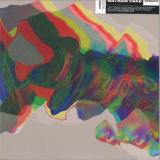
Nathan Fake - Evaporator

Nathan Fake

Evaporator

12inchIF1104STD
InFiné
23.03.2026

As Nathan Fake rises from the nocturnal subterranea and rave catharsis of his previous records, on Evaporator, he resurfaces into the domain of daylight, bringing a tangible sense of air rushing against your face, of big skies, and endless landscapes. The idea of pop accessibility that trickled into 2023’s Crystal Vision is refracted here through the prism of sweeping ambient, deep electronica, and trance uplift. Evaporator is Fake’s idea of “airy daytime music”, with each track a different barometer reading across the album’s varying atmospheres, which range from vibrant sunbursts, bracing rainscapes, and fine mists of clement melodics. “It’s not overtly confrontational electronic club music,” states Fake. “It’s quite pleasant, it’s accessible. As I was progressing through making the tracklist, I called it a daytime album. It doesn’t feel like an afterparty album.” For the past decade Fake has been gingerly introducing collaborations with heroes and friends alike into his lone, idiosyncratic working process. Border Community alumni Dextro AKA Ewan Mackenzie transmutes his ferocious drumming for Pigs Pigs Pigs Pigs Pigs Pigs Pigs into the blurred choral thump of ‘Baltasound’. ‘Orbiting Meadows’, meanwhile, is his second collaboration with Clark, an eerily idyllic duet where microtonal 18EDO piano clangs slowly twirl around wailing pads. Evaporator marks the junction point of old technology and ever fresh creativity for Nathan. The trusty “dinosaur” age software, particularly Cubase VST5, that has powered two decades of music is rarely updated. “I used to sort of feel a bit ashamed of using such old software, and then I kind of had an epiphany – that’s just how I work”, comments Fake. “That’s just how I play. I’m very fond of these old tools, and I get the most joy out of them, but now I’ve incorporated new technology too.” When an artist accumulates so much synergy with their instrument, music making becomes instinctual. By Fake’s account, much of Evaporator just fell into place. The album title arrived randomly in his head (“it felt completely perfect. Airy.”), ideas looped and developed until things locked into place and just felt right. ‘The Ice House’ is a fleeting glimpse of the sonic world he taps into in this creative state, its glassy FM synths built around a counterpoint between rough-hewn crystalline arpeggios and sparse yet gravitas-bearing bass. “That riff I just wrote out on the keyboard, I just played it forever and ever and ever. The original track ended up being really short. Here you go, and it’s gone!” These unplanned channellings of sound call forth records from Fake’s past while he looks ahead, perhaps getting at the very essence of his musicianship. The opener ‘Aiwa’ (“the breeziest,” he muses) reminds of the introspection that characterised Providence, excited by the fire and grit of Steam Days’ textural experiments, its chunky slams and clatters surging into a flood of harmonic buzzing as they reach out for old wisdom. ‘Hypercube’ stampedes in a similar chronological confluence, infusing an incessant synth line reminiscent of the golden age of rave with the crackling, ecstatic energy of modern festival anthems. Like the vaporisation of liquid to particles, everything that Evaporator presents has a mutant desire to be amorphous. Sounds rarely settle; the irradiated garage beat of ‘Bialystok’ is pitched downwards to driving, rebounding effect, while ‘You’ll Find a Way’ warps static into shivering energy, cinematic synth strings building anticipation into a gradual gush of chords. This translates into a more expansive stereo field than Fake has explored before. ‘Slow Yamaha’ saves the wildest, most kinetic transformations for last with a cornucopia of crispy melodies and fried drums; a sibilance of cymbals on the left, a susurrus of shakers on the right, and kaleidoscopic lasers pulsing and fizzing all around. Evaporation culminating in pure excited atoms. In a world where music has increasingly become background content, making albums remains lifeblood for Fake: “It makes me realise how long; twenty years is ages! It’s weird to see how much the world has changed. Release day back then you did fuck all, now you spend all day on socials. When I grew up the people who made the electronic music I was into were quite mysterious, and the artwork was very abstract. There was a massive distance between you and that music, and that was a key part of it, really. Now it helps to be an extrovert, and I'm just not, but the album marks the first time my face has graced the cover art. I’ve never wanted to do this before, I'm very shy, and generally I don’t like being seen,” he professes. “But, twenty years in, I supposed I could try something new. I'm very lucky that I'm somehow surviving in this world, where the media world favours extroverts and interesting looking people. It’s not my world but somehow I’m still in it.” Evaporator continues to prove Nathan’s necessary presence, with some of his most engaging, varied, and magical music yet.

out of Stock

Order now and we will order the item for you at our supplier.


Last In: 66 days ago
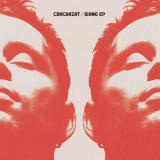
Crackazat - Shine EP

Crackazat

Shine EP

12inchFR314
Freerange
20.03.2026

Crackazat returns to Freerange for his latest EP entitled Shine, and sees the artist in his finest form to date! An absolute anthem in the making the title track appears here in Club Mix and Mana’s Dub form, plus an amazing flip of Crouching Tiger from Baltimore legend Karizma Shine is a soulful, jazz-inflicted epic which will have any dance floor worth it’s salt fully locked in. Crackazat’s own vocals bring hints of Jamiroquai whilst his production calls golden era MAW and Blaze to mind. Add an incredible arrangement, live horns, bass and drums to this already heady concoction and you get an idea of why we’re so excited about this release. These kind of club tracks are few and far between these days! Next up we have one of Crackazat’s own Mana’s Dubs of Shine.
A chance for Ben to strip things back, loop things up and dub things out. Keeping the funk intact, we’re treated to a feelgood party-starting house track which has a classic sound that can’t fail to warm the cockles! Flip over for a proper curve-ball from everyone’s favourite Baltimore house hero Karizma who turns Crouching Tiger into the kind of twisted, rolling, jazzy and leftfield workout we love him for. A driving force of the city’s underground, he always comes with the raw energy and fearless creativity. A staple of the dance floor and a leader beyond it, Karizma represents the past, present, and future of Baltimore House and once again proves why he’s such a don.

Drop this one and run for cover whilst the dancers throw crazy shapes! Closing out the EP we have Crackazat’s Mana’s Dub take on previous single Watchu Say. Looping up the killer piano hook and his live bass line, Ben manages to craft the kind of warm, uplifting slice of house music which simply works. And for those who love a big drop, this one should fit the bill with a trademark Mana’s Dub seratonin-boosting build that hits all the right buttons.

out of Stock

Order now and we will order the item for you at our supplier.


Last In: 36 days ago
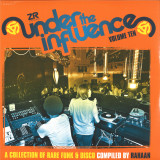
Various - Under The Influence Vol.10 LP  2x12"

Represss!

Z Records continues its commitment to unearthing the obscure and
long forgotten tracks from the last 40 years through the ever-popular
Under The Influence series. Following on from Red Greg, Nick The
Record, Sean P, Faze Action, and last years Alena Arpels. It’s now the
turn of one of the scene’s most impressive collectors & DJs; Rahaan

Hailing from Chicago his love affair with muzik started in the late 70’s early 80’s, listening to muzik on the radio combined with his mom and dad playing their records every weekend. In the early 80’s on the South side of Chicago, he started hearing something a bit different, what they called ‘house muzik’. A combination of Disco, Jazz, Soul Funk, New Wave and Italo Disco. Here Rahaan digs deep into his impressive record collection that he has collected, built up and crafted over his many years of travelling, networking and DJin to showcase 22 of his finest and rarest cuts. Many of the tracks on the album would cost hundreds and that’s if you were even able to find the originals! As always with ZR compilations a lot of time and effort has been spent on creating these masters from the original vinyl, cleaning them up, removing all the clicks and pops resulting in the cleanest sounding copy possible.

out of Stock

Order now and we will order the item for you at our supplier.


Last In: 65 days ago
Various - Tamla Motown – Ready Steady Go Live In ‘65' (Lp)
  • A1: The Supremes - Baby Love
  • A2: The Miracles - You Really Got A Hold On Me
  • A3: Stevie Wonder - I Call It Pretty Music
  • A4: The Temptations - The Way You Do The Things You Do
  • A5: Martha & The Vandellas - Heatwave
  • A6: Dusty Springfield - You Lost The Sweetest Boy
  • A7: The Earl Van Dyke Sextet Vamp
  • A8: The Miracles - Ooo Baby Baby
  • A9: The Vandellas & Dusty Springfield - Wishin' And Hopin
  • A10: The Temptations - It's Growing
  • A11: The Supremes - Shake
  • A12: Martha & The Vandellas - Nowhere To Run
  • B1: Stevie Wonder - Kiss Me Baby
  • B2: Marvin Gaye - Can I Get A Witness
  • B3: The Vandellas & Dusty Springfield - Can't Hear You No More
  • B4: The Supremes - Stop! In The Name Of Love
  • B5: The Temptations - My Girl
  • B6: Martha & The Vandellas - Dancing In The Street
  • B7: The Miracles - Shop Around
  • B8: The Supremes - Where Did Our Love Go?
  • B9: The Miracles & Various - Mickey's Monkey

Dusty Springfield hosted this impromptu TV special to promote the Tamla Motown artists that were taking part in their first ever European tour in 1965. Motown sent over their six premier - The Supremes, The Temptations, The Miracles, Stevie Wonder, Marvin Gaye, Martha & The Vandellas were all backed by the Motown house band, The Earl Van Dyke Sextet. Dusty was a huge Motown fan and was keen to play her part in bringing the acts to a wider audience. The Beatles and the Stones also went out of their way to give Motown a mention in their interviews. Remember, Motown had only just launched its label in Europe earlier that year and the artists were known only to a small number of soul aficionados, so ticket sales for the tour were very poor. Mary Wilson recalls that the acts referred to it as the ghost tour, but they all put a performance for this fabulous TV show.

pre-order now13.03.2026

expected to be published on 13.03.2026

Various - NOW – Yearbook 1983

Various

NOW – Yearbook 1983

3x12inchLPYBNOW83
Universal UK
11.03.2026
  • A1: Orchestral Manoeuvres In The Dark– Telegraph
  • A2: Blancmange– That's Love, That It Is
  • A3: China Crisis– Tragedy And Mystery
  • A4: Adam Ant– Strip
  • A5: Divine– Love Reaction
  • A6: Yello – I Love You
  • A7: Talk Talk– My Foolish Friend
  • A8: Japan– Canton (Live)
  • B1: Fun Boy Three– The More I See (The Less I Believe)
  • B2: Tracie*– Give It Some Emotion
  • B3: The Teardrop Explodes– You Disappear From View
  • B4: Xtc– Love On A Farmboy's Wages
  • B5: The Stranglers– Midnight Summer Dream
  • B6: The Kinks– Don't Forget To Dance
  • B7: Mari Wilson– Cry Me A River
  • C1: Bauhaus– Lagartija Nick
  • C2: Marc And The Mambas– Black Heart
  • C3: The Glove– Like An Animal
  • C4: Freur– Doot Doot
  • C5: The B-52'S– Song For A Future Generation
  • C6: Wall Of Voodoo– Mexican Radio
  • C7: Joe Jackson– Breaking Us In Two
  • D1: Oliver Cheatham– Get Down Saturday Night
  • D2: Rockers Revenge– The Harder They Come
  • D3: Freeez– Pop Goes My Love
  • D4: Malcolm Mclaren– Soweto
  • D5: Culture Club– I'll Tumble 4 Ya
  • D6: The Belle Stars– Indian Summer
  • D7: Level 42– Out Of Sight Out Of Mind
  • D8: Daryl Hall & John Oates– One On One
  • E1: Sparks & Jane Wiedlin– Cool Places
  • E2: The Romantics– Talking In Your Sleep
  • E3: The Fixx– Saved By Zero
  • E4: The Motels– Suddenly Last Summer
  • E5: Modern English– I Melt With You
  • E6: Missing Persons– Walking In L A
  • E7: Naked Eyes– Always Something There To Remind Me
  • E8: Taco– Puttin' On The Ritz
  • F1: Electric Light Orchestra– Secret Messages
  • F2: Men At Work– Overkill
  • F3: Pat Benatar– Little Too Late
  • F4: Journey– Separate Ways (Worlds Apart)
  • F5: Styx– Mr Roboto
  • F6: Giorgio Moroder & Joe Esposito– Lady, Lady
  • F7: Stephen Bishop– It Might Be You

Celebrating the first year of ‘NOW That’s What I Call Music’ – 1983. ‘Now Yearbook’ presents a stellar selection of 1983’s biggest and best hits… 80 huge chart hits from the year, alongside enduring and well-loved classics on 4 CDs. 1983 saw British artists achieving unprecedented success across the world with ‘Every Breath You Take’ from The Police being the year’s biggest seller in the U.S., and ‘Karma Chameleon’ from Culture Club being the top seller in the U.K. Breakthrough acts, achieving their first big hits – all here – include a staggering line-up of future superstars: U2, Eurythmics, Wham!, Paul Young, The Style Council, Marillion and Thompson Twins, to name a few..' Released on a LTD 4CD SET: This will be a limited run of 5000 4CD units housed in ‘hard-back book’ packaging and featuring a 28-page booklet that includes an overview of the chart music of 1983, a track by track guide including chart stats and fun facts, a selection of original picture sleeves and a quiz. 2CD Standard set and also a limited edition of 3000 units, pressed on 3LP translucent red vinyl...

out of Stock

Order now and we will order the item for you at our supplier.


Last In: 78 days ago
Various - 12 INCH LOVERS 11 LP 2x12"

Since 2020, 12 Inch Lovers have been releasing new samplers every year, eagerly anticipated by collectors. These samplers have now become a staple and are easily added to vinyl collections across Europe. They offer timeless classics and rare tracks that are often hard to find elsewhere.

With Samplers 11 & 12, they surprise again with a mix of modern classics and tracks that have never been released on vinyl or are difficult to find. By adding unique and exclusive tracks, the 12 Inch Lovers samplers remain innovative and high-quality. They are a must-have for DJs, collectors, and fans of contemporary classics!

SAMPLER 11

A1) Paul Kalkbrenner - No Goodbye (2019)

Berlin techno producer Paul Kalkbrenner became world-famous with his 2008 hit Sky & Sand. Since then, he has released one record after another and performed all over the world in the biggest venues and at the most renowned festivals. No Goodbye is one of his more recent hits, released in the summer of 2019.

The track was created using an a cappella he received on a demo tape while on tour. He was immediately inspired by the vocal and built his own sound and production around it. Interestingly, Kalkbrenner rarely uses vocals, but for No Goodbye he collaborated with Australian singer Chiara Hunter, giving the track a unique and instantly recognisable character. The result is a stylish, dance-floor-friendly track with a rolling house groove that quickly became a modern classic on dance floors worldwide.

A2) Water World - Give Me Love (2000)

This trance classic by Water World appeared in 2000 on the French label Adequat Records and is the perfect tune for a sunny summer evening. Warm melodies and pulsing beats instantly create that beach feeling, as if you were dancing with your feet in the sand. The record recalls Beachball by Nalin & Kane, sharing the same dreamy, sun-drenched vibe.

Behind Water World were producers Laurent David and Frédéric De Backer-names well known to many trance fans. In the nineties De Backer was active with projects such as Global Trance Mission (Dream Mission) and Y-Traxx, the trio that released the 1997 classic Mystery Land.

Give Me Love clearly bears their combined signature: euphoric, warm and melodic, with a timeless build that perfectly balances emotion and energy. The track was released on vinyl as part of Trance E.P. Vol. 01 and remains a fixture in retro-trance sets to this day.

B1) Panoramic - Colors (1996)

Colors by Panoramic is a Belgian trance classic released in 1996 on the legendary label XTC Records, a sub-label of Bonzai Records. Panoramic was a collaboration between Belgian techno icon Marco Bailey and Mauro Mirisola. The duo, also known under playful aliases such as The Coke Man & Sniff, released an EP featuring two powerful trance tracks.

We chose Colors, a tune with pure Belgian trance DNA: driving rhythm, dreamy synths and a catchy female vocal. The combination of Bailey's production expertise and Mirisola's creative touch resulted in a timeless track that still appears in many classic playlists.

B2) Natasha Bedingfield - Pocketful Of Sunshine (StoneBridge Club Remix) (2008)

British singer-songwriter Natasha Bedingfield released the album Pocketful of Sunshine in 2008, featuring the title track as a single. The original pop version became a major hit in North America, reaching the Top 5 in the US. Swedish DJ and producer StoneBridge (Sten Hallström) reworked the song into a groovy house version, released in the summer of 2008.

StoneBridge gave the upbeat pop tune a club-ready beat and an infectious piano riff that made it shine on dance floors worldwide. It was not his first time transforming pop into house gold-he had already achieved global fame with his remix of Robin S - Show Me Love (1992), one of the greatest house anthems of all time. He also remixed Sia - The Girl You Lost to Cocaine in 2008, another club favourite.

The StoneBridge Club Remix of Pocketful of Sunshine appeared on a special remix EP in July 2008 and was played endlessly in clubs-by us too, in the venues where we performed. The result is a timeless, sun-soaked house classic thatmakes sitting still impossible.

C1) Y-Traxx - Mystery Land (Fred Baker vs Mr Sam's Magical Mystery Dub Mix) (original release 1995)

Y-Traxx was a nineties trance project by DJs Laurent David and Fred Baker. This trance classic first appeared in 1995 as a B-side but gained real attention when it featured on a Paul Oakenfold mix album. Thanks to that success it received an official re-release in 1998 on the respected French label FFRR (Full Frequency Range Recordings).

In 2003 an excellent remix by Mr. Sam & Fred Baker followed on the Nebula label. That version is highly sought after on vinyl by trance collectors, and we are proud to feature it on our new sampler.

C2) Weiss - Feel My Needs (2018)

Feel My Needs by British producer Weiss (alias Richard Dinsdale) is the tune with that unmistakable old-school piano and catchy vocal that instantly pulls you onto the dance floor. Released in May 2018on the UK label Toolroom Records, the track is pure feel-good house with a modern touch. From the very first piano riff, hands go up in the air.

Toolroom even called it a "future anthem" for the summer of 2018, and indeed Feel My Needs became a huge floor-filler. The record charted high on global dance lists and gained massive popularity at festivals and clubs that year. With its warm piano chords, tight beat and soulful vocal, this is a modern house classic that will stay in the collective club memory for a long time.

D1) The Killers - Mr. Brightside (Jacques Lu Cont's Thin White Duke Mix) (2005)

American band The Killers formed in 2001 and scored a massive hit a few years later with Mr Brightside. Taken from their debut album Hot Fuss (2004), it became their biggest and best-known track-a true rock-pop anthem.

In 2005 the song was given an electronic twist when renowned producer and remixer Jacques Lu Cont (the alias of Stuart Price) created an eight-minute dance version titled Mr Brightside (Jacques Lu Cont's Thin White Duke Mix). This remix replaced the raw rock energy with a more progressive and electronic vibe, driven by a steady beat and long build-up.

The track found a second life in club culture and quickly became a dance-floor favourite. For vinyl collectors it was an instant must-have, and to this day it stands as the perfect party closer. The Killers themselves loved it so much that they often used the remix live as an outro, followed by the original version. A remix that perfectly bridged rock and club culture-and has since become a genuine classic.

D2) Sia - Drink To Get Drunk (Different Gear Remix) (2001)

The legendary ice-cube sleeve says it all: Drink to Get Drunk was a huge club hit in the early 2000s. Released in 2001 on the UK label INCredible, a sub-label of Sony Music, it was a collaboration between British DJ duo DifferentGear (Gino Scaletti & Quinn Whalley) and singer Sia.

The producers took Sia's original song Drink to Get Drunk from her album Healing Is Difficult and gave it a complete transformation, keeping her distinctive vocal and placing it over a hypnotic progressive-house groove.

The combination of Sia's unmistakable voice and the deep, driving production hit hard: the track became hugely popular in Belgian clubs and turned into an anthem of its time. In Belgium it even reached number one in the dance chart in early 2001, and it also performed strongly in the UK and the Netherlands.

To this day it remains a nostalgic crowd-pleaser that perfectly captures the atmosphere of the early 2000s.

out of Stock

Order now and we will order the item for you at our supplier.


Last In: 15 days ago
Isaac Carter & Callum Asa - Last Call LP

Have Isaac Carter & Callum Asa made the most tasteful tech house EP of recent memory? The short answer is
yes....

Isaac and Callum, known for their respective club nights: OCHI and Planet People have been quietly chipping away at the coalface of underground dance music for quite some time now.

Isaac - perhaps known more widely as a regular at Circoloco & Phonox has shared bills with the likes of Moodyman, DJ Bone, Kai Alce, Laurent Garnier and Marcellus Pittmann whilst being championed by Joy Orbison, Ben UFO, Moxie, Seth Troxler, Raresh and Floating Points to name but a few. With such an impressive CV and wide ranging support, it’s wild to note that the first EP released on his own label, OCHI only came out in 2023. His star is clearly ascending with rapidity - so when we throw long term collaborator Callum Asa into the mix, things start to get really interesting. Calum has been running Planet People for the last couple of years, welcoming incredible names such as Shed, Surgeon, Willow, Ploy, Cooly G, Rroxymore and so many more. Steel sharpens steel and having been surrounded by such esteemed talent, it’s clearly rubbed off on the pair who present 4 polished, meticulously constructed, club ready masterpieces, each with their own distinct feel and an insatiable groove.

‘Feel Me’ sets the scene with a descending baseline that would eek a wiggle out of the most reluctant spectator. The twisted dub eeks out even more groove, locking in a more sinister bounce for the heads. By The time ‘Understand’ get’s into full swing, we’re already under the spell of Carter & Asa, this is the kind of roller that could go on forever and ever. The synth embellishments and washes of analog synth pull us deeper and deeper in, prepping us for the finale , ’Try You’ which simmers with deep, brooding intensity.

The magic of the dup’s appeal is that this EP will find its way into the bags of the deepest diggers and also appeal to a new generation of house fans. Elements of it are accessible , but in the right hands - the EP will open a portal to new worlds.

out of Stock

Order now and we will order the item for you at our supplier.


Last In: 24 days ago
Rick James - Street Songs LP 2x12"
  • A1: Give It To Me Baby
  • A2: Ghetto Life
  • B1: Make Love To Me
  • B2: Mr. Policeman
  • C1: Super Freak
  • C2: Fire And Desire
  • D1: Call Me Up
  • D2: Below The Funk (Pass The J)

Rick James Blends Brazen Attitude, Fearless Sexuality, and Shrewd Charisma on Street Songs:

Punk-Funk Album Aims for the Hips and Head, Includes the Timeless Hit “Super Freak”
Sourced from the Original Master Tapes and Strictly Limited to 4,000 Numbered Copies:

Mobile Fidelity’s 180g 45RPM 2LP Set Presents 1981 Smash in Audiophile Sound for the First Time
1/4” / 30 IPS analogue master to DSD 256 to analogue console to lathe


“Punk funk” was a relatively unknown concept before 1981. But once Street Songs took the charts by storm that year, the world soon knew about what became Rick James’ signature style. And how. True to its name, Street Songs blends outspoken sexuality, brazen attitude, and edgy commentary amid contagious R&B-fueled arrangements that simultaneously aim for the hips, head, and various nether regions. And it’s never sounded better.

Sourced from the original master tapes, strictly limited to 4,000 numbered copies, pressed at Fidelity Record Pressing, and housed in a Stoughton gatefold jacket, Mobile Fidelity’s 180g 45RPM 2LP set presents James’ platinum-certified effort in audiophile quality for the first time. Playing with crisp dynamics, lively textures, airy headroom, and revealing clarity, this collectible edition of the record that stayed at the No. 1 spot on the R&B Album Charts for 20 weeks invites you to get closer to music that beckons you to turn your space into a private dance floor.

Then again, you’ll likely be so taken by how the taut bass lines, snappy rhythms, and four-on-the-floor beats — all rendered in stunning detail and with full-bodied architecture — come across with such accuracy and presence, you might stay pinned to your seat. On this pressing, the soundstaging, imaging, and lit-fuse energy of Street Songs reach new heights. Everything from the rubbery feel of the guitar lines to the depth of James’ temperature-raising vocals to the scale of the horn charts emerges as if James and his ace session crew set up in your room.

The Buffalo native and his ensemble waste no time getting their message across. On the album-opening “Give It to Me Baby,” James and company lay down a mix of sleek funk and pulsing disco that practically activates the bright lights of a discotheque and stimulates the libido of anyone within earshot. Having reached No. 1 on the Billboard Hot Soul charts, the song is pure sex — and just one of the carnal delights on a record that embraces the subject as fearlessly as James does his identity.

Of course, the most famous of James’ erotic excursions — the timeless “Super Freak” — hit No. 1 on Hot Dance Club Play charts, No. 16 on the Hot 100, and, later, No. 153 on Rolling Stone’s list of the Top 500 Songs of All Time. Bolstered by a quavering keyboard theme and electro riffs, the much-sampled track worms itself inside your muscles with smile-inducing subject matter, gliding vocals, nimble movements, a hot tenor-saxophone solo, and backing vocals by the Temptations.

The iconic Motown group isn’t the only celebrated guest artist on the Grammy-nominated Street Songs. James’ then-labelmate, Stevie Wonder, lends harmonica to the frank sociopolitical narrative on “Mr. Policeman,” a protest tune that also manages to stroll ’n’ strut via simmering organ, staggering brass accents, and James’ gritty vocal performance. In addition to contributing backing vocals on several cuts, Teena Marie turns in one of the album’s signature moments on “Fire and Desire,” a romantic old-school duet with James that impresses with smoothness, sensitivity, and smokiness.

High-profile colleagues aside, James remains the undisputed star, a figure whose leather-and-latex attire, braided hair, and natural swagger made him misunderstood by some in the mainstream and embraced by everyone in the know as a true original. As a testament to his magnetism and skills, his charisma and rawness seemingly seep through every note, whether on the balladic sweep of the risqué “Make Love to Me” or strident, poke-and-prod persuasion of the moonwalking “Call Me Up.”

On the closing “Below the Funk (Pass the J),” an uptempo autobiographical tale that addresses the visionary musician’s second-favorite love, the singer acknowledges his upbringing and inseparable connection with his roots — an homage to where he began and a toast to where he’s gone.

Rick James, keepin’ it real on Street Songs, still as real as it gets.

out of Stock

Order now and we will order the item for you at our supplier.


Last In: 3 months ago
Alton Miller - Spirit Chaser

Alton Miller

Spirit Chaser

12inchQUINTESSE99
Quintessentials
27.02.2026

Before celebrating its 100th release, Quintessentials is very happy to present another ep from Detroit’s finest Alton Miller (in fact it’s his 4th for the label)! „Last one 1st“ is a driving and building Detroit inspired track, that doesn’t lack elegance. The remix courtesy of french hot shot Life Recorder (check out his full EP on Quintessentials as well) focuses on a proper Detroit House vibe, call it a classic. The b-side is deeeeep! The original version of „give it up“ is a smooth and soulful tune providing goose bumps. Switzerland’s finest house producer Shaka adds some club feel to a beautiful early morning track. Classic release!

out of Stock

Order now and we will order the item for you at our supplier.


Last In: 49 days ago
Mad Skillz - From Where??? (2x12")

Mad Skillz

From Where??? (2x12")

2x12inchGET52761LP
GET ON DOWN
27.02.2026
  • A1: From Where??? (Intro)
  • A2: It's Goin' Down
  • A3: The Nod Factor
  • A4: Va. In The House
  • B1: Tongues Of The Next Shit
  • B2: Doin' Time In The Cypha
  • B3: Tip Of The Tongue
  • B4: Extra Abstract Skillz
  • C1: Wmad (Interlude)
  • C2: Get Your Groove On
  • C3: The Jam
  • C4: Move Ya Body
  • D1: Street Rules
  • D2: All In It
  • D3: Unseen World
  • D4: Inherit The World

Originally released in 1996 via Big Beat/Atlantic Records, From Where??? is the debut album by Richmond, VA-based emcee Mad Skillz, which features countless classic cuts by some of the best producers in the game (roll call: J Dilla, Shawn J. Period, Buckwild, DJ Clark Kent, Nick Wiz, The Beatnuts & Large Professor). The

album was also praised for its strong lyrical content. Skillz, as we know him, was never short on captivating listeners with his punchlines and wordplay. In 2002, he began his annual “Rap Up” series, incorporating a year’s worth of headlines from the prior year. On From Where??? The singles “The Nod Factor and “Move Ya Body” received steady radio and video airplay while album cuts like “VA. In The House, “Doin Time In

The Cypha,” “The Jam,” and the showstopper “Extra Abstract Skillz” (Featuring Q-Tip & Large Professor) all round out the album with bangers from start to finish. Out of print on vinyl in the United States since its original release, Get On Down is proud to present another underrated Golden Era classic on vinyl. From Where??? is pressed on half-and-half with black splatter-colored vinyl, limited to 1000 copies.

pre-order now27.02.2026

expected to be published on 27.02.2026

MAKAM - TARP LP 2x12"

MAKAM

TARP LP 2x12"

2x12inchDKMNTL114
Dekmantel Records
27.02.2026

Making a welcome return nine years on from his last outing on Dekmantel, Makam offers up a generous helping of wayward grooves that take his curious spirit even further into unmarked territory. With a strong dub sensibility grounding his rich tapestry of percussion and instrumentation, Guy Blanken follows his own path to arrive at an album that embodies house music as a launchpad for experimentation.

Blanken says himself he was determined to approach his first Makam productions in years from a place of total freedom — "It's not a single direction, but rather a landscape of sounds, moments, and textures. TARP feels like a new beginning, a free project that just had to happen naturally." The steady pulse of the club remains a guiding principle boldly manifested on heads down roller 'Static Shade', but even in the lilting organic loops and tumbling percussion of 'Forgive' there is a funkiness that's beholden to continuous movement.

At times the direct thump of 4/4 disco juts out as a call to dance, not least on 'Flying Birds' and 'La Tuna', but elsewhere the rhythms are more slippery. 'Dub In Loen' plots a delicate path through dub techno and 'Lummel Spirit' casts off into pattering Balearic bliss. The pervasive dub mood of the record comes to the fore on expertly crafted stepper 'Diagonal Rain' and crooked album opener 'Clear Skies'. 'Jackie B' lands as a love letter to quintessential deep house, and yet still there's a left-of-centre charm that gives the track a personality that is pure Makam.

Exuding warmth and imagination at every turn, TARP is the perfect example of how to make a groove-oriented album a rich home listening experience. There are ample moments primed for the spectacle of the dancefloor, but the mellow hue and broad sweep of approaches make Makam's welcome return utterly compelling from end to end.

out of Stock

Order now and we will order the item for you at our supplier.


Last In: 45 days ago
Tranquil Elephantizer - Zombie Dawn

On and on, the beat goes on. Sound System culture plays a huge part in the history of House music, shaping Mysticisms, its founders and the music it brings into the spotlight. Continuing the dive into that history, in all its forms and permutations, Tranquil Elephantizer’s 1995 classic Zombie Dawn is reissued here in its original form.

A name that has been getting noticed on recent releases for the likes of legendary San Francisco collective Wicked Records and Manchester’s cult Red Laser label, the project has, in fact, been around for several decades.

Morphing out of the late 80s Acid House revolution, members Alexis Worrall, brothers Caspar and Darius Kedros and focal point, David Jenkins aka DJ Shakra came together in the South London melting pot of free parties and DIY anything is possible ethos.

Born of a collaboration between the short-lived Camberwell Butterflies project – featuring Alexis Worrall and DJ Shakra amongst others – and the Kedros’ bothers downtempo/trip hop forbears Slowly. With a shared label, on the ground-breaking Chill Out Records, and Thursday late-night encounters at London’s legendary Megatripolis club, they decided to pool studio resources and Tranquil Elephantizer was born.

Mixing lo-fi 808 heavy analog jams of the Butterflies, with the studio sophistication from the Slowly crew, sparked something new and Zombie Dawn was the first result. Local producer Crispin J Glover dropped by the studio, riding high with his Caucasian Boy project’s hypnotic Northern Lights (featuring DJ Shakra on Roland 303) – recently out on Strictly Rhythm – he offered to remix both Zombie Dawn and the Slowly album cut No Slo Dub for release on his own Matrix label and an underground hit on the London and West Coast 90s party scene was born.

Coming in the original “Saxmental Mix”, alongside Glover’s storming “Nu Dawn Club Mix” Zombie Dawn was a correlation of the past, present and future in one record. The history of British House can be heard in the bumpin’ nature of the beats, the sharp hats encompassed around dub overtones that give it added warmth. The slightly quirky, left field touches of the tracks, set against the then weekly overload of sharp US imports, brought the mix of influences from the Tonka and Sugarlump Sound Systems they had partied and been involved with, on to vinyl, adding touches of jazz keys and disco’s heritage for good measure.

A bedfellow for the emerging UK House sound coming on the likes of Luxury Service (Rob Mello / Zaki Dee), Other (A Man Called Adam / DJ D) and Nuphonic (Faze Action / Idjut Boys), that shaped and defined London clubs and far beyond. Some 30 years later, with a new album on the way, here is debut Tranquil Elephantizer’s release, remastered especially for this reissue, ready to bring that optimistic thinking back.

Tranquil the Mystery.

out of Stock

Order now and we will order the item for you at our supplier.


Last In: 85 days ago
Nanook Of The North - Heide

Nanook of the North is back with their second album, following the enthusiastically received 2018 debut "Nanook of the North," (Denovali) The duo of a composer and violinist Stefan Wesołowski and electronic producer Piotr Kaliński were acclaimed by Boiler Room, The Wire or NPR. Bob Boilen of Tiny Desk Concerts called Nanook of the North's performance "one of the wow moments of SXSW". Their new material is a raw and minimalist sonic landscape, practically devoid of percussive elements but featuring vocals by an acclaimed mezzo-soprano Margarita Slepakova. As with the debut, the music on "Heide" is rooted in nature and its primordiality. The title of the album alludes to wildness and untamedness, and the material was recorded last winter in a village located in the middle of forests in the northern Poland, which is clearly felt in the atmosphere of the 9 new tracks on "Heide".

Stefan Wesołowski is a Polish composer and violinist, author of critically acclaimed original albums and film music scores. Associated with publisher Mute Song and record labels like Important Records, Lakeshore Records, Ici D'ailleurs and Back Lot Music. He is an author of original soundtrack to „Listen to me Marlon” (Universal) - Oscar-shortlisted and BAFTA-nominated documentary on Marlon Brando directed by Stevan Riley and original soundtrack to Irish feature film by Nathalie Biancheri entitled „Wolf” (Focus Features), starring Lily-Rose Deep and George MacKay, premiered 2021 at Toronto Interational Film Festival.

Piotr Kaliński is na electronic music producer and guitarist. Based in Gdańsk, Poland. Associated with record labels like R&S Records and Instant Classic. Member of Hinode Tapes, Hatti Vatti and JANKA bands. One of the most active figures in Polish alternative scene - in last few years he performed live in many countries across Europe, Japan, Korea and United States. Kaliński is an author of original music for short films, fashion brands campaigns like Calvin Klein or Paul Smith and games (i.e. „Cyberpunk 2077”).

Margarita Slepakova is a coloratura mezzo-soprano specialized in the field of historical practices of early music. Based in Switzerland, she is a renowned opera, concert, and recital singer, collaborating with ensembles and orchestras all over Europe. Slepakova is a founder of Le Sommeil project, specializing in French music of the 17th century. She sang in many concert halls and opera houses including Carnegie Hall and Royal Albert Hall during BBC Proms. Margarita also performs contemporary music and has premiered pieces written especially for her voic

out of Stock

Order now and we will order the item for you at our supplier.


Last In: 3 months ago
GREEN MILK FROM THE PLANET ORANGE - City Calls Revolution LP 2x12"
  • A1: Concrete City Breakdown (19:55)
  • B1: Omgs (7:09) B2. Demagog (8:29)
  • C1: A Day In The Planet Orange Part1 (22:44)
  • D1: A Day In The Planet Orange Part2 (12:21)

LIMITED EDITION (500 COPIES) 20TH ANNIVERSARY REMASTER, AVAILABLE ON VINYL (2LP) FOR THE FIRST TIME IN ALMOST TWO DECADES. HOUSED IN GORGEOUS GLOSSY GATEFOLD SLEEVE AND PRESSED ON RED & ORANGE VINYL TO COMPLIMENT THE ARTWORK
City Calls Revolution is our second full-length album, created as we absorbed the new wave revival and math rock movements that emerged in the early to mid-2000s, while simultaneously reconstructing elements of classic progressive rock, hard rock, and experimental music in our own way.
The album strongly reflects the attitude we cultivated as a live band—deeply influenced by the American and Japanese bands we shared stages with at the time—and embodies the punk spirit that shaped us.

Recorded and mixed in March 2005 at Headgear Studio in Brooklyn, New York, by Paul Mahajan (known for his work with Yeah Yeah Yeahs, TV on the Radio, and others), the album was originally released in May of the same year on both LP and CD by Beta-lactam Ring Records, then based in Portland, Oregon. Long out of print, it now returns two decades later as a newly remastered edition to be released by Riot Season Records in the UK.

In 2026, GREEN MILK FROM THE PLANET ORANGE celebrates its 25th anniversary—and also marks 10 years since Damo joined as our current bassist. It is a joy and an honor to have this album, filled with songs we still play live today, reissued in such a milestone year.

Starting January 2026, we will bring this LP on tour across 27 shows in 11 European countries, including the UK. We look forward to seeing all of you at the venues.
/// 2026 Winter European Tour ///

pre-order now20.02.2026

expected to be published on 20.02.2026

Alex Rex - The National Trust LP

Alex Rex, the project of acclaimed musician and former Trembling Bells bandleader Alex Neilson, is set to release his fourth and final studio album, The National Trust, on March 28th. Written in the wake of the sudden death of his younger brother, Alastair, the album is a poignant reflection on loss, love, and renewal, deeply rooted in the landscape of Carbeth—a cabin community in the Scottish countryside that Alastair called home. For Neilson, the cabin became both a physical and emotional project, a symbol of restoration and reconnection.

"For the first four years after Alastair died, his cabin lay empty and exposed to the remorseless Scottish weather. It came to look like a rotten tooth in a beautiful mouth. Cladding was dropping off its veneer, the ashen baubles of dead wasps nests clung to the rafters, all his possessions were just as he'd left them but eaten by mice, moths and time. Ashtrays still carried the crushed centimetres of his old tab ends. The cabins are so joyfully animated by their host's specific personality and this one looked like a haunted house. Guilt, unrealised hopes and encroaching nature yoked together in a wandering sadness. Combined with the fact that I didn't know the right way round to hold a hammer made the project of its restoration seem hopeless.”

Neilson, however, gradually began chipping away at the task, determined to transform the cabin into something he hoped would resemble “a National Trust site occupied by a psychopath,” with a little help from some friends, including Lavinia Blackwall and Marco Rea.

“They poured love into the cabin and helped restore Alastair's original vision. The project also helped restore my relationship with Lavinia which had fractured after Trembling Bells broke up in 2017. Alongside long-term Rex lieutenant Rory Haye, we applied the same intensity of dedication that we did in renovating the cabin, into creating The National Trust.”

As with Neilson’s previous albums, the recording process was intentionally unpolished, with songs presented in the studio with no rehearsals and captured in just a few takes. This raw, immediate approach amplifies the emotional weight of the album, which Neilson describes as being at a “personal apex of sour self-reflection, mock misanthropy, and self-exposure.” Longtime collaborators Lavinia Blackwall, Marco Rea, and Rory Haye return, alongside guest musicians like Jill O’Sullivan (Jill Lorean) and Trembling Bells guitarist Mike Hastings, to bring Neilson’s vision to life. The result is a deeply personal and multifaceted work, blending acid wit with haunting introspection.

The songs on The National Trust traverse a wide emotional and thematic range. The title track opens the album with a sharp and confessional edge, exploring love, loathing, and cultural critique with Neilson’s signature wit. “Boss Morris” pays tribute to the all-female Morris dancing troupe that reinvents British folk with vibrant energy, while “Two Kinds of Song” turns self-referential humour into an avalanche of remorse, culminating in the unforgettable chorus: “I’ve got two kinds of song. Which one will it be; one where I hate myself or one where you hate me?” Elsewhere, tracks like “Psychic Rome” draw from the decadence and hysteria of ancient Rome, while “The Coward in the Tower” breaks new ground as the only song Neilson has composed on an instrument before recording.

Throughout the album, Neilson’s lyricism is as vivid as ever, transforming personal tragedy into poignant and often darkly humorous art. Yet, there is a sense of finality to this work. "Songwriting has encouraged me to see the whole world as a resource. The things people say and throw away can be chiselled and polished and plopped into a lyric. It’s the same with building the cabin- scouring the edges of society for pallets, discarded wood, ornaments for the garden. But while song writing brings to life orphaned parts of my personality, the cabin is a synthesis of all my interests – nurturing my emotional health instead of exploiting it. With that in mind, I think this will be my last album as Alex Rex.”

With The National Trust, Neilson closes a significant chapter of his career, blending masterful musicianship with deeply personal storytelling. Known for his collaborations with artists such as Bonnie "Prince" Billy, Shirley Collins, and Current 93, as well as his decade-long tenure leading the psych-folk outfit Trembling Bells, Neilson has long been celebrated for his eclectic and uncompromising vision. This final album serves as a fitting culmination of his journey as Alex Rex, capturing the essence of his artistry while offering a profound exploration of loss, renewal, and the enduring power of love.

pre-order now20.02.2026

expected to be published on 20.02.2026

Daphni - Butterfly LP 2x12"

Daphni

Butterfly LP 2x12"

2x12inchJIAOLONG034CLP
JIAOLONG
19.02.2026

At the start of this summer, following a three-year hiatus for Daphni (punctuated only by his first ever collaborative Daphni track ‘Unidos’ alongside Sofia Kourtesis), he dropped ‘Sad Piano House’. The track represented something of a continuation in the Daphni catalogue, its roots growing from Cherry’s ‘Cloudy’ and its subsequent Kelbin remix, something in that song’s makeup having a profound effect when played on dancefloors by Snaith and countless others. ‘Sad Piano House’ deployed more intangibly irresistible bendy piano to equally satisfying effect and continues to achieve similarly rhapsodic dancefloor saturation.
Though a sizeable gap for Daphni releases, between Cherry and Butterfly however of course sits Honey, the latest Caribou album and one that saw the more instantaneous and dancefloor leaning traits of Daphni peaking through the cracks more than ever before. This blurring of the lines leads to an intriguing collaboration in Butterfly’s lead single ‘Waiting So Long (feat. Caribou)’. An unlikely duo - in that both artists are the same man, Dan Snaith - ‘Waiting So Long’ is not so much an identity crisis, ego trip, or the result of a chemical spill in the Snaith laboratory. It’s simply a track that Snaith felt for the first time belongs to both aliases, and might appeal to fans of both. He has never sung on a Daphni track before, and did not set out with the intention to do so this time, and yet this strange billing was born.

Daphni music has always been Snaith’s way of hitting directly to the core of the dancefloors he spends so much of his time playing to, and those dancefloors have been steadily expanding as his name grows, with the music following suit. This album however also draws from further back with a definite kinship to the very first Daphni album, the invigorating bag of ideas that was Jiaolong.
Butterfly is a showcase of the wonderful variety and surprising twists and turns that made that album such an exciting new prospect and that still to this day make Snaith such an intriguing DJ. There are more heavy hitters here, tracks that fill those dancefloors better than anyone, like ‘Clap Your Hands’ which picks up the energy of ‘Sad Piano House’ and flips it, exposing the gritty and intoxicating underbelly of Snaith’s hitmaking side, while retaining the playful urgency that runs through all of his work of late. Meanwhile ‘Hang’’s comic-strip horns are unpinned by gleeful force, unrelenting and thrillingly unshakeable. Elsewhere though comes a clutch of other tunes that might creep out somewhere more off the beaten path, a path Snaith has never stopped seeking in amongst his larger billings. ‘Lucky’ is squirmy and elusively intoxicating, ‘Invention’ skitters down meandering, inviting corridors, ‘Talk To Me’ grumbles and broods in the murk, and ‘Miles Smiles’ could roll on endlessly, so confident in its groove. There are no obvious peaks in these tracks or unifying moments, in fact many of them really have no business being on the dancefloor at all, and yet in the right setting, they could be the most fun to be had all night.

One such club is a good microcosm for the ethos of Butterfly as a whole. “Around the time I was finishing up this album I played a long set in a club called Open Ground in Wuppertal, Germany.” Snaith recalls, “It’s kind of, in one sense, the platonic ideal of the kind of club I’d want to play in. Every single decision has been taken, at great expense, with the aim of making the perfect sounding medium sized club room. But on top of it being the perfect acoustic environment it also is run by an amazing collection of people in a way that gives it a sense of community that dance music at its best provides. It is an absolute pleasure to play in that room to a crowd of people who come from all over. Playing in there you feel like you can play anything, and I played works in progress of pretty much every track on this album in my set there. Don’t get me wrong, I love playing a short set at a festival or in a more raw warehouse kind of club where you bang it out and only really functional music works but on record I guess the point of these Daphni records is to keep in mind a more expansive idea of dance music where the parameters are broad and the church is broad. I think that actually, putting really functional stuff next to weirder tracks (both on an album and in a dj set) might be the thing that’s still most interesting to me.”
This is the feeling that’s most palpable on Butterfly, and in every single time you see Snaith DJ. Right from the inception of the Daphni alias - and even before that – the thrill of trying stuff out, pushing at the boundaries has always been there and on Butterfly is present in all its twists and turns. It leaps all over the place and yet it hangs together, never feeling like a grab bag of dancefloor utilities but rather a distillation of all the strings to Snaith’s bow, exhilaratingly human and unified by one singular concept – simple and joyful exploration.

out of Stock

Order now and we will order the item for you at our supplier.


Last In: 3 months ago
Daphni - Butterfly LP 2x12"

Daphni

Butterfly LP 2x12"

2x12inchJIAOLONG034LP
JIAOLONG
19.02.2026

At the start of this summer, following a three-year hiatus for Daphni (punctuated only by his first ever collaborative Daphni track ‘Unidos’ alongside Sofia Kourtesis), he dropped ‘Sad Piano House’. The track represented something of a continuation in the Daphni catalogue, its roots growing from Cherry’s ‘Cloudy’ and its subsequent Kelbin remix, something in that song’s makeup having a profound effect when played on dancefloors by Snaith and countless others. ‘Sad Piano House’ deployed more intangibly irresistible bendy piano to equally satisfying effect and continues to achieve similarly rhapsodic dancefloor saturation.
Though a sizeable gap for Daphni releases, between Cherry and Butterfly however of course sits Honey, the latest Caribou album and one that saw the more instantaneous and dancefloor leaning traits of Daphni peaking through the cracks more than ever before. This blurring of the lines leads to an intriguing collaboration in Butterfly’s lead single ‘Waiting So Long (feat. Caribou)’. An unlikely duo - in that both artists are the same man, Dan Snaith - ‘Waiting So Long’ is not so much an identity crisis, ego trip, or the result of a chemical spill in the Snaith laboratory. It’s simply a track that Snaith felt for the first time belongs to both aliases, and might appeal to fans of both. He has never sung on a Daphni track before, and did not set out with the intention to do so this time, and yet this strange billing was born.

Daphni music has always been Snaith’s way of hitting directly to the core of the dancefloors he spends so much of his time playing to, and those dancefloors have been steadily expanding as his name grows, with the music following suit. This album however also draws from further back with a definite kinship to the very first Daphni album, the invigorating bag of ideas that was Jiaolong.
Butterfly is a showcase of the wonderful variety and surprising twists and turns that made that album such an exciting new prospect and that still to this day make Snaith such an intriguing DJ. There are more heavy hitters here, tracks that fill those dancefloors better than anyone, like ‘Clap Your Hands’ which picks up the energy of ‘Sad Piano House’ and flips it, exposing the gritty and intoxicating underbelly of Snaith’s hitmaking side, while retaining the playful urgency that runs through all of his work of late. Meanwhile ‘Hang’’s comic-strip horns are unpinned by gleeful force, unrelenting and thrillingly unshakeable. Elsewhere though comes a clutch of other tunes that might creep out somewhere more off the beaten path, a path Snaith has never stopped seeking in amongst his larger billings. ‘Lucky’ is squirmy and elusively intoxicating, ‘Invention’ skitters down meandering, inviting corridors, ‘Talk To Me’ grumbles and broods in the murk, and ‘Miles Smiles’ could roll on endlessly, so confident in its groove. There are no obvious peaks in these tracks or unifying moments, in fact many of them really have no business being on the dancefloor at all, and yet in the right setting, they could be the most fun to be had all night.

One such club is a good microcosm for the ethos of Butterfly as a whole. “Around the time I was finishing up this album I played a long set in a club called Open Ground in Wuppertal, Germany.” Snaith recalls, “It’s kind of, in one sense, the platonic ideal of the kind of club I’d want to play in. Every single decision has been taken, at great expense, with the aim of making the perfect sounding medium sized club room. But on top of it being the perfect acoustic environment it also is run by an amazing collection of people in a way that gives it a sense of community that dance music at its best provides. It is an absolute pleasure to play in that room to a crowd of people who come from all over. Playing in there you feel like you can play anything, and I played works in progress of pretty much every track on this album in my set there. Don’t get me wrong, I love playing a short set at a festival or in a more raw warehouse kind of club where you bang it out and only really functional music works but on record I guess the point of these Daphni records is to keep in mind a more expansive idea of dance music where the parameters are broad and the church is broad. I think that actually, putting really functional stuff next to weirder tracks (both on an album and in a dj set) might be the thing that’s still most interesting to me.”
This is the feeling that’s most palpable on Butterfly, and in every single time you see Snaith DJ. Right from the inception of the Daphni alias - and even before that – the thrill of trying stuff out, pushing at the boundaries has always been there and on Butterfly is present in all its twists and turns. It leaps all over the place and yet it hangs together, never feeling like a grab bag of dancefloor utilities but rather a distillation of all the strings to Snaith’s bow, exhilaratingly human and unified by one singular concept – simple and joyful exploration.

out of Stock

Order now and we will order the item for you at our supplier.


Last In: 37 days ago
REBOOT & SHOKË - House Call EP

Nick Curly and Marc Scholl present the next chapter on Cécille Records - a collaboration where Reboot meets a new generation of Italian talent, Shokë.

Frankfurt-based Reboot, a key member of the Cécille family, joins forces with the young and rising Naples-based duo Shokë for their debut on Cécille Records. Naples and Italy as a whole, has been home to a strong and loyal Cécille fanbase for decades, making this collaboration a natural next step.

The connection was sparked through shared ties within the Italian scene, with Blackchild playing a key role in bringing the artists together and connecting Shokë and Reboot early on. From the very first studio sessions, a strong and organic synergy emerged …one that is clearly reflected in the music.

The result is a collection of powerful, timeless house tracks with depth, groove, and character, blending experience with fresh energy while carrying the unmistakable spirit of Cécille Records.

out of Stock

Order now and we will order the item for you at our supplier.


Last In: 3 months ago
Alistair Colling vs. Tortured Soul featuring Sabina - When You Find Your Love…Hold On  25th Anniversary Mixes

25 years ago, at the turn of the millennium, downtown NYC was spoiled with record stores. In this pre-digital age, vinyl was king for club DJs, and shops such as Downtown 161, Dance Tracks, and Vinyl Mania peppered lower Manhattan, thriving businesses that supported an expanding scene of local and international DJs. Perhaps the largest and most established of these was Satellite Records, an institution of club sounds that also spawned multiple record labels, including the deep-house imprint Central Park Recordings.

At this time, Central Park Recordings and Satellite Records owner Scott Richmond signed a demo in need of a vocal from young British producer Alistair Colling, and enlisted John-Christian Urich to write it, who had just had a massive hit with “I Might Do Something Wrong” the debut Tortured Soul single on Central Park. He in turn brought in Sabina Sciubba of then newly-formed band Brazilian Girls to record the vocal, and with Jon Cutler on remix duties the record was complete. Tortured Soul went on to release numerous deep house classics like “Fall In Love,” “How’s Your Life” and have continued to tour as a groundbreaking live-house act to this day (of which RNT co-founder JKriv was bassist and collaborator for 10 years).

For the 25th anniversary of this turning point release, Razor-N-Tape has rebooted and remastered the original and classic Jon Cutler mixes, which have never been reissued in any format since the original release. RNT also commissioned two new exemplary remixes from DJ Spinna and musclecars, connecting the dots between the deep-house lineage of the past and present. Presented in a gorgeous jacket that calls back to the graphical style of the original Central Park Recordings aesthetic, this 12” is an absolute essential for any lover of soulful club sounds or purveyor of NYC dance music history.

out of Stock

Order now and we will order the item for you at our supplier.


Last In: 83 days ago
Jackie Mittoo - Rides On LP
  • A1: Jah Jah Harmony
  • A2: Natty Congo Rides On
  • A3: Soulful Times
  • A4: Jumping Up
  • A5: Freedom Smile
  • A6: Taking You Somewhere
  • B1: Nanny Skank
  • B2: Look At Life
  • B3: Hard Times
  • B4: Pray To Play
  • B5: Too Bad Bull
  • B6: No Get Dub Over

Jackie Mittoo, organ and piano maestro, was also one of the founding members of Jamaica's top session band The Skatalites. Musical arranger for Studio One he provided the backbone to so many of Jamaica's finest tunes. The invention of Ska music and the sounds that rode through the Rocksteady and Reggae period all carry his stamp. Whether it be in his various incarnations, the aforementioned Skatalites, The Soul Brothers, Soul Vendors and the Sound Dimension or under his own name, his distinctive organ and piano sound and musical arrangements have all played a major part in Jamaica's musical history.

Jackie Mittoo (born 1948, Kingston, Jamaica) began playing musical instruments at a very early age. Taught piano by his grandmother he was performing live by the age of 10 and recording by the age of 15. Two Kingston bands that he played with the Rivals and the Sheiks brought him to the attention of Studio One's founder Coxsone Dodd. Who at the time was putting a group of musicians together to be his studio band. Impressed by his skills on both the organ and the piano, Jackie was asked to join in what would become Jamaica's foremost band The Skatalites. The fellow band members were Lloyd Brevett (bass), Lloyd Knibbs (drums), Don Drummond (trombone), Tommy McCook, Roland Alphonso and Lester Sterling (Sax), Johnny Moore (trumpet), Jah Jerry (guitar) and Mr Mittoo (piano). This line up ruled the Jamaican scene between 1964 - 1965 as well as inventing the Ska sound, they also performed the backing duties for the other top labels of the time including Duke Reid's Treasure Isle and Justin Yap's Top Deck label.

1965 saw The Skatalites disband and Jackie Mittoo move on to his next musical project The Soul Brothers. Formed with fellow Skatalite Roland Alphonso, this band would back all the hits coming out of Studio One for the next three years with Jackie Mittoo working as band leader and musical arranger. Around this time Jackie also had his own single released, a Ska underground classic called 'Got My Bugaloo'. Rare, as it also features Jackie in the unusual role for him, as lead singer!!!!.

1966 saw the Ska sound evolve into Rocksteady, again with Jackie's band at the helm, and his first hit single the Rocksteady cut 'Ram Jam'. The success of which would lead to a solo career and album releases under his own name such as 'Now', 'Macka Fat', 'Evening Time', 'In London' and 'Keep on Dancing', to name but a few. In1967 the hits at Studio One were still flowing when The Soul Brothers morphed into The Soul Venders and began backing such luminaries as Ken Boothe, Alton Ellis, Delroy Wilson, The Heptones, The Cables, The Wailers and many other of the labels solo artists.

By 1968 Jamaican music was ready for another change and Rocksteady rolled into a slower groove soon to be called Reggae. Jackie Mittoo would be at the forefront with his latest band The Sound Dimension. A line up that included Leroy Sibbles (bass), Roland Alphonso and Cedric Brooks (saxophone), Eric Frater and Ernest Ranglin (guitar) and Bunny Williams (drums). Being the house band at Studio One they backed all the leading names of the time, John Holt, Horace Andy and Alton Ellis, all of Studio One's output carried his sound.

Jackie Mittoo emigrated in the late 60's to Canada, but travelled to Jamaica and London to record with many of the big new names, who were trying to redress Studio One's supremacy and needed his magic touch. Such Producers as Bunny Lee used Jackie Mittoo on many of his sessions, Sugar Minott among others were always glad of his services.

We have captured some fine 1970's cuts that feature Jackies numerous talents, showing his ability to embellish tracks with a feel that few could better, Musical arranger, band leader all round studio ace. We hope you enjoy the set and I'm sure you'll agree with us Jackie Mittoo does indeed Ride On.........

pre-order now13.02.2026

expected to be published on 13.02.2026

Lukas Traxel - One-Eyed Daruma LP

Swiss artist Lukas Traxel releases his powerful debut album One-Eyed Daruma on We Jazz Records, March 10. The trio features Traxel on double bass, Otis Sandsjö on sax and Moritz Baumgärtner on drums. Compact, deep, and organic to the bone, Traxel & co's sound echoes the innovations of rhythmically driven avantgarde jazz while keeping things moving at all times. There's both drive and freedom to this sound.
ONe-Eyed Daruma features eight new compositions by Traxel, who crafted the outline for the album while dealing with the loss of his father. The group came together after an open invitation from the Zurich jazz club Moods to present a new group. The trio of Traxel, Sandsjö and Baumgärtner creates a full, symphonic, and powerful body of sound despite the instrumentation without a harmony instrument. The trio functions as a collective where the boundaries between composition, melody, and accompaniment are in flux, while keeping the common goal of creating new music together in sight at all times. Traxel reports that after playing bass in various groups with guitar and/or piano, he wanted to create a counterpoint of sorts with his new group and specifically go about it with a more sparse setup. As One-Eyed Drama proves, the idea behind the trio dynamic is a strong one and the unit makes use of their extra space in creating evocative, moody, swinging creative jazz with a distinguishable fingerprint of its own.
Lukas Traxel says:

"The process of composing this music while dealing with the loss of a loved one resulted in a writer's block at first. The notes would just not flow out of my pen until I noticed a mysterious-looking figure in the right upper corner of my piano. It was a daruma, an eyeless figure that in the Japanese tradition brings luck and prosperity. According to the myth, the first eye must be drawn onto the figure while expressing a wish. The second eye can be added only if the wish comes true. My daruma is meant to stay one-eyed as my wish, strongly connected and intertwined with my now gone father, is not meant to be fulfilled. The feeling of unfulfillment and imperfection of life serves as a common thread throughout this album, right down to its title. In a similar fashion, a composition remains incomplete until it is interpreted by musicians, and given form as music. That being said, for me playing together with this trio symbolises the upside: the sense of fulfillment in music and life.

Our musical influences include the American composer and singer Caroline Shaw, Swiss pianist Colin Vallon's trio, and composer/singer-songwriter Gabriel Kahane. In addition, I have listened a lot to the trio albums of Jimmy Guiffre and Sonny Rollins. Besides that, my musical heroes like Charlie Haden, John Coltrane, and Keith Jarrett always flow into the music. Another very important influence in the music is the work of American visual artist Agnes Martin, in whose works the imperfection of a multiplicity of repetitions results in a lively big whole in the end. (See "Wild Flower")

Live, the trio takes a lot of freedom in interpreting this music, yet we have a deeper, almost pop-like attitude towards the live performance as an experience. For me it's always important to build a strong narrative with the band while on stage."

One-Eyed Daruma by Lukas Traxel is released on 10 March 2023 by We Jazz Records on LP/CD/digitally. The LP edition is shelved in an inside-out sleeve and pressed on white vinyl. The CD is housed in a cardboard digisleeve with UV lacquer finish.

out of Stock

Order now and we will order the item for you at our supplier.


Last In: 3 years ago
HUNNY - SPIRIT

HUNNY

SPIRIT

12inch880911
Epitaph Europe
30.01.2026
  • Title Track
  • Pov Ur Dead And I'm Checkingmy Hair In Ur Sunglasses
  • White Boy Dance
  • Tired Of U
  • Spam Calls
  • All Of A Suddenly
  • Somebody Else
  • Horse W/ Curse
  • (Airplane Song)
  • I Can See My House From Here
  • Waterfalls
  • Catalina
  • Xing Guard
  • Sidewaze
  • Paintball

SPIRIT!, the third LP from HUNNY, is about embracing the weird-an album born from uncertainty and built on instinct. It"s a testament to breaking free, starting over, and tuning out the noise. Now the sole project of longtime frontman Jason Yarger, HUNNY has shed its past shape to become something more fully itself. SPIRIT! doesn"t reinvent the wheel so much as keep it spinning forward. Across 15 tracks, the album-co-produced by Yarger and former bassist Kevin Grimmett with drums by former drummer Joey Anderson-leans into the sounds that have always lit HUNNY"s fuse: hooky post-punk, gleaming synths, and shout-along choruses praised by Alternative Press, Kerrang!, and Rock Sound. But it also pushes further-into abstraction, playfulness, and freedom. It"s the latest turn for HUNNY, a band long celebrated for shapeshifting through genres and decades with style on fan-favorite releases like Yes. Yes. Yes. Yes. Yes. (2019) and new planet heaven (2023)-always evolving, yet unmistakably themselves. That dynamic energy carries into their high-voltage live show, sharpened on tours with Joywave, Mom Jeans, Waterparks, and State Champs.

pre-order now30.01.2026

expected to be published on 30.01.2026

Lord Jah-Monte Ogbon - As of Now (Tape)

“My auntie asked me what’s my path?” spits Lord Jah-Monte Ogbon on his debut from the celebrated Lex Records. The lyric relatably references the cross roads he’s at in his current life, especially as someone right on the cusp of rap stardom. “Recently I’ve been thinking more and more about what comes next in my life,” the artist reveals.


It’s fair to say Ogbon’s Lex LP features less of the sh*t-talking court jester of old. Instead, there’s more of an imperfect man re-examining past mistakes so he can avoid any future forks in the road. There’s a particular focus on overcoming heartbreak, inspiring Ogbon to admit he’s haunted by an ex so badly he now needs to call up the Ghostbusters for assistance.

Since emerging in the late 2010s, Lord Jah-Monte Ogbon has consistently lit up America’s underground rap scene and this is thanks to a refreshingly honest writing style. Amid the exquisitely wavy strings of 2021’s The Missing Link / The Sneaky Link, for example, he rapped: “Everyone thinks they’re player, until their bitch doesn’t come home.” Biting and snappy, the nasally vocals carry the playful verve of comedian Richard Pryor bravely excavating personal Demons to solicit giggles.

All this brash, wry Redman-inspired storytelling continues on the new project. Its first single is titled I’m Signed to Lex, Now I’m Up – a name that mirrors what a big moment releasing a project on the label that once housed MF DOOM represents for Lord Jah-Monte Ogbon’s legacy. “I’m really driven by being able to level up and give my family more financial freedom,” he hopes.
And, if auntie asked what his path was right now, what exactly would the rapper say? Lord Jah-Monte Ogbon concludes: “Auntie: this rapping thing feels like it’s finally about to pay off!”

pre-order now30.01.2026

expected to be published on 30.01.2026

PAYFONE - LUNCH

PAYFONE

LUNCH

12inchOTIS05
Otis Records
30.01.2026

2026 Restocked!

If you've been following the Payfone story over the last 13 years, you'll know that Phil Passera and Jimmy Day's long-running collaborative project has specialised in one-off musical morsels - sublime songs cooked up in cahoots with all manner of guest musicians and vocalists. Never ones to rest on their laurels, Day and Passera have now delivered a full six-track tasting menu in the shape of Lunch, their hotly anticipated debut album.

Recorded over an 18-month period at Passera's Barcelona studio and Day's studio in Brighton, Lunch is an unsurprisingly assured and musically detailed affair that's entirely made up of previously unheard songs. Unlike acid-flecked recent single 'Volt To Volt', which delivered a tweaked take on late 1980s house music, the album's six tracks showcase the trademark sound the duo has been developing since first joining forces 13 years ago.

Trawl back through Passera and Day's high-quality catalogue, which includes outings on Leng, Golf Channel Recordings and Defected as well as their own OTIS imprint, and that distinctive musical recipe becomes clear. Rooted in their love of classic drum machines and their trusty JUNO-60 synthesiser, the Payfone sound combines equal amounts of electronic and organic instrumentation, warm and inviting downtempo and mid-tempo grooves, and pertinent and thoughtful lyrics delivered with panache by an impressive roll call of guest vocalists.

Lunch, then, is a standalone sonic statement - an initially vinyl only album on their own OTIS imprint - that continues this impressive lineage. Like all Passera and Day's collaborative work, it is free of samples, with the pair preferring to create their own sounds from scratch. Opener 'Movin' On', featuring the honeyed vocals of former XL Recordings artist Willis Earl Beal AKA Nobody and slap-bass from Jo Gabriel Harris (who also features on three other songs across the album), is a deep and effortlessly evocative mid-tempo delight that perfectly sets the tone for what's to come.

Brooklyn-born April Pittman and Russian/Armenian vocalist Zara Kian lend their talents to woozy, sun-baked shuffler 'Paperman' before regular Payfone collaborator Ludmilla Rodriguez headlines 'Joan of Arc', a veritable Mediterranean breeze rich in tumbling analogue synth synths, elastic bass and tumbling guitar solos. Those yearning for a touch of lightly disco-flecked dancefloor heat will savour 'Spend The Night', where Los Angeles singer Collette Tibbetts AKA Carmella The Balls, accompanied by virtuoso keys courtesy of Parisian pianist Gabriel Cazes, rises above a sweet, melodious, dub disco-adjacent backing track. In contrast, 'Pamela' is low-slung and hypnotic, with 'Sofian' vocalist Barbara Alcindor ushering us through a deep, heady groove-scape.

Fittingly, Passera and Day round off Lunch via a vibrant and potent sweet treat, 'Pony Bar'. Headed up by the J.J Cale-esque lead vocals of man of mystery Leon Lace, the pedal steel-sporting song joins the dots between dusty Americana, kaleidoscopic Balearic beats and lilting, slow-motion disco. Like the rest of the album, you'll be thinking about it long after you've washed down the last few musical mouthfuls.

out of Stock

Order now and we will order the item for you at our supplier.


Last In: 3 months ago
Natural Information Society - Perseverance Flow

Announcing Perseverance Flow, the latest album from acclaimed Chicago-based ensemble Natural Information Society (NIS), release date 2024-10-24. After a trilogy of double LPs by expanded manifestations of the band that began in 2018 with Mandatory Reality & continued through Since Time Is Gravity (a Pitchfork Best Jazz & Experimental Album of the Year selection & Mojo’s #1 Underground Album of 2023), NIS returns to its core formation of Lisa Alvarado on harmonium, Mikel Patrick Avery on drums, Jason Stein on bass clarinet, & composer/multi-instrumentalist Joshua Abrams on guimbri for one continuous 37 minute composition across a single LP. As the rocket boosters on spaceship earth sputter closer to burnout, lower your stylus into a soundfield that grows stronger the deeper you travel into it; a dose of the medicine many of us look to music to deliver awaits you inside.

One of the deep contemplations of this natural information (thanks Bill Callahan) is the wide range of source materials Abrams draws from over the band’s more than 15 year history: Ideas from minimalism, modal jazz & traditional musics are regularly reimagined in these compositions. The 2021 double LP descension (Out of Our Constrictions), with guest soloist Evan Parker, reflected aspects of Abrams’ love of party music, Chicago house, & John Coltrane. *But even veteran travelers with the NIS best brace themselves for the Perseverance Flow.

Speaking to the history & the inspirations behind the album, Abrams offers: “We played the piece for a year in concert before the recording. At Electrical (Audio Studios, Chicago) we went in at 11 & were done in time to pick our kids up from school.” Abrams continues: "In a reference world, I imagine Perseverance Flow like a live extended realization of a Jaylib lost instrumental as remixed by Kevin Shields. Or vice versa. I also think it has sympathies to some of the more rhythmically intricate dance musics out of Chicago & Lisbon.”

The core NIS ensemble heard on Perseverance Flow always address Abrams’ writing with the discipline of orchestra musicians & the creativity of improvisers. But this time around, instead of inviting living legend status musicians Evan or William Parker or Ari Brown as honored guests to solo freely over the composed materials, Abrams’ invited guest collaborator was the medium of the recording studio itself. Situated at the board with engineer Greg Norman, Abrams pushed post production techniques found only sporadically on earlier NIS records deep into the heart of the music, distorting & reshaping instruments to subtly &, at times, aggressively mutate timbre & texture, color & time.

Refracting the band’s signature mesmerizing chains of overlapping rhythmic patterns through the sonic funhouse of dub makes Perseverance Flow the most formally experimental NIS album to date. Now a soundworld fully unique to itself is listening to itself, consoling & humoring itself, & consoling & humoring you. A destruction myth & a creation myth of a soundworld together at once —”energetically nutritious” (October 2025 Issue 500 The Wire) supernatural information society.

“Perseverance Flow is skipping rope in slo-mo. A dance of co-operation to rally guts & humors & keep marching through pouring tears” (Abrams).

out of Stock

Order now and we will order the item for you at our supplier.


Last In: 4 months ago
The Just Joans - Romantic Visions of Scotland LP
  • A1: ) Think Fast, Make Conversation
  • A2: ) Here Come The Rugby Boys
  • A3: ) Limpet
  • A4: ) Drinking On A Weeknight
  • A5: ) Back On The Meds
  • A6: ) The Day We Missed The Train
  • B1: ) Oh Veronica, How Right You Are
  • B2: ) Romantic Visions (Prepare For Disappointment)
  • B3: ) Strictly Presbyterian
  • B4: ) Everybody’s Moving To Australia
  • B5: ) Say You’ll Never Leave Me

The Just Joans' new album Romantic Visions of Scotland finds the Glasgow band in characteristically melancholic form, pairing shambling indie pop with sharp observations on romantic pratfalls and everyday dis-appointments, all delivered with sardonic Scottish wit, fronted by siblings David and Katie Pope, whose wry lyrics and heartfelt vocals remain at the heart of the band’s distinctive sound.
Originally inspired by a grandiose exhibition title spotted on Glasgow buses in 2019 for a show at the Nation-al Museum of Scotland called Wild and Majestic: Romantic Visions of Scotland, the new album arrives six years later as a collection of semi-autobiographical snapshots from the Central Belt of Scotland. Whilst some of the details have been exaggerated for comic (or tragic) effect, the songs are based on personal experience of mundane failings, bitter regrets and missed opportunities that make up an unremarkable life.
Recurring themes of nostalgia for a bygone era and the fear of being left behind by lovers, friends and peers run throughout the album. Musically and lyrically, the band channels Village Green-era Kinks, with nods to The Television Personalities, The Smiths and Dolly Mixture.
In the past they have always recorded by themselves in a variety of bedrooms, living rooms – and the occasional toilet. For the first time they have abandoned their DIY recording practices to create what songwriter David Pope calls, “a corporate behemoth in an actual studio.” The album was recorded at Chem19 in Blan-tyre with Paul Savage, who is best known as a founding member of local legends The Delgados. He has also produced and recorded the likes of Teenage Fanclub, Arab Strap and Camera Obscura, and has captured a slightly more muscular version of the band while retaining their ramshackle charm.
The album artwork by vocalist and painter Katie Pope depicts Motherwell Train Station – an ordinary, boring place that speaks to the subject matter of the songs, but with a hint of potential escape. As David Pope ex-plains, “For me, the painting reminds me of the ending of Billy Liar in which Billy tries and fails to leave his hometown for the bright lights of London. Half the band also live in Motherwell, so it seemed appropriate.”
Funded by Creative Scotland, the recording allowed the band to bring in bass and cello arrangements, adding depth and a sheen of musical proficiency to their signature sound.
About The Just Joans - The Just Joans were formed in Glasgow in 2005 by songwriter David Pope. Early demos were collected together and released as a loose concept album, Last Tango in Motherwell, in 2006. Chris Elkin joined on guitar and was followed shortly after by David’s younger sister, Katie, on vocals and Fraser Ford on bass. Over the years they have released EPs and albums on WeePOP! and Fika Records and have gained a cult following as Scottish pop miserabilists.
The current line-up consists of Katie Pope (vocals), David Pope (vocals, guitar), Chris Elkin (lead guitar), Fraser Ford (bass), Arion Xenos (keyboards) and Jason Sweeney (drums).
Press Quotes:
“They fit snugly into the scratchy, low budget Scottish indie tradition of The Delgados and Arab Strap… There’s mischief in this miserabilism.” - Mojo 4*s
“Glasgow’s The Just Joans have documented the romantic pratfalls of a generation of indie kids with sardonic wit and a shambling musical style where Stephin Merrit lies down with The Vaselines.” - Uncut
“Funny and sad, it’s the kind of song that made Red House Painters, The Magnetic Fields and The Wedding Present’s early albums so easy to embrace; an unpretentious sharing of relatable gloom.” - Record Collector

pre-order now23.01.2026

expected to be published on 23.01.2026

GRAHAM NASH - Songs For Beginners (2x12")
  • A1: Military Madness
  • A2: Better Days
  • A3: Wounded Bird
  • B1: I Used To Be A King
  • B2: Be Yourself
  • C1: Simple Man
  • C2: Man In The Mirror
  • C3: There's Only One
  • D1: Sleep Song
  • D2: Chicago
  • D3: We Can Change The World

After finding fame with the Hollies and Crosby, Stills, Nash & Young, expatriate Englishman turned West Coast rock icon Graham Nash made an auspicious solo debut on this 1971 disc. It's an exemplary singer-songwriter effort, striking a vital balance between graceful introspection and political fervor — and while it's deeply personal, it still carries the harmonies, heart and politics that made CSN(Y) so essential.

With assistance from the likes of David Crosby, Jerry Garcia, and Dave Mason, highlights include the sensitive internal explorations "I Used to Be a King" and "Man in the Mirror" and the impassioned protest anthems "Chicago" and "Military Madness."

If Déjà Vu was a wild canyon party with four competing egos, Songs for Beginners is Nash's introspective morning after — a mix of heartbreak, hope, and a little bit of righteous protest. He recorded it while reeling from his split with Joni Mitchell, and you can feel that melancholy seeping through the grooves.

But don't mistake this for a wallowing breakup album — it's also a call to action, packed with the kind of folk-rock anthems that made Nash an indispensable voice of his era. If you love CSN's folk-rock harmonies but also crave a more personal, raw touch, this is a must-listen.

This Analogue Productions (Atlantic Series) reissue of Pain in My Heart is a standout for your collection. First, we turned to Bernie Grundman to cut lacquers from the original master tape. Pressing on 180-gram vinyl is by Quality Record Pressings, and the album is housed in a tip-on old style gatefold double pocket jacket by Stoughton Printing.

pre-order now

This item has not yet been released. You can pre-order the product now.

Spray - OT Rails

Spray

OT Rails

12inchSPRAY005
Spray
17.12.2025

2025 Repress

At last, we get doused from the source; four priors of reissued gems and newer beauts now land us at the quintus maximus: the inaugural Spray on Spray. It’s large and in charge, as we pull back the velvety curtain to reaffirm the exquisite curator is just-as-exquisite a melody maker. OT Rails adjusts the prog antenna to broadcast 3 anthems from the great big dance satellite in the sky, including a collaboration with French cuties Baraka. You’ve had your trad, now dance!

The title track struts along its psychedelic catwalk with a sexy house swagger, unlocking a wobbly stack of pineal-tickling melodies en route. The angels soon sing in positiva harmony, before the piano-lude calls for a tight embrace with those closest to you on the dancefloor. Raise those hands aloft, you know what’s coming; that hard house’d snare roll soon erupts and, before you know it, you’re soaring like the white dove you are. Why does it feel so good?

Spray then switches channel to Ceathair, coaxing the prog spirit from the motherland as the psilocybinised breaks wisp through the undergrowth. The vibe is bouncy, as the diva croons and bassline sings, before the vista opens and the sprayed piper summons you home. Open that third eye, súil eile.
Our swan song is reserved for Baraka and Spray, conjoining their tech trance powers on Think Of Me. The trio up the pace for the grand finale, rolling the tight groove from the off while igniting its hybridised trance rump with hypnotic fervour. The friendly mantra floats heavenly above throughout, absorbing you in a semi-lucid ecstatic state. It’s a whirlwind of dancefloor energy from beginning to end, and Spray wouldn’t have it any other way.

out of Stock

Order now and we will order the item for you at our supplier.


Last In: 62 days ago
AESOP ROCK - I HEARD IT'S A MESS THERE TOO
  • Crystals And Herbs
  • The Cut
  • Full House Pinball
  • Bag Lunch
  • Spin To Win
  • Opossum
  • Oh My Stars
  • Potato Leek Soup
  • Pay The Man
  • Poly Cotton Blend
  • Call Home
  • Sherbert
also available

Cassette


Für Aesop Rock war der Satz "I heard it's a mess there too" zuerst nur ein Songtext, aber es dauerte nicht lange, bis ihn dieser Satz packte. Er kam ihm bekannt vor, wie ein Satz, den er in den letzten Jahren tausendmal gesagt hatte, wenn er sich mit Freunden in verschiedenen Städten austauschte und sie sich gegenseitig erzählten, wo sie gerade waren und was dort so los war. Je länger er über diesen Satz nachdachte, desto mehr wurde ihm klar, dass er der Kern von etwas Größerem war. "I Heard It's A Mess There Too" steht für Aesop an der Schnittstelle zweier persönlicher Bedürfnisse: dem Bedürfnis, sich hinauszuwagen und seine Umgebung zu dokumentieren, und dem Wunsch, in Verbindung zu bleiben - besonders wenn die Lage unsicher ist. Musikalisch betritt Aesop Rock auf dem Album Neuland. "Ich habe viele Jahre lang auf die gleiche Weise Tracks produziert", sagt er, "aber hier habe ich bewusst meinen Prozess geändert. Ich habe ein paar neue Tools ausprobiert und versucht, meine Beats klarer und minimalistischer zu gestalten. Die Drums sind reduzierter, die Basslines dürfen einfach für sich stehen, ohne dass zehn weitere Elemente darübergelegt werden. Ich wollte nicht, dass der Beat und der Gesang um Aufmerksamkeit konkurrieren - ich wollte nur genug, um eine Welle ins Rollen zu bringen, und nicht viel mehr, nur eine Stimmung schaffen, zu der ich mich bewegen konnte." Diese zwölf Songs markieren verschiedene Stationen auf diesem Weg des Experimentierens und der Suche nach etwas Neuem.

pre-order now12.12.2025

expected to be published on 12.12.2025

AESOP ROCK - I HEARD IT'S A MESS THERE TOO (TAPE)

Für Aesop Rock war der Satz "I heard it's a mess there too" zuerst nur ein Songtext, aber es dauerte nicht lange, bis ihn dieser Satz packte. Er kam ihm bekannt vor, wie ein Satz, den er in den letzten Jahren tausendmal gesagt hatte, wenn er sich mit Freunden in verschiedenen Städten austauschte und sie sich gegenseitig erzählten, wo sie gerade waren und was dort so los war. Je länger er über diesen Satz nachdachte, desto mehr wurde ihm klar, dass er der Kern von etwas Größerem war. "I Heard It's A Mess There Too" steht für Aesop an der Schnittstelle zweier persönlicher Bedürfnisse: dem Bedürfnis, sich hinauszuwagen und seine Umgebung zu dokumentieren, und dem Wunsch, in Verbindung zu bleiben - besonders wenn die Lage unsicher ist. Musikalisch betritt Aesop Rock auf dem Album Neuland. "Ich habe viele Jahre lang auf die gleiche Weise Tracks produziert", sagt er, "aber hier habe ich bewusst meinen Prozess geändert. Ich habe ein paar neue Tools ausprobiert und versucht, meine Beats klarer und minimalistischer zu gestalten. Die Drums sind reduzierter, die Basslines dürfen einfach für sich stehen, ohne dass zehn weitere Elemente darübergelegt werden. Ich wollte nicht, dass der Beat und der Gesang um Aufmerksamkeit konkurrieren - ich wollte nur genug, um eine Welle ins Rollen zu bringen, und nicht viel mehr, nur eine Stimmung schaffen, zu der ich mich bewegen konnte." Diese zwölf Songs markieren verschiedene Stationen auf diesem Weg des Experimentierens und der Suche nach etwas Neuem.

pre-order now12.12.2025

expected to be published on 12.12.2025

Gilles Peterson & Stuart Baker - Freedom, Rhythm & Sound CHAPTER TWO: Revolutionary Jazz Cover Art

Freedom, Rhythm and Sound showcases the stunning graphic works of independently published jazz record cover designs in the 1960s, 70s, 80s and beyond, from radical jazz musicians such as Sun Ra, John Coltrane, Pharoah Sanders, The Art Ensemble of Chicago and others. This second Freedom, Rhythm and Sound book is a new ‘chapter’, featuring hundreds more unique, rare and beautiful jazz record cover designs.

This book documents the continued development in jazz as African-American artists set out on new journeys to enlightenment, heading out into Europe at the end of the 1960s. The artwork of these (often self-produced) record cover designs during this era reflected their radical agenda, spiritual awareness and singular search for musical and personal freedoms. From raw, DIY aesthetics to lyrical and poetic illustrations, sometimes containing futuristic worlds and ancient landscapes, the designs are always bold, strikingly graphic, and most importantly capture the spirit of the music, giving them a unique beauty. The book also includes sections on African-American poets and writers, Civil Rights and Black Power Movement leaders (Martin Luther King, Malcolm X) and early musical pioneers (Yusef Lateef, Max Roach, Art Blakey and others), all of which helped influence and shape the world of radical and spiritual jazz from the 1960s and onwards to its rebirth today. Since the 1980s, Gilles Peterson has been a pivotal figure in the club scene, renowned for his genre-defying approach to music with jazz at its core. As one of the UK’s most iconic DJs, he has spent over 40 years shaping music trends as a radio presenter, club DJ, producer, and festival curator.

He hosts a flagship show on BBC Radio 6 Music and, in 2016, launched Worldwide FM. He is founder of the Worldwide Festival in the South of France and We Out Here festival in the UK. He runs the label Brownswood Recordings, dedicated to discovering and promoting new talent and bringing fresh voices to the global stage. Stuart Baker founded Soul Jazz Records in 1992. For more than 30 years the record company has released over 500 records covering a genre-defying array of non-mainstream musical worlds – Jazz, Reggae, Punk, Latin, Brazilian, Disco, African, Gospel, Acid House and more.

In 2017, part of Stuart Baker’s jazz record collection (much of which appears in Freedom, Rhythm and Sound) was featured and displayed as part of the Soul of a Nation: Art in the Age of Black Power exhibition at Tate Modern in London, and subsequently at The Broad in Los Angeles (2019) and Brooklyn Museum (2019). Soul Jazz Books launched in 2007, a similarly diverse and critically acclaimed publishing house with graphic art, culture and photography titles that include ‘Voguing and The House Ballroom Scene of New York’, ‘Dancehall – The Rise of Jamaican Dancehall Culture’, ‘Yo! The Early Days of Hip-Hop’, ‘Freedom, Rhythm and Sound – Revolutionary Jazz Cover Art 1965-83’, ‘Punk 45 – The Singles Cover Art of Punk 1976-80’ and others. Reviews of the first Freedom, Rhythm and Sound: “A remarkable book” The New Yorker “If there can be such a thing as a revolutionary coffee table book, Freedom Rhythm & Sound is it―a chance to wallow in the Afrocentric visual language of the non-mainstream black jazz vinyl of this extraordinary fertile and creative period.” Eye “Like the uncompromising music they represent, all the covers broadcast a sense of bold, brazen ideology” Pitchfork “A definitive account of a complex passage of cultural upheaval.” The Independent “For decades, no one was sure how to refer to this extraordinary music.

Calling it ‘fire music’ does justice to its incandescent spirit, still burning from the pages of a book that preserves the memory of a special time.” The Guardian “These sleeves are the original independent legacy to America’s premier art form – Jazz. In terms of African-American cultural expression they are part of a long line of thought that was charged in the 1960s by John Coltrane, Martin Luther King, Ornette Coleman, Malcolm X and others” The Wire “A hefty compendium of radical jazz cover art” Mojo

out of Stock

Order now and we will order the item for you at our supplier.


Last In: 70 days ago
DARKSONICTALES - DARKSONICTALES

DarkSonicTales is a project by Rolf Gisler and his eponymous album his first for Hallow Ground. Having been granted an artist residency by the label in a 300 year-old farm house in the Swiss countryside in autumn 2019, the Lucerne-based musician and sound artist explored the peculiar sonic environment of the building and its surroundings through the use of field recordings, modular synthesizers, guitar, bass, kalimbas, a singing saw as well as self-built instruments. "DarkSonicTales" starts with kalimba sounds and field recordings, setting the stage for "Sonic Darkness"- a self-referential spoken word piece whose sinister jazz-like sound calls to mind Bohren & der Club of Gore. The following "Spring Feelings" contrasts insect sounds with harsh noise elements, elegiac drones and a throbbing rhythm. It's not quite what you'd expect from a piece with such a title, but the stories that Gisler tells throughout the record are more concerned with uncovering the hidden histories underneath what meets the eyes than (re-)creating idylls. The nine minute-long "I Still Believe" further underlines that by bringing together glistening synthesizer notes with industrial-like drones and field recordings that give it a palpable effect before Gisler unexpectedly changes course and quite literally bursts into song. Towards the end of "DarkSonicTales," the music becomes notably more minimalistic. Gisler experiments with the dynamics of modular drones on "Kind of Restless," juxtaposing birdsong and ominous electronic noises on "Best Buddies" before a mid-tempo beat emerges, making the record close on a decidedly hopeful note. These dark sonic tales, they have a happy ending. "DarkSonicTales" is an organic album in more than one sense of the word. Reacting to and reflecting the world around him as well as expressing his inner one, Gisler gives the sounds at the core of his multifaceted compositions space and lets them breathe. Working along stark contrasts and with surprising twists, he also shines a light on the atmospheric and emotional ambiguity of the world he encountered during his solitary artist residency-unearthing the hidden layers underneath what is perceivable.

out of Stock

Order now and we will order the item for you at our supplier.


Last In: 6 months ago
Underground Resistance - Nation 2 Nation

2025 Repress

“UR wonders” What happens to jazz if combined with the current electronic sound tools used to make Detroit techno now?
What might Jazz sound like if the inspirational pioneers of fusion ie; Return to Forever, Astral Pirates or Weather Report had access to the music production technology available now or in the future?
The artform called Jazz was a unique reflection of “The African American experience here in the United States.Unfortunately by the 90″s it had been compromised by major record companies and made “smoother” for mainstream consumption and more profits.
Born in America’s rural black south Rock & Roll had suffered the same fate years earlier. Original artists eventually replaced by well studied clones and corporate mega profits!! Also happening the original artform of jazz appeared to be caught, processed & throughly EXPLAINED by people who sought to intellectualize “struggle & human emotion” into mere words and then benefit immensely financially by being authorities on the subject.
Hmm sound familiar?

As you watch the current intellectual colonization of the urban inner city African American art forms house music, hip-hop, Jungle & Detroit techno get studied, bent, twisted renamed and turned into EDM profit formulas.

There stands records like Nation 2 Nation that defy these definitions and inspire the next generation of Pioneers who continue the undefined exploration of Jazz like Derek Jamerson, Jon Dixon, Raphael Merriweathers, Desean Jones, Timeline, Galaxy 2 Galaxy, Raphael Statin & Ian Finkelstein. Mother to daughter, Father to son,

Nation 2 Nation a work inspired and that inspired what’s next.

out of Stock

Order now and we will order the item for you at our supplier.


Last In: 66 days ago
Items per Page:
N/ABPM
Vinyl