Поиск:wave form

Стили
Все
ALEX ALBRECHT - HIRIKETIYA

Hiriketiya is a small, enclosed bay on Sri Lanka's southern coast, where jungle leans toward the water and the days unfold without urgency.
Passing through in early 2025 on the way to Europe, Alex Albrecht spent a week here at MOND's artist residency, allowing the rhythms of the place to quietly shape the work that followed.
During the residency, Albrecht recorded and exchanged ideas with Sri Lankan musicians Dhyan Basho on sitar, Dinelka Liyanage on electronics, Uvindu Perera on double bass and Pasindu Herath on saxophone.
Their performances appear throughout the album, sampled and re-contextualised, influencing its melodic language, pacing and emotional tone.

Much of the music was shaped directly by its surroundings. Field recordings were gathered across Hiriketiya, and instruments were played wherever it felt necessary. This included rocks beside the ocean where waves set irregular rhythms, tall grasslands where wind and insects blend into the recordings, and open decks overlooking the sea. 'Round Table' captures this approach most clearly. Recorded while sitting together overlooking the ocean, a large steel table in front of the group gradually became part of the composition, used instinctively as an unplanned percussive element.

Not everything could be captured. Some of the most meaningful moments occurred before recording was possible. Those sounds exist only in memory, and the album is shaped in part by an attempt to hold onto their feelings.

Rather than documenting the residency in a linear way, the album gathers fragments, recordings, electronic sketches and field sounds, assembling them into a continuous listening experience shaped by place and recollection. MOND owners Jess and Renato foster an environment that supports artists without directing them, creating space for focus, trust and connection.

The result is a record shaped by Hiriketiya's enclosed bay, dense vegetation, heat and night air. Music formed through listening, restraint, missed recordings and the sensation of being temporarily held by a place.

Сделать предзаказ30.04.2026

он должен быть опубликован на 30.04.2026


Последний логин: 2026 г. назад
MIKE MAREEN - AFRICA

Mike Mareen – “Africa” (Previously Unreleased Maxi Single) – A long-lost Italo disco gem finally sees the light of day.

In the mid-80s, Mike Mareen was at the height of his fame, setting charts and dancefloors on fire with hits like “Love Spy” and “Agent of Liberty”. Riding that wave, he began work on his second album “Let’s Start Now”, which featured socially conscious songs addressing issues like the Berlin Wall, German reunification, and famine in Africa.

One standout track, “Africa”, was inspired by movements like Band Aid and USA for Africa. Though recorded and intended as a single, it was mysteriously shelved and never released in maxi format… until now.

Thanks to Vintage Pleasure Boutique, this missing piece of Mareen’s discography is finally available on vinyl, complete with a special DJ Edit crafted for today’s retro selectors. A must-have for fans and collectors of true 80s synth-pop and Italo disco.

В наличии на складе

Есть у нас в наличии и готов к отправке

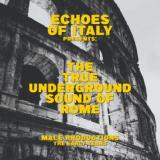
THE TRUE UNDERGROUND SOUND OF ROME - THE TRUE UNDERGROUND SOUND OF ROME

Double 12" release

The Story — From the Streets of Rome to the Male Productions Label
In the early 1990s, Rome lived in a kind of suspended moment. The city was still tied to its historic clubs, yet in the outskirts—inside abandoned warehouses, quarries along the coastline, and the wooded parks north of the capital—something new was beginning to stir. A nocturnal, constantly shifting movement fuelled by a hunger for freedom and a sonic curiosity that reached far beyond the mainstream.

Moving through this ferment was Francesco “Chicco” Furlotti. First an organizer of unconventional parties and underground nights, he soon became one of the driving forces behind Rome’s itinerant rave scene. Furlotti sensed that a wave of change was about to sweep across the city. It wasn’t just about parties: it was the rise of a culture, a new way of thinking about music, community, and belonging.

It was within those nights—later held with official permits, properly built sound systems, and an ever-growing crowd—that Furlotti recognized the existence of a distinctly Roman sound, and the need to capture it, preserve it, and give it tangible form.
So, in 1991, he decided to take a bolder step: to found an independent record label—small, determined, and far removed from the commercial logic that dominated at the time.
That was the birth of Male Productions.

Male was not a label like any other: it was a workshop, a gathering point, a creative hub where DJs, producers, friends, and wanderers converged. Within that environment, an artistic core took shape—Stefano Di Carlo, Leo Young, and Mauro Tannino, along with other collaborators orbiting around Furlotti. From their synergy emerged a project whose very name declared its mission:

The True Underground Sound of Rome.

The collective did not simply aim to release music; it sought to tell a story of Rome through sounds that defied categorization: house, techno, ambient, electronic mysticism, psychedelic visions… a unique blend, instantly recognizable, emotional, and experimental. The sessions unfolded using essential yet razor-sharp gear: Roland drum machines, analogue synthesizers, Akai samplers, stripped-down mixers. Few tools, endless imagination.
The first result of this work was the 12” Secret Doctrine, released in 1991 in an extremely limited run—around 500 promotional copies, according to accounts. The record captured something that until then had floated only in the air of Roman raves: enveloping atmospheres, deep rhythms, melodies built to make the mind travel far beyond the dancefloor. A sound that did not imitate what was happening in Detroit, London, or Berlin, but absorbed those influences and re-sculpted them with a distinctly Roman sensibility.
Yet, precisely because it was independent and detached from commercial circuits, Male’s output remained sparse: few EPs, few copies, irregular distribution. Over time, those records became rare artifacts—almost mythical objects within the Italian electronic scene. The legacy of Male Productions seemed destined to survive only in the memories of those early years, in the stories told after raves, and in the private archives of a handful of collectors.
Many years later, thanks to the almost accidental rediscovery of a few original copies of the first two releases issued by Male Productions, it became possible to undertake a meticulous process of recovery and restoration of the audio etched into those grooves, with the aim of preserving as fully as possible the quality and character of that unrepeatable sound.

We are therefore able today to present — at last in a complete and faithful form — the first two mixes created for Male Productions, now released on a double vinyl that brings back into the present the exact moment when it all began: the nomadic nights of the raves, Furlotti’s vision, the creativity of Di Carlo, Young and Tannino, and the sonic identity of a Rome in the midst of transformation.

This is not merely a reissue.
It is a historical document.
A fragment of a culture that changed the city.
The authentic sound of the Roman underground, finally returned to the world.

Сделать предзаказ01.05.2026

он должен быть опубликован на 01.05.2026


Последний логин: 2026 г. назад
NICOLÁS MIRÓN - HI-TECH THOUGHTS EP

Nicolás Mirón presents Hi-Tech Thoughts, his debut release on Echo Alpha Recordings. A record that draws inspiration from Detroit Techno, as well as New York Hip-Hop and MPC culture, reflected in the way he works with samples and programs chops on his AKAI MPC 2500. His production focuses on beat-making, pursuing a raw, hardware-driven sound rather than an overproduced one.

Nico’s creative foundation is rooted in Black music in all its forms, from soul and jazz to electronic sounds, while also embracing the legacy of figures like Kraftwerk, and genres such as Italo Disco, and New Wave. His musical career began with his residency at Radio Relativa in 2022, with his program “Pa’ Riparla Benne”, a connection between skateboarding and music, as well as its evolution and close relationship with contemporary culture. In the show you can hear different styles of music that have appeared within this scene through legendary video parts from skateboarding history, along with stories and curiosities behind these pieces of art.

В наличии на складе

Есть у нас в наличии и готов к отправке

LINDSTRØM - IT'S A FEEDELITY AFFAIR (20TH ANNIVERSARY REMASTERED VINYL EDITION) LP 3x12"

Originally released on CD in 2006, It's A Feedelity Affair marked a formative moment in Hans Peter Lindstrøm's early career, compiling key tracks from his first wave of 12-inch releases between 2003 and 2006. Now, twenty years after the founding of his Feedelity label, the album is presented for the first time as a newly remastered vinyl edition.

"Listening back now, I hear an artist still figuring things out, but with a clear instinct for where I wanted to go. It was a period defined by freedom - no rules, no expectations." - Hans-Peter Lindstrøm

Released at a time when electronic music was shaped by extended runtimes and physical formats, It's A Feedelity Affair captured a club culture rooted in patience, atmosphere, and spatial awareness rather than immediacy. Its long-form approach remains central to the album's lasting appeal and resonates strongly with today's renewed focus on vinyl and immersive listening experiences. The album stands as a document of an era marked by experimentation, expansive club tracks, and an open-ended vision of electronic music.

Upon its original release, the album received widespread international attention, including a Best New Music rating (8.4) from Pitchfork. The track I Feel Space has since become one of Lindstrøm's most enduring and recognizable works. The album also documents some of his earliest collaborations with Prins Thomas and Christabelle, resulting in tracks such as Boney M Down and Lovesick.

Lindstrøm relaunched Feedelity in 2024, with the label returning in 2025 alongside his most recent album Sirius Syntoms and the single Cirkl, marking a full-circle moment for the imprint. A new studio album is currently in progress and expected in autumn 2026.

Сделать предзаказ08.05.2026

он должен быть опубликован на 08.05.2026


Последний логин: 2026 г. назад
Sweater On Polo - Almighty Grand Essence

NYC's Sweater on Polo follows up his acclaimed L.I.E.S. 12 inch from 2023 with debut full length double LP, "Almighty Grand Essence" This is pure to form 1985-1988 Chicago House worship, and while many have attempted to recreate this sound, most fail to deliver with correct reverence. Names like Saunders, Mixx, Virgo Four, undoubtedly appear in this conversation with Sweater on Polo taking cues and transforming the vintage sound into re-imagined dancefloor classics. Raw but clean, psychedelic but functional...this nine track record can move the crowd in all the right ways, with the lush deepness of "The Creation" to the nu-wave-house hybrid of "Proto Wave" or BMX beat track closer Psychotic Seance, its rare to find a young producer tapping into the vaults in such a focused, effective manner. Highly recommended to house heads worldwide.

В наличии на складе

Есть у нас в наличии и готов к отправке

Adapta - Mks-50 Tracks

Adapta

Mks-50 Tracks

12inchFR034R
Frustrated Funk
06.02.2026

Roland Corporation's MKS-50 form 1986 is a rack-mount version of the Alpha Juno. It has the same synth engine and architecture, but with added features like 16 programmable chord memories, the ability to store velocity, volume, panning, de-tune, portamento and other similar parameters within each patch you create. The optional PG-300 gives traditional slider type control of all editable tone parameters which include DCO (digitally controlled oscillators) LFO, bend, ENV, pulse, waveforms, noise, PW/PWM, high pass filter, VCF (filter) with freq/env/res/LFO/kybd, VCA envelope, chorus, and more. Adapta delivers a project based on this legendary MKS-50 synth. Tracks created with technology from the past, aimed for the future. Techno!!

В наличии на складе

Есть у нас в наличии и готов к отправке

Chromosome - Chromosome EP

Chromosome

Chromosome EP

12inchFOG001
Fog & Co
06.02.2026

In the humid static of early-’80s Tel Aviv, Chromosome emerged like a wiretap from the future. Formed in 1981 by provocateur Rami Fortis and sonic instigator Doron “Shultz” Eyal, the group fused punk abrasion, new wave architecture, avant-garde dissonance, and Middle Eastern textures. Joined by David Gervai and Rona Vered, they produced a singular 12" EP on their DIY imprint TOV Production - now a collector’s treasure.
This reissue of the Chromosome EP resurrects a raw, percussive artifact that slips between English, Arabic, and indecipherable phonetics like a busted shortwave signal. Anchored by “Makhtub” and backed with incendiary tracks such as “Show of Terrorism” and “Gazolina,” it is a vital document of Tel Aviv’s underground, mapping out a borderless, feral lineage for Israeli music.

В наличии на складе

Есть у нас в наличии и готов к отправке

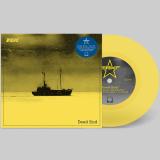
FEX - Dead End 7"

FEX

Dead End 7"

7"-VinylEDGE-039
The Outer Edge
06.02.2026

Were FEX the Wildest & Weirdest German New Wave Band in 1984?

Few cult mysteries in modern music have captured the internet's imagination quite like "The Most Mysterious Song on the Internet." Eventually identified as "Subways of Your Mind" by the elusive German band FEX, the track became a viral sensation decades after its creation-and even made its way into a recent Hollywood blockbuster (Black Phone 2).

Now, two more lost FEX recordings have emerged from an old demo cassette: "Dead End" and "Sarah." And they're every bit as electrifying as the legend suggests.

On both songs, guitarist and main songwriter Ture Rückwardt joins forces on lead vocals with his former wife and musical partner Ilona Rückwardt, forming a vocal pairing that channels raw energy and eerie chemistry. What they deliver are two of the most urgent, adrenaline-fueled post-punk artifacts you're likely to hear this year-even if they were recorded more than forty years ago.

Opening with a sharp, melodic guitar solo, "Dead End" bursts forward with uptempo drive-catchy, fierce, and full of momentum. Apparently inspired by Orwell's 1984, its lyrics depict urban desolation-loneliness, homelessness, hopelessness-yet still shimmer with defiance in lines like, "Truth is amazing - hoping is like waiting."

The second track, "Sarah," dives even deeper into darkness. Mixing post-punk intensity with psychedelic textures, Rückwardt tells an imaginary story of a couple lost in drugs and spiraling through a bad trip, only to wake and realize that sobriety offers little comfort-the real world itself can be just as brutal and offers no easy escape.

Neither song makes the slightest concession to commercial trends. Instead, they feel utterly uncompromising-wild, strange, and defiantly timeless. In a world obsessed with polish and playlists, "Dead End" and "Sarah" sound like transmissions from a different planet.

Both tracks were originally recorded as demos in 1984 in the band's rehearsal room, with Hase engineering. The newly restored versions preserve the raw spirit of the original tapes while adding subtle layers to enhance their atmosphere without losing the authentic 1980s sound. FEX hint that the untouched demo versions might surface later, possibly on a second volume of their archival

В наличии на складе

Есть у нас в наличии и готов к отправке

CHURCH - HOW LONG / DA DA SONG 7"

Indiana Jones never dug this deep.
Church – the brainchild of Joe Washington – were a band both lucky and cursed to come up in the seventies. Lucky, because they rode a wave of community activism, uplifting messages and a moment when music truly mattered. Cursed, because those same times meant their tight, heartfelt output went overlooked.
Mid-sixties to circa 1980 soul and funk were extraordinarily rich. The era’s big releases have aged like fine wine, yet countless hidden gems remain buried. Church’s only single was one of them. Their hypnotic 1976 release “How Long” b/w “Da Da Song” arrived the same year as Stevie Wonder’s Songs in the Key of Life, Marvin Gaye’s I Want You, Diana Ross’s Diana, and at a time when Black mainstream music was shifting toward disco. Church, however, sounded like Sly & The Family Stone in an alternate timeline — gritty, focused, stripped of additives.
“Da Da Song” is pure grits and gravy: furious, tight drums and lyrics that sound like both a plea to DJs to play their record and an insistence to keep the party alive, noticed or not. It cooks from start to finish in just two and a half minutes.
“How Long” is its own universe. Where “Da Da Song” is skeletal, “How Long” blends key strands of Black music in under three minutes: touches of spiritual jazz with a Gary Bartz-like sax, gospel-blues undertones, and echoes of the era’s flower-power-tinged Black creativity — The Undisputed Truth, The Family Stone, even the poetic freedom of Nikki Giovanni. The lyrics are a timeless plea for love.
Church formed in the Bay Area in the early seventies, shaped by the movement, culture and activism of the time. Joseph Washington, based in San Jose, never chased a music career — for him, music was a way to bring people together. Before Church, he led a backing band called Wash, then added gospel singer Linda Williams (née Stephens) and New York–born Joel Como on xylophone to complete the group.
They rehearsed in Joe’s garage, spread through word of mouth and played every gig they could: Black colleges, opening slots for The Whispers, neighbourhood house parties. Some members studied at Nairobi Junior College in East Palo Alto, then a hotbed of Black community activism, with revolution in the air and messages woven naturally into the music.
This single is a message from that era, resurfacing at last — ready to be sampled just as another Joe Washington track, “Look Me in the Eyes”, was on Drake and J. Cole’s “First Person Shooter”. These rare, spirited tunes are begging for new life through samplers, again and again.

В наличии на складе

Есть у нас в наличии и готов к отправке

Cuddling Monsters - Cuddling Monsters Vol. 3
 
3
также имеющийся в продаже

Vol.1

Vol.2


MASK Records founder ZentaSkai joins forces with Berlin-based creative Laura Merino Allue under the name Cuddling Monsters, a project centered on analog processes and tactile sound design. Debuting in March 2024, the project explores Detroit-infused House, dub Techno, and minimal soundscapes shaped by raw texture and spatial depth. Working exclusively with analogue instruments, the duo prioritise warmth, imperfection, and presence over polish. Alongside her music work, Laura Merino Allue is also a graphic designer, bringing a strong visual identity to the project’s wider aesthetic.
‘Cuddling Monsters' is inspired by real-life experiences — the raw, imperfect, beautiful moments we move through. We believe in staying present, feeling everything deeply, and embracing the analog flow of the now. It’s about living the moment fully — and like a cuddle on the dancefloor, creating a space where sound holds you, warmth surrounds you, and even the wildest monsters feel safe enough to soften.’ -
Cuddling Monsters
The Cuddling Monsters ‘Vol. 3’ EP opens with ‘Bubble Bloom’, a melodic house track featuring warped, filtered synth tones that set a hazy foundation before a dub-leaning beat settles in. It’s layered with aquatic, bubbly textures and fragmented samples, adding warmth and movement. ‘Warm Waves’ shifts into a lighter, more atmospheric space, increasing the tempo slightly while maintaining a restrained, ethereal character. The B-side closes with ‘Secret Signal’, a long-form techno piece stretching over ten minutes, where evolving synth lines gradually merge with soft, dubby drums and analogue percussion, building steadily without excess before easing out.

Сделать предзаказ15.05.2026

он должен быть опубликован на 15.05.2026


Последний логин: 2026 г. назад
Peryl - Phase Alternations LP 2x12"

Phase alternations arise where overlapping waves diverge in phase, revealing the hidden
geometry of sound. A phenomenon that Peryl deliberately allows to happen — thus placing
the physical and technical aspects of music at the center of attention. His new album
builds on a fundamental idea of electronic music — but reimagined.

The person Peryl and his needs steps into the background during production —
functioning merely as a channel that intuitively receives and transmits what long-studied
machines, in dialogue with the subconscious, collectively bring to the surface.

The result is a collection of nine tracks, like emanations of precisely crafted analog
synthesis. No sound returns the same way twice. This fragility fuels the urgency — a
creative necessity to listen, to commit, to allow form to arrive before it dissolves again.

Rhythm is no longer on the grid, but a series of small shifts, offsets, and delays. Loops fall
slightly out of sync. Deviation creates friction, and friction creates energy. Through the
layered interplay of phase-driven effects — chorus, phaser, flanger — the sounds begin to
breathe in alternate rhythms. Hollows emerge. Swells fold into one another.

Challenging these swells is an essential part of Phase Alternations. Effects come alive in
subtle shifts, industrial textures whisper melodies, folding and unfolding in rhythms that
emerge through their own logic.

Peryl presents the result of an experiment: the sound itself chooses its form.

В наличии на складе

Есть у нас в наличии и готов к отправке

Carli - Sea of Love (LP)

Carli

Sea of Love (LP)

12inchBARN110
Studio Barnhus
02.02.2026

It's pretty wild to think this is in fact Carli’s debut solo album, considering the Swedish producer’s long and illustrious career, defined by eclectic hits ranging from underground grime scorchers to straight-up Eurovision goodness, not to mention him being a cornerstone of acclaimed outfits like Off The Meds, Savage Skulls, and Marcus Price & Carli.
On Sea Of Love, the Stockholm-born former breakdancer takes listeners on a journey through a vast ocean of musical influences, effortlessly blending rave nostalgia, bass-heavy experimentation, and contemporary club sounds. Carli skilfully navigates from raw UK hardcore bonkerisms to the crisp rhythmic pulses of modern-day dancehall, always upholding a vibe that's at once futuristic and reverent of club music’s storied past.
Filled with intricate production techniques and an irresistible sense of joy, Sea Of Love showcases Carli’s unique ability to merge styles without losing coherence or authenticity. This is club music crafted by someone who’s not only seen it all from the booth, but also been on the dancefloor himself, resulting in tracks that feel deeply personal yet universally appealing.
With Sea Of Love, Carli firmly establishes himself as a visionary solo artist, proving that after decades of shaping the sound of Stockholm’s underground, his best is still ahead.

В наличии на складе

Есть у нас в наличии и готов к отправке

Guilty Razors - Complete Recordings 1977 - 1978
  • A1: Hurts And Noises
  • A2: Wake Up
  • A3: I Don't Wanna Be A Rich
  • A4: Terrorist Bad Heart
  • A5: Provocate
  • A6: Lucifer Sam (Pink Floyd)
  • B1: Happy!?
  • B2: So Lazy
  • B3: I Feel Down
  • B4: Stupido
  • B5: Guilty
  • B6: Caroline Says (Loo Reed)

UILTY RAZORS, BONA FIDE PUNKS.


Writings on the topic that go off in all directions, mind-numbing lectures given by academics, and testimonies, most of them heavily doctored, from those who “lived through that era”: so many people today fantasize about the early days of punk in our country… This blessed moment when no one had yet thought of flaunting a ridiculous green mohawk, taking Sid Vicious as a hero, or – even worse – making the so-called alternative scene both festive and boorish. There was no such thing in 1976 or 1977, when it wasn’t easy to get hold of the first 45s by the Pistols or the Clash. Few people were aware of what was happening on the fringes of the fringes at the time. Malcolm McLaren was virtually unknown, and having short hair made you seem strange. Who knew then that rock music, which had taken a very bad turn since the early 1970s, would once again become an essential element of liberation? That, thanks to short and fast songs, it would once again rediscover that primitive, social side that was so hated by older generations? Who knew that, besides a few loners who read the music press (it was even better if they read it in English) and frequented the right record stores? Many of these formed bands, because it was impossible to do otherwise. We quickly went from listening to the Velvet Underground to trying to play the Stooges’ intros. It’s a somewhat collective story, even though there weren’t many people to start it.
The Guilty Razors were among those who took part in this initial upheaval in Paris. They were far from being the worst. They had something special and even released a single that was well above the national average. They also had enough songs to fill an album, the one you’re holding. In everyone’s opinion, they were definitely not among the punk impostors that followed in their wake. They were, at least, genuine and credible.

Guilty Razors, Parisian punk band (1975-1978). To understand something about their somewhat linear but very energetic sound, we might need to talk about the context in which it was born and, more broadly, recall the boredom (a theme that would become capital in punk songs) coupled with the desire to blow everything off, which were the basis for the formation of bands playing a rejuvenated rock music ; about the passion for a few records by the Kinks or the early Who, by the Stooges, by the Velvet mostly, which set you apart from the crowd.
And of course, we should remember this new wave, which was promoted by a few articles in the specialized press and some cutting-edge record stores, coming from New York or London, whose small but powerful influence could be felt in Paris and in a handful of isolated places in the provinces, lulled to sleep by so many appalling things, from Tangerine Dream to President Giscard d’Estaing...
In 1975-76, French music was, as almost always, in a sorry state ; it was still dominated by Johnny Hallyday and Sylvie Vartan. Local rock music was also rather bleak, apart from Bijou and Little Bob who tried to revive this small scene with poorly sound-engineered gigs played to almost no one.
In the working class suburbs at the time, it was mainly hard rock music played to 11 that helped people forget about their gruelling shifts at the factory. Here and there, on the outskirts of major cities, you still could find a few rockers with sideburns wearing black armbands since the death of Gene Vincent, but it wasn’t a proper mass movement, just a source of real danger to anyone they came across who wasn't like them. In August 1976, a festival unlike any other took place in Mont-de-Marsan – the First European Punk Festival as the poster said – with almost as many people on stage as in the audience. Yet, on that day, a quasi historical event happened, when, under the blazing afternoon sun, a band of unknowns called The Damned made an unprecedented noise in the arena, reminiscent of the chaotic Stooges in their early adolescence. They were the first genuine punk band to perform in our country: from then on, anything was possible, almost anything seemed permissible.

It makes sense that the four+1 members of Guilty Razors, who initially amplified acoustic guitars with crappy tape recorder microphones, would adopt punk music (pronounced paink in French) naturally and instinctively, since it combines liberating noise with speed of execution and – crucially – a very healthy sense of rebellion (the protesters of May 1968 proclaimed, and it was even a slogan, that they weren’t against old people, but against what had made them grow old. In the mid-1970s, it seemed normal and obvious that old people should now ALSO be targeted!!!).
At the time, the desire to fight back, and break down authority and apathy, was either red or black, often taking the form of leafleting, tumultuous general assemblies in the schoolyard, and massive or shabby demonstrations, most of the time overflowing with an exciting vitality that sometimes turned into fights with the riot police. Indeed, soon after the end of the Vietnam War and following Pinochet’s coup in Chile, all over France, Trotskyist and anarcho-libertarian fervour was firmly entrenched among parts of the educated youth population, who were equally rebellious and troublemakers whenever they had the chance. It should also be noted that when the single "Anarchy in the UK" was first heard, even though not many of us had access to it, both the title and its explosive sound immediately resonated with some of those troublemakers crying out for ANARCHY!!! Meanwhile, the left-wing majority still equated punks with reckless young neo-Nazis. Of course, the widely circulated photos in the mainstream press of Siouxsie Sioux with her swastikas didn’t necessarily help to win over the theorists of the Great Revolution. It took Joe Strummer to introduce The Clash as an anti-racist, anti-fascist and anti-ignorance band for the rejection of old-school revolutionaries to fade a little.

The Lycée Jean-Baptiste Say at Porte d’Auteuil, despite being located in the very posh and very exclusive 16th arrondissement of Paris, didn’t escape these "committed" upheavals, which doubled as the perfect outlet for the less timid members of this generation.
“Back then, politics were fun,” says Tristam Nada, who studied there and went on to become Guilty Razors’ frontman. “Jean-Baptiste was the leftist high-school in the neighbourhood. When the far right guys from the GUD came down there, the Communist League guys from elsewhere helped us fight them off.”
Anything that could challenge authority was fair game and of course, strikes for just about any reason would lead to increasingly frequent truancy (with a definitive farewell to education that would soon follow). Tristam Nada spent his 10th and 11th unfinished grades with José Perez, who had come from Spain, where his father, a janitor, had been sentenced to death by Franco. “José steered my tastes towards solid acts such as The Who. Like most teenagers, I had previously absorbed just about everything that came my way, from Yes to Led Zeppelin to Genesis. I was exploring… And then one day, he told me that he and his brother Carlos wanted to start a rock band.” The Perez brothers already played guitar. “Of course, they were Spanish!”, jokes their singer. “Then, somewhat reluctantly, José took up the bass and we were soon joined by Jano – who called himself Jano Homicid – who took up the rhythm guitar.” Several drummers would later join this core of not easily intimidated young guys who didn’t let adversity get the better of them.

The first rehearsals of the newly named Guilty Razors took place in the bedroom of a Perez aunt. There, the three rookies tried to cover a few standards, songs that often were an integral part of their lives. During a first, short gig, in front of a bewildered audience of tough old-school rockers, they launched into a clunky version of the Velvet Underground's “Heroin”. Challenge or recklessness? A bit of both, probably… And then, step by step, their limited repertoire expanded as they decided to write their own songs, sung in a not always very accurate or academic English, but who cared about proper grammar or the right vocabulary, since what truly mattered was to make the words sound as good as possible while playing very, very fast music? And spitting out those words in a language that left no doubt as to what it conveyed mattered as well.
Trying their hand a the kind of rock music disliked by most of the neighbourhood, making noise, being fiercely provocative: they still belonged to a tiny clique who, at this very moment, had chosen to impose this difference. And there were very few places in France or elsewhere, where one could witness the first stirrings of something that wasn’t a trend yet, let alone a movement.

In the provinces, in late 1976 or early 1977, there couldn’t be more than thirty record stores that were a bit more discerning than average, where you could hear this new kind of short-haired rock music called “punk”. The old clientele, who previously had no problem coming in to buy the latest McCartney or Aerosmith LP, now felt a little less comfortable there…
In Paris, these enlightened places were quite rare and often located nex to what would become the Forum des Halles, a big shopping mall. Between three aging sex workers, a couple of second-hand clothes shops, sellers of hippie paraphernalia and small fashion designers, the good word was loudly spread in two pioneering places – propagators of what was still only a new underground movement. Historically, the first one was the Open Market, a kind of poorly, but tastefully stocked cave. Speakers blasted out the sound of sixties garage bands from the Nuggets compilation (a crucial reference for José Perez) or the badly dressed English kids of Eddie and the Hot Rods. This black-painted den was opened a few years earlier by Marc Zermati, a character who wasn’t always in a sunny disposition, but always quite radical in his (good) choices and his opinions. He founded the independent label Skydog and was one of the promoters of the Mont-de-Marsan punk festivals. Not far from there was Harry Cover, another store more in tune with the new New York scene, which was amply covered in the house fanzine, Rock News (even though it was in it that the photos of the Sex Pistols were first published in France).
It was a favorite hang-out of the Perez brothers and Tristam Nada, as the latter explained. “It’s at Harry Cover’s that we first heard the Pistols and Clash’s 45s, and after that, we decided to start writing our first songs. If they could do it, so could we!”
The sonic shocks that were “Anarchy in the UK”, “White Riot” or the Buzzcocks’s EP, “Spiral Scratch” – which Guilty Razors' sound is reminiscent of – were soon to be amplified by an unparalleled visual shock. In April 1977, right after the release of their first LP, The Clash performed at the Palais des Glaces in Paris, during a punk night organised by Marc Zermati. For many who were there, it was the gig of a lifetime…
Of course, Guilty Razors and Tristam were in the audience: “That concert was fabulous… We Parisian punks were almost all dressed in black and white, with white shirts, skinny leather ties, bikers jackets or light jackets, etc. The Clash, on the other hand, wore colourful clothes. Well, the next day, at the Gibus, you’d spot everyone who had been at this concert, but they weren’t wearing anything black, they were all wearing colours.”

It makes sense to mention the Gibus club, as Guilty Razors often played there (sometimes in front of a hostile audience). It was also the only place in Paris that regularly scheduled new Parisian or Anglo-Saxon acts, such as Generation X, Siouxsie and the Banshees, the Slits, and Johnny Thunders who would become a kind of messed-up mascot for the venue. A little later, in 1978, the Rose Bonbon – formerly the Nashville – also attracted nightly owls in search of electric thrills… In 1977, the iconic but not necessarily excellent Asphalt Jungle often played at the Gibus, sometimes sharing the bill with Metal Urbain, the only band whose aura would later transcend the French borders (“I saw them as the French Sex Pistols,” said Geoff Travis, head of their British label Rough Trade). Already established in this small scene, Metal Urbain helped the young and restless Guilty Razors who had just arrived. Guitarist for Metal Urbain Hermann Schwartz remembers it: “They were younger than us, we were a bit like their mentors even if it’s too strong a word… At least they were credible. We thought they were good, and they had good songs which reminded of the Buzzcocks that I liked a lot. But at some point, they started hanging out with the Hells Angels. That’s when we stopped following them.”

The break-up was mutual, since, Guilty Razors, for their part, were shocked when they saw a fringe element of the audience at Metal Urbain concerts who repeatedly shouted “Sieg Heil” and gave Nazi salutes. These provocations, even still minor (the bulk of the skinhead crowd would later make their presence felt during concerts), weren’t really to the liking of the Perez brothers, whose anti-fascist convictions were firmly rooted. Some things are non-negotiable.
A few months earlier (in July 1978), Guilty Razors had nevertheless opened very successfully for Metal Urbain at the Bus Palladium, a more traditonally old-school rock night-club. But, as was sometimes the case back then, the night turned into a mass brawl when suburban rockers came to “beat up punks”.

Back then, Parisian nights weren’t always sweet and serene.

So, after opening as best as they could for The Jam (their sound having been ruined by the PA system), our local heroes were – once again – met outside by a horde of greasers out to get them. “Thankfully,” says Tristam, “we were with our roadies, motorless bikers who acted as a protective barrier. We were chased in the neighbouring streets and the whole thing ended in front of a bar, with the owner coming out with a rifle…”
Although Tristam and the Perez brothers narrowly escaped various, potentially bloody, incidents, they weren’t completely innocent of wrongdoing either. They still find amusing their mugging of two strangers in the street for example (“We were broke and we simply wanted to buy tickets for the Heartbreakers concert that night,” says Tristam). It so happened that their victims were two key figures in the rock business at the time: radio presenter Alain Manneval and music publisher Philippe Constantin. They filed a complaint and sought monetary compensation, but somehow the band’s manager, the skilful but very controversial Alexis, managed to get the complaint withdrawn and Guilty Razors ended up signing with Constantin with a substantial advance.

They also signed with Polydor and the label released in 1978 their only three-track 45, featuring “I Don't Wanna be A Rich”, “Hurts and Noises” and “Provocate” (songs that exuded perpetual rebellion and an unquenchable desire for “class” confrontation). It was a very good record, but due to a lack of promotion (radio stations didn’t play French artists singing in English), it didn’t sell very well. Only 800 copies were allegedly sold and the rest of the stock was pulped… Initially, the three tracks were to be included on a LP that never came to be, since they were dropped by Polydor (“Let’s say we sometimes caused a ruckus in their offices!” laughs Tristam.) In order to perfect the long-awaited LP, the band recorded demos of other tracks. There was a cover of Pink Floyd's “Lucifer Sam” from the Syd Barrett era – proof of an enduring love for the sixties’ greats –, “Wake Up” a hangover tale and “Bad Heart” about the Baader-Meinhof gang, whose actions had a profound impact on the era and on a generation seeking extreme dissent... On the album you’re now discovering, you can also hear five previously unreleased tracks recorded a bit later during an extended and freezing stay in Madrid, in a makeshift studio with the invaluable help of a drummer also acting as sound engineer. He was both an enthusiastic old hippie and a proper whizz at sound engineering. Here too, certain influences from the fifties and sixties (Link Wray, the Troggs) are more than obvious in the band’s music.

Shortly after a final stormy and rather barbaric (on the audience’s side) “Punk night” at the Olympia in June 1978, Tristam left the band ; his bandmates continued without him for a short while.

But like most pioneering punk bands of the era, Guilty Razors eventually split up for good after three years (besides once in Spain, they’d only played in Paris). The reason for ceasing business activities were more or less the same for everyone: there were no venues outside one’s small circuit to play this kind of rock music, which was still frightening, unknown, or of little interest to most people. The chances of recording an LP were virtually null, since major labels were only signing unoriginal but reassuring sub-Téléphone clones, and the smaller ones were only interested in progressive rock or French chanson for youth clubs. And what about self-production? No one in our small safety-pinned world had thought about it yet. There wasn’t enough money to embark on that sort of venture anyway.

So yes, the early days of punk in France were truly No Future!

Сделать предзаказ22.05.2026

он должен быть опубликован на 22.05.2026


Последний логин: 2026 г. назад
Sanea Ima & Vanja Sturno - CANALS

Sanea Ima & Vanja Sturno

CANALS

12inchOF05LP
OFNOT
22.05.2026

Shaped from fragile, emotionally charged piano motifs that distort, disappear and transform into dense, cinematic textures, 'CANALS' is a debut that's finely matured, the result of years of friendship and growth. Italian artist Vanja Sturno and Montréal-based Belgian-Spanish composer Pablo Geeraert (aka Sanea Ima) have worked together extensively on various projects up until now, but 'CANALS' is their first official release as a duo. Having both studied music academically, the pair were eager to work more intuitively, so applied their well-honed set of skills to sound that, instead of fitting into a conceptual box, reflected more personal experiences.

Back in 2023, Geeraert travelled to Rome to support his friend at a difficult time and, during the trip, received some bad news of his own. The complicated feelings unconsciously surged through a series of delicate Ryuichi Sakamoto-inspired piano improvisations and a new project began to coalesce. They didn't realize it at the time, but once the record was finished, Sturno and Geeraert began to understand that the entire process had been a form a joint catharsis - a release of pressure. They were able to function so effortlessly and swiftly because they had already provided the space for each other to resonate emotionally and the music flowed from that point.

So the album's title, while remaining ambiguous, suggests its formation: a sequence of eight interconnected channels that feed a creative whole. On the first segment, Sturno and Geeraert's initial recordings can be perceived most nakedly, the melancholy, Satie-like phrases floating peacefully for a moment before the tranquility is agitated by stormy distortions and swelled into thick waves of harmony. The piano provides the record with its emotional anchor, offering focus and clarity as multi-dimensional noise wells up around it before inevitably dissipating, leaving gentle, unadorned sounds once again.

And the familiar instrument is reshaped into a wheezing artificial organ on the animated 'CANALS III', punctuated by percussive, tape-warped pitch fluctuations that seem to bite into its very essence. Gauzy acoustic granulations snowball into a powerful, bass-heavy crescendo on the fourth part, setting the tenor for the album's second half. But after the crushing 'CANALS VI', possibly Sturno and Geeraert's heaviest track, a brief tremolo-heavy vignette that ripples through experimental rock and ambient music's braided history, the duo clear the air with a jazzy diversion, introducing soft woodwind blasts as a palate cleanser before an epic, widescreen finale.

It's an album that's best absorbed as a whole, a vortex of ritualistic, rhythmic repetitions that Sturno and Geeraert appropriately refer to as "spiral listening".

Сделать предзаказ22.05.2026

он должен быть опубликован на 22.05.2026


Последний логин: 2026 г. назад
Sabber Mund - Gut und Günstig

Next up on Bruno Schmidt’s Assemblies Of God; The eagerly anticipated follow up to one of the most impactful leftfield records of 2023, Bauzer Vep’s The Gurner. Alexander Folonari brings us Gut Und Günstig under his brand new Sabber Mund Alias. Previously appearing under Shampoo Douglas and La Decima Vittima on Quest’s La Nota Del Diablo imprint, Sabber Mund takes a very different form. This music could be described as “Post-everything”, combining elements of dance music, with a punk-meets-folklore education.. Everything from straight Bach-informed dancefloor killers, to medieval lullabies. Across the board, custom no-wave themes from the get go. Hot tip!

В наличии на складе

Есть у нас в наличии и готов к отправке

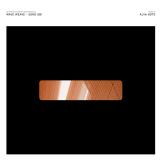
Alva Noto - Wave Weave - Sono Obi LP

Alva Noto

Wave Weave - Sono Obi LP

Pict-VinylN-073-2
NOTON
29.05.2026

Alva Noto - Wave Weave – Sono Obi is the original soundtrack by Alva Noto, composed for a film by Carsten Nicolai.

- The project emerged from a collaboration with an 12th-generation kimono textile manufacturer in Kyoto, Japan.

At its core, the work explores the translation of sound into textile form: sonograms of musical compositions serve as the basis for woven structures, connecting acoustic frequency patterns with traditional weaving techniques.

Alongside the original soundtrack, the release includes an alternative soundtrack version and a photographic documentation featuring sonograms, soundtrack visualizations, and film stills.


Tracklisting
---------------------------------------------------------
Medium: 1 // Side: A // Track: 1

Artist: Alva Noto
Title: Sono Obi Wave Weave
Playtime: 00:22:00
Explicit Lyrics: No
ISRC: DE1N62600001
(P): 2026 NOTON

Composer: Carsten Nicolai
---------------------------------------------------------
Medium: 2 // Side: B // Track: 1

Artist: Alva Noto
Title: Sono Obi Landscape
Playtime: 00:06:10
Explicit Lyrics: No
ISRC: DE1N62600002
(P): 2026 NOTON

Composer: Carsten Nicolai
---------------------------------------------------------

Сделать предзаказ29.05.2026

он должен быть опубликован на 29.05.2026


Последний логин: 2026 г. назад
Years of Denial - Suicide Disco Vol. 2 (LP 2x12")

2026 REPRESS + DOWNLOAD

Years Of Denial is back on Veyl with their second LP 'Suicide Disco Vol. 2'. The follow up to 2019’s 'Suicide Disco', the duo makes a triumphant return, elevating their distinct sound which fuses dark wave, goth, newbeat, post-punk, EBM, and techno. The LP features 12 tracks all written and produced at Ark of Noise studio, located miles away from the polluted noise of social turbulences, immersed in isolation, creative indulgence, and poetic writing.
From the start, 'Art Break' provides the perfect warm-up, gently cleansing the palette and re-introducing us to Barkosina’s lustful vocals with a slow-burning pace that only marks the beginning. 'Wrong' picks things up, injecting a dose of body music for an infectious piece that bleeds into 'La Pendue' which keeps the energy rising. Next up, 'Mr. Guillotine' delivers a razor sharp edge, carving out a fresh post-punk feel which then brings us to the brooding, 'Never Satisfied'.
'Lover’s Crime' marks the halfway point of the record and one of the album’s standout tracks. Undeniably seductive with an ominous feel, the pair keep this mood going with 'City Lights' and then smash things open with 'Dancing With Demons'. After the devious message sent with 'The Letter', we are submerged in the romantic melancholia of 'Death Of A Lover' and 'Regarding the Pain of Others' before closing things out with 'Social Anxiety' which features vocals by longtime collaborator Broken English Club. The result is an immersive journey through the pair’s self described, Suicide Disco sound, and further builds on the Years of Denial form and legacy.

Сделать предзаказ29.05.2026

он должен быть опубликован на 29.05.2026


Последний логин: 51 дн. назад
NALBANDIAN THE ETHIOPIAN & EITHER/ORCHESTRA - NALBANDIAN THE ETHIOPIAN (ETHIOPIQUES)

The Éthiopiques series returns! Essential archive recordings from an extremely fruitful period in Ethiopian music.

Before “Swinging Addis” took over the world, there was Moussié Nerses Nalbandian — the Armenian-born composer who shaped modern Ethiopian music. Mentor, arranger, and pioneer, he laid the foundations of Ethio-jazz.

This Éthiopiques volume revives his forgotten legacy, recorded live by Either/ Orchestra First issue ever with new exclusive photos and in depth liner 8-page insert.

“Ethiopian jazzmen are the best musicians that we have seen so far in Africa.
They really are promising handlers of jazz instruments.”

Wilbur De Paris
(1959, after a concert in Addis Ababa)

አዲስ፡ዘመን። *Addis zèmèn* **A new era.**
The time is the mid-1950s and early 1960s, just before "Swinging Addis" bloomed – or rather boomed – onto the scene. Brass instruments are still dominant, but the advent of the electric guitar, and the very first electronic organs, are just around the corner. Rock’n'Roll, R’n’B, Soul and the Twist have not yet barged their way in. Addis Ababa is steeped in the big band atmosphere of the post-war era, with Glenn Miller's *In the* *Mood* as its world-wide theme song, neck and neck with the Latin craze that was in vogue at the same period. Life has become enjoyable once again, with the return of peace after the terrible Italian Fascist invasion of Ethiopia (1935-1941). The redeployment of modern music is part and parcel of the postwar reconstruction. *Addis zèmèn* – a new era – is the watchword of the postwar period, just as it was all across war-torn Europe.
The generation who were the young parents of baby boomers** were the first to enjoy this musical renaissance, before the baby boomers themselves took over and forever super-charged the soundtrack of the final days of imperial reign. Music is Ethiopia's most popular art form, and very often serves as the best barometer for the upsurge of energy that is critical for reconstruction. Whether it be jazz in Saint-Germain-des-Prés or the *zazous* who revolutionised both jazz and French *chanson* after the *Libération*, be it Madrid's post-Franco Movida, or Dada, the Surrealists and *les années folles* that followed World War I, the periods just after mourning and hardship always give rise to brighter and more tuneful tomorrows. Addis Ababa, as the country's capital, and the epicentre of change, was no exception to this vital rule.

**Two generations of Nalbandian musicians**
Nersès Nalbandian belonged to a family of Armenian exiles, who had moved to Ethiopia in the mid-1920s. The uncle Kevork arrived along with the fabled "*Arba Lidjotch*", the** "*40 Kids*", young Armenian orphans and musicians that the Ras Tafari had recruited when he visited Jerusalem in 1924, intending to turn their brass band into the official imperial band. If Kevork Nalbandian was the one who first opened the way of modernism, pushing innovation so far as to invent musical theatre, it was his nephew Nersès who would go on to become, from the 1940s and until his death in 1977, a pivotal figure of modern Ethiopian music and of the heights it. Going all the way back to the 1950s. Nothing less. And it is Nersès who is largely to thank for the brassy colours that so greatly contributed to the international renown of Ethiopian groove. While the younger generations today venture timidly into the genealogy of their country's modern music, often losing their way amidst a distinctly xenophobic historiographical complacency, many survivors of the imperial period are still around to bear witness and pay tribute to the essential role that "Moussié Nersès" played in the rise of Abyssinia's musical modernity.
Given the year of his birth (15 March 1915), no one knows for sure if Nersès Nalbandian was born in Aintab, today Gaziantep (Turkiye/former Ottoman Empire) or on the other side of the border in Alep, Syria... What is certain is that his family, like the entire Armenian community, was amongst the victims of the genocide perpetrated by the Turks. Alep, the place of safety – today in ruins.
Before Nersès then, there was uncle Kevork (1887-1963). For a quarter of a century, he was a whirlwind of activity in music teaching and theatrical innovation. *Guèbrè Mariam le Gondaré* (የጎንደሬ ገብረ ማርያም አጥቶ ማግኘት, 1926 EC=1934) is his most famous creation. This play included "ten Ethiopian songs" — a totally innovative approach. According to his autobiographical notes, preserved by the Nalbandian family, Kevork indicates that he composed some 50 such pieces over the course of his career. This shows just how much he understood, very early on, the critical importance of song as Ethiopia's crowning artistic form. Indeed, for Ethiopian listeners, the most important thing is the lyrics, with all their multifarious mischief, far more than a strong melody, sophisticated arrangements or even an exceptional voice. (This is also why Ethiopians by and large, and beginning with the artists and producers themselves, believed for a long time — and wrongly — that their music could not possibly be exported, and could never win over audiences abroad, who did not speak the country's languages).

Last but not least, one of Kevork's major contributions remains composing Ethiopia's first national anthem – with lyrics by Yoftahé Negussié.
Nersès Nalbandian moved to Ethiopia at the end of the 1930s, at the behest of his ground-breaking uncle. Proficient in many instruments (pretty much everything but the drums), conductor, choir director, composer, arranger, adapter, creator, piano tuner, purveyor of rented pianos,... he was above all an energetic and influential teacher. From 1946 onwards, thanks to Kevork's connexion, Nersès was appointed musical director of the Addis Ababa Municipality Band. In just a few years, Nersès transformed it into the first truly modern ensemble, thanks to the quality of his teaching, his choice of repertoire, and the sophistication of his arrangements. It was this group that would go on to become the orchestra of the Haile Selassie Theatre shortly after its inauguration in 1955, which was a major celebration of the Emperor's jubilee, marking the 25th anniversary of his on-again-off-again reign.

At some point or other in his long career, Nersès Nalbandian had a hand in the creation of just about every institutional band (Municipality Band, Police Orchestra, Imperial Bodyguard Band, Army Band, Yared Music School…), but it was with the Haile Selassie Theatre – today the National Theatre – that his abilities were most on display, up until his death in 1977. To this must be added the development of choral singing in Ethiopia, hitherto unknown, and a sort of secret garden dedicated to the memory of Armenian sacred music, and brought together in two thick, unpublished volumes. Shortly before his death (November 13, 1977), he was appointed to lead the impressive Ethiopian delegation at Festac in Lagos, Nigeria (January-February 1977).

His status as a stateless foreigner regularly excluded him from the most senior positions, in spite of the respect he commanded (and commands to this day) from the musicians of his era. Naturally gifted and largely self-taught, Nerses was tirelessly curious about new musical developments, drawing inspiration from the very first imported records, and especially from listening intensely to the musical programmes broadcast over short-wave radio – BBC *First*. A prolific composer and arranger, he was constantly mindful of formalising and integrating Ethiopian parameters (specific “musical modes”, pentatonic scale, and the dominance of ternary rhythms) into his “modernisation” of the musical culture, rather than trying to over-westernise it. It even seems very probable that *Moussié* Nerses made a decisive contribution to the development of tighter music-teaching methods, in order to revitalise musical education during this period of prodigious cultural ferment. Flying in the face of all the historiographical and musicological evidence, it is taken as sacrosanct dogma that the four musical modes or chords officially recognised today, the *qǝñǝt* or *qiñit* (ቅኝት), are every bit as millennial as Ethiopia itself. It would appear however that some streamlining of these chords actually took place in around 1960. It was only from this time onward that music teaching was structured around these four fundamental musical modes and chords: *Ambassel*, *Bati*, *Tezeta* and *Antchi Hoyé*. A historical and musical “details” that is, apparently, difficult to swallow, especially if that should honour a *foreigner*. Modern Ethiopian music has Nersès to thank for many of its standards and, to this day, it is not unusual for the National Radio to broadcast thunderous oldies that bear unmistakable traces of his outrageously groovy touch.

В наличии на складе

Есть у нас в наличии и готов к отправке

American Cream Band - Twin LP

Following their 2023 LP Presents, Nathan Nelson's American Cream Band bring the Twin City heat back to Quindi with an album rooted in duality. From the yin and yang party-starting A side and meditative B side to the dual-attack boy-girl vocals, the nature of opposites and equals steer the expansive, artful strain of rock n' roll that spill out of this wholly unique Minnesotan export. For the ever intriguing Quindi, it's a strident step into Spring after the frosty introspection of Roudi Vagou & Läuten der Seele's Taghelle Nacht. While the world burns and injustice prevails, Twin is a celebration of unity and radical expression-all the more urgent against the backdrop of authoritarian overreach and righteous protest that has whipped through Minneapolis in recent times.
Twin continues Nelson's drive at the helm of American Cream Band to draw in a colourful cast of players to feed into his orgiastic sound, meshing the trance-induction of krautrock with the irrepressible funk of the post-punk-new-wave explosion. But principal among the cast of characters and forming a central tenet to the identity of this album is Liz Buhmann, lead vocalist and a formidable, playful foil to Nelson's own Midwestern twang. Around the electric spark between Buhmann and Nelson, a heavy duty ensemble wrangle guitar, bass, sax, a cornucopia of synths and a battery of percussion into all manner of sonic forms.
The double-sided concept manifests throughout Twin. On 'Call Me' Buhmann sings in French to contrast Nelson's English, while the strident strut of the NYC disco groove is offset by an inherent dreaminess that turns the track into a more cosmic kind of dancefloor workout. 'Ethical Vampire' is a spiky cut with a garage rock patina that spirals into a psychedelic, synth-soaked get-down. 'Don't Burn The House Down' is a loose and limber roller that captures Can at their funkiest along with the hypnotic vibe of other such esteemed long format jammers, but American Cream Band boils that energy into a hook-laden art pop sensibility before a gentle, drawn out landing.
Even the more pensive moments on Twin find space for friction. For all its tender, smoky temperament, 'Leda and the Swan' lets the electric piano and guitar fray at the edges and bleed into the red while Mat Heinrich's tumbling drums lurch with pent-up intensity on the one. 'No Funeral Necessary' skirts around the mellow pools of new age but prefers to let liberally doused Tape Echo tweak out Alex Meffert's honeyed sax inflections and Buhmann and Nelson's disparate sermons.
Nelson describes Twin as "an oppositorum coincidentia" - a reference to the mystical Latin concept of the coincidence of opposites that suggests contradictory ideas 'fall together' in a higher reality. Beyond the sound of the album, this idea also manifests in the cover photography by Sho Nikado and the swans on the LP labels by Autumn Garrington. As freewheeling and wide-open as American Cream Band feels, nothing appears by accident. The end result feels like a nourishing whole - rich with substance and nuance, deep enough to be explored and absorbed yet also so brazen and immediate you can't help but feel its surface charms from the first thrusts of 'The Hive Is Pissed' to the last ripples of 'We're Not So Sinister'.

Сделать предзаказ05.06.2026

он должен быть опубликован на 05.06.2026


Последний логин: 2026 г. назад
Thor / Luke Hess - Third Wave

A shared studio session in Detroit led to this focused techno collaboration between heavyweight talents Luke Hess and Thor. Recorded over several intense days inside the DeepLabs studio, the EP reflects a meeting of two distinct approaches. Hess brings the warm, soulful pulse long associated with Detroit techno, while Thor contributes a stripped-back minimal sensibility shaped by his Icelandic roots. Analogue machines and rare samples give the music a tactile edge and form the crisp but deep drive of 'Induction' to the subtly uplift and smoky soul of 'Samruni'. This is a restrained yet powerful record.

Сделать предзаказ08.06.2026

он должен быть опубликован на 08.06.2026


Последний логин: 2026 г. назад
Void Fill - Voice 2 Skull / Clickbait (incl. LVCA & Computer Rage remixes)

The third chapter of Vesuvius Soul Records connects distant corners of the underground — from Canada to the UK, passing through Barcelona and Naples — building a sonic bridge between different energies and creative visions.

Void Fill, a supergroup formed by members of Gad Whip, Everything Is Geometry, and King Pong Dub System, deliver two tracks that merge new wave and post-punk tension with synth-pop sensibility, each paired with its instrumental version. Their sound blends analog drive and emotional depth, echoing the label’s exploratory spirit.

On remix duty, the A-side features Lvca, one of the most influential names in today’s European underground scene. The B-side comes from Computer Rage, the Neapolitan duo behind VSR002.

В наличии на складе

Есть у нас в наличии и готов к отправке

KABUTOMUSHI - Waza LP

KABUTOMUSHI

Waza LP

12inchMYRD169
MY BEST!
26.06.2026

2026's Brightest Hope Confirmed: “Kabutomushi”!
In their 7th year since debut, an unprecedented best album is released on CD, Cassette Tape, and LP!
Formed in 2019 as a music production team or conceptual four-piece rock band comprising a pianist, avant-garde composer, painter, and percussionist.
J-POP, hip-hop, new wave, prog rock, techno, house, free jazz, contemporary classical, folk music-all sublimated into an elusive avant-pop.
It could be called the 2020s reimagined version of Yura Yura Teikoku.

Сделать предзаказ26.06.2026

он должен быть опубликован на 26.06.2026


Последний логин: 2026 г. назад
Raleigh, Takenaga - Default Mode

Raleigh, Takenaga

Default Mode

12inchHARMONY-X002
Harmony Rec.
17.12.2025

Default Mode by Raleigh & Takenaga continues the newly established X series – Harmony’s platform for new voices and limitless exploration. Hailing from Prague, the duo embodies the next wave of adventurous sound design and musical talent from the imprint’s home town.

Incentive Program opens the EP’s A side with a drifting, trance-tinged flow wrapped in sweeping pitch movements and fractured vocals. The track sets a shadowy, almost sinister atmosphere, pulling all witnesses into its slow-burn gravity. It’s a steady build, tipping the floor over the edge. Stiff Envelope pulls you into its depths as it continues to build tension with resonating synth hits that quiver over a powerful trance foundation. With a few moments of silence that let its unsettling atmosphere settle across the stereo field before swinging back in at full force, this one is tailor-made for big systems.

B side’s Ground Floor carries on with metallic swells and shimmers that ring underneath the surface as the tension built on the A side bursts, settling into a grounding four-on-the-floor moment and leaving just enough time to breathe before Raleigh stirs up a concoction of devious vocals, snappy percussion, and a seductive bassline that lifts the mood tastefully. Takenaga wraps up the record with Head Count, a razor-sharp blend of crisp percussive cuts and stuttered crumbles that are seeking the perfect pitch all the way, climbing up and down. Heads are counted on a lively groove that radiates playful momentum and commands the dance floor to get in formation, keeping a tight rhythmic focus. Infused with the pulse of UK club culture, this track delivers a fresh and forward-thinking sound perfect for adventurous turntables.

В наличии на складе

Есть у нас в наличии и готов к отправке

RAFAEL TORAL - TRAVELING LIGHT LP 2x12"

From out of the dark, sparks of feedback birdsong signal a return to the singular sonic environments of Rafael Toral"s sound-world. A year after Spectral Evolution, his acclaimed album of electric guitar conceptions, comes the companion work Traveling Light. Sharpening his focus around a set of jazz standards, his move from abstract form to solid song elicits glints from beyond time and space, crafting a unique listening lens for deep listeners. In the early years of his practice, Toral used the guitar as a generator to create discreet texture and droning tones. Later, he abandoned the guitar entirely, focusing on self-made electronics to render his music with a post-free jazz perspective. For the music of Spectral Evolution and Traveling Light, Toral has combined his methodologies: radically expanding the space within their harmonies with his self-made machines, while engaging directly with his instrument and the chords of the material. In addition to Toral"s proxy orchestra of guitars, sine wave, feedback and bass guitar, Traveling Light features the sounds of clarinetist José Bruno Parrinha, tenor saxophonist Rodrigo Amado, flügelhorn player Yaw Tembe, flautist Clara Saleiro, who each guest on one song. In every contour of Traveling Light"s path - arrangement, improvisation and production - the spring of the old pours through the new in an unstoppable flow. The result is a listening experience of these standards that remains "in the tradition", even as the elongated harmonies seem to alter time such that, as Toral notes, "the chords become events on their own."

В наличии на складе

Есть у нас в наличии и готов к отправке

VARIOUS - TÓXICO TAPES LP

Tóxico and Subject To Restrictions Discs present a retrospective on Switzerland’s hidden analogue gear scene from 2017 and 2018. A vibrant yet undocumented chapter in the country’s music history. The 10 tracks, originally released exclusively on cassette and heard only by a small circle of listeners, are now compiled for the first time on vinyl as “Tóxico Tapes”. The collection captures the scene’s raw, hands-on energy through off-kilter rhythms, low-key EBM, ominous wave and free-form synth excursions.

Founded and curated by the former DJ and producer Narco Marco, the Tóxico label became a hub for Switzerland’s analogue gear enthusiasts. Between 2016 and 2020, it released a series of 10 tapes – albums and compilations – that now stand as a blueprint of the DIY, machine-driven underground of the time. Narco Marco is a key figure in Swiss electronic music. As a long-time clerk at “Oldiesshop” record store in Bern, he has championed eclectic sounds across decades. His in-depth knowledge of 1980s music, combined with his work as a musician, avid record collector, and founder of the “Hot Jam” label, influenced an entire generation of musicians and DJs in Switzerland at the time.

Subject To Restrictions Discs joins forces with Narco Marco to present a selected set of 10 songs as a tribute to Tóxico and this creative era. The material draws primarily from the Autumn Tape and Winter Tape compilations, which spotlighted artists from Zurich and Bern – two cities at the heart of this analogue revival.

В наличии на складе

Есть у нас в наличии и готов к отправке

Anders Ilar & John H - Coming For Your Tongue EP

Welcome to the first release on Acid Lamour
A sub label for Lamour Records started in 2018 with a focus on techno and acid dedicated DJs. Releases are limited to 303 vinyls, no re-press.
Anders Ilar and John H are no newcomers to the electronic music scene.
Born in 1973, Anders Ilar began his explorations of electronic music in the mid 80s. Growing up in the small town of Ludvika in Sweden, Ilar spent all of his spare time playing with synthesizers, drum machines, keyboards and sequencers, learning the ins and outs of analogue and digital sound and music creation. Inspired by the early industrial and EBM wave he formed several bands with friends, started playing live shows
at smaller local parties, and released several demo tapes in very limited quantities. In the 90's he gradually shifted his creative influences towards ambient techno and acid and also started to DJ. He started using computer software to produce his music around 1999 and his first vinyl EP was released in 2001 on the german label Plong!, soon to be followed by
many more releases on labels such as Shitkatapult, Audio.nl and Echocord.
Developing his own flavor of deep minimal dub techno and ambient he gained critical acclaim with his album Nightwidth (2006) for Narita Records in the USA. Followed by highly appraised album Sworn on the german label Level Records in 2008. Ilar has also made remixes for celebrated artists such as Apparat, Mikkel Metal and Ripperton and has
appeared on numerous compilations and DJ-mixes. He's performed live on stage through-out most European countries and Japan, as well as doing a small tour with Notch Festival in China in 2008.
Up to 2018 Anders Ilar has produced 13 albums and 25 vinyl EP's and performed in over 15 countries.
Born in 1984 and based in Gothenburg. John H has been DJing, as well as producing tracks, since the late 90s, with Anders as his mentor and teacher, giving John early musical influences spanning across a wide range of genres, from Swedish techno to IDM, Cologne acid craziness and
the sound of Chicago house tracks. The musical output of his DJ-sets usually varies between techno, house, acid, electro and everything in between, depending on the time and location. John has performed on several locations all around Sweden, but also done appreciated gigs in other European countries at clubs like Tresor and Culture Box, and his music has been featured in sets by DJs such as Sven Väth, Adam Beyer,
Joris Voorn, Dense & Pika, Cari Lekebusch, Alan Fitzpatrick, Karotte,
Gregor Tresher, The Hacker and many more.
Coming For Your Tongue EP is Anders and John's 4th collab release, after
acclaimed releases on Flight Recorder and New York Haunted, recorded
during a jam session at John's studio in Bergsjön outside of Gothenburg,
Sweden, using a small setup of analogue synths and drum machines such as
the Roland TR-606, TR-808, a Devil Fish modified TB-303, Minimoog Voyager
and the Arturia Microbrute. After recording Anders spiced things up by
cutting and puzzling loops as well as adding extra effects and drums.

Limited edition of 303, no repress. Vinyl exklusive for 3 months

В наличии на складе

Есть у нас в наличии и готов к отправке

JLM Productions - Theory Of Forms

Making his long-awaited return to Spatial, JLM Productions serves up another sizzling andvaried concoction of atmospheric breakbeat goodness.

A1 - Unraveling

Opening with a blissful, playful melody which fades in and out of effects and padwork,Unravelling shows off an insanely crisp 2-step break at its core - definitely suited for thedancefloor with a buoyant bassline rumbling beneath the waves. The track leaps furtherinto life with JLM adding some additional drums to elevate the breaks further still, all withserene, harmonious melodies dancing around in the mix.

A2 - Forced Perspective

A purposeful melody opens Forced Perspective as JLM Productions unleashes a stellarblend of atmospheric bliss with a unique epic urgency. Sci-fi synthwork surrounds anenergetic selection of drums edited with trademark clarity as layers upon layers of synthintertwine dynamic patterns with ease. This is a great example of JLM's expansive suite ofinfluences combining to create a deliciously detailed and unique whole.

AA1 - Surface Scan

Light cymbals commence a DJ-friendly intro to the second track, Surface Scan. Bothrousing and deep, smooth padwork leads into a drop which brings with it long, whooshingmelodic synths and crunchy stacked breakbeats. As the atmosphere develops, JLM addsin a bunch of effects and subtle, sumptuous sci-fi synthwork, strings and more to completeanother masterpiece from a true pillar of "old school brand new" methodology.

AA2 - Mixed Motive

Straight into a serving of subdued breaks perfect for the intro, JLM rounds off this stunningEP with Mixed Motive. This is a track which explores the atmospheric drum & basslandscape in style. Our creatively-edited breaks soon evolve into a crescendo of joyousdrum patterns with an old 720-style stabby melody punctuating the mix while deep &melodic basslines jostle below, adding dense texture to a stunning piece of music.

Words by Chris Hayes (Spatial / Red Mist)

В наличии на складе

Есть у нас в наличии и готов к отправке

Various - Wild Style (Special Edition) (2x12")

GATEFOLD VINYL 2LP - TRANSPARENT BLUE + ORANGE, A2 Colour Poster, 5x Film Set Photos, Flexi Disc, Sticker Sheet

Blurring the lines between fiction and documentary, the seminal film Wild Style, directed by Charlie Ahearn and developed alongside Fred Braithwaite aka Fab Five Freddy, offered an iconic snapshot of the emerging New York hip hop scene in the early ‘80s. Considered one of the first hip hop films, it documents the styles, culture, attitudes, and most importantly, the music of this evolving era. The accompanying soundtrack remains one of the most influential in hip hop history, featuring a who’s who of artists who stood out during the movement’s nascent block party days.

“Making hip hop’s first and most beloved feature film, Wild Style, with Charlie Ahearn and creating the original music is one of my proudest accomplishments.” - Fab 5 Freddy

In celebration of Arrow Films restoring the original Wild Style film in 4K, Mr Bongo is proud to present this special-edition reissue package. The release comes as a double LP pressed on transparent blue and orange vinyl, offering a freshly curated tracklist that brings together the finest songs from previous editions, the full sought-after instrumental album, and Kenny Dope’s top edits. Also included are an A2 colour poster, five film set photos, a flexi disc containing Fantastic Freaks Live at the Dixie, and a Wild Style sticker sheet.

Originally released on Animal Records, founded by Chris Stein of Blondie fame, the soundtrack focuses on the hip hop scene as it evolved from the streets to the recording studio. Co-produced by Stein and Braithwaite, it features the Double Trouble pairing of Rodney Cee and KK Rockwell, The Chief Rocker himself Busy Bee, and the mighty line-ups of both The Cold Crush Brothers and The Fantastic Freaks, to name but a few. The music offers a transportive glimpse into the streets of the South Bronx, capturing the free-form, roaming nature of the film - it’s rough around the edges, but utterly absorbing.

Behind those foundational voices of hip hop’s first wave was a selection of backing beats that have underpinned and influenced the genre ever since. Easily mistaken for lifted breakbeats from old records, the songs on the Wild Style soundtrack are all unique creations. Overseen by Braithwaite and Stein, with Stein also on guitar and effects, they were intended as a homage to those early breakbeats. Drummer Lenny “Ferrari” Ferraro, who played for Aretha Franklin before emerging on the punk scene, and bassist David Harper laid down many of the iconic grooves, two somewhat forgotten participants in shaping a legendary sound.

Over time, the Wild Style soundtrack, with its Charlie Chase and Grand Wizard Theodore scratches, recurring sounds and motifs, and indelible lyrics, has become a hip hop touchstone: endlessly sampled and referenced, the bedrock of so much music to follow. It perfectly encapsulated the essence of the film, the scene, and hip hop’s emergence from the Bronx to the attention of the wider world. It was, and remains, the blueprint.

В наличии на складе

Есть у нас в наличии и готов к отправке

Thought Leadership - Ace Of Swords LP

On a "Balearic-Jazz trip", the phenomenally hyped Thought Leadership returns with another X ideas: the deck this time chooses the Ace of Swords. In the acclaim garnered by III of Pentacles, there were many whispers of “Balearic” from those in the know. As soon as you drop the needle on XI you will be basking in turbo Balearica.

Originally out on cassette only, we present the first ever vinyl issue. It's a hideously limited pressing of 300 for the world, so don't sleep on this.

The sonic palate has been augmented by the addition of synth and bass; there are more guitar layers, more pedals and more organic drums this time – a much fuller production. Still DIY, and still recorded straight to multitrack, just ever so slightly grander in scale; think a rough-hewn, long-lost Claremont 56 cut and you’ll have some idea of how XI opens this future classic LP.

The touchstones so key to the vision of Pentacles (Cocteau Twins, Dif Juz, Durutti Column) are all still present and correct; XII could be a piece from Extractions, XIII is pure Garlands-era Guthrie and, now with the shuffling jazz drums, XV makes TL even more LC – but more disparate influences are found this time out too. ECM guitar legends John Abercrombie and Pat Metheny in the more considered melodic phrasing and harmonic structure of the ideas and a nod to the cosmic Balearic spirit in the overall vibe, means more is offered to the listener across Swords.

XVI and XVII are the biggest indicators to Thought Leaderships’ new found love of The Real Book and their grasp of jazz chords. The former sounds like if Mike Hedges had produced on a heavily sedated ECM date in the early 80s, whilst the latter is Bright Size Life condensed into a most post-punk shard of Strat conversation. The syrupy Phase 90 on the lead parts lends much weight to the guitar melodies, a beautiful tonal counterpoint to the Vox-ish chimes of the plangent chords we’ve all come to love.

The flip again treats us to three extended, improvised jams. XVIII owes as much to Canterbury as it does to Krautrock, another modal voyage through the stars. Light the incense and drift away, guided by delayed cymbals and weaving ribbons of guitar. XIX has almost a New-Wave/Sophisti-Pop energy to it in tone, if not in structure and execution. Something almost Tears for Fears-esque in the chiming chorus guitars. An interesting outlier that has already received a lot of love from those that have heard it. XX is the starkest idea, and the only piece this time with no drums. What we do get, however, is a free exploration over a two chord-vamp. It’s Harvest Time meets Planet Caravan and a fitting end to this Balearic jazz trip.

Be With is honoured to present the first ever vinyl release of Ace Of Swords, carefully remastered by Be With's engineer Simon Francis to ensure it sounds better than ever after its initial tape release. Cicely Balston's expert skills have made sure nothing is lost in the cut at Abbey Road Studios whilst the records have been pressed to the highest possible standard at Record Industry, in Holland. The original tape cover artwork, so crucial to Thought Leadership's striking visual aesthetic, has been rejigged for vinyl issue here at Be With.

The last one flew. You have been warned.

В наличии на складе

Есть у нас в наличии и готов к отправке

Aura Safari & Jimi Tenor - Sensory ReBlending

A year on from Aura Safari and Jimi Tenor's Sensory Blending and DJs and dancers are still lost in its summer charms, but there have also been a series of standout remixes taken from the originals, which now get assembled on one vital 12": Sensory ReBlending features Willie Graff, Reverso 68 Dub, Jazz N Palms and Luminodisco.

First up is Ibiza favourite Willie Graff, who tackles the spellbinding original 'Bewitched By The Sea'. He brings a signature Balearic beat perfect for cruising around the island as the sun blazes with its dubby, swaying drums and more prominent vocal, all brought to life with delicate percussion and gentle synth pulses. Label regular Federico Costantini aka Luminodisco also returns with a mature post-Balearic touch that douses the track in an ocean of dubby echo. Gorgeous Spanish guitars and jumbled percussion form a life raft which floats out to sea under the sultry wind motifs.

Reverso 68 is the studio-based project of Pete Herbert and Phil Mison, and over the last decade-plus, they have mastered the art of making music for swimming pools. Their version of 'Your Magic Touch' is low-slung and deep with a mid-tempo four-four groove sprinkled with tropical percussion. The muted chords are gloriously dreamy and the whole thing is perfect for early evening warm-ups.

Jazz N Palms is Hell Yeah family and is currently riding a wave of acclaim for his See Rodes (Revisades) album on his own Jazz N Palms Recordings. He flips 'Lunar Wind' into poolside perfection with heart-melting sax notes and rippling keys, soothing female tones and dubby breaks. It's a perfect soundtrack to heavenly ascent.

These remixes perfectly extend the soul-soothing pleasures of Sensory Blending with plenty of fresh but sympathetic perspective.

В наличии на складе

Есть у нас в наличии и готов к отправке

Curses presents Tutto Vetro - Trust The Beat

Curses presents Tutto Vetro

Trust The Beat

12inchWE020
Wrong Era
21.11.2025

Luminary and guiding light of the Wave and Italo resurgence, Curses returns to Wrong Era Records under the veil of Tutto Vetro, presenting the mechanical masterpiece ‘Trust The Beat’ in this fresh form. A master of cinematic body music, Tutto Vetro ignites the release with 'Trust The Beat,' a slamming and enigmatic proto cut. 'Wild Things' delves deeper into his talent for infectious melodies and commanding percussion.

В наличии на складе

Есть у нас в наличии и готов к отправке

Mangiadischi - MD008

MD008 is here! — a bold new chapter in theever-evolving world of re-edits. This latest instalmentis a masterclass in versatility and emotion: four distinct cuts, four immersivesoundscapes, each crafted to ignite the dancefloor in its own unforgettableway. From hypnotic vocal firestorms to cinematic tributes, MD008 is a recordthat transcends trends and celebrates the timeless art of groove. Vinyl-only,limited edition — a future classic in the making.


A1 –TVGLips
A relentless vocal workout built to commandattention from the very first beat. “TVGLips” is a powerhouse opener —hypnotic, high-energy, and unapologetically intense. Its driving rhythm andsoaring vocal lines lock dancers into a euphoric trance, pushing momentumhigher with every bar. A weapon of choice for peak-time sets.


A2 –Tu Sei
Radiating pure nostalgia, “Tu Sei” channelsthe neon-lit spirit of the 1980s with a contemporary twist. Shimmering synths,heartfelt melodies, and a groove steeped in retro romance make this track anirresistible dancefloor moment. Equal parts cinematic and soulful, it’s a loveletter to a bygone era — and a timeless anthem for now.


B1 –Inquinada
Where new wave attitude meets disco power.“Inquinada” is a darkly seductive cut that pulses with underground energy — rawbasslines, mechanical percussion, and shimmering synth layers collide to createa sound that’s both nostalgic and futuristic. Perfectly balancing edge andallure, it’s a track that keeps the floor moving deep into the night.


B2 –Gatto Fresco
Closing the EP is aheartfelt homage to one of music’s greatest icons. This is a tribute toFreddie, and it’s pure celebration — anthemic, uplifting, and full of life.With its soaring melodies and infectious groove, it captures the unbreakablespirit and theatrical brilliance of Freddie’s legacy, leaving dancersexhilarated and inspired as the lights come up.


LimitedEdition, Vinyl Only
True to form, MD008 ispressed in strictly limited quantities — once it’s gone, it’s gone forever.Collectors, selectors, and lovers of the edit craft: this is a piece you’llwant in your collection.

В наличии на складе

Есть у нас в наличии и готов к отправке

VARIOUS - PRIMER EP

VARIOUS

PRIMER EP

12inchE001
E23 Records
20.11.2025

E23 Records is an independent label from Amersfoort that releases music moving between electro, wave, EBM, and acid—sounds that feel familiar, but not quite at ease. Each release is built with care, made to be both an object to collect and a small joke at the universe’s expense. Patterns appear where they want to, chance plays its role, and sometimes the numbers line up in ways that feel more than coincidental. Tune in, and see what reveals itself.

E23 Records launches its catalog with three dark electro transmissions from Amersfoort residents Son of 8-Bits, Mavanov, and Law Of Fives. Opening with Son of 8-Bits’ “Deliverance”, the record sets an ominous tone: heavy bass pressure and sharp machine rhythms push forward with a cold, driving pulse built for late hours. Mavanov’s “Dark Romanticism” drifts into sparse, hypnotic territory, where cold mechanics meet faint traces of emotion. Law of Fives’ “Primer” closes the trip with an urgent workout that turns rhythm into a labyrinth—metallic strikes, pulsing bass, and restless sequences coiling together, building toward moments where chaos threatens to take over but never quite does.

Together, the three cuts form a statement of intent: E001 is moody, uncompromising electro with just enough strangeness to keep the floor on edge. A first chapter that hints at many more signals to come.

В наличии на складе

Есть у нас в наличии и готов к отправке

Secret Soul Society - Keep On Trying EP

DJ Support: Axel Boman, Coyote, Rune Lindbaek, Dr Rob (Ban Ban Ton Ton), Lefto, Johan Blende, Feel Fly, Marco Gallerani and many more

Secret Soul Society, aka South Wales's Cal Gibson, continues his red-hot streak of form with four original jams for Hell Yeah that effortlessly weave decades of influences into intimate, unusual sounds that go from Balearic daydreams to after-hours soul burners.

Gibson was one-half of Nottingham's deep house and downtempo outfit Neon Heights back in the 2000s, a collective that label head Marco has long admired. He has landed here before with the superb Keep The Mystique in 2023, a 15-track collection of brand new curveball cuts built from lovingly sourced samples. Since then, he has continued to collide jazz, funk, Afro, beats, dub, soul and reggae on Paper Wave and Magic Wand.

'To Be Happy' opens with gentle, sun-soaked grooves, swirling keys and dreamy pads that evoke a hazy Mediterranean sunset. Nostalgic soul samples tug at the heart while the track’s laid-back vibe is perfect for golden-hour moments. 'Orange Surprise' is a magical slice of downtempo bliss with hints of romantic vocals. It's built on soft broken rhythms and drifts between ambient soul and laid-back electronica, perfect for introspective moments or late-night winding down.

'Keep On Trying' flips the script with more texture. The synths are crystalline, the pads are sugary, and the meandering bassline unfolds in wonky fashion while soft male vocals bring a steamy edge. Last but not least, 'What You Do To Me' is funky and slow motion disco with 80s synths and reverb that drowns you in good vibes.

This EP is Secret Soul Society at his most expressive and emotive.

В наличии на складе

Есть у нас в наличии и готов к отправке

Advanced Art - Forced Product LP 2x12"

Advanced Art was formed in Tampere, Finland, in 1985 by Jana, Pete, and Vince. Too young to be part of the first wave of Finnish groups inspired by German synth pioneers and New Romantics, they instead forged their own path and soon became pioneers themselves. For the next ten years, Advanced Art defined and dominated Finland’s small but growing electronic underground. They inspired a new generation of Finns to experiment with synthesizers, built an international cult following, and were deeply involved in the local scene—running clubs, organizing events, and performing at some of the very first warehouse parties in the country.

Although the line-up shifted over time, the group’s creative drive consistently came from the partnership between Jana, who supplied the voice and words, and Vince, who shaped the music with his machines. Together they defined the band’s distinctive blend of sharp electronics and lyrical vision.

After several cassette demos and two 7-inch singles, Advanced Art signed to Poko Rekords in 1991. The EPs Scar and Time raised their profile both at home and abroad, especially thanks to valuable exposure on MTV Europe’s 120 Minutes. Known for their perfectionism, they finally released their debut album Product in January 1993. On Product the line-up was Jana (lyrics, vocals), Vince (music, production), and Factor (percussion, studio work). Having moved through phases of synth pop, EBM, and industrial, the album showcased Vince’s vision of a unified sound and style more clearly than ever before.

Force followed in 1994, conceived as a multi-part concept album (Update / Live / Retro). Recorded with live percussionist PW joining Jana and Vince, it expanded on the groundwork of Product with new beats, ideas, and a sharper, more defined identity.

By 1995, exactly ten years after their founding, Jana and Vince decided to bring Advanced Art to a close on the band’s birthday, 13 October. Their run had been precise: one decade of creative output, ending with a legacy that laid foundations for Finland’s electronic scene.

Now, conveniently coinciding with the band’s 40th anniversary, Advanced Art present Forced Product. This double-LP set, fully remastered, features Product in its entirety, alongside the Update and Retro sections of Force, plus additional EP tracks and remixes recorded between 1991 and 1994 at “Audible Art” – less a studio than a concept, existing wherever machines and people met.

Limited to 450 copies, Forced Product comes in a gatefold sleeve with poster and sticker, offering a definitive document of Finland’s pioneering electronic cult heroes — a band that helped invent their country’s scene and left a lasting influence far beyond it.

В наличии на складе

Есть у нас в наличии и готов к отправке

Steevio - BH009

Steevio

BH009

12inchBH009
Bakk Heia Records
13.11.2025

For our ninth offering we have ventured out of our small but fertile swamp in search of another source of magick. Meandering across boggy pastures new, we crossed paths with Steevio, who sat hovering serenely in the fern covered shade of a nearby valley. Instantly recognising the singular vision of this fabled artist, we hastily gathered our nets and cast them under Steevio’s branches, capturing four beautiful offerings as they wriggled towards us. Upon the return to our mulch, it became clear that we could not contain Steevio’s creations, so willful was their vitality. It was therefore all we could do to release them back to the universal dance from whence they came.

The dance germinates with the writhing polyrhythmic ‘Apricity’. Hearing the crunch of frost laden grass beneath our webbed toes, we look above us to search for the sun. Angular beams of light escape over the horizon, as the warmth of Steevio’s machines coalesce. A glistening hi hat breaks through the membrane to bind his creation and anchor its ever shifting arms.

‘Octopus’ glides gracefully through a sun-dappled kelp forest. Sub frequencies rumble up from the shadowy darkness below, rippling along the fronds as they ascend. As the ocean begins to churn, a wriggling melodic tentacle parts the foliage, gleaming with primordial energy. Its joyful visit to the surface realm leaves us with a brief yet powerful reminder of the mystery beneath.

The glow of the midwinter sun warms our bones on ‘Apricity (Sunrise Mix)’. Percussive elements bubble out of the depths, forming intricate cascading patterns as they grow over the perfectly formed kicks. The moog filter tames the brew with Steevio’s intuitive restraint , until he releases its mighty power upon the gleeful forest dwellers, to their rapturous gratitude.

With ‘Adref’ we return home. The sedate tempo provides oceanic space for a melody which inhales and exhales over a familiar landscape of perfectly tuned percussion. With each breath the melody seems to increase its reach, until it’s buried deep within our bones, its memory resonating on long after it’s gone.

Steevio’s music reflects the universal moments where seemingly chaotic and disparate elements are suddenly revealed to be perfectly harmonious. Of course examples of this are always universally present in nature, and have been eternally, but we have to be reminded to appreciate them. In the same way that a wave deposits a perfect line of shells on a beach, dew freezes on grass, or individual strands of mycelial hyphae bind together to form incredible patterns, Steevio’s music is likewise; effortlessly considered. For us, it has more in common with the unrelenting flow of a river than it does with dance music. It is psychedelic music in the same sense that nature is intuitively psychedelic; without ever leaning into any tried tropes of what is culturally considered ‘psychedelic’ music.

В наличии на складе

Есть у нас в наличии и готов к отправке

Joe Harvey-Whyte & Paul Cousins - in a fugue state

'in a fugue state' finds pedal-steel guitar maestro Joe Harvey-Whyte collaborating with tape loop sound scientist Paul Cousins on a warped ambient excursion into the subconscious. Originally written and recorded in one night, the eight tracks of hypnotic electro-acoustic music explore the concept of memory and time.

The duo study how we remember and misremember things; forming an imperfect reorganisation of time, events and emotional states. This album exists at a cross- section where loss, confusion, trauma and dissociation meet moments of joy, healing, acceptance and groundlessness

В наличии на складе

Есть у нас в наличии и готов к отправке

MAURICE POTO DOUDONGO - THE LOST ALBUM

Unearthed from the Crammed Discs vaults after nearly four decades (Originally recorded in 1987), a hidden gem finally sees the light. Maurice Poto Doudongo’s The Lost Album arrives on vinyl for the first time—limited to 500 copies, with printed inner sleeve featuring release notes and photographs.

Back in the hazy margins of late-’80s Brussels, where boundary-blurring sounds were seeping through the cracks of pop music, a young autodidact named Maurice Poto Doudongo was crafting music that didn’t quite belong to any scene. Born in Kinshasa and growing up in Belgium, Maurice was a sonic nomad—raised on Franco, Miriam Makeba, and Tabu Ley Rochereau, transfixed by James Brown and Prince, and shaped by the fertile collision between African music and experimental electronics occurring all around him.

Leaving school at 16 to concentrate on music full-time, he began recording on borrowed 4-tracks, using cardboard boxes for percussion, and absorbing whatever sounds the airwaves served him: “Music has no frontier,” he says. “You take what you like. Prince, Fela, Papa Wemba—there is no contradiction. It’s all part of the sound.”

The result? A record that’s equal parts analog drum machine funk, homegrown Afro-pop futurism, and new wave R&B-informed synth poetry. Marc Hollander, founder of Crammed Discs, met Maurice through his friend and associate, musician/producer Vincent Kenis and quickly recognized the spark. The two began working in earnest, preparing tracks intended for a full-length release that, for reasons lost to time and memory, never materialized—until now.

Marc remembers: “The album was never completely finished. “Bolingo” was the only track that came out on a Crammed compilation at that time… and the rest sat on the shelf for decades until we started opening the Crammed vaults.”

Maurice recalls the session as being, “like an unstoppable current”. Listening now, the Lost Album feels both of its time and well beyond it. While tracks like “Momo” sound not a million miles away from the slinky and sophisticated Balearic pop ambience of Wally Badarou’s Echoes album, "Passport Train" shakes itself loose of any genre boundaries, veering into free-form Afro-electronica and tough electronic rhythm. Others pulse with a sweet and soulful groove that suggests dance floors dreamed of but never reached.

In decades hence, Maurice never left music, and the music never left him. Now working mainly as an arranger, he describes his job as being like that of a musical psychologist: “Someone comes to me with their sound, and before anything I have to understand their mind and heart,” he explains. That same intuitive fluency can be heard across this entire album—music that listens before it speaks, that absorbs before it asserts.

This reissue is more than a remastering. It’s a second breath. Sourced from cassette roughs and 24-track demos, carefully restored with Maurice’s blessing, and released as a complete album on vinyl for the very first time, The Lost Album isn’t lost anymore.

It just took nearly 40 years to find its way to you. - Editions de Lux

В наличии на складе

Есть у нас в наличии и готов к отправке

Dries Tack - In Memoriam Alvin Lucier

This album is not just a homage — it’s a gentle act of remembrance. A way of tuning in to what Lucier showed us: that listening is an art in itself. A meditation on resonance, memory, and the quiet power of pure sound. Or to quote Alvin Lucier himself: “I guess I’m trying to help people hold shells up to their ears, and listen to the ocean again.”

The influence of Alvin Lucier’s work on acoustic phenomena and the interplay between sound and space is difficult to overstate. His legacy continues to echo through the work of countless composers and sound artists today. Lucier’s music is marked by a sense of childlike wonder and sonic simplicity - shifting our perception from what we hear to how we listen.

At the heart of his compositions lies the sine wave: the purest, most elemental form of sound. Clarinetist Dries Tack pays tribute to this master of minimalism with an album centered around two works Lucier composed as intimate ‘In Memoriams’ for friends. Both pieces explore a single, elegant idea: the interaction between an instrumental tone and a sine wave.

Out of that interaction, ‘beatings’ emerge — a pulsating rhythm that accelerates or decelerates as the waves draw nearer or drift apart. Though built on the same concept, the two works are like mirrored reflections of one another: In Memoriam Jon Higgins, the sine wave glides in a slow glissando while the clarinet holds steady tones. In Memoriam Stuart Marshall, it’s the clarinet that dances around a fixed sine wave.

Dries Tack is a clarinetist specializing in contemporary performance practices. He performs with ensembles such as Nadar Ensemble, Curious Chamber Players, and Ensemble Fractales. As co-artistic director of the GLoW Collective, he explores collaborative practices across artistic disciplines in the broadest sense. In addition to his ensemble work, Dries curates solo projects that offer fresh perspectives on existing repertoire or give rise to entirely new works at the intersection of composition and improvisation.

В наличии на складе

Есть у нас в наличии и готов к отправке

Продуктов на странице:
N/ABPM
Vinyl