Search:visa

Styles
All
Joe Lewandowski - Here I am

Joe Lewandowski is back on skylax records after the 2020 release of his supercharged "Egosexual" EP. This time, the young French prodigy is tackling another of his influences : the New Wave ! And for this new release, he is accompanied on the vocal by the wonderful voice of STOLT on the brilliant “Here I Am” which invokes on the dancefloor the ghosts of Human League, Visage as well as the grandiloquence of the Associates or even David Bowie (yes sir !). In A2 “Casual” invites us for an extremely powerful and trippy black techno road trip that will turn more than one dancefloor. On the B-side, we find at the controls a long-time friend of the skylax team, the brilliant Lauer with 2 Dantesque remixes of “Here I Am”, vocal and instrumental, which are one of the best thing in music we heard for the last 10 years at least, remembering the legendary french club “le pulp”, Blackstrobe (from the first era) and early electrolash with little touches of EBM and Italo-disco. A twilight MASTERPIECE.

out of Stock

Order now and we will order the item for you at our supplier.


Last In: 2 years ago
Rubinho E  Mauro Assumpcao - Perfeitamente, Justamente Quan

Rubinho E Mauro Assumpção's 'Perfeitamente, Justamente Quando Cheguei' has to be up there as one of the finest Brazilian-psych-folk-MPB records we know. Unfortunately, it's very hard to find in the wild; even on digging trips to Brazil, an original copy rarely shows up, and when it does, it comes with a hefty price tag.

This highly sought-after rarity was released on the Brazilian label Tapecar Records in 1972 and is the one and only album by the sensational pairing of Rubinho and Mauro Assumpção. Effortlessly blending folk, MPB, funky-psych, rock, and relaxed, swaggering samba, this record ought to be heralded as a true Brazilian classic. However, maybe due to its scarcity and the previous reissue predominantly being only available to the Brazilian market, it has not had a chance to fully shine and find the wider audience it deserves. Through our reissue we hope to put things right. Fans of records by Milton Nascimento and Lô Borges are sure to enjoy the same magic and allure in 'Perfeitamente, Justamente Quando Cheguei'.

In addition to being the album’s songwriters, Mauro Assumpção took on the role of producer and Rubinho was co-producer as well as playing piano, organ, acoustic guitar and performing vocals. The record features the drummer Gegê who worked with Milton Nascimento, Edu Lobo, Nana Caymmi, Dom Um Romão and more. It also features guitarist Rick Ferreira, who played with Erasmo Carlos, Gal Costa and other greats. Rounding off the players on the album are Darcy Da Cruz and Formiga who have graced many a fine recording on horns.

'Perfeitamente, Justamente Quando Cheguei' is a truly stunning work that washes over you with beauty. Delve in and savour.

out of Stock

Order now and we will order the item for you at our supplier.


Last In: 3 years ago
Various - Atlas / 2 (3x12")

Various

Atlas / 2 (3x12")

3x12inchONEF048
1985 Music
05.01.2023

For us at 1985 Music, our Various Artists series are extremely important. It not only provides a great platform to celebrate music from a wide range of artists, but it also enables us to promote both veterans and newcomers in the scene and to introduce them as part of our extended family. We are very excited to share the second part of our Atlas series which includes both new and familiar faces.

out of Stock

Order now and we will order the item for you at our supplier.


Last In: 13 months ago
Mue - Les Vasières

Mue

Les Vasières

12inchHTRA029
Halocline Trance
23.12.2022

Gold Vinyl

No binaries, no simple opposition. Either/or is subsumed by infinite relations and dizzying possibilities, by the perpetual crest of and/and. Freedom is the key to bring about all complex and incongruous multiplicities. Embodied, embedded, relational freedom is the key.
Mue is a duo based in Tiohtià:ke/Montréal composed of Catherine Debard and Léon Lo. Formed in the Spring of 2020, the electronic musical project merges two distinct practices and explores the way they interact with each other. Drawing on early-IDM, illbient, minimalism, and natural phenomena, the resulting real-time hardware improvisations weave asymmetric patterns, create spaces, and digest various sounds.

Recorded in 2020, Les vasières explores unsynchronized hardware electronic impro-visations where individual sonic elements come to life by creating new and complex layers and organizational logics — melodically and rhythmically modulating each other.
The French album title translates to “The mudflats.” Sounds from disparate sources form an aural silt that is brought to life by waxing and waning cycles, each improvi-sation presenting a new, different mudflat scenario.
Mue asked visual artist Katherine Melançon to create the album’s artwork, which was the artist’s first dive into compost as source material. The resulting image—an otherworldly organic smear, both intimate and alien — was incorporated into graphic designer Haley Parker’s montage, hard frames recalling the flatbed scanner used by Melançon, and branch-like typography nodding to the organic concerns of all the artists involved.

out of Stock

Order now and we will order the item for you at our supplier.


Last In: 3 years ago
Nicolas Masseyeff - Endless LP 2x12"

"Have you ever had this endless feeling of unconditional love for someone or music, between virtuality and reality, which seems to be eternal for your own heart... " — Nicolas Masseyeff French DJ and producer Nicolas Masseyeff shares his first album in almost a decade on Marc Romboy’s label Systematic. The release brims with lush tones, electronica-flecked rhythms and rich soundscapes, suitable for a club-based audience and home listening. Celebrated visual artist Yann Masseyeff—Nicolas’s brother—is responsible for the artwork of the release.
Raised on the French Riviera, Nicolas Masseyeff started out as a local record dealer before purchasing his own shop, Limelight, establishing it as the most respected vinyl haunt in the South of France. Pursuing music production full-time since the late noughties allowed Nicolas to follow his true path, shaping him into the multi-genre artist he is today. Having released on Herzblut Recordings, Systematic, KD Music, Mobilee and several other esteemed imprints, Nicolas has worked relentlessly to craft a sound that transcends house, electronica, downtempo and afro house. Collaborations with Kittin, Oxia and Parallelle wind throughout his back catalogue, as well as remixes for Frankyeffe, Pig&Dan, Nikola Gala, Hot Since 82 and many more besides.
Endless offers an insight into Nicolas’ spiralling world, detailing the artist’s lithe production skills and consideration when collaborating with other talents, like the interdisciplinary singer Kittin. The collection sums up where Nicolas is at now in his career—a storied producer who continues to evolve, sharing an aesthetic rich in melody while retaining a dance-driven flavour. It’s the kind of sound that comes with years of practice, patience and perseverance.

out of Stock

Order now and we will order the item for you at our supplier.


Last In: 23 months ago
Lee Tracy & Isaac Manning - Is it What You Want

As the sun sets on a quaint East Nashville house, a young man bares a piece of his soul. Facing the camera, sporting a silky suit jacket/shirt/slacks/fingerless gloves ensemble that announces "singer" before he's even opened his mouth, Lee Tracy Johnson settles onto his stage, the front yard. He sways to the dirge-like drum machine pulse of a synth-soaked slow jam, extends his arms as if gaining his balance, and croons in affecting, fragile earnest, "I need your love… oh baby…"

Dogs in the yard next door begin barking. A mysterious cardboard robot figure, beamed in from galaxies unknown and affixed to a tree, is less vocal. Lee doesn't acknowledge either's presence. He's busy feeling it, arms and hands gesticulating. His voice rises in falsetto over the now-quiet dogs, over the ambient noise from the street that seeps into the handheld camcorder's microphone, over the recording of his own voice played back from a boombox off-camera. After six minutes the single, continuous shot ends. In this intimate creative universe there are no re-takes. There are many more music videos to shoot, and as Lee later puts it, "The first time you do it is actually the best. Because you can never get that again. You expressing yourself from within."

"I Need Your Love" dates from a lost heyday. From some time in the '80s or early '90s, when Lee Tracy (as he was known in performance) and his music partner/producer/manager Isaac Manning committed hours upon hours of their sonic and visual ideas to tape. Embracing drum machines and synthesizers – electronics that made their personal futurism palpable – they recorded exclusively at home, live in a room into a simple cassette deck. Soul, funk, electro and new wave informed their songs, yet Lee and Isaac eschewed the confinement of conventional categories and genres, preferring to let experimentation guide them.

"Anytime somebody put out a new record they had the same instruments or the same sound," explains Isaac. "So I basically wanted to find something that's really gonna stand out away from all of the rest of 'em." Their ethos meant that every idea they came up with was at least worth trying: echoed out half-rapped exhortations over frantic techno-style beats, gospel synth soul, modal electro-funk, oddball pop reinterpretations, emo AOR balladry, nods to Prince and the Fat Boys, or arrangements that might collapse mid-song into a mess of arcade game-ish blips before rallying to reach the finish line. All of it conjoined by consistent tape hiss, and most vitally, Lee's chameleonic voice, which managed to wildly shape shift and still evoke something sincere – whether toggling between falsetto and tenor exalting Jesus's return, or punctuating a melismatic romantic adlib with a succinct, "We all know how it feels to be alone."

"People think we went to a studio," says Isaac derisively. "We never went to no studio. We didn't have the money to go to no studio! We did this stuff at home. I shot videos in my front yard with whatever we could to get things together." Sometimes Isaac would just put on an instrumental record, be it "Planet Rock" or "Don't Cry For Me Argentina" (from Evita), press "record," and let Lee improvise over it, yielding peculiar love songs, would-be patriotic anthems, or Elvis Presley or Marilyn Monroe tributes. Technical limitations and a lack of professional polish never dissuaded them. They believed they were onto something.

"That struggle," Isaac says, "made that sound sound good to me."

In the parlance of modern music criticism Lee and Isaac's dizzying DIY efforts would inevitably be described as "outsider." But "outsider" carries the burden of untold additional layers of meaning if you're Black and from the South, creating on a budget, and trying to get someone, anyone within the country music capital of the world to take your vision seriously. "What category should we put it in?" Isaac asks rhetorically. "I don't know. All I know is feeling. I ain't gonna name it nothing. It's music. If it grabs your soul and touch your heart that's what it basically is supposed to do."

=

Born in 1963, the baby boy of nine siblings, Lee Tracy spent his earliest years living amidst the shotgun houses on Nashville's south side. "We was poor, man!" he says, recalling the outhouse his family used for a bathroom and the blocks of ice they kept in the kitchen to chill perishables. "But I actually don't think I really realized I was in poverty until I got grown and started thinking about it." Lee's mom worked at the Holiday Inn; his dad did whatever he had to do, from selling fruit from a horse drawn cart to bootlegging. "We didn't have much," Lee continues, "but my mother and my father got us the things we needed, the clothes on our back." By the end of the decade with the city's urban renewal programs razing entire neighborhoods to accommodate construction of the Interstate, the family moved to Edgehill Projects. Lee remembers music and art as a constant source of inspiration for he and his brothers and sisters – especially after seeing the Jackson 5 perform on Ed Sullivan. "As a small child I just knew that was what I wanted to do."

His older brother Don began musically mentoring him, introducing Lee to a variety of instruments and sounds. "He would never play one particular type of music, like R&B," says Lee. "I was surrounded by jazz, hard rock and roll, easy listening, gospel, reggae, country music; I mean I was a sponge absorbing all of that." Lee taught himself to play drums by beating on cardboard boxes, gaining a rep around the way for his timekeeping, and his singing voice. Emulating his favorites, Earth Wind & Fire and Cameo, he formed groups with other kids with era-evocative band names like Concept and TNT Connection, and emerged as the leader of disciplined rehearsals. "I made them practice," says Lee. "We practiced and practiced and practiced. Because I wanted that perfection." By high school the most accomplished of these bands would take top prize in a prominent local talent show. It was a big moment for Lee, and he felt ready to take things to the next level. But his band-mates had other ideas.

"I don't know what happened," he says, still miffed at the memory. "It must have blew they mind after we won and people started showing notice, because it's like everybody quit! I was like, where the hell did everybody go?" Lee had always made a point of interrogating prospective musicians about their intentions before joining his groups: were they really serious or just looking for a way to pick up girls? Now he understood even more the importance of finding a collaborator just as committed to the music as he was.

=

Isaac Manning had spent much of his life immersed in music and the arts – singing in the church choir with his family on Nashville's north side, writing, painting, dancing, and working various gigs within the entertainment industry. After serving in the armed forces, in the early '70s he ran The Teenage Place, a music and performance venue that catered to the local youth. But he was forced out of town when word of one of his recreational routines created a stir beyond the safe haven of his bohemian circles.

"I was growing marijuana," Isaac explains. "It wasn't no business, I was smoking it myself… I would put marijuana in scrambled eggs, cornbread and stuff." His weed use originated as a form of self-medication to combat severe tooth pain. But when he began sharing it with some of the other young people he hung out with, some of who just so happened to be the kids of Nashville politicians, the cops came calling. "When I got busted," he remembers, "they were talking about how they were gonna get rid of me because they didn't want me saying nothing about they children because of the politics and stuff. So I got my family, took two raggedy cars, and left Nashville and went to Vegas."

Out in the desert, Isaac happened to meet Chubby Checker of "The Twist" fame while the singer was gigging at The Flamingo. Impressed by Isaac's zeal, Checker invited him to go on the road with him as his tour manager/roadie/valet. The experience gave Isaac a window into a part of the entertainment world he'd never encountered – a glimpse of what a true pop act's audience looked like. "Chubby Checker, none of his shows were played for Black folks," he remembers. "All his gigs were done at high-class white people areas." Returning home after a few years with Chubby, Isaac was properly motivated to make it in Music City. He began writing songs and scouting around Nashville for local talent anywhere he could find it with an expressed goal: "Find someone who can deliver your songs the way you want 'em delivered and make people feel what you want them to feel."

One day while walking through Edgehill Projects Isaac heard someone playing the drums in a way that made him stop and take notice. "The music was so tight, just the drums made me feel like, oh I'm-a find this person," he recalls. "So I circled through the projects until I found who it was.

"That's how I met him – Lee Tracy. When I found him and he started singing and stuff, I said, ohhh, this is somebody different."

=

Theirs was a true complementary partnership: young Lee possessed the raw talent, the older Isaac the belief. "He's really the only one besides my brother and my family that really seen the potential in me," says Lee. "He made me see that I could do it."

Isaac long being a night owl, his house also made for a fertile collaborative environment – a space where there always seemed to be a new piece of his visual art on display: paintings, illustrations, and dolls and figures (including an enigmatic cardboard robot). Lee and Issac would hang out together and talk, listen to music, conjure ideas, and smoke the herb Isaac had resumed growing in his yard. "It got to where I could trust him, he could trust me," Isaac says of their bond. They also worked together for hours on drawings, spreading larges rolls of paper on the walls and sketching faces with abstract patterns and imagery: alien-like beings, tri-horned horse heads, inverted Janus-like characters where one visage blurred into the other.

Soon it became apparent that they didn't need other collaborators; self-sufficiency was the natural way forward. At Isaac's behest Lee, already fed up with dealing with band musicians, began playing around with a poly-sonic Yamaha keyboard at the local music store. "It had everything on it – trumpet, bass, drums, organ," remembers Lee. "And that's when I started recording my own stuff."

The technology afforded Lee the flexibility and independence he craved, setting him on a path other bedroom musicians and producers around the world were simultaneously following through the '80s into the early '90s. Saving up money from day jobs, he eventually supplemented the Yamaha Isaac had gotten him with Roland and Casio drum machines and a Moog. Lee was living in an apartment in Hillside at that point caring for his dad, who'd been partially paralyzed since early in life. In the evenings up in his second floor room, the music put him in a zone where he could tune out everything and lose himself in his ideas.

"Oh I loved it," he recalls. "I would really experiment with the instruments and use a lot of different sound effects. I was looking for something nobody else had. I wanted something totally different. And once I found the sound I was looking for, I would just smoke me a good joint and just let it go, hit the record button." More potent a creative stimulant than even Isaac's weed was the holistic flow and spontaneity of recording. Between sessions at Isaac's place and Lee's apartment, their volume of output quickly ballooned.

"We was always recording," says Lee. "That's why we have so much music. Even when I went to Isaac's and we start creating, I get home, my mind is racing, I gotta start creating, creating, creating. I remember there were times when I took a 90-minute tape from front to back and just filled it up."

"We never practiced," says Isaac. "See, that was just so odd about the whole thing. I could relate to him, and tell him about the songs I had ideas for and everything and stuff. And then he would bring it back or whatever, and we'd get together and put it down." Once the taskmaster hell bent on rehearsing, Lee had flipped a full 180. Perfection was no longer an aspiration, but the enemy of inspiration.

"I seen where practicing and practicing got me," says Lee. "A lot of musicians you get to playing and they gotta stop, they have to analyze the music. But while you analyzing you losing a lot of the greatness of what you creating. Stop analyzing what you play, just play! And it'll all take shape."

=

"I hope you understood the beginning of the record because this was invented from a dream I had today… (You tell me, I'll tell you, we'll figure it out together)" – Lee Tracy and Isaac Manning, "Hope You Understand"

Lee lets loose a maniacal cackle when he acknowledges that the material that he and Isaac recorded was by anyone's estimation pretty out there. It's the same laugh that commences "Hope You Understand" – a chaotic transmission that encapsulates the duality at the heart of their music: a stated desire to reach people and a compulsion to go as leftfield as they saw fit.

"We just did it," says Lee. "We cut the music on and cut loose. I don't sit around and write. I do it by listening, get a feeling, play the music, and the lyrics and stuff just come out of me."

The approach proved adaptable to interpreting other artists' material. While recording a cover of Whitney Houston's pop ballad "Saving All My Love For You," Lee played Whitney's version in his headphones as he laid down his own vocals – partially following the lyrics, partially using them as a departure point. The end result is barely recognizable compared with the original, Lee and Isaac having switched up the time signature and reinvented the melody along the way towards morphing a slick mainstream radio standard into something that sounds solely their own.

"I really used that song to get me started," says Lee. "Then I said, well I need something else, something is missing. Something just came over me. That's when I came up with 'Is It What You Want.'"

The song would become the centerpiece of Lee and Isaac's repertoire. Pushed along by a percolating metronomic Rhythm King style beat somewhere between a military march and a samba, "Is It What You Want" finds Lee pleading the sincerity of his commitment to a potential love interest embellished by vocal tics and hiccups subtlely reminiscent of his childhood hero MJ. Absent chord changes, only synth riffs gliding in and out like apparitions, the song achieves a lingering lo-fi power that leaves you feeling like it's still playing, somewhere, even after the fade out.

"I don't know, it's like a real spiritual song," Lee reflects. "But it's not just spiritual. To me the more I listen to it it's like about everything that you do in your everyday life, period. Is it what you want? Do you want a car or you don't want a car? Do you want Jesus or do you want the Devil? It's basically asking you the question. Can't nobody answer the question but you yourself."

In 1989 Lee won a lawsuit stemming from injuries sustained from a fight he'd gotten into. He took part of the settlement money and with Isaac pressed up "Saving All My Love For You" b/w "Is It What You Want" as a 45 single. Isaac christened the label One Chance Records. "Because that's all we wanted," he says with a laugh, "one chance."

Isaac sent the record out to radio stations and major labels, hoping for it to make enough noise to get picked up nationally. But the response he and Lee were hoping for never materialized. According to Isaac the closest the single got to getting played on the radio is when a disk jock from a local station made a highly unusual announcement on air: "The dude said on the radio, 107.5 – 'We are not gonna play 'Is It What You Want.' We cracked up! Wow, that's deep.

"It was a whole racist thing that was going on," he reflects. "So we just looked over and kept on going. That was it. That was about the way it goes… If you were Black and you were living in Nashville and stuff, that's the way you got treated." Isaac already knew as much from all the times he'd brought he and Lee's tapes (even their cache of country music tunes) over to Music Row to try to drum up interest to no avail.

"Isaac, he really worked his ass off," says Lee. "He probably been to every record place down on Music Row." Nashville's famed recording and music business corridor wasn't but a few blocks from where Lee grew up. Close enough, he remembers, for him to ride his bike along its back alleys and stumble upon the occasional random treasure, like a discarded box of harmonicas. Getting in through the front door, however, still felt a world away.

"I just don't think at the time our music fell into a category for them," he concedes. "It was before its time."

=

Lee stopped making music some time in the latter part of the '90s, around the time his mom passed away and life became increasingly tough to manage. "When my mother died I had a nervous breakdown," he says, "So I shut down for a long time. I was in such a sadness frame of mind. That's why nobody seen me. I had just disappeared off the map." He fell out of touch with Isaac, and in an indication of just how bad things had gotten for him, lost track of all the recordings they'd made together. Music became a distant memory.

Fortunately, Isaac kept the faith. In a self-published collection of his poetry – paeans to some of his favorite entertainment and public figures entitled Friends and Dick Clark – he'd written that he believed "music has a life of its own." But his prescience and presence of mind were truly manifested in the fact that he kept an archive of he and Lee's work. As perfectly imperfect as "Is It What You Want" now sounds in a post-Personal Space world, Lee and Isaac's lone official release was in fact just a taste. The bulk of the Is It What You Want album is culled from the pair's essentially unheard home recordings – complete songs, half-realized experiments, Isaac's blue monologues and pronouncements et al – compiled, mixed and programmed in the loose and impulsive creative spirit of their regular get-togethers from decades ago. The rest of us, it seems, may have finally caught up to them.

On the prospect of at long last reaching a wider audience, Isaac says simply, "I been trying for a long time, it feels good." Ever the survivor, he adds, "The only way I know how to make it to the top is to keep climbing. If one leg break on the ladder, hey, you gotta fix it and keep on going… That's where I be at. I'll kill death to make it out there."

For Lee it all feels akin to a personal resurrection: "It's like I was in a tomb and the tomb was opened and I'm back… Man, it feels so great. I feel like I'm gonna jump out of my skin." Success at this stage of his life, he realizes, probably means something different than what it did back when he was singing and dancing in Isaac's front yard. "What I really mean by 'making it,'" he explains isn't just the music being heard but, "the story being told."

Occasionally Lee will pull up "Is It What You Want" on YouTube on his phone, put on his headphones, and listen. He remembers the first time he heard his recorded voice. How surreal it was, how he thought to himself, "Is that really me?" What would he say to that younger version of himself now?

"I would probably tell myself, hang in there, don't give up. Keep striving for the goal. And everything will work out."

Despite what's printed on the record label, sometimes you do get more than one chance.

out of Stock

Order now and we will order the item for you at our supplier.


Last In: 3 years ago
Mr. K - Edits by Mr. K- Pleasure Boys / Emotional Disguise 7"

The early ’80s were a fertile time for electronic music, as the explosion of relatively affordable synthesizers and drum machines gave creative musicians a new way to express themselves. For Danny Krivit, DJing at the Roxy and soaking in the sonics of the Paradise Garage, it meant an exciting collision of the worlds of dance music and hip hop. For our latest release, Mr. K has pulled out two of his sureshots from that era and given them a tune-up for today’s sound systems.

“Pleasure Boys” by Visage was released in 1982 and epitomized the new wave crossover sound that would be co-opted and expanded on under the Freestyle banner. While the track was conceived with the vocal taking the lead, that vocal was never heard at the Roxy, Krivit’s focus being the thunderous synth bass break that he’d extend to epic proportions using twin copies of the single. It’s this routine that he’s recreated on our featured edit, a bare bones riff that still sounds enormous on a club system.

For the flip, Krivit goes a little deeper with his edit of “Emotional Disguise” by Peter Godwin. Another cut originally released in 1982, Krivit again ditches the overwrought new wave vocal in favor of the atmospheric synth stylings of the instrumental, which he accurately describes as a standout, “played at the Garage and at the Roxy for the hip hop crowd.”

Energetic, atmospheric, and with huge sonic impact, these edits are appearing on 7-inch for the first time.

out of Stock

Order now and we will order the item for you at our supplier.


Last In: 15 months ago
Lee Tracy & Isaac Manning - Is it What You Want LP

As the sun sets on a quaint East Nashville house, a young man bares a piece of his soul. Facing the camera, sporting a silky suit jacket/shirt/slacks/fingerless gloves ensemble that announces "singer" before he's even opened his mouth, Lee Tracy Johnson settles onto his stage, the front yard. He sways to the dirge-like drum machine pulse of a synth-soaked slow jam, extends his arms as if gaining his balance, and croons in affecting, fragile earnest, "I need your love… oh baby…"

Dogs in the yard next door begin barking. A mysterious cardboard robot figure, beamed in from galaxies unknown and affixed to a tree, is less vocal. Lee doesn't acknowledge either's presence. He's busy feeling it, arms and hands gesticulating. His voice rises in falsetto over the now-quiet dogs, over the ambient noise from the street that seeps into the handheld camcorder's microphone, over the recording of his own voice played back from a boombox off-camera. After six minutes the single, continuous shot ends. In this intimate creative universe there are no re-takes. There are many more music videos to shoot, and as Lee later puts it, "The first time you do it is actually the best. Because you can never get that again. You expressing yourself from within."

"I Need Your Love" dates from a lost heyday. From some time in the '80s or early '90s, when Lee Tracy (as he was known in performance) and his music partner/producer/manager Isaac Manning committed hours upon hours of their sonic and visual ideas to tape. Embracing drum machines and synthesizers – electronics that made their personal futurism palpable – they recorded exclusively at home, live in a room into a simple cassette deck. Soul, funk, electro and new wave informed their songs, yet Lee and Isaac eschewed the confinement of conventional categories and genres, preferring to let experimentation guide them.

"Anytime somebody put out a new record they had the same instruments or the same sound," explains Isaac. "So I basically wanted to find something that's really gonna stand out away from all of the rest of 'em." Their ethos meant that every idea they came up with was at least worth trying: echoed out half-rapped exhortations over frantic techno-style beats, gospel synth soul, modal electro-funk, oddball pop reinterpretations, emo AOR balladry, nods to Prince and the Fat Boys, or arrangements that might collapse mid-song into a mess of arcade game-ish blips before rallying to reach the finish line. All of it conjoined by consistent tape hiss, and most vitally, Lee's chameleonic voice, which managed to wildly shape shift and still evoke something sincere – whether toggling between falsetto and tenor exalting Jesus's return, or punctuating a melismatic romantic adlib with a succinct, "We all know how it feels to be alone."

"People think we went to a studio," says Isaac derisively. "We never went to no studio. We didn't have the money to go to no studio! We did this stuff at home. I shot videos in my front yard with whatever we could to get things together." Sometimes Isaac would just put on an instrumental record, be it "Planet Rock" or "Don't Cry For Me Argentina" (from Evita), press "record," and let Lee improvise over it, yielding peculiar love songs, would-be patriotic anthems, or Elvis Presley or Marilyn Monroe tributes. Technical limitations and a lack of professional polish never dissuaded them. They believed they were onto something.

"That struggle," Isaac says, "made that sound sound good to me."

In the parlance of modern music criticism Lee and Isaac's dizzying DIY efforts would inevitably be described as "outsider." But "outsider" carries the burden of untold additional layers of meaning if you're Black and from the South, creating on a budget, and trying to get someone, anyone within the country music capital of the world to take your vision seriously. "What category should we put it in?" Isaac asks rhetorically. "I don't know. All I know is feeling. I ain't gonna name it nothing. It's music. If it grabs your soul and touch your heart that's what it basically is supposed to do."

=

Born in 1963, the baby boy of nine siblings, Lee Tracy spent his earliest years living amidst the shotgun houses on Nashville's south side. "We was poor, man!" he says, recalling the outhouse his family used for a bathroom and the blocks of ice they kept in the kitchen to chill perishables. "But I actually don't think I really realized I was in poverty until I got grown and started thinking about it." Lee's mom worked at the Holiday Inn; his dad did whatever he had to do, from selling fruit from a horse drawn cart to bootlegging. "We didn't have much," Lee continues, "but my mother and my father got us the things we needed, the clothes on our back." By the end of the decade with the city's urban renewal programs razing entire neighborhoods to accommodate construction of the Interstate, the family moved to Edgehill Projects. Lee remembers music and art as a constant source of inspiration for he and his brothers and sisters – especially after seeing the Jackson 5 perform on Ed Sullivan. "As a small child I just knew that was what I wanted to do."

His older brother Don began musically mentoring him, introducing Lee to a variety of instruments and sounds. "He would never play one particular type of music, like R&B," says Lee. "I was surrounded by jazz, hard rock and roll, easy listening, gospel, reggae, country music; I mean I was a sponge absorbing all of that." Lee taught himself to play drums by beating on cardboard boxes, gaining a rep around the way for his timekeeping, and his singing voice. Emulating his favorites, Earth Wind & Fire and Cameo, he formed groups with other kids with era-evocative band names like Concept and TNT Connection, and emerged as the leader of disciplined rehearsals. "I made them practice," says Lee. "We practiced and practiced and practiced. Because I wanted that perfection." By high school the most accomplished of these bands would take top prize in a prominent local talent show. It was a big moment for Lee, and he felt ready to take things to the next level. But his band-mates had other ideas.

"I don't know what happened," he says, still miffed at the memory. "It must have blew they mind after we won and people started showing notice, because it's like everybody quit! I was like, where the hell did everybody go?" Lee had always made a point of interrogating prospective musicians about their intentions before joining his groups: were they really serious or just looking for a way to pick up girls? Now he understood even more the importance of finding a collaborator just as committed to the music as he was.

=

Isaac Manning had spent much of his life immersed in music and the arts – singing in the church choir with his family on Nashville's north side, writing, painting, dancing, and working various gigs within the entertainment industry. After serving in the armed forces, in the early '70s he ran The Teenage Place, a music and performance venue that catered to the local youth. But he was forced out of town when word of one of his recreational routines created a stir beyond the safe haven of his bohemian circles.

"I was growing marijuana," Isaac explains. "It wasn't no business, I was smoking it myself… I would put marijuana in scrambled eggs, cornbread and stuff." His weed use originated as a form of self-medication to combat severe tooth pain. But when he began sharing it with some of the other young people he hung out with, some of who just so happened to be the kids of Nashville politicians, the cops came calling. "When I got busted," he remembers, "they were talking about how they were gonna get rid of me because they didn't want me saying nothing about they children because of the politics and stuff. So I got my family, took two raggedy cars, and left Nashville and went to Vegas."

Out in the desert, Isaac happened to meet Chubby Checker of "The Twist" fame while the singer was gigging at The Flamingo. Impressed by Isaac's zeal, Checker invited him to go on the road with him as his tour manager/roadie/valet. The experience gave Isaac a window into a part of the entertainment world he'd never encountered – a glimpse of what a true pop act's audience looked like. "Chubby Checker, none of his shows were played for Black folks," he remembers. "All his gigs were done at high-class white people areas." Returning home after a few years with Chubby, Isaac was properly motivated to make it in Music City. He began writing songs and scouting around Nashville for local talent anywhere he could find it with an expressed goal: "Find someone who can deliver your songs the way you want 'em delivered and make people feel what you want them to feel."

One day while walking through Edgehill Projects Isaac heard someone playing the drums in a way that made him stop and take notice. "The music was so tight, just the drums made me feel like, oh I'm-a find this person," he recalls. "So I circled through the projects until I found who it was.

"That's how I met him – Lee Tracy. When I found him and he started singing and stuff, I said, ohhh, this is somebody different."

=

Theirs was a true complementary partnership: young Lee possessed the raw talent, the older Isaac the belief. "He's really the only one besides my brother and my family that really seen the potential in me," says Lee. "He made me see that I could do it."

Isaac long being a night owl, his house also made for a fertile collaborative environment – a space where there always seemed to be a new piece of his visual art on display: paintings, illustrations, and dolls and figures (including an enigmatic cardboard robot). Lee and Issac would hang out together and talk, listen to music, conjure ideas, and smoke the herb Isaac had resumed growing in his yard. "It got to where I could trust him, he could trust me," Isaac says of their bond. They also worked together for hours on drawings, spreading larges rolls of paper on the walls and sketching faces with abstract patterns and imagery: alien-like beings, tri-horned horse heads, inverted Janus-like characters where one visage blurred into the other.

Soon it became apparent that they didn't need other collaborators; self-sufficiency was the natural way forward. At Isaac's behest Lee, already fed up with dealing with band musicians, began playing around with a poly-sonic Yamaha keyboard at the local music store. "It had everything on it – trumpet, bass, drums, organ," remembers Lee. "And that's when I started recording my own stuff."

The technology afforded Lee the flexibility and independence he craved, setting him on a path other bedroom musicians and producers around the world were simultaneously following through the '80s into the early '90s. Saving up money from day jobs, he eventually supplemented the Yamaha Isaac had gotten him with Roland and Casio drum machines and a Moog. Lee was living in an apartment in Hillside at that point caring for his dad, who'd been partially paralyzed since early in life. In the evenings up in his second floor room, the music put him in a zone where he could tune out everything and lose himself in his ideas.

"Oh I loved it," he recalls. "I would really experiment with the instruments and use a lot of different sound effects. I was looking for something nobody else had. I wanted something totally different. And once I found the sound I was looking for, I would just smoke me a good joint and just let it go, hit the record button." More potent a creative stimulant than even Isaac's weed was the holistic flow and spontaneity of recording. Between sessions at Isaac's place and Lee's apartment, their volume of output quickly ballooned.

"We was always recording," says Lee. "That's why we have so much music. Even when I went to Isaac's and we start creating, I get home, my mind is racing, I gotta start creating, creating, creating. I remember there were times when I took a 90-minute tape from front to back and just filled it up."

"We never practiced," says Isaac. "See, that was just so odd about the whole thing. I could relate to him, and tell him about the songs I had ideas for and everything and stuff. And then he would bring it back or whatever, and we'd get together and put it down." Once the taskmaster hell bent on rehearsing, Lee had flipped a full 180. Perfection was no longer an aspiration, but the enemy of inspiration.

"I seen where practicing and practicing got me," says Lee. "A lot of musicians you get to playing and they gotta stop, they have to analyze the music. But while you analyzing you losing a lot of the greatness of what you creating. Stop analyzing what you play, just play! And it'll all take shape."

=

"I hope you understood the beginning of the record because this was invented from a dream I had today… (You tell me, I'll tell you, we'll figure it out together)" – Lee Tracy and Isaac Manning, "Hope You Understand"

Lee lets loose a maniacal cackle when he acknowledges that the material that he and Isaac recorded was by anyone's estimation pretty out there. It's the same laugh that commences "Hope You Understand" – a chaotic transmission that encapsulates the duality at the heart of their music: a stated desire to reach people and a compulsion to go as leftfield as they saw fit.

"We just did it," says Lee. "We cut the music on and cut loose. I don't sit around and write. I do it by listening, get a feeling, play the music, and the lyrics and stuff just come out of me."

The approach proved adaptable to interpreting other artists' material. While recording a cover of Whitney Houston's pop ballad "Saving All My Love For You," Lee played Whitney's version in his headphones as he laid down his own vocals – partially following the lyrics, partially using them as a departure point. The end result is barely recognizable compared with the original, Lee and Isaac having switched up the time signature and reinvented the melody along the way towards morphing a slick mainstream radio standard into something that sounds solely their own.

"I really used that song to get me started," says Lee. "Then I said, well I need something else, something is missing. Something just came over me. That's when I came up with 'Is It What You Want.'"

The song would become the centerpiece of Lee and Isaac's repertoire. Pushed along by a percolating metronomic Rhythm King style beat somewhere between a military march and a samba, "Is It What You Want" finds Lee pleading the sincerity of his commitment to a potential love interest embellished by vocal tics and hiccups subtlely reminiscent of his childhood hero MJ. Absent chord changes, only synth riffs gliding in and out like apparitions, the song achieves a lingering lo-fi power that leaves you feeling like it's still playing, somewhere, even after the fade out.

"I don't know, it's like a real spiritual song," Lee reflects. "But it's not just spiritual. To me the more I listen to it it's like about everything that you do in your everyday life, period. Is it what you want? Do you want a car or you don't want a car? Do you want Jesus or do you want the Devil? It's basically asking you the question. Can't nobody answer the question but you yourself."

In 1989 Lee won a lawsuit stemming from injuries sustained from a fight he'd gotten into. He took part of the settlement money and with Isaac pressed up "Saving All My Love For You" b/w "Is It What You Want" as a 45 single. Isaac christened the label One Chance Records. "Because that's all we wanted," he says with a laugh, "one chance."

Isaac sent the record out to radio stations and major labels, hoping for it to make enough noise to get picked up nationally. But the response he and Lee were hoping for never materialized. According to Isaac the closest the single got to getting played on the radio is when a disk jock from a local station made a highly unusual announcement on air: "The dude said on the radio, 107.5 – 'We are not gonna play 'Is It What You Want.' We cracked up! Wow, that's deep.

"It was a whole racist thing that was going on," he reflects. "So we just looked over and kept on going. That was it. That was about the way it goes… If you were Black and you were living in Nashville and stuff, that's the way you got treated." Isaac already knew as much from all the times he'd brought he and Lee's tapes (even their cache of country music tunes) over to Music Row to try to drum up interest to no avail.

"Isaac, he really worked his ass off," says Lee. "He probably been to every record place down on Music Row." Nashville's famed recording and music business corridor wasn't but a few blocks from where Lee grew up. Close enough, he remembers, for him to ride his bike along its back alleys and stumble upon the occasional random treasure, like a discarded box of harmonicas. Getting in through the front door, however, still felt a world away.

"I just don't think at the time our music fell into a category for them," he concedes. "It was before its time."

=

Lee stopped making music some time in the latter part of the '90s, around the time his mom passed away and life became increasingly tough to manage. "When my mother died I had a nervous breakdown," he says, "So I shut down for a long time. I was in such a sadness frame of mind. That's why nobody seen me. I had just disappeared off the map." He fell out of touch with Isaac, and in an indication of just how bad things had gotten for him, lost track of all the recordings they'd made together. Music became a distant memory.

Fortunately, Isaac kept the faith. In a self-published collection of his poetry – paeans to some of his favorite entertainment and public figures entitled Friends and Dick Clark – he'd written that he believed "music has a life of its own." But his prescience and presence of mind were truly manifested in the fact that he kept an archive of he and Lee's work. As perfectly imperfect as "Is It What You Want" now sounds in a post-Personal Space world, Lee and Isaac's lone official release was in fact just a taste. The bulk of the Is It What You Want album is culled from the pair's essentially unheard home recordings – complete songs, half-realized experiments, Isaac's blue monologues and pronouncements et al – compiled, mixed and programmed in the loose and impulsive creative spirit of their regular get-togethers from decades ago. The rest of us, it seems, may have finally caught up to them.

On the prospect of at long last reaching a wider audience, Isaac says simply, "I been trying for a long time, it feels good." Ever the survivor, he adds, "The only way I know how to make it to the top is to keep climbing. If one leg break on the ladder, hey, you gotta fix it and keep on going… That's where I be at. I'll kill death to make it out there."

For Lee it all feels akin to a personal resurrection: "It's like I was in a tomb and the tomb was opened and I'm back… Man, it feels so great. I feel like I'm gonna jump out of my skin." Success at this stage of his life, he realizes, probably means something different than what it did back when he was singing and dancing in Isaac's front yard. "What I really mean by 'making it,'" he explains isn't just the music being heard but, "the story being told."

Occasionally Lee will pull up "Is It What You Want" on YouTube on his phone, put on his headphones, and listen. He remembers the first time he heard his recorded voice. How surreal it was, how he thought to himself, "Is that really me?" What would he say to that younger version of himself now?

"I would probably tell myself, hang in there, don't give up. Keep striving for the goal. And everything will work out."

Despite what's printed on the record label, sometimes you do get more than one chance.

out of Stock

Order now and we will order the item for you at our supplier.


Last In: 3 years ago
Zero T & Steo - Stop / Start

Zero T&Steo

Stop / Start

12inchINT071
INTEGRAL
23.09.2022

Zero T returns to the imprint with his Irish soul brother Steo for their much anticipated joint EP on wax.

In collaboration with Myth, the lead track ‘Go’ will be opening sets for days with its long and soulfully energetic intro that crescendos into full dancefloor epicness.

Title track ‘Stop/Start’ draws in on classic jungle-inspired drum and bass edits, beautifully executed with timeless appeal.

Much-hyped French foursome Visages also feature with their techno-inspired rework of the duos much loved ‘Can’t Hide’ – an impressive first outing on the imprint with their signature hypnotizing grit and edge.

Mark your calendars now with August X as the official release of Zero T & Steo’s Stop/Start vinyl EP.

out of Stock

Order now and we will order the item for you at our supplier.


Last In: 3 years ago
Various - This is Funkiwala EP

Presenting a brand new vinyl compilation featuring artists from the electic Funkiwala label – from Brasillian Afrobeat to Bengali Funk to Indo-Cuban-Nigerian Jazz to European Jazz Soul to traditional Baul Myticism - 3 newly released tracks by Phil Dawson, Cubafrobeat and Lokkhi Terra, with other tracks previously released digitally or on CD only - "if further proof were needed that London is a hotbed of cross-culturally inspired expression, it's new record label Funkiwala"Evening Standard

1. QUE BELEZA - Phil Dawson feat Nina Miranda and the +2s (Domenico, Moreno and Kassin)

A funky version of a Tim Maia classic from the legendary 'Racional' period. Guitarist Phil Dawson grooving with Brasillian musicians Moreno Veloso, Domenico Lancelotti and Kassin Alexandre (the +2s), vocalist Nina Miranda and co-producing with Marco Dalle Luche

2. ON A SUMMERS DAY - Archie the Goldfish -

A project co-led by trumpet player Graeme Flowers and guitarist Chris Bestwick. This track is a nod to the great Miles Davis electric albums of 50 years ago, taken from a 5-track EP "Water & Light' incorporating elements of jazz, drum & bass, funk and hip hop (released in 2021)

3. ENI AGEE - Cubafrobeat -

Formed out of the collaboration between London fusionistas LoKkhi TeRra ("probably the worlds best Cuban-Afrobeat-Bangladeshi group"Songlines) and UK's Afrobeat Ambassador Dele Sosimi ("A true legend"Clash), Cubafrobeat was initially the name of their critically acclaimed album from 2018 (" A total Stonking Blinder"All About Jazz). This has evolved naturally into an entirely new musical beast – and this is their first single.

4. HARMONIUZINHO - Lokkhi Terra

Taken from their debut CD album "No Visa Required" (2010), this is one of the tunes that put Lokkhi Terra on the map. Recorded in Kishon Khan's home studio the track captures the beginning of this London band's journey.

5. KANDE REVISITED - Lokkhi Terra

This a reworking of Lokkhi Terra's version of a classic Bangla Folk song written by Hason Raja. Maintaing the spirit of unique sound clashes, the track combines a typical London Afro Funkiness with the sublime Bengali vocals of Aneire Khan, Sohini Alam and Aanon Siddiqua. The original version was released on their 2012 CD album "Che Guava's Rickshaw Diaries".

6. NUORACLE - Justin Thurgur

Originally released as a digital single, this release from Justin Thurgur, composed in collaboration with Kishon Khan, is a Cuban Jazz track that features driving Timba bass lines and Afrobeat inflected horns and is a nod to the Nuyorican Latin Jazz scene of the '50's, '60's and '70's, which has been a big inspiration to them.

7. EU TOPO - Beiju

Beiju is the combined work of two unique practictioners: Firstly, Adma Macedo Newport from Salvador da Bahia, a singer who has integrated the great Afro-brazilian musical traditions of her native city with that of those she's lived in on her travels. Secondly, Phil Dawson, a London-based guitarist and music writer who has collaborated with many stylistic originators internationally, including those from all four corners of Africa. .

8. SHADHO KI RE AMAR - Shikor Bangladesh All Stars

Taken from their debut album "Soul of Bengal" - This Folk super group is made up of legendary session musicians from Bangladesh. This track features the late great Baul Rob Fakir and is written by the great mystic, Baul Lalon Shah, whose songs are still be found throughout the Bengal today.

out of Stock

Order now and we will order the item for you at our supplier.


Last In: 3 years ago
Elis Regina, Toots Thielemans - Elis & Toots LP

Drei Vinylpremieren und zwei Neuauflagen füllen als hochwertige 180g-Pallas-Pressungen Lücken in der LP-Sammlung.

VINYL-PREMIEREN / BISLANG NUR ALS CD ERHÄLTLICH / REMASTERT / DOPPEL-LPs:
Till Brönner “That Summer” (2004): sommerliche Jazz-Vocals und Instrumentals, smoother Funk- und

Brazil-Grooves, noch immer eines seiner beliebtesten Verve-Alben
Barbara Dennerlein “Take Off” (1995): groovende Hammond-B3-Tracks in klassischer Verve- und BlueNote-Tradition, aufgenommen in New York mit All-Star-Band aus Roy Hargrove, Mitch Watkins, Dennis
Chambers u.a., internationaler Durchbruch von Deutschlands “First Lady of Jazz” Rolf Joachim Kühn Quartett ”Lifeline” (2012): mit den Gästen John Patitucci und Brian Blade, Gipfeltreffen zweier deutscher und zweier amerikanischer Jazzlegenden, ausgezeichnet mit dem Deutschen Schallplattenpreis VERGRIFFENE KLASSIKER ENDLICH WIEDER AUF LP / REMASTERT / 1-LP:

Elis Regina und Toots Thielemans ”Elis & Toots” (1969): aufgenommen in Stockholm, klingt aber so fröhlich und heiß wie direkt unter dem Zuckerhut in Rio entstanden, ein mitreißender Klassiker des BrasilJazz “Joyce Live At The Mojo Club” (1995): brasilianische Kultmusikerin gab rares Deutschland-Konzert im
legendären Hamburger Club und begeisterte das Publikum mit heißer Samba, Bossa Nova und MPB, ein Klassiker des Rare-Groove

pre-order now12.08.2022

expected to be published on 12.08.2022

Riya & Collette Warren - Two Sides of Everything 2x12"

Well-loved vocal starlets of the drum and bass scene, Riya and Collette Warren have teamed up to create the stunning vocalist lead LP, ‘Two Sides of Everything’. Both originally hailing from Birmingham the women have been friends for more decade, making this a powerfully personal project. This groundbreaking album is the first time two female vocalists have teamed up in the world of 170, and the release enlists some of the scenes best-known producers from all corners of DNB’s eclectic spectrum.

With tracks from seasoned veterans such as Technimatic and Mercury Prize Award Winner Roni Size and leaders of the new school like Whiney and Monrroe and the pair have ensured all musical areas of the scene are represented. Making sure to include some more female talent, the album also includes Kyrist, and vocal support from Sofi Mari and the legendary Tali who was a huge formative influence on this duo growing up. Separately both artists have carved out significant notches within drum and bass, with their vocals on tracks being heard on timeless classics such as the forever beautiful ‘Kismet’ by Hybrid Minds and the haunting ‘One Exception’ with DJ Marky and Tyler Daley.

out of Stock

Order now and we will order the item for you at our supplier.


Last In: 4 years ago
Poly Chain - Dogtooth EP

Poly Chain

Dogtooth EP

12inchDT008
Dom Trojga
22.03.2022

Synth enchantress Poly Chain returns to Dom Trojga for a smashing full EP release! Hailing from Kiev, she first made a name for herself during the years she spent in Warsaw, releasing her debut LP and becoming a fixture on Poland's underground scene. After returning to Ukraine, she spread her wings further, with exciting releases and regular international appearances only briefly thwarted by the pan-demic. Her long-anticipated EP for Dom Trojga is a treat in her signature style - filled to the brim with incessant, psychedelic arpeggios racing over raw and direct beats. The opener "Kie?" is an unfor-giving electro tune with a huge snare (we like) and tight, unsettling synthwork. "Visa" offers some much-needed hypnotic comfort, and on the flipside, "Acid Regular" hits the floor again with a serious groove, while "Visa Reprise" closes off in a deep, echo-laden fashion. The cover is a drawing by the inimitable Bartosz Zaskórski - an illustrator, sculptor and sound artist, whose uncanny, twisted bio-mechanical visions have been haunting us for years. Take a bite of Dom Trojga!

out of Stock

Order now and we will order the item for you at our supplier.


Last In: 2 years ago
Various - 5 Year Remixes 2x12"

Various

5 Year Remixes 2x12"

2x12inchONEF037
1985 Music
28.02.2022

1985 Music celebrates 5 years with a collection of remixes from its impressive back catalog.

It’s been 5 years since the inception of 1985 Music and over that period it’s grown a family of exciting underground producers as well as a celebrated back catalog from artists new and old. With this release, the label remixes some key tracks from the archives.


h d2. Dogger, Mindstate, Anile & K S R - Don't Hurt Me (Re-work)

out of Stock

Order now and we will order the item for you at our supplier.


Last In: 69 days ago
TOM HOLKENBORG AKA JUNKIE XL - ARMY OF THE DEAD (O.S.T.)

- The Complete Film Score by Tom Holkenborg aka Junkie XL - 180 Gram Neon Pink Vinyl (Disc 1) and Neon Yellow Vinyl (Disc 2) - New Artwork and Design by Oliver Barret - Exclusive Liner Notes by Director Zack Snyder - Deluxe "Zeus Zombie" Tear Away Front Cover with Triple Gatefold Jacket // Tom Holkenborg is a Dutch composer, multi-instrumentalist, DJ, producer, and audio engineer. He has worked with Hans Zimmer and his company Remote Control Productions on Man of Steel and Batman v Superman: Dawn of Justice, as well as composing the scores for Zack Snyder's Justice League, Mad Max: Fury Road, Deadpool, Tomb Raider, Terminator: Dark Fate, Sonic the Hedgehog, and Godzilla vs. Kong. Waxwork Records is thrilled to present the score music to ARMY OF THE DEAD as a deluxe double LP album featuring never-before-seen interactive packaging with new artwork and design by Oliver Barrett. Listeners must tear open the screaming visage of Zeus, the film's zombie leader, to reveal a locked vault door. The packaging then expands into a neon pink and yellow soaked triple gatefold which unlocks the vault to reveal a horde of Las Vegas zombies inside. As the listener continues opening the album packaging, and all zombies are killed, you'll be greeted by Valentine, the film's beloved (and first-ever?) zombie tiger! The score has been pressed to 180-gram neon pink and yellow vinyl and the album features exclusive liner notes by director Zack Snyder.

pre-order now21.01.2022

expected to be published on 21.01.2022

Oké - Oasi (Deserto Remixed)

Remix album for Oké's Deserto featuring nine interpretations of tracks from the original with a focus on the dancefloor alongside some abstract beats and rap.

Oasi (Deserto Remixed) features two groups of transatlantic contributors: Shigeto, DJ Dez, and Sterling Toles from Detroit; Populous, Godblesscomputers, DJ Rocca, and Silvano Del Gado from Italy, all close friends of the band. The remixes are rounded off by two versions from the man behind Oké, Andrea Visani, under his Katzuma and King Dumitru aliases.

The library music, cosmic jazz, and afro-house vibes of the original are retooled into a variety of dancefloor friendly productions: Shigeto and Silvano Del Gado invoke the tribal spirits of 'Ochosi Ayilodà'; Dez turns 'Il Venditore di Elastici' into a warm and comfortable chugging groove; Populous zeroes in on peak time ecstasy with his take on 'Queens of the Supercolony'; Rocca injects electro funk into 'Tarantula'; and Katzuma keeps it slow and funky with his refixes of 'Tamahaq' and 'Sons of Cabila.'

Balancing all these are two mellower contributions, with Godblesscomputers flipping 'The Secret Baile of the Maharajas' into a laidback roller and Sterling Toles transforming 'Serir' into a haunting song of remembrance.

Released on single 12" vinyl with seven of the nine remixes (two edited for length) and artwork from Andrea Casciu.

out of Stock

Order now and we will order the item for you at our supplier.


Last In: 4 years ago
J. Campbell - The Cormorant

J. Campbell

The Cormorant

12inchVAK47-LP
VAKNAR
11.06.2021

Following ‘Heirloomʼ, which came out on E. Sagglia and Death Kneelʼs now defunct Summer Isle label in 2018, ‘The Cormorantʼ is the latest album by Australian native Jason Campbell.

After taking exactly a year to complete, Campbell perceives the work on ‘The Cormorantʼ as “a document of small-town Australia, concerned with the natural environment and the rugged coastline that I call home.”

The sounds of his native Australian domain, located by the coastlines of New South Wales, are meticulously explored and dissected throughout the entire album, where ocean swells or conversations at the local food court are layered onto sequences of violin tremolos, detuned cymbals and delayed piano chords.

Throughout the albums run time, ‘The Cormorantʼ encompasses a destructive sonic realm of its own, and yet the pieces also manages to stands out individually; from the highly emotive opening ‘Emerge Againʼ, which features an accelerative volley of machine clatter and pitch shifted choruses, slowly merging into a bed of candid breaths and piano chords, to the deeply emotive, corrosive title track ‘The Cormorantʼ and the albums pre-culminating reprieve ‘A Fallen Eucalyptʼ, each piece showcases a unique, riveting sonic investigation of J. Campbellʼs coastal home.

In the end, ‘The Cormorantʼ is the culmination of a sincere, introspective and deeply invigorating journey, resulting in an album that is not merely about the examination of oneʼs topography, but about passion, existence and self- discovery.

pre-order now11.06.2021

expected to be published on 11.06.2021

Noir Desir - Debranche

Noir Desir

Debranche

2x12inch838483
Blue Wrasse
21.05.2021

Unplugged, this is the acoustic album of Noir Désir, the long awaited Unplugged from one of the greatest rock groups. This double album is composed of a recording made in Milan for the Italian radio during the tour Des visages des figures in 2002, the group revisits 7 titles acoustically (Si rien ne bouge, Le vent nous portera, L’homme pressé , Des visages des figures , Les écorchés, À l'envers à l'endroit , Song for JLP). The second disc comes from the TV show “Much Electric” recorded in Buenos Aires in 1997 during the 666 667 Club tour where the group performed 4 titles specially arranged for the occasion (Un jour en France, Fin de siècle, Back To You, Song for JLP). Acoustic brings an unprecedented vision to the songs, the melodies are highlighted, leaving behind for a moment the urgency of the electric versions, to explore the more serene and brighter sides of these compositions. Reviews in London Macadam, France in London, R2, Mojo and L’Echo Ads London Macadam, France in London, and L’Echo

pre-order now21.05.2021

expected to be published on 21.05.2021

Deux Control - Sex Miami

“Sex Miami”. Let those words melt into your soul like creamy, creamy pink ice cream in on your tongue. This album by Deux Control is a smooth genre crossover paradise of 808s, Yamaha keyboards and deep mesmerizing vocals side by side with more hardcore synth elements found in bands like DAF or Nitzer Ebb.

Deux control’s sound is a mix your favourite soundtracks of electronic music with a large portion of body synth. It is sexy, cool, and a bit frightening. The music on “Sex Miami” is familiar and goes out to all listeners of all ages but especially to those in the French/Italian disco fandom out there. This is the kind of music an eighties international business traveller would listen when kicking back and clubbing after landing a fat new contract.

Deux control is the act that got bumped from the Miami Vice soundtrack last minute because being a bit to edgy for mainstream USA. They are the group that Gorigio Moroder tried to copy when he wanted to update his sound. Deux Control are the new rulers of psychedelic electric body-disco!

out of Stock

Order now and we will order the item for you at our supplier.


Last In: 5 years ago
l' Burger Beats & Vuyo - Dialogue.
pre-order now19.02.2021

expected to be published on 19.02.2021

Deserto - Oké

Deserto

Oké

2x12inchOCLP003
Original Cultures
18.11.2020

New album from Bologna trio Oké, led by veteran Italian producer Andrea "Katzuma" Visani who began his career in the 1990s as part of Italy's foundational hip-hop group Sangue Misto.

Featuring production from Katzuma alongside percussion from William Simone and keys from Andrea Calì, Oké's new album Deserto is inspired by library music, cosmic jazz, and afro-house. It features 16 new tracks alongside two covers: one of Tony Esposito's 1974 fusion classic "Rosso Napoletano" and one of Dizzie Gillespie's 1940s standard "A Night In Tunisia." Also featured on the album are various musicians from the Bolognese scene including Venus Rodriguez on vocals, Nico Menci on keys, and Valeria Sturba on violin.

Deserto is a double vinyl LP featuring artwork from Andrea Casciu.

out of Stock

Order now and we will order the item for you at our supplier.


Last In: 5 years ago
ASHA PUTHLI - ASHA PUTHLI LP

Asha Puthli

ASHA PUTHLI LP

12inchMRBLP221
Mr Bongo
28.09.2020

Official Mr Bongo coloured vinyl re-issue for Record Store Day 2020

Asha's debut self-titled album is a wonderful fusion of jazz, soul, blues, and disco. It includes an outstanding cover version of J.J. Cale's ‘Right Down Here’; a track which Asha has made very much her own by flipping it into a deep-funk groove with sultry ethereal vocals and a drumbeat almost ready-made for samplers of the future.

The record was produced in the UK by Del Newman, who had worked with Carly Simon, Cat Stevens, and Elton John to name a few. It was released on London CBS records in 1973. Shortly after the release of the record, Asha (who was born in Mumbai), was banned by the Home Office from working in the UK for a period of time due to visa issues. These obstacles along with problems with her recording contract did not hold her back. Asha moved on and continued her musical journey elsewhere. This resulted in further astounding creative works that Mr Bongo will also be presenting soon.

For this special RSD special edition we have pressed on sky blue vinyl to bring out the colours of Asha's stunning dress that she wears for the cover portrait.

out of Stock

Order now and we will order the item for you at our supplier.


Last In: 5 years ago
Catastrophe - Gong!

Catastrophe

Gong!

12inchTRILPFR059
Tricatel
15.09.2020

Catastrophe’s second studio album, GONG! will be released on September 11, 2020 by Tricatel. After Dernier Soleil (EP 2016), La nuit est encore jeune (Album 2018) and Fizzy (vinyl compilation 2020), Catastrophe returns with an album / musical comedy about forests, smartphones and the passing of time. Directed by David Sztanke (aka Tahiti Boy), this ambitious and teeming album propels us into a forty-minute marriage between Kendrick Lamar and Jacques Demy. Catastrophe locked the six of them in the same room, and made music inspired by everything they love: from Orelsan to Gilberto Gil via Brigitte Fontaine or Arcade Fire.

out of Stock

Order now and we will order the item for you at our supplier.


Last In: 5 years ago
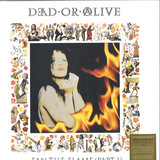
DEAD OR ALIVE - FAN THE FLAME (PART 1)

Dead Or Alive have sold more than 30 million albums and 25 million singles worldwide and gave Stock Aitken Waterman their first #1
single. Their first three albums, which the band wrote, all reached the UK Top 30, with ‘Youthquake’ reaching the Top 10. In the 1980s, they charted seven unique singles in the UK Top 40, with two further re-entries this century, with a remix and original version of ‘You Spin Me Round (Like A Record)’. Respected US magazine Billboard, ranked them in their all-time Top 100 most successful ‘dance artists’ chart.
‘Fan The Flame (Part 1)’ is their fifth studio album and was only released in Japan in 1990, where it reached #27, until a re-worked
version was included within the ‘Sophisticated Boom Box MMXVI’ box set in 2016. ‘Fan The Flame (Part 1)’ contains the singles ‘Your Sweetness (Is Your Weakness)’ (Japan #3), ‘Unhappy Birthday’ (Japan #14) and ‘Gone 2 Long’ (Japan #18). Renowned and in-demand singer, Tracy Ackerman performed all backing vocal duties, with Londonbeat and the London Community Gospel Choir appearing on ‘Total Stranger’ and ‘Unhappy Birthday’, respectively. Also featured is Billy Currie, better known for his work with Ultravox, Visage and Gary Numan. This special 30th Anniversary Edition of ‘Fan The Flame (Part 1)’, is the first time that the album has been commercially released on
vinyl in its original configuration, with original playing durations and will be pressed on 180g heavyweight white colour vinyl.

out of Stock

Order now and we will order the item for you at our supplier.


Last In: 5 years ago
Antenna - Quiet fx

Antenna

Quiet fx

2x12inchWOP001
World Of Paint
08.10.2019

After writing pop-based music under the name Renkas, Sasha Renkas searched for a more carefree and direct approach to making and recording music. His project Antenna is the result of that. He gets his sounds from the unexpected errors and limitations of hardware equipment from the '80s and '90s. Under the Antenna moniker, Sasha has released EPs and singles on labels like Clone, Pinkman, and Beats in Space. This time, Antenna is back with a full-length album. He recorded hours of jams in his studio in Rotterdam and then took a small set-up to Kiev to edit and finish the tracks there. The result is 'Quiet fx', the first release on new label World Of Paint. On 'Quiet fx', Antenna offers melodic soft house tracks with touches of electro and uk breaks.

out of Stock

Order now and we will order the item for you at our supplier.


Last In: 6 years ago
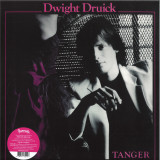
DWIGHT DRUICK - Tanger

Dwight Druick

Tanger

12inchFVR158LP
Favorite
30.09.2019

Dwight Druick’s born in Montreal to a professional gambler and an ex-Radio City Rockette. One of five children, he grew up in a family buoyed by music and beleaguered by the vagaries of miscalculated risk. After attaining a McGill University bachelor’s degree in Art
History, Dwight fully embraced both music and risk by traveling to London, where he signed a contract with Pye Records and Joe Cocker’s management company. The ensuing record,
Druick & Lorange was released to critical acclaim and relative success. After returning to Canada, Dwight recorded two albums with Phil Vyvial: Midnight and Minuit. Recorded with the Muscle Shoals Rhythm Section in Alabama, the duo’s work achieved airplay success in Quebec and across Canada. Dwight subsequently released his first French language solo album, Tanger, released in 1980 by the Canadian label, Bobinason.
Today quite hard to find in its original version, Tanger is first of all an incredibly solid album, clearly underrated and deserving more credit. Mostly known by collectors and DJs for the
stunning cover of Toto’s classic hit, “Georgy Porgy”, which was produced and arranged with the help of George Thurston (Boule Noire), it includes many other tasty titles, with amongst
them another fine rendition of “Open Your Eyes” by The Doobie Brothers. In fact, with its brilliant mix of Modern-Soul, Disco and AOR styles, the whole album is already considered
by many connoisseurs as a classic, and clearly a must have for anyone enjoying this musical blend. Never reissued on vinyl until now, there was not much more needed at Favorite Recordings
to make it happened. Officially licensed to Dwight Druick, who was unfortunately not able to provide the original tapes, Tanger has been perfectly restored and remastered by Frank Merritt, at The Carvery, London. CD and digital edition will also come with “Georgy Porgy (Version Disco)” as a bonus track.

out of Stock

Order now and we will order the item for you at our supplier.


Last In: 22 months ago
VLADISLAV DELAY - LP- untitled - circa 2014

Master of ambient spaces and far out places, long-time Finnish producer Sasu Ripatti (aka Vladislav Delay) blesses us once again with another release, this from his 'Visa' period of unreleased tracks.

The first track out of the gate is a recognizable Vladislav Delay piece, but instead of gently flowing rivers of sound, instead we have a series of stiff, machine-like rhythms applied to his classic infinitely deep pads and ambient environmental sounds.
It just continues to pile in more elements until becoming almost indistinguishable from his natural, organic flow.
From there we move into somewhat more familiar territory but still unusually stripped down and mechanical for a Vladislav Delay joint.

It’s fascinating to see such an intricate songwriting process laid bare in such a way, often exposing each individual, nearly bottomless sound in isolation.
Deeper into the album, things veer into decidedly more abrasive and synthetic territory, at times becoming an almost unrecognizable artist for a moment, only to be eventually subsumed under layers of shifting ambience that could only be Sasu.

This austere minimalism makes these tracks some of the most hypnotic since the early 90s excursions, but at the same time seems to have left its organic, analog roots and melded with the harsh gridlocked modern sequencer. ~Clint Anderson

out of Stock

Order now and we will order the item for you at our supplier.


Last In: 5 years ago
Items per Page:
N/ABPM
Vinyl