
pre-order now27.09.2024
expected to be published on 27.09.2024
expected to be published on 27.09.2024

expected to be published on 27.09.2024

expected to be published on 27.09.2024

expected to be published on 30.08.2024

expected to be published on 30.08.2024

expected to be published on 30.08.2024

expected to be published on 26.07.2024

expected to be published on 26.07.2024

expected to be published on 26.07.2024

expected to be published on 28.06.2024

expected to be published on 28.06.2024

expected to be published on 28.06.2024

expected to be published on 24.05.2024

expected to be published on 24.05.2024

expected to be published on 24.05.2024

expected to be published on 24.05.2024

expected to be published on 26.04.2024

expected to be published on 26.04.2024

expected to be published on 26.04.2024

expected to be published on 23.02.2024

expected to be published on 23.02.2024
expected to be published on 26.01.2024
expected to be published on 26.01.2024
expected to be published on 26.01.2024
expected to be published on 15.01.2024

Credited as one of the leaders of the Bay Area thrash metal scene, Heathen released four studio albums in total, including their Victims Of Deception. Originally released in 1991 on the Roadrunner label, the album includes their cover version of Rainbow’s “Kill The King”. In support of the album, the band toured Europe with Sepultura and Sacred Reich.
This is the first time Victims Of Deception is available as a 2LP- set. The track “Hypnotized” features snippets from a speech by the infamous cult leader Jim Jones. Victims Of Deception is available as a limited edition of 1500 individually numbered copies on translucent yellow coloured vinyl and includes an insert.
expected to be published on 13.05.2022

In seiner mehr als drei Jahrzehnte umspannenden Karriere hat sich der Komponist und Multiinstrumentalist Arjen Lucassen weltweit als treibende Kraft des Progressive Rock etabliert. Der vielseitig begabte Niederländer ist vor allem für sein Rockopernprojekt Ayreon bekannt, widmet sich aber auch regelmäßig musikalischen Nebenprojekten, die alle verschiedenen Aspekte seiner musikalischen Persönlichkeit erforschen.Lucassen ist bestrebt, bei Star One eine gleichbleibende Sängerbesetzung beizubehalten. Für 'Victims of the Modern Age' hat er die hochkarätige Besetzung der Leadsänger des ersten Albums 'Space Metal' (2002) wieder zusammengeführt: Russell Allen (Symphony X), Damian Wilson (Headspace, Threshold), Floor Jansen (ReVamp, ex-After Forever), und Dan Swanö (Nightingale, Second Sky, ex-Edge Of Sanity). Die unterschiedlichen Gesangsstile dieser großartigen Vokalisten, die von hochfliegenden Power-Vocals über eindringlich-melodische Passagen bis hin zu brutalem Growl reichen, verleihen jedem Song eine atemberaubende Vielfalt an stimmlichen Texturen.Was die Instrumente betrifft, so spielte der Holländer die Rhythmusgitarren, die Hammondorgel, das Mellotron, die Solina-Streicher und die analogen Synthesizer selbst ein und lud Schlagzeuger Ed Warby (Ayreon, Hail of Bullets, Gorefest) und Bassist Peter Vink ein, die kraftvollen Rhythmusspuren zu liefern. Außerdem holte er sich die einschüchternden Solokünste des ehemaligen After Forever-Keyboarders Joost van den Broek und des Gitarristen Gary Wehrkamp (Shadow Gallery), die beide charakteristisch glühende Soli beisteuerten. Zusätzlich zu dieser formidablen Besetzung rekrutierte Lucassen drei weitere Sänger - Mike Andersson (Cloudscape, Full Force, Silent Memorial), Rodney Blaze und den ehemaligen Black Sabbath-Frontmann Tony Martin - für einige Bonustracks des Albums.Zum ersten Mal ist 'Victims of the Modern Age' auf Vinyl als Gatefold 2LP+2CD & LP-Booklet erhältlich, sowie als Ltd. 2CD Digipak und Digitales Album (2CD).
expected to be published on 01.04.2022

In a career spanning more than three decades, composer and multi-instrumentalist Arjen Lucassen has established himself worldwide as a driving force in progressive rock. The multi-talented Dutchman is best known for his rock opera project Ayreon, but also regularly devotes himself to musical side projects that explore all different aspects of his musical personality
Lucassen is committed to maintaining a consistent vocalist lineup on Star One. For "Victims of the Modern Age," he reunited the high-powered cast of lead singers from the first album, "Space Metal" (2002): Russell Allen (Symphony X), Damian Wilson (Headspace, Threshold), Floor Jansen (ReVamp, ex-After Forever), and Dan Swanö (Nightingale, Second Sky, ex-Edge Of Sanity). The different vocal styles of these great vocalists, ranging from soaring power vocals to haunting melodic passages to brutal growls, give each song a stunning variety of vocal textures
As for the instruments, the Dutchman recorded the rhythm guitars, Hammond organ, Mellotron, Solina strings and analog synthesizers himself and invited drummer Ed Warby (Ayreon, Hail of Bullets, Gorefest) and bassist Peter Vink to provide the powerful rhythm tracks. He also enlisted the intimidating solo skills of former After Forever keyboardist Joost van den Broek and guitarist Gary Wehrkamp (Shadow Gallery), both of whom contributed characteristically blistering solos. In addition to this formidable lineup, Lucassen recruited three other vocalists - Mike Andersson (Cloudscape, Full Force, Silent Memorial), Rodney Blaze and former Black Sabbath frontman Tony Martin - for several bonus tracks on the album
For the first time, "Victims of the Modern Age" is available on vinyl as a gatefold 2LP+2CD & LP booklet, as well as a Ltd. 2CD digipack.
expected to be published on 01.04.2022

Continuing on the thematic thread of soundtracking an imaginary short movie, label founder DJ Tennis aka Manfredi Romano, asks some of the greatest contemporary club producers to take on the task of interpreting this idea in their own unique style. Romano explains that 'the score is a translation of our imagination, memories and emotions into music, with no protocols.' Opening the soundtrack, Vatican Shadow swaps his thunderous techno for a more cosmic and gentle approach, setting the tone for an equally serene soundscape from London based DJ and producer Midland. Japanese Future Terror head honcho, DJ Nobu, layers dense cerebral textures exuding the punk spirit of Life and Death. A similar rule defying energy can be heard by Ninos De Brazil who fuse carnival percussions with straight up old school techno. Both Scuba and Uchi bring the futuristic synths of a space age tomorrow we've all been waiting for. German producer Isolee interprets the task with his minimal productions and Italian producer Cosmo closes the compilation with Psychedelic Soundscapes turning into a distorted gabber missile. As the decade edges closer to it's decade anniversary, Romano proves yet again that Life and Death is a label which evolves through each reincarnation of itself, never failing to impress.
Order now and we will order the item for you at our supplier.

We are excited to finally announce and share 'Presentiment', the second Long Player from The Connection Machine.
This release is particularly special for us as it will be the first time in over 20 years that Jeroen and Natasja have put an album out on vinyl. Despite having a string of aliased releases in the '90s on the mighty U-Trax, a 12" during the early days of Carl Craig's Planet E, a remarkable album 'Painless' on Down Low Music, and most recently a series of in demand E.P.s with Lost Trax on Tabernacle, their output has remained tantalisingly infrequent.
With 12 tracks that capture their unique and awe-inspiring sound, 'Presentiment' opens you up to a world that only The Connection Machine have access to.
Order now and we will order the item for you at our supplier.

Fast-rising pianist and producer Yoni Mayraz presents his debut LP ‘Dybbuk Tse!’ revealing the story of a malicious possession that is taking over one’s body and soul.
Dybbuk, known from Jewish folklore, is a malevolent wandering spirit that enters and possesses the body of a living person. It’s a cursed soul of a dead one that wanders tirelessly for sins committed during their life. The most vulnerable victims are the young and the sinful. Possession can be taken literally or as an analogy to the burden that young people carry generations back, which they have no influence on, and which they have to accept. Dybbuk can only be removed by exorcism. The titular ‘Dybbuk Tse!’ is a command to remove the spirit from the possessed body. The album is a story about possession but also about exorcism through music.
Recorded live with his band over the course of a spring week last year, ‘Dybbuk Tse!’ is indeed experimenting with the ‘darker side of things’, but yet with a somewhat lighthearted approach which is so typical of Yoni’s work. He easily combines jazz with the sound of 90’s New York hip hop and raw old school breakbeat. The album interweaves unique Middle Eastern melodies, sophisticated structures and sounds, and beautifully crafted solos played by some of the promising talents on the scene.
London based Israeli born pianist and producer Yoni Mayraz has set foot in the instrumental music scene with his EP ‘Rough Cuts’ released in 2020. Since then, Yoni and his band have been playing major venues and festivals around the world including the legendary Ronnie Scott’s and The Jazz Cafe, to name a few, bringing raw energy to stage with live versions of the studio materials, and stretching the melodies and structures into a Dancefloor-focused take on jazz.
expected to be published on 05.10.2026
A DJ, producer and significant figure in contemporary electronic music, Marcel Dettmann steps forward to contribute to Running Back’s ongoing Mastermix series. Whereas previous editions of Mastermix have taken an ear to the sound of lapsed, legendary clubs such as Wild Pitch and Front, Dettmann’s curation deftly captures the man himself in ongoing perpetual motion, raiding the vault for his own precision-tooled edits, long-employed on dancefloors to devastating effect. Alongside a continuous mix, this release arrives as a 3LP gatefold, and as a limited edition cassette.
Closely associated with Berlin’s techno landscape, Dettmann was born and raised in the former GDR, then later immersed in the bleary-eyed counter cultural landscape of post-unification Berlin. Initially oriented by post-punk, industrial and new-wave music, Dettmann has been DJing since 1993, always expanding and perfecting his repertoire. He later began working behind the counter at the city’s tastemaking rave boutique Hard Wax, and a decade after he first dropped a needle, became (and remains) resident at notable local nightspot Berghain/Panorama Bar, where his instincts have helped sculpt the signature sound of both main dancefloors.
Of course, you’re probably not asking, “Who is Marcel Dettmann?” More importantly, you might want to know; just what treats has he gifted us here? The trip begins with a simple pitch-shift skywards, transforming Identified Patient’s creeping ‘The Female Medical College of Pennsylvania’ into a peak-time freakout, before an alternate take on Toctronic’s ‘Bis uns das Licht vertreibt’ emerges from the vaults for the first time. Dating from 1995, and one of Dettmann’s all-time favourites, Cristian Vogel’s ‘Untitled’ clambers back into the box with respectable cuts, while John Bender’s ‘Victims of A Victimless Crime’ kicks off the flip sporting a new arrangement, transporting us back to the foundations of a confident, stripped-back sound.
A few subtle edits to Clark’s perilously funky ‘Dirty Pixie’ takes us to Dettmann’s remix of Junior Boys. Produced in 2010, it transposes the Canadian duo’s sophisticated pop with our curator in his minimal prime, and has since become an irresistible prize for high-minded diggers. The same can be said for Experimental Products’ explosive proto-electro anthem ‘Who Is Kip Jones?’, empowered from pricey Discogs purgatory with just the slightest of tweaks. It’s deservedly sandwiched between the guiding influences of Chicago and Detroit in the form of Mutant Beat Dance’s raw ‘The Human Factor’ and a shimmering new version of previous solo production ‘Water’, featuring close friend and Ostgut Ton ally, Ryan Elliot.
The second half of the Mastermix seamlessly connects the mechanical past and digital present of EBM and industrial in the dance, with Dettmann’s instincts as a guiding hand. Severed Heads’ iconic ‘We Have Come To Bless This House’ emerges with mere nips and tucks, while Nitzer Ebb’s ‘Shame’ is significantly reimagined as a highwire act of rhythm and tension, setting up a sensual second take on a 2017 remix of ‘Limbo’ from Swiss synth heroes, Yello.
Core musical memories are shaken and stirred with a context-shifting take on Frank Duval’s emotional classic ‘Ogon’, while Ian North’s ‘Sex Lust You’ and Ford Proco’s notable Coil collaboration ‘Expansion Naranja’ effectively throb with only minor adjustments, respectfully imagined as “shadow versions”. Meanwhile, a simple breakbeat lifts Albert Kuningas’s ‘Astraalprojektio’ in the direction of wide-eyed dancefloors, while a fresh take on K-Alexi Shelby’s ‘Season of The Real’ inexplicably emerges somehow even funkier than before.
The conclusion of the compilation leads back to Das Tier from the prolific experimentalist Conrad Schnitzler, whose swirling synths and hypnotic vocals are duly tightened by Dettmann, but only as he puts it, “in conversation with the original.” Concluding three discs and thirty years of commitment to the dancefloor, this Mastermix not only offers us the opportunity to eavesdrop on this endless exchange, but to gain some sought-after material for our own record collections.
On Stock and ready to ship

Antuni (translated from Armenian as “homeless”), Margenrot’s third album, was created over five years. It is a personal statement about fragility, vulnerability, and the search for grounding in a world where conflict has become part of everyday life. Antuni is a genre of gusan song (gusans were Armenian folk singers and rhapsodes) – a story told by a homeless, eternal wanderer, exiled and deprived of homeland.
The album’s title also refers to the melancholic ballad Antuni (“The Song of the Wanderer”) by the Armenian composer, folklorist, and monk Komitas. This work was dedicated to the victims of the Armenian Genocide of 1915. Lusia’s new album is about national identity and inner wandering – between contempo- rary wars and deeply personal, existential experiences. She asks an urgent, personal question: “What is my home, and where is it?”
The album weaves together traditional Armenian chants and chorales with electronic music and field recordings. Breakbeat is layered with conversations between Lucy’s relatives about the fading village of Naokhrebi (an Armenian village in Georgia), while samples of Komitas’ liturgy, recorded in a Catholic church, contrast with fractured rhythms.
On Stock and ready to ship
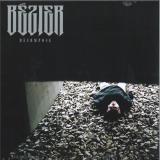
Bézier ripples their way back to Dark Entries with Decompose, an LP of doomed spa music. Multi-instrumentalist Robert Yang has made numerous appearances on Dark Entries for more than a decade, with releases spanning the stylistic gamut from hi-NRG disco floor-fillers to lush ambient epics. Decompose, Bézier’s second LP, is perhaps his most introspective work yet. It is an album almost ten years in the making, a deep investigation of life, loss, and the struggle of knowing oneself. If one were to pull a tarot deck for this album it would be the Nine of Swords. The album honors the lives of the fallen victims of Pulse Nightclub. It honors lives lost or suffering through the ongoing genocide in Gaza. The title track takes the form of a Buddhist chant, a brooding synth-driven meditation that scales steadily until breaking into John Carpenter-esque arpeggios halfway through. Tracks like “Egg,” “Marionette,” and “A Fading Citadel Atop Black Sand Bluffs” build on this soundworld, one in which intricate melodies and cavernous reverb induce in the listener feelings of both claustrophobia and free-fall. The album’s dancefloor-leaning moments, like “Codebreaking” and “Split a Path Towards the Thicket” are spartan, tunnel-vision techno tracks speeding towards ego-death. Decompose chronicles Yang’s journey to find peace with himself, as a gay Asian American. During this process, they learned to “repot” long-lost parts of their identity so they could grow forth in wholesome fashion. The sleeve for Decompose was designed by Eloise Shir-Juen Leigh, and features a photograph by Frankie Casillo of Robert laying on a bed of rocks in savasana pose, resembling an ascetic, evocative of the monastic vibes of the record.
On Stock and ready to ship

The Éthiopiques series returns! Essential archive recordings from an extremely fruitful period in Ethiopian music.
Before “Swinging Addis” took over the world, there was Moussié Nerses Nalbandian — the Armenian-born composer who shaped modern Ethiopian music. Mentor, arranger, and pioneer, he laid the foundations of Ethio-jazz.
This Éthiopiques volume revives his forgotten legacy, recorded live by Either/ Orchestra First issue ever with new exclusive photos and in depth liner 8-page insert.
“Ethiopian jazzmen are the best musicians that we have seen so far in Africa.
They really are promising handlers of jazz instruments.”
Wilbur De Paris
(1959, after a concert in Addis Ababa)
አዲስ፡ዘመን። *Addis zèmèn* **A new era.**
The time is the mid-1950s and early 1960s, just before "Swinging Addis" bloomed – or rather boomed – onto the scene. Brass instruments are still dominant, but the advent of the electric guitar, and the very first electronic organs, are just around the corner. Rock’n'Roll, R’n’B, Soul and the Twist have not yet barged their way in. Addis Ababa is steeped in the big band atmosphere of the post-war era, with Glenn Miller's *In the* *Mood* as its world-wide theme song, neck and neck with the Latin craze that was in vogue at the same period. Life has become enjoyable once again, with the return of peace after the terrible Italian Fascist invasion of Ethiopia (1935-1941). The redeployment of modern music is part and parcel of the postwar reconstruction. *Addis zèmèn* – a new era – is the watchword of the postwar period, just as it was all across war-torn Europe.
The generation who were the young parents of baby boomers** were the first to enjoy this musical renaissance, before the baby boomers themselves took over and forever super-charged the soundtrack of the final days of imperial reign. Music is Ethiopia's most popular art form, and very often serves as the best barometer for the upsurge of energy that is critical for reconstruction. Whether it be jazz in Saint-Germain-des-Prés or the *zazous* who revolutionised both jazz and French *chanson* after the *Libération*, be it Madrid's post-Franco Movida, or Dada, the Surrealists and *les années folles* that followed World War I, the periods just after mourning and hardship always give rise to brighter and more tuneful tomorrows. Addis Ababa, as the country's capital, and the epicentre of change, was no exception to this vital rule.
**Two generations of Nalbandian musicians**
Nersès Nalbandian belonged to a family of Armenian exiles, who had moved to Ethiopia in the mid-1920s. The uncle Kevork arrived along with the fabled "*Arba Lidjotch*", the** "*40 Kids*", young Armenian orphans and musicians that the Ras Tafari had recruited when he visited Jerusalem in 1924, intending to turn their brass band into the official imperial band. If Kevork Nalbandian was the one who first opened the way of modernism, pushing innovation so far as to invent musical theatre, it was his nephew Nersès who would go on to become, from the 1940s and until his death in 1977, a pivotal figure of modern Ethiopian music and of the heights it. Going all the way back to the 1950s. Nothing less. And it is Nersès who is largely to thank for the brassy colours that so greatly contributed to the international renown of Ethiopian groove. While the younger generations today venture timidly into the genealogy of their country's modern music, often losing their way amidst a distinctly xenophobic historiographical complacency, many survivors of the imperial period are still around to bear witness and pay tribute to the essential role that "Moussié Nersès" played in the rise of Abyssinia's musical modernity.
Given the year of his birth (15 March 1915), no one knows for sure if Nersès Nalbandian was born in Aintab, today Gaziantep (Turkiye/former Ottoman Empire) or on the other side of the border in Alep, Syria... What is certain is that his family, like the entire Armenian community, was amongst the victims of the genocide perpetrated by the Turks. Alep, the place of safety – today in ruins.
Before Nersès then, there was uncle Kevork (1887-1963). For a quarter of a century, he was a whirlwind of activity in music teaching and theatrical innovation. *Guèbrè Mariam le Gondaré* (የጎንደሬ ገብረ ማርያም አጥቶ ማግኘት, 1926 EC=1934) is his most famous creation. This play included "ten Ethiopian songs" — a totally innovative approach. According to his autobiographical notes, preserved by the Nalbandian family, Kevork indicates that he composed some 50 such pieces over the course of his career. This shows just how much he understood, very early on, the critical importance of song as Ethiopia's crowning artistic form. Indeed, for Ethiopian listeners, the most important thing is the lyrics, with all their multifarious mischief, far more than a strong melody, sophisticated arrangements or even an exceptional voice. (This is also why Ethiopians by and large, and beginning with the artists and producers themselves, believed for a long time — and wrongly — that their music could not possibly be exported, and could never win over audiences abroad, who did not speak the country's languages).
Last but not least, one of Kevork's major contributions remains composing Ethiopia's first national anthem – with lyrics by Yoftahé Negussié.
Nersès Nalbandian moved to Ethiopia at the end of the 1930s, at the behest of his ground-breaking uncle. Proficient in many instruments (pretty much everything but the drums), conductor, choir director, composer, arranger, adapter, creator, piano tuner, purveyor of rented pianos,... he was above all an energetic and influential teacher. From 1946 onwards, thanks to Kevork's connexion, Nersès was appointed musical director of the Addis Ababa Municipality Band. In just a few years, Nersès transformed it into the first truly modern ensemble, thanks to the quality of his teaching, his choice of repertoire, and the sophistication of his arrangements. It was this group that would go on to become the orchestra of the Haile Selassie Theatre shortly after its inauguration in 1955, which was a major celebration of the Emperor's jubilee, marking the 25th anniversary of his on-again-off-again reign.
At some point or other in his long career, Nersès Nalbandian had a hand in the creation of just about every institutional band (Municipality Band, Police Orchestra, Imperial Bodyguard Band, Army Band, Yared Music School…), but it was with the Haile Selassie Theatre – today the National Theatre – that his abilities were most on display, up until his death in 1977. To this must be added the development of choral singing in Ethiopia, hitherto unknown, and a sort of secret garden dedicated to the memory of Armenian sacred music, and brought together in two thick, unpublished volumes. Shortly before his death (November 13, 1977), he was appointed to lead the impressive Ethiopian delegation at Festac in Lagos, Nigeria (January-February 1977).
His status as a stateless foreigner regularly excluded him from the most senior positions, in spite of the respect he commanded (and commands to this day) from the musicians of his era. Naturally gifted and largely self-taught, Nerses was tirelessly curious about new musical developments, drawing inspiration from the very first imported records, and especially from listening intensely to the musical programmes broadcast over short-wave radio – BBC *First*. A prolific composer and arranger, he was constantly mindful of formalising and integrating Ethiopian parameters (specific “musical modes”, pentatonic scale, and the dominance of ternary rhythms) into his “modernisation” of the musical culture, rather than trying to over-westernise it. It even seems very probable that *Moussié* Nerses made a decisive contribution to the development of tighter music-teaching methods, in order to revitalise musical education during this period of prodigious cultural ferment. Flying in the face of all the historiographical and musicological evidence, it is taken as sacrosanct dogma that the four musical modes or chords officially recognised today, the *qǝñǝt* or *qiñit* (ቅኝት), are every bit as millennial as Ethiopia itself. It would appear however that some streamlining of these chords actually took place in around 1960. It was only from this time onward that music teaching was structured around these four fundamental musical modes and chords: *Ambassel*, *Bati*, *Tezeta* and *Antchi Hoyé*. A historical and musical “details” that is, apparently, difficult to swallow, especially if that should honour a *foreigner*. Modern Ethiopian music has Nersès to thank for many of its standards and, to this day, it is not unusual for the National Radio to broadcast thunderous oldies that bear unmistakable traces of his outrageously groovy touch.
On Stock and ready to ship
he initial seed for this project was planted in 2020 when Nicolás Jaar wrote the song “Piedras” for a concert at the Museum of Memory & Human Rights in Santiago, Chile, which commemorates the victims of human rights violations during the military dictatorship led by Augusto Pinochet between 1973 and 1990. Between 2022-2023 it took on a new form as a radio play entitled 'Archivos de Radio Piedras', which was shared on a dedicated Telegram channel. In 2024, the play was converted into a 24 channel installation at the University Museum of Mexico City (MUAC), where it was exhibited for 5 months.
Piedras 1 and 2 is a collection of the tracks featured within the play, all new music by Jaar, but partly presented within the play as the music of Salinas Hasbún (the name a composite homage to Jaar's grandmothers, Graciela Salinas and Miriam Hasbún).
The play follows two friends mourning the disappearance of Salinas Hasbún, a musician and writer who vanished in the early 2020s. Although they live in a future where technology is advanced, they
resort to DIY radio methods because the anonymous group “Las 0cho” has launched a worldwide attack on undersea internet cables, causing a global internet blackout.
The play's central theme revolves around the idea that truths, memories and identities speak from the cracks (“rasgaduras”), or the "in-between" spaces ("en el entre"). This concept is supported by the
way much of the narration unfolds - in the liminal spaces between radio frequencies. The instability and transitory nature of a constantly shifting radio dial becomes not just a metaphor but the structure of the play itself. It’s in these moments of noise, static and interference that the deeper revelations of the story emerge. This disjointed, ever-changing medium mirrors the way memory and trauma operate within the play - non-linear, slipping through the gaps, found in fragments or ordinary moments, rather than direct transmissions of “official” historical accounts.
This notion reaches its climax at the end of the narrative, when a text is discovered in which Salinas speaks of finding a new number in a small pond in a cave mentioned in the first episodes of the radio play. This pond, inside the “cochlea of the world”, is seen as a way to introduce real-life randomness to computation. Embodied in the salt lakes of northern Chile, home to the world’s oldest bacteria, this randomness disrupts the rigid order of binary code, paving the way for a transformation of digital life.
First solo release by Nicolás Jaar since 2020’s Telas and Cenizas.
On Stock and ready to ship

2x7"
Not so long ago Marlena Shaw was a forgotten figure. The talented vocalist had made several LPs for respected labels such as Cadet and Blue Note, and she'd performed regularly throughout the '60s and '70s. But she hardly had what you might call diva status. Falling into the unfortunate category that slips uneasily between soul and jazz, she was accepted - but not especially admired - by aficionados of either genre. Then came the '90s, and an open-minded enthusiasm for soul and jazz - and more importantly - everything in between - soon changed that. Marlena Shaw became an icon, and the diva status soon blossomed amongst her new-found soul-jazz fans.
Respect is a word that means much to any singer. The artist who stands up in the bright lights before an audience that has handed over their hard-earned cash has only their physical presence and naked voice to rely on. There is no hiding when you're on stage, you're the focus of attention and everybody is gawping at you. The singer yearns to communicate and entertain, and in return not only asks for appreciation and acceptance, but respect. To this end Marlena Shaw has endured decades of singing in the shadows, and she has only recently finally found her niche.
On Disc One we have 'California Soul', probably the most enduring and well-known of her many songs, but just a few seconds listening will tell you that it is much more than that. It's already a classic amongst those who have already seen the light and have danced and swayed to its timeless swing. Upon hearing it all lovers of soul, jazz – or any other kind of good music - will feel an aural glow as warm as the Californian sun. The song 'Liberation Conversation' on the flip was only ever available on her highly revered 1969 LP 'The Spice of Life'. This is where the 'Blues ain't nothing but a good woman gone bad' launches into an irresistible, relentless uptempo funk groove.
Disc Two showcases 'Wade in the Water', an ancient song rumoured to have been developed and popularised by slaves in the American south. The message is to pass on the notion that by fleeing in a bid for freedom through streams and rivers, the scent that bloodhounds use to follow their victims will be obscured. Marlena's version has long been a favourite dancefloor filler since its 45-only release back in 1966.
'Woman of the Ghetto' is one of her best-known songs and ends the set on the other side. The opening number from 'The Spice of Life', it's since been recognised for the classic it is, and as such has been afforded anthemic status. We release the original 45 version here, as used to promote the LP back in the day.
This special 2x7" product from Jazzman is dedicated to the memory of Marlena Shaw, b. 22 September 1939, d. 19 January 2024.
On Stock and ready to ship

Atkinson first saw Les yeux sans visage when she was a teenager, around the turn of the century. The film made an impact for its iconic imagery and the way Franju draws on the aesthetics of early filmmaking, from its score that relies on stylistic markers typical of the 1940s or 50s to the decision to shoot in black and white. Even four decades after its first release, it was clear that this was a work that stood outside of the cultural moment that birthed it, speaking through time in ways that were uncanny, but profound.
A quarter-century later, Atkinson was approached by the Belgian cultural center VIERNULVIER to create a new score for Les yeux sans visage for its celebrated Videodroom series, which has seen artists like claire rousay, Mabe Fratti, Lee Renaldo, and many more create new original scores for cult classics and genre cinema. Atkinson's music, with its sublime meditations on space and proximity, its elusive sense of narrative development, mirrors the pacing and mystery at the heart of horror filmmaking. There is a shadow at the heart of her soundtrack to Les yeux sans visage, an ever-shifting wisp and an insinuation of encroaching transfiguration. Echoing a climactic moment in the film, the music obliquely points to "the Beyond," an impossible place of discovery and revelation.
Atkinson envisioned her music as something akin to the air moving throughout and beyond the many cages that appear in the film, unconstrained by the bars and with undefined borders. Those cages hold the victims of a madman surgeon, determined to graft a new face onto his daughter, the protagonist Christiane Génessier, who lost hers in a car accident while he was behind the wheel. Atkinson was reminded of her predecessors at the pioneering French studio the GRM, who approached sound in a less sinister, but similarly surgical manner, and took inspiration from their playful approach to cerebral soundmaking for the electroacoustic topography into which the piano is embedded. As such, Atkinson’s reactions to the larger themes and the minute-by-minute happenings onscreen are both audible simultaneously.
A film about a man who destroys the lives of young women marked by their beauty and similarity to his daughter in a shame-fueled rage has clear, continuous cultural resonance. "Through the music, I decided to bring back their empowerment despite what they endure," says Atkinson. "This is why the record is also dedicated to Gisèle Pelicot, whose trial happened while I was in the process of composing the music and kept thinking of her strength and her decision to share her trial in order to reverse the shame."
This recorded version of the soundtrack is a 34-minute synthesis of the full 90-minute score, presented on LP along with an essay by writer-musician Claire Cronin and drawings by Momo Gordon, together forming a complex reflection on the film's themes. If these sounds move as if the bars of cages are no barrier, they also intimate the freedom and power of those held behind them. Rather than simply mirroring the fear and confinement shown onscreen, Atkinson offers an elusive escape, a beacon for the characters, and the listener, to follow as they reckon with the narrative and move through it.
Order now and we will order the item for you at our supplier.

"Singled Out" kommt als auf 1000 Stück limitierte Doppel-LP auf farbigem Vinyl (LP1 blau / LP2 kirschrot) im Klappcover oder als glänzende CD! Dreiunddreißig Tracks! Alle 7"-Singles der Band bis jetzt! Das sind alle ihre A- und B-Seiten! Mit dabei sind zwei bald erscheinende Singles, von denen eine als kostenlose 7" der nächsten Ausgabe des SAFETY PIN MAGAZINE beiliegt. Die andere gibt's als streng limitierte Lathe-Cut-7". Um Komplettisten zu begeistern oder zu ärgern, wird gleichzeitig eine dritte (Standard-)7"-Single veröffentlicht, deren A- und B-Seite hier nicht enthalten sind. Cyanide Pills veröffentlichten 2009 ihre erste 7"-Single ,Break It Up", gefolgt von weiteren 14 fantastischen 45er-Singles, zuletzt eine Split-Single mit den Schweizer Nasty Rumours Anfang letzten Jahres. Die meisten dieser Veröffentlichungen enthielten exklusive B-Seiten, die auf keinem Album zu finden sind und die Damaged Goods für ,Singled Out" zusammengestellt haben. Schön, sie alle an einem Ort zu haben, oder? Alle Tracks wurden im Billiard Room in Leeds mit dem Produzenten Carl ,Razorblade" Rosamond aufgenommen. ,Einflüsse? Hmm, nun, wir hören nicht nur Punkrock, das taten auch die frühen Bands nicht, weil es noch keinen gab", sagte Leadsänger Phil 2023 im Gespräch mit dem Magazin ,Vive le Rock". ,Wir mögen natürlich die üblichen Verdächtigen, unsere Favoriten sind die belgische Band The Kids, X-Ray Spex und Buzzcocks. Wir mögen Satan's Rats, The Tours, Knots, The Fingers, Panic, Kleenex, Crime, The Terrorways, Victims, Wipers, The Briefs, The Spits, The Plugz, Bad Nerves, Nasty Rumours, solche Sachen, jede Menge Sachen, Syd Barrett, The Kinks, MC5, Stooges, Bowie, Ruben and the Jets, Kim Fowley, John Lee Hooker, Howlin' Wolf. Die Liste geht weiter und weiter und weiter."
expected to be published on 22.05.2026

expected to be published on 10.04.2026
