
Reservar29.02.2024
debe ser publicado en 29.02.2024
debe ser publicado en 29.02.2024

“I’m not anti-hippie. I’m anti-unrealistic utopianism. Hell, I’m basically an anarchist.”
The realm of the hippies stretches between “Nature Boy”, Eden Ahbez’s international hit song from 1948, and Charles Manson’s “Trial Testimony” from 1970. NATURE BOY by Raymond Pettibon & Oliver Augst is a romantic-anarchistic search for the sources of punk. A must for all Pettibon fans.
DE:
„Ich bin nicht gegen Hippies. Ich bin gegen unrealistischen Utopismus. Zum Teufel, ich bin im Grunde ein Anarchist.“
Zwischen „Nature Boy“, Eden Ahbez weltbekannter Ballade von 1948, und Charles Mansons „Trial Testimony“ von 1970 spannt sich das Reich der Hippies. NATURE BOY von Raymond Pettibon & Oliver Augst ist eine romantisch-anarchistische Suche nach den Quellen von Punk. Ein Muss für alle Pettibon-Fans.
Haga su pedido ahora y le encargaremos el artículo en nuestro proveedor.

London band Those Unfortunates release their second album, Welcome to Woodberry Down, on October 27th through Gare Du Nord Records, on LP accompanied by a limited edition photobook.
Welcome to Woodberry Down is a collection of songs about the eponymous housing estate in the London Borough of Hackney. Singer/lyricist Ben Brill’s family were among Woodberry Down’s first residents in 1950. Dubbed the estate of the future, and built on land that had previously been the preserve of the wealthy, Woodberry Down’s social homes were emblematic of a new post war optimism.
Brill’s family called Woodberry Down home for over 50 years, eventually seeing the estate fall into managed decline. Not long after his grandmother’s death in 2006, the bulldozers moved in, and the foundations were laid for a new, privately owned housing development.
Brill started work on this project in 2016. At the time a Hackney resident, he spent countless early mornings walking round the condemned – but still not quite empty - estate, and watching a new version of the future rise in its place. He took photographs, and started writing songs, inspired equally by the liminal spaces he explored, and the utopian ideals of the London County Council planners.
The band will be celebrating the album’s launch with friend Paolo Ruiu at Margate’s Tom Thumb Theatre on October 27th, and London’s Betsey Trotwood on October 28th.
debe ser publicado en 26.02.2024

Als Kind der Punk/Metal/Hardcore-Bewegung Mitte der 90er Jahre verbinden DARKEST HOUR aus Washington, DC, die Leidenschaft, Energie und
Seele des Punk/Hardcore mit dem Stil, der Geschwindigkeit, der Rache und der Wut des melodischen Speed/Thrash/Death Metal. DARKEST HOUR
haben als einer der Pioniere des modernen Metal/Core den gesamten New Wave of American Metal Sound mitdefiniert. Ein Sound, der der Metalund Hardcore/Punk-Welt die Wiederbelebung gab, die sie sicherlich brauchte. Dieser Stil mischte den rohen Hardcore-Punk der 80er Jahre mit dem
skandinavischen Death Metal der 90er Jahre und schmiedete einen Sound, der später zur Vorlage für den modernen Metal wurde. Seit ihrer
Gründung vor 21 Jahren haben Darkest Hour 9 Studioalben (bei 11 verschiedenen Plattenfirmen) veröffentlicht, sind in großen Kinofilmen und
US-Fernsehshows aufgetreten, haben Videospiele gespielt und sind weltweit auf 6 der 7 Kontinente getourt.
debe ser publicado en 23.02.2024

Als Kind der Punk/Metal/Hardcore-Bewegung Mitte der 90er Jahre verbinden DARKEST HOUR aus Washington, DC, die Leidenschaft, Energie und
Seele des Punk/Hardcore mit dem Stil, der Geschwindigkeit, der Rache und der Wut des melodischen Speed/Thrash/Death Metal. DARKEST HOUR
haben als einer der Pioniere des modernen Metal/Core den gesamten New Wave of American Metal Sound mitdefiniert. Ein Sound, der der Metalund Hardcore/Punk-Welt die Wiederbelebung gab, die sie sicherlich brauchte. Dieser Stil mischte den rohen Hardcore-Punk der 80er Jahre mit dem
skandinavischen Death Metal der 90er Jahre und schmiedete einen Sound, der später zur Vorlage für den modernen Metal wurde. Seit ihrer
Gründung vor 21 Jahren haben Darkest Hour 9 Studioalben (bei 11 verschiedenen Plattenfirmen) veröffentlicht, sind in großen Kinofilmen und
US-Fernsehshows aufgetreten, haben Videospiele gespielt und sind weltweit auf 6 der 7 Kontinente getourt.
debe ser publicado en 23.02.2024

Lone returns to Greco-Roman with a two track 12” of some of his finest work to date. A’-side Waterfall Reverse’ is an ecstatic hardcore song that ascends into a utopian dream. Resident Advisor called it "A fresh reinterpretation of Lone's dayglo breakbeat hardcore.....one of Cutler’s best moments"
AA-side Triton serves as a companion piece and keeps things leaner and focused on a 4/4 club sound. Both tracks are peak Lone; mind bendingly, breathtaking machine funk!
Haga su pedido ahora y le encargaremos el artículo en nuestro proveedor.

Gudu Records label continues a 2023 for the books with Dream Universe, a new four-track EP by Italian duo Hiver.
Based in Milan, Giuseppe Albrizio and Sergio Caio have spent the last decade honing a very special take on electro and machine funk, driven by the duo’s trademark basslines, glossy strings that drip with emotion and an overall utopian nature.
On Dream Universe, a “tribute to early ‘90s house and trance”, built around trance elements, acid bass and Detroit-inspired rhythms made on iconic synthesizers like the Alpha Juno, Juno 106 and the Roland 303, 909 and D-550, they pack more energy and emotion into their music than ever before, from the high-emotional vocal that defines the EP’s title track, to the raw bass hits that drive ‘Lodash’.
At this point, Hiver’s sound is so distinctive that you know one of their tracks the minute you hear it, but Dream Universe feels like the high water mark of their work to date; a duo in complete control of their craft.
Haga su pedido ahora y le encargaremos el artículo en nuestro proveedor.

Der Raum zwischen dem Alten und dem Neuen, dem Klassischen und dem Modernen, dem Erbe und dem Fortschritt haben Martin Rott schon immer fasziniert. Mit 11 hatte der Sohn klassischer Musiker seinen ersten Gig als Drummer, seitdem hat er als Live- und Studiomusiker, Arrangeur und Komponist in den verschiedensten Genres und Ecken des Musikbusiness gearbeitet, von Indie-Künstlern bis hin zu großen Pop-Bands und TV-Shows. Auf seiner Solo-Debüt-LP verschmilzt der in den USA geborene, in Berlin lebende Komponist und Multi-Instrumentalist die Ideen der neoklassischen Filmmusik mit spielerisch detaillierten Beats und Soundscapes, eine Filmmusik zu einer Reise, die noch nicht auf Film gebannt wurde.
debe ser publicado en 12.01.2024

An ode to nineties trance and the more introspective side of lower-mid tempo music. Drawing inspiration from the external environments that encompass Australia and the vast rural landscapes, Reflex Blue’s double LP is a reflection of migration, introspection and deeper meditative states.
Spanning across nine tracks the LP explores our deeper connection to the outside world.
Haga su pedido ahora y le encargaremos el artículo en nuestro proveedor.

Hush Hush is thrilled to present the debut album 'No Such Thing As Free Will' by Los Angeles-based guitarist and composer Deniz Cuylan. "Deniz Cuylan seems to invent new languages for the guitar: nylon-strung takes on Reichian minimalism, fluttering arpeggios that recall Vini Reilly's spidery flamenco and atmospheric pieces pitched between Glenn Branca and Bert Jansch." -The Guardian "It's certainly an album that will soundtrack those moments when you sit and gaze at the world for a stretch, whether it is from behind a screen or in a park. An understated work, yes, but a miniature marvel." -A Closer Listen "A bright, studious, harmonic, pastoral gem. 'No Such Thing As Free Will' is a much prettier and more enveloping record than words can convey; it has a really nice poise between the disciplines of the leftfield, the guitar soli and that of bright folk melody." -Backseat Mafia
debe ser publicado en 16.12.2023

The documentary series GAÏALAND (Arte) tells the true story of a community of environmental idealists whose dream of saving the planet took them to extremes, from the light of utopia to the darkness of control. Yuksek's original music reflects these utopias and this disenchantment, in the spirit of his album released on Lumière Noire (Destiino) this soundtrack with its soft psychedelic electronic sound features songs taken from VHS recordings made by members of the community.
debe ser publicado en 15.12.2023

Following up his anthemic late-summer burner, Hope, Credit 00 returns to Pinkman to deliver the album Midnightlife Crisis. Hopping between genres whilst remaining resolutely coherent, the twelve-track double LP is a showcase of the Rat Life boss' many influences. From the driving, mesmeric techno of Music Is A Spiritual Thing to the sci-fi electro on Bouncing Bell and Love Warrior's downtempo, half-time shuffle, the collection of tracks is broad and varied yet simultaneously unified by belonging to the club. Whether it's warm-up material, peaktime rollers or afterhours sludge for tired legs and scrambled heads, there's something for every scenario on Midnightlife Crisis. And with recurring themes of melancholy and anxiety throughout, the album perhaps reflects that all too familiar period for every club enthusiast when the years are ticking by and the lights are coming on. "I just hope there's hope", sings the voice on the album's lead single, before reminding us that the dancefloor's sweet release is often the best remedy to these negative thoughts - "I see you shaking on the floor, that gives me hope, gives me hope."
Haga su pedido ahora y le encargaremos el artículo en nuestro proveedor.

Los Angeles-based visual artist and musician Lionel Williams was born and raised in a family of musicians - he is the grandson of soundtrack composer John Williams. Since 2010, he has been releasing music as Vinyl Williams. After three albums released on No Pain In Pop (Lemniscate, 2012) and Chaz Bundick's Company (Into, 2015 and Brunei, 2016), Vinyl Williams joined French label Requiem Pour Un Twister for his fourth album Opal released in 2018. Throughout his art, both musical and visual, Lionel Williams explores the syncretistic territory between reality and dreams, between earth and space. "Music is a chance to transmute qualitative opposites into the center, to dissolve all illusions of duality", he says. Since chaos and disorder are an illusion, Vinyl Williams is trying to reach a new state of celestial harmony on Opal. The result is an album fueled with mysticism and space age utopia, ten kaleidoscopic lush pop songs that takes you into a transcendental journey on an opal marbled vinyl limited to 500 copies.
debe ser publicado en 08.12.2023

Gombloh’s forgotten masterpiece
What if you have Brian Wilson and Bruce Springsteen rolled into one? And what if he came of age as an poor buskers in in Surabaya, Indonesia, but then summoned enough strength to record six albums that flew in the face of everyone in the country’s rock scene back in the early 1980s?
Genius, be they Brian Wilson or Soedjarwoto “Soemarsono” Gombloh, don’t conform to rules written for us mere mortals. They have their own way of doing things and in the case of Gombloh, writing music, conducting recording session and spending cash from his music, must be conducted on his own terms and his terms only. Studio time was expensive back in the early 1980s, yet Gombloh could be three-hour late for his session, and while engineers, session musicians and producers were jittery about the prospect of another botched session, Gombloh took his time for a nap before the recording begun.
Yet, some of his greatest works came into being in the wake of this napping session. Recording session for Sekar Mayang is no exception, despite the fact there’s foreboding sense of doom with Gombloh being unsure about the possibility of selling enough units to help his label break even. This is, after all, this is his last record with his band Lemon Tree’s. No one knew that Gombloh was operating with all his cylinders running and what came out of this Indra Record session, in the waning days of 1980, were some of the best compositions ever committed to magnetic tapes (to wax, if now you’re holding this on vinyl).
This is Gombloh at the peak of his creative genius. You can argue that his debut album Nadia & Atmospheer (what’s with the spelling mistake?) is the most sprawling and complex album (both sonically and thematically), but Sekar Mayang certainly had the best songs and I can make the argument that this album’s 10 songs are strong contenders for biggest hits in blues, country, psychedelic rock charts. “Prahoro & Prahoro” is one of those impossible song which appears to have sprung from a bottomless well of inspiration, encompassing King Crimson’s sprawling epic, Deep Purple’s deepest blues and Genesis’ most progressive tendencies. Or “Sekaring Jagat”, which begins as Lennon-McCartney lullaby before launching a thousand ships traveling to the end of the rainbow with children choir singing heavenly melodies backed by droning harpsichord and synclavier, while a buzzing Hammond B3 tightly locks with Gombloh’s guitar strumming.
For many of his fans, Gombloh is known as generous man of the people. A Robin Hood type if you please. He spent his royalty checks to buy foods for beggars and buskers and dish out some more to buy undergarments for Surabaya’s prostitutes. In Sekar Mayang, Gombloh went full Springsteen mode in “Mitra Becakan,” a social commentary that cut so deep you can end up with tears in your eyes and lump in your throat (even if you don’t understand any of its Javanese language lyrics). This is one the most devastating social commentary ever recorded for a pop song, and even if you discount the greatness of its musical composition, you chalk this up as a great social-realism poetry. His years of hanging out with pedicab drivers, street vendors and street-bound prostitutes certainly gave him enough insight into their (in)human condition.
Yet, a record this stellar was largely forgotten. First, this record was a flop upon its release in 1981. Indra Records reportedly only did one pressing on cassette tape and be done with it. For those who were lucky enough to have come across one of songs from this album on the radio were likely growing up in East Java, where Gombloh had a massive cult following early in the 1980s. Nothing was heard from this record again.
There were only a handful of cassette tapes from the first pressing found on second-hand market and I recently stumbled upon one online with a price tag of Rp 50 million (US$3,500). It’s no longer available now.
In Sekar Mayang, Gombloh harbours an obsession for a long-lost utopia, Java’s distant past, where farmers have their barn full of rice and corn, where blacksmith working around the clock making tools and children singing and dancing in their seminaries. Or the fact that he opens the song with stanza from Serat Weddhatama, arguably the most monumental poem in neo-classic Javanese literature, could be his pledge of allegiance. The question for him is should a modern-day Indonesia, rife with poverty, corruption and environmental degradation not be an anathema to that utopia?
In the end, you don’t need to be someone fluent in Javanese to enjoy this majestic record. And if this record turns out to be the last in Elevation Records catalogue and we shut down this label tomorrow, we will be very happy. Mission accomplished!
debe ser publicado en 17.11.2023

After two years, Carl and Andreas present their second album, and once again, it opens up a wide associative space for us. What strikes us initially is the uncommon instrumentation: a church organ, harpsichord, glass tubes, and more. Like their first album (The Aporias of Futurism), it is mysterious and dark. But it also carries a strong touch of rebellion and adrenaline, sometimes quite pointedly. The pieces are now shorter and feature intricate yet irresistible rhythms. The impact is immediate, yet it maintains a sense of solemnity and ceremony. The Apollonian complexity of the rhythms and subtle melodic interweavings is transformed into a Dionysian, ecstatic, hypnotic, and at times tribal context. "Music for Unknown Rituals" oscillates between primitive instincts and avant-garde intrigues.
The process began in Döblitz, a small village on the Saale river in Germany, inside an old church that houses an organ built in 1886 by Johann Adolph Ibach. Carl and Andreas gained access and secluded themselves there for a few days, accompanied by the organ, an instrument made of glass tubes, and a set of modular synthesizers. After recording the basic tracks in Döblitz, the work continued in Munich and Berlin. Carl played electric guitars, harpsichord, bass, metallophone, xylophone, Indian harmonium, and various percussive instruments. Andreas added layers of electronic sounds, noises, and atmospheric drones. He also created percussive structures extracted and derived from recorded material of technical and industrial noises, which contrasted with the acoustic drums played by Carl. The antithetical approach continues with the dichotomous arrangement of the instruments, often panned hard left and right in the stereo field, creating an antiphonic communication. Some parts, especially the use of the electric guitar, evoke memories of the psychedelic sixties. However, this is anything but a nostalgic album—these musical references are merely remnants, set pieces, and fragments used from a contemporary, post-modern, post-youth-cultural, and post-romantic perspective.
Although Andreas and Carl continue on their chosen path of composing music with an almost literary narrative structure, this album is conceptually and formally completely different from their first effort. If “The Aporias of Futurism” was a revolutionary manifesto (in a pataphysical sense), "Music for Unknown Rituals" is more like the implementation in action; it is the practical application of the previous statement. To put it another way, if "The Aporias of Futurism” was the conceptual manifesto of a dark utopia of modernity, "Music for Unknown Rituals" is the staging of free will surrendering to the myths and catharsis of a Greek tragedy. And in response to this, the artwork features a leitmotif of histrionics with hands, the hands being the first and intuitive part of the body to express something: a ritual, a prayer, a defeat...
— Andreas Gerth is one half of Driftmachine, and Carl Osterhelt is part of F.S.K and collaborates with Hans-Joachim Irmler of Faust. Both became connected through their participation in the Tied & Tickled Trio.
debe ser publicado en 17.11.2023

In the decade or so that hard-working New York quartet Sunwatchers have operated, the group has steadily & subtly refined their sound - a brain-blasting mixture of jazz, psychedelia, krautrock, punk, noise, & Saharan blues - into something that is avant-leaning enough to appeal to the discerning jazz & experimental music fan & weird & wooly enough to get the true heads' toes tapping. "Music Is Victory Over Time" is the band's 5th album, and fourth for Chicago-based Trouble In Mind Records, seeing the long-running lineup of Peter Kerlin (bass guitar), Jim McHugh (guitars), Jason Robira (drums), and Jeff Tobias (alto saxophone and keyboards) in prime form. Album opener "World People" is a classic Sunwatchers number whose title expresses their Anarcho-Internationalist ideology (and the atypically multi-culti make up of their crowds), with an underlying melodic resonance to New Orleans funeral marches à la Albert Ayler _ a triumphant call to arms to all peoples. Live fave "Too Gary"'s gang vocal shout punctuates a motorik rager named for a phrase often uttered by a badass eight year old skateboarder McHugh knew with a speech impediment (it means "that's too scary"). "T.A.S.C." (or "Theme For Anarchist Sports Center") is inspired by Sonny Sharrock's maligned 80's output & sounds exactly like a wrathful, mutant version of a prime-time athletic show theme, replete with the requisite "sitcom ending." The sun- scorched "Foams" - a longform piece intended to depict natural stuff like tides, nightfall, and time slowly passing, ancient, peaceful and slightly gross all at once - practically jumps out of the speakers, its palpable intensity crackling in your eardrums. The title of "Tumulus" might reference an ancient burial mound, but the music itself might be the group's most high-tech song to date, complimented by an arpeggiating sequencer, three different forms of tape delay and an electric saxophone; ecstatic, fiery & deeply spiritual. "There Goes Ol' Ooze" is a smoky creeper that lets Tobias & Kerlin take a walk for a while, with respectful nods to the Stones and Steve Reich. "Song For The Gone" closes out the album, showcasing a sincerely tender moment for the gang, as an expression of love and resolve for dear friends who had recently, tragically died. Its cascading, bluesy melody attuning itself to our own collective unconscious grief. Having the distinct pleasure of being the first band to record in John Dwyer 's new LA-based recording studio Discount Mirrors, "Music Is Victory Over Time" boasts a beefed up sound. The band worked closely with in-house engineer Eric Bauer - facilitator, troubleshooter, sonic obsessive, a legendary freak and a DIY lifer. The band also had full access to the studio's epic armory of gear: amps, axes (it's Dwyer's Eddie Harris model electric sax), synths, a bass guitar once belonging to Klaus Flouride of the Dead Kennedys. Crucial for the sounds and the vibe. The album art was created by Josh MacPhee, the activist artist, author, archivist and founding member of both the radical artist collective Just Seeds and Interference Archive, a public collection of materials from social movements based in Brooklyn. MacPhee's participation in the project works as a statement of Sunwatchers' progressive utopian intentionality, and organically underscores their involvement in revolutionary projects within and without of their hometown. Listening to "Music Is Victory Over Time", Sunwatcher's rebellious spirit & unbridled enthusiasm remain fully intact, but the secret sauce is their infectious irreverence in the face of the horrors of this world. Much of our best cultural commentary is Trojan-horsed to the general public via humor & satire & the band has a knack for lacing the ridiculous with the radical. It's good to have them back. "Music Is Victory Over Time" is released worldwide digitally via most DSPs, on CD, black vinyl & a limited "Sunflare" blue/red splatter vinyl while supplies last.
debe ser publicado en 10.11.2023

In the decade or so that hard-working New York quartet Sunwatchers have operated, the group has steadily & subtly refined their sound - a brain-blasting mixture of jazz, psychedelia, krautrock, punk, noise, & Saharan blues - into something that is avant-leaning enough to appeal to the discerning jazz & experimental music fan & weird & wooly enough to get the true heads' toes tapping. "Music Is Victory Over Time" is the band's 5th album, and fourth for Chicago-based Trouble In Mind Records, seeing the long-running lineup of Peter Kerlin (bass guitar), Jim McHugh (guitars), Jason Robira (drums), and Jeff Tobias (alto saxophone and keyboards) in prime form. Album opener "World People" is a classic Sunwatchers number whose title expresses their Anarcho-Internationalist ideology (and the atypically multi-culti make up of their crowds), with an underlying melodic resonance to New Orleans funeral marches à la Albert Ayler _ a triumphant call to arms to all peoples. Live fave "Too Gary"'s gang vocal shout punctuates a motorik rager named for a phrase often uttered by a badass eight year old skateboarder McHugh knew with a speech impediment (it means "that's too scary"). "T.A.S.C." (or "Theme For Anarchist Sports Center") is inspired by Sonny Sharrock's maligned 80's output & sounds exactly like a wrathful, mutant version of a prime-time athletic show theme, replete with the requisite "sitcom ending." The sun- scorched "Foams" - a longform piece intended to depict natural stuff like tides, nightfall, and time slowly passing, ancient, peaceful and slightly gross all at once - practically jumps out of the speakers, its palpable intensity crackling in your eardrums. The title of "Tumulus" might reference an ancient burial mound, but the music itself might be the group's most high-tech song to date, complimented by an arpeggiating sequencer, three different forms of tape delay and an electric saxophone; ecstatic, fiery & deeply spiritual. "There Goes Ol' Ooze" is a smoky creeper that lets Tobias & Kerlin take a walk for a while, with respectful nods to the Stones and Steve Reich. "Song For The Gone" closes out the album, showcasing a sincerely tender moment for the gang, as an expression of love and resolve for dear friends who had recently, tragically died. Its cascading, bluesy melody attuning itself to our own collective unconscious grief. Having the distinct pleasure of being the first band to record in John Dwyer 's new LA-based recording studio Discount Mirrors, "Music Is Victory Over Time" boasts a beefed up sound. The band worked closely with in-house engineer Eric Bauer - facilitator, troubleshooter, sonic obsessive, a legendary freak and a DIY lifer. The band also had full access to the studio's epic armory of gear: amps, axes (it's Dwyer's Eddie Harris model electric sax), synths, a bass guitar once belonging to Klaus Flouride of the Dead Kennedys. Crucial for the sounds and the vibe. The album art was created by Josh MacPhee, the activist artist, author, archivist and founding member of both the radical artist collective Just Seeds and Interference Archive, a public collection of materials from social movements based in Brooklyn. MacPhee's participation in the project works as a statement of Sunwatchers' progressive utopian intentionality, and organically underscores their involvement in revolutionary projects within and without of their hometown. Listening to "Music Is Victory Over Time", Sunwatcher's rebellious spirit & unbridled enthusiasm remain fully intact, but the secret sauce is their infectious irreverence in the face of the horrors of this world. Much of our best cultural commentary is Trojan-horsed to the general public via humor & satire & the band has a knack for lacing the ridiculous with the radical. It's good to have them back. "Music Is Victory Over Time" is released worldwide digitally via most DSPs, on CD, black vinyl & a limited "Sunflare" blue/red splatter vinyl while supplies last.
debe ser publicado en 10.11.2023

Introducing Elli Acula's latest pounder "BFF"! Packed with high-octane energy, vibrant contrasts, and explosive changes - this track got heavily road tested and sets dance floors ablaze. Kicking off with a hard-hitting and relentless kick drum that lays the groundwork for what's to come. As you delve deeper, you'll meet mesmerizing glitchy vocal cuts that add an ethereal dimension to it. But it doesn't end here - a nasty synth line with shuffling stabs and a captivating melody keep you hooked. The sheer contrast and dynamic shifts offer some serious shakes and a heavy dose of breakbeats in the B-part. Get your slice! Welcome to "Vape Nation" by trans-disciplinary artist Claus, a track referencing the rich heritage of big room and minimal techno. This peak time tool is based on a screaming lead melody and a subtle acid baseline, creating thrilling tension and discharge on point. The lead phrase radiates an ecstatic bitter sweetness and deploys the minimalist power of hypnosis to its full extent. "Vape Nation" seems to mediate the utopian moments of techno futures through their endless repetition - time for some contemplations on the dance floors! "Tek Tek Tek"by FJAAK is a rhythmic 4-stepper that explores dynamic beat changes and percussion-driven elements. At its core, it features a heavy, punchy kick drum that sets the tone to make a warehouse shake. The track's smacking synth line adds a unique texture, while short vocal snippets follow the song's title, creating a sense of intrigue and anticipation. "Tek Tek Tek" invites listeners to immerse themselves in its minimal & groovy world, where the rhythmic focus meets the dance floor.
Haga su pedido ahora y le encargaremos el artículo en nuestro proveedor.

2023 Black Vinyl Repress
Drexciya presents Grava 4. Earth has finally discovered Utopia. (Drexciya Home Universe) Earth scientist discovered the home planet of Drexciya on 2-14-2002. Within moments Dr. Blowfin was given the orders to initiate the seven dimensional cloaking-spheres to hide the other three planets from earths view. The star chart is authentic; you will be able to find the star by using the coordinations on the star chart. The planet Drexciya can be found in the international star vault in Switzerland & recorded in the astronomical compendium.
Haga su pedido ahora y le encargaremos el artículo en nuestro proveedor.

Haga su pedido ahora y le encargaremos el artículo en nuestro proveedor.

Kasra V is here to engulf the club. Fresh off the success of his recent release on Radiant Records titled "Hyperdelic," Kasra is submerging listeners with a signature sound touching on dance music visions from different epochs but harnessing a unique aural palette. Kasra applies cut up techniques with sampling and utilizing his own voice as a tool throughout the record, topping the club energy with a punk rock sensibility. Equal parts eccentric and equal parts calculated, the tempest of this record is doused in wild elements: anthemic vocal samples with arena shaking capabilities, 80's hedonistic nostalgia, catchy utopian vibrations with a psychedelic cyber flair, flirting with inspiration from groups like Meat Beat Manifesto and YMO. Euphoric and aerated, but with a slicing undertone utilizing his freaky sampling prowess. Shaytoon is proud to present the next chapter of diaspora alchemy for your listening pleasure. Prepare for a flood.
Haga su pedido ahora y le encargaremos el artículo en nuestro proveedor.

A pungent ooze emanates from the subway. As a sticky drum machine sequence rolls out like thick dark fog, ice cold synth swirls rise from the depths.
Since the debut album Europe By Night, one of the main references associated with Henrik Stelzer and his Metro Riders project has been that of cinema, and particularly the European genre films of the 1980s. With its seedy subject matters manifesting both in visual style and music, the vibe of that era has crystallized over time. Passed down to us from deteriorating video cassettes, it became an invaluable key to decoding our present day reality.
And this is true for this album as well; Stelzer does not hide the fact that he builds heavily on that vibe; referencing it through track titles and utilizing a particular recording setup consisting of a Fostex and a reel to reel in order to achieve and recreate the feeling of those soundtracks — as heard on magnetic tape rather than vinyl.
The motion picture soundtrack as an arbitrary genre definition becomes, in the hands of Stelzer, a pair of X-ray specs for him to envision a kind of music that deals in grains and contrasts rath- er than hooks and choruses. And like Roddy Piper in John Carpenter's 1988 film They Live, he hands those glasses over for us to see the true face of our times.
On Lost In Reality Metro Riders maps out an emotional geography of the cities at night, wherein the cinematic haze becomes a tool by which we can view the cities with new eyes. Not steering away from the darker alleys nor the harsh realities of modern day politics masquerading as progress. Yet escapism, in the end, seems the only viable option. But not as an endgame, but rather a stepping stone for building a new vocabulary for an utopian language.
debe ser publicado en 01.10.2023

After the not-quite-reissue of 'Prince of Parrot Shooters/The Aqueducts of Cannel Island', wide-eyed mystic and tireless searcher of the netherworld Spencer Clark returns to the Discrepant fold with 'Barbados Wild Horses' under his Mo-nopoly Child Star Searchers moniker. Recorded while Clark was living in the Canary Island's by Tupperware and Lagoss' Dani Tupper, 'Barbados Wild Horses' brims with insular romanticism and escapist bliss, with sunkissed synth-lines interwoven around his trademark hand percussion bouncy rhythms reflecting the scenery of the islands as a lib-erating utopia.
With track titles taking an almost self explanatory stance, the album starts with the crepuscular vibes of 'Upper Roman-tico', a poetic meditation on the lovelorn potential of the fading sunlight, setting the tone for the rest of the tour. 'Lava Tube Solos on Horseback', the first of two tracks featuring Sun Araw's Cameron Stallones, sees the latter's guitar noo-dles riding the cascading rhythms and digital choir harmonies while in 'Neopreno Antiguo' he solos freely around an hypnotic synth line. Finishing off the escapade, 'Nightcharcos Punta Brava' drifts in ethereal starlit contemplation, with the percussion taking a more backseat approach, setting into a steady pulse for Clark's gliding synth tapestries. Nightswimming as transcendence. Another piece of the fascinating puzzle Clark's been assembling for over two dec-ades now, 'Barbados Wild Horses' glimmers with a laid back sensibility that's as unhinged as enveloping. Not an easy feat by any measure. Clark succeeds again.
Haga su pedido ahora y le encargaremos el artículo en nuestro proveedor.

Limited BioVinyl 2023 repress, which provides an ecological alternative to the conventional vinyl record with strictly no sound or visual compromises.
“We all dance away our lives to the tune of the sovereign pleasure-pain axis.” – David Pearce, The Hedonistic Imperative
Pleasure-seeking and pain-avoidance as a rave metaphor fits the music of Sam Barker. The Berghain resident and Leisure System co-founder has spent the last few years exploring the euphoric potential of altering key variables in dance music formulas.
This was especially true on his 2018 Ostgut Ton debut EP Debiasing, which was flush with unconventional rhythmic chord stabs, melody and percussion but devoid of kickdrums. What seemed like an experimental exercise on paper was in reality equally geared towards the club: tracks that worked for the floor but resisted the genre categorizations that kick drums often provide. This has come to define Barker’s sound.
Now, on his debut solo LP Utility, Barker turns his focus toward melding experimentation and dancefloor pragmatism with the psychology behind the musical decision making process. In his own words: “After ‘Debiasing’ it occurred to me that my musical decisions were often unintentionally utilitarian, following an instinct to maximize pleasure in one way or another. It’s sort of unfashionable to admit, but by removing elements that have strong genre associations, this became a natural consequence.”
Accordingly, Utility is a playful but non-ironic musical approach to a whole spectrum of utilitarian and transhumanist ideas: from models for quantifying pleasure and “gradients of bliss” to abolishing suffering for sentient beings (not just people) through the ethical use of drugs and nanotechnology. Over nine tracks, Barker’s vision ebbs and flows through waves of deeply psychedelic musical vignettes; free-floating and futuristic melodies and rhythms as targeted brain stimulation. The sound draws heavily on modular synthesis, as well as self-built mechanical instruments and plate reverbs to create atmospheres that are at once alien and emotionally recognizable, functional and utopian.
Utility is by no means a concept album. Instead, it is an honest take on music as both pleasuremaximizer and consciousness-expander.
“We all dance away our lives to the tune of the sovereign pleasure-pain axis.” – David Pearce, The Hedonistic Imperative
Vergnügungssucht und Schmerzvermeidung als Rave-Metapher – das passt zur Musik von Sam Barker. Der Berghain-Resident und Leisure System-Mitbetreiber hat im Laufe der Jahre das euphorische Potenzial der Veränderung von Variablen in der Dancefloorschablonisierung erkundet.
Das traf besonders auf sein Ostgut Ton-EP-Debüt Debiasing zu, das nur so sprudelte vor unkonventionellen rhythmischen Akkordfolgen, Melodien und Percussion – die Kickdrum aber wegließ. Was auf dem Papier wie eine experimentelle Übung wirkte, war tatsächlich gleichermaßen für den Klub gemacht: Stücke, die auf dem Dancefloor funktionieren, sich dem oft vorgegebenen Kickdrumdiktat und damit einhergehender Genrekategorisierung aber verweigerten. So hat sich Barkers Klang definiert.
Auf seinem Solodebütalbum Utility widmet Barker seine Aufmerksamkeit nun aber der Verschmelzung von Experiment und Dancefloorpragmatismus mit der Psychologie hinter dem musikalischen Entscheidungsfindungsprozess. In seinen eigenen Worten: „Nach Debiasing kam mir in den Sinn, dass meine musikalischen Entscheidungen oft unbeabsichtigt utilitaristisch sind, einem Instinkt folgen, Glück auf die eine oder andere Art zu maximalisieren. Das einzugestehen ist recht unmodisch. Aber durch die Auslassung von Elementen mit starken Genreassoziationen, wurde dies eine recht natürliche Konsequenz.“
Dementsprechend ist Utility eine spielerisch-neckische aber unironische musikalische Betrachtungsweise eines ganzen Spektrums utilitaristisch und transhumanistischer Konzepte: Von Modellen zur Quantifizierung von Wohlergehen und Verläufen von Glückseligkeit („Gradients of Bliss“) zur Abschaffung von Leid für fühlende Wesen (meint: nicht nur den Mensch) über die ethische Nutzung von Drogen und Nanotechnologie. Im Laufe von neun Stücken ebbt und schwillt Barkers Vision durch Wogen zutiefst psychedelischer Musikvignetten; freifließende und futuristische Melodien und Rhythmen als gezielte Hirnstimulation. Der Klang gründet stark auf modularer Synthese, ebenso wie selbstgebaute mechnische Klangerzeuger, Instrumente und Plate Reverbs Atmosphären schaffen, die gleichermaßen fremdartig als auch emotional vertraut wirken, funktional und utopisch.
Utility ist keinesfalls ein Konzeptalbum. Vielmehr ist es eine aufrechte Auseinandersetzung mit Musik als Freudenmaximierung und Bewusstseinserweiterung.
Haga su pedido ahora y le encargaremos el artículo en nuestro proveedor.

debe ser publicado en 22.09.2023

English: Melodies that stay in the ear, with at the same time merciless speed and brutality and always a clear political message – this is what the modern death metal band NECROTTED from Southern Germany stands for now more than 15 years! Founded back in 2008, the band from Abtsgmünd (Baden-Wuerttemberg) has since grown to become a notable force in the scene, constantly thrilling their growing fan base and the music press with both their musical releases and their energetic live shows. In the time of their existence, NECROTTED have already released four albums with ‘Anchors Apart’ (2012), ‘Utopia 2.0’ (2014), ‘Worldwide Warfare’ (2017) and ‘Operation: Mental Castration’ (2021) and two EPs with ‘Kingdom Of Hades’ (2010) and ‘Die For Something Worthwhile’ (2019). In addition, the quintet has played hundreds of live concerts over the years on smaller and bigger stages in various countries. Now, the new album ‘Imperium’ marks another milestone in the band’s history. The LP is once again designed as a concept album and consistently develops the elaborate storyline of its predecessor in a substantial as well as in a visual way. Also, NECROTTED continue to tread experimental parts in a musical way. Their proven recipe of melodic guitar riffs, thundering blast beats and oppressive slams is joined by more and more black metal elements. In the lyrics, which are basically written in English, there are also more and more text passages in the German native language, which are performed as usual in banefully deep growls and strident screams. ‘Imperium’ will be released in September 2023 via the label Reaper Entertainment Europe and will almost certainly leave a resounding echo in the field of contemporary, diversified death metal.
debe ser publicado en 22.09.2023

BOTANICA is the newly established Japanese label created by DJ/ Producer, Iori Wakasa. It was formed for him to utilize it as a foundation for the realization of his own unique, artistic expression.
And now, he has the pleasure to announce his label’s inaugural title with the release of his own BOTANICA EP.
Born in 1988 in a rural Japanese city surrounded by mountains and the sea with a mild climate, Iori grew up playing RPGs with a father who was a devoted game aficionado. And he was introduced to electronic music through game music from an early age and formed his musical sensibilities through playing the classical piano around the same time.
Influenced by the spirituality and idiosyncrasies of punk rock and ethnic and indigenous music in his youth, also gradually influenced by the Tokyo club scene and the music, it didn't take him long before
he made the choice to start DJing at the age of 17 and soon afterwards, started exploring the path of music production as a form of self-expression.
Iori set up Botanica to convey 2 main concepts of 'presenting music that provides each listener with their own viewpoint' and ‘to construct a fusion between 'nature' and 'man-made objects and human
activity’. Through the experience of traveling around Japan, Europe and Asia and connecting with people of different languages and cultures, he became to appreciate that music transcends all languages and grooves, and the framework in which he would like to shape his perspective and embody it as his way of life is what he envisions as the vital expression for BOTANICA, The two tracks and the artwork included in this first EP are the first steps towards hopefully chronicling the story of the vortex that he resides in now and the new forest that he plans to weave in the future with his label.
'The Pure Land' means in Japanese 'Gokuraku-Jodo (= a space where you can live in bliss)', but in English it is closer to 'utopia' or 'paradise'. However, 'The Pure Land' is a musical work that evokes a
hypnotic and pleasant euphoria through the gradual layering of multiple rhythms and soft particles of spatial sound design. It is also shaped with the aim of liberating the listener and guiding them towards their primal self.
In contrast, 'Lunar Down' expresses the changes that occur in the human state of mind during the extended period from moonrise to moonset especially when the moon sets from its zenith and is completed with a focus on maximum dance floor impact via an inner voice that resonates in the brain that echoes throughout a well-textured bass line and rhythm track.
The artwork for the front cover of this EP was created by SHINOZAKI HILOSHI, an illustrator who has been traveling and painting to express his true way of life that he learnt in the 10+ years of commuting between Tokyo (the end) and the Hawaii Islands (the beginning), and the graphic designer hiro, who stands by Iori`s side as his life partner and as the person who understands him the best. Iori`s first steps are complemented by the label design and art direction by graphic designer hiro, who stands by his side as his life partner and most understanding partner, and the proof is the physical cut, which is presented as the foundation for the future.
Haga su pedido ahora y le encargaremos el artículo en nuestro proveedor.

Last year Low End Activist mapped out the depth and breadth of his sound with the Hostile Utopia album on Sneaker Social Club and now he returns with a fresh payload of future shock-outs from the grimy depths of his sound well. Recent times have seen LEA releases tipping towards MC guest spots but on this EP he’s turning inward with three varied, mutant workouts for soundsystem immersion.
‘Sent West’ makes no bones about its inspiration from the tough, boxy end of early dubstep, but as ever the kink in the Activist’s sound comes from the detail around the rhythm and his embrace of off-centre textures. ‘Neurosis’ plumbs even further down in its dogged pursuit of infinite subs and dystopian atmospherics, offering the kind of subliminal, wayward stepper to tweak nervous minds to distraction. ‘Dry Chat, Wet Rag’ stretches out on the B side with a phantom dub pulled from rad-blasted wastelands, caked in slime and tough enough to withstand any fallout.
Calling to mind the introspective, evocative work on the likes of Engineers Origins EP, this is LEA using the hardcore continuum to tell his most murked-out tales.
Haga su pedido ahora y le encargaremos el artículo en nuestro proveedor.

Limited new repress on blue vinyl. RIYL: Sharon Van Etten, Big Thief, Phoebe Bridgers, Angel Olsen, Neko Case, Bonnie “Prince” Billy, Bill Callahan, Steve Gunn, Kurt Vile, Cass McCombs, Jessica Pratt, Kevin Morby, Molly Burch Phosphorescent, Waxahatchee, boygenius. Recorded and mixed by Joshua Wells (Destroyer, Lightning Dust, ex-Black Mountain). Guest vocals from Bonnie “Prince” Billy on the “Don’t Slow Me Down” single. Guest pedal steel guitar from Paul Rigby (known mostly for his studio work with Neko Case) on 3 of the 10 tracks. Support thus far from FLOOD Mag, Stereogum, KEXP, KCRW, Popular TV (ex-Nylon writers), Pitchfork, Exclaim! & more. “Tonight” single synced for a Netflix series 13 Reasons Why in March 2017. Ashley Shadow winks at darkness, but she won’t lead you towards it. It’s easy to fall under the spell of Ashley’s haunting voice. The Vancouver, B.C. based songwriter forged her own identity as a songwriter with 2016’s eponymous self-titled debut. Her sophomore effort, Only the End, maintains the moody introspection that is ingrained in Pacific Northwest life, but now comes armed with a palpable hope complementing her signature melancholy. Ashley explains, “I wanted to make a more upbeat album, something you could play with some friends over. Some of the songs I wrote were initially bummers, but when we went to record them, we lightened them up.” Balancing a couple of jobs and navigating life and love in increasingly unstable times, the album was written over two years by Ashley at her apartment. Her confident vibrato above lightly, distorted guitars mirrors the album’s theme of resilience, if not triumph, over adversity. There is comfort in these warm songs that endorse the realism of contented acceptance, rather than the naïve search for non-existent utopias. While the songs were conceived in contemplative solitude, Ashley invited some very capable collaborators for their journey into the studio. Ashley’s first album saw her take center stage after more than a decade of gracing friends’ projects in a supporting role. The move to the front was a cautious one. “First record was, can I do a solo album? This time, I know what I’m doing. It’s way more clear.” "Don’t Slow Me Down" reunites Ashley with Bonnie “Prince” Billy for the first time on record when she sang vocals on Bonnie's Lie Down In Light album in 2018. The album also includes contributions from Paul Rigby (Neko Case), Colin Cowan (Elastic Stars), Joshua Wells (Black Mountain, Lightning Dust) and Ryan Beattie (Himalayan Bear). It’s clear to anyone listening. It’s Only the End. If only all endings were so glorious
debe ser publicado en 22.08.2023

Stephen Steinbrink discovered a short YouTube video of a street magician who approaches a highschooler walking home in Barstow, California. “Here, let me show you my idea,” he says, as he places a quarter on the kid’s hand. The magician performs some relaxed flourishes, and the coin vanishes. In silence, the kid stares at his hand at the nothing where there once, indisputably, was something, until his wonder finds a single word: “Cool.” The title of Disappearing Coin, the new album from Oakland songwriter Stephen Steinbrink, comes from this short clip. “When I look at it now,” he says, “I relate to the kid, who’s obviously uneasy in his body, and going through the experience of being a teenager in the early 2000s growing up in a bleak desert town like I did. I also relate to the coin, an inanimate disc of possibility. And I relate to the magician, an absurd facilitator of sending what is tactile and concrete into the wispy conceptual realm.” “I’ve watched it probably a hundred times,” he says. “It cracked me up but also blew my mind open the feeling of wonder I experienced watching this video became a guide as I navigated new ways of staying in the realm of what’s both real and magical.” Following the 2018 release of Utopia Teased, Steinbrink completed an apprenticeship in the nearly-lost art of Stained Glass, becoming a glazier at a studio that over three years, fully restored the enormous 90-year-old windows in San Francisco’s Grace Cathedral. He committed to his Buddhist study, beginning lay monastic training before the process was thwarted by the pandemic. He dove deeper into music production for other artists, engineering two albums by Boy Scouts released on Anti- Records in 2018 and 2021. Steinbrink delighted in the way these pursuits pulled at the thread of ego’s tapestry and decentralized him from his craft, allowing him to embody a new role as a creative caretaker engaging in practices that felt communal and restorative. “As I slowly began writing for myself again, I tried to imbue my new songs with this sense of playfulness and wonder I felt while exploring these other interests.” He says. Feeling unlocked from the pressures of perfection that he often felt in his earlier work, creating Disappearing Coin felt buoyant and healing. “The album feels like an integration of all of my past musical selves zeroing in on the present,” Steinbrink explains, “I felt free to explore new ways of writing, through different perspectives, experimenting with fictional songwriting, visual archetypal language, and total collaboration.” This “total collaboration” was a joyous new venture after years of solo performing and recording. The album can be seen as a 42 minute session of show and tell, the manifestation of Steinbrink repeating the mantra of “Here, let me show you my idea” to himself over and over. Disappearing Coin is at once a welcome return for the veteran Steinbrink and the debut of a totally new artist, one who has found a new path to himself with new goals of openness, curiosity, and self-acceptance. “Recalls the magic pop purity of Arthur Russell...its minimalism manages to feel enlightened and transformative.” PITCHFORK // “Melodic and self-assured. Steinbrink delivers his knotted lyricism with a smooth lilt.
debe ser publicado en 18.08.2023

Ursprünglich 1995 veröffentlicht, ist SPANNERS das zweite Album von The Black Dog und ihr erstes für Warp Records. Im Jahr 2017 feierte es Pitchfork als eines der '50 besten IDM-Alben aller Zeiten', das nun erstmals seit der Originalpressung 1995 wieder auf Vinyl erscheint. Nach SPANNERS ging das ursprüngliche Trio Ed Handley, Andy Turner und Ken Downie getrennte Wege - Handley und Turner gründeten Plaid, während Downie den Namen The Black Dog zunächst allein und später mit der Unterstützung der Brüder Martin und Richard Dust weiterführte. Die Reissue besteht aus exakten Repliken der Originalausgaben, das Album wurde von Beau Thomas @ Ten Eight Seven Mastering für klassisch-schwarzes Vinyl neu geschnitten.
Haga su pedido ahora y le encargaremos el artículo en nuestro proveedor.

Colloboh (a portmanteau of Collins Oboh) is a Nigerian-born, Los Angeles-based experimental producer and composer who has spent the past several years cultivating genre-spanning modular wizardry. A self-taught synthesist, Colloboh’s DIY recording diaries (still archived on Instagram) quickly amassed a dedicated online following, eventually catching the eye of Leaving Records founder, MatthewDavid, who wasted no time tapping the then-twenty-six-year-old to perform at the monthly Leaving showcase, Listen to Music Outside In The Daylight Under a Tree. In 2021, Colloboh permanently relocated to Los Angeles from Baltimore, dedicating himself to music full-time, and quickly becoming a fixture of the city’s vibrant experimental scene. Whereas Colloboh’s debut EP Entity Relation (released that same year) dove headlong into club beats, Saana Sahel, out May 5th 2023 on Leaving Records, showcases the breadth of the fledgeling composer’s ambitions. The EP’s title, Saana Sahel, refers to a land of Colloboh’s pure imagining—an untouched utopia spanning lush coastlines and sweeping deserts. Beginning with the stately “Acid Sunrise” (like a Phillip Glass rave comedown), the EP functions as an atlas of sorts, mapping the region’s varied environments and moods. And varied indeed—across these six tracks there lie ecstatic jazz freakouts, samba shuffles, guest vocals from (seemingly) the very Seraphim, and interpolations of Debussy and Gabriel Faure. The breadth of sounds conjured here is a testament not only to Colloboh’s eclectic roster of influences, but also the period of deep and challenging personal growth that immediately preceded the EP’s composition. The construction of Saana Sahel (both the imagined locale and the release) served as a spiritual lode star, a place to which Colloboh could retreat for energetic restoration. Ever-generous, Colloboh has charted these expeditions for us in song, and now we may all draw sustenance and inspiration from the wellsprings of this rich land.
debe ser publicado en 28.07.2023

»Blank Vault / White Stains« is the new solo album by Franz Joseph Kaputt (DRNTTCKS, Otomatik Muziek, Hager/Kaputt). Under his S.U.V. alias, he presents nine highly personal, improvised synthesizer miniatures, accompanied by heavily delayed drum machines and enveloped in clouds of feedback. The music unveils a background rooted in years of noise exercises and ventures into the territories of dark, psychedelic folk, while showcasing a fondness for delicate synthesizer sounds and repetitive song structures. Layers of sound and rhythms collide and arrange themselves to create an idiosyncratic ambient/kraut music that explores the borders of when intimacy becomes toxic. It also delves into how relationships involving kink strategies can be used in a way that don‘t render one powerless or hurt, but ultimately leading to empowerment.
Side A is kind of an utopian dark room, filled with peculiar beats, drones, and dreamy synth arpeggios. Pleasure and joy are subversive acts that challenge and upend stereotypical role models. The pieces revolve around the mutual and consensual exploration of individual boundaries and the transformative states that emerge within these encounters – a unique entity, a »Body Of The Mind« if you will, is formed between individuals. Side B then represents the counterpart. Acid synths, distortion cascades and looped pianos evoke the regression from this playful and subversive approach on to sheer brutality and perverse destruction.
debe ser publicado en 14.07.2023

The Search for God is a wake-up call for a troubled world that’s still worth saving, animated by a belief in the power of small connections to add up to big changes. At 10 songs delivered in a brief 15 minutes, Jimmy Whispers’ long-awaited sophomore album feels present in a way that feels brand new for the cult auteur. Like many of us, Jimmy has been affected by the pressure of the past few years. After embracing sobriety in 2019, and now as a filmmaker sharing the stories of lesser known Los Angeles community members, he’s brought his dreaming down to earth, while turning its direction even further out.
Recorded with his longtime friend Ziyad Asrar of the band Whitney (and re-recorded after a hard drive incident destroyed the original files), The Search for God was created in the wake of Jimmy’s COVID isolation, and returns to some teen influences that are out of step with the chill/lo-fi LA indie rock scene he’s found himself lumped in with. Created mostly with two vintage synths, a single Roland CR5000 drum machine, and a busted karaoke machine, it channels Midwestern emo, the Beach Boys’ Smile, subtle nods at hyper-pop production, and forgotten jewel-box era college radio of the early aughts into a pure pop sound that transcends easy categorization.
The album’s standout single—and its statement of purpose—is “Hellscape,” which packs more into a minute and 40 seconds than you’d think possible: multiple immediately-unforgettable hooks, kaleidoscopic keyboards, and a bracing reminder that even the most transcendent moments are rooted in a world full of suffering. “This is a fucking hellscape,” Jimmy sings. “This is real life / this is happening.”
That may sound like punk nihilism, but The Search for God is anything but. Every lyrical acknowledgment of how fucked things are right now comes with a promise that we can still make positive changes. Jimmy calls it “God”; you might call it Love or Peace or A Place In the Universe That Makes Some Kind of Sense.
Will The Search for God deliver whatever that is to you? Of course not. At its heart, it’s still just a really good pop album. But maybe that’s enough. For a minute or two at a time, Jimmy’s music cracks open a space where the divine can enter our lives. The utopia we’ve all been dreaming of is already here if we’re just willing to build it. Jimmy Whispers is there, ready to add his voice, whenever we want to reach out.
debe ser publicado en 23.06.2023

Richard Lamb’s second and (presumably) final release under this moniker is a bit of a special one. Lamb starts off with ‘Salt Lick’. A track with beautiful, lush, sunny sounds that lure you into an unexpected world of electro, heavy bass and more dance orientated tracks like ‘A Life In Harmony’.
Following up his first EP ‘Automatic Tango’ on his own Montreal based Temple imprint, there’s still hints of early Moog greasiness but overall it’s a more decisive production compared to the previous one. Intricately layered percussion mixed together with dreamy pads take you on a journey to a hidden Utopia where tight arrangements and tribal-esque rhythms dictate the pace. Once more we are shown how versatile Lamb’s productions are and how he juggles genres freely, ranging from dub to electronica, experimental, idm and techno.
The second side of this EP features two remixes by non other than Norwegian DJ and producer DJ Sotofett. A heavyweight in the electronic music scene who needs little introduction takes on the EP’s title track ‘A Life In Harmony’ and turns it into two electro-acid pieces ready to tear up any dance floor, or anything else for that matter. Surrender to the acid and indulge in these masterful tracks.
Haga su pedido ahora y le encargaremos el artículo en nuestro proveedor.

Part 1 of a retrospective of sorts, compiled from dozens of unreleased tracks from literally two decades of producing, these gems were collecting dust in the vaults of Ekman. Evocative and eerie electro from the Dutch master. We think we can let the music speak for itself in this case, as it's unique and instantly recognizable.
Haga su pedido ahora y le encargaremos el artículo en nuestro proveedor.

Thantifaxaths zweites Album Hive Mind Narcosis ist nicht nur ein großer Sprung für die Band, sondern auch für den zeitgenössischen Extrem-Metal insgesamt. Von den ersten Tönen an entsteht ein Gefühl der Transzendenz jenseits des Genres und der Szene.Früher als Avantgarde Black Metal bezeichnet, übertrifft Thantifaxath solche banalen Presse-Etiketten und zaubert stattdessen ein ausladendes, disharmonisches und bewusstseinsveränderndes Gebräu hervor, das niemals nur Black, Thrash, Death oder Doom Metal Psychedelia ist.
Vollständig von der Band selbst produziert, haben Thantifaxath ihren Sound auf erdrückende Perfektion zugeschnitten - eine Produktion, die so gewaltig ist, dass der Hörer sich bis zum bitteren Ende nicht zu bewegen wagt. Genau wie die Musik ist auch Hive Mind Narcosis eine lyrische Mischung aus zwei gegensätzlichen Idealen: "Das Album besteht aus zwei Ebenen, die im Gegensatz zueinander stehen. Auf der einen Ebene gibt es einen starken Widerstand gegen etwas, und auf der anderen gibt es eine totale Akzeptanz derselben Sache. Darüber hinaus überlassen wir es der eigenen Interpretation."
In der Karriere jeder wirklich bahnbrechenden Band gibt es einen Moment, in dem sie sich von der Masse abhebt und eine Insel wird. Für Thantifaxath ist Hive Mind Narcosis ein solches Album. Dieser unheilige kanadische Gral des zeitgenössischen Black Metal wird über Dark Descent Records veröffentlicht.
Das Cover von Hive Mind Necrosis zeigt das Gemälde "Hexenflug" (1798) von Francisco Goya, eine Lizenz des Museo Nacional del Prado.
debe ser publicado en 02.06.2023

Thantifaxaths zweites Album Hive Mind Narcosis ist nicht nur ein großer Sprung für die Band, sondern auch für den zeitgenössischen Extrem-Metal insgesamt. Von den ersten Tönen an entsteht ein Gefühl der Transzendenz jenseits des Genres und der Szene.Früher als Avantgarde Black Metal bezeichnet, übertrifft Thantifaxath solche banalen Presse-Etiketten und zaubert stattdessen ein ausladendes, disharmonisches und bewusstseinsveränderndes Gebräu hervor, das niemals nur Black, Thrash, Death oder Doom Metal Psychedelia ist.
Vollständig von der Band selbst produziert, haben Thantifaxath ihren Sound auf erdrückende Perfektion zugeschnitten - eine Produktion, die so gewaltig ist, dass der Hörer sich bis zum bitteren Ende nicht zu bewegen wagt. Genau wie die Musik ist auch Hive Mind Narcosis eine lyrische Mischung aus zwei gegensätzlichen Idealen: "Das Album besteht aus zwei Ebenen, die im Gegensatz zueinander stehen. Auf der einen Ebene gibt es einen starken Widerstand gegen etwas, und auf der anderen gibt es eine totale Akzeptanz derselben Sache. Darüber hinaus überlassen wir es der eigenen Interpretation."
In der Karriere jeder wirklich bahnbrechenden Band gibt es einen Moment, in dem sie sich von der Masse abhebt und eine Insel wird. Für Thantifaxath ist Hive Mind Narcosis ein solches Album. Dieser unheilige kanadische Gral des zeitgenössischen Black Metal wird über Dark Descent Records veröffentlicht.
Das Cover von Hive Mind Necrosis zeigt das Gemälde "Hexenflug" (1798) von Francisco Goya, eine Lizenz des Museo Nacional del Prado.
debe ser publicado en 02.06.2023

Die deutsche Rocklegende Phillip Boa und seine Band Phillip Boa and the Voodooclub, in Zusammenarbeit mit Universal Music, freuen sich, anlässlich des 30-jährigen Jubiläums die Wiederveröffentlichung des
bahnbrechenden Albums Boaphenia anzukündigen.
Im Jahr 1993 veröffentlicht, stellte das Album aufgrund ihres musikkritischen so wie kommerziellen Erfolg eine wahre Zäsur in der Karriere der Band dar und gilt heute als Kultklassiker. So erreichte es in den deutschen Albumcharts Platz 25 und war auch in Österreich und der Schweiz in den Charts vertreten.
Boaphenia wird weithin als eines der bedeutendsten Alben der hiesigen Szene angesehen, welches vor allem Phillip Boas einzigartigen Ansatz beim Songwriting und seine Fähigkeit, verschiedene Genres und Stile zu vermischen, eindrucksvoll unter Beweis stellt. Mit seinem innovativen Ansatz zur Rockmusik und den
poetischen Texten etablierte sich die Band als einer der wichtigsten Acts in der deutschen AlternativeRock-Szene. Gleichzeitig reicht ihr Einfluss auch heute noch über deutsche Grenzen hinaus.
Die umfangreiche 30 Jahre Jubiläumsedition fährt mit edler weißer 2LP-Doppelvinyl und einem 2CDMintpack auf, und enthält außerdem ein nie zuvor dagewesenes Earbook, bestehend aus insgesamt vier
CDs, einem Hardcover-Fotobuch über 52 Seiten und einer 10“ Single auf Vinyl. Zudem befinden sich auf dem Release 10 komplett neue, bisher unveröffentlichte Songs.
Haga su pedido ahora y le encargaremos el artículo en nuestro proveedor.
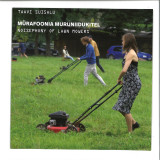
Taavi Suisalu is an Estonian media artist particularly interested into complex and adventurous sounds, field recordings and harsh audio emergencies, organized under the form of symphony or as a result of performative interactions.
In 2014 Suisalu received the Young Estonian Artist Prize as curator of Project of In-existent Villages, an articulate exhibition full of installations and site-specific sound performances. The use of peripheral spaces and the crossovers, sometimes extremely creative, of human interactions, data, sounds and technologies, are recurring in the works of Suisalu, whose subjective perspective unconventionally investigates different social and cultural phenomena. He is always attracted by the different forms of technologies. It can be an old seismograph he reconstructs to record the underground vibrations of a volcano, or, it can be some 3D models he uses to analyze a grain of soil coming from the ancient Pompei. The results of the researches would lead to the installations. The whole set of data is often the premise of a narration, a datafiction, as in the case of the signals recorded from some abandoned satellites, who are later presented with a speed set by the position of other satellites gravitating above the gallery hosting the event.
“Noisephony of Lawn Mowers" was originally composed in 2013, but it was unreleased until now, when Staalplaat, a fundamental label for its unusual experimental connections and for the sound events performed in unconventional spaces, decided to publish it. It's a score for lawnmowers, whose making is given to a conductor and executed by a group of artists. Suisalu reminds us that historically, lawn has been a symbol of power and wealth as it required substantial upkeep and unused land. Today, it still indicates wealth, but is mainly maintained by the owners themselves. This puts us in a schizophrenic situation where we strive to be privileged by taking the role of the servants.
“Silver Meets Ted” is the other track included in the selection. It's a recording of over ten minutes, whose trend cryptically moves on and with some unsettling minimal tolls, always more metallic. Some deaf beats follow, and then we have a splash of water and some slightly hinted neighs, chirps, different spills of liquid, more intense and measured, clackings and vibrations, some hardly identifiable frequencies and again a series of punctuated metal bells. The work by Taavi Suisalu stands out as a calibrated combination of mathematical coherence and elements of surprise, automatized and causal processes, some small oblique utopias, that work well together by improving highly subjective resources and create some slightly unsettling final results.
Haga su pedido ahora y le encargaremos el artículo en nuestro proveedor.
