Search:underground movement

Styles
All
Mobb Deep - Infamous

Mobb Deep

Infamous

2x12inchMOVLP1463
Music On Vinyl
04.12.2015

The Infamous is the second studio album by the American Hip Hop duo Mobb Deep, released in 1995. The album features guest apperances from Nas, Wu-Tang Clan members, Reakwon and Ghostface Killah. It marked Mobb Deep's transition from a relatively unknown Rap duo to an influential and commercially successful one.

One of the cornerstones of the New York hardcore movement, The Infamous is Mobb Deep's masterpiece, a relentlessly bleak song cycle that's been hailed by hardcore Rap fans as one of the most realistic gangsta albums ever recorded.

This is hard, underground Hip Hop that demands to be met on its own terms, with few melodic hooks to draw the listener in. Similarly, there's little pleasure or relief offered in the picture of the streets Mobb Deep paint here. They inhabit a war zone where crime and paranoia hang constantly in the air.

The product of an uncommon artistic vision, The Infamous stands as an all-time gangsta/hardcore classic.

out of Stock

Order now and we will order the item for you at our supplier.


Last In: 4 years ago
Chebran - French Boogie 1981-1985
 
6

This is France in the Mitterrand years: fashions fleet as fast as governments. In the early eighties, the happy-go-lucky gather the nectar of each and every new release.
Believing in a bright future for videotex, and loosened up by the sexy talks broadcasted on the budding pirate radios, the new generation dreams of dance floors and holiday clubs. French Boogie, which preserves the spirit of these years of boodle and bunkum, is the ideal soundtrack to their dreams.

What the web now refers to as French Boogie is some synthetic funk reflecting the spirit of those days when nothing was impossible, or so it seemed. Its syncopated flow heralded the dawning of French rap. Often considered as some kind of post-disco, inspired as much by black music as by new wave, this carefree pop music with bawdy lyrics indulged in simple pleasures: holidays, swank and sun were recurrent themes. Totally in tune with its time, it incidentally glorified luxury, success, and a certain consumerism embodied, for instance, in Bernard Tapie.

In popular clubs such as La Main Bleue in Montreuil, or L'Echappatoire in Clichy-sous-Bois - where Micky Milan could be seen behind the decks - an enthusiastic audience discovered this new sonic wave, influenced as much by French pop as by Sugar Hill Gang or Kurtis Blow. The artists who first launched the movement engaged in it wholeheartedly, but as often the case with new music trends in France, humour and casualness quickly became a decoy to impose a new style. This explosive mixture, in which startling and typically Frenchy French lyrics go along New-York-style tunes, is sometimes reminiscent of the kinky comedies directed by Max Pécas or Claude Zidi. On this prolific scene, partly originating from the Jewish community, everybody was looking for success, trying to hit the jackpot with what was to hand. Famous media personalities, one-hit wonders or John Does in quest of fame, all had a go at French Boogie - more or less successfully. Apart from « Vacances j'oublie tout » by Elégance, « Un fait divers et rien de plus » by Le Club, or « Chacun fait ce qui lui plaît » by Chagrin d'amour (produced by Patrick Bruel), very few songs became hits: the story of funk in France is that of a half-baked robbery.

In this myriad of new musicians, the very young François Feldman and Phil Barney pioneered a fresh and hybrid style. Other well-known artists like Gérard Blanc from Martin Circus (Attaché Case), Richard de Bordeaux (Ich), or Jean-Pierre Massiera (Anisette, Pirate Scratch Band, Mandrake, Scratch Man...) added an eccentric touch to this sound-wave, making it often entertaining, and sometimes showy.

Capture d'écran 2015-10-26 à 12.55.43Singers like Agathe (the author of 'La Fourmi' and of the hit song 'Je ne veux pas rentrer chez moi seule') were far more than just window dressing. They even tried to give an ironic and subversive twist to this rather harmless genre. The very vindictive rebel Gérard Vincent shared in this spirit, but as a whole, French Boogie became associated with nonchalance and sauciness. Thus, Stéphane Collaro, Gérard Jugnot, Alain Gillot Pétré and other TV clowns would clumsily contribute to this French variation on funky sounds. In a few but intense years, French Boogie gave all the tips to party with style.

If some hits made it possible for the happy few to get a real house under truly exotic palm trees, the wave actually ebbed away very quickly, leaving quite a few musicians stranded on the shore. Whether they were sincerely motivated, or simply opportunistic, they had failed. In 1984, French Boogie was already breathless, and got merged with other genres: on the one hand, rap and breakdance adapted its flow to a more urban world, especially with Sydney's show, H.I.P.H.O.P, and Dee Nasty's broadcasts on Radio Nova; on the other, italo, new beat and house began to rule over dance floors, even more strongly asserting the will to develop music for clubs.

Squeezed in between the age of disco and that of modern electronic music, French Boogie was a transitional phase, but it remains an amazingly refreshing testimony to the intermingling of pop and underground cultures. The genre was hastily categorized as anecdotal in spite of its pioneering synthetic groove and matchless bass lines. An attentive ear will discover the poetry of the ephemeral beyond the eccentricities of the genre, as well as a certain unexpected avant-gardism. At the origin of major music trends, always cheerful and catchy, French Boogie is what you need to party.

out of Stock

Order now and we will order the item for you at our supplier.


Last In: 10 years ago
Unknown Artist - Crossover / Take Control

Unknown Artist

Crossover / Take Control

10inchPERSPEKTIV001RP
Perspektiv
02.10.2015

10" Repress

Nostalgic rave cuts produced by an anonymous stranger from Rotterdam - pressed on clear transparent 10" vinyl. This release clearly reflekts the artist's passion for the haydays of the '91/'92 Hardcore Rave movement.

Strictly underground funk, keep the crossover...

out of Stock

Order now and we will order the item for you at our supplier.


Last In: 4 years ago
Sean Khan - Samba Para Florence/ Things To Say Remixes

180gr! This 12" features remixes from Henry Wu and Ben Hauke, two rising South London natives whose dusty house sounds are reminiscent of the jazz-wise swing of the West London broken beat sound, a movement Sean Khan himself was heavily involved in.
London based jazz appassionato Sean Khan, will release his second album 'Muriel' later in 2015. Dedicated to the driving force behind his musical career, his mother Muriel McGinley, the album is virtuosic free, Latin and nu-jazz experimentation, drenched in soul with the help of the vocal talents of Omar, Sabrina Malheiros and Heidi Vogel (Cinematic Orchestra).

This 12' features remixes from Henry Wu and Ben Hauke, two rising South London natives whose dusty house sounds are reminiscent of the jazz-wise swing of the West London broken beat sound, a movement Sean Khan himself was heavily involved in.

On the A side, Henry Wu, a key member of the tight-knit label/ loose collective 22a Records (also home to the likes of Mo Kolours and Al Dobson Jr.), imbues the original track with a distinctly organic and off-kilter groove: a loose and earthy quality which is hallmark of the Wu sound and makes for a perfect complement to Khan's delicious melting pot of jazz, soul and broken beat flavours. Sturdy yet swinging with strong jazzy synth stabs and topped with a child-like, wordless, sing-along vocal, it's sure to be an underground summer club hit.

The B Side sees the mysterious Ben Hauke, whose previous releases have been courtesy of Melodica Recordings, steep Khan's 'Things to Say' in his own murky yet soul-drenched sound, one that falls somewhere between hip-hop and broken house. Not much is known about this young producer, but what we can glean from his work on this remix is a sound drenched in syrupy, slightly sinister keys and a plodding, unpredictable thump not entirely dissimilar from previous Far Out remix contributor Theo Parrish. Like the work of that Detroit innovation, these two young Londoner's contributions both look set to lend a funkily idiosyncratic and offbeat edge to all the right dance floors.

out of Stock

Order now and we will order the item for you at our supplier.


Last In: 6 years ago
Various - Amplificador - Novssima M¨sica Brasileira

Over the past few decades, there has been a seismic shift in Brazil's musical landscape. A plethora of varying musical undergrounds has developed across the nation. While Rio and São Paulo have been overwhelmed with networks of talented musicians for a long time, creative life is now bursting all over the country. Amplificador exists to document and propagate the wonderfully diverse music currently blossoming from Brazil's vivacious and geographically varied musical undergrounds. Presenting an up-to date insight into Brazilian music, this compilation draws together some of the components of 'Novíssima Música Brasileira' (brand new Brazilian music), ranging from afro-grooves to rock, to modern samba and MPB. The music reaches back across Brazil's incredibly rich musical and cultural traditions, while also taking in influence from other movements around the globe.


Having begun life in 2012 as a Brazilian music blog run by Marcelo Monteiro, Eduardo Rodrigues, Mateus Campos, and Ricardo Calazans, the aim of Amplificador is to document and propel to wider audiences, Brazilian music of the '00s and '10s generation. This is a task made more significant by obvious changes in the way music is consumed. 'People are no longer obliged to listen to what the radio and TV are presenting. There is a whole new generation that wants to listen to new bands and new sounds and we try to connect those bands with other bands, producers, fans and even the mainstream.' These changes in technology and the way music is discovered and shared have developed parallel to the proliferation of these emerging scenes. The ostensible decentralization of the music industry means the promoting and filtering work of journalists and blogs, like Amplificador, have become increasingly important, as people try to keep up with the tsunami of new music and media flooding the country on a daily basis.


Marcelo uses the example of the Mangue Beat movement to explain a trend in contemporary Brazilian music that looks both inwards, to Brazil's own musical traditions and outwards, to movements around the world to create a novel, localised identity: 'The 90's Pernambuco art-social movement was inspired by Coco, Maracatu and Forró all mixed with modern riffs and grooves. The mythical

revolutionary Chico Science, his Nação Zumbi, Mundo Livre, Siba, and many others do this blend perfectly. There are also the references to the older generations and masters - Gil, Caetano, Luiz Gonzaga, João Gilberto, Tim Maia, Jorge Benjor - as a constant inspiration for all bands.' This is very much the case for the Brazilian artists of today.


Music is unquestionably informed by place. Brazil has always been famed for its regional differences in this sense. Indeed there are still pronounced variations between the scenes of Rio, Sao Paulo, Natal, Goiânia, Belo Horizonte and Belém for example, there are also great divergences within cities and while technology has brought changes to the way musical influences are shared, there are cultural differences, rooted in folkloric traditions, that aren't going away. Expressing his appreciation for this fact, while highlighting the potential of Brazil's spread of musical flavours, Marcelo explains that 'what we have now is new ingredients to make an even better mixture.'

This compilation heavily features music from a scene in Brazil's current musical make-up, which draws inspiration from African music, particularly Afro-beat music. Abayomy Afrobeat Orchestra from Rio formed because of their shared love of the music of Fela Kuti, uniting initially in 2009 for a jam session in his honour. But what sets Abayomy apart from other groups of a similar nature, is the fact that their sound also brings with it the songs and rhythms of candomblé. In this sense, Abayomy was the first band of its kind. The thirteen members of the orchestra have a palpable current of Rio's musical heritage - its rhythms and culture - running through them. So while their sound is distinctly African, it is also inherently Brazilian. Similarly, Zebrabeat Afro-Amazônia Orquestra draw upon traditional guitarradas and carimbos from the state of Pará and fuse these with the poly-rhythms of Afrobeat to create another regional hybrid, which stays true to both its Amazonian and African roots, yet which results in a very fresh, Brazilian sound. From Belo Horizonte (capital of Minas Gerais), Iconilli are another key band on Brazil's Afro-groove scene. With influences as varied as funk, jazz and psychedelic rock, congado, mining harmonies, maracatu, coco, ijexá, carimbó, Iconilli somehow manage to balance all of these sounds in such a way that makes it impossible to pin them down. From the Northeastern city of Joao Pessao, Parayba, Burro Morto's pshychadelic afro sound leans more towards rock and funk influences, with hint of regional Brazilian rhythms such as frevo and forro. They add another flavour to the Brazilian afro-groove scene: just one of the many exciting facets of Novíssima Música Brasileira.


While African-inspired music features heavily on the compilation, it is just one of the many styles within. Ive Seixas has a fresh approach to MPB, based on traditional rhythms and instrumentation, punctuated by a pop sensibility, coupled with a powerful female vocal. As an artist she is a product of a 'Do It Yourself' outlook to creativity, taken from her love of rock growing up. In 2013 she embarked on a project of street performance: wandering, like a lonely troubadour with just her guitar. Ive and her project began to gain notoriety and shortly after, her first EP was recorded, featuring some important names of South Rio's underground scene. 'Cervejas Populares' taken from the EP, is a beautiful, sombre piece of modern Brazilian pop, with a traditional samba rhythm. Another artist of the new MPB scene is Fabricio, from the city of Vitoria, who's 'Feito Tamborim' melds rock and funk and is also clearly reminiscent of the old Brazilian masters. It's an appreciation for the national musical heritage, alongside a keen ear for melody and an acceptance of foreign influences that results in these promising new sounds of Brazilian MPB.

Sao Paulo's super group of the underground 'Passo Torto' have been at the helm of an emerging scene in the city: an innovative approach to samba which draws in and experiments with afro grooves, jazz melodies and rock structures. Their sound is naturally very Brazilian, but the nylon twang of Faira Lima Pra Ca, interspersed with ominous strings and light rolling percussion, seems reminiscent of Captain Beefheart or Tom Waits, as the band lament their frustrations with their native city through their music.


The Future of Novíssima Música Brasileira looks very bright. The main challenge (and purpose of this album) is to get the music beyond Brazil's underground and into view of international audiences. In the last 10 years this goal has become somewhat more attainable, as the Brazilian government has begun to see the internationalisation of the nation's culture as a strategic objective, with public projects gaining increased investment and backing. The continuing project of Amplificador is to reinforce this international bridge by writing, filtering and promoting the scene as a whole. There is a wealth of great music currently blooming in Brazil and using new media tools, Marcelo and the team, alongside many others, will passionately continue to get the voices of Brazil's underground heard.

out of Stock

Order now and we will order the item for you at our supplier.


Last In: 10 years ago
Pisetzky - Off The Map Ep

Pisetzky

Off The Map Ep

12inchJT003
Just This
29.06.2015

Just This is Hunter/Game new label based on their well known party in Milan.
Just This is the expression of a social, metropolitan and underground movement we are living and going through all together.
Our Mission is to give room and importance to Art and Music which are still evolving day by day.
Just This is aimed to frame these changes, which are going to be the picture of today and the future memory of the cultural movement of this age, throughout a series of messages, images and sensation drawn inside the audience.

Furthermore, thanks to the energy, the happiness and the magic charm of our parties and events, talented and unique artists, from all over the world, use their way to interpret music to communicate people the real core of this change:
the future is changing...

out of Stock

Order now and we will order the item for you at our supplier.


Last In: 6 years ago
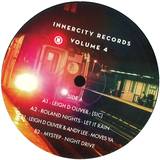
Various - Volume 4

Various

Volume 4

12inchICR004
Inner City
27.11.2014

Inner City Records returns with their fourth release, continuing with the ethos of providing first class, dance floor-driven house music with groove and attitude.
InnerCity welcomes the return of an artist who has been there from the very first release and one that fits the InnerCity sound perfectly. Leigh D Oliver, hailing from Yorkshire (UK) has firmly established himself as an artist synonymous with top-notch house music. Leigh's passion for 'proper house' coupled with his raw talent has resulted in him gaining numerous chart positions and releases on prestigious labels such as Large Music, Underground Source and Freche Fruchte.
With its heavy kick, rumbling bass, smooth chords and sweet vocal hooks, '(Sic)' kicks off the release in absolute style, highlighting why Leigh is one of our absolute favourite producers here at InnerCity.
For the second track, Leigh returns, this time combining forces with Lost Records owner Andy Lee. With two producers of this caliber, the results were always going to be excellent. Andy, from the North East (UK) has seen releases and remixes on labels such as Love Not Money, Spinnin' Records, Nervous Records and his DJ career has taken him worldwide, playing gigs in Moscow, Switzerland, Ibiza and beyond. 'Moves Ya' is a first class slab of deep & moody house that does exactly what it says on the tin. A track teaming with deep chord hooks, clever vocal samples and low bass, Moves Ya is perfect for the darker, sweatier clubs.
Next up, InnerCity's very own Roland Nights brings us 'Let It Rain', a dance-floor driven slab of straight-up house with jacking percussion, warm chords and soulful vocal cuts. 'Let It Rain' showcases Roland's passion for classic-sounding house music which has seen previous releases on labels such as Lost My Dog, Large Music and Amenti Music.
Last but by no means least, we head over to the Ukraine, gladly welcoming Mystep who lays down an absolute beast of a house track that is filled with energy, classic sounding chords and rolling bass, guaranteed to work on any floor.

DJ Support:

Golf Clap
Miami Ice
Kinky Movement
Ian Straker
Joan Ribas
Jordan O'Regan
Luke Gibson
Jeff Craven
Cahul House Mafia
This Is Why We Dance
Manooz Manuel
Greg Fenton
Raw Culture
Horsey
Marc Cotterell
Pete Gelderblom
Carlo Gambino
Leigh D Oliver

out of Stock

Order now and we will order the item for you at our supplier.


Last In: 6 years ago
Items per Page:
N/ABPM
Vinyl