quête:under the influence

Genres
Tout
Johanna Borchert & Miles Perkin - The Match LP
  • Last In The Pack
  • Breaking
  • Repairing
  • Beneath The Undertow
  • Under We Go
  • Losing It
  • Dark Again
  • Erased
  • Just As I Was Told

While both draw their influences from jazz, contemporary classical music, and extended improvisations, they use preparations and extended techniques to bring a sonic vocabulary to their respective instruments that sounds otherworldly. As vocalists, they blend these elements with singer- songwriter and pop influences to create long, flowing sonic arcs encompassing abstract soundscapes, simple songs, angular rhythmic bursts, and more. The result is touching, captivating, and never predictable for the listener. Voices and sounds merge into a unique musical world that is greater than the sum of its parts

pré-commande24.04.2026

il devrait être publié sur 24.04.2026

Whirlwind - 1640
  • 1: 640 (Intro)
  • 2: Days Of Doom
  • 3: Rage Of The Conqueror
  • 4: Winds Of Ash And Dust
  • 5: Lese Majesty (Corpus De Sang)
  • 6: Through Fire And Blood
  • 7: Ready To Explode
  • 8: By The Blood In Our Veins
  • 9: Marching To Victory

DYING VICTIMS PRODUCTIONS is proud to present WHIRLWIND’s highly anticipated second album, 1640, on CD and vinyl LP formats. WHIRLWIND was originally conceived as a studio-project by Mark Wild, from Körgull The Exterminator among other extreme metal bands, to satisfy his will to make a classic heavy metal album, a style that changed his life during his childhood – influenced mostly by ‘80s German metal bands like early Running Wild, early Helloween, Accept, Heaven’s Gate, Gravestone, Tyrant, Grave Digger, Steeler, and Stormwitch among others, but also all kinds of classic heavy metal like Mercyful Fate, Manowar, Iron Maiden, and Judas Priest. In 2022, WHIRLWIND released their debut album, 1714, marking the band’s beginning. WHIRLWIND also established a live lineup to bring their songs to life onstage, with musicians from other known bands, like Redshark, joining as permanent members of the band. The album immediately generated a big buzz in the underground scene and led them to perform at some of the best-known festivals in Spain like Pounding Metal Fest and Skulls of Metal, alongside such bands as Visigoth, Attic, Omen, Tentation, Mindless Sinner, Witchtower, IRON CURTAIN, and Phantom Spell. Now arrives WHIRLWIND’s second album, 1640. Like its predecessor, the album is focused on historical and epic episodes of their homeland; specifically, this album revolves around the Thirty Years War that took place around Europe and the inner conflicts within Spain.

Musically, WHIRLWIND deliver a masterclass in cruising, classy Teutonic metal, running from more traditional-minded mid-tempo stompers to surging, up-tempo gallops of glory. Riff and lead form a lethal tandem, balancing both energy and color, while the rhythm section stays locked in no matter the dynamic. The production, too, of 1640 honors the mid ‘80s with authenticity – underground in spirit, Big League in execution. All told, the album is true heavy metal for true heavy metal people: no more, but definitely no less. By the blood in their veins, WHIRLWIND are marching to victory, ready to explode!

pré-commande24.04.2026

il devrait être publié sur 24.04.2026

T.P. Orchestre Poly-Rythmo - West African Beat: Rare 7s and EPs from Benin and Niger LP 2x12"

For the last few years Acid Jazz has been the proud custodian of the Albarika Store legacy. Hailing from the small but culturally-significant state of Benin, the label was operational from the late-‘60s until the early ‘80s, and was home to some of the finest, deepest, rawest West African cuts ever. A font of local and regional music, infused with contemporary Western influences, the beating heart of the Albarika sound was the mighty T.P. Orchestre Poly-Rythmo, who in various guises released dozens of recordings for the label, under the leadership of Mêlomé Clément. The intoxicating originality of their sound stems from their combination of folkloric and sacred rhythms of the region, with the modernist sound of soukous, afrobeat, soul and funk. Recorded at EMI Studios in Lagos, these recordings have a unique high fidelity and have been a target for grail-hunting record collectors for decades. For this incredible 2LP collection, Dean Rudland and David Hill compile the Poly-Rythmo 45 releases; 7” single and EP sides lost to the seeds of time. Until now. Brought together for the first time, presented in a beautiful wide spine layout, the 2 LPs present a snapshot of some of the group’s finest work from the ‘70s, their distinctive beat already honed. The printed inner sleeves include images of the rare and collectable original labels and sleeves, along with sleeve notes by Francis Gooding

pré-commande24.04.2026

il devrait être publié sur 24.04.2026

Robert Leiner - Visions Of The Past LP 2x12"

Swedish producer Robert Leiner’s landmark 1994 album ‘Visions Of The Past’ finally gets a vinyl LP reissue on Apollo, the ‘ambient division’ of R&S Records. Long regarded as one of the pivotal ambient/electronic long players, the album has stood the test of time and serves as a reminder on how potent the early ambient techno releases were.

Leiner was a central figure in the early European techno and ambient landscape, carving out a distinctive sound that bridged atmospheric depth and rhythmic intensity. Known for his releases as The Source Experience and contributions to the R&S/Apollo catalogue, as a producer and engineer, Leiner’s work resonated across the underground, earning him a reputation for visionary, emotionally charged productions that stood apart from his contemporaries.

'Visions Of The Past’ captures this duality perfectly with expansive ambient passages that drift into hypnotic techno, while layers of intricate sound design and pulsating low end create a timeless and immersive listening experience. Tracks unfold with patience and precision, like the 12-minute-long marine epic ‘Aqua Viva’, balancing introspection with kinetic dance energy, and the new age ambience of ‘Dream Or Reality’ and ‘Northern Dark’ embodying the forward-thinking ethos that defined Apollo’s golden era.

Three decades on, this long out of print album finally returns on vinyl format, freshly remastered and restored, reaffirming its status as an essential document of electronic music’s evolution and Robert Leiner’s enduring influence.

‘Visions Of The Past’ by Robert Leiner is available on Apollo Records from 7th November 2025.

pas en stock

Commandez maintenant et nous commanderons l'article pour vous chez notre fournisseur.


Derniere entrée: 7 jours
EVIL GRAVE - DEATH FROM MALTA
  • 1: Machinery
  • 2: Optica
  • 3: Jam Session 1
  • 4: Screaming Streaks Of Light
  • 5: Satan's Death

Just when you thought you had heard it all.... Evil Grave were an exceptionally unique underground rock band from Malta that shook the islands with uncompromising attitude and dark imagery. In the early 1970s they ruled the Maltese scene and were voted best band in national polls. Heavily influenced by Black Sabbath and early progressive rock with a traditional Maltese flavour, Evil Grave never released any material during their existence. Several low budget demos were recorded at the time but, over the following years, the name Evil Grave simply vanished into obscurity. Until now! During a recent vacation to the islands, label owner Lee Dorrian became aware of the band and has spent the past three years tracking down as much information about them as he possibly could. With the blessing of original guitarist/songwriter John E Zammit Pace, we are excited to release this ungodly artefact upon the work for the very first time. Death From Malta, gathers together all known existing material from the band, the sound quality of which is decidedly lo-fi but, if anything, this only adds to the mysterious vibe of this simply enigmatic band.

pré-commande24.04.2026

il devrait être publié sur 24.04.2026

Luke Lund - Peel The Scab

Luke Lund

Peel The Scab

12inchEXR0002
Explorations
24.04.2026

Luke Lund is a self-taught producer and sound artist from Finland. Over the past eighteen years, his work has absorbed influences ranging from the darkest fringes of club culture and the most caustic strains of industrial noise, to the subtlety of musique concrète and the rawness of rock.

It all started when he discovered that abstract sound design could stand as music in its own right, a revelation that ignited his enduring commitment to noise, sound art, dub techniques, and experimentation.

“Peel the Scab” emerges from this premise as a visceral and frenetic immersion into his “lo tech” facet, a term the artist himself employs to define the album’s style.

Allergic to programming, these are pure dub-blooded sessions pushed straight to tape, twisted until they yield under their own weight. It is a work constructed upon dense, disjointed rhythms: brutalist grime infused with a suffocating mutation of dub.

pré-commande24.04.2026

il devrait être publié sur 24.04.2026

inrain - RISE

inrain

RISE

12inchMFM082
MUSIC FROM MEMORY
23.04.2026

Music From Memory presents inrain, a collaborative project by Rudy Tambala of A.R. Kane and Alison Shaw of Cranes, originally recorded in the early 1990s.

inrain brought together two artists who were at the time shaping distinct yet quietly influential currents within alternative music. Through A.R. Kane, Tambala had helped redefine the possibilities of guitar music, placing atmosphere, abstraction, and emotional ambiguity at its centre in ways that would later resonate across dream pop, shoegaze, trip hop and experimental pop. At the same time, Shaw’s work with Cranes was establishing a singular vocal presence and a deeply intuitive approach to mood and space. inrain emerged at the intersection of these sensibilities.

The project began after Tambala was introduced to Shaw by Geoff Travis, leading to sessions at H.Ark! Studios in Stratford, East London. Working outside the expectations of their primary bands, the pair recorded informally over several months, building songs from minimal foundations. Early sampling technology, drum machines, acoustic guitar, and voice were used sparingly, with arrangements left open and space treated as an active element within the music. Vocals were often improvised, first takes preserved, and the atmosphere of the studio — calm, unhurried — became part of the sound itself.

Originally released in limited form during the early 1990s, the recordings carried subtle traces of the surrounding musical landscape: the low-end experimentation of emerging jungle, dub-influenced rhythmic structures, and a restrained melodic sensibility shaped as much by classical textures as by contemporary underground culture. Though modest in scale, the music feels quietly expansive — intimate, patient, and emotionally direct.

For this release, all tracks have been newly remastered from the original DAT tapes. This edition also includes the additional track 'Biology', written and recorded in 2012

pas en stock

Commandez maintenant et nous commanderons l'article pour vous chez notre fournisseur.


Derniere entrée: 15 jours
Various - Naive Melodies (Tape)

Various

Naive Melodies (Tape)

CassetteBBE424CTP
BBE Music
17.04.2026

Naive Melodies is a bold and visionary tribute to the music of Talking Heads, reinterpreted through the lens of Black musical innovation. Curated by Drew McFadden — the creative mind behind BBE’s acclaimed Modern Love (David Bowie tribute album) — this new collection dives deep into the Afro-diasporic rhythms and experimental soul roots that helped shape Talking Heads’ unmistakable New Wave sound. Inspired by artists like Fela Kuti, Parliament, and Al Green — whose influences loomed large in the band’s rhythmic DNA — Naive Melodies shines a light on the Black music traditions that underpinned their artistry. Far from a conventional tribute, Naive Melodies reframes the band’s catalog through the voices and visions of a new generation of genre-defying artists. These interpretations illuminate the foundational grooves and sonic textures that fueled Talking Heads’ rhythm-forward aesthetic, bringing them full circle with authenticity. “With Naive Melodies, I wanted to spotlight the deep and often overlooked influence of Black music on the sound of Talking Heads, drawing from the rhythmic foundations of Afro-diasporic traditions, soul, gospel, Latin, and spiritual jazz. This project is a chance to reimagine Talking Heads’ legacy through the lens of the very innovations that helped shape it, bringing those influences to the forefront through the voices of today’s most forward-thinking artists.” — Drew McFadden The album features a globally minded lineup, including Liv.e, Bilal, Rogê, Miguel Atwood-Ferguson, Aja Monet, Georgia Anne Muldrow, Theo Croker, Kenny Dope, Rosie Lowe, Pachyman, W.I.T.C.H., and more — spanning Afrobeat, jazz, soul, funk, gospel, dub, electronica, orchestral, and Latin styles. It reflects not only the boundary-pushing ethos of Talking Heads, but also the influence of Black music as a cultural force that helped shape it. This is not just a tribute album — it’s a recontextualization. A cultural conversation. A rhythmic reawakening.

pré-commande17.04.2026

il devrait être publié sur 17.04.2026

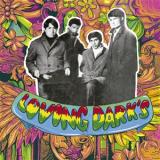
LOVING DARKS - LOS AMANTES OSCUROS
  • 1: Complicado
  • 2: No Quiero Llegar A Viejo
  • 3: El Adivino
  • 4: Mi Imposible
  • 5: Ven Debajo De Mi Bote
  • 6: A Través De Las Lgrimas
  • 7: Psicosis
  • 8: Vino Dulce
  • 9: Conexin
  • 10: Llmame
  • 11: Algo De Ttere
  • 12: Toad

Los Amantes Oscuros" brings together for the first time on vinyl the recordings made between 1968 and 1969 by pioneers of Bolivian garage rock, Loving Darks, originally released on their three EPs. A selection packed with proto-punk covers of hits by the Stones, Cream, Tony Hatch, and more-often surpassing the originals in attitude and power. Their original records are highly sought after and are virtually impossible to find in any condition_ If we had to choose the Latin American country where the rawest and wildest garage and beat records of the '60s were recorded, Bolivia would be one of the clearest contenders. For some strange reason-surely related to the country's extreme conditions, its high altitude, and the influence of huayno-Bolivian recordings are truly unique and fascinating. A multitude of bands sprang up under the influence of groups-mainly British-that dominated the international charts. From the ashes of two of Bolivia's most important seminal bands, Los Black Byrds and The Turtles, two new groups fundamental to the history of Bolivian rock would be born: the mythical Climax and the legendary Loving Darks. "Los Amantes Oscuros" brings together for the first time on vinyl the recordings this band made between 1968 and 1969, originally released across three EPs on the local Lyra label. Their repertoire is packed with covers such as 'El Adivino,' a sped-up reinterpretation of 'Fortune Teller,' or even 'Algo de títere,' a reworking of 'Jumpin' Jack Flash.' They also adapt the classic 'Call Me' by Tony Hatch and 'Toad' by Cream, from whom they borrow the cover of one of their most iconic albums for the artwork of their EP "Complicado." In fact, 'Complicado'-a proto-punk version of the Rolling Stones' 'Complicated' and their signature track-is a perfect example of how a Bolivian band could outdo the British giants in attitude and power. Their importance lies in having paved the way for new sounds, styles, and aesthetics within a still-emerging scene. This compilation is a joint release with the Peruvian label Rey Record and includes an insert with notes on the band's history. First time vinyl reissue.

pré-commande17.04.2026

il devrait être publié sur 17.04.2026

Various - Tchic Tchic: French Bossa Nova 1963-1974  Colored Edition LP 2x12"
  • A1: Les Masques - Il Faut Tenir (1969)
  • A2: Isabelle Aubret - Casa Forte (1971)
  • A3: Christianne Legrand - Hlm Et Ciné Roman (1972)
  • A4: Jean Constantin - Pas Tant D'chichi Ponpon (1972)
  • A5: Billy Nencioli & Baden Powell - Si Rien Ne Va (1969)
  • B1-: Marpessa Dawn - Le Petit Cuica (1963)
  • B2: Jean-Pierre Sabar - Vai Vai (1974)
  • B3: Sophia Loren - De Jour En Jour (1963)
  • B4: Isabelle - Jusqu’à La Tombée Du Jour (1969)
  • B5: Sylvia Fels - Corto Maltesse (1974)
  • C1: Frank Gérard - Comme Une Samba (1972)
  • C2: Ann Sorel - La Poupée Des Favellas (1971)
  • C3: Charles Level - Un Enfant Café Au Lait (1971)
  • C4: Andrea Parisy - Les Mains Qui Font Du Bien (1970)
  • C5: Audrey Arno - Quand Jean-Paul Rentrera (1969)
  • C6: Aldo Frank - T’as Vu Ce Printemps (1970)
  • D1: Christianne Legrand - Cent Mille Poissons Dans Ton Filet (1972)
  • D2: Clarinha - Lemenja (1970)
  • D3: Hit Parade Des Enfants - Aquarela (1976)
  • D4: Jean-Pierre Lang - Tendresse (1965)
  • D5: Magalie Noël - Une Énorme Samba (1970)
  • D6: Françoise Legrand - La Lune

Ever since the late 1950s bossa-nova revolution, Brazil’s influence on French music has been undeniable. Pierre Barouh, Georges Moustaki and a vast array of lesser known artists, all made the Musica Popular Brasileira (MPB) an axis of promotion at the service of a cool and metaphysical, modern and mixed Brazilian lifestyle. Some were seduced by the poetic languors of the bossa, some were looking for fun, and others just loved the American hybridization of jazz-bossa, jazz-samba.


What is bossa nova? One of its creators, Joao Gilberto said: "Its style, cadence, everything is samba. At the very start, we didn't call it bossa nova, we sang a little samba made up of a single note - Samba de uma nota so .... The discussion around the origins of bossa nova is therefore useless”. It is nevertheless useful to remember that these magnificent Brazilian songs, which the guitarist describes as samba, were shifted and balanced around improbable chords. "I like things that lean, the in-betweens that limp with grace," said Pierre Barrouh, quoting Jean Cocteau.


With emotion, arrangements for violin and supple guitar licks, bossa nova rapidly changed. A transformation that can be heard in the Tchic, tchic, French Bossa Nova 1963-1974 compilation, the result of a cultural reappropriation, which traveled through the United States and supplemented itself in France.

A musical revolution that has remained significant, bossa nova was born in Rio. From 1956 to 1961, Brazil lived through its golden years. In five years, the country had invented its modernist style. Elected president in 1956, Juscelino Kubitschek de Oliveira, an elegant man with a broad forehead, brandished a promising slogan: "Fifty years of progress in five years". He quickly got to work. Not worried about increasing debt, he launched the project for a new federal capital, Brasilia, designed by the communist architect Oscar Niemeyer. Volkswagen opened state-of-the-art factories and created the “fusquinha”, the Beetle. In Rio, the Vespa made its first appearance. The Arpoador Surf Club crew run into the “girl” from Ipanema, Helô Pinheiro - the tanned garota ("chick"), between a flower and mermaid, who at 17 walked by the Veloso bar, where the fiery author and composer, Tom Jobim and Vinicius de Moraes, were getting drunk on whiskey. From then on, bossa symbolized cool.

In 1958, Joao Gilberto recorded Chega de Saudade, which the directors of Philips denied, calling it "music for fagots". The marketing director, who believed in it, secretly pressed 3000 78-inch vinyls and distributed them at schools around Rio, creating a tidal wave.

American jazzmen then took over. In particular, trumpeter Dizzy Gillespie and guitarist Charlie Byrd. In November 1962, the Brazilian Ministry of Foreign Affairs funded a "Bossa-Nova" concert at Carnegie Hall in New York, inviting the genre’s pioneers. Unprepared, the show soon turned to disaster. But the troupe was invited to the White House by Jackie Kennedy. The first lady loved "the new beat" and in particular Maria Ninguem, a song by Carlos Lyra, later covered by Brigitte Bardot.

In Brazil, the 1964 military coup quickly ended this euphoria. The destructive atmosphere that ensued pushed many Brazilian musicians to leave, if not to exile. Thus, Tom Jobim, Sergio Mendes and Joao Gilberto arrived to the United States. In New York, Joao Gilberto met saxophonist Stan Getz. At the time, he was married to the Bahianese Astrud Weinert Gilberto, who had a German father. She had never sung before, but she knew how to speak English. Getz therefore asked her to replace her husband on The Girl From Ipanema. The Getz/Gilberto record with Tom Jobim on piano, was released in March 1964. Phil Ramone, the "pope of pop" was in charge of sound.

Bossa nova arrived in Paris through the classic “guitar-voice” channel (Pierre Barouh, Baden Powell, Moustaki…) But France loved jazz and Paris had already welcomed its American contributors. All these good people were to pass through Saint-Germain-des-Prés. The cabaret l'Escale became the Mecca of Latin American sound where one could find Pierre Barrouh and his friends, such as the Camara Trio, samba-jazz aces, whose only record was published by the Saravah label. With a band strangely called Les Masques (a band that included Nicole Croisille and Pierre Vassiliu, among others), the Camara Trio recorded an interesting Brazilian Sound, including the track Il faut tenir which is present on this tasty compilation of rarities.

Other enlightened musicians can also be found on the compilation, such as Jean-Pierre Sabar (songwriter for Hardy, Auffray, Leforestier ...) and the French pop rock organist Balthazar. In 1975, Sabar recorded Aurinkoinen Musiikkimatka on a Finnish label, which featured the crazy Vai, Vai, included on this record. We are now following the footsteps of Brazilian electronic musicians such as Sergio Mendes, Eumir Deodato or Marcos Valle who created funk and disco sounds on their keyboards and synthesizers. A style that influenced Véronique Sanson when she wrote Jusqu’à la Tombée de la nuit in 1969 for Isabelle de Funès, the niece of Louis and a great friend of Michel Berger - Sanson did end up singing this track on her 1992 Sans Regret record.


The pinnacle of exoticism and travel, Sylvia Fels’ Corto Maltese includes bongos, sea mist and ocean sounds. The title was taken from Jacky Chalard’s concept album written in 1974, Je suis vivant, mais j’ai peur (I am alive, but I am scared), based on Gilbert Deflez’s science fiction novel.


However, bossa nova extended the scope of popularity. "In the 1970s, I was a fan of Sergio Mendes, Getz / Gilberto. I fell in love with this music that I knew because I had been an orchestral singer, " explained Isabelle Aubret, who in 1971 delivered a composite record of covers by the very funky Jorge Ben, Orfeu Negro, Tom Jobim, Vinicius de Morais and Jean Ferrat. "I recorded this album for Meys Records in Paris, far from Brazil, with wonderful musicians, François Raubert, Roland Vincent, Alain Goraguer...". The latter wrote the arrangements for Casa Forte, a very percussive title borrowed from Edu Lobo, one of the initiators of the bossa who spent time in California. "Jazz and bossa came together and produced very rhythmic music. I love singing, it allows me to dream, to have fun, to feel a high on stage, and these songs brought me joy, made me swing, my singing felt like a dance.”


The world tours of French singers and their desire for the tropics, often brought them to Rio with its hills, forests, caipirinhas and tanned bodies. There are surprises though, like this Iemenja (Iemenja is the goddess of the sea in the Afro-Brazilian candomblé religion). Not unlike the composer and musician Jean-Pierre Lang, based in Sao Paulo, Claire Chevalier taught Brazil to Brazil. In 1970, the singer and painter published a 45-inch vinyl, Mon mari et mes amants (My husband and my lovers), under the improbable pseudonym of Clarinha (little Claire). She was then living in Rio, with her husband, Joël Leibovitz, who founded a band called Azimuth, and who owned a record label specialized in "sambas enredos" songs for samba school parades.


For its B side, she asked Pierre Perret to come up with lyrics for a song composed by Carlos Imperial: "Oh goddess of the sea, o goddess Iemenja, I bring a white rose to adorn your long hair ..." . "Perret came to see us, and we had fun, remembers Joël Leibovitz. We wrote Lemenja for fun, we recorded it at the Havaí studio, behind the Central do Brasil the central station. Erlon Chaves, the arranger who worked with Elis Regina, joined us" adding his share of Afro-Brazilian percussions and funky brass to the mix.

There is a common misunderstanding in Franco-Brazilian history: that bossa, admittedly hedonistic, is perceived as funny, even though the poets who wrote the texts are often philosophizing on the human condition. Its French interpreters pull it towards a carnival inspired universe, far removed from its fundamental essence. Thus, Jean Constantin covered the famous Samba da minha terra, an ode to the art of samba written by the classic Bahian composer Dorival Caymmi, renaming it with the enticing title of Pas tant de tchi tchi pompon: "On your pier there is no tchi tchi / when you arch your back, you know everything is alright ”(lyrics by Gérard Calvi). This expedited bossa aims for the absurd, but retains a certain elegance.

Indeed, Jean Constantin was not an idiot, the rather large man had a huge mustache and liked fantasy, (Les pantoufles à papa, Le pacha, inspired by cha-cha-cha-cha, salsa and jazz) but he was also the lyricist of Mon manège à moi interpreted by Edith Piaf, the composer of Mon Truc en plume by Zizi Jeanmaire and the soundtrack of François Truffaut’s 400 Blows. Le Poulpe, published in 1970, from which this bossa is extract, was arranged by Jean-Claude Vannier, an accomplice of Serge Gainsbourg’s Melody Nelson. In short: "There is enough of samba / By looking at the parasol / Because my poor cabeza / Is going to die in the sun".

Even the American actress Marpessa Down, who was at the heart of the bossa nova revolution with her role as Euridyce in Marcel Camus’ film Orfeu Negro, winner of the 1959 Cannes Palme d'or, fed the clichée with Je voudrais parler au petit cuica - "Tell me how you manage to always make people want to dance / It's true, I must admit that I cannot resist your magic" - in consequence, once can hear the cuica, a little drum inherited from the Bantu.


But bossa nova had many angles. Societal, of course, pushing actresses who were symbols of women's liberation like Brigitte Bardot, Jeanne Moreau, or Sophia Loren to engage in the exercise of accelerated bossa. In February of 1963, Sophia Loren made a record in French in Rome, Je ne t'aime plus, featuring the song De jour en jour, a bossa written by two Italians, Armando Trovajoli and Tino Fornai, which was released a little later by Barclay. Bossa accompanied the 1960s, a decade of moral liberation. Ann Sorel, who interpreted La Poupée des favellas, caused a sensation with L’amour à plusieurs, a provocative song written by Frédéric Bottom and Jean-Claude Vannier. As for the actress Andrea Parisy, she displayed her bourgeois cheekiness in Marcel Carné's Les Tricheurs before interpreting Les mains qui font du bien. And Magalie Noël, the friend of Boris Vian, who sung Johnny fais-moi mal, was hired to sing Une énorme Samba, composed by Alain Goraguer (arranger to Gainsbourg, Bobby Lapointe and Jean Ferrat) with lyrics by Frédéric Botton.

But in the end, of what wood is bossa nova made of? The answer is given by Christianne Legrand, daughter of Raymond the conductor, and sister to Michel the composer: "With me, with jà" - jà means "immediately" in Portuguese. In 1972, the singer, an expert in vocal jazz and a member of the Double Six, published Le Brésil de Christianne Legrand. Two songs included on the Tchic Tchic compilation that demonstrate how bossa, jazz, funk, rock, etc. work like a swiss army knife: the music is used to denounce broken systems, or miracles, HLM et ciné roman, Cent mille poissons dans ton filet, two songs from the O Cafona soundtrack, a successful telenovela broadcast, at the time in black and white, on TV Globo. The first was adapted in French by the fighter and friend of the Legrand tribe, Agnès Varda. The second is content with a play on words, jostling them into a summer fun.


Véronique Mortaigne

pré-commande17.04.2026

il devrait être publié sur 17.04.2026

THE EASTERN DARK - Johnny And Dee Dee / Julie Is A Junkie 7"
  • A1: Johnny And Dee Dee
  • B1: Julie Is A Junkie

To commemorate the 40th Anniversary of the passing of James Darroch, singer/songwriter/guitarist for Sydney's incredible The Eastern Dark, Grown Up Wrong! is thrilled to announce a long-awaited reissue of the band's classic single "Julie Is A Junkie/Johnny and Dee Dee".

Heavily influenced by the Ramones - the band opened their first live show with 'Blitzkrieg Bop' and from then on opened with a new Ramones song every time they played, working through the band's complete catalogue in chronological order - as all manner of hyper-melodic and high energy rock. The Eastern Dark were a classic trio powered by former Celibate Rifles bassplayer James Darroch's blazing guitar and anchored by former Lime Spiders backing vocalist Bill Gibson's hard driving and melodic bass playing (and supreme backing vocals) and Geoff Milne's untouchable beat keeping. They set Sydney's Radio Birdman influenced scene alight in 1984 and quickly built an international following on the back of their classic single. Sadly, just hours after completing what would become their next release - the mini-LP "Long Live the New Flesh" - the band's life, and that of 26-year old James Darroch, was brutally ended in a road accident whilst the band was on its way to Melbourne.

On the back of the tragedy, the band's music lived on and it's global impact was reflected in the influence it bore on numerous bands, from Boston's the Lemoneads to Tokyo's Teengenenete, and obviously a succession of Australian bands from the Hard-Ons through to God and the Meanies and beyond.

After years of searching, surviving members Bill Gibson and Geoff Milne recently found the single's original multi-track tapes, and for the new release, the original recordings have been both remixed and remastered for maximum impact under their supervision.

pré-commande17.04.2026

il devrait être publié sur 17.04.2026

Sofia Isella - Something Is A Shell LP
  • 1: Numbers 3:7-8
  • 2: Out In The Garden
  • 3: Star V
  • 4: The Chicken Is Naked And Afraid
  • 5: Above The Neck
  • 6: Evergreen Soldier
également disponible

Clear Smoke coloured vinyl


Isella doesn’t flinch from the horror stitched into the fabric of the feminine experience. Citing writers like Plath Margaret Atwood, and Mona Awad as germinal influences on her lyricism, Isella plunges into the underbelly of expectations of good-girlhood, of valiant womanhood. In her songs she splays out the stakes of it all, plumbing the viscera, unearthing the blood, guts, dirt, and decay lurking beneath. By the time she hit fifteen, Isella’s taste had expanded and grown darker and more mature. Artists like Nine Inch Nails and Tom Waits became a conduit for the kind of raw intensity she’d always been drawn to, and gave her permission to push herself to new depths of expression. This is evidenced on her latest EP; That freedom that Reznor et al. endowed to the songwriter are evidenced on her latest EP; Something is a shell . Isella’s vocals swing from coolly detached to emotional detonation, often in the span of the same song. She brings listeners into a world colored by feminist hyper-realism, challenging listeners to re-define ideas of femininity, and safety; to see that things are not okay.

pré-commande17.04.2026

il devrait être publié sur 17.04.2026

Diorama - Pacific Trak EP

Diorama

Pacific Trak EP

12inchDRMA001
Diorama Label
17.04.2026

A new duo and record label based in Madrid lands on the underground techno scene, led by Mike Gómez and José Castillo, the latter known for his aliases Milford and UHF, and also the owner of the electro label Gladio Operations.

Diorama is born with the intention of recovering the soul and essence lost in electronic music, which for some time has become practically homogeneous and predictable. With a timeless, fresh, and warm sound, Diorama produce rhythms close to dub and Detroit techno, mainly influenced by Juan Atkins, UR, and Basic Channel, among others.

This EP, titled Pacific Trak, begins with a nod to the old Scottish school, where they revive a forgotten track by British producer Anthony Scott, adding its imposing main chord to a true sea of melodic textures, bathed in exquisite acid. Spanish techno master Tadeo gives us his vision of Pacific Trak, exploring dub territories that remind us of past pieces released under the incomparable Maurizio label.

The B-side opens with Soul Memories, a manifesto of resistance that vibrates with detuned harmonies and raw bass lines, recalling the origins of Detroit’s primitive sound. The package closes with Polymorphic, a progression of relentless aquatic chords, set among careful and precise minimalist rhythms that oscillate between high-dynamics tech and dub.

pas en stock

Commandez maintenant et nous commanderons l'article pour vous chez notre fournisseur.


Derniere entrée: 33 jours
molto morbidi - Maybe Marcel (LP)

French artist Swan Wisnia, under her solo project molto morbidi, announces her second album Maybe Marcel for release on April 17th via No Salad Records. An experimental album forged in both tenderness and turmoil, combining art / weird pop and baroque pop, the album moves between the intimate and raw to the playful and inventive, creating a universe that is at once dark and hopeful.
"What inspires me are artists who stand by their influences while transcending traditions," she explains. "Artists who are recognisably their own." Drawing inspiration from everything from Siouxsie Sioux to The Raincoats to Broadcast, Lizzy Mercier Descloux, and ESG, Wisnia balances melodic sensibility with the experimentally daring, creating a body of work that is both timeless and wholly original.

pré-commande17.04.2026

il devrait être publié sur 17.04.2026

Guilty Razors - Complete Recordings 1977 - 1978

UILTY RAZORS, BONA FIDE PUNKS.


Writings on the topic that go off in all directions, mind-numbing lectures given by academics, and testimonies, most of them heavily doctored, from those who “lived through that era”: so many people today fantasize about the early days of punk in our country… This blessed moment when no one had yet thought of flaunting a ridiculous green mohawk, taking Sid Vicious as a hero, or – even worse – making the so-called alternative scene both festive and boorish. There was no such thing in 1976 or 1977, when it wasn’t easy to get hold of the first 45s by the Pistols or the Clash. Few people were aware of what was happening on the fringes of the fringes at the time. Malcolm McLaren was virtually unknown, and having short hair made you seem strange. Who knew then that rock music, which had taken a very bad turn since the early 1970s, would once again become an essential element of liberation? That, thanks to short and fast songs, it would once again rediscover that primitive, social side that was so hated by older generations? Who knew that, besides a few loners who read the music press (it was even better if they read it in English) and frequented the right record stores? Many of these formed bands, because it was impossible to do otherwise. We quickly went from listening to the Velvet Underground to trying to play the Stooges’ intros. It’s a somewhat collective story, even though there weren’t many people to start it.
The Guilty Razors were among those who took part in this initial upheaval in Paris. They were far from being the worst. They had something special and even released a single that was well above the national average. They also had enough songs to fill an album, the one you’re holding. In everyone’s opinion, they were definitely not among the punk impostors that followed in their wake. They were, at least, genuine and credible.

Guilty Razors, Parisian punk band (1975-1978). To understand something about their somewhat linear but very energetic sound, we might need to talk about the context in which it was born and, more broadly, recall the boredom (a theme that would become capital in punk songs) coupled with the desire to blow everything off, which were the basis for the formation of bands playing a rejuvenated rock music ; about the passion for a few records by the Kinks or the early Who, by the Stooges, by the Velvet mostly, which set you apart from the crowd.
And of course, we should remember this new wave, which was promoted by a few articles in the specialized press and some cutting-edge record stores, coming from New York or London, whose small but powerful influence could be felt in Paris and in a handful of isolated places in the provinces, lulled to sleep by so many appalling things, from Tangerine Dream to President Giscard d’Estaing...
In 1975-76, French music was, as almost always, in a sorry state ; it was still dominated by Johnny Hallyday and Sylvie Vartan. Local rock music was also rather bleak, apart from Bijou and Little Bob who tried to revive this small scene with poorly sound-engineered gigs played to almost no one.
In the working class suburbs at the time, it was mainly hard rock music played to 11 that helped people forget about their gruelling shifts at the factory. Here and there, on the outskirts of major cities, you still could find a few rockers with sideburns wearing black armbands since the death of Gene Vincent, but it wasn’t a proper mass movement, just a source of real danger to anyone they came across who wasn't like them. In August 1976, a festival unlike any other took place in Mont-de-Marsan – the First European Punk Festival as the poster said – with almost as many people on stage as in the audience. Yet, on that day, a quasi historical event happened, when, under the blazing afternoon sun, a band of unknowns called The Damned made an unprecedented noise in the arena, reminiscent of the chaotic Stooges in their early adolescence. They were the first genuine punk band to perform in our country: from then on, anything was possible, almost anything seemed permissible.

It makes sense that the four+1 members of Guilty Razors, who initially amplified acoustic guitars with crappy tape recorder microphones, would adopt punk music (pronounced paink in French) naturally and instinctively, since it combines liberating noise with speed of execution and – crucially – a very healthy sense of rebellion (the protesters of May 1968 proclaimed, and it was even a slogan, that they weren’t against old people, but against what had made them grow old. In the mid-1970s, it seemed normal and obvious that old people should now ALSO be targeted!!!).
At the time, the desire to fight back, and break down authority and apathy, was either red or black, often taking the form of leafleting, tumultuous general assemblies in the schoolyard, and massive or shabby demonstrations, most of the time overflowing with an exciting vitality that sometimes turned into fights with the riot police. Indeed, soon after the end of the Vietnam War and following Pinochet’s coup in Chile, all over France, Trotskyist and anarcho-libertarian fervour was firmly entrenched among parts of the educated youth population, who were equally rebellious and troublemakers whenever they had the chance. It should also be noted that when the single "Anarchy in the UK" was first heard, even though not many of us had access to it, both the title and its explosive sound immediately resonated with some of those troublemakers crying out for ANARCHY!!! Meanwhile, the left-wing majority still equated punks with reckless young neo-Nazis. Of course, the widely circulated photos in the mainstream press of Siouxsie Sioux with her swastikas didn’t necessarily help to win over the theorists of the Great Revolution. It took Joe Strummer to introduce The Clash as an anti-racist, anti-fascist and anti-ignorance band for the rejection of old-school revolutionaries to fade a little.

The Lycée Jean-Baptiste Say at Porte d’Auteuil, despite being located in the very posh and very exclusive 16th arrondissement of Paris, didn’t escape these "committed" upheavals, which doubled as the perfect outlet for the less timid members of this generation.
“Back then, politics were fun,” says Tristam Nada, who studied there and went on to become Guilty Razors’ frontman. “Jean-Baptiste was the leftist high-school in the neighbourhood. When the far right guys from the GUD came down there, the Communist League guys from elsewhere helped us fight them off.”
Anything that could challenge authority was fair game and of course, strikes for just about any reason would lead to increasingly frequent truancy (with a definitive farewell to education that would soon follow). Tristam Nada spent his 10th and 11th unfinished grades with José Perez, who had come from Spain, where his father, a janitor, had been sentenced to death by Franco. “José steered my tastes towards solid acts such as The Who. Like most teenagers, I had previously absorbed just about everything that came my way, from Yes to Led Zeppelin to Genesis. I was exploring… And then one day, he told me that he and his brother Carlos wanted to start a rock band.” The Perez brothers already played guitar. “Of course, they were Spanish!”, jokes their singer. “Then, somewhat reluctantly, José took up the bass and we were soon joined by Jano – who called himself Jano Homicid – who took up the rhythm guitar.” Several drummers would later join this core of not easily intimidated young guys who didn’t let adversity get the better of them.

The first rehearsals of the newly named Guilty Razors took place in the bedroom of a Perez aunt. There, the three rookies tried to cover a few standards, songs that often were an integral part of their lives. During a first, short gig, in front of a bewildered audience of tough old-school rockers, they launched into a clunky version of the Velvet Underground's “Heroin”. Challenge or recklessness? A bit of both, probably… And then, step by step, their limited repertoire expanded as they decided to write their own songs, sung in a not always very accurate or academic English, but who cared about proper grammar or the right vocabulary, since what truly mattered was to make the words sound as good as possible while playing very, very fast music? And spitting out those words in a language that left no doubt as to what it conveyed mattered as well.
Trying their hand a the kind of rock music disliked by most of the neighbourhood, making noise, being fiercely provocative: they still belonged to a tiny clique who, at this very moment, had chosen to impose this difference. And there were very few places in France or elsewhere, where one could witness the first stirrings of something that wasn’t a trend yet, let alone a movement.

In the provinces, in late 1976 or early 1977, there couldn’t be more than thirty record stores that were a bit more discerning than average, where you could hear this new kind of short-haired rock music called “punk”. The old clientele, who previously had no problem coming in to buy the latest McCartney or Aerosmith LP, now felt a little less comfortable there…
In Paris, these enlightened places were quite rare and often located nex to what would become the Forum des Halles, a big shopping mall. Between three aging sex workers, a couple of second-hand clothes shops, sellers of hippie paraphernalia and small fashion designers, the good word was loudly spread in two pioneering places – propagators of what was still only a new underground movement. Historically, the first one was the Open Market, a kind of poorly, but tastefully stocked cave. Speakers blasted out the sound of sixties garage bands from the Nuggets compilation (a crucial reference for José Perez) or the badly dressed English kids of Eddie and the Hot Rods. This black-painted den was opened a few years earlier by Marc Zermati, a character who wasn’t always in a sunny disposition, but always quite radical in his (good) choices and his opinions. He founded the independent label Skydog and was one of the promoters of the Mont-de-Marsan punk festivals. Not far from there was Harry Cover, another store more in tune with the new New York scene, which was amply covered in the house fanzine, Rock News (even though it was in it that the photos of the Sex Pistols were first published in France).
It was a favorite hang-out of the Perez brothers and Tristam Nada, as the latter explained. “It’s at Harry Cover’s that we first heard the Pistols and Clash’s 45s, and after that, we decided to start writing our first songs. If they could do it, so could we!”
The sonic shocks that were “Anarchy in the UK”, “White Riot” or the Buzzcocks’s EP, “Spiral Scratch” – which Guilty Razors' sound is reminiscent of – were soon to be amplified by an unparalleled visual shock. In April 1977, right after the release of their first LP, The Clash performed at the Palais des Glaces in Paris, during a punk night organised by Marc Zermati. For many who were there, it was the gig of a lifetime…
Of course, Guilty Razors and Tristam were in the audience: “That concert was fabulous… We Parisian punks were almost all dressed in black and white, with white shirts, skinny leather ties, bikers jackets or light jackets, etc. The Clash, on the other hand, wore colourful clothes. Well, the next day, at the Gibus, you’d spot everyone who had been at this concert, but they weren’t wearing anything black, they were all wearing colours.”

It makes sense to mention the Gibus club, as Guilty Razors often played there (sometimes in front of a hostile audience). It was also the only place in Paris that regularly scheduled new Parisian or Anglo-Saxon acts, such as Generation X, Siouxsie and the Banshees, the Slits, and Johnny Thunders who would become a kind of messed-up mascot for the venue. A little later, in 1978, the Rose Bonbon – formerly the Nashville – also attracted nightly owls in search of electric thrills… In 1977, the iconic but not necessarily excellent Asphalt Jungle often played at the Gibus, sometimes sharing the bill with Metal Urbain, the only band whose aura would later transcend the French borders (“I saw them as the French Sex Pistols,” said Geoff Travis, head of their British label Rough Trade). Already established in this small scene, Metal Urbain helped the young and restless Guilty Razors who had just arrived. Guitarist for Metal Urbain Hermann Schwartz remembers it: “They were younger than us, we were a bit like their mentors even if it’s too strong a word… At least they were credible. We thought they were good, and they had good songs which reminded of the Buzzcocks that I liked a lot. But at some point, they started hanging out with the Hells Angels. That’s when we stopped following them.”

The break-up was mutual, since, Guilty Razors, for their part, were shocked when they saw a fringe element of the audience at Metal Urbain concerts who repeatedly shouted “Sieg Heil” and gave Nazi salutes. These provocations, even still minor (the bulk of the skinhead crowd would later make their presence felt during concerts), weren’t really to the liking of the Perez brothers, whose anti-fascist convictions were firmly rooted. Some things are non-negotiable.
A few months earlier (in July 1978), Guilty Razors had nevertheless opened very successfully for Metal Urbain at the Bus Palladium, a more traditonally old-school rock night-club. But, as was sometimes the case back then, the night turned into a mass brawl when suburban rockers came to “beat up punks”.

Back then, Parisian nights weren’t always sweet and serene.

So, after opening as best as they could for The Jam (their sound having been ruined by the PA system), our local heroes were – once again – met outside by a horde of greasers out to get them. “Thankfully,” says Tristam, “we were with our roadies, motorless bikers who acted as a protective barrier. We were chased in the neighbouring streets and the whole thing ended in front of a bar, with the owner coming out with a rifle…”
Although Tristam and the Perez brothers narrowly escaped various, potentially bloody, incidents, they weren’t completely innocent of wrongdoing either. They still find amusing their mugging of two strangers in the street for example (“We were broke and we simply wanted to buy tickets for the Heartbreakers concert that night,” says Tristam). It so happened that their victims were two key figures in the rock business at the time: radio presenter Alain Manneval and music publisher Philippe Constantin. They filed a complaint and sought monetary compensation, but somehow the band’s manager, the skilful but very controversial Alexis, managed to get the complaint withdrawn and Guilty Razors ended up signing with Constantin with a substantial advance.

They also signed with Polydor and the label released in 1978 their only three-track 45, featuring “I Don't Wanna be A Rich”, “Hurts and Noises” and “Provocate” (songs that exuded perpetual rebellion and an unquenchable desire for “class” confrontation). It was a very good record, but due to a lack of promotion (radio stations didn’t play French artists singing in English), it didn’t sell very well. Only 800 copies were allegedly sold and the rest of the stock was pulped… Initially, the three tracks were to be included on a LP that never came to be, since they were dropped by Polydor (“Let’s say we sometimes caused a ruckus in their offices!” laughs Tristam.) In order to perfect the long-awaited LP, the band recorded demos of other tracks. There was a cover of Pink Floyd's “Lucifer Sam” from the Syd Barrett era – proof of an enduring love for the sixties’ greats –, “Wake Up” a hangover tale and “Bad Heart” about the Baader-Meinhof gang, whose actions had a profound impact on the era and on a generation seeking extreme dissent... On the album you’re now discovering, you can also hear five previously unreleased tracks recorded a bit later during an extended and freezing stay in Madrid, in a makeshift studio with the invaluable help of a drummer also acting as sound engineer. He was both an enthusiastic old hippie and a proper whizz at sound engineering. Here too, certain influences from the fifties and sixties (Link Wray, the Troggs) are more than obvious in the band’s music.

Shortly after a final stormy and rather barbaric (on the audience’s side) “Punk night” at the Olympia in June 1978, Tristam left the band ; his bandmates continued without him for a short while.

But like most pioneering punk bands of the era, Guilty Razors eventually split up for good after three years (besides once in Spain, they’d only played in Paris). The reason for ceasing business activities were more or less the same for everyone: there were no venues outside one’s small circuit to play this kind of rock music, which was still frightening, unknown, or of little interest to most people. The chances of recording an LP were virtually null, since major labels were only signing unoriginal but reassuring sub-Téléphone clones, and the smaller ones were only interested in progressive rock or French chanson for youth clubs. And what about self-production? No one in our small safety-pinned world had thought about it yet. There wasn’t enough money to embark on that sort of venture anyway.

So yes, the early days of punk in France were truly No Future!
pas en stock

Commandez maintenant et nous commanderons l'article pour vous chez notre fournisseur.


Derniere entrée: 40 jours
Aziz Balouch - Spanish Cante Jondo And It's Origin In Sindhi Music (BOOK)

66 pages, 175 x 129mm paperback w/ litho printed cover & french flaps.

The second outing for our short run book publishing imprint, The End books, takes the form of a reprint of Spanish Cante Jondo and Its Origin in Sindhi Music, originally published in Spanish in 1955 under the name Cante Jondo: Su Origen y Evolución and later in this English translation.

Aziz Balouch here presents his theory on the roots of flamenco's 'deep song' in modern-day Pakistan, a cultural journey that mimics the routes of his own life, having been brought up among the Islamic mysticism and devotional songs of Sindh before travelling to Gibraltar in the early 1930s and becoming transfixed with the cante jondo across the border in southern Spain. Positing this concept through personal accounts rather than solid theoretical backing, this text provides a valuable account of an extraordinary existence that crossed remarkable geographical, musical, and spiritual boundaries. Issued here with a new introduction from anthropologist of sound, the senses and Islam, Stefan Williamson Fa.

"It would be easy to place Balouch on the fringes, as an eccentric footnote in flamenco history. But that misses the shape of his life and work. He was a figure who moved intuitively across boundaries that our present categories of nation, genre, discipline tend to fix in place. His work predates the founding of the academic discipline of ethnomusicology, the global circuits of world music, and the marketplace logic of fusion projects by decades. He was not an ethnographer or a proto–world musician, but someone for whom the deep song of Andalusia and the devotional song of the subcontinent resonated along the same fault lines of feeling, and who spent his life trying to trace them.

This book is one of the few surviving traces of that attempt. To read it now is to encounter a perspective that resists tidy narratives of influence or origin, despite its title and what he claims to do. It stands instead as evidence of an idiosyncratic musical imagination, one that relied less on proof than on listening, and on the belief that certain echoes carry farther than history can easily explain."

— Stefan Williamson Fa

pré-commande10.04.2026

il devrait être publié sur 10.04.2026

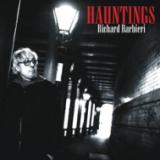
Richard Barbieri - Hauntings (2x12")

Richard Barbieri

Hauntings (2x12")

2x12inchKSCOPE1309
KSCOPE
10.04.2026
  • Snakes & Ladders ( 05:33 )
  • Anemoia ( 05:09 )
  • Victorian Wraith ( 03:02 )
  • 1890: ( 03:58 )
  • Artificial Obsession ( 05:07 )
  • Paris Sketch ( 05:47 )
  • Perfect Toys ( 03:48 )
  • Traveler ( 05:41 )
  • Reveille ( 01:54 )
  • Last Post ( 02:23 )
  • A New Simulation ( 04:38 )

JAPAN & PORCUPINE TREE SYNTHESIST RICHARD BARBIERI RETURNS WITH NEW STUDIO ALBUM 'HAUNTINGS' GATEFOLD 2LP EDITION, PRESSED ON CLASSIC BLACK VINYL. Richard Barbieri remains one of contemporary music's most distinctive voices. Emerging as a key architect of the late '70s/'80s synthesiser revolution with David Sylvian's art-rock ensemble Japan, his visionary synthesiser programming expanded the horizons of electronic music & left a lasting mark on artists from The Human League & Duran Duran to Gary Numan & Talk Talk. His subsequent & ongoing tenure with Steven Wilson's legendary progressive outfit Porcupine Tree across albums such as 'In Absentia' (2002), 'Fear Of A Blank Planet' (2007) &, most recently, 'Closure/Continuation' (2022) further affirmed his status as one of the most intuitive & unique musicians of his generation.

'Hauntings' is Barbieri's first studio album since 2021's 'Under A Spell', deepening the pensive, dark instrumental aesthetic of its predecessor. A diverse collection of immersive sound worlds, both dark & uplifting in equal measure, 'Hauntings' is influenced by a nostalgia for the past & future, & for things that didn't happen yet still manage to haunt the mind & soul. What is real & what is simulation? The album finds Barbieri at the height of his powers, his deft keyboard & sonic architecture conjuring a shadowy, creeping Lovecraftian atmosphere. The music wanders through the streets of a gloomy lamp-lit Victorian London & drifts into grain-speckled snapshots of Belle Époque Paris. These journeys into the past are contrasted with nihilistic but euphoric forays into the future, "Traveler" & "A New Simulation" bristling with the itchy modern anxiety that often runs through his best work. Contrasting the sound designs & electronics of Barbieri, the album features performances from renowned musicians Morgan Agren (drums & percussion), Percy Jones (bass guitar) & Luca Calabrese (trumpet). This 2LP 45 RPM edition of 'Hauntings' is presented in gatefold packaging & pressed on classic black vinyl.

pré-commande10.04.2026

il devrait être publié sur 10.04.2026

Broadside - Nowhere, at Last LP

Broadside

Nowhere, at Last LP

12inchTHRILL031LPV3
Thriller Records
10.04.2026

Broadside has never been a band to stay in one place for too long—musically or otherwise. The Richmond, Virginia-based band has spent the past decade carving out their own space in the pop rock scene. Drawing influence from The Killers, AFI, Kings of Leon, and Taking Back Sunday, their sound seamlessly fuses nostalgic rock energy with a fresh, modern edge. Their evolution has been nothing short of remarkable, taking them from underground favorites to genre staples, all while embracing the idea that growth and change are not just inevitable but necessary. With Oliver Baxxter (vocals), Domenic Reid (guitar), and Patrick Diaz (bass/backup vocals) at the helm, Broadside has built a career on crafting music that feels both deeply personal and universally relatable.

Their last full-length album, Hotel Bleu, served as a bold chapter in their story, using the transient nature of hotel stays as a metaphor for self-reflection, fleeting moments, and personal reinvention. The album marked a significant milestone in their career, amassing over 100 million streams and standing as their boldest, brightest, and most ambitious work to date. Now, as they prepare to enter their next era, the band is gearing up to release their most dynamic music yet, continuing to evolve while staying true to the energy and authenticity that first captivated listeners.

pré-commande10.04.2026

il devrait être publié sur 10.04.2026

Broadside - Nowhere, at Last LP

Broadside

Nowhere, at Last LP

12inchTHRILL031LPV2
Thriller Records
10.04.2026

Broadside has never been a band to stay in one place for too long—musically or otherwise. The Richmond, Virginia-based band has spent the past decade carving out their own space in the pop rock scene. Drawing influence from The Killers, AFI, Kings of Leon, and Taking Back Sunday, their sound seamlessly fuses nostalgic rock energy with a fresh, modern edge. Their evolution has been nothing short of remarkable, taking them from underground favorites to genre staples, all while embracing the idea that growth and change are not just inevitable but necessary.

With Oliver Baxxter (vocals), Domenic Reid (guitar), and Patrick Diaz (bass/backup vocals) at the helm, Broadside has built a career on crafting music that feels both deeply personal and universally relatable. Their last full-length album, Hotel Bleu, served as a bold chapter in their story, using the transient nature of hotel stays as a metaphor for self-reflection, fleeting moments, and personal reinvention. The album marked a significant milestone in their career, amassing over 100 million streams and standing as their boldest, brightest, and most ambitious work to date. Now, as they prepare to enter their next era, the band is gearing up to release their most dynamic music yet, continuing to evolve while staying true to the energy and authenticity that first captivated listeners.

pré-commande10.04.2026

il devrait être publié sur 10.04.2026

Skeptical - Blimp LP

Skeptical

Blimp LP

12inchRUBI004
Rubi Records
09.04.2026

Ashley Tindall, AKA Skeptical, returns in peak form with Blimp EP — the fourth release on his Rubi Records imprint — delivering four meticulously crafted cuts of uncompromising drum & bass.

Opening with the title track, Blimp sets the tone with a deep, steppy wobbler that nods subtly to the title track from his second Rubi Records release, Capsize EP. All the signature Skeptical hallmarks are here: hypnotic, pared-back metronomic drums and shimmy-inducing, undulating subs that demand movement. Yet this time there's a noticeable shift — warm, underlying melodic pads bring an unexpected emotional depth. It's not dreamy, but it is more introspective than we're used to, showing another layer to his sonic palette.

So Good flips the script entirely. A dark, cinematic growler, it leans into ghosted vocal fragments and a futuristic film-noir aesthetic. Tense, claustrophobic rhythms and sinister textures create an unsettling atmosphere — tailor-made for those lights-out, pressure-heavy dancefloor moments.

Third comes the undeniable monster of the EP, Technology. Trademark "stink-face" Skeppiness is in full effect from the first bar. Disjointed sci-fi stabs and eerie pads collide with clinical, almost militaristic drum programming, all anchored by a devastatingly weighty bassline. Movement isn't optional — this is pure Skeptical, uncompromising and lethal.

Closing the EP is Bad Generation, a sound system–influenced weapon that finds Skeptical operating at his dubwise best. Fusing minimal D&B with heavyweight, roots-inspired rhythms is no easy task, but here it's executed with effortless authority. It's equally suited to shelling down a rave or getting lost in a deep, eyes-closed session.

Four tracks. Four distinct moods. 100% Skeptical.
Blimp EP confirms once again that his sound continues to evolve — sharper, deeper, and more refined with every release.

Support: Ben UFO, Joy Orbison, Gilles Peterson, dBridge, Break, DLR, Doc Scott, Mefjus, Kasra, Kings of the Rollers, Alix Perez, Jubei, Dub Phizix, Flight, Tasha, Loxy, Lens.

pas en stock

Commandez maintenant et nous commanderons l'article pour vous chez notre fournisseur.


Derniere entrée: 12 jours
Bluetrain aka Steve O Sullivan - Rolling Riddim LP

Steve O’Sullivan returns under his Bluetrain alias, channeling the essence of dub into groovy,
endlessly cycling patterns shaped by submerged chords and tectonic low-end pressure. The influence of Mike Ink’s monolithic Studio One era is unmistakable, where reduction becomes
propulsion and each delay-trail etches its own pulse into the haze. Limited colourec vinyl.

pas en stock

Commandez maintenant et nous commanderons l'article pour vous chez notre fournisseur.


Derniere entrée: 8 jours
Bluetrain aka Steve O Sullivan - Rolling Riddim LP

Steve O’Sullivan returns under his Bluetrain alias, channeling the essence of dub into groovy,
endlessly cycling patterns shaped by submerged chords and tectonic low-end pressure. The influence of Mike Ink’s monolithic Studio One era is unmistakable, where reduction becomes
propulsion and each delay-trail etches its own pulse into the haze. Limited colourec vinyl.

pas en stock

Commandez maintenant et nous commanderons l'article pour vous chez notre fournisseur.


Derniere entrée: 8 jours
Bluetrain aka Steve O Sullivan - Rolling Riddim LP

Steve O’Sullivan returns under his Bluetrain alias, channeling the essence of dub into groovy,
endlessly cycling patterns shaped by submerged chords and tectonic low-end pressure. The influence of Mike Ink’s monolithic Studio One era is unmistakable, where reduction becomes
propulsion and each delay-trail etches its own pulse into the haze. Limited colourec vinyl.

pas en stock

Commandez maintenant et nous commanderons l'article pour vous chez notre fournisseur.


Derniere entrée: 15 jours
VARIOUS - [QR]V.093.STTP!.26

Various

[QR]V.093.STTP!.26

12inch[QR]V093STTP!26
COD3 QR
03.04.2026

From his roots in House, Alex Finkin is a renowned producer and creative director. Working in his Paris studio he has developed numerous projects, notably his own (Roseaux), as well as commissions for radio and television. Meanwhile, with 30 years of production and DJing under his belt, Rocco Rodamaal belongs to the elite circle of House innovators who continue to influence the scene. He's played alongside some of the best in the industry showcasing his versatility and deep understanding of the genre, and remixed artists including Marshall Jefferson, Kerri Chandler, Louie Vega & Moodymann, Todd Terry, Barbara Tucker and Robert Owens to name just a few. Alex Finkin befriended Rocco Rodamaal, who he met via the soulful Parisian club Djoon, where Alex was resident from 2006 to 2014. They have since collaborated on a number of projects together, including "In Da Hood" released on COD3 QR in 2023. Kenny Dope's "O'Gutta" remixes are a series of house and club-focused reworks characterized by raw, gritty and often stripped-back percussion, which he now brings to "In Da Hood".

Ross McMillan, known professionally as Carlos Nilmmns, is a Scottish electronic music producer, DJ and composer originally from Glasgow. Over the years he has collaborated with a range of notable artists, including Grammy-nominated and Grammy-winning figures, including Kenny Dope, Carl Craig, Kevin Saunderson and Davina Bussey, plus respected artists like Niko Marks, Rolando, Laurent Garnier, Santiago Salazar, Hardrock Striker, Karl The Voice, Zadig, Ben Sims, Andrés (who worked with Jay Dilla and Moodymann), and YouANDme. His music has been released on Planet E, Trax, Cocoon, Ornaments, Circus, Virgin, Skylax/Universal Music France and more. His style draws from house, techno and jazz influences, often combining analogue and digital production methods. A returning regular and COD3 QR favourite, he's back with another stunner in "Latin Quarter".

K' Alexi Shelby is a prominent figure in electronic music and with a career spanning decades, he's established a significant influence on House and Techno. Throughout his career he's worked with many well-known artists and remixed tracks that are now key pieces. The cultivation of his massive musical catalogue has overflowed into albums and the three labels he heads. It's also led to legendary collaborations with artists such as The Pet Shop Boys, Robert Owens, Kenny Dixon, Roy Davis Jr., Maurice Joshua, Terry Hunter, Joe Smooth, Steve Silke Hurley, Tyree Cooper, Ron Trent, Glenn Underground, Larry Heard, DJ Pierre, Carl Craig, Felix da Housecat, Marshall Jefferson, Will Smith and countless others. Already respected around the world as a true underground House legend, he delivered "Flame" in 2025 for COD3 QR. Now he's back with "When I", another deep and sexy cut.

Benny Rodrigues a.k.a. ROD unveiled his new moniker, The Lost Souldancer when he dropped "No More Voices" for COD3 QR last year. In his own words, Benny says: "The Lost Souldancer is about coping with the loss of what once was. Finding comfort in the invisible rather than what can be seen. Disconnect to connect in order to be loved rather than liked." He continues this ethos with the delicate and melodic closing track "Life and Death".

pas en stock

Commandez maintenant et nous commanderons l'article pour vous chez notre fournisseur.


Derniere entrée: 21 jours
Babes Of Enola Grey/artist] - Krieg und Wohlstand

[artist]Babes Of Enola Grey/artist]

Krieg und Wohlstand

12inchCRAVE011
Crave Tapes
03.04.2026

Crave Tapes is thrilled to announce the first vinyl release on the label which will be the second album from Frankfurt's underground post-punk/dark wave band Babes of Enola Grey, Krieg und Wohlstand.
Krieg und Wohlstand sees Babes of Enola Grey follow the path of their 2021 debut, Anfang vom Ende, and take a step further into the realm of melancholic and disillusioned soundscapes. While keeping a certain retro character to the songs, Deborah Vision, Salvador Islero and Fabian van Castorp focus on quite contemporary themes, which some might call the most German obsessions:
War and prosperity.
But this is not the only reference to the band's heritage. Sometimes more, sometimes less, there are musical allusions to various German influences and contributions to (modern) music and music history. While Doppelt Frei is a nod to EBM and bands like DAF or the early Die Krupps and Wie auf Schienen as well as Die Heuschrecken pay homage to German düster punk bands like Fliehende Stürme or EA80, Panik and the title track Krieg und Wohlstand refer to the romantic German art song tradition of the 19th century (not to mention the obvious hint at a certain successful German Schlager in Die Kugeln und das Herz).
This makes Krieg und Wohlstand not only a worthy epigone of the band's debut, but also takes the album and the artistic approach to another level.
Commenting on the chosen format (12" vinyl), the band members said: "It was clear to us that we wanted to release this album on vinyl. When you look atGerman history, war and prosperity have to be seen as two sides of the same medal, or in this case of a record".

pré-commande03.04.2026

il devrait être publié sur 03.04.2026

36 Crazyfists - A Snow Capped Romance LP
  • At The End Of August
  • The Heart And The Shape
  • Bloodwork
  • Kenai
  • Skin And Atmosphere
  • Song For The Fisherman
  • With Nothing Underneath
  • Destroy The Map
  • Installing The Catheter
  • Cure Eclipse
  • Waterhaul

The songs "At the End of August" and "Bloodwork" were released as singles, the latter of which was featured in the 2004 film Resident Evil: Apocalypse. The album was produced by James Paul Wisner and is considered by the community as a metalcore classic. 36 Crazyfists has earned their stars in the metalcore scene, taking little influences from bands here and there, but generally coming out with something incredibly singular and emotionally hard-hitting. A Snow Capped Romance is available on black vinyl and comes with a 4 page booklet.

pré-commande03.04.2026

il devrait être publié sur 03.04.2026

Agitator - Året av sex LP

Agitator

Året av sex LP

12inchLPADRR12C
ADRIAN RECORDS
03.04.2026

With two albums released—and a third arriving—in less than two years, Agitator are as ferocious in their release pace as they are on stage. All the more surprising, then, that the forthcoming album "Året av sex" is the darkest and slowest work they have made to date. Influenced as much by chanting witch doctors as by Christian Kjellvander and Leonard Cohen, and drawing from electronic and avant-garde music, the band reshapes its sound into something more brooding and expansive.

Partly recorded in a barn on the island of Öland, the album’s soundscape sees the drum kit augmented—and at times replaced—by scrap metal found in a nearby bay. Through this process, Agitator expand the idea of both what a creative process can be and what a rock band might look like in 2026. The result is bold, unsettling, and compelling: an album that digs deeper than many are willing to in Sweden today.

The lyrics on "Året av sex" are darker, more dangerous, and more precise than ever before. Given greater space within the broader sonic landscape, they become central to understanding this new incarnation of Agitator.

Agitator’s new album is released on March 27 via Adrian Recordings, preceded by three singles. The band’s first two albums have previously been praised by outlets including Dagens Nyheter, P3, Gaffa, Café, and PSL, leading to sold-out tours. A full Swedish tour is scheduled in connection with the album release.

pré-commande03.04.2026

il devrait être publié sur 03.04.2026

Turzi & Gage - Drop!

Turzi & Gage

Drop!

12inchREC234
Record Makers
03.04.2026
  • A1: La Montée
  • A2: Holiday
  • A3: Maybe
  • A4: Freefalling
  • A5: Amiante
  • A6: Chevauchée
  • B1: Peace (In Every Garden)
  • B2: Tripping (The Right Way)
  • B3: Summer Of Love
  • B4: Fly
  • B5: Dreaming
  • B6: Pléiade
  • B7: Starlight

After a critically acclaimed trilogy of albums and a 10-year hiatus, Romain Turzi, the underground pope of uncompromising French music, returns to the helm to compose and produce his new opus “Drop!”. He is joined on vocals by his longtime friend Oliver Gage, whose autobiographical and melancholic writing brings to life an intimate and redemptive musical epic, woven with oblique pop songs and club tracks that reconcile punks and dancers.


An album of diverse influences, it draws on the masters of film music (Goblin, Angelo Badalamenti), the titans of electronic and techno music (808 State, Dopplereffekt), the hedonistic spirit of ’80s Brit rock (Happy Mondays, The Stone Roses), the finely crafted melodies of timeless folk singers (Woody Guthrie, Neil Young), and the sonic power of My Bloody Valentine or the productions of Andrew Weatherall.


A record born of friendship and fearless creative freedom, “Drop!” is an invitation to escape the heaviness of the present and brush against a form of utterly necessary ecstasy.

pré-commande03.04.2026

il devrait être publié sur 03.04.2026

Sebastián - Depthtrace Series Vol. 1

The first volume of the Depthtrace series unfolds with Sebastián moving through different
shades of techno, from club-focused structures to minimal influences and downtempo
passages, framed by atmosphere and understated mental hypnosis that invites deep
listening beyond the dance-floor.

pas en stock

Commandez maintenant et nous commanderons l'article pour vous chez notre fournisseur.


Derniere entrée: 51 jours
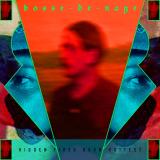
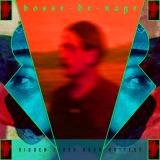
Bosse-De-Nage - Hidden Fires Burn Hottest (2x12")
  • 1: Where To Now?
  • 2: Mementos
  • 3: In The Name Of The Moth
  • 4: With A Shrug
  • 5: No Such Place
  • 6: Triangular Dream
  • 7: Underwater
  • 8: Frenzy
  • 9: Immortality Project
  • 10: Leviathan
également disponible

Black Vinyl

CASSETTE


There's a tendency in metal to mistake aggression for honesty, volume for depth. To confuse the performance of darkness with its actual weight. Hidden Fires Burn Hottest, the new album from San Francisco-based post-black metal band Bosse-de-Nage, sidesteps this entirely. It’s the group’s most fully realized work yet, precisely because it refuses to be pinned down.

Bosse-de-Nage have been working with The Flenser for over fifteen years. They were one of the first bands the label ever partnered with and have the longest active relationship in the label's history. But unlike most bands who build momentum through constant touring and visibility, Bosse-de-Nage has largely existed apart from the music world's usual machinery. They've evolved on their own terms, in relative isolation, allowing the work to develop without outside pressure or influence. What began rooted in black metal anonymity has mutated into something that actively defies categorization. The aggression is still there, but it's no longer the point. Hidden Fires Burn Hottest finds the band treating emotions like physical objects, feelings with spatial properties. “No Such Place"" describes a space that can't exist but does anyway, somewhere between thought and location. ""Immortality Project"" examines infinite possibility not as promise but as problem, endless options collapsing under their own weight. These songs don't use metaphor to describe emotion. They make emotion into something you could theoretically touch.
Tracked by Jack Shirley (Deafheaven, Oathbreaker) at Atomic Garden East and mixed and mastered by Richard Chowenhill of Agriculture, Hidden Fires Burn Hottest was years in development, with some tracks beginning in 2018.

The long writing process offered time that most records don't get. Time to live with ideas, revise endlessly, to let structures settle. For the first time, lyricist Bryan Manning wrote everything in advance, creating a surplus to pull from rather than working under deadline pressure. The difference shows.
Coming off Further Still, an album built on constraint and economy, Bosse-de-Nage sought the opposite: sprawl, strangeness, fewer rules. Space for ideas to develop without rushing them. Dynamics that move through quiet as much as noise. Presence earned through atmosphere instead of volume. The record even includes ""Mementos,"" which might be considered the first love song the band has ever written.

Nothing here coheres into a theme. These are pieces pulled from low moments and private feelings made public through sound. The band has never been interested in positivity, in music that resolves cleanly or offers comfort. But bleakness doesn't mean humorlessness. There's something darkly funny running through much of it, even when it shouldn't be.
Hidden Fires Burn Hottest doesn't explain itself. It just insists: what you feel is as real as what you can see."

pré-commande27.03.2026

il devrait être publié sur 27.03.2026

Bosse-De-Nage - Hidden Fires Burn Hottest (TAPE)

There's a tendency in metal to mistake aggression for honesty, volume for depth. To confuse the performance of darkness with its actual weight. Hidden Fires Burn Hottest, the new album from San Francisco-based post-black metal band Bosse-de-Nage, sidesteps this entirely. It’s the group’s most fully realized work yet, precisely because it refuses to be pinned down.

Bosse-de-Nage have been working with The Flenser for over fifteen years. They were one of the first bands the label ever partnered with and have the longest active relationship in the label's history. But unlike most bands who build momentum through constant touring and visibility, Bosse-de-Nage has largely existed apart from the music world's usual machinery. They've evolved on their own terms, in relative isolation, allowing the work to develop without outside pressure or influence. What began rooted in black metal anonymity has mutated into something that actively defies categorization. The aggression is still there, but it's no longer the point. Hidden Fires Burn Hottest finds the band treating emotions like physical objects, feelings with spatial properties. “No Such Place"" describes a space that can't exist but does anyway, somewhere between thought and location. ""Immortality Project"" examines infinite possibility not as promise but as problem, endless options collapsing under their own weight. These songs don't use metaphor to describe emotion. They make emotion into something you could theoretically touch.
Tracked by Jack Shirley (Deafheaven, Oathbreaker) at Atomic Garden East and mixed and mastered by Richard Chowenhill of Agriculture, Hidden Fires Burn Hottest was years in development, with some tracks beginning in 2018.

The long writing process offered time that most records don't get. Time to live with ideas, revise endlessly, to let structures settle. For the first time, lyricist Bryan Manning wrote everything in advance, creating a surplus to pull from rather than working under deadline pressure. The difference shows.
Coming off Further Still, an album built on constraint and economy, Bosse-de-Nage sought the opposite: sprawl, strangeness, fewer rules. Space for ideas to develop without rushing them. Dynamics that move through quiet as much as noise. Presence earned through atmosphere instead of volume. The record even includes ""Mementos,"" which might be considered the first love song the band has ever written.

Nothing here coheres into a theme. These are pieces pulled from low moments and private feelings made public through sound. The band has never been interested in positivity, in music that resolves cleanly or offers comfort. But bleakness doesn't mean humorlessness. There's something darkly funny running through much of it, even when it shouldn't be.
Hidden Fires Burn Hottest doesn't explain itself. It just insists: what you feel is as real as what you can see."

pré-commande27.03.2026

il devrait être publié sur 27.03.2026

Shakti Soundsystem - Wonderin' / Dream

Boutique-pressed 7" vinyls A-side: "Wonderin'" / B-side: "Dream"

Drawing influence from the likes of CAN, Faust, Mahavishnu Orchestra, and David Vorkhaus, Shakti Soundsystem traverses the borderlands of psychedelic rock, Krautrock, jazz fusion, and ritual improvisation. But this isn't a retro trip—this is future folklore.

Each track is a trance in motion, built on hypnotic basslines, spiraling melodies, and moments of ecstatic dissonance. The instrumentation is as unconventional as the process: Bulbul Tarang, modular synths, guitars, drums, and vocals that oscillate between invocation and surrender.


Their first singles have already made waves across tastemaker blogs and listener-curated Spotify playlists, includingNeo-Psychedelia, Psych Rock Melting Pot, Rock for when 26 King Gizzard albums aren't enoug and Psychedelic & Space Rock.

"Wonderin',"described by Analogue Trash (UK) as "an absorbing, psychedelic jam that thrives on hypnotic repetition and a raw, live energy,"introduced their trance-infused sound to a wider audience.
"Silver," hailed by RMAS (Mexico) as"a hypnotic journey between Krautrock and spoken word... a sonic delirium that recalls CAN and the free spirit of the European underground," cements their place in the modern psych scene.

pré-commande27.03.2026

il devrait être publié sur 27.03.2026

Hyden - To Whom It May Concern

2026 Repress

French talent Hyden makes label debut on Mutual Rytm with conceptual new techno EP, 'To Whom It May Concern'. Hyden is a potent force in the French underground, creating powerful techno with dense percussion, immersive grooves and subtle nods to classic influences - all through his own unique lens. Having delivered standout releases in recent years, here he offers up sounds "anchored in psychoanalysis, time, and emotional residue" as he makes his mark on SHDW's Mutual Rytm imprint, delivering influences of dream logic and surrealism as the palette moves between brutality and introspection. "It's hypnotic music for moments of rupture where something breaks or breaks through". Opener 'Manifest Content' is inspired by Freudian theory and explores the surface illusions of thought and dream. It's about the dissonance between what we perceive and the deeper meaning that slips away beneath and is a deep and dubby techno track with flashes of unsettling melody. 'Bruises' is emotional trauma made sonic. This piece delves into invisible scars and traumas, residues of past conflict or intimacy - it's slow-burning, heavy and raw. 'Jikan' is a meditation built on time and its erosion. Inspired by the Japanese concept of impermanence, it reflects fleeting moments, decay and the tension between stillness and motion with jacked up but warm drums and turbulent bass. Next, 'Free Will' is born from inner conflict and plays with deterministic rhythms and evolving layers, questioning whether we are truly in control or just passengers in a prewritten sequence. The vocal mentions, "creatures, you're out of time" to bring darkness to the intense but sleek rhythms. The streamlined physicality of 'Swarm' channels the primal force of collective movement and is a nod to the loss of individuality in group behaviour. In addition, the package is loaded with digital bonus cuts. 'Yumehara' is a dive into surreal dream-states and evokes subconscious landscapes where logic dissolves and emotion reigns, while 'Lu Bu' is brutal and warlike and named after the legendary Chinese general that captures impulsive violence, betrayal and reckless glory with relentless energy and rhythm. Lastly, 'Neon Pale' is a synthetic dreamscape about fading beauty under artificial light - a melancholy ode to cities at night and the loss of warmth in modern life.

pas en stock

Commandez maintenant et nous commanderons l'article pour vous chez notre fournisseur.


Derniere entrée: 7 jours
Gianmarco Del Re - Ukrainian Field Notes: Sound, Music & Voices From Ukraine After the Full-Scale Invasion (BOOK)

ISBN: 978-1-80578-008-3
Since the full-scale invasion, music-making in Ukraine has adapted in remarkable ways: composing on mobile phones, streaming performances from bomb shelters, and organising festivals within curfew limits. Clubs became centres of volunteering and fundraising before regaining their cultural role once reopened. Meanwhile, the diaspora reshaped the musical landscape, severing old ties while creating new global networks of collaboration.

Ukrainian Field Notes: Sound, Music & Voices From Ukraine After the Full-Scale Invasion offers a 360-degree perspective on how sound has shaped musicians’ wartime lives and influenced evolving notions of identity – personal, collective, and postcolonial.

Quotes

“The Ukrainian electronic scene is young, naive, and perhaps beautiful. To appreciate this beauty, you need to distance yourself from it, much like observing a painting in a gallery while standing back. To comprehend this beauty, understanding alternative standards and applying them to the portrait is a must. To truly embrace this beauty, falling in love with it is required – an act that defies easy explanation. Gianmarco, however, did just that, and it becomes evident to anyone exploring his Ukrainian Field Notes. Behold.” ‭ Vlad Fisun

“I feel extremely grateful to Gianmarco Del Re, a true chronicler of Ukrainian music in wartime, who opens our culture in its multiple aspects to musical society in such a bright and relevant way that the support for Ukrainian artists is only growing, day by day.” ummsbiaus

pas en stock

Commandez maintenant et nous commanderons l'article pour vous chez notre fournisseur.


Derniere entrée: 58 jours
Various Artists - Synths,Sax+Situationists/French Underground 73-78 (LP)
  • 01: Nyl - Nyl
  • 02: Etron Fou Leloublan - Face A L&Apos;Extravagante Montée Des Ascenseurs, Nous Resterons Fideles A Notre Calme Détermination
  • 03: Lard Free - Acide Framboise
  • 04: Heldon - Perspective Iv (Excerpt)
  • 05: Jacques Berrocal / Dominique Coster / Roger Ferlet - Pièce À Lanam
  • 06: Delired Chameleon Family - Raganesh

France's near-revolution of May '68 was the zenith of that generation's struggle for a new kind of life. It kicked the country's small, but vibrant, counter-culture into overdrive, and birthed a local underground music scene. The bands it spawned made music with much less rock purity than groups from the UK and US. Their musical and cultural influences foregrounded improvisation, disjunction, and genre-blending: Soft Machine, Pink Floyd, Frank Zappa, free jazz, and radical politics. The introduction of the synthesiser in the early 1970s added fuel to the fire.

This collection of French underground music inaugurates a series to accompany "Synths, Sax & Situationists", the first English-language book to investigate this movement. It focuses on the music of the second wave of bands that emerged in 1972/3, which saw radicalised psychedelic and jazz influences merge with the future-music possibilities offered by new technology. The next volume will investigate the politically-charged bands that erupted in immediate aftermath of May '68.

pré-commande20.03.2026

il devrait être publié sur 20.03.2026

Babes Of Enola Grey/artist] - Krieg und Wohlstand

[artist]Babes Of Enola Grey/artist]

Krieg und Wohlstand

12inchCRAVE011C
Crave Tapes
20.03.2026

Crave Tapes is thrilled to announce the first vinyl release on the label which will be the second album from Frankfurt's underground post-punk/dark wave band Babes of Enola Grey, Krieg und Wohlstand.
Krieg und Wohlstand sees Babes of Enola Grey follow the path of their 2021 debut, Anfang vom Ende, and take a step further into the realm of melancholic and disillusioned soundscapes. While keeping a certain retro character to the songs, Deborah Vision, Salvador Islero and Fabian van Castorp focus on quite contemporary themes, which some might call the most German obsessions:
War and prosperity.
But this is not the only reference to the band's heritage. Sometimes more, sometimes less, there are musical allusions to various German influences and contributions to (modern) music and music history. While Doppelt Frei is a nod to EBM and bands like DAF or the early Die Krupps and Wie auf Schienen as well as Die Heuschrecken pay homage to German düster punk bands like Fliehende Stürme or EA80, Panik and the title track Krieg und Wohlstand refer to the romantic German art song tradition of the 19th century (not to mention the obvious hint at a certain successful German Schlager in Die Kugeln und das Herz).
This makes Krieg und Wohlstand not only a worthy epigone of the band's debut, but also takes the album and the artistic approach to another level.
Commenting on the chosen format (12" vinyl), the band members said: "It was clear to us that we wanted to release this album on vinyl. When you look atGerman history, war and prosperity have to be seen as two sides of the same medal, or in this case of a record".

pré-commande20.03.2026

il devrait être publié sur 20.03.2026

Paul St. Hilaire (AKA Tikiman) - Tikiman Vol. 1 LP 2x12"

For the first time in more than a decade, Paul St. Hilaire (AKA Tikiman) presents a solo album – 100% Tiki.

Over his 30-plus year career, St. Hilaire has become one of dance music’s quietly legendary figures. Born and raised in Dominica, he moved to Berlin in 1994 and has lent both his voice and his musicianship to some of the most iconic electronic music from the German capital – and beyond. Renowned for his collaborations with Moritz von Oswald and Mark Ernestus (AKA Rhythm & Sound), he has also appeared on records with Deadbeat, Rhauder, Larry Heard aka Mr. Fingers and Stereotyp (G-Stone Recordings), amongst others.

However, few know the extent of St. Hilaire’s compositional and technical mastery. From his home studio in Kreuzberg, which includes an extensive collection of vintage hardware, self-built instruments and notebooks scribbled with endless lyrics, he has created a vast archive of material spanning ambient dub, avant-jazz, lush techno and lovers rock.

Tikiman Vol. 1 is a heady, downtempo tour de force of patois metaphors on education, displacement and personal vs. global histories, as is evident on slippy album opener “Bedroom in My Bag”: Mister, mister / Where are you going? / I’m heading for a faraway land / What are you having in the bag in your hand? / Help us to understand / He said, I’ve got my bedroom in my bag.

Overall, the album’s lyrics reflect on life between Berlin and Dominica, specifically St. Hilaire’s hometown of Grand Bay, where he has worked with various musicians famous for the island’s different genres of carnival music. St. Hilaire himself always favoured the island’s more “discrete” music, developing a sonic synergy between two different geographical strains of groove and minimalism, and combining them with foundational Caribbean mixing techniques, which provide the basis for his songwriting and distinct
baritone.

Tikiman Vol.1 offers a rare insight into St. Hilaire’s complex artistry, from the eyes-down grooves of “Little Way” and the guitar-heavy digi dancehall experiment “Keep Safe,” to the subtle hypnosis of “Ten to One” and the softly crashing synth waves of closer “Three And A Half”, evoking not only beaches but also coasts and borders. It’s a fitting expression of both the breadth of St. Hilaire’s work, as well as his history as one of the few black, Berlin-based artists who, despite remaining largely overlooked, has influenced the city’s electronic music culture since its beginnings.


Credits
Written & Produced by Paul St. Hilaire
Mastered by Stefan Betke
Artwork by Grant Gibson

Kynant Records was founded in 2015 by Richard Akingbehin, a British-Nigerian radio programmer (Refuge Worldwide), music writer and DJ. Originally specialising in deep techno and featuring artists such as Cio D’Or, Terrence Dixon and Donato Dozzy, Kynant has since launched a sub-label Kynant EX which focuses on ambient, dub and experimental electronics.

pas en stock

Commandez maintenant et nous commanderons l'article pour vous chez notre fournisseur.


Derniere entrée: 56 jours
Frank Sinatra - This Is LP

Frank Sinatra

This Is LP

12inchVPL90174
Vinyl Passion
13.03.2026
  • Saturday Night (Is The Loneliest Night Of The Week)
  • I Get A Kick Out Of You
  • I've Got The World On A String
  • Young At Heart
  • Learnin' The Blues
  • (Love Is) The Tender Trap
  • Nancy (With The Laughing Face)
  • Love And Marriage
  • I've Got You Under My Skin
  • Love Is Here To Stay
  • All The Way
  • The Lady Is A Tramp
  • Come Fly With Me
  • Witchcraft
  • Nice 'N' Easy
  • Mr. Success

With classics like "I've Got You Under My Skin," "Come Fly With Me," "The Lady Is A Tramp," "I Get A Kick Out Of You," and "Love And Marriage," he defined the art of popular singing. A master interpreter of song, Sinatra's influence extends far beyond music, symbolizing sophistication and enduring American cool.

pré-commande13.03.2026

il devrait être publié sur 13.03.2026

Brion Gysin - Dreamachine LP

Wewantsounds is delighted to release for the 1st time on vinyl Brion Gysin's cult recordings, produced by Ramuntcho Matta in the 80s and early 90s. The release features the hypnotic 32-minute journey "Dreamachine," which transforms the effects of Gysin's legendary light art device into a mesmerizing audio experience, alongside the track "The Door," featuring the visionary saxophonist Steve Lacy. A towering figure in avant-garde art, literature, and sound, Gysin influenced generations of creators, from William Burroughs to David Bowie and Laurie Anderson. Newly remastered and accompanied by liner notes by Gysin scholar Jason Weiss, this LP edition coincides with a major exhibition dedicated to Gysin at the Museum of Modern Art in Paris, opening Spring 2026, underscoring his lasting impact on contemporary culture.

pré-commande13.03.2026

il devrait être publié sur 13.03.2026

Bolt Thrower - In Battle There Is No Law! LP
  • A1: In Battle There Is No Law
  • A2: Challenge For Power
  • A3: Forgotten Existence
  • A4: Denial Of Destiny
  • A5: Blind To Defeat
  • B1: Concession Of Pain
  • B2: Attack In The Aftermath
  • B3: Psychological Warfare
  • B4: Nuclear Annihilation
également disponible

white Vinyl


Destruction, killing, is all that’s in sight. Unleashed in 1988 at a time when Death Metal as a genre was still at its infancy and the vast majority of bands were yet to release their first album, BOLT THROWER’s debut In Battle There Is No Law! already hit the nascent underground with full force. Only preceded by a handful albums like DEATH’s Scream Bloody Gore, NAPALM DEATH’s Scum or NECROPHAGIA’s Season of the Dead, In Battle There Is No Law! is widely considered a landmark record and ranks among the very first Death Metal albums ever.

Consisting of 8 tracks and clocking in at just around 28 minutes, the album originally released by Vinyl Solution is arguably BOLT THROWER’s rawest and most primal effort. Despite the uncompromisingly rough sound and their Crust and Punk influences still being rather obvious, the characteristics BOLT THROWER would go on to be hailed for, are already represented albeit in rather crude form, though. Rather than to its detriment, it’s this very unfiltered roughness that`s somewhat missing from their later albums that gives In Battle There Is No Law! its special unmistakable charm. Instead of putting emphasis on distinctive melodies and mid-tempo groove, the songwriting leans more towards all-out attack.

pré-commande13.03.2026

il devrait être publié sur 13.03.2026

Articles par page:
N/ABPM
Vinyl