Cerca:two thou

Generi
Tutto
Michel Houellebecq & Frédéric Lo - SOUVENEZ-VOUS DE L'HOMME LP
  • 01: Le bleu du ciel central
  • 02: Ils chevauchaient le vent
  • 03: La mémoire de la mer
  • 04: Fin de partie
  • 05: Le dialogue des machines
  • 06: Autoroute B
  • 07: Le lendemain de l'explosion
  • 08: Perdus dans des rêves inutiles
  • 09: En attendant l'envahisseur
  • 10: Les contrées solitaires
  • 11: L'ancienne voie romaine
  • 12: L'ultime archipel

Michel Houellebecq is, of course, well-known for his novels, translated into more than 40 languages, and his Goncourt Prize (The Map and the Territory, 2010), but perhaps less so for his debut album, released exactly a quarter of a century ago on Tricatel label. One can sense the influence of Serge Gainsbourg's L'Homme à la Tête de Chou, a disillusioned Procol Harum and a world-weary Burt Bacharach hovering over Houellebecq's poems in Présence Humaine, a now cult classic album orchestrated by Bertrand Burgalat and the musicians of Eiffel. Twelve thousand copies sold and a few concerts later, the writer decided (or so we thought) to bid farewell to the stage, only to generate more media attention though his literary success. Frédéric Lo is, of course, known as an exceptional lyricist, composer, arranger, and producer, author of a sublime fourth solo album (L'Outrebleu, released last March) and a master of collaborative work, notably with Bill Pritchard, Peter Doherty and Daniel Darc. Initially, Michel Houellebecq and Frédéric Lo met for the tribute album that the latter was planning for the tenth anniversary of Daniel Darc's death, but their recording of "Psalm XXIII" was, to their great disappointment, rejected by the label and therefore did not appear on the final version of Cœur Sacré (2023). Fortunately, every cloud has a silver lining, and the two men decided to take their collaboration a step further. Lo decided to set the writer's words to music, in his studio in Pantin. Raw, stripped-down music draped in electronica, adorned with piano and antediluvian drum machines, often minimalist, sometimes repetitive, provides the perfect backdrop for twelve tracks that question and reflect on humanity's past and future (if indeed there is one). Reflections on the human condition, 21st-century style, a work of speculative fiction conceived by two eternally modern "young lads," Souvenez-Vous de l'Homme (Remember Man) is an album that might occasionally evoke The Stranglers' La Folie, and, given the title, that's probably no coincidence. But above all, it's a hypnotic and melancholic album, uncompromising and captivating. Most importantly, it's an album like no other.

pre-ordina ora06.03.2026

dovrebbe essere pubblicato su 06.03.2026

Kaleidobolt - Karakuchi

Kaleidobolt

Karakuchi

12inchSVART372LP
Svart Records
06.03.2026
  • 1: Tinkerbell
  • 2: Lights On, Nobody Home
  • 3: Coping
  • 4: Astro Boy/Ochanomizu
  • 5: Duuude
  • 6: Friends of Fire
  • 7: A Chance of a Lifetime
  • 8: Turn of Luck

KALEIDOBOLT’s fifth album is pungent to the ears – KARAKUCHI out in March Karakuchi is one record you can judge by its cover. The first time Kaleidobolt’s faces have adorned an LP, they have been fused into a torpedoing biomechanical vehicle. Echoing The Birthday Party’s Junkyard or Motörhead’s Orgasmatron (…on acid?!), the illustration epitomises perfectly Kaleidobolt’s agenda of “hyperkinetic rock”. Their feverish, psych-prog sound is full of motion. It jerks around at different speeds, threatening to spin out of control and crash into flames at any given moment. What’s more, it isn’t taken too seriously. This is heavy and intricate music, yes. But as bassist and co-singer Marco Menestrina puts it, the Kaleidobolt attitude is “an ugly smirk more than an angry face with a fist.” On their fifth album since forming in 2014, the Helsinki-based outfit lean into their strengths as a formidable power trio. With their previous two records, 2019’s Bitter and 2022’s This One Simple Trick, they had thrown everything at their disposal into the recording with no expense spared on overdubs, effects and kitchen sinks. Produced again by Niko Lehdontie (Oranssi Pazuzu), Karakuchi comes from tightly rehearsed, live-in-the-studio takes. Kaleidobolt realise that greater sparsity can be a strength, and they’ve allowed their instruments extra space to breathe. It makes for their earthiest, purest and perhaps most authentic record to date. Karakuchi’s exuberant style emerges from the individual members’ contrasting listening habits. These span classic prog, Japanese city pop, noise rock, post-hardcore and historical podcasts. One record they can all agree is a masterpiece, the centre of the Venn diagram where all three members meet, is King Crimson’s Red. As for their new album’s title, that’s as suitable as the cover art. “Karakuchi” is the slogan of the Japanese beer brand Asahi Super Dry. Translated literally, this means “pungent to the mouth”. As drinkers of that product, Kaleidobolt acknowledge its parallels to their songs. “It’s very intense, right at the front, like at the first bite,” explains Menestrina. “And then it leaves your mouth feeling refreshed. The flavour doesn’t linger in your mouth, basically. It has a quick, hard finish. With a bit of a stretch, we thought that that could also be said of our music.” Karakuchi is Kaleidobolt at their hardest, fastest, tightest and super-driest. Pungent to the ears. -JR Moores, November 2025

pre-ordina ora06.03.2026

dovrebbe essere pubblicato su 06.03.2026

Kaleidobolt - Karakuchi

Kaleidobolt

Karakuchi

12inchSVART372LPB1
Svart Records
06.03.2026
  • 1: Tinkerbell
  • 2: Lights On, Nobody Home
  • 3: Coping
  • 4: Astro Boy/Ochanomizu
  • 5: Duuude
  • 6: Friends of Fire
  • 7: A Chance of a Lifetime
  • 8: Turn of Luck
disponibile anche

Black Vinyl


KALEIDOBOLT’s fifth album is pungent to the ears – KARAKUCHI out in March Karakuchi is one record you can judge by its cover. The first time Kaleidobolt’s faces have adorned an LP, they have been fused into a torpedoing biomechanical vehicle. Echoing The Birthday Party’s Junkyard or Motörhead’s Orgasmatron (…on acid?!), the illustration epitomises perfectly Kaleidobolt’s agenda of “hyperkinetic rock”. Their feverish, psych-prog sound is full of motion. It jerks around at different speeds, threatening to spin out of control and crash into flames at any given moment. What’s more, it isn’t taken too seriously. This is heavy and intricate music, yes. But as bassist and co-singer Marco Menestrina puts it, the Kaleidobolt attitude is “an ugly smirk more than an angry face with a fist.” On their fifth album since forming in 2014, the Helsinki-based outfit lean into their strengths as a formidable power trio. With their previous two records, 2019’s Bitter and 2022’s This One Simple Trick, they had thrown everything at their disposal into the recording with no expense spared on overdubs, effects and kitchen sinks. Produced again by Niko Lehdontie (Oranssi Pazuzu), Karakuchi comes from tightly rehearsed, live-in-the-studio takes. Kaleidobolt realise that greater sparsity can be a strength, and they’ve allowed their instruments extra space to breathe. It makes for their earthiest, purest and perhaps most authentic record to date. Karakuchi’s exuberant style emerges from the individual members’ contrasting listening habits. These span classic prog, Japanese city pop, noise rock, post-hardcore and historical podcasts. One record they can all agree is a masterpiece, the centre of the Venn diagram where all three members meet, is King Crimson’s Red. As for their new album’s title, that’s as suitable as the cover art. “Karakuchi” is the slogan of the Japanese beer brand Asahi Super Dry. Translated literally, this means “pungent to the mouth”. As drinkers of that product, Kaleidobolt acknowledge its parallels to their songs. “It’s very intense, right at the front, like at the first bite,” explains Menestrina. “And then it leaves your mouth feeling refreshed. The flavour doesn’t linger in your mouth, basically. It has a quick, hard finish. With a bit of a stretch, we thought that that could also be said of our music.” Karakuchi is Kaleidobolt at their hardest, fastest, tightest and super-driest. Pungent to the ears. -JR Moores, November 2025

pre-ordina ora06.03.2026

dovrebbe essere pubblicato su 06.03.2026

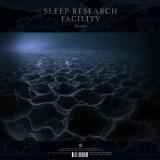
Sleep Research Facility / Llyn Y Cwn - Sargo / Posidonia LP
  • 1: Sleep Research Facility - Sargo (20:32) (SIDE A) (CD track )
  • 2: Llyn Y Cwn - Dale Dawn (:35) (SIDE B)
  • 3: Llyn Y Cwn - Pebble (5:18) (SIDE B)
  • 4: Llyn Y Cwn - Doppler Current Profiler (7:9) (SIDE B)

The ultimate deep listening experience from two masters of dark ambient. A slow descent into the blackened watery abyss, where light cannot reach. The first release from Sleep Research Facility since 2012's "Stealth" (Cold Spring) is inspired by the deep sea ocean floor. The Canadian-based composer explores notions of awareness and perception in the sub/unconscious listener. Focusing primarily on sound bereft of rhythm based energies, SRF provides an environments wherein the music adds texture to the silence. Using form without structure and concentrating on space as opposed to narrative, SRF entertains the idea that music can reside in the very fabric of sound itself. The brand new material here was created specifically for this split release.Taking inspiration from the beautiful, but often harsh landscapes and environments of his home on Anglesey, North Wales, Llyn Y Cwn has built on the nautical theme of "Du Y Moroedd" (Cold Spring). These tracks are based on field recordings relating to the ocean, and could be seen as a companion piece to the album. 'Dale Dawn' features a recording of the dawn chorus made from the floating pontoon at Dale, Pembrokeshire. 'Pebble' includes the sound of waves crashing on a Dorset cobble beach, thousands of rocks colliding in chorus. 'Doppler Current Profiler' is based on the sound of an ADCP, an acoustic sonar instrument used to measure water currents - a 600Khz ping slowed to a heartbeat. CD in mini-LP sleeve, replicating the vinyl design. The artwork features a separate front cover design with individual art for each side, making this a true split release.

pre-ordina ora06.03.2026

dovrebbe essere pubblicato su 06.03.2026

Elvis Presley - Elvis Now LP

Elvis Presley

Elvis Now LP

12inchMOVLPM2376
Music On Vinyl
06.03.2026
  • A1: Help Me Make It Through the Night
  • A2: Miracle of the Rosary
  • A3: Hey Jude
  • A4: Put Your Hand in the Hand
  • A5: Until It's Time for You to Go
  • B1: We Can Make the Morning
  • B2: Early Mornin' Rain
  • B3: Sylvia
  • B4: Fools Rush In (Where Angels Fear to Tread)
  • B5: I Was Born About Ten Thousand Years Ago

After being out of print for a good number of years, we are making 15 titles out of our Elvis Presley back catalogue available again between August 2025 and February 2026. Each title will see two different editions: one on regular-coloured vinyl and one very limited on mix-coloured, marbled vinyl, both housed in deluxe sleeves with a linen look and feel.

Elvis Now was, despite the title, recorded between early 1969 and the summer of 1971 and encompasses different genres including country, gospel, soul and pop. We see for example Kris Kristofferson-penned "Help Me Make It Through the Night" and The Beatles' "Hey Jude", all lavishly arranged keeping in mind the Las Vegas aesthetic of 70s Elvis. The album furthermore only had one single, "Until It's Time for You to Go / We Can Make the Morning", which reached number 9 on the Easy Listening chart in the US in March 1972 and number 5 on the UK Singles Chart in April 1972.

Elvis Now is available as a limited edition of 500 individually numbered copies on light blue marble vinyl and includes an insert.

pre-ordina ora06.03.2026

dovrebbe essere pubblicato su 06.03.2026

La Compagnie Créole & The Reflex Revision - Le Bal Masqué / La Nuit Des Requins

Welcome to the second instalment of the collaboration between THE REFLEX’ DISCOLIDAYS label and BECAUSE MUSIC in Paris, remixing gems from the ZAGORA catalogue.

Created in 1975 by producer Daniel Vangarde (father of Daft Punk’s Thomas Bangalter), the Zagora label created some of the most exciting disco music in France, ranging from cult underground artists Who’s Who and Starbow, to massive international hits by the Gibson Brothers, la Compagnie Créole and Black Blood.

On this 12’’, we’ve got two first time ever remixes from LA COMPAGNIE CREOLE, one of the most successful acts in France during the 80’s who expertly mixed tropical sounds from the West Indies with pop and disco to staggering record sales.

With tapes thought to be long lost, a chance find of stems from two of their songs not only makes this release possible, but also perfectly showcases two sides of the band with ‘Le Bal Masqué’ which was a huge hit commercially in 1984 and ‘La Nuit Des Requins’ which is probably their least known and most underground track, both masterminded by songwriters DANIEL VANGARDE and JEAN KLUGER.

‘LE BAL MASQUE’, now devoid of its cheesiest sections, puts the focus on that infectious groove adorned with percussions and electronics but with its singalong chorus intact and stronger than ever. A guaranteed tropical disco floor filler at 122bpm, regardless of your knowledge of the French language!

‘LA NUIT DES REQUINS’, an ode to session musicians found regularly in Paris studios back in the day, gets a complete overhaul by putting the exhilarating drums and killer bass line of the original to the fore into a brand new 124bpm version that is destined to rock the most discerning dance floors the world over.

Released on 180g vinyl with custom artwork on card sleeve designed by AL KENT / MILLION DOLLAR DISCO.

non in magazzino

Ordina ora e ordineremo l'articolo per te presso il nostro fornitore.

Last In: 4 months ago
SOICHI TERADA - SOICHI TERADA: APE ESCAPE 3 ORIGINAPE SOUNDTRACKS IN A BOX LP 4x12"
  • とんでもマウンテン / Mount Amazing
  • アドバタイズデモ / Advertise Demo
  • キャラクターせんたく / Character Selection
  • マジンディスコ / Genie Dancer's Disco
  • マジンロック / Genie Dancer's Rock
  • カンフーストリート / Kung-Fu Alley
  • ドラゴンカンフー / Dragon Kung-Fu Fighter
  • ウキウキおもちゃランド / Toytown
  • わくわくテレビスタジオ2 / Funtime TV Studio 2
  • トレーニングスペース / Training Room
  • とこなつアイランド / Eversummer Island
  • ウエスタンビレッジ / Wild West Town
  • ファンタジーナイト / Fantsy Knight
  • たいけつ!ウッキーピンク(バナナにハートブレイク) / Battle! Monkey Pink
  • ナイトキャッスル / Knight's Castle
  • うちゅうテレビようさい / Space-TV Fortress
  • たいけつ!ウッキーイエロー / Battle! Monkey Yellow
  • とのさまじょう / The Emperor's Castle
  • サルなげスタジアム / Super Monkey Throw Stadium
  • HAPPY☆センセーション / Happy Sensation
  • マジンダンサー / Genie Dancer
  • うみべリゾート / Seaside Resort
  • わくわくテレビスタジオ / Funtime TV Studio
  • サルうらない / Hall of Horoscope
  • ピポサルのテーマ / Super Monkey
  • ゲッチュマン / Cyber Ace
  • とのさまじょう2 / The Emperor's Castle 2
  • とんでもマウンテン2 / Mount Amazing 2
  • カッチンコールたいりく2 / Freeze Continent 2
  • ミニマルテーマ / Minimal Theme
  • かくれんぼのもり / Hide-n-Seek Forest
  • カッチンコールたいりく / Freeze Continent
  • ワイルドウエストキッド / Wild West Kid
  • へんしんとうじょう / New Morph
  • ガチャメカとうじょう / New Gadget
  • しんきろうタウン / Mirage Town
  • ウエスタンビレッジ2 / Wild West Town 2
  • ひこうきだいへんたい / Airplain Squadron
  • どっきりホラータウン2 / Bootown 2
  • けっせん!スペクター(スペクターのテーマ) / Final Battle! Specter(Specter's Theme)
  • びゅんびゅんビッグシティ / The Big City
  • クリアリザルト2 SG3 / Result 2 AE3
  • クリアリザルト SG3 / Result AE3
  • サルをつかまえろ!/ Catch Monkeys!
  • どっきりホラータウン / Bootown
  • テレビステーション / TV Station
  • トモウキシティ / Tomouki City
  • サルティメットファイティング / Ultim-ape Fighting
  • ドンドコゆきまつり2 / Winterville 2
  • はじめてのゲッチュ / The First Catch
  • とこなつアイランド2 / Eversummer Island 2
  • たいけつ!ウッキーレッド2 / Battle! Monkey Red 2
  • たいけつ!ドクタートモウキ / Battle! Dr.Tomouki
  • トモウキシティ2 / Tomouki City 2
  • しょうてんがい / Mall
  • ミラクルニンジャ / Miracle Ninja
  • びっくりおんせんランド / The Hot Springs
  • けっとう!ウッキーブルー / Fight! Monkey Blue
  • マジンワルツ / Genie Dancer's Waltz
  • ナイトキャッスル2 / Knight's Castle 2
  • マジンチーク / Genie Dancer's Cheek
  • トモウキタワーはっしん! / Go Tomouki Tower!
  • サトルねつべん / Satoru's Speech
  • トモウキのカツラ / Tomouki's Wig
  • たいけつ!ウッキーレッド / Battle! Monkey Red
  • トモウキのテーマ / Tomouki's Theme
  • スタッフロール SG3 / Staffroll AE3
  • サルシネマ / Monkey Cinema
  • びっくりおんせんランド2 / The Hot Springs 2
  • だつりょくハカセ / Lazy Professor
  • まよなかベイサイド / Midnight Bay
  • たいけつ!スペクター / Battle! Specter
  • うちゅうテレビようさい2 / Space-TV Fortress 2
  • ドンドコゆきまつり / Winterville
  • たいけつ!ウッキーホワイト / Battle! Monkey White
  • たいけつ!ウッキーブルー / Battle! Monkey Blue
  • クリアジングル SG3 / Clear Fanfare AE3
  • ウキウキおもちゃランド2 / Toytown 2
  • ブルーのオルゴール / Blue's Orgel
  • はくちょうのみずうみ / Swanlake

4XLP box set, 4 Coloured discs: translucent violet, ice, blue, and orange vinyl

Hardcover slipcase box
Celebrate twenty-five years of Ape Escape and thirty years of PlayStation with Ape Escape 3 Originape Soundtracks in a Box!

Saru Get You 3

As with the Ape Escape Originape Soundtrack, composer Soichi Terada has meticulously re-recorded and reconstructed all tracks from the Ape Escape 3 Original soundtrack. Previously only available on CD, this is the complete soundtrack's first time on vinyl. This box set was produced in partnership with Mr. Terada and Far East Recording, and is an officially licensed Sony Interactive Entertainment product.

This release contains eighty tracks, spanning four individually sleeved records, housed in a hardcover box. It is similar in construction to the Ape Escape Originape Soundtracks in a Box release (2024), and the two will look quite nicely next to one another on your shelf!

We are happy to announce that this box set features a definitive edition of the Ape Escape 3 Originape tracklist. This also includes "Swanlake," a track previously unavailable on the CD release. At its core, the Ape Escape 3 soundtrack features much of Soichi Terada's signature sound: lush electronic, jungle, silky smooth synthesizer, humor, and charm.

Ape Escape 3 was originally released in 2005 (Japan), and its moviemaking pipos were unleashed across the rest of the globe in 2006. The game features two new protagonists (Kei and Yumi) who battle the Freaky Monkey Five, underlings of the nefarious Dr. Tomoki and the evil monkey Specter.

Complimenting the game's journey through the TV-verse, the Ape Escape 3 soundtrack also features twists on themes from Wild West Showdowns, Kung-Fu movies, and space operas. Fans of the Ape Escape Originape Soundtrack, as well as newer work like Asakusa Light, will certainly enjoy all elements of Soichi Terada's music present in Ape Escape 3.

The music on this box set was mastered by Justin Perkins of Mystery Room Mastering, who also mastered the original Ape Escape Originape Soundtracks box set (2024). Using Mr. Terada's premastered source files, the music was completely and specifically mastered for vinyl. The box set also features original Ape Escape 3 character renders and key art. All of the design elements have been put together with careful thought, referencing the original Japanese guidebook for inspiration and visual cohesiveness.

It is with great pleasure that we celebrate Soichi Terada's music and the Ape Escape franchise with this four-disc release!

Original key art and renders from the サルゲッチュ team


Officially licensed © Sony Interactive Entertainment
©2025 Sony Interactive Entertainment Inc. “PlayStation”, ”プレイステーション”, “Ape Escape” and ”サルゲッチュ” are registered trademarks of Sony Interactive Entertainment Inc.

pre-ordina ora28.02.2026

dovrebbe essere pubblicato su 28.02.2026

Arthur Russell - Another Thought 2x12"

2026 Repress


Another Thought was the first collection of Arthur Russell’s music to be released after his death in 1992. Released in 1993 on Point Music it marked the beginning of nearly 30 years of work to let the world hear the enormous archive of unreleased recordings Arthur left behind. Be With revisits this first compilation for a new gatefold double vinyl version and a triple-fold digipak CD reissue.

Both versions of Be With’s 2021 reissue of Another Thought have been mastered by Simon Francis and the vinyl cut by Pete Norman. The original artwork has been restored and tweaked at Be With HQ for the gatefold sleeve and the triple-fold digipak, with the essential help of Janette Beckman. Each version comes with an insert reproducing the liner notes and lyrics from the original CD release.

Together with Calling Out Of Context, Soul Jazz’s World of Arthur Russell, and much of the ongoing work of Audika, Another Thought is absolutely essential for even the most casual Arthur Russell collection. In fact we’d argue it’s essential for any fan of non-obvious pop music. This is the only place where you can hear some of Arthur’s most recognisable tunes and it’s an album that absolutely deserves to be kept in press.


We’ll assume that by now you’re all at least a little familiar with the story of Arthur Russell, the farm boy from Iowa who moved to 1970s New York. Arthur Russell the genuine musical genius who died just 40 years old, leaving behind a wealth of music that dwarfed the few 12"s and LPs that were released during his short life.

Although Arthur had been working on an album for Rough Trade during his last years, with the label no-longer operating it was Point Music (Philip Glass and Michael Riesman’s label set up together with Philips) who stepped in to help Arthur’s partner Tom Lee start working out exactly what Arthur had left behind.

Tom suggested that Arthur’s friend Mikel Rouse was the right person to make the first catalogue. Working in Tom and Arthur’s apartment he had only two weeks to go through what turned out to be around 800 tapes.

As Tom explained “at the end of each day he would generally wait for me to come home and I would, to the best of my knowledge, name and identify pieces in question from that day’s work. As he worked Mikel compiled about a dozen cassettes that he thought would present the most finished sounding songs for Don/Point to use. As Don listened he would then suggest and ask me and thus we collaborated on the choices.”

Don is Don Christensen, Another Thought’s producer. With a final selection of songs from recordings made between 1982 and 1990, including sessions with some of Arthur’s regular collaborators Peter Zummo, Steven Hall, Mustafa Ahmed, Elodie Lauten, Julius Eastman, Jennifer Warnes and Joyce Bowden, it was then Don’s job to turn these into a finished album.

Another Thought is a little different from the compilations of Arthur’s music that came out since. In our conversations with Steve Knutson (who founded Audika Records and who manages Arthur’s estate together with Tom), he explained that “more than any project released by Arthur during his lifetime or posthumously by Audika, ‘Another Thought’ is the most worked over. The material was significantly edited and rearranged from the original source tapes”.

If the aim was to release a comprehensive exploration of every facet of Arthur’s music, from the most avant-garde of his avant-garde compositions through to the most disco-not-disco of his disco-not-disco tunes then the project was a spectacular failure. But as a coherent album of non-obvious pop music Another Thought is wonderful.

Starting with the sparse voice-and-cello of the title track, A Little Lost adds some guitar along with the sneaking suspicion that we’re listening to something nowhere near as simple as it first sounds. By the time we get to This Is How We Walk On The Moon - it could be the moment you notice the congas, or the percussion that’s been building behind them, or maybe it’s that blast of trumpet and trombone - we realise we’ve gone from splashing around to being completely submerged in the musical world of Arthur Russell.

From here the album heads off on its journey around the sounds of the left-field contemporary classical music of the time, re-directed towards pop ears, with minor detours through the swirling woozy disco of the half-remembered night before on In The Light Of The Miracle and My Tiger, My Timing. Whether it’s just Arthur, his cello and some bleeps on Just A Blip, or whether he has some vocal help as he does on the bounding Keeping Up, this is difficult music made so, so easy. And through it all is Arthur’s voice and cello. Sometimes drowned in distortion and sometimes clear as a bell, but always there somewhere.

A Sudden Chill finally returns us to the calmer waters we started in and this last track closes the album with a melancholy that’s not surprising given how soon after Arthur’s death the album was put together.

Whilst Another Thought holds together with the consistency of a proper album, there’s still no getting away from the fact that this was put together from audio recorded in different ways, in different places, with different people at different times. Those with keen ears will hear traces of tape hiss, the occasional blown-out note and some digital fuzz, all fingerprints of those original recordings as well as of the 1990s digital equipment that was used to piece Another Thought together.

Add to this Arthur’s obvious pleasure in making music from the sort of sounds that can make microphones, speakers and ears uncomfortable, it’s no surprise that Another Thought isn’t glossy and pristine. Don Christensen’s productions have been careful to not scrub up those original recordings so much that they lose their original vibe, understandable given that Arthur wasn’t around as a guide. We’ve applied a similarly light touch with the mastering for these Be With versions, just working to make sure they sound like they should on both the vinyl and the CD.

Despite the Discogs rumours, Another Thought was never originally released as an LP. So when it came to the sleeve for this Be With vinyl version we took the original CD artwork as a starting point to come up with something that looks like it could have been in the record racks back in 1993.

We have to thank Janette Beckman for helping us reproduce her iconic photograph of Arthur in his newspaper boat hat. One of many photographs she took of Arthur, Janette shot this in her New York studio back in 1986 for a short article in the January ’87 issue of The Face Magazine. Those with eagle-eyes will notice we’ve used an ever-so-slightly different shot from the one that appeared in The Face and then again on the original cover of Another Thought. The original has long since been lost so we’ve worked with what is left in Janette’s archives. And we also have to thank Tom Lee for giving us permission to reproduce his liner notes from the original CD booklet, together with Arthur’s lyrics.

non in magazzino

Ordina ora e ordineremo l'articolo per te presso il nostro fornitore.

Last In: 4 years ago
NATION OF LANGUAGE - DANCE CALLED MEMORY

Synthpop, minimal wave, post-punk, goth, new romantic - fans and critics alike have dug deeply into their vintage thesauruses to describe the beguiling work of Nation of Language. And if you can't precisely define the band, that's the point. Frontman Ian Richard Devaney has become prodigious in expanding what synthesizer-driven music can evoke, such that his output is as much an extrasensory journey as it is an all-too-human destination. With that experience in mind, he wrote the band's fourth album - the spectral, spacious Dance Called Memory - in the most humble of ways: chipping away at melancholia by sitting around and strumming his guitar. Nation of Language's first two albums, Introduction, Presence (2020), and A Way Forward (2021), came as pandemic godsends: gorgeous, relatable soundtracks to our collective doldrums. But it was their last LP, Strange Disciple (2023), that catapulted the group from cultural standouts to critical darlings, with the album being named Rough Trade's Album of the Year. With that release, Pitchfork wrote that the band "are learning what it means to get bigger and better." This is Devaney's calling: soulfully translating individual despair into a comforting, collective mourning. The single "Now That You're Gone," which radiates and reverberates with a devastating wistfulness, was inspired by witnessing his godfather's tragic death from ALS, and his parents' role as caretakers for this ailing friend. At its heart, the song is a reflection of how friends can be there for each other, and also highlights a theme throughout the record: the pain and lost promise of friendships that fall apart. On Dance Called Memory, the band once again collaborated with friend and Strange Disciple producer Nick Millhiser (LCD Soundsystem, Holy Ghost!). "What's so great about Nick is his ability to make us feel like we don't need to do what might be expected of us," says synth player Aidan Noell, who, along with bassist Alex MacKay, rounds out the Nation of Language lineup. They imbued Dance Called Memory with a shifted palette - sampling chopped-up drum breaks on "I'm Not Ready for the Change" for a touch of Loveless-era My Bloody Valentine or smashing all of the percussion of "In Another Life" through a synthesizer to cast a shade of early-2000s electronic music. Ultimately, the hope was to weave raw vulnerability and humanity into a synth-heavy album. "There is a dichotomy between the Kraftwerk school of thought and the Brian Eno school of thought, each of which I've been drawn to at different points. I've read about how Kraftwerk wanted to remove all the humanity from their music, but Eno often spoke about wanting to make synthesized music that felt distinctly human," Devaney says. "As much as Kraftwerk is a sonically foundational influence, with this record I leaned much more towards the Eno school of thought. In this era quickly being defined by the rise of AI supplanting human creators I'm focusing more on the human condition, and I need the underlying music to support that_ Instead of hopelessness, I want to leave the listener with a feeling of us really seeing one another, that our individual struggles can actually unite us in empathy."

non in magazzino

Ordina ora e ordineremo l'articolo per te presso il nostro fornitore.

Last In: 7 months ago
Split Enz - Second Thoughts (Expanded Edition) LP
  • A1: Late Last Night
  • A2: Walking Down A Road
  • A3: Titus
  • A4: Lovey Dovey
  • A5: Sweet Dreams
  • A6: Stranger Than Fiction
  • A7: Time For A Change
  • A8: Matinee Idyll
  • A9: The Woman Who Loves You

The next chapter in this series, 'Second Thoughts (Expanded Edition)', marks 50 years since Split Enz ventured to London to record with Roxy Music's Phil Manzanera in the producer's chair. This definitive 2LP set pairs the original 1976 mix, remastered from the original tapes, with a companion LP 'Wide Angle Enz' - a treasure trove of live recordings and alternate mixes, including a previously unreleased archival rough mix of '129 (Matinee Idyll)' which is exclusive to this release. Presented in the distinctive Australia/New Zealand sleeve featuring John Prew's band portrait, the album concludes with the hypnotic locked- groove of 'Mental Notes', mirroring the international version's striking finale. Pressed on two 140g vinyl, housed in a wide- spine sleeve with printed inner bags. Remastered from the original tapes by Phil Kinrade and overseen by Eddie Rayner, with lacquers cut by Harry Rudkins at AIR Studios.

pre-ordina ora27.02.2026

dovrebbe essere pubblicato su 27.02.2026

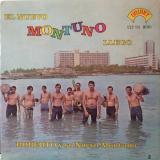
ROBERTO Y SU NUEVO MONTUNO - EL NUEVO MONTUNO LLEGÓ LP
  • A1: El Nuevo Montuno Llego
  • A2: Llamé A Chango
  • A3: Monina Y Ramon 4:00
  • A4: Balanceate 6:50
  • B1: Triste Arrabal
  • B2: Me Queda Un Guaguanco
  • B3: Dichoso 3:30
  • B4: Oye Tu Son Borinquen

Roberto y su Nuevo Montuno recorded their first album, “El Nuevo Montuno Llegó” (1970), when Roberto Berríos was just 22 years old. This was also the debut release on Haddock’s own Uniart label. Berríos remembers that they did the recording in two sessions, splitting it up into four tracks per visit. The engineer was the famed Pedro “Pedrito” Henríquez, who recorded El Gran Combo, Roberto Roena and many others. The band had a mix of tasty, powerful originals, from Tony Cintrón’s title track that announced the band had arrived, ‘El Nuevo Montuno Llegó,’ to Quique Dávila’s mournful ‘Triste Arrabal.’ Then there was the hit Santería themed tune, ‘Llamé a Changó,’ which was a song that Quique Dávila brought to the band, but had been originally composed by Carlos Pinto, though Quique was given the credit. Dávila also composed ‘Me Queda Un Guaguancó,’ which is Roberto’s favorite song on the record (as well as a fan favorite), with Papo sounding like his friend Héctor Lavoe, and Quique Dávila’s proud manifesto declaring that Puerto Rico now had its own son montuno, ‘Oye Tu Son, Borinquen,’ featuring the pianist’s tasty but brief solo. The cover versions came from the group’s earliest period when most of their repertoire consisted of renditions of beloved but lesser known tunes, and include Louie Ramírez’s ‘Balancéate’ (a favorite of Roberto’s from Ray Barretto’s songbook), Bobby Valentín’s ‘Monina y Ramón’ (recorded during his stint with Willie Rosario), and a bolero indelibly sung by Cheo Feliciano when he was with the Joe Cuba Sextet, ‘Dichoso,’ written by Joe Cuba’s talented pianist, Nick Jiménez. Some of the arranging was done by Cintrón and some by Dávila, though Quique had some help from his old friend from El Combo Moderno, Freddie Miranda, who at that time was with Roberto Roena’s Apollo Sound. Roberto says that the arrangements of the cover tunes were made specifically to be different and more contemporary sounding than the originals. “El Nuevo Montuno Llegó” has become a legendary salsa dura classic from Puerto Rico and we are thrilled to present this first legitimately licensed and remastered vinyl reissue. It includes detailed liner notes that reveal the untold story of the band and their debut album, and rare photos.

pre-ordina ora27.02.2026

dovrebbe essere pubblicato su 27.02.2026

Naoki Zushi - Paradise Lp

Naoki Zushi

Paradise Lp

12inchWOE020LP
World Of Echo
27.02.2026
  • こびと
  • ハレルヤ:左å�
  • 孤独のハープ弾き
  • パラダイス:真昼
  • Black Hole
  • 紫の夕べ
  • 目の前の天使達
  • Another Lonely Harpist
  • They’ve Gone, They Will Come
  • パラダイス
  • 童話
  • Spirit In My Hair
 
1

World Of Echo announces the reissue of two remastered albums by Japanese guitarist and songwriter Naoki Zushi, 1988’s Paradise, and 2005’s III. Two classics of Japanese psychedelia, both Paradise and III were originally released on Org Records, the imprint of Shinji Shibayama of acid-folk group Nagisa Ni Te, with whom Zushi has guested on second guitar for decades. Both intimate and expansive, rich with revelatory songwriting and blasted, sky-scouring guitar, these reissues return these albums to print for the first time since the 2000s. It’s the first time III has been officially released on vinyl, with an extra, previously unreleased track, “Under The June Moonlight.”

Recorded in Kyoto’s Townhouse Studios in mid 1987 and released in limited-to-500 vinyl pressing in 1988, Paradise emerged from a scene in Kansai, Japan that was embracing the idiosyncracies of 1970s singer-songwriters, the soaring solos of early seventies psychedelia, and the DIY impulse of 1980s post-punk. While Zushi’s musical history stretched back to the early eighties – he was a founding member of Jojo Hiroshige’s noise outfit Hijokaidan – he found his feet with groups like Hallelujahs, whose dream-pop collection Niku O Kuraite Chikai Wo Tateyo was recently reissued by Black Editions, and Idiot O’Clock.

Paradise appeared two years after that Hallelujahs album and share much the same membership – Zushi’s backing band on several of the songs includes Shibayama on drums and Ken-Ichi Takayama (aka Idiot) on electric guitar, though just as often, Zushi plays all the instruments himself. The coordinates here are wide-reaching – you can hear the volume and intensity of Neil Young & Crazy Horse (on “Hallelujah: Left Side” and “Paradise: Midday”), the slow-motion magic of Galaxie 500, the idiosyncratic spirit of The Only Ones, all mixed up with tender guitar miniatures and stumbling garage-psych-pop moves.

Seven years later, after the transitional album Phenomenal Luciferin, Zushi released III. Perhaps his masterpiece, it’s already been bootlegged on vinyl, but this reissue is the real deal. The album was recorded at Studio Nemu over seven years, and sees Zushi backed by Shibayama (bass) and Masako Takeda (drums), his erstwhile bandmates in Nagisa Ni Te. By this stage, Zushi had started to really stretch out, and many of the songs on III swoon languorously, taking their sweet time to say what they need to say. It’s rich with lovely, melancholy songs, in a similar realm to bandmates Nagisa Ni Te, of course, but you can also hear traces of everything from Syd Barrett’s The Madcap Laughs, through seventies private press loner folk, to the slow-burn meanderings of the likes of early Low or Damon & Naomi.

When interviewed by Shibayama in the mid-nineties, Zushi said of Paradise, “it was a sort of collection of songs that had meant something to me up to that point… it was my paradise. I wanted to create paradise.” That’s something Zushi achieves on both of these albums – visionary Japanese psychedelia, en route to paradise. - Jon Dale

pre-ordina ora27.02.2026

dovrebbe essere pubblicato su 27.02.2026

IRON AND WINE - HEN'S TEETH

IRON AND WINE

HEN'S TEETH

12inchSP1707LP
Sub Pop
27.02.2026
  • 1: ROSES
  • 2: PAPER AND STONE
  • 3: ROBIN'S EGG (FEAT. I'M WITH HER)
  • 4: SINGING SAW
  • 5: IN YOUR OCEAN
  • 6: DEFIANCE, OHIO
  • 7: WAIT UP (FEAT. I'M WITH HER)
  • 8: GRACE NOTES
  • 9: DATES AND DEAD PEOPLE
  • 10: HALF MEASURES

Die Indie-Folk-Ikone Sam Beam, auch bekannt als Iron And Wine, bringt ein neues Studioalbum raus, das voll mit wunderschöner, natürlicher Americana ist, darunter zwei Kollaborationen mit dem weiblichen Folk-Trio I'm With Her. „Ich wollte schon immer diesen Titel verwenden", sagt Sam Beam über „Hen's Teeth“, sein achtes Album in voller Länge und sein sechstes für Sub Pop Records. „Ich liebe ihn einfach. Für mich steht er für das Unmögliche. Hühnerzähne gibt's nicht. Und genau so fühlt sich dieses Album an: wie ein Geschenk, das es eigentlich nicht geben dürfte, aber doch da ist. Eine unmögliche Sache, aber sie ist real."


„Hen's Teeth“ und sein vorheriges Album „Light Verse“ sind so was wie Geschwister. Sie wurden während derselben Sessions nach einer einjährigen Pause mit derselben Band im Waystation Studio in Laurel Canyon aufgenommen. „Wenn ich gerade richtig in Schreiblaune bin und die Band mich dort abholt, wo ich gerade stehe, treiben sie mich zu etwas, das ich mir nicht hätte vorstellen können. Ich bin an einem Punkt in meinem Leben, an dem Spontaneität für mich viel wichtiger ist. Ich muss nicht mehr so viel beweisen wie früher. Ich bin viel freier und liebe es mehr denn je, Musik zu machen. Es gibt keine richtigen oder falschen Antworten. Man betet einfach um Glück und gibt sein Bestes." In diesem Fall wurden die Gebete erhört und das Glück schlug voll zu. Die Musiker fanden so schnell zueinander und inspirierten sich gegenseitig so sehr, dass sie Songs oft in nur wenigen Takes aufnahmen, manchmal zwei oder drei pro Tag. Die beiden Alben können daher als zweieiige Zwillinge betrachtet werden: Sie teilen sich die DNA und ergänzen sich, haben aber unterschiedliche Identitäten und zeichnen sich ebenso durch ihre Unterschiede wie durch ihre Gemeinsamkeiten aus. Die Welt von „Hen's Teeth“ ist erdiger, dunkler, robuster und greifbarer als die von „Light Verse“. Die Songs haben Titel wie “Roses", “Robin's Egg", “Dates and Dead People" und “Singing Saw". “Run into the one you love forever / Laugh into each other's empty mouth", singt Beam in “Roses", dem ersten Titel des Albums. Es ist einer von mehreren Songs, in denen Liebende so tief miteinander verbunden sind, dass sie physisch verschmelzen. “Paper and Stone" erinnert daran: “But for the time we fell in two / You'd be me and I'd be you / One crust of bread could fit in our mouths / You'd breathe in and I'd let it out." Und in “In Your Ocean" finden wir Beam betend: “Praying for dry ground / Though I only want to drown / When I find myself swimming in your ocean".

pre-ordina ora27.02.2026

dovrebbe essere pubblicato su 27.02.2026

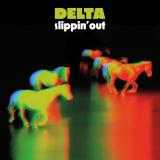
Delta - Slippin’ Out (2x12")

Delta

Slippin’ Out (2x12")

2x12inchPLEXUS002P
Circuitry
27.02.2026

“From Birmingham and centred around the extraordinary songwriting talent of James and Patrick Roberts – initially as The Sea Urchins and since 1993 as Delta – they’ve only just got round to releasing their debut album, Slippin’ Out. It is a work of some beauty”. 9/10 NME ALBUM OF THE MONTH, 2000

“It’s classicist for sure, shot through with the influence of The Beatles, Byrds and Buffalo Springfield. In James’ downright beautiful closing ballad ‘I Want You’ one can also discern the school of ambitious English balladry that peaked in about 1968: The Casuals, Love Affair, Barry Ryan. The impression of accomplished old-schoolery is only furthered by the dizzying string arrangements penned by Louis Clark Jnr, son and namesake of the one-time orchestral chief of Electric Light Orchestra” – Mojo lead review, 2000


Having ended the 90s with the spirited ‘Laughing Mostly’ compilation of singles and demos (Guardian Album Of The Week) Delta finally released their debut studio album of twelve songs in the summer of 2000 on the Dishy Recordings label. Accepting that this might be their sole studio album the band threw everything at these recordings allowing it to exist in its own sphere, unbothered by their contemporary generation and disregarding the idea of even releasing a single.

Recorded at DEP International there was a notable difference to the scruffier, looser charm of their 1990s recordings, a tighter focus developed by having the experienced Lenny Franchi mixing the LP with them. Lenny had been working with a number of Island artists including My Bloody Valentine and Tricky so knew his way around a desk. There was also the question of budget (a few months passed between recording and mixing whilst funds were raised) so every day counted. Ultimately though you can hear the joy in the recordings, even amongst the melancholy and angst. As James recently recalled in an interview in Shindig! Magazine: “It was such a big deal for us. It’s one of my fondest memories doing that record. Everyone was happy. If there’s anything that I’d stand by, I think it would be that”

Louis Clark Jr joined the band towards the end of the ‘90s and brought a classically-trained element to the recordings particularly with his string arrangements. For ‘Cuckoo’, ‘I Want You’ and the prophetic ‘We Come Back’ Louis brought in eight players from the Birmingham Conservatoire; the baroque style is partly why the record often receives comparisons to Love’s ‘Forever Changes’.

On release ‘Slippin’ Out’ was a big favourite with writers at the NME, Mojo and The Guardian again and before long the band were signed to Mercury/Universal for their second studio album ‘Hard Light’, a far more expensive and expansive love affair. It was a temporary palatial home where things quietly fell apart again, but that’s another chapter.

“If long-term memory is nothing more than selective editing and only pop’s most weighty visceral works are built to last then it’s quite possible that in 50 years the Britpop era will be best recollected for the two bands it ostracised. Earlier this year we met Shack and thought their story of mercurial brilliance indicated the biggest music biz oversight of the 90s. We were wrong because we hadn’t met Delta yet. This is richer and more engrossing than anything by Shack” 

pre-ordina ora27.02.2026

dovrebbe essere pubblicato su 27.02.2026

DEATHCRASH - Somersaults LP

DEATHCRASH

Somersaults LP

12inchLPUNRE021
Untitled (Recs)
27.02.2026

"deathcrash’s third album, Somersaults, glimmers with an everyday euphoria. The London-based slowcore/ post-rock quartet has always had an affinity for building worlds only to crush them. From their breakout EP, People thought my windows were stars (2021), through two critically acclaimed studio albums, Return (2022) and Less (2023), they have been both the architects and the destroyers, the creationists and the ones manning the flood barrier. But, recorded between Black Box Studio in the Loire Valley and Haggerston’s Holy Mountain, Somersaults is almost joyful.

Its ten tracks are more vocal heavy than any of the band’s catalogue – think Mark Linkous via The Kinks – but lyrically, Somersaults resists revelation. For all its abrasion, phrases appear half-swallowed, broken off at the edge of meaning, consumed by the smaller textures of living. “Thirty, no career, it fucking worries me / And doing the band doesn’t help,” Banks sings in ‘NYC’. But, “This life is the best life,” he finishes in ‘CMC’ on top of the ambient white noise of an office printer, thankful that the band is still there, “still making noise in the doorway.”

Their role as caretakers of Duster, Low and Codeine’s slowcore lineage is all across Somersaults – songs scud to a narcotic crawl, sound monolithic and inwards before spotlighting a crystalline nothing. Cathartic builds are muddied with tenderness, the bass a heavy grounding, the drums an exhausted heartbeat grasping for air. But more so than ever, even the silence feels collaborative – a gesture of communal trust – friends celebrating the room they’ve made for each other’s ghosts, and some of the biggest, brightest songs they’ve made to date."

pre-ordina ora27.02.2026

dovrebbe essere pubblicato su 27.02.2026

Siavash Amini & Saffronkeira - The Faded Orbit

Siavash Amini is a composer from Tehran, Iran. He Has worked with labels like Room40, Hallow Ground, Opal Tapes and Umor Rex for the better half of the past ten years. He has performed at festivals like CTM & MUTEK and many other well known international events. Apart from it Siavash is a co-founder of the “SET experimental art events” and “SETfest” in Tehran, Iran. His work ranges from fragile ambient pieces and brittle IDM (incorporating his distinctive style of atmospheric guitar playing) to noisy drones and bleak modern classical pieces. His compositions have been inspired by films such as Andrei Tarkovsky's The Mirror as well as novels by Dostoyesvky and poems by T.S. Eliot.

Saffronkeira is the Sardinian sound researcher Eugenio Caria being active in the electronic music scene since almost two decades. His most recent work - a cooperation with the Italian jazz trumpet legend Paolo Fresu - earned a lot of praise from the international music press for the pure timelessness of the album.

"Upon hearing a small snippet of sound an image is conjured, not a memory but not unfamiliar. A shell of a memory, thousand events superimposed on each other. While trying to extract points of a narrative to ease the discomfort of this recollection, I try to separate and unfold the image and with it the points of the spectrum which make up the sound, a shell of a narrative. Here is an album based upon an almost entirely imagined/ synthesized happening upon hearing a snippet of sound. It sounded like of a whole story that never happened but yet I felt myself amongst it’s participants, a sound triggering a false memory. Each sound in Eugenio’s collection of sounds and ideas guided me a to a point in the narrative and it’s construction. He had handed me a portals of some kind to a few scenes of the whole narrative. This is the soundtrack for that false memory from all the perspectives I can think of."

non in magazzino

Ordina ora e ordineremo l'articolo per te presso il nostro fornitore.

Last In: 7 months ago
DJ YODA - Breakfast Of Champions LP
  • A1: And To The World
  • A2: Day To Night
  • A3: Pebble Beach
  • A4: Click
  • A5 24: 68
  • B1: Super Cereal Syrup
  • B2: The Baddest
  • B3: Mantra
  • B4: Better Day
  • B5: Open Your Eye

Back on vinyl for the first time since 2015! New remastered version with alternative cover art. Unlike all DJ Yoda’s artist albums, ‘Breakfast Of Champions’ features the same collaborators on every track effectively putting together a band. The genesis of the project was in Manchester, where the legendary Band On The Wall venue asked him to host an artistic residency. He put a call out for local musicians, did auditions, and selected three rappers. Two were local to Manchester - Truthos Mufasa and Sparkz. They were local legends making up parts of The Mouse Outfit and LVLZ. And the third was Rex Domino from down south, who was a British MC who Yoda thought would gel well with the other guys. They wrote, rehearsed and recorded intensively in Manchester - performed a memorable series of live shows (including an epic Glastonbury show), and Yoda put the finishing touches to the album back in London after the fact. “It was such an enjoyable experience” says Yoda. “Lifelong friendships were made, and most excitingly two of the band members got together (James Breen, drummer, and Claire Northey, violinist) and had two kids! So there are Breakfast of Champions humans out there too!”

This new pressing features alternative artwork that was never used at the time of the album’s original release.

pre-ordina ora20.02.2026

dovrebbe essere pubblicato su 20.02.2026

MASON LINDAHL - Joshua / Same Day Walking

"On a dozen restlessly expressive instrumentals recorded between Marin and Reykjavík, the American guitarist finds turbulent beauty at the edges of the fingerstyle tradition." - PITCHFORK 7.9/10

"The greatest living guitar player" - Hayden Pedigo

Today, guitarist Mason Lindahl — whose “unabashedly beautiful" (Aquarium Drunkard) sound "balances the romantic dynamics of flamenco and the meticulousness of Windham Hill with the unguarded qualities of improvised music" (Pitchfork) — announces a pair of new albums: Joshua / Same Day Walking via Mt. Brings Death.

Though packaged together, Joshua and Same Day Walking chart distinct worlds. Recorded in northern California and produced by Robby Moncrieff (Dirty Projectors, Zach Hill), Joshua is woolier and warmer, evoking haze, humidity, and overgrown Spanish moss. Meanwhile, Same Day Walking — recorded in Iceland and produced by Moncrieff alongside two-time GRAMMY-winning composer / sound designer Sam Slater (Joker, Chernobyl) — is, appropriate for its icier climes, windswept and beholden to the vast emptiness of harsh landscapes. As a pair, they provide a thorough portrait of Lindahl's singular and versatile playing.

Amid Lindahl's purely evident virtuosity, close listeners can savor wonderful imperfections freckled throughout Joshua / Same Day Walking: buzzing strings, minimal electronic ambience, soft undulations of tempo. Lindahl isn’t here to pageant his craft; he's adventuring within, uncovering fresh avenues of sound and emotive gesture.

Described by friend and contemporary Hayden Pedigo as “the greatest living guitar player,” Mason Lindahl’s “austere, gothic flamenco...dares you to submit to this odd and immersive sonic universe" (Uncut). The Northern California native's solo instrumental debut Kissing Rosy in the Rain, released in 2021 via Tompkins Square, was praised as "gorgeous" (Petal Motel) and "a minimalist gem" (Everything Is Noise). Prior to that, his only other solo release is 2009's Serrated Man Sound.

pre-ordina ora20.02.2026

dovrebbe essere pubblicato su 20.02.2026

Daphni - Butterfly LP 2x12"

Daphni

Butterfly LP 2x12"

2x12inchJIAOLONG034LP
JIAOLONG
19.02.2026

At the start of this summer, following a three-year hiatus for Daphni (punctuated only by his first ever collaborative Daphni track ‘Unidos’ alongside Sofia Kourtesis), he dropped ‘Sad Piano House’. The track represented something of a continuation in the Daphni catalogue, its roots growing from Cherry’s ‘Cloudy’ and its subsequent Kelbin remix, something in that song’s makeup having a profound effect when played on dancefloors by Snaith and countless others. ‘Sad Piano House’ deployed more intangibly irresistible bendy piano to equally satisfying effect and continues to achieve similarly rhapsodic dancefloor saturation.
Though a sizeable gap for Daphni releases, between Cherry and Butterfly however of course sits Honey, the latest Caribou album and one that saw the more instantaneous and dancefloor leaning traits of Daphni peaking through the cracks more than ever before. This blurring of the lines leads to an intriguing collaboration in Butterfly’s lead single ‘Waiting So Long (feat. Caribou)’. An unlikely duo - in that both artists are the same man, Dan Snaith - ‘Waiting So Long’ is not so much an identity crisis, ego trip, or the result of a chemical spill in the Snaith laboratory. It’s simply a track that Snaith felt for the first time belongs to both aliases, and might appeal to fans of both. He has never sung on a Daphni track before, and did not set out with the intention to do so this time, and yet this strange billing was born.

Daphni music has always been Snaith’s way of hitting directly to the core of the dancefloors he spends so much of his time playing to, and those dancefloors have been steadily expanding as his name grows, with the music following suit. This album however also draws from further back with a definite kinship to the very first Daphni album, the invigorating bag of ideas that was Jiaolong.
Butterfly is a showcase of the wonderful variety and surprising twists and turns that made that album such an exciting new prospect and that still to this day make Snaith such an intriguing DJ. There are more heavy hitters here, tracks that fill those dancefloors better than anyone, like ‘Clap Your Hands’ which picks up the energy of ‘Sad Piano House’ and flips it, exposing the gritty and intoxicating underbelly of Snaith’s hitmaking side, while retaining the playful urgency that runs through all of his work of late. Meanwhile ‘Hang’’s comic-strip horns are unpinned by gleeful force, unrelenting and thrillingly unshakeable. Elsewhere though comes a clutch of other tunes that might creep out somewhere more off the beaten path, a path Snaith has never stopped seeking in amongst his larger billings. ‘Lucky’ is squirmy and elusively intoxicating, ‘Invention’ skitters down meandering, inviting corridors, ‘Talk To Me’ grumbles and broods in the murk, and ‘Miles Smiles’ could roll on endlessly, so confident in its groove. There are no obvious peaks in these tracks or unifying moments, in fact many of them really have no business being on the dancefloor at all, and yet in the right setting, they could be the most fun to be had all night.

One such club is a good microcosm for the ethos of Butterfly as a whole. “Around the time I was finishing up this album I played a long set in a club called Open Ground in Wuppertal, Germany.” Snaith recalls, “It’s kind of, in one sense, the platonic ideal of the kind of club I’d want to play in. Every single decision has been taken, at great expense, with the aim of making the perfect sounding medium sized club room. But on top of it being the perfect acoustic environment it also is run by an amazing collection of people in a way that gives it a sense of community that dance music at its best provides. It is an absolute pleasure to play in that room to a crowd of people who come from all over. Playing in there you feel like you can play anything, and I played works in progress of pretty much every track on this album in my set there. Don’t get me wrong, I love playing a short set at a festival or in a more raw warehouse kind of club where you bang it out and only really functional music works but on record I guess the point of these Daphni records is to keep in mind a more expansive idea of dance music where the parameters are broad and the church is broad. I think that actually, putting really functional stuff next to weirder tracks (both on an album and in a dj set) might be the thing that’s still most interesting to me.”
This is the feeling that’s most palpable on Butterfly, and in every single time you see Snaith DJ. Right from the inception of the Daphni alias - and even before that – the thrill of trying stuff out, pushing at the boundaries has always been there and on Butterfly is present in all its twists and turns. It leaps all over the place and yet it hangs together, never feeling like a grab bag of dancefloor utilities but rather a distillation of all the strings to Snaith’s bow, exhilaratingly human and unified by one singular concept – simple and joyful exploration.

non in magazzino

Ordina ora e ordineremo l'articolo per te presso il nostro fornitore.

Last In: 69 days ago
Vibronics, Nia Songbird - Travelling 10"
  • A1: TRAVELLING
  • A2: TRAVELLING DUB
  • B1: REVENGE
  • B2: REVENGE DUB

Straight into 2026 with a new slab of heavyweight DUB in a sound system style. Two new tracks, one side featuring uplifting vocals from Nia Songbird, the other side is classic Vibronics style undiluted instrumental dub. This one one for all lovers of Iration Steppas, OBF, Channel One and all the Bass-heavy sound systems out there.
This release is pressed on 10” vinyl and presented in a full-colour printed SCOOPS label sleeve, making it a collector’s item as much as a sound system weapon.

Vibronics is one of the most established names in UK Dub/Reggae music achieving millions of views on YouTube, millions of Spotify streams and many tens of thousands of vinyl record sales. Collaborators include Michael prophet, Macka B, Iration Steppas, Soom T, Aba-Shanti and more.
Nia Songbird is a Leicester born UK vocalist, a rising star known for her work with Vibronics as well as the likes of OBF, Mr.Zebre and a host of worldwide Dub producers.

pre-ordina ora13.02.2026

dovrebbe essere pubblicato su 13.02.2026

Esa Pethman - In Belgium 1967

Esa Pethman

In Belgium 1967

7"-VinylWJ075001
WE JAZZ
06.02.2026

We Jazz Records kicks off their new series of archival 7" releases with Esa Pethman "In Belgium 1967" released 23 September 2022. The two-tracker is licensed from the Belgian VRT radio archives and both of the pieces are previously unreleased. Finnish jazz legend Pethman, heard here on alto flute and tenor sax, joins forces with European jazz greats such as Heinz Bigler, Uffe Karskov and Jean Fanis. This is a small but valuable piece of unheard European jazz history from the early heyday of modern jazz. The physical release is a quality "inside-out"-styled EP with 3mm spine and small center hole on the 45rpm vinyl.

An excerpt from the liner notes by Mikko Mattlar:

"Esa Pethman (b. 1938) was one of the key figures of modern Finnish jazz in the 1960s. His album The Modern Sound Of Finland was the first Finnish modern jazz album and his composition "The Flame" a true modern Fenno-jazz evergreen.

Pethman was born in Kuusankoski, 135 kilometres from Helsinki in the Kymenlaakso area. The jazz scene was active even though it was an area of rural landscapes and paper mills. Pethman discovered jazz when he heard a Charlie Parker record being played at a local music shop in the late 1940s. Following Parker, bebop became his favourite style of jazz.

Young Pethman played flute and saxophone in local bands who accompanied schlager singers. They played tangos and waltzes for dancers, but usually started a typical dance event with an hour of jazz. In 1959 Pethman moved to Helsinki to study music at the Sibelius Academy. Back then it was a strictly classical music academy, but Pethman later described the studies as crucial for his development and career. He quickly made his way to studio sessions and into the best orchestras in Helsinki.

As a student of composition, Pethman also began writing his own music. "The Flame" was a melody he just got on his mind one night, and he decided to write it down. The catchy composition was released as a 7" single in 1964, a year before Pethman's debut album. Both records stand as benchmarks for modern Finnish jazz. The album consisted entirely of Pethman's compositions, not versions of jazz standards like a lot of the Finnish jazz released until then.

In the mid 1960s, Finnish jazz was also taking its first international steps. Pethman's quintet took part in the first Montreux Jazz Festival in Switzerland in June 1967. At the Montreux jazz band competition, the quintet came in fourth of the twelve contestants. Despite not winning the competition, the band got an honourable mention, and Pethman was now recognized outside Finland.

In December 1967 Pethman travelled to Brussels. His visit was organised by the national Finnish broadcasting company Yleisradio and their jazz program producer Matti Konttinen. Konttinen was supposed to go to Brussels with Pethman, but the musician ended up traveling alone.

In the Decca recording studios Pethman played two songs. He recorded a version of his most famous composition "The Flame", where he played the alto flute and was accompanied by Belgian musicians. On Swiss saxophonist Heinz Bigler's composition "Like Steel", Pethman played the tenor saxophone. The band was now more international, consisting of Bigler, the Italian Francesco Santucci, the Dane Uffe Karskov, a Belgian rhythm section and Pethman. After 55 years, Pethman still remembers Bigler's remarkable skills as a saxophonist.

The two-day visit included the recording session, a dinner and a concert. Pethman and the other non-Belgian musicians came to Brussels mainly to play at a jazz concert organised by the European Broadcasting Union EBU. They played at the studio first, and the concert was held the following day. Pethman and all the other soloists played as members of an international big band. The studio and live session were produced by the Belgian Radio and Television jazz section leader Elias Gistelinck."

non in magazzino

Ordina ora e ordineremo l'articolo per te presso il nostro fornitore.

Last In: 3 years ago
Jack West, Walter Strauss - Guitars On Life LP
  • More Guitar
  • I Wish
  • Youth
  • Across The Bardo
  • Double Bounce
  • New Way Up
  • OO
  • Follow The Water Down

Guitars On Life solves a nagging mystery about the fate of a musician who stood out as a singularly spectacular bloom even in the verdant creative fields of the San Francisco Bay Area at the turn of the century. After more than two decades of recording silence and about a dozen years away from the bandstand, Jack West is back, still immediately recognizable as a guitarist and composer but miles from the last stop on his ongoing musical journey. There’s poetic symmetry in discovering that his detour from life as a performing musician involved fruitful work devising innovative solar technologies, as he had similarly distinguished himself as an inveterately inventive musician. When we last heard from West he’d carved out a vibrant niche as a guitarist with a percussive attack and lustrous group sound. Wielding a custom-built eight-string acoustic guitar with uncommon rhythmic dexterity, he released six albums featuring his original tunes, mostly recording with his band Curvature (though he also played mesmerizing solo recitals). West’s knack for crafting glistening, minutely detailed soundscapes full of surprising twists and oddly inviting textures prompted NPR to describe his work as “a whole new sub- genre of jazz.” Drawn back to performing in recent years, West saw guitarist Walter Strauss at Berkeley’s Freight & Salvage in 2022 and suspected he’d found a kindred spirit. Intrigued by Strauss’s unusual approach to guitar, West “wondered what a musical conversation might sound like between two guitarists who had developed such uniquely different ways of playing the instrument.” An invitation to play together led to them writing the tune ‘More Guitar,’ the bravura opening track that launches Guitars On Life. Several months later they spent a week in Florida together writing intensively, resulting in most of the material for this consistently thrilling project.

pre-ordina ora06.02.2026

dovrebbe essere pubblicato su 06.02.2026

Laseech - Rising Soul

Laseech

Rising Soul

12inchCYCLE-02
Cycle Records
03.02.2026

Laseech, a Croatian producer and Cosada label owner with releases on BBE, Lumberjacks In Hell, Red Ember Records, and Forbidden Dance, is continuing a string of excellent releases with Rising Soul. Known for his dedication to house music, Laseech has built an international reputation through collaborations and remixes with some of the genre's most respected architects, including Ron Trent, Patrice Scott, Javonntte, and Dego. "Rising Soul is actually one of the first tracks I did back in 2017 while I was heavily into sampling. I was jamming with my MPC1000, and Rising Soul came up. I never thought that it would become such an effective song that works on the dancefloor every time." Laseech explains. Kez YM, a highly respected Japanese producer and DJ, has been a key figure in the global house music scene for almost two decades. Originally from Chiba and now based in Berlin, his unique approach to house music has led to releases on esteemed labels such as City Fly, Faces Records, Yore, and 4Lux. When describing his version of the track, Kez simply stated: "VIBES." Well, no one will argue with that. The last version comes from Cycle Records' founder Jan Kincl, a prominent Croatian music producer and DJ with releases on labels like BBE, Far Out, Sonar Kollektiv, and Get Physical. "I've been playing Andrej's original for years. He undoubtedly made some good stuff recently, but this one remains among my firm favourites from him. Kez delivered a beautiful version that took it further towards jazz territory, so I decided to make a version that would bridge those two." Jan explains. "I knew we could build a very good record around Rising Soul, with versions that would give DJs different options for different moments during the party. I guess we did a good job because some of the early supporters include DJs from all over the place - Laurent Garnier, Alex Barck from Jazzanova, Marcel Dettmann, Alex Nut (Eglo), Sasse, Chicago's K' Alexi Shelby, Lakuti, Ian Friday and Truncate, among others.

non in magazzino

Ordina ora e ordineremo l'articolo per te presso il nostro fornitore.

Last In: 46 days ago
Wednesday Knudsen - Atrium LP 2x12"

After two decades in the experimental music scenes of New York and Western Massachusetts, Wednesday Knudsen might be known equally as a sought-after improv collaborator and the vocalist and guitarist for the beloved long-running psych band Pigeons or, more recently, as a member of the New England psych-folk ensemble Stella Kola. Though her forthcoming release, Atrium, is Knudsen’s fifth solo album, it is both her first solo work to appear on vinyl and a double LP, marking her rich recording history with a stunning masterwork. Channeling the “atmosphere of presence” alongside the legions of Éliane Radigue, Hiroshi Yoshimura, and Joanna Brouk, on Atrium, Knudsen plays it all—alto saxophone, flute, guitar, synth, piano, autoharp, bass guitar, and vocals. The collected compositions are studies in the tones, timbres, and pacing particular to the woodland environment of the Taconic Mountains where she lives. Atrium’s tracks are sculptural rather than ambient, with a release into the gorgeous hold of gravity that insists we don’t escape or drift away. This is music for remembering time. This is music that reinforces the power of art as resistance. The songs on Atrium distill our attention in a language that Knudsen calls “the opening of the heart,” reminding us that subsistence and community results from our own actions and engagement with our exterior. Atrium is a refuge, vital in our current moment and imbued with resonant power for our future.

pre-ordina ora30.01.2026

dovrebbe essere pubblicato su 30.01.2026

The Mars Volta - Noctourniquet

The Mars Volta

Noctourniquet

2x12inch4250795604969
CLOUDS HILL
30.01.2026
  • A1: The Whip Hand
  • A2: Aegis
  • A3: Dyslexicon
  • B1: Empty Vessels Make The Loudest Sound
  • B2: The Malkin Jewel
  • B3: Lapochka
  • C1: In Absentia
  • C2: Imago
  • C3: Molochwalker
  • C4: Trinkets Pale Of Moon
  • D1: Vedamalady
  • D2: Noctourniquet
  • D3: Zed And Two Naughts

Noctourniquet And then everything went black, at least for a while, at least for The Mars Volta. In the months and years following their fifth full-length, Octahedron, Omar kept on at his usual fearsome creative pace. In fact, he ramped up his output considerably, starting up his own Rodriguez Lopez Productions label and releasing a slew of solo albums. It was a practice he’d begun shortly after De-Loused’s release, with his solo debut A Manual Dexterity: Soundtrack Volume One, but as the decade reached its close, Omar grew to rely upon his solo recordings as an outlet for his prolific creativity, these albums often exploring musical pastures far beyond even The Mars Volta’s wide-ranging parameters. Before choosing to release music under his own name, Omar would always play it to Cedric first, to see if the frontman thought it had potential to become Mars Volta music. Shortly after Octahedron’s completion, Cedric flagged one batch of tracks Omar had cut with Deantoni Parks, a brilliant drummer and composer who’d briefly occupied the Mars Volta drumstool in-between Jon Theodore and Thomas Pridgen’s tenures, and whose volcanic creativity and unique, unpredictable approach to rhythm and composition had quickly made him one of Omar’s favourite artistic foils.

As with the music that made up Octahedron, the new tracks Cedric had optioned for The Mars Volta often veered far from the riotous, Grand Guignol visions of their earlier releases. It possessed the punchy, song-based focus of Octahedron, though this was a considerably darker, more menacing strain of pop, with synthesisers figuring heavily in the productions. Cedric took the tracks in 2009 and set about writing songs to the music. But no more new Mars Volta music would be heard until 2012. The years that passed in-between were nonetheless momentous, and busy, witnessing an unexpected reunion of the members of At The Drive-In, and Cedric joining his own side-project, Anywhere. But there wasn’t any sign of life within the Mars Volta until Omar, Cedric and their bandmates took to the road for a series of live shows in the spring of 2011, billed as The Omar Rodriguez-Lopez Group, debuting the songs that would become Noctourniquet. The album followed the next year, and it remains one of The Mars Volta’s finest, its electronic textures staking out unfamiliar but fertile new ground.

An unsettling, subtly turbulent listen, Noctourniquet found Cedric sketching out a story about “some sort of device that stops the darkness from bleeding”, drawing influence variously from the nursery rhyme Solomon Grundy, the Greek myth of Hyacinthus and the song Birth, School, Work, Death by British underground rockers The Godfathers. It was an album of dystopian futurism, signalled by the paranoid cyber-rock of opener The Whip Hand and its unnerving chorus, “That’s when I disconnect from you”. But it was also an album of inspired, unexpected moves and uncanny invention, like how Dyslexicon seemed to eerily evoke Blondie’s Rapture, before rushing headlong into its bruising chorus, tempos shifting restlessly throughout like quaking earth beneath the listener’s feet, or how Aegis put a brave new spin on The Mars Volta’s trademark rewiring of salsa’s overdriven passions, or how Cedric had never sounded as scary as he did on The Malkin Jewel’s mutant burlesque shuffle. Tracks like Molochwalker were sleek and concise in a way The Mars Volta had never really attempted before – which was all part of Omar’s plan.

“It had all been guitar, guitar, guitar, overdubs, everything fighting for space in the same frequency,” he explains. “So for Noctourniquet, it was all about subtracting elements, of sticking to how I made demos.” Deantoni’s presence helped revivify the group, playing against cliché and expectation, and taking each song in unexpected directions. “I’d beatbox a rhythm for him to play, to go with my guitar part, and he’d come back with three or four alternate options. It was so great.” Similarly, Cedric had never sung better than on Noctourniquet, staking out a fearsome spectrum from the chilling Tom Waitsian growl of The Malkin Jewel to the keening, beautiful vocalisation on Vedamalady, rising to match some of Omar’s most deft, most immediately effective and melodic songs yet. Indeed, Noctourniquet is the sound of a band discovering new ways to do familiar things, renewing their commitment to their mission, finding fresh inspiration a decade in, and shaking off any complacency that might have come with ten years of acclaim and success.

pre-ordina ora30.01.2026

dovrebbe essere pubblicato su 30.01.2026

Jasmine Guffond - Muzak for the Encouragement of Unproductivity

Inspired by Sam Kidel’s ›mimetic hacking‹ concept, Berlin-based composer Jasminev Guffond pipes opiated brass and woodwind motifs into a reverb chamber modelled on an Amazon fulfilment centre.

»Muzak for the Encouragement of Unproductivity« is a poetic inversion of Muzak’s traditional role in stimulating seamless productivity in the workplace. Beginning as a pre-radio music distribution network (1934, U.S.), Muzak was transmitted along electrical wires with the intention of being at once ubiquitous and indiscernible, always present yet easily ignorable. As a pseudo-science the aim was to capitalize on the potential of music to have a psychological effect on listeners, and with the goal of maximum productivity, was employed as a sonic disciplinary force in the work place.

Previously installed for Dystopia Sound Art Biennial (2024), at the Amazon Packing Station located before HAUNT-Frontviews in Berlin, Muzak for the Encouragement of Unproductivity sonically addresses utopic notions of seamless, efficient productivity, inherent to capitalist cultures, and their very real dystopic effects from labour exploitation to the impacts of over-production on the environment. This poetic inversion, further developed as an album, is not meant as a kind of melodic control but rather a reflective space in which to consider the benefits personally, globally and environmentally, of slowing down.

Reverb, essential to the Muzak aesthetic, is programmed (using convolution reverb) with the dimensions of the Berlin Amazon fulfillment centre, DBE2. Amazon fulfillment centers are global contemporary factories, promising a consumer utopia of next day delivery of almost any product imaginable. Inspired by Sam Kidel’s concept of »mimetic hacking«(1), the reverberation characteristics of the DBE2 facility perform a symbolic sonic break-in to the guarded Amazon fulfillment center, a trespass to the flow of production.

Guffond’s ambient Muzak with its drifting horn, clarinet and synth-like modulations is just too down-tempo for upbeat spending. If this is Muzak it is possibly Muzak for the end of the world, thoughtfully seeking transcendence through implied questioning after all avenues for shopping have been exhausted.

non in magazzino

Ordina ora e ordineremo l'articolo per te presso il nostro fornitore.

Last In: 8 months ago
THE BUSTERS - CALLING

The Busters

CALLING

12inchSRR24
SKA REVOLUTION
23.01.2026
  • CHAMPAGNE
  • DETOX BABY
  • CALLING
  • DANCING IN AMERICA
  • FREAK SHOW
  • YOUR NAME
  • GOOD FRIENDS TO GO
  • DANGER PARADISE
  • GESCHICHTE SCHREIBEN
  • ECHOES
  • ONE MORE TIME
  • BON VOYAGE

Mit Calling melden sich The Busters eindrucksvoll zurück - neun Musiker, ein Album, das kollektive Kreativität hörbar macht. Entstanden in zwei Studios - den atmosphärischen Waldstudios bei Berlin und "Der Raum" in Waltrop - verbindet Calling emotionale Tiefe mit musikalischer Klarheit und der typischen Leichtigkeit der Band. Die Songs entstehen basisdemokratisch, ohne Hierarchie - aus Vertrauen, Präzision und Spielfreude. Das Ergebnis: ein Album voller Dynamik, Wärme und Atmosphäre. Man hört den Raum, die Luft, das Miteinander. Statt digitaler Perfektion steht das Gefühl im Vordergrund. Highlights wie der Titeltrack "Calling", das melancholisch-leichte "Champagne", das bissige "Freak Show" oder das hoffnungsvolle "Geschichte schreiben" zeigen die Band in ihrer ganzen Bandbreite - nachdenklich, ironisch, berührend. Live entfaltet sich die volle Kraft: The Busters gehören seit über 35 Jahren zu den besten Live-Bands Deutschlands. Calling fängt diese Energie ein - als klingendes Abbild einer Band, die weiß, wer sie ist, und trotzdem immer wieder neu aufbricht. With Calling, The Busters make a powerful return - nine musicians, one shared language, and an album that showcases the vibrancy of collective creativity. Recorded between two studios - the atmospheric Waldstudios near Berlin and "Der Raum" in Waltrop - Calling blends emotional depth with musical clarity and the band"s signature ease. No mastermind, no hierarchy - just a democratic process built on trust, precision, and joy. The result is an album rich in dynamics, warmth, and atmosphere. You hear the room, the air, the connection. Feeling takes precedence over digital perfection. Tracks like the floating opener "Calling," the subtly melancholic "Champagne," the biting "Freak Show," and the uplifting "Geschichte schreiben" reveal the band"s full emotional range - thoughtful, ironic, and deeply human. On stage, The Busters truly shine: with over 35 years of live experience, they are one of Germany"s most seasoned and beloved live acts. Calling captures that energy - a sonic reflection of a band that knows who they are, yet continues to explore new paths.

pre-ordina ora23.01.2026

dovrebbe essere pubblicato su 23.01.2026

CHIP KINMAN - CHIP KINMAN LP
  • A1 1: Brian
  • A2 2: Que Voy A Hacer
  • A3 3: Radio / Tv / I'm In Love
  • A4 4: So Young
  • A5 5: Gonzo! Fc
  • A6 6: Goodbye Rock And Roll
  • A7 7: Me And Tony
  • A8 8: Drive Drive Drive
  • A9 9: Nobody's Son
  • A10 10: Forever Shining

In 2022, In the Red Records released The Great Confrontation, an album of instrumental electronic music by Chip Kinman. It was Chip’s first solo album; his previous recording, This American Blues, by his band Ford Madox Ford, was issued just prior to the 2018 death of his brother Tony. The Kinmans had been partnered musically since they were teens, in a variety of now-legendary projects: the OG California punk band the Dils, the pathfinding cowpunk unit Rank and File, the ear-shattering electro-rock duo Blackbird, and the Western music twosome Cowboy Nation.

In the wake of The Great Confrontation, Chip and In the Red plotted another record. The resultant collection, Chip Kinman, is reflective, soulful, and profoundly affecting, a statement of identity and a look back at life that avoids the pitfalls that could derail an autobiographical work.

"I had to figure out something to write about, and I thought, it’s time to make that record," Chip says. "A long time ago, Tony and I were talking about singer-songwriters, and he said, ‘If you’re going to sing about your life, you better have had a fucking interesting life.’ And I thought, I have. I’ve gotta deep-dive into that. I figured, if I was going to write about what it was like, how was I gonna approach that? How was I going to say that without being nostalgic or without being maudlin or without being over-celebratory? It it was, well, just say it like it was."

pre-ordina ora16.01.2026

dovrebbe essere pubblicato su 16.01.2026

MHz - Table Scraps (2x12")
  • 1: Intro
  • 2: Rocket Science
  • 3: Kryptonite
  • 4: Couldn’t Find Another
  • 5: Magnetics
  • 6: The Funnel
  • 7: Absotively Posolutely
  • 8: This Year
  • 9: The Chosen
  • 10: Combustion Spontaneous
  • 11: World Premier
  • 12: Creatively Wise
  • 13: Widespread
  • 14: Holier Than Thou
  • 15: Rain
  • 16: Counseling

Over two decades later, the underground classic that lit the fuse on indie hip-hop’s next era finally gets its vinyl debut. Originally dropped in 2001, Table Scraps is a gritty, no-frills compilation of unreleased tracks and lost sessions from the formative years of MHz, the Columbus, Ohio hip hop crew that helped define an era before the mainstream caught wind of the underground. Recorded between 1997–2001, the album is raw, urgent, and packed with early glimpses of the greatness that would follow.
The core lineup is fully intact and fully in form: Copywrite flexes his unmatched wordplay and delivers two self-produced heaters, “The Funnel” (co-produced) and “Combustion Spontaneous,” proving he’s just as deadly behind the boards. Tage Future brings futuristic cadence and sharp delivery, Jakki Da Motamouth stays unapologetically rugged, and the late Camu Tao is in rare, untamed form, a creative force whose brilliance only grew from here. Holding it all together are beats from RJD2, Mighty Mi, Camu, and Copywrite himself.
Pressed on vinyl for the first time ever, Table Scraps is more than a collection, it’s a time capsule from a crew that helped shape the underground before it had a name.

pre-ordina ora16.01.2026

dovrebbe essere pubblicato su 16.01.2026

NPVR - 33 34 LP

NPVR

33 34 LP

12inchEMEGO312V
Editions Mego
15.01.2026

NPVR is the avant garde duo made up of the late Peter Rehberg and Nik Void. Editions Mego is proud to present their second and final release. No this is not some kind of Beatles synthetic AI that raises the dead reconstructed recordings but rather a new album made by the humans and their machines.

The initial meeting of Rehberg and Void was in London in 2016 and despite or due to their mutual awkwardness found solace and compatibility in the fact that they both had a similar electronic modular set up, along with matching cases to transport all. The idea to collaborate was an obvious and organic process as a means to connect their individual gear together and observe the outcome. The fruits of these initial experiments, recorded in London, resulted in the playful experimentation of their acclaimed 2017 release 33 33 (eMego 251).

Now in 2024 Editions Mego presents the logically titled follow up, 33 34. These sessions were recorded six months after the initial recordings at Peter’s home in Vienna. This was planned out as a mirror city release to the original London recordings. With Peter having access to his full studio set up this time around we encounter a rich audio landscape which organically folds together a variety of musical genres blurring any distinction between these forms so the resulting music hovers as a new cloud of sound. Any musical form, be it industrial, electro-acoustic, ambient, drone and techno all coexist and melt into the other as the ensuing result unveils a hypnotic swarm of divergent sounds (music). When active there were no lines or contexts with NPVR, either between sound or genre within these recordings or live where NPVR were at home playing at a techno club one night and an avant garde venue the next.

The initial session of these recordings was edited by Rehberg and sent to Void to further develop. Over time the final versions were agreed on and then shelved as other outside projects took over. The awkwardness had been surmounted and the two had become close friends. NPVR performed at a range of venues such as Tresor, Sutton House, Corsica, Blitz, Paris GRM #Focus2, LEV Festival and Rigas Skanumezs Festival. Following Rehberg’s untimely passing Void had difficulty listening back to the sessions but eventually thought it fit to complete and release this album, of which even the artwork (like 33 33, an image from Zurich photographer, Georg Gatsas) had been decided upon prior to Rehberg parting ways.

There is an unmistakable joy to these recordings. One encounters an enthralling exploration of their chosen machines which conveys the excitement of what can be randomly conjured when people speak through such devices. There is no grand statement or argument here, just the sheer thrill of creation and the recorded results of random encounters. The art of collaboration was always a mainstay of Rehberg’s practice from the advent of the MEGO adventure. Rehberg & Bauer was an initial collaboration with former business partner Ramon Bauer. Even at this stage one can hear a relaxed sense of delight in the sheer discovery of sound.

A mix made for the Wire magazine following the release of 33 33 hints at the freedom that comes with endless urge for exploration and discovery. Abstract tracks from Z'EV. Jérôme Noetinger and Jung An Tagen are included alongside British stalwarts The Fall and New Order. There were no lines between pop / academic / underground or mainstream in Rehberg’s world. All of it sat at the same table. It is just matter in the atmosphere, like the diverse exploration found in these recordings that comprise 33 34.

Towards the end of his life Rehberg was obsessing over the immense output of the German ambient musician Pete Namlook. An artist renowned for not only his sprawling catalogue of ambient masterpieces but one who often said his main inspiration was nature. This is apt with regards to the work of NPVR which also aligns with such thought as the intertwining of the two individual artists and their machines results in a natural symbiotic flow, as it happens, just like in the world around us.

non in magazzino

Ordina ora e ordineremo l'articolo per te presso il nostro fornitore.

Last In: 8 months ago
BERSARIN QUARTETT - III LP 2x12"

Reissue of the 3rd full length by Thomas Bücker aka Bersarin Quartett.

Melancholia. Longing. It is difficult to speak about these moods or states of the mind without invoking stereotypes. In ancient medicine, melancholia was considered to be one of the four temperaments, matching the four humours. In fact, melancholia, meaning "black bile" in Ancient Greek, was thought to be caused by an excess of this very body substance. By contrast, in more modern interpretations, literates and Freudians relate many variations of longing to the one primordial longing, the desire to return to one's mother's womb. In this context, the womb is considered to be the place of absolute comfort and cosiness, of total bliss. Thus it should not be surprising that to many of us melancholia is a mood which we like to invoke and to maintain, we like to envelop ourselves in it like in a warm blanket. Our brain and our sensory systems appear to be made for perceiving and emotionally responding to music in a very immediate fashion. Consequently music is the obvious drug for all of us melancholia-addicts. However, there is a thin line between melancholia and sadness, and music which is meant to be melancholic too often crosses this line by far. Only very few artists succeed in avoiding this crossing, and in creating music which is melancholia in its most pure form. It is safe to say that BERSARIN QUARTETT - the electronic music project of Thomas Bücker - is one of them.

After his debut in 2008 and the sophomore "II" in 2012 - album of the month in many magazines and in numerous "Best of the year" lists - Bücker in 2015 returned with his third BERSARIN QUARTETT album "III". Much like his two predecessors, III is a pure paradox. It is the creation of a perfectionist, an adamant control freak. Every element, be it a note, an ambience layer, a string arrangement, a field recording, a baseline, a vocal (Clara Hill on Track 11) or a beat, is meticulously modified and then assigned its place in Bücker's vast but still minimalistic arrangements. Thus, superficially Bücker's pieces seem to radiate a certain mechanical bleakness. However, there is a unique reduced warmth and liveliness emerging from these stainless compositions and transcending them. This transcendence is precisely the point where Bücker ironically looses control over his creations. In contrast to the first two BERSARIN QUARTETT albums, III offers a few darker shades and succeeds even further in narrowing down the arrangements to the absolute essentials without loosing the characteristic grandeur of Bücker's sound. Whereas BERSARIN QUARTETT's debut was merely a description of melancholia in its most pure form, III maybe even goes as far a defining what melancholia really is. It is the only emotion in the vast spectrum of human states of mind which one can bear forever.

non in magazzino

Ordina ora e ordineremo l'articolo per te presso il nostro fornitore.

Last In: 8 months ago
MULUKEN MELLESSE - MULUKEN MELLESSE WITH THE DAHLAK BAND (ETHIOPIQUES)

Swan Song

The vinyl LP at the heart of this éthiopiques 31 tracks 2 to 11 was one of the very last vinyl records ever released in Ethiopia. But above all it represents, we felt, the absolute masterpiece of the Ethiopian Groove – the Swan Song of Swinging Addis. The album leaves a clear idea for posterity of the level of sophistication and mastery that modern Ethiopian music had achieved, before being crushed under the Stalino-military heel of the Derg – as the bloody revolution that was unfolding came to be called.

Ethiopia1976.

The Revolution that broke out in February 1974 rolled on in a ruthless march. The whole of Ethiopian society was utterly stunned. The bouquets of flowers handed joyfully to the first tanks of the coup d'état were to wilt very rapidly. From September 1976 to February 1978, 18 months of Red Terror (the name given by the junta itself) spilled blood throughout the country. This fratricidal conflict took its heaviest toll among students and youth. The shift from feudalism to a cruel and primitive Stalinism left the country's citizens deeply traumatised, and snuffed out any pretence of activism, whatever the sector of society. This ice age was to last for seventeen long years.

ሙሉቀን፡መለሰ Mulukèn Mellèssè Muluqän Mälläsä

It was three tracks by Muluken that served as the opener for éthiopiques-1 more than 25 years ago. Seven more tracks appeared on éthiopiques-3 and 13, all accompanied by The Equators, which was soon to become the Dahlak Band.

The first track, Hédètch alu, also the very first piece that Muluken ever recorded, left audiences both unsettled and amazed. Reflecting the singer's extremely young age (he was just 17 at the time), this angelic voice mystified many, who thought they were in fact listening to a feminine voice. He was not yet 22 when he released his last vinyl record in 1976 with Kaifa Records (KF 39LP), one of the very last to be issued in Ethiopia, before the cassette tape became the dominant medium for music distribution – and before the new revolutionary regime put a stop to all independent musical life, via an unspeakable barrage of prohibitions and other persecutions.

Mulu qèn, literally, “A well filled day”. This tender maternal intention wasn't enough to ward off the cruelty of fate. His mother's premature death drove Muluken to leave his native Godjam, in northeast Ethiopia, to live with an uncle in Addis Ababa. Born Muluken Tamer, he took his uncle's last name – Mèllèssè.

The spelling Muluken appeared in his administrative records. Transcription of Amharic to the Latin alphabet, both in Ethiopia and for scholars, gives rise to controversies and quibbles that can never be neatly settled. French allows for a closer approximation of the original pronunciation, thanks to its battery of accent marks, confusing as they may be to anglophones.

Between rather accommodating administrative record-keepers and the various versions that pop up in interviews given by the artist, Muluken's year of birth oscillates between 1953 and 1955…

1954? One thing is certain: the artist's talent made itself known very early indeed, because he got his start in 1966-67, at the age of 13 or 14. Photos from the period attest to his extreme youth. It's a strange sort of initiation for a very young teenager to become a sensation in the heart of Addis's nightlife at the time, Woubé Bèrèha – the Wilds of Woubé. And what's more, in the club of the Queen of the Night, the Godjamé Assègèdètch Alamrèw herself, the very same that was portrayed by Sebhat Guèbrè-Egziabhér in his novel-memoir Les Nuits d’Addis Abeba2… The legendary female club owner who is remembered to this day by the capital's ageing boomers.

Muluken first tried his hand at the drums, before he grabbed the microphone. He emigrated briefly to the Zula Club, across the street from the old Addis Post Office, one of the ground-breaking bars of the burgeoning musical scene, before joining the Second Police Band in 1968, for around three years. He spent a few months with the short-lived Blue Nile Band founded by saxophonist Besrat Tammènè. As the musical scene grew increasingly successful, and pulled slowly but decisively away from its institutional ties, Muluken released his first 45rpm single in February 1972 (Amha Records AE 440). It was included in two LP Ethiopian Hit Parade compilation albums in September of the same year. All in all, Muluken released eight two-track 45s and the same number of original cassette tapes between February 1972 and 1984, the year that he departed for permanent exile in the USA. After converting to Pentecostalism in 1980, Muluken gradually abandoned all secular musical activity. In 1985, at the end of a concert in Philadelphia, he decided to quit concerts and recording for good. Mèlakè Gèbré, the historic bass player from the Walias band who was playing with him that night, recalls that everything appeared so irredeemably diabolical in Muluken's eyes, that it was to be the end of his contribution to Ethiopian Groove.

The end of the story, the beginning of a legend.

Dahlak Band, forgotten by History

Aside from his personal history and vocal talents, it must be remembered that Muluken Mèllèssè was one of the biggest names in the musical innovations that marked the end of the imperial period. These éthiopiques aim to convince those who are just discovering this hidden gem... As for Ethiopians themselves, they are to this day captivated by this singular and atypical figure in the Abyssinian pop landscape – even though he withdrew from public life some 40 years ago. Incorrigible devotees of poetic twists, of more or less hidden meanings, Ethiopians appreciate above all the care Muluken took in choosing his lyrics and the writers who penned them, such as Feqerte Haylou, Alemtsehay Wodajo and, here, Shewalul Mengistu (1944-1977). Love songs, written by women, a far cry from the conventional drivel that pleases sappy sentimentalists.

Muluken is equally acclaimed for his perfectionism when it came to music, the opposite of the overly casual approach that is all too common. He remained a faithful partner of musicians who came from a lineage that borrowed from several inventive and pioneering bands (Venus, Equators, Dahlak). Amongst them were certain artists who began their musical lives with Nersès Nalbandian at the Haile Sellassie Theatre and who come of age in around 1973 – at just the wrong time, you might say. Among them were the pillars Shimèlis Bèyènè (trumpet), Dawit Yifru (keyboards) and Tilayé Gèbrè (sax & flute). Most notably Tilayé Gèbrè, certainly one of the most important musicians, composers and arrangers of his generation, of the end of the imperial era, and of the early years of the Derg.

It was only in 1981 that a miraculous opportunity arose for Tilayé to escape the Stalinist paradise of the dictator Menguistou Haylè-Maryam. Once again it was Amha Eshèté (1946-2021) who provided a solution. The spirited and courageous producer, who had been in exile in Washington since 1975, succeeded, thanks to his incredible perseverence, in bringing the Walias Band to the USA. It was, in fact an extended Walias Band comprising ten musicians3, six of whom chose to slip away after a few concerts and the recording of an LP (The Best of Walias, WRS 100). Tilayé Gèbrè was one of these. He has been living in the USA ever since. There he joined the then-nascent Ethiopian diaspora, which lived largely unto itself, and was making only very modest headway in the American musical market. It seems unfair that Tilayé Gèbrè and the Dahlak Band were not able to benefit earlier from the public recognition that they do deserve.

A similar draining away of the top-rate talents would lead to the reorganization of the major groups of the “Derg Time”. The remaining artists spread themselves around between Ibex Band (renamed Roha Band), Ethio Star Band and a remodeled Walias Band. That spelled the end of the Dahlak Band.

With this record, produced by the essential Ali Abdella Kaifa a.k.a. Ali Tango, we can appreciate everything that the Derg not only destroyed, but also prevented from flourishing. This gem of Ethiopian-style afrobeat came out in 1976 (and, by way of a parenthesis, before the FESTAC 1977 in Lagos, which was attended by an impressive delegation of Ethiopian musicians — although Fela was already personna non grata in his own country). Despite everything that might distinguish this ethio-groove from Fela’s music – no colonial axe to grind, no question of political confrontation with the authorities, no claims to negritude or Africanism for the Ethiopian musicians, and less extrovertion! –, this LP fits beautifully into the saga of intense and electrified soul of the new “African” groove that Fela and Manu Dibango embodied so well from that point onwards.

In restoring this record to its place in the afrobeat epic, it can be seen that, if nothing else, the timeline bestows a legitimate pedigree and a historical primacy to works that had no international impact when they were originally released.

Warning! Masterpiece!

non in magazzino

Ordina ora e ordineremo l'articolo per te presso il nostro fornitore.

Last In: 3 months ago
Miles Davis - Agharta LP 2x12"

Miles Davis

Agharta LP 2x12"

2x12inchMOVLP134C
Music On Vinyl
Release unknown
  • A1: (Part I)
  • B1: Prelude (Part II)
  • B2: Maiysha
  • C1: Interlude
  • C2: Theme from Jack Johnson

The capstone of Miles Davis’ electric period, Agharta reigns as a funk-rock fireball — a blazing comet streaked energy and elan, a fearless organism feasting on adventure and freedom, a seven-headed Godzilla stomping its way through Osaka, Japan. Recorded on February 1, 1975 at Osaka Festival Hall at the first of a two-show stand, the double album offers an endless abundance of surprises and shifts — as well as a road-proven ensemble whose chemistry and abilities equal that of any of Davis’ celebrated bands. If the true measure of jazz is the capacity to adapt to the moment and challenge perception, Agharta is consummate.

Sourced from the original master tapes, housed in a Stoughton gatefold jacket, and pressed at Fidelity Record Pressing in California, Mobile Fidelity’s numbered-edition 180g 33RPM 2LP set of this epic live release presents it in audiophile sound on a domestic pressing for the first time. Offering greater degrees of separation, detail, and richness than the compressed CD editions and more clarity, openness, and presence than older vinyl copies, this version of the 1975 release helps bring the concert stage to your home. Just make sure your turntable and speakers are up to the challenge of Davis and Co.’s explosive performances — and producing the decibels they demand.

Teeming with vibrant colors, tones, and pace, Mobile Fidelity’s reissue captures the hear-it-to-believe-it flow, sweep, and moodiness of the music. Though the group honors looseness and freedom with religious verve, the specificity and scale rendered by this remaster allows you to detect methods behind the alleged madness that are often otherwise harder to discern. This insight extends to the understated changes in volume, harmonics, and phrasings. In many ways, you can listen as Davis himself did that early February evening as he helped coordinate the overall direction and decided on whether to blow his wah-wah-wired trumpet or take a turn on the organ.

Tellingly, Agharta would likely never have been made if not for Davis’ ventures overseas and, specifically, to the Land of the Rising Sun. Having for years faced a backlash on his native soil for his choices to experiment and blow past all known borders, Davis was welcomed with open arms in Japan. The concert documented on Agharta — as well as the day’s later show, captured on the equally exciting Pangea — stemmed from a sold-out three-week tour that would ultimately mark Davis’ final public appearances for years, as he soon settled into semi-retirement and nursed the wounds connected to an unprecedented stretch of restless and relentless output.

For all the band-fueled merit of Agharta — and there’s plenty, given the cast of saxophonist Sonny Fortune, bassist Michael Henderson, drummer Al Foster, percussionist James Mtume, and guitarists Reggie Lucas and Pete Cosey seemingly blasts off to outer space and travels distant galaxies by the time this minimally edited record runs its course — Davis’ own playing often remains overlooked. As critics Richard Cook and Brian Morton observed, it is “often fantastically subtle, creating surges and ebbs in a harmonically static line, allowing him to build huge melismatic variations on a single note.” He attacks like a man on a mission, out to prove naysayers wrong and bent on trailblazing another new path forward. Convention and skeptics be damned.

Noisy and furious, dark and discordant, abstract and off-balance, radical and intense, abrasive and atmospheric, strangely beautiful and hypnotically eccentric: Agharta evades simple description, and refuses to be pinned down in any established category — rock, jazz, punk, ambient, prog, avante-garde, or otherwise. Shot through with trench-deep grooves, screaming riffs, scalding solos, and free-improv leads, its cosmic thrust comes on as the equivalent of an animated pointillist painting comprised of millions of textured dots, dashes, and dabs that hold your attention so raptly you want to revisit the ideas again and again.

Always steps ahead of everyone else, Davis knew what he was doing even when Agharta debuted in Japan before later hitting U.S. markets. Though “Maiysha” and “Theme from Jack Johnson” are identified in the track listing, the record contains a number of uncredited references to other Davis works, including a nod to “So What.” This decision to bypass labels only adds to the art of the reveal — the rare black magic in which Agharta expertly deals.

pre-ordina ora

Questo articolo non è stato ancora rilasciato. È possibile pre-ordinare il prodotto ora.

Van Halen - Fair Warning 2x12"
  • Mean Street
  • Dirty Movies
  • Sinners Swing!
  • Hear About It Later
  • Unchained
  • Push Comes to Shove
  • So This Is Love?
  • Sunday Afternoon in the Park
  • One Foot Out the Door

The song titles on Van Halen's aptly titled Fair Warning don't lie. The likes of "Unchained," "Mean Street," "Push Comes to Shove," "One Foot Out the Door," and more indicate the mood the band channels on its double-platinum 1981 record — the nastiest, darkest, and fiercest album of the group's storied career. For the fourth time in four years, Van Halen throws down the gauntlet to all challengers and emerges victorious.


Sourced from the original analog tapes, pressed on MoFi SuperVinyl at Fidelity Record Pressing, and strictly limited to 5,000 numbered copies, Mobile Fidelity's UltraDisc One-Step 180g 45RPM 2LP set plays with unfettered clarity, dynamics, and immediacy. Benefitting from superb groove definition, an ultra-low noise floor, and dead-quiet surfaces, this vinyl edition captures what went down in the studio with tremendous realism and involving presence.

Taking a more controlled approach in the studio and still completing everything in less than two weeks, Van Halen and producer Ted Templeman relied on studio amplifiers to direct the sound. Further diverging from the live-on-the-floor approach of its earlier albums, the ensemble also employed overdubs to great effect. The result: Dense, stacked architecture that underlines the hard-hitting tenor of the songs — and which comes alive like never before on this reference edition that looks as good as it sounds.

The premium packaging and gorgeous presentation befit the reissue's select status. Housed in a deluxe slipcase, it features special foil-stamped jackets and faithful-to-the-original graphics that illuminate the splendor of the recording. Aurally and visually, it is made for listeners who want to immerse themselves in everything involved with the album, including the iconic cover art adopted from William Kurelek's haunting painting, "The Maze."

Isolated frames from Kurelek's childhood-inspired work — including a man bashing his head into a brick wall, a guy pinning down an adversary as he delivers bare-fist blows to his face and others watch with apparent glee, a boy tied down on a conveyer belt and being sent through the equivalent of a meat saw — adorn the front and back covers. The sunnier visual disposition of Van Halen's prior efforts gives way to something sinister and tortured, traits reflective of the music within. The band members, too, are visually depicted not in glamorous shots but in a serious black-and-white portrait in which the quartet is clad in black leather jackets.

Tough, aggressive, stark: Fair Warning comes on like a series of bare-knuckled punches to the solar plexus and boasts lyrical narratives to match. Though not a concept record, the concise album revolves around themes of roughing it on the streets and struggling to survive amid dim prospects. Singer David Lee Roth reportedly penned many of the initial lyrics after traveling to Haiti and observing extreme poverty. The characters and situations populating Fair Warning reflect hardscrabble existence, last-chance desperation, and underlying danger.

Witness the crazies, poor folks, and hunters of “Mean Street”; the former prom queen turned pornographic actress on “Dirty Movies”; the menace and vice of “Sinners Swing!”; the streetwise hustle of “Unchained”; the isolation and alienation of “Push Comes to Shove”; the desire for escape on “One Foot Out the Door”: A carefree California beach party Fair Warning is not.

Having said he felt angry and frustrated during the sessions, guitarist Eddie Van Halen uses the forceful arrangements as a playground for his seemingly unlimited arsenal. Supported by a crack rhythm section and a hyped-up Roth, he performs with an almost impossible combination of punk-like intensity, technical finesse, lyrical fluidity, and unbridled emotion. The virtuoso was increasingly butting heads with Templeton and seeking a freedom in the studio he believed denied him.

No wonder he plays like a bat out of hell. Listen to the rapid-fire manner in which he slaps the high and low E strings on the 12th fret of his instrument on “Mean Street,” instilling the tune with funk flair and metal-spiked sharpness. For the pouty strut of “Dirty Movies,” Eddie Van Halen contributes slide guitar magic made possible after he sawed off the lower portion of a Gibson SG so he could reach further down the fretboard.

Related intensity, urgency, and daredevil momentum punctuate the surging “Sinner’s Swing!” A heavily flanged, delicately melodic introduction frames the attitudinal “Hear About It Later,” among the most creative arrangements of Van Halen’s career. And do riffs come any bigger or magnetic than those on the high-wire kick of “Unchained”? As for the out-of-left-field “Sunday in the Park,” an instrumental composed on an Electro-Harmonix micro-synthesizer: Who but Eddie Van Halen to supply creep factor in such an ingenious way?

Despite selling fewer quantities than Van Halen’s prior efforts, Fair Warning remains for many diehards the record that epitomizes all of the band’s immense strengths —Roth’s manic energy and tongue-wagging humor, Alex Van Halen’s rhythmic heartbeat-in-your-chest bombast, and Michael Anthony’s lucid bass lines included. Arriving when the New Wave of British Heavy Metal and new-wave movements were taking flight, it signaled a shot across the bow from a band determined to stay a step ahead and provide proof nobody could touch what it delivered.

More than four decades later, Fair Warning still sounds that alarm.

pre-ordina ora

Questo articolo non è stato ancora rilasciato. È possibile pre-ordinare il prodotto ora.

RANDY HOLDEN - POPULATION II LP

RANDY HOLDEN

POPULATION II LP

12inchEZRDR116X
Riding Easy
19.12.2025
  • 1: Guitar Song
  • 2: Fruit & Iceburgs
  • 3: Between Time
  • 4: Fruit & Iceburgs (Conclusion)
  • 5: Blue My Mind
  • 6: Keeper of My Flame

“Godzilla just walked into the room. People just stood there with their eyes and mouths wide open.” To hear Randy Holden describe the audience’s reaction in 1969 to his solo debut performing with a teeth-rattling phalanx of 16 (sixteen!) 200 watt Sunn amps is about as close as one will get to truly experience the moment heavy metal music morphed into existence. However, at last Riding Easy have unearthed the proper fossil record. Population II, the now legendary, extremely rare album by guitarist / vocalist Holden and drummer / keyboardist Chris Lockheed is considered to be one of the earliest examples of doom metal.

Though its original release was a very limited in number and distribution, like all great records, its impact over time has continued to grow. In 1969, Holden, fresh off his tenure with proto-metal pioneers Blue Cheer (appearing on one side of the New! Improved! Blue Cheer album and touring for the better part of a year in the group), aimed for more control over his band. Thus, Randy Holden - Population II was born, the duo naming itself after the astronomical term for a particular star cluster with heavy metals present. “I wanted to do something that hadn’t been done before,” Holden explains. “I was interested in discordant sounds that could be melodic but gigantically huge. I rented an Opera house for rehearsal, set up with 16 Sunn amps. That’s what I was going for, way over the top.” And over the top it is. The six-song album delves into leaden sludge, lumbering doom and epic soaring riffs that sound free from all constraints of the era. It’s incredibly heavy, but infused with a melodic, albeit mechanistic, sensibility.

Troubles with the album’s release bankrupted Holden, who subsequently left music for over two decades. It was bootlegged several times over the years, but until now hasn’t seen a proper remaster and has yet to be available on digital platforms. “The original mastering just destroyed the dynamics of it,” Holden says. “They flattened it out. Now we got a really nice remaster that should be the closest thing to the original recording.”

pre-ordina ora19.12.2025

dovrebbe essere pubblicato su 19.12.2025

Varg2™ & Chatline - ASMR For Suicidal Thoughts

ASMR for Suicidal Thoughts' marks Varg2™ back in collaboration with Chatline, an enigmatic figure long in orbit of Northern Electronics. Recorded live to tape, the record resists comfort. Contained within are two harrowing demonstrations that drag on emptiness, anxiety, and abject pleasure. And though terse and severe, that very void becomes the vessel for its mottled meaning.

Unopen to exploration, 'ASMR for Suicidal Thoughts' locks the listener into its own saturated atmosphere. Stripped back and unchanging, and suffocatingly cold at the best of times, funereal melodies pepper cyclical noise so brittle it can barely repeat itself. Disturbingly intimate glints of memories are passed over out of reach, yet with the alarming immediacy of déjà vu. The sensation amounts to no more than this.

Recorded live to tape in Västra Skogen, Sweden 2023–2024
Mastered by Giuseppe Tillieci at EnissLab, Rome

non in magazzino

Ordina ora e ordineremo l'articolo per te presso il nostro fornitore.

Last In: 9 months ago
Drugdealer & Weyes - ‘Blood Real Thing’ / ‘The News’ (7")
  • 1: Drugdealer feat. Weyes Blood - Real Thing
  • 2: Drugdealer - The News

Over two years in the making, and many more in the two musician’s shared dream, ‘Real Thing’ unites longtime collaborators Michael Collins (Drugdealer) and Natalie Mering (Weyes Blood). Recorded across continents, ‘Real Thing’ is a return, a refinement and a reminder of the deep connection that has bound these two titans of song over multiple collaborations. The journey of ‘Real Thing’ began when Collins, while on a European sojourn, crossed paths with Parisian producer Max Baby. As one does while in Paris, they found themselves in a studio owned by a member of the 1970s French prog rock band Magma. There, a chord progression long-gestating in Collins’ brain blossomed into a bonafide demo.

Collins recalls, “I realized immediately that it was the perfect thing to show Nat, who I had been wanting to collaborate with again for years.” The connection and musical camaraderie between Collins and Mering dates back to 2014 in Oakland, where a chance meeting and studio session marked the genesis of their enduring partnership. Collins reflects, “Since then, I’ve felt like she’s my musical family. I can’t really ask for more in terms of someone who inspired me to even get to this place in my songwriting.” On the B-side is ‘The News’, Drugdealer’s first collaboration with Robbie Chemical. What began as a simple harmony grew into a panoramic partnership, the musician’s voices effortlessly entwined, and a pop paragon envisioned. Inspired by generational conversations on chaos, change and connection, the track opens a new chapter - topical, personal and unmistakably Drugdealer. As Drugdealer, Michael Collins has crafted a career that blends introspective songwriting with a reverence for classic pop and R&B. A native of the East Coast, Collins’ musical adventure began with the experimental pop collages of Run DMT and Salvia Plath before evolving into the more melodic, refined songwriting heard in Drugdealer’s acclaimed albums ‘Raw Honey’ and ‘Hiding In Plain Sight’.  Natalie Mering, better known as Weyes Blood, has similarly forged a path of emotive, transcendental folk-pop that delves into themes of myth, love and existential longing.

Known for her ethereal voice and evocative lyrics, Mering’s latest works, ‘Titanic Rising’ and ‘And In The Darkness, Hearts Aglow’, are nothing short of modern classics, though also feel like just the start of this artist’s undeniable ascent.  “For both artists, this is their first song since their respective 2022 albums, and what a way to come back. ‘Real Thing’ feels like uncovering a forgotten ’70s disco duet” - PASTE  “A lush and insistent folk-pop jam” - Stereogum  For fans of Mac Demarco, Kate Bollinger, Men I Trust, Toro y Moi, TOPS, Alice Phoebe Lou, Tame Impala, Thee Sacred Souls, Vacations, Allah-Las, Kurt Vile, Beach Fossils, Slow Pulp, Foxygen, Unknown Mortal Orchestra, Hand Habits, Father John Misty, Oracle Sisters, Whitney, The Lemon Twigs, Mild High Club, Khruangbin, Angel Olsen.

pre-ordina ora12.12.2025

dovrebbe essere pubblicato su 12.12.2025

Delta - Slippin’ Out (2x12")

Delta

Slippin’ Out (2x12")

2x12inchPLEXUS002
Circuitry
12.12.2025

“From Birmingham and centred around the extraordinary songwriting talent of James and Patrick Roberts – initially as The Sea Urchins and since 1993 as Delta – they’ve only just got round to releasing their debut album, Slippin’ Out. It is a work of some beauty”. 9/10 NME ALBUM OF THE MONTH, 2000

“It’s classicist for sure, shot through with the influence of The Beatles, Byrds and Buffalo Springfield. In James’ downright beautiful closing ballad ‘I Want You’ one can also discern the school of ambitious English balladry that peaked in about 1968: The Casuals, Love Affair, Barry Ryan. The impression of accomplished old-schoolery is only furthered by the dizzying string arrangements penned by Louis Clark Jnr, son and namesake of the one-time orchestral chief of Electric Light Orchestra” – Mojo lead review, 2000


Having ended the 90s with the spirited ‘Laughing Mostly’ compilation of singles and demos (Guardian Album Of The Week) Delta finally released their debut studio album of twelve songs in the summer of 2000 on the Dishy Recordings label. Accepting that this might be their sole studio album the band threw everything at these recordings allowing it to exist in its own sphere, unbothered by their contemporary generation and disregarding the idea of even releasing a single.

Recorded at DEP International there was a notable difference to the scruffier, looser charm of their 1990s recordings, a tighter focus developed by having the experienced Lenny Franchi mixing the LP with them. Lenny had been working with a number of Island artists including My Bloody Valentine and Tricky so knew his way around a desk. There was also the question of budget (a few months passed between recording and mixing whilst funds were raised) so every day counted. Ultimately though you can hear the joy in the recordings, even amongst the melancholy and angst. As James recently recalled in an interview in Shindig! Magazine: “It was such a big deal for us. It’s one of my fondest memories doing that record. Everyone was happy. If there’s anything that I’d stand by, I think it would be that”

Louis Clark Jr joined the band towards the end of the ‘90s and brought a classically-trained element to the recordings particularly with his string arrangements. For ‘Cuckoo’, ‘I Want You’ and the prophetic ‘We Come Back’ Louis brought in eight players from the Birmingham Conservatoire; the baroque style is partly why the record often receives comparisons to Love’s ‘Forever Changes’.

On release ‘Slippin’ Out’ was a big favourite with writers at the NME, Mojo and The Guardian again and before long the band were signed to Mercury/Universal for their second studio album ‘Hard Light’, a far more expensive and expansive love affair. It was a temporary palatial home where things quietly fell apart again, but that’s another chapter.

“If long-term memory is nothing more than selective editing and only pop’s most weighty visceral works are built to last then it’s quite possible that in 50 years the Britpop era will be best recollected for the two bands it ostracised. Earlier this year we met Shack and thought their story of mercurial brilliance indicated the biggest music biz oversight of the 90s. We were wrong because we hadn’t met Delta yet. This is richer and more engrossing than anything by Shack” 

non in magazzino

Ordina ora e ordineremo l'articolo per te presso il nostro fornitore.

Last In: 9 months ago
NOI!SE - ON AND ON

Noi!Se

ON AND ON

12inchPPR431
Pirates Press
12.12.2025
  • WHAT WE'VE GAINED
  • WEAKNESS IN DISGUISE
  • LOST
  • PARANOID STATE
  • BASE RAGE
  • TWO FACED
  • PRICE WE PAY
  • SIDE BY SIDE
  • LIES
  • LIFE IN THE SHADE
  • MASS APATHY
  • BETRAYED
  • I'LL BE WAITING
  • LIAM

Longstanding streetpunk resolutes, NOi!SE are set to release On and On, a full length collection of singles, B-sides, split 7" tracks, and a few completely unreleased songs, via Pirates Press Records, with whom the band share a long and productive history. On and On is a companion piece to the band's previous collection record, Pushing On, and like that album, it provides a bookend to a period in the band's career. This collection represents the final release from the band's lineup featuring Nate, Jesse, Kenny, and Matt, clearing the vaults and providing a fresh start for the band's upcoming recordings with their new lineup. Bringing together tracks from several rare or out-of-print releases in one place, this collection is essential to any fan of the band. Even those that have diligently collected every release will be excited by the presence of a few previously unreleased tracks, and the chance to listen to these individual songs as an extraordinarily thoughtful, unified body of work.

pre-ordina ora12.12.2025

dovrebbe essere pubblicato su 12.12.2025

Gilles Peterson & Stuart Baker - Freedom, Rhythm & Sound CHAPTER TWO: Revolutionary Jazz Cover Art

Freedom, Rhythm and Sound showcases the stunning graphic works of independently published jazz record cover designs in the 1960s, 70s, 80s and beyond, from radical jazz musicians such as Sun Ra, John Coltrane, Pharoah Sanders, The Art Ensemble of Chicago and others. This second Freedom, Rhythm and Sound book is a new ‘chapter’, featuring hundreds more unique, rare and beautiful jazz record cover designs.

This book documents the continued development in jazz as African-American artists set out on new journeys to enlightenment, heading out into Europe at the end of the 1960s. The artwork of these (often self-produced) record cover designs during this era reflected their radical agenda, spiritual awareness and singular search for musical and personal freedoms. From raw, DIY aesthetics to lyrical and poetic illustrations, sometimes containing futuristic worlds and ancient landscapes, the designs are always bold, strikingly graphic, and most importantly capture the spirit of the music, giving them a unique beauty. The book also includes sections on African-American poets and writers, Civil Rights and Black Power Movement leaders (Martin Luther King, Malcolm X) and early musical pioneers (Yusef Lateef, Max Roach, Art Blakey and others), all of which helped influence and shape the world of radical and spiritual jazz from the 1960s and onwards to its rebirth today. Since the 1980s, Gilles Peterson has been a pivotal figure in the club scene, renowned for his genre-defying approach to music with jazz at its core. As one of the UK’s most iconic DJs, he has spent over 40 years shaping music trends as a radio presenter, club DJ, producer, and festival curator.

He hosts a flagship show on BBC Radio 6 Music and, in 2016, launched Worldwide FM. He is founder of the Worldwide Festival in the South of France and We Out Here festival in the UK. He runs the label Brownswood Recordings, dedicated to discovering and promoting new talent and bringing fresh voices to the global stage. Stuart Baker founded Soul Jazz Records in 1992. For more than 30 years the record company has released over 500 records covering a genre-defying array of non-mainstream musical worlds – Jazz, Reggae, Punk, Latin, Brazilian, Disco, African, Gospel, Acid House and more.

In 2017, part of Stuart Baker’s jazz record collection (much of which appears in Freedom, Rhythm and Sound) was featured and displayed as part of the Soul of a Nation: Art in the Age of Black Power exhibition at Tate Modern in London, and subsequently at The Broad in Los Angeles (2019) and Brooklyn Museum (2019). Soul Jazz Books launched in 2007, a similarly diverse and critically acclaimed publishing house with graphic art, culture and photography titles that include ‘Voguing and The House Ballroom Scene of New York’, ‘Dancehall – The Rise of Jamaican Dancehall Culture’, ‘Yo! The Early Days of Hip-Hop’, ‘Freedom, Rhythm and Sound – Revolutionary Jazz Cover Art 1965-83’, ‘Punk 45 – The Singles Cover Art of Punk 1976-80’ and others. Reviews of the first Freedom, Rhythm and Sound: “A remarkable book” The New Yorker “If there can be such a thing as a revolutionary coffee table book, Freedom Rhythm & Sound is it―a chance to wallow in the Afrocentric visual language of the non-mainstream black jazz vinyl of this extraordinary fertile and creative period.” Eye “Like the uncompromising music they represent, all the covers broadcast a sense of bold, brazen ideology” Pitchfork “A definitive account of a complex passage of cultural upheaval.” The Independent “For decades, no one was sure how to refer to this extraordinary music.

Calling it ‘fire music’ does justice to its incandescent spirit, still burning from the pages of a book that preserves the memory of a special time.” The Guardian “These sleeves are the original independent legacy to America’s premier art form – Jazz. In terms of African-American cultural expression they are part of a long line of thought that was charged in the 1960s by John Coltrane, Martin Luther King, Ornette Coleman, Malcolm X and others” The Wire “A hefty compendium of radical jazz cover art” Mojo

non in magazzino

Ordina ora e ordineremo l'articolo per te presso il nostro fornitore.

Last In: 55 days ago
Articoli per pagina:

Language

N/ABPM
Vinyl