Search:trumpet

Styles
All
CAMILLA GEORGE - IBIO-IBIO LP

Camilla George

IBIO-IBIO LP

12inchEVERLPC102
EVER
30.09.2022

Saxophonist, composer, bandleader and innovator Camilla George makes a stunning return with her third album 'Ibio-Ibio' - a rich, cultural journey dedicated to her Ibibio tribe of south eastern coastal Nigeria, out on Ever Records / !K7. The album is a heady mix of afrobeat, hip hop and jazz coproduced by Camilla George. Across eight tracks, Camilla's virtuosic alto saxophone performance collaborates with a stellar line-up of some of the hottest players in London's jazz scene including Daniel Casimir (bass), Shirley Tetteh (guitar), Winston Clifford (drums), Sheila Maurice-Grey (trumpet), Rosie Turton (trombone), Renato Paris (vocals), Sarah Tandy (keys), plus Senegalese kora player Kadialy Kouyate, acclaimed US drummer Daru Jones (Jack White, Pete Rock, Talib Kweli), and Birmingham's finest MC Lady Sanity.

pre-order now30.09.2022

expected to be published on 30.09.2022

GRUPO PAN - PAN LP

Grupo Pan

PAN LP

12inchVAMPI263
Vampisoul
30.09.2022

First time reissue of one of the essential and most sought-after Venezuelan rock albums, originally released in 1970, along the lines of what other artists such as Santana or El Chicano were doing from the United States in those same years. Grupo Pan was led by Carlos "Nené" Quintero, former member of Los Dementes, Ray Pérez's group, and through this record he aims to retain the rhythmic strength and brass arrangements typical of salsa, but also explore other sounds based on powerful guitars. This reissue includes original artwork, liner notes and exclusive photos. 180g vinyl Grupo Pan was formed in 1970 in the popular Caracas neighborhood of Marín at the initiative of Carlos "Nené" Quintero together with his brother Jesús "Chú" Quintero. His experience as a professional musician as part of Los Dementes, Ray Pérez's group, would allow him to retain the rhythmic strength and brass arrangements typical of salsa, but also explore other sounds based on powerful guitars. The band would be completed with Alfredo Padilla (percussion), David Azuaje and Carlos Guerra (trombones), Henry Camba (trumpet) and Rubén "Micho" Correa (electric guitar), already with a solid reputation as a guitarist after years playing in rock bands. Nené Quintero would resume contact with his acquaintance Mario Tepedino, at that time artistic director of 2001 Juvenil, a Venezuelan tv show focused on the promotion of young musical values, who would offer them to appear on said program. Through the popularity provided by their frequent television appearances, they were offered the opportunity to record an album. In December 1970 their first and only LP would release, recorded at the Fidelis studios in Caracas and produced by Mario Tepedino. It was published by Souvenir, a label responsible for the release of many other essential Venezuelan rock albums, such as the highly sought-after records by The Love Depression or Ladies W.C. "Pan" successes in overcoming through its grooves the eternal rivalry between the followers of the hard rock sounds and those who, on the contrary, were devotees of salsa. All the songs on the album are written by "Nené" Quintero himself and remain as fundamental milestones in the history of Venezuelan rock. The album would contribute to the birth of a new paradigm of Latin rock, along the lines of what other artists such as Santana or El Chicano were doing from the United States in those same years. After this Souvenir release, the band would also record two singles on another label called Promus. Grupo Pan would remain active until 1973 when the band members would follow different paths. "Pan", their only LP, has become one of the essential and most sought-after Venezuelan albums, and we are pleased to now be able to present the first-time reissue, including liner notes and exclusive photos.

pre-order now30.09.2022

expected to be published on 30.09.2022

Ard Bit - Music For Delirious Episodes

In 2011, Ard Janssen was one of the first musicians to grace Shipwrec. Now, some eleven years later, the sound sculptor returns for a full album on Phainomena. Music for Delirious Episodes brings together eleven compositions. Ard Bit is known for his delicate, almost brittle, works. This collection focuses on that same fragility that fascinates Janssen. From the first steps of "Troubled Veil", the listener is absorbed into a digital weave of field recordings, everyday undulations, other day modulations and loose harmony. Traditional instruments, string and wind, are filtered and re-imagined. The mundane echoes of routines are reborn as the percussive hum of pieces like "Stripped" and "Broken Respirator (White Funnel)." Behind the shifts and shuffles lurks something triumphal. Memories are given new form through audio carvings. Birdsong is handcrafted through knob tweaks, elephant trumpets bellow past swells of electronic insects as a glowing sun rises through the speaker. Hazes of static are shorn back, as in "Seppuku", to allow moments of intense focus and reflection. And then we return, to that ephemeral beauty that permeates this record, with the final embrace of "Awakening Delusion". An artist who finds the extraordinary in the often overlooked, or unheard.

pre-order now30.09.2022

expected to be published on 30.09.2022

Rebecca Trescher - Paris Zyklus - The Spirit of the Streets

May one say that nobody has composed for jazz like Rebecca
Trescher?" (Frankfurter Allgemeine Zeitung) The composer, clarinettist
and bandleader Rebecca Trescher has been leading her own large
ensemble for almost 10 years and has made an excellent name for
herself in the German jazz scene
She has also received numerous prizes and grants (e.g. Wolfram-von-Eschenbach
Prize 2021, Artist in Residence at the Cité Internationales des Arts de Paris 2019,
Bavarian Art Promotion Prize 2017, scholarship holder of the Baden-Württemberg
Art Foundation 2014). Now she is presenting the new album Paris Cycle - The
Spirit of the Streets with her tentett. The four- part work cycle was inspired by
Trescher's six-month Composer in Residence at the renowned Cité Internationale
des Arts in Paris. The composer walked the streets of Paris a lot and was
nspired by the spirit of the city. Become part of a musical journey through Paris.
The composer is looking forward to a live concert with a real audience! With the
unique and multifaceted line- up of her ten- piece Large Ensemble of trumpet,
saxophone, clarinet, cello, concert harp, piano, vibraphone, bass and drums,
Rebecca Trescher creates a refreshing, modern sound that moves experimentally
between jazz and classical music. Under her leadership, the ensemble weaves a
fascinating musical network that is based on Trescher's contemporary
compositional style, but also on the musicians' shared experience, precise
coordination and mutual trust.

pre-order now30.09.2022

expected to be published on 30.09.2022

Rabih Abou-Khalil - Blue Camel

Rabih Abou-Khalil

Blue Camel

12inchENJA70531
Enja
30.09.2022

The much-demanded reissue of oud player and composer Rabih AbouKhalil's iconic 1992 album 'Blue Camel', featuring trumpeter Kenny
Wheeler, saxophonist Charlie Mariano, bassist Steve Swallow and
percussionists Ramesh Shotham and Milton Cardona
Kurt Keefner stated "Blue Camel is the pinnacle to date of Lebanese oud player
Rabih Abou-Khalil's achievement as a jazzman. In both mood and scope, it can
almost be characterized as a new Kind of Blue. Both tense and reflective, it is
perfect for listening after midnight ... Blue Camel may not be a perfect album, but
it demonstrates better than any other that a fusion between jazz and a musical
form from another culture is possible and can work to the advantage of both.
Plus, it's just great listening".
Metal Reviews said: "The album glories in crafting a successful blend of Arabian
music and jazz: a very homogeneous and enjoyable fusion with enough shift in
mood and method to keep things interesting".

pre-order now30.09.2022

expected to be published on 30.09.2022

Marxist Love Disco Ensemble - MLDE LP

Sounding simultaneously from the past, the present, and the future, the debut album 'MLDE' by Marxist Love Disco Ensemble seeks to eradicate both the trite from disco and the sobriety from political music. Half poetic, half tongue-in-cheek, this stunning compact eight-track album is influenced by Eastern European and Mediterranean 70s disco records. In the words of band member Paolo, ''it was written in response to hearing 'I love America' by Patrick Juvet. The song prompted the question: why does disco, a genre originally created by oppressed minorities, eventually become synonymous with American capitalist excess?" MLDE seeks to break this connection.

Merging disco, post-disco 80s pop, and boogie into the fold, 'MLDE' was recorded using only analogue instruments, giving it warmth and space. Recorded on cassette, ¼ and ½ inch tape, this gives moments of lo-fi abstraction between the beats of an aggressive, tight drum kit. Instruments used for this recording range from saxophone, trumpet, harpsichord, guitar, and rare analogue synthesisers. The bass sound is shaped by early 80s boogie records, whilst the influence of artists such as Hamlet Minassian can be heard in some of MLDE's more driving-disco outings, such as 'Hues of Red'. In the tradition of Soviet vocal group records, which the band has studied, some songs are sung by a vocal quartet in homage to this tradition.

Tracks such as '1905' and 'Brumaire' have a greater pop aesthetic, with Paolo's vocal style on these more pop-driven songs evoking early 80s bands such as Orange Juice and Chas Jankel.

The format and message of pop and disco are commonly viewed just to entertain and move bodies around a dancefloor; however, lyrically, the subjects range from dialectical and historical materialism, class struggle, Marxist theory and praxis, as well as the concept of Marxist disco music.

Adding the icing to the cake, mastering don Joker aka Liam McLean dusted the album with his magic, giving the songs space where the room is needed, as well as the kick and punch demanded by the modern dancefloor.

Yes, this is a press release, and they are always full of hype, but we were blown away when we heard this album, and we hope it enriches you too.

out of Stock

Order now and we will order the item for you at our supplier.


Last In: 3 years ago
Amotik, Janice - XVII

Amotik,Janice

XVII

12inchRYCL017
Reclaim Your City
29.09.2022

For the next instalment in our split series, we handed the reins over to two producers whose work has kept us continually inspired over the last few years. At the helm of the A-side, Berlin big-room havoc-wreaker AMOTIK puts on the burners right away with two riotous jams that scream nothing but sonic aggression. On the flip, the mysterious, genre-unbound Janice sweeps us into his psychedelic, non-formulaic techno mindset. True to AMOTIK's minutely balanced, well-integrated blends of punishing kick drums and sunken harmonics, metronomic destroyer "Narangi" swings the pendulum sharp and clean, from deep down a thick sludge of reverb-soaked, FX-topped percussive armada to bleeps n' bloops barrage fire, whereas quake-inducing tides of 909 thunder hail down upon the dance floor with unrelenting frenzy. The dusty bone-bruiser "Hara" picks up the torch and it's in no calmer mood. A slowed-down, breaks-loaded churner, this one relies on a fine engineering of lo-freq moves and pure hardware-processed filth to establish a murky motel, cinematic narrative of sorts. Up with the fracturing wares, here's Janice rocking the flip upside down with the aptly-titled "Mass Formation Hypnosis". Doing what's written on the tin, the faceless producer rushes us headfirst into the boiler for a thorough, unfaltering brainwash. Smelling of leather, grease and coal, this one's bristling with a delectably rugged palette of unambiguous electronics: an ultimate shelling of chest-rattling drum work, in-your-face bass uppercuts, trumpeting stabs and menacingly altered vox. The final salvo, "Names and Excuses", tops it all off on an ominously droney tip, flinging us right away into the frothing mouth of a deadly machine giant, hurtling and tumbling down mazy bowels of washed-out ambient techno via rhyzomatic gutters of brooding abstract motifs and no-frills heavyweight pound. Hectic. ''XVII'' comes adorned with a duly outstanding frame to shine, and will be pressed on 180g audiophile quality vinyl. Once again a way for RYC to openly declare its aspirations and goals, in letting people know that quality, passion and love for the music is all that matters.

out of Stock

Order now and we will order the item for you at our supplier.


Last In: 16 months ago
Let’s Whisper - The In-Between Times

12” black vinyl, lyrics insert, edition of 250. Let’s Whisper started many moons ago as a home recording project between Colin Clary and Dana Kaplan, during time off from their other outfit, The Smittens. Since then, the line up of the Vermont outfit has expanded, and now includes Brad Searles, The Essex Green’s Jeff Baron and Emma Kupa of Mammoth Penguins/Standard Fare. In addtion, Jeff’s bandmate from The Ladybug Transistor, Gary Olson, produced, engineered, plays trumpet and sings on the record. The In-Between Times is a leap forward for Let’s Whisper, taking the lush orchestration familiar to fans of The Essex Green and Ladybug Transistor. It’s a tender, brave, and earnest album, exploring grief, gender, and goodbyes. The times between pronounced transitions: life and death, pre- to post-testosterone, the storm to the calm after. Tracklist: A1) You Are Loved A2) The Thing That Defines You A3) Sing! A4) Simple Times A5) Hey You A6) This Might Not Be A Crush A7) 40 Ways To Love You B1) Balloon In The Sky B2) Long Run B3) I Don’t Know What I Would Do Without You B4) Hey There B5) When We Were Young B6) The Year Of Getting High

pre-order now29.09.2022

expected to be published on 29.09.2022

"A" Trio - The Binding Third

"A" Trio

The Binding Third

12inchUNROCKLP024
Unrock
29.09.2022

***The legendary Lebanese trio of trumpeteer Mazen Kerbaj (Karkhana, Johnny Kafta), guitarrist Sharif Sehnaoui (Calamita, Karkhana, Johnny Kafta ) and bassist Raed Yassin (Praed, Praed Orchestra) celebrates their 20th anniversary with The Binding Third on Unrock. They still create acoustic improvised drones that range from insistent, chiming resonances with emergency alarm bells to low, thrumming hums but with growing intensity. Avoiding conventional technique, A Trio manages to create sounds like motorized devices to generate rattling, metallic vibrations, building a mechanistic backdrop out of which the instruments’ true voices occasionally arise. This recording, taken at Sound Disobidience in Llubljana in 2019 reaches an exceptional electro-acoustic depth with strange sounds boiling down to a dark, heavy spiritual essence. Call it Acoustic-Industrial-Free-Jazz or call it unrock. The Binding Third is „A“Trio’s first full length album since their 2014 release „Live In Nickelsdorf“. In between they released a collaboration with Sun City Girl Alan Bishop and another with UK-electro-acoustic pioneers AMM. Recently A-Trio joined forces with agyptian composer Maurice Louca on his solo-album The Luck Hour, released on Sub Rosa. TRACKLIST: Side A : The Binding Third (part 1) Side B : The Binding Third (part 2)

pre-order now29.09.2022

expected to be published on 29.09.2022

Lee Tracy & Isaac Manning - Is it What You Want LP

As the sun sets on a quaint East Nashville house, a young man bares a piece of his soul. Facing the camera, sporting a silky suit jacket/shirt/slacks/fingerless gloves ensemble that announces "singer" before he's even opened his mouth, Lee Tracy Johnson settles onto his stage, the front yard. He sways to the dirge-like drum machine pulse of a synth-soaked slow jam, extends his arms as if gaining his balance, and croons in affecting, fragile earnest, "I need your love… oh baby…"

Dogs in the yard next door begin barking. A mysterious cardboard robot figure, beamed in from galaxies unknown and affixed to a tree, is less vocal. Lee doesn't acknowledge either's presence. He's busy feeling it, arms and hands gesticulating. His voice rises in falsetto over the now-quiet dogs, over the ambient noise from the street that seeps into the handheld camcorder's microphone, over the recording of his own voice played back from a boombox off-camera. After six minutes the single, continuous shot ends. In this intimate creative universe there are no re-takes. There are many more music videos to shoot, and as Lee later puts it, "The first time you do it is actually the best. Because you can never get that again. You expressing yourself from within."

"I Need Your Love" dates from a lost heyday. From some time in the '80s or early '90s, when Lee Tracy (as he was known in performance) and his music partner/producer/manager Isaac Manning committed hours upon hours of their sonic and visual ideas to tape. Embracing drum machines and synthesizers – electronics that made their personal futurism palpable – they recorded exclusively at home, live in a room into a simple cassette deck. Soul, funk, electro and new wave informed their songs, yet Lee and Isaac eschewed the confinement of conventional categories and genres, preferring to let experimentation guide them.

"Anytime somebody put out a new record they had the same instruments or the same sound," explains Isaac. "So I basically wanted to find something that's really gonna stand out away from all of the rest of 'em." Their ethos meant that every idea they came up with was at least worth trying: echoed out half-rapped exhortations over frantic techno-style beats, gospel synth soul, modal electro-funk, oddball pop reinterpretations, emo AOR balladry, nods to Prince and the Fat Boys, or arrangements that might collapse mid-song into a mess of arcade game-ish blips before rallying to reach the finish line. All of it conjoined by consistent tape hiss, and most vitally, Lee's chameleonic voice, which managed to wildly shape shift and still evoke something sincere – whether toggling between falsetto and tenor exalting Jesus's return, or punctuating a melismatic romantic adlib with a succinct, "We all know how it feels to be alone."

"People think we went to a studio," says Isaac derisively. "We never went to no studio. We didn't have the money to go to no studio! We did this stuff at home. I shot videos in my front yard with whatever we could to get things together." Sometimes Isaac would just put on an instrumental record, be it "Planet Rock" or "Don't Cry For Me Argentina" (from Evita), press "record," and let Lee improvise over it, yielding peculiar love songs, would-be patriotic anthems, or Elvis Presley or Marilyn Monroe tributes. Technical limitations and a lack of professional polish never dissuaded them. They believed they were onto something.

"That struggle," Isaac says, "made that sound sound good to me."

In the parlance of modern music criticism Lee and Isaac's dizzying DIY efforts would inevitably be described as "outsider." But "outsider" carries the burden of untold additional layers of meaning if you're Black and from the South, creating on a budget, and trying to get someone, anyone within the country music capital of the world to take your vision seriously. "What category should we put it in?" Isaac asks rhetorically. "I don't know. All I know is feeling. I ain't gonna name it nothing. It's music. If it grabs your soul and touch your heart that's what it basically is supposed to do."

=

Born in 1963, the baby boy of nine siblings, Lee Tracy spent his earliest years living amidst the shotgun houses on Nashville's south side. "We was poor, man!" he says, recalling the outhouse his family used for a bathroom and the blocks of ice they kept in the kitchen to chill perishables. "But I actually don't think I really realized I was in poverty until I got grown and started thinking about it." Lee's mom worked at the Holiday Inn; his dad did whatever he had to do, from selling fruit from a horse drawn cart to bootlegging. "We didn't have much," Lee continues, "but my mother and my father got us the things we needed, the clothes on our back." By the end of the decade with the city's urban renewal programs razing entire neighborhoods to accommodate construction of the Interstate, the family moved to Edgehill Projects. Lee remembers music and art as a constant source of inspiration for he and his brothers and sisters – especially after seeing the Jackson 5 perform on Ed Sullivan. "As a small child I just knew that was what I wanted to do."

His older brother Don began musically mentoring him, introducing Lee to a variety of instruments and sounds. "He would never play one particular type of music, like R&B," says Lee. "I was surrounded by jazz, hard rock and roll, easy listening, gospel, reggae, country music; I mean I was a sponge absorbing all of that." Lee taught himself to play drums by beating on cardboard boxes, gaining a rep around the way for his timekeeping, and his singing voice. Emulating his favorites, Earth Wind & Fire and Cameo, he formed groups with other kids with era-evocative band names like Concept and TNT Connection, and emerged as the leader of disciplined rehearsals. "I made them practice," says Lee. "We practiced and practiced and practiced. Because I wanted that perfection." By high school the most accomplished of these bands would take top prize in a prominent local talent show. It was a big moment for Lee, and he felt ready to take things to the next level. But his band-mates had other ideas.

"I don't know what happened," he says, still miffed at the memory. "It must have blew they mind after we won and people started showing notice, because it's like everybody quit! I was like, where the hell did everybody go?" Lee had always made a point of interrogating prospective musicians about their intentions before joining his groups: were they really serious or just looking for a way to pick up girls? Now he understood even more the importance of finding a collaborator just as committed to the music as he was.

=

Isaac Manning had spent much of his life immersed in music and the arts – singing in the church choir with his family on Nashville's north side, writing, painting, dancing, and working various gigs within the entertainment industry. After serving in the armed forces, in the early '70s he ran The Teenage Place, a music and performance venue that catered to the local youth. But he was forced out of town when word of one of his recreational routines created a stir beyond the safe haven of his bohemian circles.

"I was growing marijuana," Isaac explains. "It wasn't no business, I was smoking it myself… I would put marijuana in scrambled eggs, cornbread and stuff." His weed use originated as a form of self-medication to combat severe tooth pain. But when he began sharing it with some of the other young people he hung out with, some of who just so happened to be the kids of Nashville politicians, the cops came calling. "When I got busted," he remembers, "they were talking about how they were gonna get rid of me because they didn't want me saying nothing about they children because of the politics and stuff. So I got my family, took two raggedy cars, and left Nashville and went to Vegas."

Out in the desert, Isaac happened to meet Chubby Checker of "The Twist" fame while the singer was gigging at The Flamingo. Impressed by Isaac's zeal, Checker invited him to go on the road with him as his tour manager/roadie/valet. The experience gave Isaac a window into a part of the entertainment world he'd never encountered – a glimpse of what a true pop act's audience looked like. "Chubby Checker, none of his shows were played for Black folks," he remembers. "All his gigs were done at high-class white people areas." Returning home after a few years with Chubby, Isaac was properly motivated to make it in Music City. He began writing songs and scouting around Nashville for local talent anywhere he could find it with an expressed goal: "Find someone who can deliver your songs the way you want 'em delivered and make people feel what you want them to feel."

One day while walking through Edgehill Projects Isaac heard someone playing the drums in a way that made him stop and take notice. "The music was so tight, just the drums made me feel like, oh I'm-a find this person," he recalls. "So I circled through the projects until I found who it was.

"That's how I met him – Lee Tracy. When I found him and he started singing and stuff, I said, ohhh, this is somebody different."

=

Theirs was a true complementary partnership: young Lee possessed the raw talent, the older Isaac the belief. "He's really the only one besides my brother and my family that really seen the potential in me," says Lee. "He made me see that I could do it."

Isaac long being a night owl, his house also made for a fertile collaborative environment – a space where there always seemed to be a new piece of his visual art on display: paintings, illustrations, and dolls and figures (including an enigmatic cardboard robot). Lee and Issac would hang out together and talk, listen to music, conjure ideas, and smoke the herb Isaac had resumed growing in his yard. "It got to where I could trust him, he could trust me," Isaac says of their bond. They also worked together for hours on drawings, spreading larges rolls of paper on the walls and sketching faces with abstract patterns and imagery: alien-like beings, tri-horned horse heads, inverted Janus-like characters where one visage blurred into the other.

Soon it became apparent that they didn't need other collaborators; self-sufficiency was the natural way forward. At Isaac's behest Lee, already fed up with dealing with band musicians, began playing around with a poly-sonic Yamaha keyboard at the local music store. "It had everything on it – trumpet, bass, drums, organ," remembers Lee. "And that's when I started recording my own stuff."

The technology afforded Lee the flexibility and independence he craved, setting him on a path other bedroom musicians and producers around the world were simultaneously following through the '80s into the early '90s. Saving up money from day jobs, he eventually supplemented the Yamaha Isaac had gotten him with Roland and Casio drum machines and a Moog. Lee was living in an apartment in Hillside at that point caring for his dad, who'd been partially paralyzed since early in life. In the evenings up in his second floor room, the music put him in a zone where he could tune out everything and lose himself in his ideas.

"Oh I loved it," he recalls. "I would really experiment with the instruments and use a lot of different sound effects. I was looking for something nobody else had. I wanted something totally different. And once I found the sound I was looking for, I would just smoke me a good joint and just let it go, hit the record button." More potent a creative stimulant than even Isaac's weed was the holistic flow and spontaneity of recording. Between sessions at Isaac's place and Lee's apartment, their volume of output quickly ballooned.

"We was always recording," says Lee. "That's why we have so much music. Even when I went to Isaac's and we start creating, I get home, my mind is racing, I gotta start creating, creating, creating. I remember there were times when I took a 90-minute tape from front to back and just filled it up."

"We never practiced," says Isaac. "See, that was just so odd about the whole thing. I could relate to him, and tell him about the songs I had ideas for and everything and stuff. And then he would bring it back or whatever, and we'd get together and put it down." Once the taskmaster hell bent on rehearsing, Lee had flipped a full 180. Perfection was no longer an aspiration, but the enemy of inspiration.

"I seen where practicing and practicing got me," says Lee. "A lot of musicians you get to playing and they gotta stop, they have to analyze the music. But while you analyzing you losing a lot of the greatness of what you creating. Stop analyzing what you play, just play! And it'll all take shape."

=

"I hope you understood the beginning of the record because this was invented from a dream I had today… (You tell me, I'll tell you, we'll figure it out together)" – Lee Tracy and Isaac Manning, "Hope You Understand"

Lee lets loose a maniacal cackle when he acknowledges that the material that he and Isaac recorded was by anyone's estimation pretty out there. It's the same laugh that commences "Hope You Understand" – a chaotic transmission that encapsulates the duality at the heart of their music: a stated desire to reach people and a compulsion to go as leftfield as they saw fit.

"We just did it," says Lee. "We cut the music on and cut loose. I don't sit around and write. I do it by listening, get a feeling, play the music, and the lyrics and stuff just come out of me."

The approach proved adaptable to interpreting other artists' material. While recording a cover of Whitney Houston's pop ballad "Saving All My Love For You," Lee played Whitney's version in his headphones as he laid down his own vocals – partially following the lyrics, partially using them as a departure point. The end result is barely recognizable compared with the original, Lee and Isaac having switched up the time signature and reinvented the melody along the way towards morphing a slick mainstream radio standard into something that sounds solely their own.

"I really used that song to get me started," says Lee. "Then I said, well I need something else, something is missing. Something just came over me. That's when I came up with 'Is It What You Want.'"

The song would become the centerpiece of Lee and Isaac's repertoire. Pushed along by a percolating metronomic Rhythm King style beat somewhere between a military march and a samba, "Is It What You Want" finds Lee pleading the sincerity of his commitment to a potential love interest embellished by vocal tics and hiccups subtlely reminiscent of his childhood hero MJ. Absent chord changes, only synth riffs gliding in and out like apparitions, the song achieves a lingering lo-fi power that leaves you feeling like it's still playing, somewhere, even after the fade out.

"I don't know, it's like a real spiritual song," Lee reflects. "But it's not just spiritual. To me the more I listen to it it's like about everything that you do in your everyday life, period. Is it what you want? Do you want a car or you don't want a car? Do you want Jesus or do you want the Devil? It's basically asking you the question. Can't nobody answer the question but you yourself."

In 1989 Lee won a lawsuit stemming from injuries sustained from a fight he'd gotten into. He took part of the settlement money and with Isaac pressed up "Saving All My Love For You" b/w "Is It What You Want" as a 45 single. Isaac christened the label One Chance Records. "Because that's all we wanted," he says with a laugh, "one chance."

Isaac sent the record out to radio stations and major labels, hoping for it to make enough noise to get picked up nationally. But the response he and Lee were hoping for never materialized. According to Isaac the closest the single got to getting played on the radio is when a disk jock from a local station made a highly unusual announcement on air: "The dude said on the radio, 107.5 – 'We are not gonna play 'Is It What You Want.' We cracked up! Wow, that's deep.

"It was a whole racist thing that was going on," he reflects. "So we just looked over and kept on going. That was it. That was about the way it goes… If you were Black and you were living in Nashville and stuff, that's the way you got treated." Isaac already knew as much from all the times he'd brought he and Lee's tapes (even their cache of country music tunes) over to Music Row to try to drum up interest to no avail.

"Isaac, he really worked his ass off," says Lee. "He probably been to every record place down on Music Row." Nashville's famed recording and music business corridor wasn't but a few blocks from where Lee grew up. Close enough, he remembers, for him to ride his bike along its back alleys and stumble upon the occasional random treasure, like a discarded box of harmonicas. Getting in through the front door, however, still felt a world away.

"I just don't think at the time our music fell into a category for them," he concedes. "It was before its time."

=

Lee stopped making music some time in the latter part of the '90s, around the time his mom passed away and life became increasingly tough to manage. "When my mother died I had a nervous breakdown," he says, "So I shut down for a long time. I was in such a sadness frame of mind. That's why nobody seen me. I had just disappeared off the map." He fell out of touch with Isaac, and in an indication of just how bad things had gotten for him, lost track of all the recordings they'd made together. Music became a distant memory.

Fortunately, Isaac kept the faith. In a self-published collection of his poetry – paeans to some of his favorite entertainment and public figures entitled Friends and Dick Clark – he'd written that he believed "music has a life of its own." But his prescience and presence of mind were truly manifested in the fact that he kept an archive of he and Lee's work. As perfectly imperfect as "Is It What You Want" now sounds in a post-Personal Space world, Lee and Isaac's lone official release was in fact just a taste. The bulk of the Is It What You Want album is culled from the pair's essentially unheard home recordings – complete songs, half-realized experiments, Isaac's blue monologues and pronouncements et al – compiled, mixed and programmed in the loose and impulsive creative spirit of their regular get-togethers from decades ago. The rest of us, it seems, may have finally caught up to them.

On the prospect of at long last reaching a wider audience, Isaac says simply, "I been trying for a long time, it feels good." Ever the survivor, he adds, "The only way I know how to make it to the top is to keep climbing. If one leg break on the ladder, hey, you gotta fix it and keep on going… That's where I be at. I'll kill death to make it out there."

For Lee it all feels akin to a personal resurrection: "It's like I was in a tomb and the tomb was opened and I'm back… Man, it feels so great. I feel like I'm gonna jump out of my skin." Success at this stage of his life, he realizes, probably means something different than what it did back when he was singing and dancing in Isaac's front yard. "What I really mean by 'making it,'" he explains isn't just the music being heard but, "the story being told."

Occasionally Lee will pull up "Is It What You Want" on YouTube on his phone, put on his headphones, and listen. He remembers the first time he heard his recorded voice. How surreal it was, how he thought to himself, "Is that really me?" What would he say to that younger version of himself now?

"I would probably tell myself, hang in there, don't give up. Keep striving for the goal. And everything will work out."

Despite what's printed on the record label, sometimes you do get more than one chance.

out of Stock

Order now and we will order the item for you at our supplier.


Last In: 3 years ago
The Bogie Band - The Witnesses / Take Them On

(feat. Joe Russo)


The 10-piece ensemble founded by saxophonist Stuart Bogie and drummer Joe Russo is comprised by musicians who hail from a long list of groups, including Antibalas, The Dap Kings, Red Barat, Arcade Fire, Joe Russo’s Almost Dead, David Byrne’s American Utopia, St. Vincent, The Budos Band and Superhuman Happiness. A collaboration between old friends, Bogie's horn arrangements meet Russo's propulsive drumming in an explosive combination of woodwind and brass instruments that reimagine wind music in bold and dynamic new ways.

‘The Witnesses' speaks to urgency of the times in a musical language that laid the ground work for the project. The brass knocks, the saxophones scream, and the drums keeping you running for your life. Backed with ‘Take Them On’ - a battle song, soundtracking the internal and external summoning of the energy required to enter conflict. Featuring Eric Biondo on trumpet.

pre-order now23.09.2022

expected to be published on 23.09.2022

JUAN IBARRA - ARCO LP

Juan Ibarra's jazz quintet blends hypnotic grooves, sonic landscapes and experimentalism with a cinematic touch. Jazz fusion and Avant-garde united with an unmistakable South American feel. Arco is inspired by an imaginary talk between Eduardo Mateo (Uruguayan Musician) and Thom Yorke (Radiohead) in a bar from deep Uruguay, while drinking cane and playing chess. The talk has its focus on the search for what is our "bow" to be able to launch our "arrow". At the same time they discuss calmly, while they think their movements, the different transformations they go through in life, what are the natural and which ones are necessary. The album seeks a sound between the electric guitar of Martín Ibarra and the acoustic guitar of Jeremías Di Pólito, imitating the voice with the trumpet of Juan Olivera supported by the improvised bases of Andrés Pigatto on double bass and Juan Ibarra on drums, thus opening a limbo to discover between the world Uruguayan folk and jazz.

pre-order now23.09.2022

expected to be published on 23.09.2022

Alina Bzhezhinska - Reflections LP

Issued on BBE Music, “Reflections” is the new album by London based harp player and composer Alina Bzhezhinska, alongside her HipHarpCollective. Following up her critically acclaimed debut album “Inspiration” (Ubuntu 2018), Bzhezhinska puts together a second long player, collaborating with British jazz stars Tony Kofi (Saxophones), Jay Phelps (Trumpet), Julie Walkington (Double Bass) and vocalist Vimala Rowe, strongly supported by international talents Mikele Montolli (Electric Bass), Joel Prime (Percussion), Adam Teixeira (Drums) and Ying Xue (Violin & Viola).

 Alina creates a unique sound on the harp with layered effects and electronics, combining original works and covers to pay homage to some of jazz, funk and hip-hop’s greatest innovators. Throughout the record she draws from a variety of influences, including the likes of Dorothy Ashby’s ‘Afro-Harping’, Alice Coltrane’s spiritual outputs, Joe Henderson’s free-form jazz experimentation, 90s Acid Jazz and Trip Hop.

“This album is very vibrant and reflects directly on London’s multicultural community. We had so much fun making this recording - it truly built up our morale in the middle of the pandemic and I hope our fans will feel this energy too. For ‘Reflections’ I tried to break from any stereotypes and limitations - what you hear is my own choice of sounds and influences, taken from the many mixtapes I've been making since I was a teenager. I put together the music I like to listen to when I am happy or sad, when I feel like dancing or meditating. The tunes we play are my own reflections on what I love the most - a free spirit, courage, innovation and all the beautiful things life gives us. I hope our music can reach people’s hearts and evoke all the spectrum of colours and emotions that only the arts can do.” - Alina Bzhezhinska

 Reflections is released on double LP vinyl, limited edition CD & digital formats.

pre-order now23.09.2022

expected to be published on 23.09.2022

Eddie Harris - Live at Fabrik Hamburg 1988

Previously unreleased live recording of the iconic of soul jazz musician
Eddie Harris in an outstanding concert
The Montreux recording of the song "Compared to What" together with Les
McCann, made Eddie Harris suddenly a famous jazz musician, located
somewhere between jazz, funk and soul, McCann and Eddie Harris had created
something like a new style.
The hit became the anthem of the civil rights movement. Almost twenty years
later, in January of 1988, at the concert of the Eddie Harris Quartet at the "Fabrik"
of Hamburg-Altona, a fair amount can be felt of the fire that once "set the Casino
on Lake Geneva ablaze". The seething enthusiasm of Montreux continues in the
NDR recordings of January 1988 in Hamburg, where Eddie Harris and his band
played a great concert. An artist to be rediscovered!
Eddie Harris: tenor saxophone, trumpet, piano, vocals
Darryl Thompson: guitar
Ray Peterson: bass
Norman Fearrington: drums

pre-order now23.09.2022

expected to be published on 23.09.2022

Kinetika Bloco - Legacy

Kinetika Bloco's 'Legacy' now on limited-edition vinyl with 6-panel poster
of the cover artwork
'Legacy' celebrates the 21st anniversary of the carnival group of the same name,
which was founded by Mat Fox in South London. Usually around 100 strong, this
scaled-down group of Kinetika alumni led by Mat's son Ruben Fox revisit some of
the Bloco's iconic pieces on this landmark recording and features saxophonist
Nubya Garcia, pianist Reuben James and trumpeters Mark Kavuma, Claude
Deppa and Ife Ogunjobi.
They revisit some of the Bloco's iconic pieces on this landmark recording. What is
effectively a big band with guitar, Hammond B3 and a four-piece rhythm section
of Brazilian surdos (bass drums), bells and snare drums, their sound is
refreshingly new, enthralling, and vibrant.
George Clinton: "Don't ever stop grooving like that, you (Kinetika Bloco) own the
world."
Press quotes:
"Kinetika Bloco has created a unique new British carnival sound, drawing its
influences from the Caribbean, Brazil, Africa and New Orleans." - Jazzwise
"Kinetika Bloco are a phenomenon - over the last twenty years the percussion and
horn heavy collective have evolved their own irresistible version of carnival music,
drawing on the many traditions of the Black Atlantic, while acting as a hothouse
for talent development for generations of young London musicians." - Jazzviews
"The group sounds like a British carnival for today, drawing on a Caribbean,
Brazilian, African and New Orleanian influence. Legacy celebrates Kinetika Bloco's
21st anniversary." - Jazz Journal
Kinetika Bloco were featured in the Queen's Platinum Jubilee Pageant, as seen on
TV by millions.

pre-order now23.09.2022

expected to be published on 23.09.2022

Marxist Love Disco Ensemble - MLDE LP

Sounding simultaneously from the past, the present, and the future, the debut album 'MLDE' by Marxist Love Disco Ensemble seeks to eradicate both the trite from disco and the sobriety from political music. Half poetic, half tongue-in-cheek, this stunning compact eight-track album is influenced by Eastern European and Mediterranean 70s disco records. In the words of band member Paolo, ''it was written in response to hearing 'I love America' by Patrick Juvet. The song prompted the question: why does disco, a genre originally created by oppressed minorities, eventually become synonymous with American capitalist excess?" MLDE seeks to break this connection.

Merging disco, post-disco 80s pop, and boogie into the fold, 'MLDE' was recorded using only analogue instruments, giving it warmth and space. Recorded on cassette, ¼ and ½ inch tape, this gives moments of lo-fi abstraction between the beats of an aggressive, tight drum kit. Instruments used for this recording range from saxophone, trumpet, harpsichord, guitar, and rare analogue synthesisers. The bass sound is shaped by early 80s boogie records, whilst the influence of artists such as Hamlet Minassian can be heard in some of MLDE's more driving-disco outings, such as 'Hues of Red'. In the tradition of Soviet vocal group records, which the band has studied, some songs are sung by a vocal quartet in homage to this tradition.

Tracks such as '1905' and 'Brumaire' have a greater pop aesthetic, with Paolo's vocal style on these more pop-driven songs evoking early 80s bands such as Orange Juice and Chas Jankel.

The format and message of pop and disco are commonly viewed just to entertain and move bodies around a dancefloor; however, lyrically, the subjects range from dialectical and historical materialism, class struggle, Marxist theory and praxis, as well as the concept of Marxist disco music.

Adding the icing to the cake, mastering don Joker aka Liam McLean dusted the album with his magic, giving the songs space where the room is needed, as well as the kick and punch demanded by the modern dancefloor.

Yes, this is a press release, and they are always full of hype, but we were blown away when we heard this album, and we hope it enriches you too.

out of Stock

Order now and we will order the item for you at our supplier.


Last In: 3 years ago
Black Jesus Experience - Good Evening Black Buddha 2x12"

“Good evening Black Buddha” is Black Jesus eXperience’s seventh studio album. Inspired by the land we live on and the connection to all that have gone before and will follow, inspired by the multicultural power of our community, inspired by the paradox of the story of the Black Buddha. From the perversity of the pandemic and its imposition of separation comes "Good Evening Black Buddha", celebrating togetherness. Darkness is light.

At the heart of Black Jesus eXperience’s inspiration is Ethiopian/Australian singer Enushu Taye. Enushu’s openness and poetic insight, delivered with unique beauty in her own Amharic tongue, lie at the core of "Good Evening Black Buddha" and all that Black Jesus eXperience (BJX) do. MC Mista Monk (Liam Monkhouse) compliments and contrasts with rhymes and flow born of Africa and outback Australia. BJX are joined by their great friends powerhouse singer Vida-Sunshyne, and crystalline new voice Gracie Sinclair.

The songs on “Good Evening Black Buddha” rove from the lightness of touch of a trio to BJX’s full fourteen piece polyrhythmic, polymetric, polytonal Ethiofunk juggernaut with six-piece horn arrangements. Soloists include living national treasure Bob Sedergreen on keyboards, Peter Harper on saxophone, Ian Dixon on trumpet, Zac Lister guitar, Larry Crestani guitar and his own invention ‘kraartar’, over the deep grooves of Richard Rose bass, James Davies kit, and Kahan Harper percussion. Black Jesus eXperience is also proud to be joined by our friends conga player Louis Poblete, kraar and masinko virtuoso Endalkachew Yenehun, proud Kuku Nyunkal man and master yiki yiki (dijeridu) player Sean Ryan.

pre-order now16.09.2022

expected to be published on 16.09.2022

The Mellons - Introducing The Mellons

Introducing - The Mellons finds that balance somewhere in pages of the
Beach Boys book of psych pop.Jepson and Beck unlocked the expansive
potential of their songwriting when they found their match in another pair
of collaborators
Multi- instrumentalist and producer Dennis Fuller and percussionist Ian Francis
had worked together in a handful of bands, and Jepson and Beck enlisted them to
join The Mellons and round out their sound. "All of these pieces of songs that Rob
and I had swirling around in our heads started to magically come together," Beck
says. Though the resultant tracks are jampacked with everything from clarinets
and violins to sleigh bells and trumpets, the layers never overpower the intimate
harmonies and honeyed lyrical emotionality at the songs' core. "I wanna get
closer/ I wanna go deeper/ I wanna know it all," they sigh on opener "So Much to
Say", surrounded by twirling guitar riffs and glimmering bells. The Mellons play a
symphony's worth of instruments, and self-producing the record largely at Fuller's
No. 9 Studios in Salt Lake City allowed them to chase that stratified sweetness to
its heartfelt extreme. "Writing, arranging, and composing everything ourselves
gives us the freedom to really get the exact sound we're all interested in," Fuller
says. Always focused on the power of a taut hook, The Mellons made sure that
freedom was used for a purpose. "We stay true to the musical stylings of the midto late-'60s while still creating room for the vogue," Francis says. "It's all about
finding that balance." The nostalgic vibe to the psychedelia doesn't end at the
music, as the quartet opt for paisley or matching turtlenecks as well as vintage
collage. A trained illustrator and designer, Beck funnels visual influences into The
Mellons' vibe. Pressed on Yellow color vinyl.

pre-order now16.09.2022

expected to be published on 16.09.2022

Colorado - Colorado / Para Ti

"Matasuna Records" returns to Mexico for a third time to dig for rare treasures. They got their hands on a special gem - two obscure Latin/Jazzfunk tunes by a band called "Colorado" from "Mexico City". The songs were released in 1976 on the Mexican label Peerless and the super rare original 7inch is virtually unavailable. Fortunately, the release is finally available for the first time as an official reissue in a remastered edition. An unjustly under-the-radar Latin jazzfunk highlight!

The song "Colorado", named after the band, opens the "A-side" of the single. The hypnotic fender rhodes puts the listener in the right mood right from the start, before the drums and percussion set the rhythm. The horns also add depth and melodiousness before the song takes a turn and reveals its funky side with guitars, synths and bass. A nice guitar solo also reveals the affinity for rock music without losing sight of the vibe of the song or tipping it a different direction. Definitely a fabulous song that comes up with a lot of ideas and inspirations, offering an unexpected richness in the under 3-minute running time.

The "B-side" also continues musically energetic in the same way with "Para Ti". Here, too, you can feel and hear the playfulness and experimentation of these extraordinary musicians. Atmospherically dense passages alternate with quieter phases and solo parts, before the tension rises again and literally explodes. As in the song "Colorado", rhodes, brass, guitars & bass offer a great and varied interplay. The secret highlight, however, might be the drum and percussion parts in the middle of the track, which will surely enchant not only the B-Boys and B-Girls.

Artist info:

The internet, a source of almost endless knowledge, offers no information about the band Colorado. All the more fortunate that one of the band's founding members, "Emilio Espinosa Becerra", provides detailed info for the reissue.

In 1968 the three brothers "Luis", "Francisco" and "Emilio Espinosa Becerra" from Mexico City started to rehearse together to play wellknown rock & pop songs at friends or family parties. At first, they played on Japanese guitars and a Teisco bass borrowed from a school friend. They saved up money to then buy guitar & bass amps and a microphone, which they always had to rent until then. However, the budget was only enough for Mexican replicas of the legendary Fender Bassman and the Fender Super Reverb. Original equipment was simply unaffordable.

Shortly thereafter, more members joined the band. Three musicians from the school band "Tepeyac": "Marco Nieto Bermudez" (trumpet), "Raymundo Mier Garza" (tenor saxophone) and "Alfonso Romero" (trombone). Another classmate named "Carlos Mauricio Fernández Ordóñez", who studied piano, also joined the group. His father had a chemical factory in the United States and helped bring equipment (amplifiers and a Farfisa Fast 5 organ) - hidden in the back of a truck - to Mexico. In the time that followed, more instruments were acquired, including bass and guitars (from Gibson, Rickenbacher and Fender) and microphones (from Shure) for vocals and horns.

With a larger band and new equipment, they played many parties in their district of "Lindavista" in "Mexico City" and neighboring areas from 1970 to 1973, as well as gigs at various festivals and school events. The group's band name at the time was "Sound Core Brass". However, more and more often people with turntables and speakers showed up at parties, which were also able to heat up. The so-called "Sonideros", a sound system culture that was emerging in the 1960s, charged less than a multi-piece live band, so the band's performances declined.

During those years, three other "Espinosa Becerra" family members joined the band: "Jorge Rafael" (trombone), "Sergio Alejandro" (tenor saxophone) and "Felipe de Jesus" (drums and percussion).

A brother of the musicians, "Carlos Espinosa Becerra", studied electrical engineering at the University. Together with another fellow student, he designed and built a 10-channel console with a variety of functions and features that far surpassed the devices available at the time. They also went to the US again to buy JBL speakers & tweeters to build their own sound system. On another trip to Los Angeles, they bought Phase Linear amplifiers, which offered enormous power by the standards of the time and had an extremely low distortion factor. With this equipment they could turn up the volume really loud and noise-free.

This was also the time when they stopped playing music from English bands & youth groups and changed their repertoire completely. They played mambos, chachachas, pasodobles and tangos on special occasions in big ballrooms and halls. Also, every now and then they hired a string quartet of well-known Mexican violinists to provide the musical entertainment at dinner events.

During those years, classmate "Pablo Rached Diaz" joined the band, playing tenor saxophone. Pablo was very active and organized many parties. He was also the one who helped the band to record on the Mexican label "Peerless". So in 1975 they were asked by Peerles Records to record their own songs. They had recorded a total of 12 songs - six of these songs were released on three vinyl singles (45rpm). Most of the songs were composed by "Gustavo Ruiz de Chavez Sr.". The band was asked to adopt a more commercial name, and so they had chosen the band name "Colorado". In the course of the releases, the band made some promotional tours and appeared in shows on "Televisa", the most important television station in Mexico in those years.

Later, several members of "Colorado" graduated and began to pursue regular professions. They didn't stop playing at events, but priority was given to more formal duties and the band was no longer as active as it had been in its heyday.

About 8 years ago, the band got back together to play again. The next generation of musicians also joined the band: two sons, a nephew and a brother-in-law of the original band members. Currently, they are back playing at friends' parties and family gatherings in Mexico City.

out of Stock

Order now and we will order the item for you at our supplier.


Last In: 3 years ago
Lampen - Lampen LP

Lampen

Lampen LP

12inchWJLP43
WE JAZZ
13.09.2022

Lampen is Kalle Kalima and Tatu Rönkkö. Kalle plays guitar, Tatu plays percussions and sampler. Together they're Lampen, a duo making highly addictive "post jazz" with a musical heart far beyond genre. Call it what you will, but the main point is listening, and there's a high season for that coming as Lampen is set to release their debut album on We Jazz Records on "Kintsugi Gold" vinyl and digitally. Previously a CD only release (Karkia Mistika Records, 2020), "Lampen" presents two artists who have a knack at making music which opens up with each listen, pulling you deeper and deeper. Meditative passages flow by slowly as in a peaceful river stream, erupting into full rapids of sound when the time is right. This is sonic rafting for the curious listener.

Tatu Rönkkö (b.1983) is a Finnish percussionist and drummer who has been active in the experimental music scene of Helsinki and Berlin during the past ten years and has toured Europe, U.S. and Asia extensively. He is a forming member of Liima (DK/FI) and has performed with such artists as Ilpo Väisänen (Pan Sonic), Samuli Kosminen (Múm), Jimi Tenor, Nils Frahm, Efterklang, Raoul Björkenheim, Elifantree and Islaja. Rönkkö has been playing improvised solo concerts in people's kitchens ("I Play Your Kitchen") using only kitchenware found in each home as instruments.

Kalle Kalima (b. 1973 in Helsinki, Finland) has worked with trumpeters Tomasz Stanko and Wadada Leo Smith, sax players Juhani Aaltonen, Anthony Braxton, bass players Greg Cohen and Sirone, guitarist Marc Ducret, composers Michael Wertmüller and Simon Stockhausen, pianists Jason Moran and Hans Lüdemann, drummers Jim Black and Tony Allen and singers Andreas Schaerer, Linda Sharrock as well as with Ensemble Resonanz and Jazzanova. Kalima has composed orchestral music for Opera Lyon, Ensemble Resonanz (Chamber Ensemble of Elbfilharmony in Hamburg), String Trio of Munich Symphony, NDR Big Band, Umo Big Band and Jousia Ensemble among others.

out of Stock

Order now and we will order the item for you at our supplier.


Last In: 3 years ago
Ian Carr With Nucleus - Labyrinth

Labyrinth is dark, brooding, beat-heavy, melancholic mood music courtesy of Ian Carr and the Nucleus crew. A favourite of Madlib, it goes without saying that this is one magnificent record. Originally released on Vertigo in 1973, Labyrinth was never re-pressed and of course those original copies are now very tricky to score. Like all the Nucleus records, it’s aged ridiculously well and this Be With re-issue, re-mastered from the original analogue tapes, shows off just why this deserves to be back in press.

Genius trumpeter and visionary composer Ian Carr was one of the most respected British musicians of his era. He was a true pioneer and saw the potential in fusing the worlds of jazz with rock, just as Miles Davis and The Tony Williams Lifetime did in the US. In late 1969, following the demise of the Rendell-Carr quintet, and tiring of British jazz, Carr assembled the legendary Nucleus. Regarding music as a continuous process, Nucleus refused to “recognise rigid boundaries” and worked on delivering what they saw as a “total musical experience”. We can get behind that.

Under bandleader Carr, Nucleus existed as a fluid line-up of inventive, skilled musicians. This constant evolution and revolution was all part of the continuous musical exploration and discovery that took jazz to new levels. And the music has kept relevant. To steal a line from a recent review of our re-issue of Roots, when it comes to anything Nucleus “it’s basically already hip-hop”.

At this point Carr had parted ways with guitarist Alan Holdsworth and as a result the Nucleus sound found itself returning to the core elements of groove and melody. Carr had become bolder and more self-confident in his compositions and it shows in the sheer ambition of Labyrinth. Composed by Carr, and with lyrics written by his wife Sandy, Labyrinth was the result of a commission from the Park Lane Group and funded by the Arts Council of Great Britain. Originally a live performance by an augmented Nucleus, some of the expanded cast were brought back for the recording sessions, including vocalist Norma Winstone. So as the front cover of the finished album says, this is literally “Nucleus Plus”.

Labyrinth is presented as a suite, based on the ancient Greek legend of the Minotaur with musical instruments representing the various elements of the mythology. According to the LP’s original sleeve notes, the bass clarinet represents the tragic element, the trumpet represents the heroic element and the voice represents the human element. The rest of the musicians represent the two societies of Athens and Crete and their comments on the story as it unfolds.

The album opens with the experimental, sumptuously dissonant “Origins”. Teasing strands of atmospheric bass clarinet introduce the first theme before swiftly fading out with a startling blast of staccato fanfares and big drums. Heavy. The album soon finds its rhythm as it alights on the spell-binding and groove-friendly “Bull-Dance”, showing off the best Nucleus has to offer: subtle trumpet melodies, compelling rhythms, a psych-rock vibe and tight soloing. And of course there’s Norma Winstone’s stunning wordless vocals, that also take the lead in the next track “Ariadne”, a spacey-jazz song with beautiful piano, flute and clarinet, and the only recognisable lyrics on the album. You might recognise a snatch of it being looped by Madlib on Quasimoto’s “Astro Travellin”. The first part of the improvised “Arena” closes out the first side of the album, a short experimental piece with piano and horns.

Over on the flip-side, the powerful second part of “Arena” introduces a new theme. It swiftly builds, with vocal melodies, piano and horns all pronounced over the thick drums snapping your neck. It comes on like an alternate take on “Bull-Dance”, noisier, with a looser rhythm. The triumphant, shuffling Latin-jam “Exultation” leans on more scintillating vocals from Winstone, and a chunky counter melody from the rhythm section. It’ll get you moving.

The final track, the haunting, twelve minute “Naxos”, is an incredible way to close out this remarkable record. A circling bass guitar loop inspiring the group to a meditative psychedelic jazz rock improvisation in a silent, Miles kind of way, with a great flugelhorn solo from Carr and an ace synth climax.

This Be With edition of Labyrinth has been re-mastered from the original Vertigo master tapes, Simon Francis’ mastering working together with Pete Norman’s cut to weave their usual magic with these wonderful recordings. Another great Keith Davis sleeve has been restored in all its airbrushed Golden Age of comics, gatefold splendour. Complete with Minotaur of course.

out of Stock

Order now and we will order the item for you at our supplier.


Last In: 2 years ago
Nucleus - Under The Sun

Nucleus

Under The Sun

12inchBEWITH104LP
Be With Records
09.09.2022

Under The Sun is the follow-up to the astonishing Roots and contains yet more absolutely essential Nucleus material. Originally released on Vertigo in 1974, Under The Sun was never re-pressed and of course those original copies are now very tricky to score. Like all the Nucleus records, it’s aged ridiculously well and this Be With re-issue, re-mastered from the original analogue tapes, shows off just why this deserves to be back in press.

Genius trumpeter and visionary composer Ian Carr was one of the most respected British musicians of his era. He was a true pioneer and saw the potential in fusing the worlds of jazz with rock, just as Miles Davis and The Tony Williams Lifetime did in the US. In late 1969, following the demise of the Rendell-Carr quintet, and tiring of British jazz, Carr assembled the legendary Nucleus. Regarding music as a continuous process, Nucleus refused to “recognise rigid boundaries” and worked on delivering what they saw as a “total musical experience”. We can get behind that.

Under bandleader Carr, Nucleus existed as a fluid line-up of inventive, skilled musicians. This constant evolution and revolution was all part of the continuous musical exploration and discovery that took jazz to new levels. And the music has stayed relevant. To steal a line from a recent review of our re-issue of Roots, when it comes to anything Nucleus “it’s basically already hip-hop”.

Under The Sun opens with the crisp, medium tempo “In Procession”. It’s a typically inventive Carr track with layers of dramatic, riff-led themes and repeating brass blasts. Bryan Spring’s “The Addison Trip” is a moody funk piece, with Kieran White guesting on wordless vocals. Roger Sutton contributes some fine bass guitar on this track, particularly the great solo at around the two minute mark. The excellently-named cool, jazzy ballad “Pastoral Graffiti” paints bucolic pictures with its mellow sonics, plaintive horns and Bob Bertles’ flute.

Sutton’s superb, bass-driven “New Life” brings a different dynamic. Horns, guitar and electric piano swirl over the head-nod bass motif and a killer Ken Shaw guitar solo. A false fade out halfway through brings in a new bass riff that’s picked up by the whole ensemble as Carr wah-wah noodles over the top. It’s full-on. The gorgeous, laidback “A Taste of Sarsaparilla” is exactly that - closing out the first side with a cute blast of what is to come over on the killer flip.

The whole of Under The Sun’s second side is a suite of three “Themes” written by Ian Carr. The uptempo first theme “Sarsaparilla” is comfortably one of Nucleus’ best. What would’ve been a cluttered mess in the hands of most is instead an effortless lesson in clarity and zing. Between Geoff Castle’s electric piano solo, the relentless funky drumming and more wild wah-wah trumpet from Carr, Nucleus show you how it’s done.

The languid groove of second theme “Feast Alfresco” is much more typical of “classic” Nucleus and sounds like something that might’ve been on Roots. A Bertles baritone solo and a guitar solo from Shaw weave around the core, serpentine brass theme.

The darker “Rites of Man”, the third and final theme, is a slow build to a solid bass and electric piano riff, shored up by some tricky brass. Carr takes the theme even further and there’s still plenty of room for soloing from all corners of the Nucleus. As usual, the dynamic Sutton/Spring, bass/drums duo is holding down the rhythm for the rest to jam around.

This Be With edition of Under The Sun has been re-mastered from the original Vertigo master tapes, Simon Francis’ mastering working together with Pete Norman’s cut to weave their usual magic with these wonderful recordings. The bleak, rain-dappled cover matches the melancholic vibe of the record and has been restored as the finishing touch to this long overdue re-issue.

out of Stock

Order now and we will order the item for you at our supplier.


Last In: 3 years ago
Various - This is Funkiwala EP

Presenting a brand new vinyl compilation featuring artists from the electic Funkiwala label – from Brasillian Afrobeat to Bengali Funk to Indo-Cuban-Nigerian Jazz to European Jazz Soul to traditional Baul Myticism - 3 newly released tracks by Phil Dawson, Cubafrobeat and Lokkhi Terra, with other tracks previously released digitally or on CD only - "if further proof were needed that London is a hotbed of cross-culturally inspired expression, it's new record label Funkiwala"Evening Standard

1. QUE BELEZA - Phil Dawson feat Nina Miranda and the +2s (Domenico, Moreno and Kassin)

A funky version of a Tim Maia classic from the legendary 'Racional' period. Guitarist Phil Dawson grooving with Brasillian musicians Moreno Veloso, Domenico Lancelotti and Kassin Alexandre (the +2s), vocalist Nina Miranda and co-producing with Marco Dalle Luche

2. ON A SUMMERS DAY - Archie the Goldfish -

A project co-led by trumpet player Graeme Flowers and guitarist Chris Bestwick. This track is a nod to the great Miles Davis electric albums of 50 years ago, taken from a 5-track EP "Water & Light' incorporating elements of jazz, drum & bass, funk and hip hop (released in 2021)

3. ENI AGEE - Cubafrobeat -

Formed out of the collaboration between London fusionistas LoKkhi TeRra ("probably the worlds best Cuban-Afrobeat-Bangladeshi group"Songlines) and UK's Afrobeat Ambassador Dele Sosimi ("A true legend"Clash), Cubafrobeat was initially the name of their critically acclaimed album from 2018 (" A total Stonking Blinder"All About Jazz). This has evolved naturally into an entirely new musical beast – and this is their first single.

4. HARMONIUZINHO - Lokkhi Terra

Taken from their debut CD album "No Visa Required" (2010), this is one of the tunes that put Lokkhi Terra on the map. Recorded in Kishon Khan's home studio the track captures the beginning of this London band's journey.

5. KANDE REVISITED - Lokkhi Terra

This a reworking of Lokkhi Terra's version of a classic Bangla Folk song written by Hason Raja. Maintaing the spirit of unique sound clashes, the track combines a typical London Afro Funkiness with the sublime Bengali vocals of Aneire Khan, Sohini Alam and Aanon Siddiqua. The original version was released on their 2012 CD album "Che Guava's Rickshaw Diaries".

6. NUORACLE - Justin Thurgur

Originally released as a digital single, this release from Justin Thurgur, composed in collaboration with Kishon Khan, is a Cuban Jazz track that features driving Timba bass lines and Afrobeat inflected horns and is a nod to the Nuyorican Latin Jazz scene of the '50's, '60's and '70's, which has been a big inspiration to them.

7. EU TOPO - Beiju

Beiju is the combined work of two unique practictioners: Firstly, Adma Macedo Newport from Salvador da Bahia, a singer who has integrated the great Afro-brazilian musical traditions of her native city with that of those she's lived in on her travels. Secondly, Phil Dawson, a London-based guitarist and music writer who has collaborated with many stylistic originators internationally, including those from all four corners of Africa. .

8. SHADHO KI RE AMAR - Shikor Bangladesh All Stars

Taken from their debut album "Soul of Bengal" - This Folk super group is made up of legendary session musicians from Bangladesh. This track features the late great Baul Rob Fakir and is written by the great mystic, Baul Lalon Shah, whose songs are still be found throughout the Bengal today.

out of Stock

Order now and we will order the item for you at our supplier.


Last In: 3 years ago
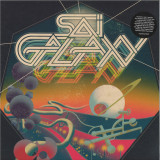
SAI GALAXY - GET IT AS YOU MOVE LP

As the name suggests, Sai Galaxy represents a star-studded
cluster of artists from around the world – their varied styles
colliding to form a refreshing fusion of classic Afrobeat, disco
and West African funk.

Drawing from the influence of 70s and 80s Nigerian artists
such as Nkono Teles, Jake Sollo and Mike Umoh, the Sai
Galaxy collective is on a mission to reproduce the analogue
warmth and groove from those decades. Consequently, they
lean heavily on 70s production techniques - free from the
predictable rigidity of digital sequencing.

Spearheaded by Australian multi-instrumentalist Simon
Durrington (from Digital Afrika), the members include
Olugbade Okunade - former trumpet player from Seun Kuti’s
Egypt 80 - as well as guests Gabriel Otu, Ray Lédon and
Vanessa Baker.

While the EP seeks to reflect 70s production, glimpses of
contemporary elements can be found in the arrangements
and harmonies, at times reminiscent of modern artists such as
Lord Echo, Bosq and Voilaaa.

As Durrington believes: “dance is vital to health and
community”. And with an EP that urges you to dance from
start to finish, consider Sai Galaxy a cosmic tonic for the
modern lifestyle.

out of Stock

Order now and we will order the item for you at our supplier.


Last In: 2 years ago
Frank Bretschneider & Giorgio Li Calzi - Zero

It's time to present in Umor Rex a new collaboration between two great exponents of contemporary music who have been part of the electronic and experimental avant-garde for the last three decades. On the one hand, we have the Berlin-based musician, composer, and video artist Frank Bretschneider, recognized for precise sound placement, complex, interwoven rhythm structures, and his minimal, flowing approach. On the other hand, Giorgio Li Calzi, the Italian trumpeter, composer, producer, and performing director based in Turin, whose work is known for electronic/effects improvisation combined with the trumpet.

The creation process of Zero Mambo started when Giorgio and Frank met in Chamois, the Italian Alps, in 2018. A year later, Bretschneider sent to a few drafts in the form of audio files, loops, and sequences, and Li Calzi used this material quasi as a framework to create new compositions on it. At that time, in the pandemic, with the unprecedented intervention in lives and rituals, the situation led to ideal conditions to reflect and produce music, a snapshot of the weird times. Li Calzi and Bretschneider offer in Zero Mambo a fascinating album between electronic and jazz. It is clear that it is elegant, clean, and minimal, but we have to say, Zero Mambo is also exuberant and cheerful. A fantastic Berlin-Turin music connection.

out of Stock

Order now and we will order the item for you at our supplier.


Last In: 3 years ago
Don Cherry - New Researches LP 2x12"

Note price increase and cat number change from last time around. In the late 1960s, the American trumpet player and free jazz pioneer Don Cherry (1936-1995) and the Swedish visual artist and designer Moki Cherry (1943-2009) began a collaboration that imagined an alternative space for creative music, most succinctly expressed in Moki's aphorism "the stage is home and home is a stage." By 1972, they had given name to a concept that united Don's music, Moki's art, and their family life in rural Tagårp, Sweden into one holistic entity: Organic Music Theatre. Captured here is the historic first Organic Music Theatre performance from the 1972 Festival de jazz de Chateauvallon in the South of France, mastered from tapes recorded during its original live broadcast on public TV. A life-affirming, multicultural patchwork of borrowed tunes suffused with the hallowed aura of Don's extensive global travels, the performance documents the moment he publicly jettisoned his identity as a jazz musician, and represents the start of his communal "mystical" period, later crystallized in recordings such as Organic Music Society, Relativity Suite, Brown Rice, and the soundtrack for Alejandro Jodorowsky's The Holy Mountain. The musicians in Don Cherry's New Researches, hailing from Brazil, Sweden, France, and the US, converged on Chateauvallon from all over Europe. The five-person band Don and Moki Cherry, Christer Bothén, Gérard "Doudou" Gouirand, and Naná Vasconcelos performed in an outdoor amphitheater and were joined onstage by a dozen adults and children, including Swedish friends who tagged along for the trip and Det Lilla Circus (The Little Circus), a Danish puppet troupe based in Christiania, Copenhagen. The platform was lined with Moki's carpets and her handmade, brightly colored tapestries, depicting Indian scales and bearing the words Organic Music Theatre, dressed the stage. As the musicians played, members of Det Lilla, led by Annie Hedvard, danced, sang, and mounted an improvised puppet show on poles high up in the air. The music in the Chateauvallon concert aspired to a universal language that would bring people together through song. In a fairly unprecedented move, Don abandoned his signature pocket trumpet for the piano and harmonium, thereby liberating his voice as an instrument for shamanic guidance. The show opens with him beckoning the audience to clap their hands and sing the Indian theta "Dha Dhin Na, Dha Tin Na," and the set cycles through uplifting and sacred tunes of Malian, South African, Brazilian, and Native American provenance including pieces that would later appear on Don's albums Organic Music Society and Home Boy (Sister Out) all punctuated by outbursts of possessed glossolalia from the puppeteers. "Relativity Suite, Part 1" notably spotlights Bothén on donso ngoni, a Malian hunter's guitar, prior to Vasconcelos taking an extended solo on berimbau. A vortex of wah-like microtonal rattling, Vasconcelos's masterful demonstration of this single-stringed Brazilian instrument is a harbinger of his work to come as a member, with Don, of the acclaimed group Codona. The sounds of children playing on the ensemble's achingly tender rendition of Jim Pepper's oft-covered beacon of spiritual optimism, "Witchi Tai To," lends the proceedings an especially intimate, domestic glow. Given the context of the star-studded international jazz festival, the concert's laid back, communal vibe feels like an attempt by the Cherrys to show Don's jazz audience that he was moving on. At the same time, however, Don was extending a warmhearted invitation for them to come along for the ride. With liner notes by Magnus Nygren. Track list: 1. Intro: Dha Dhin Na, Dha Tin Na 2. Butterfly Friend 3. Elixir 4. Amazwe 5. Interlude with Puppets 6. Ganesh 7. Elixir Reprise / Witchi Tai To 8. Resa 9. Relativity Suite, Part 1 10. Berimbau Solo 11. Interlude / North Brazilian Ceremonial Hymn 12. Elixir Reprise / Ganesh 13. Ntsikana's Bell / Traditional Melody

pre-order now02.09.2022

expected to be published on 02.09.2022

Don Cherry - The Summer House Sessions

Note price increase and cat number change from last time around. In 1968, Don Cherry had already established himself as one of the leading voices of the avant-garde. Having pioneered free jazz as a member of Ornette Coleman's classic quartet, and with a high profile collaboration with John Coltrane under his belt, the globetrotting jazz trumpeter settled in Sweden with his partner Moki and her daughter Neneh. There, he assembled a group of Swedish musicians and led a series of weekly workshops at the ABF, or Workers' Educational Association, from February to April of 1968, with lessons on extended forms of improvisation including breathing, drones, Turkish rhythms, overtones, silence, natural voices, and Indian scales. That summer, saxophonist and recording engineer Göran Freese who later recorded Don's classic Organic Music Society and Eternal Now LPs invited Don, members of his two working bands, and a Turkish drummer to his summer house in Kummelnäs, just outside of Stockholm, for a series of rehearsals and jam sessions that put the prior months' workshops into practice. Long relegated to the status of a mysterious footnote in Don's sessionography, tapes from this session, as well as one professionally mixed tape intended for release, were recently found in the vaults of the Swedish Jazz Archive, and the lost Summer House Sessions are finally available over fifty years after they were recorded. On July 20, the musicians gathered at Freese's summer house included Bernt Rosengren (tenor saxophone, flutes, clarinet), Tommy Koverhult (tenor saxophone, flutes), Leif Wennerström (drums), and Torbjörn Hultcrantz (bass) from Don's Swedish group; Jacques Thollot (drums) and Kent Carter (bass) from his newly formed international band New York Total Music Company; Bülent Ates (hand drum, drums), who was visiting from Turkey; and Don (pocket trumpet, flutes, percussion) himself. Lacking a common language, the players used music as their common means of communication. In this way, these frenetic and freewheeling sessions anticipate Don's turn to more explicitly pan-ethnic expression, preceding his epochal Eternal Rhythm dates by four months. The octet, comprising musicians from America, France, Sweden, and Turkey, was a perfect vehicle for Don's budding pursuit of "collage music," a concept inspired in part by the shortwave radio on which Don listened to sounds from around the world. Using the collage metaphor, Don eliminated solos and the introduction of tunes, transforming a wealth of melodies, sounds, and rhythms into poetic suites of different moods and changing forms. The Summer House Sessions ensemble joyously layers manifold cultural idioms, traversing the airy peaks and serene valleys of Cherry's earthly vision. In the Swedish Jazz Archive quite a few other recordings from the same day were to be found. Some of the highlights are heard as bonus material on the CD edition of this album. The octet is augmented by producer and saxophone player Gunnar Lindqvist, who led the Swedish free jazz orchestra G.L. Unit on the album Orangutang, and drummer Sune Spångberg, who recorded with Albert Ayler in 1962. The bonus CD also includes a track without Cherry featuring Jacques Thollot joined by five Swedes including Lindqvist, Tommy Koverhult, Sune Spångberg, and others. With liner notes by Magnus Nygren and album art featuring a cover painting by Moki Cherry: Untitled, ca. 1967-68. Track list: 1. Summer House Sessions 2. Summer House Sessions.

pre-order now02.09.2022

expected to be published on 02.09.2022

Howard McGhee - Dusty Blue

Howard Mcghee

Dusty Blue

12inchNWLLP4
New Land
30.08.2022

Truly one of the great trumpeters of the bop era, Howard McGhee suffered with drug addiction his whole career which meant his band-leading recorded output was minimal. Although the 1950s had largely been a waste for McGhee, Dusty Blue, recorded in 1960, marked a strong return-to-form and is credited amongst fans as some of his best recordings. Featuring an all-star band of Bennie Green, Pepper Adams, Tommy Flanagan, Roland Alexander as well as the ever-touring Ron Carter, this is a collective of musicians at their very best. Mastered from the original tape transfers by Kevin Gray, this is a sublime recording from start to finish.

Features:

180g Vinyl
Remastered from the Original Analog Tape Transfers by Kevin Gray
Printed & Pressed at Pallas
12" Insert Featuring a Photographic Print
Deluxe Reverse-Board Jacket
Officially Licensed from Bethlehem/BMG

Musicians:
Pepper Adams baritone saxophone
Ronald Carter bass
Walter Bolden drums
Tommy Flanagan piano
Roland Alexander tenor saxophone
Bennie Green trombone
Howard McGhee trumpet

pre-order now30.08.2022

expected to be published on 30.08.2022

CERRERO FEAT. EL "LEON" PARDO - CANCION PARA UN AMIGO LP

Cerrero, Llorona Records founder's solo project, joins young "Gaita flute" and trumpet wizard El "León" Pardo (Ondatrópica) for an acid cumbia infused dub journey to the underground electronic sound of south America. Blend of ritualism and futurism, rough ethereal sound, melancholic voices and analog dub mixing for a unique record that presents the work of the thriving electronic acts from Colombia. Llorona's in-house act, Cerrero, teaming up with another Colombian, gaitero and trompetista, El Leon Pardo. The enigmatic and cult like figure has featured on many-a-Colombian record in recent years, including, Ondatropica and Velandia y La Tigra. Though this might be one of the most exciting match-ups yet. Cerrero's minimalistic electronic beats channeled through an analogue console alongside the abraded howls of gaita and accentuated trumpet work. The deep and bassy four-track EP, Canción Para Un Amigo, was justly named to mark the meeting of these two brilliant minds. Mixed in the extemporaneous ambience of a live recorded session, it makes for a riveting listen. Six standalone tracks, bound through crescendoing loops which culminate in an ethereal and atmospheric ritual of sound which evokes Colombian ancestry. From the spellbinding opening of gaita-led "Canción Para Un Amigo", the EP evolves through "Todo Te Llevaste", a track skillfully stitched between its vocal interludes by the rat-a-tat of accented tambor, a fanfare of trumpets and underpinning bass line. Closing out via "Cumbia en Lejanía"'s, gaita / trumpet led interplay into "Despedida", a pining jazz melody soaked in reverb, it's as complete of a work we've heard yet from Cerrero and represents another glistening gem in the ever increasing bows of the Llorona catalogue. Inescapably mesmeric as it is a true delight.

out of Stock

Order now and we will order the item for you at our supplier.


Last In: 3 years ago
JULIAN Y SU COMBO - ENYERE KUMBARA / INS ROCK

With arrangements and piano by Alfredo Linares, this is a thrilling double-sider sought after by collectors and DJs because of the funky dancefloor cuts 'Enyere Kumbara' (covered by Quantic a few years back) and 'INS-Rock'. Proper Afroantillano party business melting Cuban, Nuyorican and Colombian tropical traditions. First time reissue on 7" vinyl. Julián y su Combo was founded in 1962 by left-handed guitarist Julián Angulo Ponce, who was originally from Guapi, Cauca, Colombia and made his name in Cali and Buenaventura, signing initially with Bogotá's Sello Vergara in 1966. During a 20-year period Julián y su Combo released eight records (with several band name variations). Angulo was part of the first generation of artists from the Colombian Pacific who migrated to Bogotá in the 1970s, and his combo enjoyed popularity in his adopted city as well as in Medellín and Mexico. The band also travelled to Venezuela and the US. Angulo described his sound as Afroantillano, combining Cuban, New York Latin and Puerto Rican elements with Colombia's own tropical traditions. The combo's arrangements were distinguished by the bandleader's funky, jazzy electric guitar work (Angulo played without changing the order of the strings), a hot rhythm section and the potent brass line-up of two saxophones and a trumpet (much like Cortijo y su Combo). At that time Alfredo Linares was musical director at INS and this album -the first one Julián Angulo recorded for the label- bears his influence in the funky 'Mambo Rock' sections (breaks and handclaps galore!) and hot Cuban and Latin jazz piano styles that also graced his own records.

out of Stock

Order now and we will order the item for you at our supplier.


Last In: 3 years ago
KARAMANDUKA Y MELCOCHITA - ACABO CON LIMA HUYO PA NUEVA YORK LP

This mega-rare 1969 album pays tribute to the Bronx and Brooklyn neighborhoods where young Latinos had invented the boogaloo a few years earlier. This record highlights the quality of Peruvian boogaloo and the talent of musicians such as pianist Otto de Rojas and percussionist Coco Lagos. First time reissue. In the mid-sixties, when young Latino musicians in New York fused Afro-Cuban rhythms with rock, soul and jazz, they had no idea that their boogaloo bang bang would reverberate just as strong and loud in a distant South American country. From 1955, La Sonora Macedo, took Cuban music to every corner of Peru, backed the leading musicians of the Peruvian tropical universe, such as Ñiko Estrada, Joe di Roma, the double bass player Pepe Hernández, and the trumpet players Tito Chicoma and Charlie Palomares. All diehard fans of Cuban music, always alert to any new artist arriving from the island. In the early sixties, light rock, doo-wop, ballads, Italian songs and bossa nova paraded across Lima's stages, making performances by Cuban bands, previously so frequent, a thing of the past. Moreover, the unanimous success of the Beatles from 1964 onwards, gave the impression that music from the English-speaking world would dominate the rest of the decade. But this was not the case. In large part because of Manuel Guerrero's good relations with U.S Latino labels, such as Alegre Records, which released the initial recordings by Johnny Pacheco and Charlie Palmieri, allowing listeners in Lima to follow the development of the salsa movement almost from the beginning. MAG was undoubtedly the best representative of these new sounds. In 1969, the LP "Acabo con Lima, huyo pa' Nueva York" was released on this label, a project which brought together three figures from Lima's show business world: Manuel Antonio Guerrero, owner and founder of MAG, who wasn't shy of joining in on the chorus and percussion during recordings, Pablo Villanueva "Melcochita", a multifaceted artist from a talented musical family from the popular district of La Victoria, was responsible for the vocals and percussion on the album. And the third Lima show business figure in this project was the musician, singer and comedian Alberto Montroy Laostervened, who gained fame in the sixties while still in his twenties for his imitation of Cantinflas, the Mexican actor. Alberto bore a devilish resemblance to Cantinflas, not only in his gestures but also physically. Under the name of Pepe Moreno "Karamanduka" he also went on to record songs abroad such as "El boogaloo de Cantinflitas". "Acabo con Lima, huyo pa' Nueva York" was immediately re-released in other countries, highlighting the quality of Peruvian boogaloo and talent of musicians such as pianist Otto de Rojas and percussionist Coco Lagos, who feature prominently on the album. Songs such as 'Vuela mi descarga', 'Peruvian boogaloo' and 'Peruvian guajira', pay tribute to the Bronx and Brooklyn, neighborhoods where young Latinos had invented the boogaloo a few years earlier.

out of Stock

Order now and we will order the item for you at our supplier.


Last In: 3 years ago
Ezra Collective - You Can't Steal My Joy 2x12"

REPRESS of Ezra Collective’s debut album, You Can’t Steal My Joy, via Enter The Jungle. The five piece includes Joe Armon-Jones on keys, Femi Koleoso on drums, TJ Koleoso on bass, Dylan Jones on trumpet, and James Mollison on saxophone. You Can’t Steal My Joy’s 13 tracks feature guest appearances from KOKOROKO, Loyle Career, and Jorja Smith

out of Stock

Order now and we will order the item for you at our supplier.


Last In: 20 months ago
Charles Mingus - Presents Charles Mingus

Charles Mingus has a fascinating way of offering music that is grounded in tradition while remaining startlingly original. The freshness of a piece like Charles Mingus Presents Charles Mingus, has the effect of rendering much of what passes for jazz as tedious. The band is small for Mingus, and includes Eric Dolphy on alto saxophone and bass clarinet, Ted Curson on trumpet, and Dannie Richmond on drums. It would be one of Dolphy and Curson's last recording dates with the artist, and they seem determined to go all out for it.


The leader's bass line kicks off "Folk Forms No. 1," followed by Dolphy outlining the melody, and then joined by Curson.
A simple riff develops into a lively New Orleans funeral march that's developed for 12 minutes. "Original Faubus Fables" is serious intent a political attack on segregation governor Faubus but Mingus and Richmond's singing is difficult to listen to with a straight face. Still, this doesn't distract from the wonderful music.

pre-order now24.08.2022

expected to be published on 24.08.2022

THEO CROKER - ESCAPE VELOCITY

Theo Croker

ESCAPE VELOCITY

12inchMOVLP1763T
Music On Vinyl
19.08.2022

• 180 GRAM AUDIOPHILE VINYL
• INCLUDES INSERT WITH LINERNOTES
• FEATURING DEE DEE BRIDGEWATER ON “LOVE FROM THE SUN”
• LIMITED EDITION OF 500 NUMBERED COPIES ON CRYSTAL CLEAR VINYL

Theodore Lee Croker is an American jazz trumpeter, composer, producer and vocalist. He is a Grammy Award nominee, three-time Echo Award nominee, as well as a Theodore Presser Award recipient.

As the grandson of trumpeter Doc Cheatham, Theo Croker has jazz music in his DNA. Escape Velocity is his fourth studio album, originally released in 2016. He was discovered by singer Dee Dee Bridgewater, who became his mentor and can also be heard on this album (“Love from the Sun”). Croker thinks big and plays big, along with his equally talented band. His songs are full of interesting twists and turns but remains very cohesive, ensuring that this album never gets boring.

Escape Velocity is available as a limited edition of 500 individually numbered copies on crystal clear vinyl and includes an insert with liner notes.

pre-order now19.08.2022

expected to be published on 19.08.2022

THEO CROKER - BLK2LIFE A FUTURE PAST 2x12"

180 GRAM AUDIOPHILE VINYL
• GATEFOLD SLEEVE
• INCLUDING INSERT WITH LINER NOTES
• HIGH RESOLUTION AUDIO MASTER, CUT ON 45 RPM
• GRAMMY AWARD NOMINEE, THREE-TIME ECHO AWARD
NOMINEE, THEODORE PRESSER AWARD RECIPIENT JAZZ MUSICIAN THEO CROKER
• FEATURING ARI LENNOX, GARY BARTZ, CHARLOTTE
DOS SANTOS, MALAYA, IMAN OMARI, KASSA OVERALL &
WYCLEF JEAN
• LIMITED EDITION OF 750 INDIVIDUALLY NUMBERED
COPIES ON TURQUOISE COLOURED VINYL

Every trip needs a guide. Through the trumpet, the Grammy Award-nominated artist, producer, composer, tought leader, influencer and tastemaker Theo Croker narrates a human story rooted in intimate experience, yet cognizant of cosmic consciousness. This journey unfolds in technicolor on his sixth full-length offering, BLK2LIFE || A FUTURE PAST.

“BLK2LIFE || A FUTURE PAST is meant to be a deeply impactful, personal experience for the listener. One that you can also dance to - it is Black music after all,” Croker says.

BLK2LIFE || A FUTURE PAST consists of 13 tracks and is inspired by the forgotten hero’s journey towards self-actualization within the universal origins of blackness. It’s a sonic celebration of Afro-origin, and ultimately a reclamation of the culture, for the culture. Joining Croker on the album are Ari Lennox, Charlotte Dos Santos, Gary Bartz, Iman Omari, Kassa Overall, Malaya, and Wyclef Jean.

BLK2LIFE || A FUTURE PAST is cut on 45 RPM with a high resolution audio master. The album is available as a limited edition of 750 individually numbered copies on turquoise coloured vinyl, housed in a gatefold sleeve.

pre-order now19.08.2022

expected to be published on 19.08.2022

Gary Bartz & Maisha - Night Dreamer Direct​-​To​-​Disc Sessions

The third release from Night Dreamer’s essential “Direct-to-Disc” sessions sees an incredible meeting between legendary US saxophonist Gary Bartz and leading UK spiritual jazz ensemble, Maisha, featuring two Bartz classics and three brand new joint songs written by both Bartz & Maisha in close collaboration.

Having cut his teeth playing with the likes of Charles Mingus, Max Roach, Art Blakey and finally in 1970, Miles Davis at the peak of his electric period, Gary Bartz became a leading figure of the early-to-mid 70s spiritual jazz movement, releasing a string of ground-breaking albums on legendary NYC jazz label Prestige Records with his NTU Troop, featuring classics such as “Celestial Blues”, “Uhuru Dance” and “I’ve Known Rivers”, before collaborating on Blue Note Records with the Mizell Brothers on the anthemic jazz funk of “Music Is My Sanctuary”. An oeuvre much loved by soul jazzers and hip hop fans alike.

Led by drummer Jake Long, Maisha have been central to the UK’s jazz explosion, and have fast become the UK’s most exciting and in-demand young spiritual jazz ensemble, from steller shows at Jazz re:freshed, Total Refreshment Centre & Church of Sound and supporting the Sun Ra Arkestra, to releasing their critically acclaimed debut LP, ​“There Is A Place” ​on Gilles Peterson’s Brownswood Recordings in 2018. Theirs is an organic & explosive sound that blends influences from afrobeat and broken beat to Persian music, with a deep love and understanding of jazz, particularly the heritage of spiritual jazz led by titans such as Pharoah Sanders, Alice Coltrane and of course, Gary Bartz.

Which makes this collaboration even more special. Bartz was first invited to share a stage with Maisha by Gilles Peterson to headline the inaugural We Out Here festival. Their chemistry was rich and instantaneous, certainly a two-way street, with the young musicians reinvigorating the legend’s performance and wowing the intergenerational festival audience. A European tour followed, including a London Jazz Festival highlight at the Royal Festival Hall, celebrating the 50th anniversary of his album “Another Earth”, originally featuring fellow legends, Pharoah Sanders, Charles Tolliver, Stanley Cowell, and John Coltrane’s own bassist, Reggie Workman.


Now the relationship has evolved into a special straight-to-disc recording for Night Dreamer Records, that captures the vitality of their collaboration. Whilst Bartz and Maisha reinvent classic Bartz compositions “Uhuru Sasa” and “Dr Follows Dance”, extending the pieces into long piece improvised grooves, their recording session gave birth to three brand new joint compositions, written the very same day. These include the propulsive “Leta’s Dance” that magically combines the Bartz’ soulful musical lyricism with Maisha’s African-jazz influences, and the organic jazz

funk of “Harlem to Haarlem”, featuring a hot solo from guest trumpeter Axel Kaner-Lidstrom of Cykada & Levitation Orchestra fame.

Like previous Night Dreamer efforts from afrobeat star Seun Kuti & Egypt 80, and the beautiful collaboration between Brazilian stars Seu Jorge & Rogê, the album was recorded in Haarlem’s Artone Studio, a stones throw from Amsterdam, in just one-take, straight-to-disc, avoiding post-production embellishments and retaining the purity of the performance lost in modern recording techniques.

This record really is an event, in and of itself, a meeting of talents, minds, generations and zeitgeist moments, captured in a unique and pure manner. The music does not disappoint, as Maisha have been inspired to reach new heights whilst we find Bartz truly reinvigorated, and both artists in tune to the spirit of the other.

Recorded direct-to-disc @ Artone Studio, Haarlem, The Netherlands on Tuesday 29th Wednesday 30th October 2019

pre-order now19.08.2022

expected to be published on 19.08.2022

Arve Henriksen & Kjetil Husebø - Sequential Stream

Properly transcendent deep-dream jazz fantasy from prolific trumpet virtuoso Arve Henriksen (Supersilent) and Norwegian pianist Kjetil Husebø, together shaping an album that’s much, much more than the not so inconsiderable sum of its parts. Like a fever-dream comedown, it takes us from insanely rich sounding 4th world topographies to fizzing, electric ambience and fluttering prepared piano, perfectly soundtracking the humid un-reality we’re living through. read on / listen

pre-order now19.08.2022

expected to be published on 19.08.2022

Nucleus - Alleycat LP

Nucleus

Alleycat LP

12inchBEWITH105LP
Be With Records
17.08.2022

Come for the leopard, stay for the stone cold jams. Yet another thrilling, funky-prog jazzy-rock fusion beauty from Ian Carr’s Nucleus. Originally released on Vertigo in 1975, Alleycat was never re-pressed so those original copies are now very tricky to score. Like all the Nucleus records, it’s aged ridiculously well and this Be With re-issue, re-mastered from the original analogue tapes, shows off just why this deserves to be back in press.

Genius trumpeter and visionary composer Ian Carr was one of the most respected British musicians of his era. He was a true pioneer and saw the potential in fusing the worlds of jazz with rock, just as Miles Davis and The Tony Williams Lifetime did in the US. In late 1969, following the demise of the Rendell-Carr quintet, and tiring of British jazz, Carr assembled the legendary Nucleus. Regarding music as a continuous process, Nucleus refused to “recognise rigid boundaries” and worked on delivering what they saw as a “total musical experience”. We can get behind that.

Under bandleader Carr, Nucleus existed as a fluid line-up of inventive, skilled musicians. This constant evolution and revolution was all part of the continuous musical exploration and discovery that took jazz to new levels. And the music has stayed relevant. To steal a line from a recent review of our re-issue of Roots, when it comes to anything Nucleus “it’s basically already hip-hop”.

Alleycat was the last Nucleus album recorded for the Vertigo label. Released in 1975, it was again meticulously produced by Jon Hiseman and is every bit as sinuous as anything else the group had recorded. As far as riff-laden accidental cop-funk goes, there’s so much energy coursing through the music that at times it sounds like a live recording. It’s pretty unbeatable.

Uptempo opener “Phaideaux Corner” is a funk-flavoured opus with a groove that simply swaggers. This trademark Roger Sutton piece benefits from Trevor Tomkins’s percussive expertise and some excellent sax and keyboard soloing. Check out Geoff Castle on squelchy, stabbing Moog duties. Ian Carr’s elegantly laidback title track is a lengthy suite of magisterial themes. Typically complex, it still gets you hooked and is just riddled with the funk. Carr builds up his initially “straight” trumpet solo with later use of echo to mesmeric effect. And there’s some excellent wah-wah guitar shredding by Ken Shaw too. Nice.

The second side opens with the killer “Splat” and finds Nucleus really ripping it up. A fat, funky bass guitar riff introduces us to the track and stays with us until the end. The often mangled bass groove is pushed along by rattling drums and percussion, dropping out for some restful moments of spacey calm, and along the way picking up some lengthy keyboard noodling by Castle. So so good.

The cool “You Can’t Be Sure” is a gentle jam with Shaw on 12-string acoustic guitar, together with Carr’s muted trumpet and some marvellous fretless work from Sutton for extra colour. The album closes with Bob Bertles’ galloping “Nosegay”, written perhaps as a response to some of the faster Mahavishnu Orchestra pieces. It’s an example of well crafted jazz-rock that doesn’t compromise any of its jazziness, yet it still very definitely rocks.

This Be With re-issue of Alleycat has been re-mastered from the original Vertigo master tapes, Simon Francis’ mastering working together with Pete Norman’s cut to weave their usual magic with these wonderful recordings. The cool AF cover - that leopard was just a cat before he heard Nucleus, you know - has been restored as the finishing touch to this long overdue re-issue.

out of Stock

Order now and we will order the item for you at our supplier.


Last In: 3 years ago
FAUST - THE FAUST TAPES LP

Faust

THE FAUST TAPES LP

12inchBB3911
Bureau B
12.08.2022

There's something perversely fabulous about the thought of this warped masterwork wandering into 60,000 unsuspecting British homes in 1973. Faust's second-and-a-half album hit the shops to celebrate their signing to the nascent Virgin Records, who were looking to take advantage of the zeitgeist for German music at that time. Undeterred by the fact the band's unwillingness to engage with the commercial landscape had seen them dropped from Polydor, Branson and co cooked up a suitably spectacular marketing strategy, selling the LP for 49p, the bargain price of a single. Shoppers flocked in their thousands to grab a copy, raced home and then spent the next forty five minutes checking their tracking, banging the speakers and blowing the needle, all to no avail. Do not adjust your set - This is Faust.

pre-order now12.08.2022

expected to be published on 12.08.2022

Items per Page:
N/ABPM
Vinyl