Search:tracy k

Styles
All
Manudigital - Step Up LP

With 2 solo albums («Digital Pixel » in 2016 and « Bass Attack » in 2018 ), a dozen of EPs and more than 800 shows performed all over the globe, the most international French beatmaker in the world of Reggae is back on November 2023 with his brand new album « Step Up », in which he pushes further the fusion between Reggae and Bass Music. With « Step Up » Manudigital made his music evolves toward more electronic and hybrid productions. He navigates between musical genres like no one does, inviting guests from all over the world. Armed with his bass, MPC and synthesiser, Manudigital surrounded himself with no less than 17 hand-picked artists to make his productions their own. « (…) I was already working on my upcoming album and I thought I would keep this small Reggae loop to take it to another style, fully electronic which has given my new album’s DNA » - Manudigital about the track « Step Up » The album opens with the eponymous explosive track « Step Up » featuring veteran Jamaican deejay Joseph Cotton and British Drum & Bass MC Bellyman, author of the successful YouTube video series « Carz Barz ». Among the artists of the British underground musical scene, Reggae/Soul genius Liam Bailey has been invited on the Pop-infused Digital Reggae track « Enough » which will delight the lovers of soulful Reggae. Manudigital also reminds us Reggae has always be his first love and, after having produced Alborosie and Protoje’s hit « Strolling » a few years ago, he proposed the Sicilian MC to collaborate with Jamaican artist Yami Bolo on the track « Reggae Music and Love ». A big tune built upon a classic digital riddim in the Jamaican way, a catchy chorus carried by the high voice of Yami Bolo and the legendary flow of Alborosie of the verses. Cult band Asian Dub Foundation’s singer Ghetto Priest takes also part of the project with « Rasta Corner », MC Caporal Negus joins Manudigital on « Dub and Bass » and on tour, and Jolly Joseph sings on « The world is Hell » for the Reggae Dub tracks of the album. In terms of surprises, Manudigital takes pleasure in inviting benchmark artists in each musical genres, walking through Lo Fi Hip-Hop’s path with the Dancehall President aka Skarra Mucci on « Fi Di Youths », Baile Funk with Punjabi-American rapper Alo Wala and their song « Love on Tap » or even Afrobeat with Dynamq for the last song « Piki Piki ». Finally, whereas Manudigital will soon celebrate his career 10th anniversary and as his name resonates in sound systems from all over the world, we appreciate each risk taken and each nod to Reggae Culture, wondering what his next shape will be. First parts of response on November 17, 2023 with the release of

pre-order now17.11.2023

expected to be published on 17.11.2023


Last In: 2026 years ago
DJ Autopay - Bumpers EP

Dj Autopay

Bumpers EP

12inchT4T012
T4T LUV NRG
09.10.2023

“Bumpers” is the latest EP on T4T LUV NRG by DJ Autopay, the alias of musician and DJ Russell E.L. Butler. All of these tunes were written with DJs and blending in mind—like bumper cars, they are fun yet emotionally charged and built for unexpected collisions of sound. “More Femme, More Masc” is a queer non-binary anthem with heavy Baltimore-influenced vibes, written by Russell during the pandemic in a time of peak vulnerability, their voice cracking throughout. The track is an interpretation of “Fast Car” by Tracy Chapman and “Sometimes I Rhyme Slow” by Nice & Smooth but sounds like nothing we have heard before. Tropes 1, 2 & 3 are all house instrumentals in the spirit of the golden age of American house music yet interpreted through Russell’s unique lens. These cuts would have been as at home on Guidance records years ago as they are today on T4T LUV NRG, evoking the swinging dance beats and heady vibes of producers like Callisto and the early Large records by Kerri Chandler and DJ Rasoul. Russell has created something truly special for the contemporary dance floor with this timeless EP.

out of Stock

Order now and we will order the item for you at our supplier.


Last In: 2 years ago
Deafheaven - Infinite Granite LP 2x12"

Very limited stock available on these. Picture Disc Vinyl Packaging: 2xLP zoetrope (animated) picture discs, 24x36 foldout poster in custom silkscreen PVC gatefold sleeve + download card. On their fifth album, Infinite Granite, Deafheaven are no longer toying with the juxtaposition of pitting metallic abrasion against swirling grandeur. Quite the opposite: Infinite Granite is a bold and brave leap forward, a gorgeous and invigorating album brimming with style and splendor. In the context of their catalog, it takes on a whole other layer of defiant beauty. Across Infinite Granite, vocalist George Clarke showcases a startling vocal range; falsettos, whispers, multi-part harmonies, and other adventurous vocal treatments, with his trademark black metal-inspired howls mostly absent. Guitarists Kerry McCoy and Shiv Mehra expand their sonic palette to include synth textures using them to enrich their astral guitar work rather than outright replace it. Drummer Daniel Tracy has always been a force to reckon with behind the kit, but where he used to floor audiences with his speed and stamina, he’s now free to broaden his approach and lay down authoritative drum patterns that together with bassist Christopher Johnson’s punchy bass lines anchor the band’s lofty arrangements. The refinement of their sound was further encouraged by producer Justin Meldal-Johnsen, who lent a pop ear to the record. Jack Shirley, who helped produce every previous Deafheaven album, remained on board to engineer the album along with additional engineering and mixing from nine-time Grammy Award winner Darrell Thorp. Ultimately, Infinite Granite is Deafheaven’s most goosebump-inducing album to date. Highlights: Follow up to 2018’s grammy nominated album Ordinary Corrupt Human Love and first full-length release with Sargent House. Deafheaven named ‘Artist of the Decade’ by Vice, along with albums featured in ‘Best of 2010s’ lists on Pitchfork, Rolling Stone, Metacritic, AV Club and many more. Three previous albums Sunbather, New Bermuda and Ordinary Corrupt Human Love have received incredible praise from press and named ‘Best New Music’ by Pitchfork. Deafheaven have scanned over 160k albums and streamed over 30 million tracks in the US alone.

pre-order now06.10.2023

expected to be published on 06.10.2023


Last In: 2026 years ago
The New Lost City Ramblers with Cousin Emmy - The New Lost City Ramblers with Cousin Emmy LP

Here John Cohen, Mike Seeger, and Tracy Schwartz provide backing for Cousin Emmy, the skilled banjo player, fiddler, and singer, whose legacy as a country music pioneer is cemented in the memories of those who heard her animated performances onstage and on the radio. This album contains some of her only recorded material, including several of her own compositions along with selections of old-time and bluegrass repertoire.

pre-order now08.09.2023

expected to be published on 08.09.2023


Last In: 2026 years ago
Tiwayo - Desert Dream LP

Nach einem ersten Album, das auf dem legendären Label Blue Note veröffentlicht wurde, meldet sich Tiwayo 2023 mit einem hochkarätigen Folk/Soul-Album zurück! Der französische Singer-Songwriter Tiwayo ist eine eher geheimnisvolle Figur. Über seinen Hintergrund ist nur wenig bekannt, außer dass er Einflüsse aus der Musik der 60er und 70er Jahre aufgenommen hat, insbesondere Blues, Soul, Gospel und Reggae. Wie erfindet man was als Nächstes kommt, wenn das erste Album bei Blue Note erschienen ist und von Mark Neill produziert wurde, der für seine Arbeit an den Platten von The Black Keys bekannt ist? Das ist wahrscheinlich die Frage, die sich Tiwayo, ein dreißigjähriger Pariser Fan schwarzer amerikanischer Musik, gestellt hat. Die Antwort: 'Desert Dream', ein Album, das weniger produziert, weniger Gospel-Blues ist, aber zerbrechlicher, raffinierter. Ein zeitloses und essentielles Album, wie es von Zeit zu Zeit erscheint, trotz aller Moden, die den gegenwärtigen Moment bestimmen, von Tracy Chapman bis Sufjan Stevens, über Wilco, Bon Iver, Ben Harper... Man hört das Echo der Stille der großen, trockenen amerikanischen Weiten. Diese Seele Amerikas, die in den endlosen, staubigen und einsamen Straßen steckt, die geradewegs auf die Hoffnung auf ein ruhigeres Morgen zulaufen. Tiwayo folgt dieser Straße als Multiinstrumentalist und einsamer Cowboy und dokumentiert seine Reise mit seiner verschleierten Stimme in zehn Liedern, denen man sich einfach nicht entziehen kann.

pre-order now01.09.2023

expected to be published on 01.09.2023


Last In: 2026 years ago
Patrick Cowley - Malebox LP

Dark Entries has a surprise delivery! Malebox brings us six previously unreleased funk-fueled jams from the archives of the cybernetic disco titan himself, Patrick Cowley. Best known for his chart-topping disco anthems, Cowley left us with an incredible body of work before his tragic death in 1982 due to AIDS-related illness. Since 2009, Dark Entries has been working with Cowley’s friends and family to uncover the singular artist’s lesser-known sides, including his soundtracks for gay pornographic films on compilation albums School Daze, Muscle Up, and Afternooners.

But Malebox gives us more of the Cowley we know and love: churning disco-funk and hi-NRG tracks that are spacey and sleazy, gritty and sublime. Recorded from 1979-1981, these six tracks illuminate what was one of Patrick’s most creatively exciting periods. “If You Feel It” and “Love Me Hot” were both early Paul Parker demos; the former is a peak hour hi-NRG bomb, while the latter dips into Cowley’s zoned-out space disco sound. Jeanie Tracy’s soulful vocals feature on the demo version of “Low Down Dirty Rhythm”, which was later re-recorded by Sarah Dash. The slower, less-varnished rendition here hits with a wild psychedelic edge. Meanwhile, Patrick’s gifts for careful orchestration and infectious melodies shine on “Floating” and “Love and Passion”, which were likely demo tracks for Loverde. The songs on Malebox display the vitality and inventiveness of a brilliant composer taken from us too soon.

Malebox sleeve design was by Gwenaël Rattke, and features a hyper-color retro collage. Also included is an air mail envelope containing a letter from Patrick Cowley to French disco producer Pierre Jaubert as well as liner notes and hand-written lyrics. Malebox will be released on November 12th , which is the 40th anniversary of Patrick’s passing.

out of Stock

Order now and we will order the item for you at our supplier.


Last In: 4 months ago
LOUISE FREEMAN - AA EE OO UU / MIRAGE

Disco Segreta is happy to introduce you the official reissue of one of the most sought after italo disco records ever!

Born in London, Karen Louise Freeman experienced vast popularity in Italy in 1982-83, where she appeared on Sunday’s most popular TV program of the era, Domenica In, where she sang the show opening and end tracks: “Wow Mamma Mia” and “Play the music”.

But only the hardest italo diggers know that Louise made another single, “Aa Ee Oo Uu” b/w “Mirage”, which was released in 1983 with close to no success. Over the years, both “Aa Ee Oo Uu” and “Mirage” turned into absolute staples of a typical 1983 italo disco sound: dry, crispy drums, cold ice sweeping synths and melancholic vocals. Vastly overlooked at the time, this record slipped into oblivion, contributing to make the original 12” with extended longer versions to be highly sought after and expensive on the collectors market.

Oddly enough, Karen’s sister is singer Tracy Spencer, who would score a massive hit in Italy during the later years of the italo disco movement, with more pop oriented italo productions by Claudio Cecchetto such as “Run To Me”, which was the second best selling single in Italy in 1986.

As far as we know, Karen left the music industry and now runs a successful fitness and health business.

out of Stock

Order now and we will order the item for you at our supplier.


Last In: 2 years ago
AMG - Bitch Betta Have My Money LP 2x12"

AMG (whom The Source called “more foul mouthed than a late 70s Richard Pryor concert film”), was a part of Courtney Branch and Tracy Kendrick's Total Trak Production crew which developed DJ Quik, 2nd II None, Sylk Smoov, Hi-C and Boss. He made his first appearances on DJ Quik's debut album Quik is The Name. In December of 1991, AMG released his self-produced debut solo album Bitch Betta Have My Money with the platinum selling lead single of the same name. This reissue has this West Coast 90s classic on vinyl for the first time since its initial release and includes “I Wanna Be Yo Ho (Remix)” previously available only as a CD bonus track.

pre-order now05.05.2023

expected to be published on 05.05.2023


Last In: 2026 years ago
Lucid Express - Floret

Lucid Express

Floret

12inchKR305LPC1
Kanine Records
24.03.2023

Previously only available as a digital release, Lucid Express’ Floret, has been remastered and expanded to include remixes from a host of
international, acclaimed shoegaze and dream pop artists. For the first
time on vinyl, the limited (500) edition orange vinyl will be released March

3, 2023 (Kanine Records).

Lucid Express is five young dreamers who create a stunning airy blend of shoegaze and indie pop amongst the skyscrapers, mountains, and packed alleyways of Hong Kong. The name itself a modest mission statement of the band’s intent: lucid in the poetic sense of something

pre-order now24.03.2023

expected to be published on 24.03.2023


Last In: 2026 years ago
Mogwai - Mogwai Young Team 2x12"

The groundbreaking Mogwai Young Team, originally released in October 1997, has been remastered by original recording engineer Paul Savage. Housed in a gatefold sleeve with original artwork, the 2LP sky-blue vinyl will come with a download code.

out of Stock

Order now and we will order the item for you at our supplier.


Last In: 3 years ago
Lee Tracy & Isaac Manning - Is it What You Want

As the sun sets on a quaint East Nashville house, a young man bares a piece of his soul. Facing the camera, sporting a silky suit jacket/shirt/slacks/fingerless gloves ensemble that announces "singer" before he's even opened his mouth, Lee Tracy Johnson settles onto his stage, the front yard. He sways to the dirge-like drum machine pulse of a synth-soaked slow jam, extends his arms as if gaining his balance, and croons in affecting, fragile earnest, "I need your love… oh baby…"

Dogs in the yard next door begin barking. A mysterious cardboard robot figure, beamed in from galaxies unknown and affixed to a tree, is less vocal. Lee doesn't acknowledge either's presence. He's busy feeling it, arms and hands gesticulating. His voice rises in falsetto over the now-quiet dogs, over the ambient noise from the street that seeps into the handheld camcorder's microphone, over the recording of his own voice played back from a boombox off-camera. After six minutes the single, continuous shot ends. In this intimate creative universe there are no re-takes. There are many more music videos to shoot, and as Lee later puts it, "The first time you do it is actually the best. Because you can never get that again. You expressing yourself from within."

"I Need Your Love" dates from a lost heyday. From some time in the '80s or early '90s, when Lee Tracy (as he was known in performance) and his music partner/producer/manager Isaac Manning committed hours upon hours of their sonic and visual ideas to tape. Embracing drum machines and synthesizers – electronics that made their personal futurism palpable – they recorded exclusively at home, live in a room into a simple cassette deck. Soul, funk, electro and new wave informed their songs, yet Lee and Isaac eschewed the confinement of conventional categories and genres, preferring to let experimentation guide them.

"Anytime somebody put out a new record they had the same instruments or the same sound," explains Isaac. "So I basically wanted to find something that's really gonna stand out away from all of the rest of 'em." Their ethos meant that every idea they came up with was at least worth trying: echoed out half-rapped exhortations over frantic techno-style beats, gospel synth soul, modal electro-funk, oddball pop reinterpretations, emo AOR balladry, nods to Prince and the Fat Boys, or arrangements that might collapse mid-song into a mess of arcade game-ish blips before rallying to reach the finish line. All of it conjoined by consistent tape hiss, and most vitally, Lee's chameleonic voice, which managed to wildly shape shift and still evoke something sincere – whether toggling between falsetto and tenor exalting Jesus's return, or punctuating a melismatic romantic adlib with a succinct, "We all know how it feels to be alone."

"People think we went to a studio," says Isaac derisively. "We never went to no studio. We didn't have the money to go to no studio! We did this stuff at home. I shot videos in my front yard with whatever we could to get things together." Sometimes Isaac would just put on an instrumental record, be it "Planet Rock" or "Don't Cry For Me Argentina" (from Evita), press "record," and let Lee improvise over it, yielding peculiar love songs, would-be patriotic anthems, or Elvis Presley or Marilyn Monroe tributes. Technical limitations and a lack of professional polish never dissuaded them. They believed they were onto something.

"That struggle," Isaac says, "made that sound sound good to me."

In the parlance of modern music criticism Lee and Isaac's dizzying DIY efforts would inevitably be described as "outsider." But "outsider" carries the burden of untold additional layers of meaning if you're Black and from the South, creating on a budget, and trying to get someone, anyone within the country music capital of the world to take your vision seriously. "What category should we put it in?" Isaac asks rhetorically. "I don't know. All I know is feeling. I ain't gonna name it nothing. It's music. If it grabs your soul and touch your heart that's what it basically is supposed to do."

=

Born in 1963, the baby boy of nine siblings, Lee Tracy spent his earliest years living amidst the shotgun houses on Nashville's south side. "We was poor, man!" he says, recalling the outhouse his family used for a bathroom and the blocks of ice they kept in the kitchen to chill perishables. "But I actually don't think I really realized I was in poverty until I got grown and started thinking about it." Lee's mom worked at the Holiday Inn; his dad did whatever he had to do, from selling fruit from a horse drawn cart to bootlegging. "We didn't have much," Lee continues, "but my mother and my father got us the things we needed, the clothes on our back." By the end of the decade with the city's urban renewal programs razing entire neighborhoods to accommodate construction of the Interstate, the family moved to Edgehill Projects. Lee remembers music and art as a constant source of inspiration for he and his brothers and sisters – especially after seeing the Jackson 5 perform on Ed Sullivan. "As a small child I just knew that was what I wanted to do."

His older brother Don began musically mentoring him, introducing Lee to a variety of instruments and sounds. "He would never play one particular type of music, like R&B," says Lee. "I was surrounded by jazz, hard rock and roll, easy listening, gospel, reggae, country music; I mean I was a sponge absorbing all of that." Lee taught himself to play drums by beating on cardboard boxes, gaining a rep around the way for his timekeeping, and his singing voice. Emulating his favorites, Earth Wind & Fire and Cameo, he formed groups with other kids with era-evocative band names like Concept and TNT Connection, and emerged as the leader of disciplined rehearsals. "I made them practice," says Lee. "We practiced and practiced and practiced. Because I wanted that perfection." By high school the most accomplished of these bands would take top prize in a prominent local talent show. It was a big moment for Lee, and he felt ready to take things to the next level. But his band-mates had other ideas.

"I don't know what happened," he says, still miffed at the memory. "It must have blew they mind after we won and people started showing notice, because it's like everybody quit! I was like, where the hell did everybody go?" Lee had always made a point of interrogating prospective musicians about their intentions before joining his groups: were they really serious or just looking for a way to pick up girls? Now he understood even more the importance of finding a collaborator just as committed to the music as he was.

=

Isaac Manning had spent much of his life immersed in music and the arts – singing in the church choir with his family on Nashville's north side, writing, painting, dancing, and working various gigs within the entertainment industry. After serving in the armed forces, in the early '70s he ran The Teenage Place, a music and performance venue that catered to the local youth. But he was forced out of town when word of one of his recreational routines created a stir beyond the safe haven of his bohemian circles.

"I was growing marijuana," Isaac explains. "It wasn't no business, I was smoking it myself… I would put marijuana in scrambled eggs, cornbread and stuff." His weed use originated as a form of self-medication to combat severe tooth pain. But when he began sharing it with some of the other young people he hung out with, some of who just so happened to be the kids of Nashville politicians, the cops came calling. "When I got busted," he remembers, "they were talking about how they were gonna get rid of me because they didn't want me saying nothing about they children because of the politics and stuff. So I got my family, took two raggedy cars, and left Nashville and went to Vegas."

Out in the desert, Isaac happened to meet Chubby Checker of "The Twist" fame while the singer was gigging at The Flamingo. Impressed by Isaac's zeal, Checker invited him to go on the road with him as his tour manager/roadie/valet. The experience gave Isaac a window into a part of the entertainment world he'd never encountered – a glimpse of what a true pop act's audience looked like. "Chubby Checker, none of his shows were played for Black folks," he remembers. "All his gigs were done at high-class white people areas." Returning home after a few years with Chubby, Isaac was properly motivated to make it in Music City. He began writing songs and scouting around Nashville for local talent anywhere he could find it with an expressed goal: "Find someone who can deliver your songs the way you want 'em delivered and make people feel what you want them to feel."

One day while walking through Edgehill Projects Isaac heard someone playing the drums in a way that made him stop and take notice. "The music was so tight, just the drums made me feel like, oh I'm-a find this person," he recalls. "So I circled through the projects until I found who it was.

"That's how I met him – Lee Tracy. When I found him and he started singing and stuff, I said, ohhh, this is somebody different."

=

Theirs was a true complementary partnership: young Lee possessed the raw talent, the older Isaac the belief. "He's really the only one besides my brother and my family that really seen the potential in me," says Lee. "He made me see that I could do it."

Isaac long being a night owl, his house also made for a fertile collaborative environment – a space where there always seemed to be a new piece of his visual art on display: paintings, illustrations, and dolls and figures (including an enigmatic cardboard robot). Lee and Issac would hang out together and talk, listen to music, conjure ideas, and smoke the herb Isaac had resumed growing in his yard. "It got to where I could trust him, he could trust me," Isaac says of their bond. They also worked together for hours on drawings, spreading larges rolls of paper on the walls and sketching faces with abstract patterns and imagery: alien-like beings, tri-horned horse heads, inverted Janus-like characters where one visage blurred into the other.

Soon it became apparent that they didn't need other collaborators; self-sufficiency was the natural way forward. At Isaac's behest Lee, already fed up with dealing with band musicians, began playing around with a poly-sonic Yamaha keyboard at the local music store. "It had everything on it – trumpet, bass, drums, organ," remembers Lee. "And that's when I started recording my own stuff."

The technology afforded Lee the flexibility and independence he craved, setting him on a path other bedroom musicians and producers around the world were simultaneously following through the '80s into the early '90s. Saving up money from day jobs, he eventually supplemented the Yamaha Isaac had gotten him with Roland and Casio drum machines and a Moog. Lee was living in an apartment in Hillside at that point caring for his dad, who'd been partially paralyzed since early in life. In the evenings up in his second floor room, the music put him in a zone where he could tune out everything and lose himself in his ideas.

"Oh I loved it," he recalls. "I would really experiment with the instruments and use a lot of different sound effects. I was looking for something nobody else had. I wanted something totally different. And once I found the sound I was looking for, I would just smoke me a good joint and just let it go, hit the record button." More potent a creative stimulant than even Isaac's weed was the holistic flow and spontaneity of recording. Between sessions at Isaac's place and Lee's apartment, their volume of output quickly ballooned.

"We was always recording," says Lee. "That's why we have so much music. Even when I went to Isaac's and we start creating, I get home, my mind is racing, I gotta start creating, creating, creating. I remember there were times when I took a 90-minute tape from front to back and just filled it up."

"We never practiced," says Isaac. "See, that was just so odd about the whole thing. I could relate to him, and tell him about the songs I had ideas for and everything and stuff. And then he would bring it back or whatever, and we'd get together and put it down." Once the taskmaster hell bent on rehearsing, Lee had flipped a full 180. Perfection was no longer an aspiration, but the enemy of inspiration.

"I seen where practicing and practicing got me," says Lee. "A lot of musicians you get to playing and they gotta stop, they have to analyze the music. But while you analyzing you losing a lot of the greatness of what you creating. Stop analyzing what you play, just play! And it'll all take shape."

=

"I hope you understood the beginning of the record because this was invented from a dream I had today… (You tell me, I'll tell you, we'll figure it out together)" – Lee Tracy and Isaac Manning, "Hope You Understand"

Lee lets loose a maniacal cackle when he acknowledges that the material that he and Isaac recorded was by anyone's estimation pretty out there. It's the same laugh that commences "Hope You Understand" – a chaotic transmission that encapsulates the duality at the heart of their music: a stated desire to reach people and a compulsion to go as leftfield as they saw fit.

"We just did it," says Lee. "We cut the music on and cut loose. I don't sit around and write. I do it by listening, get a feeling, play the music, and the lyrics and stuff just come out of me."

The approach proved adaptable to interpreting other artists' material. While recording a cover of Whitney Houston's pop ballad "Saving All My Love For You," Lee played Whitney's version in his headphones as he laid down his own vocals – partially following the lyrics, partially using them as a departure point. The end result is barely recognizable compared with the original, Lee and Isaac having switched up the time signature and reinvented the melody along the way towards morphing a slick mainstream radio standard into something that sounds solely their own.

"I really used that song to get me started," says Lee. "Then I said, well I need something else, something is missing. Something just came over me. That's when I came up with 'Is It What You Want.'"

The song would become the centerpiece of Lee and Isaac's repertoire. Pushed along by a percolating metronomic Rhythm King style beat somewhere between a military march and a samba, "Is It What You Want" finds Lee pleading the sincerity of his commitment to a potential love interest embellished by vocal tics and hiccups subtlely reminiscent of his childhood hero MJ. Absent chord changes, only synth riffs gliding in and out like apparitions, the song achieves a lingering lo-fi power that leaves you feeling like it's still playing, somewhere, even after the fade out.

"I don't know, it's like a real spiritual song," Lee reflects. "But it's not just spiritual. To me the more I listen to it it's like about everything that you do in your everyday life, period. Is it what you want? Do you want a car or you don't want a car? Do you want Jesus or do you want the Devil? It's basically asking you the question. Can't nobody answer the question but you yourself."

In 1989 Lee won a lawsuit stemming from injuries sustained from a fight he'd gotten into. He took part of the settlement money and with Isaac pressed up "Saving All My Love For You" b/w "Is It What You Want" as a 45 single. Isaac christened the label One Chance Records. "Because that's all we wanted," he says with a laugh, "one chance."

Isaac sent the record out to radio stations and major labels, hoping for it to make enough noise to get picked up nationally. But the response he and Lee were hoping for never materialized. According to Isaac the closest the single got to getting played on the radio is when a disk jock from a local station made a highly unusual announcement on air: "The dude said on the radio, 107.5 – 'We are not gonna play 'Is It What You Want.' We cracked up! Wow, that's deep.

"It was a whole racist thing that was going on," he reflects. "So we just looked over and kept on going. That was it. That was about the way it goes… If you were Black and you were living in Nashville and stuff, that's the way you got treated." Isaac already knew as much from all the times he'd brought he and Lee's tapes (even their cache of country music tunes) over to Music Row to try to drum up interest to no avail.

"Isaac, he really worked his ass off," says Lee. "He probably been to every record place down on Music Row." Nashville's famed recording and music business corridor wasn't but a few blocks from where Lee grew up. Close enough, he remembers, for him to ride his bike along its back alleys and stumble upon the occasional random treasure, like a discarded box of harmonicas. Getting in through the front door, however, still felt a world away.

"I just don't think at the time our music fell into a category for them," he concedes. "It was before its time."

=

Lee stopped making music some time in the latter part of the '90s, around the time his mom passed away and life became increasingly tough to manage. "When my mother died I had a nervous breakdown," he says, "So I shut down for a long time. I was in such a sadness frame of mind. That's why nobody seen me. I had just disappeared off the map." He fell out of touch with Isaac, and in an indication of just how bad things had gotten for him, lost track of all the recordings they'd made together. Music became a distant memory.

Fortunately, Isaac kept the faith. In a self-published collection of his poetry – paeans to some of his favorite entertainment and public figures entitled Friends and Dick Clark – he'd written that he believed "music has a life of its own." But his prescience and presence of mind were truly manifested in the fact that he kept an archive of he and Lee's work. As perfectly imperfect as "Is It What You Want" now sounds in a post-Personal Space world, Lee and Isaac's lone official release was in fact just a taste. The bulk of the Is It What You Want album is culled from the pair's essentially unheard home recordings – complete songs, half-realized experiments, Isaac's blue monologues and pronouncements et al – compiled, mixed and programmed in the loose and impulsive creative spirit of their regular get-togethers from decades ago. The rest of us, it seems, may have finally caught up to them.

On the prospect of at long last reaching a wider audience, Isaac says simply, "I been trying for a long time, it feels good." Ever the survivor, he adds, "The only way I know how to make it to the top is to keep climbing. If one leg break on the ladder, hey, you gotta fix it and keep on going… That's where I be at. I'll kill death to make it out there."

For Lee it all feels akin to a personal resurrection: "It's like I was in a tomb and the tomb was opened and I'm back… Man, it feels so great. I feel like I'm gonna jump out of my skin." Success at this stage of his life, he realizes, probably means something different than what it did back when he was singing and dancing in Isaac's front yard. "What I really mean by 'making it,'" he explains isn't just the music being heard but, "the story being told."

Occasionally Lee will pull up "Is It What You Want" on YouTube on his phone, put on his headphones, and listen. He remembers the first time he heard his recorded voice. How surreal it was, how he thought to himself, "Is that really me?" What would he say to that younger version of himself now?

"I would probably tell myself, hang in there, don't give up. Keep striving for the goal. And everything will work out."

Despite what's printed on the record label, sometimes you do get more than one chance.

out of Stock

Order now and we will order the item for you at our supplier.


Last In: 3 years ago
Cal GREEN - Trippin' With Cal Green LP

(reissue)

Cal Green is a soul guitarist from Houston, Texas who isn't afraid to get as emotional as can be. Here is one of his standout cuts which was made with R&B organist Charles Kynard plus jazz heavyweights Tracy Wright and Billy Moore gets a long overdue repress. 'Tripping' and the reverse side opener 'Sieda' are Cal Green originals that come with hooky melodies that makes perfect jazz-funk listening. The infectious groover will carry you away in no time and this limited edition reuse, the first ever, is sure to fly out so do not sleep.

pre-order now05.10.2022

expected to be published on 05.10.2022


Last In: 2026 years ago
Lee Tracy & Isaac Manning - Is it What You Want LP

As the sun sets on a quaint East Nashville house, a young man bares a piece of his soul. Facing the camera, sporting a silky suit jacket/shirt/slacks/fingerless gloves ensemble that announces "singer" before he's even opened his mouth, Lee Tracy Johnson settles onto his stage, the front yard. He sways to the dirge-like drum machine pulse of a synth-soaked slow jam, extends his arms as if gaining his balance, and croons in affecting, fragile earnest, "I need your love… oh baby…"

Dogs in the yard next door begin barking. A mysterious cardboard robot figure, beamed in from galaxies unknown and affixed to a tree, is less vocal. Lee doesn't acknowledge either's presence. He's busy feeling it, arms and hands gesticulating. His voice rises in falsetto over the now-quiet dogs, over the ambient noise from the street that seeps into the handheld camcorder's microphone, over the recording of his own voice played back from a boombox off-camera. After six minutes the single, continuous shot ends. In this intimate creative universe there are no re-takes. There are many more music videos to shoot, and as Lee later puts it, "The first time you do it is actually the best. Because you can never get that again. You expressing yourself from within."

"I Need Your Love" dates from a lost heyday. From some time in the '80s or early '90s, when Lee Tracy (as he was known in performance) and his music partner/producer/manager Isaac Manning committed hours upon hours of their sonic and visual ideas to tape. Embracing drum machines and synthesizers – electronics that made their personal futurism palpable – they recorded exclusively at home, live in a room into a simple cassette deck. Soul, funk, electro and new wave informed their songs, yet Lee and Isaac eschewed the confinement of conventional categories and genres, preferring to let experimentation guide them.

"Anytime somebody put out a new record they had the same instruments or the same sound," explains Isaac. "So I basically wanted to find something that's really gonna stand out away from all of the rest of 'em." Their ethos meant that every idea they came up with was at least worth trying: echoed out half-rapped exhortations over frantic techno-style beats, gospel synth soul, modal electro-funk, oddball pop reinterpretations, emo AOR balladry, nods to Prince and the Fat Boys, or arrangements that might collapse mid-song into a mess of arcade game-ish blips before rallying to reach the finish line. All of it conjoined by consistent tape hiss, and most vitally, Lee's chameleonic voice, which managed to wildly shape shift and still evoke something sincere – whether toggling between falsetto and tenor exalting Jesus's return, or punctuating a melismatic romantic adlib with a succinct, "We all know how it feels to be alone."

"People think we went to a studio," says Isaac derisively. "We never went to no studio. We didn't have the money to go to no studio! We did this stuff at home. I shot videos in my front yard with whatever we could to get things together." Sometimes Isaac would just put on an instrumental record, be it "Planet Rock" or "Don't Cry For Me Argentina" (from Evita), press "record," and let Lee improvise over it, yielding peculiar love songs, would-be patriotic anthems, or Elvis Presley or Marilyn Monroe tributes. Technical limitations and a lack of professional polish never dissuaded them. They believed they were onto something.

"That struggle," Isaac says, "made that sound sound good to me."

In the parlance of modern music criticism Lee and Isaac's dizzying DIY efforts would inevitably be described as "outsider." But "outsider" carries the burden of untold additional layers of meaning if you're Black and from the South, creating on a budget, and trying to get someone, anyone within the country music capital of the world to take your vision seriously. "What category should we put it in?" Isaac asks rhetorically. "I don't know. All I know is feeling. I ain't gonna name it nothing. It's music. If it grabs your soul and touch your heart that's what it basically is supposed to do."

=

Born in 1963, the baby boy of nine siblings, Lee Tracy spent his earliest years living amidst the shotgun houses on Nashville's south side. "We was poor, man!" he says, recalling the outhouse his family used for a bathroom and the blocks of ice they kept in the kitchen to chill perishables. "But I actually don't think I really realized I was in poverty until I got grown and started thinking about it." Lee's mom worked at the Holiday Inn; his dad did whatever he had to do, from selling fruit from a horse drawn cart to bootlegging. "We didn't have much," Lee continues, "but my mother and my father got us the things we needed, the clothes on our back." By the end of the decade with the city's urban renewal programs razing entire neighborhoods to accommodate construction of the Interstate, the family moved to Edgehill Projects. Lee remembers music and art as a constant source of inspiration for he and his brothers and sisters – especially after seeing the Jackson 5 perform on Ed Sullivan. "As a small child I just knew that was what I wanted to do."

His older brother Don began musically mentoring him, introducing Lee to a variety of instruments and sounds. "He would never play one particular type of music, like R&B," says Lee. "I was surrounded by jazz, hard rock and roll, easy listening, gospel, reggae, country music; I mean I was a sponge absorbing all of that." Lee taught himself to play drums by beating on cardboard boxes, gaining a rep around the way for his timekeeping, and his singing voice. Emulating his favorites, Earth Wind & Fire and Cameo, he formed groups with other kids with era-evocative band names like Concept and TNT Connection, and emerged as the leader of disciplined rehearsals. "I made them practice," says Lee. "We practiced and practiced and practiced. Because I wanted that perfection." By high school the most accomplished of these bands would take top prize in a prominent local talent show. It was a big moment for Lee, and he felt ready to take things to the next level. But his band-mates had other ideas.

"I don't know what happened," he says, still miffed at the memory. "It must have blew they mind after we won and people started showing notice, because it's like everybody quit! I was like, where the hell did everybody go?" Lee had always made a point of interrogating prospective musicians about their intentions before joining his groups: were they really serious or just looking for a way to pick up girls? Now he understood even more the importance of finding a collaborator just as committed to the music as he was.

=

Isaac Manning had spent much of his life immersed in music and the arts – singing in the church choir with his family on Nashville's north side, writing, painting, dancing, and working various gigs within the entertainment industry. After serving in the armed forces, in the early '70s he ran The Teenage Place, a music and performance venue that catered to the local youth. But he was forced out of town when word of one of his recreational routines created a stir beyond the safe haven of his bohemian circles.

"I was growing marijuana," Isaac explains. "It wasn't no business, I was smoking it myself… I would put marijuana in scrambled eggs, cornbread and stuff." His weed use originated as a form of self-medication to combat severe tooth pain. But when he began sharing it with some of the other young people he hung out with, some of who just so happened to be the kids of Nashville politicians, the cops came calling. "When I got busted," he remembers, "they were talking about how they were gonna get rid of me because they didn't want me saying nothing about they children because of the politics and stuff. So I got my family, took two raggedy cars, and left Nashville and went to Vegas."

Out in the desert, Isaac happened to meet Chubby Checker of "The Twist" fame while the singer was gigging at The Flamingo. Impressed by Isaac's zeal, Checker invited him to go on the road with him as his tour manager/roadie/valet. The experience gave Isaac a window into a part of the entertainment world he'd never encountered – a glimpse of what a true pop act's audience looked like. "Chubby Checker, none of his shows were played for Black folks," he remembers. "All his gigs were done at high-class white people areas." Returning home after a few years with Chubby, Isaac was properly motivated to make it in Music City. He began writing songs and scouting around Nashville for local talent anywhere he could find it with an expressed goal: "Find someone who can deliver your songs the way you want 'em delivered and make people feel what you want them to feel."

One day while walking through Edgehill Projects Isaac heard someone playing the drums in a way that made him stop and take notice. "The music was so tight, just the drums made me feel like, oh I'm-a find this person," he recalls. "So I circled through the projects until I found who it was.

"That's how I met him – Lee Tracy. When I found him and he started singing and stuff, I said, ohhh, this is somebody different."

=

Theirs was a true complementary partnership: young Lee possessed the raw talent, the older Isaac the belief. "He's really the only one besides my brother and my family that really seen the potential in me," says Lee. "He made me see that I could do it."

Isaac long being a night owl, his house also made for a fertile collaborative environment – a space where there always seemed to be a new piece of his visual art on display: paintings, illustrations, and dolls and figures (including an enigmatic cardboard robot). Lee and Issac would hang out together and talk, listen to music, conjure ideas, and smoke the herb Isaac had resumed growing in his yard. "It got to where I could trust him, he could trust me," Isaac says of their bond. They also worked together for hours on drawings, spreading larges rolls of paper on the walls and sketching faces with abstract patterns and imagery: alien-like beings, tri-horned horse heads, inverted Janus-like characters where one visage blurred into the other.

Soon it became apparent that they didn't need other collaborators; self-sufficiency was the natural way forward. At Isaac's behest Lee, already fed up with dealing with band musicians, began playing around with a poly-sonic Yamaha keyboard at the local music store. "It had everything on it – trumpet, bass, drums, organ," remembers Lee. "And that's when I started recording my own stuff."

The technology afforded Lee the flexibility and independence he craved, setting him on a path other bedroom musicians and producers around the world were simultaneously following through the '80s into the early '90s. Saving up money from day jobs, he eventually supplemented the Yamaha Isaac had gotten him with Roland and Casio drum machines and a Moog. Lee was living in an apartment in Hillside at that point caring for his dad, who'd been partially paralyzed since early in life. In the evenings up in his second floor room, the music put him in a zone where he could tune out everything and lose himself in his ideas.

"Oh I loved it," he recalls. "I would really experiment with the instruments and use a lot of different sound effects. I was looking for something nobody else had. I wanted something totally different. And once I found the sound I was looking for, I would just smoke me a good joint and just let it go, hit the record button." More potent a creative stimulant than even Isaac's weed was the holistic flow and spontaneity of recording. Between sessions at Isaac's place and Lee's apartment, their volume of output quickly ballooned.

"We was always recording," says Lee. "That's why we have so much music. Even when I went to Isaac's and we start creating, I get home, my mind is racing, I gotta start creating, creating, creating. I remember there were times when I took a 90-minute tape from front to back and just filled it up."

"We never practiced," says Isaac. "See, that was just so odd about the whole thing. I could relate to him, and tell him about the songs I had ideas for and everything and stuff. And then he would bring it back or whatever, and we'd get together and put it down." Once the taskmaster hell bent on rehearsing, Lee had flipped a full 180. Perfection was no longer an aspiration, but the enemy of inspiration.

"I seen where practicing and practicing got me," says Lee. "A lot of musicians you get to playing and they gotta stop, they have to analyze the music. But while you analyzing you losing a lot of the greatness of what you creating. Stop analyzing what you play, just play! And it'll all take shape."

=

"I hope you understood the beginning of the record because this was invented from a dream I had today… (You tell me, I'll tell you, we'll figure it out together)" – Lee Tracy and Isaac Manning, "Hope You Understand"

Lee lets loose a maniacal cackle when he acknowledges that the material that he and Isaac recorded was by anyone's estimation pretty out there. It's the same laugh that commences "Hope You Understand" – a chaotic transmission that encapsulates the duality at the heart of their music: a stated desire to reach people and a compulsion to go as leftfield as they saw fit.

"We just did it," says Lee. "We cut the music on and cut loose. I don't sit around and write. I do it by listening, get a feeling, play the music, and the lyrics and stuff just come out of me."

The approach proved adaptable to interpreting other artists' material. While recording a cover of Whitney Houston's pop ballad "Saving All My Love For You," Lee played Whitney's version in his headphones as he laid down his own vocals – partially following the lyrics, partially using them as a departure point. The end result is barely recognizable compared with the original, Lee and Isaac having switched up the time signature and reinvented the melody along the way towards morphing a slick mainstream radio standard into something that sounds solely their own.

"I really used that song to get me started," says Lee. "Then I said, well I need something else, something is missing. Something just came over me. That's when I came up with 'Is It What You Want.'"

The song would become the centerpiece of Lee and Isaac's repertoire. Pushed along by a percolating metronomic Rhythm King style beat somewhere between a military march and a samba, "Is It What You Want" finds Lee pleading the sincerity of his commitment to a potential love interest embellished by vocal tics and hiccups subtlely reminiscent of his childhood hero MJ. Absent chord changes, only synth riffs gliding in and out like apparitions, the song achieves a lingering lo-fi power that leaves you feeling like it's still playing, somewhere, even after the fade out.

"I don't know, it's like a real spiritual song," Lee reflects. "But it's not just spiritual. To me the more I listen to it it's like about everything that you do in your everyday life, period. Is it what you want? Do you want a car or you don't want a car? Do you want Jesus or do you want the Devil? It's basically asking you the question. Can't nobody answer the question but you yourself."

In 1989 Lee won a lawsuit stemming from injuries sustained from a fight he'd gotten into. He took part of the settlement money and with Isaac pressed up "Saving All My Love For You" b/w "Is It What You Want" as a 45 single. Isaac christened the label One Chance Records. "Because that's all we wanted," he says with a laugh, "one chance."

Isaac sent the record out to radio stations and major labels, hoping for it to make enough noise to get picked up nationally. But the response he and Lee were hoping for never materialized. According to Isaac the closest the single got to getting played on the radio is when a disk jock from a local station made a highly unusual announcement on air: "The dude said on the radio, 107.5 – 'We are not gonna play 'Is It What You Want.' We cracked up! Wow, that's deep.

"It was a whole racist thing that was going on," he reflects. "So we just looked over and kept on going. That was it. That was about the way it goes… If you were Black and you were living in Nashville and stuff, that's the way you got treated." Isaac already knew as much from all the times he'd brought he and Lee's tapes (even their cache of country music tunes) over to Music Row to try to drum up interest to no avail.

"Isaac, he really worked his ass off," says Lee. "He probably been to every record place down on Music Row." Nashville's famed recording and music business corridor wasn't but a few blocks from where Lee grew up. Close enough, he remembers, for him to ride his bike along its back alleys and stumble upon the occasional random treasure, like a discarded box of harmonicas. Getting in through the front door, however, still felt a world away.

"I just don't think at the time our music fell into a category for them," he concedes. "It was before its time."

=

Lee stopped making music some time in the latter part of the '90s, around the time his mom passed away and life became increasingly tough to manage. "When my mother died I had a nervous breakdown," he says, "So I shut down for a long time. I was in such a sadness frame of mind. That's why nobody seen me. I had just disappeared off the map." He fell out of touch with Isaac, and in an indication of just how bad things had gotten for him, lost track of all the recordings they'd made together. Music became a distant memory.

Fortunately, Isaac kept the faith. In a self-published collection of his poetry – paeans to some of his favorite entertainment and public figures entitled Friends and Dick Clark – he'd written that he believed "music has a life of its own." But his prescience and presence of mind were truly manifested in the fact that he kept an archive of he and Lee's work. As perfectly imperfect as "Is It What You Want" now sounds in a post-Personal Space world, Lee and Isaac's lone official release was in fact just a taste. The bulk of the Is It What You Want album is culled from the pair's essentially unheard home recordings – complete songs, half-realized experiments, Isaac's blue monologues and pronouncements et al – compiled, mixed and programmed in the loose and impulsive creative spirit of their regular get-togethers from decades ago. The rest of us, it seems, may have finally caught up to them.

On the prospect of at long last reaching a wider audience, Isaac says simply, "I been trying for a long time, it feels good." Ever the survivor, he adds, "The only way I know how to make it to the top is to keep climbing. If one leg break on the ladder, hey, you gotta fix it and keep on going… That's where I be at. I'll kill death to make it out there."

For Lee it all feels akin to a personal resurrection: "It's like I was in a tomb and the tomb was opened and I'm back… Man, it feels so great. I feel like I'm gonna jump out of my skin." Success at this stage of his life, he realizes, probably means something different than what it did back when he was singing and dancing in Isaac's front yard. "What I really mean by 'making it,'" he explains isn't just the music being heard but, "the story being told."

Occasionally Lee will pull up "Is It What You Want" on YouTube on his phone, put on his headphones, and listen. He remembers the first time he heard his recorded voice. How surreal it was, how he thought to himself, "Is that really me?" What would he say to that younger version of himself now?

"I would probably tell myself, hang in there, don't give up. Keep striving for the goal. And everything will work out."

Despite what's printed on the record label, sometimes you do get more than one chance.

out of Stock

Order now and we will order the item for you at our supplier.


Last In: 3 years ago
Darius - Oasis LP 2x12"

Darius

Oasis LP 2x12"

2x12inchRM079LP
Roche Musique
02.09.2022

New Darius album, featuring Wayne Snow, Kadhja Bonet, Benny Sings...

After the release of his last EP "OASIS (Prelude) on Roche Musique, Parisian producer Darius reveals his second album "OASIS" with the powerful track "EASE YOUR MIND". A groovy dancing track reminiscing of his early trademark electro dance sounds with catchy R&B lead from Devin Tracy. The acclaimed and certified artist is now ready to unveil his new project, teased since the release of the +10 Million streams "EQUILIBRIUM" in 2020.

out of Stock

Order now and we will order the item for you at our supplier.


Last In: 2 years ago
oso oso - sore thumb

Nothing goes quite like you plan it, and the same could be said for oso oso’s fourth full-length, sore thumb. The album is an unexpected and unintentional return-to-form; a capsule of early 2021 when oso’s Jade Lilitri (he/him; vocals/guitar/bass/drums) and his late cousin Tavish Maloney (he/him) holed themselves up at producer Billy Mannino’s (Bigger Better Sun) Two Worlds Recordings. For a solid month, the three of them practically lived at the studio, crafting this entire album together in between nerf gun fights and psychedelic trips. The idea was to spend that month writing and demoing, then take a month off to decide where and who to work with to bring it to life––but everything happens for a reason. Less than a month later, when Tavish suddenly passed away, Jade knew immediately that he was not going to be touching these songs. Almost nothing has changed since; aside from a brilliant mix by Mike Sappone, sore thumb was nearly complete the day the two cousins left the studio. Every quirk, and every conceptual song born out of a month spent stoned with your cousin recording whatever came to mind; sore thumb exists as a living memorial for Maloney. It's a celebration of life and chaos and art, a glimpse into a moment that will never happen again. One month in Long Island, preserved for eternity.

pre-order now19.08.2022

expected to be published on 19.08.2022


Last In: 2026 years ago
DJ Oji - Cranes In The Sky EP

Back In Stock!

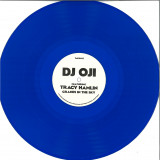
‘Cranes In The Sky,’ was originally written by Beyonce’s baby sister Solange alongside Raphael Saadiq, for her album back in 2016 that was cited by Rolling Stone as one of the most important 500 records of all time. The words exploring a fearless journey inward, pulling up the root of a problem, and the first glimpse of blue sky after the storm has passed.

Fast forward to 2022 - Ross Allen and Andy Thompson’s Foundation Music Productions enlist the expertise of Baltimore club legend, Dj Oji, together with Tracy Hamlin (Pieces Of A Dream), to take Solange’s breakout delivery to the dancefloor. Soulful vocals will heal you, while the mid-tempo moments will mellow the masses, and UK Funky grooves will keep the shuffle moving along way into the early hours. Three remixes come in the form of the ethereal DJ Pope Funkhut Reprise, a signature Joe Goddard groover and the Star One. KDA. Meltdown Dub.

DJ Feedback:

FRANCOIS K
Yes! I played the vocal version the other day again.

KAI ALCE
Dope re-interpretation from Baltimore stalwarts OJI, POPE & Tracy!

GREG WILSON
What's not to like? Love the orig Solange jam!

DANNY KRIVIT
Nice, I like a lot of DJ Oji.

SOUL CLAP/ ELI GOLDSTEIN
Fire right here

DAZ I KUE/ BUGZ IN THE ATTIC
Yea I love this one…cool vibes.

THATMANMONKZ
Oh yeah, love the Solange original, and I’m a big Oji fan! That reprise version might come in very useful for the right set!

TERRY FARLEY/ FAITH
Got to be contender for single of the month with that story x

HOT TODDY
Simply beautiful.

CRAIG SMITH/ 6TH BOROUGH PROJECT
Loved the original of this from Solange a few years back, this is a real nice interpretation of it. Liking the reprise and Dub, handy tools

CHARLES WEBSTER
Nice soulful groover. Like this.

FISH GOO DEEP/ GREG DOWLING
Lovely re imagining of one of my favourite tracks of all time

FRANK BOOKER
Love this package. Reprise mix is the one for me. Very cool!

NICK V/ LA MONA
Thanks a lot I actually prefer the dub version :)

JIMPSTER/ FREERANGE
Killer groove on this and really nice to hear a housed up version of Cranes which is such a stunning song in it’s OG form. Def something I’d like to play out.

FELIX JOY/ SWU.FM
Yes ! I flippin love a good reprise mix and this one is doing it for me. Love the original version by Solange and this is a really great rework!

STEVE PARRY / FOR SASHA
Really Smoove love it.

GROOVE ARMADA/ TOM FINDLAY
THIS IS LOVELY!!

RALPH SESSION/ HALF ASSED RECORDS
Wow the dubstrumental really gives it new life.

QUENTIN HARRIS
I love this package.

GRAME PARK/ THE HACIENDA
This is tremendous

HECTOR ROMERO/ DEF MIX
Good to see this one got picked up. I’ve played this a few times since 2018 but will get it back in rotation. Glad to see this song is getting some traction. I look forward to the unreleased versions.

ANDY BUCHAN
What a sun-dappled slice of beauty! Full support on this, what a gorgeous EP. And those drums are ace, really propulsive.

DANIELLE MOORE/ CRAZY P
Yeah I really like this. I mean I love the original but theres something quite interesting about this. Nice yeah x

MARC MEISNERE/ SOL POWER SOUND
Yes please! Can’t wait to play this one!

STEFANO TUCCI/ HELL YEAH
This is one of the best best vocal of recent times, I love It, the crescendo towards half of the track is nothing but gorgeous!

TREVOR FING/ GRAFITTI KINGS
Love these remixes.

MAX P/ HELL YEAH
Yeah, full pack is what I needed !

HORSE MEAT DISCO/ SEVERINO
Really into this!

SEAN JOHNSTON/ ALFOS
I wouldn't play it, but it's a beautiful piece of work

GRAEME PARK/ THE HACIENDA
I’m gonna enjoy playing this its lovely.

NICK V/ LA MONA
Thanks a lot I actually prefer the dub version :)

TREVOR FUNG/ GRAFITTI KINGS
Love this !!

QUENTIN HARRIS
Being a fan of the Original I love everything about this.

ALAN DIXON/ MIDNIGHT MAGIC
Killer!!!!

DAVE JARVIS/ FAITH
This is amazing! Absolutely love xx

NICK V/ LA MONA
This is a fantastic track!

MAX P/ HELL YEAH
Oh yeaahhhh

RICK GILL/ OUTLAWS YACHT CLUB
Beautiful soulful house. Quality production and top draw vocals.

MICKEY JUKES/ 1BTN
Ooof! Such a strong record to step to but i love this. Classy production, vocals are killer. All round winner!

TOMMY TURBO JAZZ/ JAXX MEDICINE
I was a fan of the OG but I really needed this cut!!

RUSSELL FORMAN/ PIKES/ HARRYS KEBABS
This is great .... I'm writing an article on the Coney Island Boardwalk house parties atm.

JIM LISTER/ 1BTN
Loving the reprise and the dub!I'm a big fan of the Solange original, so it's nice to hear a new angle on it

CHRIS DE BEURRE/ THE EAGLE
Gorgeous vocal! And such a deep production - really like this! Infectious x

DAIRMONT/ ROOM WITH A VIEW
Amazing track. Loving it!

STEVE PARRY/ FOR SASHA
Beautiful super smooth.

LES CROASDAILE/ FREIGHT ISLAND
Tune this, reminds of Southport weekender!

out of Stock

Order now and we will order the item for you at our supplier.


Last In: 2 years ago
Various - SOUL FINGERS LP (2x12")

A sound that embraces different styles and different eras, but which has only one basic concept as a common denominator: spreading the “Black Power Sound”.

That’s the spirit of the double vinyl compilation of Soul Fingers, a legendary Black Music traveling party that has now become a cult in Italy, still religiously followed by dancers of all kinds and ages.

At Soul Fingers it is usual to listen and dance to a unique and tasty blend of soul, disco and funk, with rap and latin rhythms. There are no preconceptions other than that of putting songs to feel good and make people feel good.

The real deal is to share with the dancefloor a record that is magical, full of soul and that can elevate us from our state of human beings to become a single beating heart under the speakers of the sound system.

out of Stock

Order now and we will order the item for you at our supplier.


Last In: 3 years ago
KEB’MO’ - MARTIN SCORSESE PRESENTS THE BLUES LP (2x12")

Keb’ Mo’s Martin Scorsese Presents The Blues is the 2003 blues album, part of Martin Scorsese’s The Blues documentary series. The series is dedicated to the history of blues music, which provided the ultimate opportunity for Keb’ Mo’ to compile the highlights of his career thus far. Keb’ Mo’ had only released four albums up until that moment, but those four had already attracted a wide audience amongst blues fans and included many defining and impressive tracks. So in occasion of the release of Martin Scorsese’s documentary series, Scorsese selected the very best 16 tracks to feature on this 2LP, including “Come On In My Kitchen”, “Am I Wrong” and “Peace Of Mind”.

Martin Scorsese Presents The Blues is available as a limited edition of
1500 individually numbered copies on translucent blue coloured vinyl and includes a 4-page booklet.

pre-order now31.05.2022

expected to be published on 31.05.2022


Last In: 2026 years ago
Debbie Gibson - The Body Remembers

Entitled "The Body Remembers", this 14 song collection is a well rounded
combination of dance/pop, pop/rock, and ballads including a re-imagined version
of her mega-hit 'Lost In Your Eyes' with Joey McIntyre.
Her musical contributors on this new release range from Grammy award winning
DJ Tracy Young, to Emmy Award winning composer/ producer/ Cinderella
drummer Fred Coury, Former Guns n Roses guitarist DJ Ashba and, iconic mixers
Josh Gudwin and Brian Malouf. This album marks the debut of 19 year old
musical prodigy Sean Thomas. This recent Berkley graduate is Debbie's
producing partner on the majority of songs.

pre-order now04.02.2022

expected to be published on 04.02.2022


Last In: 2026 years ago
Various - Join The Ritual

Various

Join The Ritual

12inchJAG403LP-C1
JAGJAGUWAR
24.09.2021
  • 1: Spencer Krug - Red Dress
  • 2: The Besnard Lakes - Good Morning, Captain
  • 3: They Hate Change - The Seeming And The Meaning
  • 4: Angel Olsen - Cold Blooded Old Times
  • 5: Bruce Hornsby - Feel The Pain
  • 6: Jamila Woods - Fast Car
  • 7: Nap Eyes - Car
  • 8: S. Carey - Weight Of Water
  • 9: Pink Mountaintops - The Concept
  • 10: Cut Worms - One For The Catholic Girls
  • 11: Okay Kaya - Nightswimming

Midway through his long, earnest and often very, very
funny essay on the role playing game ‘Dungeons &
Dragons’ in the September 2006 issue of The Believer,
writer Paul La Farge proposes that ‘Dungeons & Dragons’
is not a game at all but rather a ritual. La Farge notes the
marked difference between game and ritual. Whereas a
game seeks to demonstrate how unequal or distinct
players / teams are from one another, rituals seek to do
the very opposite.
 And so, across the 25-year history of Jagjaguwar - an
independent record label curiously named using a
‘Dungeons & Dragons’ name generator - we find this idea
of ritual as a conjoining practice. We see it early on when
Jagjaguwar join forces with a midwestern label called
Secretly Canadian for a powerful fusion. We see it in
familial relationships and collaboration among Jagjaguwar
artists and the ways those artists’ most treasured
collaborators make their ways to the Jagjaguwar game
board.
 ‘Join The Ritual’, a piece of Jagjaguwar’s 25th Anniversary
celebrations, looks to pay homage to the labels and artists
that, whether they know it or not, invited Jagjaguwar to the
table, to this wild, dark magic ritual of music. We’re talking
about independent titans like Drag City, Too Pure, K
Records and Touch & Go. We’re talking about heroes like
R.E.M., Slint, Stereolab and Tracy Chapman. These songs
captured the imaginations of founders Darius Van Arman
and Chris Swanson - and ultimately, opened up worlds to
them.

pre-order now24.09.2021

expected to be published on 24.09.2021


Last In: 2026 years ago
COLD HART - EVERY DAY IS A DAY

Every Day is a Day is Cold Hart’s first LP for Epitaph. As a co-founder of
the seminal rap collective GothBoiClique, (along with Lil Peep, Lil Tracy,
YAWNS) Cold Hart has consistently been on the cutting edge of alternative
hip-hop and rock since 2013 as a vocalist, songwriter, and producer.
By pairing components of rap with seemingly unrelated genres like emo and
gothic rock, Cold Hart has become an innovator of genre-defying music.
Cold Hart, has earned the respect of peers and critics alike (his previous LP
Good Morning Cruel World received a 6.9 from Pitchfork). Coming hot on the
heels of the stratospheric success of Cold Hart’s Lil Peep collaboration, “Me &
You,” with over 60 Million global streams to date, his path is well established in
the digital space, with current catalog streams at over 1million/wk.
With his new album Every Day Is A Day, Cold Hart has progressed beyond emo
rap as he developed a newer, fuller sound, that he describes as “hands on guitar stuff with a soulful twist.

pre-order now10.09.2021

expected to be published on 10.09.2021


Last In: 2026 years ago
Thick Pigeon - Subway (Singles)

Les Disques du Crepuscule presents Subway, a collection of singles by cult NYC duo Thick Pigeon, originally released on Crepuscule, Factory and Factory Benelux between 1981 and 1991.
Comprised of vocalist Stanton Miranda and instrumentalist Carter Burwell, Thick Pigeon emerged from the downtown New York artrock scene which also spawned Glenn Branca, Bush Tetras, DNA, Arthur Russell and Sonic Youth. Like their chosen name, the duo were typically atypical: Miranda was previously a dancer with the Marthe Graham ballet company, and Carter a film animator and Harvard fine arts/architecture graduate. Very much a studio project, the ‘group’ hardly ever performed live.
Poised and subtle debut single Subway appeared on Crepuscule in January 1981, a connection forged by Miranda’s partner Michael Shamberg. Dog followed a year later, along with wry Christmas single Jingle Bell Rock, before the duo switched to Factory Records, recording debut album Too Crazy Cowboys in Manchester with Stephen Morris and Gillian Gilbert of New Order producing. Released simultaneously on Factory and Factory US in 1984, the album was billed as “a walk through the civilisation of you soul”.
Having now embarked on a career scoring movies (becoming the Coen brothers’ composer of choice), Carter was absent from the next TP project, 1986 dance single Wheels Over Indian Trails, although Morris and Gilbert remained on board as guest musicians. However Miranda and Carter would reunite for a second (and final) leftfield pop album, Miranda Dali, issued by Crepuscule in 1991.
As well as singles Subway, Dog, Jingle Bell Rock, Jess + Bart and Wheels Over Indian Trails, TWI 351 also includes b-sides (Sudan, Tracy + Pansy), album highlights (Crime, Riding) and a second festive track, Blue Christmas, previously issued only on cassette as part of a Factory Christmas card in 1986.
Alongside Stephen Morris and Gillian Gilbert, the stellar cast of guests include Fred Szymanski (of Ike Yard), Ikue Mori (DNA), remixer John Robie, and even artist and event designer Jean-Paul Goude on backing vocals.
Limited to just 500 copies, Subway (Singles) is newly remastered and pressed on transparent violet vinyl, reflecting the original 1981 sleeve artwork by legendary Crepuscule designer Benoit Hennebert. The album includes a free digital copy (MP3).

out of Stock

Order now and we will order the item for you at our supplier.


Last In: 4 years ago
Various - The Origins Of Congo & Zambia Guitar music 1957-1958

These are the historical recordings by the great ethnomusicologist Hugh Tracy. The fruit of his researches in southern Congo and in northern Zambia between 1957 and 1958. That was the time when the guitar became a popular instrument and slowly achieved the status of cultural symbol. This collection stands as an important document of the emergence of a totally new sound in African music. A unique blend of African roots and Pop music imported from the West. A must for all guitar music fans around the globe.

pre-order now26.03.2021

expected to be published on 26.03.2021


Last In: 2026 years ago
Philip Pullman - His Dark Materials - The Subtle Knife 3x12"
  • Episode One
  • Episode Two
  • Episode Three
  • Episode Four
  • Episode Five
  • Episode Six

Demon Records presents the second part of His Dark Materials – now a major TV series.
In this BBC Radio full-cast dramatisation of The Subtle Knife Will finds an opening into the haunted world of Cittàgazze - where daemon-destroying Spectres roam – and meets Lyra for the first time. This thrilling adaptation stars Daniel Anthony as Will, Lulu Popplewell as Lyra, Emma Fielding as Mrs Coulter, Tracy-Ann Oberman as Serafina Pekkala, and Peter Marinker as Lee Scorseby, with a large supporting cast.
A lavish gatefold sleeve features Dust-inspired illustrations, spectacularly realised in metallic copper ink, plus full cast and production details and exclusive sleeve notes by Philip Pullman himself. This gripping drama is presented on three heavyweight 180g discs of Daemonic Dustburst splatter vinyl.
Philip Pullman’s bestselling trilogy of children’s books, which has sold more than 19 million copies worldwide, is now the inspiration for the major HBO/BBC TV series His Dark Materials.

pre-order now05.02.2021

expected to be published on 05.02.2021


Last In: 2026 years ago
DEAD OR ALIVE - FAN THE FLAME (PART 1)

Dead Or Alive have sold more than 30 million albums and 25 million singles worldwide and gave Stock Aitken Waterman their first #1
single. Their first three albums, which the band wrote, all reached the UK Top 30, with ‘Youthquake’ reaching the Top 10. In the 1980s, they charted seven unique singles in the UK Top 40, with two further re-entries this century, with a remix and original version of ‘You Spin Me Round (Like A Record)’. Respected US magazine Billboard, ranked them in their all-time Top 100 most successful ‘dance artists’ chart.
‘Fan The Flame (Part 1)’ is their fifth studio album and was only released in Japan in 1990, where it reached #27, until a re-worked
version was included within the ‘Sophisticated Boom Box MMXVI’ box set in 2016. ‘Fan The Flame (Part 1)’ contains the singles ‘Your Sweetness (Is Your Weakness)’ (Japan #3), ‘Unhappy Birthday’ (Japan #14) and ‘Gone 2 Long’ (Japan #18). Renowned and in-demand singer, Tracy Ackerman performed all backing vocal duties, with Londonbeat and the London Community Gospel Choir appearing on ‘Total Stranger’ and ‘Unhappy Birthday’, respectively. Also featured is Billy Currie, better known for his work with Ultravox, Visage and Gary Numan. This special 30th Anniversary Edition of ‘Fan The Flame (Part 1)’, is the first time that the album has been commercially released on
vinyl in its original configuration, with original playing durations and will be pressed on 180g heavyweight white colour vinyl.

out of Stock

Order now and we will order the item for you at our supplier.


Last In: 5 years ago
LIL PEEP - EVERYBODY'S EVERYTHING

Lil Peep

EVERYBODY'S EVERYTHING

2x12inch19439707761
Sony Music
03.03.2020

This is the soundtrack to a recently released documentary about the critically acclaimed 21 year old rapper from New York, who tragically died in 2017. A 19 song double LP featuring collaborations with Lil Tracy, Diplo, Gab3 and more. Recent releases "Come Over When You're Sober" (pt.1 & pt.2) brought him critical acclaim and strong sales in the UK. Specialist promo/marketing activity across all media outlets.

out of Stock

Order now and we will order the item for you at our supplier.


Last In: 3 years ago
D.O.C - Helter Skelter

D.o.c

Helter Skelter

2x12inchMOVLP2543
Music On Vinyl
21.01.2020

Tracy Lynn Curry, better known by his stage name The D.O.C., is an American rapper, songwriter, and record producer, who released his second studio album Helter Skelter in 1996.
After a 1989 car crash accident which damaged his vocal cords, this was his comeback album. His voice had changed a lot, but with a fantastic live band the gangsta rap comes alive. His lyrics are still great and worthwhile to listen to.

out of Stock

Order now and we will order the item for you at our supplier.


Last In: 6 years ago
Various - Hong-Kong Disco

Wan Chai Records is a Hong-Kong based label, specialized in rare Asian records and quality reissues.

After a few years of hard diggin' in Asia, meeting the artists and many local figures of the 60's, 70's and 80's Scene in Hong Kong, Singapore, and Taiwan, they wanted to share their best finds and put them together on vinyl with the best productions ever made in Soul-Jazz, Disco, Funk, Modern-Soul, and AOR.

The result is a selection of 10 totally unknown gems sung mostly in English and Cantonese with amazing covers of classics like Lovin' You', Make Me Believe In You', or Hurt So Bad' in a nice Artwork Gatefold LP.

out of Stock

Order now and we will order the item for you at our supplier.


Last In: 7 years ago
Oumou Sangare - Mogoya

Oumou Sangare

Mogoya

12inchNF361
NO FORMAT
21.11.2017

The wait is finally over. The greatest living female voice in African music, Oumou Sangare releases a new album "Mogoya" (meaning "people today") on a new record label with an all-new production team and a wonderful new set of songs.

The power of Oumou's voice and the potency of her message remain as strong as ever and, while her sound is rooted deep in the continuity of Malian tradition, Mogoya has a strong new sound. Co-produced by Andreas Unge in Stockholm and by the French production collective A.l.b.e.r.t. (who have worked with among others Air, Tony Allen, Charlotte Gainsbourg, Beck, Franz Ferdinand) in Paris, it draws on a rich musical heritage whilst also looking to the future.

"We wanted to emphasise the raw power of Oumou's voice and songs. We wanted to find a new modernity" says co-producer Ludovic Bruni, one of the three members of A.l.b.e.r.t. with Vincent Taurelle and Vincent Taeger.

On the album, traditional African instruments - the kamele n'goni (harp), karignan (metal scraper) and calabash percussion - are augmented by electric guitar, bass, keyboards and synths with Tony Allen on drums. As Oumou puts it, "This time round I wanted to go for more of a modern sound, to satisfy young people in Mali but being careful, all the while, to respect my culture and tradition".

The songs describe what Oumou knows best human relationships. She addresses difficult topics with incredible frankness - jealousy, ingratitude and betrayal never afraid to sing about the day-to-day problems faced by African society, particularly women.

Oumou has a high international profile, touring all over the world, collaborating with artists such as Alicia Keys, Tracy Chapman, Bela Fleck and Dee Dee Bridgewater and featuring on the soundtrack of Toni Morrison's Beloved. She is a Goodwill Ambassador for the United Nations Food and Agricultural Organisation and has three businesses in Mali a range of SUVs called 'Oum-Sang', a hotel in Bamako and 'Oumou Sangare 769, Rice', grown in her own fields.

She has released six albums on the World Circuit label: Moussolou, meaning "women"(1990), Ko Sira (1993), Worotan (1996), Oumou (2003), Seya (2009) and Kounadi (2012).

Music is at the absolute centre of Oumou's life: "without it I'm nothing and nothing can take it from me" and Mogoya represents an exciting new chapter in her career, something which she approaches with a mixture of boldness, humility and confidence."It was new for me because my music has never had this kind of arrangement and sound before. I've been totally in the tradition for years now so to get out of that and have a look around elsewhere was a total pleasure," Oumou Sangare.

out of Stock

Order now and we will order the item for you at our supplier.


Last In: 5 years ago
Hampshire & Foat - Galaxies Like Grains Of Sand LP

- Warren Hampshire from The Bees teams up with pianist Greg Foat

- Recorded with full orchestra all anolog to tape

- Mixed down on fully analog desk from tape direct to the old Sun studios 1/4 Valve tape machine.

- Hand made paste back sleeve with 60s style gloss finish.

- Mastered from Tape direct to lathe at Timmion Cutting Studios Finland.

- Sleeve notes by Bob Lind

Multi talented UK Jazz Pianist Greg Foat has teamed up with Mercury Award nominated "The Bees" member and multi instrumentalist Warren Hampshire to collaborate on a new LP drawing on their diverse musical influences. Classic British library music, 60s Italian soundtracks & lost Americana combined with touches of modern classical, minimalism, Jazz and Folk. Featuring many members of Greg and Warren's previous bands and one of the U.Ks finest Jazz drummers, Clark Tracy, the LP also features an Edinburgh orchestra and soloists hand picked and scored by the boys. Recorded all analogue onto 2" multitrack in Edinburgh, mixed down by Mattias Glavå at his studio in Gothenburg, Sweden then mastered and cut in Helsinki, Finland, it's truly a European affair flying in the face of the brexit nightmare. Release June 2017

out of Stock

Order now and we will order the item for you at our supplier.


Last In: 5 years ago
Items per Page:
N/ABPM
Vinyl