Search:total blue

Styles
All
Zeke - Live and Uncensored LP 2x12"

First time on vinyl ever, remastered in 2023. Zeke- Live Tracks Uncensored LP. This LP shows Zeke live ... raw, wild, untamed and uncensored. If you’ve seen Zeke before, you know that these guys can be a total beast on stage. This LP offers a bunch of killer live recordings to make it sound like the band is playing in your kitchen: loud, fast and furious. You know that Zeke are the real purveyors of speed rock and roll and that can’t be better heard than here. The LP includes some of their best songs including tracks from ‘Super Sound Racing’, ‘Flat Tracker’, ‘Kicked in the Teeth’, ‘Dirty Sanchez’ and ‘Death Alley’ recorded in different venues from Seattle to Las Vegas to Minneapolis. One of the other special treats this LP offers is it includes two very rare studio tracks that are pretty hard to find. 26 tracks in all with top notch production. Genre: Alternative / Rock n Roll / Pun

pre-order now28.07.2023
expected to be published on 28.07.2023


Last In: 2026 years ago
Zeke - Live and Uncensored LP 2x12"

First time on vinyl ever, remastered in 2023. Zeke- Live Tracks Uncensored LP. This LP shows Zeke live ... raw, wild, untamed and uncensored. If you’ve seen Zeke before, you know that these guys can be a total beast on stage. This LP offers a bunch of killer live recordings to make it sound like the band is playing in your kitchen: loud, fast and furious. You know that Zeke are the real purveyors of speed rock and roll and that can’t be better heard than here. The LP includes some of their best songs including tracks from ‘Super Sound Racing’, ‘Flat Tracker’, ‘Kicked in the Teeth’, ‘Dirty Sanchez’ and ‘Death Alley’ recorded in different venues from Seattle to Las Vegas to Minneapolis. One of the other special treats this LP offers is it includes two very rare studio tracks that are pretty hard to find. 26 tracks in all with top notch production. Genre: Alternative / Rock n Roll / Pun

pre-order now28.07.2023

expected to be published on 28.07.2023


Last In: 2026 years ago
OMAR S - The Best (4x12")

OMAR S

The Best (4x12")

4x12inchAOS4400 / AOS4000
FXHE
03.07.2023

Alex "Omar" Smith has never been one for modesty, so we shouldn't be too surprised that he's called his latest full-length - his fifth in total - The Best. To be fair, he is rather good at producing high-grade deep house, and here unveils another eleven gems. Interestingly, he's recruited an impressive cast-list of collaborators and guests, including Norman Talley, Kyle Hall, OB Ignitt and, most surprisingly of all, Bristol-based Tom Bug. Highlights are plentiful, from the dusty afro and blues influences of the tribal "Chama Piru's", and hazy, Rhodes-heavy vocal cut "AhRevolution", to the hip-wigglin' disco-house influences of "Seen Was Set", and retro-futurist, Inner City style Divinity hook-up "On Your Way".

out of Stock

Order now and we will order the item for you at our supplier.


Last In: 35 days ago
Natalie Rose LeBrecht - Holy Prana Open Game
  • 1: Home
  • 2: Prana 10:9
  • 3: Holy 0:58
  • 4: Amok
  • 5: Open
  • 6: Game Over

When I first heard Natalie Rose LeBrecht's time-suspending, air-ionizing music, more than twenty years ago, I thought "this kid is on to something." She's been proving that thought right ever since. Her recordings, from the teenage 4-track tapes she made as Greenpot Bluepot to the recent albums under her own name, have been fascinating dispatches from her progressively deeper dives into her gorgeous, weird, wildly idiomatic aesthetic. Holy Prana Open Game is a jewel of intensely personal cosmic music, created through a remarkable process of openness, craftiness, addition and subtraction. It belongs to a tradition of albums that document a rich, meditative sound as it rises up to join the world outside its creators' minds: Alice Coltrane's Universal Consciousness, Harmonia's Musik von Harmonia, Philip Glass's North Star, Talk Talk's Laughing Stock.

"Meditative" is specifically the idea here: Holy Prana Open Game had its origins in the fourteen days LeBrecht spent silently meditating in her home's small music room in the summer of 2019. "I came out of that bursting with the will to create new music," she says, and she created it sound-first. LeBrecht taught herself to program an analog synthesizer's timbres from scratch, and built a new set of glacial, heady compositions out of them, eventually singing to accompany the keyboard parts she was playing.

Then she closed her eyes at her computer, "let my mind be clear and open, imagined light pouring down through me, and began auto-writing to my memory of the music playing through my mind. Most of the lyrics emerged this way, and then I used my conscious mind to refine them a bit at the end." One other song came along with LeBrecht's new pieces, a cover that seems wildly unlikely from the outside and makes total sense in its context: it's a version of Atoms for Peace's "Amok" (which had been created by improvisation and editing, too), mutated into her own idiolect.

In early March of 2020, LeBrecht recorded Holy Prana Open Game's analog synth parts with Martin Bisi at his studio in Brooklyn--and then the world shut down. As you may have gathered, LeBrecht is very much a spiritual, head-in-the-stars type. She is also extremely hardcore, and if making the art she wants to make means doing things the hard way, she cracks her knuckles and gets down to it. Within weeks, she had taught herself how to record, mix and edit with a digital audio workstation. She recorded her vocal parts (sometimes multi-tracked into a radiant choir) at home, assembled a rough mix of the album, and sent it off to her collaborators.

LeBrecht spent some years studying with and assisting La Monte Young and Marian Zazeela at their legendary sound-and-light installation, the Dream House. As with their work, her singular, precisely focused vision is shored up by its openness to artistic voices beyond her own. For Holy Prana Open Game, she worked with the Australian guitarist Mick Turner and drummer Jim White (both of Dirty Three, the Tren Brothers and innumerable other projects), as well as woodwind player David Lackner, a longtime presence on her recordings.

Turner and White have been playing together in one context or another since 1985; in the summer of 2020, they were only blocks from each other in Melbourne, Australia, whose strict lockdown meant they couldn't meet up to record together. So both of them, as well as Lackner, recorded their improvisational additions to LeBrecht's rough mixes individually, often without hearing each other's contributions. "I had asked them to play as much as they could on each track," she says, "and told them that I would edit it all down in post, so I had a lot of source material of theirs to work with."

LeBrecht arranged and edited the recordings from all four of their homes to flow together like breath across the duration of her suite. Prana, one of the album's central conceits, is in fact the Sanskrit word for breath, with the connotation of the breath of life. Like LeBrecht's music, prana flows at its own pace, and demands stillness to take in fully--but it's also subtly playful and surprising, a force that can be as light as air or as immersive as the atmosphere itself.

pre-order now23.06.2023

expected to be published on 23.06.2023


Last In: 2026 years ago
Woo - Paradise in Pimlico Remixes

Following the partnership between Altrimenti and Quindi for a suite of remixes of Cabaret du Ciel, the two Italian labels collaborate once again to explore three vivid versions of tracks from Woo's exquisite album Paradise In Pimlico. The verdant, delicate musicality of Woo's original material offers an abundance of riches for remixers, and the results are true to Altrimenti's stated purpose to explore and experiment in the fusion of different approaches to electronic music.

On the A side, Joseph Tagliabue offers up a snaking, psychedelically charged dancefloor vision of 'Cadenza d'Innocenza'. Milan-based Tagliabue has developed a potent sonic signature across releases for labels like Invisible Inc. and Sound Metaphors before starting his own Blue Sea Studio as an outlet for his expanding work into the field of contemporary soundtracks. That cinematic sensibility comes through in waves on this subtly trance-licked epic - a soaring set piece for the most dramatic of party situations.

On the B side, Leeway opens proceedings with his remix of 'Even More Notes'. As the founder of Wain Records and the Scram club night, the London-based producer is fostering a culture of leftfield dance music with an organic sensibility. On his interpretation of Woo, he offers up a more experimental, dub-informed strain of 4/4 club rhythms.

Completing the set, Other Lands & Linkwood join forces for their approach to 'Gold Star'. Other Lands is also known as Fudge Fingas, and alongside Linkwood he helped shape the warm, deeply rooted house sound of seminal label Firecracker Recordings. The duo's affinity for soulful musicianship and the disco roots of house music comes through in this spiralling, hazy rendition perfectly pitched at moments when a softer, more spiritual approach is needed without losing the guidance of an insistent groove.

Once again the overarching theme on this collection of remixes remains quality - a pursuit of meaningful expression, originality and open-hearted musicality. From the source material to the resulting remixes, the pursuit was a successful one.

out of Stock

Order now and we will order the item for you at our supplier.


Last In: 2 years ago
Nucleus - Elastic Rock

Nucleus

Elastic Rock

12inchBEWITH125LP
Be With Records
26.05.2023

Nucleus's Elastic Rock is undisputedly a milestone in Jazz-Rock. A beautiful and vital debut album, it was first released on Vertigo in 1970. Original copies are now very tricky to score and, like all the Nucleus records, it’s aged ridiculously well. This Be With re-issue, re-mastered from the original analogue tapes, shows off just why this deserves to be back in press.

Genius trumpeter and visionary composer Ian Carr was one of the most respected British musicians of his era. He was a true pioneer and saw the potential in fusing the worlds of jazz with rock, just as Miles Davis and The Tony Williams Lifetime did in the US. In late 1969, following the demise of the Rendell-Carr quintet, and tiring of British jazz, Carr assembled the legendary Nucleus. Regarding music as a continuous process, Nucleus refused to “recognise rigid boundaries” and worked on delivering what they saw as a “total musical experience”. We can get behind that.

Under bandleader Carr, Nucleus existed as a fluid line-up of inventive, skilled musicians. This constant evolution and revolution was all part of the continuous musical exploration and discovery that took jazz to new levels. And the music has kept relevant. To steal a line from a review of our re-issue of Roots, when it comes to anything Nucleus “it’s basically already hip-hop”.

The very title Elastic Rock could be regarded as the group's MO, describing a melting point between their rock and jazz impulses. Indeed, housed in a memorable gatefold jacket designed by Roger Dean, the die cut molten teardrop shape on the front sleeve opens to reveal a fiery volcanic crater. On the back, Dean's drawing has Carr with saxophonist Brian Smith, guitarist Chris Spedding, drummer John Marshall, bassist Jeff Clyne and sax, oboe and pianist Karl Jenkins in a circle, the central core of a movement and the basis for its activity.

Recorded over four days in January 1970, Elastic Rock didn't sound like any other British jazz album. Exploding out the gate, "1916" opens with Marshall's frantic pounding before melancholic horns enter. The smooth title track, "Elastic Rock" is just a gorgeous electric blues track. Light drums, gentle melodic horns, piano and a solid bassline serve as the perfect bed for Spedding's graceful bluesy guitar melodies. The serene "Striation", a Clyne and Spedding collaboration, is led by bowed bass and is the epitome of calm before the late night laid back vibe of "Taranaki" breezes along sweetly and smoothly with great trumpet and tenor.

The truly emotional "Twisted Track" is elegant with horns, while guitar is gently played with drums and bass. Initially deeply soothing, it gradually builds with various solos and duets. "Crude Blues (Part 1)" features an excellent oboe part by Jenkins with laconic guitar helping out. "Part 2" is livelier, with a heavy backbeat and great wind parts. "1916 (Battle Of Boogaloo)" features a steady bassline and great call and response parts from the horn section.

The highly-charged centrepiece of the record, the mesmeric epic "Torrid Zone" features an hypnotic bassline and hi-hat with some of the ensemble's best soloing. Brilliantly encapsulating the jazz fusion aesthetic so desired by the group, the rhythm section is rock-influenced but magically retains a laid-back jazz vibe. Just perfection. Spacey jazz in the style of In a Silent Way, the semi-ambient "Stonescape" features smooth, muted brass, warm, smokey keys and a barely-there rhythm section. Heavenly.

The bubbling, fragile restraint of "Earth Mother" partially utilises the "Torrid Zone" bassline but takes the energy in a different direction with Marshall's frenetic drumming and Spedding's unpredictable riffing. Next comes the very idiosyncratic drum solo track by Marshall in the appropriately-titled "Speaking for Myself, Personally, in My Own Opinion, I Think." The album closes with the raucous "Persephones Jive", a track that ends the album frantically, riotously, just as it began.

This Be With edition of Elastic Rock has been re-mastered from the original Vertigo master tapes, Simon Francis’ mastering working together with Cicely Balston's cut at AIR Studios to weave their usual magic with these wonderful recordings. The stunning die-cut gatefold sleeve has been restored in all its molten glory.

out of Stock

Order now and we will order the item for you at our supplier.


Last In: 2 years ago
Dave Aju & The Invisible Art Trio - Glossolalia LP

Never one to pull inventive punches, Left Coast electronic music producer Dave Aju reassembled this notorious cast of characters for a remarkably fitting album package made during one of the most strange times our world has ever faced in the throes of the COVID-19 pandemic. While things were essentially shutdown, reopened, cycle-repeat worldwide, and every other species in mother nature's kingdom temporarily rejoiced while humans remained still in their caves, Aju and The Invisible Art Trio, his formidable if not-seen-in-a-minute musical team behind such underground anthems as "Be Like the Sun", went to work in the final days of the glorious G-Son studios in Atwater Village LA to record this LP.

Indeed, the same four/five walls and vocal booth that saw the Beastie's iconic Check Your Head and Hello Nasty come to life, became the birthplace of Glossolalia, Aju's fifth studio album and appropriately impressive seven-song set. As always, myriad musical styles and influences are strung together and boldly combined here, to the degree that drawing comparisons or attempting genre references feels futile. There are, however, clear visceral expressions of political provocation, hope and anger, fear and joy laid over twisted yet dedicated grooves in a lockdown era where Aju's imaginary collective dance floor feels in the temporary absence thereof and bizarro sixth-world unification strategy of recording every song's lyrics in complete non-languages aka total gibberish, feels right at home. Even the vocal guests join in the literal chant here, granting us diverse spell-casting and sensual nonsensical lyrical lines over tech-funk mother lodes, before closing the otherworldly proceedings with a powerful grand finale tribute to the US of A's proud boys-in-blue in the wake of George Floyd's very public assassination.

Equal parts timely anti-establishment and uplifting call-to-action, Glossolalia serves as a decidedly coarse yet crucial reminder of the possibilities in collaborative and devoted noise-making, booty-shaking, and alternative world-building during greater global disarray - beyond stylistic, nationalistic, and linguistic dividing lines. An overtly universal and unifying message liberating us from any fixed cultural identities and thus differences, to instead just focus on how the music delivers and we physically respond, together, as the foundation. Perhaps also an inspired response to the talking heads in every corner of the world's media, spewing useless and politically-tainted mouth data at us amidst these turbulent times.

out of Stock

Order now and we will order the item for you at our supplier.


Last In: 2 years ago
Scott Seskind - Scott Seskind LP

Scott Seskind

Scott Seskind LP

12inchEBL!!!015LP
Everland
30.04.2023

Ebalunga!!! is thrilled to announce the first official reissue of the self-released, self-produced, and self-titled 1985 LP Scott Seskind. The album is a lo-fi singer-songwriter jewel. Don’t miss it.
“Authentic and personal, at times it reminds this writer of luminaries such as Jackson C. Frank, PF Sloan, Skip Spence, and Phil Orchs while never feeling derivative.

The songs are melodic and haunting, fueled by existential woes, political angst, and good ol’ fashioned love. Scott’s rich voice has an unpretentious gravitas, his simple-yet-effective guitar playing ranging from delicate fingerpicking to angry bashing.
Created at home on a Tascam 4-Track Portastudio, the recording features few frills and is all the better for it. Unlike most mid-80s records it sounds like it could have come from any time since the late ’60s onwards. As a testament to its greatness, and despite the late recording date, it even gets a nod on Patrick Lundborg’s “Acid Archives” compilation website, Lysergiawhere it’s described thus: “Late phase downer-loner folk and singer-songwriter trip, mostly acoustic, some tracks with a small band.” – Andrew Ure for Ugly
Things.Read a long story about the album in the upcoming Shindig! issue: Story about Scott Seskind in Shiding Mag.
The reissue is available on vinyl with a lyric insert.
Mastering (as always) by Jessica Thompson.

Feedbacks and reviews:
“Almost totally inheralded singer-songwriter Scott Seskind gets the reissue treatment, and I couldn’t be happier. About a year ago I pulled Seskind’s sole vinyl release out of the used bin of a Boulder record store, and with its almost Wallace Berman-esque cover art, could immediately suspect it was something special. The first listen didn’t dispel that notion one bit; here was an impressively captivating and moving collection of four-tracked bedroom folk of the highest order, with an out-of-time vibe that didn’t really snyc with its 1984 recording date. Definitely on the loner-ish end of the folk spectrum, with some aspects of the album harkening back to Skip Spence’s iconic Oar, while other moments revealed the urgency of the ’80s lo-fi revolution. But most importantly, the songs were just really, really great and managed to remain haunting long past their leaving.

Here, I thought, is an album that needs to be heard by more people, NOW. I asked around amongst some record collecting friends and discovered it was pretty highly rated by a small circle of people in the know, and that it had even managed to garner a mention in the Acid Archives despite its late recording date, and most excitingly that there was talk that the digital reissue label Yoga had managed to track Seskind down and secure the rights to his LP. (…) So here we have it, the best songs from Seskind’s eponymous LP. (…) I really hope this release continues to garner the listeners that it deserves.” – Michael Klausman

“The one that struck us the most this year was the almost totally unheralded work of singer-songwriter Scott Seskind, who recorded an impressively captivating and moving collection of four-tracked bedroom folk of the highest order, with an out-of-time vibe that doesn’t really sync with its original 1984 release date. Definitely on the loner-ish end of the folk spectrum, with songs that are really, really great and which manage to remain haunting long past their leaving. Truly an album that deserves to be heard by more people immediately. ” – Other Music

pre-order now30.04.2023

expected to be published on 30.04.2023


Last In: 2026 years ago
Liberation - Liberation LP

Liberation is the latest evolution by David West, a dedicated underground dweller and traveler with his groups Rat Columns and Rank/Xerox and previously spotted in Lace Curtain and Total Control. Many familiar elements of West's songwriting creep out from the speakers this time around, albeit in a sonically more adventurous and personal manner. Swathed in analogue and FM synths, pinned down by near-funk drum machines, and with a vision expanded into the past and future. While in previous incarnations, West's alienated and fragile vocal has battled with jangling guitars and distortion, Liberation sets free his woes and ruminations into space. Taking inspiration from the heyday of Mute Records, the beginnings of electronic dance music's rudimentary sampling, broken and sound art, Liberation's debut LP is 10 songs of the road, about the nameless ghosts on the highway, accidental lovers, the alienation of the stranger in a strange land, the unbearable weight of freedom.
Beginning with a curveball, Liberation's first vocal sets out the position of the forever-cuckold, the sad lover hanging on: Looking For A Lover combines a Roland 707's loping mid-tempo with creeped-out synth lines as West intones his intentions close to the ear. Continuing in a more baroque manner, Move Me makes astounding use of string samples and space, with esteemed engineer Mikey Young's (Total Control / Eddy Current Suppression Ring) production prowess making for a distilled yet inviting loneliness. Forget is the night-drive centerpiece of the album, a 7 minute that erupts into a nihilistic sub-disco darkness. A constant theme of Liberation is the friction between West's characters: a frustrated love in victim-status paired with a menacing intent. The adorable, fragile stalker in the moonlight, illuminated by Whatever You Want, a
subjugated protagonist offering they have while the city burns. The brightest pop moment of the album has this in abundance: Cold And Blue, a classic synth pop jam to be played on repeat til the end of time, like New Order played by one man in his bedroom, with no drugs for a cushion, coming down the stairs, she looks like a perfect fear and Im a monument to your existence. But West has moments of touching sincerity that speak direct to the listener, as in album highlight Leaves Falling; a sparse string arrangement frames his vocal, "why do I keep falling for you I must just really like to be alone." Liberation is the freedom from attachments, about how sometimes they're what you want most.

pre-order now21.04.2023

expected to be published on 21.04.2023


Last In: 2026 years ago
Kuniyuki - Newwave Project LP 2x12"

2023 Repress

it was in february 2015 when japanese producer and sound designer kuniyuki takahashi, sometimes known as koss, releases with the ep 'newwave project '2' a record, that tapped some roots of his musical education: new wave, german electro punk from bands like a daf, ebm from acts like front 242 as well as industrial music.

styles, about kuniyuki claims that they are his 'favourite music'. now, nearly two years after his first newwave project ep, he drops an album that is leaning towards his musical love from the past. compared to his former work, that was rooted in worlds of classic, jazz, house, ambient, and electronic song-writing, his new tunes are full of melodic drifts and rhythmical shifts.

as usual all is loaded with tones and rhythms straight from the heart that filter and modulate human emotions without losing their natural source. to get a sound that is fresh but still leaning to the 1980ees, he used some old synthesisers like a roland jupiter 8, a juno 60, a korg ms 20, an old tape echo machine but also new instruments like the roland aira. furthermore, his modular synthesizers talk too.

instead of having a masterplan, kuniyuki just made sound, drifted on his machines and moved into a territory, that his far away from his former sound. also the use sampled voices and other alienated sound sources of unknown origin inject his new tunes otherworldly atmospheres.

his skills as a fine instrumentalist is evidence as kuniyuki also played the piano, percussions or flute, if he felt their warm sound is needed for his freely grooving tracks. some dance in a house or techno outfits.

other slam like a mix of funk and ebm. tunes like 'puzzle' or 'body signal' are twisted treasures that bemuse deeply. in-between you hear the echoes of cosmic spheres, the darkness of the cold war days and some bewitching tribal jungle vibes. a new, moving, unorthodox and yet catchy side of kuniyuki takahashi.

it is not totally novel to him, as he already released some industrial, ebm and electronic with the project drp in 1990 on the belgium label body records. but for his listeners, that know him for detailed house, jazz and classic or that love him as a man of collaborations who already worked together with artists like innervisions jazz house heavyweight henrik schwarz, the famous japanese pianist fumio itabashi or the british synth-pop protest spoken word icon anne clark, the 'newwave project' sheds a light on a different artistic side of kuniyuki takahashi.

it is diversified, has many rhythmical and atmospheric turns but stays stirring and compelling in all twelve tracks. a true new wave, formed, played in and envisioned with a view on the past that was filtered through the now while feeling the future. the cover art work comes from the swiss artist augustin rebetez - a man who also loves to generate unknown poetic universes in his drawings, sculptures, videos and installations.

out of Stock

Order now and we will order the item for you at our supplier.


Last In: 2 years ago
Stand High Patrol - The Shift LP

Repress!

The story begins in 2000 in Britany (France). Two guys decide to create a sound system with the aim of sharing their common passion for roots reggae and early digital. Rootystep (selecta) and MacGyver (operator) begin to collect records and purchase music equipment. They are quickly joined by Pupajim who becomes the MC, the singer and the dub builder. The Stand High Patrol first toured the land of Brittany, gradually moving towards stepper dub production emanating from the English stage. Fifteen years later, the sound is more present than ever. Stand High has created a true identity and has established itself as one of the essential sound systems of the French dub scene. In 2009, Stand High Patrol creates his own label "Stand High Records". In 2012, after releasing several records, the Dubadub Musketeerz present their debut album "Midnight Walkers", 13 exclusives & wicked tracks inna pure Dubadub Style. In 2015 the dubadub experience takes on new dimensions with their second album : "A Matter Of Scale". In 2017 they are back with "The Shift" a third LP totally dedicated to Boom Bap & 90s Hip Hop. Words, blue notes, boom bap and bad news: here comes "The Shift", the third album of Stand High Patrol.

IN 2017, TRYING TO MAKE BOOM BAP FROM THE 90s, INSPIRED BY JAZZ FROM THE 60s, MIXED WITH MACHINES FROM THE 50s

Lyrics, Boom bap and bad news: Stand High Patrol present their third album 'The Shift' and confirm their attachment to 90s hiphop.

out of Stock

Order now and we will order the item for you at our supplier.


Last In: 10 months ago
Jacques Bekaert - Jacques Bekaert

Jacques Bekaert

Jacques Bekaert

12inchMETAPHON015
Metaphon
24.03.2023

A Late Lunch’ is the soundtrack to Akiko Iimura’s eponymous movie realized in 1978. It is based on acoustic instruments and field recordings, brilliantly reconfigured and mixed by Bekaert to create a surreal, immersive soundscape. The technique used includes superposition and speed change of recordings, radical sound effects and juxtapositions of sounds. The players were prominent musicians of the 1970’s, including Maggi Payne, George Lewis, David Rosenboom and Blue Gene Tyranny.

‘A Summer Day at Stony Point’ was composed in 1969, with participation of David Behrman, Shigeko Kubota and Charlotte Warren. The piece was commissioned by English composer Hugh Davies who presented it at the Harrogate festival the same year. Stony Point is a small village in New York State where John Cage co-owned a small pseudo-commune art resort where like-minded artists gathered. ‘A Summer Day at Stony Point’ is nothing more than a page of a journal, a fragment of a notebook that utilizes a series of sound sources recorded at Stony Point on one beautiful day in the summer of 1968. Other electronic sound sources were recorded at the Brandeis University where Alvin Lucier was professor. The final realization of the piece was done at Henri Pousseur’s APELAC Studio in Brussels, 1969.

The soundtrack for Akiko Iimura’s ‘Mon Petit Album’ was composed on the basis of a simple description of the technique of the film and its time span. It includes David Behrman on alto, from an outdoor recording at Stony Point, plus excerpts from a Transition concert in London, the band Bekaert formed in 1971 with Michel Herr, Takehisa Kosugi and Ryo Koike, both members of the Taj Mahal Travelers. The atmosphere is quiet and pastoral throughout with a very dreamlike flavour.

Jacques Bekaert (1940-2020) was a man of many gifts: author, journalist, composer, photographer, visual artist, wine connoisseur, radio talk show host, diplomat and expert in Southeast Asian affairs. His whole life Bekaert has been actively involved in music but not much of his work got recorded or published. In the early 60’s Bekaert studied with Pousseur and through his frequent visits to the US he became friends with artists like John Cage, David Tudor, Charlotte Moorman and most of all David Behrman with whom he had a close friendship ever since. Bekaert helped organize the first European tour of The Sonic Arts Union (David Behrman, Robert Ashley, Gordon Mumma, Alvin Lucier) and in the early 70’s he formed the group Transition (with Belgian jazz pianist Michel Herr, Takehisa Kosugi and Ryo Koike, both members of the Taj Mahal Travelers). His meeting with Japanese experimental film-maker Akiko Iimura resulted in two film soundtracks featured on this one of a kind discreet avant garde album.

When asked in a 1979 interview about his double life as a musician and a journalist, Bekaert replied, “I suppose they’re both unsafe, unstable, questioning jobs—composing and reporting. Journalism takes me to places, shows me the world as it is. My music is my wish for the kind of world I’d want to live in. The little peaceful state I dream for everyone, where you can be yourself, and happy, and as collective as possible without giving up total privacy.”

Originally released in 1981 on the Belgian Igloo label this reissue comes with the same sleeve as originally designed by Alain Géronnez.

pre-order now24.03.2023

expected to be published on 24.03.2023


Last In: 2026 years ago
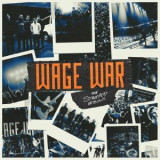
Wage War - The Stripped Sessions

The Stripped Sessions adds to Wage War’s already impressive and numerous career highlights including over 580 total million streams; hitting high marks on Billboard Charts and earning press raves from Revolver, Loudwire, Kerrang!, Alternative Press, Rock Sound, Modern Drummer, and 2021 covers from Kerrang! and UPSET.

pre-order now24.03.2023

expected to be published on 24.03.2023


Last In: 2026 years ago
Anne Bisson - Be My Lover

Anne Bisson

Be My Lover

2x12inchCAMLP5287-45
IMPEX Records
27.02.2023

Anne's 7th Opus in 13 Years, Containing 6 Fantastic Covers and 6 of Her Own Songs, Recorded in One of the Most Prestigious Studios in Montreal with Her Original Blue Mind Team

Fresh from the success of her single "Killing Me Softly" from her previous album Keys to My Heart, Anne Bisson, singer-songwriter and jazz pianist, decided to perform and record more standards from the American jazz songbook, as well as new arrangements of classic songs that were so much a part of her teenage years.

Be My Lover, Anne's seventh album is, therefore, a savoury feast of original compositions and classic songs in her own bold new arrangements for acoustic trio. While still in the 'Smooth Jazz' genre, the presence of a Fender Rhodes, the legendary '70s keyboard, along with an electric bass, impart the album with quite a unique tone.

After over 18 months of musical experimentation and other creative endeavours, Anne once again brought together master drummer Paul Brochu (Gino Vanelli, Michel Legrand, UZEB) and proficient bassist Jean-Bertrand Carbou from France, for a series of informal sessions to explore the songs that were being considered for this seventh release.

These two musicians have been valuable collaborators for several years now. Paul has been featured on many of Anne's albums, notably Blue Mind, which made a huge splash when it appeared, with over 35,000 hard copies sold, while Jean-Bertrand's playing has also graced several of her albums.

Since 2009, the three have performed at several important venues, including Le Festival International de Jazz de Montréal, as well as other festivals in the United States and Mexico.

What holds them together is an evident complicity which is present from the very first notes. Their musical contributions are precise and deeply heart-felt. Their virtuoso playing greatly enhances these songs without turning them into mere technical exercises.

With precision playing, subtlety and attention to detail, as well as being recorded in impeccable High Definition, these songs will definitely please Anne's audiophile fans, while also appealing to a wider audience.


All About Ultimate High Quality CD (UHQCD)
Many years have passed since the birth of the Audio Compact Disc (CD) back in 1982. By use of High-Quality materials and a totally different manufacturing method, the definitive version of audiophile audio CD was born. Playable on any CD player, the Ultimate High Quality CD greatly surpasses all previous CDs before it!

The Ultimate High Quality CD (UHQCD):
UHQCD is a radical change to the CD manufacturing process itself. The conventional wisdom about CD manufacturing, which had remained largely unchanged across the world for over 30 years, has been exhaustively questioned. Through this effort, the ultimate in quality was attained - a level of quality that is certainly impossible to achieve with existing CD discs.

The Ultimate High Quality CD was developed through an effort to improve audio quality by simply upgrading the materials used in ordinary CDs to higher quality materials. For the substrate a high-transparency and high-fluidity polycarbonate (a type of plastic) of the type used for LCD panels was used, while for the reflective layer, low-cost, common aluminium was replaced with a unique and expensive alloy of high-reflectivity.

Differences in manufacturing methods:
Conventional CDs are produced using the technique of injection moulding to form "pits" of data on polycarbonate material. Metal plate on which "pits" representing audio source data are formed is used as a die. This is called the "stamper." Polycarbonate is melted at high temperature and poured into the die to duplicate the pit patterns on the stamper.

This method is efficient because it enables high-speed production, but it does not enable totally accurate or complete duplication of the pits on the stamper. As a melted plastic, polycarbonate is inevitably viscous, so it cannot penetrate completely into every land and groove of the tiny pits of the stamper.

The Ultimate High Quality CD photopolymer is used instead of polycarbonate to replicate the pits of the stamper. In their normal state, photopolymers are liquids, but one of their characteristic properties is that they harden when exposed to light of certain wavelengths. The advantage of this property, perfect replication of very finely detailed pits was achieved. Photopolymers in the liquid state are able to penetrate into the tiniest corners of pits on the stamper so that the pattern of the pits is reproduced to an extremely high level of accuracy. The Ultimate High Quality CD reproduces audio with greater precision and at a level that is impossible to achieve using conventional CD production technology!

pre-order now27.02.2023

expected to be published on 27.02.2023


Last In: 2026 years ago
STÖNER - BOOGIE TO BAJA

"During the recording of TOTALLY, we were having a blast and the music just kept rollin' out so we decided to also put together a tasty EP. Guests Mario Lalli on STÖNER Theme and Greg Hetson of Circle Jerks and Bad Religion on our version of the Motorhead/Pink Fairies classic City Kids makes this EP extra sweet. Jump in and let's BOOGIE TO BAJA! If the name Stöner seems a little on the nose, well_ it is. Brant Bjork and Nick Oliveri, founding members of the stoner rock legend Kyuss, are joined again by drummer Ryan Güt (of Bjork's solo band) and they've got dibs on the thick and dusty swinging grooves, returning as Stöner with their sophomore release "totally_" Stöner's love for their early inspirations (bands like Blue Oyster Cult, Kiss, Ramones, Blue Cheer, Misfits, Black Flag, The Stooges, MC5) result in big, groovy, sunbaked riffs that can cruise low and slow but then floor it and run all the red lights. Live, this is a band about the magnetism between the players, the groove, the loose vibe and straight up badass rock and roll_ Stöner are masters of their trade. With "totally..." Stöner is in its true form, getting together and having fun. Stöner's world is a colorful joyride, heavy of rock but not of head. The record cranks with vibes of classic hard rock, heavy blues, desert rock and psych rock jams - things that come organically to this trio Stöner can't help but express an abundance of punk rock rawness and passion for real rock and roll swagger. With two records, "Live at Mojave" and "Stoners Rule" (available on Heavy Psych Sounds), the latest release "totally..." sees the band realizing the chemistry of these old friends developing a statement of pure rock and roll fun.

pre-order now24.02.2023

expected to be published on 24.02.2023


Last In: 2026 years ago
STÖNER - BOOGIE TO BAJA

Stöner

BOOGIE TO BAJA

12inchHPS249LPLT
HEAVY PSYCH SOUNDS
24.02.2023

LTD Violet Vinyl

"During the recording of TOTALLY, we were having a blast and the music just kept rollin' out so we decided to also put together a tasty EP. Guests Mario Lalli on STÖNER Theme and Greg Hetson of Circle Jerks and Bad Religion on our version of the Motorhead/Pink Fairies classic City Kids makes this EP extra sweet. Jump in and let's BOOGIE TO BAJA! If the name Stöner seems a little on the nose, well_ it is. Brant Bjork and Nick Oliveri, founding members of the stoner rock legend Kyuss, are joined again by drummer Ryan Güt (of Bjork's solo band) and they've got dibs on the thick and dusty swinging grooves, returning as Stöner with their sophomore release "totally_" Stöner's love for their early inspirations (bands like Blue Oyster Cult, Kiss, Ramones, Blue Cheer, Misfits, Black Flag, The Stooges, MC5) result in big, groovy, sunbaked riffs that can cruise low and slow but then floor it and run all the red lights. Live, this is a band about the magnetism between the players, the groove, the loose vibe and straight up badass rock and roll_ Stöner are masters of their trade. With "totally..." Stöner is in its true form, getting together and having fun. Stöner's world is a colorful joyride, heavy of rock but not of head. The record cranks with vibes of classic hard rock, heavy blues, desert rock and psych rock jams - things that come organically to this trio Stöner can't help but express an abundance of punk rock rawness and passion for real rock and roll swagger. With two records, "Live at Mojave" and "Stoners Rule" (available on Heavy Psych Sounds), the latest release "totally..." sees the band realizing the chemistry of these old friends developing a statement of pure rock and roll fun.

pre-order now24.02.2023

expected to be published on 24.02.2023


Last In: 2026 years ago
STÖNER - BOOGIE TO BAJA

Stöner

BOOGIE TO BAJA

12inchHPSULTD249
HEAVY PSYCH SOUNDS
24.02.2023

Violet Vinyl

"During the recording of TOTALLY, we were having a blast and the music just kept rollin' out so we decided to also put together a tasty EP. Guests Mario Lalli on STÖNER Theme and Greg Hetson of Circle Jerks and Bad Religion on our version of the Motorhead/Pink Fairies classic City Kids makes this EP extra sweet. Jump in and let's BOOGIE TO BAJA! If the name Stöner seems a little on the nose, well_ it is. Brant Bjork and Nick Oliveri, founding members of the stoner rock legend Kyuss, are joined again by drummer Ryan Güt (of Bjork's solo band) and they've got dibs on the thick and dusty swinging grooves, returning as Stöner with their sophomore release "totally_" Stöner's love for their early inspirations (bands like Blue Oyster Cult, Kiss, Ramones, Blue Cheer, Misfits, Black Flag, The Stooges, MC5) result in big, groovy, sunbaked riffs that can cruise low and slow but then floor it and run all the red lights. Live, this is a band about the magnetism between the players, the groove, the loose vibe and straight up badass rock and roll_ Stöner are masters of their trade. With "totally..." Stöner is in its true form, getting together and having fun. Stöner's world is a colorful joyride, heavy of rock but not of head. The record cranks with vibes of classic hard rock, heavy blues, desert rock and psych rock jams - things that come organically to this trio Stöner can't help but express an abundance of punk rock rawness and passion for real rock and roll swagger. With two records, "Live at Mojave" and "Stoners Rule" (available on Heavy Psych Sounds), the latest release "totally..." sees the band realizing the chemistry of these old friends developing a statement of pure rock and roll fun.

out of Stock

Order now and we will order the item for you at our supplier.


Last In: 3 years ago
Stampen - Jazz at the Pawnshop 2x12"

Stampen

Jazz at the Pawnshop 2x12"

2x12inch2HDLP1232
2xHD
24.02.2023

Coming February 2023 pre-order your copy today!
AAA Audiophile 200g 33rpm Double LP!
Mastered by René Laflamme at 2xHD on Nagra Equipment!
Cut All Analogue at Bernie Grundman Mastering!
Plated by Master Craft & Pressed at Le Vinylist in Quebec!


Jazz at the Pawnshop is a multi-session recording made by Swedish sound engineer Gert Palmcrantz on December 6-7, 1976, at Jazzpuben Stampen (Pawnshop) in Stockholm, Sweden. A pawnshop had operated on the site prior to the jazz club. Proprius Records founder Jacob Boethius produced the album, and it has been issued several times under multiple labels and formats. The album is regarded by many audiophiles as one of the best jazz recordings of the 20th Century.

The recording features Arne Domnérus (alto sax, clarinet), Bengt Hallberg (piano), Lars Erstrand (vibes), Georg Riedel (bass), and Egil Johansen (drums).

In the high end audio world, audiophile sound engineer René Laflamme has carved out a reputation for definition of excellence. Manufacturers of audiophile equipment such as Nagra Audio, renowned D to A converter manufacturer dCS Ltd and high-end turntable manufacturers, Kronos Audio seek his expertise in representation and assistance in design. Audiophile quality microphone designer and 8 times winner of 'Best sound in show' at high-end audio equipment conventions, Laflamme uses his knowledge and unfailing instinct to match various audio components to create the best all-encompassing sound experience. The exclusive 2xHD system is the fruit of Laflamme's total experience and imagination.

pre-order now24.02.2023

expected to be published on 24.02.2023


Last In: 2026 years ago
Various - Suburban Annihalation (2x12")
  • 1: Adolescents - I Hate Children
  • 2: Middle Class - Out Of Vogue
  • 3: Agent Orange - Bloodstains
  • 4: Dead Kennedys - Chemical Warfare
  • 5: Simpletones - I Like Drugs
  • 6: Suicidal Tendencies - Fascist Pig
  • 7: T.s.o.l.- Abolish Government/Silent Majority
  • 8: Circle Jerks- Beverly Hills
  • 9: Wasted Youth - Fuck Authority
  • 10: The Gun Club - She’s Like Heroin To Me
  • 11: Redd Kross - Burn Out
  • 12: China White - Live In Your Eyes
  • 13: Circle Jerks- Live Fast Die Young
  • 14: Negative Trend - How Ya Feeling?
  • 15: Eddie And The Subtitles - American Society
  • 16: Channel 3 - Manzanar
  • 17: Flipper - Ha Haha
  • 18: Rikk Agnew O.c. - Life
  • 19: Social Distortion - Playpen
  • 20: Dead Kennedys - California Überalles
  • 21: Shattered Faith - I Love America
  • 22: The Weirdos - Helium Bar
  • 23: Middle Class - Insurgence
  • 24: Germs - Communist Eyes
  • 25: Adolescents - Kids Of The Black Hole

Futurismo present their new anthology series: Altered Vision, beginning with SUBURBAN ANNIHILATION The California Hardcore Explosion / From The City To The Beach: 1978-1983.

This aggressive collection draws from California’s rich history of punk, more specifically hardcore: a new sound that eschewed melody for intensity, a sound that took punk harder and faster, a sound intrinsically American. Whilst hardcore was also burning over on the East Coast, it was in California that it had ignited and sprawled, a sonic punch in the face that raged socio-political disdain and total abandonment for commercialism, fuelled by a crumbling American Dream and the collapse of family values.

Suburban Annihilation takes you from the major cities, to the coastal towns, to the SoCal suburbs, showcasing some the most important bands of the West Coast. Blasting off with the Adolescents ‘I Hate Children’, it heads from the year zero of Middle Class’s ‘Out Of Vogue’ to the surf punk of Agent Orange’s ‘Bloodstains’, from the blues tinged outlaw of The Gun Club’s ‘She’s Like Heroin to Me’ to the classic anti-anthems: ‘Live Fast Die Young’ by the Circle Jerks, lifted from their seminal Group Sex album, and the hardcore staple ‘California ÜberAlles’ by the Dead Kennedys. Also present are so many other bands integral to the era: T.S.O.L, Wasted Youth, Germs, Social Distortion, Suicidal Tendencies, Negative Trend, Flipper and many more.

Though the music was designed to repel, this historical document has been lovingly designed to remind us that this genre created some of the most immediate and acutely-realised music ever produced. Making this collection of choice cuts essential for long-time fans of hardcore and punk, just as those new and inquisitive about one of the most angry and pissed off genres to have given birth in America.

This 2xLP comes in a choice of limited edition coloured vinyl, it has a tracklist co-curated by Henry Rollins, it contains liner notes by Lisa Fancher of Frontier, a bio by award winning author Benjamin Myers, and contains a booklet featuring an array of images by the legendary punk photographer Edward Colver.

pre-order now24.02.2023

expected to be published on 24.02.2023


Last In: 2026 years ago
Sven Väth - What I Used To Play (12x12" boxset)
 
36

For this uniquely personal retrospective spread over twelve vinyl discs, Sven Väth takes us back to the early days of his DJ career. On What I Used To Play we meet great pioneers of electronic music, gifted percussionists, obscure wave bands, and innovative producers of a bygone 'new electronic' era. Rough beats and irresistible grooves from the identification stage of house, techno, and acid remind us not just how far electronic music has evolved over the past four decades, but how great it was to dance to EBM, techno, and house for the very first time.

If there is one protagonist of the electronic music scene who has remained curious, innovative and at the very cutting edge of music for over four decades, it's Sven Väth. His multi-layered artist albums and Sound of the Season mix compilations have been defining the genre for over two decades, and even today, he is constantly on the lookout for the next top tune to add to the highlights of his next set. At least, that's the case when he's not producing them himself as an artist or remixer. "Actually, it's always been part of my DNA to think ahead," and nothing had been further from his mind than looking back at his past, but when in spring of 2020 the international DJ circuit had to be scaled down to virtually zero, the 'restless traveler' suddenly had time. Time to stop and reflect on "how it actually was back then, at the very beginning of my career..."

"It was a great trip and with every track, beautiful memories came flooding back".
In the London apartment, he had just moved into, Sven has set up a "little music room", where he cocooned himself for several days, "to look way back for the first time and review my musical journey through the eighties, so to speak."

The interim result was six thematically oriented playlists with a grand total of 120 tracks from 'early 80s' to 'Balearic late 80s', together with excursions into afrobeat, European new wave, and EBM sounds and a few epochal techno/house tracks from the USA in between. From these 'Best of Sven Väth's favorites', the project What I Used To Play crystallized. Sven remembers how the Cocoon team reacted to his proposal: "They found the idea of making a compilation out of it MEGA from the beginning and everyone said 'Sven, go for it', but then, of course, the work really started, namely, to clear the rights and to get clean sounding masters of the up to 40-year-old tracks. There was also disappointment, of course. We couldn't clear certain titles because the rights holders in the USA had fallen out with each other or simply disappeared from the scene. In short, it wasn't easy, but now I can safely say we got the most important tracks."

Finally, after two years of research, curation, design, and administrative fine-tuning, the "little retrospective" from 1981 to 1990 is available. The exquisitely packaged, and three-kilo heavy box set is not only physically impressive, WIUTP is also the definitive record of Sven Väth's musical development. On each of the twenty-four sides of vinyl, you can trace track by track, what influenced him during which phase, and how he took off as a DJ from his parents' Queen's Pub straight into the spotlight at Dorian Gray. There and at Vogue (later OMEN), Sven became the style-defining player in the DJ booth that he still is today.


1981 - 1990: Future Sounds of Now

In the early eighties, the crowd in clubs like Vogue and Dorian Gray danced to what nowadays we call 'dance classics' - mainly disco, funk, soul, and chart pop. It was up to a new generation of DJs, including Sven Väth, the youngest protagonist in the Rhine-Main area at the time, to create their own club-ready music mix. Good new tracks and potential floor-fillers were rarities that had to be sought out and found, in order to prove oneself worthy.
Without MP3s, internet streaming, or other digital download possibilities, music didn't just gravitate to the DJ, instead, it had to be tracked down. In well-stocked record stores in Frankfurt and Wiesbaden or even in Amsterdam, London, or New York, Sven and friends sourced the material for countless magical nights. On WIUTP we can follow Sven's very personal journey through this wild, innovative era in which synth-pop, funk, hip-hop, and disco were successively replaced as 'club music' by house, techno, acid, and breakbeat. By the end of the decade, it was clear to see that these once exotic 'fringe' phenomena would soon become 'mass' phenomena.


Early 80s

Dirty Talk by the Italian-American duo Klein & M.B.O. represents the most innovative phase of the Italo-disco genre in the early eighties like no other track. Mario Boncaldo (I) and Tony Carrasco relied entirely on the original synthetic drum and percussion sounds of the Roland TR-808, coupled with the raunchy vocals of Rossana Casale and guitar accents of Davide Piatto. Of course, other tracks from this period were also influential in style, most notably Unit by Logic System, which worked as the perfect soundtrack to the laser lighting system at the legendary Dorian Gray club. With stomping beats and robotic rap interludes, Bostich by Yello also belongs on Sven's eternal playlist - after all, it caught the attention of Afrikaa Bambaataa, who invited the Swiss duo to perform at the Roxy in New York in 1983.


EBM Wave - Mid 80s

From today's point of view, the almost ten-minute-long, downtempo track Giant by Matt Johnson's band project The The, would probably not be considered an obvious club classic. However, a closer (re)listen reveals the rhythmic intricacies of the percussion overdubs by JG Thirlwell (aka Foetus) on Johnson's composition, and it becomes clear why this exceptional piece of music is one of Sven's absolute favorites. Other classics from this phase include Kaw-Liga by the mysterious The Residents, the hypnotic-synthetic Our Darkness by Anne Clark (and David Harrow), and last but not least, the somber, monotonous anthem Where Are You? by 16Bit, one of Sven Väth's projects together with Michael Münzing, Luca Anzilotti from 1986.


US House - Late 80s

You certainly can't talk about Chicago house without mentioning Frankie Knuckles. The resident DJ at the Warehouse not only gave the name to an entire genre, but also produced epochal floor fillers on the Trax label like the timeless Your Love, sung (and moaned) by Jamie Principle. Acid house protagonists Phuture also hail from Chicago, and on We Are Phuture (also released on Trax) we hear the chirping acid sounds of the legendary Roland TB-303 in full effect. Another featured classic is No UFO's by Detroit's Model 500 aka Juan Atkins, who is rightly considered the 'Godfather of Techno' even if the genre-defining track from 1985 still breathes with the spirit of hip-hop and electro from the first breakdance era.


Afrobeat

Le Serpent, by Algerian-born Abdelmadjid Guemguem, is a track that sounds completely different from everything else on WIUTP. Made in 1978, it's a monumental, rousing groove created without bass or synths, just with five congas! Even though Guem sadly passed away in 2021, his immortal, acoustic beats are understood all over the world and will continue to enrich many thousands of DJ sets for years to come. Another classic that not only Sven appreciates beyond measure is Hugh Masekela's Don't Go Lose it, Baby. In addition to being one of the most important jazz pioneers, the trumpeter and freedom fighter from Johannesburg was very experimental, integrating electronic sounds into his music in later years, in a similar vein to Miles Davis and Herbie Hancock. Dutch jazz pianist Jasper van't Hof's afrobeat project Pili Pili has also aged well. The trance-like, almost sixteen-minute-long track of the same name, manages to fill a whole side on the seventh of twelve vinyl discs in the WIUTP box.


UK-US-Euro - Late 80s

Time for a change of scene, in the truest sense of the word, and from a musical perspective, this section is like landing on another planet. First up is Andrew Weatherall's classic remix of Primal Scream's Loaded, featuring the iconic Peter Fonda sample (lifted from the 1966 biker film Wild Angels) that came to personify the mood triggered by the British Second Summer of Love in the late eighties: "We wanna be free to do what we wanna do, and we wanna get loaded...". This period also saw the emergence of M/A/R/R/S whose only single, 1987's Pump Up The Volume, became a club classic with support from DJ legend CJ Mackintosh. In this most eclectic of sections, we also encounter New York house and reggae producer Bobby Konders and his seminal Nervous Acid.


Balearic - Late 80s

Those who know him, know that Sven had already lost his heart to the 'magic island' of Ibiza as a teenager, so with that in mind, the WIUTP project couldn't end without a Balearic chapter. Inspired by Manuel Göttsching's E2-E4, the immortal, eponymously titled Sueño Latino belongs in there without question. Equally popular on the island was, and still is Break 4 Love by Raze, which thinking about it, would also fit perfectly into the house chapter. Last, but not least, there's an overdue reunion with Sven Väth himself, in his role as frontman of the successful Frankfurt trio OFF. Together with Michael Münzing and Luca Anzilotti (later of Snap!) this 'Organization For Fun' created the off-the-wall club hit Electric Salsa in 1986 which incidentally turned into an international chart smash, putting Sven in the enviable position of having to decide between pop stardom and a DJ career. Well, we all know how that decision turned out and the rest, as they say, is history. A not insignificant part of his story is What I Used To Play. Enjoy!

out of Stock

Order now and we will order the item for you at our supplier.


Last In: 8 months ago
Adelphi Music Factory - Someone To Believe In EP

‘SOMEONE TO BELIEVE IN’: A COLLECTIVE ANTHEM OF SOLIDARITY.

‘RIDING HIGH (ON YOUR LOVE)’: AN ECSTATIC EULOGY TO SUMMER DANCE FLOORS.

CRISP SUN SHIMMERS THROUGH BRITTLE BLUE SKY.

THE WORLD AWAKENS FROM ANOTHER BLEAK COLD WINTER.

YET MILLIONS STILL SUFFER WHILE OUR LEADERS LAUGH AT US.

AMF - HERE TO BRING JOY AND HOPE.

DJ Support -
Patrick Topping ‘You have nailed that vibe’
Sasha ‘Big Stuff’
Totally enormous Extinct Dinosaurs ‘Great Sample!’, Mr V Cool vibes on this pack’
Auntie Flo ‘Nice One’
Mousse T ‘Useful goodies’

Radio Support -
Danny Howard, Sarah Story

out of Stock

Order now and we will order the item for you at our supplier.


Last In: 4 months ago
SKYY - Skyy Line

Skyy

Skyy Line

12inch4050538821383
BMG Rights Management
30.01.2023

Released in 1981, ‘Skyy Line’ is the fourth album by the Brooklyn, NY-based R&B / funk / disco octet SKYY. ‘Skyy Line’ was a high note in the group’s tenure with Salsoul Records, the label having released a total of seven of the group’s albums.

The album, co-produced by group member Solomon Roberts and Randy Muller of Brass Construction fame, climbed to the top of the R&B charts with its cheeky hit “Call Me”, which was written and arranged by Muller/ Both the single and the album were certified gold by the RIAA.

Showcasing the signature vocal harmonies of sisters Denise, Dolores, and Bonné Dunning, couple with the crisp guitar licks of Solomon Roberts, the funk and rock-inspired guitars of Anibal “Booche” Sierra, Gerald Lebon’s classic R&B base thumps, Tommy McConnell’s pulsating drum riffs and Larry Greenberg’s synth and keyboard runs, this fourth LP crystallizes the group’s magic. ‘Skyy Line’ delivers 40 minutes of impeccable party music: equal parts irreverent and unforgettable.

out of Stock

Order now and we will order the item for you at our supplier.


Last In: 3 years ago
Hanns G. Schmidt-Theissen - Dedicated To The Stars

** 1st Time on 7"! Totally underrated Prog-Krautrock-Funk **

Taken from a self-released 33rpm record, both sides are superfunky jazz flute workouts similar to Tramp's previous 7" by Big Band Frank Pleyer ("Sally" b/w "Bubble And Squeak", Tramp TR-291).

out of Stock

Order now and we will order the item for you at our supplier.


Last In: 3 years ago
WILLIE WALKER & THE BUTANES - I Feel It / Cry, Cry, Cry

A double treat for those who love timeless Southern Soul flavoured with some of those good ol’ down home blues. Memphis born, and Minneapolis based, Willie Walker can comfortably be included in the pantheon of grittiest soul singers along with Wilson Pickett, Syl Johnson, Lou Rawls, James Carr, Eddie Floyd, Tyrone Davis and L.V. Johnson, to name but a few, but there has always been speculation about other Willie Walkers. The recordings on Eutor and Hi in the 70’s are not by the same Willie as those on Goldwax and Checker in the 60’s. He did, however, also record as Wee Willie Walker.
 
He was a member of The Rhythm Harmonizers, The Val-Dons, The Exciters, The Bound Band, Willie & The Bumblebees (although that Willie is actually Willie Murphy of The Val-Dons), and Canoise, spanning a long and varied career before hooking up with the Minneapolis based band The Butanes in 2004, with whom he made the next three albums. The first of these was mainly cover versions, but "Right Where I Belong" (2004) and "Memphisapolis" (2006) are notable for each providing the tracks that make up this latest Jai Alai release, a label that differs from sister label Soul4Real by featuring 21st century tracks previously CD only but now released on 7” vinyl for the first time. It also has to be noted that all the tracks on both these albums were written and produced by Curtis Obeda, who managed to track down Willie after so many years.
 
“I Feel It” will have been missed by most as it was on the CD "Right Where I Belong" which was released in 2004 on the most unlikely of UK imprints, the Wirral based One On One Records run by Colin Dilnot. The album is a lavish display of real instruments from a band that once backed John Lee Hooker and Little Johnny Taylor and the perfect setting for Willie’s powerful vocals. 
 
Just tipping five glorious minutes, "Cry, Cry, Cry" is a perfect example of why soul music is inextricably linked to the blues, and when the gospel styled chorus joins in towards the end, you realise that this could, maybe should, have carried on for just a little bit longer. Perhaps a fuller length version exists? Sadly, Willie died peacefully in his sleep in November 2019, but to complete his story check out the two albums on Blue Dot as Wee Willie Walker & The Anthony Paule Soul Orchestra. To quote the great Quinton Claunch…”Willie was one of the best to come out of Memphis in the 60’s”.
 
Steve Hobbs
(Solar Radio, Totally Wired Radio)

pre-order now30.12.2022

expected to be published on 30.12.2022


Last In: 2026 years ago
A Blaze Colour - Against The Dark Trees Beyond

The Belgian minimal synth band's three releases – a cassette and two vinyl EPs – were all titled »Against The Dark Trees Beyond«. This compilation collects the songs from these records.

"They were interesting times, the early eighties. Against a backdrop of cold war and economic crises, the DIY attitude of the earlier punk movement had spawned near countless new genres where artists and bands broke the three-chord guitar mould and experimented with new content matter, singular song structures and – in many cases – new instruments. Synthesizers became affordable and were no longer the sole privilege of rock millionaires. All around the globe, musical creativity boomed as never before, and Belgium was no exception: Digital Dance, Snowy Red, The Names, Pseudocode, Marine, 1000 Ohm, De Kommeniste, M.Bryo & D.M.T., De Brassers, Struggler, Siglo XX are but a few legendary names of bands and artists who started making a name for themselves.

In Leuven, things were happening as well. Until then, the music scene in this rather provincial town had been dominated by straightforward rock and blues acts. Not for much longer, though: in places like Arno'z and (later) The Gladhouse, where young budding artists met with kindred spirits, bands were often formed on the spot and, more importantly, started to make ripples.

Ludo Camberlin and Karel 'Bam' Saelemaekers already had a certain track record in Leuven's burgeoning music microcosm. But what they shared would become the cornerstone of A Blaze Colour (Against The Dark Trees Beyond): a fascination for new forms and instruments, a penchant for sonic adventure and a profound love for gripping songs. The full band name, by the way, was inspired by a phrase from the Irish-American novelist J.P. Donleavy, a writer who belongs in the definitely-worth-checking-out section.

After appearing on the first No Big Business LP (1981) with the instrumental 'Fisk', A Blaze Colour's first proper release, as was so often the case in those days, was a self-produced cassette. The music – which would later be dubbed 'minimal' – was characterized by the use of basic rhythm machines (Boss Dr. 55, mainly) and analog synthesizers (for the synth geeks: Korg Delta and MS20, Roland SH-2 and Jupiter IV, and the infamous Casio VL-1). Camberlin’s vocals, meanwhile, displayed an aloofness totally in sync with the zeitgeist. Equally important, though: all five tracks on this cassette were bona fide songs with a clear sense of structure, aided by a sonic mastery that demonstrated a high level of experience: 'Means To An End' started out as a proto-industrial track before bursting out into a moroderesque finale. The remix of 'Fisk' was as sprightly as the next river salmon, while 'Or Lie Again' proved the perfect soundtrack to a nightly walk through wet deserted streets. On the other hand, 'Through With Life', rife with disturbing sound effects countered by a slow portamento, could have been a prize track on a post punk 'Lamb Lies Down On Broadway'. And in true dramatic fashion, 'Follow The Signs' was the perfect ending of this five-song cycle: a driving sequencer and gripping chord progression coupled with a simple but powerful vocal line. Considering the limited technical means the duo was working with, this was no less than a triumph.

A few months later, the band released a seven-inch single on its own ABLACO label. 'Dark Trees Beyond', a quirky pop song, was coupled with 'Addict Of Time', a dark and brooding spoken word piece. Not the kind of single to storm hit parades, but it didn't go unnoticed. The Minny Pops' Wally van Middendorp, who had founded the Plurex label in 1978, invited A Blaze Colour to his studio in the Netherlands, to record an EP. It would prove to be a massive step forward: recording in a semi-professional studio offered great possibilities, the recently acquired TR-808 drum machine allowed for a broader rhythm palette, and the three new tracks (next to the re-recording of 'Through With Life') showed a band on the top of their game: 'The New Ones' was a wry and haunting song built around a live drum loop and an ominous bass pattern, while 'Nowhere Else' was a near-pop track with very un-minimal vocal harmonies. And it's a mystery why 'Altitude' – another instrumental – was never used in a stylized, high-profile detective soundtrack.

Another song from these sessions, the revved-up 'Cold As Ever' turned up on the high-profile Plurex "Hours" compilation, where it shone brightly, next to songs of a.o. X-Mal Deutschland, Nasmak, Minny Pops and Section XXV.

Meanwhile, Camberlin had already carved out a bit of a reputation for himself as a producer, while Saelemaekers was a respected graphic designer. It remains uncertain if this played a big part in the end of A Blaze Colour, but the fact remains: as studio recordings go, 'The Ultimate Fight' on the "No Big Business 2" compilation, was to be their swan song. What a way to go, though: maybe their best song ever, this was a synthetic bastard funk groove, complete with shout-out chorus and punch-drunk middle-eight. It shut a door, for sure, but it did so with a resounding bang.

So there it is and there it was. Short, sweet, visionary, pioneering and highly influential. And as anybody listening to this first ever compilation will be able to assess probably one of the most colourful electronic acts of its time.

On a more a personal note, A Blaze Colour proved to be instrumental in my own coming of age as a lyric writer, when Ludo and Bam graciously adopted some of my earlier writings, warts and all. To hear them translated into songs was no less than magic, and it certainly gave me the confidence to start our own band a bit later. And the magic continued when Ludo became our producer and Bam designed our record sleeves. But that’s another story, obviously. Because this is the place and the time to dive back into the wondrous world of A Blaze Colour!"

Bart Azijn (Aimless Device)

out of Stock

Order now and we will order the item for you at our supplier.


Last In: 3 years ago
Hauschka & Hildur Guðnadóttir - Pan Tone

Volker Bertelmann and Hildur Guðnadóttir hardly need an introduction - their distinct styles have graced the speakers of pretty much anyone enamored with experimental music in the last decade, and between them the two have chalked up an enviable canon of successes. Bertelmann, under the Hauschka moniker has explored the extremities of prepared piano improvisation, and Guðnadóttir has taken cinematic, explorative cello music into a new era of depth and passion, so to hear them both together is a rare and unexpected treat. Rare is putting it lightly even - „Pan Tone“ is a recording of a single concert which the duo performed on the 26th of February 2010 as part of Arctic Circle - Bubbly Blue and Green festival at Kings Place in London, and documents an event that would truly never be repeated. Sure, they could attempt to re-create the event, but the spontaneity and glorious serendipity in this particular recording is a pleasure to behold.

Bertelmann and Guðnadóttir decided to create a set of compositions which based on the idea of the ocean, and took a book of Pantones to extract exact references to the specific colors of the sea. These watery tones form the backbone of the performance and inform the direction of the collaboration, guiding us through rich blues, glassy greens and frothy whites. In listening to the music it seems incredibly appropriate that the artists should choose blue as the middle ground in their work; the ineffable lightness that Bertelmann brings to the table is a stark contrast to Guðnadóttir's sinking darkness, and as the two styles collide we witness a plethora of tones, shades and hues. It sounds as if the two artists have been playing together for decades, and their sound is so perfectly matched you might wonder why it's taken them this long to collaborate. All that's left for us to do is to soak in the tidal beauty of this very exclusive body of music, to listen to it sing, bubble and crash through its duration before settling in total silence. When the record reaches its conclusion there is an unsettling calm, a sense that you have witnessed something very special indeed, and that is a feeling to prize amongst all else.

pre-order now09.12.2022

expected to be published on 09.12.2022


Last In: 2026 years ago
Beasts of Bourbon - Little Animals
also available

Red Vinyl


"THE BEASTS OF BOURBON were scabby-knuckled, Australian blues-punk motherf*ckers, severely haunted, whiskey-twisted, savage, doomed, old hard-asses, ruined, fat, mean guys in filthy t-shirts... NOT yer local tattoo-shop fonzies singin' 'bout "Sin" and "Hell". These dudes weren't greasy kids, even back then. They were venomous and aching, former members of THE SCIENTISTS and HOODOO GURUS, and the talent pool of this revolving door operation remains astonishing. - Sleazegrinder Magazine Little Animals, the last album in the official canon of the Beasts of Bourbon, was originally released unexpectedly, after 9 years of total silence from the band, in 2007. What could have been a new century renaissance for the group was cut short, however, during the next decade with the death of founding member Spencer B. Jones. Over the Beasts’ decades-long career the Beasts put out six albums and managed to carve their name into the annals of Australian rock’n’roll. Little Animals is a fitting epitaph to a legend, ten tracks of vicious and dirty crash-and-burn rock’n’roll. Svart Records is proud to present an official reissue of this hard-to-find record on vinyl, the original format for rock’n’roll. Wrapped in a gatefold jacket and limited to 500 on black and 500 on red vinyl, this shines in striking hues of blood and gold.Little Animals, the last album in the official canon of the Beasts of Bourbon, was originally released unexpectedly, after 9 years of total silence from the band, in 2007. What could have been a new century renaissance for the group was cut short, however, during the next decade with the death of founding member Spencer B. Jones. Over the Beasts’ decades-long career the Beasts put out six albums and managed to carve their name into the annals of Australian rock’n’roll. Little Animals is a fitting epitaph to a legend, ten tracks of vicious and dirty crash-and-burn rock’n’roll. Svart Records is proud to present an official reissue of this hard-to-find record on vinyl, the original format for rock’n’roll. Wrapped in a gatefold jacket and limited to 500 on black and 500 on red vinyl, this piece of wax shines in striking hues of blood and gold.

pre-order now25.11.2022

expected to be published on 25.11.2022


Last In: 2026 years ago
Beasts of Bourbon - Little Animals
also available

Black Vinyl


"THE BEASTS OF BOURBON were scabby-knuckled, Australian blues-punk motherf*ckers, severely haunted, whiskey-twisted, savage, doomed, old hard-asses, ruined, fat, mean guys in filthy t-shirts... NOT yer local tattoo-shop fonzies singin' 'bout "Sin" and "Hell". These dudes weren't greasy kids, even back then. They were venomous and aching, former members of THE SCIENTISTS and HOODOO GURUS, and the talent pool of this revolving door operation remains astonishing. - Sleazegrinder Magazine Little Animals, the last album in the official canon of the Beasts of Bourbon, was originally released unexpectedly, after 9 years of total silence from the band, in 2007. What could have been a new century renaissance for the group was cut short, however, during the next decade with the death of founding member Spencer B. Jones. Over the Beasts’ decades-long career the Beasts put out six albums and managed to carve their name into the annals of Australian rock’n’roll. Little Animals is a fitting epitaph to a legend, ten tracks of vicious and dirty crash-and-burn rock’n’roll. Svart Records is proud to present an official reissue of this hard-to-find record on vinyl, the original format for rock’n’roll. Wrapped in a gatefold jacket and limited to 500 on black and 500 on red vinyl, this shines in striking hues of blood and gold.Little Animals, the last album in the official canon of the Beasts of Bourbon, was originally released unexpectedly, after 9 years of total silence from the band, in 2007. What could have been a new century renaissance for the group was cut short, however, during the next decade with the death of founding member Spencer B. Jones. Over the Beasts’ decades-long career the Beasts put out six albums and managed to carve their name into the annals of Australian rock’n’roll. Little Animals is a fitting epitaph to a legend, ten tracks of vicious and dirty crash-and-burn rock’n’roll. Svart Records is proud to present an official reissue of this hard-to-find record on vinyl, the original format for rock’n’roll. Wrapped in a gatefold jacket and limited to 500 on black and 500 on red vinyl, this piece of wax shines in striking hues of blood and gold.

pre-order now25.11.2022

expected to be published on 25.11.2022


Last In: 2026 years ago
The Wave Pictures - French Cricket 2x7"

In 1998 The Wave Pictures started carving out their own path in search of the lost essence of British Indie, since their acclaimed “Instant Coffee Baby” -nominated for The Guardian New Album Award and present in many lists of the best albums of the last 15 years– , until the most recent “When The Purple Emperor Spreads His Wings”, always giving their best in countless electrifying performances. Now The Wave Pictures are once again allied with Acuarela to release an exclusive double 7” with five songs (one, “French Cricket” included on their new album and the other four totally exclusive) and show that they are still an indie rock band without indie rock influences, a trio with its own style that doesn't want to be a blues group, but with blues –and soul, and country, and folk-, as the invisible core of everything they do. The Wave Pictures began their career in 1998. Since then the British trio hasn't stopped: at the frenetic pace of their concert schedule, they add a stakhanovist record production, which advances at the rate of almost one album per year. Example: “Great Big Flamingo Burning Moon”, which came out in February 2015, was already their thirteenth official LP (without forgetting that they have also released a large number of singles, EPs, rarities and unofficial material). But it is that in February 2016 the fourteenth album, “A Season In Hull” was released -which they recorded with a single microphone and only released on vinyl-, and in November of that same year its successor, “Bamboo Diner In The Rain” came out. In June 2018 they returned to the fray with another LP, “Brushes With Happiness”, and that November also dropped “Look Inside Your Heart”. The pandemic has made them slow down a little bit until May 2022 when they finally returned with "When The Purple Emperor Spreads His Wings". “When The Purple Emperor Spreads His Wings” is a double album dedicated to the cycle of life and in which each of its four sides (in the old fashioned way) is focused on one of the seasons of the year. The title refers to spring and its splendor. The result is pop in the style of The Wave Pictures, with all the essence of the band: those intense guitar solos by Dave, his acoustic plucking, the solid writing… in addition to the mandolin, the bluesy harmonica...you name it! All the band members, David Tattersall (vocals, guitar), Franic Rozycki (bass) and Jonny “Huddersfield” Helm (drums), are avid fans of rock'n'roll, classic country, 70s rock, soul and folk, and this album celebrates with joy all those musical loves of them, some rediscovered in recent times. Moreover, they have pointed out that Guided By Voices have also been a great source of inspiration on this recording, as well as re-listening to Sun Records’ rockabilly, African guitar records, the more country side of Neil Young, the crazy fun of The Who and some moments from The Yardbirds. The Wave Pictures are still playing what Modern Lovers did back in the day -and then Herman Dune or Hefner-, only they play it as if Rory Gallagher was their lead guitar. With the lo-fi pop-rock label as an amicable stigma, they never deny the maxim that places attitude before technique and they are always vaccinated against fashion. Years go by and they are still the same sly alley-cats, only sounding more and more classic. Tracklist: 1. French Cricket/ 2. From A Buick 6/ 3. Porcupines/ 4. Rufus Thomas/ 5. Cincinatti Flow Rag

pre-order now25.11.2022

expected to be published on 25.11.2022


Last In: 2026 years ago
DESERTA - BLACK AURA MY SUN (MAROON VINYL)

Matthew Doty didn't set out to write a solo album. His first batch of weightless and brightly lit material under the name Deserta began to take shape in 2017. Shortly after finding out he was going to be a father, Doty started working on a batch of songs inspired by the joy and the unknown of the world he was about to enter. That inspiration is the sonic and emotional backbone of debut album Black Aura My Sun.

Like a hot air balloon headed straight for the stratosphere, Deserta reveals yet another side of the songwriting Doty has spent decades refining. As experimental as it is enthralling, Black Aura My Sun applies the vapor-trailed production values and sublime dynamics of Doty's previous group projects (including post-rock band Saxon Shore and the synth-laced post-punk of Midnight Faces) to a shoegaze-y sound that splits the difference between Slowdive and Sigur Rós.

Doty began finding his own musical voice in the early '00s with the sky-piercing efforts of Saxon Shore. While it was initially a collaboration with Josh Tillman (a.k.a. Father John Misty), Doty was Saxon Shore's only consistent member over the course of five acclaimed records. His responsibility spilled over into everything from booking shows to the songs themselves. He was never completely alone in his pursuit of post-rock perfection, however, so Deserta is very much a new endeavor: a trial-by-fire that was written, recorded, and mixed in total solitude.

Deserta expands and contracts, with chords that drift like clouds, drums that drag and dissipate, and hooks that hang in the air for what feels like forever. That doesn't mean Black Aura My Sun is a subtle or soft record. It actually whips up quite a racket and is particularly heavy when piped through a pair of headphones.

Deserta is Doty's main creative outlet right now and a one-way ticket to another dimension entirely.

pre-order now25.11.2022

expected to be published on 25.11.2022


Last In: 2026 years ago
Various - TELE MUSIC, 23 CLASSICS FRENCH MUSIC LIBRARY, VOL. 2 2x12"
 
22

TELE MUSIC is a label of Éditions Musicales Sforzando now owned by BMG Production Music. It is entirely devoted to the music library, that is to say, music for sound illustration used in audiovisual productions. Created in 1966 by Roger Tokarz,
just before advertising was allowed on French television, Editions Sforzando specialized from the outset in sound illustration for radio and television.
This collection, soberly entitled “Volume 2”, is the sequel to “Volume 1”, produced with equal care, passion and fervour by Lord Funk & DJ L.C. In the mid-90s, Tele Music vinyl was sold at ridiculously low prices. Often disparaged by collectors and record shops, considered by some as lift music or vulgarly called “music by the meter”, the music store was only of interest to fans of instrumental music! But in the 2000's, it had a second life and saw its prices soar on Discogs, thanks to sampling and digging in Hip-Hop mainly. This advent of the library is an era that Lord Funk, curator of this compilation, experienced when he brought several music library collections to New York City (NYC) to his A1 Records stronghold in 1997.
In this 2nd volume, Lord Funk & DJ L.C. have chosen a range of music from 1969 to 1983, from psychedelic jazz to electro funk via rnb, soul and jazz-funk. Most of the titles in this collection were recorded in the magic place that was the famous CBE recording studio set up by Georges Chatelain, Janine Bisson and Bernard Estardy. Bernard, nicknamed the giant, was a sound genius and a mixing perfectionist. Georges Chatelain was an electronic engineer. Together, they brought a sound,
a colour, a trademark. Bernard Estardy was also considered as one of the greatest French sound engineers and an energetic organist for Nino Ferrer or Nancy Holloway. We warmly thank Julie Estardy for her total and unreserved involvement in these reissue and compilation projects.
The combination of all these prodigies has given TELE MUSIC a phenomenal and unique sound colour in the service of a sound repertoire that is now part of the French heritage.

pre-order now18.11.2022

expected to be published on 18.11.2022


Last In: 2026 years ago
INGREDIENT - Untitled

Ingredient is the elegant collaboration of Toronto poets, composers, producers and dear friends Ian Daniel Kehoe and Luka Kuplowsky. Their self-titled release is an enigmatic electronic avant-pop record attuned to the micro and macro perspectives of the natural world. Ingredient is an album whose lyrics are more poem than lyric, and whose songs exist in a merger of house music, philosophically-minded lyricism and contemporary R&B. One might recall electronic and art-pop luminaries such as Yukihiro Takahashi, The Blue Nile, and Arthur Russell, or connect it to contemporaries like Nite Jewel, Westerman and Blood Orange. A distinct world of dance, of questions, of secrecy and ultimate softness.

Eight years of friendship forges strange telepathy.

In the summer of 2020, Ian Daniel Kehoe was entrenched in a new feeling of heaviness; psychosomatic symptoms had started to proliferate; stress made new pores across the body, bending sensitivity into pain. His days were met with confusion, detachment, sleeplessness and pain without causation. Disfigured, he felt that what had been central and centering was blown out to the periphery of things. In a moment of self-preservation he reached out to his dear friend Luka Kuplowsky to make an album together. For Kehoe, it was an instinctual grasp for the anchoring truthfulness of deep friendship and the potential for a dedicated creative collaboration. Kuplowsky’s presence was light, supportful and curious, eager to explore musically the sounds they were mutually drawn to: house music, ambient pop, dub. The duality between Kuplowsky and Kehoe – between the Aflight and the Unmoored – is a portrait of a friendship whose exchanges came easy and produced an outpouring of song. Creation and therapy crisscross. In email correspondence that catalogs their process of collaboration, affection abounds: “feels bare without the Luka Licks”, or “Love you so much”, or “Kinda just overwhelmed with deadliness coming in at all angles.” When their voices first come in together on “Wolf,” that harmony arrives in a dramatic avant-pop sound that is bold and wondrous.

Kuplowsky and Kehoe both arrive at Ingredient as established artists whose works are committed to language’s propensity to provoke and mystify. Kuplowsky’s 2020 album Stardust is an idiosyncratic and otherworldly blend of pop and jazz romanticism grounded by Cohen-esque vocals and a stirring philosophical curiosity. Kehoe’s entrance into the new decade has hatched four records of pop experimentation, most recently 2022’s Yes Very So, a euphoric and bold album of poetic synth-pop and meditative ambient instrumentals. Kuplowsky and Kehoe’s union as Ingredient is a beautiful and unusual chemistry that integrates their distinct approaches while bringing forth a newness: a sound that alternates between cinematic technicolor and dubbed out fogginess; a lyricism that exchanges their lucid and clear poetics for a playful and obtuse verse. The album intuitively taps into the opposing emotional states of Kuplowsky and Kehoe during the conception of the record, contrasting the buoyancy of trumpeting keyboards (“Resurface”), angelic synthesized voices (“Come”), and rolling bass (“Photo”) with the record’s underlying darkness of whirring buzzsaw textures (“Transmission”), whooping sirens (“Wolf”) and murky ambience (“Illumination”). Lyrically, this duality arises in the record’s flux between openness (“Variation”, “Raindrop”) and existential dread (“Wolf”). “Illumination” most clearly crystalizes this opposition, reconciling the verses’ neurotic yearning for enlightenment with the chorus’ liberating doctrine of negation: “no more devotion… no more delusion”. Amidst the gradations of light and dark, Kuplowsky and Kehoe trade indelible, lush melodies as though their voices are made of a substance that melts easily one into the other. The harmony of poetry, sound, and texture cuts through your brain fog like a wet diamond.

Ingredient’s self-titled record was assembled by Kuplowsky and Kehoe over the course of six months in a home studio they frequented daily. Amidst synthesizers and drum machines they composed, re-composed, and workshopped a wide array of music, ultimately focusing on a set of eight songs that lived in a shared musical and philosophical world. Recording days often ended in basketball games at a local court or a rooftop commune over a pot of tulsi tea and a crossword puzzle. Kuplowsky brought in the Blue Cliff Record – the classic anthology of Chan Buddhism – whose inscrutable and sublime insights remained constant throughout the recording process as an activator of reorientation and reflection. While Kehoe was frequently rendered physically immobile by bouts of anxiety, a patience and mutual caring governed the pace of their creation; rest, stretching and meditation became equally important as the act of arrangement. Invited into their intimate circle of composition was Thom Gill, whose heavenly voice uplifts “Variation” and “Raindrop,” and Karen Ng, whose alto sax simmers and dances around the funky strut of “Raindrop.”

The lyrics on Ingredient reflect the persistence of change, the infinite variability of nature where randomness and divergence are no accidents. In Daoism, duality, in the form of Yin and Yang, is not contradictory as it is in Western idealist philosophy, but rather composes the eternal and lived paradox of our changeless-changing universe: changeless because all is change, and changing because the dynamism of the Dao makes each moment transformational. Kuplowsky and Kehoe refract this way of seeing the world, as in Variation: “Variation in the natural world / there it is.” Ingredient is an experience of the manifold ways of saying there it is of the transformational world, and there it is, unfolding. Elsewhere, change and ephemerality is addressed through the record’s preoccupation with non-human perspectives, reorienting the listener to the wolf, the mouse, the emerald frog, the centipede, the bird, the fly in the lamp. The album cover visualizes this fascination with the striking image of a reddish-orange frog atop a defamiliarized landscape of dark green leaves. Mirroring the exploratory process of the record’s collaboration, the frog also signals the amphibian’s natural inclination to leap into boundless potential. Kuplowsky and Kehoe’s lyrics manifest philosopher and ecologist Timothy Morton’s concept of “the mesh,” drawing attention to the “vast, entangled web” of interconnectedness that connects all life forms and interweaving the songwriters’ shared wonder into the Animal’s unknowability. As Luka narrates in the breakdown of the dance-floor ready “Photo,” “the closer we observe things, the further they retreat into abstraction.” In Ingredient’s ecosystem, perception is a reversible fractal where the world’s minutest details mirror the shape of the cosmos.

According to the Dao, the path to healing starts by reorienting perception away from the self and toward the self’s subsumption in Totality. For Kehoe, collaborating with Kuplowsky became the reorientation necessary for the self-preservation he was seeking, opening up a shared creative practice to navigate and soften the complexity of his psychological shattering. The album begins with Kuplowsky intoning “colossal faith” which bounces around the stereo field in a cloud of echo, and it is the enormity of “faith” that centers both Kuplowsky and Kehoe’s collaboration and their inquisitiveness in the vast mysteries of our very being. Truth in Ingredient is not an essential nugget, but a bending of the light – it is the equivocal entanglement of how we are in nature as nature, but with a plea or prayer under our breath that marks our felt distance from what we are a part of: “carry me towards the mountains of my birth / returning to the nest / the silence of the earth.”

pre-order now15.11.2022

expected to be published on 15.11.2022


Last In: 2026 years ago
SUKI WATERHOUSE - MILK TEETH LP

Suki Waterhouse

MILK TEETH LP

12inchSPLPX1540
Sub Pop
04.11.2022

Initial copies / pressing on limited-edition coloured LP edition on blue transparent vinyl. The Milk Teeth mini album compiles singer-songwriter Suki Waterhouse's various non-album singles onto a physical release for the first time. It includes the song "Good Looking," which, in mid-2022, exploded on Tik Tok and hit #1 on the global viral chart. Suki Waterhouse catalogues the most intimate, formative, and significant moments of her life through songs. You might recognize her name or her work as an actress and model, but you'll really get to know the multi-faceted artist through her music. Growing up in London, Suki gravitated towards music's magnetic pull. She listened to the likes of Alanis Morissette and caught Missy Elliott live as her first concert. Meanwhile, Oasis held a particularly special place in her heart. She initially teased out this facet of her creativity with a series of singles, generating nearly 20 million total streams independently. Nylon hailed her debut "Brutally" as "what a Lana Del Rey deep cut mixed with Joni Mitchell's 'Both Sides, Now' would sound like." In addition to raves from Garage by Vice and Lemonade Magazine, DUJOR put it best, "Suki Waterhouse's music has swagger." Constantly consuming artists of all stripes, she listened to the likes of Sharon Van Etten, Valerie June, Garbage, Frazey Ford, Lou Doillon, and Lucinda Williams. In late 2020, she finally dove into making what would become her full-length debut album, I Can't Let Go Sub Pop Records with producer Brad Cook [Snail Mail, Waxahatchee]. Now, she introduces this chapter with "Moves" and "My Mind." Her first album for Sub Pop, I Can't Let Go, produced by Brad Cook (Bon Iver, War On Drugs, Snail Mail, Waxahatchee) and released in May of 2022, is a testament to her powers as a singer and songwriter. The Milk Teeth mini album rightly shines a spotlight on her pre-album material, giving these six songs their first physical release.

pre-order now04.11.2022

expected to be published on 04.11.2022


Last In: 2026 years ago
ifsonever - ifsonever LP

If you ever wondered what ambient music of the 21st century could sound like, then you should explore the musical spheres of "ifsonever". This colorful debut-album draws a blueprint of an urban ambient club record of a parallel universe. A collage of beautifully improvised pieces, strictly recorded in "one takes". A gripping fusion that brings together the warm analog textures of classic vintage synthesizers and electronic urban ambiences.

Trying to appreciate the recent times of silence and deceleration, Daniel Helmer aka ifsonever has quickly developed a tonal language as a solo artist. With a non-compromising approach he would visit his studio, a cozy garden shed, to record one new track a day in strictly analog fashion as "one takes". His aim for this project was to capture the innocence and instinctive creative energy of the present moment. These 9 timeless pieces invite the listener to explore hypnotic and meditative atmospheres such as on the opener "transpose" or on "jonesy dreams of birds", as well as gloomy and almost mystical sounding tracks such as "total global" or "an unexpected error has occurred". ifsonever is a wonderful amalgamation of organic, laid-back sounds and electronic, club oriented elements.

Recorded at a time when social contact was forbidden and culture was at a standstill, many professional musicians felt challenged not to feel useless when performances and sessions in public were cancelled, while the need for expression, participation and communication persisted. What happens when you've read all your books, when you're tired of looking at screens, and when you're digitally saturated? Then the unbearable lightness of being will begin. Daniel Helmer decided to let his creativity flow into a picture depicting that moment in time. He gave himself the opportunity to reflect this period through the creation of music. Not always an easy thing to do when the only social interactions would be cats passing by or the sound of children playing nearby. However that can be exactly the perfect tranquil surrounding to ground oneself in the here and now and draw inspiration from the inside. This self titled album reflects a peaceful journey from start to finish.

Two old friends have been invited to contribute overdubs in hindsight. MillianX is a film composer and noise artist, a colleague from the viennese filmacademy. Both worked together on the film score for the science fiction movie "Rubikon" while the album was in its final stages. So a collaboration was an obvious choice. The creamy arpeggiated synthline created for "jonesy dreams of birds"' was extended by Millianx with some field recordings and a big cloudy synthwave that dips into a vast sea of noise.

Guido Spannocchi is a london based jazz musician. Both knew each other for several years but never had the chance to work together. When Daniel Helmer wrote "an unknown error has occured" he imagined a saxophone layer to accompany the existing synthline. But when the two musicians finally got together to record in the legendary jazz club "Porgy & Bess", Guido just let his creativity flow and jammed freely to the track with a totally unique jazz vibe.

Between film, music & sound Daniel Helmer is continuously searching for a spot to call his own. Expanding boundaries, pursuing the unheard and breaking genre definitions are byproducts of his curiosity and his drive to avoid repetition. Daniel Helmer resides in Vienna where he studied at the local film academy. He became one of the founding members of the techno-punk band "Gudrun von Laxenburg" with album releases on the legendary Skint label, collaborated with Sam Irl on "International Major Label" as the production duo "Mantra Mantra" and released an album as "Yogtze" on Gerd Janson's imprint "Running Back Incantations", together with Feater. At the moment he is focusing on his work as a film composer and is currently working on two feature films in Austria.

"ifsonever" offers a timeless ambience to help you slow down, reflect and enjoy the beauty of nothingness. It might help us to learn and accept a state of being unutilized without feeling futile and benefit from this rare silence.

The cover artwork is a collaboration between Jazz & Milk graphic designer Tim Schmitt and photographer Frank Hulsbömer. A scan of the artist's head, hand and foot was 3D printed, photographed and transformed into an otherworldly scenery that visualizes the musical atmosphere.

out of Stock

Order now and we will order the item for you at our supplier.


Last In: 3 years ago
Unschooling - Defensive Designs

Unschooling

Defensive Designs

12inchBADVIBES2V12
Bad Vibrations
30.10.2022

Pressing Info: 180g 12” pink vinyl, standard sleeve, limited to 500 copies, download card included. 'Defensive Designs', the self-released 2019 cassette tape from French outfit Unschooling, is now being reissued on vinyl for the first time by London-based label and promoters Bad Vibrations. With its blend of energetic post-punk and lo-fi math-rock, the nine-song collection saw Unschooling make an instant splash in their home country's indie scene and draw comparisons to contemporaries like Omni, Women and Preoccupations. Soon becoming positioned at the forefront of the new school of post-punk revivalists, Unschooling followed the release of ‘Defensive Designs’ with their ‘Random Acts of Total Control’ EP (also being reissued by Bad Vibrations) and latest single ‘Shopping On The Left Bank’, plus heavy touring around the UK and Europe and festival appearances at Great Escape, Green Man, Wide Awake, Le Printemps De Bourges, Levitation France, Dot to Dot and more. Tracklist: 1) Wet Sidewalks 2) Pride Blues 3) Rational Freak 4) Strong Frog 5) Irony Strings 6) Hold Me 7) Nouvel Order Patriarchal 8) Long Away Jade 9) (The Second) Punk Broke

pre-order now30.10.2022

expected to be published on 30.10.2022


Last In: 2026 years ago
Lee Tracy & Isaac Manning - Is it What You Want

As the sun sets on a quaint East Nashville house, a young man bares a piece of his soul. Facing the camera, sporting a silky suit jacket/shirt/slacks/fingerless gloves ensemble that announces "singer" before he's even opened his mouth, Lee Tracy Johnson settles onto his stage, the front yard. He sways to the dirge-like drum machine pulse of a synth-soaked slow jam, extends his arms as if gaining his balance, and croons in affecting, fragile earnest, "I need your love… oh baby…"

Dogs in the yard next door begin barking. A mysterious cardboard robot figure, beamed in from galaxies unknown and affixed to a tree, is less vocal. Lee doesn't acknowledge either's presence. He's busy feeling it, arms and hands gesticulating. His voice rises in falsetto over the now-quiet dogs, over the ambient noise from the street that seeps into the handheld camcorder's microphone, over the recording of his own voice played back from a boombox off-camera. After six minutes the single, continuous shot ends. In this intimate creative universe there are no re-takes. There are many more music videos to shoot, and as Lee later puts it, "The first time you do it is actually the best. Because you can never get that again. You expressing yourself from within."

"I Need Your Love" dates from a lost heyday. From some time in the '80s or early '90s, when Lee Tracy (as he was known in performance) and his music partner/producer/manager Isaac Manning committed hours upon hours of their sonic and visual ideas to tape. Embracing drum machines and synthesizers – electronics that made their personal futurism palpable – they recorded exclusively at home, live in a room into a simple cassette deck. Soul, funk, electro and new wave informed their songs, yet Lee and Isaac eschewed the confinement of conventional categories and genres, preferring to let experimentation guide them.

"Anytime somebody put out a new record they had the same instruments or the same sound," explains Isaac. "So I basically wanted to find something that's really gonna stand out away from all of the rest of 'em." Their ethos meant that every idea they came up with was at least worth trying: echoed out half-rapped exhortations over frantic techno-style beats, gospel synth soul, modal electro-funk, oddball pop reinterpretations, emo AOR balladry, nods to Prince and the Fat Boys, or arrangements that might collapse mid-song into a mess of arcade game-ish blips before rallying to reach the finish line. All of it conjoined by consistent tape hiss, and most vitally, Lee's chameleonic voice, which managed to wildly shape shift and still evoke something sincere – whether toggling between falsetto and tenor exalting Jesus's return, or punctuating a melismatic romantic adlib with a succinct, "We all know how it feels to be alone."

"People think we went to a studio," says Isaac derisively. "We never went to no studio. We didn't have the money to go to no studio! We did this stuff at home. I shot videos in my front yard with whatever we could to get things together." Sometimes Isaac would just put on an instrumental record, be it "Planet Rock" or "Don't Cry For Me Argentina" (from Evita), press "record," and let Lee improvise over it, yielding peculiar love songs, would-be patriotic anthems, or Elvis Presley or Marilyn Monroe tributes. Technical limitations and a lack of professional polish never dissuaded them. They believed they were onto something.

"That struggle," Isaac says, "made that sound sound good to me."

In the parlance of modern music criticism Lee and Isaac's dizzying DIY efforts would inevitably be described as "outsider." But "outsider" carries the burden of untold additional layers of meaning if you're Black and from the South, creating on a budget, and trying to get someone, anyone within the country music capital of the world to take your vision seriously. "What category should we put it in?" Isaac asks rhetorically. "I don't know. All I know is feeling. I ain't gonna name it nothing. It's music. If it grabs your soul and touch your heart that's what it basically is supposed to do."

=

Born in 1963, the baby boy of nine siblings, Lee Tracy spent his earliest years living amidst the shotgun houses on Nashville's south side. "We was poor, man!" he says, recalling the outhouse his family used for a bathroom and the blocks of ice they kept in the kitchen to chill perishables. "But I actually don't think I really realized I was in poverty until I got grown and started thinking about it." Lee's mom worked at the Holiday Inn; his dad did whatever he had to do, from selling fruit from a horse drawn cart to bootlegging. "We didn't have much," Lee continues, "but my mother and my father got us the things we needed, the clothes on our back." By the end of the decade with the city's urban renewal programs razing entire neighborhoods to accommodate construction of the Interstate, the family moved to Edgehill Projects. Lee remembers music and art as a constant source of inspiration for he and his brothers and sisters – especially after seeing the Jackson 5 perform on Ed Sullivan. "As a small child I just knew that was what I wanted to do."

His older brother Don began musically mentoring him, introducing Lee to a variety of instruments and sounds. "He would never play one particular type of music, like R&B," says Lee. "I was surrounded by jazz, hard rock and roll, easy listening, gospel, reggae, country music; I mean I was a sponge absorbing all of that." Lee taught himself to play drums by beating on cardboard boxes, gaining a rep around the way for his timekeeping, and his singing voice. Emulating his favorites, Earth Wind & Fire and Cameo, he formed groups with other kids with era-evocative band names like Concept and TNT Connection, and emerged as the leader of disciplined rehearsals. "I made them practice," says Lee. "We practiced and practiced and practiced. Because I wanted that perfection." By high school the most accomplished of these bands would take top prize in a prominent local talent show. It was a big moment for Lee, and he felt ready to take things to the next level. But his band-mates had other ideas.

"I don't know what happened," he says, still miffed at the memory. "It must have blew they mind after we won and people started showing notice, because it's like everybody quit! I was like, where the hell did everybody go?" Lee had always made a point of interrogating prospective musicians about their intentions before joining his groups: were they really serious or just looking for a way to pick up girls? Now he understood even more the importance of finding a collaborator just as committed to the music as he was.

=

Isaac Manning had spent much of his life immersed in music and the arts – singing in the church choir with his family on Nashville's north side, writing, painting, dancing, and working various gigs within the entertainment industry. After serving in the armed forces, in the early '70s he ran The Teenage Place, a music and performance venue that catered to the local youth. But he was forced out of town when word of one of his recreational routines created a stir beyond the safe haven of his bohemian circles.

"I was growing marijuana," Isaac explains. "It wasn't no business, I was smoking it myself… I would put marijuana in scrambled eggs, cornbread and stuff." His weed use originated as a form of self-medication to combat severe tooth pain. But when he began sharing it with some of the other young people he hung out with, some of who just so happened to be the kids of Nashville politicians, the cops came calling. "When I got busted," he remembers, "they were talking about how they were gonna get rid of me because they didn't want me saying nothing about they children because of the politics and stuff. So I got my family, took two raggedy cars, and left Nashville and went to Vegas."

Out in the desert, Isaac happened to meet Chubby Checker of "The Twist" fame while the singer was gigging at The Flamingo. Impressed by Isaac's zeal, Checker invited him to go on the road with him as his tour manager/roadie/valet. The experience gave Isaac a window into a part of the entertainment world he'd never encountered – a glimpse of what a true pop act's audience looked like. "Chubby Checker, none of his shows were played for Black folks," he remembers. "All his gigs were done at high-class white people areas." Returning home after a few years with Chubby, Isaac was properly motivated to make it in Music City. He began writing songs and scouting around Nashville for local talent anywhere he could find it with an expressed goal: "Find someone who can deliver your songs the way you want 'em delivered and make people feel what you want them to feel."

One day while walking through Edgehill Projects Isaac heard someone playing the drums in a way that made him stop and take notice. "The music was so tight, just the drums made me feel like, oh I'm-a find this person," he recalls. "So I circled through the projects until I found who it was.

"That's how I met him – Lee Tracy. When I found him and he started singing and stuff, I said, ohhh, this is somebody different."

=

Theirs was a true complementary partnership: young Lee possessed the raw talent, the older Isaac the belief. "He's really the only one besides my brother and my family that really seen the potential in me," says Lee. "He made me see that I could do it."

Isaac long being a night owl, his house also made for a fertile collaborative environment – a space where there always seemed to be a new piece of his visual art on display: paintings, illustrations, and dolls and figures (including an enigmatic cardboard robot). Lee and Issac would hang out together and talk, listen to music, conjure ideas, and smoke the herb Isaac had resumed growing in his yard. "It got to where I could trust him, he could trust me," Isaac says of their bond. They also worked together for hours on drawings, spreading larges rolls of paper on the walls and sketching faces with abstract patterns and imagery: alien-like beings, tri-horned horse heads, inverted Janus-like characters where one visage blurred into the other.

Soon it became apparent that they didn't need other collaborators; self-sufficiency was the natural way forward. At Isaac's behest Lee, already fed up with dealing with band musicians, began playing around with a poly-sonic Yamaha keyboard at the local music store. "It had everything on it – trumpet, bass, drums, organ," remembers Lee. "And that's when I started recording my own stuff."

The technology afforded Lee the flexibility and independence he craved, setting him on a path other bedroom musicians and producers around the world were simultaneously following through the '80s into the early '90s. Saving up money from day jobs, he eventually supplemented the Yamaha Isaac had gotten him with Roland and Casio drum machines and a Moog. Lee was living in an apartment in Hillside at that point caring for his dad, who'd been partially paralyzed since early in life. In the evenings up in his second floor room, the music put him in a zone where he could tune out everything and lose himself in his ideas.

"Oh I loved it," he recalls. "I would really experiment with the instruments and use a lot of different sound effects. I was looking for something nobody else had. I wanted something totally different. And once I found the sound I was looking for, I would just smoke me a good joint and just let it go, hit the record button." More potent a creative stimulant than even Isaac's weed was the holistic flow and spontaneity of recording. Between sessions at Isaac's place and Lee's apartment, their volume of output quickly ballooned.

"We was always recording," says Lee. "That's why we have so much music. Even when I went to Isaac's and we start creating, I get home, my mind is racing, I gotta start creating, creating, creating. I remember there were times when I took a 90-minute tape from front to back and just filled it up."

"We never practiced," says Isaac. "See, that was just so odd about the whole thing. I could relate to him, and tell him about the songs I had ideas for and everything and stuff. And then he would bring it back or whatever, and we'd get together and put it down." Once the taskmaster hell bent on rehearsing, Lee had flipped a full 180. Perfection was no longer an aspiration, but the enemy of inspiration.

"I seen where practicing and practicing got me," says Lee. "A lot of musicians you get to playing and they gotta stop, they have to analyze the music. But while you analyzing you losing a lot of the greatness of what you creating. Stop analyzing what you play, just play! And it'll all take shape."

=

"I hope you understood the beginning of the record because this was invented from a dream I had today… (You tell me, I'll tell you, we'll figure it out together)" – Lee Tracy and Isaac Manning, "Hope You Understand"

Lee lets loose a maniacal cackle when he acknowledges that the material that he and Isaac recorded was by anyone's estimation pretty out there. It's the same laugh that commences "Hope You Understand" – a chaotic transmission that encapsulates the duality at the heart of their music: a stated desire to reach people and a compulsion to go as leftfield as they saw fit.

"We just did it," says Lee. "We cut the music on and cut loose. I don't sit around and write. I do it by listening, get a feeling, play the music, and the lyrics and stuff just come out of me."

The approach proved adaptable to interpreting other artists' material. While recording a cover of Whitney Houston's pop ballad "Saving All My Love For You," Lee played Whitney's version in his headphones as he laid down his own vocals – partially following the lyrics, partially using them as a departure point. The end result is barely recognizable compared with the original, Lee and Isaac having switched up the time signature and reinvented the melody along the way towards morphing a slick mainstream radio standard into something that sounds solely their own.

"I really used that song to get me started," says Lee. "Then I said, well I need something else, something is missing. Something just came over me. That's when I came up with 'Is It What You Want.'"

The song would become the centerpiece of Lee and Isaac's repertoire. Pushed along by a percolating metronomic Rhythm King style beat somewhere between a military march and a samba, "Is It What You Want" finds Lee pleading the sincerity of his commitment to a potential love interest embellished by vocal tics and hiccups subtlely reminiscent of his childhood hero MJ. Absent chord changes, only synth riffs gliding in and out like apparitions, the song achieves a lingering lo-fi power that leaves you feeling like it's still playing, somewhere, even after the fade out.

"I don't know, it's like a real spiritual song," Lee reflects. "But it's not just spiritual. To me the more I listen to it it's like about everything that you do in your everyday life, period. Is it what you want? Do you want a car or you don't want a car? Do you want Jesus or do you want the Devil? It's basically asking you the question. Can't nobody answer the question but you yourself."

In 1989 Lee won a lawsuit stemming from injuries sustained from a fight he'd gotten into. He took part of the settlement money and with Isaac pressed up "Saving All My Love For You" b/w "Is It What You Want" as a 45 single. Isaac christened the label One Chance Records. "Because that's all we wanted," he says with a laugh, "one chance."

Isaac sent the record out to radio stations and major labels, hoping for it to make enough noise to get picked up nationally. But the response he and Lee were hoping for never materialized. According to Isaac the closest the single got to getting played on the radio is when a disk jock from a local station made a highly unusual announcement on air: "The dude said on the radio, 107.5 – 'We are not gonna play 'Is It What You Want.' We cracked up! Wow, that's deep.

"It was a whole racist thing that was going on," he reflects. "So we just looked over and kept on going. That was it. That was about the way it goes… If you were Black and you were living in Nashville and stuff, that's the way you got treated." Isaac already knew as much from all the times he'd brought he and Lee's tapes (even their cache of country music tunes) over to Music Row to try to drum up interest to no avail.

"Isaac, he really worked his ass off," says Lee. "He probably been to every record place down on Music Row." Nashville's famed recording and music business corridor wasn't but a few blocks from where Lee grew up. Close enough, he remembers, for him to ride his bike along its back alleys and stumble upon the occasional random treasure, like a discarded box of harmonicas. Getting in through the front door, however, still felt a world away.

"I just don't think at the time our music fell into a category for them," he concedes. "It was before its time."

=

Lee stopped making music some time in the latter part of the '90s, around the time his mom passed away and life became increasingly tough to manage. "When my mother died I had a nervous breakdown," he says, "So I shut down for a long time. I was in such a sadness frame of mind. That's why nobody seen me. I had just disappeared off the map." He fell out of touch with Isaac, and in an indication of just how bad things had gotten for him, lost track of all the recordings they'd made together. Music became a distant memory.

Fortunately, Isaac kept the faith. In a self-published collection of his poetry – paeans to some of his favorite entertainment and public figures entitled Friends and Dick Clark – he'd written that he believed "music has a life of its own." But his prescience and presence of mind were truly manifested in the fact that he kept an archive of he and Lee's work. As perfectly imperfect as "Is It What You Want" now sounds in a post-Personal Space world, Lee and Isaac's lone official release was in fact just a taste. The bulk of the Is It What You Want album is culled from the pair's essentially unheard home recordings – complete songs, half-realized experiments, Isaac's blue monologues and pronouncements et al – compiled, mixed and programmed in the loose and impulsive creative spirit of their regular get-togethers from decades ago. The rest of us, it seems, may have finally caught up to them.

On the prospect of at long last reaching a wider audience, Isaac says simply, "I been trying for a long time, it feels good." Ever the survivor, he adds, "The only way I know how to make it to the top is to keep climbing. If one leg break on the ladder, hey, you gotta fix it and keep on going… That's where I be at. I'll kill death to make it out there."

For Lee it all feels akin to a personal resurrection: "It's like I was in a tomb and the tomb was opened and I'm back… Man, it feels so great. I feel like I'm gonna jump out of my skin." Success at this stage of his life, he realizes, probably means something different than what it did back when he was singing and dancing in Isaac's front yard. "What I really mean by 'making it,'" he explains isn't just the music being heard but, "the story being told."

Occasionally Lee will pull up "Is It What You Want" on YouTube on his phone, put on his headphones, and listen. He remembers the first time he heard his recorded voice. How surreal it was, how he thought to himself, "Is that really me?" What would he say to that younger version of himself now?

"I would probably tell myself, hang in there, don't give up. Keep striving for the goal. And everything will work out."

Despite what's printed on the record label, sometimes you do get more than one chance.

out of Stock

Order now and we will order the item for you at our supplier.


Last In: 3 years ago
Imagination - I'm Always Right - The WDR Tapes 1977

We are proud to present "I'm Always Right" by Imagination, an unreleased jazz rock LP from 1977. Comprised of five tracks with a playtime of roughly 30 minutes, you will hear one of the finest German late-70s rock-tinged electric jazz albums of the era. The recording is a delightful stand-out with unique compositions, aspiring solo work, and a soulful spirit throughout. Additionally, the album veritably glows with exceptional sound quality, as it has been remastered from original tapes that were cut more than four decades ago at the WDR Funkhaus, Cologne.

Here is the story of how label founder John Raincoatman became aware of these lost tapes:
"I first got in touch with members of Imagination from Düsseldorf (not to be confused with the UK disco band under the same name) in 2017 for licensing the track "Strawberry Wine" from their collectible "Shake It" album from 1980. A couple of months later, when I was speaking with Willi Hövelmann, the guitarist for Imagination, he told me about some recordings the band had made a couple of years before, when they had been invited to to the studio of the WDR, a major German broadcaster. A couple of weeks later, when Hövelmann finally sent me the files that he had requested from the WDR, I could not believe what I heard - not only that the songs were totally different from what I expected, but that they were also very very good! The music wasn't comparable to any other kind of fusion release that I knew of. These five songs were straight forward, tight and soulful electric jazz rock, a combination rarely heard from Germany from that time period."

How come Imagination - at that time a young newcomer band consisting of musicians between 19 and 22 years of age - was able to record at the well-equipped Funkhaus studio of German radio and television? Hövelmann explains: "The WDR got to know us from a newcomer band competition called "Pop am Rhein" (Pop at the Rhine) which was set up to support local bands and was promoted by several bigger newspapers. Imagination was one of the 5 contestants which were picked from 59 bands by a jury of music journalists and our band was invited to play a concert at the Philipshalle in front of about 3500 guests. Although a band called "Accept" won the contest (yes, the heavy metal band that gained international success in the following years!) and Imagination only made 3rd place, we were invited by music host and journalist Wolfgang Neumann to record in a professional studio."

Neumann's broadcasting show at the WDR was called "Rock Studio", and one of his special goals was to help push newcomer bands by giving them airplay. As a side note, Neumann actually compiled a series of three LPs on the Harvest label from 1979-1982, each of them featuring four bands. However, the earlier recordings of Imagination had only been used for broadcasting reasons, they were aired a couple of times but never made it to a vinyl or CD release.
So, on October 10th, 1977, it was time for the band to show up and prove themselves in the studio. The tracks were all recorded in one afternoon, mainly as one takes. In some cases flute, saxophone were overdubbed, as well as the vocals on "Love is Genesis", as Hövelmann remembers.

The first song, "Jazzgang" can probably be seen as Imagination's most characteristic composition out of their early period: heavy bass, saxophone leads and speedy solos by the band members. A genuine, rough, yet funky uptempo jazz rock tune. But it's "I'm Always Right", the second track on the album, that raises the bar as the key track of the release with its 10-minute length. The song starts with a great piano solo by Mario F. Demonte. In fact, "Demonte" was a pseudonym of Ratko Delorko, a classically trained piano virtuoso who is still active today as conductor, composer and performer. At that time, it was simply impossible for him to officially be part in a band like Imagination and hence the alias was invented. Anyway, the speedy intro leads to a very soulful mid-tempo jazz funk groove that offers space and time for the band members to perform a solo. First off is Uwe Ziss with sax and flute combined. The second solo belongs to Willi "Sultan" Hövelmann on electric guitar. For the furious ending the pace is set back to high speed. Delorko serves us with one of the most brilliant uptempo piano solos you may have heard in a while on a jazz record.

The next song stylistically stands out from the rest. "Biting My Time" incorporates a rhythm and blues feel with a 60s soul jazz attitude. The track was composed by Uwe Ziss who leads through the track with aspiring flute solos which feel like an easy summer breeze after the first two rock tinged tunes.

"Himalaya" sees Imagination move away from jazz quite a bit, rather approaching the psychedelic rock genre with a vibe reminiscent of the sound of the early 70s. Again starting with a piano solo by Ratko Delorko the pace is quickly at 150 bpm with the full band laying down an energetic jazz rock sound. Just after a little over one-and-a-half minutes there is a breakdown to a slower tempo with overdubbed mysterious vocals and psyche-y screams which may remind more of the legendary krautrock band Can than what is typically known as "jazz". The mood continues with tense saxophone and guitar solos, just to speed up again towards the end with furious drumming by Andreas Oelschläger.

"Love Is Genesis" concludes the release. It was composed and sung by former bassist Robert Schlickmann. Though most of the band members didn't really like the song at that time it still is a one-of-a-kind soft rock pop ballad which partly reminds of some of the vocal song tracks later to be found on the "Shake It" LP from 1980. The track manifested that Imagination were never really supposed to be solely an instrumental band.

We are now happy to have cleared the exclusive rights for this recording from the WDR and are proud to re-present this amazing collection of songs. It should appeal to fusion, jazz rock and jazz funk aficionados but also to late krautrock collectors. We are also certain that it will also please fans of the "Shake It" album, simply in terms of being such a bright and soulful debut with great music overall.

out of Stock

Order now and we will order the item for you at our supplier.


Last In: 3 years ago
700 BLISS - NOTHING TO DECLARE LP

The LP version is limited to 1000 copies, pressed on blue vinyl, in a high grade spot-varnished gatefold sleeve.

700 Bliss is the forward-thinking duo of DJ Haram and Moor Mother. Their first full length for Hyperdub is an album of noise rap that ties together the raw edges of club music and hip hop with punk energy, jazz, house-party catharsis, percussion-heavy analogue sound design, and cheeky skits, ranging from experimental rap tracks with rolling hi hats and lyrical bravado, to poetry set to noise and sound collage.

Moor Mother and DJ Haram started collaborating in 2014 and eventually formed 700 Bliss, a blistering live act in Philly's DIY scene, releasing their 2018 debut, Spa 700 on Halcyon Veil / Don Giovanni Records. Since that time, both artists have grown global followings. Moor Mother is a prolific solo artist and collaborator, writer, and member of Black Quantum Futurism while Haram has been curating and creating radio shows, DJing, and producing (including an EP for Hyperdub in 2019).

‘Nothing To Declare’ is a smart, danceable revelation, a chiseled soundscape of dive bombing bass, piercing bleeps, crunchy distortion, and wavering synth lines. Welcoming in a variety of voices from their extended, cross-genre scene, 700 Bliss also bring along a cast of collaborators, including vocalists Orion Sun, Lawfandah, Ase Manual, and Ali Logout (from the band Special Interest), plus Palestinian producer Muqata'a, and writer M Téllez who delivers a surreal sci fi monologue over a pounding kick drum on ‘More Victories’.

‘Nothing To Declare’ is a deeply layered rewriting of hip hop and electronic music that gives more with each listen. You won't hear another rap album like it in 2022.

out of Stock

Order now and we will order the item for you at our supplier.


Last In: 3 years ago
Lee Tracy & Isaac Manning - Is it What You Want LP

As the sun sets on a quaint East Nashville house, a young man bares a piece of his soul. Facing the camera, sporting a silky suit jacket/shirt/slacks/fingerless gloves ensemble that announces "singer" before he's even opened his mouth, Lee Tracy Johnson settles onto his stage, the front yard. He sways to the dirge-like drum machine pulse of a synth-soaked slow jam, extends his arms as if gaining his balance, and croons in affecting, fragile earnest, "I need your love… oh baby…"

Dogs in the yard next door begin barking. A mysterious cardboard robot figure, beamed in from galaxies unknown and affixed to a tree, is less vocal. Lee doesn't acknowledge either's presence. He's busy feeling it, arms and hands gesticulating. His voice rises in falsetto over the now-quiet dogs, over the ambient noise from the street that seeps into the handheld camcorder's microphone, over the recording of his own voice played back from a boombox off-camera. After six minutes the single, continuous shot ends. In this intimate creative universe there are no re-takes. There are many more music videos to shoot, and as Lee later puts it, "The first time you do it is actually the best. Because you can never get that again. You expressing yourself from within."

"I Need Your Love" dates from a lost heyday. From some time in the '80s or early '90s, when Lee Tracy (as he was known in performance) and his music partner/producer/manager Isaac Manning committed hours upon hours of their sonic and visual ideas to tape. Embracing drum machines and synthesizers – electronics that made their personal futurism palpable – they recorded exclusively at home, live in a room into a simple cassette deck. Soul, funk, electro and new wave informed their songs, yet Lee and Isaac eschewed the confinement of conventional categories and genres, preferring to let experimentation guide them.

"Anytime somebody put out a new record they had the same instruments or the same sound," explains Isaac. "So I basically wanted to find something that's really gonna stand out away from all of the rest of 'em." Their ethos meant that every idea they came up with was at least worth trying: echoed out half-rapped exhortations over frantic techno-style beats, gospel synth soul, modal electro-funk, oddball pop reinterpretations, emo AOR balladry, nods to Prince and the Fat Boys, or arrangements that might collapse mid-song into a mess of arcade game-ish blips before rallying to reach the finish line. All of it conjoined by consistent tape hiss, and most vitally, Lee's chameleonic voice, which managed to wildly shape shift and still evoke something sincere – whether toggling between falsetto and tenor exalting Jesus's return, or punctuating a melismatic romantic adlib with a succinct, "We all know how it feels to be alone."

"People think we went to a studio," says Isaac derisively. "We never went to no studio. We didn't have the money to go to no studio! We did this stuff at home. I shot videos in my front yard with whatever we could to get things together." Sometimes Isaac would just put on an instrumental record, be it "Planet Rock" or "Don't Cry For Me Argentina" (from Evita), press "record," and let Lee improvise over it, yielding peculiar love songs, would-be patriotic anthems, or Elvis Presley or Marilyn Monroe tributes. Technical limitations and a lack of professional polish never dissuaded them. They believed they were onto something.

"That struggle," Isaac says, "made that sound sound good to me."

In the parlance of modern music criticism Lee and Isaac's dizzying DIY efforts would inevitably be described as "outsider." But "outsider" carries the burden of untold additional layers of meaning if you're Black and from the South, creating on a budget, and trying to get someone, anyone within the country music capital of the world to take your vision seriously. "What category should we put it in?" Isaac asks rhetorically. "I don't know. All I know is feeling. I ain't gonna name it nothing. It's music. If it grabs your soul and touch your heart that's what it basically is supposed to do."

=

Born in 1963, the baby boy of nine siblings, Lee Tracy spent his earliest years living amidst the shotgun houses on Nashville's south side. "We was poor, man!" he says, recalling the outhouse his family used for a bathroom and the blocks of ice they kept in the kitchen to chill perishables. "But I actually don't think I really realized I was in poverty until I got grown and started thinking about it." Lee's mom worked at the Holiday Inn; his dad did whatever he had to do, from selling fruit from a horse drawn cart to bootlegging. "We didn't have much," Lee continues, "but my mother and my father got us the things we needed, the clothes on our back." By the end of the decade with the city's urban renewal programs razing entire neighborhoods to accommodate construction of the Interstate, the family moved to Edgehill Projects. Lee remembers music and art as a constant source of inspiration for he and his brothers and sisters – especially after seeing the Jackson 5 perform on Ed Sullivan. "As a small child I just knew that was what I wanted to do."

His older brother Don began musically mentoring him, introducing Lee to a variety of instruments and sounds. "He would never play one particular type of music, like R&B," says Lee. "I was surrounded by jazz, hard rock and roll, easy listening, gospel, reggae, country music; I mean I was a sponge absorbing all of that." Lee taught himself to play drums by beating on cardboard boxes, gaining a rep around the way for his timekeeping, and his singing voice. Emulating his favorites, Earth Wind & Fire and Cameo, he formed groups with other kids with era-evocative band names like Concept and TNT Connection, and emerged as the leader of disciplined rehearsals. "I made them practice," says Lee. "We practiced and practiced and practiced. Because I wanted that perfection." By high school the most accomplished of these bands would take top prize in a prominent local talent show. It was a big moment for Lee, and he felt ready to take things to the next level. But his band-mates had other ideas.

"I don't know what happened," he says, still miffed at the memory. "It must have blew they mind after we won and people started showing notice, because it's like everybody quit! I was like, where the hell did everybody go?" Lee had always made a point of interrogating prospective musicians about their intentions before joining his groups: were they really serious or just looking for a way to pick up girls? Now he understood even more the importance of finding a collaborator just as committed to the music as he was.

=

Isaac Manning had spent much of his life immersed in music and the arts – singing in the church choir with his family on Nashville's north side, writing, painting, dancing, and working various gigs within the entertainment industry. After serving in the armed forces, in the early '70s he ran The Teenage Place, a music and performance venue that catered to the local youth. But he was forced out of town when word of one of his recreational routines created a stir beyond the safe haven of his bohemian circles.

"I was growing marijuana," Isaac explains. "It wasn't no business, I was smoking it myself… I would put marijuana in scrambled eggs, cornbread and stuff." His weed use originated as a form of self-medication to combat severe tooth pain. But when he began sharing it with some of the other young people he hung out with, some of who just so happened to be the kids of Nashville politicians, the cops came calling. "When I got busted," he remembers, "they were talking about how they were gonna get rid of me because they didn't want me saying nothing about they children because of the politics and stuff. So I got my family, took two raggedy cars, and left Nashville and went to Vegas."

Out in the desert, Isaac happened to meet Chubby Checker of "The Twist" fame while the singer was gigging at The Flamingo. Impressed by Isaac's zeal, Checker invited him to go on the road with him as his tour manager/roadie/valet. The experience gave Isaac a window into a part of the entertainment world he'd never encountered – a glimpse of what a true pop act's audience looked like. "Chubby Checker, none of his shows were played for Black folks," he remembers. "All his gigs were done at high-class white people areas." Returning home after a few years with Chubby, Isaac was properly motivated to make it in Music City. He began writing songs and scouting around Nashville for local talent anywhere he could find it with an expressed goal: "Find someone who can deliver your songs the way you want 'em delivered and make people feel what you want them to feel."

One day while walking through Edgehill Projects Isaac heard someone playing the drums in a way that made him stop and take notice. "The music was so tight, just the drums made me feel like, oh I'm-a find this person," he recalls. "So I circled through the projects until I found who it was.

"That's how I met him – Lee Tracy. When I found him and he started singing and stuff, I said, ohhh, this is somebody different."

=

Theirs was a true complementary partnership: young Lee possessed the raw talent, the older Isaac the belief. "He's really the only one besides my brother and my family that really seen the potential in me," says Lee. "He made me see that I could do it."

Isaac long being a night owl, his house also made for a fertile collaborative environment – a space where there always seemed to be a new piece of his visual art on display: paintings, illustrations, and dolls and figures (including an enigmatic cardboard robot). Lee and Issac would hang out together and talk, listen to music, conjure ideas, and smoke the herb Isaac had resumed growing in his yard. "It got to where I could trust him, he could trust me," Isaac says of their bond. They also worked together for hours on drawings, spreading larges rolls of paper on the walls and sketching faces with abstract patterns and imagery: alien-like beings, tri-horned horse heads, inverted Janus-like characters where one visage blurred into the other.

Soon it became apparent that they didn't need other collaborators; self-sufficiency was the natural way forward. At Isaac's behest Lee, already fed up with dealing with band musicians, began playing around with a poly-sonic Yamaha keyboard at the local music store. "It had everything on it – trumpet, bass, drums, organ," remembers Lee. "And that's when I started recording my own stuff."

The technology afforded Lee the flexibility and independence he craved, setting him on a path other bedroom musicians and producers around the world were simultaneously following through the '80s into the early '90s. Saving up money from day jobs, he eventually supplemented the Yamaha Isaac had gotten him with Roland and Casio drum machines and a Moog. Lee was living in an apartment in Hillside at that point caring for his dad, who'd been partially paralyzed since early in life. In the evenings up in his second floor room, the music put him in a zone where he could tune out everything and lose himself in his ideas.

"Oh I loved it," he recalls. "I would really experiment with the instruments and use a lot of different sound effects. I was looking for something nobody else had. I wanted something totally different. And once I found the sound I was looking for, I would just smoke me a good joint and just let it go, hit the record button." More potent a creative stimulant than even Isaac's weed was the holistic flow and spontaneity of recording. Between sessions at Isaac's place and Lee's apartment, their volume of output quickly ballooned.

"We was always recording," says Lee. "That's why we have so much music. Even when I went to Isaac's and we start creating, I get home, my mind is racing, I gotta start creating, creating, creating. I remember there were times when I took a 90-minute tape from front to back and just filled it up."

"We never practiced," says Isaac. "See, that was just so odd about the whole thing. I could relate to him, and tell him about the songs I had ideas for and everything and stuff. And then he would bring it back or whatever, and we'd get together and put it down." Once the taskmaster hell bent on rehearsing, Lee had flipped a full 180. Perfection was no longer an aspiration, but the enemy of inspiration.

"I seen where practicing and practicing got me," says Lee. "A lot of musicians you get to playing and they gotta stop, they have to analyze the music. But while you analyzing you losing a lot of the greatness of what you creating. Stop analyzing what you play, just play! And it'll all take shape."

=

"I hope you understood the beginning of the record because this was invented from a dream I had today… (You tell me, I'll tell you, we'll figure it out together)" – Lee Tracy and Isaac Manning, "Hope You Understand"

Lee lets loose a maniacal cackle when he acknowledges that the material that he and Isaac recorded was by anyone's estimation pretty out there. It's the same laugh that commences "Hope You Understand" – a chaotic transmission that encapsulates the duality at the heart of their music: a stated desire to reach people and a compulsion to go as leftfield as they saw fit.

"We just did it," says Lee. "We cut the music on and cut loose. I don't sit around and write. I do it by listening, get a feeling, play the music, and the lyrics and stuff just come out of me."

The approach proved adaptable to interpreting other artists' material. While recording a cover of Whitney Houston's pop ballad "Saving All My Love For You," Lee played Whitney's version in his headphones as he laid down his own vocals – partially following the lyrics, partially using them as a departure point. The end result is barely recognizable compared with the original, Lee and Isaac having switched up the time signature and reinvented the melody along the way towards morphing a slick mainstream radio standard into something that sounds solely their own.

"I really used that song to get me started," says Lee. "Then I said, well I need something else, something is missing. Something just came over me. That's when I came up with 'Is It What You Want.'"

The song would become the centerpiece of Lee and Isaac's repertoire. Pushed along by a percolating metronomic Rhythm King style beat somewhere between a military march and a samba, "Is It What You Want" finds Lee pleading the sincerity of his commitment to a potential love interest embellished by vocal tics and hiccups subtlely reminiscent of his childhood hero MJ. Absent chord changes, only synth riffs gliding in and out like apparitions, the song achieves a lingering lo-fi power that leaves you feeling like it's still playing, somewhere, even after the fade out.

"I don't know, it's like a real spiritual song," Lee reflects. "But it's not just spiritual. To me the more I listen to it it's like about everything that you do in your everyday life, period. Is it what you want? Do you want a car or you don't want a car? Do you want Jesus or do you want the Devil? It's basically asking you the question. Can't nobody answer the question but you yourself."

In 1989 Lee won a lawsuit stemming from injuries sustained from a fight he'd gotten into. He took part of the settlement money and with Isaac pressed up "Saving All My Love For You" b/w "Is It What You Want" as a 45 single. Isaac christened the label One Chance Records. "Because that's all we wanted," he says with a laugh, "one chance."

Isaac sent the record out to radio stations and major labels, hoping for it to make enough noise to get picked up nationally. But the response he and Lee were hoping for never materialized. According to Isaac the closest the single got to getting played on the radio is when a disk jock from a local station made a highly unusual announcement on air: "The dude said on the radio, 107.5 – 'We are not gonna play 'Is It What You Want.' We cracked up! Wow, that's deep.

"It was a whole racist thing that was going on," he reflects. "So we just looked over and kept on going. That was it. That was about the way it goes… If you were Black and you were living in Nashville and stuff, that's the way you got treated." Isaac already knew as much from all the times he'd brought he and Lee's tapes (even their cache of country music tunes) over to Music Row to try to drum up interest to no avail.

"Isaac, he really worked his ass off," says Lee. "He probably been to every record place down on Music Row." Nashville's famed recording and music business corridor wasn't but a few blocks from where Lee grew up. Close enough, he remembers, for him to ride his bike along its back alleys and stumble upon the occasional random treasure, like a discarded box of harmonicas. Getting in through the front door, however, still felt a world away.

"I just don't think at the time our music fell into a category for them," he concedes. "It was before its time."

=

Lee stopped making music some time in the latter part of the '90s, around the time his mom passed away and life became increasingly tough to manage. "When my mother died I had a nervous breakdown," he says, "So I shut down for a long time. I was in such a sadness frame of mind. That's why nobody seen me. I had just disappeared off the map." He fell out of touch with Isaac, and in an indication of just how bad things had gotten for him, lost track of all the recordings they'd made together. Music became a distant memory.

Fortunately, Isaac kept the faith. In a self-published collection of his poetry – paeans to some of his favorite entertainment and public figures entitled Friends and Dick Clark – he'd written that he believed "music has a life of its own." But his prescience and presence of mind were truly manifested in the fact that he kept an archive of he and Lee's work. As perfectly imperfect as "Is It What You Want" now sounds in a post-Personal Space world, Lee and Isaac's lone official release was in fact just a taste. The bulk of the Is It What You Want album is culled from the pair's essentially unheard home recordings – complete songs, half-realized experiments, Isaac's blue monologues and pronouncements et al – compiled, mixed and programmed in the loose and impulsive creative spirit of their regular get-togethers from decades ago. The rest of us, it seems, may have finally caught up to them.

On the prospect of at long last reaching a wider audience, Isaac says simply, "I been trying for a long time, it feels good." Ever the survivor, he adds, "The only way I know how to make it to the top is to keep climbing. If one leg break on the ladder, hey, you gotta fix it and keep on going… That's where I be at. I'll kill death to make it out there."

For Lee it all feels akin to a personal resurrection: "It's like I was in a tomb and the tomb was opened and I'm back… Man, it feels so great. I feel like I'm gonna jump out of my skin." Success at this stage of his life, he realizes, probably means something different than what it did back when he was singing and dancing in Isaac's front yard. "What I really mean by 'making it,'" he explains isn't just the music being heard but, "the story being told."

Occasionally Lee will pull up "Is It What You Want" on YouTube on his phone, put on his headphones, and listen. He remembers the first time he heard his recorded voice. How surreal it was, how he thought to himself, "Is that really me?" What would he say to that younger version of himself now?

"I would probably tell myself, hang in there, don't give up. Keep striving for the goal. And everything will work out."

Despite what's printed on the record label, sometimes you do get more than one chance.

out of Stock

Order now and we will order the item for you at our supplier.


Last In: 3 years ago
Various - Total 22 (2x12")

Various

Total 22 (2x12")

2x12inchKOM450
Kompakt
16.09.2022

It’s common knowledge that KOMPAKT’s TOTAL series serves as our yearbook, a musical wrap up of the past 12 months. Therefore it doesn’t come as a surprise that this year’s edition is informed by another pandemic year, where dancefloors were still mostly deserted and the devastating developments in Eastern Europe. Kompakt’s A&R team still kept on foot on the imaginary dancefloor, while scouting different realms apart from the big room euphoria. Anyway, brain dance has always been a key ingredient to our catalogue.

The Voigt brothers are opening this years vinyl edition in an unusually romantic fashion. ‘Why’ combines a bubbly FM bassline with lush washes of looped guitars. High off the (presumably high) heels of her recent album ‘Jesus Was An Alien’ she delivers a spanking new excursion into her sonic world, ‘The Hill’. Our Mexican friend Rebolledo makes his first ever solo appearance on TOTAL with his trademark hypnotic desert sound. Jürgen Paape is calling a spade a spade with ‘Le Monde À Changé’ – The world has changed indeed. Our prodigal son, Matias Aguayo, returns to the mothership with ‘Cinco Y Rojo’. An exercise in Chicago-esque groove theory paired with a cheeky visitor from Denmark. Spot the reference and win a pair of hooves. It’s hard to find a quality party around Cologne without Jonathan Kaspar on its bill. Rightly so, as he continues to hone his craft as an impeccable DJ and producer. Michael gives the tremendously talented Danish singer songwriter eee gee a proper Mayer treatment and Kompakt founding member Jörg Burger closes off the festivities with a groovy midtempo chugger that reminisces ‘Blue Lines’ era Massive Attack as much as the late Andy Weatheralls low slung psychedelia.

Es ist allgemein bekannt, dass die TOTAL Reihe eine jährliche Positionsbestimmung des Kölner Labels KOMPAKT darstellt und der Jahrbuch-hafte Charakter war ja auch immer beabsichtigt. So wundert es wenig, dass man TOTAL 22 die Irrungen und Wirrungen des zweiten pandemischen Jahres 2022 deutlich anhört. Die A&R Abteilung des Labels hatte zwar – trotz geschlossener Clubs – weiter mindestens einen Fuss auf dem imaginären Tanzboden, aber man spürt, dass es ein eher verhaltener Jahrgang geworden ist. Dance Tracks brauchen einen entsprechenden Resonanzraum – und der war zumindest bis zur Deadline dieser Platte kaum gegeben. Aber Kopfdisco gehörte schon immer zum kompakten Repertoire. Letztlich entsteht in diesem vom Big Room los gekoppelten Bereich meist die interessanteste Musik.

Die Gebrüder Voigt eröffnen TOTAL 22 auf einer unerwartet romantischen Note. Quirlige FM Bässe schmiegen sich an verhuschte Gitarrenloops, so dass es eine wahre Freude ist. Perel hat gerade ihr fulminantes Album “Jesus Was An Alien” abgeliefert und spurtet bereits mit Siebenmeilenstiefeln (oder vielleicht auch Pumps?) zum nächsten Ziel: ‘The Hills’. Unser mexikanischer Freund Rebolledo ist erstmals solo auf einer TOTAL zu finden und beschwört mit ‘The Sharper Image’ seinen hypnotischen Prärie Sound herauf. Jürgen Paape nennt das Kind direkt beim Namen: Le monde a changé… Die Welt hat sich verändert – ein Kommentar zum Zeitgeschehen, der keiner Erklärung bedarf. Nach längerer Abstinenz hat Matias Aguayo wieder am Mutterschiff angedockt. ‘Cinco Y Rojo’ ist ein Lehrstück in Sachen Chicago-esquen Grooves, kombiniert mit einem frechen Besucher aus dem Dänemark der 80er. Findet die Referenz und gewinnt ein paar nagelneuer Hufen. Es ist derzeit schwer eine qualitativ hochwertige Party im Rheinland zu finden, auf der Jonathan Kaspar nicht spielt. Zurecht, denn er schärft seine Skills als DJ und Produzent wie ein Sushi Chef sein Messer. Michael Mayer dreht die überaus talentierte Singer Songwriterin eee gee auf links und überlässt seinem Weggefährten Jörg Burger das letzte Wort. "Crawling Up That Hill’ ist ein slicker Midtempo Groover, der in seiner behutsamen Psychedelik irgendwo zwischen Massive Attack in der ‘Blue Lines’ Epoche und Andy Weatherall changiert.

out of Stock

Order now and we will order the item for you at our supplier.


Last In: 5 months ago
Items per Page:
N/ABPM
Vinyl