Search:too many t s

Styles
All
MATT WATTS - HOW DIFFERENT IT WAS WHEN YOU WERE THERE LP
  • A1: Time Turns As An Engine
  • A2: Joanne
  • A3: Your Love Is Not Your Own
  • A4: How Many Years
  • A5: Just One Man To Be Turned Loose
  • A6: If We’ll Ever Be Here Again
  • B1: Things Have Surely Changed
  • B2: Days Have Come And Gone
  • B3: Endless Twisted Root
  • B4: Many An Friend Too Kind
  • B5: Known Thieves

Matt Watts (1987–2024) was born in Philadelphia, in the USA. He recorded his first songs along the banks of the Missouri River in Montana when he was 15, touring the north-western states extensively as a young troubadour. He arrived in Belgium at the tender age of 19 and grew into a full-fledged singer-songwriter that combines a profound respect for the folk tradition with contemporary influences.

His solo album, Songs from a Window, was released in 2014 by Starman Records and received glowing praise in the press.

Matt Watts played dozens upon dozens of shows in the Benelux, often together with Stef Kamil Carlens and Nicolas Rombouts. While his predecessor Songs from a Window was a true solo album, How Different It Was When You Were There includes personal stories by Watts that have been subtly seasoned with wonderful musicians such as Nathalie Delcroix, Bjorn Eriksson, Geert Hellings (Stanton, Guido Belcanto), Maarten Moesen (Guido Belcanto), and bassist and this album’s producer, Nicolas Rombouts (formerly with Dez Mona, Stef Kamil Carlens, The Colorist, Guido Belcanto, and many others).

One of the highlights of this album, which truly showcases Matt Watts’ awakening, is “Many a Friend Too Kind”: a fabulous duet with Stef Kamil Carlens. Watts also performed in Zita Swoon Group’s production, The Ballad of Erol Klof. Sadly, Matt Watts passed away in June 2024.

MORE QUOTES

“Watts, who washed up in Belgium, sings his personal, poetic lyrics in a high, whispering voice that immediately brings Nick Drake to mind.” 4/5 **** (De Standaard)

‘This is an album full of sincere sentiment and stimulating, evocative stories in fine songs that have been beautifully coloured by Watts and his band, and on which he brings the narrative aspect to the fore more than ever.’ (daMusic)

‘Sensitive songwriter, exceptional storyteller... Introverted, dark, more country, less Nick Drake.’ (OOR)

‘This is real, raw, authentic. Well done, Matt, very well done.’ (Keys And Chords)

‘And no matter how young Matt Watts may be, the singer/musician writes timeless songs reminiscent of those by David Blue and John Martyn...’ (Rootstime)

‘Matt knows how to strike that chord in the same way as Cohen, which immediately moves you. From the beginning to the end of this record.’ (Gigview)

‘A singer-songwriter who believes in simplicity (not a note too many), but grabs you by the scruff of the neck from the start and confronts you with the painful beauty of romance.’ (Luminous Dash)

‘Let's be honest here: Belgium has simply become too small for an album like “How Different It Was When You Were There”. Song material of this calibre deserves a much, much wider audience!’ 4.5***** (ctrl.alt.country)

pre-order now12.09.2025

expected to be published on 12.09.2025

Flaer - Translations

Flaer

Translations

12inchODA06FT
ODDA Recordings
12.09.2025

Artist and multi-instrumentalist Flaer embraces the search for quiet miracles on first full-length LP Translations.

In 2023, Realf Heygate - who makes music as Flaer - released his debut mini-album Preludes, composed on his mother’s piano and his childhood cello.Returning to ODDA for his debut full-length album, Heygate is now looking in another direction. A record that embraces transition and movement, Translations is in many ways more internal, less rooted to a single place and reflective of the process of laying new foundations in Cornwall.

Like Preludes, Translations is coloured with found sounds and field recordings, from the starlings which can be heard singing through the open window of his studio, to the brittle recordings of his mother, who was a linguist, learning Spanish on a set of language tapes. In both cases, Heygate embraced the translations and memories inherent to the sounds.

“When I digitised my mother’s tapes, they warped and stuttered in a very similar way to the starling’s song,” he explains. “They had this uncanny rhythm and pulse that I couldn’t quite decode, but was saying something." These decayed transmissions hint at loss, resisting clarity in favour of the ineffable.

Translations is also a record of ambiguities and in-betweens, suggested by the double meaning of the album’s opening track ‘Entre’. At once intricate and expansive, threaded with birdsong and acoustic guitar motifs, this and ‘Starling Descends’ (a reference to Vaughan Williams’ ‘The Lark Ascending’) act as a bridge away from the pastoral themes of Preludes towards a more assertive sound. At times intimate in its textured instrumentation and at others more overtly grand in orchestration, reflecting awider palette of influences.

“Flaer began in many ways when I picked up my mother’s instruments, seeking a form of reconnection. Where words evaded me, they became the tools through which I found a language for grief – and above all, for love.”

Recorded between 2023 and 2025 – what Heygate calls “A gradual process of sowing and harvesting ideas rather than a single intense creative period” - each track follows a rhythm similar to the small maquettes and sculptures he has been working on in his visual practice, whereby structures and melodies form intuitively in moments that are as rare as they are fleeting.

“It's that feeling of searching that I really enjoy,” Heygate continues. “I never know what the destination of the composition is going to be, and I never really find what it is."

Translations is released on limited edition off-white vinyl LP (500 copies worldwide) with one of five signed and numbered handmade risograph prints. It's also available as standard black vinyl LP and digitally.

pre-order now12.09.2025

expected to be published on 12.09.2025

GUIDO BELCANTO - TEDERE BALDADIGHEDEN LP
  • A1: De Vrouwen Die Ik Nooit Heb Gekend
  • A2: Broekjes Aan De Lijn
  • A3: Alzheimer Blues
  • A4: Mooi Zoals Je Bent
  • A5: Ijsje Met Chocola
  • A6: Sex Op Vreemde Plaatsen
  • B1: Jessica
  • B2: Vaginale Vakantie
  • B3: Meneer De Generaal
  • B4: De Zuchter
  • B5: De Blik Die Je Die Gast Geeft
  • B6: Ik Wil Mezelf Bedanken

‘Tedere Baldadigheden’, Guido Belcanto's new, long-awaited album in a production by Firmin Michiels and Guido Op De Beeck, was released on 4 October, 2024 at the beginning of a very extensive, sold out tour. It is a special retrospective from an award-winning singer who looks back with melancholy and humour on the many mischievous adventures that marked his life. Love prevails, but tragedy and tristesse also leave their mark on Belcanto himself and the scarred souls of the many colourful characters who come to life in his songs.

This 15th studio album undoubtedly represents a new high point in Belcanto's oeuvre, which now numbers over 300 songs, with 11 of his own songs and 2 surprising adaptations of songs by Eels and Guido's idol Renaud. Besides members of his loyal backing band Het Broederschap, guest musicians such as Stoy Stoffelen, David Poltrock, Evert Verhees, Jan De Smet, Alban Sarens, Adriano Cominotto and Chris Peeters also play along. Also notable are certainly the passages of Lara Chedraoui (Intergalactic Lovers) and The Bonnie Blues.

For more than 40 years, Guido Belcanto has been creating a universe all his own with his songs. A warm, recognisable home for everyone, young or old, rich or poor, winner or loser. A home too, masterfully brought to a stage where the audience is allowed to be themselves without embarrassment, praising happiness, measuring the damage suffered, letting the tears flow and the laughs ring out.

pre-order now12.09.2025

expected to be published on 12.09.2025

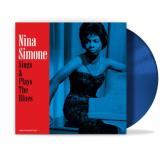
NINA SIMONE - SINGS & PLAYS THE BLUES LP
  • A1: I Want A Little Sugar In My Bowl
  • A2: House Of The Rising Sun
  • A3: Central Park Blues
  • A4: I Got It Bad
  • A5: Gin House Blues
  • A6: Come On Back, Jack
  • B1: Mood Indigo
  • B2: Nina’s Blues (Live)
  • B3: No Good Man
  • B4: Nobody Knows When You’re Down And Out
  • B5: Rags And Old Iron
  • B6: Work Song
  • B7: You’ve Been Gone Too Long

There can be no doubt that Nina Simone was one of the great Black American women who bridged the movement from Blues and R&B to Soul. She was nicknamed 'The High Priestess Of Soul' and spoken of in the same awed tones as the likes of Etta James, Aretha Franklin and Ruth Brown, but in so many ways she trumps all of them with her musicality and versatility. This release emphasizes her bluesier side

pre-order now12.09.2025

expected to be published on 12.09.2025

Various - Dolores: Salsa & Guaracha From 70's French West Indies

In Guadeloupe, many people think that jazz and ka music are like a ring and a finger. To some extent, the same could be said about so called Latin music and the music played in the French West Indies.

Both aesthetics were born in the Caribbean and bear so many connections that they can easily be considered cousins. In constant dialogue, there are lots of examples of their fruitful alliance and have been for a while. The English country dance that used to be practiced in European lounges came to be called kadrille in Martinique and contradanza in Cuba. They both featured additional percussion instruments inherited from the transatlantic deportation. Drawing from shared feelings about the same traumatized identity – later to be creolized – it would be hard not to assume that they were meant to inspire each other. The golden age of the orchestras that graced the Pigalle nights during the interwar period further proves the point. As soon as the 1930s, Havana-born Don Barreto naturally mixed danzón and biguine music in a combo based at Melody's Bar. In the following decade, Félix Valvert, a conductor who was born and raised in Basse-Terre in Guadelupe, also worked wonders in Montparnasse with La Coupole, which was an orchestra made up of eclectic musicians. Afro- Caribbean performers of various origins were often hired on rhythm and brass sections in jazz bands, which used to enliven the typical French balls of the capital. In the 1930s and onwards, Rico’s Creole Band was one of them.


Martinican violinist-clarinettist Ernest Léardée, who would become the king of biguine music as well as the main figure of French Uncle Ben's TV commercials (a dark stigma of post-colonial stereotypes), had musicians from the whole Caribbean sphere play at his Bal Blomet – and they all enchanted "ces Zazous-là" (according the words of Léardée's biguine-calypso piece). In les Antilles (French for French West Indies), music history started to speed up in the 1950s, when trade expanded and radio stations grew bigger. The Guadelupean and Martiniquais youth tuned in their old galena radio sets to South American and Caribbean music. As for the women traders, les pacotilleuses, they bought and sold goods across different islands (the "passing of items through various hands" was thought to be most pleasurable) and brought back countless sounds in their luggage. Such was the case of Madame Balthazar, who once returned from Puerto Rico with the first 45rpm and 33rpm to ever enter Martinique.

Out of this adventure was created the famous Martinican label La Maison des Merengues, a music business she opened and undertook with her husband and which proved to be a major landmark. At the end of the 1950s, in Puerto Rico, Marius Cultier competed in the Piano International Contest playing a version of Monk's Round 'Midnight. He won the first prize and this distinction foreshadowed everything that was to come. Cultier, the heretic Monk of jazz, was quickly praised for writing superb melodies, always tinged with a twist that conferred a unique sound to his music. It didn't take long for the gifted self-taught musician to get to play with Los Cubanos, making a name for himself thanks to his impressive maestria on merengues.

The rest is history. Besides, in the late 1950s, Frantz Charles-Denis, born into the upper middle class in Saint-Pierre and better known by his first name Francisco, went back home after working at La Cabane Cubaine – a club located rue Fontaine where he had caught the Latin fever. Francisco's music was therefore heavily marked by his Cuban cousins' influence, which gave the combos he led a specific style and also led to renewal. Things were swinging hard in La Savane, located in the main square in Fort-de-France. He set up the Shango club close by and tested out the biguine lélé there, a new music formula spiced up with Latin rhythms. Soon afterwards, fate had him fly to Puerto Rico and Venezuela.

As for percussionist Henri Guédon (percussions were only a part of his many talents), he was born in Fort-de-France in May 22nd 1944, the day marking the celebration of the abolition of slavery. As an old man, he could remember that in " his father's Teppaz, a lot of hectic 6/8 music was constantly playing...". In the opening lines of his Lettre à Dizzy, a small illustrated collection of writings published by Del Arco, he highlighted the huge impact that cubop had on him as a teenage boy, around 1960. He eventually turned out to be the lider maximo in La Contesta, a big band steeped in Latin jazz. He was also the one who originated the word zouk to describe music which brought the sound of the New York barrio to Paris. It was the culmination of a journey that started in Sainte-Marie: "a mythical place for bélé, the equivalent of Cuban guaguancó". In the early 1960s, the tertiary economy developed to the detriment of agriculture. Yet rural life was where roots music emerged in Martinique and in Guadeloupe.

Record companies played a major part in the process of Latin versions sweeping across the islands – before reaching everywhere else. Producer Célini, boss of the great Aux Ondes label, and Marcel Mavounzy, both the head of Émeraude records - a firm which was founded in 1953 - as well as the brother of famous saxophonist Robert Mavounzy, were big names to bear in mind. Although there were many of them - all of whom are featured on this record - Henri Debs was definitely the major figure in the recording adventure. He proved to be so influential that he even got compared to Berry Gordy. In the mid 1950s, when he acquired his first Teppaz, he worked on his first compositions: a bolero and a chachacha. Then, he became the one man who made people discover Caribbean music, from calypso to merengue. He was among the first ones to rush out to San Juan, Puerto Rico, to buy records and distribute them through a store run by one of his brothers in Fort-de-France. He had members of the Fania All Star come and perform there, which he was madly proud about. He was also the first one to pay attention to Haitian music, such as compas direct and various other rhythms which would soon flood the market. As a result, many of the combos hitting his legendary studio would end up boosted by widespread "Afro-Latin" rhythms. However, he never denied his identity: gwo ka drums were given a major role, although they were instruments which had long been banned from the "official" music spheres. The present selection bears witness to such a creative swarming. Here are fourteen tracks of untimely yet unprecedented cross-fertilization: all types of music rooted in the Creole archipelago have found their way, whatsoever, to the tracklisting. Whether originating from the city or being more rural, they all go back to what Edouard Glissant, in an interview about the place of West Indian music in the Afro-American scope, called "the trace of singing, the one which got erased by slavery." "It is so in jazz, but also in reggae, calypso, biguine, salsa... This trace also manifests through the drums, whether Guadelupean, Dominican, Jamaican or Cuban... None of them being quite the same. They all point to the idea of a trace, seeking it out and connecting to each other through it. This is the hallmark of the African diaspora: its ability to create something new, in relation to itself, out of a trace. It may be the memory of a rhythm, the crafting of a drum, a means of expression which doesn't resort to an old language but to the modalities of it." The opening track features one of the emblematic orchestras of this aesthetic identity, criscrossing many music types from the archipelago. The 1974 Ray Barretto guajira – Ray Barretto was a major New York drummer influenced by Charlie Parker and Chano Pozzo – is magnificently performed by Malavoi, a legendary Fayolais group (i.e from Fort-de-France). Additionally, the compilation ends on a piece by Los Martiniqueños de Francisco. It symbolically closes the circle as it is a genuine potomitan of Martinique culture which also functions as a tireless campaigner for Afro-Caribbean music. Practicing the danmyé rounds (a kind of capoeiria) to the rhythm of the bèlè drum, it delivers a terrific Caterete, a kind of champeta of Afro- Colombian obedience which was originally composed by Colombian Fabián Ramón Veloz Fernández for the group Wgenda Kenya. The icing on the cake is Brazilian Marku Ribas, who found refuge in Martinique in the early 1970s, bringing his singing to the last trance-inducing track. These two "versions" convey the whole tone of a selection composed of rarities and classics of the tropicalized genre, swarming with tonic accents and convoluted rhythms. It is the sort of cocktail that the West Indians never failed to spice up with their own ingredients. For instance, the Los Caraïbes cover of Dónde, a famous Cuban theme composed by producer Ernesto Duarte Brito, has a typical violin and features renowned Martinique singer Joby Valente and his piquant voice.


The track used to be – or so we think – their only existing 45rpm. The meaningful Amor en chachachá by L'Ensemble Tropicana, a band which included Haitian musicians among whom was composer and leader Michel Desgrotte, also recalls how Latin music was pervasive in the tropics in the mid-1960s. They were the ones keeping people dancing at Le Cocoteraie in Guadelupe and La Bananeraie in Martinique. Around the same time, another "foreign" band, Congolese Freddy Mars N'Kounkou's Ryco Jazz, achieved some success on both islands by covering Latin jazz classics – such as their adaptation of Wachi Wara, a "soul sauce" by Dizzy Gillespie and Chano Pozo whose interweaving of strings and percussions can have anyone hit the dancefloor. How can you resist Dap Pinian indeed, a powerful guaguancó by Eugene Balthazar, performed by the Tropicana Orchestra and published by the Martinique-founded La Maison des Merengues? It also acts as a symbol of the maelstrom at work. Going by the name Paco et L'orchestre Cachunga, Roger Jaffory used to play guaguancó too: his Fania-inspired Oye mi consejo is one example of his style. Baila!!!!! Dancing was also one of the Kings' focus points. Oriza is a Puerto Rican bomba and a "classic" originally composed by Nuevayorquino trumpeter Ernie Agosto, which reserves major space for brasses, giving it a special sheen.

Emerging from the New York barrios crucible was also La Perfecta, a Martinique group originating from Trinidad, whose name directly references the totemic Eddie Palmieri figure as well as his own band, also called La Perfecta. Here they borrow Toumbadora from Colombian producer and composer Efraín Lancheros and interpret it by emphasizing percussions, which set fire to the track even more than the wind instruments. The same goes for Martinique's Super Jaguars, who use Tatalibaba – a composition by Cuban guitarist Florencio "Picolo" Santana which was made famous by Celia Cruz & La Sonora Matencera – as a pretext for sending their cadences into a frenzy. In a more typically salsa vein, the Super Combo, a famous Guadelupean orchestra from Pointe-Noire that was formed around the Desplan family and had Roger Plonquitte and Elie Bianay on board, adapt Serana, a theme by Roberto Angleró Pepín, a Puerto Rican composer, singer and musician also known for his song Soy Boricua. Here again, their vision comes close to surpassing the original. In the 1970s, L'Ensemble Abricot provided a handful of tracks of different syles, hence reaching the pinnacle of the art of achieving variety and giving pleasure. They played boleros, biguines, compas direct, guaguancó and even a good old boogaloo - the type they wanted to keep close to their hearts for ever, "pour toujours", as they sang along together in one of their songs. Léon Bertide's Martinican ensemble excelled at the boogaloo which had been composed by Puerto Rican saxophonist Hector Santos for the legendary El Gran Combo.


Three years later, in 1972, Henri Guédon, with the help of Paul Rosine on the vibraphone, tackled the Bilongo made famous by Eddie Palmieri. Such a classic!!!!! And so were the Aiglons, the band from Guadelupe: choosing to execute Pensando en tí, a composition by Dominican Aniceto Batista, on a cooler tempo than the original, they noticeably used a wonderfully (un)tuned keyboard in place of the accordion. On the high-value collectible single – the first one released by Les Aiglons under the Duli Disc label – there is a sticker classifying the track under the generic name "Afro". Now that is what we call a symbol. Jacques Denis

out of Stock

Order now and we will order the item for you at our supplier.


Last In: 33 days ago
The Beatles - Live From Canada 1964 – Vancouver August 22nd LP
  • A1: Introduction
  • A2: Twist And Shout
  • A3: You Can't Do That
  • A4: All My Loving
  • 5: She Loves You
  • 6: Things We Said Today
  • 7: Roll Over Beethoven
  • 8: Can't Buy Me Love
  • 9: If I Fell
  • Side Two
  • 1: Boys
  • 2: A Hard Day's Night
  • 3: Long Tall Sally
  • 4: Vancouver Press Conference

20,000 fans were there for The Beatles’ first appearance in Canada at the open-air Empire Stadium, Vancouver. The boys’ set lasted just under half an hour and they forgot to play ‘I Want To Hold Your Hand’. The show was broadcast live by local radio station CKWX and the engineer only got the balance right on the fourth song, the vocals on the previous songs had too much distortion. It almost didn’t happen as the airline pilot didn’t have the correct paperwork for entering Canada, and the group only got to the venue at 9.15pm. The fans loved it but the critics were less impressed. “Seldom in Vancouver’s entertainment history have so many paid so much for so little” said Jack Wasserman, covering for Owl Prowl radio show.

pre-order now05.09.2025

expected to be published on 05.09.2025

S.T - Oslan Husein LP

S.T

Oslan Husein LP

12inchLMR023
Lamunai Records
05.09.2025

In truth, singing is not all that different from acting. Performing a song is very similar to playing a role in a theatrical production. A singer's delivery — the way they interpret and emphasize certain parts of a song — is much like what an actor does with their character.

That's why we often find singers who go on to gain popularity as performers — some on stage, but more often on the silver screen (film).

These are called 'singing stars' — vocalists who are also featured actors, usually given roles specially created to suit their primary strength: singing.

Among them, a few have become even more famous for their acting talents, which sometimes surpass their singing ability. However, the number who manage to do this successfully is very small. Oslan Husein is lucky enough to be counted among that small number. As his fame as a singer began to rise sharply, he also began his film career as an actor. It's true that he had previously appeared in a film, but only as an extra, alongside the orchestra he performed with.

Following that, he appeared in several other films, including Detik-detik Berbahaya, 1000 Langkah, Kasih Tak Sampai, Hadiah 2.000.000,-, Maut Menjelang Magrib, and Antara Timur dan Barat. Six films over a span of just about 2.5 years — quite an impressive achievement.

Over time, a number of songs that Oslan had performed in his films began to accumulate. Together with a few additional songs — also from films — there were eventually enough to compile into one long-playing (LP) record.

And so, accompanied by Jack Lemmers — who, for this project, created special arrangements and musical treatments unlike the usual (for example, the use of four guitars at once) — Oslan carried out the recordings at Irama studios.

By releasing this LP of songs from the silver screen, Irama took an exciting step forward and opened many new possibilities in its history. Because the world of recorded music and the world of film, wherever they are in the world, are like siblings — and they work best when they collaborate, shoulder to shoulder, in harmony.

pre-order now05.09.2025

expected to be published on 05.09.2025

Miles Davis - Sketches Of Spain LP
  • A1: Concierto De Aranjuez
  • A2: Will O’ The Wisp
  • B1: The Pan Piper
  • B2: Saeta
  • B3: Solea

Miles Davis' Final Collaboration with Arranger Gil Evans Yields Watershed Innovations: Flamenco-Themed Sketches of Spain Spins Graceful Webs of Sound and Emotion Mobile Fidelity's UltraDisc One-Step 180g 33RPM LP Set Brings Out the Record's Full Spectrum of Color: 65th Anniversary Edition Pressed at Fidelity Record Pressing and Strictly Limited to 5,000 Numbered Copies 1/4" / 15 IPS analogue master to DSD 64 to analogue console to lathe Miles Davis and Gil Evans bridged styles and collaborated on high-concept projects three different times during their celebrated careers. For their final act, they created Sketches of Spain, a peak moment in each luminary's legacy.

The transformative album weds Spanish themes, lush orchestrations, romantic timbres, and Davis' lyrical methods in a tender ceremony that resonates more than six decades after its original release. Part of Mobile Fidelity's Miles Davis restoration series, this 1960 landmark has been afforded the ultimate white-gloves treatment for its 65th anniversary. Sourced from the original master tapes, strictly limited to 5,000 numbered copies, and pressed at Fidelity Record Pressing, this UltraDisc One-Step 33RPM 180g LP set dramatically expands the soundstages and eradicates a dryness that many critics found inhibitive to the record's enjoyment. You can now hear the full-range responsiveness of the woodwinds, strings, and percussion, all of which come alive with superior definition and detail.

The beautiful presentation of this UD1S set befits the record's historical importance. Housed in a deluxe slipcase, it features a special foil-stamped jacket and faithful-to-the-original graphics that illuminate the splendor of the 1960 LP. This reissue is made for discerning listeners who desire to fully immerse themselves with the album. And who wouldn't want to go deep with Sketches of Spain? Whether it is the somber mood piece "Concierto de Aranjuez," renowned for Davis' flugelhorn performance, or the folktale-based "Solea," Sketches of Spain transfixes with playing, ideas, and innovations exclusive to this incomparable effort. It's one reason why Mobile Fidelity's engineers took all available measures to insert listeners into the space originally occupied by Davis, bassist Paul Chambers, drummer Jimmy Cobb, percussionist Elvin Jones, and an 18-piece orchestra. The results are as breathtaking as the music.

Multi-note motifs, brief improvisational solos, fanfare sweeps, and contrapuntal exchanges inform flamenco-spiced pieces. Davis' famous Harmon-muted trumpet is complemented by an assortment of bassoons and French horns. Heard together, they create pleasing contrasts and sounds (pp, mf, ppp) that get to what resides at the heart of Sketches of Spain: color. Seldom, if ever, did Davis ever so expressively and liberally paint with color. And in Evans, he has a likewise-minded partner to help draw out tones, shades, layers, and textures. What they achieved continues to draw praise from the global music community in the 21st century. Ranked #358 on Rolling Stone's 500 Greatest Albums of All Time, deemed "a work of unparalleled grace and lyricism" by noted scribe J.D. Considine, bestowed a five-star review from DownBeat, and noted by Q to have taken "jazz in a new direction," the Grammy Award-winning effort has never been better.Miles Davis' Final Collaboration with Arranger Gil Evans Yields Watershed Innovations: Flamenco-Themed Sketches of Spain Spins Graceful Webs of Sound and Emotion Mobile Fidelity's UltraDisc One-Step 180g 33RPM LP Set Brings Out the Record's Full Spectrum of Color: 65th Anniversary Edition Pressed at Fidelity Record Pressing and Strictly Limited to 5,000 Numbered Copies 1/4" / 15 IPS analogue master to DSD 64 to analogue console to lathe Miles Davis and Gil Evans bridged styles and collaborated on high-concept projects three different times during their celebrated careers.

For their final act, they created Sketches of Spain, a peak moment in each luminary's legacy. The transformative album weds Spanish themes, lush orchestrations, romantic timbres, and Davis' lyrical methods in a tender ceremony that resonates more than six decades after its original release. Part of Mobile Fidelity's Miles Davis restoration series, this 1960 landmark has been afforded the ultimate white-gloves treatment for its 65th anniversary. Sourced from the original master tapes, strictly limited to 5,000 numbered copies, and pressed at Fidelity Record Pressing, this UltraDisc One-Step 33RPM 180g LP set dramatically expands the soundstages and eradicates a dryness that many critics found inhibitive to the record's enjoyment. You can now hear the full-range responsiveness of the woodwinds, strings, and percussion, all of which come alive with superior definition and detail. The beautiful presentation of this UD1S set befits the record's historical importance. Housed in a deluxe slipcase, it features a special foil-stamped jacket and faithful-to-the-original graphics that illuminate the splendor of the 1960 LP.

This reissue is made for discerning listeners who desire to fully immerse themselves with the album. And who wouldn't want to go deep with Sketches of Spain? Whether it is the somber mood piece "Concierto de Aranjuez," renowned for Davis' flugelhorn performance, or the folktale-based "Solea," Sketches of Spain transfixes with playing, ideas, and innovations exclusive to this incomparable effort. It's one reason why Mobile Fidelity's engineers took all available measures to insert listeners into the space originally occupied by Davis, bassist Paul Chambers, drummer Jimmy Cobb, percussionist Elvin Jones, and an 18-piece orchestra. The results are as breathtaking as the music. Multi-note motifs, brief improvisational solos, fanfare sweeps, and contrapuntal exchanges inform flamenco-spiced pieces. Davis' famous Harmon-muted trumpet is complemented by an assortment of bassoons and French horns. Heard together, they create pleasing contrasts and sounds (pp, mf, ppp) that get to what resides at the heart of Sketches of Spain: color. Seldom, if ever, did Davis ever so expressively and liberally paint with color. And in Evans, he has a likewise-minded partner to help draw out tones, shades, layers, and textures. What they achieved continues to draw praise from the global music community in the 21st century. Ranked #358 on Rolling Stone's 500 Greatest Albums of All Time, deemed "a work of unparalleled grace and lyricism" by noted scribe J.D. Considine, bestowed a five-star review from DownBeat, and noted by Q to have taken "jazz in a new direction," the Grammy Award-winning effort has never been better.

pre-order now30.08.2025

expected to be published on 30.08.2025

Soulox & Soneido - FR041

Following on from FR023, Soulox & Soeneido are back once again on Future Retro London with a solid 2 tracker release. They sent me "It Been" last year, shortly after their first release had gone into manufacture and I really liked the tune and was playing it a lot in DJ sets but I didn't really have any plans to release it.

At the same time, I remember there being a track in Phineus II's set from the Future Retro London event that took place in February 2023 and I really really liked it but had no idea who it was by. When I later found out it was by Soulox & Soeneido and it was called "Why", it give me the idea for this release as neither track was signed to any other label and I felt that both tracks needed to see the light of day.

Big ups to the both of them on their solid output & many thanks to Shireen for the design of the b-side artwork.

out of Stock

Order now and we will order the item for you at our supplier.


Last In: 7 months ago
Westbam feat. Richard Butler - You Need The Drugs (&ME Remix)

2025 Repress! Very Limited!!

Chances are, you've heard this new offering by &ME before. He installed it within his last touring months as one of his most sought after and unsuccessfully shazamed set-highlights. And then again, you know the source material, he is taking on, Westbam's 2013 classic "You Need The Drugs" featuring Psychedelic Fur's own Richard Butler.
While the original is the utmost hymnal embodiment of that desolate, yet somewhat glorious afterhour exhaustion, many of us know all too well, &ME's take comes off as a preservation of that intense emotive sentiment of the tune in conjunction with an amplified floor-suited effectiveness. It shows in the beat, flexing a bit more muscle, in that simplified and more present bassline and in the overall dynamic arrangement. &ME takes the tune out of the car stereo of a 7 am cab-ride back into the club, right on a sweat-drenched and jam packed dancefloor, so to say.

out of Stock

Order now and we will order the item for you at our supplier.


Last In: 5 months ago
Various - Habibi Funk: A Selection From Libyan Tapes (LP 3x12")

Habibi Funk is more than happy to announce our 31st release which happens to be our 3rd various artists compilation. The album is dedicated to the cassette tape scene in Libya from the late 80s to early 2000s, from disco to reggae to pop. All songs previously unreleased outside of Libya and not available on any DSP platforms.

This compilation isn’t a sweeping history of Libyan music — it’s a personal journey into the sounds we fell in love with while digging through tapes, conversations, and stories across Libya and beyond. Rather than spotlighting the country’s most famous musical exports, the compilation brings forward a mix of overlooked gems and local classics of the cassette era: artists whose work thrived despite political limitations, and scarce international exposure. The music featured here blends reggae rhythms, synthy disco grooves, gritty pop, house, and funk, a vibrant collision of genres that reflects Libya’s unique sonic landscape from the 1980s to the early 2000s. Many of these recordings were recovered from the TK7 cassette factory in Sousse, Tunisia, a now-demolished site that once played a quiet but vital role in distributing and manufacturing Libyan music. Other tracks were digitised in a Cairo hotel room in 2021, where we transferred nearly 100 tapes over the course of three days, on-site using a high-grade cassette deck brought into Egypt with us. From that trove emerged artists like Ahmed Ben Ali, Cheb Bakr, and Najib Alhoush & The Free Music, who have already featured on our earlier releases. Their sounds sit alongside contributions from this release from the likes of Khaled Al Melody, Fathi Aldiyqz & Sons of Africa Band, City Lights Band, Libya Music Band, and Group Hewaya. During this era, Independent artists relied on makeshift home studios or travelled abroad to record in Tunisia and Egypt, gradually building their own infrastructures for creativity. By the 90s and early 2000s, as access to digital equipment increased, a few of the artists began setting up their own studios — a shift that gave rise to a more self-sufficient recording culture across the country. The resulting sounds are anything but homogeneous. They reflect Libya’s geographic and cultural crossroads: North African rhythms meet Arab melodies and deep African roots. Reggae, in particular, took on a local Libyan flavour — not just musically, through the slowed-down cadence of traditional shaabi beats, but socially, as a vehicle for expressing identity and pride. What ties all the artists on this comp together is a boundary- pushing approach to genre and style: recorded in small studios, exchanged by hand, and shaped by a cross-pollination of influences, from Benghazi to Tripoli and beyond. All tracks are licensed from their creators and in the case of the artists being deceased from their estates. All profits are being split 50:50 between us in the licensors and ownership remains with the creators, we only licensed the music.

out of Stock

Order now and we will order the item for you at our supplier.


Last In: 4 months ago
Eve Adams - American Dust LP

Eve Adams

American Dust LP

12inchBR023LP
Basin Rock
22.08.2025

"Astral Americana hymns hovering somewhere between the dirt and the stars" Pitchfork

"Mood music for moments of solitude, best experienced without distraction" The Times

"Overwhelmingly effective and ravishingly beautiful" The Wire

American Dust is an ode to the beauty of the American Southwest, where vast desert landscapes hold stories both stark and tender. Eve Adams’ characteristic folk noir weaves a vivid tapestry of love, sacrifice and quiet revelation, conjuring images of dust storms, stray dogs and far off trains.

The high desert of California is a vast and confounding place. Equally inspiring as it is punishing, it’s a landscape that carries magic in its deep dark nights, holding stories both tender and stark in the coarse layer of dust that settles upon everything. It’s long been a source of inspiration for musicians, writers, and painters, each of them adding to the same current, carried forward over time, through hope and hardship and the passing years.

Somewhere out there in that broad and boundless landscape, Eve Adams has been living her own desert life, quietly writing the follow-up to 2021’s Metal Bird LP. Where that album sang of liminal space, the dream-like turbulence of Hollywood’s golden age, American Dust is far more rooted in traditional storytelling; a eulogy for the American Dream channeled through that sweeping part of the country that holds such power and mystery. Slipping into different and varied costumes throughout its ten songs, it finds Eve not just observing the people around her but stepping into their shoes and peeling back the layers of their quiet lives.

Adams writes from within. A few years ago she moved out there, to “the middle of nowhere”, finding a slowness that didn’t exist in the city, and she knows only too well about the mystical nature of the land and those who live within it. Weaving together themes of grit and romance, American Dust holds its focus on the bittersweet poetry of lives lived in solitude, most notably the women who sustain life at the center of it all. “There’s something very radical about domestic life,” Adams says of this thread. “So many women live their entire lives behind closed doors, completely in the shadows. Within those lives is such sacrifice, devotion, and love. I wanted to honor that: the poetry in the mundane, the longing in the repetition. The way love survives boredom and dust and time.”

Eve is joined on American Dust by Canadian musician Bryce Cloghesy, aka Military Genius of Crack Cloud, who plays throughout and also helped produce the album. Musically bold and vivid, it’s an ambitious and detailed stride forward from what’s come before, the scope of the LP’s narrative reflected in the radiant sweep of the playing. On top of gentle piano and guitar, gorgeous strings drift through the album, lending the songs a woozy sense of romanticism; a collaboration with Gamaliel Traynor (Cello) and Caroline’s Oliver Hamilton (Violin).

For all the drama that’s coiled around these songs, it’s the recurring notion of love and hope fighting against everything that holds true throughout American Dust. Musically it’s lush and vibrant, intimate and cinematic side by side, and always bursting with warmth. But it’s what it holds in its weary bones that elevates it to something truly special, something more than just a collection of songs penned in the heart of the desert. The characters it speaks of, and from, feel shadowed but wholly real, like they’re bursting to share their stories that have remained hidden for years and years and they allow Eve Adams to grow as a songwriter right in front of our eyes.

“The same swirling dust that clung to the covered wagons of my ancestors as they crossed the Great American Desert is the same dust my great-great-grandmother swept off her porch during the Dust Bowl of 1936 in Oklahoma, is the same dust that blows in through the cracks in my windows here in the desert, carrying stories from a time long gone,” Eve says, reflecting on the personal narrative that runs through her new album.

“It’s not just dust—it’s American Dust, the kind that settles into the bones of a family and never leaves. I think about that dust as a symbol of the passage of time. I hope this album will be part of that same current, carrying forward for the next generations of my family to find. I’ve been lucky enough to have journals and poetry from my ancestors that documents their lives during times of pure hope and pure hardship. I’d like to think of this album as a contribution to that family history.”

pre-order now22.08.2025

expected to be published on 22.08.2025

GBC - The Message – Edit / Breath & Stop

ULURU is a large sandstone rock formation in Australia. It's sacred to the Anangu, the local Indigenous of the area. For many years it had been deprived of its spiritual significance, due to mass tourism, capitalism, as well as greedy and selfishness of people who just want to make money out of it. However, as a result of the Anangu’s resilience, care and staunchness, huge changes took place in the national park around Uluru as well as in the broader public's consciousness, giving again to the Uluru the sacred identity that had been lost.
You might be reading and thinking now: so what's the point? Actually, there's no real point. I would rather say, there’s hope. The hope of seeing humans all around the world following the example of the Anangu. The hope of seeing humans finally stopping to treat the earth and all what’s part of it, what’s on and what’s in it, as a slave without soul. The hope of changing today, and if not today at latest by tomorrow. This system is failing. It's no longer sustainable, and there's no much time left. So everybody, don't sleep, be critical.

out of Stock

Order now and we will order the item for you at our supplier.


Last In: 67 days ago
GBC - The Message – Edit / Breath & Stop

ULURU is a large sandstone rock formation in Australia. It's sacred to the Anangu, the local Indigenous of the area. For many years it had been deprived of its spiritual significance, due to mass tourism, capitalism, as well as greedy and selfishness of people who just want to make money out of it. However, as a result of the Anangu’s resilience, care and staunchness, huge changes took place in the national park around Uluru as well as in the broader public's consciousness, giving again to the Uluru the sacred identity that had been lost.
You might be reading and thinking now: so what's the point? Actually, there's no real point. I would rather say, there’s hope. The hope of seeing humans all around the world following the example of the Anangu. The hope of seeing humans finally stopping to treat the earth and all what’s part of it, what’s on and what’s in it, as a slave without soul. The hope of changing today, and if not today at latest by tomorrow. This system is failing. It's no longer sustainable, and there's no much time left. So everybody, don't sleep, be critical.

out of Stock

Order now and we will order the item for you at our supplier.


Last In: 3 months ago
PHARMAKON - MAGGOT MASS

Maggot Mass, the fifth full-length album by Pharmakon on Sacred Bones Records, marks the project's return after a five-year hiatus. This album signifies a departure from the original rules and structures established by Margaret Chardiet for Pharmakon, evolving into a new form. It retains the project's experimental roots in power electronics and noise while incorporating industrial and punk influences. The album stems from a profound disgust with humanity's dysfunctional relationship with the environment and other life forms. It explores the loneliness resulting from this broken bond and challenges us to acknowledge our personal and systemic responsibility. What peace can we make with privilege when the true cost of our comfort is not measured in dollars but in death? How can we reconcile with death when we impose the same hierarchical structures on it that we do in life? Is life worth living in the isolation of this self-imposed species loneliness? Humans often measure worth by accumulation _ money, assets, objects _ mistaking this for power and influence. Western heritage dictates a hierarchy, placing humans at the top, separate from the natural world. This delusion turns bodies into objects, land into property, and people into expendable tools. If our value were instead determined by our contribution to the ecosystem, who could claim that a human is more valuable than a maggot? Maggots recycle death into life, breaking down matter and nourishing new growth. They transform into flies, pollinating plants and sustaining the Earth's flora. In contrast, humans pollute rather than pollinate, with a select few profiting from exploitation at the expense of biodiversity and the well-being of many. In grappling with grief and loss on both personal and global scales, Margaret sought solace in the idea of rebirth through death, celebrating the beauty of regeneration through decay. However, she had to confront the stark reality of the disconnection from the earth under oppressive systems. Pharmakon is here imagining a path where the final act is to give back what was received from creation, offering our lives and deaths to sustain existence. once I slough off this human skin I will find my home and ancestral kin_ in the coffin-birth of my cadaver's ecosystem

out of Stock

Order now and we will order the item for you at our supplier.


Last In: 8 months ago
Giuseppe Ielasi / Jack Sheen - The Vestige LP

The Vestige is the first fruit of a new intergenerational collaboration between Giuseppe Ielasi, a quietly prolific key contributor to the European experimental music scene for over twenty years, and Jack Sheen, a young composer-conductor-sound artist from Manchester whose recent projects have seen him moving seamlessly from enigmatic chamber music composition and installations to conducting the London Symphony Orchestra. Their materials and working methods differ significantly, with Ielasi having focussed for many years on electro-acoustic techniques alongside his ongoing commitment to the guitar, and Sheen primarily composing for traditional instruments. More important, though, is what they share: a fascination with what Sheen calls “mysterious, liminal musical material,” using irregular repetition and cyclical forms to create structures at once alive with activity and almost static, as well as a rigorous exploration of spatial diffusion and the interaction of sound event and environment. Working individually with a library of acoustic instrument sounds from Sheen’s recent projects and Ielasi’s guitar, the pair eventually met for several days at Ielasi’s home studio in Monza, sculpting the fourteen pieces that make up The Vestige. Like Ielasi and Sheen’s solo works, the record shows an exquisite attention to details of sequencing and pacing, the sound palette and compositional approach consistent throughout while each piece asserts its own identity. The twenty-five seconds of the opening piece serve as an entrée into the record’s distinctive world of sound: repeated chirps fluctuate in volume as they move across the stereo spectrum, woven between strangled snatches of string glissando against a backdrop of percussive ticks, long tones, and white noise. Across the remaining thirteen pieces, Ielasi and Sheen sketch further dimensions of the ambiguous space, where distinctions between pitch and noise, repetition and irregularity, electronic and acoustic remain pointedly unclear. As the record’s title suggests, the origins of the sounds we hear have become remote: while at moments we get flashes of timbres and attacks that could come from wind instruments, bowed strings, or prepared guitar, these remain vestigial traces, glimpsed through a veil of shifting white noise textures. These textures are themselves difficult to trace, suggesting artefacts of the recording process, electronic synthesis, amplified room sound, rubbed instruments or objects. The Vestige shows an unusual degree of attention to frequency range as a compositional tool, something it shares with the hyper-subtle variations of Ielasi’s electroacoustic works and the deliberately ‘unbalanced’ midrange-heavy ensemble of Sheen’s Sub. Here, movement between episodes is as much about adding or removing a frequency band as it is about changes in density, harmonic content, or instrumental texture. Tracks are marked by the sudden appearance of subbass or exaggeration of high frequencies in otherwise similar material, contributing to our sense that these fourteen pieces are like different views on a scene that we can never quite see clearly. While calling up a range of past music, from the early works of Rolf Julius to Simha Arom’s recordings of layered polyrhythms embedded in the background sounds of central African villages to the temporal distortions and layered hiss of DJ Screw, the alluring and disconcerting world of The Vestige is entirely its own.

out of Stock

Order now and we will order the item for you at our supplier.


Last In: 8 months ago
Various - Maybe I'm Dreaming LP 2x12"

‘Maybe I’m Dreaming’ is the latest collection selected by Mikey Young (Total Control, EddyCurrent Suppression Ring) and Keith Abrahamsson (Founder and Head of A&R at AnthologyRecordings), the mangled minds behind the beloved ‘Follow the Sun’, ‘Sad About the Times’,and ‘…Still Sad’ compilations. The twenty tracks of ‘Maybe I’m Dreaming’ make a conscious(and unconscious) detour from its predecessors, sourced entirely from private press releases,spanning new decades and production modes within homespun folk, soft rock and otherwise70s and 80s FM radio adjacent music.  The magic of ‘Maybe I’m Dreaming’ is the untold story of the artists behind these songs; thosewho missed the big time, but whose song craft and unrequited care hit the right notes, bothhigh and low.
Where ‘Follow the Sun’ and ‘Sad About the Times’ introduced us to the fame chasing, ambitioncrashing crooners who missed their shot in the mainstream, ‘Maybe I’m Dreaming’ delvesdeeper into the isolated wilds - a private world where production quirks, late-night tape hiss andone-man studio dreams were not necessarily a choice but the hand that was dealt.
With the parameters set to ‘private press only’, Young and Abrahamsson follow a circuitous trailof invention and emotion, documenting a spirit that’s more homespun, sometimes lonelier andoften a little weirder. The guitars still strum, but the keyboards’ hum is more prevalent andprecious; wistful harmonies brush up against lo-fi drum machines; a bittersweet fog lingeringover even the brightest melodies.
As with their previous collaborations, Young and Abrahamsson weren’t interested inconstructing a museum or drafting a historical survey. ‘Maybe I’m Dreaming’ is a sentimentalmixtape, assembled late at night when the mind wanders and old memories blur with imaginedfutures, those within reach and those far too mysterious to ever encounter. Songs wereunearthed in personal collections, deep YouTube burrows, dilapidated web archives and thedim corners of Discogs, with many selections tied not only to intuition but to personalconnection.  Some tracks arrived via friends - Kelley Stoltz, a frequent guide for Young, tipped him off toboth Peter Kraemer’s lost gem ‘Let the Light Slip’ and Awakening’s revelatory closer - addingan unseen but deeply felt thread of camaraderie to the compilation.
The journey takes in a wide, strange sweep: The Watson Brothers Band’s ‘Just Whistle’ opensthe collection with a sigh and a shrug, a song that feels like it’s been waiting for decades to beheard again. Jim Huxley’s ‘Tessa on a Magazine’, rediscovered after a long and winding searchby Young, shimmers with a distinctly Australian melancholia. The heartbreak of Rick Penta’s‘My Story Changes’ and Twice As Nice’s delicate ‘Thoughts of You’ float easily alongside themore buoyant, radio-dream sheen of Barracuda’s ‘Baby I Love You’ and MAK’s sunshinedappled ‘That’s Life’.
Widening the aperture to the late 1970s and early 1980s allows for a deeper exploration intoevolving production techniques and musical technologies. The Squad’s ‘D.L.M.H.I.M.A.’ andChristoph Spendel Group’s ‘Forever’ crackle with the kind of bedroom synth warmth that couldonly come from the analogue age, while the soulful, yearning undercurrent of Awakening’s‘Gotta Do Somethin / Might As Well Cultivate’ caps the collection with a call for action - ormaybe just acceptance - in an accidental Brian Eno ‘Here Come the Warm Jets’ parroting.
While ‘Maybe I’m Dreaming’ moves away from the ‘sad man with guitar’ archetype that hoveredover its predecessors, it remains tethered to a familiar emotional gravity - a balance of longingand lightness that defines this corner of the musical universe. Each track shuffles gentlybetween resignation and hope, sadness and serenity, as if the artists themselves were chasinga dream just beyond reach, recording not for fame but for the simple act of getting it, thatprimal, creative itch, out into the world.
Available on CD and 2LP, featuring the third eye-opening artwork of Dang Wayne Olsen. Thedouble LP set arrives in an outrageous double-wide spine jacket with printed inners and adream journal entry by Pacific Northwest artifactual authority Josh Lewellen.

out of Stock

Order now and we will order the item for you at our supplier.


Last In: 8 months ago
SWEET - PLATINUM RARE 2 2x12"

SWEET

PLATINUM RARE 2 2x12"

2x12inchMV412V
Metalville
08.08.2025
  • A1: Sweet – Action (Rough Mix)
  • A2: Sweet – Identity Crisis (Outtake)
  • A3: Sweet – Oh Yeah (Band Demo)
  • A4: Sweet – Lies In Your Eyes (Rough Mix)
  • A5: Sweet – Own Up (Instrumental)
  • A6: Sweet – Strange Girl (Band Demo)
  • B1: Sweet – Too Much Talking (Instrumental)
  • B2: Sweet – Cover Girl (Rough Mix)
  • B3: Sweet – Need A Lot Of Lovin (Rough Mix)
  • B4: Sweet – Lady Of The Lake (Rough Mix)
  • B5: Sweet – Are You Coming To See Me (Band Demo)
  • C1: Sweet – Fever Of Love (Rough Mix)
  • C2: Sweet – Breakdown (Outtake)
  • C3: Sweet – At Midnight (Instrumental)
  • C4: Sweet – Turn It Down (Rough Mix)
  • C5: Sweet – Tall Girls (Rough Mix)
  • C6: Sweet – Hey Mama (Rough Mix)
  • D1: Andy Scott – Fox On The Run
  • D2: Andy Scott – Love Is The Cure
  • D3: Andy Scott – Where D'ya Go
  • D4: Andy Scott – Make Up Your Mind
  • D5: Andy Scott – Eye Games
  • D6: Andy Scott – California Nights
  • D7: Andy Scott – Lettres D'amour
  • D8: Andy Scott – Silverbird
  • D9: Andy Scott – Stairway To The Stars

‘Platinum Rare 2’ contains extremely rare recordings by the four original SWEET members. The legendary glam/hard rock band continues to thrill fans all over the world to this day. Over the years, SWEET have sold more than 55 million records and reached 34 number 1 chart positions. The songs on ‘Platinum Rare 2’ come from the private archive of SWEET guitarist Andy Scott and were personally selected by him. Fans of the band will be thrilled with this collection of rare and alternative takes and mixes. Many of the songs on the album have never before seen the light of day on a regular SWEET release. ‘Platinum Rare 2’ is an absolute enrichment for every true fan of SWEET.

pre-order now08.08.2025

expected to be published on 08.08.2025

Travis Roberts - Rebel Rose

If anyone knows how to roll with the punches, it’s Travis Roberts. At 24, the Texas songwriter has already battled addiction, buried friends, and been so broke he couldn’t put a roof over his head. Hell, he even joined an underground fight club just to pay for studio time.

“Whoever won the fights took home the lion’s share of the money,” he explains, “but even if you lost, you made something. I lost a lot, but I got what I needed out of it.”

It should be no surprise, then, that Roberts comes out swinging on his blistering debut, Rebel Rose. Recorded with Roberts’ longtime live band, The Willing Few, the album fuses earnest country storytelling with rowdy rock and roll energy as it blurs the lines between roots, punk, folk, and power pop. The writing is raw and visceral here, built on gritty portraits of working-class underdogs just trying to get by, and the performances are nothing short of explosive, propelled by a relentless rhythm section, searing guitars, and infectious melodic hooks. The result is an exhilarating album that defies easy categorization, an alternately bruising and triumphant reflection on growing up, getting clean, and giving it your all from an artist who’s taken more than his fair share of hits.

Every fighter knows, it doesn’t matter how many times you get knocked down. All that matters is how many times you get back up

pre-order now01.08.2025

expected to be published on 01.08.2025

Various - Prometheus MUSIC BY MARC STREITENFELD LP (2x12")

Prometheus is the 2012 science fiction horror film directed by Ridley Scott, written by Jon Spaihts and Damon Lindelof and starring Noomi Rapace, Michael Fassbender, Guy Pearce, Idris Elba, Logan Marshall-Green and Charlize Theron. It is set in the late 21st century and centers on the crew of the spaceship Prometheus as it follows a star map discovered among the artifacts of several ancient Earth cultures. Seeking the origins of humanity, the crew arrives on a distant world and discovers a threat that could cause the extinction of the human species.

Marc Streitenfeld is a German composer. He has frequently collaborated with director Ridley Scott. Streitenfeld has composed the music for many high-profile Hollywood features as well as critically acclaimed independent films, including American Gangster, Body of Lies, The Grey, Poltergeist and All I See Is You.

Prometheus became the fifth collaboration between the composer and the director. The score was recorded over one week with a 90-piece orchestra at Abbey Road Studios. Streitenfeld began coming up with ideas for the score after reading the script prior to the commencement of filming. To create an “unsettling” sound, he provided the orchestra with reversed music sheets to have them play segments of the score backwards, before then digitally reversing it. The track “Friend from the Past” reprises Jerry Goldsmith’s original main title from the Alien soundtrack.

pre-order now01.08.2025

expected to be published on 01.08.2025

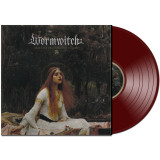
Wormwitch - Heaven That Dwells Within

Wormwitch

Heaven That Dwells Within

12inch656191049818
Prosthetic Records
01.08.2025

They say the best thing for a new band to really find out who they are is to go out and play as much as possible. They see what works and what doesn’t with the crowd as well as watch their peers perform and can learn from the best. For the past 2 years, WORMWITCH, has done just that. Having toured North America with The Black Dahlia Murder, Numenorean and appeared at last year’s prestigious Psycho Las Vegas Festival with Danzig, Dimmu Borgir and many more, the Vancouver 3-piece took it all in and regrouped in the Fall of 2018 to start writing their new album. Heaven That Dwells Within is the follow up to 2016’s Decibel Magazine Year End charting, Strike Mortal Soil. The riffs are stronger, the overall feel the album darker and their love of black metal dimly shines through much more on their past release. The album was mixed and mastered by V. Santura (Triptykon, Schammasch), giving it that much of a gloomier touch. With a tour right out of the gate with Cloak and Uada followed by a European run, the future, though dark in music, can only be bright.

pre-order now01.08.2025

expected to be published on 01.08.2025

DJ Monita - SKELRFR001 w/ Phineus II Remixes

For anyone unfamiliar with Skeleton Recordings, it was started in 1992 by DJ Monita based in West London and had a quality string of releases between 92-94 like Triple 6, Luv To Luv Ya, A Classic Skank, The Razor's Edge, Nightmares, I could go on and on...

In 2014, the label started back up again & I'd been sending some of my music to Monita around this time which led to me releasing an EP called Storylines on the label in 2016, where I was able to put out some of my music that was made in a darker & more modern style than my usual oldskool inspired work. I also had a tune featured on the 25th anniversary release series called Time's Up alongside other favourite artists of mine like Threshold, Gremlinz, Antidote (R.I.P), Future, Theory, Ricky Force & many more.

In 2021, Monita announced that he would be retiring Skeleton Recordings and putting out the final releases, which were single sided represses of Luv To Luv Ya & Nightmares, nearly 30 years after they originally were made. However, I had some great unofficial remixes that Phineus II had done of The Razor's Edge & Full Cry by Steve C & Monita, which never saw the light of day officially and I took a chance by contacting Monita to see if he'd be up for one more Skeleton Recordings release, in conjunction with Future Retro London.

Thankfully, he was up for the release and on top of that, he was able to provide 2 tracks that he made in 1995 that were meant for Skeleton Recordings but never saw the light of day until they were released digitally on Hardcore Junglism for a brief period of time, but never released on vinyl.

Big thanks to DJ Monita of course for allowing me to make this happen (as well as for his work in creating such a great label) & Phineus II for his remixes.

pre-order now01.08.2025

expected to be published on 01.08.2025

The Wants - Bastard LP

The Wants

Bastard LP

12inchSTTT001LP
STTT
31.07.2025

An adversarial network of ideas, electronic post-punk trio The Wants welcome the possibility that embracing friction can give rise to something cathartic and unexpected. Formed by Madison Velding- VanDam and Jason Gates in 2017, and with the addition of Yasmeen Night in 2021, The Wants' sound is defined by the push and pull of its members' processes: floating rhythms upheaving grounded songwriting, pulsing synths overwhelming live instrumentation. Their new record, Bastard, is an evolution of many of the seeds planted in their debut record, Container (2020), with a refined sense of acerbic emotional urgency and sonic experimentation. Drawing from a deep well of influences across decades and genres, The Wants forge an unlikely alliance of sounds that feels both radical and inevitable. Velding- VanDam channels both the raw power and snark of Public Image Ltd. and The Smiths' romance, while Gates draws intensity from bands like Bauhaus and Throbbing Gristle, and inspiration from experimental techno. Night's sound bridges inspiration from '90s alternative rock like Smashing Pumpkins and Garbage between the nocturnal trip-hop atmosphere of Massive Attack. The result sits in its own category—too raw to be pure electronic music, too mechanised to be straight rock— drawing favorable comparisons to early PIL and contemporaries like Model/Actriz while remaining distinctly their own beast.

out of Stock

Order now and we will order the item for you at our supplier.


Last In: 8 months ago
New York Dolls - New York Dolls
  • Personality Crisis
  • Looking For A Kiss
  • Vietnamese Baby
  • Lonely Planet Boy
  • Frankenstein (Orig.)
  • Trash
  • Bad Girl
  • Subway Train
  • Pills
  • Private World
  • Jet Boy

The extroverted blend of attitude, energy, and ostentatiousness that spills from the New York Dolls’ self-titled debut can be seen in full view on the album cover. Depicting the quintet in its hallmark flash-and-trash apparel and in drag appearance, the 1973 album scared away a considerable amount of potential listeners while capturing the attention of a sizable audience that recognized the band for what it was: zeitgeist pioneers who helped develop the punk and glam rock movements.

Named by Rolling Stone the 301st Greatest Album of All Time and by Mojo the 49th greatest album of all time, New York Dolls receives long-overdue audiophile treatment on Mobile Fidelity’s numbered-edition 180g 45RPM 2LP set. Sourced from the original master tapes, pressed at Fidelity Record Pressing in California, and housed in a Stoughton gatefold jacket, this collectible version marks the first time the group’s career-making statement is available to be experienced in audiophile quality.

Far from harboring the crude elements that became associated with the punk scene, New York Dolls benefits from keen production overseen by none other than Todd Rundgren. Though more accustomed to working far higher-caliber musicians, Rundgren — taken by the New York Dolls’ charisma and cool, if not their instrumental approach — fully understood the ensemble’s aesthetic. He captured what went down at New York City’s Record Plant with an astute blend of live-on-the-floor feel, raw authenticity, and professional acumen.

On Mobile Fidelity’s definitive-sounding reissue, you can hear those facets as well as key details, dynamics, and textures with previously unimaginable insight. Rundgren preserved generous degrees of grit, grime, and grease while bestowing the raucous music with elevated levels of separation, solidity, and impact every landmark recording deserves. His vision extends to introducing choice accents — barroom piano notes, Moog synthesizer passages, Buddy Bowser’s honking saxophones — that add to the songs’ appeal without interfering with the primary architecture.

Afforded extra groove space on this pressing, the tenor, presentation, and attack of both vocalist David Johansen and now-iconic guitarists Johnny Thunders and Sylvain Sylvain come across with stunning vibrancy and vitality. The New York Dolls often seem headed off the rails and into the red, but somehow, the strut, swagger, and sloppiness — and the associated sleaze and scruff, scrape and snarl, frenzy and feverishness those characteristics entail — remain together as a whole that shakes its collective fist at the frustrations, isolation, disarray, and disillusionment of youth chaos and urban decay.

Kicking off its debut with “Personality Crisis,” cited by Rolling Stone as one of the 500 Greatest Songs of All Time, the band makes obvious its grasp of alienation, deviance, displacement, and suburban disaffection — as well as its capacity to play hanging-by-a-thread boogie, noisy rock ‘n’ roll, and Brill Building-inspired pop. The lipstick-kissed New York Dolls possesses traits many of its harsher predecessors would overlook: joyfulness and melody, topped with a knack for knowing how and where to take a song inside of three-and-a-half minutes.

Dive and dash with the belligerent “Looking for a Kiss”; stomp your feet and clap your hands to the big choruses of “Jet Boy”; surrender to the demands and provocations of the coded “Vietnamese Baby”; decide whether “Bad Girl” yearns to explode or implode. It’s one of several tunes here that allude to the world coming to end. Of course, that doesn’t mean there isn’t time for a fling before everything burns. “There’s no place I gotta go,” yowls Johansen. And he means it.

Adorned with tonal crunch, glitter, and gristle, New York Dolls takes pride in its brashness and brattiness. The rambunctious effort, which earned the band the distinction of being voted both “Best New Group of the Year” and “Worst New Group of the Year” in the pages of Creem, displays knowing reverence for the blues without calling attention to the style. The folk-laden “Lonely Planet Boy” is nothing if not a collision of heart-on-the-sleeve emotions and the desire in the face of challenges to maintain a tough-skinned exterior. An interpretation of Bo Diddley’s “Pills,” complete with shivering harmonica and clattering rhythms, announces there’s no cure for what infects this band. It’s that contagious. And how.

His deliveries gushing with campy fun, playful irreverence, and sheer decadence, Johansen doubles as the equivalent of an open fire hydrant that spouts at will. He’s at once tender and vicious, serious and tongue-in-cheek. On arguably his finest hour on the album, Johansen’s phrasing, passion, and lyrical ambiguity alone turn “Trash” into an insistent glam-rock gem whose echoing harmonies and girl-group references stamp it a pop classic.

Too much, too soon? Only for those averse to some of the finest rock ‘n’ roll ever put on tape.

pre-order now31.07.2025

expected to be published on 31.07.2025

VARIOUS - ALL THE YOUNG DROIDS: JUNKSHOP SYNTH POP 1978-1985 (LP 2x12")
 
24

Compiled by Philip King
“And then came the rise of synth pop : blokes with dodgy haircuts hunched over keyboard-operated
machines stuffed with wires and do-it-yourself tone oscillators making sounds like a brood of geese
passing gas in a wind tunnel. Whoopee! This is the way the ‘70s ended : not with a blood-curdling bang
bang but with a cheap, synthesized, emasculating whimper.”
NICK KENT, NME.

All The Young Droids: Junkshop Synth Pop 1978-1985 is a new compilation that charts the
underbelly of the epoch-defining sound of the synthesiser in 80s popular music. Compiled by Philip
King (previously seen compiling All The Young Droogs, Glitterbest and Boobs - The Junkshop
Glam Discotheque), the music here connects the dots between DIY synth enthusiasts grappling with
new, cheap synthesisers at the tail-end of punk and wannabe, jobbing songwriters enthral to the new
music pioneered by Gary Numan, Depeche Mode and Daniel Miller’s Mute Records. Featuring rare
tracks of auto-didactic progressive pop music, proto-techno punk, shoot-for-the-stars-land-in-the-gutter
chart flops and heralded, underground synth classics, School Daze paints a picture of beautiful failure.
Complete with extensive sleeve notes written by King and never before seen imagery, all 24 tracks
were remastered by RPM in-house engineer Simon Murphy, many from vinyl copies due to lost master
tapes. The story told on All The Young Droids is one of the dawning opportunity presented by both the
emergence to the market of cheaper analog synthesisers and the distribution networks plus indie labels
that exploded with the advent of punk music in 1976. While the music that sprouted out all over the
globe in the wake of these factors was decried as fake, plastic, a refutation of punk’s guitar-led
revolution, it’s telling that much of the music on All The Young Droids.. was created in bedrooms,
ramshackle studios and home-made set ups with often borrowed equipment. In the era of record labels
jumping to capitalise on the success of The Sex Pistols, The Clash (both on major labels, of course)
these artists struggled to stand out from a new gold-rush with next to no budget or PR team. With radio
and labels desperate for the new Yazoo, what resulted was a testament to necessity being the mother
of invention.

At the time, the synthesiser was the music of the future, a shiny new machine that could paint like an
orchestra with a single finger and a 4-track. In the hands of Manchester avant-pranksters Gerry & The
Holograms it’s a pulsing, sardonic weapon.. the only instrument on the Messthetics classic lampooning
of New Wave fashion. In Hamburg, a 16 year old Andreas Dorau used it to write and record (with his
female classmates on vocals) a global smash in Fred Vom Jupiter (later licensed to Mute Records).
The hard-to-find English version (Fred From Jupiter, natch) is included here. Many artists with alreadystoried careers caught the bug and recorded synthesiser-fuelled peons to space, computers, the future
and, of course, love-interests. Harry Kakoulli, late of Squeeze, recorded a solo album in 1979 that
included the incredible power-synth-pop smash-that-never-smashed I’m On A Rocket. Similarly, Ian
North of Neo and American Power Pop stalwarts Milk ’n’ Cookies bought a Korg MS20 and used a
tape machine to record We’re Not Lonely, an absolute lost-classic of minimal synth pop. We’re Not
Lonely also features on the Junkshop Synth Pop sampler 7” twinned with John Howard unreleased
track You Will See, released April 12th 2025.

There are plenty of compilation debuts in evidence. Sole Sister were a mysterious trio who were
featured on the Scaling Triangles compilation of female-fronted, queer-adjacent post-punk /
underground music that also featured The Petticoats. Selwin Image were from San Francisco and
featured members of the recently defunct power pop/punk group The Pushups. Their stupidly catchy
The Unknown fizzes with New Wave energy - think XTC to Sparks but remains unreleased until now.
Dream Unit’s A Drop In The Ocean is an early synth wave cut, positively teaming with Joy Division
instrumentation, previously only released on a long-forgotten and super rare, self-released EP.
Incandescent Luminaire’s Famous Names belies an archetypal struggle of a small-town trying to
make it in a cruel industry but is a thrilling New Romantic-Synth Wave cross over with a OMD
gloominess that’s a joy to hear. Feminist Minimal Wave track I Am A Time Bomb by performance artist
Peta Lilly and Michael Chance is a revelation destined for new found cult status. It was released on 7”
and lost until now.

The flipside to the subterranean, never-made-it synth pop mentioned above are the ambitious, even
fruity attempts at success that have a perennial elegance to their confidence. New Jersey-ite Billy
London (real name Ed Barth) tried to cash in on the synth boom with Woman, released by a major
label, a lurching new wave track built on the Louie Louie rhythm and a wonderfully camp Lou Reedstyle sleazy vocal before exploding in the synthesised chorus. The song bombed but with a chorus like
this, you have to wonder why? Ex-Glitter Band member John Springate’s My Life is truly epic, with
doomed chord progressions and massive sounding drums turning into at least 3 different songs in the
course of the track. Before you wonder what’s going on the song resolves with a glorious return to the
main refrain.

The dry-ice-dressed dance floor is well catered for too. Design’s Premonition and Vision’s Lucifer’s
Friend are stone-cold minimal synth bangers, well loved but given a new lease of life here. The
Warlord’s The Ultimate Warlord was released in 1978, a homespun proto Hi NRG banger that was
later re-recorded by The Immortals in Canada who had a club hit with it. One-man- band Disco
Volante’s No Motion was re-issued by Synth wave label Medical in 2012 but makes its first vinyl
compilation appearance here. Close your eyes and you can imagine what Lawrence of Felt would have
sounded like with some cheap Korgs a little earlier in his career. Gibraltar-based trio The Microbes
imagined a computer programming people to dance - how prescient - and ended up with a propulsive,
robo-funk track with splendid rubbery bass playing over a tectonic drum machine. Previously picked up
by Belgian label Stroom TV, Dee Jay Bert & Eagle’s heavily Euro-accented I Am Your Master
demands the listener to “come to paradise!” In a frankly terrifying manner.
All The Young Droids is the first compilation to peel away from the narrative that dour, Minimal Synth
and Cold Wave were the only musical children of the first rush of synth pop. Philip King and School
Daze Records describe a much more complicated world: along with the austere, Brutalist children of
Daniel Miller (who produced Alan Burnham’s Bowie-Low-influenced Science Fiction here) was a
plethora of desperate cash-ins, accidental mainstream hits, ambitious pop dramas and major label
punts that went nowhere. Crucially, the compilation blurs the line between junk and treasure. What if the
two things are interchangeable. What if it’s all science fiction?

out of Stock

Order now and we will order the item for you at our supplier.


Last In: 8 months ago
VARIOUS - ALL THE YOUNG DROIDS: JUNKSHOP SYNTH POP 1978-1985 (LP 2x12")
 
24

Compiled by Philip King
“And then came the rise of synth pop : blokes with dodgy haircuts hunched over keyboard-operated
machines stuffed with wires and do-it-yourself tone oscillators making sounds like a brood of geese
passing gas in a wind tunnel. Whoopee! This is the way the ‘70s ended : not with a blood-curdling bang
bang but with a cheap, synthesized, emasculating whimper.”
NICK KENT, NME.

All The Young Droids: Junkshop Synth Pop 1978-1985 is a new compilation that charts the
underbelly of the epoch-defining sound of the synthesiser in 80s popular music. Compiled by Philip
King (previously seen compiling All The Young Droogs, Glitterbest and Boobs - The Junkshop
Glam Discotheque), the music here connects the dots between DIY synth enthusiasts grappling with
new, cheap synthesisers at the tail-end of punk and wannabe, jobbing songwriters enthral to the new
music pioneered by Gary Numan, Depeche Mode and Daniel Miller’s Mute Records. Featuring rare
tracks of auto-didactic progressive pop music, proto-techno punk, shoot-for-the-stars-land-in-the-gutter
chart flops and heralded, underground synth classics, School Daze paints a picture of beautiful failure.
Complete with extensive sleeve notes written by King and never before seen imagery, all 24 tracks
were remastered by RPM in-house engineer Simon Murphy, many from vinyl copies due to lost master
tapes. The story told on All The Young Droids is one of the dawning opportunity presented by both the
emergence to the market of cheaper analog synthesisers and the distribution networks plus indie labels
that exploded with the advent of punk music in 1976. While the music that sprouted out all over the
globe in the wake of these factors was decried as fake, plastic, a refutation of punk’s guitar-led
revolution, it’s telling that much of the music on All The Young Droids.. was created in bedrooms,
ramshackle studios and home-made set ups with often borrowed equipment. In the era of record labels
jumping to capitalise on the success of The Sex Pistols, The Clash (both on major labels, of course)
these artists struggled to stand out from a new gold-rush with next to no budget or PR team. With radio
and labels desperate for the new Yazoo, what resulted was a testament to necessity being the mother
of invention.

At the time, the synthesiser was the music of the future, a shiny new machine that could paint like an
orchestra with a single finger and a 4-track. In the hands of Manchester avant-pranksters Gerry & The
Holograms it’s a pulsing, sardonic weapon.. the only instrument on the Messthetics classic lampooning
of New Wave fashion. In Hamburg, a 16 year old Andreas Dorau used it to write and record (with his
female classmates on vocals) a global smash in Fred Vom Jupiter (later licensed to Mute Records).
The hard-to-find English version (Fred From Jupiter, natch) is included here. Many artists with alreadystoried careers caught the bug and recorded synthesiser-fuelled peons to space, computers, the future
and, of course, love-interests. Harry Kakoulli, late of Squeeze, recorded a solo album in 1979 that
included the incredible power-synth-pop smash-that-never-smashed I’m On A Rocket. Similarly, Ian
North of Neo and American Power Pop stalwarts Milk ’n’ Cookies bought a Korg MS20 and used a
tape machine to record We’re Not Lonely, an absolute lost-classic of minimal synth pop. We’re Not
Lonely also features on the Junkshop Synth Pop sampler 7” twinned with John Howard unreleased
track You Will See, released April 12th 2025.

There are plenty of compilation debuts in evidence. Sole Sister were a mysterious trio who were
featured on the Scaling Triangles compilation of female-fronted, queer-adjacent post-punk /
underground music that also featured The Petticoats. Selwin Image were from San Francisco and
featured members of the recently defunct power pop/punk group The Pushups. Their stupidly catchy
The Unknown fizzes with New Wave energy - think XTC to Sparks but remains unreleased until now.
Dream Unit’s A Drop In The Ocean is an early synth wave cut, positively teaming with Joy Division
instrumentation, previously only released on a long-forgotten and super rare, self-released EP.
Incandescent Luminaire’s Famous Names belies an archetypal struggle of a small-town trying to
make it in a cruel industry but is a thrilling New Romantic-Synth Wave cross over with a OMD
gloominess that’s a joy to hear. Feminist Minimal Wave track I Am A Time Bomb by performance artist
Peta Lilly and Michael Chance is a revelation destined for new found cult status. It was released on 7”
and lost until now.

The flipside to the subterranean, never-made-it synth pop mentioned above are the ambitious, even
fruity attempts at success that have a perennial elegance to their confidence. New Jersey-ite Billy
London (real name Ed Barth) tried to cash in on the synth boom with Woman, released by a major
label, a lurching new wave track built on the Louie Louie rhythm and a wonderfully camp Lou Reedstyle sleazy vocal before exploding in the synthesised chorus. The song bombed but with a chorus like
this, you have to wonder why? Ex-Glitter Band member John Springate’s My Life is truly epic, with
doomed chord progressions and massive sounding drums turning into at least 3 different songs in the
course of the track. Before you wonder what’s going on the song resolves with a glorious return to the
main refrain.

The dry-ice-dressed dance floor is well catered for too. Design’s Premonition and Vision’s Lucifer’s
Friend are stone-cold minimal synth bangers, well loved but given a new lease of life here. The
Warlord’s The Ultimate Warlord was released in 1978, a homespun proto Hi NRG banger that was
later re-recorded by The Immortals in Canada who had a club hit with it. One-man- band Disco
Volante’s No Motion was re-issued by Synth wave label Medical in 2012 but makes its first vinyl
compilation appearance here. Close your eyes and you can imagine what Lawrence of Felt would have
sounded like with some cheap Korgs a little earlier in his career. Gibraltar-based trio The Microbes
imagined a computer programming people to dance - how prescient - and ended up with a propulsive,
robo-funk track with splendid rubbery bass playing over a tectonic drum machine. Previously picked up
by Belgian label Stroom TV, Dee Jay Bert & Eagle’s heavily Euro-accented I Am Your Master
demands the listener to “come to paradise!” In a frankly terrifying manner.
All The Young Droids is the first compilation to peel away from the narrative that dour, Minimal Synth
and Cold Wave were the only musical children of the first rush of synth pop. Philip King and School
Daze Records describe a much more complicated world: along with the austere, Brutalist children of
Daniel Miller (who produced Alan Burnham’s Bowie-Low-influenced Science Fiction here) was a
plethora of desperate cash-ins, accidental mainstream hits, ambitious pop dramas and major label
punts that went nowhere. Crucially, the compilation blurs the line between junk and treasure. What if the
two things are interchangeable. What if it’s all science fiction?

out of Stock

Order now and we will order the item for you at our supplier.


Last In: 8 months ago
Patricia Wolf - Hrafnamynd LP

Patricia Wolf

Hrafnamynd LP

12inchBALMAT17
Balmat
23.07.2025

Balmat 17 marks both a return and a new frontier. It is the second album on the label from Patricia Wolf, whose 2022 album See-Through is one of the most beloved in Balmat’s catalog; it also marks the first time that Wolf has turned her hand to a film soundtrack. The results are every bit as magical as fans of the Portland, Oregon, composer’s music might expect.

Hrafnamynd—Icelandic for “raven film”—is a new feature-length documentary by experimental filmmaker Edward Pack Davee. Shot on a mix of film and digital formats, and incorporating his father’s Ektachrome slides from the 1970s, the autobiographical film works on multiple levels at once: a reminiscence of his childhood in Iceland, an exploration of landscape and folklore, and a documentary study of the island nation’s ravens—including a talking raven named Krummi.

Wolf is the perfect artist to score such an unusual film. Mixing ambient music and field recording—including extensive experience documenting bird song—Wolf brings an unusually empathic perspective to her music. In the context of Hrafnamynd, her airy melodies, pensive atmospheres, and vivid textures intuitively complement the film’s grainy film stock and blown-out colors. Friends for years, the two artists further bonded when Wolf asked Pack to film music videos for her songs “Woodland Encounter” (from See-Through) and “The Culmination Of” (from I'll Look For You In Others). Pack used Wolf’s previously recorded music as placeholders as he began assembling a rough cut of the film, which made her a natural choice to help him complete his idiosyncratic vision with an all-new, bespoke score.

But Wolf’s soundtrack also indisputably stands alone as a full-length album. Largely created using the UDO Super 6 synthesizer, it features a carefully distilled palette of warm, string-like pads and darkly glistening mallets, rounded out with the very occasional introduction of nylon string guitar. Musically and stylistically, the album’s 11 tracks represent both a continuation of the ruminative sound of See-Through and also an extension into new expressive modes. Few musicians, ambient or otherwise, are as skilled at balancing melody with atmosphere, or at finding ways to eke fresh at finding ways to eke fresh, surprising sounds out of an intentionally reduced toolkit. Meditative, immersive, and emotionally generous Wolf’s Hrafnamynd soundtrack evokes a range of ambient classics from decades past while confidently marking out its own verdant patch of ground.


Artist’s Statement:
Edward and I have been friends for years, but we really started to get to know one another better after I hired him to make music videos for my songs “Woodland Encounter” and “The Culmination Of.” For those projects we got to spend a lot of time hiking in various locations around the Pacific Northwest with his camera, very nice lenses, and tripod. Keeping quiet, hidden, and vigilant we searched for wildlife, good light on the trees, meadows, lakes, rivers, and skies. Edward was already an appreciator of my music and I was already in awe of his filmmaking talents so it felt like a great fit. Although we work in different areas of art our styles compliment one another. We both tend toward slow and careful pacing, with a focus on emotion and introspective reflections on life and the landscapes around us. For this reason, Iknew that I could trust Edward to create videos for my music. We saw so many beautiful and unexpected things on our filming days, but I was moved to tears once I saw how magnificent and poetic it all was. His video work from the cinematography, to the editing, and color correction helped bring my inner vision to life.

A few months after that, Edward surprised me with an invitation to work on the soundtrack for his new film, Hrafnamynd. I enthusiastically said yes. I had always wanted to work on a film, and I knew that his filmmaking style would be inspiring to write music for. I had recently acquired an UDO Super 6 synthesizer but hadn't used it much. I decided that this would be the synth that I'd use for the film. It has the ability to sound very modern, but can also sound so warm and fuzzy, like a synth from the 1970s. It turned out to be the perfect instrument for this project as the film itself straddles time from the ’70s to today.

When Edward sent me the rough cut of the film, he used placeholder music to help give me an idea of the emotion and energy that he was hoping to achieve for each scene. For many of the scenes, Edward used music from my albums as temporary tracks. This told me that he trusted my work and style and therefore I should just trust my intuition with how to proceed. I wanted to make sure that everything that I made was a direct reflection of what was happening on screen, a mirror of its emotion and energy so people could really lock into the film psychologically. This process took my composing to unexpected places—like being led by a strange cat or a raven that seemed to have something to show me. I found that the approach made the music so much more dynamic than my usual style. I really enjoyed being influenced by the action and dialog on the screen. Thankfully, Edward was very happy with the work. I made sure to handle this project with the utmost care because this is about his life and his family, and an exploration of the experiences that made him an artist and filmmaker. While watching the film many times over, I found myself thinking about my own family and my early memories with them and how the place where I grew up has influenced who I have become. I found that his film invites the viewer to reflect on their own lives in a similar way. I hope that this music and film can guide others to contemplate on the history of their beingness and the people and places that shaped them.

Another aspect to this project is the splendor and wonder of Iceland itself. I had the opportunity to visit Iceland for the first time in 2023. I got to play a show there for the Extreme Chill Festival and met many friendly and brilliant Icelanders. I also got to collect field recordings that I used in the film. It's a fascinating place and culture that easily captures the hearts and imaginations of anyone who visits. Whether you spend your time in the city immersed in its impressive arts scene, or venture out into the wilderness to behold its wondrous landscape, it will leave a lasting impression. The soundtrack is also a love letter to Iceland itself.

out of Stock

Order now and we will order the item for you at our supplier.


Last In: 3 months ago
Dr. Rubinstein - Take This Pill

For the fourth release on her celebrated record label Uppers and Downers, Dr.Rubinstein returns to the producer's seat with Take This Pill, a new 3-track EP that showcases the dynamic, ever-widening range of her signature acid sound. Lacing lively dancefloor cuts with a dose of personal storytelling and a playful yet honest take on mental health, Take This Pill delivers on Rubi's distinct ability to honor classic rave sensibilities while also always imparting her own unique twist.

The title track journeys from dark, acid-laced electro breaks into a shimmering wash of euphoric synths, energized along the way by drumrolls, hoovers, and a vocal refrain repeatedly voicing the Doctor's prescription: "Take this pill!" More than just a nod to classic XTC bangers, "Take This Pill" explores the emotional spectrum of neurodivergence and the pharmaceutical pathways many embark upon on a quest to "fit in," mirroring the lived experience of internal struggle giving way to external composure.

Things shift up a few gears on track two, the aptly-titled "No Brainer," a relentlessly energetic, no-nonsense stomper designed with the soul purpose of making you move. The track features sidewinding Goa-tinged acid lines swirling through a hard trance kick scape adorned by with soaring strings and shimmering cymbal rolls.

The EP concludes with a gorgeous, melodic rave-infused cut that shows a more tender, reflective side of Rubinstein's repertoire. Referencing one of Rubi's favorite tunes, The KLF's iconic "3 AM Eternal," diaphenous ambient vocals soar over a melancholic acid ballad that, never to be taken too seriously, is punctuated by humorous woops and cheeky rave whistles.
With Take This Pill, Dr. Rubinstein invites listeners into her world-one where vulnerability, humor, and acid rave euphoria collide. A perfect addition to her label's growing catalog, Take This Pill upholds the mission of Uppers and Downers: to collect and circulate timeless, tried-and-true tunes that celebrate the uplifting, affirmative power of rave music.

out of Stock

Order now and we will order the item for you at our supplier.


Last In: 4 months ago
Sugarfoot - Cosmic Norse Americana
  • Tiger Rider
  • Flatfoot Willie
  • All Dried Up
  • Hungry Man
  • Dolphins Hotel
  • This Love That We Outwore
  • Political Disaster
  • Changing Times
  • Ego In A Bag
  • Time Will Show The Wiser

Formed in 2012 by long-time musical companions Oyvind Holm and Hogne Galaen,
the band quickly grew into the six- piece musical force they are today. Their unique
sound fuses cosmic Americana and rich vocal harmonies with catchy melodies, highspirited improvisation, and contagious musical energy that will leave you craving
more.
The six members come from diverse musical backgrounds but are united by their
shared love of psychedelia and cosmic Americana. They draw particular inspiration
from the California sound of the late '60s, with bands like The Byrds, Crosby, Stills,
Nash & Young, and the Grateful Dead as key infuences.
Between 2012 and 2019, the band recorded and released fve critically acclaimed
albums, two of which were recorded in the California desert at the legendary Rancho
De La Luna, nestled among the Joshua trees. Like many other artists, the pandemic
shook their foundations, forcing the band into an involuntary hiatus. In the aftermath
of lockdowns and other imposed restrictions, the backlash from other projects kept
them from picking up where they had left off.
However, the fall of 2024 brought new opportunities. An unexpected email from Mike
Scott of The Waterboys reignited their spirit and motivation. While on tour in Norway,
Scott discovered one of their albums and was so taken by their sound that he invited
them to contribute vocal harmonies to 'The Tourist,' a track off The Waterboys' new
album Life, Death & Dennis Hopper.
Soon after, an even greater opportunity arose--an invitation to join The Waterboys on
tour in the UK and Scandinavia. To accompany the upcoming tour, we've put together
a beginner's guide to Sugarfoot.
The compilation album Cosmic Norse Americana features nine highlights from
Sugarfoot's career so far, along with a newly recorded cover of Emitt Rhodes' 1967
track "Time Will Show The Wiser."
Sugarfoot:
Hogne Galaen - guitars, vocals
Even Granas - drums
Thomas Henriksen - keyboards
Oyvind Holm - guitars, vocals
Bent Saether - bass
Roar Oien - pedal steel
THOUGHTS AND WORDS
The Sugarfoot story begins back in 2011. But before there was Sugarfoot, there were
the Dipsomaniacs, Kulta Beats, Motorpsycho, Too Far Gone, and Deleted Waveform
Gatherings--bands that, in one way or another, featured future members of what would
eventually become Sugarfoot. Six musicians from diverse musical backgrounds,
united by a shared love of psychedelia and cosmic Americana. Drawing deep
inspiration from the California sound of the late '60s, their musical compass points
toward The Byrds, Crosby, Stills, Nash & Young, and the Grateful Dead.
I say eventually, because Sugarfoot didn't start as a band--it began as a duo. Hogne
Galaen and Oyvind Holm had previously played together in Deleted Waveform
Gatherings. But when their drummer moved out of town, the group was put on ice. Not
ones to sit still, the two of them launched a side project to keep the creative wheels
turning.
Throughout the winter of 2011, they holed up in their rehearsal space, writing and
recording rough sketches of what would soon grow into a full album. And that's when
things got interesting. They drew up a wish list--a dream lineup of musicians they'd
love to bring into the fold.
Among the names on that list were Even Granas, Thomas Henriksen, Bent Saether,
and Roar Oien, all soon to be permanent Sugarfooters. Each was invited to contribute
to the project, adding their parts to the pre-recorded tracks--without knowing what the
others were doing. Like assembling a giant musical puzzle, Galaen and Holm later
pieced the album together from these blindfolded contributions. The result was This
Love That We Outwore, released in the fall of 2012.
From there, things escalated quickly. By the following year, Sugarfoot had become a
proper band. Big Sky Country-- written and recorded collectively-- landed in 2014,
solidifying the group's evolving sound, including favourites such as Dolphins Hotel and
Ego In A Bag. When it came time to record a third album, the band felt the itch for
something new. They wanted a change of scenery--somewhere that could spark fresh
inspiration and leave its own sonic fngerprint on the production. So they asked
themselves: where could they go that carried the spirit, the legacy, the stardust of their
musical heroes?
That search led them to the California desert, to the legendary Rancho De La Luna,
nestled among the Joshua trees. Their next two albums, Different Stars (2016) and
The Santa Ana (2017), were both recorded at the Rancho. In fact, The Santa Ana was
both recorded and mixed during a two- week stay in 2015, making it a true time
capsule in the band's discography.

pre-order now18.07.2025

expected to be published on 18.07.2025

Collage - Motel d'amour LP

Collage

Motel d'amour LP

12inchEDGE-032BL
The Outer Edge
14.07.2025

Motel d'amour - A Lost Electro-Funk Gem from the NDW Era Resurfaces

When we first collaborated with Collage member Markus Kammann on the EP project "Mit den Puppen tanzen" at the end of last year, we never imagined what would follow: Kammann approached us with a completely unreleased full-length album by his former band. Upon receiving the first three preview tracks, we were floored. One of them was "Nachtcafé" - a track that kicks off with a funky bassline layered over the punchy rhythm of a Roland TR-808. Add shimmering synths and Katrin A. Kunze's sharp, distinctive vocals, and we instantly knew we were hearing something special.

For a label dedicated to rediscovering lost treasures, this was exactly what we'd been searching for. The next two tracks - "Rendezvous" and "Casanova" - were just as compelling. When Kammann sent us the full album, we realized we were holding an electro-funk grail from the late golden days of the German Neue Deutsche Welle (NDW). We were listening to "Motel d'amour".

"Motel d'amour" is a concept album, offering a sharp, vibrant perspective from a confident, intelligent, and radiant young woman eager to experience nightlife, love, and music. Kunze's lyrics paint vivid scenes of flirtation ("Nachtcafé", "Rendezvous"), encounters with men ("Casanova"), the pulse of nightlife ("Die Nacht ist noch jung"), love ("Rotes Licht für rote Liebe"), one-night stands ("Motel d'amour"), and more. Rarely has a German album from that era captured emotional nuance and social dynamics so insightfully. Without veering into the overly personal, Kunze's direct, daring lyrical style was groundbreaking at the time - and remains refreshingly bold today.

While German listeners will fully appreciate the lyrical depth, the music speaks volumes on its own. Kunze's words are masterfully complemented by the production of Markus Kammann and Jürgen Grah. As heard on the in-demand "Mit den Puppen tanzen", their creativity seemed boundless. Each track is tightly composed, catchy, and full of character. While many German bands at the time leaned into rock, Kammann drew from the deep grooves of Earth, Wind & Fire, The Isley Brothers, Brothers Johnson, The Commodores, and the electro-futurism of Afrika Bambaataa's "Planet Rock" and "Looking for the Perfect Beat". The result: tracks with unmistakable electro-funk flair, powered by the classic 808 drum sound.

Though primarily rooted in funk and electro, the album retains flashes of NDW aesthetics - "Wir haben getanzt heut' Nacht" being a prime example. The instrumentation is a dream list for vintage gear lovers: Yamaha keyboards, Roland Juno-60, vocoder, Micromoog, Hohner D6 Clavinet, Fender bass, and a Telecaster guitar all feature prominently.
Recorded in 1985 at the high-profile Delta Studio by Richard Rossbach, the album attracted interest from Polydor. However, the label proposed using the compositions for a solo project with singer Inga Humpe (of Neonbabies), who was already signed to their roster. This would have required replacing Kunze as the vocalist, an idea the group firmly rejected. As a result, "Motel d'amour" was shelved, and Kammann, Grah, and Kunze moved on to form Cold End.
The album cover features a rare archival photo of Katrin A. Kunze - rediscovered by Kammann and now finally seeing the light of day, 40 years later.

We believe Motel d'amour deserves recognition alongside cult German classics like P!OFF?, 1. Futurologischer Congress' "Wer spricht?", Ami Marie's "Verrückt nach Glück", the funkier cuts of Cosa Rosa, or Piet Klocke's groove classic "Heute ist nicht sonst". It's a record that fits into adventurous DJ sets but also rewards a full, start-to-finish listen.

A note on audio quality: Sadly, the original master tapes were lost. The tracks were restored from a vintage TDK cassette. Thanks to modern digital tools, we were able to remaster them to a high standard - but in some songs light distortions remain. We appreciate your understanding and hope you enjoy this lost and undiscovered gem.

out of Stock

Order now and we will order the item for you at our supplier.


Last In: 9 months ago
Collage - Motel d'amour LP

Collage

Motel d'amour LP

12inchEDGE-032R
The Outer Edge
14.07.2025

Motel d'amour - A Lost Electro-Funk Gem from the NDW Era Resurfaces

When we first collaborated with Collage member Markus Kammann on the EP project "Mit den Puppen tanzen" at the end of last year, we never imagined what would follow: Kammann approached us with a completely unreleased full-length album by his former band. Upon receiving the first three preview tracks, we were floored. One of them was "Nachtcafé" - a track that kicks off with a funky bassline layered over the punchy rhythm of a Roland TR-808. Add shimmering synths and Katrin A. Kunze's sharp, distinctive vocals, and we instantly knew we were hearing something special.

For a label dedicated to rediscovering lost treasures, this was exactly what we'd been searching for. The next two tracks - "Rendezvous" and "Casanova" - were just as compelling. When Kammann sent us the full album, we realized we were holding an electro-funk grail from the late golden days of the German Neue Deutsche Welle (NDW). We were listening to "Motel d'amour".

"Motel d'amour" is a concept album, offering a sharp, vibrant perspective from a confident, intelligent, and radiant young woman eager to experience nightlife, love, and music. Kunze's lyrics paint vivid scenes of flirtation ("Nachtcafé", "Rendezvous"), encounters with men ("Casanova"), the pulse of nightlife ("Die Nacht ist noch jung"), love ("Rotes Licht für rote Liebe"), one-night stands ("Motel d'amour"), and more. Rarely has a German album from that era captured emotional nuance and social dynamics so insightfully. Without veering into the overly personal, Kunze's direct, daring lyrical style was groundbreaking at the time - and remains refreshingly bold today.

While German listeners will fully appreciate the lyrical depth, the music speaks volumes on its own. Kunze's words are masterfully complemented by the production of Markus Kammann and Jürgen Grah. As heard on the in-demand "Mit den Puppen tanzen", their creativity seemed boundless. Each track is tightly composed, catchy, and full of character. While many German bands at the time leaned into rock, Kammann drew from the deep grooves of Earth, Wind & Fire, The Isley Brothers, Brothers Johnson, The Commodores, and the electro-futurism of Afrika Bambaataa's "Planet Rock" and "Looking for the Perfect Beat". The result: tracks with unmistakable electro-funk flair, powered by the classic 808 drum sound.

Though primarily rooted in funk and electro, the album retains flashes of NDW aesthetics - "Wir haben getanzt heut' Nacht" being a prime example. The instrumentation is a dream list for vintage gear lovers: Yamaha keyboards, Roland Juno-60, vocoder, Micromoog, Hohner D6 Clavinet, Fender bass, and a Telecaster guitar all feature prominently.
Recorded in 1985 at the high-profile Delta Studio by Richard Rossbach, the album attracted interest from Polydor. However, the label proposed using the compositions for a solo project with singer Inga Humpe (of Neonbabies), who was already signed to their roster. This would have required replacing Kunze as the vocalist, an idea the group firmly rejected. As a result, "Motel d'amour" was shelved, and Kammann, Grah, and Kunze moved on to form Cold End.
The album cover features a rare archival photo of Katrin A. Kunze - rediscovered by Kammann and now finally seeing the light of day, 40 years later.

We believe Motel d'amour deserves recognition alongside cult German classics like P!OFF?, 1. Futurologischer Congress' "Wer spricht?", Ami Marie's "Verrückt nach Glück", the funkier cuts of Cosa Rosa, or Piet Klocke's groove classic "Heute ist nicht sonst". It's a record that fits into adventurous DJ sets but also rewards a full, start-to-finish listen.

A note on audio quality: Sadly, the original master tapes were lost. The tracks were restored from a vintage TDK cassette. Thanks to modern digital tools, we were able to remaster them to a high standard - but in some songs light distortions remain. We appreciate your understanding and hope you enjoy this lost and undiscovered gem.

out of Stock

Order now and we will order the item for you at our supplier.


Last In: 9 months ago
THE SORCERERS - OTHER WORLDS AND HABITATS LP
  • A1: Echoes Of Earth
  • A2: Ancestral Machines
  • A3: Abandoned Satellites
  • A4: The Great Bell
  • B1: Beneath The Dunes
  • B2: The Ghosts Of The Black Drift
  • B3: The Infinite
  • B4: The Last Transmission

The Sorcerers' latest long player lands in perfect time for the summer, offering a further progression into their unique take on Ethio-inspired jazz. Other Worlds and Habitats is, of course, released on ATA Records and is blessed with the analogue recording and painstakingly loving production we have come to expect from this boutique studio. This, The Sorcerers eagerly anticipated fourth LP, follows on from the success of I Too Am A Stranger, a record which garnered praise from BBC Radio 2’s Jamie Cullum, “I love this, this is so good!”, Ethio-jazz legend Mulatu Astatke, “I like the grooves, and it is good to see The Sorcerers interpret Ethio jazz in their own unique way”, and Nightmares on Wax, “This sounds great! Love the way it's recorded”.

Never ones to stop moving forward, and ever vigilant to avoid the realm of pastiche, The Sorcerers see the Ethiopique sound as a building block for their natural progression as a group, but a block that sits at the base of a much larger, ever expanding, structure, The addition of keyboardist Johnny Richards, whose use of the Jen 73 piano, Mellotron and Farfisa Compact Duo, alongside the core members of the group, has opened some exciting doors for The Sorcerers, fusing the future looking optimism of the late 60s and 70s (when artists began to experiment with the new electronic technology and synthesisers becoming more readily available) and more traditional sounds. Taking inspiration from Ethiopian keyboardist Hailu Mergia and Nigerian musician William Onyeabor, Other Worlds and Habitats, as the name suggests, showcases The Sorcerers' shift to a new, and deeply exciting, musical landscape.

The Sorcerers’ Other Worlds and Habitats is a natural progression in the world they have created for themselves. Richer for shared experiences, and accepting the rise of the machines, they prove that while their journey is always going forward, there are many different paths to take.

pre-order now11.07.2025

expected to be published on 11.07.2025

Molly Joyce - State Change LP

Molly Joyce

State Change LP

12inchLP13-70
130701
11.07.2025
  • August 6, 1999 04:39 Video
  • August 9, 1999
  • August 13 + 16, 1999 (Feat. Fire-Toolz) 02:55
  • November 24, 1999
  • April 19, 2000
  • October 26, 2001
  • July 27, 2007

State Change is the riveting new album from composer and performer Molly Joyce, out July 11, 2025 via FatCat Records’ 130701 imprint. Blending influences ranging from the 20th century modernist lineage to the spectral drones of Andy Stott, Missy Mazzoli, and Nico Muhly, State Change draws unflinchingly from the medical record of a childhood trauma for seven electro-acoustic tone poems — stark and oppressive in its medical aesthetic, yet ultimately cathartic and healing. Joyce crafted the album with Grammy-winning producer William Brittelle largely at Figure 8 Studios with engineer Michael Hammond.

When Joyce was seven years old, she was involved in a car accident that nearly amputated her left hand and required many intensive surgeries; to this day, her hand is still impaired. Joyce pushed through this life change, and over the past eight years, her reputation has swelled as one of her generation’s most daring, conceptually driven composers.

Joyce’s 2020 debut for New Amsterdam Records, Breaking and Entering, ruminated on this seismic shift in pieces for toy organ, voice, and electronic sampling of both sources. The New York Times noted her music’s “serene power”; The Washington Post described her as “one of the most versatile, prolific and intriguing composers working under the vast new-music dome.” Pitchfork lauded her 2022 album Perspective — a sonic portrait of disability built from interview recordings, also released on New Amsterdam — as “a powerful work of love and empathy that underscores the poison of ableism in American culture.”

pre-order now11.07.2025

expected to be published on 11.07.2025

Various - Blue Planet II (2x12")

Various

Blue Planet II (2x12")

2x12inchSILLP1560DS
SILVA SCREEN
11.07.2025

A sequel to the 2001 series Blue Planet, it took 4 years to complete this seven part new exploration of the underwater worlds, with 125 expeditions across

39 countries and 6000 hours of underwater filming. The series was broadcast on BBC One on 29 October 2017 with viewing figures exceeding 10m and

its exposure of plastic pollution in our oceans has started a global conversation about reducing plastic waste, now more relevant than ever.

With over 120 soundtracks to his credit which have grossed 24 billion dollars at the box office, Hans Zimmer has been honoured with many accolades:

an Academy Award, two Golden Globes, three Grammys, an American Music Award, a Tony Award and The Henry Mancini Award for Lifetime Achievement.

His Academy Award nomination for Interstellar marked his 10th Oscar nomination.

The composition is completed by Jacob Shea and David Fleming from Emmy and BAFTA nominated Bleeding Fingers Music. Bleeding Fingers has created

original music for productions including the Fox’s The Simpsons, BBC’s Planet Earth II, National Geographic’s Princess Diana In Her Own Words, NBC’s hit

Little Big Shots, Sony’s Snatch (TV), Amazon’s American Playboy, AMC’s The Making Of The Mob, Netflix original Roman Empire and History Channel’s Mountain Men.

pre-order now11.07.2025

expected to be published on 11.07.2025

Reloop Mixer - RMX-95

Reloop Mixer

RMX-95

Equipment245272
RELOOP
05.07.2025

Standard redefined The professional RMX-95 4+1 channel club mixer blurs the lines between analogue workflow and digital technology. The RMX-95 is a cutting-edge, extraordinarily versatile creative tool thanks to its dual-USB 2.0 interface, redesigned effects section, optional MIDI mapping of all controls and smooth integration of the djay Pro DJ software. The club mixer has a familiar and user-friendly interface, making it suitable for both professional and hobby DJs.

Surgical sound manipulation in every detail Will you go for ''Classic'' or ''Kill''? The RMX-95's 3-band EQ can be adjusted to allow maximum sound control for unique results. Echo, Reverb, Flanger, Phaser, Vinyl Brake, Loop Roll, Noise, Pitch Shift, Delay, Ping Pong Delay, Tape Delay, Bit Crusher and Transformer are just some of the many studio-quality effects included in the brand-new Beat FX unit. The dedicated FX frequency control (LPF/HPF) lets you apply the effects to a specific frequency range for a more unique sound. And that's not all: Each channel also features a bipolar filter unit (LPF and HPF) with real-time resonance adjustment. This allows for even more complex sound productions. Two digital displays show parameter changes in real time for precise control that goes beyond hearing. Connections galore The RMX-95 also excels in terms of connectivity: Four CD, two line, and two phono inputs are available on the four input channels. The separate microphone channel has two microphone connections (1 x jack, 1 x jack/XLR combination jack) and an additional AUX input. The master output offers RCA or balanced XLR cable connections. The booth output has two jack connections for stereo operation. However, it can also be used in mono mode.

A recording device can be connected to the Rec output via RCA jacks to record DJ sets regardless of the master output level. Last but not least, the DJ mixer has two jacks for headphones. Crisp cuts and smooth blending The adjustable curve of all faders provides DJs with the creative flexibility they want while mixing. Turntablists and scratch wizzards can also upgrade the crossfader with the contactless RMX innoFADER. Maximum flexibility: dual-USB audio interface Superior 24-bit sound quality is provided by the ten inputs and outputs of the high-quality dual-USB 2.0 interface. The two USB ports allow smooth transitions between DJs and maximum flexibility when using different setups in a single club night. In addition, the active USB hub enables the connection of additional USB devices. Fully digital architecture The RMX-95's digital architecture transforms the DJ mixer into an individually mappable MIDI controller. As part of this, the setup menu provides a wealth of customisable options, such as EQ frequency range, Neural Mix EQ mode, audio interface routing, and zone routing for the booth output. DVS-enabled for djay Pro & Neural Mix The RMX-95 works with Algoriddim djay Pro via plug and play. The DJ app's ground-breaking Neural Mix function lets you isolate beats, melodies, and vocals in the mix in real time. The RMX-95 supports djay Pro's advanced DVS integration with Mac, PC, iPhone and iPad.

The DJ software is also compatible with streaming services like Apple Music, Tidal, SoundCloud, Beatport and Beatsource. Indestructible design The club mixer's sleek black metal surface is not only eye-catching but also highly durable. The solid metal housing and hard-wearing metal shafts in all of the built-in potentiometers and switches provide a long service life, even with heavy club use. An internet connection and a separate Apple Music, Tidal, Beatport, Beatsource or SoundCloud subscription is required to use this service.

Professional 4+1-channel DJ club mixer - DUAL 10 In/Out USB 2.0 audio interface with superb, 24-bit sound quality

New Beat FX unit with multiple effects in studio quality: Echo, Reverb, Flanger, Phaser, Vinyl Brake, Loop Roll, Noise, Pitch Shift, Delay, Ping Pong Delay, Tape Delay, Bit Crusher,Transformer - FX frequency control (LPF/HPF) for manipulating effects in selected frequency band -

Sound filters: Bi-polar filter unit with LPF and HPF - Realtime resonance control for channel filters - Active USB hub to connect USB accessories
3-band EQ with adjustable behaviour (classic/kill) -

Two digital displays showing real-time information of parameter changes -

Digital mixer architecture with extensive adjustment options - Extensive setup menu, including:
- EQ frequency range (low, high)
- Neural Mix EQ mode
- Audio interface routing
- Booth output zone routing (matrix)
- Cue solo option
- RMX innoFADER compatible
- Adjustable linefader and crossfader curves
- MIDI-compatible control elements
- 2x High-retention USB 2.0 port, especially durable
- 2x Headphone outputs via 6.3/3.5 mm stereo jack with split cue
- 2x Mic inputs with dedicated MIC ON button
- Booth output in stereo or mono
- High-quality and hard-wearing, pure black metallic finish
- Sturdy construction in a metal housing with bolted metal shafts
- Kensington lock to secure the device
- Incl. instruction manual, power cord and USB cable

- Frequency Range: 20 Hz - 20 kHz +2/-3dB - Inputs: 7x line RCA, 2x phono RCA, 1x mic combo-XLR/jack, 1x mic 6.3mm jack (TR), 2x USB port - Outputs: master XLR (balanced), master RCA (unbalanced), booth (TRS) (balanced), rec RCA (unbalanced), 1x headphones 6.3mm jack, 1x headphones 3.5mm jack - EQ range classic at 70 Hz, 1 kHz, 13 kHz: -26 dB/+9 dB - EQ range isolator at 70 Hz, 1 kHz, 13 kHz: -90 dB (total kill)/+9 dB - EQ range mic at 100 Hz, 10 kHz: -12 dB/+ 12dB - EQ headphones at 100 Hz, 10 kHz: -29dB - Power Source: AC100-240V, 50/60Hz - Power Consumption: 29 W - Dimensions: 322(W) x 387(D) x 107.5(H) mm - Weight: 6.8 kg

dimensions (LxWxH) in mm
445x442x153

dimensions outerbox in mm
460x452x327

pre-order now05.07.2025

expected to be published on 05.07.2025

Janos Starker & Gyorgy Sebok - The Unreleased Berlin Studio Recordings 1963

"The restorations of The Lost Recordings are worthy of those devoted to master paintings." — Le Journal du Dimanche

"We discovered these previously unpublished tapes in the archives of the RBB — the Berlin radio. This discovery is absolutely major because these two incredible musicians had recorded too little together and because this recording offers us the possibility to listen to them in works that were unpublished so far in their discography — notably an extraordinary sonata by Prokofiev! And what can we say about this Bach sonata, with an Andante that brought tears to the eyes of everyone present in the studio at the time." — Frédéric D'ORIA-NICOLAS, Musical treasure seeker

János Starker, cellist, and György Sebok, pianist, were both born in Hungary early in the 20th century. They were welcomed into the formidable Franz Liszt Academy of Music in Budapest, and emigrated to the USA, where they both held the title of Distinguished Professor at the Indiana University School of Music in Bloomington. Both heavy smokers and sometimes reputed — unjustly — to be harsh, austere and insensitive to trends, they were drawn to music in all its varieties and fascinated by its many colours. They had one aim only, one noble objective: to showcase the works all composers, as evidenced by this recording made in the legendary Studio 3 of Berlin Radio on 24 October 1963.

Starker and Sebok were fully imbued with the aesthetics that Prokofiev proclaimed: "I cultivate melody and strive to introduce feeling and emotion into my works. No matter that some call me a cubist, adding that I systematically avoid any emotional or romantic elements in my quest to reach only objectivity."

Next, and at the opposite end of the spectrum, is the Spanish passion of the two pieces by Granados and De Falla, pieces that nevertheless also convey melancholy. Starker and Sebok launch into the works with enthusiasm and intensity.

The last piece, Bach's Sonata in G Major, BWV 1027 for Viola da Gamba and Keyboard, is one of three he composed, probably in Köthen. Because they may have originally been written for other instruments, they can easily be transcribed for the cello and piano. They reveal the rich influences that pervaded the German region during the first half of the 18th century. The two musicians give us a sublime interpretation of the beauty of the counterpoint in this Sonata.

These recordings attest to the importance that the two superb musicians attached to working in the service of the composers. We wonder if, in that enchanted studio in Berlin in 1963, they knew how much further they went to bewitch us and touch us so profoundly.

pre-order now30.06.2025

expected to be published on 30.06.2025

Cate Francesca Brooks - Lofoten
  • 1: North
  • 2: Aspect From The Window
  • 3: Arna
  • 4: Polar Day
  • 5: In Wonder
  • 6: Transient Light
  • 7: Like Breathing Statues
  • 8: Shale
  • 9: In The Blue Hour
  • 10: Floes
  • 11: Further North
  • 12: Polar Night

There are imagined landscapes we all carry within us—dreamed,
half-remembered, or just beyond reach. Lofoten, the new album by
Cate Francesca Brooks on Clay Pipe Music, is a musical reflection on one such place.
Located above the Arctic Circle, Norway's Lofoten Islands are known for their dramatic peaks, open seascapes, and distinctive red fishing cabins dotting the shoreline. Though Brooks has never visited this remote northern region, it became an unexpected source of inspiration.
The project began when Cate listened to a narrated "sleep story" set in the islands. Intrigued, she researched the region and found herself drawn to its stark beauty."I fell in love with creating an impression of somewhere I would probably never visit, but felt a real affinity with," she explains.
This ambitious album translates that connection into sound. Through carefully crafted electronics, melodic themes, richly layered textures and big production, Brooks captures the essence of Lofoten—its icy light, vast horizons, and profound quiet."The other thing that happened around the same time was the first lockdown here in the UK. I had taken the opportunity of having some extra time to learn a new (to me) method of synthesis; that of the Synclavier, which uses one aluminium wheel and an array of buttons to control every parameter of the sound.
"I took to it with intrigue and before I knew it, I had built up hundreds of original sounds, many of which were perfect for the textures I could hear in my head for Lofoten. So that (along with a Prophet synth and a TR-808) became the sound world." Lofoten stands as an evocative testament to how music can transport us to distant places, transforming geographical limitations into imagined creative possibilities.

pre-order now30.06.2025

expected to be published on 30.06.2025

Michel Petrucciani, Steve Gadd & Anthony Jackson - Trio In Tokyo LP 2x12"
  • Training
  • September Second
  • Home
  • Little Peace In C For U
  • Love Letter
  • Cantabile
  • Colors
  • So What

If there is one quality that best sums up the personality and music of Michel Petrucciani, it is generosity.
It was on stage, in the moment, in close proximity to the audience, in the warm intimacy of a club setting, that he most truthfully expressed his passion for sharing.
Many musicians, he confessed, play too selfishly. They play only for themselves and a few happy few. I play to please and to communicate. I’d like to think I’m a very happy person.

That’s why it’s essential for me to transmit and give others the generosity that is vital in art, music, and life.”
This is proven by these magnificent moments captured live in 1997 in Tokyo.
Accompanied by Anthony Jackson and Steve Gadd - two close friends with whom he shared an almost telepathic musical relationship - Michel Petrucciani delivers an intense hour of pianoforte, performing both standards and original compositions to unleash his boundless generosity and sensual lyrical expression live on stage.

Once again, one is struck by the solar clarity of his phrasing, the vigour and percussive precision of his touch (this master of tempo played ‘deep in the note’), and the breadth of his long lines where each note remains distinct and articulate. Michel infused everything he played with great emphasis and nuance - but above all, with sincerity. His heart sang immediately through the piano. This record is the most brilliant demonstration of that.
· Until now, this album had never been released on vinyl. Now available as a 180g double vinyl edition, mastered specifically for vinyl, housed in a 350g leather-textured sleeve with Struktura finish, offering an elegant texture and refined feel.

pre-order now30.06.2025

expected to be published on 30.06.2025

Stimulator Jones - Cool Green Trees (1999-2005) (LP)

"Chasing the funky symphonies that filled my head and my dreams..."

December 25th, 2023 - an Instagram post. Stimulator Jones shared half a dozen FIRE tracks from his beat tape archive. We were immediately drawn to the rough hewn boom bap.

"I'd release that", Rob commented.

Hours of material was shared and the result is this: Cool Green Trees (1999-2005). A collection of beats and loops Stimulator Jones created between the ages of 14-20 at home in his basement, bedroom and computer room in Roanoke, Virginia.

You will not believe the profound soulful genius contained within these naive schoolboy melodies.

December 25th, 1998 - 25 years ago to the day and his much-coveted Yamaha SU10 sampler was finally bestowed upon young Stimmy AKA Sam Lunsford: "I immediately hooked up a CD Walkman to the input jack and looped the beginning two bars of Grover Washington Jr.'s "Mercy Mercy Me". I don't know what exactly was so thrilling about hearing two measures of music repeating over and over but it was so infectious and hypnotizing and enthralling to me. I'll never forget that ecstatic rush of making my first loop - an uncontrollable, gleeful smile plastered all over my face." When you hear the pocket breakbeat symphonies featured here on Cool Green Trees, you'll feel the same sense of frisson.

In the wake of his Stones Throw breakthrough - Exotic Worlds & Master Treasures - Stimulator Jones was pegged by many as a 90s throwback artist. However, he literally IS a 90s artist. He's been recording music most of his life and he's now 40. He created the bulk of Cool Green Trees as a teenager. Everything before 2004 was recorded when Sam was still in school. He was in 8th grade when he made the 1999 tracks - he didn't even have his learner's permit. This album is a snapshot of a young man in a simpler time. Things were still mysterious back then and he was flying blind, relying on his ears and having to figure things out for himself: "I had no road map for becoming a beatmaker. I have been collecting music since I was a kid, I am a lifelong digger and seeker of cool and interesting sounds. I was there in the golden age of Hip Hop, and while I may have been a suburban white kid in Roanoke, Virginia, I was tuned in and I bought so many classic albums when they came out. I was attracted to Hip Hop because of the musical and poetic quality. I was hypnotized by the rhythms, partially because I was a drummer. I didn't brag about collecting my breakbeat records or making beats - it was something I did in isolation. It wasn't something I generally wanted to bring attention to and it didn't really score me any cool points. I certainly wasn't flexing on social media about it."

Hell, he can do that now!

Opener "Pharoah Jones" was inspired by Yesterday's New Quintet and Madlib's ability to capture that classic 70s sound whilst playing all the instruments. Sam created this one stoned afternoon by laying down a 2 bar loop and a shaker loop on his Yamaha SU700 sampler. He hung a microphone from the ceiling and played his Yamaha Stage Custom drum kit over the top before adding ender Rhodes and playing his dad's Selmer tenor sax through an Electro Harmonix Memory Man echo pedal. Yes! Up next, "Ghost Gospel" utilises a dope loop from a gospel record and adds some soul-funk drums overtop, whilst working that filter knob. Says Sam: "The loop reminded me of something Ghostface would rap over. The sample was in 3/4 waltz time but I flipped it for a 4/4 groove, a technique I picked up from RZA. "Ill Feeling" uses sped-up pieces from a dusty old funk record and putting them over a classic NOLA drum loop; gain chopping up a slow, bluesy 3/4 time signature and bending it to a 4/4 groove. Classy shit. "Capital Punishment" features drums tapped in live, inspired by MF Doom's Special Herbs series. "Do Not Adjust" consists loops found on a compilation of 70s French music at Happy's Flea Market, a classic Roanoke digging spot.

The sublime, evocative title track, "Cool Green Trees" was created when Sam was still living at home. He dumped samples off his SU10 into the family desktop and arranged them in a demo version of Pro Tools: "This track was sort of my ode to the DJ Shadow style of sample based production. Super spacey, slow, and moody. The heavily filtered drums were inspired by Alec Empire's 'Low on Ice' album. I later added some scratches and sounds from a Spider Man storybook record." "Chill Scratch" snags the final bit of a bossanova record and pairs it with a drum loop before adding experimental scratching run through an Electro Harmonix Memory Man echo pedal. "Poisonous Fumes" was made using a sampler, mixer and a turntable; a kind of mixtape beat collage with added scratches and sounds from various records. Using dialogue from superhero records was a nod to Madlib. "Welcome Aboard The Starship" is dark, downtempo trip-hop with a spooky bent. Sam paired a slow, hard drum loop with a guitar sample grabbed off a psychedelic rock record. To finish, he added various backwards sounds and weird atmospheric effects and a little scratching. Swoon.

Side B opens with "Keep On Runnin", made on a borrowed Roland SP202 sampler. Having always loved the sound of the Lo-Fi filter on those machines, reminiscent of the Emu SP1200, Sam always imagined Del or another of the Hieroglyphics crew rapping over this beat. You can certainly hear why. "Sounds Impossible" sees Sam experimenting with layering multiple kick samples at different volumes to create patterns similar to those heard by Showbiz and Lord Finesse during their God-level 1995 period. "Painted Faces" was made by chopping up a REDACTED record which he had gotten from Happy's Flea Market and paired it with a REDACTED drum loop. By the time Sam recorded "The Knew Style", he had acquired a shitty old 1960s portable turntable off eBay. It didn't function properly when he bought it but his brother opened it up, cleaned it out and got it working: "I remember he told me that there was a bunch of sand inside of it when he opened it up, as if its previous owner had taken it to the beach. I would take that turntable on my Happy's Flea Market digs so I could preview records...that's how I found this loop."

"Chicken Wing Blues Sauce" loops up a classic blues joint and pairs it with some REDACTED drums. A bit of filtering and arranging et voilà! "Kool Breeze", from 1999, is one of Sam's oldest surviving beats, as is "Sexx Bullets". The Roots sampled the same record, leaving Sam frustrated yet vindicated. "Soul Child" was an early SU10 creation, looping a dusty old Soul Children 45 and pairing it with 70s rock drum loops to great effect. "Take Off Runnin" was another loop found digging with a portable turntable. Paired with some boom bap drums it makes for a hypnotic head-nod groove. "Centurian" was intended to be a little beat interlude a la Pete Rock. The sample is from a sun-dappled soft-psych record and it's paired with a Robin Trower drum loop that just happens to fit perfectly. Sometimes you slap things together kind of haphazardly and magic happens. "Bozack" was the first beat Sam made using Pro Tools, his first foray into using chopped sounds instead of loops, an exciting new world. "Church" is beat interlude using a Phil Upchurch loop with the "Long Red" drums - a favourite break of Dilla et al. Sam was really on a tear in late 2004, probably because he was unemployed and phoneless and able to just make beats all day. He made "Splash One" on a borrowed Yamaha SU700 and again was experimenting with tapping the drums in live with his fingers, instead of using a loop or sequenced pattern. Channeling 9th Wonder, Sam used a water splash sound effect from a Batman record as a percussive element, hence the title (also a 13th Floor Elevators reference). The main loop is a backwards portion of one of his favourite Roy Ayers songs.

"Hank" is another fun little beat interlude thing, created on a borrowed Roland SP202 sampler with the fantastic Lo-Fi effect that resembled the Emu SP1200 at a fraction of the price. "73 goatee", from 99, is another of his oldest surviving beats, created in his bedroom with his Yamaha SU10 and his brother's Vestax MR-300 4-track recorder: "This one will always feel special. I can remember having a feeling all the way back then on the night that I created it that this was a solid beat with a catchy loop. There was something in the Fender Rhodes melody that resonated with me emotionally, and I had never heard a producer sample that portion before. I felt like I had found my own unique sound, my own unique loop. It came from an Ahmad Jamal '73. I actually even recorded myself rapping and scratching over this beat way back then, I still have that version in all its imperfect sloppy glory."

Sam explains just how much these tracks mean to him: "They all have immense historical and sentimental value and I'm proud of them. These beats come from an innocent, simple time when I was just figuring out how to craft these sounds. They're something very personal to me. They are the initial part of a journey that I really was taking *alone*. There was no YouTube. I couldn't Google shit. I didn't even know any other beatmakers, producers or DJs in my town that could teach me anything. It was always just me, alone, in a room with some equipment - chasing the funky symphonies that filled my head and my dreams. What I was doing wasn't cool. Most of my peers thought I was a weirdo and couldn't care less. Creating these sounds was an anti-social endeavour. In a sense, I felt like it was me against the world, and all I had to instruct and assist me were the recordings produced by my heroes - RZA, DJ Premier, Erick Sermon, Beatminerz, Showbiz, Diamond D, Beatnuts, Prince Paul, The Bomb Squad, Pete Rock, Q-Tip, E-Swift, Mista Lawnge, DJ Shadow, Cut Chemist, Peanut Butter Wolf, El-P and so many more...I dedicate this collection to them, and to my older brother Joe who has always been a musical and technical guiding light for me.

This was a time before every kid was a self-described producer and beatmaker, before everyone had a DAW, before Kanye and "chipmunk soul", before Red Bull beat battles, before there was any social media beyond chat rooms and AOL Instant Messenger, before Soundcloud, before SP-404 mania, before lo-fi beats to study to, before Splice, before targeted ads for MIDI chord packs, etc. In 99 when I told people that I had a sampler and made beats I was mostly met with bewildered confusion and indifference. Kids and adults alike would wonder why I got this weird machine for Christmas instead of something worthwhile like a Playstation or a mountain bike or even a guitar for that matter because at least that could be used to make "real music". Back then, sampling was still not widely respected as an art form - it was seen as lazy, talentless and unoriginal at best and outright criminal theft at worst. I had gotten respect for playing drums and guitar and things of that nature but this was a step in the wrong direction in the eyes of many."

The cover photo is a picture of Sam standing on his back porch in the latter part of 1998, just before he got his first sampler. He was 13 years old, in 8th grade. His dad took the picture with his 35mm film camera: "I actually wanted to be pointing my dad's .22 pistol at the camera lens but he wouldn't let me. He gave me an old walking cane to use instead. The Tommy Hilfiger puffer jacket came from the lost and found at William Fleming High School where my mom worked as a secretary. I was thrilled when she brought it home because we never spent money on expensive name brand clothing like that - we were for the most part strictly a sale rack, bargain bin, thrift store, yard sale, flea market kind of family when it came to clothes. My watch is some cheap off-brand fake gold department store watch." Mastering for this vinyl edition was overseen by Be With regular Simon Francis and it was cut by the esteemed Cicely Balston at Abbey Road Studios to be pressed in the Netherlands by Record Industry.

out of Stock

Order now and we will order the item for you at our supplier.


Last In: 9 months ago
VARIOUS - NEW BREED R&B: MONEY TALKS
  • A1: Don't Try To Tell Me - Berna-Dean
  • A2: This Mornin' - The Jesse Stone Singers
  • A3: All Around The World - Vermettya Royster With James Brown's Band
  • A4: What's On Your Mind - The Four Bars
  • A5: Don't Look Now - Wilbur "Hi-Fi" White & King Kolax Band
  • A6: Money Talks - Kenny Smith
  • A7: Hey Little Girl Pt 1 - Roosevelt Lee
  • B1: Goin' Away Baby (Round Like An Apple) - Smokey Wilson
  • B2: Hey Hey Baby - T-Bone Walker
  • B3: I'm A Good Woman - The Afterglows
  • B4: You Make Me Mad - Johnny Madara
  • B5: Money Talks (Tell Me What I Say) - The Citations
  • B6: Tell Me Why - Richard Berry
  • B7: Mary Don't You Weep - The Delights

New R&B discoveries continue to emerge and entertain the many followers of the New Breed musical cult; nobody finds more than the Kent connoisseurs.
Berna Dean’s two previously unheard recordings are by far her best. They were laid down at Cosimo Matassa’s New Orleans’ studios by GNP Crescendo but eschewed in favour of two relatively average sides. The great 50s R&B songwriter Jesse Stone provides a rocker for the much-admired Jimmy Breedlove and a super-catchy ‘This Morning’ for an unknown mixed vocal group that has a joyous gospel feel. Jesse also penned ‘Private Eye’, a classic early 60s story-song, for Buddy Wilkins which was issued on Al Sears’ Tri-Ess imprint.
The title track is used twice, on two very different Fraternity recordings. Kenny Smith’s version was issued in 1964 and has many followers, but the equally meritorious Coasters-inspired composition by the Citations is newly discovered. Win Menifee’s ‘I’m Runnin’ Around’ from the same Cincinnati label comes complete with a fascinating back-story.
There are three cover versions. Vermettya Royster’s ‘All Around The World’ is backed by James Brown’s 1961 band, while Roosevelt Lee's 1970 update of the 1947-originated ‘Hey Little Girl’ funks the tune up a la Godfather of Soul. The cover that will make the biggest noise is undoubtedly west coast band the Afterglows’ version of Barbara Lynn’s evergreen dancer ‘I’m A Good Woman’ – this is a future monster.
Golden Crest provides two fabulous male vocal group sides – the swinging ‘What’s On Your Mind’ by Eddie Daye’s Four Bars and the delightful harmonies of the appropriately-named, but unknown Delights ‘Mary Don’t You Weep’.
Blues still thrived into the 70s as Albert Washington’s mean and moody ‘Case Of The Blues’ proves. Smokey Wilson took the music into the late 70s with the storming ‘Goin’ Away Baby (Round Like An Apple)’, which benefits here from a 45-style edit. His Pioneer Club on 88th Street in South Central L A provides the atmospheric photo for this collection.
More early 60s movers come from Wilbur “Hi-Fi” White with ‘Don’t Look Now’, future hit songwriter Johnny Madara’s raucous ‘You Make Me Mad’ and Big Boy Groves ‘Bucket O’ Blood’ which brilliantly describes the kind of club these tracks would fit right into.
The LP version loses a few tracks, but so many collectors have strong preferences we’ve thrown the vinyl junkies a lifeline.

pre-order now27.06.2025

expected to be published on 27.06.2025

Items per Page:
N/ABPM
Vinyl