Suche:tom clark

Styles
Alle
Penguin Cafe - Rain Before Seven

Penguin Cafe kündigen heute ihr fünftes Studioalbum Rain Before Seven... an, das am 7.Juli 2023 bei Erased Tapes erscheinen wird.

Eine zuversichtliche Grundstimmung durchzieht das fünfte Studioalbum von Penguin Cafe, Rain Before Seven…, wobei es sich keinesfalls um jenen extrem selbstbewussten, fast schon prahlerischen Optimismus handelt, sondern eher um so eine auf bescheidene Art hoffnungsvolle Grundhaltung, die man den Menschen auf der Insel ja häufiger nachsagt. Auch wenn alle Anzeichen das Gegenteil behaupten, spürt man hier sofort diese Gewissheit, dass sich alles doch noch irgendwie zum Guten wenden wird. Vermutlich zumindest.

Der Titel des Albums geht auf eine alte Bauernregel zurück, wobei die gereimte Vorhersage – „… fine before eleven“: ab 11 Uhr also wieder alles klar – auf ein baldiges gutes Ende hindeutet, vollkommen unabhängig davon, was die Wissenschaft sagt: „Ich habe diesen Spruch in einem Buch entdeckt. Davor hatte ich ihn noch nie gehört“, erzählt Arthur Jeffes, der Kopf von Penguin Cafe. „Er hat so einen dezent optimistischen Beigeschmack, und das gefällt mir sehr. Man verwendet ihn heutzutage kaum noch, aber der Reim beschreibt tatsächlich Wetterphänomene in England, die vom Atlantik aus über die Insel ziehen.“

Angefangen beim leinwandgroßen und schwärmerischen Eröffnungstitel „Welcome to London“, der mit einem Augenzwinkern auf Morricone anspielt, bis hin zum „Goldfinch Yodel“, jenem „Maibaum-Banger“ (um es mit Arthurs Worten zu sagen), mit dem das neue Album ausklingt, zieht sich ein angenehmes Gefühl von Leichtigkeit und Lebensmut durch den Longplayer, unterfüttert mit der Ausgelassenheit exotischer Rhythmen. Alles wirkt spielerisch und verspielt, und selbst der Titel ist eine Anspielung – auf A Matter of Life… aus dem Jahr 2011, der letzten Veröffentlichung, deren Titel in eine Ellipse mündete Jenes Debütalbum von Penguin Cafe diente einst als Bindeglied und Brücke – zwischen dem legendären Penguin Cafe Orchestra, das einst Arthurs Vater Simon Jeffes leitete, und dem gefeierten Nachfolger, als dessen Mastermind seither Arthur verantwortlich zeichnet.

„Ich glaube, das wirklich Neue an seinem Ansatz bestand darin, spannende und schräge Ideen zu nehmen – und dann seltsame Dinge damit anzustellen“, meint Arthur, „dabei aber konstant im Blick zu haben, dass es hinterher auch schön klingt und emotional ansprechend bleibt.“ Dieses Ethos lebt weiter in der Musik von Penguin Cafe: „Dazu haben wir uns entschlossen, als ich daran anknüpfte, schließlich spielen wir die Sachen meines Vaters und machen dazu auch neue Musik, die im selben Klanguniversum angesiedelt ist. Das bedeutet, dass ich gewissermaßen moralisch dazu verpflichtet bin, den ursprünglichen roten Faden im Auge zu behalten – und dafür zu sorgen, dass wir nicht plötzlich in Richtung Thrash-Metal abbiegen.“

Dennoch waren die rhythmischen Elemente, die zum Teil sogar an elektronische Sounds erinnern, noch nie so präsent und tonangebend wie auf Rain Before Seven…, was durchaus auch dem Co-Produzenten Robert Raths geschuldet ist. „Find Your Feet“ etwa hat ein Beat-Fundament, das weit über einen bloßen Pulsschlag hinausgeht. Abgemischt von Tom Chichester-Clark, blitzt an Stellen wie diesen etwas auf, das Arthur selbst als „fast schon elektronischen Vibe“ bezeichnet, um dann ganz aufgeregt zu ergänzen: „Es geht vor allem auch einfach ums Spaßhaben, was auf den letzten drei Alben nicht so zu hören war.” Extrem ausgelassen klingt auch „In Re Budd“, das dem verstorbenen Ambient-Urgestein Harold Budd gewidmet ist. Arthur erfuhr von dessen Tod an jenem Tag, als er diesen feierlichen Ohrwurm komponierte, dessen Synkopen deutlich komplexer sind, als sie auf den ersten Blick wirken. Auf einem präparierten Klavier gespielt, wobei die Filzstücke dem Track zusätzlichen Bounce verleihen, setzt Jeffes hier auf einen Afro Cuban Cafe-Vibe – was wunderbar zum widerspenstigen Geist des verstorbenen Budd passt.

Und schließlich wäre da noch das bereits erwähnte „Welcome to London“, das seinen Titel erhielt, als sich die Welt gerade wieder zu öffnen begann und die Menschen auch wieder Fernreisen antreten durften. Jeffes, der somit nach langer Zeit endlich wieder einen Fuß auf britischen Boden setzen konnte, war sofort beeindruckt von filmischen Soundtrack-Qualitäten (à la John Barry) dieses Stücks, als er mit dem Taxi von Heathrow nach West-London fuhr und zur Musik die opulente, in Dämmerungslicht getauchte Metropolenkulisse auf sich wirken ließ. Hier kann man deutlich die eingangs erwähnte Zuversicht raushören – und dazu vielleicht auch einen Hauch von bissiger Ironie: „Robert Raths hat der Sache noch eine Nuance hinzugefügt, die ich interessant finde, weil doch so viele Londoner ursprünglich gar nicht aus London stammen. Man schlägt also in London als Zugezogener auf, man weiß noch nicht, zu welchem Lager man sich zugehörig fühlen soll, und dann wird man auf der Straße überfallen und ausgeraubt – und in dem Licht betrachtet, hat dieses ‘Welcome to London’ doch einen eher sarkastischen Beigeschmack.“

nicht am Lager

Bestelle jetzt und wir bestellen den Artikel für dich beim Lieferanten.


Last In: vor 2 Jahren
Penguin Cafe - Rain Before Seven

Penguin Cafe kündigen heute ihr fünftes Studioalbum Rain Before Seven... an, das am 7.Juli 2023 bei Erased Tapes erscheinen wird.


Eine zuversichtliche Grundstimmung durchzieht das fünfte Studioalbum von Penguin Cafe, Rain Before Seven…, wobei es sich keinesfalls um jenen extrem selbstbewussten, fast schon prahlerischen Optimismus handelt, sondern eher um so eine auf bescheidene Art hoffnungsvolle Grundhaltung, die man den Menschen auf der Insel ja häufiger nachsagt. Auch wenn alle Anzeichen das Gegenteil behaupten, spürt man hier sofort diese Gewissheit, dass sich alles doch noch irgendwie zum Guten wenden wird. Vermutlich zumindest.


Der Titel des Albums geht auf eine alte Bauernregel zurück, wobei die gereimte Vorhersage – „… fine before eleven“: ab 11 Uhr also wieder alles klar – auf ein baldiges gutes Ende hindeutet, vollkommen unabhängig davon, was die Wissenschaft sagt: „Ich habe diesen Spruch in einem Buch entdeckt. Davor hatte ich ihn noch nie gehört“, erzählt Arthur Jeffes, der Kopf von Penguin Cafe. „Er hat so einen dezent optimistischen Beigeschmack, und das gefällt mir sehr. Man verwendet ihn heutzutage kaum noch, aber der Reim beschreibt tatsächlich Wetterphänomene in England, die vom Atlantik aus über die Insel ziehen.“


Angefangen beim leinwandgroßen und schwärmerischen Eröffnungstitel „Welcome to London“, der mit einem Augenzwinkern auf Morricone anspielt, bis hin zum „Goldfinch Yodel“, jenem „Maibaum-Banger“ (um es mit Arthurs Worten zu sagen), mit dem das neue Album ausklingt, zieht sich ein angenehmes Gefühl von Leichtigkeit und Lebensmut durch den Longplayer, unterfüttert mit der Ausgelassenheit exotischer Rhythmen. Alles wirkt spielerisch und verspielt, und selbst der Titel ist eine Anspielung – auf A Matter of Life… aus dem Jahr 2011, der letzten Veröffentlichung, deren Titel in eine Ellipse mündete Jenes Debütalbum von Penguin Cafe diente einst als Bindeglied und Brücke – zwischen dem legendären Penguin Cafe Orchestra, das einst Arthurs Vater Simon Jeffes leitete, und dem gefeierten Nachfolger, als dessen Mastermind seither Arthur verantwortlich zeichnet.


„Ich glaube, das wirklich Neue an seinem Ansatz bestand darin, spannende und schräge Ideen zu nehmen – und dann seltsame Dinge damit anzustellen“, meint Arthur, „dabei aber konstant im Blick zu haben, dass es hinterher auch schön klingt und emotional ansprechend bleibt.“ Dieses Ethos lebt weiter in der Musik von Penguin Cafe: „Dazu haben wir uns entschlossen, als ich daran anknüpfte, schließlich spielen wir die Sachen meines Vaters und machen dazu auch neue Musik, die im selben Klanguniversum angesiedelt ist. Das bedeutet, dass ich gewissermaßen moralisch dazu verpflichtet bin, den ursprünglichen roten Faden im Auge zu behalten – und dafür zu sorgen, dass wir nicht plötzlich in Richtung Thrash-Metal abbiegen.“


Dennoch waren die rhythmischen Elemente, die zum Teil sogar an elektronische Sounds erinnern, noch nie so präsent und tonangebend wie auf Rain Before Seven…, was durchaus auch dem Co-Produzenten Robert Raths geschuldet ist. „Find Your Feet“ etwa hat ein Beat-Fundament, das weit über einen bloßen Pulsschlag hinausgeht. Abgemischt von Tom Chichester-Clark, blitzt an Stellen wie diesen etwas auf, das Arthur selbst als „fast schon elektronischen Vibe“ bezeichnet, um dann ganz aufgeregt zu ergänzen: „Es geht vor allem auch einfach ums Spaßhaben, was auf den letzten drei Alben nicht so zu hören war.” Extrem ausgelassen klingt auch „In Re Budd“, das dem verstorbenen Ambient-Urgestein Harold Budd gewidmet ist. Arthur erfuhr von dessen Tod an jenem Tag, als er diesen feierlichen Ohrwurm komponierte, dessen Synkopen deutlich komplexer sind, als sie auf den ersten Blick wirken. Auf einem präparierten Klavier gespielt, wobei die Filzstücke dem Track zusätzlichen Bounce verleihen, setzt Jeffes hier auf einen Afro Cuban Cafe-Vibe – was wunderbar zum widerspenstigen Geist des verstorbenen Budd passt.


Und schließlich wäre da noch das bereits erwähnte „Welcome to London“, das seinen Titel erhielt, als sich die Welt gerade wieder zu öffnen begann und die Menschen auch wieder Fernreisen antreten durften. Jeffes, der somit nach langer Zeit endlich wieder einen Fuß auf britischen Boden setzen konnte, war sofort beeindruckt von filmischen Soundtrack-Qualitäten (à la John Barry) dieses Stücks, als er mit dem Taxi von Heathrow nach West-London fuhr und zur Musik die opulente, in Dämmerungslicht getauchte Metropolenkulisse auf sich wirken ließ. Hier kann man deutlich die eingangs erwähnte Zuversicht raushören – und dazu vielleicht auch einen Hauch von bissiger Ironie: „Robert Raths hat der Sache noch eine Nuance hinzugefügt, die ich interessant finde, weil doch so viele Londoner ursprünglich gar nicht aus London stammen. Man schlägt also in London als Zugezogener auf, man weiß noch nicht, zu welchem Lager man sich zugehörig fühlen soll, und dann wird man auf der Straße überfallen und ausgeraubt – und in dem Licht betrachtet, hat dieses ‘Welcome to London’ doch einen eher sarkastischen Beigeschmack.“

nicht am Lager

Bestelle jetzt und wir bestellen den Artikel für dich beim Lieferanten.


Last In: vor 2 Jahren
Nancy Sinatra & Lee Hazlewood - Again LP

The incongruous, yet glorious, creative partnership between Nancy Sinatra and Lee Hazlewood was well underway when the two singular artists reunited to record 1972’s Nancy & Lee Again, a follow-up to their bestselling duet debut, Nancy & Lee. Nancy, the eldest daughter of Frank Sinatra, had been working with the Oklahoma-born songwriter since 1965, when she topped the pop charts with “These Boots Are Made For Walkin’.” Over the next five years, the two artists forged a prolific relationship in the studio, with Hazlewood writing and producing many of Nancy’s solo hits. Soon, the duo found success with a series of duets, including “Sand,” “Summer Wine,” and “Some Velvet Morning” – all of which appeared on their highly-influential 1968 debut.

Not long after the critical acclaim and chart success of Nancy & Lee died down, however, Hazlewood unexpectedly relocated to Sweden, leaving his musical partner in the proverbial dust. America, meanwhile, was in the midst of a cultural shift, as the Vietnam War waged on. By the turn of the decade, the musical landscape had changed significantly. “Trivial music and not profound music became unimportant,” recalls Nancy, speaking to Hunter Lea. “It was a tough time.” And yet, despite the circumstances, the stars somehow aligned for the duo to record some of their most magnificent music together.

Returning to Los Angeles for the project, Hazlewood – who reprised his role as producer – chose to take a new direction with the duo’s sophomore album. Nancy recalls, “It was more dramatic; it was more fun to do, more challenging to do…. It was more grandiose.” For the lush, orchestral arrangements, they collaborated with Larry Muhoberac (an original member of Elvis Presley’s TCB band, whose early ‘70s credits also included Barbra Streisand, Neil Diamond, and Lalo Schifrin) and Clark Gassman, who had worked on Hazlewood’s 1970 LP, Cowboy in Sweden. Backing vocals from brothers John and Tom Bahler, who remain two of the most recorded singers in history, added additional texture to several songs.

The big sound that Nancy describes above is exemplified in the album’s cinematic opener, “Arkansas Coal (Suite).” Clocking in at nearly six minutes long, the dynamic overture tells the tale of an ill-fated coal miner (sung by Hazlewood), while Nancy adjusts her vocals to sing as both the miner’s daughter and his wife. Hazlewood’s knack for vivid, nuanced storytelling shines throughout Nancy & Lee Again, particularly in “Paris Summer,” which details the conflict that a married woman faces, as she engages in a passionate affair. Another highlight is the country-inspired hit, “Did You Ever,” which was released as the album’s lead single. After it landed at No.2 on the U.K. pop charts, the song served as an alternate title track in several countries, including LP pressings in the U.K., Germany, and Canada.

One of the most emotionally-charged moments on Nancy & Lee Again is a cover of Dolly Parton’s “Down From Dover.” The heartbreaking tune tells the tale of a pregnant teenager, who has been abandoned by her lover and her family and ultimately gives birth to a stillborn baby. While Parton’s 1970 version was sung from the teenager’s point of view, Hazlewood and Sinatra transformed the country song into a duet. Hazlewood, who offers the man’s side of the story, sings in a notably deeper octave than his signature baritone.

Another poignant selection is “Congratulations,” which describes a soldier coming home from Vietnam. “His face has grown old and his eyes have grown cold/And they tell you of where he has been/Congratulations, you sure made a man out of him,” Hazlewood sings, pointedly. Nancy, who performs as the vet’s wife, argues that the song had a deeper meaning for her duet partner. “Lee started out a hawk, he was an army guy, so he was all for the war in the beginning. We didn’t talk about it, but at some point, he changed radically. ‘Congratulations’ was almost like an apology from him. I don’t want to put words in his mouth, but it was as though he was saying ‘I’m really sorry.’”

The song “Friendship Train” could also be interpreted as an apology of sorts – this time to Nancy. “You’ve been hurt and I’ve been hurt/Now we’re living pain,” the tune opens. When Hazlewood moved to Sweden without telling his longtime musical partner, Sinatra was understandably upset. “I felt pretty betrayed. I mean, who does that? Who just up and disappears like that? I’ll never understand it,” she reveals. But the uplifting duet – a slice of ‘70s pop perfection – offers reaffirming words of love between friends. “Lee felt things very deeply and tended to express his feelings in song instead of in real life,” explains Nancy.

The 10-track album closes with the stripped-down “Got It Together.” Backed by an acoustic guitar, the song is equal parts playful and candid, as the duo has an impromptu, spoken-word conversation about their lives. “I wish that we’d quit getting so old,” laments Nancy, who later shares her wish to have children (she would do so in the next few years). Hazlewood, meanwhile, attempts to remedy his past wrongdoings – this time asking his partner, “Can I go back to Sweden?” With that, Nancy gives her blessing.

This definitive reissue of Nancy & Lee Again also includes two bonus tracks. Both are stylistic departures for the duo – but fit right in with the psychedelic pop of the era. The first one, “Think I’m Coming Down,” is a harmony-filled reflection on a toxic relationship. “I think that was one of Lee’s drug things. I don’t mean that he used drugs; I mean that he was trying to be part of that culture. Trying to be hip,” explains Nancy, who delivers an emotive vocal performance on the solo track. Also included is “Machine Gun Kelly,” penned by a staple of the 70s singer-songwriter movement, Danny Kortchmar (James Taylor, Carole King, Linda Ronstadt). Recorded several months after the release of the album, the song found Nancy reuniting with Billy Strange, who arranged many of her solo albums, as well as Nancy & Lee. Sinatra and Hazlewood first performed “Machine Gun Kelly” during their residency at Las Vegas’ Riviera Hotel in February 1972 (later released as a concert documentary on Swedish television). While the recording has long remained a career favorite of Nancy’s, it would be decades before it was officially released.

Nancy & Lee Again remains a creative high point in the careers of Sinatra and Hazlewood and, upon its release, garnered rave reviews from Billboard, Record World, and Cash Box, among others. Yet, Nancy & Lee Again never received the spotlight it so utterly deserved. “We didn’t have label support at all in those days,” recalls Nancy. “Without the strength of a label, records die. We were old. We were old-fashioned. We were just not what was happening. It’s a very ageist kind of business.” Nevertheless, she adds, “I think it’s a very good album. I think it’s timeless.” Now, after years of being a sought-after rarity, this gem in the Sinatra-Hazlewood canon can finally get its due.

Five decades later, Nancy’s legacy only continues to grow, as new generations discover her impressive catalog (which boasts nearly 20 studio albums – her duets with Hazlewood among them – and dozens of charting singles, including the theme song to the 1967 James Bond film, You Only Live Twice). In 2020, Sinatra was recognized by her peers when “These Boots Are Made For Walkin’” was inducted into the GRAMMY® Hall of Fame. That same year, Sinatra partnered with Light in the Attic for Nancy Sinatra: Start Walkin’ 1965-1976, a definitive survey of her most prolific period. LITA has also reissued Sinatra’s classic debut, Boots, and her iconic, 1968 album with Lee Hazlewood, Nancy & Lee. The label looks forward to celebrating Nancy over the coming years with a variety of special releases, exclusive merchandise, and more.

vorbestellen24.03.2023

erscheint voraussichtlich am 24.03.2023


Last In: vor 2026 Jahren
Nancy Sinatra & Lee Hazlewood - Again LP

The incongruous, yet glorious, creative partnership between Nancy Sinatra and Lee Hazlewood was well underway when the two singular artists reunited to record 1972’s Nancy & Lee Again, a follow-up to their bestselling duet debut, Nancy & Lee. Nancy, the eldest daughter of Frank Sinatra, had been working with the Oklahoma-born songwriter since 1965, when she topped the pop charts with “These Boots Are Made For Walkin’.” Over the next five years, the two artists forged a prolific relationship in the studio, with Hazlewood writing and producing many of Nancy’s solo hits. Soon, the duo found success with a series of duets, including “Sand,” “Summer Wine,” and “Some Velvet Morning” – all of which appeared on their highly-influential 1968 debut.

Not long after the critical acclaim and chart success of Nancy & Lee died down, however, Hazlewood unexpectedly relocated to Sweden, leaving his musical partner in the proverbial dust. America, meanwhile, was in the midst of a cultural shift, as the Vietnam War waged on. By the turn of the decade, the musical landscape had changed significantly. “Trivial music and not profound music became unimportant,” recalls Nancy, speaking to Hunter Lea. “It was a tough time.” And yet, despite the circumstances, the stars somehow aligned for the duo to record some of their most magnificent music together.

Returning to Los Angeles for the project, Hazlewood – who reprised his role as producer – chose to take a new direction with the duo’s sophomore album. Nancy recalls, “It was more dramatic; it was more fun to do, more challenging to do…. It was more grandiose.” For the lush, orchestral arrangements, they collaborated with Larry Muhoberac (an original member of Elvis Presley’s TCB band, whose early ‘70s credits also included Barbra Streisand, Neil Diamond, and Lalo Schifrin) and Clark Gassman, who had worked on Hazlewood’s 1970 LP, Cowboy in Sweden. Backing vocals from brothers John and Tom Bahler, who remain two of the most recorded singers in history, added additional texture to several songs.

The big sound that Nancy describes above is exemplified in the album’s cinematic opener, “Arkansas Coal (Suite).” Clocking in at nearly six minutes long, the dynamic overture tells the tale of an ill-fated coal miner (sung by Hazlewood), while Nancy adjusts her vocals to sing as both the miner’s daughter and his wife. Hazlewood’s knack for vivid, nuanced storytelling shines throughout Nancy & Lee Again, particularly in “Paris Summer,” which details the conflict that a married woman faces, as she engages in a passionate affair. Another highlight is the country-inspired hit, “Did You Ever,” which was released as the album’s lead single. After it landed at No.2 on the U.K. pop charts, the song served as an alternate title track in several countries, including LP pressings in the U.K., Germany, and Canada.

One of the most emotionally-charged moments on Nancy & Lee Again is a cover of Dolly Parton’s “Down From Dover.” The heartbreaking tune tells the tale of a pregnant teenager, who has been abandoned by her lover and her family and ultimately gives birth to a stillborn baby. While Parton’s 1970 version was sung from the teenager’s point of view, Hazlewood and Sinatra transformed the country song into a duet. Hazlewood, who offers the man’s side of the story, sings in a notably deeper octave than his signature baritone.

Another poignant selection is “Congratulations,” which describes a soldier coming home from Vietnam. “His face has grown old and his eyes have grown cold/And they tell you of where he has been/Congratulations, you sure made a man out of him,” Hazlewood sings, pointedly. Nancy, who performs as the vet’s wife, argues that the song had a deeper meaning for her duet partner. “Lee started out a hawk, he was an army guy, so he was all for the war in the beginning. We didn’t talk about it, but at some point, he changed radically. ‘Congratulations’ was almost like an apology from him. I don’t want to put words in his mouth, but it was as though he was saying ‘I’m really sorry.’”

The song “Friendship Train” could also be interpreted as an apology of sorts – this time to Nancy. “You’ve been hurt and I’ve been hurt/Now we’re living pain,” the tune opens. When Hazlewood moved to Sweden without telling his longtime musical partner, Sinatra was understandably upset. “I felt pretty betrayed. I mean, who does that? Who just up and disappears like that? I’ll never understand it,” she reveals. But the uplifting duet – a slice of ‘70s pop perfection – offers reaffirming words of love between friends. “Lee felt things very deeply and tended to express his feelings in song instead of in real life,” explains Nancy.

The 10-track album closes with the stripped-down “Got It Together.” Backed by an acoustic guitar, the song is equal parts playful and candid, as the duo has an impromptu, spoken-word conversation about their lives. “I wish that we’d quit getting so old,” laments Nancy, who later shares her wish to have children (she would do so in the next few years). Hazlewood, meanwhile, attempts to remedy his past wrongdoings – this time asking his partner, “Can I go back to Sweden?” With that, Nancy gives her blessing.

This definitive reissue of Nancy & Lee Again also includes two bonus tracks. Both are stylistic departures for the duo – but fit right in with the psychedelic pop of the era. The first one, “Think I’m Coming Down,” is a harmony-filled reflection on a toxic relationship. “I think that was one of [Lee’s] drug things. I don’t mean that he used drugs; I mean that he was trying to be part of that culture. Trying to be hip,” explains Nancy, who delivers an emotive vocal performance on the solo track. Also included is “Machine Gun Kelly,” penned by a staple of the 70s singer-songwriter movement, Danny Kortchmar (James Taylor, Carole King, Linda Ronstadt). Recorded several months after the release of the album, the song found Nancy reuniting with Billy Strange, who arranged many of her solo albums, as well as Nancy & Lee. Sinatra and Hazlewood first performed “Machine Gun Kelly” during their residency at Las Vegas’ Riviera Hotel in February 1972 (later released as a concert documentary on Swedish television). While the recording has long remained a career favorite of Nancy’s, it would be decades before it was officially released.

Nancy & Lee Again remains a creative high point in the careers of Sinatra and Hazlewood and, upon its release, garnered rave reviews from Billboard, Record World, and Cash Box, among others. Yet, Nancy & Lee Again never received the spotlight it so utterly deserved. “We didn’t have label support at all in those days,” recalls Nancy. “Without the strength of a label, records die. We were old. We were old-fashioned. We were just not what was happening. It’s a very ageist kind of business.” Nevertheless, she adds, “I think it’s a very good album. I think it’s timeless.” Now, after years of being a sought-after rarity, this gem in the Sinatra-Hazlewood canon can finally get its due.

Five decades later, Nancy’s legacy only continues to grow, as new generations discover her impressive catalog (which boasts nearly 20 studio albums – her duets with Hazlewood among them – and dozens of charting singles, including the theme song to the 1967 James Bond film, You Only Live Twice). In 2020, Sinatra was recognized by her peers when “These Boots Are Made For Walkin’” was inducted into the GRAMMY® Hall of Fame. That same year, Sinatra partnered with Light in the Attic for Nancy Sinatra: Start Walkin’ 1965-1976, a definitive survey of her most prolific period. LITA has also reissued Sinatra’s classic debut, Boots, and her iconic, 1968 album with Lee Hazlewood, Nancy & Lee. The label looks forward to celebrating Nancy over the coming years with a variety of special releases, exclusive merchandise, and more.

vorbestellen24.03.2023

erscheint voraussichtlich am 24.03.2023


Last In: vor 2026 Jahren
Monster Florence - Master System

Hailing from Essex, the six-member band officially formed in 2015. What originally started off as a few studio sessions between producer Tom and vocalist Alex Osiris, soon turned into a full-blown musical project. The established band line up was finalised after the additions of producer and musicians Tom Donovan, Cameron Morrell and Jonny Poole for what was meant to be a one-off festival performance which subsequently turned into a full-time project due to the undeniable chemistry shared on and off stage. The addition of in-house production and live instruments allowed the band to develop their alternative style of hip-hop that is truly unique and undeniably authentic.

vorbestellen24.03.2023

erscheint voraussichtlich am 24.03.2023


Last In: vor 2026 Jahren
Inspiral Carpets - The Complete Singles 2x12"

Die 1980 in Oldham gegründete Band, Inspiral Carpets, erlangte Ende der 80er/Anfang der 90er Jahre als Teil der Madchester-Szene neben Bands wie The Stone Roses, The Charlatans und The Happy Mondays große Bekanntheit.

Sie haben fünf Studioalben veröffentlicht:
"Life" (1990), "The Beast Inside" (1991), "Revenge of the Goldfish" (1992), "Devil Hopping" (1994) und "Inspiral Carpets" (2014), mit denen sie vier UK Top 20 Alben und UK Top 20 Singles erreichten. Zu ihren erfolgreichsten Singles gehören "This Is How It Feels", "She Comes In The Fall", "Saturn 5", "I Want You" und "Dragging Me
Down".

Zum ersten Mal seit ihrer 2003er Compilation "Cool As" erscheint jetzt eine neue Singles-Kollektion: "The Complete Singles" enthält alle ihre größten Hits, sowie Kollaborationen mit Mark E. Smith & John Cooper Clarke.
Die 2LP enthält 24 Songs auf schwarzem heavyweight Vinyl im
Widespine Sleeve.

vorbestellen17.03.2023

erscheint voraussichtlich am 17.03.2023


Last In: vor 2026 Jahren
Eli Brown - Deep Down

Eli Brown

Deep Down

12inchDC266
Drumcode
07.02.2023

Eli Brown steps up to unveil his highly anticipated debut release on Drumcode.

The UK artist hailing from Bristol has long been on Adam Beyer’s radar. He made his debut on Drumcode’s sub label Truesoul in 2019, teaming up with Will Clarke for their standout EP, ‘Our Love’. Since then, Eli Brown’s sound has continued to evolve and develop, with his signature dark and subversive sonics exhibiting on labels such as on Filth On Acid, We Are The Brave and his Arcane imprint earning high praise in techno circles.

His maiden contribution to Drumcode is in the form of his high-octane four track EP ‘Deep Down’. The title track ‘Deep Down’ has been a go-to weapon for Adam Beyer who’s been slaying it at Awakenings, Ultra Europe x Resistance and Loveland. It’s a dynamic, vocal-led production driven by a squelchy psy-laced synth line. ‘Nazareth’ is a pumping acid-infused stomper that galvanised the masses at Tomorrowland. Brown draws inspiration from Detroit for ‘Can’t Stop The Feeling’, a track that delicately balances an exuberant soul vocal with a nostalgic rave vibe. The EP rounds out with the thrilling highlight, ‘Pressure’, as 90’s house chords and gritty synths combine with a luring vocal hook for an ecstatic conclusion to the EP. It went down a treat when Beyer played it at Drumcode’s Off Sonar party in June.

nicht am Lager

Bestelle jetzt und wir bestellen den Artikel für dich beim Lieferanten.


Last In: vor 4 Monaten
Tom Jenkins - It Comes In The Morning, It Hangs In The Evening Sky

Tom Jenkins hails from the high country of the South Wales Valleys, surrounded by the ex-coal mining communities and rugged landscape where he works on a sheep farm. Having previously been signed to Xtra Mile with his rock band Straight Lines (released two albums and toured with Motörhead, The Presidents of the USA and many more) he’s back with his second solo album. Written and recorded during lock down Jenkins worked alongside life-long friend and producer Todd Campbell between an old barn on the farm and Todd’s studio in the local area. The album features guest appearances from Phil Campbell (Motorhead), Marc Ford (The Black Crowes) and Paul Mullen (YOURCODENAMEIS:MILO, The Automatic) , Elijah Ford ( Gary Clark Jnr) and a few others that he has shared the road with over the years. Various singles from the album to be released throughout the year.

vorbestellen25.11.2022

erscheint voraussichtlich am 25.11.2022


Last In: vor 2026 Jahren
Various - ELVIS (Original Motion Picture Soundtrack)
 
14

Mit "ELVIS Original Motion Picture Soundtrack" veröffentlicht RCA Records in diesem Sommer den Soundtrack zum neuen Baz Luhrmann-Film "ELVIS", der am 24. Juni in die Kinos kommt und Austin Butler sowie Tom Hanks in den Hauptrollen zeigt. "ELVIS" ist ein absolut episches Leinwandspektakel des visionären Filmemachers Baz Luhrmann, das das Leben und die Musik von Elvis Presley (Austin Butler) und vor allem seine komplizierte Beziehung zu seinem rätselhaften Manager, Colonel Tom Parker (Tom Hanks), beleuchtet. Der Soundtrack zeigt das außergewöhnliche Werk von Elvis aus den 1950er, 60er und 70er Jahren und würdigt gleichzeitig seine vielfältigen musikalischen Einflüsse sowie anhaltende Wirkung auf populäre Künstler von heute. Neben Musik von Elvis Presley, befinden sich Original-Soundtrack-Recordings von Austin Butler auf der CD als auch neue Reimagined Tracks von Künstlern wie Doja Cat, Maneskin, Swae Lee & Diplo, Chris Isaak & Stevie Nicks, Gary Clark Jr, Nardo Wick, Jack White uvm. Avec "ELVIS Original Motion Picture Soundtrack", RCA Records publie cet été la bande originale du nouveau film de Baz Luhrmann "ELVIS", qui sortira le 24 juin dans les salles et mettra en scène Austin Butler et Tom Hanks dans les rôles principaux. "ELVIS" est un spectacle à l'écran absolument épique du cinéaste visionnaire Baz Luhrmann, qui met en lumière la vie et la musique d'Elvis Presley (Austin Butler) et surtout sa relation compliquée avec son énigmatique manager, le colonel Tom Parker (Tom Hanks). La bande-son met en lumière l'oeuvre exceptionnelle d'Elvis dans les années 1950, 60 et 70, tout en rendant hommage à ses multiples influences musicales et à son impact durable sur les artistes populaires d'aujourd'hui. Outre la musique d'Elvis Presley, le CD contient des enregistrements originaux de la bande originale par Austin Butler ainsi que de nouveaux morceaux réimaginés par des artistes tels que Doja Cat, Maneskin, Swae Lee & Diplo, Chris Isaak & Stevie Nicks, Gary Clark Jr, Nardo Wick, Jack White et bien d'autres.

nicht am Lager

Bestelle jetzt und wir bestellen den Artikel für dich beim Lieferanten.


Last In: vor 3 Jahren
Lee Tracy & Isaac Manning - Is it What You Want

As the sun sets on a quaint East Nashville house, a young man bares a piece of his soul. Facing the camera, sporting a silky suit jacket/shirt/slacks/fingerless gloves ensemble that announces "singer" before he's even opened his mouth, Lee Tracy Johnson settles onto his stage, the front yard. He sways to the dirge-like drum machine pulse of a synth-soaked slow jam, extends his arms as if gaining his balance, and croons in affecting, fragile earnest, "I need your love… oh baby…"

Dogs in the yard next door begin barking. A mysterious cardboard robot figure, beamed in from galaxies unknown and affixed to a tree, is less vocal. Lee doesn't acknowledge either's presence. He's busy feeling it, arms and hands gesticulating. His voice rises in falsetto over the now-quiet dogs, over the ambient noise from the street that seeps into the handheld camcorder's microphone, over the recording of his own voice played back from a boombox off-camera. After six minutes the single, continuous shot ends. In this intimate creative universe there are no re-takes. There are many more music videos to shoot, and as Lee later puts it, "The first time you do it is actually the best. Because you can never get that again. You expressing yourself from within."

"I Need Your Love" dates from a lost heyday. From some time in the '80s or early '90s, when Lee Tracy (as he was known in performance) and his music partner/producer/manager Isaac Manning committed hours upon hours of their sonic and visual ideas to tape. Embracing drum machines and synthesizers – electronics that made their personal futurism palpable – they recorded exclusively at home, live in a room into a simple cassette deck. Soul, funk, electro and new wave informed their songs, yet Lee and Isaac eschewed the confinement of conventional categories and genres, preferring to let experimentation guide them.

"Anytime somebody put out a new record they had the same instruments or the same sound," explains Isaac. "So I basically wanted to find something that's really gonna stand out away from all of the rest of 'em." Their ethos meant that every idea they came up with was at least worth trying: echoed out half-rapped exhortations over frantic techno-style beats, gospel synth soul, modal electro-funk, oddball pop reinterpretations, emo AOR balladry, nods to Prince and the Fat Boys, or arrangements that might collapse mid-song into a mess of arcade game-ish blips before rallying to reach the finish line. All of it conjoined by consistent tape hiss, and most vitally, Lee's chameleonic voice, which managed to wildly shape shift and still evoke something sincere – whether toggling between falsetto and tenor exalting Jesus's return, or punctuating a melismatic romantic adlib with a succinct, "We all know how it feels to be alone."

"People think we went to a studio," says Isaac derisively. "We never went to no studio. We didn't have the money to go to no studio! We did this stuff at home. I shot videos in my front yard with whatever we could to get things together." Sometimes Isaac would just put on an instrumental record, be it "Planet Rock" or "Don't Cry For Me Argentina" (from Evita), press "record," and let Lee improvise over it, yielding peculiar love songs, would-be patriotic anthems, or Elvis Presley or Marilyn Monroe tributes. Technical limitations and a lack of professional polish never dissuaded them. They believed they were onto something.

"That struggle," Isaac says, "made that sound sound good to me."

In the parlance of modern music criticism Lee and Isaac's dizzying DIY efforts would inevitably be described as "outsider." But "outsider" carries the burden of untold additional layers of meaning if you're Black and from the South, creating on a budget, and trying to get someone, anyone within the country music capital of the world to take your vision seriously. "What category should we put it in?" Isaac asks rhetorically. "I don't know. All I know is feeling. I ain't gonna name it nothing. It's music. If it grabs your soul and touch your heart that's what it basically is supposed to do."

=

Born in 1963, the baby boy of nine siblings, Lee Tracy spent his earliest years living amidst the shotgun houses on Nashville's south side. "We was poor, man!" he says, recalling the outhouse his family used for a bathroom and the blocks of ice they kept in the kitchen to chill perishables. "But I actually don't think I really realized I was in poverty until I got grown and started thinking about it." Lee's mom worked at the Holiday Inn; his dad did whatever he had to do, from selling fruit from a horse drawn cart to bootlegging. "We didn't have much," Lee continues, "but my mother and my father got us the things we needed, the clothes on our back." By the end of the decade with the city's urban renewal programs razing entire neighborhoods to accommodate construction of the Interstate, the family moved to Edgehill Projects. Lee remembers music and art as a constant source of inspiration for he and his brothers and sisters – especially after seeing the Jackson 5 perform on Ed Sullivan. "As a small child I just knew that was what I wanted to do."

His older brother Don began musically mentoring him, introducing Lee to a variety of instruments and sounds. "He would never play one particular type of music, like R&B," says Lee. "I was surrounded by jazz, hard rock and roll, easy listening, gospel, reggae, country music; I mean I was a sponge absorbing all of that." Lee taught himself to play drums by beating on cardboard boxes, gaining a rep around the way for his timekeeping, and his singing voice. Emulating his favorites, Earth Wind & Fire and Cameo, he formed groups with other kids with era-evocative band names like Concept and TNT Connection, and emerged as the leader of disciplined rehearsals. "I made them practice," says Lee. "We practiced and practiced and practiced. Because I wanted that perfection." By high school the most accomplished of these bands would take top prize in a prominent local talent show. It was a big moment for Lee, and he felt ready to take things to the next level. But his band-mates had other ideas.

"I don't know what happened," he says, still miffed at the memory. "It must have blew they mind after we won and people started showing notice, because it's like everybody quit! I was like, where the hell did everybody go?" Lee had always made a point of interrogating prospective musicians about their intentions before joining his groups: were they really serious or just looking for a way to pick up girls? Now he understood even more the importance of finding a collaborator just as committed to the music as he was.

=

Isaac Manning had spent much of his life immersed in music and the arts – singing in the church choir with his family on Nashville's north side, writing, painting, dancing, and working various gigs within the entertainment industry. After serving in the armed forces, in the early '70s he ran The Teenage Place, a music and performance venue that catered to the local youth. But he was forced out of town when word of one of his recreational routines created a stir beyond the safe haven of his bohemian circles.

"I was growing marijuana," Isaac explains. "It wasn't no business, I was smoking it myself… I would put marijuana in scrambled eggs, cornbread and stuff." His weed use originated as a form of self-medication to combat severe tooth pain. But when he began sharing it with some of the other young people he hung out with, some of who just so happened to be the kids of Nashville politicians, the cops came calling. "When I got busted," he remembers, "they were talking about how they were gonna get rid of me because they didn't want me saying nothing about they children because of the politics and stuff. So I got my family, took two raggedy cars, and left Nashville and went to Vegas."

Out in the desert, Isaac happened to meet Chubby Checker of "The Twist" fame while the singer was gigging at The Flamingo. Impressed by Isaac's zeal, Checker invited him to go on the road with him as his tour manager/roadie/valet. The experience gave Isaac a window into a part of the entertainment world he'd never encountered – a glimpse of what a true pop act's audience looked like. "Chubby Checker, none of his shows were played for Black folks," he remembers. "All his gigs were done at high-class white people areas." Returning home after a few years with Chubby, Isaac was properly motivated to make it in Music City. He began writing songs and scouting around Nashville for local talent anywhere he could find it with an expressed goal: "Find someone who can deliver your songs the way you want 'em delivered and make people feel what you want them to feel."

One day while walking through Edgehill Projects Isaac heard someone playing the drums in a way that made him stop and take notice. "The music was so tight, just the drums made me feel like, oh I'm-a find this person," he recalls. "So I circled through the projects until I found who it was.

"That's how I met him – Lee Tracy. When I found him and he started singing and stuff, I said, ohhh, this is somebody different."

=

Theirs was a true complementary partnership: young Lee possessed the raw talent, the older Isaac the belief. "He's really the only one besides my brother and my family that really seen the potential in me," says Lee. "He made me see that I could do it."

Isaac long being a night owl, his house also made for a fertile collaborative environment – a space where there always seemed to be a new piece of his visual art on display: paintings, illustrations, and dolls and figures (including an enigmatic cardboard robot). Lee and Issac would hang out together and talk, listen to music, conjure ideas, and smoke the herb Isaac had resumed growing in his yard. "It got to where I could trust him, he could trust me," Isaac says of their bond. They also worked together for hours on drawings, spreading larges rolls of paper on the walls and sketching faces with abstract patterns and imagery: alien-like beings, tri-horned horse heads, inverted Janus-like characters where one visage blurred into the other.

Soon it became apparent that they didn't need other collaborators; self-sufficiency was the natural way forward. At Isaac's behest Lee, already fed up with dealing with band musicians, began playing around with a poly-sonic Yamaha keyboard at the local music store. "It had everything on it – trumpet, bass, drums, organ," remembers Lee. "And that's when I started recording my own stuff."

The technology afforded Lee the flexibility and independence he craved, setting him on a path other bedroom musicians and producers around the world were simultaneously following through the '80s into the early '90s. Saving up money from day jobs, he eventually supplemented the Yamaha Isaac had gotten him with Roland and Casio drum machines and a Moog. Lee was living in an apartment in Hillside at that point caring for his dad, who'd been partially paralyzed since early in life. In the evenings up in his second floor room, the music put him in a zone where he could tune out everything and lose himself in his ideas.

"Oh I loved it," he recalls. "I would really experiment with the instruments and use a lot of different sound effects. I was looking for something nobody else had. I wanted something totally different. And once I found the sound I was looking for, I would just smoke me a good joint and just let it go, hit the record button." More potent a creative stimulant than even Isaac's weed was the holistic flow and spontaneity of recording. Between sessions at Isaac's place and Lee's apartment, their volume of output quickly ballooned.

"We was always recording," says Lee. "That's why we have so much music. Even when I went to Isaac's and we start creating, I get home, my mind is racing, I gotta start creating, creating, creating. I remember there were times when I took a 90-minute tape from front to back and just filled it up."

"We never practiced," says Isaac. "See, that was just so odd about the whole thing. I could relate to him, and tell him about the songs I had ideas for and everything and stuff. And then he would bring it back or whatever, and we'd get together and put it down." Once the taskmaster hell bent on rehearsing, Lee had flipped a full 180. Perfection was no longer an aspiration, but the enemy of inspiration.

"I seen where practicing and practicing got me," says Lee. "A lot of musicians you get to playing and they gotta stop, they have to analyze the music. But while you analyzing you losing a lot of the greatness of what you creating. Stop analyzing what you play, just play! And it'll all take shape."

=

"I hope you understood the beginning of the record because this was invented from a dream I had today… (You tell me, I'll tell you, we'll figure it out together)" – Lee Tracy and Isaac Manning, "Hope You Understand"

Lee lets loose a maniacal cackle when he acknowledges that the material that he and Isaac recorded was by anyone's estimation pretty out there. It's the same laugh that commences "Hope You Understand" – a chaotic transmission that encapsulates the duality at the heart of their music: a stated desire to reach people and a compulsion to go as leftfield as they saw fit.

"We just did it," says Lee. "We cut the music on and cut loose. I don't sit around and write. I do it by listening, get a feeling, play the music, and the lyrics and stuff just come out of me."

The approach proved adaptable to interpreting other artists' material. While recording a cover of Whitney Houston's pop ballad "Saving All My Love For You," Lee played Whitney's version in his headphones as he laid down his own vocals – partially following the lyrics, partially using them as a departure point. The end result is barely recognizable compared with the original, Lee and Isaac having switched up the time signature and reinvented the melody along the way towards morphing a slick mainstream radio standard into something that sounds solely their own.

"I really used that song to get me started," says Lee. "Then I said, well I need something else, something is missing. Something just came over me. That's when I came up with 'Is It What You Want.'"

The song would become the centerpiece of Lee and Isaac's repertoire. Pushed along by a percolating metronomic Rhythm King style beat somewhere between a military march and a samba, "Is It What You Want" finds Lee pleading the sincerity of his commitment to a potential love interest embellished by vocal tics and hiccups subtlely reminiscent of his childhood hero MJ. Absent chord changes, only synth riffs gliding in and out like apparitions, the song achieves a lingering lo-fi power that leaves you feeling like it's still playing, somewhere, even after the fade out.

"I don't know, it's like a real spiritual song," Lee reflects. "But it's not just spiritual. To me the more I listen to it it's like about everything that you do in your everyday life, period. Is it what you want? Do you want a car or you don't want a car? Do you want Jesus or do you want the Devil? It's basically asking you the question. Can't nobody answer the question but you yourself."

In 1989 Lee won a lawsuit stemming from injuries sustained from a fight he'd gotten into. He took part of the settlement money and with Isaac pressed up "Saving All My Love For You" b/w "Is It What You Want" as a 45 single. Isaac christened the label One Chance Records. "Because that's all we wanted," he says with a laugh, "one chance."

Isaac sent the record out to radio stations and major labels, hoping for it to make enough noise to get picked up nationally. But the response he and Lee were hoping for never materialized. According to Isaac the closest the single got to getting played on the radio is when a disk jock from a local station made a highly unusual announcement on air: "The dude said on the radio, 107.5 – 'We are not gonna play 'Is It What You Want.' We cracked up! Wow, that's deep.

"It was a whole racist thing that was going on," he reflects. "So we just looked over and kept on going. That was it. That was about the way it goes… If you were Black and you were living in Nashville and stuff, that's the way you got treated." Isaac already knew as much from all the times he'd brought he and Lee's tapes (even their cache of country music tunes) over to Music Row to try to drum up interest to no avail.

"Isaac, he really worked his ass off," says Lee. "He probably been to every record place down on Music Row." Nashville's famed recording and music business corridor wasn't but a few blocks from where Lee grew up. Close enough, he remembers, for him to ride his bike along its back alleys and stumble upon the occasional random treasure, like a discarded box of harmonicas. Getting in through the front door, however, still felt a world away.

"I just don't think at the time our music fell into a category for them," he concedes. "It was before its time."

=

Lee stopped making music some time in the latter part of the '90s, around the time his mom passed away and life became increasingly tough to manage. "When my mother died I had a nervous breakdown," he says, "So I shut down for a long time. I was in such a sadness frame of mind. That's why nobody seen me. I had just disappeared off the map." He fell out of touch with Isaac, and in an indication of just how bad things had gotten for him, lost track of all the recordings they'd made together. Music became a distant memory.

Fortunately, Isaac kept the faith. In a self-published collection of his poetry – paeans to some of his favorite entertainment and public figures entitled Friends and Dick Clark – he'd written that he believed "music has a life of its own." But his prescience and presence of mind were truly manifested in the fact that he kept an archive of he and Lee's work. As perfectly imperfect as "Is It What You Want" now sounds in a post-Personal Space world, Lee and Isaac's lone official release was in fact just a taste. The bulk of the Is It What You Want album is culled from the pair's essentially unheard home recordings – complete songs, half-realized experiments, Isaac's blue monologues and pronouncements et al – compiled, mixed and programmed in the loose and impulsive creative spirit of their regular get-togethers from decades ago. The rest of us, it seems, may have finally caught up to them.

On the prospect of at long last reaching a wider audience, Isaac says simply, "I been trying for a long time, it feels good." Ever the survivor, he adds, "The only way I know how to make it to the top is to keep climbing. If one leg break on the ladder, hey, you gotta fix it and keep on going… That's where I be at. I'll kill death to make it out there."

For Lee it all feels akin to a personal resurrection: "It's like I was in a tomb and the tomb was opened and I'm back… Man, it feels so great. I feel like I'm gonna jump out of my skin." Success at this stage of his life, he realizes, probably means something different than what it did back when he was singing and dancing in Isaac's front yard. "What I really mean by 'making it,'" he explains isn't just the music being heard but, "the story being told."

Occasionally Lee will pull up "Is It What You Want" on YouTube on his phone, put on his headphones, and listen. He remembers the first time he heard his recorded voice. How surreal it was, how he thought to himself, "Is that really me?" What would he say to that younger version of himself now?

"I would probably tell myself, hang in there, don't give up. Keep striving for the goal. And everything will work out."

Despite what's printed on the record label, sometimes you do get more than one chance.

nicht am Lager

Bestelle jetzt und wir bestellen den Artikel für dich beim Lieferanten.


Last In: vor 3 Jahren
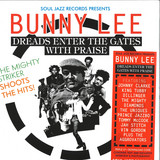
Bunny Striker Lee - 'strikes Back- The Sound Of Studio One'

2022 Repress
The Sound of Studio One can be identified by the great singers that it cultivated along the many great songs that these singers released. But as studio 1's dominance was slowly pulled away by the up and coming new breed of producers many of the artists would inevitably end up working for these new camps and so the songs and singers found a new audience. The reggae sound of the Studio 1 would make a great combination and the man to pull this was together Bunny Lee.
The 1960's in Jamaica was run by two main factions, Coxsonne's Studio 1 and Duke Reid's Treasure Isle. These two leading protagonists saw what some of the other great Sound System men like ' Tom The Great Sebastian' had not taken onboard, that when the tunes they imported began to dry up from the USA, their future lied in producing music. Tunes that suited the musical styles that the people of Jamaica still enjoyed. By the late 1960's thse supremacy was being challenged by the up and coming new producers on the scene, Lee Perry being one, and the other being 'Ghost of the Studios' himself, Bunny Lee. Bunny 'Striker' Lee may have inherited the moniker 'Striker' from his liking of a particular TV show called 'The Hitch-Hiker', but it would soon stand also for the considerable hits he would obtain as he was declared producer of the year in Jamaica in 1969, 1970,1971 and 1972.
For this release, we have compiled many of the great Studio hits that Bunny Lee recorded with the singers that had originally cut at the famed Studio 1. Bunny Lee's sprinkling of magic over some classic tunes....the sound of Studio 1 backed up this time Bunny 'Striker' Lee's set of star musicians The Aggravators. Proving you can't keep a good tune down, or a great producer pushing forward.....Bunny Lee strikes back....
Hope you enjoy the set.....

nicht am Lager

Bestelle jetzt und wir bestellen den Artikel für dich beim Lieferanten.


Last In: vor 3 Jahren
Lee Tracy & Isaac Manning - Is it What You Want LP

As the sun sets on a quaint East Nashville house, a young man bares a piece of his soul. Facing the camera, sporting a silky suit jacket/shirt/slacks/fingerless gloves ensemble that announces "singer" before he's even opened his mouth, Lee Tracy Johnson settles onto his stage, the front yard. He sways to the dirge-like drum machine pulse of a synth-soaked slow jam, extends his arms as if gaining his balance, and croons in affecting, fragile earnest, "I need your love… oh baby…"

Dogs in the yard next door begin barking. A mysterious cardboard robot figure, beamed in from galaxies unknown and affixed to a tree, is less vocal. Lee doesn't acknowledge either's presence. He's busy feeling it, arms and hands gesticulating. His voice rises in falsetto over the now-quiet dogs, over the ambient noise from the street that seeps into the handheld camcorder's microphone, over the recording of his own voice played back from a boombox off-camera. After six minutes the single, continuous shot ends. In this intimate creative universe there are no re-takes. There are many more music videos to shoot, and as Lee later puts it, "The first time you do it is actually the best. Because you can never get that again. You expressing yourself from within."

"I Need Your Love" dates from a lost heyday. From some time in the '80s or early '90s, when Lee Tracy (as he was known in performance) and his music partner/producer/manager Isaac Manning committed hours upon hours of their sonic and visual ideas to tape. Embracing drum machines and synthesizers – electronics that made their personal futurism palpable – they recorded exclusively at home, live in a room into a simple cassette deck. Soul, funk, electro and new wave informed their songs, yet Lee and Isaac eschewed the confinement of conventional categories and genres, preferring to let experimentation guide them.

"Anytime somebody put out a new record they had the same instruments or the same sound," explains Isaac. "So I basically wanted to find something that's really gonna stand out away from all of the rest of 'em." Their ethos meant that every idea they came up with was at least worth trying: echoed out half-rapped exhortations over frantic techno-style beats, gospel synth soul, modal electro-funk, oddball pop reinterpretations, emo AOR balladry, nods to Prince and the Fat Boys, or arrangements that might collapse mid-song into a mess of arcade game-ish blips before rallying to reach the finish line. All of it conjoined by consistent tape hiss, and most vitally, Lee's chameleonic voice, which managed to wildly shape shift and still evoke something sincere – whether toggling between falsetto and tenor exalting Jesus's return, or punctuating a melismatic romantic adlib with a succinct, "We all know how it feels to be alone."

"People think we went to a studio," says Isaac derisively. "We never went to no studio. We didn't have the money to go to no studio! We did this stuff at home. I shot videos in my front yard with whatever we could to get things together." Sometimes Isaac would just put on an instrumental record, be it "Planet Rock" or "Don't Cry For Me Argentina" (from Evita), press "record," and let Lee improvise over it, yielding peculiar love songs, would-be patriotic anthems, or Elvis Presley or Marilyn Monroe tributes. Technical limitations and a lack of professional polish never dissuaded them. They believed they were onto something.

"That struggle," Isaac says, "made that sound sound good to me."

In the parlance of modern music criticism Lee and Isaac's dizzying DIY efforts would inevitably be described as "outsider." But "outsider" carries the burden of untold additional layers of meaning if you're Black and from the South, creating on a budget, and trying to get someone, anyone within the country music capital of the world to take your vision seriously. "What category should we put it in?" Isaac asks rhetorically. "I don't know. All I know is feeling. I ain't gonna name it nothing. It's music. If it grabs your soul and touch your heart that's what it basically is supposed to do."

=

Born in 1963, the baby boy of nine siblings, Lee Tracy spent his earliest years living amidst the shotgun houses on Nashville's south side. "We was poor, man!" he says, recalling the outhouse his family used for a bathroom and the blocks of ice they kept in the kitchen to chill perishables. "But I actually don't think I really realized I was in poverty until I got grown and started thinking about it." Lee's mom worked at the Holiday Inn; his dad did whatever he had to do, from selling fruit from a horse drawn cart to bootlegging. "We didn't have much," Lee continues, "but my mother and my father got us the things we needed, the clothes on our back." By the end of the decade with the city's urban renewal programs razing entire neighborhoods to accommodate construction of the Interstate, the family moved to Edgehill Projects. Lee remembers music and art as a constant source of inspiration for he and his brothers and sisters – especially after seeing the Jackson 5 perform on Ed Sullivan. "As a small child I just knew that was what I wanted to do."

His older brother Don began musically mentoring him, introducing Lee to a variety of instruments and sounds. "He would never play one particular type of music, like R&B," says Lee. "I was surrounded by jazz, hard rock and roll, easy listening, gospel, reggae, country music; I mean I was a sponge absorbing all of that." Lee taught himself to play drums by beating on cardboard boxes, gaining a rep around the way for his timekeeping, and his singing voice. Emulating his favorites, Earth Wind & Fire and Cameo, he formed groups with other kids with era-evocative band names like Concept and TNT Connection, and emerged as the leader of disciplined rehearsals. "I made them practice," says Lee. "We practiced and practiced and practiced. Because I wanted that perfection." By high school the most accomplished of these bands would take top prize in a prominent local talent show. It was a big moment for Lee, and he felt ready to take things to the next level. But his band-mates had other ideas.

"I don't know what happened," he says, still miffed at the memory. "It must have blew they mind after we won and people started showing notice, because it's like everybody quit! I was like, where the hell did everybody go?" Lee had always made a point of interrogating prospective musicians about their intentions before joining his groups: were they really serious or just looking for a way to pick up girls? Now he understood even more the importance of finding a collaborator just as committed to the music as he was.

=

Isaac Manning had spent much of his life immersed in music and the arts – singing in the church choir with his family on Nashville's north side, writing, painting, dancing, and working various gigs within the entertainment industry. After serving in the armed forces, in the early '70s he ran The Teenage Place, a music and performance venue that catered to the local youth. But he was forced out of town when word of one of his recreational routines created a stir beyond the safe haven of his bohemian circles.

"I was growing marijuana," Isaac explains. "It wasn't no business, I was smoking it myself… I would put marijuana in scrambled eggs, cornbread and stuff." His weed use originated as a form of self-medication to combat severe tooth pain. But when he began sharing it with some of the other young people he hung out with, some of who just so happened to be the kids of Nashville politicians, the cops came calling. "When I got busted," he remembers, "they were talking about how they were gonna get rid of me because they didn't want me saying nothing about they children because of the politics and stuff. So I got my family, took two raggedy cars, and left Nashville and went to Vegas."

Out in the desert, Isaac happened to meet Chubby Checker of "The Twist" fame while the singer was gigging at The Flamingo. Impressed by Isaac's zeal, Checker invited him to go on the road with him as his tour manager/roadie/valet. The experience gave Isaac a window into a part of the entertainment world he'd never encountered – a glimpse of what a true pop act's audience looked like. "Chubby Checker, none of his shows were played for Black folks," he remembers. "All his gigs were done at high-class white people areas." Returning home after a few years with Chubby, Isaac was properly motivated to make it in Music City. He began writing songs and scouting around Nashville for local talent anywhere he could find it with an expressed goal: "Find someone who can deliver your songs the way you want 'em delivered and make people feel what you want them to feel."

One day while walking through Edgehill Projects Isaac heard someone playing the drums in a way that made him stop and take notice. "The music was so tight, just the drums made me feel like, oh I'm-a find this person," he recalls. "So I circled through the projects until I found who it was.

"That's how I met him – Lee Tracy. When I found him and he started singing and stuff, I said, ohhh, this is somebody different."

=

Theirs was a true complementary partnership: young Lee possessed the raw talent, the older Isaac the belief. "He's really the only one besides my brother and my family that really seen the potential in me," says Lee. "He made me see that I could do it."

Isaac long being a night owl, his house also made for a fertile collaborative environment – a space where there always seemed to be a new piece of his visual art on display: paintings, illustrations, and dolls and figures (including an enigmatic cardboard robot). Lee and Issac would hang out together and talk, listen to music, conjure ideas, and smoke the herb Isaac had resumed growing in his yard. "It got to where I could trust him, he could trust me," Isaac says of their bond. They also worked together for hours on drawings, spreading larges rolls of paper on the walls and sketching faces with abstract patterns and imagery: alien-like beings, tri-horned horse heads, inverted Janus-like characters where one visage blurred into the other.

Soon it became apparent that they didn't need other collaborators; self-sufficiency was the natural way forward. At Isaac's behest Lee, already fed up with dealing with band musicians, began playing around with a poly-sonic Yamaha keyboard at the local music store. "It had everything on it – trumpet, bass, drums, organ," remembers Lee. "And that's when I started recording my own stuff."

The technology afforded Lee the flexibility and independence he craved, setting him on a path other bedroom musicians and producers around the world were simultaneously following through the '80s into the early '90s. Saving up money from day jobs, he eventually supplemented the Yamaha Isaac had gotten him with Roland and Casio drum machines and a Moog. Lee was living in an apartment in Hillside at that point caring for his dad, who'd been partially paralyzed since early in life. In the evenings up in his second floor room, the music put him in a zone where he could tune out everything and lose himself in his ideas.

"Oh I loved it," he recalls. "I would really experiment with the instruments and use a lot of different sound effects. I was looking for something nobody else had. I wanted something totally different. And once I found the sound I was looking for, I would just smoke me a good joint and just let it go, hit the record button." More potent a creative stimulant than even Isaac's weed was the holistic flow and spontaneity of recording. Between sessions at Isaac's place and Lee's apartment, their volume of output quickly ballooned.

"We was always recording," says Lee. "That's why we have so much music. Even when I went to Isaac's and we start creating, I get home, my mind is racing, I gotta start creating, creating, creating. I remember there were times when I took a 90-minute tape from front to back and just filled it up."

"We never practiced," says Isaac. "See, that was just so odd about the whole thing. I could relate to him, and tell him about the songs I had ideas for and everything and stuff. And then he would bring it back or whatever, and we'd get together and put it down." Once the taskmaster hell bent on rehearsing, Lee had flipped a full 180. Perfection was no longer an aspiration, but the enemy of inspiration.

"I seen where practicing and practicing got me," says Lee. "A lot of musicians you get to playing and they gotta stop, they have to analyze the music. But while you analyzing you losing a lot of the greatness of what you creating. Stop analyzing what you play, just play! And it'll all take shape."

=

"I hope you understood the beginning of the record because this was invented from a dream I had today… (You tell me, I'll tell you, we'll figure it out together)" – Lee Tracy and Isaac Manning, "Hope You Understand"

Lee lets loose a maniacal cackle when he acknowledges that the material that he and Isaac recorded was by anyone's estimation pretty out there. It's the same laugh that commences "Hope You Understand" – a chaotic transmission that encapsulates the duality at the heart of their music: a stated desire to reach people and a compulsion to go as leftfield as they saw fit.

"We just did it," says Lee. "We cut the music on and cut loose. I don't sit around and write. I do it by listening, get a feeling, play the music, and the lyrics and stuff just come out of me."

The approach proved adaptable to interpreting other artists' material. While recording a cover of Whitney Houston's pop ballad "Saving All My Love For You," Lee played Whitney's version in his headphones as he laid down his own vocals – partially following the lyrics, partially using them as a departure point. The end result is barely recognizable compared with the original, Lee and Isaac having switched up the time signature and reinvented the melody along the way towards morphing a slick mainstream radio standard into something that sounds solely their own.

"I really used that song to get me started," says Lee. "Then I said, well I need something else, something is missing. Something just came over me. That's when I came up with 'Is It What You Want.'"

The song would become the centerpiece of Lee and Isaac's repertoire. Pushed along by a percolating metronomic Rhythm King style beat somewhere between a military march and a samba, "Is It What You Want" finds Lee pleading the sincerity of his commitment to a potential love interest embellished by vocal tics and hiccups subtlely reminiscent of his childhood hero MJ. Absent chord changes, only synth riffs gliding in and out like apparitions, the song achieves a lingering lo-fi power that leaves you feeling like it's still playing, somewhere, even after the fade out.

"I don't know, it's like a real spiritual song," Lee reflects. "But it's not just spiritual. To me the more I listen to it it's like about everything that you do in your everyday life, period. Is it what you want? Do you want a car or you don't want a car? Do you want Jesus or do you want the Devil? It's basically asking you the question. Can't nobody answer the question but you yourself."

In 1989 Lee won a lawsuit stemming from injuries sustained from a fight he'd gotten into. He took part of the settlement money and with Isaac pressed up "Saving All My Love For You" b/w "Is It What You Want" as a 45 single. Isaac christened the label One Chance Records. "Because that's all we wanted," he says with a laugh, "one chance."

Isaac sent the record out to radio stations and major labels, hoping for it to make enough noise to get picked up nationally. But the response he and Lee were hoping for never materialized. According to Isaac the closest the single got to getting played on the radio is when a disk jock from a local station made a highly unusual announcement on air: "The dude said on the radio, 107.5 – 'We are not gonna play 'Is It What You Want.' We cracked up! Wow, that's deep.

"It was a whole racist thing that was going on," he reflects. "So we just looked over and kept on going. That was it. That was about the way it goes… If you were Black and you were living in Nashville and stuff, that's the way you got treated." Isaac already knew as much from all the times he'd brought he and Lee's tapes (even their cache of country music tunes) over to Music Row to try to drum up interest to no avail.

"Isaac, he really worked his ass off," says Lee. "He probably been to every record place down on Music Row." Nashville's famed recording and music business corridor wasn't but a few blocks from where Lee grew up. Close enough, he remembers, for him to ride his bike along its back alleys and stumble upon the occasional random treasure, like a discarded box of harmonicas. Getting in through the front door, however, still felt a world away.

"I just don't think at the time our music fell into a category for them," he concedes. "It was before its time."

=

Lee stopped making music some time in the latter part of the '90s, around the time his mom passed away and life became increasingly tough to manage. "When my mother died I had a nervous breakdown," he says, "So I shut down for a long time. I was in such a sadness frame of mind. That's why nobody seen me. I had just disappeared off the map." He fell out of touch with Isaac, and in an indication of just how bad things had gotten for him, lost track of all the recordings they'd made together. Music became a distant memory.

Fortunately, Isaac kept the faith. In a self-published collection of his poetry – paeans to some of his favorite entertainment and public figures entitled Friends and Dick Clark – he'd written that he believed "music has a life of its own." But his prescience and presence of mind were truly manifested in the fact that he kept an archive of he and Lee's work. As perfectly imperfect as "Is It What You Want" now sounds in a post-Personal Space world, Lee and Isaac's lone official release was in fact just a taste. The bulk of the Is It What You Want album is culled from the pair's essentially unheard home recordings – complete songs, half-realized experiments, Isaac's blue monologues and pronouncements et al – compiled, mixed and programmed in the loose and impulsive creative spirit of their regular get-togethers from decades ago. The rest of us, it seems, may have finally caught up to them.

On the prospect of at long last reaching a wider audience, Isaac says simply, "I been trying for a long time, it feels good." Ever the survivor, he adds, "The only way I know how to make it to the top is to keep climbing. If one leg break on the ladder, hey, you gotta fix it and keep on going… That's where I be at. I'll kill death to make it out there."

For Lee it all feels akin to a personal resurrection: "It's like I was in a tomb and the tomb was opened and I'm back… Man, it feels so great. I feel like I'm gonna jump out of my skin." Success at this stage of his life, he realizes, probably means something different than what it did back when he was singing and dancing in Isaac's front yard. "What I really mean by 'making it,'" he explains isn't just the music being heard but, "the story being told."

Occasionally Lee will pull up "Is It What You Want" on YouTube on his phone, put on his headphones, and listen. He remembers the first time he heard his recorded voice. How surreal it was, how he thought to himself, "Is that really me?" What would he say to that younger version of himself now?

"I would probably tell myself, hang in there, don't give up. Keep striving for the goal. And everything will work out."

Despite what's printed on the record label, sometimes you do get more than one chance.

nicht am Lager

Bestelle jetzt und wir bestellen den Artikel für dich beim Lieferanten.


Last In: vor 3 Jahren
Thee Sacred Souls - Thee Sacred Souls LP

For Thee Sacred Souls, the first time is often the charm. The band’s first club dates led to a record deal with the revered Daptone label; their first singles racked up more than ten million streams in a year and garnered attention from Billboard, Rolling Stone, and KCRW; and their first fans included the likes of Gary Clark Jr., The Black Pumas, Princess Nokia, and Timbaland. Now, the breakout San Diego trio is ready to deliver yet another landmark first with the release of their self-titled debut on Daptone Records.

“Every step of the way has just been so organic,” says drummer Alex Garcia. “Things just seem to happen naturally when the three of us get together.”

Indeed, there’s something inevitable about the sound of Thee Sacred Souls, as if Garcia and his bandmates—bassist Sal Samano and singer Josh Lane—have been playing together for a lifetime already. Produced by Bosco Mann (aka Daptone co-founder Gabriel Roth), Thee Sacred Souls is a warm and textured record, mixing the easygoing grace of sweet ’60s soul with the grit and groove of early ’70s R&B, and the performances are utterly intoxicating, with Lane’s weightless vocals anchored by the rhythm section’s deep pocket and infectious chemistry.

Hints of Chicano, Philly, Chicago, Memphis, and even Panama soul turn up here, and while it’s tempting to toss around labels like “retro” with a deliberately analog collection like this, there’s also something distinctly modern about the band that defies easy categorization, a rawness and a sincerity that transcends time and place.

nicht am Lager

Bestelle jetzt und wir bestellen den Artikel für dich beim Lieferanten.


Last In: vor 3 Jahren
DOLENZ, JONES, BOYCE & HART - DOLENZ, JONES, BOYCE & HART  (2LP COLOURED VINYL)
 
25

7A Records announces the release of Dolenz, Jones, Boyce & Hart’s original studio and live albums. In the mid-1970s promoters were trying to reunite the Monkees, but with Michael Nesmith and Peter Tork unavailable, it was suggested that Micky Dolenz and Davy Jones team up with Tommy Boyce and Bobby Hart to tour as ‘The Golden Great Hits Of The Monkees Show - ‘The Guys Who Wrote ‘Em & The Guys Who Sang ‘Em’’. The group signed a deal with Capitol Records to record a self-titled studio album of new material. They later released a live album from their tour of Japan. Both albums have been unavailable and out of print for many years. 7A Records have tracked down the original master tapes, that were presumed missing for at least 27 years, and remastered both albums for this release. Available as deluxe 2CD and 2LP sets, the CD version will include a big 40 page colour booklet featuring extensive liner notes and previously unseen photos. The 2LP version comes in a gatefold sleeve and is pressed on special 180g Green, Black and Yellow Quad Vinyl.

vorbestellen01.08.2022

erscheint voraussichtlich am 01.08.2022


Last In: vor 2026 Jahren
KENNY DORHAM - QUIET KENNY LP

One of the most active bebop trumpeters, Kenny Dorham started in the big bands of Mercer, Ellington, Lionel Hampton, Billy Eckstine and Dizzy Gillespie and eventually landed in the Charlie Parker Quintet. In addition, he was a charter member of Art Blakey’s Jazz Messengers, recorded as a sideman with Thelonious Monk and Sonny Rollins and replaced Clifford Brown in the Max Roach Quintet. Throughout his career he can be heard playing trumpet on various recordings with Lou Donaldson, Sonny Stitt, Fats Navarro, Kenny Clarke, Mary Lou Williams and many more musical legends.

“Quiet Kenny” is a jazz masterpiece. Recorded by the great Rudy Van Gelder with a group of musicians playing at the top of their game, this title continues to be one of the most collectible Jazz LPs due to its high demand and short supply.


PLAYERS:

Kenny Dorham, trumpet
Tommy Flanagan, piano
Paul Chambers, bass
Art Taylor, drums

nicht am Lager

Bestelle jetzt und wir bestellen den Artikel für dich beim Lieferanten.


Last In: vor 3 Jahren
Sanford CLARK - They Call Me Country LP

Propelled by his 1956 Lee Hazlewood-produced hit "The Fool," Sanford Clark was already a rockabilly legend in his own right by the time he swapped his hair gel and switchblade for a pair of cowboy boots on They Call Me Country. Recorded between 1965-67 and originally released as a series of singles for Phoenix's Ramco label, the 12 tracks on this LP borrow Bakersfield's outlaw sound and ignore Nashville's countrypolitan flair, standing as a true lost masterpiece of country music's third generation. Clark's booming baritone tells tales of bar fights, heartaches, and drinking til you can't stand, while Waylon Jennings provides a backdrop of fuzzed out guitar twang. Mastered from the original session tapes and back on vinyl for the first time since the Nixon administration.

nicht am Lager

Bestelle jetzt und wir bestellen den Artikel für dich beim Lieferanten.


Last In: vor 3 Jahren
Ernie Wilkins - On The Roll LP

1987 LP Ernie Wilkins and his 'Almost Big Band' led by tenor saxophonist, composer and arranger Wilkins and featuring pianist Kenny Drew, drummer Ed Thigpen and trombonist/vocalist Richard Boone Ernie Wilkins (1919 - 1999) made phenomenal contribution to the big band music in the last five decades by composing and arranging for such major big bands as those led by Earl Hines, Count Basie, Dizzy Gillespie, Tommy Dorsey, Harry James and Clark Terry.
Wilkins moved to Copenhagen in 1979 and in 1980 launched his own Almost Big Band which consists of top musicians from Europe and USA.

"Under leadership of Ernie Wilkins music never becomes a mere parade of soloists. He builds up a piece and gives it a form of unity...Listeners will keep finding fresh surprises." - Albrekt von Konow, Orkester Journalen

vorbestellen01.04.2022

erscheint voraussichtlich am 01.04.2022


Last In: vor 2026 Jahren
MDM Factory - La Vida Loca EP

Breaking News! DJs Pareja and Matias Aguayo have joined to form the dance project MDM Factory!

Modern transcendental Techno music for those who know, and those who want to learn!

In a turmoil of events nightlife would change forever, and confined to their respective places - A flat in Buenos Aires and a house in the jungle Diego Irasusta, Mariano Caloso and Matias Aguayo joined forces to create new communication on distance via music.

Taking all their dance floor knowledge and dreaming of sound systems and togetherness in a better future, DJs Pareja & Aguayo put their minds, bodies and souls to work on this stunning EP that will please the forward thinking underground freaks as well as the big room techno pros.

Let’s dive into this divine mess of glorious dance floor jams from the future...

A1. Curvas Peligrosas

With the first track it becomes clear what this is all about: Wobbly metamorphous sounds from outer space jamming with stomping and bass driven techno beats of tomorrow, a new kind of rave, hypnotic and seductive, utterly strange but wonderfully catchy and contagious in a good sense, harsh shuffled hiatus and alternating kick drums, a relentless bassline and sophisticated electronic sounds in a a permanent evolution resembling and invoking altered states of consciousness.

A2. Love Boat

This new rave anthem seems like a classic you haven’t heard about. Muscle memories from dancefloor days trigger your body as you listen on your headphones, awaiting the chance to play it out soon, hopefully, as the dance floors slowly reopen. Alternating between parts of kickdrum, clap and snare awesomeness, and the mangled rave signals that slowly morph into a more concrete melody reminiscent of ancient dreams of the future, this track has it all for the club kids of today.

B1. La Vida Loca
The title track is a tech banger that will please those who dig Kenny Larkin, Claude Young, The Surgeon, Dave Clark or any other star in the nocturnal sky of Techno Techno, as well as the lovers of DJs Pareja’s classic Cómeme Clubbangers, or the more Techno side of Mr. Aguayo. Definitely has the potential to become a huge hit if enough djs that don’t rely on algorithms get their hands on it

B2. Las Llaves

The closer is hyper modern tech funk at its best. Percussive greatness as you can find it on many Cómeme releases is triggered in a different way, “sabroso” rhythms that are played in the light and purposeful way of an elegant jazz drummer, pave the way for an always evolving psychedelic lead synth sound, that will be a useful tool for the dj who knows when to keep the groove, prolonging those magic times between the risings...

nicht am Lager

Bestelle jetzt und wir bestellen den Artikel für dich beim Lieferanten.


Last In: vor 3 Jahren
Brandi Carlile - In These Silent Days

Brandi Carlile

In These Silent Days

12inch0075678643170
Atlantic
01.10.2021

In These Silent Days, the highly anticipated new studio album from six-time Grammy Award-winning singer, songwriter, performer, producer and New York Times Best Selling author Brandi Carlile, is out October 1. Ahead of the release, the album’s first single, “Right On Time,” featuring a music video directed by Courteney Cox launched on announcement
Inspired by the mining of her own history while writing this year’s #1 New York Times Best Selling memoir Broken Horses, In These Silent Days was conceived of while Carlile was quarantined at home with longtime collaborators and bandmates Tim and Phil Hanseroth. The ten songs chronicle acceptance, faith, loss and love and channel icons like David Bowie, Freddie Mercury, Elton John and Joni Mitchell—the latter two who, by some sort of cosmic alignment of the stars, have turned out to be close friends in addition to being her biggest heroes and inspirations.
In These Silent Days follows Carlile’s 2018 breakthrough GRAMMY Award-winning album, By The Way, I Forgive You, which Rolling Stone declared, “…an Adele-meets Joni Mitchell tour de force.” In the years since—in addition to collaborative projects with The Highwomen, Tanya Tucker, Soundgarden, Alicia Keys, Dolly Parton, Barry Gibb, Leslie Jordan, Brandy Clark and more—she has earned six Grammy Awards recognizing her work as a performer, songwriter and producer, was awarded Billboard’s Women In Music “Trailblazer Award,” CMT’s Next Women of Country “Impact Award” and received multiple recognitions from the Americana Music Association Honors & Awards including 2020’s Album of the Year (Highwomen), Group of the Year (The Highwomen) and Song of the Year (“Crowded Table”) and 2019’s Artist of the Year. Carlile was also once again nominated for Artist of the Year and Group of the Year (The Highwomen) at the 2021 ceremony.

vorbestellen01.10.2021

erscheint voraussichtlich am 01.10.2021


Last In: vor 2026 Jahren
Various - Hillbillies In Hell: Volume XII

A desperate, desert-baked Midnight Highway of Lost Souls, Cuckolds, Wastrels, blistering Righteous Anthems and delirious Apocalyptic Fever-Dreams. This sublime collection of knowns and unknowns, battered Nashville legends and forgotten backwoods-poets features tales of Grisly Barroom Homicides, Jilted Lustmords, Grim Divorcees in Bedlam and Fiery Suburban Infanticides. Often originally waxed and distributed in unrewarding amounts, these Troubled Troubadours sing of Cowardice, Infidelity, Spurned Lover's Suicide Pacts, Tortured Jailbirds, Vengeful Inebriates and dubious Parenting Skills.
Years in the making – ‘Hillbillies In Hell’ (Volume XII) presents 16 timeless tribulations - Sinful Seductresses, Grinding Poverty, Nihilistic Murderous Horrors, Satan's Eternal Maze of Hardships and Temptations and God's blazing Light of Redemption.
A dank yet at times uplifting stash of marginal 45s - some of these sides are impossibly rare and are reissued here for the very first time. All for your prurient listening pleasure…

. Elton Britt - Lost Highway
, Porter Wagoner - Fairchild
, Justin Tubb - The Great River Road Mystery
, Sanford Clark - It's Nothing To Me
, Johnny Paycheck - You'll Recover In Time
, Stonewall Jackson - Somebody's Always Leaving
, Porter Wagoner And Dolly Parton - The Party
, Buddy Starcher - When Payday Comes
, Tommy Curtis And Bill Taylor - Devil's Stumbling Block
, Jody Reynolds - Devil Girl
, Henson Cargill - Going Backwards
, Lorrie Collins - Another Man Done Gone
, Bobby Braddock - Revelation
, Stonewall Jackson And The Brentwood Children's Choir - That's All This Old World Needs
, The Speer Family - You Can't Run Away From God
, The Singing Rambos - When Payday Comes",Witness...

Various Artists ‘In Bed With Marina’
Classic Indie/Chamber-Pop
2LP MA90 (Marina Records) £15.50
Deal: B/C: 4015698905656

THIS ONE MISSED THE DEADLINE FOR THE OFFICIAL RSD LISTINGS BUT WILL BE AN **UNOFFICIAL RSD DROP 2 ** RELEASE...LIMITED +NON-RETURNABLE..

Celebrating its 25th anniversary, this classic Marina compilation from 1996 makes its first appearance on vinyl. Packaged in a deluxe gatefold cover, In Bed With Marina features track-by-track notes, lots of photographs, two vinyl-only bonus cuts and a gorgeous poster.
Enjoy 24 stunning tracks on two groovy LPs incl. many unreleased cuts and exclusive contributions by Edwyn Collins, Shack, Teenage Fanclub, The Pearlfishers, Cowboy Mouth, The Bathers, Harpers Bizarre, Sugartown, Paul Quinn & The Independent Group, Jazzateers, Antonio Carlos Jobim, Malcolm Ross, The Secret Goldfish, and many others.

vorbestellen03.08.2021

erscheint voraussichtlich am 03.08.2021


Last In: vor 2026 Jahren
The Monkees - The Monkees (Deluxe Edition)
 
25

The Monkees, one of the most recognizable names in the annals of pop music history, are an American rock and pop band originally active between 1966 and 1971, with reunion albums and tours in the decades that followed. The original line up was Micky Dolenz, Michael Nesmith, Peter Tork and Davy Jones. The group was conceived in 1965 by TV producers Bob Rafelson and Bert Schneider specifically for the sitcom series The Monkees, which aired from 1966 to 1968. The music was originally supervised by record producer Don Kirschner, backed by the songwriting duo of Tommy Boyce and Bobby Hart.

The Monkees self-titled debut and second albums were meant to be a soundtrack to the first season of the TV show, to cash in on the audience.Their first single, “Last Train To Clarksville” b/w “Take A Giant Step,” was released in August 1966, just weeks prior to the TV broadcast debut. In conjunction with the first broadcast of the TV show on September 12, 1966, NBC and Columbia had a major hit. The first long-playing album, The Monkees, was released a month later; it spent 13 weeks at #1 and stayed on the Billboard charts for 78 weeks.

The Monkees have sold more than 75 million records worldwide making them one of the biggest selling groups of all time with international hits, including “Last Train to Clarksville,” “Pleasant Valley Sunday,” “Daydream Believer,” and “I’m A Believer.” ROG is reissuing their iconic debut album as a deluxe 2LP set with bonus tracks (several of which are unreleased mixes) and are having lacquers cut from the analog tapes for the first time since 1966—creating THE DEFINITIVE version of this album since original release!


[n] c3. This Just Doesn’t Seem to Be My Day (TV Version) [Mono]

[p] c5. I Wanna Be Free (Fast Version) [Mono TV Mix]
[q] c6. You Just May Be The One [Mono TV Version]


[x] d6. (I Prithee) Do Not Ask For Love [2020 Remix]

vorbestellen18.06.2021

erscheint voraussichtlich am 18.06.2021


Last In: vor 2026 Jahren
Kelan Philip Cohran & The Hypn - Kelan Philip Cohran & The Hypn

Cuernavaca / Stateville / Frankincense And Myrrh / Apsara / Ancestral / Spin / Zincali


Approaching his eighty-fifth birthday, sharp and lean, Phil Cohran lives a couple of blocks from the lake on the north side of Chicago. His modest apartment is filled with a palpable richness. His cornet and trumpets, zithers, French horn, harp and frankiphones (an electric kalimba of his own invention); his beloved telescope; African art; a mural of the Chinese monastery where Muslim monks bestowed on him the name Kelan ('holy scripture'); hand-printed posters from the culture wars of 1960s Chicago; all reflect a life dedicated not just to music, but also to science and astronomy, to history and activism. In its range of subject matter the track-list of Kelan Philip Cohran & The Hypnotic Brass Ensemble embodies this invigorating and all-embracing curiosity: a Mexican hill-town filled with perfume and flowers... an Illinois state prison where Cohran taught inmates in the 1960s... heavenly dancers in the temples of Cambodia... a tribute to a sixteenth-century Venetian musicologist. Welcome to the musical world of Kelan Philip Cohran.
Cohran was born in Mississippi and grew up in St Louis. In the immediate post-war years St Louis was a jazz heartland, home of stalwarts like Clark Terry and Oliver Nelson (both of whom he played with), not to mention a genius called Miles Davis. In 1950 Cohran moved to another heartland, Kansas City, where he played trumpet in one of the hardest swinging swing-groups, led by Jay McShann (who famously had given Charlie Parker his first job). With McShann he spent 'the best year of my life', touring as far as Mexico and playing proto-rock'n'roll in Texas with the likes of Big Mama Thornton on vocals. Back in St Louis Cohran led his own group, the Rajas Of Swing, whose show involved wearing red jackets, grey slacks, blue suede shoes and turbans.
Then in the mid-50s he moved to Chicago. He had a small group with a friend, the legendary tenor saxophonist John Gilmore, whose regular gig was to play at Sarah Vaughan's weekly 'birthday' parties, an excuse for the Sassy One to splash the cash and have some fun. ('What, Sarah Vaughan would sing with you and John Gilmore' 'No way, Sarah didn't sing, she was too busy partying.') And in 1959, through Gilmore, he was invited to join Sun Ra's Arkestra, at a crucial period in the evolution of that extraordinary group. Effortlessly wrapping traditions as divergent as boogie-woogie and electronica in an Afro-centric, intergalactic mythology of his own making, Sun Ra casts a huge shadow across conventional narratives of jazz history. 'With Sunny', Cohran simply says, 'I found my own voice'.
You can hear the emergence of this voice on the LP Angels And Demons At Play, recorded in 1960 - Sun Ra's masterpiece from the period. On the track Music From The World Tomorrow, against the urgent whipped and chopped percussion of the Arkestra, it is Cohran's zither, initially bowed and then plucked and strummed, which is the track's magic ingredient. More profoundly it was Sun Ra's example - his defiant self-confidence and sense of purpose - that set Cohran on his own (to quote another Ra composition) 'pathway to unknown worlds'. Indeed this spirit of self-belief led Cohran to turn down the invitation to accompany the Arkestra when Sun Ra moved east in 1961.
Staying in Chicago, Cohran founded the Affro-Arts Theater and performed with the Artistic Heritage Ensemble, recording the group for his own Zulu Records imprint. (Co-members went on to become Earth Wind & Fire; Cohran taught the group's leader Maurice White the mysteries of the frankiphone). The AACM, a musicians' collective of immense influence and importance, had its first meeting in Cohran's front room. With Oscar Brown Jr and Gene Page he wrote and performed in a show celebrating the nineteenth-century Afro-American poet Paul Lawrence Dunbar. He taught music tirelessly in schools and prisons. His studies into music theory and history led him to the discovery of a key book in his life, Gioseffo Zarlino's treatise on harmony, published in Venice in1558. Astronomy is another passion and another area of expertise. One of the gems of the Cohran discography is African Skies, with its lovely harp playing, commissioned by the Chicago Planetarium in 1993.
In Chicago he also raised a large family. Many of his children have gone on to become professional musicians; eight of them are the Hypnotic Brass Ensemble. For each of them, their first teacher was their father, who famously insisted on giving them music lessons not just for several hours after school, but for several hours before school as well. Their father's music was all around them as children; they all vividly remember lying in bed at night not being able to sleep because their father was rehearsing with the Jazz Workshop downstairs.
For the Hypnotic Brass Ensemble, the voyage to where they are now - whether tearing up festivals from Glastonbury to Melbourne, or touring with Gorillaz, or recording their first album on Honest Jon's - has involved a necessary stepping away from their father's shadow. Phil Cohran is the first to recognise this, happily allowing their sound - heavy on the funk, with the urgency of hip hop never far away - to blossom.
But likewise this album is for all of them a natural step. Recorded in Chicago in June 2011, the idea was beautifully simple - 'my music and their band' as Phil puts it, 'we don't have to rattle on more than that'. Only to point out perhaps that here - in the majestic surge of Zincali, for instance, or in the sheer verve and bounce of Cuernevaca - is music not just filled with the warmth of home. This is music that plumbs the depths and rings with joy.

'Cuernevaca is a town in the mountains south of Mexico City. I was there in 1950 when I was on the road with Jay McShann's band. It's a place close to paradise, a city filled with the fragrance of flowers. I always wanted to go back... In 1974 I taught workshops at the prison in Stateville, the Big House where Al Capone spent time. There's a huge wall around the prison, and once I took Hypnotic there - ha - to see what the future holds for them... Makeda, the Queen of Sheba, sent a caravan of gifts to King Solomon - a caravan that took more than a day to pass one point - and the main gifts were Frankincense And Myrrh... I wrote Apsara in 1967, when Jackie Kennedy was in the news with her visit to the temple of Angkor Wat in Cambodia. Apsara were celestial beings, dancers who brought forth the civilization of ancient Cambodia, by dancing in the holy nectar called Amrita... Ancestral is a meditation drone written for my Friday-night residence at the Ethiopian Diamond Restaurant in Chicago's Rogers Park... Spin is the latest of these compositions. Everything in the cosmos spins, from the smallest objects we can see in a microscope to the largest galaxies. Spin is the motion of all things whether it looks like it or not... Zincali is a name Spanish gypsies call themselves. 'Zin', East Africa; 'cali', the people. One of the offshoots in my research into Moorish Spain has led me to Gioseffo Zarlino, the sixteenth-century master of music at St Mark's in Venice. It's said that Bach lost his sight reading Zarlino's treatise on counterpoint. His greatest composition is his setting of the Song of Songs - 'Nigra Sum', 'I am black'. This is my tribute to Zarlino and to the zincali.'

nicht am Lager

Bestelle jetzt und wir bestellen den Artikel für dich beim Lieferanten.


Last In: vor 4 Jahren
Turn It Loose, Ain’t No Good - Savoy Gospel 1970-1979
 
20

The second volume brings sublime crossings of gospel with the soul, funk and jazz of the Black Power era. Twenty rapturous cuts dot dazzlingly between Muscle Shoals soul, screwed breakbeat, Mizells-style fusion, disco and proto-house. Triumphant re-workings of Sly Stone, Donny Hathaway and Herbie Hancock’s Head Hunters will have listeners throwing their pew cushions into the air.

Full-size booklet; beautifully designed, with stunning, rare photographs and original Savoy artwork.

nicht am Lager

Bestelle jetzt und wir bestellen den Artikel für dich beim Lieferanten.


Last In: vor 4 Jahren
Etrusca 3D - Etrusca 3D

Etrusca 3D

Etrusca 3D

12inchPCD02
Discrepant
16.09.2020

Etrusca 3D is a new band that merges two current Audio and visual artists from the 21st Century, Francesco Cavaliere and Spencer Clark.

The album is the first to be released by Spencer Clark's label Pacific City Discs, as a subsidiary and in collaboration with Discrepant. 

‘’One cannot underestimate the result of stating the names of certain gods at high voices. Something that sinuous and quiet enters into this disc for you to listen. What if the Etruscan Civilization instead of transforming or amalgamating into the roman one, was instead passed on to other worlds? Were the tombs, their spiral idols and funeral decorations a meticulous method for transmuting to something else?

Etrusca 3D is the juxtaposition of two imagineers friendship, as Francesco says, 'because I am Etruscan and you (Spencer) are 3D."  There is a piece of the future of Etruscan civilization contained within this disc. It is with Spencer's remote viewing of a past and future creative culture and Francesco's birthright that we find a true insinuation of civilizations world body. 

We decided to invoke various Etruscan deities or spirits by sampling Francesco's voice uttering their name. We put them inside the Emax 2 3D machine and we began to play these deities and thus incorporate a fresh and ancient music language to present the 21st Century Etruscan experience.  In the meantime, these musical stories turned into Francesco's imaginary storytelling style to further present a narrated record of the intuited activities of Etruscan Gods...’’ - Francesco Cavaliere & Spencer Clark

All songs by Spencer Clark & Francesco Cavaliere

nicht am Lager

Bestelle jetzt und wir bestellen den Artikel für dich beim Lieferanten.


Last In: vor 5 Jahren
Jackie McLean - A Fickle Sonance
  • 1: Five Will Get You Ten
  • 2: Subdued
  • 3: Sundu
  • 4: A Fickle Sonance
  • 5: Enitnerrut
  • 6: Lost

Classic 1961 hard-bop album by the alto sax great. McLean’s fifth Blue Note LP. Recorded at the Van Gelder Studio on 26th October 1961. Featuring Tommy Turrentine (trumpet), Sonny Clark (piano), Butch Warren (bass) and Billy Higgins (drums). Showcasing fine McLean originals (the title track and ‘Subdued’), the only Thelonious Monk/Sonny Clark collaboration (‘Five Will Get You Ten’), plus Clark’s ‘Sundu’, Turrentine’s ‘Enitnerrut’ and Warren’s ‘Lost’. Includes session photography by Francis Wolff and liner notes by legendary jazz writer Ira Gitler.

vorbestellen10.04.2020

erscheint voraussichtlich am 10.04.2020


Last In: vor 2026 Jahren
Otik - Blasphemy

Otik

Blasphemy

12inchBOOGIE007
Boogie Box
03.12.2019

Airplay on Tom Ravenscroft (BBC Radio 6 Music), Re:lax w/ Re:ni, Laksa & Biggabush (NTS), Gage (NTS), From The Depths with Drakeford (NTS)

Premieres of Four Feet and Blasphemy on Trax Mag and Ransom Note

Review on 2 Hungry Ghosts

DJ support from Midland, Bruce, Re:ni, Troy Gunner, Maya Jane Coles, Minor Science, Via Maris, Mosca, Blackdown/Martin Clark, Horse Meat Disco, Tony Thorpe, Daire Carolan (All City Records), Deft, Phototherapy, Shadow Child / Polymod, Lukas Wigflex, Soulphiction/ Jackmate

nicht am Lager

Bestelle jetzt und wir bestellen den Artikel für dich beim Lieferanten.


Last In: vor 4 Jahren
Konx-om-Pax - Ways Of Seeing

On ‘Ways Of Seeing’ Konx-om-Pax has switched up the mood and hit gold. He has made an album that is filled with joy and sunshine, saturated with the classic feel of Berlin Techno.

Tom Scholefield has moved on from the dark ambient and brittle rave of the first two Konx-om-Pax albums, which were a reflection of his hometown Glasgow's electronic music scenes. After a recent move to Berlin, the textures of Glasgow's musical strains have fused into an accessible and friendly mix of poppy melodic electronica built from a stricter 'less is more' sound pallete, closer in spirit to the music of his adopted city. It is also a record which was made in opposition to recent music he has been hearing, in particular the troubled, dark and noisy experimental music coming out of Berlin. Tom wanted to focus on more joyful qualities, making this a record imbued with warmth and happiness, a panacea to the darkness and disorientation all around in 2019.

Having a social scene full of producers has also influenced the album. The opening track 'LA Melody' came from staying with Ross Birchard (Hudson Mohawke) at his house in LA, hanging out in the glorious sunshine with him and Lunice working on tracks.
"Initially Ross asked me to write some melodies to use in a project he was producing, but I ended up liking it so much I decided to keep the riff. I generally write music alone, but being around other producers gave me a certain excited energy that reminded me of after-parties back in Glasgow where Ross and myself spent our youth together. Spending time in Clark's studio also helped me improve my workflow and sequencing the album by seeing the way he does things". On 'Säule Acid' he collaborates with Silvia Kastel and in 'I’m For Real' the vocals of Glaswegian DJ/producer Nightwave filter around the track.

nicht am Lager

Bestelle jetzt und wir bestellen den Artikel für dich beim Lieferanten.


Last In: vor 6 Jahren
Gabe Knox - ABC LP

Following 1 or 2 small run / mailorder lathe cuts, Polytechnic Youth follow it's hugely successful 'Popcorn Lung' label compilation LP, with it's first full length of the new year, and man... this one is just wonderful! A mighty record to kick off what promises to be another hugely productive, constantly busy year for the Crouch End based synth label.

PY often likes to quote the artist directly in it's press releases, and this one is no exception. Gabe's own words, more than adequately explaining the path leading to this killer set for 2019; 'It feels a little ridiculous to pretend that the person introducing you to Gabe Knox is some kind of bigwig press agent and not just Gabe Knox himself, so let me, Gabe Knox, tell you a little about myself in that hopes that you'll give my music a listen.

In 2014, after years of moderate success as a local musician and club DJ in Toronto, Canada, I looked at my collection of barely functioning analogue synths and drum machines and said to myself 'Instead of trying to unsuccessfully make music you think other people will like, why don't you make something that you'd actually want to listen to for once' I wanted to make music that had the drive shaft of Neu!, the punishing low end of King Tubby, the interleaved melodic lines of Vince Clarke, the melancholic, otherworldly whimsy of Raymond Scott and Delia Derbyshire, the hypnotic drone of Spacemen 3, and the analogue intimacy of Le Car. I wanted to bring the euphoria and hypnosis of dance music to the rock kids, and the energy and excitement of rock music to the dance kids.

This was going to be a tough sell in the clique-y Toronto music scene, so I figured the best way to get the music out there would be by recording when I can and self-releasing a steady stream of EPs online. They would all be a series, a snapshot of the evolution of that initial idea. ABC represents a compilation of the best songs of the first three EPs, subtly remixed and remastered to best suit vinyl. I hope you love listening to it as much as I loved making it.'

This really is a remarkable record. Displaying all the PY traits of icy cool blasts of minimal synth, motorik grooves, melodic pop via passing nods to early mute and sky records. Never before did label head Dom think he'd get the chance to namecheck 2 musical heroes from wildly differing poles -Vince Clarke and Spacemen 3- into one LP PR sheet, so he's understandably excited for this one's release!

250 copies on yellow wax in hand numbered, reverse board sleeves. Sure to go real quick....

nicht am Lager

Bestelle jetzt und wir bestellen den Artikel für dich beim Lieferanten.


Last In: vor 7 Jahren
Various - Soul Jazz Records presents Bunny Lee: Dreads Enter the Gates with Praise - The Mighty Striker Shoots

Johnny Clarke & King Tubby & Dillinger & Prince Jazzbo feat. Tommy McCook & The legendary Aggrovators & The Mighty Diamonds - Soul Jazz Records presents Bunny Lee: Dreads Enter the Gates with Praise - The Mighty Striker Shoots the Hits!

Soul Jazz Records presents this new collection featuring the heavy 70s roots reggae of Bunny
Lee - a living legend, one of the last of the great Jamaican record producers who helped shape
and define reggae music in the 1970s from a small island sound into an internationally
successful musical genre.
From teenage fan to young record plugger for Duke Reid, Sir Coxsone and other early
pioneering Jamaican musical entrepreneurs, Lee has spent his whole professional life inside the
Kingston music industry. In the 1970s he rose up to become one of the major record producers
in Jamaica alongside Lee 'Scratch' Perry and the other 'small axe' producers who broke the
dominance of the 'big tree' producers that had ruled Jamaican music in the 1960s.
Featuring some of the heaviest Jamaican artists, including Johnny Clarke, King Tubby, Dillinger,
Prince Jazzbo, Tommy McCook, The legendary Aggrovators (featuring Sly and Robbie), The
Mighty Diamonds and more, the album is a rollercoaster ride of rare, deep and classic 1970s
roots, dub and DJ sounds.
During this era, 'flying cymbals', crashing reverbs, dark echoing thunderclap gunshots and
other 'implements of sound' filled his record productions as Bunny Lee explored the outer limits
of dub with his friend King Tubby in the mix on wild versions that accompanied any 45. A
Bunny Lee record provides a creative and mysterious hidden guide to reggae music itself, a
double-sided three-minute intangible history lesson etched in wax.
Bunny Lee was one of the first Jamaican producers to travel to England in the late 1960s, at
the beginning of the nascent British reggae music industry as record companies such as
Trojan, Pama and others began licensing Jamaican music in the UK to supply the expanding
West Indian communities living up and down England. Lee encouraged other Jamaican
producers to do the same, including Lee Perry, Harry J and Niney The Observer and also
became a conduit between the British music industry and numerous younger Island-based
producers - a frequent flyer reggae ambassador, a musical courier exchanging tapes for
royalties.
Bunny Lee's first recordings in the late 1960s were mainly rock steady but as the 70s
approached the music soon began to mutate and slow down into 'reggae' as the sound became
heavier, more rootsy and the sound itself began to change with the explosion of dub.
Lee was at the forefront to this dramatic musical shift into roots reggae and by this time had
become a major producer, capable of working with whoever he chose as world-famous singers,
DJs and musicians lined up to work with the charismatic man. Lee also employed a fluid but
stable set of crack session musicians who he named The Aggrovators.
Most of the recordings featured here come from the mid 70s, a time when Bunny Lee was
definitely in the zone, releasing heavyweight singles at an almost unstoppable rate. Bunny
Lee's career stretches over five decades and he has upwards of 2,000 production credits on
vinyl.
This album comes with extensive sleevenotes, an interview with Bunny Lee and exclusive
photography. The album is available as a CD pack with 24-page booklet, massive triple LP vinyl
with digital download code, house inner and full notes, as well as digital album.

nicht am Lager

Bestelle jetzt und wir bestellen den Artikel für dich beim Lieferanten.


Last In: vor 7 Jahren
Exterior - Plagued Streets Of Pity

'Best electronic live set i've seen in two years!' CHRIS CUSACK (BOOKER, BLOC GLASGOW)

Fresh and heady slice of cerebral techno and out-there electro flavours.

EXTERIOR is the artist moniker of Edinburgh producer Doug MacDonald. Exterior represents his transition to electronic music and an embrace of the dancefloor. Doug played hardcore and noise-rock for a long time before eventually abandoning collaboration, nostalgia and formulaic rebellion in favour of synthesis. What he gained on the way was an understanding of the power of live drumming and years of finely honed performance-skills, something of an aberration in dance music.

Exterior thus represents a convergence of disparate personal and musical pleasures. Accordingly Exterior draws on rhythmic mavericks as divergent as Fugazi//Battles//Swans as well as DJ Spoko//Clark//Hieroglyphic Being. In addition, there is a deep undercurrent of melody and texture, drawing on the likes of Burial//Miles Davis//Bjork. Eschewing the modern home computer in favour of an exclusively hardware based approach, Exterior espouses a physical relationship to what is at heart an abstract practice, composing electronic dance music.

Perhaps it's unsurprising, then, that one of the things which really sets Exterior apart is his intoxicating live show. He gets the crowd going every single time he performs, so infectious is his energy, as he throws shapes and struts his stuff behind the gear, clearly 100% in the moment and his element.

His debut EP 'Public Transport' was released on London/Barcelona-based Land Recordings earlier in 2018. Having made his international headlining debut in Berlin in September, more continental sorties are currently being arranged (see below).

This record represents a significant move forward in sophistication and club-readiness.

On remix duties, anonymous analogue techno lover DALI returns on the back of four slices of extended club gear released via two Hobbes Music 12"s (2017-18), boasting colour-themed, screen-printed sleeves and an uber-simple design for that evergreen minimal aesthetic with a hint of mystique. These gained excited support/plays from the likes of Ben UFO, Nina Kraviz, Daniel Avery, DJ Deep, Laurent Garnier, Avalon Emerson, Twitch, XDB, Bill Brewster, Bawrut, Tom Findlay (Groove Armada) and many more... Clocking in (again) at just over 9 minutes, her 'Collapsing Star' remix is another marathon-length effort and does exactly what it says on the tin. Setting the beats to classic electro, everything's pushed hard until it all seems ready to fall rapidly apart (and it very nearly does), before dissolving in a fiery sizzle: a more visceral, dance floor accompaniment to Exterior's heady affair.

nicht am Lager

Bestelle jetzt und wir bestellen den Artikel für dich beim Lieferanten.


Last In: vor 7 Jahren
Rex Hansson - Pengar Tjejer & Vapen

The 3 release. 3 artists. 3 solid tracks.
Rex Hansson has made a solid original version. You clearly hear his skills as a past percussionist. The beats together with Skånska vocals, Low key Rhodes and some 303 knob twiddling make this track special and great.
Emil Nyman. This mix is something. It's tossing and turning from a metallic sound to the softest wood. From the deepest parts of the ocean we follow the pads and organ up in the sky.
The b side is dedicated Clark Eng. A minimal offbeat version with low toms and rattling high sticks, claps and snares. The track is moving like a Newcomen engine. The minor changes all the time makes it to a hypnotic minimal house track.

nicht am Lager

Bestelle jetzt und wir bestellen den Artikel für dich beim Lieferanten.


Last In: vor 6 Jahren
Mouse On Mars - Dimensional People

Mouse on Mars' Andi Toma and Jan St. Werner return with their most
inventive album to date, Dimensional People. The electronic music pioneers
have been critically acclaimed for their playful and inventive sound and
production techniques on releases spanning from the early '90s to now. In
demand from a surprising array of artists their most recent contributions are
featured on the Grammy award winning album Sleep Well Beast by The
National.
The duo are joined on Dimensional People by an impressive list of guests
: Justin Vernon (Bon Iver), Aaron and Bryce Dessner (The National), Zach
Condon (Beirut), Spank Rock, Swamp Dogg, Eric D. Clarke, Lisa Hannigan,
Amanda Blank, Sam Amidon, Ensemble Musikfabrik, and about 20 more
musical collaborators. The cast of characters are as unique as they are vast,
clearly a rich quarry for the prodigious duo.
Dimensional People is by it's nature a collaborative album. Originally
premiering as a spatial composition using object-based mixing technology
playing with the possibilities of sonic design (4D Sound) and collective
musicianship, the recording expands upon these ideas. Dimensional People
expresses itself as a dynamic 50-piece orchestra, telling a story in sound.
Mouse on Mars offer sound as a means to encourage open-minded societies,
aided by cutting-edge technology including their own MoMinstruments
music software or a spatial mixing technique called object based mixing,
with which a spatial version of the work was created. It is a conceptual
puzzle composed around one harmonic spectrum within one rhythmic
scheme, mostly in the tempo of 145bpm (inspired by Chicago footwork,
so the dance oor is not entirely absent). Looking ahead, Dimensional
People will also be realized through installation, presenting the work as an
immersive listening experience, as well as performance.

nicht am Lager

Bestelle jetzt und wir bestellen den Artikel für dich beim Lieferanten.


Last In: vor 7 Jahren
Mouse On Mars - Idiology

Mouse On Mars

Idiology

12inchTHRILL098LP
Thrill Jockey
06.03.2018

Mouse on Mars is recognised as one of Germany's most defning and versatile electronic music projects. With their
anarchic mixture of sound that oscillates between uncontrollable chaos and meticulously arranged structures,
Jan St. Werner and Andi Toma have forged a unique musical language, which is readily decomposed by the
unpredictability of its myriad mutations. Free from schools of thought, genre conventions, and from the constraints
of the music establishment, they have worked under the Mouse on Mars alias for 24 years, mapping their own
idiosyncratic trajectory through a no man's land between pop, art, club music, and the avant-garde. - Jan Rohlf
Idiology takes the acoustic experiments of Niun Niggung even further, and it's this combination of electronic
and 'traditional' music -- melding keyboards and synthesizers with french horns and guitars and trumpets into a
seamless whole -- that points the way through the dead-ends of most electronica.'
- PopMatters
Andi Toma and Jan St. Werner continue to create soundscapes that blur the line between programming and live
musicianship, and sometimes between Earth and outer space.' - The A.V. Club
On April 13th Mouse on Mars will release Dimensional People,
their brand new studio album on Thrill Jockey.
The album features Werner and Toma joined by a number of
prolifc guests: Justin Vernon (Bon Iver), Zach Condon (Beirut),
Spank Rock, Aaron and Bryce Dessner (The National), Swamp
Dogg, Eric D. Clarke, Lisa Hannigan, Amanda Blank, Sam
Amidon, Ensemble Musikfabrik, and about 20 more musical
collaborators.
After a series of notorious dance oor releases, Dimensional
People reveals them working deep within their own vernacular,
digging into fertile terrain of their inexhaustible vault of digital
and acoustic experimentation, and charismatically making
elemental components new again. This album makes clear how
their craft is of discovery, of fnding new contexts for places,
sounds, memories, sensations, ambiences, technologies,
relationships, and of course, people.

nicht am Lager

Bestelle jetzt und wir bestellen den Artikel für dich beim Lieferanten.


Last In: vor 7 Jahren
Morrison Kincannon - Beneath The Redwoods

All that changed when Morrison received an email from Spacetalk Records two years ago, asking about the possibility of reissuing 'To See One Eagle Fly', the B-side to one of their 7' singles that has long been a favourite of label co-founder Danny McLewin. Once a deal had been done, Morrison mentioned that he had hours of unissued recordings in his loft; a treasure trove of ultra-rare multi-track master tapes that could be freshly mixed and mastered for release. When the Spacetalk Records' team finally got a chance to listen, they were astonished by the timeless quality of the songs. Put simply, they just had to be released.

The resultant album is a stunning set: an intoxicating glimpse into the world of two previously unheralded master songwriters whose musical vision encapsulates all that was good about Californian music during the late '60s and early '70s. Rooted in the American folk revival and folk-rock movement of the late '60s, the album's 15 thoughtful, heartfelt songs are laden with sly nods to the likes of Crosby, Stills, Nash & Young, Ned Doheny, Michael Deacon, Cy Timmons, Gene Clark and Buffalo Springfield. The tracks were recorded at various times between 1970 and '82 and gives a small glimpse of the duo's total body of unissued work. The release comes with extensive liner notes telling the remarkable story of two lifelong friends and musical collaborators who thought their moment had passed.

nicht am Lager

Bestelle jetzt und wir bestellen den Artikel für dich beim Lieferanten.


Last In: vor 8 Jahren
Soul Jazz Records - 100% Dynamite!

This is the new digitally remastered 2015 expanded edition of Soul Jazz Records' biggest ever selling release, 100% Dynamite! Ska, Soul, Rocksteady and Funk in Jamaica.
Since the album's original release nearly twenty years ago, 100% Dynamite has become a cornerstone of reggae: eighteen killer tracks that show the influence that American Jazz, Funk and Soul music had on Jamaican Reggae.
The proximity of the West Indies to the USA meant that many Jamaican musicians were influenced by American styles of music whilst at the same time defining new styles of their own such as Ska, Rocksteady and Dub.
100% Dynamite features some serious Jamaican funk by Jackie Mittoo, The Upsetters and Toots & The Maytals, the cream of Jamaica's jazz musicians such as Tommy McCook, Cedric Brooks and Lennie Hibbert. Also included here are heavyweight Reggae versions to Soul classics by Marlena Shaw's 'Woman of the Ghetto', Aretha Franklin's 'Rocksteady', Syl Johnson's 'Is It Because I'm Black', William DeVaughan's seminal 'Be Thankful' and more.
100% Dynamite also features revolutionary tunes such as Johnny Osbourne's 'We Need Love', Sound Dimension's 'Drum Song' and Lloyd Robinson's 'Cuss Cuss', songs that helped define a unique sound for Jamaican music in the sixties and seventies. These influences went both ways - check Brentford All Stars massive 'Greedy G', the basis for Boogie Down Productions' 'Jack of Spades', or Willie Williams' 'Armageddon Time', later covered by The Clash.
This new expanded edition features seminal tracks from the greatest Jamaican producers - Clement Dodd, Lee Perry, Winston Riley (Techniques) and many more.
The album is available as CD, heavyweight double vinyl (+download), plus digital.

nicht am Lager

Bestelle jetzt und wir bestellen den Artikel für dich beim Lieferanten.


Last In: vor 5 Jahren
Jon Gurd - Birth Right Ep

* Jon Gurd's Birth Right EP is the first material from the Portsmouth based Techno producer in more than 2
years since his ventures on Octopus recordings, 8 Sided Dice and Quartz. The EP therefore indicates an
audible step change not just in the approach to production but also in the mindset and emotive feeling
behind each texture and layer. Having emerged unscathed from a traumatic family related drama Jon
communicates a tortuous and re-evaluated life message across all 3 tracks, and is dedicated to his brother
with a hidden meaning conveying, Tomorrow Is - Promised - To No One'.

* Dissecting the EP further the educated are blessed with field recordings, analogue rumbling and modular
synthesis exiting from almost 24 months of lab driven experimentation. No real process has been applied or
extant formulae followed and the EP's resounding success is that this now exudes what Jon feels' innately
rather than what the industry wants, therefore the journey, endless noise making and experimentation gives
a balanced and exciting offering. Jon comments seriously my process for producing this has been all over
the place, literally stumbling on shit, slipping over my own creative vomit, workflow went out the studio
window on day one'.

* Having spent two years asking himself why he makes music, I think on first listen of Birth Right EP we will all begin to empathise why. Remixes kindly provided by Messrs Dave Clarke and Ancestral Voices (new project from Liam Blackburn formerly Indigo / Akkord).

* A long time-friend and recording partner of Alan Fitzpatrick, as well as one third of Mister Woo with Dave from Reset Robot, Jon Gurd is best known for his work on the likes of Octopus Recordings, 8 Sided Dice and Quartz. Abundant with field recordings, analogue rumbling and modular synthesis, his latest signing to Derelicht is a result of almost 24 months of lab driven experimentation, and marks an auspicious return from a musical hiatus that stemmed from a personal tragedy. From the off, 'Tomorrow Is' is a driving piece of techno complete with sinister undertones and menacing atmospherics, meanwhile 'Promised' focuses on a low-slung groove as tantalising synths operate on top. The last original, 'To No One', then exhibits a deeper vibe with ebbing pads and spectral chords. Dave Clarke's decadent rendition of 'Promised' ups the tempo whilst demonstrating commanding kicks, until Ancestral Voices, the new project from Liam Blackburn (Indigo / Akkord), strips back the beats of 'To No One' for a subdued subterranean workout.

* Press / Promotion: 3 x Co-ordinated PR Campaigns (In House campaign by Derelicht, Dispersion PR and EPM Music, 100 vinyl hand-distributed to leading editors, artists and tastemakers. Key editorials through Resident Advisor, Inverted Audio, Ran$om Note, Beat Vision, Slate The Disco, Magnetic Magazine, DJ Mag, Noise Porn, Mind Grub Audio, Portals, Elevated Culture. 1 x videos produced to support Dave Clarke remix
Tiefschwarz - 'Just Beautiful!'
Alan Fitzpatrick - Yeah massively into this, will play a lot. Thanks for sending.
Dustin Zahn - Feeling the original of "To No One." the chord/pads are hitting the right spot for me this morning! The remix is also a nice take on the original
Baikal - to no one and Derelicht are dope
Kirk Degiorgio - Dave's mix for me!
Bas Mooy - yep! A1 for me mate!
Ben Sims - a1 is the cut for me, heavy and heady but still has the groove
Benjamin Damage - Thanks for sending this, top work!
Bryan Chapman - really feeling this EP, fav is the Ancestral Voices remix, that downbeat vibe
Bryan Zentz - Wonderful, moody, and emotive...LOVE it
Carlo Lio - Actually feeling all of them. Something for every time of the night. Can see myself playing a few of these for sure
Lo Shea - Tomorrow is sick! Dave Clarke's remix is dope too.

nicht am Lager

Bestelle jetzt und wir bestellen den Artikel für dich beim Lieferanten.


Last In: vor 7 Jahren
Jay Clarke - Entitas Ep

Jay Clarke

Entitas Ep

12inchBAXN002
BLACKAXON
18.09.2015

Entitas, is the second instalment of Jay Clarke's BLACKAXON imprint, and sees the label boss bring out the big guns in the form of three distinct and diverse cuts. First up is Entity, an autonomic monster which has sweat soaked energy written all over it. It's auspiciously one part deep, and more than double just as twisted. Things are far from linear with Entity, it's mercilessly the sum of it's own parts, and has the hallmarks of a true big room pleaser written all over it. A truly authentic demonstration of the old adage 'It's not where you are going, it's how you get there'. Entity is certain to be reached for by all of the major players on the Techno circuit for a long time to come.
On the flip, Ghosts Of Acid is the Yin to Entity's Yang. A plangent and introspective groove opens up with wispy cymbals, cleverly placed rims, hats and claps. Exploratory and evolving subaqueous acidic forays dare the listener to dive in a little deeper, with the reward being a very proficient and efficient take on the now classic Acid sound.

Existence Through Perception seeks to carry on where the previous two tracks left off. A driving groove and sinister hook lets up briefly midway to a near triumphant fanfare, only to be brought back to it's mischievous overture. A perfect late night/peak time track for DJ's looking to elevate the bar of their set just one more rung higher.

Support From:

(Phase), DVS1, Ben Klock, Answer Code Request, Luke Slater, Norman Nodge, Chris Liebing, Lucy, Oscar Mulero, Speedy J, DJ Deep, Tommy Four Seven, Cassegrain, Inigo Kennedy, Slam, Brendon Moeller, Nihad Tule, Kr!z, Psyk, Jonas Kopp, Truncate, Samuli Kemppi, Juho Kusti, Anthony Parasole, Eric Cloutier, Jereon Search, Moerbeck, Truss, Distant Echoes, Yac (I/Y), Philippe Petit, Thomas Hessler, Randomer, Volte-Face, Fundamental Interaction, Arnaud Le Texier, Ame, Angel Molina, Tensal, Kwartz, Stacey Pullen.
Credits

nicht am Lager

Bestelle jetzt und wir bestellen den Artikel für dich beim Lieferanten.


Last In: vor 4 Jahren
Artikel pro Seite:
N/ABPM
Vinyl