Cerca:tn

Generi
Tutto
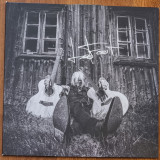
WYE OAK - EVERY DAY LIKE THE LAST: COLLECTED SINGLES 2019-2023 LP

Wye Oak, das Duo bestehend aus Jenn Wasner und Andy Stack, veröffentlicht mit Every Day Like The Last eine Sammlung brandneuer Songs und bereits veröffentlichter Singles, mit der die Band neue Wege beschreitet. Die neun Songs auf Every Day Like The Last stammen aus einer Zeit, in der sich Wye Oak nach mehr als einem Jahrzehnt kontinuierlicher Albumveröffentlichungen und Tourneen im Umbruch befanden. Die musikalische Partnerschaft von Jenn Wasner und Andy Stack erblühte in der Ungewissheit dieser Zeit, wann immer sie spürten, dass Wye Oak etwas zu sagen hatten. Sie gingen dazu über, schnell EPs und Singles zu schreiben, aufzunehmen und digital zu veröffentlichen. Klanglich kehrten Wasner und Stack zu den Grundlagen zurück. Sie balancierten das Organische und das Künstliche aus und nutzen Elektronik und Programmierung, um neue Texturen hinzuzufügen. Für Stack gibt es einen roten Faden, der sich durch das scheinbare Chaos zieht: "Freude im Untergang der Welt zu finden". Every Day Like The Last tut genau das, indem es den Hörer an die neuen Höhen erinnert, die Wye Oak seit 2018's The Louder I Call, The Faster It Runs erreicht haben, während es einen Blick ins Ungewisse wirft, was vor uns liegt. Der Titel dieser Sammlung erkennt diese Dualität an, indem er sie wie eine Frage stellt: "Jeder Tag wie der Tag davor" oder "Jeder Tag wie der letzte Tag auf der Erde"? "Beide Bedeutungen treffen zu", sagt Wasner. Es gibt keine einfachen Antworten.

pre-ordina ora23.06.2023

dovrebbe essere pubblicato su 23.06.2023

WYE OAK - EVERY DAY LIKE THE LAST: COLLECTED SINGLES 2019-2023 LP

Wye Oak, das Duo bestehend aus Jenn Wasner und Andy Stack, veröffentlicht mit Every Day Like The Last eine Sammlung brandneuer Songs und bereits veröffentlichter Singles, mit der die Band neue Wege beschreitet. Die neun Songs auf Every Day Like The Last stammen aus einer Zeit, in der sich Wye Oak nach mehr als einem Jahrzehnt kontinuierlicher Albumveröffentlichungen und Tourneen im Umbruch befanden. Die musikalische Partnerschaft von Jenn Wasner und Andy Stack erblühte in der Ungewissheit dieser Zeit, wann immer sie spürten, dass Wye Oak etwas zu sagen hatten. Sie gingen dazu über, schnell EPs und Singles zu schreiben, aufzunehmen und digital zu veröffentlichen. Klanglich kehrten Wasner und Stack zu den Grundlagen zurück. Sie balancierten das Organische und das Künstliche aus und nutzen Elektronik und Programmierung, um neue Texturen hinzuzufügen. Für Stack gibt es einen roten Faden, der sich durch das scheinbare Chaos zieht: "Freude im Untergang der Welt zu finden". Every Day Like The Last tut genau das, indem es den Hörer an die neuen Höhen erinnert, die Wye Oak seit 2018's The Louder I Call, The Faster It Runs erreicht haben, während es einen Blick ins Ungewisse wirft, was vor uns liegt. Der Titel dieser Sammlung erkennt diese Dualität an, indem er sie wie eine Frage stellt: "Jeder Tag wie der Tag davor" oder "Jeder Tag wie der letzte Tag auf der Erde"? "Beide Bedeutungen treffen zu", sagt Wasner. Es gibt keine einfachen Antworten.

pre-ordina ora23.06.2023

dovrebbe essere pubblicato su 23.06.2023

Various - MUSIC PLAN RECORDS EP VOL. 1

Music Plan, label headed by Fabio Tosti creates this vinyl EP dedicated to House Music lovers.
The vinyl includes of 4 different tracks.

Side A Soulful and Deep House style includes "Take Me Down", a track with a Classic House mood, perfect for refined DJ sets.

The second piece of side A, has a Deep House song with an amazing atmosphere and a great impact on the dancefloor. Side B is more clubbing. It opens with one of the successful songs from The Deepshakerz and "Shosholooza" by Fabio Tosti.

Pure energy!

non in magazzino

Ordina ora e ordineremo l'articolo per te presso il nostro fornitore.


Last In: 2 years ago
Perc - Resistor Remixed

Perc

Resistor Remixed

12inchTPTX005
Perc Trax
02.06.2023

Originally released as part of Perc's Greed Dance 12" in late 2021 Resistor has since taken on a life of it's own, receiving plays & support from I Hate Models, Randomer, Somniac One, Cera Khin, Umwelt, New Frames, Cassie Raptor, Ghost In The Machine and of course Perc himself. Now Resistor returns with three brand new remixes, each taking the original mix to entirely new places.

First up is UK underground hero and Skuxx Records main man Tassid delivering a festival slaying slice of sub heavy UK techno which has been Perc's closing track at his gigs, including at Awakenings in April, from the moment he heard it. Next Jensen Interceptor takes a completely differed approach dropping subtle elements of the original mix of 'Resistor' and a sprinkling of science fiction samples over a hard jackin' groove sitting perfectly between techno and electro.

Finally Berlin based Wallis, shows why she is leading the new school of French producers with a gritty industrial groove, with just the slightest hint of 'Resistor's infamous lead lines breaking through the dirt, to round off a diverse, yet satisfying remix collection.

non in magazzino

Ordina ora e ordineremo l'articolo per te presso il nostro fornitore.


Last In: 2 years ago
DEVICIOUS - Code Red

FÜR FANS VON: HEAT, Eclipse, Nestor, Hardline, Brother Firetribe
Mit ihrem neuen Album „Code Red“ schlägt die deutsche Hard Rock Band DEVICIOUS aus Karlsruhe ein neues Kapitel auf. 2017 gegründet, veröffentlichen sie nun ihr 5. Album in fünf Jahren. Nach einigen Klangexperimenten auf dem Vorgängeralbum „Black Heart“ kehren sie nun zurück zu ihren Wurzeln, zu dem, was sie am besten können. Große Arena-Melodien kombiniert mit bombastischen Chorarrangements und einer großen Produktion.
Das Album wurde von Bandleader und Songwriter Alex Frey selbst produziert und in den Mastersound Entertainment Studios in
Steinheim, Deutschland von Alexander Krull gemischt und gemastert. Er ist der Hauptakteur hinter den Bands ATROCITY und LEAVE’S EYES sondern steht auch auf der Producer- und Mastering-Liste von Bands wie ATROCITY, LEAVE’S EYES, DORO, CREMATORY, VELVET VIPER oder ZAR. Das neue Kapitel von DEVICIOUS beinhaltet auch einen neuen Sänger. Antonio Calanna verließ die Band nach dem letzten Album auf freundschaftlicher Basis, um sich auf andere Projekte zu konzentrieren. Sein Nachfolger ist niemand geringerer als der ehemalige TNT-Sänger Baol Bardot Bulsara, der bereits
auf dem „Black Heart“-Album einige Backing-Vocals gesungen hat und bei einigen Black Heart-Headliner-Shows an Bord war. Mit Baol ist die Band flexibler, da er eine breitere Bandbreite hat und alles von melodischen Balladen bis hin zu Power Metal-Melodien singen kann.

Mit „Code Red“ liefern DEVICIOUS ihr bisher kraftvollstes und ausgereiftestes Werk ab. Ein melodisches Meisterwerk mit allen DEVICIOUS-Markenzeichen.

pre-ordina ora26.05.2023

dovrebbe essere pubblicato su 26.05.2023

Bruce Cockburn - Bruce Cockburn LP 2x12"

His remarkable journey has seen him embrace folk, jazz, rock, and worldbeat styles while earning high praise as an exceptional songwriter and a revered guitarist. He remains deeply respected for his activism and humanist song lyrics that thread throughout his career. On all his albums Cockburn has deftly captured the joy, pain, fear, and faith of human experience in song.''O Sun O Moon' is
Cockburn's latest studio album from True North Records, a collection of 12 new original songs that demonstrate the songwriting and guitar- playing skills that come from more than 55 years of artistry. Since his self-titled debut in 1970, he has won 13 Juno Awards, an induction into the Canadian Songwriters Hall of Fame, a Governor General's Performing Arts Award, and has been made an Officer of the Order of Canada, among many other accolades. He has 22 gold and platinum records including a 6 times platinum record for his Christmas album.

Cockburn continues to tour internationally.

pre-ordina ora26.05.2023

dovrebbe essere pubblicato su 26.05.2023

Lee Fields - Waiting On The Sidelines/You Can Count On Me

Since the release of the Sentimental Fool, Lee Fields has been touring relentlessly, playing to capacity crowds all across the US & EY with the drive and determination of an artist a fraction of his age. The fruits of which have culmi-nated in his song "Forever" being featured in 2023's top rated Super Bowl commercial, further solidifying Lee as the king of soul. In keeping with the momentum it is our pleasure to announce the release of his brand new single "Waiting on the Sidelines". Written by Thomas 'TNT' Brenneck (MSB, Charles Bradley, Diamond West Records) this beat-ballad grooves low and slow, giving Lee ample room to unleash a heart-breakingly soulful display of vocal acrobatics - an absolute must-have for fans of the Penrose sound. On the flip you'll find "You Can Count On Me", an in demand, upbeat moover previously only available on a limited edition 12" EP. Now bow to the king!

pre-ordina ora12.05.2023

dovrebbe essere pubblicato su 12.05.2023

Voertuig - Techno Garage

Voertuig

Techno Garage

12inchTNL-OCS003
Tonal Oceans
31.03.2023

Beyond ecstatic to finally offer a glimpse into the world of voertuig. Working on music for several years, purely for themselves in sheds and studios tucked away in the outskirts of the hague, Tonal Oceans presents an album by the four piece act containing music embodying the true spirit of the city.

W&P by Offer van Kesteren, Gianni Tjon Tam Pau, Tijmen van Wageningen, Laurens ten Berge.

Artwork by Soft Turbo
Drawing by Ilan Havinga

non in magazzino

Ordina ora e ordineremo l'articolo per te presso il nostro fornitore.


Last In: 3 years ago
Iron & Wine - Lori

Iron&Wine

Lori

12inchBC012LPC1
Black Cricket Recording Co
31.03.2023

LORI finds Iron & Wine’s Sam Beam drawing from the songbook of noted singer-songwriter and multiple Grammy winner Lori McKenna. Recorded at the famed Sam Phillips Studios (Memphis, TN) with producer Matt Ross-Spang, Beam takes on four of his favorite McKenna tracks with help from Sima Cunningham and Macie Stewart, known collectively for their work in the indie-art-pop band Finom (formerly known as Ohmme.) Beam came to McKenna’s music a few years ago on the suggestion of a friend. As the lock down dragged on, Beam found himself, like so many, turning to music for comfort. McKenna’s catalog of work was never far from reach. Taken by her heart-on-your-sleeve confessional style storytelling, Beam admits it’s a trait that draws him to McKenna and something not often found in his own songwriting. As a well-known interpreter of other artists’ songs, when the time came for him to shake off the pandemic cobwebs and record, McKenna’s songs were as fresh and familiar to Beam as his own. Traveling to Memphis in March of 2021, Beam invited Cunningham and Stewart to join him in the studio. During the three days of recording, Ross-Spang was a logical choice to take the helm as he had handled Iron & Wine’s 2019 collaboration with Calexico, the twice Grammy nominated Years to Burn, and had also worked on two of McKenna’s own records. Having enjoyed successful solo careers outside of Finom, Cunningham and Stewart bring their own touches to LORI and helped Beam find even further depths to McKenna’s songwriting. Together the trio sonically re-interpreted her plaintive odes into a tapestry of sounds effortlessly blending their signature singing styles and breathing fresh life into the lyrics

pre-ordina ora31.03.2023

dovrebbe essere pubblicato su 31.03.2023

Dynamite Deluxe - TNT LP

Dynamite Deluxe

TNT LP

12inch1037396DYD
Dynamite Deluxe
10.02.2023

Die Arbeit an TNT wurde über drei Jahre geheim gehalten. Dynamite Deluxe weihte nur wenige Personen ein, die sich mit dem Musikgenre Hip-Hop beschäftigen. Der Grund für diese Entscheidung war, dass sich die Mitglieder unsicher darüber waren, ob die enge Zusammenarbeit nach der mehrjährigen Pause noch zu zufriedenstellenden Ergebnissen führen würde.

Damit hielt sich die Gruppe die Option offen, die Produktion des Albums abzubrechen. Die Be- kanntgabe, dass Dynamite Deluxe als Gruppe wieder zu- sammenarbeiten, erfolgte 2007 in der September-Ausgabe des Hip-Hop-Magazins Juice.

Darin wurde eine zweiseitige Anzeige abgedruckt, die das Dynamite Deluxe-Logo und einen Hinweis auf Januar 2008 zeigt. Am 15. September 2007 trat die Hamburger Gruppe schließlich im Rahmen der Feier zum zehnten Jubiläum der Juice in München erstmals wieder gemeinsam auf.

pre-ordina ora10.02.2023

dovrebbe essere pubblicato su 10.02.2023

Robyn Hitchcock - Robyn Hitchcock (5th Anniversary Edition)

Robyn Hitchcock stands among the most energized and ambitious
recordings of the iconic troubadour's four-decade career
The album sees Hitchcock casting familiar shapes into surprising new forms, the
sci-fi fueled sounds and visions that first stimulated his work now ribboned with
experience and hard- earned wisdom. The album, Hitchcock's 21st studio
recording, was recorded in Nashville, TN, with producer Brendan Benson (The
Raconteurs) and backing by fellow Music City players that include guitarist Annie
McCue, bassist Jon Estes, and drummer Jon Radford. Harmony vocal
contributions include Emma Swift, Grant Lee Phillips, Gillian Welch, and Wilco's
Pat Sansone.This 5th anniversary edition is pressed on neon green vinyl.

pre-ordina ora03.02.2023

dovrebbe essere pubblicato su 03.02.2023

Current Value - Platinum Scatter 2x12"

Current Value

Platinum Scatter 2x12"

2x12inchYUKU031
YUKU
20.01.2023

Red Vinyl

"Platinum Scatter is a trip along the fringes of music that could still be classified as drum and bass but without the obvious markings of the genre while meeting and merging with forms of techno or music from the wider bass spectrum. I designed this album to be something of a focused journey that should work equally as a cerebral listening experience as much as it should function in clubs. I consider this to be my most conceptual body of work to date, and I hope that you will enjoy its approach to multi-layered rhythms and minimal but striking forms."
- Current Value

non in magazzino

Ordina ora e ordineremo l'articolo per te presso il nostro fornitore.


Last In: 2 years ago
Ledfoot - Coffin Nails LP

Ledfoot

Coffin Nails LP

12inchTBC2301
TBC Records
13.01.2023

‘Fuxsake, what a great ride this album is... …Somewhere John Lee Hooker is smiling and stampin' his foot to 'Runnin' Till I'm Done'! Love the 12 string riffing so much - You just don't hear that enough these days - Brings to mind Stevie Ray on killing it on acoustic. Ledfoot on the Goodfoot got some serious mojo'. - Winter Lazerus, mastering master This record was recorded and mixed in two days - live - straight to tape… no edits, no punching in…just me… honest for better or worse – honesty - What a precious thing ‘ - Ledfoot - In short: 10 tracks recorded analogue live to tape during two magic days at Studio Studio Nyhagen. No bullshit, just a unique artist spitting out his soul in the most naked and real setting possible. Gothic blues! Still, the sound, the lyrics and the performance are very much a product of today. Ledfoot aka Tim Scott McConnell is a 12-string guitarist who plays with fitted heavy strings,
a brass slide, steel fingerpicks and a stompbox. He has been touring and releasing music since the late 1970’s and written for artists as varied as Highasakite and TnT to Sheena Easton. In 2014, Bruce Springsteen recorded ‘High Hopes’ as the title track of his album, written by Tim Scott McConnell for the Havalinas debut album in 1990. It debuted as #1 in over 10 countries including the U.S. and the U.K.

pre-ordina ora13.01.2023

dovrebbe essere pubblicato su 13.01.2023

Melvin Gibbs - Anamibia Sessions 1: The Wave

A potentially surprising release on Editions Mego. Another planned prior to the untimely passing of Peter Rehberg in 2021.

Melvin Gibbs is the renowned bass player and producer from Brooklyn who’s vast resume includes playing with Sonny Sharrock, John Zorn, The Rollins Band, Dead Prez, Caetano Veloso and Femi Kuti amongst others. A solid resume, no doubt, but what is Gibbs doing on Editions Mego?

Behind the scenes, those who know Gibbs knew that amongst all this he was also tinkering away at another form of music, one which skirts around the border between music and sound design. The Wave is the first release that reveals this side of Gibbs’ creative output to those outside his inner circle.

The driving force for this output is Gibbs’ multi-decade friendship with acclaimed American video artist and cinematographer Arthur Jafa. Over the course of time Gibbs and Jafa have had many conversations about music and the connection between film and music. Jafa’s desire to make film that worked the way Black (as in Black/African-American/ Afro-diasporic peoples) music worked inspired Gibbs to study the filmmakers Serge Eisenstein and Dziga Vertov and incorporate their philosophies and tactics when recording his own music. The two discussed sound design which directly informed Gibbs’ choice of music making tools and led to him acquiring Symbolic Systems Kyma software and hardware, incorporating this as a composition tool and sound design and component in his work. These conversations bore concrete fruit through Gibbs’ work for TNEG, the film studio Jafa ran with filmmakers Malik Sayeed and Elissa Blount Moorhead. Gibbs created the soundtrack for their very first project, the short film “Deshotten 1.0” (2009 - directed by Jafa and Sayeed) as well as their Martin Luther King-inspired meditation on Black life “Dreams Are Colder Than Death” (2013, directed by Jafa)

The bass-forward music, or ‘sonics’ as Gibbs calls it, emerged from an alternative mode of contemplation, a mode that he sees as closer to the mindset of a rootworker, an African-American herbal doctor who cures psychic ailments using means derived from African spiritual practice, entering a forest to find the right plants for a suffering client than a mediator attempting to invoke mindfulness. Gibbs says this practice yields results that suggest an aural form of creation akin to coagulation, a formal movement that gives the sense that a flow of sounds can emit something bearing resemblance to solidifying objects.

In 2020 Jafa asked Gibbs to work on the soundtrack for a work in progress called “The Wave''. When they got together to work on the soundtrack, Jafa played Gibbs a selection of sounds that included random moments of (probably unwanted) feedback on 70's Miles Davis records, Pop Smoke's Brooklyn drill, the music of Bernard Gunter and Darmstadt-style compositions made with test equipment. Those sounds, filtered through years of conversation with Jafa about Black creativity and the possible evolution of Black music, formed the sonic vocabulary of “The Wave”.

non in magazzino

Ordina ora e ordineremo l'articolo per te presso il nostro fornitore.


Last In: 3 years ago
Ujif_notfound - Hypogonadism

Music by Georgiy Potopalskiy aka Ujif_notfound. Written in Kyiv, Ukraine during May-June 2022.

Additional samples from Ukrainian movie "Shadows Of The Forgotten Ancestors" in tracks "Trembeat" and "Pieta"
Mastering & production by Dmytro Fedorenko
Artworks by Liosha Say
Design by Zavoloka

pre-ordina ora02.12.2022

dovrebbe essere pubblicato su 02.12.2022

Young Dolph - Rich Slave

After releasing a successful collaboration album last year, Memphis, TN artist, Young Dolph returns with his highest charting album in his career, Rich Slave. The title is Dolph's commentary on how he is perceived – that no matter how much money he has – in the eyes of America, he will always be a slave. Rich Slave is the album that Young Dolph has shown growth in the sense that he has touched on current events, and social commentary with songs like, The Land that say, "they say this the land of the free, but it looks like the land of bullshit to me". With little features aside from Megan Thee Stallion, Key Glock, and G Herbo, Rich Slave showcases Young Dolph's charismatic skill, and ability to inspire those after him to pursue entrepreneurship.

non in magazzino

Ordina ora e ordineremo l'articolo per te presso il nostro fornitore.


Last In: 3 years ago
Bruce Cockburn - Bruce Cockburn Re-issue

For fans this is the perfect genesis of a globally acclaimed guitarist and songwriter. A blend of youthful enthusiasm and innocence that never quite resurfaced again in his work, especially as he developed his jazz-folk fusion and became known for both immense skill on the guitar and his activism in support of social causes. Fans know this album as Bruce Cockburn's happy-go-lucky years, before the weight of his success encouraged him to use his songwriting for a purpose, never again having this much whimsy in the studio. The opening number, "Going to the Country," evokes the era's hippie back- to- the- earth movement, and as all good things come back around again, is just as fresh in today's enviro-movements. His hit song "Musical Friends" remains a fan favorite to this day.

Bruce Cockburn has written more than 400 songs on 35 albums over a career spanning 50 years, of which 23 have received gold or platinum certification. He has sold more than nine-million copies worldwide, is a member of the Canadian Songwriter Hall of Fame, and is the winner of 13 Juno Awards from more than 30 nominations. His world-wide hits include "Wondering Where The Lions Are",
"Lovers In a Dangerous Time", "If A Tree Falls" and "If I Had A Rocket Launcher".

pre-ordina ora25.11.2022

dovrebbe essere pubblicato su 25.11.2022

Bruce Cockburn - Breakfast in New Orleans Dinner in Timbuktu Re-issue

'Breakfast in New Orleans Dinner in Timbuktu' is Bruce Cockburn's 1999
album written to encourage his fans to look forward to the new century,
while learning from the past
It contains a travelogue in the album's lyrics, both to familiar places of home and
family as well as social imperatives from visits to developing countries. Through
it all is Cockburn's reflections on the dynamics between men and women and
spiritual mysticism. Musically the album features the vocals of three women who
appear throughout the album. Jonell Mosser sings on two songs, including the hit
single "Last Night of the World"; Margo Timmins of Cowboy Junkies on the sultry
"Mango" and a cover of the Fats Domino nugget "Blueberry Hill", and most
significantly for the album's consistency, Lucinda Williams appears on four tracks.
Her standout track is "Isn't That What Friends Are For", a tender song of friendship
is made more poignant by Williams' ability to convey deep emotion.
Bruce Cockburn has written more than 400 songs on 35 albums over a career
spanning 50 years, of which 23 have received gold or platinum certification. He
has sold more than nine-million copies worldwide, is a member of the Canadian
Songwriter Hall of Fame, and is the winner of 13 Juno Awards from more than 30
nominations. His world-wide hits include "Wondering Where The Lions Are",
"Lovers In a Dangerous Time", "If A Tree Falls" and "If I Had A Rocket Launcher".

pre-ordina ora25.11.2022

dovrebbe essere pubblicato su 25.11.2022

Tropical Gothclub - Tropical Gothclub LP

Dean Fertita has been at the heart of American rock ‘n’ roll for almost two decades, from his role as an invaluable member of Queens of the Stone Age and The Dead Weather, touring keyboardist with The Raconteurs, and backing musician on records by Jack White, Karen O, Iggy Pop, Brendan Benson, The Kills, Beck, and more. While his own music had been the focus in his role as lead singer, guitarist, and founder of The Waxwings and on recordings as Hello=Fire, Fertita began TROPICAL GOTHCLUB with no clear mission for a solo album under his own name. In early 2020, the TN-based musician put up a small A-frame in his backyard to use as a writing and recording space while stuck at home during the looming pandemic. With rare time on his hands, Fertita set to work recording demos of the many musical ideas he had accumulated over the years, building upon songs and fragments written during different stages of his busy career. Fertita then enlisted his old friend Dave Feeny – a veteran Detroit musician and owner of The Tempermill recording studios in Ferndale, MI – to help develop the recordings even further, pushing the original demos in deliberate new directions to create a showcase for his wide-ranging songcraft and visionary imagination.

pre-ordina ora04.11.2022

dovrebbe essere pubblicato su 04.11.2022

Fit For A King - The Hell We Create LP

Trauma and tragedy transfer from one generation to the next. As difficult as it may be, we still possess the power to break the cycle and start anew. Fit For A King ponder the pain of these cycles and the possibility to end them on their seventh full-length offering, The Hell We Create Solid State. The Texas quintet—Ryan Kirby [vocals], Bobby Lynge [guitar], Daniel Gailey [guitar], Ryan “Tuck” O’Leary [bass], and Trey Celaya [drums]—explore this ebb and flow with a deft, yet delicate balance of sharp metallic intensity and soaring melodic energy. Drawing on real-life experiences, the band members collectively rallied around Ryan and his family as they endured seemingly unending turbulence… “The album is a reflection of the events that happened throughout the pandemic,” recalls Ryan. “In short, my wife and I adopted children and had to homeschool them. She almost died from a stroke. The Hell We Create is by far the deepest and most personal record we’ve ever written.” “Falling Through the Sky" represents the mental struggles I had dealt with during the pandemic, and how little my upbringing prepared me to deal with it. Between adopting two children, my wife having constant health issues, and me losing almost 70% of my income, I was an absolute wreck. I thought my religious upbringing and faith would be enough to help me when adversity struck, but when the tidal wave came, I struggled immensely. So many think just having faith is enough to pull you through anything life throws at you, but the reality is, it makes a lot of us complacent in our personal growth.

pre-ordina ora28.10.2022

dovrebbe essere pubblicato su 28.10.2022

TORTOISE - TNT LP (2x12")

Tortoise

TNT LP (2x12")

2x12inchTHRILLZ50
Thrill Jockey
25.10.2022

TNT is the third full length studio album released by Tortoise in 1998 1998 : Tortoise"s third studio album TNT is released. In and out of print over the past decade we are happy to finally give everyone what they have been asking for - TNT on vinyl again! Pressed on high quality virgin vinyl, the two LPs are packaged in a deluxe old-style tip?on gatefold jacket fully replicating the original artwork and includes a download coupon for the first time! Tortoise"s third full-length release, TNT, was written and recorded during a 10-month interval in 1997. This longer-than-usual writing/production schedule was purposefully undertaken by the group in the hopes of crafting an expansive, diverse, yet thematically coherent offering. TNT builds upon the spare, instrumental framework of the group"s first, self-titled album, and the extended edits, melodic adventures, and klangfarben of the subsequent full-length release, Millions Now Living Will Never Die. Further to this, Tortoise"s interest in the possibilities offered by the remixing of tracks was realized within the actual production of TNT; individual elements, sections, or sometimes whole compositions mutate within the album"s shifting framework. These techniques were suitably realized thanks in part to the use of non-linear digital recording and editing methods, the first example of such work for the group

non in magazzino

Ordina ora e ordineremo l'articolo per te presso il nostro fornitore.


Last In: 3 years ago
Lee Tracy & Isaac Manning - Is it What You Want

As the sun sets on a quaint East Nashville house, a young man bares a piece of his soul. Facing the camera, sporting a silky suit jacket/shirt/slacks/fingerless gloves ensemble that announces "singer" before he's even opened his mouth, Lee Tracy Johnson settles onto his stage, the front yard. He sways to the dirge-like drum machine pulse of a synth-soaked slow jam, extends his arms as if gaining his balance, and croons in affecting, fragile earnest, "I need your love… oh baby…"

Dogs in the yard next door begin barking. A mysterious cardboard robot figure, beamed in from galaxies unknown and affixed to a tree, is less vocal. Lee doesn't acknowledge either's presence. He's busy feeling it, arms and hands gesticulating. His voice rises in falsetto over the now-quiet dogs, over the ambient noise from the street that seeps into the handheld camcorder's microphone, over the recording of his own voice played back from a boombox off-camera. After six minutes the single, continuous shot ends. In this intimate creative universe there are no re-takes. There are many more music videos to shoot, and as Lee later puts it, "The first time you do it is actually the best. Because you can never get that again. You expressing yourself from within."

"I Need Your Love" dates from a lost heyday. From some time in the '80s or early '90s, when Lee Tracy (as he was known in performance) and his music partner/producer/manager Isaac Manning committed hours upon hours of their sonic and visual ideas to tape. Embracing drum machines and synthesizers – electronics that made their personal futurism palpable – they recorded exclusively at home, live in a room into a simple cassette deck. Soul, funk, electro and new wave informed their songs, yet Lee and Isaac eschewed the confinement of conventional categories and genres, preferring to let experimentation guide them.

"Anytime somebody put out a new record they had the same instruments or the same sound," explains Isaac. "So I basically wanted to find something that's really gonna stand out away from all of the rest of 'em." Their ethos meant that every idea they came up with was at least worth trying: echoed out half-rapped exhortations over frantic techno-style beats, gospel synth soul, modal electro-funk, oddball pop reinterpretations, emo AOR balladry, nods to Prince and the Fat Boys, or arrangements that might collapse mid-song into a mess of arcade game-ish blips before rallying to reach the finish line. All of it conjoined by consistent tape hiss, and most vitally, Lee's chameleonic voice, which managed to wildly shape shift and still evoke something sincere – whether toggling between falsetto and tenor exalting Jesus's return, or punctuating a melismatic romantic adlib with a succinct, "We all know how it feels to be alone."

"People think we went to a studio," says Isaac derisively. "We never went to no studio. We didn't have the money to go to no studio! We did this stuff at home. I shot videos in my front yard with whatever we could to get things together." Sometimes Isaac would just put on an instrumental record, be it "Planet Rock" or "Don't Cry For Me Argentina" (from Evita), press "record," and let Lee improvise over it, yielding peculiar love songs, would-be patriotic anthems, or Elvis Presley or Marilyn Monroe tributes. Technical limitations and a lack of professional polish never dissuaded them. They believed they were onto something.

"That struggle," Isaac says, "made that sound sound good to me."

In the parlance of modern music criticism Lee and Isaac's dizzying DIY efforts would inevitably be described as "outsider." But "outsider" carries the burden of untold additional layers of meaning if you're Black and from the South, creating on a budget, and trying to get someone, anyone within the country music capital of the world to take your vision seriously. "What category should we put it in?" Isaac asks rhetorically. "I don't know. All I know is feeling. I ain't gonna name it nothing. It's music. If it grabs your soul and touch your heart that's what it basically is supposed to do."

=

Born in 1963, the baby boy of nine siblings, Lee Tracy spent his earliest years living amidst the shotgun houses on Nashville's south side. "We was poor, man!" he says, recalling the outhouse his family used for a bathroom and the blocks of ice they kept in the kitchen to chill perishables. "But I actually don't think I really realized I was in poverty until I got grown and started thinking about it." Lee's mom worked at the Holiday Inn; his dad did whatever he had to do, from selling fruit from a horse drawn cart to bootlegging. "We didn't have much," Lee continues, "but my mother and my father got us the things we needed, the clothes on our back." By the end of the decade with the city's urban renewal programs razing entire neighborhoods to accommodate construction of the Interstate, the family moved to Edgehill Projects. Lee remembers music and art as a constant source of inspiration for he and his brothers and sisters – especially after seeing the Jackson 5 perform on Ed Sullivan. "As a small child I just knew that was what I wanted to do."

His older brother Don began musically mentoring him, introducing Lee to a variety of instruments and sounds. "He would never play one particular type of music, like R&B," says Lee. "I was surrounded by jazz, hard rock and roll, easy listening, gospel, reggae, country music; I mean I was a sponge absorbing all of that." Lee taught himself to play drums by beating on cardboard boxes, gaining a rep around the way for his timekeeping, and his singing voice. Emulating his favorites, Earth Wind & Fire and Cameo, he formed groups with other kids with era-evocative band names like Concept and TNT Connection, and emerged as the leader of disciplined rehearsals. "I made them practice," says Lee. "We practiced and practiced and practiced. Because I wanted that perfection." By high school the most accomplished of these bands would take top prize in a prominent local talent show. It was a big moment for Lee, and he felt ready to take things to the next level. But his band-mates had other ideas.

"I don't know what happened," he says, still miffed at the memory. "It must have blew they mind after we won and people started showing notice, because it's like everybody quit! I was like, where the hell did everybody go?" Lee had always made a point of interrogating prospective musicians about their intentions before joining his groups: were they really serious or just looking for a way to pick up girls? Now he understood even more the importance of finding a collaborator just as committed to the music as he was.

=

Isaac Manning had spent much of his life immersed in music and the arts – singing in the church choir with his family on Nashville's north side, writing, painting, dancing, and working various gigs within the entertainment industry. After serving in the armed forces, in the early '70s he ran The Teenage Place, a music and performance venue that catered to the local youth. But he was forced out of town when word of one of his recreational routines created a stir beyond the safe haven of his bohemian circles.

"I was growing marijuana," Isaac explains. "It wasn't no business, I was smoking it myself… I would put marijuana in scrambled eggs, cornbread and stuff." His weed use originated as a form of self-medication to combat severe tooth pain. But when he began sharing it with some of the other young people he hung out with, some of who just so happened to be the kids of Nashville politicians, the cops came calling. "When I got busted," he remembers, "they were talking about how they were gonna get rid of me because they didn't want me saying nothing about they children because of the politics and stuff. So I got my family, took two raggedy cars, and left Nashville and went to Vegas."

Out in the desert, Isaac happened to meet Chubby Checker of "The Twist" fame while the singer was gigging at The Flamingo. Impressed by Isaac's zeal, Checker invited him to go on the road with him as his tour manager/roadie/valet. The experience gave Isaac a window into a part of the entertainment world he'd never encountered – a glimpse of what a true pop act's audience looked like. "Chubby Checker, none of his shows were played for Black folks," he remembers. "All his gigs were done at high-class white people areas." Returning home after a few years with Chubby, Isaac was properly motivated to make it in Music City. He began writing songs and scouting around Nashville for local talent anywhere he could find it with an expressed goal: "Find someone who can deliver your songs the way you want 'em delivered and make people feel what you want them to feel."

One day while walking through Edgehill Projects Isaac heard someone playing the drums in a way that made him stop and take notice. "The music was so tight, just the drums made me feel like, oh I'm-a find this person," he recalls. "So I circled through the projects until I found who it was.

"That's how I met him – Lee Tracy. When I found him and he started singing and stuff, I said, ohhh, this is somebody different."

=

Theirs was a true complementary partnership: young Lee possessed the raw talent, the older Isaac the belief. "He's really the only one besides my brother and my family that really seen the potential in me," says Lee. "He made me see that I could do it."

Isaac long being a night owl, his house also made for a fertile collaborative environment – a space where there always seemed to be a new piece of his visual art on display: paintings, illustrations, and dolls and figures (including an enigmatic cardboard robot). Lee and Issac would hang out together and talk, listen to music, conjure ideas, and smoke the herb Isaac had resumed growing in his yard. "It got to where I could trust him, he could trust me," Isaac says of their bond. They also worked together for hours on drawings, spreading larges rolls of paper on the walls and sketching faces with abstract patterns and imagery: alien-like beings, tri-horned horse heads, inverted Janus-like characters where one visage blurred into the other.

Soon it became apparent that they didn't need other collaborators; self-sufficiency was the natural way forward. At Isaac's behest Lee, already fed up with dealing with band musicians, began playing around with a poly-sonic Yamaha keyboard at the local music store. "It had everything on it – trumpet, bass, drums, organ," remembers Lee. "And that's when I started recording my own stuff."

The technology afforded Lee the flexibility and independence he craved, setting him on a path other bedroom musicians and producers around the world were simultaneously following through the '80s into the early '90s. Saving up money from day jobs, he eventually supplemented the Yamaha Isaac had gotten him with Roland and Casio drum machines and a Moog. Lee was living in an apartment in Hillside at that point caring for his dad, who'd been partially paralyzed since early in life. In the evenings up in his second floor room, the music put him in a zone where he could tune out everything and lose himself in his ideas.

"Oh I loved it," he recalls. "I would really experiment with the instruments and use a lot of different sound effects. I was looking for something nobody else had. I wanted something totally different. And once I found the sound I was looking for, I would just smoke me a good joint and just let it go, hit the record button." More potent a creative stimulant than even Isaac's weed was the holistic flow and spontaneity of recording. Between sessions at Isaac's place and Lee's apartment, their volume of output quickly ballooned.

"We was always recording," says Lee. "That's why we have so much music. Even when I went to Isaac's and we start creating, I get home, my mind is racing, I gotta start creating, creating, creating. I remember there were times when I took a 90-minute tape from front to back and just filled it up."

"We never practiced," says Isaac. "See, that was just so odd about the whole thing. I could relate to him, and tell him about the songs I had ideas for and everything and stuff. And then he would bring it back or whatever, and we'd get together and put it down." Once the taskmaster hell bent on rehearsing, Lee had flipped a full 180. Perfection was no longer an aspiration, but the enemy of inspiration.

"I seen where practicing and practicing got me," says Lee. "A lot of musicians you get to playing and they gotta stop, they have to analyze the music. But while you analyzing you losing a lot of the greatness of what you creating. Stop analyzing what you play, just play! And it'll all take shape."

=

"I hope you understood the beginning of the record because this was invented from a dream I had today… (You tell me, I'll tell you, we'll figure it out together)" – Lee Tracy and Isaac Manning, "Hope You Understand"

Lee lets loose a maniacal cackle when he acknowledges that the material that he and Isaac recorded was by anyone's estimation pretty out there. It's the same laugh that commences "Hope You Understand" – a chaotic transmission that encapsulates the duality at the heart of their music: a stated desire to reach people and a compulsion to go as leftfield as they saw fit.

"We just did it," says Lee. "We cut the music on and cut loose. I don't sit around and write. I do it by listening, get a feeling, play the music, and the lyrics and stuff just come out of me."

The approach proved adaptable to interpreting other artists' material. While recording a cover of Whitney Houston's pop ballad "Saving All My Love For You," Lee played Whitney's version in his headphones as he laid down his own vocals – partially following the lyrics, partially using them as a departure point. The end result is barely recognizable compared with the original, Lee and Isaac having switched up the time signature and reinvented the melody along the way towards morphing a slick mainstream radio standard into something that sounds solely their own.

"I really used that song to get me started," says Lee. "Then I said, well I need something else, something is missing. Something just came over me. That's when I came up with 'Is It What You Want.'"

The song would become the centerpiece of Lee and Isaac's repertoire. Pushed along by a percolating metronomic Rhythm King style beat somewhere between a military march and a samba, "Is It What You Want" finds Lee pleading the sincerity of his commitment to a potential love interest embellished by vocal tics and hiccups subtlely reminiscent of his childhood hero MJ. Absent chord changes, only synth riffs gliding in and out like apparitions, the song achieves a lingering lo-fi power that leaves you feeling like it's still playing, somewhere, even after the fade out.

"I don't know, it's like a real spiritual song," Lee reflects. "But it's not just spiritual. To me the more I listen to it it's like about everything that you do in your everyday life, period. Is it what you want? Do you want a car or you don't want a car? Do you want Jesus or do you want the Devil? It's basically asking you the question. Can't nobody answer the question but you yourself."

In 1989 Lee won a lawsuit stemming from injuries sustained from a fight he'd gotten into. He took part of the settlement money and with Isaac pressed up "Saving All My Love For You" b/w "Is It What You Want" as a 45 single. Isaac christened the label One Chance Records. "Because that's all we wanted," he says with a laugh, "one chance."

Isaac sent the record out to radio stations and major labels, hoping for it to make enough noise to get picked up nationally. But the response he and Lee were hoping for never materialized. According to Isaac the closest the single got to getting played on the radio is when a disk jock from a local station made a highly unusual announcement on air: "The dude said on the radio, 107.5 – 'We are not gonna play 'Is It What You Want.' We cracked up! Wow, that's deep.

"It was a whole racist thing that was going on," he reflects. "So we just looked over and kept on going. That was it. That was about the way it goes… If you were Black and you were living in Nashville and stuff, that's the way you got treated." Isaac already knew as much from all the times he'd brought he and Lee's tapes (even their cache of country music tunes) over to Music Row to try to drum up interest to no avail.

"Isaac, he really worked his ass off," says Lee. "He probably been to every record place down on Music Row." Nashville's famed recording and music business corridor wasn't but a few blocks from where Lee grew up. Close enough, he remembers, for him to ride his bike along its back alleys and stumble upon the occasional random treasure, like a discarded box of harmonicas. Getting in through the front door, however, still felt a world away.

"I just don't think at the time our music fell into a category for them," he concedes. "It was before its time."

=

Lee stopped making music some time in the latter part of the '90s, around the time his mom passed away and life became increasingly tough to manage. "When my mother died I had a nervous breakdown," he says, "So I shut down for a long time. I was in such a sadness frame of mind. That's why nobody seen me. I had just disappeared off the map." He fell out of touch with Isaac, and in an indication of just how bad things had gotten for him, lost track of all the recordings they'd made together. Music became a distant memory.

Fortunately, Isaac kept the faith. In a self-published collection of his poetry – paeans to some of his favorite entertainment and public figures entitled Friends and Dick Clark – he'd written that he believed "music has a life of its own." But his prescience and presence of mind were truly manifested in the fact that he kept an archive of he and Lee's work. As perfectly imperfect as "Is It What You Want" now sounds in a post-Personal Space world, Lee and Isaac's lone official release was in fact just a taste. The bulk of the Is It What You Want album is culled from the pair's essentially unheard home recordings – complete songs, half-realized experiments, Isaac's blue monologues and pronouncements et al – compiled, mixed and programmed in the loose and impulsive creative spirit of their regular get-togethers from decades ago. The rest of us, it seems, may have finally caught up to them.

On the prospect of at long last reaching a wider audience, Isaac says simply, "I been trying for a long time, it feels good." Ever the survivor, he adds, "The only way I know how to make it to the top is to keep climbing. If one leg break on the ladder, hey, you gotta fix it and keep on going… That's where I be at. I'll kill death to make it out there."

For Lee it all feels akin to a personal resurrection: "It's like I was in a tomb and the tomb was opened and I'm back… Man, it feels so great. I feel like I'm gonna jump out of my skin." Success at this stage of his life, he realizes, probably means something different than what it did back when he was singing and dancing in Isaac's front yard. "What I really mean by 'making it,'" he explains isn't just the music being heard but, "the story being told."

Occasionally Lee will pull up "Is It What You Want" on YouTube on his phone, put on his headphones, and listen. He remembers the first time he heard his recorded voice. How surreal it was, how he thought to himself, "Is that really me?" What would he say to that younger version of himself now?

"I would probably tell myself, hang in there, don't give up. Keep striving for the goal. And everything will work out."

Despite what's printed on the record label, sometimes you do get more than one chance.

non in magazzino

Ordina ora e ordineremo l'articolo per te presso il nostro fornitore.


Last In: 3 years ago
The Devil Wears Prada - Color Decay

Contrast gives art dimension. The juxtaposition of two seemingly disparate elements sparks friction, bringing life to any canvas. The Devil Wears Prada rely on contrast as they nimbly balance metallic turbulence, hardcore spirit, provocatively eloquent lyricism, and melodic exorcism. In between these opposing extremes, the band—Mike Hranica vocals, Jeremy DePoyster [guitar, vocals], Kyle Sipress [guitar], Jonathan Gering [keys, synths, programming, production], Giuseppe Capolupo [drums], and Mason Nagy [bass]—have fashioned an ever-evolving signature style buttressed by layers of sonic hues. Such dynamic divergence defines the group’s eighth full-length offering, Color Decay [Solid State]. “It’s about contrast,” observes Mike. “We’ve really tried to create individualism within the songs and make them distinct. The title references the disintegration and discoloration we experience from daily struggles. Those feelings come with mental health, getting older, and dealing with it.”

pre-ordina ora14.10.2022

dovrebbe essere pubblicato su 14.10.2022

Hyas - Angel Island Zone

Seventh candy delivery from Bardouin Music with an atmospheric and euphorythmic EP by Lyon-based producer Hyas. This new chapter presents a dreamy and acid story with 5 vault gems - going through electro, speed garage and breakbeat with cloud-grazing synthesizers and echoing effects in the ocean’s depths. Welcome to the unexplored Angel Island Zone.

non in magazzino

Ordina ora e ordineremo l'articolo per te presso il nostro fornitore.


Last In: 3 years ago
MICHAEL BEACH - 2022 EP

Michael Beach

2022 EP

12inch185GONE
Goner Records
30.09.2022

Following the highly acclaimed album Dream Violence
(2021) and the recent LP re-issue of his modern underground
classic Gravity/ Repulsion, Michael Beach has announced
a new self-titled 12-inch EP, to be released via Goner and
Poison City Records.
Recorded during the winter of 2021, the new record is
made up of both 8-track tape and full studio recordings,
interspersed with experimental, moody interludes, and
features Beach’s Australian bandmates Bonnie Mercer
(guitar), Peter Warden (drums) and Carla Oliver (bass)
throughout. The EP’s stunning closer “Only A Memory”
is a collaboration with Lloyd Swanton of renowned
Australian minimalist trio The Necks, recorded in NSW’s
Blue Mountains.
“Out In A Burning Alley,” the EP’s lead single, combines
Beach’s soulful abstracted lyrics over two minutes and fifty
eight seconds of blazing garage-rock, where the sounds
of the Melbourne and Oakland / Bay Area underground
collide.
In support of the upcoming EP and recent Dream
Violence album, Beach will be returning to tour the US in
September/ October, headlining dates on the East and West
coast and performing at the iconic Gonerfest in Memphis,
TN. The touring outfit will also feature Beach’s long time
collaborator Utrillo Kushner (Comets On Fire / Personal
and The Pizzas) on drums.

pre-ordina ora30.09.2022

dovrebbe essere pubblicato su 30.09.2022

Hudson Mohawke - Lantern LP 2x12"

Hudson Mohawke

Lantern LP 2x12"

2x12inchWARPLP254X
WARP
30.09.2022

Sechs Jahre nach seinem Debütalbum "Butter", in denen der fleissige Produzent u.a. mit seinem Projekt TNGHT (zusammen mit Partner Lunice) vorführte, wie man EDM und HipHop zu einem neuen modernen Clubsound vermengt, bietet sein Zweitling "Lantern" alles, was wir uns gewünscht, aber niemals erwartet hätten. "Lantern" ist ein Fusion-Album, das alles kristallisiert, woran Hudson bislang gearbeitet hat, ein Entwurf seines Masterplans. Eine moderne Fusion von avantgardistischem Ansatz und urbaner Pop-Sensibilität, intensiv und dynamisch orchestriert. Ein zeitloser, in die Zukunft blickender, neuer Massstab für Pop und Soul Musik. Herausragende Beispiele dafür sind die potentiellen Singletracks "Very First Breath" mit dem französischen R&B-Sänger Irfane, der chorale Hurricane namens "Warriors" mit dem kalifornischen Mysterium Ruckazoid an seiner Seite, sowie die elegische Symphonie "Indian Steps" mit Antony Hegarty on vocals.

pre-ordina ora30.09.2022

dovrebbe essere pubblicato su 30.09.2022

Lee Tracy & Isaac Manning - Is it What You Want LP

As the sun sets on a quaint East Nashville house, a young man bares a piece of his soul. Facing the camera, sporting a silky suit jacket/shirt/slacks/fingerless gloves ensemble that announces "singer" before he's even opened his mouth, Lee Tracy Johnson settles onto his stage, the front yard. He sways to the dirge-like drum machine pulse of a synth-soaked slow jam, extends his arms as if gaining his balance, and croons in affecting, fragile earnest, "I need your love… oh baby…"

Dogs in the yard next door begin barking. A mysterious cardboard robot figure, beamed in from galaxies unknown and affixed to a tree, is less vocal. Lee doesn't acknowledge either's presence. He's busy feeling it, arms and hands gesticulating. His voice rises in falsetto over the now-quiet dogs, over the ambient noise from the street that seeps into the handheld camcorder's microphone, over the recording of his own voice played back from a boombox off-camera. After six minutes the single, continuous shot ends. In this intimate creative universe there are no re-takes. There are many more music videos to shoot, and as Lee later puts it, "The first time you do it is actually the best. Because you can never get that again. You expressing yourself from within."

"I Need Your Love" dates from a lost heyday. From some time in the '80s or early '90s, when Lee Tracy (as he was known in performance) and his music partner/producer/manager Isaac Manning committed hours upon hours of their sonic and visual ideas to tape. Embracing drum machines and synthesizers – electronics that made their personal futurism palpable – they recorded exclusively at home, live in a room into a simple cassette deck. Soul, funk, electro and new wave informed their songs, yet Lee and Isaac eschewed the confinement of conventional categories and genres, preferring to let experimentation guide them.

"Anytime somebody put out a new record they had the same instruments or the same sound," explains Isaac. "So I basically wanted to find something that's really gonna stand out away from all of the rest of 'em." Their ethos meant that every idea they came up with was at least worth trying: echoed out half-rapped exhortations over frantic techno-style beats, gospel synth soul, modal electro-funk, oddball pop reinterpretations, emo AOR balladry, nods to Prince and the Fat Boys, or arrangements that might collapse mid-song into a mess of arcade game-ish blips before rallying to reach the finish line. All of it conjoined by consistent tape hiss, and most vitally, Lee's chameleonic voice, which managed to wildly shape shift and still evoke something sincere – whether toggling between falsetto and tenor exalting Jesus's return, or punctuating a melismatic romantic adlib with a succinct, "We all know how it feels to be alone."

"People think we went to a studio," says Isaac derisively. "We never went to no studio. We didn't have the money to go to no studio! We did this stuff at home. I shot videos in my front yard with whatever we could to get things together." Sometimes Isaac would just put on an instrumental record, be it "Planet Rock" or "Don't Cry For Me Argentina" (from Evita), press "record," and let Lee improvise over it, yielding peculiar love songs, would-be patriotic anthems, or Elvis Presley or Marilyn Monroe tributes. Technical limitations and a lack of professional polish never dissuaded them. They believed they were onto something.

"That struggle," Isaac says, "made that sound sound good to me."

In the parlance of modern music criticism Lee and Isaac's dizzying DIY efforts would inevitably be described as "outsider." But "outsider" carries the burden of untold additional layers of meaning if you're Black and from the South, creating on a budget, and trying to get someone, anyone within the country music capital of the world to take your vision seriously. "What category should we put it in?" Isaac asks rhetorically. "I don't know. All I know is feeling. I ain't gonna name it nothing. It's music. If it grabs your soul and touch your heart that's what it basically is supposed to do."

=

Born in 1963, the baby boy of nine siblings, Lee Tracy spent his earliest years living amidst the shotgun houses on Nashville's south side. "We was poor, man!" he says, recalling the outhouse his family used for a bathroom and the blocks of ice they kept in the kitchen to chill perishables. "But I actually don't think I really realized I was in poverty until I got grown and started thinking about it." Lee's mom worked at the Holiday Inn; his dad did whatever he had to do, from selling fruit from a horse drawn cart to bootlegging. "We didn't have much," Lee continues, "but my mother and my father got us the things we needed, the clothes on our back." By the end of the decade with the city's urban renewal programs razing entire neighborhoods to accommodate construction of the Interstate, the family moved to Edgehill Projects. Lee remembers music and art as a constant source of inspiration for he and his brothers and sisters – especially after seeing the Jackson 5 perform on Ed Sullivan. "As a small child I just knew that was what I wanted to do."

His older brother Don began musically mentoring him, introducing Lee to a variety of instruments and sounds. "He would never play one particular type of music, like R&B," says Lee. "I was surrounded by jazz, hard rock and roll, easy listening, gospel, reggae, country music; I mean I was a sponge absorbing all of that." Lee taught himself to play drums by beating on cardboard boxes, gaining a rep around the way for his timekeeping, and his singing voice. Emulating his favorites, Earth Wind & Fire and Cameo, he formed groups with other kids with era-evocative band names like Concept and TNT Connection, and emerged as the leader of disciplined rehearsals. "I made them practice," says Lee. "We practiced and practiced and practiced. Because I wanted that perfection." By high school the most accomplished of these bands would take top prize in a prominent local talent show. It was a big moment for Lee, and he felt ready to take things to the next level. But his band-mates had other ideas.

"I don't know what happened," he says, still miffed at the memory. "It must have blew they mind after we won and people started showing notice, because it's like everybody quit! I was like, where the hell did everybody go?" Lee had always made a point of interrogating prospective musicians about their intentions before joining his groups: were they really serious or just looking for a way to pick up girls? Now he understood even more the importance of finding a collaborator just as committed to the music as he was.

=

Isaac Manning had spent much of his life immersed in music and the arts – singing in the church choir with his family on Nashville's north side, writing, painting, dancing, and working various gigs within the entertainment industry. After serving in the armed forces, in the early '70s he ran The Teenage Place, a music and performance venue that catered to the local youth. But he was forced out of town when word of one of his recreational routines created a stir beyond the safe haven of his bohemian circles.

"I was growing marijuana," Isaac explains. "It wasn't no business, I was smoking it myself… I would put marijuana in scrambled eggs, cornbread and stuff." His weed use originated as a form of self-medication to combat severe tooth pain. But when he began sharing it with some of the other young people he hung out with, some of who just so happened to be the kids of Nashville politicians, the cops came calling. "When I got busted," he remembers, "they were talking about how they were gonna get rid of me because they didn't want me saying nothing about they children because of the politics and stuff. So I got my family, took two raggedy cars, and left Nashville and went to Vegas."

Out in the desert, Isaac happened to meet Chubby Checker of "The Twist" fame while the singer was gigging at The Flamingo. Impressed by Isaac's zeal, Checker invited him to go on the road with him as his tour manager/roadie/valet. The experience gave Isaac a window into a part of the entertainment world he'd never encountered – a glimpse of what a true pop act's audience looked like. "Chubby Checker, none of his shows were played for Black folks," he remembers. "All his gigs were done at high-class white people areas." Returning home after a few years with Chubby, Isaac was properly motivated to make it in Music City. He began writing songs and scouting around Nashville for local talent anywhere he could find it with an expressed goal: "Find someone who can deliver your songs the way you want 'em delivered and make people feel what you want them to feel."

One day while walking through Edgehill Projects Isaac heard someone playing the drums in a way that made him stop and take notice. "The music was so tight, just the drums made me feel like, oh I'm-a find this person," he recalls. "So I circled through the projects until I found who it was.

"That's how I met him – Lee Tracy. When I found him and he started singing and stuff, I said, ohhh, this is somebody different."

=

Theirs was a true complementary partnership: young Lee possessed the raw talent, the older Isaac the belief. "He's really the only one besides my brother and my family that really seen the potential in me," says Lee. "He made me see that I could do it."

Isaac long being a night owl, his house also made for a fertile collaborative environment – a space where there always seemed to be a new piece of his visual art on display: paintings, illustrations, and dolls and figures (including an enigmatic cardboard robot). Lee and Issac would hang out together and talk, listen to music, conjure ideas, and smoke the herb Isaac had resumed growing in his yard. "It got to where I could trust him, he could trust me," Isaac says of their bond. They also worked together for hours on drawings, spreading larges rolls of paper on the walls and sketching faces with abstract patterns and imagery: alien-like beings, tri-horned horse heads, inverted Janus-like characters where one visage blurred into the other.

Soon it became apparent that they didn't need other collaborators; self-sufficiency was the natural way forward. At Isaac's behest Lee, already fed up with dealing with band musicians, began playing around with a poly-sonic Yamaha keyboard at the local music store. "It had everything on it – trumpet, bass, drums, organ," remembers Lee. "And that's when I started recording my own stuff."

The technology afforded Lee the flexibility and independence he craved, setting him on a path other bedroom musicians and producers around the world were simultaneously following through the '80s into the early '90s. Saving up money from day jobs, he eventually supplemented the Yamaha Isaac had gotten him with Roland and Casio drum machines and a Moog. Lee was living in an apartment in Hillside at that point caring for his dad, who'd been partially paralyzed since early in life. In the evenings up in his second floor room, the music put him in a zone where he could tune out everything and lose himself in his ideas.

"Oh I loved it," he recalls. "I would really experiment with the instruments and use a lot of different sound effects. I was looking for something nobody else had. I wanted something totally different. And once I found the sound I was looking for, I would just smoke me a good joint and just let it go, hit the record button." More potent a creative stimulant than even Isaac's weed was the holistic flow and spontaneity of recording. Between sessions at Isaac's place and Lee's apartment, their volume of output quickly ballooned.

"We was always recording," says Lee. "That's why we have so much music. Even when I went to Isaac's and we start creating, I get home, my mind is racing, I gotta start creating, creating, creating. I remember there were times when I took a 90-minute tape from front to back and just filled it up."

"We never practiced," says Isaac. "See, that was just so odd about the whole thing. I could relate to him, and tell him about the songs I had ideas for and everything and stuff. And then he would bring it back or whatever, and we'd get together and put it down." Once the taskmaster hell bent on rehearsing, Lee had flipped a full 180. Perfection was no longer an aspiration, but the enemy of inspiration.

"I seen where practicing and practicing got me," says Lee. "A lot of musicians you get to playing and they gotta stop, they have to analyze the music. But while you analyzing you losing a lot of the greatness of what you creating. Stop analyzing what you play, just play! And it'll all take shape."

=

"I hope you understood the beginning of the record because this was invented from a dream I had today… (You tell me, I'll tell you, we'll figure it out together)" – Lee Tracy and Isaac Manning, "Hope You Understand"

Lee lets loose a maniacal cackle when he acknowledges that the material that he and Isaac recorded was by anyone's estimation pretty out there. It's the same laugh that commences "Hope You Understand" – a chaotic transmission that encapsulates the duality at the heart of their music: a stated desire to reach people and a compulsion to go as leftfield as they saw fit.

"We just did it," says Lee. "We cut the music on and cut loose. I don't sit around and write. I do it by listening, get a feeling, play the music, and the lyrics and stuff just come out of me."

The approach proved adaptable to interpreting other artists' material. While recording a cover of Whitney Houston's pop ballad "Saving All My Love For You," Lee played Whitney's version in his headphones as he laid down his own vocals – partially following the lyrics, partially using them as a departure point. The end result is barely recognizable compared with the original, Lee and Isaac having switched up the time signature and reinvented the melody along the way towards morphing a slick mainstream radio standard into something that sounds solely their own.

"I really used that song to get me started," says Lee. "Then I said, well I need something else, something is missing. Something just came over me. That's when I came up with 'Is It What You Want.'"

The song would become the centerpiece of Lee and Isaac's repertoire. Pushed along by a percolating metronomic Rhythm King style beat somewhere between a military march and a samba, "Is It What You Want" finds Lee pleading the sincerity of his commitment to a potential love interest embellished by vocal tics and hiccups subtlely reminiscent of his childhood hero MJ. Absent chord changes, only synth riffs gliding in and out like apparitions, the song achieves a lingering lo-fi power that leaves you feeling like it's still playing, somewhere, even after the fade out.

"I don't know, it's like a real spiritual song," Lee reflects. "But it's not just spiritual. To me the more I listen to it it's like about everything that you do in your everyday life, period. Is it what you want? Do you want a car or you don't want a car? Do you want Jesus or do you want the Devil? It's basically asking you the question. Can't nobody answer the question but you yourself."

In 1989 Lee won a lawsuit stemming from injuries sustained from a fight he'd gotten into. He took part of the settlement money and with Isaac pressed up "Saving All My Love For You" b/w "Is It What You Want" as a 45 single. Isaac christened the label One Chance Records. "Because that's all we wanted," he says with a laugh, "one chance."

Isaac sent the record out to radio stations and major labels, hoping for it to make enough noise to get picked up nationally. But the response he and Lee were hoping for never materialized. According to Isaac the closest the single got to getting played on the radio is when a disk jock from a local station made a highly unusual announcement on air: "The dude said on the radio, 107.5 – 'We are not gonna play 'Is It What You Want.' We cracked up! Wow, that's deep.

"It was a whole racist thing that was going on," he reflects. "So we just looked over and kept on going. That was it. That was about the way it goes… If you were Black and you were living in Nashville and stuff, that's the way you got treated." Isaac already knew as much from all the times he'd brought he and Lee's tapes (even their cache of country music tunes) over to Music Row to try to drum up interest to no avail.

"Isaac, he really worked his ass off," says Lee. "He probably been to every record place down on Music Row." Nashville's famed recording and music business corridor wasn't but a few blocks from where Lee grew up. Close enough, he remembers, for him to ride his bike along its back alleys and stumble upon the occasional random treasure, like a discarded box of harmonicas. Getting in through the front door, however, still felt a world away.

"I just don't think at the time our music fell into a category for them," he concedes. "It was before its time."

=

Lee stopped making music some time in the latter part of the '90s, around the time his mom passed away and life became increasingly tough to manage. "When my mother died I had a nervous breakdown," he says, "So I shut down for a long time. I was in such a sadness frame of mind. That's why nobody seen me. I had just disappeared off the map." He fell out of touch with Isaac, and in an indication of just how bad things had gotten for him, lost track of all the recordings they'd made together. Music became a distant memory.

Fortunately, Isaac kept the faith. In a self-published collection of his poetry – paeans to some of his favorite entertainment and public figures entitled Friends and Dick Clark – he'd written that he believed "music has a life of its own." But his prescience and presence of mind were truly manifested in the fact that he kept an archive of he and Lee's work. As perfectly imperfect as "Is It What You Want" now sounds in a post-Personal Space world, Lee and Isaac's lone official release was in fact just a taste. The bulk of the Is It What You Want album is culled from the pair's essentially unheard home recordings – complete songs, half-realized experiments, Isaac's blue monologues and pronouncements et al – compiled, mixed and programmed in the loose and impulsive creative spirit of their regular get-togethers from decades ago. The rest of us, it seems, may have finally caught up to them.

On the prospect of at long last reaching a wider audience, Isaac says simply, "I been trying for a long time, it feels good." Ever the survivor, he adds, "The only way I know how to make it to the top is to keep climbing. If one leg break on the ladder, hey, you gotta fix it and keep on going… That's where I be at. I'll kill death to make it out there."

For Lee it all feels akin to a personal resurrection: "It's like I was in a tomb and the tomb was opened and I'm back… Man, it feels so great. I feel like I'm gonna jump out of my skin." Success at this stage of his life, he realizes, probably means something different than what it did back when he was singing and dancing in Isaac's front yard. "What I really mean by 'making it,'" he explains isn't just the music being heard but, "the story being told."

Occasionally Lee will pull up "Is It What You Want" on YouTube on his phone, put on his headphones, and listen. He remembers the first time he heard his recorded voice. How surreal it was, how he thought to himself, "Is that really me?" What would he say to that younger version of himself now?

"I would probably tell myself, hang in there, don't give up. Keep striving for the goal. And everything will work out."

Despite what's printed on the record label, sometimes you do get more than one chance.

non in magazzino

Ordina ora e ordineremo l'articolo per te presso il nostro fornitore.


Last In: 3 years ago
Charles Bradley - Victim Of Love

VINYL REPRESS FINALLY ON THE WAY..

*Since the release of 2011’s award winning debut, 'No Time for Dreaming', Charles Bradley has transformed from a rising star in the Daptone galaxy into a bona-fide headliner, now affectionately known across the globe as "The Screaming Eagle of Soul."

*The popularity of 'No Time For Dreaming' resulted in an appearance on 'Later With Jools Holland' in 2012 and such glowing reviews as:

-LEAD 4/5 BOXED REVIEW IN MOJO : “THE GRIT AND GUSTO OF OTIS REDDING, THE RAW POWER OF JAMES BROWN, THE SMOULDER AND SHUDDER OF JAMES CARR, TOGETHER THEY MAKE AN INTOXICATING SOUND.
-LEAD 4/5 REVIEW IN Q MAGAZINE : “THERE'S A NEW/OLD SOUL MAN ON THE BLOCK. 'NO TIME FOR DREAMING' HAS THE GRITTY FEEL OF THE REAL THING, A MAN WHO HAS KNOWN MOSTLY HARD TIMES AND TELLS IT WITH A PLEADING, THROATY ROAR AND BLOOD-CURDLING SCREAM WORTHY OF JAMES BROWN . A REAL FIND.”

*The raw emotion and soulfulness of Bradley's voice lifts him up among the greats of the golden age of Soul - Otis, JB, Wilson Pickett, and Darrell Banks. Anyone who has had the privilege of hearing him sing has experienced how Bradley can captivate an entire audience with a simple "Ooooo..."

*Bradley and writer/producer/multi-instrumentalist Thomas “TNT” Brenneck returned to Dunham studios and recorded the most exciting Daptone release to date, Victim of Love. On this album, Bradley moves past his "Heartaches and Pain" to the great promise of hope and love. Though quite at home among the music that has affirmed Daptone as the world’s #1 authority on Soul Music, Victim of Love proves to be a genre-bending masterpiece, picking up where the early 70’s Temptations left off and edging boldly forward into psychedelic soul exploration.

pre-ordina ora04.09.2022

dovrebbe essere pubblicato su 04.09.2022

BIG CITY - LIQUID TIMES EP

Big City

LIQUID TIMES EP

12inchKLP280
K Records
02.09.2022

Big City - "Liquid Times". A Recurring Daydream on zero gasoline Pixelating to exaltation on a big city night cantaloupe runs hard in the dungeoun then car home at 6am. "Firestarter walk with me" you like saxophones I like the kinks a guitar virtuoso and a big bass bliss. 5 songs 45 RPM. BIg City is the love child of guitar mastermind Katayoon Yousefbigloo (Puzzlehead, Hotline TNT) and underground dance instigator Davey Biddle (Copyright Linda Fox).

pre-ordina ora02.09.2022

dovrebbe essere pubblicato su 02.09.2022

YoungBoy Never Broke Again - Sincerely, Kentrell LP 2x12"

Chart-topping, multi-platinum rap superstar YoungBoy Never Broke Again’s huge album, SINCERELY, KENTRELL is available on Vinyl.

SINCERELY, KENTRELL serves as a testament to YoungBoy’s remarkable talent and versatility, showcasing the Baton Rouge, LA-native’s true heart and soul over 21 featureless tracks. The album sees YoungBoy joined in the studio by a number of longtime collaborators and rising new producers, including Dubba-AA, Mike Laury, TnTXD & Dmac, Smashdavid (Big Sean, Chris Brown, Khalid, Bad Bunny), MikeWillMadeIt (Kendrick Lamar, Rae Sremmurd, Eminem, Beyonce), and TayTayMadeIt (Roddy Ricch, Swae Lee, Jack Harlow).

With 76 total RIAA certifications and over 72.5M certified units under his belt thus far, YoungBoy Never Broke Again is without question among the landmark hip-hop artists of this or any era. 2020 and 2021 have both seen him become America’s #1 most video on demand streamed artist of any genre. His second studio Album, Top, is officially platinum certified after an explosive debut at #1 on the SoundScan/Billboard 200 upon its September 2020 release. YoungBoy was also last year’s #3 most audio on demand streamed artist industrywide and is currently #5 for 2021 thus far and it serves as a testament to his remarkable talent and versatility, showcasing the Baton Rouge, LA-native’s true heart & soul.

pre-ordina ora19.08.2022

dovrebbe essere pubblicato su 19.08.2022

Articoli per pagina:
N/ABPM
Vinyl