quête:time synthesis

Genres
Tout
Kiasmos - Kiasmos LP 2x12"

Kiasmos

Kiasmos LP 2x12"

2x12inchERATP062LP
Erased Tapes
30.10.2017

After dropping several tracks and performing at select festivals throughout the years, Ólafur Arnalds and Janus Rasmussen dedicated the year 2014 to explore the area in-between Ólafur's more acoustic, piano-based solo work and Janus's synth-heavy electro pop, with their collaborative electronic project Kiasmos.

By focusing solely on their self-titled debut album, Ólafur and Janus have been able to combine and further develop their unique sound aesthetics to complete an album driven by their mutual love for electronic music. Made in Ólafur's newly build studio in Reykjavík, Iceland, a majority of the album was recorded using acoustic instruments next to a variety of synthesisers, drum machines and tape delays. It features a live drummer, string quartet and Ólafur performing on the grand piano, producing an ambient, textured sound, which makes it a perfect home listen and equally danceable record. If you listen closely, you can spot them record the thumb piano, finger snapping and even the sound of the metal grinder of a lighter slowly to replace the usual electronic hi-hat sounds, giving the album a far more intimate and unique atmosphere.

We decided to start almost completely over with this record, so most of the material is written this year with the idea of making a record that can stand as one piece rather than a collection of songs. I am very excited to get a proper record out exploring a different territory than I am used to. I touch a lot on electronic genres in my own music but never have the opportunity to go full out electronic like we do here.' - Ólafur Arnalds

The Kiasmos project has been around since 2007, but because of all our other projects we never really got the time to sit down and write all the tracks we always wanted to. So when we early this year finally found the time to sit down and make a full length album there was so much we wanted to try out. The result surprised us a bit, it's deeper and more emotional than we imagined it to be, but that's the beauty of being able to make an album.' - Janus Rasmussen

Long-term Erased Tapes graphics collaborator Torsten Posselt at Feld Studios in Berlin created the cover artwork. Feld Studios was a natural choice for Kiasmos, seeing he also designed the cover for their Thrown EP, released previously.

Kiasmos is made up of Icelandic BAFTA-winning composer Ólafur Arnalds, known for his unique blend of minimal piano and string compositions with electronic sounds, and Janus Rasmussen from the Faroe Islands, known as the mastermind of the electro-pop outfit Bloodgroup. Based in Reykjavík, Arnalds used to work as a sound engineer, often for Rasmussen's other projects, where the two musicians discovered their common love for minimal, experimental music. They eventually became best friends, often hanging out in their studio, exploring electronic sounds.

En stock

Disponible en stock et prêt pour l'expédition

Last In: 6 months ago
Metamethod - Earthshock Ep

NTD005 adds a new artist to the collective - Metamethod aka Simon Haynes.From Adelaide, Australia, Metamethod (Undefined Recordings) returns from a long hiatus with a new EP.
The product of much time refining sounds and ideas, both tracks on the EP are essential synthesis. Sounds primarily sculpted from scratch, resulting in biochemical rhythms and algorithmic loops.
A must have record for anyone wanting to add some raw energy to their collection.

En stock

Disponible en stock et prêt pour l'expédition

NININGASHI - HEAVY WAY LP

A long-lost Japanese acid folk gem, Niningashi’s 1974 private press debut Heavy Way shimmers with originality, deft song writing and a dream-like groove.

Although he was training as a pharmacist, Kazuhisa Okubo was much more interested in prescribing musical medicine.
A coming-of-age album, Heavy Way captured a turning point in Okubo’s life, and Japanese society more widely as a nostalgia for the pastoral calm of the traditional life, met the cosmopolitan thrill of coffee, sex and cigarettes in the big city.
Intoxicated by Tokyo, driven by a passion for music and surrounded by a thriving acid folk scene, the young student filtered his experiences through a psychedelic cocktail of soulful influences from the US and Japan.
Niningashi was his first band, and Heavy Way was their only album. It was honest and raw, deep and strangely funky, in an off-beat kind of way. Across nine tracks, Okubo and the 6-piece band put their own spin on the new folk sound of Japan, combining witty lyrics with electric guitar-driven solos and crisp, understated grooves.

Melancholy and profound, opening track ‘Ameagari’ feels like a synthesis of Harvest-era Neil Young and Haruomi Hosono’s Happy End. Then there’s the whimsical washboard country sound of ‘Semai Boku No Heyade’; the moody, low-lit charm of ‘Restaurant’; and ‘Hitoribotchi’, a sensitive portrayal of childhood, steeped in memories of rainfall that will resonate with fans of Woo and Mac Demarco.
While Okubo would go on to taste success with psychedelic folk bands Neko and Kaze, the latter of which scored three #1 albums, little is known about his mysterious debut with Niningashi.
Self-released by Okubo in 1974, and featuring album artwork by his brother, it has slowly generated a cult following online, intrigued by its soft and enchanting sound. So few records were ultimately pressed that those remaining have fetched up to £1,500 online.

Featured on Time Capsule’s era-spanning collection Nippon Acid Folk, Niningashi’s Heavy Way is a deep-cut grail of a vibrant time in Japan’s musical history, where even the pharmacists were making jams.

pas en stock

Commandez maintenant et nous commanderons l'article pour vous chez notre fournisseur.

Last In: 18 months ago
Maxo Kream - O.Y.N (MC)

Maxo Kream

O.Y.N (MC)

CassetteERE1320
EMPIRE
18.09.2026

Houston’s premier street griot is stepping into his most profound chapter yet with his highly anticipated upcoming album, O.Y.N. Throughout a decorated career that spans over 1.2 billion global streams and a fiercely loyal fanbase, Maxo Kream—born Emekwane Ogugua Biosah, Jr.—has established himself as one of rap’s most authentic, uncompromising storytellers. From the raw trenches of Alief to the critically acclaimed triumphs of Punken, Brandon Banks, Weight of the World, and his triumphant 2024 independent pivot Personification, Maxo has long been celebrated by Pitchfork, NPR, and Complex for his cinematic, hyper-detailed world-building. Now, O.Y.N. finds the Houston icon turning his gaze inward, pairing his signature Texas grit with an expansive, global perspective that redefines his artistic boundaries.

If his previous work was about Maxo taking full creative control as an independent force, O.Y.N. is about him uncovering who he is at his core. Following the passing of his father, Maxo found himself searching deeper for his family origins, leading to a pivotal moment of artistic and personal rebirth. For the first time in his life, Maxo traveled to Lagos, Nigeria, anchoring his new music in a profound celebration of his Nigerian heritage. The emotional centerpiece of this journey is the JPEGMAFIA-produced single “Time Out,” an introspective track that moves away from the frantic energy of his past releases to offer a stripped-back look at love, loss, and legacy. Featuring a heavy, resonant drum presence on the outro, the song’s accompanying music video was filmed on location in Lagos, capturing Maxo navigating his ancestral roots in real-time.

While O.Y.N. reaches new emotional depths, it doesn't sacrifice the hard-hitting, volatile street persona that made Maxo a star. The album expertly balances soul-baring vulnerability with cutting-edge hip-hop experimentation, showcasing elite chemistry with some of the genre's most forward-thinking visionaries. Look no further than “Fake Jeezy,” a collaborative explosion featuring Denzel Curry and masterminded by JPEGMAFIA. The track is a masterclass in industrial chaos, combining sharp lyricism and early-2000s trap imagery with cold, surreal visual aesthetics. This duality highlights Maxo's unique positioning in the culture as a trusted street general who can effortlessly trade bars with rap's avant-garde elite.

From his early days flipping Kendrick Lamar's “Rigamortis” to sharing marquee tracks with the likes of A$AP Rocky, Travis Scott, and Tyler, The Creator on hits like “Big Persona,” “Cracc Era,” and “Cracc At 15,” Maxo Kream has always been a rapper's rapper. O.Y.N. represents the ultimate synthesis of this incredible journey. It is an album born from the soil of Alief but elevated by the spirit of Lagos—a raw, beautiful, and heavy-hitting testament to an artist who has survived his past, honored his losses, and fully embraced his destiny.

pré-commande18.09.2026

il devrait être publié sur 18.09.2026

FRANKIE ROSE - HILA LP
  • 1: Olo
  • 2: Cant Be Wrong
  • 3: Return To Dust
  • 4: Shadow Twin
  • 5: Rainman
  • 6: Hila
  • 7: Manifest
  • 8: Best Of Times
  • 9: TV Star
  • 10: Return To Dust

Clear Vinyl


Her sound remains vast and yearning, with gut-punch drums pushing through explosions of colored powder; her voice is a chrome-plated sigh, and her agile melodies soar effortlessly. - Pitchfork *BEST NEW MUSIC*
she achieves some serious cinematic grandeur. - Stereogum
Simply too sublimely crafted to ignore. - Consequence of Sound
A catchy ethereal piece of pop - Brooklyn Vegan
Rose's layered, reverb-laden vocals hit like waves of sunlight, warming her lines almost to the point of wordlessness. - Paste Magazine


"Hila. A record about loss. What persists beyond the range of ordinary perception? The place mourning keeps returning to - not quite transcendence, not quite doubt. The edge of what we can see."
Frankie Rose has spent fifteen years building one of the most quietly distinctive bodies of work in American independent music. Bursting out of the shackles of her legacy on 2024's Love As Projection, 2026's Hila builds on the muscular, dance-ready songwriting and transcendent melodies to result on Rose's most exploratory and affecting record of her career. Imbued with yearning melodies and brooding post-punk dynamics, Hila is Frankie Rose at her most impressionistic and expansive.

Self-produced at her home studio featuring collaborations with drummer Justin Welch (Elastica/Lush), Hila was recorded following extensive touring with The Jesus & Mary Chain and Swervedriver. The result is the most confident, searching music Rose has produced; muscular in its production yet emotionally vulnerable in its diffracted neon glow. A record informed by loss and the way grief mutates our senses, it's fitting that Rose channels the nuanced darkness of later Coil, at times the pounding EBM-production of Skinny Puppy and the near-spiritual alien-ness of Cocteau Twins. On Hila, the doors of perception are constantly melting, revealing the porous nature of the seen and unseen. The result is a synesthesia that flips the senses.

If Love As Projection was an outward-looking record looking to embrace the world, Hila brings the dark cosmos into inner space. Rose's love for 80s production and soaring melodies remain, they're cornerstones to her craft after all, but there's something more assured and gothic underneath the massive waves of sound. Opener Olo shimmers into a pulsating, cinematic brooder, Rose's vocal transcending and swan diving between registers in the chorus breakdowns. First single Cant Be Wrong serves as a transition from the optimistic pop of Rose's previous album, introducing a thumping 80s funk rhythm track under the soaring vocal performance. The ebullient Shadow Twin is that song's sibling, recalling major label-era Strawberry Switchblade melancholy mixed with Robin Guthrie's twinkling guitar work.

Hila blossoms darkly from here on in, blowing out into a glacial wide-screen sonic dynamic. On Rainman and the title track the listener is transported to a rain-soaked, nocturnal cityscape ridden with desire, moonlight cutting through blinds, intoxicating chasms without bounds. Rose's use of saxophone and digital synthesis recalls the nightmusic of Hats-era Blue Nile or the more ambient end of Emeralds' catalog. Indeed, in the towering synthetic cello sounds that climb into the mind on Hila, there's a distinct flavour of the instrumentals on Bowie's Low. This is musick to play in the dark, to light the way a little, just enough to trick the senses.
Leading into the strobe-filled haze, single Manifest pounds forward with a massive Industrial 4/4 beat and post-punk/goth musicality, an exercise in unlit ecstasy. For Best Of Times, the liberal saxophone passages feel like a suppressed, 80s Michael Mann soundtrack with Frankie Rose's effortless, melodic vocal performance probing, searching for connection. Navigating through the dry, iced landscape into a rising sun, closer Velvet Refrain flips the melancholy of the preceding passages. With a massive sound dripping with harmony, the clanging guitar and vocal duet feels they're sound-tracking an unexpected happy ending after bouts of darkness."

pré-commande18.09.2026

il devrait être publié sur 18.09.2026

Mark Van Hoen - Plan For A Miracle

“I like to work with a variety of instruments and set ups,” says Mark Van Hoen, sometimes known as Locust or Autocreation but here working under his own name on the excellent Plan For A Miracle, his first physical release of solo music since 2018’s Invisible Threads. ”Sometimes it’s literally in my studio, with all the hardware electronics available. Sometimes the laptop, using software instruments. Some of the tracks on this record were recorded in the desert (Joshua Tree) using a 4-track tape machine and small modular synthesiser set up. Each track was recorded in different location using different instruments, which accounts for the distinction between each piece. It’s also about my own reaction to my environment, and what’s going on in my life at the time.”

The Croydon-born Van Hoen started musical life in the early 1990s, signing for R&S records in 1993 but developing his own, myriad and distinctive style across a range of releases on Touch, Editions Mego and other labels, using a battery of instruments, including analogue synthesizers and taking a number of different approaches to recording, rather than ploughing a single sonic furrow. He has worked on a number of collaborations, including with Nick Holton and Neil Halstead of Slowdive, under the moniker of Black Hearted Brother - their Stars Are Our Home was released in 2013. “I have known Neil Halstead since 1992,” says Van Hoen. “He shared a house with me for a couple of years, and the music I was making and listening to along with clubs I was attending had an influence particularly on Pygmalion, the final Slowdive album on Creation.”

Each track on Plan For A Miracle does indeed sound like a world unto itself, a mini-environment, a weather condition, an ecosystem created for the moment. It’s a collection of tracks recorded over the past few years, released on Bandcamp - despite his apparent absence, Van Hoen works constantly. Opener “Climates”, in its exquisite limpidity, feels like a homage to Brian Eno, one of his most formative influences in his teen years, commencing with Music For Films, which he bought in 1979. “This Is For Them”, feels like a ghostlike throwback to early drum & bass or electronica, reminiscent of his own, earliest outings. “There have been a number of requests from labels to make some more music like my very early releases on R&S,” says Van Hoen. “This is part of ‘letting go’ and realising that there’s nothing less creative about going back to those styles again.”

“Pencil Of Spheres” is something else again, a magnificent, imaginary glass structure, shimmering, refracting, without visible means of suspension, a thing of impossible beauty. “Electric Lights” evokes an abandoned fairground, its lights still pulsating, its music lingering. “The Underpass”, meanwhile, insofar as it reminds of anything at all, is faintly reminiscent of Cluster or Neu’s! West German ambience, the urban mundane rendered magical, the sodium lights, the whitewashed walls. The reverberant, faintly oriental chimes of “Insight” transport us yet again, burgeoning and intensifying.

The landscapes, the skyscapes rendered on Plan For A Miracle feel unpopulated as a rule - but when he does introduce vocal elements, Van Hoen has a history of doing so to spectacular effect - think of “Real Love” from 1998’s Playing With Time, the seductive intonation of its title recurring throughout like a series of massive holograms, echoing, stuttering, breaking up, surging. Here, there are just the faintest of vocals, barely distinct, disquieting. “There’s been a bit of a game changer in recent times,” explains Van Hoen. “AI software that enables you to extract vocals and instrument parts from virtually any recording. That means sampling individual parts from existing sources is no longer limited to the original mix exposing certain parts soloed. The vocal parts I use are from multiple sources and often pitch shifted altered rhythmically and melodically.“ There’s further vocal chatter on “I Really Do”, proceeding at a faster pace as if giving chase, or being pursued - distant, enigmatic. “The Music”, meanwhile, its beat tolling, lost in its own fog of static, features a curious intonation, like the ghost of a lost Walker Brother.

Sadly, the album’s title is in reference to a personal tragedy on Van Hoen’s part - the loss of his wife. Titles such as “I Won’t Give Up”, which faintly reminds of another Eno masterpiece, Another Green World, in its nautical hurly-bury, or the pastoral strains of “Mrs Who”, heavily clouded with sadness, seem to allude to this. “In fact the record was recorded entirely before she passed away,” says Van Hoen, “most of it before she even became very ill. The title was given to the album when it started to look like she wasn’t going to make it beyond a few months. It was something Osho said - “plan for a miracle” - so it was a statement of hope. Unfortunately it was not to be.” Although the album is non-thematic, non-specific in its atmospheres, sound paintings, elegant structures it most certainly stands as a magnificent monument to Osho’s memory.

-David Stubbs.

pas en stock

Commandez maintenant et nous commanderons l'article pour vous chez notre fournisseur.

Derniere entrée: 14 jours
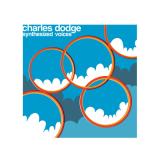
Charles Dodge - Synthesized Voices (Tape)

The compositions recorded here are a product of work with computers in synthetic speech, song and vocal sounds and were created between 1972 and 1975. The music was realized on two different computer music systems and takes advantage of, and attempts to extend and explore their features. The system employed to realize speech songs was created at the Bell Telephone Laboratories for research in synthetic speech and speech communication. Since the system was not designed for musical purposes, its limitations were severe and its musical use a great (and often rewarding) challenge. The system used for In Celebration and The Story of Our Lives was designed with the expressed purpose of creating synthetic musical voices, and was therefore much better suited to the task at hand. As with any high technology project, there was extensive collaboration in the production of the works.

The works on this disk are called computer music because the sounds were created numerically in a computer before reaching magnetic tape and loudspeakers. The computer did not compose the music. However, it was only used as a sound synthesis and analysis medium. In order to hear the sounds which are represented in the computer as successions of numbers it was necessary to attach a digital-to-analogue converter to the computer. The converter transformed the succession of numbers into a fluctuating voltage which was recorded directly on to audio tape.

The technique used to create the synthetic voices is called speech synthesis-by-analysis. For this method of speech synthesis, only those words, phrases and sentences which have been spoken into the computer previously (via an analogue-to-digital converter) may be synthesized. First the digitally-recorded speech is analyzed by programs which extract the attributes (parameters) of the speech for short time segments (.01 sec.). From these parameters the speech may be recreated in a form which resembles the original recording very closely. But for musical purposes the parameters are most often altered before synthesis. It is possible, for example, to change the natural pitch contour of the speech into a melodic line or to change the speech speed without altering the natural pitch level.

The variety of musical patterns which may be created from the analytic parameters is limited only by the composer's imagination. Most of the speech sounds on the recording were created by changing the pitch and duration attributes of the original on resynthesis, but for a few, the resonances (the formants) of the speech were altered as well. The voice of the book in The Story of Our Lives was created by replacing the program which simulates the sound of the human vocal cords with one consisting of 64 sine tones glissandoing at different rates. All the textures in which more than one voice is heard were obtained by mixing the synthetic voices together digitally.

pré-commande11.09.2026

il devrait être publié sur 11.09.2026

Immersion - What Is Lost Will Return LP
  • A1: Nephology
  • A2: Breaking Free, Diversity, Evolution
  • A3: We Don't Need Your Validation
  • A4: Megafauna
  • B1: What Is Lost Will Return
  • B2: Childsplay
  • B3: Radio signals
  • B4: Frequencies & Echoes

Defining the moment in sound and vision, Immersion are a snapshot of ‘the now’. Through constant reinvention, they have honed their sound into a startling present that references their past but refuses to live in it.

This perfect synthesis of their styles boldly creates a brave new world for core couple Colin Newman and Malka Spigel, along with satellite musicians Matt Schulz (Holy F*ck), whose drumming strongly features on many tracks, and Ed Chivers (AK/DK), who makes a guest appearance drumming on ‘Breaking Free, Diversity, Evolution’.

What Is Lost Will Return is the second ‘pure’ Immersion release in as many years and heralds their third UK tour since 2024. It follows 2025’s acclaimed WTF??, with the title reflecting the fact you can only say “What The F*ck??” so many times before looking beyond to see what endures.

With What Is Lost Will Return, the ever-productive ‘life and art partner’ duo present a reflective album of modular moods and stripped-down electronic psychedelia, leavened by a clipped guitar that you can nonetheless dance to, defying these chaotic times. It perfectly captures the yin and yang of the moment – or as Colin and Malka explain, “The emotion we feel the album invokes is a poignant mixture of joy and melancholy.”

“What Is Lost Will Return is an album of grooves, observational snapshots, hypnotic repetition, joyful creation, intoxicating melody and mystery, all threaded together by a fascination with new sounds and textures. It's both an underground gem and an album that bends pop into new shapes.”
John Robb, June 2026, MCR

pré-commande04.09.2026

il devrait être publié sur 04.09.2026

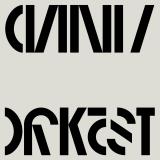
Suzanne Ciani, Metropole Orkest, Simon Dobson - CIANI/ORKEST (2x12")

BUCHLA MEETS ORCHESTRA IN QUADRAPHONIC SPACE ON CIANI/ORKEST

Suzanne Ciani, Metropole Orkest and Simon Dobson release historic immersive performance in multiple immersive formats including quad vinyl.

Silverlake, CA \\ June 4, 2026 – Electronic music pioneer and five-time Grammy nominee Suzanne Ciani joins the internationally acclaimed Metropole Orkest, conducted by Simon Dobson, for the release of CIANI/ORKEST, a landmark live album composed entirely of new work, created specifically for this unprecedented collaboration.

Recorded at Amsterdam Dance Event (ADE) before a rapt audience, CIANI/ORKEST is not a retrospective. It is a bold, immersive meeting of the Buchla electronic instrument and 50-piece orchestral sound. The result is a sweeping sonic landscape, at once intimate and monumental.

Under the direction of the Metropole Orkest, renowned for its genre-defying collaborations with artists from jazz to contemporary classical - strings shimmer, brass swells and woodwinds echo the organic, fluid qualities that have always defined Ciani’s sound. “This project feels like a homecoming,” says Ciani. “The Buchla was always orchestral to me, an instrument capable of infinite color. Hearing those colors unfold through the Metropole Orkest has been profoundly moving.”

At the heart of CIANI/ORKEST lies Ciani’s lifelong commitment to quadraphonic sound. From her early Buchla performances in the late 1960s to her 2018 release LIVE Quadraphonic, Ciani has treated space as a primary compositional parameter. Working alongside immersive producer KamranV, Ciani continues to explore immersive sound as both artistic and human gesture. Kamran’s decades of work in spatial formats, converge here in service of a singular goal: to let sound behave as it does in the physical world. “For both of us, quad is musical,” Kamran notes. “The way Suzanne works, quadraphonic is nested in — not the technology per se — but the intent you bring to the work.”

The recording stands as a meditation on legacy, evolution, and the enduring dialogue between technology and human expression. The live album captures the electricity of performance, the immediacy of touch plates under Ciani’s hands, the collective of musicians responding in real time, and the audience’s shared immersion in quadraphonic-inspired space.

CIANI/ORKEST is released by Atmospheric/AKP Recordings/CyKiK in multiple double-disc quadraphonic 12” Record packages designed by grammy-nominated designer Rebeka Arce. Each pressing is made regionally to minimize carbon emissions and also contributes to nature via Brian Eno's EarthPercent, the music industry's climate and nature foundation.

The release is encoded using the dublab Quadraphonic Universally Accessible Resource Kit (QUARK). QUARK enables binaural listening via standard 2-channel playback or 4-speaker playback via Involve Audio hardware decoders, vintage Regular Matrix quadraphonic receivers, Dolby Pro-Logic II/Dolby Surround Upmixer (DSU) receivers, or any multi-channel audio interface equipped computer. This album is immersive via all formats: digital download, streaming (Qobuz, Spotify, SoundCloud, Bandcamp), radio broadcast, vinyl and high-resolution Dolby Atmos (Apple Music, Tidal, Amazon HD, IIA), Sony 360RA (Nugs, Amazon HD) and Eclipsa Audio (YouTube).

About Suzanne Ciani
Suzanne Ciani is a composer, pianist, sound designer, and electronic music pioneer whose work spans experimental, new age, classical, and cinematic sound. A five-time Grammy nominee and recipient of the Moog Innovation Award, she continues to perform internationally, captivating audiences with immersive modular synthesis performances.

About Metropole Orkest
Based in the Netherlands, the Metropole Orkest is one of the world’s leading genre-crossing orchestras, known for collaborations with artists including Brian Eno, Herbie Hancock, Snarky Puppy, Jacob Collier, and within contemporary classical and electronic spheres.

pré-commande31.08.2026

il devrait être publié sur 31.08.2026

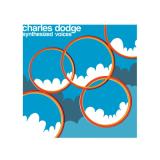
Charles Dodge - Synthesized Voices LP
  • 01: In Celebration
  • 02: Speech Songs I: When I Am with You
  • 03: Speech Songs II: He Destroyed Her Image
  • 04: Speech Songs III: A Man Sitting in the Cafeteria
  • 05: Speech Songs IV: The Days are Ahead
  • 06: The Story of Our Lives I: We Are Reading the Story of Our Lives
  • 07: The Story of Our Lives II: We are Reading the Story of Our Lives
  • 08: The Story of Our Lives III: This Morning I Woke and Believed
  • 09: The Story of Our Lives IV: Before You Woke
  • 10: The Story of Our Lives V: If Only There Were A Perfect Moment in the Book
  • 11: The Story of Our Lives VI: The Day Goes On
  • 12: The Story of Our Lives VII: The Book Will Not Survive
également disponible

Tape


The compositions recorded here are a product of work with computers in synthetic speech, song and vocal sounds and were created between 1972 and 1975. The music was realized on two different computer music systems and takes advantage of, and attempts to extend and explore their features. The system employed to realize speech songs was created at the Bell Telephone Laboratories for research in synthetic speech and speech communication. Since the system was not designed for musical purposes, its limitations were severe and its musical use a great (and often rewarding) challenge. The system used for In Celebration and The Story of Our Lives was designed with the expressed purpose of creating synthetic musical voices, and was therefore much better suited to the task at hand. As with any high technology project, there was extensive collaboration in the production of the works.

The works on this disk are called computer music because the sounds were created numerically in a computer before reaching magnetic tape and loudspeakers. The computer did not compose the music. However, it was only used as a sound synthesis and analysis medium. In order to hear the sounds which are represented in the computer as successions of numbers it was necessary to attach a digital-to-analogue converter to the computer. The converter transformed the succession of numbers into a fluctuating voltage which was recorded directly on to audio tape.

The technique used to create the synthetic voices is called speech synthesis-by-analysis. For this method of speech synthesis, only those words, phrases and sentences which have been spoken into the computer previously (via an analogue-to-digital converter) may be synthesized. First the digitally-recorded speech is analyzed by programs which extract the attributes (parameters) of the speech for short time segments (.01 sec.). From these parameters the speech may be recreated in a form which resembles the original recording very closely. But for musical purposes the parameters are most often altered before synthesis. It is possible, for example, to change the natural pitch contour of the speech into a melodic line or to change the speech speed without altering the natural pitch level.

The variety of musical patterns which may be created from the analytic parameters is limited only by the composer's imagination. Most of the speech sounds on the recording were created by changing the pitch and duration attributes of the original on resynthesis, but for a few, the resonances (the formants) of the speech were altered as well. The voice of the book in The Story of Our Lives was created by replacing the program which simulates the sound of the human vocal cords with one consisting of 64 sine tones glissandoing at different rates. All the textures in which more than one voice is heard were obtained by mixing the synthetic voices together digitally.

pré-commande28.08.2026

il devrait être publié sur 28.08.2026

BORGHESIA - RESISTANCE (TAPE)

Matrix Music Arhiv (MMA) are proud to announce a re-issue of the highly sought-after album 'Resistance' by the seminal Yugoslavian electronic rock band Borghesia, originally released in 1989 on Play It Again Sam/PIAS (Europe), Wax Trax (USA) and Jugoton (former Yugoslavia). Available on 2Lp, 2CD & 1MC (MC original album only). The re-issue features a carefully remastered edition along with the exclusive bonus live album "Dal Vivo A El Paso", recorded in December 1988 during their performance in Torino, Italy, on one of their European tours. This recording features very different, raw and at times 'dubbed up' versions of their early tracks such as 'Naked, Uniformed, Dead', Am I? and Him (On). The historical perfectly captures the atmosphere and energy of their live appearances at the time. Borghesia (Italian for 'bourgeoisie'), who were formed in Ljubljana (Slovenia) in 1982, had always considered its art to be far broader than just sonic. Borghesia's transgressive, transdisciplinary alloy of film expression, distinctively physical performative practices, usage of new technology and conveniently abrasive EBM (electronic body music) musical production hasn't only been ground-breaking in terms of the holistic, visual/sonic presence of an art collective, but had a rather decisive influence on the general aesthetics of the immensely important Yugoslav subcultural landscape of the 1980s. Borghesia was one of the first bands from the East of the Iron Curtain who used the VHS video medium to distribute their art and was also one of few projects from socialist Yugoslavia to successfully penetrate the curtain itself, reaching international audiences. A series of their releases in the fruitful period between the years 1987 and 1991, including the Resistance album itself, was released by the legendary Belgian label Play It Again Sam (PIAS). The band dissolved in the mid-1990s and then continued their work in 2014. In line with Borghesia's unique social engagement, progressiveness and political criticism, Resistance is one of their most powerful statements. It's the ultimate fight the power manifesto, which makes punk and hip-hop albums of the time sound like children's songs. This is not music for nodding your head to; it's tactical broadcast for the nocturnal resistance to this very day. Borghesia didn't address control only - they sampled the political top, the secret police and explicitly connected authority with dominance. The production of the album isn't clean or polished. On the contrary - Resistance sounds like it was created in a bunker, using stolen military equipment and synthesisers. Borghesia's genius lies in their understanding that the relentless, mechanical EBM beat was the sound of the State - and by hijacking it, turning the system's own rhythm against itself they created the most powerful form of sonic insurgency. And since history repeats itself while the little man learns slowly, the re-release of 'Resistance' comes at the right time. The dark clouds of violence are already looming over Europe, they've never really left the Middle East, and the levers of power and capital ever so louder, not even covertly at all incite: war, war, war! In these times the only appropriate answer is: revolt, rebel, Resistance!

pré-commande21.08.2026

il devrait être publié sur 21.08.2026

BORGHESIA - RESISTANCE LP 2x12"
  • 1: THEME ONE (RESISTANCE MIX)
  • 1: 2MESSAGE
  • 1: 3IF
  • 1: 4KONFLIKT (CONFLICT)
  • 1: 5OCTOBER
  • 1: 6RUMOURS
  • 1: 7YOUNG PRISONERS
  • 1: 8DISCIPLINE
  • 1: 9MALI OVEK (THE LITTLE MAN)
  • 1: 0PIAS
  • 1: POLICE HOUR
  • 1: 2MORE RESISTANCE
  • 2: 1HUNTERS (LOVCI)
  • 2: AM I?
  • 2: 3SENTENCED TO DEATH (NA SMRTNO KAZEN)
  • 2: 4WHO TURNED OFF THE LIGHT? (KDO JE UGASNIL LU?)
  • 2: 5HIM (ON)
  • 2: 6NAKED LUNCH (PASTO NUDO)
  • 2: 7SO YOUNG (TAKO MLADI)
  • 2: 8RUGGED CITY (OGOLELO MESTO)
  • 2: 9MUD (BLATO)
  • 2: 10NAKED, UNIFORMED, DEAD (GOLI, UNIFORMIRANI, MRTVI)
également disponible

BLACK VINYL 2LP

Cassette


Matrix Music Arhiv (MMA) are proud to announce a re-issue of the highly sought-after album 'Resistance' by the seminal Yugoslavian electronic rock band Borghesia, originally released in 1989 on Play It Again Sam/PIAS (Europe), Wax Trax (USA) and Jugoton (former Yugoslavia). Available on 2Lp, 2CD & 1MC (MC original album only). The re-issue features a carefully remastered edition along with the exclusive bonus live album "Dal Vivo A El Paso", recorded in December 1988 during their performance in Torino, Italy, on one of their European tours. This recording features very different, raw and at times 'dubbed up' versions of their early tracks such as 'Naked, Uniformed, Dead', Am I? and Him (On). The historical perfectly captures the atmosphere and energy of their live appearances at the time. Borghesia (Italian for 'bourgeoisie'), who were formed in Ljubljana (Slovenia) in 1982, had always considered its art to be far broader than just sonic. Borghesia's transgressive, transdisciplinary alloy of film expression, distinctively physical performative practices, usage of new technology and conveniently abrasive EBM (electronic body music) musical production hasn't only been ground-breaking in terms of the holistic, visual/sonic presence of an art collective, but had a rather decisive influence on the general aesthetics of the immensely important Yugoslav subcultural landscape of the 1980s. Borghesia was one of the first bands from the East of the Iron Curtain who used the VHS video medium to distribute their art and was also one of few projects from socialist Yugoslavia to successfully penetrate the curtain itself, reaching international audiences. A series of their releases in the fruitful period between the years 1987 and 1991, including the Resistance album itself, was released by the legendary Belgian label Play It Again Sam (PIAS). The band dissolved in the mid-1990s and then continued their work in 2014. In line with Borghesia's unique social engagement, progressiveness and political criticism, Resistance is one of their most powerful statements. It's the ultimate fight the power manifesto, which makes punk and hip-hop albums of the time sound like children's songs. This is not music for nodding your head to; it's tactical broadcast for the nocturnal resistance to this very day. Borghesia didn't address control only - they sampled the political top, the secret police and explicitly connected authority with dominance. The production of the album isn't clean or polished. On the contrary - Resistance sounds like it was created in a bunker, using stolen military equipment and synthesisers. Borghesia's genius lies in their understanding that the relentless, mechanical EBM beat was the sound of the State - and by hijacking it, turning the system's own rhythm against itself they created the most powerful form of sonic insurgency. And since history repeats itself while the little man learns slowly, the re-release of 'Resistance' comes at the right time. The dark clouds of violence are already looming over Europe, they've never really left the Middle East, and the levers of power and capital ever so louder, not even covertly at all incite: war, war, war! In these times the only appropriate answer is: revolt, rebel, Resistance!

pré-commande21.08.2026

il devrait être publié sur 21.08.2026

BORGHESIA - RESISTANCE LP 2x12"

Matrix Music Arhiv (MMA) are proud to announce a re-issue of the highly sought-after album 'Resistance' by the seminal Yugoslavian electronic rock band Borghesia, originally released in 1989 on Play It Again Sam/PIAS (Europe), Wax Trax (USA) and Jugoton (former Yugoslavia). Available on 2Lp, 2CD & 1MC (MC original album only). The re-issue features a carefully remastered edition along with the exclusive bonus live album "Dal Vivo A El Paso", recorded in December 1988 during their performance in Torino, Italy, on one of their European tours. This recording features very different, raw and at times 'dubbed up' versions of their early tracks such as 'Naked, Uniformed, Dead', Am I? and Him (On). The historical perfectly captures the atmosphere and energy of their live appearances at the time. Borghesia (Italian for 'bourgeoisie'), who were formed in Ljubljana (Slovenia) in 1982, had always considered its art to be far broader than just sonic. Borghesia's transgressive, transdisciplinary alloy of film expression, distinctively physical performative practices, usage of new technology and conveniently abrasive EBM (electronic body music) musical production hasn't only been ground-breaking in terms of the holistic, visual/sonic presence of an art collective, but had a rather decisive influence on the general aesthetics of the immensely important Yugoslav subcultural landscape of the 1980s. Borghesia was one of the first bands from the East of the Iron Curtain who used the VHS video medium to distribute their art and was also one of few projects from socialist Yugoslavia to successfully penetrate the curtain itself, reaching international audiences. A series of their releases in the fruitful period between the years 1987 and 1991, including the Resistance album itself, was released by the legendary Belgian label Play It Again Sam (PIAS). The band dissolved in the mid-1990s and then continued their work in 2014. In line with Borghesia's unique social engagement, progressiveness and political criticism, Resistance is one of their most powerful statements. It's the ultimate fight the power manifesto, which makes punk and hip-hop albums of the time sound like children's songs. This is not music for nodding your head to; it's tactical broadcast for the nocturnal resistance to this very day. Borghesia didn't address control only - they sampled the political top, the secret police and explicitly connected authority with dominance. The production of the album isn't clean or polished. On the contrary - Resistance sounds like it was created in a bunker, using stolen military equipment and synthesisers. Borghesia's genius lies in their understanding that the relentless, mechanical EBM beat was the sound of the State - and by hijacking it, turning the system's own rhythm against itself they created the most powerful form of sonic insurgency. And since history repeats itself while the little man learns slowly, the re-release of 'Resistance' comes at the right time. The dark clouds of violence are already looming over Europe, they've never really left the Middle East, and the levers of power and capital ever so louder, not even covertly at all incite: war, war, war! In these times the only appropriate answer is: revolt, rebel, Resistance!

pré-commande21.08.2026

il devrait être publié sur 21.08.2026

F.K. Raeithel - Aber Was Ändert Das? / Quantitative Unbestimmbarkeit I–IV (TAPE)

In December 2025, I performed alongside Asmus Tietchens and Jetzmann at the final Hörbar Ausklang Festival. This cassette was produced for that occasion. It contains preliminary studies for my live modular synthesiser performance.

The tape wasn't sold on the night, and its release ended up being postponed until now. At one point I had almost forgotten that I had even produced it. Now it's finally here—but what does that change?

Side A features a 24-minute piece titled Aber Was Ändert Das? (What Does That Change?)
Aber Was ändert Das? – Two oscillators coupled via a comparator and routed through a filter bank form the foundation of this piece. Eight filters within the bank are modulated by a synchronised octal triangle wave. Over time, the modulation gradually unfolds like an abanico (fan), shifting into different patterns. The impulses slowly dissolve into noise. A looping voice tape is added to the texture, and the piece concludes with a melody of comb-filtered sine tones.

Side B presents several variations and adjustments of a self-generative patch.

Quantitative Unbestimmbarkeit I-V (Quantitative Indeterminacy I–IV) – At the core of these pieces is a source of uncertainty and three function generators programmed in mutual feedback. The tonal material is derived from a wave-folded sine wave, a noise source, and a pinged state-variable filter. This type of self-generative patch is commonly known as a Krell patch.

The edition is limited to 50 copies. Release day will be the August 7th, 2026.

The title Miszellen Band is derived from the term Miszelle (plural: Miszellen), which refers to a short informative text or brief scholarly essay, often published in academic journals or collected volumes under a "Miscellanea" section. The word originates from the Latin miscella, meaning "mixed things". Such texts typically explore highly specific subjects without the scope or depth of a full-length study. They often consist of etymological notes, addenda to previously published work, concise discussions, or small discoveries from archives.

pré-commande07.08.2026

il devrait être publié sur 07.08.2026

Eleh - Floating Frequencies / Intuitive Synthesis I

When ELEH's debut "Floating Frequencies/Intuitive Synthesis I" was originally released it was praised as a powerful piece of new electronic minimalism. Twenty years later the artist's legacy has grown while ELEH continues to hypnotize new listeners with time stopping music. Critics, fans and neurologists have praised the music of ELEH as aiding attention and focus while seeming to slow time. Eleh's slow change drones are a state of flow hypnotizing listeners into meditative focus.

From the original packaging, "Pure Sound. Pure Volume. Pure Analog. Dedicated To La Monte Young"

ELEH began in 1999 as an exploration of analog synthesis, emphasizing low frequency difference tones and other resonant acoustic phenomena. ELEH highlights the physical presence of sound as it has been inspired by the physical world. There is also something ‘cathedral-like’ and cosmos-inducing in the sound constructed by ELEH.

This audiophile quality presentation of ELEH's debut album was mastered by Tom Eaton at Sounds And Substance and manufactured at Optimal in Germany for the lowest possible noise floor and the highest analog resolution. Packaged using a 5th color metallic shimmer ink on solid black board stock.

"Nuances of sound turn symphonic." New York Times

“ELEH’s sounds move by stealth and are sculpted from the world rather than from ego. Eleh is not a personality; Eleh is an idea about sound. ELEH forces you to contemplate the cosmos and your place in it. “ Gramophone

"ELEH demonstrates how a single amplified gesture delivered just so can reveal the inner workings of an entire cosmos." Tony Herrington/Wire

“Floating Frequencies/Intuitive Synthesis more than lives up to the mythic status that ELEH has ascended to. “ Brainwashed

"ELEH's music electrifies whatever space it engages. With the flip of a switch, it exposes the ways in which all space is, potentially, electric." ~ Frieze

pré-commande31.07.2026

il devrait être publié sur 31.07.2026

Mukqs - Juckport

Mukqs

Juckport

CassetteCS-HAUSMO-155C
Hausu Mountain
24.07.2026

Hausu Mountain co-founder Maxwell Allison returns to the label under his moniker Mukqs with an hour-long progressive ambient statement entitled Juckport. Performed live on a solitary sampler in a single take, the album shifts from warp-speed blasts of glitch to iridescent jazz fusion piano sketches to expanses of ecstatic synthesis. Allison's improvised approach to live sound collage blends innumerable layers of texture and oblique harmony into a continually thrilling electro-acoustic mosaic. Each track begins as a bank of samples sourced from Allison’s collection of synthesizers, drum machines, and field recordings, arrows pointing in a direction but without established counterpoint. Spontaneity, and the sometimes chaotic juxtapositions it engenders, undercut any traces of machine logic in the music as it expands and contracts organically. It is the product of hands moving in real space, in real time, for an extended period. Juckport is animated by a duality of glitched-out abstraction and intangible bliss. Synthesizer pads stretch beyond the imagination’s horizon line, counterbalanced by a churn of clipped samples that scatter across the stereo field like rapidfire psychedelic flashbacks. Cohesion emerges through textural continuity and development rather than repetition or pattern-making. Blink and innumerable details might slip by unnoticed, and the landscape might have shifted entirely. Still, as more viscous sounds enfold the listener, they communicate a calm, settled mindset, reflecting the motion of a creative mental state; large amounts of information are synthesized into a focused stream that reacts intuitively with the introduction of each new complicating element.

pré-commande24.07.2026

il devrait être publié sur 24.07.2026

Sound Synthesis - MD 101

First release from the brand new label Modular Dreams run by Sound Synthesis & UTR head honcho JDSK. This label will focus more on the deeper dreamy electro side of Sound Synthesis. MD 101 features 4 high quality cutz that will surely stand the test of time.. Limited hand stamped copies, no repress!

pas en stock

Commandez maintenant et nous commanderons l'article pour vous chez notre fournisseur.

Derniere entrée: 28 jours
GAF & The Love Supreme Arkestra - Retiro Espiritual LP

and the second chapter in an ongoing improvisational document recorded inside one of Santa Cruz de Tenerife’s abandoned oil tanks.

Gaf & The Love Supreme Arkestra work outside conventional studio frameworks. Their music emerges from extended improvisation sessions that unfold sporadically, sometimes over several days. Built around drums, guitar, bass, modular synthesis and samplers, and expanded with vibraphone and winds (flutes, saxophone, Herreño whistle), the group continues to move between jazz, psychedelic rock and free-form experimental composition.

While Ganzfeld drew from the misty northern coast of Isla Baja, Retiro Espiritual turns toward Taganana, one of Tenerife’s most remote regions. Its isolation, Atlantic exposure and volcanic terrain inform the record’s pace and focus. The title reflects this shift: a space for retreat, collective creation and suspended time.

Sonically, Retiro Espiritual leans warmer and more reflective. Flutes drift over slow grooves, extended jams unfold patiently, and traces of 70s spiritual jazz surface throughout. The experimental core remains, now shaped by repetition, space and a calmer, sunlit atmosphere.

Another autonomous transmission from a band committed to ritual, territory and long-form collective improvisation at the edge of the Atlantic.
—
Recorded live in 2020 in Tenerife Canary Islands
Produced by Mladen Kurajica
Mixed by Jorge Lozano
Master by Daniel García
Artwork Felipe González Cabezas

pré-commande17.07.2026

il devrait être publié sur 17.07.2026

Mark Jenkin - The Rose Of Nevada (Original Score)
  • 01: KNEEBONE BARTON
  • 02: THROUGH THE GAPS (PT.1)
  • 03: ARE WE FAST?
  • 04: GOLOW
  • 05: ONE MORE TRAWL
  • 06: CORNISH AFFIRMATIVE
  • 07: E-BOW AN HOWL
  • 08: THROUGH THE GAPS (PT. 2)
  • 09: WHAT’S YOUR NAME?
  • 10: LOOK AT IT
  • 11: A LETTER HOME
  • 12: PYSK
  • 12: WE DON’T CATCH FISH
  • 13: HOME TO MOTHER
  • 14: THROUGH THE GAPS (PT. 3)
  • 15: ROSE OF NEVADA

Mark Jenkin, the BAFTA Award winning director, editor, screenwriter, cinematographer and musician, presents the score to his new film, Rose of Nevada on Invada Records. Unique among British feature filmmakers for the analogue way in which he crafts his films - all three feature films have been shot on 16mm using a Bolex clockwork camera – as well as his multifaceted roles as the writer, director, director of photography and editor of the film, once more he is responsible for handling the sound design and composing the original score.

The new score mirrors the techniques employed in the film, with analogue synthesisers drawing the listener into nebulous hypnotic tones and delicate movements.
Composed, produced, engineered and performed by Mark Jenkin using synthesiser, guitar, percussion and loops & effects, the environmental recordings remind us of the context in which the music was originally borne, but as the score ebbs and flows between ambient tranquil seas and crashing storms, it affirms its presence as a powerful stand-alone piece of work.
The score’s physical release follows the Cornish director’s third feature film: the time-travelling Rose of Nevada cinematic release in UK and Irish cinemas on 24 April, with a BFI Blu-ray and BFI Player release in the summer.

pré-commande26.06.2026

il devrait être publié sur 26.06.2026

FÉLICIA ATKINSON - SANS VISAGE

Atkinson first saw Les yeux sans visage when she was a teenager, around the turn of the century. The film made an impact for its iconic imagery and the way Franju draws on the aesthetics of early filmmaking, from its score that relies on stylistic markers typical of the 1940s or 50s to the decision to shoot in black and white. Even four decades after its first release, it was clear that this was a work that stood outside of the cultural moment that birthed it, speaking through time in ways that were uncanny, but profound.

A quarter-century later, Atkinson was approached by the Belgian cultural center VIERNULVIER to create a new score for Les yeux sans visage for its celebrated Videodroom series, which has seen artists like claire rousay, Mabe Fratti, Lee Renaldo, and many more create new original scores for cult classics and genre cinema. Atkinson's music, with its sublime meditations on space and proximity, its elusive sense of narrative development, mirrors the pacing and mystery at the heart of horror filmmaking. There is a shadow at the heart of her soundtrack to Les yeux sans visage, an ever-shifting wisp and an insinuation of encroaching transfiguration. Echoing a climactic moment in the film, the music obliquely points to "the Beyond," an impossible place of discovery and revelation.

Atkinson envisioned her music as something akin to the air moving throughout and beyond the many cages that appear in the film, unconstrained by the bars and with undefined borders. Those cages hold the victims of a madman surgeon, determined to graft a new face onto his daughter, the protagonist Christiane Génessier, who lost hers in a car accident while he was behind the wheel. Atkinson was reminded of her predecessors at the pioneering French studio the GRM, who approached sound in a less sinister, but similarly surgical manner, and took inspiration from their playful approach to cerebral soundmaking for the electroacoustic topography into which the piano is embedded. As such, Atkinson’s reactions to the larger themes and the minute-by-minute happenings onscreen are both audible simultaneously.

A film about a man who destroys the lives of young women marked by their beauty and similarity to his daughter in a shame-fueled rage has clear, continuous cultural resonance. "Through the music, I decided to bring back their empowerment despite what they endure," says Atkinson. "This is why the record is also dedicated to Gisèle Pelicot, whose trial happened while I was in the process of composing the music and kept thinking of her strength and her decision to share her trial in order to reverse the shame."

This recorded version of the soundtrack is a 34-minute synthesis of the full 90-minute score, presented on LP along with an essay by writer-musician Claire Cronin and drawings by Momo Gordon, together forming a complex reflection on the film's themes. If these sounds move as if the bars of cages are no barrier, they also intimate the freedom and power of those held behind them. Rather than simply mirroring the fear and confinement shown onscreen, Atkinson offers an elusive escape, a beacon for the characters, and the listener, to follow as they reckon with the narrative and move through it.

pas en stock

Commandez maintenant et nous commanderons l'article pour vous chez notre fournisseur.

Last In: 3 months ago
KiMiMi - ИМА (イマ)

KiMiMi

ИМА (イマ)

12inchCONATALA-010 / CALAX-006
Conatala
17.06.2026

‘ИМА (Ima)’ is a work by KiMiMi, the solo project of a musician Shin-ya Ohno, which captures the layers of time and the presence of people inhabiting ‘Arimasuton Building’―a self-built structure created over 20 years by architect Keisuke Oka, located in Mita, Tokyo, and reconstructs them into music.

A multi-instrumentalist who masterfully handles a diverse range of instruments, with the gaida (an ancestor of the bagpipes) – which he studied in Bulgaria – at the core of his sound, KiMiMi has previously brought traces of daily life and folk melodies recorded during his travels back to the scale of home recording, weaving fantastical folk soundscapes through cassette tape works and stage music.

Alongside his musical activities, he has participated in the construction work for ‘Arimasuton Building’, recording the sounds of hammers and steel beams echoing on site, lunchtime chatter, the melodies of instruments played by others, and the sound of cars passing by. From the end of 2022, a zine titled ‘Monthly Arimasuton Building Urimasu’, based on this construction project, was launched. KiMiMi incorporates these recordings into the musical works he contributes to each issue, layering sounds from live instruments―including the gaida, accordion, guitar, flute, ukulele, piano, foot-pump organ, melodica and xylophone―alongside a few synthesiser tones, to shape a soundscape imbued with the humidity and breath of the site.

KiMiMi’s creative process is characterised not by planned construction, but by an attitude of entrusting the work to chance, intuition and the passage of time. Fragmented recordings are layered, set aside for a time, and then unearthed again. Through this repetition, the music naturally takes shape. This resonates perfectly with the process of ‘Arimasuton Building’, which was built up improvisationally, layer by layer, without any pre-prepared blueprints.

‘ИМА (Ima)’ marks the current stage of KiMiMi’s sonic journey and represents an attempt to gracefully transcend the boundaries between architecture and music, documentation and creation, and the individual and the community. The clamour of the city, the tranquillity of manual labour, laughter, and every sound resonating at the Arimasuton Building site blend with KiMiMi’s music, reflecting the very passage of time in which people live.

pré-commande17.06.2026

il devrait être publié sur 17.06.2026

EMILY A.SPRAGUE - DOUBLE MOON

Die Synthesistin und Komponistin Emily A. Sprague verbindet intuitive Klangstrukturen mit ausdrucksstarkem Songwriting und schafft so weitläufige Klangwelten, die unmittelbar und mitreißend sind. Nach ersten Experimenten mit Gitarre und Keyboard als Teenager gründete Sprague Anfang der 2010er Jahre die Indie-Band Florist, mit der sie ein treues Publikum gewann, bevor sie sich 2017 unter ihrem eigenen Namen auf Umwelt- und Ambient-Kompositionen verlegte. Zu ihren Veröffentlichungen zählen mehrere Alben aus beiden Projekten, zuletzt Florists ,Jellywish" und ,Cloud Time" aus dem Jahr 2025 sowie nun die EP ,Double Moon". ,Double Moon" zeichnet psychische und greifbare Landschaften als parallele Welten nach. Durch beschwörende Wiederholungen und durchscheinende Klangfluten ebnet Sprague einen initiatorischen Weg mit modularer Komplexität und lyrischer Weitsicht, untermalt von V Haddads transparenter Stimme. Mit instinktiver Präzision offenbart ,Double Moon" sensorische Weite durch viszerale, szenische Komposition. Geprägt von gepatchten Farbverläufen, frostigen Winkeln und warmen, melodischen Wellen dreht sich jeder Klang um den nächsten, taucht gleichzeitig auf und verschwindet wieder in einem fesselnden Klangbogen. Dieser Track bewegt sich in schillernder Subtilität - die Farbe der Nacht, die sich über den Himmel zieht und die Silhouetten beleuchtet, die sie erst möglich macht.Der mittlere Track, ,Dusk (How to Fly)", ist seinem Titel getreu ein subtiles und bewegendes Experiment, das den Ausklang des Tages heraufbeschwört, zusammen mit einem flüchtigen Anflug von Erhabenheit und der nahen Möglichkeit des Fliegens. Faszinierend in seiner nachdenklichen Drift und leuchtenden Bildsprache verschmilzt der Track sanft synthetisierte Fäden mit einem langsamen akustischen Rausch - eine Melodie, die in grenzenlose Richtungen treibt. Geleitet von Spragues unverwechselbarer Gesangskaskade und briefartigen Fäden webt sich eine beschwingte Sequenz mühelos von grundlegenden Erinnerungen zu einer weiten emotionalen Öffnung und fragt: Wie könnten wir auf andere Weise hier sein? Wie können wir überhaupt etwas fühlen?« ,Double Moon (Andras Dub)" verleiht Spragues Originalkomposition eine strahlende Note: Der australische Produzent Andrew Wilson, alias Andras und eine Hälfte von Wilson Tanner, verwandelt die Textur des Originaltracks durch tiefe, strahlende Rhythmen. Jeder Takt springt und zerstreut sich, um etwas völlig Neues zu erschaffen.

pas en stock

Commandez maintenant et nous commanderons l'article pour vous chez notre fournisseur.

Last In: 3 months ago
Cinna Peyghamy - Music for Tombak & Synth (LP)

Cinna Peyghamy unveils new album fusing Persian tombak and modular synthesis Five years in the making, "Music For Tombak & Synth" bridges heritage, technology, and personal identity. The project, initiated in 2019 during Peyghamy's master's thesis research on contact microphones, was conceived as a means to reconnect with his Persian roots while exploringexperimental sound design. In the album, Peyghamy seamlessly blends the traditional Persian tombak with modular synthesis and digital signal processing, creating a distinctive musical landscape that bridges live improvisation and studio production. The album’s genesis traces back to Peyghamy’s exploration of improvised electronic music and his desire to craft a performance-ready setup. Over
several years, the project evolved from capturing the energy of his live shows into a fully composed studio work.

"Music For Tombak & Synth" stands as the first record where Peyghamy unites his dual identities as a live performer and producer, resulting in a body of work that reflects his deep connection to family, memory, and cultural heritage. The album features personal elements such as his father’s voice reciting the poetry of Ahmad Shamlo on the track Dar Shab ,?? ??collaborations with long-time friend Quelque Bourdon on clarinet, and the evocative sounds of the Persian setar, all anchored by the physicality and rhythms of the tombak. A sentiment further reflected in the album cover; a photograph taken by his father, Khosrow ‘Payram’ Peyghamy, picturing both his parents and grandparents.

With this release, Peyghamy moves beyond conventional boundaries of "traditional versus contemporary" or "acoustic versus electronic," instead offering a nuanced exploration of identity through sound. Each track serves as a keepsake, referencing cherished memories, emotions, and musical influences that define his experience as a French-born artist of Iranian descent, unable to visit his home country. "Music For Tombak & Synth" invites listeners to engage with a deeply personal narrative, rooted in both cultural history and sonic innovation.

pas en stock

Commandez maintenant et nous commanderons l'article pour vous chez notre fournisseur.

Derniere entrée: 83 jours
Marion Brown - Awofofora

First time reissue of JP / US free jazz rarity.

The 1970s were Marion Brown’s most searching decade, a period during which he sought to move beyond the free jazz of the previous era and find more personal approaches to structuring improvisation and composition. After leaving New York for Europe in 1967, Brown began reshaping his music into what he described as “a more deliberate kind of music that had more structure to it,” pacing it so that moods and modes could develop over time. Albums such as In Sommerhausen, Afternoon of a Georgia Faun, Geechee Recollections, and Sweet Earth Flying trace this evolution: rhythmic structures moved to the foreground, harmony receded, and composition became a matter of orchestrating interlocking rhythmic parts as one would polyphonic lines.

Released in 1976, Awofofora is an overlooked but crucial entry in that sequence. At the time, its use of funk and reggae beats, electric guitars, and grooves drawn from contemporary Black popular music led some to misread it as a jazz-rock detour. In retrospect, it is entirely consistent with Brown’s methodology. As he admired in the Art Ensemble of Chicago, the stimulus comes from within the community. Here Brown filters Afro-Caribbean rhythms and funk through his own sensibility, abstracting their structural qualities rather than adopting surface style.

“La Placita,” making its first recorded appearance, layers distinct rhythmic phrases in a manner reminiscent of African drum ensembles, over which Brown and trumpeter Ambrose Jackson spin extended improvisations. The standard “Flamingo” is reshaped through diasporic rhythm and lyrical soloing, while “Pepi’s Tempo” and “Mangoes” harness crisp funk and reggae grooves to generate what Brown called a “manifestation of community” through collective improvisation. Even the overdubbed solo feature “And Then They Danced” reflects his structural thinking, ingeniously re-voicing a duet composition for two alto saxophones performed by one player.

This was the only recording by a short-lived band that briefly polarized audiences during festival appearances in 1976. Yet Brown consistently sought unity across change: different sounds, same principles — rhythm as structure, melody as architecture, collective improvisation, and above all, the primacy of tone. Awofofora stands not as a departure, but as a vivid synthesis of the elements he had been refining since the late 1960s, its grooves and golden alto lines conveying a sound drawn, in his words, “from life and from the world of experience.”

pas en stock

Commandez maintenant et nous commanderons l'article pour vous chez notre fournisseur.

Last In: 3 months ago
T. Dave - WGD 12011

T. Dave

WGD 12011

12inchWGD12011
We're Going Deep
01.06.2026

Next in the We’re Going Deep label series, he welcomes 4 tracks of completely fresh material from a relatively unknown Italian producer, Davide Tonini. Hailing from the much fabled Adriatic coastal party town of Rimini in Italy, Davide has been shaping and sculpting Electronic sounds for well over 3 decades now. Having first started releasing music under his ‘Wet Basement’ alias back in 2015, his sonic palette traverses IDM, Techno, Deep House, Acid and Ambient soundscapes.

Having spent decades honing his practice, he has both self-released his music and worked with the long standing Odrex Music in Berlin. And there’s something deeply irresistible about his output that screams class and quiet dedication. In his own words, in around 2005 he got into the world of Eurorack and a few years later, Serge Modular. Since then, he’s been totally hooked...

In more recent times, Davide has recorded and released 2 digital LPs worth of material for ‘Detroit Underground’ under his own name, so it seems fitting that We’re Going Deep are now hosting a debut 12” cut – offering up 4 cuts of trademark sumptuousness. Bringing together the best of influences that touch on the likes of Aril Brikha, David Alvarado, Deepchord, Convextion and Basic Channel, he weaves together their respective magic to a new whole point of inflection that is both of this world and the other. All tinged with a warmth and smile that could only originate in Mediterranean climes.

The aptly named ‘A-1’ kick starts the EP in fine fashion as shimmering chords cut through rays of floatingly filtered synthesis, all beautifully dubbed out to a steady rolling kick and neatly shuffled high-hats, with precision bass notes interjecting to add an additional layer of funk. With bliss set to maximum, this is nothing short of genius. Followed by ‘Bilateral’, Davide offers a touch more space and lets the bottom end lead, whilst neatly filtered chords flicker to and fro - seeping their way into your consciousness as the tight drum work brings you to groove mode.

On the reverse, ‘Drive’ burrows further into emotive depths as Davide bathes you in layers of dub and twinkling melodics, all passed through a hazy film of goodness. Rounding off the EP with the deft touch of Distanze Logaritmiche – a soft roller that steeps you in undulating chords and cavernous effects. This is high class music that deserves patience and your attention to reap the ultimate rewards from a true master of his craft.

pas en stock

Commandez maintenant et nous commanderons l'article pour vous chez notre fournisseur.

Derniere entrée: 28 jours
Andrew Wasylyk - Irreparable Parables

Very limited numbers, orders will need to be confirmed.

For his new album, Irreparable Parables, Andrew Wasylyk felt a strong desire to write a set of songs featuring an element hitherto rare in his work: the human voice. Equally strong was the conviction that he did not want to sing them himself.

The Scottish multi-instrumentalist and composer set about assembling a group of guest singers, sending out the songs to wherever they were in the world. The vocals were recorded remotely and then, like migrating birds, winged their way back to Scotland. The result is an album of great beauty which, perhaps preeminently in Wasylyk’s work, expresses the vulnerability and resilience of the human spirit.

Six singers appear on the record, represented by six songbirds illustrated on the sleeve by Clay Pipe Music’s Frances Castle. The cuckoo is a nod to Belle and Sebastian’s 2004 single ‘I’m A Cuckoo’, that band’s Stuart Murdoch being the first voice you hear on the new album. When the vocal for ‘Private Symphony #2’ arrived, says Wasylyk, “it was everything that I was looking for and more. But this is Stuart Murdoch. Of course he’s going to make something incredibly beautiful and thoughtful.”

The song lyrics were, for the most part, written by the singers. The music is Wasylyk’s creation. He navigates a sound world that lies somewhere beyond the borders of classical and jazz, ambient and abstract. It is difficult to describe, but easy to understand, which is to say to feel. That is the way Wasylyk’s work is experienced: as a feeling. It takes you back to childhood, perhaps, to feelings of comfort and safety, or to memories of walks at sunrise and sunset, or to the way a shadow falls on a particular field in a particular place at a particular time in your life. This is consoling music. That is why, though pretty, it is not merely pretty. These are songs to shore up the soul.

Wasylyk writes in a room, in his native Dundee, full of “half broken” instruments. He picks these up, plays a little, seeking an idea, a feeling, a door that lies ajar. The musical palette of Irreparable Parables includes brass and woodwind, a six-piece string section, guitar, bass, drums, vibraphone, Mellotron, Fender Rhodes, tape loops, synthesisers and percussion. The strings were arranged by the cellist Pete Harvey, a long-term collaborator.

Among the other guest vocalists are Gruff Rhys of the Super Furry Animals, Saya Ueno from Japan’s Tenniscoats and Peter Brewis from Field Music. Wasylyk himself takes the lead vocal on the title track, though a throat infection and touch of pitch-shifting have altered his singing in a way that even he, having fallen out of love with his own voice, finds acceptable.

The heart of the record can, arguably, be found in two tracks, ‘Love Is A Life That Lasts Forever’ and ‘Spectators In The Absence of God’, sung respectively by Molly Linen and Kathryn Joseph. The former, bright with trumpets, was inspired by the writing of Derek Jarman. “I was feeling deeply upset about the world and wanted to try and write some- thing that was obviously hopeful,” Wasylyk says.

‘Spectators …’ offers an emotional counterpoint. It is an “apocalyptic hymn” that seems to grapple with watching human suffering from afar, too distant to be at physical risk, but experiencing the psychological wounding, and feelings of helplessness, even complicity, that come with constant awareness of other people’s pain. “Kathryn’s a pal, I love her dearly, and she’s a brilliant artist who really feels what she writes,” Wasylyk says. “The cracked tenderness of her voice is spellbinding.”

The album closes with an instrumental piece, ‘Soul Enters The Ocean Sun Climbs Out Of The Sea’, all piano and strings, that offers a sense of resolution and ascension. A good moment, too, for Wasylyk to reflect upon the artistic companionship that he enjoyed while making this record – the songbirds that answered his call: “These humans are incredible at what they do. I’m deeply grateful and feel so lucky. It blows my mind.”

pré-commande30.05.2026

il devrait être publié sur 30.05.2026

Church Andrews & Matt Davies - Tilt

Church Andrews and Matt Davies return with Tilt, a pinpoint collection of skewed microtonal and discordant compositions for percussion and digital synth.

Tones ascend but don’t resolve, rhythms loop, collapse and reassemble, patterns wriggle with geometric precision, sounds tilt, the edges fray.

Kinetic, elastic, wonky without being obtuse, Church Andrews (aka Kirk Barley) and Matt Davies new LP Tilt is the culmination of six years of creative collaboration, refining and redrawing the relationship between Davies’ virtuoso percussive practice and Barley’s off-kilter synthesis.

Where their 2024 release Yucca, took rhythmic cues from the Fibonacci sequence, Tilt explores a more intuitive approach, returning the duo to a minimal sound interrogating the interplay of chance and control, system and body, freedom and mechanisation. Featuring prepared guitar, finely resonant muted percussion and a crisp palette of digital synths, it draws on the pair's long-standing interest in alternate time signatures.

Here, a tripped-up 11/8 beat gives ‘Yokai’ a disorientating quality, threading unusual paths through the playful, mysterious 5-note Hirajoshi scale - a pentatonic scale from Japan hinted at in the track’s playful reference to a supernatural spirit in the country’s folklore.

Using a simple on-off system between drum and synth to trigger a Shepard tone - an auditory illusion of a sound that ascends or descends in pitch without actually changing - ‘Shepherd’ revels in the stripped-back simplicity of its sonic palette, where the nuance lies in what Barley calls “subtleties in the timbre of the sounds” as they dialogue with Davies’ warped loops.

It’s these finely tuned melodic drum tones and an eerily abstracted prepared guitar that give ‘Debris’ its uncanny feel, yet never feeling overly controlled. Like the album’s meticulous, graphic artwork, Tilt seeks the shifting ground between the physical and the digital, as acoustic tones are tweaked and disambiguated into new and unexpected forms.

Tilt represents Church Andrews and Matt Davies’ ongoing collaboration in its purest form - a hyper-defined evocation of gravitational potential in their live sound.

pré-commande29.05.2026

il devrait être publié sur 29.05.2026

Judith Hamann & James Rushford - Midmeste LP

Australian composer-performers Judith Hamann and James Rushford have worked together in countless projects for two decades, perhaps most notably in Golden Fur, their trio with Sam Dunscombe. Black Truffle is pleased to announce Midmeste, their first work as a duo. Its title is Middle English for ‘the middlemost point’, alluding to how the piece builds on the points of overlap between the highly personalised musical languages Hamann and Rushford have developed in recent years. Performed on cello and a variety of pipe organs, Midmeste is a spacious, sometimes unsettling exploration of their shared interest in alternative tunings, psychoacoustic phenomena, the physical properties of their instruments, and the usually peripheral sounds generated by the performing body.

Beginning with a sequence of austerely vibrato-less harmonics from Hamann's cello, trailed by Rushford's whistling portative organ tones, the music soon expands into a slow-moving melodic wander, pausing at times to linger over an uncomfortable harmony or particularly resonant cello tone. Hamann and Rushford have long histories of engagement with pre-Classical European musical traditions, having in past projects performed and radically extended the work of Solage, Louis Couperin, Johann Conrad Beissell and other composers. Here they use a 15th century song by John Dunstaple, ‘O rosa bella’, which returns throughout the piece, distorted, aerated and splayed into new forms.

Developed while the two shared residencies at Akademie Schloss Solitude, Stuttgart in 2020 and La Becque on Lake Geneva in 2023, Midmeste integrates recordings made (at at the invitation of the Biennale Son) on the organ of the Basilica St Valere in Sion, Switzerland—the world’s oldest playable organ, built in the early 15th century. Played by both Rushford and Hamann, the instrument’s idiosyncratic features, including bellows pumped manually using massive wooden beams, are integrated into the music through amplification. Creaks and thumps locate the music physically both in the performers’ bodies and the specific site of its making. Moving through a series of distinct episodes across its forty-minute span, Midmeste makes space for near-silent duets of high harmonics and hissing air, moments where twittering high tones and rumbling sub-bass could be electronic, and static fields that unexpectedly blossom into almost Romantic harmonies.

Listeners familiar with Hamann and Rushford’s work will find many familiar features here: the stunningly rich cello tones, their patient sustain allowing heightened awareness of the inner life of sound and its interactions with the environment; the care with which acoustic space is activated, becoming at times a third instrumental voice; the attention to fragile, unstable sonorities that sometimes have a comic edge. A major work from two key figures in contemporary experimental music, Midmeste synthesises rigorous exploration of fundamental questions of sound and performance with an unapologetic embrace of beauty.

pré-commande22.05.2026

il devrait être publié sur 22.05.2026

Siavash Amini - Till Human Voices Wake Us

Originally released in 2014 on cassette and digital only, Till Human Voices Wake Us was the first album by the Iranian artist on Umor Rex. It became a key work in our catalog, and now, 12 years later, it is available on vinyl for the first time. This is the first in a series of four special, limited reissues to be released in 2026 to mark the 20th anniversary of Umor Rex.

Till Human Voices Wake Us comprises ten tracks with a clear and carefully structured script, based on poems by T.S. Eliot, highlighting Siavash Amini’s work as a composer for theater, film, and art exhibitions. His music deliberately leans toward ambient expressions, at times recalling Morricone’s Western film scores. The interplay between synthetic and digital elements, together with multilayered, soul-healing electric guitar passages, creates an opulent sonic texture that moves between dramatic and melancholic moments with a finely constructed, fluid dynamism.

There is an emotional depth in each piece, guided by tonal variations and shifting textures that turn the music into a mental journey, with landscapes, a sense of cold resolution, and the quiet inevitability of an ending. Till Human Voices Wake Us was Amini’s first album on a non-Iranian label. Following this release, he has also published work, in addition to Umor Rex, on labels such as Room40, Hallow Ground, and Opal Tapes, among others, and is now considered one of the most prominent figures in Iran’s experimental music scene.

All music by Siavash Amini. Original master by Nicholas Szczepanik. Remastered for vinyl by Rafael Anton Irisarri. Artwork by Daniel Castrejón.

"Already established within Iran’s music scene, Siavash Amini has crafted a powerful signature sound that blends meticulously assembled ambient synthesis with languid electric guitar melodies, recalling Lanois and Eno’s classic Apollo." — THE QUIETUS (Tristan Bath)

pré-commande22.05.2026

il devrait être publié sur 22.05.2026

Mahatmos - Aurora Spectralis

Mahatmos

Aurora Spectralis

12inchSPRND01
Superonda
08.05.2026

Superonda’s debut release, Aurora Spectralis, introduces the latest project from Mahatmos, a duo emerging from long-established practices in electronic music, sound design and composition for moving images. Released on 12” vinyl and digitally, the EP unfolds across four tracks of electronic ambient music shaped by atmosphere, con1nuity and restrained propulsion. Ambient textures open a broad emotional and spa1al field, while slow, insistent rhythms provide steady forward motion.
Superonda has created a space for Mahatmos to sharpen their focus on sound as material. Modular synthesis, analogue instruments and live processes techniques are balanced with precision and restraint, resulting in music that moves between progressive and hypnotic forms, informed as much by underground club culture as by cinematic composition.
Mahatmos is a Rome-based duo with complementary and deep-rooted practices. Gianluca Meloni brings a long-standing presence in techno and experimental music scene, with international releases and performances (as Laertes and as part of Modern Heads). Maurizio Loffredo contributes an extensive background in composition, production and sound engineering across popular music and film, with a refined sensitivity to timbre, structure and sonic narrative.
Superonda is a Rome-based label founded by artists engaged in deep sonic research and advanced technical exploration. Operating as an open platform, it connects collaborators working across recording, synthesis and composition, approaching music as a process-driven practice rather than a fixed genre. Each release stands as a distinct exploration, linked by shared sensibilities rather than formal constraints.
The physical edition of Aurora Spectralis is conceived as an extension of the work itself. Alongside a standard black vinyl pressing, a limited run of color and marbled copies has been produced, each one unique. Variability and tactility are embraced as part of the object’s identity, reinforcing the record as something to be experienced gradually, over time.

pas en stock

Commandez maintenant et nous commanderons l'article pour vous chez notre fournisseur.

Last In: 4 months ago
VLMV - THERE WILL COME SOFT RAIN
  • 1: TRIBAL (A HEART, SELF-TAUGHT)
  • 2: WE ARE ALL EXPLORERS NOW
  • 3: THE PILOT
  • 4: BODIES GROWN, PT.1
  • 5: IN ABSENTIA
  • 6: I AM AN OFFICER
  • 7: PHILISTINE! (RECLAIM THE SKY!)
  • 8: BODIES GROWN, PT.2
  • 9: SOMNOLENCE IN REVERSE
également disponible

RAINY DAY ED.


Pete Lambrou, the visionary composer and multi-instrumentalist behind VLMV (pronounced "Alma"), is one of the most singular voices emerging from the ambient, post-rock, and experimental scenes in the UK. With a career that spans atmospheric solo work, film and television scoring, and evocative live performance, Lambrou has carved out a distinctive sonic universe he describes as "ambient-ish post-something" (Pete Lambrou) a playful yet accurate summation of a sound that is at once genre-fluid and deeply immersive. The album takes its title from Sara Teasdale's 1918 poem and Ray Bradbury's later short story, both of which imagine a world continuing quietly after humanity's disappearance. This idea became the gravitational centre around which the record formed. Written during a period of deep engagement with climate fiction and ecological thought, `There Will Come Soft Rains` reflects on humanity's legacy, its technological ambition, and its uneasy relationship with the natural world. A century on from Teasdale's poem, the balance of power feels less certain, and Lambrou's music inhabits that tension with remarkable subtlety. "The initial ideas stem mostly from chaos, randomness or sound exploration and then get shaped as I go. Typically, and certainly for this album. It's evolved since album 1, which was more song / chord based. It's a fun process of finding the sound and then working out whether it's speaking to me - or merely just a cool noise. That's fun, but it sometimes can't evolve or progress, so then begins the long journey of shaping it into some sort of song format - which doesn't have to be a-typica,l but whatever feels right to me. The subject matter and overall theme is important too - it's got to all make sense within itself. There's no point having a slowly creeping theme and then rush the music." (Pete Lambrou) VLMV embody an emotional honesty that works with patience and nuance. Whether you're encountering his music for the first time or returning to its quiet depths, VLMV offers an aural space that resonates long after the final note fades. Lambrou's singular sonic language sits at the intersection of ambient, post-rock, modern classical, and experimental electronic music, while remaining unmistakably human at its core. "Instrumentally it's far more synth based - as soon as I had the concept, I wanted to make sure technology clash and marry with traditional instruments (at different times) in a sort of slow-moving dance I suppose. One is nature, one is human development and technology. Sometimes working together and sometimes in opposition. On my previous albums I'd say that at least half of the tracks started life as songs, whereas with `There Will Come Soft Rains` I think the majority (if not all) started as experiments in sound." (Pete Lambrou) Sonically, the album is VLMV at its most cinematic and textural. Warm, intimate piano figures and elegiac string arrangements are set against unstable modular synthesis, fractured rhythms, and evolving sound design. The organic and the artificial are locked in a slow, shifting dialogue, mirroring the album's central themes. At times the music feels tender and nostalgic, at others unpredictable and mournful, yet it never tips into despair. Instead, a quiet resilience runs throughout the record. "The album is slightly unusual in that it was mixed in Dolby Atmos before being mixed down to stereo. Most, if not all, do it the other way round. That's because I got to work with a superb mix engineer who just happens to live opposite. It was extremely random and lucky, moving to a tiny hamlet in the South of England and there being a Dolby Atmos studio opposite with a genius of an engineer. We had in mind that we would do it this way round and enjoy the mix process and give everything its own space - it still had issues when folding down to stereo, but overall a more pleasurable mix!" (Pete Lambrou) There Will Come Soft Rains has a geological sense of time: themes creep, expand, erode, and reform, resisting conventional structures in favour of something more patient and immersive. Each sound exists because it needs to; they move, recede, and emerge with a three-dimensional clarity that enhances the music's cinematic quality, giving each element room to breathe while maintaining an enveloping sense of cohesion. Lambrou's unique voice is Intimate and fragile, his vocals hover above the instrumentation, a guiding thread through the expansive soundscapes, drawing listeners closer into the emotional core of each piece. "Long time vocal collaborator Anja Madhvani did lots of harmonies on the album - I wanted to include her voice as much as possible on this album. In terms of string players - 3/4 have been long term collaborators with me. Marie Schreer actually recorded all strings on my first album ALMA, and Fraser & Clodagh have worked on every album (and occasional live shows) since Stranded Not Lost. In terms of art - Joel Cammarata designed the cover, and accompanying art - he designed Sing With Abandon and I absolutely adore his work, but also - he's so great at understanding and developing and capturing the concept." (Pete Lambrou) Layered harmonies drift through the music like distant signals or half-remembered voices. Madhvani's presence adds a human fragility to the album's vast soundscapes, reinforcing the sense of memory and longing that runs beneath the surface. The strings, performed by a close circle of trusted collaborators, further ground the record in warmth and physicality, acting as a counterweight to the synthetic elements that threaten to unravel it. "Despite the heavy subject matter, I wanted to create an album that imparts hope and optimism, marrying traditional instrumentation as nostalgia, with technological innovation through the randomness of modular synths." (Pete Lambrou) The partnership with Pelagic Records feels both organic and significant. Known for championing artists who value emotional weight, sonic ambition, and artistic integrity, the label provides a natural home for VLMV's work. Lambrou's music shares Pelagic's ethos: immersive, patient, and unafraid of scale whether intimate or vast. With There Will Come Soft Rains, Pete Lambrou has crafted a work that feels timely without being didactic, expansive without being overwhelming. It stands as a quiet, but powerful statement that lingers long after the final notes fade. FOR FANS OF Sigur Ros * Olafur Arnalds * Radiohead * Keaton Henson * This Will Destroy You

pré-commande08.05.2026

il devrait être publié sur 08.05.2026

VLMV - THERE WILL COME SOFT RAIN

Pete Lambrou, the visionary composer and multi-instrumentalist behind VLMV (pronounced "Alma"), is one of the most singular voices emerging from the ambient, post-rock, and experimental scenes in the UK. With a career that spans atmospheric solo work, film and television scoring, and evocative live performance, Lambrou has carved out a distinctive sonic universe he describes as "ambient-ish post-something" (Pete Lambrou) a playful yet accurate summation of a sound that is at once genre-fluid and deeply immersive. The album takes its title from Sara Teasdale's 1918 poem and Ray Bradbury's later short story, both of which imagine a world continuing quietly after humanity's disappearance. This idea became the gravitational centre around which the record formed. Written during a period of deep engagement with climate fiction and ecological thought, `There Will Come Soft Rains` reflects on humanity's legacy, its technological ambition, and its uneasy relationship with the natural world. A century on from Teasdale's poem, the balance of power feels less certain, and Lambrou's music inhabits that tension with remarkable subtlety. "The initial ideas stem mostly from chaos, randomness or sound exploration and then get shaped as I go. Typically, and certainly for this album. It's evolved since album 1, which was more song / chord based. It's a fun process of finding the sound and then working out whether it's speaking to me - or merely just a cool noise. That's fun, but it sometimes can't evolve or progress, so then begins the long journey of shaping it into some sort of song format - which doesn't have to be a-typica,l but whatever feels right to me. The subject matter and overall theme is important too - it's got to all make sense within itself. There's no point having a slowly creeping theme and then rush the music." (Pete Lambrou) VLMV embody an emotional honesty that works with patience and nuance. Whether you're encountering his music for the first time or returning to its quiet depths, VLMV offers an aural space that resonates long after the final note fades. Lambrou's singular sonic language sits at the intersection of ambient, post-rock, modern classical, and experimental electronic music, while remaining unmistakably human at its core. "Instrumentally it's far more synth based - as soon as I had the concept, I wanted to make sure technology clash and marry with traditional instruments (at different times) in a sort of slow-moving dance I suppose. One is nature, one is human development and technology. Sometimes working together and sometimes in opposition. On my previous albums I'd say that at least half of the tracks started life as songs, whereas with `There Will Come Soft Rains` I think the majority (if not all) started as experiments in sound." (Pete Lambrou) Sonically, the album is VLMV at its most cinematic and textural. Warm, intimate piano figures and elegiac string arrangements are set against unstable modular synthesis, fractured rhythms, and evolving sound design. The organic and the artificial are locked in a slow, shifting dialogue, mirroring the album's central themes. At times the music feels tender and nostalgic, at others unpredictable and mournful, yet it never tips into despair. Instead, a quiet resilience runs throughout the record. "The album is slightly unusual in that it was mixed in Dolby Atmos before being mixed down to stereo. Most, if not all, do it the other way round. That's because I got to work with a superb mix engineer who just happens to live opposite. It was extremely random and lucky, moving to a tiny hamlet in the South of England and there being a Dolby Atmos studio opposite with a genius of an engineer. We had in mind that we would do it this way round and enjoy the mix process and give everything its own space - it still had issues when folding down to stereo, but overall a more pleasurable mix!" (Pete Lambrou) There Will Come Soft Rains has a geological sense of time: themes creep, expand, erode, and reform, resisting conventional structures in favour of something more patient and immersive. Each sound exists because it needs to; they move, recede, and emerge with a three-dimensional clarity that enhances the music's cinematic quality, giving each element room to breathe while maintaining an enveloping sense of cohesion. Lambrou's unique voice is Intimate and fragile, his vocals hover above the instrumentation, a guiding thread through the expansive soundscapes, drawing listeners closer into the emotional core of each piece. "Long time vocal collaborator Anja Madhvani did lots of harmonies on the album - I wanted to include her voice as much as possible on this album. In terms of string players - 3/4 have been long term collaborators with me. Marie Schreer actually recorded all strings on my first album ALMA, and Fraser & Clodagh have worked on every album (and occasional live shows) since Stranded Not Lost. In terms of art - Joel Cammarata designed the cover, and accompanying art - he designed Sing With Abandon and I absolutely adore his work, but also - he's so great at understanding and developing and capturing the concept." (Pete Lambrou) Layered harmonies drift through the music like distant signals or half-remembered voices. Madhvani's presence adds a human fragility to the album's vast soundscapes, reinforcing the sense of memory and longing that runs beneath the surface. The strings, performed by a close circle of trusted collaborators, further ground the record in warmth and physicality, acting as a counterweight to the synthetic elements that threaten to unravel it. "Despite the heavy subject matter, I wanted to create an album that imparts hope and optimism, marrying traditional instrumentation as nostalgia, with technological innovation through the randomness of modular synths." (Pete Lambrou) The partnership with Pelagic Records feels both organic and significant. Known for championing artists who value emotional weight, sonic ambition, and artistic integrity, the label provides a natural home for VLMV's work. Lambrou's music shares Pelagic's ethos: immersive, patient, and unafraid of scale whether intimate or vast. With There Will Come Soft Rains, Pete Lambrou has crafted a work that feels timely without being didactic, expansive without being overwhelming. It stands as a quiet, but powerful statement that lingers long after the final notes fade. FOR FANS OF Sigur Ros * Olafur Arnalds * Radiohead * Keaton Henson * This Will Destroy You

pré-commande08.05.2026

il devrait être publié sur 08.05.2026

Caterina Barbieri & Bendik Giske - At Source LP

Caterina Barbieri & Bendik Giske's At Source resounds music as wellspring, that which is essential and unknowable, and yet utterly primary. It finds two acclaimed composer-musicians building a world together in self-contained collaboration between analogue synthesis and an extended approach to the saxophone that conjures its own universe of sound. It is at once intimate and cosmic, drawing on the challenges and possibilities of their artistic exchange, tearing down technique to access all the expansive possibilities of their sonic meeting point.


At Source is a document of the world of sound to be conjured when two artists strive for something together, discovering the expansions and limitations of performance by bodies and machines. It is not an exercise in assimilation, but in productive exchange and creative confrontation. It does not draw on outside energies or influences, but grapples with what there is to find in their respective playing. "It also reflects how natural the collaboration was," says Barbieri, "a meeting at the source which was spontaneous, graceful and natural".


Barbieri and Giske first met and were enthralled by one another's performances at Kunsthaus Glarus in 2019, a meeting that spurred conversations on the power of transitions as a compositional force. Giske later contributed a rework of Fantas for Fantas Variations (Editions Mego, 2021), an ambitious undertaking to rescore Barbieri’s work for his saxophone and voice, a challenge Giske had started undertaking two years prior as an ongoing practice of transcription. “The request came as a proof of aligned ideas”, says Giske.


Their new collaborative project then started during an artistic residency in Milan’s ICA in 2021, by invitation of swiss artist and curator Jan Vorisek, as the world was emerging from lockdown. This meeting, and the preceding closure of sites for cultural exchange, made their work together 'feel like springtime' says Barbieri. Giske, who was on the brink of releasing his sophomore album, Cracks, then joined Barbieri's light-years tour, which functioned as an inaugural incarnation of her newborn label and platform through a series of multi-artist curated shows with appearances of Lyra Pramuk, Nkisi, MFO, among other artists.


Through the tour, they continued to develop material live, and this release, laid down in the studio, is true to that ever-evolving process of creation, where live feedback stays essential to the vitality of this collaborative effort. The tracks are each named with two evocative words that contain the two poles of their sound. Theirs is both abstract and cosmic, in the synth as machine undermined by Barbieri's naturalistic playing, and in Giske's continuous exploration of the symbiosis between his instrument, voice, and body. These binaries, of body and machine, posed various challenges, notably in how the stepped patterns Barbieri uses were near-impossible to translate for Giske's body to perform, and other times where mathematical resolutions were needed to sync their playing. Explains Giske: "It forced me to go to the core of what I am and what I have to offer”. Barbieri says that it "explores the liminality between the machine and the human, and the vulnerability in this process".


At Source is testament to two divergent practices finding a whole cosmos in which to convene; music is crystalised and made utterly enveloping through the focused and critical work of two musicians working at their peak. The versions here are, temptingly, "just one of many versions" of this abundant source material Giske explains. Like the best collaborations, At Source is more than the sum of its parts – bringing more to the feast than the simple combination of two musicians, promising versions upon versions of the exquisite material captured here.

pas en stock

Commandez maintenant et nous commanderons l'article pour vous chez notre fournisseur.

Derniere entrée: 3 jours
Dziad - Diving Inward (TAPE)

Dziad

Diving Inward (TAPE)

CassetteSTRAY018
Stray Signals
01.05.2026

With Diving Inward, the first release under the alias Dziad, Aleksander Filipiak melds the frigid indifference of synthesised textures with exploratory re-imaginations of his first instrument as an industrial buzz saw of unpredictable metallic fluctuations. The sonic landscape is a tribute to a multiplicity of (once) cutting edge, experimental techniques from the golden age of electroacoustic composition, combined with the composer’s enduring love for organic and unpredictable textures, transportive folk motifs and hypnotic pads.

Recorded in the winter 2022, this amalgam of the tangible and imaginary, shudders and re-lives a sombre season of isolation and loneliness. The pieces stand as an ode to the optimistic acts of play and creativity; an antidote to a reality which, at times, feels tolerable at its best. With this release, Filipiak encapsulates emotions that are overdue to be left behind. Shelve them for another day.

pré-commande01.05.2026

il devrait être publié sur 01.05.2026

Nick Schofield - Blue Hour LP

Nick Schofield

Blue Hour LP

12inchLPBKWRD040
Backward Music
10.04.2026
également disponible

Clear Vinyl


Blue Hour is Nick Schofield’s first foray into ambient jazz music. The album is an ambient ode to Miles Davis’ In A Silent Way, and opens up Schofield’s sonic palette to introduce his childhood instrument, drums, with his contemporary ambient-electronic practice. Blue Hour features the intuitive, and totally improvised, trumpet playing of Scott Bevins (No Cosmos, Busty and the Bass).

Schofield grew up playing drums, but turned to creating experimental-electronic music when studying Electroacoustics at Concordia University. Well-known for his signature ambient aesthetic, Schofield has been called a “dazzling electronic artist” by Aquarium Drunkard and a “synth maven” by Constellation Records. Blue Hour marks the first time that he has merged his percussion practice with his ambient electronic explorations, and it is all in the service of reinterpreting Miles Davis’ 1969 watershed recording In a Silent Way.

Schofield improvised all of the drumming and main synthesizer parts over the course of a single day, recording in a church in Ottawa. These foundational layers comprise tender Moog pulses and Roland Juno-6 pads, some of which would not be out of place on the back half of Another Green World or Music Has the Right to Children.

If this was to be a reflection of In a Silent Way, of course there would need to be trumpet. Schofield invited Bevins to record the missing piece of the album during a one day recording session, where Bevins improvised all his trumpet parts having never heard the songs before. Scott Bevins’ contribution gives the music a leading instrumental voice, and his intuitive approach shows a perfect understanding of how to both integrate and elevate the compositions.

Blue Hour is itself a profound reference, an ambient adaptation, a dream realized and an uncanny synthesis of sounds, styles, and personal history.

pré-commande10.04.2026

il devrait être publié sur 10.04.2026

Nick Schofield - Blue Hour LP

Nick Schofield

Blue Hour LP

12inchLPBKWRD040C
Backward Music
10.04.2026
également disponible

Black Vinyl


Blue Hour is Nick Schofield’s first foray into ambient jazz music. The album is an ambient ode to Miles Davis’ In A Silent Way, and opens up Schofield’s sonic palette to introduce his childhood instrument, drums, with his contemporary ambient-electronic practice. Blue Hour features the intuitive, and totally improvised, trumpet playing of Scott Bevins (No Cosmos, Busty and the Bass).

Schofield grew up playing drums, but turned to creating experimental-electronic music when studying Electroacoustics at Concordia University. Well-known for his signature ambient aesthetic, Schofield has been called a “dazzling electronic artist” by Aquarium Drunkard and a “synth maven” by Constellation Records. Blue Hour marks the first time that he has merged his percussion practice with his ambient electronic explorations, and it is all in the service of reinterpreting Miles Davis’ 1969 watershed recording In a Silent Way.

Schofield improvised all of the drumming and main synthesizer parts over the course of a single day, recording in a church in Ottawa. These foundational layers comprise tender Moog pulses and Roland Juno-6 pads, some of which would not be out of place on the back half of Another Green World or Music Has the Right to Children.

If this was to be a reflection of In a Silent Way, of course there would need to be trumpet. Schofield invited Bevins to record the missing piece of the album during a one day recording session, where Bevins improvised all his trumpet parts having never heard the songs before. Scott Bevins’ contribution gives the music a leading instrumental voice, and his intuitive approach shows a perfect understanding of how to both integrate and elevate the compositions.

Blue Hour is itself a profound reference, an ambient adaptation, a dream realized and an uncanny synthesis of sounds, styles, and personal history.

pré-commande10.04.2026

il devrait être publié sur 10.04.2026

Loula Yorke - Salix ft. Charlotte Jolly (TAPE)

Salix is a bold new departure for modular synthesist Loula Yorke, seen here using an antique reed organ to explore the ancient roots of willow trees in magic, myth and medicine, as well as inviting another musician into her recording studio for the first time, clarinettist Charlotte Jolly.

The EP forms a sonic archive of a singular instrument: an antique free reed organ left behind by a previous encumbent of Asylum Studios, (the artists' co-operative in Suffolk where Yorke's Truxalis labelmate and life collaborator, Seiche, has a studio space). The organ is in poor condition and fascinatingly, painfully detuned. Yorke's recordings bring out its host of unusual quirks exacerbated by age and neglect: the powerful rhythmic creaking of the wooden treadles; the bone-shaking resonance emanating from its body at specific pitches; unexpected exclamations of harmonic collision from within the carcass redolent of a human voice; the piercing, shrieking whistles of broken reeds, and the powerful timbres unlocked via Yorke's experiments with various combinations of stops.

The three tracks that form Salix are inspired by a local weeping willow tree, a constant companion photographed over the course of a year. Boughs caught in a gyre. A maiden in mourning. Branches that gesture in the wrong direction. A tree turned upside down. A hand-woven willow basket, an old technology to gather and store. The journey of a lovelorn bard through the underworld, a bundle of willow under one arm for protection.

For the opening track, The Carrier Bag Theory of Fiction, Yorke recorded herself playing a simple unaccompanied improvisation on the organ, the only ornamentation being the processed sounds of the keys being struck and returning to their positions.

For Bundle of Styx, a spell of protection is cast and then broken. Yorke invited virtuoso clarinettist Charlotte Jolly into the studio to test combining the breathy textures of both brass and natural reeds, the instruments uniting and obsuring each other in turn during this one-take improvisation. The organ's unpredictable sharpened tunings take centre stage here, with Jolly using them as a point of departure to conjure a set of peerless harmonic improvisations live in the moment. Throughout the improvisation, Yorke, a self-taught musician, unpracticed on the organ, supports and challenges, freely admitting that she's not always sure what effect her decisions to move up and down the keyboard or pull out certain stops will have. Jolly's genius lies in her ability to meet and build on every uncertain pitch thrown her way, saying of the experience, "I love that Loula isn't classically trained, I can't predict at all what she's about to do."

For the final track, With the Red Dawn, Yorke has come up with another unique combination of textures, this time bringing her own specialism in modular synthesis to the fore. A ten-minute reed organ drone characterised with ever-shifting bass swells and overtones is layered with tuned sines, often shudderingly wave-folded, that ebb and flow both in intensity and harmonic colour according to the duty cycles of eight interrelated LFOs. These recordings are collaged with Yorke's singing voice and a langorous, ascending sequence across two octaves on Jolly's clarinet, all arranged to form a cohesive whole far greater than the sum of its parts. Smatterings of untuned percussion and a fragment of a conversation between the duo left in the final mix cements Yorke's unprecious DIY aesthetic into the release.

At its heart, Salix is like watching the wind in the willows; hundreds of thousands of identical tiny leaves moving in confluence on its branches; at once one thing and many things; moment-to-moment our perception makes out different individuals parts within this expanse of texture, before sinking back into the whole.

pré-commande03.04.2026

il devrait être publié sur 03.04.2026

Various - eavesdrop festival 2024 (TAPE)

Benefit compilation with exclusive tracks from live performances & installations at eavesdrop festival 2024. All revenues go to charities providing medical aid and food sovereignty in Gaza.

In november 2024, eavesdrop festival presented its 3rd edition of contemporary electronic music and sound art, taking place in the striking architectural setting of silent green’s Betonhalle in Berlin. ”to eavesdrop” - is invoked as a mode of listening intently, attentively and with curiosity. With its ongoing commitment to adventurous listening cultures, the festival brought together a top-notch line-up of Berlin based and international artists, who share a common practice in electronic sound composition whilst spanning a diversity of inter-related contemporary tendencies. Whether it’s multi-award winning Mariam Razaei’s exceptional turntablism, Ilpo Väisänen’s legendary DIY analogue electronics, Jasmine Guffond’s generative sound installation, Nina Garcia’s extraordinary electric guitar manipulations, Lottie Sebes’ AI voice synthesis or Rashad Becker’s idiosyncratic synthesizer explorations, to name a few, eavesdrop invited listeners to consider, from multiple perspectives, new social and technical developments in international music and sound cultures.

This compilation documents those 2 nights with 9 exclusive tracks - 7 live performances and 2 stereo mixes from multi-channel installations, edited by the festival’s curator / organizer Jasmine Guffond, with a total running time of approx. 78 minutes. All revenues will go to charities providing medical aid and food sovereignty in Gaza: Medical Aid For Palestinians & Thamra.

pas en stock

Commandez maintenant et nous commanderons l'article pour vous chez notre fournisseur.

Last In: 6 months ago
Temple Rat - Some Leaves Must Fall 聽其自然

From the depth of transient memories comes ‘Some Leaves Must Fall 聽其自然’, Temple Rat’s latest EP and the inaugural release for Martin Gilleshøj’s ‘Buttheads’ label.

Across 6 tracks Temple Rat distills fragments of spatial memory, merging conceptual ambience with the mystic, spatial, and driven edges of deep trance and hypnotic techno. A pensive and functional synthesis, one played out like an ode to the sustained.

Through 2024 while moving between Berlin and Sichuan, Temple Rat conceptualized and finished ‘Some Leaves Must Fall 聽其自然’. At its core, the work is an exploration of how the personal memory of cities and their particular acoustic environments can be transmuted in musical form. For these places, altered by the passing of time and the shifting of contexts, mirror the fluid and generative nature of sound itself.

Creatively this approach was borne out in a kind of archaeology of sound: by sampling and capturing auditory fragments Mei was able to preserve otherwise fleeting moments of experience. Sonics which not only embodied the emotions of the present but served too as a mechanism of recall, pulling memory back into focus even against the erasures of time.

In its method this project seeks to transform the sonic textures of urban and natural environments into high-energy dance tracks, exploring the tension between the certainty of space and the uncertainty of time. A tension operating not only within the structural logic of the sound itself, but so too as an affective experience, extending into the listener’s body and perceptual field.

For we are not the first to note that in a world of pervasive temptation and fragmented information, sustained listening has become rarified. Through this project, Temple Rat hopes to counter this tendency; to encourage a deeper mode of listening that restores attention, re-establishing our essential connection with the present.

All music is written, recorded, arranged, and produced by Temple Rat aka Yuxin Mei
Mastered by Giuseppe Tillieci at Enisslab
Distributed by One Eye Witness


pas en stock

Commandez maintenant et nous commanderons l'article pour vous chez notre fournisseur.

Last In: 4 months ago
trickpony - 24/7 Heaven

2026 Repress

Trickpony rightfully return with their sensual sophomore record, a six track tip of downtempo anthems elaborating on the sonic blueprint established through Pillow Talk (STEP11). Contemporary trip hop revivalists at the core; the trio specialise in new age pop collages, stripped, subbed and dubbed for your pleasure. With whispered secrets tangled over atmospheric decay and hooks that tug at heartstrings, the trickpony DNA is embedded deep in the musical discourse; “24/7 Heaven” elevates even the most devious to a divine higher place.

From top to tail slung breaks crash like waves, rolling and seeping into opulent synthesis which fills the room. Sometimes music can say a thousand words without a single lyric; Ripple and Trick Trick fixating on textural constructions, layers of harmonic delight working in unison with forward thinking percussion patterns. Angel and No/Direction delve deeper into a more sparse, stripped back landscape; delayed fragments with room to breathe between vocal stylings that will lodge themselves into your memory one word at a time.

Closing with a psychedelic exploration, Memphis Light derails structure formula and drum&bass starts to feel technicolour. With an understated maturity exuding from all angles, STEP17 offers an introspective assortment of illustrious songs ready to reach into your subconscious.

pas en stock

Commandez maintenant et nous commanderons l'article pour vous chez notre fournisseur.

Derniere entrée: 63 jours
Articles par page:

Language

N/ABPM
Vinyl