Suche:things happen

Styles
Alle
Qwalia - Sound & Reason LP

New London based quartet Qwalia, led by drummer Yusuf Ahmed, offer a plethora of influences whilst remaining resolutely itself. Assembled from musicians who play with David Byrne, Joy Crookes, Nubiyan Twist, Frank Ocean, Jordan Rakei, Sampha, Cat Stevens and more; Yusuf is joined by Tal Janes on guitars and vocals, Ben Reed on bass and keyboardist Joseph Costi. Qwalia’s debut album ‘Sound And Reason’ is set for release by Alberts Favourites on 24th March 2023.
The name Qwalia stems from the same sounding word Qualia, a philosophy of mind with the property of being an ineffable experience. Qwalia’s music is an instinctive aural expression of how things seemed in the moment of creation.
In April ‘21, Qwalia spent two days recording completely improvised music at the Fish Factory in North West London. There was no plan or preconceived idea of what the music should sound like or what was going to happen.
“We set up altogether in one room, dimmed the lights, pressed record and just played,” says Yusuf. “We came away with over 13 hours of music, which was consolidated into three albums worth of material. The final record is mainly a result of pulling faders up or down to create space and structure out of what was already there from the live recording. The production process felt akin to a sculptor chipping away excess stone to reveal a statue that was already there, and occasionally putting some makeup on it!”
The band members are Pakistani, Italian, Venezuelan, Jewish and English. A reflection of the fact that cultural categories are infinite; Qwalia’s music unconsciously explores identity, exposing what this can mean. Or perhaps that it doesn’t mean anything at all.
Early support from Mary Anne Hobbs and Gilles Peterson, support to come from Huey Morgan, Cerys Matthews.

nicht am Lager

Bestelle jetzt und wir bestellen den Artikel für dich beim Lieferanten.


Last In: vor 3 Jahren
Blank Gloss - Cornered

Blank Gloss

Cornered

12inchKOM458
Kompakt
17.03.2023

Sacramento, CA duo Blank Gloss’s third album, Cornered, is an exquisite statement of pop ambient starkness, an album that oscillates between lush beauty and spare melancholy. It follows from their 2021 debut for Kompakt, Melt, an album that saw Morgan Fox (piano, synths) and Patrick Hills (guitar) aligned, loosely, with the cosmic pastorale of the ‘ambient Americana’ movement. Cornered feels like a significant step forward, though – by peeling back the layers of their music, they’ve revealed both its restful core and its solemn gravitas. It is unendingly lovely, but with something disquieting at its centre.

Cornered was recorded quickly, over two days in December 2020. There’s nothing rushed or haphazard about the album, though; everything has its place, with each sonic element contributing profoundly to these nine miniature dioramas. It signals change, quietly but perceptibly, through the way the duo sculpts their material, building out of loose improvisations that morphed into songs. While there was no plan in mind when Blank Gloss settled into the studio, Fox recalls that “right away we realised that things were sounding and feeling a bit different than any of the sessions we had previously.”

That difference can be heard in the increased amount of space Blank Gloss gift to their sound sources. Some of the most moving moments on Cornered come when Fox and Hills strip everything back – see, for example, “Crossing”, which sets pensive piano across a shyly humming drone and quiet arcs of guitar, recalling the driftworks of Roger Eno. Curiously, the album’s distinctive shape and mood develops, at least in part, from a change in instrumentation, with Hills using a MIDI pick-up on his guitar. “This resulted in making things happen a lot quicker,” Fox says. “It also helped create what I think is a bit more sombre, dark feeling to some of the songs.”

Elsewhere, on songs like “Salt”, the piano tussles with flecks of guitar, single tones sent out to mingle with the stars, like Morricone at 16 RPM, while Cornered’s centrepiece, the eleven-minute “No Appetite”, lets long arcs of electronic texture breathe and sigh, tangling together in a cat’s cradle of bliss. Throughout, it feels as though the music is blossoming as you hear it, like watching time-lapse footage of flora in bloom. But perhaps the most seductive thing about Cornered is the sense you get, listening, that the music was something unexpected, a visitation. “It almost felt like we weren’t dictating where the music went and how it sounded,” Fox agrees. “We were just there in a room together in December and these sounds were happening, and we were lucky enough to be recording the process.”

Cornered, das dritte Album des kalifornischen Duos Blank Gloss aus Sacramento, ist ein exquisites Statement von pop ambienter Krassheit, ein Album, das zwischen üppiger Schönheit und sparsamer Melancholie oszilliert. Es folgt ihrem 2021er Debüt für Kompakt, Melt, einem Album, auf dem sich Morgan Fox (Klavier, Synthesizer) und Patrick Hills (Gitarre) locker an der kosmischen Pastorale der „Ambient Americana“-Bewegung ausrichteten. Cornered fühlt sich jedoch wie ein bedeutender Schritt nach vorne an – indem sie die Schichten ihrer Musik abschälen, haben sie sowohl ihren ruhigen Kern als auch ihre feierliche Schwere offenbart. Es ist unendlich schön, aber mit etwas Beunruhigendem in seiner Mitte.

Cornered wurde relativ schnell aufgenommen, über zwei Tage im Dezember 2020. Es klingt jedoch nichts überstürzt oder willkürlich an diesem Album; alles hat seinen Platz, wobei jedes Klangelement einen wesentlichen Beitrag zu diesen neun Miniaturdioramen leistet. Es signalisiert Veränderung, leise, aber wahrnehmbar, durch die Art und Weise, wie das Duo sein Material formt und aus losen Improvisationen aufbaut, die sich in Songs verwandeln. Als Blank Gloss sich im Studio niederließen, gab es zwar keinen Plan, aber Fox erinnert sich: „Uns war sofort klar, dass sich die Dinge etwas anders anhörten und anfühlten als bei allen vorherigen Sessions.“

Dieser Unterschied ist in der größeren Menge an Raum zu hören, die Blank Gloss ihren Klangquellen bietet. Einige der bewegendsten Momente auf Cornered kommen, wenn Fox und Hills alles zurücknehmen – siehe zum Beispiel „Crossing“, wo ein nachdenkliches Klavier über einen schüchtern summenden Drone und leise Gitarrenloops setzt und an die Driftworks von Roger Eno erinnert. Seltsamerweise entwickelt sich die unverwechselbare Form und Stimmung des Albums zumindest teilweise aus einer Änderung der Instrumentierung, bei der Hills einen MIDI-Tonabnehmer an seiner Gitarre verwendet. „Dies führte dazu, dass die Dinge viel schneller abliefen“, sagt Fox. „Es hat auch dazu beigetragen, einigen der Songs ein etwas düstereres, dunkleres Gefühl zu verleihen.“ An anderer Stelle, bei Songs wie „Salt“, spielt das Klavier mit Gitarrenfetzen, einzelne Töne werden ausgesandt, um sich mit den Sternen zu vermischen, wie Morricone bei 16 U/min, während Cornereds Herzstück, das elfminütige „No Appetite“, lange Bögen schlägt, elektronische Texturen atmet und seufzt, um sich in einem Katzenkörbchen der Glückseligkeit zu verheddern. Während des Hörens fühlt es sich an, als ob die Musik blüht, als würde man sich Zeitrafferaufnahmen von blühenden Pflanzen ansehen. Aber das Verführerischste an Cornered ist vielleicht das Gefühl, das man beim Zuhören bekommt, dass die Musik etwas Unerwartetes war, eine Heimsuchung. „Es fühlte sich fast so an, als hätten WIR nicht diktiert, wohin die Musik geht und wie sie klingt“, stimmt Fox zu. „Wir waren just im Dezember zusammen in einem Raum, als diese Geräusche passierten, und wir hatten das Glück, dass die Aufnahme mitlief.”

nicht am Lager

Bestelle jetzt und wir bestellen den Artikel für dich beim Lieferanten.


Last In: vor 11 Monaten
Takeshi Terauchi - Eleki Bushi 1966-1974 LP

Japan's guitar hero Takeshi Terauchi reworks traditional songs and lets everything go wild with his magnificent and frenzied guitar sound. Enter the electrifying world of Eleki!

Gatefold 180g heavy vinyl LP, reverse board print. Comes with extensive liner notes by Japanese pop culture writer Julien Seveon (Cinexploitation)

All tracks licensed by King Record Co., Ltd., Tokyo, Japan.

Mastering and lacquer cut by Jukka Sarapää at Timmion Cutting Lab, Helsinki, Finland.

Artwork by Nker

The aftermath of World War II gave rise to a global phenomenon that saw new generations of young people rise up determined to forge new paths from their elders – culturally, politically, and musically. Japan was no exception and the recent past made the local youth angrier, hungrier and even more determined to fully experience something different from their parents. The country caught on to the early rock & roll craze almost in tandem as it was happening in the States. Teenager Chiemi Eri singing "Rock Around The Clock" and Kazuya Kosaka with "Heartbreak Hotel" were among the first to make what would soon be called Rokabiri accessible to a large audience. Teacher and parent associations showed concern regarding this new music when teenagers started missing school to attend afternoon shows – one of which most notably being the Nichigeki Western Carnival where all the top names of Rokabiri played to sold out audiences. But by the end of the 1950s, the youth of Japan had moved on to something else entirely: Eleki.

The 50s and 60s were a time of rapid change that saw trends come and go. Japan, like all other industrial countries, saw its youth move from one musical sensation to the next. And in the early 60s, there was one band in particular that created a distinct new flavor: The Ventures. Leaving behind vocals and focusing strictly on the impact of the sound of the electric guitar, The Ventures drove kids crazy all over the world. Other bands followed, most notably The Shadows, but in Japan, no other instrumental rock band managed to leave such an impact. The sound of The Ventures helped boost guitar sales in Japan and soon hundreds of cover bands were popping up all over the country. The Eleki Bumu (electric boom) was now in full effect with Takeshi Terauchi emerging as its first and greatest guitar hero.

Terauchi was born January 1939 in the prefecture of Tochigi, north of Tokyo. His mother taught music and played the shamisen – a traditional Japanese stringed instrument – while his father ran, among other things, an electronics shop. Their respective professions were to be decisive in the path that Terauchi would later take. Serendipitously, at the age of five, Takeshi was given his first instrument – a guitar. His destiny sealed, he quickly began experimenting with different tools from his father's shop to give his instrument a stronger sound. The technological approach came from his father, the technique from his mother. Terauchi's signature playing style owes a lot to his mother's instrument of choice, as he attacks the notes on his guitar as one plucks the strings of a shamisen.

This exceptional compilation you are holding in your hands explores some of the best works by Takeshi Terauchi, recorded between 1966 and 1974, where the guitar hero looks inwards to Japan for inspiration. A meeting between traditional folk songs and the unique way Terauchi and his band play: the content is explosive, inspired, and highly addictive! The 60s and 70s were undoubtedly Terauchi's finest hours, and in the late 60s, one Japanese critic said that Terauchi was not only the best guitarist in Japan, but also in the world. You can now find out why.

nicht am Lager

Bestelle jetzt und wir bestellen den Artikel für dich beim Lieferanten.


Last In: vor 3 Jahren
Clément Froissart - Nuit Agitées

This project tells an ambivalent story. Lightness on the one hand - a letting go around friendship and love, a rejuvenation in the line of his first EP - and more intense on the other around fatherhood at the end of adolescence which is told, sung like a precocious adult life. Married at 21, then a parent at 24, his twenties are normally synonymous with lightness, carefree living mixed with student life, but he has reversed the space-time curve of his adult life. He started out as a young father. Now he has just separated and is in some ways returning to that adolescence. He explains: "My daughter bridges the gap between all this, musically she inspires me too. She listens to LCD Soundsystem, but also Damso. She's an anchor for me that keeps me from growing old.

This album is a marker of all that. Each song is a step. An album he considers to be a gentle therapy. He started it while he was still in a relationship and finished it when the relationship ended. "It's like I could feel things happening while writing this album". This album and the whole process of creating it is therefore a sometimes dark and often bright path, which Clément likes to call "life".

vorbestellen10.03.2023

erscheint voraussichtlich am 10.03.2023

Jeugdbrand - Siamese Dream

Jeugdbrand is the voice (Dennis Tyfus) and the beat (Jeroen Stevens) of Antwerp. They perform a sparkling drama, a theatrical tragedy, marinated in our classic Antwerp anarchic sense of humor. Recorded at Joris Caluwaerts’ Finster Studios - a landmark in Belgian music.

Inside the multiverse that is Dennis Tyfus’ oeuvre there exists this body of detailed pencil drawings of various sizes. In these drawings the artist puts himself in many tragic situations. Like vomiting on his way home after a long night at the bar. Boiling right wing idiots. Telling sweet little lies on your Tinder profile. Or, you know, taking out the garbage on a Sunday evening. The horror. These seemingly hermetic pencil drawings show a deceivingly simple world. But you’re often stuck with a bitter aftertaste when you understand a bit more what is actually happening behind the colorful masque.

When it comes to his music - and in contrast to aforementioned drawings - Dennis pencils a more piecemeal picture. His recordings and performances often feel like spliced excerpts. Strange sentences and funny remarks waiver by and interconnect. Musical symbols are casually thrown on the table. Instead of a clear picture, we now have the feeling of looking at a bunch of different doodles. Like… sometimes I have the feeling compared to how focussed Dennis works on his drawings, how unfocussed and sketchy he treats his music. We are simply thrown from emotion to emotion. From laughter to tears. It’s a bumpy ride.

I’d like to imagine that Dennis constantly notates all the shards of conversation he picks up during his regular walks in the centre of Antwerp - a wormhole congested with characters, the one more tragic than the other. In a kind of R. Murray Schafer way, Dennis takes in every sentence very un-arbitrary… and that’s the soundscape. Dramatic, normal, boasted, silly, urgent…

Enter Jeroen Stevens. Antwerp’s number one percussionist. If I would have to list all the bands he performs in this text, well, we would be truly wasting data and printers. Jeroen is the grand gift of the wellschooled session musician. But thank the heavens of white improv, he is also sweet and creative. Jeugdbrand is his second entry in the Edições CN catalogue, after taking care of some of the percussive fragments on the “KAGIROI" LP with Sugai Ken (2021). Recently Jeroen has been performing very lengthy - thus correct - performances of Satie’s Vexations for midi instrumentation; Christmas music; and his famed De Stoeltjes project, where he covers Stooges songs on a camping chair. Apparently much to the confusion of Iggy himself. This might all feel like a big joke to you, but when you dare to listen, you will have to admit that Steven’s adventurous music is very rewarding. Special stuff.

The music of Jeugdbrand reminds me a bit of the music of the late Ghédalia Tazartès - especially when it comes to reinterpreting and combining musical idioms - but trying to put a direct reference on this album does it a bit short. Most important, this is music how it could be: incomprehensible, hilarious, serious, ludicrous, well crafted, sloppy, non-genre. With a strong sense of personality. You know, a fragmented beam for your own overstimulated temple. To shake things up a little … “They told us, they told her. I told everybody.”The albums comes with a drawing by German artist Albert Oehlen and with a text by Angela Sawyer of Weirdo Records, Boston.

vorbestellen10.03.2023

erscheint voraussichtlich am 10.03.2023

JOHNNY CASH - I WALK THE LINE LP

Johnny Cash

I WALK THE LINE LP

12inch3424026
Wagram
24.02.2023

Johnny Cash (* 26. Februar 1932) ist eine Legende der Musikgeschichte. Sein Tod am 12. September 2003 war ein Schock für viele Fans, obwohl er wenig überraschend kam. Seine hemmungslose Drogensucht und sein exzessiver Lebensstil in den Fünfzigern und Sechzigern, die erst durch die Liaison mit June Carter ein Ende fanden, waren allgemein bekannt. Dabei war Cash in erster Linie der größte und einflussreichste US-amerikanische Country-Sänger, und ein begnadeter Songschreiber dazu. Cashs Markenzeichen war neben seiner markanten Bassbariton-Stimme und seinen kritischen und unkonventionellen Texten der "Boom-Chicka-Boom"-Sound seiner Begleitband Tennessee Three, der an einen rollenden Zug erinnerte. Cashs musikalisches Spektrum reichte von Country, Gospel, Rockabilly, Blues, Folk und Pop bis hin zu dem von Rick Rubin ab Mitte der Neunziger kongenial in Szene gesetzten Alternative Country. Legendär sind seine Konzerte in den Gefängnissen Folsom und San Quentin Ende der Sechziger. Cash schrieb etwa 500 Songs, nahm rund 2500 Titel auf, verkaufte mehr als 50 Millionen Tonträger und wurde mit 13 Grammy Awards ausgezeichnet. Zudem trat Cash in einigen Filmen und Fernsehserien als Schauspieler auf.

vorbestellen24.02.2023

erscheint voraussichtlich am 24.02.2023

Yo La Tengo - This Stupid World

Yo La Tengo

This Stupid World

12inchOLE1929LP
MATADOR
10.02.2023

Coming February 10: the most live-sounding Yo La Tengo album in years, This Stupid World. Times have changed for Yo La Tengo as much as they have for everyone else. In the past, the band has often worked with outside producers and mixers. In their latest effort, the first full-length in five years, This Stupid World was created all by themselves. And their time-tested judgment is both sturdy enough to keep things to the band’s high standards, and nimble enough to make things new. At the base of nearly every track is the trio playing all at once, giving everything a right-now feel. There’s an immediacy to the music, as if the distance between the first pass and the final product has become more direct. Available on standard black vinyl.

vorbestellen10.02.2023

erscheint voraussichtlich am 10.02.2023

Youri Kun - Renoir Of The Toys

Renoir Of The Toys is a deep dive into the world of Youri Kun, the nom de plume of Japanese guitarist, singer and songwriter Hiroshi Nar. It follows a similar compilation, Unheld Ball, released in 2022 on Japanese label Inundow; like that album, Renoir Of The Toys draws from the rich catalogue of outsider psych-garage and rock recorded by Youri Kun over the past two decades. Deeply wired into the history of Japanese underground music, Nar was a founding member of legendary ‘70s outfit Datetenryu, and a member of both Brain Police (Zuno Keisatsu) and Les Ralllizes Dénudés (Hadaka No Rallizes), appearing on the latter’s ’77 Live.

After going to ground during the 1980s, Nar started making music with Niplets in the mid-90s, and releasing music at a prolific pace in 2000 – an excellent run of (sometimes archival) CD-Rs on the Hello Goodbye Studio label, both solo, and with his groups Molls, Niplets and Port Cuss; an album on P.S.F. by Jokers, where he was joined by fellow Rallizes member Yokai Takahashi, and drummer Toshiaki Ishizuka (Brain Police, Vajra, Cinorama, etc.); and sixteen albums (and counting) as Youri Kun, for labels Gyunne Cassette, Inundow, and Hören. He’s also fallen in with the Acid Mothers Temple crowd, guesting on a few of their albums, and recording a live set with Kawabata Makoto’s Nishinihon trio.

All Nar’s music shares a deceptive primitivism; it moves with the simplicity of the best 1960s garage punk, but its edges are blurred and stretched, allowing for all kinds of weird, elliptical, and psychedelic moves to happen in its margins. His guitar playing on songs like “Kakunin” (from 2011’s Yamaimo Boogie) shimmies and slurs magnificently; “Kurokami”, from 2012’s Su, has clanking six strings scrawling over loose, spaced-out synth; there are clunky psychobilly moves (“Oshiro no Ninjya”), spirited rave-ups for rattling organ and sputtering guitar (“Totsugeki”), and some lovely, drowsy, melancholy moments (“Sora”).

The constant throughout is Nar’s blues-blurred, drawling voice, as unique a tool as the non-idiomatic speak-sing styles of solo Syd Barrett, Jad Fair, or Dave E. McManus. There are also three Les Rallizes Dénudés covers here, where Nar locates the pop genius at the heart of songs like “Shiroi Yoru” and amplifies this with his simple garage-reverential take on things. Renoir Of The Toys is yet more evidence that Hiroshi Nar was, and is, one of Japan’s musical visionaries, a lonesome voice dedicated to a singular, streamlined vision, one that’s in eternal pursuit of the joy and kicks at the heart of rock’n’roll, and a reminder of what a great, unpretentious rock’n’roller truly should be.

vorbestellen10.02.2023

erscheint voraussichtlich am 10.02.2023

John Frusciante - .I: 2x12"

John Frusciante

.I: 2x12"

2x12inchAVE66-15
Avenue 66
03.02.2023

After a year and a half writing and recording rock music, I needed to clear my head. I listened to and made music where things generally happen gradually rather than suddenly. I would set up patches on a Monomachine or Analog Four and listen to them, hearing one sound morph into others, making changes to a patch only after having listened for quite a while, gradually adding elements, and finally manipulating the sounds on the fly. All tracks were recorded live to CD burner, with no overdubs, and executed on one or two machines.

While I was almost exclusively listening to artists such as Chris Watson, Peter Rehberg, Bernard Parmegiani, CM Von Hausswolff, Jana Winderen, Oren Ambarchi, Hazard, Bruce Gilbert, Klara Lewis, Ryoji Ikeda, and so on, I was also inspired by my mental image of John Lennon's tape and mellotron experiments he made at home during his time in the Beatles, as well as events like the first minute of Bowie's Station To Station, ...And The Gods Made Love by Jimi Hendrix, the synths in the song Mass Production by Iggy Pop, and the general idea of Eno's initial concept of Ambient music.

Music being a solitary sculpture in sonic space was the main motivating thought. I was looking at pictures of sculptures and trying to make music that simultaneously conveyed both movement and stillness. I refrained from sudden musical changes, especially avoiding sequences of notes and rhythms. In fact, this music was made from sequences which never exceed a single note, many of these pieces being made on a single pattern. The movement which a good sculptor conveys when the shape of his medium meets the eyes of the viewer who walks around the piece, or the sun changes its position, are the kinds of movement which it was the role of the synth patches to communicate.

I've been listening to music like this since I was 13 or so, but I felt that making it was out of my reach because of the amount of restraint I imagined it required. Once I found myself making this music, it did not feel like a matter of restraint at all. I wanted to build a certain type of building, and hear certain types of movement, and I knew when it was complete. There was no place for sequences of notes and rhythms in my plans.

I also cannot overstate the role that being in my band played. I had previously spent 12 years programming and engineering my own music, and then spent a year and a half making music where my role was basically to write songs and play guitar. When the band's recording phase was completed, I needed to go back to my adopted language. I had done enough with chords, rhythms, notes, defined sections, sharp transitions, etc.. What I needed was to create music from the ground up with nothing but sound, and have that music reflect "being" rather than "doing". It was a therapeutic way of re-balancing myself, before and during my band's mixing process.

This music seeks to just exist, and is not attempting to manipulate or grab the listener in any way. I believe it works well if one listens loud and focuses on it, but also works well at soft volumes and in the background. It can compete with silence on silence's own terms, and it can also happily wipe silence out.

There are two versions of this album. The CD version is pronounced "two" and called : I I . This is the longer version. The vinyl version is pronounced "one", and called . I : This version is shorter, but contains one vinyl-only track. The reason the vinyl is shorter is that some of the tracks have sounds that can not be pressed on vinyl.

John Frusciante

nicht am Lager

Bestelle jetzt und wir bestellen den Artikel für dich beim Lieferanten.


Last In: vor 2 Jahren
Memoriam - Rise To Power

Memoriam

Rise To Power

12inch4251981702827
Warner UK
03.02.2023

MEMORIAM needs no introduction ‐ they are living legends of Old School Death Metal. Not only because the former fields of activity of the Brits belonged and still belong to the pioneers of UK Death Metal, but because they managed to follow their master plan more than precisely. MEMORIAM has built up their own loyal fan base over the past
seven years and developed its own musical identity. It would certainly have been easy for them to just follow the old paths, but the true art of the band is that they never deny their origins, but gradually incorporate something new ‐ with every album a few new nuances and facets are added.

The sheer speed of their creative output shows how consistently MEMORIAM follow this path: Following the initial success of the HELLFIRE DEMOS trilogy, MEMORIAM signed with Nuclear Blast in 2016. The band went on to release FOR THE FALLEN (2017), THE SILENT VIGIL (2018) and REQUIEM FOR MANKIND (2019) ensuring within a very short time that MEMORIAM were firmly established among loyal Death Metal fans. This wassupported by dozens of concerts, which have taken the band from selected club shows to major festival appearances (e.g. Hellfest, Wacken, Summer Breeze, Graspop). Following the success of this initial trilogy, MEMORIAM switched to the young label Reaper Entertainment. The album TO THE END, the first of a new trilogy, was released in 2021. The second album of the trilogy, RISE TO POWER, will be released in early 2023.

RISE TO POWER will not only once again offer an atmospherically dense Dan Seagrave cover, the war theme stylized on it also runs through Karl Willetts’ lyrics: With 'Never Forget, Never Again (6 Million Dead)' about the Holocaust and the, unfortunately, more than current 'Total War' about the war in Ukraine, Karl is more political than ever. "I am
writing 'our burden and shame' instead of 'their' as I believe it is our collective responsibility to ensure that something like the Holocaust never happens again. I feel that it is my responsibility as a frontman and lyricist to write about the things that I feel are important," explains Karl. MEMORIAM transforms aggression and grief into
uncompromising Death Metal energy. Also musically the mentioned above development process continues.

While the opener still serves the essential Death Metal groove, MEMORIAM becomes more variable with each additional song and keeps adding new dynamics into their Old School Death Metal sound ‐ from brutal grooves ('Annihilation's Dawn') via doomy‐melodic parts like in 'I Am The Enemy' up to aggressive Nordic riffing like in 'Total War'. RISE TO POWER is an extremely varied album, as Karl confirms: "That's Scott's style, he comes from a different generation than Frank, Spike and me. He brings in influences from bands I haven't even heard of. It gives us the balance between old and new, and it works pretty well for us.” (Thomas Strater)

vorbestellen03.02.2023

erscheint voraussichtlich am 03.02.2023

Fucked Up - One Day

Fucked Up

One Day

12inchMRG801LP
Merge Records
27.01.2023

With One Day, Fucked Up have delivered one of the most energizing and intricate albums of their career, a massive-sounding record that arrives in deceptively small confines. The Canadian hardcore legends have been known for their epic scale in the past, so it might be a surprise that Fucked Up’s sixth studio album is their shortest to date, written and recorded in the confines of one literal day (hence the title). Don’t mistake size for substance, though: The band’s sound has only gotten bigger, more hard-charging, with even denser thickets of melody. “I wanted to see what I could record in literally one day.” That singular idea came to mind for guitarist Mike Haliechuk in the closing months of 2019. Haliechuk got himself into a studio and proceeded to write and record the record’s ten tracks over three eight-hour sessions, reconnecting with the core the band’s songwriting essence in the process. Initially, Fucked Up vocalist Damian Abraham was also set to complete his vocals in similar fashion—that is, before the lockdowns of 2020 took place. As it turns out, the isolation yielded creative dividends, as Abraham returned to contributing lyrics as well for the first time since 2014’s Glass Boys. “It almost felt like it might be the last time I’d ever get to record vocals for anything,” Abraham says of the stakes he felt while putting his part to tape, before reflecting on how he approached the lyrical process: “What do I want to say to friends who aren’t here anymore? What do I want to say to myself?” Over swarms of tuneful noise that evoke Sonic Youth circa Daydream Nation, Abraham lets loose on gentrification in “Lords of Kensington,” which was inspired by an “incredible” Toronto neighborhood that was regularly subject to life-ruining police surveillance and structural violence. “The police chief during that era he just opened a cannabis store,” Abraham explains. “It’s so cynical and gross, what society has come to but by being in a band, we’re culpable in changing the neighborhood, too, since the punk spaces and cool happenings that pop up are part of gentrification. Are you building a culture? Or are you ruining something that’s already been there?” Then there’s the dusky burn of “Cicada,” a sonic cousin to Dose Your Dreams’ excellent standout “The One I Want Will Come for Me” that features Haliechuk taking lead-vocal duty. The song is dedicated to lost friends, and in his words, it’s about “what life is like after you lose people, and our responsibility to carry them forward into the future, using the things they taught us as a light. I like to imagine the sound of cicadas as a metaphor for our strange life in the subculture we all just live these weird little hidden lives under the dirt, and then once in a generation, one of us gets to bust out of the dirt and intone their song so loud that it can be heard all over.” One Day is an undeniable work of confidence from a band that continues to operate at the top of their game, making music that’s guaranteed to last a lifetime and beyond.

vorbestellen27.01.2023

erscheint voraussichtlich am 27.01.2023

Molly - Picturesque

Molly

Picturesque

12inchSCR255LP
SONIC CATHEDRAL
26.01.2023

The album’s seemingly brief tracklisting belies a work of great beauty and depth, and one which turned into a one-man crusade for singer/guitarist Lars Andersson, intertwining deeply personal stories with his love for the era of Romanticism. “Every time I go to a museum and I’m about to pass through the era of Romanticism I stop in awe,” says Lars of the enduring appeal of the 18th century artistic movement. “Whatever it is – stories, paintings, music – it triggers something deep within me, something profoundly human. It really hits a nerve, and it utterly immerses me to a point where I can’t move.” The album replicates this feeling; a gloriously over-the-top blend of Slowdive and Sigur Rós, mixed with the single-mindedness of Daniel Johnston and the noisiness of Nirvana, it’s as bold and beautiful and every bit as ornate as the art that inspired it. Unlike their acclaimed debut, 2019’s All That Ever Could Have Been, which gradually came into focus with a 15-minute opening track, Picturesque hits home from the very first note of the short and sweet opener, ‘Ballerina’. That’s not to say there aren’t epics here – ‘Metamorphosis’ is essentially a 12-minute suite of three movements; blistering closer ‘The Lot’ is 11 minutes of Swans-inspired heaviness – but everything is much more direct and focused. This isn’t an album to lose yourself in, it’s one to get swept away by. “‘More is more’ was definitely the credo when making this record,” agrees Lars. “A big inspiration were bands like Pond and the way they manage to fill their songs up with stuff to the absolute maximum. While I definitely tried to give the listener some room to breathe at certain points and while, in good old post-rock fashion, it still builds up and breaks down, it relies much more on simple melody and harmony as opposed to noisy experimentation to transport feeling.” Never more so than on the first single, ‘The Golden Age’, which is the album’s centrepiece; a soaring slice of über-shoegaze that is so stunning you can’t take your eyes or ears off it. Like all the songs on the album, it’s based around a fairy-tale from the Romantic era. In this case, it’s Heinrich von Ofterdingen by the German poet, author and philosopher Novalis (other influences are: The Steadfast Tin Soldier by Hans Christian Andersen; The Seven Ravens and Hans in Luck by the Brothers Grimm; Undine by Friedrich de la Motte Fouqué and The Golden Pot by E.T.A. Hoffmann), with Lars drawing parallels between the titular character’s mystical and romantic searchings and his own personal quest. This is apt as the album has been an overriding obsession for Lars for the past two-and-a-half years; as well as writing and recording the songs (bandmate Phillip Dornauer played drums), he also mixed and mastered them at his Alpine Audio studio and Picturesque is very much his Brian Wilson or Kevin Shields moment. MOLLY were in the middle of their European tour when Covid hit in early 2020, forcing Lars to retreat back to his home outside Innsbruck and giving him time and space to think about every detail of the record. “Well, I was on a quest I guess,” he admits. “Like everyone, I was stranded at home and at some point I just said to myself, ‘If not now, then when?’ It was an intense process. I’ve worked on music from other bands and artists before but producing and mixing your own music is an utterly different animal. It was probably the most intense thing I’ve ever done, but it was also incredibly rewarding and the feeling of it all coming together piece by piece is incomparable.” The artwork is just as effective. “I think of Radiohead’s OK Computer – what you hear on the record is what you see on the cover,” explains Lars. “We were inspired by what we call ‘wimmelbilder’ hidden pictures in German, a very specific style in art where there are a lot of little things happening. When you see it from further away, it looks organic like a lost painting from the area of Romanticism, but the closer you look the more digital it gets. It’s a nice analogy.” He’s right, it perfectly sums up the conflict between Romanticism and 21st century life. “Romanticism was basically an answer to the Industrial Revolution as well as the social and political norms of the Age Of Enlightenment,” concludes Lars. “Now, we all live in a much more industrialised, materialistic, individualistic and sterile society than any early Romanticist could have ever possibly imagined. Over 200 years later the Romanticists have lost the battle.” With the divine and downright pulchritudinous Picturesque, MOLLY begin the fightback.1.Ballerina 2.Metamorphosis 3.The Golden Age 4.Sunday Kid 5.So To Speak 6.The Lot

nicht am Lager

Bestelle jetzt und wir bestellen den Artikel für dich beim Lieferanten.


Last In: vor 3 Jahren
Little Barrie & Malcolm Catto - Quatermass Seven

Repress! Little Barrie And Malcolm Catto Team Up For Seven Tracks Of Breaks And Sci-Fi Fuzz For Maverick Producer Madlib's Label

Quatermass Seven, the meeting of minds between guitarist Barrie Cadogan, bassist Lewis Wharton and drummer Malcolm Catto represents a re-birth of sorts for Little Barrie, with these their first recordings since 2017’s Death Express and the untimely passing of their gifted drummer and friend Virgil Howe. As Lewis explains, the sessions played a part in the healing process, a way to re-connect through music without any intentions to necessarily come away with a finished record. “It was good to get in the studio again after such a long break especially as we didn’t go in with any agenda or expectations,” he explains. There was no preconceptions that we would make a new Little Barrie record, it was just an opportunity to work on some things Barrie had written for fun with zero pressure.” With most tracks recorded live with minimal overdubs, and produced by Malcolm at his Quatermass studios, The Heliocentrics’ main man brings new flavour to the band’s rhythm section by blending his power behind the drum kit and his expansive skills behind the mixing desk to take Little Barrie’s music forward into new territories. Recorded on Catto’s treasure trove of analogue gear, and mastered onto ¼” tape, the overall effect is guitar, bass and drums finding a sweet spot where genres collide, delivering a record that takes the influences of the past and pushes them towards somewhere more contemporary. “I definitely hear in Barrie’s songs a lot of common musical ground’” explains Malcolm. “It felt like a great thing to do, work with Malcolm while we’re figuring out what we wanna do,” Barrie concludes, “let’s just go in and do some playing and see what happens, and we came out with more than we ever intended.” Quatermass Seven delivers a dark, deep and expansive set of grooves, layered with frazzled and flawless guitar and flowing melodies, as well as pointing toward a future of exciting new musical opportunities. “Still here, so fine, just a little darker state of mind” sings Cadogan on ‘Steel Drum’, words which sum up hope in times of uncertainty, whilst unintentionally offering a perfect description of Quartermass Seven.

vorbestellen06.01.2023

erscheint voraussichtlich am 06.01.2023

Mennie - Jack & Jane EP

Mennie

Jack & Jane EP

12inchLCS018
Locus
22.12.2022

Mennie heads to LOCUS for his label debut, delivering four slick productions across his ‘Jack & Jane’ EP.

Florence-based DJ and producer Mennie has been a fixture within the European house scene for years now, yet he’s still on the rise with plenty more on the horizon. A smooth operator when it comes to weaving rolling percussion with alluring basslines, the Italian’s outings via Deeperfect, Moscow Records, and Infuse have showcased his ability to deliver cuts that pack a punch yet are filled with subtle nuances. Heading into the peak summer months in style, early June brings a LOCUS debut as he drops his four-track ‘Jack & Jane’ EP.

‘Jack & Jane’ opens things with the title track bringing loopy, swinging drums alongside cosmic melodies, while ‘Space Rocket’ sees regimented drums shoulder emotive pads and zipping synths. On the flip, ‘What Happened’ buzzes into action armed with zigzagging leads and smooth rolling grooves, before ‘Just Like That’ turns up the heat with squelchy basslines, wonky, off-kilter effects and resonant vocals throughout.

nicht am Lager

Bestelle jetzt und wir bestellen den Artikel für dich beim Lieferanten.


Last In: vor 87 Tagen
A Blaze Colour - Against The Dark Trees Beyond

The Belgian minimal synth band's three releases – a cassette and two vinyl EPs – were all titled »Against The Dark Trees Beyond«. This compilation collects the songs from these records.

"They were interesting times, the early eighties. Against a backdrop of cold war and economic crises, the DIY attitude of the earlier punk movement had spawned near countless new genres where artists and bands broke the three-chord guitar mould and experimented with new content matter, singular song structures and – in many cases – new instruments. Synthesizers became affordable and were no longer the sole privilege of rock millionaires. All around the globe, musical creativity boomed as never before, and Belgium was no exception: Digital Dance, Snowy Red, The Names, Pseudocode, Marine, 1000 Ohm, De Kommeniste, M.Bryo & D.M.T., De Brassers, Struggler, Siglo XX are but a few legendary names of bands and artists who started making a name for themselves.

In Leuven, things were happening as well. Until then, the music scene in this rather provincial town had been dominated by straightforward rock and blues acts. Not for much longer, though: in places like Arno'z and (later) The Gladhouse, where young budding artists met with kindred spirits, bands were often formed on the spot and, more importantly, started to make ripples.

Ludo Camberlin and Karel 'Bam' Saelemaekers already had a certain track record in Leuven's burgeoning music microcosm. But what they shared would become the cornerstone of A Blaze Colour (Against The Dark Trees Beyond): a fascination for new forms and instruments, a penchant for sonic adventure and a profound love for gripping songs. The full band name, by the way, was inspired by a phrase from the Irish-American novelist J.P. Donleavy, a writer who belongs in the definitely-worth-checking-out section.

After appearing on the first No Big Business LP (1981) with the instrumental 'Fisk', A Blaze Colour's first proper release, as was so often the case in those days, was a self-produced cassette. The music – which would later be dubbed 'minimal' – was characterized by the use of basic rhythm machines (Boss Dr. 55, mainly) and analog synthesizers (for the synth geeks: Korg Delta and MS20, Roland SH-2 and Jupiter IV, and the infamous Casio VL-1). Camberlin’s vocals, meanwhile, displayed an aloofness totally in sync with the zeitgeist. Equally important, though: all five tracks on this cassette were bona fide songs with a clear sense of structure, aided by a sonic mastery that demonstrated a high level of experience: 'Means To An End' started out as a proto-industrial track before bursting out into a moroderesque finale. The remix of 'Fisk' was as sprightly as the next river salmon, while 'Or Lie Again' proved the perfect soundtrack to a nightly walk through wet deserted streets. On the other hand, 'Through With Life', rife with disturbing sound effects countered by a slow portamento, could have been a prize track on a post punk 'Lamb Lies Down On Broadway'. And in true dramatic fashion, 'Follow The Signs' was the perfect ending of this five-song cycle: a driving sequencer and gripping chord progression coupled with a simple but powerful vocal line. Considering the limited technical means the duo was working with, this was no less than a triumph.

A few months later, the band released a seven-inch single on its own ABLACO label. 'Dark Trees Beyond', a quirky pop song, was coupled with 'Addict Of Time', a dark and brooding spoken word piece. Not the kind of single to storm hit parades, but it didn't go unnoticed. The Minny Pops' Wally van Middendorp, who had founded the Plurex label in 1978, invited A Blaze Colour to his studio in the Netherlands, to record an EP. It would prove to be a massive step forward: recording in a semi-professional studio offered great possibilities, the recently acquired TR-808 drum machine allowed for a broader rhythm palette, and the three new tracks (next to the re-recording of 'Through With Life') showed a band on the top of their game: 'The New Ones' was a wry and haunting song built around a live drum loop and an ominous bass pattern, while 'Nowhere Else' was a near-pop track with very un-minimal vocal harmonies. And it's a mystery why 'Altitude' – another instrumental – was never used in a stylized, high-profile detective soundtrack.

Another song from these sessions, the revved-up 'Cold As Ever' turned up on the high-profile Plurex "Hours" compilation, where it shone brightly, next to songs of a.o. X-Mal Deutschland, Nasmak, Minny Pops and Section XXV.

Meanwhile, Camberlin had already carved out a bit of a reputation for himself as a producer, while Saelemaekers was a respected graphic designer. It remains uncertain if this played a big part in the end of A Blaze Colour, but the fact remains: as studio recordings go, 'The Ultimate Fight' on the "No Big Business 2" compilation, was to be their swan song. What a way to go, though: maybe their best song ever, this was a synthetic bastard funk groove, complete with shout-out chorus and punch-drunk middle-eight. It shut a door, for sure, but it did so with a resounding bang.

So there it is and there it was. Short, sweet, visionary, pioneering and highly influential. And as anybody listening to this first ever compilation will be able to assess probably one of the most colourful electronic acts of its time.

On a more a personal note, A Blaze Colour proved to be instrumental in my own coming of age as a lyric writer, when Ludo and Bam graciously adopted some of my earlier writings, warts and all. To hear them translated into songs was no less than magic, and it certainly gave me the confidence to start our own band a bit later. And the magic continued when Ludo became our producer and Bam designed our record sleeves. But that’s another story, obviously. Because this is the place and the time to dive back into the wondrous world of A Blaze Colour!"

Bart Azijn (Aimless Device)

nicht am Lager

Bestelle jetzt und wir bestellen den Artikel für dich beim Lieferanten.


Last In: vor 3 Jahren
SW. - okALGORYTHM LP 2x12"

Sw.

okALGORYTHM LP 2x12"

2x12inchAVE66-18
Avenue 66
02.12.2022

The elusive SW. returns to Avenue 66 with okALGORYTHM. His third LP for the label is a semi-opaque wandering through the shadowy byways of memory, driven by tough-yet-supple production and his unmistakable, unerringly original voice. Inspired by all night electronic radio shows of the '90s, okALGORYTHM pulses with rich imagination and a sense of purposeful meandering. Speaking in cryptic fragments, the artist hints at elusive reminiscences "back then on the autobahn, to Berlin, with friends" while also noting that some recollections are "of things that didn't happen that way."

To this end, the album drifts from the knotty synth spirals of opener "WHAtADAY" through the tense, technoid tropics of "stepCLASSixMOtor," the brightly melancholic Larry Heard-isms of "TROPyCALLhytsrIA" to the stately skronk of closer "What endingENDs." The rhythmic undergirding never lets up, suggesting a limitless night drive tinted in deep greens and refracted reds. Each of the album's ten tracks comes alive with warm, analog finesse and a palpable atmosphere, though they play out by turns urgent or unhurried, coaxing or inscrutable. Yet throughout, there's a consistently hypnotic quality which draws the listener deeper into the album's unique balancing act.

If listeners are trained to expect throwback anthems every time the '90s are referenced, here they might find a more apt touchstone in the wilder, left-of-center corners of Chicago's foundational epoch. Throughout the album, the spirit of jacking house is absorbed, metabolized and transmuted. Drawing on lineages of taut, nervy synth-and-drum machine workouts, SW. manipulates his hardware with the delicate, considered touch of a painter. Perhaps the memory that lingers longest from that bygone era is the sense of profound possibility that dawns before forms become rigidly calificed and commodified. Either way, adventurous listeners will find that okALGORYTHM blooms with a uniquely affecting grace and SW.'s inimitably obscure loveliness, infused with a somber glow and marked by shimmering, untraceable contours.

nicht am Lager

Bestelle jetzt und wir bestellen den Artikel für dich beim Lieferanten.


Last In: vor 14 Monaten
David Lance Callahan - English Primitive II

“Arguably his generation’s best lyricist” – Mojo // “The year’s stand-out album for me” – Stewart Lee // “A sort of modern-day pastoral” – Simon Armitage, Poet Laureate // The follow-up to last year’s first volume, English Primitive II continues the themes introduced previously in a harder, more electric and psychedelic style. The songs were mostly recorded during the same sessions but, if EPII showcased the ‘songs of innocence’, this new set comprises ‘songs of experience’. Callahan's lyrical themes here are frequently the sleaze and corruption of our ‘betters’, the intentional and unintentional brutality meted out on those weaker and the sometimes perverse ways in which this happens. There are moments of reflection among the broken mirrors, but they allow scant solace or reassurance. Dressed in another of Scottish artist Pinkie McClure’s witty and detailed stained glass creations and recorded at home and under a railway arch, EPII rises above its origins and invades the wider world, in all its colour, gritand glory. Each song serves as a monument to its internal tale – in fact, the whole LP is as much a collection of musical short stories as it is an album of songs. Opening with Invisible Man, the impression of a regular person with hidden grievances, biding his time and waiting to lash out is given. Waves of distant samples ebb and fall as the warped guitars swell and crash behind the main themes. We don’t know when this explosion will happen – we only know it will. A sleazy celebration of Britain’s position as the laundering capital of the world follows in the form of Beautiful Launderette. It’s good that we keep everything nice and clean for the whole planet, isn’t it? Business as usual, keeping the globe turning – that’s our role and we love it. The Parrot rocks like only a prolonged evisceration of governmental mouthpieces and their court stenographers can. It’s a thankless task making sure that the powers that be retain their authority in all things and patrolling the borders of what is allowed to be said and believed, but somebody’s got to do it. If you’re providing a service, you’ll need to present a united front against the grievances of the public, so you’ll need The Scapegoat. Mistakes and accidents can’t be the company’s fault, so you’ll need to pay someone to be publicly and repeatedly sacked to make it appear as if you’re solving problems and getting better. Lessons will be learned, going forward. The disturbing tale of Bear Factory begins side two and is the real-life story of the murder of one of the singer’s primary-school classmates in the 1970s, and true in every detail. The victim’s body was never found but the killer justifiably imprisoned for life. A more ancient scent of death pervades The Burnet Rose. This ground-hugging plant covers the graves of the victims in a seventeenth-century plague village on the Yorkshire coast to this day, commemorating their sacrifices when all around have forgotten. It’s this particular songwriter’s favourite flower. Orgy of the Ancients describes the intimate intricacies of ageing politicians and the press as they decide whether to go to war. In grotesque scenarios worthy of Caligula, they decide the fates of our children. And it’s not even half the truth. To finish, the songwriter looks back to an admired predecessor, when he sets William Blake’s famous poem London in a groovier setting than we’re used to – in the form of London by Blakelight. If London swings, it’s from the Tyburn tree. Tracks: Invisible Man / Beautiful Launderette / The Parrot / The Scapegoat / Bear Factory / The Burnet Rose / Orgy Of The Ancients / London By Blakelight

vorbestellen25.11.2022

erscheint voraussichtlich am 25.11.2022

Felix Laband - The Soft White Hand LP (2x12")

Felix Laband’s The Soft White Hand is the masterwork of an artist who expresses himself through musical and artistic collage acting together to reinterpret his sources and to express significant elements of his own personal story.

Released by Munich-based Compost Records, the 14-track album is Laband’s first full-length offering since the critically acclaimed Deaf Safari in 2015. It is heralded by the single “Derek and Me”, and is being pressed on vinyl for distribution globally.

In The Soft White Hand Laband works with source materials that will be familiar to those who know his previous four records – Thin Shoes in June (2001), 4/4 Down the Stairs (2002), Dark Days Exit (2005) and especially Deaf Safari which reached deep into the South Africa scene and its political culture to inspire its vocal and music sampling. However, the disengagement he felt from his homeland during his latest album’s creation – an abiding sense of untethered-ness to place and space, exquisitely rendered in tracks like “Death of a Migrant” – is perceptible in Laband’s desire to illuminate instead aspects of his own life.

“For this album, my source material became almost autobiographical as opposed to African statements I’ve worked with previously,” says the artist. “I have sampled a lot from documentaries from the 80s crack epidemic in impoverished African American communities and believe my work speaks unapologetically for the lost and marginalised, for those who are the forgotten casualties of the war on drugs. In the past, I have had my issues with substance abuse, and I know first-hand about the nightmares and fears, what it feels like to be isolated and abandoned.”

Few artists have managed to air these intimate aspects of their life so luminously as Laband does in tracks like “5 Seconds Ago”, “They Call Me Shorty” and in the strange and meditative “Dreams of Loneliness”. “I’ve been building this weird, autobiographical story using other people talking. It’s kind of humorous but it is also sad and beautiful,” says Laband.

Yet, as in all of Laband’s recorded output, the delineations between emotions are never starkly drawn and The Soft White Hand is also shot through with beauty. Nature appears in recordings made in his garden in the intimate early morning hours, whether as in the calls of the Hadada Ibis and other birdsong in “Prelude” or of the vertical-tail-cocking bird in “Derek and Me”. The last is a wonderful track with Derek Gripper, the South African experimental classical guitarist of international renown, whose 2020 song “Fanta and Felix” imagines a meeting between Fanta Sacko and Laband.

Laband’s eloquence in reinterpreting classical composers such as Beethoven in “We Know Major Tom’s a Junkie” is another thrilling aspect of the new record. “I’ve been properly exploring classical music on this album,” explains Laband, “taking melodies from classical compositions and reinterpreting them”. A fresh quality comes to his work through this sonic adventuring: the tender manipulation of the mundaneness of the computer’s AI voice to reimagine and reinvent iconic lyrics and melodies in strange and unexpected configurations.

The Soft White Hand is Laband’s most cohesive body of work to date. Yet it remains, in its sheer artistic scope, impossible to describe fully. Darkness abuts the gossamer light. A song that summons the sunrise and all the hope of a new day could also be about the final dipping down of the sun that portends a troubled night ahead. Interludes are invitations to expand outwards or shift inwards. Mistakes and “weird fuckups” in the sound are cherished as convincing statements against what Laband calls the “grossness” of perfect sound in modern music.

For this world-leading electronic artist, the boundaries are unfixed. He is inspired by the German Dada artist, Hannah Höch, who memorably declared: “I wish to blur the firm boundaries which we self-certain people tend to delineate around all we can achieve.” His music consequently reflects a primal artistic impulse that is also visible in Laband’s considerable visual art output as seen recently in several solo exhibitions such as that held in the No End Gallery in Johannesburg in 2019 and in the works he produced during his 2018 Nirox Foundation Artists Residency. “My music is always about collage, as is my art,’’ he affirms. “Everything I do is collage. It is a medium I find very interesting because you are taking history and distorting it and changing its meaning and turning it upside down and back to front.” In her book Recollections of My Non-Existence, Rebecca Solnit calls collage “literally a border art”; it is “an art of what happens when two things confront each other or spill onto each other”.

With The Soft White Hand, Laband is confirming his singular ability to achieve this in both art and music, melting the divisions between the two creative disciplines until they become one. He is also affirming his belief that an album of music should be more than a collection of unrelated tracks, but should unfold a fully integrated, cohesive story as in the song cycles of the great classical composers. In doing so, he claims his position as one of the most significant artists working today.

Artist Statement – Felix Laband – August 2022

When the Khmer Rouge took their captives for processing, they identified their class enemies by looking at their hands. If they were sunburned, rough and calloused, they were those of a peasant, a proletarian to be spared. But if they were soft and white, then they were those of a city-dweller, an intellectual or bourgeois, an adversary to be liquidated.

In calling this album The Soft White Hand, I was reflecting on the Cambodian genocide and how it resonates in contemporary South Africa. The apartheid era is over, and gone with it is white political domination. Yet economic and social privilege is still held in soft white hands. But those who grasp it know just how tenuous is their hold, how it singles them out, and my music reflects their subconscious fears, the stress and guilt of clinging on to what others envy and desire.

The soft white hand of the title suggests to me a further image, one that relates to all of postcolonial Africa. In my mind’s eye, I see the soft, duplicitous handshake of the smooth representatives of the superpowers making deals and promising gifts that benefit only them, and not their African dupes.
Yet, soaring above the wailing of sirens sampled from the first day of the invasion of Ukraine, my music is also about love gained and passion lost. It is about the tender caress of a soft white hand that conducts you into a place of dreams to be enfolded by nocturnal melodies.

nicht am Lager

Bestelle jetzt und wir bestellen den Artikel für dich beim Lieferanten.


Last In: vor 2 Jahren
TAKEHISA KOSUGI & AKIO SUZUKI - NEW SENSE OF HEARING LP

Available from Blank Forms for the first time since its original 1980 release on ALM-Uranoia, New Sense of Hearing documents a collaboration between Takehisa Kosugi and Akio Suzuki, two luminaries of Japanese experimental music in the lineage of Fluxus. Blank Forms's high-quality reissue of the sought-after, long out of print LP, is produced by musician-artist Aki Onda and mastered from the original tapes recorded on April 2, 1979, at Tokyo's Aeolian Hall. Described by Suzuki as the "culmination" of their sound,New Sense of Hearing features the two musicians improvising together in that empty Tokyo theater, Kosugi on vocals, violin, and radio transmitter and Suzuki on the Analapos, his namesake glass harmonica, spring cong, and kikkokikiriki, all apparatuses of his own invention. Suzuki and Kosugi first met at the city's Minami Gallery in 1976 on the occasion of "Sound Objects and Sound Tools," an exhibition of Suzuki's homemade instruments. Two years later, at the Festival d'Automne in Paris, Suzuki invited Kosugi to join him for a suite of performances as part of the exhibition "MA: Espace - Temps au Japon," organized by architect Arata Isozaki and composer-writer Toru Takemitsu. Suzuki and Kosugi performed together at the Musée des Arts Décoratifs, Paris, nearly fifty times, honing their approach to mutual improvisation, before traveling with the exhibition to Stockholm and New York_critic Tom Johnson wrote in the Village Voice that he had "seldom seen two performers so completely tuned in on the same types of sounds, the same performance attitude, the same philosophy, the same sense of what music ought to be."For New Sense of Hearing, the duo reunited in Japan and produced an extraordinary dispatch from their collaboration of arioso violin, echoing vocals and bangs, and metallic twangs. As Johnson observed in 1979, Kosugi and Suzuki are "in a very subtle artistic world where there can be no direct relationships. . . . Only coincidence." Takehisa Kosugi (1938-2018) was a composer, artist, and violinist from Tokyo. In 1960, Kosugi founded Group Ongaku, the country's first improvisational performance collective dedicated to Happenings, with Mieko Shiomi and Yasunao Tone. Four years later, Fluxus leader George Maciunas published Events, an eighteen-piece set of his text compositions. Between 1971 and '74, his band the Taj Mahal Travelers produced four live albums. In 1977, the Merce Cunningham Dance Company invited Kosugi to be their resident musician; from 1995 to 2011 he served as the company's musical director. The Whitney Museum of American Art presented "Takehisa Kosugi: Music Expanded," a two-day retrospective of Kosugi's work, in 2015. Akio Suzuki (b. 1941) was born in Pyongyang, North Korea, to Japanese parents. For the artist-musician's first Fluxus-style work Kaidan ni Mono wo Nageru (Throwing Things at the Stairs), 1963, Suzuki tossed a bucket of miscellaneous objects down a flight of stairs in Nagoya Station and listened to the sounds it produced. During the next decade, he would create original instruments including the Suzuki-type glass harmonica and the echo instrument Analapos. In 1976, Tokyo's Minami gallery hosted his first exhibition, "Akio Suzuki's World: Sound Objects and Sound Tools." For his 1988 performance piece Space in the Sun, Suzuki spent twenty-four hours listening to his surroundings on the meridian line which runs through Amino, Kyoto. Suzuki has performed and exhibited at many venues and music festivals, including Documenta 8 (Germany, 1987), the British Museum (2003), Musée Zadkine (France, 2004), Kunstmuseum Bonn (Germany, 2018), and the Museum of Contemporary Art Tokyo (2019).

vorbestellen11.11.2022

erscheint voraussichtlich am 11.11.2022

Limblifter - Little Payne

It was conceived bit by bit, when inspiration would sneak into a rehearsals for
shows or in between recording sessions at my studio in East Vancouver. These
little song starts or jams sprout up; incomplete, but with the potential to be full
songs. As these recordings amassed on hard drives, I would occasionally listen
back, hunting for a glimmer or an angle of potential; some of which were buried
inside long jams. These sessions happened over a five year period as I was also
recording, mixing, writing and mastering for other artists in my studio called
recRoom. In 2020, my partner and bandmate in Limblifter, Megan Bradfield and I
migrated to our cottage on a Southern Gulf Island in British Columbia. At the start
of the pandemic, recording, mixing and at my Vancouver studio wasn't a wise
idea, so I migrated my from East Van to the Southern Gulf Islands and opened
Mayne Island Sound. My partner and bandmate, Meagan Bradfield and I have
been coming to this island for years to take a break from our busy downtown
Vancouver life and during COVID we found ourselves staying here, waiting for the
madness to pass. Moving away from my busy Vancouver studio life and from
touring gave me perspective. Living in the middle of this spectacular forest on an
island has put Megan and I back in touch with nature. The combination of all
these things gave me laser focus to write new material and finish the songs we'd
started. - Ryan Dahle.

vorbestellen11.11.2022

erscheint voraussichtlich am 11.11.2022

TRENT - Devil's Music Flies with Fire

A Cocktail D'Amore resident - Trent - also a busy producer and mixing engineer based in Berlin, brings us some of his latest creations fresh from the studio. Heavy on the percussive side, the A-side distills a collage of disco samples overlayed with tripped out synth effects and bass lines under trance inducing vocals. At just under 130BPM Trent takes the foundations of dancefloor music and re-constructs a highly effective DJ tool that will set the tone for new things to happen on any dancefloor. On the B-side “Equinox” at 110BPM brings things down a notch with a darker tripped out chugger that might serve as a mild DMT trip soundtrack or a Monday morning session in the Cosmic Hole. Mastered by Man Made Mastering.

nicht am Lager

Bestelle jetzt und wir bestellen den Artikel für dich beim Lieferanten.


Last In: vor 2 Jahren
Uji - Timebeing LP

Uji

Timebeing LP

12inchZZK049LPC1
ZZK Records
07.11.2022

Black & Opaque Silver vinyl. ZZK Records Presents Uji's TIMEBEING. A prehistoric tribe dances around the fire. Young revelers lose themselves on a packed dancefloor. Explorers fly a rocket toward another galaxy. In the TIMEBEING universe, these things are all connected. From the earliest days of humanity, people have strived to expand their reality beyond the limitations of the here and now and have used technology to make it happen. Their methods and machines may have changed across the centuries, but the drive remains constant, vibrating through history and occupying a space where time loses all meaning. "The art of making music is the art of manipulating time," says Uji. "I have had experiences where time shifts dramatically; sometimes it slows down to a halt, while moments seemingly become infinite. This is where the magic happens. This is when the fabric of what we call reality begins to show its seams." An Argentinian electronic producer and ethnomusicologist, Uji has been navigating those seams for more than two decades, initially as one half of the pioneering duo Lulacruza, but more recently with his own solo work. TIMEBEING continues that lineage, but also elevates it, taking shape as a interdisciplinary multimedia journey that includes a new album, an accompanying short film, an immersive live show and the birth of a new decentralized community of like-minded artists, creators, seekers, and dreamers. Mesmerizing and deeply psychedelic, the TIMEBEING LP certainly reflects the rich sound palette of Latin America and its intersection with various strains of electronic music but Uji taps into traditions both musical and spiritual that can't be hemmed in by borders and boundaries. Transcendence is the goal, and the album moves through fantastical spaces that may or may not exist: a metallic jungle, a Balkan spaceship, a cloud that morphs into a tumultuous whirlpool. All the while, Uji criss-crosses history, consulting elders and futurists alike as he throws open the doors of perception and pens a new mythology about what it means to be human. Some of that mythology takes shape in the TIMEBEING film. Written by Uji himself, the eight-part opus has been brought to life by Jazmin Calcarami, who makes her directorial debut following years of working as an experimental make-up artist with the likes of Björk and Cirque de Soleil. On stage, the transportive TIMEBEING live show is set to premiere at the Artlab Cultural Center in Buenos Aires, where it will be debuted as a part of a weekly residency this spring. More than just a concert, it's a dazzling theatrical experience, complete with dancers, costume changes, arresting visuals and even an on-stage "ship" (shaped like mollusk) where Uji himself will perform. "What we see on the surface, is only that the surface," says Uji. "There is so much more. Music is the bridge and the possibilities are limitless." Track listing: 1. Mito 2. Oropo 3. Truenatruena 4. QuemaQuema (feat. Nyaruach) 5. Kinto 6. Lunay (feat. Zola Dubnikova) 7. Flechas 8. Sirios (feat. Kristine Barrett)

nicht am Lager

Bestelle jetzt und wir bestellen den Artikel für dich beim Lieferanten.


Last In: vor 3 Jahren
Nina Nastasia - Riderless Horse

The first new album in over a decade from world-renowned singer-songwriter, Nina Nastasia. Produced by Steve Albini. Riderless Horse is my first solo record, and it’s the first record my former partner, Kennan Gudjonsson, didn’t produce. I haven’t made an album since 2010. I decided to stop pursuing music several years after my sixth record, Outlaster, because of unhappiness, overwhelming chaos, mental illness, and my tragically dysfunctional relationship with Kennan. Creating music had always been a positive outlet during difficult times, but eventually it became a source of absolute misery. Riderless Horse documents the grief, but it also marks moments of empowerment and a real happiness in discovering my own capability. Steve Albini produced this record with me, and Greg Norman assisted. It was exactly the right environment to work on this record. We all had meals together, cried, laughed, and told stories. It was perfect. It made me realize how much I love writing, playing and recording music. Terrible things happen. These were some terrible things. So, what to do – learn something valuable, connect with people, move the fuck out of that apartment, remember the humor, find the humour, tell the truth, and make a record. I made a record.

vorbestellen04.11.2022

erscheint voraussichtlich am 04.11.2022

Tone Scientist - Basic Moves 16 2x12"

Far over on the west coast of the USA we find a room full of drum
machines, samplers and keyboards. Hard at work is Israel ‘Iz’ Gravning aka Tone Scientist, who’s been using this Seattle studio to produce genre-defying future music for more than 25 years.
An avid student of jazz fusion, hip hop, house, techno and others, he
was galvanised to build his own studio after hearing jungle and drum & bass on a trip to London in 1995. His musical course thus intersected with the collectives then pushing new dancefloor sonics rooted in the rich tradition of Black music – like Nuyorican Soul over on the east coast, and the new broken beats of IG Culture, Dego and Bugz In The Attic in London. Then, in the early 2000s, Iz put out a handful of EPs under different aliases, including ‘Lion Dub’ on the Guidance sublabel Subtitled, but soon stepped back from the public stage. That’s not to say he stopped making or playing music, though. Far from it. Fast forward two decades and our very own Walrus, chilly but happy in the depths of a Toronto winter, happened across ‘Lion Dub’ in the legendary Play The Record store. Intrigued, he tracked Iz down and discovered he had been active all this time. A short email exchange later and this 2xLP of archive material was born.

These six tracks explain fully why Iz calls his studio the ‘Time Machine’: vintage equipment and instruments converse with up-to-date software; classic sounds and textures twist into fresh configurations; and Iz’s own creativity and musicality sings to us from a location beyond the trappings of time or genre.

All music written, produced and mixed by Israel Gravning aka Tone
Scientist in Seattle/Washington between 2005 - 2008 except for “Things

nicht am Lager

Bestelle jetzt und wir bestellen den Artikel für dich beim Lieferanten.


Last In: vor 3 Jahren
UJI - TIMEBEING LP

Uji

TIMEBEING LP

12inchZZKLPC149
ZZK Records
21.10.2022

A prehistoric tribe dances around the fire. Young revelers lose themselves on a packed dancefloor. Explorers fly a rocket toward another galaxy. In the TIMEBEING universe, these things are all connected. From the earliest days of humanity, people have strived to expand their reality beyond the limitations of the here and now_and have used technology to make it happen. Their methods and machines may have changed across the centuries, but the drive remains constant, vibrating through history and occupying a space where time loses all meaning. "The art of making music is the art of manipulating time," says Uji. "I have had experiences where time shifts dramatically; sometimes it slows down to a halt, while moments seemingly become infinite. This is where the magic happens. This is when the fabric of what we call reality begins to show its seams." An Argentintian electronic producer and ethnomusicologist, Uji has been navigating those seams for more than two decades, initially as one half of the pioneering duo Lulacruza, but more recently with his own solo work. TIMEBEING continues that lineage, but also elevates it, taking shape as a interdisciplinary multimedia journey that includes a new album, an accompanying short film, an immersive live show and the birth of a new decentralized community of like-minded artists, creators, seekers, and dreamers. Mesmerizing and deeply psychedelic, the TIMEBEING LP certainly reflects the rich sound palette of Latin America_and its intersection with various strains of electronic music_but Uji taps into traditions_both musical and spiritual_that can't be hemmed in by borders and boundaries. Transcendence is the goal, and the album moves through fantastical spaces that may or may not exist: a metallic jungle, a Balkan spaceship, a cloud that morphs into a tumultuous whirlpool. All the while, Uji criss-crosses history, consulting elders and futurists alike as he throws open the doors of perception and pens a new mythology about what it means to be human. FOR FANS OF: Floating Points, Four Tet, Oneohtrix Point Never, Actress, Nicola Cruz, Dengue Dengue Dengue, Nicolas Jaar, Mount Kimbie, Mucho Indio.

vorbestellen21.10.2022

erscheint voraussichtlich am 21.10.2022

Carl Stone - We Jazz Reworks, Vol. 2

We Jazz Records presents the second volume of their reworks albums dealing with source material from the Helsinki-based label's catalog. This time around, it's Carl Stone's turn to tackle the source albums at hand and filter the label's output through his musical lens.

We Jazz Reworks is an idea that repurposes some of the label's output 10 albums at a time. That is, the label invites producers whose music they love on board, and one by one, they tackle 10 albums worth of source material, of which they are free to use as much or as little as they choose. The series evolves chronologically, so this volume being number two, the source material is pulled from We Jazz LPs numbers 11 through 20. The artist has complete freedom.

Volume 2 in the series happens with Carl Stone, a legendary figure in creative music. His career spans decades of unlimited musical innovation. Stone's recent output on Unseen Worlds, the label who has also been instrumental in issuing some of his remarkable earlier work, ranks among the most original art of our time and renders notions such as "genre" virtually meaningless.

Here, We Jazz originals by Terkel Nørgaard, OK:KO, Jonah Parzen-Johnson and more are met here with a fresh sense of discovery, spun around and delivered ready for the turntable once again.

Carl Stone says:

"It was wonderful that We Jazz gave me carte blanche to work with any materials from the set of ten releases in its catalog. This freedom to work with everything could have been a mixed blessing though, as it could be a challenge to try to deal with so much musical information. In the end I did what I almost always do: Let my intuition be my guide and to seize upon any musical items that seemed to fit into an overall approach."

"To make a new piece I usually start with an extended period of what really is just playing, the way a child plays with toys. Experimentation without necessary expectation, leading to (hopefully) discovery of things of musical interest, then figuring out a way to craft and shape these into a structured piece of music. Each track uses a different approach, which I found along the way during this play period."

This conceptual approach becomes complete with the design, in which album graphics are treated in a similar fashion, reworking what's there. This time around, the artwork is reinvented by Tuomo Parikka, a regular cover collage contributor for the We Jazz Magazine.

CURACAO BLUE TRANSPARENT VINYL, INSIDE OUT SLEEVE, OBI W/ LINER NOTES, PRINTED INNER SLEEVE WITH SOURCE ALBUM DESIGN REFLECTIONS.

nicht am Lager

Bestelle jetzt und wir bestellen den Artikel für dich beim Lieferanten.


Last In: vor 3 Jahren
FRANKIE COSMOS - INNER WORLD PEACE LP

Several things happened before a warm day when I met the four members of Frankie Cosmos in a Brooklyn studio to begin making their album. Greta Kline spent a few years living with her family and writing a mere 100 songs, turning her empathy anywhere from the navel to the moon, rendering it all warm, close and reflexively humorous. In music, everyone loves a teen sensation, but Kline has never been more fascinating than now, a decade into being one of the most prolific songwriters of her generation. She's lodged in my mind amongst authors, other observational alchemists like Rachel Cusk or Sheila Heti, but she's funnier, which is a charm endemic to musicians. Meanwhile Frankie Cosmos, a rare, dwindling democratic entity called a band, had been on pandemic hiatus with no idea if they'd continue. In the openness of that uncertainty they met up, planning to hang out and play music together for the first time in nearly 500 days. There, whittling down the multitude of music to work with, they created Inner World Peace, a collection of Greta's songs changed and sculpted by their time together. While Kline's musical taste at the time was leaning toward aughts indie rock she'd loved as a teenager, keyboardist Lauren Martin and drummer Luke Pyenson cite "droning, meditation, repetition, clarity and intentionality," as well as "'70s folk and pop" as a reference for how they approached their parts. Bassist/guitarist Alex Bailey says that at the time he referred to it as their "ambient" or "psych" album. Somewhere between those textural elements and Kline's penchant for concise pop, Inner World Peace finds its balance. The first order of business upon setting up camp in Brooklyn's Figure 8 studios was to project giant colorful slides the band had made for each track. Co-producing with Nate Mendelsohn, my Shitty Hits Recording partner, we aimed for FC's aesthetic idiosyncrasies to shine. The mood board for "Magnetic Personality" has a neon green and black checkerboard, a screen capture of the game Street Fighter with "K.O." in fat red letters, and a cover of Mad Magazine that says "Spy Vs. Spy! The Top Secret Files." On tracks like "F.O.O.F." (Freak Out On Friday), "Fragments" and "Aftershook," the group are at their most psychedelic and playful, interjecting fuzz solos, bits of percussion, and other sonically adventurous ear candy. An internal logic strengthens everything, and in their proggiest moments, Frankie Cosmos are simply a one-take band who don't miss. When on Inner World Peace they sound wildly, freshly different, it may just be that they're coming deeper into their own. Inner World Peace excels in passing on the emotions it holds. When in the towering "Empty Head" Kline sings of wanting to let thoughts slide away, her voice is buoyed on a bed of synths and harmonium as tranquility abounds. When her thoughts become hurried and full of desire, so does the band, and she leaps from word to word as if unable to contain them all. As a group, they carry it all deftly, and with constant regard for Kline's point of view. Says Greta, "To me, the album is about perception. It's about the question of "who am I?" and whether or not the answer matters. It's about quantum time, the possibilities of invisible worlds. The album is about finding myself floating in a new context. A teenager again, living with my parents. An adult, choosing to live with my family in an act of love. Time propelled us forward, aged us, and also froze. If you don't leave the house, who are you to the world? Can you take the person you discover there out with you?" - Katie Von Schleicher

vorbestellen21.10.2022

erscheint voraussichtlich am 21.10.2022

FRANKIE COSMOS - INNER WORLD PEACE LP

Several things happened before a warm day when I met the four members of Frankie Cosmos in a Brooklyn studio to begin making their album. Greta Kline spent a few years living with her family and writing a mere 100 songs, turning her empathy anywhere from the navel to the moon, rendering it all warm, close and reflexively humorous. In music, everyone loves a teen sensation, but Kline has never been more fascinating than now, a decade into being one of the most prolific songwriters of her generation. She's lodged in my mind amongst authors, other observational alchemists like Rachel Cusk or Sheila Heti, but she's funnier, which is a charm endemic to musicians. Meanwhile Frankie Cosmos, a rare, dwindling democratic entity called a band, had been on pandemic hiatus with no idea if they'd continue. In the openness of that uncertainty they met up, planning to hang out and play music together for the first time in nearly 500 days. There, whittling down the multitude of music to work with, they created Inner World Peace, a collection of Greta's songs changed and sculpted by their time together. While Kline's musical taste at the time was leaning toward aughts indie rock she'd loved as a teenager, keyboardist Lauren Martin and drummer Luke Pyenson cite "droning, meditation, repetition, clarity and intentionality," as well as "'70s folk and pop" as a reference for how they approached their parts. Bassist/guitarist Alex Bailey says that at the time he referred to it as their "ambient" or "psych" album. Somewhere between those textural elements and Kline's penchant for concise pop, Inner World Peace finds its balance. The first order of business upon setting up camp in Brooklyn's Figure 8 studios was to project giant colorful slides the band had made for each track. Co-producing with Nate Mendelsohn, my Shitty Hits Recording partner, we aimed for FC's aesthetic idiosyncrasies to shine. The mood board for "Magnetic Personality" has a neon green and black checkerboard, a screen capture of the game Street Fighter with "K.O." in fat red letters, and a cover of Mad Magazine that says "Spy Vs. Spy! The Top Secret Files." On tracks like "F.O.O.F." (Freak Out On Friday), "Fragments" and "Aftershook," the group are at their most psychedelic and playful, interjecting fuzz solos, bits of percussion, and other sonically adventurous ear candy. An internal logic strengthens everything, and in their proggiest moments, Frankie Cosmos are simply a one-take band who don't miss. When on Inner World Peace they sound wildly, freshly different, it may just be that they're coming deeper into their own. Inner World Peace excels in passing on the emotions it holds. When in the towering "Empty Head" Kline sings of wanting to let thoughts slide away, her voice is buoyed on a bed of synths and harmonium as tranquility abounds. When her thoughts become hurried and full of desire, so does the band, and she leaps from word to word as if unable to contain them all. As a group, they carry it all deftly, and with constant regard for Kline's point of view. Says Greta, "To me, the album is about perception. It's about the question of "who am I?" and whether or not the answer matters. It's about quantum time, the possibilities of invisible worlds. The album is about finding myself floating in a new context. A teenager again, living with my parents. An adult, choosing to live with my family in an act of love. Time propelled us forward, aged us, and also froze. If you don't leave the house, who are you to the world? Can you take the person you discover there out with you?" - Katie Von Schleicher

vorbestellen21.10.2022

erscheint voraussichtlich am 21.10.2022

Kayleigh Goldsworthy - Learning to be Happy

By early 2020, Kayleigh Goldsworthy had finally figured out who she was. The long-time hired-gun musician from Syr- acuse and based in south Philadelphia, who had spent a decade backing up the likes of Dave Hause, Bayside, Frank Iero, and others, was ready to commit fully to a solo career of her own work. The day after New Year’s Day 2020, Gold- sworthy started recording her second solo LP, seven years after her debut Burrower, with Will Yip at Studio 4 outside Philly.

Then everything changed. The job and life Goldsworthy had pursued since her teen years was ripped away: tours, shows, studio time, even band practices and writing sessions, all gone. Along with those went away a hard-won sense of self.All those things that had given Goldsworthy the confidence and push to believe in herself and her work disappeared.

“I had figured out who I was,” says Goldsworthy, “then this whole thing happened, and I had to figure out who I was again.”

vorbestellen21.10.2022

erscheint voraussichtlich am 21.10.2022

Lee Tracy & Isaac Manning - Is it What You Want

As the sun sets on a quaint East Nashville house, a young man bares a piece of his soul. Facing the camera, sporting a silky suit jacket/shirt/slacks/fingerless gloves ensemble that announces "singer" before he's even opened his mouth, Lee Tracy Johnson settles onto his stage, the front yard. He sways to the dirge-like drum machine pulse of a synth-soaked slow jam, extends his arms as if gaining his balance, and croons in affecting, fragile earnest, "I need your love… oh baby…"

Dogs in the yard next door begin barking. A mysterious cardboard robot figure, beamed in from galaxies unknown and affixed to a tree, is less vocal. Lee doesn't acknowledge either's presence. He's busy feeling it, arms and hands gesticulating. His voice rises in falsetto over the now-quiet dogs, over the ambient noise from the street that seeps into the handheld camcorder's microphone, over the recording of his own voice played back from a boombox off-camera. After six minutes the single, continuous shot ends. In this intimate creative universe there are no re-takes. There are many more music videos to shoot, and as Lee later puts it, "The first time you do it is actually the best. Because you can never get that again. You expressing yourself from within."

"I Need Your Love" dates from a lost heyday. From some time in the '80s or early '90s, when Lee Tracy (as he was known in performance) and his music partner/producer/manager Isaac Manning committed hours upon hours of their sonic and visual ideas to tape. Embracing drum machines and synthesizers – electronics that made their personal futurism palpable – they recorded exclusively at home, live in a room into a simple cassette deck. Soul, funk, electro and new wave informed their songs, yet Lee and Isaac eschewed the confinement of conventional categories and genres, preferring to let experimentation guide them.

"Anytime somebody put out a new record they had the same instruments or the same sound," explains Isaac. "So I basically wanted to find something that's really gonna stand out away from all of the rest of 'em." Their ethos meant that every idea they came up with was at least worth trying: echoed out half-rapped exhortations over frantic techno-style beats, gospel synth soul, modal electro-funk, oddball pop reinterpretations, emo AOR balladry, nods to Prince and the Fat Boys, or arrangements that might collapse mid-song into a mess of arcade game-ish blips before rallying to reach the finish line. All of it conjoined by consistent tape hiss, and most vitally, Lee's chameleonic voice, which managed to wildly shape shift and still evoke something sincere – whether toggling between falsetto and tenor exalting Jesus's return, or punctuating a melismatic romantic adlib with a succinct, "We all know how it feels to be alone."

"People think we went to a studio," says Isaac derisively. "We never went to no studio. We didn't have the money to go to no studio! We did this stuff at home. I shot videos in my front yard with whatever we could to get things together." Sometimes Isaac would just put on an instrumental record, be it "Planet Rock" or "Don't Cry For Me Argentina" (from Evita), press "record," and let Lee improvise over it, yielding peculiar love songs, would-be patriotic anthems, or Elvis Presley or Marilyn Monroe tributes. Technical limitations and a lack of professional polish never dissuaded them. They believed they were onto something.

"That struggle," Isaac says, "made that sound sound good to me."

In the parlance of modern music criticism Lee and Isaac's dizzying DIY efforts would inevitably be described as "outsider." But "outsider" carries the burden of untold additional layers of meaning if you're Black and from the South, creating on a budget, and trying to get someone, anyone within the country music capital of the world to take your vision seriously. "What category should we put it in?" Isaac asks rhetorically. "I don't know. All I know is feeling. I ain't gonna name it nothing. It's music. If it grabs your soul and touch your heart that's what it basically is supposed to do."

=

Born in 1963, the baby boy of nine siblings, Lee Tracy spent his earliest years living amidst the shotgun houses on Nashville's south side. "We was poor, man!" he says, recalling the outhouse his family used for a bathroom and the blocks of ice they kept in the kitchen to chill perishables. "But I actually don't think I really realized I was in poverty until I got grown and started thinking about it." Lee's mom worked at the Holiday Inn; his dad did whatever he had to do, from selling fruit from a horse drawn cart to bootlegging. "We didn't have much," Lee continues, "but my mother and my father got us the things we needed, the clothes on our back." By the end of the decade with the city's urban renewal programs razing entire neighborhoods to accommodate construction of the Interstate, the family moved to Edgehill Projects. Lee remembers music and art as a constant source of inspiration for he and his brothers and sisters – especially after seeing the Jackson 5 perform on Ed Sullivan. "As a small child I just knew that was what I wanted to do."

His older brother Don began musically mentoring him, introducing Lee to a variety of instruments and sounds. "He would never play one particular type of music, like R&B," says Lee. "I was surrounded by jazz, hard rock and roll, easy listening, gospel, reggae, country music; I mean I was a sponge absorbing all of that." Lee taught himself to play drums by beating on cardboard boxes, gaining a rep around the way for his timekeeping, and his singing voice. Emulating his favorites, Earth Wind & Fire and Cameo, he formed groups with other kids with era-evocative band names like Concept and TNT Connection, and emerged as the leader of disciplined rehearsals. "I made them practice," says Lee. "We practiced and practiced and practiced. Because I wanted that perfection." By high school the most accomplished of these bands would take top prize in a prominent local talent show. It was a big moment for Lee, and he felt ready to take things to the next level. But his band-mates had other ideas.

"I don't know what happened," he says, still miffed at the memory. "It must have blew they mind after we won and people started showing notice, because it's like everybody quit! I was like, where the hell did everybody go?" Lee had always made a point of interrogating prospective musicians about their intentions before joining his groups: were they really serious or just looking for a way to pick up girls? Now he understood even more the importance of finding a collaborator just as committed to the music as he was.

=

Isaac Manning had spent much of his life immersed in music and the arts – singing in the church choir with his family on Nashville's north side, writing, painting, dancing, and working various gigs within the entertainment industry. After serving in the armed forces, in the early '70s he ran The Teenage Place, a music and performance venue that catered to the local youth. But he was forced out of town when word of one of his recreational routines created a stir beyond the safe haven of his bohemian circles.

"I was growing marijuana," Isaac explains. "It wasn't no business, I was smoking it myself… I would put marijuana in scrambled eggs, cornbread and stuff." His weed use originated as a form of self-medication to combat severe tooth pain. But when he began sharing it with some of the other young people he hung out with, some of who just so happened to be the kids of Nashville politicians, the cops came calling. "When I got busted," he remembers, "they were talking about how they were gonna get rid of me because they didn't want me saying nothing about they children because of the politics and stuff. So I got my family, took two raggedy cars, and left Nashville and went to Vegas."

Out in the desert, Isaac happened to meet Chubby Checker of "The Twist" fame while the singer was gigging at The Flamingo. Impressed by Isaac's zeal, Checker invited him to go on the road with him as his tour manager/roadie/valet. The experience gave Isaac a window into a part of the entertainment world he'd never encountered – a glimpse of what a true pop act's audience looked like. "Chubby Checker, none of his shows were played for Black folks," he remembers. "All his gigs were done at high-class white people areas." Returning home after a few years with Chubby, Isaac was properly motivated to make it in Music City. He began writing songs and scouting around Nashville for local talent anywhere he could find it with an expressed goal: "Find someone who can deliver your songs the way you want 'em delivered and make people feel what you want them to feel."

One day while walking through Edgehill Projects Isaac heard someone playing the drums in a way that made him stop and take notice. "The music was so tight, just the drums made me feel like, oh I'm-a find this person," he recalls. "So I circled through the projects until I found who it was.

"That's how I met him – Lee Tracy. When I found him and he started singing and stuff, I said, ohhh, this is somebody different."

=

Theirs was a true complementary partnership: young Lee possessed the raw talent, the older Isaac the belief. "He's really the only one besides my brother and my family that really seen the potential in me," says Lee. "He made me see that I could do it."

Isaac long being a night owl, his house also made for a fertile collaborative environment – a space where there always seemed to be a new piece of his visual art on display: paintings, illustrations, and dolls and figures (including an enigmatic cardboard robot). Lee and Issac would hang out together and talk, listen to music, conjure ideas, and smoke the herb Isaac had resumed growing in his yard. "It got to where I could trust him, he could trust me," Isaac says of their bond. They also worked together for hours on drawings, spreading larges rolls of paper on the walls and sketching faces with abstract patterns and imagery: alien-like beings, tri-horned horse heads, inverted Janus-like characters where one visage blurred into the other.

Soon it became apparent that they didn't need other collaborators; self-sufficiency was the natural way forward. At Isaac's behest Lee, already fed up with dealing with band musicians, began playing around with a poly-sonic Yamaha keyboard at the local music store. "It had everything on it – trumpet, bass, drums, organ," remembers Lee. "And that's when I started recording my own stuff."

The technology afforded Lee the flexibility and independence he craved, setting him on a path other bedroom musicians and producers around the world were simultaneously following through the '80s into the early '90s. Saving up money from day jobs, he eventually supplemented the Yamaha Isaac had gotten him with Roland and Casio drum machines and a Moog. Lee was living in an apartment in Hillside at that point caring for his dad, who'd been partially paralyzed since early in life. In the evenings up in his second floor room, the music put him in a zone where he could tune out everything and lose himself in his ideas.

"Oh I loved it," he recalls. "I would really experiment with the instruments and use a lot of different sound effects. I was looking for something nobody else had. I wanted something totally different. And once I found the sound I was looking for, I would just smoke me a good joint and just let it go, hit the record button." More potent a creative stimulant than even Isaac's weed was the holistic flow and spontaneity of recording. Between sessions at Isaac's place and Lee's apartment, their volume of output quickly ballooned.

"We was always recording," says Lee. "That's why we have so much music. Even when I went to Isaac's and we start creating, I get home, my mind is racing, I gotta start creating, creating, creating. I remember there were times when I took a 90-minute tape from front to back and just filled it up."

"We never practiced," says Isaac. "See, that was just so odd about the whole thing. I could relate to him, and tell him about the songs I had ideas for and everything and stuff. And then he would bring it back or whatever, and we'd get together and put it down." Once the taskmaster hell bent on rehearsing, Lee had flipped a full 180. Perfection was no longer an aspiration, but the enemy of inspiration.

"I seen where practicing and practicing got me," says Lee. "A lot of musicians you get to playing and they gotta stop, they have to analyze the music. But while you analyzing you losing a lot of the greatness of what you creating. Stop analyzing what you play, just play! And it'll all take shape."

=

"I hope you understood the beginning of the record because this was invented from a dream I had today… (You tell me, I'll tell you, we'll figure it out together)" – Lee Tracy and Isaac Manning, "Hope You Understand"

Lee lets loose a maniacal cackle when he acknowledges that the material that he and Isaac recorded was by anyone's estimation pretty out there. It's the same laugh that commences "Hope You Understand" – a chaotic transmission that encapsulates the duality at the heart of their music: a stated desire to reach people and a compulsion to go as leftfield as they saw fit.

"We just did it," says Lee. "We cut the music on and cut loose. I don't sit around and write. I do it by listening, get a feeling, play the music, and the lyrics and stuff just come out of me."

The approach proved adaptable to interpreting other artists' material. While recording a cover of Whitney Houston's pop ballad "Saving All My Love For You," Lee played Whitney's version in his headphones as he laid down his own vocals – partially following the lyrics, partially using them as a departure point. The end result is barely recognizable compared with the original, Lee and Isaac having switched up the time signature and reinvented the melody along the way towards morphing a slick mainstream radio standard into something that sounds solely their own.

"I really used that song to get me started," says Lee. "Then I said, well I need something else, something is missing. Something just came over me. That's when I came up with 'Is It What You Want.'"

The song would become the centerpiece of Lee and Isaac's repertoire. Pushed along by a percolating metronomic Rhythm King style beat somewhere between a military march and a samba, "Is It What You Want" finds Lee pleading the sincerity of his commitment to a potential love interest embellished by vocal tics and hiccups subtlely reminiscent of his childhood hero MJ. Absent chord changes, only synth riffs gliding in and out like apparitions, the song achieves a lingering lo-fi power that leaves you feeling like it's still playing, somewhere, even after the fade out.

"I don't know, it's like a real spiritual song," Lee reflects. "But it's not just spiritual. To me the more I listen to it it's like about everything that you do in your everyday life, period. Is it what you want? Do you want a car or you don't want a car? Do you want Jesus or do you want the Devil? It's basically asking you the question. Can't nobody answer the question but you yourself."

In 1989 Lee won a lawsuit stemming from injuries sustained from a fight he'd gotten into. He took part of the settlement money and with Isaac pressed up "Saving All My Love For You" b/w "Is It What You Want" as a 45 single. Isaac christened the label One Chance Records. "Because that's all we wanted," he says with a laugh, "one chance."

Isaac sent the record out to radio stations and major labels, hoping for it to make enough noise to get picked up nationally. But the response he and Lee were hoping for never materialized. According to Isaac the closest the single got to getting played on the radio is when a disk jock from a local station made a highly unusual announcement on air: "The dude said on the radio, 107.5 – 'We are not gonna play 'Is It What You Want.' We cracked up! Wow, that's deep.

"It was a whole racist thing that was going on," he reflects. "So we just looked over and kept on going. That was it. That was about the way it goes… If you were Black and you were living in Nashville and stuff, that's the way you got treated." Isaac already knew as much from all the times he'd brought he and Lee's tapes (even their cache of country music tunes) over to Music Row to try to drum up interest to no avail.

"Isaac, he really worked his ass off," says Lee. "He probably been to every record place down on Music Row." Nashville's famed recording and music business corridor wasn't but a few blocks from where Lee grew up. Close enough, he remembers, for him to ride his bike along its back alleys and stumble upon the occasional random treasure, like a discarded box of harmonicas. Getting in through the front door, however, still felt a world away.

"I just don't think at the time our music fell into a category for them," he concedes. "It was before its time."

=

Lee stopped making music some time in the latter part of the '90s, around the time his mom passed away and life became increasingly tough to manage. "When my mother died I had a nervous breakdown," he says, "So I shut down for a long time. I was in such a sadness frame of mind. That's why nobody seen me. I had just disappeared off the map." He fell out of touch with Isaac, and in an indication of just how bad things had gotten for him, lost track of all the recordings they'd made together. Music became a distant memory.

Fortunately, Isaac kept the faith. In a self-published collection of his poetry – paeans to some of his favorite entertainment and public figures entitled Friends and Dick Clark – he'd written that he believed "music has a life of its own." But his prescience and presence of mind were truly manifested in the fact that he kept an archive of he and Lee's work. As perfectly imperfect as "Is It What You Want" now sounds in a post-Personal Space world, Lee and Isaac's lone official release was in fact just a taste. The bulk of the Is It What You Want album is culled from the pair's essentially unheard home recordings – complete songs, half-realized experiments, Isaac's blue monologues and pronouncements et al – compiled, mixed and programmed in the loose and impulsive creative spirit of their regular get-togethers from decades ago. The rest of us, it seems, may have finally caught up to them.

On the prospect of at long last reaching a wider audience, Isaac says simply, "I been trying for a long time, it feels good." Ever the survivor, he adds, "The only way I know how to make it to the top is to keep climbing. If one leg break on the ladder, hey, you gotta fix it and keep on going… That's where I be at. I'll kill death to make it out there."

For Lee it all feels akin to a personal resurrection: "It's like I was in a tomb and the tomb was opened and I'm back… Man, it feels so great. I feel like I'm gonna jump out of my skin." Success at this stage of his life, he realizes, probably means something different than what it did back when he was singing and dancing in Isaac's front yard. "What I really mean by 'making it,'" he explains isn't just the music being heard but, "the story being told."

Occasionally Lee will pull up "Is It What You Want" on YouTube on his phone, put on his headphones, and listen. He remembers the first time he heard his recorded voice. How surreal it was, how he thought to himself, "Is that really me?" What would he say to that younger version of himself now?

"I would probably tell myself, hang in there, don't give up. Keep striving for the goal. And everything will work out."

Despite what's printed on the record label, sometimes you do get more than one chance.
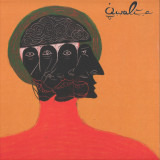
nicht am Lager

Bestelle jetzt und wir bestellen den Artikel für dich beim Lieferanten.


Last In: vor 3 Jahren
Other Lands - Archipelagos LP

AOTN proudly present a new solo outing from long time friend & contributor to Athens of the North, Other Lands aka Gavin L.Sutherland.

Channelling his considerable improvisational skills to evoke notions of island life, his concept was to create something that could work equally well in the wilds of the Western Isles as in the sunnier spots of the world that we all yearned to escape to at that time. The more he played with this idea of groups of islands, of archipelagos the world over, the more it also became about people themselves experiencing isolation as individuals, while still feeling a sense of togetherness with others in the same boat.

Working a little at home but mainly here at Athens of the North studios, he would come in each day over the course of a few weeks and just hit record, playing at times almost without mind. Sometimes the mood would call for keys, strings, or drums through delays for days and days. Often, the music would happen by chance as much as by design. One rule he tried to adhere to was to not overthink things, capturing moments honestly with minimal editing or digital processing.

What we've ended up with is a beautiful, spontaneous, timeless and honest meditation on what it is to be at once both alone and part of a larger whole.

nicht am Lager

Bestelle jetzt und wir bestellen den Artikel für dich beim Lieferanten.


Last In: vor 3 Jahren
George Is Lord - My Sweet George

George is Lord is a celebration of all things George Harrison - What began
as an exercise inlearning to play the drums, became a band - Anna
Pomerantz quit her job as Interior Designer to the stars and called upon
old friend Lindsay Glover, to teach her to play the drums
Lindsay, who has played in local LA favorites, Whiskey Biscuit and Future Pigeon,
began by teaching Anna the fundamentals and quickly it turned into learning
songs. "One of the first songs we learned was 'Something.' I've actually spent
most of my life hating the Beatles, but hearing them again for the first time
through the drums, made me fall completely in love, especially with George and
Ringo" recalls Anna. "I began teaching Lindsay the guitar and we started playing
together." The duo went on to learn a number of songs like, "Long, Long, Long," "All
Things Must Pass," and "Give me Love" when they realized they were ready to play
with other people. Lindsay asked friend Cody Porter of Pearl Harbor and Puro
Instinct to come play bass. "In our lessons, Lindsay had taught me how to sing
while playing the drums to keep my place in songs. I didn't think I was going to be
a singer in a band, it just happened." The missing ingredient was a lead guitar
player, and the trio invited Sam Blasucci of the popular LA folk duo Mapache if
he'd be willing to jam with us. He brought his magic and completed George Is
Lord. George is Lord recorded their first album of covers with producer Jason
Quever (Beach House, Cass McCombs). Dean Wareham (Luna, Galaxie 500)
appears as a guest. The ten song record includes a variety of George favorites
from the Beatles catalogue and throughout George's solo career.

vorbestellen30.09.2022

erscheint voraussichtlich am 30.09.2022

Lee Tracy & Isaac Manning - Is it What You Want LP

As the sun sets on a quaint East Nashville house, a young man bares a piece of his soul. Facing the camera, sporting a silky suit jacket/shirt/slacks/fingerless gloves ensemble that announces "singer" before he's even opened his mouth, Lee Tracy Johnson settles onto his stage, the front yard. He sways to the dirge-like drum machine pulse of a synth-soaked slow jam, extends his arms as if gaining his balance, and croons in affecting, fragile earnest, "I need your love… oh baby…"

Dogs in the yard next door begin barking. A mysterious cardboard robot figure, beamed in from galaxies unknown and affixed to a tree, is less vocal. Lee doesn't acknowledge either's presence. He's busy feeling it, arms and hands gesticulating. His voice rises in falsetto over the now-quiet dogs, over the ambient noise from the street that seeps into the handheld camcorder's microphone, over the recording of his own voice played back from a boombox off-camera. After six minutes the single, continuous shot ends. In this intimate creative universe there are no re-takes. There are many more music videos to shoot, and as Lee later puts it, "The first time you do it is actually the best. Because you can never get that again. You expressing yourself from within."

"I Need Your Love" dates from a lost heyday. From some time in the '80s or early '90s, when Lee Tracy (as he was known in performance) and his music partner/producer/manager Isaac Manning committed hours upon hours of their sonic and visual ideas to tape. Embracing drum machines and synthesizers – electronics that made their personal futurism palpable – they recorded exclusively at home, live in a room into a simple cassette deck. Soul, funk, electro and new wave informed their songs, yet Lee and Isaac eschewed the confinement of conventional categories and genres, preferring to let experimentation guide them.

"Anytime somebody put out a new record they had the same instruments or the same sound," explains Isaac. "So I basically wanted to find something that's really gonna stand out away from all of the rest of 'em." Their ethos meant that every idea they came up with was at least worth trying: echoed out half-rapped exhortations over frantic techno-style beats, gospel synth soul, modal electro-funk, oddball pop reinterpretations, emo AOR balladry, nods to Prince and the Fat Boys, or arrangements that might collapse mid-song into a mess of arcade game-ish blips before rallying to reach the finish line. All of it conjoined by consistent tape hiss, and most vitally, Lee's chameleonic voice, which managed to wildly shape shift and still evoke something sincere – whether toggling between falsetto and tenor exalting Jesus's return, or punctuating a melismatic romantic adlib with a succinct, "We all know how it feels to be alone."

"People think we went to a studio," says Isaac derisively. "We never went to no studio. We didn't have the money to go to no studio! We did this stuff at home. I shot videos in my front yard with whatever we could to get things together." Sometimes Isaac would just put on an instrumental record, be it "Planet Rock" or "Don't Cry For Me Argentina" (from Evita), press "record," and let Lee improvise over it, yielding peculiar love songs, would-be patriotic anthems, or Elvis Presley or Marilyn Monroe tributes. Technical limitations and a lack of professional polish never dissuaded them. They believed they were onto something.

"That struggle," Isaac says, "made that sound sound good to me."

In the parlance of modern music criticism Lee and Isaac's dizzying DIY efforts would inevitably be described as "outsider." But "outsider" carries the burden of untold additional layers of meaning if you're Black and from the South, creating on a budget, and trying to get someone, anyone within the country music capital of the world to take your vision seriously. "What category should we put it in?" Isaac asks rhetorically. "I don't know. All I know is feeling. I ain't gonna name it nothing. It's music. If it grabs your soul and touch your heart that's what it basically is supposed to do."

=

Born in 1963, the baby boy of nine siblings, Lee Tracy spent his earliest years living amidst the shotgun houses on Nashville's south side. "We was poor, man!" he says, recalling the outhouse his family used for a bathroom and the blocks of ice they kept in the kitchen to chill perishables. "But I actually don't think I really realized I was in poverty until I got grown and started thinking about it." Lee's mom worked at the Holiday Inn; his dad did whatever he had to do, from selling fruit from a horse drawn cart to bootlegging. "We didn't have much," Lee continues, "but my mother and my father got us the things we needed, the clothes on our back." By the end of the decade with the city's urban renewal programs razing entire neighborhoods to accommodate construction of the Interstate, the family moved to Edgehill Projects. Lee remembers music and art as a constant source of inspiration for he and his brothers and sisters – especially after seeing the Jackson 5 perform on Ed Sullivan. "As a small child I just knew that was what I wanted to do."

His older brother Don began musically mentoring him, introducing Lee to a variety of instruments and sounds. "He would never play one particular type of music, like R&B," says Lee. "I was surrounded by jazz, hard rock and roll, easy listening, gospel, reggae, country music; I mean I was a sponge absorbing all of that." Lee taught himself to play drums by beating on cardboard boxes, gaining a rep around the way for his timekeeping, and his singing voice. Emulating his favorites, Earth Wind & Fire and Cameo, he formed groups with other kids with era-evocative band names like Concept and TNT Connection, and emerged as the leader of disciplined rehearsals. "I made them practice," says Lee. "We practiced and practiced and practiced. Because I wanted that perfection." By high school the most accomplished of these bands would take top prize in a prominent local talent show. It was a big moment for Lee, and he felt ready to take things to the next level. But his band-mates had other ideas.

"I don't know what happened," he says, still miffed at the memory. "It must have blew they mind after we won and people started showing notice, because it's like everybody quit! I was like, where the hell did everybody go?" Lee had always made a point of interrogating prospective musicians about their intentions before joining his groups: were they really serious or just looking for a way to pick up girls? Now he understood even more the importance of finding a collaborator just as committed to the music as he was.

=

Isaac Manning had spent much of his life immersed in music and the arts – singing in the church choir with his family on Nashville's north side, writing, painting, dancing, and working various gigs within the entertainment industry. After serving in the armed forces, in the early '70s he ran The Teenage Place, a music and performance venue that catered to the local youth. But he was forced out of town when word of one of his recreational routines created a stir beyond the safe haven of his bohemian circles.

"I was growing marijuana," Isaac explains. "It wasn't no business, I was smoking it myself… I would put marijuana in scrambled eggs, cornbread and stuff." His weed use originated as a form of self-medication to combat severe tooth pain. But when he began sharing it with some of the other young people he hung out with, some of who just so happened to be the kids of Nashville politicians, the cops came calling. "When I got busted," he remembers, "they were talking about how they were gonna get rid of me because they didn't want me saying nothing about they children because of the politics and stuff. So I got my family, took two raggedy cars, and left Nashville and went to Vegas."

Out in the desert, Isaac happened to meet Chubby Checker of "The Twist" fame while the singer was gigging at The Flamingo. Impressed by Isaac's zeal, Checker invited him to go on the road with him as his tour manager/roadie/valet. The experience gave Isaac a window into a part of the entertainment world he'd never encountered – a glimpse of what a true pop act's audience looked like. "Chubby Checker, none of his shows were played for Black folks," he remembers. "All his gigs were done at high-class white people areas." Returning home after a few years with Chubby, Isaac was properly motivated to make it in Music City. He began writing songs and scouting around Nashville for local talent anywhere he could find it with an expressed goal: "Find someone who can deliver your songs the way you want 'em delivered and make people feel what you want them to feel."

One day while walking through Edgehill Projects Isaac heard someone playing the drums in a way that made him stop and take notice. "The music was so tight, just the drums made me feel like, oh I'm-a find this person," he recalls. "So I circled through the projects until I found who it was.

"That's how I met him – Lee Tracy. When I found him and he started singing and stuff, I said, ohhh, this is somebody different."

=

Theirs was a true complementary partnership: young Lee possessed the raw talent, the older Isaac the belief. "He's really the only one besides my brother and my family that really seen the potential in me," says Lee. "He made me see that I could do it."

Isaac long being a night owl, his house also made for a fertile collaborative environment – a space where there always seemed to be a new piece of his visual art on display: paintings, illustrations, and dolls and figures (including an enigmatic cardboard robot). Lee and Issac would hang out together and talk, listen to music, conjure ideas, and smoke the herb Isaac had resumed growing in his yard. "It got to where I could trust him, he could trust me," Isaac says of their bond. They also worked together for hours on drawings, spreading larges rolls of paper on the walls and sketching faces with abstract patterns and imagery: alien-like beings, tri-horned horse heads, inverted Janus-like characters where one visage blurred into the other.

Soon it became apparent that they didn't need other collaborators; self-sufficiency was the natural way forward. At Isaac's behest Lee, already fed up with dealing with band musicians, began playing around with a poly-sonic Yamaha keyboard at the local music store. "It had everything on it – trumpet, bass, drums, organ," remembers Lee. "And that's when I started recording my own stuff."

The technology afforded Lee the flexibility and independence he craved, setting him on a path other bedroom musicians and producers around the world were simultaneously following through the '80s into the early '90s. Saving up money from day jobs, he eventually supplemented the Yamaha Isaac had gotten him with Roland and Casio drum machines and a Moog. Lee was living in an apartment in Hillside at that point caring for his dad, who'd been partially paralyzed since early in life. In the evenings up in his second floor room, the music put him in a zone where he could tune out everything and lose himself in his ideas.

"Oh I loved it," he recalls. "I would really experiment with the instruments and use a lot of different sound effects. I was looking for something nobody else had. I wanted something totally different. And once I found the sound I was looking for, I would just smoke me a good joint and just let it go, hit the record button." More potent a creative stimulant than even Isaac's weed was the holistic flow and spontaneity of recording. Between sessions at Isaac's place and Lee's apartment, their volume of output quickly ballooned.

"We was always recording," says Lee. "That's why we have so much music. Even when I went to Isaac's and we start creating, I get home, my mind is racing, I gotta start creating, creating, creating. I remember there were times when I took a 90-minute tape from front to back and just filled it up."

"We never practiced," says Isaac. "See, that was just so odd about the whole thing. I could relate to him, and tell him about the songs I had ideas for and everything and stuff. And then he would bring it back or whatever, and we'd get together and put it down." Once the taskmaster hell bent on rehearsing, Lee had flipped a full 180. Perfection was no longer an aspiration, but the enemy of inspiration.

"I seen where practicing and practicing got me," says Lee. "A lot of musicians you get to playing and they gotta stop, they have to analyze the music. But while you analyzing you losing a lot of the greatness of what you creating. Stop analyzing what you play, just play! And it'll all take shape."

=

"I hope you understood the beginning of the record because this was invented from a dream I had today… (You tell me, I'll tell you, we'll figure it out together)" – Lee Tracy and Isaac Manning, "Hope You Understand"

Lee lets loose a maniacal cackle when he acknowledges that the material that he and Isaac recorded was by anyone's estimation pretty out there. It's the same laugh that commences "Hope You Understand" – a chaotic transmission that encapsulates the duality at the heart of their music: a stated desire to reach people and a compulsion to go as leftfield as they saw fit.

"We just did it," says Lee. "We cut the music on and cut loose. I don't sit around and write. I do it by listening, get a feeling, play the music, and the lyrics and stuff just come out of me."

The approach proved adaptable to interpreting other artists' material. While recording a cover of Whitney Houston's pop ballad "Saving All My Love For You," Lee played Whitney's version in his headphones as he laid down his own vocals – partially following the lyrics, partially using them as a departure point. The end result is barely recognizable compared with the original, Lee and Isaac having switched up the time signature and reinvented the melody along the way towards morphing a slick mainstream radio standard into something that sounds solely their own.

"I really used that song to get me started," says Lee. "Then I said, well I need something else, something is missing. Something just came over me. That's when I came up with 'Is It What You Want.'"

The song would become the centerpiece of Lee and Isaac's repertoire. Pushed along by a percolating metronomic Rhythm King style beat somewhere between a military march and a samba, "Is It What You Want" finds Lee pleading the sincerity of his commitment to a potential love interest embellished by vocal tics and hiccups subtlely reminiscent of his childhood hero MJ. Absent chord changes, only synth riffs gliding in and out like apparitions, the song achieves a lingering lo-fi power that leaves you feeling like it's still playing, somewhere, even after the fade out.

"I don't know, it's like a real spiritual song," Lee reflects. "But it's not just spiritual. To me the more I listen to it it's like about everything that you do in your everyday life, period. Is it what you want? Do you want a car or you don't want a car? Do you want Jesus or do you want the Devil? It's basically asking you the question. Can't nobody answer the question but you yourself."

In 1989 Lee won a lawsuit stemming from injuries sustained from a fight he'd gotten into. He took part of the settlement money and with Isaac pressed up "Saving All My Love For You" b/w "Is It What You Want" as a 45 single. Isaac christened the label One Chance Records. "Because that's all we wanted," he says with a laugh, "one chance."

Isaac sent the record out to radio stations and major labels, hoping for it to make enough noise to get picked up nationally. But the response he and Lee were hoping for never materialized. According to Isaac the closest the single got to getting played on the radio is when a disk jock from a local station made a highly unusual announcement on air: "The dude said on the radio, 107.5 – 'We are not gonna play 'Is It What You Want.' We cracked up! Wow, that's deep.

"It was a whole racist thing that was going on," he reflects. "So we just looked over and kept on going. That was it. That was about the way it goes… If you were Black and you were living in Nashville and stuff, that's the way you got treated." Isaac already knew as much from all the times he'd brought he and Lee's tapes (even their cache of country music tunes) over to Music Row to try to drum up interest to no avail.

"Isaac, he really worked his ass off," says Lee. "He probably been to every record place down on Music Row." Nashville's famed recording and music business corridor wasn't but a few blocks from where Lee grew up. Close enough, he remembers, for him to ride his bike along its back alleys and stumble upon the occasional random treasure, like a discarded box of harmonicas. Getting in through the front door, however, still felt a world away.

"I just don't think at the time our music fell into a category for them," he concedes. "It was before its time."

=

Lee stopped making music some time in the latter part of the '90s, around the time his mom passed away and life became increasingly tough to manage. "When my mother died I had a nervous breakdown," he says, "So I shut down for a long time. I was in such a sadness frame of mind. That's why nobody seen me. I had just disappeared off the map." He fell out of touch with Isaac, and in an indication of just how bad things had gotten for him, lost track of all the recordings they'd made together. Music became a distant memory.

Fortunately, Isaac kept the faith. In a self-published collection of his poetry – paeans to some of his favorite entertainment and public figures entitled Friends and Dick Clark – he'd written that he believed "music has a life of its own." But his prescience and presence of mind were truly manifested in the fact that he kept an archive of he and Lee's work. As perfectly imperfect as "Is It What You Want" now sounds in a post-Personal Space world, Lee and Isaac's lone official release was in fact just a taste. The bulk of the Is It What You Want album is culled from the pair's essentially unheard home recordings – complete songs, half-realized experiments, Isaac's blue monologues and pronouncements et al – compiled, mixed and programmed in the loose and impulsive creative spirit of their regular get-togethers from decades ago. The rest of us, it seems, may have finally caught up to them.

On the prospect of at long last reaching a wider audience, Isaac says simply, "I been trying for a long time, it feels good." Ever the survivor, he adds, "The only way I know how to make it to the top is to keep climbing. If one leg break on the ladder, hey, you gotta fix it and keep on going… That's where I be at. I'll kill death to make it out there."

For Lee it all feels akin to a personal resurrection: "It's like I was in a tomb and the tomb was opened and I'm back… Man, it feels so great. I feel like I'm gonna jump out of my skin." Success at this stage of his life, he realizes, probably means something different than what it did back when he was singing and dancing in Isaac's front yard. "What I really mean by 'making it,'" he explains isn't just the music being heard but, "the story being told."

Occasionally Lee will pull up "Is It What You Want" on YouTube on his phone, put on his headphones, and listen. He remembers the first time he heard his recorded voice. How surreal it was, how he thought to himself, "Is that really me?" What would he say to that younger version of himself now?

"I would probably tell myself, hang in there, don't give up. Keep striving for the goal. And everything will work out."

Despite what's printed on the record label, sometimes you do get more than one chance.

nicht am Lager

Bestelle jetzt und wir bestellen den Artikel für dich beim Lieferanten.


Last In: vor 3 Jahren
MAGNETIC GHOST ORCHESTRA - MAGNETIC GHOST ORCHESTRA

Magnetic Ghost Orchestra! It's a 17-piece big band from Berlin between jazz and electropop under the direction of their bandleader and composer Moritz Sembritzki. Moritz Sembritzki is a guitarist and composer living in Berlin. His music is characterized by simple basic ideas, to which something unexpected regularly happens.

vorbestellen16.09.2022

erscheint voraussichtlich am 16.09.2022

Nick Cave - Seven Psalms LP

Seven Psalms finds Australia's most imperious musical misfit Nick Cave leaving his Bad Seeds at home and teaming up with frequent collaborator Warren Ellis for a limited 10". The spoken word pieces on this record are the result of a daily song writing practice over a week during lockdown - Cave himself describes them as "small, sacred songs," set to appropriately subtle musical accompaniment. Recorded during the sessions for Cave and Ellis' 2021 album Carnage, it's a rich work in its own right that offers a different perspective on Cave's considerable gifts as a soothsayer.

nicht am Lager

Bestelle jetzt und wir bestellen den Artikel für dich beim Lieferanten.


Last In: vor 3 Jahren
Dan Lyons & The Tenants - Shuttered Dreams LP

Recorded live in 10 days, with minimal overdubs, Shuttered Dreams is a blast of uncompromising truth reminding us to stay awake when the vultures are circling. The album was mixed by Sean Genockey (Shame, Richard Ashcroft, The Who, Black Crowes).

Margate in March 2021 was a time to test your resolve. If the wind howling round the closed down shops and cafes didn’t send you spinning out of control the out of season coastal melancholy could drag you down as surely as any dead eye mermaid. Add in a murderous virus and a frozen gig scene and it was a time to stay frosty and fight off the demons. Dan had some experience to draw on.

“Instead of baking banana bread or knitting, I decided to upgrade my home studio but after a couple of months of writing it was obvious that the songs needed to breathe as much as I did. They’re all about real people and raw feelings and I felt they wouldn’t get justice by being turned into zeroes and ones so early in life “.

It was decided to record the masters live with his new band featuring Dom Hall (drums), Henry Gabbott (bass) and Freya Warsi (vocals) and engineer friend, Harry Armstrong. Armed only with a Vox Marauder, a skeleton recording studio, and a pad of lyrics, Dan moved in with The Tenants to The Tom Thumb Theatre which like everywhere was closed for business but had just received Arts Council recovery funding and was offering residencies for artists.

“Musically I wanted to try to work within a strict palette of sound, using the same acoustic and electric guitars for every song, and Henry’s Wurlitzer and Mellotron to flesh things out a bit.” Dan explains, “We played all of the songs live, sometimes up to sixty or seventy times until we were happy with a take, we might then add a bit of extra electric, percussion or backing vocals, but what you hear on the record is pretty much what was happening in the room. That makes me feel proud, as all the records I love listening to were made in that way.”

vorbestellen16.09.2022

erscheint voraussichtlich am 16.09.2022

Ugly Duckling - Moving At Breakneck Speed LP 2x12"

Old-School-Hip-Hop how it has to be! Creamy soul samples and sing-along choruses. With this release we celebrate 2 things: our (Lonestar’s) 20th anniversary (yes, we’re old!) and the 10th anniversary of this excellent album. It was originally released only in a small edition on vinyl done by the band. Now it gets a proper re-release with an exclusive-coloured version. But it’s limited to only 300 copies. So be fast or regret it later! "Party people hold onto your hats!" Ugly Duckling presents their fifth full-length album Moving at Breakneck Speed. After more than a decade in the music business, Young Einstein, Andy Cooper and Dizzy Dustin are well accustomed to the recording process. For their latest LP, the boys dug deep into their bag of tricks to create what they feel is their most dynamic and complete release to date. Moving at Breakneck Speed is an exciting and musically exotic adventure story that has our desperate heroes circling the globe to outrun an evil gang of super-criminals determined to put an end to UD once and for all. The record is made up of 14 power packed tracks that showcase Ugly Duckling’s classic production sound as well as the flavourful and humorously soulful vocal styles of Dizzy and Andy. “By the time you work on your fifth record, you ought to know how to do it, right?” asks Andy, “I think we put all of the pieces together to make a really, really good album”. We've made a habit of finding talented artists to create our artwork and this album is certainly no exception. This time around we enlisted the help of Justin Ridge. A native of smoggy Southern California, Justin has enjoyed making silly drawings and directing on animated shows like Avatar: The Last Airbender, Star Wars: Clone Wars, The Cleveland Show, and most recently Black Dynamite: The Animated Series. You can see more of his stuff on his website at justinridgeart. It has been a pleasure working with Justin on this venture and look forward to seeing what the future has in store for this very gifted animator. Also contributing his talents to this album is photographer Noel J. Hadley. We have Noel to thank for the awesome photos that you see displayed throughout the site. Noel's specialty is actually wedding photos, but he was kind enough to join us on a fun-filled afternoon in Los Angeles to capture the theme images for the new album. He was also along for the ride during the filming of the Elevation video, set to be released later this year. You can check out photos from the video shoot on Noel's blog. In addition, there are a number of people who donated their time and effort to help bring this album to life. Comedian TJ Miller can be seen in the Elevation video, a combination live-action/cartoon which will be animated by Justin Ridge. We would also like to thank Andy Carpenter, Jon St. James, Josh Barlow, Josh Fischel, Victor, Dago, Tamika, Tiko, Hiroko, Missy, Brian, Ashley-Dominique, Clout, and the entire Tru Beatz Crew for their contributions. You are all valued members of the UD family. Track listing: Keep Movin’; Momentum; $100 Weekend; Elevation; I Wonder Where She Is Now; One Horse Town; Anything Can Happen (In The Big City); How It Used To Be; Einstein Got A Monkey; Run For The Light; Sprint!; The Homecoming; The Breakneck Theme; Endless Summer

vorbestellen16.09.2022

erscheint voraussichtlich am 16.09.2022

RADIO DIASPORA - NEGRO HUMOR LP

Radio Diaspora works on the concept of cultural identity, which is flexible and dynamic. This provocation is generated by referring to all African ancestry moved by the diaspora and its sonorous, vocal, polyrhythmic, and polyphonic codes - all the ancestral heritage that has spread throughout the world following expropriations, genocide, and slavery - sampling and amplifying references that become triggers of energetic approaches. A heavy core of representations and senses aims to exorcize through noise and strangeness all secular violence against people of the African diaspora. In the title song of this album, 'Negro Humor', the respected Brazilian actor Grande Otelo highlights the contradiction of the clown, which awakens joy in everyone but is a sorrowful, lonely figure, ridiculing himself and putting himself in the most embarrassing situations. Relieved, loud laughter echoes in the audience because it is not the target of ridicule. In 'Despacho', Radio Diaspora explores the dichotomy of society by introducing a speech by Brazilian lawyer Hédio Silva Júnior specialised in Afro-Brazilian religion. He questions a rule under discussion in Brazil's Congress that would prohibit the use of chickens in Candomblé and Umbanda rituals. Silva Júnior points out that everyone takes a stand to protect the rights of animals, but the same cannot be said of the defense of young black people and outlying societies. The track 'Meia-Noite' evokes a celebrated point of Umbanda, an Afro-Brazilian religious syncretic cult, permeated by free jazz and electronic atmospheres developed by the duo. The other songs on the album are divided into two parts. They feature the voices of North American icons of the black struggle for civil rights: The tracks 'A.H.M. Al-Shabazz 1 and 2', amid sonic dissonances, use extracts from speeches by the American leader Malcolm X, and in 'Muhammad Ali 1 and 2' we hear quotes from famous interviews given by the boxer and activist. Ali ironizes the questions he asked his mother as a child, why all good and positive things are associated with white. "Mother, how come is everything white? Why is Jesus white with blonde hair and blue eyes? Angels are white, the Pope, Mary, and even the angels. When we die, will we go to heaven? She said naturally we go to heaven. So, I said, what happened to all the black angels they took from the pictures." His Inquiry, however, is seen as a joke by the white audience present at the TV show, which laughs off Ali's scathing criticism. Radio Diaspora uses art as an instinctive force to reject submission to traditions and culture as taming. Music is the weapon. "The (album) sound means to exorcise racism out of our minds and make us ready to act". - Rômulo Alexis

vorbestellen26.08.2022

erscheint voraussichtlich am 26.08.2022

Thee Sacred Souls - Thee Sacred Souls LP

For Thee Sacred Souls, the first time is often the charm. The band’s first club dates led to a record deal with the revered Daptone label; their first singles racked up more than ten million streams in a year and garnered attention from Billboard, Rolling Stone, and KCRW; and their first fans included the likes of Gary Clark Jr., The Black Pumas, Princess Nokia, and Timbaland. Now, the breakout San Diego trio is ready to deliver yet another landmark first with the release of their self-titled debut on Daptone Records.

“Every step of the way has just been so organic,” says drummer Alex Garcia. “Things just seem to happen naturally when the three of us get together.”

Indeed, there’s something inevitable about the sound of Thee Sacred Souls, as if Garcia and his bandmates—bassist Sal Samano and singer Josh Lane—have been playing together for a lifetime already. Produced by Bosco Mann (aka Daptone co-founder Gabriel Roth), Thee Sacred Souls is a warm and textured record, mixing the easygoing grace of sweet ’60s soul with the grit and groove of early ’70s R&B, and the performances are utterly intoxicating, with Lane’s weightless vocals anchored by the rhythm section’s deep pocket and infectious chemistry.

Hints of Chicano, Philly, Chicago, Memphis, and even Panama soul turn up here, and while it’s tempting to toss around labels like “retro” with a deliberately analog collection like this, there’s also something distinctly modern about the band that defies easy categorization, a rawness and a sincerity that transcends time and place.

nicht am Lager

Bestelle jetzt und wir bestellen den Artikel für dich beim Lieferanten.


Last In: vor 3 Jahren
Artikel pro Seite:
N/ABPM
Vinyl

