Cerca:them are us too

Generi
Tutto
Black To Comm - Earth

Black To Comm

Earth

12inchCELL-07LP
Cellule 75
10.07.2023

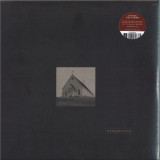
Marc Richter aka Black To Comm released his debut record 20 years ago. In 2023 he is still busy releasing music under various disguises and is currently signed to the Thrill Jockey label. To celebrate this anniversary his own Cellule 75 label is re-releasing some classic out-of-print vinyl albums that originally came out on the defunct Type and De Stijl labels. The LP will feature a full-colour lyric sheet / poster exclusive to this edition.

After releasing the critically acclaimed Alphabet 1968 on the seminal Type label (Grouper, Jóhann Jóhannsson, Yellow Swans), Richter chose De Stijl for this 2012 album, an American label that had just put out future classics by the likes of Circuit Des Yeux, Hype Williams and Wolf Eyes.

EARTH is a 2009 silent film by Ho Tzu Nyen, one of Singapore's foremost visual artists. After hearing Black To Comm's Alphabet 1968 Ho Tzu Nyen invited Richter to accompany the film at Berlin's Asian Film Festival, Unsound in Krakow and several other art biennals and music festivals around the world.

In his own words: "Most of the music was composed under the influence of heavy pain killers while recovering from a broken leg (the recordings literally took place in bed). The music (like the film) is about slowness and decay, states of unconsciousness, sleeping and waking up, dying and being reborn. The film is a post-apocalyptic collage based on paintings by classical European painters (Caravaggio, Delacroix, Rembrandt, Gericault) -- the music translates this concept employing corresponding collage-based sampling techniques using loops made from vintage vinyl and shellac records combined with acoustic and electronic instrumentation and voice."

From the original De Stijl one-sheet:
"Richter’s already formidable expressive power stretches over all of EARTH. Reflecting the countless cyclical forces that make up, oh, more or less everything we know and are, the music on EARTH is bracing, lovely, bustling and still, and at times bittersweet, a commingling of sensations and emotions that can’t be neatly separated from one another. (EARTH is complex, as you know.) Guests on EARTH include David Aird, a.k.a Vindicatrix (on the Mordant Music label), contributing startling vocal work; Renate Nikolaus on an array of instruments and noise devices; Rutger Zuydervelt (singing bowls); and Christopher Kline (singing saw). EARTH is Black to Comm’s seventh album and his debut for De Stijl, following the acclaimed Alphabet 1968 (on Type) and last year’s vinyl-only collaboration with Mike Kelley of Destroy All Monsters (on the En/Of label)."

Alex Neilson in The Wire:
"The most marked aspect of Earth is the voice of David Aird, aka Vindicatrix. Imperious and dolorous, he has the gravity of post-Climate Of Hunter Scott Walker, David Sylvain or Klaus Nomi stripped of the pathetic ritz. This is something that's easy to do badly, but Aird pulls it off with aplomb. On "The Children" he breaks into a morose yodel, rolling the words around his palate and colouring each syllable black before gifting them to the air. The meaning isn't understood verbally as much as viscerally. Beneath Aird's ululations, Richter casts handfuls of angelic debris from keyboards and digital devices, generating a celestial electronic tapestry reminiscent of Japanese musician Nobukazu Takemura. Sounds vie and twist at frequencies you can't so much hear as feel in the bridge of your nose, and the variety and full-bloodedness of the accompaniment is what prevents Aird's vocal from occassionally lapsing into shtick."

pre-ordina ora10.07.2023

dovrebbe essere pubblicato su 10.07.2023

Koshiro Hino - GEIST II

Koshiro Hino

GEIST II

12inchNKD07
NAKID
01.07.2023
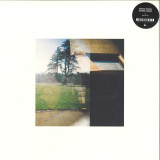
One of Japan’s most riveting artists follows that KAKUHAN mindmelt from last year (our number 5 album, 2022) with an engrossing suite of wild field recordings and polymetric percussion featuring a whole raft of additional players weaving drums, wind and brass instruments, cello and electronics into a bewildering Acousmatic matrix. Highly recommended listening if you’re into Marginal Consort, Beatrice Dillon, Will Guthrie, Mark Fell, François Bayle.

Having made his mark on these pages over the last few years with appearances as part of Japan’s cult entities Goat and YPY, Koshiro Hino’s turn last year as KAKUHAN took things to a whole other level with an album that felt like some alchemical mix of elements borrowed from Autechre, Photek, Arthur Russell and Mica Levi - a complete stylistic futureshock that worked as well in the club as it did fuelling extended flights of the imagination.

For 2023, Hino takes us into a completely different headspace, assembling a cast of 11 players - the mighty Joe Talia and KAKUHAN’s other half Yuki Nakagawa among them - for a suite of untamed field recordings, clanging percussion, brass and synthesis that are about as far removed from the diaristic ambient de jour as you could possibly imagine. Instead, the ensemble conjure vibrant sound ecologies teeming with detail, mirroring the natural world and communal traditions to form shapeshifting, organismic soundworlds.

‘Geist II’ was written for 20 speakers, referencing François Bayle’s acousmatic music and David Tudor’s electro-acoustic environments. It paints a richly detailed scene of a nocturnal rainforest, replete with avian hoots and a skin-crawling patina of insectoid chatter that moves around the soundfield, stealthily growing in density with a more “musical” presence of super low end drone and drums converging form the peripheries to a ritualistic climax. In the second part, focus shifts to remarkably pure percussion-like tropical rain, invaded by swarms of scuttling and winged invertebrates that give way to a water music-like polymetric slosh, resolving to ringing tones and more mellifluous gestures that hark back to GRM’s most poetic, romantic urges.

It's a deeply psychedelic experience that harmonises tiny electronic fluctuations with bird calls and scraped, resonant drones that phase in-and-out of the mix. It's sound you can practically chew, and another crucial despatch from the contemporary Japanese avant-garde.

pre-ordina ora01.07.2023

dovrebbe essere pubblicato su 01.07.2023

Black To Comm - Alphabet 1968 LP

Black To Comm

Alphabet 1968 LP

12inchCELL-05LP
Cellule 75
30.06.2023

Marc Richter aka Black To Comm released his debut record 20 years ago. In 2023 he is still busy releasing music under various disguises and is currently signed to the Thrill Jockey label. To celebrate this anniversary his own Cellule 75 label is re-releasing some classic out-of-print vinyl albums that originally came out on the defunct Type and De Stijl labels. The LP will feature a full-colour printed inner sleeve exclusive to this edition.

In 2009 the Type Recordings label run by John Twells had just released seminal records by Grouper, Jóhann Jóhannsson and Yellow Swans when they signed Richter and put out his breakthrough Alphabet 1968 album. The LP sold out within two weeks, receiving a glowing full-page review in The Wire Magazine by the late Mark Fisher (later reprinted in his book Ghosts Of My Life), was selected for Boomkat's Top 10 releases of the year (alongside debut albums by Leyland Kirby, Demdike Stare and Oneohtrix Point Never) and was greeted with universal praise in the underground blog network as well as established magazines such as The New Yorker and Pitchfork.

The music itself played with the notion of nostalgia without being nostalgic itself. It's the sound of half-remembered dreams, a surreal distorted vision of the past, an aural polaroid of long forgotten musics, a ghostly voice from a non-existent era.

From the original Type one-sheet:
"The mission statement for Alphabet 1968 was to write an album of "songs" for want of a better word. Short tracks which represented genre points, the milestones which stuck in Richter's mind when he thought back to his favorite records. What we arrive at is a breathtaking 10-track album which, over the course of 45 minutes, explores world music, techno, noise, avant-garde, ambient music and even exotica. Each track is linked with a loose thread of radio static or environmental sound, dragging you through the album, as if tuning in to a stray broadcast or a particularly adventurous mix. Richter has pieced the album together from hours of recordings made at his studio with home made gamelan, small instruments and loops gathered from a collection of ancient vinyl and 78 records. The scope of the album is admirable, but ignoring this, it is simply a shockingly arresting collection of experimental oddities, with references ranging from Moondog to Basic Channel by way of Bernard Herrmann. It's not hard to fall in love with Alphabet 1968, far harder would be to place exactly where the record should fit into your collection."

Mark Fisher in The Wire:
"But what if we were to take Richter's provocation seriously - what would a song without a singer be like? What would it be like, that is to say, if objects themselves could sing? It’s a question that connects fairy tales with cybernetics, and listening to Alphabet 1968, I’m reminded of a filmic space in which magic and mechanism meet: JF Sebastian’s apartment in Blade Runner. The tracks on the LP are crafted with the same minute attention to detail that the genetic designer and toymaker brought to his miniature automata, with their bizarre mixture of the clockwork and the computerised, the antique and the ultramodern, the playful and the sinister. Richter’s musical pieces have been built from similarly heterogeneous materials - record crackle, shortwave radio, glockenspiels, all manner of samples, mostly of acoustic instruments. ….. JF Sebastian's apartment was itself an update of older spaces in which science and sorcery co-existed: the workshops of ETA Hoffmann's inventor-magicians, or of Pinocchio's creator, Geppetto. I think, too, of Auguste Villiers de l'Isle-Adam's astonishing 1886 tale The Future Eve in which Edison, using the expertise he has recently acquired from inventing the phonograph, sets himself the task of constructing an artificial woman. But if there are songs here, they are sung by the gramophone and other recording and playback machines. Richter so successfully effaces himself as author that it is as if he has snuck into a room and recorded the objects as they played (to) themselves. Rather than simply automating his music, as in the case of Pierre Bastien and his mechanical machines, Richter makes us feel that he has merely recorded the unlife of objects. ….. Indeed, the impression of things winding down is persistent on Alphabet 1968. Entropy has not been excluded from Richter's enchanted soundworld. It feels as if the magic is always about to wear off, that the enchanted objects will slip back into the inanimate again at any moment."

pre-ordina ora30.06.2023

dovrebbe essere pubblicato su 30.06.2023

CASCO - Cybernetic Love

Casco

Cybernetic Love

12inchHM1004/R
House Of Music
30.06.2023

Fantastic masterpiece, considered one of the best Italo-Disco songs ever. A mega-classic produced by Stefano Zito and Carlo Favilli (the latter passed away too soon) characterized by a heartbreaking melody and lush strings that exemplify the mood and rhythm of the Italo-Disco style with the use of some sounds of pre-bleepy keyboard and siren that technically make it one of the very first rave songs ever, inspiring the style of many artists that came later, like Duft Punk. However, many of them don't even come close with their imaginative computers to that bassline and string sounds that melted the souls of many of us back in that distant April 1983, even if it seems that part of the melodic line has been copied not very subtly by Casco from that of El Deux's Computer-Madchen released in 1982 in Switzerland, where Salvatore Cusato was working as a club-DJ. On the flip another excellent remix version by Danilo Braca of the song revisited a few years later. The confirmation of the wisdom and foresight of its producers, aware that the BPM would soon be lowered by a lot. In the more than 8 minutes of "Cyberlover" the constant melancholy background together with the drum/bass/synth lines are preserved intact, giving us a complete reissued product.

non in magazzino

Ordina ora e ordineremo l'articolo per te presso il nostro fornitore.


Last In: 4 months ago
The Rellies - MONKEY

The Rellies

MONKEY

7"-VinylDAMGOOD598
DAMAGED Goods
23.06.2023

Monkey is the second single by The Rellies since releasing 'Isabella is Annoying/ Brainwaves' in 2020. Ryan, guitarist and dual singer and songwriter for the band describes the making of 'Monkey' during lockdown with his brother Riley. "During covid we got very bored. Originally, we wanted to get our Monkeys and run them over with our dad's car, but we settled for filming them falling down the stairs and writing a song about it. When the other members of band finally heard the song, they liked the Monkey and then we made a clip with our friends and some TV monkeys. Everyone sang 'I like the Monkey' and soon everyone liked the Monkey!" Helicopter is Ryan's sonic representation of "hunks of steel flying through the sky. I'm an aviation nerd." He doesn't disappoint. Helicopter's opening riff is catchy and travels. Ryan's vocal powers through the song and the background vocals from kid brother Riley kicks it up a notch as he improvises his way through the chorus begging for a ride. The Rellies ages range from 13-16 and developed at Kings Cross Conservatorium. The brothers began writing and recording at age 9 and 11 respectively and doing shows as The Rellies in 2018 with Jarlath Kiernan on drums. In 2021, the band replaced guitarist Aiden Burke with Lachlan Knight when Aiden decided rehearsal was too loud. Ryan: "We love the Beatles but lately we've got more of a punk energy in our songs. Also, Riley likes a lot of different stuff like Tyler the Creator... his lyrics are inspiring us to be creative with humour."

pre-ordina ora23.06.2023

dovrebbe essere pubblicato su 23.06.2023

BRUCE FLAKIAN - BRUCE FLAKIAN LP

Bruce Falkian is a world famous contemporary artist who exhibits at the world's most prestigious art galleries and fairs. Bruce Falkian moonlights as an agent of espionage against the Terrorism Industrial Complex. Wait... what?

To understand Bruce Falkian we first must understand the link between image and war. In the late 1800s the precursor to the video camera was invented. It was directly inspired by guns, specifically, Samuel Colt's Revolver. It borrowed not only its barrel mechanics, swapping bullets for exposures, but its terminology too. Load, point, scope, aim, shoot, flash. The camera and the gun, united by cordite, would go on to prove the most efficacious tools in shaping the modern world.

The 20th century was a laboratory when it comes to killing and image making, glorified through Hollywood and the Western genre. Propaganda would prove highly effective in creating and sustaining support for militaries fighting for ideological global control. Devised first in the aptly title 'Propaganda' (1928) by Edward Bernays, a nephew of Sigmund Freud, Advertising and Public Relations became the leading media industries, learning how to control the population through images, usually just to buy random crap they didn't need, but other times to overthrow democratically elected politicians in foreign countries. Eventually Western Liberal Democracy assumed domination, built of course on the enslavement of all peoples and nations who didn't fall in line with its specific ideas of living. The Red Scare inspired countless anti-leftist, anti-communist works of art throughout the Cold War, notably and most bizarre, funding the abstract expressionist movement as a non-ideological alternative to socialist realism art. When the Soviet Union fell, Western Liberal Democracy was able to promulgate its unhindered views around the world through its various media empires and actor states. Is it a coincidence that a third of the almost $85 billion dollar global camera equipment market is represented by the greatest propaganda beast the world has ever seen, the USA?

Guns are dangerous because of the obvious. Images are dangerous because we are bad at perceiving what is real (as any jump scare, deepfake, newsreel will attest to.) Videos aren't technically real, they are only a collection of rapidly changing static images which give the illusion of movement. It's easy for us to collectively decide that a video is real, because that's the way our brains perceive reality. People who lead the world of media understand this, which is how they are able to control us, make us invade foreign countries, vote for specific politicians, feel ugly or fat etc. However, ubiquitous as they are, it seems that the image is in crisis. It seems that we've run out of them. Or perhaps our understanding of an image is changing, with the aid of near instantaneous text-to-image AI technology. So what does this mean for guns? What does this mean for war? How will images be used as an aid to war in the 21st century? It remains to be seen, but Bruce Falkian will be a useful agent.

non in magazzino

Ordina ora e ordineremo l'articolo per te presso il nostro fornitore.


Last In: 2 years ago
ADIEL - IL SIGNIFICATO DELLE PAROLE EP

In the digital age, words are no longer just symbols of communication, but a powerful tool that gives rise to meaningful interconnections between different universes.

Words have the power to transcend time and space, connecting two souls destined to meet.

Il Significato delle Parole (the meaning of words) is Adiel's new effort on her DanzaTribale, a crossover of two minds, generated together with musician Flavio Accorinti: techno sounds like the restless soul that pervades our days, deconstructed atmospheres like shattered generational dreams. The fusion of two cosmic currents, two ways of thinking and creating, characterized by an immanent power, pushing us to imagine new urban primitivism. Two creative processes, transcending individual boundaries to connect into a single overarching vision, to explore new forms of art and storytelling.

The EP, mixed by Donato Dozzy and mastered at Rome's Enisslab Studio by Giuseppe Tillieci, starts with Nulla Resta, a defragmented, dreamlike, ascending climax markedly cyberpunk: dense with references to 90s Progressive Dream, Nulla Resta, with its dulcet melodies, transports us to an artificial reality, a spiritual reality albeit dominated by technology. A reality suspended between fantasy and materialism.
Suspended, like the second track (Sospesa): dark trip-hop's echoes adorned by the voice of Jordie Devlin Mcmorrow. "Shadows on the walls orchestrate our downfall." Dystopian futures intertwine with mysteriously dreamy pasts in a fatal spiral of redemption.
But words remain the catalysing element of this EP.
Parole(words) represents a communicative rare faction that embraces tribes near and far. Black drums echo in the distance in an intimate ballad, in an epic ride, in an ethereal metaphysical journey to the dissolution of the boundary between time and space, between memory and perception.
Notturna, on the other hand, is the epilogue we all deserve; a solemn twilight, a lysergic, dragging escape from the objectivity of the real world.

The images of life do not simply exist in a vacuum. They are defined by the energy that surrounds them, and it is the explanation behind each of these words that we must find if weare to truly understand them. Thanks to the meaning of words, sooner or later, we will be all united again.

non in magazzino

Ordina ora e ordineremo l'articolo per te presso il nostro fornitore.


Last In: 2 years ago
Saroos - Turtle Roll LP

How about you forget for a moment all the things you thought you knew about Saroos, okay? First of all, let’s forget about all the other projects these guys are part of. Why? Because thinking of The Notwist, Driftmachine, Lali Puna, Tvii Son, to name “only” half a dozen things, might be misleading in this case. What’s more, please make sure to forget the fact that they’re mostly filed under “instrumental,” “post-rock dub,” or “kraut-flavored indie-tronica,” you know, all that. And most importantly, let’s forget that they’re a closed, three-minded system: a fixed and fully committed entity of three. No more!

Known to reinvent themselves in less drastic ways, Christoph Brandner, Max Punktezahl and Florian Zimmer, have opened the floodgates to COLLABORATION – making things open, porous, different, new, in many ways, on their quietly explosive latest album “Turtle Roll”.

Announced by 2021 singles “Tin & Glass” feat. Ronald Lippok and aptly titled “Frequency Change” feat. Leila Gharib aka Sequoyah Tiger, the sixth full-length sees the Berlin threesome add another handful of vocal guests along the way – thus turning into shape-shifting full bands and/or temp quartets, perfectly at home in about as many genres as there are tracks on the LP.

Kicked off by the motoric B-funk (Berlin represent) of the Lippok-assisted “Tin & Glass,” complete with retro-futuristic effects, spoken declarations, and non-terrestrial vibes, it might not be Daft Punk playing at their house, but a byobv (vibe) house party of musical minds isn’t too far off, actually! Once again as much a mixtape as an album, the mood, vibe, and color changes with every new collaborative tune: From ethereally soothing and dreamy (“The Mind Knows” feat. Solent from Canada) to clap-driven and wildly hypnotic (that pounding “Mutazione,” featuring vocals and rhymes courtesy of Eva Geist from Italy) and almost radio-ready (“current, bass-heavy alternative indie hits only!”), when that stadium-sized oomph of “Frequency Change” feat. Sequoyah Tiger arrives around halfway in.

Elsewhere, Japanese guest Kiki Hitomi (WaqWaq Kingdom) adds exotic ecstasy to the hypothermic beatscapes of “The Sign,” while Ukrainian vocalist Lucy Zoria pushes poetic layers over “Southern Blue”’s wonky foundation that hardens and finds more direction with each round the beat clock takes – until it’s impossible to escape that undertow. “My baby makes it better,” sings Caleb Dailey on the faithful and still-loving “Being with You,” a sepia, softly churning look back by the US songsmith, a sweetly shimmering ode to a relationship.

Speaking of foursomes, there’s four instrumental tracks scattered throughout the new LP – ranging from a painting in crystal clear colors of night (“Organ of Recall”) to the highly dramatic sonic tapestry of “Thicket” (actually feat. vocals as well). Before the perfect goodbye of slow-moving album closer “Here Before,” “Passed Out” sounds like Odd Nosdam finding his feet after blacking out on a German carnival.

Titled after a surf maneuver that allows you to break through the crests on the way out, Saroos have skipped the obvious waves with “Turtle Roll” – creating their own kind of sonic “Hang Ten” by adding 7 new voices to the mix.

pre-ordina ora16.06.2023

dovrebbe essere pubblicato su 16.06.2023

Ezra Furman - Day Of The Dog

Ezra Furman

Day Of The Dog

12inchBRN223LP
Bar None
13.06.2023

Please take the five stars not as a statement that this is the best record of 2013, but as a delighted endorsement of a genre classic. With his fifth record (3 with Harpoons, and 2 solo) Ezra Furman has made an album of classicist rock'n'roll that never feels like an exercise, but a living, breathing piece of self-expression. The foundations are obvious, but the simple touches that adorn them are what elevates Day of the Dog. Been So Strange, for example, is the Velvet Underground's chugging R&B reincarnated, but with the delicious addition of a horn section. It leaves you wondering why Lou Reed never thought to do the same, so well does it work. Slacker/Adria is nervy, jittery powerpop until two minutes in, when the bottom drops out of the song and it turns into a doomy riff over which Furman appears to be telling us his nightmares: "I see white crosses burning across a dark landscape." He's seen his critics coming, too: the liner notes contain an index so you can check off the references. Clever, funny, sharp and tuneful – a great rock'n'roll record.” Michael Hann (The Guardian).

pre-ordina ora13.06.2023

dovrebbe essere pubblicato su 13.06.2023

Wild Carnation - Tricycle

While the hook line for this new local trio would have to be that bassist/leader Brenda Sauter used to be a member of the later-'80s incarnation of the famous Feelies (and it's notable offshoot, The Trypes), even if you didn't worship at the altar of that group (and especially if you did!), Wild Carnation is a revelation. While
the persistent, pumping beat and hard-played jangle guitars of most of the tracks here emanate from her previous band and from their forerunners, the Velvets (especially), Television,and the Byrds - Sauter's beguiling voice is perfect for the ultra-appealing pop hooks the group writes as well as the thoughtful lyrics she composes.

Way back in the 1990s, a young Delmore stumbled into now defunct NYC nightclub Wetlands (during the sadly also now defunct, NYU Independent Music Festival), just as WILD CARNATION were about to begin their set.

Having lived in NYC / Brooklyn / Hoboken the previous decade, where countless mesmerizing gigs by THE FEELIES, YUNG WU, TRYPES, and SPEED THE PLOUGH had been experienced, it was the chance to see Brenda Sauter fronting her new group that drew Delmore in. A few songs into their set, it was apparent, however, that this trio was more than a Feelies offshoot project, despite melodic similarities, and Brenda's cool vocals / presence.

WILD CARNATION played raw, loud and fast (and occasionally out of control), with Richard Barnes distorted, jangly guitar lines perfectly colliding with Brenda's propelling bass notes, while Chris O'Donovan
kept it together, while pounding the living hell out of his drums. It was a garagey, indie rock mess, more reminiscent of Hib-Tone / Chronic Town era REM, and emergent New Zealand bands like The Bats and The Clean, than The Feelies.

Delmore was smitten, and determined to sign them, despite the fact that the Delmore label did not yet exist.
In 1993, Wild Carnation's debut 7", "Dodger Blue" b/w "The Lights Are On (But No One's Home)", taken from raw home demos recorded the previous year, became the second Delmore release. A full length album was then commissioned, and an evolving Wild Carnation holed up at Mix-O-Lydian recording studios with engineer Don Sternecker (The Feelies, Speed The Plough, Wake Ooloo) to record their debut full length, Tricycle, released in 1994.

On Tricycle, the pastoral quality of their most beautiful ballads was captured perfectly, while retaining enough of the rawness of the live experience. Waves of critical acclaim followed, from now defunct publications (CMJ Jackpot! Raygun, Trouser Press) followed, including this one by Jack Rabid of The Big Takeover, written for All Music Guide:
"While the hook line for this new local trio would have to be that bassist/leader Brenda Sauter used to be a member of the later-'80s incarnation of the famous Feelies (and it's notable offshoot, The Trypes), even if you didn't worship at the altar of that group (and especially if you did!), Wild Carnation is a revelation. While the persistent, pumping beat and hard-played jangle guitars of most of the tracks here emanate from her previous band and from their forerunners, the Velvets (especially), Television,and the Byrds - Sauter's beguiling voice is perfect for the ultra-appealing pop hooks the group writes as well as the thoughtful lyrics she composes.

Trading the occasional Feelies drone for sugar-sweet melodies (yes!) and utilizing the pretty ring of the guitars to maximum effect, songs such as Wings are the perfect pop confectionery, too honeyed and
delightful to miss capturing your bending heart and too consistently insistent and edgy to be wimpy, kind of like Reckoning-era R.E.M. It's all so well captured with pristine production, with balls to match the heart, too!

And though the 12 tracks are largely cut from a similar mode, all seem special just the same on their own.
A truly shining, first-rate effort, along with Lotion's and Nyack's early EPs and the last Flower LP, the best release to come out of a New York group this decade, and exceptionally crafted at that! Do not miss."

pre-ordina ora02.06.2023

dovrebbe essere pubblicato su 02.06.2023

The Malombo Jazz Makers - Down Lucky's Way LP

'Malombo music is an indigenous kind of music. If you listen to it, you can feel that it can heal you, if you’ve got something wrong. It’s healing music.'
Lucky Ranku

"Lucas ‘Lucky’ Madumetja Ranku (1941-2016) was one of the greatest African guitarists of his generation. He first made his name with the Malombo Jazz Makers – the successor group to the legendary Malombo Jazzmen, formed in Mamelodi township by guitarist Philip Tabane, drummer Julian Bahula and flautist Abbey Cindi. When Tabane left the Jazzmen in 1965, Bahula and Cindi called on Lucky to replace him, and the Malombo Jazz Makers were born. Building on the popularity and success of the original Malombo Jazzmen, the Malombo Jazz Makers become immensely popular, touring widely, winning numerous jazz competitions, and recording two successful albums for the Gallo label.

The deep and hypnotic Down Lucky’s Way was their third album. Recorded in 1969, it was the first Malombo Jazz Makers album to feature additional instruments, and the first to feature Abbey Cindi on soprano saxophone as well as flute. But more than anything else, Down Lucky’s Way is a transfixing showcase for Lucky Ranku’s sui generis guitar virtuosity. Quite different from their previous recordings, the album shifted the Jazz Makers’ sound toward hypnotic, extended compositions, layered by organ bass and guitar overdubs. Of all the Malombo Jazz Makers recordings, Down Lucky’s Way is the deepest of mood, and the richest of vision.

However, through one of the erasures that are ubiquitous in South African musical history under apartheid, it seems that the record may not ever have been properly issued. Original copies are outrageously rare – only a few are known among collectors. When we asked Lucky about the album, he was unaware it had ever been released, and had never seen a copy. Perhaps it was pulled; perhaps it was pulped; perhaps Gallo simply took their eye off the ball. Nobody knows, but it is not impossible that the apartheid authorities were involved, for by 1969, the Malombo Jazz Makers were well known to them.

Julian Bahula’s introduction of malopo drums to the music of the original Malombo Jazzmen was a moment of crucial political and cultural radicalism for South African jazz. Traditionally used by BaPedi people for healing, the malopo drums of Malombo music re-centered jazz
around indigenous sounds and culture, and over the next decade, the Malombo Jazz Makers became deeply involved in political opposition to apartheid. Their recovery of indigenous sounds made them the musical standard bearer for the Black Consciousness movement, and they toured South Africa clandestinely with the writer and anti-apartheid activist Steve Biko. They also broke apartheid laws by playing with the white rock group Freedom’s Children, sometimes appearing on stage in masks or made up with UV paint to avoid detection by the authorities; they appeared regularly at the rule-bending Free People’s Concerts organized by David Marks, where Marks’ clever exploitation of a loophole – mixed audiences were prohibited from attending ticketed concerts where anyone was being paid, but the law said nothing about private functions played by artists for free – meant people could come together in defiance of apartheid laws. The notorious Special Branch would raid their concerts; Lucky remembered police storming an auditorium, throwing smoke bombs.

Eventually the political situation became too dangerous, and the band were being actively sought by the police. Though Abbey Cindi remained in South Africa, both Julian Bahula and Lucky Ranku went into political exile in the UK, where Bahula founded the group Jabula with Lucky and former members of Cymande, Steve Scipio and Michael ‘Bami’ Rose. With Jabula, Julian and Lucky worked tirelessly for the anti-apartheid movement, raising funds and awareness all over Europe and in the US. They played with Dudu Pukwana’s Spear in the joint formation Jabula-Spear, and worked together in Bahula’s Jazz Afrika formation, and Bahula organized the first Concert for Mandela in 1984 (it was Jabula that supplied the chorus for The Special A.K.A.’s hit single ‘Nelson Mandela’). Lucky also played and recorded with Chris McGregor’s South African Exiles Thunderbolt group. After the fall of apartheid, they both remained living and working in the UK. In 2012 the South African government awarded Julian Bahula the Gold Order of Ikhamanga for his cultural work during the struggle against apartheid.

Until his death in 2016, Lucky continued to play with countless groups and musicians. putting together the band Township Express with Pinise Saul, and leading his own African Jazz Allstars. The influence of his playing on the international perception of South African township music was immense, and he was held in the highest regard by his peers – ‘Lucky was a guitarist who could bring any house down’, said Michael ‘Bami’ Rose.

But despite his continuous presence on the UK live circuit over four decades, Lucky Ranku never recorded an album as leader. And so as well as restoring an important lost piece of South African musical heritage, Down Lucky’s Way is a precious opportunity to hear one of Africa’s foremost guitarists stretching out, in focus and in his element."

First issue since 1969 of the Malombo Jazz Maker’s unknown third album.
Liner notes featuring interviews with Julian Bahula and Lucky Ranku.
Fully licensed from Julian Bahula.

pre-ordina ora02.06.2023

dovrebbe essere pubblicato su 02.06.2023

M’lumbo - The Summer Of Endless Levitation

Legendary New York band M'lumbo distil experiences from their pre-pandemic shamanic travels into their stunning new album The Summer Of Endless Levitation. The eight-track vinyl LP is an avant-garde take on folk music informed by painter and sculptor Jean Hans Arp's 'Biomorphic' works and it serves as a sonic renewal of self.
The cult M'lumbo collective has been a legendary and groundbreaking act since first forming in the mid-80s. They cross genre boundaries as they draw on jazz, world, electronic, rock and experimental music that escapes the commercial world and take you into another realm entirely. There is no limit to their sound; each member brings their own cultural background to the mix, making the band all the more unique.

As the coronavirus pandemic struck, three members of the band Rob Ray Flatow, Paul-Alexandre Meurens and Brian O'Neill under-took a regimen of shamanic traveling in New York City. The experiences led them to spontaneously compose and perform a suite of pieces, informed and inspired by Jean Hans Arp's works but also by the feelings of isolation and indefinite exile yet to come in their urban environment.

Compared to the works they have done as part of the larger M'lumbo band, this album is a more modest and naive affair that is "a vehicle for the renewal of feeling using only a few instruments - acoustic and electric guitar, keyboard, flute, small percussion, kalimba and clarinet - and locating a sense of both the deep sadness and uplifting powers of reverie."

'There Are No Words' kicks off with heavenly chords and organic percussion that recalls the jungle jazz of Don Cherry, then 'Shoreline' is a five-minute dub with percolating rhythms and new age melodies before the soul-soothing acoustic guitar of 'The Afternoon Levitation' blisses you out on a sunny day. The perfectly entitled 'Swoon' is another gloriously uplifting piece of musical spirituality that fuses the electronic and synthetic with the ancient and ritualistic. There is more jungle jazz, big-band horn work and cosmic synth modulations of 'Open The Heavens' while 'Quanta' is a shuffling, jumbled mix of radiant chords, wigged-out electronic lines and celestial charm. 'Planetfall' goes from free-form jazz to double-time techno and back to cathartic ambient. The final trio of tracks conjures up everything from the transcendental jazz of Alice Coltrane to the cinematic downtempo of Calm.

non in magazzino

Ordina ora e ordineremo l'articolo per te presso il nostro fornitore.


Last In: 3 years ago
7ebra - Bird Hour

7Ebra

Bird Hour

12inchPNKSLM104
PNKSLM
31.05.2023
  • 1: Secretly Bad 03:08
  • 2: I Like To Pretend 0:53
  • 3: Rude Body 02:57
  • 4: If I Ask Her 02:18
  • 5: Stripey Horsey 03
  • 6: Lean 03:2
  • 7: I Have A Lot To Say 03:09
  • 8: Born To Care 03:00
  • 9: Done With The Day 03:30
  • 10: Lighter Better 03:12
  • 11: Wakey Wakey 01:57
disponibile anche

PURPLE VINYL


In a world of endless, bottomless content, to find something that stands out from the crowd is a rare thing. But it’s something that 7ebra manage without breaking a sweat. Based in Malmö, twin sisters Inez and Ella Johansson deal in sparkling indie-rock that’s pretty without being soft, sweet without losing its edge and catchy without being cheap. With Inez on guitar and vocals and Ella on keys, organ and Mellotron, their minimal set-up makes a virtue of simplicity – with a sliver of guitar fuzz, and organ lines snaking around stark, striking vocals, augmented by shivering harmonies, they don’t need a lot to make music that’s colourful, kaleidoscopic, and effortlessly original.

7ebra debuted in 2022 with the double-single “I Have A Lot To Say”/ “If I Ask Her”, two helpings of psych-tinged, street-smart rock and roll, and the music scene around them wasn’t slow to notice. They opened for the Future Islands and the Dandy Warhols, were picked out by Apple Music’s Matt Wilkinson as a Hidden Gem of 2022 and were booked for prestigious showcases SXSW and Eurosonic. With a packed schedule of shows across Europe and the UK already planned for 2023, their world looks set to get a lot bigger – something that their debut album Bird Hour makes certain. The record is a warm, elegant introduction to the sound 7ebra have crafted. The songs are full of personality and character, but also retain a little bit of enigma, a sense of keeping something secret to themselves. To unwrap that elusiveness is a daunting task, but one the listener can’t resist leaping into.

Ella and Inez’s parents played in bands as they were growing up, so picking up music was a natural thing for them. The origins of 7ebra start with Inez whiling away the hours playing guitar in her bedroom. “I learned by playing covers by myself in my room”, she says. “Ella didn’t do that as much, but we sometimes played and sang together, country songs”. Eventually she would start writing her own. Ella wasn’t involved originally (“we did play together a few times”, she says, “and it just went to shit laughs. We fought a lot”), and Inez was originally reluctant: “I was a bit unsure whether I wanted to be in a band with my sister. Because you get clumped together all the time, when you’re twins”. But Ella was keen to join, and eventually persuaded Inez to let her join for a show. It went – so well that producer Tore Johansson (The Cardigans, Franz Ferdinand), saw it and asked if they’d like to record with him. That changed things, says Ella: “It made us think there might be something in this music”. As a duo, 7ebra were in flight. “In the end, it’s kind of a nice thing too being sisters in a band”, Inez says. “It doesn’t bother me anymore. It just made sense to play together”.

On the album that they eventually came up with, the talent that caught Johansson’s eye is immediately obvious. Opener “Secretly Bad” has a way of walking along your nerves, an eerie echo of a hymn in Inez’s vocal backed by a swirl of woozy blend of guitars and organ. That’s followed up by “I Like To Pretend”, an easily charming song that has a sleepy brightness about it, like morning sunlight breaking through a window. They take a couple of different genres for a whirl on Bird Hour – they’re tense and snappy on “If I Ask Her”, breezy and cocky on “Lighter Better”, and there’s even a couple of droplets of blues and folk in the mix, in the raw intensity of the emotions in the slower songs, the vulnerability and aching of songs like “Lean” and “Stripey Horsey”. The record has a way of sweeping you along in its mood and tones, fuelled in part by the band’s use of repetition, sometimes fast and fevered, sometimes crawling and hypnotic. The duo’s musical input blends perfectly, with Inez’s guitar and vocals forming the core, and Ella drawing in the detail with keys, organ, and harmonies, to really bring out the vivid nature of the songs. Indie rock that’s melodic and sweet, but with enough shadow mixed in to make it really compelling.

On Bird Hour, what strikes you first about 7ebra’s sound is how fully formed it is, how much they’ve carved out their own sonic territory, perfected by trial and error in the studio with Johansson. “Tore wanted us to try everything possible”, says Ella. “We had moments where things weren’t working. But that was necessary in order to find the good stuff”. 7ebra’s signature might be found in the deft way they deal with emotion – unafraid of being open, but a little too clever to make things too clear cut: “You can’t take yourself that seriously. It’s too emotional to take it seriously, to start hating yourself. But at the same time, it is quite serious”, says Ella. Another trademark is the simplicity – a 7ebra song has just enough to make it work, and nothing more. “I think it was important for me that our voices were at the centre of the songs”, says Inez, “that all the little melodies have their place, and don’t get overwhelmed. With lyrics, I sometimes come up with something, and just feel ‘there’s no need to add more to this’. Sometimes a line works by itself. You don’t have to add a bunch of lyrics”. Finally, the album’s themes are ones that will resonate with most people that have set foot on this planet. “I guess it’s about trying to understand yourself, in relation to others. Just life. ‘Why am I not good at this, why is this thing happening to me, why is this thing so hard, why am I so stupid?’”, laughs Ella.

7ebra haven’t been around for very long – but a handful of songs and their fizzing live shows have stirred up the biggest buzz in Scandinavian music in quite a while. Their debut album justifies it all. It showcases the magic they’re capable of conjuring up, and hints at even more to come in the future. But from where they are right now, they’ve made something very special. Bird Hour takes all that promise and turns it into something concrete, in the form of one of the year’s best rock debuts.

pre-ordina ora31.05.2023

dovrebbe essere pubblicato su 31.05.2023

7ebra - Bird Hour

7Ebra

Bird Hour

12inchPNKSLM1104
PNKSLM
31.05.2023

In a world of endless, bottomless content, to find something that stands out from the crowd is a rare thing. But it’s something that 7ebra manage without breaking a sweat. Based in Malmö, twin sisters Inez and Ella Johansson deal in sparkling indie-rock that’s pretty without being soft, sweet without losing its edge and catchy without being cheap. With Inez on guitar and vocals and Ella on keys, organ and Mellotron, their minimal set-up makes a virtue of simplicity – with a sliver of guitar fuzz, and organ lines snaking around stark, striking vocals, augmented by shivering harmonies, they don’t need a lot to make music that’s colourful, kaleidoscopic, and effortlessly original.

7ebra debuted in 2022 with the double-single “I Have A Lot To Say”/ “If I Ask Her”, two helpings of psych-tinged, street-smart rock and roll, and the music scene around them wasn’t slow to notice. They opened for the Future Islands and the Dandy Warhols, were picked out by Apple Music’s Matt Wilkinson as a Hidden Gem of 2022 and were booked for prestigious showcases SXSW and Eurosonic. With a packed schedule of shows across Europe and the UK already planned for 2023, their world looks set to get a lot bigger – something that their debut album Bird Hour makes certain. The record is a warm, elegant introduction to the sound 7ebra have crafted. The songs are full of personality and character, but also retain a little bit of enigma, a sense of keeping something secret to themselves. To unwrap that elusiveness is a daunting task, but one the listener can’t resist leaping into.

Ella and Inez’s parents played in bands as they were growing up, so picking up music was a natural thing for them. The origins of 7ebra start with Inez whiling away the hours playing guitar in her bedroom. “I learned by playing covers by myself in my room”, she says. “Ella didn’t do that as much, but we sometimes played and sang together, country songs”. Eventually she would start writing her own. Ella wasn’t involved originally (“we did play together a few times”, she says, “and it just went to shit laughs. We fought a lot”), and Inez was originally reluctant: “I was a bit unsure whether I wanted to be in a band with my sister. Because you get clumped together all the time, when you’re twins”. But Ella was keen to join, and eventually persuaded Inez to let her join for a show. It went – so well that producer Tore Johansson (The Cardigans, Franz Ferdinand), saw it and asked if they’d like to record with him. That changed things, says Ella: “It made us think there might be something in this music”. As a duo, 7ebra were in flight. “In the end, it’s kind of a nice thing too being sisters in a band”, Inez says. “It doesn’t bother me anymore. It just made sense to play together”.

On the album that they eventually came up with, the talent that caught Johansson’s eye is immediately obvious. Opener “Secretly Bad” has a way of walking along your nerves, an eerie echo of a hymn in Inez’s vocal backed by a swirl of woozy blend of guitars and organ. That’s followed up by “I Like To Pretend”, an easily charming song that has a sleepy brightness about it, like morning sunlight breaking through a window. They take a couple of different genres for a whirl on Bird Hour – they’re tense and snappy on “If I Ask Her”, breezy and cocky on “Lighter Better”, and there’s even a couple of droplets of blues and folk in the mix, in the raw intensity of the emotions in the slower songs, the vulnerability and aching of songs like “Lean” and “Stripey Horsey”. The record has a way of sweeping you along in its mood and tones, fuelled in part by the band’s use of repetition, sometimes fast and fevered, sometimes crawling and hypnotic. The duo’s musical input blends perfectly, with Inez’s guitar and vocals forming the core, and Ella drawing in the detail with keys, organ, and harmonies, to really bring out the vivid nature of the songs. Indie rock that’s melodic and sweet, but with enough shadow mixed in to make it really compelling.

On Bird Hour, what strikes you first about 7ebra’s sound is how fully formed it is, how much they’ve carved out their own sonic territory, perfected by trial and error in the studio with Johansson. “Tore wanted us to try everything possible”, says Ella. “We had moments where things weren’t working. But that was necessary in order to find the good stuff”. 7ebra’s signature might be found in the deft way they deal with emotion – unafraid of being open, but a little too clever to make things too clear cut: “You can’t take yourself that seriously. It’s too emotional to take it seriously, to start hating yourself. But at the same time, it is quite serious”, says Ella. Another trademark is the simplicity – a 7ebra song has just enough to make it work, and nothing more. “I think it was important for me that our voices were at the centre of the songs”, says Inez, “that all the little melodies have their place, and don’t get overwhelmed. With lyrics, I sometimes come up with something, and just feel ‘there’s no need to add more to this’. Sometimes a line works by itself. You don’t have to add a bunch of lyrics”. Finally, the album’s themes are ones that will resonate with most people that have set foot on this planet. “I guess it’s about trying to understand yourself, in relation to others. Just life. ‘Why am I not good at this, why is this thing happening to me, why is this thing so hard, why am I so stupid?’”, laughs Ella.

7ebra haven’t been around for very long – but a handful of songs and their fizzing live shows have stirred up the biggest buzz in Scandinavian music in quite a while. Their debut album justifies it all. It showcases the magic they’re capable of conjuring up, and hints at even more to come in the future. But from where they are right now, they’ve made something very special. Bird Hour takes all that promise and turns it into something concrete, in the form of one of the year’s best rock debuts.

pre-ordina ora31.05.2023

dovrebbe essere pubblicato su 31.05.2023

The Mighty Mocambos - International Cypher / Queen 16 Theme

Back in 2013 we took ourselves on a discographic adventure without really knowing what we were doing! Who would have thought that 10 years later, we'd be releasing our 50th 45 RPM record?

As luck would have it, we are happy to announce our new release, in collab with one of the flagship bands from today's funk scene, Germany's own "Mighty Mocambos", who have been delivering their instrumental groove and Caribbean vibes via their alter ego, "Bacao Rhythm & Steel Band" across Europe for more than fifteen years.

So, what better way to immortalize the raw and intense live sound that they're famous for than releasing a record on our favourite format?

Two sides recorded live on tape during the "Queen 16 B-Girl battle" in Berlin in 2022. Somewhat reminiscent of Can's "Vitamin C", the A side "International Cypher" has an oriental funk feel thanks to the use of the sharp sound of an electric Phin (Thai guitar), while thestraight up percussive funk instrumental "Queen 16 theme" pays tribute to the B-Girls onlyfestival, of which the soundtrackwas designed for the occasion.

non in magazzino

Ordina ora e ordineremo l'articolo per te presso il nostro fornitore.


Last In: 2 years ago
Nucleus - Solar Plexus

Nucleus

Solar Plexus

12inchBEWITH127LP
Be With Records
26.05.2023

What a record! The outstanding Solar Plexus, the much-loved third album from Ian Carr and Nucleus, was first released on Vertigo in 1971. Inevitably, original copies are now very tricky to score and, like all the Nucleus records, it’s aged ridiculously well. This Be With re-issue, re-mastered from the original analogue tapes, shows off just why this deserves to be back in press.

Genius trumpeter and visionary composer Ian Carr was one of the most respected British musicians of his era. He was a true pioneer and saw the potential in fusing the worlds of jazz with rock, just as Miles Davis and The Tony Williams Lifetime did in the US. In late 1969, following the demise of the Rendell-Carr quintet, and tiring of British jazz, Carr assembled the legendary Nucleus. Regarding music as a continuous process, Nucleus refused to “recognise rigid boundaries” and worked on delivering what they saw as a “total musical experience”. We can get behind that.

Under bandleader Carr, Nucleus existed as a fluid line-up of inventive, skilled musicians. This constant evolution and revolution was all part of the continuous musical exploration and discovery that took jazz to new levels. And the music has kept relevant. To steal a line from a review of our re-issue of Roots, when it comes to anything Nucleus “it’s basically already hip-hop”.

We'll let Ian describe this one: "I wrote Solar Plexus' last year with the help of an Arts Council grant. It is based on two short themes which are stated at the beginning (Elements I & I1). The first theme is angular and has a slow, crab-like movement: the second theme is direct, simple and diatonic. CHANGING TIME and SPIRIT LEVEL explore the first theme and BEDROCK DEADLOCK and TORSO explore the second one. SNAKEHIPS DREAM tries to fuse both themes. (The title is a reference to the famous dancer 'Snakehips' Johnson)."

Solar Plexus features the same lineup as Elastic Rock and We'll Talk About It Later, but they're augmented by six guests, three of which play brass. Carr himself had almost full control of the writing and it does feel very different to the previous albums. It's more of a jazz record loosely based on a rock foundation rather than jazz fusion jamming.

The haunting synth-and-bass soundscape "Elements I and II" opens the album in dramatic, experimental fashion. It gives way to the bright, funky feel-good jazz of "Changing Times". An elegant onslaught of horns, courtesy of guests Kenny Wheeler and Harry Beckett, ride a solid groove for the duration. How the brass refrains have eluded samplers is beyond us. The melancholic "Bedrock Deadlock" features the brooding majesty of Jenkins' oboe and Clyne's mournful, skittering double bass. Wah wah guitar, drums and funky percussion then take over before the horns ride us out over frenetic beats. The dark, angular "Spirit Level" is a real highlight, by turns harmonic and beautiful then dissonant and wayward. Wonky jazz with no apparent structure or melodic bones. Regardless, it represents a great showcase for each virtuoso performer.

The breezy soul of "Torso" feels like a breath of fresh air, skipping along in the uptempo style with guitar, horns, drums and bass. A track which truly sounds scintillating, featuring sax solos, fantastic propulsive interplay from all the group around the halfway stage before Marshall gets his chance to really shine in closing out with a polyrhythmic drum solo. Final track "Snakehips' Dream" stretches cooly out over 15 minutes to round out a spellbinding album. An epic, suave groove, it's a relaxing piece with warm electric keys, laconic guitar and languorous horns. Truly sophisticated soulful jazz. An absolute masterclass. We could easily listen to this all day long.

This Be With edition of Solar Plexus has been re-mastered from the original Vertigo master tapes, Simon Francis’ mastering working together with Cicely Balston's cut at AIR Studios to weave their usual magic with these wonderful recordings. The stunning gatefold sleeve has been restored to complete this sensational package.

non in magazzino

Ordina ora e ordineremo l'articolo per te presso il nostro fornitore.


Last In: 3 years ago
Nucleus - Snakehips Etcetera

Nucleus

Snakehips Etcetera

12inchBEWITH128LP
Be With Records
26.05.2023

The distinctive rolling grooves, growling basslines and blasting horns of Snakehips Etcetera combined to present Nucleus's most energetic record. First released on Vertigo in 1975, original copies of Snakehips Etcetera are now very tricky to score. Like all the Nucleus records, it’s aged ridiculously well and this Be With re-issue, re-mastered from the original analogue tapes, shows off just why this deserves to be back in press.

Genius trumpeter and visionary composer Ian Carr was one of the most respected British musicians of his era. He was a true pioneer and saw the potential in fusing the worlds of jazz with rock, just as Miles Davis and The Tony Williams Lifetime did in the US. In late 1969, following the demise of the Rendell-Carr quintet, and tiring of British jazz, Carr assembled the legendary Nucleus. Regarding music as a continuous process, Nucleus refused to “recognise rigid boundaries” and worked on delivering what they saw as a “total musical experience”. We can get behind that.

Under bandleader Carr, Nucleus existed as a fluid line-up of inventive, skilled musicians. This constant evolution and revolution was all part of the continuous musical exploration and discovery that took jazz to new levels. And the music has kept relevant. To steal a line from a review of our re-issue of Roots, when it comes to anything Nucleus “it’s basically already hip-hop”

With all restraint out the window, 1975's pimped-up Snakehips Etcetera is the outrageous - in both cover art and sound - follow-up to the brooding Under The Sun. It's perhaps not one for the jazz purists! It finds Nucleus pared down to a core group of six, with Carr, Bob Bertles (sax), Ken Shaw (guitar), Geoff Castle (keys), Roger Sutton (bass) and Roger Sellers (drums) comprising the collective. Snakehips Etcetera reflects a period where the compositions start to become a little more direct and less-cerebral in comparison to some of Nucleus' previous releases. And why would we begrudge them some fun? This one rocks, swings and funks with no little soul. And more than a little jazzy sleaze. Clearly, they were having a good time.

The album has a real live, jamming feel to it, no surprise given the extent to which they were touring at the time. The band is tight and grooving throughout, none more so than on Bob Bertles's effervescent opener, "Rat’s Bag". So darn funky it stings, it's an infectious gem full of punchy clean lines over a killer bassline from Sutton. The thick, driving jazz-rock of "Alive And Kicking" is exactly that. It has a very improvisational feel, but an inspired one at that and features a wailing guitar solo from Ken Shaw that simply slays. The funky "Rachel’s Tune" is amazing, bringing you back to Canterbury days with its fuzzed-out organ solos to close out Side A.

Opening up Side B, the cool psychedelic title track unfolds slowly and sensually over its ten-plus minutes. A stoned soul stew of sorts, each member of the crew gets their chance to shine over Sellers's steady drums. The melodic funk fusion of "Pussyfoot" pairs Carr with Bertles on ace solo flute for a bright, springy melody. This one really gleams over shuffling drums. Changing the pace to close out this memorable set, the particularly cool "Heyday" is a reflective, sober tune which reinforces the sumptuous Nucleus palette, the acoustic guitar and bass high in the mix to make the neck snap, the horns elegantly blasting to help you swoon.

This Be With edition of Snakehips Etcetera has been re-mastered from the original Vertigo master tapes, Simon Francis’ mastering working together with Cicely Balston's cut at AIR Studios to weave their usual magic with these wonderful recordings. The striking, lascivious sleeve has been restored in all its seductive/ridiculous beauty.

non in magazzino

Ordina ora e ordineremo l'articolo per te presso il nostro fornitore.


Last In: 3 years ago
BEN CHASNY & RICK TOMLINSON - WAVES

* 300 COPIES FOR UK/EU* With a friendship stretching back nearly 20 years, it strangely ended up being a couple of childhood photographs that finally brought Ben Chasny and Rick Tomlinson together as collaborators. Both have rich musical backgrounds: Chasny being a member of the psych-rock outfit Comets on Fire but probably best known for his solo project, Six Organs of Admittance, while Tomlinson has released numerous records as Voice of the Seven Woods/Thunders and under his own name. “A mutual acquaintance, Jamie Tugwell, took me to go see Rick play live around 2005,” remembers Chasny. “Jamie kept saying how Rick was sort of an ornery fellow and that I would like him a lot. He was right. I loved his guitar playing right away, which seemed so far from what a lot of players were doing. We had drinks and hit it off. We remained friends over the years.” Chasny became a regular visitor to Tomlinson when on tour in the UK and one particular stay unearthed something serendipitous that would kickstart the making of a joint album. “I was staying at Rick’s house after a show and I looked over and saw a photo of him in a Halloween costume as a box of matches,” Chasny recalls. “It cracked me up because I have a similar photo of me as a robot and I tried to explain to him how it matched his photo.” About 6 months later Chasny found it and sent it to Tomlinson to show him the uncanny likeness of their childhood outfits. “Pretty soon after that we realized we needed to do a duo record and have those photos be on the cover,” says Chasny. “The entire record comes from the photos on the cover.” Tomlinson adds: “It was a pretty odd coincidence. Even down to us both standing on flags with a conifer behind us. We obviously had no option but to use these for the sleeve.” Recorded at Tomlinson’s house in Todmorden over three days one June, initially the pair didn’t quite know where they wanted to go with their musical direction. Tomlinson kept pulling out super rare records from his vast collection for inspiration and they sat and listened to the solo piano recordings of Popol Vuh’s Florian Fricke but they knew they needed to land on something that was intrinsically them. “We knew we wanted to do a record together but we weren’t sure what direction to take,” says Chasny. “When we first sat down to work out some ideas it was pretty much just us getting down to finally having a guitar showdown where each of us tried to outdo each other with flashy moves and ridiculous riffs and playing. After we got that out of our system, we were able to settle down and concentrate on a mood for the record to focus on.” The result is 6 instrumental tracks that capture beautifully fluid and interlocking guitars played with deft grace and skill but also a subtle looseness. On the 9 minute-plus ‘Wait For Low Tide’, the sparse and spacious back and forth playing becomes utterly hypnotic, neatly capturing the kind of natural and intuitive playing that can only come from music made between friends who understand the crucialness of leaving space for one another. While acoustic guitars are the primary means of expression on the record - from the soothing and gentle ‘i’ to the intricate playing of ‘Waking of Insects’ - the pair delve into ambient drone tape loop territory on the humming 16 minute ‘Paths of Ocean Currents and Wind Belts’, which further adds to the deeply textural, spacious and immersive feel of the album. All the tracks were recorded in one take, with the titles all stemming from translations from the Chinese book, The Dream Pool Essays, and then mixed in London at Jimmy Robertson's SNAFU studio, with additional mixing and mastering from Andrew Liles. The laid back, breezy and spontaneous approach to making this record is one that was reflective of the pair’s friendship and camaraderie, with their relationship ultimately driving the tone and feel of the finished album. “We hiked around the countryside, climbed into church bell towers, drank delicious beer in the middle of sunny afternoons, and had fantastic dinners,” says Chasny of the three-day recording period. “I think all of that wound up in the music. I really had the best time in the world.

pre-ordina ora25.05.2023

dovrebbe essere pubblicato su 25.05.2023

Chloe Gallardo - Defamator LP

Defamator is the long-time-coming debut project of 24-year-old Chloe Gallardo. It tells a story of betrayal in love and friendship and the painful reality of overcoming love lost and former heartbreak.


Drawing influences from artists such as Broadcast, Grouper & My Bloody Valentine Gallardo adds her own haunting, folk-style vocals and hyper-specific lyrics to create a sonic unique to her. A style that she describes in her words as “dark shoegaze bedroom indie pop”.

Album opener “Bloodline” epitomises this bittersweet modus operandi. 15 seconds into its dainty acoustic strum , Gallardo adamantly sulks “I’m fucked up” - the salvo of a lyric about feeling like a family disappointment. As the track lifts up into a cascading gaze-pop rush, recalling the likes of Bachelor and Snail Mail, we’re blessed with a pristine elegance that belies the song’s raging core.
“I have always written music this way.”, she says of this fundamental contradiction. “It’s funny because I try so hard to write darker sounding songs and they always come out way too pretty. So, I’ve resorted to writing the most gut-wrenching and intense lyrics to compensate.”

Written mostly during peak-pandemic times in Gallardo’s bedroom - (“you can hear how scared and alone I was.”) - the songs that made their way onto Defamator arose from a concerted period of healing. Drawing from the teachings of therapy, the songwriting process gave her the means to channel some deeply entrenched emotional scars.
This venting of anger is implicit throughout the record. The album’s title - Gallardo’s own neologism - uses the concepts of “defamation” and “defamatory speech” to innovate a kind of pejorative accusation. As a result, it is like we are actively listening to Gallardo forcefully take command of her past. Of the title track she explains: “The song Defamator is about someone who spoke untruthful things about me in order to manipulate me and the way people perceived me and I felt that was an underlying theme in most of the album.”

Recorded at Jazzcat Studios in Long Beach California with Jonny Bell (Hanni El Khatib, Adult Books, etc.) Defamator marks Gallardo’s first time in a “legitimate recording studio”. And it shows. Bell’s production is vital moving part here. There’s more stripped back affairs - ‘There Will Be Blood”; ”The Way’ - songs which gently seethe and purr like Grouper’s spectral dream-pop; Gallardo’s fluttering folk-ish voice gloriously pushed to forefront.

non in magazzino

Ordina ora e ordineremo l'articolo per te presso il nostro fornitore.


Last In: 3 years ago
Lucy Farrell - We are only Sound
disponibile anche

Black Vinyl


Lucy has been a prominent figure on the UK folk scene for many years with her
skills much in demand by a plethora of esteemed folk artists, which has meant
her solo career has taken a back seat. Until now.
'We are only Sound' was recorded in the glorious medieval surrounds of Much
Wenlock Abbey, home to Nick Drake's sister Gabrielle who gifted the recording
space - as well as the use of her brother's instruments - through a mutual friend.
Specifically, Nick Drake's piano and guitar were tuned and used in the recording
bestowing a unique quality to the album. Songs were recorded together, in one
room, in one take.
Lucy's crystalline vocals are highlighted by sparse accompaniment: the exquisite
melodies interwoven with intricate - yet delicate - guitar playing and subtle
electronic touches. Songs are introspective and dreamy, written over a span of
eight years during which Lucy experienced motherhood, breakups and all that
comes with such heart and life changing events. "I think these themes and ideas
are universal," she says. "They would resonate for other people too." Lucy
continues, "I find it hard to articulate my thoughts in sentences - it's much easier
to muse through them in songs. It's how I work through my feelings. There's a lot
of wonderings in them, but no answers".
Lucy is joined by Kris Drever (Lau) on guitar and vocals, Ben Nichols (Nadine
Shah) on double bass, Tom Lenthall on piano, Neil McSweeney on bass and M G
Boulter on slide guitar.

pre-ordina ora19.05.2023

dovrebbe essere pubblicato su 19.05.2023

Lucy Farrell - We are only Sound
disponibile anche

Sea Blue Vinyl


Lucy has been a prominent figure on the UK folk scene for many years with her
skills much in demand by a plethora of esteemed folk artists, which has meant
her solo career has taken a back seat. Until now.
'We are only Sound' was recorded in the glorious medieval surrounds of Much
Wenlock Abbey, home to Nick Drake's sister Gabrielle who gifted the recording
space - as well as the use of her brother's instruments - through a mutual friend.
Specifically, Nick Drake's piano and guitar were tuned and used in the recording
bestowing a unique quality to the album. Songs were recorded together, in one
room, in one take.
Lucy's crystalline vocals are highlighted by sparse accompaniment: the exquisite
melodies interwoven with intricate - yet delicate - guitar playing and subtle
electronic touches. Songs are introspective and dreamy, written over a span of
eight years during which Lucy experienced motherhood, breakups and all that
comes with such heart and life changing events. "I think these themes and ideas
are universal," she says. "They would resonate for other people too." Lucy
continues, "I find it hard to articulate my thoughts in sentences - it's much easier
to muse through them in songs. It's how I work through my feelings. There's a lot
of wonderings in them, but no answers".
Lucy is joined by Kris Drever (Lau) on guitar and vocals, Ben Nichols (Nadine
Shah) on double bass, Tom Lenthall on piano, Neil McSweeney on bass and M G
Boulter on slide guitar.

pre-ordina ora19.05.2023

dovrebbe essere pubblicato su 19.05.2023

Pupil Slicer - Blossom

Pupil Slicer

Blossom

12inchPROS105711
Prosthetic Records
15.05.2023

This time two years ago, Pupil Slicer were preparing for the release of their debut album, Mirrors, with zero expectations of where it could take them. The breakneck speed with which Pupil Slicer were not only accepted but celebrated by the metal scene - both at home and abroad - took the band by surprise. As 2023 starts to unfold, it is a more mature, more considered version of Pupil Slicer that stands before us brandishing their sophomore album: Blossom. Blossom is a hard science fiction/cosmic horror concept album with central themes of abject despair, reincarnation and a fascination of hell. An intense month in the studio with producer Lewis Johns has led to a cohesive and confident sounding album that embraces ethereal singing, electronic breakdowns, and bold experimentation - without ever losing sight of their core tenets. Drawing from influences as diverse as Nine Inch Nails, Deafheaven, Radiohead, and Deftones, Pupil Slicer have moulded an album that is effervescent with passion but doesn’t shy away from a good hook and a catchy chorus. Through darkness and despair, there is always - at the very least - a glimmer of light in all that they do. Blossom is an album that benefits from being digested as a whole, but within this body of work there are gems that stand out, demonstrating that the future is extremely bright for Pupil Slicer. They’re only just getting started.

pre-ordina ora15.05.2023

dovrebbe essere pubblicato su 15.05.2023

Thiago França presents A Espetacular Charanga do França - The Importance of Being Espetacular

São Paulo-based carnival collective and brass band combine retro horns with cumbia, baile funk, jazz, Michael Jackson & more

A Espetacular Charanga do França started as a political act, part of a recent movement which has seen the people of São Paulo reclaim their streets, turning their city into a revelation of Brazilian carnival. The group takes equal inspiration from the powerful charanga horn and percussion bands that stir the crowds at Brazilian football matches, and the expertly-arranged sounds of 60s

samba, finding that sweet spot between musicianship and music that makes you lose your shit. And they do it with humour, clear as day in their covers of Michael Jackson and pagode pop hits, and the baile funk and Balkan rhythms that sneak their way in to the tunes.

Since forming in 2013 the group have become an iconic staple of São Paulo’s revived carnival, generating crowds 15,000 strong. Though COVID-19 put a stop to them hitting the streets this year, in 2020 they made their way to carnival with over 60 brass players and 30 percussionists, declaring their bloco an anti-fascist zone, their reply to a political climate in Brazil that is suffocating human rights, culture and any hope for equality.

“I like to think that Charanga is an oasis in the middle of all the shit that we live, where you don't have to be worried about who you are, what are your preferences, whether you can be comfortable. If you want to parade with us wearing a tea towel you can, you won't be harassed. And it's also about music, it's about listening to music. We do this thing the whole year, we rehearse all year, we do too much so that people can just get crazy and not care about the music.” Thiago França

The group is the brainchild of saxophonist Thiago França, best known as a founding member of Afro-punk explorers Metá-Metá, and one of São Paulo’s most in-demand horn men, with credits on influential albums by Criolo, Elza Soares, Céu and Lucas Santtana. A

non in magazzino

Ordina ora e ordineremo l'articolo per te presso il nostro fornitore.


Last In: 3 years ago
Charlotte Adigery & Bolis Popul - Topical Dance 2x12"

Today sees Belgian-Caribbean provocateur Charlotte Adigéry and her long-term musical partner, Bolis Pupul announce their debut album Topical Dancer, due for release on March 4 2022 via Soulwax’s iconic label DEEWEE.
Cultural appropriation. Misogyny and racism. Social media vanity. Post-colonialism and political correctness. These are not talking points that you’d ordinarily hear on the dancefloor but Charlotte Adigéry and Bolis Pupul are ripping up the rulebook with their debut album Topical Dancer. The Ghent-based duo, who broke out with their 2019 Zandoli EP, are rare storytellers in electronic music: they take the temperature of the time and funnel them into their playful synth concoctions – never didactic and always with a knowing wink.

Their debut studio record – which cements them as a duo under both their names for the first time and is co-written and co-produced by Soulwax – is both a triumph of kaleidoscopic electro-pop and “a snapshot of how we think about pop culture in the 2020s.” It captures Charlotte and Bolis’s essence as musical collaborators and the conversations they’ve had over the past two years on tour, as well as their perspectives as Belgians with an immigrant background, Charlotte with Guadeloupean and French-Martinique ancestry and Bolis being of Chinese descent.

Beyond the album’s thematic heft, Topical Dancer reflects Charlotte and Bolis’s idiosyncratic sound: it’s thoughtful but it bangs. Their take on familiar genres is always off-kilter; songs sound undone or a little wonky; but these are nocturnal heaters to make the club throb. “We like to fuck things up a bit,” laughs Bolis. “We cringe when we feel like we're making something that already exists, so we're always looking for things to combine to make it sound not like a pop song, not like an R&B song, not a techno song. We’re always putting different worlds together. Charlotte and I get bored when things get too predictable.”

Topical Dancer is fizzing with ideas – there’s certainly no filler among its 13 tracks. But above all, perhaps, it has a restlessness, a desire not to be boxed in and to escape others’ narrow perceptions of who they are. It’s summarised by the refrain of their new single, ‘Blenda’: “Don’t sound like what I look like / Don’t look like what I sound like.” “One thing that always comes up,” says Bolis, “is that people perceive me as the producer, and Charlotte as just a singer. Or that being a Black artist means you should be making ‘urban’ music. Those kinds of boxes don’t feel good to us.”

‘Blenda’ in particular references how “I am a product of colonialism,” says Charlotte, “and I feel guilty for taking up space in a white country.” The song was inspired in part by Reni Eddo-Lodge’s book Why I’m Not Longer Talking To White People About Race. “It talks about the colonial past and post-colonial present in the UK,” Charlotte continues, “but that isn’t merely a British or American problem, Belgium is part of that as well.” She says that her home country is likewise “oblivious to a big part of its history” which “results in general ignorance and a lack of understanding and empathy towards Belgian inhabitants of immigrant descent.”

On Topical Dancer, it’s less about finger pointing or being dogmatic about all the things they speak about. It’s about emancipation through humour. “I don’t want to feel this heaviness on me,” says Charlotte. “These aren’t my crosses to bear. Topical Dancer is my way of freeing myself of these issues. And of having fun.”

non in magazzino

Ordina ora e ordineremo l'articolo per te presso il nostro fornitore.


Last In: 2 years ago
Fuzati & Le Motel LP - Baltimore

On 28 April, Fuzati and Le Motel will unveil Baltimore, an album conceived between 2020 and 2022, in a period where freedom of movement has never been so reduced.

Paradoxically, the album's transversal theme is travel in all its forms. Because there are the journeys we have made, those we cannot make, or no longer want to make, those we like to relive in our memories, and inner journeys too.

The album cover features an aeroplane staircase. Standing alone in the middle of a runway, we don't know if it has just been used for boarding or if it is waiting for a plane that will never come. Baltimore is also a little more than a record. It has been designed to be listened to in one go, under very specific conditions. Those who want to live this experience to the full can go to Brussels, to the Alice Gallery, from 25 April.

pre-ordina ora28.04.2023

dovrebbe essere pubblicato su 28.04.2023

Alexandre Babel & Latifa Echakhch - The Concert LP
 
1

"The Concert" is the first discographic collaboration between percussionist Alexandre Babel and visual artist Latifa Echakhch. The record is intimately linked to the eponymous exhibition presented at the Swiss Pavilion during the 59th Venice Art Bienniale.

For her exhibition in the Swiss Pavilion, Latifa Echakhch created an orchestrated and enveloping experience, a rhythmic and spatial proposal that allowed the visitor a complete perception of time and of his own body. What is the origin of rhythm? How does the body perceive time? How does the mind rearrange it? Can we substitute one perception for another, the visual for the sound? Can fragments of memory go back in time and recreate a different story?

Her proposal entered a dialogue with the building around it, designed by Bruno Giacometti. The artist revisited its architectural programme as well as the prototypical progression of these exhibition spaces, originally defined for the display of classical art. She appropriated the entirety of the spaces, simultaneously exploring continuity, movement and sequence. Their relationship to light, and the different sounds that emerge from them. Yet the exhibition was entirely silent and the musical composition "The Concert" functions as its sound rendering, by following a similar path.

This one-sided vinyl is a complementary and inseparable partner piece to the exhibition and its eponymous catalogue, the latter having been published in April 2022 by Sternberg Press. The music features field recordings made at the Swiss Pavilion itself as well as pre-recorded percussion sounds and significant contributions by the Berlin-based musicians Jon Heilbronn, Rebecca Lenton, Theo Nabicht, Nikolaus Schlierf.

The record, available only after the closing of Latifa Echakhch’s exhibition offers a concluding phase to the project. The resonance of its sensory score. It reactivates the experience of the physical journey of the installation, without imposing itself as a transcription or an illustration. Through texture, temporality and its totality, the record stands as a resonance of the rhythms that have structured the pavilion, the harmonies that have composed it and the sounds that have inhabited it.

Latifa Echakhch Lives and works in Vevey, Switzerland. She graduated from the École nationale supérieure d’arts in Cergy-Pontoise and the École nationale des beaux-arts in Lyon. Galleries representing her include kamel mennour (Paris and London), kaufmann repetto (Milan and New York), Dvir Gallery (Tel Aviv/Brussels) and Pace (New York). She took part in the main exhibition of the Venice Biennale Arte in 2011 and was awarded the prix Marcel-Duchamp in 2013 and the Zurich Art Prize in 2015. Through her interdisciplinary installations, Latifa Echakhch is recognized for the fine balance between forcefulness and fragility of her visual language, inserting surrealist and conceptual elements, and her use of symbols that–in her own words–are both "political and poetic".

Alexandre Babel Lives and works in Berlin. He is a drummer, composer, and curator. His projects redefine the boundaries of musical convention, confounding listener expectations in the conquest of new contexts. Babel has been the artistic director of the contemporary percussion group Eklekto 2013–2022. In 2020, the monographic Festival Les Amplitudes in La Chaux-de-Fonds focused on Babel’s compositional and curatorial work. He is a laureate of the Swiss Music Prize from the Federal Office of Culture 2021.

pre-ordina ora21.04.2023

dovrebbe essere pubblicato su 21.04.2023

BRIJEAN - ANGELO

Brijean

ANGELO

12inchGILPC1412
Ghostly International
14.04.2023

Pink Blue Marbled Vinyl

Angelo is an EP, named after a car, featuring nine songs Brijean have crafted and carried with them through a period of profound change, loss, and relocation. It finds percussionist and singer Brijean Murphy and multi-instrumentalist/producer Doug Stuart processing the impossible the only way they know how: through rhythm and movement. The months surrounding the acclaimed release of Feelings, their full-length Ghostly International debut in 2021 which celebrated tender self-reflection and new possibilities, rang bittersweet with the absence of touring and the sudden passing of Murphy's father and both of Stuart's parents. In a haze of heartache, the duo left the Bay Area to be near family, resetting in four cities in under two years. Their to-go rig became their traveling studio and these tracks, along with Angelo, became their few constants. Whereas Feelings formed over collaborative jams with friends, Angelo's sessions presented Murphy and Stuart a chance to record at their most intimate, "to get us out of our grief and into our bodies," says Murphy. They explored new moods and styles, reaching for effervescent dance tempos and technicolor backdrops, vibrant hues in contrast to their more somber human experiences. Angelo beams with positivity and creative renewal _ a resourceful, collective answer to "what happens now?". Angelo the car is a 1981 Toyota Celica they got off Craigslist during their first stint in Los Angeles, where Murphy and Stuart have since settled. "Such a bro-y, `80s dude car, it's been super fun to drive around in a new town," Murphy says. "He's older than us, he's a classic, he's got a story." It is a spiritual vehicle with a cinematic appeal, first dropping them off in an alleyway for the scene-setting intro, "Which Way To The Club." The question is quickly resolved by "Take A Trip" as a cruising bassline mingles with crowd sounds, hand-claps, cuíca hiccups, whip-cracks, even a horse neigh. Brijean have found some club on this cross-dimensional trip - the kind of imagined space or chamber within one's self capable of "shifting a fraction of who you are," says Murphy. They wrote the track with the simple intention to be "as free as we could be," adds Stuart, likening the flip on the B section to a realm unlocked: "What if the world changed completely? You open the door to a new room." Next is "Shy Guy," a motivational anthem for the wallflowers among us. Murphy sets up the daydream: "We are in junior high, we're on the dance floor, what's going down, who is dancing, who is not, how are we gonna make them dance?" The narrator, the MC, hypes up the room as conga-driven rhythms bounce between languid synth and guitar lines. "Show me how to move...I feel something...I know you feel it too," Murphy sings sweetly, calling back to the opening lines of Feelings, and this time the audience chants it back. It is easy to picture Brijean performing this one - something they only got to do a handful of times until more recently, opening shows for Khruangbin and Washed Out, an experience they found informative. Murphy explains, "It was inspiring to be out there and let loose more. To see how people can expand their expression on stage gave me more liberty with how I viewed my musicianship. My role for so long was to be a backup percussionist, so why would I ever leave the drums, you know? But then after playing all these runs, you see these artists and realize you can, you have permission." "Angelo" and "Ooo La La" deliver the danciest stretch in Brijean's catalog to date. The title track adopts a deep house pulse replete with strings, hi-hats, and kicks. The latter opts for a funkier groove that foregoes verses in favor of warbled hums and extended breakdowns. What follows is perhaps the duo's dreamiest run, a comedown initiated with the honey-hued interlude "Colors" drifting into "Where Do We Go?", a tropicália reverie where Murphy contemplates the passage of time and space. It all culminates in "Caldwell's Way," a fond farewell to their Bay Area community - "a part of my life that I knew couldn't come back," says Murphy. Above shimmering organ sounds, lush strings, and the birdcall of their former neighborhood, she wistfully articulates the uncertainty of moving on by remembering the characters dear to them. There's the wisdom of their neighbor, Santos, who refused payment when helping them move out: "I'd rather have 100 friends than 100 dollars." And the song's namesake, Benjamin Caldwell Brown, a friend and club night cohort for many years. "I'm only miles away, maybe I'm just feeling lonely," the line resigns to warm nostalgia, and "Nostalgia" runs the closing credits to this healing and transportive collection.

non in magazzino

Ordina ora e ordineremo l'articolo per te presso il nostro fornitore.


Last In: 3 years ago
FRUIT BATS - A RIVER RUNNING TO YOUR HEART

Eric D. Johnson rarely lingers at one location too long. As a kid growing up in the Midwest, Johnson's family moved around a lot, but it wasn't until he became a touring musician years later that motion became a central part of his identity. That transient lifestyle stoked an enduring reverence for the world he watched pass by through a van window. A sense of place is a unifying theme he's revisited with Fruit Bats throughout its many lives. From the project's origins in the late '90s as a vehicle for Johnson's lo-fi tinkering to the more sonically ambitious work of recent years, Fruit Bats has often showcased love songs where people and locations meld into one. It's a loose song structure that navigates what he calls "the geography of the heart." "The songs exist in a world that you can sort of travel from one to another," says Johnson. "There are roads and rivers between these songs." Those pathways extend straight through the newest Fruit Bats album, aptly titled A River Running to Your Heart . Self-produced by Johnson_a first for Fruit Bats_with Jeremy Harris at Panoramic House just north of San Francisco, it's Fruit Bats' tenth full-length release and one that finds the project in the middle of a creative resurgence. After two decades of making music, hard-earned emotional maturity has seeped into Johnson's songs, resulting in a more complex sound that's connected with audiences like no other previous version of Fruit Bats. A River Running to Your Heart represents the fullest realization of that creative vision to date. It's a sonically diverse effort that largely explores the importance of what it means to be home, both physically and spiritually. And while that might seem like a peculiar focus for an artist who's constantly in motion, for Fruit Bats, home can take many forms_from the obvious to the obscure. Lead single "Rushin' River Valley" is a self-propelled love song written about Johnson's wife that clings to the borrowed imagery of the place where she grew up in northern California. Then, there's the gentle and unfussy acoustic ballad "We Used to Live Here," which looks back to a time of youthful promise and cheap rent. But the wistful "It All Comes Back" is perhaps the most stunning and surprising track on the album, Johnson's production skills on full display. Built upon intricate layers of synths, keyboards, and guitars, it's a pitch-perfect blend of tone and lyricism that taps into our shared apprehensions and hopes for a post-pandemic life. "We lost some time / But we can make it back / Let's take it easy on ourselves, okay?" sings a world-weary but ultimately reassuring Johnson in the song's opening lines. It's the kind of performance that makes you hope Fruit Bats stays in this one place, at least for a little while longer.

pre-ordina ora14.04.2023

dovrebbe essere pubblicato su 14.04.2023

FRUIT BATS - A RIVER RUNNING TO YOUR HEART

BLUE & BONE VINYL

Eric D. Johnson rarely lingers at one location too long. As a kid growing up in the Midwest, Johnson's family moved around a lot, but it wasn't until he became a touring musician years later that motion became a central part of his identity. That transient lifestyle stoked an enduring reverence for the world he watched pass by through a van window. A sense of place is a unifying theme he's revisited with Fruit Bats throughout its many lives. From the project's origins in the late '90s as a vehicle for Johnson's lo-fi tinkering to the more sonically ambitious work of recent years, Fruit Bats has often showcased love songs where people and locations meld into one. It's a loose song structure that navigates what he calls "the geography of the heart." "The songs exist in a world that you can sort of travel from one to another," says Johnson. "There are roads and rivers between these songs." Those pathways extend straight through the newest Fruit Bats album, aptly titled A River Running to Your Heart . Self-produced by Johnson_a first for Fruit Bats_with Jeremy Harris at Panoramic House just north of San Francisco, it's Fruit Bats' tenth full-length release and one that finds the project in the middle of a creative resurgence. After two decades of making music, hard-earned emotional maturity has seeped into Johnson's songs, resulting in a more complex sound that's connected with audiences like no other previous version of Fruit Bats. A River Running to Your Heart represents the fullest realization of that creative vision to date. It's a sonically diverse effort that largely explores the importance of what it means to be home, both physically and spiritually. And while that might seem like a peculiar focus for an artist who's constantly in motion, for Fruit Bats, home can take many forms_from the obvious to the obscure. Lead single "Rushin' River Valley" is a self-propelled love song written about Johnson's wife that clings to the borrowed imagery of the place where she grew up in northern California. Then, there's the gentle and unfussy acoustic ballad "We Used to Live Here," which looks back to a time of youthful promise and cheap rent. But the wistful "It All Comes Back" is perhaps the most stunning and surprising track on the album, Johnson's production skills on full display. Built upon intricate layers of synths, keyboards, and guitars, it's a pitch-perfect blend of tone and lyricism that taps into our shared apprehensions and hopes for a post-pandemic life. "We lost some time / But we can make it back / Let's take it easy on ourselves, okay?" sings a world-weary but ultimately reassuring Johnson in the song's opening lines. It's the kind of performance that makes you hope Fruit Bats stays in this one place, at least for a little while longer.

non in magazzino

Ordina ora e ordineremo l'articolo per te presso il nostro fornitore.


Last In: 3 years ago
µ-Ziq - 1977 LP 2x12"

Μ-Ziq

1977 LP 2x12"

2x12inchBALMAT05
Balmat
13.04.2023

When we established Balmat in 2021, neither of us could have imagined that within two years, we’d be putting out an album by one of our musical heroes: Mike Paradinas, aka µ-Ziq. The British producer has been an inspiration to label co-founders Albert Salinas and Philip Sherburne since the 1990s. In fact, his album-length remix project The Auteurs Vs µ-Ziq was one of the very first pieces of electronic music that Philip bought, way back in 1994. To have the opportunity to release his music now feels like a real full-circle moment.

Paradinas, of course, needs no introduction. Under a slew of aliases, chief among them µ-Ziq, the British artist revolutionized leftfield electronic music in the 1990s—coincidentally, this year marks the 30th anniversary of his debut album, Tango N’ Vectif, for his friend and sometime collaborator Aphex Twin’s Rephlex label—and his label Planet Mu has built up a formidable catalog of visionary, forwardlooking records, mapping virtually every corner of the electronic spectrum. With 1977, he turns the clock backward in a sense, and not just with the album’s title: Rooted in classic ambient and electronic sounds, these 15 tracks evoke the anything-goes spirit of the early ’90s, before the tools and tropes had calcified into cut-and-dried styles.

There’s no shortage of familiar sounds on 1977. There are echoes of raves and chillout rooms and transmissions from the fringes of techno; there are detuned synths and glistening reverb tails and, above all, gauzy vox pads, the eerie glue that holds it all together. The title, he says, is meant to invoke a general sense of nostalgia, bookmarking a year in his boyhood when he became more selfaware. More than anything, 1977 sounds like µ-Ziq distilled: Stripped of his signature breakbeats and customary chaos, Paradinas’ first-ever strictly (well, mostly) ambient album presents the essence of his music in a whole new light.

Along the way Paradinas touches on dark-ambient drones (“Marmite”), horror-film themes (“Belt & Carpet”), jungle breaks (“Mesolithic Jungle”), and even house music (“Houzz 13”), which marks the first bona fide dance-floor moment on Balmat to date). Yet the album never—to our ears, anyway— feels expressly retro. Rather, Paradinas plucks timeless sounds out of the ether and gives them a gentle tap, spinning them into unexpected new orbits. At times, 1977 feels like an experience of extended déjà vu: When we first listened to it, we had the sense that we already knew this music. It was as though we had heard it years ago, perhaps on a battered cassette tape lent to us by a friend, and been searching for it ever since. We hope you feel the same.

non in magazzino

Ordina ora e ordineremo l'articolo per te presso il nostro fornitore.


Last In: 2 years ago
NOAYAMA - ONSUME LAND FLEA MARKET 2x12"

Welcome to the "Consume Land Flea Market". This is the atmospheric setting and at the same time the luminous title of the debut album of young producer Noayama. "It centers on the contradiction between turbo-capitalist consumerism and the desire for vintage stuff in all kinds of shapes and colors to escape reality for a bit. I think it's quite a nice and suitable metaphor for the position my generation is in right now" says the 21-year-old producer, musician and interdisciplinary artist.

On about 40 minutes, Noah Berger, who grew up near Munich, spans a wide musical arc with his alter ego Noayama. He combines Hip Hop aesthetics with playful Electronica and acts skillfully in the interstices of Pop. Hints of 70s Funk hedonism, Old-School House vibes and modern J-pop sensibilities can also be found on "Consume Land Flea Market." The binding agent of the album is Noayama's "Punk Attitude" which comes through clearly on his tracks and beats and is an elementary part of his producer DNA. "I just like to drift, it's very central to the way I work" adds Noah.

Just as important for him are intergenerational collaborations, which adorn his debut work in numerous ways. An illustrious round of artists is therefore represented on CLFM. It starts with young female rap artist Maassai from the New York underground scene who can be heard on the pulsating opener "Get You Back". Also from N.Y.C is Hprizm, a member of the legendary avant-garde rap group Anti-Pop Consortium, who is featured on the dark and gritty "I Went Left" and the bouncer "War." Funkstörung is also involved here. Not too much of a coincidence as Noah has been encouraged since his teenage days by his father Michael Fakesch, one half of the Glitch-hop pioneers who became famous in the late 90s. With "The Legendary Godmother of Japanese Electronica" Coppe' on "Majesty" and the German singer-songwriter her tree on the song "Flâner", introverted pieces have also found their place on CLFM. In addition multilingual verses with Silo Inf3rnx from the townships in Gugulethu on "Ingozi" and on top "the homies from the neighborhood" Anothr and Taprikk Sweezee who give the album further facets through their contribution.

Noayama combines elements and working methods of the last five decades in a relaxed manner and bundles them into a genuine piece of work. Emblematic of this approach is the choice of features. So is the gear he uses. He incorporates old synths (Roland Jupiter 8, Nordlead) and drum machines (Roland 808, Roland 909) with playful ease with common software tools. It's also pretty convenient that he's currently studying Digital Arts at the Kunstuni Linz. In fact, his semester project is the visualization of his own album which means that every single track and every interlude gets its own video. Well, Noayama is just a gambler.

non in magazzino

Ordina ora e ordineremo l'articolo per te presso il nostro fornitore.


Last In: 3 years ago
Motown Priest - Hawthorne LP

Hawthorne is the powerful new album and short film from Queens-by-way-of-Detroit emcee Motown Priest, a gifted lyricist with a penchant for writing gripping narratives. More than just a gifted storyteller, he also has a phenomenal ear for production that helps to take this project to another level. It’s a cohesive, poignant, and incredible piece of art that serves as a searing look at the world we all live in today. “This album and film weren’t about cheap moralism or heady preaching, it's a very simple idea of confronting who we are, and who we are affects the world around us,” Motown Priest explains. “This is where Hawthorne, in both music and film, connects.” He’s true to his word, too, because the album’s 12 tracks bang just as hard as they make you think. They’re the type of songs you can sit with and unpack, or you can blast them at full volume to make your system rattle - or both. Tracks like “For Sale” and “The Calogero Effect” boast soulful, nostalgic production that fits their more meditative narratives of succumbing to vices and childhood innocence. On the other hand, “Pandora’s Box” straight-up slaps thanks to its distorted guitars and live drums, while “New Religion” is an aggressive, teeth-gritting banger. It’s all part of Motown Priest’s plan to fully engage with his audience while delivering one of the year’s best releases, regardless of genre and medium. In addition to the album, Hawthorne exists as a short film that further explores many of the same themes (ceaseless desire, identity, and capitalism) through the visual format.Within its 35-minute runtime, the film follows the same protagonist as the album, a young man who seeks change and fulfillment but doesn’t consider the pain and damage he causes along the way. It makes for a damning look at so many cultural ills, and it couldn’t have arrived at a more fitting time.

pre-ordina ora07.04.2023

dovrebbe essere pubblicato su 07.04.2023

Richard Youngs - Modern Sorrow

The endlessly prolific and unpredictable Richard Youngs returns to Black Truffle with Modern Sorrow. As any Youngs fan knows, one of the great pleasures of following his career comes from not being able to predict what the next entry in his inexhaustible string of releases will bring: Unaccompanied voice? Country songs? Shakuhachi? Guitar pieces played with his feet? Shredding fuzz bass over the top of hyper-speed distorted drum machine beats? Continuing in the grand Youngs tradition of exploring new techniques, instrumentation and approaches while bringing to all of them his idiosyncratic touch, Modern Sorrow serves up two sides of twistedly elegiac, radically stark takes on contemporary pop production. The side-long title track is built from a piano sample, synthetic bass notes and organ swells, and an iterative blurt that seems to have wandered out of a 90s jungle track. Eventually joined by a shuffling drum machine, the track moves very slowly through a series of chords, each delayed long enough that its arrival comes as a major event. Over the top, Youngs’ heavily pitch-corrected voice is heard. The processing paints his signature wandering melodic improvisations with shades of contemporary R&B; at the same time, it cuts the natural swoops and glides of Youngs’ melodies into rapid microtonal trills, giving his voice a quavering, middle eastern feel. Unfolding languorously over more than 17 minutes, the piece’s final minutes make room for an extended drumless coda, returning to the stark palette of its opening moments. On the second side, the two parts of ‘Benevolence’ push this minimalism ever further, its first half consisting of nothing more than a remarkably slow drum machine hit, bass-heavy chords and pitch-corrected voice, here so heavily processed that it starts to resemble a shawn solo. In its second part, the harmonic foundation drops out from under the piece while two more voices join; at some moments the voices pause, leaving nothing more than isolated, metronomic drum hits. Though Youngs has explored the sound worlds associated with dance music and contemporary pop in previous work, here these elements are radically reduced, foregrounding a meditative bed of silence with a boldness equal to any more academically inclined contemporary composer. Embracing the accessible digital tools of contemporary music production just as at another moment he would pick up a kazoo, like much of Youngs’ work Modern Sorrow uses simple DIY tools to generous ends, producing formally radical music that remains both free from pretension and deeply moving.

non in magazzino

Ordina ora e ordineremo l'articolo per te presso il nostro fornitore.


Last In: 3 years ago
CHASMS - GLIMPSE OF HEAVEN

Chasms

GLIMPSE OF HEAVEN

12inchFLTLPC183
Felte
24.03.2023

Felte Records presents `Glimpse Of Heaven' - a stunning new album by the Hawaii-born, LA-based musician, singer, producer and professional mastering engineer Jess Labrador, AKA Chasms. Labrador's deeply personal work as Chasms has always felt like an unveiling. Following 2019's `The Mirage,' which was a dark, dubby meditation on grief and loss, this new album is both familiar and different. The third full-length under the Chasms name, `Glimpse of Heaven' trades in washes of reverb for starker moments of closeness and intimacy. An exploration of the personal inventory and reckoning necessary to move forward in life, the LP considers not only how we relate to the world, but more importantly how we relate to ourselves. While always distinct, you could previously detect post-punk, shoegaze, and dub sensibilities in the music. Dreamy drift tethered by skittered beats, airy vocals, and melancholic melodies are here like previous efforts too. However, at the same time, Labrador steps into new territory with an expanse of vaporous synths and samples, adding to the project's ethereal electronic pop and dubwise pulse. Lush guitars glisten throughout the album, but this time only in sparse, disciplined embellishments. `Glimpse of Heaven' is a fully realised version of Chasms beyond its influences; to say that this is a seamless evocation of such disparate sounds as Massive Attack, Basic Chanel, Sade, Seefeel and Dif Juz is to say it is wholly unique. While she continues to unfurl her thoughts, there is a shift from opening up to the listener toward allowing the listener to witness her opening to herself. Where the last Chasms record was about various kinds of collapse, `Glimpse of Heaven' is about trying to develop as a whole person. It seems to ultimately be asking whether what we want and what we need align in ways that will get us where we want to be. Can we let go of the comfort of bad habits and steer ourselves toward a less easily obtained but maybe more enduring happiness? `Glimpse of Heaven' is a Chasms record, but really it's a Jess Labrador record. This is the first release operating on her own, and it feels like that's the only way this could have been made. It finds itself in the rare company of those few records that exist within themselves; it's a complete environment. You don't need to know anything to tune in and enjoy the world that she's created. It's a record that feels indebted to itself. It offers premonitions but not directions. It gives us honesty, but doesn't claim to know exactly where that will lead.

pre-ordina ora24.03.2023

dovrebbe essere pubblicato su 24.03.2023

ELIAS - BLOOMED > EXPLODED

Elias

BLOOMED > EXPLODED

12inchUNDAY152LP
UNDAY RECORDS
24.03.2023

Elias Devoldere is the drummer in bands such as Nordmann, Hypochristmutreefuzz, Suwi, Robbing Millions, and John Ghost. Following an ep, Kaiku, released last summer, Bloomed > Exploded is his debut full length as a solo artist. Besides writing and singing, he composed, played, recorded, and produced the bulk of the ten songs himself. 'Everything blooms', he explains the title of his first album. 'Until it explodes, and something else is able to grow from it'. In this case, what came full cycle is an intimate coming-of-age album of intangible atmospherics, crisp melodies, and understated rhythmical patterns.

BLOOMED >

'As a kid, I just wanted to play football, you know?', says Elias. 'But when I was eight years old, my parents made me choose between drawing school and music school'. And thus began a dedication to rhythm for Elias. At 18, he enrolled at the Royal Academy of Fine Arts in his hometown of Ghent, opting for a jazz education. 'Not because I aspired to become a master 'jazz drummer', but to learn music, to become a good musician'. It was at the academy that, after an impromptu jam session, Nordmann first came together. The exhilarating instrumental quartet went on to win second place at the prestigious Humo's Rock Rally in 2014, and released three albums to critical acclaim, with a new one in the works.

Devoldere, in the meantime, had completed his degree with a craving - ironically - for music. 'I was in over my head with jazz for such a long time, and went on an epic discovering spree. Moses Sumney, James Blake, Kendrick Lamar, Connan Mockasin... Lots of stuff I had missed over the years. In a way, I reconnected with the kind of music I was into before jazz dominated my life. Pink Floyd was my first love, for instance, and later Radiohead proved to be a game changer. Diving back into those kind of sounds, I was feeling the urge to follow my old dreams, of being a solo artist - or something more than 'just' a drummer, anyway. So I bought a guitar, an interface for my laptop, and started writing'.

EXPLODED

When he released his 5 track ep Kaiku in the summer of 2021, it summarised a lot of firsts for Elias. First time writing lyrics, first time as a lead vocalist, first time recording his own songs all by himself. The songs had been around for a while, but taking those leaps took a long time. 'Making the ep helped me to find my voice, in every way possible'. Still, in the aftermath of the pandemic, the songs on Bloomed > Exploded sprouted in a time of upheaval. 'Musically the album is quite serene, gentle even. But the themes speak of internal unrest and uncertainty. There are a lot of questions on the album, as it turned out. Duality, as the title suggests, coming from the struggle between a wish to turn everything upside down and a search for peace. Honestly: the prospect of my 30th birthday was messing with my head too'.

Recording during a period of solitude in France, Elias initially relied heavily on synthesizers and drum machines. 'Explode / Boalis was one of the first songs I wrote for this album, and pivotal for its atmosphere, based mostly on electronic elements. Later, I did use 'real' drums on most of the other songs, though, and contributions from other musicians, but the overall mood is very cohesive'. 'Pure', that's how Bruno Ellingham, the UK engineer who mixed the album, described it. Much to the delight of Elias, who reached out to Ellingham because of his previous work with bands such as Massive Attack and Portishead. 'Hearing the end result, I thought he really captured the essence of the original demo's. For me, that adds to this album being a sincere reflection of my true self. 'Take a dive/ Into the place where it's more quiet', as I sing in the last song, that kind of sums it up for me'.

pre-ordina ora24.03.2023

dovrebbe essere pubblicato su 24.03.2023

Lyrics Born - Vision Board

“This is me at my most imaginative, freakiest, and yet still most grounded and introspective,” says Japanese American rapper/actor Lyrics Born not only about his new album Vision Board, but also his “self” and his existence. “I feel like a new man! I’m healthier physically, spiritually, mentally, and emotionally.” The lead single and video “Diamond Door” is a pop/rap banger that lands you with an infectious barb and keeps you hooked for days, and is a thinly-veiled tribute to a particular style of female appreciation, but it can also be taken as a welcome mat to the new era of Lyrics Born. The accompanying video which shows Lyrics Born in his current physical form - svelte, stylish and with a confident swagger - reinforces this next chapter in his life. 60 pounds lighter, he lost the weight during the pandemic when he knew he needed to make a change. “Touring was becoming harder, and I was having all these weird health problems, but nothing that anybody could put their finger on,” he explains “My anxiety was high. I was not sleeping well. I was on the verge of really bad health.” And this improvement brought more confidence which shows in his new album. Vision Board is a focused affair that found him stretching his creativity farther and challenging himself to write in a way he’s never written before. Recorded primarily in New Orleans and produced by Rob Mercurio of Galactic (who also produced 2015’s Real People and 2018’s Quite a Life), it posited him in a new environment that helped his creative juices flow even more fluidly. “There’s nothing like recording in the Crescent City. It just gets in your blood, and the results are always funky and wild.” “This is about as psychedelic as I’ve ever been,” LB says. “I’m so proud of this album. I’m in a different space. The world is in a different space, and I wanted to celebrate that, loosen up and really create some imagery and share some emotion that I never have. I was listening to a lot of Shuggie Otis; a lot of obscure psychedelic soul and later Temptations,” he explained. “This is like if Alice in Wonderland was Japanese.” Vision Board was also inspired by another Bay Area rap luminary, although one who’s no longer with us - Gift of Gab. The dexterous Blackalicious MC and fellow Quannum Projects alum had a profound effect on Lyrics Born’s life, both creatively and philosophically. “I asked myself on some of these songs: ‘How would Gab approach them?’” he said. “I’d play with certain cadences, certain styles; I tried to stretch stylistically, lyrically and vocally on every single song. None of the patterns are the same.” Lyrics Born’s vulnerability shines through on the nine-track effort, something he’s not ashamed to admit (nor should he be). At one point during the pandemic, he was losing one friend, peer or family member every other week - from Zumbi of Zion I to Gift of Gab to Digital Underground’s Shock G. While many of the songs are deeply introspective, he had to “write some fun shit,” too. Celebratory horns, uptempo rhythms and fiery bars pepper the project from start to finish, and truly encapsulate Lyrics Born’s evolution of not just a groundbreaking Asian-American MC but also a human being. As the only Asian-American MC to release 10 studio albums, the first Asian-American to play major music festivals like Coachella and Lollapalooza and the first Asian-American to release a greatest hits compilation, Lyrics Born has been breaking barriers his entire life - and he’s not going to stop anytime soon. From the bombastic and tribal “I’m the Best Rapper in the World” with its self-winking boastfulness to the playful scat of “Bang Bang Bang” that slinks like an outtake from West Side Story, to the smooth and seductive “Who's The Best? (Dear Young LB)," to the psychedelic and swoony ”Alligator Boots” with it dreamy “Walk on the Wildside”-esque reverby sway, Vision Board sees Lyrics Born tackling different tones, textures and genres without fear and making them completely his own. It's an eclectic body of work that boasts more synths, more psychedelia and is generally more abstract.

pre-ordina ora17.03.2023

dovrebbe essere pubblicato su 17.03.2023

Hanakiv - Goodbyes LP

Hanakiv

Goodbyes LP

12inchGONDLP058LE
Gondwana Records
08.03.2023

Gondwana Records announces 'Goodbyes' the debut album from Estonian pianist and composer, Hanakiv, a deeply beautiful, meditative piano album featuring special guest Alabaster dePlume

"This is an album about healing. It is about saying your goodbyes to everything that doesn't serve you anymore. Each of these songs has a little goodbye in it. So, these are very beautiful and necessary goodbyes".

Hanakiv is a young composer and musician from Estonia (now based in London) who creates meditative piano-based ambient music with elements from classical and electronic music. 'Goodbyes' is her debut recording and draws on influences as diverse as Tim Hecker, Björk "Vespertine", Kara-Lis Coverdale, Arvo Pärt, Erkki-Sven Tüür and Aphex Twin as well as her own cultural heritage. Music has an important part in Estonian culture, especially choir music and its traditions, but Hanakiv also draws on her love of nature – the beautiful Estonian seaside and forests - and on her time in Iceland. However, it was moving to London that gave her the freedom to make her own music: "London gave me the freedom and courage to really be who I am (as a person and musically)" and her heritage and her new home both offer inspiration to Goodbyes, as Hanakiv moves between these two opposite places, a bustling metropolis and a small country full of nature, drawing inspiration from both as she sculpts her own voice.

Hanakiv had an unconventional music education – she started studying music at a school for handbells when she was nine and was part of a handbell ensemble for eight years. Starting on piano at the same time she went on to study composition at high school, and later at the Estonian Academy of Music. Eventually switching to electroacoustic composition, she studied in Reykjavik, and did internships in Malmö, and again Reykjavik before moving to London. She grew up in a musical family and her grandmother was a piano teacher and choir conductor.

"I would always ask her to take me to her choir rehearsals. I remember sitting under the grand piano, listening to the choir and just being mesmerised by the sounds. She also teaches in a local music school in the south of Estonia with about ten pianos, and I'd spend a lot of time there as well. I believe this was the starting point for me to get to where I am now. The last two pieces on the album (Home II and Home I) are composed in this same music school, so it feels like a full circle.

An early influence was Regina Spektor "the first artist who made me really want to play piano" alongside dream pop and Sigur Rós' as well as Estonian contemporary composers such as Erkki-Sven Tüür and Arvo Pärt. Later her studies took her to Reykjavík: "There is this amazing record shop called 12 Tónar in Reykjavik where you can drink espressos and listen to all their vinyls. I spent quite a lot of time there. There is something about Icelandic music that really excited me (the mixture of contemporary electronic sounds with melancholy, emotionality). This is when I started getting more into electronic music, and experimenting outside of classical music". Following a year long break from studying and inspired by making an electroacoustic soundtrack for a friend's abstract video, she was inspired to complete a masters in electroacoustic composition, diving fully into the worlds of sound recording and mixing and focusing on surround sound and how to position and move sounds in space, eventually doing an internship with composer Kent Olofson in Malmö, who works with multi-speaker systems for theatre productions. "I learnt a lot from him and he introduced me to some of my favourite plugins I've used a lot on this album as well."

Hanakiv moved to London just as the pandemic hit and found herself trapped, in a big new city, without any network or family and so just concentrated on making music. "I stayed in my room with my basic equipment - keyboard, Korg minilogue, SM 58 and Rode nt1-a microphones, laptop and speakers. I was reading about mixing, and trying out different things and listening to a lot of music to get the sense of the mixes and production and finishing a commission piece for 5.1 multi speaker system at that time so I set up four speakers for quadrophonic surround sound in my room!". She also found her way back to piano - my instrument – and started practicing again, playing the pieces she used to play, but also just improvising, and this was the beginning of what would become her debut album, 'Goodbyes'.

"I started appreciating everything about music again (even melody!), and everything just came together naturally, and I arrived to a point where I finally found my voice, and I had something that I wanted to say and share. I composed "Meditation I" first and started with "Goodbye", and all the other pieces are derived from that. Without "Meditation I" there wouldn't be this album. If you listen closely, "Meditation I" starts where "Goodbye" ends; "Meditation II" is born from "Meditation I".

But it was meeting Fi Roberts, a sound engineer based at the legendary Strongrom Studios in Shoreditch, London in December 2020 that really brought the album into focus. The pair bonded over an interest in prepared piano and a similar approach to production ideas (a balance of not overdoing it, and letting the songs speak for themselves, but being open to explore) and Fi became a friend but also a confidant and eventually co-producer

"Fi has a big impact on this record but I don't know how to really explain that properly. Of course, this album is sonically stunning thanks to her amazing mixes and recording skills, but she also believed in this music so much and it created something very special - that's difficult to measure with words. She just works with heart, and I really appreciate that"

This then is 'Goodbyes', the first offering from a major new voice, who offers us a meditative work full of space and tranquillity but also life and friendship and meaning. And we are very proud to welcome her to the Gondwana family.

non in magazzino

Ordina ora e ordineremo l'articolo per te presso il nostro fornitore.


Last In: 3 years ago
Urusei Yatsura - We Are Urusei Yatsura 2x12"

Remastered reissue of “We Are Urusei Yatsura” (originally released in 1996), with bonus vinyl of unreleased demos and B-sides

Celebrating the 30th Anniversary of the founding of Glasgow “Geek Rock” band Urusei Yatsura
– Double Clear-Vinyl Reissue of 1996 Album
In the days before “landfill” indie, and in rebellion against a developing Britpop orthodoxy, there were some weird but melodic bands coming of age outside London that drew inspiration from the US underground and the sparkly retro-futurism of Japan. Primitive guitar noise with art rock leanings, post punk DIY and fanzine culture. The best known of these bands was maybe Urusei Yatsura; “noisy stars”, named in honour of Rumiko Takahashi, legendary manga creator.

Back in 1996, after several increasingly well-received 7’s, the band travelled to Leamington Spa to record their debut album with John Rivers, producer of Swell Maps and Glasgow scene godparents, The Pastels. The resulting album won the group legions of new fans and gained them their first Independent #1 chart placing, alongside peers Ash and Super Furry Animals.

“These were fertile years in Glasgow, a scene with no name, no single sound, where the magic thread tying everyone together was words and works so personal, they couldn’t be mistaken for anyone else’s. ‘We Are Urusei Yatsura’ is a cascade of ‘why not?’ thinking. The way ‘Phasers on Stun’ spirals into ‘Sola Kola’; the sunburned 23-second improv at the end of ‘Pachinko’; the slack-echoing strings of the outro to ‘Road Song’ sprayed with the shrapnel of toy electronics. Pure pop magic, Ren & Stimpy on upstairs, ray-guns, Ian’s homemade walkie-talkie speaker, a beatbox, all sealed with a “Talking Tina” doll’s emphatic endorsement: “I love it”” – Nick Soulsby

The vinyl-only double LP set comprises the original 1996 album recorded by John Rivers, accompanied with an extra disk of unreleased demos, rare singles and B-sides which have not been available since the 90’s. It documents the time leading up to the release of the LP and the singles that came from it, capturing the development, lost pop moments and essential experiments from the eccentric and joyful Glasgow band. The cover has been completely remixed using archive
photos and artwork from the time, with new interviews and extensive notes. The release marks 30 years since the official birthday of the band, 9/3/93.

“When I drove the transit van that took them down to Leamington Spa to record their first proper LP, there was a sense of quiet, assured anticipation. I couldn’t wait to hear it and when I came back a couple of weeks later to pick them back up, I remember so clearly when they played it from the van’s tape deck. Fergus and Graham were hunched over, focusing intently on what they wanted to change about the mix. The reverb wasn’t right or something. Maybe they didn’t like how high the vocals were in the mix. I said to them, you’re listening to the details, but missing what is most important–this is a fantastic record! It was. It is. It is a fantastic record. They were a brilliant live band and I am so lucky to have been able to have been there to see their formation.” – Alex Kapranos.

pre-ordina ora03.03.2023

dovrebbe essere pubblicato su 03.03.2023

Dur-Dur Band Int. - The Berlin Session

Tears are in the eyes of Xabiib Sharaabi, nicknamed the Somali King of Pop when he entered the stage of Berlin’s HKW. It is a mix of nostalghia, pain and joy. Like many Somalis he had been deprived overnight of both glamour and friends, the war in his homeland had sent him into exile. The glamorous discos and beachfront stages Mogadishu had once been famous for, had disappeared as the city was bombed to the ground. The King of Somali pop found himself stranded in Sweden, others like the members of Dur-Dur Band Int. ended up in London which until today has the largest Somali diaspora in Europe.

In the last decade many early recordings of Somalia’s funk, soul and disco era have been reissued. This record is not a reissue. The Berlin Session – is the first studio album of its kind since the golden days of Mogadishu came to a halt three decades ago. It is the living proof that Somali music is hot, funky and (!) well alive.

The record captures a historic reunion which took place in 2019 in Germany’s capital Berlin. London-based Dur-Dur Band Int. an eight-piece powerhouse of Somali live- music unites with three legendary Somali singers: Xabiib Sharaabi, Faduumina Hilowle and Cabdinur Allaale for a concert at Berlin’s HKW. Fueled with a restored sense of pride, the freshly reunited musicians decided to get together in a Neukölln studio for two amazing days of recording.

Female vocalist Faduumina Hilowle opens the album with an invitation to kickass: “Let’s shake off the dust, boys!” (Inta ka hurguf). Grooving with such a strong accent on the off-beat, any non-Somali listener may think of Reggae. But when you ask the musicians, they tell you: “They took it from us! It’s Dhaanto! It’s our rhythm”. Originating from the Ogaden region (now in neighbouring Ethiopia’s borders), Dhaanto dates back to the era of “clap & chant”. Some say it is an imitation of the camel’s bounce. Xabiib Sharaabi was once nick-named Somalia’s King of Pop for the body language and magnetising voice with which he incorporated the latest global musical trends - even recording two disco albums entirely in English. On the album Xabiib chooses to sing his Somali adaptation of “Lady” originally by Afrobeat pioneer Fela Kuti. Not unlike the Motown Sound of Detroit and Kingston’s Studio One: a small scene of musicians were fueling that new Somali Disco scene in Mogadishu. Cabdinur Allaale, the third vocalist on the album comes from neighbouring Djibouti. In the heydays the leader of then famous Sharaf Band was a frequent visitor, flying back and forth between Mogadishu, Hargeisa, Kismayo & Djibouti entertaining his fans on the Horn of Africa.

Dur-Dur Band Int. ‚The Berlin Session‘ brings the spirit, joy and hope of this era back: In the last decades Somalis stars have lived among us, spread all over the world, it is time to see them step into the limelight again.

Nicolas Sheikholeslami:
In 2015 Berlin-based Nicolas Sheikholeslami became fascinated by Somali music and ended up compiling a mixtape to share his passion. He did not know that his tape Au Revoir, Mogadishu Vol. 1 - Songs From Before The War would spark a massive international interest for Somali music. Soon later Nicolas co-compiled Sweet As Broken Dates: Lost Somali Tapes from the Horn of Africa for Ostinato records which got a Grammy-nomination in 2017. Berlin’s venue HKW took notice and asked him to set up a show with a selection of Somali artists from the golden era. This lead to this remarkable reunion. A studio was booked and within 2 days this album was recorded. The Berlin Session captures this emotional moment. In 2021/22 Nicolas Sheikholeslami finally sat down and mixed the recorded material. This record is the living proof that Somali music is hot, funky and well alive.

pre-ordina ora03.03.2023

dovrebbe essere pubblicato su 03.03.2023

Benoît Pioulard - Eidetic

Benoît Pioulard

Eidetic

12inchMORR198-LP
Morr Music
03.03.2023

American singer-songwriter, poet, and photographer Thomas Meluch, known musically as Benoît Pioulard, returns with his most structured and vocal release to date. Titled »Eidetic,« a word denoting the ability to recall mental images with extraordinarily rich precision, the album presents unprecedented clarity and vitality for Benoît Pioulard. To access its thematic ground, Meluch looked inward with an affinity towards the people he loves during a period marked by his move from Seattle to Brooklyn in 2019. The resulting work engages with the universe's unflinching mortality and, as he says, »the ways it has modified and improved my relationships, especially with family.« Embodied by the creek, leaves, and ferns of the cover photography — taken in Michigan’s Burchfield Park, where he and his dad used to hike and »muse on existence« — the music glistens and unfurls with the flow of life he’s come to know. »Eidetic« is the culmination of Meluch's craft both as a producer and writer. An evocative sonic vocabulary meets deft lyrical introspection, articulated with the nuance, vulnerability, and confidence of a longtime artist hitting a stride.

Meluch has continually refined, redefined, and adjusted the focus of his gentle pop project over the last 20 years. Recorded primarily with guitar, tapes, and voice — and spanning labels with albums for Kranky, Morr Music, Beacon Sound, and Past Inside the Present — his catalog flows seamlessly between ambient improvisation and pop composition. Much like the analog photos that often accompany his releases, songs can feel dreamily softened and distant, and others beautifully vivid and detailed. 2021 full-length »Bloodless« found Meluch deep in droning decay, expressive yet wordless. With »Eidetic,« he swings back to sharpened forms. Lush banks of treated guitar and synth brush against hushed percussion; there is mist in the distance, but everything up close is intricately constructed and radiant. Meluch's voice is notably forward in the mix — a warm and calming tenor, a harmonic coo more than a whisper — ever-observant and actively processing.

To record much of the album, Meluch filled a cabin in rural Maine with his usual setup of simple percussion, a couple of Fender electrics, and a parlor guitar made by his friend who does bespoke luthier work. The modest utility is what he knows best, and here he pushes the output to its most pristine potential.

»Eidetic« opens in a swirl of familiar haze; »Margaret Murie« eases listeners in, as lush and verdant as the landscapes conserved by its famed namesake. With the setting established, Meluch, the narrator, enters the foreground with »Crux,« a tender piece written about finding new motivations in a new city. »We covet this rare green hue / Here at the farthest point from home,« he sings above a reassuring pattern of strums and percussion. Meluch's prose shines on the swiftly-moving »Nameless,« inspired by the neurological effects that came with the antiquated practice of manufacturing mercury mirrors; »folks would slowly go insane while looking into their own reflections every day,« he adds. The idea informs a series of surreal abstractions before everything drops out in the final minute, and we are left free-floating in eerie nothingness.

Across the album, labyrinthine lyrical ponderings scatter with dazzling imagery, artfully blurring scenes from world history with Meluch's more personal, present-day. The propulsive and earnest »Thursday Night« catches his mind overly active and too stoned, riffing on black holes and songwriting itself. »Halve« references the splitting of the atom, what he considers »the beginning of man's downfall,« and the unrealized initiative proposed by the US government that would have created 'nuclear refuges' in its national parks. Meluch's loved ones weave throughout; »Tet« holds his father's experience in Vietnam and its lasting effects. »Lillian Isola« touches on his maternal grandmother's spinal curvature, and »Pastel Dust« navigates the wake of his cat, who died on New Year's Eve 2020.

At first blush, Meluch's atmospheric and melodic sensibilities resonate purely in their own right. Upon closer meditation, his ability to render stories — many of which surround human tragedy, misfortune, and understanding — through the prism of his poetry makes »Eidetic« even more rewarding.

pre-ordina ora03.03.2023

dovrebbe essere pubblicato su 03.03.2023

Articoli per pagina:
N/ABPM
Vinyl