out of Stock
Order now and we will order the item for you at our supplier.
Last In: 16 years ago
Order now and we will order the item for you at our supplier.
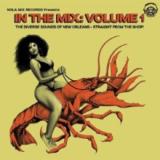
“In The Mix: Volume 1” is the first vinyl compilation of artists that have performed in one of New Orleans most beloved record shops - NOLA Mix Records. Though these aren't live recordings, they capture the spirit and soul of both the shop and the Crescent City itself. You’ll hear everything from Jazz and Funk to Hip-Hop, House, and Latin — all infused with the unmistakable energy of New Orleans.
The artists included on this 10-track compilation are: Flagboy Giz, Troy Sawyer and The Elementz, Water Seed, Santero, ET Deaux, Alfred Banks, Connie Price & The Keystones, A Lovely Triangle, Lisbon Girls, Loucey, Bo Dollis Jr., Hasizzle and more…
On Stock and ready to ship

On October 2 1958, after over 60 years of colonial rule, Guineans voted overwhelmingly for their independence, and Guinea was declared a Republic with Sékou Touré as President. Guinea was the first of West Africa’s Francophone colonies to gain independence. To free Guinea from its colonial legacy, president Touré sought to restore dignity to his nation and give cause for Guineans to take pride in their culture, history and newfound freedom. To achieve this, he instructed his government to implement new cultural policies that were intended to revitalise and celebrate indigenous culture. The focus of these new policies was on music.
In 1961, President Touré launched authenticité, the name of his new cultural policy for Guinea. One of its first acts was to assemble the best Guinean musicians into a new state-sponsored orchestras that were tasked with presenting traditional Guinean music in a new and modern style. All musicians in Guinea’s orchestras were officially designated as members of the public service. During the years of Sékou Touré’s presidency (1958 – 1984), the government’s cultural policy of authenticité was applied strictly to the creative arts. Guinea’s sole political party, the Parti Démocratique de Guinée exercised complete authority over artistic production. The scale of the Guinean government’s commitment and efforts to invigorate its indigenous musical cultures was unmatched in Africa, and it presented a clear contrast to the minimal endeavours undertaken by Guinea’s former colonial rulers.
From 1967 to 1983, Guinea’s government presented selections of songs from the Voix de la Révolution catalogue on its own recording label, Syliphone. These recordings were described as ‘the fruit of the revolution’. Syliphone was revolutionary in many aspects: it was the first recording label to feature traditional African musical instruments such as the kora and balafon within an orchestre setting; it was the first to present the traditional songs of the griots within an orchestre setting; and it was the first government-sponsored recording label of post-colonial Africa. Syliphone represented authenticité in action, and over 750 songs were released by the recording label on 12-inch and 7-inch vinyl discs. All are highly sought after by collectors worldwide.
This is the second of a two-volume release which presents a selection of the best songs from Guinea's Syliphone recording label. This volume focuses on recordings from the 1970s, when Guinea’s authenticité policy had transformed the nation's music through a network of over 30 orchestras, each representing their local region, and each presenting Guinean musical traditions alongside the influences of Cuban music, jazz and funk.
On Stock and ready to ship

By the close of the Sixties, record retailer and jukebox businessman Karl ‘J.J.’ Johnson was firmly established as one of Jamaica’s leading record producers, having released a string of best-selling rock steady and proto-reggae 45s by such noted local acts as Lee ‘Scratch’ Perry, the Rulers, Carl Dawkins, the Kingstonians and the Ethiopians. Early in 1969, Trojan Records released an album containing a dozen of Johnson’s latest recordings in the new reggae style. Entitled Reggae Power, the LP was dominated by regular hit-makers the Ethiopians.
Reggae Power is available as a limited edition of 1000 individually numbered copies on orange coloured vinyl.
On Stock and ready to ship

Channel One production from 1979, conscious roots and dubs for these times.
On Stock and ready to ship

Last Year's Altered Mind Opus, Sapa Inca Delirium, Showcased The Cyclist At His Most Eclectic, Spanning Ayahuasca Break-beat And Rave Jungle Pop, But His Latest Ep Returns To The Uniquely Kinetic And Shredded Mode Of Churning Electronic Rhythm He Both Named And Perfected: 'tape Throb.' Alabaster Thrones Collects Four Of Andrew Morrison's Recent And Most Vibrantly Blasted House Constructs, Tracked At His Home Studio In Birmingham, Uk During 'the Height Of Mania - A Time When I Had No Time.' The Context Translates: This Is Urgent, Accelerating Music, Shifting Gears At High Speed In Dim Twisting Tunnels. The Title Is 'a Deflation Of Grandiosity' Cribbed From Ulysses ('...a Noble Race, Rulers Of The Waves, Who Sit On Thrones Of Alabaster, Silent As The Deathless Gods'), Though Morrison's Meaning Is More Personal: 'it's A Reminder To Level Yourself And Think Of All Those Around You.' A Captivating Capsule Of Ravaged Forward Motion For A Ravaged Forward-moving Age. Mastered By Eric Hanson. Design By Britt Brown.
On Stock and ready to ship

On October 2 1958, after over 60 years of colonial rule, Guineans voted overwhelmingly for their independence, and Guinea was declared a Republic with Sékou Touré as President. Guinea was the first of West Africa’s Francophone colonies to gain independence. To free Guinea from its colonial legacy, president Touré sought to restore dignity to his nation and give cause for Guineans to take pride in their culture, history and newfound freedom. To achieve this, he instructed his government to implement new cultural policies that were intended to revitalise and celebrate indigenous culture. The focus of these new policies was on music.
In 1961, President Touré launched authenticité, the name of his new cultural policy for Guinea. One of its first acts was to assemble the best Guinean musicians into a new state-sponsored orchestras that were tasked with presenting traditional Guinean music in a new and modern style. All musicians in Guinea’s orchestras were officially designated as members of the public service. During the years of Sékou Touré’s presidency (1958 – 1984), the government’s cultural policy of authenticité was applied strictly to the creative arts. Guinea’s sole political party, the Parti Démocratique de Guinée exercised complete authority over artistic production. The scale of the Guinean government’s commitment and efforts to invigorate its indigenous musical cultures was unmatched in Africa, and it presented a clear contrast to the minimal endeavours undertaken by Guinea’s former colonial rulers.
From 1967 to 1983, Guinea’s government presented selections of songs from the Voix de la Révolution catalogue on its own recording label, Syliphone. These recordings were described as ‘the fruit of the revolution’. Syliphone was revolutionary in many aspects: it was the first recording label to feature traditional African musical instruments such as the kora and balafon within an orchestre setting; it was the first to present the traditional songs of the griots within an orchestre setting; and it was the first government-sponsored recording label of post-colonial Africa. Syliphone represented authenticité in action, and over 750 songs were released by the recording label on 12-inch and 7-inch vinyl discs. All are highly sought after by collectors worldwide.
This first volume of a two-volume series presents a selection of the best of early Syliphone recordings. The songs demonstrate not only the essence of Guinea’s authenticité policy and of its subsequent Cultural Revolution, but of a confluence of musical styles from Cuba, jazz, highlife and the diverse influences of Guinea’s cultural groups.
Order now and we will order the item for you at our supplier.

Magnolia Park doesn't do subtle Since 2018, the Orlando quintet has fused punk, rock, pop, hip-hop, and metalcore into a genre- smashing whirlwind that's as thrilling live as it is on record. With viral Halloween Mixtape, their breakout debut Baku's Revenge, and tours alongside Simple Plan and Sum 41, they've cemented their spot as a must- see act at festivals like Welcome To Rockville, When We Were Young , Reading and Leeds.
Magnolia Park, featuring vocalist Joshua Roberts, guitarists Tristan Torres and Freddie Criales, drummer Joe Horsham and bassist Vincent Ernst - are set to unleash their most ambitious effort yet: VAMP, a neo-gothic concept album diving deep into the dark, anime- inspired world of Nocturne Nexus. Think Star Wars meets Dracula, where rulers and rebels clash in a fght for the future.
Recorded with top-tier producers like Andrew Wade and Zakk Cervini, VAMP is a sonic juggernaut - industrial undertones, colossal breakdowns, and vocalist Joshua Roberts' electrifying delivery. Magnolia Park has gone bold, heavy, and unforgettable. This is the album that will leave fans craving more.
expected to be published on 11.04.2025

The seeds of composer Rafael Anton Irisarri’s latest LP were first planted during his 2016 tour in Italy, months before that Autumn’s unexpected presidential election. The linguistic glitch of an innocuous diner in Milan named “il Mito Americano” – meant as “The American Dream” but translated literally to English as “The American Myth” – sparked a series of ideas, both conceptual and musical.
Amid the chaos of 2020, while exploring the stark world of brutalist architecture and inspired by the false fronts of Potemkin villages, a vision started to take shape: FAÇADISMS. Composed over three years, it’s a late capitalist lament of simmering electric despondency.
Irisarri’s obsession with repeating motifs mirrors the cyclical nature of our tumultuous political history. The album’s eight tracks heave and storm like a tempest being drained of its rage. This is the sound of majestic dissipation, of morning afters, fashioned from a mournful haze with cavernous guitars and granular twilight. A euphony of a receding tide as one sifts through the remnants of what remains: dust, delusion, and memory.
Opening with the somber gauze of “Broken Intensification," FAÇADISMS moves fluidly between moments of absence and abandon. Ashen swaths of electronics billow above smoldering embers of melody, guitar, and scattered streaks of processed strings and voice, as on the rapturous doom of “Control Your Soul's Desire for Freedom,” featuring Julia Kent on cello and Hannah Elizabeth Cox on vocals. "The impoverished peoples of the Americas have known all along that 'freedom' is a cruel illusion crafted by the elites, akin to Potemkin's fake villages designed to impress Catherine the Great," Irisarri indicates. "FAÇADISMS illustrates a twisted inversion where the rulers deceive their subjects with illusions of safety, democracy, and free speech to create a grotesque mirage of control over their own lives.”
Elsewhere, Irisarri leans into passages of hushed oblivion (“Hollow,” “Dispersion of Belief”), while ragged drones rumble and disintegrate into wind-battered ambient wreckage. One has the sense that it’s all too late. The hour of fury has passed. The beauty has come and gone. Irisarri’s muse has become the crack in the façade of the unraveling myth.
The record closes with a climax of grand departure. Co-written with Kenyan sound artist KMRU, “Red Moon Tide” surges from flickering elegy to celestial disquiet, roiling waves of hymnal descent, and bristling noise. The effect is unsettling and unmooring: a soundtrack for the soul leaving the body, only to discover a void. It’s the sound of the center not holding, of shared illusions being dissolved in a tunnel of white light.
The cover photograph captures a profound sense of desolation. Taken in the historic shanty town of La Perla, Puerto Rico, where Irisarri spent his childhood, brutal colonial mysteries are lost to time. A skeletal concrete structure decays against an expansive blue horizon. Only the shadow of its shell ripples on the empty sea.
Has the American myth finally run its course?
Order now and we will order the item for you at our supplier.

The seeds of composer Rafael Anton Irisarri’s latest LP were first planted during his 2016 tour in Italy, months before that Autumn’s unexpected presidential election. The linguistic glitch of an innocuous diner in Milan named “il Mito Americano” – meant as “The American Dream” but translated literally to English as “The American Myth” – sparked a series of ideas, both conceptual and musical.
Amid the chaos of 2020, while exploring the stark world of brutalist architecture and inspired by the false fronts of Potemkin villages, a vision started to take shape: FAÇADISMS. Composed over three years, it’s a late capitalist lament of simmering electric despondency.
Irisarri’s obsession with repeating motifs mirrors the cyclical nature of our tumultuous political history. The album’s eight tracks heave and storm like a tempest being drained of its rage. This is the sound of majestic dissipation, of morning afters, fashioned from a mournful haze with cavernous guitars and granular twilight. A euphony of a receding tide as one sifts through the remnants of what remains: dust, delusion, and memory.
Opening with the somber gauze of “Broken Intensification," FAÇADISMS moves fluidly between moments of absence and abandon. Ashen swaths of electronics billow above smoldering embers of melody, guitar, and scattered streaks of processed strings and voice, as on the rapturous doom of “Control Your Soul's Desire for Freedom,” featuring Julia Kent on cello and Hannah Elizabeth Cox on vocals. "The impoverished peoples of the Americas have known all along that 'freedom' is a cruel illusion crafted by the elites, akin to Potemkin's fake villages designed to impress Catherine the Great," Irisarri indicates. "FAÇADISMS illustrates a twisted inversion where the rulers deceive their subjects with illusions of safety, democracy, and free speech to create a grotesque mirage of control over their own lives.”
Elsewhere, Irisarri leans into passages of hushed oblivion (“Hollow,” “Dispersion of Belief”), while ragged drones rumble and disintegrate into wind-battered ambient wreckage. One has the sense that it’s all too late. The hour of fury has passed. The beauty has come and gone. Irisarri’s muse has become the crack in the façade of the unraveling myth.
The record closes with a climax of grand departure. Co-written with Kenyan sound artist KMRU, “Red Moon Tide” surges from flickering elegy to celestial disquiet, roiling waves of hymnal descent, and bristling noise. The effect is unsettling and unmooring: a soundtrack for the soul leaving the body, only to discover a void. It’s the sound of the center not holding, of shared illusions being dissolved in a tunnel of white light.
The cover photograph captures a profound sense of desolation. Taken in the historic shanty town of La Perla, Puerto Rico, where Irisarri spent his childhood, brutal colonial mysteries are lost to time. A skeletal concrete structure decays against an expansive blue horizon. Only the shadow of its shell ripples on the empty sea.
Has the American myth finally run its course?
Order now and we will order the item for you at our supplier.

The seeds of composer Rafael Anton Irisarri’s latest LP were first planted during his 2016 tour in Italy, months before that Autumn’s unexpected presidential election. The linguistic glitch of an innocuous diner in Milan named “il Mito Americano” – meant as “The American Dream” but translated literally to English as “The American Myth” – sparked a series of ideas, both conceptual and musical.
Amid the chaos of 2020, while exploring the stark world of brutalist architecture and inspired by the false fronts of Potemkin villages, a vision started to take shape: FAÇADISMS. Composed over three years, it’s a late capitalist lament of simmering electric despondency.
Irisarri’s obsession with repeating motifs mirrors the cyclical nature of our tumultuous political history. The album’s eight tracks heave and storm like a tempest being drained of its rage. This is the sound of majestic dissipation, of morning afters, fashioned from a mournful haze with cavernous guitars and granular twilight. A euphony of a receding tide as one sifts through the remnants of what remains: dust, delusion, and memory.
Opening with the somber gauze of “Broken Intensification," FAÇADISMS moves fluidly between moments of absence and abandon. Ashen swaths of electronics billow above smoldering embers of melody, guitar, and scattered streaks of processed strings and voice, as on the rapturous doom of “Control Your Soul's Desire for Freedom,” featuring Julia Kent on cello and Hannah Elizabeth Cox on vocals. "The impoverished peoples of the Americas have known all along that 'freedom' is a cruel illusion crafted by the elites, akin to Potemkin's fake villages designed to impress Catherine the Great," Irisarri indicates. "FAÇADISMS illustrates a twisted inversion where the rulers deceive their subjects with illusions of safety, democracy, and free speech to create a grotesque mirage of control over their own lives.”
Elsewhere, Irisarri leans into passages of hushed oblivion (“Hollow,” “Dispersion of Belief”), while ragged drones rumble and disintegrate into wind-battered ambient wreckage. One has the sense that it’s all too late. The hour of fury has passed. The beauty has come and gone. Irisarri’s muse has become the crack in the façade of the unraveling myth.
The record closes with a climax of grand departure. Co-written with Kenyan sound artist KMRU, “Red Moon Tide” surges from flickering elegy to celestial disquiet, roiling waves of hymnal descent, and bristling noise. The effect is unsettling and unmooring: a soundtrack for the soul leaving the body, only to discover a void. It’s the sound of the center not holding, of shared illusions being dissolved in a tunnel of white light.
The cover photograph captures a profound sense of desolation. Taken in the historic shanty town of La Perla, Puerto Rico, where Irisarri spent his childhood, brutal colonial mysteries are lost to time. A skeletal concrete structure decays against an expansive blue horizon. Only the shadow of its shell ripples on the empty sea.
Has the American myth finally run its course?
expected to be published on 08.11.2024
expected to be published on 07.06.2024

The immediate successor to ska, the soulful, melodic sound of rock steady first developed during the long hot Jamaican summer of 1966 and reigned supreme thereafter for two glorious years before finally being superseded by the more energetic style of reggae.
Despite its relatively brief period as the island’s national sound, the rhythms of many of its biggest hits have continued to influence and inspire music-makers to the present day, resulting in renewed interest in the sub-genre among record buyers in recent years.
This superb 2xLP vinyl collection features 24 of the most popular recordings of the rock steady era, including the UK hits, ‘007’, ‘Train To Skaville’ and ‘It Miek’ and The Maytals’ anthemic dance-filler, ’54 46 That’s My Number’.
Pressed on high quality 140gm vinyl and presented in a stylishly designed sleeve, the album not only provides the ideal introduction to this hugely popular and influential sound, but is also a must for established fans of the Jamaican sub-genre, with many of the tracks appearing on vinyl for the first time in decades.
expected to be published on 15.05.2024

Philly's first supergroup returns with a new LP They released four albums. Their joint debut LP with The Krown Rulers from Camden, New Jersey included production by the Ultramagnetic MCs' Kool Keith and Ced Gee, with a style that was bass-heavy with the Roland TR-808 drum machine and E-mu SP-12 sampler, raw "street" lyrics and aggressive scratch DJing. They performed with Public Enemy, Run-D.M.C., Biz Markie, Big Daddy Kane, Rob Base and DJ E-Z Rock, LL Cool J, and many others. They toured the US as the support act for 2Live Crew, and were fan favorites on the groundbreaking Street Beat radio program on Power 99, hosted by Lady B. They were racially mixed and ethnically diverse, and were regular performers at the After Midnight club in North Philly, once the largest Hip-Hop club in America. Their contemporaries included DJ Jazzy Jeff & The Fresh Prince, DJ Cash Money and Marvelous, Cool C, Schoolly D, MC Breeze, and Three Times Dope. Brand new tracks and new version of classic My Part Of Town.
expected to be published on 03.11.2023

High Roller Records, reissue 2023, halloween orange vinyl, ltd 300, lyric sheet printed on uncoated paper, poster, bonus tracks Demo 1983, remastered & restored by Patrick W. Engel at Temple of Disharmony
expected to be published on 28.07.2023

High Roller Records, reissue 2023, black vinyl, ltd 200, lyric sheet printed on uncoated paper, poster, bonus tracks Demo 1983, remastered & restored by Patrick W. Engel at Temple of Disharmony
expected to be published on 28.07.2023

Faith Discipline presents on the same release two of the proposals that best define its identity as a recording project. Two artists, or two bands, or a band and an artist, who coincide in some of their qualities and who also perfectly represent the sound line that the label has pursued since it was launched in 2015. German Army and Group have a lot in common, but their personalities are also unique, as are the objectives that influence their work.
German Army and Group coincide in several ways, both operate from anonymity and their approach to music production is also very similar. The style and sound of German Army and Group is mainly based on extreme and lo-fi treatments, and their music can be categorised as tribal, industrial, ethnic or experimental. However, German Army adds to their style a series of moral principles, as the project is based on a vindictive nature with continuous messages and appeals to the population and the rulers, the health of our planet is in extreme danger and with it the life and dignity of the underprivileged.
Order now and we will order the item for you at our supplier.

Ambassade’s 2019 ‘Duistre Kamers’ album was a huge favourite here at Optimo Music towers so we jumped at the chance to release the follow up; ‘The Fool’.
Following hot in the heels of the acclaimed ‘Young Birds / Palette’ 12” on Optimo Music, ‘The Fool’ is destined to be another Cold Wave, Synth, New Industrial, Experimental …whatever you want to call it …classic. We asked Ambassade to tell us a bit about the album – Born from several years of research and contemplation on the human mind ‘The Fool’ can be understood as a reflection to the dark energies – natural, political, human and otherwise – that are released when it comes to religion, greed and power.
Historically, some rulers have used religion to legitimise their power. We were also inspired by wanting to examine what negative impact religion can have from the fact that it’s always dominated by men.
This was pursued by exploring a wide range of diverse and unusual types of instruments that took on a new approach of tonal expression, with the use of detuned choral and voice samples, droned tape loops and DIY metal and found percussion. It’s from these diverse sources that the process of creativity keeps persistently mutating. This process was focused through the enigmatic electronic and percussion composition from the band which alternates between foreground and background for the haunting vocal performances.
Order now and we will order the item for you at our supplier.

DOUBLE BLACK LP : 2 x 140 G Black Vinyl , Sleeve & 2 x Heavy Weight Printed Inner with UV Gloss Finish
Legendary electronic music duo Orbital return Early 2023 with new album “Optical Delusion”, the Hartnoll brothers first studio album since 2018’s Monster’s Exist. Recorded in Orbital’s Brighton studio, “Optical Delusion” includes contributions from Sleaford Mods, Penelope Isles, Anna B Savage, The Little Pest, Dina Ipavic, Coppe, and perhaps most surprisingly, The Medieval Baebes.
Earlier this year, Orbital celebrated their storied history with “30 Something” which, unlike other Best Of’s, contains reworks, remakes, remixes and re-imaginings of landmark Orbital tracks including “Chime”, “Belfast”, “Halcyon”, “Satan”, and “The Box”
SHORT BIOG:
“A human being experiences himself, his thoughts and feelings as something separate from the rest of humanity – a kind of optical delusion of his consciousness. This delusion is a kind of prison for us, restricting us to our personal desires and to affection for a few persons nearest to us. Our task must be to free ourselves from this prison…”
You many have seen this quote attributed to Albert Einstein on social media, the archetypal Smartest Guy Ever apparently having an out-of-character religious epiphany. It certainly leapt out at Paul Hartnoll of Orbital who spotted it in Michael Pollan’s 2018 book How to Change Your Mind: What the New Science of Psychedelics Teaches Us About Consciousness, Dying, Addiction, Depression and Transcendence.
“As soon as I saw ‘optical delusion’ I thought Oh hey, that’s the album title,” says Paul. “It just seemed to say so much about how people construct their own realities, how we see patterns that aren’t there, how we see what we want to see.
“But it’s actually a misquote. He never quite said that. In the German original what he’s really saying is that human experience is as relative as physics. Wouldn’t it be good if we could accept that, and find a kind of universal theory of everything for the human race? Then you look at everything from history to art to your Twitter feed and you think yeah, that’s what we’re all trying to do all of the time…”
Hence ‘Optical Delusion’, the tenth original Orbital album and the latest in a burst of renewed post-pandemic creativity for two brothers who’ve stayed at the top of their game longer than anyone from the post-1988 Class of Acid House.
Now with ‘Optical Delusion’ the Hartnolls dig deeper into the unquiet psyche of our increasingly surreal and disordered world. Sketched out partly during lockdown but fully recorded in the uncertain After Times, the album summons up conflicting emotions and sometimes beguiling images from years when the science fiction doomsdays that the Hartnolls watched on TV as kids finally came true. There are mesmeric tracks with names like ‘The New Abnormal’ and ‘Requiem For The Pre-Apocalypse’ and ‘Day One’. But there are also straight-up bangers and ethereal cosmic dreams, abstract sound wars and deeply human songs of separation and loss.
And it all starts with a bang. Lead single ‘Dirty Rat’, an outright Fall-meets-Front-242 class rant with vocals by Sleaford Mods mob orator Jason Williamson, harks right back to the Hartnolls’ days of politicised anarcho-squatpunk. It began as a remix swap (Orbital did the Sleafords’ ‘I Don’t Rate You’) and morphed into a comic, brutal, bass-driven harangue not so much against our rulers but at the petty, mean-spirited, frightened, Mail-reading voters who put them there: the people who are “blaming everyone in hospital/blaming everyone at the bottom of the English Channel/blaming everyone who doesn’t look like a fried animal.”
Also key to the album is opening track ‘Ringa Ringa (The Old Pandemic Folk Song)’ which returns to an Orbital truism, that time always becomes a loop. This chugging, cyclical Orbital groove gives way to an unnerving past-meets-present timeslip fit for ‘Sapphire And Steel’ as goth maenads The Mediaeval Baebes materialise to sing ‘Ring O’Roses’ – the innocent nursery rhyme whose roots are in the Black Death.
“I’ve always liked folk music and mediaeval sounds,” says Paul, himself an occasional Morris dancer. “I had the basis of that track and I wanted to spin it off somehow.” Trawling his archives he stumbled on The Mediaeval Baebes’ version of ‘Ring O’Roses’ “and my hackles just went up. I was like, my God, this is the original pandemic folk song.”
?his being Orbital, there are collaborations galore on the album, the roles once played by Alison Goldfrapp, Lady Leshurr or David Gray now filled by new talents. London singer-songwriter Anna B Savage contributes a compellingly fragile, Anohni-like vocal to ‘Home’, in which nature reclaims the scorched and vacant mega-cities. ‘Day One’ is a pulsing techno track featuring the singer Dina Ipavic. Paul got in touch with her after working on a score for a sculpture show of giant robotic installations by his friend Giles Walker during the pandemic. First Paul cut up his own score and Ipavic’s vocals on the track The Crane, which appears on the deluxe version of the album. Then he thought, Why not work with her for real? The result is school of ‘Belfast’, a bassy dreamscape with vocalised clouds billowing above.
The pensive ‘Are You ?live?’ adds to the Orbital product range of existential questions (‘Are We Here?’, ‘Where Is It Going?’) in collaboration Bella Union signings Penelope Isles, AKA brother and sister act Lily and Jack Wolter. “They’re our studio mates, they work upstairs!” says Paul happily. “And they’ve both got amazing voices.”
But Orbital are Orbital and never far from the dancefloor. “Eventually the more abrasive bits came back into the fold…” ‘You Are The Frequency’, first of two tracks to feature mysterious vocalist The Little Pest, surrounds the listener with warped voices ordering you to the dancefloor (Phil: “we wanted the idea that the music is kind of absorbing you”). And the second, the sinister ‘What A Surprise’, traps you in a paranoid electronic hall of mirrors.
In another nod to Orbital’s resurgent past the cover artwork once again comes from fine art painter John Greenwood, creator of fantastical grotesques for the covers of ‘Snivilisation’, ‘In Sides’ and Orbital’s most recent album, 2018’s ‘Monsters Exist’. Orbital had just had a slick Mark Farrow cover for ‘30 Something’ – this is a return to the overripe and bulbous techno-organic constructions that somehow express Orbital’s own uncontrollably fertile sound.
There are gaps in the future that Orbital are desperate to fill too; there will be tours and festivals and rooms and fields full of people. Those long paralysed months when we had little to look forward to but a Zoom DJ set made Paul and Phil appreciate the things that make life worth living.
Order now and we will order the item for you at our supplier.

In the Year of Darkness, 2029, the rulers of this planet devised the ultimate plan. They would reshape the Future by changing the Past. The plan required something that felt no pity. No pain. No fear. Something unstoppable. They created the Terminator.
expected to be published on 17.02.2023

2 x Solid White LP, 5mm spine Sleeve UV Gloss Finish, 2x Heavy Weight Printed Inner Sleeve UV Gloss finish, marketing sticker.
Legendary electronic music duo Orbital return Early 2023 with new album “Optical Delusion”, the Hartnoll brothers first studio album since 2018’s Monster’s Exist. Recorded in Orbital’s Brighton studio, “Optical Delusion” includes contributions from Sleaford Mods, Penelope Isles, Anna B Savage, The Little Pest, Dina Ipavic, Coppe, and perhaps most surprisingly, The Medieval Baebes.
Earlier this year, Orbital celebrated their storied history with “30 Something” which, unlike other Best Of’s, contains reworks, remakes, remixes and re-imaginings of landmark Orbital tracks including “Chime”, “Belfast”, “Halcyon”, “Satan”, and “The Box”
SHORT BIOG:
“A human being experiences himself, his thoughts and feelings as something separate from the rest of humanity – a kind of optical delusion of his consciousness. This delusion is a kind of prison for us, restricting us to our personal desires and to affection for a few persons nearest to us. Our task must be to free ourselves from this prison…”
You many have seen this quote attributed to Albert Einstein on social media, the archetypal Smartest Guy Ever apparently having an out-of-character religious epiphany. It certainly leapt out at Paul Hartnoll of Orbital who spotted it in Michael Pollan’s 2018 book How to Change Your Mind: What the New Science of Psychedelics Teaches Us About Consciousness, Dying, Addiction, Depression and Transcendence.
“As soon as I saw ‘optical delusion’ I thought Oh hey, that’s the album title,” says Paul. “It just seemed to say so much about how people construct their own realities, how we see patterns that aren’t there, how we see what we want to see.
“But it’s actually a misquote. He never quite said that. In the German original what he’s really saying is that human experience is as relative as physics. Wouldn’t it be good if we could accept that, and find a kind of universal theory of everything for the human race? Then you look at everything from history to art to your Twitter feed and you think yeah, that’s what we’re all trying to do all of the time…”
Hence ‘Optical Delusion’, the tenth original Orbital album and the latest in a burst of renewed post-pandemic creativity for two brothers who’ve stayed at the top of their game longer than anyone from the post-1988 Class of Acid House.
Now with ‘Optical Delusion’ the Hartnolls dig deeper into the unquiet psyche of our increasingly surreal and disordered world. Sketched out partly during lockdown but fully recorded in the uncertain After Times, the album summons up conflicting emotions and sometimes beguiling images from years when the science fiction doomsdays that the Hartnolls watched on TV as kids finally came true. There are mesmeric tracks with names like ‘The New Abnormal’ and ‘Requiem For The Pre-Apocalypse’ and ‘Day One’. But there are also straight-up bangers and ethereal cosmic dreams, abstract sound wars and deeply human songs of separation and loss.
And it all starts with a bang. Lead single ‘Dirty Rat’, an outright Fall-meets-Front-242 class rant with vocals by Sleaford Mods mob orator Jason Williamson, harks right back to the Hartnolls’ days of politicised anarcho-squatpunk. It began as a remix swap (Orbital did the Sleafords’ ‘I Don’t Rate You’) and morphed into a comic, brutal, bass-driven harangue not so much against our rulers but at the petty, mean-spirited, frightened, Mail-reading voters who put them there: the people who are “blaming everyone in hospital/blaming everyone at the bottom of the English Channel/blaming everyone who doesn’t look like a fried animal.”
Also key to the album is opening track ‘Ringa Ringa (The Old Pandemic Folk Song)’ which returns to an Orbital truism, that time always becomes a loop. This chugging, cyclical Orbital groove gives way to an unnerving past-meets-present timeslip fit for ‘Sapphire And Steel’ as goth maenads The Mediaeval Baebes materialise to sing ‘Ring O’Roses’ – the innocent nursery rhyme whose roots are in the Black Death.
“I’ve always liked folk music and mediaeval sounds,” says Paul, himself an occasional Morris dancer. “I had the basis of that track and I wanted to spin it off somehow.” Trawling his archives he stumbled on The Mediaeval Baebes’ version of ‘Ring O’Roses’ “and my hackles just went up. I was like, my God, this is the original pandemic folk song.”
?his being Orbital, there are collaborations galore on the album, the roles once played by Alison Goldfrapp, Lady Leshurr or David Gray now filled by new talents. London singer-songwriter Anna B Savage contributes a compellingly fragile, Anohni-like vocal to ‘Home’, in which nature reclaims the scorched and vacant mega-cities. ‘Day One’ is a pulsing techno track featuring the singer Dina Ipavic. Paul got in touch with her after working on a score for a sculpture show of giant robotic installations by his friend Giles Walker during the pandemic. First Paul cut up his own score and Ipavic’s vocals on the track The Crane, which appears on the deluxe version of the album. Then he thought, Why not work with her for real? The result is school of ‘Belfast’, a bassy dreamscape with vocalised clouds billowing above.
The pensive ‘Are You ?live?’ adds to the Orbital product range of existential questions (‘Are We Here?’, ‘Where Is It Going?’) in collaboration Bella Union signings Penelope Isles, AKA brother and sister act Lily and Jack Wolter. “They’re our studio mates, they work upstairs!” says Paul happily. “And they’ve both got amazing voices.”
But Orbital are Orbital and never far from the dancefloor. “Eventually the more abrasive bits came back into the fold…” ‘You Are The Frequency’, first of two tracks to feature mysterious vocalist The Little Pest, surrounds the listener with warped voices ordering you to the dancefloor (Phil: “we wanted the idea that the music is kind of absorbing you”). And the second, the sinister ‘What A Surprise’, traps you in a paranoid electronic hall of mirrors.
In another nod to Orbital’s resurgent past the cover artwork once again comes from fine art painter John Greenwood, creator of fantastical grotesques for the covers of ‘Snivilisation’, ‘In Sides’ and Orbital’s most recent album, 2018’s ‘Monsters Exist’. Orbital had just had a slick Mark Farrow cover for ‘30 Something’ – this is a return to the overripe and bulbous techno-organic constructions that somehow express Orbital’s own uncontrollably fertile sound.
There are gaps in the future that Orbital are desperate to fill too; there will be tours and festivals and rooms and fields full of people. Those long paralysed months when we had little to look forward to but a Zoom DJ set made Paul and Phil appreciate the things that make life worth living.
Order now and we will order the item for you at our supplier.

By the close of the Sixties, record retailer and jukebox businessman Karl ‘J.J.’ Johnson was firmly established as one of Jamaica’s leading record producers, having released a string of best-selling rock steady and proto-reggae 45s by such noted local acts as Lee ‘Scratch’ Perry, the Rulers, Carl Dawkins, the Kingstonians and the Ethiopians. Early in 1969, Trojan Records released an album containing a dozen of Johnson’s latest recordings in the new reggae style. Entitled Reggae Power, the LP was dominated by regular hit-makers the Ethiopians.
Reggae Power is available as a limited edition of 1000 individually numbered copies on orange coloured vinyl.
Order now and we will order the item for you at our supplier.

Right On Time - Trojan Rock Steady is the 2nd part of the exclusive Music On Vinyl’s Trojan compilation series, which celebrates the best works from the legendary reggae label Trojan Records. It was compiled by Laurence Cane-Honeysett, who also wrote the linernotes. Some of Trojan’s finest are featured on this compilation; as there are The Gladiators, The Melodians, The Gladiators, Ken Boothe a.o.
Order now and we will order the item for you at our supplier.

On-U Sound announce latest volume in the Pay It All Back series with unreleased Lee “Scratch” Perry track, plus 40th anniversary live concerts
On-U Sound is proud to present the latest volume in the much-loved and collectable series of On-U Sound label samplers, packed with exclusives, alternate mixes and previews of upcoming releases. Includes unreleased tracks from Lee “Scratch” Perry, Tackhead, African Head Charge, Mark Stewart, Creation Rebel, Andy Fairley and more.
The first music to be shared from the album is an unreleased track with the late, great Lee “Scratch” Perry - “Many Names Of God” is an outtake from the sessions that produced the Rainford and Heavy Rain albums and also features vocals from Nightmares On Wax collaborator LSK aka Leigh Kenny.
The release of the new compilation also coincides with a very special concert taking place at the Forum in London, originally scheduled for 2020 but delayed because of the pandemic. Celebrating 40 years of the On-U Sound label, it brings together musicians and artists from at least four different continents for a unique evening with Horace Andy, Tackhead, African Head Charge, Creation Rebel and most of the other musicians featured on the album.
Label boss Adrian Sherwood comments: “As usual with the Pay It All Back series, the intention is to promote our upcoming releases and productions. Also on offer are previously unreleased gems, versions of tracks exclusive to this release and more from artists that we’re keen to promote. Sadly in the last year we have lost so many music giants from amongst us, including Lee “Scratch” Perry, George Oban and John Sharpe. Lee Perry laughed at death. It was to him just a part of life and another beginning...I trust Lee. I’m very proud of this album, it goes out to all On-U Crew, our missing and irreplaceable friends.”
Please note that the Rita Morar and Mark Stewart tracks are vinyl only, are not currently available digitally, and therefore are not accessible via the download card.
- Spec: Limited edition transparent blue vinyl in 3mm colour printed sleeve with printed inner , full sleevenotes, fold-out 24” x 12” Pay It All Back concert poster and download card
Bonus tracks accessible via DL card:
1. Tackhead ft. MAD 45 - I Don’t Wanna Work A Fake Job
2. Sherwood & Pinch - Excessive Drinking
3. Ital Horns - Metropolis
4. LSK - Money Masters
5. Andy Fairley - Deranged Man
Order now and we will order the item for you at our supplier.

The highly sought after “I’ll Make It Up” was previously released as B side to One Dollar Of Music, an instrumental also by Carl Dawkins on Duke DU-3 in 1968.
This heavy weight early Reggay beauty is a very special tune with its high pitch vocals, crashing drums, shuffling organ and syncopated rhythm,
all this with subtle psychedelic undertones, Jamaican way of course. This is a truly outstanding track, expensive and nearly impossible to find.
A release on 7inch vinyl was indeed much needed - a must!
On the B side, the brilliant “Hot And Sticky” was previously released on Rio R138 in 1967 as B side to The Rulers “Be Mine”
and was also produced by the Jamaican reggae producer, J.J. Johnson.
The aptly named “Hot And Sticky” is a heavy, raw, relentless Rocksteady track.
It is Rocksteady at its best and very representative of Carl’s production at that time. Great rack.
This rare track has never been repressed on 7” vinyl and is a perfect B side for this killer double sider.
expected to be published on 17.06.2022

expected to be published on 21.02.2022

Tougher Than Tough – Trojan Rude Boy Sounds is an exclusive release from Music On Vinyl’s Trojan compilation series, which celebrates the best works from the legendary reggae label Trojan Records. It was compiled by Laurence Cane-Honeysett, who also wrote the linernotes. Some of the artists featured on this compilation include Stranger Cole, The Pioneers and Alton Ellis. 2000 individually numbered copies on orange vinyl. The package also includes exclusive Trojan Records and Music On Vinyl coaster.
expected to be published on 18.02.2022

Akhnaten is the third in the composer Philip Glass’ trilogy of operas about men who changed the world in which they lived through the power of their ideas. Akhnaten‘s subject is religion. Its title was derived from the Egyptian pharaoh Akhnaten, who was the first monotheist in recorded story. His substitution of a one-god religion for the multi-god worship when he came to power ultimately resulted in his exclusion from lists of rulers compiled by later pharaohs, and his legacy became all but lost to history until the late 19th century. The opera describes the rise, reign, and fall of Akhnaten in a series of tableaus.
expected to be published on 23.07.2021

“Sex Miami”. Let those words melt into your soul like creamy, creamy pink ice cream in on your tongue. This album by Deux Control is a smooth genre crossover paradise of 808s, Yamaha keyboards and deep mesmerizing vocals side by side with more hardcore synth elements found in bands like DAF or Nitzer Ebb.
Deux control’s sound is a mix your favourite soundtracks of electronic music with a large portion of body synth. It is sexy, cool, and a bit frightening. The music on “Sex Miami” is familiar and goes out to all listeners of all ages but especially to those in the French/Italian disco fandom out there. This is the kind of music an eighties international business traveller would listen when kicking back and clubbing after landing a fat new contract.
Deux control is the act that got bumped from the Miami Vice soundtrack last minute because being a bit to edgy for mainstream USA. They are the group that Gorigio Moroder tried to copy when he wanted to update his sound. Deux Control are the new rulers of psychedelic electric body-disco!
Order now and we will order the item for you at our supplier.

In 2018 Far Out Recordings signed a record deal with Brooklyn born, nomadic producer Jneiro Jarel. Having just put the finishing touches to the recordings, Jarel suffered an ischemic stroke while living and working in Costa Rica and his wife Indigo was forced to set up a crowd fund to cover special medical transport back to the states to receive treatment. The release was put on hold, but thanks to the generosity of friends and fans around the world, Jarel was able to get the care he needed and is now on the long road to recovery. We’re overjoyed to finally announce that Jneiro Jarel’s After A Thousand Years is now set for an October 2020 release.
Throughout a career that has spanned over twenty years and seen collaborations with MF DOOM, Thom Yorke, Damon Albarn, BadBadNotGood, Portishead’s Beth Gibbons, Kimbra and Khujo Goodie (Dungeon Family), Jneiro Jarel’s consistently distinctive, forward thinking productions, as well as his love for the music of Brazil, made his partnership with Far Out a perfect fit.
Recorded between New York, New Orleans, Miami and Costa Rica, After A Thousand Years features legendary multi-instrumentalist Bill Summers, famed for his work with Herbie Hancock, Quincy Jones and Eddie Henderson. The album also features Malawian-American guitarist Masauko Chipembere who has worked with the likes of RZA from Wu-Tang Clan and Ladybug Mecca from Digable Planets.
For Jarel, After A Thousand Years is “a culmination of the longstanding musical contributions of the African diaspora.” Permeating the Brazilian music and Latin jazz Jarel has loved and drawn inspiration from, as well as the stateside jazz, soul and funk Jarel grew up around, the influence of Africa and its musical history, on both North and South America, is key to the album’s sound.
On lead single “Banana Peel”, Jarel’s outernational perspective makes for a track that is almost impossible to place geographically: you can hear the swing of Jarel’s native New Orleans jazz, the vibrance of Costa Rican rainforests as well as the influence of Jarel’s vast collection of Brazilian records. “Viberian Waves 1&2” is equally nonconformist, morphing from funky baroque-flavoured instrumental hip hop into a bossa inspired, percussive jam.
Taking its inspiration from the biblical prophecies found in the books of Isaiah, Daniel, and Revelation, foretelling the fully realized, physical and spiritual restoration of the earth and mankind after the thousand year reign of the Messianic Kingdom, After A Thousand Years contemplates and celebrates a world where everlasting love, peace, and harmony abound under a sovereign, divine rulership.
After A Thousand Years will be released on Vinyl LP and CD on the 30th October 2020 via Far Out Recordings.
FEEDBACK
“great release. Really like this!” Antal (Rush Hour)
“Banana Peel is exactly what we need now. Visionary Jneiro Jerel at his finest channelling healing sounds and rhythms from Mother Earth. A much-anticipated lens through Jneiro’s third eye. Thank you!” King Britt
“Sounding real good!” Errol Anderson (Touching Bass)
“I love it!!!!!!!” Raffaele Costantino (RAI RADIO 2)
“Sounds great. Congratulations. Will play it on my radio shows.” Batida
“Will pitch album to my editors” Dean Van Nguyen
“Please send me the full album once it's finished.” Francisco Noronha (Publico PT)
“Beautiful man. So happy that he's ok” King Hippo (WLPN-LP / Worldwide FM)
“cracking tune. already lined up to add to playlist. might go into radio show too.. love it” Oli Brunetti (Collectivo Futuro / Olindo Records)
“Amazing! Ive not heard anything from JJ for a long time but a welcome return, this is a cracking track. Looking forward to hearing more new material.” Mickey Jukes (1BTN FM)
“Very vibrant, fresh release! It gets better every time I am listening to it.” Shantisan (Superfly FM Vienna)
“This is a pretty special track , unique sound but very accessible , like it a lot and will play in my show Look forward to hearing the LP” Andy Wilson (Ibiza Sonica Radio)
“So good to hear Jneiro again, loving this cut. Thanks!” Chris Knight (Astrojazz)
“sublime !!!! will definitely play !!!” Mark Milz (Radio Corax)
“I-Robots approved!” Thanks for sharing...” I-Robots
Order now and we will order the item for you at our supplier.

repress
2LP 140G VINYL + 12 PAGE BOOKLET.
"Space Echo - The mystery behind the "Cosmic Sound" of Cabo Verde finally revealed!" is the 20th release by the fabulous Analog Africa Label.
In the spring of 1968 a cargo ship was preparing to leave the port of Baltimore with an important shipment of musical instruments. Its final destination was Rio De Janeiro, where the EMSE Exhibition (Exposição Mundial Do Son Eletrônico) was going to be held.
It was the first expo of its kind to take place in the Southern Hemisphere and many of the leading companies in were all eager to present their newest synthesisers and other gadgets to a growing and promising South American market, spearheaded by Brazil and Colombia.
The ship with the goods set sail on the 20th of March on a calm morning and mysteriously disappeared from the radar on the very same day.
One can only imagine the surprise of the villagers of Cachaço, on the Sao Nicolau island of Cabo Verde, when a few months later they woke up and found a ship stranded in their fields, in the middle of nowhere, 8 km from any coastline.
After consulting with the village elders, the locals had decided to open the containers to see what was inside - however gossip as scintillating as this travels fast and colonial police had already arrived and secured the area.
Portuguese scientists and physicians were ordered to the scene and after weeks of thorough studies and research, it was concluded that the ship had fallen from the sky. One of the less plausible theories was that it might have fallen from a Russian military air carrier. The locals joked that again the government had wasted their tax money on a useless exercise, as a simple look at the crater generated by the impact could explain the phenomena. "No need for Portuguese rocket scientists to explain this!" they laughed.
What the villagers didn't know, was that traces of cosmic particles were discovered on the boat. The bow of the ship showed traces of extreme heat, very similar to traces found on meteors, suggesting that the ship had penetrated the hemisphere at high speed. That theory also didn't make sense as such an impact would have reduced the ship to dust. Mystery permeated the event.
Finally, a team of welders arrived to open the containers and the whole village waited impatiently.
The atmosphere, which had been filled with joy and excitement, quickly gave way to astonishment. Hundreds of boxes conjured, all containing keyboards and other instruments which they had never seen before: and all useless in an area devoid of electricity. Disappointment was palpable. The goods were temporarily stored in the local church and the women of the village had insisted a solution be found before Sunday mass.
It is said that charismatic anti-colonial leader Amílcar Cabral had ordered for the instruments to be distributed equally in places that had access to electricity, which placed them mainly in schools.
This distribution was best thing that could have happened - keyboards found fertile grounds in the hands of curious children, born with an innate sense of rhythm who picked up the ready-to-use instruments. This in turn facilitated the modernisation of local rhythms such as Mornas, Coladeras and the highly danceable music style called Funaná, which had been banned by the Portuguese colonial rulers until 1975 due to its sensuality!
The observation was made that the children who came into contact with the instruments found on the ship inherited prodigious capabilities to understand music and learn instruments. One of them was the musical genius Paulino Vieira, who by the end of the 70s would become the country´s most important music arranger. 8 out of the 15 songs presented in this compilation had been recorded with the backing of the band Voz de Cabo Verde, lead by Paulino Vieira, the mastermind behind the creation and promulgation of what is known today as "The Cosmic Sound of Cabo Verde".
The field of electronic music were involved. Rhodes, Moog, Farfisa, Hammond and Korg, just to name a few.
Order now and we will order the item for you at our supplier.

VENT is when you say all is fine with ash in your mouth, is when the surface is all, is when the years lead nowhere, is when effort is loss, is when the rulers have defeated themselves, is when you scream with your smile, is when the surface absorbs the space and when you do not say it, is when the body contradicts the surface, is when it is said, is when the dialectics of the voice has been defeated by the synthesis. Wallis is when Tolga Baklacioglu presents two experimental cuts, and two cuts of abrasive stripped down techno.
Order now and we will order the item for you at our supplier.

In 1997, a quiet, unassuming man of 59 years old named Victor Tavares - better know as Bitori - walks into a studio for the very first time to record a masterpiece which many Cabo Verdean consider to be the best Funaná album ever made. Bitori´s musical adventure had begun long before this point. It was 1954 when he embarked on a journey across the seas to the island of Sao Tomé & Principe. The young man´s hope was to return to Cabo Verde with an accordion.
Following two years of hard labour Bitori had succeeded in saving enough money to acquire what was to become his most valued possession, his cherished instrument. The two month journey back to Santiago, his island of birth, proved time enough to master it. Self taught, Bitori developed his own style, an infectious blaze, that quickly caught the attention of the older generation. Before long Bitori was being asked to share his musical talents, igniting the local festivities around Praia with his music.
But not everybody welcomed the rural accordion-based sound. Perceived as a symbol of the struggle for Cape Verdean independence and frowned upon as music of uneducated peasants, Funaná was prohibited by the Portuguese colonial rulers. Performing it in public or in urban centres had serious consequences - often jail time and torture awaited musicians that were caught in the act'. In light of such persecution the genre of Funaná began to slowly disappear.
In 1975 Cabo Verde achieved independence from Portuguese colonial rule. Along with Cabo Verde's independence came a lifting of the ban placed on Funaná. The musical repercussions in Cabo Verde were plenty - many upcoming artists embraced Funaná, translating and adapting its musical form in new ways. It was not to be until the mid-1990's, however, that Funaná in its traditional form was actually recorded. It was a young singer from Tarafal, Chando Graciosa, who was to play a key role in this event. Upon hearing Bitori, Graciosa immediately felt drawn to Bitori's unique playing style - a raw and passionate sound accompanied by honest lyrics that reflected the harsh reality of the Cabo Verdean working class. He eagerly approached Bitori suggesting they join forces and travel overseas with the objective of taking Funaná beyond its rural roots. The two of them, with others in tow, achieved their goal and travelled to Europe, introducing a receptive European audience to the vibrant energy of Funaná.
Eventually Bitori returned to his beloved Cabo Verde. Graciosa opted to settle in Rotterdam in order to pursue his career - he vowed, however, to bring Bitori across to Holland at a later date to record an album.
In 1997 the time was ripe to immortalise the sound Bitori had shaped over a time span of four decades. Built around a formidable rhythm section, formed of drummer Grace Evora and bass player Danilo Tavares, "Bitori Nha Bibinha" was recorded. The recording catapulted Chando Graciosa to stardom, making him Cabo Verde´s No.1 interpreter of Funaná.
The success in Cabo Verde was phenomenal and Funaná rapidly gained the recognition it deserved, especially in urban dance clubs. Bitori´s songs quickly became standards - classics known and loved throughout the country. The musical success, however, was solely limited to the Cabo Verdean islands - until now!
Analog Africa is proud to contribute to the worldwide promotion of Funaná - the once forbidden sound of the Cabo Verde archipelago - by releasing a worldwide re-issue of Bitori and Chando Graciosa´s legendary recording.
The release will herald Bitori´s first European tour taking place during the summer of 2016. Watch this space! And listen!
Order now and we will order the item for you at our supplier.

Order now and we will order the item for you at our supplier.
