Поиск:the rhythm method

Стили
Все
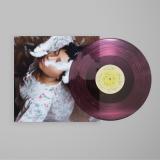
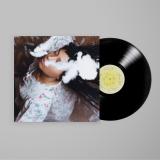
THE RHYTHM METHOD - PEACHY LP

The Rhythm Method

PEACHY LP

12inchMOSHILP121
Moshi Moshi
08.03.2024

The Rhythm Method veröffentlichten 2019 ihr Debütalbum und kündigen heute, vier Jahre später, den Nachfolger Peachy an, der am 8. März auf Moshi Moshi Records erscheint. Publikationen wie The Guardian, Dazed, Dork, i-D, Loud + Quiet haben die Band schon früh gelobt und sie mit Künstlern wie Pet Shop Boys und Squeeze verglichen. The Rhythm Method kehren nun mit einem völlig anderen Sound zurück, und, wie sie sagen, mit einem "zusammenhängenden Meisterwerk". Das neue Album, das von Bill Ryder-Jones produziert wurde und an dem auch Aoife Power von Whenyoung mitwirkt, ist das erste Mal, dass sie Musik in einem richtigen Studio aufgenommen haben. Es ist von dem Wunsch beeinflusst, das eigene Potenzial voll auszuschöpfen und sicherzustellen, „dass man es auf dem Sterbebett nicht bereut", so The Rhythm Method, die von Mike Skinner bis Michaela Coel gefeiert werden.


Über die neue Single „Have A Go Heroes“ sagt das Duo:

"Nach einem Gig in Hull im Jahr 2018 hatte Rowan einen psychotischen Anfall. Pech gehabt. Er machte (entgegen allen medizinischen Ratschlägen) mit einer kompletten UK-Tournee weiter. 'Have A Go Heroes' ist das Ergebnis davon.

Es ist eine Collage der britischen Regionallandschaft: Tankstellen, einsame Hügel, euphorische und mörderische Gedanken in einem."

Сделать предзаказ08.03.2024

он должен быть опубликован на 08.03.2024


Последний логин: 2026 г. назад
Sokratis Votskos Quartet - Pajko, Fire In The Forest On The Mountain LP

A few words for the album
Moment’s Aeternity:
a 12/8 composition celebrating the raw power of the “moment”, marked by whirling improvised moments between drums, bass clarinet and Harris P’s Armenian duduk.

Pajko, fire in the forest on the mountain:
in Sokratis own words: “I have a really vivid memory as a child. I was staring at the Djena mountain from my window in Archangellos which sits on the Pajko mountain. A little beam of light shone far in the horizon; it was a fire that in my little eyes looked as if the giants of Almopia were trying to communicate with each other using phryktoria (a way of contacting through fire in Ancient Greece).”

Footprints of some Giant Steps:
While the classic compositions of two true Jazz Giants- Wayne Shorter and John Coltrane- are certainly different, they do both connect in a mystical way. Rearranged in 5/8 combining half of each melody and half of each one’s chord progression, keeping the form of the piece for improvisation, still in 5.

Oson Zeis Fainou (Seikilo’s Epitaph):
found in a tomb stone in the Northeast of Greece, this is the only melody saved from the ancient times. It is accompanied by lyrics contemplating the meaning of life:
Ὅσον ζῇς φαίνου
μηδὲν ὅλως σὺ λυποῦ πρὸς ὀλίγον ἐστὶ τὸ ζῆν τὸ τέλος ὁ xρόνος ἀπαιτεῖ.
‘’While you live, shine
don’t feel blue for anything because our life is short and time demands an end.’’

Here is to Oghene K:
’’Hey man, where is the groove?’’, he would say, just to trigger another wave of inspiration for Sokratis. Oghene was a true force of nature, a well of kindness, a masterful artist that left this world too early. This one is for him.

Balkan Riff (for Milcho Leviev):
Milcho Leviev (1936-2019), was a long-time friend and collaborator and a true inspiration for expression, creativity and colorfulness. Expressing the deep sentiments evoked by the Balkan sound and history, this is a sorrowful dialogue between bass clarinet and contrabass.

Spirits of Djena:
one of the most esoteric and personal moments of the album. Composed and recorded during the challenging times of the COVID-era, you can hear the baritone and tenor saxophone firmly grounded on a crispy, hypnotizing contrabass groove.

Sokratis Votskos Quartet
Kostas Anastasiadis / Giorgos Klountzos - Chrysidis: Drums
Leandros Pasias: Piano
Vaggelis Vrachnos: Contrabass
Sokratis Votskos: Soprano Saxophone, Bass Clarinet and Compositions


Sokratis Votskos is a jazz saxophonist, clarinetist, composer, educator, and bandleader from Greece. Deeply invested in unearthing the folk sounds and heritage music of Greece and Eastern Europe, he weaves these into modern jazz compositions though the use of melodies, polyrhythms, and his reedy, timeless tone. He leads the Sokratis Votskos Quartet, he is one half of Kolida Babo and member of the Reggetiko Project. A highly regarded sideman and ensemble player, he has worked extensively with renowned jazz musicians with several highly acclaimed releases (MiC, Jazzman, Walt Disney and now Fair Weather Friends Records).

He has performed his music in numerous venues and festivals worldwide from Vinterjazz in Copenhagen, to the EFG London Jazz Festival where he performed at the legendary Ronnie Scott’s alongside Greg Foat.

He is also an archaeoacoustics researcher and enthusiast, having completed his Master studies on the field of ancient ritualistic caves of Greece research.

Leandros Pasias was born in Thessaloniki, Greece. At age 10 was introduced to piano, continuing his studies at the Modern Conservatory of Thessaloniki and later at the Conservatorium van Amsterdam in the department of jazz piano.Ηe holds a classical harmony diploma and a BA at the Department of Music Studies at the Aristotle University of Thessaloniki. In 2020 he received jazz improvisation lessons from Aaron Parks.

With a series of appearances in multiple international jazz festivals, Leandros has collaborated with a wide range of musicians from Nicolas Masson and James Wylie to Marina Osk, Ivo Papasov and Haris Lambrakis, among others.

A member of the Yako Trio, he released “OdesSea” on Fair Weather Friends Records (2021).

Vangelis Vrachnos was born in Thessaloniki, Greece, in 1989. While he started playing the bass at the age of 12, alongside his brother, his studies would commence a few years later. Introduced to double bass at the age of 23, he undertook jazz double bass studies at the Codarts Αcademy of Rotterdam. He has participated in several festivals such as the Technopolis and Odessa international jazz festivals. Since returning to his hometown, in 2015, he has been a founding member of Mordana and Yako Trio and has collaborated with a series of musicians like James Wyllie, Sokrates Votskos and Dimitis Agelakis, among others.

Kostas Anastasiadis is a tireless researcher, that has been diligently studying Tradition and its evolution, creating a fresh amalgam of sound moods. His mature improvisational virtuosity highlights a uniquely individual artistic expression and was recognized with the ̈Unique Individual Stylist" award by the PIT (Percussion Institute of Technology) in Los Angeles, California. He has been associated with various ensembles that have garnered significant interest in the global music scene. As an educator, he is the founder of "The Harmony of Rhythm" musical method, which aims to explore and establish the elements that constitute the concept of rhythm.

Giorgos Klountzos-Chrysidis was born in Thessaloniki in 1991. Following studies at the Modern Conservatory of Thessaloniki, he moved to France and the Conservatoire de Nice. With performances at well-known festivals like Nice Jazz Festival, Nuits du Sud and Jazz à Vienne, he had the opportunity to meet the American drummer Leon Parker, who encouraged him to move to Paris, where he spent the next two years under his tutoring and guidance.

In 2016, came a defining moment in his career as he traveled to New York for the first time. He participated in the quartet of saxophonist Diego Rivera for a series of performances and attended lessons by Rodney Whitaker and Randy "Uncle G" Gelispie at Michigan's State University.

Collaborations include Xavier Davis, Ricky Ford, Nicolas Masson, Diego Rivera, Craig Bailey, Baptiste Herbin, Marc Abrams, Pantelis Stoikos, Antonis Anissegos, David Lynch, Ziad Rajab and Ivo Papasov, among others.

Сделать предзаказ27.03.2026

он должен быть опубликован на 27.03.2026


Последний логин: 2026 г. назад
Marion Brown - Awofofora

First time reissue of JP / US free jazz rarity.

The 1970s were Marion Brown’s most searching decade, a period during which he sought to move beyond the free jazz of the previous era and find more personal approaches to structuring improvisation and composition. After leaving New York for Europe in 1967, Brown began reshaping his music into what he described as “a more deliberate kind of music that had more structure to it,” pacing it so that moods and modes could develop over time. Albums such as In Sommerhausen, Afternoon of a Georgia Faun, Geechee Recollections, and Sweet Earth Flying trace this evolution: rhythmic structures moved to the foreground, harmony receded, and composition became a matter of orchestrating interlocking rhythmic parts as one would polyphonic lines.

Released in 1976, Awofofora is an overlooked but crucial entry in that sequence. At the time, its use of funk and reggae beats, electric guitars, and grooves drawn from contemporary Black popular music led some to misread it as a jazz-rock detour. In retrospect, it is entirely consistent with Brown’s methodology. As he admired in the Art Ensemble of Chicago, the stimulus comes from within the community. Here Brown filters Afro-Caribbean rhythms and funk through his own sensibility, abstracting their structural qualities rather than adopting surface style.

“La Placita,” making its first recorded appearance, layers distinct rhythmic phrases in a manner reminiscent of African drum ensembles, over which Brown and trumpeter Ambrose Jackson spin extended improvisations. The standard “Flamingo” is reshaped through diasporic rhythm and lyrical soloing, while “Pepi’s Tempo” and “Mangoes” harness crisp funk and reggae grooves to generate what Brown called a “manifestation of community” through collective improvisation. Even the overdubbed solo feature “And Then They Danced” reflects his structural thinking, ingeniously re-voicing a duet composition for two alto saxophones performed by one player.

This was the only recording by a short-lived band that briefly polarized audiences during festival appearances in 1976. Yet Brown consistently sought unity across change: different sounds, same principles — rhythm as structure, melody as architecture, collective improvisation, and above all, the primacy of tone. Awofofora stands not as a departure, but as a vivid synthesis of the elements he had been refining since the late 1960s, its grooves and golden alto lines conveying a sound drawn, in his words, “from life and from the world of experience.”

Сделать предзаказ10.04.2026

он должен быть опубликован на 10.04.2026


Последний логин: 2026 г. назад
Hoavi - Architectonics LP

Hoavi

Architectonics LP

12inchPEAK28
Peak Oil
10.04.2026
  • 1: Wayang
  • 3: After A Day Of Silence
  • 4: Song Of The Forgotten
  • 5: Shadows Of The Limits
  • 6: Keris
  • 7: Blue Krait
  • 8: Colossus
  • 9: After The Cyclone
  • 10: Contradiction
  • 11: Thousand Cycle
 
2

Returning to Peak Oil for a second expedition, veteran Russian producer Kirill Vasin, aka Hoavi, explores an untrodden path on 'architectonics', drawing from his lifelong appreciation of Indonesian gamelan musics to mastermind a rhythmelodic hybrid sound that's sinuous, subtle and remarkably dubby. Over the last three and a half years, Vasin has used the music's methodologies and rhythmic forms to evolve his existing processes and signatures and transform his musical philosophy. To start the exercise, he knew he needed percussion, so used his phone and a contact microphone to pick up nearby sounds, drumming on various tables, railings, empty glasses and other objects to create a library of textured, tonally complex percussive sounds. But the work wasn't done yet - in fact, it was just the beginning of a long process of trial and error: Vasin created two full versions of the album before 'architectonics' was finished.

There are still echoes of the chrome-plated sci-fi atmospheres and complex, stuttering beatscapes that underpinned 2021's 'Invariant', but 'architectonics' asks very different questions, prompting fresher, more innovative responses. Leaning on his bank of organic percussive sounds, Vasin is able to concoct a tactile aura that he fills with eerie fluctuating repetitions that shift subtly, sometimes imperceptibly. The cavernous reverb and booming bass that supported his last few albums is still present, now employed as scaffolding for different architectures: skittering sequences and ornamented overlapping phrases that owe as much to Steve Reich's hallowed minimalist compositions as they do to Indonesian traditional forms. Lulling, almost hypnotic tessellations appear like fractals on the polished surfaces, morphing from jazz to techno and dub while retaining gamelan's haunting xenharmonic resonances and Vasin's concept becomes crystal clear. 'architectonics' isn't an attempt to make a gamelan album, it's Vasin's way of developing his own artistic process by looking far beyond the traditional boundaries of electronic music.

Сделать предзаказ10.04.2026

он должен быть опубликован на 10.04.2026


Последний логин: 2026 г. назад
Christina Kubisch - TUNING

Christina Kubisch

TUNING

12inchFAIT-41LP
Faitiche
17.04.2026

Faitiche welcomes a new artist: Christina Kubisch belongs to the first generation of sound artists. Her practice ranges from performances, concerts, to works with video and visual art, but she is best known for her sound installations and electro-acoustic compositions.

TUNING brings together three pieces by Christina Kubisch from different periods of her oeuvre. What they have in common is the way they transform sound phenomena originally considered “non-music” into compositions.

Jan Jelinek: Gaming in Silence (2024) is the most recent work on this compilation. It’s a collage of electromagnetic waves, voice, and abstract sound textures. How did this combination come about?

Christina Kubisch: Gaming was commissioned as a fixed-media composition for the Sound Dome at ZKM Karlsruhe. Since Resonances: The Electromagnetic Bodies Project (2005), I’ve been making recordings in the old and new server rooms at the ZKM and in their permanent collection of historical computer games. Computer games like Asteroids (Atari, 1979) and Poly-Play (VEB Polytechnik, 1986) have specially generated analogue electromagnetic waves that interest me in particular on account of their density, rhythms and textures. I originally studied painting and to me the work of composition often feels like painting an abstract picture. I alter my source material as little as possible, layering and overlapping until a distinctive sound space emerges. In recent pieces, I sometimes combine magnetic waves with field recordings or live instruments. In Gaming it’s my recording of a Chinese song about silence.

JJ: Two persons walking through a street in Madrid (2004) is a recording from your Electrical Walks series. Here we should give a brief explanation of one of your best known works: participants in an Electrical Walk move through public spaces wearing prepared headphones that allow them to receive electromagnetic waves from their surroundings – for example from security gates, ATMs or neon signs. They discover a situation that normally is inaudible to the human ear and they can actively shape it by choreographing their movements. I really admire this piece, not least because there’s no clear dividing line between participants and artist. What exactly do we hear in Two persons walking through a street in Madrid (2004)?

CK: With this early work, I wanted to understand what is heard by people participating in an Electrical Walk in the same place but moving in different ways. The Spanish composer Miguel Alvarez-Fernàndez and I set off from opposite ends of a major shopping street in Madrid, met briefly in the middle, and then continued to the end. We both recorded our walks and I then layered them over one another. You might call it a work of electromagnetic conceptualism.

JJ: Diapason (2009 version) is an installation that plays a composition based on sounds from fifteen tuning forks. This setting is audible in the recording: there’s no dramatic arc, no beginning or end – instead, it recalls a piece of aleatoric music focussing on the decay phase. How did you come to make this work and could you tell us something about your compositional method?

CK: Diapason is part of a series of three pieces that deal with “non-instruments” or instruments that no longer exist: electrical mine bells used to send signals to the workers underground; a historical glass harmonica originally used for medicinal purposes; and tuning forks that were used by doctors to test people’s hearing. All of these methods are no longer in use. The sound of the tuning forks, audible only if held close to the ear, was recorded at the electronic studio at Berlin’s Technical University in such a way that even their decay remained audible. The frequencies range between 64 and 2048 Hertz and they can be adjusted at micro-intervals using small movable weights. The sequence and the duration of the pauses are dictated by chance and were not defined in advance. The 2009 version was created for an installation in the historic Holy Cross Church (Korskirken) in Bergen. Visitors could enter and leave the space at any time, deciding for themselves where and for how long they wished to listen to the sounds played back over an array of small loudspeakers placed on the floor of the apse.

Credits:

Gaming in Silence: commission of the ZKM/Hertzlab, Karlsruhe 2023
elektronic sound processing: Tom Thiel
sound engineering and mixing: Eckehard Güther

Diapason: produced at Elektronisches Studio of TU Berlin
rearrangement: Eckehard Güther

Christina Kubisch, published by Edition Christina Kubisch / Random Musick Publishing

image front: Transitionen 2021 by C. Kubisch, sonagrams of electronic waves (courtesy: Galerie Mazzoli Berlin)
image back: Diapason Tuning Fork, property of Folkmar Hein, Photo: Archiv Christina Kubisch

design by Tim Tetzner
mastered by Giuseppe Ielasi
Thanks to Miguel Álvarez-Fernández, Folkmar Hein, Dominik Kautz and Mario Mazzoli

Сделать предзаказ17.04.2026

он должен быть опубликован на 17.04.2026


Последний логин: 2026 г. назад
Octo Octa - Sigils For Survival LP 2x12"

Acclaimed producer, DJ, and dancefloor healer Octo Octa (Maya Bouldry-Morrison) announces her fourth full-length album, Sigils For Survival. Following 2013's Between Two Selves, 2017's Where Are We Going?, and 2019's Resonant Body, the new record marks a decade since Maya publicly came out as transgender in November 2015. ''As an autobiographical artist, I set out to write an album that would be a milestone for this past decade of joy and sorrow,'' Maya explains. ''Sigils For Survival is my attempt to encapsulate the intentions and techniques that I used to move through life into a spell.'' For each of the record's eight tracks, Maya drew a sigil. Each is a personal symbol intended to ''bind magic to the song and seal its intention.'' These drawings appear throughout the physical edition's design. Maya's sister, New York artist Hope Morrison, incorporated each sigil into her original paintings, which comprise the album's vivid artwork. Hope Morrison, whose imagery translates the sigils' energy into vivid form; the layout was designed by Jo?o Ervedosa. Created entirely on hardware instruments and later mixed in Logic, Sigils For Survival captures the tactile immediacy of live performance. Maya preserved the feel of MIDI-clock drift and off-grid recording, letting her machines interact in the rhythmic pocket, rather than confirming them to a click. Alongside her signature deep, ecstatic electronics, the album features hand-played dulcimer, hand-pan, and recorder. Her voice also returns, carrying spells of love, protection, and transformation. Across Sigils For Survival, Octo Octa channels the ecstatic house lineage into an intimate ritual space. The music speaks of immediacy, play, and communion -- of magic as method, love as survival, and sound as spellcraft. Sigils For Survival is both a document of ten years lived fully and an invocation for the next chapter -- a glowing testament to music's power to protect, transform, and set the spirit free.

Сделать предзаказ30.04.2026

он должен быть опубликован на 30.04.2026


Последний логин: 2026 г. назад
Valeria Croft - Measured By The Silence EP

KKYV09 is a four-track EP by Helsinki-based producer and DJ Valeria Croft, exploring a refined intersection of house and minimal shaped by funky rhythms, rolling grooves, and detailed, tactile sound design. Alongside three original cuts, the release features a remix by Romanian DJ and producer Lumieux. The EP opens with Measured By The Silence, a hypnotic, groove-led track that defines Valeria Croft's sound through subtle progression and layered detail. Floating within a vibrating minimal house framework, the track delivers warm, positive dancefloor energy across its eight-minute journey. Lumieux's remix flips the mood, pushing the arrangement into a tighter, more driving house direction while carefully reworking elements of the original into a fresh, high-impact version. On the B-side, Flex Your Body leans into an old-school minimal feel, enhanced by sensual vocal sampling and a darker, late-night atmosphere. The EP closes with Night Shift Funk, a deep, immersive track that pulses with nocturnal energy, unfolding slowly and methodically as textures stack and tension builds. Together, the tracks form a cohesive, dancefloor-focused release designed for extended DJ sets and late-night sessions.

Сделать предзаказ15.05.2026

он должен быть опубликован на 15.05.2026


Последний логин: 2026 г. назад
NALBANDIAN THE ETHIOPIAN & EITHER/ORCHESTRA - NALBANDIAN THE ETHIOPIAN (ETHIOPIQUES)

The Éthiopiques series returns! Essential archive recordings from an extremely fruitful period in Ethiopian music.

Before “Swinging Addis” took over the world, there was Moussié Nerses Nalbandian — the Armenian-born composer who shaped modern Ethiopian music. Mentor, arranger, and pioneer, he laid the foundations of Ethio-jazz.

This Éthiopiques volume revives his forgotten legacy, recorded live by Either/ Orchestra First issue ever with new exclusive photos and in depth liner 8-page insert.

“Ethiopian jazzmen are the best musicians that we have seen so far in Africa.
They really are promising handlers of jazz instruments.”

Wilbur De Paris
(1959, after a concert in Addis Ababa)

አዲስ፡ዘመን። *Addis zèmèn* **A new era.**
The time is the mid-1950s and early 1960s, just before "Swinging Addis" bloomed – or rather boomed – onto the scene. Brass instruments are still dominant, but the advent of the electric guitar, and the very first electronic organs, are just around the corner. Rock’n'Roll, R’n’B, Soul and the Twist have not yet barged their way in. Addis Ababa is steeped in the big band atmosphere of the post-war era, with Glenn Miller's *In the* *Mood* as its world-wide theme song, neck and neck with the Latin craze that was in vogue at the same period. Life has become enjoyable once again, with the return of peace after the terrible Italian Fascist invasion of Ethiopia (1935-1941). The redeployment of modern music is part and parcel of the postwar reconstruction. *Addis zèmèn* – a new era – is the watchword of the postwar period, just as it was all across war-torn Europe.
The generation who were the young parents of baby boomers** were the first to enjoy this musical renaissance, before the baby boomers themselves took over and forever super-charged the soundtrack of the final days of imperial reign. Music is Ethiopia's most popular art form, and very often serves as the best barometer for the upsurge of energy that is critical for reconstruction. Whether it be jazz in Saint-Germain-des-Prés or the *zazous* who revolutionised both jazz and French *chanson* after the *Libération*, be it Madrid's post-Franco Movida, or Dada, the Surrealists and *les années folles* that followed World War I, the periods just after mourning and hardship always give rise to brighter and more tuneful tomorrows. Addis Ababa, as the country's capital, and the epicentre of change, was no exception to this vital rule.

**Two generations of Nalbandian musicians**
Nersès Nalbandian belonged to a family of Armenian exiles, who had moved to Ethiopia in the mid-1920s. The uncle Kevork arrived along with the fabled "*Arba Lidjotch*", the** "*40 Kids*", young Armenian orphans and musicians that the Ras Tafari had recruited when he visited Jerusalem in 1924, intending to turn their brass band into the official imperial band. If Kevork Nalbandian was the one who first opened the way of modernism, pushing innovation so far as to invent musical theatre, it was his nephew Nersès who would go on to become, from the 1940s and until his death in 1977, a pivotal figure of modern Ethiopian music and of the heights it. Going all the way back to the 1950s. Nothing less. And it is Nersès who is largely to thank for the brassy colours that so greatly contributed to the international renown of Ethiopian groove. While the younger generations today venture timidly into the genealogy of their country's modern music, often losing their way amidst a distinctly xenophobic historiographical complacency, many survivors of the imperial period are still around to bear witness and pay tribute to the essential role that "Moussié Nersès" played in the rise of Abyssinia's musical modernity.
Given the year of his birth (15 March 1915), no one knows for sure if Nersès Nalbandian was born in Aintab, today Gaziantep (Turkiye/former Ottoman Empire) or on the other side of the border in Alep, Syria... What is certain is that his family, like the entire Armenian community, was amongst the victims of the genocide perpetrated by the Turks. Alep, the place of safety – today in ruins.
Before Nersès then, there was uncle Kevork (1887-1963). For a quarter of a century, he was a whirlwind of activity in music teaching and theatrical innovation. *Guèbrè Mariam le Gondaré* (የጎንደሬ ገብረ ማርያም አጥቶ ማግኘት, 1926 EC=1934) is his most famous creation. This play included "ten Ethiopian songs" — a totally innovative approach. According to his autobiographical notes, preserved by the Nalbandian family, Kevork indicates that he composed some 50 such pieces over the course of his career. This shows just how much he understood, very early on, the critical importance of song as Ethiopia's crowning artistic form. Indeed, for Ethiopian listeners, the most important thing is the lyrics, with all their multifarious mischief, far more than a strong melody, sophisticated arrangements or even an exceptional voice. (This is also why Ethiopians by and large, and beginning with the artists and producers themselves, believed for a long time — and wrongly — that their music could not possibly be exported, and could never win over audiences abroad, who did not speak the country's languages).

Last but not least, one of Kevork's major contributions remains composing Ethiopia's first national anthem – with lyrics by Yoftahé Negussié.
Nersès Nalbandian moved to Ethiopia at the end of the 1930s, at the behest of his ground-breaking uncle. Proficient in many instruments (pretty much everything but the drums), conductor, choir director, composer, arranger, adapter, creator, piano tuner, purveyor of rented pianos,... he was above all an energetic and influential teacher. From 1946 onwards, thanks to Kevork's connexion, Nersès was appointed musical director of the Addis Ababa Municipality Band. In just a few years, Nersès transformed it into the first truly modern ensemble, thanks to the quality of his teaching, his choice of repertoire, and the sophistication of his arrangements. It was this group that would go on to become the orchestra of the Haile Selassie Theatre shortly after its inauguration in 1955, which was a major celebration of the Emperor's jubilee, marking the 25th anniversary of his on-again-off-again reign.

At some point or other in his long career, Nersès Nalbandian had a hand in the creation of just about every institutional band (Municipality Band, Police Orchestra, Imperial Bodyguard Band, Army Band, Yared Music School…), but it was with the Haile Selassie Theatre – today the National Theatre – that his abilities were most on display, up until his death in 1977. To this must be added the development of choral singing in Ethiopia, hitherto unknown, and a sort of secret garden dedicated to the memory of Armenian sacred music, and brought together in two thick, unpublished volumes. Shortly before his death (November 13, 1977), he was appointed to lead the impressive Ethiopian delegation at Festac in Lagos, Nigeria (January-February 1977).

His status as a stateless foreigner regularly excluded him from the most senior positions, in spite of the respect he commanded (and commands to this day) from the musicians of his era. Naturally gifted and largely self-taught, Nerses was tirelessly curious about new musical developments, drawing inspiration from the very first imported records, and especially from listening intensely to the musical programmes broadcast over short-wave radio – BBC *First*. A prolific composer and arranger, he was constantly mindful of formalising and integrating Ethiopian parameters (specific “musical modes”, pentatonic scale, and the dominance of ternary rhythms) into his “modernisation” of the musical culture, rather than trying to over-westernise it. It even seems very probable that *Moussié* Nerses made a decisive contribution to the development of tighter music-teaching methods, in order to revitalise musical education during this period of prodigious cultural ferment. Flying in the face of all the historiographical and musicological evidence, it is taken as sacrosanct dogma that the four musical modes or chords officially recognised today, the *qǝñǝt* or *qiñit* (ቅኝት), are every bit as millennial as Ethiopia itself. It would appear however that some streamlining of these chords actually took place in around 1960. It was only from this time onward that music teaching was structured around these four fundamental musical modes and chords: *Ambassel*, *Bati*, *Tezeta* and *Antchi Hoyé*. A historical and musical “details” that is, apparently, difficult to swallow, especially if that should honour a *foreigner*. Modern Ethiopian music has Nersès to thank for many of its standards and, to this day, it is not unusual for the National Radio to broadcast thunderous oldies that bear unmistakable traces of his outrageously groovy touch.

В наличии на складе

Есть у нас в наличии и готов к отправке

The Bug vs Ghost Dubs - Implosion LP (2x12")

The Bug vs Ghost Dubs

Implosion LP (2x12")

2x12inchPRESH027LP
Pressure
26.11.2025

When Chuck D proclaimed "Bass, how low can you go?" on Public Enemy's anthemic 'Bring the Noise,' maybe he was pre-empting or inciting the 10,000 fathoms-deep, spine-bending basslines and sub-quake tremors of 'Implosion.'

Implosion is a crushing split album, appropriately released on The Bug's own PRESSURE label. Mapping out a new form of spectral dub, the sound is deliberately immersive, introverted, and yes, definitely implosive. In pursuit of heavy lids, blurred vision, and merciless bass bin punishment, it’s one part meditation, two parts low-end theory, and essentially a confession of devoted sound system addiction.

As expected from a tag team featuring British soundlab explorer and 'London Zoo' composer Kevin Martin, aka The Bug, and Michael Fiedler, aka Jah Schulz—a long-time graduate of Germany's new school of sound system reggae culture—the duo approaches their target differently yet share the goal of keeping their sound "raw" (Fiedler) and "brutally minimal" (Martin). This proves that opposites can attract, even if their tools are different and their methods sometimes diverge.

From such a disparate combo, hailing from different geographical and aesthetic backgrounds, contrasts are certainly on display, even within each artist's own contributions. From the melancholia and transcendence of 'Alien Virus (West Indian Centre, Leeds),' to the duality of ascension and descension on 'Hope,' or the Sunn 0))) in dub, visceral drone of 'Dread (The End, London),' to the tripped-out repetitions of 'Midnight,' which reinvents Chain Reaction for post-millennials, the result is both sacred and narcotic. Each track illuminates the emotional impact and atmospheric pressure being explored across this deceptively sparse album—a mastery of tone and texture.

This collection might be as reduced, minimal, and deep as The Bug has ever gone, perhaps echoing the solemnity of his recent Kevin Richard Martin Black release and invoking the futurist steppas self-pioneered on his previous Pressure album. Alternatively, Fiedler‘s Ghost Dubs project ventures into his most heavyweight direction yet, which is no mean feat considering his previous, the critically acclaimed album Damaged, was a monstrously massive triumph of analogue weight and enviable sound design.

Implosion is ice-cool, a stark contrast to the warmth and sociability of traditional Jamaican roots and the current trends in digi-dub. Instead, the mood is soaked in tension and intense dread, finding an unexpected melting point where classic dub's stark rhythm attack, isolationist ambience's eerie drift, dub techno's floatation strategies, and even the relentless riffs of doom metal collide. As the bass-obsessed pair drop what is arguably the heaviest ambient dub album to emerge from any electronic sector—a moody counterpoint to The Orb's fluffy clouds, etc, Martin has cited The Roots Radics, Black Jade, and On U Sound's Pounding System as heavily influencing his approach to the album, while Fiedler has expressed his admiration for Adrian Sherwood's productions and Rhythm & Sound's enchanting soundscape. Yet, the super heavyweight pulsations, emotive resonances, and bone-rattling vibrations detonated here effortlessly go far beyond these influences.

Shadowy and elusive, there’s a mysteriousness at this record's core. A haunting moodiness oscillating between nostalgia and future shock. Despite the deadly fixation with SLOW and HEAVY, the album maintains a totally hypnotic swing throughout. Implosion and its lead single 'Imploded Versions' are testaments to being enveloped in bass, seduced by bass, submerged in bass, and utterly crushed by bass, as The Bug and Ghost Dubs seek to craft a new form of dub for zonal headz and Babylon seekers.

Mastered by Stefan Betke (a.k.a. POLE) at Scape Mastering studio, this record is heavy as f-ck without resorting to continuous distortion. It’s low-end worship taken to an absolute extreme, yet remains highly listenable and definitely danceable, albeit at the slowest of paces. Sacred and narcotic, this is low-end worship amplified to the max. Dive in if you dare.

В наличии на складе

Есть у нас в наличии и готов к отправке

Asa Moto - Music For Disk Jockeys PT. I

Asa Moto hail from Ghent, Belgium — a city where concrete collides with cathedrals. Their music obeys the same law: rhythm wired into noise, melody bent out of shape. No genres. No safe zones.

They’ve taken this across Europe and beyond: festivals like Dour, Best Kept Secret, and Boiler Room Bangkok; clubs that shape the underground including Panorama Bar, Opium, Lux, XOYO. Sacred halls turned into dancefloors, basements stretched to capacity. Wherever they land, Asa Moto rewire the room.

Resident Advisor and the BBC were listening from the start. Altın Gün brought Asa Moto in to produce the critically acclaimed Yol (2021) — the band’s first collaboration with outsiders. Remixes for Polo & Pan, Chloé Thévenin and others spread the same edge further out — each a glimpse of their method, a vision in motion.

All signals run through Studio Martino in Ghent — their own control room for recordings, remixes, transmissions. The records surface on DEEWEE, the label founded by Stephen and David Dewaele of Soulwax/2manydjs — the only one reckless enough to carry them. The next, DEEWEE082 — Music For Disk Jockeys Pt. 1, continues the line — four tracks as proof that Asa Moto refuse limits, because the world refused them first.

В наличии на складе

Есть у нас в наличии и готов к отправке

Perila - omnis festinatio ex parte diaboli LP

One of contemporary ambient’s preeminent figures lands on its leading label, enacting a transition into a new phase of rhythmic noise and tonal shadowplay laced with peculiar sensitivities, wrangling Dilloway-influenced tape noise thru ASMR ambience, fritzed dub techno, layered vocal drone and ritualistic mantras.

Perila steps up solo with a heavily satisfying debut for West Mineral, investigating negative space and states of subconsciousness. The shift in tone feeds forward into arcane realms of resonant dark ambient and dream-pop, harnessed in amorphous structures using dub-as-method. It’s wholly immersive stuff in a way that’s long been Perlia’s calling card, but here more careful in its command of personalised, atmospheric physics from the Coil-esque ‘cheerleader’, thru the deeply smudged and sexy trip hop of ‘lava’, and the oozing, sloshing OOBE-like spectres of ‘give it all’.

The title of the album is a reference to Carl Jung’s phrase "all haste is of the devil” which informs Perila’s writing process here; she slows down in an attempt to feel more and tap into her shadow self. Album opener 'cheerbleeder' is a doomed, tremolo-heavy mass of ghost notes, while the rattling chains and strangulated voices on ‘metal snax' sounds like they belong on a Wolf Eyes tape. 'grain levy tep dusk' strikes closer to recently unearthed industrial plates from Tolerance and Mentocome, with rusted clangs threaded into deflated, half-speed pulses. The album keeps growing from there, shifting and expanding as Perila exhales and absorbs her cognitive blind spots. She credits "trance states" for helping her let go, and we broadly get to experience that on the mantra-like 'thunder me' and the blurry all-vocal highlight 'hold my leg', which sounds like it could have been snatched from Grouper's 'Way Their Crept' sessions.

As with all of Alexandra Zakharenko’s work under various aliases - Aseptic Stir, Baby Bong, Wedontneedwords, Perila - her allure is self-evident to lovers of textured, diffuse electronics, and never more so than on this lip-bitingly potent suite of delicacies and primordial urges, perfectly balancing ancient and techngnostic aspects with an x-amount of seductive strangeness left in the margins.

В наличии на складе

Есть у нас в наличии и готов к отправке

Ida Urd & Ingri Høyland - Duvet LP

Ida Urd & Ingri Høyland

Duvet LP

12inchBALMAT18
Balmat
13.10.2025

The Danish/Norwegian duo of Ida Urd and Ingri Høyland believe that music is an extension of one’s immediate sensory environment. Duvet, their collaborative full-length debut, explores the way that creating sounds together is intertwined with various quotidian actions: establishing surroundings, rearranging furniture, moving towards the light, collecting flowers or other objects for aesthetic and sensuous impulses. Through a quiet and attentive process, music becomes a way of nurturing space: a soft architecture for play, writing, care, or simply rest.

Sonically, Duvet feels like an extension of Høyland’s last album, 2023’s Ode to Stone, which also featured Urd along with ambient musician Sofie Birch and visual artist Lea Guldditte Hestelund. But where that album, created in response to an open call for work themed around Denmark’s national parks, suggested rolling landscapes and endless horizons, Duvet turns inward, countering chill winds with glowing warmth. Its eight tracks seek a balance between abstraction and melody, intention and happenstance.

“We had a truly inspiring and rewarding process working with Birk Gjerlufsen Nielsen from Vanessa Amara, who co-produced and mixed the album with us,” Ingri adds. “He approached the material with great care and sensitivity, while also bringing his own distinct presence and creativity into the sound.”

Høyland and Urd both studied at the Rhythmic Music Conservatory in Copenhagen, which has turned out many acclaimed artists over the past few years, including Erica de Casier, Astrid Sonne, and Smerz. Over many years, the two composers have developed a collaborative method based on connection and trust. A practice, they write, “where composing, or rather suggesting, sounds and melodies for one another is a way of carefully talking, mending emotions and obstacles. Saying yes to one another. The compositional space becomes a nest for entangling whatever emotions, thoughts, or barriers one of the composers brings to the given day or moment.”

Quiet and contemplative, Duvet is simple on the surface but rich in timbral, textural, and emotional complexity. Høyland and Urd sourced their sounds from an array of instruments and techniques—electronic devices, modules, pedals, and also electroacoustic treatments of various wind instruments.

Mixing primarily through analog tape units added further mystery and depth, weaving together wordless voices and unknown sounds—breathing, rustling, perhaps the coppery gleam of Urd’s electric bass—into a dynamic matrix. Like a nest, pull one twig and the whole thing unravels.

In the winter of 2023, Ingri Høyland and Ida Urd retreated to a summer house along the coast to create the album. Picture the scene: an abiding quiet all around. Gardens carpeted by snow; beach grass silvery against the silvery sky; a tendril of smoke rising from the chimney. Not another soul in earshot. This sanctuary was the perfect setting to yield this meditation on shelter, trust, and communication. The two composers hope the album can be a similar space for others—a temporary space of residence, it can represent a summerhouse, a cabin in the woods, your favorite bench or wherever you need to go. “The album also works really well when picking out apples in the supermarket” Urd laughs.

В наличии на складе

Есть у нас в наличии и готов к отправке

Jonquera x Tolouse Low Trax - Series 33 Part One

Avenue 66 opens Series 33 with a Düsseldorf–Lyon connection.
Jonquera first encountered Tolouse Low Trax a decade ago in a small Lyon club. That night, his hypnotic slow-motion set was cut short, yet it left a lasting imprint. The Düsseldorf artist’s mechanical psychedelia, and the influence of the Salon collective have been a constant touchstone for
Jonquera, even inspiring playful “Düsselcore” edits in his Tera Octe days.
After several LPs, Jonquera returns to the EP format with Cause & Utility / Tales of Decay. Built from improvised drum, bass, and vocal recordings, the tracks are reworked through heavy looping and acoustic treatment, a method inspired by his recent live shows. Cause & Utility revolves around the
abstract idea of two dogs as concepts, enriched by the earthy drone of a hurdy-gurdy. Tales of Decay paints a surreal image of a house losing its rooms like a body shedding parts.
The MPC sorcerer Tolouse Low Trax, aka Detlef Weinrich, brings his Düsseldorf circuitry and autobahn funk with two tracks of pure rhythm apparition. Amp is a quintessential Tolouse Low Trax cut, built on concealed rhythmic structures, swampy bass lines, and fragments of radio and voice
samples. The piece extends his exploration of how art can mirror the flow of inner-city traffic; drifting without a clear climax. Solid Rock echoes this idea, first conceived as a variation on Amp where particles repeat themselves. The result is distinct yet conceptually linked, evoking the
density of a crowded neighboring city: beginning in apparent disarray before locking into an abstract, hypnotic funk.
Series 33 begins with the convergence of Jonquera’s looping experiments and Tolouse Low Trax’s mechanical psychedelia, a dialogue between Lyon and Düsseldorf.

В наличии на складе

Есть у нас в наличии и готов к отправке

Life Moves Pretty Fast - The John Hughes Mixtapes (6x12")
 
43
также имеющийся в продаже

2LP Edition


Demon Music group in conjunction with the Hughes family are proud to present the first official compilation of music
from the movies of legendary filmmaker John Hughes, covering the classic eighties period 1983 – 1989.
For anyone growing up in the 1980s, the films of John Hughes are some of the most iconic of the decade and have
created a lasting cultural impact still felt and referenced across TV, film and music. As well as the characters and
stories created in these iconic movies, what made John Hughes’ movies different from the rest was the symbiotic
relationship between scene and music. Whether Cameron Frye staring at the painting in Ferris Bueller’s Day Off set to
The Dream Academy’s “Please, Please, Please Let Me Get What I Want (Instrumental)”, Duckie and Andie from Pretty
In Pink at prom set to Orchestral Manoeuvres In The Dark’s “If You Leave”, or even Neal and Del’s classic “Those aren’t
pillows” scene from Planes, Trains and Automobiles set to Emmylou Harris’ “Back In Baby’s Arms”.
“Music was a huge part of filmmaking for him, it was a thing he seemed to like the most.” Matthew Broderick
Curated by John Hughes’ music supervisor Tarquin Gotch, this 6LP vinyl boxset includes 73 tracks from the movies
National Lampoon’s Vacation, Sixteen Candles, The Breakfast Club, Weird Science, Pretty In Pink, Ferris Bueller’s Day
Off, Some Kind Of Wonderful, Planes, Trains And Automobiles, She’s Having A Baby, The Great Outdoors and Uncle
Buck.
“Back when we were working on these movie soundtracks, the best way to send music around the world was the
cassette, by Fedex. We sent John cassettes of newly released music, of demos, of just finished mixes (and in return he
would send VHS videos of the scenes that needed music).” Tarquin Gotch
The films of John Hughes spawned many classic tracks, some licensed for the films, some commission specifically, and
many going on to become huge international hits from acts such as Simple Minds, Kate Bush, Furniture, Yello, and
The Psychedelic Furs.
“It serves as a reminder not just to the musicians he championed in the 1980s, but to how intensely his search for
music expanded beyond this era. Until his final days, he was still collecting outrageous amounts of music from around
the world, galaxies removed from the New Romantic and new wave sounds that, to many, still define him.” James
Hughes
Also includes an extensive 24-page booklet including memories from Matthew Broderick, James Hughes, Tarquin
Gotch, Ron Payne, plus track-by-track sleeve notes.
“John said he only made movies so he could choose what music to put in them, so as his success at the Box Office
grew, and thus his power with the studios, the number of tracks in his films, by up and coming UK bands, steadily
grew.” Tarquin Gotch


Billy Idol - "Catch My Fall" (From The 1987 Movie 'Some Kind Of Wonderful')
The Association - "Cherish" (From The 1986 Movie 'Pretty In Pink')
Penguin Cafe Orchestra - "Music For A Found Harmonium" (From The 1988 Movie 'She's Having A Baby')
Zapp - "Radio People" (From The 1986 Movie 'Ferris Bueller's Day Off')
Blue Room - "Cry Like This" (From The 1987 Movie 'Some Kind Of Wonderful')
Ray Charles - "Mess Around" (From The 1987 Movie 'Planes, Trains & Automobiles')
Joe Turner - "Lipstick, Powder & Paint" (From The 1989 Movie 'Uncle Buck')
Darlene Love - " (Today I Met) The Boy I'm Gonna Marry" (From The 1984 Movie 'Sixteen Candles')
Marvin Gaye - "How Sweet It Is (To Be Loved By You)" (From The 1988 Movie 'She's Having A Baby')
Perry Como/Mitchell Ayres & His Orchestra/The Ray Charles Singers - "Juke Box Baby" (From The 1989 Movie 'Uncle Buck')
The Chordettes - "Mr Sandman" (From The 1989 Movie 'Uncle Buck')
Ray Anthony & His Orchestra - "The Peter Gunn Theme" (From The 1984 Movie 'Sixteen Candles')
Lindsey Buckingham - "Holiday Road" (From The 1983 Movie 'National Lampoon's Vacation')
Emmylou Harris - "Back In Baby's Arms" (From The 1987 Movie 'Planes, Trains & Automobiles')
Hugh Harris - "Rhythm Of Life" (From The 1989 Movie 'Uncle Buck')
Spandau Ballet - "True" (From The 1984 Movie 'Sixteen Candles')
Propaganda - "Abuse" (From The 1987 Movie 'Some Kind Of Wonderful')
The Dream Academy - "The Edge Of Forever" (From The 1986 Movie 'Ferris Bueller's Day Off')
Yello - "Lost Again" (From The 1987 Movie 'Planes, Trains & Automobiles')
Bryan Ferry - "Crazy Love" (From The 1988 Movie 'She's Having A Baby')
The Rave-Ups - "Positively Lost Me" (From The 1986 Movie 'Pretty In Pink')
Los Lobos - "Don't Worry Baby" (From The 1985 Movie 'Weird Science')
Steve Earle - "Continental Trailways Blues" (From The 1987 Movie 'Planes, Trains & Automobiles')
The Revillos - "Rev Up" (From The 1984 Movie 'Sixteen Candles')
Boston - "More Than A Feeling" (From The 1988 Movie 'She's Having A Baby')
Balaam & The Angel - "I'll Show You Something Special" (From The 1987 Movie 'Planes, Trains & Automobiles')
The Rave-Ups - "Rave Up/Shut Up" (From The 1986 Movie 'Pretty In Pink')
Pop Will Eat Itself - "Beaver Patrol" (From The 1988 Movie 'The Great Outdoors')
The Vapors - "Turning Japanese" (From The 1984 Movie 'Sixteen Candles')
Silicon Teens - "Red River Rock" (From The 1987 Movie 'Planes, Trains & Automobiles')
out

В наличии на складе

Есть у нас в наличии и готов к отправке

Augusto Taito - Rough Skin

Augusto Taito

Rough Skin

12inchRM19
Renegade Methodz
Release unknown

2026 Repress

Augusto Taito makes his mark on Renegade Methodz with Rough Skin - a raw, powerhouse Techno record that confirms his place among the genre's most exciting talents. Known for his unfiltered, high-octane approach to techno, Taito has already captured the attention of the scene, with respected releases on labels like Mord and Tar Hallow. The sound of 'Rough Skin' is a fearless fusion of techno's physicality and dynamic rhythmic patterns, with each track a testament to his constant evolution while staying true to the genre's roots.

Сделать предзаказ

Этот продукт еще не вышел. Ты можешь сделать предзаказ, как только он появится на складе, продукт будет подготовлен к пересылке.


Последний логин: 8 мес. назад
UHF (Hieroglyphic Being & Jerzy Maczynski) - Tune IN LP 2x12"

Since 2019, Amsterdam-based curator Pieter Jansen has used his yeyeh label as a vehicle for carefully considered (and sometimes unlikely) ‘first time’ collaborations between different experimental and avant-garde artists including Eversines, Carolina Eyck, Greetje Bijma and Oceanic. After pairing saxophonist/composer/producer Jerzy Maczyński with fellow Polish experimentalist Waclaw Zimpel on 2021 collaborative release Sariani (which was credited to Jerry&ThePelicanSystem in a nod to the former’s earlier album for Warner Music’s Polish Free Jazz series), yeyeh founder Pieter Jansen had an idea. That simple idea – getting Maczyński in the studio with Chicagoan DJ/producer Hieroglyphic Being – was the genesis of this record, the debut album by Universal Harmonies & Frequencies. In June 2022, Hieroglyphic Being flew to Amsterdam to spend five days improvising with Maczyński in a rented studio beneath Volkshotel, under the watchful eye of recording and mix engineer Rein De Sauvage Nolting, better known in electronic music circles for his work as RDS. During those sessions, 26 long, improvised compositions were recorded, with Maczyński contributing saxophones and electronic tools, and Hieroglyphic Being laying down synthesizer parts and vocals. These sessions were captured on film by VLF (Katarzyna Debska), who later created the artwork and visual language for this record release. Some days after the recording sessions, Sauvage Nolting – who had delivered artistic input during the improvisations – sat down with Jansen to select 13 pieces to put forward for the album and a loose conceptual framework. It was then that the hard work began. While a decision was taken to present some improvisations in full, most of what you will hear on Tune IN, as the album is titled, is based on fragments of improvisation. The resultant pieces were reconfigured, re-worked and re-produced by Maczyński and Sauvage Nolting over many months, and in discussion with Hieroglyphic Being. Maczyński added more layers of instrumentation, creating a “whole digital band of reed instruments” – a method he previously utilized on Sariani. What you hear when you play the record defies categorization. It is rooted in a specific moment in time and the spontaneity of musical improvisation – both Maczyński and Hieroglyphic Being are experienced improvisers, albeit with different musical instruments and tools – but also the product of extensive post-production and reflective re-shaping. It is not free-jazz, ambient, electronica, rhythmic cubism (as Hieroglyphic Being’s distinctive sound has previously been called), or avant-garde experimentalism, but something that combines all these musical approaches and more, with a sprinkling of far-sighted futurism mixed in. It is a magical and mystical meeting of musical minds that will pass the test of time in decades to come.

Сделать предзаказ

Этот продукт еще не вышел. Ты можешь сделать предзаказ, как только он появится на складе, продукт будет подготовлен к пересылке.


Последний логин: 2026 г. назад
Victoria Keddie - Pshal, P’shaw

»White Noise« is a cooperation project between raster-media and the Max Planck Institute for Empirical Aesthetics. Artistic sound projects generated in the context of the scientific research institute will appear at irregular intervals. The themes and questions of empirical aesthetics research are taken up, questioned or challenged in very different ways. »White Noise« is conceived as an audio archive of the MPIEA artists in residence which records the artistic works on vinyl and documents the respective concepts and working methods in text form.

Victioria Keddie’s »Pshal P’shaw« (white noise #002) is a multimedia exploration delving into phonetic expression’s auditory and rhythmic nuances of phonetic expressions through an amalgamation of text, sound, video, data, and customized learning software. Drawing inspiration from the painter and architectural theorist Hermann Finsterlin who made speculative architectural renderings, the project originated during a residency at the Max Planck Institute of Empirical Aesthetics in Frankfurt in 2023.

The project’s engagement with the sonic landscape of the eight diphthongs in US English, documented through recorded sessions at EEG labs with participants of diverse international backgrounds, is not just a technical analyses. The applied script for the recording session, infused with a contemporary Western US dialect, ventures beyond, exploring the primal essence of phonetic expression and its impact on the oral landscape of mouth, throat, and tongue.

This work focuses on the spoken aspect of language: the art of oration, conversation, and mimicry. It reflects the beauty of our perpetual change, speaking directly to our humanity and the raw, tender moments of existence. It embraces the awkward, beautiful and vulnerable essence of our shared human experience.

Victoria Keddie is a multidisciplinary artist delving into sound, video, installation, and performance. Her work uncovers hidden narratives within ordinary artifacts and spaces, emphasizing their role in shaping our collective story. The examination of acoustic phenomena and language is a recurring theme in her artistic work. Keddie’s current projects navigate the acoustic complexity of language and dialects.

For over a decade, Keddie was co-director of E.S.P. TV, exploring the televisual medium for performance and sound. Keddie has performed and exhibited internationally. Recent fellowships include the NYSCA/NYFA for Music/Sound (2022), the Max Planck Institute for Empirical Aesthetics (2023), and the Bemis Center for Contemporary Art, Sound Art and Experimental Music Fellowship (2024).

»White Noise«, 40 p. magazine English/German, vinyl LP, cardboard box

В наличии на складе

Есть у нас в наличии и готов к отправке

LDS - power of 2

Lds

power of 2

12inchTRESOR374
Tresor
18.04.2025

To speak to Luca Daniel Schwarz aka LDS about his music is to be enthusiastically guided into a complex world of his own creation: clean and powerful techno which pulses with life from the textured patterns and drum sequences that have fills and accents that would make anyone who’s picked up a set of drumsticks envious. Yet this ecosystem of noise is deceptive; Schwarz’s process for making music is very different to how a live drummer would create the same subtlety of performance. Forever researching new technology, Luca got deeply interested in different programming languages, and created a series of probability-based music tools for manoeuvring sounds and sequencing.
Manipulating those probabilities takes a skilful alchemy, needing understanding of both musical structure and how the tools he devised work. To return to the drummer analogy, if the drummer is focussed and intentional in the moment of playing, then the method used in LDS tracks is almost diametrically opposed, with all of the intention coming in the assembly of the instruments, potential paths, and gateways; once play is pressed the music flows, following all the rules that were set in advance, not unlike a domino run or Rube Goldberg machine. And like a domino run, the results are fascinating and, ultimately, fun: staccato vocals pop in and out in ‘zipp prompt’; laser-like synths pulse; background noises sweep across the aural plane of the dub techno of ‘diff, blockmix’ and ‘pow’ adding texture that brings vitality all-too-easily missed out when complex mathematical
processes become entwined with music creation. The high sensitivity to texture and rhythmic detail in Stadion Progg is multiplied further on Jean Redondo's remix - whose track, Hypersonic, was the backbone of 2023’s ‘yet’ compilation on Tresor.
The balance between technology and a sense of fun might also come from the maker; it’s not easy to overstate Schwarz’s passion for what is now his favourite way to make music, “it never gets boring. There’s always a moment of anticipation to see what actually emerges.” And the true “power of 2” comes into play when the resulting music can be fed back through the system again and again, potentiating the music in exponential ways.

В наличии на складе

Есть у нас в наличии и готов к отправке

DULL BOY JOHNNY - THE MOVE EP

After Dull Boy Johnny's previous release, a double EP with a tropical A-side and an erotic B-side, this time the three gentlemen are out on the dance floor. After all, the neighbours decided as much.

Unlike the recordings of their previous work that took place abroad, this time they stayed in a steamy attic room in Belgium, where guitarist and producer Jan built a studio. Unable to record at night because of neighbours who did not (yet) appreciate Dull Boy Johnny's music, they dove into Antwerp's nightlife.

The group's previous work took you on a cinematic journey where every musical nuance takes you to a specific setting. Be it an erotic seventies scene, a beach party in the Bahamas, or a blood-curdling chase in the Wild West, Dull Boy Johnny covers it all. Nard Houdmeyers, Rik De Bal and Jan found each other in a shared interest in film genres such as blaxploitation, neo-noir and spaghetti westerns. And therefore also the artists inherent to these genres such as Isaac Hayes, Curtis Mayfield and Ennio Morricone. Dull Boy Johnny's conceptual approach to music can be traced back to this passion for cinema.

For the new EP, however, they traded that cosy movie-watching for turbulent nightlife (the angry neighbours, you know). Besides, it was about time to get their inspiration in the flesh. Dull Boy Johnny immersed himself in the pulses, flashes and swell of downtown Antwerp. Thunder chasing crept under their skin and then into their guitars. In grandfatherly fashion, they then turned to composing, first with just bass, guitar and vocals. In that small lineup and with the sounds of the night still reverberating in their minds, the first pieces of the puzzle were laid out. After that, the sound was opened up and a solid rhythm boost was added. This defined the catchy, up-tempo nature of the upcoming EP that centres on themes of dancing, flirting and partying. Expect rousing riffs, catchy hooks and swinging rhythms. Details were meticulously laid out and bricked into the songs with delicate grouting. The fine polishing of the songs was done with patient finesse and a constant attitude to serve the song. With songs like Suspicion, She Can Groove and Dynamite, it is immediately clear that the gentlemen got their mustard from the club: action, party and spunk! All without losing their typical sensuality.

Despite the different working methods for the third EP, there are a lot of recurring elements that define Johnny's fresh sound. The essence? Catchy high vocals contrasted with a sensual baritone voice, carried by a groovy bass and rhythm section. Around it, the details that give the songs the right atmosphere swirl.

Dull Boy Johnny's music prefers to function as a soundtrack to your own imagination. As you listen, you are invited to wander through the various landscapes of their musical world, regularly giving a nod to the more lustful side of your brain. The songs have already been praised for their compelling melodies and irresistible energy.

With this release, Dull Boy Johnny proves their ability to create timeless music that both touches the soul and moves the body. So surrender to Dull Boy Johnny's punchy grooves and dance the night away. Long live the neighbours!

В наличии на складе

Есть у нас в наличии и готов к отправке

Zero Key - False 01

Zero Key

False 01

12inchFALSE01
False Aralia
04.11.2024

in the middle of it we instantiate false aralia: a series of recordings growing in all directions, cataloging the work of a group of north american collaborators centered around the studio practices of izaak schlossman (of aught, s transporter, loveshadow etc.) and facilitated by brian foote (of peak oil, kranky, etc.). with this outlet we hope to provide useful tools for dance and avenues for intentional listening.

the first release, ‘zero key’, explores valences of an idea as it slips, as would a thought or a cloud, into something else entirely across its four tracks of recursive microhouse rhythms and hallucinated dub spatializations. foregrounding its most melodic state, its most percussive, and two points between, the versions cut an indeterminate and continuous process into discrete objects that invite repurposing, layering, and other nonlinear methods of evaluation. played through, it may be interpreted as an emerging, or a coming-to-light, as a soft vocal figure develops a tougher rhythmic architecture that eventually occludes its prior form entirely. each of zero key’s facets spurs a parallel investigation into its internal logic of patterning and form.

В наличии на складе

Есть у нас в наличии и готов к отправке

Cybotron - Parallel Shift

Cybotron

Parallel Shift

12inchTRESOR313EP2
Tresor
01.11.2024
 
2
также имеющийся в продаже

Maintain The Golden Ratio


Astral travel with Cybotron into the meta-narrative of the Parallel Shift, a new sonic fiction that raises many questions about military science of the near-future and the possibility of other worlds.
Descending backward through the rhythms of time, the Skynet module retracts from the hyper-structural society of 2100, edging toward the mid-century modern age teetering on the brink of what was then the frontier of “the future”. The system boots the Infiniti process, morphing into a cosmotechnic vessel coursing the superhighway of burgeoning general intelligence, seeking data from just before “the overshoot and collapse.”
R&D methods, rhythmanalytically applied, dissect the aftermath of an industrial society that burst through the ecological capacity of Spaceship Earth. Fractal visions of war and innovation spike and recede from and into the surfaces of reality being bent and guiding the eyes, ears, touch towards a laboratory in the year 1961. A nuclear expert, Don Lewis, receives orders to decrypt the mysterious black dodecagonal disc known as Fortec and the extraterrestrial biology unearthed in Roswell. He joins a team disassembling Fortec and studying the recurrent dodecahedral patterns linked to the human nervous system.
Through dismantling and probing, the team cycles through a saecular search devoid of finite conclusions, limited by Earth’s intellectual and technological prowess. One 1960s night, Lewis, while meddling with Fortec’s cyborganic innards, accidentally electrifies himself. His cyclotron and missile experience guides him to circuit-bend Fortec, stirring the entity from a mechanical slumber. Lewis and Fortec communicate in resonances, until it drifts back into a tranquil stasis.
The US Defense and contractors, unbeknownst to them, observe this breakthrough. They later permit Lewis to exit military service as the Air Force forms the Foreign Technology Division. Concurrently, MJ12 evolves into CY12, delving into second-order cybernetics. Lewis clandestinely keeps working on Fortec fragments, transitioning from military engineer to musician, pioneering the LEO module, a fusion of Fortec’s essence and audio engineering.
He shares his insights with Roland founder Ikutaro Kakehashi, aiding the creation of the iconic TR-808. Meanwhile, Fortec branches out, coining “Cyberspace” – a collective illusion of liberty unshackled by physical, political, or spiritual bounds, anchored in the equitable distribution of The Golden Ratio across realities. Yet “Cyberspace” morphs into a chaotic truth reservoir, spilling over into deception.
The Parallel Shift manifests in the perpetual “Now,” a collapsed event horizon where past and future are ensnared in a relentless present, unfurling along a dissolving timeline, overseen by a monolithic simulation under ceaseless watch…
— The Rhythmanalyst aka DeForrest Brown, Jr.

В наличии на складе

Есть у нас в наличии и готов к отправке

Ctrls - Kryptisk

Ctrls

Kryptisk

12inchKEY042
Key Vinyl
02.08.2024

Hailing from Denmark, CTRLS takes the steering wheel for KEY042, delivering an EP that embodies techno and raw industrial energy, marking his third appearance on the label.
The A-side begins 'ectomagnetic', a highly rhythmical track building through layers into a dreamy chord progression thats traddles the line between eyes-closed fantasia and full-body pump. In the midst of it all, the bassline drags our attention as its earthy, round essence stands out from the metallic universe created around it. A2 'injection shuffle' is a heavy hitter, characterized by distorted, ringing textures and old-school methodology, boasting menacing drum programming thatsolidifies its status as a peak-time big room monster. Continuingon the B, 'subsumed' offers another mystical journey blending body music with spaced-out melodies, all stamped with CTRLS's unmistakable touch. A sort of sci-fi tension, eerily drawing listeners into its other worldly atmosphere. Closing with 'nanocaust', the EP dives into intense atmospheres led by a broken beat bone and cavernous soundscapes - once again - presenting a general sound which will make you feel a different kind of energy.
Strong package of densely populated sonic environments, all inline with the sound of KEY.

В наличии на складе

Есть у нас в наличии и готов к отправке

ANiML - Accidental Effects

Animl

Accidental Effects

12inchSTSC001
Stratasonic
21.05.2024

April 2024 sees the launch of the Stratasonic imprint with the four-track ‘Accidental Effects’ by ANiML, a collaborative guise for the members of the collective behind the label.

Stratasonic is a new label founded by a German/Canadian collective operating out of LA whose roots dig deep into electronic music. By collaborating with artists new and legendary they’ll push the boundaries of the traditional music space into visual arts, video, events, digital and beyond. The collective’s philosophy is to reimagine the music, masters, and methods of the past in a modern context, exposing the world to the stuff they like. Here to inaugurate the label is ANIML, the project whose members will remain anonymous is inspired by the classic era of vinyl and analogue production with hints of 90’s nostalgia.

Title-cut ‘Accidental Effects’ leads the EP and lays down twitchy bass grooves, crisp, crunchy breaks and an amalgamation of hip hop vocals all dynamically pieced together and processed to create a raw, fluid dance floorworkout. ‘Mementos’ follows next and veers into a more immersive, cinematic electronica realm via subtly unfurling synth textures, murky bass swells, bumpy breaks, squelchy acid lines and hypnotic brass licks.

Opening the flip-side is ‘Day Dreaming’, shifting focus back to a raw off-kilter rhythm at its foundation while haunting synth lines ebb and flow amongst hooky vocal chants and bubbling echoes. ‘Formulaic Appeal’ then concludes the original material, a three minute ambient darkwave excursion through brooding analogue bass drones, heavily reverberated atmospherics and a ticking clock like percussive effect.

В наличии на складе

Есть у нас в наличии и готов к отправке

Endlec - Futur Akustik

Up next on Renegade Methodz is label head Endlec. Following last year's "Cycle of Doom" EP, the Greek producer returns to the label for his first release of 2024.

Dry loopy techno, composed with classic techniques, yet designed for the modern dancefloor...the 'Futur Akustik' release finds Endlec returning to a sound that has defined him earlier in his career and showcases the producer's knack for memorable sonic designs and admirable studio prowess.

Minimal in its components and pristine in the sound processing, the listener is presented with a cohesive collection of classic techno tracks that blend a mix of raw, percussive, driving elements and powerful kick drums with ever-dominant synth lines, providing a sense of intensity and raw emotion to all cuts, while straightforward techno rhythms keep the record dancefloor-regulated.

В наличии на складе

Есть у нас в наличии и готов к отправке

MILLSART - NEO TANTRIC PARTS

"Rationalizing our place amongst the Stars is a referendum. A mandate in the scale of a space-time continuum, which is a task that might seem infinitely cavernous to most, but a lifelong mandate to others. As nature's allowance of time just isn't favorable to an average human lifespan of a 100 years, this task must be inherited and handed down in the method of an acoustical trust. Rhythm considered as a safe depository.

Neo Tantric Parts is about high premium thought processes about simplicity and oneness. Diagnostic in the way it blends time, rhythm and harmony together as a proposal to consider placement in this moment of time". - Millsart


Footnote translations:

"Rationalizing our place amongst the Stars is a referendum".

The human lineage only diverged from our most recent common ancestor about 5 million years ago; less than half of 1% of that time, and modern Homo sapiens is only between 200,000 and 50,000 years old, depending on your definition. Such vast spans of time are hard for us to comprehend.

"A mandate in the scale of a space-time continuum, which is a task that might seem infinitely cavernous to most,but a lifelong mandate to others".

The singularity had no dimensions and space and so it stands to reason that it had no dimension in time. In other words, there was no time so there was no such thing as "before". By that reasoning, time itself is the same age as the universe, which is about 13.8 billion years

"As nature's allowance of time just isn't favorable to an average human lifespan of a 85 years"

The world average age of death is a few years lower at 68.9 years for men and 73.9 years for women. Within the European Union, these are 77.7 and 83.3 years respectively.

"This task must be inherited and handed down in the method of an acoustical trust. Rhythm considered as a safe depository".

A legal arrangement or understanding by which a person or organization looks after money or property for somebody else until that person is old enough to control it.

В наличии на складе

Есть у нас в наличии и готов к отправке

FSK24 - Hydrophone EP

Fsk24

Hydrophone EP

exclPIROS006
PIROS
02.10.2023

Piros appears again and this time with a very interesting release , with 3 tracks by the legend of Paris FSK24 aka Chris Carrier and a methodical , explosive remix by the Chilean based in Berlin , Felipe Valenzuela ( Melcure ) , a very nice set of sounds and rhythms , that will sound strong in Festivals and Clubs ………. Only vinyl 300 copies no repress

В наличии на складе

Есть у нас в наличии и готов к отправке

Tambores En Benirras - Ondas Horizontales LP 2x12"

A month after the release of his debut album as Tambores En Benirras, 2021’s fabulous Orbe Dotodo, Graham Newby’s life changed forever. After years living with a visual impairment, his sight had deteriorated so much that he was declared “registered blind”. For a man who had spent decades dividing his time between travelling, DJing, running clubs and lengthy sessions in his own studio, it was a genuinely life-changing moment.

It was against this backdrop, and the need to alter his working methods, that Ondas Horizontales, the second Tambores En Benirras album took shape. Inspired by a mixture of daydreaming, visualisation, immersion in other people’s music (escapism that provided mood enhancement, rather than a specific set of ideas) and long periods spent soaking up the sun in Ibiza, the album is the most vividly detailed, sonically colourful, and sun-soaked collection that Newby has released to date.

Newby’s declining sight forced him to stop spending long spells staring at a screen and undoubtedly slowed down the production process. Yet it also allowed him to reconnect with his emotions, appreciate the storytelling and mood-shifting potential of music, and mine mind’s eye memories of places and spaces that have meant much to him over the years.

The results are undeniably stunning. Designed with horizontal listening in mind, the set distils a range of musical and real-life inspirations –or, as he puts it, “ambient soundtracks, cosmic journeys, Balearic rhythms and poolside sessions” – into ten mesmerising and magical tracks; an undulating, slow-motion journey that’s as breath-taking as it is beguiling.

Newby sets the tone with ‘Mi Sueno Vibe En Reverb’, a swelling, slow-burn ambient masterpiece that tiptoes between hope and melancholia, before flitting between imaginary sunset soundtracks (‘Estrellas En Mastella’, where lilting pedal steel sounds, bubbling electronics and shuffling breakbeats catch the ear), kaleidoscopic sun-up beats (the gorgeous warmth of ‘Generadora De Reyos’), enveloping beatless soundscapes (‘Templos Del Sol’, a drowsy drift in becalmed waters under the heat of the mid-afternoon sun), and dubby, loved-up lusciousness (‘Mokono’).

As the album progresses, bobbing and weaving on an ocean of vibrant chords, pulsing melodies and heart-stopping melodies, there’s no sign of Newby’s inspiration waving. ‘Alma Hablando’ channels the spirit of mid-80s ‘worldbeat’ and douses it in layers of Balearic bliss, while ‘Extrensor Entragado’ recalls the head-nodding haziness of his best Gripper productions of old while combining them with the musical equivalent of a humid summer breeze. Then there’s the mood-enhancing joy of the album’s superb title track –a mission statement of sorts – and the life-affirming post trip-hop/Balearic fusion of ‘Un Placer Celestial (Reprise)’, where the influence of his old friend Aim is clearly evident.

A serious sonic step-up from its predecessor and a future Balearic classic in its’ own right, Ondas Horizontales marks the start of a new musical and personal journey for its creator. It is, in his words, not the end of an era, but the start of a new one.

В наличии на складе

Есть у нас в наличии и готов к отправке

Martinesque - Think outside the box LP 3x12"

Martinesque started his nighttime adventures with tasteful house records towards the tail end of the nineties. Inspired by the deep explorations of Chicago and New York stalwarts, he’s found pleasure in playing out low-slung grooves and stripped-back entries from all corners of electronic music. Since, the Basel native has honed his craft in clubs around the country and beyond. Methodically stitching together records from his vaults, Martinesque escalates from meditative rhythm workouts to subdued dancefloor drama in a controlled fashion.

He’s developed his artistic vision through residencies in some of Switzerland’s most cherished spaces, but nowadays found his spot as Elysia’s head of bookings, where he’s since showcased a full-spectrum analysis of contemporary dance music.

His most recent endeavour is Adam’s Bite, a cross-disciplinary cooperation zoning in on oblique music and visual arts, further cementing his position as a driving figure in a thriving scene.

В наличии на складе

Есть у нас в наличии и готов к отправке

Tunico - Tunico  LP

Tunico

Tunico LP

12inchFARO236LP
FAR OUT RECORDINGS
14.04.2023

Far Out Recordings proudly presents the self-titled debut album by Rio de Janeiro born multi-instrumentalist, composer and arranger Tunico. Honing Brazilian roots rhythms like maracatu, xanadu, and samba, to combine with a global contemporary jazz outlook, the newcomer adds a modern classic to the ever rich vein of Brazilian instrumental music.

Consider it a natural evolution from the legacies of greats like Quarteto Novo, Hermeto Pascoal, Banda Black Rio, Tamba Trio, and Dom Um Romão, Tunico’s debut brings together an eye catching ensemble of talents from the Rio jazz community, with whom he performs on a weekly basis at celebrated live sessions and jam’s at venues like Macuna and Comuna Lapa, which often go on all night.

Released in 2022, the album’s rip-roaring lead single “Galope” features the effervescent vocals of Katerina Assef, as well as consummate solos from all over the band, as Sounds & Colours put it “…it exudes distinction and promise”. “Sambola” calls on the signature swagger of Far Out favourite Antonio Neves, indulging us in irresistible swinging samba-funk, undeniably reminiscent of the aforementioned Banda Black Rio in their late 70s heyday.

Born and raised in an artistic Rio household, Antonio Secchin aka Tunico’s father was the painter Guilherme Secchin, whose original work is lovingly repurposed to create the album’s cover. Antonio learned his trade on guitar from a young age, which remains his primary method for composition, but at the age of eighteen he started to gravitate towards the saxophone, and in particular the soprano sax, from which he now leads bands despite being entirely self taught. He would develop his skills busking on curbsides and metro stations before becoming a mainstay player in venues and clubs around the city.

When the pandemic struck, Antonio retreated to his family home in the Rio countryside. With time and space to breathe and reflect in a natural environment, he set to work at fleshing out the compositions he’d written throughout his musical life into full bodied works. His affinity with his rural surroundings is reflected in the luscious, blossoming feel of this groovy, mystical and poignant instrumental debut album.

Tunico will be released on vinyl, CD and digital platf

В наличии на складе

Есть у нас в наличии и готов к отправке

Various - The World Of Monnom Black II LP 3x12"

3x12" 2023 Repress

To celebrate its landmark 20th release, Monnom Black invites you to enter The World of Monnom Black II - a return trip to techno's most uncompromising landscape. The triple vinyl release features 14 hand-picked contributions from the label's trusted collaborators alongside cutting-edge artists new to the roster; making this compilation one of the label's most varied and innovative collections yet.

On The World of Monnom Black II, new artists including VTSS, DIMI (AnD), Vladimir Dubyshkin, Hadone, Fractions, LDS, Aahan and Buried Secrets all throw down tracks which fuse tight machine rhythms with intricate detail. There's also a return for many established label favourites such as UVB, Dax J, Zanias and Thomas P. Heckmann as Knarz.

To round out the compilation there's a re-release of the timeless 1998 hip hop cut, "Devious Methods", from legendary drum and bass producer, Hive, and Tellurian's hardcore classic, "Big Bad City", gets a new mix from Dax J.

This release further confirms Monnom Black's reputation for representing raw analogue music and cements the label's place as the home of some of the roughest and classiest contemporary sounds in techno.

Welcome to the world of Monnom Black.

В наличии на складе

Есть у нас в наличии и готов к отправке

Paperclip Minimiser - II LP

Paperclip Minimiser

II LP

12inchPEAK27
Peak Oil
25.03.2026

Meticulously assembled from a good 15 years' worth of source material, Cong Burn boss John Howes' second Paperclip Minimiser transmission proliferates its predecessor's network of turn-of-the-millennium aesthetics and concepts, bringing us closer to the lost future promised by the mid-digital age. If the debut album rooted itself in 2006, using an era-specific rig to activate its vintage Winamp-ready sound, 'II' pushes the clock forward just a little, recycling an unreleased album that Howes engineered in various locations across the north of England, starting way back in 2011. Working quickly and methodically with his homebrewed "DIY DAW" system, Howes improvised live using the record's bank of sounds, transforming the skittering bio-electronic rhythms, bitcrushed modem whines and inclement Lancs soundscapes into a suite of sleek, bass heavy steppers.

Howes has refined his setup and process over the years to function as an antithesis of contemporary production logic, a system that he can use easily to retreat from the excessive layering, overdubbing and editing that plagues modern electronic music. With only limited separate channels in each track, 'II' sounds both archaic and strangely novel. Showing respect to the early days of techno, when stone-cold classics were jammed out live using just a drum machine, a sampler and a couple of synths, Howes simultaneously acknowledges the promise of the transition to a digital future, as nascent algorithmic technology began to rehydrate stale rhythmic and melodic patterns. Fabricating its wrinkled cyberpunk landscape from shovelware blips and whines, spacious environmental echoes and lustrous, plasticky FM hits, 'II' is dense but never congested. It's a reminder that bass music thrives when it's given the room it needs to breathe.

нет на складе

Закажите сейчас, и мы закажем товар для вас у нашего поставщика.

Laima Adelaide - Hyperbola

Laima Adelaide

Hyperbola

12inchDR016
DE RIO
13.03.2026

With Hyperbola, Laima Adelaide frames speed as a condition of softness rather than impact. The fan- tasy of flying through the air with effortless move- ment forms its emotional core, as tracks move fast, yet nothing collides: rhythms skim the surface, tex- tures hover, and motion unfolds through glide inste- ad of strike. Energy is continuous and diffused, pro- ducing propulsion without aggression, momentum without weight.

The hyperbola operates as both image and method. Sounds trace curved trajectories, drawing close only to diverge again, suspended in a state of gentle tension. Elements never resolve into force, they re- main airborne, elastic, and permeable, as if shaped by an invisible geometry. Across the EP, velocity becomes a tool for lightness, revealing an ethereal space where motion is elegant, friction dissolves, and intensity is carried through grace rather than pressure.

Credits:
Mastering by HWA
Artwork and Graphic Design by Enrico Caldini
Distributed by One Eye Witness

нет на складе

Закажите сейчас, и мы закажем товар для вас у нашего поставщика.


Последний логин: 12 дн. назад
NUKE WATCH - PEPPER’S GHOST LP

Don’t believe your ears - Pepper’s Ghost is the latest offering from NYC project Nuke Watch.

Whatever you think it is - it is not. By the same token it really can be whatever you want - electronica, jazz, improv, noise, new age, ambient - it’s none and all of these. Like the primitive visual illusion it’s named for - Pepper’s Ghost is a projection of a thing, it’s not the thing.

The Nuke Watch method - like that of Aaron Anderson and Chris Hontos’ other primary project Beat Detectives - leans almost entirely on live improvisation, with some advanced studio alchemy in post. Where the Beat Detectives palette draws from club music tropes, Nuke Watch blends recognizable tones (hand drums, woodwinds, keys, fretless bass) with sounds of providence unknown, the line between organic and synthesized instrumentation unintelligibly smudged. What is real and what is projection? It’s hard to say. What do our ears tell us? This is where we arrive at Pepper’s Ghost.

Warped as the sounds may be, the playing belies a crew of deeply expressive, learned improvisers who have their craft honed. Their friendship and psychic connection enhances the ritualistic rhythms, mutant modular synthesis, nimble keyboard runs, absurdist sampling and unidentified skronk. They’re wonderfully complemented across several tracks on this set by Cole Pulice’s levitational, sublime saxophone.

As unhinged as this might all appear, once the mind and music meet on the same wavelength this is profoundly moving, energizing and uplifting Alive Music that recalibrates the sense of what music can be.

Nuke Watch is Aaron Anderson and Chris Hontos, with an array of friendly guests. They’ve released records as Nuke Watch on The Trilogy Tapes, Commend and Moon Glyph. As Beat Detectives they’ve released records on Not Not Fun, 100% Silk and their own studio imprint NYPD Records.
Pepper's Ghost was written and produced by Aaron Anderson and Chris Hontos. Additional instrumentation on these recordings by Cole Police, Leonard King, Eric Timothy Carlson, Chris Farstad and William Statler. It was mixed by Chris Hontos and mastered by Jack Callahan. Painting on the cover is “The Unity Of Being” (2020), by Ry Fyan. Design and layout by Aaron Anderson.

RIYL - Musical illusions, puzzles and magic tricks, downtempo, music of the spheres, good journey, Eddie Harris, Ketron, "world building", orange sunshine, suspension of disbelief.

нет на складе

Закажите сейчас, и мы закажем товар для вас у нашего поставщика.


Последний логин: 26 дн. назад
Robert Henke - Layering Buddha 2x12"

For AI-41 Astral Industries presents a vinyl reissue of Robert Henke’s multifaceted concept album ‘Layering Buddha’. An erudite masterclass on sampling and composition, ‘Layering Buddha’ encapsulates the material process of metamorphosis and a well of nascent, ever-present potentialities. This new edition comes remastered by Henke himself. 

Originally released in 2006, ‘Layering Buddha’ began with a curious encounter with the ‘Buddha Machine’ - a pocket-sized, battery powered playback device that, over the past two decades, has quietly achieved a cult status around the world. Conceived by the Beijing-based group FM3 (Christiaan Virant, Zhang Jian), the machine takes inspiration from Tibetan Buddhist prayer boxes and consists of nine sound loop compositions of varying length, which can be toggled with a single switch. Due to low production cost and manufacturing imperfections, each Buddha Machine is unique, giving slight variations in sound, pitch and duration.

Using a state of the art A/D converter Henke made high quality recordings from a single machine, providing the source material for the album. Through various processing and arrangement methods, new pieces emerged, most of them all deriving from a single source loop. The pieces were then set up on the computer as generative arrangements, living as continuously permutating structures that could theoretically go on forever - just as the loops do within the Buddha Machines… 

The final pieces featured on the album are rendered excerpts of these infinite permutations, and therefore exist as momentary views on a perpetual machinery, as opposed to closed works. Upon initial exploration, it also became a natural development to format the work into an immersive multi-speaker performance - which premiered on January 31, 2007.

Within the music, subtle artefacts and idiosyncrasies are transmuted into new realms of texture and timbre. Through the extractive hand of subtle augmentations, an array of ethereal dimensions emerge from the vast unseen ocean. Suspended in a sense of timelessness, their undulating rhythms point to a pool of endless mysteries. 

нет на складе

Закажите сейчас, и мы закажем товар для вас у нашего поставщика.


Последний логин: 34 дн. назад
Autumns - Get A Life, Listen To Autumns EP

‘Get A Life, Listen To Autumns’ is a statement that tells you everything you need to know about the quality and attitude of the Irish producer’s latest EP. His DNO debut presents five tracks of steel-studded EBM and industrial run through with his trademark dub aesthetics.

A1 ‘100 Ways To Get Fucked’ — another bold title — struts its stuff to a methodical stomp; strained vocals pulled out of shape and fed back into macabre forms; low-end chugging like some smoke-billowing, grease-slicked machine.
‘Let It Melt’ picks up the pace, making judicious use of the reverse function, while subtle acid chirps and woozy arpeggios provide a chaotic, though not unpleasant, dissonance that induces a feeling of headrush.
‘Petted’ swaggers like sex incarnate, alongside snatches of diva vox and the kind of sweeping space-age pads that Holst might have used had he been born a century later, seemingly taking cues from the hot and sweaty nights of ’80s Chicago.

Over on the B-side, ‘LDRO’ sets its kicks and snares thrusting at full tilt over an inexorable bassline; Autumns’ favourite effect, delay, keeping things squelching like the jellified flesh of a ballistics dummy.
And to finish, ‘God’s Gift’ drops down to a sludgy rhythm — though with surprisingly spritely percussion — to match its tortured guitar, shrieking horns, and deadly subs. A fever dream of twisted metal and hot breath, like the gradual slowing after the climax of debauchery.

Marking a sultry new route for DNO, Autumns’ first for the label is confident, confrontational, and
not to be missed.

Rhythms of postmodern realism at the very bottom of the DNO.

нет на складе

Закажите сейчас, и мы закажем товар для вас у нашего поставщика.


Последний логин: 3 мес. назад
Poole - Ben Beinn LP

Poole

Ben Beinn LP

12inchP002
Pentacle
10.10.2025

A hill repeating its own name.

Ben Beinn — mountain mountain — an imagined summit, recursive and unstable.

Poole’s new album Ben Beinn follows 2024’s In a River Shadow, and deepens his exploration of environment, voice, and abstraction. If the previous record moved with flowing water and submerged hymns, Ben Beinn climbs into elemental instability: passing storms, coded skies, and sodden ground.

Across ten tracks, Poole entangles the Celtic New Age sound world — traditional instrumentation (flute, low whistle, bagpipe, piano, strings) — with synthesis, environmental recordings, and abstracted voice. The sound palette is tactile — marked by microtonal harmony, swelling dissonance, and a breathy naïvety. Voices in Gaelic, Norwegian, and English surface and dissolve, stretched beyond recognition — more weather than word.

The album’s title refers to a tautological hill — Ben Beinn, or “mountain mountain” — a recursive site where motifs surface, fracture, and re-emerge. On 365 Days of Rain, rainfall data becomes a rhythmic lattice that slips from metrical order. 1000 opens the record in cinematic emergence: mountain icicles and frozen streams swell into strings and breathy melodic weight. Pulling from the connective folktales of hill and mountain trolls — “Dance for a thousand years,” Poole writes, “for jeg har sovet tidlig så lenge.”

Recorded in Scotland between 2024–2025, Ben Beinn draws from environmental recordings of frozen hill passes, storm drains, and peat bogs using contact mics and hydrophones. Rather than simply reflecting place, these recordings press against it — layering the sonic materiality of landscape with synthesis and song. An inflection point between fabrication — folk music as performed identity, a carrier of story — and its obfuscation through digital networks, where tradition is refracted into plural forms.

Musical reference points include the emotionally saturated textures of Inoyama Land, the folk-electronic hybrids of Eli Storbekken, the hyperrealist collage practices of Noah Creshevsky, and the disquieting sonic simulations of James Ferraro. While Ferraro captures the uncanny surfaces of networked life, Ben Beinn turns inward — toward a located listening, shaped by weather, memory, and terrain.

The second in a triptych that began with In a River Shadow, Ben Beinn continues Poole’s excavation of environmental and folk material through contemporary methods. If the first record submerged itself in flowing water and submerged hymns, this one is shaped by the slow pressures of land and sky — a music of erosion, recurrence, and elemental presence.

Сделать предзаказ10.10.2025

он должен быть опубликован на 10.10.2025


Последний логин: 2026 г. назад
KAU - UNKNOWN WAVEFORMS LP

KAU

UNKNOWN WAVEFORMS LP

12inchSDBANULP47
SDBAN ULTRA
08.10.2025

Unknown Waveforms is the forthcoming album from Belgian trio KAU, set for release on October 10, 2025. Marking an evolution since their 2023 release The Cycle Repeats, this new record captures a more personal, immediate, and unfiltered version of the band's sound. In an increasingly digital world, KAU takes a different route, with an album rooted in human connection, live energy, and creative spontaneity. Here, the trio reflect their take on instrumental music, drawing heavily fromjazz, hip hop, and electronic influences.

At the heart of Unknown Waveforms lies the starting point of three musicians in a room, writing and composing music on the spot. For KAU, this idea mirrors their working method: long jam sessions, free-flowing experimentation, and shared moments of inspiration. Songs often take shape slowly, unfolding over hours or days, but always built collaboratively as a trio.

The album's title reflects the mystery behind how music comes together, but is also both literal and symbolic. Unknown waveforms are the sounds that arise when machines and people interact in unpredictable ways. Whether you're an experienced musician or just starting out, the creative process often feels elusive and hard to fully understand. But there are also certain moments: creative sparks that can't be planned or programmed. It ends up being more than notes, gear, or structure, it's about the process, the tension and energy that builds when people connect and create in the same room.

The title track, Unknown Waveforms, captures that exact process. It opens with a quote from synth pioneer Wendy Carlos: "I'm just trying to show you how we get some of these sounds", inviting listeners directly into the creative space. The track focuses less on a polished outcome and more on the moment before a song is "finished": it's a portrait of experimentation, feeling, and raw expression.

This commitment to honesty permeates the entire album. KAU kept overdubs to a minimum, avoided excessive editing, and prioritized spontaneous choices over calculated ones. In a time when the future of live, improvised music feels uncertain, they double down on the physical, the real, and the immediate. The album resists the pristine polish of modern production, favoring the warmth and imperfection of analog synthesis. The band embraces the character of their instruments, particularly vintage gear, where subtle flaws add beauty, depth, and personality.

One standout track, cr_eye, is driven by the Moog Subphatty-a key instrument in the band's toolkit for its analog warmth and powerful sub-bass. The track centers around the conversation between bass and drums, allowing the keyboards to recede and create space. It draws emotional threads from earlier KAU tracks like Kampala and Kautokeino, bridging past and present with a shared atmosphere and rhythmic interplay.

Another highlight, Stratford, finds inspiration in London's transport system and the UK jazz scene that has long influenced KAU. A field recording snippet of the London Underground kicks off the track, connecting it to the rhythm of everyday commutes. Built around a hypnotic sequencer line from the Roland JX-3P, the track evokes the motion of a metro journey. Artists like Nubya Garcia, Yussef Dayes, and Alfa Mist, giants of the scenethat the band has admired for years, resonate subtly throughout.

Above all, Unknown Waveforms is a statement of intent from KAU: a celebration of imperfection, creative honesty and an insight in the process.

нет на складе

Закажите сейчас, и мы закажем товар для вас у нашего поставщика.


Последний логин: 5 мес. назад
SIR RICHARD BISHOP - HILLBILLY RAGAS

SIR RICHARD BISHOP

HILLBILLY RAGAS

12inchDC956
DRAG CITY
26.09.2025

Our favorite six-string shaman is waving that axe around again! Sir Richard Bishop wrenches forth fresh damnable truth and beauty from a musical kamikaze run through histories both known and unknown. Turning a gimlet eye to the American Primitive guitar style, Sir Rick applies his own bloodthirsty interpretive methods on a self-described "excursion into the dark woods," to locate - and play along with - the Primitive"s moonshine-fed inner savage.

Сделать предзаказ26.09.2025

он должен быть опубликован на 26.09.2025


Последний логин: 2026 г. назад
SIR RICHARD BISHOP - HILLBILLY RAGAS (TAPE)

SIR RICHARD BISHOP

HILLBILLY RAGAS (TAPE)

CassetteDCC956
DRAG CITY
26.09.2025

Our favorite six-string shaman is waving that axe around again! Sir Richard Bishop wrenches forth fresh damnable truth and beauty from a musical kamikaze run through histories both known and unknown. Turning a gimlet eye to the American Primitive guitar style, Sir Rick applies his own bloodthirsty interpretive methods on a self-described "excursion into the dark woods," to locate - and play along with - the Primitive"s moonshine-fed inner savage.

Сделать предзаказ26.09.2025

он должен быть опубликован на 26.09.2025


Последний логин: 2026 г. назад
RABBATH ELECTRIC ORCHESTRA - AMALL

François and Sylvain Rabbath have turned six years of touring into a joint album that patiently and intensely distills a variety of musical flavors gathered from around the world.

Since the early 1960s, François Rabbath's double bass has resonated through enough landmark recordings to fill several shelves in a record collection. As an arranger, composer, and musician, his imprint on music goes far beyond his collaborations with Barbara, Paco Ibáñez, Charles Aznavour, or Édith Piaf. Aspiring double bassists owe him a groundbreaking method for learning the instrument. Born into a lush musical universe that quickly became his own, his son Sylvain first accompanied him on his travels before settling at the piano and sharing stages around the world at his side.

Those years of accumulating visas in their passports were put to good use by father and son. The continents, countries, and cities they passed through became a rich source of inspiration for composing Amall, the album by the Rabbath Electric Orchestra.

Long hours spent in the air or on the road, watching passing landscapes that never stayed the same, were transformed into compositions imbued with the atmospheres of the places they crossed or visited. Inspiration sometimes struck with force, like a green oasis appearing in a desert of stone—unexpectedly, as glowing red rocks suddenly dominated an otherwise open landscape with an endless horizon, while the mind wandered into a state between meditation and introspection.
Born from these travels, the pieces took on their final colors once brought into the studio, refined, and finally arranged to welcome the guitars of Keziah Jones and Matthieu Chedid, the piano of Laurent de Wilde, the bass of Victor Wooten, the saxophone of Raphaël Imbert, and the percussion of Minino Garay. Enhanced by the scale of the jazz-soul orchestrations, by the richness of arrangements bursting from strings, brass, rhythms, or keyboards, the epic breath of vast plains became ingrained. The urban tension of funk, echoing their movements, found its place—alongside more electric expressions or the ambience of a darkened room.
Melancholic and melodious, expressive and edgy, the bowed double bass—played in the high register where few dare to go—emerged as the musical guide. One that draws a path between Seville and Minneapolis, connects François Rabbath's native Syria to France, and bridges South America to Europe. It sets the tone to follow—the emotion that will carry the piece, and if not filled with light, will carry it there nonetheless.
Musical visions packed in luggage, transported in cargo holds, or imprinted in their minds just long enough to cover the distances to the next stop—father and son deepened their bond, beyond family and art. And their hands have never held each other more tightly.

François et Sylvain Rabbath ont fait fructifier six ans de tournées pour un album commun distillant patiemment et intensément la variété de parfums musicaux récoltés autour du monde.
Depuis le début des 60’s, la contrebasse de François Rabbath résonne dans assez de références pour combler plusieurs étagères d’une collection de disques. Arrangeur, compositeur, musicien, l'empreinte laissée dans la musique va bien au-delà de ses collaborations avec Barbara, Paco Ibanez, Charles Aznavour, ou Edith Piaf. C’est à lui que les
apprentis contrebassistes doivent une méthode novatrice pour apprendre l’instrument.

Né dans un univers musical luxuriant qui est vite devenu aussi le sien, c’est d’abord dans ses voyages que son fils Sylvain l’a accompagné, avant de s’installer au piano, et parcourir les scènes du monde à ses côtés. Ces années où les visas se sont entassés sur leurs passeports, père et fils les ont mises à profit. Continents, pays, et villes qui se sont succédés sont devenues un gisement pour composer Amall, l’album du Rabbath Electric Orchestra.

Les longs moments passés dans les airs ou sur la route à contempler un paysage qui défile sans pour autant rester le même, se sont convertis en compositions habitées par les ambiances de ces endroits traversés ou visités. Là où l’inspiration s’est imposée parfois brutalement, sous
la forme d’un oasis de verdure surgissant au milieu d’un désert de pierres. Au hasard d’imposantes roches rougeoyantes s’invitant dans un paysage jusqu’alors dégagé sur un horizon sans fin, quand l’esprit se laisse aller à un mélange de méditation et d'introspection.

Nés de ces pérégrinations, les titres ont pris leurs couleurs définitives une fois ramenés en studio, peaufinés puis, enfin, pensés pour y inviter les guitares de Keziah Jones et de Matthieu Chedid, le piano de Laurent de Wilde, la basse de Victor Wooten, le saxophone de Raphaël Imbert, les percussions de Minino Garay. Sublimé par la dimension des orchestrations jazz-soul, par la richesse des arrangements jaillissant des cordes, des cuivres, des rythmiques ou des claviers, le souffle épique des plaines immenses s’est imprimé.
La nervosité citadine du funk rythmant les déplacements a trouvé sa place, non loin d’une expression plus électrique ou d’une atmosphère de salle obscure.

Mélancolique et mélodieuse, expressive et nerveuse, la contrebasse jouée à l’archet, dans les notes hautes du manche où peu s’aventurent, s’est érigée en guide musical. Celui qui trace le chemin entre Séville et Minneapolis, relie la Syrie natale de François Rabbath à la France,
réduit la distance entre l’Amérique du Sud et l’Europe. Donne la note à suivre, l’émotion qui traversera le morceau qui, s’il n’est pas habité par la lumière, le portera néanmoins jusque là.

Visions musicales mises dans le coffre, transportées en soute ou imprimées dans l’esprit le temps de couvrir les distances qui les mèneront aux prochaines, c’est côte à côte que père et fils ont prolongé leur lien par delà des seules limites familiales et artistiques. Et leurs mains ne se sont jamais serrées aussi fort.
credits

Сделать предзаказ19.09.2025

он должен быть опубликован на 19.09.2025


Последний логин: 2026 г. назад
Продуктов на странице:
N/ABPM
Vinyl