Search:the recalls

Styles
All
Melissa Carper - Ramblin' Soul

Melissa Carper

Ramblin' Soul

12inchMM02675LP
Mae Music
18.11.2022

"Ramblin' Soul was inspired by the new appreciation I had for the freedom to travel around the country and perform," explains lifelong wanderer Melissa Carper of her forthcoming album. Carper was relieved and energized to be back on the road, on a familiar pilgrimage from Texas to Arkansas and back to meet and collaborate with musician friends. "I had taken for granted the ability to interact with audiences and friends and how much it feeds my soul and my creative process," she adds. Feeling inspired by time on the road and time with other creative minds, she penned the title track on the way back home, and the Ramblin' Soul seeds were planted. From its conception and throughout the recording process, Ramblin' Soul seemed to take on a life of its own. "It wasn't what I had first planned," Carper recalls. "A couple of the songs we recorded I'm now saving for a future album, and there are some brand new songs I decided to add, including one that was written during the week of recording. Thematically, I had a handful of songs about rambling around and living a free life that I wanted to weave through the album. I also knew I wanted Ramblin' Soul to have a different feel than my previous release, Daddy's Country Gold, with more upbeat and diverse styles and grooves," she says. Ramblin' Soul features a co-write with friend Gina Gallina, a song penned by friend and frequent collaborator Brennen Leigh, a reimagined classic from folk pioneer Odetta and 10 Carper originals--venturing into her blues, early rock 'n roll, and soul influences, blended with her signature flavors of country, western swing, and jazz. There is something for everyone on Ramblin' Soul.

pre-order now18.11.2022

expected to be published on 18.11.2022

Schwefelgelb - Whirlpool-Gedanken

Schwefelgelb

Whirlpool-Gedanken

12inchNPLX004
n-PLEX
11.11.2022

yellow marbled vinyl / full colour sleeve / incl. dl code

"Whirlpool-Gedanken" is the next 4 track EP by Schwefelgelb. A dedication to precise, sharp and punchy drums and percussion, embedded in a floating structure of synth sequences. A sound that recalls the explosive expression of Industrial Techno as well as the smooth progression of Detroit Techno at the same time. NPLX004 comes on 140 g colored vinyl including a download code and will be released 11th of November. The digital version contains a bonus remix by Ospiel. Presale starts 7th of October.

Schwefelgelb is a Techno duo from Berlin mostly known for their strikingly energetic live performance, which brought them into clubs and festivals all around the globe. Previous releases on n-PLEX, aufnahme+wiedergabe, Fleisch Records and Minimal Wave Records' imprint Cititrax have been supported by acclaimed DJs (Adam X, Amelie Lens, Ellen Allien, Helena Hauff, Jasss, Jensen Interceptor, Phase Fatale, Randomer, Rebekah, Regis, Samuel Kerridge, Silent Servant, SPFDJ, The Hacker, Tommy Four Seven, Veronica Vasicka, VTSS and more).

out of Stock

Order now and we will order the item for you at our supplier.


Last In: 26 days ago
The Leaf Library + Teruyuki Kurihara - Melody Tomb

Melody Tomb is the first album in a new collaboration between Tokyo artist Teruyuki Kurihara and London drone pop band The Leaf Library. The nine tracks here have in common a metallic hum and a minimal, austere kind of beauty that recalls Teru's work on his 2020 Frozen Dust album (Mille Plateaux). Machine tones mix with static, noise and warm drones, whilst in other places the lineage of classic mangled Warp hardware is visible. In March 2020 The Leaf Library sent their friend Teru a batch of synth drones to play with in the hope a new collaboration would be born. "From the first time we heard Teru's music we knew we wanted to make something with him," say the band. "It has been such a pleasure seeing him take our minimal synth parts and turn them into something really strange and beautiful." The track Kite Beach was the first to arrive, featuring on The Leaf Library-curated Object Ten compilation on Objects Forever in 2021, with the rest of the album slowly appearing over the last year. The artists hope to continue the collaboration with another album in the near future.

For fans of: Autechre, Biosphere, Ben Frost

out of Stock

Order now and we will order the item for you at our supplier.


Last In: 3 years ago
Maggie Nicols - Are You Ready

Maggie Nicols

Are You Ready

12inchROKU032LP
OTOroku
30.10.2022

While she might be best known as an improviser (most notably in the Spontaneous Music Ensemble, the Feminist Improvising Group and more recently with the likes of Les Diaboliques), Maggie Nicols’ talents stretch into song, dance, poetry, performance and composition. When Cafe OTO was shut over lockdown we invited her to follow up the wonderful solo ‘Creative Contradiction’ with some time spent singing alone at the piano. ‘Are You Ready?’ comprises an LP of songs and a 2CD edition which includes a companion disk of freely improvised meditations entitled, ‘Whatever Arises.’ Songs - seemingly contradictory to the practices of free improvisation - have been a vital part in Nicols’ relationship to music. It was singing bebop with pianist Dennis Rose which nurtured and challenged Nicols, allowing her to develop her own skills and sound amongst a repertoire of standards sung in clubs and pubs. Singing alongside Julie Tippetts in Centipede showed her how heady experimentation could be woven into composition, and a more recent gig with pianist Steve Lodder played out ‘The Maggie Nicols Songbook.’ Are You Ready? recalls Nicols’ own compositions from memory, working out tunes and turning them over. New routes down old paths form in moments of improvisation and all wrong turns are played out with joyous discovery. What John Stevens dubbed Maggie's “ability to find the ‘rhythmelodic’” meets a willingness to be understood and to understand. Solo at the piano, Nicols is still firmly rooted in the collective however - “Sans Papiers” sets the words of poet Vicky Scrivener to tune; a story of migration and struggle which is as important to Nicols as the songs her mother wrote. Such an intimate recording of her own compositions came with a certain amount of reflection and anxiety - best confronted with time spent freely improvising. ‘Whatever Arises’ - a companion disk to the ‘Songs’ - is a meditation of sorts, a process of ‘following the energy’ which has its roots in John Stevens’ work. “Improvisation gives the confidence to compose,” Nicols told us in an interview about some of her archival tapes, and here the two are as important as each other. Beginning with breath and repetition, ‘Whatever Arises’ allows Nicols’ to find new voices, accompanied by the piano and over dubbings of her tap shoes on the concrete floor. Brilliantly she is able to share her moments of discovery with the listener, finding comfort in vulnerability. Whilst rooted in Stevens’ work, Nicols’ improvisational techniques also remind us of Pauline Oliveros’ Sonic Meditations. They are what has allowed Nicols to find her own sound, to ‘teach herself to fly.’ They have allowed Nicols to grow and share and to be able to keep close the songs that mean so much to her, now shared with us. Recorded at Cafe OTO on July 15th, 16th and 17th 2021 by Shaun Crook. Mixed by Shaun Crook. Mastered by Sean McCann. Artwork by Annalisa Colombara. Lettering by Rosella Garavaglia. Layout by Maja Larrson. ‘Slow Within The Urgency’ inspired by mindfulness teacher Jeff Warren. Original poem ‘Sans Papiers’ by Vicky Scrivener. Original poem ‘You Darkness’ by Rainer Maria Rilke. Music and lyrics to ‘Music Is The Healing Force of The Universe’ by Mary Maria Parks.

pre-order now30.10.2022

expected to be published on 30.10.2022

Architects - The Classic Symptoms Of A Broken Spirit

ARCHITECTS have delivered their 10th studio album; an arena-ready
opus entitled, the classic symptoms of a broken spirit , the follow up to
their 2021 breakout album For Those That Wish To Exist, which hit #1 on
the UK sales chart.Finding yourself with a UK Number One album and
selling out arenas is enough for some to repeat a winning formula
Architects however, are forever moving forward. "It was definitely validating and
felt really cool for like a day," recalls drummer, producer and songwriter Dan
Searle of hitting the top spot with For Those That Wish To Exist."For a lot of the
bucket list things you reach in any career, there's a momentary gratification then
you're like, 'What next?' You just move on. By the time the album came out, my
head was already in the mindset of 'broken spirit'. That was where I was at."
Searle notes how it was their albums Lost Forever/ Lost Together, All Our Gods
Have Abandoned Us, and Holy Hell that really "cemented what the band was
about" and "took them to a new level" as a rock powerhouse and leaders of the
UK's metalcore scene – making it all the more "daunting" to reinvent themselves
on the records that would follow. "I wanted to make this album with a different
aesthetic. We were enjoying working with the synths and doing stuff that we
hadn't done before."
As a band who never stop writing, the kernels of the songs that make up the
classic symptoms of a broken spirit were already in progress before the ink had
time to dry on the artwork of their last record. Architects were on a creative roll,
and the record was born of that creative freedom. Produced by Dan Searle and
guitarist Josh Middleton, with additional production from frontman Sam Carter at
Decon's Middle Farm Studios and their own Brighton Electric Studios before being
mixed by Zakk Cervini, the band were buoyed by finally being back in a room
together after their last album was made mostly remotely due to COVID
restrictions. The result was something altogether more "free, play - ful and
spontaneous," Searle explains.
Carter agrees: "This one feels more live, more exciting and more fun – it has that
energy. We wanted it to be a lot more industrial and electronic. That was the main
mission. They can sit side-by-side: Mr. Electronic and Mr. Organic."

pre-order now30.10.2022

expected to be published on 30.10.2022

Fit For A King - The Hell We Create LP

Trauma and tragedy transfer from one generation to the next. As difficult as it may be, we still possess the power to break the cycle and start anew. Fit For A King ponder the pain of these cycles and the possibility to end them on their seventh full-length offering, The Hell We Create Solid State. The Texas quintet—Ryan Kirby [vocals], Bobby Lynge [guitar], Daniel Gailey [guitar], Ryan “Tuck” O’Leary [bass], and Trey Celaya [drums]—explore this ebb and flow with a deft, yet delicate balance of sharp metallic intensity and soaring melodic energy. Drawing on real-life experiences, the band members collectively rallied around Ryan and his family as they endured seemingly unending turbulence… “The album is a reflection of the events that happened throughout the pandemic,” recalls Ryan. “In short, my wife and I adopted children and had to homeschool them. She almost died from a stroke. The Hell We Create is by far the deepest and most personal record we’ve ever written.” “Falling Through the Sky" represents the mental struggles I had dealt with during the pandemic, and how little my upbringing prepared me to deal with it. Between adopting two children, my wife having constant health issues, and me losing almost 70% of my income, I was an absolute wreck. I thought my religious upbringing and faith would be enough to help me when adversity struck, but when the tidal wave came, I struggled immensely. So many think just having faith is enough to pull you through anything life throws at you, but the reality is, it makes a lot of us complacent in our personal growth.

pre-order now28.10.2022

expected to be published on 28.10.2022

Drugdealer - Hiding In Plain Sight LP

The third and most seasoned Drugdealer album, Hiding In Plain Sight, almost didn't happen at all. Frustrated and insecure with his own singing voice prior to the pandemic, Drugdealer founder and primary songwriter Michael Collins was nearly ready to throw in the towel. Due to a frequent impulse to hand over the microphone to friends and collaborators like Weyes Blood, Jackson MacIntosh, and his trusty musical companion Sasha Winn, Collins became increasingly unsure of himself as a singer. While attending Mexican Summer's annual Marfa Myths festival, a chance encounter with artist and composer Annette Peacock changed his outlook. Collins says, "I was so inspired by Annette. But similarly to all these other vocalists I'd worked with, I didn't feel like I had it in me." he recalls. "I told her my plight, then I played her a song, and she told me I wasn't singing high enough for my speaking voice. When I returned to LA, I started coming up with new progressions, which I'd modulate up three half steps. It forced me to find a new way to sing." "Madison," is the first song Collins wrote singing in this suggested range. His newfound confidence as a yarn-spinning vocalist in the gruff tenor tradition of Nick Lowe, or even Van Morrison, is readily apparent, with Conor "Catfish" Gallaher's pedal steel adding a dusting of cosmic country to Collins' down-hard love song. When Collins wrote the would-be AM Gold hit, he was summoning an imaginary vision of a love that had eluded him in reality. Tim Presley sings on the second song, "Baby," and Collins had a clear role in mind for the California avant-rock mainstay. "I love White Fence so much, but I also wanted to hear Presley sing a song that sounded like an early '60s sock hop band who had never tried drugs in their life." Meanwhile, Kate Bollinger floats an effervescent lead vocal over the Rhodes-driven groove in “Pictures of You.”. Taking inspiration from a canon of gruff but soulful rock vocalists like Phil Lynott, Collins looks back on his nocturnal meanderings through LA's warrens of bars and clubs ("New Fascination"). He’s right up front in the mix, detailing a search for love in all the wrong places.

pre-order now28.10.2022

expected to be published on 28.10.2022

Cool Runners - Checking Out LP

More solid UK boogie & brit-funk courtesy of Freestyle Records - this time giving the 12" reissue treatment to short-lived group Cool Runners' 1982 single Checking Out, backed up with sought-after High on a Feeling.

-------

As Cool Runners' Paul Tattersall recalls, "this single was a follow-up to the "Play The Game (So You Think It Funny) / Hawaiian Dream" 12" which we believe got to around number 60 in the national charts, and was at the time heavily played on the radio by DJ Greg Edwards who sadly passed away earlier this year..." Recorded mixed and mastered then licensed for release to MCA, this initial single also relased in 1982 was voiced by Tony Jackson, then part of Paul Young's backing band as his career took off in the charts. Tony formed part of a string of funk groups throughout the 70s and early 80s - Sweet Dreams, Midnight, Ritz & Indigo - and later went on to be successful as lead singer in Rage.

These tracks "Checking Out" and "High on a Feeling" on the other hand features the vocal talents of Rush Winters, who would go on to record with the likes of Carmel, Yello, D.C.Lee and others. "It received little in the way of promotion by the record company at the time", Tattersall continues "so it has produced a cult following and has become rather sought-after, as few copies were actually released at that time."

After release, Cool Runners' Paul Tattersall and Chris Rodel then played with several different bands, with Chris moving onto double bass. He still plays professionally today as an accomplished jazz bass player. Paul has run a successful musical hire company in North London, with a specialism on synths and keyboards, since the eighties - and continues to this day.

out of Stock

Order now and we will order the item for you at our supplier.


Last In: 11 months ago
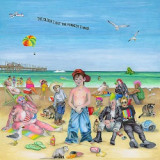
WHITMER THOMAS - THE OLDER I GET, THE FUNNIER I WAS

The Older I Get, the Funnier I Was, which follows Thomas’ brilliant 2020 HBO special The Golden One and his Can't Believe You're Happy Here EP released earlier this year, surveys a range of emotion and offers a broad sonic palette, moving between pop punk, electro, and the obvious influence of the singer-songwriters he grew up listening to in early childhood. It conjures the ennui of Bright Eyes alongside the barefaced storytelling of John Prine, the overstuffed lists of Fred Thomas with the lackadaisical humor of Colleen Green, among many others.

Thomas attributes the dexterity of the record to Duterte, who recorded and engineered most of it in addition to serving up plenty of encouragement when Thomas got down on the process. “As a comic, I used to test out new songs during sets to see if the funny bits were hitting, but since I wrote this in isolation I ended up writing lyrics and worrying less about making jokes,” Thomas says. That said, the album’s plenty funny. Stand-out and lead single “Rigamarole” opens with a Thomas-voiced infomercial that recalls his oft-cited lookalike Jim Carrey as the Grinch, before launching into a buoyant pop song about being depressed.

Whitmer Thomas will admit that when he traveled home to small town Gulf Shores, Alabama to record his HBO stand-up special, The Golden One, he expected to be greeted as a returning hero, a conquering king, or at minimum, a guy with a moderately successful career as an entertainer in Los Angeles. “I expected a big welcome home, open arms, but when I went back I realized: nobody fucking knows me. Nobody remembers me,” Thomas says. “In the years I’d been performing that show, I’d been romanticizing my childhood in this mythologized place, but the visit made me see that I’m not really from there anymore.”

The sense of alienation compounded when Thomas recognized how few people in town remembered his mom, to whom The Golden One is dedicated and largely about. Thomas grew up watching her perform with her twin sister at the legendary Flora-Bama Lounge, where he set the special, and still counts her as one of his musical influences. His new album, The Older I Get, the Funnier I Was, isn’t overtly about his mom, her presence is deeply felt throughout. While in Gulf Shores, Thomas discovered dozens of her old recordings, all of which had been wrecked by Katrina, but upon returning to LA, Thomas paid “a fancy place in Hollywood” to fix the tapes and hired Melina Duterte (Jay Som, Bachelor, Routine) to mix them. The two struck up a collaborative friendship, and Thomas had the sound of his mom’s voice back. “I was listening to songs she recorded when she was about my age, just these heartfelt, sweet Americana songs,” he says. “I decided then that I wanted to lose the Ian Curtis voice I always sing with; I wanted to do what came naturally, because my mom always sounded like herself, even when she was singing some cheesy reggae song about, like, Jamaica.”

Thus he went into The Older I Get, the Funnier I Was knowing it was time to retire his darkwave persona, and leaning into his natural, chirpier voice, which he says sounds “like a 12-year-old’s.” It makes sense: much of the album chronicles what Thomas calls “being a kid and feeling like you have no control and overcompensating by being annoying.” “So much of the album is about witnessing drug and alcohol addiction as a kid and seeing what it does to people, but also realizing that there's nothing you can do about it,” Thomas says. It’s familiar territory (see: “Partied to Death”) but the methodology is different this time around; true to its title, The Older I Get, the Funnier I Was isn’t always looking for laughs. Thomas might’ve left his hometown behind, but his kid self is still tagging along, a Peter Pan shadow he can’t untether himself from. The first line he sings on The Older I Get, the Funnier I Was is: “There should be a room at every party where you can just sit and watch a movie.” Find a 12-year-old who wouldn’t say the same.

pre-order now21.10.2022

expected to be published on 21.10.2022

The Real Tuesday Weld - Dreams

Available on limited edition translucent gold vinyl and very limited vinyl-style cd. "The Young Ones' Flaming Lips meet Jacques Brel in a pean to lost youth, 'Comme dans un Reve' Dream bossa chanson a la Gainsbourg/ Birkin. ‘Dreams’ is the second of the final trilogy of albums by critical darlings The Real Tuesday Weld following last year's acclaimed noir-themed ‘Blood'. This collection references late sixties songwriting a la Lee Hazlewood, Jimmy Webb and Burt Bacharach with nods to Flaming Lips and Tin Pan Alley, all mixed up with hazy lo-fi electronica, ghostly atmospherics and cinematic instrumentals. Guest vocalists A Girl Called Eddy, Sephine Llo and Oriana Curls provide a counterpoint to main man Stephen Coates' Gainsbourg-like crooning. Continuing the band's long preoccupation with dreams, the songs were written in the early morning or late evening on 'either side' of sleep: ‘I’d rise super early and go straight to it with the emotion of the night’s imaginings still heavy on me or work in that strange space-time just before sleep claims us”. The album is sequenced in an approximation of a life, from youth to age, with the band’s perennial focus on London, love, the English landscape and time passing. ‘Bone Dreams Blood’ in particular is a sonic memorial to friends loved and lost in the life of London. "beautiful...giddily recalls Gainsbourg, Pulp, Cole Porter, early Disney soundtracks and seedy postwar revue bars" SUNDAY TIMES // "Utterly unique, utterly delightful" THE TELEGRAPH // "These heart-pricking songs speak to us all" WORD // 'Utterly decadent and darkly humorous' TIME OUT LONDON // 'Superbly atmospheric' UNCUT // Track listing: 1 The Young Ones 2 Kinky Love 3 Bone Dreams Blood 4 I Awoke to Find I was Dreaming 5 Ever After 6 Lost Endeavour 7 Curtain Call 8 Comme Dans un Reve 9 Bodhisattva of the Gulag 10 Everything 11 Last Light

pre-order now18.10.2022

expected to be published on 18.10.2022

Lee Tracy & Isaac Manning - Is it What You Want

As the sun sets on a quaint East Nashville house, a young man bares a piece of his soul. Facing the camera, sporting a silky suit jacket/shirt/slacks/fingerless gloves ensemble that announces "singer" before he's even opened his mouth, Lee Tracy Johnson settles onto his stage, the front yard. He sways to the dirge-like drum machine pulse of a synth-soaked slow jam, extends his arms as if gaining his balance, and croons in affecting, fragile earnest, "I need your love… oh baby…"

Dogs in the yard next door begin barking. A mysterious cardboard robot figure, beamed in from galaxies unknown and affixed to a tree, is less vocal. Lee doesn't acknowledge either's presence. He's busy feeling it, arms and hands gesticulating. His voice rises in falsetto over the now-quiet dogs, over the ambient noise from the street that seeps into the handheld camcorder's microphone, over the recording of his own voice played back from a boombox off-camera. After six minutes the single, continuous shot ends. In this intimate creative universe there are no re-takes. There are many more music videos to shoot, and as Lee later puts it, "The first time you do it is actually the best. Because you can never get that again. You expressing yourself from within."

"I Need Your Love" dates from a lost heyday. From some time in the '80s or early '90s, when Lee Tracy (as he was known in performance) and his music partner/producer/manager Isaac Manning committed hours upon hours of their sonic and visual ideas to tape. Embracing drum machines and synthesizers – electronics that made their personal futurism palpable – they recorded exclusively at home, live in a room into a simple cassette deck. Soul, funk, electro and new wave informed their songs, yet Lee and Isaac eschewed the confinement of conventional categories and genres, preferring to let experimentation guide them.

"Anytime somebody put out a new record they had the same instruments or the same sound," explains Isaac. "So I basically wanted to find something that's really gonna stand out away from all of the rest of 'em." Their ethos meant that every idea they came up with was at least worth trying: echoed out half-rapped exhortations over frantic techno-style beats, gospel synth soul, modal electro-funk, oddball pop reinterpretations, emo AOR balladry, nods to Prince and the Fat Boys, or arrangements that might collapse mid-song into a mess of arcade game-ish blips before rallying to reach the finish line. All of it conjoined by consistent tape hiss, and most vitally, Lee's chameleonic voice, which managed to wildly shape shift and still evoke something sincere – whether toggling between falsetto and tenor exalting Jesus's return, or punctuating a melismatic romantic adlib with a succinct, "We all know how it feels to be alone."

"People think we went to a studio," says Isaac derisively. "We never went to no studio. We didn't have the money to go to no studio! We did this stuff at home. I shot videos in my front yard with whatever we could to get things together." Sometimes Isaac would just put on an instrumental record, be it "Planet Rock" or "Don't Cry For Me Argentina" (from Evita), press "record," and let Lee improvise over it, yielding peculiar love songs, would-be patriotic anthems, or Elvis Presley or Marilyn Monroe tributes. Technical limitations and a lack of professional polish never dissuaded them. They believed they were onto something.

"That struggle," Isaac says, "made that sound sound good to me."

In the parlance of modern music criticism Lee and Isaac's dizzying DIY efforts would inevitably be described as "outsider." But "outsider" carries the burden of untold additional layers of meaning if you're Black and from the South, creating on a budget, and trying to get someone, anyone within the country music capital of the world to take your vision seriously. "What category should we put it in?" Isaac asks rhetorically. "I don't know. All I know is feeling. I ain't gonna name it nothing. It's music. If it grabs your soul and touch your heart that's what it basically is supposed to do."

=

Born in 1963, the baby boy of nine siblings, Lee Tracy spent his earliest years living amidst the shotgun houses on Nashville's south side. "We was poor, man!" he says, recalling the outhouse his family used for a bathroom and the blocks of ice they kept in the kitchen to chill perishables. "But I actually don't think I really realized I was in poverty until I got grown and started thinking about it." Lee's mom worked at the Holiday Inn; his dad did whatever he had to do, from selling fruit from a horse drawn cart to bootlegging. "We didn't have much," Lee continues, "but my mother and my father got us the things we needed, the clothes on our back." By the end of the decade with the city's urban renewal programs razing entire neighborhoods to accommodate construction of the Interstate, the family moved to Edgehill Projects. Lee remembers music and art as a constant source of inspiration for he and his brothers and sisters – especially after seeing the Jackson 5 perform on Ed Sullivan. "As a small child I just knew that was what I wanted to do."

His older brother Don began musically mentoring him, introducing Lee to a variety of instruments and sounds. "He would never play one particular type of music, like R&B," says Lee. "I was surrounded by jazz, hard rock and roll, easy listening, gospel, reggae, country music; I mean I was a sponge absorbing all of that." Lee taught himself to play drums by beating on cardboard boxes, gaining a rep around the way for his timekeeping, and his singing voice. Emulating his favorites, Earth Wind & Fire and Cameo, he formed groups with other kids with era-evocative band names like Concept and TNT Connection, and emerged as the leader of disciplined rehearsals. "I made them practice," says Lee. "We practiced and practiced and practiced. Because I wanted that perfection." By high school the most accomplished of these bands would take top prize in a prominent local talent show. It was a big moment for Lee, and he felt ready to take things to the next level. But his band-mates had other ideas.

"I don't know what happened," he says, still miffed at the memory. "It must have blew they mind after we won and people started showing notice, because it's like everybody quit! I was like, where the hell did everybody go?" Lee had always made a point of interrogating prospective musicians about their intentions before joining his groups: were they really serious or just looking for a way to pick up girls? Now he understood even more the importance of finding a collaborator just as committed to the music as he was.

=

Isaac Manning had spent much of his life immersed in music and the arts – singing in the church choir with his family on Nashville's north side, writing, painting, dancing, and working various gigs within the entertainment industry. After serving in the armed forces, in the early '70s he ran The Teenage Place, a music and performance venue that catered to the local youth. But he was forced out of town when word of one of his recreational routines created a stir beyond the safe haven of his bohemian circles.

"I was growing marijuana," Isaac explains. "It wasn't no business, I was smoking it myself… I would put marijuana in scrambled eggs, cornbread and stuff." His weed use originated as a form of self-medication to combat severe tooth pain. But when he began sharing it with some of the other young people he hung out with, some of who just so happened to be the kids of Nashville politicians, the cops came calling. "When I got busted," he remembers, "they were talking about how they were gonna get rid of me because they didn't want me saying nothing about they children because of the politics and stuff. So I got my family, took two raggedy cars, and left Nashville and went to Vegas."

Out in the desert, Isaac happened to meet Chubby Checker of "The Twist" fame while the singer was gigging at The Flamingo. Impressed by Isaac's zeal, Checker invited him to go on the road with him as his tour manager/roadie/valet. The experience gave Isaac a window into a part of the entertainment world he'd never encountered – a glimpse of what a true pop act's audience looked like. "Chubby Checker, none of his shows were played for Black folks," he remembers. "All his gigs were done at high-class white people areas." Returning home after a few years with Chubby, Isaac was properly motivated to make it in Music City. He began writing songs and scouting around Nashville for local talent anywhere he could find it with an expressed goal: "Find someone who can deliver your songs the way you want 'em delivered and make people feel what you want them to feel."

One day while walking through Edgehill Projects Isaac heard someone playing the drums in a way that made him stop and take notice. "The music was so tight, just the drums made me feel like, oh I'm-a find this person," he recalls. "So I circled through the projects until I found who it was.

"That's how I met him – Lee Tracy. When I found him and he started singing and stuff, I said, ohhh, this is somebody different."

=

Theirs was a true complementary partnership: young Lee possessed the raw talent, the older Isaac the belief. "He's really the only one besides my brother and my family that really seen the potential in me," says Lee. "He made me see that I could do it."

Isaac long being a night owl, his house also made for a fertile collaborative environment – a space where there always seemed to be a new piece of his visual art on display: paintings, illustrations, and dolls and figures (including an enigmatic cardboard robot). Lee and Issac would hang out together and talk, listen to music, conjure ideas, and smoke the herb Isaac had resumed growing in his yard. "It got to where I could trust him, he could trust me," Isaac says of their bond. They also worked together for hours on drawings, spreading larges rolls of paper on the walls and sketching faces with abstract patterns and imagery: alien-like beings, tri-horned horse heads, inverted Janus-like characters where one visage blurred into the other.

Soon it became apparent that they didn't need other collaborators; self-sufficiency was the natural way forward. At Isaac's behest Lee, already fed up with dealing with band musicians, began playing around with a poly-sonic Yamaha keyboard at the local music store. "It had everything on it – trumpet, bass, drums, organ," remembers Lee. "And that's when I started recording my own stuff."

The technology afforded Lee the flexibility and independence he craved, setting him on a path other bedroom musicians and producers around the world were simultaneously following through the '80s into the early '90s. Saving up money from day jobs, he eventually supplemented the Yamaha Isaac had gotten him with Roland and Casio drum machines and a Moog. Lee was living in an apartment in Hillside at that point caring for his dad, who'd been partially paralyzed since early in life. In the evenings up in his second floor room, the music put him in a zone where he could tune out everything and lose himself in his ideas.

"Oh I loved it," he recalls. "I would really experiment with the instruments and use a lot of different sound effects. I was looking for something nobody else had. I wanted something totally different. And once I found the sound I was looking for, I would just smoke me a good joint and just let it go, hit the record button." More potent a creative stimulant than even Isaac's weed was the holistic flow and spontaneity of recording. Between sessions at Isaac's place and Lee's apartment, their volume of output quickly ballooned.

"We was always recording," says Lee. "That's why we have so much music. Even when I went to Isaac's and we start creating, I get home, my mind is racing, I gotta start creating, creating, creating. I remember there were times when I took a 90-minute tape from front to back and just filled it up."

"We never practiced," says Isaac. "See, that was just so odd about the whole thing. I could relate to him, and tell him about the songs I had ideas for and everything and stuff. And then he would bring it back or whatever, and we'd get together and put it down." Once the taskmaster hell bent on rehearsing, Lee had flipped a full 180. Perfection was no longer an aspiration, but the enemy of inspiration.

"I seen where practicing and practicing got me," says Lee. "A lot of musicians you get to playing and they gotta stop, they have to analyze the music. But while you analyzing you losing a lot of the greatness of what you creating. Stop analyzing what you play, just play! And it'll all take shape."

=

"I hope you understood the beginning of the record because this was invented from a dream I had today… (You tell me, I'll tell you, we'll figure it out together)" – Lee Tracy and Isaac Manning, "Hope You Understand"

Lee lets loose a maniacal cackle when he acknowledges that the material that he and Isaac recorded was by anyone's estimation pretty out there. It's the same laugh that commences "Hope You Understand" – a chaotic transmission that encapsulates the duality at the heart of their music: a stated desire to reach people and a compulsion to go as leftfield as they saw fit.

"We just did it," says Lee. "We cut the music on and cut loose. I don't sit around and write. I do it by listening, get a feeling, play the music, and the lyrics and stuff just come out of me."

The approach proved adaptable to interpreting other artists' material. While recording a cover of Whitney Houston's pop ballad "Saving All My Love For You," Lee played Whitney's version in his headphones as he laid down his own vocals – partially following the lyrics, partially using them as a departure point. The end result is barely recognizable compared with the original, Lee and Isaac having switched up the time signature and reinvented the melody along the way towards morphing a slick mainstream radio standard into something that sounds solely their own.

"I really used that song to get me started," says Lee. "Then I said, well I need something else, something is missing. Something just came over me. That's when I came up with 'Is It What You Want.'"

The song would become the centerpiece of Lee and Isaac's repertoire. Pushed along by a percolating metronomic Rhythm King style beat somewhere between a military march and a samba, "Is It What You Want" finds Lee pleading the sincerity of his commitment to a potential love interest embellished by vocal tics and hiccups subtlely reminiscent of his childhood hero MJ. Absent chord changes, only synth riffs gliding in and out like apparitions, the song achieves a lingering lo-fi power that leaves you feeling like it's still playing, somewhere, even after the fade out.

"I don't know, it's like a real spiritual song," Lee reflects. "But it's not just spiritual. To me the more I listen to it it's like about everything that you do in your everyday life, period. Is it what you want? Do you want a car or you don't want a car? Do you want Jesus or do you want the Devil? It's basically asking you the question. Can't nobody answer the question but you yourself."

In 1989 Lee won a lawsuit stemming from injuries sustained from a fight he'd gotten into. He took part of the settlement money and with Isaac pressed up "Saving All My Love For You" b/w "Is It What You Want" as a 45 single. Isaac christened the label One Chance Records. "Because that's all we wanted," he says with a laugh, "one chance."

Isaac sent the record out to radio stations and major labels, hoping for it to make enough noise to get picked up nationally. But the response he and Lee were hoping for never materialized. According to Isaac the closest the single got to getting played on the radio is when a disk jock from a local station made a highly unusual announcement on air: "The dude said on the radio, 107.5 – 'We are not gonna play 'Is It What You Want.' We cracked up! Wow, that's deep.

"It was a whole racist thing that was going on," he reflects. "So we just looked over and kept on going. That was it. That was about the way it goes… If you were Black and you were living in Nashville and stuff, that's the way you got treated." Isaac already knew as much from all the times he'd brought he and Lee's tapes (even their cache of country music tunes) over to Music Row to try to drum up interest to no avail.

"Isaac, he really worked his ass off," says Lee. "He probably been to every record place down on Music Row." Nashville's famed recording and music business corridor wasn't but a few blocks from where Lee grew up. Close enough, he remembers, for him to ride his bike along its back alleys and stumble upon the occasional random treasure, like a discarded box of harmonicas. Getting in through the front door, however, still felt a world away.

"I just don't think at the time our music fell into a category for them," he concedes. "It was before its time."

=

Lee stopped making music some time in the latter part of the '90s, around the time his mom passed away and life became increasingly tough to manage. "When my mother died I had a nervous breakdown," he says, "So I shut down for a long time. I was in such a sadness frame of mind. That's why nobody seen me. I had just disappeared off the map." He fell out of touch with Isaac, and in an indication of just how bad things had gotten for him, lost track of all the recordings they'd made together. Music became a distant memory.

Fortunately, Isaac kept the faith. In a self-published collection of his poetry – paeans to some of his favorite entertainment and public figures entitled Friends and Dick Clark – he'd written that he believed "music has a life of its own." But his prescience and presence of mind were truly manifested in the fact that he kept an archive of he and Lee's work. As perfectly imperfect as "Is It What You Want" now sounds in a post-Personal Space world, Lee and Isaac's lone official release was in fact just a taste. The bulk of the Is It What You Want album is culled from the pair's essentially unheard home recordings – complete songs, half-realized experiments, Isaac's blue monologues and pronouncements et al – compiled, mixed and programmed in the loose and impulsive creative spirit of their regular get-togethers from decades ago. The rest of us, it seems, may have finally caught up to them.

On the prospect of at long last reaching a wider audience, Isaac says simply, "I been trying for a long time, it feels good." Ever the survivor, he adds, "The only way I know how to make it to the top is to keep climbing. If one leg break on the ladder, hey, you gotta fix it and keep on going… That's where I be at. I'll kill death to make it out there."

For Lee it all feels akin to a personal resurrection: "It's like I was in a tomb and the tomb was opened and I'm back… Man, it feels so great. I feel like I'm gonna jump out of my skin." Success at this stage of his life, he realizes, probably means something different than what it did back when he was singing and dancing in Isaac's front yard. "What I really mean by 'making it,'" he explains isn't just the music being heard but, "the story being told."

Occasionally Lee will pull up "Is It What You Want" on YouTube on his phone, put on his headphones, and listen. He remembers the first time he heard his recorded voice. How surreal it was, how he thought to himself, "Is that really me?" What would he say to that younger version of himself now?

"I would probably tell myself, hang in there, don't give up. Keep striving for the goal. And everything will work out."

Despite what's printed on the record label, sometimes you do get more than one chance.

out of Stock

Order now and we will order the item for you at our supplier.


Last In: 3 years ago
Andreya Triana - Life In Colour LP

It’s taken a long time for me to feel good about myself,” says Andreya Triana of the journey to her third album. “As a musician, as a woman, it’s difficult getting to that space. It’s really wonderful where you reach that time of having more good days than bad.” That sense of celebration is what drives ‘Life In Colour’, Andreya’s most confident, instinctive and heartfelt work to date; a record that celebrates love, freedom, independence and womanhood. “‘Life In Colour’ is about stepping into my womanhood and being like ‘OK, I know this space. Let me try some s**t. I know it’s going to be hard but I know it’s going to be OK’. I just wanted to put some good energy out there.” The first taster of that sweet release was teased with lead single ‘Woman’ - a soulful pop anthem of self-love, tracking Andreya’s life from awkward teen to mighty queen, from memories of heartache and trauma to triumph. “You know when you’re feeling so uncomfortable in yourself and you just want to be swallowed up into a hole in the ground?,” Andreya recalls of her youth. “This is about moving on from being a victim to a place of strength, to feeling like a superhero. “Anyone who has gone through difficult times like I have, should know that it’s absolutely possible to get to a good place. It doesn’t define who you are or your future. You have to fight like hell every day to move forward but anything is possible. We’re all full of so much goodness. Don’t lose sight of that.” The lyric video is a tribute to Andreya’s mother, grandmother, the strong females of her life and the many sacrifices that women make day-to-day, generation after generation.

The third album 'Life In Colour' by the MOBO nominated British soul/jazz singer Andreya Triana who's collaborated with Bonobo, Flying Lotus been endorsed by the likes of Gilles Peterson & Jamie Cullum.

out of Stock

Order now and we will order the item for you at our supplier.


Last In: 3 years ago
Sharon Forrester - Love Don't Live Here Anymore LP

"Good music never dies!" - This was Diane Ellis' mantra when she set out to produce this, her first record, in 1979. She recalls hearing the Rose Royce classic Love Don't Live Here Anymore on the radio and instantly thinking it would make for a great reggae cover, immediately envisioning the sound she was looking for. Drafting in the legendary Boris Gardiner and vocalist Sharon Forrester they created this timeless version of a perennial classic - now available here in it's full extended discomix glory for the first time on 12" since it's original outing, and backed with hornsman cut placing Dean Fraser's sax front row center.

The record was made when Ellis was studio manager for the world-famous Tuff Gong studios, but wanted her outing as a record producer to be a totally independent venture - gaining the great Bob Marley & the TG team's blessings in the process. And so Aquarius Studio in Half Way Tree was where it was all laid-down. Diane credits the Legendary owner and pioneering producer, Herman Chin Loy, as also being of great help on the record, providing a guiding ear throughout the process.

Despite this the evident strength of this first production, Ellis would follow up with only one other production, Junior Tucker's cover of "One of the Poorest People" (this time one recorded at Tuff Gong studios, and releasing the 56 Hope Road subsidiery). While both records performed well on local radio and charts, Diane exited the music industry shortly after. Now 43 years later, Diane is overjoyed her production is having a comeback, saying that "the support and love felt during the project can never be replicated, and I give thanks to all who supported then and now".

out of Stock

Order now and we will order the item for you at our supplier.


Last In: 3 years ago
Rachael Dadd - Kaleidoscope

Wildly creative free-form songwriter Rachael Dadd is set to release
her brand new studio album, ‘Kaleidoscope’, via Memphis Industries.
The album follows 2019’s ‘Flux’, which was released to much
acclaim, and was the album she was touring when the pandemic
struck. Like so many people disconnected from their communities and
struggling through the lockdowns, Rachael Dadd turned inwards,
seeking escape through music and connection through songwriting,
and her hope is that when people listen to ‘Kaleidoscope’, “they will
feel held and find space to breathe, grieve and celebrate.”
“This album is a lot more honest and personal than ‘Flux’” she shares,
“but I feel the songs are universal as they are largely rooted in truth
and love. If I had to pick a favourite album it would be this one
because of the magical rekindling of human connection when me and
my band got back in a room together again. All that magic went into
these songs.”
Co-produced “intuitively, boldly, and playfully” by Rachael and Rob
Pemberton (The Staves, Emily Barker, Maja Lena), ‘Kaleidoscope’
includes musical collaborators such as Maja Lena (Low Chimes),
longtime collaborator Emma Gatrill (Willy Mason), Alex Heane (bass),
Charlotte West (synths), Alex Garden (strings) and ‘Flux’ producer
Marcus Hamblett (Villagers, James Holden, The Staves), giving the
record “just the right colour combination, just the right pattern of
shapes, plenty of space where needed and finally landing in a sound
world that feels fresh and open and true,” reflects Rachael.
Japanese aesthetics absorbed from her time spent living there are
subconsciously woven into Rachael’s songs. “I first stepped foot in
Tokyo in 2008, sparked by the adventure of such a rich and different
culture and later on I lived on a small island and experienced an
appealing and balanced way of life: the aesthetics, the art and the
traditions,” she recalls. “There was a lot of caring for each other, a lot
of gentleness, and a lot of simple living in harmony with nature. Japan
left its cultural mark on me and is now part of my inner world and I’m
sure this comes out with the words and music I write.”
“But overall,” Rachael explains, “this is an album of homecoming and
reconnecting to my own truth, to my community here, to the earthy
land that I love and to the sky that I know.”

pre-order now14.10.2022

expected to be published on 14.10.2022

Sam Moss - Blues Approved

GREAT LOST ALBUM BY NC LEGEND SAM MOSS IS DISCOVERED, MIXED
FOR DELUXE RELEASE produced by Chris Stamey In Winston-Salem, NC,
guitarist Sam Moss is a legend - A superior, highly versatile musician
whose advocacy for the blues and mastery of the nuances of electric
blues-based soloing somewhat paralleled Mike Bloomfield's in Chicago,
Moss was an inspiring, charismatic mentor to generations of North
Carolina rockers, including Let's Active and The dB's
He was a larger- than- life character whose club appearances astounded local
audiences, yet he never released a record in his lifetime. So, producer Chris
Stamey was thrilled to discover, in 2020, on the end of an old tape, forgotten
masters of Blues Approved, a spectacular Stax- and Muscle Shoalsinfluenced
solo record, made with Mitch Easter in 1977.This "great lost" record reveals that
Moss was also a soulful songwriter and singer. It has now been carefully remixed
and produced for release, with a deluxe booklet featuring detailed liner notes and
bio, session notes by Easter, and lots of vivid color photos. Peter Holsapple (The
dB's) says, "Sam Moss was an inspiration to so many of us; with the release of
Blues Approved, people everywhere will understand why.
Mitch Easter of Let's Active recalls: "Sam wrote interesting songs that almost
always had a blues angle, but he brought in a lot of elements from elsewhere." But
the material then sat on the shelf, unreleased, as Moss opened a vintage guitar
store, selling internationally to rock stars and other celebrities for several
decades.
On July 30, 2021, the City of Winston-Salem honored Moss with a sidewalk star in
the city's Walk of Fame downtown.

pre-order now14.10.2022

expected to be published on 14.10.2022

A Great Big Pile Of Leaves - Pono

Produced by A Great Big Pile of Leaves and recorded primarily at their
home studio, new album Pono was mixed by touring guitarist Matthew
Weber at Gradwell House Recording and mastered by Dave Downham
(Beach Slang, Into It Over It)
With eight years between releases, the band recalls how the recording process of
Pono felt like they were making their first record, adding 'we worked at our own
pace with no preconceived notion of what it needed to be.'
Pressed on White + Green + Blue Marbled color vinyl.

pre-order now14.10.2022

expected to be published on 14.10.2022

INDIGO SPARKE - HYSTERIA LP

LP + 7". Indigo Sparke's majestic second full-length album Hysteria is a sweeping work, one that possesses a rare, reflective power. On it, she examines love, loss, her history, and the emotional upheaval surrounding those sensations: her words tell the stories, and the sounds act them out. It's a diary built for big stages. Hysteria arrives just a year after her striking, minimalist debut, Echo. Here, though, Sparke offers an expansive body of work_it's a complex collection that expands her sound and outlook. Work on Hysteria began at the start of the COVID-19 pandemic, while Sparke was stranded in quarantine in her native Australia. After moving back to New York in the spring of 2021, Sparke finished writing the album's 14 songs and decamped upstate with producer Aaron Dessner (The National, Taylor Swift). "Originally we were going to co-write, but after he heard my demos he said, `There's so much in here already,'" Sparke recalls on how Dessner, who also contributes instrumentation along with guitarist Shahzad Izmaily and drummer Matt Barrick (The Walkmen, Muzz), got involved in bringing Hysteria to life. Centering Sparke's powerful vocals throughout, Hysteria is packed with big guitars and layered instrumentation that practically acts as the album's lungs, giving every note breath. From the pulsing immediacy of "Infinite Honey" to the soaring "God Is a Woman's Name" and "Hold On"'s towering chorus, this is music that sounds huge even as it zooms in on the trials and turmoils of one's inner life. You can hear Sparke reflecting on reconciliation, grief, hope, and the passage of time on the perpetually building "Pressure in My Chest" and the airy, Joni Mitchell-esque title track, which finds her embracing a gorgeous upper register over gently strummed guitar. "Set Your Fire on Me" builds and bursts not unlike Angel Olsen's own raw folk-rock expressionism_and then there's the stark opener and first single "Blue," which acts as a cosmic road map for Sparke's own journey in life. Sparke observes while reflecting on Hysteria's thematic bent "these songs are about being at the axis point of love - right at the edge of hysteria - and how that transformed me."

out of Stock

Order now and we will order the item for you at our supplier.


Last In: 3 years ago
Ezéchiel Pailhès - Mélopée

On his fourth solo album, much as in Oh! (2020), the French composer, pianist and vocalist follows his ongoing exploration of the crossroads between poetry and songs, piano and synth, old-time verses and contemporary sounds. Inspired by the rhythms, effects and speech patterns of urban music, he also delivers, with a warm and moving voice, the texts of three poetesses from the past.
Since 2013, Ezéchiel Pailhès has been crafting a unique French synth pop. On his first three albums, he switched between songs inspired by poetry, instrumental ballads and electronica with hummed
choruses. This latest record is a collection of eleven new songs, two of which he wrote: "Opaline" and "Ni toi, ni moi" (neither you nor me). The others are adaptations of poems written in the 16th, 18th and
19th centuries by French poetesses Louise Labé (1524-1566), Marceline Desbordes-Valmore (1786- 1859) and Renée Vivien (1877-1909).
Poetesses from the past...
From classical music to songs, poetry adaptation is an old French tradition. "My universe has always embraced the musicality of this literary genre," the artist recalls. He actually started this project in 2017 with poems and sonnets by William Shakespeare, Pablo Neruda, Victor Hugo and above all Marceline Desbordes-Valmore, who can be heard again on songs such as "Dors-tu?" (Are you sleeping?),
"Élégie" or "L'attente" (The wait). A figure of romanticism, the author left her mark on the early 19th century through the quality of her texts and her formal inventions, particularly praised by Balzac, and
apparently a decisive influence on Verlaine and Baudelaire. "Marceline's poetry is very musical," says Ezéchiel admiringly. "Her use of rhythm and repetition sounds great and takes on a new perspective when set to music. In fact, she wrote some of her texts with singing in mind.”
“Ces longs secrets dont l'amour nous accuse, Viens-tu les rompre en songe à mes genoux ? Dors-tu, ma vie ! ou rêves-tu de moi ?”
“These long secrets for which love accuses us, Do you come to my knees to break them in a dream?
Are you sleeping, my life! or do you dream of me” (“Dors-tu ?”, after “Les pleurs” (the tears), 1833)
Besides her, we find the more famous, and rebellious, Renée Vivien, whose texts inspired three songs, "Regard en arrière" (Looking backwards), "Mélopée" (Melopoeia) and "La fille de la nuit" (The
night girl). Sometimes nicknamed "Sapho 1900", this figure of lesbian culture and, more broadly, of female genius, combined in her work the themes of desire, dreams, melancholy and the relationship with nature.
“Ta forme est un éclair
Ton sourire est l’instant Tu fuis, lorsque l’appel
T’implore, ô mon Désir !”
"Your shape is a spark of lightning
Your smile, the very moment
You flee, when the calling
Begs you, O my Desire!"
(After “Parle-moi, de ta voix pareille à l’eau courante” (Speak to me, with a voice like flowing waters) and “Ta forme est un éclair” (Your shape is a spark of lightning), Renée Vivien, 1901)
Lastly, with "Tant que mes yeux" (As long as my eyes), Ezéchiel was inspired by a 1555 poem by Renaissance poet Louise Labé, whose main topic explored female love, physical and spiritual desire,
and the torments and pains they generate.
" At the start of the project ", Ezéchiel continues, " I was interested in many poets, men and women, past and present, before my selection was narrowed down to these three female authors. Their works,
often written in difficult or secret conditions, express a raging romanticism, a passionate soul, fuelled by desperate and tormented love. I found it interesting, as a man coming from another world and time, to face this otherness, to trade viewpoints. Obviously, I could loudly claim that the album was the result of a concept, that it reflects today's world, and that it allows me to explore the notion of gender,
giving visibility to the work of a few women, while at the same time pairing these ancient texts with a more modern and rhythmic music, and obviously, there is some truth in that. But more than anything, I
wanted to serve the text itself, to express the emotion and connection I felt with these works.”
Today's rhythms and prosody...
Ezéchiel Pailhès combines texts from French literature with electronic music, its effects and rhythms, as well as a form of scansion that echoes rap, R&B or the current fusion between hip hop and pop,
which is part of our musical background and that of younger generations. "I wanted to cross-reference texts from the beginning of the century with this type of music. I wanted to use today’s techniques to tell the tale of different daily lives and experiences.
The album is thus marked by contemporary electronic orchestrations, in which he drops his favourite instrument, the piano, and his digital collage technique to use more extensive synth melodies, enhanced by drum machines, bringing a gentle and bright vibe to the romantic texts. Lastly, we can hear slight digital tones of Auto-Tune, which Ezéchiel uses sparingly and inventively.

Beyond its sophistication, the term "melopoeia" means a "sung declamation", a "recitative song", sometimes interpreted in a monotonous way. On this album, it could also refer to a sense of phrasing, which does not come from rap, but rather from jazz, Ezéchiel's first love. " In the past, I tried to hide my jazz culture, but it naturally came back on this new album, as can be heard, for instance, in Regard en arrière.” With its verses anchored in our literary memory, the following track "Mélopée", perfectly illustrates the album's vision. It manages to transcend eras, mixing past romanticism with a modern
prosody, fuelled by the nonchalance of hip hop and the warm chords of jazz.
“Qu’un hasard guide enfin mon désespoir tranquille
Vers l’eau d’une oasis ou les berges d’une île,
Où je puisse dormir, mon voyage accompli,
Dans la sécurité profonde de l’oubli”
"May chance guide my quiet sorrow, at last
To the water of an oasis, the shores of an island,
Where I may sleep, having traveled my way,
In the safe depths of oblivion".
(After “Sillages” (Trails), René Vivien, 1908)

out of Stock

Order now and we will order the item for you at our supplier.


Last In: 3 years ago
INDIGO SPARKE - HYSTERIA LP

LP + 7". Indigo Sparke's majestic second full-length album Hysteria is a sweeping work, one that possesses a rare, reflective power. On it, she examines love, loss, her history, and the emotional upheaval surrounding those sensations: her words tell the stories, and the sounds act them out. It's a diary built for big stages. Hysteria arrives just a year after her striking, minimalist debut, Echo. Here, though, Sparke offers an expansive body of work_it's a complex collection that expands her sound and outlook. Work on Hysteria began at the start of the COVID-19 pandemic, while Sparke was stranded in quarantine in her native Australia. After moving back to New York in the spring of 2021, Sparke finished writing the album's 14 songs and decamped upstate with producer Aaron Dessner (The National, Taylor Swift). "Originally we were going to co-write, but after he heard my demos he said, `There's so much in here already,'" Sparke recalls on how Dessner, who also contributes instrumentation along with guitarist Shahzad Izmaily and drummer Matt Barrick (The Walkmen, Muzz), got involved in bringing Hysteria to life. Centering Sparke's powerful vocals throughout, Hysteria is packed with big guitars and layered instrumentation that practically acts as the album's lungs, giving every note breath. From the pulsing immediacy of "Infinite Honey" to the soaring "God Is a Woman's Name" and "Hold On"'s towering chorus, this is music that sounds huge even as it zooms in on the trials and turmoils of one's inner life. You can hear Sparke reflecting on reconciliation, grief, hope, and the passage of time on the perpetually building "Pressure in My Chest" and the airy, Joni Mitchell-esque title track, which finds her embracing a gorgeous upper register over gently strummed guitar. "Set Your Fire on Me" builds and bursts not unlike Angel Olsen's own raw folk-rock expressionism_and then there's the stark opener and first single "Blue," which acts as a cosmic road map for Sparke's own journey in life. Sparke observes while reflecting on Hysteria's thematic bent "these songs are about being at the axis point of love - right at the edge of hysteria - and how that transformed me."

pre-order now07.10.2022

expected to be published on 07.10.2022

INDIGO SPARKE - HYSTERIA LP

LP + 7". Indigo Sparke's majestic second full-length album Hysteria is a sweeping work, one that possesses a rare, reflective power. On it, she examines love, loss, her history, and the emotional upheaval surrounding those sensations: her words tell the stories, and the sounds act them out. It's a diary built for big stages. Hysteria arrives just a year after her striking, minimalist debut, Echo. Here, though, Sparke offers an expansive body of work_it's a complex collection that expands her sound and outlook. Work on Hysteria began at the start of the COVID-19 pandemic, while Sparke was stranded in quarantine in her native Australia. After moving back to New York in the spring of 2021, Sparke finished writing the album's 14 songs and decamped upstate with producer Aaron Dessner (The National, Taylor Swift). "Originally we were going to co-write, but after he heard my demos he said, `There's so much in here already,'" Sparke recalls on how Dessner, who also contributes instrumentation along with guitarist Shahzad Izmaily and drummer Matt Barrick (The Walkmen, Muzz), got involved in bringing Hysteria to life. Centering Sparke's powerful vocals throughout, Hysteria is packed with big guitars and layered instrumentation that practically acts as the album's lungs, giving every note breath. From the pulsing immediacy of "Infinite Honey" to the soaring "God Is a Woman's Name" and "Hold On"'s towering chorus, this is music that sounds huge even as it zooms in on the trials and turmoils of one's inner life. You can hear Sparke reflecting on reconciliation, grief, hope, and the passage of time on the perpetually building "Pressure in My Chest" and the airy, Joni Mitchell-esque title track, which finds her embracing a gorgeous upper register over gently strummed guitar. "Set Your Fire on Me" builds and bursts not unlike Angel Olsen's own raw folk-rock expressionism_and then there's the stark opener and first single "Blue," which acts as a cosmic road map for Sparke's own journey in life. Sparke observes while reflecting on Hysteria's thematic bent "these songs are about being at the axis point of love - right at the edge of hysteria - and how that transformed me."

pre-order now07.10.2022

expected to be published on 07.10.2022

SHAKESPEARS SISTER - HORMONALLY YOURS – 30TH ANNIVERSARY

White Vinyl

To celebrate the 30 year anniversary of Shakespears Sister’s seminal album ‘Hormonally Yours’,London Records have announced special edition releases across multiple formats.
A double platinum and top 3 UK album ‘Hormonally Yours’ secured Siobhan Fahey and Marcella Detroit a place in British pop history, spawning the single Stay - which spent a staggering eight consecutive weeks at the top of the UK charts - and winning the duo an Ivor Novello Award for Outstanding Contemporary Song Collection.
‘Hormonally Yours’ also features singles ‘Goodbye Cruel World’ and ‘I Don’t Care’, tackles friendships gone wrong on ‘My Sixteenth Apology’, powerful, dangerous attraction on ‘Emotional Thing’ and documents a friend’s coming out on ‘Are We In Love Yet?’ Fan favourite ‘The Trouble With Andre’, the full-throttle glam-blues of ‘Cat Woman and glorious finale ‘Hello (Turn Your Radio On) is the album’s glorious finale: an exhalation; a glorious, earth-shuddering moment that recalls the epic melancholy of David Bowie’s ‘Five Years’ and The Beatles’ ‘A Day In The Life’.
Shakespears Sisters second LP, Hormonally Yours, provided the perfect encapsulation of Shakespears Sister’s musical ying and yang; a deftly delivered balance of pop melody with a spikey alternative darkness

out of Stock

Order now and we will order the item for you at our supplier.


Last In: 3 years ago
Sweet Lizzy Project - Pirate Radio

For its latest album, Pirate Radio / Radio Pirata (Thirty Tigers), the band collaborated with major songwriters such as Blair Daly, Zac Maloy, and Sam Hollander for a triumphant and empowering collection of rock fused with an accessible pop structure and some of the everyday heart infused by Nashville’s country sound. “On this album, I’m free, and I can say things I was scared to say before. People deserve hope, and this record spreads a message,” Diaz says. The 11-song album will be released in English and Spanish—a unique feat for a rock release. SLP’s sophomore American release, Pirate Radio / Radio Pirata, is an artistic and personal milestone for the group. It is a concept album that loosely mirrors SLP’s journey to be artistically liberated against a stifling government regime, and the story unfolds with theatrical grandeur. The album’s unique melding of ultra-hooky choruses with ethereal ambience and passionate vocals and lyrics recalls such diverse artists as Paramore, Muse, and Olivia Rodrigo.

pre-order now07.10.2022

expected to be published on 07.10.2022

Sweet Lizzy Project - Pirate Radio

For its latest album, Pirate Radio / Radio Pirata (Thirty Tigers), the band collaborated with major songwriters such as Blair Daly, Zac Maloy, and Sam Hollander for a triumphant and empowering collection of rock fused with an accessible pop structure and some of the everyday heart infused by Nashville’s country sound. “On this album, I’m free, and I can say things I was scared to say before. People deserve hope, and this record spreads a message,” Diaz says. The 11-song album will be released in English and Spanish—a unique feat for a rock release. SLP’s sophomore American release, Pirate Radio / Radio Pirata, is an artistic and personal milestone for the group. It is a concept album that loosely mirrors SLP’s journey to be artistically liberated against a stifling government regime, and the story unfolds with theatrical grandeur. The album’s unique melding of ultra-hooky choruses with ethereal ambience and passionate vocals and lyrics recalls such diverse artists as Paramore, Muse, and Olivia Rodrigo.

pre-order now07.10.2022

expected to be published on 07.10.2022

SHAKESPEARS SISTER - HORMONALLY YOURS – 30TH ANNIVERSARY

Black & White Splatter Vinyl

To celebrate the 30 year anniversary of Shakespears Sister’s seminal album ‘Hormonally Yours’,London Records have announced special edition releases across multiple formats.
A double platinum and top 3 UK album ‘Hormonally Yours’ secured Siobhan Fahey and Marcella Detroit a place in British pop history, spawning the single Stay - which spent a staggering eight consecutive weeks at the top of the UK charts - and winning the duo an Ivor Novello Award for Outstanding Contemporary Song Collection.
‘Hormonally Yours’ also features singles ‘Goodbye Cruel World’ and ‘I Don’t Care’, tackles friendships gone wrong on ‘My Sixteenth Apology’, powerful, dangerous attraction on ‘Emotional Thing’ and documents a friend’s coming out on ‘Are We In Love Yet?’ Fan favourite ‘The Trouble With Andre’, the full-throttle glam-blues of ‘Cat Woman and glorious finale ‘Hello (Turn Your Radio On) is the album’s glorious finale: an exhalation; a glorious, earth-shuddering moment that recalls the epic melancholy of David Bowie’s ‘Five Years’ and The Beatles’ ‘A Day In The Life’.
Shakespears Sisters second LP, Hormonally Yours, provided the perfect encapsulation of Shakespears Sister’s musical ying and yang; a deftly delivered balance of pop melody with a spikey alternative darkness

out of Stock

Order now and we will order the item for you at our supplier.


Last In: 3 years ago
Master - on the seventh day god created... master LP

Master’s second album recorded by Scott Burns at Morrissound Studios! Classic 1990’s Death Metal! One of the problems with looking back on a musical genre from a perspective years or decades removed from the core of the movement itself is that subsequent developments tend to obscure both a genres origins and threads within a tradition that died out without offspring. As a result, interesting and deserving albums often get lost in the shuffle as reviewers reflect on those albums most “influential” upon later achievements. Death metal pioneers Master are among those who have been shortchanged as a result of that phenomenon, and their 1990 masterpiece “On the Seventh Day, God Created... Master” remains a fascinating exploration both of the genre’s roots and of spaces it might have occupied had different paths been taken. There are a couple of things that leap out immediately to even the casual listener. The first is the seeming primitivism of the music, with songs consisting of relatively brief, bludgeoning pieces driven by relentless rhythms, cyclic riffs and simple melodic hooks. The second is the realization that someone is playing some seriously insane, brilliantly constructed leads. In this case, that someone is Paul Masvidal, far exceeding anything he ever achieved with Cynic. Beneath the surface simplicity, lies a creative spirit that at once recalls the primal birth of death metal (which Master was both present for and very much a driving force behind) and points the way to what the genre might have become. Very apparent are the genre’s hardcore roots, Master here eschewing the Slayer-derived technical architecture that came to dominate most “modern” death metal in favor of structures that would not have been out of place on Discharge’s landmark “Hear Nothing See Nothing Say Nothing” release (there are even a few appearances of the infamous D-beat). Within the unrelenting storm of brutal repetition, the music’s core meaning is encoded, a sheer primal rage dripping from thunderous cycles of power chords and the open throated roar (again the hardcore influence) of vocalist and chief songwriter Paul Speckman.

pre-order now30.09.2022

expected to be published on 30.09.2022

George Is Lord - My Sweet George

George is Lord is a celebration of all things George Harrison - What began
as an exercise inlearning to play the drums, became a band - Anna
Pomerantz quit her job as Interior Designer to the stars and called upon
old friend Lindsay Glover, to teach her to play the drums
Lindsay, who has played in local LA favorites, Whiskey Biscuit and Future Pigeon,
began by teaching Anna the fundamentals and quickly it turned into learning
songs. "One of the first songs we learned was 'Something.' I've actually spent
most of my life hating the Beatles, but hearing them again for the first time
through the drums, made me fall completely in love, especially with George and
Ringo" recalls Anna. "I began teaching Lindsay the guitar and we started playing
together." The duo went on to learn a number of songs like, "Long, Long, Long," "All
Things Must Pass," and "Give me Love" when they realized they were ready to play
with other people. Lindsay asked friend Cody Porter of Pearl Harbor and Puro
Instinct to come play bass. "In our lessons, Lindsay had taught me how to sing
while playing the drums to keep my place in songs. I didn't think I was going to be
a singer in a band, it just happened." The missing ingredient was a lead guitar
player, and the trio invited Sam Blasucci of the popular LA folk duo Mapache if
he'd be willing to jam with us. He brought his magic and completed George Is
Lord. George is Lord recorded their first album of covers with producer Jason
Quever (Beach House, Cass McCombs). Dean Wareham (Luna, Galaxie 500)
appears as a guest. The ten song record includes a variety of George favorites
from the Beatles catalogue and throughout George's solo career.

pre-order now30.09.2022

expected to be published on 30.09.2022

Megan Black - Deadly Is The Woman

Megan Black is a Scottish musician, vocalist and songwriter - with the
kind of gritty,alluring vocal ability that recalls icons like Stevie Nicks and
Alannah Myles, she creates a powerful sonic bridge between her 70sinfluenced sound and contemporary views on feminism, mental health,
addiction and many other relevant topics in today's society

pre-order now28.09.2022

expected to be published on 28.09.2022

Lee Tracy & Isaac Manning - Is it What You Want LP

As the sun sets on a quaint East Nashville house, a young man bares a piece of his soul. Facing the camera, sporting a silky suit jacket/shirt/slacks/fingerless gloves ensemble that announces "singer" before he's even opened his mouth, Lee Tracy Johnson settles onto his stage, the front yard. He sways to the dirge-like drum machine pulse of a synth-soaked slow jam, extends his arms as if gaining his balance, and croons in affecting, fragile earnest, "I need your love… oh baby…"

Dogs in the yard next door begin barking. A mysterious cardboard robot figure, beamed in from galaxies unknown and affixed to a tree, is less vocal. Lee doesn't acknowledge either's presence. He's busy feeling it, arms and hands gesticulating. His voice rises in falsetto over the now-quiet dogs, over the ambient noise from the street that seeps into the handheld camcorder's microphone, over the recording of his own voice played back from a boombox off-camera. After six minutes the single, continuous shot ends. In this intimate creative universe there are no re-takes. There are many more music videos to shoot, and as Lee later puts it, "The first time you do it is actually the best. Because you can never get that again. You expressing yourself from within."

"I Need Your Love" dates from a lost heyday. From some time in the '80s or early '90s, when Lee Tracy (as he was known in performance) and his music partner/producer/manager Isaac Manning committed hours upon hours of their sonic and visual ideas to tape. Embracing drum machines and synthesizers – electronics that made their personal futurism palpable – they recorded exclusively at home, live in a room into a simple cassette deck. Soul, funk, electro and new wave informed their songs, yet Lee and Isaac eschewed the confinement of conventional categories and genres, preferring to let experimentation guide them.

"Anytime somebody put out a new record they had the same instruments or the same sound," explains Isaac. "So I basically wanted to find something that's really gonna stand out away from all of the rest of 'em." Their ethos meant that every idea they came up with was at least worth trying: echoed out half-rapped exhortations over frantic techno-style beats, gospel synth soul, modal electro-funk, oddball pop reinterpretations, emo AOR balladry, nods to Prince and the Fat Boys, or arrangements that might collapse mid-song into a mess of arcade game-ish blips before rallying to reach the finish line. All of it conjoined by consistent tape hiss, and most vitally, Lee's chameleonic voice, which managed to wildly shape shift and still evoke something sincere – whether toggling between falsetto and tenor exalting Jesus's return, or punctuating a melismatic romantic adlib with a succinct, "We all know how it feels to be alone."

"People think we went to a studio," says Isaac derisively. "We never went to no studio. We didn't have the money to go to no studio! We did this stuff at home. I shot videos in my front yard with whatever we could to get things together." Sometimes Isaac would just put on an instrumental record, be it "Planet Rock" or "Don't Cry For Me Argentina" (from Evita), press "record," and let Lee improvise over it, yielding peculiar love songs, would-be patriotic anthems, or Elvis Presley or Marilyn Monroe tributes. Technical limitations and a lack of professional polish never dissuaded them. They believed they were onto something.

"That struggle," Isaac says, "made that sound sound good to me."

In the parlance of modern music criticism Lee and Isaac's dizzying DIY efforts would inevitably be described as "outsider." But "outsider" carries the burden of untold additional layers of meaning if you're Black and from the South, creating on a budget, and trying to get someone, anyone within the country music capital of the world to take your vision seriously. "What category should we put it in?" Isaac asks rhetorically. "I don't know. All I know is feeling. I ain't gonna name it nothing. It's music. If it grabs your soul and touch your heart that's what it basically is supposed to do."

=

Born in 1963, the baby boy of nine siblings, Lee Tracy spent his earliest years living amidst the shotgun houses on Nashville's south side. "We was poor, man!" he says, recalling the outhouse his family used for a bathroom and the blocks of ice they kept in the kitchen to chill perishables. "But I actually don't think I really realized I was in poverty until I got grown and started thinking about it." Lee's mom worked at the Holiday Inn; his dad did whatever he had to do, from selling fruit from a horse drawn cart to bootlegging. "We didn't have much," Lee continues, "but my mother and my father got us the things we needed, the clothes on our back." By the end of the decade with the city's urban renewal programs razing entire neighborhoods to accommodate construction of the Interstate, the family moved to Edgehill Projects. Lee remembers music and art as a constant source of inspiration for he and his brothers and sisters – especially after seeing the Jackson 5 perform on Ed Sullivan. "As a small child I just knew that was what I wanted to do."

His older brother Don began musically mentoring him, introducing Lee to a variety of instruments and sounds. "He would never play one particular type of music, like R&B," says Lee. "I was surrounded by jazz, hard rock and roll, easy listening, gospel, reggae, country music; I mean I was a sponge absorbing all of that." Lee taught himself to play drums by beating on cardboard boxes, gaining a rep around the way for his timekeeping, and his singing voice. Emulating his favorites, Earth Wind & Fire and Cameo, he formed groups with other kids with era-evocative band names like Concept and TNT Connection, and emerged as the leader of disciplined rehearsals. "I made them practice," says Lee. "We practiced and practiced and practiced. Because I wanted that perfection." By high school the most accomplished of these bands would take top prize in a prominent local talent show. It was a big moment for Lee, and he felt ready to take things to the next level. But his band-mates had other ideas.

"I don't know what happened," he says, still miffed at the memory. "It must have blew they mind after we won and people started showing notice, because it's like everybody quit! I was like, where the hell did everybody go?" Lee had always made a point of interrogating prospective musicians about their intentions before joining his groups: were they really serious or just looking for a way to pick up girls? Now he understood even more the importance of finding a collaborator just as committed to the music as he was.

=

Isaac Manning had spent much of his life immersed in music and the arts – singing in the church choir with his family on Nashville's north side, writing, painting, dancing, and working various gigs within the entertainment industry. After serving in the armed forces, in the early '70s he ran The Teenage Place, a music and performance venue that catered to the local youth. But he was forced out of town when word of one of his recreational routines created a stir beyond the safe haven of his bohemian circles.

"I was growing marijuana," Isaac explains. "It wasn't no business, I was smoking it myself… I would put marijuana in scrambled eggs, cornbread and stuff." His weed use originated as a form of self-medication to combat severe tooth pain. But when he began sharing it with some of the other young people he hung out with, some of who just so happened to be the kids of Nashville politicians, the cops came calling. "When I got busted," he remembers, "they were talking about how they were gonna get rid of me because they didn't want me saying nothing about they children because of the politics and stuff. So I got my family, took two raggedy cars, and left Nashville and went to Vegas."

Out in the desert, Isaac happened to meet Chubby Checker of "The Twist" fame while the singer was gigging at The Flamingo. Impressed by Isaac's zeal, Checker invited him to go on the road with him as his tour manager/roadie/valet. The experience gave Isaac a window into a part of the entertainment world he'd never encountered – a glimpse of what a true pop act's audience looked like. "Chubby Checker, none of his shows were played for Black folks," he remembers. "All his gigs were done at high-class white people areas." Returning home after a few years with Chubby, Isaac was properly motivated to make it in Music City. He began writing songs and scouting around Nashville for local talent anywhere he could find it with an expressed goal: "Find someone who can deliver your songs the way you want 'em delivered and make people feel what you want them to feel."

One day while walking through Edgehill Projects Isaac heard someone playing the drums in a way that made him stop and take notice. "The music was so tight, just the drums made me feel like, oh I'm-a find this person," he recalls. "So I circled through the projects until I found who it was.

"That's how I met him – Lee Tracy. When I found him and he started singing and stuff, I said, ohhh, this is somebody different."

=

Theirs was a true complementary partnership: young Lee possessed the raw talent, the older Isaac the belief. "He's really the only one besides my brother and my family that really seen the potential in me," says Lee. "He made me see that I could do it."

Isaac long being a night owl, his house also made for a fertile collaborative environment – a space where there always seemed to be a new piece of his visual art on display: paintings, illustrations, and dolls and figures (including an enigmatic cardboard robot). Lee and Issac would hang out together and talk, listen to music, conjure ideas, and smoke the herb Isaac had resumed growing in his yard. "It got to where I could trust him, he could trust me," Isaac says of their bond. They also worked together for hours on drawings, spreading larges rolls of paper on the walls and sketching faces with abstract patterns and imagery: alien-like beings, tri-horned horse heads, inverted Janus-like characters where one visage blurred into the other.

Soon it became apparent that they didn't need other collaborators; self-sufficiency was the natural way forward. At Isaac's behest Lee, already fed up with dealing with band musicians, began playing around with a poly-sonic Yamaha keyboard at the local music store. "It had everything on it – trumpet, bass, drums, organ," remembers Lee. "And that's when I started recording my own stuff."

The technology afforded Lee the flexibility and independence he craved, setting him on a path other bedroom musicians and producers around the world were simultaneously following through the '80s into the early '90s. Saving up money from day jobs, he eventually supplemented the Yamaha Isaac had gotten him with Roland and Casio drum machines and a Moog. Lee was living in an apartment in Hillside at that point caring for his dad, who'd been partially paralyzed since early in life. In the evenings up in his second floor room, the music put him in a zone where he could tune out everything and lose himself in his ideas.

"Oh I loved it," he recalls. "I would really experiment with the instruments and use a lot of different sound effects. I was looking for something nobody else had. I wanted something totally different. And once I found the sound I was looking for, I would just smoke me a good joint and just let it go, hit the record button." More potent a creative stimulant than even Isaac's weed was the holistic flow and spontaneity of recording. Between sessions at Isaac's place and Lee's apartment, their volume of output quickly ballooned.

"We was always recording," says Lee. "That's why we have so much music. Even when I went to Isaac's and we start creating, I get home, my mind is racing, I gotta start creating, creating, creating. I remember there were times when I took a 90-minute tape from front to back and just filled it up."

"We never practiced," says Isaac. "See, that was just so odd about the whole thing. I could relate to him, and tell him about the songs I had ideas for and everything and stuff. And then he would bring it back or whatever, and we'd get together and put it down." Once the taskmaster hell bent on rehearsing, Lee had flipped a full 180. Perfection was no longer an aspiration, but the enemy of inspiration.

"I seen where practicing and practicing got me," says Lee. "A lot of musicians you get to playing and they gotta stop, they have to analyze the music. But while you analyzing you losing a lot of the greatness of what you creating. Stop analyzing what you play, just play! And it'll all take shape."

=

"I hope you understood the beginning of the record because this was invented from a dream I had today… (You tell me, I'll tell you, we'll figure it out together)" – Lee Tracy and Isaac Manning, "Hope You Understand"

Lee lets loose a maniacal cackle when he acknowledges that the material that he and Isaac recorded was by anyone's estimation pretty out there. It's the same laugh that commences "Hope You Understand" – a chaotic transmission that encapsulates the duality at the heart of their music: a stated desire to reach people and a compulsion to go as leftfield as they saw fit.

"We just did it," says Lee. "We cut the music on and cut loose. I don't sit around and write. I do it by listening, get a feeling, play the music, and the lyrics and stuff just come out of me."

The approach proved adaptable to interpreting other artists' material. While recording a cover of Whitney Houston's pop ballad "Saving All My Love For You," Lee played Whitney's version in his headphones as he laid down his own vocals – partially following the lyrics, partially using them as a departure point. The end result is barely recognizable compared with the original, Lee and Isaac having switched up the time signature and reinvented the melody along the way towards morphing a slick mainstream radio standard into something that sounds solely their own.

"I really used that song to get me started," says Lee. "Then I said, well I need something else, something is missing. Something just came over me. That's when I came up with 'Is It What You Want.'"

The song would become the centerpiece of Lee and Isaac's repertoire. Pushed along by a percolating metronomic Rhythm King style beat somewhere between a military march and a samba, "Is It What You Want" finds Lee pleading the sincerity of his commitment to a potential love interest embellished by vocal tics and hiccups subtlely reminiscent of his childhood hero MJ. Absent chord changes, only synth riffs gliding in and out like apparitions, the song achieves a lingering lo-fi power that leaves you feeling like it's still playing, somewhere, even after the fade out.

"I don't know, it's like a real spiritual song," Lee reflects. "But it's not just spiritual. To me the more I listen to it it's like about everything that you do in your everyday life, period. Is it what you want? Do you want a car or you don't want a car? Do you want Jesus or do you want the Devil? It's basically asking you the question. Can't nobody answer the question but you yourself."

In 1989 Lee won a lawsuit stemming from injuries sustained from a fight he'd gotten into. He took part of the settlement money and with Isaac pressed up "Saving All My Love For You" b/w "Is It What You Want" as a 45 single. Isaac christened the label One Chance Records. "Because that's all we wanted," he says with a laugh, "one chance."

Isaac sent the record out to radio stations and major labels, hoping for it to make enough noise to get picked up nationally. But the response he and Lee were hoping for never materialized. According to Isaac the closest the single got to getting played on the radio is when a disk jock from a local station made a highly unusual announcement on air: "The dude said on the radio, 107.5 – 'We are not gonna play 'Is It What You Want.' We cracked up! Wow, that's deep.

"It was a whole racist thing that was going on," he reflects. "So we just looked over and kept on going. That was it. That was about the way it goes… If you were Black and you were living in Nashville and stuff, that's the way you got treated." Isaac already knew as much from all the times he'd brought he and Lee's tapes (even their cache of country music tunes) over to Music Row to try to drum up interest to no avail.

"Isaac, he really worked his ass off," says Lee. "He probably been to every record place down on Music Row." Nashville's famed recording and music business corridor wasn't but a few blocks from where Lee grew up. Close enough, he remembers, for him to ride his bike along its back alleys and stumble upon the occasional random treasure, like a discarded box of harmonicas. Getting in through the front door, however, still felt a world away.

"I just don't think at the time our music fell into a category for them," he concedes. "It was before its time."

=

Lee stopped making music some time in the latter part of the '90s, around the time his mom passed away and life became increasingly tough to manage. "When my mother died I had a nervous breakdown," he says, "So I shut down for a long time. I was in such a sadness frame of mind. That's why nobody seen me. I had just disappeared off the map." He fell out of touch with Isaac, and in an indication of just how bad things had gotten for him, lost track of all the recordings they'd made together. Music became a distant memory.

Fortunately, Isaac kept the faith. In a self-published collection of his poetry – paeans to some of his favorite entertainment and public figures entitled Friends and Dick Clark – he'd written that he believed "music has a life of its own." But his prescience and presence of mind were truly manifested in the fact that he kept an archive of he and Lee's work. As perfectly imperfect as "Is It What You Want" now sounds in a post-Personal Space world, Lee and Isaac's lone official release was in fact just a taste. The bulk of the Is It What You Want album is culled from the pair's essentially unheard home recordings – complete songs, half-realized experiments, Isaac's blue monologues and pronouncements et al – compiled, mixed and programmed in the loose and impulsive creative spirit of their regular get-togethers from decades ago. The rest of us, it seems, may have finally caught up to them.

On the prospect of at long last reaching a wider audience, Isaac says simply, "I been trying for a long time, it feels good." Ever the survivor, he adds, "The only way I know how to make it to the top is to keep climbing. If one leg break on the ladder, hey, you gotta fix it and keep on going… That's where I be at. I'll kill death to make it out there."

For Lee it all feels akin to a personal resurrection: "It's like I was in a tomb and the tomb was opened and I'm back… Man, it feels so great. I feel like I'm gonna jump out of my skin." Success at this stage of his life, he realizes, probably means something different than what it did back when he was singing and dancing in Isaac's front yard. "What I really mean by 'making it,'" he explains isn't just the music being heard but, "the story being told."

Occasionally Lee will pull up "Is It What You Want" on YouTube on his phone, put on his headphones, and listen. He remembers the first time he heard his recorded voice. How surreal it was, how he thought to himself, "Is that really me?" What would he say to that younger version of himself now?

"I would probably tell myself, hang in there, don't give up. Keep striving for the goal. And everything will work out."

Despite what's printed on the record label, sometimes you do get more than one chance.

out of Stock

Order now and we will order the item for you at our supplier.


Last In: 3 years ago
Bergisch-Brandenburgisches Quartett - Live '82

Black Truffle is pleased to announce a major archival discovery from the wildest outer fringes of the FMP universe, the Bergisch-Brandenburgisches Quartett’s Live ’82. The Bergisch-Brandenburgisches Quartett (BBQ) was formed in 1980 in Rostock, East Germany, when three of the most radical and riotous members of the West German free music scene—reedist/accordionist Rüdiger Carl, percussionist Sven-Åke Johansson and Hans Reichel on violin and his modified ‘strange guitars’ — first played as a quartet with East German saxophonist Ernst-Ludwig Petrowsky. A rare example of a working band with members from both sides of the wall, during its lifetime the BBQ left only one recorded document, a studio LP on Amiga, the pop and jazz sublabel of the GDR state-run Deutsche Schallplatten Berlin. Neither pure fire music nor orthodox free improvisation, the four members of the BBQ shared an all-embracing aesthetic where quotes and jokes sat comfortably alongside radical extended techniques and sonic experiments. Beautifully recorded at the 1982 Moers festival, the music presented here is a kaleidoscopic demonstration of what Johansson has called the BBQ’s ‘free postmodernism’. Beginning with a fractured landscape of clarinet flourishes from Petrowsky, Johansson’s spacious drums accents, banjo-esque plucks from Reichel’s handmade guitar and the groans and squawks of Carl on cuica, the music lurches between flowing melodicism and stunted locked grooves, settling after a few minutes into a lyrical clarinet and bass clarinet duet accompanied by shimmering guitar chords and some inexplicable percussive rotations. When Petrowksy starts to unfurl long, flowing flute lines accompanied by hand percussion, the music suddenly recalls Don Cherry’s global fusions, but this turn to the folkish quickly takes on a more European character when Carl and Johansson pick up accordions for the first of several comical but oddly moving duets. The more frantic second half of the set takes in a raucous digression into honking R&B, an Ayler-meets-Schlager romp with almost rockish chordal accompaniment from Reichel and an outrageous free jazz blowout with Carl on accordion, not to mention episodes of Johansson’s signature improvised Sprachgesang and antics with his expanded percussion set up, including items such as shoe stretchers and the Berlin yellow pages, which more than once cause the audience to burst into laughter. Arriving in a beautifully designed sleeve with copious archival photographs and flyers from Johansson’s collection and extensive new liner notes from Francis Plagne, Live ’82 is a major historical document that remains both musically challenging and immensely entertaining forty years on.

out of Stock

Order now and we will order the item for you at our supplier.


Last In: 3 years ago
State of Grace - Touching the Times

Freestyle's run of reissues continues with the sought-after 1983 UK electro-funk of State of Grace's Touching the Times getting a freshly remastered 12" cut!

State of Grace were a trio formed at the start of the 80s, releasing a handful of singles between 1981 and '84. As SoG's David Inglesfield recalls, "in early 1982 we recorded 4-track demos of 'That's When We'll Be Free', 'Touching the Times' and a third song. When we played them to Mike Collier, who'd released our first single for his Flamingo label, he offered us a contract on the spot and licensed the finished tracks to for release on the PRT label"

Having released 'That's When We'll Be Free' in late 1982, 'Touching the Times' landed on 12" and 7" formats in early summer 1983. "For the demos, we'd used a TR-808 for the drums, and we kept the 808 for the final version of 'That's When We'll Be Free'", Inglesfield continues, "but for the full version of 'Touching the Times' we decided to use a Linn LM-1 for the drums. The keyboard sounds were from a Roland Jupiter 8, Roland SH-2 and Fender Rhodes"

Touching the Times was recorded at The Bridge studio near Putney Bridge, then mixed at The Sound Suite in Camden. "At the time, we were into the Sloane Ranger upper-class English look" says Inglesfield "and for the photo shoot for the original picture sleeve, we wanted an aristocratic type interior, and Broughton Castle in Oxfordshire was selected for this purpose."

The updated centre label image on our reissue shows State of Grace's Adrian & Pat Thomas, and David Inglesfield, in the Camden Mews outside The Sound Suite - located just a short walk from Freestyle's home in Kentish Town.

out of Stock

Order now and we will order the item for you at our supplier.


Last In: 3 years ago
Ash Ra Tempel - JOIN INN

Ash Ra Tempel

JOIN INN

12inchMG.ART614
MG Art
09.09.2022

After the 2021 Re-Release of “Schwingungen” (MG.ART612) and together with “Seven Up” (MG.ART613) we proudly announce “JOIN INN” as Part3 of the authorised 50th Anniversary “A.R.T.” Re-Edition Series.
“JOIN INN” is the fourth album by Ash Ra Tempel. It was recorded at Studio Dierks and originally released on LP by Ohr Musik-Produktion, catalogue number OMM 556032. Each side of the LP comprises one long track.
In 1972 ASH RA TEMPEL teamed up again with Klaus Schulze during the recording of Walter Wegmüller's Tarot album, and after one of the recording sessions, ASH RA TEMPEL members: Enke, Göttsching and Rosi, together with Klaus decided to "play it again" in a late night session. This recording led to the birth of the “JOIN INN” album, as well as two legendary last concerts in February 1973 in Paris and Cologne.
Manuel Göttsching recalls Hartmut Enke on bass and Klaus Schulze on drums being a dream-team rhythm section for him to play his guitar, especially here to hear on “Freak'n' Roll”, that was ingenious and not to replace ever since.
It was the last recording ever where Klaus Schulze (who sadly passed away this Year) played the Drums and also Hartmut (the Hawk) Enke soon after quit the Bass and music forever.
Join Inn marks the end of the collaboration with Klaus Schulze.
However, together with Ash Ra Tempel, their eponymous first album, which will be released in 2023 as the final edition of our Series, it is considered a highlight of the Krautrock movement.
As for the music itself we again refer to Julian Cope´s review from his book “Krautrocksampler” (published by Head Heritage, 1st ed. 1995):
""Freak’n’roll” fades in like it never started - just was always there from the beginning of time, a dry wah-guitar freerock riff-out unlike any of the other Ash Ra Tempel LPs, and not much like any other music. Yes, there are bluesy riff but none of them have a blues context. Manuel Gottsching’s guitar is so confident that he sometimes drops down to a simple major chord groove, whilst the Hawk pushes that round woody bass into strange overlapping rumbling melody. And ... it’s the return of Klaus Schulze on drums which propels “Freak’n’roll” to its height. No-one but Klaus has the ability to
transcend rock’n’roll in such an on-the-beat non-groove-y way and still send sparks of light into the cosmos as he does it.
-> continued on page 2“Freak’n’roll” is so egoless that it even works at a quiet volume as meditational music. Themes rise from the high tempo pulse beat, then are carried along the muscles of the song into the main area where the riff actually becomes real and expressionist for just long enough before slipping back into the musical fabric of the song.
As usual with Ash Ra Tempel, the other side is an enormous drift piece called “Jenseits (The Next World)”, a beautiful Klaus Schultze meditation of haunting synthesizer chords over which Rosi Muller tells the story of the Cosmic Couriers’ meeting with Timothy Leary. Gradually, the pulsing guitar becomes increasingly intense and turbulent, but Rosi never sounds less than freaked out. Essentially, “Jenseits” is a precursor to Klaus Schulze’s later spacey minor-key grooves.
Unfortunately, this was the last Ash Ra Tempel album in its particular ‘series.
(…) After “JOIN INN”, Manuel Gottsching took over the Ash Ra Tempel mantle alone.”

pre-order now09.09.2022

expected to be published on 09.09.2022

Otomo Yoshihide's New Jazz Orchestra - Out To Lunch 2x12"

Eric Dolphy's final studio album is hailed as one of the finest examples of mid-'60s post bop. Its reputation is purely one of backwards significance. Dolphy, having recorded the album in February 1964, was in Europe less than six weeks later and his all-too-brief life ended less than two months after that. Though likely he never held a copy in his hands or heard any critical opinion of it, it marked his last flurry of original compositions and is considered his apex. It is fascinating to consider whether he would had moved past or away from the album in 1965, had he lived.

Though Dolphy should not be considered an avant-garde musician by the term's most common definitions, most interpretations of Out To Lunch have been done by players working squarely in that area. So it is with this album, the most ambitious in its recreation of the five-tune disc (with one original added to the final "Straight Up and Down, extending the piece to almost thirty minutes). All five compositions from the original quintet LP are revisited in the same order, the record sleeve even duplicates the old album jacket, down to the typeface and black-and-blue color scheme, although a photo taken by Daidō Moriyama inside Tokyo's massive (and massively busy) Shinjuku railway station replaces the Dolphy's album's enigmatic "Will Be Back" sign, whose clock hands indicated no conventional time of expected return.

Otomo Yoshihide first came to international prominence in the 1990s as the leader of the experimental rock group Ground Zero, and has since worked in a variety of contexts, ranging from free improvisation to noise, jazz, avant-garde and contemporary classical. The always surprising and sometimes confounding turntablist, sound artist, onkyo improviser and now avant jazzer heading up a 15-piece aggregation of Japanese and European experimentalists. Who better to grapple with Dolphy's legacy -- so idiosyncratic in its day and yet so influential to creative improvisers who followed -- than a musician with his own singular take on how sounds can be organized in the jazz realm over 40 years later and half a world away? In other words don't expect the conventional from Otomo any more than you would from Dolphy himself. That's not to say that recognizable themes ("Hat and Beard," "Out to Lunch," "Straight Up and Down") don't appear, or that individual players -- including Alfred Harth on bass clarinet bursting into the mix and leaping across the instrument's tonal range in a way that recalls the master himself -- don't carry forward echoes from the past in the spirit of a sincere and heartfelt homage.

However, a good deal of the time all bets are off; in addition to the usual brass, reeds, bass, and drums (and of course a bit of vibraphone, here played by Takara Kumiko in far less prominent role than that of Bobby Hutcherson) are such sonic paraphernalia as sine waves, contact mike, no-input mixing board, and, of course, "computer." (Otomo himself plays skronky electric guitar.) From composition to composition and even during episodes within compositions, the band takes radically different approaches. There are blasts of free jazz energy not too far removed from the Peter Brötzmann Tentet, an impression reinforced by the presence of spluttering wildman Mats Gustafsson on baritone sax. Not surprisingly and often in contrast with the Dolphy original, the music is dense and filled to overflowing with sounds -- sometimes due to fundamental reworkings in structure rather than just the larger size of the ensemble. The middle section of "Something Sweet, Something Tender" somewhat belies the original's title with elongated howls and cries from the horns over slo-mo bass, drums, and electronic noise poised somewhere between dirge and drone, and the sudden explosion of punk-ish rock energy in the following "Gazzelloni" is a startling contrast.

At times, the feeling is that of listening to the original Out To Lunch while a séance is going on to contact Dolphy's ghost, with supernatural sounds swirling around the stereo. The effect is disconcerting, as is the post-apocalyptic cloud hanging over the arrangements, but it makes the effort more than an unnecessary tribute album. Instead, Dolphy is transported into the 21st Century and allowed to romp through modern developments in music. An inspiring concept and an album that will stretch the boundaries of anyone who comes into contact with it.

out of Stock

Order now and we will order the item for you at our supplier.


Last In: 3 years ago
Moiré - Circuits

Moiré

Circuits

12inchAVE66-13
Avenue 66
02.09.2022

Over the past decade, the mysterious, London-based artist Moiré has perfected a syrupy, addictive brand of dance music via labels like Actress's Werk Discs and illustrious imprints like Ghostly and Rush Hour. For most of this period, Moiré seemed pramarily concerned in creating alternative universe club tracks. The beats were hypnotic, if wonky. The pads were deep before they were refracted through an oblique filter. In a discography bearing a surfeit of leftfield high points, Circuits, Moiré's latest album for the Berlin-based Avenue 66 (Lowtec, John Frusciante, Joey Anderson) is a massive creative leap that fully breaks with the strictures of a "conventional" dance music.

While there are still nods to the low-slung, slow house style Moiré's perfected in the past ("Circuit 1"), as well as the looming shadow of hardcore ("Circuit 8), Moiré's style now billows into a liminal, cinematic zone that recalls the canonical SAW albums, BOC or even Seefeel's enduring, genre-free experiments. Rhythms come and go at all tempos, from Hauntological four-on-the-floor to flickering downtempo and ambient house approximations. But the emphasis lies with the melodies. From the queasy orchestral style of "Circuits 1" to the glacial, "end credits"-style synths that close out the album, these motifs bear an uncanny familiarity, as though they always existed. You recognize them, not from a previous listen, but rather, some half-remembered dream, or, perhaps, a previous lifetime.

out of Stock

Order now and we will order the item for you at our supplier.


Last In: 3 years ago
Matthieu Beck - Here Alone

Fresh and zesty with subtle tropical flavours, this is a delightfully listenable debut from Matthieu Beck on Growing Bin. Inspired by the lilting rhythms, jazzy instrumentation and slow listening gems found on his Love In The Afternoon radio show, the Frenchman has crafted a gorgeous collection of laid back sophisti-pop, perfect for long summer days or seasonally affected escapism.
Any suggestion of sorrow in the album title is actually a mislead - this may be a solo LP, but Matthieu's surrounded himself with the musical friends he's made over the years, serving as composer and bandleader to a willing troop of collaborators. Longtime friend and former Metronomy bassist Gabriel Stebbing, Source Ensemble drummer Emmanuel Mario, and of course Laetitia Sadier herself, stepped in to lend their services and bring Matthieu's music to life, before Jérôme Caron (Blackjoy) expertly mixed it all down.
Though the tracklist may read like a travelogue, these nine tracks all began at home with Matthieu sat behind a Fender Rhodes with a drum machine by his side. Soon live bass, saxophone and flute strolled into his unhurried arrangements, retaining the simplicity of his demos while expanding the emotion. Weighty synth drones and bubbling bass balance the airy elements of tracks like "California" or the dream-pop romance of "Rooftop Rome", while the mellow "Malika" and joyful "Retour De Plage" showcase the Frenchman's relationship with jazz. Elsewhere there's hints of digi-dub ("Island" and "Suede"), coastal boogie ("Tokyo Montana"), stripped back city pop ("California") and downtown nostalgia ("Dora"), before Beck arrives at the poetic, progressive but peaceful finale "Piano Fin", which recalls Air at their prettiest, without stepping outside Matthieu's well defined sound.

out of Stock

Order now and we will order the item for you at our supplier.


Last In: 2 years ago
The HP's - Hope To See You Again

(feat. Claire Davis)

300 copies pressed

The A side was released back digitally in March. "Hope To See You Again" Which is an original song with Claire Davis on lead vocals

Better things is coming out digitally 15th July and it will be on a Ltd edition 45 vinyl. The Pre-Orders for the vinyl will be starting soon.

The B side is a killer version of her classic tune, "Better Things" The soulful vocals of Claire Davis are accompanied by jaunty horns and keyboards, and the cool groovebefits the positive lyrics ("I'm a better woman than I have been")

Introducing The HP's. This talent-studded Hamilton-based funk/soul collective is poised to make major moves with the release of their debut 45. The group is the brainchild of drummer/bandleader 'Parkside' Mike Renaud, the founder/owner of noted Canadian music company Hidden Pony Records & Management. A life-long fervent fan of funk and old school soul, Parkside has assembled a crack team of musicians and vocalists dedicated to his vision of breathing vibrant new life into these classic forms. Drawing inspiration from the likes of James Brown and The J.B.'s and Sharon Jones and The Dap Kings. The title pays tribute to Renaud's hometown, Hamilton, and The H.P.'s sound

honours The Hammer's core characteristics of rugged authenticity. Get ready to get Gritty!

— The HP's have partnered with UK based soul label LRK Records for the release of their latest single "Hope To See You Again", featuring Canadian soul singer and LRK alum Claire Davis

— "Hope To See You Again" arrives digitally March 31st, 2022 with the 45" expected summer 2022

— The 45" single will also include a cover of the Sharon Jones & The Dap Kings classic "Better Things"

The HP's.

To the Canadian music industry, 'Parkside' Mike Renaud is best known as the founder and owner of Hidden Pony

Records & Management, now widely recognized as one of Canada's premiere talent-development labels and artist

management companies. Past and present artists on Renaud's roster include Said The Whale, The Elwins, The Dirty

Nil, Hannah Georgas, Imaginary Cities, Jeremy Fisher, Odds, and many more.

Not many are aware that this popular industry power player actually got his start in music as a drummer in a '90s

Montreal soul/funk band called Parkside Jones (the source of his nickname). When he moved over to the business

side of music, beginning with top indie label Aquarius Records, Mike Renaud packed the kit away, launching himself

into the biz with full passion, commitment, and skill.

Mike has now resurrected his kit (after 20 years), honed his chops, and emerged as the driving force behind The

Renaud recalls the spark that reignited his love of playing drums: "The first time I played them in 20 years was at the

memorial for industry comrade Jon Box at The Opera House in Toronto. I was talked into playing with Chris Murphy

Sloan, Terra Lightfoot, and the Dirty Nil guys on a version of 'Handle With Care.'"

This renewed love affair would lead to Mike's vision for The H.P.'s. From his teenage years, his favourite musical

genre has been classic soul and funk, and he has an encyclopedic knowledge of these styles. Heartened to see the

growing international community building around these sounds, Mike decided to make his own creative contribution to

the form. He recruited musical and vocal collaborators from his hometown (plus a couple of Toronto imports) for the

project, and The H.P.'s were born.

The group name, The H.P.'s, pays homage to James Brown's legendary band, The J.B.'s, with these initials

referencing Hidden Pony. The album title is a tribute to Renaud's hometown, Hamilton, and The H.P.'s sound

honours The Hammer's core characteristics of grit and authenticity. Mike actually spent some time co-managing the

current J.B.'s.

The late Sharon Jones, a key inspiration for Renaud, is honoured via a killer version of her classic tune, "Better

Things." The soulful vocals of Claire Davis are accompanied by jaunty horns and keyboards, and the cool groove

befits the positive lyrics ("I'm a better woman than I have been").

Giving this cover extra resonance are the memorable encounters both Davis and Renaud had with Jones back in

2015. A documentary portrait of the soul great, Miss Sharon Jones!, had its world premiere at the Toronto

International Film Festival (TIFF), and Claire Davis was doing a house concert playing DapKings songs that night.

The band came across the party and jammed along, then, when one of the Dap Kings backup singers couldn't cross

the border, Claire got the call to fill in at Sharon Jones' headlining show at Hamilton's Supercrawl fest.

In a cool twist of fate, Mike Renaud was one of the organizers of that show, and was tasked with looking after

Sharon. The two bonded instantly and deeply, as Mike recalls. "While driving her to soundcheck, Sharon confided in

me that her cancer had returned. She didn't want anyone to know, as the documentary was about her conquering it,

and she didn't want people to be bummed out at the news. It was my 40th birthday that day, and Sharon actually

stopped her show to sing me Happy Birthday in a soulful way!"

Shakethehoof added "Hope To See you Again' to their playlist musicto/shake-a-hoof/the-hps-ft-claire-davis-hope-to-see-you-again-the-hoof-chats/

"BETTER THINGS" has gone straight into the UK Soul chart breakers at No 8

out of Stock

Order now and we will order the item for you at our supplier.


Last In: 3 years ago
Stella Donnelly - Flood
also available

Red Vinyl

Cassette


Like the many Banded Stilts that spread across the cover of her newest album, ‘Flood’, Stella
Donnelly is wading into uncharted territory. Here, she finds herself discovering who she is as
an artist among the flock, and how abundant one individual can be.
 ‘Flood’ is Donnelly’s record of this rediscovery: the product of months of risky experimentation,
hard moments of introspection, and a lot of moving around.
 Donnelly’s early reflections on the relationship between the individual and the many can be
traced back to her time in the rainforests of Bellingen, where she took to birdwatching as both a
hobby and an escape in a border-restricted world. By paying closer attention to the natural
world around her, Donnelly recalls “I was able to lose that feeling of anyone’s reaction to me. I
forgot who I was as a musician, which was a humbling experience of just being; being my small
self.”
 Reconnecting with this ‘small self’ allowed Donnelly to tap into creative wells she didn’t know
existed. Soon songs were coming to her in a way she could not control and over the coming
months, Donnelly accumulated 43 tracks as she moved out of Bellingen and around the
country, often finding herself displaced due to border restrictions and a tough rental market.
 Though the writing of ‘Flood’ was an intensely personal undertaking, Donnelly still saw the
recording process as one of her most collaborative projects yet. Along with her band members,
co-producing the record beside Anna Laverty and Methyl Ethyl’s Jake Webb helped to foster
an important spontaneity in the studio. With Webb, Donnelly could “dig in” and discover a
“forward-leaning sound” she’d been searching for, while Laverty’s ability to “capture the piano”
and discern the “perfect take” allowed the songwriter to take risks, many of which have clearly
paid off.
 Looking back at the Banded Stilt, Donnelly ultimately appreciates how when “seen in a crowd
they create an optical illusion, but on its own it’s this singular piece of art.” While each song in
‘Flood’ is a singular artwork unto itself, the collective shares all of Stella Donnelly in abundance:
her inner child, her nurturing self, her nightmare self; all of herself has gone into the making of
this record and, although it would take an ocean to fathom everything she feels, it’s well worth
diving in

pre-order now01.08.2022

expected to be published on 01.08.2022

Stella Donnelly - Flood

Stella Donnelly

Flood

12inchSC432LP-C1
Secretly Canadian
01.08.2022
also available

Black Vinyl

Cassette


Like the many Banded Stilts that spread across the cover of her newest album, ‘Flood’, Stella
Donnelly is wading into uncharted territory. Here, she finds herself discovering who she is as
an artist among the flock, and how abundant one individual can be.
 ‘Flood’ is Donnelly’s record of this rediscovery: the product of months of risky experimentation,
hard moments of introspection, and a lot of moving around.
 Donnelly’s early reflections on the relationship between the individual and the many can be
traced back to her time in the rainforests of Bellingen, where she took to birdwatching as both a
hobby and an escape in a border-restricted world. By paying closer attention to the natural
world around her, Donnelly recalls “I was able to lose that feeling of anyone’s reaction to me. I
forgot who I was as a musician, which was a humbling experience of just being; being my small
self.”
 Reconnecting with this ‘small self’ allowed Donnelly to tap into creative wells she didn’t know
existed. Soon songs were coming to her in a way she could not control and over the coming
months, Donnelly accumulated 43 tracks as she moved out of Bellingen and around the
country, often finding herself displaced due to border restrictions and a tough rental market.
 Though the writing of ‘Flood’ was an intensely personal undertaking, Donnelly still saw the
recording process as one of her most collaborative projects yet. Along with her band members,
co-producing the record beside Anna Laverty and Methyl Ethyl’s Jake Webb helped to foster
an important spontaneity in the studio. With Webb, Donnelly could “dig in” and discover a
“forward-leaning sound” she’d been searching for, while Laverty’s ability to “capture the piano”
and discern the “perfect take” allowed the songwriter to take risks, many of which have clearly
paid off.
 Looking back at the Banded Stilt, Donnelly ultimately appreciates how when “seen in a crowd
they create an optical illusion, but on its own it’s this singular piece of art.” While each song in
‘Flood’ is a singular artwork unto itself, the collective shares all of Stella Donnelly in abundance:
her inner child, her nurturing self, her nightmare self; all of herself has gone into the making of
this record and, although it would take an ocean to fathom everything she feels, it’s well worth
diving in

pre-order now01.08.2022

expected to be published on 01.08.2022

Stella Donnelly - Flood

Stella Donnelly

Flood

CassetteSC432CASS
Secretly Canadian
01.08.2022
also available

Black Vinyl

Red Vinyl


Like the many Banded Stilts that spread across the cover of her newest album, ‘Flood’, Stella
Donnelly is wading into uncharted territory. Here, she finds herself discovering who she is as
an artist among the flock, and how abundant one individual can be.
 ‘Flood’ is Donnelly’s record of this rediscovery: the product of months of risky experimentation,
hard moments of introspection, and a lot of moving around.
 Donnelly’s early reflections on the relationship between the individual and the many can be
traced back to her time in the rainforests of Bellingen, where she took to birdwatching as both a
hobby and an escape in a border-restricted world. By paying closer attention to the natural
world around her, Donnelly recalls “I was able to lose that feeling of anyone’s reaction to me. I
forgot who I was as a musician, which was a humbling experience of just being; being my small
self.”
 Reconnecting with this ‘small self’ allowed Donnelly to tap into creative wells she didn’t know
existed. Soon songs were coming to her in a way she could not control and over the coming
months, Donnelly accumulated 43 tracks as she moved out of Bellingen and around the
country, often finding herself displaced due to border restrictions and a tough rental market.
 Though the writing of ‘Flood’ was an intensely personal undertaking, Donnelly still saw the
recording process as one of her most collaborative projects yet. Along with her band members,
co-producing the record beside Anna Laverty and Methyl Ethyl’s Jake Webb helped to foster
an important spontaneity in the studio. With Webb, Donnelly could “dig in” and discover a
“forward-leaning sound” she’d been searching for, while Laverty’s ability to “capture the piano”
and discern the “perfect take” allowed the songwriter to take risks, many of which have clearly
paid off.
 Looking back at the Banded Stilt, Donnelly ultimately appreciates how when “seen in a crowd
they create an optical illusion, but on its own it’s this singular piece of art.” While each song in
‘Flood’ is a singular artwork unto itself, the collective shares all of Stella Donnelly in abundance:
her inner child, her nurturing self, her nightmare self; all of herself has gone into the making of
this record and, although it would take an ocean to fathom everything she feels, it’s well worth
diving in

pre-order now01.08.2022

expected to be published on 01.08.2022

Rich Ruth - I Survived, It's Over

Recorded under a loft bed in the guest bedroom of his Nashville home, Michael Ruth aka Rich Ruth’s “I Survived, It’s Over” starts in a humble space. And while many contemporary music projects are produced in such an environment, “I Survived, It’s Over” sets itself apart in its transformative properties as well as its transparency. What we have here is honest sound exploration, session musician-level instrumentation, and a true love for nature run through the fingers of a dude who can channel some acute and undeniable magic. This music goes deep. "I conceived much of this record amidst the quiet and tumult of 2020 in my neighborhood that had recently been ravaged by a tornado," Ruth recalls, "I spent most of my days working on these pieces between bicycle rides - watching the beautiful Tennessee ecosystem flourish in Shelby Park, listening to Keith Jarrett’s The Koln Concert and John Coltrane’s Ascension." Underneath the swell of the strings and the shredding of the guitars, this record has hard working, rustbelt, drum-heavy roots all over it (which makes sense as Ruth hails from outside of Toledo, the album was mixed by John McEntire from Chicago band Tortoise). Many of the flutes, saxophones, pedal steel, and other instruments were recorded remotely because we live in the future, but this only adds to the collage of sampled and sample-able material that Rich Ruth has to offer. The organic relationships between the artist and other musicians on the album is evident even in the compilation style sampling that needs to occur in putting such a project together. "Working on this music is a daily meditation," says Ruth. "I constantly experiment with sound until it reflects the way I am feeling and attempt to sculpt something meaningful from it. Through years of being a touring musician, it is a constant inspiration and privilege to collaborate with the individuals that graced this record with their voices." And those relationships pay off, because “I Survived, It’s Over” is a sonic meal. It’s rich (no pun intended) with massive instrumentation that’s usually reserved for more symphonic delights. But at the same time it’s simple and leaves space to breathe–space you didn’t know you needed. In his own words; "I Survived, It’s Over is a meditation on healing, confronting trauma, surrendering, and finding peace. I wanted to encapsulate the tranquility and disarray found within this process." Ruth’s heart and the peace that his presence produces is all over this album. And despite his midwestern humility and willingness to brush off any praise, he’s put together something really special that carries its own weight. It's the kind of record that only comes around every once in a while and it's worthy of all the head-bobs, acclaim, and celebratory potlucks that Mike and the gang have coming their way. “I Survived, It’s Over” is a record you should buy for your friend, your foe, and yourself. It’ll sit perfectly on your shelf between Alice Coltrane and Hiroshi Yoshimura.

pre-order now29.07.2022

expected to be published on 29.07.2022

The Dead South - Easy Listening for Jerks, Pt. 1

Carter Family meets Addams Family in Easy Listening for Jerks, two new covers EPs by gold-certified prairie pickers The Dead South. Rich with quality finger picking and replete with harmonies, Easy Listening for Jerks offers many new moods of songs we think we know so well. Under a title that recalls the songwriting humour of Roger Miller and Steve Martin’s comedy stylings alike, the EPs offer a surprising and compelling mix of gravity and levity. Foggy Mountain Boys, but make it Beetlejuice. Easy Listening for Jerks Parts 1 & 2 are pressed separately on 10" black vinyl.

pre-order now29.07.2022

expected to be published on 29.07.2022

Items per Page:
N/ABPM
Vinyl