
nicht am Lager
Bestelle jetzt und wir bestellen den Artikel für dich beim Lieferanten.
Last In: vor 44 Tagen
Bestelle jetzt und wir bestellen den Artikel für dich beim Lieferanten.

Automatic Writing is pleased to welcome Olivier Romero to the family. A longstanding figure in the Paris underground scene, Olivier has more recently gained international recognition through a series of solid releases supported by selectors such as Raresh, Dyed Soundorom, Cristi Cons, and Gene On Earth.
The Past Present Future EP showcases the breadth of his musical range—from hip-hop-tinged tech house to subtle, infectious deep house grooves. REFLEX BLUE contributes a more introspective, UK-flavoured take on the already timeless "The Past Future."
Bestelle jetzt und wir bestellen den Artikel für dich beim Lieferanten.

Donovan Philips Leitch is a Scottish singer-songwriter and guitarist who in the 1960s developed an eclectic and distinctive style that blended folk, jazz, pop, psychedelia, and world music. He emerged from the British folk scene and reached fame in the UK in early 1965 before replicating this in the US the following year, baring the fruits of the blossoming, successful, and eventually long collaboration with record producer Mickie Most.
Fast forward to 2018 and we're very pleased to say we're re-issuing these wonderful albums on our own state51 Conspiracy label - these are the first two of five, with another special release to follow in 2019. All five were cut at Abbey Road, pressed on 180g audiophile vinyl and lovingly re-created to replicate the original releases. They are all strictly limited to just 300 copies for the world too.
Bestelle jetzt und wir bestellen den Artikel für dich beim Lieferanten.

“Tubby did three original dub albums, ‘Dub From The Roots’. ‘The Roots of Dub’ and the third is ‘Brass Rockers’ with Tommy McCook ‘pon the flying cymbals. Where he mixed it with the horn going in and out in a dub way and one named ‘Shalom Dub’ you can call Tubby’s too because he mixed the versions as they were off forty fives’’
Bunny ‘Striker’ Lee
King Tubby and Producer Bunny ‘Striker’ Lee are intertwined in the birth of Dub Music. After discovering a mistake that made a ‘serious joke’ (more of which later...) they went on to release the first pressings of this new musical genre namely ‘Dub Music’. Tubby’s vast knowledge of electronics and Bunny’s vast catalogue of rhythms would lay the foundations of what today is taken as a standard... the Remix / Version cuts to an existing vocal tune.
Osbourne ‘King Tubby’ Ruddock was born in Kingston, Jamaica on 28th January 1941 and grew up in the High Holborn Street area of downtown Kingston. He studied electronics at Kingston’s National Technical College and also on two correspondence courses from the U.S.A... When he had qualified Tubby began repairing radios and other electrical appliances in a shack in the back yard of his mother’s home. His work in the early days included winding transformers and building amplifiers for Kingston’s Sound Systems. Tubby built his first Sound System in 1957 playing jazz and Rhythm & Blues at local weddings and birthday parties. His reputation as a man who knew and understood both electronics and music grew steadily and as the sixties drew to a close. Tubby
purchased his own basic two track equipment. He installed this alongside his dub cutting machine, a home-made mixing console, and his impressive collection of jazz albums in the back bedroom of his home at 18 Dromilly Avenue which he christened his music room.
Tubby and Striker were at Treasure Isle Studio’s one day while Ruddy from Spanish Town was working with the engineer Byron Smith....
“Tubby and myself was talking when Ruddy was cutting some dub but Smithy (engineer) made a mistake through we were talking and forgot to put in the voice. It was two track recording in those days. Ruddy said ‘No Man! Make it stay! and so they cut the rhythm. When I went over to Ruddy’s that Saturday night a dance was in progress and when they played the vocal to the tune... then he said we’re going to play ‘Part Two’. They never called it ‘Version’..and then he played the rhythm track. The song was a catchy song and everybody started to sing along and the deejay started to toast so everything went down well. On Monday morning I went up and I said ‘Tubbs the mistake we made was a serious joke.It mash up Spanish Town! The people went wild. So you have to start to do that now ‘cause when the man put on the ‘Part Two’ everyone start singing this song. It played about twenty times. I said you try Tubbs!’...Well the next Saturday night now when Tubby strung up down the farm U Roy said he’s going to play ‘Part Two’ but Tubby did it different now. He started with the voice then dropped it out and let the rhythm run and then he brought in the voice in the middle and from there Tubby started to get really popular.’’
Bunny ‘Striker’ Lee
Dynamic Sounds upgraded to sixteen track recording in 1972 and Tubby purchased, again with the help of a deal brokered by Bunny Lee. The old four track equipment and the MCI console from their Studio B. The four tracks now gave him far wider scope to work with and he began to create a new musical form where the bass and drum parts were brought up while the faders allowed Tubby to ease the vocal and rhythm in and out of the mix. It was only a matter of time before Tubby’s dub plate experiments began to make it on to vinyl and the first ever long-playing King Tubby releases would feature a collection of his mixes to a selection of Strikers rhythms. So please sit back and enjoy this historic set of sounds. Lovingly restored and with a few extra gems added to the CD Editions. These releases were the first to carry the name of King Tubby and the first to credit the great musicians that contributed so much to the rhythms that made these albums possible.
Bestelle jetzt und wir bestellen den Artikel für dich beim Lieferanten.

Reggae music in many ways reminds us of America’s Motown records. The music comes out of its stable fast and furious we tend to know the songs, the artists, the
studio but who? are the players. The unsung heroes that in many cases, cut most of our favourite tracks One such band this applies to in the Reggae field is the Soul Syndicate Band.
Each Jamaican record producer would have their favourite set of musicians they would use, availability permitting. Although several musicians crossed over into different named bands. For example, a set of players working with Producer Bunny 'Striker' Lee would go under the guise of The Aggrovators. The same group working with Producer Joe Gibbs would work under the name The Professionals. Soul Syndicate were the band of choice for Producer Niney the Observer, who used them for his own recordings and when you put that aside the other artists Niney produced, Dennis Brown, Max Romeo, Michael Rose, I Roy, The Ethiopians, Barry Brown, Gregory Issacs and Freddie McGregor. To name a few and not necessary all, you begin to see the amount of material this set of musicians played on.
Built around the rhythm section of Calton 'Santa' Davis and George 'Fully' Fullwood, drums and bass respectfully. They were usually accompanied by Earl 'Chinna' Smith, Tony Chin on guitars, Keith Sterling, Gladstone 'Gladdy' Anderstone, Bernard 'Touter' Harvey, organ/keyboards and Noel 'Skully' Simms, percussion. Niney's tracks tended to be rhythm heavy and thus Sound System favourites.But when brass was needed/called for ,this was provided by the likes of Tommy McCook, Bobby Ellis, Felix ' Deadley Headley' Bennett. Niney not having a studio of his own at the time used most of Kingston's studios, again availability and money providing. But most of these cuts
selected for this release were cut at Channel 1 and a few exceptions at Randy's Studio 17 and at Joe Gibbs studio at Burns Avenue.
Niney also worked closely with King Tubby on his dub plates, so tracks after the recording sessions were taken to King Tubbys for reconstruction and sometimes
re-voicing over an existing rhythm. These were then used as version sides to the vocal cuts, but most importantly used to nice up the dances, being played out on King Tubbys Hometown Hi-Fi Sound System. We have pulled together a selection of such dub plate specials cut by the Soul Syndicate band for this release. Dub sides that emphasise how well the band worked together, and with Niney at the reigns and the added bonus of some Tubby magic sprinkled on top. Please see our Niney the Observer at King Tubbys 1973-1975 (JRO11) for further examples of this work.
We at Jamaican Recordings hope we are not alone in saluting the musicians, that played such a big part in producing many of our favourite Reggae Sounds. Having released titles by The Revolutionaries (JR003), The Aggrovators (JR005), Sly and Robbie (JR006), we are now pleased to release a selection of rare Dub cuts by another one of Jamaica's finest, the Soul Syndicate band to our catalogue...
Respect Jah Floyd.
Bestelle jetzt und wir bestellen den Artikel für dich beim Lieferanten.

Introducing Self Portrait, the latest chapter from the endlessly inventive one-man force Ryan Adams — a brand‐new, 24-track album that brings together fresh, unheard originals alongside spellbinding reinterpretations of classics by R.E.M., New Order and more.Capturing restless creativity and emotional depth across the two dozen songs, this bold collection once again proves why Ryan Adams is one of the most distinctive voices in modern music. Self Portrait shows Adams at his finest – poignant, unpredictable and sonically rich. For long-time fans, it’s another essential chapter in a prolific career, for newcomers, it is the perfect entry point into the world of Ryan Adams. This project isn’t just another album from Ryan Adams—it’s a dual‐mission: hear where he’s been, and where he’s going.
Bestelle jetzt und wir bestellen den Artikel für dich beim Lieferanten.

erscheint voraussichtlich am 13.02.2026

2026 Repress
Shep' is a new project from respected UK veteran Jay Shepheard. He debuted it with the inaugural release on his People Pleasers label last year and backs it up with more heady fusions of dub, minimal and house. 'Smiling Beaver' has tight drum patterns and dusty hi-hats but nice woozy vocal smears and jangling synths that keep things organic. 'Honey By The Pound' is a perfectly aged tech house cut that throws it back to the 90s and hits like Fresh & Low, while 'Fur Burger' gets a little more direct but keeps a playful charm with tin-pot percussion, cheeky whirring motifs, bleeps and balmy vocals. The closer, 'Good Schit,' is another colourfully infused late-night tech house sound that balances motion and emotion perfectly.
Bestelle jetzt und wir bestellen den Artikel für dich beim Lieferanten.

(make of that what you will). FIG DISH were four high school friends: guitarists/ vocalists Rick Ness and Blake Smith, bassist/ vocalist Mike Willison, and drummer Andy Hamilton. In their day (a day that began in the late Winter of 1991 and ended in the early summer of 1998), they were known for catchy songs, memorable (often booze-fueled) live shows, and self-sabotage. In July 1995, FIG DISH's debut That's What Love Songs Often Do was released. And just like that, the band was catapulted from regional obscurity into national obscurity. MTV played the video for the band's first single, "Seeds" and FIG DISH toured the U.S. and Canada relentlessly with bands like Veruca Salt, The Muffs, Letters to Cleo, Juliana Hatfield, Local H, and The Rentals. In 1997, their sophomore album When Shove Goes Back To Push , was sunk by a risque music video for the single "When Shirts Get Tight" Featuring adult film stars that MTV refused to play and the band was dropped by an indifferent Polygram Records in the summer of 1998. FIG DISH returned from hibernation in 2024 with two sold out shows in Chicago and the release of Feels Like The Very First Two Times, the band's first "new" release in 27 years, collecting unreleased tracks recorded in the late 90s. On August 1, 2025, Forge Again Records reissued That's What Love Songs Often Do on vinyl for the first time, 30 years after the original CD release. The officially licensed 2xLP features white vinyl, reworked gatefold jacket art by Wall of Youth and vinyl mastering by Carl Saff. FIG DISH celebrated the 2025 re-release with live shows in Chicago and Milwaukee with old tour-mates Letters to Cleo and capped off the year with shows in Kenosha and Chicago with Local H and Fountains of Wayne.
erscheint voraussichtlich am 13.02.2026

Sabine McCalla creates her own version of multi-cultural American roots music. It's a sound that crosses borderlines, pulling everything from Brazilian samba to southern soul to British rock & roll into its orbit. On Don't Call Me Baby, Sabine filters those influences through the lens of her Haitian heritage and her music community of New Orleans, creating a debut album that's every bit as multi-faceted as the woman who wrote its songs.
The daughter of first-generation Haitian immigrants, Sabine was raised in the suburbs of New York City, where she grew up alongside her sister Leyla McCalla (Sons of Our Native Daughters, Carolina Chocolate Drops). Introduced to chamber music at an early age, Sabine began playing classical violin in orchestras, music camps, and conservatory classes as an 8 year old. Back at home, she filled her head with Motown classics, girl group hits, Bob Marley albums, Beatles standards, and Haitian folk music. It was a wide constellation of sound that spanned more than a half century, and Sabine made it all her own, drawn to the connections binding everything together.
Don't Call Me Baby shines a light on those connections. The follow-up to her critically-acclaimed Folk EP, whose pre-war sound earned her a slot at the Newport Folk Festival in 2019, the album transcends genre and generation, creating a raw, rich mix of country, R&B, folk, and soul that exists on its own timeline. Co-produced by Sam Doores of the Deslondes and featuring a cast of New Orleans’ most spirited and gifted (including guest vocals from Riley Downing, Leyla McCalla, and The Lostines), Sabine McCalla reaches beyond her beloved New Orleans Americana scene with Don't Call Me Baby, building a bridge between the world-spanning sounds that have captured her attention.
erscheint voraussichtlich am 13.02.2026

Cutting by Tohru Kotetsu — one of Japan’s leading mastering and cutting engineers!
To commemorate the 35th anniversary of ZARD’s debut, the best album Golden Best ~15th Anniversary~ is being released on analog vinyl!
The release is set for February 4, just before the 35th anniversary of their debut (February 10, 2026).
Originally released in 2006, Golden Best ~15th Anniversary~ is the ultimate ZARD best album, achieving million sales. It is also the final work
Izumi Sakai released during her lifetime before her passing in 2007.
For the vinyl release of such an important work, the cutting was entrusted to Tohru Kotetsu, one of Japan’s top mastering and cutting engineers and
a devoted fan of ZARD. The timeless ZARD classics engraved by Kotetsu have resulted in a truly exquisite finish. Please enjoy the warmth and depth
of sound that only analog vinyl can deliver.
erscheint voraussichtlich am 06.02.2026

The news arrives in tandem with the release of two powerful new singles, "The Toughening" and "The Softening", shared in recognition of World Mental Health week At its core, 'Everythinglessness' is a record about masculinity and the mental health crisis facing young men, a subject Wolfe has lived through and now gives voice to with unflinching honesty. Turning his own experiences of depression, anxiety and ADHD into something raw, intimate and cinematic, Wolfe invites listeners into a world where vulnerability is not weakness, but a form of survival. Written after a period of intense personal reckoning, including time spent in a mental health rehab facility in 2023, 'Everythinglessness' is Wolfe's most emotionally resonant work to date, an album that unpacks what it means to be a man in a society that often demands silence and stoicism instead of softness and support.
Wolfe's voice channels the emotional resonance of Justin Vernon of Bon Iver and Nick Cave, while his songwriting explores everything from grief and generational trauma to love, loss and survival. The singles have been getting loadsa positive press. Radio support includes interviews and live performance on BBC London, Times Radio & 5 Live. More to come. Album launch show in Hastings, followed by UK and Europe tour supporting Alice Merton.
erscheint voraussichtlich am 06.02.2026

Shep is a new project from respected UK veteran Jay Shepheard, and it has already made a good start with some solid tracks and an even better title with the 'Higher States Of Nonchalance' EP back in December. This third outing on his People Pleasers label opens with the sleek synth warmth and curious melodies of 'Home Again'. 'A Box Ticker' has a darker vibe with daubs of synth, warped bass and jumbled percussion and flip side cuts 'Mongolian Samba Diaries' and 'The Lime Deck' up the energy first with some nice trippy motifs and then with a grittier, more heads down tech cut. Superb sound design makes this another standout 12".
Bestelle jetzt und wir bestellen den Artikel für dich beim Lieferanten.

Big Sigh brings together the best of Marika's previous works as an indie musician and adds a new layer of epic sounds and full-bodied production. Big Sigh is the "hardest record" Marika has ever made. As the title suggests, it is a relief of sorts - of sadness, of stress and lust, but mostly relief. Co-produced with Sam Petts Davies (Frank Ocean, Radiohead, Red Hot Chilli Peppers) & Charlie Andrew (Alt J, Wolf Alice, London Grammar). Lyrically there's always romance a longside grief, with elements of vulnerability and feeling trapped. "This album took a long time I got to the end of it I was quiet. I wanted to be away from it and let it sit in its own space. Now the dust has settled and I've got to re-enter the world of big sigh, and I'm excited." Stepping into a new world, moving forward, chipping away. Breath in, breath out. Big sigh."
Bestelle jetzt und wir bestellen den Artikel für dich beim Lieferanten.

erscheint voraussichtlich am 03.02.2026

In 2017, at Documenta Kassel (but in Athens), I invited José Jiménez Bobote, a remarkable gitano artist from the Tres Mil Viviendas neighbourhood in Seville, to record a series of actions in specific locations in the Greek capital. Ancient Greece and modern Greece. I wanted him to draw sound from the city, to strike it as only a flamenco artist can, with his feet. To hit the ground and make it moan, ring out with noises evoking significant moments in history: from Diogenes the Cynic and the Apostle Paul’s sermon at the Areopagus to Rosa Eskenazi’s resistance to the Nazi-German occupation, and the ups and downs of police Inspector Costas Haritos’s survival at the European Bank during the PIGS crisis. Bobote struck the ground and Athens responded, sending back echoes of the past, in an exceptional anachronistic exercise. In flamenco it is possible for several times to sound simultaneously.
We took seventeen hours of footage, and water from many wells.
I then shut away producer, musician, and friend Raül Refree with this material so that he could take the long titles and use them as scores, turning them into mere songs. It was very important to think in terms of songs. The tracks had to have the capacity to be songs, the kind of thing one whistles while absent-mindedly walking down the street. Generally speaking, the scores—that is, the texts—defended the use and abuse of the loose coins that people carry around in their pockets. Loose change as a kind of everyday fetishism against big financial capital. Pistis! Refree managed to coax that distinctive unity of songs, their bright catchiness, from the amalgamation of sounds that would, in other hands, end up being labelled concrete music. Peter Szendy would be pleased and grateful. Being able to sing under one’s breath something that others consider simply noise.
Seven songs, yes. And if you get the chance, take a stroll through Athens with them: the locations are clearly defined. If not, then let Athens fill your home with all its ancient wisdom, boring into your ears like worms, making holes in history.
Listen, and, as people used to say, turn up the volume!
Pedro G. Romero, Santa Marta, Colombia, November 2025
Comes with booklet with song lyrics written by Pedro G. Romero. Limited edition of 250 vinyl records.
erscheint voraussichtlich am 02.02.2026

Mudline presents BRAINS (MUDL003) — the label’s first mixtape, curated by Leo Gibbon and Joshua Brinksman. A hazy transmission built from Sufferers Rock, Yard Lovers, and tough dancehall rhythms — music for vacant rooms and slow hearts.
Please note there are 5 different covers for the tape.
Mudline presents BRAINS - MUDL003.
First mixtape for the label, selected and assembled by Leo Gibbon and Joshua Brinksman.
A transmission dragged from dust and static - built from Sufferers Rock, Yard Lovers, and Tuff Dancehall.
Rhythms for vacant rooms and slow hearts.
All proceeds from the tape will be donated to support communities in Jamaica affected by the recent devastation of Hurricane Melissa.
erscheint voraussichtlich am 02.02.2026

Naibu is a well respected artist with 6 critically acclaimed solo albums and releases on prominent labels like
Creative Source, Soul:R, Hospital and Paradox Music
The album takes influences from dnb's greatests (Photek, Paradox…) blending them with flavours of electronica and experimental music. A unique combination of sounds that will please home listeners and DJs alike, with cuts like 'Martial' shaking dancefloors worldwide.
Record comes with fully printed inner sleeve featuring original artwork by Japanese artist Hitomi Ito
⁃ Only 200 copies worldwide
Following up on the success of 'Sans Soleil' on Minato Music, Naibu brings out 'Abandon', a new and intimate album that showcases his talent not only as producer but also as singer / songwriter.
Probably his most personal release to date, this is a project that brings opposites together and champions
experimentation. From classic d’n’b stylistic references in tracks like 'Concave' and 'Convex', to the soft minimal tones of 'Belong', the album steps into uncharted territory with 'Martial' and its military paced drums, a track that will leave a mark on any dancefloor.
Naibu’s music is supported by a wide range of DJs, from Fabio to Loxy, and is regularly featured on Laurent
Garnier's radio show

Gary Numans zweites Studioalbum "Telekon" wurde 1980 veröffentlicht und war sein drittes Album in Folge, das Platz #1 der britischen Charts erreichte. Gary bezeichnet dieses Album - zusammen mit seinen beiden Vorgängern, "Replicas" von Tubeway Army und seinem Solo-Debütalbum "The Pleasure Principle" - als die "Maschinen-Phase" seiner Karriere. Obwohl es schwierig war, an die vorherigen Veröffentlichungen anzuknüpfen, erwies sich "Telekon" als äußerst einflussreich. Im Gegensatz zu seinen Vorgängern enthält "Telekon" viele Gitarren, dazu Streicher und üppige Synthesizer-Klänge. Trent Reznor gab an, das Album während der Entstehung von "Pretty Hate Machine" täglich gehört zu haben. Diese erweiterte Deluxe-Edition enthält vier unveröffentlichte Tracks, darunter: "Like A B-Film", ein unvollendeter Song aus den "Telekon"-Sessions sowie drei frühere Versionen der Songs "Please Push No More", "Aircrash Bureau" und "I"m An Agent". Die 45th Anniversary Editions von "Telekon" wurden von Geoff Pesche in den Abbey Road Studios neu gemastert. Das Artwork stammt von Michael Speed (Beggars), der bereits mehrfach mit Gary an seinen Reissues gearbeitet hat. Alle Editionen enthalten dieselbe Tracklist.
erscheint voraussichtlich am 30.01.2026

LP1 - Side A
A1 All Strung Out Over You (2:29)
A2 People Get Ready (3:51)
A3 I Can't Stand It (2:42)
A4 Romeo And Juliet (4:32)
A5 In The Midnight Hour (5:31)
A6 So Tired (4:04)
LP1 - Side B
B1 Uptown (2:56)
B2 Please Don't Leave Me (3:00)
B3 What The World Needs Now Is Love (3:19)
B4 Time Has Come Today (11:02)
erscheint voraussichtlich am 30.01.2026

Gary Numans zweites Studioalbum "Telekon" wurde 1980 veröffentlicht und war sein drittes Album in Folge, das Platz #1 der britischen Charts erreichte. Gary bezeichnet dieses Album - zusammen mit seinen beiden Vorgängern, "Replicas" von Tubeway Army und seinem Solo-Debütalbum "The Pleasure Principle" - als die "Maschinen-Phase" seiner Karriere. Obwohl es schwierig war, an die vorherigen Veröffentlichungen anzuknüpfen, erwies sich "Telekon" als äußerst einflussreich. Im Gegensatz zu seinen Vorgängern enthält "Telekon" viele Gitarren, dazu Streicher und üppige Synthesizer-Klänge. Trent Reznor gab an, das Album während der Entstehung von "Pretty Hate Machine" täglich gehört zu haben. Diese Deluxe Expanded Edition ist ein doppelte Rainbow Sparkle-Vinyl-LP mit vier bislang unveröffentlichten Tracks, darunter ein noch nie gehörter Gary-Numan-Song aus den Album-Sessions mit dem Titel "Like A B-Film". Diese Deluxe-Edition enthält außerdem eine Replika des originalen 12-seitigen Tourhefts von 1980.
erscheint voraussichtlich am 30.01.2026

'Vintage Violence' is John Cale's first post-Velvet Underground album and was originally released in 1970. Cale's signature sound with the Velvets was purposefully rough and aurally challenging, but 'Vintage Violence' is a startlingly user-friendly piece of mature, intelligent pop with a smooth, satin finish. The Welsh rocker shows a pop craftsman at work on ten tracks that reference everything from Country Rock to Beach Boys harmonies to The Band-style Americana and beyond.
A1 Hello, There
A2 Gideon's Bible
A3 Adelaide
A4 Big White Cloud
A5 Cleo
A6 Please
B1 Charlemagne
B2 Bring It On Up
B3 Amsterdam
B4 Ghost Story
B5 Fairweather Friend
erscheint voraussichtlich am 30.01.2026

The journey through French-speaking pop archives continues with this fifth volume, packed with fuzz, gimmicks, and dissent. Far from the charts, the selected tracks display a great creative freedom, often backed by corrosive humor. Welcome to the surprising, kaleidoscopic, and colorful world of the late sixties and early seventies, Wizzz!
Born in Montauban, Robert Pico stumbled into music by chance when he met René Vaneste, then artistic director at Pathé-Marconi. René brought him to Paris to record his first 45 RPM EP in 1964. A year later, Pierre Perret introduced him to Vogue, where he recorded his second album with Claude Nougaro’s orchestra. Sylvie Vartan then introduced him to RCA, where he recorded four singles, including the astonishing "Chien Fidèle," a track backed by a hair-rising fuzz guitar. Alongside his solo career, he also composed for other artists like Alain Delon (the song was recorded but remains unreleased), Magali Noël, Bourvil, and Georges Guétary. In the Paris of the sixties, he mingled with Mireille Darc, Elsa Martinelli, Marie Laforêt, France Gall, Françoise Hardy, Petula Clark, Régine, Dani, Serge Gainsbourg, Joe Dassin, Franck Fernandel, Charles Level, and Roland Vincent. Despite his efforts and winning a Grand Prix Sacem for his final record, Robert Pico didn’t achieve the expected success in show business and decided to leave Paris and return to the Southwest, where he devoted himself to writing. He is the author of 23 books (including Delon et Compagnie, Jean-Marc Savary Editions 2025, a memoir about his youth and his many encounters). Today, he is relieved to never have become a celebrity and devotes himself to his work with passion.
In 1969, the Franco-Italian movie Erotissimo was released, directed by Gérard Pirès (who later directed Taxi in 1998, written and produced by Luc Besson). This pop comedy features Annie Girardot, Jean Yanne, Francis Blanche, Serge Gainsbourg, Nicole Croisille, Jacques Martin, and Patrick Topaloff. The soundtrack was written by Michel Polnareff and William Sheller, with lyrics by Jean-Lou Dabadie. "La Femme Faux-cils," performed by Annie Girardot. It recounts the feelings of a rich CEO's wife who seeks to develop her sex appeal under the influence of advertisement and magazines. Groovy, sparkling and light, this track, with ITS lush arrangements humorously critiques consumer society and feminine beauty standards.
“Je suis l’Etat” (1967) is the flagship track of the first EP by singer-songwriter Spauv Georges, aka Georges Larriaga, better known as Jim Larriaga (1941-2022). Born into a family of bakers, the young man was initially planning to become a hairdresser when he discovered English-speaking music through Elvis Presley and the Beatles. After this revelation, he decided he would become a songwriter and gave himself five years to succeed. He recorded his first two EP’s independently for RCA under the pseudonym Spauv Georges; meaning “that poor George”, a nickname given to him by the mother of her friend Jean-Pierre Prévotat (future drummer of the Players, Triangle, or Johnny Hallyday). Portraying a depressed and eccentric young man, Spauv Georges created corrosive and amusing songs that didn’t reach a wide audience, despite a TV appearance with Jean-Christophe Averty.
Supported by his loyal friend and fellow songwriter Jean-Max Rivière, Georges Larriaga met the future singer Carlos in the early '70s, then Sylvie Vartan’s assistant. He wrote songs for Carlos, including the popular "La vie est belle," "Y’a des indiens partout," and "La cantine", which went onto become a huge hit in 1972. He also composed for Claude François (“Anne-Marie”, 1971), Charlotte Julian (“Fleur de province”, 1972), helped launch child singer Roméo (who sold 4 million records), and later wrote the hit "Pas besoin d’éducation sexuelle" (1975) for the young Julie Bataille. In 1971, Jim recorded an album for Disc'Az: “L’univers étrange et fou de Jim Larriaga”, which featured pop gems like “La maison de mon père”.
The story of the song "Zoé" began when Pierre Dorsay, artistic director at Vogue Records, asked Swiss singer and musician Pierre Alain to write a song for a new female singer. The inspiration came when he realized that Zoé (the artist's name) was also the name of France's first atomic battery, created in 1948, which consisted of uranium oxide immersed in heavy water! The lyrics reflect a bubbling energy that must be handled with caution, while the instrumentation echoes this atomic theme, notably with the use of a theremin.
Zoé’s career lasted only as long as a single 45 RPM, but it seems Christine Fontane was the vocalist behind this pseudonym, who is known for several EPs, a good "popcorn" album in 1964, and a handful of children’s singles in the '70s. Regardless, the photograph on the cover is of a different girl entirely.
Later, Pierre Alain continued his career, writing songs for himself, Marie Laforêt, Danièle Licari, Alice Dona, Arlette Zola (3rd place in Eurovision 1982), and achieving multiple gold and platinum records in Canada. Also an inventor with several patents, president of the Romande Academy, and head of the French Alliance in Geneva, he now composes atonal music, books, and poetry. Moreover, he is also the host of "Les Mardis de Pierre Alain" at "Le P'tit Music'Hohl" in Geneva.
Filled with oriental choruses and fuzz guitar, "Fou" is from Jacques Da Sylva's only EP released by Vogue in 1967. Despite the quality of this recording, all traces of this singer disappear after this first effort.
Valentin is a baroque pop singer born in Belgium. He is the songwriter and composer of most of the tracks on his three singles released in the late 60s in Canada. A legend says that he reincarnated himself as Jacky Valentin during the 1970s for a rock'n'roll revival career in Belgium, but his older brother sadly debunked this story. Valentin's first two singles were arranged by Claude Rogen, a Parisian session pianist who had come to Canada to promote the song “Mister A Gogo”, a cover of David Bowie’s “Laughing Gnome”, adapted by singer Delphine, his wife at the time. Far from his usual network, Claude Rogen arranged music for Polydor, including the arrangements for “Je suis un vagabond” in 1969, a jerk tune with string arrangements and a furious optimism.
Jacques Malia wrote, composed, and recorded his only 45 EP for Festival in 1966. “Histoire de gitan” is an incredible beat track with bohemian scat that tells the story of a gypsy musician who came to Paris to make it in the Music-Hall, to no avail. The hero of the song and its author probably shared a similar fate, as Jacques Malia faded into anonymity after this remarkable attempt.
Bernard Jamet recorded two EPs for Barclay in the late sixties and co-wrote several songs with Christine Pilzer, Pascal Danel, and prolific songwriters Michel Delancray and Mya Simile. The track “Raison Légale” (1968), his masterpiece, immerses the listener in a courtroom right when a murderer is being judged, with jerk rhythm and free arrangements. A unique, paranoid, judicial, and psychedelic oddity.
Jean-Pierre Lebrot-Millers started his career in show business in 1967 as a singer and songwriter for the Philips label. After three singles, he wrote several songs of a new kind with his friend Pierre Halioche, in the midst of the sexual liberation movement and the democratization of drugs. With provocative lyrics, “Les filles du hasard” and “Barbara au Chapeau Rose” were released on a Philips singles in 1968. The character of Barbara was inspired by a queen of Parisian nightlife during the psychedelic years: model Charlotte Martin, who dated Eric Clapton from 1965 to 1968, then Jimmy Page from 1970 to 1983. Jean-Claude Petit’s arrangements, with a table-filled intro, soul brass, and Hendrixian guitar, emphasize the flamboyance of a hedonistic and sexy character, whose dog is named Junkie because “Junkie est un nom exquis”! The track was recorded live in three takes with a full orchestra.
Upon its release, the record was censored by Europe 1 and RTL due to its references to drug use. Jean-Pierre Lebrot was then banned from the airwaves and later dismissed by his record label. He changed his artist name to Jean-Pierre Millers, while his companion Pierre Halioche became D. Dolby for a new dreamy composition, “Chilla”, which Jean-Pierre produced himself with arrangements by Jean Musy. Once again, the song was immediately censored everywhere. After this setback, he decided to stop singing and started taking on odd jobs to support his Swedish wife and their son until the day he met Jean-Pierre Martin, then production manager at Decca, who had worked with Manu Dibango. Martin offered Jean-Pierre Lebrot-Millers, then employed at Rank Xerox, the position of artistic director at Decca. He accepted and became, a year later, promotion director (radio, press, TV). He worked on Julio Iglesias’s first album for Decca, which became a massive hit and allowed him to meet Claude Carrère. The latter asked him to write new songs and find their performers, much like a “talent scout.” It’s through him that Jean-Pierre discovered Julie Pietri and Corinne Hermès. He composed “Ma Pompadour” for Ringo, Sheila’s husband, and took the microphone again for the syncope hit “Rendez-Vous” in 1982.
That same year, Jean-Pierre Lebrot-Millers tried to release a track for which he had heavily gone into debt: “Si la vie est un cadeau”. Having recorded it in London, he presented it to numerous professionals, all of whom refused to get involved. The same thing happened with Antenne 2 and the Sacem when he proposed the song as France’s entry for Eurovision. He then met Haïm Saban, who was producing cartoon soundtracks and had just launched the Goldorak theme song. Saban, having listened to the song, declared it had the potential to become a hit. He sent Jean-Pierre and Corinne Hermès to meet the CEO of the Luxembourg radio and television network. The latter received them, asked to hear a verse and chorus a cappella in his office, and immediately hired them to represent Luxembourg at Eurovision 1983. They reworked the arrangements and recorded a new version with Haïm Saban as co-producer. The song ended up winning Eurovision 1983, a great comeback for our hero. He continued producing and hung out with the band Nacash in Belgium when a couple came to introduce their daughter for an impromptu audition in a hotel room. The girl sang “Les démons de minuit” while dancing to a radio cassette. Impressed, he had her take singing lessons for a year and composed a song for her (for which he had the melody and title, but no lyrics). This required him to go on the hunt for a lyricist, who ended up being Guy Carlier. They recorded the song, which was initially a ballad, at Bernard Estardy’s CBE studio, and gave the singer a new name: Melody. They showed the song around their industry network without success. Later, Estardy called Jean-Pierre to suggest changing the rhythm and making it pop-rock. Orlando, Dalida’s brother, liked the result and decided to co-produce the track. “Y’a pas que les grands qui rêvent » became a classic hit. The song has since been covered by Juliette Armanet (as a ballad, like the original) and Valentina.
Born into an aristocratic Breton family, Hervé Mettais-Cartier worked as a DJ at Queen Kiss, a nightclub in Poitiers, where he formed the band Les Concentrés with Michel (an actor) and Christian (a radio technician). Together, they created a repertoire of whimsical songs (“Ma bique est morte”, “J’suis un salaud”, “Fils de dégénéré”...) that they performed on stage dressed in white (in homage to “concentrated milk”). They performed at Bliboquet and Olympia in 1968 for the 10th edition of the “Relais de la chanson Française” organized by L’Humanité-Dimanche and Nous les Garçons et les Filles, sponsored by Pepsi Cola. Winners in the author-composer category, alongside Danish singer Dorte, their visibility allowed them to record a 45, and appear on television in Jean-Christophe Averty’s show. The A-side of the disc features Bruno le ravageur, a casatchok dedicated to Bruno Caquatrix, the director of Olympia, nicknamed in the song “Coq Atroce” or “croque-actrices”. The B-side is dedicated to “Fils de dégénéré”, a quirky tribute to Hervé's aristocratic roots, mixing absurdity with sophisticated vocal harmonies.
After Les Concentrés, Hervé Mettais-Cartier formed the duo La Paire et sa Bêtise with his friend Olivier Robert. They performed in Parisian cabarets and toured with Pierre Vassiliu. In the late 1970s, Hervé began a solo career. He recorded two albums for the Motors label in 1978 and 1979, which did not achieve their anticipated success due to lack of promotion. In 1980, he met Bernadette, with whom he started a family and created a “Chansons à voir” (songs to see) show that he performed until his death at the end of 2024.
Publicité comes from the final EP by the Missiles (Ducretet Thomson, 1966), a disc that also includes “La (nouvelle) guerre de cent ans”, featured on Volume 4 of our Wizzz! series. Please refer to the booklet for the story of the band.
“He’s 1.82 meters tall, 28 years old, weighs 135 kg, is black and Belgian”: this is the description of singer Hegesippe on the back of his sole single (Decca, 1967). He appears on the album cover wearing a Greek toga, like a hippie gag – we are at the end of the year 1967. In “Le crédo d’Hegesippe”, this former bodyguard of Antoine and the Charlots plays the delightful card of the thick brute converted to Flower-Power and non-violence, with arrangements by Jean-Daniel Mercier, aka Paul Mille.
“Ethéro-disco” was released on a promotional record for clients of the Maréchal company (Liège, Belgium) for the New Year 1979. Over a funky rhythm, celebrity impersonations (Brigitte Bardot, Jacques Dutronc, Fernandel…) deliver an enigmatic text about pharmaceutical products like ether, bismuth, and aspartate. The track was composed by Dan Sarravah (responsible for Joanna's “Hold-up inusité” featured on Wizzz! Volume 3) and Tony Talado, who was also a singer (one 45 in 1967), songwriter (with over a dozen credits between 1964 and 1985 in various styles from surf music to disco), author (Devenez Végétarien, Dricot Editions, 1985), ad designer, and psychologist.
Décollez-les is on the A-side of Mamlouk's only single, a pseudonym for Marsel Hurten, who is known for his work on several EPs in the late sixties, as well as composing music for Hervé Vilard’s “Capri, c’est fini”, Claude Channes' “La Haine”, Annie Philippe’s “On m’a toujours dit”, and Nancy Holloway’s “Panne de Cœur”.
This strange song, with Afrobeat horns and absurd dialogues between a chef and his kitchen staff, is the result of a collaboration between Marsel Hurten and one of his neighbors, a photographer from Pavillon-sous-Bois (93), where the musician settled after returning from the Algerian War. A music video was shot to promote the record.
Marsel Hurten was born in Tourcoing (59) into a musical family. At a young age, he joined the brass band founded by his grandfather, playing the piston before studying trumpet at the conservatory, as well as teaching himself how to play the guitar. As an orchestra musician, he toured in France, Belgium, Germany, and England. He released a series of solo 45’s between 1965 and 1968 for the DMF and Az labels before stopping recording to focus on working for other artists (Gilles Olivier, Noëlle Cordier…).
“L’amour nu” (Vogue, 1971) is the work of the short-lived Belgian band Mozaïque. The track, written by singer Jacques Albin, closely resembles another of his compositions, “Carré Blanc”, which he recorded in 1969 for Disc’AZ.
Represented by the Lumi Son micro-label based in Marignane (Côte d'Azur), Jean-Marc Garrigues released two 45 RPMs in the late sixties, defending the French jerk sound. The song “Je dis Non” is a short, joyful ode to youth, pop music, and rebellion.
Songwriter and performer Jacques Penuel released three singles. The first one, “Astronef 328” (Fontana, 1969), features a dizzying series of chords punctuated by sound effects, a sci-fi story, and arrangements by Jean-Claude Vannier.
We would like to sincerely thank Pierre Alain, Moon Blaha, Marsel Hurten, Bastien Larriaga, Jean-Pierre Lebrot-Millers, Bernadette Mettais-Cartier, Robert Pico, Olivier Robert, Claude Rogen, Micky Segura.
Bestelle jetzt und wir bestellen den Artikel für dich beim Lieferanten.

erscheint voraussichtlich am 30.01.2026

The Chambers Brothers are four biological brothers who cut their teeth in church choirs and on the gospel and folk circuit around Southern California. But, things really picked up halfway the 1960s when they started performing in New York and in 1968 scored their only hit “Time Has Come Today”. This 11-minute opus spent five consecutive weeks at #11 (yes, really!) on the Billboard Hot 100 and really showcased the progressive mindset of the brothers; the group combined American blues and gospel traditions with the effects-laden sound of psychedelic rock that was very much in-vogue around that time. If you’re fan of psychedelic soul such Rotary Connection, you can’t miss this. The Time Has Come is available as a limited edition of 1000 individually numbered copies on red coloured vinyl.
erscheint voraussichtlich am 23.01.2026

Searows—aka Pacific Northwest singer-songwriter and guitarist Alec Duckart—is pleased to announce his new album Death in the Business of Whaling, set for release on Friday 23rd January 2026 via Last Recordings On Earth. Though Death in the Business of Whaling arrives as Searows’ second album, it’s the product of many firsts, including his first time recording outside the creative cocoon of his bedroom. His 2022 debut Guard Dog was written, recorded and self-produced in Duckart’s Portland home and independently released with little expectation as to how it would be received. The music soon found a passionate audience that were already sharing snippets of Duckart’s music via communities on TikTok and received co-signs from prominent artists such as Ethel Cain and Gracie Abrams, both of whom he went on to support on tour.
erscheint voraussichtlich am 23.01.2026

do not listen it in 2 minutes please !
this is Music... Oscillating between Mental Tribe, some XP breaks and a trance feeling...
A travel into time as tunes were selected in 2024... Mastering issues and pressing fevers... And finally... this project took 2 years to come out.
It's a different way for Acid tribe music...
This is a Present.
If you like C.Ysme, Verdure, Moanda and before Tettsuo, 25ème dimension, Win and before again Curley, Pure or Somatics...
if you really open you mind : you can catch it !
Do not fall into the Format-trap for this kind of production.
Enjoy o/
Bestelle jetzt und wir bestellen den Artikel für dich beim Lieferanten.

Futura Resistenza is pleased to present the latest release from the prolific, restlessly creative composer-performer Anthony Pateras, two side-long pieces - one performed by Callum G'Froerer on double-bell trumpet, the other sung by Clara La Licata - in which soloists are accompanied by numerous pre-recorded tracks of their own instrument or voice, creating acoustic halls of mirrors where the distinction between live performer and recorded accompaniment becomes difficult to perceive. Palimpsest Geometry (2020) for double-bell trumpet & tape works with rapidly pulsed single trumpet notes, at brisk tempos that hover at the perceptual threshold between rhythm and tremolo. The interaction between different rates of pulse produces skittering echoes, as if G'Froerer's layers of trumpets were really a single sound bouncing around the sonic space. There Is A Danger Only Our Mistakes Are New (2021) for voice & tape goes to work on a see-sawing two-note melodic cell, insistently transposed and transposed again, hummed or sung with open vowels, contracting to a semitone and expanding to a minor third. More than anything in the canon of Western art music, the piece calls up the criss-crossing repeated figures of Inuit vocal games or the interlocking repetitions of Banda-Linda music, where rhythmic and harmonic displacements of repeated motifs fuse together individual parts into the illusion of an impossibly rich and multi-faceted unitary sonic organism. Essentially homogeneous in texture yet built up from constantly changing details, broadly static yet always moving and shifting, these pieces exemplify Pateras' recent work while also pushing it into a new, strikingly immediate direction. Here, form grows organically out of the material itself; the results are sparkling, immersive, and quietly uncompromising. (Francis Plagne)
Bestelle jetzt und wir bestellen den Artikel für dich beim Lieferanten.

Commemorate's self-titled debut album blends swirling guitars and dreamy vocals to create a hypnotic yet weightless sound, a longing that swells and fades gently. Emerging from Kuala Lumpur's hazy musical depths, Commemorate is a 5-piece ensemble creating their own ethereal soundscapes, while taking heavy influences from shoegaze titans and infusing modern dreampop with post-rock sensibilities. Available in clear and black vinyl.
erscheint voraussichtlich am 16.01.2026

Swan Song
The vinyl LP at the heart of this éthiopiques 31 tracks 2 to 11 was one of the very last vinyl records ever released in Ethiopia. But above all it represents, we felt, the absolute masterpiece of the Ethiopian Groove – the Swan Song of Swinging Addis. The album leaves a clear idea for posterity of the level of sophistication and mastery that modern Ethiopian music had achieved, before being crushed under the Stalino-military heel of the Derg – as the bloody revolution that was unfolding came to be called.
Ethiopia1976.
The Revolution that broke out in February 1974 rolled on in a ruthless march. The whole of Ethiopian society was utterly stunned. The bouquets of flowers handed joyfully to the first tanks of the coup d'état were to wilt very rapidly. From September 1976 to February 1978, 18 months of Red Terror (the name given by the junta itself) spilled blood throughout the country. This fratricidal conflict took its heaviest toll among students and youth. The shift from feudalism to a cruel and primitive Stalinism left the country's citizens deeply traumatised, and snuffed out any pretence of activism, whatever the sector of society. This ice age was to last for seventeen long years.
ሙሉቀን፡መለሰ Mulukèn Mellèssè Muluqän Mälläsä
It was three tracks by Muluken that served as the opener for éthiopiques-1 more than 25 years ago. Seven more tracks appeared on éthiopiques-3 and 13, all accompanied by The Equators, which was soon to become the Dahlak Band.
The first track, Hédètch alu, also the very first piece that Muluken ever recorded, left audiences both unsettled and amazed. Reflecting the singer's extremely young age (he was just 17 at the time), this angelic voice mystified many, who thought they were in fact listening to a feminine voice. He was not yet 22 when he released his last vinyl record in 1976 with Kaifa Records (KF 39LP), one of the very last to be issued in Ethiopia, before the cassette tape became the dominant medium for music distribution – and before the new revolutionary regime put a stop to all independent musical life, via an unspeakable barrage of prohibitions and other persecutions.
Mulu qèn, literally, “A well filled day”. This tender maternal intention wasn't enough to ward off the cruelty of fate. His mother's premature death drove Muluken to leave his native Godjam, in northeast Ethiopia, to live with an uncle in Addis Ababa. Born Muluken Tamer, he took his uncle's last name – Mèllèssè.
The spelling Muluken appeared in his administrative records. Transcription of Amharic to the Latin alphabet, both in Ethiopia and for scholars, gives rise to controversies and quibbles that can never be neatly settled. French allows for a closer approximation of the original pronunciation, thanks to its battery of accent marks, confusing as they may be to anglophones.
Between rather accommodating administrative record-keepers and the various versions that pop up in interviews given by the artist, Muluken's year of birth oscillates between 1953 and 1955…
1954? One thing is certain: the artist's talent made itself known very early indeed, because he got his start in 1966-67, at the age of 13 or 14. Photos from the period attest to his extreme youth. It's a strange sort of initiation for a very young teenager to become a sensation in the heart of Addis's nightlife at the time, Woubé Bèrèha – the Wilds of Woubé. And what's more, in the club of the Queen of the Night, the Godjamé Assègèdètch Alamrèw herself, the very same that was portrayed by Sebhat Guèbrè-Egziabhér in his novel-memoir Les Nuits d’Addis Abeba2… The legendary female club owner who is remembered to this day by the capital's ageing boomers.
Muluken first tried his hand at the drums, before he grabbed the microphone. He emigrated briefly to the Zula Club, across the street from the old Addis Post Office, one of the ground-breaking bars of the burgeoning musical scene, before joining the Second Police Band in 1968, for around three years. He spent a few months with the short-lived Blue Nile Band founded by saxophonist Besrat Tammènè. As the musical scene grew increasingly successful, and pulled slowly but decisively away from its institutional ties, Muluken released his first 45rpm single in February 1972 (Amha Records AE 440). It was included in two LP Ethiopian Hit Parade compilation albums in September of the same year. All in all, Muluken released eight two-track 45s and the same number of original cassette tapes between February 1972 and 1984, the year that he departed for permanent exile in the USA. After converting to Pentecostalism in 1980, Muluken gradually abandoned all secular musical activity. In 1985, at the end of a concert in Philadelphia, he decided to quit concerts and recording for good. Mèlakè Gèbré, the historic bass player from the Walias band who was playing with him that night, recalls that everything appeared so irredeemably diabolical in Muluken's eyes, that it was to be the end of his contribution to Ethiopian Groove.
The end of the story, the beginning of a legend.
Dahlak Band, forgotten by History
Aside from his personal history and vocal talents, it must be remembered that Muluken Mèllèssè was one of the biggest names in the musical innovations that marked the end of the imperial period. These éthiopiques aim to convince those who are just discovering this hidden gem... As for Ethiopians themselves, they are to this day captivated by this singular and atypical figure in the Abyssinian pop landscape – even though he withdrew from public life some 40 years ago. Incorrigible devotees of poetic twists, of more or less hidden meanings, Ethiopians appreciate above all the care Muluken took in choosing his lyrics and the writers who penned them, such as Feqerte Haylou, Alemtsehay Wodajo and, here, Shewalul Mengistu (1944-1977). Love songs, written by women, a far cry from the conventional drivel that pleases sappy sentimentalists.
Muluken is equally acclaimed for his perfectionism when it came to music, the opposite of the overly casual approach that is all too common. He remained a faithful partner of musicians who came from a lineage that borrowed from several inventive and pioneering bands (Venus, Equators, Dahlak). Amongst them were certain artists who began their musical lives with Nersès Nalbandian at the Haile Sellassie Theatre and who come of age in around 1973 – at just the wrong time, you might say. Among them were the pillars Shimèlis Bèyènè (trumpet), Dawit Yifru (keyboards) and Tilayé Gèbrè (sax & flute). Most notably Tilayé Gèbrè, certainly one of the most important musicians, composers and arrangers of his generation, of the end of the imperial era, and of the early years of the Derg.
It was only in 1981 that a miraculous opportunity arose for Tilayé to escape the Stalinist paradise of the dictator Menguistou Haylè-Maryam. Once again it was Amha Eshèté (1946-2021) who provided a solution. The spirited and courageous producer, who had been in exile in Washington since 1975, succeeded, thanks to his incredible perseverence, in bringing the Walias Band to the USA. It was, in fact an extended Walias Band comprising ten musicians3, six of whom chose to slip away after a few concerts and the recording of an LP (The Best of Walias, WRS 100). Tilayé Gèbrè was one of these. He has been living in the USA ever since. There he joined the then-nascent Ethiopian diaspora, which lived largely unto itself, and was making only very modest headway in the American musical market. It seems unfair that Tilayé Gèbrè and the Dahlak Band were not able to benefit earlier from the public recognition that they do deserve.
A similar draining away of the top-rate talents would lead to the reorganization of the major groups of the “Derg Time”. The remaining artists spread themselves around between Ibex Band (renamed Roha Band), Ethio Star Band and a remodeled Walias Band. That spelled the end of the Dahlak Band.
With this record, produced by the essential Ali Abdella Kaifa a.k.a. Ali Tango, we can appreciate everything that the Derg not only destroyed, but also prevented from flourishing. This gem of Ethiopian-style afrobeat came out in 1976 (and, by way of a parenthesis, before the FESTAC 1977 in Lagos, which was attended by an impressive delegation of Ethiopian musicians — although Fela was already personna non grata in his own country). Despite everything that might distinguish this ethio-groove from Fela’s music – no colonial axe to grind, no question of political confrontation with the authorities, no claims to negritude or Africanism for the Ethiopian musicians, and less extrovertion! –, this LP fits beautifully into the saga of intense and electrified soul of the new “African” groove that Fela and Manu Dibango embodied so well from that point onwards.
In restoring this record to its place in the afrobeat epic, it can be seen that, if nothing else, the timeline bestows a legitimate pedigree and a historical primacy to works that had no international impact when they were originally released.
Warning! Masterpiece!
Bestelle jetzt und wir bestellen den Artikel für dich beim Lieferanten.

erscheint voraussichtlich am 12.01.2026
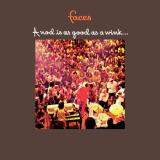
Released in 1971, 'A Nod Is as Good as a Wink...to a Blind Horse' is Faces' most commercially successful album, now available on standard black vinyl. When the record originally released it reached the Top 10 in both the UK and US charts. 'A Nod Is as Good as a Wink...to a Blind Horse' features the Faces' signature rock and roll sound, including the enduring hit "Stay with Me." With a perfect balance of raucous party anthems and heartfelt ballads, the album showcases the band's formidable songwriting and is a testament to their powerful, collaborative chemistry.
erscheint voraussichtlich am 09.01.2026

2026 Repress
The clergy is pleased to introduce you to a new initiate: Birds ov Paradise. This highly anticipated Hypnus debut comes split into three separate EP's which will be released one each full moon starting October.
Some of you may be acquainted with the music of Birds ov Paradise already as he's put out two stellar records on Jens and Aniara Recordings in 2016-2017, as well as making a contribution to our podcast series The Memoir where his sound was put on a grand display. Those of you who are new to the fantastic dream world of this very talented artist will quickly get lost in the flowing rhythms that drives his magical deep techno sound.
Early support from Etapp Kyle, Ness, Slam, Iori, Refracted, Svreca, Cio D'Or and Dorisburg to name a few.
Bestelle jetzt und wir bestellen den Artikel für dich beim Lieferanten.

Belgian sitar player Nicolas Mortelmans will release his second album, titled "SPACE". For these recordings, he went into the studio with Roland van Campenhout, Stef Kamil Carlens, Tim Vanhamel and Simon Segers. The result of this encounter is a raw and honest record in which all the music is improvised. With this album, Nicolas returns to his roots and experiments with psychedelic rock, ambient, funk, and jazz. Expect an intense meditative and explosive listening experience.
Bestelle jetzt und wir bestellen den Artikel für dich beim Lieferanten.

Supergroups existed before Emerson, Lake & Palmer formed in 1970. And, as we all know well, many came after. But few, if any, matched the English trio’s chemistry and its elevated combination of virtuosity, vision, and verve. Having influenced a multitude of followers, ELP’s prowess was obvious from the start. The band’s self-titled debut stands as a towering statement of creative imagination, execution, and discipline more than five decades after its original release.
Mastered at MoFi’s California studio, housed in a Stoughton jacket, and pressed at Fidelity Record Pressing, Mobile Fidelity’s numbered-edition 180g 33RPM LP of Emerson, Lake & Palmer presents the benchmark album in audiophile sound. Clear, dynamic, and balanced, this collectible edition honors the perfectionist approaches that both informed the playing and recording of the record.
Distinguished with black backgrounds, this reissue brings to light the epic scope, tonal depth, and mind-bending degrees of musicianship on display. Aspects — textures, nuances, effects, melodies, tempo changes — that go hand-in-hand with the trio’s compositions and interplay are rendered amid broad soundstages and delivered with pinpoint detail. Whether you’ve owned multiple copies of this touchstone or seeking out your first version, you’ll relish the presence, separation, imaging, and crispness that help make every song come across as if the group has set up shop in your listening space.
Opening the door to the seemingly infinite possibilities of progressive rock while steering clear of excess, Emerson, Lake & Palmer achieved a rare feat in that its complex, cerebral music didn’t prevent it from attaining mainstream success. The gold-certified effort launched the career of a band that would sell tens of millions of records. It also landed a Top 50 single in the form of the ballad “Lucky Man,” whose vocal harmonies, folksy strumming, multi-tracked instrumentation, and breakthrough Moog solo almost feel quaint in the face of the other fare on the album.
Comprised of genre-defying originals and hybrid arrangements of two classical pieces, the album Rolling Stone originally and rightly said is “best heard as a whole” matches outrageous ambition with the otherworldly skills of three musicians who remain among the finest to ever pick up their respective instruments. While Emerson soon drew the lion’s share of headlines for his ability on keys — clavinet, Moog, piano, Hammond organ, and pipe organ included — Greg Lake’s aptitude on guitar and bass, along with well as Carl Palmer’s monster talents behind the kit, created a three-headed hydra that devoured everything in front of it.
That extends to the radical reinterpretation of Bela Bartok’s “The Barbarian” that begins the LP, a performance that in less than four-and-a-half minutes runs the gamut from distorted to churchy to angular and blustery. More classical flourishes, keyboard wizardry, hard-rock heaviness, and gothic signatures emerge throughout “Knife-Edge,” which reimagines music by Leos Janacek and J.S. Bach — and ultimately invites you to explore a cathedral of sound teeming with separate bursts of keys and percussion.
And did someone say “drumming”? Check out Palmer’s monster salvo on “Tank,” a rhythmic showcase that marches out with knee-bent notes and mirror-reflected passages. Or dive into the mythological suite “The Three Fates.” Replete with three parts and Emerson playing the pipe organ at Royal Festival Hall, it shoots off sonic fireworks via sophisticated arpeggios, jazz improvisations, dancing counter-meters, sizzling chords, and a few explosions. Please don’t hold anyone at MoFi responsible if your system cannot handle it; this is heady stuff.
Indeed, everything on Emerson, Lake & Palmer is there for a purpose. Whether you aim to attempt to dissect all of the notes, shifts, and polyrhythmic bluster or just want to absorb this album as one living, breathing organism, this version invites you to do both as many times as you desire.
Der Artikel ist noch nicht erschienen. Du kannst den Artikel jetzt vorbestellen, dieser ist nach Wareneingang für dich versandbereit.

More Tea Chest treasures, this time all girl bands, with Joe Meek at the controls
This series of releases has been a huge seller as the quality is superb and there are unreleased tracks, alternate takes and studio chat.
Der Artikel ist noch nicht erschienen. Du kannst den Artikel jetzt vorbestellen, dieser ist nach Wareneingang für dich versandbereit.

James Brown wants to know one thing before he and his band begin Sex Machine. “Can I get into the thing, really?,” he asks. His cohorts enthusiastically respond in the affirmative. And for the next hour and change, Mr. Dynamite gets into it and more, turning in a sweat-soaked, feet-moving, hip-swiveling, emotion-purging, in-the-red, drop-everything-you’re-doing-and-dance performance for the ages. Ranked by Rolling Stone among the 500 Greatest Albums of All Time, the sweeping 1970 effort towers as a testament to Brown’s inimitable legacy as well as the peak powers of his voice, vibrancy, and bands.
Sourced from the original master tapes, pressed at Fidelity Record Pressing, and housed in a Stoughton gatefold jacket, Mobile Fidelity’s numbered-edition 180g 33RPM 2LP set presents Sex Machine in audiophile sound for the first time. It explodes with the energy the lightning-strike music demands. Dynamic, immediate, present, airy: Everything from the brassiness and fluidity of the horns to the snap and decay of the snare to the swell and carry of the organ comes across in full-range perspective.
Then there’s Brown’s superhuman singing, which here emerges with a purity, naturalism, and transparency that ensure you feel everything. Screeching, shouting, pleading, moaning, preaching, stinging, commanding, testifying, crooning, humming: The Godfather of Soul contributes one of the finest vocal performances known to man. This definitive 55th anniversary reissue of Brown’s monster funk statement further exhibits a combination of clarity, solidity, separation, and imaging that helps bring to light what he and his crack ensembles committed to tape. Both in the studio and on the stage.
Just how lifelike does this reissue sound? Senior Mobile Fidelity Sound Lab engineer Krieg Wunderlich, who handled the remaster, notes: “There were some artifacts that sounded a bit like mistracking. But they turned out to be breath blasts on the vocal microphone. That is part of history. JB was workin' hard, and breathin' hard. And there was an edit the timing of that was truly strange. Again, a part of history.”
Originally marketed as a live album, Sex Machine contains six songs recorded in the studio and later overdubbed with canned crowd noise and reverberation. Save for “Low Down Popcorn,” the tracks on the latter half stem from a phenomenal performance captured in October 1969 at Bell Auditorium in Brown’s adopted hometown of Augusta, GA. The special relationship between the singer, the audience, and the location is palpable.
As the 1960s gave way to a new decade, Brown experienced immense success and dealt with unexpected change. Soul Brother Number One soon expanded his idea for an official live album captured in Augusta when the ensemble that backed him on that date morphed into the original version of the world-famous J.B.’s just months after the show. The virtuosic abilities, sticky chemistry, and rhythm-forward nature of the J.B.’s prompted him to book a one-off session in Cincinnati, OH, on a late July night.
Anchored by brothers William “Bootsy” Collins and Phelps “Catfish” Collins, the group — as well as two different drummers — laid down a nearly 11-minute rendition of “Get Up I Feel Like Being Like a Sex Machine” and a thrilling medley of “Bewildered,” “I Got the Feeling,” and “Give It Up or Turnit a Loose.” A pair of then-recent studio singles cut in separate locations in 1969, “Brother Rapp” and “Low Down Popcorn,” each featuring his prior group, took care of the second LP worth of material that complements the originally planned live set.
Complicated? Somewhat. Unusual? Definitely. But just as he elevated the expectations for all present and future R&B artists, Brown not only makes it all work. He makes it positively electrifying.
“Get Up I Feel Like Being Like a Sex Machine” is alone deserving of a dissertation on the art of funk music, seeing it moves up and down akin to an oil derrick, witnesses Brown unleashing a trademark series of grunts, squeaks, and “good god” asides, and glides to a hypnotic groove that won’t quit. Or look to the syncopated rhythms of “Brother Rapp (Part I and Part II),” one of multiple pieces here that signify the point where Brown began viewing every instrument as a percussive tool. Brown closes the three-song medley with his new band with a skedaddling “Give It Up or Turnit a Loose,” which provides jolts on the order of sticking your finger into a socket.
Not that the actual live material falls short in any way. Setting an insistent tempo for the vitality that follows, “I Don’t Want Nobody to Give Me Nothing” positions Brown as a role model, leader, and self-sufficient entrepreneur. All simmer and boil, the short and sweet “Licking Stick” dares you to keep pace. The floating, almost comforting “Spinning Wheel” spotlights the instrumental prowess of Maceo Parker and company, and functions as a seamless segue into the tender, horn-saluted “If I Ruled the World.”
And Brown and his mates still aren’t done. Just try to resist the one-two closing punch of “I Can’t Stand Myself (When You Touch Me)” and “Mother Popcorn.” Mercy.
Ain’t it funky? Sure ‘nuff.
Bestelle jetzt und wir bestellen den Artikel für dich beim Lieferanten.

American Nightmare's "Year One" collection on 180 gram vinyl for its 25th anniversary. Available again for the first time in decades. Originally released in 2001, the Boston hardcore band’s 25th anniversary release of "Year One" pays tribute to their formative years. This collection unites their first two 7”s, originally released by Bridge 9 Records founder and then-roommate Chris Wrenn, on a 180-gram LP, with all tracks recorded by Kurt Ballou at God City. Originally designed by Jake Bannon (Converge), this edition has been reimagined by Del Jae (Futurismo Records) and singer Wesley Eisold, and comes packaged in a gatefold with an insert of handwritten lyrics and collaged images. "Year One" doesn’t just celebrate a milestone; it reaffirms American Nightmare’s enduring legacy. Their music raised the bar for emotional depth in hardcore, adding a distinctly poetic and existential lyrical approach that set them apart and changed the rules of the scene, paving the way for countless bands that followed
erscheint voraussichtlich am 26.12.2025

Teddy is the accumulation of past projects. Swims stands for: someone who isn’t me sometimes, a reference to Teddy’s struggle to integrate the different parts of himself. For Teddy, the goal is to break barriers and bring people together. About the project, Teddy says, “There are no categories, no stereotypes, no statistic is a definite number. Until we learn to see every person as an individual, we will never truly reach unity.”
Bestelle jetzt und wir bestellen den Artikel für dich beim Lieferanten.

Khaoz Engine first album on vinyl ever !!!
"Use your shoes they said !"
10 tunes for the dancefloor ! The one you gonna dig with you feets while dancing !
Khaoz Engine is a very free open minded musician : able to press with underground italian labels (Mechanical Brain) or french crazy labels (Karnage) or big time PRSPCT or scotish Motormouth... As well he totally influenced by the Rebelscum/Deathchant crew.
Please welcome his first album !
And its graphist Ultraflex.
! 300 Limited copies !
As usual cut by Simon Davey
Pressed at Records Industry...
For the best hit combo !
Bestelle jetzt und wir bestellen den Artikel für dich beim Lieferanten.
