quête:the far east

Genres
Tout
Cho Co Pa Co Cho Co Quin Quin - Tradition LP
  • 1: Chichibu - 秩父
  • 2: Watatsumi - ワタツミ
  • 3: Cuba - キューバ
  • 4: 15 Eunomia
  • 5: Gandhara - ガンダーラ
  • 6: Sora Tobu Tokyo - 空飛ぶ東京
  • 7: Ātman - アートマン
  • 8: Tradition
  • 9: Moon Dance
  • 10: Kayohnenka - 花様年華
  • 11: Quarantine Mood
  • 12: Ryukyu Boogie Woogie - 琉球ブギウギ

Japanese acid pop outfit Cho Co Pa Co Cho Co Quin Quin channel the globe-trotting spirit of Haruomi Hosono’s 1970s tropical boogie on their debut album, Tradition.

Named after one of the basic rhythms of Cuban folk music and drawing on influences from across the globe, Cho Co Pa Co Cho Co Quin Quin are quite simply a world unto itself.

Comprised of three childhood friends, Daido, Yuta and So, who reconnected during the coronavirus pandemic, Cho Co Pa initially emerged as a playful way for the three 23-year-olds to pass the time. Tapping into their youthful connection, they created a sound that exudes confidence and curiosity, a homage to the masterful world of YMO’s and Happy End’s Haruomi Hosono, rooted in the trio’s own idiosyncratic experience of the present.

Recorded at home and promoted on hugely popular DIY TikTok videos, their debut album Tradition is a technicolour exercise in armchair travelling – a kind of lockdown exotica for the housebound whose nostalgic flights of fancy are laced with a sense of whimsical melancholy for the lost freedoms of youth.

Referencing everything from Afro-Cuban percussion to lo-fi beats, Buddhist spirituality to trap, each member of the band brings different musical inspirations to the table. Latin American and Middle Eastern styles sit adjacent to a fascination for the electronic music of Aphex Twin, Dorian Concept, Underworld and Daft Punk. At times, the music verges on acid pop bliss, at others, it grooves with the instrumental funk sensibility of BADBADNOTGOOD.

“In the first place, when I create a song, my goal is to transport the listener to a mysterious place,” vocalist Daido explained in a recent magazine interview. Using lyrics as another sonic texture in the composition of ideas, Cho Co Pa paint beguiling sonic postcards of far-flung moods across 12 highly original tracks.

Marrying the organic and the electronic on rhythmically sophisticated compositions like ‘Chichibu’ and ‘Watatsumi’, it is on the album’s standout track ‘Gandhara’ that the experimental sound of Cho Co Pa comes to the fore. Referencing the ancient city of Gandhara through which Buddhism made its way from India to China, the track is a vocoder-trap-inspired, Udu drum-driven pop jam that lilts with unmistakable Balearic flair. If that’s difficult to imagine, then know simply that ‘Gandhara’ sounds like nothing else on this side of Saturn. Even Daido seemed surprised by the outcome: “I feel like we were able to create something that exceeded our abilities. That was huge!”

Hugely popular in Japan, with festival appearances lined up alongside BADBADNOTGOOD at Asagiri Jam in October, it's safe to say the success of Tradition has taken Cho Co Pa by surprise. You won’t have heard anything like it."

pré-commande23.07.2025

il devrait être publié sur 23.07.2025

ishome - carpet watcher 2x12"

ishome

carpet watcher 2x12"

2x12inchGXD006
GALAXIID
18.07.2025

for the next release on galaxiid, we present "carpet watcher", the long-awaited second album from ishome, the project of russian producer and visual artist mirabella karyanova.

emerging from the far eastern port city of nakhodka, ishome's music has always carried a sense of distance and introspection. her debut album confession (2013) became a cult classic, a fragile, cinematic blend of ambient textures, submerged rhythms and quiet emotion.

carpet watcher was completed in 2018 but remained unreleased until now. like much of ishome's work, it was created with no urgency to be heard, a self-contained world suspended in time. drifting between viscous beats and spectral melodies, the album feels like a memory slowly coming into focus.

from her earliest recordings, mirabella has resisted genre classification. her sound draws from minimal techno, ambient, leftfield pop, outsider art, and the surrealism of soviet-era animation. in her hands, these influences dissolve into something deeply personal, a language of mood and movement rather than style.

beyond the studio, ishome has performed live across europe and russia, including sets at berghain and signal festival, as well as appearances on boiler room and nts. she also creates under the mischievous alias shadowax, where playful chaos replaces introspection. her audiovisual performances, combining original music, iphone-shot footage, digital collage and hand-drawn animation, reveal the full breadth of her artistic vision. dreamlike, humorous and emotionally direct.

ishome rarely releases her music, and when she does, it feels less like a project and more like a postcard from a world she's still wandering through. carpet watcher is the first glimpse into that world in over ten years.

pas en stock

Commandez maintenant et nous commanderons l'article pour vous chez notre fournisseur.


Derniere entrée: 45 jours
Method Man - Street Life

Method Man

Street Life

12inch9010974030652
SECOND RECORDS
05.07.2025
  • Can’t Stop Won’t Stop
  • All My Niggas
  • A Star Is Born
  • Street Education
  • F.a.n.z
  • Descriptions
  • Lay Down
  • Who Want To Rap
  • Let Them Come
  • The O.g. & Young Hustler
  • Thugz Need Love Too
  • Sweetest Pain
  • Shoot On Sight (S.o.s.)
  • Outro: So Calm

Originally released in 2005, Street Education is the explosive debut from Street Life - longtime Wu-Tang Clan affiliate and Method Man’s onstage partner-in-rhyme. Executive produced by Method Man, the album delivers raw street wisdom, classic East Coast grit and features production from Rockwilder, Allah Mathematics, Inspectah Deck and Fantom of the Beats. Tracks like “Can’t Stop, Won’t Stop,” “A Star Is Born,” and “What’s Up”
showcase Street Life’s sharp lyricism and his undeniable chemistry with Method Man.

THIS SPECIAL 20TH ANNIVERSARY EDITION ARRIVES IN
TANDEM WITH THE WU-TANG CLAN’S ENTER THE FINAL CHAMBER FAREWELL TOUR, A GLOBAL EVENT
CELEBRATING THE LEGACY OF ONE OF HIP-HOP’S GREATEST COLLECTIVES.

pré-commande05.07.2025

il devrait être publié sur 05.07.2025

Method Man - Street Life

Method Man

Street Life

12inchMMSLSEME
SECOND RECORDS
05.07.2025

Originally released in 2005, Street Education is the explosive debut from Street Life - longtime Wu-Tang Clan affiliate and Method Man’s onstage partner-in-rhyme. Executive produced by Method Man, the album delivers raw street wisdom, classic East Coast grit and features production from Rockwilder, Allah Mathematics, Inspectah Deck and Fantom of the Beats. Tracks like “Can’t Stop, Won’t Stop,” “A Star Is Born,” and “What’s Up”
showcase Street Life’s sharp lyricism and his undeniable chemistry with Method Man.

THIS SPECIAL 20TH ANNIVERSARY EDITION ARRIVES IN
TANDEM WITH THE WU-TANG CLAN’S ENTER THE FINAL CHAMBER FAREWELL TOUR, A GLOBAL EVENT
CELEBRATING THE LEGACY OF ONE OF HIP-HOP’S GREATEST COLLECTIVES.

pré-commande05.07.2025

il devrait être publié sur 05.07.2025

Method Man - Street Life

Method Man

Street Life

12inchMMSLSESP
SECOND RECORDS
05.07.2025

Originally released in 2005, Street Education is the explosive debut from Street Life - longtime Wu-Tang Clan affiliate and Method Man’s onstage partner-in-rhyme. Executive produced by Method Man, the album delivers raw street wisdom, classic East Coast grit and features production from Rockwilder, Allah Mathematics, Inspectah Deck and Fantom of the Beats. Tracks like “Can’t Stop, Won’t Stop,” “A Star Is Born,” and “What’s Up”
showcase Street Life’s sharp lyricism and his undeniable chemistry with Method Man.

THIS SPECIAL 20TH ANNIVERSARY EDITION ARRIVES IN
TANDEM WITH THE WU-TANG CLAN’S ENTER THE FINAL CHAMBER FAREWELL TOUR, A GLOBAL EVENT
CELEBRATING THE LEGACY OF ONE OF HIP-HOP’S GREATEST COLLECTIVES.

pré-commande05.07.2025

il devrait être publié sur 05.07.2025

RAVIN / BUDDHA BAR PRESENTS - MONTE-CARLO SUMMER SESSIONS LP 2x12"

BUDDHA-BAR SUMMER SESSIONS - MONTE-CARLO BY RAVIN A MUSICAL ODYSSEY TO CELEBRATE SUMMER & THE 15TH ANNIVERSARY OF BUDDHA-BAR MONTE-CARLO Under the starry sky of the Riviera, lulled by the warm breeze, an invitation to travel rises. A beat, a melody... and the mind drifts away. Buddha-Bar, the temple of world music and sonic elegance, celebrates 15 years of magic in Monte-Carlo with an exceptional compilation: Buddha-Bar Summer Sessions Monte-Carlo by Ravin. Conceived as a musical odyssey, this double compilation weaves captivating atmospheres, blending ethereal lounge, organic electro, and world sounds, in an intimate dialogue between East and West, tradition and modernity. Each track (including more than a dozen unreleased tracks) has been carefully selected by Ravin, who creates a captivating and chic experience, a true invitation to dance and escape.

pas en stock

Commandez maintenant et nous commanderons l'article pour vous chez notre fournisseur.


Last In: 3 months ago
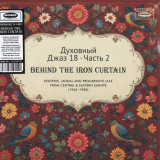
Various - Spiritual Jazz 18: Behind the Iron Curtain PART 2 2x12"

One of the most politically charged terms of the 20th century, the Iron Curtain was a metaphor for political and cultural division. In a post-war telegram Winston Churchill referred to the fault line that ran through Europe between East and West as "an Iron Curtain is drawn down upon their front. We do not know what is going on behind".


In this two-part album, as far as jazz is concerned, we will showcase, describe and celebrate exactly what was 'going on behind'. We see that music is the power supreme, with the ability to transcend all barriers, be they physical, political or metaphorical.


Our liner notes illustrate the complex and contradictory history of Soviet jazz, and the tracks we've chosen cover the key period of the early 1960s to the 1980s. It was during these dark years of the Cold War that the Soviet Union and its satellite states produced a number of outstanding artists playing in a variety of styles. The impact of modernism, from hard bop and Latin to modal and cool jazz, had found its way through cracks in the curtain. The deeply-felt ancestral strains of traditional European folk music were combined with the exciting new and progressive sounds of the West, and a radical, intoxicating brew was created that no amount of guns, tanks or polonium tea could overcome.


We chronicle the triumph of jazz at a time of extreme geopolitical conflict. What went on behind the Iron Curtain in these countries was once mysterious and unknown to the West, but the perseverance of their artists provided sound and light amid the secretive, dark days of the communist-capitalist standoff. There was no end of life-affirming spiritual jazz behind the Iron Curtain.


"Whether it's by improvisation in the African-American jazz tradition, or by a village kobza player standing on top of a damn hill - he feels connected to the stars."

pas en stock

Commandez maintenant et nous commanderons l'article pour vous chez notre fournisseur.


Last In: 4 months ago
SOICHI TERADA - APE ESCAPE ORIGINAPE SOUNDTRACKS IN A BOX (Boxset 4x12")
 
44

4XLP. Hardcover slipcase box. Liner notes from Soichi Terada, Colour: translucent red, clear, blue, and yellow vinyl

It has been 25 years since the release of Saru Get You (サルゲッチュ), known stateside and in the UK as Ape Escape. Ape Escape marked a significant milestone for the PlayStation, as it was the first game to require use of the PlayStation's DualShock (analog) controller. In Ape Escape, the use of the analogue sticks goes beyond camera rotation and acts as an extension of Kakeru's (Spike's) own character, controlling his many gadgets like the stun club, time net, and sky flyer. It's a unique form of control that, really, didn't become popularized until the release of the Nintendo Wii. It feels like a distinctly Japanese design, the sort of off-the-wall design that is either embraced or rejected on a global scale. In Ape Escape's case, the mechanic caught on.

Ape Escape is fast, frantic, and—at times—downright frustrating. Pipo monkeys dash, taunt, and swim away from your advances. They ride water monsters, fly UFOs, and even shoot uzis! Whether it's Kakeru, his friends, or the monkeys themselves, the characters are always running across the levels. This mad dash is enhanced by the game's soundtrack, composed by legendary composer Soichi Terada. As he recalls, the director of the production said, "Spike and his friends always have the image of running." In response, Terada happily produced fast songs with an average speed of over 170bpm. The resulting gameplay and audio is a match made in heaven.

Ape Escape is the first game soundtrack Mr. Terada ever created. The producers of the game heard one of his singles, "Sumo Jungle," and thought his frenetic drum-and-bass (Jungle) would be perfect for the game. The marriage of Ape Escape's charming overworld and Soichi's upbeat compositions is nothing short
of sublime. Especially now, it is difficult to separate the mischievous Pipos and fast-paced action from Soichi Terada's silky smooth synthesizer and heart-pounding bass. Earlier this year (2024), Soichi Terada's Ape Escape work was celebrated by the six-track EP Apes in the Net, which includes music from Ape Escape 1 and 3 (Terada did not compose the series' second installment). The label, Rush Hour Music, has prestigiously championed almost all of Soichi Terada's music, especially his (specifically non-VGM) house, jungle, and drum and bass releases (Sounds from the Far East, Asakusa Light, and more).
Before Apes in the Net, Terada's Ape Escape music was only available on CD, released in Japan around 2010. This release featured reconstructed tracks created by Mr. Terada himself, identical to the music arrangements featured in the game. The biggest difference, of course, was that they were of higher fidelity than was originally available on the PS1 disk format. Completing all of the aforementioned releases is this box set, released by Far East Recording in partnership with Cartridge Thunder and officially licensed by Sony Computer Entertainment. This box set release includes four LPs, housed individually by a hardcover slipcase. This box set includes every song from Ape Escape 1, except those available on Apes in the Net. This box set release also includes one bonus song, previously unreleased anywhere else (including the game itself!).

The music on this box set was meticulously mastered by Justin Perkins of Mystery Room Mastering. Using Mr. Terada's premastered source files, the music was completely and specifically mastered for vinyl. Rounding out the audio is absolutely stunning artwork created by Gobo3D. CT worked with Gobo to recreate some of Ape Escape's most iconic characters, referencing the original Japanese guidebook and other promotional materials. The result is visually delicious 300dpi artwork that takes you straight back to 1999. As uber-fans of the original PlayStation game, Cartridge Thunder and Far East Recording are proud to celebrate Soichi Terada's music and pay our respects to such a legendary PlayStation franchise—on the original hardware's 30th anniversary no less! It's with a happy heart, then, that Far East Recording and CT present to you Soichi Terada's Ape Escape Originape Soundtracks in a Box.

Please note: due to licensing exclusivity, this release does not include tracks previously released on Apes in the Net

pas en stock

Commandez maintenant et nous commanderons l'article pour vous chez notre fournisseur.


Last In: 13 months ago
Horst Krüger Septett - Ich will die Zeit nicht bereuen / Sonderbar 7"

Here comes a very special production from East Germany of the early 70s!
One of the TOP Soul-Jazz & Beat combos in the country led by bassist and singer HORST KRÜGER,
recorded two previously unreleased, outrageously good titles here in the newly formed septet format.
"Ich will die Zeit nicht bereuen" is probably by far one of the most crispy produced German-language soul beat numbers that existed in the GDR at that time! From the pen of Ralf Petersen, the then head of Berliner Rundfunk personally, no pure high-class hit was recorded here, but hard-hitting, rocking beat.
It was not without reason that the choice of the head of broadcasting fell on the recently formed Horst Krüger Septet, which also gave the contemporary jazzy sound a perfect touch through an intensified brass section from 1970 on.
The title "Sonderbar" is exactly what its title promises, peculiar and extraordinary. A feat that was created as such in 1972. This somewhat sweeter SoulJazz vocal piece had a concrete idea, which composers Dieter Kopf, Horst Krüger and Franz Bartzsch as a musical arranger as well as Jens Gerlach in the musical free spirit of the hippiesque era. A through the stylistic device of Repetito in the text
dominant repetition, which is complicated in the context of the ever-evolving theme about feelings and love Groove of bass, guitar, drums and organ theme is reflected, redefined and constantly found again, simply masterfully. An interlude with a flute solo and a groovy dreamy Hammond organ solo at the end of the title, envelops the verses very contemporary.
Horst Krüger on bass guitar and his wife Gerti Möller with her outstandingly distinctive and powerful voice on the microphone.
A must for every fan of early beat, rock and soul!

pas en stock

Commandez maintenant et nous commanderons l'article pour vous chez notre fournisseur.


Last In: 13 months ago
Various - Passion Of The Christ OST

- 180 GRAM AUDIOPHILE VINYL
- PVC PROTECTIVE SLEEVE
- SCORE BY JOHN DEBNEY
- CONTAINS A 8-PAGE BOOKLET
- LIMITED 15TH ANNIVERSARY EDITION OF 500 INDIVIDUALLY NUMBERED COPIES ON TRANSPARENT RED VINYL

Passion Of The Christ (2004), composed by John Debney, is the original score for Mel Gibson's controversial film The Passion Of The Christ. The soundtrack received an Academy Award nomination for Best Original Score and it was on the first place in both Top Christian Albums and Top Soundtracks in 2004. In 2005, the album won a Dove Award for Instrumental album of the year at the 36th GMA Dove Awards.

The soundtrack succeeds as a coherent, moving, well-executed musical statement whether or not has seen the film. The album is a combination of folk instruments, Eastern-tinged harmonics, solo, and choral voices. Debney has used the Indian master violinist and vocalist L. Shankar, and singer/double-violinist Gingger Shankar.

Debney's soundtrack is an interesting and highly recommended work. It will offer those who choose to encounter it a far-reaching and deeply affective listening experience that is as aesthetically beautiful and unsetting as it is evocatively familiar.

Available as a limited 15th anniversary edition of 500 individually numbered copies on transparent red vinyl.

pas en stock

Commandez maintenant et nous commanderons l'article pour vous chez notre fournisseur.


Last In: 13 months ago
Outback - Strangers/Reggie's Thang

An exclusive 7" re-release of this psychedelic funk ballad from Tulsa's "Outback" Band. As featured on Now-Again's 'More Loving On The Flipside' compilation, "Strangers (In Our Homeland)" epitomises the expression of social & political change during an era of psychedlia infused music. In partnership with the two surviving members of Outback, both Symphonical & Now-Again are proud to showcase the voice of independent artists.

----------

The origin of "Outback" dates back to the late 50s, a five-piece blues outfit named "Little Lo and the Rest of Us" included music educator & bass guitarist Edward "Cha-Cha" Cherry, saxophonists Eugene "Buggy" Roach & James "Flab" Farley whom, alongside drummer Roscoe J. Dabney III "Roach", Ronnie Wilson on trumpet, guitarists Roy "Rochester" Walker & Michael Collins, would form The Magnificent Seven, the house band for Tulsa's 'Rose Room'.


Alumni of Booker T. Washington High School, The Magnificent Seven influenced & set the standard for the Tulsa sound, as demonstrated through their only single, recorded in 1966, the two part 'Pluck-A-Pluck'. 'The Sevenettes', the groups' female vocal trio, included the rotation of Lena Luckey Wilson, Gwendolyn French, Rose Brewer Lewis, Jeanetta Williams & Maxayn. The Magnificent Seven, led by "Cha-Cha", toured nationally throughout the 60s with their infectious, raw R&B sound, and were the platform for many of Tulsa's talent including Ronnie & Charlie Wilson who would later create the GAP Band.


Roscoe J. Dabney III, the first Black Panther to establish the Tulsa chapter in 1969 known as the NCCF (National Committee to Combat Fascism), proposed the name change to "Outback" in the early 70s. Their sound & formation was changing from R&B to Psychedelic, from the grit to the phase, epitomised by their unique line-up of having two bassists playing simultaneously, both Reggie Cherry & "Chilly" Willie Lewis, the musical foundation to their only recorded single, "Strangers (In Our Homeland)" & "Reggie's Thang".


Song writer & band affiliate, Maurice Pope, produced the lyrics to "Strangers (In Our Homeland)" and handed over the musical attributes to Willie Lewis & Outback to convey his message, as sung by Lena Luckey Wilson. Dabney recalls the song is based on religious scriptures, whilst highlighting the parallel of Black slavery in the U.S.


"Reggie's Thang", written by Dabney's cousin, bassist Reggie Cherry, provides a psychedelic instrumental, a sound which Lena recalls is what set apart Outback from other Tulsa groups. As well as playing clubs, the seated shows provided an environment for the group to showcase their musicianship to those who wanted to be immersed & listen.


Their single, released on Empathy, was recorded in 1972, and are the only known recordings by Outback. Recorded live onto 8-track at a studio located at on East Pine St in the heart of Tulsa's Black community, an independent & unknown studio located on a strip mall.


The Outback members who recorded are:


Lena Luckey Wilson - Vocals

Roscoe J. Dabney III "Roach" - Drums

"Chilly" Willie Lewis - Bass

Reggie Cherry - Bass

Edward "Cha-Cha" Cherry - Keys

Joyce Daws - Trumpet

Roy Walker "Rochester" - Guitar

Robert Luckey "Uncle Bobby"- Percussion

Fredy Berry "Freddy" - Tenor Sax


Band leader & group manager: Edward "Cha-Cha" Cherry

Booking Agent: Ernie Fields Sr.

In 1973 whilst performing in Ft. Worth, TX, Buck Ram approached Willie Lewis backstage and invited him to join The Platters, Lewis accepted. Supposedly, a recording deal was offered to Outback in exchange, which never happened.


The group continued in various formations after Lewis left, however as an integral member, the feeling never equalled their original form and soon after dissolved.


Leon Russell approached Lena Lucky Wilson in 1974 to go on tour with the GAP Band as their backing singer, upon returning Tulsa Lena moved to Los Angeles to pursue her musical career with Leon & Mary Russell amongst various others.


Dabney continued music and became a TV producer & director in 1976.


The only surviving members of Outback today are Lena Luckey Wilson & Roscoe J. Dabney III.

pré-commande11.04.2025

il devrait être publié sur 11.04.2025

Various - ECHOES OF ITALY – THE BIRDS OF PARADISE – EARLY 90S HOUSE VIBES VOL.2 (2x12")

Googling “paradise house”, the first results to pop up are an endless list of European b&b’s with whitewashed lime façades, all of them promising “…an unmatched travel experience a few steps from the sea”. Next, a little further down, are the institutional websites of a few select semi-luxury retirement homes (no photos shown, but lots of stock images of smiling nurses with reassuring looks). To find the “paradise house” we’re after, we have to scroll even further down. Much further down.

It feels like yesterday, and at the same time it seems like a million years ago. The Eighties had just ended, and it was still unclear what to expect from the Nineties. Mobile phones that were not the size of a briefcase and did not cost as much as a car? A frightening economic crisis? The guitar-rock revival?! Certainly, the best place to observe that moment of transition was the dancefloor. Truly epochal transformations were happening there. From America, within a short distance one from the other, two revolutionary new musical styles had arrived: the first one sounded a bit like an “on a budget” version of the best Seventies disco-music – Philly sound made with a set of piano-bar keyboards! – the other was even more sparse, futuristic and extraterrestrial. It was a music with a quite distinct “physical” component, which at the same time, to be fully grasped, seemed to call for the knotty theories of certain French post-modern philosophers: Gilles Deleuze, Félix Guattari, Paul Virilio... Both those genres – we would learn shortly after – were born in the black communities of Chicago and Detroit, although listening to those vinyl 12” (often wrapped in generic white covers, and with little indication in the label) you could not easily guess whether behind them there was a black boy from somewhere in the Usa, or a girl from Berlin, or a pale kid from a Cornish coastal town.

Quickly, similar sounds began to show up from all corners of Europe. A thousand variations of the same intuition: leaner, less lean, happier, slightly less intoxicated, more broken, slower, faster, much faster... Boom! From the dancefloors – the London ones at least, whose chronicles we eagerly read every month in the pages of The Face and i-D – came tales of a new generation of clubbers who had completely stopped “dressing up” to go dancing; of hot tempered hooligans bursting into tears and hugging everyone under the strobe lights as the notes of Strings of Life rose up through the fumes of dry ice (certain “smiling” pills were also involved, sure). At this point, however, we must move on to Switzerland.

In Switzerland, in the quiet and diligent town of Lugano, between the 1980s and 1990s there was a club called “Morandi”. Its hot night was on Wednesdays, when the audience also came from Milan, Como, Varese and Zurich. Legend goes that, one night, none less than Prince and Sheila E were spotted hiding among the sofas, on a day-off of the Italian dates of the Nude Tour… The Wednesday resident and superstar was an Italian dj with an exotic name: Don Carlos. The soundtrack he devised was a mixture of Chicago, Detroit, the most progressive R&B and certain forgotten classics of old disco music: practically, what the Paradise Garage in New York might have sounded like had it not closed in 1987. In between, Don Carlos also managed to squeeze in some tracks he had worked on in his studio on Lago Maggiore. One in particular: a track that was rather slow compared to the BPM in fashion at the time, but which was a perfect bridge between house and R&B. The title was Alone: Don Carlos would explain years later that it had to be intended both in the English meaning of “by itself” and like the Italian word meaning “halo”. That wasn’t the only double entendre about the song, anyway. Its own very deep nature was, indeed, double. On the one hand, Alone was built around an angelic keyboard pattern and a romantic piano riff that took you straight to heaven; on the other, it showcased enough electronic squelches (plus a sax part that sounded like it had been dissolved by acid rain) to pigeonhole the tune into the “junk modernity” section, aka the hallmark of all the most innovative sounds of the time: music that sounded like it was hand-crafted from the scraps of glittering overground pop.

No one knows who was the first to call it “paradise house”, nor when it happened. Alternative definitions on the same topic one happened to hear included “ambient house”, “dream house”, “Mediterranean progressive”… but of course none were as good (and alluring) as “paradise house”. What is certain is that such inclination for sounds that were in equal measure angelic and neurotic, romantic and unaffective, quickly became the trademark of the second generation of Italian house. Music that seemed shyly equidistant from all the rhythmic and electronic revolutions that had happened up to that moment (“Music perfectly adept at going nowhere slowly” as noted by English journalist Craig McLean in a legendary field report for Blah Blah Blah magazine). Music that to a inattentive ear might have sounded as anonymous as a snapshot of a random group of passers-by at 10AM in the centre of any major city, but perfectly described the (slow) awakening in the real world after the universal love binge of the so-called Second Summer of Love.

For a brief but unforgettable season, in Italy “paradise house” was the official soundtrack of interminable weekends spent inside the car, darting from one club to another, cutting the peninsula from North to centre, from East to West coast in pursuit of the latest after-hours disco, trading kilometres per hour with beats per minute: practically, a new New Year’s Eve every Friday and Saturday night. This too was no small transformation, as well as a shock for an adult Italy that was encountering for the first time – thanks to its sons and daughters – the wild side of industrial modernity. The clubbers of the so-called “fuoriorario” scene were the balls gone mad in the pinball machine most feared by newspapers, magazines and TV pundits. What they did each and every weekend, apart from going crazy to the sound of the current white labels, was linking distant geographical points and non-places (thank you Marc Augé!) – old dance halls, farmhouses and business centres – transformed for one night into house music heaven. As Marco D’Eramo wrote in his 1995 essay on Chicago, Il maiale e il grattacielo: “Four-wheeled capitalism distorts our age-old image of the city, it allows the suburbs to be connected to each other, whereas before they were connected only by the centre (…) It makes possible a metropolitan area without a metropolis, without a city centre, without downtown. The periphery is no longer a periphery of any centre, but is self-centred”.

“Paradise house” perfectly understood all of this and turned it into a sort of cyber-blues that didn’t even need words, and unexpectedly brought back a drop of melancholic (post?)-humanity within a world that by then – as we would wholly realise in the decades to come – was fully inhuman and heartless. A world where we were all alone, and surrounded by a sinister yellowish halo, like a neon at the end of its life cycle. But, for one night at least, happy."

pas en stock

Commandez maintenant et nous commanderons l'article pour vous chez notre fournisseur.


Derniere entrée: 32 jours
Robot84 - Promo Vol 5

Robot84

Promo Vol 5

12inchR84005
Robot 84
10.03.2025

Robot84 is a master of blending Italo disco and Balearic house into perfectly escapist sounds for grown-up dancefloors and now he returns with Promo Vol 5, another vital drop in his celebrated limited edition vinyl series. This one has four more standout tracks including the lead 'Let's Do It' (Vocal) and its dub counterpart, 'Let's Do It' (Dub) alongside the Balearic-inspired 'Beats From the Far East' (which has already been hammered by the likes of Bill Brewster, Chris Coco and Colleen 'Cosmo' Murphy) and the more calming sonic waters of the blissful 'Ambient Love'.

pas en stock

Commandez maintenant et nous commanderons l'article pour vous chez notre fournisseur.


Last In: 14 months ago
Soul Supreme & Jay Mumford - 9th Wonder / Crown Ones
  • 01: 9Th Wonder
  • 02: Crown Ones

Amsterdam-based keyboardist, producer, arranger and DJ Soul Supreme reached out to NYC drummer Jay Mumford in 2021 to lay the down groove on his re-imagining of Q-Tip and J-Dilla's "Let's Ride". That paved the way for future collaborations: a cover of A Tribe Called Quest's "Award Tour (We Gettin' Down)" and two tunes on Soul Supreme's Poetic Justice LP. But when the pair began doing brief covers of their favorite funk, jazz and hip-hop tunes on Instagram just for fun, followers of both musicians - and often, the covered artists themselves - began to take note. Two of those 20+ covers were particularly well-received, and the duo decided to answer the peoples' call for a 7" release with the songs pushed to their full potential. Similar to "Award Tour" and "Let's Ride", a hip-hop classic and a fan favorite are pushed to their full potential here. This installment goes coast to coast and explores Digable Planets' "9th Wonder" (the "East" side) and People Under the Stairs' (PUTS) "Crown Ones" (the "West" side).

The iconic synth intro of "9th Wonder" makes way for Jay's thunderous ode to a slowed down Clyde Stubblefield groove. Sure to be a favorite with DJs, Jay eventually detours into a syncopated New Orleans funk break, before getting back to the groove for Soul Supreme's funky wah wah clavinet work. Throughout, the arrangement expands beyond both that of the original and all of its DNA. The addition of cascading horns (featuring a trumpet solo by Lourens van der Zwaag) and a second, more aggressive break from Jay bring it back full circle, completing a modern update of a classic that manages to pay homage to '70s jazz-funk, breakbeats and '90s hip-hop - all while staying both modern and raw.

Diehard PUTS fans will recognize Soul Supreme's catchy Rhodes line as soon as the needle drops, but Jay's heavy funk groove quickly separates it from the original and takes it from hip-hop cover to heavy funk tune. Soul Supreme's Rhodes solo pushes it far beyond the confines of instrumental funk as the groove intensifies, while his chops as an arranger are on full display: his horn parts - featuring van der Zwaag, trombonist Olav Schloorlemmer and Job Chajes' Contra-Alto Clarinet that channels The Headhunters - counter his synth melodies in a discussion that completes the record as a heavy slice of uncut jazz-funk.

pré-commande21.02.2025

il devrait être publié sur 21.02.2025

Lloyd Miller - Near And Far East
  • 01: Japan - Sakura
  • 02: China - Ch&Apos;Un Chiang Hum Yüeh Yeh
  • 03: Viet Nam - Lúu Thuy
  • 04: Viet Nam - Co La
  • 05: Laos - Ramayana Prelude
  • 06: Cambodia - Rop Koh
  • 07: Thailand - Khmersayok
  • 08: India - Karpagame
  • 09: Afghanestan - Flute Melody
  • 10: Iran - Seh Gah
  • 11: Turkey - Amen Avci Vurma Beni
  • 12: Iraq - Hakimi

Vinyl Only / Heavyweight Vinyl / Original Glued Prints tip-on by hand on Thick Cardboard 700 gram / 2 Separated parts handily gluing / PVC Outer Sleeve / Insert sheet Q&A with Lloyd Miller by Tony Higgins / Handcrafted silk-screen "Lloyd Miller 1938/2024" on Vintage paper with 100% natural "Persian Blue" color.

Personnel:
Manucher Paydar - Tar Drum
Lloyd Miller - Dulcimer Santur, Oud, Shamisen, Dhol, Tabla
Marilyn Miller - Flute
Tú Trinh Dàm - Voice
Dusdi Siwi Jarn - Voice

Notes:
Made with the intention of exploring and experiencing the various musical and cultural perspectives of a territory as vast as that of Persia, "Near And Far East" is a significant historical document that transcends the restrictive concept of territory but rather inhabits a space of absolute time. The album's content is not just window into faraway places, but a leap into the times and cultures that have now been swallowed up by the incessant movement of globalization and capitalism. Listening to it is turning your ear into the true musical culture of countries whose rapid change has eliminated the cultural peculiarities at their roots. Inspired by his long journeys in Iran, Lloyd Miller takes us on a journey through the instruments and sounds of a time, giving us his interpretations of a musical world that was - and that now remains - an historical document for future explorers who are curious about the mysterious musical arts of the middle and far east. Certainly a holy grail for samplers and loopers who can find exotic panoramas here! (Tony Higgins)

pré-commande14.02.2025

il devrait être publié sur 14.02.2025

Lloyd Miller - The Middle East

Comes with an insert with exclusive pictures and condensed interview about the serie with Lloyd Miller made in March 2022 printed on 300 gram Favini "Remake" paper, plus exclusive goodies!

Personnel:
Manucher Paydar - Tar Drum
Lloyd Miller- Drum (Zarb), Lute (Oud), Lute (Kamanche), Lute (Sehtar)
Marilyn Miller -lute
Jan Otterstrom - Guitar
Stan Wood - Percussion
Anna Claire Eastmond - Vocals

Notes:
The second and last chapter of Dr Miller's journey between cultures and its uses, which began with "The Far East", dissected and looked into the root of the sound of distant Asia, continues with this new chapter dedicated instead to the countries bathed by the Mediterranean and contiguous to Central European history. From Spain to Arabic sounds, a new compendium that takes us back to other places and times, Dr Miller is once again able to dissect and encapsulate sounds and spices from distant places and spaces in a time machine. Thanks to these historical documents, we have the opportunity to discover feelings that are impossible to find 50 years later, sucked up and watered down by globalization and social capitalism.

pré-commande14.02.2025

il devrait être publié sur 14.02.2025

Matthew Halsall - When The World Was One LP 2x12"

When The World Was One is something of a companion piece to Matthew Halsall’s 2012 album Fletcher Moss Park (much of the music was written at the same time) but draws more explicitly on Halsall’s love of spiritual jazz and Eastern music as well as his own studies in meditation and travels in Japan. Beautifully recorded at Hasall’s favourite studio, 80 Hertz in Manchester, and engineered by Brendan Williams and George Atkins it features the recording debut of Halsall’s large ensemble, The Gondwana Orchestra, which utilises the exotic flavours of harp, koto and bansuri flute and Eastern scales to create a global palate for Halsall’s life-affirming sounds.

pas en stock

Commandez maintenant et nous commanderons l'article pour vous chez notre fournisseur.


Last In: 15 months ago
Various - ECHOES OF ITALY - ARTISTS IN WONDERLAND – EARLY 90S HOUSE VIBES VOL.1 LP 2x12"

Volume 1 of this expertly curated project of 90s Italian House - put together by Don Carlos.

If Paradise was half as nice… by Fabio De Luca.

Googling “paradise house”, the first results to pop up are an endless list of European b&b’s with whitewashed lime façades, all of them promising “…an unmatched travel experience a few steps from the sea”. Next, a little further down, are the institutional websites of a few select semi-luxury retirement homes (no photos shown, but lots of stock images of smiling nurses with reassuring looks). To find the “paradise house” we’re after, we have to scroll even further down. Much further down.

It feels like yesterday, and at the same time it seems like a million years ago. The Eighties had just ended, and it was still unclear what to expect from the Nineties. Mobile phones that were not the size of a briefcase and did not cost as much as a car? A frightening economic crisis? The guitar-rock revival?! Certainly, the best place to observe that moment of transition was the dancefloor. Truly epochal transformations were happening there. From America, within a short distance one from the other, two revolutionary new musical styles had arrived: the first one sounded a bit like an “on a budget” version of the best Seventies disco-music – Philly sound made with a set of piano-bar keyboards! – the other was even more sparse, futuristic and extraterrestrial. It was a music with a quite distinct “physical” component, which at the same time, to be fully grasped, seemed to call for the knotty theories of certain French post-modern philosophers: Gilles Deleuze, Félix Guattari, Paul Virilio... Both those genres – we would learn shortly after – were born in the black communities of Chicago and Detroit, although listening to those vinyl 12” (often wrapped in generic white covers, and with little indication in the label) you could not easily guess whether behind them there was a black boy from somewhere in the Usa, or a girl from Berlin, or a pale kid from a Cornish coastal town.

Quickly, similar sounds began to show up from all corners of Europe. A thousand variations of the same intuition: leaner, less lean, happier, slightly less intoxicated, more broken, slower, faster, much faster... Boom! From the dancefloors – the London ones at least, whose chronicles we eagerly read every month in the pages of The Face and i-D – came tales of a new generation of clubbers who had completely stopped “dressing up” to go dancing; of hot tempered hooligans bursting into tears and hugging everyone under the strobe lights as the notes of Strings of Life rose up through the fumes of dry ice (certain “smiling” pills were also involved, sure). At this point, however, we must move on to Switzerland.

In Switzerland, in the quiet and diligent town of Lugano, between the 1980s and 1990s there was a club called “Morandi”. Its hot night was on Wednesdays, when the audience also came from Milan, Como, Varese and Zurich. Legend goes that, one night, none less than Prince and Sheila E were spotted hiding among the sofas, on a day-off of the Italian dates of the Nude Tour… The Wednesday resident and superstar was an Italian dj with an exotic name: Don Carlos. The soundtrack he devised was a mixture of Chicago, Detroit, the most progressive R&B and certain forgotten classics of old disco music: practically, what the Paradise Garage in New York might have sounded like had it not closed in 1987. In between, Don Carlos also managed to squeeze in some tracks he had worked on in his studio on Lago Maggiore. One in particular: a track that was rather slow compared to the BPM in fashion at the time, but which was a perfect bridge between house and R&B. The title was Alone: Don Carlos would explain years later that it had to be intended both in the English meaning of “by itself” and like the Italian word meaning “halo”. That wasn’t the only double entendre about the song, anyway. Its own very deep nature was, indeed, double. On the one hand, Alone was built around an angelic keyboard pattern and a romantic piano riff that took you straight to heaven; on the other, it showcased enough electronic squelches (plus a sax part that sounded like it had been dissolved by acid rain) to pigeonhole the tune into the “junk modernity” section, aka the hallmark of all the most innovative sounds of the time: music that sounded like it was hand-crafted from the scraps of glittering overground pop.

No one knows who was the first to call it “paradise house”, nor when it happened. Alternative definitions on the same topic one happened to hear included “ambient house”, “dream house”, “Mediterranean progressive”… but of course none were as good (and alluring) as “paradise house”. What is certain is that such inclination for sounds that were in equal measure angelic and neurotic, romantic and unaffective, quickly became the trademark of the second generation of Italian house. Music that seemed shyly equidistant from all the rhythmic and electronic revolutions that had happened up to that moment (“Music perfectly adept at going nowhere slowly” as noted by English journalist Craig McLean in a legendary field report for Blah Blah Blah magazine). Music that to a inattentive ear might have sounded as anonymous as a snapshot of a random group of passers-by at 10AM in the centre of any major city, but perfectly described the (slow) awakening in the real world after the universal love binge of the so-called Second Summer of Love.

For a brief but unforgettable season, in Italy “paradise house” was the official soundtrack of interminable weekends spent inside the car, darting from one club to another, cutting the peninsula from North to centre, from East to West coast in pursuit of the latest after-hours disco, trading kilometres per hour with beats per minute: practically, a new New Year’s Eve every Friday and Saturday night. This too was no small transformation, as well as a shock for an adult Italy that was encountering for the first time – thanks to its sons and daughters – the wild side of industrial modernity. The clubbers of the so-called “fuoriorario” scene were the balls gone mad in the pinball machine most feared by newspapers, magazines and TV pundits. What they did each and every weekend, apart from going crazy to the sound of the current white labels, was linking distant geographical points and non-places (thank you Marc Augé!) – old dance halls, farmhouses and business centres – transformed for one night into house music heaven. As Marco D’Eramo wrote in his 1995 essay on Chicago, Il maiale e il grattacielo: “Four-wheeled capitalism distorts our age-old image of the city, it allows the suburbs to be connected to each other, whereas before they were connected only by the centre (…) It makes possible a metropolitan area without a metropolis, without a city centre, without downtown. The periphery is no longer a periphery of any centre, but is self-centred”.

“Paradise house” perfectly understood all of this and turned it into a sort of cyber-blues that didn’t even need words, and unexpectedly brought back a drop of melancholic (post?)-humanity within a world that by then – as we would wholly realise in the decades to come – was fully inhuman and heartless. A world where we were all alone, and surrounded by a sinister yellowish halo, like a neon at the end of its life cycle. But, for one night at least, happy.

pas en stock

Commandez maintenant et nous commanderons l'article pour vous chez notre fournisseur.


Derniere entrée: 32 jours
Shinichiro Yokota - Pitstop Box Lp 6x12" Boxset

WRWTFWW Records is in a state of total bliss as it announces the release of the Pitstop Box compiling all 24 tracks from Japanese house music pioneer Shinichiro Yokota’s two acclaimed albums Do It Again and Again (2016) and I Know You Like It (2019). The collection, available on vinyl for the first time ever, is presented as six 45rpm-cut 12inches housed (!) in a superb slipcase box set created by Lopetz, designer, illustrator, typographer, and co-founder of Swiss graphic design studio Büro Destruct. Included as bonuses are two sticker sheets.

Previously only available on CD in Japan via cult electronic label Far East Recording, Shinichiro Yokota’s album discography finally gets a long overdue vinyl release in the form of a limited-edition box set housing (!) six 12inches and a total of 24 songs showcasing the house legend’s celebrated sound. With a production style drawing from a rich blend of funk, hip hop, electronic, and Japanese influences, Yokota’s music is loved for its simplicity, its hypnotic quality, and, most importantly, its SOUL – homegrown 90s soulful melodic club music…pure love!

The Pitstop Box, full of dancefloor treasures and sprinkled with downtempo gems, not only defines Yokota’s personal journey but also resonates as an essential contribution to the house genre and Japanese music in general. It includes his house hits (“Right Here Right Now”, “Night Drive” and the list goes on), a cover of “Simoon” by Haruomi Hosono’s Logic System, and a collaboration with his longtime partner and electronic music hero Soichi Terada.

Shinichiro Yokota began his musical history in Tokyo, inspired by electronic music giants such as Yellow Magic Orchestra and Kraftwerk. He co-founded Far East Recording with the great Soichi Terada (who also worked with WRWTFWW for the Omodaka compilation) in 1990. After releasing the now highly sought after Far East Recording album with Terada in 1992 (from which his viral hit “Do It Again” is from), he took a hiatus from music and, most notably, brought his passion for sports cars to the next level by launching Night Pager, a company he started with his wife, specializing in tuning sports cars and modifying limiters for competition racers. It’s this side of Yokota’s life which has inspired the design of the Pitstop Box. He triumphantly came back to music with the album Do It Again and Again in 2016, consisting of unreleased 90s recordings as well as new material, and followed it up with I Know You Like It in 2019. His work has influenced generations of producers, and has expanded Japanese house music's reach on the global stage. Experience it on vinyl now.

Full unadulterated pleasure forever - from night drives to dancefloors.

pas en stock

Commandez maintenant et nous commanderons l'article pour vous chez notre fournisseur.


Last In: 16 months ago
Secret Boyfriend - Listener's Guide LP

Secret Boyfriend

Listener's Guide LP

12inchENMB-16
enmossed
Release unknown

“My introduction to “noise” came from a record shop in Lake Worth, Florida ran by a musician named Kenny 5. Kenny had left Detroit sometime in the mid nineties and had begun selling used records and CD’s from the downtown strip of this tiny southern Florida city in a humble shop sandwiched between a deli and a dog grooming business. Kenny previously was on labels like Amphetamine Reptile and timeSTEREO, and the records and videotapes that would be on repeat at his shop were a vast sonic expanse that spoke to the eclecticism of his experience as a touring musician participating and adjacent to American noise culture through the early to late 90’s. In 1998, I was eleven years old and I would order a pizza with him and watch VHS tapes of Japanese noise and deathmatch bootlegs, as well as any other sonic and subcultural rarities that far outstripped my age to comprehend (notably the RRR “Journey Into Pain” compilation and various Vanilla Tapes videos). This widecast net of information formed an introduction to a reality that did not fall deaf on me, but it took many years later for me to reorient the specific freedoms of what this dense and cathartic sound culture had imparted on my life and would continue onward to.

What does this have to do with this selection of choice recordings from the Secret Boyfriend catalog for the enmossed label? For the uninitiated, Secret Boyfriend is the long running moniker of Ryan Martin, North Carolina musician and label proprietor of the Hot Releases imprint. For over a decade from this writing I have watched Secret Boyfriend, and Hot Releases by extension as a curatorial and archival effort, embodying the multiplanal capacity that noise loosely functions from as an umbrella ideology and formalist avenue for sound creation. For anecdotal purposes, from (before) 2006 until roughly 2023 the East Coast of the United States showcased a vibrant network of eclectic regional festivals that saw wide swaths of artists addressing and negotiating the notion of what qualified “noise” from a conceptual and ideological perspective. Some festivals honed in on particularities in aesthetics and tropes, and others had a kind of “catch-all” implementation that allowed for a salvation of the sort of alienated and singular artistry that was amassing throughout these territories. While clear guidelines had been set from regional predecessors as to how noise with a capital “N” should maneuver, Secret Boyfriend is emblematic in the spirit of fluidity that was either implicitly coupled to the notion of the genre, or grew to evolve towards or devolve from.

Within Secret Boyfriend performances, I have seen and admired a mirroring from a ravenous appreciator of this culture at large back towards itself. Typical of a Secret Boyfriend set is an interchangeable narrative arc wherein blistering feedback laden scrap metal improvisations are forayed into naive ambient or “pop” songs, or skipping CDs, or mixer feedback play, or delayed Roland 707 drum workouts all at once and in a unique hegemony. Secret Boyfriend's stylistic mastery of each endeavor is at once an homage to a history of loving listening and enacting, while a brave step into the realm of actualizing the unique fluidity of his own practice. In performance and the action of network engagement, Secret Boyfriend operates a survey of that which he sought to hear and that which he cultivates around his work. His operations are mirrors, and the project (alongside his other peers) is a reflection on the ethos of his time.

Conversely his recording practice narrows in on these moments and allows for a different kind of intimacy or alienation for the non live listener. This record of selected “pop songs” (let's call them that) is particularly poignant at a time when the culture Martin mirrors is at a strange crossroads with itself. The aforementioned festival networks necessarily change and shift. The onlookers become the artists, the artists find new horizons, and the spaces for these cycles fade into locales of a distant memory. It seems, from my perspective, that audiences currently yearn for a more bottlenecked experience, searching for some ontologically vetted manifestation of an idea, of a sound and less for an experience that functions in opposition to our collective banalities. This makes sense in the face of general global catastrophism that plagues us. We need certainty of what something is somewhere, don’t we? Noise as an idea has expanded and contracted to so many iterations of itself it is hard to tell what it even is, and it is particularly difficult to identify in the absence of solid network activations a moment to reflect on its own complexities and nuances. In the face of so much change, I argue that the language of noise culture at large has on one hand become increasingly didactic and predictable, and laughably inclusive and non linear on the other. Probably has always been this way, but now we are in the midst of a moment of extreme access and indexicality, which somehow cauterizes expansion and naivety and chance.

This record highlights the Secret Boyfriend that obscures didacticism by highlighting output that opens up for more challenging catharsis and emotive signal processing. It provides an entry to the materialism of a cultural field full of ecstatic complexity and beautiful inconsistency. In these muted moments Secret Boyfriend has given us over his career we have an argument for evolving languages that further challenge our notions of what is supposed to happen and how it is supposed to be presented. In his more song oriented expansiveness, we can punctuate the ability to think in new modalities. Listening to these recordings reminds me of the polarity of sitting in the record store as a kid and understanding that His Name Is Alive is on 4AD and (gasp!) timeSTEREO. This trite early impression that nothing is really as different as our imaginations might want them to be, and that we can do whatever we want mostly within the creative realms we work through is an important filter to look through Secret Boyfriend as a project and a vessel. If we can achieve abandon and vulnerability through our artistic endeavors, then we have a sound model for, maybe, new potentialities. If that’s too much projection, or just complete liberal bullshit, I am fine with that. Secret Boyfriend's oeuvre at best offers us moments of reprieve to ponder these complexities, or at least a moment to zone out on a drive through North Carolina Highway 54.

You have one pocket of life that you must do whatever you want to inside of. Secret Boyfriend does it affectionately, in a variety of forms, and always with deep sentimentality. These recordings are a wonderful set of songs to begin further investigation from. Thank you Ryan for allowing as many avenues as possible to continue a broad cultural exchange and conversation that intersect and refract while being the kind of artist that is brave enough to not phone in the effort.”

- Nick Klein , May 2024

pré-commande

Cet article n'a pas encore été publié. Vous pouvez pré-commander le produit maintenant.

SILHOUWAVES - RIPPLES LP

Silhouwaves

RIPPLES LP

12inchZEL10
ZEL ZELE
20.12.2024
  • Ascension
  • Ripples
  • Gentle Days
  • Rider Of The Starlight
  • Beautiful Chaos
  • Faraway Dance
  • Mysterious Anything
  • Shine
  • Prologue To Infinity

Zel Zele are thrilled to announce the debut album of silhouwaves. "ripples" is a solo project of London based Turkish multi-instrumentalist and producer Bora Dayanikli. Ripples is a DIY, guitar led album performed using a combination of pedals, drum samples and Bora"s elevating poetic vocals. At its core silhouwaves loops his guitar into infinity and creates a sentimental space echoing the mysteries of space and time. Ripples is inspired by 70s kraut, prog and psychedelic music. There are surprising eastern riffs throughout the album with kozmiche effects. Loops to ponder, edgy drum samples and perfectly produced modern vocal lines bring in a wow factor to the album. It feels like an old recording with a modern vocal edge.

pré-commande20.12.2024

il devrait être publié sur 20.12.2024

Arpeggio Jazz Ensemble - Le Le LP

Recorded in the 1980's and snapped up upon arrival in Europe by the Soho Boho's, Acid Jazzuals,Cuboppers, Jazz Massivists and Mojo Jazzmuziker, "Le-Le" by The Arpeggio Jazz Ensemble is a unique one off Spiritual Soul-Jazz outing with Avant Garde touches and more than a hint of Afro-Cuban Orientalism.

The percussion drenched title track has that special Worldwide Sound and the Cool Jazz Get Down Groove of "Wet Walnuts and Whipped Cream" is a DJ's delight, whether played over the Airwaves or to a crowded Dancefloor.

An adventurous jazz outfit that has been playing around Philadelphia since its formation in 1979. The Ensemble was founded by Warren Oree, an acoustic bassist, producer and composer who continues to lead the band. Eclectic and far from predictable, on this album the Ensemble has embraced a variety of acoustic and electric jazz styles combining them with African and Middle Eastern influences and mixed together with the "New Thing" have managed to make a timeless underground classic.

pas en stock

Commandez maintenant et nous commanderons l'article pour vous chez notre fournisseur.


Last In: 16 months ago
Werner Durand, Amelia Cuni & Uli Hohmann - Clearing LP

In addition to the unique musical proposals and the large body of work that they have developed separately, Amelia Cuni and Werner Durand have been performing together as a duo as well as in collaborations (Tonaliens, Born of Six) for more than 20 years. Fusing her Indian Raga singing in the Dhrupad style with his minimalist and experimental approach, they have expanded the reach of their soundworlds as well as proposed new paths for contemporary music.In this occasion, Uli Hohmann joins them in a range of hand drums from the Middle East and North Africa, plus a dulcimer-sounding hammered guitar. Durand's various self-made wind instruments, soprano sax, and blown kalimba shine along with Cuni's astounding vocals, which are sometimes sung through a mirliton (a medieval type of kazoo). Clearing is the trio's first published recording.

Seconds of Thirst, recorded in one session at Uli´s studio in Bavaria in early 2014, is truly a conjuring where distinctive balances come to gather. A deep drone unfolds patiently in a hypnotic manner, comprised by Werner's characteristic PVC clarinets, a hammered guitar played by Hohmann, and subtle electronic tones. Above all, Amelia's singing voice, filtered through the mirliton, drifts buzzing along the gradually shifting harmonic waves, meandering through serpentine melodic lines and microtonality.

In the middle pieces, vocals turn into an ethereal multi-layered chorus, an exotic and astonishing instrument pulsing delicate and vaporously, like a gliding silk sail without a mast to bind it. Misty ambiances linger on as the soft atmosphere disperses the weight of undelivered syllables. Just intonation aligns the pan-ney's winds with vocal navigation. Foe to scattering, hurry, and affectation, Clearing's pace has lifted a fog translucent enough to reveal treetops calmly appearing, efficiently condensing damp into definite drops that fall drumming, forecasting what's yonder.

With a condensing sound going from Buddhist morning chants down to Indian festive traditional music, the title track, which closes the album, is the most vibrant of all, permeating a bit of commotion through buzzing drones and galloping percussion. Without disorder, yet without measure. Clearing is therefore this shuttle into the distance, this space that weaves, unites, and tenses the different cords that we are made up of.

When the clouds advance silently, gray, until they become dark in a few minutes, it means that the monsoon is coming. It reaches us without apparent noise, but then resounds in its images, leaving behind lightness, freshness, clarity, and a tremendous luminosity that comes from so far away: from the Himalayas, from so ancient, from Sanskrit, from a sound where the darkness and the divine, where the concrete and the landscape, where the rock and the humidity leave a mark that brings together and ties a sky loaded with new clouds.

pas en stock

Commandez maintenant et nous commanderons l'article pour vous chez notre fournisseur.


Last In: 17 months ago
VARIOUS - YELLOW PRODUCTIONS :BOB SINCLAR & DJ YELLOW (A FRENCH LP 3x12"
 
30

To celebrate the 30th anniversary of bob sinclar"s iconic label, Yellow Productions, step into the catchy world of the french touch with an exceptional and limited boxset with 3 LP vinyl records plus a poster. Discover hits, unreleased nuggets and rare tracks ranging from house to trip-hop, jazz and hip-hop. Discover some of the biggest names on the electronic music scene : Like Dimitri From Paris, Dj Gregory, Kid Loco, Martin Solveig and David Guetta!

pas en stock

Commandez maintenant et nous commanderons l'article pour vous chez notre fournisseur.


Last In: 12 months ago
Don Cherry - Music For Turkish Theater 1970

NEVER-BEFORE-RELEASED RECORDING of the Sensational and Banned Turkish Theater Play by James Baldwin and Engin Cezzar, Istanbul 1970
Licensed by Gökhan Akçura, author of Engin Cezzar's autobiography, who was personally entrusted with the original master tape by Engin Cezzar.

"One of the most shocking and daring plays staged in Turkish theaters was banned by the Istanbul Governorship on February 7, 1970. The ban on the play, which was watched by 30,000 people in 60 days, did not last long." - Turkish Press, 1970

Meticulously restored from the original master tape, remastered and cut by Shawn Joseph at Optimum Mastering, Bristol, UK.
Includes liner notes by Zeynep Oral (James Baldwin's assistant and journalist), Gökhan Akçura, Okay Temiz, and record producer Erinç Güzel (Caz Plak İstanbul).

In 1970, Turkish theater owner Engin Cezzar produced James Baldwin's groundbreaking play about gay relationships in a 1970s Istanbul prison setting. In 1969, jazz musician Don Cherry, visiting Istanbul with Okay Temiz to record an album, reunited with Baldwin and contributed music to the production. The recording session followed extensive discussions and featured performances by Cherry and Temiz, heightening the play's tension.

An unearthed free jazz masterpiece from 1970s Istanbul.

pas en stock

Commandez maintenant et nous commanderons l'article pour vous chez notre fournisseur.


Last In: 17 months ago
Terry Riley - Shri Camel

Terry Riley

Shri Camel

12inchRGM1826
REAL GONE MUSIC
06.12.2024
  • Anthem Of The Trinity
  • Celestial Valley
  • Across The Lake Of The Ancient Word
  • Desert Of Ice

In C and Rainbow in Curved Air get all the ink (inc?), but its own somewhat subtle way, 1980’s Shri Camel, the last of the three brilliant albums Terry Riley recorded for CBS, is every bit as groundbreaking as its hallowed predecessors. Not content to rest on his laurels as a minimalist master, Riley studied with Hindustani classical singer Pandit Pran Nath during the ‘70s; by blending that Eastern influence with his own experiments in just intonation (where tuning is dictated by equal mathematical intervals rather than the “tempered” tuning familiar to Western music), Riley made an album whose shimmering textures (played through a specially modified Yamaha organ) seem to change with one’s own breath or thought, like the reflection of rippling water on rock. And while Shri Camel is far more demanding and ultimately rewarding than any “New Age” recording, one definitely gets the sense that its ever-evolving, ecstatically hypnotic rhythmic and harmonic patterns are massaging the brain’s neural circuitry, leaving one refreshed, relaxed, and, yes, maybe even a little smarter than before listening. First LP reissue and long overdue!

pré-commande06.12.2024

il devrait être publié sur 06.12.2024

Cowardice - Atavist LP 2x12"

  • A1: To The Hilt Of Humanity
  • A2: Cloisters
  • A3: Panicle Of Lowliness (Hawley Bog Hymn)
  • B1: Unforgeable Key
  • B2: Eastern Woodland Reverie
  • B3: Moss Stone
  • C1: Clairvoyance Anxiety
  • C2: The Dimunitive Principle
  • C3: Aphelion
  • D1: Annulment
  • D2: Hall Of Mages

To give you an idea of what the New Jersey, USA band Cowardice sound like, “Atavist” exists somewhere on the spectrum between the sombre strains of Bell Witch and the tormented tones of Body Void, with the first half of the album (“Suzerain”) erring more towards the bleakly melodic style of the former, while part two (“Sentinel”) shifts the focus towards a darker, dirgier approach; somewhere on the edges between melancholic doom and experimental sludge metal. Perhaps inevitably, it’s not quite that cut and dry - the gut-churning grind of “Unforgeable Key” for example, is just as nasty and gnarly as anything found on “Sentinel”, while the desolate disharmonies of “The Diminutive Principle” channel a similarly angst-ridden aura as much of “Suzerain” - but this distinction between the two halves, subtle as it may be, plays a big role in giving the whole album its sense of direction and progression.

And while it is always recommended to listen to the totality of “Atavist” so as to get the most out of it - especially if you’re a fan of the likes of Cavernlight and/or Chained To The Bottom Of The Ocean, both of whom also serve as useful touchstones for any prospective listener - also pay extra attention to the gorgeously gloomy slow-burn of opener “To The Hilt Of Humanity”, the haunting melodies and heaving grooves of the sludge-soaked “Clairvoyance Anxiety” and the morbid majesty of “Hall Of Mages”, as some of the record’s major highlights. Indeed, it’s this last track which will both test your resolve and prove, once and for all, that “Atavist” is more than worth every second you’ve invested into listening to it so far, with every crushing, cathartic chord and ringing, harmonic note… every tortured, suffering snarl and trembling, melancholy melody… coming together over the course of seventeen absolutely massive minutes to demonstrate that, despite its imposing size and intense sound, “Atavist” is nothing to be afraid of. Green and red coloured double vinyl edition.

pré-commande29.11.2024

il devrait être publié sur 29.11.2024

KHANA BIERBOOD - MONOLAM

Khana Bierbood

MONOLAM

12inchGGB-034LP
GURUGURU BRAIN
29.11.2024

Khana Bierbood’s second studio album after their following the release of their debut LP ‘Strangers From The Far East’ in 2019, in 2023, Go (Kikagaku Mayo/Guruguru Brain) joined the band at TMM studios in Bangkok and together they recorded this, their second studio album, ‘Monolam’ (meaning unique in sound and style).

While the album maintains the infectious rock’n’roll charm of their previous offering, it shows a departure toward an even more sublime and groovy psychedelic sound - a sound that pays homage to their passion for the past and their longing for a new cultural renaissance. Lyrically, the songs speak of the life experiences of the band, combined sometimes with stories from Thai movies and dramas, telling tales of love, loss and adventure.

pas en stock

Commandez maintenant et nous commanderons l'article pour vous chez notre fournisseur.


Last In: 18 months ago
Sussan Deyhim & Richard Horowitz - The Invisible Road: Original Recordings, 1985–1990 LP

The Invisible Road: Original Recordings, 1985–1990 compiles an unheard, previously unreleased body of recordings by Sussan Deyhim and Richard Horowitz, dissidents from diametric backgrounds who met during the heady days of Downtown New York in the 1980s. This collection reveals the creative and life partners’ radical shared vision of avant-garde pop in all of its boundary pushing freedom, combining Deyhim’s singular approach to vocalization, Horowitz’s invention of new musical languages, and touchstones of traditional music from around the world, creating a new music that ultimately retains a voice entirely its own. Despite their difference in backgrounds and respective journeys, at the time of their meeting in the early 1980s in New York City, Sussan Deyhim and Richard Horowitz were both products of the search for freedom and understanding (and resultant awakenings) that swept the globe and helped culturally define the late 1960s and 70s. Deyhim, born and raised in Tehran, spent her teens dancing with Iran’s Pars National Ballet company, performing weekly on Iranian national television, and travelling her home country studying with master folk musicians and dancers, before relocating to Belgium and joining Maurice Béjart’s prestigious Béjart Ballet of the 20th Century. Horowitz, born and raised in Buffalo, New York, had spent much of the decade before abroad, first departing for Paris under the shadows of the Vietnam War, where he studied piano, Eastern philosophy, and became entrenched the city’s free jazz scene, playing with the likes of Steve Lacy, Anthony Braxton, and Alan Silva, before embarking south to Morocco where his friendship with Paul Bowles helped cultivate a deep passion for the country’s musical traditions and a shift in his musical practice.


The pair met by chance sometime in 1981 at Noise New York, a small studio on West 34th Street founded by the musician and recording engineer, Frank Eaton, as a utopian creative laboratory that beckoned artists and bands like Arthur Russell, Christian Marclay, Liquid Liquid and Butthole Surfers into its orbit. Both artists had recently relocated to the city, Horowitz having recently released his debut album, Oblique Sequences (Solo Nai Improvisations), on the legendary Paris based imprint Shandar, and fallen in with members of New York avant-garde like La Monte Young, Jon Hassell, David Byrne, and Brian Eno, and Deyhim having begun to more actively incorporate singing into her practice, notably recording a vocal score for choreography she was doing at La MaMa Experimental Theatre.


Initially bonding over a cassette tape of field recordings made by Paul Bowles that had been given to mutual friend and writer Brian Cullman (seeking answers for Ornette Coleman’s question “what is the sound of sound”), their earliest collaboration was documented on Horowitz’s 1981 album, Eros In Arabia, with Deyhim contributing vocals to the track “Queen Of Saba.” Over the coming years, their deep connection would routinely gravitate them into the studio, culminating in the body of recordings that would appear on their 1986 album for Crammed Discs, Desert Equations: Azax Attra. Unknown to nearly all but the artists, laying in wait over the decades on numerous multi-track and stereo reels, DAT tapes, and reference cassettes, were a vast array of recordings made by Deyhim and Horowitz bookending Desert Equations. The 13 pieces represented on The Invisible Road: Original Recordings, 1985–1990 were recorded largely between Noise New York and Daylight Studio in Brussels, during a period that Deyhim describes the partnership between herself and Horowitz’s as seeking a music “free of any specific cultural reference, with a personal musical signature,” blossoming into a body of sonority that embraced the energy of contemporary boundary pushing pop and the avant garde, filtered through their mutual love and study of various musical traditions from across the globe and deep engagement with the ideas and tactics of experimental music.


Undeniably rooted in Horowitz’s study of the North Africa ney and the music of the Berber and Gnawa cultures during his time in Morocco, Deyhim’s deep engagement with the folk traditions of Iran, and the couple’s immersion in the interconnected Downtown underground music scenes, each piece on The Invisible Road offers its own vision creative and cultural hybridity. Deyhim sings in both English and Farsi, as well as a composite tongue that she developed by drawing upon numerous indigenous vocal techniques from around the world, intuitively responding to Horowitz’s simultaneous sound syntax forming and combining a wide range synthetic and acoustic instrumentation, and experimental tape techniques, within a visionary series of free-standing expressions.

pas en stock

Commandez maintenant et nous commanderons l'article pour vous chez notre fournisseur.


Last In: 15 months ago
SKALPEL - RECUT LP 2x12"

Skalpel

RECUT LP 2x12"

2x12inchRLP138
NoPaper Records
15.11.2024

Music from Skalpel's iconic debut for Ninja Tune, reinterpreted by top Polish producers! 

Poland's ambassadors of jazz-inspired electronics invited outstanding local producers of downtempo, dance music, hip-hop, and jazz to remix this album. The result is "Recut," the best remix album in the history of Polish phonography. A record every bit as worthy as the historic original. It’s an extraordinary tale of the past and present of Polish electronic music.


This year marks the 20th anniversary of the release of Skalpel’s debut album, which was released by the famous British label Ninja Tune in 2004. The Polish duo, Marcin Cichy and Igor Pudło, gained international acclaim by venturing into the then lesser-known territory of Eastern European jazz, updating it with electronic tools.
Pitchfork praised the album enthusiastically: „On these tracks, Skalpel smudge the line between organic and electronic effortlessly, like a landscape artist working with charcoal, creating deep nuances of light and shadow that give the work its overall depth. (…)Its rhythmic dexterity and melodic sweep are hard to deny” -
The prestigious The Wire added: "Jazz, breaks, scat shuffles and funky riffs? of the highest standard. This release deserves to see them revered far beyond Poland"

Today, looking back over two decades, this album can be confidently considered a milestone in Polish electronica and a timeless classic of downtempo, nu-jazz, and trip-hop. Thanks to this record, the band also gained worldwide recognition, and their subsequent consistently high-quality albums like "Highlight" and "Origins" continue to attract significant interest.
Skalpel’s debut with Ninja Tune undoubtedly changed the face of Polish music, redefined the perception of the Polish jazz canon, and paved the way for younger creators. "Many of them, on 'Recut,' pay tribute to the enduring legacy of Marcin Cichy and Igor Pudło.
Artists like Magiera, Emade, 1988, Kixnare, Steez, Latarnik, Envee, Pejzaż, Etnobotanika, and others are now recognized names and respected figures in the Polish music scene. Though each of the artists invited by the Wrocław duo has developed their own original style, they find common roots in the duo’s music, on the border between jazz groove, hip-hop ease, downtempo moodiness, or ambient.
The excellent interpretations showcase the incredible potential revealed by Skalpel’s debut material, which continues to inspire new discoveries. This is a record that does not age, still captivates, and continues to inspire and provoke new interpretations.


Let’s RECUT this!!

pré-commande15.11.2024

il devrait être publié sur 15.11.2024

TOXPACK - BASTARDE VON MORGEN

Reissue des sechsten Toxpackers, original aus 2011, endlich wieder auf Vinyl! 2011 veröffentlichten TOXPACK zum 10 jährigen Bandjubiläum ihr Album "Bastarde von Morgen" und danach war nichts mehr wie zuvor für die Berliner: Das Album war Start- und Sprungbrett für den rasanten Erfolg der Band, die seitdem in den vordersten Rängen der Charts mit ihren Veröffentlichungen vertreten sind. Und Fans sind sich einig: "Bastarde von Morgen" ist ein Meilenstein gewesen und ihr wohl bestes Album! Ihr packender Trademark-Sound aus Punk, Hardcore, Rock`n`Roll und einem Hauch Metal, von der Band gerne als East Berlin Street Core (E.B.S.C.) umschrieben, entwickelte sich von Album zu Album weiter und hat ihnen eine zahlreiche und stetig wachsende Fangemeinde beschert. 13 mitreißende Songs, die sofort ins Ohr gehen - und in Refrains gipfeln, die durch die Bank stadiontauglich sind. Textlich schleichen sich Tiefgang und Reife in den als beherzt zupackend bekannten Themenkreis der Band ein. Die bewährte Tradition, befreundete Musiker als Gastsänger ins Studio zu holen, wird mit Roi Pearce von The Last Resort (Heute So, Morgen So) und Paul Shearer von Sheer Terror (E.B.S.C.) fortgesetzt. "Bastarde Von Morgen" wurde von Studiolegende Harris Johns (im House Of Music / Stuttgart und Musiclab / Berlin) produziert, aufgenommen gemischt und gemastert. Unterm Strich steht ein Monolith von einem Album, das von der Punk- über die Streetcore-Fraktion bis hin zu Metal- und Hardcore-Fans und den Freunden harten deutschsprachigen Rocks alle prompt dort abholt, wo sie gerade stehen. Und das ganz ohne einen einzigen Funken Beliebigkeit. Ein sicherer Streetpunk-Klassiker! Seit vielen Jahren auf Vinyl vergriffen veröffentlicht ihr damaliges Label "Sunny Bastards" jetzt eine Collector's Edition Neuauflage auf 180gr. Vinyl in zwei Farben jeweils limitiert auf nur 250 Stück!

pré-commande15.11.2024

il devrait être publié sur 15.11.2024

TOXPACK - BASTARDE VON MORGEN

Reissue des sechsten Toxpackers, original aus 2011, endlich wieder auf Vinyl! 2011 veröffentlichten TOXPACK zum 10 jährigen Bandjubiläum ihr Album "Bastarde von Morgen" und danach war nichts mehr wie zuvor für die Berliner: Das Album war Start- und Sprungbrett für den rasanten Erfolg der Band, die seitdem in den vordersten Rängen der Charts mit ihren Veröffentlichungen vertreten sind. Und Fans sind sich einig: "Bastarde von Morgen" ist ein Meilenstein gewesen und ihr wohl bestes Album! Ihr packender Trademark-Sound aus Punk, Hardcore, Rock`n`Roll und einem Hauch Metal, von der Band gerne als East Berlin Street Core (E.B.S.C.) umschrieben, entwickelte sich von Album zu Album weiter und hat ihnen eine zahlreiche und stetig wachsende Fangemeinde beschert. 13 mitreißende Songs, die sofort ins Ohr gehen - und in Refrains gipfeln, die durch die Bank stadiontauglich sind. Textlich schleichen sich Tiefgang und Reife in den als beherzt zupackend bekannten Themenkreis der Band ein. Die bewährte Tradition, befreundete Musiker als Gastsänger ins Studio zu holen, wird mit Roi Pearce von The Last Resort (Heute So, Morgen So) und Paul Shearer von Sheer Terror (E.B.S.C.) fortgesetzt. "Bastarde Von Morgen" wurde von Studiolegende Harris Johns (im House Of Music / Stuttgart und Musiclab / Berlin) produziert, aufgenommen gemischt und gemastert. Unterm Strich steht ein Monolith von einem Album, das von der Punk- über die Streetcore-Fraktion bis hin zu Metal- und Hardcore-Fans und den Freunden harten deutschsprachigen Rocks alle prompt dort abholt, wo sie gerade stehen. Und das ganz ohne einen einzigen Funken Beliebigkeit. Ein sicherer Streetpunk-Klassiker! Seit vielen Jahren auf Vinyl vergriffen veröffentlicht ihr damaliges Label "Sunny Bastards" jetzt eine Collector's Edition Neuauflage auf 180gr. Vinyl in zwei Farben jeweils limitiert auf nur 250 Stück!

pré-commande15.11.2024

il devrait être publié sur 15.11.2024

BRUNO BERLE - NO REINO DOS AFETOS

Blue vinyl repress

With a voice of pure gold and a startling sensitivity for heartfelt pop songwriting, on No Reino Dos Afetos (In the Realm of Affections), Berle firmly embraces earnestness, through starry-eyed Brazilian love songs, ambient vignettes, warm, home-cooked beats and gentle strokes of MPB genius.

Maceió, the capital of Brazil’s Alagoas state on its sprawling east-coast, is home to pastel coloured colonial houses, white sand beaches and a brilliant young composer, poet and multi-instrumentalist named Bruno Berle.

With a voice of pure gold and a startling sensitivity for heartfelt pop songwriting, on No Reino Dos Afetos (In the Realm of Affections), Berle firmly embraces earnestness, through starry-eyed Brazilian love songs, ambient vignettes, warm, home-cooked beats and gentle strokes of MPB genius.

“It’s an album that was built from my desire to find beauty”, Berle explains - his simple, graceful words mirroring the graceful simplicity in his music. But amongst the simplicity, the compositions, arrangements and productions on No Reino Dos Afetos tingle with nuance and detail.

On the contemporary R&B inspired lead single “Quero Dizer” - produced by Berle and longtime friend and collaborator Batata Boy - the swirling, lo-fi, kalimba and guitar-fronted beat is turned into a feel-good hit by the ingenuity of Berle’s honey-soaked vocal melody.

Powerfully intimate, “O Nome Do Meu Amor” (My Love’s Name) is a guaranteed tearjerker, with Berle’s stunning voice soaring over gently plucked acoustic guitar and the textural flutter of soft movement, as if we hear him writing the song in the moment.

Drawing upon a close-knit, collaborative scene of Maceió artists and musicians, (of which Berle and Batata Boy are vital members), Berle also recorded some of his friends songs on the album, including João Menezes’ “Até Meu Violao”, the album’s beautifully laid back sunshine soul opener, which has all the charm of early-70s João Donato.

Having cut his teeth in soft-rock group Troco em Bala, and more recently finding himself embedded in both Rio and Sao Paulo’s contemporary music scenes - collaborating with the likes of Ana Frango Eletrico, who took the photo for the album cover - No Reino Dos Afetos is as musically diverse as Bruno himself. It’s hazy indie rock (“É Preciso Ter Amor”), calming ambient and field recording (“Virginia Talk”) as well as Berle’s own take on West African High Life (“Som Nyame”).

Instantly recognisable as a truly special artist, Berle’s character fills every corner of the sound, which is unsurprising considering he played most of the instruments.

pas en stock

Commandez maintenant et nous commanderons l'article pour vous chez notre fournisseur.


Last In: 19 months ago
BOLA - VOLUME 7

Bola

VOLUME 7

12inchATFA002LP
Secretly Canadian
20.10.2024
  • Burilbunbol Suma 06:43
  • Makamiba 07:29
  • Yine Ntaripaga 06:59
  • Tivona Vonbubo 06:38
  • Yine Mmema 06:59
  • Tigantabame 06:57
  • Hoyenbesa Nini 06:27
  • Abayetidu Ma 04:17

lp wiBola’s music melds sheer force of spirit with a sound not often heard by ears outside the remote Upper East Region of Ghana. This man who grew up herding livestock in the savannah, far away from the tropical coast and cosmopolitan cities of Accra and Kumasi, has aligned himself with national and international means of expression to transform his hometown sound into something downright avant-garde. His bold fury stems from the kologo—a two-stringed lute with a calabash gourd resonator—and Frafra language vocals, emitted in raspy bursts.

Traditionally, kologo performances occur at pito (local beer made from fermented millet or sorghum) bars, weddings, funerals, festivals or spontaneous jams on the street, which are the environments where Bola honed his craft as a solo musician. In recent years, he came into contact with people like his mentor Guy One who helped him get into the studio to document what is some of the most dynamic music to come out of Ghana since the emergence of hiplife in the mid-'90s.

Volume 7, which came out in 2009, is just one entry in a brilliant series of recordings Bola has released on CD and cassette. Although he employs a traditional instrument and the age-old mode of griot story-telling, Bola embraces elements of up-to-the-minute mainstream Ghanaian music—drum machines, synths, bone-shaking bass. Inspired by pioneering kologo greats like King Ayisoba, Bola has taken a dynamic instrument used by traditional healers and herbalists to sing to god in search of advice and taken it to futuristic heights.

pré-commande20.10.2024

il devrait être publié sur 20.10.2024

RAT BOY - SUBURBIA CALLING LP

Rat Boy

SUBURBIA CALLING LP

12inch205521
Hellcat
04.10.2024

RAT BOY have recorded in Los Angeles with T im Armstrong of Rancid, played festivals as far afield as Japan and China, and toured North America with The Interrupters. Yet for all those globe-trotting adventures, there"s no place you know quite as well as home. That"s the central topic that R AT BOY explore on their upcoming third album "SUBURBIA CALLING", which will be released on October 4th via Hellcat. "SUBURBIA CALLING" sees RAT BOY exploring stories from their roots in Essex. It"s the land of wheeler -dealers and dodgy geezers, and home to nosey neighbours, rowdy clubs and Joey Essex. For readers outside of the UK, it"s the land of Blur, Depeche Mode and The Prodigy: a place not so far outside of east London, but in other ways it"s a world away. And it"s not only an immense font of inspiration for RAT BOY, but the place where ever ything happens for them.. Just outside of Chelmsford sits a converted barn where the band can jump in and be creative whenever the mood takes them - a HQ that is a recording studio, a rehearsal space, an art studio, a storage space and a hangout spot all-in-one. Frontman Jordan Cardy says, "I wanted to sing about Essex. Essex is where we live and when you"ve grown up somewhere you notice things about it. There"s so much to draw on. Essex is really close to London but it"s different in a lot of ways. We"ve got a lot of freedom here, we built a place where we can record and rehearse and hang out, somewhere you wouldn"t be able to have in London." RAT BOY - completed by Liam Haygarth (bass), Harr y Todd (guitar) and Noah Booth (dr ums) - approached the making of the al - bum in unorthodox fashion. They recorded a home demo and a live performance of each song, which were then sent to producer Stephen Street (The Smiths, Blur) to edit together like a tapestry puzzle.

pré-commande04.10.2024

il devrait être publié sur 04.10.2024

RAT BOY - SUBURBIA CALLING LP

Rat Boy

SUBURBIA CALLING LP

Pict-Vinyl205523
Hellcat
04.10.2024

RAT BOY have recorded in Los Angeles with T im Armstrong of Rancid, played festivals as far afield as Japan and China, and toured North America with The Interrupters. Yet for all those globe-trotting adventures, there"s no place you know quite as well as home. That"s the central topic that R AT BOY explore on their upcoming third album "SUBURBIA CALLING", which will be released on October 4th via Hellcat. "SUBURBIA CALLING" sees RAT BOY exploring stories from their roots in Essex. It"s the land of wheeler -dealers and dodgy geezers, and home to nosey neighbours, rowdy clubs and Joey Essex. For readers outside of the UK, it"s the land of Blur, Depeche Mode and The Prodigy: a place not so far outside of east London, but in other ways it"s a world away. And it"s not only an immense font of inspiration for RAT BOY, but the place where ever ything happens for them.. Just outside of Chelmsford sits a converted barn where the band can jump in and be creative whenever the mood takes them - a HQ that is a recording studio, a rehearsal space, an art studio, a storage space and a hangout spot all-in-one. Frontman Jordan Cardy says, "I wanted to sing about Essex. Essex is where we live and when you"ve grown up somewhere you notice things about it. There"s so much to draw on. Essex is really close to London but it"s different in a lot of ways. We"ve got a lot of freedom here, we built a place where we can record and rehearse and hang out, somewhere you wouldn"t be able to have in London." RAT BOY - completed by Liam Haygarth (bass), Harr y Todd (guitar) and Noah Booth (dr ums) - approached the making of the al - bum in unorthodox fashion. They recorded a home demo and a live performance of each song, which were then sent to producer Stephen Street (The Smiths, Blur) to edit together like a tapestry puzzle.

pré-commande04.10.2024

il devrait être publié sur 04.10.2024

Miss Kaninna - KANINNA LP

Off the back of "electrifying" (Rolling Stone) performances across Australia's premier festivals throughout summer, proud Yorta Yorta, Dja Dja Wurrung, Kalkadoon and Yirendali woman & multi-award-winning Naarm/Melbourne-via-lutriwita/Tasmania artist MISS KANINNA is thrilled to announce her internationally-anticipated debut EP KANINNA, out 20 September via Soul Has No Tempo. Spanning hip-hop, rap, R&B and pop with touches of Amapiano, Afrobeats and Middle Eastern influences, the EP features her latest single 'Push Up', plus "the left-right goodnight" (triple j) combo of her debut 2023 singles 'Blak Britney' & 'Pinnacle Bitch' which spurred her meteoric rise with far-ranging support from Apple Radio 1, BBC Radio 6, KEXP, KCRW and triple j, who crowned her with the J Award for Unearthed Artist of the Year 2023.

pré-commande04.10.2024

il devrait être publié sur 04.10.2024

Ron Wood - I've Got My Own Album To Do LP

Ron Wood

I've Got My Own Album To Do LP

12inch0603497824717
Rhino
04.10.2024

Celebrate the 50th anniversary of Ron Wood's debut solo album that blends rock and soul effortlessly. From the fiery 'I Can Feel the Fire' to the introspective 'Far East Man,' each song captivates with its unique energy. With tracks like 'Shirley' and 'Cancel Everything,' this album promises a timeless musical journey that's both soulful and unforgettable.

pré-commande04.10.2024

il devrait être publié sur 04.10.2024

ALUNAH - FEVER DREAM LP

With their third album on Heavy Psych Sounds Records, Alunah have wasted no time in a post-pandemic haze since their last release, balancing being on the European festival circuit alongside touring the UK. However, in a Birmingham rehearsal room away from the outside world, everyday life and online noise, their latest full length "Fever Dream" has been quietly brewing waiting to see the light of day. Forged from a period of extensive jamming and soul searching "Fever Dream" digs into the core of what makes Alunah tick, being in a room together making the music they want to hear. Recorded during the winter of 2024, the atmosphere of the historic Foel Studio allows groove to flow alongside riff, heft and melody in equal measure. The brooding progressive majesty of the title track, the eastern soundscape of "Sacred Grooves" and the doom and roll of "Far From Reality" each highlight the album's ability to surprise and deliver in equal measure throughout the emotive journey of its nine tracks. Let yourself fall deep into the "Fever Dream".

pré-commande27.09.2024

il devrait être publié sur 27.09.2024

Articles par page:
N/ABPM
Vinyl