
pas en stock
Commandez maintenant et nous commanderons l'article pour vous chez notre fournisseur.
Last In: 20 months ago
Commandez maintenant et nous commanderons l'article pour vous chez notre fournisseur.

Backstock
SHAFTY was a house music project made in Italy by Andrea Gemolotto and Ralf. They both can be considered two pioneers of the early italo house scene, Gemolotto already made a big hit
in 1989, Sueno Latino' , and he also won the italian DMC Championship as Cutmaster-G.Antonio Ferrari, aka Dj Ralf , has been a nightclubbing icon for almost 30 years. Since 1987 he has remained a key element of the Italian house music scene, taking his signature style to clubs all over Europe and the world. Deep Inside (Of You)' was the first release on Heartbeat catalogue (1991), and it's now officially repressed by Groovin Recordings (all tracks have also been remastered).
Commandez maintenant et nous commanderons l'article pour vous chez notre fournisseur.

The Keplar label presents the next instalment in a series of reissues from the catalogue of Sasu Ripatti’s seminal Vladislav Delay project. Originally released on Mille Plateaux, the vinyl edition of »Entain« from 2000 omitted two shorter tracks and included all others in an abridged form. With this reissue, the full album as it was pressed on CD is finally made available on vinyl. Besides a new remaster by Kassian Troyer, it was also given new cover artwork by Marc Hohmann that picks up on that of the »Whistleblower« reissue, released in early 2023 by Keplar. This serial visual approach highlights the conceptual continuity between those masterful explorations of the interplay between dub techniques, noise, and repetition.
Ripatti himself had reworked material from 1999’s »Ele« album for the release of »Entain,« which means that it can be considered the debut album proper of his Vladislav Delay project. It saw the Finnish artist aim more vigorously for abstraction than in his earlier releases as Vladislav Delay for labels such as Chain Reaction, which were collected on the iconic »Multila« compilation in 2000; another milestone from his back catalogue that has been reissued by Keplar in recent times. To mark this special occasion, »Multila« will be repressed by Keplar with a new artwork that matches the new design of »Whisteblower« and »Entain«.
»Multila« and »Entain« correspond with each other conceptually as much as they seem to differ on a musical level. The material on »Multila« was clearly indebted to the Berlin dub techno sound, marked by its grainy and at times abrasive sonic aesthetics. From the very first moments of the 22-minute long opener »Kohde« however, it becomes clear that »Entain« takes things further away from the dancefloor, aiming less for physical impact than for intellectual stimulation. A sort of electronic minimal music, it was primarily interested in letting discrete elements freely come into play with one another.
Much like »Multila,« however, »Entain« highlighted the subtle differences embedded in what only feels like repetitive music. Of course the massive bassline and ghostly dub riddims that permeate »Notke« as well as the deconstructed beat at the core of »Ele« still hint at Ripatti’s roots in beat-driven music. However, they also make his artistic transformation audible by turning their sources of inspirations into something entirely unheard of. »Entain« took the dub techno formula further than any other record before it—onwards into the realms of pure abstraction.
Commandez maintenant et nous commanderons l'article pour vous chez notre fournisseur.

Stelios Vassiloudis enters an inspiring new phase as he unveils his sophomore LP All Else Fails available March 25th via Balance Music.
Hailing from Athens, Greece, Stelios Vassiloudis poses a triple threat as a composer, producer and DJ. Having been active in the electronic music scene since the early 2000s he has cultivated his own brand of distinctive ambience reflective of his rich and diverse musical background; transcending the dance floor via an emotional narrative of complex soundscapes, intricate harmonies and hypnotic rhythms. Over the past decade Stelios has released music under various other monikers, yet this new endeavour is his most diligent to date - allowing him to rediscover his love for making music during the process, "I'm more hopeful, inspired and determined than ever before."
Ten years on from the release of his debut LP, Stelios' detail-oriented offerings remain incomprehensibly thought-provoking and thorough with this new album. Noticeably dissimilar to any previous efforts, Stelios consciously took a step back from the pressure of maintaining a steadily flowing supply of functional, club-oriented music and as the world stood still amidst the pandemic, he embraced the opportunity to reconnect and express himself with a broader musical vocabulary. He admits that: "with the world around us seemingly on the fast track to Armageddon, the music ended up being very much reflective of the sadness and helplessness I felt."
All Else Fails is a stimulating odyssey to anyone listening. Harmonically dense, arcadian glistens seep throughout the ten tracks, each complementary to the next. Bask in the wistful iridescence and you won't be disappointed.
Stelios carved his way into electronic music by traversing around the globe as a DJ and performer - performing at intimate underground bars in Beirut, festivals in Miami, after-hours in Tokyo, beaches in Goa and mega clubs in Argentina. Having developed a formidable discography on esteemed labels such as Bedrock, Poker Flat, Ovum, Constant Sound and Darkroom Dubs, among others, Stelios' studio prowess and coveted productions cemented his reputation as a versatile and acclaimed artist. His intense passion and drive for innovation in music serves as the fuel to keep him inspired and relevant, qualities that no doubt ensure his reputation as an artist of the highest calibre, will endure.
Commandez maintenant et nous commanderons l'article pour vous chez notre fournisseur.

After the demise of Denver emo legends, Christie Front Drive, singer/
guitarist Eric Richter moved to Brooklyn and started Antarctica with other
members from the scene - Despite just a few releases to their name they
gathered a large cult following - Originally released as a 2xCD in 1999 on
File 13 Records, 81:03 is an expansive and textured example of
electronic-infused shoegaze music blending the swooning, syncopated
pop of New Order, the dark chill of Pornography-era Cure, the hypnotic
pulse of Underworld, and the guitar harmonies of Ride and For Against
Almost 25 years later, 81:03 still feels fresh; like a modern soundtrack for those
seeking moments of beauty in an increasingly troubled world. Newly remastered
and finally available on vinyl for the first time, Antarctica will appeal to fans of
early Cure, The Church, Washed Out, Tycho, Christie Front Drive, Mineral, The
Gloria Record, etc.
il devrait être publié sur 20.09.2023

We’ve got a special AA-side vinyl release for all Toolroom and Cutting Recs fans with the original UK Edit of the seminal ‘This Brutal House’ from Nitro Deluxe followed, by the 2023 rework from Toolroom’s founder Mark Knight! A release you do not want to miss!
Sat in-between Electro and House genres, Nitro Deluxe’s pivotal record ‘Let’s Get Brutal’ on legendary imprint Cutting Records helped paved the way for the early beginnings of House music as we know it today. A record that has influenced so many of House music’s iconic artists, from being sampled by Kevin Saunderson (aka Good Life) in their huge hit ‘Big Fun’ and most recently, Mark Knight.
An unmistakable record and one that struck a chord in the early career days of label boss Mark Knight, who simultaneously sought to beef up his current sets in 2023 with the magic of those early House records, when the opportunity arose to update this classic Mark straight in. Keeping this new version sentimental to the original, with all those original synth elements included but laid over the top of an up-to-date Tech House groove with a renewed energy, so that today’s floors will appreciate that seminal riff, all over again.
Commandez maintenant et nous commanderons l'article pour vous chez notre fournisseur.

Cover versions of international songs have long thrived in South Africa’s music industry. Often unable to license the original tracks (until the early 90s the result of an international boycott of the country) labels instead hired producers and session artists to re-record them for the local market. Early house music in SA was no different.
When Ron ‘Robot’ Friedman, former bass player for local rockers Rabbitt, was winding down his label On Records in the early 90s, he reached out for new inspiration as the popularity of ‘bubblegum’ disco waned. For one of the label’s final releases he hired young DJ/producer Quentin Foster, obsessed with the new soulful house sound coming out of the US, to take the reins on a studio project dubbed Citi Express.
On Robot’s insistence it included a cover of Stevie Wonder’s ‘Living for the City’ (from 1973’s Innervisions) as the title track. Foster set to work in his home studio, dubbed Tone Def, selecting and re-working other US and UK tracks — ‘It’s Too Late’ (originally released in 1989 by Kelli Sae), ‘Love is the Message’ (influenced by the 70s soul anthem and credited to Gamble & Huff but bearing a closer resemblance to Better Days’ 1990 release written by Steve Proctor), ‘People of The World’ (recorded by Sorell Johnson in the UK in 1990) and ‘Victim of Your Love’ (released in 1990 by Gary Vonqwest as ‘Victim of Love’) — adding some signature South African touches in the process that foreshadow the imminent rise of kwaito. One original composition was added for good measure, ‘Open Invitation’.
The result offers a glimpse into those early days of house, a uniquely South African take on a global sound that still resonates today — reissued for the first time on Afrosynth Records.
Commandez maintenant et nous commanderons l'article pour vous chez notre fournisseur.

When one of South Africa's most sought after trumpet players steps forward after a career alongside the very best in the International jazz scene, you know it's going to be a special record.
Dennis Mpale was one of South Africa's heavyweights. You'll find his name springing up on every important South African jazz record and billing since the 1960's. Chris McGregor's iconic Jazz/The African Sound LP, Abdullah Ibrahim's Dollar Brand, Barney Rachabane in the highly influential ensemble Roots, and early work in house bands appearing alongside Nick Moyake in The Soul jazz Men to name just a few. His trumpet playing had character, an extension of the body and amplifier of that great South African sound.
Leaving South Africa during Apartheid as a strong supporter and member of the ANC, Dennis made London his home, joining the newly established SA Jazz scene and standing in solidarity against the oppressions back in Africa.
Moving between London and South Africa during the 70's and 80's It wasn't till the early 1990's when Dennis finally settled again to make his biggest transition to solo artist, redefining his Jazz past and putting a heavy kwaito infused house slammer on the agenda. 1994s 'Paying My Bills' (a title maybe more appropriate now than it ever has been) is a mighty jazz kwaito house effort: From the heavy synth beat and gorgeous floating solo opener of 'Paying My Bills', to the highly infectious vocal phrasing on thumping house anthem 'Take My Time'. Paying My Bills takes the sensibilities of a jazz maestro and pairs it with one of South Africa's biggest producers Peter 'Hitman' Moticoe, creating the perfect recipe for a certified summer slammer.
Having previously only ever been released on CD, this is the first ever vinyl pressing of the album (hazy early test pressings lurk on a small number of lucky shelves). Vinyl mastering is handled by The Carvery's very own Frank Merritt here in London, with the resulting tracks generously split over 2 discs to fully appreciate the swampy heavy dub bass drolls for full dancefloor effect. It's loud and punchy and makes space for those glorious trumpet improvisations while keeping the synth refrains and heavy bass thumping.
Early plays include resident NTS DJ's and a feature on Palms Trax Radio 1 residency with surely more support to follow.
Commandez maintenant et nous commanderons l'article pour vous chez notre fournisseur.
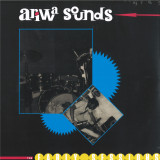
Remastered Reissue des Samplers 'Ariwa Sounds: The Early Sessions' (1984) mit den frühen Produktionen der Reggae/Dub-Legende Mad Professor, aufgenommen zwischen 1979-1981 in seinem Wohnzimmer, kurz bevor die Idee Form annahm, ein Studio und das Ariwa-Label zu gründen. Er lud lokale Musiker zur Zusammenarbeit ein, darunter Errol Sly, Ranking Ann, Sergeant Pepper, Deborah Glasgow, Victor Cross, Sister Audrey und seine Begleitband The Sane Inmates, von denen einige später zu festen Größen ihres jeweiligen Genres wurden. Die LP fängt die rohe Essenz des frühen Sounds von Mad Professor und Ariwa ein.
Commandez maintenant et nous commanderons l'article pour vous chez notre fournisseur.

Death Is Not The End sub-label 333 turns up the gold again with this repro of the much in-demand Flames cut of Nairobi Sisters' Promised Land. Sampled by Q-Tip for "Whateva Will Be" (appearing on ATCQ's final long-player) and on a range of earlier 90s boom-bap era productions, it is not at all hard to figure out why it's a coveted record. That break is as low-slung and funky as it gets, and best showcased on the superbly stripped-back dub on the flip.
The Nairobi Sisters were singers Terrie Nairobi and Judy Mowatt (later of the I-Threes, alongside Rita Marley & Marcia Griffiths). Promised Land was originally recorded together with The Gaytones for Sonia Pottinger's Gay Feet label, with this later version cut for Winston Jones' Brooklyn-based Flames Records. It is issued here under license from producer and songwriter Jones - the original singer and composer of Stop That Train (later made world-famous by Keith & Tex's version) with his Spanishtonians in the early 1960s - who later moved from JA to NYC where he established and ran the Flames label, a core imprint in Brooklyn's reggae scene from the mid-1970s until the early 1990s. 333 has licensed a range of Flames-era productions from the now Texas-based Jones, so keep and eye out for more as it comes... but for now, jump on this before it's gone!
Commandez maintenant et nous commanderons l'article pour vous chez notre fournisseur.

Hattrick Innovations takes dance music seriously, and therefore there's no wonder why they time-travel back to the early 80s in this third release from the label. Here Starcatcher blends the raw edge and all-around synthetic sound which became a popular spin amongst DJ's like Ron Hardy and Larry Levan in the NY and Chicago underground scenes.
This release also showcases two unique styles of dance music from that era, one being italo and the other Hi-Nrg. "Across the Universe" has a stripped back, darker approach while "Space Talk" is more spiritual, uplifting and melodic.
Commandez maintenant et nous commanderons l'article pour vous chez notre fournisseur.

Balishark will be finally out on earth physically, on twelve with a pretty handprinted cover with love. This record is something very special for us, its a bunch of eternal "souvenirs" of smile, light, sun, fun.... with our friend, this beauty man on the back cover, sunbeams filled!! !! ! !
Five songs compose this album, the first one, balishark is a proper "pièce sonore", its a lot of Pierre Sharki's field recordings he did in the wonderland of Balì, they, with Guitos Samba, Jonas Taupe Gun and Grand Matthias fixed a composition from this atmos sound in La Cabane, studio in Lyon. "Jawabarat" is a pure interpretation of west java gamelan rhythm and logic. And the B face are jams only, excerpt from early mornings! A multi world sounds around our friend Guitos Samba :)
Commandez maintenant et nous commanderons l'article pour vous chez notre fournisseur.

Analogue Attic presents the second solo release from label co-founder and one half of Albrecht La'Brooy.
6 stunning compositions to soundtrack your half-time break, or to celebrate the big win, 'There's Always Next Year' is a tribute to the misguided hopes and dreams of a sports fan.
Field recordings and commentary from a range of codes weave between silky saxophone lines and piano chords in what is a textbook showcase of the classic Analogue Attic downtempo and early evening sound we've come to know.
Commandez maintenant et nous commanderons l'article pour vous chez notre fournisseur.

The early days of "Baltimore Club Music" saw it played at popular venues like Club Fantasy, The Ozone, Hammerjack's, and Paradox. DJs Sean Marshall, Marc Henry, Shawn Caesar (at DJs Outlet in Old Towne Mall), Scottie B and Danny Class (at Inner City Records), Technics (at Music Liberated), DJ Patrick (at Sound of Baltimore), and Diamond K and Kenny B (at Electronics & More) all contributed to the mix of hip-hop, house music and homemade beats that made up this new sound. "Booty Mission" (1992) is a creation of Shawn Caesar and Ty "Flex" James and is considered one of the most influential releases, an essential for any Baltimore Club Music fan. It is sure to remain timeless.
Commandez maintenant et nous commanderons l'article pour vous chez notre fournisseur.

Commandez maintenant et nous commanderons l'article pour vous chez notre fournisseur.

Woods are in bloom again, inviting you to disappear into a new spectrum of colors and sounds and dreams on Perennial. Formed in Brooklyn in 2004, Woods have matured into a true independent institution, above and below the root, reliably emerging every few years with new music that grows towards the latest sky. Operating the Woodsist label since 2006 and curating the beloved homespun Woodsist Festival for the musical universe they’ve built, Perennial is the sound of a band on the edge of their 20th anniversary and still finding bold new ways to sound like (and challenge) themselves. Perennial grew from a bed of guitar/keyboard/drum loops by Woods head-in-chief Jeremy Earl, a form of winter night meditation that evolved into an unexplored mode of collaborative songwriting. With Earl’s starting points, he and bandmates Jarvis Taveniere and John Andrews convened, first at Earl’s house in New York, then at Panoramic House studio in Stinson Beach, California, site of sessions for 2020’s Strange To Explain. With a view of the sparkling Pacific and tape rolling, they began to build, jamming over the loops, switching instruments, and developing a few dozen building blocks. The album’s resulting 11 songs, 4 of them instrumental, are in the classic Woods mode--shimmering, familiar, fractionally unsettling--but with the half-invisible infinity boxes of Earl’s loops burbling beneath each like a mysterious underground source. From source to seed to bloom, each loop unfolds into something unpredictable, from the jeweled pop of the aching “Little Black Flowers” to the ecstatic starlit freak-beat of “Another Side.” They are blossomings both far-out and comforting, like the Mellotronic cloud-hopping of “Between the Past,” or sometimes just plain comforting, like the widescreen snowglobe fantasia of the instrumental “White Winter Melody,” touched by Connor Gallaher’s pedal steel. Woods have long used the studio as a place of songwriting, naming 2007’s At Rear House after their shared dwelling and recording space. But Perennial also carries with it an even longer view of Woods. Emerging from the process alongside the music was Earl’s reflection that “perennial plants and flowers are nature’s loops,” an idea rolling under the album’s lyrics like the loops themselves. It certainly applies to the band, too, who have quietly tended to a long, committed project of being a band in the weird-ass 21st century, both individually and communally. Though separated by coasts, the communal sprit carries through Earl, Taveniere, and Andrews’ collaboration, a living embodiment of the freedoms rediscovered every time a new collectively created piece of music emerges. For nearly two decades, Woods have survived subgenres, anchored in the fertile soil below hashtags like lo-fi and freak-folk and psychedelic and indie, and built a shared history that’s something to marvel at. As the flagship band for Woodsist, they’ve accumulated a striking extended family of collaborators (and Woods alum) that have made the label one of the most dependable imprints in the kaleidoscopic low-key underground. It’s a glow that’s transferred whole to the blissed-out Woodsist Fests held in Accord, New York in recent years, which have folded in a wide range of diverse sounds, from the the jazz cosmoverse of the Sun Ra Arkestra and adventurous legends Yo La Tengo, to a hard-to-even-count family tree of contemporaries, like Kevin Morby (who served a few tours of duty as Woods bassist) and Kurt Vile (who released his 2009 debut on Woodsist), a living community in sound. Perennial carries all of this, shaped by decades, but made in the moment, and here right now. The smell of the flowers doesn’t remain, but sometimes the flowers do. Jesse Jarnow Recorded and mixed by Jarvis Taveniere at Panoramic House in Stinson Beach, CA with additional recording at The Ship in Los Angeles, CA and Cottekill Bird Sanctuary in Stone Ridge, NY. Produced by Jarvis Taveniere and Jeremy Earl. Mastered by Timothy Stollenwerk at Stereophonic Mastering in Portland, OR. Jeremy Earl - vocals, guitars, drums, percussion, sk-5, mellotron, vibraphone, autoharp, loops Jarvis Taveniere - guitar, bass, upright bass, hammond, vocals John Andrews - piano, organs, mellotron, drums, vocals Connor Gallaher - Pedal Steel Kyle Forester - sax, wurlitzer
il devrait être publié sur 15.09.2023

Woods are in bloom again, inviting you to disappear into a new spectrum of colors and sounds and dreams on Perennial. Formed in Brooklyn in 2004, Woods have matured into a true independent institution, above and below the root, reliably emerging every few years with new music that grows towards the latest sky. Operating the Woodsist label since 2006 and curating the beloved homespun Woodsist Festival for the musical universe they’ve built, Perennial is the sound of a band on the edge of their 20th anniversary and still finding bold new ways to sound like (and challenge) themselves. Perennial grew from a bed of guitar/keyboard/drum loops by Woods head-in-chief Jeremy Earl, a form of winter night meditation that evolved into an unexplored mode of collaborative songwriting. With Earl’s starting points, he and bandmates Jarvis Taveniere and John Andrews convened, first at Earl’s house in New York, then at Panoramic House studio in Stinson Beach, California, site of sessions for 2020’s Strange To Explain. With a view of the sparkling Pacific and tape rolling, they began to build, jamming over the loops, switching instruments, and developing a few dozen building blocks. The album’s resulting 11 songs, 4 of them instrumental, are in the classic Woods mode--shimmering, familiar, fractionally unsettling--but with the half-invisible infinity boxes of Earl’s loops burbling beneath each like a mysterious underground source. From source to seed to bloom, each loop unfolds into something unpredictable, from the jeweled pop of the aching “Little Black Flowers” to the ecstatic starlit freak-beat of “Another Side.” They are blossomings both far-out and comforting, like the Mellotronic cloud-hopping of “Between the Past,” or sometimes just plain comforting, like the widescreen snowglobe fantasia of the instrumental “White Winter Melody,” touched by Connor Gallaher’s pedal steel. Woods have long used the studio as a place of songwriting, naming 2007’s At Rear House after their shared dwelling and recording space. But Perennial also carries with it an even longer view of Woods. Emerging from the process alongside the music was Earl’s reflection that “perennial plants and flowers are nature’s loops,” an idea rolling under the album’s lyrics like the loops themselves. It certainly applies to the band, too, who have quietly tended to a long, committed project of being a band in the weird-ass 21st century, both individually and communally. Though separated by coasts, the communal sprit carries through Earl, Taveniere, and Andrews’ collaboration, a living embodiment of the freedoms rediscovered every time a new collectively created piece of music emerges. For nearly two decades, Woods have survived subgenres, anchored in the fertile soil below hashtags like lo-fi and freak-folk and psychedelic and indie, and built a shared history that’s something to marvel at. As the flagship band for Woodsist, they’ve accumulated a striking extended family of collaborators (and Woods alum) that have made the label one of the most dependable imprints in the kaleidoscopic low-key underground. It’s a glow that’s transferred whole to the blissed-out Woodsist Fests held in Accord, New York in recent years, which have folded in a wide range of diverse sounds, from the the jazz cosmoverse of the Sun Ra Arkestra and adventurous legends Yo La Tengo, to a hard-to-even-count family tree of contemporaries, like Kevin Morby (who served a few tours of duty as Woods bassist) and Kurt Vile (who released his 2009 debut on Woodsist), a living community in sound. Perennial carries all of this, shaped by decades, but made in the moment, and here right now. The smell of the flowers doesn’t remain, but sometimes the flowers do. Jesse Jarnow Recorded and mixed by Jarvis Taveniere at Panoramic House in Stinson Beach, CA with additional recording at The Ship in Los Angeles, CA and Cottekill Bird Sanctuary in Stone Ridge, NY. Produced by Jarvis Taveniere and Jeremy Earl. Mastered by Timothy Stollenwerk at Stereophonic Mastering in Portland, OR. Jeremy Earl - vocals, guitars, drums, percussion, sk-5, mellotron, vibraphone, autoharp, loops Jarvis Taveniere - guitar, bass, upright bass, hammond, vocals John Andrews - piano, organs, mellotron, drums, vocals Connor Gallaher - Pedal Steel Kyle Forester - sax, wurlitzer
il devrait être publié sur 15.09.2023

BOTANICA is the newly established Japanese label created by DJ/ Producer, Iori Wakasa. It was formed for him to utilize it as a foundation for the realization of his own unique, artistic expression.
And now, he has the pleasure to announce his label’s inaugural title with the release of his own BOTANICA EP.
Born in 1988 in a rural Japanese city surrounded by mountains and the sea with a mild climate, Iori grew up playing RPGs with a father who was a devoted game aficionado. And he was introduced to electronic music through game music from an early age and formed his musical sensibilities through playing the classical piano around the same time.
Influenced by the spirituality and idiosyncrasies of punk rock and ethnic and indigenous music in his youth, also gradually influenced by the Tokyo club scene and the music, it didn't take him long before
he made the choice to start DJing at the age of 17 and soon afterwards, started exploring the path of music production as a form of self-expression.
Iori set up Botanica to convey 2 main concepts of 'presenting music that provides each listener with their own viewpoint' and ‘to construct a fusion between 'nature' and 'man-made objects and human
activity’. Through the experience of traveling around Japan, Europe and Asia and connecting with people of different languages and cultures, he became to appreciate that music transcends all languages and grooves, and the framework in which he would like to shape his perspective and embody it as his way of life is what he envisions as the vital expression for BOTANICA, The two tracks and the artwork included in this first EP are the first steps towards hopefully chronicling the story of the vortex that he resides in now and the new forest that he plans to weave in the future with his label.
'The Pure Land' means in Japanese 'Gokuraku-Jodo (= a space where you can live in bliss)', but in English it is closer to 'utopia' or 'paradise'. However, 'The Pure Land' is a musical work that evokes a
hypnotic and pleasant euphoria through the gradual layering of multiple rhythms and soft particles of spatial sound design. It is also shaped with the aim of liberating the listener and guiding them towards their primal self.
In contrast, 'Lunar Down' expresses the changes that occur in the human state of mind during the extended period from moonrise to moonset especially when the moon sets from its zenith and is completed with a focus on maximum dance floor impact via an inner voice that resonates in the brain that echoes throughout a well-textured bass line and rhythm track.
The artwork for the front cover of this EP was created by SHINOZAKI HILOSHI, an illustrator who has been traveling and painting to express his true way of life that he learnt in the 10+ years of commuting between Tokyo (the end) and the Hawaii Islands (the beginning), and the graphic designer hiro, who stands by Iori`s side as his life partner and as the person who understands him the best. Iori`s first steps are complemented by the label design and art direction by graphic designer hiro, who stands by his side as his life partner and most understanding partner, and the proof is the physical cut, which is presented as the foundation for the future.
Commandez maintenant et nous commanderons l'article pour vous chez notre fournisseur.

Cypress Hill’s self-titled debut album was hard as nails, with very few pop concessions. There was humor, but it was laced by cackling, homicidal sneering. Not well known outside of the hardcore hip-hop scene at first, faces of the three group members weren’t usually shown clearly in press photos; they preferred the shadows. As their first singles began hitting the airwaves and record racks, the press and music fans started to take notice.
From the opening notes of the group’s first single, “The Phuncky Feel One,” to deeper album cuts like “Stoned Is The Way Of The Walk” and “Tres Equis,” it was clear that Cypress Hill was something different. And very, very dope. The world Cypress Hill espoused was gang-ridden and far from cheery, but they managed to laugh through the pain. Lead rapper B-Real took each fuzzed-out, rock-hard DJ Muggs beat as a challenge, jumping around it like a spark off a joint as it makes its way to the concrete. MC Sen Dog always had B-Real’s back, to bring intensity and a no-bullshit gruffness that made the group both menacing and unpredictable.
When they introduced percussionist Eric Bobo to the mix in the early 90s, it brought new dimension to the band, making their live performances one of the most unique and accomplished shows in hip-hop. Journalist and author Chris Faraone highlights the group’s relationship in the reissue’s liner notes (which is included only in limited edition Skull) saying, “By the late ‘80s the undisputed Cypress unit finally formed. B and Sen realized that their diametric styles - the latter’s deep wrangle, the former’s inimitable high notes - complemented one another righteously. By then Muggs had bangers in the bag, as well as industry experience from a jaunt with the New York duo 7A3. B and Sen waited while Muggs messed with 7A3, and in that time began to build the blueprint for their raucous and weeded no-holds-barred style. Besides getting schooled on industry pitfalls, Muggs had also grown into hip-hop’s most formidable young producer, while straddling the bi-coastal gap.”
Cypress Hill’s debut went gold by the end of 1991 and has since pushed past double platinum status, making it the first album for a Latino-American hip hop group to do so. The album received raves from the likes of Rolling Stone and the Los Angeles Times, saw a #1 Hot Rap Single with the release of “The Phuncky One” and helped the band win Artist Of The Year at the 1992 Source Awards. After 25 years, it should come as no surprise that Cypress Hill is a cornerstone of the group’s live set to this day.
Commandez maintenant et nous commanderons l'article pour vous chez notre fournisseur.

The Faithful Brothers
Soul and R&B from Tel Aviv
"It's so difficult to produce the feel and the excitement of the classic northern sound, but The Faithful Brothers were born to do it and they do it so well." Craig Charles, The Craig Charles Funk & Soul Show, BBC Radio 6 Music.
Is there a Northern Soul scene in Tel Aviv? The surprising answer is – yes, there is. If you're a soulie and in town, look for the Tel Aviv Soul Club, and you might find yourself swaying across a talcum-powder covered floor to Tel Aviv's own unique blend of classic Northern Soul 45s and early 1960s R&B sounds.
Chances are that those 45s will come out of the record boxes of one of the brothers Neeman, Johnnie and Bin. Sons of an Israeli diplomat, they travelled abroad extensively as children, in the 1960s and 1970s, discovering the wonderful world of rare soul music on the way. Tel Aviv Soul Club, aka TASC, is the brainchild of Yashiv Cohen, a DJ who, in 2006, lured the brothers Neeman, whose massive soul collections been hitherto confined to their respective living rooms, into playing their records to the Tel Aviv public. Yashiv is also the lead singer of Men of North Country (MONC), a Tel Aviv band with a distinct sound, blending rock, British pop and soul, that has recorded two albums for the London based label Acid Jazz Records, and toured Europe numerous times.
Since Neeman means Faithful in Hebrew, Yashiv woke up one morning with the crystallization that MONC must create a spin-off, a more puristic soul band, called the Faithful Brothers. There the biological Neeman/Faithful brothers would be joined by some of the members of MONC and a few more musical brothers from Tel Aviv to create new, original soul and R&B music. With a nod to the Northern Soul slogan "Keep The Faith", the name seemed too perfect to waste. The fact that the Neeman brothers were collectors, and not musicians, did not bother a man of vision like Yashiv. One day, he sent Johnnie some lyrics he wrote, asking him to compose music for it. Well, Johnnie called Bin, and they met in Johnnie's record room. With Johnnie playing some of the few chords he knew on his dusty old acoustic guitar, out came Teenage Frost, the first-ever musical composition of the Neeman brothers, recorded by MONC.
It took a few more years, but gradually the brothers succumbed to their fate, to continue their musical progression, from collectors to DJs to musicians. Johnnie took his guitar, Bin took to the piano, and the brothers began pouring out some of their influences, creating new songs. It is finally all coming together. The Faithful Brothers – now an eight-piece band, complete with a mighty brass section – release their first album "The Faithful Brothers".
il devrait être publié sur 15.09.2023

Michael Mayer’s IMARA imprint is proud to announce a reissue of German electronica maestro Schlammpeitziger’s second album, Freundlichbaracudamelodieliedgut. Originally released in 1996 by Köln’s A-Musik label, it was the first Schlammpeitziger release to signal to a much wider audience that there was something very special going on in the music of Jo Zimmermann, the mastermind behind Schlammpeitziger. And while he’s subsequently gone on to release a further eight albums for labels like Sonig, Pingipung, and Bureau B, Freundlichbaracudamelodieliedgut is where it really all started for this most singular musician, illustrator and performance artist. Named after the ‘Schlammpeitzger’ or Weather Loach, a fish that breathes through its intestines, moves through substrate, and is surprisingly sensitive to changes in barometric pressure – hence its name – Schlammpeitziger is a similarly remarkable, singular creature.
Like all Schlammpeitziger’s music, Freundlichbaracudamelodieliedgut is overflowing with melody. Using the simplest of set-ups – much of his early music was made with Casio keyboards – Zimmermann magics entire worlds of joy and melancholy. The nine songs here are both rich tributes to the joys of the everyday, and surreal fantasias. “Cosmic Fick” sails out to sea on clouds of taffy and spindrift; “Winterschlafsüßbärentraum” slips and slides around a dream aviary of the mind; the closing “Mango und Papaja auf Tobago” is a diorama spun from springs and Slinkys. Sometimes there are echoes of more peaceable Kosmische music – think Cluster circa Sowiesoso – and both the pacing and the amorphous, tactile textures sometimes recall Chris & Cosey. But Zimmermann’s unique signature is everywhere on Freundlichbaracudamelodieliedgut – simply put, no one else makes music quite as lovely and incandescent as this.
The album’s initial release coincided with an explosion of interest in the music coming out of Köln. This was a unique moment – one where pop, techno, house, ambience, avant-gardism, musique concrete, heavy DSP, and all kinds of other creative phenomena got muddied up in the ‘general jelly’ of Köln’s fast-moving, spirited musical communities. Zimmermann was closely aligned with the music coming out of the A-Musik and Sonig labels – a tightly-knit collection of artists centred around the A-Musik record store, making all kinds of weird and wonderful music, from the electronica of Mouse On Mars to the compositions of Marcus Schmickler, from the electro-acoustics of C-Schulz and Hajsch to the digitalia of FX Randomiz. Zimmermann himself would collaborate with the latter on an album under the name Holosud; friends such as Mouse On Mars and Kompakt’s Reinhard Voigt turned up on Freundlichbaracudamelodieliedgut’s remix EP.
Here, then, is one of the loveliest albums of its era, a pop-electronics album of serious play, one as moistly melancholy as it is melodically riveting. Freundlichbaracudamelodieliedgut is rare beauty indeed.
Michael Mayers Label IMARA ist stolz darauf, eine Neuauflage des zweiten Albums des deutschen Electronica-Maestros Schlammpeitziger, “Freundlichbaracudamelodieliedgut”, bekannt zu geben. Ursprünglich 1996 vom Kölner Label A-Musik veröffentlicht, war es die erste Veröffentlichung von Schlammpeitziger, die einem viel breiteren Publikum signalisierte, dass in der Musik von Jo Zimmermann, dem Mastermind hinter Schlammpeitziger, etwas ganz Besonderes vor sich ging. Obwohl er seitdem weitere acht Alben für Labels wie Sonig, Pingipung und Bureau B veröffentlicht hat, ist “Freundlichbaracudamelodieliedgut” der Ort, an dem alles für diesen einzigartigen Musiker, Illustrator und Performance-Künstler begann. Schlammpeitziger, benannt nach dem “Schlammpeitzger” oder Wetterbarsch, einem Fisch, der durch seine Därme atmet, sich durch den Untergrund bewegt und erstaunlich empfindlich auf Veränderungen im Luftdruck reagiert – daher der Name – ist ebenfalls eine bemerkenswerte, einzigartige Kreatur.
Wie alle Musik von Schlammpeitziger ist auch “Freundlichbaracudamelodieliedgut” voller Melodien. Mit einfachsten Mitteln – ein Großteil seiner frühen Musik wurde mit Casio-Keyboards gemacht – zaubert Zimmermann ganze Welten voller Freude und Melancholie. Die neun Songs hier sind sowohl reiche Hommagen an die Freuden des Alltags als auch surreale Fantasien. “Cosmic Fick” segelt auf Wolken aus Karamell und Gischt hinaus aufs Meer; “Winterschlafsüßbärentraum” schlittert und gleitet durch einen Traum-Vogelkäfig im Geist; das abschließende “Mango und Papaja auf Tobago” ist ein Diorama aus Federn und Slinkys. Manchmal gibt es Echos von friedlicherer Kosmischer Musik – denke an Cluster circa “Sowiesoso” – und sowohl das Tempo als auch die amorphen, taktilen Texturen erinnern manchmal an Chris & Cosey. Aber Zimmermanns einzigartige Signatur ist überall auf “Freundlichbaracudamelodieliedgut” zu hören – ganz einfach, niemand sonst macht Musik so lieblich und leuchtend wie er.
Die ursprüngliche Veröffentlichung des Albums fiel mit einem Aufschwung des Interesses an der Musik aus Köln zusammen. Dies war ein einzigartiger Moment – einer, in dem Pop, Techno, House, Ambient, Avantgardismus, Musique Concrete, Heavy DSP und allerlei andere kreative Phänomene sich in der “Allgemeinen Gelee” der schnelllebigen, lebendigen musikalischen Gemeinschaften von Köln vermischten. Zimmermann stand in enger Verbindung mit der Musik der Labels A-Musik und Sonig – eine eng verbundene Gruppe von Künstlern rund um das A-Musik-Plattengeschäft, die alle möglichen seltsamen und wundervollen Musikrichtungen produzierten, von der Electronica von Mouse On Mars bis zu den Kompositionen von Marcus Schmickler, von der Elektroakustik von C-Schulz und Hajsch bis zur Digitalia von FX Randomiz. Zimmermann selbst würde mit letzterem an einem Album unter dem Namen Holosud zusammenarbeiten; Freunde wie Mouse On Mars und Reinhard Voigt von Kompakt tauchten in der Remix-EP von “Freundlichbaracudamelodieliedgut” auf.
Hier also eines der schönsten Alben seiner Zeit, ein Pop-Electronics-Album voller ernsthaftem Spiel, so feucht melancholisch wie melodisch fesselnd. “Freundlichbaracudamelodieliedgut” ist wahrlich eine seltene Schönheit.
Commandez maintenant et nous commanderons l'article pour vous chez notre fournisseur.

Read any article or comment thread about the Seattle noise-rock outfit GREAT FALLS and you're likely to see descriptors like cathartic, heavy, crushing, and unhinged. Maybe even psychotic. And sure, those are all apt: For over a decade, vocalist/guitarist Demian Johnston and bassist Shane Mehling (who also played together in the early-2000s noisecore band PLAYING ENEMY and the experimental duo HEMINGWAY) have honed their sludgy, overwhelmingly intense brand of heaviness, punctuated by delectably discordant riffs, terrifyingly low, thwacking bass lines, and mesmerizingly tight percussion. In the live setting, too, they’re notorious for a stage presence that is so aggressively confrontational and menacing that Mehling once broke his own arm mid-set.
But the most striking aspect of GREAT FALLS, setting them apart from the murky sea of sludge metal and AmRep-inspired noise-rock bands, is their ability to paint a deeply, utterly human story through an all-out assault on the senses: an art the band has perfected on their fourth full-length album OBJECTS WITHOUT PAIN, out September 15 via NEUROT RECORDINGS.
The album is not only their NEUROT debut, but also the first LP featuring drummer Nickolis Parks (GAYTHEIST, BASTARD FEAST), who joined the band prior to the release of their exhilarating, cacophonous 2023 EP,FUNNY WHAT SURVIVES.
OBJECTS WITHOUT PAIN takes us on a bleak, purgative journey through a separation–a snapshot of the turmoil and indecision that occurs after the initial realization of someone's misery, and before the ultimate decision to end a decades-long partnership. From the foreboding intro riffs of “DRAGGED HOME ALIVE” to the end of the 13-minute closer “THROWN AGAINST THE WAVES,” its eight tracks explore the thoughts that come up when a person is staring down the barrel of blowing up their life: How did this happen? Is it too late for a new life? Will the kid be OK? What will make me happier: familiar torment or unknown freedom?
il devrait être publié sur 15.09.2023
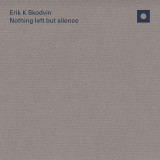
'Nothing left but silence' is Erik K Skodvin’s third solo album for Sonic Pieces and his most quiet to date. Subtitled as "Musical improvisations and quiet collages from the subconscious”, Skodvin reduces his instruments to guitar, reverb and amp - and creates a skeleton of eight hypnotic ragas that meanders in an eternal loop between ephemeral and singular.
Only on the horizon it’s possible to sense that Skodvin has also touched the neoclassical terrain in earlier productions - on Nothing left but silence, however, he acts as a twilight player who is not afraid of the coldness of endless space and who knows how to subjugate the shadowiness of the visible world. Carried by the noise of the amp and the occasional click of the effects pedals, a monolithic, reduced blues emerges, whose mediumistic quality nevertheless reveals that Skodvin's music always comes from the body - and as such is always searching for space. A space that - in this case - blends the vastness of the Norwegian steppe with the brittleness of American wasteland (as if Deathprod and Loren Connors were one and the same person), creating a persistent state between deceleration and absence of presence - that leads Skodvin ever closer to the inner essence of sound.
Initially recorded at Saal 3, Funkhaus, Berlin by Nils Frahm in 2015, the album has itself been subjected to silence as a forgotten relic, re-found and now released in a time where it might connect more with the contemporary state of mind. Welcome to the entrance to the periphery.
il devrait être publié sur 15.09.2023

Rare Montreux festival sessions from 1982.
Live Album by Detroit/Tribe Jazz Icon Reggie Fields.
Featuring an All-Star Line-up.
First ever vinyl reissue.
180g BLACK vinyl limited to 500 copies (w/obi strip) . Non-Returnable.
The Real ShooBeeDoo (AKA Reggie Fields) has always been a consistent name on the Detroit jazz scene … Fields who played with Pharoah Sanders while he was living in Motor City, worked with Sun Ra in the late 1970s and early 80s and who was also a close associate of the Afro-centric TRIBE label and artist collective, leaving his marks on a few essential TRIBE sessions such as Phil Ranelin’s “The Time Is Now!” as well as Ranelin & Wendell Harrison’s masterpiece “A Message From The Tribe”. It was Wendell Harrison who gave Fields the chance to record his landmark solo album (Reminiscing from 1981) to be released on his Wenha imprint. Reggie chose to record under his moniker “The Real ShooBeeDoo” because he built a rock-solid reputation as an internationally acclaimed performer under that name.
In 1982 he embarked on a European tour and performed at various clubs in countries such as Germany, Holland, Belgium, Italy, Switzerland, Luxemburg, France and Norway. This ecstatic touring vibe can later be heard on his fantastic ‘‘Live at Montreux Jazz Festival, 1982” album (simply called ‘Good To Go’).
“Good To Go” which we are proudly presenting you today features 10 tracks consisting of smooth Jazz-rumbas, French avant-garde jazz vocalizations, bass lines that can blow through walls as if they were made from paper, foot stomping rhythmic beats, lyrics that are pure poetry and ecstatic beats that took the crowd on a musical trip that ended in them raving for more. Playing before a large and enthusiastic crowd, Reggie’s spiritual cosmic free-flowing rhythms took the audience by storm…and the stakes were high because the bill was pretty impressive, he shared the stage with some of the biggest names in the genre (the festival bill also included Miles Davis, Dizzy Gillespie and Sonny Rollins).
Also…a quick closer look at the cast of all-star players featured on the album is most likely to be enough to get an impression that this is a very special record. Detroit preferred pianist Earl Van Riper brings his rich musical experience to the table that he perfected during his collaborations with Marcus Belgrave, Eddy ‘Cleanhead’ Vinson, Dinah Washington, Wes Montgomery and countless others. On the tenor saxophone we have Robert Barnes known for his work with Donald Bird…and last but not least we have Tani Tabbal on drums who is famous for his performances and recordings with Roscoe Mitchell and Sun Ra!
All of the above makes this rare album a total must-have that just begs for a prominent place in your record collection.
Tracklist:
Jumping With The Bellboy , Dark Eyes , Qu'est Ceque C’est , Do You Call that Friendship , Oo Shoobee Doo , Crazy She Calls Me , Have You Met Miss Jones , Ye Brac Hareesee , Hit That Jive Jack , Too Late Now
il devrait être publié sur 15.09.2023

Japan has produced some exceptionally talented jazz drummers and among them is Tatsuya Nakamura, who joins the BBE Music J Jazz Masterclass Series with his album ‘Locus’ from 1984, a session covering several bases, from heavy percussive samba to meditative avant-ambient. This is the album’s first ever reissue, although a track from ‘Locus’, ‘¼ Samba’, was included on J Jazz vol. 3. Nakamura began his drumming career as a teenager, inspired after seeing the documentary film “Jazz on A Summer’s Day” and listening to his idols Art Blakey and Miles Davis. By his early twenties, Nakamura was working with such luminaries as free jazz guitarist Masayuki Takayanagi, pianist Masaru Imada and band leader & composer Mitsuaki Kanno. In the mid-70s, like several other Japanese jazz players, Nakamura decided to make the move to New York where he studied drumming with Roy Haynes, and performed with members of the AACM and players from the loft and free jazz scenes including Richard Davis, George Adams, John Hicks, and Pharaoh Sanders. Returning to Japan, Nakamura continued playing as leader of his Japanese band The Jazz Fellows and in 1979, he went into the studio as leader for the classic “Where Is The Quarter” session featuring Masaru Imada, Hideto Kanai and Kenji Mori. This session includes the original percussion heavy version of ‘¼ Samba’ and was followed by a period back in NYC during which he recorded the funky/free session ‘Rip Off’ in 1980. 1984 saw Nakamura working as leader of a heavy-duty fusion septet and in February of that year he led them in a performance at Audio Technica Hall. The album ‘Locus’ on Sea Horse Records is the label’s one and only release. On ‘Locus’, Nakamura is joined by a stellar line-up. On trumpet is Shinobu Fujimoto and he’s joined by seasoned bass player Hideto Kanai (1931 -2011) who began playing in the mid-1950s, appearing on King Recs All-Star Jazz Series before going on to be a regular fixture on the legendary Three Blind Mice (TBM) label, backing many of its leading artists. He even released his own album on TBM, ‘Ode to Birds’ in 1975. On guitar is Kazumasa Akiyama. Born in Tokyo in 1955, he taught himself guitar at 10 years old and was influenced initially by The Beatles and Ray Charles, and later Jimi Hendrix, Cream, Chicago Blues, and jazz. When he was a student, he got a chance to appear on Sadao Watanabe's radio program ‘My Dear Life’, which led him to join the Isao Suzuki Group and Mikio Masuda Group. Akiyama released his first leader album ‘Dig My Style’ in 1978 and is still an active musician. On keys is the incredible Jun Fukamachi (1946-2010). Born in Harajuku, Tokyo, Fukamachi started playing the piano at the age of three, showing an extraordinary talent, recognised as a child prodigy. He became a professional musician while still in school and released his first album ‘Portrait of a Young Man’ on Polydor in 1971.
il devrait être publié sur 15.09.2023

Recorded in 1989 on the remaining ten minutes left at the end of Swiz’s Hell Yes I Cheated reel-to-reel and originally released at the time as a 33 RPM 7-inch, this 2023 release presents a 12-inch 45RPM version remastered by Tim Green with an extra song recovered from the tape archives of Jason Farrell. The brief story of Fury: At some point in 1989, members of Washington DC punk bands Swiz and Ignition formed Fury as a loose experiment with no intentions beyond being a diversion. The band existed for a few months, wrote six songs, and played two shows. Shawn Brown and Chris Thomson switched their musical roles from their regular bands as vocalist and bass player. The eyes-closed leap into those unfamiliar positions imbued the recording its feeling of deranged chaos, while the well-seasoned duo of Jason Farrell and Alex Daniels nailed down each song with the signature agility and power displayed in their more familiar work together. The recording is a vexing listen that sounds like a Neapolitan swirl of Swiz, Void, and the Germs. Was it precision theatre? Or was it a natural step back into a more primitive and comfortable place for four young veterans that just wanted to fill the daily void of existential restlessness? The track “Resurrection” famously made it onto the final Swiz LP. The final track “Last One” got cut off halfway through recording and the band looped and spliced it into a dizzying psychedelic nightmare / masterpiece. The recording has faded into somewhat of an obsurity, a footnote to the larger careers of all of its members. In its time, it was revered by a small cult of obsessives from numerous early ’90s underground punk circles. It notably had a pronounced influence on the emerging Gravity Records scene, where its echoes can be heard on quite a few of the earlier releases. Resurrection is finally getting the deluxe treatment that it deserves after 34 years!
il devrait être publié sur 15.09.2023

The Strangers brings together Hervé Salters AKA General Elektriks and two exceptional rappers: Frenchman Leeroy (ex-Saïan Supa Crew) and American Lateef The Truthspeaker (Blackalicious) in a new project. Evolving in the year 2222, "The Strangers" is a testament from the future in the form of hip hop with a strong funk undertone, a timeless and playful sound where the languages of Shakespeare and Molière combine and clash to describe a world of tomorrow in 2023 that no one has yet heard of: requiring the earthlings of the future to travel from an early age, society abolishes the fear of the unknown. Lateef, Leeroy and General Elektriks have therefore chosen to set their narrative in the future to better speak of today"s world. The environment, individual freedom, police violence and communitarianism are all subjects that permeate the record. But the 3 Strangers inject a healthy dose of humour and energy into their music. This album is a sonic road movie of anticipation, zig-zagging between athletic and poetic flows soulful choruses, and darker downtempos. The sound developed is fluorescent and infectious, speaking to the hips as much as the head.
il devrait être publié sur 15.09.2023

In the swirl of underground music emerging from Dunedin, New Zealand in the 1980s, Peter Gutteridge stands as one of the era’s most intense and shadowy figures. Despite being a founding member of The Clean and The Chills, Gutteridge would eschew indie-rock fame for the hypnotic and driving sounds of his later bands such as Snapper.
Fittingly, it is Pure—Gutteridge’s lone solo album of intimate home recordings—that serves as the most revealing and celebrated release of his career. As Peter Jefferies writes in the liner notes, “That’s what’s so good about Pure. Not only the songs, but the name, the name for the recording. It is as pure as you can get. That’s the real deal, when it goes from nothing to something and he catches it on his machine.”
Originally released on cassette in 1989 on Xpressway, Pure documents Gutteridge’s stunning use of 4-track as instrument. Featuring lo-fi pop gems and interstitial sketches, the LP combines densely layered keyboards and guitars, distorted drum machines and possessed-sounding vocals to create a truly singular work of undistilled artistic vision.
While Gutteridge denied that he was the architect of the “Dunedin Sound,” Pure sits comfortably next to the most revered Flying Nun releases of its time. Shifting exquisitely from churning rattle to an airy ease without losing momentum, these twenty-one songs hold a lasting place in the canon of DIY music. Recommended for fans of Syd Barrett, Jim Shepard and early Fad Gadget. Includes drawing chosen by Peter’s family.
il devrait être publié sur 15.09.2023

Factory Benelux presents a limited crystal clear vinyl edition of Dark Light, the eighth studio album from post-punk trailblazers Section 25, originally released in 2013.
Recorded in 2012, Dark Light would be the band’s first collection of new material since the tragic loss of founder Larry Cassidy in 2010, and marked a return to the smooth electro and synth-pop textures first explored on their seminal 1984 album From the Hip. These echoes are amplified by the presence of co-vocalists Beth and Jo Cassidy, as well as a sublime cover image by iconic artist/designer Peter Saville.
Much of Dark Light was produced in collaboration with remixer Derek Miller (aka Outernationale), and includes new versions of single tracks Colour Movement Sex & Violence and Inner Drive. Other stand-out cuts include future pop classic My Outrage, also released as a single on Record Store Day.
“A revelation. The group were once doomy post-punks whose 1984 electronic album From the Hip anticipated house music and thrilled New York clubland. Now the deaths of singers Larry and Jenny Cassidy have inspired their daughter Bethany to carry on the family business and give the band a makeover. The collision of the original members’ brittle rhythms and the angelic voices of Bethany and similarly fresh-faced co-singer Jo takes recent material into shimmering club-pop heaven” (The Guardian, 2014)
Now released on vinyl for the very first time, FBN 145 is limited to just 500 copies pressed on crystal clear vinyl. The digital copy contains several bonus tracks.
il devrait être publié sur 15.09.2023

Adrian Borland and Graham Bailey might be better known as members of legendary post-punk group The Sound, but the two were childhood friends and had been playing together even earlier in The Outsiders, and continued their deep musical rapport as a duo, creating these intense and engaging songs as Second Layer at the same time as their higher profile band output. Following our release of Courts Or Wars, combining their early material, we are proud to reissue their only full length album, World Of Rubber.
Fueled by experimentation in both song construction and recording techniques, the duo leave you enveloped in what The Quietus described as, “a monochrome worldview morbidly obsessed with the dehumanizing effect of war, nuclear weapon annihilation, and the fracturing and negation of the self within an increasingly distorted and technologically mediated society.” Indeed, the goal had been to make each album a concept album, with this to be titled: Second Layer’s World Of Rubber. Alas, this was to be the first and last of those efforts. New detailed liner notes from Graham Bailey shed considerable light on the creation of this cold classic and its immediate aftermath.
Bailey’s inventive construction and deconstruction of various electronics, effects boxes and tape loops form the propulsive base for these songs. Borland’s guitar playing is jagged and unleashed. Above it all is an undeniable sense of melody and Adrian’s distinctive vocals. Soon, they would wonder where Second Layer ended and The Sound began, but World Of Rubber would stand as a document of this fertile period. It would also be a lasting testament to their desire to push the boundaries of their creativity. Dark and brooding the result is what Bandcamp described as “brutally bleak, blank-eyed post-punk that remains chillingly compelling.”
il devrait être publié sur 15.09.2023

From the intricate fictional details packed into the cover art (cocreated by Palomo and designer Robert Beatty), to the lyrical collage
of pop culture and political references, to the music’s early-digital
sheen, the album evokes the 80s golden age of rock stars like Bryan
Ferry and Sting leaving their own breakthrough projects to strike out
as jazzy solo musicians. It’s parody, sure - of rock star ego trips, the
mall-ification of America, and our own self-obsession, even on the
brink of apocalypse - but it’s also dead serious, the sound of history
repeating itself as the Doomsday Clock clicks past its Reagan-era
maximum and nuclear anxiety comes back into style along with digital
synthesizers and sax solos. The deeper it pulls you into its own
uncanny reality, the clearer it becomes how thin the borders are
between Alan Palomo’s ‘World of Hassle’ and our own.
il devrait être publié sur 15.09.2023

Buffalo Nichols sophomore album, The Fatalist, is in stores September 15. Milwaukee, WI-based Buffalo Nichols today announced his anticipated new album The Fatalist will be released on September 15th, 2023 via Fat Possum, and shared its lead single: a dusky take on Blind Willie Johnson’s original "You're Gonna Need Somebody On Your Bond." The follow-up to his 2021 self-titled debut LP for Fat Possum–a critically acclaimed record that earned him his network television debut on The Late Show with Stephen Colbert, various major festival performances, and rave coverage via NPR Music (All Songs Considered, Tiny Desk (Home) Concert), Rolling Stone, Guitar World, Texas Monthly, and more–The Fatalist sounds unlike any blues record you’re likely to hear in 2023. The lead single’s video, directed by Samer Ghani, captures songwriter, guitarist, and vocalist Carl Nichols singing of salvation and relief in his soundscape that teems with the joyous claustrophobia of classic gospel. Sampled triggers of Charley Patton’s version connect the earliest blues recordings to the present, both singers’ voices urgent in their message. Nichols explains: “A traditional song made modern. Which aspects of ‘the Blues’ are essential? Is it a melody? A certain vocabulary? Delivery? Instrumentation? Is this still a blues song? And most importantly: who gets to decide? I tried to reimagine the blues with this song as if it were allowed to grow and progress uninterrupted, uncolonized and ungentrified.”
il devrait être publié sur 15.09.2023

BBA was a short-lived super group made up of Jeff Beck (Guitar/Vocals), Tim Bogert (Bass/Vocals), and Carmen Appice (Drums/Vocals). Their brief, meteoric trajectory as a band included the 1973 release of their eponymous debut studio album, Beck, Bogert & Appice. On May 18th and 19th 1973, they recorded a live show at Koseinenkin Hall in Osaka, Japan, which was released as Live In Japan. The album was only released in Japan and has not been in print widely for some time.
Jeff Beck’s team also discovered a previously unreleased live show recorded at the Rainbow Theatre in London on the 26th of January 1974. The original masters were located and cleaned up where necessary by all three band members, with full approval by Carmine Appice, Tim Bogert, who passed away in 2021 and Jeff Beck, who passed earlier this year. These two amazing live shows will now be properly released or the first time in five decades as Beck, Bogert & Appice Live 1973 & 1974.
Both shows include an eclectic mix of rock, blues, boogie and experimental cuts that reflect the musical prowess of the super group. “Superstition” appears in both concerts, with a heavy pocket groove, highlighted by Beck’s solo and Talk Box contributions. “Going Down” and “Morning Dew,” featured in the Japan set, went on to become ongoing staples in Beck’s live show. The skill and musicianship of Appice and Bogert are displayed throughout and Beck’s unmatched guitar process is in full effect.
Beck, Bogert & Appice Live 1973 & 1974 will include an expansive booklet with extended liner notes detailing the story of the group by music journalist/manager Bruce Pilato, along with memorabilia, archival photos, and a replica poster.
il devrait être publié sur 15.09.2023
Killah Priest’s Mystery Channel EP is his first release on 600 Block Records after his acclaimed features on Pugs Atomz’ Test Drive LP in 2022. The EP, coming on limited edition vinyl, features two original productions from Tusk57, an amazing Tall Black Guy Productions remix, and instrumentals of all three tracks. Tall Black Guy’s remix of Mystery Channel is a soulful jazzy take on the EP’s namesake, bringing his signature style to his first collaboration with 600 Block Records. From humble origins in Detroit, raised on a healthy diet of Motown, Jazz and early Hip Hop...Tall Black Guy has become a standard bearer for the current hip hop beats scene. Through a steady stream of productions filled with incredibly clever sample flips and deft production chops, he has won fans across the world, including Gilles Peterson, Lefto, Jazzy Jeff, Questlove and countless others. Killah Priest made his first appearances on such Wu-Tang side and solo projects as Gravediggaz’ 6 Feet Deep, Ol’ Dirty Bastard’s Return to the 36 Chambers, and Genius/GZA’s seminal Liquid Swords. His contributions to those releases especially Liquid Swords’ “B.1.B.L.E. (Basic Instructions Before Leaving Earth),” essentially a Priest solo track paved the way for the release of the MC's acclaimed debut album, 1998's Heavy Mental, and a lengthy and respected career in the hip-hop underground. In addition to his prolific solo work, he was an integral member of the groups Sunz of Man, the HRSMEN (aka the Four Horsemen), and Black Market Militia. About Tuskb 7 - A musician turned producer, Tusk57 brings a live feel to recording sessions and is most at home leading a band in front of a live audience. He is a multi-instrumentalist songwriter who has released multiple records under many other stage names in various genres, garnering critical acclaim including a Billboard hit. He is how based in LA and is using this moniker to develop a signature textured sound for hip hop and soulful music.
il devrait être publié sur 15.09.2023

Piotr Kurek’s new album “Smartwoods” is a sprawling root system of tiny melodic phrases that loop and curl around subtly evolving instrumental thickets. The Warsaw-based producer and composer takes his cues from early music, baroque music and experimental jazz, entangling his influences with filigree traces of contemporary computer music and fueling it with sonic vapors from the near future.
Made up of seven distinct segments, the album blurs its acoustic and electronic elements into an illusory hedge of abstract sound. Harp, saxophone, clarinet, double bass, voices and guitar twist into computerized processes and synthesizer chirps, creating an uncanny dreamworld where the real isn’t always what it seems. Each player is entwined with the other to create a living, breathing whole.
Like Kurek’s painterly 2021 album “World Speaks”, “Smartwoods” is also inspired by visual art - particularly the whimsical work of Algerian-French graphic designer Jean Sariano. The album cover features artwork by Polish painter Tomasz Kowalski, whose shapeshifting creatures and miniature stories aptly reflect the music’s wild fantasy. The first manifestation of “Smartwoods” – a live show at Unsound in Kraków in 2022 – featured animations by Italian artist Francesco Marrello, who put together a visual treatment for the single “Harps”.
Music composed, arranged and produced by Piotr Kurek
Anna Pašic - harp
Tomasz Duda - clarinets, saxophone, flute
Wojtek Traczyk - double bass, electric bass
Piotr Kurek - keyboards, MIDI wind controller, electric guitar
Recorded in June and November 2022 by Piotr Kurek, Piotr Zabrodzki (Studio Pasterka) and Tomasz Duda
il devrait être publié sur 15.09.2023

Hammered Hulls' debut LP, Careening, may very well be the last record to be recorded and mixed at the famed Washington, D.C. area recording studio, Inner Ear. Engineered by studio owner Don Zientara and produced by Ian MacKaye, Careening was started right before the pandemic lockdown and completed in summer/fall of 2021.
A new band of long-time players, Hammered Hulls' music hews close to some of their early influences. Alec MacKaye is the voice, Mark Cisneros is the guitarist, Mary Timony takes a nimble and rarely-heard turn as bassist, and Chris Wilson commands the drums. Each of them bring their individual imprint to the total sound. This concussion of strength upon strength, unified by vulnerable songs, only barely contained, is the signature sound of Hammered Hulls.
il devrait être publié sur 15.09.2023

Following the success of their EPs released last year on Scissor and Thread, Frank & Tony return with another outing of deeper than deep house with a three track EP including an expansive collaborative exploration with Comatonse recording artist Will Long.
The title track, Understanding takes a nod to 90s Chicago deep house with a slow rolling groove set against plush pads and euphoric stabs sure to send dancefloors swirling in the earliest of nights and mornings alike. We Begin, a dreamy trip of emotive soundscapes, kicks things up a notch with jazzy undertones but a drive meant for peak times as it unfolds in moods and grooves for ages.
The EP then culminates with a vast rework of the same track in collaboration with Comatonse artist and DJ Sprinkles collaborator, Will Long, pushing the EP to psychedelic lengths as the essence of what we call a house groove reaches new idiosyncratic heights. Essential.
Commandez maintenant et nous commanderons l'article pour vous chez notre fournisseur.

Weaponize your DJ record bag again with fresh ammo from the Greek studio machine, Aggelos Baltas does it again with another volume of remixes to the Sound Metaphors re-issue catalogues, an invigorating contemporary club touch to a wide range of dance floor material that was originally produced in the early 90s and late 80s. A new patina layer formed by the aging acid baths and chemical reactions of the experienced studio magician. Aggelos' signature atmospheric grandiosity and big room sound once again delivered with precision and high efficiency for the caring modern dancefloor. Can't go wrong.
Commandez maintenant et nous commanderons l'article pour vous chez notre fournisseur.

DJ Python’s Worldwide Unlimited return with a trio of giddy-up garage screwballs by BFTT of the Mutualism cohort.
’THP’ hails BFTT’s transition from one party city, Leeds, to another, Manchester, in the post-lockdown euphoria when everyone was dusting off their dancing clogs. He hadn’t made club music during the pandemic, but got right back on it that summer, chiselling signature production details into a trio of restive swingers and buoyant steppers explicitly built for the party.
‘THP’ trains his energies into an itchy switch of Yorkshire garage-techno-donk aerated with feathered dub chords and percolated percussion. ‘Keeplies’ more loosely dances on the offbeat complete with unstable, grinding subs whisked into a dipping UKG lather like Pangaea meets early Aya, and ‘Seems’ picks up your trotters on a ruggedly warped speed garage tilt, all melting Moschino logos and acid-spiked fizz bound for peak times.
Commandez maintenant et nous commanderons l'article pour vous chez notre fournisseur.

Simone De Kunovich
Mythical Figure
Use variably, whenever you need: D.J. at MainStage, High Profile Fashion Event, Underground
Basement Club, Balearic Terrace Situation.
Gifted selector. Room filling presence. Oversized packaging.
He (here) deals three cards.
“Flow My Tears“ High Roller Euro House
„Super Mana Drain“ OMG Modern High Energy
„Warp Lord“ Early Morning, Playful Dark Eternal Bliss
„He who masters the sound glows“
Commandez maintenant et nous commanderons l'article pour vous chez notre fournisseur.
