quête:the choice four

Genres
Tout
Uplink - Sporting Audio

Uplink

Sporting Audio

12inchSFLX002
Superflux
09.06.2026

After a sold out first release, NY’s Superflux is back for Round Two with a debut release from arguably the most unsung hero of the Midwest underground. Uplink is a REDACTED-based hardware specialist known for their work running a series of labels and organizing parties that have helped define the region’s sound for more than a decade. Crafted using time-honored tools of the trade, these four dubby, tracky, and raw cuts – lifted from live stereo board recordings – will sit comfortably alongside releases from STL, Skudge, and MRSK.

The A1, Audio Sport, is a dubby groover with almost-steppy hats and bit of bite; a reverb-drenched lattice of delayed pads bends your sense of time and space until you realize you’re 12 hours into the warehouse function and someone’s just thrown a piano off the roof. A2, Blue Untitled, is a deep stomper reminiscent of the early WAX records. A big & shifty bassline turns this into a true head-nodder. B1, Temporary Machine 1, is a more subdued dubbed-out tech house cut anchored on a rolling bassline and flanked by dusty percussion and prescriptive stabs. Proper warm up tackle or hazy after-afters fodder: the choice is yours. Connoisseurs of a fine B2 rejoice – this one is it. Dokta is a moody, tripped out late night techno affair with a dash of bounce for good measure. All that hisses is gold.

Written by Colin Boardway

Expédié09.06.2026

L'article est déjà en route pour nous et devrait être expédié de 09.06.2026.

Various - Paradisi Artificiali

Various

Paradisi Artificiali

12inchDOMUS001
Domus
12.06.2026

VA – Paradisi Artificiali brings together four distinct sound compositions, each resisting the urge to resemble the others but united by the way they manipulate perception.
Polygonia crafts shifting rhythmic paths where the groove warps and regenerates in real time, maintaining an organic tension that keeps the body in motion without ever truly settling into place.
Feral operates through subtraction, slowing time and excavating sound’s spatial depth. Its tracks don’t progress so much as they envelop, drawing the listener inward into a layered, introspective space.
Agonis introduces a more unstable, sensory thread, weaving transitions and accumulations that build in stages. Frequencies become tangible matter, and the progression unfolds without ever erupting entirely.
Crossing Avenue weaves these directions together without hardening them, infusing the record with a more rooted, almost ancestral rhythmic element that surfaces in the structure of the patterns and the choice of timbre.
The result isn’t a neat synthesis, but a coexistence. The tracks unfold along a shared line without ever converging, articulating a dynamic balance between tension and release. It’s an album that works through gradual alterations, through subtle slippages in perception, as in “Les Paradis Artificiels”. The point isn’t escape, but intensification. The sound burrows deep, reshaping how things are experienced, until a denser, more ambiguous, more alive reality emerges.

pré-commande12.06.2026

il devrait être publié sur 12.06.2026

Channel One Pres. - 100 Tons Of Dub LP

The mighty Channel One Studios,Kingston, Jamaica, has its place set in Reggae's Musical History.Its distinctive sound the studio created on opening its doors in 1972 to its closure in the early 1980's made it the Producers, Singers and Musicians studio of choice during this furtive period. Achieving that vibe and clarity, separated it from the other Kingston establishments.

Run by the Hookim Family's four sons, Jo Jo the eldest followed by Paulie, Ernest and Kenneth. Their father originally came from China and married a Chinese Jamaican lady and settled in the St Andrews district before moving to Kingston Town itself. The family business was built on jukeboxes and one armed bandit machines in and around Kingston. A lucrative venture until the gaming laws changed in 1970, outlawing the gaming machines. So the music side of the business would have to be expanded. So it was decided to open a studio to make the music to supply their already established Jukebox enterprise. The four brothers opened Channel One Recording Studios in 1972 at 29 Maxfield Avenue, Kingston 13. Initially as we stated the purpose of the studio was for the brothers use only, but this would soon change when the various Producers all looking for that Channel One sound came asking for studio time.

The brothers had used the services of Bill Garnet a renowned and well respected technical engineer on setting up the studio. They spent a lot of time laying out the space to get the right acoustics and picking the right quipment. They went with a four track API desk and the best quality microphones such as Neuman, Sony and AKG, vital in obtaining the quality sound and track separation that would prove so worthwhile after the music was recorded to give the best flexibility on the final mix downs. Jo Jo would take over the production duties after the initial hiring of Syd Bucknor a producer who had worked closely with Coxonne Dodds Studio 1 stable. The first release on the Channel One label would be 'Don't Give Up The Fight' by Stranger Cole and Gladstone 'Gladdy' Anderson.The initial two thousand run being swallowed up by their Jukebox interests and so the steady flow of hits would run up to the brake through hit of 1975 'Right Time' by  the Mighty Diamonds.

1977 saw Jo Jo extending his stays in New York to a semipermanent status, returning mainly to oversee recording sessions and then taking the results back to America for worldwide distribution. His brother Paulies senseless killing in that year also added to Jo Jo's decision to spend more time with his Hit Bound Manufacturing set up in New York. The Channel One studio would be upgraded in 1979 to sixteen tracks and although Jo Jo and Ernest still covered the mixing and engineering duties Kenneth would now supervise sessions. An often untold part of Channel Ones history is the involvement of Producer Niney The Observer. The mid to late 1970's were heavy times both musically and politically and Maxfield Avenue was in the heart of this crossfire. Some artists and musicians were weary of using the establishment especially when sessions ended late at night and exiting the studio at these times could be somewhat dangerous. But Niney’s fearlessness seen him over running and in many cases running the all night sessions with his trusted set of musicians loosely called The Soul Syndicate. Having the run of the mighty Channel One studio's allowed Niney to build up and work on a stockpile of rhythms that he still has yet to unleash on the world. We have been lucky to select a bunch of material from Niney's vaults for this release. Some great unreleased rhythms and some different cuts to some tracks you might already know. Niney's work with Dennis Brown and his own distinctive heavy roots style productions have been documented and indeed his work on Channel Ones Yellowman releases stand tall also. We hope this fine set of Niney Productions set inside the hollowed walls of Channel One will sit beside them as they so richly deserve.

pré-commande19.06.2026

il devrait être publié sur 19.06.2026


Last In: 5 years ago
DJ Sneak - Galactic Funk EP

DJ Sneak

Galactic Funk EP

12inchPHONOGRAMME42
PHONOGRAMME
15.05.2026

2026 Repress

Finally repressed. Excitement reverberates through the underground music scene as the legendary DJ Sneak gears up for his latest sonic exploration, the "Galactic Funk EP," set to drop on the iconic Phonogramme Records. This four-track masterpiece showcases Sneak's unparalleled ability to blend classic house vibes with cutting-edge techno elements, delivering a dancefloor experience like no other.This EP comes in a distinctive yellow vinyl, a bold choice that mirrors the vibrant energy encapsulated within the tracks.

En stock

Disponible en stock et prêt pour l'expédition

Jay Lumen - Back To Funk / Locomotive

Jay Lumen is back on Footwork with his four massive floor fillers. Locomotive is a good proof of his groovy roots just like the colourful Back To Funk, while the much darker Secret Roll will lead you to Jay's raw techno side. The melodic sprayed Parallel World is a hardgroove viber shake with a characteristic bassline and it's a perfect choice to close the EP. Mind your Footwork! :)

En stock

Disponible en stock et prêt pour l'expédition

Tim Paris - That Boy Remixes feat. Foremost Poets

Incl. Remixes by Red Axes, Roman Flügel & Abe Duque

What does it mean to exist in sound?

It does not begin with a beat, but with a choice. With the moment when someone decides not merely to inhabit the space, but to shape it – and in doing so, makes themselves visible.

Roman Flügel stands as a constant in the background. Not as an authority, but as a collective consciousness. Since the 1990s, he has moved through club music like a seeker, never content with the first answer. House, techno, experimentation – these are not genres, but states of being. His remix thinks, hesitates, opens, strikes like a surging acid wave, warping reality and demanding true presence.

New York taught him that club music is never neutral. It is body, friction, attitude. Abe Duque’s remix carries a strangely enchanting relentlessness, a resistance to smoothness – as if the dancefloor were a place where freedom is not claimed, but fought for.

Red Axes do not enter this space; they conjure it. Their sound is raw, repetitive, circular, as if deliberately refusing linearity. House, dub, and acid elements become material for a movement that is more trance than structure. Their remix does not ask where it is going; it asks why one should ever stand still.

And then there is Tim Paris. Not at the center, but as a narrator. As someone who knows that the voice is an attitude. “That Boy” is not a pose, but a mirror, ironic, direct, vulnerable. Paris moves between new wave house and club, always aware that identity is never fixed, but formed in the moment.

This remix record is not a gathering of names. It is a situation, four perspectives on the same question:

What does it mean to exist in sound?

Yet sound alone does not tell the full story: like music, the visual is a space to be shaped, felt, and deciphered. The cover of Tim Paris feat. Foremost Poets – That Boy, created by Konstantin Fürchtegott Kipfmüller, a visual artist at the Hochschule für Gestaltung in Offenbach under Heiner Blum, embodies this principle. Drawing inspiration from the urban environment, Kipfmüller transforms traces of decay, weather, and time into abstract narratives that, like the music of Tim Paris, Roman Flügel, Abe Duque and Red Axes, unfold meaning layer by layer. The result is no mere adornment, but a mirror of the sonic landscape: every line, every surface an echo of the question of what it means to exist – fully, in the moment, in sound.

En stock

Disponible en stock et prêt pour l'expédition

Steal Vybe & Terrance Downs - When You Feel

Fresh off their recent collaboration with Stephanie Cooke on “Love All Round”, Steal Vybe returns alongside Terrance Downs with a timeless, soul-driven composition built to last. When You Feel is a record about freedom the freedom of music, of choice, of doing exactly what you feel in the moment.

The track delivers a soulful, funky groove with an uplifting four-to-the-floor pulse, wrapped in warm, organic pads and Rhodes that instantly make you feel good. A driving bassline pulls you deeper, keeping the energy flowing and the desire for more alive. Terrance Downs’ vocal performance seals the deal warm, atmospheric and deeply emotional, sending chills straight down your spine and touching the soul.

En stock

Disponible en stock et prêt pour l'expédition

NALBANDIAN THE ETHIOPIAN & EITHER/ORCHESTRA - NALBANDIAN THE ETHIOPIAN (ETHIOPIQUES)

The Éthiopiques series returns! Essential archive recordings from an extremely fruitful period in Ethiopian music.

Before “Swinging Addis” took over the world, there was Moussié Nerses Nalbandian — the Armenian-born composer who shaped modern Ethiopian music. Mentor, arranger, and pioneer, he laid the foundations of Ethio-jazz.

This Éthiopiques volume revives his forgotten legacy, recorded live by Either/ Orchestra First issue ever with new exclusive photos and in depth liner 8-page insert.

“Ethiopian jazzmen are the best musicians that we have seen so far in Africa.
They really are promising handlers of jazz instruments.”

Wilbur De Paris
(1959, after a concert in Addis Ababa)

አዲስ፡ዘመን። *Addis zèmèn* **A new era.**
The time is the mid-1950s and early 1960s, just before "Swinging Addis" bloomed – or rather boomed – onto the scene. Brass instruments are still dominant, but the advent of the electric guitar, and the very first electronic organs, are just around the corner. Rock’n'Roll, R’n’B, Soul and the Twist have not yet barged their way in. Addis Ababa is steeped in the big band atmosphere of the post-war era, with Glenn Miller's *In the* *Mood* as its world-wide theme song, neck and neck with the Latin craze that was in vogue at the same period. Life has become enjoyable once again, with the return of peace after the terrible Italian Fascist invasion of Ethiopia (1935-1941). The redeployment of modern music is part and parcel of the postwar reconstruction. *Addis zèmèn* – a new era – is the watchword of the postwar period, just as it was all across war-torn Europe.
The generation who were the young parents of baby boomers** were the first to enjoy this musical renaissance, before the baby boomers themselves took over and forever super-charged the soundtrack of the final days of imperial reign. Music is Ethiopia's most popular art form, and very often serves as the best barometer for the upsurge of energy that is critical for reconstruction. Whether it be jazz in Saint-Germain-des-Prés or the *zazous* who revolutionised both jazz and French *chanson* after the *Libération*, be it Madrid's post-Franco Movida, or Dada, the Surrealists and *les années folles* that followed World War I, the periods just after mourning and hardship always give rise to brighter and more tuneful tomorrows. Addis Ababa, as the country's capital, and the epicentre of change, was no exception to this vital rule.

**Two generations of Nalbandian musicians**
Nersès Nalbandian belonged to a family of Armenian exiles, who had moved to Ethiopia in the mid-1920s. The uncle Kevork arrived along with the fabled "*Arba Lidjotch*", the** "*40 Kids*", young Armenian orphans and musicians that the Ras Tafari had recruited when he visited Jerusalem in 1924, intending to turn their brass band into the official imperial band. If Kevork Nalbandian was the one who first opened the way of modernism, pushing innovation so far as to invent musical theatre, it was his nephew Nersès who would go on to become, from the 1940s and until his death in 1977, a pivotal figure of modern Ethiopian music and of the heights it. Going all the way back to the 1950s. Nothing less. And it is Nersès who is largely to thank for the brassy colours that so greatly contributed to the international renown of Ethiopian groove. While the younger generations today venture timidly into the genealogy of their country's modern music, often losing their way amidst a distinctly xenophobic historiographical complacency, many survivors of the imperial period are still around to bear witness and pay tribute to the essential role that "Moussié Nersès" played in the rise of Abyssinia's musical modernity.
Given the year of his birth (15 March 1915), no one knows for sure if Nersès Nalbandian was born in Aintab, today Gaziantep (Turkiye/former Ottoman Empire) or on the other side of the border in Alep, Syria... What is certain is that his family, like the entire Armenian community, was amongst the victims of the genocide perpetrated by the Turks. Alep, the place of safety – today in ruins.
Before Nersès then, there was uncle Kevork (1887-1963). For a quarter of a century, he was a whirlwind of activity in music teaching and theatrical innovation. *Guèbrè Mariam le Gondaré* (የጎንደሬ ገብረ ማርያም አጥቶ ማግኘት, 1926 EC=1934) is his most famous creation. This play included "ten Ethiopian songs" — a totally innovative approach. According to his autobiographical notes, preserved by the Nalbandian family, Kevork indicates that he composed some 50 such pieces over the course of his career. This shows just how much he understood, very early on, the critical importance of song as Ethiopia's crowning artistic form. Indeed, for Ethiopian listeners, the most important thing is the lyrics, with all their multifarious mischief, far more than a strong melody, sophisticated arrangements or even an exceptional voice. (This is also why Ethiopians by and large, and beginning with the artists and producers themselves, believed for a long time — and wrongly — that their music could not possibly be exported, and could never win over audiences abroad, who did not speak the country's languages).

Last but not least, one of Kevork's major contributions remains composing Ethiopia's first national anthem – with lyrics by Yoftahé Negussié.
Nersès Nalbandian moved to Ethiopia at the end of the 1930s, at the behest of his ground-breaking uncle. Proficient in many instruments (pretty much everything but the drums), conductor, choir director, composer, arranger, adapter, creator, piano tuner, purveyor of rented pianos,... he was above all an energetic and influential teacher. From 1946 onwards, thanks to Kevork's connexion, Nersès was appointed musical director of the Addis Ababa Municipality Band. In just a few years, Nersès transformed it into the first truly modern ensemble, thanks to the quality of his teaching, his choice of repertoire, and the sophistication of his arrangements. It was this group that would go on to become the orchestra of the Haile Selassie Theatre shortly after its inauguration in 1955, which was a major celebration of the Emperor's jubilee, marking the 25th anniversary of his on-again-off-again reign.

At some point or other in his long career, Nersès Nalbandian had a hand in the creation of just about every institutional band (Municipality Band, Police Orchestra, Imperial Bodyguard Band, Army Band, Yared Music School…), but it was with the Haile Selassie Theatre – today the National Theatre – that his abilities were most on display, up until his death in 1977. To this must be added the development of choral singing in Ethiopia, hitherto unknown, and a sort of secret garden dedicated to the memory of Armenian sacred music, and brought together in two thick, unpublished volumes. Shortly before his death (November 13, 1977), he was appointed to lead the impressive Ethiopian delegation at Festac in Lagos, Nigeria (January-February 1977).

His status as a stateless foreigner regularly excluded him from the most senior positions, in spite of the respect he commanded (and commands to this day) from the musicians of his era. Naturally gifted and largely self-taught, Nerses was tirelessly curious about new musical developments, drawing inspiration from the very first imported records, and especially from listening intensely to the musical programmes broadcast over short-wave radio – BBC *First*. A prolific composer and arranger, he was constantly mindful of formalising and integrating Ethiopian parameters (specific “musical modes”, pentatonic scale, and the dominance of ternary rhythms) into his “modernisation” of the musical culture, rather than trying to over-westernise it. It even seems very probable that *Moussié* Nerses made a decisive contribution to the development of tighter music-teaching methods, in order to revitalise musical education during this period of prodigious cultural ferment. Flying in the face of all the historiographical and musicological evidence, it is taken as sacrosanct dogma that the four musical modes or chords officially recognised today, the *qǝñǝt* or *qiñit* (ቅኝት), are every bit as millennial as Ethiopia itself. It would appear however that some streamlining of these chords actually took place in around 1960. It was only from this time onward that music teaching was structured around these four fundamental musical modes and chords: *Ambassel*, *Bati*, *Tezeta* and *Antchi Hoyé*. A historical and musical “details” that is, apparently, difficult to swallow, especially if that should honour a *foreigner*. Modern Ethiopian music has Nersès to thank for many of its standards and, to this day, it is not unusual for the National Radio to broadcast thunderous oldies that bear unmistakable traces of his outrageously groovy touch.

En stock

Disponible en stock et prêt pour l'expédition

Giuseppe Angeloro - Dreams

Diggers Society Records announces its fourth release by Giuseppe Angeloro. Giuseppe has quickly made his mark for his ability to move effortlessly between house and techno, enriching each track with trance-tinged textures, complemented by subtle minimalist and hermetic influences. Created entirely on analog machines — with no computers or digital sound — the EP emerged from spontaneous jam sessions, allowing him to follow the flow and draw inspiration directly from his synthesizers. The mix was also carried out on an analog console, a deliberate choice to preserve the pure, raw character of the machines’ sound. Using a Yamaha DX7, Yamaha TG500, Jomox Xbase 999, Alesis SR16, Roland JU06A, Behringer Crave, and Behringer TD-3, along with a Mackie 32.8 mixer, Alesis 3630 compressor, Lexicon MX200 effects unit, and RME Fireface 800 interface, Giuseppe shaped a sonic palette that feels both timeless and forward-thinking.

En stock

Disponible en stock et prêt pour l'expédition

Moray - Timeless Choices EP

unearthed records "Timeless Choices" marks Moray's debut release on Unearthed-featuring four dancefloor-driven tracks that reflect his distinctive, raw, and timeless sound.

Originally from the Canary Islands and now based in Barcelona, Moray is the founder of Focus On Egoless and remains steadfast in his artistic vision.

En stock

Disponible en stock et prêt pour l'expédition

Oscar and the Wolf - The Shimmer

Belgian pop superstar Max Colombie, aka Oscar and the Wolf, announces new
album ‘The Shimmr’, on PIAS Recordings.
Enter Colombie’s world and you’ll discover a uniquely dazzling and shimmering
fusion of contemporary R&B and a more European electro-pop sensibility, uniting
shivery melody, shifting beats and vocals steeped in drama, sensuality and yearning.
Colombie hears, “a twilight zone where it doesn’t sound dark nor happy. It’s like the
name Oscar and the Wolf; it’s a balance between light and dark, this perfect
combination between the sun and the moon. It’s beautiful and scary at the same
time.”
Oscar and the Wolf’s official debut, the 2012 EP ‘Summer Skin’, showed his gifts
arrived virtually fully formed, but he truly came of age in 2014 with his debut album
‘Entity’. Balanced between dancefloor anthems and slow jams, ‘Entity’ went 4 times
Platinum in his native Belgium and quickly jettisoned Colombie to superstar status.
He sold out arenas in Belgium and the Netherlands, taking the penultimate
headlining slot (behind Muse) at 2016’s Lowlands festival before headlining
Belgium’s Pukkelpop festival, sharing the bill with Rihanna and LCD Soundsystem.
Released in 2017, the second Oscar and the Wolf album, ‘Infinity’, went Platinum at
home, whilst amassing a huge Middle Eastern fanbase across Turkey (where his
2018 tour sold out in minutes), Egypt, Israel and Iran. On stage, Colombie cut a
commanding and lithe performer, often garbed in shimmering outfits that interacted
with the dynamic lighting.
The new Oscar and the Wolf album, ‘The Shimmer’, distils the essence of Colombie’s
sound and vision in its title and the image of Colombie on the album cover, bathed in
starry light. The album is a benchmark of his transformation on record; whereas
‘Entity’ was recorded in a barn, “very lo-fi with no access to gear,” he recalls.
‘The Shimmer’’s bold, rich and layered dynamics were captured at ICP Studios in
Brussels, home to, “one of the best live rooms in Europe, with all this vintage gear.”
More intimate moments were added at Colombie’s house outside the city, “those
magic takes we made just after we’d written something, which are so hard to capture
again.”
By ‘we’, Colombie includes producer Jeroen De Pessemier and multi-instrumentalist
Ozan Bozdag, who had both worked on ‘Infinity’ (and Bozdag on ‘Entity’ too). “It’s a
magical trio,” Colombie says. “Everyone is allowed to be themselves, and to explore
themselves. I’m really happy with ‘The Shimmer’ because I hear a more mature
version of myself. I always want things to grow, and I’m proud that I allowed myself to
not follow people’s expectations and reproduce what had been successful before.
There are no four-to-the-floor clubby pop songs this time.”
Instead, ‘The Shimmer’ more accurately reflects Colombie’s personality. “My
emotions run from super-happy to super-melancholic in a split second,” he says. “To
me, ‘The Shimmer’ feels like the soundtrack to a blockbuster, with many types of
tracks and themes. It’s always changing."

En stock

Disponible en stock et prêt pour l'expédition

Dexxis / Niko S. - Kvater

SPR004 – Kvater

The neighborhood vinyl-only gem straight out of Munich.


For our fourth release, we celebrate a dear friendship that has grown over the years through a shared passion for music. Longtime DJ and producer Dexxis joins forces with Niko S., label head of Super Party Records, to light up Studio Alpenblick with a special collaboration.

A1 – 1-2-3 (Radical Party Mix)

Built to catch you off guard, this ’90s trance-infused wild ride will get any floor moving - and maybe even make you rethink some of your life choices.

B1 – Easy Rider

High energy and pure momentum. This one feels like a Harley road trip through the desert, wind in your face and all.

B2 – 4th Floor

Starts off dreamy, housy, and feel-good - but don’t get too comfortable. An acid line creeps in, drilling into your head and reminding you that you’re not dreaming - you’re dancing.

En stock

Disponible en stock et prêt pour l'expédition

Various - YVES DERUYTER 40 YEARS (10x12")
 
47

Celebrating 40th anniversary of Yves Deruyter's musical career with this 10 x 12" Vinyl Box Set. Including tracks from F.U.S.E. vs LFO, Tronikhouse, Robert Armani, L.S.G., Edge Of Motion, Plastikman, The Prodigy, Ecstasy Club, and the master himselfYves Deruyter.


Yves Deruyter - 40 Years at the Pinnacle of the Night

Forty years. A rollercoaster of a musical career, meandering through five decades, leaving timeless marks on the collective dancefloor memory. Yves Deruyter is the exception that proves the rule. An icon behind the decks, celebrated far beyond national borders for his legendary sets, impeccable musical choices, and the anthems released under his name. The result of collective effort, where Yves, with his vision and unique touch, consistently left his mark-transforming good tracks into inescapable bombs that still resonate through time.

If you've spent forty years living to the pulse of music, the night is in your DNA. Yves Deruyter, a DJ to the core-the real deal. The man who bent the night to his will, dragging weekend vibes into the workweek like a warrior, a true master behind the turntables who made his people dance. His beats: the oxygen that generations lived on.

Yves sharpened his musical weapons in the early '90s within the iconic afterparty scene of Barocci and The Globe-places that became sanctuaries in Belgium's endless night. Here, die-hard dancefloor warriors, cutting-edge music lovers, and night owls from the four corners of the globe gathered. They willingly followed Yves' masterful mixing and his razor-sharp set construction. Clubs with a more conventional timeframe were the next step, with the iconic Cherrymoon as his home base for years-alongside endless guest DJ spots and global gigs. From there, the underground pulsed through Yves' hands and crates, reaching ever-larger crowds-without ever compromising for commercial or crossover sounds. Yves stayed true to his choices, lifting his audience to euphoric heights like a craftsman, armed with his hits, hidden gems, and freshly unearthed nuggets.

From the pounding energy of Rave City to the flippy, epic flashes of Calling Earth-tracks that not only captured the spirit of the times but conquered dancefloors worldwide. This isn't just music; it's a time capsule-a connection between generations and a reminder of the energy from a golden era.

With musical partners like Roel Butzen, Frederico Santini, M.I.K.E. Push, and more recently, Insider, Yves forged a sound that etched its place into rave and dance history. From The Rebel to The House of House, parts of Yves' musical taste have become immortal pillars of dance music heritage. In the early rave days, he topped Belgium's DJ rankings year after year, elevating every club he played to the highest echelons of popularity. The same held true for the records where his name appeared like a badge of honor.

From The Globe to the globe itself-it seemed almost written in the stars. Yves, thestar DJ, became one of the instigators of the electronic music storm that put Belgium on the global map-a storm that never subsided. Festivals like Love Parade, Mayday, I Love Techno, Nature One, and Tomorrowland saw Yves as a trusted force, effortlessly commanding crowds and turning dancefloors inside out. Forty years later, that storm still ignites partygoers, vibrates through dancefloors, and keeps entire generations moving.

Even today, Yves still holds a steady residency with Yves Deruyter and Friends at Club Moustache, where his concept always sells out. Here, both fresh talent and seasoned DJs deliver a killer blend of modern electronic dance music and timeless classics, creating an atmosphere that hooks the crowd every single time.

Because partying doesn't need an excuse. But forty years? That deserves the spotlight-not as a mere milestone, but as a showcase of timelessness. Music mutates, reinvents itself for new generations, yet retains the same impact as that very first time. Yves proves that forty is just a number, and relevance isn't about trends-it's about vision, energy, and an unmistakable touch. His sets? Indestructible. His sound? A heartbeat echoing through time.

And Yves? He doesn't live in the past. Today, Yves distills those four decades into a compilation capturing the essence of his career. Belgian beats, interpreted and refined into a sound that powered raves around the world. Ten vinyls featuring not just a fiercely curated selection that contextualizes the magic of his early days, but also new versions of three unbeatable anthems-potent hits designed to turn dancefloors upside down in wonder, without losing a shred of their soul. Yves remains a beacon in the night, a searchlight for that one perfect beat-always relevant, always chasing that magical moment.

Yves Deruyter-a name spoken in the same breath as the greats of the scene. A ten-vinyl compilation is more than a celebration; it's a well-earned trophy. As unique, indestructible, and uncompromising as the man himself.

En stock

Disponible en stock et prêt pour l'expédition

Various - CHOICE REMIXES 2008-2022

Record includes 2 page insert and download

Flipping rhythms from Guadeloupe, Cuba, Senegal and Puerto Rico, Time Capsule founder Kay Suzuki releases an acid-soaked collection of remixes that transcends time and space.

From the blacked-out basement of Plastic People to the psychedelic dancefloor of Beauty and the Beat, Kay Suzuki’s musical world has been shaped by some of London’s most iconic sound systems. High quality audio, he says, can open portals to new universes. Rhythm is time made plastic and beauty is the space between the beats.

Spanning over fifteen years of music from the prolific DJ, producer, Time Capsule label boss and one time Brilliant Corners sushi chef, this collection of remixes is the logical conclusion of Kay Suzuki’s musical thinking. Drawn to unique percussive or syncopated rhythms, he describes remixes as conversations between the original artist’s sense of time and his own. Weaving broken beat, house and dub influences into rhythms from across the Black Atlantic, these four tracks find each other kinship on the dance floor.

The A-side begins with a dubbed-out rework of the Gwoka celebration rhythm ‘A Ka Titine’ by Guadeloupe’s Gaoulé Mizik that was originally released by Beauty and the Beat in 2022. Layering electronic flares, dub sirens and space echo reverb across the shuffling toumblak beat, Suzuki leans into the track’s creole heritage, turning the track into a sought-after dancefloor jam, played by everyone from Colleen Cosmo Murphy and John Gomez to Yu-Su and Bradley Zero.

Skipping to Puerto Rico, Broki’s ‘Es Que Lo Es’ emerged from a collaboration between Bugz in the Attic’s Afronaut and Seiji and local musicians. Here Suzuki reworks the Afro-Latin percussion into a subtle bruk, conjuring a third space between London and San Juan that remains both of and outside the era in which it was made.

Blackbush Orchestra’s ‘Sortez, Les Filles!’ opens the B-side, taking apart the original and kneading the Senegalese percussion into a chugging Balearic house track, buoyant and full of life. Also first released by Beauty and the Beat, the track features new synth and structural elements that bring out the innate dancefloor potential beneath the surface of the original.

The final track on the collection heads back to the Caribbean and the island of Cuba, where Sunlightsquare a.k.a. Claudio Passavanti worked with vocalist Rene Alvarez and expert in Afro-Cuban percussion, Giovanni Imparato, on ‘Oyelo’. Here, Suzuki strips out the kick completely, leaving an implied rhythm which he calls an “imaginary four-to-the-floor” - a groove that is felt rather than heard, leaving the listener floating in another universe entirely.

En stock

Disponible en stock et prêt pour l'expédition

Keni Burke / Evelyn ‘Champagne’ King - Risin' to the Top/I'm In Love

Two iconic 80s Disco/Boogie anthems of the era are set for a re-release on 12-inch vinyl via RCA, with a fresh mix from Brooklyn-based producer, Mike Maurro.

Keni Burke - Risin' to the Top (A Mike Maurro Mix)

'’Risin’ to the Top’, originally released in 1982 on Burke’s third solo album, ‘Changes’, has become Burke’s most successful hit as a solo artist since departing from his former band, Five Stairsteppers. Countless producers have utilised the song as a choice sample for their own tracks with artists such as Mary J. Blige, LL Cool J, Madlib and more.

Maurro’s mix works the stems and gives the record some fresh guitar licks alongside new percussive elements, whilst maintaining a heavy lean into the sensual, laid-back swing of the original.'

Evelyn ‘Champagne’ King - I'm In Love (A Mike Maurro Mix)

'The flip side sees the release of Evelyn 'Champagne' King’s hit single ‘I’m In Love’, originally released in 1981 and taken from King’s fourth studio album of the same name. A feel-good, sing-a-long anthem, once again given a fresh feel thanks to Maurro’s new take on the record.

Both tracks serve as trump cards to whip up any dancefloor at the right time'

En stock

Disponible en stock et prêt pour l'expédition

Hardspace - Hardspace Volume Four LP 2x12”

Arriving on transparent blue vinyl, the fourth installation of Figure’s Hardspace series brings six new re-interpretations of Len Faki’s favorites via his Hardspace alias.

Starting with a true classic, the gem that is Josh Wink’s Sixth Sense picks up on the original’s tight plastic groove and creates some serious low end rumble.
A less obvious choice, Aoki Takamasa’s minimalist dub from Japan, gets a complete makeover in the Hardspace edit, using driving percussion to morph the pensive blueprint into an upbeat peaktime slammer.
One of the most iconic basslines of the last decade, DJ Yoav B’s Energize is a standout on its own but paired with the relentless groove of the high-energy Hardspace remix it unlocks new levels of rave potential.
Huxley’s Weapon 3 was maybe one of the darkest tunes ever released on the otherwise house-centric catalogue of UK label Aus, which Len Faki already played back when it was first released. The Hardspace Mix merges a feeling explosive force with the originals sultry ambiance, catapulting the track back onto today’s dancefloors.
Colourful, dubby synth stabs are what keeps the momentum on peak time roller Funktion by French producer Tuttle, which in its Hardspace version packs even more heat, as Faki employs his signature claps and tunes up the original’s enervating siren sound, squeezing out every last drop of energy.
Originally released in the 90ies, Mike Parker’s Shakuhachi Two is as techno as it gets. Only now sounding even more powerful and dynamic, as the Harspace Mix keeps all of the original goodness while stacking additional propulsive percussion for a sweaty floor workout.

En stock

Disponible en stock et prêt pour l'expédition

The Subdermic - Renegade

The Subdermic, AKA Lilly Phoenix, is a Cambridge, U.K. based electronic artist of mixed genre disciplines who first appeared on the electronic music scene in 2010 with her highly rated electronic anthem ‘Electric Cabaret’. Since then, she’s went onto release techno, electro, acid and abstract ambient music over numerous renowned labels around the globe.

Continuing with the ‘Limited As Fuck’ series of releases, on our fiercely independent techno label based in Scotland, we’re very squiggly wiggly proud to present our first ever strictly acid release. And who better to have on it than the educator of acid herself, The Subdermic, with her first ever solo vinyl release.

In her alias as The Subdermic, Lilly has limitless skill in manipulating her veritable vicious machines to do her ethereal acid bidding. Her ever so bright mind with accompanying golden feathers and electronic voice, a representative of death and rebirth, and with her powerfully infectious height of the night acid bomb club shenanigans, is what this strictly acid RIOT release is all about. This four tracker features relentless acid abuse from the get go, the first two tracks come screamin’ n’ howlin’ and the third is an overt offering of acid-jack overdose. Then to meld even further into the rising flames, Cruel Diagonals delivers unearthly divine vocals of such piercing emotional clarity, it’s really quite mesmerising, to finish the release off in style, or when the sun goes down, or rises, it’s your choice. Be who you were born to be, rise anew like a Phoenix.

WARNING: YOUR ACID ADVENTURE, SHOULD YOU CHOOSE TO ACCEPT THIS RIOTous MISSION, WILL SELF DESTRUCT IN …………….

En stock

Disponible en stock et prêt pour l'expédition

Various - In The Beginning There Was Rhythm 2x12"

Unavailable for over 20 years, In The Beginning There Was Rhythm was Soul Jazz Records first foray into post-punk and punk-funk in the UK and captures the groundbreaking and seminal groups that crossed the divide of punk and dance music for the first time.

" In the Beginning is essential missing-link history – and body-rockin' fun" The Guardian

" In the Beginning doesn't have a single limp tune. It'll amaze new listeners and give old ones some hard-to-find tracks. Buy it." Pitchfork

"There's no denying that In the Beginning There Was Rhythm is a great gateway into this expansive, fruitful, trailblazing era." All Music

First released in 2001, this album is fully remastered, remade and presented once more in its entirety and features A Certain Ratio, Cabaret Voltaire, Throbbing Gristle, The Human League, The Pop Group, Gang of Four, The Slits, 23 Skidoo and This Heat.

This album comes as a limited-edition one-off pressing double coloured vinyl (red and blue) complete with two bespoke inner bags containing extensive sleevenotes and original photography.

As Muzik magazine noted on its initial release 'In The Beginning' is a choice selection from the fertile post-punk period when bands thought nothing of combining politics and philosophy with imported dance rhythms and edgy industrial angst.


The bands featured come (mostly) from the then bleak post-industrial North of England - Manchester, Sheffield, Leeds as well as Bristol and London, and yet all show a fascination with black American rhythms and an experimentation in sound that was completely unique at the time.

The title of the album comes from The Slits track of the same name.

This album is produced with all the original photos and full extensive sleevenotes.

En stock

Disponible en stock et prêt pour l'expédition

Marine Eyes - To Belong

The limited 7" edition of Marine Eyes' latest full-length ambient record 'To Belong' hears a distilling of the original fourteen-track record down to just four selections. Though every track on the digital version of the album works in its own right, the choice on offer here - 'Hushed', 'Of The West', 'Bluest' and 'Call & Answer' - are particularly deserving of the study on wax. Something static, nigh time-crystalline is achieved on the B2, with its held root note evincing something of the quality of an infinite dream; the A1 recalls some mix of DJ Healer, Malibu or David Motion with its three note tenor-pad lilt; the A2 gets at the best of both worlds, sounding like a paradisiacal bathhouse vision set in slow motion; the B1 is the tensest, opting for a moodier key, but its reversed guitar taps and sustained choir-synth working in a no less lachrymose aesthetic.

En stock

Disponible en stock et prêt pour l'expédition

Hannd & Cosmic G - Natural Instincs

Hannd&Cosmic G

Natural Instincs

12inch39PACK01
39 Records
25.03.2024

Venturing yourself from the A(i)den garden to the depth of the Cosmic (g)round. Passing through the portable r(h)ythm machine and looking for the sonic Han(n)d of the trance goddess, you have no choice but to trust your natural instinc(t)s or fall into the infinite dream(s) oblivion losing all chances to find the missing letters of your spiritual crossword.

The delicious Hannd & Cosmic G partnership is starting the maxi 39PACK series with four tech-to-trance mixed cuts, including an Aiden Francis sexy and thic(k)y reshape of the EP’s eponymous track

En stock

Disponible en stock et prêt pour l'expédition

Various - Generacja JAZZ LP

There are two versions of the vinyl - classic black and triple-color limited Indie Shop edition.

Both have special insert inside with the bands bio and photos.

Generacja JAZZ is a project showing a fragment of the new wave of Polish jazz, treading its own path, creating, touring and jamming across Europe. Borders don't exist - especially musical - the new generation is engaging with nightclubs, festivals and playlists. The time has now come to show its broader perspective. We created a project which involves a handful of groups that have already racked up debut albums and festival wins, as they set out on their musical odyssey. The groups also have other things in common, like their passion, originality and, for the needs of the project, age - all the artists during the recording of this album were under 30 years old. This is the new generation - the Jazz Generation.

For the Jazz Generation record we invited five bands who had already released debut albums: Immortal Onion, Klawo, Rejoin, Twoosty Mayonez and USO 9001. We also reserved two spots on the compilation for the winners of our open call competition, whereby on the basis of the jury's choice (jury: Monika Borzym, Paulina Przybysz, Envee, Wojtek Mazolewski i Marcin Groh Grośkiewicz) we met the winning bands: Kosmos and quietet.

The sleeve artist is Kornelia Nowak, who won our open call for young designers and graphic artists. Here once again we could rely on the opinion of a prestigious jury comprised of: Beata Śliwińska Barrakuz, Bovska, Maciej Animisiewasz Grochot, Grzegorz Forin Piwnicki i Marcin Groh Grośkiewicz.

Generacja JAZZ LP is also a start of the new imprint - U JAZZ ME, which will be focused on jazz from Poland.

And here are the bands from the album:

1. Immortal Onion - A band from the Tri-City playing a broad spectrum of instrumental music.

Band members: Wojtek Warmijak (percussion), Tomir Śpiołek (piano, synths), Ziemowit Klimek (Upright Bass, synths).

The band Immortal Onion has already established itself as one of the most interesting projects of the new wave of Polish jazz, and is consistently being labelled as such abroad. After two well received albums ("Ocelot of Salvation" (2017) and"XD Experience Design" (2020) U Know Me Records) they released their third album "Screens" in 2022, which was recorded with the well known Tri-City composer and saxophonist - Michał Jan Ciesielski.

The inspiration behind the band's formation were such artists as: Esbjörn Svensson, Hiromi Uehara, Tigran Hamasyan and Tosin Abasi.

The group's guiding principle from the very beginning was the fusion of often disparate musical styles, which bore "post instrumental aggressive gay pop". Despite the stylistic discrepancies, between which they swim, the group has forged its own identifiable language, characterised by complicated rhythmical structures, energetic riffs and trance beats with lyrical melodies.

The trio has performed its original material at many venues and festivals around Europe and Asia.

2. Klawo - seven adventurous adventurers from Gdańsk, who were brought together by their love for music, halvah and throwing Frisbee. Their self-named début album, released in 2022 on the local label Coastline Northern Cuts, is an amalgam of the inspirations of each of the team members and played backwards contains tips on how to reach the Kashubian pyramids. After a win at the international competition Jazz in the Park, held in Cluj-Napoca in Romania, the band began work on their second album. Meanwhile, they were also travelling the length and breadth of Poland on a mission to infect people with the idea of Baltic Funk.

3. Kosmos is a Łódż based jazz quintet. It was formed in 2020 by Pianist Stanisław Szmigero, Saxophonist Iwo Tylman and Trumpeter Jan Ostalski. However, it wasn't until 2022 that Kosmos found its true form when Kamil Gużniczak (Upright bass) and Kacper Kuta (Percussion) joined the line-up.

Their compositions are influenced by Polish yass bands, electronic music and hip-hop. Kosmos music is a mix of lyricism, space, intensity and elements of experiment.

The band members are all eccentric characters possessing different means of musical expression - looking at them, one could even argue they are a group of oddballs. Despite this, for reasons unbeknownst to themselves, the members of Kosmos complement each other on stage and form a unified artistic vision of the world around them.

Kosmos officially released their début single "Ja" in June 2023. They regularly play concerts across Poland and recently were selected as distinguished artists at JAZZiNSPIRACJE (JAZZiNSPIRATION) - a competition held during the 13th Lublin Jazz Festival.

4. Quietet (formed at the beginning of 2023) is the result of meetings between five talented musicians with a deep passion for musical creation. Its sound is a unique blend of Jazz and classical music with a hint of hard rock. The band is inspired by the Scandinavian approach to making music, which brings a characteristic atmosphere and melodies to their work. Their music captivates listeners with its originality, refined improvisations and flawless technique. Both classical and modern musical trends feed their inspiration when creating passionate and emotional compositions.

Their works are full of sound experimentation, which equally surprise and expose new musical horizons. Through their compositions, "Quietet" aims to share their emotions evoked during performances, creating a musical journey that affects and inspires.

5. Connecting jazz with electronic music in fresh interpretations, six young musicians make up the group Rejoin. The group re-formed in 2020 after a four-year break, playing their debut concert at Lotos Jazz Festival Bielska Zadymka Jazzowa. The musicians in Rejoin have performed alongside such artists as: Urszula Dudziak, Krystyna Prońko, Marcin Masecki, Szczyl, Kuba Więcek and Paulina Przybysz.

Most of the members of Rejoin are students from the Katowice Music Academy, where they also develop their own projects. Rejoin was a recipient of the Fabryki Norblin Music Masterclass Foundation scholarship.

6. Twoosty Mayonez is something your grandad would listen to with his younger sister. The non-standard approach to jazz alongside a pursuit of strange sounds, culminated in the conceptual album entitled "Carmin". The material was created by Bartosz Wolerta (percussion) and Dominik Kaniewski (bass guitar/synths). "Triceradiplodocus" tells the story of a mechanical dinosaur that lives on the yet undiscovered planet Carmin.

En stock

Disponible en stock et prêt pour l'expédition

Various - Benji B presents Deviation Classics

WAREHOUSE FIND

Deviation Classics celebrates the legacy of the legendary London club night and record label created by Benji B and Judah in 2007. Famously "one of London's most aurally audacious nights”, Benji B’s Deviation is a name synonymous with music and at the forefront of London’s culture scene and within music internationally.

The collector’s box will include four 12” vinyl including 20 carefully selected tracks, many of which have previously been unavailable on vinyl or hard to find and all capturing those key moments from the past 13 years. The compilation will also be accompanied by an exclusive mix curated by founder Benji B marking the end of this chapter for Deviation, the mix will be available to purchase on CD and streamed or downloaded on Bandcamp and all major digital platforms.

Spanning all genres of music, the compilation comprises tracks from Moodymann, James Blake, Joy Orbison and Flying Lotus and many more from across Deviation’s impressive roster of guests. Though several of the tracks went on to become hits, all of them became part of Deviation’s regular playlist and are now considered to be part of the Deviation DNA - a club night that has its own sound, its own hits and its own classics. The tracks highlight how the best club residencies can hone and shape their own identity, where reactions from the dance floor can influence which tracks make it into the resident sets to become future classics, and how a single tune can conjure the nostalgia of an era, venue, place and time.

Including regular staples from Benji B’s resident sets, the DJ comments: “This album showcases the tunes that got the biggest reactions month after month, drawn from my sets at Deviation over the years. They would not only be my choice, but also the choice of the Deviation regulars. Not all of these were necessarily big tunes outside of the club night – some would go on to be, but some could be 12-inch B-sides, album cuts or unreleased dubplates that went off when dropped for the very first time, and then became our own classics: all certified Deviation anthems in their own way”

En stock

Disponible en stock et prêt pour l'expédition

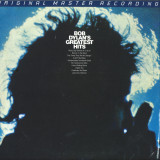
Bob Dylan - Greatest Hits LP 2x12"

Ten songs that ultimately changed the world. Ten songs pulled from precedent-establishing albums recorded between 1963 and 1966. More than five-million copies sold. In every way, Bob Dylan's Greatest Hits is a fundamental collection for every music lover, and the perfect choice for those seeking an introduction into the legend's vast career. For this is a collection so prized, even the cover photo won a Grammy.

Greatest-hits volumes are often hit-and-miss propositions not because of what they contain, but because of what's missing. Filtering the top selections from the six formative, life-altering albums Dylan made between 1963 and 1966 is an arbitrary process but one performed impeccably on this set. Home to his biggest chart successes as well as his most influential songs, Bob Dylan's Greatest Hits is a veritable template for any aspiring singer-songwriter, an American history lesson, and a seminal release for anyone new to his work – as well as for audiences that find some of his deeper cuts an acquired taste. Every signature facet of Dylan is represented, and done so authoritatively. Serious, protest folk anthems ("Blowin' in the Wind," "The Times Are A-Changin'") sit alongside defiant rock statements ("Positively Fourth Street"), landscape-changing epics ("Like a Rolling Stone"), beautiful blues-inspired odes ("I Want You"), and surrealist dreamscapes ("Subterranean Homesick Blues"). Infused with literary poetry, impassioned emotion, and career-making performances, this material doubles as a definitive account of American culture and society, and functions as a soundtrack to the era's social movements.

Gathered in one place, it's no wonder the songs here gave Dylan what remains the biggest-selling album of his career.

En stock

Disponible en stock et prêt pour l'expédition

Kikko Esse - Freedom Of Choice EP

The third release from South Italy based label, Soul Departure Recordings, as label head Kikko Esse comes correct with four soulful house heaters.

On the A, ‘I Got Want You’ and ‘Red Wine’, the former a heads down club thumper featuring Del Carmine and the later a piano-laden, Latin influenced bomb.

Flip it to find ‘Midnight’ a Kerri channelling cut from the depths and ‘Believe Me’ a sweet soulful gem with blistering vocals and seductive sax featuring Polose and Baldassarre.

En stock

Disponible en stock et prêt pour l'expédition

Yashlik - Yashlik LP

Yashlik

Yashlik LP

12inchMQMSLR001
Maqom Soul
05.06.2026
  • 1: Yashlik
  • 2: Gozel
  • 3: Zhanajym
  • 4: Ne Veryu
  • 5: Olajim
  • 6: Vaj Dadej
  • 7: Almuta Almisi
  • 8: Nahshamda Sen
  • 9: Zhanan Kiz
  • 10: Chever Yarim
  • 11: Alti Kaptar

Maqom Soul Launches Its Reissue Series with a Cult Classic from Uyghur Ensemble “Yashlik”.
Maqom Soul, a newly founded Uzbek label dedicated to reviving rare and overlooked music from Central Asia, proudly announces its debut release: a vinyl reissue of the seminal album by the Uyghur vocal-instrumental ensemble Yashlik, originally recorded and released in 1978.
Founded in 1973 as part of the Uyghur Music and Drama Theater in Almaty, Yashlik (which translates from Uyghur as Youth) quickly emerged as a groundbreaking force in the regional music scene. Though born out of a theatrical setting, the group transcended those boundaries with a unique blend of Uyghur folk melodies, jazz influences, Soviet estrada, and traces of psychedelic rock.

The ensemble’s founder and artistic director was Murat Akhmadiev, a prominent figure in both the musical and cultural-political life of Kazakhstan. The album being reissued is one of the rare recordings where synthesizers, electric guitars, and drums appear side by side with traditional Uyghur instruments. More than a musical experiment, it stands as a cultural document of its era a creative attempt to preserve identity through the language of modern sound. Originally recorded at the Melodiya studios in the late 1970s, the album’s initial pressing was distributed only within the Soviet Union. Now, over four decades later, listeners finally have the opportunity to experience this music in a lovingly remastered and reimagined edition.
According to the team at Maqom Soul, beginning the label’s journey with Yashlik was a conscious and symbolic choice: “This was a group that embodied youthful energy, deep respect for tradition, and a genuine thirst for innovation. Their music once played at festivals and on television, and then quietly disappeared. We’re bringing it back — not out of nostalgia, but as a living piece of art.”

Maqom Soul is committed not just to reissuing rare records but to restoring the presence of culturally significant music that helped shape the sonic identity of Central Asia. Forgotten music is also part of the future. Maqom Soul brings it back to the stage.

pré-commande05.06.2026

il devrait être publié sur 05.06.2026

Denise Motto - I M N X T C (Jack Your Body To The Beat) [JD Twitch Remixes]

We are heartbroken to announce this very special release — a tribute to the genius of Keith McIvor aka JD Twitch (Optimo), who sadly left us on September 19, 2025. Over 20 years ago, when Skylax had no money and was just starting out, Keith was among the very first to believe in us. He delivered four unforgettable remixes of Denise Motto – I M N X T C, sharp, uncompromising cuts that defined the true spirit of underground dance music. At the time, due to limited means, only one made it to vinyl. Now, for the first time, we are proud to present the complete set: four remixes — the unreleased acid mix, blackrabbit whorehouse mix, industrial mix, and alternative mix , all cut loud and mastered with love. This release is more than a record; it is a homage to Twitch, a true pioneer and tastemaker, our generation’s John Peel. His art of digging, his fearless intelligence in music choices, his no-compromise vision — all of it stands in stark contrast to the disposable culture of today’s Instagram DJs. What we celebrate here is the real thing: edgy, sharp, timeless. A piece of history, pressed in vinyl forever. Featuring a stunning artwork by H5 (Daft Punk, Air, Logorama), specially designed to pay homage to the legend. Ultra-limited, no repress.

pré-commande

Cet article n'a pas encore été publié. Vous pouvez pré-commander le produit maintenant.

Raymond MacDonald & Christian Ferlaino - A Jig in the Future

"All the tracks on this release come from a live concert at Sharmanka, a beautiful and unique museum of kinetic sculptures in Glasgow, and throughout the record, the sounds of the sculptures moving and emitting noises are incorporated into the music performed. The four pieces presented are entirely improvised. There was no discussion beforehand of what instruments or what approach would be taken, and each piece evolved as a musical negotiation as the performers individually made choices about what instruments to play and how to support and meet each other within the unfolding musical narrative. While Macdonald and Ferlaino both share a lifetime of work with their chosen primary instrument, the saxophone, they also share a passion for exploring other instruments and objects for their sonic and socio-creative potential. This record foregrounds both these aspects of their work: they use saxophones, but also incorporate bells, toys, bagpipes, accordions, percussion instruments and voice.
"Raymond MacDonald is a saxophonist and composer with an extensive career in music, cross-disciplinary arts and academia. He has played on and released over 100 albums, toured and broadcast worldwide and has composed music for film, television, theatre, radio and art installations. He is a founding member of the Glasgow Improvisers Orchestra, and his work is informed by a view of improvisation as a social, collaborative, and uniquely creative process that provides opportunities to develop new ways of engaging musically.
"Christian Ferlaino is an Italian saxophonist, bagpipe player, improviser, composer and ethnomusicologist. He composes for ensembles of improvisers, both from the jazz and improvised music scene, as well as for contemporary music ensembles. His work explores the relationships between composition and improvisation, and the expressive potential of improvised music. His musical research also focuses on creatively engaging with the sonic and musical realm of Calabria, with special attention to its performing techniques and approach to sound and music generation."

pré-commande30.05.2026

il devrait être publié sur 30.05.2026

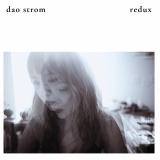
Dao Strom - Redux

Dao Strom

Redux

12inchLPNUY012
Disasters By Choice
08.05.2026

Redux, an ambient-folk album from Portland, Oregon musician, poet, and multimedia artist Dao Strom, is a collection of nine resurrected pieces. Reimagining songs she initially composed as a member of the Austin, Texas alt-country and singer-songwriter scenes of the early 2000s, Strom reworks these lost songs into ambient-folk mini-epics—part grounded and earthly, part ethereal and otherworldly. Drawing on an intimate yet spacious palette of folk, ambient, and experimental textures, woven through with a poetics of vulnerability and quiet emotion, Redux explores song as gently reverberant fields of layered vocals over finger-picked guitars with touches of electronics and sampling. Strom’s musical journey initially began in a roots and acoustic vein, simultaneously with her career as a fiction writer. In the years since, she has moved from Austin, Texas to Juneau, Alaska to Portland, Oregon; her work too has expanded across genres into more experimental formats of poetry, music, and multidisciplinary art. In returning to these earlier songs, Strom reclaims and revives them, exploring her relationships to time, voice, and the continuances of emotion and memory. The word redux means “brought back; revived”; a sense of something restored—earlier renditions of some of the Redux songs were recorded with Austin-based collaborators and producers; some songs were written in that time period but never recorded. Produced, performed, and recorded by Strom alone in her home studio, Redux is a return and reemergence of the artist to her own most personal, intuitive structures and atmospheres of voice, sound, and song. Released on cassette by Antiquated Future Records, and reissued on vinyl in 2026 by Disasters By Choice.

Dao Strom is an artist who works with three “voices”—written, sung, visual—to explore hybridity and contemplate the intersection of personal and collective histories. Her music releases move between “song-poem” cycles and ambient-folk albums. She is the author/composer of several hybrid projects that blend poetry, music, and visual art into unique multimodal experiences, including Tender Revolutions/Yellow Songs, a song-cycle with set of four chapbooks, jointly released by Beacon Sound, Antiquated Future Records, and The 3rd Thing Press (2025), and Instrument/Traveler’s Ode, a poetry-art collection and song-cycle released by Fonograf Editions and Antiquated Future Records (2020). Born in Vietnam and based in Portland, Oregon, Strom began her musical journey in the early 2000s, when she first began infusing into the context of “Americana” folk/roots music her own diasporic Vietnamese experience and stories. Her music has since moved in more experimental directions, resisting easy categorization, yet still maintaining tendrils of folk ethos. She also writes songs about the ineffable nuances of emotion, memory, and connection, as captured on the album, Redux, which gathers songs from across her songwriting years into an ambient-folk setting, self-produced and recorded by Strom, released on cassette in 2022 by Antiquated Future Records, and reissued on vinyl in 2026 by Disasters By Choice. As a multidisciplinary artist, Strom has presented performance and installations at venues such as the Time Based Art Festival (Portland Institute for Contemporary Art) and Moving Poets Novilla in Berlin, Germany, and has received awards from the Creative Capital Foundation, Spark Artist Award, and others. Strom is also a founding member of She Who Has No Master(s), a collective of Vietnamese women writers and artists making polyvocal poetry-art works as a means of reaching across borders.

pré-commande08.05.2026

il devrait être publié sur 08.05.2026

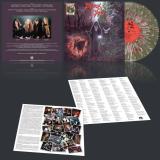
Mystic-Force - The Eternal Quest LP

Mystic Force was a progressive power metal band from Baltimore, Maryland. After releasing several demo tapes, they signed a contract with the German label Rising Sun Productions. This resulted in two albums, “The Eternal Quest” (1993) and “A Step Beyond” (1995). Their third album, “Man Vs. Machine,” followed in 2001 on Siegen Records. After Mystic Force broke up, drummer Chris Lembach and guitarist Rich Davis formed the group Shift and recorded two albums with them. Rich then started his own solo project (for which he played all the instruments and sang), before looking for suitable fellow musicians again and releasing the CD “Inside The Upside Down” in 2024. Mystic Force was originally formed in 1984 by guitarists Rich Davis and Marc Rouchard together with bassist Keith Menser. After numerous line-up changes in the early days, they finally found suitable bandmates in Chris Lembach (drums) and Bobby Hicks (vocals). In 1987, Mystic Force released their first 4-song demo, followed by “Blind Vision” a year later. After selling large quantities of self-produced cassettes (the first 4-track demo is said to have sold over 5,000 copies), it was time for their first vinyl release. In 1990, the album “Take Command” was released on the English label C.M.F.T. Records, which included the first demo and four brand new tracks: “Take Command,” “Awakened By The Dawn,” “Immortal Souls,” and “Silent But Deadly.” Later that year, the 12“ single ”Shipwrecked With The Wicked“/”Eternal Quest" was released in a limited and numbered edition by the band's own company, Pro-duction. The widespread distribution of Mystic Force's material (also via underground distributors such as Oliver Jung's “Demolition”) led to an increasing number of labels taking an interest in the band. Ultimately, the choice fell on Rising Sun Productions, who released the debut album “The Eternal Quest” in 1993, featuring tracks such as “Shipwrecked With The Wicked,” “Another World,” and “Answers Of The Mystery”—a forgotten gem of progressive power metal somewhere between Fates Warning and Hades.

pré-commande24.04.2026

il devrait être publié sur 24.04.2026

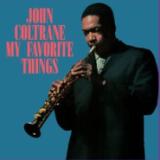
John Coltrane - My Favorite Things LP
  • My Favorite Things
  • Everytime We Say Goodbye
  • Summertime
  • But Not For Me
  • Like Sonny

My Favorite Things is one of J ohn Coltrane 's all time bestselling LPs. Recorded in 1960 for Atlantic Records during three marathon sessions that also produced enough music for four subsequent albums: Coltrane Plays the Blues , Coltrane's Sound , and Coltrane Legacy. The LP's title tune belongs to the Rodgers & Hammerstein musical The Sound of Music, which at the time, might have seemed an odd choice by critics and fans. However, in Coltrane's hand the tune is spun out with an Eastern sound, a waltz reminiscent of a dervish dance, hypnotic and totally engaging. An edited version of the track was issued as a single and gained popularity across US radio stations, resulting in the LP becoming a major commercial success. My Favorite Things features John Coltrane 's first recorded performance on soprano saxophone - an instrument gifted to him by Miles Davis.

pré-commande17.04.2026

il devrait être publié sur 17.04.2026

Guilty Razors - Complete Recordings 1977 - 1978

UILTY RAZORS, BONA FIDE PUNKS.


Writings on the topic that go off in all directions, mind-numbing lectures given by academics, and testimonies, most of them heavily doctored, from those who “lived through that era”: so many people today fantasize about the early days of punk in our country… This blessed moment when no one had yet thought of flaunting a ridiculous green mohawk, taking Sid Vicious as a hero, or – even worse – making the so-called alternative scene both festive and boorish. There was no such thing in 1976 or 1977, when it wasn’t easy to get hold of the first 45s by the Pistols or the Clash. Few people were aware of what was happening on the fringes of the fringes at the time. Malcolm McLaren was virtually unknown, and having short hair made you seem strange. Who knew then that rock music, which had taken a very bad turn since the early 1970s, would once again become an essential element of liberation? That, thanks to short and fast songs, it would once again rediscover that primitive, social side that was so hated by older generations? Who knew that, besides a few loners who read the music press (it was even better if they read it in English) and frequented the right record stores? Many of these formed bands, because it was impossible to do otherwise. We quickly went from listening to the Velvet Underground to trying to play the Stooges’ intros. It’s a somewhat collective story, even though there weren’t many people to start it.
The Guilty Razors were among those who took part in this initial upheaval in Paris. They were far from being the worst. They had something special and even released a single that was well above the national average. They also had enough songs to fill an album, the one you’re holding. In everyone’s opinion, they were definitely not among the punk impostors that followed in their wake. They were, at least, genuine and credible.

Guilty Razors, Parisian punk band (1975-1978). To understand something about their somewhat linear but very energetic sound, we might need to talk about the context in which it was born and, more broadly, recall the boredom (a theme that would become capital in punk songs) coupled with the desire to blow everything off, which were the basis for the formation of bands playing a rejuvenated rock music ; about the passion for a few records by the Kinks or the early Who, by the Stooges, by the Velvet mostly, which set you apart from the crowd.
And of course, we should remember this new wave, which was promoted by a few articles in the specialized press and some cutting-edge record stores, coming from New York or London, whose small but powerful influence could be felt in Paris and in a handful of isolated places in the provinces, lulled to sleep by so many appalling things, from Tangerine Dream to President Giscard d’Estaing...
In 1975-76, French music was, as almost always, in a sorry state ; it was still dominated by Johnny Hallyday and Sylvie Vartan. Local rock music was also rather bleak, apart from Bijou and Little Bob who tried to revive this small scene with poorly sound-engineered gigs played to almost no one.
In the working class suburbs at the time, it was mainly hard rock music played to 11 that helped people forget about their gruelling shifts at the factory. Here and there, on the outskirts of major cities, you still could find a few rockers with sideburns wearing black armbands since the death of Gene Vincent, but it wasn’t a proper mass movement, just a source of real danger to anyone they came across who wasn't like them. In August 1976, a festival unlike any other took place in Mont-de-Marsan – the First European Punk Festival as the poster said – with almost as many people on stage as in the audience. Yet, on that day, a quasi historical event happened, when, under the blazing afternoon sun, a band of unknowns called The Damned made an unprecedented noise in the arena, reminiscent of the chaotic Stooges in their early adolescence. They were the first genuine punk band to perform in our country: from then on, anything was possible, almost anything seemed permissible.

It makes sense that the four+1 members of Guilty Razors, who initially amplified acoustic guitars with crappy tape recorder microphones, would adopt punk music (pronounced paink in French) naturally and instinctively, since it combines liberating noise with speed of execution and – crucially – a very healthy sense of rebellion (the protesters of May 1968 proclaimed, and it was even a slogan, that they weren’t against old people, but against what had made them grow old. In the mid-1970s, it seemed normal and obvious that old people should now ALSO be targeted!!!).
At the time, the desire to fight back, and break down authority and apathy, was either red or black, often taking the form of leafleting, tumultuous general assemblies in the schoolyard, and massive or shabby demonstrations, most of the time overflowing with an exciting vitality that sometimes turned into fights with the riot police. Indeed, soon after the end of the Vietnam War and following Pinochet’s coup in Chile, all over France, Trotskyist and anarcho-libertarian fervour was firmly entrenched among parts of the educated youth population, who were equally rebellious and troublemakers whenever they had the chance. It should also be noted that when the single "Anarchy in the UK" was first heard, even though not many of us had access to it, both the title and its explosive sound immediately resonated with some of those troublemakers crying out for ANARCHY!!! Meanwhile, the left-wing majority still equated punks with reckless young neo-Nazis. Of course, the widely circulated photos in the mainstream press of Siouxsie Sioux with her swastikas didn’t necessarily help to win over the theorists of the Great Revolution. It took Joe Strummer to introduce The Clash as an anti-racist, anti-fascist and anti-ignorance band for the rejection of old-school revolutionaries to fade a little.

The Lycée Jean-Baptiste Say at Porte d’Auteuil, despite being located in the very posh and very exclusive 16th arrondissement of Paris, didn’t escape these "committed" upheavals, which doubled as the perfect outlet for the less timid members of this generation.
“Back then, politics were fun,” says Tristam Nada, who studied there and went on to become Guilty Razors’ frontman. “Jean-Baptiste was the leftist high-school in the neighbourhood. When the far right guys from the GUD came down there, the Communist League guys from elsewhere helped us fight them off.”
Anything that could challenge authority was fair game and of course, strikes for just about any reason would lead to increasingly frequent truancy (with a definitive farewell to education that would soon follow). Tristam Nada spent his 10th and 11th unfinished grades with José Perez, who had come from Spain, where his father, a janitor, had been sentenced to death by Franco. “José steered my tastes towards solid acts such as The Who. Like most teenagers, I had previously absorbed just about everything that came my way, from Yes to Led Zeppelin to Genesis. I was exploring… And then one day, he told me that he and his brother Carlos wanted to start a rock band.” The Perez brothers already played guitar. “Of course, they were Spanish!”, jokes their singer. “Then, somewhat reluctantly, José took up the bass and we were soon joined by Jano – who called himself Jano Homicid – who took up the rhythm guitar.” Several drummers would later join this core of not easily intimidated young guys who didn’t let adversity get the better of them.

The first rehearsals of the newly named Guilty Razors took place in the bedroom of a Perez aunt. There, the three rookies tried to cover a few standards, songs that often were an integral part of their lives. During a first, short gig, in front of a bewildered audience of tough old-school rockers, they launched into a clunky version of the Velvet Underground's “Heroin”. Challenge or recklessness? A bit of both, probably… And then, step by step, their limited repertoire expanded as they decided to write their own songs, sung in a not always very accurate or academic English, but who cared about proper grammar or the right vocabulary, since what truly mattered was to make the words sound as good as possible while playing very, very fast music? And spitting out those words in a language that left no doubt as to what it conveyed mattered as well.
Trying their hand a the kind of rock music disliked by most of the neighbourhood, making noise, being fiercely provocative: they still belonged to a tiny clique who, at this very moment, had chosen to impose this difference. And there were very few places in France or elsewhere, where one could witness the first stirrings of something that wasn’t a trend yet, let alone a movement.

In the provinces, in late 1976 or early 1977, there couldn’t be more than thirty record stores that were a bit more discerning than average, where you could hear this new kind of short-haired rock music called “punk”. The old clientele, who previously had no problem coming in to buy the latest McCartney or Aerosmith LP, now felt a little less comfortable there…
In Paris, these enlightened places were quite rare and often located nex to what would become the Forum des Halles, a big shopping mall. Between three aging sex workers, a couple of second-hand clothes shops, sellers of hippie paraphernalia and small fashion designers, the good word was loudly spread in two pioneering places – propagators of what was still only a new underground movement. Historically, the first one was the Open Market, a kind of poorly, but tastefully stocked cave. Speakers blasted out the sound of sixties garage bands from the Nuggets compilation (a crucial reference for José Perez) or the badly dressed English kids of Eddie and the Hot Rods. This black-painted den was opened a few years earlier by Marc Zermati, a character who wasn’t always in a sunny disposition, but always quite radical in his (good) choices and his opinions. He founded the independent label Skydog and was one of the promoters of the Mont-de-Marsan punk festivals. Not far from there was Harry Cover, another store more in tune with the new New York scene, which was amply covered in the house fanzine, Rock News (even though it was in it that the photos of the Sex Pistols were first published in France).
It was a favorite hang-out of the Perez brothers and Tristam Nada, as the latter explained. “It’s at Harry Cover’s that we first heard the Pistols and Clash’s 45s, and after that, we decided to start writing our first songs. If they could do it, so could we!”
The sonic shocks that were “Anarchy in the UK”, “White Riot” or the Buzzcocks’s EP, “Spiral Scratch” – which Guilty Razors' sound is reminiscent of – were soon to be amplified by an unparalleled visual shock. In April 1977, right after the release of their first LP, The Clash performed at the Palais des Glaces in Paris, during a punk night organised by Marc Zermati. For many who were there, it was the gig of a lifetime…
Of course, Guilty Razors and Tristam were in the audience: “That concert was fabulous… We Parisian punks were almost all dressed in black and white, with white shirts, skinny leather ties, bikers jackets or light jackets, etc. The Clash, on the other hand, wore colourful clothes. Well, the next day, at the Gibus, you’d spot everyone who had been at this concert, but they weren’t wearing anything black, they were all wearing colours.”

It makes sense to mention the Gibus club, as Guilty Razors often played there (sometimes in front of a hostile audience). It was also the only place in Paris that regularly scheduled new Parisian or Anglo-Saxon acts, such as Generation X, Siouxsie and the Banshees, the Slits, and Johnny Thunders who would become a kind of messed-up mascot for the venue. A little later, in 1978, the Rose Bonbon – formerly the Nashville – also attracted nightly owls in search of electric thrills… In 1977, the iconic but not necessarily excellent Asphalt Jungle often played at the Gibus, sometimes sharing the bill with Metal Urbain, the only band whose aura would later transcend the French borders (“I saw them as the French Sex Pistols,” said Geoff Travis, head of their British label Rough Trade). Already established in this small scene, Metal Urbain helped the young and restless Guilty Razors who had just arrived. Guitarist for Metal Urbain Hermann Schwartz remembers it: “They were younger than us, we were a bit like their mentors even if it’s too strong a word… At least they were credible. We thought they were good, and they had good songs which reminded of the Buzzcocks that I liked a lot. But at some point, they started hanging out with the Hells Angels. That’s when we stopped following them.”

The break-up was mutual, since, Guilty Razors, for their part, were shocked when they saw a fringe element of the audience at Metal Urbain concerts who repeatedly shouted “Sieg Heil” and gave Nazi salutes. These provocations, even still minor (the bulk of the skinhead crowd would later make their presence felt during concerts), weren’t really to the liking of the Perez brothers, whose anti-fascist convictions were firmly rooted. Some things are non-negotiable.
A few months earlier (in July 1978), Guilty Razors had nevertheless opened very successfully for Metal Urbain at the Bus Palladium, a more traditonally old-school rock night-club. But, as was sometimes the case back then, the night turned into a mass brawl when suburban rockers came to “beat up punks”.

Back then, Parisian nights weren’t always sweet and serene.

So, after opening as best as they could for The Jam (their sound having been ruined by the PA system), our local heroes were – once again – met outside by a horde of greasers out to get them. “Thankfully,” says Tristam, “we were with our roadies, motorless bikers who acted as a protective barrier. We were chased in the neighbouring streets and the whole thing ended in front of a bar, with the owner coming out with a rifle…”
Although Tristam and the Perez brothers narrowly escaped various, potentially bloody, incidents, they weren’t completely innocent of wrongdoing either. They still find amusing their mugging of two strangers in the street for example (“We were broke and we simply wanted to buy tickets for the Heartbreakers concert that night,” says Tristam). It so happened that their victims were two key figures in the rock business at the time: radio presenter Alain Manneval and music publisher Philippe Constantin. They filed a complaint and sought monetary compensation, but somehow the band’s manager, the skilful but very controversial Alexis, managed to get the complaint withdrawn and Guilty Razors ended up signing with Constantin with a substantial advance.

They also signed with Polydor and the label released in 1978 their only three-track 45, featuring “I Don't Wanna be A Rich”, “Hurts and Noises” and “Provocate” (songs that exuded perpetual rebellion and an unquenchable desire for “class” confrontation). It was a very good record, but due to a lack of promotion (radio stations didn’t play French artists singing in English), it didn’t sell very well. Only 800 copies were allegedly sold and the rest of the stock was pulped… Initially, the three tracks were to be included on a LP that never came to be, since they were dropped by Polydor (“Let’s say we sometimes caused a ruckus in their offices!” laughs Tristam.) In order to perfect the long-awaited LP, the band recorded demos of other tracks. There was a cover of Pink Floyd's “Lucifer Sam” from the Syd Barrett era – proof of an enduring love for the sixties’ greats –, “Wake Up” a hangover tale and “Bad Heart” about the Baader-Meinhof gang, whose actions had a profound impact on the era and on a generation seeking extreme dissent... On the album you’re now discovering, you can also hear five previously unreleased tracks recorded a bit later during an extended and freezing stay in Madrid, in a makeshift studio with the invaluable help of a drummer also acting as sound engineer. He was both an enthusiastic old hippie and a proper whizz at sound engineering. Here too, certain influences from the fifties and sixties (Link Wray, the Troggs) are more than obvious in the band’s music.

Shortly after a final stormy and rather barbaric (on the audience’s side) “Punk night” at the Olympia in June 1978, Tristam left the band ; his bandmates continued without him for a short while.

But like most pioneering punk bands of the era, Guilty Razors eventually split up for good after three years (besides once in Spain, they’d only played in Paris). The reason for ceasing business activities were more or less the same for everyone: there were no venues outside one’s small circuit to play this kind of rock music, which was still frightening, unknown, or of little interest to most people. The chances of recording an LP were virtually null, since major labels were only signing unoriginal but reassuring sub-Téléphone clones, and the smaller ones were only interested in progressive rock or French chanson for youth clubs. And what about self-production? No one in our small safety-pinned world had thought about it yet. There wasn’t enough money to embark on that sort of venture anyway.

So yes, the early days of punk in France were truly No Future!

pas en stock

Commandez maintenant et nous commanderons l'article pour vous chez notre fournisseur.


Derniere entrée: 56 jours
Cootie Catcher - Something We All Got MC

There’s an alternate reality where everyone makes a living wage and the cleanest buses you’ve ever seen arrive every other minute. Where the most intense songs are about confessing your love to a crush at the apple orchard, and where gentle feelings and chaotic energy are inseparable best friends. This is the timeline where Cootie Catcher is right at home. This Toronto based four-piece exudes both vulnerability and unbridled excitement, creating a sound that hypercharges the open-hearted tenderness of twee pop with spiraling synths and giddy electronics. New album Something We All Got is the clearest and most vibrant reading of Cootie Catcher’s vision yet, with songs of sweetness, nervousness, and expectancy that beam out unguarded.
After releasing music made primarily in basement recording environments, Something We All Got is the band’s first flirtation with studio recording. The edges are still sharp, however, with some parts assembled from time-honored lo-fi methods and fun, personally-sourced samples seeping into the production. The sound is explosive and upbeat, with euphoric guitars, bubbly synth lines, speedy drums both played and programmed, and all other manner of sound constantly colliding. Cootie Catcher has three songwriters, Sophia Chavez, Anita Fowl, and Nolan Jakupovski, all of whom have distinctive voices but still manage to overlap in their writing on shared concerns like navigating the lines of romantic and platonic relationships, their city’s social scenes, and struggles in both the microcosmic experience of playing in a band and the zoomed-out challenges of living through late-stage capitalism.
Joy still touches every surface of Something We All Got. “Quarter Note Rock” bounces around the room in a fit of jangling guitar chords, scratched samples, and interplay between breakbeat loops and somersaulting live drums. It’s a blast of positivity even with lyrics about how disappointing it can be to meet your heroes. A smiling electro pop instrumental supports lyrics about having to step painfully away from an almost realized love on “Gingham Dress,” a song that subverts themes of domesticity as a backdrop for the dashed wilt of hopeless devotion.
Cootie Catcher rolls down hills and jumps through flaming hoops throughout Something We All Got without ever dumbing down the visceral emotions that drive these songs. There’s a palpable tension between the band’s exhilarating sonics and the raw, often uneasy sentiments expressed, but it’s an integral part of what makes them unique. Rather than hide behind the kind of calculated vagueness that plagues so much of the indie rock landscape in the time of cursed algorithms, Cootie Catcher runs full-speed toward every confusion and excitement, fearlessly direct and embracing the reality they’re in.

pré-commande03.04.2026

il devrait être publié sur 03.04.2026

Iivana Mišukka & Arja Kastinen - Iivana Mišukka (Tape)
  • 01: Maanitus &Amp; Tšiižik
  • 02: Markka
  • 03: Melkutus
  • 04: Letška
  • 05: Kuuen Parin Hoirola
  • 06: Brišatka
  • 07: Tšiižik
  • 08: Kirkonkellot
  • 09: Kirkonkellot Korkea
  • 10: Hoirola, 3 Parin
  • 11: Lippa
  • 12: Kyngäkiža
  • 13: Ristakondra
  • 14: Vanha Polkka
  • 15: Viistoista
  • 16: Vanha Valssi
  • 17: Kiberä
  • 18: Maanitus Kuokan Kanteleella
  • 19: Tuuti Lasta Nukkumahe
également disponible

Vinyl


Death Is Not The End present a further volume of Arja Kastinen's eerie amalgamations of 110 year old wax cylinders with her own meticulously transcribed takes, this time focussing in on Armas Otto Väisänen's field recordings of kantele player Iivana Mišukka (b. 1861 d.1919).

"Ivana Mišukka (1861–1919) was one of the Karelian kantele players recorded by the folk music researcher Armas Otto Väisänen on wax cylinders in 1916 and 1917. In the early 20th century, the remote areas of Border Karelia were undergoing the final phase of a transformation in musical culture, with the ancient runo song tradition giving way to newer forms of music. This transition is reflected in Mišukka's repertoire and choice of instrument. The ancient small kantele, hollowed out of a single piece of wood, was already rare at the turn of the century. Mišukka's kantele was a new type of instrument with 26 strings, constructed of several parts, but he played it using the traditional plucking technique. Like other Border Karelian kantele players, his repertoire consisted of music rooted in runosong culture, as well as newer dances and songs from the east and west. Most of the recorded material falls into the latter category.

Ivan Bogdanov Mišukka was born out of wedlock in Suursara village, Suistamo, on 1 May 1861. He began playing the kantele at the age of five or six, quickly mastering the instrument. In adulthood, he was considered one of the area's best master players. Mišukka was landless for most of his life and lived in different parts of the Suistamo parish. His first wife, Tekla Markintytär, died in 1897 at the age of 40, and his second wife, Jevdokia Filipintytär Jeminen, died in 1907 at the age of 50. Seven children were born from the first marriage, two of whom died young. The third wife, Maria Ignatintytär Gurnan (Kuurnanen), was a well-known master of lamentations. Together with Maria, Iivana Mišukka worked as a tenant farmer in the village of Suursara. Mišukka suffered from rheumatism, which prevented him from participating in physical work like Maria. This was apparently partly the reason why Iivana Mišukka went to earn extra money by playing the kantele on gig trips. He often had other traditional artists from Suistamo as his travelling companions, such as the runosingers Konstantin Kuokka and Iivana Onoila. Iivana Mišukka died in Leppäsyrjä village, Suistamo, on 18 May 1919 at the age of 58, and his kantele was donated to Teppana Jänis.

Mišukka only used 14 of the 26 strings on his kantele, playing the same tunes either a fourth higher or lower. He tuned his kantele to the major scale using fifths, except for a low seventh scale degree on the upper strings, but not below the fundamental. Since he did not use the seventh note of the scale on the upper strings at all, he could use the major scale both lower and a fourth higher with this tuning. According to Mišukka, the sound of higher, or 'finer', strings is 'more beautiful', while that of lower ones is 'greater'. Among runosingers, the size of the thirds varied, ranging from major to minor to neutral. A similar phenomenon can be observed in kantele tunings, where the third, sixth and seventh scale degrees vary in a comparable way.

During a meeting, Väisänen suggested that Mišukka play the smaller kantele belonging to Konstantin Kuokka. The idea was to bring it closer to the horn to improve the recording quality. However, the kantele was completely out of tune, and now Mišukka tuned it to the Lydian scale (track 18).

Using the old plucking technique, Mišukka placed his right middle finger on the fundamental tone, his right index finger on the second scale degree, his left middle finger on the third scale degree and his left index finger on the fourth scale degree, and his right thumb on the fifth. The thumb also played the notes above the fifth note of the scale. As Mišukka remarked to Väisänen: 'Peigaloll' tuloo enemb ruadoa' (the thumb has to do more work). However, he did not use the seventh note of the scale on the upper strings at all. Below the fundamental note, he played the seventh and sixth notes of the scale with his right middle finger of and the fifth note of the scale with his right ring finger. This fifth scale degree below the fundamental is almost always used as a drone. Sometimes, when the melody required it, Mišukka, like other players, also varied the fingering. He would also occasionally strike the same string with the side of his fingernail after plucking it.

The wax cylinder recordings of Karelian kantele players are kept in the archives of the Finnish Literature Society in Helsinki, Finland. Copies were made of them onto reel-to-reel tapes in both the 1960s and 1980s. The 1960s copies are mono and the 1980s copies are stereo. However, not all kantele recordings from these decades have survived.

The sound of the kantele is difficult to hear in wax cylinder recordings due to its low volume, and it occasionally becomes completely obscured by noise. During the copying process, the cylinder sometimes rotates unevenly, resulting in breaks or jumps in the music. Additionally, the rotation speed of the cylinder in the copies does not correspond to the performance speed of the original music, which alters the pitch. However, since Väisänen's precise notes are available in the archive, it is possible to deduce the melodies, their speed, and the tuning level of the kantele in the recordings. Of the copies of the original recordings from the 1960s and 1980s, I have selected the one that best met the requirements of this publication and adjusted the speed of the recording to align with Väisänen's notes. To enhance the listening experience, I have replayed the songs, which now partly overlap the old recordings on this release."

— Arja Kastinen

pré-commande27.03.2026

il devrait être publié sur 27.03.2026

Iivana Mišukka & Arja Kastinen - Iivana Mišukka LP

Death Is Not The End present a further volume of Arja Kastinen's eerie amalgamations of 110 year old wax cylinders with her own meticulously transcribed takes, this time focussing in on Armas Otto Väisänen's field recordings of kantele player Iivana Mišukka (b. 1861 d.1919).

"Ivana Mišukka (1861–1919) was one of the Karelian kantele players recorded by the folk music researcher Armas Otto Väisänen on wax cylinders in 1916 and 1917. In the early 20th century, the remote areas of Border Karelia were undergoing the final phase of a transformation in musical culture, with the ancient runo song tradition giving way to newer forms of music. This transition is reflected in Mišukka's repertoire and choice of instrument. The ancient small kantele, hollowed out of a single piece of wood, was already rare at the turn of the century. Mišukka's kantele was a new type of instrument with 26 strings, constructed of several parts, but he played it using the traditional plucking technique. Like other Border Karelian kantele players, his repertoire consisted of music rooted in runosong culture, as well as newer dances and songs from the east and west. Most of the recorded material falls into the latter category.

Ivan Bogdanov Mišukka was born out of wedlock in Suursara village, Suistamo, on 1 May 1861. He began playing the kantele at the age of five or six, quickly mastering the instrument. In adulthood, he was considered one of the area's best master players. Mišukka was landless for most of his life and lived in different parts of the Suistamo parish. His first wife, Tekla Markintytär, died in 1897 at the age of 40, and his second wife, Jevdokia Filipintytär Jeminen, died in 1907 at the age of 50. Seven children were born from the first marriage, two of whom died young. The third wife, Maria Ignatintytär Gurnan (Kuurnanen), was a well-known master of lamentations. Together with Maria, Iivana Mišukka worked as a tenant farmer in the village of Suursara. Mišukka suffered from rheumatism, which prevented him from participating in physical work like Maria. This was apparently partly the reason why Iivana Mišukka went to earn extra money by playing the kantele on gig trips. He often had other traditional artists from Suistamo as his travelling companions, such as the runosingers Konstantin Kuokka and Iivana Onoila. Iivana Mišukka died in Leppäsyrjä village, Suistamo, on 18 May 1919 at the age of 58, and his kantele was donated to Teppana Jänis.

Mišukka only used 14 of the 26 strings on his kantele, playing the same tunes either a fourth higher or lower. He tuned his kantele to the major scale using fifths, except for a low seventh scale degree on the upper strings, but not below the fundamental. Since he did not use the seventh note of the scale on the upper strings at all, he could use the major scale both lower and a fourth higher with this tuning. According to Mišukka, the sound of higher, or 'finer', strings is 'more beautiful', while that of lower ones is 'greater'. Among runosingers, the size of the thirds varied, ranging from major to minor to neutral. A similar phenomenon can be observed in kantele tunings, where the third, sixth and seventh scale degrees vary in a comparable way.

During a meeting, Väisänen suggested that Mišukka play the smaller kantele belonging to Konstantin Kuokka. The idea was to bring it closer to the horn to improve the recording quality. However, the kantele was completely out of tune, and now Mišukka tuned it to the Lydian scale (track 18).

Using the old plucking technique, Mišukka placed his right middle finger on the fundamental tone, his right index finger on the second scale degree, his left middle finger on the third scale degree and his left index finger on the fourth scale degree, and his right thumb on the fifth. The thumb also played the notes above the fifth note of the scale. As Mišukka remarked to Väisänen: 'Peigaloll' tuloo enemb ruadoa' (the thumb has to do more work). However, he did not use the seventh note of the scale on the upper strings at all. Below the fundamental note, he played the seventh and sixth notes of the scale with his right middle finger of and the fifth note of the scale with his right ring finger. This fifth scale degree below the fundamental is almost always used as a drone. Sometimes, when the melody required it, Mišukka, like other players, also varied the fingering. He would also occasionally strike the same string with the side of his fingernail after plucking it.

The wax cylinder recordings of Karelian kantele players are kept in the archives of the Finnish Literature Society in Helsinki, Finland. Copies were made of them onto reel-to-reel tapes in both the 1960s and 1980s. The 1960s copies are mono and the 1980s copies are stereo. However, not all kantele recordings from these decades have survived.

The sound of the kantele is difficult to hear in wax cylinder recordings due to its low volume, and it occasionally becomes completely obscured by noise. During the copying process, the cylinder sometimes rotates unevenly, resulting in breaks or jumps in the music. Additionally, the rotation speed of the cylinder in the copies does not correspond to the performance speed of the original music, which alters the pitch. However, since Väisänen's precise notes are available in the archive, it is possible to deduce the melodies, their speed, and the tuning level of the kantele in the recordings. Of the copies of the original recordings from the 1960s and 1980s, I have selected the one that best met the requirements of this publication and adjusted the speed of the recording to align with Väisänen's notes. To enhance the listening experience, I have replayed the songs, which now partly overlap the old recordings on this release."

— Arja Kastinen

pré-commande27.03.2026

il devrait être publié sur 27.03.2026

Various - States & Paths

Driveline Records launches its catalog with a focused four-track vinyl EP built for the dancefloor, presenting four distinct yet cohesive techno cuts driven by groove, atmosphere and functionality.

The A-side opens with Invexis - "Roots", a hypnotic builder that slowly unfolds into a funky-driven rhythm. Tight hi-hats and rolling basslines carry the track forward, culminating in a subtle yet engaging melodic progression that lifts the energy without losing tension.

Next, Pylot - "Observation" delivers a highly functional club tool based on steady loops and an aquatic sound design. Aggressive low-end and raw basslines support an atmospheric and hypnotic flow, making it a solid choice for mid-set pressure and long blends.

On the B-side, Berlin-based duo Disguised contribute "Gitty (Dub Mix)", a dub-influenced and dreamy track designed to keep the dancefloor moving while creating a floating, immersive mood. Deep grooves and spacey textures balance rhythm and emotion.

Closing the EP, Shadow Hrym - "Delia" explores more melancholic territory, combining tribal and funky rhythms with emotive soundscapes, offering a powerful and memorable ending to the record.

A strong debut statement that defines Driveline Records' sonic vision: DJ-oriented techno with depth, groove and atmosphere, pressed on vinyl for dedicated selectors.

pas en stock

Commandez maintenant et nous commanderons l'article pour vous chez notre fournisseur.


Derniere entrée: 59 jours
Kebekelektrik / First Choice - Dam Swindle x Salsoul Remixes Vol. 1

Dam Swindle x Salsoul Reworks

Dutch duo Lars Dales and Maarten Smeets, better known as Dam Swindle, are the latest in a line of decorated contemporary producers taking on rework duties for legendary New York disco label, Salsoul Records. Comprised of four tracks split into two volumes, the pair provide fresh takes on a number of Salsoul hits, including the classic ‘Let No Man Put Asunder’ by First Choice and Double Exposure’s ‘Everyman’. There’s some funky edits of tracks by Kebekelektrik and Kongas, wrapping up an essential Reworks package courtesy of one dance music’s premier acts.

pas en stock

Commandez maintenant et nous commanderons l'article pour vous chez notre fournisseur.


Derniere entrée: 66 jours
Cootie Catcher - Something We All Got LP

There’s an alternate reality where everyone makes a living wage and the cleanest buses you’ve ever seen arrive every other minute. Where the most intense songs are about confessing your love to a crush at the apple orchard, and where gentle feelings and chaotic energy are inseparable best friends. This is the timeline where Cootie Catcher is right at home. This Toronto based four-piece exudes both vulnerability and unbridled excitement, creating a sound that hypercharges the open-hearted tenderness of twee pop with spiraling synths and giddy electronics. New album Something We All Got is the clearest and most vibrant reading of Cootie Catcher’s vision yet, with songs of sweetness, nervousness, and expectancy that beam out unguarded.
After releasing music made primarily in basement recording environments, Something We All Got is the band’s first flirtation with studio recording. The edges are still sharp, however, with some parts assembled from time-honored lo-fi methods and fun, personally-sourced samples seeping into the production. The sound is explosive and upbeat, with euphoric guitars, bubbly synth lines, speedy drums both played and programmed, and all other manner of sound constantly colliding. Cootie Catcher has three songwriters, Sophia Chavez, Anita Fowl, and Nolan Jakupovski, all of whom have distinctive voices but still manage to overlap in their writing on shared concerns like navigating the lines of romantic and platonic relationships, their city’s social scenes, and struggles in both the microcosmic experience of playing in a band and the zoomed-out challenges of living through late-stage capitalism.
Joy still touches every surface of Something We All Got. “Quarter Note Rock” bounces around the room in a fit of jangling guitar chords, scratched samples, and interplay between breakbeat loops and somersaulting live drums. It’s a blast of positivity even with lyrics about how disappointing it can be to meet your heroes. A smiling electro pop instrumental supports lyrics about having to step painfully away from an almost realized love on “Gingham Dress,” a song that subverts themes of domesticity as a backdrop for the dashed wilt of hopeless devotion.
Cootie Catcher rolls down hills and jumps through flaming hoops throughout Something We All Got without ever dumbing down the visceral emotions that drive these songs. There’s a palpable tension between the band’s exhilarating sonics and the raw, often uneasy sentiments expressed, but it’s an integral part of what makes them unique. Rather than hide behind the kind of calculated vagueness that plagues so much of the indie rock landscape in the time of cursed algorithms, Cootie Catcher runs full-speed toward every confusion and excitement, fearlessly direct and embracing the reality they’re in.

pré-commande27.02.2026

il devrait être publié sur 27.02.2026

Jim Noir - Programmes For Cools LP
  • Start
  • Out Of Sight
  • The Fountain
  • These Are Things
  • Manchester Cat
  • Longsword
  • Harum Scarum
  • Bit 42
  • One More Hand
  • I Think I Found It
  • Fireworks
  • Morning Light
  • Motorbike
  • Close

The last time Noir embarked on a similar creative exorcism was for 2012's Jimmy's Show LP which selected choice cuts from 18 E.P. 's released via straight to fan subscription over as many months. The resulting album is one of his most lauded and beloved by fans, with the vinyl now selling for silly money on Discogs.

Programmes for Cools is Jimmy's Show's spiritual successor, idiosyncratic, other worldly and brimming with timeless melodies. Noir's influences seep through the track list, wrapped with a haunting, dreamlike delivery.

First single 'Out Of Sight' is a Fleetwood Mac meets Selected Ambient Works era Richard D James, four to the floor banger. Already a fan favourite, it propels Side A forward with a somewhat misplaced optimism, much like Neil Young's 'Walk On' starting On the Beach.

Side B is more esoteric, exemplified by 'Fireworks’which includes lyrics and vocals from Marie Claude Dequoy,produced with the wooze of golden era Boards of Canada. Elsewhere, influences as disparate as Stevie Wonder, on the wonky clav funk of 'The Fountain', and Ian Brown 'I think I found it' illustrate Noir's disregard for musical straightjackets (the latter may have the most unapologetic baggy, hypnotic groove since the Mondays' 'Halleluiah').

As the album swells to its conclusion, via the epic Led Zeppelin meets the Warhol clique 'Morning Light’and the heart tugging finale of 'Motorbike’(the first song released from the most recent run of E.P.'s), there is a sense of completion and finality...
‘This is the last Jim Noir album. There are no more Jim Noir albums after this one. This time I'm serious. It's been the hardest I've ever worked on anything. I think I have created my own Be Here Now...Sorry.’
Joking and hyperbole aside, the album has more of an Abbey Road feel, and needs to be experienced in one sitting. If the infamous Davyhulme prankster is to be believed and this is his final outing, then you could wish for a more fitting album. - NM

pré-commande20.02.2026

il devrait être publié sur 20.02.2026

Ness - Chromadelia EP

Ness

Chromadelia EP

12inchT3R018
The Third Room
29.01.2026

Where maturity evolves into a signature sound, the personal and musical journey becomes one. Chromadelia by Italian producer and live artist Ness refines two decades of precision and craft. It is techno reduced to its core logic - direct, functional, and self-aware. Ness' process moves from spontaneous jams to detailed sculpting, a continuous sequence where improvisation gradually becomes structure. Randomness plays a role, but only as the foundation for his architecture. The result is music that feels both deliberate and fluid, shaped by intuition and refined through years of practice. Minimalism here isn't merely an aesthetic choice, but an organic conclusion -- drawn from experience and the trust that less can truly reveal more. The four tracks on Chromadelia extend this clarity onto the dance floor: sharp, beepy, metallic, rhythmically charged, yet open enough to let each element breathe. Introspection and club-functionality coexist seamlessly, each amplifying the other. In Chromadelia, Ness demonstrates that every tone, every pulse serves a purpose, offering a clear reflection of an artist who has learned to let precision speak louder than complexity.

pas en stock

Commandez maintenant et nous commanderons l'article pour vous chez notre fournisseur.


Derniere entrée: 30 jours
Asakaira - Asakaira

A great mixture of jazz, funk, afrobeat and house on new album by Italian outfit Asakaira for Quattro Bambole. "Asakaira is the name of a place that does not exist, an "invisible city" that is the backdrop to the meeting of four musicians. Michele Vassallo (sax and efx), Giuseppe Desiderio (bass), Francesco Fasanaro (percussion) and Giuseppe Limpido (drums) who together have already gone through various experiences to immerse themselves in an imaginary space, of the border! So, they exploit this nature to transcend the limit, throwing caution to the wind with carefree abandon, but not before carefully noting the history and legacy of jazz, hip-hop and afrobeat. Asakaira' s sound is psychedelic, fluid, constantly evolving: afrobeat & jazz punk alternate with funk, electronic music of Mediterranean culture. An absolutely "stateless" sound, while maintaining its own timbre and stylistic coherence to make it recognizable. The choice of not having a harmonic instrument present in the lineup gives ample space to electronic effects and the groove, creating a sort of modern ritual. The eponymous debut album, released by Quattro Bambole Records, consists of seven tracks, in which the ability to reinterpret their native sounds with polysemic rhythms emerges in a work where layered drums and percussions intertwine with effected saxophones and psychedelic bass lines. A path that moves between songs with a more "ethereal" ancestry, such as the opening track "Night Tales", an acoustic groove that rests on the use of the handpan, an idiophone instrument that gives the song a psychedelic vibration and like "Chatting With You" where a soft and extended overlapping of multiple musical meters emerges, between neo soul, jazz and hip-hop."

pré-commande23.01.2026

il devrait être publié sur 23.01.2026

Articles par page:
N/ABPM
Vinyl