Search:the butt

Styles
All
JOE BUCKNER & MAJOR IV / HAL FRAZIER - I WISH I KNEW / I STAND BLUE

• Joe Buckner was lead singer of the Major IV, a Chicago group who recorded in Los Angeles in the late 60s. ‘I Wish I Knew’ had been issued by the Ballads on Venture in 1969 and that outfit later re-cut it as ‘Butterfly’ in 1975. Joe and the Majors give an equally impressive performance on this great Leon Ware/Susaye Greene song. ‘I Stand Blue’ is another Ware composition that we first featured by writer/producer Mickey Stevenson on the Kent 100 Club Anniversary single of 2019. Big-voiced Hal Frazier also gives a top performance on the excellent beat ballad.

pre-order now28.10.2022

expected to be published on 28.10.2022

DIGABLE PLANETS - BLOWOUT COMB LP (2x12")

* Dazed and Amazed Duo Color Vinyl * Fully printed inner sleeves * Liner notes by Larry Mizell Jr. // The album is named for the combs used to maintain an Afro hairstyle, and that's significant. The group's Ishmael "Butterfly" Butler said it summed up what they wanted to do with it: "It means the utilization of the natural, a natural style," he has said. Like with 1993's debut _Reachin' (A New Refutation of Time and Space)_, 'utilizing the natural' meant creating hip hop that blended jazz with the formidable rap skills of the aforementioned Butterfly, Craig 'Doodlebug' Irving and Mary Ann 'Ladybug Mecca' Vieira. Unlike that debut, it meant broadening to include guests such as Gang Starr's Guru, Jeru the Damaja, and Jazzy Joyce. Following the gold-selling commercial success of their debut, they here set out to prove their artistic prowess. This is intelligent, alternative hip hop that sounded like party music. Its lyrics are dense with wit, social commentary and politics - and its original inner sleeve was modeled on the newspaper of the Black Panther movement.

out of Stock

Order now and we will order the item for you at our supplier.


Last In: 3 years ago
Lance Butters - SOMMER LP

Lance Butters

SOMMER LP

12inch0602448399076
Corn Dawg
21.10.2022

„Lance Butters rappt nicht wie jeder!“
Fast genau 10 Jahre nach seiner Debut EP veröffentlichte er im August 2022 die SOMMER EP.
Nun erscheint am 21.10.2022 endlich die dazugehörige Vinyl.
Allein das Cover verrät: Hier warten keine typischen Sommer Vibes auf die Hörer*innen.
Auf der 7 Track EP gibt Lance einen Einblick in seine persönliche Entwicklung der letzten Jahre. Trotz
Depression, Trennung, und Therapie hat er sich nicht selbst verloren.
Die brutale Ehrlichkeit mit der er den Prozess hin zu seiner Heilung beschreibt, gleicht einer Katharsis.
Wer jetzt jedoch ein weinerliches Release erwartet, liegt falsch. Die neu erhaltene Stärke strahlt durch die
ganze EP und zeigt einen Lance Butters in absoluter Höchstform.
Die unverwechselbar immersiven Beats von kidney paradise, bieten der Lyric einen Klangteppich, der sich
bis ins Mark frisst.
Diesen SOMMER wird man so leicht nicht vergessen.

pre-order now21.10.2022

expected to be published on 21.10.2022

Leah Weller - Freedom

Leah Weller

Freedom

12inchM4900UKLP
Modern Sky UK
21.10.2022

Freedom – the debut album from Leah Weller – a modern soul soundtrack to her head spinning twenties turning into empowered, contented thirties. Completed last year, Weller’s first complete album follows a decade-long career on catwalks, in front of cameras and making dancefloors shake, constantly on the move and with music as a constant companion. Finding the escape route out of anxiety-inducing mix-and-match career moves with the stability of love, the slowdown of repeated lockdowns and, finally, motherhood, Weller’s race is now to be run at her own pace with a collection of songs set perfectly to her flow.


Gathering nine, finely-tailored songs together with a drum beat of support from producer and collaborator, Steve Craddock, the collection speaks, much rather than screams, of finding the sweet spot between the need for hope, however naïve, and the truths that only experience can spell out.

pre-order now21.10.2022

expected to be published on 21.10.2022

Leah Weller - Freedom

Leah Weller

Freedom

12inchM4900UKLPX
Modern Sky UK
21.10.2022

Freedom – the debut album from Leah Weller – a modern soul soundtrack to her head spinning twenties turning into empowered, contented thirties. Completed last year, Weller’s first complete album follows a decade-long career on catwalks, in front of cameras and making dancefloors shake, constantly on the move and with music as a constant companion. Finding the escape route out of anxiety-inducing mix-and-match career moves with the stability of love, the slowdown of repeated lockdowns and, finally, motherhood, Weller’s race is now to be run at her own pace with a collection of songs set perfectly to her flow.


Gathering nine, finely-tailored songs together with a drum beat of support from producer and collaborator, Steve Craddock, the collection speaks, much rather than screams, of finding the sweet spot between the need for hope, however naïve, and the truths that only experience can spell out.

pre-order now21.10.2022

expected to be published on 21.10.2022

Lee Tracy & Isaac Manning - Is it What You Want

As the sun sets on a quaint East Nashville house, a young man bares a piece of his soul. Facing the camera, sporting a silky suit jacket/shirt/slacks/fingerless gloves ensemble that announces "singer" before he's even opened his mouth, Lee Tracy Johnson settles onto his stage, the front yard. He sways to the dirge-like drum machine pulse of a synth-soaked slow jam, extends his arms as if gaining his balance, and croons in affecting, fragile earnest, "I need your love… oh baby…"

Dogs in the yard next door begin barking. A mysterious cardboard robot figure, beamed in from galaxies unknown and affixed to a tree, is less vocal. Lee doesn't acknowledge either's presence. He's busy feeling it, arms and hands gesticulating. His voice rises in falsetto over the now-quiet dogs, over the ambient noise from the street that seeps into the handheld camcorder's microphone, over the recording of his own voice played back from a boombox off-camera. After six minutes the single, continuous shot ends. In this intimate creative universe there are no re-takes. There are many more music videos to shoot, and as Lee later puts it, "The first time you do it is actually the best. Because you can never get that again. You expressing yourself from within."

"I Need Your Love" dates from a lost heyday. From some time in the '80s or early '90s, when Lee Tracy (as he was known in performance) and his music partner/producer/manager Isaac Manning committed hours upon hours of their sonic and visual ideas to tape. Embracing drum machines and synthesizers – electronics that made their personal futurism palpable – they recorded exclusively at home, live in a room into a simple cassette deck. Soul, funk, electro and new wave informed their songs, yet Lee and Isaac eschewed the confinement of conventional categories and genres, preferring to let experimentation guide them.

"Anytime somebody put out a new record they had the same instruments or the same sound," explains Isaac. "So I basically wanted to find something that's really gonna stand out away from all of the rest of 'em." Their ethos meant that every idea they came up with was at least worth trying: echoed out half-rapped exhortations over frantic techno-style beats, gospel synth soul, modal electro-funk, oddball pop reinterpretations, emo AOR balladry, nods to Prince and the Fat Boys, or arrangements that might collapse mid-song into a mess of arcade game-ish blips before rallying to reach the finish line. All of it conjoined by consistent tape hiss, and most vitally, Lee's chameleonic voice, which managed to wildly shape shift and still evoke something sincere – whether toggling between falsetto and tenor exalting Jesus's return, or punctuating a melismatic romantic adlib with a succinct, "We all know how it feels to be alone."

"People think we went to a studio," says Isaac derisively. "We never went to no studio. We didn't have the money to go to no studio! We did this stuff at home. I shot videos in my front yard with whatever we could to get things together." Sometimes Isaac would just put on an instrumental record, be it "Planet Rock" or "Don't Cry For Me Argentina" (from Evita), press "record," and let Lee improvise over it, yielding peculiar love songs, would-be patriotic anthems, or Elvis Presley or Marilyn Monroe tributes. Technical limitations and a lack of professional polish never dissuaded them. They believed they were onto something.

"That struggle," Isaac says, "made that sound sound good to me."

In the parlance of modern music criticism Lee and Isaac's dizzying DIY efforts would inevitably be described as "outsider." But "outsider" carries the burden of untold additional layers of meaning if you're Black and from the South, creating on a budget, and trying to get someone, anyone within the country music capital of the world to take your vision seriously. "What category should we put it in?" Isaac asks rhetorically. "I don't know. All I know is feeling. I ain't gonna name it nothing. It's music. If it grabs your soul and touch your heart that's what it basically is supposed to do."

=

Born in 1963, the baby boy of nine siblings, Lee Tracy spent his earliest years living amidst the shotgun houses on Nashville's south side. "We was poor, man!" he says, recalling the outhouse his family used for a bathroom and the blocks of ice they kept in the kitchen to chill perishables. "But I actually don't think I really realized I was in poverty until I got grown and started thinking about it." Lee's mom worked at the Holiday Inn; his dad did whatever he had to do, from selling fruit from a horse drawn cart to bootlegging. "We didn't have much," Lee continues, "but my mother and my father got us the things we needed, the clothes on our back." By the end of the decade with the city's urban renewal programs razing entire neighborhoods to accommodate construction of the Interstate, the family moved to Edgehill Projects. Lee remembers music and art as a constant source of inspiration for he and his brothers and sisters – especially after seeing the Jackson 5 perform on Ed Sullivan. "As a small child I just knew that was what I wanted to do."

His older brother Don began musically mentoring him, introducing Lee to a variety of instruments and sounds. "He would never play one particular type of music, like R&B," says Lee. "I was surrounded by jazz, hard rock and roll, easy listening, gospel, reggae, country music; I mean I was a sponge absorbing all of that." Lee taught himself to play drums by beating on cardboard boxes, gaining a rep around the way for his timekeeping, and his singing voice. Emulating his favorites, Earth Wind & Fire and Cameo, he formed groups with other kids with era-evocative band names like Concept and TNT Connection, and emerged as the leader of disciplined rehearsals. "I made them practice," says Lee. "We practiced and practiced and practiced. Because I wanted that perfection." By high school the most accomplished of these bands would take top prize in a prominent local talent show. It was a big moment for Lee, and he felt ready to take things to the next level. But his band-mates had other ideas.

"I don't know what happened," he says, still miffed at the memory. "It must have blew they mind after we won and people started showing notice, because it's like everybody quit! I was like, where the hell did everybody go?" Lee had always made a point of interrogating prospective musicians about their intentions before joining his groups: were they really serious or just looking for a way to pick up girls? Now he understood even more the importance of finding a collaborator just as committed to the music as he was.

=

Isaac Manning had spent much of his life immersed in music and the arts – singing in the church choir with his family on Nashville's north side, writing, painting, dancing, and working various gigs within the entertainment industry. After serving in the armed forces, in the early '70s he ran The Teenage Place, a music and performance venue that catered to the local youth. But he was forced out of town when word of one of his recreational routines created a stir beyond the safe haven of his bohemian circles.

"I was growing marijuana," Isaac explains. "It wasn't no business, I was smoking it myself… I would put marijuana in scrambled eggs, cornbread and stuff." His weed use originated as a form of self-medication to combat severe tooth pain. But when he began sharing it with some of the other young people he hung out with, some of who just so happened to be the kids of Nashville politicians, the cops came calling. "When I got busted," he remembers, "they were talking about how they were gonna get rid of me because they didn't want me saying nothing about they children because of the politics and stuff. So I got my family, took two raggedy cars, and left Nashville and went to Vegas."

Out in the desert, Isaac happened to meet Chubby Checker of "The Twist" fame while the singer was gigging at The Flamingo. Impressed by Isaac's zeal, Checker invited him to go on the road with him as his tour manager/roadie/valet. The experience gave Isaac a window into a part of the entertainment world he'd never encountered – a glimpse of what a true pop act's audience looked like. "Chubby Checker, none of his shows were played for Black folks," he remembers. "All his gigs were done at high-class white people areas." Returning home after a few years with Chubby, Isaac was properly motivated to make it in Music City. He began writing songs and scouting around Nashville for local talent anywhere he could find it with an expressed goal: "Find someone who can deliver your songs the way you want 'em delivered and make people feel what you want them to feel."

One day while walking through Edgehill Projects Isaac heard someone playing the drums in a way that made him stop and take notice. "The music was so tight, just the drums made me feel like, oh I'm-a find this person," he recalls. "So I circled through the projects until I found who it was.

"That's how I met him – Lee Tracy. When I found him and he started singing and stuff, I said, ohhh, this is somebody different."

=

Theirs was a true complementary partnership: young Lee possessed the raw talent, the older Isaac the belief. "He's really the only one besides my brother and my family that really seen the potential in me," says Lee. "He made me see that I could do it."

Isaac long being a night owl, his house also made for a fertile collaborative environment – a space where there always seemed to be a new piece of his visual art on display: paintings, illustrations, and dolls and figures (including an enigmatic cardboard robot). Lee and Issac would hang out together and talk, listen to music, conjure ideas, and smoke the herb Isaac had resumed growing in his yard. "It got to where I could trust him, he could trust me," Isaac says of their bond. They also worked together for hours on drawings, spreading larges rolls of paper on the walls and sketching faces with abstract patterns and imagery: alien-like beings, tri-horned horse heads, inverted Janus-like characters where one visage blurred into the other.

Soon it became apparent that they didn't need other collaborators; self-sufficiency was the natural way forward. At Isaac's behest Lee, already fed up with dealing with band musicians, began playing around with a poly-sonic Yamaha keyboard at the local music store. "It had everything on it – trumpet, bass, drums, organ," remembers Lee. "And that's when I started recording my own stuff."

The technology afforded Lee the flexibility and independence he craved, setting him on a path other bedroom musicians and producers around the world were simultaneously following through the '80s into the early '90s. Saving up money from day jobs, he eventually supplemented the Yamaha Isaac had gotten him with Roland and Casio drum machines and a Moog. Lee was living in an apartment in Hillside at that point caring for his dad, who'd been partially paralyzed since early in life. In the evenings up in his second floor room, the music put him in a zone where he could tune out everything and lose himself in his ideas.

"Oh I loved it," he recalls. "I would really experiment with the instruments and use a lot of different sound effects. I was looking for something nobody else had. I wanted something totally different. And once I found the sound I was looking for, I would just smoke me a good joint and just let it go, hit the record button." More potent a creative stimulant than even Isaac's weed was the holistic flow and spontaneity of recording. Between sessions at Isaac's place and Lee's apartment, their volume of output quickly ballooned.

"We was always recording," says Lee. "That's why we have so much music. Even when I went to Isaac's and we start creating, I get home, my mind is racing, I gotta start creating, creating, creating. I remember there were times when I took a 90-minute tape from front to back and just filled it up."

"We never practiced," says Isaac. "See, that was just so odd about the whole thing. I could relate to him, and tell him about the songs I had ideas for and everything and stuff. And then he would bring it back or whatever, and we'd get together and put it down." Once the taskmaster hell bent on rehearsing, Lee had flipped a full 180. Perfection was no longer an aspiration, but the enemy of inspiration.

"I seen where practicing and practicing got me," says Lee. "A lot of musicians you get to playing and they gotta stop, they have to analyze the music. But while you analyzing you losing a lot of the greatness of what you creating. Stop analyzing what you play, just play! And it'll all take shape."

=

"I hope you understood the beginning of the record because this was invented from a dream I had today… (You tell me, I'll tell you, we'll figure it out together)" – Lee Tracy and Isaac Manning, "Hope You Understand"

Lee lets loose a maniacal cackle when he acknowledges that the material that he and Isaac recorded was by anyone's estimation pretty out there. It's the same laugh that commences "Hope You Understand" – a chaotic transmission that encapsulates the duality at the heart of their music: a stated desire to reach people and a compulsion to go as leftfield as they saw fit.

"We just did it," says Lee. "We cut the music on and cut loose. I don't sit around and write. I do it by listening, get a feeling, play the music, and the lyrics and stuff just come out of me."

The approach proved adaptable to interpreting other artists' material. While recording a cover of Whitney Houston's pop ballad "Saving All My Love For You," Lee played Whitney's version in his headphones as he laid down his own vocals – partially following the lyrics, partially using them as a departure point. The end result is barely recognizable compared with the original, Lee and Isaac having switched up the time signature and reinvented the melody along the way towards morphing a slick mainstream radio standard into something that sounds solely their own.

"I really used that song to get me started," says Lee. "Then I said, well I need something else, something is missing. Something just came over me. That's when I came up with 'Is It What You Want.'"

The song would become the centerpiece of Lee and Isaac's repertoire. Pushed along by a percolating metronomic Rhythm King style beat somewhere between a military march and a samba, "Is It What You Want" finds Lee pleading the sincerity of his commitment to a potential love interest embellished by vocal tics and hiccups subtlely reminiscent of his childhood hero MJ. Absent chord changes, only synth riffs gliding in and out like apparitions, the song achieves a lingering lo-fi power that leaves you feeling like it's still playing, somewhere, even after the fade out.

"I don't know, it's like a real spiritual song," Lee reflects. "But it's not just spiritual. To me the more I listen to it it's like about everything that you do in your everyday life, period. Is it what you want? Do you want a car or you don't want a car? Do you want Jesus or do you want the Devil? It's basically asking you the question. Can't nobody answer the question but you yourself."

In 1989 Lee won a lawsuit stemming from injuries sustained from a fight he'd gotten into. He took part of the settlement money and with Isaac pressed up "Saving All My Love For You" b/w "Is It What You Want" as a 45 single. Isaac christened the label One Chance Records. "Because that's all we wanted," he says with a laugh, "one chance."

Isaac sent the record out to radio stations and major labels, hoping for it to make enough noise to get picked up nationally. But the response he and Lee were hoping for never materialized. According to Isaac the closest the single got to getting played on the radio is when a disk jock from a local station made a highly unusual announcement on air: "The dude said on the radio, 107.5 – 'We are not gonna play 'Is It What You Want.' We cracked up! Wow, that's deep.

"It was a whole racist thing that was going on," he reflects. "So we just looked over and kept on going. That was it. That was about the way it goes… If you were Black and you were living in Nashville and stuff, that's the way you got treated." Isaac already knew as much from all the times he'd brought he and Lee's tapes (even their cache of country music tunes) over to Music Row to try to drum up interest to no avail.

"Isaac, he really worked his ass off," says Lee. "He probably been to every record place down on Music Row." Nashville's famed recording and music business corridor wasn't but a few blocks from where Lee grew up. Close enough, he remembers, for him to ride his bike along its back alleys and stumble upon the occasional random treasure, like a discarded box of harmonicas. Getting in through the front door, however, still felt a world away.

"I just don't think at the time our music fell into a category for them," he concedes. "It was before its time."

=

Lee stopped making music some time in the latter part of the '90s, around the time his mom passed away and life became increasingly tough to manage. "When my mother died I had a nervous breakdown," he says, "So I shut down for a long time. I was in such a sadness frame of mind. That's why nobody seen me. I had just disappeared off the map." He fell out of touch with Isaac, and in an indication of just how bad things had gotten for him, lost track of all the recordings they'd made together. Music became a distant memory.

Fortunately, Isaac kept the faith. In a self-published collection of his poetry – paeans to some of his favorite entertainment and public figures entitled Friends and Dick Clark – he'd written that he believed "music has a life of its own." But his prescience and presence of mind were truly manifested in the fact that he kept an archive of he and Lee's work. As perfectly imperfect as "Is It What You Want" now sounds in a post-Personal Space world, Lee and Isaac's lone official release was in fact just a taste. The bulk of the Is It What You Want album is culled from the pair's essentially unheard home recordings – complete songs, half-realized experiments, Isaac's blue monologues and pronouncements et al – compiled, mixed and programmed in the loose and impulsive creative spirit of their regular get-togethers from decades ago. The rest of us, it seems, may have finally caught up to them.

On the prospect of at long last reaching a wider audience, Isaac says simply, "I been trying for a long time, it feels good." Ever the survivor, he adds, "The only way I know how to make it to the top is to keep climbing. If one leg break on the ladder, hey, you gotta fix it and keep on going… That's where I be at. I'll kill death to make it out there."

For Lee it all feels akin to a personal resurrection: "It's like I was in a tomb and the tomb was opened and I'm back… Man, it feels so great. I feel like I'm gonna jump out of my skin." Success at this stage of his life, he realizes, probably means something different than what it did back when he was singing and dancing in Isaac's front yard. "What I really mean by 'making it,'" he explains isn't just the music being heard but, "the story being told."

Occasionally Lee will pull up "Is It What You Want" on YouTube on his phone, put on his headphones, and listen. He remembers the first time he heard his recorded voice. How surreal it was, how he thought to himself, "Is that really me?" What would he say to that younger version of himself now?

"I would probably tell myself, hang in there, don't give up. Keep striving for the goal. And everything will work out."

Despite what's printed on the record label, sometimes you do get more than one chance.

out of Stock

Order now and we will order the item for you at our supplier.


Last In: 3 years ago
FUMIYA TANAKA - One More Thing (Second Part) 2x12"

Tool tracks as new album following Tanaka's previous 'Right Moment' (2019 released on Parlon).

The first part of 'One More Thing' also released on Jan 2022 as 12” double-pack (SND 15).

out of Stock

Order now and we will order the item for you at our supplier.


Last In: 8 months ago
SEA AND CAKE - THE MOONLIGHT BUTTERFLY LP

In January 2011 Sam Prekop, Archer Prewitt, John McEntire, and Eric Claridge reconvened at Chicago"s Soma Electronic Music Studios to record their latest release The Moonlight Butterfly. This thirty three minute mini-album finds the band deliverying much more long form and cinematic pieces. The new songs lean upon the band"s more experimental tendencies, taking time to stretch the forms and in someways the new material relates to the way the band re-interpretes some of their songs live. With the band making a shorter than usual record they were allowed to take more chances and ended up with a release that leans a bit more towards the instrumental. Rather than having the vocals be the sole focal point the shifts in emphasis to other instruments facilitated a more open approach. The song "Weekend" from Car Alarm was kind of an unwitting blueprint for some of the new material. Especially the new song "Inn Keeping" where a synthesizer pattern became the armature for the song, a constant to play with and against. "Inn Keeping" is also quite a breakthrough for the band, sounding unlike anything they have done before and breaking the 10 minute mark.

pre-order now14.10.2022

expected to be published on 14.10.2022

Eagles & Butterflies - Retropolis Vol. 01

Welcome to Retropolis! Known for the inimitable Can’t Stop with Coloray, an unhealthy obsession with vintage music machines, a baroque style in the use of synthesizer melodies and a forewarn-looking approach to the past, Chris Barratt’s music as Eagles & Butterflies can be as fun-loving as melancholically beautiful. For his long overdue debut on Running Back, the english man dishes out a bit of both in a healthy bowl of broth.

Retropolis is not only the direction giving title, but bold and bonny at the same time. That its working title was Italo should tell you all you need to know. Suitable for big rooms, major moments, minor miracles and sophisticated car chase scenes alike. Faster takes off in another direction. Imagine two people falling in love during a bumper car ride – heartfelt vocals included.

On the flip side E&B follows a similar state of equilibrium. Like the highs and lows and ups and downs in a John Hughes movie, it also showcases the characteristics of two synthesizer classics: the exuberant piano version of Juno Ninja (please look at the digital release for a version devoid of it) offsets the poignant and plangent vibe of CS-80. In summary: made with lots of synthesizers and for fans of keyboard music. And always keep in mind: the future sounds and looks better than you think!

out of Stock

Order now and we will order the item for you at our supplier.


Last In: 3 years ago
The Devil Wears Prada - Color Decay

Contrast gives art dimension. The juxtaposition of two seemingly disparate elements sparks friction, bringing life to any canvas. The Devil Wears Prada rely on contrast as they nimbly balance metallic turbulence, hardcore spirit, provocatively eloquent lyricism, and melodic exorcism. In between these opposing extremes, the band—Mike Hranica vocals, Jeremy DePoyster [guitar, vocals], Kyle Sipress [guitar], Jonathan Gering [keys, synths, programming, production], Giuseppe Capolupo [drums], and Mason Nagy [bass]—have fashioned an ever-evolving signature style buttressed by layers of sonic hues. Such dynamic divergence defines the group’s eighth full-length offering, Color Decay [Solid State]. “It’s about contrast,” observes Mike. “We’ve really tried to create individualism within the songs and make them distinct. The title references the disintegration and discoloration we experience from daily struggles. Those feelings come with mental health, getting older, and dealing with it.”

pre-order now14.10.2022

expected to be published on 14.10.2022

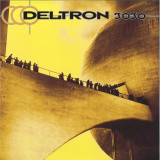
Deltron 3030 - Deltron 3030 LP 2x12"

The super group Deltron 3030 is composed of producer Dan the Automator, rapper Del tha Funkee Homosapien and DJ Kid Koala and sometimes features guest artists who also take on varying futuristic pseudonyms. Originally released in 2000 on the now-defunct 75ARK record label, this hip hop concept album was released the same year as the Gorillaz' first 12" and is on a similar plane. Following the release of Deltron 3030, all three members participated in the Gorillaz' self-titled debut album. With Del aka Deltron Zero on vocals, Dan the Automator aka The Cantankerous Captain Aptos on production, and Kid Koala aka Skiznoid the Boy Wonder on turntables, this album takes the listener on a paranoid journey set in a dystopian year 3030 dealing with viruses, the apocalypse, an oppressive government, and a war waged against a huge company called the Corporate Bank of Time that rules the universe, all to the well-crafted and consistent musical backing of the Automator. Appearances by Damon Albarn (The Gorillaz, Blur), Prince Paul, Peanut Butter Wolf, DJ Money Mark, Paul Barman, Mark Bell (Bjork, production), Sean Lennon, and Mr. Lif compliment Del's vocal style and add the right amount of flavor to this classic period piece.

out of Stock

Order now and we will order the item for you at our supplier.


Last In: 3 years ago
King Gizzard & The Lizard Wizard - Omnium Gatherum LP (2x12")

”Omnium Gatherum” bietet mit seinen 16 Tracks ausweitläufigen Prog-Jams, schwindelerregenden PopNuggets, gummibeinigen Hip-Hop-Odysseen und reinen Thrash-Metal-Passagen sowohl für Gizzard-Fans als auch für Neulinge jede Menge Stoff zum Kauen.

Typischerweise verfolgen Gizzard-Alben ein einziges Thema oder einen Stil - zum Beispiel die Öko-Metal-Barrage von ”Infest The Rat’s Nest”, der New-AgeTrance-Pop von ”Butterfly 3000” oder die endlosen Garagen-Prog-Verrenkungen von ”Nonagon Infinity” -
ein Teil des Nervenkitzels von ”Omnium Gatherum” wiederum war für die Gruppe die Möglichkeit, neue Ideen zu entwickeln, ohne sich zu verpflichten, ein ganzes Album in dieser Richtung zu liefern.


Es ist der perfekte Einstiegspunkt für Neulinge und ein solider Leckerbissen für treue Fans. ”Omnium Gatherum” war als Kompendium unveröffentlichter Songs gedacht, die auf früheren GizzardAlben keinen Platz gefunden hatten, und schon bald schrieb und nahm die Gruppe neue Songs für das schnell wachsende Album auf. Die Tracks wurden im Gizz-Hauptquartier, aber auch in ihrem legendären, inzwischen verlassenen Clubhaus in der 253 Lygon Street aufgenommen.

Textlich sind die Themen vielfältig, doch die Sorge der Gruppe um das ökologische Wohlergehen des Planeten bleibt eine Konstante. Einige
Tracks kehren zu den Synthie-Psych-Visionen von ”Butterfly 3000” zurück, andere greifen die fiebrige Thrash-Metal-Attacke auf, die Gizzard auf dem 2019er Album ”Infest The Rat’s Nest” prägte.

pre-order now07.10.2022

expected to be published on 07.10.2022

The Cult - Under The Midnight Sun

The Cult has reveled in a storied career. From the pre-millennial iconic Love album bursting with idealism and the full on blast of 2001’s Beyond Good & Evil to the recent biting truth of Hidden City, the band has lived their art. How the future unfolds will be decided in part by current cultures response and the group’s response. One thing is for sure, The Cult will respond. It’s what they do. The Cult’s next endeavor Under The Midnight Sun is out October 7, 2022.

pre-order now07.10.2022

expected to be published on 07.10.2022

Desire - Express Your Love EP

Desire

Express Your Love EP

12inchTHEREISLOVE007
There Is Love In You
07.10.2022

Arriving on There Is Love On You, following killer releases from Posthuman, Denham Audio and Saturday Night Rush, comes a sci-fi soaked five-tracker spanning headsy techno, proggytrance and chugging ethereal noise from 'Us' founder Desire, who heads the project that aims to 'shine the light on queer people' through releases and mixes.

'Express Self Love' sounds much like the expression of ecstasy. Spacey atmospheric and ear-wriggle acid lines meet in a dimly lit room with dark techno, electro and trance for a proper headsdown affair. 'Dernier Souffle' is a cut of contemporary progressiveness being championed by labels such as Kalahari Oyster Cult and Butter Side Up - minimal, malfunctioning and dubbed-out goodness.

'Keep Moving' maintains a meaty bassline that threatens to overflow at almost every turn - moments of celestial high-ends emotional transfixation sparkle amongst the tough-as-nails techno - before 'Incisiveness' follows up with what might be the fun-loving twin of its predecessor; a cut of peak moment, intellectual techno-trance.

The tempo comes down on 'Voyage Infini'; a chugging cut of transcendental synthwave best played as the sun is just coming up.

out of Stock

Order now and we will order the item for you at our supplier.


Last In: 5 months ago
Psychic Ills - Live At LEVITATION LP

The first Austin Psych Fest was held in March 2008, and expanded to a 3 day event the following year. From there the festival quickly developed into an international destination for psychedelic rock fans, with lineups spanning the fringes of indie rock, from up-and-comers to vintage legends, and capped off with headlining performances from The Black Angels each year. The Black Angels and Levitation helped spark a movement, inspiring the creation of similar events across the globe and a burgeoning psych scene that would soon ignite. The series captures key moments in psychedelic rock history, and live music in Austin, Texas. The artists and sets showcased on Live at Levitation have been chosen from over a decade of recordings at the world-renowned event, and document key artists in the scene performing for a crowd of their peers and fans who gather at Levitation annually from all over the world. When it comes to following the beat of their own drum, New York’s Psychic Ills have exemplified the phrase since their beginnings in 2003. Initially spawned from electronic-centered home recording experiments, they progressed into all-night full-band exploration in a neighborhood where noise wasn’t a problem. They soon after evolved into a live band seemingly at home within the extended jam, exploring a variety of musical terrain. The early years saw several releases for Social Registry, tons of time on the road, and collaborations with artists as diverse as Gibby Haynes (Butthole Surfers) and Sonic Boom (Spacemen Three/Spectrum). We are proud to welcome Psychic Ills to the Live at Levitation series. The release showcases the band's appearance at Austin Psych Fest 2012. Mixed and Mastered for Vinyl. 1) Midnight Moon 2) Mind Daze 3) Incense Head 4) Ring Finger 5) Electric Life 6) Meta 7) Diamond City 8) January Rain 9) I’ll Follow You Through The Floor

pre-order now30.09.2022

expected to be published on 30.09.2022

THE RONDELLS - EXOTIC SOUNDS FROM NIGHT TRIPS LP

The new EXOTICA sensation has a Name : The ROUNDELLS, This talented French trio+1 is exploring the world and its crazy rhythms on this amazing debut album. All the cuts were recorded and mixed at the ELECTROPHONIC studio, down in Lyon, France, by the wizard of the place Hervé Bessenay. With a handfull of vacuum equipment and vintage effects, Hervé"s got it ! The mid century Lounge Exotica sound that was in vogue from Miami to Malibu in the 50"s... full analogical recording rules ! So get your Bamboo skirt and Limbo barefoot in the sand !

pre-order now30.09.2022

expected to be published on 30.09.2022

VARIOUS - FUNK DIGGIN' LP

Various

FUNK DIGGIN' LP

12inch3419766
Wagram
30.09.2022

Some are looking for gold or oil and others are passionately looking for forgotten music treasures! Those who can be described as "sound gold diggers" criss cross record shops or confidential places to unearth musical nuggets previously kept in the dark. This practice began with sampling in the 80s and has now become a way of safeguarding the world's musical heritage. With our new "Diggin' Collection", we invite you to discover soul, funk or disco gems from the 70s and the 80s available on three nice vinyls for your pleasure.

out of Stock

Order now and we will order the item for you at our supplier.


Last In: 2 years ago
Geir Sundstøl - The Studio Intim sessions vol. 1

Geir Sundstøl: Strings With: Maria Due, Daniel Sandén Warg, Audun Erlien, Nikolai Hængsle, Håkon Brunborg, Lars Horntveth, Hans Hulbækmo, Gulzar Butt, Kjell Pop, Jarle Bernhoft, Chimta Raja Abdul, Sofi Jonas, Bashir Rydhem, Erland Dahlen.Geir Sundstøl has made a name for himself as an innovative session musician on hundreds of Norwegian and international albums. 2015 saw the release of Furulund, the first self-composed long player from this Master of Strings. Langen Ro, Norwegian Grammy winner Brødløs and St.Hanshaugen Steel, followed soon after. Now, the stage is set for something quite different. The Studio Intim Sessions, Volume 1, Sundstøl's fifth solo album, has taken a trip on its own, away from the cinematic Nordic noir and genre-crossing soundscapes we know, and ended up somewhere south of the Kattegat.

1.Gem (06:16) 2.Dogg (03:29) 3.Snik (03:25) 4.Jekk (05:00) 5.C’est vide en ville (09:18) 6.Whole (03:50)

pre-order now30.09.2022

expected to be published on 30.09.2022

CHARLOTTE LECLERC - Bingo

Charlotte Leclerc

Bingo

12inchDEL06
DELODIO
30.09.2022

Back In Stock

Charlotte Leclerc talks loud and fast, she’s at full speed, at a heat of 10,000 degrees and gives off a very pleasant warmth - if you stay at the right distance. She’s like the sun: if you get too close, you’ll burn up straight away. Speaking of which, Charlotte has distanced herself, and not on purpose either. When coming home at night, instead of getting into the role of laboring musician, she chose instead to make music a bit like you’d smoke one last cigarette before bed. The story of this album began when I asked her if she made music by herself. I knew she played regularly with other people in bands, but nothing about any potential solo musical activity. She replied, “When I get home late at night, before going to bed, I like to switch on my old Vermona drum machine and my synths. I record stuff that isn’t songs, that I forget all about and don’t listen to again because it must be garbage.” It didn’t take more than that for me to really want to listen to it. After several months of enquiring, she accepted to send me all these “bits of music” as she calls them. I loved them straight away. Very loose and free tracks, a music made for no one in particular. No format, no structures, just creation sprinkled over daily life. Moments like these are often forgotten, lost in your head, which is overcrowded with day-to-day stuff. But in this case, she managed to save them, preserving them in time thanks to the record button. Style-wise, I’m not sure what Charlotte Leclerc’s “bits of music” are. Avant-exotica? Ambient-funk? Maybe. However, if you’re wondering if there’s any emotion in there, I’d answer as she would, “Yeah, loaaaads.”

out of Stock

Order now and we will order the item for you at our supplier.


Last In: 5 years ago
nthng - Sub-Sonar EP

Nthng

Sub-Sonar EP

12inch151DSR
Delsin Records
29.09.2022

Dutch producer nthng returns to Delsin with another four pieces of melodic, ambient-spirited techno following his 2017 label debut Turn To Gaia. Sub-Sonar opens with the beatless, melancholic reflection of 'Looking Outside' before drifting into the submersion chamber pulse of 'Liberate Truth'. Guided by the hypnotic allure of dub techno, the track follows a linear path through spacious chord drops and understated drum jack. Following a similar rhythmic tract, 'Sub-Sonar' offers up a cloudy, sombre beatdown shot through with winsome sine wave blips. As a surprise parting shot, '1 2 Butterfly' shakes up the scene with a crooked breakbeat treatment which cuts an angular path through the hazy atmospheric tones nthng has made his own. Photography by Wolfgang Tillmans.

out of Stock

Order now and we will order the item for you at our supplier.


Last In: 2 years ago
Ralph White - Something About Dreaming

Here’s artist Max Kuhn on hearing the new Ralph White recordings for the first time: “I was driving a familiar round trip across the high desert when I first put it on. It immediately spoke to me. In the lyrics there's a familiar geography for me, a familiar emotional landscape for all of us. And maybe it was driving an almost 40 year old truck on sun baked & cracked asphalt in July, but it's like you can hear his songs coming apart- the cadence, the rhymes stumbling & defying expectations, consistency but they just keep moving. You have no choice but to go with it. Probably a good lesson for how to live in this era we're in, cracking up but keeping it all running somehow, trying to make something pretty with the time.” Recorded in Austin, Texas in March of 2020, just days before the city and the rest of the world shut down, Ralph White spent two days with producer, Jerry David DeCicca (Will Beeley, Ed Askew) and recording engineer, Don Cento, capturing a raw and wild set of performances. Ralph, having recently converted his van into a mobile living and touring quarters equipped with a wood-burning stove, left Austin, the city where he was born 70 years ago, and retreated to an Arizona commune where he began building a new house in the desert hills to escape the virus and insanity of daily living. Ralph takes us on a journey through his myriad of travels: from Dock Boggs to Syd Barrett to William Faulkner to Stella Chiweshe to Blind Uncle Gaspard…scratching banjo, rasping train whistle hollers, rolling kalimba, rousing accordion, taut shimmers of guitar, caustic fiddle and lyrics - that could have been hidden amongst the dusty inner groove of a lost Harry Smith 78 - weaving in and out of streams of consciousness, time and place. In addition to his solo work, White has recorded or performed with a diverse group of folk and avant-garde musicians: Thurston Moore of Sonic Youth, Jandek, Jack Rose, Eugene Chadbourne, Michelle Shocked, Sir Richard Bishop, and Michael Hurley. “This is what Ralph White really sounds like. It’s what time passing really sounds like. It’s what a look really feels like. This record is someone touching you all over!” --Bill Callahan “Striking, electrifying acoustic music from an underappreciated legend of the American Southwest. Here, tight song structures meet open, unadorned instrumentation: guitar, banjo, kalimba, accordion, fiddle, and White's elastic voice, unspooling pitches and syllables. White draws listeners in on his terms. Lyrics wind and twist and pull back: "Motel 6, Motel 6, Altoona, Altoona; missing you, missing you so, great big hole in my--..." Brave, beautiful, a high point in White's long career. And this is just Volume 1!” - Eli Winter. "What Ralph White puts on albums and onstage is so mind-boggling and vast, it forces those of us in the description business down a treacherous path." --Darcie Stevens, Austin Chronicle. “White was a member of well-loved punk bluegrass outfit Bad Livers, but his solo work is possessed of a much more lonesome spark, exaggerating the implied drone at the heart of the music of Dock Boggs and The Stanley Brothers…White plays wooden six-string banjo, violin, button accordion and kalimba and his voice has a high, eerie quality to it…extremely psychedelic.” --David Keenan, The Wire Tracklisting: 1. Gun Barrel Polka 2. Misinformation Shuffle 3. El Golfo 4. Something About Dreaming 5. Rye Straw 6. The Stovepipe Blues 7. No Stranger 8. Morning Sickness 9. Lord Franklin

pre-order now29.09.2022

expected to be published on 29.09.2022

Lee Tracy & Isaac Manning - Is it What You Want LP

As the sun sets on a quaint East Nashville house, a young man bares a piece of his soul. Facing the camera, sporting a silky suit jacket/shirt/slacks/fingerless gloves ensemble that announces "singer" before he's even opened his mouth, Lee Tracy Johnson settles onto his stage, the front yard. He sways to the dirge-like drum machine pulse of a synth-soaked slow jam, extends his arms as if gaining his balance, and croons in affecting, fragile earnest, "I need your love… oh baby…"

Dogs in the yard next door begin barking. A mysterious cardboard robot figure, beamed in from galaxies unknown and affixed to a tree, is less vocal. Lee doesn't acknowledge either's presence. He's busy feeling it, arms and hands gesticulating. His voice rises in falsetto over the now-quiet dogs, over the ambient noise from the street that seeps into the handheld camcorder's microphone, over the recording of his own voice played back from a boombox off-camera. After six minutes the single, continuous shot ends. In this intimate creative universe there are no re-takes. There are many more music videos to shoot, and as Lee later puts it, "The first time you do it is actually the best. Because you can never get that again. You expressing yourself from within."

"I Need Your Love" dates from a lost heyday. From some time in the '80s or early '90s, when Lee Tracy (as he was known in performance) and his music partner/producer/manager Isaac Manning committed hours upon hours of their sonic and visual ideas to tape. Embracing drum machines and synthesizers – electronics that made their personal futurism palpable – they recorded exclusively at home, live in a room into a simple cassette deck. Soul, funk, electro and new wave informed their songs, yet Lee and Isaac eschewed the confinement of conventional categories and genres, preferring to let experimentation guide them.

"Anytime somebody put out a new record they had the same instruments or the same sound," explains Isaac. "So I basically wanted to find something that's really gonna stand out away from all of the rest of 'em." Their ethos meant that every idea they came up with was at least worth trying: echoed out half-rapped exhortations over frantic techno-style beats, gospel synth soul, modal electro-funk, oddball pop reinterpretations, emo AOR balladry, nods to Prince and the Fat Boys, or arrangements that might collapse mid-song into a mess of arcade game-ish blips before rallying to reach the finish line. All of it conjoined by consistent tape hiss, and most vitally, Lee's chameleonic voice, which managed to wildly shape shift and still evoke something sincere – whether toggling between falsetto and tenor exalting Jesus's return, or punctuating a melismatic romantic adlib with a succinct, "We all know how it feels to be alone."

"People think we went to a studio," says Isaac derisively. "We never went to no studio. We didn't have the money to go to no studio! We did this stuff at home. I shot videos in my front yard with whatever we could to get things together." Sometimes Isaac would just put on an instrumental record, be it "Planet Rock" or "Don't Cry For Me Argentina" (from Evita), press "record," and let Lee improvise over it, yielding peculiar love songs, would-be patriotic anthems, or Elvis Presley or Marilyn Monroe tributes. Technical limitations and a lack of professional polish never dissuaded them. They believed they were onto something.

"That struggle," Isaac says, "made that sound sound good to me."

In the parlance of modern music criticism Lee and Isaac's dizzying DIY efforts would inevitably be described as "outsider." But "outsider" carries the burden of untold additional layers of meaning if you're Black and from the South, creating on a budget, and trying to get someone, anyone within the country music capital of the world to take your vision seriously. "What category should we put it in?" Isaac asks rhetorically. "I don't know. All I know is feeling. I ain't gonna name it nothing. It's music. If it grabs your soul and touch your heart that's what it basically is supposed to do."

=

Born in 1963, the baby boy of nine siblings, Lee Tracy spent his earliest years living amidst the shotgun houses on Nashville's south side. "We was poor, man!" he says, recalling the outhouse his family used for a bathroom and the blocks of ice they kept in the kitchen to chill perishables. "But I actually don't think I really realized I was in poverty until I got grown and started thinking about it." Lee's mom worked at the Holiday Inn; his dad did whatever he had to do, from selling fruit from a horse drawn cart to bootlegging. "We didn't have much," Lee continues, "but my mother and my father got us the things we needed, the clothes on our back." By the end of the decade with the city's urban renewal programs razing entire neighborhoods to accommodate construction of the Interstate, the family moved to Edgehill Projects. Lee remembers music and art as a constant source of inspiration for he and his brothers and sisters – especially after seeing the Jackson 5 perform on Ed Sullivan. "As a small child I just knew that was what I wanted to do."

His older brother Don began musically mentoring him, introducing Lee to a variety of instruments and sounds. "He would never play one particular type of music, like R&B," says Lee. "I was surrounded by jazz, hard rock and roll, easy listening, gospel, reggae, country music; I mean I was a sponge absorbing all of that." Lee taught himself to play drums by beating on cardboard boxes, gaining a rep around the way for his timekeeping, and his singing voice. Emulating his favorites, Earth Wind & Fire and Cameo, he formed groups with other kids with era-evocative band names like Concept and TNT Connection, and emerged as the leader of disciplined rehearsals. "I made them practice," says Lee. "We practiced and practiced and practiced. Because I wanted that perfection." By high school the most accomplished of these bands would take top prize in a prominent local talent show. It was a big moment for Lee, and he felt ready to take things to the next level. But his band-mates had other ideas.

"I don't know what happened," he says, still miffed at the memory. "It must have blew they mind after we won and people started showing notice, because it's like everybody quit! I was like, where the hell did everybody go?" Lee had always made a point of interrogating prospective musicians about their intentions before joining his groups: were they really serious or just looking for a way to pick up girls? Now he understood even more the importance of finding a collaborator just as committed to the music as he was.

=

Isaac Manning had spent much of his life immersed in music and the arts – singing in the church choir with his family on Nashville's north side, writing, painting, dancing, and working various gigs within the entertainment industry. After serving in the armed forces, in the early '70s he ran The Teenage Place, a music and performance venue that catered to the local youth. But he was forced out of town when word of one of his recreational routines created a stir beyond the safe haven of his bohemian circles.

"I was growing marijuana," Isaac explains. "It wasn't no business, I was smoking it myself… I would put marijuana in scrambled eggs, cornbread and stuff." His weed use originated as a form of self-medication to combat severe tooth pain. But when he began sharing it with some of the other young people he hung out with, some of who just so happened to be the kids of Nashville politicians, the cops came calling. "When I got busted," he remembers, "they were talking about how they were gonna get rid of me because they didn't want me saying nothing about they children because of the politics and stuff. So I got my family, took two raggedy cars, and left Nashville and went to Vegas."

Out in the desert, Isaac happened to meet Chubby Checker of "The Twist" fame while the singer was gigging at The Flamingo. Impressed by Isaac's zeal, Checker invited him to go on the road with him as his tour manager/roadie/valet. The experience gave Isaac a window into a part of the entertainment world he'd never encountered – a glimpse of what a true pop act's audience looked like. "Chubby Checker, none of his shows were played for Black folks," he remembers. "All his gigs were done at high-class white people areas." Returning home after a few years with Chubby, Isaac was properly motivated to make it in Music City. He began writing songs and scouting around Nashville for local talent anywhere he could find it with an expressed goal: "Find someone who can deliver your songs the way you want 'em delivered and make people feel what you want them to feel."

One day while walking through Edgehill Projects Isaac heard someone playing the drums in a way that made him stop and take notice. "The music was so tight, just the drums made me feel like, oh I'm-a find this person," he recalls. "So I circled through the projects until I found who it was.

"That's how I met him – Lee Tracy. When I found him and he started singing and stuff, I said, ohhh, this is somebody different."

=

Theirs was a true complementary partnership: young Lee possessed the raw talent, the older Isaac the belief. "He's really the only one besides my brother and my family that really seen the potential in me," says Lee. "He made me see that I could do it."

Isaac long being a night owl, his house also made for a fertile collaborative environment – a space where there always seemed to be a new piece of his visual art on display: paintings, illustrations, and dolls and figures (including an enigmatic cardboard robot). Lee and Issac would hang out together and talk, listen to music, conjure ideas, and smoke the herb Isaac had resumed growing in his yard. "It got to where I could trust him, he could trust me," Isaac says of their bond. They also worked together for hours on drawings, spreading larges rolls of paper on the walls and sketching faces with abstract patterns and imagery: alien-like beings, tri-horned horse heads, inverted Janus-like characters where one visage blurred into the other.

Soon it became apparent that they didn't need other collaborators; self-sufficiency was the natural way forward. At Isaac's behest Lee, already fed up with dealing with band musicians, began playing around with a poly-sonic Yamaha keyboard at the local music store. "It had everything on it – trumpet, bass, drums, organ," remembers Lee. "And that's when I started recording my own stuff."

The technology afforded Lee the flexibility and independence he craved, setting him on a path other bedroom musicians and producers around the world were simultaneously following through the '80s into the early '90s. Saving up money from day jobs, he eventually supplemented the Yamaha Isaac had gotten him with Roland and Casio drum machines and a Moog. Lee was living in an apartment in Hillside at that point caring for his dad, who'd been partially paralyzed since early in life. In the evenings up in his second floor room, the music put him in a zone where he could tune out everything and lose himself in his ideas.

"Oh I loved it," he recalls. "I would really experiment with the instruments and use a lot of different sound effects. I was looking for something nobody else had. I wanted something totally different. And once I found the sound I was looking for, I would just smoke me a good joint and just let it go, hit the record button." More potent a creative stimulant than even Isaac's weed was the holistic flow and spontaneity of recording. Between sessions at Isaac's place and Lee's apartment, their volume of output quickly ballooned.

"We was always recording," says Lee. "That's why we have so much music. Even when I went to Isaac's and we start creating, I get home, my mind is racing, I gotta start creating, creating, creating. I remember there were times when I took a 90-minute tape from front to back and just filled it up."

"We never practiced," says Isaac. "See, that was just so odd about the whole thing. I could relate to him, and tell him about the songs I had ideas for and everything and stuff. And then he would bring it back or whatever, and we'd get together and put it down." Once the taskmaster hell bent on rehearsing, Lee had flipped a full 180. Perfection was no longer an aspiration, but the enemy of inspiration.

"I seen where practicing and practicing got me," says Lee. "A lot of musicians you get to playing and they gotta stop, they have to analyze the music. But while you analyzing you losing a lot of the greatness of what you creating. Stop analyzing what you play, just play! And it'll all take shape."

=

"I hope you understood the beginning of the record because this was invented from a dream I had today… (You tell me, I'll tell you, we'll figure it out together)" – Lee Tracy and Isaac Manning, "Hope You Understand"

Lee lets loose a maniacal cackle when he acknowledges that the material that he and Isaac recorded was by anyone's estimation pretty out there. It's the same laugh that commences "Hope You Understand" – a chaotic transmission that encapsulates the duality at the heart of their music: a stated desire to reach people and a compulsion to go as leftfield as they saw fit.

"We just did it," says Lee. "We cut the music on and cut loose. I don't sit around and write. I do it by listening, get a feeling, play the music, and the lyrics and stuff just come out of me."

The approach proved adaptable to interpreting other artists' material. While recording a cover of Whitney Houston's pop ballad "Saving All My Love For You," Lee played Whitney's version in his headphones as he laid down his own vocals – partially following the lyrics, partially using them as a departure point. The end result is barely recognizable compared with the original, Lee and Isaac having switched up the time signature and reinvented the melody along the way towards morphing a slick mainstream radio standard into something that sounds solely their own.

"I really used that song to get me started," says Lee. "Then I said, well I need something else, something is missing. Something just came over me. That's when I came up with 'Is It What You Want.'"

The song would become the centerpiece of Lee and Isaac's repertoire. Pushed along by a percolating metronomic Rhythm King style beat somewhere between a military march and a samba, "Is It What You Want" finds Lee pleading the sincerity of his commitment to a potential love interest embellished by vocal tics and hiccups subtlely reminiscent of his childhood hero MJ. Absent chord changes, only synth riffs gliding in and out like apparitions, the song achieves a lingering lo-fi power that leaves you feeling like it's still playing, somewhere, even after the fade out.

"I don't know, it's like a real spiritual song," Lee reflects. "But it's not just spiritual. To me the more I listen to it it's like about everything that you do in your everyday life, period. Is it what you want? Do you want a car or you don't want a car? Do you want Jesus or do you want the Devil? It's basically asking you the question. Can't nobody answer the question but you yourself."

In 1989 Lee won a lawsuit stemming from injuries sustained from a fight he'd gotten into. He took part of the settlement money and with Isaac pressed up "Saving All My Love For You" b/w "Is It What You Want" as a 45 single. Isaac christened the label One Chance Records. "Because that's all we wanted," he says with a laugh, "one chance."

Isaac sent the record out to radio stations and major labels, hoping for it to make enough noise to get picked up nationally. But the response he and Lee were hoping for never materialized. According to Isaac the closest the single got to getting played on the radio is when a disk jock from a local station made a highly unusual announcement on air: "The dude said on the radio, 107.5 – 'We are not gonna play 'Is It What You Want.' We cracked up! Wow, that's deep.

"It was a whole racist thing that was going on," he reflects. "So we just looked over and kept on going. That was it. That was about the way it goes… If you were Black and you were living in Nashville and stuff, that's the way you got treated." Isaac already knew as much from all the times he'd brought he and Lee's tapes (even their cache of country music tunes) over to Music Row to try to drum up interest to no avail.

"Isaac, he really worked his ass off," says Lee. "He probably been to every record place down on Music Row." Nashville's famed recording and music business corridor wasn't but a few blocks from where Lee grew up. Close enough, he remembers, for him to ride his bike along its back alleys and stumble upon the occasional random treasure, like a discarded box of harmonicas. Getting in through the front door, however, still felt a world away.

"I just don't think at the time our music fell into a category for them," he concedes. "It was before its time."

=

Lee stopped making music some time in the latter part of the '90s, around the time his mom passed away and life became increasingly tough to manage. "When my mother died I had a nervous breakdown," he says, "So I shut down for a long time. I was in such a sadness frame of mind. That's why nobody seen me. I had just disappeared off the map." He fell out of touch with Isaac, and in an indication of just how bad things had gotten for him, lost track of all the recordings they'd made together. Music became a distant memory.

Fortunately, Isaac kept the faith. In a self-published collection of his poetry – paeans to some of his favorite entertainment and public figures entitled Friends and Dick Clark – he'd written that he believed "music has a life of its own." But his prescience and presence of mind were truly manifested in the fact that he kept an archive of he and Lee's work. As perfectly imperfect as "Is It What You Want" now sounds in a post-Personal Space world, Lee and Isaac's lone official release was in fact just a taste. The bulk of the Is It What You Want album is culled from the pair's essentially unheard home recordings – complete songs, half-realized experiments, Isaac's blue monologues and pronouncements et al – compiled, mixed and programmed in the loose and impulsive creative spirit of their regular get-togethers from decades ago. The rest of us, it seems, may have finally caught up to them.

On the prospect of at long last reaching a wider audience, Isaac says simply, "I been trying for a long time, it feels good." Ever the survivor, he adds, "The only way I know how to make it to the top is to keep climbing. If one leg break on the ladder, hey, you gotta fix it and keep on going… That's where I be at. I'll kill death to make it out there."

For Lee it all feels akin to a personal resurrection: "It's like I was in a tomb and the tomb was opened and I'm back… Man, it feels so great. I feel like I'm gonna jump out of my skin." Success at this stage of his life, he realizes, probably means something different than what it did back when he was singing and dancing in Isaac's front yard. "What I really mean by 'making it,'" he explains isn't just the music being heard but, "the story being told."

Occasionally Lee will pull up "Is It What You Want" on YouTube on his phone, put on his headphones, and listen. He remembers the first time he heard his recorded voice. How surreal it was, how he thought to himself, "Is that really me?" What would he say to that younger version of himself now?

"I would probably tell myself, hang in there, don't give up. Keep striving for the goal. And everything will work out."

Despite what's printed on the record label, sometimes you do get more than one chance.

out of Stock

Order now and we will order the item for you at our supplier.


Last In: 3 years ago
AVR - SANKOFA LP

Uruguayan music that sheds light on a new path, guarded by candombe & hip hop. An hypnotic, contemporary and ancestral record. To listen from beggining to end, in a trance. Include contributions of Hugo Fattoruso y Ruben Rada. Txt: Martín Buscaglia . DESCRIPTION Sankofa is the debut album by Avr (Alvaro Silva), a work that takes form through the research and fusion of Candombe and other Afro rhythms from Río de la Plata region with Hip Hop and Black American Music. Avr, the great-grandson of Juan Julio Arrascaeta (one of the first afrodescendant poets to be published in Latin America) writes throughout the album, using several "africanisms" and lost words that date back from colonial and slavery times, giving the lyrics a connection with his great-grandfather's work, introducing himself as a skilfull MC who travels through past, present and future while using several Candombe rhythms in his flow. Highlighting several personalities from the Afrouruguayan culture and from across the American continent, it also presents itself as a valuable work for those interested in researching cultural figures of Black America, especially, Uruguayan. Under the production of Felipe Fuentes, an album knitted with tons of messages, some direct, some to be discovered, came to life. Sankofa means "to look back, to go forward" which is exactly from the beggining what this musical journey is, from a very heavy and dense, ancestral, drum presence, to complex harmonic compositions and arrangments, a work that counts with important contributions of some of the main afrouruguayan artists. A musical "Guiso" (South American stew) Sankofa is the vision of the world of a young black male, his way of feeling and interpreting the past, present and future; and how to transform it in order to generate something new.

pre-order now23.09.2022

expected to be published on 23.09.2022

EDUARDO MATE - LA QUINA DEL TIEMPO, LA MOSCA LP

Released in 1989, La Mosca was the last album of the mythical Eduardo Mateo (1940-1990), one of the most influential artists in Uruguayan music. Produced for the multi-instrumentalist and sound engineer Hugo Jasa. Reissued for the first time with Obi and liner notes of specialist Guilherme de Alencar Pinto. Released towards the end of 1989, La Mosca was the last job by the mythical Eduardo Mateo (1940-1990), one of the most influential artists in Uruguayan music. Although Mateo was a remarkable percussionist and was very well known for his short songs, with simple lyrics, where Uruguayan roots are mixed with Brazilian, African, Indian and Arabic influences, on his last album, his work took a turn on a brand-new direction. Alongside the multi-instrumentalist and sound engineer Hugo Jasa, weaved together a futuristic sound, based on drum machine beats, keyboards, electronically processed both guitars and vocals to create an atmosphere through sturdy texts with references to machines, to the future, to time and the cosmos. At first received with confusion, today La Mosca continues to cause a mysterious fascination that persists and deepens through the passing of time.

pre-order now23.09.2022

expected to be published on 23.09.2022

JUAN IBARRA - ARCO LP

Juan Ibarra's jazz quintet blends hypnotic grooves, sonic landscapes and experimentalism with a cinematic touch. Jazz fusion and Avant-garde united with an unmistakable South American feel. Arco is inspired by an imaginary talk between Eduardo Mateo (Uruguayan Musician) and Thom Yorke (Radiohead) in a bar from deep Uruguay, while drinking cane and playing chess. The talk has its focus on the search for what is our "bow" to be able to launch our "arrow". At the same time they discuss calmly, while they think their movements, the different transformations they go through in life, what are the natural and which ones are necessary. The album seeks a sound between the electric guitar of Martín Ibarra and the acoustic guitar of Jeremías Di Pólito, imitating the voice with the trumpet of Juan Olivera supported by the improvised bases of Andrés Pigatto on double bass and Juan Ibarra on drums, thus opening a limbo to discover between the world Uruguayan folk and jazz.

pre-order now23.09.2022

expected to be published on 23.09.2022

Mouse On Mars - Idiology LP

Mouse On Mars

Idiology LP

12inchTHRILLX098X
Thrill Jockey
09.09.2022

Idiology was originally released in 2001 and is now finally back on vinyl. This re-issue is pressed on white color vinyl and presented in a die cut jacket with artworked inner sleeve and free download card. From their beginnings in 1992, Cologne native Jan St. Werner and Dusseldorfer Andi Toma have consistently challenged electronic music"s paradigm in often surprising and always intriguing ways. Idiology is the duo"s seventh album and is no exception to this rule, as Mouse on Mars surround themselves with strings, woodwinds, brass and the band"s own heavily modified fleet of machines in the St. Martin"s Tonstudio. Fans should once again brace themselves for the inevitable shock of the new as Germany"s most irreverent audio renegades have created the perfect soundtrack for a highly sinister dance party. Kicking off with "Actionist Respoke", the album"s first single, Mouse on Mars officially declare their independence from glitchtronica"s shoegazing legions. Longtime collaborator Dodo Nkishi lends a uniquely warped vocal sensibility to the track which already features Mouse on Mars"s darkest grooves to date. The rest of the album continues to thicken the group"s sonic stew. Tracks such as "Presence" and "Catching Butterflies With Hands" have their populist intentions undermined by Werner and Toma"s meddling hands, while the duo reprise their flirtation with the orchestral as heard on the opening tracks from 2000"s Niun Niggung. At the other end of the spectrum, "Introduce" is a truly evil slice of twisted lympho-zoid hip-hop. Idiology takes no prisoners in its dual-pronged assault on the conventions of modern music. Only with the loungy closing number, "Fantastic Analysis" (a term Werner and Toma invented to describe their working process), do Mouse on Mars let the arrangements breathe a long sigh of relief, the calm after the storm. To enable these stylistic achievements Mouse on Mars enlist the help of partners in crime such as: Nkishi, the multi-talented Harald "Sack" Ziegler, house icon Matthew Herbert on piano, violinist Matty Arouse, in addition to fellow programming wizards Adam "Vert" Butler and F.X. Randomiz. The latter two toured with Mouse on Mars in 2000 as they successfully triumphed over audiences around the globe.

out of Stock

Order now and we will order the item for you at our supplier.


Last In: 3 years ago
First Hate - Cotton Candy

First Hate

Cotton Candy

12inchESC163
Escho
09.09.2022

Opening with the buzz of a smartphone on vibrate, First Hate’s sophomore album Cotton Candy launches to life with “Someone New,” a synth-driven statement of intent. The Danish duo’s charged songs are rooted in a recognizable universe, but traverse a wide array of genre experiments and pop detours. Cotton Candy follows the quest of its protagonist stumbling through a crumbling world, winning and losing lovers, swinging from extreme highs to hopeless lows. The title alludes to transience and ecstasy, the surge of a sugar rush before nausea sets in, the way cotton candy dissolves into nothingness leaving only sticky fingers. Throughout, the productions glitter with synthetic detail and hypermodern finesse, effervescent but elusive. “Life is a rollercoaster and we’ve ridden the ups and downs.” During the recording sessions, a collage of Copenhagen musicians flowed through the studio. First Hate is a fixture of the city’s creative community, but ultimately exists in their own sphere, carving a niche as parallel universe pop stars, embracing sweet and bitter, risk and reward: “Sometimes the ones who love you most are the ones who hold you back.” Anton and Joakim grew up in Copenhagen and met when they were 15 through common friends on the street where they lived. “I didn’t enjoy being home so I used to stay at my friend Jakob's basement in an old church on Willemoesgade street,” says Wei. “His mom was the priest. She baptized Anton at age eight during his Jesus phase when he demanded a late baptism from his atheist parents. Jakob was friends with Elias who lived up in Anton’s end and they introduced us to each other. One summer my parents finally married after 20 years of dating. Joakim moved in for two weeks and we accidentally trashed the apartment while they were on their honeymoon. Later on Jakob, Elias, and two other friends, Dan and Johan, formed the band Iceage. Watching our friends’ growing success was a catalyst in creating our own project. At that point everybody in our friend group was making punk music, so the most punk thing we could think to do was start a pop duo.” The First Hate catalog comprises more than nine years of work, including their 2017 cult classic, A Prayer For The Unemployed, a collaborative album Dittes Bog, two EPs and several singles. All of the recordings are self-produced, until they are ready to be finished in the studio. “We have sort of a twin alliance. Like couples finishing each other’s spaghetti at restaurants, we finish each other’s music. Having people enter this sacred mix has been such a pleasure.” On stage Anton and Joakim embody the contrasting yet complimentary energies of yin and yang: Joakim pushing buttons, steering the ship, working synths and samplers with harmonious calm, while Anton’s body bullets around the stage, pounding out his kinetic dance moves. The name Anton means fragile flower, an apt metaphor for his stage presence. A fragile flower shooting through concrete. To behold a performer who consistently delivers such intense live performances is a rare pleasure. “Live means love. When everything is right. When we meet the audience heart to heart. Then the planet spins even faster.” First Hate has performed over a hundred shows across Europe, Asia, the U.S., and Russia, both as headliners and alongside fellow Copenhagen acts Iceage, Lust For Youth, Communions, Soho Rezanejad, Trentemøller and Grand Prix. “We are on a quest of love, yes it’s as cheesy as that.”

pre-order now09.09.2022

expected to be published on 09.09.2022

Osees - A Foul Form

Osees

A Foul Form

12inchCF147LP
Castle Face
09.09.2022

"The prolific band returns with a brief and seething left-turn: a furious homage to the scummiest, crustiest hardcore of the early ’80s". (Pitchfork)

"Brain stem cracking scum-punk recorded tersely in the basement of my home. After a notoriously frustrating eon, the knee-jerk song path was aggressive and hooky. This is an homage to the punk bands we grew up on—the weirdos and art freaks that piqued our interests and pointed us on the trail head to here / now. Bad times make for strong music is something I agree with. I would say that is evident by the past few years of output from the underground. Transmissions have been all over the map: scanning…searching...sweeping out in the darkness looking for a foot hold.

OSEES A Foul From represents some of our most savage and primal instincts. Fight or flight. And the importance of a sense of humor in the darkest hour. Nothing wrong with keeping it snappy in the meantime. For fans of Rudimentary Peni, Crass, Bad Brains, Black Flag, Screamers, Abwärts, Stooges and all things aggressively tilted towards your face. You can lean back but don’t flinch…it’s a brief foray into the exhausting pogo pit, so stiffen your back and jerk with your knees. Enjoy." - John Dwyer

pre-order now09.09.2022

expected to be published on 09.09.2022

Reverend Horton Heat - Liquor In The Front

Sub Pop are excitedly finally repressing vinyl versions of three scorching ‘90s
psychobilly classics by Reverend Horton Heat. All three have been out of print on
vinyl since the mid-1990s, with original pressings going for considerable amounts at
the ol’ junk shop.
The band’s 1990 debut, ‘Smoke ‘em if You Got ‘em’, made quite the first impression
with frantic stand-up bass, fiery guitar playing, and the Rev’s wild howls stirring up a
volatile cocktail of ‘50s rockabilly, punk energy, and sly humour. AllMusic said of the
album, “it’s all sleaze, it’s all wrong, and it’s all so very, very right,” while, on
encountering the hit single ‘Psychobilly Freakout’, Beavis and Butthead raved “This
dude is weird!” “Yeah, yeah, he’s like… our kind of people.”

pre-order now09.09.2022

expected to be published on 09.09.2022

Reverend Horton Heat - Smoke 'em if You Got 'em

Sub Pop are excitedly finally repressing vinyl versions of three scorching ‘90s
psychobilly classics by Reverend Horton Heat. All three have been out of print on
vinyl since the mid-1990s, with original pressings going for considerable amounts at
the ol’ junk shop.

1993’s ‘The Full Custom Gospel Sounds Of’ stepped things up a bit, with fuller
production by fellow Texan Gibby Haynes of the Butthole Surfers. In addition to the
hilarious ‘Bales of Cocaine’, the album features the furious ‘400 Bucks’, the
atmospheric creeper ‘The Devil’s Chasing Me’ and ‘Wiggle Stick’. On seeing the
video for the latter, Beavis declared, accurately, “Yes! This guy RULES!” while
Butthead agreed, “Yeah… this guy ROCKS! ROCKS!!”

pre-order now09.09.2022

expected to be published on 09.09.2022

Various - All Things Considered Vol.2 LP

823 is a multifaceted Perth-based record label, fashion brand, and artistic community, founded by Australian producer and all-around creative, Ta-ku (846k monthly listeners on Spotify). With an ethos of attention to detail and appreciation for the everyday things in life, 823 doesn’t stick to any particular genre. 823’s releases include Cabu’s (800k Monthly Listeners on Spotify) “So Far To Go” EP, Ta-ku and matt mcwaters’s duo project “Black and White,” which featured Masego collaboration “Flight 99” (14 million streams on Spotify), their debut release with Australian producer and instrumentalist Kuzich, and multiple sold out clothing capsules. “All Things Considered Vol. 1” set off a collaborative series of curated compilations, featuring both budding and well-established artists around the world including Idealism, Wun Two, pastels, SwuM, Jinsang, Saltyyyy V, and more. “All Things Considered Vol. 2” sees the continuation of this project, this time in partnership with fellow Perth-based powerhouse, Butter Goods.

Butter Goods is a Perth clothing brand rooted in skating culture and style, but drawing inspiration from hip-hop, jazz, and music at large. Butter Goods has been featured in major publications, including GQ, Complex, and HYPEBEAST. They’ve collaborated on releases with Peanuts and Puma, and have reached international levels of popularity. Butter Goods co-founder Garth Mariano’s deep love for and eclectic tastes in music drive his creativity, and are front and center in his partnership with Ta-ku and 823 on “All Things Considered Vol 2,” where the two team up to curate a wide-ranging compilation.

Arriving on September 2nd, 2022, “All Things Considered Vol. 2” is an exploration of Ta-ku’s and Mariano’s extensive and often overlapping musical palettes in two parts. The record pays homage to the love of instrumental music and hidden gems of new school jazz and funk that act as a source of inspiration and nostalgia for the both of them. The collaboration brings together over a dozen producers and instrumentalists from Sydney to Chicago, including Jadu Jadu, Gnarly, Tenderlonius, silentjay, and more. Side A is curated by Ta-ku and 823. It’s as much a love letter to the past as it is a nod to the future of beat-making. Featuring sample heavy, drum looped beats, sprinkled with the occasional ear candy for the attentive listener, it presents cruisy soundscapes & easy listening. Side B is curated by Garth and Butter Goods. It’s a raw and eclectic companion to Side A, leaning heavily into the texture and grit of multi-layered jazz and funk-driven beats.

As with any 823 release, the project is as visual as it is sonic. The artwork and visualizers are a celebration of Garth’s love of thrift culture and old nature documentaries, fused with 823’s design aesthetic of bringing everyday inspirations to the forefront. CRT style visuals are paired with 90’s spin, slide and fade away transitions. When partnered with the music, each visualizer could easily work as the intro for an episode of a VHS series of nature docos.

1st single, “senzu bean,” arrives on July 7th and kicks off Side A, showcasing Ta-ku’s hip-hop-centric tastes. Sydney producer Jadu Jadu teams up with UK-based TAMBALA, apltn, and Makzo for a vibrant instrumental. From a head-nodding bassline beneath fuzzy synths, to soft horn licks sprinkled over electronic drums, “senzu bean” is sonically rich and multilayered.

2nd single, “Too Much” by UK producer saaaz arrives July 20th. It’s a moody and low-tempo beat that builds itself up over time, complete with cryptic vocal samples and syrupy drums and bass. Also off of 823’s Side A, “Too Much” maintains a laid-back hip-hop theme but with saaaz’s signature and definitive lo-fi twist.

3rd single, “Goodmorning” from Baro Sura and silentjay of Melbourne arrives August 3rd, kicking off Butter Good’s Side B. The track is bright from start to finish and is a sun-filled track perfect for closing out the summer with. Final single, “Fool’s Gold” by Los Angeles producer L.Dre arrives August 17th. The infinitely creative beatmaker layers soft hums and the sounds of crashing waves over crisp drums and an infectious bassline. Together, it makes for a beat that sounds like it was made outside, under the sun, and is best enjoyed in the same way.

Focus track, “Seventh Wonder” by Tenderlonius, comes off of Side B, and is a window into the ideas and palettes on both sides of the compilation. The beat slowly fades in, one sound at a time, until it reaches a full-fledged groove, soaked in synths, bass, and horns, that’s impossible not to move to.

On the whole, “All Things Considered Vol. 2” is a forward-focused, sonic journey into the minds behind two of today’s great creative brands, and is as artistically eclectic and varied as those minds are, and a proud follow-up to its first volume.

LP contains A2 poster on uncoated stock.

out of Stock

Order now and we will order the item for you at our supplier.


Last In: 3 years ago
Camp Lo - Uptown Saturday Night LP LP 2x12"

Repressed!

REMASTERED FROM THE ORIGINAL TAPES & PRESSED ON LOUD DOUBLE VINYL!

Hot of the success of Jay-Z’s Reasonable Doubt, producer extraordinaire Ski was on fire when he flipped Dynasty’s “Adventures In The Land of Music” for Camp Lo’s breakout 1996 smash single
“Luchini aka This Is It”. The same year saw Camp Lo opening shows for De La Soul during their Stakes is High tour. Combine that with the fact that Ish aka Butterfly from Digable Planets had cosigned for the group’s reputation and would appear on of the tracks (in addition to Trugoy from De La), there became a huge buzz around their debut album Uptown Saturday Night.

Fast forward a few months to January 1997 and the heavily anticipated release of Camp Lo’s first record, which did not disappoint. It struck the perfect balance between club tracks and underground bangers for the mixtape crowd. Critically acclaimed and fan approved, this late 90s must-have was complimented by the incredible cover art illustrated by legendary NYC graffiti artist Dr. Revolt that paid homage to Marvin Gaye’s 1976 classic I Want You. It’s hard to believe in the time of Puffy’s heyday, Camp Lo had developed and delivered a style of Hip Hop that was not only fresh and creative, but also straight up dope. Flipping intricate rhyme styles over some of Rap’s finer beats, the fact that Camp Lo got main stream radio play and love from big time club DJ’s is a testament to the essence of what Hip Hop was once about: raw talent and originality!

out of Stock

Order now and we will order the item for you at our supplier.


Last In: 3 years ago
Don Cherry - New Researches LP 2x12"

Note price increase and cat number change from last time around. In the late 1960s, the American trumpet player and free jazz pioneer Don Cherry (1936-1995) and the Swedish visual artist and designer Moki Cherry (1943-2009) began a collaboration that imagined an alternative space for creative music, most succinctly expressed in Moki's aphorism "the stage is home and home is a stage." By 1972, they had given name to a concept that united Don's music, Moki's art, and their family life in rural Tagårp, Sweden into one holistic entity: Organic Music Theatre. Captured here is the historic first Organic Music Theatre performance from the 1972 Festival de jazz de Chateauvallon in the South of France, mastered from tapes recorded during its original live broadcast on public TV. A life-affirming, multicultural patchwork of borrowed tunes suffused with the hallowed aura of Don's extensive global travels, the performance documents the moment he publicly jettisoned his identity as a jazz musician, and represents the start of his communal "mystical" period, later crystallized in recordings such as Organic Music Society, Relativity Suite, Brown Rice, and the soundtrack for Alejandro Jodorowsky's The Holy Mountain. The musicians in Don Cherry's New Researches, hailing from Brazil, Sweden, France, and the US, converged on Chateauvallon from all over Europe. The five-person band Don and Moki Cherry, Christer Bothén, Gérard "Doudou" Gouirand, and Naná Vasconcelos performed in an outdoor amphitheater and were joined onstage by a dozen adults and children, including Swedish friends who tagged along for the trip and Det Lilla Circus (The Little Circus), a Danish puppet troupe based in Christiania, Copenhagen. The platform was lined with Moki's carpets and her handmade, brightly colored tapestries, depicting Indian scales and bearing the words Organic Music Theatre, dressed the stage. As the musicians played, members of Det Lilla, led by Annie Hedvard, danced, sang, and mounted an improvised puppet show on poles high up in the air. The music in the Chateauvallon concert aspired to a universal language that would bring people together through song. In a fairly unprecedented move, Don abandoned his signature pocket trumpet for the piano and harmonium, thereby liberating his voice as an instrument for shamanic guidance. The show opens with him beckoning the audience to clap their hands and sing the Indian theta "Dha Dhin Na, Dha Tin Na," and the set cycles through uplifting and sacred tunes of Malian, South African, Brazilian, and Native American provenance including pieces that would later appear on Don's albums Organic Music Society and Home Boy (Sister Out) all punctuated by outbursts of possessed glossolalia from the puppeteers. "Relativity Suite, Part 1" notably spotlights Bothén on donso ngoni, a Malian hunter's guitar, prior to Vasconcelos taking an extended solo on berimbau. A vortex of wah-like microtonal rattling, Vasconcelos's masterful demonstration of this single-stringed Brazilian instrument is a harbinger of his work to come as a member, with Don, of the acclaimed group Codona. The sounds of children playing on the ensemble's achingly tender rendition of Jim Pepper's oft-covered beacon of spiritual optimism, "Witchi Tai To," lends the proceedings an especially intimate, domestic glow. Given the context of the star-studded international jazz festival, the concert's laid back, communal vibe feels like an attempt by the Cherrys to show Don's jazz audience that he was moving on. At the same time, however, Don was extending a warmhearted invitation for them to come along for the ride. With liner notes by Magnus Nygren. Track list: 1. Intro: Dha Dhin Na, Dha Tin Na 2. Butterfly Friend 3. Elixir 4. Amazwe 5. Interlude with Puppets 6. Ganesh 7. Elixir Reprise / Witchi Tai To 8. Resa 9. Relativity Suite, Part 1 10. Berimbau Solo 11. Interlude / North Brazilian Ceremonial Hymn 12. Elixir Reprise / Ganesh 13. Ntsikana's Bell / Traditional Melody

pre-order now02.09.2022

expected to be published on 02.09.2022

Superpitcher - Hollywood

Superpitcher

Hollywood

12inchMULE277
Mule Musiq
02.09.2022

In the gutter lie sun dried leaves, scraps of paper, burnt matches and cigarette butts. It is early morning; the sun rises with warm grace. you've come to the right party... you see, the body of a young man sitting by a pool, nobody important, really. Just a movie writer with a couple of "b" pictures to his credit. He always wanted a pool. Well, in the end he got himself a pool, but let's go back some time and find the day when it all started in “Hollywood,” the place where they pay a thousand dollars for a kiss and fifty cents for your soul.

Three years after he celebrated “Sketch of Japan” EP, Superpitcher returns to Mule Musiq, bringing an epic super-pitched 40 minutes trip named “Hollywood”, that perfectly works as the score for the above remixed opening scene of a famous movie on the trances of Hollywood, the cage, that catch our dreams. It’s a slow grower, incorporating some of core elements of the city of celluloid dreams: action, drama, romance - all epic noir and yet so flooded by light. As ever the producer and DJ from Paris garnished his long building up and going down voyage with se-ducing melodies, glamorous pop, and psychic rhythms, creating the hippy dance ambiences he is famed for. Even though the twelve inch comes in accustomed a/b chapters, “Hollywood” should be perceived in one go to feel the depth of Superpitcher’s tropical leaning story arc, that stretches the idea of a track into a dream of satin teardrops on flickering velvet lights. It paints sonic celluloid pictures of ghostly creatures, while a female/male voice is the music’s constant melodic companion, injection Janus-faced longing dream pop spheres on the overall tripping house melancholy. A heroic electronic drama, elegant as Tamara de Lempicka painting. It asks for endless rides on the Hollywood freeways. in the back the sun – a big orange ball – sinking slowly below the horizon.

You've come to the right party... you see, the body of a young man sitting by a pool, in the back a long, graceful bar, bathed in soft light, filled with elegant customers. There's nothing else, just us and the music and those wonderful people out there in the dark, ready for a divine dance in closeup.

out of Stock

Order now and we will order the item for you at our supplier.


Last In: 3 years ago
Teen Suicide - Honeybee Table At The Butterfly Feast

honeybee table at the butterfly feast is the first album from the elusive Baltimore’s band Teen Suicide in years. For over a decade, guitarist, vocalist and project runner Sam Ray has been sometimes quietly and sometimes very noisily setting standards in the indie scene by changing genres, live lineups and even band names, but the one constant has been an undeniable gift for songwriting.

honeybee table sits at an interesting point in the teen suicide timeline, following years of relative quiet following the releases a whole fucking lifetime of this (2018) and fucking bliss (2019), both released under the short-lived alias American Pleasure Club. Lockdown times saw a viral moment for the song “haunt me (x3)”, a cult-classic catalog track featured on the 2015 Run For Cover reissue

pre-order now26.08.2022

expected to be published on 26.08.2022

LOU REED - WORDS & MUSIC, MAY 1965 LP (2x12")

DELUXE EDITION

Das Herzstück der ersten Lou Reed Archive Series Veröffentlichung von Light In The Attic ist die Deluxe 45-RPM Doppel-LP Edition von "Words & Music, May 1965". Diese auf 7.500 Exemplare weltweit limitierte Sammlung wurde von dem mehrfach mit dem GRAMMY ausgezeichneten Künstler Masaki Koike entworfen und verfügt über einen stilisierten, gestanzten Klappumschlag, der von Stoughton Printing Co. hergestellt wurde, mit fortlaufender Foliennummerierung. Darin enthalten sind zwei 45-RPM 12"-LPs, gepresst auf 180-Gramm-Vinyl in HQ-Audiophil-Qualität bei Record Technology Inc. (RTI), mit der einzigen Vinyl-Veröffentlichung von "I'm Waiting for the Man - May 1965 Alternate Version". Eine Bonus 7" Single, die in einer eigenen, gestanzten Bilderhülle untergebracht ist und bei Third Man Record Pressing hergestellt wurde, enthält die einzige Vinyl-Veröffentlichung von sechs bisher unveröffentlichten Bonustracks, die einen nie zuvor gesehenen Einblick in Reeds prägende Jahre bieten, darunter frühe Demos, eine Coverversion von Bob Dylans "Don't Think Twice, It's All Right" und ein Doo-Wop-Ständchen, das 1958 aufgenommen wurde, als der legendäre Singer-Songwriter gerade 16 Jahre alt war. Ein begleitendes, gestanztes, 28-seitiges Buch mit Texten, Archivfotos und Linernotes enthält eine Archivreproduktion eines selten Briefes, den Reed um 1964 an seinen College-Professor und Dichter Delmore Schwartz schrieb. Das Set enthält eine CD mit dem kompletten Audiomaterial des Pakets in einer gestanzten Hülle. "Ein Tonband mit ihren frühesten Demos, aufgenommen am 11. Mai 1965 und bis heute unter Verschluss gehalten, zeigt Spuren von Dingen, die selten mit The Velvet Underground in Verbindung gebracht werden: Blues und Folk, erdig und traditionell, unsicher und zögerlich - und doch von diesem rostigen, ätzenden Lou Reed-Geist durchdrungen. Es ist eine Offenbarung." - Will Hodgkinson, MOJO. Light in the Attic Records ist stolz darauf, in Zusammenarbeit mit Laurie Anderson den ersten Titel ihrer fortlaufenden Lou Reed Archive Series vorzustellen: "Words & Music, Mai 1965". Das Album, das anlässlich des 80. Geburtstages des verstorbenen Künstlers erscheint, bietet einen außergewöhnlichen, ungeschminkten und ergreifenden Einblick in einen der wahrlich größten amerikanischen Poeten und Songwriter. Diese bisher unveröffentlichte Sammlung von Songs, die der junge Lou Reed mit Hilfe seines späteren Bandkollegen John Cale aufnahm und sich selbst als "Urheberrecht des armen Mannes" mit der Post zuschickte, wurde fast 50 Jahre lang ungeöffnet in einem Originalumschlag aufbewahrt. Der Inhalt verkörpert einige der wichtigsten und bahnbrechendsten Beiträge zur amerikanischen Popmusik im 20. Jahrhundert. Die fest in der Folk-Tradition verwurzelten Songs belegen Lous nachhaltigen Einfluss auf die Entwicklung der modernen amerikanischen Musik deutlich - vom Punk bis zum Art-Rock und allem, was dazwischen liegt. Diese Aufnahmen sind eine wahre Zeitkapsel und halten nicht nur die ersten Funken dessen fest, was die Keimzelle der unglaublich einflussreichen Velvet Underground werden sollte; sie machen Reed auch zu einem echten Beobachter mit einem angeborenen Talent, die Welt um ihn herum zu synthetisieren und in reine Klangpoesie zu verwandeln. Mit Beiträgen von Reeds zukünftigem Bandkollegen John Cale präsentiert "Words & Music, May 1965" die frühesten bekannten Aufnahmen so historischer Songs wie "Heroin", "I'm Waiting for the Man" und "Pale Blue Eyes", die Reed später mit Velvet Underground aufnehmen und unauslöschlich prägen sollte, in ihrer Gesamtheit. Außerdem sind mehrere bisher unveröffentlichte Kompositionen enthalten, die zusätzliche Einblicke in Reeds kreativen Prozess und seine frühen Einflüsse geben. Das Album wurde von Laurie Anderson, Don Fleming, Jason Stern, Hal Willner und Matt Sullivan produziert und enthält neu gemasterte Tonaufnahmen vom Originalband durch den GRAMMY-nominierten Toningenieur John Baldwin. Abgerundet wird das Paket durch neue Linernotes des renommierten Journalisten und Autors Greil Marcus sowie ausführliche Archivnotizen von Don Fleming und Jason Stern, die das Lou Reed Archiv betreuen, während die Veröffentlichung von dem mehrfach GRAMMY-prämierten Künstler Masaki Koike gestaltet wurde.

pre-order now26.08.2022

expected to be published on 26.08.2022

Big Cheeko - Block Barry White LP

With a smooth-as-butter flow, an entrancingly deep vocal tone, and an exceptional ear for production, Big Cheeko is one of the most exciting emcees to emerge from Atlanta in recent memory.

After several outstanding mixtapes and a number of high-profile collaborations, the talented artist is now unveiling his commercial debut "Block Barry White". The album is a smoked-out masterpiece, capturing the full reach of Big Cheeko’s creative firepower, and is executive produced by hip-hop folk hero Mach-Hommy. Throughout the collection, Big Cheeko's powerfully authentic rhymes are accompanied by slow-burning, soul-influenced production and hard-hitting percussion, with all beats provided by Matic Lee, an acclaimed producer who has worked with the likes of Tech N9ne, Krizz Kaliko, Rittz, Jarren Benton, and more. Sure to blast out of trunks far and wide, "Block Barry White" features appearances by Mach-Hommy, Smoke DZA, Styles P, and Devin The Dude.

pre-order now26.08.2022

expected to be published on 26.08.2022

LOU REED - WORDS & MUSIC, MAY 1965 LP

"Ein Tonband mit ihren frühesten Demos, aufgenommen am 11. Mai 1965 und bis heute unter Verschluss gehalten, zeigt Spuren von Dingen, die selten mit The Velvet Underground in Verbindung gebracht werden: Blues und Folk, erdig und traditionell, unsicher und zögerlich - und doch von diesem rostigen, ätzenden Lou Reed-Geist durchdrungen. Es ist eine Offenbarung." - Will Hodgkinson, MOJO. Light in the Attic Records ist stolz darauf, in Zusammenarbeit mit Laurie Anderson den ersten Titel ihrer fortlaufenden Lou Reed Archive Series vorzustellen: "Words & Music, Mai 1965". Das Album, das anlässlich des 80. Geburtstages des verstorbenen Künstlers erscheint, bietet einen außergewöhnlichen, ungeschminkten und ergreifenden Einblick in einen der wahrlich größten amerikanischen Poeten und Songwriter. Diese bisher unveröffentlichte Sammlung von Songs, die der junge Lou Reed mit Hilfe seines späteren Bandkollegen John Cale aufnahm und sich selbst als "Urheberrecht des armen Mannes" mit der Post zuschickte, wurde fast 50 Jahre lang ungeöffnet in einem Originalumschlag aufbewahrt. Der Inhalt verkörpert einige der wichtigsten und bahnbrechendsten Beiträge zur amerikanischen Popmusik im 20. Jahrhundert. Die fest in der Folk-Tradition verwurzelten Songs belegen Lous nachhaltigen Einfluss auf die Entwicklung der modernen amerikanischen Musik deutlich - vom Punk bis zum Art-Rock und allem, was dazwischen liegt. Diese Aufnahmen sind eine wahre Zeitkapsel und halten nicht nur die ersten Funken dessen fest, was die Keimzelle der unglaublich einflussreichen Velvet Underground werden sollte; sie machen Reed auch zu einem echten Beobachter mit einem angeborenen Talent, die Welt um ihn herum zu synthetisieren und in reine Klangpoesie zu verwandeln. Mit Beiträgen von Reeds zukünftigem Bandkollegen John Cale präsentiert "Words & Music, May 1965" die frühesten bekannten Aufnahmen so historischer Songs wie "Heroin", "I'm Waiting for the Man" und "Pale Blue Eyes", die Reed später mit Velvet Underground aufnehmen und unauslöschlich prägen sollte, in ihrer Gesamtheit. Außerdem sind mehrere bisher unveröffentlichte Kompositionen enthalten, die zusätzliche Einblicke in Reeds kreativen Prozess und seine frühen Einflüsse geben. Das Album wurde von Laurie Anderson, Don Fleming, Jason Stern, Hal Willner und Matt Sullivan produziert und enthält neu gemasterte Tonaufnahmen vom Originalband durch den GRAMMY-nominierten Toningenieur John Baldwin. Abgerundet wird das Paket durch neue Linernotes des renommierten Journalisten und Autors Greil Marcus sowie ausführliche Archivnotizen von Don Fleming und Jason Stern, die das Lou Reed Archiv betreuen, während die Veröffentlichung von dem mehrfach GRAMMY-prämierten Künstler Masaki Koike gestaltet wurde.

pre-order now26.08.2022

expected to be published on 26.08.2022

LOU REED - WORDS & MUSIC, MAY 1965 LP

"Ein Tonband mit ihren frühesten Demos, aufgenommen am 11. Mai 1965 und bis heute unter Verschluss gehalten, zeigt Spuren von Dingen, die selten mit The Velvet Underground in Verbindung gebracht werden: Blues und Folk, erdig und traditionell, unsicher und zögerlich - und doch von diesem rostigen, ätzenden Lou Reed-Geist durchdrungen. Es ist eine Offenbarung." - Will Hodgkinson, MOJO. Light in the Attic Records ist stolz darauf, in Zusammenarbeit mit Laurie Anderson den ersten Titel ihrer fortlaufenden Lou Reed Archive Series vorzustellen: "Words & Music, Mai 1965". Das Album, das anlässlich des 80. Geburtstages des verstorbenen Künstlers erscheint, bietet einen außergewöhnlichen, ungeschminkten und ergreifenden Einblick in einen der wahrlich größten amerikanischen Poeten und Songwriter. Diese bisher unveröffentlichte Sammlung von Songs, die der junge Lou Reed mit Hilfe seines späteren Bandkollegen John Cale aufnahm und sich selbst als "Urheberrecht des armen Mannes" mit der Post zuschickte, wurde fast 50 Jahre lang ungeöffnet in einem Originalumschlag aufbewahrt. Der Inhalt verkörpert einige der wichtigsten und bahnbrechendsten Beiträge zur amerikanischen Popmusik im 20. Jahrhundert. Die fest in der Folk-Tradition verwurzelten Songs belegen Lous nachhaltigen Einfluss auf die Entwicklung der modernen amerikanischen Musik deutlich - vom Punk bis zum Art-Rock und allem, was dazwischen liegt. Diese Aufnahmen sind eine wahre Zeitkapsel und halten nicht nur die ersten Funken dessen fest, was die Keimzelle der unglaublich einflussreichen Velvet Underground werden sollte; sie machen Reed auch zu einem echten Beobachter mit einem angeborenen Talent, die Welt um ihn herum zu synthetisieren und in reine Klangpoesie zu verwandeln. Mit Beiträgen von Reeds zukünftigem Bandkollegen John Cale präsentiert "Words & Music, May 1965" die frühesten bekannten Aufnahmen so historischer Songs wie "Heroin", "I'm Waiting for the Man" und "Pale Blue Eyes", die Reed später mit Velvet Underground aufnehmen und unauslöschlich prägen sollte, in ihrer Gesamtheit. Außerdem sind mehrere bisher unveröffentlichte Kompositionen enthalten, die zusätzliche Einblicke in Reeds kreativen Prozess und seine frühen Einflüsse geben. Das Album wurde von Laurie Anderson, Don Fleming, Jason Stern, Hal Willner und Matt Sullivan produziert und enthält neu gemasterte Tonaufnahmen vom Originalband durch den GRAMMY-nominierten Toningenieur John Baldwin. Abgerundet wird das Paket durch neue Linernotes des renommierten Journalisten und Autors Greil Marcus sowie ausführliche Archivnotizen von Don Fleming und Jason Stern, die das Lou Reed Archiv betreuen, während die Veröffentlichung von dem mehrfach GRAMMY-prämierten Künstler Masaki Koike gestaltet wurde.

pre-order now26.08.2022

expected to be published on 26.08.2022

Items per Page:
N/ABPM
Vinyl