Suche:the bad people

Styles
Alle
Dave Wallace - Bladerunner / Bladerunner (Fugitive Mix)

Dave Wallace is one third of Aquasky, as well as a founding member of Mad Dog and Fugitive. He also released his own EP’s on Moving Shadow and R&S in the 90’s and more recently an EP on TeeBee’s Subtitles label as well as a return to the rave with various Fugitive tracks and remixes on Vinyl Fanatiks over the past few years.

But one track has always alluded a release, there was always something that prevented it from being released. Originally written in 1995, it wasn’t until 1996 that he sent it to LTJ Bukem who went nuts for it, advising Dave to speed it up from its original 156bpm so he could play it. Upon doing so, it was also sent to Fabio and the pair of them played it on Kiss, Radio 1 and various gigs and festivals across the world. Dave was just in discussions to release it when Dillinja made a Bladerunner track using the same samples. In light of that and how the hierarchy worked in the 90’s drum and bass scene, Dave decided to pull the release and the track went back into the DAT draw… for 26 years!

This track has been requested by many to be pressed since Vinyl Fanatiks started as it had such a huge fanbase, so many people loved the track after hearing it either back in the day or on copies of mixes uploaded in recent years to the internet. An extremely desired track! But there was never a B-side to it… until Dave stepped into his Fugitive guise and brought the track up to date with one of the baddest basslines we have released on the label.

Join us as we take you on a ride from the smooth to the ruff!


Its all an expression!

nicht am Lager

Bestelle jetzt und wir bestellen den Artikel für dich beim Lieferanten.


Last In: vor 2 Tagen
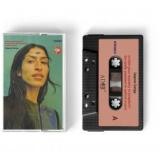
DAGMAR ZUNIGA - IN FILTH YOUR MYSTERY IS KINGDOM / FAR SMILE PEASANT IN YELLOW MUSIC

Nicaraguan-American artist Dagmar Zuniga makes music that feels both intimate and expansive: songs drift like disrupted signals, carried by harmony, tape hiss, and a strong sense of touch. Her debut solo album in filth your mystery is kingdom / far smile peasant in yellow music — written and recorded in New York, Norway, and Athens, Georgia over a period of five years on her longtime companion, the Tascam 424 — was uploaded to Bandcamp and YouTube in January 2025, quickly garnering over two hundred thousand views and the attention of artists such as Mount Eerie, who invited her to tour with them that summer. This year, what was once a jewel of tapped-in algorithms and message boards will meet the world at large, with in filth arriving digitally on March 4, and physically on April 10, via AD 93.

in filth is an atmospheric, devotional collage where one voice multiplies into a chorus of selves, sometimes delicate, sometimes severe; an effect created by Zuniga’s masterful layering of texture and complex harmonies. Synths glitter out like spears of sunlight from beneath clouds of moody, time-distorted guitars, and songs spin about themselves like tightly-wound music boxes, making use of a kind of hypnotic repetition, before melting apart into their components or slipping into the following track.

Zuniga began recording to tape as a teenager, drawn to the physicality of the medium — how a tape recording is fragile, mutable, and alive. Though her ethereal sound may draw easy comparisons to other female pioneers of psychedelic folk, she is influenced just as much by the darker sounds of Syd Barrett and The Fall. Like Barrett, Zuniga is a painter, and she is interested not only in recording music but in creating a full, self-contained artistic universe: she creates her own artwork, merchandise, music videos, and bootleg tapes of new and unfinished music that she exclusively sells at live shows (“If something is not material, it does not exist,” she insists). Her world has not gone unvisited, garnering her a monthly show on NTS Radio ‘World of Pain’, as well as a forthcoming appearance at Rewire Festival in April 2026.

Though Zuniga’s work explores themes of solitude and suffering, the suffering in her songs is not borrowed or displayed; it is held, then opened outward through empathy — an exacting practice of attention that insists on shared ground. Solitude, in her work, is not withdrawal but a starting point for connection. Likewise, over time, her recording process has become increasingly communal, with in filth featuring musicians Hayes Hoey, Austyn Wohlers (Tomato Flower), and Zach Phillips (Fievel Is Glauque). Newer recordings widen the circle even more. For Zuniga, collaboration is a way to “find a place between worlds,” echoing Badiou’s idea of love as a vision refracted through the prism of difference. Meaning emerges there — in the space between voices, between artist and listener. “I hope my music helps people work through difficult experiences,” she says. “The same way it helps me.”

nicht am Lager

Bestelle jetzt und wir bestellen den Artikel für dich beim Lieferanten.


Last In: vor 3 Tagen
DAGMAR ZUNIGA - IN FILTH YOUR MYSTERY IS KINGDOM / FAR SMILE PEASANT IN YELLOW MUSIC (TAPE)

Nicaraguan-American artist Dagmar Zuniga makes music that feels both intimate and expansive: songs drift like disrupted signals, carried by harmony, tape hiss, and a strong sense of touch. Her debut solo album in filth your mystery is kingdom / far smile peasant in yellow music — written and recorded in New York, Norway, and Athens, Georgia over a period of five years on her longtime companion, the Tascam 424 — was uploaded to Bandcamp and YouTube in January 2025, quickly garnering over two hundred thousand views and the attention of artists such as Mount Eerie, who invited her to tour with them that summer. This year, what was once a jewel of tapped-in algorithms and message boards will meet the world at large, with in filth arriving digitally on March 4, and physically on April 10, via AD 93.

in filth is an atmospheric, devotional collage where one voice multiplies into a chorus of selves, sometimes delicate, sometimes severe; an effect created by Zuniga’s masterful layering of texture and complex harmonies. Synths glitter out like spears of sunlight from beneath clouds of moody, time-distorted guitars, and songs spin about themselves like tightly-wound music boxes, making use of a kind of hypnotic repetition, before melting apart into their components or slipping into the following track.

Zuniga began recording to tape as a teenager, drawn to the physicality of the medium — how a tape recording is fragile, mutable, and alive. Though her ethereal sound may draw easy comparisons to other female pioneers of psychedelic folk, she is influenced just as much by the darker sounds of Syd Barrett and The Fall. Like Barrett, Zuniga is a painter, and she is interested not only in recording music but in creating a full, self-contained artistic universe: she creates her own artwork, merchandise, music videos, and bootleg tapes of new and unfinished music that she exclusively sells at live shows (“If something is not material, it does not exist,” she insists). Her world has not gone unvisited, garnering her a monthly show on NTS Radio ‘World of Pain’, as well as a forthcoming appearance at Rewire Festival in April 2026.

Though Zuniga’s work explores themes of solitude and suffering, the suffering in her songs is not borrowed or displayed; it is held, then opened outward through empathy — an exacting practice of attention that insists on shared ground. Solitude, in her work, is not withdrawal but a starting point for connection. Likewise, over time, her recording process has become increasingly communal, with in filth featuring musicians Hayes Hoey, Austyn Wohlers (Tomato Flower), and Zach Phillips (Fievel Is Glauque). Newer recordings widen the circle even more. For Zuniga, collaboration is a way to “find a place between worlds,” echoing Badiou’s idea of love as a vision refracted through the prism of difference. Meaning emerges there — in the space between voices, between artist and listener. “I hope my music helps people work through difficult experiences,” she says. “The same way it helps me.”

vorbestellen11.04.2026

erscheint voraussichtlich am 11.04.2026

Guilty Razors - Complete Recordings 1977 - 1978

UILTY RAZORS, BONA FIDE PUNKS.


Writings on the topic that go off in all directions, mind-numbing lectures given by academics, and testimonies, most of them heavily doctored, from those who “lived through that era”: so many people today fantasize about the early days of punk in our country… This blessed moment when no one had yet thought of flaunting a ridiculous green mohawk, taking Sid Vicious as a hero, or – even worse – making the so-called alternative scene both festive and boorish. There was no such thing in 1976 or 1977, when it wasn’t easy to get hold of the first 45s by the Pistols or the Clash. Few people were aware of what was happening on the fringes of the fringes at the time. Malcolm McLaren was virtually unknown, and having short hair made you seem strange. Who knew then that rock music, which had taken a very bad turn since the early 1970s, would once again become an essential element of liberation? That, thanks to short and fast songs, it would once again rediscover that primitive, social side that was so hated by older generations? Who knew that, besides a few loners who read the music press (it was even better if they read it in English) and frequented the right record stores? Many of these formed bands, because it was impossible to do otherwise. We quickly went from listening to the Velvet Underground to trying to play the Stooges’ intros. It’s a somewhat collective story, even though there weren’t many people to start it.
The Guilty Razors were among those who took part in this initial upheaval in Paris. They were far from being the worst. They had something special and even released a single that was well above the national average. They also had enough songs to fill an album, the one you’re holding. In everyone’s opinion, they were definitely not among the punk impostors that followed in their wake. They were, at least, genuine and credible.

Guilty Razors, Parisian punk band (1975-1978). To understand something about their somewhat linear but very energetic sound, we might need to talk about the context in which it was born and, more broadly, recall the boredom (a theme that would become capital in punk songs) coupled with the desire to blow everything off, which were the basis for the formation of bands playing a rejuvenated rock music ; about the passion for a few records by the Kinks or the early Who, by the Stooges, by the Velvet mostly, which set you apart from the crowd.
And of course, we should remember this new wave, which was promoted by a few articles in the specialized press and some cutting-edge record stores, coming from New York or London, whose small but powerful influence could be felt in Paris and in a handful of isolated places in the provinces, lulled to sleep by so many appalling things, from Tangerine Dream to President Giscard d’Estaing...
In 1975-76, French music was, as almost always, in a sorry state ; it was still dominated by Johnny Hallyday and Sylvie Vartan. Local rock music was also rather bleak, apart from Bijou and Little Bob who tried to revive this small scene with poorly sound-engineered gigs played to almost no one.
In the working class suburbs at the time, it was mainly hard rock music played to 11 that helped people forget about their gruelling shifts at the factory. Here and there, on the outskirts of major cities, you still could find a few rockers with sideburns wearing black armbands since the death of Gene Vincent, but it wasn’t a proper mass movement, just a source of real danger to anyone they came across who wasn't like them. In August 1976, a festival unlike any other took place in Mont-de-Marsan – the First European Punk Festival as the poster said – with almost as many people on stage as in the audience. Yet, on that day, a quasi historical event happened, when, under the blazing afternoon sun, a band of unknowns called The Damned made an unprecedented noise in the arena, reminiscent of the chaotic Stooges in their early adolescence. They were the first genuine punk band to perform in our country: from then on, anything was possible, almost anything seemed permissible.

It makes sense that the four+1 members of Guilty Razors, who initially amplified acoustic guitars with crappy tape recorder microphones, would adopt punk music (pronounced paink in French) naturally and instinctively, since it combines liberating noise with speed of execution and – crucially – a very healthy sense of rebellion (the protesters of May 1968 proclaimed, and it was even a slogan, that they weren’t against old people, but against what had made them grow old. In the mid-1970s, it seemed normal and obvious that old people should now ALSO be targeted!!!).
At the time, the desire to fight back, and break down authority and apathy, was either red or black, often taking the form of leafleting, tumultuous general assemblies in the schoolyard, and massive or shabby demonstrations, most of the time overflowing with an exciting vitality that sometimes turned into fights with the riot police. Indeed, soon after the end of the Vietnam War and following Pinochet’s coup in Chile, all over France, Trotskyist and anarcho-libertarian fervour was firmly entrenched among parts of the educated youth population, who were equally rebellious and troublemakers whenever they had the chance. It should also be noted that when the single "Anarchy in the UK" was first heard, even though not many of us had access to it, both the title and its explosive sound immediately resonated with some of those troublemakers crying out for ANARCHY!!! Meanwhile, the left-wing majority still equated punks with reckless young neo-Nazis. Of course, the widely circulated photos in the mainstream press of Siouxsie Sioux with her swastikas didn’t necessarily help to win over the theorists of the Great Revolution. It took Joe Strummer to introduce The Clash as an anti-racist, anti-fascist and anti-ignorance band for the rejection of old-school revolutionaries to fade a little.

The Lycée Jean-Baptiste Say at Porte d’Auteuil, despite being located in the very posh and very exclusive 16th arrondissement of Paris, didn’t escape these "committed" upheavals, which doubled as the perfect outlet for the less timid members of this generation.
“Back then, politics were fun,” says Tristam Nada, who studied there and went on to become Guilty Razors’ frontman. “Jean-Baptiste was the leftist high-school in the neighbourhood. When the far right guys from the GUD came down there, the Communist League guys from elsewhere helped us fight them off.”
Anything that could challenge authority was fair game and of course, strikes for just about any reason would lead to increasingly frequent truancy (with a definitive farewell to education that would soon follow). Tristam Nada spent his 10th and 11th unfinished grades with José Perez, who had come from Spain, where his father, a janitor, had been sentenced to death by Franco. “José steered my tastes towards solid acts such as The Who. Like most teenagers, I had previously absorbed just about everything that came my way, from Yes to Led Zeppelin to Genesis. I was exploring… And then one day, he told me that he and his brother Carlos wanted to start a rock band.” The Perez brothers already played guitar. “Of course, they were Spanish!”, jokes their singer. “Then, somewhat reluctantly, José took up the bass and we were soon joined by Jano – who called himself Jano Homicid – who took up the rhythm guitar.” Several drummers would later join this core of not easily intimidated young guys who didn’t let adversity get the better of them.

The first rehearsals of the newly named Guilty Razors took place in the bedroom of a Perez aunt. There, the three rookies tried to cover a few standards, songs that often were an integral part of their lives. During a first, short gig, in front of a bewildered audience of tough old-school rockers, they launched into a clunky version of the Velvet Underground's “Heroin”. Challenge or recklessness? A bit of both, probably… And then, step by step, their limited repertoire expanded as they decided to write their own songs, sung in a not always very accurate or academic English, but who cared about proper grammar or the right vocabulary, since what truly mattered was to make the words sound as good as possible while playing very, very fast music? And spitting out those words in a language that left no doubt as to what it conveyed mattered as well.
Trying their hand a the kind of rock music disliked by most of the neighbourhood, making noise, being fiercely provocative: they still belonged to a tiny clique who, at this very moment, had chosen to impose this difference. And there were very few places in France or elsewhere, where one could witness the first stirrings of something that wasn’t a trend yet, let alone a movement.

In the provinces, in late 1976 or early 1977, there couldn’t be more than thirty record stores that were a bit more discerning than average, where you could hear this new kind of short-haired rock music called “punk”. The old clientele, who previously had no problem coming in to buy the latest McCartney or Aerosmith LP, now felt a little less comfortable there…
In Paris, these enlightened places were quite rare and often located nex to what would become the Forum des Halles, a big shopping mall. Between three aging sex workers, a couple of second-hand clothes shops, sellers of hippie paraphernalia and small fashion designers, the good word was loudly spread in two pioneering places – propagators of what was still only a new underground movement. Historically, the first one was the Open Market, a kind of poorly, but tastefully stocked cave. Speakers blasted out the sound of sixties garage bands from the Nuggets compilation (a crucial reference for José Perez) or the badly dressed English kids of Eddie and the Hot Rods. This black-painted den was opened a few years earlier by Marc Zermati, a character who wasn’t always in a sunny disposition, but always quite radical in his (good) choices and his opinions. He founded the independent label Skydog and was one of the promoters of the Mont-de-Marsan punk festivals. Not far from there was Harry Cover, another store more in tune with the new New York scene, which was amply covered in the house fanzine, Rock News (even though it was in it that the photos of the Sex Pistols were first published in France).
It was a favorite hang-out of the Perez brothers and Tristam Nada, as the latter explained. “It’s at Harry Cover’s that we first heard the Pistols and Clash’s 45s, and after that, we decided to start writing our first songs. If they could do it, so could we!”
The sonic shocks that were “Anarchy in the UK”, “White Riot” or the Buzzcocks’s EP, “Spiral Scratch” – which Guilty Razors' sound is reminiscent of – were soon to be amplified by an unparalleled visual shock. In April 1977, right after the release of their first LP, The Clash performed at the Palais des Glaces in Paris, during a punk night organised by Marc Zermati. For many who were there, it was the gig of a lifetime…
Of course, Guilty Razors and Tristam were in the audience: “That concert was fabulous… We Parisian punks were almost all dressed in black and white, with white shirts, skinny leather ties, bikers jackets or light jackets, etc. The Clash, on the other hand, wore colourful clothes. Well, the next day, at the Gibus, you’d spot everyone who had been at this concert, but they weren’t wearing anything black, they were all wearing colours.”

It makes sense to mention the Gibus club, as Guilty Razors often played there (sometimes in front of a hostile audience). It was also the only place in Paris that regularly scheduled new Parisian or Anglo-Saxon acts, such as Generation X, Siouxsie and the Banshees, the Slits, and Johnny Thunders who would become a kind of messed-up mascot for the venue. A little later, in 1978, the Rose Bonbon – formerly the Nashville – also attracted nightly owls in search of electric thrills… In 1977, the iconic but not necessarily excellent Asphalt Jungle often played at the Gibus, sometimes sharing the bill with Metal Urbain, the only band whose aura would later transcend the French borders (“I saw them as the French Sex Pistols,” said Geoff Travis, head of their British label Rough Trade). Already established in this small scene, Metal Urbain helped the young and restless Guilty Razors who had just arrived. Guitarist for Metal Urbain Hermann Schwartz remembers it: “They were younger than us, we were a bit like their mentors even if it’s too strong a word… At least they were credible. We thought they were good, and they had good songs which reminded of the Buzzcocks that I liked a lot. But at some point, they started hanging out with the Hells Angels. That’s when we stopped following them.”

The break-up was mutual, since, Guilty Razors, for their part, were shocked when they saw a fringe element of the audience at Metal Urbain concerts who repeatedly shouted “Sieg Heil” and gave Nazi salutes. These provocations, even still minor (the bulk of the skinhead crowd would later make their presence felt during concerts), weren’t really to the liking of the Perez brothers, whose anti-fascist convictions were firmly rooted. Some things are non-negotiable.
A few months earlier (in July 1978), Guilty Razors had nevertheless opened very successfully for Metal Urbain at the Bus Palladium, a more traditonally old-school rock night-club. But, as was sometimes the case back then, the night turned into a mass brawl when suburban rockers came to “beat up punks”.

Back then, Parisian nights weren’t always sweet and serene.

So, after opening as best as they could for The Jam (their sound having been ruined by the PA system), our local heroes were – once again – met outside by a horde of greasers out to get them. “Thankfully,” says Tristam, “we were with our roadies, motorless bikers who acted as a protective barrier. We were chased in the neighbouring streets and the whole thing ended in front of a bar, with the owner coming out with a rifle…”
Although Tristam and the Perez brothers narrowly escaped various, potentially bloody, incidents, they weren’t completely innocent of wrongdoing either. They still find amusing their mugging of two strangers in the street for example (“We were broke and we simply wanted to buy tickets for the Heartbreakers concert that night,” says Tristam). It so happened that their victims were two key figures in the rock business at the time: radio presenter Alain Manneval and music publisher Philippe Constantin. They filed a complaint and sought monetary compensation, but somehow the band’s manager, the skilful but very controversial Alexis, managed to get the complaint withdrawn and Guilty Razors ended up signing with Constantin with a substantial advance.

They also signed with Polydor and the label released in 1978 their only three-track 45, featuring “I Don't Wanna be A Rich”, “Hurts and Noises” and “Provocate” (songs that exuded perpetual rebellion and an unquenchable desire for “class” confrontation). It was a very good record, but due to a lack of promotion (radio stations didn’t play French artists singing in English), it didn’t sell very well. Only 800 copies were allegedly sold and the rest of the stock was pulped… Initially, the three tracks were to be included on a LP that never came to be, since they were dropped by Polydor (“Let’s say we sometimes caused a ruckus in their offices!” laughs Tristam.) In order to perfect the long-awaited LP, the band recorded demos of other tracks. There was a cover of Pink Floyd's “Lucifer Sam” from the Syd Barrett era – proof of an enduring love for the sixties’ greats –, “Wake Up” a hangover tale and “Bad Heart” about the Baader-Meinhof gang, whose actions had a profound impact on the era and on a generation seeking extreme dissent... On the album you’re now discovering, you can also hear five previously unreleased tracks recorded a bit later during an extended and freezing stay in Madrid, in a makeshift studio with the invaluable help of a drummer also acting as sound engineer. He was both an enthusiastic old hippie and a proper whizz at sound engineering. Here too, certain influences from the fifties and sixties (Link Wray, the Troggs) are more than obvious in the band’s music.

Shortly after a final stormy and rather barbaric (on the audience’s side) “Punk night” at the Olympia in June 1978, Tristam left the band ; his bandmates continued without him for a short while.

But like most pioneering punk bands of the era, Guilty Razors eventually split up for good after three years (besides once in Spain, they’d only played in Paris). The reason for ceasing business activities were more or less the same for everyone: there were no venues outside one’s small circuit to play this kind of rock music, which was still frightening, unknown, or of little interest to most people. The chances of recording an LP were virtually null, since major labels were only signing unoriginal but reassuring sub-Téléphone clones, and the smaller ones were only interested in progressive rock or French chanson for youth clubs. And what about self-production? No one in our small safety-pinned world had thought about it yet. There wasn’t enough money to embark on that sort of venture anyway.

So yes, the early days of punk in France were truly No Future!

nicht am Lager

Bestelle jetzt und wir bestellen den Artikel für dich beim Lieferanten.


Last In: vor 6 Tagen
Stephan Eicher - Spielt Noise Boys

2025 Reissue.


Münchenbuchsee, a suburb of Bern, Switzerland. Stephan Eicher is the youngest of three children. His father, a radio and TV repairman, is also a jazz violinist and a sound tinkerer in his spare time. In the family home's converted fallout shelter turned studio, Mr. Eicher experiments with homemade sequencers, tortures handcrafted drum machines, and abuses reel-to-reel tape recorders—all under the fascinated gaze of young Stephan.

The boy quickly develops a musical curiosity, exploring sound through various experiments and wanderings. Alongside his younger brother Martin, Stephan crafts audio plays on a homemade multi-track recorder (essentially several cassette decks hooked together!), which they write, record, add sound effects to, and perform for family and friends. Just a couple of nice kids, really...

Then comes 1972, and Lou Reed's Transformer album changes everything for the Eicher kids. For 13-year-old Stephan, it's a revelation—especially "Vicious", the opening track, which he plays on repeat for months. He convinces his father to buy him an electric guitar. Not stopping there, his father also builds him a tube amp using an old radio.

Then comes adolescence. A rough one. Stephan leaves home at 16 and moves to Zurich. With obvious artistic talent, he persuades his art teacher to help him get into F+F, a radical, alternative art school—despite his young age. Accepted, he starts learning video techniques, determined to become a filmmaker.

At F+F, Stephan organizes Dada-style happenings and concerts with a group of friends known as the Noise Boys. Among them: one of his teachers on bass, Veit Stauffer on drums (who would later found ReR/Recommended Records), his girlfriend Sacha on vocals, and Stephan on guitar. In one of their early performances, they release a remote-controlled mouse covered in dull razor blades into the audience to create panic and chaos. Keeping with this aggressive, confrontational spirit, they once played a concert while wearing headphones blasting Tristan and Isolde, trying to perform their own songs simultaneously—to maximize the cacophony. The goal was always the same: clear the room.

Their “songs,” if you can call them that, followed suit. Take "Hungeriges Afrika", for instance—performed entirely with power drills and some drum feedback.

To make ends meet, Stephan returns to Bern on weekends to work as a waiter at the Spex Club, the city’s main punk venue. On September 16, 1980, during a show by proto-electro group Starter, the police raid the club and arrest everyone. Stephan, who manages to avoid arrest, seizes the opportunity to “borrow” Starter’s gear left behind. He suddenly finds himself in possession of a Roland Promars synth, a Korg MS20, and a gorgeous CR78 drum machine, which he runs through a Big Muff distortion pedal to get that perfect gritty sound.

He then sets out to reinterpret some Noise Boys tracks, reworking them during impromptu sessions recorded on a dictaphone (yes, a dictaphone—now the lo-fi sound makes more sense, doesn’t it?). He ironically titles the resulting cassette "Stephan Eicher spielt Noise Boys" ("Stephan Eicher plays Noise Boys"). This gem features seven tracks, which are the ones reissued here.

Back in Zurich, he visits his friends Andrew Moore and Robert Vogel, who have a DIY cassette duplication setup. They make 25 copies of Stephan Eicher spielt Noise Boys for Stephan and his friends. Robert encourages him to visit Urs Steiger of Off Course Records and play him the tape.

Without much hope, Stephan shows up at Urs’s office. But Urs is instantly hooked and suggests releasing a 7” single. Due to space constraints, they reluctantly drop two of the seven tracks ("Hungeriges Afrika" and "One Second"). As for the musical score featured on the cover—it was randomly chosen and remains a mystery to this day. Calling all music theory nerds!

The 7-inch is pressed in 750 copies and released in the first week of December 1980—a date Stephan remembers well, as it’s the same week John Lennon was killed. Smartly, Urs sends a promo copy to François Murner, Switzerland’s answer to John Peel, who hosts a show on alternative station Sounds. Murner falls in love with the record and starts giving it airtime. To Stephan’s surprise, sales follow—and people actually seem interested in his music.

Even this modest underground success scares Stephan a bit. He stops making music for a year and moves to Bologna, where he works as a programmer at Radio Città, a feminist radio station.

Meanwhile, Stephan’s younger brother Martin, who’s also involved in the punk scene, joins the band Glueams as a singer and guitarist. Glueams, named after the fanzine run by two of its members (drummer Marco Repetto and bassist GT), eventually rebrands as Grauzone. Stephan is invited to their shows to project hacked Super 8 visuals live on stage.

Urs Steiger, now working on a compilation titled Swiss Wave – The Album, asks Grauzone to contribute alongside bands like Liliput, Jack and the Rippers, The Sick, and Ladyshave (Fall 1980).

For the album, Martin tasks Stephan with producing their recording sessions. Under Stephan's artistic direction, two tracks emerge: "Raum" and "Eisbär". During "Eisbär", Martin plays a minimalist bass line borrowed from post-punk band The Feelies (just an open string). Drummer Marco Repetto struggles to keep time. Later that evening, unhappy with the takes, Stephan builds a four-bar drum loop from a ¼-inch tape and uses it instead of the flawed original. He then adds bleepy synths and wind sounds to complete the track’s icy vibe before handing it over to Urs.

The Swiss Wave – The Album compilation is released quietly at first, but things snowball thanks to "Eisbär", which eventually becomes a smash hit—selling over 600,000 singles.

Meanwhile, Stephan plays in a rockabilly band called SMUV (named after Switzerland’s social security agency) and begins producing artists, including the debut album of Starter (1981), which includes a more pop-oriented version of "Minijupe".

By early 1982, Stephan starts spending time with the post-punk girl band Liliput (formerly Kleenex). They’re older than him, and he happily drives them around in his Renault Major, acting as their roadie.

By 1983, Grauzone—signed to the major label EMI, which turned out to be a misstep—is falling apart. Stephan begins to pivot toward a more mainstream pop sound with his debut solo album Les Chansons Bleues.

But that... is already another story.

nicht am Lager

Bestelle jetzt und wir bestellen den Artikel für dich beim Lieferanten.


Last In: vor 6 Tagen
Simon Berz - Tectonic

Simon Berz

Tectonic

12inchKR124LP
Karlrecords
20.03.2026

“Tectonic” is a concise portrait of SIMON BERZ’s geological sound explorations across continents over the last 15 years: drums, electronics, and a set of electronically manipulated basalt stones from Iceland.

SIMON BERZ is a transdisciplinary drummer, sound artist, and music educator based in Switzerland and Berlin. Working at the intersection of improvised music, sound art, and performance, and deliberately crossing boundaries between disciplines, his aesthetics are shaped by a sustained engagement with natural materials, particularly stone, and their sonic transformation through electronic manipulation. Beyond his performance work, BERZ founded BADABUM as an art label and a music school.

For the last 30 years, BERZ has been performing in Japan, China, Russia, the USA, Cuba, Iceland, Turkey, and across Europe. He has collaborated with artists including BILL LASWELL,BABY SOMMER, DAMO SUZUKI (CAN), JAMES TURRELL, JIMI TENOR, JOHN SINGLAIR, JOJO MAYER (NERVE), KONDO TOSHINORI, KIDD JORDAN, LAUREN NEWTON, LEE “SCRATCH“ PERRY, MAURO PAWLOWSKI (dEUS), NILS PETTER MOLVÆR, NIKI GLASPIE, NORBERT MÖSLANG, PAUL LOWENS, PFADFINDEREI, ROB MAZUREK, SKÚLI SVERRISSON, and he was the live drummer for APPARAT. As BERZ understands artistic practice as energy emerging from nature and through dialogue with people, his recorded output is intentionally selective, with one highlight being “Beats versus Breath” with KONDO and LASWELL (2023). Alongside a regular drumkit and electronics, he has developed his own instruments such as the “Lithophon” in which resonating stones are turned into amplified sound through water drops, and “Tectonic”, a set of Icelandic basalt stones shaped through electronic manipulation. These self- built instruments form the material basis for his performances, installations, and sound recordings.

“Tectonic” is also the title of BERZ’s latest work: a summary of his geological sound explorations across continents. From Iceland to Indonesia and Bali, from New Orleans to China, in caves and at shores, BERZ carried his millions-of-years-old basalt stones as both instrument and collaborator. On Java, he met Baron, a builder of stone gamelan instruments. At the Pacitan Tabuhan Cave (Indonesia) he performed with MISBACH BILOK and WUKIR SURYADI (SENYAWA) who work with corals as instruments. BERZ brought these encounters and “field recordings” to the Stöðvarfjörður studio in Iceland, where he recorded with his “Tectonic” set-up, drums, and electronics. The music was later mixed in Berlin by DIRK DRESSELHAUS (SCHNEIDER TM). The resulting album moves from club-driven tracks to ambient passages, from gamelan-inspired textures to HipHop-like beat patterns. It resists easy categorization while staying direct and physical in its impact.

nicht am Lager

Bestelle jetzt und wir bestellen den Artikel für dich beim Lieferanten.


Last In: vor 27 Tagen
Kisschasy - The Terrors Of Comfort LP
  • 1: Lie To Me
  • 2: Parasite
  • 3: Your Girlfriend
  • 4: Uncomfortably Numb
  • 5: Digital Saviour
  • 6: The Quiet Sound
  • 7: Bad News Baby
  • 8: Radiowaves
  • 9: Mystery Misery
  • 10: Better

They disbanded in 2015, much to the chagrin of their dedicated fanbase, leaving behind a highly influential body of work, including two gold- selling albums (United Paper People and Hymns for the Nonbeliever) and a slew of hit singles such as "Opinions Won't Keep You Warm at Night," "Do-Do's and Whoa-Ohs," and "Dinosaur." In mid-2025, alongside the vinyl reissue of Hymns for the Nonbeliever-- which reentered the Australian Album and Vinyl charts at #1-- Kisschasy released their first new music in sixteen years. "Lie to Me" and follow- up single "Parasite" both offer a modern edge to the band's trademark sound: blistering guitars, hammering drums, razor-sharp lyrics and, of course, irresistible hooks. It can now be revealed that these two songs form part of a larger body of work: a long-awaited fourth album.

Titled The Terrors of Comfort, the collection of ten brand-new songs finds Kisschasy at the peak of their creative powers. Band member Daz Cordeux describes the album as "raw, alive and commanding" and "the closest you're ever going to get to the true essence of our band." The Terrors of Comfort, Kisschasy's first new album since 2009, will be released on February 13, 2026

vorbestellen13.02.2026

erscheint voraussichtlich am 13.02.2026

Sugarhill Gang - Sugarhill Gang LP
  • A1: Here I Am
  • A2: Rapper’s Reprise (Jam-Jam)
  • A3: Bad News
  • B1: Sugar Hill Groove
  • B2: Passion Play
  • B3: Rapper’s Delight *Bonus Track
  • B4: Rapper’s Delight (Single Version)
auch erhältlich

Red Vinyl

Black Vinyl


The Sugarhill Gang is an American hip hop trio, worldwide known for their massive 1979 hit "Rapper's Delight", which was the first rap single to become a Top 40 hit on the Billboard Hot 100. The track was the first exposure to Hip-Hop for millions of people.
The Sugarhill Gang were also among the very first rap acts to record a full-length LP.
Sugarhill Gang includes the original 7-inch version of "Rapper's Delight" as a bonus track. The album is available as a limited edition of 1000 individually numbered copies on clear & blue marbled coloured vinyl, housed in a gatefold sleeve.

vorbestellen13.02.2026

erscheint voraussichtlich am 13.02.2026

Joey Bada$$ - ALL-AMERIKKKAN BADA$$ (LP)
  • 1: Good Morning Amerikkka - Joey Bada$$ (.38)
  • 2: For My People - Joey Bada$$ (3.5)
  • 3: Temptation - Joey Bada$$ (4.04)
  • 4: Land Of The Free - Joey Bada$$ (.3)
  • 5: Devastated - Joey Bada$$ (3.27)
  • 6: Y U Don T Love Me? (Miss Amerikkka) - Joey Bada$$ (3.19)
  • 1: Rockabye Baby (Feat. Schoolboy Q) - Joey Bada$$ (3.43)
  • 2: Ring The Alarm (Feat. Kirk Knight Nyck Caution And Meechy Darko) - Joey Bada$$ (4.)
  • 3: Super Predator (Feat. Styles P) - Joey Bada$$ (4.11)
  • 4: Babylon (Feat. Chronixx) - Joey Bada$$ (5.36)
  • 5: Legendary (Feat. J. Cole) - Joey Bada$$ (4.38)
  • 6: Amerikkkan Idol - Joey Bada$$ (.11)

All-Amerikkkan Badass is the second studio album from Joey Bada$$. Originally released on April 7, 2017, the album features Schoolboy Q, J. Cole, Kirk Knight, Styles P, and more. Executive produced by Joey Bada$$ and Jonny Shipes with production contributions from Kirk Knight, Chuck Strangers, DJ Khalil, and Statik Selektah.

vorbestellen07.02.2026

erscheint voraussichtlich am 07.02.2026

Eddie Kendricks - Date With The Rain/ Intimate Friends 7"

Eddie Kendricks was the falsetto voice of The Temptations during the group’s heyday years at Motown Records. Signed as a solo artist with the Tamla label he achieved further success with an array of hits (including the No.1 single “Keep On Truckin’”) and popular album tracks that remain in demand today. “Date With The Rain” was originally released in 1972 (from the album “People…Hold On”), “Intimate Friends” later in 1977 (from the album “Slick”), a song written by Garry Glen who would go on to write for Al Hudson (“Spread Love”), Phyllis Hyman (“Be Careful How You Treat My Love”) and Anita Baker (“Caught Up In The Rapture”) among many. More. “Intimate Friends” has also been sampled over 80 times by artists including Alicia Keys (in “Unbreakable”), Erykah Badu and a significant number or r&b/hip hop artists. “Date With The Rain” has also been much sampled and covered most notably by Jamie Principle in 1990.

nicht am Lager

Bestelle jetzt und wir bestellen den Artikel für dich beim Lieferanten.


Last In: vor 85 Tagen
Various - Jalapeno Records: Twenty Five LP (3x12")
 
25

Jalapeno Records are celebrating their 25th anniversary in the business. The label are marking the occasion with the release of a 3LP compilation featuring some of label boss Trevor Mac's favourite dancefloor gems from across the years. From a humble start in a basement recording studio on Holloway Road to a quarter century anniversary celebrated from their Brighton offices – Jalapeno Records has been an indie label with a mission - to bring the funk to the masses. Along the way that has taken in so many genres from chill to house, gospel to soul, breaks to drum & bass but it has all had a common thread running through it - the funk. "Twenty Five years means there are too many artists to list and this album is not supposed to be a Greatest Hits. We did that on the 20th anniversary. The album is dedicated to all of the artists that trusted us with their music and all the people who supported us along the way" says Trevor


k 11. Back Again (Hot Toddy Remix) feat. John Turrell — Kraak & Smaak


n 14. Alone with You (Purple Disco Machine Remix) [feat. Cleopold] — Kraak & Smaak


[k] 11. Back Again (Hot Toddy Remix) [feat. John Turrell] — Kraak & Smaak


[n] 14. Alone with You (Purple Disco Machine Remix) [feat. Cleopold] — Kraak & Smaak


[k] 11. Back Again (Hot Toddy Remix) [feat. John Turrell] — Kraak & Smaak


[n] 14. Alone with You (Purple Disco Machine Remix) [feat. Cleopold] — Kraak & Smaak

nicht am Lager

Bestelle jetzt und wir bestellen den Artikel für dich beim Lieferanten.


Last In: vor 23 Tagen
Bad Skin - Miss Behave LP
  • 1: Love Is What We Need
  • 2: Coeur Rebelle
  • 3: Goodbye
  • 4: Dancing Queen
  • 5: Corazon Rebelde (Spanish)
  • 6: White Rabbit
  • 7: Keep Faking It
  • 8: We Are The Girls
  • 9: Je M'en Fous
  • 10: Sit Tight (Lp Only)

Fueled by colorful outfits and an exceptional presence, these power girls were born to break mold and drive full speed in the music scene. Bad Skin was
formed in 2015 and let me introduce you to this killer team. We have lead singer and Rhythm guitarist Dope, Lead guitarist Victoria, Bassist Maria and Samantha
on the Drums. They have toured in the United Kingdom in 2022 & 2025 and with the public demand; they have performed in the biggest Punk festival “Rebellion” in 2023. In 2022 they also showcased at the famous Le Phoque OFF festival . The same year, they also had a huge impact in Plovdiv in Bulgaria for the Spike Festival and Summerfest in USA. They have also performed in Canadian Festival such as Music 4 Cancer, Canadian Music Week, Rock La Cauze, Festivoix,
Rock Fest pour La Santé Mental, Pouzza Fest and many more. This year their main goal is to connect with the future generation and speak about the importance of self-confidence and that, “it’s okay not to be okay as long
as you keep your head high and still be you”. This goal was well achieved, as the fan base grew. People are seeing why these girls are really the IT factor.
They always deliver an outstanding performance and after each show, they take the time to thank everyone who came and always organize a signing and picture
booth so they can speak & connect with their fans.

vorbestellen12.12.2025

erscheint voraussichtlich am 12.12.2025

Original Soundtrack - Thursday Murder Club LP
  • A1: The Woman In White
  • A2: The Thursday Murder Club
  • A3: The Arm In The Mirror
  • A4: Jumper
  • A5: My Mother's Name
  • A6: Di Penny Gray
  • A7: The Enemy Approaches
  • A8: Wtf
  • A9: Scrum
  • A10: Witnesses To A Murder
  • A11: Aunt Maude
  • A12: Night Flowers
  • A13: Clever Daughter
  • A14: Cheap Trick
  • A15: Headstones
  • A16: A Woodpecker
  • B1: Don't Wake The Dead
  • B2: Four Sugars
  • B3: The Case Of Angela Hughes
  • B4: What A Chase
  • B5: Good People Bad Things
  • B6: Always Bring Cake
  • B7: The Famous Coopers Chase
  • B8: Blood Roses

This summer's epic murder mystery will find its way to your record player! The new film by Chris Columbus
(Harry Potter and the Sorcerer's Stone, Home Alone) has once again been fully scored by composer Thomas Newman.

With titles such as American Beauty and Road to Perdition under his belt, Newman is renowned for his hauntly eerie,
but beautiful style. The beloved film composer matches perfectly with the cozy, yet intriguing
Netflix movie starring Pierce Brosnan (GoldenEye, Mamma Mia! The Movie) and Helen Mirren (The Queen, Excalibur).

The Thursday Murder Club is available as a limited edition on red vinyl.

vorbestellen05.12.2025

erscheint voraussichtlich am 05.12.2025

Thomas Newman - The Thursday Murder Club LP
  • A1: The Woman In White
  • A2: The Thursday Murder Club
  • A3: The Arm In The Mirror
  • A4: Jumper
  • A5: My Mother's Name
  • A6: Di Penny Gray
  • A7: The Enemy Approaches
  • A8: Wtf
  • A9: Scrum
  • A10: Witnesses To A Murder
  • A11: Aunt Maude
  • A12: Night Flowers
  • A13: Clever Daughter
  • A14: Cheap Trick
  • A15: Headstones
  • A16: A Woodpecker
  • A17: Don't Wake The Dead
  • A18: Four Sugars
  • A19: The Case Of Angela Hughes
  • A20: What A Chase
  • A21: Good People Bad Things
  • A22: Always Bring Cake
  • A23: The Famous Coopers Chase
  • A24: Blood Roses
vorbestellen05.12.2025

erscheint voraussichtlich am 05.12.2025

AÄRON KOCH - FOR ONCE LP

Aäron Koch

FOR ONCE LP

12inchUNDAY171LP
UNDAY RECORDS
07.11.2025

Debut solo album from guitar player of Calicos. The result is a record that balances melancholy and raw intensity, where vulnerability is never far from power.Aäron Koch's voice cuts straight through, while the band builds a sound that feels both timeless and urgent, echoing The Veils, My Morning Jacket and Strand of Oaks.


For years, Aäron Koch was the guitarist in other people's bands. Writing intricate riffs and odd time signatures came naturally, but the thought of writing a simple song, a verse, a chorus, a melody that could stand on its own, felt out of reach. He tried and failed, discarded demos, and pushed himself through the humbling exercise of writing "bad songs" just to learn the craft.

'For Once', his debut album (out via Unday Records), is the unexpected outcome of that long struggle. What began as an exercise became a set of songs that refused to stay in the drawer. Months after recording rough sketches, Koch listened back and realized they weren't throwaways after all. With a small heart, he shared them with friends, musicians from bands like Calicos, Uma Chine and Tin Fingers, who immediately heard their potential and joined the project.


The result is a record that balances melancholy and raw intensity, where vulnerability is never far from power. Koch's voice cuts straight through, while the band builds a sound that feels both timeless and urgent, echoing The Veils, My Morning Jacket and Strand of Oaks.

"This music is about weaknesses and vulnerability," Koch says. "Autobiographical really, something I only realized once the album took shape."


That honesty struck a chord. In 2024, after only a handful of shows, Aäron Koch reached the finals of Humo's Rock Rally and was invited to open for Belle & Sebastian at a sold-out Ancienne Belgique. Now 'For Once' shows why: it's the sound of someone learning to write songs the hard way, and discovering in the process that he has something entirely his own to say.

vorbestellen07.11.2025

erscheint voraussichtlich am 07.11.2025

Molly Nilsson - Amateur (LP)

The word "amateur" originates from the Latin word "amator," meaning "lover" or "admirer". This Latin term is derived from "amare," which means "to love". The French adopted "amateur" from Latin, and the English then borrowed it from French, initially retaining the sense of someone who loves or is devoted to something. Over time, the English usage of "amateur" also developed a meaning related to a lack of professional skill or experience. How did a word derived from love become a slur? Is love really so defenseless? They say love conquers all, but in reality isn’t love quite ridiculous? It has no intention, no motive, no agenda. How could it possibly prevail? It can’t be bought or sold, or so they say.Its mere existence can't be proven or even measured. What an impossible thing. Trying and failing, time and time again, no wonder cynicism always seems to win. I see “amateurism” as a delighted, even foolish, protest. Protest against everything. Of what’s expected of someone, or expected of someone to desire or strive for. To be elite, to be expert, to be professional, to be a master, to excel and succeed. Where’s the joy in that? I just want to have fun. I want to want. I want to love. And keep doing it, forever. I want to have fun, even when it’s tiring and sometimes even heaven is boring as hell. I want to be bad. I want to do my own thing. “I vant to be alone”. I want to be someone so dedicated to their passion that it starts to seem like there’s something wrong with them. All the way. We can take it all the way, and never get it back. ” - Molly Nilsson Amateur is the 12th studio album by Molly Nilsson. Deep in the teeth of a career that threatens to tip into something resembling a “legacy,” Molly Nilsson celebrates with an album recorded instinctively, quickly and bursting with so many moments of emotional brilliance and clarity it may be her greatest yet. Hers has been a career spent reaching out, perennially powerful in her earnestness, a warrior ridiculously defenceless and armed with a glittering sincerity. Shearing herself of the machinations of the music industry, recording at home, writing direct to the heart. Amateur is a jubilee for losers. A treatise in 13 songs, Amateur states clearly that we should live our life with eternal curiosity, offers us an open hand of comradeship out of the rat race. The songs on the album are both some of the most personal of Nilsson’s career and the most anthemic. First single How Much Is The World asks us to re-evaluate value in the face of a Neo-liberal system squeezing the life out of our loves. Pulsing opener Die Cry Lie satirises the commercialisation of emotion in the form of a shout-along diss-track. With a pounding rhythm track held down by gorgeous chord changes, heartbreaker Valhalla carries the torch for the main themes of the album: never growing up, making mistakes with kindness, moving on. When the drums crash in on the line “It’s going to get better now, you’ll see, going to be much better off without me” there is a world of feeling swirling about in the vocal delivery. One reading of the track might be that it’s a break up song but the subtext is classic Molly Nilsson: by living truthfully, making mistakes, we’re active agents against the myriad oppressions of the world. All The Way takes the theme for a run into the eternal sunset. It’s a manifesto for living fully. “Take it all the way, and never get it back” - it’s the process that’s the important point. The journey not the destination. Big Life, follows on like a part 2: An ode not only to Molly Nilsson’s career of endless gigs, endless connections with people, it’s a massive ode for following your dreams, doing it yourself. Closer The Bitter End is a powerful anthem for friendship, another definition of love infused in Nilsson’s work, A beautifully poignant ode to comradeship til the end, it seems to be the songwriter approaching aging, approaching life’s inevitability with the same vigour and earnestness, the same love of life she enjoyed at the onset of her career. There are moments on Amateur shrouded in reverb, slightly out of focus, forcing the listener to step deeper into the Mollyverse.. Nilsson’s open-armed beseeching to the world permeates every beat, every chord. These are songs exploding with life: the chunky, aggressive bassline on the punker Get A Life can’t hide its massive, catchy chorus. The sweeping Swedish Nightmare might be a tongue-in-cheek self-reference, but at its heart it’s a song about the duality of living life large, what is a dream, what is a nightmare? Molly Nilsson says you can’t have one without the other, and why would you want to? Here’s to making mistakes.

nicht am Lager

Bestelle jetzt und wir bestellen den Artikel für dich beim Lieferanten.


Last In: vor 5 Monaten
The Beths - Auckland, New Zealand, 2020 LP 2x12"

The Beths

Auckland, New Zealand, 2020 LP 2x12"

2x12inchCAK177LPC
Carpark Records
24.10.2025

The anticipation is there in Elizabeth Stokes’ solo guitar riff under the opening lines of “I’m Not Getting Excited”: a frenetic, driving force daring a packed Auckland Town Hall to do exactly the opposite of what the track title suggests.

As the opener of The Beths’ Auckland, New Zealand, 2020 expands to include the full band, the crowd screeches and bellows. It’s a collective exhalation, in one of the few countries where live music is still possible.

The album title, and film of the same name, deliberately include the date and location, lead guitarist Jonathan Pearce says. “That’s the sensational part of what we actually did.” In a mid-pandemic world, playing to a heaving, enraptured home crowd feels miraculous.

In March 2020, everything seemed on track for another huge year for The Beths. Home after an 18-month northern hemisphere tour, they had just finished recording sophomore album Jump Rope Gazers and were primed for more extensive touring. But within days, New Zealand’s lockdown split the band between three separate houses. All touring was cancelled.

“It was existentially bad,” Stokes says. As well as worrying about economic survival, they lost something crucial to the band’s identity: live performance. “It's a huge part of how we see ourselves... What does it mean, if we can't play live?”

The band found an outlet through live-streaming, returning to the do-it-yourself mentality of their early days to connect with a global audience. The album and film have their genesis in that urge to share the now-rare experience of a live show, as widely as possible.

The fuzzy-round-the-edges live-streams pointed the way aesthetically. Native birds, wonkily crafted by the band from tissue paper and wire, festoon the venue’s cavernous ceiling while house plants soften and disguise the imposing pipes of an organ. The presence of the film crew isn’t disguised: much of the camerawork is handheld; full of fast zooms and pans.

With much of the material still fresh, the band was less focused on re-invention than playing “a good, fast rock show”, Pearce says. The tempo is up on crowd favourites “Whatever” and “Future Me Hates Me” (released as a live single on its third anniversary) as both band and audience feed off the mutual energy in the room.

Certain songs have taken on special resonance post-Covid. Pearce has found “Out Of Sight”, a tender rumination on long-distance relationships, hits particularly hard with live audiences.

Album closer “River Run” visibly brings Stokes to tears as a mix of achievement and relief kicks in. “You can finally relax at that point … You play the last note, breathe out a sigh and look up - and you’re in a giant room full of people happy and smiling.”

vorbestellen24.10.2025

erscheint voraussichtlich am 24.10.2025

NAKED RAYGUN - RAYGUN...NAKED RAYGUN (REMASTERED)

NAKED RAYGUN

RAYGUN...NAKED RAYGUN (REMASTERED)

12inchQSLPC188
Quarterstick Records
24.10.2025

Limited edition ORANGE SWIRL vinyl 1000 copies worldwide. Remastered by Bob Weston at Chicago Mastering Service. Originally released in 1990 vinyl reissue includes 3 bonus tracks. "We drove up there and my cousin Tracy had turned punk rock. And she said, 'I'm going to this show tonight. Come with me.' And so I went to this club called The Cubby Bear - it's right across the street from the baseball stadium - and a band called Naked Raygun were playing, and they're this legendary Chicago punk rock band. But I'd never seen live music. So my introduction to rock and roll was in a club that held about 150 people that was half full and I was belly up against the stage watching this incredible live band, like, sweat and spit and bleed in front of me." - Dave Grohl interview, The Record, 2011- // Naked Raygun were an extraordinary staple in the Chicago music scene - beginning in the early 80's and continuing until their quiet demise in the early 90's. Their music showed the world that punk rockers could play and be really good at it. Founded in Chicago in 1980, by Marco Pezzati, Jeff Pezzati and Santiago Durango, Naked Raygun released six albums during their eleven year career that would change the sound of punk rock indefinitely. The band is widely recognized as being one of the most influential punk bands of the 80's. Their anthemic style incorporated politics in a uniquely accessible way, melding pop and hardcore into one cohesive sound, that would later be dubbed, "The Chicago Sound". Shortly after their first release, Basement Screams, Durango left to join Big Black permanently, and was replaced by John Haggerty, whose unique style of buzzsaw guitar would define Raygun's sound for their next four albums. Additionally, Pierre Kezdy replaced Camilo Gonzalez and Eric Spicer took over drums for Jim Colao. In 1990, Haggerty left the band to start Pegboy. Bill Stephens joined the band for their final studio release entitled, Raygun...Naked Raygun.

vorbestellen24.10.2025

erscheint voraussichtlich am 24.10.2025

Tippa Lee Meets The Naram Rhythm Section - Musically Bad

Five years on from their iconic debut album, the Red Robin posse return with another epic full length LP - this time featuring the ruffneck deejay styling of their longtime friend Tippa Lee.

With ten hardcore riddims from Naram stretching the full spectrum of 80s roots, rub-a-dub, and digi - and uncompromising street level lyrics from the LA-based Jamaican veteran Tippa Lee - Musically Bad is an absolute must-have for any discerning reggae collector.

The culmination of nearly a decade of collaboration, with multiple trips to LA where they improvised studio set ups at a range of cheap motels. Tippa takes listeners on a journey through his history in reggae, lamenting the rise of slackness and gun culture, firing shots at politicians and oligarchs, and shining a spotlight on the struggles of people of all colours and creeds suffering in the ghetto.

Despite the serious messages conveyed, and the heavyweight militant riddims, the album contains plenty of moments of humour and levity thanks to Tippa's lyrical nous.

With all riddims recorded and mixed to half inch tape in Naram's analogue Whanganui studio, and crisp mastering from Downbeat Studios, the LP is fine tuned to mash up any dancehall or living room.

nicht am Lager

Bestelle jetzt und wir bestellen den Artikel für dich beim Lieferanten.


Last In: vor 6 Monaten
Various - Dolores: Salsa & Guaracha From 70's French West Indies

In Guadeloupe, many people think that jazz and ka music are like a ring and a finger. To some extent, the same could be said about so called Latin music and the music played in the French West Indies.

Both aesthetics were born in the Caribbean and bear so many connections that they can easily be considered cousins. In constant dialogue, there are lots of examples of their fruitful alliance and have been for a while. The English country dance that used to be practiced in European lounges came to be called kadrille in Martinique and contradanza in Cuba. They both featured additional percussion instruments inherited from the transatlantic deportation. Drawing from shared feelings about the same traumatized identity – later to be creolized – it would be hard not to assume that they were meant to inspire each other. The golden age of the orchestras that graced the Pigalle nights during the interwar period further proves the point. As soon as the 1930s, Havana-born Don Barreto naturally mixed danzón and biguine music in a combo based at Melody's Bar. In the following decade, Félix Valvert, a conductor who was born and raised in Basse-Terre in Guadelupe, also worked wonders in Montparnasse with La Coupole, which was an orchestra made up of eclectic musicians. Afro- Caribbean performers of various origins were often hired on rhythm and brass sections in jazz bands, which used to enliven the typical French balls of the capital. In the 1930s and onwards, Rico’s Creole Band was one of them.


Martinican violinist-clarinettist Ernest Léardée, who would become the king of biguine music as well as the main figure of French Uncle Ben's TV commercials (a dark stigma of post-colonial stereotypes), had musicians from the whole Caribbean sphere play at his Bal Blomet – and they all enchanted "ces Zazous-là" (according the words of Léardée's biguine-calypso piece). In les Antilles (French for French West Indies), music history started to speed up in the 1950s, when trade expanded and radio stations grew bigger. The Guadelupean and Martiniquais youth tuned in their old galena radio sets to South American and Caribbean music. As for the women traders, les pacotilleuses, they bought and sold goods across different islands (the "passing of items through various hands" was thought to be most pleasurable) and brought back countless sounds in their luggage. Such was the case of Madame Balthazar, who once returned from Puerto Rico with the first 45rpm and 33rpm to ever enter Martinique.

Out of this adventure was created the famous Martinican label La Maison des Merengues, a music business she opened and undertook with her husband and which proved to be a major landmark. At the end of the 1950s, in Puerto Rico, Marius Cultier competed in the Piano International Contest playing a version of Monk's Round 'Midnight. He won the first prize and this distinction foreshadowed everything that was to come. Cultier, the heretic Monk of jazz, was quickly praised for writing superb melodies, always tinged with a twist that conferred a unique sound to his music. It didn't take long for the gifted self-taught musician to get to play with Los Cubanos, making a name for himself thanks to his impressive maestria on merengues.

The rest is history. Besides, in the late 1950s, Frantz Charles-Denis, born into the upper middle class in Saint-Pierre and better known by his first name Francisco, went back home after working at La Cabane Cubaine – a club located rue Fontaine where he had caught the Latin fever. Francisco's music was therefore heavily marked by his Cuban cousins' influence, which gave the combos he led a specific style and also led to renewal. Things were swinging hard in La Savane, located in the main square in Fort-de-France. He set up the Shango club close by and tested out the biguine lélé there, a new music formula spiced up with Latin rhythms. Soon afterwards, fate had him fly to Puerto Rico and Venezuela.

As for percussionist Henri Guédon (percussions were only a part of his many talents), he was born in Fort-de-France in May 22nd 1944, the day marking the celebration of the abolition of slavery. As an old man, he could remember that in " his father's Teppaz, a lot of hectic 6/8 music was constantly playing...". In the opening lines of his Lettre à Dizzy, a small illustrated collection of writings published by Del Arco, he highlighted the huge impact that cubop had on him as a teenage boy, around 1960. He eventually turned out to be the lider maximo in La Contesta, a big band steeped in Latin jazz. He was also the one who originated the word zouk to describe music which brought the sound of the New York barrio to Paris. It was the culmination of a journey that started in Sainte-Marie: "a mythical place for bélé, the equivalent of Cuban guaguancó". In the early 1960s, the tertiary economy developed to the detriment of agriculture. Yet rural life was where roots music emerged in Martinique and in Guadeloupe.

Record companies played a major part in the process of Latin versions sweeping across the islands – before reaching everywhere else. Producer Célini, boss of the great Aux Ondes label, and Marcel Mavounzy, both the head of Émeraude records - a firm which was founded in 1953 - as well as the brother of famous saxophonist Robert Mavounzy, were big names to bear in mind. Although there were many of them - all of whom are featured on this record - Henri Debs was definitely the major figure in the recording adventure. He proved to be so influential that he even got compared to Berry Gordy. In the mid 1950s, when he acquired his first Teppaz, he worked on his first compositions: a bolero and a chachacha. Then, he became the one man who made people discover Caribbean music, from calypso to merengue. He was among the first ones to rush out to San Juan, Puerto Rico, to buy records and distribute them through a store run by one of his brothers in Fort-de-France. He had members of the Fania All Star come and perform there, which he was madly proud about. He was also the first one to pay attention to Haitian music, such as compas direct and various other rhythms which would soon flood the market. As a result, many of the combos hitting his legendary studio would end up boosted by widespread "Afro-Latin" rhythms. However, he never denied his identity: gwo ka drums were given a major role, although they were instruments which had long been banned from the "official" music spheres. The present selection bears witness to such a creative swarming. Here are fourteen tracks of untimely yet unprecedented cross-fertilization: all types of music rooted in the Creole archipelago have found their way, whatsoever, to the tracklisting. Whether originating from the city or being more rural, they all go back to what Edouard Glissant, in an interview about the place of West Indian music in the Afro-American scope, called "the trace of singing, the one which got erased by slavery." "It is so in jazz, but also in reggae, calypso, biguine, salsa... This trace also manifests through the drums, whether Guadelupean, Dominican, Jamaican or Cuban... None of them being quite the same. They all point to the idea of a trace, seeking it out and connecting to each other through it. This is the hallmark of the African diaspora: its ability to create something new, in relation to itself, out of a trace. It may be the memory of a rhythm, the crafting of a drum, a means of expression which doesn't resort to an old language but to the modalities of it." The opening track features one of the emblematic orchestras of this aesthetic identity, criscrossing many music types from the archipelago. The 1974 Ray Barretto guajira – Ray Barretto was a major New York drummer influenced by Charlie Parker and Chano Pozzo – is magnificently performed by Malavoi, a legendary Fayolais group (i.e from Fort-de-France). Additionally, the compilation ends on a piece by Los Martiniqueños de Francisco. It symbolically closes the circle as it is a genuine potomitan of Martinique culture which also functions as a tireless campaigner for Afro-Caribbean music. Practicing the danmyé rounds (a kind of capoeiria) to the rhythm of the bèlè drum, it delivers a terrific Caterete, a kind of champeta of Afro- Colombian obedience which was originally composed by Colombian Fabián Ramón Veloz Fernández for the group Wgenda Kenya. The icing on the cake is Brazilian Marku Ribas, who found refuge in Martinique in the early 1970s, bringing his singing to the last trance-inducing track. These two "versions" convey the whole tone of a selection composed of rarities and classics of the tropicalized genre, swarming with tonic accents and convoluted rhythms. It is the sort of cocktail that the West Indians never failed to spice up with their own ingredients. For instance, the Los Caraïbes cover of Dónde, a famous Cuban theme composed by producer Ernesto Duarte Brito, has a typical violin and features renowned Martinique singer Joby Valente and his piquant voice.


The track used to be – or so we think – their only existing 45rpm. The meaningful Amor en chachachá by L'Ensemble Tropicana, a band which included Haitian musicians among whom was composer and leader Michel Desgrotte, also recalls how Latin music was pervasive in the tropics in the mid-1960s. They were the ones keeping people dancing at Le Cocoteraie in Guadelupe and La Bananeraie in Martinique. Around the same time, another "foreign" band, Congolese Freddy Mars N'Kounkou's Ryco Jazz, achieved some success on both islands by covering Latin jazz classics – such as their adaptation of Wachi Wara, a "soul sauce" by Dizzy Gillespie and Chano Pozo whose interweaving of strings and percussions can have anyone hit the dancefloor. How can you resist Dap Pinian indeed, a powerful guaguancó by Eugene Balthazar, performed by the Tropicana Orchestra and published by the Martinique-founded La Maison des Merengues? It also acts as a symbol of the maelstrom at work. Going by the name Paco et L'orchestre Cachunga, Roger Jaffory used to play guaguancó too: his Fania-inspired Oye mi consejo is one example of his style. Baila!!!!! Dancing was also one of the Kings' focus points. Oriza is a Puerto Rican bomba and a "classic" originally composed by Nuevayorquino trumpeter Ernie Agosto, which reserves major space for brasses, giving it a special sheen.

Emerging from the New York barrios crucible was also La Perfecta, a Martinique group originating from Trinidad, whose name directly references the totemic Eddie Palmieri figure as well as his own band, also called La Perfecta. Here they borrow Toumbadora from Colombian producer and composer Efraín Lancheros and interpret it by emphasizing percussions, which set fire to the track even more than the wind instruments. The same goes for Martinique's Super Jaguars, who use Tatalibaba – a composition by Cuban guitarist Florencio "Picolo" Santana which was made famous by Celia Cruz & La Sonora Matencera – as a pretext for sending their cadences into a frenzy. In a more typically salsa vein, the Super Combo, a famous Guadelupean orchestra from Pointe-Noire that was formed around the Desplan family and had Roger Plonquitte and Elie Bianay on board, adapt Serana, a theme by Roberto Angleró Pepín, a Puerto Rican composer, singer and musician also known for his song Soy Boricua. Here again, their vision comes close to surpassing the original. In the 1970s, L'Ensemble Abricot provided a handful of tracks of different syles, hence reaching the pinnacle of the art of achieving variety and giving pleasure. They played boleros, biguines, compas direct, guaguancó and even a good old boogaloo - the type they wanted to keep close to their hearts for ever, "pour toujours", as they sang along together in one of their songs. Léon Bertide's Martinican ensemble excelled at the boogaloo which had been composed by Puerto Rican saxophonist Hector Santos for the legendary El Gran Combo.


Three years later, in 1972, Henri Guédon, with the help of Paul Rosine on the vibraphone, tackled the Bilongo made famous by Eddie Palmieri. Such a classic!!!!! And so were the Aiglons, the band from Guadelupe: choosing to execute Pensando en tí, a composition by Dominican Aniceto Batista, on a cooler tempo than the original, they noticeably used a wonderfully (un)tuned keyboard in place of the accordion. On the high-value collectible single – the first one released by Les Aiglons under the Duli Disc label – there is a sticker classifying the track under the generic name "Afro". Now that is what we call a symbol. Jacques Denis

nicht am Lager

Bestelle jetzt und wir bestellen den Artikel für dich beim Lieferanten.


Last In: vor 29 Tagen
Bendik Giske - Remixed

Bendik Giske

Remixed

12inchSTSLJN444LP
SMALLTOWN SUPERSOUND
05.09.2025

Bendik Giske’s Beatrice Dillon-produced 2023 album gets an addendum with reworks from Carmen Villain, aya, Hanne Lippard, Hieroglyphic Being, Wacław Zimpel and Dillon herself.

Giske’s clearly got his ear to the ground; his last remix record was an invitation for Laurel Halo to put her stamp on »Cruising«, while 2018’s »Adjust EP« roped in Deathprod, Total Freedom, Lotic, and Rezzett. Now comes this new LP of remixes and it’s one of the best we’ve heard in aeons. Carmen Villain boots things off with a remix of »Slipping«, following her excellent (and way, way too underrated) »Nutrition EP« with a giddy, subtle roller that sounds as if it’s been constructed using only Giske’s raw stems. His breaths and leathery key presses – already amped up by Dillon’s detailed recording – are magicked into a dubby concrète groove that’s enhanced with the sparest melodic elements: echoing rainforest-at-night horn blasts, and lopped off decay trails that help fuel the momentum.

aya’s revision of the same track takes a different approach, forming forceful overlapping polyrhythms from Giske’s clanks, using the gamelan-like arpeggios for melodic weight and repetition. The result is a constantly shifting, hypnotic trancer that’s achingly organic – more Raja Kirik than Paul Van Dyke. Polish clarinetist and producer Wacław Zimpel, meanwhile, supplements his trippy recent collaboration with James Holden on a similarly levitational wrinkle of »Slipping« that twists Giske’s quivering sequences with microtonal synth prangs, and gusty echoes. But it’s Jamal Moss who plays fastest and loosest with Giske’s source material, calling back to April’s psy-house stunner »Dance Music 4 Bad People« with a powdery, sexualised banger that buries the breathy »Start« stems underneath neon synths, and brittle drum loops.

»I’m a digital nomad,« Lippard deadpans over Giske’s »Not Yet«. »I’m addicted you know that.« It’s a typically dry treatment from the conceptual artist that unexpectedly amps up the hypnotic qualities of Giske’s original, adding her circuitous charm to his concertina-ing sax sequences. And to tie things up perfectly, Beatrice Dillon returns with her diaphanous remix of »Rise and Fall«, built to emphasise the radically different approaches of each artist.

vorbestellen05.09.2025

erscheint voraussichtlich am 05.09.2025

SCOWL - ARE WE ALL ANGELS

Scowl

ARE WE ALL ANGELS

12inchDOCLPC7358
Dead Oceans
08.08.2025

Scowl is a band that sounds exactly like their name implies. Venomous, fierce, antagonistic. A sneer not to be crossed. Over the last five years, the Santa Cruz, California, band has firmly planted their flag in the hardcore scene with their vicious sound and ripping live show, sharing stages around the world with Circle Jerks, Touché Amoré, and Limp Bizkit, and filling slots at prominent festivals like Coachella, Sick New World, and Reading and Leeds. But with their new album, Are We All Angels (Dead Oceans), Scowl is aiming to funnel all that aggression through a more expansive version of themselves.Much of Are We All Angels grapples with Scowl's newfound place in the hardcore scene, a community which has both embraced the band and made them something of a lightning rod over the past few years. Standout single "Not Hell, Not Heaven" outright rejects the narratives cast onto them by outsiders. "It's about feeling victimized and being a victim, but not wanting to identify with being a victim," explains vocalist Kat Moss. "It's trying to find grace in the fact that I have my power. I live in my reality. You have to deal with whatever you're dealing with, and it ain't working for me." The band breaks from a sense of disassociation to seek deeper connections on "Fantasy." "It's incredibly challenging to try to balance my love for the scene while also feeling, in some spaces, extremely alienated and hated," Moss says. "`Fantasy' is about feeling like I don't know how to connect with these people anymore, because I have shelled myself away so hard." The album ends in a philosophical place on the closing, titular track, "Are We All Angels," asking questions like, "Is this all there is?" and ultimately putting it on the listener to decide. "It's about the personal struggle between good and evil. It doesn't matter how `good' or `bad' you are, there are systems that will try to rewrite your narrative no matter what you actually do," explains Moss, noting that punctuation on "Are We All Angels" has been deliberately omitted in an attempt to leave the statement open-ended. Are We All Angels is the highly anticipated follow-up to Scowl's debut, 2021's How Flowers Grow, a 16-minute primal scream over punishing riffs. But amidst the pounding chaos, it was the record's sonic outlier, a cleaner interlude called "Seeds to Sow," that, true to its name, planted the seed for what was to come for the band. "It kind of laid out this destiny for us, and I feel like now we're fulfilling that," says drummer Cole Gilbert. The band continued to expand their sound on 2023's widely acclaimed Psychic Dance Routine EP, incorporating more pop hooks and favoring gentler singing over heavy screaming, paving the way for what would come next.Scowl's growth got a huge boost from producer Will Yip (Turnstile, Title Fight, Code Orange, Balance and Composure), who broadened the band's scope. "Will would say, `Everything you have here is correct, but it's in the wrong place,'" says Gilbert. Moss adds: "Will really helped restructure a lot of the material. Some songs he tore apart to make more space for the really good hooks and choruses." But even through this more eclectic approach, Scowl loses none of their edge, and still manages to convey the anger and frustration that lies underneath. They are deeply committed to carrying the ethos of punk and its sense of community. "Hardcore and punk have sculpted how we operate, what we want to do as a band, and how we participate," says guitarist Malachi Greene. "At our core, we are a punk and a hardcore band, regardless of how the song shifts and changes."

vorbestellen08.08.2025

erscheint voraussichtlich am 08.08.2025

New Model Army - The Love of Hopeless Causes
  • 1: Here Comes The War
  • 2: Fate
  • 3: Living In The Rose
  • 4: White Light
  • 5: Believe It
  • 6: Understand U
  • 7: My People
  • 8: These Words
  • 9: Afternoon Song
  • 10: Bad Old World

Released in 1993, The Love of Hopeless Causes is the sixth studio album by British post-punk and alternative rock band New Model Army. The album delivers powerful, politically charged lyrics and intense instrumentation. Key tracks like "Here Comes the War," "Living in the Rose," and "Fate" showcase the band's signature blend of raw energy, thought-provoking storytelling, and anthemic melodies. The album’s themes explore social unrest, personal struggles, and resistance, reflecting New Model Army’s unwavering commitment to their message. Produced by Niko Bolas, The Love of Hopeless Causes was the band's only release under Epic Records. With its mix of fiery rock anthems and atmospheric ballads, the album remains a standout in New Model Army’s discography, appealing to both longtime fans and newcomers to their music. The Love of Hopeless Causes is available on black vinyl.

vorbestellen08.08.2025

erscheint voraussichtlich am 08.08.2025

CORY HANSON - I LOVE PEOPLE

Cory Hanson

I LOVE PEOPLE

12inchDC930
DRAG CITY
25.07.2025
  • Bird On A Swing
  • Joker
  • I Love People
  • I Don't Believe You
  • Santa Claus Is Coming Back To Town
  • Lou Reed
  • Final Frontier
  • Texas Weather
  • Bad Miracles
  • Old Policeman
  • On The Rocks
auch erhältlich

Cassette


With a room fulla fine pickers and a set of Hollywood orchestral cues to kill for, Cory Hanson proclaims I Love People! His 4th solo album drills down (baby) on a dryly parallax worldview, with songs about all those people he loves and all the crazy things they get up to. As ringmaster for a circus show of classic folk and rock tropes, Cory tugs at our heartstrings with expert misdirection, embracing tradition by throwing it out, into the wind.

vorbestellen25.07.2025

erscheint voraussichtlich am 25.07.2025

CORY HANSON - I LOVE PEOPLE (TAPE)

With a room fulla fine pickers and a set of Hollywood orchestral cues to kill for, Cory Hanson proclaims I Love People! His 4th solo album drills down (baby) on a dryly parallax worldview, with songs about all those people he loves and all the crazy things they get up to. As ringmaster for a circus show of classic folk and rock tropes, Cory tugs at our heartstrings with expert misdirection, embracing tradition by throwing it out, into the wind.

vorbestellen25.07.2025

erscheint voraussichtlich am 25.07.2025

THE EXTRAS - CLOSER

The Extras

CLOSER

12inchRR395
Rookie Records
25.07.2025
  • People
  • The Firm
  • Hellhounds
  • Point Blank
  • Bad Times
  • Sometimes
  • Summer Is Coming
  • Takin' A Ride
  • The Luscious Ones
  • G. Masina

Explosiv, emotional, kompromisslos und zu laut. In einer Rocklandschaft, die zunehmend zwischen Retro-Glanz und digitalem Kalkül pendelt, übernehmen THE EXTRAS eine Rolle, die längst verwaist scheint: Die einer Band, die Emotionalität nicht mit Pathos verwechselt, die Punk-Wurzeln mit Songwriting-Können paart - und die Haltung hat, ohne Parolen zu schreien. Gegründet 2023 in Köln, aber mit internationaler DNA, zwei der vier Mitglieder stammen aus den USA, verbindet sie den rohen Geist des amerikanischen Undergrounds mit europäischer Gegenwartskultur. Die Gründer Elmar Freels (Köln) und Jon Manierre (New York) werden komplettiert durch Transgitarristin Killer Krissy, Drummer extraordinaire Leroy Kaldenbach und Bassist Pat Bewick. Mit ihrem eigenständigen Breitwandsound, ausgefeilten Lyrics und Rollkragenpullovern nach Lou-Reed-Vorbild (nur in weiß) sind THE EXTRAS eine stilvolle Ausnahmeerscheinung. Sie vereinen rohe Energie mit Zugänglichkeit, Melancholie mit Wut, Punk mit Pop - und zeigen, dass Empowerment auch laut, chaotisch und kollektiv sein kann.

vorbestellen25.07.2025

erscheint voraussichtlich am 25.07.2025

BAD BANGS - OUT OF CHARACTER

BAD BANGS

OUT OF CHARACTER

12inchBRLP374
BEAST RECORDS
18.07.2025

Turning heads with their unique blend of garage, psych, punk rock Bad Bangs played across notable festivals and club shows throughout a 23 show run in 2024. Making waves at Left of The Dial (NL), Leffingeleuren (BE), Truenorayo (ES) and Gliding Barnacles Festival (PT) Bad Bangs make a charging return to the 2025 European Summer festival circuit. Their 2024 sophomore release Out Of Character was the first offering since their debut album Character Building. Somewhere between punk and country, folk and psych, Bad Bangs find themselves Out Of Character. The Melbourne based outfit's sophomore album bends across genres to form a unique soundscape of their own. Live tracking with the masterful Paul Maybury (Cash Savage & The Last Drinks, The Murlocs) captured the bands enigmatic live energy, whilst mastering by Jim Diamond (Ghetto Recorders, The White Stripes, The Dirtbombs, The Gore Gore Girls) secured the signature gritty sound of Bad Bangs. The album arrives with the punchy, punk-laced opening track Contest, which questions the fabric of an industry hell bent on image and conformity, and concludes with the psych infused Wild Mess which laments the shifting state of the natural world. Themes of social and environmental unrest swirl in the undercurrent of an album reflecting on immediate frustrations and personal reflection. With a staple cult following in their hometown of Melbourne, Bad Bangs have supported a high caliber of contemporaries over the years such as Shannon and The Clams, The Murlocs, Rolling Blackouts Coastal Fever and Chastity Belt. Bad Bangs Out Of Character is set for re-release through Beast records (FR) and locally released via Blossom Rot Records (AU&NZ) (Snowy Band, Cassie Ramone and more) Bad Bangs are part of Ya Ya Yeah's booking roster throughout EU. Bad Bangs members are Shelby De Fazio, Tim Ryles, Sophia Lubczenko and Gab Portocarrero.

vorbestellen18.07.2025

erscheint voraussichtlich am 18.07.2025

WYTCH HAZEL - II: SOJOURN

Wytch Hazel

II: SOJOURN

12inchOMEN17
Bad Omen
27.06.2025
  • The Devil Is Here
  • Save My Life
  • Still We Fight
  • Wait On The Wind
  • See My Demons
  • Barrow Hill
  • Chorale/Slaves To Righteousness
  • Victory
  • Angel Take Me

Wytch Hazel's stellar 2016 debut Prelude confirmed these Lancastrian apprentice wizards to be Britain's most promising new hard rock band. Two years on, that promise comes to abundant fruition on II: Sojourn, an album that moves Wytch Hazel on from the innocence and exuberance of the debut to a darker, more profound and complex place, carefully wrought into optimum shape by the band's singer, guitarist, songwriter and mastermind Colin Hendra. "I'm really into the idea of an album," notes Colin. "I don't do mix-tapes, I don't listen to singles, I'm interested in albums. I want to make a good, listenable, cohesive work, that is the whole thing." Asked what inspirations were brought to bear this time, Colin has good news, and even better taste: "I was listening to plenty of Judas Priest, Thin Lizzy and Wishbone Ash last year," remarks the frontman. "This seems to be more of a hard rock album, where the last one was more rock-folk. It's definitely more rock than folk!" The most crucial influence fully expresses itself via Les Paul guitars in sweet twin harmony through cranked Super Lead Marshalls - "Exactly the same type of amp that Thin Lizzy would have used," beams Colin - a benefit of working in James Atkinson's Hand Of Law Studio, a converted gaolhouse in Leeds. "We knew there would be a lot more great gear, more amps, more options," enthuses Colin of this productive new work environment. "We were more prepared, we planned better. I had a lot more vocals to record on this album, pretty much every song has at least three harmonies, but James is a really chilled out guy, he made it easy for us. I had a very clear idea of how I wanted each song to sound, I thought about every single aspect. I probably over-prepared for this album, and it paid off!" Wytch Hazel's proud, avowed Protestant Christianity continues to set them apart from the occult hocus-pocus of their peers, and the very title Sojourn has a Biblical inspiration: "It's used a lot in the Old Testament, people would travel somewhere to stay for a short period of time," explains Colin, comparing the idea to Wytch Hazel's development since Prelude. "We're going to reside here with this sound for a while, and the next album might not sound the same. Come and have a listen to this aspect of Wytch Hazel - it's a temporary stay. We'll be here for a while, then there will be something else. I'm always writing, it's a constant stream, but I'm always trying to raise the bar, because I don't want the next album to be not as good as the other ones!"

vorbestellen27.06.2025

erscheint voraussichtlich am 27.06.2025

KESLEY WALDON - EVERY GHOST
  • Ghost Of Myself
  • Comanche
  • Tiger Lilies
  • Falling Down
  • Nursery Rhyme
  • Let It Lie
  • Lost In My Idlin
  • My Kin
  • Rablin Woman

There's no real way around it: Kelsey Waldon's new album, Every Ghost, is heavy stuff. Across its nine songs, she confronts addiction, grief, generational trauma, and even herself - and comes through it stronger and at peace. "There's a lot of hard-earned healing on this record," Waldon says. As she sings in the album's title track and first song, 'Ghost of Myself,' she's put in the work not only to better herself and leave behind bad habits, but also to learn to love her past selves. Compassion is a throughline on Every Ghost, whether it's for Waldon herself, for the person in the throes of addiction in 'Falling Down,' or for a suffering world in 'Nursery Rhyme.' The people in Waldon's songs aren't irredeemable - they're struggling.

vorbestellen20.06.2025

erscheint voraussichtlich am 20.06.2025

The Ting Tings - Home LP
  • A1: Good People Do Bad Things
  • A2: Dreaming
  • A3: Home
  • A.goodbye Song
  • A5: Winning
  • B1: In My Hand
  • B2: Danced On The Wire
  • B3: Song For Meadow
  • B4: Mind Thunder
  • B5: Down
vorbestellen13.06.2025

erscheint voraussichtlich am 13.06.2025

Ting Tings - Home

Ting Tings

Home

12inchWRLP03
Townsend Music
06.06.2025
  • 1: Good People Do Bad Things
  • 2: Dreaming
  • 3: Home
  • 4: Goodbye Song
  • 5: Winning
  • 6: In My Hand
  • 7: Danced On The Wire
  • 8: Song For Meadow
  • 9: Mind Thunder
  • 10: Down

UK Salford band The Ting Tings released their first catalogue of hits in 2008, with global success taking them on an immediate 6-year world tour. That’s Not My Name, Shut Up & Let Me Go, Great Dj & Hands, still regular fixtures on playlists and syncs worldwide.

They vowed never to make the same record twice, 5 albums in, they are sticking to their word.

Their new album ‘Home’ was recorded in a wooden decked analogue studio is an easy breezy yacht rock album committed to traditional songwriting inspired by their all-time favourites, Fleetwood Mac, Dire Straits, The Eagles, The Carpenters, Cosby Stills & Nash, Supertramp, Christopher Cross, best heard in a car, preferably with the sea in view and the windows down.

vorbestellen06.06.2025

erscheint voraussichtlich am 06.06.2025

Various - NOW Yearbook. THE VAULT: 1980 (3x12")
 
45

"1980 was a huge year in pop music with every genre competing for hits. We have already included many tracks on the records of the 1980 Yearbook, the 80-84 Final Chapter, and their extras so far in our appreciation of the year…

Those tracks were generally the bigger hits of the year, with their chart achievement a factor in their inclusion – however – that’s not the whole singles story of the year, and our celebration of 1980 wouldn’t be complete without shining a light on some of the years’ singles that have been compiled much less frequently over the years.

Welcome to THE VAULT for 1980… Some of the tracks included were Top 40 hits, some missed the chart completely. Some were representative of massive selling albums, and some were big hits in the U.S. and not in the U.K… but all are part of the wonderful pop story of 1980. "

nicht am Lager

Bestelle jetzt und wir bestellen den Artikel für dich beim Lieferanten.


Last In: vor 5 Monaten
VARIOUS - ECCENTRIC SOUL: THE LINCO LABEL LP 2x12"
  • Dreams For Sale
  • Fussin' & Cussin
  • Don't Laugh In My Face And Steal My Man
  • Day And Time
  • You've Blown My Mind
  • Nothin' But A Party
  • Boy And Girl
  • Baby, You Got It
  • Life Ain't Easy
  • Guess I Better Move On
  • Stop (Watch What You Doing To Me)
  • You Know I Love You
  • Could This Be Love
  • Let Me Be The One
  • Super Party
  • They Call Me The Man
  • People Get Down
  • No Communication
  • Disco Spirit
  • I Can't Go On (Without Your Love)
  • Don't You Need Someone Like Me (Ican Set Your Love Free)
  • Stick Your Finger In The Ground (And Turn The World Around)
  • Blood City Funk
  • Noah
  • What's Happening To My World (Extended Version)
  • She Makes My Temperature Rise (Because She's Bad)
auch erhältlich

LINCO SILVER VINYL


Unter Präsidentschaftskandidaten und zukünftigen Astronauten, war die North Carolina Agricultural and Technical State Universität in Greensboro eine Brutstätte für schwarze Spitzenleistungen, Aktivismus und Talent. Unter einem halben Dutzend Labels versammelte der lokale Tölpel Walter Grady eine wechselnde Besetzung von Städtern, Homecoming-Queens und großen Männern auf dem Campus um einen schillernden Sound zu manifestieren, der sowohl einheimisch und revolutionär war. "Eccentric Soul: The Linco-Label" versammelt melodische Meilensteine aus dem Geburtsort der Bürgerrechtsbewegung.

vorbestellen09.05.2025

erscheint voraussichtlich am 09.05.2025

VARIOUS - ECCENTRIC SOUL: THE LINCO LABEL LP 2x12"

Unter Präsidentschaftskandidaten und zukünftigen Astronauten, war die North Carolina Agricultural and Technical State Universität in Greensboro eine Brutstätte für schwarze Spitzenleistungen, Aktivismus und Talent. Unter einem halben Dutzend Labels versammelte der lokale Tölpel Walter Grady eine wechselnde Besetzung von Städtern, Homecoming-Queens und großen Männern auf dem Campus um einen schillernden Sound zu manifestieren, der sowohl einheimisch und revolutionär war. "Eccentric Soul: The Linco-Label" versammelt melodische Meilensteine aus dem Geburtsort der Bürgerrechtsbewegung.

vorbestellen09.05.2025

erscheint voraussichtlich am 09.05.2025

Heidi Montag - Superficial LP

Heidi Montag first came to prominence as a reality television personality on MTV’s “The Hills,” but the multifaceted entertainer has always credited music as her first love. Her debut album, Superficial, on which Montag worked with notable talents including L.P., Cathy Dennis, Stacy Barthe, Steve Morales, and Dave Pensado, has become a cult classic. A remix of “More Is More,” produced by Dave Audé, peaked at number 27 on Billboard’s dance charts. Montag’s one and only public performance of “Body Language” — at the 2009 Miss Universe pageant — was watched by a billion people worldwide. Hailed as “ahead of its time,” Superficial’s initial release faltered due to both promotional issues and Montag’s status as a reality star. The album has since gained praise for its pure pop sounds, which were influenced by Britney Spears and Janet Jackson, as well as for its message of empowerment. In 2018, Life&Style pronounced the album “criminally underrated.” In 2023, the Superficial track “I’ll Do It” became one of the top trending sounds on TikTok, garnering more than a billion streams and poising Montag for a musical comeback. Her most recent re-releases of the tracks “Bad Boy” and “Touch Me” have been celebrated by fans, who all have one question: “What’s next?” First time on CD and Vinyl and now in-stores!

vorbestellen25.04.2025

erscheint voraussichtlich am 25.04.2025

Various Artists ( Chez Damier, Awoke, Jack Buser, Souls Found, Joshua Iz ) - Signs & Gestures

Signs & Gestures is a various artists limited vinyl pressing which will be available digitally later this year. The vinyl version was mastered by Todd Mariana at Chicago's newest cutting studio, Deep Grooves Mastering.

The compilation features four tracks. Longtime friends Awoke (aka John Griffin) and Jack Buser write the two cuts on the A-side. These guys have known each other for many years and the complimentary nature of their tracks echo their years long relationship. Both use analog gear in their productions. In fact, that is an understatement as both are engineers by day and admitted audio gear junkies by night. Awoke's Untitled #2843 is a quirky drama builder throwing the In My House vocal over squelches and acid lines. Buser's Midi Boson is a classic exercise in simplicity. Drums from an MPC and a lead from Elektron's Monomachine are all it takes for this groove to rattle the dance floor.

Side B is also the work of two close friends. Nathan Drew Larsen remixes Little Turtles by Souls Found. Mazi edits Nathan's remix (released earlier on Fresh Meat's When Bad People Cook Good Food Volume 3) to 6 minutes, removing the atmospheric outro and reducing some of the extended sections. What remains is an energetic workout that is uncommonly melodic and emotional. As Audio Soul Project, Mazi's remix 3 of Sentimental Love combines sections from the first two of his remixes of this song released on Vizual Records back in 2011. This new version will hopefully express the care and love that went into preserving the message of Joshua Iz and Chez Damier's original.

nicht am Lager

Bestelle jetzt und wir bestellen den Artikel für dich beim Lieferanten.


Last In: vor 11 Monaten
Lawrence English - Even The Horizon Knows Its Bounds

»Even The Horizon Knows Its Bounds« explores sound’s relationship with architecture, inspired by the Naala Badu building at the Art Gallery of NSW. Created from sound prompts responded to by artists like Jim O’Rourke and claire rousay, the work reflects on space, collaboration, and the fluid nature of sonic environments.

I like to think that sound haunts architecture.

It’s one of the truly magical interactions afforded by sound’s immateriality. It’s also something that has captivated us from the earliest times. It’s not difficult to imagine the exhilaration of our early ancestors calling to one another in the dark cathedral like caves which held wonder, and security, for them.

Today the ways in which sound occupies space, the so-called liquid architecture, holds just as much wonder, albeit one that is often dominated by functionality and form. Beyond those constraints however, how sound operates in the material world is something that exists at the fundament of our understanding of music, and moreover within the broad church we know as the canon of sound arts.

Even The Horizon Knows Its Bounds is a record born out of these relations. In a direct sense, the record is the product of an invitation by curator Jonathan Wilson to create a sound environment, reflecting on the Naala Badu building at the Art Gallery Of NSW. The building’s name, which translates from the Gadigal language to ‘seeing water’, was opened in 2022 and this piece was offered as an atmospheric tint to visitors walking through the building throughout the year following its opening.

It’s also a record born out of a recognition for the porousness sound affords, especially as a device for collaborative endeavour. This composition is one born out of generosity and acoustic solidarity. Even The Horizon Knows Its Bounds is comprised not just of my sounds, but also that of an incredible array of artists who have also operated in the orbit of the Art Gallery Of NSW. The players include Amby Downs, Chris Abrahams, Chuck Johnson, Claire Rousay, Dean Hurley, Jim O’Rourke, JW Paton, Madeleine Cocolas, Norman Westberg, Stephen Vitiello and Vanessa Tomlinson.

The piece was constructed around two long form sound prompts that each musician responded and contributed to. These materials there when digested into the final piece you hear. The work could not exist without the substantial offerings these artists made, and I am immensely grateful to each of them.

I’ll finish with a little note that appears on the LP itself.

Place is an evolving, subjective experience of space. Spaces hold the opportunity for place, which we create moment to moment, shaped by our ways of sense-making.

Whilst the architectural and material features of space might remain somewhat constant, the people, objects, atmospheres, and encounters that fill them are forever collapsing into memory.

Lawrence English
Performed by Amby Downs, Chris Abrahams, Chuck Johnson, Claire Rousay, Dean Hurley, Jim O’Rourke, JW Paton, Madeleine Cocolas, Norman Westberg, Stephen Vitiello, Vanessa Tomlinson

vorbestellen04.04.2025

erscheint voraussichtlich am 04.04.2025

Scientist - At The Controls Of Dub - Rare Dubs 1979 – 1980

Scientist's name will be found on many dub releases in peoples record collections.His connection to King Tubby's studio is inseparable and many say when the dub end of Reggae music had fallen on quieter times it was Scientist with his often stripped back style and at other times, wild off the wall remixes that breathed life back into the dub cannon.

Scientist (born Overton Brownie,1960, Jamaica) was in many ways King Tubby's apprentice. Having helped his own father out repairing televisions and such like, he would help Tubby on winding transformer coils, that the amps of the day all needed. His interest in recording grew as he watched the many sessions taking place at Tubby's Dromilly Avenue Studio, learning the ropes as the musicians came and went. His first break happened when King Jammy (then Prince Jammy) was too tired to work on a session booked for producer Errol 'Don' Mais. Scientist engineered the session to every one’s bewilderment and great satisfaction.

His first hit would be a mix of Barrington Levy's 'Collie Weed' and his reputation built on the many versions he cut at Tubby's where he would become the engineer of choice. His pared down mixing style suited the new Dancehall reggae sound that came at the tail end of the 1970's and rolled into the 1980's. Such was his stature that albums were now sold with his name on their jacket, 'Scientist Vs Prince Jammy, 'Scientist meets The Space Invaders' to name but two.

His time at King Tubby's was followed as chief engineer working for the Hookim Brothers at the mighty Channel 1 Studio's and on many of top producer Henry 'Junjo' Lawes tracks, that were hit after hit at the time.

We have compiled some tuff tracks from the late 70's / early 80's just before everything went digital. Some great dub versions to some killer tracks that rocked the dancehalls around this golden time.The mighty Tristan Palmer whose killer cuts 'BadBoys','Stop Spreading Rumours','Eveready' and 'The Greatest Lover’ alongside Michael Palmer's debut release 'Mr Landlord' and Robert Trench's 'Mr Babylon'. The songs stand back-to-back with Tony Tuff's timeless 'Never Trouble Trouble' and the biblical Rod Taylor's 'The Lord is My Light'. Sammy Dread's 'Wah Dah Wah' and the always respectful Dennis Brown's 'Time and Place' all benefited a touch of magic from The Scientist and his laboratory of effects.

Hope you enjoy the set.....

nicht am Lager

Bestelle jetzt und wir bestellen den Artikel für dich beim Lieferanten.


Last In: vor 5 Monaten
Eliza Niemi - Progress Bakery
  • A1: Do U Fm
  • A2: Novelist Sad Face
  • A3: Green Box
  • A4: Dusty
  • A5: The Linda Song
  • A6: Dm Bf
  • B1: I Tried
  • B2: Melodies Like Mark
  • B3: Wildcat
  • B4: How U Remind Me
  • B5: Pocky
  • B6: Bon Tempiii
  • B7: Pt Basement
  • B8: Alberqurque Ii
  • B9: Mary's
auch erhältlich

Yellow Coloured Vinyl


Kneading dough is tricky – you should know how it’s supposed to feel. If you try too hard you could make it worse. It’s a beautiful practice – creation with a gentle touch, to work at something so it can be left alone. “If it’s too drawn out it’s awful. It’s easy to give too much.” Dance in the mirror. Contemplate your veiny hands. Who do they remind you of?

You begin by mixing flour and water. “What happens when your people die? Why’d they move the rock to the other side of Ulster Park?” Eliza Niemi asks two seemingly unrelated questions in a rising melody with guitar accompaniment, like fingers playing spider up to the nape of your neck. Gentle pressure. Strands of gluten form to bind the mix. A new question lingers in the binding. When she admits “but I don’t know how to tell if I’m feeling it or not,” that question surfaces through the text. It is reiterated throughout the album. When I’m working with dough I think the same thing to myself.

On Progress Bakery, her second album as a solo artist, Eliza knows to leave some questions alone – to let juxtaposition and tension be the proof. It doesn’t have to be hard. The feelings and revelations they provoke rise in the heat. The smell is sweet. Crispy on the outside and soft all the way through. She playfully slip-slides through words and sounds and images, delighting in surprise, skimming ideas like stones cast across clear water, touching down briefly with uncommon grace.

The question provoked between those opening lines resurfaces in the strands between songs – “Do U FM” is fully formed and beautifully layered, while “Novelist Sad Face” is a short, acapella rendering of gentle curiosity. What is holding these ideas together? Some songs demand more, seem to carry a whole load – eventually the skipping stone will halt to sink and resume its idle duty – while others drift in and out of focus, the way thoughts and dreams become interwoven before the mind is sunk into true sleep.

Music and words don’t always have to interact. Where she decides to keep them apart gives a new contour to where and how she puts them together. The kind of thing you’re supposed to take for granted with songs and their singers comes alive in Eliza’s hands – the little miracle of mixing, kneading, stretching, and stopping.

So often on Progress Bakery, Eliza teases out truth and meaning by asking questions. “Do I wanna be crying?” “Do you want me good or do you want me bad?” “Do I need an eye test?” “I’m writing songs in my head while you’re going over stuff with me — is that cruel??” In “Pocky” Eliza ends with a question that feels to me like the actual biography, succinct and revealing:

I don’t wanna be made to see
I just wanna ask “what’s that?”

Grace that ought to be rare, but in its care and precision is offered humbly, with great generosity, and without announcing itself. Eliza’s simple, miraculous music is given further form and shape by a group of collaborators – invaluable guest musicians Jeremy Ray, Evan Cartwright, Steven McPhail, Kenny Boothby, Ed Squires, Carolina Chauffe, Dorothea Paas, Louie Short, and Avalon Tassonyi. Together with Louie Short, who recorded, mixed, and produced the album along with Jeremy Ray and Lukas Cheung, Eliza has cultivated a richness in sound and texture that prods and provokes the ticklish ear. Barely audible guitar tinkering, a brief lo-fi field recording of trumpets, the harmonic clicking of a looped synthesizer, a flourish of reeds, a child’s conversation, each uncanny sound perfectly placed, rippling out under a soft breeze.

Lay in bed alone at night and ask aloud to the stillness,

“What were you doing at the Albuquerque Airport?
What were you doing there??”

And hear your question answered by a dream of swelling, undulating cellos. Try to grasp at the melody and structure. It’s not an answer (if there could be one), but it moves deeper, closer to the weird layer of fleeting moments and disconnected images, barely perceptible at its core. Wait for the dream reel to click into place.

Eliza took me for a ride in Nicole (her beloved Dodge Grand Caravan) and told me she’d been thinking of the album as an embodiment of transition – and I think every transition, known or unknown, carries the weight of new meaning, skittering off the surface tension of life as you know it, creating ripples, sometimes bouncing off and sometimes breaking through. There is a trick you can use to tell if a dough is glutinous enough. You’re supposed to stretch it out as thin as you can without breaking it and hold it up to the light. If you can see through, even if it renders the world murky and uncertain, you should leave it alone. I love this trick. It’s one that Eliza seems to know intuitively: work gently and ask questions and don’t always expect answers, and when you can, take a glimpse at something new, and then leave.

vorbestellen04.04.2025

erscheint voraussichtlich am 04.04.2025

Artikel pro Seite:
N/ABPM
Vinyl