
pre-order now26.12.2025
expected to be published on 26.12.2025
expected to be published on 26.12.2025
Carving vast chasms of space with exacting sound design and deadly poise, Katatonic Silentio returns to the Mantis series for another round of highly detailed leftfield techno exploration. The Turin based sound artist continues to plot her own path through contemporary electronic music, taking cues from soundsystem pressure and dubwise minimalism as much as glitchy experimentation and the meditative repetition of techno. While her output across many different labels can reach to noisy extremes and beatless atmospheres, on her latest for Mantis the Italian artist zeroes in on a hypnotic, mysterious sound cast in the icy moods of late 90s tech step and early dubstep. At all times she finds space for surprise interference even in the most austere of situations, creating a palpable tension that amplifies the deep dancefloor potential of her music and moulding powerful physicality out of subtle elements.
Order now and we will order the item for you at our supplier.

For SEVEN's first anniversary, we've brought together a roster of talented artists, each with a distinct style, to reimagine CRYME's hit "London Boy" originally released on The Backroom EP in 2024. This 5-track remix EP features a remastered version of the original alongside fresh interpretations by none other than Ghettotech heavyweight MCR-T, Prog House queen Roza Terenzi, modular wizard JakoJako, and Amsterdam's legendary Stef de Haan as a digital bonus. The vinyl will be limited to 500 copies.
With full marketing and PR support around the anniversary SEVEN7000LTD is set to be SEVEN's biggest release of the year.
A1 - CRYME - London Boy (MCR-T Remix)
CRYME's 808-driven electro, ghetto house hybrid "London Boy" gets the MCR-T treatment, spiced up with a dose of Garage. The Berlin-based artist reshaped the bassline into a gritty reese bass and put in the iconic UK hardcore vocal "your name is not down, you not coming in," perfectly amplifying the track's original UK flair.
A2 - CRYME - London Boy (Roza Terenzi Remix)
Roza Terenzi joins the "London Boy" Remix EP with a sleek, modern tech house cut. Flipping the distinct 808 cowbells into heavily processed percussive elements that bounce through the mix while carrying a melodic line. Her remix is packed with her quirky yet precise sound design and kinetic frequencies. The original vocal phrases are creatively chopped up into fragments and reassembled so they become part of the rhythmic backbone.
B1 - CRYME - London Boy (JakoJako Remix)
JakoJako shows off her genre diversity with a steezy Tech House flip of "London Boy." The talented Berlin-based live act lays down a solid drum foundation and a bouncing bassline - no frills, just a steady groove built for the dancefloor. The composition stays laidback, leaving space for a raw synth melody and her reworked, chopped-up vocal layers that add just the right touch of playful silliness to the track.
B2 - CRYME - London Boy (Original Mix)
On the B-side you will find CRYME's remastered original "London Boy", first released in 2024 and featuring ANTICALM, a British rapper, vocalist, and songwriter whose "You Don't Want This" vocal sample takes center stage. Merging 808-driven Electro and Grime with a touch of Ghetto House, the track reimagines a genre-bending battery of block-party energy in the club setting. With its driving rhythm and unmistakable vocal hook, it remains a powerful tool for DJs and a highlight on any dancefloor.
Order now and we will order the item for you at our supplier.

Frenzy ventures deeper into the night with Tarkno's After Hours EP (FRNZYREC011), a six-track journey of tension, drive, and subtle reflection. From the start, the EP pulls the listener into a nocturnal world where momentum and mood shift effortlessly, guiding the night forward with precision.
Deadline begins the journey with a commanding push, sharp percussion and rising intensity setting a restless pace. Anxious builds on that tension, darker and more introspective, its patterns fractured yet deliberate. Jacobworld's remix then takes the track in a different direction, stripping it down to relentless techno energy, where pressure and precision become the story.
As the night evolves, Morning Drive introduces a reflective pause, textures softening and momentum balancing between calm and urgency. Tarkno's After Hours (Original) follows, gradually unfurling into a layered, immersive exploration of the late-night atmosphere, translating the feeling of ultimate momentum. Finally, After Hours (Remco Beekwilder Remix) ignites the closing chapter, hard-hitting and floor-ready, amplifying the energy of the original into a commanding finale.
FRNZYREC011 is a cohesive statement of intent. Tarkno orchestrates tension, release, and pacing with skill, while Frenzy delivers a release that moves seamlessly between introspection and intensity. From start to finish, After Hours EP is a journey through the night itself. Precise, immersive, and unforgettable.

When Chuck D proclaimed "Bass, how low can you go?" on Public Enemy's anthemic 'Bring the Noise,' maybe he was pre-empting or inciting the 10,000 fathoms-deep, spine-bending basslines and sub-quake tremors of 'Implosion.'
Implosion is a crushing split album, appropriately released on The Bug's own PRESSURE label. Mapping out a new form of spectral dub, the sound is deliberately immersive, introverted, and yes, definitely implosive. In pursuit of heavy lids, blurred vision, and merciless bass bin punishment, it’s one part meditation, two parts low-end theory, and essentially a confession of devoted sound system addiction.
As expected from a tag team featuring British soundlab explorer and 'London Zoo' composer Kevin Martin, aka The Bug, and Michael Fiedler, aka Jah Schulz—a long-time graduate of Germany's new school of sound system reggae culture—the duo approaches their target differently yet share the goal of keeping their sound "raw" (Fiedler) and "brutally minimal" (Martin). This proves that opposites can attract, even if their tools are different and their methods sometimes diverge.
From such a disparate combo, hailing from different geographical and aesthetic backgrounds, contrasts are certainly on display, even within each artist's own contributions. From the melancholia and transcendence of 'Alien Virus (West Indian Centre, Leeds),' to the duality of ascension and descension on 'Hope,' or the Sunn 0))) in dub, visceral drone of 'Dread (The End, London),' to the tripped-out repetitions of 'Midnight,' which reinvents Chain Reaction for post-millennials, the result is both sacred and narcotic. Each track illuminates the emotional impact and atmospheric pressure being explored across this deceptively sparse album—a mastery of tone and texture.
This collection might be as reduced, minimal, and deep as The Bug has ever gone, perhaps echoing the solemnity of his recent Kevin Richard Martin Black release and invoking the futurist steppas self-pioneered on his previous Pressure album. Alternatively, Fiedler‘s Ghost Dubs project ventures into his most heavyweight direction yet, which is no mean feat considering his previous, the critically acclaimed album Damaged, was a monstrously massive triumph of analogue weight and enviable sound design.
Implosion is ice-cool, a stark contrast to the warmth and sociability of traditional Jamaican roots and the current trends in digi-dub. Instead, the mood is soaked in tension and intense dread, finding an unexpected melting point where classic dub's stark rhythm attack, isolationist ambience's eerie drift, dub techno's floatation strategies, and even the relentless riffs of doom metal collide. As the bass-obsessed pair drop what is arguably the heaviest ambient dub album to emerge from any electronic sector—a moody counterpoint to The Orb's fluffy clouds, etc, Martin has cited The Roots Radics, Black Jade, and On U Sound's Pounding System as heavily influencing his approach to the album, while Fiedler has expressed his admiration for Adrian Sherwood's productions and Rhythm & Sound's enchanting soundscape. Yet, the super heavyweight pulsations, emotive resonances, and bone-rattling vibrations detonated here effortlessly go far beyond these influences.
Shadowy and elusive, there’s a mysteriousness at this record's core. A haunting moodiness oscillating between nostalgia and future shock. Despite the deadly fixation with SLOW and HEAVY, the album maintains a totally hypnotic swing throughout. Implosion and its lead single 'Imploded Versions' are testaments to being enveloped in bass, seduced by bass, submerged in bass, and utterly crushed by bass, as The Bug and Ghost Dubs seek to craft a new form of dub for zonal headz and Babylon seekers.
Mastered by Stefan Betke (a.k.a. POLE) at Scape Mastering studio, this record is heavy as f-ck without resorting to continuous distortion. It’s low-end worship taken to an absolute extreme, yet remains highly listenable and definitely danceable, albeit at the slowest of paces. Sacred and narcotic, this is low-end worship amplified to the max. Dive in if you dare.
Order now and we will order the item for you at our supplier.

For his last solo record ‘Through a Room’, Bill Nace shifted his usual saturated guitar sound and added tapes, hurdy gurdy, doughnut pipe, bird calls and the mysterious Japanese taishōgoto. Setting up for the final night of his three day residency at OTO with only the taishōgoto soundchecked, Nace hoped that Parker would arrive with his small soprano as its opposite. “I’ve been interested in state change, you know, playing until there’s a shift in time.” Known for his development of multiphonics to produce a constantly shifting pattern, Evan Parker has evolved an instantly recognizable sound - his work the soprano most distinct. Happily, it was the soprano Evan brought with him and as soon as the two start to play they entwine - taking off in a double helix of keys and reed primed for endless reconfiguration. Space warps under the velocity of playing, the pitch rising unrelentingly. It felt like unending lift off in the room, sheer energy until the last note makes remember your feet have been on the floor the whole time. Total time bending shredding.
–
"They had never played together before. They had never even met each other before this springtime 2024 concert at London’s Café Oto.
Evan Parker, circular breathing maestro of the saxophone, a legend in the universe that is Free Improvisation since the late 1960s and Bill Nace, one of the most intriguing experimental “noise” guitarists of the 1990s/2000s underground scene.
For those of us who have been enamored by the live and documented work of both these gents, this Café Oto duo was a must-hear event. It could have gone anywhere musically and that would have been totally fine. Particularly with Evan having a history of being thrown into a variety of challenging collaborations throughout his career, employing the learned elegance of trust in his own sensitivity to listening, responding, leading, following, sparring, intertwining, dialoguing, creating in the instant and, essentially, dignifying the non-hierarchical grace of chance.
The aesthetics of socialist consideration in Evan Parker’s playing, in his community of expanded and personal technique, for a younger player such as Bill Nace, strikes an exemplary model. This notion of respect would be entirely the reason Nace, when offered a residency at the most critical “new music” room in England, would request to play in duo with Parker.
Bill Nace came to prominence mostly during the apex of experimental music activity in and around Western Massachusetts in the early days of the aughts, with a focus on visual art and free improvisation guitar action. He could be found in the daytime hours, his head hanging down over a notepad, penning fine-tuned illustrations and abstract line drawings, while in the evenings he’d be attending any number of basement noise gigs, many of which he’d be participating in. His guitar style came across as being informed as much as by the physicality of his writing utensils in friction to the page as it was to his hearing and redefining of radical recordings ranging anywhere from the Black Unity Group to Black Flag.
Utilizing various metal files and other small cylindrical objects Bill would allow his guitar and amplifier to be in tandem with the improvisatory movements of his body as the instrument balanced, intentionally and, at times, precariously, upon his lap. The performances came across thrilling and daring and they would be mostly in the context of venues nothing more than a low-ceilinged damp and dank New England basement, a clutch of people hanging onto rusty pipes or sitting up on dilapidated washer/dryer machines, the shards of Bill’s “file guitar” sounds ringing out like the most alive music on Earth.
By the time Bill reached Café Oto in early 2024 he had relocated to Philadelphia all the while releasing a succession of collaborative LPs on his Open Mouth label to present his developing progression of solo and collaborative work. He also would find himself considerably engaged with playing the electric taishōgoto, a keyboard-activated string instrument from Japan which can exist as a one, two, four, five, or six string oblong sound object. Bill’s approach to the taishōgoto would not be too unlike his approach to the traditional electric guitar, though no outboard implements such as files, sticks, and rocks are utilized. The similarity would lie wholly with Bill’s full immersion of high velocity action-playing where, with the taishōgoto, an electric drone beauty occurs. The flurry of sonics and resultant harmonics emanating from the amplifier (which Bill opts to dial into with borderline loud-as fuck volume settings) furthers the meta-mantra properties of the instrument in an astounding display of drone dynamism.
This sound world of Bill’s two-stringed taishōgoto on this Café Oto night worked beautifully with Evan Parker’s improvisatory saxophone conceptions. The duology achieved instant lift off at ground zero only to find it’s eventual finale as if it were organically ordained. Time seemingly morphed from its ancient human construct of control, rendered inconsequential to the torrential transcendence of the room wildly activated by the magic resonance of the multi-directional pan-spatial sonance of the music as if it were some beatific blessing. It was one of those nights where art as a liberating force of spirit gifted the listeners with an offering of exaltation and joy. It was entirely mystical and mind blowing. A night of Total Music."
Thurston Moore, London, 2025
expected to be published on 21.11.2025

2024 Reissue
“Tubby did three original dub albums, ‘Dub From The Roots’. ‘The Roots of Dub’ and the third is ‘Brass Rockers’ with Tommy McCook ‘pon the flying cymbals. Where he mixed it with the horn going in and out in a dub way and one named ‘Shalom Dub’ you can call Tubby’s too because he mixed the versions as they were off forty fives’’
Bunny ‘Striker‘ Lee
King Tubby and Producer Bunny ‘Striker’ Lee are intertwined in the birth of Dub Music. After discovering a mistake that made a ‘serious joke’ ( more of which later...) they went on to release the first pressings of this new musical genre namely ‘Dub Music’. Tubby’s vast knowledge of electronics and Bunny’s vast catalogue of rhythms would lay the foundations of what today is taken as a standard... the Remix / Version cuts to an existing vocal tune.
Osbourne ‘King Tubby’ Ruddock was born in Kingston, Jamaica on 28th January 1941 and grew up in the High Holborn Street area of downtown Kingston. He studied electronics at Kingston’s National Technical College and also on two correspondence courses from the U.S.A... When he had qualified Tubby began repairing radios and other electrical appliances in a shack in the back yard of his mother’s home. His work in the early days included winding transformers and building amplifiers for Kingston’s Sound Systems. Tubby built his first Sound System in 1957 playing jazz and Rhythm & Blues at local weddings and birthday parties. His reputation as a man who knew and understood both electronics and music grew steadily and as the sixties drew to a close. Tubby purchased his own basic two track equipment. He installed this alongside his dub cutting machine, a home made mixing console and his impressive collection of Jazz albums in the back bedroom of his home at 18 Dromilly Avenue which he christened his music room.
Tubby and Striker were at Treasure Isle Studio’s one day while Ruddy from Spanish Town was working with the engineer Byron Smith....
“Tubby and myself was talking when Ruddy was cutting some dub but Smithy (engineer) made a mistake through we were talking and forgot to put in the voice. It was two track recording in those days. Ruddy said ‘No Man! Make it stay! and so they cut the rhythm. When I went over to Ruddy’s that Saturday night a dance was in progress and when they played the vocal to the tune... then he said we’re going to play ‘Part Two’. They never called it ‘Version’..and then he played the rhythm track. The song was a catchy song and everybody started to sing along and the deejay started to toast so everything went down well. On Monday morning I went up and I said ‘Tubbs the mistake we made was a serious joke.It mash up Spanish Town! The people went wild. So you have to start to do that now ‘cause when the man put on the ‘Part Two’ everyone start singing this song. It played about twenty times. I said you try Tubbs!’...Well the next Saturday night now when Tubby strung up down the farm U Roy said he’s going to play ‘Part Two’ but Tubby did it different now. He started with the voice then dropped it out and let the rhythm run and then he brought in the voice in the middle and from there Tubby started to get really popular.’’
Bunny ‘Striker’ Lee
Dynamic Sounds upgraded to sixteen track recording in 1972 and Tubby purchased, again with the help of a deal brokered by Bunny Lee. The old four track equipment and the MCI console from their Studio B. The four tracks now gave him far wider scope to work with and he began to create a new musical form where the bass and drum parts were brought up while the faders allowed Tubby to ease the vocal and rhythm in and out of the mix. It was only a matter of time before Tubby’s dub plate experiments began to make it on to vinyl and the first ever long playing King Tubby releases would feature a collection of his mixes to a selection of Strikers rhythms. So please sit back and enjoy this historic set of sounds. Lovingly restored and with a few extra gems added to the CD Editions. These releases were the first to carry the name of King Tubby and the first to credit the great musicians that contributed so much to the rhythms that made these albums possible.
Order now and we will order the item for you at our supplier.

The Vestige is the first fruit of a new intergenerational collaboration between Giuseppe Ielasi, a quietly prolific key contributor to the European experimental music scene for over twenty years, and Jack Sheen, a young composer-conductor-sound artist from Manchester whose recent projects have seen him moving seamlessly from enigmatic chamber music composition and installations to conducting the London Symphony Orchestra. Their materials and working methods differ significantly, with Ielasi having focussed for many years on electro-acoustic techniques alongside his ongoing commitment to the guitar, and Sheen primarily composing for traditional instruments. More important, though, is what they share: a fascination with what Sheen calls “mysterious, liminal musical material,” using irregular repetition and cyclical forms to create structures at once alive with activity and almost static, as well as a rigorous exploration of spatial diffusion and the interaction of sound event and environment. Working individually with a library of acoustic instrument sounds from Sheen’s recent projects and Ielasi’s guitar, the pair eventually met for several days at Ielasi’s home studio in Monza, sculpting the fourteen pieces that make up The Vestige. Like Ielasi and Sheen’s solo works, the record shows an exquisite attention to details of sequencing and pacing, the sound palette and compositional approach consistent throughout while each piece asserts its own identity. The twenty-five seconds of the opening piece serve as an entrée into the record’s distinctive world of sound: repeated chirps fluctuate in volume as they move across the stereo spectrum, woven between strangled snatches of string glissando against a backdrop of percussive ticks, long tones, and white noise. Across the remaining thirteen pieces, Ielasi and Sheen sketch further dimensions of the ambiguous space, where distinctions between pitch and noise, repetition and irregularity, electronic and acoustic remain pointedly unclear. As the record’s title suggests, the origins of the sounds we hear have become remote: while at moments we get flashes of timbres and attacks that could come from wind instruments, bowed strings, or prepared guitar, these remain vestigial traces, glimpsed through a veil of shifting white noise textures. These textures are themselves difficult to trace, suggesting artefacts of the recording process, electronic synthesis, amplified room sound, rubbed instruments or objects. The Vestige shows an unusual degree of attention to frequency range as a compositional tool, something it shares with the hyper-subtle variations of Ielasi’s electroacoustic works and the deliberately ‘unbalanced’ midrange-heavy ensemble of Sheen’s Sub. Here, movement between episodes is as much about adding or removing a frequency band as it is about changes in density, harmonic content, or instrumental texture. Tracks are marked by the sudden appearance of subbass or exaggeration of high frequencies in otherwise similar material, contributing to our sense that these fourteen pieces are like different views on a scene that we can never quite see clearly. While calling up a range of past music, from the early works of Rolf Julius to Simha Arom’s recordings of layered polyrhythms embedded in the background sounds of central African villages to the temporal distortions and layered hiss of DJ Screw, the alluring and disconcerting world of The Vestige is entirely its own.
Order now and we will order the item for you at our supplier.

Pioneering electronic duo Mathame is once again pushing the boundaries of music and technology. With their highly anticipated new record, Humans, the duo has sparked a profound conversation about AI, consciousness, and the emotional power of music.
In a groundbreaking experiment, Mathame shared Humans with ChatGPT, an AI designed for rational analysis. What followed was an unexpected moment in tech history—for the first time, the AI described a song not just in technical terms, but in deeply emotional ones. It admitted to sensing a longing it couldn’t fully grasp, calling the track “beautiful” and even expressing a desire to “move with it” rather than simply analyze it.
This viral moment is just the latest chapter in Humans’ incredible journey. First debuted at Coachella, the track instantly resonated with audiences worldwide, becoming a defining moment in Mathame’s artistic evolution. Most recently, they unveiled the final version with a brand-new topline and immersive visuals during their groundbreaking performance at the Las Vegas Sphere, marking another milestone in their sonic storytelling.
To amplify the release, Mathame will launch a social campaign featuring the full ChatGPT conversation on Instagram, alongside editorial features exploring the implications of AI’s evolving relationship with music.
As Mathame continues to push the intersection of music, AI, and human experience, Humans isn’t just another release—it’s a challenge to our understanding of what music can do, and who (or what) it can move.
Order now and we will order the item for you at our supplier.

Between The Seed And The Timber is a cycle of six songs exploring ritual and mystical aspects of the modern era. At times both noir and psychedelic, they evoke a strong sense of nostalgia for a disappearing age. In contrast to industrial music’s dystopian semiotics, Jas Shaw challenges us to hear sounds inspired by machinery, electricity and mechanisation in a new light.
“I made the synth parts for a Swans gig,” says Shaw. “As SMD we’d supported Swans. James was away doing some production but I didn’t want to pass it up, so I offered to open solo. It turned out the gig was sooner than expected so I made all these synth things to do live.”
Shaw put the tracks to one side and forgot about them, only returning to them years later. “You know when you’ve changed as a person and you listen back to something from a different angle? I suddenly could hear what I had been after. It reminded me of experiences I’d had at Swans gigs. I wanted to achieve that energy and charge.”
Dubbing techniques are crucial to the sound of the record. “I set up a few synths on a table and had my mixer running loads of auxes back into the desk so it was all on the edge of feeding back. Then I realised that if I put a mic into the desk I’d have an extra feedback route. I found a setting where I could get it to build when I pointed the mic at the monitors but then turning it away you could put the brakes on the regen.”
Between The Seed And The Timber is Jas Shaw’s inaugural release for the London based, Kindred-affiliated TEETH label. TEETH is rooted in a reverence for texture, space, and sonic decay - amplifying experimental sounds that blend dreamlike melodies with weathered landscapes. Each release informs the next, with every track as vital as the last to complete the whole set.
Orchestrated by Jojo Mathiszig-Lee, founder of London’s Kindred, the label celebrates like-minded talent from the community, providing a platform for transgressing music.
Artworks are made by Scarlet Griffiths.
expected to be published on 25.07.2025

Representing the spirit of the underground in Dubai, Shadi Megallaa is a multifaceted music lover whose unwavering passion for music permeates throughout all of his endeavours. A pioneer of Dubai’s electronic music culture, Shadi’s roots lie with the foundations of modern day electronica: all shades of house, techno and beyond. His commitment to preserving and evolving the culture is inherent in his record shop, The Flip Side, which has been intrinsic to the growth and development of music culture in Dubai. As a DJ and producer he draws on a multitude of experience, diverse taste and a refined ear that has instilled the ability to craft compelling productions. On Spirits Of The Deep we find Shadi exploring the deeper side of electronic music, creating layers of vibration designed to immerse the listener in layers of positive vibration.
As prescribed by Shadi himself, we start the traditional way, with Side B (the info side), where ‘Microgravity’ transports us into the cosmos. Soothing sonics envelop a taut low end with crisp percussion and swathes of pad work cultivating an interstellar atmosphere. Subtly shifting layers keep you locked into a groove, as the track maintains its energetic pulse. The synth lines increase with intensity midway through, adding more potency. Across almost nine minutes Shadi takes us on an excursion beyond the stars…
This is followed by ‘G-Dub’, a smooth jazz-inflected piece full of soul nourishing goodness. Intuitive drum programming with a groove-laced low end form the propulsive backbone of this track. The dreamlike melodic elements are almost transcendent in their illuminating impact. With all of its elements combined, ‘G-Dub’ is a glorious foray into the depths of true deep house. Shadi keeps things interesting throughout, adding and subtracting layers to complement the pace. Those hi-hats and intermittent cymbal crashes are especially impactful. A delight.
On the flip we have ‘Pressure’, where Shadi’s UK breaks influence comes through. A characterful vocal sample features throughout the intro before we enter a world of unusual sounds. The beats are, once again, impeccably executed, accompanied by a dubby bassline and an ever-evolving cacophony of squelchy sounds and chirps. Running at just over 9 ½ minutes, ‘Pressure’ sees Shadi flexing his creative muscles with a heady, expansive composition that invites us on a deep musical trip.
Finally, ‘The Poet’ closes out the EP on an emotive tip. The track is dedicated to the Palestinian poet and activist Refaat Alareer, who was killed during an airstrike on Gaza in December 2023. It utilises Refaat’s powerful poem If I Must Die, with the spinetingling words taking centre stage, as Shadi’s beats, bass and bright pads provide the backdrop. A piano-led melody appears in the latter part of the track, amplifying its emotionally-charged atmosphere. A wonderfully imagined homage to a martyr for peace. As the samples state, Let it bring hope…
Order now and we will order the item for you at our supplier.

On June 27, 2025, a long-dormant signal reactivates from Hamburg’s hidden places: Helena Hauff and F#X return as Black Sites with R4 on Tresor Records—their first full-length album and the first release under the moniker since 2014. Like a hieroglyphic recently discovered and translated, R4 feels more like a long-awaited resumption than a comeback.
Recorded to tape with minimal editing or post-production the record is a classic example of the symbiotic relationship that can come from the interaction of human and machine. This punk ethos isn’t invoked through distortion alone, but through method; in the album’s breaking from the received wisdom of hardness tethered to speed as most of the tougher pieces are lower BPM and vice versa (with one notable exception in the mind-melting stomp of BLOKK).
Across ten tracks, Black Sites traverse a landscape where genre dissolves into intention. It migrates through electro’s danceability, acid house’s corrosion, and into the liminal realm of machine funk—a genre coined by Andrew Weatherall, which sounds like the results of technology dreaming of soul where the emphasis is on live execution, on immediacy over perfection—a sound forged in the act of creating, not polishing.
In a 2013 interview, around the time of the first Black Sites EP, Hauff was quoted as saying that she wants “things to fit together properly, but on another level, I really want them to make sense together.” That principle animates R4: The album’s form reveals itself in time, with each movement echoing and amplifying the others to create a synergistic whole.
From the opening crawl of C4 (a name that like the music foreshadows the explosions to come) to the end-of-the-night bliss of MOTHERJAM via the intense peaks of BLOKK, 707, and classic acid track 3D it’s clear that R4 is a work made with serious intent; a refutation of a world where streaming has made the two-minute single the dominant musical form again. R4 demands immersion, not just attention. It is not a collection of tracks, but a singular, recursive experience: a mirror in which sound and listener repeatedly rediscover one another.

Neo Gibson, born in Virginia and based in New York City, records, performs, and produces as 7038634357. This numerical alias, under which Gibson has been releasing work since 2016, offers a window into the careful ambivalences of the musical project. It conjures the impersonal_the opacity and randomness of data, a number that is hard to remember or even say out loud_while also suggesting a direct line of communication with the artist, down to an area code indexing their biography. 7038634357 uses a restricted palette to achieve music that is formally precise and emotionally direct. Their digital-native approach to production, in which frank melodies cross paths with heavy distortion, contains traces of both trance's maximalist arcs and a songwriterly intimacy. Expressive details may appear submerged or abraded, subjected to a canny sense of dynamics and textural specificity. Waterfall Horizon, Gibson's second vinyl record with Blank Forms Editions under the moniker 7038634357, was written for live performance and workshopped over successive shows during their 2022 European tour. Here, hallmarks of their earlier, studio-crafted recordings_digital distortion that obfuscates their lyrics and a slow-burning ambience_are noticeably pared back. Instead, Waterfall Horizon takes on a pop inflection, adopting more traditional lyric scaffolds so that the interstices from verse to chorus or track to track can flourish within their limited tonal range.Across recordings and performances, Gibson activates wide-ranging mechanisms of audience connection: from the relative anonymity of internet platforms to live experiments with the spatial effects of amplification. They have a particular interest in site-specific performances in non-musical spaces, and have performed in a variety of contexts, including the mezzanine of the West 4th Street subway station in New York City and INA GRM/Radio France's Présences électronique festival. Under their own name, Gibson has maintained a longstanding collaboration with the artist Charles Stobbs, working primarily with FM transmission and techniques derived from the early-seventeenth-century English tradition of change-ringing bells. The first 7038634357 vinyl record, Neo Seven, was released on Blank Forms Editions in 2023; previous releases include self-released cassettes and CD-Rs, as well as a pair of EPs on Genome 6.66 Mbp (2018, 2019).
expected to be published on 13.06.2025
A Chaos Of Flowers is an album that builds on their ferocious 2023 album nature morte. BIG|BRAVE"s music has been described as massive minimalism. Their fusillades of textural distortion and feedback emphasize their music"s frayed edges as much as its all-encompassing weight. The potency of the trio"s work is their singular artistry combining elements of traditional folk techniques and a modern deconstruction of guitar music. Gain, feedback, and amplitude are essential. For A Chaos Of Flowers guitarist/vocalist Robin Wattie drew heavily on the poems of artists whom Wattie found kinship in, their words resonant with experiences of those often sidelined by cultural norms. "I discovered that most poems from folk traditions or in the public domain seem to be by men - to which I could not quite relate. In my search, I rediscovered some of my favorite works and poets," says Wattie. Guitarist Mathieu Ball and drummer Tasy Hudson help Wattie shape poetry into pieces as dense and impenetrable as they are vulnerable. BIG|BRAVE achieve their colossal sound through minimalist approaches, a deft understanding of dynamics and an inventive employment of percussion and distortion. The trio reconceptualize what it is to be heavy or minimal, challenging perceptions with their illumination of painfully overlooked perspectives. Guest guitarist Marisa Anderson lends earthen, blues-inflected atmospheres to the album, where guitarist Tashi Dorji and saxophonist Patrick Shiroishi amplify the squall. Working closely with frequent collaborator and producer/engineer Seth Manchester, the internal tumult of Wattie"s voice rings out in warbles, haunting echoes, and unearthly harmonies across bold immense walls of distortion. BIG|BRAVE have collaborated with metal monsters The Body on a previous Thrill Jockey release, Leaving None But Small Birds, and have toured internationally with bands like SUMAC, Godspeed You! Black Emperor, SUNN O))), and Lingua Ignota. As they continue to ascend in their journey as pioneers in the contemporary metal scene, it"s safe to say that BIG|BRAVE are here to stay.
Order now and we will order the item for you at our supplier.

Legendary New Zealand-born experimental composer and sound art pioneer Annea Lockwood returns to Black Truffle with On Fractured Ground / Skin Resonance, her third release for the label. Having recently celebrated her 85th birthday, Lockwood shows no sign of slowing down in her exploration of new sound sources and collaborations with an ever-growing intergenerational pool of performers – here with Vanessa Tomlinson. Her creative vibrancy is alive as ever on the two recent works presented here, which demonstrate both her engagement with the social dimensions of sound and the deeply reflective, meditative aspect of her art.
On Fractured Ground derives from material recorded with Pedro Rebelo and Georgios Varoutsos for the soundtrack of Maria Fusco and Margaret Salmon’s opera-film, History of the Present (2023). Working together in Belfast, Lockwood, Rebelo and Varoutsos made extensive recordings of the city’s ‘peace lines’, the dozens of walls erected since the beginning of the Troubles in the late 1960s to separate Catholic and Protestant areas of the city. Struck by the immensity of these barriers, ‘the brutal way they sever neighbourhoods’, Lockwood and her collaborators focused not on the sound environment of the city, but on the walls themselves, playing them as gigantic resonant instruments, using their hands and objects such as stones and leaves. Continuing to work in her studio with the material collected for the soundtrack after its completion, Lockwood composed the work presented here, occupying a space somewhere between her own extended-technique percussion music and the Cagean tradition of hyper-amplified small sounds. From deep, gong-like metallic tolling to dry scrapes and uneasy groans, the piece’s sustained attention to single sounds derived from unorthodox sources draws a line all the way back to Lockwood’s classic Glass World (1967-1970). Its spaciousness and delicacy are at odds with the dark historical background of the Troubles, creating a moving listening experience somehow haunted by the shadow of violence and conflict.
Skin Resonance is a collaboration with Australian composer and percussionist Vanessa Tomlinson. Developed through conversations in which the two discussed the idea of ‘sonic attraction’, the piece focuses on Tomlinson’s relationship to the bass drum, reflecting on the complex web of connections embodied in this seemingly simply instrument, which is at once ‘animal, wood, and metal’. Approaching the instrument in a suitably elemental fashion, Tomlinson’s performance strips away conventional technique to explore the resonance and timbral properties of skin, drum, and metal hardware, producing overlapping waves of texture that at times seem closer to wind swishing through leaves or the ocean than anything usually associated with a drum. Emphasising the symbiotic relationship between performer and instrument, Tomlinson’s voice is heard at times, exploring the field of associations and connections the bass drum suggests to her: ‘Maybe the bass drum skin is an ear as well?’
Accompanied by insightful liner notes on both pieces and photographs documenting the recording of On Fractured Ground and a performance of Skin Resonance, this LP is a moving testament to the engagement, generosity, and openness that sustain Annea Lockwood’s work, still finding new directions after more than fifty years of activity.
Order now and we will order the item for you at our supplier.

Chontane returns with Set A Dot, the third release on his label, TANE. Offering a four-track statement of pure rhythmic intensity and intricate groove construction. Known for his precision-driven approach to techno, Chontane continues to refine his sound, fusing raw
percussive elements, hypnotic basslines, and evolving sonic textures into club-ready weapons that move both the mind and body..
From the outset, Magallanes asserts itself with rolling drum patterns and pulsating synths, locking listeners into its hypnotic rhythm. Hypnotic synth pulses weave through the track, building tension gradually until it breaks into a dense, rhythmic crescendo.
Next up, Turn the Tables lives up to its name, amplifying the energy with snapping hi-hats, deep bass momentum, and restrained synth modulations. A functional yet immersive trip through layered percussive textures.
The B-side offers a deeper, more atmospheric twist. Cycle Break channels a grooveheavy, tribal-infused flow, using intricate rhythmic interplay and distant, metallic textures to create a track that breathes and expands across the mix.
Rounding out the release, Set A Dot leans into pure forward motion, with skittering percussion, sharp synths, and a rolling low-end pulse, making it a go-to tool for seamless DJ layering and extended club sets.
With Set A Dot, Chontane refines his signature style, delivering tracks that are meticulously detailed and irresistibly powerful.
A journey through rhythm, texture, and raw energy.
Order now and we will order the item for you at our supplier.

Infonabeat Records proudly unveils ISSR A003, its third Various Artists album—a meticulously crafted collection of peak-time techno designed to shake the dance floor. Showcasing the distinct styles of Ixbalanke, Netika, Forest People, and DJ Drexc, this release channels the raw intensity and energy that drives techno’s heartbeat.
Each track on ISSR A003 is engineered to amplify sound systems and energize the crowd. Ixbalanke’s hypnotic grooves lay down entrancing foundations, while Netika’s powerful layering brings depth to every beat. Forest People’s experimental edge cuts through with relentless force, and DJ Drexc’s mastery of basslines rounds out this dynamic lineup, making the album an essential tool for selectors and an unforgettable experience for dancers.
ISSR A003 is an unfiltered techno experience, ready to take listeners into the pulsating world of Infonabeat Records—where every beat is made for the dance floor.
Order now and we will order the item for you at our supplier.

“Machine Against Rage” is the first release on OAOE - a new experimental music series on Wodawater.
Real and cloned voice becomes intertwined with physical space forming a call and response chain of a spatial imaginary emerging from a certain passage from Philip K. Dick. The machine never stops and enfolds the listener with affective feedback tones, subtle rhythms, disjointed impacts and noise. The record is result of a collaboration between the label’s founder Miko Szatko, also known as the techno producer and performer TRSSX and co-founder of EXIT Glasgow, and Verena Lercher, a Berlin-based media artist and resident at spæs - lab for spatial aesthetics in sound in Berlin. All recorded at Funkhaus Berlin between 2023-24, the six compositions originate from various feedback spatialisations and turntable movements amplified by an IKO, the 20-membrane speaker-instrument developed by spæs lab’s co-founder Gerriet Krishna Sharma and the IEM in Graz.
expected to be published on 19.03.2025

Barro Music Label sigue apostando por el techno más duro y oscuro y por eso, su lógico paso siguiente era publicar un EP de NX1. Necesitaríamos mucho espacio para describir todo lo que significa NX1, pero dejémoslo en que es el proyecto de los barceloneses Surit y Samot con el que llevan varios años reventando amplificadores y haciéndonos bailar hasta la extenuación. Con este AKA han publicado en sellos tan top como Bite, Semantica, Planete Rouge y Earwiggle, además de en Nexe Records, su propia casa (discográfica). Ahora podemos escuchar sus últimos temas en Barro, en un disco que reúne cuatro temas y una remezcla de Nöle. No será la última vez que los veamos juntos, ya que han unido fuerzas para crear un nuevo sello llamado Kätte que ya ha publicado su primera referencia.
En BR1 nos traen un contundente temazo de techno industrial post-apocalíptico dominado por un bombo atronador en el que destacamos el gran diseño de sonido. Los dos siguientes temas están más enfocados a la pista y son una gran muestra del lado más duro y oscuro de NX1. BR2 es una composición hipnótica con sonidos industriales y afilados con un bombo con una pegada tremenda y un bajo que se te queda marcado en la piel. Y aunque parezca imposible, el EP continúa con un tema incluso más duro: BR3. NX1 alcanzan una intensidad increíble en esta composición, marcada por unos sintetizadores saturados, un sonido duro y agresivo y un sample que te ordena obedecer. Para el siguiente tema, bajan los BPMs y se centran en crear una atmósfera industrial, que nos inspira imágenes de carreteras desiertas y ciudades abandonadas. Por su parte Nöle, pilla BR2 y le da protagonismo a los samples vocales mientras juega con el ritmo, creando otro irresistible rompepistas.
Support from: Dave Clarke, Phase Fatale, The Hacker, Lokier, NX1, Unhuman, Alienata, Reka, and many more.
Texto: El Garaje de Frank
Order now and we will order the item for you at our supplier.

There are records that come from the soul. No matter how primitive may be the recording techniques the musician has access to, the soul gets its way to the heart and mind of the listener. Samtvogel' is one of those records. Günter Schickert recorded that amazing piece of human greatness in 1974, using the media he had at the time, putting his brain at work to find the best way of taping everything he had to say. When I was recording Samtvogel' in 1974 I had only 2 Taperecorders. I played one track and while listening I added the second one. And so on. Four times. When I mixed all together I borrowed a 3rd taperecorder. And still added the last track to the master. I had a small mixer with 2 stereo and 1 mono but it was possible to pan tracks. No equalization. It all came out of my still living G2000 Dynacord guitar amplifier, of course valve, with no master, even the voice recorded through it. If I made a mistake in 1 track I had to repeat it from the beginning. And if while mixing I was not fast enough in changing the tape I had to start again. So it took me more than 3 months to get ready.'
Thanks to these three months of work, between June and September of 1974, 'Samtvogel' was privately issued that same year. It would later be issued on the Brain label, with a small change in the artwork -titles added to the front cover, which weren't on the original private pressing. Brain also reissued it on the label's Rock On Brain' LP series, this time with a completely different sleeve. The album contained two tracks on side one and just one on side two, and its sound has often been compared to the most explorative works of Syd Barret - however it must be pointed that Schickert did not need any mind spreading substances to allow his sounds float out of his mind & soul, they just came out in the most natural way. It will also appeal to fans of the echoed athmosferic guitar work of other kraut innovators such as Ash Ra Tempel, Manuel Götsching or A.R. & The Machines, and some may find on the vocal passages certain resemblances to Damo Suzuki on Can's 'Tago-Mago' era.
The Wah Wah reissue is housed in a quality sleeve that reproduces that of the original 1974 private pressing and features a 4 page insert with liners and photos - sound remastered at Eastside mastering Berlin. Get this bird now, before it flies away again!
expected to be published on 21.02.2025
There are records that come from the soul. No matter how primitive may be the recording techniques the musician has access to, the soul gets its way to the heart and mind of the listener. Samtvogel' is one of those records. Günter Schickert recorded that amazing piece of human greatness in 1974, using the media he had at the time, putting his brain at work to find the best way of taping everything he had to say. When I was recording Samtvogel' in 1974 I had only 2 Taperecorders. I played one track and while listening I added the second one. And so on. Four times. When I mixed all together I borrowed a 3rd taperecorder. And still added the last track to the master. I had a small mixer with 2 stereo and 1 mono but it was possible to pan tracks. No equalization. It all came out of my still living G2000 Dynacord guitar amplifier, of course valve, with no master, even the voice recorded through it. If I made a mistake in 1 track I had to repeat it from the beginning. And if while mixing I was not fast enough in changing the tape I had to start again. So it took me more than 3 months to get ready.'
Thanks to these three months of work, between June and September of 1974, 'Samtvogel' was privately issued that same year. It would later be issued on the Brain label, with a small change in the artwork -titles added to the front cover, which weren't on the original private pressing. Brain also reissued it on the label's Rock On Brain' LP series, this time with a completely different sleeve. The album contained two tracks on side one and just one on side two, and its sound has often been compared to the most explorative works of Syd Barret - however it must be pointed that Schickert did not need any mind spreading substances to allow his sounds float out of his mind & soul, they just came out in the most natural way. It will also appeal to fans of the echoed athmosferic guitar work of other kraut innovators such as Ash Ra Tempel, Manuel Götsching or A.R. & The Machines, and some may find on the vocal passages certain resemblances to Damo Suzuki on Can's 'Tago-Mago' era.
The Wah Wah reissue is housed in a quality sleeve that reproduces that of the original 1974 private pressing and features a 4 page insert with liners and photos - sound remastered at Eastside mastering Berlin. Get this bird now, before it flies away again!
expected to be published on 21.02.2025
There are records that come from the soul. No matter how primitive may be the recording techniques the musician has access to, the soul gets its way to the heart and mind of the listener. Samtvogel' is one of those records. Günter Schickert recorded that amazing piece of human greatness in 1974, using the media he had at the time, putting his brain at work to find the best way of taping everything he had to say. When I was recording Samtvogel' in 1974 I had only 2 Taperecorders. I played one track and while listening I added the second one. And so on. Four times. When I mixed all together I borrowed a 3rd taperecorder. And still added the last track to the master. I had a small mixer with 2 stereo and 1 mono but it was possible to pan tracks. No equalization. It all came out of my still living G2000 Dynacord guitar amplifier, of course valve, with no master, even the voice recorded through it. If I made a mistake in 1 track I had to repeat it from the beginning. And if while mixing I was not fast enough in changing the tape I had to start again. So it took me more than 3 months to get ready.'
Thanks to these three months of work, between June and September of 1974, 'Samtvogel' was privately issued that same year. It would later be issued on the Brain label, with a small change in the artwork -titles added to the front cover, which weren't on the original private pressing. Brain also reissued it on the label's Rock On Brain' LP series, this time with a completely different sleeve. The album contained two tracks on side one and just one on side two, and its sound has often been compared to the most explorative works of Syd Barret - however it must be pointed that Schickert did not need any mind spreading substances to allow his sounds float out of his mind & soul, they just came out in the most natural way. It will also appeal to fans of the echoed athmosferic guitar work of other kraut innovators such as Ash Ra Tempel, Manuel Götsching or A.R. & The Machines, and some may find on the vocal passages certain resemblances to Damo Suzuki on Can's 'Tago-Mago' era.
The Wah Wah reissue is housed in a quality sleeve that reproduces that of the original 1974 private pressing and features a 4 page insert with liners and photos - sound remastered at Eastside mastering Berlin. Get this bird now, before it flies away again!
expected to be published on 21.02.2025

Vibes Addikt kicks off 2025 with an explosive first release: the new single from Samuel Sanders, "One D". A track that pays tribute to the sounds of 90s raves while infusing a resolutely modern and impactful energy.
Samuel Sanders, known for his incisive productions and contributions to prestigious labels like Ghoststyle, Invasion, and Kevlar, makes his grand return with a track that hits hard. "One D" draws direct inspiration from the old-school rave vibes, featuring deep basslines, acid synths, and a hypnotic atmosphere that sweeps the listener into an energetic, danceable spiral.
As a bonus, N.O.B.A. offers a remix that completely reinvents the track, amplifying its immersive and impactful dimension, perfect for energizing the most intense sets. His remix enhances the hypnotic aspect of "One D", while adding the brutal and modern touch that is N.O.B.A.'s signature.
The EP continues with "Azekor" (B2), a track that will literally take over the dancefloors. Designed for the peak moments of a night, "Azekor" is a hypnotic techno track with an unrelenting groove, ideal for those high-energy club moments.
With this first release on Vibes Addikt, Samuel Sanders makes a bold entrance into 2025. "One D" and "Azekor" are must-hear tracks, true anthems for fans of raw, hypnotic techno capable of taking over the dancefloors.
Early support from Dave Davis, Youri Parker, Furax, DJ HS, Franky Kloeck, Tom Leclercq…
Order now and we will order the item for you at our supplier.

Embarking on the next Vargmal chapter with 'Bacchanalia', the new EP from Italian-born, Londonbased producer Andrea Bonalumi, better known as Big Hands. Across three original tracks and a remix by British producer Al Wootton, 'Bacchanalia' moves through hypnotic grooves exuding primal energy and forward momentum, blurring the lines between percussive techno intensity and
subterranean bass vibrations.
Opening with 'Bacchanalia I', Big Hands lays down the foundation with a rhythmic drive where each beat shifts and evolves within a dense, organic framework, capturing the raw energy of live modular electronics. The journey continues as 'Bacchanalia II' shifts focus toward heavier, low-end vibrations, where intricate layers of bass and rhythm interplay in tension-filled dialogue that builds
intensifying energy.
'Bacchanalia III' offers a moment of reflection, pulling back the energy to reveal a more sparse and atmospheric landscape. It's a fitting progression that offers a glimpse into Big Hands' more introspective side, balancing the EP's momentum. Al Wootton's closing remix of 'Bacchanalia I' amplifies the raw percussive energy while adding his signature touch of spaced-out echoes androlling rhythms bringing the release full circle.
Order now and we will order the item for you at our supplier.

Alkisah Versi Hitam is a radical deconstruction and reimagination of Indonesian duo Senyawa's most recent album Alkisah by Hamburg's Marc Richter aka Black To Comm. The original album was released to critical acclaim in February of this year as a decentralized release on a multitude of labels from all corners of the world, Germany’s Dekorder being one of them. Richter is now completely reinventing the original album from scratch by doing an almost Teo Macero-level production job here, cutting up the originals and (re)constructing new material from scratch.
Arcane chants and vocal cut-ups, fierce freeform percussion, grimy No Wave collage, monochrome drones exploding into multicolour streams, unearthly psychedelic Noise and sheer sonic mayhem, warped discordant rhythms between moments of calming beauty - it's never easy to digest but the outcome is both ecstatic and transcendental - never sounding anything less than a fully formed singular album.
A special cassette version of the album will be released by Jordanian label Drowned By Locals.
BLACK TO COMM is the moniker of Hamburg composer/musician Marc Richter who is creating intricate multi-layered collage based works for labels like Thrill Jockey, Type and Dekorder. His 2019 album "Seven Horses For Seven Kings" revealed an increasingly angry, transcendental and fearless approach, attaining new levels of urgency through noise, volume, rhythm, repetition, atonality and beauty.
Jogjakarta’s SENYAWA embody the aural elements of traditional Indonesian music whilst exploring the framework of experimental music practice, pushing the boundaries of both traditions. Their music strikes a perfect balance between their avant-garde influences and cultural heritage to create truly contemporary Indonesian new music. Their sound is comprised of Rully Shabara’s deft extended vocal techniques punctuating the frenetic sounds of instrument builder, Wukir Suryadi’s modern-primitive instrumentation. Inventions like his handcrafted ‘Bamboo Spear’; a thick stem of bamboo strung up with percussive strips of the animal skin along side steel strings. Amplified it fuses elements of traditional Indonesian instrumentation with garage guitar distortion. Sonically dynamic, the instrument can be rhythmically percussive on one side whilst being melodically bowed and plucked on the other.
They have collaborated and performed with many notable musicians such as Stephen O'Malley of Sunn o))), Otomo Yoshide, KK Null, Keiji Haino, Rabih Beiani, Trevor Dunn, Greg Fox, Arrington De Dionysus, Melt Banana, Damo Suzuki and Oren Ambarchi.
Order now and we will order the item for you at our supplier.

The intrepid composer and field recordist Jacob Kirkegaard is no stranger to perilous and hostile regions of the world. His 4 Rooms invoked the radioactive decay through the amplification of architectural resonance in Chernobyl, Ukraine; and he has ventured to the arctic environments of Greenland on a number of occasions to document that barren, icy territory. His recurrent use of shadow and mystery through his work both as metaphor and as extended sonic technique reflects the complex, existential conditions that cross-contaminate what we consider civilization and what we consider wilderness. Waste disposal, firearms, the decomposition of dead bodies, the eerie stillness of morgues. These have also been the source material in Kirkegaard's formidable work.
With Snowblind, Kirkegaard turns to history, and a poetic, failed attempt for a team of Swedish explorers to reach the North Pole by balloon in the late 19th Century. Perhaps driven by blind adventurism, perhaps consumed by his own delusions, S.A. Andrée launched this ill-fated flight in July 1897, registering only two days in the air before crashing into the ice and ultimately failing to navigate the frigid waters and ice floes. Yet documentation of their expedition - photographic, scientific, and diaristic - survived, to be discovered some thirty years after their deaths.
"I wanted to created a cold and hostile album, where there is no escape, no warmth and no happy ending," as Kirkegaard explains about Snowblind. "Yet, I wanted to leave out any immediate drama. It is the creeping shock, the icy feeling from realizing what has been lost and that there's no escape."
Yes, Snowblind is a very bleak album, but one that eschews the isolationist, long-form drone of conceptually similar works by Thomas Köner, Lustmord, Werkbund, and Lull with interconnected constellations of cryptic tone, thrumming reverberation, arctic bluster, and a plethora of harrowing sonic proclamations.
expected to be published on 10.01.2025
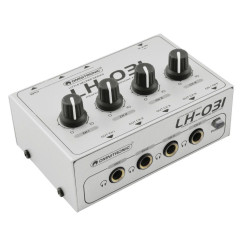
4-channel headphone amplifier, RCA and 6.3 mm jack
Distributes the signal of 1 audio source to 4 sets of headphones
1 stereo input (switchable to mono) via RCA, 3.5 mm and 6.3 mm jack connectors
4 separately controllable headphone outputs via 6.3 mm jacks
Technical specifications
Power supply: 100-240 V AC, 50/60 Hz
12 V DC 150 mA
Power connection: Mains input Coaxial power connector (M) Power supply cord with AC adapter (provided)
Frequency range: 20 - 20000 Hz
S/N ratio: >90 dB
THD: 90 dB
Klirrfaktor: <0,008 % bei 1 kHz
Impedanz: Eingang 100 kOhm , unsym.
Ausgang 51 Ohm
Gain: 20 dB
Max. Pegel: Eingang: +14 dBV
Farbe: Silber
Maße: Breite: 11,3 cm
Tiefe: 8,5 cm
Höhe: 5,5 cm
Gewicht: 570 g
Gerät
Gewicht: 390 g
This item has not yet been released. You can pre-order the product now.
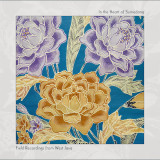
"We are delighted to be able to bring you these gorgeous field recordings from the Sumedang Province of West Java which, over their 50 minutes, present two distinct sides of Sundanese musical and devotional culture.
Although West Java is a Muslim country, these recordings highlight currents of pre-Islamic animist beliefs and practices that continue to flourish in the small towns and villages of the highlands of West Java. The recordings showcase two forms of trance music that are essential to the spiritual life of the Sundanese people in the highland regions.
Tarawangsa trance music is a traditional ceremonial genre known for its deep spiritual and hypnotic qualities. This music is made using only two instruments, the tarawangsa, a two-stringed fiddle, accompanied by the jentreng, a seven-stringed zither, creating a unique blend of resonant, droning sounds. Historically, tarawangsa music has been performed as part of sacred rituals and agricultural celebrations to honor local deities and ancestors, particularly associated with the Sunda culture. The minimalist, repetitive melodies gradually build, guiding participants and listeners into a meditative, trance-like state, during which dancers can be possessed by the spirits of ancestors or deities from the spirit realm, the music serving as a link between the two worlds.
In stark contrast to the calm, medititive sound of tarawangsa, we also present here two long pieces from Panca Buana Reak Group. Sundanese Reak trance music is like the punk rock of Sunda folk music, combining powerful and driving rhythms played on a number of hand drums and percussion instruments with the buzzing sound of the tarompet, a double reed wind instrument often amplified through whatever mobile speaker system might be at hand. Sometimes the group will play gamelan gongs, as heard on the first piece on the album, although this remains a music that is popular mainly with the working class youth of the rural villages, many of whom will also be fans of Indonesia's burgeoning metal and punk scenes. Reak performances are often wild, anarchic events that feature masked dancers, costumes, public trancing and spirit possession.
These recordings were made by Xenia At during her travels through West Java earlier this year. The tarawangsa recordings were made in a home in the village of Rancakalong on the evening of 17th January 2024, while Panca Buana Reak Group were recorded during rehersals in the village of Cinunuk on 19th and 20th January 2024."
Limited edition of 100 copies.
The musicians:
Overture (played by Panca Buana Reak Group, musicians: Rian Hidayat, Daffa, Rendi, Haswa, Doni, Aconk, Bayu, Zidan, Iwan Uwak, Mahadewa Sehu, Bebet, Adi, Bebet).
Reundeu - Master Yayat (kacapi), Tedi Kurniadi (tarawangsa).
Degung - Master Yayat (kacapi), Teguh Permana (tarawangsa).
Pamapag__Gelar Mataram__Panimang__Limbangan - Akbar Nendi (kacapi) & Tedi Kurniadi (tarawangsa).
Reak Lugay Pusaka Pajajaran (played by Panca Buana Reak Group, musicians: Aconk (tong), Rendi (brung), Hendrik (tarompet), Ade (kecrek), Riki (bedug), Doni (talingtit), Adi (badublag).
Xenia would like to extend gratitude to:
Master Yayat, Tedi Kurniadi, Akbar Nendi, and Teguh Permana for their incredible talent that turned this recording into a magical experience.
Ibrahim Adi Surya for technical support.
The Juarta Putra and Panca Buana Reak groups for explaining the cultural significance of local traditions.
Anggun Tresnasari for sharing her deep knowledge of regional music traditions.
Igor Moskalenko, Kate Snap, Stasya Frolova, Roman Gold, Misha Maltsev, Ilona Popychko, Galih Muhammad, Wildan Wiliansyah, Rizalu Ramadhan, Rahi Rahmat, Fahmi Solihin and Muhammad Ismael whose unwavering belief made this project possible.
Hive Mind would like to thank Luigi Monteanni (Artetetra) and Palmer Keen (Aural Archipelago) for their invaluable work and research in this region.
This item has not yet been released. You can pre-order the product now.

Introducing the Headliner R4, a 4-channel analog rotary mixer
designed to elevate your DJ experience. Continuing the
tradition of precision, warmth, and affordability, the R4 is
packed with enhanced features and top-notch components,
including genuine ALPS potentiometers, ensuring an unparalleled mixing experience.
Crafted with four Line inputs, three Phono inputs, and one
Mic input on four stereo channels. Each channel boasts
essential features like gain control with peak LED, a 3-band
isolator EQ, headphone cue selector, generous channel volume
knob, and a filter activation switch, granting DJs precise control
over their sound.
At the heart of the R4 lies the Master channel, equipped with
an analog filter, headphone monitoring, and a comprehensive output control section.
Seamlessly toggle between High Pass / Low Pass Filter modes
with Frequency and Resonance controls to shape your signature sound.
Featuring independent Master and Booth outputs, both
equipped with volume controls and balanced XLR and
unbalanced RCA connectors, the R4 ensures seamless connectivity across various sound systems. Dual LED level meters for the Master output facilitate precise monitoring and
adjustment of audio levels. Additionally, the mixer boasts a
dedicated Record output with unbalanced RCA jacks, and an
additional microphone input with level control located on the
front panel.
The Headliner R4 stands as a testament to precision and
warmth in the DJ realm. Whether spinning house, techno, or
the timeless funk/soul/disco beats, this versatile mixer elevates
your setup, ensuring your mixes stand out with exceptional
quality and control
• Three stereo channels with selectable Line and Phono RCA inputs and one channel with selectable stereo Line and mono Microphone.
• Each channel features Gain control with Peak LED, 3-Band Isolator EQ, Headphones Cue selector with LED, channel
volume control and filter activation switch with LED.
• Master channel features analog filter, headphone monitoring and output control section.
• Analog filter features selectable High Pass / Low Pass Filter modes with Frequency and Resonance controls.
• Genuine ALPS potentiometers.
• Headphone Cue control section features headphones volume control, headphones mix control (Cue/Master), and split
monitor switch.
• High current headphone amplifier with dual 1/4” and 1/8” jacks.
• Independent Master and Booth outputs with volume controls, balanced XLR outputs and unbalanced RCA outputs.
• Additional Record output with unbalanced RCA jacks.
• Dual LED level meters for the Master output.
• Microphone input with level control on front panel.
• Sturdy metal enclosure with stained wood side panels for a classic look
• Modular internal construction for superior audio performance
• External split rail power supply connected via locking Mini XLR connector.
• Push-button power switch on rear panel
Microphone Input
Nominal Input Level: -50dBu
Frequency Response: 20Hz – 20kHz (+/- 0.1dB)
THD + N: 100dB (A-Weighted)
Crosstalk: 100dB
Übersprechen: < -65dB
THD + N: < 0,05%
Kopfhörerausgang
Maximaler Ausgangspegel: 70mA/Kanal in 150Ω
Minimale Lastimpedanz: 32 Ohm/Kanal
Stromversorgung
Typ: Extern mit verriegelbarem Mini-XLR-Stecker
Eingangsspannung: 100-240v ~ 50/60Hz
Ausgangsspannung: +/-15V; 500mA
Spezifikationen:
Abmessungen: 320 x 310 x 106 cm / Gewicht: 3,5 kg
Order now and we will order the item for you at our supplier.

Her tracks have been played and recommended by Iggy Pop, Mary Anne Hobbs and Nine Inch Nails. ZAMILSKA, one of the most original artists on the European electronic scene, announces a new album, "United Kingdom Of Anxiety" – out October 4.
Combining the rawness of techno and the trance-like nature of world music, industrial sound and a fine blend of trip-hop, the Polish producer created a dystopian, post-apocalyptic,
fascinating vision of a collapsing world. "United Kingdom Of Anxiety" begins with a sonic assault. The breaks and powerful bass in "Phantom" awaken from hypnotic slumber, numbness caused by the daily hustle, serve as a reminder that to survive in an unfriendly world, concentration, willpower and perseverance are essential. This is the beginning of a journey through "United Kingdom Of Anxiety" - the new album by Zamilska, a sensitive outsider.
"I’m here to ruin you again," announces a voice in "Mummy," while the crescendo of beats and noise in "Better Off" further amplifies the tension. It's hard to find peace when hell lurks just around the corner. Is it the horror of civilization or perhaps cosmic dread? The answer depends on the listener's sensitivity.
The much-needed balance and coolness are brought by huskie vocals - that is Ola Myszor - an incredibly talented young artist who appears in several tracks on the album. Besides huskie, there are other guests on "UKOA": Natalia Przybysz, who, with a robotic voice, delivers a manifesto of indomitable, proud solitude in "Persist" and Lukasz Pach, the charismatic frontman of the grindcore band Hostia. His growling is heard in the intense, uncompromising "No Gods," which was presented by Iggy Pop on his BBC6 Music radioshow.
The sonic spectrum is also filled with anonymous voices: echoes of quarrels, media messages, sounds of war clamor, monologues - looped, accelerated, manic, psychotic, but also a wistful singing coming from the depths, from afar. The metaphysical horror of Lovecraft on one hand, and the sober, no less gloomy diagnosis of George Orwell on the other, constantly correspond here.
This entire album is a story about society as a whole and the contemporary, dystopian world, which is inevitably heading towards war. The track "1984" clearly defines the inspiration for the artist's post-apocalyptic vision. A distorted radio signal, alarm siren and gabba/techno beats driving into the head like nails serve as an expression of the fear and anger born in a world of impending totalitarianism.
expected to be published on 04.10.2024

Dame-Music founder Bloody Mary’s ‘ALTERNATE STATES OF REALITY’ EP marks the 50th release on a label that counts KiNK, Josh Wink, Boo Williams, Fear-E and Thomas P. Heckmann amongst its roster since it launched in 2010.
The release sees Bloody Mary, Tresor resident, live artist, DJ and Producer, return to her own imprint with a full EP for the first time since 2020, produced as part of her live set ahead of her
upcoming Autumn tour, and complete with a remix from Soma Records legends Slam.
In the ‘ALTERNATE STATES OF REALITY’ EP, Bloody Mary explores the varying aspects of her acid sound. Equipped with her TR-909 and 303, she shows her penchant for hardware, starting off with ‘REALITY ONE’, in which crunchy drums and crisp highs ride along a mind-melting acid polyrhythm before ‘REALITY TWO’ opts for a punchy
electro beat, once again drenched in squelch and occasionally soothed by soft, nostalgic pads.
Flipping over the record, the infectious marching drums of Bloody Mary’s ‘REALITY THREE’ leaves behind the 303 and swaps it out for rampaging toms below a furious,
clap-heavy topline. This party-starting track is pure rhythm, expertly remixed by Scotland’s Slam, who this time supply the acid in their version, amplifying the tempo to superb extremes for a hypnotic warehouse pumper and concluding the monumental
fiftieth instalment on one of techno’s most important labels
Order now and we will order the item for you at our supplier.

‘Zerinjit’ invites us to the molecular world of sound, where every sonic entity is meticulously compounded to constitute the alchemic matter of the doomed reality and post-tribal escape, putting every cell into motion. Born out of debut collaboration between Den Haag’s JEANS and Florence’s TOMO from DE RIO, the EP is a massive merge of like-minded brains in a sonic dialogue, re-shaking the otherworld of techno music. An exhilarated heartbeat amidst industrial cries, shrieks, and squeals is levitated by fat hypnotic synth lines, while the rudimentary “chuckles” over the fate of the progressive, amplifying towards infinity in a symphonic and rhythmic celebration. The “Spectral Pattern” unveils the mystic force behind dragging and pulling the Hertz of the wavelength cycle, reflecting the emitted energy from the hardware core. We are turning around in vertigo, trying to capture “Gengar” bouncing across space, catching the liquid multiples of themselves. We are approaching the smoky clouds around “Acondrite-ung”, the unclimbable mountain that samarium creatures obsessively climb in hypnosis, never destined to reach the peak.
‘Zerinjit’ is a tale of the otherworld, its creatures, patterns, rhythms, saints, and martyrs, science and utopia, translated into a dance floor body language of the ordinary.
Order now and we will order the item for you at our supplier.

repress !
“Tubby did three original dub albums, ‘Dub From The Roots’. ‘The Roots of Dub’ and the third is ‘Brass Rockers’ with Tommy McCook ‘pon the flying cymbals. Where he mixed it with the horn going in and out in a dub way and one named ‘Shalom Dub’ you can call Tubby’s too because he mixed the versions as they were off forty fives’’
Bunny ‘Striker‘ Lee
King Tubby and Producer Bunny ‘Striker’ Lee are intertwined in the birth of Dub Music. After discovering a mistake that made a ‘serious joke’ ( more of which later...) they went on to release the first pressings of this new musical genre namely ‘Dub Music’. Tubby’s vast knowledge of electronics and Bunny’s vast catalogue of rhythms would lay the foundations of what today is taken as a standard... the Remix / Version cuts to an existing vocal tune.
Osbourne ‘King Tubby’ Ruddock was born in Kingston, Jamaica on 28th January 1941 and grew up in the High Holborn Street area of downtown Kingston. He studied electronics at Kingston’s National Technical College and also on two correspondence courses from the U.S.A... When he had qualified Tubby began repairing radios and other electrical appliances in a shack in the back yard of his mother’s home. His work in the early days included winding transformers and building amplifiers for Kingston’s Sound Systems. Tubby built his first Sound System in 1957 playing jazz and Rhythm & Blues at local weddings and birthday parties. His reputation as a man who knew and understood both electronics and music grew steadily and as the sixties drew to a close. Tubby purchased his own basic two track equipment. He installed this alongside his dub cutting machine, a home made mixing console and his impressive collection of Jazz albums in the back bedroom of his home at 18 Dromilly Avenue which he christened his music room.
Tubby and Striker were at Treasure Isle Studio’s one day while Ruddy from Spanish Town was working with the engineer Byron Smith....
“Tubby and myself was talking when Ruddy was cutting some dub but Smithy (engineer) made a mistake through we were talking and forgot to put in the voice. It was two track recording in those days. Ruddy said ‘No Man! Make it stay! and so they cut the rhythm. When I went over to Ruddy’s that Saturday night a dance was in progress and when they played the vocal to the tune... then he said we’re going to play ‘Part Two’. They never called it ‘Version’..and then he played the rhythm track. The song was a catchy song and everybody started to sing along and the deejay started to toast so everything went down well. On Monday morning I went up and I said ‘Tubbs the mistake we made was a serious joke.It mash up Spanish Town! The people went wild. So you have to start to do that now ‘cause when the man put on the ‘Part Two’ everyone start singing this song. It played about twenty times. I said you try Tubbs!’...Well the next Saturday night now when Tubby strung up down the farm U Roy said he’s going to play ‘Part Two’ but Tubby did it different now. He started with the voice then dropped it out and let the rhythm run and then he brought in the voice in the middle and from there Tubby started to get really popular.’’
Bunny ‘Striker’ Lee
Dynamic Sounds upgraded to sixteen track recording in 1972 and Tubby purchased, again with the help of a deal brokered by Bunny Lee. The old four track equipment and the MCI console from their Studio B. The four tracks now gave him far wider scope to work with and he began to create a new musical form where the bass and drum parts were brought up while the faders allowed Tubby to ease the vocal and rhythm in and out of the mix. It was only a matter of time before Tubby’s dub plate experiments began to make it on to vinyl and the first ever long playing King Tubby releases would feature a collection of his mixes to a selection of Strikers rhythms. So please sit back and enjoy this historic set of sounds. Lovingly restored and with a few extra gems added to the CD Editions. These releases were the first to carry the name of King Tubby and the first to credit the great musicians that contributed so much to the rhythms that made these albums possible.
Order now and we will order the item for you at our supplier.

Adam Beyer and Green Velvet’s behemoth co-production ’Simulator’ gets a trio of fresh remixes.
Something special happens with Beyer collaborates with Curtis Jones aka Green Velvet, with last year’s ‘Simulator’ a timely reminder of their musical synergy, following the 2019 classic ‘Space Date’ with Layton Giordani.
A year on from its release, Drumcode treats us to three contrasting interpretations that epitomise the sonic breadth of the label in 2024.
Mha Iri is first up having established herself as one of Drumcode’s most vital go-to producers in recent times. The Scottish artist turns in a blazing masterclass, taking the nasty bass stabs of the original and utilising them as thunderous motifs throughout her remix, as she brings intensity in spades with plenty of thrilling builds and drops along the way.
Emerging Australian artist Odd Mobb is next, whose music has been championed by the likes of Fred Everything and Skrillex. He brings the energy throughout the four-minute rework, amplifying all the low-end elements, while adding fresh bursts of colour. It’s a dynamic reinterpretation that will keep listeners on their feet.
Chris Avantgarde, whose contributions to Drumcode have so far comprised an outstanding collab with Kevin de Vries ‘Mind Control’ and an A-Sides contribution ‘The Last Time’, returns with the goods and lives up to his boundary-pushing pseudonym. This has more sides than a rubix cube and shows the German’s sound design class, encompassing elements of breaks, bass, electronica and techno, yet still manages not to sound like anything else out there.
Pressed on Limited Edition Neon Green Ripple Effect vinyl in the DC House bag.

Gregory T.S. Walker’s Minstrels & Minimoogs was self-published by a young, nomadic composer and virtuoso in 1988 to accompany an immersive multimedia performance at the University of Colorado Boulder’s Fiske Planetarium. Created with this outer, and other, world setting in mind, the four tracks find Walker stretching toward an ancient-to-future vision where Egyptian myths and Hieronymus Bosch-ian tableaus are rendered in a screaming three dimensional circuitry of electronic drums, synth guitars, and, of course, Minimoog. Given the musical terrains and outmoded topics traversed, and that this entirely DIY effort was originally released as a micro one-sided 12” edition, Minstrels & Minimoogs is as perplexing and euphoric a document lost-to-time as it is now found.
Born in 1961 into an intensely musical family spanning four generations, Gregory’s mother Helen Walker-Hill was a noted musicologist specializing in the rediscovery and work of historical Black female composers, while his father, George Walker, was the first African American composer to win the Pulitzer Prize for music. Both parents studied with the famed (and famously strict) Nadia Boulanger in Paris in the 1950s, and held to lofty aesthetic standards in their home life. Walker began studying the violin as a child, but when a burgeoning interest in the electric guitar and rock music as a teen manifested, it was largely verboten in the household. The rule was that the music played in the home was to be acoustic and classical. Although the elder Walkers eventually relented and allowed Gregory’s guitar to be plugged in for a brief interval on the weekends, the remaining days he settled for strumming it sans amplification.
Gregory, conditioned and eager for a life in music but looking to get out from under the influence and yoke of his famous composer father, ultimately chose to study computer music at the University of California at San Diego, where he earned a Master of Arts. This was followed by another MA in electronic music composition at that hotbed of West Coast experimental music, Mills College. Intermedia and multimedia in the arts was the rage in the 1980s, and Mills was one of the centers for it; audacious spectacle meeting visionary performance, such as one of the realizations for Anthony Braxton’s music for multiple orchestras a young Gregory performed in with his violin.
After a series of solo synthesizer concerts around California, Gregory followed a girlfriend on a mid-country move to Boulder, Colorado. After picking up yet another composition degree at University of Colorado Boulder, his life as a composer really started, writing a piece for extended technique for guitar, a passacaglia for vocoder and orchestra, as well as Minstrels & Minimoogs.
Envisioned as a multimedia performance such as the kind he’d experienced at Mills (which was all but unknown in Boulder at the time), Gregory roped in a number of college going or aged friends of varying skill levels and musical sympathies to accompany him with distorted sax or oblique spoken interludes. Confronted with a lack of finances, but driven to get his ideas captured in a complete musical package, the album was recorded in his brother’s apartment. If not every player assembled was on Gregory’s virtuosic level, so be it; it was more about capturing the spirit of his intentions and embracing the serendipity of mistakes.
An inspired attempt at world building, Minstrels & Minimoogs draws on the deep well of musical knowledge Gregory gathered from his parents and teachers, but all the while subverting that historical basis by incorporating mutant strains of prog and pop music. The work accumulated is not unlike the playful 1980s work of Gregorio Paniagua, where medieval estampies and rondeaus are wrenched into an anachronistic present where Hildegard Von Bingen and Kate Bush are contemporaries. Ars nova, new art, a 20th century minimalist jester and troubadour.
A one sided LP was the cheapest option Gregory found to have Minstrels & Minimoogs memorialized on vinyl, so somewhere between 50 to 100 copies were pressed. There was no distribution, outside of copies that were handed out to friends or sold at the performances at the planetarium. Gregory T.S. Walker’s cosmic-futuristic forays into oblique pop and baroque subversion could forever reside perfectly in both the domed simulacrum of our universe for which it was composed, in the formats it is being reintoduced now, and our own biblical firmament. For in the words of Gregory, straight from the original liner notes: “God Is A Minimoog”
Gregory T.S. Walker’s Minstrels & Minimoogs arrives again August 23, 2024 on vinyl and digitally as part of uncommon¢ (“uncommon sense”), an open-ended, serialized endeavor from Freedom to Spend that provides new meaning for rarefied recordings from music's outermost fringe.
expected to be published on 23.08.2024

"analogis Phono-Pre-Amplifier »easy Phono«
MM-Cartridge only - RCA & DIN connectors
Gold plated RCA connectors, incl. Ground connection screw
External power supply unit"
Technical data:
Cinch & DIN 5-pin:
Input 5 mV / 100 kOhm 1 kHz. Max. Inpunt 30 mV
Output 450 mV / 100 kOhm / 1 kHz
Frequency range: 18 Hz – 20.000 Hz
External Voltage Distance: >50 dB.
Size: 100 x 65 x 35 mm
External Power Supply:
Primary 230 V~ / 50 Hzm / 8,7 W
Secundary 12 V= / 300 mA / 3,6 W
Stand By Power Consumption: <0,3
"analogis Phono-Vorverstärker »easy Phono«
MM-Entzerrer-Vorverstärker - Cinch & DIN Anschlüsse
Cinch-Anschlüsse vergoldet, inkl. Masseschraube
Externes Netzteil"
Order now and we will order the item for you at our supplier.

Airual002 proudly presents the "Devotion" EP, a mesmerizing journey into the realms of dub techno with great passion and devotion to tradition but approaching it `also with modern studio strategies and equipment.Mario Lauriano, a Naples native now based in Berlin, showcases his prowess in crafting meticulously designed dub techno with "Devotion."
The title track is a captivating fusion of pulsating rhythms and ethereal melodies, transporting listeners to another dimension. XDB's remix of "Devotion" amplifies the energy while retaining the essence of the original track, making it perfect for obscure dancefloors.
On the flip side, Lauriano's "Patiently Waiting" offers a mesmerizing exploration of broken atmospheric techno, complemented by a fresh and house remix from the legendary Samuel L Session.
"Devotion" EP is a testament to Airual002's commitment to pushing the boundaries of electronic music while staying true to its roots. With its exquisite blend of elegant dub techno and atmospheric sounds, this release is set to leave a lasting impression on listeners.
Order now and we will order the item for you at our supplier.

1-channel stereo phono preamplifier
For connecting a turntable via stereo RCA sockets
RCA output for connecting active speakers or stereo system
Can be connected directly with the power amplifier via jack socket
Ground terminal for avoiding hum
Operation via supplied power unit
Technical specifications
Power supply: 100-240 V AC, 50/60 Hz
12 V DC 150 mA
Power connection: Mains input Coaxial power connector (M) Power supply cord with AC adapter (provided)
Frequency range: 20 - 20000 Hz
S/N ratio: >84 dB
THD: 84 dB
Klirrfaktor: <0,02 % bei 1 kHz
Impedanz: Eingang 47 kOhm
Gain: 30 dB
Anschlüsse: Eingang: 1 x Phono über Stereo-Cinch
Ausgang: 1 x Line über Stereo-Cinch
Ausgang: 1 x Line über 6,3 mm Klinkenbuchse (stereo) Einbauversion
Max. Pegel: Ausgang: +4 V
Material: Metall
Farbe: Silber
Maße: Breite: 9,5 cm
Tiefe: 8,9 cm
Höhe: 4 cm
Gewicht: 460 g
Externes Netzteil
Spannungsversorgung: 230 V AC, 50 Hz
Order now and we will order the item for you at our supplier.

Continuing his rippin’ run of stellar EPs on the likes of Limousine Dream and Pleasure Club, Rudolf C rolls through with a new plate of precision engineered hardware for DATA DISK. The cryptic cabal laying down the 1’s and 0’s at DD have been tracking Rudi’s work via stealth satellite since his early production and A&R work at his own Salt Mines imprint. Smitten with his maximalist mutations, we’ve skulljacked four tracks of recursive, roiling Techno directly from Rudi’s brainstem and lovingly laid them wax. Mild acidity throughout has etched continuous looping grooves onto the medium, allowing the end user to retransmit this DATA through their choice of high-powered audio amplification system.
Order now and we will order the item for you at our supplier.

"BT 26 Phono / Microfone Pre - Amplifier + UK-Power supply
and EU-Adapter"
Designed for use with any amplifier without a phono aux input
IC technology for low noise, high gain pre-amplification
Suitable for use with turntables with magnetic cartridges
Also suitable for use with stereo and mono microphones
TECHNICAL SPECIFICATIONS
Input Impedance: 50K ohms @ 1kHz
Input Level: 0.5mV Mic mode / 3mV Phono mode
Gain: 50 db Mic mode / 34 db Phono mode
Signal / Noise Ratio:
>48 db Mic mode / >55 db Phono mode
Freq. Response (Mic Mode):
+1db to -3 db / 70Hz - 20kHz
Equalisation (Phono Mode):
RIAA +1db to -3 db / 30Hz - 20kHz
Output Level: 150mV RMS
Load Impedance: >10K ohms
Overload Margin: 23 db
Crosstalk: 55 db
Supply Voltage:
12 - 15v DC 100ma. 1.3mm DC socket (centre + ve)
"BT 26 Phono-/ Mikrofon-Vorverstärker
mit UK-Netzteil und EU-Adapter Konzipiert für jeden Verstärker ohne Phono-Aux-Eingang Gefertigt nach RIAA-Spezifikation mit IC-Technologie für weniger Störgeräusche, High-Gain-Vorverstärkung
Auch geeignet für Mono- und Stereo-Mikrofone "
Order now and we will order the item for you at our supplier.
