Search:t j johnson band

Styles
All
Carlos Nino & Friends - Extra Presence LP (2x12")
pre-order now31.10.2022

expected to be published on 31.10.2022

The The - Soul Mining

The The

Soul Mining

12inch19658720241
Sony Music
28.10.2022

"Soul Mining" wurde ursprünglich 1983 veröffentlicht und ist das erste Major-Label-Album der Post-Punk-Band The The, die von Matt Johnson angeführt wird. Dieses legendäre Album ist seit langem auf Vinyl vergriffen, mit Ausnahme eines limitierten Boxsets zum 30-jährigen Jubiläum, das 2014 veröffentlicht wurde. Mit einer Reihe von talentierten Musikern hatte Johnson bei der Produktion von "Soul Mining" eine klare Vision - er wollte ein Album produzieren, das sich wie ein Film anfühlt; ein Album mit Breite, Tiefe und Textur, das die alltägliche Besetzung mit zwei Gitarren, Bass und Schlagzeug vermeidet. Die neue Vinyl-Neuauflage wird am 28. Oktober 2022 international veröffentlicht, wobei das Remaster von 2014 verwendet wird und Singles wie "Uncertain Smile", "Perfect" und "This Is The Day" enthalten sind. Réédition vinyle du premeir album du groupe anglais (en fait un seul homme Matt Johnson) sorti en 1983. Avec le titre emblématique This is the Day.

pre-order now28.10.2022

expected to be published on 28.10.2022

Patricia Barber - Nightclub 1STEP

Patricia Barber

Nightclub 1STEP

2x12inchIMXLPO6037-45
IMPEX Records
28.10.2022

Patricia Barber's 6th studio album is a fascinating collection of classic cover songs shaped by her inimitable downtempo intimacy into startlingly affective journeys through the human condition. Working with her band of the time (bassist Michael Arnopol and drummer Adam Cruz, augmented by star turns from guitarist Charlie Hunter, bassist Marc Johnson, and drummer Adam Nussbaum), Barber creates an atmosphere of austere trepidation that allows her long-time engineer Jim Anderson to hang her haunted vocals directly over top. Like all great jazz albums, Nightclub puts the highlighted artist front and center while carving out plenty of space for the supporting players to give emphatic support.

Impex's 1STEP process provides the perfect showcase for Anderson's peerless audio immersions. Nightclub was originally digitally recorded on a Sony 3348 multi-track and mixed through a Neve analog console to both digital and analogue mix-down masters. Bernie Grundman used the analogue mix-down tapes to assemble a new analogue cutting master exclusively for our 1STEP. Coupled with the incredibly detailed VR-900 vinyl formula, there is instrument detailing to spare, a Mariana Trench noise floor, and incredibly-focused low end. There is simply no better way to enjoy Barber's cool renditions of timeless classics than this one (including the exclusive, never-before-released bonus track "Wild Is the Wind"). Limited to 7,500 pressings!

The 1STEP Process:
The Impex 1STEP process relies on short, tightly-controlled runs that require a new lacquer after each 500 pressings. This unforgiving format has the lacquer skipping the regular father-mother process, going right to a single convert and then pressing. Though this dramatically increases mastering and production costs, it also assures each run is more consistent from disc to disc, with less noise, clearer details and deeper bass.

Reducing production complexity to just a single "convert" disc between the lacquer and the press greatly improves groove integrity, diminishes non-fill anomalies and increases signal integrity from the master tape to your system.

Mastered by Bernie Grundman from the Original Mix-Down Analogue Master Tapes
Pressed on VR-900 Super Vinyl for Incredible Detailing, an Epic Soundstage & Near-Silent Surfaces
Exclusive Ultra-Luxe Impex 1STEP Packaging
Deluxe 12-Page Booklet within a Three-Sleeve Monster Pack Jacket
Colour-Matched Slip Case
Never-Before-Released Studio Session Track "Wild Is the Wind"

pre-order now28.10.2022

expected to be published on 28.10.2022

Underground Canopy (Bluestaeb & S.Fidelity) - Sequences LP

After the release of their critically acclaimed first album « Bluestaeb & S. Fidelity Present Underground Canopy » (MENACE - 2020), Underground Canopy (UC) was able to take time, due to the unforeseen period of doubt in 2020, to craft new compositions with a fresh approach. Throughout this forced period of introspection, the Parisian band experimented with more refined musical codes and colorful sounds.

Following the new additions of Raphaël Henry on drums and Christopher Johnson on electric guitar, UC was able to record and film a live rendition of four original pieces at the end of 2020, thanks to an invitation by the Centre des Arts d’Enghien-les-Bains’s artistic program and SENSE. These music videos, each filmed in one shot by Romain Lalire, capture UC’s musical digressions away from their mainly hip-hop and groove-infused jams and into new territory.

The resulting new EP «Séquences : Live Session» celebrates cinematic aesthetics and the suspension of time. It stands as an audiovisual testimonial to the band’s continued progression. In this era marked by uncertainty but full of hope, what will come next?

out of Stock

Order now and we will order the item for you at our supplier.


Last In: 3 years ago
Dorian Concept - What We Do For Others LP

Oliver Johnson alias Dorian Concept veröffentlicht am 28. Oktober 2022 sein neues Album, „What We Do For Others“, auf Brainfeeder. Es ist das dritte Studioalbum des österreichischen Produzenten und Synthesizer-Experten, der für seine einzigartigen, wunderschön detaillierten Klangteppiche und wilden, gar euphorisierenden Live-Keyboard-Jam-Videos bekannt ist.
„What We Do For Others“ ist ein entspanntes, ruhiges, selbstbewusstes und intimes Album, das auf herrlich lockeren Arrangements und rückgekoppelten Klanglandschaften basiert und mit Fetzen seines eigenen verfremdeten Gesangs unterlegt ist, der eher als zusätzliche Instrumentierung denn als lyrische Phrasen präsentiert wird. Alle Elemente und Schichten wurden ohne Unterbrechungen aufgenommen und absichtlich nicht bearbeitet. „Ich glaube, deshalb hat diese Platte so etwas wie einen ‚Bandsound‘.“, erklärt Johnson. „Ich spiele alle Arten von Tasteninstrumenten, singe und benutze Effektgeräte, um diese freien Kompositionen zu schaffen.“ Der in Wien lebende Johnson ist ein fester Bestandteil der experimentellen Jazz-/ Elektronik-Szene, die im Umfeld von Brainfeeders Aushängeschild Flying Lotus floriert und sich diversifiziert hat. Mit frühen Veröffentlichungen auf dem Kindred Spirits-Label Nod Navigators und Affine Records spielte Johnson bei den ersten internationalen Label-Nächten von Brainfeeder im Jahr 2009 (Off-Sónar in Barcelona und die berüchtigte Hearn Street Car Park-Session in London) und bildete eine starke familiäre Bindung mit der Brainfeeder-Crew, die auf der gemeinsamen Liebe zu freaky Elektronik-Jazz-Fusion beruht. Johnson war an der Produktion von Thundercats „The Golden Age Of Apocalypse“ beteiligt, spielte die Tasten auf Flying Lotus' bahnbrechendem Album, „Cosmogramma“, und tourte mit den Live-Bands von FlyLo und The Cinematic Orchestra. Außerdem steuerte er die Tasten auf MF DOOMs „Lunchbreak“ bei, das von FlyLo und Thundercat produziert wurde. Kürzlich arbeitete er mit Kenny Beats an dessen Debütalbum, „Louie“, zusammen, wobei er bei drei Stücken die Tasten beisteuerte, und tat sich mit einem weiteren Pionier zukunftsorientierter Elektronik - Mark Pritchard - zusammen, um Musik für Damien Jalets zeitgenössische Tanzperformance, „Kites“, an der Göteborger Oper zu komponieren. Im Jahr 2020 arbeitete Oliver mit einem der weltweit führenden Ensembles für zeitgenössische Musik zusammen, dem Klangforum Wien, und komponierte ein Stück namens „Hyperopia“, das beim TRANSART Festival in Österreich aufgeführt wurde. Johnson veröffentlichte sein Debütalbum, „Joined Ends“, 2014 auf Ninja Tune, bevor er 2018 auf Brainfeeder landete, um „The Nature Of Imitation“ zu veröffentlichen: ein Album mit schwindelerregenden Partituren, kakophonischen Breakdowns und formidablen Rhythmen, von denen Pitchfork schwärmte: „Dorian Concept schafft etwas, das Elektro-Funk-Autoren der 70er und 80er Jahre wie Kraftwerk, George Clinton und Roger Troutman angedeutet haben: Computermusik, die den Funk unverhohlen imitiert, anstatt ihn nur zu faken.“.

out of Stock

Order now and we will order the item for you at our supplier.


Last In: 3 years ago
Lee Tracy & Isaac Manning - Is it What You Want

As the sun sets on a quaint East Nashville house, a young man bares a piece of his soul. Facing the camera, sporting a silky suit jacket/shirt/slacks/fingerless gloves ensemble that announces "singer" before he's even opened his mouth, Lee Tracy Johnson settles onto his stage, the front yard. He sways to the dirge-like drum machine pulse of a synth-soaked slow jam, extends his arms as if gaining his balance, and croons in affecting, fragile earnest, "I need your love… oh baby…"

Dogs in the yard next door begin barking. A mysterious cardboard robot figure, beamed in from galaxies unknown and affixed to a tree, is less vocal. Lee doesn't acknowledge either's presence. He's busy feeling it, arms and hands gesticulating. His voice rises in falsetto over the now-quiet dogs, over the ambient noise from the street that seeps into the handheld camcorder's microphone, over the recording of his own voice played back from a boombox off-camera. After six minutes the single, continuous shot ends. In this intimate creative universe there are no re-takes. There are many more music videos to shoot, and as Lee later puts it, "The first time you do it is actually the best. Because you can never get that again. You expressing yourself from within."

"I Need Your Love" dates from a lost heyday. From some time in the '80s or early '90s, when Lee Tracy (as he was known in performance) and his music partner/producer/manager Isaac Manning committed hours upon hours of their sonic and visual ideas to tape. Embracing drum machines and synthesizers – electronics that made their personal futurism palpable – they recorded exclusively at home, live in a room into a simple cassette deck. Soul, funk, electro and new wave informed their songs, yet Lee and Isaac eschewed the confinement of conventional categories and genres, preferring to let experimentation guide them.

"Anytime somebody put out a new record they had the same instruments or the same sound," explains Isaac. "So I basically wanted to find something that's really gonna stand out away from all of the rest of 'em." Their ethos meant that every idea they came up with was at least worth trying: echoed out half-rapped exhortations over frantic techno-style beats, gospel synth soul, modal electro-funk, oddball pop reinterpretations, emo AOR balladry, nods to Prince and the Fat Boys, or arrangements that might collapse mid-song into a mess of arcade game-ish blips before rallying to reach the finish line. All of it conjoined by consistent tape hiss, and most vitally, Lee's chameleonic voice, which managed to wildly shape shift and still evoke something sincere – whether toggling between falsetto and tenor exalting Jesus's return, or punctuating a melismatic romantic adlib with a succinct, "We all know how it feels to be alone."

"People think we went to a studio," says Isaac derisively. "We never went to no studio. We didn't have the money to go to no studio! We did this stuff at home. I shot videos in my front yard with whatever we could to get things together." Sometimes Isaac would just put on an instrumental record, be it "Planet Rock" or "Don't Cry For Me Argentina" (from Evita), press "record," and let Lee improvise over it, yielding peculiar love songs, would-be patriotic anthems, or Elvis Presley or Marilyn Monroe tributes. Technical limitations and a lack of professional polish never dissuaded them. They believed they were onto something.

"That struggle," Isaac says, "made that sound sound good to me."

In the parlance of modern music criticism Lee and Isaac's dizzying DIY efforts would inevitably be described as "outsider." But "outsider" carries the burden of untold additional layers of meaning if you're Black and from the South, creating on a budget, and trying to get someone, anyone within the country music capital of the world to take your vision seriously. "What category should we put it in?" Isaac asks rhetorically. "I don't know. All I know is feeling. I ain't gonna name it nothing. It's music. If it grabs your soul and touch your heart that's what it basically is supposed to do."

=

Born in 1963, the baby boy of nine siblings, Lee Tracy spent his earliest years living amidst the shotgun houses on Nashville's south side. "We was poor, man!" he says, recalling the outhouse his family used for a bathroom and the blocks of ice they kept in the kitchen to chill perishables. "But I actually don't think I really realized I was in poverty until I got grown and started thinking about it." Lee's mom worked at the Holiday Inn; his dad did whatever he had to do, from selling fruit from a horse drawn cart to bootlegging. "We didn't have much," Lee continues, "but my mother and my father got us the things we needed, the clothes on our back." By the end of the decade with the city's urban renewal programs razing entire neighborhoods to accommodate construction of the Interstate, the family moved to Edgehill Projects. Lee remembers music and art as a constant source of inspiration for he and his brothers and sisters – especially after seeing the Jackson 5 perform on Ed Sullivan. "As a small child I just knew that was what I wanted to do."

His older brother Don began musically mentoring him, introducing Lee to a variety of instruments and sounds. "He would never play one particular type of music, like R&B," says Lee. "I was surrounded by jazz, hard rock and roll, easy listening, gospel, reggae, country music; I mean I was a sponge absorbing all of that." Lee taught himself to play drums by beating on cardboard boxes, gaining a rep around the way for his timekeeping, and his singing voice. Emulating his favorites, Earth Wind & Fire and Cameo, he formed groups with other kids with era-evocative band names like Concept and TNT Connection, and emerged as the leader of disciplined rehearsals. "I made them practice," says Lee. "We practiced and practiced and practiced. Because I wanted that perfection." By high school the most accomplished of these bands would take top prize in a prominent local talent show. It was a big moment for Lee, and he felt ready to take things to the next level. But his band-mates had other ideas.

"I don't know what happened," he says, still miffed at the memory. "It must have blew they mind after we won and people started showing notice, because it's like everybody quit! I was like, where the hell did everybody go?" Lee had always made a point of interrogating prospective musicians about their intentions before joining his groups: were they really serious or just looking for a way to pick up girls? Now he understood even more the importance of finding a collaborator just as committed to the music as he was.

=

Isaac Manning had spent much of his life immersed in music and the arts – singing in the church choir with his family on Nashville's north side, writing, painting, dancing, and working various gigs within the entertainment industry. After serving in the armed forces, in the early '70s he ran The Teenage Place, a music and performance venue that catered to the local youth. But he was forced out of town when word of one of his recreational routines created a stir beyond the safe haven of his bohemian circles.

"I was growing marijuana," Isaac explains. "It wasn't no business, I was smoking it myself… I would put marijuana in scrambled eggs, cornbread and stuff." His weed use originated as a form of self-medication to combat severe tooth pain. But when he began sharing it with some of the other young people he hung out with, some of who just so happened to be the kids of Nashville politicians, the cops came calling. "When I got busted," he remembers, "they were talking about how they were gonna get rid of me because they didn't want me saying nothing about they children because of the politics and stuff. So I got my family, took two raggedy cars, and left Nashville and went to Vegas."

Out in the desert, Isaac happened to meet Chubby Checker of "The Twist" fame while the singer was gigging at The Flamingo. Impressed by Isaac's zeal, Checker invited him to go on the road with him as his tour manager/roadie/valet. The experience gave Isaac a window into a part of the entertainment world he'd never encountered – a glimpse of what a true pop act's audience looked like. "Chubby Checker, none of his shows were played for Black folks," he remembers. "All his gigs were done at high-class white people areas." Returning home after a few years with Chubby, Isaac was properly motivated to make it in Music City. He began writing songs and scouting around Nashville for local talent anywhere he could find it with an expressed goal: "Find someone who can deliver your songs the way you want 'em delivered and make people feel what you want them to feel."

One day while walking through Edgehill Projects Isaac heard someone playing the drums in a way that made him stop and take notice. "The music was so tight, just the drums made me feel like, oh I'm-a find this person," he recalls. "So I circled through the projects until I found who it was.

"That's how I met him – Lee Tracy. When I found him and he started singing and stuff, I said, ohhh, this is somebody different."

=

Theirs was a true complementary partnership: young Lee possessed the raw talent, the older Isaac the belief. "He's really the only one besides my brother and my family that really seen the potential in me," says Lee. "He made me see that I could do it."

Isaac long being a night owl, his house also made for a fertile collaborative environment – a space where there always seemed to be a new piece of his visual art on display: paintings, illustrations, and dolls and figures (including an enigmatic cardboard robot). Lee and Issac would hang out together and talk, listen to music, conjure ideas, and smoke the herb Isaac had resumed growing in his yard. "It got to where I could trust him, he could trust me," Isaac says of their bond. They also worked together for hours on drawings, spreading larges rolls of paper on the walls and sketching faces with abstract patterns and imagery: alien-like beings, tri-horned horse heads, inverted Janus-like characters where one visage blurred into the other.

Soon it became apparent that they didn't need other collaborators; self-sufficiency was the natural way forward. At Isaac's behest Lee, already fed up with dealing with band musicians, began playing around with a poly-sonic Yamaha keyboard at the local music store. "It had everything on it – trumpet, bass, drums, organ," remembers Lee. "And that's when I started recording my own stuff."

The technology afforded Lee the flexibility and independence he craved, setting him on a path other bedroom musicians and producers around the world were simultaneously following through the '80s into the early '90s. Saving up money from day jobs, he eventually supplemented the Yamaha Isaac had gotten him with Roland and Casio drum machines and a Moog. Lee was living in an apartment in Hillside at that point caring for his dad, who'd been partially paralyzed since early in life. In the evenings up in his second floor room, the music put him in a zone where he could tune out everything and lose himself in his ideas.

"Oh I loved it," he recalls. "I would really experiment with the instruments and use a lot of different sound effects. I was looking for something nobody else had. I wanted something totally different. And once I found the sound I was looking for, I would just smoke me a good joint and just let it go, hit the record button." More potent a creative stimulant than even Isaac's weed was the holistic flow and spontaneity of recording. Between sessions at Isaac's place and Lee's apartment, their volume of output quickly ballooned.

"We was always recording," says Lee. "That's why we have so much music. Even when I went to Isaac's and we start creating, I get home, my mind is racing, I gotta start creating, creating, creating. I remember there were times when I took a 90-minute tape from front to back and just filled it up."

"We never practiced," says Isaac. "See, that was just so odd about the whole thing. I could relate to him, and tell him about the songs I had ideas for and everything and stuff. And then he would bring it back or whatever, and we'd get together and put it down." Once the taskmaster hell bent on rehearsing, Lee had flipped a full 180. Perfection was no longer an aspiration, but the enemy of inspiration.

"I seen where practicing and practicing got me," says Lee. "A lot of musicians you get to playing and they gotta stop, they have to analyze the music. But while you analyzing you losing a lot of the greatness of what you creating. Stop analyzing what you play, just play! And it'll all take shape."

=

"I hope you understood the beginning of the record because this was invented from a dream I had today… (You tell me, I'll tell you, we'll figure it out together)" – Lee Tracy and Isaac Manning, "Hope You Understand"

Lee lets loose a maniacal cackle when he acknowledges that the material that he and Isaac recorded was by anyone's estimation pretty out there. It's the same laugh that commences "Hope You Understand" – a chaotic transmission that encapsulates the duality at the heart of their music: a stated desire to reach people and a compulsion to go as leftfield as they saw fit.

"We just did it," says Lee. "We cut the music on and cut loose. I don't sit around and write. I do it by listening, get a feeling, play the music, and the lyrics and stuff just come out of me."

The approach proved adaptable to interpreting other artists' material. While recording a cover of Whitney Houston's pop ballad "Saving All My Love For You," Lee played Whitney's version in his headphones as he laid down his own vocals – partially following the lyrics, partially using them as a departure point. The end result is barely recognizable compared with the original, Lee and Isaac having switched up the time signature and reinvented the melody along the way towards morphing a slick mainstream radio standard into something that sounds solely their own.

"I really used that song to get me started," says Lee. "Then I said, well I need something else, something is missing. Something just came over me. That's when I came up with 'Is It What You Want.'"

The song would become the centerpiece of Lee and Isaac's repertoire. Pushed along by a percolating metronomic Rhythm King style beat somewhere between a military march and a samba, "Is It What You Want" finds Lee pleading the sincerity of his commitment to a potential love interest embellished by vocal tics and hiccups subtlely reminiscent of his childhood hero MJ. Absent chord changes, only synth riffs gliding in and out like apparitions, the song achieves a lingering lo-fi power that leaves you feeling like it's still playing, somewhere, even after the fade out.

"I don't know, it's like a real spiritual song," Lee reflects. "But it's not just spiritual. To me the more I listen to it it's like about everything that you do in your everyday life, period. Is it what you want? Do you want a car or you don't want a car? Do you want Jesus or do you want the Devil? It's basically asking you the question. Can't nobody answer the question but you yourself."

In 1989 Lee won a lawsuit stemming from injuries sustained from a fight he'd gotten into. He took part of the settlement money and with Isaac pressed up "Saving All My Love For You" b/w "Is It What You Want" as a 45 single. Isaac christened the label One Chance Records. "Because that's all we wanted," he says with a laugh, "one chance."

Isaac sent the record out to radio stations and major labels, hoping for it to make enough noise to get picked up nationally. But the response he and Lee were hoping for never materialized. According to Isaac the closest the single got to getting played on the radio is when a disk jock from a local station made a highly unusual announcement on air: "The dude said on the radio, 107.5 – 'We are not gonna play 'Is It What You Want.' We cracked up! Wow, that's deep.

"It was a whole racist thing that was going on," he reflects. "So we just looked over and kept on going. That was it. That was about the way it goes… If you were Black and you were living in Nashville and stuff, that's the way you got treated." Isaac already knew as much from all the times he'd brought he and Lee's tapes (even their cache of country music tunes) over to Music Row to try to drum up interest to no avail.

"Isaac, he really worked his ass off," says Lee. "He probably been to every record place down on Music Row." Nashville's famed recording and music business corridor wasn't but a few blocks from where Lee grew up. Close enough, he remembers, for him to ride his bike along its back alleys and stumble upon the occasional random treasure, like a discarded box of harmonicas. Getting in through the front door, however, still felt a world away.

"I just don't think at the time our music fell into a category for them," he concedes. "It was before its time."

=

Lee stopped making music some time in the latter part of the '90s, around the time his mom passed away and life became increasingly tough to manage. "When my mother died I had a nervous breakdown," he says, "So I shut down for a long time. I was in such a sadness frame of mind. That's why nobody seen me. I had just disappeared off the map." He fell out of touch with Isaac, and in an indication of just how bad things had gotten for him, lost track of all the recordings they'd made together. Music became a distant memory.

Fortunately, Isaac kept the faith. In a self-published collection of his poetry – paeans to some of his favorite entertainment and public figures entitled Friends and Dick Clark – he'd written that he believed "music has a life of its own." But his prescience and presence of mind were truly manifested in the fact that he kept an archive of he and Lee's work. As perfectly imperfect as "Is It What You Want" now sounds in a post-Personal Space world, Lee and Isaac's lone official release was in fact just a taste. The bulk of the Is It What You Want album is culled from the pair's essentially unheard home recordings – complete songs, half-realized experiments, Isaac's blue monologues and pronouncements et al – compiled, mixed and programmed in the loose and impulsive creative spirit of their regular get-togethers from decades ago. The rest of us, it seems, may have finally caught up to them.

On the prospect of at long last reaching a wider audience, Isaac says simply, "I been trying for a long time, it feels good." Ever the survivor, he adds, "The only way I know how to make it to the top is to keep climbing. If one leg break on the ladder, hey, you gotta fix it and keep on going… That's where I be at. I'll kill death to make it out there."

For Lee it all feels akin to a personal resurrection: "It's like I was in a tomb and the tomb was opened and I'm back… Man, it feels so great. I feel like I'm gonna jump out of my skin." Success at this stage of his life, he realizes, probably means something different than what it did back when he was singing and dancing in Isaac's front yard. "What I really mean by 'making it,'" he explains isn't just the music being heard but, "the story being told."

Occasionally Lee will pull up "Is It What You Want" on YouTube on his phone, put on his headphones, and listen. He remembers the first time he heard his recorded voice. How surreal it was, how he thought to himself, "Is that really me?" What would he say to that younger version of himself now?

"I would probably tell myself, hang in there, don't give up. Keep striving for the goal. And everything will work out."

Despite what's printed on the record label, sometimes you do get more than one chance.

out of Stock

Order now and we will order the item for you at our supplier.


Last In: 3 years ago
Enumclaw - Save the Baby

“I wanna wake up brand new” Enumclaw lead-singer / guitarist Aramis Johnson sings to begin Save the Baby, their massive-sounding debut full-length, out via Luminelle Recordings. The album is a swing for greatness; a collection of life-affirming and deeply personal songs about the importance of chasing after your dreams. Enumclaw is Aramis, guitarist Nathan Cornell, drummer Ladaniel Gipson, bassist (and Aramis’ younger brother) Eli Edwards. Working alongside producer Gabe Wax (Soccer Mommy, Crumb, Fleet Foxes), Enumclaw's Save the Baby delivers an album where on each track the band plays with dynamics while taking their songwriting to the stratosphere. Save the Baby is an album about stepping into your purpose, about the determination it takes to not give up on yourself in the midst of heartbreak and setbacks. It’s not a stretch to imagine a younger version of the band getting a glimpse of the future and freaking out by knowing their destiny of making it as a rock star has landed on their doorstep. For fans of all things J Mascis / Dinosaur Jr, Built to Spill and all things 90's Pacific Northwest.

pre-order now14.10.2022

expected to be published on 14.10.2022

Heart To Gold - Tom

Heart To Gold

Tom

12inchMM28LPC2
Memory Music
14.10.2022
  • A1: Gimme A Call
  • A2: Overwhelmed
  • A3: Respect
  • A4: Sonic
  • A5: Tigers Jaw
  • B1: Wave
  • B2: Capo
  • B3: Moon River Rock
  • B4: Miserable
  • B5: Mary

Heart to Gold is a band from Minneapolis, Minnesota. To be even more specific, they’re three guys from Fridley and Columbia Heights, two towns on the north end of the Twin Cities. These facts are important: the three members of Heart to Gold share an intimate and reciprocal relationship with their hometowns. They celebrate and support one another.

The band’s upcoming second full-length record, Tom, is a swaggering, scrappy punk rock love letter to their hometowns and all the glory, pain, conflict, and reward that come from being of a place and a community and seeing both through, even to bittersweet ends. (Plus, it’s got an I Think You Should Leave reference.) It’s named for and dedicated to their best bud, Thomas Vescio, though his is not the mug leering goofily on the record’s cover. “That’s our bass player Sidian Johnson,” says singer and guitarist Grant Whiteoak. It’s an intentional feint: “It’s kinda silly, we knew people would think, ‘Oh, that must be Tom.’ Nope.”

pre-order now14.10.2022

expected to be published on 14.10.2022

BONNY LIGHT HORSEMAN - ROLLING GOLDEN HOLY LP

Das zweite Album der Indie-Folk-Supergroup um Anaïs Mitchell ("eine der größten Songwriterinnen ihrer Generation" NPR), Eric D. Johnson (FRUIT BATS) und Josh Kaufman (THE WAR ON DRUGS, THE NATIONAL, TAYLOR SWIFT). Produziert von Bandmitglied Josh Kaufman, ist "Rolling Golden Holy" der Nachfolger ihres von der Kritik gefeierten, selbstbetitelten Debüts, das zwei GRAMMY-Nominierungen (Best Folk Album und Best American Roots Performance) erhielt und von u.a. Paste, MOJO, Uncut Magazine als eines der "Besten Alben des Jahres 2020" bezeichnet wurde. Falls sich das Debüt von Bonny Light Horseman jemals wie das Werk einer kurzlebigen Supergroup oder einer einmaligen Abwechslung angefühlt haben sollte (was sie nie war), widerlegt "Rolling Golden Holy" diese Vorstellung mit überirdischer Schönheit, Charme und Fantasie. Diese 11 Songs - allesamt Originale, geschrieben und realisiert vom Trio als Ganzes - folgen den Pfaden der traditionellen Melodien, die die Band schätzt, zu neuen musikalischen und lyrischen Grenzen, und geben den Klängen und Situationen der Geschichte die Schwere und Form der Gegenwart. "Rolling Golden Holy" bestätigt, dass es sich bei Bonny Light Horseman nicht um ein Projekt, sondern um eine Band handelt, die derzeit an der Speerspitze des modernen amerikanischen Folk arbeitet. Die ersten Schreibsitzungen von "Rolling Golden Holy" - und die beiden darauf folgenden Aufnahmesessions, zuerst in Aaron Dessners (THE NATIONAL) Long Pond Studio und dann in dem, was sie als ihr "spirituelles Zuhause" bezeichnen, der wunderschönen und buschigen alten Kirche namens Dreamland - waren eine Reihe von "Ja, und"-Treffen, bei denen jedes Mitglied die anderen ermutigte, eine Idee aufzugreifen und sie ein wenig weiterzuverfolgen, um die Komfortzonen zu überwinden. Auf "Rolling Golden Holy" stellt das Trio eine wesentliche Frage - und beantwortet sie mit jedem Stück: Wo hört die traditionelle Folkmusik auf und wo fängt die moderne Folkmusik an, falls es eine solche Abgrenzung überhaupt gibt? Diese Lieder suggerieren und verkörpern ständig ein unausgesprochenes Kontinuum. Hier zeigen sich BONNY LIGHT HORSEMAN in der vollen Pracht ihres Lebens als komplette Band.

pre-order now07.10.2022

expected to be published on 07.10.2022

LUCID LUCIA - EVER-CHANGING LIGHT LP

Following the release of their critically acclaimed self-titled debut EP in 2021, Antwerp's Lucid Lucia are set to release their debut album 'Ever-changing Light' on the 7th October via the groove-obsessed Belgian tastemaker label, Sdban Ultra.

Searching to unwrap the mystery that is a human life, across nine tracks of jazz and space funk-infused grooves, Lucid Lucia look to the sound of Herbie's 'Head Hunters' and Miles' acid funk of the mid-70s for inspiration.

'Ever-changing Light' is a mind-expanding celebration centered on freedom and rhythm. Free-spirited saxes, futuristic-sounding keys, monstrous bass lines and shifting drum beats unite, resulting in an uplifting and joyous celebration of jazz, funk and groove. From the loose, laidback stylings of 'Mumpsimus' and the jazz-funk odyssey that is 'Pigeons' to the sonic wonders of 'Reminiscence' and urgent flow of 'Quanked', Lucid Lucia is a marvelous journey of luminous sounds and vibrant rhythms. Elsewhere, the warped aesthetics of 'Oneironauts' and improv 'Pukti part 1' showcase a tight rhythm section, inventive horns, funky keys and guitar while the spiritual magnum opus 'Voor Pieter A.' is a magical example of the virtuosity of Lucid Lucia.

Born from the ashes of fusion outfit BRZZVLL, Lucid Lucia were founded by saxophonist Vincent Brijs, a household name in Antwerp and the Belgian jazz scene. Former winners of the Jong Jazztalent Gent, BRZZVLL released their debut album 'Days of Thunder, Days of Grace' in 2008 and would go on to release five more albums including teaming up with Trinidad-born poet, novelist and musician Anthony Joseph on the 2014 critically acclaimed album 'Engines' and with hip-hop MC, writer and producer Amir Sulaiman on the 2016 album 'First Let's Dance'. The 2017 album 'Waiho', the band's first instumental album and final album received glowing praise from numerous tastemakers including UNCUT magazine, The Line of Best Fit, XLR8R and Record Collector magazine.

To the present day and Lucid Lucia marks a brighter, clearer sound for the sextet. Consisting of Vincent Brijs: saxophones and EWI, Bart Borremans: saxophones, Stijn Cools: drums, Dries Laheye: bass, Dries Verhulst: guitar, Jan Willems: keys and James Williams: drums and percussion, they have honed their skills performing with numerous artists from home and around the world including Ursula Rucker, Joseph Bowie (Defunkt), Amir Sulaiman, Anthony Joseph, Zena Edwards, Ayanna Witter Johnson, Baloji, Mo & Grazz, Kain the Poet (The Last Poets), Marie Daulne, Dizzy Madjeku, Ida Nielsen and many others.

out of Stock

Order now and we will order the item for you at our supplier.


Last In: 3 years ago
Lee Tracy & Isaac Manning - Is it What You Want LP

As the sun sets on a quaint East Nashville house, a young man bares a piece of his soul. Facing the camera, sporting a silky suit jacket/shirt/slacks/fingerless gloves ensemble that announces "singer" before he's even opened his mouth, Lee Tracy Johnson settles onto his stage, the front yard. He sways to the dirge-like drum machine pulse of a synth-soaked slow jam, extends his arms as if gaining his balance, and croons in affecting, fragile earnest, "I need your love… oh baby…"

Dogs in the yard next door begin barking. A mysterious cardboard robot figure, beamed in from galaxies unknown and affixed to a tree, is less vocal. Lee doesn't acknowledge either's presence. He's busy feeling it, arms and hands gesticulating. His voice rises in falsetto over the now-quiet dogs, over the ambient noise from the street that seeps into the handheld camcorder's microphone, over the recording of his own voice played back from a boombox off-camera. After six minutes the single, continuous shot ends. In this intimate creative universe there are no re-takes. There are many more music videos to shoot, and as Lee later puts it, "The first time you do it is actually the best. Because you can never get that again. You expressing yourself from within."

"I Need Your Love" dates from a lost heyday. From some time in the '80s or early '90s, when Lee Tracy (as he was known in performance) and his music partner/producer/manager Isaac Manning committed hours upon hours of their sonic and visual ideas to tape. Embracing drum machines and synthesizers – electronics that made their personal futurism palpable – they recorded exclusively at home, live in a room into a simple cassette deck. Soul, funk, electro and new wave informed their songs, yet Lee and Isaac eschewed the confinement of conventional categories and genres, preferring to let experimentation guide them.

"Anytime somebody put out a new record they had the same instruments or the same sound," explains Isaac. "So I basically wanted to find something that's really gonna stand out away from all of the rest of 'em." Their ethos meant that every idea they came up with was at least worth trying: echoed out half-rapped exhortations over frantic techno-style beats, gospel synth soul, modal electro-funk, oddball pop reinterpretations, emo AOR balladry, nods to Prince and the Fat Boys, or arrangements that might collapse mid-song into a mess of arcade game-ish blips before rallying to reach the finish line. All of it conjoined by consistent tape hiss, and most vitally, Lee's chameleonic voice, which managed to wildly shape shift and still evoke something sincere – whether toggling between falsetto and tenor exalting Jesus's return, or punctuating a melismatic romantic adlib with a succinct, "We all know how it feels to be alone."

"People think we went to a studio," says Isaac derisively. "We never went to no studio. We didn't have the money to go to no studio! We did this stuff at home. I shot videos in my front yard with whatever we could to get things together." Sometimes Isaac would just put on an instrumental record, be it "Planet Rock" or "Don't Cry For Me Argentina" (from Evita), press "record," and let Lee improvise over it, yielding peculiar love songs, would-be patriotic anthems, or Elvis Presley or Marilyn Monroe tributes. Technical limitations and a lack of professional polish never dissuaded them. They believed they were onto something.

"That struggle," Isaac says, "made that sound sound good to me."

In the parlance of modern music criticism Lee and Isaac's dizzying DIY efforts would inevitably be described as "outsider." But "outsider" carries the burden of untold additional layers of meaning if you're Black and from the South, creating on a budget, and trying to get someone, anyone within the country music capital of the world to take your vision seriously. "What category should we put it in?" Isaac asks rhetorically. "I don't know. All I know is feeling. I ain't gonna name it nothing. It's music. If it grabs your soul and touch your heart that's what it basically is supposed to do."

=

Born in 1963, the baby boy of nine siblings, Lee Tracy spent his earliest years living amidst the shotgun houses on Nashville's south side. "We was poor, man!" he says, recalling the outhouse his family used for a bathroom and the blocks of ice they kept in the kitchen to chill perishables. "But I actually don't think I really realized I was in poverty until I got grown and started thinking about it." Lee's mom worked at the Holiday Inn; his dad did whatever he had to do, from selling fruit from a horse drawn cart to bootlegging. "We didn't have much," Lee continues, "but my mother and my father got us the things we needed, the clothes on our back." By the end of the decade with the city's urban renewal programs razing entire neighborhoods to accommodate construction of the Interstate, the family moved to Edgehill Projects. Lee remembers music and art as a constant source of inspiration for he and his brothers and sisters – especially after seeing the Jackson 5 perform on Ed Sullivan. "As a small child I just knew that was what I wanted to do."

His older brother Don began musically mentoring him, introducing Lee to a variety of instruments and sounds. "He would never play one particular type of music, like R&B," says Lee. "I was surrounded by jazz, hard rock and roll, easy listening, gospel, reggae, country music; I mean I was a sponge absorbing all of that." Lee taught himself to play drums by beating on cardboard boxes, gaining a rep around the way for his timekeeping, and his singing voice. Emulating his favorites, Earth Wind & Fire and Cameo, he formed groups with other kids with era-evocative band names like Concept and TNT Connection, and emerged as the leader of disciplined rehearsals. "I made them practice," says Lee. "We practiced and practiced and practiced. Because I wanted that perfection." By high school the most accomplished of these bands would take top prize in a prominent local talent show. It was a big moment for Lee, and he felt ready to take things to the next level. But his band-mates had other ideas.

"I don't know what happened," he says, still miffed at the memory. "It must have blew they mind after we won and people started showing notice, because it's like everybody quit! I was like, where the hell did everybody go?" Lee had always made a point of interrogating prospective musicians about their intentions before joining his groups: were they really serious or just looking for a way to pick up girls? Now he understood even more the importance of finding a collaborator just as committed to the music as he was.

=

Isaac Manning had spent much of his life immersed in music and the arts – singing in the church choir with his family on Nashville's north side, writing, painting, dancing, and working various gigs within the entertainment industry. After serving in the armed forces, in the early '70s he ran The Teenage Place, a music and performance venue that catered to the local youth. But he was forced out of town when word of one of his recreational routines created a stir beyond the safe haven of his bohemian circles.

"I was growing marijuana," Isaac explains. "It wasn't no business, I was smoking it myself… I would put marijuana in scrambled eggs, cornbread and stuff." His weed use originated as a form of self-medication to combat severe tooth pain. But when he began sharing it with some of the other young people he hung out with, some of who just so happened to be the kids of Nashville politicians, the cops came calling. "When I got busted," he remembers, "they were talking about how they were gonna get rid of me because they didn't want me saying nothing about they children because of the politics and stuff. So I got my family, took two raggedy cars, and left Nashville and went to Vegas."

Out in the desert, Isaac happened to meet Chubby Checker of "The Twist" fame while the singer was gigging at The Flamingo. Impressed by Isaac's zeal, Checker invited him to go on the road with him as his tour manager/roadie/valet. The experience gave Isaac a window into a part of the entertainment world he'd never encountered – a glimpse of what a true pop act's audience looked like. "Chubby Checker, none of his shows were played for Black folks," he remembers. "All his gigs were done at high-class white people areas." Returning home after a few years with Chubby, Isaac was properly motivated to make it in Music City. He began writing songs and scouting around Nashville for local talent anywhere he could find it with an expressed goal: "Find someone who can deliver your songs the way you want 'em delivered and make people feel what you want them to feel."

One day while walking through Edgehill Projects Isaac heard someone playing the drums in a way that made him stop and take notice. "The music was so tight, just the drums made me feel like, oh I'm-a find this person," he recalls. "So I circled through the projects until I found who it was.

"That's how I met him – Lee Tracy. When I found him and he started singing and stuff, I said, ohhh, this is somebody different."

=

Theirs was a true complementary partnership: young Lee possessed the raw talent, the older Isaac the belief. "He's really the only one besides my brother and my family that really seen the potential in me," says Lee. "He made me see that I could do it."

Isaac long being a night owl, his house also made for a fertile collaborative environment – a space where there always seemed to be a new piece of his visual art on display: paintings, illustrations, and dolls and figures (including an enigmatic cardboard robot). Lee and Issac would hang out together and talk, listen to music, conjure ideas, and smoke the herb Isaac had resumed growing in his yard. "It got to where I could trust him, he could trust me," Isaac says of their bond. They also worked together for hours on drawings, spreading larges rolls of paper on the walls and sketching faces with abstract patterns and imagery: alien-like beings, tri-horned horse heads, inverted Janus-like characters where one visage blurred into the other.

Soon it became apparent that they didn't need other collaborators; self-sufficiency was the natural way forward. At Isaac's behest Lee, already fed up with dealing with band musicians, began playing around with a poly-sonic Yamaha keyboard at the local music store. "It had everything on it – trumpet, bass, drums, organ," remembers Lee. "And that's when I started recording my own stuff."

The technology afforded Lee the flexibility and independence he craved, setting him on a path other bedroom musicians and producers around the world were simultaneously following through the '80s into the early '90s. Saving up money from day jobs, he eventually supplemented the Yamaha Isaac had gotten him with Roland and Casio drum machines and a Moog. Lee was living in an apartment in Hillside at that point caring for his dad, who'd been partially paralyzed since early in life. In the evenings up in his second floor room, the music put him in a zone where he could tune out everything and lose himself in his ideas.

"Oh I loved it," he recalls. "I would really experiment with the instruments and use a lot of different sound effects. I was looking for something nobody else had. I wanted something totally different. And once I found the sound I was looking for, I would just smoke me a good joint and just let it go, hit the record button." More potent a creative stimulant than even Isaac's weed was the holistic flow and spontaneity of recording. Between sessions at Isaac's place and Lee's apartment, their volume of output quickly ballooned.

"We was always recording," says Lee. "That's why we have so much music. Even when I went to Isaac's and we start creating, I get home, my mind is racing, I gotta start creating, creating, creating. I remember there were times when I took a 90-minute tape from front to back and just filled it up."

"We never practiced," says Isaac. "See, that was just so odd about the whole thing. I could relate to him, and tell him about the songs I had ideas for and everything and stuff. And then he would bring it back or whatever, and we'd get together and put it down." Once the taskmaster hell bent on rehearsing, Lee had flipped a full 180. Perfection was no longer an aspiration, but the enemy of inspiration.

"I seen where practicing and practicing got me," says Lee. "A lot of musicians you get to playing and they gotta stop, they have to analyze the music. But while you analyzing you losing a lot of the greatness of what you creating. Stop analyzing what you play, just play! And it'll all take shape."

=

"I hope you understood the beginning of the record because this was invented from a dream I had today… (You tell me, I'll tell you, we'll figure it out together)" – Lee Tracy and Isaac Manning, "Hope You Understand"

Lee lets loose a maniacal cackle when he acknowledges that the material that he and Isaac recorded was by anyone's estimation pretty out there. It's the same laugh that commences "Hope You Understand" – a chaotic transmission that encapsulates the duality at the heart of their music: a stated desire to reach people and a compulsion to go as leftfield as they saw fit.

"We just did it," says Lee. "We cut the music on and cut loose. I don't sit around and write. I do it by listening, get a feeling, play the music, and the lyrics and stuff just come out of me."

The approach proved adaptable to interpreting other artists' material. While recording a cover of Whitney Houston's pop ballad "Saving All My Love For You," Lee played Whitney's version in his headphones as he laid down his own vocals – partially following the lyrics, partially using them as a departure point. The end result is barely recognizable compared with the original, Lee and Isaac having switched up the time signature and reinvented the melody along the way towards morphing a slick mainstream radio standard into something that sounds solely their own.

"I really used that song to get me started," says Lee. "Then I said, well I need something else, something is missing. Something just came over me. That's when I came up with 'Is It What You Want.'"

The song would become the centerpiece of Lee and Isaac's repertoire. Pushed along by a percolating metronomic Rhythm King style beat somewhere between a military march and a samba, "Is It What You Want" finds Lee pleading the sincerity of his commitment to a potential love interest embellished by vocal tics and hiccups subtlely reminiscent of his childhood hero MJ. Absent chord changes, only synth riffs gliding in and out like apparitions, the song achieves a lingering lo-fi power that leaves you feeling like it's still playing, somewhere, even after the fade out.

"I don't know, it's like a real spiritual song," Lee reflects. "But it's not just spiritual. To me the more I listen to it it's like about everything that you do in your everyday life, period. Is it what you want? Do you want a car or you don't want a car? Do you want Jesus or do you want the Devil? It's basically asking you the question. Can't nobody answer the question but you yourself."

In 1989 Lee won a lawsuit stemming from injuries sustained from a fight he'd gotten into. He took part of the settlement money and with Isaac pressed up "Saving All My Love For You" b/w "Is It What You Want" as a 45 single. Isaac christened the label One Chance Records. "Because that's all we wanted," he says with a laugh, "one chance."

Isaac sent the record out to radio stations and major labels, hoping for it to make enough noise to get picked up nationally. But the response he and Lee were hoping for never materialized. According to Isaac the closest the single got to getting played on the radio is when a disk jock from a local station made a highly unusual announcement on air: "The dude said on the radio, 107.5 – 'We are not gonna play 'Is It What You Want.' We cracked up! Wow, that's deep.

"It was a whole racist thing that was going on," he reflects. "So we just looked over and kept on going. That was it. That was about the way it goes… If you were Black and you were living in Nashville and stuff, that's the way you got treated." Isaac already knew as much from all the times he'd brought he and Lee's tapes (even their cache of country music tunes) over to Music Row to try to drum up interest to no avail.

"Isaac, he really worked his ass off," says Lee. "He probably been to every record place down on Music Row." Nashville's famed recording and music business corridor wasn't but a few blocks from where Lee grew up. Close enough, he remembers, for him to ride his bike along its back alleys and stumble upon the occasional random treasure, like a discarded box of harmonicas. Getting in through the front door, however, still felt a world away.

"I just don't think at the time our music fell into a category for them," he concedes. "It was before its time."

=

Lee stopped making music some time in the latter part of the '90s, around the time his mom passed away and life became increasingly tough to manage. "When my mother died I had a nervous breakdown," he says, "So I shut down for a long time. I was in such a sadness frame of mind. That's why nobody seen me. I had just disappeared off the map." He fell out of touch with Isaac, and in an indication of just how bad things had gotten for him, lost track of all the recordings they'd made together. Music became a distant memory.

Fortunately, Isaac kept the faith. In a self-published collection of his poetry – paeans to some of his favorite entertainment and public figures entitled Friends and Dick Clark – he'd written that he believed "music has a life of its own." But his prescience and presence of mind were truly manifested in the fact that he kept an archive of he and Lee's work. As perfectly imperfect as "Is It What You Want" now sounds in a post-Personal Space world, Lee and Isaac's lone official release was in fact just a taste. The bulk of the Is It What You Want album is culled from the pair's essentially unheard home recordings – complete songs, half-realized experiments, Isaac's blue monologues and pronouncements et al – compiled, mixed and programmed in the loose and impulsive creative spirit of their regular get-togethers from decades ago. The rest of us, it seems, may have finally caught up to them.

On the prospect of at long last reaching a wider audience, Isaac says simply, "I been trying for a long time, it feels good." Ever the survivor, he adds, "The only way I know how to make it to the top is to keep climbing. If one leg break on the ladder, hey, you gotta fix it and keep on going… That's where I be at. I'll kill death to make it out there."

For Lee it all feels akin to a personal resurrection: "It's like I was in a tomb and the tomb was opened and I'm back… Man, it feels so great. I feel like I'm gonna jump out of my skin." Success at this stage of his life, he realizes, probably means something different than what it did back when he was singing and dancing in Isaac's front yard. "What I really mean by 'making it,'" he explains isn't just the music being heard but, "the story being told."

Occasionally Lee will pull up "Is It What You Want" on YouTube on his phone, put on his headphones, and listen. He remembers the first time he heard his recorded voice. How surreal it was, how he thought to himself, "Is that really me?" What would he say to that younger version of himself now?

"I would probably tell myself, hang in there, don't give up. Keep striving for the goal. And everything will work out."

Despite what's printed on the record label, sometimes you do get more than one chance.

out of Stock

Order now and we will order the item for you at our supplier.


Last In: 3 years ago
CLEAR PATH ENSEMBLE - Solar Eclipse LP

As pockets of new jazz scenes emerge around the world, it's apparent that New Zealand's bubbling microcosm in Wellington interprets the genre through a unique lens. Clear Path Ensemble bottles the energy of that burgeoning movement and distils it into moody morsels of differing styles. From electric jazz to ambient, experimental, house and funk - it's a DIY, jam-session attitude towards composition, as the band members freely cherry-pick from a vast orchard of influences. Citing inspiration from 70s ECM catalogue, the ensemble channels the "expansive and astral" elements of electric jazz, with an introspective dynamic. At times it's fused with catchy synth hooks, smooth basslines and shuffling beats, while other tracks morph into moody electronic soundscapes, and even Sun Ra-esque free jazz. Led by percussionist Cory Champion, the band released their debut self-titled album in 2020, followed by a headline performance at the 2021 Wellington Jazz Festival. Champion has played drums alongside some of New Zealand's most revered contemporary musicians (Lord Echo, Lucien Johnson and Mara TK to name a few), and also produces leftfield deep house and techno under the name Borrowed cs, which partly informs the ensemble's electronic production.

pre-order now09.09.2022

expected to be published on 09.09.2022

Jack Mcduff - Live At Parnell's (3x12")

Jazz organist ‘Brother’ Jack McDuff (born Eugene McDuffy in 1926 September 17, 1926 – January 23, 2001) was second only to the infamous Jimmy Smith in terms of fame and the impact he made with the King of keyboard instruments - the Hammond B-3 Organ. Self-taught on the organ, he recorded with Willis Jackson & Roland Kirk in the late ’50s and early ’60s, cutting high calibre souljazz dates for Prestige Records, and later Argo / Cadet. Blue Note and Verve Records. McDuff can also take the credit for launching the career of a particularly gifted young jazz guitarist when he recruited George Benson to his own quartet, which resulted in Benson's first solo deal in the mid 1960’s.

‘Live At Parnells’ is made up of 15 tracks selected from a week-long engagement in June 1982, featuring Danny Wollinski on sax, guitarist Henry Johnson and Garrick King on the drums. Stylistically, Jack and his group cover a lot of ground, especially for an organ quartet – from beautifully old school funky, gritty blues with tracks like Walkin’ The Dog & Blues 1 & 8, jazz standards like April In Paris, and A Night In Tunisia through to some frenetic and distinctly edgy fast paced jazz fusion type numbers - Make It Good and Untitled D Minor - and this reflects how Jack's ears were open to the newer, freer sounds that had developed in jazz and reflected in some of his recordings as ‘The Heatin’ System’ – as several tracks have modal and fusion touches that sound remarkably current. Soul Bank’s Greg Boraman explains the 23 year old back story to how this amazing release of previously unreleased music by a bona fide jazz legend came about.

“I first heard these live recordings in 1999, when I came across Scott Hawthorn’s ’s jazz organ website, where he had made available his personal recordings of Jack and his band playing at Parnell’s in Seattle in 1982. It was amazing to have this music to check out – despite the obvious shortcomings with the condition of the recordings themselves”.

pre-order now02.09.2022

expected to be published on 02.09.2022

LIMEY AND THE YANKS - LOVE CAN'T BE A ONE WAY DEAL / GUARANTEED LOV

Highlights: Limey and the Yanks' A-side 'Love Can't Be A One Way Deal' is a garage song with a sound pitched somewhere between the Beau Brummels and the Beach Boys. 'Guaranteed Love', on the flipside, is an outstanding bluesy number with a stinging fuzz guitar, a concise harp solo and a rousing Bo Diddley-fied groove that has made its way to various compilations since the early 80s and now gets reissued for the first time on a 7" single. This release includes notes by Mike Stax (Ugly Things Magazine) Details: In California in the mid-sixties, with the British Invasion raging, having an authentic Englishman as the lead singer of your band was an ace in the hole that gave you an edge over the competition. Such was the case with Limey & the Yanks a quintet from Buena Park in Southern California's Orange County. Limey was young Steve Cook, and his Yanks by 1965 were guitarists Gregg DeLorto and Tim Gunne, bass player Bob Batman and drummer Wes Hunsinger. With his blonde Keith Relf-style hair, Steve was a striking front man who fortunately also possessed a decent voice, and with his father managing the group they were soon making waves throughout the area. A victory at a Battle of the Bands at the Hollywood Palladium put them on the map in Los Angeles, attracting the attention of producer Gary Paxton. By this time Wally Downing had joined on lead guitar, replacing Gregg DeLorto who had defected to the Spats. Paxton produced their debut single in late 1965, and it was released in January of the following year on his Starburst label. Paxton's business partner in Starburst was Lloyd Johnson, and the single's A-side was written by Lloyd's son Ken, who also recorded for Starburst with his group Ken & the Forth sic Dimension. Paxton had already produced a version of 'Love Can't Be A One Way Deal,' a couple of years earlier with the Rev-Lons, a girl group from Bakersfield, but the version by Limey & the Yanks took a completely different approach, turning it into a lovelorn garage number with a sound pitched somewhere between the Beau Brummels and the Beach Boys, with bright harmonies, mournful harmonica and a melodic twangy guitar solo. Swinging on a guitar hook based on Bobby Parker's 'Watch Your Step,' 'Guaranteed Love,' took a bluesier approach with a confident Limey vocal, stinging fuzz guitar, a concise harp solo and a rousing Bo Diddley-fied groove. The single was not a hit, but it added heft to the group's growing reputation. A second single, 'Out of Sight, Out of Mind,' was released in October, but it would be the group's last, although they did continue, through several lineup changes, into 1967. Limey's legacy lives on_

out of Stock

Order now and we will order the item for you at our supplier.


Last In: 3 years ago
ROSE CITY BAND - Earth Trip LP

Rose City Band

Earth Trip LP

12inchTHRILLY540
Thrill Jockey
19.08.2022

Rose City Band is celebrated guitarist Ripley Johnson. A prolific songwriter, Johnson started Rose City Band to have an outlet to explore songwriting styles apart from Wooden Shjips and Moon Duo, where he is often not the lead songwriter. Rose City Band allowed him to follow his musical muses as they greet him and not be bound by the schedule of bandmates and demands of a touring group. Stepping out from behind the psychedelic haze that envelops his other output, Rose City Band"s lean yet richly textured arrangements lay bare the beauty of his songcraft. On Earth Trip, Johnson reveals more of himself than ever before, coloring the project"s country-rock twang with a melancholic, wistful undertone. It charts a journey of personal growth and introspection with surprising honesty, from pining for summers spent with friends to meditations on space, stillness and the splendor of the natural world. It continues Rose City Band"s celebration of summer warmth and the great outdoors, seen from a new vantage point, and with newfound appreciation for the freedom and joy that nature provides. Earth Trip was written during a period of sudden shocks and drastic lifestyle changes for Johnson. Forced to cancel extensive touring plans for 2020, the guitarist found himself home for an extended period for the first time in years. No longer in constant motion, he was able to experience and enjoy the simple pleasures of home life, of being in one place: hikes in nature, bathing outside, and waking with the dawn. Forming new connections to his surroundings, from tending to a garden to sleeping out under the stars, Johnson found hope and healing in a more mindful relationship with the natural world. Themes of recalibration and finding personal space are equally mirrored in Earth Trip"s lean production. Recorded at his home studio in Portland and mixed by Cooper Crain (Bitchin" Bajas, Cave), Johnson makes deft use of space while experimenting with new sonics. Shimmering pedal steel, woozy harmonica melodies, and stately piano enhance the album"s introspective tone without ever clouding arrangements. Psychedelic elements that nod to Johnson"s other projects and influences still appear throughout, but hover at the edge of perception, a subtle halo adding colour and texture to Johnson"s songwriting rather than taking centrer-stage. He elaborates: "I told Cooper I was trying to capture that feeling when you take psychedelics and they just start coming on - maybe objects start buzzing in the edges of your vision, you start seeing slight trails, maybe the characteristics of sound change subtly. But you"re not fully tripping yet. He got the idea right away and his mix really captures that feeling." Johnson"s lithe guitar playing throughout treads a fine line between country and cosmic, taut melodies spiralling out into long reverb trails or free-form solos buoyed by a breeze, radiating summer warmth. Through its daring honesty and masteful arrangements, Earth Trip cements Johnson"s place as a singular songwriter of inimitable skill. It"s message of mindfulness and our interconnectedness to the environment expands on a long country and blues music tradition that draws a symbiotic relationship between storyteller and the land, capturing the beauty of the natural world while also emphasising our responsibility in preserving it for future generations

pre-order now19.08.2022

expected to be published on 19.08.2022

Monophonics - Mirrors LP

Monophonics

Mirrors LP

12inchTSR006LP
TRANSISTOR SOUND
19.08.2022

Repressed !

Fuzzed out and psychedelic covers of rare and classic tracks performed by San Francisco's Monophonics.
Monophonics are back with a six-song EP that fuses the complimentary and explosive soul, rock and funk influences, proving themselves to be the rightful inheritors of the Bay Area’s impressive psychedelic soul sound. Mirrors is comprised entirely of cover tunes, except that I doubt you’ve ever heard of half the deeply funky and soulful originals that inspired these soulful, tastefully produced, and timeless Monophonics treatments. “We wanted to do a couple songs that were more familiar to people and then shine some light on groups we’re big into,” lead singer, keyboardist and co-producer Kelly Finnigan explains. It takes a lot of guts to cover your favorite songs, your van jams, that song you play as a shot of inspiration to break-up a marathon studio session. “Not only are these great songs, but these are artists that we listen to and are influenced by.”

“It’s not about making records that sound old, it’s about making records that sound cool,” Kelly says. Not that he and the other five members of Monophonics mind if you confuse their albums for classic-era recordings. Even musician friends regular mistake a sweaty and greasy Monophonics original for an unheard Bar-Kays’ side, or a deep soul cover tune might pass for an original to a novice ear, except that Kelly makes sure to give credit where credit is due, which is what they do explicitly on this EP, Mirrors.

Even the familiar tunes, iconic, better said, receive a fresh treatment as instrumentals, despite their ubiquity as vocal songs. The EP opens with a ‘tip of the cap’ to The Main Ingredient’s version of “Summer Breeze” before the band unfolds a hazy, mellow-funk opus worthy of inclusion on a Bob James CTI album. The next four songs, all featuring vocals, range from the lowrider soul ballad, a cover of the The Invicibles’ “My Heart Cries” with a pleading and plaintive vocal by Nicole Smith, to the psychedelic blues stomp, “Lying,” originally by the archetypical psychedelic soul band nearly signed to Motown, Black Merda. Add in Kelly’s monster vocal take on Frankie Valli and the Four Seasons Northern Soul classic, “Beggin” (to be released as a 7” single with an instrumental version on the b-side), and the deep-funk pop-soul of Nu People’s “I’d be Nowhere Without You” with back-up vocals by Jeanine Jones and Veronica Johnson, and you have a highly-entertaining, toe-tapping, backbone-slipping, masterclass in deep funk and soul.

The final tune is the band’s singular take on the Mamas and the Papas hippie standard, “California Dreaming,” as an explicit and heartfelt tribute to their fans in Greece. The discerning music lovers of Greece fell in love with Monophonics after their 2012 hit “Bang Bang” resulting in multiple tours of the Mediterranean, where these native Californians imbibed on the fine ouzo, good vibes, and Grecian hospitality. Gifted a prized bouzouki (a traditional Greek guitar) by a local fan, Monophonics’ guitarist Ian McDonald and band infused this classic pop song with a soulful cinematic air and Mediterranean flavor, evoking a tune from an imagined Fellini film with a soundtrack by David Axelrod.

Catch the band on the road this Spring to hear some of these songs, favorites and new tunes from their forthcoming LP.

pre-order now19.08.2022

expected to be published on 19.08.2022

Earl Cunningham - Earl Cunningham LP

180 gram Vinyl reissue originally released in 1983
Produced & Arranged by: Earl Morgan
Vocals: Earl Cunningham
Backing Band: The Roots Radics
Drums: Lincoln Valentine 'Style' Scott
Bass: Errol 'Flabba' Holt
Lead Guitar: Eric 'Bingy Bunny' Lamont
Rhythm Guitar: Eric 'Bingy Bunny' Lamont
Organ: Wycliffe 'Steely' Johnson
Piano: Wycliffe 'Steely' Johnson
Recorded at: Channel One Recording Studio, Kingston, Jamaica
Engineer: Anthony 'Crucial Bunny'/'Bunny Tom Tom' Graham
Voiced & Mixed at: Tubby Recording Studio, Kingston, Jamaica
Engineer: Winston 'Professor' Brown
Advertising in Black Echoes and Record Collector Magazine

out of Stock

Order now and we will order the item for you at our supplier.


Last In: 3 years ago
Baris K - Valhalla

Baris K

Valhalla

12inchPLAYRJC079
Live at Robert Johnson
22.07.2022

Please welcome Barış Karademir, Istanbul's edit master, DJ, and musician with Insanlar on Live At Robert Johnson!

If you're a person that likes to get up late, Barış's first track »Noon« is the one for you. It sort of sets the mood for the whole EP with a groove that is deep and hypnotic and above all psychedelic. There's tremolo en masse plus these in and out fading voices that suck you into Mr. K's world - all kept together by this steady forward marching Barış beat. Pleasure, joy, and happiness - all in on groove - and not only effective at noon.

»La Dame Noir«'s most prominent feature is a mean bass line - plus more of those otherworldly sounds that Barış manages to pull out of his magician's hat while creating a superb shuffling riddim for all you dancers to shuffle along to, throwing in that oh so subtle triangle now and then.

With the last track »Valhalla«, Barış enters the mythological place of Asgard, where Valhalla, Odin's hall of the slain can be found in his Glaðsheimr castle. That kinda sounds a bit archaic and dark but don't be afraid: where there is shadow there is also light - light which can be heard in the first opening lines, lines that do sound a bit like played by our favorite shoegazer band "My Bloody Valentine". To get to Valhalla, Barış accelerates the tempo by a couple of beats, yet throws in all trademark ingredients to cook up a tune for peak time dancing in Valhalla … erm … I mean in the club.

So yes, please let us invite you to Barış K's wonderful world of sound - you won't regret it.

out of Stock

Order now and we will order the item for you at our supplier.


Last In: 4 months ago
Stanley Brinks and Freschard - Lion Heart

Very limited pressing of 300 units only. Following on from the two sold out records together, Freschard and Stanley Brinks come together for 12 brand new tracks. Lion Heart is an irresistibly charming collection of late night tales, woozy ballads and uptempo sing-alongs. Clemence Freschard’s beautiful vocal tones lend this a rich, French indiepop/chanteuse vibe, complemented by Stan’s wistful timbre and characteristic warm instrumentation. Stanley Brinks is renowned for his unique anti-folk style: both playful and suggestive, insightful and entertaining. Brinks was born in Paris, France, in 1973. He studied a bit of biology and worked as a nurse for a while. Half Swedish, half Moroccan, strongly inclined to travel the world, he soon began spending most of his life on the road and developed a strong relationship with New York. By the late 90s he’d become a full time singer-songwriter – André Herman Düne – as part of three piece indie-rock band, Herman Düne. Several albums and Peel sessions later and after a decade of touring Europe, mostly with American songwriters such as Jeffrey Lewis, Calvin Johnson and early Arcade Fire he settled in Berlin. The early carnival music of Trinidad became a passion, and in the early 21st century he became the unquestioned master of European calypso, changing his name to Stanley Brinks. Under this moniker he has recorded more than 100 albums, collaborated with the New York Antifolk scene on several occasions, recorded and toured with traditional Norwegian musicians, and played a lot with The Wave Pictures. Freschard grew up in a farm in French Burgundy. Aged 18 she moved to Paris, where she baked pies and cakes in a cafe. There, a local musician and regular customer called Stanley Brinks wrote a few songs for her to sing. Homeless in Paris, she saved up just enough money to get herself a ticket to New York. There she found an old electric guitar and started writing her own songs. In 2004 she moved to Berlin, where she recorded her first LP, "Alien Duck". Her second album, "Click Click", recorded in 2006, features electric guitar by Stanley Brinks. On her third album, she plays the drums herself. On her fourth “Shh...” she also plays the flute, and she breaks out the washboard on her fifth “Boom Biddy Boom”. On Midnight Tequila, Freschard brings it back to just drums and vocals // “an absolute joy.” Q // “...a set that’s as wistful and charming as it is playful and self-concious.” Uncut // “quietly charming” Pitchfork

pre-order now22.07.2022

expected to be published on 22.07.2022

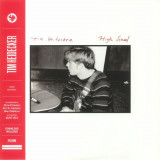
Tim Heidecker - High School

Produced by Heidecker, Drew Erickson, Eric D. Johnson and Mac DeMarco, High School sees Heidecker emerging as an increasingly playful and poignant story teller, infusing childhood tales with new gravity. In conjunction, he announces Tim Heidecker Live! Featuring Tim Heidecker and The Very Good Band, his first two-act tour of comedy and music. Since 2016, Tim Heidecker has chronicled the annals of adulthood on a series of supreme singer-songwriter albums. The crushing devastation of divorce and the existential malaise of middle-age, the minutiae of home ownership and the ritual of family vacation, child rearing and global warming: Heidecker has handled it all with humor and heart. But, there’s one pivotal lodestar of human development he has yet to mine that’s right, High School. First single “Buddy” is a composite of a few woebegone friends, which finds Heidecker reminiscing on the familiar tragedy of the adolescent stoner, manifesting the destiny of undiagnosed depression and parents who didn’t care much. The song itself is a jangly delight, but it’s hard not to mourn for “Buddy,” then re-count whatever blessings you may have. After initial and fruitful sessions with Jonathan Rado, Heidecker started recording tunes with DeMarco and Erickson, who had also worked on 2020’s collaboration with Weyes Blood, Fear of Death. At DeMarco’s studio, they added drum machines and synths and sidewinding solos to Heidecker’s big strummed chords. Johnson (Bonny Light Horseman, Fruit Bats) helped Heidecker finesse the tunes even more, making the music as rich as the feelings. Kurt Vile contributed to one song, as well. Through all those sessions, it slowly became clear: Heidecker was writing not only about the adventures and misadventures of life as a Pennsylvania teen in the early ’90s, but also how it felt to lose a juvenile sense of mystery and possibility as an adult. He was writing about high school and, really, the way it helped shape everything else. Back at Pennsylvania’s Allentown Central Catholic High School, Heidecker dreamed of making it with one of his many rock bands — Time and Other Things, Shaggy’s Beltbuckle, and (incredibly) The Pulsating Libidos. Two years shy of his graduating class’ 30th anniversary, Heidecker admits he had little of substance to say when he was 17, like all but the rarest of precocious minds. In college, though, he found the friends with whom he built his comedy career, largely apart from music and without much thought for his time back at Central Catholic. He was focused on his future. It is fitting, then, that as Heidecker has become such a delightful singer-songwriter and collaborator, he returns to the first scene of his time as a musician. Maybe he’s right — he didn’t have anything to say or sing about life back then. But across the earnest and amusing High School, he finds plenty to say about those weird and wonderful and ordinary times.

pre-order now08.07.2022

expected to be published on 08.07.2022

Beth Blade And The Beautiful Disasters - Mythos, Confession, Tragedies & Love

Limited Edition 100 Only Red Vinyl LP - Hand Signed and Numbered / Quantity: 100 - Beth Blade and The Beautiful Disasters are a melodic Hard Rock band based out of Cardiff, South Wales. The four-piece provide monster riffs, huge choruses and a dose of old school rock and roll attitude. With aggressive muscle and melodic sensitivity, this band is reigniting the flame of British Hard Rock. They have an unmistakable modern presence whilst keeping the spirit of old school rock and roll alive. The band have been a non-stop force to be reckoned with, building a strong pedigree touring with Marco Mendoza and The Electric Boys, and have supported old and new legends such as Kee Marcello, Y and T, Dan Reed and Danny Vaughan, Ricky Warick and Damon Johnson, Massive Wagons, Those Damn Crows, Tyketto and Graham Bonnett. They are no strangers to festivals either having performed at Hard Rock Hell, Planet Rockstock, Monsterfest and most notably with KISS on the globally renowned KISS Kruise in the US. The band's first two albums received glowing reviews across the rock press and resulted in international radio airplay including heavy rotation on major networks in the UK. Beth herself has sung backing vocals on the last two Thunder albums with the latter reaching number 3 in the U.K. Top 40 Album Chart and number 1 in the U.K Rock Chart in March 2021. The band are currently working on album number 3 and have a number of live shows and festivals already booked alongside The Treatment, Mason Hill, Collateral and will be hitting the road again on a UK tour with Swedish Rockers Thunder Mother. The band is fiercely determined and has the grit to surpass their previous accomplishments through intense live performances and a passion for rock and roll that is unrivalled.'

pre-order now08.07.2022

expected to be published on 08.07.2022

Gates Of Light - Gates Of Light LP

Air, Nico, St Etienne, Kid Loco, Young Marble Giants, Sandy Denny, Vashti Bunyan, Andrew Weatherall, Robert Wyatt and Serge Gainsbourg. Limited edition first pressing of 500 copies on "Mock Turtle" Blue. International collaboration between artists in Glasgow, London, Paris & New York. Mastered by Shimmy-Disc founder Kramer. Accompanying visual art work by Film and art director Tim Saccenti. Inspired by the intensity of lockdown, the self-titled debut album by electro-pop project Gates of Light, is the result of a collaboration between five artists across four cities, three time zones and two continents. Hailing from Glasgow, singer-songwriter Louise Quinn and producer Bal Cooke teamed up with London-based DJ and producer Scott Fraser; Parisian musician, DJ and producer Kid Loco; and film director and photographer, New York’s Tim Saccenti - who has previously worked with Run The Jewels and Pharell- to create a sublime, electro-pop reflection on the grief, insularity and peculiar highs of lockdown. Immediately after hearing the album, revered post-punk musician and producer Kramer offered to release the vinyl edition on his iconic cult label Shimmy-Disc, which boasts an impressive back catalogue of artists including Daniel Johnson, Low and Galaxie 500. A project grounded on collaboration - born from a period of disconnect - Gates Of Light perfectly amplifies the longing, confusion, lucid dreams and appreciation of the outdoors that the pandemic ignited in so many over the last couple of years. Originally written and recorded by Louise and Bal from their bedroom studio in Glasgow whilst their one-year-old twins slept, the tracks were then sent to Scott and Kid Loco who remixed the tracks from home studios in London and Paris before Tim created the artwork and a video for the track ‘When The Leaf Falls’. Gates Of Light is the latest project from Louise and Bal who have released music in the past as A Band Called Quinn and DAWNINGS. Louise and Scott Fraser have also previously collaborated following a chance encounter at a nightclub in Glasgow. Their single ‘Together More’ was released on Andrew Weatherall’s renowned Birdscarer vinyl imprint in 2019 and featured a remix by the Guv’nor himself who described the track as “sublime magik”.

out of Stock

Order now and we will order the item for you at our supplier.


Last In: 3 years ago
Original Soundtrack - Lost Daughter

The Lost Daughter is a critically acclaimed 2021 psychological drama film written and directed by Maggie Gyllenhaal in her feature directorial debut, based on the 2006 same-titled novel by Elena Ferrante.

The film stars Olivia Colman, Dakota Johnson, Jessie Buckley, Paul Mescal, Dagmara Domińczyk, Jack Farthing, Oliver Jackson-Cohen, with Peter Sarsgaard, and Ed Harris. Colman also serves as an executive producer on the film. The film follows Leda (Colman) who is on a solo-vacation at the seaside and becomes consumed with a young mother and daughter as she watches them on the beach. When a small, seemingly meaningless event occurs, Leda is overwhelmed by memories of the difficult, unconventional choices she made as a mother and their consequences for herself and her family. The seemingly serene tale of a woman’s pleasant rediscovery of herself soon becomes the story of a ferocious confrontation with an unsettled past.

The Lost Daughter premiered at the 78th Venice International Film Festival, where Gyllenhaal won the Golden Osella Award for Best Screenplay. At its opening night world premiere, the movie received a four-minute standing ovation from Venice Film Festival attendees. The film also received three nominations at the 94th Academy Awards for Best Actress (Colman), Best Supporting Actress (Buckley), and Best Adapted Screenplay.

Thescore is composed by Dickon Hinchliffe, founding and former member of Tindersticks. Dickon’s unique style of composition and arrangements developed from his classical study of the violin and song writing and recording in bands.

The Lost Daughter is available as a limited “Peal it like a snake, don’t let it break” edition of
750 individually numbered copies on orange marbled vinyl. The LP features alternative artwork designed by Yelena Yemchuk, a Ukranian professional photographer, painter and film director, best known for her work with The Smashing Pumpkins. The vinyl package includes an inset with pictures and liner notes by both Maggie Gyllenhaal and Dickon Hinchliffe.

pre-order now01.07.2022

expected to be published on 01.07.2022

Moon Duo - Stars Are The Light LP

Back in stock on Black Vinyl !

Stars Are the Light, the luminous seventh album by the American psych explorers Moon Duo, marks a progression into significantly new territory. From a preoccupation with the transcendental and occult that informed Ripley Johnson and Sanae Yamada’s guitar-driven psych rock, and reached its apotheosis in the acclaimed Occult Architecture diptych, Stars Are the Light sees the band synthesize the abstract and metaphysical with the embodied and terrestrial.

Branching out from Occult Architecture Vol. 2, the album has a sonic physicality that is at once propulsive and undulating; it puts dance at the heart of an expansive nexus that connects the body to the stars. These are songs about embodied human experience — love, change, misunderstanding, internal struggle, joy, misery, alienation, discord, harmony, celebration — rendered as a kind of dance of the self, both in relation to other selves and to the eternal dance of the cosmos.

pre-order now30.06.2022

expected to be published on 30.06.2022

Ben Lee - I’M FUN!

Ben Lee

I’M FUN!

12inch5054197116131
East West Records
17.06.2022

Indie-pop singer-songwriter, composer and producer Australia’s Ben Lee releases his 14th solo studio album “I’m Fun!”. The new album features guests Zooey Deschanel, Christian Lee Hutson, Money Mark, Megan Washington, Georgia Maq, Eric D Johnson.

On the album, Ben Lee says “This album, this moment in my career, is all about balancing some hard-earned wisdom from a 30-year long career with the vigor and energy of youth. That’s why it was as important to me to collab with artists like Jon Brion and Money Mark who I’ve both known for over 2 decades, as much as people like Shamir and Georgia Maq who are young and lit up with creative adrenaline. I like being a generational bridge between freaky artists. They are my tribe!”
Even before the launch of his solo career, Ben attracted attention in his teens as a member of the Sydney band Noise Addict. Following the band’s demise in the mid-90s, he began issuing a string of acclaimed solo albums while taking part in several side projects, including The Bens (Ben Folds, Ben Kweller, Ben Lee).

In his 30-year music career, Ben Lee has been gloriously prolific and unpredictable. The 4x ARIA award winning artist boasts an enviable catalogue including ‘Grandpa Would’ 1995, ‘Something To Remember Me By’ [1997], ‘Breathing Tornados’[1998], 2x ARIA Platinum album ‘Awake In New Sleep’[2005], ‘Ripe’ [2007], ‘The Rebirth of Venus’[2009], ‘Deeper Into Dream’ [2011] which have collectively spawned a multitude of chart hits, including “Cigarettes Will Kill You”, “Gamble Everything For Love”, “We're All in This Together” and “Catch My Disease”

pre-order now17.06.2022

expected to be published on 17.06.2022

Joyce Manor - 40 Oz. To Fresno

Fresno is the highly anticipated 6th studio album by Joyce Manor
Produced by Rob Schnapf, this 9 song album is an honest, hard-hitting, post-emo,
power pop masterpiece packed with the elevated writing and earnest delivery
Joyce Manor is loved for.Joyce Manor is a band from Torrance, CA consisting of
Barry Johnson (vocals/ guitar), Chase Knobbe (guitar), Matt Ebert (bass), Neil
Hennessy (new drummer, from The Lawrence Arms). Johnson and Knobbe
started the band in 2008 in the Disneyland parking lot, named after an apartment
complex that Johnson would walk past every day. Joyce Manor made their debut
as an acoustic two-piece. Quickly they learned that playing loud was much more
fun and invited friends to join the lineup. The band has released five studio
albums; Joyce Manor (2011), Of All Things I Will Soon Grow Tired (2012), Never
Hungover Again (2014), Cody (2016), and Million Dollars to Kill Me (2018).
Joyce Manor has toured extensively and their live show has been the driver
behind the band's success. They have made festival appearances at FYF Fest,
Coachella, Riot Fest and since the release of their last studio album in 2018, the
band has headlined NYC Central Park SummerStage, sold out two nights at the
Palladium in LA, and sold out two matinee show at LA's historic Union Station.

pre-order now10.06.2022

expected to be published on 10.06.2022

Eric Clapton - Unplugged LP 2x12"

Eric Clapton

Unplugged LP 2x12"

2x12inch821797202022
Sony Music
10.06.2022

Strictly limited to 10,000 numbered copies, pressed on MoFi SuperVinyl at RTI, and mastered from the original master tapes, Mobile Fidelity's ultra-hi-fi UltraDisc One-Step 180g 45RPM 2LP collector's edition enhances the blockbuster work for today – and the ages to come. Surpassing the sonics of any prior version, it peels away any remaining limitations to provide a transparent, lively, ultra-nuanced presentation of a record that won six Grammy Awards – including prizes for Album of the Year, Best Male Rock Vocal Performance, and Best Rock Song. The expanse and depth of the soundstage, fullness of tones, natural snap and extension of the guitar strings, realistic rise and decay of individual notes, and roll of Clapton's vocals all attain demonstration-grade levels.

Housed in a deluxe box, the UD1S Unplugged pressing features special foil-stamped jackets and faithful-to-the-original graphics that illuminate the splendor of the recording and the reissue's premium quality. No expense has been spared. Aurally and visually, this UD1S reissue exists as a curatorial artifact meant to be preserved, touched, and examined. It is made for discerning listeners that prize sound quality and production, and who desire to fully immerse themselves in the art – and everything involved with the album, from the images to the finishes.

Truly, everything about Unplugged matters. Having sold more than 10 million copies in the U.S. and more than 26 million copies worldwide, the 1992 work resonates with listeners of all generations and speaks a universal language. Recorded for MTV before a very small audience on January 16, 1992, the 14-track set became the signpost for future acoustic-based endeavours that witnessed artists of all stripes re-examining their catalogues and, in many instances, as Clapton does here, placing familiar originals in fresh contexts and unveiling spirited versions of cover material. Needless to say, Clapton's session turned MTV's series into can't-miss programming for which the likes of Rod Stewart, Tony Bennett, Nirvana, Pearl Jam, and more would soon participate.

Kicking off his performance with a spirited instrumental to establish the mood, Clapton immediately wades into the style that originally caught his attention as a British teenager in the early 1960s: American blues. Backed by a superb band that includes guitarist Andy Fairweather Low, pianist Chuck Leavell, bassist Nathan East, and drummer Steve Ferrone, Slowhand delivers a rhythmic, toe-tapping rendition of Bo Diddley's "Before You Accuse Me" that announces he's come to reconnect with his muse. What follows over the course of nearly the next hour stirs the heart, shakes the soul, moves the mind, and invigorates the senses.

Of course, there's no talking about Unplugged without keying in on "Tears in Heaven," the striking ballad Clapton penned about the death of his four-year-old son. More emotional, direct, spare, and healing than the studio version released a year prior, it crackles with an intimacy, maturity, poignancy, honesty, sweetness, and integrity that inform the entire concert. Indeed, how Clapton frames other favorites here – transforming "Layla" into a relaxed, comfortable stroll and ruminating on the seasoned ripples flowing throughout "Old Love," for example – indicate both a creative rebirth and gleeful acceptance of the next phase of his career.

And that very direction (two of Clapton's next three albums would be all-blues projects) is what really makes Unplugged so indispensable. Equivalent in mastery if not in volume to the output that earned him his "God" nickname, interpretations of Jesse Fuller's "San Francisco Bay Blues" (complete with kazoo!), Big Bill Broonzy's "Hey Hey," Robert Johnson's "Walkin' Blues" and "Malted Milk," and Muddy Waters' "Rollin' & Tumblin'" showcase a learned professor in his element and all the wheels turning.

In every regard, Clapton's Unplugged session was appointment listening when it came out in August 1992. With the arrival of MoFi's UD1S pressing, that sensation is more urgent than before.

More About Mobile Fidelity UltraDisc One-Step and Why It Is Superior

Instead of utilizing the industry-standard three-step lacquer process, Mobile Fidelity Sound Lab's new UltraDisc One-Step (UD1S) uses only one step, bypassing two processes of generational loss. While three-step processing is designed for optimum yield and efficiency, UD1S is created for the ultimate in sound quality. Just as Mobile Fidelity pioneered the UHQR (Ultra High-Quality Record) with JVC in the 1980s, UD1S again represents another state-of-the-art advance in the record-manufacturing process. MFSL engineers begin with the original master tapes and meticulously cut a set of lacquers. These lacquers are used to create a very fragile, pristine UD1S stamper called a "convert." Delicate "converts" are then formed into the actual record stampers, producing a final product that literally and figuratively brings you closer to the music. By skipping the additional steps of pulling another positive and an additional negative, as done in the three-step process used in standard pressings, UD1S produces a final LP with the lowest noise floor possible today. The removal of the additional two steps of generational loss in the plating process reveals tremendous amounts of extra musical detail and dynamics, which are otherwise lost due to the standard copying process. The exclusive nature of these very limited pressings guarantees that every UD1S pressing serves as an immaculate replica of the lacquer sourced directly from the original master tape. Every conceivable aspect of vinyl production is optimized to produce the most perfect record album available today.

MoFi SuperVinyl

Developed by NEOTECH and RTI, MoFi SuperVinyl is the most exacting-to-specification vinyl compound ever devised. Analog lovers have never seen (or heard) anything like it. Extraordinarily expensive and extremely painstaking to produce, the special proprietary compound addresses two specific areas of improvement: noise floor reduction and enhanced groove definition. The vinyl composition features a new carbonless dye (hold the disc up to the light and see) and produces the world's quietest surfaces. This high-definition formula also allows for the creation of cleaner grooves that are indistinguishable from the original lacquer. MoFi SuperVinyl provides the closest approximation of what the label's engineers hear in the mastering lab.


SACD


Mastered from the original master tapes, Mobile Fidelity's numbered hybrid SACD enhances the blockbuster work for today – and the ages to come. Peeling away remaining sonic limitations to provide a transparent, lively, ultra-nuanced presentation of a record that won six Grammy Awards (including prizes for Album of the Year, Best Male Rock Vocal Performance, and Best Rock Song), it places Clapton and company in your room. The expanse and depth of the soundstage, fullness of tones, natural snap and extension of the guitar strings, realistic rise and decay of individual notes, and roll of Clapton's vocals all attain demonstration-grade levels. A perennial audiophile favourite, Unplugged now tosses its hat into the ring as a demonstration disc.

pre-order now10.06.2022

expected to be published on 10.06.2022

Tata Vega/Al Johnson - I’ve Got My Second Wind

Melodies International are glad to be back, starting off 2022 with their new reissue 12” comprising two big big club soul/disco classic versions of “I’ve Got My Second Wind”. Out late March/early April, vinyl only!

Lead singer Al Johnson and Tom Fauntleroy, two US soul & R&B greats who founded their first band at University in Washington D.C. originally wrote and released the song on Johnson’s first solo independent album “Peaceful” in 1978. They’d later go on to rerecord the track for Johnson’s follow up album on major label CBS “Back For More” which introduced the song to a wider audience and is the version featured here on this 12”

Tata Vega, American singer from New York would go on to cover the track that same year. Starting her career in the 60s featuring in musicals and performing with various groups, she got signed to Motown by Berry Gordy on the spot who was in the audience at a concert one of Vega’s groups was performing at. Tata Vega’s version of “I’ve Got My Second Wind”, in duet with soul singer George Curtis Cameron was originally released on her fourth solo album on Motown, “Givin’ All My Love”. Reissued and now available on loud 12” for the first time!

Remastered from the tapes by the great Matt Colton, pressed in Italy at Mother Tongue, comes in printed inner and outer sleeves, out late March / early April, play loud!

out of Stock

Order now and we will order the item for you at our supplier.


Last In: 3 years ago
Various - Seventies Collected Vol.1 LP (2x12")
 
27
also available

Vol.2


The Decades Collected compilations are part of the Collected compilation series, which is a collaboration between Universal Music and Music On Vinyl. The compilations bring together the biggest names of each decade, combined with forgotten hits and less discovered gems, giving the listener an experience of listening to their favourite tunes while uncovering new musical grounds at the same time.

Various Artists - Seventies Collected features classic tracks and forgotten gems: Queen “Somebody To Love”, Billie Joel “Movin’ Out (Anthony’s Song)”, Lou Reed “Vicious”, Blondie “Atomic”, Paul McCartney & Wings “Mrs. Vandebilt”, Rodriguez “Sugarman”, Patti Smith Group “Dancing Barefoot”, Roxy Music “Dance Away”, Big Star “Thirteen”, Leon Russell “A Song For You”, 10CC “Dreadlock Holiday”, Grace Jones “La Vie En Rose”, Rush “Closer To The Heart”, Gerry Rafferty “Right Down The Line”, Minnie Riperton “Les Fleurs”, The Brothers Johnson “Strawberry Letter 23” a.o.

Various Artists - Seventies Collected is available on black vinyl and includes an insert.

pre-order now06.05.2022

expected to be published on 06.05.2022

Various - Death Is Not The End LP

A survey of the modern jazz & hard-bop scenes that emerged in the new cultural melting pot of post war London, with recordings from the end of the 1940s through to the early 1960s.

Featuring representations from players whose roots lay in the East-End's jewish community, such as Ronnie Scott, Vic Ash & Harry Klein, alongside a wealth of talent of Caribbean and African descent playing and recording in post war London during this period, incl. Dizzy Reece, Wilton Gaynair, Joe Harriott, Shake Keane & Ginger Johnson.

Made in partnership with the Barbican to coincide with the exhibition Postwar Modern: New Art in Britain 1945-1965.

pre-order now06.05.2022

expected to be published on 06.05.2022

Moon Duo - Stars Are The Light

Stars Are the Light, the luminous seventh album by the American psych explorers Moon Duo, marks a progression into significantly new territory. From a preoccupation with the transcendental and occult that informed Ripley Johnson and Sanae Yamada’s guitar-driven psych rock, and reached its apotheosis in the acclaimed Occult Architecture diptych, Stars Are the Light sees the band synthesize the abstract and metaphysical with the embodied and terrestrial.

Branching out from Occult Architecture Vol. 2, the album has a sonic physicality that is at once propulsive and undulating; it puts dance at the heart of an expansive nexus that connects the body to the stars. These are songs about embodied human experience — love, change, misunderstanding, internal struggle, joy, misery, alienation, discord, harmony, celebration — rendered as a kind of dance of the self, both in relation to other selves and to the eternal dance of the cosmos.

pre-order now06.05.2022

expected to be published on 06.05.2022

BILL EVANS - THE BRILLIANT

Bill Evans

THE BRILLIANT

12inchMOVLP2953
Music On Vinyl
06.05.2022

To celebrate the 45th anniversary of iconic Dutch jazz label Timeless Records, Music On Vinyl is releasing a series that features albums that are part of the Timeless Records legacy and will be released mainly throughout 2022.

To this day, jazz pianists are influenced by Bill Evans by his use of impressionist harmony, interpretation of traditional jazz repertoire, and his trademark rhythmically independent, “singing” melodic lines. Evans gained his first spotlight when joining Miles Davis’ sextet during the time Kind of Blue was recorded. After leaving the sextet, Evans began his career as bandleader. As trio with Marc Johnson on bass and Joe LaBarbera on drums, they recorded The Brilliant in 1980, just before Evans’ passing.

The Brilliant is pressed on coloured vinyl for the first time and available as a limited edition of 750 individually numbered copies on gold coloured vinyl. The package includes an insert with other titles from the Timeless Records 45th Anniversary Jazz Series

pre-order now06.05.2022

expected to be published on 06.05.2022

BILL EVANS - THE BRILLIANT LP

Bill Evans

THE BRILLIANT LP

12inchMOVLP2953GREEN
Music On Vinyl
06.05.2022

To celebrate the 45th anniversary of iconic Dutch jazz label Timeless Records, Music On Vinyl is releasing a series that features albums that are part of the Timeless Records legacy and will be released mainly throughout 2022.

To this day, jazz pianists are influenced by Bill Evans by his use of impressionist harmony, interpretation of traditional jazz repertoire, and his trademark rhythmically independent, “singing” melodic lines. Evans gained his first spotlight when joining Miles Davis’ sextet during the time Kind of Blue was recorded. After leaving the sextet, Evans began his career as bandleader. As trio with Marc Johnson on bass and Joe LaBarbera on drums, they recorded The Brilliant in 1980, just before Evans’ passing.

The Brilliant is pressed on coloured vinyl for the first time and available as a limited edition of 750 individually numbered copies on gold coloured vinyl. The package includes an insert with other titles from the Timeless Records 45th Anniversary Jazz Series

pre-order now06.05.2022

expected to be published on 06.05.2022

Proper - The Great American Novel LP

Following 2019’s critically-acclaimed sophomore album, I Spent the Winter Writing Songs About Getting Better, Proper. is making their return with The Great American Novel. “The Great American Novel is a concept album about how Black genius, specifically my own, goes ignored, relentlessly contested, or just gets completely snuffed out before it can flourish,” vocalist Erik Garlington said. “This record is a concept album that’s meant to read like a book; every song is a chapter following the protagonist through their 20s. Imagine a queer, Black Holden Caufield-type coming up in the 2010s.” The result is an album that is both lyrically and musically heavy, the former something fans have come to expect from Garlington’s unflinchingly honest lyrical content, but the latter something that’ll be refreshingly new. Channeling the heavier music he listened to during his adolescence — from post-hardcore outfit At the Drive-In to progressive metal band System of a Down — Garlington and the rest of Proper. — bassist Natasha Johnson and drummer Elijah Watson — push themselves in ways they haven’t before, culminating in an ambitious project that showcases the new sonic territory the band is heading in. Recorded by Bartees Strange in early 2021 and mixed/mastered by Brian DiMeglio, TGAN is made up of 14 songs, with three of them to be singles dropped throughout the course of the album’s release

pre-order now29.04.2022

expected to be published on 29.04.2022

The Suede Crocodiles - Stop The Rain

Limited to 750 copies.
Pressed on Blue Vinyl.
Includes postcard and poster.
Formed in post-Postcard Glasgow as Popgun, Kevin McDermott (vocals/ guitar), Davie McCormick (drums), and Ross Drummond (bass/vocals) were joined by Roddy Johnson (guitar/vocals). In 1983, they changed their name to The Suede Crocodiles and released ‘Stop the Rain’ on the NoStrings label.
Single of the Week in both NME and Melody Maker, this jagged-edged, spiky pop-punk single caught the ear of many. The Suede Crocodiles went on to tour the UK with Nick Heyward.
The band split before releasing their second single, ‘Paint Yourself A Rainbow’ with songwriter and lead vocalist Kevin McDermott going on to form the Kevin McDermott Orchestra and having a successful solo career.

out of Stock

Order now and we will order the item for you at our supplier.


Last In: 3 years ago
Big'n - Discipline Through Sound 25

The 25th anniversary edition of the Chicago noise-rock band's undisputed masterpiece recorded by Steve Albini

Remastered edition including a 12- page booklet and a bonus LP of demos, outtakes and unreleased tracks. 'Discipline Through Sound' was the second LP by Big'n, who formed in 1990 and at the time, the band consisted of vocalist William Akins, guitarist Todd Johnson, bassist Mike Chartrand, and drummer Brian Wnukowski. This expanded reissue was intended to come out in 2021 to commemorate the 25th anniversary of 'Discipline Through Sound', Big'n's indisputable masterpiece originally released on Gasoline Boost in 1996, but was delayed due to a PVC shortage and the fallout of the COVID-19 pandemic.

'DTS 25' is a massive album. It contains two pieces of superb-quality vinyl with a reissue and remaster of 'Discipline Through Sound' on the first disc. Side C contains unreleased demos from the album. Side D, contains three previously CDonly tracks from a split with OXES - plus two unreleased outtakes.

The records are packaged in a 6mm spine gatefold cover with matte finish, accompanied by a 12-page booklet featuring photos of the band, a foreword by Steve Albini, and writings from Big'n's associates. The entire package is housed in a sleek, tactile, Type-2 aluminium packaging newly developed and designed by the Computer Students label.

Don't miss your chance to own a brilliant, undersung artifact of '90s noise-rock in Chicago - refreshed, expanded, and more venomous than ever before.

pre-order now01.04.2022

expected to be published on 01.04.2022

George Duke - Liberated Fantasies LP

Reissue of George Duke's classic 1976 jazz-funk-fusion album 'Liberate Fantasies'

This 1976 album, the last one of the MPS fusion series, continues George Duke's tendency to couple his fusion world with accessible R&B songs. Once again, he shows a discernible vocal development. In "Tryin' And Cryin" the Californian together with rock singer Napoleon Brock overlays multiple vocal tracks.
On "Seeing You" Duke lays on a glaze of soulful tenderness, whereas "What The…" is 30 seconds of frivolous funning around. "Back to Where We Never Left" is a witty gem in which Duke bundles his pool of synthesizers into a united groove, whereas "I C'n Hear That" shows off synth and marimba tonal colors in dialogue, with the bass riffing on the bottom.

The album flows into the final bend carrying along the sonorous richness of Brazil. "After the Love" plays with the languorous erotic colours of the tropics, whereas all the band members are allowed to shine on the epic circa ten minute title track with its hot samba flair: the rhythm section with "Ndugu", Al Johnson, and Airto Moreira's percussion arsenal, Daryl Stuermer with his rock interludes on guitar, and Duke himself with inspired virtuosity on all sorts of synths and
keyboards.

out of Stock

Order now and we will order the item for you at our supplier.


Last In: 4 years ago
Various - Highway Butterfly: The Songs Of Neal Casal
 
41

Highway Butterfly: The Songs of Neal Casal is a 5LP vinyl boxset
celebrating the prolific body of work Casal left behind over the course of
14 studio albums
Recording sessions for the project began in February 2020 led by co-producers
Dave Schools of Widespread Panic and seven time Grammy- Award winning
recording engineer/ producer Jim Scott at PLYRZ Studios in Valencia, CA.Over
forty artists appear on the tribute including Susan Tedeschi and Derek Trucks,
Jonathan Wilson, Phil Lesh and The Terrapin Family Band, Steve Earle, Warren
Haynes, Jaime Wyatt, and Shooter Jennings among numerous others. The first
single and video from the recording was captured during the initial sessions in
February 2020. It features Billy Strings with Circles Around the Sun performing
"All The Luck In The World.

pre-order now04.03.2022

expected to be published on 04.03.2022

Come - Peel Sessions

Come

Peel Sessions

12inchFIRELP641
Fire Records
28.02.2022

LP Black Vinyl, DL card. ‘Devasting, with slow, burning songs that shudder and wince’ NY TIMES. Peel Sessions is an essential nine-track set catching Boston’s mighty Come at the peak of their powers. The collection includes two sessions recorded for John Peel in both 1992 and 1993, plus a previously unreleased live track ‘Clockface’ from 1991, unwrapping the blueprint of their sonic idealism. Raw, loud and live, exactly where the band’s dissonant blues noise rock originates. 1992’s four track session is direct from their debut; but more mangled, strangled and abrasive. The follow-up set from a year later includes live favourite ‘Mercury Falls’ and ‘City Of Fun’ neither of which surfaced as studio recordings. The sessions feature the masterful guitar interplay of two central pivots of the post-post-punk and alternative noisnik underground, Chris Brokaw (Codeine, Pullman, Thurston Moore, Ryley Walker, Lemonheads) and Thalia Zedek (Uzi, Live Skull, solo). The session’s line-up is completed by the addition of Sean O'Brian and Arthur Johnson’s visceral bass and percussion, documenting an essential era for the band. Peel Sessions follows their recently released ‘Don’t Ask Don’t Tell’ reissue, part of Fire Records forthcoming reissue series for the seminal group

pre-order now28.02.2022

expected to be published on 28.02.2022

Items per Page:
N/ABPM
Vinyl