Buscar:system 01

Estilos
Todo
Various - Tchic Tchic: French Bossa Nova 1963-1974  Colored Edition LP 2x12"
 
22

Ever since the late 1950s bossa-nova revolution, Brazil’s influence on French music has been undeniable. Pierre Barouh, Georges Moustaki and a vast array of lesser known artists, all made the Musica Popular Brasileira (MPB) an axis of promotion at the service of a cool and metaphysical, modern and mixed Brazilian lifestyle. Some were seduced by the poetic languors of the bossa, some were looking for fun, and others just loved the American hybridization of jazz-bossa, jazz-samba.


What is bossa nova? One of its creators, Joao Gilberto said: "Its style, cadence, everything is samba. At the very start, we didn't call it bossa nova, we sang a little samba made up of a single note - Samba de uma nota so .... The discussion around the origins of bossa nova is therefore useless”. It is nevertheless useful to remember that these magnificent Brazilian songs, which the guitarist describes as samba, were shifted and balanced around improbable chords. "I like things that lean, the in-betweens that limp with grace," said Pierre Barrouh, quoting Jean Cocteau.


With emotion, arrangements for violin and supple guitar licks, bossa nova rapidly changed. A transformation that can be heard in the Tchic, tchic, French Bossa Nova 1963-1974 compilation, the result of a cultural reappropriation, which traveled through the United States and supplemented itself in France.

A musical revolution that has remained significant, bossa nova was born in Rio. From 1956 to 1961, Brazil lived through its golden years. In five years, the country had invented its modernist style. Elected president in 1956, Juscelino Kubitschek de Oliveira, an elegant man with a broad forehead, brandished a promising slogan: "Fifty years of progress in five years". He quickly got to work. Not worried about increasing debt, he launched the project for a new federal capital, Brasilia, designed by the communist architect Oscar Niemeyer. Volkswagen opened state-of-the-art factories and created the “fusquinha”, the Beetle. In Rio, the Vespa made its first appearance. The Arpoador Surf Club crew run into the “girl” from Ipanema, Helô Pinheiro - the tanned garota ("chick"), between a flower and mermaid, who at 17 walked by the Veloso bar, where the fiery author and composer, Tom Jobim and Vinicius de Moraes, were getting drunk on whiskey. From then on, bossa symbolized cool.

In 1958, Joao Gilberto recorded Chega de Saudade, which the directors of Philips denied, calling it "music for fagots". The marketing director, who believed in it, secretly pressed 3000 78-inch vinyls and distributed them at schools around Rio, creating a tidal wave.

American jazzmen then took over. In particular, trumpeter Dizzy Gillespie and guitarist Charlie Byrd. In November 1962, the Brazilian Ministry of Foreign Affairs funded a "Bossa-Nova" concert at Carnegie Hall in New York, inviting the genre’s pioneers. Unprepared, the show soon turned to disaster. But the troupe was invited to the White House by Jackie Kennedy. The first lady loved "the new beat" and in particular Maria Ninguem, a song by Carlos Lyra, later covered by Brigitte Bardot.

In Brazil, the 1964 military coup quickly ended this euphoria. The destructive atmosphere that ensued pushed many Brazilian musicians to leave, if not to exile. Thus, Tom Jobim, Sergio Mendes and Joao Gilberto arrived to the United States. In New York, Joao Gilberto met saxophonist Stan Getz. At the time, he was married to the Bahianese Astrud Weinert Gilberto, who had a German father. She had never sung before, but she knew how to speak English. Getz therefore asked her to replace her husband on The Girl From Ipanema. The Getz/Gilberto record with Tom Jobim on piano, was released in March 1964. Phil Ramone, the "pope of pop" was in charge of sound.

Bossa nova arrived in Paris through the classic “guitar-voice” channel (Pierre Barouh, Baden Powell, Moustaki…) But France loved jazz and Paris had already welcomed its American contributors. All these good people were to pass through Saint-Germain-des-Prés. The cabaret l'Escale became the Mecca of Latin American sound where one could find Pierre Barrouh and his friends, such as the Camara Trio, samba-jazz aces, whose only record was published by the Saravah label. With a band strangely called Les Masques (a band that included Nicole Croisille and Pierre Vassiliu, among others), the Camara Trio recorded an interesting Brazilian Sound, including the track Il faut tenir which is present on this tasty compilation of rarities.

Other enlightened musicians can also be found on the compilation, such as Jean-Pierre Sabar (songwriter for Hardy, Auffray, Leforestier ...) and the French pop rock organist Balthazar. In 1975, Sabar recorded Aurinkoinen Musiikkimatka on a Finnish label, which featured the crazy Vai, Vai, included on this record. We are now following the footsteps of Brazilian electronic musicians such as Sergio Mendes, Eumir Deodato or Marcos Valle who created funk and disco sounds on their keyboards and synthesizers. A style that influenced Véronique Sanson when she wrote Jusqu’à la Tombée de la nuit in 1969 for Isabelle de Funès, the niece of Louis and a great friend of Michel Berger - Sanson did end up singing this track on her 1992 Sans Regret record.


The pinnacle of exoticism and travel, Sylvia Fels’ Corto Maltese includes bongos, sea mist and ocean sounds. The title was taken from Jacky Chalard’s concept album written in 1974, Je suis vivant, mais j’ai peur (I am alive, but I am scared), based on Gilbert Deflez’s science fiction novel.


However, bossa nova extended the scope of popularity. "In the 1970s, I was a fan of Sergio Mendes, Getz / Gilberto. I fell in love with this music that I knew because I had been an orchestral singer, " explained Isabelle Aubret, who in 1971 delivered a composite record of covers by the very funky Jorge Ben, Orfeu Negro, Tom Jobim, Vinicius de Morais and Jean Ferrat. "I recorded this album for Meys Records in Paris, far from Brazil, with wonderful musicians, François Raubert, Roland Vincent, Alain Goraguer...". The latter wrote the arrangements for Casa Forte, a very percussive title borrowed from Edu Lobo, one of the initiators of the bossa who spent time in California. "Jazz and bossa came together and produced very rhythmic music. I love singing, it allows me to dream, to have fun, to feel a high on stage, and these songs brought me joy, made me swing, my singing felt like a dance.”


The world tours of French singers and their desire for the tropics, often brought them to Rio with its hills, forests, caipirinhas and tanned bodies. There are surprises though, like this Iemenja (Iemenja is the goddess of the sea in the Afro-Brazilian candomblé religion). Not unlike the composer and musician Jean-Pierre Lang, based in Sao Paulo, Claire Chevalier taught Brazil to Brazil. In 1970, the singer and painter published a 45-inch vinyl, Mon mari et mes amants (My husband and my lovers), under the improbable pseudonym of Clarinha (little Claire). She was then living in Rio, with her husband, Joël Leibovitz, who founded a band called Azimuth, and who owned a record label specialized in "sambas enredos" songs for samba school parades.


For its B side, she asked Pierre Perret to come up with lyrics for a song composed by Carlos Imperial: "Oh goddess of the sea, o goddess Iemenja, I bring a white rose to adorn your long hair ..." . "Perret came to see us, and we had fun, remembers Joël Leibovitz. We wrote Lemenja for fun, we recorded it at the Havaí studio, behind the Central do Brasil the central station. Erlon Chaves, the arranger who worked with Elis Regina, joined us" adding his share of Afro-Brazilian percussions and funky brass to the mix.

There is a common misunderstanding in Franco-Brazilian history: that bossa, admittedly hedonistic, is perceived as funny, even though the poets who wrote the texts are often philosophizing on the human condition. Its French interpreters pull it towards a carnival inspired universe, far removed from its fundamental essence. Thus, Jean Constantin covered the famous Samba da minha terra, an ode to the art of samba written by the classic Bahian composer Dorival Caymmi, renaming it with the enticing title of Pas tant de tchi tchi pompon: "On your pier there is no tchi tchi / when you arch your back, you know everything is alright ”(lyrics by Gérard Calvi). This expedited bossa aims for the absurd, but retains a certain elegance.

Indeed, Jean Constantin was not an idiot, the rather large man had a huge mustache and liked fantasy, (Les pantoufles à papa, Le pacha, inspired by cha-cha-cha-cha, salsa and jazz) but he was also the lyricist of Mon manège à moi interpreted by Edith Piaf, the composer of Mon Truc en plume by Zizi Jeanmaire and the soundtrack of François Truffaut’s 400 Blows. Le Poulpe, published in 1970, from which this bossa is extract, was arranged by Jean-Claude Vannier, an accomplice of Serge Gainsbourg’s Melody Nelson. In short: "There is enough of samba / By looking at the parasol / Because my poor cabeza / Is going to die in the sun".

Even the American actress Marpessa Down, who was at the heart of the bossa nova revolution with her role as Euridyce in Marcel Camus’ film Orfeu Negro, winner of the 1959 Cannes Palme d'or, fed the clichée with Je voudrais parler au petit cuica - "Tell me how you manage to always make people want to dance / It's true, I must admit that I cannot resist your magic" - in consequence, once can hear the cuica, a little drum inherited from the Bantu.


But bossa nova had many angles. Societal, of course, pushing actresses who were symbols of women's liberation like Brigitte Bardot, Jeanne Moreau, or Sophia Loren to engage in the exercise of accelerated bossa. In February of 1963, Sophia Loren made a record in French in Rome, Je ne t'aime plus, featuring the song De jour en jour, a bossa written by two Italians, Armando Trovajoli and Tino Fornai, which was released a little later by Barclay. Bossa accompanied the 1960s, a decade of moral liberation. Ann Sorel, who interpreted La Poupée des favellas, caused a sensation with L’amour à plusieurs, a provocative song written by Frédéric Bottom and Jean-Claude Vannier. As for the actress Andrea Parisy, she displayed her bourgeois cheekiness in Marcel Carné's Les Tricheurs before interpreting Les mains qui font du bien. And Magalie Noël, the friend of Boris Vian, who sung Johnny fais-moi mal, was hired to sing Une énorme Samba, composed by Alain Goraguer (arranger to Gainsbourg, Bobby Lapointe and Jean Ferrat) with lyrics by Frédéric Botton.

But in the end, of what wood is bossa nova made of? The answer is given by Christianne Legrand, daughter of Raymond the conductor, and sister to Michel the composer: "With me, with jà" - jà means "immediately" in Portuguese. In 1972, the singer, an expert in vocal jazz and a member of the Double Six, published Le Brésil de Christianne Legrand. Two songs included on the Tchic Tchic compilation that demonstrate how bossa, jazz, funk, rock, etc. work like a swiss army knife: the music is used to denounce broken systems, or miracles, HLM et ciné roman, Cent mille poissons dans ton filet, two songs from the O Cafona soundtrack, a successful telenovela broadcast, at the time in black and white, on TV Globo. The first was adapted in French by the fighter and friend of the Legrand tribe, Agnès Varda. The second is content with a play on words, jostling them into a summer fun.


Véronique Mortaigne

No en stock

Haga su pedido ahora y le encargaremos el artículo en nuestro proveedor.
Ültimo hace: 81 Días
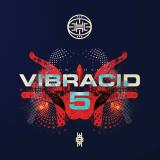
VARIOUS - VIBRACID 5 - THE RHYME EP

In a dystopian universe where elites manipulate memory to control the population. Vibracid emerges as a technique of liberation through sound: a method for erasing induced memory.

THE RHYME marks the counterattack phase. The insurgents infect the system used by the elites for control and reprogram it from within: patterns, voices and sequences as active code.

Contemporary bass, electro, breaks, acid and rave converge as transmission vectors. Each track operates as a unit of intervention within this science fiction scenario.

At this stage, new signals are incorporated. Power, with a solid trajectory within the underground circuit, opens the EP in a forceful way, with an acid, surprising and spectacular impact. Exieve, a young producer from Chernihiv, continues the attack with a raw tension where vocals cut through the signal like sharp fragments. Alongside them, Lups Digga, Atix, Parand and Calagad 13 continue expanding the system’s reach.

No en stock

Haga su pedido ahora y le encargaremos el artículo en nuestro proveedor.

Ültimo hace: 80 Días
DJ Beluga92 - Rip Meine Maschine EP

BERLINCIAGAY launches its first vinyl release, welcoming DJ Beluga92 for a dreamy and twisted journey through house, tech and electro. Rooted in analog textures and emotions,
BCG001 captures a driving and cinematic side of Berlin nightlife while still carrying enough tension for the late-night hours.

Mastered and lacquer cut by Mike Grinser at Manmade Mastering and pressed by Matter Of Fact, the EP feels intentionally physical and warm, embracing the depth and movement of analog sound.

DJ Beluga92 recently delivered a live set at Rex Club Paris, which can also be heard through the BERLINCIAGAY #10 mix series. We are very excited to finally present this release on vinyl.

A1 “Rip Meine Maschine” is Labelheads Tom Peters’ absolute favorite from the EP. A twisted roller driven by a distinctive male vocal, hypnotic groove and restless energy. The track became a closing moment during Tom’s latest US tour, where he played BASEMENT’s Studio in NYC, Vice Underground’s warehouse party in Los Angeles and Midnight Service in Miami.

A2 “System Effect” moves into a more dreamy and emotional direction. Floating vocals repeating “this is the sound” drift through housy pads and spacious textures, creating a track that feels both euphoric and trippy at the same time.
B1 “GA_Entry after 7AM” rounds off the record beautifully with spacey atmospheres, analog synth work, echoes and reverbs. It feels like the afterglow of a long night, designed for the early morning hours on the dancefloor or the journey home afterwards.

BERLINCIAGAY is a statement. A different perspective on Berlin club culture. Less aggressive, less functional, more emotional, dreamy and intimate.

Disponible a partir del01.10.2026

Ültimo hace: 5 Días
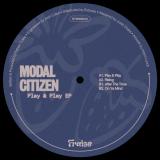
Modal Citizen - Play & Play

After a few years quietly holed up in the studio, patiently dialing the details, Modal Citizen surfaces with a debut EP showcasing his spin on the golden era of Tech House.
Built on shuffling drums, warm low-ends and a handful of cheeky melodic hooks that seem to appear out of nowhere and refuse to leave. Heads-down gear with just enough mischief for the late hours and a fine-tuned system.

No fuss, no fireworks – just straight grooves that do the business.

You’re gonna be humming those melodies all night long, trust us.

Play & play & play baby!

No en stock

Haga su pedido ahora y le encargaremos el artículo en nuestro proveedor.
Ültimo hace: 26 Días
LEE ‘SCRATCH’ PERRY & SUBATOMIC SOUND SYSTEM - SUPER APE RETURNS TO CONQUER LP
  • 01: Zion's Blood
  • 02: Dread Lion
  • 03: War Ina Babylon
  • 04: Chase The Devil
  • 05: Patience
  • 06: Super Ape
  • 07: Curly Dub (Sing Along Jah Jah Children)
  • 08: Underground Roots
  • 09: Three In One (Go Deya)
  • 10: Dub Along

Indie shops only. Limited red vinyl rerelease. 500 for the World (just 80 copies for the UK) After falling out with Sir Coxsone, the legendary head of the Kingston label Studio One, Lee Perry first founded his own band and then, in 1973, set up his own studio in his backyard. What was born out of necessity developed into a unique success story. With both the Upsetters and the Black Ark, Perry made music history - most notably with the 1976 release of the album Super Ape, on which he made the genre of dub bubble and boil from the mixing desk in previously unheard ways. For Perry, the studio is like a living organism. Whether he truly experiences it that way or simply lets too much ganja go up in smoke, for Perry the equipment is organic, empathetic, and intelligent. The catch is that the results sound exactly like that as well. Long before sampling was invented, he layered tracks of deep basslines, echoes, and reverb with various self-recorded sound sequences – often played in reverse - on top of, into, and beneath each other. In other words, Perry was the first producer who made the music instead of the band. Among other things, this earned him the title ‘Salvador Dali of Dub.’

Reservar26.06.2026

debe ser publicado en 26.06.2026

Various - Toma Ya!

Various

Toma Ya!

12inchDISTROPIKO01
DistroPiko
23.06.2026

A Pico is a bus/truck/jeep transformed into a rolling sound system.
It's a very popular caribean/south and center american way to make a carnival or a party, or a birthday, a wedding... whatever.

The music they play is defenitely banging, and minimal home made... Those trucks are full painted and the Pico : it also a way to name a street-art style.


DISTROPIKO is a project born from the encounter between traveling producer Luca Zod, visual artist and DJ Nicho Line, and Bari-based writer PERK aka Maffia of the UG crew. Their Apulian roots and respective influences—tropical wave, tribal imagery, and urban-funky aesthetics—merge in a dystopian sonic journey toward an urban tropical, where a piko de sonido spreads a new psychedelic vibe ready to shake the dance floor. Studio production is being handled by the historic Quadraro Basement studio in Rome.

No en stock

Haga su pedido ahora y le encargaremos el artículo en nuestro proveedor.

Ültimo hace: 21 Días
Akhavelli - Moorthodox Psyence LP
  • 01: Real To Reel
  • 02: Kairo Static
  • 03: Haqq Pulse
  • 04: Kuroi Kagami
  • 05: Damo Speaks
  • 06: Kobra Khan
  • 07: Shams Al-Layl
  • 08: Kansho Kage
  • 09: Public Memory

London based producer Akhavelli’s debut (instrumental) album "Moorthodox Psyence", operates like a recovered transmission from a fractured timeline. The project is built around a fictional rupture in 1996 where memory, signal and culture begin drifting out of phase, framing the music as something intercepted rather than composed. Drawing on the dense collage tradition of sample-based production, the record blends experimental Trip-Hop, turntablism and psychedelic rhythm with the hypnotic repetition of Krautrock and the tactile grit of analogue Hip-Hop. Its palette pulls from Japanese Soul and Funk, ex-Soviet Psychedelia, Turkish and North African sources, Arabic textures and classic 90s vocal cuts and scratches. Beneath the surface sits a subtle Sufi influence, positioning the producer less as author than as receiver: sampling as remembrance, sound as a way of piercing the veil between timelines. The result is what Akhavelli calls Breakbeat Psyence: a hypnotic, transportive body of work that feels less like a conventional album and more like a lost artefact recovered from inside a loop in time.

The name Akhavelli is a layered reference. It plays on Machiavelli, both the historical figure and Tupac’s Makaveli, filtered through his background and perspective. Even though "Moorthodox Psyence" is Akhavelli's first release, he has been working under the name Yvng Face, as a producer and as a professional mixing and mastering engineer for over two decades now. He runs a high-end hybrid analog studio and has mixed and mastered major records across multiple genres. That technical background feeds directly into the precision, sonics, and consistency of this album, even though Akhavelli is a distinct artistic identity.

Reservar19.06.2026

debe ser publicado en 19.06.2026

Digidub ft Julian Fairshare - A Tribute to Julian Fairshare

Digidub ft Julian Fairshare

A Tribute to Julian Fairshare

10inchDD-014
Digi Dub Records
12.06.2026

The second in a series of releases from Digi Dub’s archives, this 10” serves, as the title suggests, as a tribute to the late, great Julian Fairshare.

On the A-side, Julian vocalises, in his unique style, his crazy finger flicking lyrics over a slinky Digidub riddim that was always a favourite on his sound system. Repent, the (only) slightly more traditional flipside, finds him commenting on the politricks and lies of those in charge, asking them to change their ways, with backing vocals by Helen Macdonald.

A true rasta with firm principles and a heart of gold, Julian was brought up by his Windrush generation parents in a Brixton house that hosted blues parties, and as a result became deeply involved in sound system culture from an early age. For years he ran the Fairshare Unity Sound, working with people from all cultures and walks of life, always maintaining an inclusive attitude while also favouring the more experimental side of dub. In later years he used the name ‘Unruly Julian’, which suited him somehow.

He toured widely around Europe and was one of the first to take a roots and culture sound system to the USSR. Nearer to home he played regularly on the London underground scene, which is where Lee Digidub and Julian first met, leading to a steady supply of dubplates for his sound. On a memorable visit to the studio, Julian announced that he wanted to voice a dub that Lee was working on, which led to them releasing I Scream and No Way on David Records.

“Sadly missed, it’s such a shame that the great man isn’t here to enjoy this release in person, but it’s wonderful that people get a chance to listen to Julian Fairshare: a unique vocalist, soundman and mentor to so many” Lee Digidub Berwick

Reservar12.06.2026

debe ser publicado en 12.06.2026

Various - The Pain of Separation: Turkish Gazels, 1926-1935 (Tape)
  • 01: Hafız Sadettin Kaynak - Falling into the Flames of Heartbreak
  • 02: Hâfız Burhan - Everywhere is Darkness
  • 03: Hafız Kemal Bey - The Moment I Saw You
  • 04: Hoca Izak Algazi - If I Gave My Heart to You
  • 05: Hafız Sadettin Kaynak - I Fell in Love
  • 06: Hafız Kemal Bey - The Sky Cries
  • 07: Hafız Sadettin Kaynak - The Pain of Separation
  • 08: Tarsuslu Abdülkerim - I Waited for So Many Nights
  • 09: Hafız Kemal Bey - A Gaze that Gathers the Blossoms of Longing
  • 10: Bursalı Hamid Bey - I Became the Guardian of my Own Gaze
  • 11: Hafız Kemal Bey - The Dagger of Gazes
  • 12: Hoca Izak Algazi - My Heart’s Sole Longing was to Find its Harbor Through Love
  • 13: Hafız Kemal Bey - With Longing Because of This
  • 14: Hafız Sadettin Kaynak - O My Beloved, Drunk with Your Own Charm, Who Raised You to be So Fearless
También disponible

Vinyl LP


A collection of spellbinding, melismatic vocal improvisations taken from 78s cut between the mid 1920s to mid '30s - a period defined by the aftermath of the Ottoman Empire’s partition, the Greco-Turkish War and the compulsory population exchange that followed.

This same period also represented a time of intense efforts, following the establishment of the Republic, to westernise the new nation's music - coupled with a ban on traditional music education in schools, and later a complete ban on broadcasting Ottoman-Turkish classical music on the radio. As such these performances seem shrouded in an even more distant past, and feel quite intimately connected with forms of Greek amanes and rebetiko - having stemmed from the same Ottoman makam system, both with a subject-matter focussed on heartbreak, yearning, and pain.

Reservar12.06.2026

debe ser publicado en 12.06.2026

Various - The Pain of Separation: Turkish Gazels, 1926-1935
 
14
También disponible

Tape


A collection of spellbinding, melismatic vocal improvisations taken from 78s cut between the mid 1920s to mid '30s - a period defined by the aftermath of the Ottoman Empire’s partition, the Greco-Turkish War and the compulsory population exchange that followed.

This same period also represented a time of intense efforts, following the establishment of the Republic, to westernise the new nation's music - coupled with a ban on traditional music education in schools, and later a complete ban on broadcasting Ottoman-Turkish classical music on the radio. As such these performances seem shrouded in an even more distant past, and feel quite intimately connected with forms of Greek amanes and rebetiko - having stemmed from the same Ottoman makam system, both with a subject-matter focussed on heartbreak, yearning, and pain.

Reservar12.06.2026

debe ser publicado en 12.06.2026

Max Watts - Wall Shake / All In One

LN015 presents two new cuts from Watts' ADAT archive. On the A-side, "Wall Shaker" is a timeless anthemic track built to rock dancefloors. True Midwest grit, original sound design, and a thumping mixdown drive this track. Play it nice and loud and it's guaranteed to shake the walls. On the B-side, "All In One" provides a 9-minute journey of chords, rhythms, and deep sub frequencies. Pressed at 45 rpm, these cuts are crafted carefully to compete on any system.

No en stock

Haga su pedido ahora y le encargaremos el artículo en nuestro proveedor.

Ültimo hace: 3 Meses
Taro Venn (& Adrià) - Man in Static EP

A four-track EP operating between tension and motion. Man in Static features three original tracks and a remix by Adrià from Cúpula Records, Barcelona. The record explores repetition, signal, and pressure, with the club as its transmission point. Written and prepared throughout 2025, the EP is released in 2026 as the first chapter of a series on the Mozali Records electronic imprint.

The EP was mixed by Taro Venn, aka Georj, keeping the sound close to its original form. Mastering was completed by Viceversa, preparing the record for club systems.

This first entry is intended to be played in full, end to end. Static on the surface, movement underneath.

No en stock

Haga su pedido ahora y le encargaremos el artículo en nuestro proveedor.

Ültimo hace: 3 Meses
Rosa Pistola - Incorregible LP

''Incorregible" is an album where sound becomes a symbolic form of expression and a tool for introspection.

With a sonic language that crosses borders and draws from diverse cultural influences, the album seeks to reframe electronic music as a bridge between the ancestral and the contemporary.

After years of exploring and experimenting with different musical genres such as punk, noise, witch house, reggaeton, Mexican tribal etc., I have arrived at a moment in my life where I seek a deeper, more intimate form of expression, one connected to my personal world.

Although I do not believe in God, I believe in the power of invisible worlds, in the strength of being, and in music as a bridge toward expanded states of consciousness.

This work is born from that conviction: the possibility of turning dance and sound into tools for connecting with the spiritual.

A sonic journey that seeks to connect with the universal rhythms of life through powerful percussions, chants that are poems, Andean instruments, and the hypnotic force of electronic music. Each piece is designed to induce a collective trance, where the body finds its natural place: movement.

Among its most significant moments are the poems in Nahuatl written and recited by Maribel Galicia, a native of Teotihuacán and a member of the Nahua people. Her words resonate like ancestral memories that dialogue with electronic instrumentals, reminding us that tradition and innovation are not opposites, but can dance together.

Tribal Sound System – Incorregible is a sonic ritual that seeks to: Create altered states of consciousness through repetitive musical patterns. Celebrate sonic diversity by fusing sounds from indigenous folklore, Andean instruments, elements of regional Mexican music, and contemporary electronic music. Honor cultural roots by re-signifying electronic music as a bridge between the ancestral and the contemporary.

This project is my way of affirming that music, dance, and shared energy can transform into a healing and transcendent experience. - Rosa Pistola

No en stock

Haga su pedido ahora y le encargaremos el artículo en nuestro proveedor.

Ültimo hace: 75 Días
Josh Brent - 213 Ep

Josh Brent

213 Ep

12inchTNS010RP
The Nothing Special
08.06.2026

2021 generic sleeve repress -

Next up is Josh Brent - revered throughout the globe for releases on his own Schatrax label, Josh has been releasing records since 1994 and has built a back catalogue of exceptional consistency.

Stepping aside from his habitual sound Josh turns in 'Then Again', a 4-track collection of tumbling Breaks and Garage shuffles that have been tried and tested on Fabric's system.

No en stock

Haga su pedido ahora y le encargaremos el artículo en nuestro proveedor.

Ültimo hace: 27 Días
Various - Systematic Gent EP

Systematic Gent EP brings together four distinctive cuts from artists who each embody a different shade of the label’s sound. For this special various-artists release, Ghent-based Maxim Lany delivers the deep, driving, atmospheric and immersive “Noise”; Dimitri Andreas adds rhythmic drive and tribal energy with “Jungle Circus”; Robert Babicz contributes the hypnotic, progressive and emotive “Soul Traveler”; and Drumcomplex & Frank Sonic round out the EP with the powerful, forward-moving techno gem “Solar.”
Released on 12” vinyl, Systematic Gent EP arrives in perfect sync with the label’s showcase at Wintercircus in Gent on May 8, 2026, creating a direct link between the music on wax and the energy of the dancefloor. With a tracklist that balances atmosphere, groove and peak-time impact, the EP captures the essence of Systematic’s sonic identity while celebrating a special night in one of Belgium’s most exciting cultural spaces.
Marc Romboy, A&R of Systematic, says: “I’m very glad to present this EP, showcasing the different shades of music Systematic currently stands for. Each track could be an A-side on its own. The vinyl will be released on the day of our label showcase at the local record store GENX Recordstore in the city centre, as well as via our distributor, Word and Sound.”

No en stock

Haga su pedido ahora y le encargaremos el artículo en nuestro proveedor.

Ültimo hace: 7 Días
Rashad & Confidence - The Element Of Surprise (2x12")
  • 01: Introduction
  • 02: Brand New
  • 03: The City
  • 04: Understand
  • 05: Rumors Of War
  • 06: Days Of My Youth
  • 07: Interlude
  • 08: Pen On Display
  • 09: Shining
  • 10: Pass Me By
  • 11: Interlude 2
  • 12: They Keep Asking Me
  • 13: Let Me Explain
  • 14: All Year Round
  • 15: The Break Up Song
  • 16: Non Stop
  • 17: Feel It
  • 18: Desires

Rashad and Confidence announce the vinyl reissue of their debut album “The Element Of Surprise”. Though originally released in 2011, the melange of soul samples, classic breaks and favoring of lyrical storytelling / conceptual joints could easily have been released in the 90’s.

The 2xLP vinyl edition includes the 2019’s single “Desires” as well as two never before heard tracks from the 2011 sessions entitled “Non Stop” and “Feel It.” All tracks on the 2026 vinyl version are remastered!

Rashad, a Brooklyn NY emcee who sports a nimble and rapid flow excels at making anthemic choruses interspersed with highly detailed bars. Examples of album topics include a vivid picture of the hood while making a cautionary tale of its pitfalls (“The City”), his personal emcee origin story (“Days Of My Youth”), and the results of low motivation (“Pass Me By”) among others.

Boston based producer Confidence has made a career of sample chopping and analog warm heaters. He also tends to favor the one emcee/one producer line-up of the golden years. This extends to his recent collaborative LP's on Below System Records including “Library Of Sound” with M-Dot and “Kool Moe Dese” with Big Dese.

Reservar22.05.2026

debe ser publicado en 22.05.2026

XDCVR - I HATE THAT SHIT, I HATE ALL THAT SHIT (Tape)
  • 01: just because you don't believe that i want to dance, don't mean that i don't want to
  • 02: Psalm 68 (22-35)
  • 03: cyber feminism index
  • 04: faithful and true
  • 05: crimes of the future
  • 06: rider on the white horse
  • 07: the royal arch
  • 08: best served cold
  • 09: OP1 dead
  • 10: AI FUTURR

XDCVR_ unveils 'I HATE THAT SHIT, I HATE ALL THAT SHIT' a blistering sonic manifesto on the 'performativity of decay'.

In a world saturated with digital perfection, the album emerges as a vital, hand-made act of electronic rebellion.

Framed as a "soundtrack for the end stretch" the record explores the notion that societal decay is not a passive process, but an active performance—a machine chugging along long after its wheels have fallen off.

This is cyborg music for a bifurcated reality: carbon-fiber toughness shielding a core of systemic rot. The sound palette is intentionally raw and imperfect, a direct challenge to the sterile, automated order of what the artist calls the "techno-fascist oligarchy."

Tracks eschew conventional temporality, mirroring the feeling of existing in two concurrent timelines—one hyper-aware of the collapse, the other numbly consuming it.

Drawing a line from the Cold War anxieties of the past to the data-farming dystopia of the present, 'I HATE THAT SHIT…' posits art as the last authentic incubator for societal change. It is, in the artist's words, "a deliberate 'fuck you' to the oppressive order of the status quo. This is not easy listening; it is a contested space, a lit fuse, and a necessary noise for our complicated times."

No en stock

Haga su pedido ahora y le encargaremos el artículo en nuestro proveedor.

Ültimo hace: 4 Meses
Tubby Isiah - Judgement Red / Scirocco

EchoPlex Records’ first full vinyl release comes from Bristol father and son duo, Tubby Isiah.

A respected name in UK dub circles, their debut album Rising High on Moonshine Recordings has become a staple, repressed multiple times and widely played on sound systems around the globe. With previous releases on White Wood Sessions, The Moth Club, Green King Cuts and Dub Junction, their sound balances tradition with a forward approach.

This release brings two new cuts:

“Judgment Red” leads on the A side, an uptempo 160 piece built around heavy subs, half-time drums, harmonica and vocal hooks.

On the B side, “Scirocco” slows things down to 135, with a deeper groove and live horns from Bristol’s Cornerstone Horns.

No en stock

Haga su pedido ahora y le encargaremos el artículo en nuestro proveedor.
Ültimo hace: 4 Meses
Fiona Zanetti - Red Light Therapy

Red light therapy, Fiona Zanetti’s debut ep is a body and mind driven sonic collection of memories: music from and for the club, the nervous system, the physical and the mental. Built on no nonsense grooves, haunted bass pressure, rolling percussion, breakbeats, and hypnotic vocals.

The record delivers functional dance floor tools with emotional depth. From the addictive affirmations and sultry bassline of trust the process to the sensorial, ambient slowdown of skin deep, the EP traverses house, techno, breakbeat, downtempo, and experimental club.

Engineered for heads down sets, late night hedonism, and those suspended moments when you plunge inward on a crowded dance floor, it balances inner and outer listening, unifying depth with playfulness and introspection with fun.

No en stock

Haga su pedido ahora y le encargaremos el artículo en nuestro proveedor.
Ültimo hace: 10 Días
DATA / THE MASTER SCRATCH BAND - IT WAS RIDICULOUS / IT WAS AMAZING! LP

Despite its tragic breakup, Yugoslavia as a political, social and cultural phenomenon still inspires generations, especially those who were born or lived at the time of this utopian land of South Slavs. Those who didn’t enjoy the privilege are still amazed by its 1970s and ’80s music scene and the number of very modern, high quality acts that were so often ahead of their time. Two such acts were Data and The Master Scratch Band, both founded by Zoran Jevtic and Zoran Vracevic, who introduced synth-pop, breakbeat, and hip-hop music in Yugoslavia in 1984 with their releases: SP Neka Ti Se Dese Prave Stvari/Ne Zovi To Ljubavlju and miniLP Deogut (Jugoton). Our latest release, “It Was Ridiculous, It Was Amazing!” gathers their earliest unreleased material from 1981-1983, showcasing a broader range of genres – alongside synth-pop and breakbeat/hip-hop, they also experimented with industrial, EBM, minimal synth, and electro-funk!

The whole record is divided into two parts: on A side there are 7 previously unpublished songs by group DATA, and on B side there are 4 previously unreleased recordings by The Master Scratch Band.

The Data side opens with two unexpected “shocker” tracks: Ja Nisam Kao Ti” (eng. I am Not Like You) and “Izumi” (eng. “Inventions”) from 1981, where they sound like early Deutsch-Amerikanische Freundschaft with unusual vocal pan sound effects on Serbian lyrics and uncompromising synth-based sound. Equally unpredictable are the next two songs: atmospheric “España” and dusty “Damage In My Head,” where Zoran Jevtić boldly steps into the lead vocal role. But the surprises don’t end there. The next two songs, France and Strahovi (eng. “Fears”), bring a mysterious and nostalgic atmosphere, elevated by the irreplaceable sound of the modular Roland System-100M. At the end comes the greatest surprise of all: Data covers YMO-Ballet in a song called Ne Zelim Da Tako Zive (eng, I Don’t Want Them Living Like That) and puts some extra energy in rhythm without losing the original song’s sensibility. Like in the original, the lyrics are tender and yet mysterious and provocative.

The Master Scratch Band side contains the very first versions of the songs Break War, Jailbreak, and Computer Break, originally recorded in studio Druga Maca in Belgrade in 1983. These versions were not released on their mini-LP album Dégout (Jugoton, 1984), and they are actually the first ever hip-hop/Breakbeat recordings in Yugoslavia. With great enthusiasm, every sound was uniquely crafted from scratch using the finest analog gear available in the early ’80s. The two young artists, aiming for international success, chose to write their lyrics in English. The album’s final track, “Mad Scratch,” showcases their talent for creating impressive sound effects, which would be a delight for contemporary DJs and producers who specialize in sampling and scratching old-school hip-hop.

This release is truly a “100% digger’s gem” – 11 previously unreleased tracks from legendary pioneers of electronic, hip-hop, and breakbeat. A collection to discover, enjoy, play, and treasure forever!

No en stock

Haga su pedido ahora y le encargaremos el artículo en nuestro proveedor.

Ültimo hace: 4 Meses
Persian - Persian Meets Picasso

Mysticisms’ Dubplate series reaches number 10 with the first in a series of specials, taking the genre blurring music of Persian and presenting updated remixes and versions by up-and-coming producers, as well as friends and family of the label.

Started as a sporadic offshoot of Mysticisms’ main releases, with the idea to highlight the wonderful sounds of dub influenced dance music, Dubplate has now become an integral part of the mission.

To start, South London’s Picasso joins the label, showcasing his declared abstract grooves and an EP of Dub and Tech House movers. While his productions aim for the dance floor, they are often characterized by complex rhythms and unconventional structures, prioritizing atmosphere and texture over traditional melodies.

Drawing inspiration from ambient, jazz, experimental influences and the heavy hand of dub, Sam “Andrews” McKay has crafted an EP of immersive “soundscapes”. Joining the legendary Persian (Peter Reilly) as co-selector, his retakes are all warped grooves, wide bass and dubby atmospherics.

Opening with Space Within Art, the street soul meets reggae rhythms are jettisoned, and a Dub House swing drives the track. The love, homage and vibration for Sound System culture remains, enchanting trippy reggae sampledelic vocals weaving in the brain.

Dunya 2 sees a shift, minds expanding. A jazz influenced breakbeat, harp, strings, building to a psychedelic swirl, driven by a dub bass in a clash, morph and glow.

The deep Digi Dub of D Dub Twist grows, warping the ‘JA riddim meets English hedonism’ in true Soundclash style. Touches of drone underlay, highlighting Sam’s experimental leaning, utilising Persian’s love of Eastern mystical samples to marry perfectly for a deep dub excursion.

The self-prescribed “odd-fellow” completes his versions, exploring his love of depth and abstract sound in closer, Jacob’s Dub. The warm roots vibrations in original form develop into a scatter gun House bumper. Dubwise, Lovers, Stepper, all merge around shuffling, trippy beats and skippy hats, Picasso’s groove is laid bare, driving the EP to finale.

Abstract the Mystery.

No en stock

Haga su pedido ahora y le encargaremos el artículo en nuestro proveedor.
Ültimo hace: 80 Días
Various - Ease

Various

Ease

12inchSUN-001
Sun & Sound Detroit
05.05.2026

This isn’t a compilation—it’s a vinyl conversation between cities, generations, and musical bloodlines. This inaugural release embodies the spirit of collaboration, community, and cross-generational artistry that defines each artist’s deep musical legacy.

A statement on wax bringing together Glenn Underground, Coflo, Jon Dixon, Kevin Reynolds and sillygirlcarmen, this four-song project documents the shared language of five Artists through deep house, jazz roots, and forward-looking soul. Though these artists have shared DJ booths and dance floors around the world, this release marks a rare moment where their creative voices intertwine on wax. Each track stands on its own, but together they form a continuum—past, present, and future etched into wax. Pressed with intention and made for real systems, this release exists for the heads, the selectors, and anyone who still believes vinyl is where the story lives. Meant to be played—not archived. The kind of tracks that feel alive in the room and grow every time you hear them.

‘Ease’ EP tracks:
Glenn Underground ‘Dive (Into The Deep)’; the Chicago legend & Strictly Jaz Unit co-founder combines deep house, freeform jazz & soul, here in a jazz-infused, laid-back, hypnotic melange of house beat, synth chord riff, rippling arps, with a whisper of disco in the bassline and 80’s electro in the high, singing strings.

Coflo x sillygirlcarmen ‘Never Forget (That Feelin’)’; East Bay CA-based Coflo combines Hawaiian & Portugese roots with a global reach. A collaborative skipping house beat, pattering percussion & melodic jazz synth piano embrace sillygirlcarmen’s soulful voice and heartfelt lyrics. This collaboration marks a merging of emotional storytelling and percussive sophistication.

Jon Dixon ‘Saturday At Northland’; Detroit’s modern jazz & techno fusionist, rooted in long study and prestigious performance of classical & jazz piano both in orchestral and electronic contexts, employs his keyboard virtuosity in a thrilling wave of melodic piano improvisation & complex lively percussion, combining sheer craft with spiritual heft.

Kevin Reynolds ‘I Got Music’; from an Irish/US Detroit family, producer/live artist Reynolds blends techno, jazz, soul, from influences as diverse as 90s underground techno, Kraftwerk & John Coltrane, and roles/performances in multiple prestigious venues & positions. Here, a stealthy beat & Kraftwerk-evoking robotic electro synth theme are joined by a dual vocal used as a riff, while clusters of piano chords flower into jazz motifs.

No en stock

Haga su pedido ahora y le encargaremos el artículo en nuestro proveedor.
Ültimo hace: 48 Días
Various - Radar Keroxen Vol.6 (LP)

Yearly compilation series RADAR KEROXEN return with its sixth volume of theme-driven releases, continuing to chart the fractured sonic terrain of the Canary Islands’ undergrowth.

After digging through indie, psychedelia, shoegaze, and site-specific drone, Vol. 6 dives headfirst into the after-hours circuitry of the islas afortunadas, assembling a hand-picked selection of underground club mutations from five long-standing operators within the local electronic ecosystem.

If Vol. 5 was shaped by the cavernous resonance of Santa Cruz’s obsolete gasoline tank, Vol. 6 is fuelled by late-night club aesthetics and mid-90s hardware obsession. Opening the record, Dancelwerk — one of the archipelago’s early modular practitioners — delivers tightly wound structures nodding to Warp-era golden agefuturism and southern Tenerife’s rave boom. Cmos34 follow with their first-ever published material, injecting instability into the system through improvised techno rituals built on friction and feedback.

Jorganes drags the narrative deeper into hypnotic territory, stripping club music down to its skeletal pulse and channeling disciplined repetition and late-90s minimalism into austere, trance-inducing momentum. From Gran Canaria, Sunday German Flowers bends the mood toward cinematic dub: heavy low-end pressure, spoken word, and nocturnal atmospheres stitched into slow-burning club noir.

Closing the circle, Nico Hernández pulls the compilation back to volcanic ground with ambient compositions shaped by Lanzarote’s raw geological landscape — basalt echoes, tectonic silence, and island isolation rendered in sound.

As always, the release is housed in a post-tropical collage artwork by Pura Márquez.

Master by Daniel García
Artwork by Pura Marquéz

Reservar24.04.2026

debe ser publicado en 24.04.2026

DISRUPT - THE BASS HAS LEFT THE BUILDING (2026 Edition)

The first album ever to release on Jahtari vinyl, back in circulation for the first time since it’s original release in 2009.

Twelve meticulously crafted lofi Dub oddities by disrupt, off-the-grid riddims with lots of SciFi samples, cheap synths and effects from another world, all soaked in gnarly but deeply cosmic textures and with expert low end mastering by peak time CGB1 at D&M in Berlin.

This new album version includes all-time classics like “SEGA Beats”, a killer chiphop dub cut of Misora Hibari’s “Ringo Oiwake”, as well as “Berzerk Dub” and “Echobombing” (the instrumental to Kiki Hitomi‘s “Nighwalkers“), which only have been released on CD or limited 7″ before.

“The Bass Has Left The Building” comes with iconic cover art by Jimmy Cauty (KLF) – and an inlay poster with an exploding sound system…

No en stock

Haga su pedido ahora y le encargaremos el artículo en nuestro proveedor.

Ültimo hace: 5 Meses
Daisy Moon - Spirit Princess

Daisy Moon

Spirit Princess

12inchOFF-K001
Off-Kilter
22.04.2026

A delve into the murky avenues of sonic territories, exploring off-grid zones & askew worlds – Daisy Moon leans harder into her 4/4 vision in this dancefloor-ready EP – the first release for Off-Kilter.

Each track pulses along to its own singular logic, with Daisy’s distinctive voice and vocal manipulations playfully drizzled throughout, marking an elegant collision of her sonic worlds.

Spirit Princess is a breakneck peak-time explosion – club-ready and bouncy with a pulsing bassline fit to burst from the subs of any system underpinning waves of textured ambience, nagging synths and granular gusts of found sound.

Fuelled with late night techno energy, Grain Pip offers a heads down counterpoint to the title track, while the B side serves up different energies again. Perhaps the most playful track on the record – The Stuff – demonstrates Daisy’s cheekier side as a producer and person, as inspired by a summer of fun with friends on festival dancefloors: a house banger stuffed with melodic stabs, pitched vocals and swung hats, made for the joys and follies of the 3am dancefloor. Drop Cycle rounds things off with a trippy, rolling excursion of delays and warped synths.

Dizzying sonics and relentless dancefloor energy with razor-sharp precision and uncompromising force.

No en stock

Haga su pedido ahora y le encargaremos el artículo en nuestro proveedor.

Ültimo hace: 5 Meses
Francesco Skip - Breathworks EP

Francesco Skip

Breathworks EP

12inchGRID019
GRID
21.04.2026

Francesco Skip's debut EP delivers a focused, club-ready sound that draws from contemporary UK club music while embracing the simplicity and raw energy of early 2000s techno and dubstep. Each track explores a different underground electronic direction and highlights include 'Ocean Explorer' with late-90s techno vibes and swingy dub stabs, 'Kronplatz', which is a dark, bouncy bass journey, 'Hondra B' a stripped-down jungle and drum & bass tool, and 'Wrong Glidez', a post-dubstep homage with 2-step drums. This great debut is also well mastered with bass depth and mid and high texture for loud deployment on peak-time systems.

No en stock

Haga su pedido ahora y le encargaremos el artículo en nuestro proveedor.
Ültimo hace: 5 Meses
Guilty Razors - Complete Recordings 1977 - 1978

UILTY RAZORS, BONA FIDE PUNKS.


Writings on the topic that go off in all directions, mind-numbing lectures given by academics, and testimonies, most of them heavily doctored, from those who “lived through that era”: so many people today fantasize about the early days of punk in our country… This blessed moment when no one had yet thought of flaunting a ridiculous green mohawk, taking Sid Vicious as a hero, or – even worse – making the so-called alternative scene both festive and boorish. There was no such thing in 1976 or 1977, when it wasn’t easy to get hold of the first 45s by the Pistols or the Clash. Few people were aware of what was happening on the fringes of the fringes at the time. Malcolm McLaren was virtually unknown, and having short hair made you seem strange. Who knew then that rock music, which had taken a very bad turn since the early 1970s, would once again become an essential element of liberation? That, thanks to short and fast songs, it would once again rediscover that primitive, social side that was so hated by older generations? Who knew that, besides a few loners who read the music press (it was even better if they read it in English) and frequented the right record stores? Many of these formed bands, because it was impossible to do otherwise. We quickly went from listening to the Velvet Underground to trying to play the Stooges’ intros. It’s a somewhat collective story, even though there weren’t many people to start it.
The Guilty Razors were among those who took part in this initial upheaval in Paris. They were far from being the worst. They had something special and even released a single that was well above the national average. They also had enough songs to fill an album, the one you’re holding. In everyone’s opinion, they were definitely not among the punk impostors that followed in their wake. They were, at least, genuine and credible.

Guilty Razors, Parisian punk band (1975-1978). To understand something about their somewhat linear but very energetic sound, we might need to talk about the context in which it was born and, more broadly, recall the boredom (a theme that would become capital in punk songs) coupled with the desire to blow everything off, which were the basis for the formation of bands playing a rejuvenated rock music ; about the passion for a few records by the Kinks or the early Who, by the Stooges, by the Velvet mostly, which set you apart from the crowd.
And of course, we should remember this new wave, which was promoted by a few articles in the specialized press and some cutting-edge record stores, coming from New York or London, whose small but powerful influence could be felt in Paris and in a handful of isolated places in the provinces, lulled to sleep by so many appalling things, from Tangerine Dream to President Giscard d’Estaing...
In 1975-76, French music was, as almost always, in a sorry state ; it was still dominated by Johnny Hallyday and Sylvie Vartan. Local rock music was also rather bleak, apart from Bijou and Little Bob who tried to revive this small scene with poorly sound-engineered gigs played to almost no one.
In the working class suburbs at the time, it was mainly hard rock music played to 11 that helped people forget about their gruelling shifts at the factory. Here and there, on the outskirts of major cities, you still could find a few rockers with sideburns wearing black armbands since the death of Gene Vincent, but it wasn’t a proper mass movement, just a source of real danger to anyone they came across who wasn't like them. In August 1976, a festival unlike any other took place in Mont-de-Marsan – the First European Punk Festival as the poster said – with almost as many people on stage as in the audience. Yet, on that day, a quasi historical event happened, when, under the blazing afternoon sun, a band of unknowns called The Damned made an unprecedented noise in the arena, reminiscent of the chaotic Stooges in their early adolescence. They were the first genuine punk band to perform in our country: from then on, anything was possible, almost anything seemed permissible.

It makes sense that the four+1 members of Guilty Razors, who initially amplified acoustic guitars with crappy tape recorder microphones, would adopt punk music (pronounced paink in French) naturally and instinctively, since it combines liberating noise with speed of execution and – crucially – a very healthy sense of rebellion (the protesters of May 1968 proclaimed, and it was even a slogan, that they weren’t against old people, but against what had made them grow old. In the mid-1970s, it seemed normal and obvious that old people should now ALSO be targeted!!!).
At the time, the desire to fight back, and break down authority and apathy, was either red or black, often taking the form of leafleting, tumultuous general assemblies in the schoolyard, and massive or shabby demonstrations, most of the time overflowing with an exciting vitality that sometimes turned into fights with the riot police. Indeed, soon after the end of the Vietnam War and following Pinochet’s coup in Chile, all over France, Trotskyist and anarcho-libertarian fervour was firmly entrenched among parts of the educated youth population, who were equally rebellious and troublemakers whenever they had the chance. It should also be noted that when the single "Anarchy in the UK" was first heard, even though not many of us had access to it, both the title and its explosive sound immediately resonated with some of those troublemakers crying out for ANARCHY!!! Meanwhile, the left-wing majority still equated punks with reckless young neo-Nazis. Of course, the widely circulated photos in the mainstream press of Siouxsie Sioux with her swastikas didn’t necessarily help to win over the theorists of the Great Revolution. It took Joe Strummer to introduce The Clash as an anti-racist, anti-fascist and anti-ignorance band for the rejection of old-school revolutionaries to fade a little.

The Lycée Jean-Baptiste Say at Porte d’Auteuil, despite being located in the very posh and very exclusive 16th arrondissement of Paris, didn’t escape these "committed" upheavals, which doubled as the perfect outlet for the less timid members of this generation.
“Back then, politics were fun,” says Tristam Nada, who studied there and went on to become Guilty Razors’ frontman. “Jean-Baptiste was the leftist high-school in the neighbourhood. When the far right guys from the GUD came down there, the Communist League guys from elsewhere helped us fight them off.”
Anything that could challenge authority was fair game and of course, strikes for just about any reason would lead to increasingly frequent truancy (with a definitive farewell to education that would soon follow). Tristam Nada spent his 10th and 11th unfinished grades with José Perez, who had come from Spain, where his father, a janitor, had been sentenced to death by Franco. “José steered my tastes towards solid acts such as The Who. Like most teenagers, I had previously absorbed just about everything that came my way, from Yes to Led Zeppelin to Genesis. I was exploring… And then one day, he told me that he and his brother Carlos wanted to start a rock band.” The Perez brothers already played guitar. “Of course, they were Spanish!”, jokes their singer. “Then, somewhat reluctantly, José took up the bass and we were soon joined by Jano – who called himself Jano Homicid – who took up the rhythm guitar.” Several drummers would later join this core of not easily intimidated young guys who didn’t let adversity get the better of them.

The first rehearsals of the newly named Guilty Razors took place in the bedroom of a Perez aunt. There, the three rookies tried to cover a few standards, songs that often were an integral part of their lives. During a first, short gig, in front of a bewildered audience of tough old-school rockers, they launched into a clunky version of the Velvet Underground's “Heroin”. Challenge or recklessness? A bit of both, probably… And then, step by step, their limited repertoire expanded as they decided to write their own songs, sung in a not always very accurate or academic English, but who cared about proper grammar or the right vocabulary, since what truly mattered was to make the words sound as good as possible while playing very, very fast music? And spitting out those words in a language that left no doubt as to what it conveyed mattered as well.
Trying their hand a the kind of rock music disliked by most of the neighbourhood, making noise, being fiercely provocative: they still belonged to a tiny clique who, at this very moment, had chosen to impose this difference. And there were very few places in France or elsewhere, where one could witness the first stirrings of something that wasn’t a trend yet, let alone a movement.

In the provinces, in late 1976 or early 1977, there couldn’t be more than thirty record stores that were a bit more discerning than average, where you could hear this new kind of short-haired rock music called “punk”. The old clientele, who previously had no problem coming in to buy the latest McCartney or Aerosmith LP, now felt a little less comfortable there…
In Paris, these enlightened places were quite rare and often located nex to what would become the Forum des Halles, a big shopping mall. Between three aging sex workers, a couple of second-hand clothes shops, sellers of hippie paraphernalia and small fashion designers, the good word was loudly spread in two pioneering places – propagators of what was still only a new underground movement. Historically, the first one was the Open Market, a kind of poorly, but tastefully stocked cave. Speakers blasted out the sound of sixties garage bands from the Nuggets compilation (a crucial reference for José Perez) or the badly dressed English kids of Eddie and the Hot Rods. This black-painted den was opened a few years earlier by Marc Zermati, a character who wasn’t always in a sunny disposition, but always quite radical in his (good) choices and his opinions. He founded the independent label Skydog and was one of the promoters of the Mont-de-Marsan punk festivals. Not far from there was Harry Cover, another store more in tune with the new New York scene, which was amply covered in the house fanzine, Rock News (even though it was in it that the photos of the Sex Pistols were first published in France).
It was a favorite hang-out of the Perez brothers and Tristam Nada, as the latter explained. “It’s at Harry Cover’s that we first heard the Pistols and Clash’s 45s, and after that, we decided to start writing our first songs. If they could do it, so could we!”
The sonic shocks that were “Anarchy in the UK”, “White Riot” or the Buzzcocks’s EP, “Spiral Scratch” – which Guilty Razors' sound is reminiscent of – were soon to be amplified by an unparalleled visual shock. In April 1977, right after the release of their first LP, The Clash performed at the Palais des Glaces in Paris, during a punk night organised by Marc Zermati. For many who were there, it was the gig of a lifetime…
Of course, Guilty Razors and Tristam were in the audience: “That concert was fabulous… We Parisian punks were almost all dressed in black and white, with white shirts, skinny leather ties, bikers jackets or light jackets, etc. The Clash, on the other hand, wore colourful clothes. Well, the next day, at the Gibus, you’d spot everyone who had been at this concert, but they weren’t wearing anything black, they were all wearing colours.”

It makes sense to mention the Gibus club, as Guilty Razors often played there (sometimes in front of a hostile audience). It was also the only place in Paris that regularly scheduled new Parisian or Anglo-Saxon acts, such as Generation X, Siouxsie and the Banshees, the Slits, and Johnny Thunders who would become a kind of messed-up mascot for the venue. A little later, in 1978, the Rose Bonbon – formerly the Nashville – also attracted nightly owls in search of electric thrills… In 1977, the iconic but not necessarily excellent Asphalt Jungle often played at the Gibus, sometimes sharing the bill with Metal Urbain, the only band whose aura would later transcend the French borders (“I saw them as the French Sex Pistols,” said Geoff Travis, head of their British label Rough Trade). Already established in this small scene, Metal Urbain helped the young and restless Guilty Razors who had just arrived. Guitarist for Metal Urbain Hermann Schwartz remembers it: “They were younger than us, we were a bit like their mentors even if it’s too strong a word… At least they were credible. We thought they were good, and they had good songs which reminded of the Buzzcocks that I liked a lot. But at some point, they started hanging out with the Hells Angels. That’s when we stopped following them.”

The break-up was mutual, since, Guilty Razors, for their part, were shocked when they saw a fringe element of the audience at Metal Urbain concerts who repeatedly shouted “Sieg Heil” and gave Nazi salutes. These provocations, even still minor (the bulk of the skinhead crowd would later make their presence felt during concerts), weren’t really to the liking of the Perez brothers, whose anti-fascist convictions were firmly rooted. Some things are non-negotiable.
A few months earlier (in July 1978), Guilty Razors had nevertheless opened very successfully for Metal Urbain at the Bus Palladium, a more traditonally old-school rock night-club. But, as was sometimes the case back then, the night turned into a mass brawl when suburban rockers came to “beat up punks”.

Back then, Parisian nights weren’t always sweet and serene.

So, after opening as best as they could for The Jam (their sound having been ruined by the PA system), our local heroes were – once again – met outside by a horde of greasers out to get them. “Thankfully,” says Tristam, “we were with our roadies, motorless bikers who acted as a protective barrier. We were chased in the neighbouring streets and the whole thing ended in front of a bar, with the owner coming out with a rifle…”
Although Tristam and the Perez brothers narrowly escaped various, potentially bloody, incidents, they weren’t completely innocent of wrongdoing either. They still find amusing their mugging of two strangers in the street for example (“We were broke and we simply wanted to buy tickets for the Heartbreakers concert that night,” says Tristam). It so happened that their victims were two key figures in the rock business at the time: radio presenter Alain Manneval and music publisher Philippe Constantin. They filed a complaint and sought monetary compensation, but somehow the band’s manager, the skilful but very controversial Alexis, managed to get the complaint withdrawn and Guilty Razors ended up signing with Constantin with a substantial advance.

They also signed with Polydor and the label released in 1978 their only three-track 45, featuring “I Don't Wanna be A Rich”, “Hurts and Noises” and “Provocate” (songs that exuded perpetual rebellion and an unquenchable desire for “class” confrontation). It was a very good record, but due to a lack of promotion (radio stations didn’t play French artists singing in English), it didn’t sell very well. Only 800 copies were allegedly sold and the rest of the stock was pulped… Initially, the three tracks were to be included on a LP that never came to be, since they were dropped by Polydor (“Let’s say we sometimes caused a ruckus in their offices!” laughs Tristam.) In order to perfect the long-awaited LP, the band recorded demos of other tracks. There was a cover of Pink Floyd's “Lucifer Sam” from the Syd Barrett era – proof of an enduring love for the sixties’ greats –, “Wake Up” a hangover tale and “Bad Heart” about the Baader-Meinhof gang, whose actions had a profound impact on the era and on a generation seeking extreme dissent... On the album you’re now discovering, you can also hear five previously unreleased tracks recorded a bit later during an extended and freezing stay in Madrid, in a makeshift studio with the invaluable help of a drummer also acting as sound engineer. He was both an enthusiastic old hippie and a proper whizz at sound engineering. Here too, certain influences from the fifties and sixties (Link Wray, the Troggs) are more than obvious in the band’s music.

Shortly after a final stormy and rather barbaric (on the audience’s side) “Punk night” at the Olympia in June 1978, Tristam left the band ; his bandmates continued without him for a short while.

But like most pioneering punk bands of the era, Guilty Razors eventually split up for good after three years (besides once in Spain, they’d only played in Paris). The reason for ceasing business activities were more or less the same for everyone: there were no venues outside one’s small circuit to play this kind of rock music, which was still frightening, unknown, or of little interest to most people. The chances of recording an LP were virtually null, since major labels were only signing unoriginal but reassuring sub-Téléphone clones, and the smaller ones were only interested in progressive rock or French chanson for youth clubs. And what about self-production? No one in our small safety-pinned world had thought about it yet. There wasn’t enough money to embark on that sort of venture anyway.

So yes, the early days of punk in France were truly No Future!

No en stock

Haga su pedido ahora y le encargaremos el artículo en nuestro proveedor.
Ültimo hace: 5 Meses
MEEJAH X HIRAKI - INTERWOVEN SPLIT EP
  • 1: REDIRECT REVENGE
  • 2: ALL CONTRAST
  • 3: PRESERVE/MANIFEST
  • 4: DEAD CALLS
También disponible

WHITE Vinyl


INTERWOVEN' is a four-track split EP that binds together two of Denmark's most forwardthinking heavy acts: HIRAKI and Meejah. Built on a shared appetite for boundary-pushing intensity, the collaboration channels the urgency of electronic hardcore, the spaciousness of experimental rock, and the emotional depth of cinematic metal into an immersive work that is at once confrontational and deeply connective. As a part of Denmark's flourishing underground scene for dark and heavy music, the HIRAKI trio deploys an aggressive style of progressive synthpunk from the edge of the abyss. The band presents this sonic assault to accompany the inevitable fact that our world is sick, and we all take part in maintaining the fucked up systemic structures. MEEJAH is a Post/Experimental Danish-Korean band from Copenhagen weaving together Nordic Melancholia & Korean Ancestry. The results sound like Heaven, Thunder, Mountain, Earth, Wind, Fire, Water, Lake. Across these four tracks, both bands challenge each other to step past familiar contours, unraveling and recombining their musical identities until a new hybrid shape emerges_volatile, textured, and unmistakably alive. FOR FANS OF The Body * The Armed * Sightless Pit * Massive Attack * Julie Christmas * Death Engine

Reservar20.03.2026

debe ser publicado en 20.03.2026

MEEJAH X HIRAKI - INTERWOVEN SPLIT EP

INTERWOVEN' is a four-track split EP that binds together two of Denmark's most forwardthinking heavy acts: HIRAKI and Meejah. Built on a shared appetite for boundary-pushing intensity, the collaboration channels the urgency of electronic hardcore, the spaciousness of experimental rock, and the emotional depth of cinematic metal into an immersive work that is at once confrontational and deeply connective. As a part of Denmark's flourishing underground scene for dark and heavy music, the HIRAKI trio deploys an aggressive style of progressive synthpunk from the edge of the abyss. The band presents this sonic assault to accompany the inevitable fact that our world is sick, and we all take part in maintaining the fucked up systemic structures. MEEJAH is a Post/Experimental Danish-Korean band from Copenhagen weaving together Nordic Melancholia & Korean Ancestry. The results sound like Heaven, Thunder, Mountain, Earth, Wind, Fire, Water, Lake. Across these four tracks, both bands challenge each other to step past familiar contours, unraveling and recombining their musical identities until a new hybrid shape emerges_volatile, textured, and unmistakably alive. FOR FANS OF The Body * The Armed * Sightless Pit * Massive Attack * Julie Christmas * Death Engine The single colour edition comes as white vinyl!

Reservar20.03.2026

debe ser publicado en 20.03.2026

Zosha Warpeha - I grow accustomed to the dark

The first resonant space Zosha Warpeha played in was the Emanuel Vigeland Museum in Oslo, Norway. Built as a mausoleum, its walls reach up into a gradual archway, creating an environment where sound expands and reverberates for twelve seconds before decaying into silence. Warpeha was greeted only by dim lights when she entered, and it wasn’t until she had spent several minutes listening that she was able to make out the frescoes that covered every inch of the room: graphic depictions of the cycle of life from conception through death. As the sound of her Hardanger d’amore encountered the walls and these slowly emerging scenes, they obscured its point of origin in both time and space, augmenting its own life cycle. The experience sat in the back of her mind over the next several years as she developed her own patient style of composition and performance, one that comes into full bloom on her new album I grow accustomed to the dark.

When Warpeha was selected as an artist in residence at Brooklyn’s ISSUE Project Room in 2025, she saw it as an opportunity to more intentionally explore how her music might fill a room with ample natural reverb. I grow accustomed to the dark documents two single-take solo performances for Hardanger d’amore and voice at IPR, with both pieces composed in a unique tuning system developed to interact with the space itself. Listeners can trace resonance from the contact of the bow on gut strings into the body of the instrument, its five sympathetic strings offering another layer of refraction, before the sound is thrown about the cavity of the room. The echoes emerge like a photographic double exposure, or wisps of smoke that linger in the air, creating ghostly harmonic convergences that blur the line between what is there and not-there. Sound begins to act like light, a synesthetic alchemy that transforms drones into beams and ornamental trills into flickers.

Both side-long compositions, “filament” and “visual purple,” exemplify a duality that animates Warpeha’s music: an expressive, individualistic style that draws on extensive knowledge of her instrument’s history in folk traditions, and an austere, devotional quality maintained by focus and precision. Though very different in character and structure, both pieces evolve slowly through numerous repetitive phrases, passages of stillness, and bursts of intensity. “filament” opens with a cycle of delicate melodic fragments played and sung around a drone before blossoming into an outpouring of swooping arpeggios, harmonics flying from the strings like sparks off a bonfire. The disorienting pulsation of harmonic beating forms the core of “visual purple,” the close-tone dissonance building to a swarm of open strings ringing boldly throughout the space. After the knotty tones reach their climax, the piece collapses into studied quietude, hushed, but without any drop in intensity.

When Warpeha first visited the Vigeland Museum in 2019, she was in Oslo to deepen her relationship to the Hardanger fiddle through the study of Norwegian traditional music, which is primarily passed down aurally. The experience of learning songs by ear, not only internalizing the tune but also absorbing the techniques and tonalities by listening, was a crucial step in her development as a composer. The years since have seen her sharpen those skills as a prolific member of the New York avant-garde and improvised music communities. Warpeha’s music encourages listeners to join her in this journey, to listen closely with each repeated phrase and through each dramatic shift. Like the frescoes on Vigeland’s walls, with time and intention, the depth of I grow accustomed to the dark comes on like a revelation.

No en stock

Haga su pedido ahora y le encargaremos el artículo en nuestro proveedor.

Ültimo hace: 6 Meses
Andreas Tschopp - What If We Align Our Breath LP
  • 01: The Lake Will Give You Everything You Need
  • 02: Sounding the Voice (feat. Koleka Putuma)
  • 03: The Poetry of the In-Between
  • 04: Iqhude: A Tale of Horns and Bones
  • 05: I Am Because You Are
  • 06: Portals
  • 07: A Basic Guide to String Theory (feat. Shane Cooper)
  • 08: Everything is Connected to Everything (feat. Ben LaMar Gay & Gontse Makhene)
  • 09: We Oscillate, We Modulate
  • 10: Mothers

Pioneering Swiss trombonist and composer Andreas Tschopp marries contemporary jazz with South African horns and homemade ocarinas, creating a record quite unlike anything you've heard before. "What if We Align Our Breath" disregards the curvature of borders, genre, and time itself - tugging a thread through the history of wind instrumentation with ghostly agility.

At the heart of the record lie spiralling, bonelike kudu (antelope) horns - instruments that have lent their stirring calls to indigenous South African rituals and signalling systems for millennia. These horns are clustered, harmonised and stretched beyond their godly usage by Tschopp - his extended techniques coaxing an array of melancholy, playful voices to canter through the album.

Flourishes of trombone, alpine flutes and a stellar supporting cast on double bass (Shane Cooper), cornet (Ben LaMar Gay), udu drums (Gontse Makhene) and spoken word (Koleka Putuma) bring groove, countermelody and a sense of earthy introspection to the proceedings. This is inconceivable music: a sighing tapestry of brass, clay and bone that hints at some preconscious connectedness, tracing figures that rejoice, exhale and embrace outside of time.

Recommended if you like Francis Bebey, quantum physics, peat bogs.

Reservar20.03.2026

debe ser publicado en 20.03.2026

Androo, Xavier Robel - X&A

Androo, Xavier Robel

X&A

12inchPOL011
Poly Dance
19.03.2026

Two sides, each lasting 8 minutes and 50 seconds. A clash that resonates in friction, united by the materiality of vinyl - if only for a time. Or at best, a rapprochement, like in cinema. On side A, a MIDI composition by Xavier Robel for synthesized piano, based on La Monte Young's tuning system for The Well-Tuned Piano. Mouse clicks, boxing gloves, vibrancy, and mischief. On side B, a positively insistent On-U Sound-flavored rhythmic investigation, produced by Androo in response to Xavier Robel's composition (one he hadn't asked for). From sparse elements, a kaleidoscopic pulse unfolds - as dub seeps within a fog of electroacoustic fluctuations.

No en stock

Haga su pedido ahora y le encargaremos el artículo en nuestro proveedor.

Ültimo hace: 3 Meses
Titus 12 - Paisley Breaks / Sunday Morning

Two forward-thinking cuts, pressed loud and unapologetic, straight from the Bristol-based producer who knows exactly how to move a system.

“Paisley Breaks” is a break-driven speaker melter — restless drums, nuff low-end pressure, and just enough chaos to keep the dance on edge. Flip it over and “Sunday Monday”switches the mood: laid-back, hazy, and reflective, capturing that slow-burn feeling after a weekend that went a little too far (in the best way).

From the shadowy edges of Limbo into the basscomesaveme universe, this release balances raw energy with late-night introspection — made for sound systems, afterhours, and everything in between.

No en stock

Haga su pedido ahora y le encargaremos el artículo en nuestro proveedor.
Ültimo hace: 6 Meses
Remy Solar - Heavy Terrain (Tape)

Siren Selector presents the first voyage of Remy Solar, as the producer takes a break from composing sound system exclusive dubs to expand his horizons with this by-turns lush, textured, menacing and plaintive album.

‘Heavy Terrain’ emerges from the depths of a lifetime inside the dub fraternity: reared on a potent diet of Lee Scratch Perry and Augustus Pablo, The Disciples and Digital Mystikz, it’s an album which stuck its head in a bass bin in an abandoned bingo hall in north London before striking out on a musical road-trip to imbibe sounds and rhythms from further afield.

The album opens with the militant drums and ethereal pads of 'Sound in the East' before being bookended by two mixes of 'Star Trail', where unformed musical space and time cross uncharted distances to coalesce into the beginning of direction and rhythm. The lush deep house chords and drilling synths of 'Lila #3' summon ghostly presences, while in its counterpart 'Lila #7' layers of melody rise and hang like mist before dissipating in percussive heat. 'Dakhla's’ swelling and retreating drones fade into swirls of drums. In the eponymous 'Heavy Terrain', off-beat keyboard chops respond to each other from uncertain depths while electronic horns pulse across miles of open space. 'Empty City 'sees walls of sound coalesce and fragment, falling into bursts of white noise.

Remy Solar explores a deliberately constrained hardware set-up to create the primordial conditions of trance, locking down a rhythmic foundation while semi-improvised excursions form and reform above it. It’s an album that takes the listener on a journey between order and chaos, past and future, all the while underlaid by a counterpoint of cavernous bass lines and echoing percussion, yang and yin, shade and light.

Reservar09.03.2026

debe ser publicado en 09.03.2026

Various - Magnetic Field #2

Nothing marks a return to wax like gathering members of our worldwide family to showcase vastly forward thinking production.

Featuring Markus Suckut, Iori, Skudge, and Na Nich & Vera Logdanidi, this record brings together four distinct approaches across the format, each contributing to a shared physical and sonic language, looking to shine a light on the way these conjoined vibrations permeate through the listener, carrying an impulse throughout their entire system.

On this VA, our ears are subject to torque, soundwaves expose a pole model, and every single track, contrasting in dynamic and intensity, presents a relationship bound by strong interactions.

No en stock

Haga su pedido ahora y le encargaremos el artículo en nuestro proveedor.
Ültimo hace: 6 Meses
Mark Vernon - Sounds of the Modern Hospital (Tape)
  • 01: Full Blood Count Analyzer
  • 02: Automated Instrument Rinse System
  • 03: MRI Scanner
  • 04: Anaesthetic Machine
  • 05: METI Human Patient Simulator - Mannequin Breathing
  • 06: SimMan Essential Mannequin
  • 07: Cardiac Monitor
  • 08: Lee Silverman Voice Treatment
  • 09: Haemoglobin A1C Analyzer
  • 10: Anaesthetic Machine 2
  • 11: Infusion Pump (Alaris Plus)
  • 12: Heater Fan
  • 13: Phacoemulsifier – Suction and Ultrasound During Cataract Surgery (Two Perspectives)
  • 14: Robotic Pharmacy - Manually Restocking Supplies
  • 15: CT Scanner
  • 16: Pharmacy Label Printer
  • 17: Dialysis Machine
  • 18: Draeger Oxylog 3000 Plus
  • 19: METI Human Patient Simulator – Powering Up of Bellows That Control Mannequin's Artificial Lungs
  • 20: Orthopantomograph OP 00
  • 21: Helium Cooler for MRI Scanner
  • 22: Coagulation Analyzer
  • 23: METI HPS Mannequin
  • 24: Ophthalmology
  • 27: Ultrasound Scanner
  • 28: Operating Theatre
  • 29: Beckman Coulter Access 2 Analyzer
  • 30: Geiger Counter (Berthold LB124)
  • 31: Automated Mailroom (OPEX Mail Matrix)
  • 32: Wall Mounted Suction Unit
  • 33: Dialysis Machine 2
  • 25: Sysmex SP1000i Automated Slide-maker
  • 26: AGV (Automatic Guided Vehicle)
También disponible

Vinyl


Death Is Not The End reissue Mark Vernon's sought-after 2013 collection Sounds of a Modern Hospital on vinyl & cassette formats.

Whilst every effort has been made to record the subject in as great a degree of isolation as possible, the sound recordings you will hear on this record were made in a real working hospital and not under controlled conditions. Therefore, on occasion, you may hear some unavoidable background noise, conversations and other extraneous sounds.

All recordings were made by Mark Vernon at Forth Valley Royal Hospital, Larbert, Stirling Community Hospital and Falkirk Community Hospital between 2011 and 2013.

Reservar27.02.2026

debe ser publicado en 27.02.2026

Close Proximity - Surrender Your Fantasy

Close Proximity lands on Second Sight with a four-track statement that spans the full spectrum of the label’s world. From upfront, peak-time club pressure to 90s-tinged house swing and Balearic-leaning warmth, the EP moves between late-night drive and sunlit release without losing momentum. Tight drums, bold hooks, and a vivid sense of space make it equally built for big systems and repeat listens — a focused package of energy, groove, and atmosphere.

No en stock

Haga su pedido ahora y le encargaremos el artículo en nuestro proveedor.
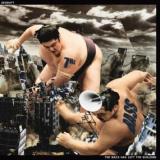
Ültimo hace: 24 Días
Various - Freestyle Rewind LP
  • Information Society - Running
  • TKA - One Way Love (Edit)
  • Jocelyn Enriquez - Do You Miss Me (Freestyle Mix)
  • K7: Body Rock
  • Jasmine - On the Loose (Club Vocal)
  • Definite Destruction - You Played Me for a Fool (Clubstruction)
  • System III - I'm Gonna Make You Mine (Vocal Remix)
  • Alexis - Stop Lying (Club Mix)

A high-energy dance music genre that blends elements of pop, electro, hip-hop, and Latin rhythms, freestyle creates an irresistible urge to dance. It's characterized by fast tempos, complex drum machine patterns, and prominent synthesizers and often explores themes of love, heartbreak, and relationships. On this brand- new compilation, we celebrate the best of Tommy Boy and Easy Street's contributions to freestyle culture. This collection brings together hits from TKA, Jocelyn Enriquez, Information Society, K7, Jasmine and more.

Reservar20.02.2026

debe ser publicado en 20.02.2026

Natty Nature & Jorge Dopico - Keep Up The Vibe

B' ROOTS SOUND SYSTEM presents the first release of its record label -NORTH&SOUTH Reggae Label-. A 12inch worked with Sergio López aka Japu, from Lana Studio in Linares (Jaén-Andalusia-Spain).

A version of the original riddim by N. Bailey with the voice and lyrics of Natty Nature. 'Keep up the vibe', a song full of powerful melodies, where the lyrics refer to creating a harmony between the music and the listener through the vibration of the instruments, the voice and each sound element. That is, keeping the energy and creativity awake in perfect balance.

On the other side, Jorge Dopico contributes his art in 'Trombone vibe', to keep the energy at its highest until the end of the album. A trombone line that delights anyone who loves the most melodic and instrumental reggae.

All this, supported by the respective Dub Versions, by Sergio López aka Japu, from Lana Studio. Providing the riddim, production, mixing and mastering of this sensational first work.

Reservar13.02.2026

debe ser publicado en 13.02.2026

Artículos por página

Language

N/ABPM
Vinyl