
In Stock
Disponibile in Stock e pronto per la spedizione
Last In: 10 months ago
Disponibile in Stock e pronto per la spedizione

SY Rockers is the new project from Ryan Aitchison aka Mella Dee and KALLIDA Festival bossman Reuben G. Their story goes all the way back to 2009, when Reuben invited Ryan to be a resident for his party LSS at Hi-Fi Club in Leeds.
The pair went on to bond over their shared love of bass-led music in the UK underground, a sound that was especially important to their native South Yorkshire. Fourteen years on, Ryan and Reuben revisit those early inspirations as SY Rockers. Their debut EP is a slickly produced expression of bleep, UK techno, bassline and dub, redrawing lines between the sound legacies of cities like Sheffield, Bradford and Leeds across three tracks.
True to those roots, the result is a hypnotic blend of raw drums and subsonic impact. ‘Windy Dub’ introduces the record with a hazy, heads-down bass, occasionally shivering into a cavernous space echo before it locks back into a haunting synth hook. ‘Modem’ does what it says on the tin: gameboy tones bounce around a warm sub, calling back the ‘less is more’ aesthetic of the original bleep era. Finally, ‘Rhythm Resonate’ zooms in on where it all started—the drum machine. 909s, lasers and a touch of perc combine to create the ultimate techno tool.
Disponibile in Stock e pronto per la spedizione
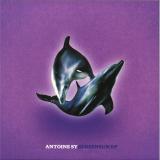
Ordina ora e ordineremo l'articolo per te presso il nostro fornitore.

3rd release for Simon Heslin aka SY on RAWAX!
He keeps the quality level again very high!
Big future-retro release - not to be missed.
Ordina ora e ordineremo l'articolo per te presso il nostro fornitore.

A two-track 12" with fresh artwork and a nice heavyweight pressing, with one side taken by each artist. Sy Sez kicks off 'Change Da System' with dub-wise vocals which then make way for a tight, taught, bouncing house groove with fat bass. Things are utterly different on the flip with Leeds legend and sometime Nightmares on Wax collaborator offering the deep house delights of 'Knights' with its soulful vocal whispers, intimate late night chords and warm, candle-lit vibes.
Ordina ora e ordineremo l'articolo per te presso il nostro fornitore.

Ordina ora e ordineremo l'articolo per te presso il nostro fornitore.

Ordina ora e ordineremo l'articolo per te presso il nostro fornitore.

Caetano Veloso's seminal first '68 Tropicalia monster in MONO, must have or what...
First Authorized North American Vinyl Issue of Caetano Veloso Courtesy of Third Man Records!
IN VERY RARE MONO VERSION
Caetano Veloso's self-titled debut solo album is one of the most important and influential Brazilian (and, dare we say, South American) albums of all time. With the release of this seminal album, Veloso would become the leading voice of Tropicália. The songs on this album immediately connected with people. "Alegria, Algeria" was his breakout hit that gained traction as a hymn for liberty advocates, juxtaposing images of Coca Cola, guerrilla groups, bombs and Brigitte Bardot as part of the everyday experience. The album's first song "Tropicália" was an anthem for the whole movement; it's a fragmented allegory, a structure borrowed from friends in the concrete poetry scene, touching on divergent cultural symbols, events, allusions and idioms, nimbly representing and critiquing the many contradictions in the new Brazilian dictatorship.
"Superbacana" (translated as "Supergroovy") follows a hyperbolic superhero's use of technology to fight a gang of cowboys led by the money-hungry Uncle Scrooge, serving as allusions to American imperialism and greed felt in their country, all in the rapid-fire structure of a comic book. The subtext in all these songs, which the dictatorship would not immediately catch, were that these repressed but glaring contradictions, not the bountiful sunny paradise that the military regime was pushing, were the true national identity. Unfortunately, these cleverly veiled jabs in Veloso and his contemporaries' bodies of work gained greater and greater exposure as the movement became more and more popular, leading to the arrest, imprisonment and forced exile of Veloso and many of his cohort. Despite these difficulties, the Tropicalists continued creating in exile, strongly influencing artists both at home and abroad.
This is the first authorized North American vinyl issue of Caetano Veloso. Whether you're a longtime fan or first-time listener, Third Man Records could not be more proud to spread the compelling story of this album, this artist and the Tropicália movement.
Ordina ora e ordineremo l'articolo per te presso il nostro fornitore.

2026 Repress
Symmetry is proud to announce the arrival of Solid State Vol. 1 - a special vinyl release from Break. Due to popular demand, we’ve compiled four standout tracks, including some fan favourites that until now were only available digitally.
The EP brings together a serious collection: Release Me, which hit number 1 on Beatport; Overstayed, Symmetry’s highest selling tune on Bandcamp; alongside two more heavyweight cuts, All You Gotta Do and Zodiac.
Pressed and presented in physical form, Solid State Vol. 1 is both a collector’s piece and a must-have for DJs - and this time it’s something you can hold in your hands.
dovrebbe essere pubblicato su 30.09.2026

Four transmissions tuned somewhere between deep-psy, tribal techno and spatial ambience. Built for late-night systems and inward journeys, moving through dense sonic textures, low-end pressure and evolving atmospheres.
“Contact” drops you straight into the wormhole: driving techno architecture fused with goa-leaning psychedelia. Layered percussive detail and richly sculpted atmospheres spiral around a hypnotic groove designed for locked eyes and smoke-filled rooms at unreasonable hours.
“Lifeforms” operates with an organic sense of motion. Its groove stretches and contracts like a living system, driven by a supple bassline and rhythmic interplay that feels ritualistic rather than mechanical. Resonant synth work and texture mutates across the stereo field like microscopic organisms coming into focus.
“Deepfield” unfolds within deep psy-trance territory, shaped with restraint and intention. Shimmering harmonics move through a saturated haze into a slow-burning progression that carries a faint melancholy woven through a slowly evolving tonal structure. Meditative yet still built to pull bodies forward.
“Neurobloom” dissolves the propulsion into an evolving ambient soundscape. Ethnic-inflected motifs drift through blooming synth layers, crystalline atmospheres, and gradually unfolding sonic nuances. A controlled descent in that liminal zone where audio starts functioning as a living environment.
dovrebbe essere pubblicato su 30.09.2026
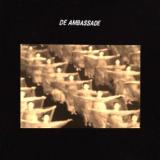
Reissued on Pascal Pinkert's new label 'Phantom Sounds'. Originally release 2019, now remastered with bonus track included! TIP!
Excerpt from the original release text
"On the album, you’ll find a touch of the old and a great deal of new material. ‘Geen Genade’, ‘Wat Voel Je Nou’ and ‘Verloren’ still stand strong in pride of place, reminding us why we love De Ambassade so much in the first place. The opener and title track, ‘Duistre Kamers’ has a dark industrial vibe that is a perfect introduction of what is to come. Somehow ‘Zo Hoog Als De Bogen’ feels warm and cold simultaneously, it maintains an almost spooky tone; ‘Malefica’ in comparison sounds raw, uncut and almost upbeat. ‘Niet Van Mij’ is one of the reasons the album is so special. Its unexpected wavering synths create another contrast of the melancholic and the joyful in one, and the heavy percussion and echoing vocals tie it in with the rest. ‘Laatste Uur’ kicks you in the face, again with this industrial, moody feel and beautifully handled synths. The closing track ‘Wapengekletter’ is elegant, and a new favourite here. The dark vocals, haunting melody and cleverly tempoed percussion conclude the album wonderfully. Overall, De Ambassade has hit the nail on the head and produced this autumn’s must have Amsterdam album."
dovrebbe essere pubblicato su 30.09.2026
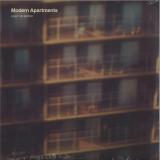
Modern Apartments arrive on Dark Entries, with Light on Water, an LP featuring 8 cuts of instrumental cosmic-kosmische analog synth workouts. Modern Apartments is Ryan Ambridge, the musician and producer best known for his work with dark synth projects Linea Aspera and Lust Pattern. While both of those outlets lean towards the greyscale and robotic, Ambridge wanted to explore a more colorful palette with Modern Apartments, a livelier, looser sound. The medium of film plays a major role here; Ambridge works as a projectionist, screening archival prints of 35mm and 16mm films, and the textures and temporality of the medium fed directly into the Modern Apartments aesthetic. But it isn’t all blurry edges and fuzzy optimism on Light on Water. Says Ambridge, “Regular beats from old rhythm boxes and the sharp angles of post-punk found their way in. The contrasting imagery from those old film prints, of dense cities and open countryside, is reflected back in the dialog between looser sounds and rigid stylistic choices.” This tension shines through on tracks like album opener “Completely,” which pairs the icy minimalism of John Foxx with the meandering grooves of Cluster, or the eponymous “Light on Water” which leans even further into the sun-bleached vibes of Roedelius. Artwork for this record was designed by Eloise Shir-Juen Leigh. Light on Water is perfect late-summer listening, as the last gasps of seasonal radiance fade into autumnal splendor.
L'articolo è già in viaggio verso di noi e dovrebbe essere spedito da 30.09.2026.
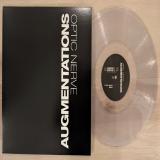
Detroit techno visionary Keith Tucker returns through his acclaimed alter ego Optic Nerve with AUGMENTATIONS EP, a forward-thinking exploration of minimalist machine funk, futuristic sound design, and deep electronic movement.
Crafted with precision and unmistakable Detroit character, AUGMENTATIONS merges hypnotic analog sequences, mechanical rhythm structures, atmospheric synth textures, and driving electronic beats into a powerful sonic statement rooted in the city’s enduring techno legacy. Sparse yet immersive, the EP balances raw underground energy with cinematic futurism — designed equally for dark warehouse floors and deep headphone listening.
Pressed as a Limited Collector’s Edition Clear Vinyl 12-inch, PBX-38 captures the sleek, transparent aesthetic of the music itself: pure signal, machine emotion, and uncompromising Detroit innovation.
A1 — Augmented 1 (Optic Nerve Original Mix)
A deep, stripped down Detroit techno workout driven by pulsing drum programming, evolving synth modulation, and hypnotic minimalist sequencing. Functional futurism engineered for late-night motion.
B1 — Augmented 2 (Infinite Worlds Mix)
Built around a rolling funky bass line and eerie flowing string textures, this expansive composition moves through layers of atmospheric electronics and mechanical groove architecture. The track creates an immersive sense of drifting through endless digital landscapes while maintaining a sharp rhythmic intensity designed for the underground dance floor.
B2 — Augmented 3 (Visual Shapes Mix)
Abstract melodic fragments, and precision electronic rhythms collide to form a futuristic minimalist soundscape filled with movement, tension, and cinematic pulsed chords.
dovrebbe essere pubblicato su 30.09.2026
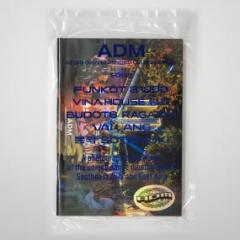
228 page photobook, printed on high quality Japanese paper.
Paperback
Size: 257 x 182 x 7mm
Enclosed in a printed clear plastic bag
Soi48 proudly presents this book, a photographic document of the unique dance music clubs
and culture of Southeast Asia and East Asia. The photos, from the years 2017 through 2025,
were taken in nightclubs, discos, festivals, raves, sound system parties, private parties and
migrant worker clubs — the places where Asia’s unique dance music genres are born and
thrive. ADM, with its exclusive on-the-spot snapshots, provides an extraordinary visual
archive of Asian contemporary dance music. Journeying through Thailand, Vietnam, Laos,
Malaysia, Indonesia, Philippines, Myanmar, Taiwan, Korea and Japan, Soi48 captures
glimpses of how people create their nights, visually comparing the differences between
countries in fashion, dance style, lighting, club interiors, flyers and more, showcasing the
distinctive entertainment culture that each country has created. The 167 photos also feature
the pioneering DJs and track makers who built unique music genres in each country, such
as Budots (Philippines), Vina House (Vietnam) and Saiyo (Thailand). Also of note: the book
provides a valuable record of nightlife during the COVID-19 pandemic; captures the energy
that migrant workers release in clubs on weekends; and in general showcases the ingenuity,
wit and passion of music lovers throughout the region.
Soi48:
A duo, comprising Tokyo natives Keiichi Utsuki and Shinsuke Takagi, that promotes the
magic of Asia and Asian music through DJ-ing, writing, design, and party activities. Their
interests range from traditional music to cutting-edge dance music, released on physical
media as well as on the internet. In addition to supervising the film Bangkok Nights (Kuzoku)
and the EM Records Thai music series, they introduce the joys of Asian music and travel
through talk events, TV, radio appearances, etc. Their books include TRIP TO ISAN: A
Traveling Thai Isan Music Disc Guide (DU BOOKS), OMK#001 (OMK), and ADM: Asia's own
unhinged club culture. As ever, they enthusiastically continue to research dance music and
sound system culture in Asian countries.
dovrebbe essere pubblicato su 30.09.2026

Ed Nine hails from the birthplace of house and brings plenty of Windy City magic to this EP on Spanish label MATE. It's deliciously emotive tackle drenched in meaningful pads and, in the case of opener 'Feel It In Your Soul', an aching vocal sample that really sets it alight as the organic drums jack down low. 'Free Acid' is a stomping workout with prickly 303 lines defining the peak time vibe, then 'Out Of Line' cuts back into a more sunny sound with synths rising up through the mix and bringing joy. Closer 'The Drum Tool 3' is just that - a raw jam to help you get the floor locked in while moving through the gears.
L'articolo è già in viaggio verso di noi e dovrebbe essere spedito da 30.09.2026.
Phwoar! TD go four for the floor on Volume 9, letting loose with a set of sure-shot hits from all corners of their sonic spectrum.
A tag team match up, this action spectacular trades peak-time pump, Balearic cool, Italo thrust and dance-punk theatrics on its way to snatch the championship.
Obviously TD ooze subtlety and taste, so as we sat sipping Schnapps from our Stanley cups, we couldn't help but take a little inspo from our kitchen decor. 'Live Love Pump' - what a mantra. In musical form, this philosophy takes the shape of a capital D-isco delight, equal Pats Cowley & Adams, EQ-freaked and filtered into something dafter than a pair of chrome clad millionaires. Big room mirrorball magic if ever we've heard it.
The A2 sees the drunk AOR funk of 'Sure Line' take a leisurely stroll down the coast, a Gauloises in the gob and tattered Baldwin in the back pocket, flipping and flopping along the prom to buoyant bass, melting brass and more than a little melancholy.
Booting off the B-side, 'Un America' is a massive mid-tempo chugger replete with laser fire, synth scree and nipple high guitar. Powering along on a serious bass sequence armed with hooks-a-plenty, mostly incomprehensible lyrics and a groove which won't quit, this has all the ingredients required for an Italo all-timer.
The finale finds us in the company of some punk pioneers at their absolute silliest, bringing the kind of whacky vocal vibe, surf-centric style and off kilter groove the B-52s made a career of. Add in animal chatter and scratchy guitars and you've got the sort of secret weapon the Idjuts unleash waaaay post peak.
Limited Press - Numbered Insert - Drum Fun Guaranteed
dovrebbe essere pubblicato su 30.09.2026

London mainstays Half Baked push beyond a quarter of a century here with Romanian house favourite Dan Andrei debuting on the label. He offers the beautifully clean and serene ambient, minimal and tech fusion that is 'Orange Sunshine' - the sort of 5am gem that soundtracks deep immersion in an alternative world, complete with real beauty in the chords. Sticky' has a more pronounced rhythm and bubbly blend of rubbery drums and bass, while spacecraft-life synths circle the groove and neat melodic patterns unfold with a curious nature. London duo Brainsurfers aka Harry McCanna and Sam Bangura add more drive but keep things deep and crank up the cerebral details.
L'articolo è già in viaggio verso di noi e dovrebbe essere spedito da 30.09.2026.

UK pals Andy Riley and Laurence Ritchie have been Drop Music mainstays since before the turn of the millennium. They put out a veritable ton of house music and this EP first dropped back in 2004, but has long been ripe for a reissue. 'Already' sits somewhere between tech, new jack swing and deep house and is assembled from chopped-up samples, jazzy stabs and a rigid mix of drums that all get held together with a warm, swinging groove. 'Amber Gambler' on the flip is another collage made from distinctive patches - gun shots, MJ vocals, crashing hits, wiggy synths, minimal percussion and bursts of synth strings. The result is a busy, characterful groove that never stops grabbing your attention.
L'articolo è già in viaggio verso di noi e dovrebbe essere spedito da 30.09.2026.

Transmissions presents Mooping, a 2026 edition of Sunju Hargun’s Mooping Cuts. Featuring remastered originals, two fresh reworks, and available on vinyl for the first time, this release revisits selected works with renewed energy.
We open with a 2026 version of Pigeon Attack, where driving acid lines, eerie synths, and lush atmospherics are layered over refined drum work and a fresh, rolling bassline. Next comes a remastered edition of Phaya Naga—one of the standout tracks from the original release. Named after the mythical river serpent, it winds through slithering synth work, unmistakable low-end pressure, and trippy spoken-word passages.
On the flip side, it’s a double dose of Mooping. First, the original broken-beat masterpiece receives a careful remaster before a brand-new 2026 version closes the EP, powered by a menacing syncopated bassline and the unmistakable vocal presence of Mooping himself.
Sunju said: “There was always a wish in the back of my mind that this would one day come out on wax…fast forward, here we are. New remasters, and to keep things special, two additional 2026 reworks. This project is, and will always be, about Mooping…not me…”
dovrebbe essere pubblicato su 30.09.2026

Never Sleep charity spins through The City of Big Shoulders via Butlins Minehead for an electric live recording and history lesson.
Certified foe nem DJ Funk forecasts disorder with a retrospective of Booty, Ghetto and Club.. A mission statement featuring anthemic discography, lauded signature quotables and the rawest of machine funk.
Synergising live 909, 303 and 808 alongside an encyclopedic knowledge of genres that he practically invented, the mix moves at breakneck speed and does not relent for one minute. Funk keeps the crowd sweating and reminds them on the mic that this party is for now and forever. A non stop roller rink of hit after hit and delivered with such panache it would make anyone's Aunt start weighing up the dancefloor.
DJ Funk is known worldwide for his contribution to Dance musics diaspora and remains a huge influence on that the freedom of expressionism isn't to be curtailed
All proceeds go to DJ Funks family as this recording is released posthumously.
dovrebbe essere pubblicato su 30.09.2026

On edit imprint Disco Mind's tenth release, they hand over the reins to iconic Italian DJ, producer and remixer Beppe Loda, once resident DJ at influential rural club Typhoon during the 1980s - and it's that period that inspired the four scalpel jobs on show. 'Mr Rocket' is a chugging chunk of oddball early 80s headiness, while 'Tu Sei' sees Loda rework what sounds like a synth-laden fusion of space rock and intergalactic jazz-funk. On side B, he does a great job on spiralling, big hair-sporting disco-rock number 'Falling', before showcasing more spacey synths and chugging rock riffs on 'Marzio'.
dovrebbe essere pubblicato su 30.09.2026

Bypassing legacy protocols, Sunaas has evolved the Psy-fi sound algorithm. The Altered Reality E.P reconstructs the timeless blueprint with precision-engineered synth design, evolving sequences, and rhythms that ripple through parallel layers of perception. With each composition, the architecture expands further into uncharted sectors of hyperdimensional sound… a new reality is now live…
dovrebbe essere pubblicato su 30.09.2026

Lunfardo presents Heroica, the fifth chapter in its conceptual series, inspired by the Three Defences of Paysandú, events that remain embedded in the city’s memory and the history of Uruguay.
Among them, the Heroic Defence of Paysandú (1864–1865) stands as the most enduring symbol: a weeks-long resistance led by Leandro Gómez against overwhelming forces during the Brazilian intervention and allied advance. Across generations, these events have come to embody resistance, sacrifice and permanence.
Heroica is Lunfardo’s tribute to Paysandú, the city where the label was born.
The release explores this narrative through the work of Andrew Lagowski, one of experimental electronic music’s enduring figures. Active since the early 1980s, Lagowski has released more than 60 albums and over 10 vinyl singles, leaving a lasting mark across electronic, experimental and techno music.
For Heroica, Lunfardo revisits selected works from Lagowski’s 1995–2000 CD era, presented on vinyl for the first time, alongside a contemporary composition produced in September 2024.
Bridging archival electronics and contemporary vision, Heroica unfolds through themes of resistance, memory and permanence.
Artwork by @estudio.polar
For more info @Lunfardo.records
dovrebbe essere pubblicato su 30.09.2026
The Jazzcodes and Michele Chiavarini kick off this fine survey of contemporary deep house with 'Wolf Dust (Saison Rework)' which draws on jazz-inflected motifs and feeds them into a steady groove with layered keys sitting over a controlled kick pattern. 'Friday' from DJ Romain works in a more direct frame driven by looping piano stabs and clipped drums with diva vocals injecting heat. 'In The Moment' has an air of cool jazz to it with deft horns and spoken word that muse on the great genre while Saison's 'This Is A House Record' sure is that: classic drums and knotted little synths bring a warming vibe for grown-up floors.
dovrebbe essere pubblicato su 30.09.2026

Fall Collection pulls from the vaults. Four tracks, some long out of print, one never
before pressed, all of them worth the dig.
The A-side opens with Ty Tek’s Dirty Fusion, originally released on Gourmet Recordings
in 2005 alongside the Audio Soul Project remix two years later. Both have been
fetching serious money on the secondary market for a reason. This is tech house from
when that phrase still meant something, the walloping cadence, the sci-fi pads, the
seismic synths rolling underneath. You hear it once and it stays with you.
Departed by Wasted Chicago Youth follows. Justin Aulis Long and Mazi Namvar
started from a remix brief and promptly ignored it, building something new from scratch
in a single session. Organs, wailing lead, disco break, 808 subs, a plastic bass line
threading through all of it. Somewhere between an angry Metro Area and a more
psychedelic Jitwam, but really it’s just WCY doing what they do.
Love Thy Enemy by Wasted Chicago Youth appeared on the Chase The Devil EP back
in 2009. The bubbles, shuffles, and wobbling chords hold up, and the vocal samples hit
differently now than they did then.
ASP’s Cloud Dub closes the record. It appeared on Dubs Vol. 2 as a digital release in
2022 and has never been on vinyl, and that’s where the subsonic acid bass line and
the layered string, piano, pad, and organ groove finally get room to breathe. Deep
house the way Chicago made it in the early nineties. Bare, musical, and raw.
Track A1 written by Ty Tek. Remixed by Audio Soul Project
Track A2 written by Justin Aulis Long and Maziar Namvar
Track B1 written by Justin Aulis Long and Mazi Namvar
Track B2 written by Audio Soul Project.
Copyright Control
Fresh Meat Records 2026
dovrebbe essere pubblicato su 30.09.2026

What began as a pandemic-era radio show on Openlab FM and Ralph Lawson's sonic escape hatch into distant electro worlds has since become a consistent home for the genre. Exit Planet Earth returns from hiatus with a new chapter, and Manchester's Jonny Strinati, aka Kalcagni, is the ideal artist to reopen the transmission. Already well-versed in the EPE universe through the radio show and releases on Cosmoba and Distrito 91, Strinati drops relentless machine beats, intricate synth programming that references all forms of electro from Kraftwerk to Drexciya, with dynamic bass and cinematic designs. It's an intergalactic mind trip as much as a dance floor workout and the production is next level. Welcome back!
L'articolo è già in viaggio verso di noi e dovrebbe essere spedito da 30.09.2026.
Nonna Fab returns with his fourth release on his own imprint Movement and Soul Records, with the first single on the label, 'Eternal Between'.
This is a 3-track soulful house EP with two versions from Nonna and a beautiful remix from Trinidadian Deep.
Eternal Between is an instrumental soulful house record with a true exploration of the deeper side of dancefloor and movement.
The Spiritual Rhythm mix does exactly what it says on the tin, with the focus on a deeper, introspective dance floor cut. Explorative piano jam, rolling bassline and deep Juno stabs.
The Deeper Dub does exactly what B-sides were made for, percussive rhythms, stripped back synths and a deeper dive into the track. A broken beat style bassline and huge pads. Suitable for peak-time or the breather.
And the first ever remix on a Movement and Soul Records, Nonna invites Trinidadian Deep to put his touch on the rhythm.
Spacious, expansive and percussive with some true signature-style elements to the remix...
L'articolo è già in viaggio verso di noi e dovrebbe essere spedito da 30.09.2026.
Norway’s finest hardanger fiddle player, performing traditional tunes from her native valley Hallingdal.
Wonderful.
dovrebbe essere pubblicato su 30.09.2026

dovrebbe essere pubblicato su 30.09.2026
NNHMN — DARKLINGS: a lethal club edge of dark electronic, pounding EBM and gothic synths that turn floors into battlegrounds. Headliners at Ombra, Grauzone, Extramuralhas, Subkult, Infest and Unterwelt Berlin.
Opera of Lust & the Art of Sorrow II — an intoxicating, cinematic opera of longing and loss: razor‑sharp arpeggios, cavernous bass, hypnotic rhythms and ghostly vocals—sensual, melancholic and brutally dancefloor‑proven.
dovrebbe essere pubblicato su 30.09.2026

The re-launch of mars assault records last year brings the possibility to re-issue its back-catalog: the tunes that were released during the first run of the label (1998-2003).
here we have 4 tracks from "Arach", from the studio concept "centiped sound system", ( a duo of composers, also including Peter Pan), which were originally released on two records ( mars assault 3.65b, mars assault 3.7r1) in the years 2000/2001: very sharply produced hard-tekno, very original also (the "sound of centiped" is like no other hardtechno), and yet 100% as relevant on the dancefloor nowadays as it was at the time.
Another mars assault record equality good to play in a party as to listen to at home.
2025 cut with Hervé at dK Mastering /Paris (cut in 33/45rpm for optimum sound quality); 300 copies limited re-press, 180g pressing; a very sober object on the outside, but translucide red within.
dovrebbe essere pubblicato su 30.09.2026

Across the cosmic boundaries via spiritual exploration and in the void between shimmer and shadow you will find the astral soundscapes of Birds Of Pandaemonium...
Emerging from Brooklyn's late-night music ecosystem, 'Hazy James' Armstrong and Tim Wagner met nearly 20 years ago through the city's DJ and club scene. Each with different but complementary musical backgrounds which included a mix of folk, guitar, DJing, synths, drum machines, country rock, disco, jazz, and rhythm-heavy club music (being just a few!), the duo began various musical endeavours together & "exploring the darkness while pursuing light" which eventually lead to the birth of Birds Of Pandaemonium.
It was only a matter of time that the stars aligned (via an introduction from Shane Watson of Causeway) to bring the Birds onto the musical radar at Sprechen which led to the release of 3 renowned E.Ps and ultimately, their debut album, Eudaemonia. Obscure covers including Idris Muhammed's Loft classic 'Could Heaven Ever Be Like This', the rave defining Born Slippy by Underworld and the post punk/new wave 'On Islands' by New Musik sit alongside original songs shaped by fresh reflections on life, grief, and love with elements of dream pop, shoe-gaze & gothic pop to give wistful and pulse-driven listening experience that is hazy, romantic, and deliberately genre-blurring.
A truly unique listening experience that delivers broad strokes of sunsetting psychedelia and bleary-eyed optimistic, astral dream-pop across all 8 tracks.
Is it balearic? Not really, it's pretty much a genre all on its own (answers on a postcard).
L'articolo è già in viaggio verso di noi e dovrebbe essere spedito da 30.09.2026.
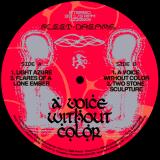
Crafting another beautiful experience in sensorial delight, fleet.dreams returns to Vinezza with the label’s 3rd offering “A Voice Without Color” - born from an ever-deepening practice of groove-powered depth tech melded with realms of dubwise kineticism, enchanted cognition, and expressive, dreamlike synthesis.
“A Voice Without Color” finds fleet.dreams’ music in its most rave-activated mode yet, crafting 4 pieces of infinitely mixable spectral matter - all part of their own universe beckoning to be heard under the glow of stars in the night sky, or floating amidst the mesmerizing fog & lights pumping out of the system on your favorite dancefloor.
Awash in kaleidoscopic splendor and psychedelic intrigue, “A Voice Without Color” finds kinship in everything from the best of expansive dancefloor kineticism, time dilated wonder, and the vivid reverbations of the natural world floating in the mix. At once quintessential, contemporary, and ubiquitous is fleet.dreams’ own remarkable production technique, each track unfurling in seemingly endless swells of simmering rhythm and hypnotizing atmospherics - new memories of circadian entrancement in their molten essence, designed to blissfully guide you deeper and deeper towards the primordial exhilaration of movement. Undulating with vivid pulsations and clarion calls for the hips and mind echoing across a spiraling gyre, the sprawling waltz of “A Voice Without Color” glides through dazzling chroma and effulgent radiance greater than the sum of its parts.
Painting with bold, prismatic strokes of iridescent friction amidst the listless gray of our increasingly dispassionate timeline, fleet.dreams delivers another EP of style, substance, and vision for the dancers and DJs alike - a future classic of a possible world ready to be activated together.
*words by Kiernan Laveaux
Early support from: Kiernan Laveaux, Daniel Rincón (NAP), Scott Zacharias & Amelia Holt
L'articolo è già in viaggio verso di noi e dovrebbe essere spedito da 30.09.2026.
Portuguese musician and expert experimentalist Diogo steps up for Heion Records second outing. Diogo signs two originals for his Healiocentric EP, joined by a remix from legendary Wild Bunch selector and producer Milo Johnson, aka DJ Nature whose roots in New York’s late-80s underground shaped his raw blend of early house. The EP opens with "Healiocentric" unfolds as a deep atmospheric journey where modular synthesis meets live instrumentation and tuned percussion. Arpeggiated sequences glide through hovering brass-like tones and modulated pads with effortless positivity, riding a syncopated landscape of rim shots and broken beats.
"Traums" dives deeper into Diogo's intricately woven world. Monochordal spoken word samples drift sparingly across organic clicks and rich analogue textures, conjuring a jazz-like atmosphere that rewards careful listening. Lush pads echo the craft of artists like Two Lone Swordsmen or Ricardo Villalobos, but the steady thump of a 909 kick and a fluid bassline leave no doubt: this is a deep-of- night heater for the enlightened dance floor. DJ Nature closes the EP by taking "Healiocentric" on an inspired tangent into disco-techno territory. Acoustic beats anchor a minimalistic take on acid funk, while a near-naive piano line sets Chicago house against Berlin school repetition. Gated noise, field recordings, wah-wah electric piano pads and classic house organs complete the picture. Cannon fodder of the highest order.
dovrebbe essere pubblicato su 30.09.2026

Gasba fire drawn from Ahlem Édition, the Oran-based label founded in 1992 by Abdelkader Haci.
Hypnotic flute melodies laced through hard-grooving, synth-led raï rhythms, heavy drum machine workouts, throbbing basslines, and slow-burning, hyper-soulful witness.
Hotly recommended.
dovrebbe essere pubblicato su 30.09.2026

With absolute joy we can announce that one of our favorite dubplates of the last years is finally going to be released. If you heard Lion’s Den play, you heard this one. This is Violinbwoy’s take on a Belarusian traditional song. A beautiful interpretation by Laboratorium Pieśni remixed for sound system play by Violinbwoy in his laboratory.
A tune gathering the ancient spirits - from that time to this time… play it loud and feel the vibrations!
dovrebbe essere pubblicato su 30.09.2026
Every coastline develops its own rhythm. The Adriatic is no exception.
For decades, Italy’s eastern coast has been shaped by funk, Cosmic Disco, Balearic sounds, Italo Disco, House, Latin rhythms, Brazilian music and countless other influences. Rather than blending into a single style, these musical worlds have lived side by side, constantly inspiring new generations of DJs, musicians and dancers. For more than fifteen years, Soul Fingers and Funk Rimini have explored that landscape from different perspectives. Founded by Claudio Cavallaro in 2013, Soul Fingers grew into a vinyl-driven community where groove matters more than genre. Its philosophy has always been simple: if the groove is right, genres stop mattering. Brothers Ricky and Francesco Cardelli developed Funk Rimini into a project rooted in funk, disco, live performance and electronic production. Anima Adriatica is where these two journeys meet.
The project didn’t begin with the ambition of making an album. It began behind the turntables. As DJs, Claudio Cavallaro and Ricky Cardelli found themselves constantly searching for records capable of connecting distant musical worlds inside their sets; from Afrobeat into disco, from hip hop into Latin, from Brazilian grooves into boogie, from cosmic electronics into deep funk. Sometimes those records existed. More often, they didn’t. So they stopped searching and started writing them. Not records designed to belong to one genre, but records designed to travel between genres. That space between musical worlds became Anima Adriatica.
The music grew through spontaneous jam sessions with Ricky and Francesco Cardelli, drummer Enrico Mao Bocchini and, gradually, a wider circle of musicians, singers and longtime friends, making Anima Adriatica less a traditional band than the beginning of an open collective. Recorded at SynthPosio Studio, founded by Ricky and Francesco Cardelli inside Rimini’s iconic skyscraper, the project also carries a symbolic connection to the building itself, where many Italo Disco classics (including records by Betty Miranda, The Creatures and many others) were recorded decades earlier.
Betty Miranda returns not as a nostalgic guest, but as a bridge between generations. On the title track she performs a spoken-word text written by Claudio Cavallaro, reflecting on the invisible thread connecting the Adriatic dancefloor across time. From Baia degli Angeli to Cocoricò, from the legendary clubs of Riccione to today’s independent communities gathered around projects such as Soul Fingers and Funk Rimini, the places have changed, but the dancefloor continues to tell the same story. Much like Pier Vittorio Tondelli’s Rimini captured the Adriatic through literature, Anima Adriatica imagines its soundtrack.
Brazilian musician Daniel Plentz (Selton) expands that vision on Açúcar and Alegria, bringing another coastline into the story. Across its four tracks, the EP moves naturally between analogue funk, boogie, Brazilian music, underground disco, cosmic textures and the wider Black musical tradition, with All Down The Line paying tribute to the Paradise Garage era.
Released by Bordello A Parigi, the project found its natural home through a shared love of adventurous dance music, records and club culture. More than the title of an EP, Anima Adriatica marks the beginning of an open collective; a meeting point where musicians, DJs, producers and friends continue building bridges between genres, generations and communities.
Because Anima Adriatica doesn’t live inside a genre. It lives between genres. If soul music has always reflected the places where it was born, Anima Adriatica is simply our own Adriatic Soul.
dovrebbe essere pubblicato su 30.09.2026

'Bim Sherman’s seminal second album from 1978 returns in true showcase style, complete with both vocal and dub versions.
'Recorded at Randy's and Channel One, the record features the legendary mixing touch of King Tubby's Studio, with Jammy at the controls. Rhythms are delivered by top-tier musicians from the Roots Radics and Soul Syndicate.
'Back in print with its original Jamaican album artwork!'
dovrebbe essere pubblicato su 30.09.2026
Musek welcomes Shkedul, a long-time friend of the family, alongside Invisible Euphoria, an emerging name from the underground scene.
On the A-side, with Enter the Void and Concentration, Shkedul shapes a tense, hypnotic, and futuristic sound. Tight rhythms, synthetic sequences, and constantly evolving details create two deep, cerebral tracks built around tension and the perception of the dancefloor.
On the flip side, with To Ride Shotgun and Rodeo Fanatics, Invisible Euphoria takes the record into more elastic, off-kilter, and unpredictable territory. Broken grooves, electro and breakbeat influences, processed vocals, and psychedelic atmospheres give the B-side a more playful and surreal character.
dovrebbe essere pubblicato su 30.09.2026
For Don’t Panik 8 the duo find themselves in-between rappers and unwilling to take up the mic themselves they turn to the internet for vocal inspiration, tackling subjects from Artificial intelligence, Bassline noises and Synthesiser Science all firmly embedded into their signature Pumping Funky sound.
dovrebbe essere pubblicato su 30.09.2026
