Поиск:sub source

Стили
Все
Dragonfly - Silent Nights (Splatter Vinyl)

High Roller Records, black vinyl, ltd 250, 4 page insert, A5 photo card, All audio restored and mastered from vinyl and tape sources by Patrick W. Engel at TEMPLE OF DISHARMONY in October 2021. In den frühen achtziger Jahren war das Londoner East End eine der wichtigsten Keimzellen der glorreichen New Wave Of British Heavy Metal – man denke nur an Acts wie Iron Maiden oder Angel Witch. Das Ruskin Arms spielte für die Evolution der Bewegung eine nicht unwesentliche Rolle, waren es doch die legendären Probeauftritte jeden Donnerstagabend, die den hoffnungsvollsten Bands eine regelmäßige Anstellung im Ruskin sichern konnten. Teil dieser Szene waren auch Dragonfly, eine Gruppe von jungen Musikern, ohne Geld und ohne selbst auferlegte Grenzen, dafür aber mit unbändigem Enthusiasmus. Es dauerte nicht lange, bis die Band anfing, eigene Stücke zu schreiben und sich weit übers Ruskin hinaus einen Namen zu erspielen. Die Frage nach einem eigenen Vinyl wurde in der Folge immer dringlicher. Dieses wurde dann in Form der »Dragonfly E.P.« umgesetzt, eine Auswahl eigener Kompositionen, aufgenommen im Keller einer Zoohandlung ganz in der Nähe des Ruskin Arms. Die in Eigenregie gefertigte EP wurde in einer Auflage von 500 Stück gepresst, die Cover eigenhändig gefaltet sowie zusammengeklebt, und erschien im Jahre 1980. Die Qualität des Materials und das spielerische Können der Musiker machte die »Dragonfly E.P.« zu einer der substanzielleren Veröffentlichungen der NWOBHM, später wiederzuerkennen bei Bands wie Sapphire, Trilogy oder Terraplane. Das wieder erwachte Interesse an der NWOBHM trieb den Preis einer originalen Ausgabe der »Dragonfly E.P.« fortan in schwindelerregende Regionen und fachte zugleich das Interesse nach unveröffentlichtem Material des ausnahmslos in Originalbesetzung agierenden Quartetts an. Das vorliegende Album präsentiert alternative (ältere) Aufnahmen des Songmaterials der »Dragonfly E.P.« und sorgt dafür, dass Dragonfly endlich das breitere Publikum bekommen, das sie von Anfang an verdient gehabt hätten. Cleveres Songwriting, melodische Vocals und messerscharfe Gitarren sind die Schlüsselelemente ihres Sounds.

Сделать предзаказ24.03.2023

он должен быть опубликован на 24.03.2023

Chaperone - Emotion Hospice

Chaperone

Emotion Hospice

12inchBDNLP012
Bedouin
17.03.2023

Emotion Hospice is the debut LP by New York-based sound artist and writer Chaperone on Bedouin Records. Combining layers of doom electronics, dystopian ambient, and manipulated tape loops, Emotion Hospice reflects both the artist's suffering and recovery from addiction, as well as Philadelphia's history of socio-economic decay and misanthropy.

Emotion Hospice was recorded from 2016 to 2019, when Chaperone's David Coccagna lived and worked in his hometown of Philadelphia, a city notoriously known for its poverty, redlined city divisions, and fascist policing tactics. While exploring the sound of the city and the effects of its political and social climate, Coccagna also struggled with and managed to overcome a severe addiction to alcohol, tying further the misaligned nature of the self to the maladjusted world he grew up in that is reflected in the record itself.

Sonic thrills and their destruction is present throughout the record, as Coccagna experiments with the brutal manipulation of bossa nova, varying styles of jazz, hip hop, and rap, using 4-Track tape loops, shortwave radio frequencies, various apps on his iPad, and open source audio editing software. With Emotion Hospice, Chaperone liberates the inherent darkness of the cheerful and poppy music that he samples and transforms it into an extensive, doomy sound of a future that is dystopian, maladroit, suffering, but hopeful about human beings. The album was written and recorded entirely by Coccagna aside from the track featuring New York rapper and producer Andre Altrez, whose establishment of Girard Hall in Philadelphia was a beacon of DIY ethos that became legendary in the city in its own right.

Chaperone's Emotion Hospice is his first release on Bedouin Records. His cassette release Dead Pitbulls Slung On Tired Shoulders was his first outing for Bedouin's now defunct sub-label Bastakiya Tapes in 2017. This initial tape was the catalyst to a working relationship between Coccagna and label operator Salem Rashid as collaborators and colleagues.

Сделать предзаказ17.03.2023

он должен быть опубликован на 17.03.2023

Maral - Ground Groove

Maral

Ground Groove

12inchLR232
Leaving Records
17.03.2023

Ground Groove, the third full-length release from the LA-based, Iranian-American producer and DJ, Maral, begins with an invocation: the sprawling, achingly heavy Feedback Jam opens the floodgates of history. Conventional (linear) spacetime collapses, crushed beneath the track’s lumbering 4/4 heartbeat and successive waves of distortion. As each wave recedes, samples trickle forward in the mix — seeking, perhaps, to fill the void. Voices and instruments rise and fall in uncanny reverse. Overlapping, implied melodies flicker into focus, then flit away. Feedback Jam is at once an initiation ritual, and a thesis statement for the record that follows.

Drawing upon a vast personal archive of Iranian folk, classical, and pop recordings (some sourced from mixtapes made by her parents in the eighties/nineties), Maral presents, on Ground Groove, a further refinement of the signature “folk club” sound she developed as a live DJ— a sound she would later codify on Mahur Club (2019) and Push (2020). By collecting, dissecting, and re/presenting sonic fragments from Iran, Maral practices a kind of dance-floor ethnomusicology. The subject of her inquiry: Iranian


culture and contexts, throughout history and in the present. But, crucially, this inquiry is instantiated within and throughout the body of the listener, whether this listener is dancing in the club, or riding the train, nodding along with headphones on.

Maral speaks of being in collaboration with her samples, treating each as a distinct bandmate, often consulting with an artist’s catalog (or even a single recording) as one would a trusted creative partner. In so-doing, Maral claims to seek to transcend the self. In this regard, her output neatly triangulates contemporary dance and heavy music with much of the traditional religious music that she samples. Broadly speaking, each of these idioms addresses a desire —shared by audience and performer alike—to transcend the self through volume, repetition, and movement.

Having, in her youth, studied the Setar under Nader Majd (the founder of Virginia’s Center for Persian Classical Music), Maral cycled through various genres (ex: punk, emo, dub) in her adolescence and early twenties, all the while expanding her knowledge of, and appreciation for, Iran’s diverse musical traditions during regular summer trips to Tehran. In college, Maral taught herself to make beats with a ripped copy of Ableton (which remains her DAW of choice), eventually transitioning to playing and hosting various club nights. Forever abiding by an autodidactic, DIY impulse to create art and foster community, Maral relocated to Los Angeles in 2013, where she quickly immersed herself in the city’s numerous overlapping music scenes.

Collaboration (beyond sampling) has proven an important component of her process, with notable spoken word contributions from the likes of Lee Scratch Perry and Penny Rimbaud, as well as a 2021 Panda Bear collab track (On Your Way), which the Animal Collective founder co-produced. Maral is equally attentive to the visual components of her records (album art, music videos, etc.), drawing upon the work of peers and friends for inspiration.

Indeed, the genesis of Ground Groove can be traced back to an audio-visual collaboration between Maral and the artist Brenna Murphy, originally commissioned for the 2021 Rewire Festival — a project that would eventually serve as the album’s foundation. Tracks eight through eleven on Ground Groove comprise Maral’s half of this installation, with tracks one through seven composed afterwards, inspired by the fruits of Maral and Murphy’s collaboration. Murphy’s visuals will be released alongside Ground Groove as a visual accompaniment. Additionally, Murphy designed the album’s art, directed the video for the lead single (the aforementioned Feedback Jam), and is featured on track six, Shy Night.

Composed largely on Ableton, Ground Groove features more frequent and more prominent live recordings from Maral (guitar, bass, and vocals) than either Push or Mahar Club. The cult favorite Roland MC-909 groovebox rears its head on Mari’s Groove. Mixed by Trayer Tryon (Hundred Waters) and mastered by Daddy Kev, the attention to sonic quality on Ground Groove constitutes another significant step in Maral’s development as a studio artist.

Ground Groove’s eleven tracks are “grooves” in the obvious sense, in that they are each driven by a persistent, propulsive rhythm, but the album’s title may just as well suggest the glacial passage of time—the scope of human history, in which individual voices, like streams, carve paths (impossibly) through earth and stone, winding their way to the vast sea of the present.

Сделать предзаказ17.03.2023

он должен быть опубликован на 17.03.2023

Pauline Oliveros - The Well & The Gentle 2x12"

The Well & The Gentle, two of the major works of Pauline Oliveros, are presented here in a first time reissue on double vinyl in a gatefold sleeve with extensive liner notes.

If Oliveros had followed a more conventional path she may have, all social obstacles aside, been considered among the major composers of her time. However, Oliveros approached composition in a more egalitarian manner. She wrote music for musicians to interact with or, in the composers words, she wished to create "an inclusive and interdependent and unfolding world of relationships."

Oliveros' propensity towards inclusion is part of what makes this work so remarkably distinctive. The Well & The Gentle is carefully crafted, allowing performers to participate in the creation of the work. Players are asked to collaborate, focus, react and make imaginative choices. Only then can the performers "pass through stages of awakening to the possibilities inherent in making music, working together, leading to the essence of what can shape musical impulses and individual freedom simultaneously."

Unlike most major composers of the era, Oliveros' work focuses on collaboration and improvisation. For Oliveros, the processes involved in making music are as fundamental as the music itself. Oliveros creates, as Arthur Sabatini put it so eloquently in the liner notes, "A world in which sound and the practices entailed in making music merge; become, at once, source and atmosphere, energy and essence, presence and dynamic."

Pauline Oliveros was an electronic music pioneer, accordionist, composer and educator who resided in Kingston, New York. Her instrument was tuned in Just Intonation and she often included it in her meditative improvisational music. Her music is not meditative in the sense that it is intended for listening to while meditating, rather each piece is a form of meditation, such as her aptly titled Sonic Meditations.

A central figure in post-war electronic art music, Oliveros is one of the original members of the San Francisco Tape Music Center (along with Morton Subotnick, Ramon Sender, Terry Riley, Steve Reich and Anthony Martin), which was the resource on the U.S. West coast for electronic music during the 1960s. The Center later moved to Mills College, where she was its first director, and is now called the Center for Contemporary Music. Oliveros often improvised with the Expanded Instrument System, an electronic signal processing system she designed, in her performances and recordings.

Сделать предзаказ17.03.2023

он должен быть опубликован на 17.03.2023

Material Object - Telepath 2x12"

Material Object

Telepath 2x12"

2x12inchEMEGO299V
Editions Mego
13.03.2023

Dismantling the acoustic to feed the electronic, Editions Mego presents Telepath, the new album by Material Object. Born out of a single improvised recording session with a lone Violinist, Telepath is a startling album of future electronic music, resulting in an LP of unique and timeless tracks that reimagine a classic sound for an endless future.

Boldly departing from his previous canon of largely 'ambient' work, Material Object's Telepath renders itself out as something much stranger, something more spacious, more subtle and gradual. Moments of bouncing minimalism meet moirés of delayed pure tones phasing in and out of resolution, giving way to a series of strobing foreground gestures arranged and offset in disorienting landscapes which scatter themselves asymmetrically amongst crystal pools of reverb.

Revelling in the creative dismemberment of the original source material, Material Object slowly and patiently induces the violin to undergo every category of torsion, pressure and rupture. Its vivid acoustic qualities pass over and across the event horizon of the digital domain. Shattering then crystallising into points and coordinates, intersections, disjunctions, planes and reverberant figures. An uncanny geometry perceived only between the ears, at once dissolving and reconstructing itself.

Not to be missed here is the essential, but bonus only, add-on (available with all Bandcamp purchases) "Auxiliary Apparition", a hallucinatory expanse that traverses the same liminal geography as the LP proper but as some refracted, ghostly counterpoint. More nocturnal, overpowering phantasms looming out of a droning noise floor before fading away. A hypnotic and time-dilated recapitulation of what's gone before as if looking back from beyond a mirror. When it finally resolves in the closing moments and returns you home, you realise you haven't really moved at all.

Equally abstract, haunting and daring, Material Object’s Telepath is a singular work that abandons all notions of genre. Erupting with a tension of opposites that unfolds as a truly unique story, told in four dimensions and draped in deafening colour.

нет на складе

Закажите сейчас, и мы закажем товар для вас у нашего поставщика.


Последний логин: 3 мес. назад
KATE NV - WOW

Kate Nv

WOW

12inchRVNGLP82
RVNG International
03.03.2023

Kate NV's WOW offers listeners a prismatic shift in perspective and scale, a parallel dimension in which the mundane becomes funny, unfamiliar, and altogether sensational. Turning the contents of her 2020 album Room for the Moon upside down and spilling them across a floor checkered with intrigue and surprise, Kate places sound, object, and ritual under the microscope to magnify the delight hidden in plain sight of everyday life. WOW is Kate Shilonosova's fourth full-length release as Kate NV in six years, and third for RVNG Intl. Her prolific musical output aligns with a highly attuned aesthetic and a deep commitment to visual world building. WOW is one of many of these worlds in which music is fully saturated with color, deeply tactile and textural. Shiny, sproingy, plastic. Where Room for the Moon embraced structure (abstractly speaking) and veered pop, WOW happily abandons conventional song shapes, parsing the experience of musical time into ecstatic fragments. It's difficult to imagine a more fitting album title: pure exclamation, an organic pitch of delight leaving the mouth, with no clear etymological links. On Room for the Moon, Shilonosova's voice was layered and lyrical, with sweeping and urgent melodies. WOW finds her as a peripheral purveyor of high jinks, peeking out from the corners, commenting on her surroundings in non-verbal, and arguably non-human, utterances. Instead of employing lyricism, Shilonosova steps outside of language, and rewards us with a gum ball machine of textures: soda fizz and wind-up teeth and scraps of bubble wrap become comically huge, as if heard from an insect's perspective. Words are tasty plosives, onomatopoeias, percussive chirps and one-liners, and singing serves as another form of what Shilonosova refers to as "funny tiny sounds." WOW skews and skitters, trips over its own feet and laughs about it, plays out of tune on purpose, tilts and leans like a top-heavy flower. Shilonosova is a longtime user of Found Sound Nation's Broken Orchestra sample pack, a sound catalog of over one thousand dilapidated instruments sourced from Philadelphia public schools. These perfectly imperfect instruments are tightly spliced into WOW's patchwork of synthesizer and reworked snippets of Shilonosova's friends playing clarinet, flute, and marimba. It's central to the record's internal logic: a disregard for what is, and isn't, broken, what is, and isn't, a sentence or a song. A commingling of subject and object, with a firmly new wave sensibility. Shilonosova has long had an unusual relationship with inanimate objects (citing her bicycle as her best friend), as if the joys they evoke for her are personality traits of the objects themselves. On WOW, she evinces a kind of inverted anthropomorphism: she shrinks her voice and becomes an object among multitudes, toylike in size and perspective, cohabitating with sedentary, indifferent roommates. This pursuit of childlike perspectives is a thread that runs through much of her catalog, and places her work on a plane with that of her personal hero Nobukazu Takemura, who for decades has treated his music as a portal to childlike curiosity, both in subject matter and tone. With an invitation to pursue this curiosity, WOW further confirms Kate NV's deeply inventive, fluid and technically dizzying artistry. By refusing constraints and rules, Shilonosova embodies a profound freedom, allowing objects, sounds, and processes to unfold organically; or, as she puts it, a commitment to "accepting randomness." She succeeds terrifically at a breed of auditory defamiliarization that is all her own, and the rewards for listeners are many: through her lens, the small becomes monstrous, the abstract becomes sensorial, and the old becomes new. Kate NV's WOW will be released on February 10, 2023 on vinyl and digital formats. On behalf of Kate NV and RVNG, a portion of the proceeds from this release will benefit War Child, an organization that supports children and their families impacted by conflict, and working to build sustainable peace for generations to come.

нет на складе

Закажите сейчас, и мы закажем товар для вас у нашего поставщика.


Последний логин: 3 г. назад
KATE NV - WOW

Kate Nv

WOW

12inchRVNGLPC82
RVNG International
03.03.2023

Yellow Vinyl

Kate NV's WOW offers listeners a prismatic shift in perspective and scale, a parallel dimension in which the mundane becomes funny, unfamiliar, and altogether sensational. Turning the contents of her 2020 album Room for the Moon upside down and spilling them across a floor checkered with intrigue and surprise, Kate places sound, object, and ritual under the microscope to magnify the delight hidden in plain sight of everyday life. WOW is Kate Shilonosova's fourth full-length release as Kate NV in six years, and third for RVNG Intl. Her prolific musical output aligns with a highly attuned aesthetic and a deep commitment to visual world building. WOW is one of many of these worlds in which music is fully saturated with color, deeply tactile and textural. Shiny, sproingy, plastic. Where Room for the Moon embraced structure (abstractly speaking) and veered pop, WOW happily abandons conventional song shapes, parsing the experience of musical time into ecstatic fragments. It's difficult to imagine a more fitting album title: pure exclamation, an organic pitch of delight leaving the mouth, with no clear etymological links. On Room for the Moon, Shilonosova's voice was layered and lyrical, with sweeping and urgent melodies. WOW finds her as a peripheral purveyor of high jinks, peeking out from the corners, commenting on her surroundings in non-verbal, and arguably non-human, utterances. Instead of employing lyricism, Shilonosova steps outside of language, and rewards us with a gum ball machine of textures: soda fizz and wind-up teeth and scraps of bubble wrap become comically huge, as if heard from an insect's perspective. Words are tasty plosives, onomatopoeias, percussive chirps and one-liners, and singing serves as another form of what Shilonosova refers to as "funny tiny sounds." WOW skews and skitters, trips over its own feet and laughs about it, plays out of tune on purpose, tilts and leans like a top-heavy flower. Shilonosova is a longtime user of Found Sound Nation's Broken Orchestra sample pack, a sound catalog of over one thousand dilapidated instruments sourced from Philadelphia public schools. These perfectly imperfect instruments are tightly spliced into WOW's patchwork of synthesizer and reworked snippets of Shilonosova's friends playing clarinet, flute, and marimba. It's central to the record's internal logic: a disregard for what is, and isn't, broken, what is, and isn't, a sentence or a song. A commingling of subject and object, with a firmly new wave sensibility. Shilonosova has long had an unusual relationship with inanimate objects (citing her bicycle as her best friend), as if the joys they evoke for her are personality traits of the objects themselves. On WOW, she evinces a kind of inverted anthropomorphism: she shrinks her voice and becomes an object among multitudes, toylike in size and perspective, cohabitating with sedentary, indifferent roommates. This pursuit of childlike perspectives is a thread that runs through much of her catalog, and places her work on a plane with that of her personal hero Nobukazu Takemura, who for decades has treated his music as a portal to childlike curiosity, both in subject matter and tone. With an invitation to pursue this curiosity, WOW further confirms Kate NV's deeply inventive, fluid and technically dizzying artistry. By refusing constraints and rules, Shilonosova embodies a profound freedom, allowing objects, sounds, and processes to unfold organically; or, as she puts it, a commitment to "accepting randomness." She succeeds terrifically at a breed of auditory defamiliarization that is all her own, and the rewards for listeners are many: through her lens, the small becomes monstrous, the abstract becomes sensorial, and the old becomes new. Kate NV's WOW will be released on February 10, 2023 on vinyl and digital formats. On behalf of Kate NV and RVNG, a portion of the proceeds from this release will benefit War Child, an organization that supports children and their families impacted by conflict, and working to build sustainable peace for generations to come.

нет на складе

Закажите сейчас, и мы закажем товар для вас у нашего поставщика.


Последний логин: 8 мес. назад
P16.D4 - Distruct

P16.D4

Distruct

12inchSNS-23LP
NATURA SONORIS
03.03.2023

“On this, their second LP, P16.D4 solicited tapes from several artists from Europe, England, the U.S., Canada, and Japan, and mixed that with their own material. Though in the current digital age collaborations from artists thousands of miles apart is quite normal, this was a quite radical approach back in 1982, when work on this LP began – an interesting concept that actually works quite well, since these artists, which include Bladder Flask, DDAA, the Haters, Merzbow, Nocturnal Emissions, Nurse With Wound, and several others – work in a similar free-ranging experimentalism as P16.D4, and their particular elements, usually just vocals or one instrument or noise implement, blend well without diluting P16.D4’s own peculiar brand of avant-garde post-industrialism, but merely give it another facet. One of the best tracks, “Aufmarsch, Heimlich,” consists of a choir submitted anonymously from Eastern Europe phasing in and out of static while a skronky alto sax bleats away. Most of the pieces exist somewhere just beyond the borders of free jazz, industrial, and even classical avant-garde, full of jarring noises and strange transitions and with a heavy overlay of electronics. What started out as an experiment yielded one of P16.D4’s best albums.” - Rolf Semprebon / AMG

“Distruct is organized around sounds provided by the cream of experimental musicians of the early ’80s, from Nurse With Wound to Nocturnal Emissions, via De Fabriek, Die Todliche Doris, The Haters, Merzbow, and others. Obviously, there is no question of remixing here, and at no time do P16.D4 seek to hide its sources, clearly identifying the contribution of each artist in the liner notes. It would be futile to try to find the paw of each artist, the trio operating vis-à-vis its collaborators the same methods as in their own work. Reworked, distorted by various effects, cut, edited, aggregated with other sounds, produced by P16.D4 themselves, reprocessed. Exchange, communication, two other data that will constantly recur in the work of P16.D4, rich in external contributions and encounters of all kinds. Musically, and despite the diversity of sources treated, Distruct escapes the heterogeneous character, which often marks this type of collaboration, to offer a coherent whole: fragments of opera, Soviet speeches, out-of-tune guitar, saxophone, tattered violins, overdriven and metallic noisy attacks, jackhammers, field recordings, battered choirs, and many other less identifiable sounds. In addition to the desired dialogue between the artists, Distruct also offers a real reflection on listening, and on the expectations of the listener.” - Dissolve

P16.D4 was a German electronic noise music collective, active primarily from 1980 to 1988. P16.D4 embraced tape cut-ups, musique concrète, endless recycling and transformation of previously published material, and many long-distance collaborations with like-minded artists such as DDAA, Vortex Campaign, Nurse With Wound, and Merzbow. Their active participation in the international industrial tape scene yielded collaborative output such as their release Distruct, where bands such as Nurse with Wound, Nocturnal Emissions, Die Tödliche Doris, and The Haters provided the source material. The longest-term collaboration was with the installation and conceptual artist Achim Wollscheid, who used P16.D4 sounds as the basis for LPs he recorded under the name SBOTHI. Ralf Wehowsky, the only constant member of the group, later released solo material under the alias RLW.

Members of P16.D4 were also involved with Selektion, a collective of people involved with sound as well as the visual arts. Selektion published LPs, CDs, books, visual art and design.

The collective worked in a strongly improvised, spontaneous and anti-professional way, using acoustic and electronic instruments, using existing sound fragments, duplicating and alienating them, using repetition, distortion, changes in speed and playing direction. For this they used not only sounds of other artists but also their own material from earlier productions. Late works of the collective are associated with musique concrete.

Сделать предзаказ03.03.2023

он должен быть опубликован на 03.03.2023

P16.D4 - Kühe in 1/2 Trauer

“This music is staggeringly original and innovative, and while it’s possible to locate it in a chain of circumstance that links it to ‘Industrial’ music, P16.D4 indulged in none of the empty cliches associated with the genre, worked incredibly hard, and seem to have been aiming at a form of sound art that was much more profound, varied, subversive, and potentially dangerous. Kuhe In 1/2 Trauer’s accompanying credits indicate their radical approach to making music: lots of improvisation, lots of live electronics, extensive use of tape-loops, some conventional instrumentation, and much that isn’t – like the milk churn on ‘Paris, Morgue’ or the use of baking tray and washing machine elsewhere. Even when guitars, drums or keyboards are used, they’re played very weirdly. It’s not even made clear who was doing what; the main credit is ‘Concept,’ which I assume means that one of the three devised the framework in which the noise would operate itself, and while RLW gets the lion’s share of these credits, a lot of the cuts are evenly divided among the team and I have no doubt that the group operated in a very democratic or libertarian manner. None of this prepares you for the insane and troubling sounds that reach your ears, composed with scant regard for conventional logic and following an exciting, absurdist path, especially in the matter of tape edits and juxtapositions of recordings.” - Ed Pinsent, The Sound Projector.

“Though this German group started out as a the new wave band P.D., by the time of Kuhe in 1/2 Trauer, their first LP under the P16.D4 name from 1984, they had developed far beyond into extremely experimental music similar to other post-industrial artists working with abstract avant-garde soundscapes. There’s a bleak industrial feel to the gritty, lo-fi electronics and tape loops, while the group throws in enough curve balls to keep it interesting. On some pieces, strange, looped choirs bubble out of throbbing pulses and drones of feedback, while others have clanging and clattering, and elements of musique concrète and improvisation blur the boundaries even further. The opening track, “Default Value,” is one of those disorienting pieces with noises flying everywhere, while “Paris Morgue” takes excerpts from one of their old P.D. tracks and messes it up with additional instruments, while the ungainly titled fourth track throws in a heavy texture of percussive noises to create an edgy ambience about to teeter off the edge, and the even darker and more ambient title track takes the tension even further. Arrhythmic and amorphous and capable at moments of becoming quite noisy and abrasive, while at others far more somber and quiet, Kuhe in 1/2 Trauer is quite a fascinating release.” - Rolf Semprebon / AMG

P16.D4 was a German electronic noise music collective, active primarily from 1980 to 1988. P16.D4 embraced tape cut-ups, musique concrète, endless recycling and transformation of previously published material, and many long-distance collaborations with like-minded artists such as DDAA, Vortex Campaign, Nurse With Wound, and Merzbow. Their active participation in the international industrial tape scene yielded collaborative output such as their release Distruct, where bands such as Nurse with Wound, Nocturnal Emissions, Die Tödliche Doris, and The Haters provided the source material. The longest-term collaboration was with the installation and conceptual artist Achim Wollscheid, who used P16.D4 sounds as the basis for LPs he recorded under the name SBOTHI. Ralf Wehowsky, the only constant member of the group, later released solo material under the alias RLW.

Members of P16.D4 were also involved with Selektion, a collective of people involved with sound as well as the visual arts. Selektion published LPs, CDs, books, visual art and design.

The collective worked in a strongly improvised, spontaneous and anti-professional way, using acoustic and electronic instruments, using existing sound fragments, duplicating and alienating them, using repetition, distortion, changes in speed and playing direction. For this they used not only sounds of other artists but also their own material from earlier productions. Late works of the collective are associated with musique concrete.

Сделать предзаказ03.03.2023

он должен быть опубликован на 03.03.2023

Anne Bisson - Be My Lover

Anne Bisson

Be My Lover

2x12inchCAMLP5287-45
IMPEX Records
27.02.2023

Anne's 7th Opus in 13 Years, Containing 6 Fantastic Covers and 6 of Her Own Songs, Recorded in One of the Most Prestigious Studios in Montreal with Her Original Blue Mind Team

Fresh from the success of her single "Killing Me Softly" from her previous album Keys to My Heart, Anne Bisson, singer-songwriter and jazz pianist, decided to perform and record more standards from the American jazz songbook, as well as new arrangements of classic songs that were so much a part of her teenage years.

Be My Lover, Anne's seventh album is, therefore, a savoury feast of original compositions and classic songs in her own bold new arrangements for acoustic trio. While still in the 'Smooth Jazz' genre, the presence of a Fender Rhodes, the legendary '70s keyboard, along with an electric bass, impart the album with quite a unique tone.

After over 18 months of musical experimentation and other creative endeavours, Anne once again brought together master drummer Paul Brochu (Gino Vanelli, Michel Legrand, UZEB) and proficient bassist Jean-Bertrand Carbou from France, for a series of informal sessions to explore the songs that were being considered for this seventh release.

These two musicians have been valuable collaborators for several years now. Paul has been featured on many of Anne's albums, notably Blue Mind, which made a huge splash when it appeared, with over 35,000 hard copies sold, while Jean-Bertrand's playing has also graced several of her albums.

Since 2009, the three have performed at several important venues, including Le Festival International de Jazz de Montréal, as well as other festivals in the United States and Mexico.

What holds them together is an evident complicity which is present from the very first notes. Their musical contributions are precise and deeply heart-felt. Their virtuoso playing greatly enhances these songs without turning them into mere technical exercises.

With precision playing, subtlety and attention to detail, as well as being recorded in impeccable High Definition, these songs will definitely please Anne's audiophile fans, while also appealing to a wider audience.


All About Ultimate High Quality CD (UHQCD)
Many years have passed since the birth of the Audio Compact Disc (CD) back in 1982. By use of High-Quality materials and a totally different manufacturing method, the definitive version of audiophile audio CD was born. Playable on any CD player, the Ultimate High Quality CD greatly surpasses all previous CDs before it!

The Ultimate High Quality CD (UHQCD):
UHQCD is a radical change to the CD manufacturing process itself. The conventional wisdom about CD manufacturing, which had remained largely unchanged across the world for over 30 years, has been exhaustively questioned. Through this effort, the ultimate in quality was attained - a level of quality that is certainly impossible to achieve with existing CD discs.

The Ultimate High Quality CD was developed through an effort to improve audio quality by simply upgrading the materials used in ordinary CDs to higher quality materials. For the substrate a high-transparency and high-fluidity polycarbonate (a type of plastic) of the type used for LCD panels was used, while for the reflective layer, low-cost, common aluminium was replaced with a unique and expensive alloy of high-reflectivity.

Differences in manufacturing methods:
Conventional CDs are produced using the technique of injection moulding to form "pits" of data on polycarbonate material. Metal plate on which "pits" representing audio source data are formed is used as a die. This is called the "stamper." Polycarbonate is melted at high temperature and poured into the die to duplicate the pit patterns on the stamper.

This method is efficient because it enables high-speed production, but it does not enable totally accurate or complete duplication of the pits on the stamper. As a melted plastic, polycarbonate is inevitably viscous, so it cannot penetrate completely into every land and groove of the tiny pits of the stamper.

The Ultimate High Quality CD photopolymer is used instead of polycarbonate to replicate the pits of the stamper. In their normal state, photopolymers are liquids, but one of their characteristic properties is that they harden when exposed to light of certain wavelengths. The advantage of this property, perfect replication of very finely detailed pits was achieved. Photopolymers in the liquid state are able to penetrate into the tiniest corners of pits on the stamper so that the pattern of the pits is reproduced to an extremely high level of accuracy. The Ultimate High Quality CD reproduces audio with greater precision and at a level that is impossible to achieve using conventional CD production technology!

Сделать предзаказ27.02.2023

он должен быть опубликован на 27.02.2023

Freddie Hubbard - Little Sunflower

Freddie Hubbard

Little Sunflower

12inchAS671ABYELLOW
Columbia
27.02.2023
 
1
также имеющийся в продаже

Black


Lifted From Hubbard's Lauded 1979 Lp 'the Love Connection', This Sublime Piece Of Melodic, Deep, Soul/Jazz Will Have Ears And Minds Open With It's Instantly Recognisable Opening String Sequence.

Used To Devastating Effect On Pepe Bradock's All-time 1999 Deep-house Classic 'deep Burnt', Those Sweeping Strings Capture Us And Lead Us Into A Epic Journey With The Wondrous Vocal Stylings Of The Legendary Singer Al Jarreau.

This Is Prime Early Morning Music, Pushing All The Right Buttons & Spreading Light Wherever It Is Played, A Beautiful Beautiful Record Indeed! What Is Essentially An Extended And Rearranged Version Of Hubbard's 1967 Original, The '79 Version Of 'little Sunflower' Boasts A Sumptuous Arrangement & Production From The Mighty Claus Ogerman (Ben E King, Mel Torme, Bill Evans, Antonio Carlos Jobim & More).

A Truly Wondrous Piece Of Music, Reissued On A Single Side In It's Full 12" Length Of 9+ Minutes From The Source Archive Audio. Fully Legit, Licensed And Reissued With Love By Above Board Distribution And Columbia Records/Sony Bmg For Record Store Day, 2019.

нет на складе

Закажите сейчас, и мы закажем товар для вас у нашего поставщика.


Последний логин: 2 г. назад
ELKIN & NELSON - ANGELES Y DEMONIOS LP 2x12"

Elkin&Nelson

ANGELES Y DEMONIOS LP 2x12"

2x12inchS88100ABCLEAR
CBS
20.02.2023

Clear Vinyl Repress

A true Balearic / Cosmic classic LP - Columbian brothers Elkin & Nelson's 1974 debut double album 'Angeles Y Demonios' is the perfect blend of traditional latin music, psychedelia, fuzz, glam, ethnic rhythms, progressive rock leanings and everything else in-between! The album had been received quite well on it's release, enabling the brothers to move to Spain and explore their ideas and melodies full-time, but it wasn't until the late 1980's Balearic explosion that the brothers unique musical vision struck a chord with those outside of Spain whose interests were rooted in the more esoteric corners of the record shop racks. Possibly the most well-known track from this LP was 'Jibaro (Enrolle)' that featured on the closing side of the set. This track was picked up and subsequently covered by Paul Oakenfold and the burgeoning wave of UK DJ's who had become enamoured with the white isle and her many sounds, thus birthing the term 'Balearic Beat'. 'Jibaro (Enrolle)' is perhaps one of the benchmarks of that particular microcosmic scene and sound but that doesn't mean the rest of this amazing LP should be ignored. A truly wondrous trip through the rock underground, not traditional by any means, if you dig the Balearic sound, psych-rock, funk and all of it's orbiting planets then this will certainly flip all the right switches for you. A very original set. This classic has been legally reissued by Above Board distribution in conjunction with the legal rights holders - Sony Music Entertainment. This high quality 2 x LP repress features original 1974 gatefold sleeve and label artwork and has been remastered from Sony's original sources by Optimum Mastering, Bristol UK.

нет на складе

Закажите сейчас, и мы закажем товар для вас у нашего поставщика.


Последний логин: 3 г. назад
Otto Sidharta - Kajang

Otto Sidharta

Kajang

12inchSR532V
Sub Rosa
17.02.2023

Unreleased before music by Otto Sidharta, pioneer of Indonesian electronic music. Inspired by Indonesia's multifarious styles of traditional music, that he tries to preserve, the four pieces on Kajang express a contemplation of the self.

Otto Sidharta loves to travel, everywhere within Indonesia, in order to collect almost any environmental tones and harmonies he can gather, as an endless source of composition. He is also deeply inspired by Indonesia's multifarious styles of traditional music, that he tries to preserve, as in some remote places, they keep their own tradition very strongly.

What really interests Sidharta is musicians not interacting with other kinds of music, as in those deep villages, where one might find sounds that feel like very "natural". It results in works expressing Sidharta's personal impression from their music: "I just use my own feeling, with no calculation", not using the tribals motif or style.

Kajang is the name of a tribal people living in the south of Sulawesi, a giant island in eastern Indonesia, a closed community, that Sidharta visited twice: "They cut off their communication with the outside world. They live in a very traditional way and try to avoid any new development in culture that might impact their way of life."

Sidharta's previous album collected early pieces under the title Indonesian Electronic Music 1979-92, released on Sub Rosa in 2017. Kajang gathers a quartet of compositions from 2015 to 2020.

Otto Sidharta is born in Bandung, Indonesia November 6, 1955. In the late 1970' he studied first in Jakarta, under guidance of Slamet Abdul Sjukur, later at the Sweelinck Conservatorium in Holland. In 2015 he accomplished his doctoral study at Institute Seni Indonesia Surakarta and finished in 2016. For years he felt isolated as a composer, not only because of living in Indonesia, but because the nature of his music lay outside the mainstream of electronic composition. Until 2019 he taught for many years in the music departments of several Indonesian universities. He also managed an Indonesian symphony orchestra for five years, a job that included setting up a tour of Japan.

Сделать предзаказ17.02.2023

он должен быть опубликован на 17.02.2023

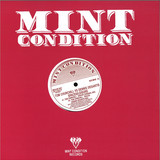
Tom Churchill VS. Dennis DeSantis ‎ - Spaces/Leisure

Mint Condition - A record label focused on excavating the outer fringes of classic House and Techno. Unreleased mixes, classics and overlooked gems mined from the last 20+ of contemporary dance music are the order of the day. From Chicago, Detroit and New York to London and beyond, Mint Condition have got their expert digging hats on to bring you exclusive heat and those rarer than rare jams that have been on your wants list for years! Dig in....

Back to 2002, the beginning of the new millennium. Tom Churchill's Headspace Recordings label had already been making an impact on the deeper strains of techno emanating from within the UK. With releases from detroit's Sean Deason, CiM, Hanna, Vince Watson and many more, Headspace was already a 'must check' label within record buying and DJ circles. This stellar split EP with NYC's Dennis DeSantis saw the pair remix each others tracks, both turning in very different, but equally complimentary sonic excursions. Churchill's 'Spaces' is surefire deep-space techno boogie of the highest order, swinging and funky and melodic in equal measure. The DeSantis remix of 'Spaces' is also a total winner, a stripped back exercise in expert minimalism, full of feeling and a perfect partner to the original mix. On the flip is Dennis DeSantis' 'Leisure', a sprawling and laconic broken house jam. Brilliant and teasing melodic synth motifs sit atop nagging acidic basslines and space. Again, the remix follows the original and Tom Churchill dials the track down into chasm deep shuffling drums and basslines and dubbed out FX. It's hard to think of an EP where two artists can remix each others music in such a compelling way, and for it to work so well. This is truly an excellent release and it's a real pleasure to see these tracks back on the streets. Sublime, and essential.

'Spaces / Leisure' has been legitimately re-released with the full involvement of Headspace Recordings for 2020 and remastered by London's Curve Pusher from the original sources especially for Mint Condition. 100% legit, licensed and released. Dug, remastered, repackaged and brought to you by the caring folks at your favourite reissue label - Mint Condition!

нет на складе

Закажите сейчас, и мы закажем товар для вас у нашего поставщика.


Последний логин: 7 дн. назад
Greg - Odyssey (Original Amiga Demoscene Soundtrack)

WRWTFWW Records is thrilled to announce the first ever release of the soundtrack for the sci-fi Amiga demoscene wonder Odyssey by the Alcatraz group, with music from Greg - and what is possibly the first ever vinyl release for an Amiga demoscene soundtrack, if not the first ever vinyl release for a demoscene soundtrack whatsoever!

The special limited edition vinyl features the complete soundtrack of the demo sourced from the original masters as well as printed innersleeves, a 24x24 inch double-sided poster with extensive liner notes on the fascinating history of the Amiga demoscene on one side and a floppy disk print on the other, and a WRWTFWW sticker sheet. Odyssey is also available in digital format.

Wikipedia says: The demoscene is an international computer art subculture focused on producing demos: self-contained, sometimes extremely small, computer programs that produce audiovisual presentations. The purpose of a demo is to show off programming, visual art, and musical skills. Demos and other demoscene productions (graphics, music, videos, games) are shared at festivals known as demoparties, voted on by those who attend and released online.

In the demoscene galaxy, one era was particularly exciting: the Amiga years during which the demos were created for the Commodore Amiga home computer - a time of intense rivalry between programmers, graphics artists, and computer musicians, testing the limits of the (fixed) Amiga hardware.

The Odyssey demo was one of the largest productions ever released by an Amiga group, a real sci-fi movie on five floppy disks made with 3D sequences. It was presented at a demoscene party in 1991 and won the competition, setting a new standard for Amiga demo possibilities.

One of the highlights of the demo was the funky cosmic music from Swiss composer Greg, a true space opera, the 90s galactic soundscape you didn’t know was missing from your life! And so here it is, available for the first time, 10 tracks of pure video game music joy, adventurous computer pop, pixelated techno-trance, Star Wars gone floppy disk, and interstellar beats for days.

нет на складе

Закажите сейчас, и мы закажем товар для вас у нашего поставщика.


Последний логин: 3 г. назад
San - Under the Scope

San

Under the Scope

12inchRUA012
Rua Sound
30.01.2023

The alis of a UK techno producer, San returns to Rua Sound with another statement of intent - "no other junglist delivers this power".

San was born out of the clear necessity for jungle futurism, breakbeat terrorism and hardcore sub bass gangsterism.

The illusive producer's second record on the label is a masterclass in dark jungle choppage dripping with futurism and dread. Fans of Source Direct take note.

нет на складе

Закажите сейчас, и мы закажем товар для вас у нашего поставщика.


Последний логин: 3 г. назад
Nighttime - Keeper Is The Heart

Nighttime

Keeper Is The Heart

12inchBING177LP
Ba Da Bing
27.01.2023

Eva Louise Goodman’s Nighttime project locates itself on a musical tree planted on the British Isles, perched atop the branch of folk leaning into sixties rock. Her upstate New York environs don’t stray far from that image. With tempered percussion, floating mellotron, and singing that evokes Bleecker & MacDougal on a fervent Saturday afternoon, her new album Keeper Is The Heart reaches deep into the essence of musicians such as Vashti Bunyan, Sibylle Baier and Pentangle, breaking down the decades into a sound thoroughly and bizarrely modern.

Through her years performing with Mutual Benefit, Goodman fell in love with life on the road and the collaborative energy of a band. In this third Nighttime album, she channels these experiences into her own music. The creative journey from writing to recording to mixing drove her deeper into a sense of self while expanding her sound. In the process, she put aside lo-fi origins and challenged herself to achieve the same intimacy with a bigger production.

Like most paths of self-discovery, the journey started with displacement. In October 2019, Goodman set out to record the album on her own, while cat-sitting at a friend’s empty Brooklyn apartment. Rather than recording, she was drawn to the overgrown garden, where she spent her days listening to music and reading old journals. Charlie Megira, The Incredible String Band and Roy Montgomery invoked the spirit of the album, as she realized that a new, more collaborative approach would be necessary to bring the songs to life.

In March 2021, after a pandemic year immersed in sound experimentation and writing, she entered the upstate New York studio of recording engineer Rick Spataro (Florist). Together, Spataro and Goodman dove into creating the album, recording one song a day, letting the spark and excitement of spontaneity be their guide. “I've always been fascinated with ‘automatic’ arts,” Goodman says, “where things are created intuitively and without premeditation, from the subconscious.” In this light, they worked with abandon–pushing through the heaviness of songs written years earlier with the same energy as songs which were not yet fully developed. Taking chances, improvising, they sought to strip away pretense, and elude perfectionism at all cost.

Among their experiments, the duo manipulated tape speeds–slowing or speeding up different instrument tracks, imbuing passages with altered perspectives. Improvisation was the key in track five, ‘The Way,’ a song about “the magical act of carving out a path through life, amidst all possibility.” After a long day of recording, the song was feeling heavy and uninspired. As night fell, Spataro picked up the Stratocaster and, in one take, laid down a rolling, roiling guitar line that defined the track.

This spirit of surrender weaves through the album. “Break free from time, and sink in the pool of the mind,” begins ‘Garden of Delight’, an energetic highlight, propelled by 60’s-era organ and Jefferson Airplane-esque vocals. The song was accidentally deleted after the first day of recording. By luck or fate, the one surviving file captured the song’s loose and free-wheeling essence. Inspired, Goodman encouraged her circle of collaborators to work similarly: “I gave everyone trust and total freedom to contribute as they felt called to, encouraging an intuitive approach of simply improvising, playing through the song a few times and then sending over the results.” Synth, cello, violin, saxophone and flute all appear, but often in unconventional ways.

Keeper Is the Heart reflects Goodman’s process towards greater creative freedom. The first words she sings: “Lift the veil of all of this hate/To see the fear at its base.” Her last lines: “We’ll follow the fates across the great expanse of time/To the source of the light within our mind.” In between is a work of art awash in personal awakenings that revel in the freedom of intuition, the lifting of veils, and the beauty of transformation. As Goodman states, “What is it you find when you look inward to see beyond, past your fears, to your heart's true desires?”

Сделать предзаказ27.01.2023

он должен быть опубликован на 27.01.2023

Daniel Terugg - Sphæra

Daniel Terugg

Sphæra

12inchREGRM028
Recollection GRM
26.01.2023

While the theme of the four elements has been a constant source of inspiration in the arts, its setting to music using electroacoustic techniques seems highly auspicious, since the notion of matter and its transformation is consubstantial with the concrete approach. In »Sphæra«, Daniel Teruggi precisely addresses this question, transcending matter with the help of novel digital audio techniques so as to draw out forms, trajectories, layers, and musical objects, all of which result from the merging or sublimation of primordial sounds. Indeed, this is where Daniel Teruggi’s music and compositional approach stand out: by engaging sounds, with strength, will and inspiration, in a close encounter with energies, whether tectonic or electrical. Such collisions, such metamorphoses, are then appeased in the whole space of the composition, a fascinating landscape, the final destination of all transmutations. (François Bonnet, Paris, 2021)

"Between 1984 and 1989, my acousmatic work was focused on processing and merging the four fundamental substances. Each 'element' gradually became articulated with the others, thus crystallizing my subjective perception of their materiality. Over the years, helped by the enthusiasm of a Greek friend who propelled me into the Socratic universe, what started out as an exploratory path has become a circular, spherical unity, in which each occurrence simultaneously belongs to one of the four substances as well as the whole.

These four sections, of uneven durations, embody the different resonances of each 'element' upon my imagination. The movements are ordered compositionally and range from the intangibility of the air to the extreme density of the earth.
In Eterea, the dual nature of air, a space for the dissemination of sounds and an environment for mobile masses, shaped the work and the development of its forms. Whether it be the vast expanse of particles as organised movement or the displacement of sources in our three-dimensional perception, ethereal air fills the space and drives the immaterial motions and gestures.

Aquatica locates the materiality of water in relation to its amazing extremes: from the drop to the ocean, an extensive journey unfolds through the various phases of the reinvented liquid. Still waters, deadly waters, raging waters follow one another, leading to the aerial fusion of a primordial equilibrium eventually retrieved.

Then comes Focolaria and the unsteady fires, the elusive and wild will-o’-the- wisps that open and adorn the gates leading to the depths of the earth.

The land of Terra is devoid of atmosphere, a land of matters before the advent of life. The sounds of the original matter merge and evolve into purer forms. The motions trigger progressions towards new equilibriums of forces, the ultimate fusion, the very last attempt, needed for the emergence of life.

The sphere is now complete, the world ready for creation..." (Daniel Teruggi)

нет на складе

Закажите сейчас, и мы закажем товар для вас у нашего поставщика.


Последний логин: 3 г. назад
Tomoya Ohtani - Sonic Frontiers: The Music of Starfall Islands OST (2x12")

Released in partnership with SEGA of Japan and composer Tomoya Ohtani, The Music of Starfall Islands is a collection of beautiful instrumental and classical-inspired tracks which are used as the background music for the various islands in Sonic Frontiers. The music for each island is presented as a suite, containing several movements that layer upon one another and build up to a climax, each with its own distinctive tone and feel, much like the islands themselves, which range from green meadows, to arid deserts, volcanoes and beyond. The music, composed solely by Tomoya Ohtani, is often stripped down, melancholic, and unexpectedly experimental, featuring an array of unusual sound sources (including Iranian percussion, Celtic vocal samples and Armenian folk instruments). In other moments, it is often rhythmic and emotive, with the addition of subtle electronics and the grandiose strings of The Nashville Scoring Orchestra.

While this release is by no means the complete soundtrack to Sonic Frontiers, we are thrilled to be able to present these beautiful and intriguing tracks as a collection on their own. With its downbeat tone and new compositional approaches, this music is unlike any Sonic soundtrack that has come before and may well subvert the expectations of some long-term fans, but should also surprise and delight audiences both new and old.

As Tomoya Ohtani explains in his liner notes for this release: “I wanted to create an atmosphere for each song that, despite the sadness it carries, also has a glimmer of hope. I do not believe there are many other pieces of Sonic game music that focus so much on the atmosphere as the tracks on Sonic Frontiers do.”

Сделать предзаказ20.01.2023

он должен быть опубликован на 20.01.2023

AMÉDÉE Ô SURIAM - TENSION HOT-SHOT

Reissue of Amédée Ô Suriam's banger 'Hot Shot' in editted form, comes with two very dope remixes by 'Manoo'.. Sourced from the master tapes and properly remastered!

Amédée Ô Suriam was one of those flamboyant souls touched by grace. Percussionist, author, composer, singer, stylist, sculptor, the Martiniquan put his divine inspiration at the service of a hybrid and visionary creation. His sudden death in 1992, while in his thirties, left behind him "Tension Hot-Shot", his only solo release from 1989. A resolutely avant-garde track, whose fusion of traditional African and Caribbean music with the beginnings of the house movement in Europe is underlined by the subtitle "Afro House" on the A side of the EP, a term that was barely used until then. It is this mysteriously precursory track that Chineurs de House has found, remastered and reissued today, finally shedding light on the fascinating work of an artist who had fallen into oblivion.

Vocals (Tension Hot-Shot) : M.C. Kann, Amédée Ô Suriam & Marie-José FA
Chorus-Keyboard (Tension Hot-Shot) : Luther Pérau
Chorus (Tension Hot-Shot) : Prosper St-Aimé, Rémi Laposte
Synth-Bass (Tension Hot-Shot) : Fred Montabord
Saxophone (Tension Hot-Shot) : Pietro Lacirignola
Structure (Tension Hot-Shot) : Allan Dee, J.C. Broche

Mastering : Perception Mastering
Remix (Tension Hot-Shot) : Manoo
Remix (Laissez Yo) : Jonquera
Remix (Roulé) : Manoo

Written & Composed by Amédée O Suriam

Recto picture : Rail Production
Verso picture : Bruno Resdedant
Graphic Design : Patrick Richard re-arranged by Clara Carpentier
Stylists : Joseph Zim & Amadéus

Special Thanks
Joëlle Suriam, Baptiste Heiles, Gildas Lointier, Aurélien Lévêque

нет на складе

Закажите сейчас, и мы закажем товар для вас у нашего поставщика.


Последний логин: 4 мес. назад
Muslimgauze - Turn On Arabic American Radio 2x12"

The relationship between Bryn Jones’ music as Muslimgauze and the track/abum titles he would provide (sometimes right on the tapes he would send in for release, but often determined later, sometimes even giving two different pieces months apart the same title, accidentally or not) has always been a little mysterious. Jones himself can no longer be asked, and as we continue to investigate the swathes of material he provided, you hit sources like the DAT or DATs that make up the contents of the new double LP »Turn On Arab American Radio«. Nine tracks, the first LP/four tracks titled »Turn On Arabic American Radio,« and the other LP/five tracks labelled only »Arabic American Radio.« None of them sound particularly radio-esque, although given the simultaneous vastness and ornate focus of Jones’ Muslimgauze work that gap between name and sound is far from atypical.

Instead here the de rigeur percussion loops that underpin this particular set of tracks, while occasionally clipping into the fierce distortion that Jones either loved to use or couldn’t get away from, steer away from both the more consistent application of that distortion as well as the Middle Eastern and Asian influences he often used. It’d be a stretch to call anything here basic boom-bap production but they come closer to it than a lot of Muslimgauze production. And while those loops are, as always prominent, they’re not actually the focus; settling into steady vamps as structures for Jones to pursue an extended and often more gentle exploration of the other sample sources he has here. There are stringed instruments, the sound of water, but most prominently or strikingly the human voice. Nothing is in English but tone and the occasional word ('familia', 'passport') still provide guides. There are ululations, snatches of melody; but most often speech, dialogue, often tense and harried sounding. Is this what Jones was thinking of or referring to with his Arabic American Radio?

As with so many other questions about Muslimgauze, we’ll never know the answer to that one. (Most pertinently in this case we might wonder who appears here, and what the context of these recordings is. But Jones never provided that with his submissions.) Here, even though those inexorable loops pound on, indefatigable, that emphasis on some of the people Jones chooses lends a measured gentleness to much of »Turn On Arabic American Radio«, at least within the context of his body of work. The last thing you hear at the end of the second LP is one last question from one of the many speakers on this peculiar Muslimgauze radio, echoed away into infinity. We may never have answers, but those questions continue to resonate.

нет на складе

Закажите сейчас, и мы закажем товар для вас у нашего поставщика.


Последний логин: 2 г. назад
Mue - Les Vasières

Mue

Les Vasières

12inchHTRA029
Halocline Trance
23.12.2022

Gold Vinyl

No binaries, no simple opposition. Either/or is subsumed by infinite relations and dizzying possibilities, by the perpetual crest of and/and. Freedom is the key to bring about all complex and incongruous multiplicities. Embodied, embedded, relational freedom is the key.
Mue is a duo based in Tiohtià:ke/Montréal composed of Catherine Debard and Léon Lo. Formed in the Spring of 2020, the electronic musical project merges two distinct practices and explores the way they interact with each other. Drawing on early-IDM, illbient, minimalism, and natural phenomena, the resulting real-time hardware improvisations weave asymmetric patterns, create spaces, and digest various sounds.

Recorded in 2020, Les vasières explores unsynchronized hardware electronic impro-visations where individual sonic elements come to life by creating new and complex layers and organizational logics — melodically and rhythmically modulating each other.
The French album title translates to “The mudflats.” Sounds from disparate sources form an aural silt that is brought to life by waxing and waning cycles, each improvi-sation presenting a new, different mudflat scenario.
Mue asked visual artist Katherine Melançon to create the album’s artwork, which was the artist’s first dive into compost as source material. The resulting image—an otherworldly organic smear, both intimate and alien — was incorporated into graphic designer Haley Parker’s montage, hard frames recalling the flatbed scanner used by Melançon, and branch-like typography nodding to the organic concerns of all the artists involved.

нет на складе

Закажите сейчас, и мы закажем товар для вас у нашего поставщика.


Последний логин: 3 г. назад
Carole King - Music

Released on the heels of her breakthrough album Tapestry, Carole King's Music is every bit the equal of its more famous predecessor: a No. 1 smash that features impeccable songwriting, beautiful melodies, and extraordinary piano playing. In short, everything that's made King an institution. After of years of being overshadowed, this 1971 singer-songwriter classic has been given the audiophile treatment it's long deserved.

Sourced from the original master tapes and pressed on dead-quiet vinyl at RTI, Mobile Fidelity's numbered-edition 180g LP of King's second solo masterpiece is rife with intimacy, transparency, soulfulness, and you-are-there sound. Never before remastered, Music seems like a brand-new album as King's familiar voice, intelligent arrangements, and ace support band presented on a deep, three-dimensional soundstage. Your appreciation for and understanding of the depth of King's inspirational lyrics and performances will doubtlessly increase — this reissue brings you that much closer.

Accompanied by percussionist Bobbye Hall, drummer Russ Kinkel, guitarist/vocalist James Taylor, and a multitude of other professional wind musicians, King delves further into R&B and jazz-derived pop. Warm and cohesive, songs echo with simplicity and honesty. And as is typical of much of King's work, several of tunes here were later covered by other artists, including "It's Going To Take Some Time" (the Carpenters). Yet the originals trump the later renditions, and King's rendition of the standard "Some Kind of Wonderful" stands among the best ever recorded.

With Taylor lending more of a hand on Music than he does on Tapestry, King expands her reach on the piano and peppers the songs with graceful touches of saxophone, flute, pedal-steel guitar, and woodwinds. Ballads sway ("Surely"), gospel raises spirits ("Brighter"), and backup vocals float amid pop arrangements like clouds ("Song of Long Ago"). The most irresistible aspect? King's voice, infused with fondness, concern, joy, and a quiet power that parallels the delicacy and deliberate nature that define Music.

Mobile Fidelity's 180g LP is free of the limiting artifacts that have helped keep this record in the dark for the better part of the 80s, 90s, and early 2000s. Acoustic guitars, subtle brass elements, and soft percussion contribute to the enjoyment of the songs, and King's voice —pleasant, assuring, emotional — comes through with incredible clarity and inflection. The brilliance of Lou Adler's original production is restored to its full glory.

Aptly named, this companion to Tapestry is an aural and sonic delight.

Сделать предзаказ16.12.2022

он должен быть опубликован на 16.12.2022

Gino - Crutches

Gino

Crutches

12inchCBFR004
Choose Better Friends
14.12.2022

For whatever reason, the new Detroit label Choose Better Friends is dropping three brand-new and red-hot EPs all at the same time. We're fine with that because this trio of 12"s is quality US house direct from the source. Gino is behind this one and serves up four tunes for heady dance floors. There is a sense of intrigue to the scurrying toms and muted chords of 'Rawhide'. They unfurl over pinging kicks and clouds of sub-bass to great effect. 'Gitteshouse' is more romantic, with jazzy motifs drifting up top over a slick deep house beat that pings back and forth, and 'Truffaut' then picks up the pace for an edgy mix of unique synth sounds and chunky drum funk. 'Frontandback' gets raw and to close down with rock-solid kicks set to rattle walls.

нет на складе

Закажите сейчас, и мы закажем товар для вас у нашего поставщика.


Последний логин: 3 г. назад
Bohren & Der Club Of Gore - Sunset Mission LP 2x12"

"Meat. The story needs meat. (And blood ... coagulated blood (Gore)). The substance we are seeking here lies beyond the bare bones of fact, thewhen and the where (founded in 1988, Mülheim an der Ruhr) or personneland instruments (a trio since 2016, built around keyboards, saxophone, bass & drums). The story is more than the sum of its facts. Mysteries may very well lurk here or there along the way. What keeps the final two foundermembers going after all this time Do Morten Gass and Robin Rodenberg have skeletons locked in their closets How dearly we would we love to know the answer to that one, alas the most beautiful puzzles tend to remain unsolved.Including their debut Gore Motel' (1994), BOHREN & DER CLUB OF GORE have amassed an impressive eight longplayers. Four album titles allude to the night - their debut was followed by Midnight Radio' (1995), Sunset Mission' (2000), and Black Earth' (2002), whilst the most recent instalment carried the name Piano Nights' (2014). The nocturnal quartet was punctuated by Geisterfaust' (2005), Dolores' (2008) and a mini-album entitled Beileid' (2011), adding rather eerie overtones to the after hours ambience. The BOHREN & DER CLUB OF GORE legend has grown stronger both at home and abroad with every record they have released and every show they have played. Strange as it may seem, there is a uniform consistency to their reception. Whatever the band does, critiques are unfailingly positive, yet repetitious. References, links and associations recur almost word for word. Consider the arrival of Christoph Clöser in 1997, by way of illustration. When he joined the group, his saxophone replaced the departing Reiner Henseleit's guitar as one of the defining instruments in the band. This was arguably the sharpest break in their sound to this day and a significant marker in terms of the band's reverence for Dutch instrumentalists GORE (the clue is in the name), whose repetitive riffs paved the way for how the guitar would be deployed in a post-everything future. Nevertheless, this fissure in the BOHREN continuum has barely merits a mention in the greater scheme of things. Similarly conspicious by their absence in the BOHREN chronicles are the numerous instruments which they added to the mix - vibraphone, organ, tuba, bass trombone to name just a few. The introduction of choirs at least had a clear visual impact. Since Thorsten Benning left at the end of 2015, the band has continued as a trio, sharing shifts on the drums (although they have equipped themselves with mechanical brushes). A decrease in personnel was conversely accompanied by quantum leaps forward in the group's musical development - or more precisely, minor adjustments triggered major effects. Such changes may not get any easier to spot in the future, such is the intensity of internal imagery sparked by the music, a maelstrom of distractions so powerful that its promises are too sweet and too dangerous in equal measure. The music of BOHREN & DER CLUB OF GORE opens up remarkable rooms of association, from a warm burrow to a pristine secret lodge, from a
dusky woodland tavern to a smoky quayside dive. Individual and collective floods of images rush forth irresistibly. Loneliness is not at all problematic: empty multi-storey car parks, nighttime drives, remote bridges to nowhere. All in your mind. This is the temptation, a sweet, guilt-free addiction. It's all in your mind - and only there. These sinister crackling songs are invitations to secrete oneself in darkness. With track titles such as 'Maximum Black', 'Zombies Never Die' or 'Dandys Lungern Durch Die Nacht', the mind wanders inexorably into filmic spaces.
Echoing the masters of midnight cinema, stories evolve all by themselves. As the American Film Noir Foundation observed so smartly: 'the vivid co-mingling of lost innocence, doomed romanticism, hard-edged cynicism, desperate desire, and shadowy sexuality.' Their definition of Film Noir serves just as well as an appraisal of the group, 'Bohren For Beginners'.
Which says it all really, doesn't it A final word of warning! Sources close to the band describe the double CD
released in October 2016 as a gateway drug to the Bohren universe. Enter at your own risk, some have never found their way out again."(by Lars Brinkmann)

нет на складе

Закажите сейчас, и мы закажем товар для вас у нашего поставщика.


Последний логин: 3 г. назад
w1b0 - When Humans Ruled The Earth LP 2x12"

Debut album by Dutch producer w1b0, who passed away in August, to be released in November on U-TRAX.

Wibo Lammerts' sudden death on August 15thshocked the worldwide electro community, and also left the record label, that had been working on the debut album with the artist known as w1b0 for the past two years, dumbfounded and in grief.

Wibo had jokingly always called his upcoming debut album 'his legacy', which now sadly has become a painful truth. With the support of Wibo's family, U-TRAX is now doing the only thing that doesn't feel totally wrong: proceed as planned, and release 'When Humans Ruled The Earth' on November 11.

W1b0 made quite a name for himself with heavy electro tracks that he released on labels like Bass Agenda, Hilltown Disco and Discos Antónicos. Standing at 202 meters, and combined with a cheerful character, most people remember him as the gentle giant of electro.
For this album, Wibo wanted to steer away from the dark and heavy electro he mostly made until then. The idea of having a platform to create delicate electronic music in different styles, and make it a showcase of his versatility, was very appealing to him. And that is where he and U-TRAX found each other.

The full-length album (over 75 minutes on cd and digital) comes after 'The Pilex Program EP', released in October, that featured a remix by Detroit's Ectomorph of 'Pilex Driver' and saw 'Program Yourself To Feel' remixed by a well-known Dutch producer that recently created the new 'techno alias' Human Form.
As usual with U-TRAX, the album comes in three different editions, with the 11-track double vinyl version containing the Ectomorph and Human Form remixes. The CD and digital version boast original versions only, plus four additional tracks: 'Alternate Reality Interface', 'Mixed Matter Fluctator', 'Synthetic', and 'In There'. The cassette version more or less has the same track list as the CD/digi version, but has both aforementioned remixes and a bonus track in the incredibly hypnotizing 'I Wanted You', a track that unfortunately couldn't be on the CD and vinyl versions.

Buyers of the physical releases get treated on superior quality products, another trademark of U-TRAX. The vinyl edition boasts over one hour of music, on two 180 grams, green vinyl discs, in a black & white & neon green gatefold sleeve. The eye-catching artwork is created by Utrecht artist Leffe Goldstein, known amongst others for his psychedelic beer can designs for Utrecht brewery Maximus. Wibo, being the beer lover he was, had zero doubts about having Leffe Goldstein do the cover for his album. The CD has a total playing time of 75 minutes and comes in a beautiful 6-panel digipack, while the cassette will have full-color on-body print and comes in a plastic-free Maltese cross fold-up sleeve.

Buyers of the physical releases get treated on superior quality products, another trademark of U-TRAX. The vinyl edition boasts over one hour of music, on two 180 grams, green vinyl discs, in a black & white & neon green gatefold sleeve. The eye-catching artwork is created by Utrecht artist Leffe Goldstein, known amongst others for his psychedelic beer can designs for Utrecht brewery Maximus. Wibo, being the beer lover he was, had zero doubts about having Leffe Goldstein do the cover for his album. The CD has a total playing time of 75 minutes and comes in a beautiful 6-panel digipack, while the cassette will have full-color on-body print and comes in a plastic-free Maltese cross fold-up sleeve.

Opener 'Acid Whip' is one of the oldest compositions on this album, in which a dark 303 bassline hums over layers of spacey strings. Wibo named it after the legendary Whip It party in Amsterdam's De Melkweg. 'Alternate Reality Interface' then presents bouncy rhythms toying around with all sorts of analog (bass) synthesizers, before we go really deep with the epic ambient techno track 'Wandering Souls'.
Then things get a little lighter spirited: 'Mixed Matter Fluctator' is an electro track that builds on sounds created by Matt Buggins. It has very strong Detroit influences, the city Wibo loved so much and that he made a pilgrimage to with a group of friends that called themselves 'The Techno Tourists'. The tempo goes up a notch in 'Program Yourself To Feel', that halfway opens up in wide science fiction strings that evoke memories of Star Wars, the movie series that Wibo was a great fan of, and that was the source of many of his tracks' names. The Human Form remix opens the vinyl edition of this album and is a downright belter of a track.

Next is a somewhat experimental intermezzo named 'Synthetic'. Erratic beats and pounding bassdrums get accompanied by very subtle eerie-sounding strings, before melancholic synthesizers and piano chords take over. This is an excellent prelude to the epic 'Hologram Computing', a track that is one of our favorites. It slowly and softly builds and builds, before a pounding bassdrum breaks loose and a hypnotic arpeggio takes you to higher planes.
Not ready to letting the listener relax, w1bo then serves 'Beilstein Reference', which again presents his trademark cocktail of down-to-earth electro rhythms and catchy melodies, covered in all sort of little sounds and noises, giving the song a lot of energy. What follows is 'Hit me', a track loosely based on a song by Dutch indie rock band Mr. Joe Abe. Wibo met the band's singer on a camping site while being on holidays and the two decided Wibo should do a remix of one of their songs. Nothing was left of the original except the vocals, and the result is a remarkable cheerful, poppy electro song.

'Anticipated Input' is one of the more recent tracks Wibo made for this album, combining electro, acid and, yes: epic strings. But not all is peace and quiet on this album, as 'Pilex Driver' shows. This is w1b0 going experimental in a danceable fashion: Industrial sounds make the track sound like we're passing a construction site that is playing loud electro music. On the vinyl version of this album, Ectomorph totally decomposed the original and made it into a mysterious, almost subdued, and totally brilliant electro track that sees a main role for the retro Roland CR drum machines sounds.

TFHats, Wibo's fellow member of the Transhumanism collective, added lyrics to 'Cartesian Coordinates'. His vocals add a pleasant New Wave flavor to this song, that has breaks that remarkably reminds one of Nirvana's 'Smells Like Teen Spirit'. What follows is the most personal track on this album. 'Fornan' is a song that Wibo made for his wife Nanette, and was added as the last piece of the puzzle that creating an album is. The warm Detroit techno atmosphere in this electro song couldn't be a more beautiful tribute to his love, and mother of their two young boys.
The album then takes a surprising detour through a 1980s landscape with 'In There', that features the Joy Division-esque vocals of another one of Wibo's friends, indicated only as Vincent. The super slow and gloomy track is a treat for anyone that loved the darker side of New Wave. The album has a worthy closer in the sensitive, yet playful 'Schlegel Diagram'.


h 08: Hit Me (w1b0's Slugfest Assault Dub) feat. Mr Joe Abe

нет на складе

Закажите сейчас, и мы закажем товар для вас у нашего поставщика.


Последний логин: 3 г. назад
David Dorad - Murmel 2x12"

David Dorad

Murmel 2x12"

2x12inchKIOSKID013
KIOSK I.D
02.12.2022

If you've been in the club scene for many years like David Dorad, you will one day face the big, essential, serious questions that each of us will ask ourselves sooner or later:

Are marmots pack animals?
Can marmots sign language?
Do marmots plan their lives according to European or Chinese zodiac signs?
Do marmots need a special passport, after all they don't have a thumb to turn the pages?
What happens when a marmot eats Coke and Mentos at the same time?

And with all those questions whistling, hissing and muttering in his head, David grabbed piano, baton and BioBassline to crochet his new EP.
This is called "Marble" and offers 6 different approaches to solve these big questions.
As a source of ideas, he has competent partners at his side in Roman Flügel, Mira, Christopher Schwarzwälder, Canson and Sascha Cawa.


A1 -
Murmeli - original
The marmot tribe awakens. Get up to brush your teeth. Gets your toes tapping. Makes you snap your fingers. Dare to roll your hips. Later rhythmically to turn. To look elegant at the same time. Eyes closed - eyes open.
Murmeli, the regular leader, sits at the piano.
Everyone is dancing, toothpaste in the corners of their mouths and a smile that takes the toothpaste by the hand.
A normal morning in marmot houses.

B1 -
Murmeli - Mira & Christoph Schwarzwald RMX
Mira and Christoph Schwarzwalder take over from Murmeli. They vary, combine and subtract. The first marmots raise their thumbless fists in the air - showing their passports, ready to take off.

B2 -
Murmeli - Canson RMX
Canson also sits next to Murmeli. Caress the theme, tickle the groove.
Murmeli has the best ideas early on: "Boy, let's try Mentos with Cola, we'll definitely take off."
Canon is in!


C1 -
Murmelot - Original
The sun goes down in Murmelhausen too. Then Murmelot is ready. Gives his advanced Pilates class, which the whole tribe takes. The village wants to remain mobile.
Murmelot's motto is "Why not stretch while walking?"
And so shall it be. He sets the rhythm on his wooden Fairtrade 303 and our furry friends shave shaky and obscene messages down each other's backs while impatiently hopping for the drop.

D1 -
Murmelot - Roman Flügel Remix
Roman Flügel and Murmelot are old buddies. Struck while carving the 303.
Roman happily takes over the Pilates class, the dancing crowd. Enchanted until the razor's batteries are empty and only dancing remains, only dancing is important.

D2 -
Murmelot - Sascha Cawa RMX
Sascha Cawa takes his trunk by the hand, wants to motivate her again shortly before the second sunset of the day. Whispers little obscene Pilates positions in their ears. That motivates. Murmelot switched from piano to percussion.
The marmots' sweat feeds the golden orchids in the clearing for the next six months.

нет на складе

Закажите сейчас, и мы закажем товар для вас у нашего поставщика.


Последний логин: 12 мес. назад
Coralie - Barney's Maze LP

Coralie

Barney's Maze LP

12inchQUOTH1
Quoth
30.11.2022

Quoth is the brainchild of Alex Egan (Utter) and Mike Smaczylo (Half Edge). Singular in focus, this newly minted (sub)label harnesses the pair’s diverse and expansive tastes in weird and hallucinatory sonics, aimed squarely at the dancefloor. We're very proud to present ‘Barney’s Maze’, a four-track EP of twisted techno, drawing influence from IDM, bass, and older strains of textural music.

‘Barney’s Maze’ is the work of Nottingham producer Coralie (aka Steven Randall). It fell on our ears strangely dislocated from time and place. Its sound world is utterly modern, technical and weird; mangled sonics slip deftly out of reach of easy categorisation. But the spirits evoked feel ancient, spectral resonances of a psychedelic continuum older than memory.

Haunting voices predominate: human, not too human, but captured and distorted by technology, cut from any source of context and voided of meaning. The sonic spaces conjured here are cavernous; great cathedral-like structures resonating with the collapsed centuries of digital time. Broken techno rhythms roll echoing in an artificial void with synthetic voices, raised to synthetic heavens. Strains of the sacred glimmer within a form that’s entirely profane, the most human of constructs.

It’s a stunning EP - moody, atmospheric and gorgeous, each track a world unto itself, but fully primed for the dance. We recommend it wholeheartedly.

Coralie tells us it’s dedicated to his dog.

Available on hand stamped vinyl, limited to 200 copies (including insert), and digital formats. Mastered by Beau Thomas at Ten Eight Seven.

нет на складе

Закажите сейчас, и мы закажем товар для вас у нашего поставщика.


Последний логин: 3 г. назад
Felix Laband - The Soft White Hand LP (2x12")

Felix Laband’s The Soft White Hand is the masterwork of an artist who expresses himself through musical and artistic collage acting together to reinterpret his sources and to express significant elements of his own personal story.

Released by Munich-based Compost Records, the 14-track album is Laband’s first full-length offering since the critically acclaimed Deaf Safari in 2015. It is heralded by the single “Derek and Me”, and is being pressed on vinyl for distribution globally.

In The Soft White Hand Laband works with source materials that will be familiar to those who know his previous four records – Thin Shoes in June (2001), 4/4 Down the Stairs (2002), Dark Days Exit (2005) and especially Deaf Safari which reached deep into the South Africa scene and its political culture to inspire its vocal and music sampling. However, the disengagement he felt from his homeland during his latest album’s creation – an abiding sense of untethered-ness to place and space, exquisitely rendered in tracks like “Death of a Migrant” – is perceptible in Laband’s desire to illuminate instead aspects of his own life.

“For this album, my source material became almost autobiographical as opposed to African statements I’ve worked with previously,” says the artist. “I have sampled a lot from documentaries from the 80s crack epidemic in impoverished African American communities and believe my work speaks unapologetically for the lost and marginalised, for those who are the forgotten casualties of the war on drugs. In the past, I have had my issues with substance abuse, and I know first-hand about the nightmares and fears, what it feels like to be isolated and abandoned.”

Few artists have managed to air these intimate aspects of their life so luminously as Laband does in tracks like “5 Seconds Ago”, “They Call Me Shorty” and in the strange and meditative “Dreams of Loneliness”. “I’ve been building this weird, autobiographical story using other people talking. It’s kind of humorous but it is also sad and beautiful,” says Laband.

Yet, as in all of Laband’s recorded output, the delineations between emotions are never starkly drawn and The Soft White Hand is also shot through with beauty. Nature appears in recordings made in his garden in the intimate early morning hours, whether as in the calls of the Hadada Ibis and other birdsong in “Prelude” or of the vertical-tail-cocking bird in “Derek and Me”. The last is a wonderful track with Derek Gripper, the South African experimental classical guitarist of international renown, whose 2020 song “Fanta and Felix” imagines a meeting between Fanta Sacko and Laband.

Laband’s eloquence in reinterpreting classical composers such as Beethoven in “We Know Major Tom’s a Junkie” is another thrilling aspect of the new record. “I’ve been properly exploring classical music on this album,” explains Laband, “taking melodies from classical compositions and reinterpreting them”. A fresh quality comes to his work through this sonic adventuring: the tender manipulation of the mundaneness of the computer’s AI voice to reimagine and reinvent iconic lyrics and melodies in strange and unexpected configurations.

The Soft White Hand is Laband’s most cohesive body of work to date. Yet it remains, in its sheer artistic scope, impossible to describe fully. Darkness abuts the gossamer light. A song that summons the sunrise and all the hope of a new day could also be about the final dipping down of the sun that portends a troubled night ahead. Interludes are invitations to expand outwards or shift inwards. Mistakes and “weird fuckups” in the sound are cherished as convincing statements against what Laband calls the “grossness” of perfect sound in modern music.

For this world-leading electronic artist, the boundaries are unfixed. He is inspired by the German Dada artist, Hannah Höch, who memorably declared: “I wish to blur the firm boundaries which we self-certain people tend to delineate around all we can achieve.” His music consequently reflects a primal artistic impulse that is also visible in Laband’s considerable visual art output as seen recently in several solo exhibitions such as that held in the No End Gallery in Johannesburg in 2019 and in the works he produced during his 2018 Nirox Foundation Artists Residency. “My music is always about collage, as is my art,’’ he affirms. “Everything I do is collage. It is a medium I find very interesting because you are taking history and distorting it and changing its meaning and turning it upside down and back to front.” In her book Recollections of My Non-Existence, Rebecca Solnit calls collage “literally a border art”; it is “an art of what happens when two things confront each other or spill onto each other”.

With The Soft White Hand, Laband is confirming his singular ability to achieve this in both art and music, melting the divisions between the two creative disciplines until they become one. He is also affirming his belief that an album of music should be more than a collection of unrelated tracks, but should unfold a fully integrated, cohesive story as in the song cycles of the great classical composers. In doing so, he claims his position as one of the most significant artists working today.

Artist Statement – Felix Laband – August 2022

When the Khmer Rouge took their captives for processing, they identified their class enemies by looking at their hands. If they were sunburned, rough and calloused, they were those of a peasant, a proletarian to be spared. But if they were soft and white, then they were those of a city-dweller, an intellectual or bourgeois, an adversary to be liquidated.

In calling this album The Soft White Hand, I was reflecting on the Cambodian genocide and how it resonates in contemporary South Africa. The apartheid era is over, and gone with it is white political domination. Yet economic and social privilege is still held in soft white hands. But those who grasp it know just how tenuous is their hold, how it singles them out, and my music reflects their subconscious fears, the stress and guilt of clinging on to what others envy and desire.

The soft white hand of the title suggests to me a further image, one that relates to all of postcolonial Africa. In my mind’s eye, I see the soft, duplicitous handshake of the smooth representatives of the superpowers making deals and promising gifts that benefit only them, and not their African dupes.
Yet, soaring above the wailing of sirens sampled from the first day of the invasion of Ukraine, my music is also about love gained and passion lost. It is about the tender caress of a soft white hand that conducts you into a place of dreams to be enfolded by nocturnal melodies.

нет на складе

Закажите сейчас, и мы закажем товар для вас у нашего поставщика.


Последний логин: 2 г. назад
Jeff Parker - Mondays At The Enfield Tennis Academy 2x12"

Mondays at The Enfield Tennis Academy, x2 LPs of long-form, lyrical, groove-based free improv by acclaimed guitarist & composer Jeff Parker's ETA IVtet. Recorded live at ETA (referencing David Foster Wallace), a bar in LA’s Highland Park neighborhood with just enough space in the back for Parker, drummer Jay Bellerose, bassist Anna Butterss, & alto saxophonist Josh Johnson to convene in extraordinarily depth-full & exploratory music making. Gleaned for the stoniest side-length cuts from 10+ hours of vivid two-track recordings made between 2019 & 2021 by Bryce Gonzales, Mondays at The Enfield Tennis Academy is a darkly glowing séance of an album, brimming over with the hypnotic, the melodic, & patience & grace in its own beautiful strangeness. Room-tone, electric fields, environment, ceiling echo, live recording, Mondays, Los Angeles. Jeff Parker's first double album & first live album, Mondays at The Enfield Tennis Academy belongs in the lineage of such canonical live double albums recorded on the West Coast as Lee Morgan’s Live at the Lighthouse, Miles Davis' In Person Friday & Saturday Night at the Blackhawk, San Francisco & Black Beauty, & John Coltrane's Live in Seattle.

While the IVtet sometimes plays standards &, including on this recording, original compositions, it is as previously stated largely a free improv group —just not in the genre meaning of the term. The music is more free composition than free improvisation, more blending than discordant. It’s tensile, yet spacious & relaxed. Clearly all four musicians have spent significant time in the planetary system known as jazz, but relationships to other musics, across many scenes & eras —dub & Dilla, primary source psychedelia, ambient & drone— suffuse the proceedings. Listening to playbacks Parker remarked, humorously & not, “we sound like the Byrds” (to certain ears, the Clarence White-era Byrds, who really stretched it).

A fundamental of all great ensembles, whether basketball teams or bands, is the ability of each member to move fluidly & fluently in & out of lead & supportive roles. Building on the communicative pathways they’ve established in Parker’s -The New Breed- project, Parker & Johnson maintain a constant dialogue of lead & support. Their sampled & looped phrases move continuously thru the music, layered & alive, adding depth & texture & pattern, evoking birds in formation, sea creatures drifting below the photic zone. Or, the two musicians simulate those processes by entwining their terse, clear-lined playing in real-time. The stop/start flow of Bellerose, too, simulates the sampler, recalling drum parts in Parker’s beat-driven projects. Mostly Bellerose's animated phraseologies deliver the inimitable instantaneous feel of live creative drumming. The range of tonal colors he conjures from his extremely vintage battery of drums & shakers —as distinctive a sonic signature as we have in contemporary acoustic drumming— bring almost folkloric qualities to the aesthetic currency of the IVtet's language. A wonderful revelation in this band is the playing of Anna Butterss. The strength, judiciousness & humility with which she navigates the bass position both ground & lift upward the egalitarian group sound. As the IVtet's grooves flow & clip, loop & repeat, the ensemble elements reconfigure, a terrarium of musical cultivation growing under controlled variables, a tight experiment of harmony & intuition, deep focus & freedom.

For all its varied sonic personality, Mondays at The Enfield Tennis Academy scans immediately & unmistakably as music coming from Jeff Parker‘s unique sound world. Generous in spirit, trenchant & disciplined in execution, Parker’s music has an earned respect for itself & for its place in history that transmutes through the musical event into the listener. Many moods & shapes of heart & mind will find utility & hope in a music that combines the autonomy & the community we collectively long to see take hold in our world, in substance & in staying power.

On the personal tip, this was always my favorite gig to hit, a lifeline of the eremite records Santa Barbara years. Mondays southbound on the 101, driving away from tasks & screens & illness, an hour later ordering a double tequila neat at the bar with the band three feet away, knowing i was in good hands, knowing it would be back around on another Monday. To encounter life at scales beyond the human body is the collective dance of music & the beholding of its beauty, together. – Michael Ehlers & Zac Brenner

нет на складе

Закажите сейчас, и мы закажем товар для вас у нашего поставщика.

Various - Juice Records Picture Disc

LIMITED EDITION picture disc from the iconic Juice Recordings!

Oh Gosh… Don’t leave it too long to get your hands on this eye-catching picture disc as stock is extremely limited!

A supplementary addition to the recent Juice / Splash compilation, this collector’s item piece is the ideal companion piece for all vinyl completists. Don’t miss you chance to own the full audio collection on vinyl.

Undercover Agent has raided his original studio recordings to find exclusive cuts for this beautiful slice of wax. Cut to heavy weight vinyl, features 4 tracks from the incredible Juice Records back catalogue, all remastered for optimal listener experience.

Opening with a brand new 2022 remix, B-Key reworks of one of the labels biggest releases Oh Gosh! Which has gained widespread support throughout summer 2022 events. While being brand new, retains the original jungle flavours from back in the day.

Under his M.T.S alias, Undercover Agent has included the in-demand original version of Assembly Line from 1995. A massive bassline finished with stripped back drum work and heavily dubbed out samples remastered for this picture disc make for a sure fire winner.

On the B-side we’re presented with a never before released 96 Dub Mix of ‘Dream’ sourced from original studio DAT recordings.

Finally, the wobbly bass tones of the high value Undercover Agents own remix of Hypnosis rounds out this beautifully curated collectors item.

нет на складе

Закажите сейчас, и мы закажем товар для вас у нашего поставщика.


Последний логин: 3 г. назад
MICHIEL DE MALSCHE - THE DISCOMFORT OF EVENING LP

The Discomfort Of Evening is the incredible and original soundtrack by prolific Belgian composer Michiel de Malsche to 2020 International Booker Prize winner The Discomfort of Evening by Marieke Lucas Rijneveld. Visceral and virtuosic, Rijneveld's novel follows Jas, a girl growing up in a devout Christian family that runs a Dutch dairy farm, whose brother dies in an accident after she wishes he would die instead of her rabbit. Lost in grief, her family falls apart as she becomes consumed by increasingly dangerous fantasies.

Michiel de Malsche has captured the atmosphere and spirit of Rijneveld's book perfectly, moving through moments of confrontation and introspection, sinking into spirals of despair, stasis and subtle hope and change. Brooding ambient basslines, driven by droning murmurs, are offset with melismatic electro-acoustic pieces that embody the novel's haunting and dissonant world, whilst also incorporating manipulated field recordings such as animal sounds and a church service, allowing for a full manifestation of Jas’s world in a completely new way.

De Malsche achieves this by rallying an unusual combination of acoustic instruments (16 in total) played by top-of-their-field musicians, creating a truly unique sound world and tonal palette, including an Ondes Martenot, a 7-stringed Chinese instrument called a guqin, a marimba, a string 6-tet, a toy piano and a bass flute.

De Malsche always confronts all emotional levels of his source material head-on, making his soundtrack into much more than just a fever dream. It is a precise description of, and accompaniment to, a devastatingly impactful book.
Michiel De Malsche is a Belgian composer, multi-instrumentalist and sound designer. He studied classical composition at the conservatories of Rotterdam and Ghent. His music has been performed all over the world and he has composed and produced dozens of soundtracks for contemporary dance, theatre, movies and documentaries.

Besides his work as a contemporary classical composer, he is active as a studio musician and producer in the world of electronic music.

нет на складе

Закажите сейчас, и мы закажем товар для вас у нашего поставщика.


Последний логин: 3 г. назад
Son of Chi & Arthur Flink - The Fifth World Recordings

AI-32 signals the arrival of ‘The Fifth World Recordings’, by Son of Chi (Hanyo van Oosterom) and long-term collaborator Arthur Flink. A tribute to the late Jon Hassell, who passed away in 2021, the album connects a deep running thread that goes back to the source of Chi project. Carrying on from where Hassell left off, the album takes inspiration and references from his Fourth World music concept and the ancient Hopi tradition of Native America. Illuminating the subliminal space of the arising Fifth World, Son of Chi pays respects to an inimitable force in contemporary music. 

Hassell’s ‘Dream Theory in Malaya’ forms a touchstone to Hanyo van Oosterom’s musical journey, which soundtracked long, deep and reflective periods living in the cave of the Kallikatsou (Patmos, Greece) back in the early 80s. This period resulted in Hanyo’s track as Chi - ‘Hopi’ - in 1984. Hanyo met Hassell shortly after in 1987 at his “The Surgeon in the Nightsky” concert in Rotterdam - it wasn’t until twenty years later that Hanyo invited him for two magic nights of “Instant Composing Sessions” with the Numoonlab Orchestra (with a host of other artists) at the LantarenVenster, the very same stage where Hassell had performed in 1987 and also where Chi did their first live performance. 

Dreamful, mysterious, prophetic, the Fifth World Recordings features the quiet yet elaborate sound of Chi awash with rich instrumentation, field recordings, and old stories by the firelight. Sketches were created with drones, loops, and soundscapes, with which Arthur Flink (also a member of the Numoonlab Orchestra) jammed on trumpet. Channelling Hassell’s idiosyncratic style, floating melodies and lyrical improvisations are parsed into the mix, where Hanyo has processed and manipulated the recordings, also referencing Hassell’s exotic scales and unique harmonics.

Additionally, the wah Bamboo flute at the closing piece is an homage to the works of Chi co-founder Jacobus Derwort (1952-2019). For this piece Hanyo used his first bamboo flute he made at the cave of the Kallikatsou in 1984. Arthur Flink answers in counterpoint with the wah trumpet, almost like the intuitive communication of the nightbirds..

нет на складе

Закажите сейчас, и мы закажем товар для вас у нашего поставщика.


Последний логин: 56 дн. назад
Martin Brugger - Music For Video Stores

On his debut album producer and Squama co-founder Martin Brugger hovers through Ambient, (upbeat) Downbeat and unfulfilled build-ups.
Conceptualized as a blank soundtrack, the music was sent to fellow artists who shared their visual and verbal associations which became the source for the artwork and tracktitles, effectively making the album a collective effort.
Evident in all of his recent projects is Brugger's passion for working and thriving within closely set limits.
The only audio sources in the process of making the album were his record player and a Dave Smith Prophet 08 synthesizer. In an antithesis to most sample-based music, Brugger takes the more ephemeral moments of recorded music and uses pitching tools as a magnifying glass to dive deeper into the sound and bare layers that normally remain unheard.

нет на складе

Закажите сейчас, и мы закажем товар для вас у нашего поставщика.


Последний логин: 3 г. назад
Leda Maar - Stairway 13 LP (2x12")

Leda Maar

Stairway 13 LP (2x12")

2x12inchMANA015
MANA
19.10.2022

'Swooping, sub-heavy sci-fi from Riz Maslen. Leda Maar is a new moniker for the established artist who’s released a crop of downtempo and electronic music as Neotropic and Small Fish With Spine, as well as collaborated with the likes of Future Sound of London, filmmaker Andrew Kötting, and featured in PSP-era Grand Theft Auto soundtracks.

Mana’s long lasting love of Riz’s 1996 Laundrophonic EP, released under her Neotropic name, spurred this new release. That 12” was a deep and dark web of rhythm and ghostly urban found sound that one Discogs reviewer aptly named “coin-slot Dubstep”. With elements mostly sourced from tape recordings made in and of her local laundromat, it still stands out as a remarkably contemporary feeling work; more like a post-Fisher, post-hauntology observation of urban life from the last decade, taking the ambient temperature and undercurrent pressures of the 90s. Asking if she had anything in continuity with this slice of her discography, and describing our interest in her take on “space and bass”, Maslen returned to us with Stairway 13.

Heavy-lidded and ethereal in long form, the album’s balance of bass weight, mechanical metre, and darkly tinted new age feels like a cinematic re-approach to some of the textures, moods, and themes of Laundrophonic. Originally designed for an installation, Stairway 13 folds in her decades’ experience in sound design and theatre, along with shards and elements abstracted from her more recent folk-like music, zoning into a deep, retreated, altogether dreamlike and expansive atmosphere. The scale and soundscape is reminiscent of Geinoh Yamashirogumi and their Ecophony album series, resonating to similar frequencies and exploring themes of chaos and re-birth in feature-length form.

Stairway 13’s four parts spread and swoop as single extended sides across this double LP. Carried by waves of sub bass and heavenly chorus, and later punctuated with autonomic clicks of machinery, whirrs, and pulses - sometimes reminiscent of FSOL’s weirder and more clipped staccato sampling in sections of their cyberpunk ISDN - the work forms a gothic, otherworldly ambience. A subtle space opera.'

нет на складе

Закажите сейчас, и мы закажем товар для вас у нашего поставщика.


Последний логин: 3 г. назад
Lee Tracy & Isaac Manning - Is it What You Want

As the sun sets on a quaint East Nashville house, a young man bares a piece of his soul. Facing the camera, sporting a silky suit jacket/shirt/slacks/fingerless gloves ensemble that announces "singer" before he's even opened his mouth, Lee Tracy Johnson settles onto his stage, the front yard. He sways to the dirge-like drum machine pulse of a synth-soaked slow jam, extends his arms as if gaining his balance, and croons in affecting, fragile earnest, "I need your love… oh baby…"

Dogs in the yard next door begin barking. A mysterious cardboard robot figure, beamed in from galaxies unknown and affixed to a tree, is less vocal. Lee doesn't acknowledge either's presence. He's busy feeling it, arms and hands gesticulating. His voice rises in falsetto over the now-quiet dogs, over the ambient noise from the street that seeps into the handheld camcorder's microphone, over the recording of his own voice played back from a boombox off-camera. After six minutes the single, continuous shot ends. In this intimate creative universe there are no re-takes. There are many more music videos to shoot, and as Lee later puts it, "The first time you do it is actually the best. Because you can never get that again. You expressing yourself from within."

"I Need Your Love" dates from a lost heyday. From some time in the '80s or early '90s, when Lee Tracy (as he was known in performance) and his music partner/producer/manager Isaac Manning committed hours upon hours of their sonic and visual ideas to tape. Embracing drum machines and synthesizers – electronics that made their personal futurism palpable – they recorded exclusively at home, live in a room into a simple cassette deck. Soul, funk, electro and new wave informed their songs, yet Lee and Isaac eschewed the confinement of conventional categories and genres, preferring to let experimentation guide them.

"Anytime somebody put out a new record they had the same instruments or the same sound," explains Isaac. "So I basically wanted to find something that's really gonna stand out away from all of the rest of 'em." Their ethos meant that every idea they came up with was at least worth trying: echoed out half-rapped exhortations over frantic techno-style beats, gospel synth soul, modal electro-funk, oddball pop reinterpretations, emo AOR balladry, nods to Prince and the Fat Boys, or arrangements that might collapse mid-song into a mess of arcade game-ish blips before rallying to reach the finish line. All of it conjoined by consistent tape hiss, and most vitally, Lee's chameleonic voice, which managed to wildly shape shift and still evoke something sincere – whether toggling between falsetto and tenor exalting Jesus's return, or punctuating a melismatic romantic adlib with a succinct, "We all know how it feels to be alone."

"People think we went to a studio," says Isaac derisively. "We never went to no studio. We didn't have the money to go to no studio! We did this stuff at home. I shot videos in my front yard with whatever we could to get things together." Sometimes Isaac would just put on an instrumental record, be it "Planet Rock" or "Don't Cry For Me Argentina" (from Evita), press "record," and let Lee improvise over it, yielding peculiar love songs, would-be patriotic anthems, or Elvis Presley or Marilyn Monroe tributes. Technical limitations and a lack of professional polish never dissuaded them. They believed they were onto something.

"That struggle," Isaac says, "made that sound sound good to me."

In the parlance of modern music criticism Lee and Isaac's dizzying DIY efforts would inevitably be described as "outsider." But "outsider" carries the burden of untold additional layers of meaning if you're Black and from the South, creating on a budget, and trying to get someone, anyone within the country music capital of the world to take your vision seriously. "What category should we put it in?" Isaac asks rhetorically. "I don't know. All I know is feeling. I ain't gonna name it nothing. It's music. If it grabs your soul and touch your heart that's what it basically is supposed to do."

=

Born in 1963, the baby boy of nine siblings, Lee Tracy spent his earliest years living amidst the shotgun houses on Nashville's south side. "We was poor, man!" he says, recalling the outhouse his family used for a bathroom and the blocks of ice they kept in the kitchen to chill perishables. "But I actually don't think I really realized I was in poverty until I got grown and started thinking about it." Lee's mom worked at the Holiday Inn; his dad did whatever he had to do, from selling fruit from a horse drawn cart to bootlegging. "We didn't have much," Lee continues, "but my mother and my father got us the things we needed, the clothes on our back." By the end of the decade with the city's urban renewal programs razing entire neighborhoods to accommodate construction of the Interstate, the family moved to Edgehill Projects. Lee remembers music and art as a constant source of inspiration for he and his brothers and sisters – especially after seeing the Jackson 5 perform on Ed Sullivan. "As a small child I just knew that was what I wanted to do."

His older brother Don began musically mentoring him, introducing Lee to a variety of instruments and sounds. "He would never play one particular type of music, like R&B," says Lee. "I was surrounded by jazz, hard rock and roll, easy listening, gospel, reggae, country music; I mean I was a sponge absorbing all of that." Lee taught himself to play drums by beating on cardboard boxes, gaining a rep around the way for his timekeeping, and his singing voice. Emulating his favorites, Earth Wind & Fire and Cameo, he formed groups with other kids with era-evocative band names like Concept and TNT Connection, and emerged as the leader of disciplined rehearsals. "I made them practice," says Lee. "We practiced and practiced and practiced. Because I wanted that perfection." By high school the most accomplished of these bands would take top prize in a prominent local talent show. It was a big moment for Lee, and he felt ready to take things to the next level. But his band-mates had other ideas.

"I don't know what happened," he says, still miffed at the memory. "It must have blew they mind after we won and people started showing notice, because it's like everybody quit! I was like, where the hell did everybody go?" Lee had always made a point of interrogating prospective musicians about their intentions before joining his groups: were they really serious or just looking for a way to pick up girls? Now he understood even more the importance of finding a collaborator just as committed to the music as he was.

=

Isaac Manning had spent much of his life immersed in music and the arts – singing in the church choir with his family on Nashville's north side, writing, painting, dancing, and working various gigs within the entertainment industry. After serving in the armed forces, in the early '70s he ran The Teenage Place, a music and performance venue that catered to the local youth. But he was forced out of town when word of one of his recreational routines created a stir beyond the safe haven of his bohemian circles.

"I was growing marijuana," Isaac explains. "It wasn't no business, I was smoking it myself… I would put marijuana in scrambled eggs, cornbread and stuff." His weed use originated as a form of self-medication to combat severe tooth pain. But when he began sharing it with some of the other young people he hung out with, some of who just so happened to be the kids of Nashville politicians, the cops came calling. "When I got busted," he remembers, "they were talking about how they were gonna get rid of me because they didn't want me saying nothing about they children because of the politics and stuff. So I got my family, took two raggedy cars, and left Nashville and went to Vegas."

Out in the desert, Isaac happened to meet Chubby Checker of "The Twist" fame while the singer was gigging at The Flamingo. Impressed by Isaac's zeal, Checker invited him to go on the road with him as his tour manager/roadie/valet. The experience gave Isaac a window into a part of the entertainment world he'd never encountered – a glimpse of what a true pop act's audience looked like. "Chubby Checker, none of his shows were played for Black folks," he remembers. "All his gigs were done at high-class white people areas." Returning home after a few years with Chubby, Isaac was properly motivated to make it in Music City. He began writing songs and scouting around Nashville for local talent anywhere he could find it with an expressed goal: "Find someone who can deliver your songs the way you want 'em delivered and make people feel what you want them to feel."

One day while walking through Edgehill Projects Isaac heard someone playing the drums in a way that made him stop and take notice. "The music was so tight, just the drums made me feel like, oh I'm-a find this person," he recalls. "So I circled through the projects until I found who it was.

"That's how I met him – Lee Tracy. When I found him and he started singing and stuff, I said, ohhh, this is somebody different."

=

Theirs was a true complementary partnership: young Lee possessed the raw talent, the older Isaac the belief. "He's really the only one besides my brother and my family that really seen the potential in me," says Lee. "He made me see that I could do it."

Isaac long being a night owl, his house also made for a fertile collaborative environment – a space where there always seemed to be a new piece of his visual art on display: paintings, illustrations, and dolls and figures (including an enigmatic cardboard robot). Lee and Issac would hang out together and talk, listen to music, conjure ideas, and smoke the herb Isaac had resumed growing in his yard. "It got to where I could trust him, he could trust me," Isaac says of their bond. They also worked together for hours on drawings, spreading larges rolls of paper on the walls and sketching faces with abstract patterns and imagery: alien-like beings, tri-horned horse heads, inverted Janus-like characters where one visage blurred into the other.

Soon it became apparent that they didn't need other collaborators; self-sufficiency was the natural way forward. At Isaac's behest Lee, already fed up with dealing with band musicians, began playing around with a poly-sonic Yamaha keyboard at the local music store. "It had everything on it – trumpet, bass, drums, organ," remembers Lee. "And that's when I started recording my own stuff."

The technology afforded Lee the flexibility and independence he craved, setting him on a path other bedroom musicians and producers around the world were simultaneously following through the '80s into the early '90s. Saving up money from day jobs, he eventually supplemented the Yamaha Isaac had gotten him with Roland and Casio drum machines and a Moog. Lee was living in an apartment in Hillside at that point caring for his dad, who'd been partially paralyzed since early in life. In the evenings up in his second floor room, the music put him in a zone where he could tune out everything and lose himself in his ideas.

"Oh I loved it," he recalls. "I would really experiment with the instruments and use a lot of different sound effects. I was looking for something nobody else had. I wanted something totally different. And once I found the sound I was looking for, I would just smoke me a good joint and just let it go, hit the record button." More potent a creative stimulant than even Isaac's weed was the holistic flow and spontaneity of recording. Between sessions at Isaac's place and Lee's apartment, their volume of output quickly ballooned.

"We was always recording," says Lee. "That's why we have so much music. Even when I went to Isaac's and we start creating, I get home, my mind is racing, I gotta start creating, creating, creating. I remember there were times when I took a 90-minute tape from front to back and just filled it up."

"We never practiced," says Isaac. "See, that was just so odd about the whole thing. I could relate to him, and tell him about the songs I had ideas for and everything and stuff. And then he would bring it back or whatever, and we'd get together and put it down." Once the taskmaster hell bent on rehearsing, Lee had flipped a full 180. Perfection was no longer an aspiration, but the enemy of inspiration.

"I seen where practicing and practicing got me," says Lee. "A lot of musicians you get to playing and they gotta stop, they have to analyze the music. But while you analyzing you losing a lot of the greatness of what you creating. Stop analyzing what you play, just play! And it'll all take shape."

=

"I hope you understood the beginning of the record because this was invented from a dream I had today… (You tell me, I'll tell you, we'll figure it out together)" – Lee Tracy and Isaac Manning, "Hope You Understand"

Lee lets loose a maniacal cackle when he acknowledges that the material that he and Isaac recorded was by anyone's estimation pretty out there. It's the same laugh that commences "Hope You Understand" – a chaotic transmission that encapsulates the duality at the heart of their music: a stated desire to reach people and a compulsion to go as leftfield as they saw fit.

"We just did it," says Lee. "We cut the music on and cut loose. I don't sit around and write. I do it by listening, get a feeling, play the music, and the lyrics and stuff just come out of me."

The approach proved adaptable to interpreting other artists' material. While recording a cover of Whitney Houston's pop ballad "Saving All My Love For You," Lee played Whitney's version in his headphones as he laid down his own vocals – partially following the lyrics, partially using them as a departure point. The end result is barely recognizable compared with the original, Lee and Isaac having switched up the time signature and reinvented the melody along the way towards morphing a slick mainstream radio standard into something that sounds solely their own.

"I really used that song to get me started," says Lee. "Then I said, well I need something else, something is missing. Something just came over me. That's when I came up with 'Is It What You Want.'"

The song would become the centerpiece of Lee and Isaac's repertoire. Pushed along by a percolating metronomic Rhythm King style beat somewhere between a military march and a samba, "Is It What You Want" finds Lee pleading the sincerity of his commitment to a potential love interest embellished by vocal tics and hiccups subtlely reminiscent of his childhood hero MJ. Absent chord changes, only synth riffs gliding in and out like apparitions, the song achieves a lingering lo-fi power that leaves you feeling like it's still playing, somewhere, even after the fade out.

"I don't know, it's like a real spiritual song," Lee reflects. "But it's not just spiritual. To me the more I listen to it it's like about everything that you do in your everyday life, period. Is it what you want? Do you want a car or you don't want a car? Do you want Jesus or do you want the Devil? It's basically asking you the question. Can't nobody answer the question but you yourself."

In 1989 Lee won a lawsuit stemming from injuries sustained from a fight he'd gotten into. He took part of the settlement money and with Isaac pressed up "Saving All My Love For You" b/w "Is It What You Want" as a 45 single. Isaac christened the label One Chance Records. "Because that's all we wanted," he says with a laugh, "one chance."

Isaac sent the record out to radio stations and major labels, hoping for it to make enough noise to get picked up nationally. But the response he and Lee were hoping for never materialized. According to Isaac the closest the single got to getting played on the radio is when a disk jock from a local station made a highly unusual announcement on air: "The dude said on the radio, 107.5 – 'We are not gonna play 'Is It What You Want.' We cracked up! Wow, that's deep.

"It was a whole racist thing that was going on," he reflects. "So we just looked over and kept on going. That was it. That was about the way it goes… If you were Black and you were living in Nashville and stuff, that's the way you got treated." Isaac already knew as much from all the times he'd brought he and Lee's tapes (even their cache of country music tunes) over to Music Row to try to drum up interest to no avail.

"Isaac, he really worked his ass off," says Lee. "He probably been to every record place down on Music Row." Nashville's famed recording and music business corridor wasn't but a few blocks from where Lee grew up. Close enough, he remembers, for him to ride his bike along its back alleys and stumble upon the occasional random treasure, like a discarded box of harmonicas. Getting in through the front door, however, still felt a world away.

"I just don't think at the time our music fell into a category for them," he concedes. "It was before its time."

=

Lee stopped making music some time in the latter part of the '90s, around the time his mom passed away and life became increasingly tough to manage. "When my mother died I had a nervous breakdown," he says, "So I shut down for a long time. I was in such a sadness frame of mind. That's why nobody seen me. I had just disappeared off the map." He fell out of touch with Isaac, and in an indication of just how bad things had gotten for him, lost track of all the recordings they'd made together. Music became a distant memory.

Fortunately, Isaac kept the faith. In a self-published collection of his poetry – paeans to some of his favorite entertainment and public figures entitled Friends and Dick Clark – he'd written that he believed "music has a life of its own." But his prescience and presence of mind were truly manifested in the fact that he kept an archive of he and Lee's work. As perfectly imperfect as "Is It What You Want" now sounds in a post-Personal Space world, Lee and Isaac's lone official release was in fact just a taste. The bulk of the Is It What You Want album is culled from the pair's essentially unheard home recordings – complete songs, half-realized experiments, Isaac's blue monologues and pronouncements et al – compiled, mixed and programmed in the loose and impulsive creative spirit of their regular get-togethers from decades ago. The rest of us, it seems, may have finally caught up to them.

On the prospect of at long last reaching a wider audience, Isaac says simply, "I been trying for a long time, it feels good." Ever the survivor, he adds, "The only way I know how to make it to the top is to keep climbing. If one leg break on the ladder, hey, you gotta fix it and keep on going… That's where I be at. I'll kill death to make it out there."

For Lee it all feels akin to a personal resurrection: "It's like I was in a tomb and the tomb was opened and I'm back… Man, it feels so great. I feel like I'm gonna jump out of my skin." Success at this stage of his life, he realizes, probably means something different than what it did back when he was singing and dancing in Isaac's front yard. "What I really mean by 'making it,'" he explains isn't just the music being heard but, "the story being told."

Occasionally Lee will pull up "Is It What You Want" on YouTube on his phone, put on his headphones, and listen. He remembers the first time he heard his recorded voice. How surreal it was, how he thought to himself, "Is that really me?" What would he say to that younger version of himself now?

"I would probably tell myself, hang in there, don't give up. Keep striving for the goal. And everything will work out."

Despite what's printed on the record label, sometimes you do get more than one chance.

нет на складе

Закажите сейчас, и мы закажем товар для вас у нашего поставщика.


Последний логин: 3 г. назад
PETRU - Kolibri Space Shuttle EP

Inspired by space travel, arts and mental health, the primary aspiration of Kolibri Space Shuttle (KSS) is to offer ravers a trip full of emotions. Beyond the raw and hypnotic beats, Kolibri Space Shuttle EP delivers extraordinary atmospheres, superb sound design and highly driven grooves through 5 unique journeys. 5 tracks to make you travel and sweat. Side A is dark, strong and hypnotic whilst side B is driven, melodic and sometimes emotional, “featuring a cover of the incredible track ‘Rej’ by Âme”. Welcome aboard the Kolibri Space Shuttle – you’re in for a special journey. PETRU The Corsican techno artist and producer PETRU is a creative, charismatic and energetic Live performer. From the Kolibri Space Shuttle he observes and cruises through constellations that he translates into sonic experiences. His passion for storytelling drives him to experiment with various sub-genres of techno developed through NSTNKT, Kolibri, Grounded and Tribute series. PETRU’s music is oscillating between hypnotic and dark beats, melodic and beautiful journeys, from impactful techno rollers to experimental soundscapes – occasionally paying homage to his major sources of inspiration.

нет на складе

Закажите сейчас, и мы закажем товар для вас у нашего поставщика.


Последний логин: 2 г. назад
T. Gowdy - Miracles

T. Gowdy

Miracles

12inchCST165LP
Constellation
30.09.2022

(Cargo Collective Title) RIYL: Barker, burger/ink, Andy Stott, Shackleton, Monolake, Jan Jelinek, Perila, Fax. 180gLP in 350gsm jacket + 190gsm inner + DL. CD in custom mini-gatefold paperboard jacket. T. Gowdy has kept up a productive albeit mostly virtual pace since the release of Therapy With Colour (his third full-length album and first for Constellation) which dropped just as things were locking down back in spring 2020: performances at numerous festivals including MUTEK Montréal, Node Festival and NEW NOW; audiovisual pieces exhibited at various European galleries and events; a track and video for Constellation’s Corona Borealis Longplay Singles Series; sound design for the documentary Atalaya by filmmaker Emma Roufs. Gowdy now returns with Miracles, his second full-length for Constellation, which draws on source materials originally performed in 2018 for an unreleased audio/visual project based around surveillance footage—a precursor to video1capped, monitor-based horizons that soon took on new meanings. Re-immersing himself in those recordings, Gowdy disassembles and deploys them as raw source material for new experiments with vactrols, noise gates and analog-to-digital triggering and aliasing, the original recordings juxtaposed anew amidst their successive textural and rhythmic treatments. Gowdy keeps this re-composition process stripped down, elemental and purposive, guided by an ascetic Aufhebung: synthesis as sublation—subjecting a temporal material/theme to analysis and transformation, reintegrating to form a whole that overcomes what it preserves without erasure, reshaping and intrinsically carrying its origins forward. Where Therapy With Colour was strictly and rigorously a set of stereo live performances, Miracles fuses iterative—though still spartan—layers of performance. “Therapy With Colour was about healing through self-hypnosis; Miracles is about forging a future with memory through subjection to trigger mechanisms” notes Gowdy. The result is a captivating collection of minimal IDM and oscillated electronics from the Montréal/Berlin producer, working primarily in a 120-140 BPM zone of tonal percussion and corrugated pulse. Gowdy’s sensibility and sound palette gets deeper and dirtier, summoning new pathways of alluvial flicker and abraded euphoria. As the album progresses, low-pass gate vactrols coalesce into a clear and vital theme, conveying immanence through woody timbres at times reminiscent of the Shinrin-yoku aesthetic (Japanese ‘forest bathing’), though always with a grainy transcendence rather than invoking any clean pure sheen. Gowdy consistently heats and heightens the presence of each component in the mix, balancing different elements in democratic compression/distortion, attaining an unornamental and earnest form of mantric-industrial majesty. Miracles is live, corporeal, activated electronic music of the highest caliber, deployed with monastic and meditative focus. Tracklist: 1 350J 2 Miracles 3 Déneigeuse 4 Transcend I 5 U4A 6 Vidisions 7 Clipse 8 Transcend II

Сделать предзаказ30.09.2022

он должен быть опубликован на 30.09.2022

Maedon-X - The Lion & The Ram 2x12"

Maedon-X

The Lion & The Ram 2x12"

2x12inchTRESOR341
Tresor
30.09.2022

Tresor Records are proud to reveal the outcome of a new collaboration between two of techno music's most remarkable artists, Maedon and Adam X. The Lion & The Ram is a unique and exciting hybrid of industrial, rave, and hypnotic techno sounds. This LP marks the full debut for both artists on Tresor Records, with Adam X having appeared for a remix of Neil Landstrumm in 1997. Both Berlin-based, Maedon and Adam X have worked tirelessly over the forced Lockdowns, finding a kindred spirit in locating and sculpting the most badass kick. This album is undoubtedly an impressive representation of the range of kick drum synthesis, from thunderous impacts to carefully tuned pulses.
The duo's competitiveness over kick drums has led to a masterpiece of mesmerising techno. Across the thumping drums and sparse, mechanical soundscapes,
every track on the album follows a journey into the dark and unknown.
Tracks grow with increasing power sourced from dystopian samples, such as Human Replacements, "people are being duplicated, there is something missing". It reflects the stifled time we all spent, haunted by uncertainty, cooped up and seeking expression. Corrupt Pigs emphasises this with the refrain, "welcome to the land of fuck". Crunching bass and rusty percussions gather as a herd, like a rallying call to signify that, at last, we may let loose. With its unrepentant rhythms and ruthlessly brutal sound design, The Lion & The Ram discharges Maedon and Adam X into daring new terrain.

нет на складе

Закажите сейчас, и мы закажем товар для вас у нашего поставщика.


Последний логин: 4 мес. назад
Ron Geesin - Sunday Bloody Sunday (Original Soundtrack)

Sublime unreleased soundtrack by Ron Geesin, to one of the most important and controversial films in British cinema history.
Standard black vinyl (750 Copies) with sleeve art taken from the 1971 film poster. Cool as fuck.
Side One is the score for Sunday Bloody Sunday, the controversial 1971 drama directed by John Schlesinger. Starring Peter Finch, Glenda Jackson and Murray Head, it tells the story of an open love triangle between a gay Jewish doctor, a divorced woman and a bisexual young male artist who makes glass fountains. Daniel Day Lewis also makes his uncredited screen debut as a yobbo scratching up posh cars. The films significance at the time of release lay in the depiction of a mature gay man who was both successful, well adjusted and at peace with his sexuality.

The music on Side Two comes from two different sources: tracks one to four are from the 1985 Channel Four documentary about Viv Richards. Simply called “Viv” it was directed by Greg Lanning, with words and narration by Darcus Howe. It was (and still is) a fascinating film recounting Richards’ rise from young talented Antiguan to global cricket superstar. It also explored the long history of West Indian players through the English game. Howe later recalled how seeing Viv Richards walking out to bat at the Oval (just down the road from where Howe lived in Brixton) without a helmet on no matter how fast the bowler was - and wearing his Rasta sweatbands of gold, green and red, was inspirational. The documentary was later re-titled ‘Viv Richards - King Of Cricket’ for the video market, and let’s face it, that’s a more commercial title. I’d strongly recommend trying to track it down to spend an hour or so in the company of Viv and Darcus. As I write this it’s still up on a popular online streaming site for free.

The last six cues of Side Two are from a 1970 BBC Omnibus film ‘Shapes In A Wilderness’. Directed by Tristram Powell this was a documentary about the importance and influence of art therapy in mental hospitals, tracing its origins from a painting hut in a wartime military hospital to its successful and widespread incorporation in institutions. It featured fascinating medical insights, disturbing imagery and Ron’s finely tuned accompaniment. On its original transmission John Schlesinger saw it and was heard to say “I must have that composer for my new film!”. And he got his way.

I could spend another paragraph analysing the music and stuff like that but you can listen and work all that out for yourself. But I will say that all the music just confirms the fact that Ron Geesin is one of the most underrated, inventive and versatile composers (and musicians) we have.

Сделать предзаказ30.09.2022

он должен быть опубликован на 30.09.2022

Продуктов на странице:
N/ABPM
Vinyl