
pre-ordina ora28.11.2025
dovrebbe essere pubblicato su 28.11.2025
dovrebbe essere pubblicato su 28.11.2025

2024 Repress
Mariah was a Japanese outfit in the field of art pop, way back in the very late 70s and early 80s with 5 albums up their score from 1980 to 1983. The album from 1979 entitled as “Mariah” was actually made before the band Mariah was formed, and was released as a solo album by Yasuaki Shimizu. The album at hand is the fifth and for the time being last album in this row, released as a double vinyl back in 1983. Original copies, that are at least in very good condition, are hard to find. The brand new reissue on Everland, unlike the original and the first vinyl reissue from 2015, comes housed in a thick and artfully designed gatefold sleeve with OBI, which finally does justice to the progressive spirit of the music you will find here.
The musical basement of Utakata No Hibi is a fusion of dreamy synthesizer pop and haunting new wave music, that could be found all around the globe back in 1983. In the vein of TEARS FOR FEARS or more adventurous DAVID BOWIE stuff, with a touch of KRAFTWERK or even BRIAN ENO here and there, but all this gets spiced up with an atmosphere of Japanese traditionalism, with a few bits and pieces from the old music from this Far East island, which sounds so magic to us Westeners. The progressive, wacky art pop of this project was led by the popular Japanese composer and musician Yasuaki Shimizu, a relentlessly exploratory saxophonist who even dared to rework Johann Sebastian Bach’s cello suites for saxophone.
As brilliant as this man is, the music on „Utakata No Hibi“ turns out to be. And the master himself approved and much appreciated the brandnew remastering of this album by assisting a highly professional team of sound engineers who dusted off the ancient tape reels. For certain the record sounds and feels 80s through and through, electronic to the very rhythmical bone of each song sugar coated with catchy melodies that resemble Japanese classic and Enka music, which is a kind of folksy pop music. The listener gets directly drawn into a feverish dream of steaming Far Eastern cities and their darkest and most depraved corners where you find everything cheap in sleazy bars and unlighted backyards and alleys. The next moment he strolls through a beautiful Japanese park surrounded by a sea of blossoms. This change in mood and style you will experience in the sparsely instrumented tune „Shisen“, which indeed comes closest to classic Japanese folk tunes without any too catchy and pop oriented melodies. But we certainly find these harmonies allover the album. Some tunes even feel like ancient BEACH BOYS compositions and Brian Wilson creations played by a then contemporary electronic pop act and sung in Japanese.
An amazingly colorful album with songs that are based on solid substance rather than cheap pop structures. This is music for the bold listeners and music lovers and this awesome reissue should quickly find it’s way into the record collections of 80s synth and art pop aficionadoes.
Yasuaki Shimizu did what he wanted with MARIAH, pushed the borders of popular music further than anybody would have thought. Listen to a track like „Shonen“ with a repetitive rhythm pattern that hypnotizes you and somehow silky melodylines by saxophone and synth piano upon which a female voice sings in a very spiritual way. Praising pop or whatever this can be called, it is sheer magic put in music. I wonder if this would have made it into the charts back then, but you never know. It is a piece of musical art that shall be listened to.
Disponibile in Stock e pronto per la spedizione

“I wanted to try and showcase as many people as I knew on this mix. My idea of Late Night Tales was to distil a series of relaxing moments; the whole conceptual sonic of relax- ation. So, I was trying to think of all the collaborators and friends that I knew, who’d recorded stuff with this horizontal vibe. Plus, I was also trying to help my friends' stuff get into the world. I know the story of Khruangbin blowing up after appearing on the series (in fact, I think that's how I discovered them). So, the main idea was to create a certain atmosphere, but also to help some of my favourite collaborators and bud- dies to give their songs a little push out into the world. Hope you like it” Jordan Rakei
Due for release on 9th April, Late Night Tales celebrate their 20th anniversary with the release of multi-instru- mentalist, vocalist and producer Jordan Rakei’s majestic compilation. The 28-year-old modern soul icon effortlessly stamps his own jazz and hip-hop driven sound all over this gorgeous array of handpicked tracks. A beautifully layered blend that is mirrored in the music he’s made, itcomes as no surprise that such a supremely gifted songwriter should deliver a mix that is all about the song.
Rakei, born in New Zealand, but raised in Australia, moved to the UK in 2015; he released his debut album, Cloak, with Oz label Soul Has No Tempo, but his two subsequentLPs, Wallflower and Origin, came out on Ninja Tune, the former#2 in Album Of The Year for Gilles Peterson’s Worldwide poll, while Origin was nominated for Best Album at the AIM Awards. Jordan had this to say on his upcoming mix:
As Jordan says,there’s so much more to the song selection on Late Night Tales’latest outing than a random collection of artists. Many have some sort of personal connection, so just as Bonobo provided a platform for the breakout of Khruangbin on a previous LNT, this may have the same ef- fect for Rakei’s friends. After a soothing opener from Fink, good friend and big influence Alfa Mist (part of the Are We Live collective) delivers ‘Mulago.’ “I want to champion their sound and show the world how good he is, and I thought it’d be fitting to start the mix with family,” says Jordan.
Next up is Charlotte Day Wilson with ‘Mountains,’ followed by ‘Count A Heart’ from Moreton, an exclusive collab- oration with Jordan, who grew up on the same street in Brisbane, Australia. “She was the first artist I ever collabo- rated with, and one of the first artists to be involved in mycareer,” he explains. Elsewhere we hear Scottish producer and multi-instrumentalist C Duncan’s haunting ‘He Came from the Sun,’ Barcelona collective Oso Leone deliver a dreamy ‘Virtual U’ and Bill Lauren’s ‘Singularity,’ which evokes a striking sense of time and place.
Snowpoet’s ethereal ‘Evitenity’ is a “long mediative nar- rative over a beautiful soundscape,” which at times seems chaotic, nicely juxtaposed with undeniable beauty, and Maro’s kooky songwriting shines on ‘Always And Forever.’ Long-time buddy Armon-Jones contributes ‘Idiom,’ and Jordan’s exclusive cover version is a two-for-one, Radio- head’s ‘Codex’ merging with ‘Lover, You Should’ve Come Home’ by Jeff Buckley and another exclusive,original com- position by Jordan, ‘Imagination.’ The latter works as a piece with the spoken (Spanish) word voiced by movie director Alejandro González Iñárritu (Babel, Birdman, and The Reve- nant,) who is a big fan of Jordan’s. “He messaged me when I went to L.A and asked to come to my show. I was in such shock and we hung out after. I thought it would be nice to get him to do this in his native tongue, because I don’t think that’s been done yet on the series.” It certainly is a familyaffair. Not theblood is thicker than water kind, but certainly musical kindred spirits.
Disponibile in Stock e pronto per la spedizione

Geoff Kirkwood (Man Power)
I’dgained some notoriety as a music producer and DJ but I hit a horrible case of writers block around 2018.
The problem I was finding was that I was trying to shoe horn every smart arsed clever dick musical reference I had into the music I was making, but the function of dance music is to make people dance, not to show people who broad your musical references are, so I was making pretty shitty music that landed in the middle and didn’t achieve either aim.
To tackle this I ended up committing to just trying to make the most expressive and wanky experimental stuff I could. I was immersed in club culture at the time so the whole enterprise started as a joke, hence the name “Bed Wetter”. However when I fully submitted to just naked exploration the really unexpected thing that happened was that I found myself unavoidably having to deal with a lot of my own bullshit. That bullshit turned into the “Billy Mill is Dead” album, which was essentially the sound of me excavating my own life and looking at how I felt about where I was from, where I was headed, my family, my history, my region and all of the things i have conflicting feelings about.
It was partially catharsis and also a bit of deprogramming around being able to call myself an artist after being raised to believe that wasn’t an option for me.
I self released Billy Mill is Dead in the months before the pandemic and it found it’s fair share of love in the places I hoped would connect with it, and just the right amount of being ignored by people who I’m pleased didn’t feel it. This all lead to me being emboldened enough to apply for an artist in residence position at a big regional opera house months later in the middle of lockdown.
My feeling was that if my DJ career was potentially over for the remainder of my lifetime then there was no harm in exploring this alternative method of expression to see where it could take me.
I submitted a ridiculously ambitious plan for what I would like to do as a project, and to my absolute shock I was selected for the position.
I was 40 years old and from a scarcity background so I had a potentially unique response to that kind of validation for the first time and what followed next was a process of me just coming back with bigger and more ridiculous ideas just to find out at whatstage they’d tell me to stop.
The thing is, nobody did. I got as far as suggesting writing a full symphony to be performed by an orchestra before my own nerve gave out and I decided that was probably as far as I should push things.
The problem with people giving you permission to do things is that you then need to go out and figure out how to do those things.
The biggest issue for me, beyond raising the money to pay for everything, was how does a person actually write a symphony?
I was introduced to Fiona Brice, a multi instrumentalist and orchestral arranger. She’s also a recording artist who releases on Bella Union. On top of that she’s a violinist who used to be part of the band Placebo and who used to appear regularly playing for other bands on things like Top of the Pops.
Not only was Fiona uniquely placed to not look down on the strange provenance of someone from an Acid House background wanting to write a symphony, but more to the point we really hit it off from day one.
Fiona coached me in the essentials of writing for an Orchestra, and then I went off and wrote the 8 movements.
I’d love to say I laboured for years over this bit, but it took about 2 weeks in total. I’d also love to say what I wrote was a complete symphony, but the version of this which is solely me feels like looking at something without your glasses on. The shape,feel and borders were all there, but the definition was absent. Fiona taught me the broad language of a symphony, but without her it would have lacked all intonation, nuance and detail. Where I had shaped ideas with a hammer, she brought out my meaning with precision using a scalpel.
I think the prodigiously quick turnaround for the music is as much proof of how conceptually and musically aligned Fiona and I are. I know we’re both incredibly proud of what we’ve created.
It took nearly 2 more years to stage the debut performance in what was potentially the most traumatic period of my life which saw me embroiled in an international crisis with my own family and the death of my father, all with the backdrop of COVID.
The work itself is inspired by the working class experience, but it’s also a comment on how we get to decide what we are and how we’re defined, and we get to choose what we do to prove these things.
The original recording was contractually impossible to ever share again, so we re-recorded it in a working men’s club with jobbing (albeit world class) players. In many ways it’s a record that feels like it shouldn’t exist, which is why we’re all so happy that it does.
dovrebbe essere pubblicato su 18.09.2026

For WOLFEP088, we’re welcoming an Italian stallion to the WOLF stable. DJ Soch is a renowned DJ, producer, and label owner whose roots in house music run deep. Beginning his journey behind the decks in the mid-1980s, he has spent more than four decades honing a sound shaped by house, techno, disco, funk, hip-hop, and the timeless influence of Detroit and Chicago. As the founder of Black Angus Records and a resident DJ at the renowned Italian club Serendipity, he has shared lineups with some of the best to ever do it, helping to shape Italy’s underground electronic music scene.
When his tracks hit the WOLF inbox, we knew we were onto something special. The first one we heard, ‘Let Me Tell You’, was an instant yes, must sign moment. There’s skippy drums, warm keys, church organ, a heavy bassline and a pleading, soulful male vocal. One of those tracks that should come with a neck-brace. Soulful, but powerful. There’s also a ‘Power Mix’ version that keeps all the elements we loved, but strips back the vocal and ramps up the church organ. Absolute Holy Ghoster! This is the type of track that would have torn up the dance floor at the Shelter, a real Timmy Regisford tops-off jam.
On the flip, there’s a hypnotic deep house groove entitled, ‘Chewing Gum’. This is proper stuff, heads-down, deep house for the dance floor. We’ve paired it with a remix from Prince Palmer, one of the standout remixers of recent years, and a great group of guys. The Prince has delivered a reinterpretation that gives a nod to 90s US Garage, complete with all the trademark production chops you would expect from a regular on the stellar Bobby Donny label. It’s a track that wouldn’t sound out of place on a peak-period Strictly Rhythm 12”, so that’s all you need to know.
Four belters, all on one record, designed for maximum listening pleasure.

Let's see now – you just love that hugely fertile foundation period of Jamaican pop music from the birth of ska, through the spectacularly brief two year heyday of rocksteady up to and including the arrival of the first incarnation of reggae a.k.a. early or 'boss' reggae. But you're also aware that the pioneers of these sounds (including The Pioneers!) won't be creating music in these styles or touring forever – so what do you do?
Well, if you're Neil Anderson, owner of Original Gravity Records, the creation bit isn't a problem. You put forth period-authentic style material from a 'roster' of acts – such as Junior Dell & The D-Lites - that in reality consist mostly of yourself (you are a multi-instrumentalist and lyricist after all!) and whichever extra musicians and session singer you rope in for a given track. In the case of Junior Dell & The D-Lites that singer was Adrian Dell – soon to be dubbed (no pun intended) 'Junior' - first appearing on 2021's uptempo ska tribute to Salvadoran retro-dancing internet sensation Aranivah, entitled Miss Aranivah. And you keep putting out stuff so profusely and effectively that there are clamours for you to tour 'the band' which - er - doesn't really exist. What a botheration! Still, maybe your session singer could become – well - a permanent singer? Maybe you can rustle up assorted bredren to become the rest of the band and...you know what? That might just work!
And so, in the blink of an eye, Junior Dell & The D-Lites becomes a bona fide actual live band fronted by a young Jamaican singer playing fresh 60s/70s-style Jamaican music with an energy last seen and heard in, well, the 1960s and 70s. And it tours so effectively that there are clamours for 'the band' – or more accurately, now – the band - to release an album. Wait...what now? And, by the way, you've got a European tour coming up in April wouldn't it be great if the album was ready to tour by then? Pressure drop? Pressure rise more like!
Then again, Junior Dell & The D-Lites have done so many sure-shot singles to date that assembling them along with a new cut, an extended version of one of the singles and re-recordings of two of the label's previous singles that were originally by 'label mates' The Regulators should be a cinch. So expect all the hits: bluebeat banger 20 Flight Ska, the euphoric ska bounce of the aforementioned Miss Aranivah and the title track, a de rigueur smattering of covers (opener Jump Around, midway markers Praise You and Just Can't Get Enough, and one of the re-recordings, closer Don't Look Back In Anger), early reggae groovers Cool Right Down, Last Night Reggay, Can't Stop The Reggae (in a new extended form) and crowd-pleasing new one Mi Try along with the other Junior Dell re-recording - the gorgeous Why Why Why which nods to the period of reggae between the sound of '69 and the arrival of roots.
Don't you brag and don't you boast but that's a Whole Lotta Skankin' going on! Do the ska, do the rocksteady, do the reggay, why– it's another scorcher!
Ordina ora e ordineremo l'articolo per te presso il nostro fornitore.

2026 Repress
Flickering in ultraviolet, there is an elusive place where blue pill meets red, ups become downs, and day merges with night. Those liminal spaces where anything is possible is where you’ll find Nightbus and their hypnotic debut album Passenger. Doom, uncertainty, and opportunity lurk in the shadowy corners of their murky existence with stops at disassociation, co-dependency, and addiction before reaching its final destination - a glimmer of hope.
The in-between of Nightbus’ own Gotham lies where Manchester’s city pulse meets Stockport’s outer realm. An audio-visual entity formed among a musical family of friends, freaks, and foes in messy mills and after hours on dancefloors alike, their sound bleeds from tension where collective creative forces are bound together and collide with the fallout of being torn apart. Before even playing a show, their So Young released single ‘Mirrors’ – a knowing nod of respect to some well-known gloomy Northerners - may have made old school indie heads shimmy at shows in Salford’s The White Hotel but also signalled the duo’s knack for offering listeners a Bandersnatch approach to hitchhiking their own personal Nightbus in whatever direction they choose to take. “Everyone can have their moment with our songs; the music is our response to who we are as young people, living in the city full of this energy right now,” they say.
Whilst reverb hefty melodies and dread-filled loops embody isolation from writing at each of their home studio set-ups, magic happens in the ether across 90s trip-hop, indie sleaze and electronica; Jake’s production layers Olive’s pop sentimentality with drums and samples whilst tales of a cast of faceless characters place Olive as puppet master; her severed self’s perspective manipulating their stringed limbs at arm’s length to see how their stories play out when scenes reflecting her own lie close to the bone. “It’s a bit fucked; like having this out of body experience with a made-up movie running through my head,” she says. “As I write I can see they’re all from a similar world, but they allow me to explore different feelings without giving away part of myself.”
Recorded at The Nave in Leeds with producer-engineer Alex Greaves (Heavy Lungs, Working Men’s Club), surprise and danger lies in every crevice. Brooding whispers turn to chants on 6-minute opus ‘Host.’ Improvised when performed live, its immersive shift in tempo leads to hefty dub courtesy of Jake’s pedals. Even then, you won’t know shit’s hit the fan until its mid-point reveal when ominous bass blasts a thunderous soundtrack as its protagonist defiantly walks away after committing the perfect crime. “It makes you wait, and more songs should have sirens,” Olive grins.
Leaning deeper into alter-egos via the video game-psychological horror of a Silent Hill dystopia, the band’s Fight Club moment ‘Angles Mortz’ turns its literal translation of death angles on its head as it reflects upon kink and internalised shame reincarnated as pride. Elsewhere the ice cool ‘Landslide’ is a Requiem for a Dream about the addiction of being in a band; ‘The Void’ explores co-dependency and estranged relationships; and carefully selected samples revive house track ‘Just A Kid’ from the band’s early incarnation. Passenger’s every direction is to face challenges head on. “That is what’s so great about horror; you can see through predictable patterns so when the unexpected occurs it's more realistic and uncomfortable… I want to own the dark stuff!”
As for Passenger’s first single, the pulsating ‘Ascension’ is a spiralling deep dive into death, suicide, and legacy around who or what we leave behind. A noughties club banger by way of NYC beats - ergonomically designed for those who like to stay out a little too often and too late - it throbs like a house party’s partition wall as the literal levelling up undergoes a neon transformation; blue glitching to pink, diffusing the white construct of the Nightbus Matrix. “It really does feel like the end of something and was purposely written that way,” they say, “the ascension is like a firework going off!”
With wheels in motion, Nightbus has become a movement surpassing sonic realms. Between shows from Porto to Brighton taking in The Great Escape, Rotterdam’s Left Of The Dial and Paris’ Supersonic; DJing; remixing; guesting (BDRMM’s Microtonic album); and even enlisting talented like-minds to craft a 3-part queer coming-of-age music video series which ties in with a new ‘hyperpop’ phase in the evolution of their popular Nightbus Soundsystem club night, heads are now being turned from sports brands to high-end fashion designers. “There are things we can’t reveal just yet,” tells Olive, “but we’re excited about the direction this beast we’ve created is heading.” As the album philosophises and asks one ultimate question; what does it truly mean to be ‘Passenger’? Nightbus may not claim to offer a definitive answer, but it might make you feel a bit better about those demons.
dovrebbe essere pubblicato su 16.01.2026

Young Gun Silver Fox are the captains of AM Waves, setting sail towards an isle where melodies soak the shoreline and grooves sway like palm trees. Their route traces a natural progression fromWest End Coast, an album that cast Andy Platts (Young Gun) and Shawn Lee (Silver Fox) as musical virtuosos of SoCal-infused pop. AM Waves does more than duplicate the perfection of West End Coast. It improves it.
Recorded at The Shop in London and Roffey Hall in the English countryside, AM Waves burnishes the blend between the duo's modern aesthetic and their sumptuously crafted homage to '70s-styled pop, rock, and soul. "This music hits a certain spot for me personally that nothing else quite does," says Shawn, who produced the album amidst his projects for Saint Etienne, Shawn Lee's Ping Pong Orchestra, and several other acts. "It's real high-caliber music. It's easy and breezy to listen to but it's really hard to make. Every aspect is A game."
The A game behind AM Waves fuels 43 minutes of Young Gun Silver Fox in peak form. "AM Waves is much more instinctive," says Andy, whose penchant for writing irresistible hooks and melodies also shapes his role as lead singer and lyricist/composer for the band Mamas Gun. "It's more vivid. You can see the clarity to the colors of AM Waves whereas West End Coast is slightly more impressionist, as it were."
Originally issued as a single in September 2017, "Midnight in Richmond" is the anchor of AM Waves. "I hit one chord, which I'd never played before, and the song sort of wrote itself," notes Shawn. "It was intuitive. In many ways, the primary function of what I'm doing is trying to find that chord that opens a door and takes you someplace else. Those chords have magic." Andy embellishes the song's appeal by nimbly juxtaposing wistful emotions with a sun-kissed melody, his voice evoking richly drawn memories. The qualities that make "Midnight in Richmond" an instant classic abound throughout the album.
"Lenny" and "Take It or Leave It" spotlight Andy's versatility as a songwriter. The former was inspired by a dream he had where Lenny Kravitz owned a bar. "It was surreal," he says. "He was polishing the glasses and just serving me hit after hit." Like swimming through moonshine, Andy languorously savors every syllable in the song. "Take It or Leave It" is pure pop bliss. "That was one of those songs that fell out in half an hour," he says. "I had everything and it was done." Shawn adds, "It's such a perfect song in itself. When I listen to it, it's like you've created a record that already existed."
Young Gun Silver Fox introduce a five-piece horn section on "Underdog" that literally trumpets the song's protagonist. Shawn affectionately dubbed them the "Seaweed Horns" in honor of the Seawind Horns, an LA-based unit that recorded with powerhouses like Michael Jackson,Rufus & Chaka Khan,and Earth, Wind & Fire during the late-'70s. Andy explains, "The horns grab another hue of the west coast sound, which is the starting point, but it's also maybe the point where we're injecting a little bit more of ourselves and some outside colors into the familiar west coast palette."
A bounty of treasures course through AM Waves' ebb and flow. "Mojo Rising," which the duo penned with Rob Johnson, is a veritable retreat to paradise. "Sky-bound, heaven sent / Way above the clouds watching shootingstars descend," Andy sings, mirroring the music's celestial undertones. Sensuality contours the notes on "Just a Man," a song that basks in the allure of a woman who leaves "footprints on the water" while "Love Guarantee" is festooned with the Seaweed Horns. "I wanted to bring more of that R&B slickness into the mix," Shawn notes about the latter track. "We hadn't done a tune with that sort of groove." Similar to his work on "Underdog," Nichol Thomson's intricate horn arrangement on "LoveGuarantee"exemplifies another distinction between AM Waves and its predecessor.
"Caroline" occupies a special place on AM Waves, beyond spawning the album title. It tells the story of Radio Caroline, a pirate radio station that broadcast from an offshore vessel during the '60s and '70s. "They played the music that kids wanted to hear, whether it was the old stuff or cutting edge stuff," says Andy. "'Caroline' is about Radio Caroline's eventual capture." Complementing Andy Platts' deft wordplay, which draws parallels between radio airwaves and the station's literal home on the ocean, Shawn Lee layers nearly a dozen different parts on "Caroline," showcasing the vastness of his musicality. "I loved that track as soon as I heard it," Andy continues. "It's a beautiful fusion of me and Shawn."
The Seaweed Horns joinYoung Gun Silver Foxas they detour to the dance floor on "Kingston Boogie." Shawn explains the track's genesis, "I was thinking, what have we not done yet We definitely should get an AOR disco thing happening. I quite like disco. The beat is so metronomic that it allows you to be really sophisticated on top. 'Kingston Boogie' just laid itself out. I call it 'midnight disco.'" With a nod to "Lenny," Andy Platts sets "Kingston Boogie" back at Lenny's Bar, this time revealing a detail or two about its mysterious proprietor as he pours sweet wine and moonshine.
In a sense, AM Waves ends with the beginning. Even before there was Young Gun Silver Fox, there was "Lolita," the first song Andy Platts and Shawn Lee wrote together and a crowd-pleasing staple of the duo's live sets. The tale of a femme fatale who harbors a secret was recorded for West End Coast but instead furnished the B-side to "Long Way Back" as well as a bonus track on the North American edition of the album. Despite the song's checkered trajectory, its infectious chorus sparked the brighter, more buoyant orientation of AM Waves.
Like the moon pulling the tide, Young Gun Silver Fox are a magnet for good songs. "We're both so obsessed and constantly interested in music-making," says Andy. "We're both thinking about it all the time. When you know you have an accomplice with you that's the same as you, it's very liberating. Suddenly, worlds of color start to appear." Indeed, AM Waves is elemental in its power to induce pleasure. Dive right in.
Christian John Wikane
(New York City / February 2018)
Ordina ora e ordineremo l'articolo per te presso il nostro fornitore.

The Keith Tippett Group's Dedicated to You, But You Weren't Listening is a landmark in cutting edge fusion/avant-jazz. A vital and profoundly adventurous Jazz-Rock record that still swings very hard, it was first released on Vertigo in 1971.
Original copies are now very tricky to score and, as most of you really should know, it’s aged ridiculously well.
A legendary work, this Be With re-issue has been newly remastered from the original Vertigo master tapes, demonstrating just why this deserves to be back in press. The stunning gatefold jacket fully restores Roger and Martyn Dean's original, arresting album artwork to complete this must-have reissue.
Alive and bursting with a joyful energy that has to be heard to be believed, Dedicated to You, But You Weren't Listening flirts with perfection. It's truly magical and forever essential.
A brilliant jazz pianist, composer, arranger and bandleader "who could make the outlands of modern music feel like the most hospitable of places" (The Guardian), Keith Tippett's second album is oft-regarded as his Canterbury album.
Indeed, not only does he draw heavily on Soft Machine members past, present and future but the album title itself archly references a Soft Machine composition. Ray Babbington handles bass alongside Neville Whitehead and the drums are shared between Brian Spring (Nucleus), Robert Wyatt(!) and Phil Howard (who would go on to replace Wyatt in Soft Machine). Gary Boyle (Isotope) is on guitar whilst the great percussionist Tony Uter is enlisted for his conga and cow bell expertise. Elton Dean on Alto Saxello, cornetist Marc Charig and Nick Evans on trombone round out this quite stunning ensemble.
Dedicated to You, But You Weren't Listening presents a collective of superhuman musicians really, *really* enjoying themselves in the studio. The sheer exuberance of the performance is totally infectious. It's wild, energetic, atmospheric and, bluntly, bordering on chaotic at points. In a word, it's beautiful.
Robert Wyatt's drumming opens the record with a bang on the majestic Be With favourite "This Is What Happens". Some have described his work here as "easily the most inspired of his career on record." It's an ultra-funky conga-driven groove that truly sparks via the duelling interplay between the three horn players. In the background, Keith's insistent piano, in conversation with those unignorable drums, is the anchor that keeps this piece rollicking away. Breathtaking.
The epic, energetic "Thoughts to Geoff" is a 10-minute jammer that tends towards the dissonant and improvisational but becomes more fluid, laconic and melodic as it unravels. The interplay between soloists and ensembles is particularly dazzling here - blazing solos by Evans, Charig and Tippett himself in a flourish of angular arpeggios interspersed with chordal elocution. Phew.
Up next, the no less-urgent Mingus-referencing "Green and Orange Night Park" is a soaring example of ambitious jazz mixed with rock aggression, with Dean strutting his stuff by launching into a scorching solo. An absolutely jaw-dropping piece. Arguably the highlight of this album of huge highlights!
Though much of the album tends to fall on the raucous side ("Gridal Suite" approaches free-jazz at its most chaotic and, dare we say it, "difficult"), there are a few more sedate, at times spacey numbers, such as the deeply impressionistic "Five After Dawn". The rhythmically complex "Black Horse" is the most accessible track here, a sort of swinging Big Band number with tight grooves, soaring horn & reed melodies, a sizzling Boyle guitar solo and tasty electric piano riffs from Tippett. An hypnotic climax to a staggering record.
This Be With edition of Dedicated to You, But You Weren't Listening has been re-mastered from the original Vertigo master tapes, Simon Francis’ mastering working together with Cicely Balston's cut at Abbey Road Studios to weave their usual magic with these wonderful recordings. The stunning gatefold sleeve has been restored in all its brainchild glory so you know you're dealing with the definitive reissue, here. Now, are you listening?
dovrebbe essere pubblicato su 03.10.2025

After dropping hints for months and following the release of their first single "Sugar in the Tank,” Julien Baker & TORRES are excited to announce the April 18 release of their debut album Send a Prayer My Way. The album has been in the works since the two played their first show together in 2016 and at the end one singer turned to the other and said, “You know, we should make a country album.” This is the origin story, the stuff of legend in the world of country music, and the beginning of a collaboration between two artists already admired for their spare, elegant lyrics as well as the courage to share their struggles with those who love their music. It’s also the beginning of creating a work that, like the most enduring country albums, sustains and inspires, reminding both singer and listener that not one of us is ever totally alone in this world, that music is a steady companion. Julien Baker & TORRES’ Send A Prayer My Way was written and sung in the best of the outlaw tradition - defiant, subversive, working class, and determined to wrestle not only with addiction, regret and bad decisions, but also with oppressive systems of power. Mercifully, this is only the beginning of the stories TORRES and Baker are determined to tell. Because these are also songs about radical empathy and second chances, and third chances, and while there’s plenty of struggle and regret in here, there’s also humor and defiance.
dovrebbe essere pubblicato su 18.04.2025

After dropping hints for months and following the release of their first single "Sugar in the Tank,” Julien Baker & TORRES are excited to announce the April 18 release of their debut album Send a Prayer My Way. The album has been in the works since the two played their first show together in 2016 and at the end one singer turned to the other and said, “You know, we should make a country album.” This is the origin story, the stuff of legend in the world of country music, and the beginning of a collaboration between two artists already admired for their spare, elegant lyrics as well as the courage to share their struggles with those who love their music. It’s also the beginning of creating a work that, like the most enduring country albums, sustains and inspires, reminding both singer and listener that not one of us is ever totally alone in this world, that music is a steady companion. Julien Baker & TORRES’ Send A Prayer My Way was written and sung in the best of the outlaw tradition - defiant, subversive, working class, and determined to wrestle not only with addiction, regret and bad decisions, but also with oppressive systems of power. Mercifully, this is only the beginning of the stories TORRES and Baker are determined to tell. Because these are also songs about radical empathy and second chances, and third chances, and while there’s plenty of struggle and regret in here, there’s also humor and defiance.
dovrebbe essere pubblicato su 18.04.2025
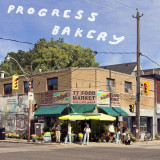
Kneading dough is tricky – you should know how it’s supposed to feel. If you try too hard you could make it worse. It’s a beautiful practice – creation with a gentle touch, to work at something so it can be left alone. “If it’s too drawn out it’s awful. It’s easy to give too much.” Dance in the mirror. Contemplate your veiny hands. Who do they remind you of?
You begin by mixing flour and water. “What happens when your people die? Why’d they move the rock to the other side of Ulster Park?” Eliza Niemi asks two seemingly unrelated questions in a rising melody with guitar accompaniment, like fingers playing spider up to the nape of your neck. Gentle pressure. Strands of gluten form to bind the mix. A new question lingers in the binding. When she admits “but I don’t know how to tell if I’m feeling it or not,” that question surfaces through the text. It is reiterated throughout the album. When I’m working with dough I think the same thing to myself.
On Progress Bakery, her second album as a solo artist, Eliza knows to leave some questions alone – to let juxtaposition and tension be the proof. It doesn’t have to be hard. The feelings and revelations they provoke rise in the heat. The smell is sweet. Crispy on the outside and soft all the way through. She playfully slip-slides through words and sounds and images, delighting in surprise, skimming ideas like stones cast across clear water, touching down briefly with uncommon grace.
The question provoked between those opening lines resurfaces in the strands between songs – “Do U FM” is fully formed and beautifully layered, while “Novelist Sad Face” is a short, acapella rendering of gentle curiosity. What is holding these ideas together? Some songs demand more, seem to carry a whole load – eventually the skipping stone will halt to sink and resume its idle duty – while others drift in and out of focus, the way thoughts and dreams become interwoven before the mind is sunk into true sleep.
Music and words don’t always have to interact. Where she decides to keep them apart gives a new contour to where and how she puts them together. The kind of thing you’re supposed to take for granted with songs and their singers comes alive in Eliza’s hands – the little miracle of mixing, kneading, stretching, and stopping.
So often on Progress Bakery, Eliza teases out truth and meaning by asking questions. “Do I wanna be crying?” “Do you want me good or do you want me bad?” “Do I need an eye test?” “I’m writing songs in my head while you’re going over stuff with me — is that cruel??” In “Pocky” Eliza ends with a question that feels to me like the actual biography, succinct and revealing:
I don’t wanna be made to see
I just wanna ask “what’s that?”
Grace that ought to be rare, but in its care and precision is offered humbly, with great generosity, and without announcing itself. Eliza’s simple, miraculous music is given further form and shape by a group of collaborators – invaluable guest musicians Jeremy Ray, Evan Cartwright, Steven McPhail, Kenny Boothby, Ed Squires, Carolina Chauffe, Dorothea Paas, Louie Short, and Avalon Tassonyi. Together with Louie Short, who recorded, mixed, and produced the album along with Jeremy Ray and Lukas Cheung, Eliza has cultivated a richness in sound and texture that prods and provokes the ticklish ear. Barely audible guitar tinkering, a brief lo-fi field recording of trumpets, the harmonic clicking of a looped synthesizer, a flourish of reeds, a child’s conversation, each uncanny sound perfectly placed, rippling out under a soft breeze.
Lay in bed alone at night and ask aloud to the stillness,
“What were you doing at the Albuquerque Airport?
What were you doing there??”
And hear your question answered by a dream of swelling, undulating cellos. Try to grasp at the melody and structure. It’s not an answer (if there could be one), but it moves deeper, closer to the weird layer of fleeting moments and disconnected images, barely perceptible at its core. Wait for the dream reel to click into place.
Eliza took me for a ride in Nicole (her beloved Dodge Grand Caravan) and told me she’d been thinking of the album as an embodiment of transition – and I think every transition, known or unknown, carries the weight of new meaning, skittering off the surface tension of life as you know it, creating ripples, sometimes bouncing off and sometimes breaking through. There is a trick you can use to tell if a dough is glutinous enough. You’re supposed to stretch it out as thin as you can without breaking it and hold it up to the light. If you can see through, even if it renders the world murky and uncertain, you should leave it alone. I love this trick. It’s one that Eliza seems to know intuitively: work gently and ask questions and don’t always expect answers, and when you can, take a glimpse at something new, and then leave.
dovrebbe essere pubblicato su 04.04.2025
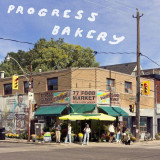
Kneading dough is tricky – you should know how it’s supposed to feel. If you try too hard you could make it worse. It’s a beautiful practice – creation with a gentle touch, to work at something so it can be left alone. “If it’s too drawn out it’s awful. It’s easy to give too much.” Dance in the mirror. Contemplate your veiny hands. Who do they remind you of?
You begin by mixing flour and water. “What happens when your people die? Why’d they move the rock to the other side of Ulster Park?” Eliza Niemi asks two seemingly unrelated questions in a rising melody with guitar accompaniment, like fingers playing spider up to the nape of your neck. Gentle pressure. Strands of gluten form to bind the mix. A new question lingers in the binding. When she admits “but I don’t know how to tell if I’m feeling it or not,” that question surfaces through the text. It is reiterated throughout the album. When I’m working with dough I think the same thing to myself.
On Progress Bakery, her second album as a solo artist, Eliza knows to leave some questions alone – to let juxtaposition and tension be the proof. It doesn’t have to be hard. The feelings and revelations they provoke rise in the heat. The smell is sweet. Crispy on the outside and soft all the way through. She playfully slip-slides through words and sounds and images, delighting in surprise, skimming ideas like stones cast across clear water, touching down briefly with uncommon grace.
The question provoked between those opening lines resurfaces in the strands between songs – “Do U FM” is fully formed and beautifully layered, while “Novelist Sad Face” is a short, acapella rendering of gentle curiosity. What is holding these ideas together? Some songs demand more, seem to carry a whole load – eventually the skipping stone will halt to sink and resume its idle duty – while others drift in and out of focus, the way thoughts and dreams become interwoven before the mind is sunk into true sleep.
Music and words don’t always have to interact. Where she decides to keep them apart gives a new contour to where and how she puts them together. The kind of thing you’re supposed to take for granted with songs and their singers comes alive in Eliza’s hands – the little miracle of mixing, kneading, stretching, and stopping.
So often on Progress Bakery, Eliza teases out truth and meaning by asking questions. “Do I wanna be crying?” “Do you want me good or do you want me bad?” “Do I need an eye test?” “I’m writing songs in my head while you’re going over stuff with me — is that cruel??” In “Pocky” Eliza ends with a question that feels to me like the actual biography, succinct and revealing:
I don’t wanna be made to see
I just wanna ask “what’s that?”
Grace that ought to be rare, but in its care and precision is offered humbly, with great generosity, and without announcing itself. Eliza’s simple, miraculous music is given further form and shape by a group of collaborators – invaluable guest musicians Jeremy Ray, Evan Cartwright, Steven McPhail, Kenny Boothby, Ed Squires, Carolina Chauffe, Dorothea Paas, Louie Short, and Avalon Tassonyi. Together with Louie Short, who recorded, mixed, and produced the album along with Jeremy Ray and Lukas Cheung, Eliza has cultivated a richness in sound and texture that prods and provokes the ticklish ear. Barely audible guitar tinkering, a brief lo-fi field recording of trumpets, the harmonic clicking of a looped synthesizer, a flourish of reeds, a child’s conversation, each uncanny sound perfectly placed, rippling out under a soft breeze.
Lay in bed alone at night and ask aloud to the stillness,
“What were you doing at the Albuquerque Airport?
What were you doing there??”
And hear your question answered by a dream of swelling, undulating cellos. Try to grasp at the melody and structure. It’s not an answer (if there could be one), but it moves deeper, closer to the weird layer of fleeting moments and disconnected images, barely perceptible at its core. Wait for the dream reel to click into place.
Eliza took me for a ride in Nicole (her beloved Dodge Grand Caravan) and told me she’d been thinking of the album as an embodiment of transition – and I think every transition, known or unknown, carries the weight of new meaning, skittering off the surface tension of life as you know it, creating ripples, sometimes bouncing off and sometimes breaking through. There is a trick you can use to tell if a dough is glutinous enough. You’re supposed to stretch it out as thin as you can without breaking it and hold it up to the light. If you can see through, even if it renders the world murky and uncertain, you should leave it alone. I love this trick. It’s one that Eliza seems to know intuitively: work gently and ask questions and don’t always expect answers, and when you can, take a glimpse at something new, and then leave.
dovrebbe essere pubblicato su 04.04.2025

*180g virgin leaded vinyl in a deluxe textured heavy gatefold cover, with paste-on artwork and special anti-static innersleeve.* Note: The pressing is absolute on point!!!!
Vincent Gallo and Harper Simon with a beautifully recorded suite of songs and instrumentals.
" More than two decades since he blew minds with a suite of brilliant releases on Warp, Vincent Gallo returns to the world of music at long last in Butterfly, his duo with Harper Simon, with the project’s full-length debut, “The Music of Butterfly”. A gesture of gentle, DIY / bedroom left-field pop, falling within the rough territory for which Gallo became renowned during the late '90s and early 2000s, while interweaving fascinating flirtations with minimalism and experimentalism, it’s a truly captivating piece of work that’s hard to get off the turntable after the first needle drop.
In the arts, the lines between genius and madness, as well as fact and fiction, often blur. Such, it seems, has always been the life of the artist, filmmaker, actor, musician, and composer Vincent Gallo. A cult figure and a member of various creative undergrounds for the better part of half a century, Gallo has courted controversy, ruffled feathers, and made some of the most singular statements to flirt at the outer edges of popular culture that can be called to mind. Arguably most well known for his work in film, during the late '90s and early 2000s - notably with his soundtrack for “Buffalo 66” and a suite of releases on Warp - Gallo became something of a sensation in the world of independent music for a visionary, incredibly unique and sensitive approach to sonority. For a time, the world was abuzz, waiting on bated breath for more, and yet time passed. Bar a few fragments, appearing here and there, almost nothing has been heard from Gallo, within the world of music, for more than 20 years. That is, until now, with the release of “The Music of Butterfly”, the debut full-length of Butterfly, his duo with Harper Simon: beautifully produced and issued by Family Friend Records - Gallo’s own label, founded in 1981 - in a deluxe edition that simply left us speechless: 180g vinyl in textured heavy gatefold cover with paste-on artwork and thick anti-static innersleeve. More or less picking up from where we last encountered him, spinning captivating melodies and gentle song-craft within the quieter temperaments of DIY, left-field pop, once again, and at long last, Vincent Gallo, encountered in an incredibly successful collaboration with Harper Simon as Butterfly, reminds us that he’s as much a force within the realm of music as he is within film. Not to be missed. This one isn’t going to sit around for long.
Vincent Gallo’s biography reads like the stuff of blaring beauty: a figure of moderate fame in his own right, who has remained at the centre of cultural ferment as the decades have rolled by. Born in 1961, in Buffalo, New York, as the story goes he ran away to New York City at the age of 16 and fell into the brewing counterculture of the Downtown scene, William Burroughs and John Giorno, in addition to the cream of his own peers, and began making paintings, music, and experimenting with film. In addition to being a member of the now legendary band Gray, with the artist, Jean-Michel Basquiat, and the filmmaker, Michael Holman, Gallo appeared in the cult 1981 film “Downtown 81”, before slowly beginning a career as an actor and catching the eye of Claire Denis, who brought his talents into the broader cultural gaze. Catapulted into the public by his own subsequent career as a filmmaker with “Buffalo '66” (1998) and “The Brown Bunny” (2003), both of which were marked by controversy and praise, Gallo further captivated the public with a partially brilliant, if not relatively brief, flurry of activity in the realms of music.
While Gallo had already been making music for roughly two decades at the time of his release of the “Brown Bunny” soundtrack, and the four release issued by Warp in rapid succession between 2001 and 2002 - “When”, “Honey Bunny”, “So Sad”, and “Recordings of Music for Film” - the almost fanatical fandom reached a fever pitch at the moment, allowing him, for some, to be regarded as much, if not more, as a musical artist than an actor and filmmaker. Anyway you cut it, in a few short years, he proved himself to be a polymath of rare talent. Somewhere along the way, while both were working as members of Yoko Ono's Plastic One Band, Gallo met the New York based, highly regarded singer-songwriter, guitarist, and producer, Harper Simon, who also happens to be the son of Paul Simon. The pair fell into an incredibly fruitful duo collaboration, which came to be called Butterfly, and “The Music of Butterfly” being their debut full-length release.
Written, performed, and recorded by Vincent Gallo and Harper Simon in New York City between the winter of 2018 and the spring of 2019, the ten tracks comprising “The Music of Butterfly” are cumulatively a gesture of gentle, DIY / bedroom left-field pop, falling within the rough territory for which Gallo became renowned during the late '90s and early 2000s, making one feel like barely a moment had passed since we’d encountered his graceful hand at song-craft. Stripped back and raw, while retaining a sense of warmth and intimacy, across the length of “The Music of Butterfly” the duo of Gallo and Simon weave something completely captivating at the juncture of minimalism, experimentalism, and pop: meandering moments of texture and tone, slowly forming toward flirtations of melody that flower into song and back again. Somehow playful and light, while also remarkably emotive and personal, it’s almost as though each of these tracks crystallised out the air, unlabored and exactly as they should be without a note or beat more.
An engrossing immersion into both Gallo and Simon’s remarkably accomplished minds, having followed the path toward one another after radically different experiences and careers, “The Music of Butterfly” is one of those records that’ll be hard to get off the turntable after that first needle drop, and rarely leave the listening pile for some time to come. Issued by Family Friend Records in a beautiful deluxe edition that is unmatched even among the most stunning recent productions we can call to mind - 180g vinyl in textured heavy gatefold cover with paste-on artwork and thick anti-static innersleeve - it’s lovely to have Gallo back in the musical mix after so many years. "
dovrebbe essere pubblicato su 04.04.2025

Kneading dough is tricky – you should know how it’s supposed to feel. If you try too hard you could make it worse. It’s a beautiful practice – creation with a gentle touch, to work at something so it can be left alone. “If it’s too drawn out it’s awful. It’s easy to give too much.” Dance in the mirror. Contemplate your veiny hands. Who do they remind you of?
You begin by mixing flour and water. “What happens when your people die? Why’d they move the rock to the other side of Ulster Park?” Eliza Niemi asks two seemingly unrelated questions in a rising melody with guitar accompaniment, like fingers playing spider up to the nape of your neck. Gentle pressure. Strands of gluten form to bind the mix. A new question lingers in the binding. When she admits “but I don’t know how to tell if I’m feeling it or not,” that question surfaces through the text. It is reiterated throughout the album. When I’m working with dough I think the same thing to myself.
On Progress Bakery, her second album as a solo artist, Eliza knows to leave some questions alone – to let juxtaposition and tension be the proof. It doesn’t have to be hard. The feelings and revelations they provoke rise in the heat. The smell is sweet. Crispy on the outside and soft all the way through. She playfully slip-slides through words and sounds and images, delighting in surprise, skimming ideas like stones cast across clear water, touching down briefly with uncommon grace.
The question provoked between those opening lines resurfaces in the strands between songs – “Do U FM” is fully formed and beautifully layered, while “Novelist Sad Face” is a short, acapella rendering of gentle curiosity. What is holding these ideas together? Some songs demand more, seem to carry a whole load – eventually the skipping stone will halt to sink and resume its idle duty – while others drift in and out of focus, the way thoughts and dreams become interwoven before the mind is sunk into true sleep.
Music and words don’t always have to interact. Where she decides to keep them apart gives a new contour to where and how she puts them together. The kind of thing you’re supposed to take for granted with songs and their singers comes alive in Eliza’s hands – the little miracle of mixing, kneading, stretching, and stopping.
So often on Progress Bakery, Eliza teases out truth and meaning by asking questions. “Do I wanna be crying?” “Do you want me good or do you want me bad?” “Do I need an eye test?” “I’m writing songs in my head while you’re going over stuff with me — is that cruel??” In “Pocky” Eliza ends with a question that feels to me like the actual biography, succinct and revealing:
I don’t wanna be made to see
I just wanna ask “what’s that?”
Grace that ought to be rare, but in its care and precision is offered humbly, with great generosity, and without announcing itself. Eliza’s simple, miraculous music is given further form and shape by a group of collaborators – invaluable guest musicians Jeremy Ray, Evan Cartwright, Steven McPhail, Kenny Boothby, Ed Squires, Carolina Chauffe, Dorothea Paas, Louie Short, and Avalon Tassonyi. Together with Louie Short, who recorded, mixed, and produced the album along with Jeremy Ray and Lukas Cheung, Eliza has cultivated a richness in sound and texture that prods and provokes the ticklish ear. Barely audible guitar tinkering, a brief lo-fi field recording of trumpets, the harmonic clicking of a looped synthesizer, a flourish of reeds, a child’s conversation, each uncanny sound perfectly placed, rippling out under a soft breeze.
Lay in bed alone at night and ask aloud to the stillness,
“What were you doing at the Albuquerque Airport?
What were you doing there??”
And hear your question answered by a dream of swelling, undulating cellos. Try to grasp at the melody and structure. It’s not an answer (if there could be one), but it moves deeper, closer to the weird layer of fleeting moments and disconnected images, barely perceptible at its core. Wait for the dream reel to click into place.
Eliza took me for a ride in Nicole (her beloved Dodge Grand Caravan) and told me she’d been thinking of the album as an embodiment of transition – and I think every transition, known or unknown, carries the weight of new meaning, skittering off the surface tension of life as you know it, creating ripples, sometimes bouncing off and sometimes breaking through. There is a trick you can use to tell if a dough is glutinous enough. You’re supposed to stretch it out as thin as you can without breaking it and hold it up to the light. If you can see through, even if it renders the world murky and uncertain, you should leave it alone. I love this trick. It’s one that Eliza seems to know intuitively: work gently and ask questions and don’t always expect answers, and when you can, take a glimpse at something new, and then leave.
dovrebbe essere pubblicato su 21.03.2025

"This is the time that we, who have benefitted from the Last Poets shouldbe able to say, 'it's the Last Poets. It's them we should be honouring, because we did not honour them for so many years_"
KRS One wasn't just addressing the hip hop fraternity when he uttered
those words by way of introducing the video for Invocation - a poem
written thirty years ago, around the time of the Last Poets' last significant comeback. He was speaking to everyone who's been affected by the word, sound and power issuing from the most revolutionary poetry ever witnessed, and that the Last Poets had introduced to the world outside of Harlem at the dawn of the seventies.
In 2018 the two remaining Last Poets, Abiodun Oyewole and Umar Bin
Hassan, embarked on another memorable return with an album -
Understand What Black Is - that earned favourable comparison with theirseminal works of the past, whilst showcasing their undimmed passion andlyrical brilliance in an entirely new setting - that of reggae music. Trackslike Rain Of Terror ("America is a terrorist") and How Many Bullets demonstrated that they'd lost none of their fire or anger, and their essential raison d'etre remained the same.
"The Last Poets' mission was to pull the people out of the rubble o f their lives," wrote their biographer Kim Green. "They knew, deep down that poetry could save the people - that if black people could see and hear themselves and their struggles through the spoken word, they would be moved to change."
Several years later and the follow-up is now with us. The project started when Tony Allen, the Nigerian master drummer whose unique polyrhythms had driven much of Fela Kuti's best work, dropped by Prince Fatty's Brighton studio and laid down a selection of drum patterns to die for. That was back in 2019, but then the pandemic struck. Once it had passed, the label booked a studio in Brooklyn, where the two Poets voiced four tracks apiece and breathed fresh energy, fire and outrage into some of the most enduring landmarks of their career. Abiodun, who was one of the original Last Poets who'd gathered in East Harlem's Mount Morris Park to celebrate Malcolm X's birthday in May 1968, chose four poems that first appeared on the group's 1970 debut album, called simply The Last Poets. He'd written When The Revolution Comes aged twenty, whilst living in Jamaica, Queens. "We were getting ready for a revolution," he told Green. "There wasn't any question about whether there was going to be one or not. The truth was many of us still saw ourselves as "niggers" and slaves. This was a mindset that had to change if there was ever to be Black Power." He and writer Amiri Baraka were deep in conversation one day when Baraka became distracted by a pretty girl walking by. "You're a gash man," Abiodun told him. The poem inspired by that incident, Gash Man, is revisited on the new album, and exposes the heartless nature of sexual acts shorn of intimacy or affection. "Instead of the vagina being the entrance to heaven," he says, "it too often becomes a gash, an injury, a wound_" Two Little Boys meanwhile, was inspired after seeing two young boys aged around 11 or 12 "stuffing chicken and cornbread down their tasteless mouths, trying to revive shrinking lungs and a wasted mind." They'd walked into Sylvia's soul food restaurant in Harlem, ordered big meals, then bolted them down and run out the door. No one chased after them, knowing that they probably hadn't eaten in days. Fifty years later and children are still going hungry in major cities across America and elsewhere. Abiodun's poem hasn't lost any relevance at all, and neither has New York, New York, The Big Apple. "Although this was written in 1968, New York hasn't changed a bit," he admits, except "today, people just mistake her sickness for fashion." Umar is originally from Akron, Ohio, but had arrived in Harlem in early 1969 after seeing Abiodun and the other Last Poets at a Black Arts Festival in Cleveland. That's where he first witnessed what Amiri Baraka once called "the rhythmic animation of word, poem, image as word- music" - a creative force that redefined the concept of performance poetry and stripped it bare until it became a howl of rage, hurt and anger, saved from destruction by mockery and love for humanity. When Umar's father, who was a musician, was jailed for armed robbery he took to the streets from an early age where he shined shoes and raised whatever money he could to help feed his eight brothers and sisters. By the time he saw the Last Poets he'd joined the Black United Front and was ready to join the struggle. Once in Harlem, Abiodun asked him what he'd learnt in the few weeks since he'd got there. "Niggers are scared of revolution," Umar replied. "Write it down" urged Abiodun. That poem still gives off searing heat more than fifty years later. In Umar's own words, "it became a prayer, a call to arms, a spiritual pond to bathe and cleanse in because niggers are not just vile and disgusting and shiftless. Niggers are human beings lost in someone else's system of values and morals." And there you have it. It's not just race or religion that hold us back, but an economic system that keeps millions in poverty and living in fear - a system born from political choice and that's now become so entrenched, so bloated on its own success that it's put mankind in mortal danger. It was many black people's acceptance of the status quo that inspired Just Because, which like Niggers Are Scared Of Revolution, was included on that seminal first album. Along with their revolutionary rhetoric, it was the Last Poets' use of the "n word" that proved so shocking, but it would be wrong to suggest that they reclaimed it, since it never belonged to black people in the first place. There's never any hiding place when it comes to the Last Poets. They use words like weapons, and that force all who listen to decide who they are and where they stand. Umar's two remaining tracks find him revisiting poems first unleashed on the Poets' second album This Is Madness! Abiodun had left for North Carolina by then where he became more deeply enmeshed in revolutionary activities and spent almost four years in jail for armed robbery after attempting to seize funds related to the Klu Klux Klan. Meanwhile, the 21 year old Umar was squatting in Brooklyn and had developed close ties with the Dar-ul Islam Movement. A longing for purity and time-honoured spiritual values underpins Related to What, whilst This Is Madness is a call for freedom "by any means necessary," and that paints a feverish landscape peopled by prominent black leaders but that quickly descends into chaos. "All my dreams have been turned into psychedelic nightmares," he wails, over a groove now powered by Tony Allen's ferocious drumming. Those sessions lasted just two days, and we can only imagine the atmosphere in that room as the hip hop godfathers exchanged the conga drums of Harlem for the explosive sounds of authentic Afrobeat. Once they'd finished, the recordings and momentum returned to Prince Fatty's studio, since relocated from Brighton to SE London. This was stage three of the project, and who better to fill out the rhythm tracks than two key musicians from Seun Anikulapo Kuti's band Egypt 80? Enter guitarist Akinola Adio Oyebola and bassist Kunle Justice, who upon hearing Allen's trademark grooves exclaimed, "oh, the Father_ we are home!" Such joy and enthusiasm resulted in the perfect fusion of Nigerian Afrobeat and revolutionary poetry, but the vision for the album wasn't yet complete. He wanted to create a new kind of soundscape - one that reunited the Poets with the progressive jazz movement they'd once shared with musicians like Sun Ra and Pharoah Sanders. It was at that point they recruited exciting jazz talents based in the UK like Joe Armon Jones from Mercury Prize winners Ezra Collective, also widely acclaimed producer/remixer and keyboard player Kaidi Tatham, who's been likened to Herbie Hancock, and British jazz legend Courtney Pine, whose genius on the saxophone and influence on the UK's now vibrant jazz scene is beyond question. The instrumental tracks on Africanism are in many ways as revelatory and exciting as the Last Poets' own. It's important to remember that the kaleidoscope of styles and influences we're presented with here aren't the result of sampling but were played "live" by musicians responding to sounds made by other musicians. That's where the magic comes from, aided by Prince Fatty's peerless mixing which allows us to hear everything with such clarity. Music fans today have grown accustomed to listening to all kinds of different genres. Their tastes have never been so broad or all- encompassing, and so the music on this new Last Poets' album is as groundbreaking as their lyrics, and perfectly suited to the era that we're now living in. John Masouri
dovrebbe essere pubblicato su 06.12.2024

Meltface returns in “Melt In Unison,” another high-octane action comedy erotic thriller with four jaw-dropping scenes soundtracked by Rhyw. “Drool” is an underwater mutant-octopus romance that will change how you feel about tentacles forever. "Calippo" is a jungle romp that's part Apocalypse Now!, part Tropic Thunder, part Lethal Weapon 4, all white-knuckle intensity. “Greetings” is actually the intro but, for some reason appears as the third track.... don't worry about that. Main thing is it will rewire your DNA and change every fibre of your being in such a way that you'll actually pity the person you were in all the years you lived before you heard this track. This rollercoaster ride of thrills and chills ends with a bang: a face-off against the final boss, he whose name is said only in terrified whispers when it is said at all, the horrifying, twisted, slime/goo-coated final boss... “Lavalantula."
Some other stuff you should know about this record: this is the first time our guy Rhyw sang on his own music (initially), but then chopped up and pitched syllables from acapellas to match the recordings instead, if that makes sense. His actual voice features on the other three. Also two of the tracks came from his live set in case you care about that.
Ordina ora e ordineremo l'articolo per te presso il nostro fornitore.

Not much to say on this one, Mattias Ostling aka Rolando Simmons is back on AF. You should know what you're in for: undeniably beautiful acid stuff, somewhere between propulsive and melancholy, lush but fidgety 4/4 beats...'Terrestrial Ultra-Doula EP' is a 4-track adventure that deftly dabbles in rave, IDM, techno and beyond in classic RS style. In his own words "Every completed project is the failure of an original idea and the triumph of a successful adaptation. These tracks were inspired by a dream and my subsequent reflections on it. Playing music for others is an act of alchemy that can alter thought patterns and life paths to varying degrees. It is a formidable power to wield." Ostling is one of those artists who works in a specific continuum but adds his own touch here and there--and when it comes to reverb-drenched, acid-lashed, wound-up IDM pitter-patter, not many can do it as well, or as elegantly, as this. Word, you're gonna need this one.
Ordina ora e ordineremo l'articolo per te presso il nostro fornitore.

Indignation Meeting are punky rail fans from Leeds. 15-year-old Peter is the driver - he's the drummer and lead singer, writes most of the songs, and also plays bass and trumpet on the album. The rest of the crew is his dad Michael on guitar, Hugo on bass, and with Keith, Heather and Sally often along for the ride when they play out. Here at DGHQ we've been listening to their self-released debut album Trouble In The Shed since last year and finally spoke with the band and agreed to release it on vinyl for the first time. It was very good timing as they've just been in the studio to finish recording their second album, so we'll be releasing that later in 2024. Welcome on-board! We caught up with Peter to ask as few questions about the band_ Q: "In a week when the Labour Party promised to return the rail network to public ownership, we ask how did your fascination with trains begin?" A: "Honestly, I don't really know - I've just loved them ever since I can remember. It's not like with some people who had a family connection or watched Thomas the Tank Engine; I've just always loved them. I guess it's just a childhood obsession that never went away!" Q: "'Trouble In The Shed' is quickly becoming a firm office favourite here at DG. There's a touch of punk, indie and new wave about it. What would you say are the key influences that make up your musical DNA?" A: "My main influence when this album was released was Blyth Power. They'd been my favourite band for years when this was recorded, so everything on it was influenced by them in some way. They've had so many different musical styles over the years that they kind of conglomerated into this album, to create yet another eclectic mix of songs. The only real exception to that on this album is Electrification - no prizes for guessing the influence there! If you see us live, however, you may notice another influence pervading through our songs. That influence is the anarcho-hippy band 'The Astronauts,' whom I discovered midway through the recording process, and have quickly become one of my all-time favourite bands!" Q: "What's the story behind your song 'Hornby Horrors'?" A: "Hornby Horrors is an interesting one. People who haven't heard it may assume it's about some ill-fated model railway endeavour, but it's actually a tale of corruption in, of all places, the model train company Hornby! This song was the result of several minor scandals at Hornby HQ making their way to the modelling masses, the main ones of which were an ill-fated tier list, which placed retailers in three categories as to whether or not they received Hornby's products, with tier 3 retailers barely getting anything at all. Interestingly, the UK's former biggest retailer, Hatton's Model Railways, was a tier 3 retailer due to their 'competing products' (made by their own small brand Hatton's Originals') and has recently announced closure due to financial hardship. Now as we all know, correlation does not equal causation, but I wonder_" Q: "The album is being released on a specific shade of green vinyl. What's the significance?" A: "The shade of green on the vinyl is very similar to the shade worn by the locomotives from the Great Western Railway in the 1870s - 1940s. Due to this connection, we thought it was only proper we picked this colour, which we have dubbed 'Great Western Green!'" Q: "The album release coincides with an appearance at Rebellion Festival in Blackpool this August. Can you give the readers three reasons why they should come and see your performance?" A: "1 - We like to think we provide something different with our music - it is very obviously punk, but it's a bit more light-hearted than a lot of the political stuff, with nearly all the songs being about some sort of obscure steam loco engine. If you just want something light-hearted to enjoy, we might just be the band for you! 2 - We've got a rather interesting line up - instead of the usual line-ups you see, we've got a 15 year-old singing drummer with his dad on guitar, a newly-turned adult with a massive ginger afro playing the bass, the guitarist from the old anarcho band 'Dog On A Rope' playing some gnarly lead parts, and all topped off with some beautiful backing vocals from the drummer's sister and mother. As Attila the Stockbroker described us, Blyth Power meets the Partridge Family - not to be missed! 3 - Here's something you won't forget in a hurry - as well as his vocals, our 15-year-old frontman Peter plays drums and trumpet at the same time! If that's something you want to see, make sure you get down to see us!"
dovrebbe essere pubblicato su 02.08.2024

Catch this blistering funk rarity from 1971 - Do not sleep!
Clarence Reid should need no intro, but for the uninitiated he's one of the voices and creative forces behind numerous Miami funk and soul sides from the 1960s onwards. Known for his deep, soulful, rough and ready style and bugged out take on things (see Blowfly for example.... but be careful!) Reid recorded 100s of sides during his illustrious career. This particular record, originally released in 1971 on Henry Stones mighty Alston Records serves us up some red hot raucous funk. One side for the ladies, one side for the dudes! This one has long been a favourite of serious diggers and DJs hunting for breakbeats, and one spin of this 45 will tell you why, this one has it all.
Unmissable, rare as hen's teeth and now freshly restored and repressed for your 7" box! Clarence Reid's "Miss Hot Stuff / Mr. Hot Stuff", available again in repress form for the first time in over a decade. Fully licensed and agreed by Henry Stone Music / TK Disco and boasting some fresh new artwork for 2024.
Ordina ora e ordineremo l'articolo per te presso il nostro fornitore.

“I wanted to try and showcase as many people as I knew on this mix. My idea of Late Night Tales was to distil a series of relaxing moments; the whole conceptual sonic of relax- ation. So, I was trying to think of all the collaborators and friends that I knew, who’d recorded stuff with this horizontal vibe. Plus, I was also trying to help my friends' stuff get into the world. I know the story of Khruangbin blowing up after appearing on the series (in fact, I think that's how I discovered them). So, the main idea was to create a certain atmosphere, but also to help some of my favourite collaborators and bud- dies to give their songs a little push out into the world. Hope you like it” Jordan Rakei
Due for release on 9th April, Late Night Tales celebrate their 20th anniversary with the release of multi-instru- mentalist, vocalist and producer Jordan Rakei’s majestic compilation. The 28-year-old modern soul icon effortlessly stamps his own jazz and hip-hop driven sound all over this gorgeous array of handpicked tracks. A beautifully layered blend that is mirrored in the music he’s made, itcomes as no surprise that such a supremely gifted songwriter should deliver a mix that is all about the song.
Rakei, born in New Zealand, but raised in Australia, moved to the UK in 2015; he released his debut album, Cloak, with Oz label Soul Has No Tempo, but his two subsequentLPs, Wallflower and Origin, came out on Ninja Tune, the former#2 in Album Of The Year for Gilles Peterson’s Worldwide poll, while Origin was nominated for Best Album at the AIM Awards. Jordan had this to say on his upcoming mix:
As Jordan says,there’s so much more to the song selection on Late Night Tales’latest outing than a random collection of artists. Many have some sort of personal connection, so just as Bonobo provided a platform for the breakout of Khruangbin on a previous LNT, this may have the same ef- fect for Rakei’s friends. After a soothing opener from Fink, good friend and big influence Alfa Mist (part of the Are We Live collective) delivers ‘Mulago.’ “I want to champion their sound and show the world how good he is, and I thought it’d be fitting to start the mix with family,” says Jordan.
Next up is Charlotte Day Wilson with ‘Mountains,’ followed by ‘Count A Heart’ from Moreton, an exclusive collab- oration with Jordan, who grew up on the same street in Brisbane, Australia. “She was the first artist I ever collabo- rated with, and one of the first artists to be involved in mycareer,” he explains. Elsewhere we hear Scottish producer and multi-instrumentalist C Duncan’s haunting ‘He Came from the Sun,’ Barcelona collective Oso Leone deliver a dreamy ‘Virtual U’ and Bill Lauren’s ‘Singularity,’ which evokes a striking sense of time and place.
Snowpoet’s ethereal ‘Evitenity’ is a “long mediative nar- rative over a beautiful soundscape,” which at times seems chaotic, nicely juxtaposed with undeniable beauty, and Maro’s kooky songwriting shines on ‘Always And Forever.’ Long-time buddy Armon-Jones contributes ‘Idiom,’ and Jordan’s exclusive cover version is a two-for-one, Radio- head’s ‘Codex’ merging with ‘Lover, You Should’ve Come Home’ by Jeff Buckley and another exclusive,original com- position by Jordan, ‘Imagination.’ The latter works as a piece with the spoken (Spanish) word voiced by movie director Alejandro González Iñárritu (Babel, Birdman, and The Reve- nant,) who is a big fan of Jordan’s. “He messaged me when I went to L.A and asked to come to my show. I was in such shock and we hung out after. I thought it would be nice to get him to do this in his native tongue, because I don’t think that’s been done yet on the series.” It certainly is a familyaffair. Not theblood is thicker than water kind, but certainly musical kindred spirits.
dovrebbe essere pubblicato su 13.05.2024

"Memorie d'Inverno" is the first collaboration album from Original Krash (Producer) & Casco aka Helmet (Performer) with the partecipation of various dope mc's and singers also the vynil exclusive include two remixes from leggendary prodcuers Dj Skizo (from Alien Army) and The Next One (from Zulu Nation and Rock Steady Crew).
"Memorie d'Inverno" is a concept album released for Outboard Music in June 22 and the title in italian stands for "Winter Memories".
The LP it's worked and founded on the classic style of Hip Hop where bassline, cuts and drums reign on the productions all made with the MPC5000 sampling original vynils. The songs are concived as a phootage of a memory, so made too survive forever in the ear of the listener. All the tracks has been mixed analogically by Matteo "Nost" Nolli at Nost Studio (excluded the two remixes made directly by the producers) with the supervision of Original Krash and the work on the sound it's an essential part of the LP and melted with the fact that most of the beats are sampled from Jazz and Soul defines the Hip Hop flavour of the album.
Thw philosophy and the work ethic behind "Memorie d'inverno" it could be perfectly resumed in the titles of the intro (True Knowledge Is The Future) and the outro (Today, Not Tomorrow) as a perfect closing circle. The message is don't waste your time around unuseful stuff and keep focused on what you like and really desire to reach, so you better tie the laces to your shoes, bust your back and study to obtain what you deserve beacuse no one is gonna do that for you.
Krash and Helmet thaks everyone who will support our business remebering to the one who hasn't already purchase the order that they really should beacuse... Italians Do It Better .
dovrebbe essere pubblicato su 15.04.2024

Sasu Ripatti's complete "Dancefloor Classics" series. Music for imaginary dancefloors, released on Ripatti's own label Rajaton.
”Look up, into the light” she said, while the camera shutter clicked. ”Like this? Does it look holy?” His neck felt stiff. Her reply: ”Yes, just like that. What do you mean holy? Like religious? ”No, more like trying to look very far, somewhere beyond what we can see.” ”Okay, stand still, I’m going to come close to you now. The light hits your face great.” click, click, click.
He noticed her fingernails. They were not polished. Natural. Even somewhat rugged, as if something wore out the fingers slightly. What had these hands held besides the camera? What made the edges of her fingernails drift off?
He thought it’s weird to look straight into the camera. The photographer had closed her left eye, the one not looking into the lens. Then it opened, she looked up, perusing the surroundings, then she closed her eye again, then looked up, closed, looking up, very quickly. It all seemed very professional. Maybe she calculated the light, making sure it’s close to perfect. ”What will these photos look like?” – the thought popped into his head briefly. It was liberating to think it wouldn’t matter.
”What’s that song playing?” he asked. ”Wait a sec, Ol’ Dirty Bastard?” she replied. ”Oh yeah, right. But the sample?” ”Hey, could you look up again, like that. No, lower.”
New directions: ”Look out from the window, turn left.” ”My left or yours?” ”Yours, I always try to think from the direction of my model.” How professional! This is a good shoot, so natural. Should I worry about how the photos look like? No, I don’t want to. His thoughts bounced around. What would the story be like? It’s a big newspaper, everyone will read it. Maybe someone drinks coffee and eats a stroopwafel while they do it. Will they place the waffle on top of the mug for a brief while, so that it gets hot and the syrup melts a little? Then it feels wet, and you can bend the cookie.
She broke his train of thought off midway through: ”Now turn right, but look left, and slightly up, but don’t turn your face right.” ”Umm, like this? Sounds like a set of pilates instructions.” she laughed ”You do pilates?” ”Yeah, it’s hard sometimes. Have you tried?” ”No”, she said. ”I’m not good for sports that are done in groups.” ”Yeah, but in pilates you can just be inside your mind, drowning in your private thoughts.”
”What are you thinking in pilates?” she asked, taking more photos. ”Well, mostly just which way is right. And which left.” click, click.
Q&A with Sasu Ripatti:
1) Tell us something about the EP series ”Dancefloor Classics”, what’s the idea and what can we expect?
I’ve been slowly writing these sort of dance music pieces and finally curated them together for a conceptual release. I like to create music for a dancefloor that exists only in my imagination and doesn’t try to suck up to the standardized reality.
2) Your vinyl format is 10” which is quite special (as opposed to LP / 12”). Why did you choose it?
It’s my favourite format, absolutely. The size is perfect, and you can make it sound really good @ 45 rpm. And you still can make great artwork.
3) You seem interested in sampling/repurposing, what does it mean to you as an artist to approach something already existing from a new angle? How does the source material inform you about the approach to take?
I guess i could flip it around and just say I’ve outgrown synths or electronic sounds to a great extend, and having gotten rid off all my synths already good while ago I’ve used samples as my main source material a lot. It’s obvious on this series that i’ve sampled existing music, but I also sample instruments and things in the studio and resample my own library that I have built over the years, it’s quite large. To me the end result matters, not so much how I get there. Once I have something on my keyboard and play around, it’s all an instrument, though with sampling other music it becomes a really interesting and complex one as you’re possibly playing rhythm, but also harmonic content and maybe hooks or whatever, all at once.
I never sample premeditadedly, like listening to records and looking for that mindblowing 3 sec part. I just throw the cards in the air and see what lands where, just full intuition and hopefully zero mind involved, playing tons of stuff, trying things, just recording hours of stuff. Then comes the interesting part to listen to hours of mostly crazy stuff and finding that mindblowing 3 sec part.
4) What is your relationship with the dancefloor (conceptually and/or in experiences / as a performer)?
Very complicated. I have never really felt comfortable on a dancefloor but have always wanted to. There’s something in club music, in theory, that really speaks to me. It has never really materialized for me – speaking mainly from a performer’s point of view who goes to check on a dancefloor for a moment after a concert. I never have DJ’d or felt much interest towards it. But again, I love the idea and concept of DJing. As well as producing music for imaginary DJs. Lately, as in the past 10+ years, I haven’t even performed in any sort of club spaces. So my relationship to the dancefloor is quite removed and reduced, but there’s quite a bit of passion and interest left.
All tracks composed and produced by Sasu Ripatti.
Artwork & photography by Marc Hohmann.
Mastering by Stephan Mathieu for Schwebung Mastering.
Vinyl cut by SST Brueggemann.
Publishing by WARP Music Ltd.
Ordina ora e ordineremo l'articolo per te presso il nostro fornitore.
In the five years since Creep Show’s acclaimed Mr Dynamite album was released it’s fair to say that we’ve all been through a fair bit. Sitting here, in 2023, things don’t seem to be getting any better. There’s the cost of living crisis and political meltdowns; we're in deep water with global warming and to top it all there’s a war on our doorstep.
Back in 2018 everything seemed less complicated. Sure, there was stuff to get riled about, but we knew nothing about what was to come. Mr Dynamite was a fairground ride into the dark corners of a world that was on the brink of being blitzed in a blender. It was a record teetering on the edge. Five years down the line you’d expect the follow-up, Yawning Abyss, would double-down and bring the white-knuckled, teeth-gritted fury of the last five years to the boil. And yet….
A quick recap? No problem. Wrangler + John Grant = Creep Show. And Creep Show? “A band of musical misfits who have found a voice or two”, says Wrangler’s Ben “Benge” Edwards, whose Bond villain studio on the edge of a moorland is Creep Show Grand Central as well as home to an analogue synth arsenal that could sink ships.
Wrangler have known each other for a while. Tunng’s electronics wizard Phil Winter and Cabaret Voltaire’s trailblazing, pioneering frontman Stephen Mallinder go way back, while Phil and Benge crossed paths in the 21st century when they seemed to be increasingly in the same venues at the same times. Meanwhile, Mal had been living in Australia since the mid-90s and when, in 2007, he returned to the UK his old pal Phil suggested he meet Benge and the three of them immediately began working together.
Wrangler collectively bumped into Grant at their soundcheck for Sheffield’s Sensoria Festival in 2014 where they were playing with Carter Tutti. A friendship blossomed and when they were invited to perform together for Rough Trade’s 40th anniversary show at London’s Barbican in 2016, well, they jumped at the chance... and Creep Show was born.
Let’s talk about the new album... What is the ‘Yawning Abyss’? You might well ask. According to Mal, it’s “a cosmic event horizon that I can see from my attic window when stand on a chair”. Yeah. Thanks.
“On this album”, offers Benge, feet firmly on the floor, “Wrangler wrangled some vintage synths, mostly Roland, Moog, and the ‘Crystal Machine’ - then John Grant joined in the fun at Memetune Studios where lots of musical experiments were carried out. Then Mal and John ran off to Iceland with the master tapes and recorded a load of madcap vocals. Back at Memetune, me and Phil were left to try and make sense of it all. Which wasn’t hard because what they did in Iceland was totally magnificent.”
Which kind of brings us back to where we began. You’d imagine ‘Yawning Abyss’ would be blowing steam out of its furious ears. Mr Dynamite but kicking a wasps nest. Repeatedly. And yet…
Opener ‘The Bellows’ comes on like a modular ‘Radio Ga Ga’, the singalong ‘Moneyback’ (“You want your money back? / I didn’t think so”) sounds like Godley & Creme’s ‘Snack Attack’ meets Prince Charles And The City Beat Band (“Pennies, pounds, dollar bills, signed agreements, death wills”). ‘Yahtzee!’ is an unhinged electro breakdance party in four minutes and nine seconds.
Where Mr Dynamite was menace, a mélange of mangled voices, with Grant and Mallinder being heavily treated, pitched up or down, rendering their contributions largely indistinguishable, Yawning Abyss takes a more direct approach. You hesitate to say feelgood, but there’s a skip in the step here for sure.
The title track plays John Grant’s vocal straight. Completely. It’s good, so very good. Like ‘Axel F’ covered by Vangelis. The delicious shimmering synths of ‘Bungalow’ also plays those Grant pipes with a straight bat. ‘Matinee’ delves into darker, very funky territory. With Mal upfront it comes on like ‘The Crackdown’. Choice lyric: “You are starting to breakdown / And it’s so fun for me to see / You should have thought of that / You should have come prepared / You can see what’s happening and you look a little scared”.
So, you know, not all feelgood. But it does feel good. It’s probably best to draw your own conclusions... This is Creep Show after all.
dovrebbe essere pubblicato su 16.06.2023

Some 30 years after first putting on a slab of vinyl in front of an audience Belgian DJ mainstay Red D presents his debut album called ‘Fantasize Then Realize’ under his Red Basics guise. An experienced and versatile DJ if ever there is one, it was logical that his album takes in a wealth of influences from around the house and techno block and features some of his best musical friends and inspirations. From his ‘go to’ singer Lady Linn, to his musical friend and partner in FCL San Soda via Belgian stronghold Lefto, to his Detroit buddy Reggie Dokes: these are the people Red D has been working with and learning from for years on end.
The music ranges from the dreamy beatless title track to the sleazy spoken word ‘Just Like Hercules’ up to the Larry Heard-inspired deepness ‘Compelled’ and including the melancholy of ‘The Larkin’.
Locked down during the first months of the Covid 19 madness Red D had no more ‘I’m too busy to get into the studio’ excuses and all the inspiration gathered during the countless hours of DJ’ing and listening to records in the last 30 years simply poured out. Making track after track was daily (and nightly) business and after a while the idea of a full album simply came naturally. The next lockdowns were spent fine-tuning the tracks, coming up with lyrics and finalizing the tracklist.
The result is ‘Fantasize Then Realize’, Red D’s debut album and a testament to his sound and attitude.
DJ FEEDBACK:
Mousse T:”22 Shoulders, hell yeah!”
Laurent Garnier: “Thanks a lot for these tracks. There’s some lovelyyyyyyy deeeeeepness in there. Love it.”
Levon Vincent: “I gave the LP a listen, nice one! I thought ‘Devious Monday’ was captivating and I liked the work with Classy Lassy as well. Congrats!”
Ka§par:"When a guys knows what he's doing, it sounds like it's real. Great tracks, loving it more and more the further we go."
Roberto Rodriguez: "Classy album! Red D quality!"
Nacho Marco: "Loving it, hard to pick a favorite. Thanks!!"
Kong: "Big up Bart, well done. Belgium = house = Red D!!"
Melon: "House music represent! Love it, feel it & gonna drop it. Great stuff :)"
Simon Caldwell: "Some really special house music on this album. Many thanks!!"
OOFT!: "Yes! This sounds amazing! Authentic underground house music just the way I like it :)"
Massimiliano Pagliara: "Nice tunes!"
Tomaz: "We all knew Bart knows where it's at but this is ridiculously good. Hard to pick a fave. The collabs are great, so are the ‘solo’ tracks. I picked the single with Lien as fave because that'll hopefully draw the deserved attention to the rest of the album. Top marks !"
Juliano: "Congrats for your album Bart ! love the deepness of the tracks and the authenticity you brought. Thank you"
Harri: "Liking these a lot, will play and support."
Alex Barck: "That's a great piece of work"
Quintessentials: "All around fantastic album! Congrats!"
Lauer: "Respect, amigo!"
Darko Esser: "Beautiful album, congrats mate great work!"
Ordina ora e ordineremo l'articolo per te presso il nostro fornitore.

‘Complex and dangerously catchy, lyrically sophisticated and provocative, noisy and somehow serene… Yankee Hotel Foxtrot… is simply a masterpiece.’ – Pitchfork, 10/10, April 2002
‘The looped chaos and plangent melodies... effectively heralded the birth of a new band, as Jeff Tweedy overhauled his compositional modus operandi. So tender was the emotional core of songs like ‘Jesus, Etc.’ that the record became wrapped up in America’s post-9/11 cultural discourse... Yankee Hotel Foxtrot embedded Wilco’s great American songwriter status.’
– Mojo
‘It's as if the Flying Burrito Brothers suddenly decided to cover Pavement songs. There is a gentle, rootsy beauty here that Wilco has buried in a box of vulnerability and covered with a handful of dirt.’ – New York Times
‘Born out of turmoil, Wilco’s fourth album was a stone-cold classic.’ – Uncut
Nonesuch releases seven special editions of Wilco’s landmark 2002 album Yankee Hotel Foxtrot. The now-classic record has been remastered and will be available as part of each set. The Super Deluxe version comprises eleven vinyl LPs and one CD – including demos, drafts, and instrumentals, charting the making of Yankee Hotel Foxtrot – plus a live 2002 concert recording and a September 2001 radio performance and interview. That box set includes eighty-two previously unreleased music tracks as well as a new book featuring an interview with singer/songwriter/guitarist Jeff Tweedy, drummer Glenn Kotche, and Jim O’Rourke, who mixed the acclaimed 2002 album; an in-depth essay by journalist/author Bob Mehr; and previously unseen photos of the band making the album in their Chicago studio, The Loft. For the Yankee Hotel Foxtrot recording, Wilco was Jeff Tweedy, John Stirratt, Leroy Bach, Glenn Kotche, and Jay Bennett with Craig Christiansen, Ken Coomer, Jessy Greene, Fred Lonberg-Holm, and Jim O’Rourke.
A live version of ‘Reservations’ from a legendary concert contained on Snoozin’ at The Pageant – Live 7/23/02 at The Pageant, St. Louis, MO – a recording that is part of the Super Deluxe LP and CD sets as well as the Deluxe LP and digital sets – is now available. A limited-edition vinyl 7” with versions of ‘I’m the Man Who Loves You’ and ‘War on War’, from the Super Deluxe box set, is available now from wilcostore.
Wilco marked the anniversary of Yankee Hotel Foxtrot – which was released commercially on April 23, 2002, after a circuitous and storied gestation, including a period of streaming for free on the band’s website – with a performance of the album’s ‘Poor Places’ on April 18’s Late Show with Stephen Colbert, which may be seen here. The band is currently performing Yankee Hotel Foxtrot in its entirety (plus a mix of concert favourites and rarities) in two limited runs at New York City’s United Palace and Chicago’s Auditorium Theatre. The Chicago show on April 23 will be available as a live stream here.
Yankee Hotel Foxtrot was widely acclaimed as one of 2002’s best albums, appearing in year-end lists of Mojo, NME, Q, Rolling Stone, and Uncut, among many others. Yankee Hotel Foxtrot also was featured in multiple decade-end lists, with Rolling Stone naming it #3 Album of the 2000s, as well as many Greatest Albums of All Time lists, including in the NME.
Among Yankee’s inspirations was a recording Tweedy bought at Tower Records in the late 1990s, The Conet Project: Recordings of Shortwave Numbers Stations. As Bob Mehr points out in his new album note, the record got “deep under Tweedy’s skin.” Tweedy said in his 2017 memoir, Let’s Go (So We Can Get Back), “It was as fascinating to me as anything being made by actual musicians using actual instruments… I wanted to know why it was so hypnotic to me. Why could I listen to hours of this stuff, even though I had no clue what any of them were saying. That question became the foundation for Yankee Hotel Foxtrot… the way people communicated or ultimately failed to communicate.” The album takes its title from a haunting recording of a woman repeating those words that is included in The Conet Project; that recording is sampled in the penultimate song on Yankee Hotel Foxtrot, ‘Poor Places’.
“Conceptually, Tweedy had decided to focus on a big idea for the next album: the state of America. His lyrics – often distilled from scribbled pages of free verse or poetry – became a form of inquiry,” Mehr continues. Tweedy said, in 2004, “I wanted to write about the stuff right in front of my eyes, microscopically looking at America and asking questions about each little thing… How can there be all these good things and things that I love about America, alongside all of these things that I’m ashamed of? And that was an internal question, too; I think I felt that way about myself.”
Mehr says, “Exploring those questions, while weaving in strands of Eastern philosophy and bits of autobiography – Yankee lyrics would be loaded with the pained imagery of someone suffering from migraines and mental health issues – Tweedy would conjure a deep examination of both country and self.”
Describing the uncanny, strangely prescient feeling of the album, which Wilco began offering as a free stream on its website in 2001, Mehr notes: “In the wake of 9/11, Yankee Hotel Foxtrot would be burdened with unintended meaning. The disc had originally been scheduled for a September 11 release. Its cover – a Sam Jones-shot image of Chicago’s twin Marina Towers angled in looming fashion – bore an eerie resemblance to the felled World Trade Center towers. And the songs – with titles like ‘Ashes of American Flags’ and ‘War on War,’ and lyrics about how ‘tall buildings shake, sad voices escape’ – took on a terrible new resonance.”
Yankee Hotel Foxtrot was the first Wilco release on Nonesuch Records following the band’s infamous split with Reprise (both labels are part of Warner Music Group). It was also the first release featuring the line-up of drummer Glenn Kotche and multi-instrumentalist Leroy Bach joining founding members Jeff Tweedy and John Stirratt. The 2002 Sam Jones film I Am Trying to Break Your Heart documented the fraught recording and mixing process, personnel changes, and label issues.
The relationship with Nonesuch would last nearly a decade and include three more studio albums – the Grammy Award-winning A ghost is born, Sky Blue Sky, and Wilco (the album) – along with a live album and a live DVD, plus reissues of earlier records, before Wilco began its own label, dBpm. The band’s current lineup of Jeff Tweedy, John Stirratt, Glenn Kotche, Mikael Jorgensen, Patrick Sansone, and Nels Cline has been together for nearly twenty years.
DISC 5: HERE COMES EVERYBODY – BUILDING YANKEE HOTEL FOXTROT (PART 2)
Side I: (TRAIN)
1. Radio Cure (Here Comes Everybody Version) *
2. War on War (Here Comes Everybody Version) *
3. Venus Stopped the Train (Here Comes Everybody Version) * #
4. I'm the Man Who Loves You (Here Comes Everybody Version) *
5. The Good Part (Here Comes Everybody Version) * #
Side J: (KETTLE)
1. Pot Kettle Black (Here Comes Everybody Version) *
2. Ashes of American Flags (Here Comes Everybody Version) *
3. Poor Places (Here Comes Everybody Version) *
4. Shakin' Sugar (Here Comes Everybody Version) *
5. Reservations (Here Comes Everybody Version) *
DISC 6: HERE COMES EVERYBODY – BUILDING YANKEE HOTEL FOXTROT (PART 2) / THE UNIFIED THEORY OF EVERYTHING – BUILDING YANKEE HOTEL FOXTROT (PART 3)
Side K: (ESCAPE)
1. Cars Can't Escape (Here Comes Everybody Version) * #
2. A Magazine Called Sunset (The Unified Theory of Everything Version) ** #
3. Remember to Remember (Hummingbird) The Unified Theory of Everything Version ** #
4. I Am Trying to Break Your Heart (The Unified Theory of Everything Version) ** #
Side L: (WAR)
1. Kamera (The Unified Theory of Everything Version) ** #
2. Radio Cure (The Unified Theory of Everything Version) ** #
3. War on War (The Unified Theory of Everything Version) ** #
4. Jesus, Etc. (The Unified Theory of Everything Version) ** #
DISC 7: THE UNIFIED THEORY OF EVERYTHING – BUILDING YANKEE HOTEL FOXTROT (PART 3) / LONELY IN THE DEEP END – DEMOS, DRAFTS, ETC.
Side M: (DRUMMER)
1. Ashes of American Flags (Stravinsky Mix) ** #
2. Heavy Metal Drummer (The Unified Theory of Everything Version) ** #
3. I'm The Man Who Loves You (The Unified Theory of Everything Version) **
4. Pot Kettle Black (The Unified Theory of Everything Version) ** #
5. Poor Places (The Unified Theory of Everything Version) ** #
Side N: (RESERVATIONS)
1. Reservations (The Unified Theory of Everything Version) ** #
2. Love Will (Let You Down) [Lonely in the Deep End Version] *
3. Lost Poem Demo (Lonely in the Deep End Version) *
4. I’m The Only One Who Lets Her Down (Lonely in the Deep End Version) *
5. Has Anybody Seen My Pencil? (Lonely in the Deep End Version) *
DISC 8: LONELY IN THE DEEP END – DEMOS, DRAFTS, ETC.
Side O: (MAGAZINE)
1. The Good Part (Lonely in the Deep End Version) *
2. A Magazine Called Sunset (Lonely in the Deep End Version) *
3. A Magazine Called Sunset (Backing Track) [Lonely in the Deep End Version] *
4. Anniversary (Nothing Up My Sleeve) (Lonely in the Deep End Version) *
5. Kamera (Lonely in the Deep End Version) *
Side P: (DOOBY)
1. I'm The Man Who Loves You (Lonely in the Deep End Version) *
2. I Am Trying To Break Your Heart (Lonely in the Deep End Version) *
3. Jesus, Etc. (Lonely in the Deep End Version) *
4. Reservations (Backing Track) [Lonely in the Deep End Version] *
5. Let Me Come Home (Synth) [Lonely in the Deep End Version] *
6. Ooby Dooby (Lonely in the Deep End Version) *
DISC 9: SNOOZIN’ AT THE PAGEANT – 7/23/02 THE PAGEANT, ST. LOUIS, MO
Side Q: (SNOOZIN)
1. I Am Trying to Break Your Heart (Live at The Pageant, St. Louis, MO 7/23/02) **
2. I’m the Man Who Loves You (Live at The Pageant, St. Louis, MO 7/23/02) **
3. War on War (Live at The Pageant, St. Louis, MO 7/23/02) **
4. Kamera (Live at The Pageant, St. Louis, MO 7/23/02) **
Side R: (PAGEANT)
1. Radio Cure (Live at The Pageant, St. Louis, MO 7/23/02) **
2. A Shot in the Arm (Live at The Pageant, St. Louis, MO 7/23/02) **
3. She’s a Jar (Live at The Pageant, St. Louis, MO 7/23/02) **
DISC 10: SNOOZIN’ AT THE PAGEANT – 7/23/02 THE PAGEANT, ST. LOUIS, MO
Side S: (RUSTY)
1. I’m Always in Love (Live at The Pageant, St. Louis, MO 7/23/02) **
2. Sunken Treasure (Live at The Pageant, St. Louis, MO 7/23/02) **
3. Jesus, Etc. (Live at The Pageant, St. Louis, MO 7/23/02) **
4. Heavy Metal Drummer (Live at The Pageant, St. Louis, MO 7/23/02) **
Side T: (SWING)
1. Pot Kettle Black (Live at The Pageant, St. Louis, MO 7/23/02) **
2. Ashes of American Flags (Live at The Pageant, St. Louis, MO 7/23/02) **
3. Not for the Season (Laminated Cat) [Live at The Pageant, St. Louis, MO 7/23/02] **
DISC 11: SNOOZIN’ AT THE PAGEANT – 7/23/02 THE PAGEANT, ST. LOUIS, MO
Side U: (OUTTASITE)
1. Reservations (Live at The Pageant, St. Louis, MO 7/23/02) **
2. California Stars (Live at The Pageant, St. Louis, MO 7/23/02) **
3. Red-Eyed and Blue (Live at The Pageant, St. Louis, MO 7/23/02) **
4. I Got You (At the End of The Century) [Live at The Pageant, St. Louis, MO 7/23/02] **
Side V: (WHEEL)
1. Misunderstood (Live at The Pageant, St. Louis, MO 7/23/02) **
2. Far, Far Away (Live at The Pageant, St. Louis, MO 7/23/02) **
3. Outtasite (Outta Mind) [Live at The Pageant, St. Louis, MO 7/23/02] **
4. I’m a Wheel (Live at The Pageant, St. Louis, MO 7/23/02) **
BONUS CD: 9/18/01 SOUND OPINIONS WXRT-CHICAGO, IL WITH GREG KOT & JIM DEROGATIS
1. Interview, Pt. 1 **
2. War on War (Live in Studio) **
3. Interview, Pt. 2 **
4. Interview, Pt. 3 **
5. I'm the Man Who Loves You (Live in Studio) **
6. Interview, Pt. 4 **
7. Should've Been in Love (Live in Studio) **
8. Interview, Pt. 5 **
9. She's a Jar (Live in Studio) **
10. Interview, Pt. 6 **
11. Ashes of American Flags (Live in Studio) **
[l] E1. Anniversary (Nothing Up My Sleeve) [American Aquarium Version] *
[v] G2. Not for the Season (Laminated Cat) [American Aquarium Version] *
[y] H2. Not for the Season (Laminated Cat) [Here Comes Everybody Version] * #
[xe] K3. Remember to Remember (Hummingbird) [The Unified Theory of Everything Version] ** #
[xq] N2. Love Will (Let You Down) [Lonely in the Deep End Version] *
dovrebbe essere pubblicato su 30.09.2022

Triumph breeds confidence, and with confidence comes an expansion of ambition, a focus of ability, an emboldening of audacity. De-Loused In The Comatorium had risked everything Omar and Cedric possessed on the wildest of gambits, the most impossible of dreams: making sense of the riot of influences ricocheting about Omar’s head, and memorialising their departed friend Julio Venegas through Cedric’s magical realist roman-a-clef. It Clouds Hill shouldn’t have worked. But it did, and with that fiendish tightrope act successfully accomplished, the duo stretched the wire even further and higher, over a figurative fiery pit peopled with lions, crocodiles, piranha and other sharp-toothed beasts not yet known to man. Because how do you make great art without taking great risks? Frances The Mute was no De-Loused Part Two. For one thing, the band’s configuration had changed, in the most painful way. Shortly before the release of De- Loused, sound manipulator and founder member Jeremy Michael Ward passed away, a wound Omar says the group never recovered from. But even though his inspired fucking- with-the-sonic-parameters is absent from Frances The Mute, his spirit and influence can still be determined, the album’s concept derived from a diary Ward had encountered in his day-job in repossession. “Jeremy picked up lots of interesting stuff when he was a repo man,” remembers Cedric. “Weird things, including this diary, He let us read it a bunch of times. It was by a guy who’d been adopted and was searching to find his real parents. It was very surreal, it didn’t make much sense – the guy might’ve been schizophrenic – but it was very inspiring. It felt like how certain music helps you escape your boring every-day life. The names and scenes in the diary directly inspired these songs.” Some of the tracks pre-dated De-Loused, having their origins in early demos Omar recorded at the duo’s Long Beach home Anikulapo, songs such as The Widow and Miranda The Ghost Just Isn’t Holy Anymore. Cedric had heard these jams in their embryonic state and began working in his mind on what he could bring to them. “I was attracted to The Widow like you would be to a lover, right?” Cedric remembers. “I sang over it with Omar while we were touring De-Loused in Australia on the Big Day Out, like, ‘Okay, I’ve got something for this.’” A potent ballad, laden with emotional crescendos and evoking the epic drama of Ennio Morricone – an effect aided by an elegiac trumpet part performed by Flea – The Widow would become The Mars Volta’s first song to chart on the Billboard Top 100, capturing the album’s potent sorrow and widescreen sprawl in miniature. Indeed, the lush sound of the album, the depth of detail and breadth of instrumentation, belies its grungy roots. Having tasted the luxury of Rick Rubin’s mansion, Omar veered in the opposite direction when recording Frances, cutting the album in what he describes as “a shithole... Basically a warehouse with one little air conditioner on its last legs, awful wiring and a console you couldn’t rely on. We were there night and day – I would literally lock engineer Jon DeBaun in there. He slept on a mattress in the vocal booth.” A considerably more complex and ambitious album than its predecessor – four of its five tracks lasted over ten minutes in length, with its closing epic Cassandra Gemini spanning over half an hour – Frances The Mute wasn’t recorded “live” by an ensemble, but with the individual musicians coming into the “shithole” and recording the parts Omar had scripted for them separately. “They had to have absolute trust in me,” Omar remembers, “Like actors trust their director.” In addition to the core band – now fleshed out with incoming bassist Juan Alderete, and Omar’s brother Marcel on keyboards and percussion – the album featured guitar solos from John Frusciante, saxophone and flute by future member Adrian Terrazas-Gonzales, a full string section, and piano played by Omar’s hero, salsa legend Larry Harlow. “It was a childhood dream come true,” Omar says. “We recorded with him in my hometown in Puerto Rico, and my father flew in to watch the session. Larry was a perfect gentleman, and a very lively spirit.” The album’s fevered intensity infected even the staid string section, Cedric remembers. “When they performed the part on Cassandra Gemini, ’25 wives in the lake tonight’, one of the guys in the orchestra played so hard he broke his bow, this real old, antique bow. And you could see his ‘classical’ side come out – like, ‘I broke this playing a fuckin’ rock song??’ He was pissed off. But I was like, ‘Fuck yeah, man, that’s on the record! You’ve got to realise things like that are cool.’” The album also features field recordings of “the coqui of Puerto Rico” during the opening minutes of Miranda That Ghost Just Isn’t Holy Anymore. “We took a page out of the Grateful Dead’s book there,” laughs Cedric. “They recorded air. We recorded fuckin’ frogs in Puerto Rico.”
dovrebbe essere pubblicato su 17.12.2021

Ulna’s OEA is a “bar-rock getting sober record.“ The first full length solo record of Ulna, aka Adam Schubert of Cafe Racer, OEA is an ode to reinvention. Along with the release comes a rebranding--formerly Ruins, Schubert’s new pseudonym ULNA is a reference to a pivotal moment in his childhood. At the age of 14, Schubert shattered the bone on the inside of his forearm in a skating accident, and took up the guitar. “That’s what made me serious about playing music,” says Schubert.
This name change also accompanied Schubert’s shift towards sobriety--OEA was created right as Schubert reconfigured his life without drugs or alcohol. With the exception of the final track, “Dead Friends,” the whole album was written while in a recovery program. “You have to reinvent your whole personality, you have to be a different person,” says Schubert.”Who am I if I’m not the crazy drunk dude who’s doing drugs in the bathroom?”
OEA is an intensely personal record, in subject matter but also quite literally--Schubert plays every instrument, though the record feels far from a home-demo, recorded and mastered by Robby Hanes at Strange Magic Recording in Chicago’s Logan Square. Schubert’s songs are ambling and full of picked guitar and retro harmonies, a stylistic sensibility he attributes to a love for the Beatles and “acoustic rock with a weird punk edge,” a-la Big Thief and Kurt Vile. Though instrumentally sunny, his vocals hint at something else - there’s an underlying ache. OEA is an easy listen, but with a depth of emotion that demands listeners’ attention.
OEA explores the range of emotions experienced in the transition to sobriety, from fear to backslide to self doubt. At first listen, “Turn The Record On” feels almost like a love song, with a chorus of “turn the record on/ you’re my favorite song,” but in actuality the song is the story of an empty encounter rather than romance. “It’s kind of about this sad hookup with someone else who is equal in your addiction, you’re just using each other because you don’t want to be alone in your using,” says Schubert. “We both have this problem and we can have fun in it together because we both understand. They know the score.”
While “Turn The Record On” speaks to a moment of shared addiction, other tracks examine what comes after sobriety. “And I took the pill like I should / and I stayed clean just like I said I would,” begins “Last Song,” which Schubert cites as one of the hardest tracks to write. “I got sober and I take medication and - I’m doing all this stuff now but nothing’s changed,” says Schubert. “ I think that’s pretty common in people who get sober. I did all this stuff and now what?”
The penultimate track on the album, “Last Song” fades into a noisy interlude that gives listeners the feeling of motion, like entering a tunnel and emerging into a quieter, lo-fi recording, the closing track “Dead Friends.” The only non-studio track, “Dead Friends” was recorded in Schubert’s home, and carries with it a warm intimacy. “I wanted it to sound like you’re outside somewhere, you're walking, and you step inside somewhere that feels safe,” says Schubert.
This closing track embodies the mood of OEA- warm but with a melancholy edge, like coming in from the cold but still feeling a lingering chill. It’s an album that feels comfortable and cohesive--though individual tracks stand alone, OEA works best when listened through start to finish. It’s a record to put on while cooking dinner and let sink in.
dovrebbe essere pubblicato su 04.06.2021

“I wanted to try and showcase as many people as I knew on this mix. My idea of Late Night Tales was to distil a series of relaxing moments; the whole conceptual sonic of relax- ation. So, I was trying to think of all the collaborators and friends that I knew, who’d recorded stuff with this horizontal vibe. Plus, I was also trying to help my friends' stuff get into the world. I know the story of Khruangbin blowing up after appearing on the series (in fact, I think that's how I discovered them). So, the main idea was to create a certain atmosphere, but also to help some of my favourite collaborators and bud- dies to give their songs a little push out into the world. Hope you like it” Jordan Rakei
Due for release on 9th April, Late Night Tales celebrate their 20th anniversary with the release of multi-instru- mentalist, vocalist and producer Jordan Rakei’s majestic compilation. The 28-year-old modern soul icon effortlessly stamps his own jazz and hip-hop driven sound all over this gorgeous array of handpicked tracks. A beautifully layered blend that is mirrored in the music he’s made, itcomes as no surprise that such a supremely gifted songwriter should deliver a mix that is all about the song.
Rakei, born in New Zealand, but raised in Australia, moved to the UK in 2015; he released his debut album, Cloak, with Oz label Soul Has No Tempo, but his two subsequentLPs, Wallflower and Origin, came out on Ninja Tune, the former#2 in Album Of The Year for Gilles Peterson’s Worldwide poll, while Origin was nominated for Best Album at the AIM Awards. Jordan had this to say on his upcoming mix:
As Jordan says,there’s so much more to the song selection on Late Night Tales’latest outing than a random collection of artists. Many have some sort of personal connection, so just as Bonobo provided a platform for the breakout of Khruangbin on a previous LNT, this may have the same ef- fect for Rakei’s friends. After a soothing opener from Fink, good friend and big influence Alfa Mist (part of the Are We Live collective) delivers ‘Mulago.’ “I want to champion their sound and show the world how good he is, and I thought it’d be fitting to start the mix with family,” says Jordan.
Next up is Charlotte Day Wilson with ‘Mountains,’ followed by ‘Count A Heart’ from Moreton, an exclusive collab- oration with Jordan, who grew up on the same street in Brisbane, Australia. “She was the first artist I ever collabo- rated with, and one of the first artists to be involved in mycareer,” he explains. Elsewhere we hear Scottish producer and multi-instrumentalist C Duncan’s haunting ‘He Came from the Sun,’ Barcelona collective Oso Leone deliver a dreamy ‘Virtual U’ and Bill Lauren’s ‘Singularity,’ which evokes a striking sense of time and place.
Snowpoet’s ethereal ‘Evitenity’ is a “long mediative nar- rative over a beautiful soundscape,” which at times seems chaotic, nicely juxtaposed with undeniable beauty, and Maro’s kooky songwriting shines on ‘Always And Forever.’ Long-time buddy Armon-Jones contributes ‘Idiom,’ and Jordan’s exclusive cover version is a two-for-one, Radio- head’s ‘Codex’ merging with ‘Lover, You Should’ve Come Home’ by Jeff Buckley and another exclusive,original com- position by Jordan, ‘Imagination.’ The latter works as a piece with the spoken (Spanish) word voiced by movie director Alejandro González Iñárritu (Babel, Birdman, and The Reve- nant,) who is a big fan of Jordan’s. “He messaged me when I went to L.A and asked to come to my show. I was in such shock and we hung out after. I thought it would be nice to get him to do this in his native tongue, because I don’t think that’s been done yet on the series.” It certainly is a familyaffair. Not theblood is thicker than water kind, but certainly musical kindred spirits.
dovrebbe essere pubblicato su 09.04.2021

Producers at the heart of the broken beat revival, EVM128 and James Rudie met through the CDR project, and soon after started to mess about collaborating with Gonzi. After coining the concept of INPUT, they found a home via Tony Thorpe at Studio Rockers and the seed was sewn. The concept is simple, make a beat, pass it on, and let someone else add to it. Its about letting go of self and letting the music go somewhere it wouldn't have gone otherwise. It was a labour of love until each track felt right. Talented musicians, producers, singers and rappers came on board to fulfill the brief, and the end product is a modern day broken masterpiece. It's about collaboration, whether in the mixing and arrangement, performance, keys, percussion, synth, bass, - everything was a joint effort.
INPUT is released on Studio Rockers on 19th July 2019 as a double vinyl release.
A LITTLE ON THE ARTISTS INVOLVED :
Written by curator EVM128, James Rudie and Gonzi are both killer producers who met me at CDR and also became part of Co-Op presents Selectors Assemble with IG Culture and Alex Phountzi. You can hear them both on Naughty Groove and Gonzi on Gut Level.
ISHFAQ is an elusive producer that has been making beats for time but is still under the radar. He's a force to be reckoned with. Watch him cos he's dangerous! Hear him all over Naughty Groove on Keys and on Complete Me ft Natalie May. He just knows where to fit into a tune... He has an acute ear!
TurboJazz met me after Djing together in Milan and working together on remix jobs, where I remixed Turbo's 'Please You' ft David Blank on Local talk Records. In return Turbojazz remixed the EVM Beyond ft Uk Soul legend, OMAR. It was only natural to get them involved with this project.
iLL Smith aka MR K is a heavyweight producer making serious waves in the new Dubstep 140 low end scene. He gave me a couple tracks that were broken beat he had been sitting on and said "You should do something with these". One of which is GOLD which I only really added a Clap to and worked the arrangement and first mix down. I called on Daz I Kue for a rapper I'd heard on one of his tracks which had the right energy. Daz hooked me up with Nesha Nycee, a fierce rapper from Atlanta Georgia. She smashed it straight away and the tune just worked. This was probably the easiest out of all of them!
Nesha Nycee is a REAL rapper.
Shy One is a friend of mine and has worked with me on music a few times in the past. I always love when she sends me a beat, she has that lo fi dirty grime kind of approach, then I add my style to it and it just seemed to bode well. We worked together on Mother Nature on the Nova LP and this track for INPUT (One Design) which we were sitting on for a while. Tony got Steve Edwards (All Seeing I, Sheffield) on the vocals. This was an unexpected turn on this track that we couldn't have imagined, but it worked! This track is the epitome of INPUT in that, it went somewhere completely different!
Steve Edwards is a singer songwriter from Sheffield who works on projects with All seeing I. He has a great energy and the lyrics made me cry! Really amazing heartfelt lyrics that speak of now and has a positive uplifting vibe to it that we can all relate to. It will stick in your head for ages believe me.
Natalie May met me through soundcloud. She's been releasing UK Funky tracks for a while and worked with Rudimental. She reached out to me after hearing the Nova LP and the stuff on CoOp presents. She went to the studio with me after already writing to some instrumentals. Very professional and on point in the studio. Her voice is sweet and the perfect juxtaposition to the rough bass and drums on 'Complete Me' and when ISHFAQ got his hands on it, well... Nuf said really !
Daiva from the Lithuanian band KeyMono has worked with me for a good few years. We met in Lithuania when I was teaching music production to young people through MTV, I met their manager Istvan. She was on my Naked Truth EP and the Nova LP. I Love working with Daiva she's great! Her voice is amazing as is her professionalism. She sounds somewhere between Erykah Badu, Little Dragon and Fatima. She's always my go to for any collaboration! Hear her on 'The Edge'. The lyrics were written by Kermit (Black Grape / Ruthless Rap Assassins).
Renato Paris.. wow ! I mean what!!? We sent the backing track and two days later he sent back the vocal and we fell over! He has a voice that echo's Stevie Wonder and Omar! Really professional work ethic too. Still cant get over how good he is. This guy can REALLY sing and play keys. Watch out for more from me and Renato... Bruk meets RnB / Jazz.
We have created something special and unique where you can hear each persons input in the
tracks. We love it and hope you will too.
Ordina ora e ordineremo l'articolo per te presso il nostro fornitore.

Harlem's legendary Disco label Queen Constance has long been a cult favourite among fans of underground dance music for decades.
One of many labels operating under the equally legendary P&P family of imprints Queen Constance was operated by one Peter Brown, a truly colossal figure in NYC's music scene, it's catalogue still fascinates music lovers to this day. Covering a wide range of styles including Gospel, early Rap and Disco the label's output continually finds it way into the playlists of respected DJ's and selectors across the globe. Wayne Forde's super heavyweight 'Dance To The Music Freakout' is the second reissue from the label for 2018!
Yet again, not much is known about Wayne Forde, or his band 'Stereo'. Could it be another Peter and Patrick studio project Another selection of local, neighbourhood players and singers Who knows What we do know, however, is that this record is a TOTAL disco bomb. All of what you want from a Queen Constance record is here, it's dripping in funk, raw and soulful. Essential stuff for anyone with even a passing interest in disco or anything funky. These jams are super long, percussive dance-floor melters that will do damage! Super rare, too. You won't find one of these nestled in the racks in your local chazzer, which is exactly why these (legit) represses should be in your cart. Essential.
This is a 100% legit reissue, made in conjunction with Above Board distribution and the Demon Music group, lovingly remastered with love by Optimum Mastering, Bristol UK.
Ordina ora e ordineremo l'articolo per te presso il nostro fornitore.

Already played & supported by Laurent Garnier, Patrik Skoog, Marko Nastic, Jamie Behan, Patrick Lindsey, Martin Landsky, Ramon Tapia,
Orbis X is a sublabel of Orbis Records and will be mainly focusing on softer yet often usable as DJ material for the broader mass interested in Electronic music. This sublabel is an extension of Orbis Records' softer, more melodical and experimental side. Music will be ranging from house, dub, chicago over melodic acid and even breaks. Not any track makes it to this sublabel if it can't stand on its own and stand the test of time!
Maik Richter was born 02.02.1987 in Karl-Marx-Stadt / Chemnitz / Germany. He lives in Switzerland since 6 years.
In 2005 Maik Richter gets his first appearances as Live-Act... Professional Music Production is the order of Maik R. The project is going to professional song composition but in which live performance will remain further a component. The sound of Maik R budges to minimalistical domains - the contrary to beginning of its musical representation. Gentleless and deep pressure sounds are significant for Maik's musical interpretation - the music should be stimulating you for dreaming. For new inspirations Maik R. leaves himself by other artists and external influences (e.g. society, nature) to enrich.
Known from his debut on Orbis Records, Grg is back with his typical warm & analog sound, we appreciate very much!
Born and raised in the GDR, today East Germany, Grg started making music in '94 using analog Equipment.
early 1995, he already played live-sets with 2 friends as Ensemble Acid Paul and later as "grg" on his own. He released on TeKknik Experimental and EAP records.
Still producing with the amazing MPC3k, he never focused on one single Genre. "it's just Electronic Music" he told us. A modest guy.
This EP contains a full side of each Artist.
The A-Side, by Maik, shows you how beautiful and wide dub can be. If you're fan of dreamy dub, you'll love this for sure!
The B-side is a melodic beauty. No words needed. Grg pur sang!
"Leidenschaft" is very dreamy soundscape based on smooth dub rhythm. Gentle, Subtle. Amazing. An ideal track to open or close the dancefloor. A secret weapon for laid-back moments with friends and a good glass of red wine.
"Klangbaum" feels like a statement. Deep, Dark, Swiss dub. Great stuff if you like the deeper side of dubby tracks.
On the B-side, "Chroma": a track that starts as a very basic yet surprising arrangement evolves in a very clean and sharp gentle melodic danceable track. Works on the floor as well in the background having dinner with openminded and electronic enthusiastic friends.
The second track "Fuer Pe Mi" could be categorized under trance, but it isn't. It's just an amazing track full of warm feelings. A track Grg wrote to celebrate the love between his and his wife. We're very honored he's willing to share this track with the rest of the world. Big respect.
Ordina ora e ordineremo l'articolo per te presso il nostro fornitore.

Reissue of a unknown b-side of an early Belgian trance outfit release. Before they made euro trance they made this heavenly balearic gem. It screamed for Lauer remixes and he provided...
Unless you have been sleeping it should be pretty obvious that WPH head honcho Red D has a weak spot for early Belgian trance stuff. Before trance was even known as trance that is... The early 90ies were the post new beat era in Belgium and loads of producers were experimenting with new sounds to steer away from the blatantly commercial new beat chart stuff. So that's when the magic started happening.
One of these producer outfits was The Mackenzie, who on their very first releases covered a territory somewhere between new beat, Chicago house and Balearic sounds. None of these tracks really 'hit', but some 25 years later WPH shows you that true timeless quality always resurfaces. 'No Promises' is simply a divine piece of work from start to finish and should become that underground summer hit played by any DJ worth his or her salt when it comes to putting melody over beats. One listen to this one and it's easy to see why German stronghold Lauer was the go to man for some remix action. Lauer brings you a different take and a classic cover version of the original.
As a little bonus Locked Groove & Red D made an edit of a remix done by The Mackenzie in that same period. I think you will agree that both these tracks were made to be on one E.P. Trust WPH to bring it back in a different way!
[C] b1 | The Right Side (Locked Groove & Red D's Exotische Edit)
Ordina ora e ordineremo l'articolo per te presso il nostro fornitore.
