Cerca:structural form

Generi
Tutto
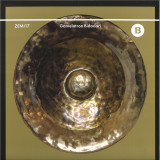
ZEMI17 - GAMELATRON BIDADARI LP

The Gamelatron is many things; one could call it a sculpture, a multimodal installation, an instrument, a robot, a feat of engineering, a vision—and it is all of these things. More importantly, though, it is a concept sustained by Aaron Taylor Kuffner, aka Zemi17, whose Gamelatrons are “sound producing kinetic sculptures” designed to create an immersive, visceral experience for the listener. Not a small feat, and yet the ambitions of Zemi17 are absolutely realized in this long-standing project, culminating now in his third release for The Bunker NY: Gamelatron Bidadari.

The Gamelatron Bidadari is not just a name—it is one of seventy-plus musical sculptures that Zemi17 has conceptualized, designed, and fabricated. Therefore, it would be inaccurate to think of this release as simply a series of arrangements composed in a finite period of time. Rather, it’s a window into a project and a process that is much larger than any single album can encapsulate. Gamelatron Bidardi is the culmination of more than a decade of work, and is central to Zemi17’s evolution, not only as a musician but as an artist.

Having studied gamelan for many years in Indonesian villages and at the Institut Seni Indonesia in Yogyakarta, Kuffner is a musician, an artist, technologist, and craftsman. The gongs in his sculptures are co-created with master Indonesian artisans. Each Gamelatron composition is site-responsive, meaning its sounds are composed for the acoustics and intentions of the space it inhabits, whether it’s an art gallery, a wooded landscape, or the inner temple of Burning Man. The Gamelatron does not stand alone: it is in constant co-creation with its physical environment, and in dialogue with gamelan’s long-standing history.

Originally exhibited at the Smithsonian Renwick as part of a show entitled, No Spectators: The Art of Burning Man, the Gamelatron Bidadari produces sounds that are delicate yet strong, and deeply hypnotic. Textured chiming creates intricate polyrhythmic patterns that are both complex and simple, or in a word, elegant. On Gamelan Bidadari, Zemi17 refrains from adhering to the strict musical structures; his approach to composition is free flowing.

He says, “I want to evoke what the music tells me it has to offer. It is like following water to its conclusion (or non-conclusion).” The arrangements on this album, written by Zemi17 and performed by the robotic arms of the Gamelatron, leaves the listener feeling enchanted, nourished and enriched.

A sense of the mystical comes through in the tonal quality of the instrument, and is conceptually felt in the sculpture’s name: the Bidadari, which loosely translates to “forest nymph.” The music conjures up natural wonder, and the four sculptures that make up the Gamelatron Bidadari, in fact, resemble trees. They are four independent yet connected entities, each with a large gong situated at their structural base—the sonic “roots” of the sculpture—while smaller gongs branch off of a golden, trunk-like spine. The Gamelatron Bidadari is as physically stunning as it is mesmerizing to the ear. A kind of divinity is invoked through its sound, or a sacred cohesion between past and present, tradition and new form. Meant to be viscerally experienced, the sounds of the Gamelatron call for sublime togetherness. Gamelatron Bidadari is not just an album but the crystallization of Kuffner’s work; it is a condensed yet spacious glimpse into the sonic power of Zemi17’s Gamelatrons, which have already been heard and experienced live by over a million people.

non in magazzino

Ordina ora e ordineremo l'articolo per te presso il nostro fornitore.


Last In: 3 years ago
Gammelsæter & Marhaug - Higgs Boson

Runhild Gammelsæter and Lasse Marhaug are two Norwegian musicians/sound artists. Both started in the early 1990s music underground and have worked in many constellations with a wide range of collaborators.

Despite knowing each other for a long time, Gammelsæter and Marhaug’s first collaborative work was the “Quantum Entanglement” LP in 2014. The album ignited a collective spark that both wanted to pursue further. Still, other commitments got in the way, and the project lay dormant until Stephen O’Malley, and Greg Anderson invited them to open for Sunn O))) for a special gig in the St. James Church of Culture in Oslo in the autumn of 2019. The two gathered for a long series of rehearsals, and after the successful performance, it was clear that it was time to start working on new compositions and recordings. That process initiated in late 2019 and continued to early 2021, encompassing before and after the world went through the lockdown. The result of this long development to be heard accumulated upon their new album “Higgs Boson” on Ideologic Organ Music.

Throughout the profound process of creating “Higgs Boson”, Gammelsæter and Marhaug drew inspiration from various subjects and artists. For Marhaug, it was concepts informed by the structuralist experimental cinema of Japanese directors Takashi Ito and Toshio Matsumoto, futurist worlds of French comic book artists Philippe Druillet and Jean Moebius Giraud, landscape photography of Fay Godwin, Kåre Kivijärvi, and Tamiko Nishimura, amongst others.

It became a metaphysical juxtaposition involving Gammelsaeter’s research and lyrical ideas based on several seemingly unrelated principles. A process of association inspired by “the Glass Bead Game” by Herman Hesse. The discovery of the Higgs Boson as a confirmation of the physical universe. The work of Ernst Schrödinger on the uncertainty principle. The four forces of physics. The Force. Helplessness under armed forces - as the war sailors in World War II. The influence of magic as expressed in tarot.

Gammelsæter experiments with a boundary involving the thresholds amongst various states of focus and legibility by forensic experimentation with techniques such as exclusive expression of consonants, syllabic repetition, retrograde text vocalisations and multi-lingual layering. Her vocal inspirational sources include Sidsel Endresen, Diamanda Galas, Natacha Atlas, the choral works of Rachmaninov, and the bands Carcass and Grave.

Two worlds coming together, making the music special. Mixing hard facts with science fiction helps create a kaleidoscopic cross point between the complex realities of the past and a possible future.

“Quantum Entanglement” featured two long-form pieces centred around a prepared piano and layered voice, while “Higgs Boson” developed a much more elaborate and ambitious compositional work. Across eight parts, the two artists brought a broad palette of instrumentation and sound. Electronic and acoustic, objects and field recordings, and pipe organ define the structures of which the centre is Gammelsæter’s magnificent voice. She has become known for her legendary voice, with her vast and unique range of inflective techniques and affective colour through her 30 years creating music. In the mix, Lasse approached the instrumental elements like landscapes, then Runhild’s vocals as characters that inhabit those worlds. Often, Gammelsæter multiple characters fused with the landscape. Make them occupy space, sometimes blend into it, sometimes dominate it. Constructing and setting visual guidelines helps set focus and open possibilities.

As an album, “Higgs Boson” is direct and focused, drawing on song structures. Within these tracks are vast strata of sound, an immersive multi-dimensional depth of music. Creating a feeling of depth while working with a flat two-channel stereo format - and how dimensions of texture and distortion can help develop the illusion of a space. The album structure is a story-like arc, a malleable subjective path, set as the album traverses oblique and suggestive areas, opening the concepts for the listener to unpack as they like.

– exclusive consultation with Gammelsæter & Marhaug, edited by Stephen O’Malley, June 2022

pre-ordina ora19.08.2022

dovrebbe essere pubblicato su 19.08.2022

TORTOISE - Millions Now Living Will Never Die LP

Millions Now Living Will Never Die is the second full-length offering from Tortoise. The majority of the material was first conceived during an idyllic 10-day retreat in Northern Vermont, where the group were able to explore their ideas in a setting that fostered introspection and inspiration: the results are clearly evident in the washes of Klangfärben (tone color) and rhythm that permeate the album. The sounds and ideas contained therein can be viewed as a logical extension of those found their first (eponymous) LP on Thrill Jockey where the group outlined an agenda exploring texture, space, and mood. MNLWND, however, offers not only an expansion of those ideas but also the introduction of several new elements into the musical equation. New instrumental textures (marimbas and other mallet percussion on "Djed" (pronounced "jed"); conventional electric guitar on "Glass Museum"; analog synthesis/sequencing and found sound on "Dear Grandma and Grandpa") and structural ideas (the extended formal procedures of "Djed"; the non-narrative song "Along the Banks of Rivers") represent clear developments and redefinition's of the group's sound.

non in magazzino

Ordina ora e ordineremo l'articolo per te presso il nostro fornitore.


Last In: 3 years ago
Caroline No - Caroline No

Caroline No’s 3rd album was built around a set of songs I was writing in the summer of 2019. I built the songs around real events, but looped these narratives into stories from song histories. The result is like an intersection of Brill building characters such as Carole King and Neil Sedaka with the bedroom fanaticism of historical music projects like Virgin Insanity.

After a year of playing the songs live in various formations, we aimed to record in the Australian summer. We knew Jim was going to be in Melbourne, and soon after he arrived in Australia, we met at Mick’s studio. Nick and Mick engineered, with Ian on bass, Jim on drums, Mick, Dee and me on guitars, and Dee and me singing. The sense of intuitive knowledge and performance was exhilarating as we played. We spent two days in the studio, and when we listened back later, it seemed a compelling representation of what had happened, captured live.

The band on this album are artists I grew up with. We were friends first, and engaging with the material, there was no formal structure to follow. Our interpretive approach meant the songs grew from simple structural frames and narrative poetics into full sonic landscapes, engaging across pop, folk, psychedelia and improvisation. Caroline No became - for this iteration - a shifting sonic space tied to intimacy, musical conversation and relationship, expressed in an open improvisatory way. The sound of the record is the result of trust, responsiveness and mutual knowledge.

The name Caroline No was an imaginary character through much of the work, arising from the Beach Boys’ melancholic paen to encountering a past lover who has cut her hair off. My idea was for Caroline No to become the locus for an ongoing composition project where I would write back into songs' history the perspective of patriarchal song’s subjects.

This is a recuperative project of easeful making; attempting reclamations of lost narratives, exploring love, loss and the psychedelic of the everyday.

Caroline Kennedy, January 2022, London

pre-ordina ora29.04.2022

dovrebbe essere pubblicato su 29.04.2022

Yoshio Machida & Cal Lyall - Premeditation

“In the early 2000s, Tokyo's SuperDeluxe was a meeting point for many experimental musicians, both international and Japanese. This duo sprung from a live collaboration at the venue in 2006, where Machida was experimenting with processed steel pan and Lyall was largely performing using a tabletop guitar setup with a range of electronics. Many subsequent encounters were heavily experimental, ranging from densely layered noise music to sound collage.

Through the years, the collaboration shifted to a more tonal approach, with standard tunings and stronger compositional elements. Both musicians have a deep interest in traditional improvisational forms, so there was a natural evolution towards structural ideas—based on minimal scalar patterns—as the sound became more acoustic. The most recent instrumentation explores the unusual combination of steel pan, slit drums and banjo, while also delving deeper into the characteristics of the instruments themselves.”

pre-ordina ora17.12.2021

dovrebbe essere pubblicato su 17.12.2021

Pak Yan Lau & Darin Gray - Trudge Lightly

"(…) Pak Yan Lau, one of the most original pianists of the new European creative scene, has the ability to build complex formal architectures starting from minimal materials – insistent rhythms, barely hinted melodies, electronic effects as evocative as they are mysterious. Darin Gray uses his long experience as the backbone of many improvisational groups with a painstaking work on timbre and a deep and multiform sound, providing a solid support to extemporary creations that have the solidity of pondered compositions. The music of the duo develops on wide structural strings, elegantly combining the continuous surprise of free improvisation with the material suggestions of electroacoustic experimentation, in a game of references and narrative developments almost cinematic, which tell a fascinating sound world, strangely familiar yet constantly new and surprising."
(Nicola Negri, Centro d’Arte Padova, Italy)

pre-ordina ora17.12.2021

dovrebbe essere pubblicato su 17.12.2021

Laurin Huber - Dog Mountain

»Dog Mountain« is the second release by the Zurich-based producer and composer Laurin Huber on Hallow Ground. After last year’s »Juncture« saw the Edipo Re co-founder work mostly with synthesizers and programmed rhythms, the four tracks are much more restrained, drawing on tape loops and feedback, recordings of acoustic guitar and synthesizers such as the Korg MS-10 as well as field recordings that relate to the overarching topic that informed the making of the record. While »Juncture« had previously aimed at deconstructing the binaries and dualities that shape our lives and thinking, »Dog Mountain« is dedicated to geographical divisions that result from political processes and social constructions. »›Here‹ means one nation, ›there‹ another,« writes Huber in a literary piece that accompanies the record. »Being in sound, such a separation seems odd.«

While treating the metaphor of the border as a »membrane, registering and translating the vibrations of its surroundings« and thus as something that is constantly (re-)defined, maintained and defended however, the artist also takes into consideration that »one cannot escape one’s standpoint,« as he puts it. The music on »Dog Mountain« may transcend and overcome certain borders, but it does not deny the realities that they impose on each and every one of us – whether in our political lives or in the realm of sound. This is mirrored in Huber’s engaging in the structural and sonic interplay of repetition and difference. Working with slowly evolving and modulating elements that are exposed to slight shifts, »Dog Mountain« puts a focus on the interaction between small elements that together form a bigger whole which is marked by constant evolution and change.

Opener »Raja« (»border« in Northern Sami and Finnish) starts off with a two-note melody played on an out-of-tune guitar. Different field recordings and synthesizer sounds drop in and out of the mix until the dynamic shifts and Huber starts playing more notes on his instrument, thus increasing the tension. It’s a meditation on minimalism, but also a piece that mediates between notions of what constitutes the difference between noise and music or referentiality and abstraction in sound. After »Nickel« (named after a Russian monotown near the border to Norway) dedicates itself to explore the friction between hissing white noise and melancholic tape loops, »A Town Is Not a Town« (a phrase taken from the documentary »Kiruna – Rymdvägen«) structurally mirrors the experiment of »Raja« with very different sonic means.

Closing the record, »Storskog-Borisoglebsk« (the title refers to the northernmost land border between Schengen-Europe and Russia) is the longest and most challenging piece, working with both long-form drones and musique concrète elements. It proposes a synthesis of the opposites that are explored patiently and with much attention to detail throughout this record.

pre-ordina ora30.07.2021

dovrebbe essere pubblicato su 30.07.2021

Rose Bolton - The Lost Clock

Rose Bolton

The Lost Clock

CassetteSAUNA059CS
Cassauna
25.06.2021

Tape

It might be easy to assume that the distinctly focused compositional voice unveiled on Rose Bolton's The Lost Clock is the product of its creator's rigorous, almost hermetic dedication to her own particular aesthetic universe. A quick survey of Bolton's artistic career, however, reveals that her carefully sculpted approach to abstract electronica has been forged through a longstanding engagement with a wide range of intertwining creative activities.

This album—coming out on Important Records' cassette imprint, Cassauna—demonstrates both the Toronto-based composer's unique mastery of colour and her gift for breathing a tactile, organic quality into synthetic landscapes. Bolton's distinctive sensibility is akin to that of a painter—every hue has been carefully mixed so as to imbue its accompanying gesture with its own life and personality. This tangible dimensionality her electronic work assumes, however, can be traced back to the work Bolton has been doing since the 1990's. She has produced a large and varied catalogue of work that includes pieces for solo performers, chamber ensembles, orchestra, electronics, voice, and to accompany installations and films. A number of her works reside in several of these zones simultaneously, such as Song of Extinction, an ambitious collaboration between herself, filmmaker Marc de Guerre, poet Don McKay, and multiple live ensembles, that was mounted in an abandoned power station for Toronto's Luminato Festival.

This quasi-instrumental vitality isn't the only feature of The Lost Clock that reflects Bolton's diverse artistic practice. It can also be heard within the structural realm. Each of the collection's four tracks trace a patient unfolding and favour a certain roundness of timbre, even as finer details begin to fidget along the perimeter of the music. As with her writing for the concert hall, Bolton doesn't shy away from the evocative here, yet she doesn't pursue this poignancy through conventional, direct or quasi-narrative means. Her compositions lead the listener gradually through their impressionistic sonic scenery, but neither the path they take nor their ultimate destination are at all predictable. The ostensible gentleness each piece exudes dissolves as dissonances slowly insinuate themselves, obscure textures writhe just out of earshot, percussive lattice work materializes, or as the overall blend begins to exert a heavier weight. Her lucid-dream vision of form functions in tandem with her acute micro-level attentiveness to engender a vivid and elusive soundworld that resists classification.

Over more than two decades Rose Bolton has been garnering acclaim and enthusiasm from audiences and major collaborators alike. Last year, her brooding string quartet The Coming Of Sobs was nominated for Classical Composition of the Year at the JUNO Awards, following earlier accolades such as SOCAN Awards for Young Composers, and the Canadian Music Centre's Norman Burgess Fund. Her music has been commissioned by the likes of the CBC, stalwart experimental music festival the Sound Symposium, as well as key interpreters and ensembles such as percussionist David Schotzko, accordionist Joseph Petric the Esprit Orchestra, Continuum, Arraymusic, the Kitchener-Waterloo Symphony, and guitar quartet Instruments of Happiness (led by Tim Brady). Together with Marc de Guerre, she produced an 8-speaker sound and video installation for Toronto's Nuit Blanche Festival. She's also been featured by the likes of revered pianist Eve Egoyan, The Vancouver Symphony, L'ensemble contemporain de Montréal, The Music Gallery, and AKOUSMA, while appearing in concert alongside the likes of Jerusalem in My Heart (Constellation Records), Tanya Tagaq, and Francis Dhomont. Bolton is also a respected film composer, notably contributing music to the highly regarded documentary Anthropocene: The Human Epoch (co-directed by Jennifer Baichwal, Nicholas de Pencier and Edward Burtynsky).

As a performer, she variously employs electronics, violin, and viola. Parallel to her engagement with exploratory approaches, she's invested in the fiddle traditions of the British Isles, and various Canadian regions. She teaches this repertoire at the Royal Conservatory of Music. Bolton has also performed with Rhys Chatham, Owen Pallett, opened for Charlemagne Palestine, and appears on recordings by the likes of Chatham and Aidan Baker. In 1999 she joined the Canadian Electronic Ensemble, whose fifty-years together make them the world's longest-running live-electronic music group. In February 2020, the CEE held a residency and provided guest lectures at Carnegie Mellon University's music department. Bolton has also led workshops at the Banff Centre, also founded the SOCAN/ Moog Audio-sponsored program EQ: Women in Electronic Music, which worked to foster community and mentorship among (trans/cis) women and non-binary individuals.

pre-ordina ora25.06.2021

dovrebbe essere pubblicato su 25.06.2021

ALFA MIST - BRING BACKS

Alfa Mist

BRING BACKS

12inch277897
Anti
17.06.2021

Alfa Mist is one of the driving forces behind a young and vibrant scene of UK musicians, who've taken on jazz as their musical narrative. On his new album Bring Backs the producer, self-taught pianist and rapper takes us on a sonic trip back to his beat-making past on the streets of East London, through the depth and musicality he discovered composing and playing jazz. 2017 saw the release of Alfa's breakthrough record, Antiphon and the 2019's album Structuralism were both self-released on his Sekito label. His latest endeavour, 2021's Bring Backs, sees Alfa taking on new challenges. The record marks his first release for the label Anti and is also the most detailed exploration of his upbringing in musical form.

non in magazzino

Ordina ora e ordineremo l'articolo per te presso il nostro fornitore.


Last In: 4 years ago
ALFA MIST - BRING BACKS

Alfa Mist

BRING BACKS

12inchANTI277891
Anti
20.04.2021

Alfa Mist is one of the driving forces behind a young and vibrant scene of UK musicians, who've taken on jazz as their musical narrative. On his new album Bring Backs the producer, self-taught pianist and rapper takes us on a sonic trip back to his beat-making past on the streets of East London, through the depth and musicality he discovered composing and playing jazz. 2017 saw the release of Alfa's breakthrough record, Antiphon and the 2019's album Structuralism were both self-released on his Sekito label. His latest endeavour, 2021's Bring Backs, sees Alfa taking on new challenges. The record marks his first release for the label Anti and is also the most detailed exploration of his upbringing in musical form.

non in magazzino

Ordina ora e ordineremo l'articolo per te presso il nostro fornitore.


Last In: 2 years ago
ALFA MIST - BRING BACKS

Alfa Mist

BRING BACKS

12inchANTI277893
Anti
20.04.2021

Alfa Mist is one of the driving forces behind a young and vibrant scene of UK musicians, who've taken on jazz as their musical narrative. On his new album Bring Backs the producer, self-taught pianist and rapper takes us on a sonic trip back to his beat-making past on the streets of East London, through the depth and musicality he discovered composing and playing jazz. 2017 saw the release of Alfa's breakthrough record, Antiphon and the 2019's album Structuralism were both self-released on his Sekito label. His latest endeavour, 2021's Bring Backs, sees Alfa taking on new challenges. The record marks his first release for the label Anti and is also the most detailed exploration of his upbringing in musical form.

non in magazzino

Ordina ora e ordineremo l'articolo per te presso il nostro fornitore.


Last In: 4 years ago
Saele Valese - IVIC LP 2x12"

Saele Valese

IVIC LP 2x12"

2x12inchN+001-2
NOTON
08.02.2021

NOTON signs Italian-born, Bern-based sound-artist and producer Saele Valese.
In ‘IVIC’, his debut LP, Saele Valese, distills hauntological noise, droning tonal experiments and minimalist rhythms into a series of electro-acoustic-wave ventures written over five years in Berlin, Saas-Fee and Thun.
Drawing influences from the psychoacoustic properties of the live album format, IVIC’s 11 tracks were mixed and recorded live on DAT cassettes and through DAW experimentation, without the possibility to revise the final recordings. Valese adopted this approach to conceptually propose reconciliations between the irreversibility of the
past, and acceptance of its residuals in the present. The track titles themselves follow this pathos, citing the works of the American photographer Francesca Woodman and the poet Sylvia Plath. The inclusion of passages incorporating live sonics and throes of industrialismnso,ton.info contributes to the images of gravity, intimacy and spatiality that the music presented here invokes.
In keeping with this imagery, the music possesses a dilated, shuffling rhythmic base, much like the firm traversal of a tanker against a storm of jangling components, and still moments of gloomy sonics
alternating with more ravenous upheavals of power electronics.
If the track divisions do not pass by unheeded, they are consistently assembled to sonically accompaign the emotional charges and momentum of an imaginary cinematic experience; the beats caves in
for instants of relief, only to recoil in a cognated tempo but rearranged structurally. In another gesture of cogitated stride, the portentous waves of the record progressively rage into a turmoil in its third quarter during 'Horse The Color Of Rust'. The album reaches its closure fluctuating through microtonal oscillations to slowly eclipse into silence.
´In Your Rosary ì and Yì ou Cannot See Me From Where I Look At Myself ì were previously released on vinyl via Saele Valese’s own imprint, JSMË.
The track ‘You Cannot See Me From Where I Look At Myself’ 4 - is dedicated to the memory of Marco Bacher.
Artwork designed by Carsten Nicolai. Mastering by Matt Colton (Metropolis Studios, London).

non in magazzino

Ordina ora e ordineremo l'articolo per te presso il nostro fornitore.


Last In: 18 months ago
Steve Hauschildt - Nonlin

Chicago-based contemporary electronic musician Steve Hauschildt has composed panoramas of synthesized sound for over a decade. First within his former band, Emeralds, an American touchstone of 2000s home-recorded psychedelic noise music, and later across a steady and critically-acclaimed stream of solo releases spanning ambient techno, arpeggiated electronica and post-kosmische styles utilizing synthesizers, computers, and digital processing. In 2018, he extended a collection of rich, visceral tracks titled Dissolvi, his first release on Ghostly International and his most collaborative work to date. Just a year later, Hauschildt returns with Nonlin, an album that's freer, leaner, and looser, both structurally and conceptually; less linear compared to its predecessor, but still captivating. Developed and recorded in several studios during and around the edges of tour - Chicago, Los Angeles, New York, Tbilisi, and Brussels - this material emulates an alienating encounter with a smattering of places, a replicant of culture shock, a solitary and stark experience with uncanny environments, melody and dissonance as oblique locales. Nonlin finds Hauschildt evolving his palette of tools, integrating modular and granular synthesis. The improvisatory and generative nature of modular systems, when paired with his signature grid-oriented and hand-played techniques, guides these compositions slightly out of line to hypnotic effect. Opener "Cloudloss" permeates the mix with an unsettling smog, which reappears and all but engulfs "A Planet Left Behind." On cuts like "Attractor B" and "Subtractive Skies," pockets of air rest between sequenced pulses, whose crumpling and flattening folds build into a restrained rapture of crisp frequencies and milky reverb-swallowed coruscations. The album's title track and centerpiece logs on to a foreign network, a fractured percussion signal that modulates and stutters into static amidst curious melodic sparkling in the hazy bandwidth. "Reverse Culture Music" casts an elegant and brooding stream of strings, pizzicato and churning bow from Chicago cellist Lia Kohl, against chiming minimalist synth frameworks. A surprising pattern emerges in the taciturn systems at work. Hauschildt continues to expand his already horizon-wide repertoire, here exploring the effects of corrupting coordinates; a flight subject to the collapsable abilities of time in remote spaces, a smearing of the axis to elegiac ends.

non in magazzino

Ordina ora e ordineremo l'articolo per te presso il nostro fornitore.


Last In: 5 years ago
Fehler Kuti - Schland Is The Place For Me

I remember the first time I read W.E.B. DuBois eclectic masterpiece The Souls of Black Folk. The way in which this Weberian scholar flowed from personal account to prose to sociological analysis to music and even political intervention has had a lasting impact on my own work as a cultural anthropologist. It made me understand that as scholars we must use different means in order to give expression to the totality of the lived experience: There is only so much in an academic text.

The experience of alienation has always been at the heart of my scholarly and artistic practice. I have used academic writing, lecturing, theatre performance and electronic improvisation to understand and represent it as a theoretical concept, postcolonial condition and lived experience. I believe, some issues need to be told like a story, some analyzed in most abstract terms and others need to be sung like a gospel. The medium changes the message.

In this sense, I guess, I’m a singing cultural anthropologist.

For some time now I have been engaged in the use of dystopian themes and sounds to paint a sonic picture of structural racism and whiteness of our present. But recently I have grown weary of this Ballardian idea of Future Now and the resulting phantasmagorian aesthetics myself and others have been invested in. The widespread availability of Digital Audio Workstations, sequencers, loopers and delay pedals has lead us into a futuristic cul de sac best described by Mark Fisher as the very absence of future.

Likewise, I am most skeptical of the “naturalist” countermovement, the return of folk. Especially in Germany, I am convinced there is no such thing as an innocent or progressive folk musical expression as it is always connected to the idea of the homeland (“Heimat”) which in turn produces the colony. It seems to me, the current zeitgeist is stuck between a “museum of a dystopian future” and a “museum of an idealized past”, but I wanted to sing about the present.

So, I involuntarily returned to pop music in its two-folded meaning of something popular and addressing not an essentialist notion of “Volk” or its woke cousin “communities”, but society as a whole.

I entered the studio just with a few lo-fi sounding melodies and rhythms from my circuit bent CASIO synthesizer. I had no clue what the finished product would sound like. But as soon as Markus started drumming, in a way strangely reminding me of CAN’s Ethnographic Forgery Series, my uptight sounds were suddenly embedded within a warmer global sound spectrum. The alien at home and abroad and the strange overlapped: We were seeing one and the same sound differently but were gently held together by Tobias’ producing.

Making music is about building coalitions. It’s about suggesting an articulation of styles, sounds and people, that hasn’t materialized, yet, but may help us in the current crisis: I wanted Amon Düül II to send their drug induced archangel thunderbird to rescue the refugees, that had tried to escape the police by climbing up a tree in Munich in 2016. I wanted Sun Ra to taunt far-right protesters in Chemnitz in 2018. And I wanted to mourn the loss of a former kebab shop cum discotheque that served as proof that there is such a thing as a minoritarian universalism.

SCHLAND IS THE PLACE FOR ME is a pop album featuring songs of alienation, not only as a tragic experience, but as a pop-cultural promise. Maybe Bill Callahan sung it best, “I am Star Wars today, I am no longer English grey”. I want those who suffer from alienation to stand in alliance with those who seek alienation, and vice-versa. A coalition, that tolerates the possibility that we are moved by the same groove for contrary reasons.

Fehler Kuti
Munich, Autumn 2019

Music by Julian Warner, Markus Acher & Tobias Siegert
Saxophone on RINDERMARKT by Franz Brunner
Trombone on RINDERMARKT and IL by Matthias Götz
Recorded and mixed by Tobias Siegert in Munich.
SONTAGSFAVORIT mixed by Dario Albiez in Dusseldorf.
Mastered by Duphonic in Augsburg.
Artwork by Atelier Grande, Munich.

non in magazzino

Ordina ora e ordineremo l'articolo per te presso il nostro fornitore.


Last In: 4 years ago
Noya Rao - Icaros

Noya Rao

Icaros

12inchGONDLP020
Gondwana Records
11.12.2017

Purveyors of enigmatic dreamscapes and organic, danceable electronica, Leeds-based, electronic-soul quartet Noya Rao are set to release their debut album, Icaros, this November. Founded by producer Tom Henry (Cosima, Yellow Days) Noya Rao was originally conceived as a solo production project with a separate live band representation. Alongside bassist Jim Wiltshire and drummer Matt Davies, whom Tom had met playing in other bands within the Leeds music scene, the project grew to become a collaborative effort mixing Tom's production ideas with the attributes of Jim's unique bass synth lines and Matt's polyrhythmic beats. Their compositions drew on the influences of jazz, hip-hop and electronic music whilst incorporating the sounds of the bass-heavy-dub music synonymous with the Leeds music scene. Their sound really came into focus when they met vocalist Olivia Bhattacharjee who brought her gospel style and complex choral harmony to the band. Developing from raw, psychedelic improvisations, their sound became more defined and minimal, underpinned by live instrumentation and more structured song writing. This co-existing electronic and organic thread gives the band a strong identity and their powerful live show sets them apart from other producer-led bands. Matthew Halsall from Gondwana Records saw the band perform at an intimate show in Manchester in 2016 and blown away, signed the band on the spot.

Icaros takes the listener on a journey through the band's unique sound-world amplified by Tom Henry's bold and inventive production techniques. Sometimes fragile, sometimes raw and visceral the album opens with the ethereal Azimuth. It's contrasting sections and mysterious chords offer echoes of the band's instrumental beginnings whilst the repeated vocal harmony layers at the end demonstrate a signature feature of the new Noya Rao sound. Moments is the first tune they wrote together and reflects upon taking joy in the everyday: the opening womb-like chords are another distinct sound of the band. The gritty Golden Claw describes the effects of a manipulative heartbreaker, it's darker, more driving and has a ruder '80s flavour. Midas demonstrates the band's use of linear structural forms and complex rhythms influenced from around the globe. It tells the story of someone who, led by greed, made some regrettable decisions. The atmospheric Dreaming Part 1 and Part 2 are sumptuous dreamy soundscapes. They were born from the same epic improv-based writing sessions as Fly, which has a trippy disco vibe, offset with wonky chords and crunching vocal harmony. The hook-led I Feel points to future ventures for the band: mixing their electronic textures with a more formal song-writing approach. A sublime slice of dreamy space-jazz, Same Sun Will Rise, finds Olivia contemplating mankind's utter selfishness and a desire for change, "Over borders we've assigned, same sun will rise'. Minimal and spacious, This Time demonstrates the merging of ethereal edginess and delicate songwriting. It is this combined with their electronic and live approach and more than a hint of Leeds attitude that gives Noya Rao their unique sound.

non in magazzino

Ordina ora e ordineremo l'articolo per te presso il nostro fornitore.


Last In: 8 years ago
Jose Pouj - Structural Abnormalities Ep

A new reference of the prestigious Spanish Techno label Injected Poison Records. After a year since from her last release on vinyl, during this time, we have been able to see some of her releases in digital format, but, It's vinyl time , we have generated enough waiting and now we can enjoy a powerful vinyl, with a magnificent work of art and design for collectors and four powerful tracks with 3 of the best producers of the Techno scene. We are proud to welcome our well-known label partner Christian W nsch and a new member of the Pole Group; P.E.A.R.L. At the vinyl we can listen two original tracks from the owner of the label, Jose Pouj, with two remixes of Christian W nsch and P.E.A.R.L. The release date will be available in September. Enjoy.

non in magazzino

Ordina ora e ordineremo l'articolo per te presso il nostro fornitore.


Last In: 8 years ago
Articoli per pagina:
N/ABPM
Vinyl
