Suche:strike one

Styles
Alle
Sabrina Malheiros - Equilibria

Nu bossa icon Sabrina Malheiros has released four now classic original studio albums for Far Out Recordings. Her first, Equilibria, was originally released in 2005, ascending the daughter of Azymuth bassist Alex Malheiros to international acclaim. Celebrating 20 years since it was first released—for Record Store Day 2025—Equilibria will be available on vinyl for the first time ever.

A masterful collection of sambas and bossas, Equilibria strikes the perfect balance between classic Brazilian songwriting and modern production courtesy of Far Out mainstay Daniel Maunick. The album features some of Brazil’s very best musicians including members of Azymuth, as well as Incognito frontman and guitarist Jean-Paul ‘Bluey’ Maunick.

As one review put it, Equilibria is “guaranteed to turn your limbs to liquid…. Prepare to be swept away”

Auf Lager

Bei uns am Lager und sofort versandfertig

CLIPPING. - DEAD CHANNEL SKY LP 2x12"

Clipping.

DEAD CHANNEL SKY LP 2x12"

2x12inchSP1575LPX
Sub Pop
14.03.2025

Because of their mix of hellified gangster shit and progressive compositions, I once jokingly called Clipping "Deathrow Tull." Well, it's not a joke anymore. While Clipping's last few projects have been record-long concepts like classic prog rock, their cyberpunk-infused new album Dead Channel Sky is mixtape-like, a carefully curated collection in which every track is a love letter to a possible present. It sounds crisp and classic at the same time. When something strikes us as retrospective and futuristic at the same time, it's a reminder of how slipshod our present moment truly is. Juxtaposing high-tech, corporate command-and-control systems (the "cyber") with the lo-fi, D.I.Y. underground (the "punk"), cyberpunk proper starts in 1982 and ends in 1999, from Blade Runner to The Matrix. Concurrently, hip-hop matured, went through its Golden Era, then melted into further forms: it went from from Fab 5 Freddy to Public Enemy to Missy Elliott. While other genres flirted with it, hip-hop was fickle and fey. Rap and rock birthed mutant offspring maligned by most, and hip-hop's relations with electronica rarely fared any better. What if someone explicitly merged hip-hop and cyberpunk - those twin suns of the '80s and '90s - into one set and sound? After all, both movements are the result of hacking the haunted leftovers of a war-torn culture that's long since moved on. On Dead Channel Sky, Clipping texture-map the twin histories of hip-hop and cyberpunk onto an alternate present where Rammellzee and Bambaataa are the superheroes of old; where Cybotron and Mantronix are the reigning legends; where Egyptian Lover and Freestyle are debated endlessly, and Ultramag and Public Enemy are the undeniable forefathers; where the lost movements of 1980s and the 1990s are still happening: rave, trip-hop, hip-house, acid house, drum & bass, big beat-the detritus of a different timeline, the survivors of armed audio warfare. Clipping are no strangers to sci-fi: two of their records were nominated for Hugo Awards (one of science fiction's top literary prizes), and a novella spun-off from their music was nominated for a third. On Dead Channel Sky, Clipping's co-conspirators include everyone from the guitarist Nels Cline, to their labelmates Cartel Madras, rapper/actor Tia Nomore, and wordsmith Aesop Rock. Diggs is known for intricate lyrics and rapid-fire rapping, and the tracks that Snipes and Hutson build in the background are no less complex. All of the above serves to give us a glimpse of an adjacent possible present, where hip-hop and cyberpunk are one culture. Binary stars are often perceived as one object when viewed with the naked eye. Like those twin sun systems, it'll take some special equipment and some discerning attention to pull the stars apart on this record. As Diggs barks on the fire-starting "Change the Channel": Everything is very important!

Auf Lager

Bei uns am Lager und sofort versandfertig

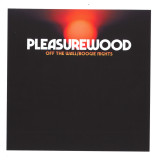
Pleasurewood - Off The Wall / Boogie Nights

Dive head first into a parallel universe where the facts of music history have been turned into pliable putty and an alternative world where Rod Temperton never met Quincy Jones, never joined Heatwave and never wrote songs for the greatest pop soul artists of the 70’s and 80’s BUT instead, hung out at a West Berlin commune with a cast of trans-continental musicians playing a hybrid of post-psychedelic rock with overtones of Ghanaian funk and early 80s synth experimentation all the while exploring the mystic tundras of the mind and the celestial palisades of the soul...

This is the parallel universe that the Suffolk based studio dwellers, Pleasurewood inhabit. Let them take you on a journey through some of Temperton’s biggest hits in only a way that Pleasurewood’s genre defying style and studio prowess will allow.

Heatwaves kicks off on vinyl, with a tasty 7” Double A side that is dance floor ready...

It’s an off-kilter affair from side one with ‘Off The Wall’ swirling in a dense fog of phased bass guitar and emerging onto the shore with jutting hips to a groove underpinned by a sweating percussion section and early forms of synthesiser soaring above like crazed Pteranodons.

On the flip side is ‘Boogie Nights’ striding slowly and purposefully into frame with an apocalyptic Bass guitar line riding a solitary cowbell before a synthesiser clarion ushers in the break and the familiar hook with Moog thunder-strikes glowering in the distance.

The 7" includes digital download of the 7-tracks album "Heatwaves".
Limited to 200 copies.

Auf Lager

Bei uns am Lager und sofort versandfertig

Edictum - A Cosmic Scale

The album’s title deftly gestures to the sheer vastness of astronomical dimensions, while simultaneously capturing the musical breadth within, where the eight planets are imagined as the eight notes of an octave. The work draws inspiration not only from earlier compositions —most notably Gustav Holst’s The Planets—but also from the rich astronomical and cultural contexts surrounding these celestial bodies. Here, the focus transcends direct citation of melodic motifs, instead embracing an intriguing conceptual approach on a meta level, unfolding in a series of vividly contrasting soundscapes. These contrasts shape a sweeping sonic journey, one that fully embraces the album format with both arms, inviting the listener to venture into realms both strange and wondrous, feeling the immensity of the interstellar space that lies between them. Contrast, after all, is the brushstroke that enriches our world.

Embarking on an auditory voyage, "Astral Guide" establishes the sonic framework that propels us into the boundless expanses of the cosmos. Its ethereal tones evoke the vastness of space, crafting a mood ripe for exploration within the realms of sci-fi. The subsequent tracks unfold like constellations, weaving a rich tapestry of sound that seamlessly marries cinematic soundscapes with pulsating, club-oriented rhythms. This album invites listeners to traverse its immersive landscapes, whether nestled in the comfort of home or dancing under the starlit sky, each note a guide through the transcendent experience of a nocturnal journey.

"Solar Flares" draws its inspiration from the awe-inspiring expanse of solar phenomena, capturing the majestic power of the sun as it reaches into the cosmos. This track resonates with the idea that energy, while vital, can also be a force of destruction when unleashed with overwhelming intensity. The composition beautifully mirrors the sun’s duality, where brilliance and devastation coexist, inviting listeners to reflect on the delicate balance between creation and annihilation. Through its rich textures and dynamic shifts, "Solar Flares" serves as both a homage to the celestial and a poignant reminder of nature's formidable power.

"Mercury – The Winged Messenger" embodies a meticulously crafted soundscape where artistry meets astronomy. The tempo of 173.6 BPM, derived from precise astronomical data, propels the composition into a vibrant realm that resonates with cosmic energy. Synthwave sound design intertwines seamlessly with the fluid rhythms of Drum’n’Bass, imbuing the piece with an uplifting dynamism that evokes the ethereal grace of Mercury itself. In this sonic exploration, listeners are invited to ascend on wings of sound, navigating the celestial tapestry of the universe with each invigorating beat.

"Venus, The Bringer of Peace" strikes a decidedly cozy note, presenting a poignant contrast to the more tempestuous themes often found in cosmic narratives. This composition evokes a nostalgic vision of an optimistic era, one in which humanity transcended borders and embraced the infinite possibilities of space exploration, where no destination felt too distant. The dense, languid atmosphere envelops the listener, creating a tangible sense of serenity that unfolds gradually, allowing for a meditative journey through sound. Each note serves as an invitation to linger in this tranquil embrace, reflecting on the harmonious potential of our collective aspirations and the beauty of connection in a vast universe.

The central theme of „Gaia, The Bringer of Life“ —originally not part of the planetary cycle— is the profound enabler of life on Earth. The arrangement delicately mirrors the slow, tentative unfolding of this potential, marked by an initially sparse orchestration that gradually builds in momentum. This progression crescendos, embodying the explosive dynamism of the Cambrian burst of life, ultimately culminating in a euphoric fanfare—a triumphant, celebratory flourish echoing life’s victorious emergence.

"Blue Moon" unfolds as a contemplative reverie on the tranquil clarity of a night sky, now seldom glimpsed in its natural purity, unclouded by the relentless haze of urban light. The listener is drawn into the vast embrace of the star-strewn firmament, a journey that sways between euphoric awe at nature’s sublime beauty and a profound melancholy for its fragile and imperiled state. Musically, this duality finds expression in the delicate interplay of modal mixtures, while an ever-shifting triplet groove, poised at the intersection of Outrun and melodic house, lends a pulse that is both nostalgic and forward-looking—echoing the beauty and transience of a world on the brink.

Rather than replicating the original composition of „Mars, The Bringer of War“, this interpretation seeks to evoke its profound, foreboding atmosphere. Cyberpunk emerges here as an ideal genre, channeling the dark, relentless march synonymous with Mars, the ancient god of war. The piece reverberates with intensity, as distorted vocalizations rise, embodying the anguish and visceral torment that shadow war’s violent crescendo. This auditory descent into conflict captures the relentless pulse of warfare, where sound itself becomes an embodiment of suffering and fury.

Majestically, "Jupiter, the Bringer of Jollity" emerges on the celestial stage, sweeping away the somber tones with its radiant vigor. Drawing inspiration from the triumphant strains of the original, and borrowing a melodic motif in the refrain, the piece expresses joy and buoyancy through a shift to a major key and the lilting sway of a danceable 12/8 meter. Spirited and exuberant, it leaps boldly from major to minor and back again, playfully shifting time signatures to capture a mood of unbridled festivity and jollity.

Here, a more conciliatory concept is chosen than in the original inspiration. „Saturn“ aligns with the number six, being the sixth planet from the Sun and bearing the iconic hexagonal pattern at its northern pole. What, then, could be more fitting than to render this piece in a 6/8 time signature? The arrangement unfolds with a multifaceted richness, mirroring the countless stones and ice fragments that form the foundations of Saturn’s majestic rings.

„Uranus“ adopts the theme of a light-footed, dancing instrumentation, giving the impression of perpetual motion, never quite settling. This musical choice harmonizes with the planet’s own orbit, as it spins with breathtaking velocity, teetering and swaying, seemingly unable to attain rest or stability.

The chill and vastness of the cosmos find expression in „Neptune, The Mystic“. At its core, an electronic soundscape envelops a classical arrangement, its unreachability intensified by an ethereal, otherworldly choir. Hovering at the outermost boundaries of the solar system, where warmth is but a distant memory, the composition lingers in a slow, contemplative tempo, evoking a realm where space for speculation stretches wide and silence reigns supreme.

Though Pluto may have lost its planetary status, and its companion Charon never achieved one, this shift in classification subtly aligns with the cosmic scale invoked here—one that mirrors the musical tradition of an eight-note sequence. Fittingly, the album closes with „Kuiper Belt“, a composition emblematic of the turbulence and vitality of countless smaller

celestial bodies that, though diminutive, find their rightful place within the vast architecture of the solar system.

They say nature is the greatest composer, shaping the universe with a symphony of chaos and order, beauty and danger. It is this duality that fuels the artistic vision of Edictum—a producer who, armed with a doctorate in chemistry, delves as deeply into the mysteries of molecules as he does into the depths of sound. In the tension between the vastness of the cosmos and the microscopic processes that dictate life’s rhythm, Edictum creates sonic landscapes that dissolve the boundaries between science and art.

His music is a story of contrasts—a sonic tale where the raw forces of nature clash with the intricate structures of human culture. Opposites intertwine to form a harmonious whole: the primal rhythms of the earth meet the celestial melodies of the cosmos, the rigid laws of physics blend with the boundless freedom of art. Edictum explores these polarities with meticulous devotion, each composition an expedition into uncharted soundscapes—a quest to give voice to the unfathomable.

With over 20 years immersed in the realms of electronic music, Edictum has honed a keen sense for rhythm and movement. His driving beats compel both body and mind into a hypnotic flow. Yet beyond the pulse of dance lies a complex framework of conceptual thought. Today, his creative focus revolves around holistic album projects—self-contained worlds with overarching narratives that embrace contrast and complexity. Each track stands alone as a fragment of the whole, but together, they weave a cohesive tapestry, much like the chapters of a novel that guide the listener on an emotional and sonic journey.

Edictum’s distinctive musical signature has earned him international recognition. With over 150 releases, many on prestigious platforms like the iconic *NewRetroWave* label, and collaborations with artists such as Jan Johnston, Azumi Inoue, Powernerd, and Turbo Knight, he has solidified his place in the global electronic music scene. His latest work, *A Cosmic Scale*, marks his seventh vinyl album and is released under his own label, *Echoes of Expanse*. The label’s name is no coincidence—it captures the essence of his art: echoes of infinity, the vibrations of the universe distilled into a singular sonic experience that carries the listener ever further into the boundless expanse of sound and space.

Auf Lager

Bei uns am Lager und sofort versandfertig

Jerzy Mączyński - DO 555ps

Jerzy Mączyński

DO 555ps

12inchVIB002
VIBRASJON
05.03.2025

Polish saxophonist, producer and composer Jerzy Mączyński fuses utopian electronics and organic improvisation on sci-fi jazz odyssey, DO 555ps. Building on his 2023 collaboration with Jamal Moss aka Hieroglyphic Being, DO 555ps is Mączyński’s first self-produced album – a tour de force of spacious, galactic sound design that leans into drone, minimalism and the rich history of sci-fi soundtracks for a 10-track suite of astral proportions.

Mączyński’s sound is both maximalist and restrained, sensitive to detail and atmosphere, defying categorisation and swirling in an orbit of its own making.

Set to be released on Eivind Vullum’s Vibrasjon label in Norway, DO 555ps follows the 2023’s TUNE IN, made under Mączyński and Hieroglyphic Being’s Universal Harmonies & Frequencies moniker.

Described by The Quietus as one of the most interesting records of the year (“as bold as it is massive”), TUNE IN laid the foundations for Mączyński to strike out alone on DO 555PS, inspired by Moss’s skewed production and arrangements to striking and unique effect. - Anton Spice

Auf Lager

Bei uns am Lager und sofort versandfertig

Marvin - Sweet Analog Memories EP

Quinoa Cuts proudly presents its 4th release: Marvin's 'Sweet Analog Memories' EP

This record is a sonic journey that bridges past and present, blending nostalgic analog warmth with a modern edge. A message that resonates loud and clear as you dive into both sides of this vinyl opus.

Side A opens with two tracks that deliver a lush, analog-driven soundscape, evocative of the iconic synth-wave movement of the ‘80s. These compositions are delicately interwoven with electro-inspired nuances, creating a bittersweet atmosphere that dances between melancholy and romance. It’s music that strikes deep emotional chords while transporting you to a dreamlike, neon-lit past.

Side B takes a darker turn, shifting the narrative entirely. While the golden-era analog textures remain present, these tracks explore a more progressive, shadowy, and haunting realm. They generate an intense sense of entropy, awakening the psyche and stirring emotions in unexpected ways. This side is a deep dive into a more introspective and visceral space, one that challenges the listener to confront their inner world.

Marvin’s EP is a record that demands to be felt as much as it is heard. Whether you’re a synth-wave enthusiast, an electro explorer, or simply a lover of forward-thinking electronic music, this release will resonate with you.

Auf Lager

Bei uns am Lager und sofort versandfertig

Parchi Pubblici - Pressed Trouble

Twenty-four strikes on Exarde with Parchi Pubblici, the hardware analog act from Italy who records his songs in one take and have been laying it heavily and steadily for a while, henceforth we can hear the result of it with our own ears. The release consists of four original works by the man himself with first three ready for peak time club cuts with the help of roaring analog machines. They are produced to ready to sweat the dance floor, these stories are followed by a great outro track to conclude this EP. “Pressed Trouble” which is the name of this disc describes the content of it perfectly, because sure as hell this body of work is on the mission to create trouble and trouble sometimes needed to construct the top-level audio trips. Having produced digital contents for the respected labels that you can look up, this is a debut physical vinyl release by the artist and it is a great honour to host him on the label and hopefully to many more to come in the future.

Auf Lager

Bei uns am Lager und sofort versandfertig

UZA - S.O.S.

Uza

S.O.S.

7"-VinylOTTAGONO RETRO - 001
Ottagono Retro
25.11.2024

Claudio Mate introduces from the Italian headquarters a new label from the Ottagono family. Influenced by his sister Vala, which she introduced Claudio in the early 90s, in club music and club culture. Ottagono Retro is a new fashion retro vintage outlet record label, inspired by Vala’s fashion, vintage clothing, and handmade accessories shop called Ottagono Retrò. You can visit the physical store on the first floor of Ottagono’s historic place in Nocera, close to the beauties of Naples, Sorrento, Pompei, Salerno, and the Amalfi Coast in southern Italy .

Hansol Oh is a South Korean singer, songwriter, and multi-instrumental electronic musician, currently living between South Korea and Germany, proudly representing Gyeonggi (State) Province as its promotional ambassador. She first captured the spotlight as the Korean representative in the 2017 MTV Aloft Star competition, marking the beginning of her journey as an electronic musician and also becoming a Korean Ableton testimonial under the name Uza. In the last few years, during the COVID-19 era, she earned international attention as one of the most interesting indie solo K- wave artists. She is renowned for its robust philosophy and a distinctive, hard- hitting sound rooted in synthesizers with a retro analogue feeling. More recently, she introduced to the music world her new figure as Tova Oh.

A side: S.O.S club extended, for the fans of k-wave music since the COVID-19 has been a true sensational song. Club extended mix is exclusive for this vinyl release, keeping the original sounds which are a crossover mixture between 80s new wave, electro-pop, techno, house music, playing like a club anthem from deep to dark rooms to Balearic dance floors.

B side: Suitable Kimchi mix sounds like music coming from Netflix, Stranger Things show as the perfect soundtrack for any late-night party. It strikes the perfect harmony between EBM, new wave, electro, and techno, converging with disco soul music. The outcome is a cosmic journey reminiscent of the ’80s, both fiery and flavourful like Kimchi !!!

Auf Lager

Bei uns am Lager und sofort versandfertig

VEGYN - ONLY DIAMONDS CUT DIAMONDS LP 2x12"

Repress!

There was huge demand on the first issue - now released in a standard edition. Limited. Be Quick!

Hot double LP of beats and scattered rhymes (JPEGMAFIA, Retro X & Jeshi feature) from this highly inventive producer. Having gained notoriety for his work with Frank Ocean and Travis Scott among others, Only Diamonds Cut Diamonds is overjoyed, heady and nervous at once. It offers a proper introduction to the massively imaginative sound of Vegyn.

Auf Lager

Bei uns am Lager und sofort versandfertig

Ibrahim Maalouf - Trumpets of Michel-Ange

After 17 albums and a prestigious GRAMMY® Awards nomination, Ibrahim Maalouf returns with a new and highly innovative musical project. In terms of philosophical, historical and musical aspects, T.O.M.A, which stands for "Trumpets of Michel Ange", is a great adventure that takes us to a world where folklore and modernity become one. As always, Ibrahim's music strikes the perfect balance between sophistication and approachability, making it both challenging and inviting for a diverse audience. "T.O.M.A” is first and foremost a mixed album, a true blend of influences where the festive and nostalgic East is expressed with a rare freedom.

"T.O.M.A" is also the name of a brand of trumpets created by Ibrahim in collaboration with French manufacturers. It is this unique instrument, invented over half a century ago by his father, that Ibrahim plays on stage, and on which he now educates the new generation of trumpet players.

Last but not least, 'T.O.M.A' is a big celebration that brings together generations, amateurs and professionals alike, along with special guests!

With T.O.M.A, Ibrahim lays the cornerstone of an ambitious life project combining lutherie, French cultural exceptionalism, teaching, albums and live performance, and above all aiming to bring us together around shared values.

Auf Lager

Bei uns am Lager und sofort versandfertig

CUTTING ROOM - BABY'S ON A BATTERY EP

The Australian act Cutting Room strikes back with a EP extracted from their latest album “5 Years of Pure Energy”, they deliver one of the most modern and mental stimulating planetary electro/breaks sound, akin to AtomTM or Cultivated Electronics label. Presented in ONE-OFF truly limited edition of 300 copies lacquered pressed on 180 gr. high quality solid BLACK vinyl. All tracks have been specially mastered for vinyl by Daniel Hallhuber at Young and Cold Studios (Germany). Includes inmediate digital download.

Auf Lager

Bei uns am Lager und sofort versandfertig

ROBOTRON - CYBERSBASS

Robotron

CYBERSBASS

12inchSKYNETT.4
Skynet Cybersonix
26.06.2024

The one and only ROBOTRON strikez back and rises high from the low-end abyss of the CYBERSBASS, frequencing high cutting-head harassment with low assaulting bottom-endz to let your earz eliminate. after an ultimate battle against THE EGYPTIAN LOVER on the previous episode of SKYNET CYBERSONIX, skynet T.4 attackz fearless from the dark-side of the lo-fied empire as a limited edition of 200 x 12″. available on black or silver vinyl, along with a numbered sheet and additional illustration by interwebz un-popart weirdo RUBBERJIGGLER. watch out for one of his 50 randomly packed posters!

Auf Lager

Bei uns am Lager und sofort versandfertig

22 Beaches - Dust: Recordings 1980-1984 LP

Glasgow based Seated Records return with more 1980s Scottish Post-Punk / New Wave material. In this 8-track mini compilation the label introduces the work of Stirling band 22 Beaches, offering a deep dive into music recorded between 1980-1984 - the majority of which has never seen the light of day!

22 Beaches formed in Stirling in the late 1970s as an evolution of the short lived group ‘Alone at Last’ - drummer Fred Parson’s and guitarist Stephen Hunter being the two who spanned the divide. Out of the six members of 22 Beaches, many were school friends, and the rest naturally fell together. The band toured extensively and played at a truly diverse set of venues across the UK: from a local swimming pool boiler room, to small nightclubs and university parties, to several fundraisers for the miners strike. Maybe most notably of all, drummer Fred Parsons described playing at what he calls “the Grangemouth International”, organised by local promoter Brian Guthrie and which featured an all-star lineup of 22 Beaches, The Exploited and the first incarnation of The Cocteau Twins. A coach was hired to ship the audience to Grangemouth from Stirling, the cost of which was included in the ticket. The gig then paused halfway through for a 'help yourself' buffet. Young promoters take heed. This is how it's done!

Over the course of the 80s the band released music on three different, and now sought after, various artists compilation cassettes. “What Day Is It?” and “Sadie When She Died” were released on a compilation of local Stirling artists 'The A.N.K.L.E File'. The track from which the current record takes its namesake - “Dust” - was initially released on a compilation-tape for the fanzine 'Another Spark'. And ‘‘Zoo” (also featured on this record) was first released on Glasgow label Pleasantly Surprised via compilation, 'An Hour Of Eloquent Sounds', where 22 Beaches rubbed shoulders with early music from Scottish names Primal Scream, Cocteau Twins, The Wake and Sunset Gun. Unfortunately, 22 Beaches never met the same level of commercial success as these others and decided to retire the project in 1984 - leaving their recordings and demos to gather dust (hehe)…until now!

This compilation, “Dust: recordings 1980-1984” follows the band's journey and the changes in their sound over the years. It moves from the raw, punk energy of early DIY recordings through to the A Certain Ratio style Balearica of their later pieces. The record's opener and title track “Dust” is perhaps the most shining example of the latter. Characterised by the plenitude of sonic space in the mix, “Dust” has an almost dub sensibility that is communicated through centrality of Parsons’ drums, McChord’s percussion, and Fildes’ Bass while the harmonising vocals of Sharkey and McGregor chant over the top to give the track its distinctive psychedelic edge. This is an atmosphere only exacerbated by the lofi quality of the recording which sits the vocals in the same aural realm as much 1960s psych-folk. On “Cartoon Boy”, the band strips things down further. A droning bass line persists through the tape fuzz and is accompanied by the sounds of a sole looping guitar chord sequence and McGregor and Sharkey’s vocals - respectively and carefully dancing around one another before harmonising in the most beautiful way. The result is a haunting and abstract Marine Girls style heartbreaker. ‘That Girl’ again delivers a dub adjacent rhythm section similar to that of “Dust”. However, on this instance crisp guitar chords, a distant, phased organ and blue-eyed soul vocal delivery, produce a track that could easily have been a lost Orange Juice recording from their sessions with Dennis Bovel. On “Somebody Got It Wrong” and “One Of Us” the band employ a more macro approach where a jangling guitar with an almost highlife-influenced tone, vocal ad-libs and syncopated percussion give the music a Talking Heads-esque swagger.

Taken together these tracks illustrate a clear trajectory in the band's sound, moving from from the high energy no-wave quality of early recordings towards a more dub influenced, and stripped-back sound - a sonic trajectory followed by so many bands of the time, not least those emerging from the diaspora of Manchester’s Factory Records.

On “Breathing’’ we hear the beginning of this transition, with the strong influence of the oddball NYC disco styles of Was (Not Was) and ZE records. All of this is meshed together with the residual punk rock energy of 1980s UK. This combination is employed to excellent effect with the addition of the distinctly Scottish (and what the band confirmed to me to be spontaneous) vocal delivery of: “Do you love me? Do you want me?” “Aye!” “Do you love me? Do you need me?” “Naw!”.

On the record’s closing tracks, “Zoo” and “Talent Show”, we hear early examples of the band’s work, playing with their rawest all-in-one-take live energy where Hunter’s spiralling guitar riffs and McGregor's distorted vocal exclamations lead the charge. The band recalls that these initial-forays did not always translate so well into multitrack recording and overdubbing: “the deconstruction took away some of the band's natural feel”. On “Talent Show” the record ends with Sharkey delivering an almost unintelligible spoken word section over the top of the track, making for one final, disorientating, almost manic slice of post-punk.

These tracks from 1980-1984 chart the progress of a unique contribution to the world of Scottish Post-Punk and New Wave, encapsulating not only the musical trajectory of 22 Beaches but also echoing the broader sonic landscape of 1980s UK, a testament to the adaptability and creativity of the UK’s underground music of the time.

Auf Lager

Bei uns am Lager und sofort versandfertig

TRANSMISSION TOWERS - TRANSMISSION ONE LP

Aerials live, dials tuned, Transmission Towers broadcasting. On either side of the river Mersey, transcendental communications are traded back and forth. Two late-night revellers, one firing messages filled with music, the other returning them laced with lyrics. The result, a dopamine hit of oddball machine soul, melded with a highlife, Afrofuturist touch. Wonky and murky yet deeply emotional, Transmission One, is a debut album that also marks the first release on Luke Una’s É Soul Cultura label, encompassing expertly the off-kilter atmosphere the label sets to orbit.

A synthesised landscape with a Northern charm, Transmission Towers marry the musical worlds of two artists that last collaborated over a decade ago. 10 years have passed, lives have been led, but a gravitational pull has placed Mark Kyriacou and Eleanor Mante back in each other’s spheres on opposite sides of the city of Liverpool. Energised with a newfound desire to strip it all back to the sounds that influenced their formative years in the late ‘80s and ‘90s - astral travelling, intoxicated on Motor City techno, Black Dog IDM and mystical Sun Ra.

Mark half Irish, half Greek Cypriot, Eleanor half Nigerian, half Ghanian, the music contained within is an alchemy of those roots and the pivotal acts that buried deep into their minds. A cosmic contrast, part machine-made, part distinctly human. Take the opener ‘UP’, an ESG-channelling, sci-fi punk beatdown or the polychromatic hyperspace anthem ‘Roller Skater 23’.

Transportive throughout, you ride the solar waves, pace and emotion ebbing and flowing. Tracks like ‘Go Slow Heart’ and ‘Cosmic Trigger’ step to a slower beat but hit with a punch. The former, a slo-mo blast of celestial tenderness, the latter an otherworldly, chugged-out lunar excursion, micro-dosing on whacked-out Wah Wah and Eleanor’s ethereal vocals. Beaming love letters to space and back, ‘Sparse’ marries the organic with the artificial, pianos and percussion circling around synth pads and broadcasting bleeps.

Elsewhere, vibrations move faster. ‘Mega’ strikes, fusing sonic tribalism with psychedelic swirls, as ‘Everything’ sweeps you up in its extra-terrestrial new wave grip. Synth stabs and basslines fizzing from every angle.

Demos of Transmission Towers music surfaced on Luke Una’s radar, making him stop in his tracks. Something magical was emerging, perfectly aligned with the E Soul guardian’s tastes. Guidance followed, quickly turning into conversations about Transmission One becoming the first release on Luke’s own label.

Escapist and futurist yet grounded and relatable. Transmission One is synthesis meets sentiment with a deep, spine-tingling soul at its core.

Auf Lager

Bei uns am Lager und sofort versandfertig

Adrian Roman - This Is What I Was For A Moment

microCastle’s first offering of 2024 welcomes Adrian Roman back to the label for his second artist showcase. Hailing from Spain, Adrian Roman first rose to prominence in 2021 with a string of superlative releases which redefined his sound, resulting in an aesthetic that was both cutting edge and effortlessly cool. F, nmully formed within the creative confines of his Castello studio, Adrian’s first microCastle project, 2022’s‘ Disturbing the Perception’ succeeded in showcasing his inventive approach to composition, while remaining club-effective, and in turn earning play from Aera, Fideles and Jimi Jules, amongst others. Moving forward the next eighteen months have proved to be impactful for the young Spaniard, recording standout projects for AZZUR and Sum Over Histories, releases which continued to build on his creative acumen, while remaining in the playlists of underground tastemakers Ame and Dixon. With 2024 beginning with Adrian’s latest Sum Over Histories vehicle ‘Oratorical Ability’, the Spaniard now makes a welcome return to microCastle with a six-track showcase entitled ‘This Is What I Was For A Moment’.

From the opening monochromes of ‘Le Sabbat’ Adrian’s craftsmanship reveals itself across this slow-burning piece, one where grating growls, granular flares and panoramic arps ultimately set the pace for the groove-centric ‘Customized Reality’. It’s here where Adrian puts a greater focus on the dancefloor, marrying hopeful vocal phrasing and silky chord stabs for a rejuvenating experience, while a drum-driven drop ultimately charts the course for a finale of deconstructed sonics and post-rave bliss. The haywire electricity of ‘Faces of Belmez’ finds the Spaniard once again flexing his creative muscles, as corrugated bleeps and cataclysmic rhythms provide a vast sense of space, creating the ultimate backdrop for distorted synths to propel choppy rhythms into dark underground passages, and perhaps onto some of the world’s most adventurous dancefloors.

The collection’s midway point is marked by the hypno-architecture of ‘Mind Design’. Trickling reverberations and long sighs of tonal tension wade through its pulsating framework, with frayed effects and thumping rhythms submerged beneath a buzzing panoramic glow. Played by Ame and sitting as one of the project's most enigmatic tracks is ‘TAGDI’ (They Are Gonna Do It). Tinted with contemplative synths and guttural vocals, Adrian’s unique emotionality peaks here, as he crafts a low-slung, slow-building dystopian romance, all while weaving in cerebral manipulations for an unforgettable ride. The mist breaks instantly on the collection’s final piece, as your thrusted into the muscular grooves of ‘Fear Track’. Horrifying vocal stabs strike, leaving the gauzy purple skies of ‘TAGDI’ behind for a more robust romp, one where anabolic bassline, retro-arps and off kilter percussion bring the release to a feverish peak. A fitting conclusion to a diverse collection of music, one where Adrian creates a journey that speaks to the complexities of life against an immersive and challenging backdrop.

Artwork: Maurcio Seidel

Auf Lager

Bei uns am Lager und sofort versandfertig

Your Old Droog - The Yodfather / The Shining LP

Your Old Droog recently delivered one of the most impressive runs hip-hop has ever seen, releasing seven expertly crafted, thematically distinct projects over a span of only thirteen months. Now, the final two albums in this historic creative flurry are available in physical form for the first time ever, with this unique joint release of "The Yodfather" and "The Shining". With both collections inspired by classic films, this physical release is being presented as a "double feature" in the style of vintage movie screenings, with "The Yodfather" on the front cover and "The Shining" on the back. Originally released only on digital outlets, these deeply cinematic collections strike a perfect balance of soulful and sinister, with beats supplied by the likes of Madlib, SadhuGold, Fortes, Wino Willy, and more. While Droog’s mind-bending wordplay takes center stage, the set also features appearances by Che Noir, Tha God Fahim, and Rockness Monsta, along with the unreleased bonus track “North Face With The ACGs”.

Auf Lager

Bei uns am Lager und sofort versandfertig

Various - One Swallow Doesn’t Make A Summer Part 6

Numbers hold the key to unlock the universe. So, a six-pack can either consist of six bottles of beer, very well developed stomach muscles or in our case: a string of smash hits. To take it even further, it’s exactly six tracks for the sixth part of the VA-series that is One Swallow Doesn’t Make A Summer.

Hit men include friends new and old: Llewellyn, Stereocalypse, Zillas On Acid, Storken & Hammer, Ede, Señor Chugger & Count Van Delicious. The pace is cool and hot at the same time. Rave signals by Ede foil the nouveau disco by Stereocalypse or Storken & Hammer, Llewellyn does a classic house piano hop, Zilles On Acid deliver, well. mid-tempo acid, and last, but not least, Señor Chugger & Count Van Delicious strike a delicious pose.

One for almost everyone! And if not, let your body go with the flow!

Auf Lager

Bei uns am Lager und sofort versandfertig

Maggio & Vitess - Discoline

The colossal Caposile Music strike once more with a heavy hitting house EP. This sought after summertime jam comes from resident and long time family member, Maggio. The flourishing Italian talent enforces the driving force that is After Caposile with three driven and animated grooves for the peak hours of the party. Accompanying him with a stellar remix is acclaimed live performer and producer, Vitess, the Frenchman showcasing his consistent sound, living up to the Caposile ethos with great effect.

This is “Discoline”.

Title track “Discoline” cruises on an irresistible elastic groove, shimmering synths and pads shine bright, breathing life into the rolling structure of the track. This one living and breathing a pure and infectious summer time energy. Packing a serious punch is “Vertigo”, built upon crisp drum arrangements and another dynamite bass line for the heads. If you are looking to go up a gear on the floor then you are in the right place.

On the B side Maggio’s “Outer Space” leads the way. The aptly named track prepares you for lift off with its distinctive chugging, sub heavy bass. Sprinkles of spaced out vocals tease you down a path of curiosity. Vitess rounds off the EP with another recipe for dance floor frenzy in his remix of “Discoline”, playful yet effective frequencies to ignite the flight, an essential for the record bags of many in the coming months.

CPSL005 lands off the back of the “Sound Of Garden” volumes 1 and 2, and with this latest addition to the catalogue it ensures the label and club continue to cement themselves at the forefront of the scene for underground minimal and house, continuing to spread like wildfire. Become part of the Caposile family this summer with some sincere day time action from within their circle.

collecting

Bestelle jetzt. Wir sammeln aktuell Bestellungen für eine Nachpressung.


Last In: vor 2 Jahren
Various - Bleached Punk

Various

Bleached Punk

12inchKAOS07R
KAOS
30.06.2023

Repress

2x February Griessmuhle closing party, it was a Monday during the day I had a hard weekend but I know the last party from Griessmuhle is still running (one day longer already) I ended up playing that night because Tham made the closing with the other synoid resident Acierate in B2B. We ended up doing an eternal afterparty at my place until Wednesday morning when he showed me this track and immediately closed it for KAOS.

Following this iconic moment in the history of contemporary Berlin club culture. Alexander Repro strikes the third tune on KAOS being the first one to made it to such a number. This techno-trance cinematic bomb will make the basements and warehouses shake whenever they let us rave in them. The Soundtrack for the post-corona movement that we all hope is about to come.

Stealing the show with his first appearance, you may have heard of him with his continuous prolific bomb outcome in Lobster Theremin, his classy Eurodance edits or his mighty U4E compilation. One of the most talented out there right now. And we will hear much more from him soon. Warm welcome to Julian Muller with a song dedicated to his mother Nancy. Keep the fire bro!

Closing the record, one of the classiest of its kind, Binary Digit post-melancholia around 150BPM acid that will make you feel as hopeful as happy and as sad. Feelings overload.

In pure Herrensauna fashion, wearing DIY decolored pants I type: "this is bleached punk" for disc-jockeys and collectors.

Auf Lager

Bei uns am Lager und sofort versandfertig

Mr K Edits - No Matter Where / Time is What You Need 7"

Spanning a decade of sophisticated funk from the Motor City, two midtempo picks from the crates of Mr. K get his trademark classy edit treatment on this Detroit-themed 7-inch.

G.C. Cameron was a solid singer in the Motown stable, a vocal chameleon whose range extended from clear tenor to soaring falsetto. Though this agility is most easily heard via his lead vocal on the Spinners’ “It’s A Shame,” he shows off the same versatility in the rare groove classic “No Matter Where,” a 1973 Curtis Mayfield-esque burner that’s the subject of Mr. K’s latest release on Most Excellent. For Krivit this has been a lesser known & hard to find floor filler for years. Intro cleanly extended, now ready for the big stage and modern club play.

Our flip side stays in midtempo, rare groove Detroit territory but jumps ahead a decade to the early ’80s with Candye’s “Time Is What You Need.” Candyce Edwards got her start in the Detroit funk powerhouse One Way (her predecessor was Alicia Myers) and soon became connected with the group’s wunderkind songwriter/multi-instrumentalist Kevin McCord. McCord had already taken Myers to the top with “I Want To Thank You,” and seeing if lightning could strike twice with Edwards. Although only resulting in this solo debut, time and the untiring excavations of latter-era vinyl junkies have subsequently made her collaboration with McCord (a union that briefly included marriage) a sought-after boogie gem in the rough. Mr. K plucks perhaps the most winsome LP-only cut and subtly extends intro and outro to provide a useful 7-inch version that should get plenty of warm weather play.

Both tracks have been carefully remastered for this release & have never sounded better.

Auf Lager

Bei uns am Lager und sofort versandfertig

Cerys Matthews - We Come From The Sun LP

'The album is composed by Cerys Matthews with Hidden Orchestra and features 10 UK poets: MA.MOYO, Raymond Antrobus, Lemn Sissay, Liz Berry, Anthony Anaxagorou, Adam Horovitz, Cia Mangat, Imtiaz Dharker, Kim Moore and Kayo Chingonyi “We are living in extraordinary times, I wanted to respond but had the urge to offer more than one voice, more than one perspective. Not an echo chamber” – Cerys Matthews. In February 2020 Abbey Road studios welcomed each of the 10 poets to record pieces from their collections. Then lock down hit…. But remotely and with the additional help of field recordists and musicians around the world, Cerys and Joe Acheson (Hidden Orchestra) created a sound journey for these poems with the theme of: Genesis: Birth, heritage, a journey about to begin.

Auf Lager

Bei uns am Lager und sofort versandfertig

Andrea Ferlin, Neem, Fabrizio Siano, Dragosh - We03us

Weorus is back. This time with four deeply minimalistic tracks.
The opening track comes with Andrea Ferlin’s masterpiece “TRK”. The evolution of the sound rising in it uplifts the sense of a deeper inner self. Perfect meditative notes bound together with miscellaneous hi-hats and organic tones.

The journey continues with Neem’s “Joke or serious”. Master Neem knows well how to touch souls and push the right buttons. The track is an evolution of a higher time space perspective. Listen carefully, it will change you.

Fabrizio Siano’s “L’erosione monometrica” flips the vinyl of the B side. Constant evolutionary and revolutionary sound design brought together with majestic writing. The micro minimalistic approach stands out in front of a constant kick and bass roll. The background piano gives the right atmosphere for a newer meaning of the track.
To close the 12” is Dragosh’s “Kardiomomo”, a one shot production that brings out drum based percussion throughout the track. Vocals and drifting concepts melt together with the less electronic touch of a piano. Perfect for afters and sophisticated mixes.
Weorus strikes again.

Watch out for its (r)evolution

Auf Lager

Bei uns am Lager und sofort versandfertig

Various - Spit On The Plate

Various

Spit On The Plate

12inchKAOS09RP
KAOS
13.01.2023

2023 Repress

When the reopening is slowly approaching, chaos is slowly dissolving. We pushed the button to try the new reality and for the soundtrack we've got for one of the more club oriented releases we have made till date.

Dakar's newest affiliate midnight menace starts the release with his already known schranz alike beat, dark and acidic pushing the Dance floor limits.

Cressida strikes with a funk push which could have totally fit in a Black Nation record from 2002, one of the very few produces using swing in his tracks these days. Freshness guaranteed.

Debuting the Spaniard Jheal Bashta deliver a hyper futuristic song, amen breaks, autotune, which year is it again?

Closing the issue, we warmly welcome to the legend Deeon, who deserves no introductions. Ghetto-punk. For disc-jockeys and collectors.

We spit on your plate f*kers
#oftenplusneverminus8

Auf Lager

Bei uns am Lager und sofort versandfertig

Julien Gasc - Re Eff LP

Julien Gasc

Re Eff LP

12inchCD002
Corps Double
16.09.2022

Originally Re Eff (pronounced Ri Èf) was a bunch of texts. One hundred and fifty pages that Julien Gasc wrote by trying his hand at the art of cut-up: a literary and political act of counter-fiction based on William Burroughs’s method. It was also Julien Gasc’s response to the isolation of 2020, while he was seeking refuge in the Southwest of France, with time as far as the eye could see, and a piano.

For a long while, it hadn’t been about songs, but about expressing the indescribable by cutting randomly from books and his own notes, attempting to fleetingly strike a balance, find a beauty, a happy accident. Incidentally, it was almost by accident, while recycling a piece that he’d composed for steel guitar pedal, that Julien Gasc sketched the first draft of “Ce soir les bouteilles dansent” (“Tonight the Bottles Are Dancing”). This was combined with a version of “Rosario Bléfari”, recorded on an inexpensive Casio synthesizer. These were Re Eff’s baby steps.

While everything was at a standstill, in stasis, Julien Gasc wanted to send a group message to some friends, to his family, a message from a confinee to those who weren’t answering, friend or foe, imaginary or otherwise. It was this collective recipient that he nicknamed Re Eff. The name comes from “re” (re-) and “effacer” (erase), words found during a cut-up and transformed into ri èf for added euphony, like a facetious grief (grievance, reproach in French) without the “g”.

Like its title, a kind of serious joke, the album is one long interplay between humour and gravitas, sense and nonsense, shadow and light, aiming to fully describe feelings in terms of their ambiguous and contradictory elements.

Through a return to regular piano practice, calm recovered at a holiday resort town, and literary experimentations, to which he added transcribed dreams, as in “La scie de la vision modern” (“The Saw of Modern Vision”), Julien Gasc composed ten demos on his computer. These demos were then rerecorded at Syd Kemp’s Haha Sound studio in London, in December 2021. The mix was completed there again, in February 2022, by Syd and Julian.

Play to play and write to write, those are the keywords of Re Eff, in which memories are freely combined (“À travers le regard de l’indienne” / “Through the Amazon’s Eyes”), the theme of enclosure and passion (“Amour velours” / “Velvet Love”), melodrama ("Délivrance"), and romantic novella (“Tout ne peut pas nécessairement donner quelque chose” / “Not Everything Leads to Something”). Music resolutely oriented towards the piano, towards bold and filmic harmonic movements that make a successful form of lyrical poetry possible. Because all in all, by singing about current events – his own and those of the world – in an elegiac tone, like bards, Julien Gasc was gradually transformed from pop singer into poet.

Auf Lager

Bei uns am Lager und sofort versandfertig

Son of Chi & Clara Brea - The Wetland Remixes 2x12"

Son of Chi returns to Astral Industries, alongside Spanish artist Clara Brea, for the collaborative release of AI-29. A product of fate, chance experiments, but most of all, sensitive artistry - ’The Wetland Remixes’ exists as a confluence of two kindred musical spirits, a wayfaring epic that draws together a rich archive of ecological field recordings, live instrumentation and higher inspirations.

Ahead of Hanyo’s concert at Calma (Madrid) at the end of 2019, the curators organised a special dinner and arranged the meeting of Clara and Hanyo. As Hanyo recalls,“It was like stereochemistry. There was an instant match and understanding, and basically we decided in a split second to exchange recordings and to collaborate on future live and studio experiments.”

The auspicious meeting of the two ignited a remote exchange of materials and ideas, as the world descended into a series of pandemic-related lockdowns. The first of said recordings included the stems of Clara’s ‘Wetland Project’ - a site-specific audiovisual project originally produced for Eufonic Festival (Spain), using field recordings from the Ebro Delta nature reserve (one of the most threatened regions of climate change on the Iberian peninsula).

From this initial impetus, Hanyo began working on the first sketches of the album back in Rotterdam, Netherlands. Just like their meeting in Madrid, the project developed naturally and spontaneously with extraordinary ease. Later, Hanyo started adding field recordings from the Magic Cave and Wetlands of the ‘Kallikatsou’ (Patmos, Greece) as well as organic and acoustic overdubs, featuring bass, drums, percussion, guitars, oud, piano, hammond organ, wurlitzer, flutes, bells, and mouth harp.

In the distance, the sound of birds peak through the effervescent wash of the wetland soundscapes. The pass of running water flows deeper into a land full of secrets never told. On the strike of dusk, the silhouettes of shapely trunks and foliage melt slowly into the impenetrable darkness. As darkness passes, light emerges, with exquisite moments of tranquility that seemingly emerge from nothingness.

Beneath the shimmering veneer of textures, wildlife and melodies, one may hear the deeper references of ’The Wetland Remixes’. With credit to Clara’s input, for Hanyo the album process became a kind of refuge, and ultimately inspired the return to the core of Abstract Sound - what the Sufis call“Saut-i Sarmad.”Such references allude to the spiritual quality embedded in the music - the autonomous process of self-expression, the great mystery. Hanyo: “An ambience like this cannot be created by routine. There is no blueprint. The music has to find you. It’s like a blessing if it happens. You should not interfere, just observe and be impressed...”

Deep, luscious mind trips as per the classic Chi sound, ‘The Wetland Remixes’ beautifully correlates the interconnecting dots of geography, ecology, and mythology’s forgotten lore.

Auf Lager

Bei uns am Lager und sofort versandfertig

Rivers Area Juke Squad - Bunker 4020

R.A.J.S. i.e. 'Rivers Area Juke Squad', though this one's this time not really from Chicago, but from The Hague/La Haia. Bouncin' and droppin' 'Juke'-style ghetto-tech bass music with some really authentic 'Latino' edge, surrounded by the sounds of the city streets...'The Squad' contains 2 Mc's: Mc Ravelo & Mc Electronic B, while their producer Kipkillah takes care of both the 'man-beating' and the 'beating-tracks'.

Auf Lager

Bei uns am Lager und sofort versandfertig

King Tubby - Dub From The Roots

Tubby did three original dub albums, “Dub From The Roots, “The Roots Of Dub” and the third is “Brass Rockers” with Tommy McCook ’pon the flying cymbals. Where he mixed it with the horn going in and out in a dub way and one named “Shalom Dub” you can call Tubby’s too because he mixed the versions as they were off the forty fives.

King Tubby and Producer Bunny “Striker” Lee are intertwined in the birth of Dub Music. After discovering a mistake that made a “serious joke” (more of which later…) they went on to release the first pressings of this new musical genre namely “Dub Music”. Tubby’s vast knowledge of electronics and Bunny’s vast catalogue of rhythms would lay the foundations of what today is taken as a standard…. The Remix / Version cuts to an existing vocal tune.

Osborne “King Tubby” Ruddock was born in Kingston, Jamaican the 28th January 1941 and grew up in the High Holborn Street area of downtown Kingston. He studied electronics at Kingston’s National Technical College and also on two correspondence courses from the USA. When he had qualified, Tubby began repairing radios and other electrical appliances in a shack in the back yard of his mother’s home. His work in the early days included winding transformers and building amplifiers for Kingston’s Sound Systems. Tubby built his first Sound System in 1957 playing jazz and Rhythm and Blues at local weddings and birthday parties His reputation as a man who knew and understood both electronics and music grew steadily and as the sixties drew to a close. Tubby purchased his own basic two track equipment. He installed this alongside his dub cutting machine, a homemade mixing console and his impressive collection of Jazz albums in the back bedroom of his home at 18 Dromilly Avenue which he christened his music room.

Dynamic Sounds upgraded to sixteen track recording in 1972 and Tubby purchased, again with the help of a deal brokered by Bunny Lee. The old four track equipment and the MCI console from their Studio B. The four tracks now gave him far wider scope to work with and he began to create a new musical form where the bass and drum parts were brought up while the faders allowed Tubby to ease the vocal and rhythm in and out of the mix. It was only a matter of time before Tubby’s dub plate experiments began to make it on to vinyl and the first ever long playing King Tubby releases would feature a collection of his mixes to a selection of Striker’s rhythms. So please sit back and enjoy this historic set of sounds. Lovingly restored and with a few extra gems added to the CD editions. These releases were the first to carry the name of King Tubby and the first to credit the great musicians that contributed so much to the rhythms that made these albums possible.

Hope you enjoy the set……

Auf Lager

Bei uns am Lager und sofort versandfertig

Saxon - Carpe Diem LP

Saxon

Carpe Diem LP

12inch0190296613197
Militia Guard Music
04.02.2022

SAXON GO FULL CARPE DIEM WITH THEIR LATEST STUDIO RELEASE

Saxon, those seminal British Heavy Metal Heroes hailing from Barnsley, UK, will release Carpe Diem on February 4th 2022 through Silver Lining Music. Ten titanic tracks bristling with still-clad riffery and proud intent, Carpe Diem is the statement which reminds heavy metal fans worldwide who the true masters of British Metal are, drawing on a variety of ingredients from their career to forge what is Saxon’s most dynamic release in many a year.

"It all starts with the riff,” says frontman and co-founder Biff Byford, "if the riff speaks to me, then we’re on our way. It’s a very intense album, and that’s all down to the fact that the essence of a great metal song is the riff that starts it, and this album has loads of them."

From the title track’s roll-back attack to the incessant speed and power of “Super Nova”, this is Saxon at their purest and most definitive, aggressively parading the pure metal flag and imploring fans old and new to gather and celebrate the very best of both Saxon and the genre itself. “All for One” has the stomp and pure power of a “Princess of the Night” while “The Pilgrimage” is classic “Crusader”-era Saxon. Produced by Andy Sneap (Judas Priest, Exodus, Accept and Richie Faulkner) at Backstage Recording Studios in Derbyshire with Byford with Sneap mixing and mastering, Carpe Diem strikes the ear as one of the most essential British Metal statements of the last few years, one which will ignite the joy in stalwart supporters and attract a whole new legion to the Saxon fold.
“I love that sort of fast metal. I love Princess of the Night and 20,000 FT and I try and bring that style of Saxon into the music now but in a bit more modern style” affirms Byford “but it’s the same five guys playing it and singing it, so I think we don’t really sound like an old band on records because we’re not really sitting back on our past success. We’re always trying to make a great album.”
“We want every album we make to go platinum,” says Byford defiantly. "We never make an album that we don’t expect to be fantastic because there are no laurels around here, only a commitment to the best songs and riffs we can write.” Saxon have certainly made sure to Seize the Day; be sure you join them.

Auf Lager

Bei uns am Lager und sofort versandfertig

MARK GRUSANE - ANGRY BIRDS

MARK GRUSANE

ANGRY BIRDS

12inchLIES-226
L.I.E.S.
22.05.2026

A Chicago legend who paved way in the underground with his Mr. Peabody record shop, the one and only, Mr. Mark Grusane steps up to L.I.E.S. with his "Angry Birds" lp. On this six tracker Grusane locks in and demonstrates an important facet of the Chicago sound that is often overlooked with a nod to the infamous "Reactor" sound pioneered by DJ RUSH. A rare style mostly shunned by jocks (and producers) on the modern floor, this record is full of straight up circle pit rx-7 programmed madness, chaos of the highest order...This is for the ones who know, the ones who have been obsessed, and the ones who need to know...this record sets it all off. Full on referee whistle chippin, neck snappers for those who dare to step into the real jackin zone. Hi octane, full swerve, blowing through red lights all nite long!

lagernd ab04.06.2026

DAVUS - DAVUS

DAVUS

DAVUS

12inchLBR163
LITTLE BUTTERFLY RECORDS
15.05.2026
  • 1: Eutanasia
  • 2: Cerrá La Boca
  • 3: Ricky
  • 4: La Moto
  • 5: El Crush De Tu Bae
  • 6: Papu
  • 7: Tanque Afull
  • 8: Fe Y Autotune
  • 9: Mala Mía
  • 10: Como Tp
  • 11: Chapón Rmx
  • 12: Que Sea Solo Rap Rmx
  • 13: Counter Strike
  • 14: Un Par De Secuencias
  • 15: Guita
  • 1694: 0

A sharp, genre-blurring portrait of Uruguay's most creative and profound voice of the new urban generation. Ironic, witty, and relentlessly current, Davus blends trap, plug, drill, and hip hop into a bold statement of cultural leadership-now captured on vinyl for the first time. Davus is one of the defining figures of Uruguay's contemporary urban movement. Known for his sharp lyricism, forward-thinking sound, and constant reinvention, he has become both a reference point and a source of inspiration for emerging and mainstream artists alike. Emerging from Montevideo's fast-evolving underground scene, Davus built his career by fusing irony, emotional honesty, and street-level storytelling with a sound rooted in trap and its subgenres-plug, Detroit, and sexy drill. From early independent releases to major collaborations with leading figures of the Latin American urban movement, his work has consistently pushed beyond trends while remaining deeply connected to the pulse of his generation. This recopilatory vinyl brings together key moments from across his catalog-songs that trace his evolution from underground innovator to a defining voice of contemporary South American urban music. More than a collection, it stands as a cultural snapshot of a generation that found its sound, its language, and its attitude through Davus's ever-evolving artistry-while simultaneously opening the door to a new chapter shaped by bold collaborations and cross-border creative exchange.

vorbestellen15.05.2026

erscheint voraussichtlich am 15.05.2026

Bunny Lee & The Aggrovators - Run Sound Boy Run

To celebrate the 20-year anniversary of our label Jamaican Recordings and to mark the sad one year passing of the musical maestro reggae producer Bunny `Striker’ Lee, we have pulled together a brand new collection of some great Bunny Lee rhythms.

Our label started way back with initial meetings with Bunny Lee and a promise to keep his music available, out on the streets. He will be sorely missed but will live on through his extraordinary musical legacy and we hope to add to this by including this release to the stable of an unbeatable catalogue.

Legendary record producer Bunny `Striker’ Lee’s vast selection of rhythms were ever present at any Sound Clash or Dance worth talking about in the early to mid-1970’s.
Where the version found on the b-side of a single or special dub cut on acetates, would be played to win over the people and conquer the dance. Bunny Lee was the undisputed rhythm master and on this special release he is also the MC telling the crowd how it is and that any rival sound system should watch out as he has the rhythms that can reign supreme. The band cutting these timeless rhythms were a group of top Jamaican musicians Bunny had put together called The Aggrovators.

The Aggrovators were a group of reggae musicians that usually featured Carlton `Santa’ Davis on drums playing alongside Robbie Shakespeare on bass, with other musicians added like Earl `Chinna’ Smith on guitar and Tommy McCook and Vin Gordon and Lennox Brown added for horn arrangements. Keyboards and organ duties normally fell
to musicians Ansel Collins and Bernard ‘Touter’ Harvey. The band was named after singer Eddie Grant had repeated the phrase to Bunny Lee on one of his many trips to England, that such and such artist was giving him `Aggro’. This was a term used in England in the 1970’s by the Skinhead followers of reggae music. A term shortened
from the word `Aggrovation’, meaning trouble, fighting or making the situation worse. Bunny Lee was so taken with this term that on returning to Jamaica, not only did he name his group of musicians the `Aggrovators’ but he also named his record shop situated at 101 Orange Street `Agro Records’.

We have compiled some great tracks recorded by this fantastic group of musicians. With the added extra magic of Mr Bunny Lee calling it out as only he can on the microphone.
Yes Run Sound Boy Run the version master is here…Respect

nicht am Lager

Bestelle jetzt und wir bestellen den Artikel für dich beim Lieferanten.


Last In: vor 4 Jahren
Ronnie Davis & The Aggrovators & Prince Fatty & Bu - Sun Is Shining 7"
  • A1: Sun Is Shinning - Ronnie Davis, The Aggrovators, Prince Fatty
  • B1: Dub Is Shinning - The Aggrovators, Ronnie Davis, Bunny Lee

This 7-inch singles features a previously unreleased cover of Bob Marley's iconic "Sun Is Shining," performed by the prolific Jamaican singer Ronnie Davis of The Itals and The Tennors. The multi-track tape was famously mixed by Prince Jammy into the popular "Jammys A Shine" dub, without any vocals. More recently, Prince Fatty mixed his version "Dub Is Shining" for the acclaimed Prince Fatty Meets The Gorgon album (VP4246) in 2023. The vocal was never mixed or issued, for reasons unknown, but with Prince Fatty's usual magic touch, it finally finds its way to the public after nearly five decades. Ronnie Davis, 1950-2017, was one of Jamaica's beloved voices during his long career. He was better known as a member of the rocksteady group The Tennors, and later with The Itals, but during the 1970s he was on of Bunny Striker Lee's top vocalists.

vorbestellen08.05.2026

erscheint voraussichtlich am 08.05.2026

Jon E Cash - SUBLOW LP 2x12"

Jon E Cash

SUBLOW LP 2x12"

2x12inchSNKRLP015RP
Sneaker Social Club
24.04.2026

Music never exists in a vacuum — every scene and sound evolves from the non-stop exchange of ideas between different groups and cultures. Traditions get passed down from one generation to the next, and then individual heads take influence from their own unique perspective. Sometimes, certain people strike upon fusions that spark massive new movements, but even those rarest innovations came from somewhere.

Jon E Cash knows this more than most — the legendary beats he started putting out at the turn of the millennium had their own disparate roots and influences which he had the motivation to put together into a sound he called sublow. There wasn't any other reference point for this music — when he took the first white labels of 'Drop Top Bimmer Kid' into Blackmarket Records in Soho, London, he had to describe it to a puzzled Nicky Blackmarket and J Da Flex as being, "between garage and hip-hop."

Playing catch-up in 2004, Rephlex Records nodded to sublow when trying to introduce a wider audience to the sounds which had been tearing up the London underground. "Grime. Sublow. Dubstep... It's Music. Different people call it different things depending on when they discovered it." But Jon E Cash's sound was rooted in more than the UK garage that had dominated the clubs through the late 90s, reaching way back to his pre-teen days when the first waves of hip-hop culture crossed the Atlantic and broke in the UK.

25 years on, it's a fine time to reflect on the impact of the music Cash made at the turn of the millennium. History looks back favourably on what he and the Black Ops crew were doing with sublow in the early 00s. The timing meant it ran in parallel with what was happening over East with Pay As U Go, Roll Deep et al, and of course there was crossover. Every DJ and every MC was on the hunt for the best beats they could find. But there's a whole different swagger to sublow — a different web of influences, a different intention and so a different outcome. It's still there in the beats Cash is making more than 20 years later — his 3dom Music label is carrying upfront productions with that sublow DNA coursing through their veins. Whatever the beat or the tempo, the drums are still hard as nails, and the bass is tuned for maximum rave damage.

nicht am Lager

Bestelle jetzt und wir bestellen den Artikel für dich beim Lieferanten.


Last In: vor 34 Tagen
Dry Socket - Self Defense Techniques LP

Dry Socket is a politically charged hardcore band from Portland, Oregon, known for blistering performances and emotionally uncompromising songwriting. Rooted in the raw aggression of classic hardcore, their sound channels the urgency of early Ceremony, G.L.O.S.S., and Negative Approach while carving out a distinctly modern, inclusive space within the genre, one where anger, grief, and survival are not just themes, but lived realities.

Their music confronts systems of violence, coercion, and control with unflinching honesty, creating room to be unapologetically furious, vulnerable, and alive at the same time. Every riff lands like a strike; every lyric feels torn from experience rather than abstraction.

Since forming, Dry Socket has toured extensively across the U.S., Europe, and Mexico, sharing stages with Gorilla Biscuits, The Hope Conspiracy, Torso, and more.

Their latest record, Self Defense Techniques, centers on survival under constant pressure. Inspired by the practice of dehorning rhinos to protect them from poachers, removing a vital part of the animal in order to keep it alive, the album examines the compromises people are forced to make to endure a hostile world. Horns are tools for protection, communication, care, and identity. To survive, so many of us are taught to remove our own.

Across the record, Dry Socket interrogates life inside systems that demand silence, obedience, and self-erasure. Songs wrestle with exhaustion, spiritual betrayal, and economic violence, oscillating between fury and grief. Self Defense Techniques isn’t about triumph, it’s about endurance, documenting the cost of staying alive while refusing the lie that softness is weakness or that silence is peace

vorbestellen24.04.2026

erscheint voraussichtlich am 24.04.2026

Guilty Razors - Complete Recordings 1977 - 1978

UILTY RAZORS, BONA FIDE PUNKS.


Writings on the topic that go off in all directions, mind-numbing lectures given by academics, and testimonies, most of them heavily doctored, from those who “lived through that era”: so many people today fantasize about the early days of punk in our country… This blessed moment when no one had yet thought of flaunting a ridiculous green mohawk, taking Sid Vicious as a hero, or – even worse – making the so-called alternative scene both festive and boorish. There was no such thing in 1976 or 1977, when it wasn’t easy to get hold of the first 45s by the Pistols or the Clash. Few people were aware of what was happening on the fringes of the fringes at the time. Malcolm McLaren was virtually unknown, and having short hair made you seem strange. Who knew then that rock music, which had taken a very bad turn since the early 1970s, would once again become an essential element of liberation? That, thanks to short and fast songs, it would once again rediscover that primitive, social side that was so hated by older generations? Who knew that, besides a few loners who read the music press (it was even better if they read it in English) and frequented the right record stores? Many of these formed bands, because it was impossible to do otherwise. We quickly went from listening to the Velvet Underground to trying to play the Stooges’ intros. It’s a somewhat collective story, even though there weren’t many people to start it.
The Guilty Razors were among those who took part in this initial upheaval in Paris. They were far from being the worst. They had something special and even released a single that was well above the national average. They also had enough songs to fill an album, the one you’re holding. In everyone’s opinion, they were definitely not among the punk impostors that followed in their wake. They were, at least, genuine and credible.

Guilty Razors, Parisian punk band (1975-1978). To understand something about their somewhat linear but very energetic sound, we might need to talk about the context in which it was born and, more broadly, recall the boredom (a theme that would become capital in punk songs) coupled with the desire to blow everything off, which were the basis for the formation of bands playing a rejuvenated rock music ; about the passion for a few records by the Kinks or the early Who, by the Stooges, by the Velvet mostly, which set you apart from the crowd.
And of course, we should remember this new wave, which was promoted by a few articles in the specialized press and some cutting-edge record stores, coming from New York or London, whose small but powerful influence could be felt in Paris and in a handful of isolated places in the provinces, lulled to sleep by so many appalling things, from Tangerine Dream to President Giscard d’Estaing...
In 1975-76, French music was, as almost always, in a sorry state ; it was still dominated by Johnny Hallyday and Sylvie Vartan. Local rock music was also rather bleak, apart from Bijou and Little Bob who tried to revive this small scene with poorly sound-engineered gigs played to almost no one.
In the working class suburbs at the time, it was mainly hard rock music played to 11 that helped people forget about their gruelling shifts at the factory. Here and there, on the outskirts of major cities, you still could find a few rockers with sideburns wearing black armbands since the death of Gene Vincent, but it wasn’t a proper mass movement, just a source of real danger to anyone they came across who wasn't like them. In August 1976, a festival unlike any other took place in Mont-de-Marsan – the First European Punk Festival as the poster said – with almost as many people on stage as in the audience. Yet, on that day, a quasi historical event happened, when, under the blazing afternoon sun, a band of unknowns called The Damned made an unprecedented noise in the arena, reminiscent of the chaotic Stooges in their early adolescence. They were the first genuine punk band to perform in our country: from then on, anything was possible, almost anything seemed permissible.

It makes sense that the four+1 members of Guilty Razors, who initially amplified acoustic guitars with crappy tape recorder microphones, would adopt punk music (pronounced paink in French) naturally and instinctively, since it combines liberating noise with speed of execution and – crucially – a very healthy sense of rebellion (the protesters of May 1968 proclaimed, and it was even a slogan, that they weren’t against old people, but against what had made them grow old. In the mid-1970s, it seemed normal and obvious that old people should now ALSO be targeted!!!).
At the time, the desire to fight back, and break down authority and apathy, was either red or black, often taking the form of leafleting, tumultuous general assemblies in the schoolyard, and massive or shabby demonstrations, most of the time overflowing with an exciting vitality that sometimes turned into fights with the riot police. Indeed, soon after the end of the Vietnam War and following Pinochet’s coup in Chile, all over France, Trotskyist and anarcho-libertarian fervour was firmly entrenched among parts of the educated youth population, who were equally rebellious and troublemakers whenever they had the chance. It should also be noted that when the single "Anarchy in the UK" was first heard, even though not many of us had access to it, both the title and its explosive sound immediately resonated with some of those troublemakers crying out for ANARCHY!!! Meanwhile, the left-wing majority still equated punks with reckless young neo-Nazis. Of course, the widely circulated photos in the mainstream press of Siouxsie Sioux with her swastikas didn’t necessarily help to win over the theorists of the Great Revolution. It took Joe Strummer to introduce The Clash as an anti-racist, anti-fascist and anti-ignorance band for the rejection of old-school revolutionaries to fade a little.

The Lycée Jean-Baptiste Say at Porte d’Auteuil, despite being located in the very posh and very exclusive 16th arrondissement of Paris, didn’t escape these "committed" upheavals, which doubled as the perfect outlet for the less timid members of this generation.
“Back then, politics were fun,” says Tristam Nada, who studied there and went on to become Guilty Razors’ frontman. “Jean-Baptiste was the leftist high-school in the neighbourhood. When the far right guys from the GUD came down there, the Communist League guys from elsewhere helped us fight them off.”
Anything that could challenge authority was fair game and of course, strikes for just about any reason would lead to increasingly frequent truancy (with a definitive farewell to education that would soon follow). Tristam Nada spent his 10th and 11th unfinished grades with José Perez, who had come from Spain, where his father, a janitor, had been sentenced to death by Franco. “José steered my tastes towards solid acts such as The Who. Like most teenagers, I had previously absorbed just about everything that came my way, from Yes to Led Zeppelin to Genesis. I was exploring… And then one day, he told me that he and his brother Carlos wanted to start a rock band.” The Perez brothers already played guitar. “Of course, they were Spanish!”, jokes their singer. “Then, somewhat reluctantly, José took up the bass and we were soon joined by Jano – who called himself Jano Homicid – who took up the rhythm guitar.” Several drummers would later join this core of not easily intimidated young guys who didn’t let adversity get the better of them.

The first rehearsals of the newly named Guilty Razors took place in the bedroom of a Perez aunt. There, the three rookies tried to cover a few standards, songs that often were an integral part of their lives. During a first, short gig, in front of a bewildered audience of tough old-school rockers, they launched into a clunky version of the Velvet Underground's “Heroin”. Challenge or recklessness? A bit of both, probably… And then, step by step, their limited repertoire expanded as they decided to write their own songs, sung in a not always very accurate or academic English, but who cared about proper grammar or the right vocabulary, since what truly mattered was to make the words sound as good as possible while playing very, very fast music? And spitting out those words in a language that left no doubt as to what it conveyed mattered as well.
Trying their hand a the kind of rock music disliked by most of the neighbourhood, making noise, being fiercely provocative: they still belonged to a tiny clique who, at this very moment, had chosen to impose this difference. And there were very few places in France or elsewhere, where one could witness the first stirrings of something that wasn’t a trend yet, let alone a movement.

In the provinces, in late 1976 or early 1977, there couldn’t be more than thirty record stores that were a bit more discerning than average, where you could hear this new kind of short-haired rock music called “punk”. The old clientele, who previously had no problem coming in to buy the latest McCartney or Aerosmith LP, now felt a little less comfortable there…
In Paris, these enlightened places were quite rare and often located nex to what would become the Forum des Halles, a big shopping mall. Between three aging sex workers, a couple of second-hand clothes shops, sellers of hippie paraphernalia and small fashion designers, the good word was loudly spread in two pioneering places – propagators of what was still only a new underground movement. Historically, the first one was the Open Market, a kind of poorly, but tastefully stocked cave. Speakers blasted out the sound of sixties garage bands from the Nuggets compilation (a crucial reference for José Perez) or the badly dressed English kids of Eddie and the Hot Rods. This black-painted den was opened a few years earlier by Marc Zermati, a character who wasn’t always in a sunny disposition, but always quite radical in his (good) choices and his opinions. He founded the independent label Skydog and was one of the promoters of the Mont-de-Marsan punk festivals. Not far from there was Harry Cover, another store more in tune with the new New York scene, which was amply covered in the house fanzine, Rock News (even though it was in it that the photos of the Sex Pistols were first published in France).
It was a favorite hang-out of the Perez brothers and Tristam Nada, as the latter explained. “It’s at Harry Cover’s that we first heard the Pistols and Clash’s 45s, and after that, we decided to start writing our first songs. If they could do it, so could we!”
The sonic shocks that were “Anarchy in the UK”, “White Riot” or the Buzzcocks’s EP, “Spiral Scratch” – which Guilty Razors' sound is reminiscent of – were soon to be amplified by an unparalleled visual shock. In April 1977, right after the release of their first LP, The Clash performed at the Palais des Glaces in Paris, during a punk night organised by Marc Zermati. For many who were there, it was the gig of a lifetime…
Of course, Guilty Razors and Tristam were in the audience: “That concert was fabulous… We Parisian punks were almost all dressed in black and white, with white shirts, skinny leather ties, bikers jackets or light jackets, etc. The Clash, on the other hand, wore colourful clothes. Well, the next day, at the Gibus, you’d spot everyone who had been at this concert, but they weren’t wearing anything black, they were all wearing colours.”

It makes sense to mention the Gibus club, as Guilty Razors often played there (sometimes in front of a hostile audience). It was also the only place in Paris that regularly scheduled new Parisian or Anglo-Saxon acts, such as Generation X, Siouxsie and the Banshees, the Slits, and Johnny Thunders who would become a kind of messed-up mascot for the venue. A little later, in 1978, the Rose Bonbon – formerly the Nashville – also attracted nightly owls in search of electric thrills… In 1977, the iconic but not necessarily excellent Asphalt Jungle often played at the Gibus, sometimes sharing the bill with Metal Urbain, the only band whose aura would later transcend the French borders (“I saw them as the French Sex Pistols,” said Geoff Travis, head of their British label Rough Trade). Already established in this small scene, Metal Urbain helped the young and restless Guilty Razors who had just arrived. Guitarist for Metal Urbain Hermann Schwartz remembers it: “They were younger than us, we were a bit like their mentors even if it’s too strong a word… At least they were credible. We thought they were good, and they had good songs which reminded of the Buzzcocks that I liked a lot. But at some point, they started hanging out with the Hells Angels. That’s when we stopped following them.”

The break-up was mutual, since, Guilty Razors, for their part, were shocked when they saw a fringe element of the audience at Metal Urbain concerts who repeatedly shouted “Sieg Heil” and gave Nazi salutes. These provocations, even still minor (the bulk of the skinhead crowd would later make their presence felt during concerts), weren’t really to the liking of the Perez brothers, whose anti-fascist convictions were firmly rooted. Some things are non-negotiable.
A few months earlier (in July 1978), Guilty Razors had nevertheless opened very successfully for Metal Urbain at the Bus Palladium, a more traditonally old-school rock night-club. But, as was sometimes the case back then, the night turned into a mass brawl when suburban rockers came to “beat up punks”.

Back then, Parisian nights weren’t always sweet and serene.

So, after opening as best as they could for The Jam (their sound having been ruined by the PA system), our local heroes were – once again – met outside by a horde of greasers out to get them. “Thankfully,” says Tristam, “we were with our roadies, motorless bikers who acted as a protective barrier. We were chased in the neighbouring streets and the whole thing ended in front of a bar, with the owner coming out with a rifle…”
Although Tristam and the Perez brothers narrowly escaped various, potentially bloody, incidents, they weren’t completely innocent of wrongdoing either. They still find amusing their mugging of two strangers in the street for example (“We were broke and we simply wanted to buy tickets for the Heartbreakers concert that night,” says Tristam). It so happened that their victims were two key figures in the rock business at the time: radio presenter Alain Manneval and music publisher Philippe Constantin. They filed a complaint and sought monetary compensation, but somehow the band’s manager, the skilful but very controversial Alexis, managed to get the complaint withdrawn and Guilty Razors ended up signing with Constantin with a substantial advance.

They also signed with Polydor and the label released in 1978 their only three-track 45, featuring “I Don't Wanna be A Rich”, “Hurts and Noises” and “Provocate” (songs that exuded perpetual rebellion and an unquenchable desire for “class” confrontation). It was a very good record, but due to a lack of promotion (radio stations didn’t play French artists singing in English), it didn’t sell very well. Only 800 copies were allegedly sold and the rest of the stock was pulped… Initially, the three tracks were to be included on a LP that never came to be, since they were dropped by Polydor (“Let’s say we sometimes caused a ruckus in their offices!” laughs Tristam.) In order to perfect the long-awaited LP, the band recorded demos of other tracks. There was a cover of Pink Floyd's “Lucifer Sam” from the Syd Barrett era – proof of an enduring love for the sixties’ greats –, “Wake Up” a hangover tale and “Bad Heart” about the Baader-Meinhof gang, whose actions had a profound impact on the era and on a generation seeking extreme dissent... On the album you’re now discovering, you can also hear five previously unreleased tracks recorded a bit later during an extended and freezing stay in Madrid, in a makeshift studio with the invaluable help of a drummer also acting as sound engineer. He was both an enthusiastic old hippie and a proper whizz at sound engineering. Here too, certain influences from the fifties and sixties (Link Wray, the Troggs) are more than obvious in the band’s music.

Shortly after a final stormy and rather barbaric (on the audience’s side) “Punk night” at the Olympia in June 1978, Tristam left the band ; his bandmates continued without him for a short while.

But like most pioneering punk bands of the era, Guilty Razors eventually split up for good after three years (besides once in Spain, they’d only played in Paris). The reason for ceasing business activities were more or less the same for everyone: there were no venues outside one’s small circuit to play this kind of rock music, which was still frightening, unknown, or of little interest to most people. The chances of recording an LP were virtually null, since major labels were only signing unoriginal but reassuring sub-Téléphone clones, and the smaller ones were only interested in progressive rock or French chanson for youth clubs. And what about self-production? No one in our small safety-pinned world had thought about it yet. There wasn’t enough money to embark on that sort of venture anyway.

So yes, the early days of punk in France were truly No Future!

nicht am Lager

Bestelle jetzt und wir bestellen den Artikel für dich beim Lieferanten.


Last In: vor 48 Tagen
Iivana Mišukka & Arja Kastinen - Iivana Mišukka (Tape)
  • 01: Maanitus &Amp; Tšiižik
  • 02: Markka
  • 03: Melkutus
  • 04: Letška
  • 05: Kuuen Parin Hoirola
  • 06: Brišatka
  • 07: Tšiižik
  • 08: Kirkonkellot
  • 09: Kirkonkellot Korkea
  • 10: Hoirola, 3 Parin
  • 11: Lippa
  • 12: Kyngäkiža
  • 13: Ristakondra
  • 14: Vanha Polkka
  • 15: Viistoista
  • 16: Vanha Valssi
  • 17: Kiberä
  • 18: Maanitus Kuokan Kanteleella
  • 19: Tuuti Lasta Nukkumahe
auch erhältlich

Vinyl


Death Is Not The End present a further volume of Arja Kastinen's eerie amalgamations of 110 year old wax cylinders with her own meticulously transcribed takes, this time focussing in on Armas Otto Väisänen's field recordings of kantele player Iivana Mišukka (b. 1861 d.1919).

"Ivana Mišukka (1861–1919) was one of the Karelian kantele players recorded by the folk music researcher Armas Otto Väisänen on wax cylinders in 1916 and 1917. In the early 20th century, the remote areas of Border Karelia were undergoing the final phase of a transformation in musical culture, with the ancient runo song tradition giving way to newer forms of music. This transition is reflected in Mišukka's repertoire and choice of instrument. The ancient small kantele, hollowed out of a single piece of wood, was already rare at the turn of the century. Mišukka's kantele was a new type of instrument with 26 strings, constructed of several parts, but he played it using the traditional plucking technique. Like other Border Karelian kantele players, his repertoire consisted of music rooted in runosong culture, as well as newer dances and songs from the east and west. Most of the recorded material falls into the latter category.

Ivan Bogdanov Mišukka was born out of wedlock in Suursara village, Suistamo, on 1 May 1861. He began playing the kantele at the age of five or six, quickly mastering the instrument. In adulthood, he was considered one of the area's best master players. Mišukka was landless for most of his life and lived in different parts of the Suistamo parish. His first wife, Tekla Markintytär, died in 1897 at the age of 40, and his second wife, Jevdokia Filipintytär Jeminen, died in 1907 at the age of 50. Seven children were born from the first marriage, two of whom died young. The third wife, Maria Ignatintytär Gurnan (Kuurnanen), was a well-known master of lamentations. Together with Maria, Iivana Mišukka worked as a tenant farmer in the village of Suursara. Mišukka suffered from rheumatism, which prevented him from participating in physical work like Maria. This was apparently partly the reason why Iivana Mišukka went to earn extra money by playing the kantele on gig trips. He often had other traditional artists from Suistamo as his travelling companions, such as the runosingers Konstantin Kuokka and Iivana Onoila. Iivana Mišukka died in Leppäsyrjä village, Suistamo, on 18 May 1919 at the age of 58, and his kantele was donated to Teppana Jänis.

Mišukka only used 14 of the 26 strings on his kantele, playing the same tunes either a fourth higher or lower. He tuned his kantele to the major scale using fifths, except for a low seventh scale degree on the upper strings, but not below the fundamental. Since he did not use the seventh note of the scale on the upper strings at all, he could use the major scale both lower and a fourth higher with this tuning. According to Mišukka, the sound of higher, or 'finer', strings is 'more beautiful', while that of lower ones is 'greater'. Among runosingers, the size of the thirds varied, ranging from major to minor to neutral. A similar phenomenon can be observed in kantele tunings, where the third, sixth and seventh scale degrees vary in a comparable way.

During a meeting, Väisänen suggested that Mišukka play the smaller kantele belonging to Konstantin Kuokka. The idea was to bring it closer to the horn to improve the recording quality. However, the kantele was completely out of tune, and now Mišukka tuned it to the Lydian scale (track 18).

Using the old plucking technique, Mišukka placed his right middle finger on the fundamental tone, his right index finger on the second scale degree, his left middle finger on the third scale degree and his left index finger on the fourth scale degree, and his right thumb on the fifth. The thumb also played the notes above the fifth note of the scale. As Mišukka remarked to Väisänen: 'Peigaloll' tuloo enemb ruadoa' (the thumb has to do more work). However, he did not use the seventh note of the scale on the upper strings at all. Below the fundamental note, he played the seventh and sixth notes of the scale with his right middle finger of and the fifth note of the scale with his right ring finger. This fifth scale degree below the fundamental is almost always used as a drone. Sometimes, when the melody required it, Mišukka, like other players, also varied the fingering. He would also occasionally strike the same string with the side of his fingernail after plucking it.

The wax cylinder recordings of Karelian kantele players are kept in the archives of the Finnish Literature Society in Helsinki, Finland. Copies were made of them onto reel-to-reel tapes in both the 1960s and 1980s. The 1960s copies are mono and the 1980s copies are stereo. However, not all kantele recordings from these decades have survived.

The sound of the kantele is difficult to hear in wax cylinder recordings due to its low volume, and it occasionally becomes completely obscured by noise. During the copying process, the cylinder sometimes rotates unevenly, resulting in breaks or jumps in the music. Additionally, the rotation speed of the cylinder in the copies does not correspond to the performance speed of the original music, which alters the pitch. However, since Väisänen's precise notes are available in the archive, it is possible to deduce the melodies, their speed, and the tuning level of the kantele in the recordings. Of the copies of the original recordings from the 1960s and 1980s, I have selected the one that best met the requirements of this publication and adjusted the speed of the recording to align with Väisänen's notes. To enhance the listening experience, I have replayed the songs, which now partly overlap the old recordings on this release."

— Arja Kastinen

vorbestellen27.03.2026

erscheint voraussichtlich am 27.03.2026

Iivana Mišukka & Arja Kastinen - Iivana Mišukka LP

Death Is Not The End present a further volume of Arja Kastinen's eerie amalgamations of 110 year old wax cylinders with her own meticulously transcribed takes, this time focussing in on Armas Otto Väisänen's field recordings of kantele player Iivana Mišukka (b. 1861 d.1919).

"Ivana Mišukka (1861–1919) was one of the Karelian kantele players recorded by the folk music researcher Armas Otto Väisänen on wax cylinders in 1916 and 1917. In the early 20th century, the remote areas of Border Karelia were undergoing the final phase of a transformation in musical culture, with the ancient runo song tradition giving way to newer forms of music. This transition is reflected in Mišukka's repertoire and choice of instrument. The ancient small kantele, hollowed out of a single piece of wood, was already rare at the turn of the century. Mišukka's kantele was a new type of instrument with 26 strings, constructed of several parts, but he played it using the traditional plucking technique. Like other Border Karelian kantele players, his repertoire consisted of music rooted in runosong culture, as well as newer dances and songs from the east and west. Most of the recorded material falls into the latter category.

Ivan Bogdanov Mišukka was born out of wedlock in Suursara village, Suistamo, on 1 May 1861. He began playing the kantele at the age of five or six, quickly mastering the instrument. In adulthood, he was considered one of the area's best master players. Mišukka was landless for most of his life and lived in different parts of the Suistamo parish. His first wife, Tekla Markintytär, died in 1897 at the age of 40, and his second wife, Jevdokia Filipintytär Jeminen, died in 1907 at the age of 50. Seven children were born from the first marriage, two of whom died young. The third wife, Maria Ignatintytär Gurnan (Kuurnanen), was a well-known master of lamentations. Together with Maria, Iivana Mišukka worked as a tenant farmer in the village of Suursara. Mišukka suffered from rheumatism, which prevented him from participating in physical work like Maria. This was apparently partly the reason why Iivana Mišukka went to earn extra money by playing the kantele on gig trips. He often had other traditional artists from Suistamo as his travelling companions, such as the runosingers Konstantin Kuokka and Iivana Onoila. Iivana Mišukka died in Leppäsyrjä village, Suistamo, on 18 May 1919 at the age of 58, and his kantele was donated to Teppana Jänis.

Mišukka only used 14 of the 26 strings on his kantele, playing the same tunes either a fourth higher or lower. He tuned his kantele to the major scale using fifths, except for a low seventh scale degree on the upper strings, but not below the fundamental. Since he did not use the seventh note of the scale on the upper strings at all, he could use the major scale both lower and a fourth higher with this tuning. According to Mišukka, the sound of higher, or 'finer', strings is 'more beautiful', while that of lower ones is 'greater'. Among runosingers, the size of the thirds varied, ranging from major to minor to neutral. A similar phenomenon can be observed in kantele tunings, where the third, sixth and seventh scale degrees vary in a comparable way.

During a meeting, Väisänen suggested that Mišukka play the smaller kantele belonging to Konstantin Kuokka. The idea was to bring it closer to the horn to improve the recording quality. However, the kantele was completely out of tune, and now Mišukka tuned it to the Lydian scale (track 18).

Using the old plucking technique, Mišukka placed his right middle finger on the fundamental tone, his right index finger on the second scale degree, his left middle finger on the third scale degree and his left index finger on the fourth scale degree, and his right thumb on the fifth. The thumb also played the notes above the fifth note of the scale. As Mišukka remarked to Väisänen: 'Peigaloll' tuloo enemb ruadoa' (the thumb has to do more work). However, he did not use the seventh note of the scale on the upper strings at all. Below the fundamental note, he played the seventh and sixth notes of the scale with his right middle finger of and the fifth note of the scale with his right ring finger. This fifth scale degree below the fundamental is almost always used as a drone. Sometimes, when the melody required it, Mišukka, like other players, also varied the fingering. He would also occasionally strike the same string with the side of his fingernail after plucking it.

The wax cylinder recordings of Karelian kantele players are kept in the archives of the Finnish Literature Society in Helsinki, Finland. Copies were made of them onto reel-to-reel tapes in both the 1960s and 1980s. The 1960s copies are mono and the 1980s copies are stereo. However, not all kantele recordings from these decades have survived.

The sound of the kantele is difficult to hear in wax cylinder recordings due to its low volume, and it occasionally becomes completely obscured by noise. During the copying process, the cylinder sometimes rotates unevenly, resulting in breaks or jumps in the music. Additionally, the rotation speed of the cylinder in the copies does not correspond to the performance speed of the original music, which alters the pitch. However, since Väisänen's precise notes are available in the archive, it is possible to deduce the melodies, their speed, and the tuning level of the kantele in the recordings. Of the copies of the original recordings from the 1960s and 1980s, I have selected the one that best met the requirements of this publication and adjusted the speed of the recording to align with Väisänen's notes. To enhance the listening experience, I have replayed the songs, which now partly overlap the old recordings on this release."

— Arja Kastinen

vorbestellen27.03.2026

erscheint voraussichtlich am 27.03.2026

Artikel pro Seite:
N/ABPM
Vinyl