Buscar:still life

Estilos
Todo
Tony Christie - A New Life LP

Tony Christie

A New Life LP

12inch5016681147410
ADA/Global
01.05.2026

Nach der Veröffentlichung von „We Still Shine“ im letzten Jahr – Tony Christies erstem neuen Album seit 13 Jahren – bringt das Jahr 2025 eine brandneue Sammlung von Neuaufnahmen seiner größten Hits! Das neue Album wurde vollständig in Nashville in einem der weltweit besten Aufnahmestudios, den Blackbird Studios, aufgenommen und enthält brandneue, reduzierte Country-Versionen seiner größten Hits, darunter „(Is This The Way To) Amarillo“, „I Did What I Did For Maria“, „Avenues and Alleyways“ und viele mehr. Unter dem Titel „A New Life“ und mit einem brandneuen Cover-Design mit großartigen Illustrationen von Gillian Martin wird dieses Album Tonys von seinen Fans geliebtes Repertoire sicherlich zu neuem Leben erwecken.

Reservar01.05.2026

debe ser publicado en 01.05.2026

Hitman Reborn - Original Anime Soundtrack LP 2x12"
  • A1: Reborn! The Vongola Mafia's Theme
  • A2: Pleasant
  • A3: Nonchalant
  • A4: Daily Life (1)
  • A5: Daily Life (2)
  • A6: Eventful Outbreak!
  • A7: Before The Decisive Battle
  • A8: Battle (1)
  • A9: Battle (2)
  • A10: Reborn! Time For The Last Will!
  • A11: Leader Of The Discipline Committee, Kyoya Hibari
  • A12: Noisy
  • A13: The Enemy's Attack Starts!
  • A14: Michishirube - Tv Version
  • B1: Drawing Days -Tv Version
  • B2: Peaceful Days
  • B3: Dandyism?
  • B4: Mukuro
  • B5: Hideout
  • B6: The Enemy's Fierce Attack
  • B7: Tsuna And His Friends Prevail
  • B8: Tides Of War
  • B9: Premonition Of A Success
  • B10: The Gang Still Up
  • B11: Tsuna Awakens
  • B12: Holy War
  • B13: One Night Star -Tv Version

Synopsis: Tsuna, a shy teenager, learns he is destined to become the next mafia boss. Guided by Reborn, a hitman in baby form, he faces countless enemies to protect his friends. Blending humor, action, and personal growth, Hitman Reborn! delivers a unique and thrilling adventure. This album draws on the musical style of quirky Italian mafia films, and includes the main openings and endings from the series.

Reservar01.05.2026

debe ser publicado en 01.05.2026

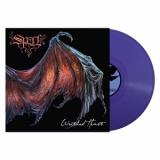
SPELL - WRETCHED HEART

SPELL

WRETCHED HEART

12inchOMENLP135
Bad Omen
01.05.2026
  • 1: Lilac
  • 2: Take My Life
  • 3: Unquiet Graves
  • 4: Oubliette
  • 5: Iron Teeth
  • 6: Exquisite Corpse
  • 7: Savage Scourge
  • 8: In Duress
  • 9: Wretched Heart

More than half a century into its existence, heavy metal still prowls as a living force in the dark, and Vancouver's SPELL summon that spirit with defiant conviction on their fifth album, 'Wretched Heart'. Rejecting the safety of nostalgia, the band; Cam Mesmer, Al Lester, Gabriel Tenebrae and Jeff Black, step beyond retro homage into shadowy new terrain, where harmony guitars blaze like torches against the night and gothic atmospheres coil around songs pulsing with desperation, longing, and wild exaltation. Forged through the fire of the stage and shaped by trusted collaborators, this is SPELL at their most potent: dramatic, vulnerable, and unafraid of excess. From existential laments to bittersweet anthems that shimmer with both steel and sorrow, 'Wretched Heart' beats with a fiercely human pulse. In SPELL's hands, heavy metal is no museum relic but a darkly romantic covenant-restless, cathartic, and forever reaching beyond the veil.

Reservar01.05.2026

debe ser publicado en 01.05.2026

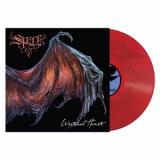
SPELL - WRETCHED HEART

SPELL

WRETCHED HEART

12inchOMENLP335
Bad Omen
01.05.2026

More than half a century into its existence, heavy metal still prowls as a living force in the dark, and Vancouver's SPELL summon that spirit with defiant conviction on their fifth album, 'Wretched Heart'. Rejecting the safety of nostalgia, the band; Cam Mesmer, Al Lester, Gabriel Tenebrae and Jeff Black, step beyond retro homage into shadowy new terrain, where harmony guitars blaze like torches against the night and gothic atmospheres coil around songs pulsing with desperation, longing, and wild exaltation. Forged through the fire of the stage and shaped by trusted collaborators, this is SPELL at their most potent: dramatic, vulnerable, and unafraid of excess. From existential laments to bittersweet anthems that shimmer with both steel and sorrow, 'Wretched Heart' beats with a fiercely human pulse. In SPELL's hands, heavy metal is no museum relic but a darkly romantic covenant-restless, cathartic, and forever reaching beyond the veil.

Reservar01.05.2026

debe ser publicado en 01.05.2026

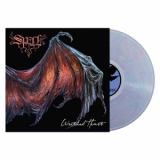
SPELL - WRETCHED HEART

SPELL

WRETCHED HEART

12inchOMENLP235
Bad Omen
01.05.2026

More than half a century into its existence, heavy metal still prowls as a living force in the dark, and Vancouver's SPELL summon that spirit with defiant conviction on their fifth album, 'Wretched Heart'. Rejecting the safety of nostalgia, the band; Cam Mesmer, Al Lester, Gabriel Tenebrae and Jeff Black, step beyond retro homage into shadowy new terrain, where harmony guitars blaze like torches against the night and gothic atmospheres coil around songs pulsing with desperation, longing, and wild exaltation. Forged through the fire of the stage and shaped by trusted collaborators, this is SPELL at their most potent: dramatic, vulnerable, and unafraid of excess. From existential laments to bittersweet anthems that shimmer with both steel and sorrow, 'Wretched Heart' beats with a fiercely human pulse. In SPELL's hands, heavy metal is no museum relic but a darkly romantic covenant-restless, cathartic, and forever reaching beyond the veil.

Reservar01.05.2026

debe ser publicado en 01.05.2026

Poison Idea - War All The Time (LP)

POISON IDEA’s momentum hasn’t slowed down one bit; this is still their brand of loud, potent powerthrash. Slightly more metal than in the past but the accent here is on the force and fury. Scorching. Each song on War All the Time flows into the other in a natural sequence for maximum impact and the whole thing blows over before you know it, but everything stays in your head, banging against the walls of your frontal bone. All this makes a good album, but what turns War All the Time into an amazing album are the lyrics and their delivery. Jerry A took the negative side of the world around him and expressed it in detail, rendered with words that can be read in a universal manner, expressing everything trivial and worthy of our puke in a language better suited to talk about the beauty of life. And those words remain as true to this day as the band’s riffs are brutal.

Reservar01.05.2026

debe ser publicado en 01.05.2026

Deaf Center - Through Time

Deaf Center

Through Time

12inchSP039LP-STD
Sonic Pieces
29.04.2026

Deaf Center travel through quiet pathways and grand boulevards in their fourth studio album “Through Time”.

Since their last full-length LP, “Low Distance” (2019), the duo has gradually shifted towards a more long-form electroacoustic sound which perhaps makes for their most immersive listening experience so far. Otto A Totland’s piano travels in less frequent rhythms than before, yet is felt even more as a relief in the quieter moments that contrast with Erik K Skodvin’s deep atmospheric worlds. There’s a searching quality within the record which feels like slow movements on the way towards something meaningful, capturing a sense of both peace and awe.

The latter part of the album takes a different turn: fluctuating electronic rhythms over deep strings create an ecstatic yet haunting duality. It is the first time a guest musician appears on a Deaf Center record: British composer and musician Simon Goff joins with violin and viola in the finale, “Further”, a hypnotising piece submerged in layers of strings and drones.

The subject of time is an ambitious one, yet Deaf Center manage to balance the humble with the grand in great warmth as seconds become minutes, hours become days and time seemingly freezes as a still-life moment.

No en stock

Haga su pedido ahora y le encargaremos el artículo en nuestro proveedor.


Ültimo hace: 43 Días
Parliament - Osmium (2x12")

Parliament

Osmium (2x12")

2x12inchDEMREC1188X
Demon Records
26.04.2026
  • I Call My Baby Pussycat
  • Put Love In Your Life
  • Little Ole Country Boy
  • Moonshine Heather
  • Oh Lord, Whylord / Prayer
  • My Automobile
  • Nothing Before Me But Thang
  • Funky Woman
  • Livin' The Life
  • The Silent Boatman

Demon Records are proud to present Osmium Deluxe - the first recordings credited to the funk-rock ensemble Parliament-Funkadelic.

Since its re-release in 1990, Osmium has been distributed numerous times by various labels in America, Europe and Japan under alternate titles – including Rhenium and First Thangs. A number of these reissues have featured material that was not included on the original album, such as unreleased tracks and singles that were taken from the same time.

This in-demand, black-vinyl version of the Record Store Day 2024 sell-out compiles together everything from that period 2 LPs and includes; the full Osmium album, the single sides that never made the album, unreleased tracks, demos and jams – all of which made their debut vinyl appearance as one package in 2024.

Many of these recordings are still as far-out as they sounded when first released. However, the tracks here represent the genesis of what would become P-Funk and the entity that would give the world ground-breaking albums Maggot Brain (1971), Mothership Connection (1975), and One Nation Under a Groove (1978). An essential addition to anyone’s collection.

Reservar26.04.2026

debe ser publicado en 26.04.2026

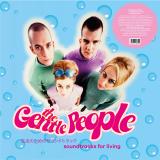
The Gentle People - Soundtracks For Living (Expanded Edition) (LP 3x12")

WRWTFWW Records is proud to present THE GENTLE PEOPLE - Soundtracks for Living (Expanded Edition), ?the ultimate Lounge/Chill Out classic from 1997, reborn! Available as a limited edition white vinyl 3LP in heavyweight 3-panel gatefold sleeve.

When The Gentle People first glided into the mid-90s on clouds of strings, sugar and sine waves, they sounded like visitors from another, more glamorous planet. Signed to Richard D. James and Grant Wilson-Claridge's cult label Rephlex, this multinational "E-Z-Core" lounge unit took the aesthetics of 50s/60s easy listening and exotica and gently smuggled them into 1990s club culture.

Soundtracks for Living was their defining statement: an album that "takes the lounge scene and runs away with it entirely… blissful and heavenly," as one contemporary review put it. Imagine KLF's Chill Out or Space growing up on French 60/70s pop, bossa nova, soundtracks, vocal harmony groups, library music and easy listening then slipping out for a late-night date with dub, ambient techno and bubble-bath pop. That's Soundtracks for Living: a record that can score cocktail hour, 4am taxi rides, and daydreams in headphones with the same effortless grace.

The Gentle People - Dougee Dimensional, Laurie LeMans, Valentine Carnelian and Honeymink - began in early-90s Brixton, throwing dress-up theme parties before taking their audio-visual universe into the studio. For them, music was "a way of life": soothing to the ear, rich in pop hooks, and pitched somewhere between the playfully idiotic and the hyper-intelligent. Their debut on Rephlex was the single "Journey", later blessed with a shimmering Aphex Twin remix that pushed their sugar-coated sound even further into outer space.

This Expanded Edition of Soundtracks for Living finally gives this glambient lounge-pop milestone the treatment it has always deserved. Spread lovingly across 3LP, it features new mastering from the original sources, allowing every harp glissando, string swell and analog squiggle to float in high-fidelity widescreen. The core album is complemented by a bonus 12" of unreleased and rare material, offering a deeper dive into the Gentle world: alternate takes, lost interludes, and secret soundtrack cues for lives not yet lived.

Crucially, "Journey" appears here in its original version, Gentle Instrumental and the cult Aphex Twin remix, reuniting band and labelmate in one place and underlining the quietly radical nature of the project: this was lounge music that could sit next to braindance, acid and IDM and still steal the scene.

Pressed on limited edition white vinyl, Soundtrack for Living (Expanded Edition) invites long-time fans and new listeners alike to step back into The Gentle People's universe - a place of fondue parties, bubble chairs, star-lit elevators and endlessly rewinding sunsets, where "the pathway to the stars" is never quite out of reach.

In an era that often reduces the 90s to big-room bangers and grunge guitars, Soundtracks for Living remains a quietly subversive reminder that the decade was also about imagination, camp, softness and utopian possibility. As later writers have noted, The Gentle People weren't just a curiosity on a weird label; they became unlikely icons of a whole loungecore moment, gracing TV, compilations and magazine spreads, and proving that tenderness could be as futuristic as any drum machine.
In conjunction with this release, WRWTFWW has also unearthed The Gentle People's Peel Sessions, a 4-track EP from their 1997 BBC on-air performance, available on vinyl for the first time ever !

No en stock

Haga su pedido ahora y le encargaremos el artículo en nuestro proveedor.


Ültimo hace: 50 Días
Salamanda - Music To Watch Seeds Grow By 008: Salamanda (Basil) (Tape)

Music To Watch Seeds Grow By continues its second season with Seoul-based left of centre ambient duo Salamanda - Uman Therma (Sala) and Yetsuby (Manda) - and their meditation on the inner life of a basil plant. Seeds 008 is an ambient composition born from quiet domestic observation: a single basil on a windowsill, its days shaped by light, warmth, and the slow passage of time.

The album moves through a full day in the plant's life opening with ‘introduce my atom which is my favorite one’, an act of quiet self-declaration in morning light, before settling into the unhurried rhythmic pulse of ‘to to ki toki tok’- the drip of water, the tick of a clock, the slow beat of photosynthesis. ‘allez, pousse!’ - one of the standouts in this journey - carries the basil's gentle will to grow, to push, to tilt toward the sun, while ‘hungry snail’ captures a moment of creaturely encounter on the glass: an uninvited visitor, moving slowly, wanting. As the afternoon deepens, 'Basil's Ritual' traces the daily ceremony of light and warmth, repeated with calm devotion from root to leaf. Night falls across 'Basil's Dream', and in the stillness something like sleep arrives - the plant resting, imagining tomorrow's sun. The album closes with ‘the blue wine’, a final mysterious reverie in which the basil seems to contemplate its own fate, somewhere between acceptance and wonder.

No en stock

Haga su pedido ahora y le encargaremos el artículo en nuestro proveedor.


Ültimo hace: 48 Días
DEATH LENS - WHAT'S LEFT NOW?
  • 1: Monolith
  • 2: Power
  • 3: Out Of My Skin
  • 4: Waiting To Know (Feat. Militarie Gun)
  • 5: Drown
  • 6: Am I A Drug To You?
  • 7: Saints In The Panic Room
  • 8: Off The Edge
  • 9: Useless
  • 10: Last Call
  • 11: Pulling Teeth
  • 12: Debt Collector

Los Angeles alt-punks Death Lens return with What"s Left Now?, an album that feels like a jolt of clarity after a year that never seemed to slow down. Fresh off touring with Militarie Gun, they dove into the studio with producer mixer Zach Tuch (Knocked Loose, Touché Amoré) to craft their first new music since 2024"s Cold World. The result is a set of songs that coil hooky guitar lines around lyrics about taking stock of what you have, what"s been taken from you, and confronting what remains without any sugar coating. Death Lens have always played with contrast: ferocity disguised by swagger, volatility wrapped in melody. Onstage, they transform that tension into something communal-cathartic enough to leave rooms wrecked, connective enough to leave people changed. Once a crew of partydriven garage punks, they"ve sharpened their voice into something broader and more urgent, speaking on life in heavily policed neighborhoods, immigration reform, and the responsibility to lift up the communities that raised them. What"s Left Now? pushes that vision forward, framing resilience not as a slogan but as a lived philosophy: one world, one community, one band refusing to stand still. Death Lens is comprised of Bryan Torres (vocals), Jhon Reyes (guitar, backing vocals), Tony Rangel (drums), and Ernie Gutierrez (guitar).

Reservar24.04.2026

debe ser publicado en 24.04.2026

Joe Fujinoki - Glass Torso LP

Joe Fujinoki

Glass Torso LP

12inchENMB-19
enmossed
23.04.2026

Joe Fujinoki centered the compositions of his latest album Glass Torso round the idea of the fragility of the human body. Fujinoki described the narrative thread of the album as that of “holding the shape of a human body as if it might shatter like glass”. The precariousness of the body, the essence of the body as defined by Fujinoki as the torso, and the object relations between the boundaries of dialectical exercises pack themselves into his creative process.

Fujinoki recorded Glass Torso exclusively with analog synthesizers, stumbling in and out of structural loops to find space for accidental discoveries. The ten pieces of recorded material feel somewhere on the edge of typified form, feeling like a vascular system pumping in and out its undulating liquidities. Maybe this is the hollowed space held together by Fujinoki’s notion of the torso where you hear a microscopic world, dubby and generative. Fujinoki is adept at organizing this realm of subtle sound sources, giving proper considerations of shared tonal space. Seemingly, this handling of the precarity of sonic material elucidates Fujinoki’s mature attention to detail.

Ambient music genre tropes often affirm the listeners vessel for escape and dissociation. It provides an intoxicating allure by respite from an overwhelming exterior reality far outside the listeners controls. Here this space becomes apolitical, or its protest vocabulary softer and subtle. Fujinoki does not aim to tackle hyperobject topics on how to course correct the world, but he does something increasingly rarer to come across. On Glass Torso an alternative space is created not as shelter, but as a meditation on negotiation and compromise. This twenty eight minutes of audio lays down a foundation for imagination, for imagining how to negotiate the fragility of the self. Zoomed out, the implications of his negotiative sonics can be a playground for broader reflections on distributive care and attention.

Fujinoki says he feels “alert” to his physicality and placement in the world amidst vast digital cultures creating impositions on him and his surroundings. On Glass Torso he creates a concretized space on a vinyl record, where the virtual and the tangible antagonize one another that create the spectacle of the listening experience. This spectacle is a soft one, a considered one, and an utmost enjoyable one. Fujinoki juggles opposing forces brilliantly, and formulates an exquisite palette of soft passing music so he can also help the listener with the exquisite burden of their own Glass Torso.”

- Nick Klein, January 2026

Reservar23.04.2026

debe ser publicado en 23.04.2026

JORGE BEN - Jorge Ben (1969) LP
  • A1: Criola (Jorge Ben)
  • A2: Domingas (Jorge Ben)
  • A3: Cadê Teresa (Jorge Ben)
  • A4: Barbarella (Jorge Ben)
  • A5: País Tropical (Jorge Ben)
  • B1: Take It Easy My Brother Charles (Jorge Ben)
  • B2: Descobri Que Eu Sou Um Anjo (Jorge Ben)
  • B3: Bebete Vãobora (Jorge Ben)
  • B4: Quem Foi Que Roubou A Sopeira De Porcelana Chinesa Que A Vovó Ganhou Da Baronesa? (Jorge Ben)
  • B5: Que Pena (Jorge Ben)
  • B6: Charles, Anjo 45 (Jorge Ben)

Jorge Ben’s 1969 self-titled LP is a bright, energetic landmark of Brazilian music. Mixing samba, soul, and pop with effortless charm, the album captures Ben at a moment of bold creativity.
His warm guitar lines, catchy melodies, and rhythmic drive shape songs that feel both relaxed and full of life. This masterpiece helped define a modern, upbeat sound that influenced generations of artists. More than fifty years later, this LP still stands out for its simplicity, groove, and unmistakable style—an essential snapshot of an artist who transformed Brazilian popular music.

No en stock

Haga su pedido ahora y le encargaremos el artículo en nuestro proveedor.


Ültimo hace: 50 Días
Toxic Twin - Neo EP

Toxic Twin

Neo EP

12inchRELIC02
Relic
20.04.2026

Released in 2002, Games and Hell marked an early chapter in Toxic Twin’s output, capturing the raw, hardware-driven sound of Berlin’s early 2000s electronic underground.

Minimal, direct, and rooted in a time when the scene was still forming.

Nearly 25 years later, Games is reissued and expanded to six tracks, including previously unreleased material from the same era, via Relic.

No en stock

Haga su pedido ahora y le encargaremos el artículo en nuestro proveedor.


Ültimo hace: 49 Días
ORDH - BLIND IN ABYSSAL REALMS

ORDH

BLIND IN ABYSSAL REALMS

12inchASHLP222
PULVERISED
17.04.2026
  • 1: Apis Bull
  • 2: Moon Of Urd
  • 3: Phlegraean Fields
  • 4: Blind In Abyssal Realms
  • 5: Hierothesion

ORDH's debut, "Blind In Abyssal Realms", sets out to redefine what the term 'progressive death metal' truly means. But before ORDH, there was BARISHI. When their bass player threw in the towel to pursue other interests in life, guitarist and vocalist Graham Brooks, "looking for a fresh start", decided the time had come to finally dwell in his favorite genre: death metal. But not just any kind of death metal_ Having drafted BARISHI drummer Dylan Blake, with whom Graham has been playing since he was twelve years old, and Josh Smith from KIEFCATCHER on bass, the trio then spent a few gruelling years working on their debut, with Graham writing most of the music and ironing the songs out with Dylan and Josh. Having toured with COME TO GRIEF when BARISHI was still around, Graham and the latter's singer Jonathan Hébert had hit it off really well, so when the time came to find a vocalist, Jonathan was called upon, "right on time to jump straight into the recording and writing process, as most of the music was ready to go".

Reservar17.04.2026

debe ser publicado en 17.04.2026

Kathryn Mohr - Carve (Tape)

Kathryn Mohr

Carve (Tape)

CassetteFR191MC
Flenser Records
17.04.2026

Carve is the second full-length by Bay Area artist Kathryn Mohr. Written over the course of five years and recorded over several weeks in a rural singlewide in the Mojave Desert, the album centers on love experienced as a form of grief, not as an aftermath of loss, but as a condition of intimacy itself.

Mohr describes Carve as an album about how memory exists outside the body, embedded in places and landscapes. It is shaped by her first return to the American Southwest since a childhood road trip at age five, and by the experience of moving through terrain that holds emotional weight long after its origins fade. The record considers how intimacy feels after years of isolation, and what it takes to carve out a life that allows for trust, presence, and feeling rather than mere survival. The project took form after a difficult tour that ended in Joshua Tree. Mohr pointed her car into the desert and drove alone, crisscrossing the Mojave on dirt roads. Months later, she returned to record the album, working alone with an acoustic guitar, a field recorder, and limited supplies. Following that period, Mohr began to allow for intimacy and connection. The time she spent recording Carve in the desert did not create isolation so much as mirror it. Working alone out of an old, western-themed jail Airbnb, the physical enclosure reflected the emotional conditions under which much of the record had been written: distance, restraint, and long stretches of stillness. In that context, love was not experienced as escape, but as something inseparable from impermanence and the awareness of loss.

This tension between connection and inevitability sits at the center of Carve. Some of the album’s songs were written earlier, during a prolonged period marked by emotional distance and apathy. Over those four years, Mohr was working through unprocessed childhood memories and their long-term effects on her ability to connect with others. The work was slow and difficult, involving a fundamental reshaping of how she related to herself and to the world. Carve was mixed by Richard Chowenhill of Flenser labelmates Agriculture. Rather than offering resolution, the album documents the act of remaining present within tension. Carve is not about escaping grief, but about accepting it as inseparable from love itself. Kathryn Mohr’s previous effort “Waiting Room” received the coveted ‘Best New Music' designation and a score of 8.4 from Pitchfork.

Reservar17.04.2026

debe ser publicado en 17.04.2026

BCUC - The road is never easy

BCUC – Bantu Continua Uhuru Consciousness – have been channeling the spirit of Soweto for over twenty years. Indigenous funk, hip-hop consciousness, and punk rock energy fused into something utterly original and deeply rooted. Their mantra: Music for the people, by the people, with the people. From humble beginnings rehearsing in a shipping container, a stone's throw from the church where Desmond Tutu organized the escape of the most wanted anti-Apartheid activists, they kept believing in their dream of self-empowerment. Today they command festival stages worldwide: Glastonbury West Holts, Roskilde, Afropunk Brooklyn, WOMAD, Fusion, Sziget, FMM Sines, Beaches Brew, Boomtown, Colours of Ostrava, Couleur Café – to name just a few. In 2023, BCUC were honoured with the prestigious WOMEX Artist Award, an accolade usually reserved for more established artists, in recognition of their fearless work and transcendent live performances.

THE ROAD IS NEVER EASY

The Road Is Never Easy is BCUC's fifth album and their debut on Outhere Records. On this new offering, BCUC take listeners on another Afro-psychedelic journey into the soul of Soweto. It feels like a gospel sermon colliding with a punk concert, "guaranteed to touch untapped corners of your soul" (OkayAfrica). BCUC's music is deeply rooted in history and echoes the voices of the ones who came before. The road was never easy for the people of Soweto who originally came to work in the mines of Egoli, the City of Gold, Johannesburg. When apartheid finally ended after a long struggle, it was hoped that life would improve. But more than 30 years later, many of those initial hopes and dreams are still waiting to be fulfilled. This album is about that struggle. The album contains 10 brand new songs – a record for BCUC, whose previous albums featured an average of 3 songs. It represents the culmination of more than two decades of performing together and building a reputation as a powerful live act. These ten songs encapsulate that same live energy, each one building gradually and drawing you into BCUC's Afro-psychedelic stream of consciousness. It's a seismic tour de force through life in Soweto today. Songs like Amakhandela (Breaking All the Chains) connect history to daily life: "How is this precious metal inflicting so much pain in us," sing BCUC, "this government has been telling us we are free, but we don't benefit from being free." The album also talks about all the hopes and dreams that remain: "I have too many wishes and dreams in my head," BCUC sing in Um duma khanda, "I think I am losing my mind". The album ends with the soothing Matla a rona ke Bophelo, "our strength is life", praising the spirits and thanking the elders for protection. The Road Is Never Easy is about the harsh reality of life in Soweto, where "people always carry heavy loads". BCUC are street poets trying to deal with that burden: sometimes revolutionary, sometimes soothing, but always hopeful and compassionate. "When you are from Soweto you can't retreat nor surrender." (Sebenzela)

RECORDING

The album was largely recorded in Munich, Germany during tour breaks over two sessions, each three days long. It took place in a small studio located in a German WW II bunker converted into rehearsal spaces. The songs were recorded in one take altogether in one room, with only a few overdubs added, mainly backing vocals, by BCUC at Fourways studio in Johannesburg. BCUC have created their own distinctive way of writing, or rather, finding and creating their songs. The recording process is like an improvised live performance. They bring their ideas into a zone where the music, the rhythm and the spirits take over until the song starts to form. In this Afro-psychedelic zone BCUC create their unique poetry that feeds on the dreams still dreamt, the hopes, the fears and the temptations lingering everywhere. BCUC's songs need to breathe and time to build. The right take was the one when the song took over, and just like their live performances, no one knew beforehand where the song would take them. During the recording, BCUC just let it all flow out: inner turmoil, cries of rebellion, but also resilience and a search for healing, love, unity and compassion. You don't have to be from Soweto to feel the deep meaning and impact of this music. In these times of so much hate and division, BCUC are like a campfire for people to gather around.

PRODUCTION & ARTWORK

"BCUC have a unique magic," says Outhere's Jay Rutledge, who produced the album. "It blew our minds. It's like punk and pure gospel at the same time. Their music can make you dance and it can make you cry, all at the same time. And when the song is over, you feel you're not alone in this world anymore. We felt compelled to do this." The album cover is based on a matchbox design, matches being a common household item in South Africa even today. "These were the matches people used to burn government buildings and cars," explain BCUC. Little messages, addresses, or phone numbers used to be scribbled on the back of these boxes; each one a reminder of the strength, resilience, and resistance that once drove the struggle for freedom in Soweto. BCUC keep this flame burning. The Road Is Never Easy is a heavy spiritual road trip, a deep dive into the subconscious of Soweto and a quest for truth, justice and sanity in this crazy world. BCUC tackle the harsh realities of the voiceless, guided by the spirit world of their ancestors. Rather than reinforcing stereotypes of poverty, BCUC's portrayal of Africa is one rich in tradition, rituals and beliefs. "We bring fun and Afro-psychedelic fire from the hood," says vocalist Kgomotso Mokone.

No en stock

Haga su pedido ahora y le encargaremos el artículo en nuestro proveedor.


Ültimo hace: 43 Días
Hoavi - Architectonics LP

Hoavi

Architectonics LP

12inchPEAK28
Peak Oil
13.04.2026

Returning to Peak Oil for a second expedition, veteran Russian producer Kirill Vasin, aka Hoavi, explores an untrodden path on 'architectonics', drawing from his lifelong appreciation of Indonesian gamelan musics to mastermind a rhythmelodic hybrid sound that's sinuous, subtle and remarkably dubby. Over the last three and a half years, Vasin has used the music's methodologies and rhythmic forms to evolve his existing processes and signatures and transform his musical philosophy. To start the exercise, he knew he needed percussion, so used his phone and a contact microphone to pick up nearby sounds, drumming on various tables, railings, empty glasses and other objects to create a library of textured, tonally complex percussive sounds. But the work wasn't done yet - in fact, it was just the beginning of a long process of trial and error: Vasin created two full versions of the album before 'architectonics' was finished.

There are still echoes of the chrome-plated sci-fi atmospheres and complex, stuttering beatscapes that underpinned 2021's 'Invariant', but 'architectonics' asks very different questions, prompting fresher, more innovative responses. Leaning on his bank of organic percussive sounds, Vasin is able to concoct a tactile aura that he fills with eerie fluctuating repetitions that shift subtly, sometimes imperceptibly. The cavernous reverb and booming bass that supported his last few albums is still present, now employed as scaffolding for different architectures: skittering sequences and ornamented overlapping phrases that owe as much to Steve Reich's hallowed minimalist compositions as they do to Indonesian traditional forms. Lulling, almost hypnotic tessellations appear like fractals on the polished surfaces, morphing from jazz to techno and dub while retaining gamelan's haunting xenharmonic resonances and Vasin's concept becomes crystal clear. 'architectonics' isn't an attempt to make a gamelan album, it's Vasin's way of developing his own artistic process by looking far beyond the traditional boundaries of electronic music.

No en stock

Haga su pedido ahora y le encargaremos el artículo en nuestro proveedor.


Ültimo hace: 58 Días
Guilty Razors - Complete Recordings 1977 - 1978

UILTY RAZORS, BONA FIDE PUNKS.


Writings on the topic that go off in all directions, mind-numbing lectures given by academics, and testimonies, most of them heavily doctored, from those who “lived through that era”: so many people today fantasize about the early days of punk in our country… This blessed moment when no one had yet thought of flaunting a ridiculous green mohawk, taking Sid Vicious as a hero, or – even worse – making the so-called alternative scene both festive and boorish. There was no such thing in 1976 or 1977, when it wasn’t easy to get hold of the first 45s by the Pistols or the Clash. Few people were aware of what was happening on the fringes of the fringes at the time. Malcolm McLaren was virtually unknown, and having short hair made you seem strange. Who knew then that rock music, which had taken a very bad turn since the early 1970s, would once again become an essential element of liberation? That, thanks to short and fast songs, it would once again rediscover that primitive, social side that was so hated by older generations? Who knew that, besides a few loners who read the music press (it was even better if they read it in English) and frequented the right record stores? Many of these formed bands, because it was impossible to do otherwise. We quickly went from listening to the Velvet Underground to trying to play the Stooges’ intros. It’s a somewhat collective story, even though there weren’t many people to start it.
The Guilty Razors were among those who took part in this initial upheaval in Paris. They were far from being the worst. They had something special and even released a single that was well above the national average. They also had enough songs to fill an album, the one you’re holding. In everyone’s opinion, they were definitely not among the punk impostors that followed in their wake. They were, at least, genuine and credible.

Guilty Razors, Parisian punk band (1975-1978). To understand something about their somewhat linear but very energetic sound, we might need to talk about the context in which it was born and, more broadly, recall the boredom (a theme that would become capital in punk songs) coupled with the desire to blow everything off, which were the basis for the formation of bands playing a rejuvenated rock music ; about the passion for a few records by the Kinks or the early Who, by the Stooges, by the Velvet mostly, which set you apart from the crowd.
And of course, we should remember this new wave, which was promoted by a few articles in the specialized press and some cutting-edge record stores, coming from New York or London, whose small but powerful influence could be felt in Paris and in a handful of isolated places in the provinces, lulled to sleep by so many appalling things, from Tangerine Dream to President Giscard d’Estaing...
In 1975-76, French music was, as almost always, in a sorry state ; it was still dominated by Johnny Hallyday and Sylvie Vartan. Local rock music was also rather bleak, apart from Bijou and Little Bob who tried to revive this small scene with poorly sound-engineered gigs played to almost no one.
In the working class suburbs at the time, it was mainly hard rock music played to 11 that helped people forget about their gruelling shifts at the factory. Here and there, on the outskirts of major cities, you still could find a few rockers with sideburns wearing black armbands since the death of Gene Vincent, but it wasn’t a proper mass movement, just a source of real danger to anyone they came across who wasn't like them. In August 1976, a festival unlike any other took place in Mont-de-Marsan – the First European Punk Festival as the poster said – with almost as many people on stage as in the audience. Yet, on that day, a quasi historical event happened, when, under the blazing afternoon sun, a band of unknowns called The Damned made an unprecedented noise in the arena, reminiscent of the chaotic Stooges in their early adolescence. They were the first genuine punk band to perform in our country: from then on, anything was possible, almost anything seemed permissible.

It makes sense that the four+1 members of Guilty Razors, who initially amplified acoustic guitars with crappy tape recorder microphones, would adopt punk music (pronounced paink in French) naturally and instinctively, since it combines liberating noise with speed of execution and – crucially – a very healthy sense of rebellion (the protesters of May 1968 proclaimed, and it was even a slogan, that they weren’t against old people, but against what had made them grow old. In the mid-1970s, it seemed normal and obvious that old people should now ALSO be targeted!!!).
At the time, the desire to fight back, and break down authority and apathy, was either red or black, often taking the form of leafleting, tumultuous general assemblies in the schoolyard, and massive or shabby demonstrations, most of the time overflowing with an exciting vitality that sometimes turned into fights with the riot police. Indeed, soon after the end of the Vietnam War and following Pinochet’s coup in Chile, all over France, Trotskyist and anarcho-libertarian fervour was firmly entrenched among parts of the educated youth population, who were equally rebellious and troublemakers whenever they had the chance. It should also be noted that when the single "Anarchy in the UK" was first heard, even though not many of us had access to it, both the title and its explosive sound immediately resonated with some of those troublemakers crying out for ANARCHY!!! Meanwhile, the left-wing majority still equated punks with reckless young neo-Nazis. Of course, the widely circulated photos in the mainstream press of Siouxsie Sioux with her swastikas didn’t necessarily help to win over the theorists of the Great Revolution. It took Joe Strummer to introduce The Clash as an anti-racist, anti-fascist and anti-ignorance band for the rejection of old-school revolutionaries to fade a little.

The Lycée Jean-Baptiste Say at Porte d’Auteuil, despite being located in the very posh and very exclusive 16th arrondissement of Paris, didn’t escape these "committed" upheavals, which doubled as the perfect outlet for the less timid members of this generation.
“Back then, politics were fun,” says Tristam Nada, who studied there and went on to become Guilty Razors’ frontman. “Jean-Baptiste was the leftist high-school in the neighbourhood. When the far right guys from the GUD came down there, the Communist League guys from elsewhere helped us fight them off.”
Anything that could challenge authority was fair game and of course, strikes for just about any reason would lead to increasingly frequent truancy (with a definitive farewell to education that would soon follow). Tristam Nada spent his 10th and 11th unfinished grades with José Perez, who had come from Spain, where his father, a janitor, had been sentenced to death by Franco. “José steered my tastes towards solid acts such as The Who. Like most teenagers, I had previously absorbed just about everything that came my way, from Yes to Led Zeppelin to Genesis. I was exploring… And then one day, he told me that he and his brother Carlos wanted to start a rock band.” The Perez brothers already played guitar. “Of course, they were Spanish!”, jokes their singer. “Then, somewhat reluctantly, José took up the bass and we were soon joined by Jano – who called himself Jano Homicid – who took up the rhythm guitar.” Several drummers would later join this core of not easily intimidated young guys who didn’t let adversity get the better of them.

The first rehearsals of the newly named Guilty Razors took place in the bedroom of a Perez aunt. There, the three rookies tried to cover a few standards, songs that often were an integral part of their lives. During a first, short gig, in front of a bewildered audience of tough old-school rockers, they launched into a clunky version of the Velvet Underground's “Heroin”. Challenge or recklessness? A bit of both, probably… And then, step by step, their limited repertoire expanded as they decided to write their own songs, sung in a not always very accurate or academic English, but who cared about proper grammar or the right vocabulary, since what truly mattered was to make the words sound as good as possible while playing very, very fast music? And spitting out those words in a language that left no doubt as to what it conveyed mattered as well.
Trying their hand a the kind of rock music disliked by most of the neighbourhood, making noise, being fiercely provocative: they still belonged to a tiny clique who, at this very moment, had chosen to impose this difference. And there were very few places in France or elsewhere, where one could witness the first stirrings of something that wasn’t a trend yet, let alone a movement.

In the provinces, in late 1976 or early 1977, there couldn’t be more than thirty record stores that were a bit more discerning than average, where you could hear this new kind of short-haired rock music called “punk”. The old clientele, who previously had no problem coming in to buy the latest McCartney or Aerosmith LP, now felt a little less comfortable there…
In Paris, these enlightened places were quite rare and often located nex to what would become the Forum des Halles, a big shopping mall. Between three aging sex workers, a couple of second-hand clothes shops, sellers of hippie paraphernalia and small fashion designers, the good word was loudly spread in two pioneering places – propagators of what was still only a new underground movement. Historically, the first one was the Open Market, a kind of poorly, but tastefully stocked cave. Speakers blasted out the sound of sixties garage bands from the Nuggets compilation (a crucial reference for José Perez) or the badly dressed English kids of Eddie and the Hot Rods. This black-painted den was opened a few years earlier by Marc Zermati, a character who wasn’t always in a sunny disposition, but always quite radical in his (good) choices and his opinions. He founded the independent label Skydog and was one of the promoters of the Mont-de-Marsan punk festivals. Not far from there was Harry Cover, another store more in tune with the new New York scene, which was amply covered in the house fanzine, Rock News (even though it was in it that the photos of the Sex Pistols were first published in France).
It was a favorite hang-out of the Perez brothers and Tristam Nada, as the latter explained. “It’s at Harry Cover’s that we first heard the Pistols and Clash’s 45s, and after that, we decided to start writing our first songs. If they could do it, so could we!”
The sonic shocks that were “Anarchy in the UK”, “White Riot” or the Buzzcocks’s EP, “Spiral Scratch” – which Guilty Razors' sound is reminiscent of – were soon to be amplified by an unparalleled visual shock. In April 1977, right after the release of their first LP, The Clash performed at the Palais des Glaces in Paris, during a punk night organised by Marc Zermati. For many who were there, it was the gig of a lifetime…
Of course, Guilty Razors and Tristam were in the audience: “That concert was fabulous… We Parisian punks were almost all dressed in black and white, with white shirts, skinny leather ties, bikers jackets or light jackets, etc. The Clash, on the other hand, wore colourful clothes. Well, the next day, at the Gibus, you’d spot everyone who had been at this concert, but they weren’t wearing anything black, they were all wearing colours.”

It makes sense to mention the Gibus club, as Guilty Razors often played there (sometimes in front of a hostile audience). It was also the only place in Paris that regularly scheduled new Parisian or Anglo-Saxon acts, such as Generation X, Siouxsie and the Banshees, the Slits, and Johnny Thunders who would become a kind of messed-up mascot for the venue. A little later, in 1978, the Rose Bonbon – formerly the Nashville – also attracted nightly owls in search of electric thrills… In 1977, the iconic but not necessarily excellent Asphalt Jungle often played at the Gibus, sometimes sharing the bill with Metal Urbain, the only band whose aura would later transcend the French borders (“I saw them as the French Sex Pistols,” said Geoff Travis, head of their British label Rough Trade). Already established in this small scene, Metal Urbain helped the young and restless Guilty Razors who had just arrived. Guitarist for Metal Urbain Hermann Schwartz remembers it: “They were younger than us, we were a bit like their mentors even if it’s too strong a word… At least they were credible. We thought they were good, and they had good songs which reminded of the Buzzcocks that I liked a lot. But at some point, they started hanging out with the Hells Angels. That’s when we stopped following them.”

The break-up was mutual, since, Guilty Razors, for their part, were shocked when they saw a fringe element of the audience at Metal Urbain concerts who repeatedly shouted “Sieg Heil” and gave Nazi salutes. These provocations, even still minor (the bulk of the skinhead crowd would later make their presence felt during concerts), weren’t really to the liking of the Perez brothers, whose anti-fascist convictions were firmly rooted. Some things are non-negotiable.
A few months earlier (in July 1978), Guilty Razors had nevertheless opened very successfully for Metal Urbain at the Bus Palladium, a more traditonally old-school rock night-club. But, as was sometimes the case back then, the night turned into a mass brawl when suburban rockers came to “beat up punks”.

Back then, Parisian nights weren’t always sweet and serene.

So, after opening as best as they could for The Jam (their sound having been ruined by the PA system), our local heroes were – once again – met outside by a horde of greasers out to get them. “Thankfully,” says Tristam, “we were with our roadies, motorless bikers who acted as a protective barrier. We were chased in the neighbouring streets and the whole thing ended in front of a bar, with the owner coming out with a rifle…”
Although Tristam and the Perez brothers narrowly escaped various, potentially bloody, incidents, they weren’t completely innocent of wrongdoing either. They still find amusing their mugging of two strangers in the street for example (“We were broke and we simply wanted to buy tickets for the Heartbreakers concert that night,” says Tristam). It so happened that their victims were two key figures in the rock business at the time: radio presenter Alain Manneval and music publisher Philippe Constantin. They filed a complaint and sought monetary compensation, but somehow the band’s manager, the skilful but very controversial Alexis, managed to get the complaint withdrawn and Guilty Razors ended up signing with Constantin with a substantial advance.

They also signed with Polydor and the label released in 1978 their only three-track 45, featuring “I Don't Wanna be A Rich”, “Hurts and Noises” and “Provocate” (songs that exuded perpetual rebellion and an unquenchable desire for “class” confrontation). It was a very good record, but due to a lack of promotion (radio stations didn’t play French artists singing in English), it didn’t sell very well. Only 800 copies were allegedly sold and the rest of the stock was pulped… Initially, the three tracks were to be included on a LP that never came to be, since they were dropped by Polydor (“Let’s say we sometimes caused a ruckus in their offices!” laughs Tristam.) In order to perfect the long-awaited LP, the band recorded demos of other tracks. There was a cover of Pink Floyd's “Lucifer Sam” from the Syd Barrett era – proof of an enduring love for the sixties’ greats –, “Wake Up” a hangover tale and “Bad Heart” about the Baader-Meinhof gang, whose actions had a profound impact on the era and on a generation seeking extreme dissent... On the album you’re now discovering, you can also hear five previously unreleased tracks recorded a bit later during an extended and freezing stay in Madrid, in a makeshift studio with the invaluable help of a drummer also acting as sound engineer. He was both an enthusiastic old hippie and a proper whizz at sound engineering. Here too, certain influences from the fifties and sixties (Link Wray, the Troggs) are more than obvious in the band’s music.

Shortly after a final stormy and rather barbaric (on the audience’s side) “Punk night” at the Olympia in June 1978, Tristam left the band ; his bandmates continued without him for a short while.

But like most pioneering punk bands of the era, Guilty Razors eventually split up for good after three years (besides once in Spain, they’d only played in Paris). The reason for ceasing business activities were more or less the same for everyone: there were no venues outside one’s small circuit to play this kind of rock music, which was still frightening, unknown, or of little interest to most people. The chances of recording an LP were virtually null, since major labels were only signing unoriginal but reassuring sub-Téléphone clones, and the smaller ones were only interested in progressive rock or French chanson for youth clubs. And what about self-production? No one in our small safety-pinned world had thought about it yet. There wasn’t enough money to embark on that sort of venture anyway.

So yes, the early days of punk in France were truly No Future!

No en stock

Haga su pedido ahora y le encargaremos el artículo en nuestro proveedor.


Ültimo hace: 62 Días
WILD NOTHING - LIFE OF PAUSE (LENTICULAR SLEEVE) [SIGNED PRINT ED]
  • 1: Reichpop
  • 2: Lady Blue
  • 3: A Woman's Wisdom
  • 4: Japanese Alice
  • 5: Life Of Pause
  • 6: Alien
  • 7: To Know You
  • 8: Adore
  • 9: Tv Queen
  • 10: Whenever I
  • 11: Love Underneath My Thumb

White vinyl. Signed Print Edition. When Jack Tatum began work on Life of Pause, his third full-length to date, he had lofty ambitions: Don't just write another album; create another world. One with enough detail and texture and dimension that a listener could step inside, explore, and inhabit it as they see fit. "I desperately wanted for this to be the kind of record that would displace me," he says. "I'm terrified by the idea of being any one thing, or being of any one genre. And whether or not I accomplish that, I know that my only hope of getting there is to constantly reinvent. That reinvention doesn't need to be drastic, but every new record has to have its own identity, and it has to have a separate set of goals from what came before." What came before: a rightfully acclaimed, much beloved display of singular pop craftsmanship. Tatum's dreamy, unexpected 2010 debut, Gemini, was written while he was still a student at Virginia Tech University. Its equally disarming follow-up, 2012's Nocturne, marked the first time he'd been able to bring his bedroom recordings into a studio, to be performed and fully realized with the help of other musicians. There has been a set of wonderfully expansive EPs in between_each hinting at new directions and punctuating previous ideas_but with Life of Pause, Tatum delivers what he describes as his most "honest" and "mature" work yet, an exquisitely arranged and beautifully recorded collection of songs that marry the immediate with the indefinable. "I allowed myself to go down every route I could imagine even if it ended up not working for me," he says. "I owe it to myself to take as many risks as possible. Songs are songs and you have to allow yourself to be open to everything." After a prolonged period of writing and experimentation, recording took place over several weeks in both Los Angeles and Stockholm, with producer Thom Monahan (Devendra Banhart, Beachwood Sparks) helping Tatum in his search for a more natural and organically textured sound. In Sweden, in a studio once owned by ABBA, they enlisted Peter, Bjorn and John drummer John Ericsson and fellow Swedish Radio Symphony Orchestra veteran Pelle Jacobsson, to contribute drums and marimba. In California, at Monahan's home, Tatum collaborated with Medicine guitarist Brad Laner and a crew of saxophonists. From the hypnotic polyrhythms of "Reichpop" to the sugary howl of "Japanese Alice" to the hallucinogenic R&B of "A Woman's Wisdom," the result is a complete, fully immersive listening environment. "I just kept things really simple, writing as ideas came to me," he says. "There's definitely a different kind of `self' in the picture this time around. There's no real love lost, it's much more a record of coming to terms and defining what it is that you have_your place, your relationships. I view every record as an opportunity to write better songs. At the end of the day it still sounds like me, just new."

Reservar10.04.2026

debe ser publicado en 10.04.2026

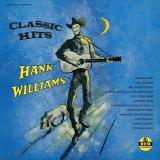
Hank Williams - Classic Hits LP
  • A1: Ramblin Man
  • A2: I Saw The Light
  • A3: Hey, Good Lookin
  • A4: I M So Lonesome I Could Cry
  • A5: Cold, Cold Heart
  • A6: Lovesick Blues
  • A7: (I Heard That) Lonesome Whistle
  • A8: Your Cheatin Heart
  • A9: My Heart Would Know
  • A10: Lost Highway
  • A11: I Ll Never Get Out Of This World Alive
  • A12: Honky Tonkin
  • A13: You Win Again
  • A14: Kaw-Liga
  • A15: I M A Long Gone Daddy
  • A16: Move It On Over
  • A17: Take These Chains From My Heart
  • A18: Mansion On The Hill
  • A19: There Ll Be No Teardrops Tonight
  • A20: Mind Your Own Business
  • A21: Jambalaya (On The Bayou)
  • A22: I Can T Help It (If I M Still In Love With You)

Regarded as one of the most significant and influential musicians of the 20th century, Hank Williams recorded 55 singles that reached the top 10 of the Billboard Country & Western Best Sellers chart, five of which were released posthumously, and twelve of which reached #1. After a life of alcoholism and substance abuse, Hank Williams died on New Year’s Day 1953 at the age of 29 in the back seat of a car, while going to perform a concert in Canton, Ohio. His songs have been covered by hundreds of artists and he influenced the careers of such stars as Chuck Berry, Elvis Presley, Waylon Jennings, Johnny Cash, Bob Dylan, and the Rolling Stones. Presented here are his 22 greatest hits. 22 TRACKS - 180-GRAM VIRGIN VINYL - SPECIAL GATEFOLD - LIMITED EDITION

Reservar10.04.2026

debe ser publicado en 10.04.2026

Gabe Stillman - What Happens Next? LP
  • What Happens Next?
  • Yesterday's Donuts
  • The Man I'm Supposed To Be
  • Someone In My Mirror
  • Shame Shame
  • Screamin
  • I've Got To
  • Use My Imagination
  • Living Your Life
  • Gentle On My Mind

Rooted in modern blues but unafraid to stretch beyond tradition, the record crackles with grit, groove, and lived- in emotion, presenting an artist who isn't waiting for answers, he's moving forward without them. Across the album, Stillman digs deep into themes of self-reckoning, loss, pride, and renewal.

Songs wrestle openly with identity, shame, and hard- earned perspective, balancing moments of vulnerability with sharp wit and raw confidence. Whether confronting inner demons or finding humor in heartbreak, the writing feels honest and unfiltered, anchored by soulful vocals and muscular musicianship . What Happens Next? is an album about growth through motion-- accepting change, facing consequences, and choosing momentum over fear. High- energy, emotionally grounded, and deeply human, it marks a defining step forward for Gabe Stillman , capturing an artist fully stepping into his voice and daring the listener to do the same.

Reservar27.03.2026

debe ser publicado en 27.03.2026

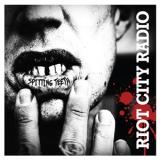
RIOT CITY RADIO - SPITTING TEETH

Schreit es laut heraus: Wir sind der Underground! Die Arbeiterklasse hat genug, sie geht auf die Straße, startet die Revolution, tanzt und kämpft manchmal zum Beat der Songs von RIOT CITY RADIO. Sind das Klischees? Natürlich. Aber Punkrock & Oi! jeder Art basieren seit jeher auf Klischees. Genau wie jede andere Subkultur auch. Das ist also nichts Schlechtes. Im Gegenteil, es macht Spaß. Vor allem mit RIOT CITY RADIO, denn ihre Songs sind sofort eingängige Hymnen mit perfekt ausgewogenem Songwriting zwischen kraftvollen Refrains, großartigen Mitsing-Passagen und einer rohen, gewaltigen Note, die süchtig macht! Eine Ode an Subkultur, Underdogs und die Solidarität, in Distanzierung zu einem Großteil der kranken Gesellschaft und all ihren unnötigen Exzessen. Und RCR meinen jede einzelne Zeile ihrer Songs ernst und haben viel zu sagen! Mit ihrem zweiten Album ,Spitting Teeth" startet die Band aus Plymouth, UK, mit einer charismatischen Street-Punk- und Oi!-Explosion durch! Musik mit Können, harter Schlagkraft und einer knallharten Street-Attitüde. 11 neue Songs, darunter die Singles ,We re still singing" und ,Underground". Auf limitiertem schwarzem und limitiertem mehrfarbigem Vinyl!

Reservar27.03.2026

debe ser publicado en 27.03.2026

RIOT CITY RADIO - SPITTING TEETH

Schreit es laut heraus: Wir sind der Underground! Die Arbeiterklasse hat genug, sie geht auf die Straße, startet die Revolution, tanzt und kämpft manchmal zum Beat der Songs von RIOT CITY RADIO. Sind das Klischees? Natürlich. Aber Punkrock & Oi! jeder Art basieren seit jeher auf Klischees. Genau wie jede andere Subkultur auch. Das ist also nichts Schlechtes. Im Gegenteil, es macht Spaß. Vor allem mit RIOT CITY RADIO, denn ihre Songs sind sofort eingängige Hymnen mit perfekt ausgewogenem Songwriting zwischen kraftvollen Refrains, großartigen Mitsing-Passagen und einer rohen, gewaltigen Note, die süchtig macht! Eine Ode an Subkultur, Underdogs und die Solidarität, in Distanzierung zu einem Großteil der kranken Gesellschaft und all ihren unnötigen Exzessen. Und RCR meinen jede einzelne Zeile ihrer Songs ernst und haben viel zu sagen! Mit ihrem zweiten Album ,Spitting Teeth" startet die Band aus Plymouth, UK, mit einer charismatischen Street-Punk- und Oi!-Explosion durch! Musik mit Können, harter Schlagkraft und einer knallharten Street-Attitüde. 11 neue Songs, darunter die Singles ,We re still singing" und ,Underground". Auf limitiertem schwarzem und limitiertem mehrfarbigem Vinyl!

Reservar27.03.2026

debe ser publicado en 27.03.2026

Bill Withers - Still Bill LP

Bill Withers

Still Bill LP

12inchMOVLP379C
Music On Vinyl
27.03.2026
  • A1: Lonely Town Lonely Street
  • A2: Let Me In Your Life
  • A3: Who Is He (& What Is He To You)?
  • A4: Use Me
  • A5: Lean On Me
  • B1: Kissing My Love
  • B2: I Don't Know
  • B3: Another Day To Run
  • B4: I Don't Want You On My Mind
  • B5: Take It All In & Check It All Out
También disponible

black vinyl


This is the second studio album by American soul singer-songwriter and producer Bill Withers, released in 1972. The rhythmic music produced for the record features soul, funk, and blues sounds, backing lyrics that explore themes of human nature, emotion,

Reservar27.03.2026

debe ser publicado en 27.03.2026

Blue Lake - The Animal LP

Blue Lake

The Animal LP

12inchTU014LE
Tonal Union
27.03.2026

Yellow Vinyl

Blue Lake reveals his most ambitious album yet, which finds its visionary creator Jason Dungan harnessing the collective alchemy of his band, with ten spirited tracks that resonate with a powerful directness, evoking an ecological connection to the wider world.

The solo project (Blue Lake), now on its fifth album, found its name and inspiration via Don Cherry's 1974 live album, sparking a creative epiphany in Dungan, who set off on a path into his own untapped sonic world, guided by what he cited as the emotional potential found within non-lyrical composition. With a newly inspired ethos aimed toward creating direct and simple instrumental music imbued with a deep sense of feeling, Jason began combining an array of musical elements that gave rise to his highly revered album 'Sun Arcs' (2023), with its "ornate, zither-led lattices" (Pitchfork, Best New Music). Conceived in the blissful isolation of a Swedish cabin set in the woods, this was music that soundtracked spring in full bloom. Then, in contrast to the solitary approach of 'Sun Arcs', the highly lauded mini-album 'Weft' (2025) began to set the tone for a more band-oriented approach to delivering the Blue Lake sound. Jason had by this time experienced a special collective energy with his band during a swathe of live performances, which he then sought to harness and distill on 'The Animal', leading him to take the project into a traditional recording studio (The Village) and its limitless potential along with his gifted cohorts.

'The Animal' at its core vividly celebrates human collaboration and is deeply rooted in a sense of community and non-hierarchical connectivity. The group's creative alchemy transcends outwards and beyond the musicians performing together, to summon an inclusive, existential and ecological connection to the wider world and its inhabited spaces. The album contemplates the idea of the human as an animal as Dungan explains: "I'm quite fascinated in thinking about humans more as part of the animal environment and not as something that's so separated into a "human" realm, or sitting on top of a hierarchical pyramid. So the Animal is also me, or us - that we are just living, existing, in the same way as a piece of moss or a sparrow or a cow.

'The Animal' is a form of musical metamorphosis, still acoustic, yet more amplified, elevating it to new dimensions. The Blue Lake project takes on a new lease of life to encompass collaboration with Jason Dungan bound in a universal connectivity, resulting in his most ambitious album to date. A harmonious rejoicing that cements his reputation as a transformative presence in contemporary music.

Reservar27.03.2026

debe ser publicado en 27.03.2026

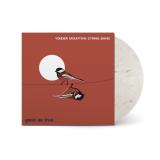
Yonder Mountain String Band - Good As True
  • 1: Brand New Heartache
  • 2: Long Ride
  • 3: The Lie
  • 4: Barroom Feather (Radio Edit)
  • 5: Blind
  • 6: Nothing New
  • 7: One To One Another
  • 8: Always Almost
  • 9: Barroom Feather

Good As True (2026), the 12th studio album from Yonder Mountain String Band, leans into a warm, expressive sound — bluegrass shaped with an indie edge, rock undertones, and a hint of country. Recorded live in the studio, its eight original tracks trace romantic, personal, and societal relationships and the work it takes to stay connected. The lead single “Brand New Heartache” pairs rock-driven verses with a bluegrass-lifted chorus as it follows the fallout of a breakup and the uneasy hope of starting again, while “Blind” opens with a striking instrumental riff that lingers long after the song ends, while its lyrics confront regret, mental health struggles, and the pull to become something better. “Long Ride” delivers a sharp, sarcastic look at life in a touring band; “Nothing New” and “The Lie” confront political rigidity and division; “One to One Another” and “Always Almost” pull toward quieter emotional corners; and “Barroom Feather” drifts into indie-folk terrain with one of the album’s most atmospheric jams. Across Good As True, Yonder moves between high-tempo runs, layered harmonies, and moments that breathe — a reminder that nearly three decades in, they’re still charting new ground.

Reservar27.03.2026

debe ser publicado en 27.03.2026

Bill Withers - Still Bill LP

This is the second studio album by American soul singer-songwriter and producer Bill Withers, released in 1972. The rhythmic music produced for the record features soul, funk, and blues sounds, backing lyrics that explore themes of human nature, emotion,

Reservar27.03.2026

debe ser publicado en 27.03.2026

WILL WOOD & THE TAPEWORMS - EVERYTHING IS A LOT (2015 MIX) LP 2x12"

Will Wood's very first LP displays a variety of genres, with a chaotic homemade anti-folk feel and an experimental edge. "Everything is a Lot" began its long production in 2014, when the singer-songwriter was still 20 years old and performing drunken alt-comedy at open mics. With no funding, Wood led a slapdash band into the studio to bring songs mainly from his teenage years to life, and the unstructured production process and youthful experimentation gave it a uniquely loose and chaotic feel. The debut LP's sound is defined by Wood's Jay Hawkins-esque vocal delivery, an out-of-tune old upright piano, wailing wind instruments, jangly guitar, high-powered yet loose drums, and sardonic overdriven kazoo solos. Delivering everything from swing jazz and twee indie pop to pseudo-mariachi and waltz, these sounds and their accompanying bizarre lyrics come together to match the existential title, "Everything is a Lot." Will Wood's early career can be primarily defined by his experimental vocal delivery, honky-tonk piano smashing, and darkly edgy songwriting. While his stylings have matured and taken on a more precise approach, his refusal to conform to expectations and constant shifts in the genre have continued to be hallmarks of his songwriting and production. In his "Will Wood and the Tapeworms" releases (Everything Is A Lot in 2015, SELF-iSH in 2016), audiences can see the first glimpses into what would eventually become his signature style, presented in a uniquely raw and chaotic state of potential.

No en stock

Haga su pedido ahora y le encargaremos el artículo en nuestro proveedor.


Ültimo hace: 78 Días
Nathan Fake - Evaporator

Nathan Fake

Evaporator

12inchIF1104STD
InFiné
23.03.2026

As Nathan Fake rises from the nocturnal subterranea and rave catharsis of his previous records, on Evaporator, he resurfaces into the domain of daylight, bringing a tangible sense of air rushing against your face, of big skies, and endless landscapes. The idea of pop accessibility that trickled into 2023’s Crystal Vision is refracted here through the prism of sweeping ambient, deep electronica, and trance uplift. Evaporator is Fake’s idea of “airy daytime music”, with each track a different barometer reading across the album’s varying atmospheres, which range from vibrant sunbursts, bracing rainscapes, and fine mists of clement melodics. “It’s not overtly confrontational electronic club music,” states Fake. “It’s quite pleasant, it’s accessible. As I was progressing through making the tracklist, I called it a daytime album. It doesn’t feel like an afterparty album.” For the past decade Fake has been gingerly introducing collaborations with heroes and friends alike into his lone, idiosyncratic working process. Border Community alumni Dextro AKA Ewan Mackenzie transmutes his ferocious drumming for Pigs Pigs Pigs Pigs Pigs Pigs Pigs into the blurred choral thump of ‘Baltasound’. ‘Orbiting Meadows’, meanwhile, is his second collaboration with Clark, an eerily idyllic duet where microtonal 18EDO piano clangs slowly twirl around wailing pads. Evaporator marks the junction point of old technology and ever fresh creativity for Nathan. The trusty “dinosaur” age software, particularly Cubase VST5, that has powered two decades of music is rarely updated. “I used to sort of feel a bit ashamed of using such old software, and then I kind of had an epiphany – that’s just how I work”, comments Fake. “That’s just how I play. I’m very fond of these old tools, and I get the most joy out of them, but now I’ve incorporated new technology too.” When an artist accumulates so much synergy with their instrument, music making becomes instinctual. By Fake’s account, much of Evaporator just fell into place. The album title arrived randomly in his head (“it felt completely perfect. Airy.”), ideas looped and developed until things locked into place and just felt right. ‘The Ice House’ is a fleeting glimpse of the sonic world he taps into in this creative state, its glassy FM synths built around a counterpoint between rough-hewn crystalline arpeggios and sparse yet gravitas-bearing bass. “That riff I just wrote out on the keyboard, I just played it forever and ever and ever. The original track ended up being really short. Here you go, and it’s gone!” These unplanned channellings of sound call forth records from Fake’s past while he looks ahead, perhaps getting at the very essence of his musicianship. The opener ‘Aiwa’ (“the breeziest,” he muses) reminds of the introspection that characterised Providence, excited by the fire and grit of Steam Days’ textural experiments, its chunky slams and clatters surging into a flood of harmonic buzzing as they reach out for old wisdom. ‘Hypercube’ stampedes in a similar chronological confluence, infusing an incessant synth line reminiscent of the golden age of rave with the crackling, ecstatic energy of modern festival anthems. Like the vaporisation of liquid to particles, everything that Evaporator presents has a mutant desire to be amorphous. Sounds rarely settle; the irradiated garage beat of ‘Bialystok’ is pitched downwards to driving, rebounding effect, while ‘You’ll Find a Way’ warps static into shivering energy, cinematic synth strings building anticipation into a gradual gush of chords. This translates into a more expansive stereo field than Fake has explored before. ‘Slow Yamaha’ saves the wildest, most kinetic transformations for last with a cornucopia of crispy melodies and fried drums; a sibilance of cymbals on the left, a susurrus of shakers on the right, and kaleidoscopic lasers pulsing and fizzing all around. Evaporation culminating in pure excited atoms. In a world where music has increasingly become background content, making albums remains lifeblood for Fake: “It makes me realise how long; twenty years is ages! It’s weird to see how much the world has changed. Release day back then you did fuck all, now you spend all day on socials. When I grew up the people who made the electronic music I was into were quite mysterious, and the artwork was very abstract. There was a massive distance between you and that music, and that was a key part of it, really. Now it helps to be an extrovert, and I'm just not, but the album marks the first time my face has graced the cover art. I’ve never wanted to do this before, I'm very shy, and generally I don’t like being seen,” he professes. “But, twenty years in, I supposed I could try something new. I'm very lucky that I'm somehow surviving in this world, where the media world favours extroverts and interesting looking people. It’s not my world but somehow I’m still in it.” Evaporator continues to prove Nathan’s necessary presence, with some of his most engaging, varied, and magical music yet.

No en stock

Haga su pedido ahora y le encargaremos el artículo en nuestro proveedor.


Ültimo hace: 80 Días
Komodor - Time & Space LP
  • A1: Hard To Deal
  • A2: Soul Tricker
  • A3: Ladies
  • A4: Once Upon A Time
  • A5: Burning Land
  • B6: Bliss & Joy
  • B7: Raise Your Hands
  • B8: Fall Guy
  • B9: Madness
  • B10: Ravish Holy Land
  • B11: Top Of The Bock
También disponible

Coloured Vinyl


Born in Douarnenez, at the far edge of Brittany (France), Komodor has quickly established itself as one of the most vibrant names in the French rock landscape. Their high-energy rock, fueled by fuzz, sweat, and vocal harmonies woven in the spirit of MC5 and T. Rex, immediately drew attention: Rolling Stone, Rock & Folk, Libération and Rock Hard Germany all praised the fiery impact of their debut album Nasty Habits (which sold over 2,000 vinyl copies). Since then, the quintet has mostly lived on the road: a long European tour, followed by the larger-than-life saga of Komodrag & The Mounodor, carrying them to stages such as Hellfest, Les Vieilles Charrues, and the Francofolies de La Rochelle, among many others.

Their second album, Time & Space, reveals a band in full metamorphosis. Without abandoning the explosive force that defines them, Komodor widens its scope: volcanic riffs, more sinuous grooves, mist-laden harmonies, psychedelic flashes… The energy is still wild, but more inhabited, more liberated, almost ceremonial at times. The record opens with two telling bursts: Bliss & Joy, a libertarian charge with the feel of a manifesto, and Soul Tricker, a rock incantation where trance overtakes sheer electric assault. Two sides of the same coin, pulled taut between urgency and enchantment.

On stage, Komodor remains a true shockwave, forged across European festivals (Freak Valley, Motocultor, Fête du Bruit, and more) and now awaited at the legendary Desertfest London. Their music feels made for such spaces: a visceral, flesh-and-amp kind of rock, drawing from the seventies’ heritage to speak even more vividly to the present. A band moving forward at full volume, without nostalgia or calculation, carried by a simple conviction: as long as the amps are hot, rock can still burn.

In short: Komodor is the band of friends from Douarnenez bringing pencil-and-paper rock into the streaming age while preserving its analog soul (with the album mastered at the legendary Miraval Studios), the smell of warm tubes, the grain of vinyl. With this second album, they hit harder, truer, and more vividly than ever.
Time & Space stands as a “must-have French rock record”, a tangible piece worth cherishing in any collection.

Reservar20.03.2026

debe ser publicado en 20.03.2026

Komodor - Time & Space LP

Komodor

Time & Space LP

12inchKO001LPRB
Riptide Records
20.03.2026

Born in Douarnenez, at the far edge of Brittany (France), Komodor has quickly established itself as one of the most vibrant names in the French rock landscape. Their high-energy rock, fueled by fuzz, sweat, and vocal harmonies woven in the spirit of MC5 and T. Rex, immediately drew attention: Rolling Stone, Rock & Folk, Libération and Rock Hard Germany all praised the fiery impact of their debut album Nasty Habits (which sold over 2,000 vinyl copies). Since then, the quintet has mostly lived on the road: a long European tour, followed by the larger-than-life saga of Komodrag & The Mounodor, carrying them to stages such as Hellfest, Les Vieilles Charrues, and the Francofolies de La Rochelle, among many others.

Their second album, Time & Space, reveals a band in full metamorphosis. Without abandoning the explosive force that defines them, Komodor widens its scope: volcanic riffs, more sinuous grooves, mist-laden harmonies, psychedelic flashes… The energy is still wild, but more inhabited, more liberated, almost ceremonial at times. The record opens with two telling bursts: Bliss & Joy, a libertarian charge with the feel of a manifesto, and Soul Tricker, a rock incantation where trance overtakes sheer electric assault. Two sides of the same coin, pulled taut between urgency and enchantment.

On stage, Komodor remains a true shockwave, forged across European festivals (Freak Valley, Motocultor, Fête du Bruit, and more) and now awaited at the legendary Desertfest London. Their music feels made for such spaces: a visceral, flesh-and-amp kind of rock, drawing from the seventies’ heritage to speak even more vividly to the present. A band moving forward at full volume, without nostalgia or calculation, carried by a simple conviction: as long as the amps are hot, rock can still burn.

In short: Komodor is the band of friends from Douarnenez bringing pencil-and-paper rock into the streaming age while preserving its analog soul (with the album mastered at the legendary Miraval Studios), the smell of warm tubes, the grain of vinyl. With this second album, they hit harder, truer, and more vividly than ever.
Time & Space stands as a “must-have French rock record”, a tangible piece worth cherishing in any collection.

Reservar20.03.2026

debe ser publicado en 20.03.2026

Zosha Warpeha - I grow accustomed to the dark

The first resonant space Zosha Warpeha played in was the Emanuel Vigeland Museum in Oslo, Norway. Built as a mausoleum, its walls reach up into a gradual archway, creating an environment where sound expands and reverberates for twelve seconds before decaying into silence. Warpeha was greeted only by dim lights when she entered, and it wasn’t until she had spent several minutes listening that she was able to make out the frescoes that covered every inch of the room: graphic depictions of the cycle of life from conception through death. As the sound of her Hardanger d’amore encountered the walls and these slowly emerging scenes, they obscured its point of origin in both time and space, augmenting its own life cycle. The experience sat in the back of her mind over the next several years as she developed her own patient style of composition and performance, one that comes into full bloom on her new album I grow accustomed to the dark.

When Warpeha was selected as an artist in residence at Brooklyn’s ISSUE Project Room in 2025, she saw it as an opportunity to more intentionally explore how her music might fill a room with ample natural reverb. I grow accustomed to the dark documents two single-take solo performances for Hardanger d’amore and voice at IPR, with both pieces composed in a unique tuning system developed to interact with the space itself. Listeners can trace resonance from the contact of the bow on gut strings into the body of the instrument, its five sympathetic strings offering another layer of refraction, before the sound is thrown about the cavity of the room. The echoes emerge like a photographic double exposure, or wisps of smoke that linger in the air, creating ghostly harmonic convergences that blur the line between what is there and not-there. Sound begins to act like light, a synesthetic alchemy that transforms drones into beams and ornamental trills into flickers.

Both side-long compositions, “filament” and “visual purple,” exemplify a duality that animates Warpeha’s music: an expressive, individualistic style that draws on extensive knowledge of her instrument’s history in folk traditions, and an austere, devotional quality maintained by focus and precision. Though very different in character and structure, both pieces evolve slowly through numerous repetitive phrases, passages of stillness, and bursts of intensity. “filament” opens with a cycle of delicate melodic fragments played and sung around a drone before blossoming into an outpouring of swooping arpeggios, harmonics flying from the strings like sparks off a bonfire. The disorienting pulsation of harmonic beating forms the core of “visual purple,” the close-tone dissonance building to a swarm of open strings ringing boldly throughout the space. After the knotty tones reach their climax, the piece collapses into studied quietude, hushed, but without any drop in intensity.

When Warpeha first visited the Vigeland Museum in 2019, she was in Oslo to deepen her relationship to the Hardanger fiddle through the study of Norwegian traditional music, which is primarily passed down aurally. The experience of learning songs by ear, not only internalizing the tune but also absorbing the techniques and tonalities by listening, was a crucial step in her development as a composer. The years since have seen her sharpen those skills as a prolific member of the New York avant-garde and improvised music communities. Warpeha’s music encourages listeners to join her in this journey, to listen closely with each repeated phrase and through each dramatic shift. Like the frescoes on Vigeland’s walls, with time and intention, the depth of I grow accustomed to the dark comes on like a revelation.

No en stock

Haga su pedido ahora y le encargaremos el artículo en nuestro proveedor.


Ültimo hace: 83 Días
Hardcore Superstar - No Regrets LP
  • 1: Wall Of Complaint
  • 2: No Regrets
  • 3: Breakout
  • 4: Soul Of Sweetness
  • 5: Honey Tongue
  • 6: Still I'm Glad
  • 7: Bring Me Back
  • 8: Pathetic Way Of Life
  • 9: It's So True
  • 10: Why Can't You Love Me Like Before
  • 11: Last Great Day
  • 12: I Can't Change
  • 13: You Know Where We All Belong

"No Regrets" wurde 2003 veröffentlicht und ist das vierte Album der schwedischen Hardrock-Band Hardcore Superstar. Das Album setzt ihre charakteristische Mischung aus Sleaze-Rock, Glam-Metal und Punk-Energie fort und liefert eine Sammlung von rohen und hochoktanigen Tracks.

Herausragende Songs wie "Still I'm Glad", "Honey Tongue" und "No Regrets" zeigen das Gespür der Band für ansteckende Melodien, düstere Gitarrenriffs und rebellische Attitüde. Während sie ihren unverkennbaren Sound beibehalten, ist das Album im Vergleich zu seinem Vorgänger etwas härter und düsterer ausgefallen.

Obwohl "No Regrets" ihr letztes Album vor einer kurzen stilistischen Veränderung war, bleibt es ein Fan-Favorit und ein wesentlicher Teil der Entwicklung von Hardcore Superstar. Vollgepackt mit Attitüde und hymnischen Hooks festigte das Album ihren Ruf als eine der führenden schwedischen Hardrockbands, die Fans von Sleaze und Classic Rock gleichermaßen anspricht.

"No Regrets" ist in einer limitierten Auflage von 666 einzeln nummerierten Exemplaren auf Translucent Red Vinyl erhältlich

Reservar13.03.2026

debe ser publicado en 13.03.2026

Abdou El Omari - Lost Tape - 1980
  • A1: Ali Ou Hayani
  • A2: Ana Sahraoui
  • A3: Nihayat Hob
  • A4: Angham Chaabia
  • A5: Dikrayat
  • A6: Alach Yayouni
  • B1: Layali Fass
  • B2: Lobna
  • B3: Tanger L'été
  • B4: Taksim Abdou
  • B5: Hanan
  • B6: Interlude

Abdou El Omari was born in 1945 in Tafraout, south of Agadir -- a village suspended between the pink granite peaks of the Anti-Atlas and the waves of the Atlantic. A landscape already musical in itself. He grew up in the dry mountain light, surrounded by the rhythms of nature and Berber's culture. Very little is known about the man -- a veil of mystery still surrounds his life, only deepening the fascination. In the 1970s, as Morocco was transforming, Abdou El Omari shaped a sound of his own -- a visionary blend of spiritual jazz, psychedelic funk, Moroccan traditions, and early electronic experimentation. Today, his work is resurfacing, rediscovered by a new generation of listeners in search of lost horizons. This record stands among its rarest and most precious fragments. At twenty-two, he founded his first group, Les Fugitifs, which gained him local fame. Soon after, he released records and cassettes on labels such as Cléopâtre, Hassania, Boussiphone, Hilali, and his own, Al Awtar, while performing on RTM (national radio and television). He also composed for artists like Naima Samih, Laila Ghofran, and Aicha El Waad. In 1976, through the label Gam, he released his only vinyl album, Nuits d'été -- a record that would become cult decades later, reissued in 2017 by Radio Martiko. In the 1980s, his music grew quieter, more secret. He tried to recover his old tapes from the studios he had recorded in, but gradually withdrew from the scene and returned to hairdressing. A pioneer of musical fusion, he opened paths that would remain unexplored for years. He passed away in 2010, never witnessing the rediscovery of his music by diggers, bloggers, and collectors online. One day, his close friend and poet Aziz Essamadi, rescued a cardboard box from the trash -- a box containing Abdou El Omari's personal archives. It was later entrusted to Casablanca based collector Ahmed Khalil, founder of the label Dikraphone. Inside were treasures preserved by chance: demos, rehearsals, private recordings, unseen photographs -- and a stunning, almost forgotten cassette. Here, El Omari sounds bolder than ever, exploring territories where pop, cosmic disco, electric blues, and Moroccan tradition merge without boundaries. Armed with his ARP Odyssey synthesizer, hypnotic grooves, and the celestial layers of his Farfisa, he expanded the dialogue between deep roots and electronic exploration. This album is the continuation of a vision -- a music of the Moroccan future: rooted, but reaching for the unknown. Colorful, magnetic and timeless, here is music for dancing as much as for dreaming.

Reservar13.03.2026

debe ser publicado en 13.03.2026

DANIEL LOPATIN - MARTY SUPREME (ORIGINAL SOUNDTRACK) LP 2x12"

Daniel Lopatins (Oneohtrix Point Never) Soundtrack für Marty Supreme, gepresst auf schwarzem und transparentem Vinyl. Kommt mit japanischem Obi-Band und doppelseitigem "Koto Endo / Marty Supreme Offizieller Ball"-Poster. Der Film Marty Supreme ist eine Abenteuerkomödie von Josh Safdie aus dem Jahr 2025 und ist lose vom Leben Marty Reismans inspiriert, die in den 1950er-Jahren spielende Geschichte ist jedoch fiktiv. Die Hauptrolle des titelgebenden Tischtennisspielers übernahm Timothée Chalamet. Gwyneth Paltrow, Odessa A'zion, Kevin O'Leary, Tyler Okonma, Abel Ferrara und Fran Drescher ergänzten das Schauspielensemble. Marty Supreme ist der erste Film von Josh Safdie nach Beendigung der kreativen Zusammenarbeit mit seinem Bruder Benny. Das Werk wurde Anfang Oktober 2025 im Rahmen des New York Film Festivals uraufgeführt. Der US-Kinostart war an Weihnachten 2025. Ende Februar 2026 soll der Film in die deutschen Kinos kommen. Die Filmmusik von Daniel Lopatin wurde im Jahr 2025 für einen Hollywood Music In Media Award (HMMA) nominiert. Im Rahmen der Critics' Choice Movie Awards 2026 wurde Marty Supreme in die Shortlists für die Kategorien Casting & Ensemble", Szenenbild", Kamera", Kostüme", Filmschnitt" und Filmmusik" aufgenommen. Im Dezember 2025 gelangte der Film auf die Oscar-Shortlists für das beste Casting, die beste Kamera, das beste Makeup & Hairstyling und die beste Filmmusik. (Quelle: Wikipedia)

No en stock

Haga su pedido ahora y le encargaremos el artículo en nuestro proveedor.


Ültimo hace: 84 Días
THOSE WHO WALK AWAY - AFTERLIFE REQUIEM
  • The Beginning And The End
  • Seventh Degraded Hymn
  • Memorial Environment #4
  • Eighth Degraded Hymn
  • Memorial Environment #5
  • Ninth Degraded Hymn
  • Memorial Environment #6
  • Tenth Degraded Hymn
  • The End Of Life In Sound

Der postklassische Komponist, Klangkünstler und Kurator Matthew Patton ist mit seinem zweiten Album als Those Who Walk Away zurück. "Afterlife Requiem" ist eine Elegie für seinen Freund und Kollegen Jóhann Jóhannsson. Drones, Elektroakustik und fast vollständige Stille, extrahiert aus unvollendeten Aufnahmen auf Jóhannssons Festplatten, bilden die Grundlage für zwei Streichquintette - Ghost Orchestra (Reykjavík) und Possible Orchestra (Winnipeg) -, die in einem traurigen, langatmigen Werk verarbeitet und ausgelöscht werden. Patton hat auch wieder mit Andy Rudolph (Guy Maddin) und Paul Corley (Sigur Rós, Ben Frost) an der Koproduktion und dem Sounddesign gearbeitet, um eine brodelnde Körperlichkeit zu schaffen, die brodelnde Tiefen mit eindringlichen Bewegungen gespenstischer Streicher kontrastiert. ,Alles, was ich je geschrieben habe, ist ein Requiem. Alles ist ein Ende. Der Tod ist überall in dieser Musik präsent. In meinen Werken geht es um das Verschwinden - der Gegenwart, der Vergangenheit, von allem. Afterlife Requiem wird im Laufe seiner Dauer immer langsamer, es ist ein einziges großes Ritardando, die Zeit verlangsamt sich nicht nur, sie verschwindet. Ohne dass ich darüber nachgedacht hätte, ereigneten sich zwei miteinander verbundene Tragödien, die während des Schreibens, Aufnehmens und Arbeitens organisch an die Oberfläche kamen: der Tod meiner Mutter und der Tod des Komponisten und Freundes Jóhann Jóhannsson. Wenn ich mit dem Schreiben anfange, denke ich an nichts Bestimmtes, ich schreibe einfach, komponiere, nehme auf und höre zu ... aber irgendwas macht sich immer auf unvorhergesehene Weise bemerkbar oder drängt sich in den Vordergrund. Nach dem medizinisch assistierten Tod meiner Mutter wurde mir beim Ausräumen ihrer Wohnung klar, dass ich auch die physische Manifestation ihrer Welt auslöschte - und dass ich genau dasselbe mit der Musik tat, die ich schrieb und aufnahm. Während dieser Zeit wurde mir auch Jóhanns Tod immer wieder bewusst. Für Afterlife Requiem habe ich kurze, verlassene Fragmente aus Jóhann Jóhannssons Festplatten genommen und diese körperlosen Audio-Geister abwechselnd in meine eigene Musik eingebaut, wobei ich sie unrein gelassen habe - und dabei die Grenze zwischen Schaffen und Zerstören verwischt habe. Nach seinem Tod hatte ich diese Festplatten aus Jóhannssons Berliner Studio zum Anhören bekommen. Diese Musik war aufgegeben worden, in verschiedenen Stadien der Entstehung und Auflösung: ein Verzeichnis zerfallener und toter Erinnerungen, vergessen und jetzt nur noch in einer Reihe ineinandergreifender mechanischer Teile vorhanden, die mit der Zeit selbst versagen und verschwinden werden, wie alles andere auch. Monatelang hörte ich mir diese Überreste von Jóhanns Musik obsessiv an und versuchte, Hinweise auf Jóhann vor seinem Tod zu finden. Oft stellte ich fest, dass er das Aufnahmegerät noch lange nach Ende der aufgenommenen Musik laufen gelassen hatte. Er schien nicht zu bemerken, dass die Musik aufgehört hatte, oder registrierte nicht, dass dies das Ende der Musik war, oder vielleicht war er durch etwas anderes abgelenkt. Aber ich fand diese langen Stillephasen zutiefst emotional und berührend. Die verschwindenden Elegien von Afterlife Requiem sind weniger Musik als vielmehr Überreste von Musik. Auf diese Weise arbeite ich immer auf die Subtraktion von Bedeutung hin. Die Musik ist fern und verschwommen, beschädigt, geisterhaft und gespenstisch und deutet nur wie eine halb vergessene Erinnerung an das, was einmal existierte, eine verdichtete Darstellung von Verfall und Auslöschung. Ich habe dieses neue Stück von Anfang bis Ende mit diesen körperlosen Stillephasen aus Jóhanns eigenem Werk, Raum und Zeit unterlegt. Jetzt für immer verschwunden, bleibt seine aufgezeichnete Stille zurück; eine monumentale Leere, die der Welt verloren gegangen ist. Im gesamten Stück, insbesondere in den Abschnitten ,Memorial Environment", habe ich auch unzählige Geräusche aus der Natur integriert, von vulkanischer Lava über Lastenaufzüge bis hin zum menschlichen Blutfluss, dem Zischen von Turbinen und Selbstmordinjektionen. Der Künstler Robert Smithson sagte vor Jahrzehnten: ,Es ist die Dimension der Abwesenheit, die es noch zu finden gilt." Für mich misst diese Musik auch, wie die Zeit abläuft. Tatsächlich ist die Zeit bereits abgelaufen. Die Ewigkeit hat bereits begonnen." - Matthew Patton (Those Who Walk Away)

Reservar06.03.2026

debe ser publicado en 06.03.2026

Bonnie 'Prince' Billy - We Are Together Again LP
  • A1: Why Is The Lion?
  • A2: They Keep Trying To Find You
  • A3: Strange Trouble
  • A4: Life Is Scary Horses
  • A5: (Everybody's Got A) Friend Named Joe
  • B1: Vietnam Sunshine
  • B2: Hey Little
  • B3: Davey Dead
  • B4: The Children Are Sick
  • B5: Bride Of The Lion
También disponible

Clear Vinyl


Bonnie 'Prince`Billy kehrt am 6. März 2026 mit dem Album 'We Are Together Again' zurück. Das Album ist warm und persönlich und außerdem so angelegt, dass es mit denselben Worten beginnt und endet: 'Why is the lion still here, outside?'

Thematisch ist das Album tief in Louisville, der Heimatstadt von Bonnie „Prince“ Billy, verwurzelt. Es feiert die Kraft von Freundschaft, lokaler Gemeinschaft und gemeinsamem künstlerischem Schaffen. Damit setzt es bewusst einen Kontrapunkt zur Globalisierung und plädiert stattdessen für Lokalismus. Aufgenommen wurde es live im Studio End of an Ear mit lokalen Musiker:innen, Freund:innen und Familienmitgliedern. Jeder Ton ist direkt und unverfälscht – was im Raum passiert, hört man auch auf der Aufnahme. „We Are Together Again“ nimmt die Ängste einer sich verändernden Welt nicht weg, sondern begegnet ihnen mit Harmonie. Das Album erzählt von Zusammenhalt, von der Freude am Miteinander und davon, wie das gemeinsame Fragen selbst zur Quelle von Hoffnung wird."

Reservar06.03.2026

debe ser publicado en 06.03.2026

Artículos por página
N/ABPM
Vinyl