
нет на складе
Закажите сейчас, и мы закажем товар для вас у нашего поставщика.
Закажите сейчас, и мы закажем товар для вас у нашего поставщика.

Закажите сейчас, и мы закажем товар для вас у нашего поставщика.

Saint Abdullah & Eomac is a long distance, ongoing collaboration between New York based Iranian-Canadian brothers Mohammad and Mehdi Mehrabani (Saint Abdullah) and Ian McDonnell a.k.a. Eomac, based in Wicklow in Ireland. They tested the waters with their first album on Nicolas Jaar's Other People label last year, but 'Chasing Stateless' is their fullest expression so far.
The creative mindset behind the album starts with bravery and eschews escapism. Says Saint Abdullah's Mohammad, "As a collective, we exist to test the revolutionary possibilities within sound and sonic storytelling. As a means to finding a vision of the future and for building cultural dialogue today. Our belief is that the expressiveness of this vision should be pushed to its utmost limits to reveal anew. I always felt that the intensity of the middle eastern soul needs to be revealed more potently. Ian and the Irish have it too. I suspect most historically oppressed cultures do."
The music on 'Chasing Stateless' avoids easy middle eastern tropes — "I think what we're proposing here is that you don't need to water down our culture, you don't need to take only the bits that fit your idea of who we are, what we are. You ought to take it in its entirety."
Musically, the album approaches established genres and re-orientates them towards middle eastern rhythm and melody with an iron soul. Songs are rough and intense. Rusty polyrhythms, daf drums wrapped in a thick coating of distortion or punchy kicks with micro-edited samples of middle eastern life spiralling across them. Mournful melodies are squeezed out until the music teeters on the edge of rhythmic collapse. 'Chasing Stateless' is rough and energetic but also tender and reflective too. It's a human sound, utilising technology but not about technology. Sample heavy with expressions of anger, sadness and hope present and deeply felt.
The album's title speaks to a loss of collective societal imagination; of 'chasing status'. As Moh says "This generation, man, we're really good at putting up walls, despite all our openness. But where does this all lead to? What exactly are we chasing? This is where I especially love the name 'Chasing Stateless,' because if all this continues, we indeed will end up stateless, society-less, community-less, neighbor-less. Just a bunch of same-sies, living in an imaginary bubble, where we all look / think / say / CHASE the same things."
Закажите сейчас, и мы закажем товар для вас у нашего поставщика.
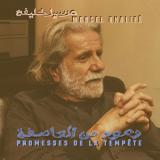
Half a century after its original release, legendary Lebanese musician and singer Marcel Khalife—renowned oud player and global icon of both music and activism—returns with a new recording. On this album, he reinterprets four of the five tracks from his debut, Promises of the Storm. A bold defiance of time and history.
Why revisit the same album, 50 years later? The reasons are many, but one stands above the rest: history itself seems to be repeating. The narrative unfolds once more in the same dire circumstances as half a century ago, as if time has folded in on itself, returning everything to its starting point. The urgency, the necessity—it all remains, pressing and inescapable. We must begin again.
In 1976, a young Marcel Khalife found himself exiled in Paris, fleeing the Lebanese Civil War and his family’s Christian village, where his progressive, left-wing ideas had placed him under a kind of house arrest. He was one of the few to openly and unwaveringly champion the Palestinian cause. The situation quickly became untenable, especially since, just a month before the war began in March 1975, Khalife—fresh out of the conservatory—had given his first public concert to great acclaim. Then, everything collapsed. What does one do when trapped at home? Read books, play the oud, and turn those readings into songs. In his family’s de facto prison, Khalife began setting the poetry of the great Palestinian poet Mahmoud Darwish to music. These songs, born of confinement, he carried with him into exile, driving to Paris where a producer offered him the chance to record an album. Naturally, the tracks were the ones he had been improvising at home from Darwish’s poems. The album’s title, Promises of the Storm, echoed the war that was just beginning. Khalife recalls that the album became a hit after a concert at the Fête de l’Huma, where 500 copies were sold in a single day. “Everything started there, and it never stopped,” he remembers. He would meet Mahmoud Darwish shortly after, at a dinner organized by mutual friends. From that moment, a deep friendship blossomed between the two men.
With Darwish’s words and Khalife’s music, the songs of Promises of the Storm are imbued with a powerful evocative force—melancholy, tenderness, and poetic resistance in the face of violence. The album catapulted Khalife to international stardom, leading to endless tours and recordings, yet he never abandoned his commitments.
Now, 50 years later, Promises of the Storm returns in a fresh recording, because history is repeating itself. After the Israeli bombings in Lebanon at the end of 2024, Khalife, who was on tour, found himself stranded in Paris. He remembered a recurring request from his son, musician Bachar Mar-Khalife, who had often urged him to re-record his now-classic debut album. One morning, oud in hand, Marcel knocked on his son’s door and said, “Shall we? I’m ready to record.”
These new versions are stripped down, raw, and intimate—just the solitary strings of the oud. Khalife sings as never before, his voice no longer marked by the fragility of youth but imbued with something deeper, freer, unshackled. It soars high yet resonates low, always clear, as if to escape sadness, to evoke love and violence, desire and exile. In just four songs, Khalife encapsulates a lifetime, and a philosophy of life. Rita tells of a love of Darwish’s, with the haunting line (translated from Arabic): “Between Rita’s eyes and mine, a rifle.” Oummi invokes the figure of the mother as a metaphor for the lost land. Promises of the Storm is a meditation on revolution, the hope for change, the melancholy of defeat, and the power of thought. Passport captures, through poetry, the feeling of being stateless—a citizen of everywhere and nowhere.
Time has only strengthened these texts and this music. History never repeats itself without a valid, indispensable reason for the present. That reason is fully contained in Marcel Khalife’s new interpretations, which have never sounded so clear, so right, so essential.
он должен быть опубликован на 20.11.2026

The Éthiopiques series returns! Essential archive recordings from an extremely fruitful period in Ethiopian music.
Before “Swinging Addis” took over the world, there was Moussié Nerses Nalbandian — the Armenian-born composer who shaped modern Ethiopian music. Mentor, arranger, and pioneer, he laid the foundations of Ethio-jazz.
This Éthiopiques volume revives his forgotten legacy, recorded live by Either/ Orchestra First issue ever with new exclusive photos and in depth liner 8-page insert.
“Ethiopian jazzmen are the best musicians that we have seen so far in Africa.
They really are promising handlers of jazz instruments.”
Wilbur De Paris
(1959, after a concert in Addis Ababa)
አዲስ፡ዘመን። *Addis zèmèn* **A new era.**
The time is the mid-1950s and early 1960s, just before "Swinging Addis" bloomed – or rather boomed – onto the scene. Brass instruments are still dominant, but the advent of the electric guitar, and the very first electronic organs, are just around the corner. Rock’n'Roll, R’n’B, Soul and the Twist have not yet barged their way in. Addis Ababa is steeped in the big band atmosphere of the post-war era, with Glenn Miller's *In the* *Mood* as its world-wide theme song, neck and neck with the Latin craze that was in vogue at the same period. Life has become enjoyable once again, with the return of peace after the terrible Italian Fascist invasion of Ethiopia (1935-1941). The redeployment of modern music is part and parcel of the postwar reconstruction. *Addis zèmèn* – a new era – is the watchword of the postwar period, just as it was all across war-torn Europe.
The generation who were the young parents of baby boomers** were the first to enjoy this musical renaissance, before the baby boomers themselves took over and forever super-charged the soundtrack of the final days of imperial reign. Music is Ethiopia's most popular art form, and very often serves as the best barometer for the upsurge of energy that is critical for reconstruction. Whether it be jazz in Saint-Germain-des-Prés or the *zazous* who revolutionised both jazz and French *chanson* after the *Libération*, be it Madrid's post-Franco Movida, or Dada, the Surrealists and *les années folles* that followed World War I, the periods just after mourning and hardship always give rise to brighter and more tuneful tomorrows. Addis Ababa, as the country's capital, and the epicentre of change, was no exception to this vital rule.
**Two generations of Nalbandian musicians**
Nersès Nalbandian belonged to a family of Armenian exiles, who had moved to Ethiopia in the mid-1920s. The uncle Kevork arrived along with the fabled "*Arba Lidjotch*", the** "*40 Kids*", young Armenian orphans and musicians that the Ras Tafari had recruited when he visited Jerusalem in 1924, intending to turn their brass band into the official imperial band. If Kevork Nalbandian was the one who first opened the way of modernism, pushing innovation so far as to invent musical theatre, it was his nephew Nersès who would go on to become, from the 1940s and until his death in 1977, a pivotal figure of modern Ethiopian music and of the heights it. Going all the way back to the 1950s. Nothing less. And it is Nersès who is largely to thank for the brassy colours that so greatly contributed to the international renown of Ethiopian groove. While the younger generations today venture timidly into the genealogy of their country's modern music, often losing their way amidst a distinctly xenophobic historiographical complacency, many survivors of the imperial period are still around to bear witness and pay tribute to the essential role that "Moussié Nersès" played in the rise of Abyssinia's musical modernity.
Given the year of his birth (15 March 1915), no one knows for sure if Nersès Nalbandian was born in Aintab, today Gaziantep (Turkiye/former Ottoman Empire) or on the other side of the border in Alep, Syria... What is certain is that his family, like the entire Armenian community, was amongst the victims of the genocide perpetrated by the Turks. Alep, the place of safety – today in ruins.
Before Nersès then, there was uncle Kevork (1887-1963). For a quarter of a century, he was a whirlwind of activity in music teaching and theatrical innovation. *Guèbrè Mariam le Gondaré* (የጎንደሬ ገብረ ማርያም አጥቶ ማግኘት, 1926 EC=1934) is his most famous creation. This play included "ten Ethiopian songs" — a totally innovative approach. According to his autobiographical notes, preserved by the Nalbandian family, Kevork indicates that he composed some 50 such pieces over the course of his career. This shows just how much he understood, very early on, the critical importance of song as Ethiopia's crowning artistic form. Indeed, for Ethiopian listeners, the most important thing is the lyrics, with all their multifarious mischief, far more than a strong melody, sophisticated arrangements or even an exceptional voice. (This is also why Ethiopians by and large, and beginning with the artists and producers themselves, believed for a long time — and wrongly — that their music could not possibly be exported, and could never win over audiences abroad, who did not speak the country's languages).
Last but not least, one of Kevork's major contributions remains composing Ethiopia's first national anthem – with lyrics by Yoftahé Negussié.
Nersès Nalbandian moved to Ethiopia at the end of the 1930s, at the behest of his ground-breaking uncle. Proficient in many instruments (pretty much everything but the drums), conductor, choir director, composer, arranger, adapter, creator, piano tuner, purveyor of rented pianos,... he was above all an energetic and influential teacher. From 1946 onwards, thanks to Kevork's connexion, Nersès was appointed musical director of the Addis Ababa Municipality Band. In just a few years, Nersès transformed it into the first truly modern ensemble, thanks to the quality of his teaching, his choice of repertoire, and the sophistication of his arrangements. It was this group that would go on to become the orchestra of the Haile Selassie Theatre shortly after its inauguration in 1955, which was a major celebration of the Emperor's jubilee, marking the 25th anniversary of his on-again-off-again reign.
At some point or other in his long career, Nersès Nalbandian had a hand in the creation of just about every institutional band (Municipality Band, Police Orchestra, Imperial Bodyguard Band, Army Band, Yared Music School…), but it was with the Haile Selassie Theatre – today the National Theatre – that his abilities were most on display, up until his death in 1977. To this must be added the development of choral singing in Ethiopia, hitherto unknown, and a sort of secret garden dedicated to the memory of Armenian sacred music, and brought together in two thick, unpublished volumes. Shortly before his death (November 13, 1977), he was appointed to lead the impressive Ethiopian delegation at Festac in Lagos, Nigeria (January-February 1977).
His status as a stateless foreigner regularly excluded him from the most senior positions, in spite of the respect he commanded (and commands to this day) from the musicians of his era. Naturally gifted and largely self-taught, Nerses was tirelessly curious about new musical developments, drawing inspiration from the very first imported records, and especially from listening intensely to the musical programmes broadcast over short-wave radio – BBC *First*. A prolific composer and arranger, he was constantly mindful of formalising and integrating Ethiopian parameters (specific “musical modes”, pentatonic scale, and the dominance of ternary rhythms) into his “modernisation” of the musical culture, rather than trying to over-westernise it. It even seems very probable that *Moussié* Nerses made a decisive contribution to the development of tighter music-teaching methods, in order to revitalise musical education during this period of prodigious cultural ferment. Flying in the face of all the historiographical and musicological evidence, it is taken as sacrosanct dogma that the four musical modes or chords officially recognised today, the *qǝñǝt* or *qiñit* (ቅኝት), are every bit as millennial as Ethiopia itself. It would appear however that some streamlining of these chords actually took place in around 1960. It was only from this time onward that music teaching was structured around these four fundamental musical modes and chords: *Ambassel*, *Bati*, *Tezeta* and *Antchi Hoyé*. A historical and musical “details” that is, apparently, difficult to swallow, especially if that should honour a *foreigner*. Modern Ethiopian music has Nersès to thank for many of its standards and, to this day, it is not unusual for the National Radio to broadcast thunderous oldies that bear unmistakable traces of his outrageously groovy touch.
Есть у нас в наличии и готов к отправке
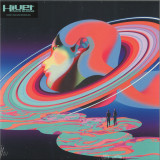
Gudu Records continues a busy start to 2022 with Italian due Hiver’s debut for the label - a high-definition EP that draws on classic electro and techno, following the group’s acclaimed past releases for Curle Recordings, Bokhari and Deeplabs.
A record that both marks and celebrates Hiver’s 10 years of operation, ‘Wave Sliding’ wears its influences on its sleeve: lead track ‘The Initiative’ is a “tribute to Detroit’s Hi-Tech Funk of the early 2000s”, lead by the sort of ostinato bassline and legato strings that have become Hiver’s trademark. ‘Vapour’ and ‘Entangle’ continue the EP’s retro-futurist outlook, drawing on sci-fi imagery and themes of travel, while ‘Stateless’ looks to the “easy-trance” sounds of 90s dancefloors for inspiration. Together, the tracks mark a perfect summary of Hiver’s vision of the dancefloor - bound together by vibrant colours and a starry-eyed, utopian nature.
Есть у нас в наличии и готов к отправке

**Includes double sided insert with liner notes and photos*
Al Mati was the pseudonym of eccentric Portuguese-born, Dutch-based artist Alberto Mesquita. The name translates to ‘Alberto Friend’, with ‘Al’ short for Alberto and ‘Mati’ meaning ‘friend’ in Surinamese.
Alberto’s story comes across like a mythical character from a European Kerouac novel, but instead of writing it down, he poured those adventures and characters into his record. The music and the comic-style artwork, drawn by his friend Bruno Scoriels, work as one, with Alberto himself becoming both the story and the character within it.
Raised under Salazar’s regime in Lisbon, where all men were conscripted to Africa, he refused, a pacifist. This put him at odds with his father, born in Angola and a prominent lawyer tied to the dictatorship. Unable to accept his son’s stance, the rift forced Alberto to flee Portugal as a deserter, leaving everything behind.
He sought a new life in Paris, where he met Bruno Scoriels. The pair busked to get by, and young and broke, set off on adventures across Europe. On one trip to Barcelona, they crossed the Pyrenees on foot through a five-kilometre train tunnel, not knowing if they would make it out alive. The train later featured on the cover of Some Shit, a nod to that hazardous journey and the strange turns of his life.
From there he moved to Belgium, where he met Jolanda, his future wife who also features on the album. They lived in The Netherlands, then back in Belgium where they married, before returning to Portugal under false pretences. The regime promised deserters immunity, but it proved untrue, and Alberto was forced to flee again — this time with a young family, using Bruno’s passport to escape to The Netherlands.
They settled in the Gliphoeve flats in Amsterdam’s Bijlmermeer, a vibrant immigrant community. This melting pot of cultures inspired Alberto musically. He started a studio in their flat where musicians from Suriname, Angola, the Antilles, Brazil, Mozambique and Portugal came and went, jamming, rehearsing, recording and forming bands including Albatros, Comoção and Mati Africa, performing internationally and at iconic Amsterdam venues like De Melkweg and Paradiso.
Being an immigrant was tough. Alberto was stateless for years, drifting across countries. Some songs voiced his frustration with the Portuguese regime, others were playful or simply love notes to his wife and kids. He passed away in the Netherlands in 2021, leaving Some Shit open to interpretation. But when you picture Europe in the 1970s — the politics, the upheaval, and his need to connect people across cultures — you can hear an artist shaped by contrast, who poured his experiences, feelings and love into music.
он должен быть опубликован на 04.12.2025

We Will Be Wherever The Fires Are Lit, a sort of sequel to Tashi"s first DC release Stateless, takes the torch and storms forward, with ten improvised acoustic guitar anthems. These musical thoughts are torn from the fabric of Tashi"s life and music. "Strumming in opposition to the towers" (as he puts it) is part of an existence that is always political, even in its most abstract iterations - a truth laid bare in these deep, raw performances.
он должен быть опубликован на 22.11.2024

we will be wherever the fires are lit, a sort of sequel to Tashi"s first DC release Stateless, takes the torch and storms forward, with ten improvised acoustic guitar anthems. These musical thoughts are torn from the fabric of Tashi"s life and music. "Strumming in opposition to the towers" (as he puts it) is part of an existence that is always political, even in its most abstract iterations - a truth laid bare in these deep, raw performances.
он должен быть опубликован на 22.11.2024

Mieko Shimizu is a London based Japanese singer, songwriter, composer and producer. Mieko first erupted onto the UK electronic scene as Apache 61; her searing alter ego, fusing layers of cross-woven breaks and battling shards of sub-bass within stateless melodies drawn from the fringes of the avant-garde. Garnering plays by John Peel she quickly build herself a name across the underground scene. Originally trained in Jazz, she cites the multidisciplinary performance artist Meredith Monk and composer Terry Riley as early influences, but also draws inspiration from many genres.
Phenomena of the mind is a re-mastered EP of selected tracks from the album of the same title released in 2006, the year after the London Terror attacks. Something dispirited and unexplainable lay heavy in the air of this immense city that we lived and breathed. In the title song “ Phenomena of the mind” Mieko’s intense Japanese rap echoed the din of the chaotic streets we walk.‘Visualise’, she says, try to imagine a way to fight our way our way out of this ominous struggle.
In the track “Signal Found”, the theme continues to shattered Dance Hall beats that reverberate to the “Twisted Sound” of “Broken down” “London Town”. “Have you lost a plot? Are you ok?” she asks?
In the track ‘Black Salt” a dark melancholic theme floats over fragmented, glitchy beats compounded by the repetition of the word “black” which hammers the constant bombardment of racism prescient of the call for freedom that “Black Lives Matter.”
Wonderland Magazine has described Mieko’s music as “beautiful poetic verses and stunning musical arrangements and Mark Taylor describes Mieko in Record Collector as “An avant-garden artist pushing boundaries”
• Re-mastered EP of selected tracks from the album of the same title released in 2006
• Premiering the re-release at Twenty One in Southend on 21st April
• Mark Taylor describes Mieko in Record Collector as “An avant-garden artist pushing boundaries”
он должен быть опубликован на 10.06.2022

Brand new studio album by The William Loveday Intention as part of their “career in a year”! “The cover pic is from a visit I made with my son and friends to the artist Giovanni Segantini's hut in the High Alps sometime around 2016. Segantini (1858-1899), was an illiterate and stateless artist famous for his paintings made in the Engadin. The title track is about living your life through someone else's YouTube channel: a blow by blow account of how their life in the frozen north is more, picturesque, sensitive, fun, enlightened and artistic than yours could ever be. 'Stood Upon a Chair' is about the villain Jessie James, but without the romance part that is usually added to such tales. 'You Gotta Move', a Mississippi Fred McDowell cover, is one of the best recordings we've ever made. Here I’m accompanied by my wife Julie and my friend Dave Tattersall who plays electric slide guitar. A true gem which should make someone, somewhere, rich and famous. (Or at least make Mick Jagger blush with shame.) Topping it all off we hit a couple of old Headcoats numbers with added verses that reveal the hidden depth behind those impeccable pop songs.” - WILLIAM LOVEDAY 2022
он должен быть опубликован на 12.05.2022

MIEKO SHIMIZU is a London based Japanese singer, songwriter, composer
and producer. She first erupted onto the scene as Apache 61, fusing layers
of cross-woven breaks and battling shards of sub-bass within stateless
melodies drawn from the fringes of the avant-garde.
Mieko has produced scores for contemporary dance company Phoenix Dance
Theatre as well as the Ballet ‘The Red Balloon’ at the Royal Opera House’s
Linbury Theatre. She was made an ‘Emerging Artist in Residence’ at London’s
Southbank Centre where she collaborated with the London Philharmonic Orchestra on her own compositions.
ROAD OF SHELLS was originally released back in 1990 and now being released
for the very first time on vinyl. Recored at Wold Studios in London, the record
features an array of talented musicians from Claude Deppa on trumpet and
guitar from Dominique Brethes. ‘Blue Dancer’ and ‘In The Garden’ features
Mieko’s brother Yasuaki Shimizu on saxophone.
20 years on from Road Of Shells original release date the record has now has
be released for the very first time on Vinyl in Japan and available in the UK
and worldwide.
Mieko has worked with David Cunningham from The Flying Lizards, Robert
Lippok of To Rococo Rot and re-mixed the likes of Coldcut. Haruomi Hosono
of the cult electro-pop act ‘Yellow Magic Orchestra’, signed Mieko to his label
‘Daisy World’.
Mieko has performed at Sonar, alongside Kraftwerk and supported Massive
Attack at their Melt Down Festival.
он должен быть опубликован на 10.09.2021

Tangents formed in Sydney in 2010 and released their debut album "I" in 2013, a recording of their first ever meeting and live show. Follow-up albums Stateless (2016) and New Bodies (2018), and linked singles and EPs, explored a style of post-produced live improvisation that marked the group's distinct blend of electronic, jazz, rock and new music-inspired styles. Amidst other international recognition, New Bodies was nominated for the Australian Music Prize in 2018. Their latest release, Timeslips & Chimeras, continues their studio recording journey after a detour into intensive live performance (idiosyncratically captured in a cramped radio studio on the Risk Reaps Reward EP) and a major digital art installation, Spiral, at the Powerhouse Museum, Sydney. The record continues their relationship with New York label Temporary Residence through the challenges of music production in the Covid-19 era. Tangents are Ollie Bown, Evan Dorrian, Peter Hollo and Adrian Lim-Klumpes. Sia Ahmad is a former member whose work continues through the Timeslips & Chimeras production period.
он должен быть опубликован на 30.07.2021

What is Randolph & Mortimer? A folk duo, a pair of accountants, a techno act…a law firm? What started off as an ‘art project’, influenced by 80s Industrial, 90s rave music and inspired by the documentaries of Adam Curtis, has morphed into a full on New Beat / Body Music dance-floor moving machine. Their studio releases have gained support from some of the biggest underground DJ’s in the world like Ancient Methods and gone on to top various genre sales charts on Bandcamp. Whilst the R&M live shows have seen them share bills with Godflesh, Youth Code, PIG and 3Teeth.
In 2019 it was time for R&M to throw a marker down and so came “Manifesto For A Modern World”, the debut album comprised of tracks from the “$ocial £utures”, “Hope Tragedy Myths” and “Citizens” EP’s plus some additional songs. This album is basically a greatest hits of Randolph & Mortimer. A statement of intent. All killer and no filler. The original limited edition CDs and tapes sold out and it had some incredible reviews. A Model Of Control called it “An absolutely outstanding release” and super cool New York DJ Andi Harriman (Synthicide) made it one her of top 10 albums of 2019 on Post-Punk
So here we are in 2020 and the Randolph & Mortimer story has seriously stepped up a gear with this double vinyl version of the album featuring all Manifesto tracks plus the acid styled dance-floor favourite “Apply Yourself” and four brand new tracks (“Crystal Peaks”, “Stateless”, “What Are You?”, “Fantasy Land”) which make up a whole new EP.
Limited edition of 400 copies with folded poster/insert and sticker.
Закажите сейчас, и мы закажем товар для вас у нашего поставщика.
