Search:standards

Styles
All
Various - Breaking Standards

Renegade Methodz presents its various artists 'Breaking Standards' series.

Making its debut with the first edition the four track release is serving as a reflection of modern techno by introducing tracks from artists that are appearing in the label for the very first time as well as a familiar contributor that is making his return.

The Breaking Standards series aims directly at the dance-floor, curated carefully to keep the music quality high and showcase the work of new and established artists that with their style are keeping the genre modern and fresh without losing the essence of what makes this music timeless.

In Stock

On Stock and ready to ship

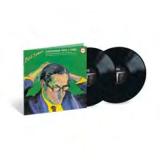
ALESSANDRO GALATI - Plays Standards The Best Selection
  • A1: The Old Country
  • A2: All The Things You Are
  • A3: But Not For Me
  • A4: I Fall In Love Too Easily
  • B1: I'll Close My Eyes
  • B2: Lament
  • B3: Stella By Starlight
  • B4: Last Tango In Paris
  • B5: I'll Be Seeing You

Winner of the Gold Medal at the 2024 Jazz Audio Disc Awards, a jazz critic magazine!
This best-of album features selections from three of Alessandro Galati's most talked-about albums!
Alessandro Galati, a master of Italian jazz who has released numerous albums on Terashima Records, released his standards collection "Plays Standards" series
at the end of 2024, following "European Walkabout," a collection of European traditional music, and "Portrait in Black and White," a collection of Jobim's classic
bossa nova works. All three albums (23 tracks) of Galati's standards collection, released at the end of 2024, are now being released simultaneously! The album
won the Gold Medal at the 2024 Jazz Audio Disc Awards, a jazz critic magazine magazine, and caused a stir. This long-awaited best-of album, featuring selected
tracks from the three albums, is finally being released on limited-edition vinyl. Enjoy this collection of gentle, warm, and beautiful standards, woven with a touch
that evokes the warmth of human skin and refined phrasing.

Alessandro Galati - piano
Ares Tavolazzi - bass
Bernardo Guerra - drums

pre-order now12.12.2025

expected to be published on 12.12.2025


Last In: 2026 years ago
KENNY WHEELER & RAIN SULTANOV QUINTET - JAZZ STANDARDS LIVE LP 2x12"
  • Cantern N2
  • Blue Monk
  • Lennie
  • Tango
  • Kenny's Blues
  • Body & Soul
  • Cantern N1
  • Don't Worry Baby
  • Mr P.c
also available

CLEAR MARBLE VINYL


2LP - 180 Gram Vinyl Jazz Standards Live is a remarkable collaboration between two iconic jazz musicians: Kenny Wheeler, a legendary trumpeter and composer known for his versatility, and Rain Sultanov, a saxophonist celebrated for his rich tone and innovative style. This album captures an unforgettable performance that has never before been released physically. Blending the expressive power of Wheeler's trumpet and Sultanov's saxophone, the quintet delivers a warm and resonant sound that harks back to the golden era of jazz in the late 1970s and early 1980s. Fans of Herbie Hancock's V.S.O.P. quintet will recognize the vibrant interplay reminiscent of Freddie Hubbard and Wayne Shorter. This double vinyl LP is a treasure trove for jazz enthusiasts, featuring a mix of beloved standards and original compositions by Wheeler. Adding depth and character to the performance is Shahin Novrasli's masterful piano work, which infuses the album with a distinctive mood. Meanwhile, Paul Clarvis on drums and Ruslan Guseynov on bass provide a dynamic and cohesive rhythm section that elevates each track. Jazz Standards Live is not just an album; it is a testament to the boundless creativity and artistry of two jazz maestros, uniting their talents to create an experience that is both timeless and fresh. Whether you're a longtime jazz aficionado or a newcomer to the genre, this album promises to captivate and inspire.

pre-order now21.02.2025

expected to be published on 21.02.2025


Last In: 2026 years ago
KENNY WHEELER & RAIN SULTANOV QUINTET - JAZZ STANDARDS LIVE LP 2x12"

2LP - 180 Gram Vinyl Jazz Standards Live is a remarkable collaboration between two iconic jazz musicians: Kenny Wheeler, a legendary trumpeter and composer known for his versatility, and Rain Sultanov, a saxophonist celebrated for his rich tone and innovative style. This album captures an unforgettable performance that has never before been released physically. Blending the expressive power of Wheeler's trumpet and Sultanov's saxophone, the quintet delivers a warm and resonant sound that harks back to the golden era of jazz in the late 1970s and early 1980s. Fans of Herbie Hancock's V.S.O.P. quintet will recognize the vibrant interplay reminiscent of Freddie Hubbard and Wayne Shorter. This double vinyl LP is a treasure trove for jazz enthusiasts, featuring a mix of beloved standards and original compositions by Wheeler. Adding depth and character to the performance is Shahin Novrasli's masterful piano work, which infuses the album with a distinctive mood. Meanwhile, Paul Clarvis on drums and Ruslan Guseynov on bass provide a dynamic and cohesive rhythm section that elevates each track. Jazz Standards Live is not just an album; it is a testament to the boundless creativity and artistry of two jazz maestros, uniting their talents to create an experience that is both timeless and fresh. Whether you're a longtime jazz aficionado or a newcomer to the genre, this album promises to captivate and inspire.

pre-order now21.02.2025

expected to be published on 21.02.2025


Last In: 2026 years ago
Pablo Held - Trio Plays Standards LP
  • I'll Never Be The Same 05:06
  • Barbados 05:13
  • You Won't Forget Me 05:11
  • Just In Crame 05:51
  • Very Early 05:40
  • Last Night When We Were Young 05:35

Critically-acclaimed German pianist Pablo Held announces TRIO PLAYS STANDARDS, the seminal new trio album which captures Held and his comrades Robert Landfermann & Jonas Burgwinkel paying tribute to the rich legacy of Jazz.

Reflecting on the album’s theme, Held shares:
"On our previous 14 recordings, Robert, Jonas, and I have explored a wide range of musical realms: my original compositions, classical pieces, works by my father Peter Held, and occasional tunes by some of my favorite artists. Delving deeply into each of these musical environments has played a pivotal role in shaping the trio's sound over these years. Now, we've finally fulfilled a dream: recording an album of standards."

The album showcases Pablo Held’s unique arrangements of broadway classics as I’LL NEVER BE THE SAME, YOU WON’T FORGET ME and LAST NIGHT WHEN WE WERE YOUNG, reworkings of Charlie Parker’s BARBADOS and Bill Evans’ VERY EARLY, alongside Held’s own JUST IN CRAME - a contrafact on the old standard JUST IN TIME - each imbued with the trio's signature improvisational spirit and collective synergy.

Pablo Held, who’s not only known as a revered pianist and composer, but also a musical researcher, knows the value of deep study and cherishes its effect on his work: "The more I study this music, the more it propels me forward," says Held, echoing the sentiment of his personal hero Wayne Shorter about the past being “the flashlight that guides the way into the future”.

The trio recorded the album at Jazz Campus Basel’s pristine studio facilities on October 29th 2023 in front of a live audience of attentive students who witnessed the trio’s explorations first handedly in this intimate setting.

TRIO PLAYS STANDARDS was recorded and mixed by recording engineer Daniel Dettwiler and mastered by Christoph Stickel, who mastered the majority of Pablo Held’s expansive discography as a leader.
Legendary vocalist Norma Winstone penned the liner notes, and its timeless cover design is by Christian Schäfer, featuring captivating photos by Linghuan Zhang.

TRIO PLAYS STANDARDS marks the 6th release on Held’s own label HOPALIT RECORDS.
After the success of the previous trio album WHO WE ARE, Held favors a double-release method for his records going forwards: a 6 month pre-release period, where the album is exclusively available via Bandcamp and on live shows, leading into the official release in stores and streaming platforms.

As an additional incentive every (physical & digital) copy includes the bonus album TRIO PLAYS STANDARDS - LIVE, recorded during Held’s own curated festival STANDARDS WEEK at the LOFT Köln in 2022.

pre-order now06.12.2024

expected to be published on 06.12.2024


Last In: 2026 years ago
Frank Sinatra - The Great American Songbook: the Standards Bob Sang LP 2x12"

Bob Dylan released “Triplicate”, his third collection of pop standards. Like Dylan’s earlier albums, “Shadows in the Night” (2015) and “Fallen Angels”(2016), most of the songs have an association with the great Frank Sinatra. This double LP presents Frank Sinatra’s versions of many of the songs Dylan sang in these three forays into The Great American Songbook. Orchestras accompanying the iconic singer are led by Nelson Riddle, Gordon Jenkins, Billy May, Alex Stordahl, and Tommy Dorsey, among others. Dylan once related this about an encounter he had with Ol’ Blue Eyes: “He was funny, we were standing out on his patio at night and he said to me, ‘You and me, pal, we got blue eyes, we’re from up there,’ and he pointed to the stars. ‘These other bums are from down here.’ I remember thinking that he might be right.”

pre-order now07.06.2024

expected to be published on 07.06.2024


Last In: 2026 years ago
Xupid - Hexing Hour EP

Xupid

Hexing Hour EP

12inchMOST008
Moral Standards
15.03.2024

Berlin based producer Xupid lands his next release on Falling Ethics sub label Moral Standards. After his magnificent debut album 'Trust Me' from last year, Xupid once more delivers four explosive dancefloor weapons in his own remarkable style. Working on a high pace he works his way from percussive bass stepper 'Fractal Keel' via the playful hard groovers 'Hexing Hour' and 'Planet Creep' to a more subtle dub house affair 'Direct Dub'. In the middle of all this, label curator P.E.A.R.L. steps up to rework 'Fractal Keel' where he flawlessly elaborates the broken tip of the original into an exciting no-nonsense off beat techno jam.

out of Stock

Order now and we will order the item for you at our supplier.


Last In: 20 months ago
Thomas Bartlett - Standards Vol. 1 LP 2x12"

Thomas Bartlett ist ein Grammy- und Oscar-nominierter Pianist, Produzent und Sänger, der bereits mit Yoko Ono, Norah Jones, Florence & The Machine und vielen anderen zusammengearbeitet hat. Sein neues Album mit dem Titel Standards besteht aus intimen Solo-Piano-Aufnahmen von Jazz-Klassikern.

"Tenderly" ist natürlich ein Jazz-Klassiker, der von allen Großen interpretiert wurde - aber Bartlett macht dieses Stück zu seinem ganz eigenen: zart, intim und ein wenig melancholisch. Allein mit seinem Klavier zaubert Thomas Bartlett berührende, universelle Momente.

pre-order now08.12.2023

expected to be published on 08.12.2023


Last In: 2026 years ago
Mike Moreno - Standards From Film LP 2x12"

Like a well-wrought character in a Hollywood movie, 'Standards from
Film', guitarist Mike Moreno's fourth Criss Cross album, exists atop a
solid, cogent back story
Recorded in December 2021, when the world and New York City - Houston-born
Moreno's home for more than two decades - were no longer on COVID lockdown,
it documents the leader's exhaustive investigations into the provenance of ten
iconic standards that, as he puts it, "are the summer jazz workshop tunes" - they
say you have to learn these songs if you want to be a jazz musician. You learn
them very young or in the beginning days of your journey into this music.
The album was recorded December 22, 2021 at the Samurai Hotel Recording
Studio in NY. Recording engineer Mike Marciano also did the editing, mixing and
mastering at Systems Two in NY

pre-order now30.09.2023

expected to be published on 30.09.2023


Last In: 2026 years ago
Various - Loud Moving Fast

Falling Ethics' sublabel Moral Standards presents their first V.A. with a stellar lineup of some of the most relevant names of this era.

P.E.A.R.L. starts off the 4-tracker with a groovy and stripped back tool, whereas Not A Headliner contributes a rather driving track, typical for his sound.

On the B-side Ryan James Ford comes with a heavy thumping track led by staccato synth stabs. To close off the V.A., DJ TOOL has the deepest and most trancy cut with stripped back drums and dreamy synths.

out of Stock

Order now and we will order the item for you at our supplier.


Last In: 2 years ago
The National Jazz Trio Of Scotland - Standards Vol. VI LP

A kind of hush pervades throughout Standards Vol VI, the latest release by The National Jazz Trio of Scotland, the ironically named project helmed by Falkirk’s musical polymath, Bill Wells, that is neither a trio, nor a jazz band. If this collection of ten covers probably comes closest to the latter in its late night renditions of actual standards, the presence of long-term NJToS member and collaborator Aby Vulliamy as the record’s lone vocalist adds to its solitary air. This follows Standards Vol IV (2018), which featured fellow NJToS co-founder Kate Sugden as primary vocalist, while Gerard Black, a member of the group since 2016, took centre stage in similar fashion on Standards Vol V (2019). Wells has long been a fan of Vulliamy, both of her work as a viola player with numerous collaborators, and as a singer.

Vulliamy played viola on Everything’s Getting Older, Wells’ 2011 collaboration with Arab Strap vocalist Aidan Moffat. Wells went on to play melodica on Vulliamy’s solo record, Spin Cycle, released on Karaoke Kalk in 2018. With the intent of producing the saddest heartbreak record ever made, Wells sourced a back catalogue of miniature epics, reinterpreting each tale of everyday yearning to make a canon of melancholy loungecore designed for nights in alone, if not always lonely. Beyond the concept of isolation behind Standards Vol VI, practical concerns added to the affair, with Wells recording backing tracks at home in Glasgow, while Vulliamy added her voice from her home in Yorkshire. The result on Standards Vol VI is a thing of quiet beauty that sees Wells and Vulliamy reimagine a panoply of pop classics in their own aloof sounding image.

Shades of Margo Guryan and Claudine Longet abound in Vulliamy’s delivery over Wells’ woozy, low-slung guitar and piano, with samples culled from a session with Teenage Fanclub’s Norman Blake. Little electronic percussive clicks and hisses lend things an even more otherworldly air on a record bookended by opener, Donovan’s proto hippy classic, Catch the Wind, and Dixieland miniature, Careless Love. The eight points in between take in a first half led by The Beatles’ normally jaunty We Can Work it Out, flipping the loveable mop-tops’ perky optimism for something more soul searching. This is followed by I Wish You Love, Albert Beach’s English language version of French songwriter Charles Trenet’s evergreen, Que reste-t-il de nos amours. The Bee Gees lost classic, To Love Somebody, is up next, with more impossible to answer questions coming in Why Can’t I?

The latter is a Rodgers and Hart composition that first appeared in the duo’s 1930 Broadway musical, Spring is Here, in which the show’s two heroines commiserate each other over their shared loneliness. Wells stumbled on the song in a tatty Rodgers and Hart songbook, which, like its subjects, had been left on the shelf before he and Vulliamy brought it in from the cold. The second half of Standards Vol VI leads with Matchmaker, Matchmaker, Jerry Bock and Sheldon Harnick’s much covered evocation of a pre dating app era from their 1964 hit musical, Fiddler on the Roof. This is followed by Billy Rose and Dave Dreyer’s showbiz staple (with Al Jolson also taking a credit), Me and My Shadow. While made famous by showbiz double acts ranging from Frank and Sammy to Robbie and Jonathan, here it flies decidedly solo. Johnny Mercer and Hoagy Carmichael’s Skylark comes next, a song inspired by Mercer’s yearning for Judy Garland. We hear ya, bub. The most downbeat take on Bacharach and David’s The Look of Love you’re ever likely to hear comes next, ushering in the short farewell of Careless Love, before the lights are turned out forever. Yeah, well. Whatever gets you through the night…

pre-order now30.06.2023

expected to be published on 30.06.2023


Last In: 2026 years ago
P.E.A.R.L. / Cressida - Intended Disaster

Next up on Falling Ethics' sublabel Moral Standards is label head honcho P.E.A.R.L. teaming up with the ever brilliant Cressida. Serving us a powerful split EP containing 6 cutting edge, dancefloor-ready techno tracks packing a distinctly oldschool flavour & lots of energy.

out of Stock

Order now and we will order the item for you at our supplier.


Last In: 14 months ago
Standards - Fruit Island

Standards

Fruit Island

12inchLPTSR218LEC
TOPSHELF RECORDS
20.01.2023

Led by the exuberant melodies of cross-tapping guitarist Marcos Mena,
the duo named standards make ebullient instrumental math-rock whose
effervescent riffs teem with enthusiasm for life and music
On the band's debut full- length, Fruit Island, standards deftly retool math- rock's
sinister and challenging tendencies into a style that is at once danceable yet still
compositionally profound.
In spite of the band's technical and precise stylings, the strictly instrumental
compositions are always catchy and singable, inviting listeners to join the band's
dancing fruit mascots whose colorful personalities reflect the music's upbeat
nature. Fruit Island's second single, "May," perfectly captures the duo's fruity
alternate universe, conjuring images of anthropomorphic melons and berries
bobbing along to pleasantly angular riffs and chop-heavy drums.

pre-order now20.01.2023

expected to be published on 20.01.2023


Last In: 2026 years ago
TERRI LYNE CARRINGTON - NEW STANDARDS VOL. 1 LP (2x12")

Terri Lyne Carrington is a three time Grammy Award winning contemporary virtuoso jazz drummer and composer. Known for her long association with Herbie Hancock, Carrington has worked with Dizzy Gillespie, Stan Getz, Clark Terry, Wayne Shorter, Lester Bowie, and Pharaoh Sanders. She has been outspoken in the political nature of her work, addressing racism, political protest, and gender discrimination throughout her work.

pre-order now16.09.2022

expected to be published on 16.09.2022


Last In: 2026 years ago
VCO - Potential Hazard EP

Resident DJ of the infamous Berlin party Same Bitches, VCO debuts on Moral Standards' 4th physical outing.

Presenting Two slick and brooding, floor-ready cuts, Backed with accompanying remixes by the label honcho P.E.A.R.L. alongside Hector Oaks aka Cadency.

out of Stock

Order now and we will order the item for you at our supplier.


Last In: 18 months ago
Kenny G - New Standards

Kenny G

New Standards

12inch7240426
Concord Records
11.02.2022

Award winning saxophonist, Kenny G, is the biggest selling instrumental musician of the modern era and one of the best-selling artists of all time.  He’s maintained a high level of creative excellence through decades of unprecedented commercial success. After 6 years since releasing Brazilian Nights on Concord Records, Kenny returns with a new album New Standards, an 11-track collection.

pre-order now11.02.2022

expected to be published on 11.02.2022


Last In: 2026 years ago
Uncrat - Exclaim EP

Uncrat

Exclaim EP

12inchMOST003
Moral Standards
16.04.2021

Next up on Falling Ethics' sublabel Moral Standards is the young and promising Uncrat. The "Exclaim EP" is a perfect example of how techno is constantly evolving and shows us where it's going. With touches of trance and a seriously hard remix by P.E.A.R.L. this slice of contemporary techno will surely find it's way into many a record bag.

out of Stock

Order now and we will order the item for you at our supplier.


Last In: 4 years ago
Device Control - The Spirit Module

Standards & Practices is proud to present the inaugural release on its new sister imprint, Double Standards, from NYC-based producer Jake Reif (Device Control). His third release working under this alias, Reif manages to amalgamate his dance music obsessions (EBM, bleep techno, Chicago house) in a totally unique way that feels fresh and idiosyncratic, avoiding simple genre exercises or nostalgia for the sake of it.

Lead track 'Spirit Module' is perhaps the finest summation of Reif's aesthetic yet: a mixture of bleepy, raw techno that, with its wild vocal samples and wide, 808-driven groove, comes across like a tougher, more modern take on the classic Sheffield/Richard H. Kirk/Robert Gordon sound. Label partner Ken Meier's first outing here as a remixer is a smashing success his version strips things down, keeping most elements of the original intact, but adds a driving, almost double-time metronomic machine rhythm that's aimed squarely at the dancefloor. On the flip, 'Tension' and 'Symmetry Obsession' row the boat further out, with their synapse-frying tones and jagged, randomized sequences reminiscent of Freddy Fresh at his best. All in all, a future classic destined to find favor with adventurous house and techno DJs alike.

out of Stock

Order now and we will order the item for you at our supplier.


Last In: 7 years ago
Talker - Battle Standards Remixes

After unanimous praise for Talker's "Battle Standards" and play from the likes of Ancient Methods, Headless Horseman, Sunil Sharpe, Mumdance, Shifted and many others, Standards & Practices returns with a powerful set of remixes from iconic UK techno artists Surgeon, Regis, and Broken English Club.

Anthony Child kicks off the proceedings with his first remix in a year, and it's one of his best to date. His version of "Battle Standard" takes the track in a radically different direction, building a hair-raising wall of sound culminating in an unforgettable melodic refrain-beautiful and brutal in classic Surgeon fashion. The A2 track is a special bonus: a Talker cut only previously available on a limited edition CD compilation. Entitled "My Favorite Color Is Gold", this is a dark and cinematic ambient take on "(Gold) Standard".

On the flip, Oliver Ho delivers a remix of DJ favorite "Snub Nose" under his Broken English Club alias. His overhaul is nothing short of remarkable - only retaining a segment of the original drum track, he adds a post-punk-esque vocal while a vicious, monotone bassline snarls underneath, sounding like it slithered off of a Big Black LP sometime around 1985. Regis closes the EP with his brilliant broken-beat take on "Battle Standard", stripping the original to its essentials for maximum dancefloor impact.

As with the label's previous EPs from Stave and Talker, this package features stunning full-color sleeve art from acclaimed graphic design studio Common Name, and a limited number are pressed on silver colored vinyl.

out of Stock

Order now and we will order the item for you at our supplier.


Last In: 6 years ago
Jayson Wynters - Double Standards Ep

After debuting on Mr. G's Phoenix G imprint in 2016 with the Unfamiliar Territory EP, Jayson Wynters makes an appearance on DBA for this, his second release, backed by a Kowton remix.

Jayson Wynters is a DJ that is able to combine many genres in one set and make it work. Wynters was first known as a garage MC in Birmingham, before rising to prominence in the city's underground radio and club scene, where he showcased an impressive knowledge of rare groove and house music. As he got older his taste for music began to mature, his collection began to grow, and he soon began to DJ. Using music as an outlet for expression, whether in the form of DJing or having fun on some drum machines and synths, is one of the most defining features to Wynters. He continues to fuel his passion by keeping an eye on the future rather than the past and striving to remain different.

out of Stock

Order now and we will order the item for you at our supplier.


Last In: 4 years ago
P.E.A.R.L. / JK Flesh / Auto De Fe - Limits Of Existence Vol.4

The fourth installment and latest in the Falling Ethics ELEVEN series contains tracks by label owner P.E.A.R.L., JK Flesh and the mysterious Auto De Fe. 'Moral Standards' is a tough opening track by label owner P.E.A.R.L. that is dancefloor oriented and packed with an almost tribal vigour. JK Flesh's 'Static Demon' revolves around a non linear rhythm and a fierce synth sequence that elvolves throughout. Auto De Fe's 'Mierda Bendita' is an adventurous piece of work that will strike a chord will lovers of industrial music.

out of Stock

Order now and we will order the item for you at our supplier.


Last In: 16 months ago
Garage Class - Terminal Tokyo

'Garage bands suddenly obtain cult status and become the antithesis of their initial appeal'

Garage Class were a group of reluctant outliers who produced one of the finest contributions to the wave of UK DIY music that emerged during the late 70s and early to mid-80s.

Hailing from Alsager in North West England and comprised of Tim Shutt (vocals) Phil Murphy (lead guitar) Clive Williams (guitar) Lynne Sanders (bass) and Phil Bourne (drums / bass on studio recordings) Garage Class originally went by the name of The Pits before their then manager Steve Hurt imposed an alias which, though unpopular within their ranks, would nevertheless reflect the shambolic art they would eventually capture on their first and only single.

As The Pits the group offered a loutish inflection on glam-punk flamboyance, evoking Johnny Thunder hitting the north and remaining disowned yet undeterred in a dreary old boozer. But as Garage Class the group distilled a roughcast and homespun primitivism that felt quintessentially their own. In this they proved too unruly to be assimilated into any wider scene. Early gigs descended into acrimony and recognition proved elusive. Yet what they managed to make back then now sounds like an extraordinary article of underdog ambition.

Released in 1984, four years after it was originally recorded, the Terminal Tokyo single is an unlikely triumph of exceptional messthetic punk. Though raw and unpolished the songs here are precariously pop-minded and indisputably anthemic. The titular A-side reveals the dry and detached drawl of Shutt aka The Subliminal Kid, a sharp, jaded and poetic voice that has some of the most iconic lines never heard in punk. Accompanied by second-hand guitars, on-the-fly handclaps and a chorus like a terrace chant this is the cult hit that never was, a heroically artless masterpiece that has all the ragged character and misfit euphoria of Swell Maps and The Buzzcocks if they were more impulsive and boisterous, and left to their own devices in the remote margins of a Cheshire town. The original B-side is here substituted for I Got Standards, a track that, until now, has somehow remained unreleased. An ideal twin to Terminal Tokyo there's the same brusque and dog-eared quality to the band's delivery, as well as the same upfront emphasis on strong hooks and insistent momentum. Yet again, Shutt is on impeccable form, perfecting an inflated, adolescent antagonism that has all the sardonic, malcontented charm of similarly 'shirty' buggers like Dan Treacy (Television Personalities), Patrik Fitzgerald and Mark Perry (Alternative TV).

Although never accepted in their own time both tracks represent a brief but inspired moment of fervent imperfection, one that epitomized the best of a diffuse and autonomous underground movement spearheaded by The Desperate Bicycles and built upon by the likes of Amos & Sara, The Homosexuals, The Cleaners From Venus and Family Fodder. Like them Garage Class were situated at a point where punk, art, humour and a sense of stubborn independence all intersected.

In the years since Terminal Tokyo has accumulated a retrospective appeal among certain trusted circles, with Jon Dale celebrating the single in his exhaustive and essential Story of UK DIY for Fact Magazine, and original copies regularly changing hands for a foolish forty quid or so. With this inaugural release on the Outer Reaches label Terminal Tokyo is not only restored for the very first time but given a worthy expansion courtesy of JD Twitch (Optimo).

Continuing his own fascination with the fringe history of UK DIY - documented on his own outstanding compilation Cease & Desist: DIY! (Cult Classics From The Post Punk Era 1978-1982) and in his re-edits of Crass Records classics for an early release on RVNG INTL - Twitch reinterprets I Got Standards as an incisive, dubwise outing that pictures Jaki Liebezeit and Muslimgauze on a bender in England's provinces, tasked with remixing the raw product of local punks. A new slant on Garage Class' crude magnificence, built to play loud on contemporary soundsystems.

Although the latter part of 1980 spelled the end for Garage Class with members moving on to other projects (Bourne fell in with The Colours Out of Time, Murphy went on to front The Regular Guys and Shutt eventually left to form Happy Refugees) this reissue attempts to give their fleeting time together and the unique single statement they made the treatment it deserves. If this means Garage Class have obtained cult status, their initial appeal remains. Just listen for yourself.

out of Stock

Order now and we will order the item for you at our supplier.


Last In: 7 years ago
SAM COOKE - NIGHT BEAT LP

Esteemed soul crooner Sam Cooke achieved much in a short space of time, notching 29 top-40 singles in his seven-year solo career. On Night Beat, released in 1963, Rene Hall’s tasteful arrangements allow Cooke’s voice to shine, most notably on ‘Lost And Lookin’; jump blues standards ‘Shake Rattle And Roll’ and ‘Little Red Rooster’ are playfully rendered, with Billy Preston’s organ on the latter. Originals ‘Mean Old World’ and ‘Laughin’ And Clownin’ remind of his strong song-writing ability and his spirited take of ‘Nobody Knows The Trouble I’ve Seen’ recalled his days with the Soul Stirrers. A prime album for all Cooke fans!

pre-order now27.03.2026

expected to be published on 27.03.2026


Last In: 2026 years ago
SEIICHI NAKAMURA - WOLF'S THEME LP
  • A1: Wolf's Theme
  • A2: Harappā
  • A3: Body And Soul
  • B1: Doxie
  • B2: Chattanooga Choo-Choo
  • B3: I Can't Get Started
  • B4: Viva Giappone

During his time with the Yosuke Yamashita Trio, Nakamura poured his entire being into every note, weaving flashes of inspiration and raw impulses into powerful blows in the early 1970s. With this work, he undergoes yet another transformation. As Nakamura himself described: “Sharing space with everyone, feeling as if we’re flying freely like birds that’s the ideal.” Here, layers of sound and moments of silence expand the sonic space, and within it, Nakamura’s saxophone runs vibrantly and unrestrained.

Highlights include the exhilarating “Wolf’s Theme”, inspired by Kazumasa Hirai’s Wolf Guy series; the nostalgic melodies and relaxed groove of “Harappa”; elegant, richly textured interpretations of standards like “Body & Soul” and “I Can’t Get Started”; and the dynamic, liberating energy of “Viva Giappone”. In every track, Nakamura’s ideal is vividly realized. Featuring contributions from Toshiyuki Daitoku, Aki Takase, and Ryojiro Furusawa.

pre-order now27.03.2026

expected to be published on 27.03.2026


Last In: 2026 years ago
Osunlade - Prism EP

Osunlade

Prism EP

12inchR2039
R2 Records
01.04.2026

Osunlade returns with a 5 track EP of exceptional quality showcasing his unique talent for creating emotive, electronic, cerebral house music with soul. Even within these boundaries Osunlade finds scope for variation, be it irresistible bumping grooves(Sistagurl), meditative melodies with etherial thought provoking spoken word, (The Journey), or full on electronic soundscapes encompassing the tribal and the esoteric, (Prism).

Pimpin’ takes a slowed down acid bass-line as the cue for a diatribe against the changes in the pimp game - a metaphor for today’s decline in standards of excellence.
The jewel in this crown is a hark back to the days of raw house music with a powerful and emotive female vocal. The Way U Left Me is an emboldened declaration of independence from toxic love guaranteed to tear down any dance.

ships from01.04.2026

The item is already on it's way to us and is expected to be shipped from 01.04.2026.


Last In: 12 months ago
Thelonious - Thelonious Alone in San Francisco (Original Jazz Classics Series)

Aufgenommen 1959 innerhalb von zwei Tagen in San Francisco, zeigt „Alone in San Francisco“ Thelonious
Monk in einer seltenen, ungezwungenen Form – solo, ohne Publikum und ohne Ensemble. Da er sich
nirgendwo verstecken konnte, zeigte sich Monk (wenig überraschend) der Situation gewachsen und schuf
eines der intimsten Dokumente seines Schaffens.
Das Album bietet eine Mischung aus Standards und Eigenkompositionen. Es beginnt mit Monks schwungvollem,
virtuosem Klassiker „Blue Monk“, seinem wohl am häufigsten aufgenommenen Werk, bevor es in die schräge
Eleganz von „Ruby, My Dear“ übergeht. An anderer Stelle unterstreichen zwei Takes des faszinierend
betitelten „There’s Danger in Your Eyes, Cherie“ Monks Improvisationsinstinkt, der zwischen beschwingter
Meditation und verspielter Abstraktion oszilliert.
Diese Neuauflage des Albums erscheint als Teil der Original Jazz Classics Series auf 180-Gramm-Vinyl,
gepresst bei RTI, mit vollständig analogem Mastering von den Originalbändern bei Cohearent Audio und
einer Tip-On-Hülle, die das Original-Artwork originalgetreu nachbildet.

pre-order now03.04.2026

expected to be published on 03.04.2026


Last In: 2026 years ago
Stacey Kent - A Time For love LP
  • 1: Lucky To Be Me (Leonard Bernstein)
  • 2: God Only Knows (Brian Wilson)
  • 3: The Shadow Of Your Smile (Johnny Mandel)
  • 4: La Javanaise (Serge Gainsbourg)
  • 5: As (Stevie Wonder)
  • 6: A Time For Love (Johnny Mandel)
  • 7: Trains And Boats And Planes (Burt Bacharach)
  • 8: What Goodbye Is For (Jim Tomlinson)
  • 9: Carinhoso (Alfredo Da Rocha Vianna Filho /Pixinguinha)
  • 10: E La Chiamono Estate (Bruno Martino)

Stacey Kent is an American jazz singer in the mould of the greats, with a legion of fans, a host of honors and awards including a Grammy nomination, album sales in excess of 2 million and more than one billion streams, and Platinum, Double-Gold and Gold-selling albums that have reached a series of chart-topping positions.

Stacey, a comparative literature graduate with a passion for music, travelled to Europe to further her studies after receiving her degree from Sarah Lawrence College in NY. Through a series of twists of fate, she found herself in London where she enrolled in a graduate music program at the Guildhall School of Music and Drama, where she met her future husband and musical partner, Jim Tomlinson.

Kent's musical journey began with childhood piano lessons. A keen ear and true voice lead her to search out opportunities to express her love of music. However, nothing suggested the shift from the academic path to the one that propelled her to international recognition as one of the foremost jazz singers of her generation. With a catalogue of 13 studio albums, including the Platinum selling, Grammy-nominated Breakfast On The Morning Tram (Blue Note/EMI 2007) and an impressive list of collaborations, Stacey has graced the stages of nearly 60 countries over the course of her career.

Her worldwide fan base is testimony to her ability to express the emotional heart of her songs with delicately nuanced interpretations that transcend borders and defy categorization. Her unique multi-lingual repertoire includes standards, chanson, Bossa Nova, and originals written by Jim Tomlinson, her saxophonist/producer/composer/arranger husband in collaboration with the Nobel Prize-winning author, Kazuo Ishiguro with whom they have worked since 2006. She has also recorded with Brazilian legends, Marcos Valle, Roberto Menescal and Danilo Caymmi, and the celebrated French string quartet, the Quatuor Ébène.

Stacey's last studio album, Summer Me, Winter Me, was released in November 2023 on Naïve Records. A collection of fans' requests from her as yet unrecorded concert repertoire, Summer Me, Winter Me entered the French jazz charts at number 1 and has quickly established itself as a new highlight in her discography. She now returns with A Time For Love.

pre-order now03.04.2026

expected to be published on 03.04.2026


Last In: 2026 years ago
Olivier Abbeloos - 1993-1994: Rare & Unreleased 1

"Late '80s and early '90s electronic music has had a steering influence on the Altered Circuits catalog curation, so we are delighted to present an EP by one of the pioneers of that era: Olivier Abbeloos. His 40 years of experience as a producer and DJ translate into a Discogs profile so extensive it reveals his real name alone can be (mis)spelled in 20 different ways. "1993-1994: Rare & Unreleased 1" features five tracks produced under three different aliases, all sourced from the artist's DAT tapes vault, dating back to the prolific two-year period referenced in its title. ALT024 opens with two "Conga Squad" tracks. "Combo" is a high-energy cut driven by a savory staccato chord progression, and "Substitute" works a similar, yet more restrained dynamic, that is, until a boisterous vocal sample enters. The quirky bass lines and moody synth work of "Under The Ground", the first "Holographic Hallucination" inclusion, concludes the A-side. Its twilight atmospherics fit right in amid the B-movie horror electro trending on contemporary dancefloors. The flip opens with "Psychosky", which caters slightly more to a slow-burner vibe and sets the stage for extensive piano work. "Dj Flavour", composed under the "Warp Factor One" alias, closes the EP. Here, the Latin-tinged percussion that runs as a subtle thread throughout the release takes the spotlight, while funky basslines and manipulated vocals add layers of detail. It is the only track on the EP that was already released in 1994, appearing as part of a - by the standards of that era - obscure and very limited 300-copy pressing. Those times sure have changed, but the music still sounds as fresh as ever."

pre-order now20.04.2026

expected to be published on 20.04.2026


Last In: 2026 years ago
CITIZEN:KANE - Blow LP

CITIZEN:KANE

Blow LP

12inchMAQUIAVEL09
MAQUIAVEL
25.02.2026

“We know what jazz is when we hear standards or music that is close to the same source, to a recognized pattern. But what is jazz? Here, a starting point. "Blow" showcases an accumulated CITIZEN:KANE techno vocabulary but it quickly tones down the sensation by introducing frequent breaks in the rhythm, as in "Peiote". But even there we are able to "feel" techno by recalling Wolfgang Voigt's M:I:5 and its parallel yet contrasting rhythmic grids. Elsewhere, manifestations of opposite forces: the beat keeps a body firm on the floor, eminently physical but not commanding; and melodies, cosmic threads, suggest ascension as well as a drive towards the within, creating space for feelings and/or rationalization. "The Fence" or "Montreal" stand as good examples. One less evident aspect of beauty in this record is the apparent coldness of the music, almost rigid and devoid of passion, and thus we declare it more true. As the mind performs a synthesis of what was learned after a class, last track "Family" (expressively) gathers impressions of what went before, adding poetry to the moment. "Blow" may be a reference to the most familiar instruments used in jazz but it can also figuratively mean an explosion, an aesthetic liberation, even with (our) knowledge that for now, and theoretically, the artist chose to concentrate on this thing called jazz.”

In Stock

On Stock and ready to ship

RAVE AT YOUR FICTIONAL BORDERS - ANALOGUE NOMADISM

Rave At Your Fictional Borders is not beyond borders. The band simply denies any notion thereof. Driven by a sense of community, it defines human existence as one bio-organism with planet Earth. Now comprising members Dave De Rose, Marius Mathiszik, and Salim Akki, this incarnation of Rave At Your Fictional Borders first released the 'Entanglement' and 'Utopia' tracks in March 2025. Analogue Nomadism is the project's first album release. Recorded in Morocco and then co-produced and mixed by Dan Nicholls, it is an album of dizzying, trance-inducing scope. Rave music stripped of all external signifiers. Repetition, noise, krautrock, avant-garde sensibilities. This is a search for a groove that both connects and interlocks. The soul of improvisation and exploration runs through all seven pieces on Analogue Nomadism. Genres are referenced and transcended. The open-ended is perpetually embraced.

It is neither night nor day, but there is a half-light all the time. What used to be disconcerting is now not alien anymore. The sky boasts a faint light. Certain shapes are laid out, but get changed through communal ritual. Analogue Nomadism is the music of a feeling of community. It builds and breaks down. It is accepting of the psychedelic standards of the groove. Transportative and vertiginous. Endless.

pre-order now25.04.2026

expected to be published on 25.04.2026


Last In: 2026 years ago
Risk Assessment - Stereo:type EP 8

After a relatively quiet year - by his standards at least - Glyne Braithwaite aka Risk Assessment is back with three more simultaneously released EPs. This one, number eight in the long-serving producer's ongoing series, boasts four more happy-go-lucky, party-friendly workouts. Check first 'Love Music Part 1', where disco samples from a cover of an O'Jays classic (including the familiar piano refrain) rise above a typically thickset house groove, before admiring the more urgent, excitable and musically detailed disco-house rush of 'Son of a Gun'. The fun continues on the flipside, where 'Want You Back (Kitchen Disco mix)' - all shuffling beats, lovely Clavinet licks and female vocalisations - is joined by the similarly celebratory 70s soul-goes-disco-house goodness of 'Welcome (Remix)'.

pre-order now30.04.2026

expected to be published on 30.04.2026


Last In: 2026 years ago
Guilty Razors - Complete Recordings 1977 - 1978
  • A1: Hurts And Noises
  • A2: Wake Up
  • A3: I Don't Wanna Be A Rich
  • A4: Terrorist Bad Heart
  • A5: Provocate
  • A6: Lucifer Sam (Pink Floyd)
  • B1: Happy!?
  • B2: So Lazy
  • B3: I Feel Down
  • B4: Stupido
  • B5: Guilty
  • B6: Caroline Says (Loo Reed)

UILTY RAZORS, BONA FIDE PUNKS.


Writings on the topic that go off in all directions, mind-numbing lectures given by academics, and testimonies, most of them heavily doctored, from those who “lived through that era”: so many people today fantasize about the early days of punk in our country… This blessed moment when no one had yet thought of flaunting a ridiculous green mohawk, taking Sid Vicious as a hero, or – even worse – making the so-called alternative scene both festive and boorish. There was no such thing in 1976 or 1977, when it wasn’t easy to get hold of the first 45s by the Pistols or the Clash. Few people were aware of what was happening on the fringes of the fringes at the time. Malcolm McLaren was virtually unknown, and having short hair made you seem strange. Who knew then that rock music, which had taken a very bad turn since the early 1970s, would once again become an essential element of liberation? That, thanks to short and fast songs, it would once again rediscover that primitive, social side that was so hated by older generations? Who knew that, besides a few loners who read the music press (it was even better if they read it in English) and frequented the right record stores? Many of these formed bands, because it was impossible to do otherwise. We quickly went from listening to the Velvet Underground to trying to play the Stooges’ intros. It’s a somewhat collective story, even though there weren’t many people to start it.
The Guilty Razors were among those who took part in this initial upheaval in Paris. They were far from being the worst. They had something special and even released a single that was well above the national average. They also had enough songs to fill an album, the one you’re holding. In everyone’s opinion, they were definitely not among the punk impostors that followed in their wake. They were, at least, genuine and credible.

Guilty Razors, Parisian punk band (1975-1978). To understand something about their somewhat linear but very energetic sound, we might need to talk about the context in which it was born and, more broadly, recall the boredom (a theme that would become capital in punk songs) coupled with the desire to blow everything off, which were the basis for the formation of bands playing a rejuvenated rock music ; about the passion for a few records by the Kinks or the early Who, by the Stooges, by the Velvet mostly, which set you apart from the crowd.
And of course, we should remember this new wave, which was promoted by a few articles in the specialized press and some cutting-edge record stores, coming from New York or London, whose small but powerful influence could be felt in Paris and in a handful of isolated places in the provinces, lulled to sleep by so many appalling things, from Tangerine Dream to President Giscard d’Estaing...
In 1975-76, French music was, as almost always, in a sorry state ; it was still dominated by Johnny Hallyday and Sylvie Vartan. Local rock music was also rather bleak, apart from Bijou and Little Bob who tried to revive this small scene with poorly sound-engineered gigs played to almost no one.
In the working class suburbs at the time, it was mainly hard rock music played to 11 that helped people forget about their gruelling shifts at the factory. Here and there, on the outskirts of major cities, you still could find a few rockers with sideburns wearing black armbands since the death of Gene Vincent, but it wasn’t a proper mass movement, just a source of real danger to anyone they came across who wasn't like them. In August 1976, a festival unlike any other took place in Mont-de-Marsan – the First European Punk Festival as the poster said – with almost as many people on stage as in the audience. Yet, on that day, a quasi historical event happened, when, under the blazing afternoon sun, a band of unknowns called The Damned made an unprecedented noise in the arena, reminiscent of the chaotic Stooges in their early adolescence. They were the first genuine punk band to perform in our country: from then on, anything was possible, almost anything seemed permissible.

It makes sense that the four+1 members of Guilty Razors, who initially amplified acoustic guitars with crappy tape recorder microphones, would adopt punk music (pronounced paink in French) naturally and instinctively, since it combines liberating noise with speed of execution and – crucially – a very healthy sense of rebellion (the protesters of May 1968 proclaimed, and it was even a slogan, that they weren’t against old people, but against what had made them grow old. In the mid-1970s, it seemed normal and obvious that old people should now ALSO be targeted!!!).
At the time, the desire to fight back, and break down authority and apathy, was either red or black, often taking the form of leafleting, tumultuous general assemblies in the schoolyard, and massive or shabby demonstrations, most of the time overflowing with an exciting vitality that sometimes turned into fights with the riot police. Indeed, soon after the end of the Vietnam War and following Pinochet’s coup in Chile, all over France, Trotskyist and anarcho-libertarian fervour was firmly entrenched among parts of the educated youth population, who were equally rebellious and troublemakers whenever they had the chance. It should also be noted that when the single "Anarchy in the UK" was first heard, even though not many of us had access to it, both the title and its explosive sound immediately resonated with some of those troublemakers crying out for ANARCHY!!! Meanwhile, the left-wing majority still equated punks with reckless young neo-Nazis. Of course, the widely circulated photos in the mainstream press of Siouxsie Sioux with her swastikas didn’t necessarily help to win over the theorists of the Great Revolution. It took Joe Strummer to introduce The Clash as an anti-racist, anti-fascist and anti-ignorance band for the rejection of old-school revolutionaries to fade a little.

The Lycée Jean-Baptiste Say at Porte d’Auteuil, despite being located in the very posh and very exclusive 16th arrondissement of Paris, didn’t escape these "committed" upheavals, which doubled as the perfect outlet for the less timid members of this generation.
“Back then, politics were fun,” says Tristam Nada, who studied there and went on to become Guilty Razors’ frontman. “Jean-Baptiste was the leftist high-school in the neighbourhood. When the far right guys from the GUD came down there, the Communist League guys from elsewhere helped us fight them off.”
Anything that could challenge authority was fair game and of course, strikes for just about any reason would lead to increasingly frequent truancy (with a definitive farewell to education that would soon follow). Tristam Nada spent his 10th and 11th unfinished grades with José Perez, who had come from Spain, where his father, a janitor, had been sentenced to death by Franco. “José steered my tastes towards solid acts such as The Who. Like most teenagers, I had previously absorbed just about everything that came my way, from Yes to Led Zeppelin to Genesis. I was exploring… And then one day, he told me that he and his brother Carlos wanted to start a rock band.” The Perez brothers already played guitar. “Of course, they were Spanish!”, jokes their singer. “Then, somewhat reluctantly, José took up the bass and we were soon joined by Jano – who called himself Jano Homicid – who took up the rhythm guitar.” Several drummers would later join this core of not easily intimidated young guys who didn’t let adversity get the better of them.

The first rehearsals of the newly named Guilty Razors took place in the bedroom of a Perez aunt. There, the three rookies tried to cover a few standards, songs that often were an integral part of their lives. During a first, short gig, in front of a bewildered audience of tough old-school rockers, they launched into a clunky version of the Velvet Underground's “Heroin”. Challenge or recklessness? A bit of both, probably… And then, step by step, their limited repertoire expanded as they decided to write their own songs, sung in a not always very accurate or academic English, but who cared about proper grammar or the right vocabulary, since what truly mattered was to make the words sound as good as possible while playing very, very fast music? And spitting out those words in a language that left no doubt as to what it conveyed mattered as well.
Trying their hand a the kind of rock music disliked by most of the neighbourhood, making noise, being fiercely provocative: they still belonged to a tiny clique who, at this very moment, had chosen to impose this difference. And there were very few places in France or elsewhere, where one could witness the first stirrings of something that wasn’t a trend yet, let alone a movement.

In the provinces, in late 1976 or early 1977, there couldn’t be more than thirty record stores that were a bit more discerning than average, where you could hear this new kind of short-haired rock music called “punk”. The old clientele, who previously had no problem coming in to buy the latest McCartney or Aerosmith LP, now felt a little less comfortable there…
In Paris, these enlightened places were quite rare and often located nex to what would become the Forum des Halles, a big shopping mall. Between three aging sex workers, a couple of second-hand clothes shops, sellers of hippie paraphernalia and small fashion designers, the good word was loudly spread in two pioneering places – propagators of what was still only a new underground movement. Historically, the first one was the Open Market, a kind of poorly, but tastefully stocked cave. Speakers blasted out the sound of sixties garage bands from the Nuggets compilation (a crucial reference for José Perez) or the badly dressed English kids of Eddie and the Hot Rods. This black-painted den was opened a few years earlier by Marc Zermati, a character who wasn’t always in a sunny disposition, but always quite radical in his (good) choices and his opinions. He founded the independent label Skydog and was one of the promoters of the Mont-de-Marsan punk festivals. Not far from there was Harry Cover, another store more in tune with the new New York scene, which was amply covered in the house fanzine, Rock News (even though it was in it that the photos of the Sex Pistols were first published in France).
It was a favorite hang-out of the Perez brothers and Tristam Nada, as the latter explained. “It’s at Harry Cover’s that we first heard the Pistols and Clash’s 45s, and after that, we decided to start writing our first songs. If they could do it, so could we!”
The sonic shocks that were “Anarchy in the UK”, “White Riot” or the Buzzcocks’s EP, “Spiral Scratch” – which Guilty Razors' sound is reminiscent of – were soon to be amplified by an unparalleled visual shock. In April 1977, right after the release of their first LP, The Clash performed at the Palais des Glaces in Paris, during a punk night organised by Marc Zermati. For many who were there, it was the gig of a lifetime…
Of course, Guilty Razors and Tristam were in the audience: “That concert was fabulous… We Parisian punks were almost all dressed in black and white, with white shirts, skinny leather ties, bikers jackets or light jackets, etc. The Clash, on the other hand, wore colourful clothes. Well, the next day, at the Gibus, you’d spot everyone who had been at this concert, but they weren’t wearing anything black, they were all wearing colours.”

It makes sense to mention the Gibus club, as Guilty Razors often played there (sometimes in front of a hostile audience). It was also the only place in Paris that regularly scheduled new Parisian or Anglo-Saxon acts, such as Generation X, Siouxsie and the Banshees, the Slits, and Johnny Thunders who would become a kind of messed-up mascot for the venue. A little later, in 1978, the Rose Bonbon – formerly the Nashville – also attracted nightly owls in search of electric thrills… In 1977, the iconic but not necessarily excellent Asphalt Jungle often played at the Gibus, sometimes sharing the bill with Metal Urbain, the only band whose aura would later transcend the French borders (“I saw them as the French Sex Pistols,” said Geoff Travis, head of their British label Rough Trade). Already established in this small scene, Metal Urbain helped the young and restless Guilty Razors who had just arrived. Guitarist for Metal Urbain Hermann Schwartz remembers it: “They were younger than us, we were a bit like their mentors even if it’s too strong a word… At least they were credible. We thought they were good, and they had good songs which reminded of the Buzzcocks that I liked a lot. But at some point, they started hanging out with the Hells Angels. That’s when we stopped following them.”

The break-up was mutual, since, Guilty Razors, for their part, were shocked when they saw a fringe element of the audience at Metal Urbain concerts who repeatedly shouted “Sieg Heil” and gave Nazi salutes. These provocations, even still minor (the bulk of the skinhead crowd would later make their presence felt during concerts), weren’t really to the liking of the Perez brothers, whose anti-fascist convictions were firmly rooted. Some things are non-negotiable.
A few months earlier (in July 1978), Guilty Razors had nevertheless opened very successfully for Metal Urbain at the Bus Palladium, a more traditonally old-school rock night-club. But, as was sometimes the case back then, the night turned into a mass brawl when suburban rockers came to “beat up punks”.

Back then, Parisian nights weren’t always sweet and serene.

So, after opening as best as they could for The Jam (their sound having been ruined by the PA system), our local heroes were – once again – met outside by a horde of greasers out to get them. “Thankfully,” says Tristam, “we were with our roadies, motorless bikers who acted as a protective barrier. We were chased in the neighbouring streets and the whole thing ended in front of a bar, with the owner coming out with a rifle…”
Although Tristam and the Perez brothers narrowly escaped various, potentially bloody, incidents, they weren’t completely innocent of wrongdoing either. They still find amusing their mugging of two strangers in the street for example (“We were broke and we simply wanted to buy tickets for the Heartbreakers concert that night,” says Tristam). It so happened that their victims were two key figures in the rock business at the time: radio presenter Alain Manneval and music publisher Philippe Constantin. They filed a complaint and sought monetary compensation, but somehow the band’s manager, the skilful but very controversial Alexis, managed to get the complaint withdrawn and Guilty Razors ended up signing with Constantin with a substantial advance.

They also signed with Polydor and the label released in 1978 their only three-track 45, featuring “I Don't Wanna be A Rich”, “Hurts and Noises” and “Provocate” (songs that exuded perpetual rebellion and an unquenchable desire for “class” confrontation). It was a very good record, but due to a lack of promotion (radio stations didn’t play French artists singing in English), it didn’t sell very well. Only 800 copies were allegedly sold and the rest of the stock was pulped… Initially, the three tracks were to be included on a LP that never came to be, since they were dropped by Polydor (“Let’s say we sometimes caused a ruckus in their offices!” laughs Tristam.) In order to perfect the long-awaited LP, the band recorded demos of other tracks. There was a cover of Pink Floyd's “Lucifer Sam” from the Syd Barrett era – proof of an enduring love for the sixties’ greats –, “Wake Up” a hangover tale and “Bad Heart” about the Baader-Meinhof gang, whose actions had a profound impact on the era and on a generation seeking extreme dissent... On the album you’re now discovering, you can also hear five previously unreleased tracks recorded a bit later during an extended and freezing stay in Madrid, in a makeshift studio with the invaluable help of a drummer also acting as sound engineer. He was both an enthusiastic old hippie and a proper whizz at sound engineering. Here too, certain influences from the fifties and sixties (Link Wray, the Troggs) are more than obvious in the band’s music.

Shortly after a final stormy and rather barbaric (on the audience’s side) “Punk night” at the Olympia in June 1978, Tristam left the band ; his bandmates continued without him for a short while.

But like most pioneering punk bands of the era, Guilty Razors eventually split up for good after three years (besides once in Spain, they’d only played in Paris). The reason for ceasing business activities were more or less the same for everyone: there were no venues outside one’s small circuit to play this kind of rock music, which was still frightening, unknown, or of little interest to most people. The chances of recording an LP were virtually null, since major labels were only signing unoriginal but reassuring sub-Téléphone clones, and the smaller ones were only interested in progressive rock or French chanson for youth clubs. And what about self-production? No one in our small safety-pinned world had thought about it yet. There wasn’t enough money to embark on that sort of venture anyway.

So yes, the early days of punk in France were truly No Future!

pre-order now22.05.2026

expected to be published on 22.05.2026


Last In: 2026 years ago
NALBANDIAN THE ETHIOPIAN & EITHER/ORCHESTRA - NALBANDIAN THE ETHIOPIAN (ETHIOPIQUES)

The Éthiopiques series returns! Essential archive recordings from an extremely fruitful period in Ethiopian music.

Before “Swinging Addis” took over the world, there was Moussié Nerses Nalbandian — the Armenian-born composer who shaped modern Ethiopian music. Mentor, arranger, and pioneer, he laid the foundations of Ethio-jazz.

This Éthiopiques volume revives his forgotten legacy, recorded live by Either/ Orchestra First issue ever with new exclusive photos and in depth liner 8-page insert.

“Ethiopian jazzmen are the best musicians that we have seen so far in Africa.
They really are promising handlers of jazz instruments.”

Wilbur De Paris
(1959, after a concert in Addis Ababa)

አዲስ፡ዘመን። *Addis zèmèn* **A new era.**
The time is the mid-1950s and early 1960s, just before "Swinging Addis" bloomed – or rather boomed – onto the scene. Brass instruments are still dominant, but the advent of the electric guitar, and the very first electronic organs, are just around the corner. Rock’n'Roll, R’n’B, Soul and the Twist have not yet barged their way in. Addis Ababa is steeped in the big band atmosphere of the post-war era, with Glenn Miller's *In the* *Mood* as its world-wide theme song, neck and neck with the Latin craze that was in vogue at the same period. Life has become enjoyable once again, with the return of peace after the terrible Italian Fascist invasion of Ethiopia (1935-1941). The redeployment of modern music is part and parcel of the postwar reconstruction. *Addis zèmèn* – a new era – is the watchword of the postwar period, just as it was all across war-torn Europe.
The generation who were the young parents of baby boomers** were the first to enjoy this musical renaissance, before the baby boomers themselves took over and forever super-charged the soundtrack of the final days of imperial reign. Music is Ethiopia's most popular art form, and very often serves as the best barometer for the upsurge of energy that is critical for reconstruction. Whether it be jazz in Saint-Germain-des-Prés or the *zazous* who revolutionised both jazz and French *chanson* after the *Libération*, be it Madrid's post-Franco Movida, or Dada, the Surrealists and *les années folles* that followed World War I, the periods just after mourning and hardship always give rise to brighter and more tuneful tomorrows. Addis Ababa, as the country's capital, and the epicentre of change, was no exception to this vital rule.

**Two generations of Nalbandian musicians**
Nersès Nalbandian belonged to a family of Armenian exiles, who had moved to Ethiopia in the mid-1920s. The uncle Kevork arrived along with the fabled "*Arba Lidjotch*", the** "*40 Kids*", young Armenian orphans and musicians that the Ras Tafari had recruited when he visited Jerusalem in 1924, intending to turn their brass band into the official imperial band. If Kevork Nalbandian was the one who first opened the way of modernism, pushing innovation so far as to invent musical theatre, it was his nephew Nersès who would go on to become, from the 1940s and until his death in 1977, a pivotal figure of modern Ethiopian music and of the heights it. Going all the way back to the 1950s. Nothing less. And it is Nersès who is largely to thank for the brassy colours that so greatly contributed to the international renown of Ethiopian groove. While the younger generations today venture timidly into the genealogy of their country's modern music, often losing their way amidst a distinctly xenophobic historiographical complacency, many survivors of the imperial period are still around to bear witness and pay tribute to the essential role that "Moussié Nersès" played in the rise of Abyssinia's musical modernity.
Given the year of his birth (15 March 1915), no one knows for sure if Nersès Nalbandian was born in Aintab, today Gaziantep (Turkiye/former Ottoman Empire) or on the other side of the border in Alep, Syria... What is certain is that his family, like the entire Armenian community, was amongst the victims of the genocide perpetrated by the Turks. Alep, the place of safety – today in ruins.
Before Nersès then, there was uncle Kevork (1887-1963). For a quarter of a century, he was a whirlwind of activity in music teaching and theatrical innovation. *Guèbrè Mariam le Gondaré* (የጎንደሬ ገብረ ማርያም አጥቶ ማግኘት, 1926 EC=1934) is his most famous creation. This play included "ten Ethiopian songs" — a totally innovative approach. According to his autobiographical notes, preserved by the Nalbandian family, Kevork indicates that he composed some 50 such pieces over the course of his career. This shows just how much he understood, very early on, the critical importance of song as Ethiopia's crowning artistic form. Indeed, for Ethiopian listeners, the most important thing is the lyrics, with all their multifarious mischief, far more than a strong melody, sophisticated arrangements or even an exceptional voice. (This is also why Ethiopians by and large, and beginning with the artists and producers themselves, believed for a long time — and wrongly — that their music could not possibly be exported, and could never win over audiences abroad, who did not speak the country's languages).

Last but not least, one of Kevork's major contributions remains composing Ethiopia's first national anthem – with lyrics by Yoftahé Negussié.
Nersès Nalbandian moved to Ethiopia at the end of the 1930s, at the behest of his ground-breaking uncle. Proficient in many instruments (pretty much everything but the drums), conductor, choir director, composer, arranger, adapter, creator, piano tuner, purveyor of rented pianos,... he was above all an energetic and influential teacher. From 1946 onwards, thanks to Kevork's connexion, Nersès was appointed musical director of the Addis Ababa Municipality Band. In just a few years, Nersès transformed it into the first truly modern ensemble, thanks to the quality of his teaching, his choice of repertoire, and the sophistication of his arrangements. It was this group that would go on to become the orchestra of the Haile Selassie Theatre shortly after its inauguration in 1955, which was a major celebration of the Emperor's jubilee, marking the 25th anniversary of his on-again-off-again reign.

At some point or other in his long career, Nersès Nalbandian had a hand in the creation of just about every institutional band (Municipality Band, Police Orchestra, Imperial Bodyguard Band, Army Band, Yared Music School…), but it was with the Haile Selassie Theatre – today the National Theatre – that his abilities were most on display, up until his death in 1977. To this must be added the development of choral singing in Ethiopia, hitherto unknown, and a sort of secret garden dedicated to the memory of Armenian sacred music, and brought together in two thick, unpublished volumes. Shortly before his death (November 13, 1977), he was appointed to lead the impressive Ethiopian delegation at Festac in Lagos, Nigeria (January-February 1977).

His status as a stateless foreigner regularly excluded him from the most senior positions, in spite of the respect he commanded (and commands to this day) from the musicians of his era. Naturally gifted and largely self-taught, Nerses was tirelessly curious about new musical developments, drawing inspiration from the very first imported records, and especially from listening intensely to the musical programmes broadcast over short-wave radio – BBC *First*. A prolific composer and arranger, he was constantly mindful of formalising and integrating Ethiopian parameters (specific “musical modes”, pentatonic scale, and the dominance of ternary rhythms) into his “modernisation” of the musical culture, rather than trying to over-westernise it. It even seems very probable that *Moussié* Nerses made a decisive contribution to the development of tighter music-teaching methods, in order to revitalise musical education during this period of prodigious cultural ferment. Flying in the face of all the historiographical and musicological evidence, it is taken as sacrosanct dogma that the four musical modes or chords officially recognised today, the *qǝñǝt* or *qiñit* (ቅኝት), are every bit as millennial as Ethiopia itself. It would appear however that some streamlining of these chords actually took place in around 1960. It was only from this time onward that music teaching was structured around these four fundamental musical modes and chords: *Ambassel*, *Bati*, *Tezeta* and *Antchi Hoyé*. A historical and musical “details” that is, apparently, difficult to swallow, especially if that should honour a *foreigner*. Modern Ethiopian music has Nersès to thank for many of its standards and, to this day, it is not unusual for the National Radio to broadcast thunderous oldies that bear unmistakable traces of his outrageously groovy touch.

In Stock

On Stock and ready to ship

RYO FUKUI - IN NEW YORK

RYO FUKUI

IN NEW YORK

12inchHRLP386
THREE BLIND MICE
26.06.2026

Ryo Fukui, who passed away in 2016 after releasing only five albums, recorded this fourth work in 1999. Featuring bassist Lyle Atkinson and drummer Leroy Williams—the longtime rhythm section of Barry Harris this New York-recorded album captures the full appeal of Fukui as a bebop pianist. Centered around standards, the track selection, structure, and of course the performances all radiate intent and vitality. His assured and weighty touch, the firm yet elastic swing, and the emotion and lyricism that permeate his dynamic phrasing everything here conveys Fukui’s breath, will, and presence in vivid form. The re-performance of his signature piece “Mellow Dream” is also a welcome highlight.

pre-order now26.06.2026

expected to be published on 26.06.2026


Last In: 2026 years ago
RAFAEL TORAL - TRAVELING LIGHT LP 2x12"

From out of the dark, sparks of feedback birdsong signal a return to the singular sonic environments of Rafael Toral"s sound-world. A year after Spectral Evolution, his acclaimed album of electric guitar conceptions, comes the companion work Traveling Light. Sharpening his focus around a set of jazz standards, his move from abstract form to solid song elicits glints from beyond time and space, crafting a unique listening lens for deep listeners. In the early years of his practice, Toral used the guitar as a generator to create discreet texture and droning tones. Later, he abandoned the guitar entirely, focusing on self-made electronics to render his music with a post-free jazz perspective. For the music of Spectral Evolution and Traveling Light, Toral has combined his methodologies: radically expanding the space within their harmonies with his self-made machines, while engaging directly with his instrument and the chords of the material. In addition to Toral"s proxy orchestra of guitars, sine wave, feedback and bass guitar, Traveling Light features the sounds of clarinetist José Bruno Parrinha, tenor saxophonist Rodrigo Amado, flügelhorn player Yaw Tembe, flautist Clara Saleiro, who each guest on one song. In every contour of Traveling Light"s path - arrangement, improvisation and production - the spring of the old pours through the new in an unstoppable flow. The result is a listening experience of these standards that remains "in the tradition", even as the elongated harmonies seem to alter time such that, as Toral notes, "the chords become events on their own."

In Stock

On Stock and ready to ship

Dimi Angelis - NECH034

Dimi Angelis

NECH034

12inchNECH034
TECHNO Records
05.12.2025

One of the founding figures of Amsterdam's underground Techno culture Dimi Angelis has been shaping the scene in the late 90s, throwing warehouse raves living up to the underground standards. Until today his approach remains unchanged: uncompromising, opinionated, and never aimed at easy pleasing.
Drawing from decades of crate-digging and an encyclopedic knowledge of Techno's evolution, Dimi crafts sets that feel familiar a reveal unexpected depths on closer listening.
These tracks follow that same philosophy as they are straightforward and honest on the surface, but wrapped in something appropriately unexpected.

In Stock

On Stock and ready to ship

Items per Page:
N/ABPM
Vinyl