En stock
Disponible en stock et prêt pour l'expédition
Derniere entrée: 12 jours
Disponible en stock et prêt pour l'expédition

Disponible en stock et prêt pour l'expédition

He's back. Twenty years after Boulevard, fifteen years after the multi-platinum album Tourist (over 3 million copies sold worldwide) and a world tour spanning several continents, Ludovic Navarre, alias St Germain, finally found his way back into the studio. An uncontested and respected figure in the world of electronic music for the past two decades, a pioneer of the 'French Touch' and a creator of intelligent and sensual deep house, St Germain has always stood out. His consummate art thrives on a subtle mixture of machines and instruments, of authentic roots and modern influences.
Disponible en stock et prêt pour l'expédition

Commandez maintenant et nous commanderons l'article pour vous chez notre fournisseur.

Art Blakey and the Jazz Messengers' tremendous concert at Club Saint Germain in Paris on December 21, 1958. This record presents the complete set and is produced as a three LP gatefold album with each vinyl one of three different colours: blue, white and red, representing the French flag. Au Club Saint Germain it's a memorable record and winner of numerous awards including the prestigious Grand Prix du Disque in 1959 from the Academie Charles Cros. Art Blakey and his Jazz Messengers are here with Lee Morgan on trumpet, Benny Golson on saxophone, Bobby Timmons on piano and Jymie Merrit on double bass. Drummer Kenny Clarke was living in Paris at the time and joined the group for the songs "A Night in Tunisia" and "Ending with the Theme" resulting in a session that will go down in jazz history!
il devrait être publié sur 19.07.2024

Celebrating the photography of Robert Doisneau, 25 years after his death. Discover the new Esprit Robert Doisneau Collection, associating songs with his famous images of Paris.
Famous all over the world, the photographer’s work accurately represents the soul of Paris. This collection of ten LPs are all pressed on 180g coloured vinyl.
Commandez maintenant et nous commanderons l'article pour vous chez notre fournisseur.

Norman Jay MBE presents his latest compilation, titled 'Good Times Skank & Boogie', set for release 9th October 2015 on Sunday Best Recordings. This is his first compilation since 2011's Good Times 30th Anniversary Addition and follows on from his hotly anticipated Good Times Goes East party at St John Church at Hackney on 29th August.
Norman Jay is undoubtedly one of the finest and highly respected DJs in the world today and yet again pulls from his impressive collection to provide the ultimate eclectic selection.
For this 12th compilation, for those of you counting, Norman kicks off with St Germain's version of Henry Mancini's Pink Panther Theme. A cult favourite from 2004s Pink Panther Penthouse Party album, it of course immediately brings Peter Sellers to mind and a smile to your face. Next up former Uniques front man Slim Smith's Everybody Needs Love is a classic from 1968, cut at the legendary Duke Reid's Treasure Isle studio. Penned originally by Motown heroes Norman Whitfield and Eddie Holland and covered by household names including The Temptations and Glady's Knight & The Pips, Slim's version became something of a signature tune until his mysterious death in 1971. Sticking with Motown, Stevie Wonder's Living For The City is up next but it's the Michael McDonald rendition from his 2008 album Soul Speak, which proves the man who gave us the sublime Sweet Freedom had lost none of his class 20 plus years on.
D-Influence's Good Lover takes things up and brings them closer to home, to the streets of London infact. After a couple of independent releases the band, who had strong connections to the London Jazz and Soul scenes, served up this contemporary boogie tune as part of their 1992 debut long player for East West. They would subsequently score hits as a production team for a number of British R&B acts. Homegrown soul continues with Paul Johnson's Better Than This, released here via longstanding UK soul imprint Expansion to deserved acclaim last year. It's quality and appeal are simply timeless, whilst master Dego and Kaidi's mix adds a classic 80s soul dimension to proceedings.
The Chi-Lites I Keep Comin' Back To You and The Real Thing's Love Takes Tears continue and expand the 80s theme, bringing in 2-step and boogie, as does Deodato's Never Knew Love from the same period.
We switch again with Delroy Wilson's Better Must Come, a massively popular sufferers lament from 1971 by this former Jamaican child star, it would go on to be used in election campaigns by various Jamaican political parties. Kent People by Laurel Aitken & The Gruvy Beat is the next one out the box and was the flip to the 1969 anthem Skinhead Train. It features the UK's top reggae band of the era The Rudies, who along with Aitken, the widely-proclaimed Godfather of Ska, comprised of Earl Dunn (lead guitar), Trevor White (bass), Sonny Binns (keyboards) and Danny Smith (drums). They would go on to enjoy UK chart success backing singer Freddie Notes before they evolved into Greyhound. From the same year Splash Down by The Crystalites is another slate that ignited dance floors in both Jamaica and the UK upon release. Some of you will have noticed the rhythm track is the same as that of the earlier Kingstonians' best-seller, Sufferer, which came courtesy of legendary producer Derrick Harriott.
As the end draws close The Stone City Band featuring Rick James serve up some hard edged boogie, hotly followed by a classic Tom Moulton slice of late 70s disco courtesy of The Fantastic Four and their I Got To Have Your Love. If that doesn't have you dancing then Chanson's superb Don't Hold Back featuring James Jamerson Jr. on bass will leave you no choice. Classic Good Times indeed.
Commandez maintenant et nous commanderons l'article pour vous chez notre fournisseur.

Driven by a lush and irresistible energy, Beyond Brazilian Stories takes you on a musical journey between Brazilian traditions and jazz improvisation.
Introduced to the richness of Brazilian music by Philippe Baden Powell, pianist Mathieu Bélis and double bassist Stéphane Dardour founded BSP PRODUCTIONS and formed the quintet Beyond Brazilian Stories, joined by saxophonist David Florsch, drummer Louis Bao Lao, and Äulne, vocalist and flutist.
Together, they revisit masterpieces by giants such as Milton Nascimento, Airto Moreira, Hermeto Pascoal, Dorival Caymmi, Edu Lobo and Moacir Santos, blending popular melodies with soaring instrumental passages.
The group also brings its own compositions, inspired by the vibrant energy of Brazilian music, creating a sound that is both authentic and innovative.
Their new album O ritmo do sonho has been awarded the “Revelation” distinction by Jazz Magazine!
Album contributors:
Mariana Zwarg - flutist, daughter of Itiberê Zwarg, Hermeto Pascoal’s bassist.
Edmundo Carneiro - Brazilian percussion legend (Tania Maria, De La Soul, Saint Germain, etc.).
Jessica Simon - trombonist, member of the Orchestre National de Jazz.
“An explosive fusion where samba, bossa and jazz become the playground for joyful and virtuosic freedom....” Jazz Rhônes Alpes
“...the brilliant Hermeto Pascoal,
whose spirit is present throughout O ritmo do sonho...” Revelation Jazzmag
il devrait être publié sur 09.10.2026

Marc Cotterell shows his A&R class here with another brilliantly assembled various artists EP on his Plastik People label, which is essential for fans of timeless house and garage fusions. The record kicks off with Deep South Soul's 'Harmonica Man' as remixed by Mellow Man and it has a touch of the bluesy Saint Germain to its lithe deep house and spoken words. Mellow Man then drops the 90s-coded 'So Deep', with warm organ chords and bubbly drums that have a New York swagger to them. Manhattan Project turns up the heat with a raw, hardcore garage-house swinger in the form of 'Turn That Up' and Reign Of Rhythm layers up neat stabs and leggy kick drums on the sleazy 'Cum Inside'. Essential and effective house.
il devrait être publié sur 12.10.2026
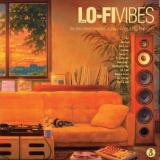
Diese Doppel-Vinyl-Compilation lädt ein in die warme, entspannte Welt des Lo-Fi-Sounds - eine Musik, die entschleunigt, Atmosphäre schafft und Nähe erzeugt. Versammelt sind prägende Künstler des Genres, die Lo-Fi, Downtempo, Jazz-Einflüsse und elektronische Gelassenheit miteinander verbinden. Mit Beiträgen von FKJ, Darius, Kid Loco, St Germain, The Mighty Bop, DJ Cam, DJ Spinna und weiteren wichtigen Namen entsteht ein vielschichtiges Panorama zwischen organischen Grooves, sanften Beats und subtilen Melodien. Die Auswahl richtet sich gleichermaßen an langjährige Liebhaber wie an neue Hörer, die Lo-Fi als eigenständige, zeitlose Form elektronischer Musik entdecken möchten. Ein stimmiger, sorgfältig kuratierter Sampler für entspannte Hörsituationen, stilbewusste Sets und alle, die elektronische Musik lieber fühlen als konsumieren. ENGThis double-vinyl compilation invites listeners into the warm, comforting world of lo-fi music - a sound defined by relaxed rhythms, organic textures and understated emotion. Featuring leading artists of the genre, the collection blends downtempo beats, jazz influences and laid-back electronic production. With tracks by FKJ, Darius, Kid Loco, St Germain, The Mighty Bop, DJ Cam, DJ Spinna and others, the album offers a broad yet coherent overview of lo-fi aesthetics. It appeals both to seasoned listeners and newcomers seeking a timeless, atmosphere-driven listening experience. A carefully curated selection designed for calm moments, focused listening and stylish musical environments
Disponible en stock et prêt pour l'expédition

2026 Repress.
There is with Tour-Maubourg an eternal desire to translate the feeling of love into music. Sometimes cheerful, sometimes melancholy, always exhilarating, the producer, native of Brussels and expatriate in Paris, has continued for 3 years to attract the praise of his peers and the support of a growing audience. The man who was described by Trax Magazine upon the release of his 1st EP as ‘‘one of the most promising producers of the French house scene’’ has revealed himself in this hyperactive new scene to become one of its best standards.
After several EPs released in France on Pont Neuf, FHUO (ie. Folamour’s label), as well as Happiness Therapy or in England and Germany on FINA and Salin, Tour-Maubourg unveils his first album, Paradis Artificiels. The Parisian producer refers to Charles Baudelaire’s poem, to which he links his melancholy music, who wrote:
‘‘common sense tells us that the things of the earth exist very little, and that the true reality is only in the dreams’’.
If the producer’s first EPs were mainly focused on club music, Paradis Artificiels oscillates between the atmospheres that made the success of these previous releases and those of a studio album. Composed of both house songs and downtempo sound researches, always flirting with the jazz sounds that have made the fame of the producer, this first album invites us on a journey in the lineage of St Germain, Massive Attack or Nicolas Jaar.
Disponible en stock et prêt pour l'expédition
Felipe Gordon is back on Shall Not Fade with his new album Tezeta and f*ck is it special.
Felipe Gordon is SNF label mainstay... (we released his triple repressed debut album "A Landscape Onomatopeya" in 2022 as well as 7 x 12" EPs on SNF over the years plus an extra 12" on Lost Palms)... so given his consistent and exceptional output on our record label you'd probably forgive some complacency with this write up, you might even afford us license to assume we're preaching to the choir and allow us to rest easy knowing that at this stage Felipe Gordon's records sell themselves.... Well none of those things are happening here because when an artist makes a record this complete, this good, you have to try to find the words. You use words like "timeless", "complete and "special". Words that can carry the weight. Because when you've listened to an album dozens of times, and not once, in any part, on any listen in any way has it fatigued you, you need to say. When a record felt so wonderfully familiar from the first listen and just kept on giving you the same feels ever since, you need to say. When a record makes you think about you how you feel about certain Air & St Germain albums (even when you know what it means to put that in a press release), you need to say. So here we are, saying these things.. Tezeta is a special record, one that exists in the rarefied air. A proper album. A record that every time you press play you will immediately remember why you own it and why you love it. A record that your subconscious will know so well that if shuffle is on you will know in an instant. An album that when it's in your collection and the first track starts you get a twinge of annoyance because you didn't listen again sooner and when the final track stops you stop too.
Given paint and a canvas we can most of us paint a picture, but only those that are gifted can paint something that makes us feel. Tezeta makes you feel. Feel familiarity when it's playing, yearning when its not, and absence when it ends. This alone would be enough to make the argument as to why this album is special and justify the gushing opening paragraph of this press release. But we're not done yet.
We don't really have a word in english for what Felipe Gordon has created with this album and how it makes you feel. "Tezeta" that word.
Tezeta is a one of four musical modes within the traditional Ethiopian modal music system known as Qiñit. Mulatu Astatke, the father of Ethio-jazz, frequently uses this mode, often translating it as "nostalgia" or "longing". Gordon says Mulatu's own tezeta recordings convey to him "feelings of melancholy and longing from a point of affection". This is exactly the feeling Gordon has captured. It is what he has woven through every recording on this album. Tezeta is the prime ingredient. It's the base note in recipe, it's sprinkled over the signature jazz-sampled house tracks. It powers the vast array of synthesizers Gordon deploys. It underpins the explorations into trip-hop. It's present in Gordon's varied vocal deliveries and it tunes his guitar. It's in the running order. It's the flow. Tezeta is tezeta in electronic music form, with 4/4, breakbeats, samples and synths.
Gordon says a big part of what differentiates this album from from his previous albums is that is was recorded in a period where he allowed himself to create music without the constraints of time or self-pressure which coincided with a moment of heavy personal growth which allowed him to reflect deeply on his work.
There is a word in Portuguese "Saudade" that Gordon says has a similar meaning to Tezeta - Saudade is defined as a deep, sometimes bittersweet, longing or nostalgia for someone or something that is absent or lost. But here at SNF we think that in Tezeta nothing has been lost. Quite the opposite. Through Felipe Gordon's artistic explorations we have all gained something very special indeed.
Disponible en stock et prêt pour l'expédition

Disponible en stock et prêt pour l'expédition

The Éthiopiques series returns! Essential archive recordings from an extremely fruitful period in Ethiopian music.
Before “Swinging Addis” took over the world, there was Moussié Nerses Nalbandian — the Armenian-born composer who shaped modern Ethiopian music. Mentor, arranger, and pioneer, he laid the foundations of Ethio-jazz.
This Éthiopiques volume revives his forgotten legacy, recorded live by Either/ Orchestra First issue ever with new exclusive photos and in depth liner 8-page insert.
“Ethiopian jazzmen are the best musicians that we have seen so far in Africa.
They really are promising handlers of jazz instruments.”
Wilbur De Paris
(1959, after a concert in Addis Ababa)
አዲስ፡ዘመን። *Addis zèmèn* **A new era.**
The time is the mid-1950s and early 1960s, just before "Swinging Addis" bloomed – or rather boomed – onto the scene. Brass instruments are still dominant, but the advent of the electric guitar, and the very first electronic organs, are just around the corner. Rock’n'Roll, R’n’B, Soul and the Twist have not yet barged their way in. Addis Ababa is steeped in the big band atmosphere of the post-war era, with Glenn Miller's *In the* *Mood* as its world-wide theme song, neck and neck with the Latin craze that was in vogue at the same period. Life has become enjoyable once again, with the return of peace after the terrible Italian Fascist invasion of Ethiopia (1935-1941). The redeployment of modern music is part and parcel of the postwar reconstruction. *Addis zèmèn* – a new era – is the watchword of the postwar period, just as it was all across war-torn Europe.
The generation who were the young parents of baby boomers** were the first to enjoy this musical renaissance, before the baby boomers themselves took over and forever super-charged the soundtrack of the final days of imperial reign. Music is Ethiopia's most popular art form, and very often serves as the best barometer for the upsurge of energy that is critical for reconstruction. Whether it be jazz in Saint-Germain-des-Prés or the *zazous* who revolutionised both jazz and French *chanson* after the *Libération*, be it Madrid's post-Franco Movida, or Dada, the Surrealists and *les années folles* that followed World War I, the periods just after mourning and hardship always give rise to brighter and more tuneful tomorrows. Addis Ababa, as the country's capital, and the epicentre of change, was no exception to this vital rule.
**Two generations of Nalbandian musicians**
Nersès Nalbandian belonged to a family of Armenian exiles, who had moved to Ethiopia in the mid-1920s. The uncle Kevork arrived along with the fabled "*Arba Lidjotch*", the** "*40 Kids*", young Armenian orphans and musicians that the Ras Tafari had recruited when he visited Jerusalem in 1924, intending to turn their brass band into the official imperial band. If Kevork Nalbandian was the one who first opened the way of modernism, pushing innovation so far as to invent musical theatre, it was his nephew Nersès who would go on to become, from the 1940s and until his death in 1977, a pivotal figure of modern Ethiopian music and of the heights it. Going all the way back to the 1950s. Nothing less. And it is Nersès who is largely to thank for the brassy colours that so greatly contributed to the international renown of Ethiopian groove. While the younger generations today venture timidly into the genealogy of their country's modern music, often losing their way amidst a distinctly xenophobic historiographical complacency, many survivors of the imperial period are still around to bear witness and pay tribute to the essential role that "Moussié Nersès" played in the rise of Abyssinia's musical modernity.
Given the year of his birth (15 March 1915), no one knows for sure if Nersès Nalbandian was born in Aintab, today Gaziantep (Turkiye/former Ottoman Empire) or on the other side of the border in Alep, Syria... What is certain is that his family, like the entire Armenian community, was amongst the victims of the genocide perpetrated by the Turks. Alep, the place of safety – today in ruins.
Before Nersès then, there was uncle Kevork (1887-1963). For a quarter of a century, he was a whirlwind of activity in music teaching and theatrical innovation. *Guèbrè Mariam le Gondaré* (የጎንደሬ ገብረ ማርያም አጥቶ ማግኘት, 1926 EC=1934) is his most famous creation. This play included "ten Ethiopian songs" — a totally innovative approach. According to his autobiographical notes, preserved by the Nalbandian family, Kevork indicates that he composed some 50 such pieces over the course of his career. This shows just how much he understood, very early on, the critical importance of song as Ethiopia's crowning artistic form. Indeed, for Ethiopian listeners, the most important thing is the lyrics, with all their multifarious mischief, far more than a strong melody, sophisticated arrangements or even an exceptional voice. (This is also why Ethiopians by and large, and beginning with the artists and producers themselves, believed for a long time — and wrongly — that their music could not possibly be exported, and could never win over audiences abroad, who did not speak the country's languages).
Last but not least, one of Kevork's major contributions remains composing Ethiopia's first national anthem – with lyrics by Yoftahé Negussié.
Nersès Nalbandian moved to Ethiopia at the end of the 1930s, at the behest of his ground-breaking uncle. Proficient in many instruments (pretty much everything but the drums), conductor, choir director, composer, arranger, adapter, creator, piano tuner, purveyor of rented pianos,... he was above all an energetic and influential teacher. From 1946 onwards, thanks to Kevork's connexion, Nersès was appointed musical director of the Addis Ababa Municipality Band. In just a few years, Nersès transformed it into the first truly modern ensemble, thanks to the quality of his teaching, his choice of repertoire, and the sophistication of his arrangements. It was this group that would go on to become the orchestra of the Haile Selassie Theatre shortly after its inauguration in 1955, which was a major celebration of the Emperor's jubilee, marking the 25th anniversary of his on-again-off-again reign.
At some point or other in his long career, Nersès Nalbandian had a hand in the creation of just about every institutional band (Municipality Band, Police Orchestra, Imperial Bodyguard Band, Army Band, Yared Music School…), but it was with the Haile Selassie Theatre – today the National Theatre – that his abilities were most on display, up until his death in 1977. To this must be added the development of choral singing in Ethiopia, hitherto unknown, and a sort of secret garden dedicated to the memory of Armenian sacred music, and brought together in two thick, unpublished volumes. Shortly before his death (November 13, 1977), he was appointed to lead the impressive Ethiopian delegation at Festac in Lagos, Nigeria (January-February 1977).
His status as a stateless foreigner regularly excluded him from the most senior positions, in spite of the respect he commanded (and commands to this day) from the musicians of his era. Naturally gifted and largely self-taught, Nerses was tirelessly curious about new musical developments, drawing inspiration from the very first imported records, and especially from listening intensely to the musical programmes broadcast over short-wave radio – BBC *First*. A prolific composer and arranger, he was constantly mindful of formalising and integrating Ethiopian parameters (specific “musical modes”, pentatonic scale, and the dominance of ternary rhythms) into his “modernisation” of the musical culture, rather than trying to over-westernise it. It even seems very probable that *Moussié* Nerses made a decisive contribution to the development of tighter music-teaching methods, in order to revitalise musical education during this period of prodigious cultural ferment. Flying in the face of all the historiographical and musicological evidence, it is taken as sacrosanct dogma that the four musical modes or chords officially recognised today, the *qǝñǝt* or *qiñit* (ቅኝት), are every bit as millennial as Ethiopia itself. It would appear however that some streamlining of these chords actually took place in around 1960. It was only from this time onward that music teaching was structured around these four fundamental musical modes and chords: *Ambassel*, *Bati*, *Tezeta* and *Antchi Hoyé*. A historical and musical “details” that is, apparently, difficult to swallow, especially if that should honour a *foreigner*. Modern Ethiopian music has Nersès to thank for many of its standards and, to this day, it is not unusual for the National Radio to broadcast thunderous oldies that bear unmistakable traces of his outrageously groovy touch.
Disponible en stock et prêt pour l'expédition

Audrey Hall is one of the UK’s most respected female Reggae & Lovers singers from the 80s! Working with the legendary producer Donovan Germain, here is a reissue, with a fresh Dub created from the original multitrack. Brilliant cover version of the classic tune from Barbara Streisand ‘Woman In Love’!
Disponible en stock et prêt pour l'expédition

Audrey Hall is one of the UK’s most respected female Reggae & Lovers singers from the 80s! Working with the legendary producer Donovan Germain, here is a reissue, with a Dub for the first time ever. Created from the original multitracks this one sounds heavy in a crucial 80s Reggae Lovers style! Decades of radio and soundsystem support worldwide! Rodigan, Coxsone and more. Crucial female vocals from the brilliant Audrey Hall!
Disponible en stock et prêt pour l'expédition

Die "French Touch Collection" ist eine Doppel-LP-Serie, die der französischen elektronischen Musikszene gewidmet ist. Beeinflusst von neuen Musikgenres wie House, Hip-Hop, Techno und den Rave-Partys, beteiligten sich Mitte der 90er Jahre mehrere französische Produzenten an der Demokratisierung der elektronischen Musik. Ihre Musik, die der britische Journalist Martin James "French Touch" nannte, wurde 1996 zu einem neuen, international bekannten Musikgenre, das sich durch elektronische Produktionen und Musiksamples aus Hip-Hop, Funk oder Disco auszeichnete. Anfang der 2000er Jahre erfand sich die "French Touch"-Szene mit einer neuen Generation ungehemmter Künstler neu, getragen von einem rohen, rocknahen Sound. Die 2010er Jahre brachten eine neue "French Touch"-Welle mit sich, die von der Popmusik beeinflusst war und sich mehr auf Melodien und Oneiric Universes konzentrierte. Dieses neue Werk ist dem House gewidmet, mit Künstlern und Tracks, die zur Entwicklung des "French Touch" beigetragen haben: "Bon voyage"!
Disponible en stock et prêt pour l'expédition

Wade "Jimmy" Dyce was an original member of Cultural Roots. He was a vocalist and played a key role in shaping the sound of the group. Cultural Roots emerged as a four-part harmony group for producer Donovan Germain in the late 1970s, releasing « Revolutionary Sounds » and « Mr Bossman » which counts among ‘Jah Shaka's favourite tunes’. Then they released « Hell A Go Pop », one of the Greensleeves label’s lesser-known classics.
In the early 80's, Wade Dyce produced alone three songs at Chris Stanley's famous Music Mountain studio. Wade Dayce surrounds himself with the best musicians of the time, namely the Revolutionaries, but does not remember the exact formation apart from Sly Dunbar on drums and Bongo Herman on percussion. « Humble », « Money Mare » and « Hide & Seek » are three forgotten songs that can be described as killer roots from the middle of the 80s and which you can (re)discover again through this reissue on the original Moving On label. For this release, Jamwax worked with Parade Studio for this original and unique Disco 45 cover graphic creation.
Today, Wade, now sixty-seven years old, is living in Salem, Massachusetts, where he graduated in 2010 as a mental-health specialist. Long live to the Cultural Roots !
Disponible en stock et prêt pour l'expédition

Disponible en stock et prêt pour l'expédition

Christian Prommer – producer, drummer, DJ and multi?instrumentalist best known for his work with Trüby Trio, Fauna Flash, Drumlesson, Voom:Voom (with Peter Kruder), Prommer & Barck (with Alex Barck), and as the producer of DJ Hell’s Teufelswerk – presents his new album Rhythmic Nocturne, spanning spiritual deep house, jazz, balearic trip?hop and hypnotic rhythm explorations. A must for fans of St. Germain, Floating Points and refined grooves at all speeds.
This album distills ten years of Berlin into a twilight drift between order and abandon. Daytime studio sketches are pulled apart at night, reshaped by shifting perspectives that swing between jazz harmony, textural experimentation, and the heavy gravity of techno basslines and analog drums. Intimately close-mic’d piano, drums, percussion, cello, and strings are constantly recontextualized—dropped into new rooms, resonances, and imagined spaces—so their meaning keeps mutating. Room noise, human breath, and accidental sounds are folded into the pulse, turning spill and imperfection into rhythm. Even a piano lid thudding shut on “Dark Matter” is claimed as part of the beat, underscoring an album that embraces freedom, spontaneity, and the beautiful lack of accountability that defines this city at night.
Commandez maintenant et nous commanderons l'article pour vous chez notre fournisseur.

Ever since the late 1950s bossa-nova revolution, Brazil’s influence on French music has been undeniable. Pierre Barouh, Georges Moustaki and a vast array of lesser known artists, all made the Musica Popular Brasileira (MPB) an axis of promotion at the service of a cool and metaphysical, modern and mixed Brazilian lifestyle. Some were seduced by the poetic languors of the bossa, some were looking for fun, and others just loved the American hybridization of jazz-bossa, jazz-samba.
What is bossa nova? One of its creators, Joao Gilberto said: "Its style, cadence, everything is samba. At the very start, we didn't call it bossa nova, we sang a little samba made up of a single note - Samba de uma nota so .... The discussion around the origins of bossa nova is therefore useless”. It is nevertheless useful to remember that these magnificent Brazilian songs, which the guitarist describes as samba, were shifted and balanced around improbable chords. "I like things that lean, the in-betweens that limp with grace," said Pierre Barrouh, quoting Jean Cocteau.
With emotion, arrangements for violin and supple guitar licks, bossa nova rapidly changed. A transformation that can be heard in the Tchic, tchic, French Bossa Nova 1963-1974 compilation, the result of a cultural reappropriation, which traveled through the United States and supplemented itself in France.
A musical revolution that has remained significant, bossa nova was born in Rio. From 1956 to 1961, Brazil lived through its golden years. In five years, the country had invented its modernist style. Elected president in 1956, Juscelino Kubitschek de Oliveira, an elegant man with a broad forehead, brandished a promising slogan: "Fifty years of progress in five years". He quickly got to work. Not worried about increasing debt, he launched the project for a new federal capital, Brasilia, designed by the communist architect Oscar Niemeyer. Volkswagen opened state-of-the-art factories and created the “fusquinha”, the Beetle. In Rio, the Vespa made its first appearance. The Arpoador Surf Club crew run into the “girl” from Ipanema, Helô Pinheiro - the tanned garota ("chick"), between a flower and mermaid, who at 17 walked by the Veloso bar, where the fiery author and composer, Tom Jobim and Vinicius de Moraes, were getting drunk on whiskey. From then on, bossa symbolized cool.
In 1958, Joao Gilberto recorded Chega de Saudade, which the directors of Philips denied, calling it "music for fagots". The marketing director, who believed in it, secretly pressed 3000 78-inch vinyls and distributed them at schools around Rio, creating a tidal wave.
American jazzmen then took over. In particular, trumpeter Dizzy Gillespie and guitarist Charlie Byrd. In November 1962, the Brazilian Ministry of Foreign Affairs funded a "Bossa-Nova" concert at Carnegie Hall in New York, inviting the genre’s pioneers. Unprepared, the show soon turned to disaster. But the troupe was invited to the White House by Jackie Kennedy. The first lady loved "the new beat" and in particular Maria Ninguem, a song by Carlos Lyra, later covered by Brigitte Bardot.
In Brazil, the 1964 military coup quickly ended this euphoria. The destructive atmosphere that ensued pushed many Brazilian musicians to leave, if not to exile. Thus, Tom Jobim, Sergio Mendes and Joao Gilberto arrived to the United States. In New York, Joao Gilberto met saxophonist Stan Getz. At the time, he was married to the Bahianese Astrud Weinert Gilberto, who had a German father. She had never sung before, but she knew how to speak English. Getz therefore asked her to replace her husband on The Girl From Ipanema. The Getz/Gilberto record with Tom Jobim on piano, was released in March 1964. Phil Ramone, the "pope of pop" was in charge of sound.
Bossa nova arrived in Paris through the classic “guitar-voice” channel (Pierre Barouh, Baden Powell, Moustaki…) But France loved jazz and Paris had already welcomed its American contributors. All these good people were to pass through Saint-Germain-des-Prés. The cabaret l'Escale became the Mecca of Latin American sound where one could find Pierre Barrouh and his friends, such as the Camara Trio, samba-jazz aces, whose only record was published by the Saravah label. With a band strangely called Les Masques (a band that included Nicole Croisille and Pierre Vassiliu, among others), the Camara Trio recorded an interesting Brazilian Sound, including the track Il faut tenir which is present on this tasty compilation of rarities.
Other enlightened musicians can also be found on the compilation, such as Jean-Pierre Sabar (songwriter for Hardy, Auffray, Leforestier ...) and the French pop rock organist Balthazar. In 1975, Sabar recorded Aurinkoinen Musiikkimatka on a Finnish label, which featured the crazy Vai, Vai, included on this record. We are now following the footsteps of Brazilian electronic musicians such as Sergio Mendes, Eumir Deodato or Marcos Valle who created funk and disco sounds on their keyboards and synthesizers. A style that influenced Véronique Sanson when she wrote Jusqu’à la Tombée de la nuit in 1969 for Isabelle de Funès, the niece of Louis and a great friend of Michel Berger - Sanson did end up singing this track on her 1992 Sans Regret record.
The pinnacle of exoticism and travel, Sylvia Fels’ Corto Maltese includes bongos, sea mist and ocean sounds. The title was taken from Jacky Chalard’s concept album written in 1974, Je suis vivant, mais j’ai peur (I am alive, but I am scared), based on Gilbert Deflez’s science fiction novel.
However, bossa nova extended the scope of popularity. "In the 1970s, I was a fan of Sergio Mendes, Getz / Gilberto. I fell in love with this music that I knew because I had been an orchestral singer, " explained Isabelle Aubret, who in 1971 delivered a composite record of covers by the very funky Jorge Ben, Orfeu Negro, Tom Jobim, Vinicius de Morais and Jean Ferrat. "I recorded this album for Meys Records in Paris, far from Brazil, with wonderful musicians, François Raubert, Roland Vincent, Alain Goraguer...". The latter wrote the arrangements for Casa Forte, a very percussive title borrowed from Edu Lobo, one of the initiators of the bossa who spent time in California. "Jazz and bossa came together and produced very rhythmic music. I love singing, it allows me to dream, to have fun, to feel a high on stage, and these songs brought me joy, made me swing, my singing felt like a dance.”
The world tours of French singers and their desire for the tropics, often brought them to Rio with its hills, forests, caipirinhas and tanned bodies. There are surprises though, like this Iemenja (Iemenja is the goddess of the sea in the Afro-Brazilian candomblé religion). Not unlike the composer and musician Jean-Pierre Lang, based in Sao Paulo, Claire Chevalier taught Brazil to Brazil. In 1970, the singer and painter published a 45-inch vinyl, Mon mari et mes amants (My husband and my lovers), under the improbable pseudonym of Clarinha (little Claire). She was then living in Rio, with her husband, Joël Leibovitz, who founded a band called Azimuth, and who owned a record label specialized in "sambas enredos" songs for samba school parades.
For its B side, she asked Pierre Perret to come up with lyrics for a song composed by Carlos Imperial: "Oh goddess of the sea, o goddess Iemenja, I bring a white rose to adorn your long hair ..." . "Perret came to see us, and we had fun, remembers Joël Leibovitz. We wrote Lemenja for fun, we recorded it at the Havaí studio, behind the Central do Brasil the central station. Erlon Chaves, the arranger who worked with Elis Regina, joined us" adding his share of Afro-Brazilian percussions and funky brass to the mix.
There is a common misunderstanding in Franco-Brazilian history: that bossa, admittedly hedonistic, is perceived as funny, even though the poets who wrote the texts are often philosophizing on the human condition. Its French interpreters pull it towards a carnival inspired universe, far removed from its fundamental essence. Thus, Jean Constantin covered the famous Samba da minha terra, an ode to the art of samba written by the classic Bahian composer Dorival Caymmi, renaming it with the enticing title of Pas tant de tchi tchi pompon: "On your pier there is no tchi tchi / when you arch your back, you know everything is alright ”(lyrics by Gérard Calvi). This expedited bossa aims for the absurd, but retains a certain elegance.
Indeed, Jean Constantin was not an idiot, the rather large man had a huge mustache and liked fantasy, (Les pantoufles à papa, Le pacha, inspired by cha-cha-cha-cha, salsa and jazz) but he was also the lyricist of Mon manège à moi interpreted by Edith Piaf, the composer of Mon Truc en plume by Zizi Jeanmaire and the soundtrack of François Truffaut’s 400 Blows. Le Poulpe, published in 1970, from which this bossa is extract, was arranged by Jean-Claude Vannier, an accomplice of Serge Gainsbourg’s Melody Nelson. In short: "There is enough of samba / By looking at the parasol / Because my poor cabeza / Is going to die in the sun".
Even the American actress Marpessa Down, who was at the heart of the bossa nova revolution with her role as Euridyce in Marcel Camus’ film Orfeu Negro, winner of the 1959 Cannes Palme d'or, fed the clichée with Je voudrais parler au petit cuica - "Tell me how you manage to always make people want to dance / It's true, I must admit that I cannot resist your magic" - in consequence, once can hear the cuica, a little drum inherited from the Bantu.
But bossa nova had many angles. Societal, of course, pushing actresses who were symbols of women's liberation like Brigitte Bardot, Jeanne Moreau, or Sophia Loren to engage in the exercise of accelerated bossa. In February of 1963, Sophia Loren made a record in French in Rome, Je ne t'aime plus, featuring the song De jour en jour, a bossa written by two Italians, Armando Trovajoli and Tino Fornai, which was released a little later by Barclay. Bossa accompanied the 1960s, a decade of moral liberation. Ann Sorel, who interpreted La Poupée des favellas, caused a sensation with L’amour à plusieurs, a provocative song written by Frédéric Bottom and Jean-Claude Vannier. As for the actress Andrea Parisy, she displayed her bourgeois cheekiness in Marcel Carné's Les Tricheurs before interpreting Les mains qui font du bien. And Magalie Noël, the friend of Boris Vian, who sung Johnny fais-moi mal, was hired to sing Une énorme Samba, composed by Alain Goraguer (arranger to Gainsbourg, Bobby Lapointe and Jean Ferrat) with lyrics by Frédéric Botton.
But in the end, of what wood is bossa nova made of? The answer is given by Christianne Legrand, daughter of Raymond the conductor, and sister to Michel the composer: "With me, with jà" - jà means "immediately" in Portuguese. In 1972, the singer, an expert in vocal jazz and a member of the Double Six, published Le Brésil de Christianne Legrand. Two songs included on the Tchic Tchic compilation that demonstrate how bossa, jazz, funk, rock, etc. work like a swiss army knife: the music is used to denounce broken systems, or miracles, HLM et ciné roman, Cent mille poissons dans ton filet, two songs from the O Cafona soundtrack, a successful telenovela broadcast, at the time in black and white, on TV Globo. The first was adapted in French by the fighter and friend of the Legrand tribe, Agnès Varda. The second is content with a play on words, jostling them into a summer fun.
Véronique Mortaigne
Commandez maintenant et nous commanderons l'article pour vous chez notre fournisseur.
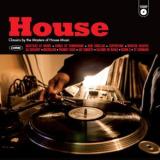
Die Vintage Sounds Vinyl Collection präsentiert eine sorgfältig kuratierte Ausgabe ganz im Zeichen der House Music. Der Sampler vereint zeitlose, hochgradig tanzbare Tracks von prägenden Szenegrößen wie Masters At Work, Bob Sinclar, Kings Of Tomorrow, St Germain, DJ Gregory, Joe Smooth und vielen mehr. Funkige Basslines, soulige Vocals und klassische Grooves treffen auf französischen House-Esprit und internationale Club-Anthems. Ein unverzichtbarer Vinyl-Sampler für DJs, Sammler und alle, die House als Lebensgefühl verstehen.
Commandez maintenant et nous commanderons l'article pour vous chez notre fournisseur.

Mit Künstlern wie Bellaire, Tour-Maubourg, Folamour, Kings Of Tomorrow, The Mighty Bop, Motor City Drum Ensemble, St Germain, Kazam und DJ Deep entfaltet sich auf "Jazz House Vibes - The Finest Selection Of..." ein facettenreicher Sound zwischen soulful Deep House, warmen Jazzharmonien und eleganten, organischen Arrangements. Ob sanfte Piano-Melodien, feine Bläserstrukturen oder pulsierende Beats - Jazz House Vibes vereint Klassiker und moderne Produktionen zu einem stimmigen Gesamtbild voller Atmosphäre und musikalischer Tiefe. Eine hochwertige Vinyl-Compilation für alle, die House nicht nur als Clubmusik, sondern als stilvolles, emotionales und zeitloses Klanguniversum erleben wollen. Rediscover the perfect balance between jazz and house, captured on a brand-new vinyl release that is as elegant as it is timeless ! INCLUDING : Bellaire - Tour-Maubourg - Folamour - Kings Of Tomorrow The Mighty Bop - Motor City Drum Ensemble - St Germain Kazam - DJ Deep...
Commandez maintenant et nous commanderons l'article pour vous chez notre fournisseur.

Die renommierte Electronic Music Anthology-Reihe von Wagram kehrt mit einem neuen Kapitel zurück - diesmal voll und ganz gewidmet den feinsten Perlen des Deep House. Kuratiert vom französischen Electronic-Aushängeschild FG Radio, präsentiert The Deep House Session eine sorgfältige Auswahl zeitloser Tracks, die die stilistische Breite und emotionale Tiefe dieses Genres perfekt einfangen. Die Compilation vereint international gefeierte Künstler wie Ben Böhmer, nTO, Bonobo, Solomun, Fritz Kalkbrenner, Kaytranada, Masters at Work, Dennis Ferrer, DJ Deep, St Germain, Môme und Soha - Namen, die sowohl im Club-Kontext als auch über Genregrenzen hinweg einen exzellenten Ruf genießen. Ob atmosphärische Synth-Texturen, organische Grooves, warme Basslinien oder hypnotische Melodien: Diese Edition destilliert alles, was Deep House seit Jahrzehnten zu einer der elegantesten und gefühlvollsten Spielarten elektronischer Musik macht. The Deep House Session ist eine hochwertige Sammlung für Liebhaber, DJs, Sammler und alle, die elektronische Musik zwischen Wärme, Groove und subtiler Eleganz schätzen.
Commandez maintenant et nous commanderons l'article pour vous chez notre fournisseur.

Mit The House Session setzt die renommierte Electronic Music Anthology von Wagram ihre stilprägende Reise durch die elektronische Clubkultur fort. Nach erfolgreichen Ausgaben zu Deep House und Techno widmet sich diese Edition dem Herzstück elektronischer Musik: House Music. Kuratiert vom französischen Electronic-Aushängeschild FG Radio versammelt die Compilation zeitlose Klassiker, moderne Favoriten und inspirierende Genre-Perlen. Mit dabei sind zentrale Namen wie George Morel, Cassius, Motor City Drum Ensemble, Mézigue, Moloko, Soha, Bob Sinclar, DJ Gregory, Joe Smooth und St Germain - Artists, die House in unterschiedlichen Epochen maßgeblich geprägt und weltweit auf die Dancefloors gebracht haben. Zwischen funkigen Grooves, soulful Vocals, pumpenden Basslines und eleganten French-Touch-Momenten entfaltet The House Session ein breites Spektrum an Sounds, das sowohl Sammler als auch DJs anspricht. Eine hochwertige Anthologie, die den Spirit von House Music - warm, energiegeladen und zutiefst euphorisierend - perfekt einfängt.
g 7Cheek - Venus (Sunshine People) DJ Gregory Remix
g b3 Cheek - Venus (Sunshine People) [DJ Gregory Remix]
[g] b3 | Cheek - Venus (Sunshine People) [DJ Gregory Remix]
Commandez maintenant et nous commanderons l'article pour vous chez notre fournisseur.
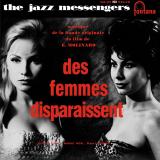
Art Blakey was the new hero on the Paris jazz scene, thanks to his Olympia concert on November 22nd 1958, and his subsequent appearances at the Club St. Germain. People swore by his 'Blues March' and 'Moanin', so why not get him to do the soundtrack for the film Molinaro just finished? The only problem, albeit a major one, was that time was short, so an original score was out of the question: the Jazz Messengers would have to preach the good word by other means. Fortunately, the band's tenor and arranger, Benny Golson, had become an expeet in the art of making somrthing new out of somrthing old, and he did it with equal talent and intelligence.Except for three originals, the musical sequences of the film are actually fragments from the Messengers' book, but in adapted versions; 'Whisper Not', for example, can be discerned underneath 'Ne Chuchote Pas'. It was an extremely hazardous process...but the result turned out to be remarkable!!!
il devrait être publié sur 22.05.2026

The creative bond between Atjazz and Fred Everything is a story decades in the making. It began in 1998 at The Bomb in Nottingham during a DiY label night—a label through which they both released music. That first encounter sparked a lasting friendship and a steady exchange of ideas that would continue for many years. While they collaborated regularly and remixed each other’s work, it wasn’t until the summer of 2022 that they committed to making a full-length album.
The project took shape during an 8-day stay at Martin’s (Atjazz) home in the Midlands of England, where they set themselves the challenge of writing one track per day. Their shared musical language allowed ideas to move quickly, with some tracks forming in under an hour. Over the next three years, the material was carefully developed alongside their respective album projects: Atjazz’s Starbase 17, Fred Everything’s JUNO Nominated Love, Care, Kindness & Hope, and All Is Well’s A Break In Time.
A final session in Montreal in 2024, coinciding with Fred’s 50th birthday, brought the album into focus. From there, the duo invited a select group of world-class collaborators, including Jorge Bezerra (The Joe Zawinul Syndicate / St Germain), Octavio N. Santos (SiR, Lupe Fiasco), Clyde Beats, Ernesto & The Basement Gospel, and Dominique Fils-Aimé.
The result is a personal, well-constructed record that draws on the spirit of 90s deep house while applying three decades of experience to a deeply rooted, forward-thinking sound. It is a sonic testament that honours their mutual love of synthesizers, beat making, and sound design.
It is a project that took 8 days to start, 3 years to finish, and 30 years to perfect.
Commandez maintenant et nous commanderons l'article pour vous chez notre fournisseur.

Glasgow, Scotland duo Thomas + James deliver their silky-smooth dub laced sounds for Federsen’s Alt Dub with the four-track ‘Realtime’ EP.
Thomas + James are a Glasgow-based DJ and production duo whose sound reflects a deep immersion in electronic music. Raised in the city’s west end and shaped by early exposure to techno pioneers like Luke Slater, Slam and Jeff Mills alongside the atmospheric legacy of ’90s drum & bass, their productions lean into a dub infused, forward-looking aesthetic.
Drawing equally from house traditions via influences such as St Germainand Laurent Garnier, the pair blur the lines between dub techno, deep house, acid and minimal.
Their new EP onFedersen’s Alt Dub captures that hybrid vision with a maturity that belies their years, being born in 2006,marking them out as a quietly compelling new voice from Glasgow’s next generation.
Leading the release is the original title-track ‘Realtime’, setting the tone with a sturdy yet pared-back rhythm section, oscillating synth flutters, bouncy sub-bass and hazy textures that subtly shift across the arrangement.
Label boss Federsen steps in next with his interpretation, reducing the track to its deepest foundations and recasting it as a delicately drifting soundscape of evolving spatial echoes, weighty low-end pressure and restrained, muted drums.
On the flip, Thomas + James return with ‘Armonia’, an ethereal, dub-leaning deep house cut propelled by billowing pads, delayed vocal chants, fluid dub chords and a heavily swung, minimalist groove.
The EP closes with ‘X-Intense’, further highlighting the duo’s groove-driven signature sound as reverberant, airy stabs weave through breathy vocals and shuffled percussion to bring the release to a hypnotic conclusion.
Commandez maintenant et nous commanderons l'article pour vous chez notre fournisseur.

Delsin is pleased to announce an extensive compilation series combing through the catalogue of landmark Dutch techno label Djax-Up-Beats. The series, curated by Rush Hour co-founder Christiaan Macdonald, launches with a look at the label's legacy in the development of acid music through the 90s. In total, this first entry in the Djax-Up-Beats 1990-2005 series comprises 20 tracks, presented as a main triple-vinyl album plus two additional 12" EPs. The compilation also features all-new illustrations from Alan Oldham, the Detroit-rooted visual artist who gave Djax-Up-Beats a distinctive visual identity from very early on, and design by Lost Communication. Each volume of the series also features liner notes from music journalist Oli Warwick. Crucially, every track featured on the series has been carefully mastered by Johanz Westerman, bringing the best out of tracks that often had very little post-production treatment before they were originally pressed to wax. Volume 1 - The Acid Trip focuses on an area the label is best known for - acid house and techno. After the pioneering breakthroughs Chicago-based producers made with the Roland TB-303 in the late 1980s, acid music creation was starting to become more widespread when Djax-Up started in late 1990. The rebellious, rave-ready sound was an instant draw for label founder Miss Djax, and so her label ended up reflecting the development of acid as it spread from the Chicago roots across the world. Volume 1 - The Acid Trip looks at the diverse approaches to acid taken by artists on Djax-Up. Tracks on the compilation include an early outing from Ludovic 'St Germain' Navarre and Bjorn Torske's Ismistik alias, as well as Dutch pioneers such as Edge Of Motion, Spasms, Random XS and Acid Junkies, and Chicago heavyweights Mike Dearborn and Gene Hunt. With five more, equally extensive, volumes to come in this series, Djax-Up-Beats 1990-2005 is a thorough exploration of a true totem of techno culture - a renegade label that operated on its own terms and carried surprises and slammers in equal measure.
Commandez maintenant et nous commanderons l'article pour vous chez notre fournisseur.

il devrait être publié sur 20.02.2026

Kaninchenbau label head The Funk District has joined forces with Argentinian keys specialist Sokur for a new four-tracker that collides bluesy samples with sleek electronic grooves. 'Till My Feet Got Numb' kicks off with waves of synth energy run through with sampled vocals that hark back to Robert Johnson. 'Never Satisfied' is another mix of funky drums, jazzy pianos and crackly blues vocals that is unusual but effective. 'Took My Babe Away' repeats this combination, this time with hints of St Germain in the melancholic spoken words and ever more thumping and acid-laced beats. 'Sunshine From The Sky' completes the quartet with more hurried grooves laced with wonky synth work. It's peak time stuff with plenty of deeper meaning.
Commandez maintenant et nous commanderons l'article pour vous chez notre fournisseur.

Skin/Glove is the second LP by Belgian musician Mathieu Serruys, following the release of his B.A.A.D.M. debut On Germaine Dulac back in 2014. Compiled over the course of a fortnight, the record features material recorded over the past five years: creaks of ice buckling under heat, thick hums like nauseating headaches, plumes of evaporated organ hymns, frostbitten crackles of dying tape loops. These disparate sources are unified by the pervasive corrosion of pain and time, which presses into the surface of every sonic object. Melodies splinter under the strain of being pulled apart; drones tremble under the gathering gravity of fatigue; dissonances flicker like candles on the brink of extinguishment. Yet despite the emotional density of the material itself, the process of composition provides a route toward comprehending how these sounds and experiences are connected. Skin/Glove reads as a constellatory map of adversity and grief, beautifully coalesced through the cathartic distance of retrospect, haunted by the sibilant whispers of distinct memories in dialogue, latticed by lesions that fatefully and poignantly intersect.
Commandez maintenant et nous commanderons l'article pour vous chez notre fournisseur.

ALL DAY I DREAM COMMENCES THE NEW YEAR WITH A BANG, RELEASING A WINTER SAMPLER VI COMPILATION
Lee Burridge’s All Day I Dream imprint is thrilled to kick off 2024 with the latest addition to its semi-annual compilation series, A Winter Sampler VI, releasing January 26.
Serving as a testament to the label’s commitment to fostering emerging talent and highlighting the cutting edge of melodic house music, A Winter Sampler VI is a curated selection of tracks that showcase the diverse and vibrant sounds within the All Day I Dream family.
A Winter Sampler VI brings together an impressive consortium of artists from around the globe to put together a 12 track offering. The compilation kicks off with Simon Vuarambon's remix of St Germain’s 2000 hit ‘So Flute’, the euphoric and driving track setting the tone for a journey through the innovative and cutting-edge sounds of the compilation. From Wassu and Bona Fide’s deep yet playful collaborative track ‘Threshold’ to Nathan Katz’s serene and uplifting ‘For You’ to Seth Schwarz and Solidmind’s beautifully spiritual collaboration ‘Create The Universe’, each contribution adds a unique flavor to the sonic tapestry, resulting in a must-listen body of work from beginning to end.
A Winter Sampler VI serves as a testament to All Day I Dream's dedication to providing cutting edge melodic house from select talent across the globe, providing a platform for both emerging and established artists to shine.
All Day I Dream invites music lovers to dive into the next edition of their compilation series with A Winter Sampler VI
Commandez maintenant et nous commanderons l'article pour vous chez notre fournisseur.

There's no denying that 3 Chairs sole self-titled album, first released in 2004 and now reissued in a fresh 2025 edition, is a high watermark in Detroit electronic music culture: a decidedly dusty and ultra-deep collective endeavour from Motor City heavyweights Kenny Dixon Jr (AKA Moodymann), Malik Pittman, Rick Wilhite and Theo Parrish that somehow managed to sound even better than their respective solo productions. Highlights include the chugging, Rhodes-laden beatdown sweetness of '3 Chairs Theme' (featuring Norma Jean Bell), the ultra-deep and gently jazzy dustiness of 17-minute epic 'Blackbone Waltz', the organic deep house excellence of 'Dance of Nubia' (which sounds like it could have featured on the St Germain album Boulevard) and the sample-rich, slow-motion shuffle of 'Underwater People'.
Commandez maintenant et nous commanderons l'article pour vous chez notre fournisseur.

This is the very first reissue on 7” single of these super rare and gorgeous early Reggae tracks by one of the most underrated voice of Jamaica. Both these tracks were produced by Dandy Livingstone and released in 1969 on the Downtown label, a Trojan sublabel, on two separate singles:
- DT-436: Audrey "You'll Lose A Good Thing" with Desmond Riley "If I Had Wings" on the flip.
- DT-414: Audrey "Love Me Tonight" with Brother Dan All Stars "Shoot Them Amigo" on the B side.
NOTE: Desmond Riley "If I Had Wings" is featured on our companion single also to be released on June 21, 2025.
This reissue brings these two rare gems together for the first time on a 7” single allowing enthusiasts and collectors to experience their gorgeous sound.
The original pressings have become highly collectible, with copies fetching big sums in the collectors' market.
This exceptional release will be available on our website and in select record shops worldwide from June 21, 2025.
Audrey Hall, aka Audrey was born in Kingston in 1948, sister to Pam, Trevor & Raymond Hall, all Reggae artists. She began her career as a duo, Dandy & Audrey with Dandy Livingstone. She recorded two albums with Dandy as a duo in 1968 and 1969.
She also recorded a handful of solo singles on the Down Town label with Livingstone as a producer. Dandy was a key producer shaping Jamaican sounds in Britain at that time. Although these tracks are actually all quite nice, two tracks really standout: “You’ ll Lose A Good Thing” and “Love Me Tonight” both released together for the first time on this single.
After the Skinheads craze subsided in Britain, Audrey moved to New York. During much of the 1970s and early 1980s, she worked as a backing singer alongside her sister Pam Hall. She made a real come-back as a solo artist in 1985 with producer Donovan Germain and scored many hits in the U.K.including “One Dance Won’t Do”, "Smile" and "The Best Thing For Me".
While she gained wider success in the 1980s with lovers rock hits, she did not quite get the recognition her outstanding singing skills deserved and she remains one of the most underrated voice of Jamaica…
il devrait être publié sur 20.06.2025

ANAN is a project born from the musical inspiration of DJs Roberto Agosta and Massimo Napoli (Galathea). The name ANAN comes simply from the repetition of the initials of their surnames.
Their new single ‘Naif’ blends African musical roots with a European groove and celebrates the cultural fusion of modern times and explores sounds that transcend borders. Imagine listening to Fatoumata Diawara or Ali Farka Touré meeting St. Germain or Bonobo
This track opens with a pulsating rhythm, featuring traditional instruments, percussion, and the vocal performance of Kadi Koulibaly from Burkina Faso.
Koulibaly manages to convey a sense of joy and vitality, evoking soundscapes rich with texture and dynamic motion. The melody is skilfully combined with electronic and jazz elements, creating an aural experience that invites you to dance. In short ‘Naif’ is a celebration of cultural fusion, an invitation to indulge in rhythm and explore sounds that transcend boundaries.
Commandez maintenant et nous commanderons l'article pour vous chez notre fournisseur.

Vintage-Pariser Jazz. Vintage-Pariser Ambiente. Paris hat schon immer Jazzmusiker aus aller Welt in seine Clubs & Cafés gelockt. Paris ist insbesondere die spirituelle Heimat des Gypsy-Jazz, wo viele Jazzmusiker in der ersten Hälfte des 20. Jahrhunderts in den Bals-Musettes der Stadt spielten. Django Reinhardt machte sich in den 1930/40ern mit dem Geiger Stéphane Grappelli und seinem Quintette du Hot Club de France einen Namen, ebenso wie mit den Bands von Alex Renard, Alix Combelle, Ray Ventura, Claude Bolling und Jerry Mango. Dieser LP-Sampler gibt einen hervorragenden Überblick über die damalige Szene, als kurz nach dem Krieg die Viertel Saint-Germain des Prés und Latin zahlreiche berühmte Jazzclubs beherbergten. Alle Tracks wurden remastert.
il devrait être publié sur 31.01.2025

Die Doppel-LP im Klappcover ist in limitierter Auflage für kurze Zeit wieder erhältlich!
"Music Is The Rod" kommt mit den 24 besten Tracks des Sängers, mit Fotos und ausführlichen Liner Notes von Bridgett Anderson, der ehemaligen Managerin von Garnett Silk, und Anthony Rochester (seinem Partner für das Songwriting), sowie Zitaten der verschiedenen Produzenten: Bobby "Digital" Dixon (Digital B), Donovan Germain (Penthouse), Chris Chin (VP), Courtney Cole (Roof International), Richard "Bello" Bell (Star Trail), Sly Dunbar (Taxi), Danny Browne (Main Street), Richie Stevens (Pot Of Gold) und Phillip Smart (Tanyah).
il devrait être publié sur 08.01.2025

After two solid albums on Motema, both of which earned GRAMMY nominations, Gregory Porter made his Blue Note debut with Liquid Spirit in 2013. Recommencing with the water analogy that characterized his debut disc, Porter saw Liquid Spirit as a logical progression in his burgeoning discography as it touched on some of the same themes, particularly the highs and lows of romance, his childhood, and socio-political observations. The strength of Liquid Spirit lies in Porter's songs, based upon personal experiences with a relatable and emotional immediacy. Even more, his hooky melodies penetrate instantly.
Hailed by public and critics alike, Liquid Spirit won the Grammy Award for Best Jazz Vocal Album in 2014. Platinum in the UK and Germany, gold in France, the Netherlands and Austria, the album has sold over a million copies worldwide.
Marking the 10th anniversary of the album, Blue Note presents a special vinyl edition bringing together the original album on 2LP and a disc of bonus tracks and remixes, with 5 tracks available on vinyl for the first time.
Commandez maintenant et nous commanderons l'article pour vous chez notre fournisseur.

Re-mastered from original mono master tapes.
Limited edition 1000 copies.
180 gr vinyl pressed by Pallas in Germany.
Deluxe high-gloss flipback album jacket.
Facsimile reissue using the original cover art.
Double insert using an original photo by JP Leloir from 1955.
Each record has been visually checked to prevent defects.
Recorded December 27 and 29, 1955 at the Pathé Magellan studio, Paris.
Original LP issue: Barclay 84.023.
After hitting Paris in 1950, saxophonist Bobby Jaspar enthralled jazz fans and jazzmen alike with his smooth, elegant playing, with the lyricism of his tranquil phrases heavily influenced by Stan Getz in particular. So when Jaspar began regularly performing with a small ensemble at the Club St-Germain five years later, he adopted the same instrumentation as that of his idol’s illustrious quintet, with Sacha Distel on guitar and René Urtreger on piano in the roles of Jimmy Raney and Al Haig, respectively.
Contrary to what its title might suggest, ‘Modern Jazz au Club St-Germain’ was actually recorded in the studio. It features compositions by Milt Jackson, Dizzy Gillespie and Miles Davis along with a handful of standards, in which the angular aridity of bebop gives way to the generous and yet sensitive idiom of cool jazz.
Jaspar’s premature death in 1963 robbed the jazz world of a promising talent; this record is among his best efforts as a leader. Bobby Jaspar is in top form here !!!
Text – Pierre de Chocqueuse
Bobby Jaspar (Tenor Saxophone & Flute)
Sacha Distel (Guitar)
René Urtreger (Piano)
Benoit Quersin (Bass)
Jean-Louis Viale (Drums)
il devrait être publié sur 11.11.2024
