il devrait être publié sur 22.08.2025
Last In: 2026 years ago
il devrait être publié sur 22.08.2025
Old-time and traditional music stay exciting for their contrasts. Exacting instrumentation honed through mentorships and late-night jams at fiddler's conventions tangles with a community-sourced inventiveness that influences variants and new sounds. Joseph Decosimo is a master of this genre for this very reason, blending deep technique with an openness and curiosity that keep his music crackling with life. A "marvelous fiddler" (No Depression) and banjo player who braids "exultation and veneration" (INDY Week) into his music, on his third solo album Fiery Gizzard Decosimo gathers a close-knit ensemble of friends from his musical career to infuse his interpretations of fiddle and banjo pieces with a contagious communal joy. As an artist working with traditional music from the South and Appalachia, Decosimo chooses songs based not only on historical significance and lineage but also his own sensory approach. For Fiery Gizzard, his ear was tuned to otherworldly tones and mystery, sourcing from field recordings such as Virginia fiddler Luther Davis' hypnotic version of "Shady Grove" while amping up the music's psychedelic potential. On the middle Tennessee banjo composition "Flowery Girls," a VHS of bluesman Abner Jay inspired Decosimo to rig up a pickup inside a fretless banjo and play it thr ough a tube amp to capture some of Jay's edge and funkiness. But to round out the sound and keep it kinetic meant galvanizing a genre-eschewing crew to jam out - and not in a "spaced-out drooly" kind of way, he laughs, but as a sort of "responsive conversation." Decosimo has always been a community-minded artist. He began playing as a seventh graderin Tennessee, fostering relationships with older players at jams and in homes, a learning mode natural to his inquisitive nature and desire for musical connection. A folklorist by intuition, he later became one by profession, studying with old-time legend Clyde Davenport, teaching in East Tennessee State University's renowned bluegrass program, and receiving his PhD at the University of North Carolina with a dissertation titled "Catching the `Wild Note': Listening, Learning, and Connoisseurship in Old-Time Music." In North Carolina, Decosimo kicked about in the verdant environment of Durham and Chapel Hill's folk and indie scenes, collaborating with artists including Alice Gerrard, Hiss Golden Messenger, and Jake Xerxes Fussell. This community has influenced his own music, including his "sublime and strangely heartening" (Bandcamp Daily) 2022 release While You Were Slumbering and Beehive Cathedral, Decosimo's 2024 "Appalachian mountain music treasury" (New Commute) trio album with Luke Richardson and Cleek Schrey for Dear Life Records. Continuing on this path, Fiery Gizzard is home base for a loose outfit of mostly Tarheel-based musicians from within and beyond traditional music. Inspired by a tour with fiddler Stephanie Coleman (Nora Brown), guitarist Jay Hammond, and synth builder and multi-instrumentalist Matthew O'Connell, Decosimo assembled studiomates based on close friendships and comfort. Coleman, O'Connell, and Hammond contribute to Fiery Gizzard, along with bassist and producer Andy Stack (Helado Negro, Wye Oak), horn player Kelly Pratt (Beirut, David Byrne), Mipso and Fust's Libby Rodenbough, Joseph O'Connell (Elephant Micah), andtrad/experimental artist Cleek Schrey. Decosimo's fiddle and banjo work is virtuosic, intricate and simple simultaneously, a testament to his many years of study. On some tracks, his playing or lovely, plain-hearted singing is the centerpiece, such as on his interpretations of Texan street preacher Washington Phillips' 1929 recording "I Had a Good Father and Mother" or the Eastern Kentucky fiddle barn-burner "Glory in the Meetinghouse," famously played by Luther Strong for Alan Lomax. But there's also a trusting open-door policy, like where Southern Appalachian tune "Ida Red" relaxes into Coleman's sweet, confident fiddling and Hammond's loping guitar. As a bandleader, Decosimo's confidence and enthusiasm for the music reveal the heart of traditional music and how it can come to life through community. Fiery Gizzard is Joseph Decosimo as a powerful champion of traditional music - a sponge who soaks up as much as he squeezes out, a responsive artist who makes his genre accessible, and a magnet who can bring musicians of all sorts into his orbit with his same passion.
il devrait être publié sur 15.08.2025
Following the 9 instalments of the MAGNETO WAS RIGHT series, Canadian emcee and BKRSCLB founder rapper / producer RAZ FRESCO brings the series to an end with MAGNETIC, the final chapter. The entire series has been an iconic one, true art brought in the physical form with the 9 collectible volumes building up the MAGNETIC work of art!
il devrait être publié sur 01.08.2025
Compiled by Philip King
“And then came the rise of synth pop : blokes with dodgy haircuts hunched over keyboard-operated
machines stuffed with wires and do-it-yourself tone oscillators making sounds like a brood of geese
passing gas in a wind tunnel. Whoopee! This is the way the ‘70s ended : not with a blood-curdling bang
bang but with a cheap, synthesized, emasculating whimper.”
NICK KENT, NME.
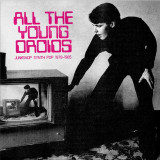
All The Young Droids: Junkshop Synth Pop 1978-1985 is a new compilation that charts the
underbelly of the epoch-defining sound of the synthesiser in 80s popular music. Compiled by Philip
King (previously seen compiling All The Young Droogs, Glitterbest and Boobs - The Junkshop
Glam Discotheque), the music here connects the dots between DIY synth enthusiasts grappling with
new, cheap synthesisers at the tail-end of punk and wannabe, jobbing songwriters enthral to the new
music pioneered by Gary Numan, Depeche Mode and Daniel Miller’s Mute Records. Featuring rare
tracks of auto-didactic progressive pop music, proto-techno punk, shoot-for-the-stars-land-in-the-gutter
chart flops and heralded, underground synth classics, School Daze paints a picture of beautiful failure.
Complete with extensive sleeve notes written by King and never before seen imagery, all 24 tracks
were remastered by RPM in-house engineer Simon Murphy, many from vinyl copies due to lost master
tapes. The story told on All The Young Droids is one of the dawning opportunity presented by both the
emergence to the market of cheaper analog synthesisers and the distribution networks plus indie labels
that exploded with the advent of punk music in 1976. While the music that sprouted out all over the
globe in the wake of these factors was decried as fake, plastic, a refutation of punk’s guitar-led
revolution, it’s telling that much of the music on All The Young Droids.. was created in bedrooms,
ramshackle studios and home-made set ups with often borrowed equipment. In the era of record labels
jumping to capitalise on the success of The Sex Pistols, The Clash (both on major labels, of course)
these artists struggled to stand out from a new gold-rush with next to no budget or PR team. With radio
and labels desperate for the new Yazoo, what resulted was a testament to necessity being the mother
of invention.
At the time, the synthesiser was the music of the future, a shiny new machine that could paint like an
orchestra with a single finger and a 4-track. In the hands of Manchester avant-pranksters Gerry & The
Holograms it’s a pulsing, sardonic weapon.. the only instrument on the Messthetics classic lampooning
of New Wave fashion. In Hamburg, a 16 year old Andreas Dorau used it to write and record (with his
female classmates on vocals) a global smash in Fred Vom Jupiter (later licensed to Mute Records).
The hard-to-find English version (Fred From Jupiter, natch) is included here. Many artists with alreadystoried careers caught the bug and recorded synthesiser-fuelled peons to space, computers, the future
and, of course, love-interests. Harry Kakoulli, late of Squeeze, recorded a solo album in 1979 that
included the incredible power-synth-pop smash-that-never-smashed I’m On A Rocket. Similarly, Ian
North of Neo and American Power Pop stalwarts Milk ’n’ Cookies bought a Korg MS20 and used a
tape machine to record We’re Not Lonely, an absolute lost-classic of minimal synth pop. We’re Not
Lonely also features on the Junkshop Synth Pop sampler 7” twinned with John Howard unreleased
track You Will See, released April 12th 2025.
There are plenty of compilation debuts in evidence. Sole Sister were a mysterious trio who were
featured on the Scaling Triangles compilation of female-fronted, queer-adjacent post-punk /
underground music that also featured The Petticoats. Selwin Image were from San Francisco and
featured members of the recently defunct power pop/punk group The Pushups. Their stupidly catchy
The Unknown fizzes with New Wave energy - think XTC to Sparks but remains unreleased until now.
Dream Unit’s A Drop In The Ocean is an early synth wave cut, positively teaming with Joy Division
instrumentation, previously only released on a long-forgotten and super rare, self-released EP.
Incandescent Luminaire’s Famous Names belies an archetypal struggle of a small-town trying to
make it in a cruel industry but is a thrilling New Romantic-Synth Wave cross over with a OMD
gloominess that’s a joy to hear. Feminist Minimal Wave track I Am A Time Bomb by performance artist
Peta Lilly and Michael Chance is a revelation destined for new found cult status. It was released on 7”
and lost until now.
The flipside to the subterranean, never-made-it synth pop mentioned above are the ambitious, even
fruity attempts at success that have a perennial elegance to their confidence. New Jersey-ite Billy
London (real name Ed Barth) tried to cash in on the synth boom with Woman, released by a major
label, a lurching new wave track built on the Louie Louie rhythm and a wonderfully camp Lou Reedstyle sleazy vocal before exploding in the synthesised chorus. The song bombed but with a chorus like
this, you have to wonder why? Ex-Glitter Band member John Springate’s My Life is truly epic, with
doomed chord progressions and massive sounding drums turning into at least 3 different songs in the
course of the track. Before you wonder what’s going on the song resolves with a glorious return to the
main refrain.
The dry-ice-dressed dance floor is well catered for too. Design’s Premonition and Vision’s Lucifer’s
Friend are stone-cold minimal synth bangers, well loved but given a new lease of life here. The
Warlord’s The Ultimate Warlord was released in 1978, a homespun proto Hi NRG banger that was
later re-recorded by The Immortals in Canada who had a club hit with it. One-man- band Disco
Volante’s No Motion was re-issued by Synth wave label Medical in 2012 but makes its first vinyl
compilation appearance here. Close your eyes and you can imagine what Lawrence of Felt would have
sounded like with some cheap Korgs a little earlier in his career. Gibraltar-based trio The Microbes
imagined a computer programming people to dance - how prescient - and ended up with a propulsive,
robo-funk track with splendid rubbery bass playing over a tectonic drum machine. Previously picked up
by Belgian label Stroom TV, Dee Jay Bert & Eagle’s heavily Euro-accented I Am Your Master
demands the listener to “come to paradise!” In a frankly terrifying manner.
All The Young Droids is the first compilation to peel away from the narrative that dour, Minimal Synth
and Cold Wave were the only musical children of the first rush of synth pop. Philip King and School
Daze Records describe a much more complicated world: along with the austere, Brutalist children of
Daniel Miller (who produced Alan Burnham’s Bowie-Low-influenced Science Fiction here) was a
plethora of desperate cash-ins, accidental mainstream hits, ambitious pop dramas and major label
punts that went nowhere. Crucially, the compilation blurs the line between junk and treasure. What if the
two things are interchangeable. What if it’s all science fiction?
Commandez maintenant et nous commanderons l'article pour vous chez notre fournisseur.
Compiled by Philip King
“And then came the rise of synth pop : blokes with dodgy haircuts hunched over keyboard-operated
machines stuffed with wires and do-it-yourself tone oscillators making sounds like a brood of geese
passing gas in a wind tunnel. Whoopee! This is the way the ‘70s ended : not with a blood-curdling bang
bang but with a cheap, synthesized, emasculating whimper.”
NICK KENT, NME.
All The Young Droids: Junkshop Synth Pop 1978-1985 is a new compilation that charts the
underbelly of the epoch-defining sound of the synthesiser in 80s popular music. Compiled by Philip
King (previously seen compiling All The Young Droogs, Glitterbest and Boobs - The Junkshop
Glam Discotheque), the music here connects the dots between DIY synth enthusiasts grappling with
new, cheap synthesisers at the tail-end of punk and wannabe, jobbing songwriters enthral to the new
music pioneered by Gary Numan, Depeche Mode and Daniel Miller’s Mute Records. Featuring rare
tracks of auto-didactic progressive pop music, proto-techno punk, shoot-for-the-stars-land-in-the-gutter
chart flops and heralded, underground synth classics, School Daze paints a picture of beautiful failure.
Complete with extensive sleeve notes written by King and never before seen imagery, all 24 tracks
were remastered by RPM in-house engineer Simon Murphy, many from vinyl copies due to lost master
tapes. The story told on All The Young Droids is one of the dawning opportunity presented by both the
emergence to the market of cheaper analog synthesisers and the distribution networks plus indie labels
that exploded with the advent of punk music in 1976. While the music that sprouted out all over the
globe in the wake of these factors was decried as fake, plastic, a refutation of punk’s guitar-led
revolution, it’s telling that much of the music on All The Young Droids.. was created in bedrooms,
ramshackle studios and home-made set ups with often borrowed equipment. In the era of record labels
jumping to capitalise on the success of The Sex Pistols, The Clash (both on major labels, of course)
these artists struggled to stand out from a new gold-rush with next to no budget or PR team. With radio
and labels desperate for the new Yazoo, what resulted was a testament to necessity being the mother
of invention.
At the time, the synthesiser was the music of the future, a shiny new machine that could paint like an
orchestra with a single finger and a 4-track. In the hands of Manchester avant-pranksters Gerry & The
Holograms it’s a pulsing, sardonic weapon.. the only instrument on the Messthetics classic lampooning
of New Wave fashion. In Hamburg, a 16 year old Andreas Dorau used it to write and record (with his
female classmates on vocals) a global smash in Fred Vom Jupiter (later licensed to Mute Records).
The hard-to-find English version (Fred From Jupiter, natch) is included here. Many artists with alreadystoried careers caught the bug and recorded synthesiser-fuelled peons to space, computers, the future
and, of course, love-interests. Harry Kakoulli, late of Squeeze, recorded a solo album in 1979 that
included the incredible power-synth-pop smash-that-never-smashed I’m On A Rocket. Similarly, Ian
North of Neo and American Power Pop stalwarts Milk ’n’ Cookies bought a Korg MS20 and used a
tape machine to record We’re Not Lonely, an absolute lost-classic of minimal synth pop. We’re Not
Lonely also features on the Junkshop Synth Pop sampler 7” twinned with John Howard unreleased
track You Will See, released April 12th 2025.
There are plenty of compilation debuts in evidence. Sole Sister were a mysterious trio who were
featured on the Scaling Triangles compilation of female-fronted, queer-adjacent post-punk /
underground music that also featured The Petticoats. Selwin Image were from San Francisco and
featured members of the recently defunct power pop/punk group The Pushups. Their stupidly catchy
The Unknown fizzes with New Wave energy - think XTC to Sparks but remains unreleased until now.
Dream Unit’s A Drop In The Ocean is an early synth wave cut, positively teaming with Joy Division
instrumentation, previously only released on a long-forgotten and super rare, self-released EP.
Incandescent Luminaire’s Famous Names belies an archetypal struggle of a small-town trying to
make it in a cruel industry but is a thrilling New Romantic-Synth Wave cross over with a OMD
gloominess that’s a joy to hear. Feminist Minimal Wave track I Am A Time Bomb by performance artist
Peta Lilly and Michael Chance is a revelation destined for new found cult status. It was released on 7”
and lost until now.
The flipside to the subterranean, never-made-it synth pop mentioned above are the ambitious, even
fruity attempts at success that have a perennial elegance to their confidence. New Jersey-ite Billy
London (real name Ed Barth) tried to cash in on the synth boom with Woman, released by a major
label, a lurching new wave track built on the Louie Louie rhythm and a wonderfully camp Lou Reedstyle sleazy vocal before exploding in the synthesised chorus. The song bombed but with a chorus like
this, you have to wonder why? Ex-Glitter Band member John Springate’s My Life is truly epic, with
doomed chord progressions and massive sounding drums turning into at least 3 different songs in the
course of the track. Before you wonder what’s going on the song resolves with a glorious return to the
main refrain.
The dry-ice-dressed dance floor is well catered for too. Design’s Premonition and Vision’s Lucifer’s
Friend are stone-cold minimal synth bangers, well loved but given a new lease of life here. The
Warlord’s The Ultimate Warlord was released in 1978, a homespun proto Hi NRG banger that was
later re-recorded by The Immortals in Canada who had a club hit with it. One-man- band Disco
Volante’s No Motion was re-issued by Synth wave label Medical in 2012 but makes its first vinyl
compilation appearance here. Close your eyes and you can imagine what Lawrence of Felt would have
sounded like with some cheap Korgs a little earlier in his career. Gibraltar-based trio The Microbes
imagined a computer programming people to dance - how prescient - and ended up with a propulsive,
robo-funk track with splendid rubbery bass playing over a tectonic drum machine. Previously picked up
by Belgian label Stroom TV, Dee Jay Bert & Eagle’s heavily Euro-accented I Am Your Master
demands the listener to “come to paradise!” In a frankly terrifying manner.
All The Young Droids is the first compilation to peel away from the narrative that dour, Minimal Synth
and Cold Wave were the only musical children of the first rush of synth pop. Philip King and School
Daze Records describe a much more complicated world: along with the austere, Brutalist children of
Daniel Miller (who produced Alan Burnham’s Bowie-Low-influenced Science Fiction here) was a
plethora of desperate cash-ins, accidental mainstream hits, ambitious pop dramas and major label
punts that went nowhere. Crucially, the compilation blurs the line between junk and treasure. What if the
two things are interchangeable. What if it’s all science fiction?
Commandez maintenant et nous commanderons l'article pour vous chez notre fournisseur.
A warm breeze drifts through the open cabin of the boat, carrying the scent of salt and sunwarmed teak as it stirs the linen curtains. The man moves easily, bare feet against the wooden floor, the slow rhythm of the harbor rocking beneath him. He flips through his records with a knowing touch, pulling out a favorite—something smooth and mellow, with buttery vocals and melodies that drift like a sailboat on calm waters. The needle drops, and honeyed guitar riffs spill into the air, effortless and sunlit. He reaches for the bottle of rum, the ice in his glass chiming softly as he pours, then adds a squeeze of lime, a lazy stir. Outside, the water glows in the last light of day, golden ripples stretching toward the horizon. He leans back against the cushioned bench, drink in hand, the music swirling around him like the evening breeze—unhurried, weightless, exactly where he wants to be.
Small Talk brings together a carefully curated selection of long-forgotten, yet remarkably smooth and captivating soft rock and AOR tracks from the ‘70s and ‘80s, compiled by Brandon McMahon. These lesser-known songs are drenched in lush harmonies, dreamy guitar riffs, and mellow rhythms, capturing the essence of an era without the mainstream recognition. For those with an ear for the obscure and a taste for the subtle, Small Talk offers a fresh perspective on an era’s most overlooked gems.
Commandez maintenant et nous commanderons l'article pour vous chez notre fournisseur.
Swingrowers are known for their mixture of JAZZ, SWING, POP and ELECTRO, they have extensively toured Europe and North America, opening sell-out shows for Parov Stelar, Chinese Man & Caravan Palace. On top of delivering official remixes for Caro Emerald and Swing Republic, Swingrowers also boast musical collaborations with The Lost Fingers, Gypsy Hill, DJ Pony Montana and have had their own songs remixed by Bart&Baker and Jamie Berry.
Following on from their debut album 'Pronounced Swing Grow'ers' in 2012, Swingrowers have released their second album 'REMOTE' in early 2015, followed now by 'OUTSIDEIN', the band's third full-length studio album. This new release shows their expert musicianship and most meticulous production to date, mixing genres from jazz to electronica, from gypsy-swing to full-on rock'n'roll with a melodic pop sensibility.
il devrait être publié sur 20.06.2025
Commandez maintenant et nous commanderons l'article pour vous chez notre fournisseur.
Welcome to "Private Dancer": Acclaimed producer Johannes Albert returns with his third club album after six years - his first on Permanent Vacation - and it's a statement. The album stars a sound that was always in him - called House - something that moves the body and warms the soul.
Collaboration is key. London's own Helen Salvin graces "Wide-Eyed" with her magnificent voice where midtempo meets a subtle boogie. Things heat up when Biesmans jumps in for the infectious, uptempo "Get My Gee". And when longtime friend Iron Curtis lends a hand, the title track "Private Dancer" melts into subliminal grooves. Expect classic material, like the Arp-tinged "L’Chaim," alongside unexpected weirdness - see "Patterns Everywhere". The life affirming "My Kind" leaves you with nothing but positive vibes while the Pepe Bradock styled sampling of "Follow The Strings" goes sincere all the way.
With 15 years of releases and 25 years behind the DJ booth Johannes Albert masters the balance: House Music that's always classy yet still offers a modern twist. "Private Dancer' showcases 11 tracks that are well crafted - refined yet understated. Maybe all we need now is a basement, a red light, and - you know it - more of that feeling.
Commandez maintenant et nous commanderons l'article pour vous chez notre fournisseur.
"1980 was a huge year in pop music with every genre competing for hits. We have already included many tracks on the records of the 1980 Yearbook, the 80-84 Final Chapter, and their extras so far in our appreciation of the year…
Those tracks were generally the bigger hits of the year, with their chart achievement a factor in their inclusion – however – that’s not the whole singles story of the year, and our celebration of 1980 wouldn’t be complete without shining a light on some of the years’ singles that have been compiled much less frequently over the years.
Welcome to THE VAULT for 1980… Some of the tracks included were Top 40 hits, some missed the chart completely. Some were representative of massive selling albums, and some were big hits in the U.S. and not in the U.K… but all are part of the wonderful pop story of 1980. "
Commandez maintenant et nous commanderons l'article pour vous chez notre fournisseur.
This groundbreaking album is a stunning blend of innovative soundscapes, intricate arrangements, and captivating melodies that showcase the band’s unique approach to music.
“…Sounds Like This” features an array of dynamic tracks that seamlessly weave together elements of rock, psychedelia, and space music, reflecting Nektar’s adventurous spirit and musical prowess.
il devrait être publié sur 15.05.2025
Commandez maintenant et nous commanderons l'article pour vous chez notre fournisseur.
‘Zeitgeist’, the debut LP from celebrated Italian electronic music producer Dukwa, begins with a timeless dancefloor equation; swung drums, a clattering cobwell and flickering hi-hats lurch forward into a serious bassline. Within seconds, dancers are flung into the house anthem ‘You Don’t Want It’ that’s equally raw and charismatic, sensual and powerful. For the next forty-five minutes of rhythm, melody and studio trickery, ‘Zeitgeist’ continues to bend time, eras and bodies.
Having released EPs on respected labels including Numbers, Gudu and Diynamic Records, invariably with the support of Jackmaster, Peggy Gou and Solomun, Dukwa folds into the Slacker85 philosophy with ease, laying down a statement of intent that’s squarely for the dancers. Indebted to a youth digging in Florence’s record stores, embracing the peerless Italian rave scene, as well as his recent appearances at Circoloco and Kappa Future, ‘Zeitgeist’ subverts it’s knowing title to dance between styles with an urgency you can feel in your heels.
Before long, Dukwa is smoothly oscillating between acid overdrive and weightless house on ‘Catch All’, while the balance between softness and severity is refined even further on ‘Show Me’, showcasing the record’s first euphoric breakdown, a heads down, hands up moment that sacrifices none of his organic flow. Ably mastering many corners of his record box, ‘Avec Moi’ makes a confident left turn into tunneling trance, interspersed with a sensual french vocal.
‘All You Need’ provides the record’s beating heart, Dukwa’s overarching philosophy front and center around layers of synthesised groove, build and release: “The world is full of fighting, ignorance and greed, but right here on the dancefloor - the rhythm’s all you need”. Meanwhile, ‘My Turn’ channels more cinematic instincts, zoning in on an elegant piano riff in order to unravel a quietly epic deep house trip.
As ‘Zeitgeist’ heads toward its conclusion, Dukwa effortlessly squeezes the most emotive juice from his well-oiled studio. ‘Sad Eyes’ possesses the emotional punch of many vintage end-of-night anthems, still driving yet touched with a wistful ecstasy. Finally, for closing passage ‘Stck1’, Dukwa truly lets the machines sing, capturing a brief symphony of harmonising modulations that dip into weirdo electronica, without ever skipping his signature beats.
Commandez maintenant et nous commanderons l'article pour vous chez notre fournisseur.
Can you squeeze Hip Hop, Latin Soul, Funk & Cumbia into a 7" single? YES YOU CAN!
Two years after the last release on his Juice on Wax label, countless collaborations and remixes for other artists, editing maestro Voodoocuts is back with two brand new tracks.
On the A-side, a boom bap anthem over an irresistible Latin soul groove will take you back in time, while on the flip, a spicy cumbia will set any dancefloor on fire.
Commandez maintenant et nous commanderons l'article pour vous chez notre fournisseur.
On a creative roll of late, Linkwoods productions have branched out in many directions, a collaboration LP with jazz Genius Greg Foat, Another with Local Edinburgh Legend Other lands and a load more yet to surface. Linkwood now comes back to solo work with a hyper focused piece of electro goodness. Lo-fi but all the better for it, Mono comprises 14 deeply distilled tracks. After producing some more complex records it was time for a pure palate cleanser so we locked Nick in the Athens of the north studio for a week with his friends Moog and Oberheim to see what might happen. Somewhere between Electro, Early 80s Synth pop and techno the album is an extremely listenable piece as a whole, unpretentious and timeless. Sprinklings ofDave Stewart pop noodles, Newbuild, Early Era Nu Groove but very much Linkwood at the same time, I cant recommend this enough.
Commandez maintenant et nous commanderons l'article pour vous chez notre fournisseur.
Although still very much a secret, Oakland, California's Justin Pinkerton has perfected and expanded his Futuropaco project to a stunning degree over the past seven years. The one-man band is deeply rooted in Pinkerton's masterful drumming, which builds on the legacy of 1960's and 1970's legends such as Tony Allen and Jaki Liebezeit. But he's an accomplished multi-instrumentalist as well, and the Futuropaco sound is a colourful fusion that sees him throw fuzz guitars, flutes, vintage synthesizers and Anatolian string instruments into the mix - seemingly without much effort. The second and final volume of the "Fortezza Di Vetro" series feels like a conclusion, the sound of an artist reaching his creative zenith. It's an experimental album, yet immediately seductive in its energy - channeling the vibey art-rock of Tortoise, Black Sabbath riffage and vintage Italian film music in equal measures. It's such a refined and esoteric blend, yet hits so directly. It's simply impossible not to crank the volume knob once this slab of vinyl is on the turntable, followed by immediate head nodding. Buy the ticket, take the ride. Justin Pinkerton is a vastly talented rhythmsmith, best known as a member of Californian stoners Golden Void. On this project he plays all the other instruments too so he can do what he blooming well feels. And it's not as if the drum solos go on for twenty minutes like those of John Bonham and his pale imitators. Nope. Into tracks that are both jam-packed and concise, Pinkerton has squeezed his love of vintage Italian library music, classic krautrock and heavy psych rock. At one point it suggests Grails have been performing super-speed cover versions of fusion-era Miles Davis with Adrian Younge on production. -The Quietus Futuropaco returns in a big way with Fortezza di Vetro, a buzzing, groove-heavy album that expands on what came before while staying true to the project's origins. Dizzying, fuzzed-out psych with just the right amount of melancholy for good measure. Justin Pinkerton and Futuropaco have done it again. Fantastico! -Complex Distractions
il devrait être publié sur 28.03.2025
Cross Record's new album, Crush Me, is steeped in the pressures and wonders of existence—a profound statement, especially coming from artist and death doula Emily Cross. A two-and-a-half-year gestation period offered challenges, disappointments, and joys reflected in the cramped space of the album, which explores how we handle the weights we carry. Emily Cross had held hundreds of Living Funerals and was as many episodes deep into her podcast, What I’m Looking At. She was five years into serving clients as a death doula and fresh off a tour with Loma, her band with Jonathan Meiburg (Shearwater) and Dan Duszynski, when she began work on her fourth album. After moving from Austin, TX to Dorset, UK, she established the Steady Waves Center for Contemplation (named after a track from her second record, Wabi-Sabi ), where she hosted Living Funerals, met clients, scheduled mindful tea sessions, and showcased experimental music nights. All the while, she was scribbling down song ideas. Cross’s Tascam four-track demos finally reached readiness, and she sent them to an interested major independent label. She was encouraged to push her imagination to the limits of what a record could be. So, unlike her usual process of recording as inexpensively as possible, she prepared a two-week recording session in Germany with a group of skilled musicians from around the world. True to her previous work, Cross left plenty of room in her demos for experimentation, collaboration, chance, improvisation, and complete obliteration, then resurrection when necessary. Comfort and traditional structure were eschewed in favor of unaccountable magic, prayers whispered into The Void. Cross is comfortable with the chaotic and unpredictable, a perspective demanded by her work and writing style. The Berlin Airbnb was packed with people, instruments and luggage. During a ride down in a tiny elevator to the studio, Cross realized how central the sense of being crushed was to the album. “I thought of it later and it dawned on me that ‘Crush Me’ perfectly embodied the record,” says Cross. Yes, the weight of a body laying limply atop yours, or the tight squeeze of a hug, can be pleasant. Go too far, and you’re in the hands of a cruel, adolescent god. Upon leaving Germany, the record was unfinished, and without a roadmap. As passages were recorded as isolated parts, Cross and musician Marcin Sulewski collaborated, facing a haphazard brick pile, waiting to be assembled. Work dipped in and out of view like a buoy bobbing in a violent sea over many months. During that time, the aforementioned interested label went radio silent, suddenly not seeming so sure of a thing. Collaborators disappeared, continuing the themes of abandonment, surrender, and disarray that followed the project. Cross physically felt her entire body go numb: In a twist of fate, the record was rescued by long-time friend and supporter Ben Goldberg at Ba Da Bing Records who was eager to help realize the project. Cross worked for months on the album, all the while nursing a pregnancy and continuing her full-time funeral work. The last minute participation of Seth Manchester of Machines with Magnets, who mixed and mastered, was an essential liferaft. He gave true final form to the abstracted songs. Crush Me has the effect of a spell being cast, with songs balancing heaviness and levity. Vocals, guitars, and keyboards float above, as drums and upright bass (often bowed) lurch beneath. On “Rolling Backwards” percussion wanders about while feedback squeals and persists in the distance. “Dorset Area Of Natural Beauty” starts with a thick, unhinged church organ progression punctuated by the disquieting sounds of laughter reaching the point of hysteria. “God Fax” is a slow-moving panic attack, with shallow breaths in and out framing a guttural cacophony like a wooden freighter encountering increasingly turbulent waters and vocals struck emotionless by autotune. The album ends with “Twisted Up Fence,” a reflection on life from outside the wall--wistful, warm, and comforting. Cross, likely with a smile on her face, sings: “You say it’s an endless abyss” “And I say the abyss is the best”
il devrait être publié sur 21.03.2025
Commandez maintenant et nous commanderons l'article pour vous chez notre fournisseur.
This re-issue of the Cocteau Twins' 1993 album has been remastered by Robin Guthrie and is pressed onto high quality 140g vinyl . Cocteau Twins vocalist Elizabeth Fraser, guitarist Robin Guthrie, and bassist Simon Raymonde formed in Grangemouth, Scotland in the late 70s. The brainchild of Guthrie and original bassist Will Heggie, by 1981 they had added Fraser and the following year signed to 4AD, one of the most illustrious of the indie labels. With Raymonde replacing Heggie in 1983, the trio went on to create some of the most unique and otherworldly music of the 80s, built around Guthrie's chiming guitar and Fraser's unmistakable soprano. By the early 90s, the group had just released their most successful album, the commercial Heaven or Las Vegas, but the relationship with 4AD was coming to an end. Mercury imprint Fontana was going through something of a purple patch, signing former underground bands, and by 1992, Cocteau Twins had joined The Fall and the House Of Love. The group's debut album for Fontana, Four-Calendar Cafe, was released in October 1993. Its gossamer melodies and largely upbeat pop bely the turmoil the group were going through. Barney Hoskyns, writing in Mojo, said that Four-Calendar Caf was "the most poignant, heartrending Cocteaus record of all, an album of naked confession and raw beauty . . . Sadness never sounded so luscious." Simon Raymonde agreed: "I think in time people will realise what a great album Four-Calendar Caf is. Because I think it's beautiful." Led by the single Evangeline, the reached No 13 in the UK album chart and is much-loved by fans.
Commandez maintenant et nous commanderons l'article pour vous chez notre fournisseur.
Auf Blood On the Silver Screen verbindet die Universalgelehrte ihre am Konservatorium für klassische Musik erworbenen Fähigkeiten als Musikerin, Produzentin und Komponistin mit ihrer unerschrockenen und bombastischen Bühnenpersönlichkeit, um ihre bisher realistischste Musik zu schaffen: das absolute SASAMI-Pop-Album.
Nachdem sich SASAMI mit der ausbalancierten Melancholie ihres selbstbetitelten Debütalbums von 2019 etabliert hatte, setzte sie auf Squeeze (2022) auf Lautstärke und Kontrolle - und tourte mit einer Metal-Band -, doch ihr Ziel für Blood On the Silver Screen war es, ihre Wahrheit mit Überzeugung durch Gesang auszudrücken. In Zusammenarbeit mit den Co-Produzenten Jenn Decilveo und Rostam und mit SASAMI als alleiniger Songwriterin, fängt jeder Track von Blood On the Silver Screen ein anderes Thema von Liebe, Sex, Macht und Verkörperung ein. "Popmusik ist wie Treibstoff", sagt Sasami. "Sie ist einfach belebend." Sasami wendet sich vom aktuellen Pop-Zeitgeist ab und dem Pop der späten Achtziger und der 2010er Jahre zu, wie Britney Spears' Femme Fatale und Lady Gagas Born This Way, aber auch Kelly Clarkson, Katy Perry und Sia. Beeinflusst wurde sie vom modernen Country-Storytelling, das Verletzlichkeit mit Humor mischt, aber auch Prince, japanischer City-Pop und die stadiongroße, in Jeans gekleidete Ikonographie von Bruce Springsteen standen auf dem Moodboard
h B2 For The Weekend
il devrait être publié sur 07.03.2025
Limitiertes 140G rotes Vinyl im Gatefold Sleeve mit bedruckter Innenhülle, Poster (12x24) und Downloadkarte
Auf Blood On the Silver Screen verbindet die Universalgelehrte ihre am Konservatorium für klassische Musik erworbenen Fähigkeiten als Musikerin, Produzentin und Komponistin mit ihrer unerschrockenen und bombastischen Bühnenpersönlichkeit, um ihre bisher realistischste Musik zu schaffen: das absolute SASAMI-Pop-Album.
Nachdem sich SASAMI mit der ausbalancierten Melancholie ihres selbstbetitelten Debütalbums von 2019 etabliert hatte, setzte sie auf Squeeze (2022) auf Lautstärke und Kontrolle - und tourte mit einer Metal-Band -, doch ihr Ziel für Blood On the Silver Screen war es, ihre Wahrheit mit Überzeugung durch Gesang auszudrücken. In Zusammenarbeit mit den Co-Produzenten Jenn Decilveo und Rostam und mit SASAMI als alleiniger Songwriterin, fängt jeder Track von Blood On the Silver Screen ein anderes Thema von Liebe, Sex, Macht und Verkörperung ein. "Popmusik ist wie Treibstoff", sagt Sasami. "Sie ist einfach belebend." Sasami wendet sich vom aktuellen Pop-Zeitgeist ab und dem Pop der späten Achtziger und der 2010er Jahre zu, wie Britney Spears' Femme Fatale und Lady Gagas Born This Way, aber auch Kelly Clarkson, Katy Perry und Sia. Beeinflusst wurde sie vom modernen Country-Storytelling, das Verletzlichkeit mit Humor mischt, aber auch Prince, japanischer City-Pop und die stadiongroße, in Jeans gekleidete Ikonographie von Bruce Springsteen standen auf dem Moodboard
h B2 For The Weekend
il devrait être publié sur 07.03.2025
Volume 1 of this expertly curated project of 90s Italian House - put together by Don Carlos.
If Paradise was half as nice… by Fabio De Luca.
Googling “paradise house”, the first results to pop up are an endless list of European b&b’s with whitewashed lime façades, all of them promising “…an unmatched travel experience a few steps from the sea”. Next, a little further down, are the institutional websites of a few select semi-luxury retirement homes (no photos shown, but lots of stock images of smiling nurses with reassuring looks). To find the “paradise house” we’re after, we have to scroll even further down. Much further down.
It feels like yesterday, and at the same time it seems like a million years ago. The Eighties had just ended, and it was still unclear what to expect from the Nineties. Mobile phones that were not the size of a briefcase and did not cost as much as a car? A frightening economic crisis? The guitar-rock revival?! Certainly, the best place to observe that moment of transition was the dancefloor. Truly epochal transformations were happening there. From America, within a short distance one from the other, two revolutionary new musical styles had arrived: the first one sounded a bit like an “on a budget” version of the best Seventies disco-music – Philly sound made with a set of piano-bar keyboards! – the other was even more sparse, futuristic and extraterrestrial. It was a music with a quite distinct “physical” component, which at the same time, to be fully grasped, seemed to call for the knotty theories of certain French post-modern philosophers: Gilles Deleuze, Félix Guattari, Paul Virilio... Both those genres – we would learn shortly after – were born in the black communities of Chicago and Detroit, although listening to those vinyl 12” (often wrapped in generic white covers, and with little indication in the label) you could not easily guess whether behind them there was a black boy from somewhere in the Usa, or a girl from Berlin, or a pale kid from a Cornish coastal town.
Quickly, similar sounds began to show up from all corners of Europe. A thousand variations of the same intuition: leaner, less lean, happier, slightly less intoxicated, more broken, slower, faster, much faster... Boom! From the dancefloors – the London ones at least, whose chronicles we eagerly read every month in the pages of The Face and i-D – came tales of a new generation of clubbers who had completely stopped “dressing up” to go dancing; of hot tempered hooligans bursting into tears and hugging everyone under the strobe lights as the notes of Strings of Life rose up through the fumes of dry ice (certain “smiling” pills were also involved, sure). At this point, however, we must move on to Switzerland.
In Switzerland, in the quiet and diligent town of Lugano, between the 1980s and 1990s there was a club called “Morandi”. Its hot night was on Wednesdays, when the audience also came from Milan, Como, Varese and Zurich. Legend goes that, one night, none less than Prince and Sheila E were spotted hiding among the sofas, on a day-off of the Italian dates of the Nude Tour… The Wednesday resident and superstar was an Italian dj with an exotic name: Don Carlos. The soundtrack he devised was a mixture of Chicago, Detroit, the most progressive R&B and certain forgotten classics of old disco music: practically, what the Paradise Garage in New York might have sounded like had it not closed in 1987. In between, Don Carlos also managed to squeeze in some tracks he had worked on in his studio on Lago Maggiore. One in particular: a track that was rather slow compared to the BPM in fashion at the time, but which was a perfect bridge between house and R&B. The title was Alone: Don Carlos would explain years later that it had to be intended both in the English meaning of “by itself” and like the Italian word meaning “halo”. That wasn’t the only double entendre about the song, anyway. Its own very deep nature was, indeed, double. On the one hand, Alone was built around an angelic keyboard pattern and a romantic piano riff that took you straight to heaven; on the other, it showcased enough electronic squelches (plus a sax part that sounded like it had been dissolved by acid rain) to pigeonhole the tune into the “junk modernity” section, aka the hallmark of all the most innovative sounds of the time: music that sounded like it was hand-crafted from the scraps of glittering overground pop.
No one knows who was the first to call it “paradise house”, nor when it happened. Alternative definitions on the same topic one happened to hear included “ambient house”, “dream house”, “Mediterranean progressive”… but of course none were as good (and alluring) as “paradise house”. What is certain is that such inclination for sounds that were in equal measure angelic and neurotic, romantic and unaffective, quickly became the trademark of the second generation of Italian house. Music that seemed shyly equidistant from all the rhythmic and electronic revolutions that had happened up to that moment (“Music perfectly adept at going nowhere slowly” as noted by English journalist Craig McLean in a legendary field report for Blah Blah Blah magazine). Music that to a inattentive ear might have sounded as anonymous as a snapshot of a random group of passers-by at 10AM in the centre of any major city, but perfectly described the (slow) awakening in the real world after the universal love binge of the so-called Second Summer of Love.
For a brief but unforgettable season, in Italy “paradise house” was the official soundtrack of interminable weekends spent inside the car, darting from one club to another, cutting the peninsula from North to centre, from East to West coast in pursuit of the latest after-hours disco, trading kilometres per hour with beats per minute: practically, a new New Year’s Eve every Friday and Saturday night. This too was no small transformation, as well as a shock for an adult Italy that was encountering for the first time – thanks to its sons and daughters – the wild side of industrial modernity. The clubbers of the so-called “fuoriorario” scene were the balls gone mad in the pinball machine most feared by newspapers, magazines and TV pundits. What they did each and every weekend, apart from going crazy to the sound of the current white labels, was linking distant geographical points and non-places (thank you Marc Augé!) – old dance halls, farmhouses and business centres – transformed for one night into house music heaven. As Marco D’Eramo wrote in his 1995 essay on Chicago, Il maiale e il grattacielo: “Four-wheeled capitalism distorts our age-old image of the city, it allows the suburbs to be connected to each other, whereas before they were connected only by the centre (…) It makes possible a metropolitan area without a metropolis, without a city centre, without downtown. The periphery is no longer a periphery of any centre, but is self-centred”.
“Paradise house” perfectly understood all of this and turned it into a sort of cyber-blues that didn’t even need words, and unexpectedly brought back a drop of melancholic (post?)-humanity within a world that by then – as we would wholly realise in the decades to come – was fully inhuman and heartless. A world where we were all alone, and surrounded by a sinister yellowish halo, like a neon at the end of its life cycle. But, for one night at least, happy.
Commandez maintenant et nous commanderons l'article pour vous chez notre fournisseur.
Available for the first time on vinyl and reaching #2 on the iTunes Jazz Album Chart, CODE RED brings together hits like SILENT MOVIE and the title track CODE RED with newer songs including the sultry album closer ALL THE WORLD'S A STAGE. The album is pure class from start to finish and has been the most requested vinyl issue on the FRESHLY SQUEEZED roster since its original digital release in 2021.
LEEDS based Little Violet is the writer, pianist and vocalist behind these impeccably rendered songs featuring her brilliant studio band. With its high quality contemporary production, vintage styling and superb musicianship, the album was described as "an instant classic of RETRO POP" that takes inspiration from the likes of Caro Emerald and runs with it to create something at once both modern and timeless. "If you think they don't make albums like they used to any more, this is probably one you should hear..."
Commandez maintenant et nous commanderons l'article pour vous chez notre fournisseur.
Paul Carrack is known for his role in the bands Ace, Squeeze (replacing Jools Holland on piano), and Mike & The Mechanics (a side project by Mike Rutherford of Genesis). Next to this collaborations, Carrack has forged a successful solo career in the process. All the songs from his impressive career are now bundled under the Collected series.
Dubbed by the BBC as the "The Man with the Golden Voice" Carrack sang some of the most important songs from bands like Ace (“How Long”), Squeeze (“Tempted”), Mike + The Mechanics ("The Living Years" and "Over My Shoulder") . As a solo musician he recorded hits such as "Don't Shed a Tear", "When You Walk in the Room" and "Don't Dream It's Over". He has served as a session and/or touring musician for the likes of music greats like Elton John, Eric Clapton, B.B. King and The Smiths.
Collected by Paul Carrack, released 8 March 2024, includes the following tracks: "Don't Shed A Tear ", "Love Will Keep Us Alive", "Over My Shoulder ", "Satisfy My Soul " and more.
This version of Collected comes as a 2xLP. This release comes with (a) Insert(s).
Commandez maintenant et nous commanderons l'article pour vous chez notre fournisseur.
Es ist schon fast zwanzig Jahre alt und trotzdem noch immer eines der beliebtesten Alben bei Diana-KrallFans: ”Only Trust Your Heart”, ihr zweites Album aus dem Jahre 1995. Jetzt erscheint es weltweit erstmals
auf Vinyl. Begleitet von Saxofonist Stanley Turrentine, Lewis Nash am Schlagzeug sowie den Bassisten
Ray Brown und Christian McBride, präsentiert die Sängerin und Pianistin All-Time-Favourites wie ”I Love
Being Here With You”, ”I’ve Got the World on a String” und ”Squeeze Me”. Neues Mastering von den
analogen Original-Tapes durch Bernie Grundman. 180g-Vinyl, bedruckte Innenhülle.
il devrait être publié sur 15.11.2024
48 tracks on a 3-LP collection – including: Queen, The Police, Blondie, Abba, Elton John, Donna Summer, Chic, The Boomtown Rats, The Clash, Meat Loaf, Pretenders, Billy Joel,
Electric Light Orchestra, The Specials, The Selecter, Gary Numan, The Buggles…
Commandez maintenant et nous commanderons l'article pour vous chez notre fournisseur.
"Lover Man by the Archie Shepp Quartet featuring Annette Lowman was originally released in 1989. For this release tenor saxophonist Shepp was joined by pianist Dave Burrell, bassist Herman Wright, drummer Stephen McCraven and vocals by Annette Lowman. It's a diverse album with the title track featuring Lowman's warm vocals and Shepp's tenor in the background., the band's jazzy swings version of Duke Ellington's ""Squeeze Me"" and 8 other pieces.
This expanded edition of Lover Man includes two tracks ""Margy Pargy"" and ""Tribute To Bessie Smith"" which were previously only available on cd. "
il devrait être publié sur 25.10.2024
Following the release of the acclaimed EPs Collblanc and SET during early 2024, Joe Webb releases his much-anticipated full-length album Hamstrings & Hurricanes, featuring the formidable talents of Will Sach on bass and Sam Jesson on drums. This album more than confirms the trio's early promise and elevates them to a unique location in the modern jazz landscape.
il devrait être publié sur 25.10.2024
Commandez maintenant et nous commanderons l'article pour vous chez notre fournisseur.
This is the very first reissue of the much in demand double sided killer single released in 1970 on the Upsetter label. Both tracks were produced by Lee Perry.
The A side is a beautiful yet wicked cover of LET IT BE by the Beatles, produced by Lee Perry and performed by the Soulettes.
The B side is BIG DOG BLOXIE, an even whackier version of the A side by Lee Perry.
ABOUT THE SOULETTES:
The Soulettes initially comprised Alpharita Anderson, born in Cuba, her male cousin Constantine Walker and her school friend Marlene Gifford and started recording as backing vocalists at Studio One from 1964 including the first Wailing Wailers’ hit “Simmer Down”. They also backed Lee Perry on a series of dirty songs such as ‘Rub & Squeeze’ and ‘Doctor Dick’. Under their own name The Soulettes were moderately successful have a string of minor hits such as ‘Opportunity Knocks’ and the lovely ‘Friends And Lovers’. Alpharita married Marley in in 1966 and the Soulettes disbanded. In 1969, Rita Marley re-formed the Soulettes with Nora Dean (later replaced by Hortense Lewis) and Cecile Campbell, Cornel’s sister.
The new line-up with Nora Dean and Cecile Cornell started working Lee Scratch Perry for a couple of songs including the outstanding cover of the Beatles’ ‘Let It Be’ which became their main hit in 1970. Following the group’s demise around 1973, Rita joined Marcia Griffiths and Judy Mowatt to form the I-Threes whom became the de facto female backing trio for Bob Marley…
il devrait être publié sur 10.10.2024
Skinny Lister's 'Pub Shed Bootleg' EP recorded live in the legendary pub shed The Forge
And Flagon and showcases the band's fun and energetic performances. Squeezed into the
tiny garden tavern, the band played through 6 tracks from their most recent album 'Shanty
Punk', to produce a collection full of the raucous, chaotic and spirit of a typical Skinny Lister
show. Songs include the singles 'Mantra' and 'Company Of The Bar'; the Radio 2 supported
'13 Miles' and the instant classic 'William Harker, sung by Party George.
il devrait être publié sur 04.10.2024
3 years in the making and dynamic young ELECTRO SWING producer, New Zealand's ODD CHAP, finally presents his COLLABORATIONS album, available for the first time on Limited Edition green vinyl!
A 10 track album featuring an incredible selection of special guest vocalists including Little Violet, Elle & The Pocket Belles and Loredana Grimaudo (as well as one bonus track with Glenn Miller). What could have become an omni-shambles in less skilled hands has instead become a showcase for the distinctive and immediately recognisable production style of ODD CHAP.
Commandez maintenant et nous commanderons l'article pour vous chez notre fournisseur.
2024 Repress
One foot in the nineties and another in the future, New Yorker Holden Federico's music updates the funk and grit of techno's formative era for modern dance floors. The four tracks on Inner Order, his second EP for the SK11X series, squeeze maximum power out of few elements, with peak-time cuts presented on the A-side and his deeper work on the flip. Heavily road tested in label boss Setaoc Mass' DJ sets, this EP is proven to do the business on a big stage, while still paying tribute to techno's musical roots.
Commandez maintenant et nous commanderons l'article pour vous chez notre fournisseur.
The Petersons’ were a vocal trio from Waycross, GA, their performing name came from their founder, lead vocalist and drummer Kenneth Peterson, along with Keyboard player Salem Chatman and vocalist/bassist Johnny Members. The trio regularly performed shows along America’s East Coast, and it was while working in Philadelphia during early 1973 that the group answered an advertisement in Billboard Magazine quote “Masters Turned Down? We Are Looking for New Acts to Sign, Contact Omega Sound Productions, Philadelphia, PA”.
Omega Sound was a fledgling independent Recording Company formed by Frank Fioravanti a budding songwriter and former Encyclopedia Britannica Salesman for the initial purpose of find some extra work for the musicians of The Philadelphia Orchestra who were looking to earn some side money. As a result of answering the Billboard advertisement ‘The Petersons’ found themselves booked into Frank Virtue’s recording studio to record two Fioravanti and the late Alan Felder penned songs, the up-tempo “What’s It Gonna Be” backed by the melodic “Just What I’ve Been Looking For” Mel Omega (1833). With the release failing to make much noise, The Petersons returned to their native Georgia where they continuing to perform and record but under the group name of ‘Toll Darkness’. Fast forward circa 30 years and a couple of copies of this obscure Mel Omega 45 was introduced into the UK by Soul Bowl’s John Anderson where they gained belated recognition initially at the Soul Essence Weekenders through resident DJ Steve Guarnori with “Just What I’ve Been Looking For” being his chosen side. These initial copies had a paper sticker on them crediting the Artist as ‘Toll Darkness’ but the subsequent find of further copies with no sticker coverings, revealed the real artist to be ‘The Petersons’, intriguing? The reason behind the differing artist names is reputedly assumed to be that Ken Peterson took some copies of the Mel Omega 45 back to Georgia and pasted the ‘Toll Darkness’ group name stickers over the Petersons label credits to enable him to sell them at shows with his other ‘Toll Darkness’ 45 “Party/Love Makes Me Do Foolish Things on Alpha Records. The up-tempo backing track of The Peterson’s “What’s It Gonna Be” was a Frank Virtue arrangement that he had great faith in, hence it’s usage on plethora of other Philly artists recordings, i.e. Fred Mark, Liza Mae, Michael Christian, Cody Michaels etc over different record labels, Melomega, Concept, Fox Century Plaza and Merben.
Frank Fioravanti also founded the Sound Gems label which brought us the timeless classic “Your My Main Squeeze” recorded on the New Beford, MA group ‘Crystal Motion’. Omega Sound’s most notable achievement would be William DeVaughn’s 1974 hit “Be Thankful For What You Got”.
Commandez maintenant et nous commanderons l'article pour vous chez notre fournisseur.
Released in 1956 as the debut album by the Miles Davis Quintet, “Miles” features a combination of pop and jazz standards. Originally released on Prestige Records, the album features an all-star cast of players with John Coltrane (tenor sax), Red Garland (piano), Paul Chambers (bass) and Philly Joe Jones (drums). This new edition of the album is released as part of the OJC Series and is pressed on 180-gram vinyl at RTI with (AAA) lacquers cut from the original master tapes by Kevin Gray at Cohearent Audio. It is presented in a Tip-On Jacket.
il devrait être publié sur 30.08.2024
80s alt country punk outfit, Lone Justice, with Maria McKee, Ryan Hedgecock, Marvin Etzioni and Don Heffington are in full flight with the release of a brand new 7". Taken from their forthcoming album, Viva Lone Justice, 'Teenage Kicks' is a rambunctious slice of punk angst that sounds like it was recorded in one take. It's a timeless anthem with a joyous riff that explodes into a hail of feedback. A favour returned as Maria McKee, the songwriter of Feargal Sharkey's only solo hit 'A Good Heart', Lone Justice cover The Undertones' Peel-approved favourite with the artwork of the single being a nod to the original. "As much as we loved Merle Haggard, George Jones, and many other authentic hard core Country artists, we were also deeply impacted by Punk; from the Velvet Underground (we were playing "Sweet Jane" live as early as 1983) to the MC5 ("Sister Ann" is on the album "Viva Lone Justice")." Backed with 'Nothing Can Stop My Loving You' that's cut with a wild, squeezebox-powered interpretation of the George Jones and Roger Miller country stomp. "Speaking of George Jones, here's one written by George Jones and Roger Miller. Two of our favorites! We played this song at nearly every show starting in 1983. This ragged and right live recording captures the fire from a sold out show at The Palace in Los Angeles and features Jo-El Sonnier on lead accordion documenting the only time Sonnier played with LJ. "Nothing Can Stop My Loving You" is the only live track on Viva Lone Justice." // "A roots rock band that took Los Angeles by storm in the 80s and developed a smaller but deeply enthusiastic following outside the Golden State
il devrait être publié sur 09.08.2024
- New signing to Basin Rock label who released breakthrough albums by Julie Byrne, Nadia Reid, Aoife Nessa Frances, Jim Ghedi, Andrew Tuttle, Trevor Beales….
- Limited edition black vinyl with download code.
French lullabies and traditional folk songs dating as far back as the 14th century, adapted with contemporary arrangements and faint tape manipulations in Dublin, Ireland.
Imagine Serge Gainsbourg, John Martyn and Gábor Szabó squeezed on a small stage in the early hours of a smokey backstreet Parisian jazz club, slowly hypnotising the audience into hypnagogic hallucinations.
Growing up, Kevin Fowley split his time between living in France and Ireland. He listened to French lullabies sung by his mother in one room, while his father would be playing Donegal tunes on the fiddle in another. “I’m lucky to have been brought up bilingual and bicultural,” he says. “What I find interesting is that I usually think in English, but if I intentionally start thinking in French, a markedly different side of my personality comes through, encouraging different thought patterns.”
And this is apparent on his beautiful record of French lullabies À Feu Doux, which encompasses musical elements from both worlds, as it seamlessly glides across folk, jazz, and a rich yet shimmering in between sound. Varnished and exposed is the feeling that floats through À Feu Doux like a gentle gust of wind creeping in through the open window at night. Real night time music.
il devrait être publié sur 26.07.2024
500 only pressed. 80s alt country punk outfit, Lone Justice, with Maria McKee, Ryan Hedgecock, Marvin Etzioni and Don Heffington are in full flight with the release of a brand new 7”. Taken from their forthcoming album, Viva Lone Justice, ‘Teenage Kicks’ is a rambunctious slice of punk angst that sounds like it was recorded in one take. It’s a timeless anthem with a joyous riff that explodes into a hail of feedback. A favour returned as Maria McKee, the songwriter of Feargal Sharkey’s only solo hit ‘A Good Heart’, Lone Justice cover The Undertones’ Peel-approved favourite with the artwork of the single being a nod to the original. “As much as we loved Merle Haggard, George Jones, and many other authentic hard core Country artists, we were also deeply impacted by Punk; from the Velvet Underground (we were playing "Sweet Jane" live as early as 1983) to the MC5 ("Sister Ann" is on the album "Viva Lone Justice").” Backed with ‘Nothing Can Stop My Loving You’ that’s cut with a wild, squeezebox-powered interpretation of the George Jones and Roger Miller country stomp. “Speaking of George Jones, here's one written by George Jones and Roger Miller. Two of our favorites! We played this song at nearly every show starting in 1983. This ragged and right live recording captures the fire from a sold out show at The Palace in Los Angeles and features Jo-El Sonnier on lead accordion documenting the only time Sonnier played with LJ. "Nothing Can Stop My Loving You" is the only live track on Viva Lone Justice." // “A roots rock band that took Los Angeles by storm in the 80s and developed a smaller but deeply enthusiastic following outside the Golden State.
il devrait être publié sur 12.07.2024
An outstanding Pablo pressing (A++ sound) featuring jazz piano legend Duke Ellington at the helm of a small group session with Joe Pass on guitar, Ray Brown on bass, and Louie Bellson on drums, recorded in January 1973 and released in 1974. Considered a timeless classic, Duke's Big 4 is described by AllMusic as "One of Duke Ellington's finest small group sessions from his final decade ... Ellington's percussive style always sounded modern and here he comes up with consistently strong solos. ... Highly recommended."
il devrait être publié sur 31.05.2024
Bill MacKay and Drag City are delirious with pride to announce the discovery of a new territory: Locust Land, a record which seeks to reflect the nerve-shredding consciousness run amok in our world today - and somehow allay it with sound. Bill"s music is a visceral crackling where it meets the air, and Locust Land can"t help but reflect its era more than any other in his discography. It"s been five years since the release of Fountain Fire - but in the interim, Bill has barely stopped moving, collaborating with artists across the spectrum, including cellist Katinka Kleijn, banjo player Nathan Bowles and keyboardist Cooper Crain. He"s also contributed to recordings by Steve Gunn, Ryley Walker, Bill Callahan & Bonnie Prince Billy (Blind Date Party), and Black Duck (on their self-titled record featuring Douglas McCombs and Charles Rumback). Forget five years - how"d he even get Locust Land squeezed out of his temporal lobes? Bill"s sense of music as art is constantly modulating - lifting off from where it is found and naturally migrating to some other place. Sometimes, that"s elsewhere - others, it"s simply to be found deeper inside the starting point. And so, the action of moving on informs the landscape of Locust Land. This manifests in several different ways. A restless energy and urgency is repeatedly felt - in the driving momentum of "Keeping in Time," "Glow Drift," and "When I Was Here" - while a dogged persistence radiates from the tone colors and percussion of "Oh, Pearl." Mating a dirge-like desolation with sparkling guitars, "Radiator" adds darkness and depth. The sense of searching, displacement and longing in vocal tracks "Keeping in Time," "Half of You," and "When I Was Here" speak literally to the tumult of current vibrations. Within the arrangements, there"s also departure from previous norms - in addition to the brilliant guitar work for which he is known, Bill plays a variety of keyboards, from piano to organ to synth, extending his music with the available voicings, while enriching the sound field without abandoning his signature brevity. For fans of his singing, and following in the recent tradition of Fountain Fire as well as his collaboration with Nathan Bowles, Keys, Locust Land expresses with an increased vocal presence - and heightened engagement, with Bill"s words and melodies drawing us closer. Also different: on his previous solo recordings, Bill played every sound. Here, he has invited other illustrious Chicagoans to join him: Sam Wagster (The Father Costume, Mute Duo) plays bass on three songs, two of which feature the percussion playing of Mikel Patrick Avery (Natural Information Society, Jeff Parker, etc.). Additionally, Janet Beveridge Bean (Eleventh Dream Day, Freakwater) adds otherworldly vocal textures to the elegiac "Neil"s Field." Whether played alone or with companions, this music projects the strength of a universal collective. Even with a piece that might earlier have passed for blissful pastorale, Bill displays some declamatory motives. The reverie which opens the album, "Phantasmic Fairy," embodies both transcendent and desperate moods, with Bill"s ineffable slide guitar playing afloat, with organs and synths, in a dream state suffused with a sense of foreboding - a requiem, perhaps for the days of unencumbered bandwidth? On the other side of the album, the strength to continue to hope appears in the lifting melodicism/exoticism of the album-closing title track, leaving the listener with the sense of having achieved a hard-won space - a place of personal contemplation and dissent, one that everyone on the planet deserves to visit every single day on earth. With cover art also by Bill MacKay (the third of his albums on Drag City to feature his work), Locust Land stands as a thoroughly personal statement from Bill to everyone everywhere.
il devrait être publié sur 24.05.2024