
nicht am Lager
Bestelle jetzt und wir bestellen den Artikel für dich beim Lieferanten.
Last In: vor 11 Monaten
Bestelle jetzt und wir bestellen den Artikel für dich beim Lieferanten.

erscheint voraussichtlich am 27.11.2023

4/5 REVIEW IN SHINDIG! ''Incorporating afrobeat and a more spiritual sound in amongst its heavy beats and super-tight musicianship''
As pioneers in the burgeoning modern funk scene of the '90s The Poets of Rhythm created new standards, transcending the parameters lesser groups were defined by. With Discern / Define the Poets took their brand of classic funk to the next level by blending elements of rock, psychedelia, afro-beat, jazz and heavy, heavy drums to create a wholly original brand of transcendent, funky soul.
Anyone who has tried to cop an OG in the last twenty years knows how difficult of a task that has proven to be - not necessarily due to rarity, but more to the fact that people simply DO NOT get rid of this album. It's a testament to the fact that Discern / Define has no shelf life. It's a bonafide classic that any discerning funk and soul fan must have in their collection. Now sporting a deluxe gatefold jacket with reimagined artwork, it is an honor to get these back on the shelves of a record shop near you. Cop one today!
"They have the unique power of being able to depart from tradition in order to bring advancement music and unsuspecting listeners, yet still please the purists with home-cooked "Funk-of-Ages" values"
- Lyrics Born
Bei uns am Lager und sofort versandfertig

After their monumental rise from mask-sporting weirdos to forefathers of a new generation of mainstream metal, many wondered how or if Slipknot would manage to top their blistering self-titled debut, and its malevolent follow-up, 'Iowa.'
Hindsight paints doubts in curious colours, as 'Vol 3: The Subliminal Verses' is now regarded as one of the nine's most expansive, dynamic, and universally acclaimed works.
From the caustic anthem, 'Duality' to the surprisingly accessible 'Before I Forget', the collective managed the impressive feat of honing their craft to appeal to a wider audience while sacrificing little of the unbridled angst of their earlier projects.
Hearing frontman Corey Taylor let his guard down for gentle and hypnotic cuts like 'Circle' and 'Vermillion, Pt. 2', offered entirely new insights into a group known for their brutal intensity and little else. There's still plenty of that on display, with the venomous ode to their fanbase, 'Pulse Of The Maggots', ringing true with its abrasive composition.
Finally reissued alongside its predecessors, there's never been a more ideal time to finally lock down this seminal trilogy that would introduce, shock and cement Slipknot as legends of their own kind for decades to come.
Bei uns am Lager und sofort versandfertig

Welcome to the world of Edward Blankman, a retired dentist who wrote elegant, minimalist jazz in obscurity circa 1970. At least that’s the story.
In truth, Edward Blankman’s Cape Cod Cottage is the 2021 concept album from Echo Park composer Brendan Eder.
A tender, wistful follow up to 2020’s To Mix With Time, the Cape Cod Cottage sound evokes the spirit of Erik Satie, Miles Davis with Gil Evans, and Stevie Wonder, balanced with the accessibility of 1960s lounge-exotica. Eder’s characteristic arrangements are crafted to reflect the past, without losing the innovative quality of his modern ear.
Eder created Blankman’s story to channel his own grief, with bittersweet tenderness. Read the liner notes, and you’ll be transported to the quiet shores of Cape Cod, where a lonely retiree mourns his late wife, Natalie, with walks in nature and evenings at his Wurlitzer.
The story is brought to life with a meticulously crafted package sporting classic liner notes, faux 1970s photographs documenting Edward with the musicians (taken during the actual session), a make-believe jazz label, and a commissioned oil painting of Edward’s cottage. Eder spent over a year rendering the compositions and charts according to his vision.
Eder brought together a dream line up with a ton of chemistry for the project; drummer Christian Euman (Jacob Collier), saxophonist Josh Johnson (Jeff Parker, Leon Bridges), and bassist Alex Boneham (Billy Childs), who all studied together at the Hancock Institute of Jazz. Rounding out the group is flutist Sarah Robinson, a recurring player in Eder’s ensemble, and Edward Blankman (Brendan) on the Wurlitzer.
The cast was booked for a single date with coveted engineer Michael Harris (Kamasi Washington, Angel Olsen, Fleet Foxes) at famed Electro-Vox Recording Studios. To create realism for Edward’s story, the charts were purposefully withheld from the musicians until they arrived at the studio. The result is an authentic and natural performance delivered by players at the top of their game, captured on pristine vintage equipment including the legendary Neve-8028 console.
erscheint voraussichtlich am 13.02.2026

erscheint voraussichtlich am 27.06.2025

Limited edition Red Vinyl Repress of the massive ‘Les Dance’
The original artist has been rather popular over the years, a hero to many, known for floating in tin cans, sporting screwed up eyes and a screwed down haircut, a man who has fallen towards his home planet and questioned life on others.
Needless to say JCG has taken the finest elements of the track and reworked them to bring joy to any serious dancefloor, moonlit or otherwise. Funky tribal percussion, dramatic synths and echoes add depth and modernity to the sound and vision of the original and of course that all-important instantly recognisable bass stab is stronger than ever. Flip for a stripped up, not down, dub and the result is a superb record that will be played far more than just for one day.
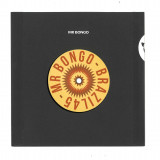
Repress!
You know it's going to be a heavy record when DJ / collector Mr Thing asks you to keep a look out for a copy on your next digging trip to Brazil. Add on top of that, being sampled by Madlib on the track 'Curls’ on his Madvillain album!
Taken from Waldir Calmon's 'Waldir Calmon E Seus Multisons' album on Copacabana (1970), from looking at this unassuming record cover featuring a middle-aged man sporting an impressive pair of glasses you wouldn't expect it to become the fabric to one of the songs from the iconic 'Madvillain’ album. But… like many things in life, you shouldn’t judge a book by its cover. 'Airport Love Theme’, like its name suggests, falls into full-on lounge territory. It’s feel-good music made to be the soundtrack for a utopian world that never really was. Yet behind the silky-smooth groove is an addictive earworm waiting to be heard.
'Afro Son' taken from the same album, pushes things in a different direction towards a sound that is more firmly rooted in the Brazilian tradition. This quirky 60's-breakbeat-funk groove is reminiscent of French artist Jean Jacques Perrey's 'E.V.A.', also from 1970, in its melody and backbeat, where the Moog synthesizer of Perrey is replaced with a more orchestrated sound by Calmon. This track is magical, cinematic and breakbeat-laden with a hidden unknown exoticism.
Waldir Calmon had an active career in music working from the '50s right up until his passing in 1982. His career started early, forming his first ensemble at the age of fourteen, originally working in bands in nightclubs and writing jingles. He progressed in the early '50s to a long-running career working in television. In addition to his television work, he had success with his recording vocation, mixing in the same musical circles as greats such as Tom Jobi, João Gilberto and Doris Monteiro.
• Next installment in BRAZIL 45 Series.
• Sampled by Madlib on the track ‘Curls’ from his ‘Madvillain’ album.
• Quirky, cinematic, breakbeat-laden exoticism.
Bestelle jetzt und wir bestellen den Artikel für dich beim Lieferanten.

Kevin Godley and Lol Creme worked together for several decades, were part of many different bands and wrote hit after hit. Two highly successful multi-instrumentalists, singers and producers who became world renowned video producers as well. Godley & Creme's Collected album features inventive, eclectic music blending pop, rock, and art influences, showcasing their unique, avant-garde style. This 2LP features the duo's biggest hits, including ""An Englishman In New York"", ""Freeze Frame"", the top hit ""Cry"" (which showcased their amazing video), ""Wide Boy"", and ""A Little Peace Of Heaven"" among others. The 2LP Godley & Crème Collected is housed in a gatefold sleeve with liner notes.
erscheint voraussichtlich am 06.09.2024

At the muddy miracle that was Woodstock, the most miraculous performance just might have been Jefferson Airplane’s. The band had been one of the first to sign on for the festival, their imprimatur prompting many other acts to hop on board, and their stature had landed them a coveted headlining slot closing Saturday night’s schedule. But, as the torrential downpours and the unexpected crush of half a million people kept on delaying their set, the chances of putting on anything approaching a quality performance seemed to diminish.
According to Paul Kantner, “We were supposed to go on at 10:30 at night and we’d been up and down about four or five times on acid that night, getting ready to go on, and then everything was delayed for whatever reasons. So, we didn’t get on until like 7:00 the next morning and everybody was pretty much burned out.” Kantner’s protestations to the contrary, the Airplane (with guest pianist Nicky Hopkins in tow) played a scorching two-hour set that defied the elements and the circumstances. Grace Slick led the charge as the band plunged into a frenetic version of Fred Neil’s “The Other Side of This Life”: “Alright, friends, you have seen the heavy groups. Now you will see morning maniac music. Believe me, yeah. It’s a new dawn!” What followed was an adventuresome (and surprisingly tight) set that not only featured the band’s big hits like “White Rabbit” and “Somebody to Love” but also premiered songs from the Volunteers album that was still three months away from being released, including a 21-minute version of “Wooden Ships!” Indeed, about the only members of the crew who weren’t up to snuff were the ones filming the concert documentary, which explains why the Airplane is not one of the acts that commonly come to mind when thinking about Woodstock; they didn’t appear in the film due to subpar footage, and only one of their songs (“Volunteers”) was included the chart-topping 3-LP Woodstock release.
Now, Real Gone Music is proud to present Jefferson Airplane’s complete Woodstock performance. The 3-LP set comes inside a gorgeous, double-gatefold jacket sporting photos of the band at Woodstock, most of them taken by the legendary Henry Diltz; liner notes by folk-rock guru Richie Unterberger complete the package. Pressed in iridescent, “clouds breaking” blue for its 55th anniversary, this release makes a convincing claim that Jefferson Airplane’s Woodstock performance ranks right up there with those of Jimi, Sly, and Santana as a festival highlight. Limited to 1000 copies!
erscheint voraussichtlich am 09.08.2024

Alex Andrikopolous AKA Lex (Athens) released his brilliant debut album Waving in 2022 on Leng and he now returns with an EP combining fine remixes of tracks from Waving alongside two new previously unheard cuts.
The remixes are undeniably special. Fittingly, the EP begins with the first of these, a sensationally sun-soaked revision of one of Andrikopolous’s most Balearic moments – previous single ‘Punta Allen’ – by former Nuphonic fusionists and FAR label founders Faze Action. The Lee brothers’ take is one of those sunset-friendly workouts that wraps glistening guitar licks, steel pan style motifs, Lex’s gorgeous lead lines, hazy electric piano solos and life-affirming keyboard riffs around rolling nu-disco beats and a new rubbery bassline courtesy of Robin Lee himself. It has the feel of a pool-side anthem in the making.
Just as potent is the typically quirky and hard-to-pigeonhole revision of ‘Prezend’ by Manchester maverick Ruf Dug. Here he offers up a genuinely revolutionary rework, re-imaging the track as a sparse-but-colourful fusion of vintage acid house bass, saucer-eyed piano riffs, dubbed-out synth sounds, jacking lo-fi drum machine beats and squelchy TB-303 tweaks. While fresh and undeniably contemporary, the remix has an alluringly nostalgic, retro-futurist vibe.
Clustered around these two top-notch revisions is a pair of previously unreleased Lex originals. He joins forces with regular collaborator Locke once more on ‘Libre De Amor’, an infectious chunk of, low-slung dub disco marked out by weighty bass, jammed-out electric piano motifs, spacey pads, intergalactic effects and mazy synth solos. Dotted with additional percussion hits and echoing female vocal snippets, it’s one of the pair’s most potent dancefloor workouts of recent times.
To round off a rock-solid EP, the Athens-based veteran blurs the boundaries between stripped-back, late-80s house nostalgia and nu-disco. ‘Super Awake’ boasts cowbell-sporting Chicago house beats and acid house inspired bass, on to which he’s layered all manner of colourful synth sounds, jangly piano stabs and spacey electronics. Throw in some typically immersive chords and progressively more psychedelic TB-303 motifs, and you have a genuinely triumphant conclusion to a formidably floor-focused EP.
Bestelle jetzt und wir bestellen den Artikel für dich beim Lieferanten.

Two years after his debut album under the moniker Aboukir, Ralph Maruani returns with a new record titled “Change”. Fitting title for a record that was written and recorded during a period of great turmoil in his life. The intimacy of these songs are reflected in the music itself.
Whereas “Digital Introversion” was floating in a sea of psychedelic infused echoes and reverb, “Change” is much more stripped down, sporting a singer-songwriter ethos. The album was recorded between December 2022 and March 2023 in Paris, France almost entirely by Maruani except for the drums which were recorded by Louis McGuire in Berlin, Germany and pedal steel by Reggie Duncan in Mississippi, USA.
The album opener “Alright” is an upbeat number with guitars reminiscent of John Fogerty’s Creedence Clearwater Revival, Strawberry Fields inspired Mellotron and Stereolab aesthetic on the outro, assuring that whatever may come next, everything will be alright. Then followed by “Release” the track that makes a direct link with “Digital introversion”, an 8 minutes Floydesque hazy jam. “Rolling on” shows a different side to Aboukir’s music as it opens up to folk/country accents in a 1970s singer-songwriter vibe. “Croz” is Maruani’s immediate reaction to David Crosby’s passing. A tribute to one of his lifelong influence and inspiration.
The album then unveils itself going back and forth between more stripped down tunes and psychedelic ones, eventually reaching its climax with “Changes”.
erscheint voraussichtlich am 01.12.2023

On his debut 12" EP, Chicago producer and bike messenger DJ HANK captures the feeling of racing against traffic and, as he puts it, "trying to make it out alive with the chaos of the city going around you."
DJ Hank grew up in North Carolina, Eastern USA. As a teenager, he began making rap beats on pirated music software while also DJing and playing keyboards in experimental punk band Whatever Brains. In 2011, at age 18, Hank moved to Chicago to pursue a career as a bike messenger. In a city dominated by 21+ clubs and venues, Hank gravitated to the famous footwork hub Battlegroundz due to it's all-ages inclusivity and raw energy. DJ Rashad, DJ Spinn and other luminary figures of the footwork community spun weekly, while dancers spanning multiple generations and crews battled it out on the dance floor every Sunday.
Through the underground network of Chicago footwork events, Hank became a close and frequent collaborator with international footwork collective Teklife. He has released music on Teklife's record label but isn't a member of the group itself. In similar fashion, he's loosely affiliated with dance group Take Ova Gang (TOG) founded by DJ Manny. Hank maintains a fluid relationship with the footwork culture from which his sound draws. Beyond collaborating with his friends, Hank has collaborated with Chilean rapper Catana, Berlin-based DJ Paypal, and Floridian DJ Orange Julius.
On "Traffic Control," however, Hank explores a wide range of sounds, from melodic to experimental, influenced by everything from UK Garage and Grime to Ghetto House and Snap music (or Southern Hip hop production in general). Artists like Kode9, MachineDrum, and Sherelle have been supporters of Hank's music, playing his tracks throughout multiple recorded sets. In a live setting, Hank has shared the stage with such influential acts as Loefah, DJ Deeon, Sporting Life, DJ Spinn, Traxman, and pioneering footwork artist Jana Rush, who has been both a friend and mentor to Hank during his formative years in Chicago.
Bestelle jetzt und wir bestellen den Artikel für dich beim Lieferanten.

Welcome to the world of Edward Blankman, a retired dentist who wrote elegant, minimalist jazz in obscurity circa 1970. At least that's the story. In truth, Edward Blankman's Cape Cod Cottage is the 2021 concept album from Echo Park composer Brendan Eder. A tender, wistful follow up to 2020's To Mix With Time, the Cape Cod Cottage sound evokes the spirit of Erik Satie, Miles Davis with Gil Evans, and Stevie Wonder, balanced with the accessibility of 1960s lounge-exotica. Eder created Blankman's story to channel his own grief, with bittersweet tenderness. Read the liner notes (or watch the mini-doc), and you'll be transported to the quiet shores of Cape Cod in the early 70s, where a lonely retiree mourns his late wife, Natalie, with walks in nature and evenings at his Wurlitzer. The story is brought to life with a meticulously crafted package sporting classic liner notes, faux 1970s photographs documenting Edward with the musicians (taken during the actual session), a make-believe jazz label, and a commissioned oil painting of Edward's cottage. Eder brought together a dream line up with a ton of chemistry for the project; drummer Christian Euman (Jacob Collier), saxophonist Josh Johnson (Jeff Parker, Leon Bridges), and bassist Alex Boneham (Billy Childs), who all studied together at the Hancock Institute of Jazz. Rounding out the group is flutist Sarah Robinson, a recurring player in Eder's ensemble, and Edward Blankman (Brendan) on the Wurlitzer. The cast was booked for a single date with coveted engineer Michael Harris (Kamasi Washington, Angel Olsen) at famed Electro-Vox Recording Studios. To create realism for Edward's story, the charts were purposefully withheld from the musicians until they arrived at the studio. The result is an authentic and natural performance delivered by players at the top of their game, captured on lauded vintage equipment including the legendary Neve-8028 console. This was, hands down, one of the very best records of last year so don't miss out on this extremely limited pressing for UK and Europe. Under license from Jazz Dad Records.
erscheint voraussichtlich am 04.11.2022

Eight years after their first collaboration, ‘The Compass Joint’, slipped out as an ultra-limited white label, Charlie Soul Clap and Tom Trago have reunited to bring us a similarly warming, sun-splashed sequel, ‘The Compass Jawn’.
Like its predecessor – a now near-mythical 12-minute epic recorded late one night in Tom’s former squat-turned-studio close to legendary Amsterdam venue Trouw, and subsequently championed by DJ Harvey – ‘The Compass Jawn’ was inspired by the pair’s mutual love of both Caribbean keyboardist and FM synthesis enthusiast Wally Badarou, and the 1980s output of Chris Blackwell’s legendary Compass Point studio in Nassau, the Bahamas.
As sequels go, ‘The Compass Jawn’ is a bit of a belter. During the recording in 2019, Tom and Charlie sought to subtly evolve the original’s memorable lead line, reaching the for Yamaha DX7’s percussion patch – something utilized many times by Badarou during the 1980s.
The resultant ‘Studio Version’ is, if anything, even more emotive and uplifting than its predecessor. Underpinned by a shuffling rhythm pattern, the track ebbs and flows brilliantly, with jaunty synth stabs, undulating melodies and sparkling keyboard riffs ushering in held-note chords and a gorgeously rushing, ever-rising lead line. Throw in some starry pads and sunset-ready synth motifs, and you have another gorgeous, life-affirming treat.
‘The Compass Jawn’ comes backed with two top-notch alternative mixes. First up is an ambient ‘Dub’ mix from Trago that strips back the beats and instead focuses on the track’s many key melodic elements. Pushed forwards by drum machine handclaps, it’s a bubbly, sun-bright revision full to bursting with twinkling electronic motifs, jammed-out motifs, hands-aloft riffs and a bleeping take on the fluid and kaleidoscopic lead line.
Rounding off the package is the duo’s original demo mix – a raw, tough, and slightly more sub-heavy affair that’s notably more percussive and sweat-soaked whilst still sporting the key lead lines and FM synth sounds that make the studio version such a memorable and mood-enhancing affair.
Bestelle jetzt und wir bestellen den Artikel für dich beim Lieferanten.

As the sun sets on a quaint East Nashville house, a young man bares a piece of his soul. Facing the camera, sporting a silky suit jacket/shirt/slacks/fingerless gloves ensemble that announces "singer" before he's even opened his mouth, Lee Tracy Johnson settles onto his stage, the front yard. He sways to the dirge-like drum machine pulse of a synth-soaked slow jam, extends his arms as if gaining his balance, and croons in affecting, fragile earnest, "I need your love… oh baby…"
Dogs in the yard next door begin barking. A mysterious cardboard robot figure, beamed in from galaxies unknown and affixed to a tree, is less vocal. Lee doesn't acknowledge either's presence. He's busy feeling it, arms and hands gesticulating. His voice rises in falsetto over the now-quiet dogs, over the ambient noise from the street that seeps into the handheld camcorder's microphone, over the recording of his own voice played back from a boombox off-camera. After six minutes the single, continuous shot ends. In this intimate creative universe there are no re-takes. There are many more music videos to shoot, and as Lee later puts it, "The first time you do it is actually the best. Because you can never get that again. You expressing yourself from within."
"I Need Your Love" dates from a lost heyday. From some time in the '80s or early '90s, when Lee Tracy (as he was known in performance) and his music partner/producer/manager Isaac Manning committed hours upon hours of their sonic and visual ideas to tape. Embracing drum machines and synthesizers – electronics that made their personal futurism palpable – they recorded exclusively at home, live in a room into a simple cassette deck. Soul, funk, electro and new wave informed their songs, yet Lee and Isaac eschewed the confinement of conventional categories and genres, preferring to let experimentation guide them.
"Anytime somebody put out a new record they had the same instruments or the same sound," explains Isaac. "So I basically wanted to find something that's really gonna stand out away from all of the rest of 'em." Their ethos meant that every idea they came up with was at least worth trying: echoed out half-rapped exhortations over frantic techno-style beats, gospel synth soul, modal electro-funk, oddball pop reinterpretations, emo AOR balladry, nods to Prince and the Fat Boys, or arrangements that might collapse mid-song into a mess of arcade game-ish blips before rallying to reach the finish line. All of it conjoined by consistent tape hiss, and most vitally, Lee's chameleonic voice, which managed to wildly shape shift and still evoke something sincere – whether toggling between falsetto and tenor exalting Jesus's return, or punctuating a melismatic romantic adlib with a succinct, "We all know how it feels to be alone."
"People think we went to a studio," says Isaac derisively. "We never went to no studio. We didn't have the money to go to no studio! We did this stuff at home. I shot videos in my front yard with whatever we could to get things together." Sometimes Isaac would just put on an instrumental record, be it "Planet Rock" or "Don't Cry For Me Argentina" (from Evita), press "record," and let Lee improvise over it, yielding peculiar love songs, would-be patriotic anthems, or Elvis Presley or Marilyn Monroe tributes. Technical limitations and a lack of professional polish never dissuaded them. They believed they were onto something.
"That struggle," Isaac says, "made that sound sound good to me."
In the parlance of modern music criticism Lee and Isaac's dizzying DIY efforts would inevitably be described as "outsider." But "outsider" carries the burden of untold additional layers of meaning if you're Black and from the South, creating on a budget, and trying to get someone, anyone within the country music capital of the world to take your vision seriously. "What category should we put it in?" Isaac asks rhetorically. "I don't know. All I know is feeling. I ain't gonna name it nothing. It's music. If it grabs your soul and touch your heart that's what it basically is supposed to do."
=
Born in 1963, the baby boy of nine siblings, Lee Tracy spent his earliest years living amidst the shotgun houses on Nashville's south side. "We was poor, man!" he says, recalling the outhouse his family used for a bathroom and the blocks of ice they kept in the kitchen to chill perishables. "But I actually don't think I really realized I was in poverty until I got grown and started thinking about it." Lee's mom worked at the Holiday Inn; his dad did whatever he had to do, from selling fruit from a horse drawn cart to bootlegging. "We didn't have much," Lee continues, "but my mother and my father got us the things we needed, the clothes on our back." By the end of the decade with the city's urban renewal programs razing entire neighborhoods to accommodate construction of the Interstate, the family moved to Edgehill Projects. Lee remembers music and art as a constant source of inspiration for he and his brothers and sisters – especially after seeing the Jackson 5 perform on Ed Sullivan. "As a small child I just knew that was what I wanted to do."
His older brother Don began musically mentoring him, introducing Lee to a variety of instruments and sounds. "He would never play one particular type of music, like R&B," says Lee. "I was surrounded by jazz, hard rock and roll, easy listening, gospel, reggae, country music; I mean I was a sponge absorbing all of that." Lee taught himself to play drums by beating on cardboard boxes, gaining a rep around the way for his timekeeping, and his singing voice. Emulating his favorites, Earth Wind & Fire and Cameo, he formed groups with other kids with era-evocative band names like Concept and TNT Connection, and emerged as the leader of disciplined rehearsals. "I made them practice," says Lee. "We practiced and practiced and practiced. Because I wanted that perfection." By high school the most accomplished of these bands would take top prize in a prominent local talent show. It was a big moment for Lee, and he felt ready to take things to the next level. But his band-mates had other ideas.
"I don't know what happened," he says, still miffed at the memory. "It must have blew they mind after we won and people started showing notice, because it's like everybody quit! I was like, where the hell did everybody go?" Lee had always made a point of interrogating prospective musicians about their intentions before joining his groups: were they really serious or just looking for a way to pick up girls? Now he understood even more the importance of finding a collaborator just as committed to the music as he was.
=
Isaac Manning had spent much of his life immersed in music and the arts – singing in the church choir with his family on Nashville's north side, writing, painting, dancing, and working various gigs within the entertainment industry. After serving in the armed forces, in the early '70s he ran The Teenage Place, a music and performance venue that catered to the local youth. But he was forced out of town when word of one of his recreational routines created a stir beyond the safe haven of his bohemian circles.
"I was growing marijuana," Isaac explains. "It wasn't no business, I was smoking it myself… I would put marijuana in scrambled eggs, cornbread and stuff." His weed use originated as a form of self-medication to combat severe tooth pain. But when he began sharing it with some of the other young people he hung out with, some of who just so happened to be the kids of Nashville politicians, the cops came calling. "When I got busted," he remembers, "they were talking about how they were gonna get rid of me because they didn't want me saying nothing about they children because of the politics and stuff. So I got my family, took two raggedy cars, and left Nashville and went to Vegas."
Out in the desert, Isaac happened to meet Chubby Checker of "The Twist" fame while the singer was gigging at The Flamingo. Impressed by Isaac's zeal, Checker invited him to go on the road with him as his tour manager/roadie/valet. The experience gave Isaac a window into a part of the entertainment world he'd never encountered – a glimpse of what a true pop act's audience looked like. "Chubby Checker, none of his shows were played for Black folks," he remembers. "All his gigs were done at high-class white people areas." Returning home after a few years with Chubby, Isaac was properly motivated to make it in Music City. He began writing songs and scouting around Nashville for local talent anywhere he could find it with an expressed goal: "Find someone who can deliver your songs the way you want 'em delivered and make people feel what you want them to feel."
One day while walking through Edgehill Projects Isaac heard someone playing the drums in a way that made him stop and take notice. "The music was so tight, just the drums made me feel like, oh I'm-a find this person," he recalls. "So I circled through the projects until I found who it was.
"That's how I met him – Lee Tracy. When I found him and he started singing and stuff, I said, ohhh, this is somebody different."
=
Theirs was a true complementary partnership: young Lee possessed the raw talent, the older Isaac the belief. "He's really the only one besides my brother and my family that really seen the potential in me," says Lee. "He made me see that I could do it."
Isaac long being a night owl, his house also made for a fertile collaborative environment – a space where there always seemed to be a new piece of his visual art on display: paintings, illustrations, and dolls and figures (including an enigmatic cardboard robot). Lee and Issac would hang out together and talk, listen to music, conjure ideas, and smoke the herb Isaac had resumed growing in his yard. "It got to where I could trust him, he could trust me," Isaac says of their bond. They also worked together for hours on drawings, spreading larges rolls of paper on the walls and sketching faces with abstract patterns and imagery: alien-like beings, tri-horned horse heads, inverted Janus-like characters where one visage blurred into the other.
Soon it became apparent that they didn't need other collaborators; self-sufficiency was the natural way forward. At Isaac's behest Lee, already fed up with dealing with band musicians, began playing around with a poly-sonic Yamaha keyboard at the local music store. "It had everything on it – trumpet, bass, drums, organ," remembers Lee. "And that's when I started recording my own stuff."
The technology afforded Lee the flexibility and independence he craved, setting him on a path other bedroom musicians and producers around the world were simultaneously following through the '80s into the early '90s. Saving up money from day jobs, he eventually supplemented the Yamaha Isaac had gotten him with Roland and Casio drum machines and a Moog. Lee was living in an apartment in Hillside at that point caring for his dad, who'd been partially paralyzed since early in life. In the evenings up in his second floor room, the music put him in a zone where he could tune out everything and lose himself in his ideas.
"Oh I loved it," he recalls. "I would really experiment with the instruments and use a lot of different sound effects. I was looking for something nobody else had. I wanted something totally different. And once I found the sound I was looking for, I would just smoke me a good joint and just let it go, hit the record button." More potent a creative stimulant than even Isaac's weed was the holistic flow and spontaneity of recording. Between sessions at Isaac's place and Lee's apartment, their volume of output quickly ballooned.
"We was always recording," says Lee. "That's why we have so much music. Even when I went to Isaac's and we start creating, I get home, my mind is racing, I gotta start creating, creating, creating. I remember there were times when I took a 90-minute tape from front to back and just filled it up."
"We never practiced," says Isaac. "See, that was just so odd about the whole thing. I could relate to him, and tell him about the songs I had ideas for and everything and stuff. And then he would bring it back or whatever, and we'd get together and put it down." Once the taskmaster hell bent on rehearsing, Lee had flipped a full 180. Perfection was no longer an aspiration, but the enemy of inspiration.
"I seen where practicing and practicing got me," says Lee. "A lot of musicians you get to playing and they gotta stop, they have to analyze the music. But while you analyzing you losing a lot of the greatness of what you creating. Stop analyzing what you play, just play! And it'll all take shape."
=
"I hope you understood the beginning of the record because this was invented from a dream I had today… (You tell me, I'll tell you, we'll figure it out together)" – Lee Tracy and Isaac Manning, "Hope You Understand"
Lee lets loose a maniacal cackle when he acknowledges that the material that he and Isaac recorded was by anyone's estimation pretty out there. It's the same laugh that commences "Hope You Understand" – a chaotic transmission that encapsulates the duality at the heart of their music: a stated desire to reach people and a compulsion to go as leftfield as they saw fit.
"We just did it," says Lee. "We cut the music on and cut loose. I don't sit around and write. I do it by listening, get a feeling, play the music, and the lyrics and stuff just come out of me."
The approach proved adaptable to interpreting other artists' material. While recording a cover of Whitney Houston's pop ballad "Saving All My Love For You," Lee played Whitney's version in his headphones as he laid down his own vocals – partially following the lyrics, partially using them as a departure point. The end result is barely recognizable compared with the original, Lee and Isaac having switched up the time signature and reinvented the melody along the way towards morphing a slick mainstream radio standard into something that sounds solely their own.
"I really used that song to get me started," says Lee. "Then I said, well I need something else, something is missing. Something just came over me. That's when I came up with 'Is It What You Want.'"
The song would become the centerpiece of Lee and Isaac's repertoire. Pushed along by a percolating metronomic Rhythm King style beat somewhere between a military march and a samba, "Is It What You Want" finds Lee pleading the sincerity of his commitment to a potential love interest embellished by vocal tics and hiccups subtlely reminiscent of his childhood hero MJ. Absent chord changes, only synth riffs gliding in and out like apparitions, the song achieves a lingering lo-fi power that leaves you feeling like it's still playing, somewhere, even after the fade out.
"I don't know, it's like a real spiritual song," Lee reflects. "But it's not just spiritual. To me the more I listen to it it's like about everything that you do in your everyday life, period. Is it what you want? Do you want a car or you don't want a car? Do you want Jesus or do you want the Devil? It's basically asking you the question. Can't nobody answer the question but you yourself."
In 1989 Lee won a lawsuit stemming from injuries sustained from a fight he'd gotten into. He took part of the settlement money and with Isaac pressed up "Saving All My Love For You" b/w "Is It What You Want" as a 45 single. Isaac christened the label One Chance Records. "Because that's all we wanted," he says with a laugh, "one chance."
Isaac sent the record out to radio stations and major labels, hoping for it to make enough noise to get picked up nationally. But the response he and Lee were hoping for never materialized. According to Isaac the closest the single got to getting played on the radio is when a disk jock from a local station made a highly unusual announcement on air: "The dude said on the radio, 107.5 – 'We are not gonna play 'Is It What You Want.' We cracked up! Wow, that's deep.
"It was a whole racist thing that was going on," he reflects. "So we just looked over and kept on going. That was it. That was about the way it goes… If you were Black and you were living in Nashville and stuff, that's the way you got treated." Isaac already knew as much from all the times he'd brought he and Lee's tapes (even their cache of country music tunes) over to Music Row to try to drum up interest to no avail.
"Isaac, he really worked his ass off," says Lee. "He probably been to every record place down on Music Row." Nashville's famed recording and music business corridor wasn't but a few blocks from where Lee grew up. Close enough, he remembers, for him to ride his bike along its back alleys and stumble upon the occasional random treasure, like a discarded box of harmonicas. Getting in through the front door, however, still felt a world away.
"I just don't think at the time our music fell into a category for them," he concedes. "It was before its time."
=
Lee stopped making music some time in the latter part of the '90s, around the time his mom passed away and life became increasingly tough to manage. "When my mother died I had a nervous breakdown," he says, "So I shut down for a long time. I was in such a sadness frame of mind. That's why nobody seen me. I had just disappeared off the map." He fell out of touch with Isaac, and in an indication of just how bad things had gotten for him, lost track of all the recordings they'd made together. Music became a distant memory.
Fortunately, Isaac kept the faith. In a self-published collection of his poetry – paeans to some of his favorite entertainment and public figures entitled Friends and Dick Clark – he'd written that he believed "music has a life of its own." But his prescience and presence of mind were truly manifested in the fact that he kept an archive of he and Lee's work. As perfectly imperfect as "Is It What You Want" now sounds in a post-Personal Space world, Lee and Isaac's lone official release was in fact just a taste. The bulk of the Is It What You Want album is culled from the pair's essentially unheard home recordings – complete songs, half-realized experiments, Isaac's blue monologues and pronouncements et al – compiled, mixed and programmed in the loose and impulsive creative spirit of their regular get-togethers from decades ago. The rest of us, it seems, may have finally caught up to them.
On the prospect of at long last reaching a wider audience, Isaac says simply, "I been trying for a long time, it feels good." Ever the survivor, he adds, "The only way I know how to make it to the top is to keep climbing. If one leg break on the ladder, hey, you gotta fix it and keep on going… That's where I be at. I'll kill death to make it out there."
For Lee it all feels akin to a personal resurrection: "It's like I was in a tomb and the tomb was opened and I'm back… Man, it feels so great. I feel like I'm gonna jump out of my skin." Success at this stage of his life, he realizes, probably means something different than what it did back when he was singing and dancing in Isaac's front yard. "What I really mean by 'making it,'" he explains isn't just the music being heard but, "the story being told."
Occasionally Lee will pull up "Is It What You Want" on YouTube on his phone, put on his headphones, and listen. He remembers the first time he heard his recorded voice. How surreal it was, how he thought to himself, "Is that really me?" What would he say to that younger version of himself now?
"I would probably tell myself, hang in there, don't give up. Keep striving for the goal. And everything will work out."
Despite what's printed on the record label, sometimes you do get more than one chance.
Bestelle jetzt und wir bestellen den Artikel für dich beim Lieferanten.

As the sun sets on a quaint East Nashville house, a young man bares a piece of his soul. Facing the camera, sporting a silky suit jacket/shirt/slacks/fingerless gloves ensemble that announces "singer" before he's even opened his mouth, Lee Tracy Johnson settles onto his stage, the front yard. He sways to the dirge-like drum machine pulse of a synth-soaked slow jam, extends his arms as if gaining his balance, and croons in affecting, fragile earnest, "I need your love… oh baby…"
Dogs in the yard next door begin barking. A mysterious cardboard robot figure, beamed in from galaxies unknown and affixed to a tree, is less vocal. Lee doesn't acknowledge either's presence. He's busy feeling it, arms and hands gesticulating. His voice rises in falsetto over the now-quiet dogs, over the ambient noise from the street that seeps into the handheld camcorder's microphone, over the recording of his own voice played back from a boombox off-camera. After six minutes the single, continuous shot ends. In this intimate creative universe there are no re-takes. There are many more music videos to shoot, and as Lee later puts it, "The first time you do it is actually the best. Because you can never get that again. You expressing yourself from within."
"I Need Your Love" dates from a lost heyday. From some time in the '80s or early '90s, when Lee Tracy (as he was known in performance) and his music partner/producer/manager Isaac Manning committed hours upon hours of their sonic and visual ideas to tape. Embracing drum machines and synthesizers – electronics that made their personal futurism palpable – they recorded exclusively at home, live in a room into a simple cassette deck. Soul, funk, electro and new wave informed their songs, yet Lee and Isaac eschewed the confinement of conventional categories and genres, preferring to let experimentation guide them.
"Anytime somebody put out a new record they had the same instruments or the same sound," explains Isaac. "So I basically wanted to find something that's really gonna stand out away from all of the rest of 'em." Their ethos meant that every idea they came up with was at least worth trying: echoed out half-rapped exhortations over frantic techno-style beats, gospel synth soul, modal electro-funk, oddball pop reinterpretations, emo AOR balladry, nods to Prince and the Fat Boys, or arrangements that might collapse mid-song into a mess of arcade game-ish blips before rallying to reach the finish line. All of it conjoined by consistent tape hiss, and most vitally, Lee's chameleonic voice, which managed to wildly shape shift and still evoke something sincere – whether toggling between falsetto and tenor exalting Jesus's return, or punctuating a melismatic romantic adlib with a succinct, "We all know how it feels to be alone."
"People think we went to a studio," says Isaac derisively. "We never went to no studio. We didn't have the money to go to no studio! We did this stuff at home. I shot videos in my front yard with whatever we could to get things together." Sometimes Isaac would just put on an instrumental record, be it "Planet Rock" or "Don't Cry For Me Argentina" (from Evita), press "record," and let Lee improvise over it, yielding peculiar love songs, would-be patriotic anthems, or Elvis Presley or Marilyn Monroe tributes. Technical limitations and a lack of professional polish never dissuaded them. They believed they were onto something.
"That struggle," Isaac says, "made that sound sound good to me."
In the parlance of modern music criticism Lee and Isaac's dizzying DIY efforts would inevitably be described as "outsider." But "outsider" carries the burden of untold additional layers of meaning if you're Black and from the South, creating on a budget, and trying to get someone, anyone within the country music capital of the world to take your vision seriously. "What category should we put it in?" Isaac asks rhetorically. "I don't know. All I know is feeling. I ain't gonna name it nothing. It's music. If it grabs your soul and touch your heart that's what it basically is supposed to do."
=
Born in 1963, the baby boy of nine siblings, Lee Tracy spent his earliest years living amidst the shotgun houses on Nashville's south side. "We was poor, man!" he says, recalling the outhouse his family used for a bathroom and the blocks of ice they kept in the kitchen to chill perishables. "But I actually don't think I really realized I was in poverty until I got grown and started thinking about it." Lee's mom worked at the Holiday Inn; his dad did whatever he had to do, from selling fruit from a horse drawn cart to bootlegging. "We didn't have much," Lee continues, "but my mother and my father got us the things we needed, the clothes on our back." By the end of the decade with the city's urban renewal programs razing entire neighborhoods to accommodate construction of the Interstate, the family moved to Edgehill Projects. Lee remembers music and art as a constant source of inspiration for he and his brothers and sisters – especially after seeing the Jackson 5 perform on Ed Sullivan. "As a small child I just knew that was what I wanted to do."
His older brother Don began musically mentoring him, introducing Lee to a variety of instruments and sounds. "He would never play one particular type of music, like R&B," says Lee. "I was surrounded by jazz, hard rock and roll, easy listening, gospel, reggae, country music; I mean I was a sponge absorbing all of that." Lee taught himself to play drums by beating on cardboard boxes, gaining a rep around the way for his timekeeping, and his singing voice. Emulating his favorites, Earth Wind & Fire and Cameo, he formed groups with other kids with era-evocative band names like Concept and TNT Connection, and emerged as the leader of disciplined rehearsals. "I made them practice," says Lee. "We practiced and practiced and practiced. Because I wanted that perfection." By high school the most accomplished of these bands would take top prize in a prominent local talent show. It was a big moment for Lee, and he felt ready to take things to the next level. But his band-mates had other ideas.
"I don't know what happened," he says, still miffed at the memory. "It must have blew they mind after we won and people started showing notice, because it's like everybody quit! I was like, where the hell did everybody go?" Lee had always made a point of interrogating prospective musicians about their intentions before joining his groups: were they really serious or just looking for a way to pick up girls? Now he understood even more the importance of finding a collaborator just as committed to the music as he was.
=
Isaac Manning had spent much of his life immersed in music and the arts – singing in the church choir with his family on Nashville's north side, writing, painting, dancing, and working various gigs within the entertainment industry. After serving in the armed forces, in the early '70s he ran The Teenage Place, a music and performance venue that catered to the local youth. But he was forced out of town when word of one of his recreational routines created a stir beyond the safe haven of his bohemian circles.
"I was growing marijuana," Isaac explains. "It wasn't no business, I was smoking it myself… I would put marijuana in scrambled eggs, cornbread and stuff." His weed use originated as a form of self-medication to combat severe tooth pain. But when he began sharing it with some of the other young people he hung out with, some of who just so happened to be the kids of Nashville politicians, the cops came calling. "When I got busted," he remembers, "they were talking about how they were gonna get rid of me because they didn't want me saying nothing about they children because of the politics and stuff. So I got my family, took two raggedy cars, and left Nashville and went to Vegas."
Out in the desert, Isaac happened to meet Chubby Checker of "The Twist" fame while the singer was gigging at The Flamingo. Impressed by Isaac's zeal, Checker invited him to go on the road with him as his tour manager/roadie/valet. The experience gave Isaac a window into a part of the entertainment world he'd never encountered – a glimpse of what a true pop act's audience looked like. "Chubby Checker, none of his shows were played for Black folks," he remembers. "All his gigs were done at high-class white people areas." Returning home after a few years with Chubby, Isaac was properly motivated to make it in Music City. He began writing songs and scouting around Nashville for local talent anywhere he could find it with an expressed goal: "Find someone who can deliver your songs the way you want 'em delivered and make people feel what you want them to feel."
One day while walking through Edgehill Projects Isaac heard someone playing the drums in a way that made him stop and take notice. "The music was so tight, just the drums made me feel like, oh I'm-a find this person," he recalls. "So I circled through the projects until I found who it was.
"That's how I met him – Lee Tracy. When I found him and he started singing and stuff, I said, ohhh, this is somebody different."
=
Theirs was a true complementary partnership: young Lee possessed the raw talent, the older Isaac the belief. "He's really the only one besides my brother and my family that really seen the potential in me," says Lee. "He made me see that I could do it."
Isaac long being a night owl, his house also made for a fertile collaborative environment – a space where there always seemed to be a new piece of his visual art on display: paintings, illustrations, and dolls and figures (including an enigmatic cardboard robot). Lee and Issac would hang out together and talk, listen to music, conjure ideas, and smoke the herb Isaac had resumed growing in his yard. "It got to where I could trust him, he could trust me," Isaac says of their bond. They also worked together for hours on drawings, spreading larges rolls of paper on the walls and sketching faces with abstract patterns and imagery: alien-like beings, tri-horned horse heads, inverted Janus-like characters where one visage blurred into the other.
Soon it became apparent that they didn't need other collaborators; self-sufficiency was the natural way forward. At Isaac's behest Lee, already fed up with dealing with band musicians, began playing around with a poly-sonic Yamaha keyboard at the local music store. "It had everything on it – trumpet, bass, drums, organ," remembers Lee. "And that's when I started recording my own stuff."
The technology afforded Lee the flexibility and independence he craved, setting him on a path other bedroom musicians and producers around the world were simultaneously following through the '80s into the early '90s. Saving up money from day jobs, he eventually supplemented the Yamaha Isaac had gotten him with Roland and Casio drum machines and a Moog. Lee was living in an apartment in Hillside at that point caring for his dad, who'd been partially paralyzed since early in life. In the evenings up in his second floor room, the music put him in a zone where he could tune out everything and lose himself in his ideas.
"Oh I loved it," he recalls. "I would really experiment with the instruments and use a lot of different sound effects. I was looking for something nobody else had. I wanted something totally different. And once I found the sound I was looking for, I would just smoke me a good joint and just let it go, hit the record button." More potent a creative stimulant than even Isaac's weed was the holistic flow and spontaneity of recording. Between sessions at Isaac's place and Lee's apartment, their volume of output quickly ballooned.
"We was always recording," says Lee. "That's why we have so much music. Even when I went to Isaac's and we start creating, I get home, my mind is racing, I gotta start creating, creating, creating. I remember there were times when I took a 90-minute tape from front to back and just filled it up."
"We never practiced," says Isaac. "See, that was just so odd about the whole thing. I could relate to him, and tell him about the songs I had ideas for and everything and stuff. And then he would bring it back or whatever, and we'd get together and put it down." Once the taskmaster hell bent on rehearsing, Lee had flipped a full 180. Perfection was no longer an aspiration, but the enemy of inspiration.
"I seen where practicing and practicing got me," says Lee. "A lot of musicians you get to playing and they gotta stop, they have to analyze the music. But while you analyzing you losing a lot of the greatness of what you creating. Stop analyzing what you play, just play! And it'll all take shape."
=
"I hope you understood the beginning of the record because this was invented from a dream I had today… (You tell me, I'll tell you, we'll figure it out together)" – Lee Tracy and Isaac Manning, "Hope You Understand"
Lee lets loose a maniacal cackle when he acknowledges that the material that he and Isaac recorded was by anyone's estimation pretty out there. It's the same laugh that commences "Hope You Understand" – a chaotic transmission that encapsulates the duality at the heart of their music: a stated desire to reach people and a compulsion to go as leftfield as they saw fit.
"We just did it," says Lee. "We cut the music on and cut loose. I don't sit around and write. I do it by listening, get a feeling, play the music, and the lyrics and stuff just come out of me."
The approach proved adaptable to interpreting other artists' material. While recording a cover of Whitney Houston's pop ballad "Saving All My Love For You," Lee played Whitney's version in his headphones as he laid down his own vocals – partially following the lyrics, partially using them as a departure point. The end result is barely recognizable compared with the original, Lee and Isaac having switched up the time signature and reinvented the melody along the way towards morphing a slick mainstream radio standard into something that sounds solely their own.
"I really used that song to get me started," says Lee. "Then I said, well I need something else, something is missing. Something just came over me. That's when I came up with 'Is It What You Want.'"
The song would become the centerpiece of Lee and Isaac's repertoire. Pushed along by a percolating metronomic Rhythm King style beat somewhere between a military march and a samba, "Is It What You Want" finds Lee pleading the sincerity of his commitment to a potential love interest embellished by vocal tics and hiccups subtlely reminiscent of his childhood hero MJ. Absent chord changes, only synth riffs gliding in and out like apparitions, the song achieves a lingering lo-fi power that leaves you feeling like it's still playing, somewhere, even after the fade out.
"I don't know, it's like a real spiritual song," Lee reflects. "But it's not just spiritual. To me the more I listen to it it's like about everything that you do in your everyday life, period. Is it what you want? Do you want a car or you don't want a car? Do you want Jesus or do you want the Devil? It's basically asking you the question. Can't nobody answer the question but you yourself."
In 1989 Lee won a lawsuit stemming from injuries sustained from a fight he'd gotten into. He took part of the settlement money and with Isaac pressed up "Saving All My Love For You" b/w "Is It What You Want" as a 45 single. Isaac christened the label One Chance Records. "Because that's all we wanted," he says with a laugh, "one chance."
Isaac sent the record out to radio stations and major labels, hoping for it to make enough noise to get picked up nationally. But the response he and Lee were hoping for never materialized. According to Isaac the closest the single got to getting played on the radio is when a disk jock from a local station made a highly unusual announcement on air: "The dude said on the radio, 107.5 – 'We are not gonna play 'Is It What You Want.' We cracked up! Wow, that's deep.
"It was a whole racist thing that was going on," he reflects. "So we just looked over and kept on going. That was it. That was about the way it goes… If you were Black and you were living in Nashville and stuff, that's the way you got treated." Isaac already knew as much from all the times he'd brought he and Lee's tapes (even their cache of country music tunes) over to Music Row to try to drum up interest to no avail.
"Isaac, he really worked his ass off," says Lee. "He probably been to every record place down on Music Row." Nashville's famed recording and music business corridor wasn't but a few blocks from where Lee grew up. Close enough, he remembers, for him to ride his bike along its back alleys and stumble upon the occasional random treasure, like a discarded box of harmonicas. Getting in through the front door, however, still felt a world away.
"I just don't think at the time our music fell into a category for them," he concedes. "It was before its time."
=
Lee stopped making music some time in the latter part of the '90s, around the time his mom passed away and life became increasingly tough to manage. "When my mother died I had a nervous breakdown," he says, "So I shut down for a long time. I was in such a sadness frame of mind. That's why nobody seen me. I had just disappeared off the map." He fell out of touch with Isaac, and in an indication of just how bad things had gotten for him, lost track of all the recordings they'd made together. Music became a distant memory.
Fortunately, Isaac kept the faith. In a self-published collection of his poetry – paeans to some of his favorite entertainment and public figures entitled Friends and Dick Clark – he'd written that he believed "music has a life of its own." But his prescience and presence of mind were truly manifested in the fact that he kept an archive of he and Lee's work. As perfectly imperfect as "Is It What You Want" now sounds in a post-Personal Space world, Lee and Isaac's lone official release was in fact just a taste. The bulk of the Is It What You Want album is culled from the pair's essentially unheard home recordings – complete songs, half-realized experiments, Isaac's blue monologues and pronouncements et al – compiled, mixed and programmed in the loose and impulsive creative spirit of their regular get-togethers from decades ago. The rest of us, it seems, may have finally caught up to them.
On the prospect of at long last reaching a wider audience, Isaac says simply, "I been trying for a long time, it feels good." Ever the survivor, he adds, "The only way I know how to make it to the top is to keep climbing. If one leg break on the ladder, hey, you gotta fix it and keep on going… That's where I be at. I'll kill death to make it out there."
For Lee it all feels akin to a personal resurrection: "It's like I was in a tomb and the tomb was opened and I'm back… Man, it feels so great. I feel like I'm gonna jump out of my skin." Success at this stage of his life, he realizes, probably means something different than what it did back when he was singing and dancing in Isaac's front yard. "What I really mean by 'making it,'" he explains isn't just the music being heard but, "the story being told."
Occasionally Lee will pull up "Is It What You Want" on YouTube on his phone, put on his headphones, and listen. He remembers the first time he heard his recorded voice. How surreal it was, how he thought to himself, "Is that really me?" What would he say to that younger version of himself now?
"I would probably tell myself, hang in there, don't give up. Keep striving for the goal. And everything will work out."
Despite what's printed on the record label, sometimes you do get more than one chance.
Bestelle jetzt und wir bestellen den Artikel für dich beim Lieferanten.

Bonander is the shorthand for Ellinor Sterner Bonander. Sporting the role
of musician, arranger and producer, the native Swede is a woman
unchained, injecting darkness into the vein of candied pop with her tropes
of existentialism and feminist revolt.
Following the arc of ‘Backseat’ and ‘Martha’, Bonander’s latest single, ‘Gone
In The Wind’ leads the way for the album with its emotional outpour of lost
sisterhood. Tribal thrashes of drums, pipe organ and soaring vocals combine to
manifest the pain and frustration at the heart of the song.
She says, “The song is about abandonment of a person who’s been like a sister
to you, someone you admire and cherish... The pipe organ and strings are the
most emotional instrumentation I can think of. They represent that suppressed
feeling of anger and frustration, that later in the song is set free.”
The album tells the stories of women both from history and her personal life
whose contributions have previously been overlooked.
“The idea for the album is to create a musical, cinematic and dramatic journey
full of contrast between intimate string sections and huge synth landscapes,
between mechanical rhythms and flowing tempos.
The lyrics will together speak of the identities and emotional life of different
women, both through private and historical perspectives. All of the songs discuss subjects concerning women that ought to be talked about more, but sadly
are not...” // Bonander
erscheint voraussichtlich am 20.08.2021
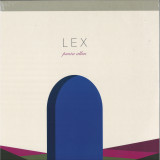
Last autumn Leng Records welcomed a new name to the roster, Greek DJ/producer Lex, via some warming and colourful tracks on the label’s 10th Anniversary LP and sampler EP. Now the Athenian has returned with his first full release for Paul Murphy and Simon Purnell’s popular imprint.
Real name Alex Andrikopoulos, Lex first rose to prominence in his home city of Athens when he ran the Radical Soundz record shop during the first decade of the millennium. More recently his reputation has spread worldwide thanks to his association with Leng, a recent 12” on B2 Recordings and DJ sets that frequently join the dots between disco, house and techno.
His first full EP for Leng is arguably his most musically expansive collection of tracks to date, with a swathe of guest players – keyboardist Artis Boriss and drummer/percussionist Harold Perez most prominently – swinging by to help bring Lex’s vivid musical visions to life.
For proof, check out lead cut ‘Punta Allen’, an eight-minute chunk of organic dancefloor goodness in which Lex and his musical associates layer steel pan style melodies, spacey synthesizer flourishes, eyes-closed electric piano solos, warming chords and jangling guitars atop a heady bass guitar line, unfussy drums and sweaty pots-and-pans percussion. The track’s effortless evolution, which slowly unfurls before rising towards a gorgeous and joyous conclusion, is testament to the Greek producer’s dancefloor instincts.
You’ll find more low-slung, dub disco-influenced bass on the exotic ‘The Jamail Pass’, where mazy and feverish organ solos and rolling hand percussion provide a platform for Paqua member Alex Searle’s Nile Rodgers style guitar sounds. The track’s inherent funk – emphasized by occasional bass guitar solos and fills, as well as some tumbling synth sounds – is apparent throughout the track, something that only adds to its smile-inducing allure.
Closing out a very impressive first EP on Leng is ‘Angels of Rhythm’, a hazier, faster and more intergalactic excursion that cannily combines the low-slung bass of dub disco with the intoxicating vibes and warming dreaminess of deep house. The track’s intoxicating late-night feel is partly due to an undecidedly cosmic spoken word vocal from sassy singer Harrier Summer, though Artis Boriss’ pitch-bend-sporting synth solos and fizzing electronic noises certainly help. Driving but also deep and groovy, ‘Angels of Rhythm’ offers a memorable conclusion to a very impressive EP.
Bestelle jetzt und wir bestellen den Artikel für dich beim Lieferanten.

erscheint voraussichtlich am 30.07.2021

Soul/Disco/Funk single here for the first time ever on vinyl!
The independent label Six Nine Records Ltd. UK, based in Newcastle upon Nekita's diverse musical journey has taken her through chorus groups, musical theater, Hartt School of Music, Gospel in church, and mentoring and performing with many independent artists.
“Won’t Stop Loving You” is a beautiful mid-tempo track and “Best Shot” a brilliant mover, both with lyrics which matter, both blessed with the divine voice of Nekita Waller and both on vinyl for the first time!
Tyne, proudly presents Nekita Waller and her first release on the label!
There was never a question that music would be a part of Nekita Waller's life. From her stage debut as a child at the famous Apollo Theater in Harlem, to singing the American national anthem to thousands of spectators at professional sporting events as an adult, music defines Nekita's life.
Definitely not to be missed as it is a limited UK press with small hole
and full colour printed picture cover!
Bestelle jetzt und wir bestellen den Artikel für dich beim Lieferanten.
