Search:source direct

Styles
All
EABS - SLAVIC SPIRITS

Polish septet EABS apply an innovatve approach to jazz, distlling it
through the prism of hip-hop, blending it with elements of soul, funk and electronic music. ‘Slavic Spirits’ was 2 years in the making and contains 100% original material. They are joined by 22a head-honcho Tenderlonious who lends his exceptonal soprano saxophone and flute playing to all seven tracks.
Afer their very well-received 2017 debut album ‘Repettons (Leters to Krzysztof Komeda)’, focusing on the lesser-known works of the legendary Polish composer, the Wroclaw-based EABS decided to further expand this lead and released two more vinyl records, ‘Live At Jazz Club Hipnoza (Katowice)’ and ‘Kraksa / Svantetc’, the later recorded directly on tape and released via 22a, which crowned the “Kom eda triptych”. The astounding recepton of these releases built up loyal following outside of their natve Poland and whet listeners’ appette for completely new recordings.
For this LP the musicians turned to Slavic mythology and Polish demonology, while pondering upon the contemporary spiritual conditon of Poles. The enigmatc “Slavic melancholy” remains the main inspiraton, as the band tried to extract it from their own DNA. ‘Slavic Spirits’ is an endeavour to get in touch with the world of a long and brutally lost culture which, due to lack of sources, will never be thoroughly explored.
Personnel: Marek Pedziwiatr (piano, synths & vocal), Vojto Monteur (guitar), Pawel Stachowiak (bass), Jakub Kurek (trumpet), Olaf Wegier (tenor saxophone), Marcin Rak (drums), Spisek Jednego (samples, sound fx & percussion), special guest: Tenderlonious (soprano saxophone & flute)

In Stock

On Stock and ready to ship

Pauline Hogstrand - Áhkká

Pauline Hogstrand's music – and Áhkká, in particular – is deeply inspired by both inner and outer influences, by the mystical as well as the rock-solid, by fictitious conversations and the queen mountain of Lappland (Áhkká).

Meaning "the old lady" in Lule Sámi, Áhkká is a barren, wild, exciting, beautiful, and sometimes grumpy mountain regardless of the season. Over the years, the mountain peaks, moss, birch forests, paths, streams, birds and people have shaped the surroundings, and the massif changed them in return - a reflection of a constantly ongoing development and emerging into greatness, surrounding and within. Speaking about why this mountain is so dear to her, the Denmark-based musician shares: "The nature there is harsh and raw and you can easily feel how it's so much bigger than you. Some people might feel overwhelmed or intimidated, but I feel that when acknowledging the greatness and the power nature consists, I can feel one with it. We come from the same source: I am a part of universe, and universe a part of me."

The music appearing on Áhkká (the album) simulates the dualities of ascent and descent, tension and release, inhale and exhale. Through implementing extended structures for analog and digital synthesis and processed acoustic instrumentations – strings, recorder, pipes and field recordings – Hogstrand expertly navigates these dual motions across two side-long pieces.

The opening "Herein" is slow, difficult, at times jagged and unwelcoming; just like climbing up a mountain early in the morning. Hogstrand shares that this piece is "about surrendering and letting go of control", especially during the last 10 minutes of the track which consist almost solely of an insistent and pulsating drone leading you to no man's land. "Magnitude" offers a release, glimpses of beauty, a softer, easier presence; descending, you're able to see beauty where previously you saw obstacles, perhaps the sun is up, breathtaking views in every direction... This piece is "about all that becomes available after letting go. Suddenly sight clears up in front of your eyes," shares the Swedish composer.

The magic ultimately lies in Hogstrand's perception and portrayal of contrasts – she does not view the two as opposites, but as one reality. "One greatness is not compromised by another greatness." In fact, the opposite is true – one without the other loses meaning, depth and context.

In Stock

On Stock and ready to ship

Lex (de Kahlex) - Rogue Hill LP

Lex(De Kahlex)

Rogue Hill LP

12inchMNC010
Menace
18.10.2022

I’ve started to work on this album before I knew it.

During June 2018, I was in Japan for a month to release my previous album "Cairn" as well as my first solo exhibition of drawings in Tokyo.

Everyday on my way to the gallery I passed in front of the same building, its name kept haunting me : Rogue Hill.

Back then I was digging for cheap 80’s Japanese CD’s (Balearic, New Age, Ambient,...) in second hand stores. Most of them set the tone of this album and the direction I wanted to follow. I feel there’s a direct connection between these original sources and the sound I pursue by their meditative aspect.

Most of the demo songs were done before my daughter’s birth on August 2019 and were finalized since then. Many of the titles refer to this main event and relate to how it changed my position in life : being a link through time by becoming a father.

In Stock

On Stock and ready to ship

KJETIL JERVE - THE SOUNDTRACK OF MY HOME LP

Home is a powerful concept with an abstract definition. This solo album takes those subjective ideas and unifies them under one roof. Evolving from Jerve’s #dailypiano posts in 2019, ‘The Soundtrack of My Home’ relays thoughts and improvisations that trace his journey from childhood home to adult and now, father. Nurturing a mood or feeling, each song begets a sonorous story of someone close to him, expressed through the language of piano playing.

Jerve makes use of his hands as a human step sequencer, often programming two or more motifs of varying lengths in a polymetric fashion. These melodic patterns and arpeggios evolve at varying rates but grow around clear progressions with standard 8-bar forms.

The first track - ‘Kjetil’ enters with an earnest, gentle and endearing character - like a young river near its source. As with such a river, it will grow to varied sizes throughout the album but must begin as a humble expression from the source. The following titles sketch his interpretations of the people that have made up his home.

There is a theme across the album that unites the songs, so much so that differentiating tracks can at times be difficult. Though, Jerve punctuates this overarching mood with a few distinct structures, as found in tracks ‘Karoline’ (wife), ‘Espen’ (brother) and ‘Sven’ (father). ‘Turid’ (daughter) and ‘Jon Eirik’ (brother) seem less directive and welcome more intrigue, reminiscent of a curious child wandering through the dappled light of a forest.

‘Iben’ (daughter) and ‘Eivor’ (daughter) have a hypnotic, three-pointed melodic structure that leaves the listener suspended; transfixed - while ‘Sussi’ (cat) carries unique momentum and suitably feline autonomy. ‘Mette’ (mother) has a mood of ascending, like that of a child's upward gaze at their maternal carer. Utterly nuanced in structure, Jerve leaves ample space for subjective interpretation and allows the listener to weave their own life into the tones.

As expected from the founder of Dugnad rec - this album signifies a deeply personal sentiment. Sometimes we are forced to confront the music and other times, we are left to wonder. Here, we find a balance and unity that allows little thoughts and worries to drift away, bringing us warmly to rest in the present. The LP edition's bonus track features producer/performer extraordinaire Stian Balducci, drawing a line to the next chapter of piano-based music from Dugnad rec: TOKYO TAPES: PIANO RECYCLE.

In Stock

On Stock and ready to ship

Big Yawn - No! Remixes

Electronic four-piece Big Yawn invites five revered artists to reconstruct their debut album No!, originally released in March 2020 through Research Records.

The remixes convey a unique combination of darker textures and brooding sounds, clearly indebted to their source material.

The release features interpretations from Sleep D, Jay Glass Dubs, Maria Moles, Bullant and Raymond Scottwalker.

Rhythm merchants Sleep D (Butter Sessions) up the tempo and weave their signature expansive production in their fearless take on 'Reflex'.

Prolific producer Jay Glass Dubs (Bokeh Versions) flavours the 'Body Double' refix with looping clattering drums and glitchy murk, creating a compelling arrangement.

Like a drift into a warm gorge, percussionist Maria Moles (Nice Music) inserts gentle sustained synth work into 'Doodle Damage'.

Bullant (Flightless Records) pulls the listener out abruptly with a rework of 'Skinrat', a house-streaked churner.

Raymond Scottwalker (Fallopian Tunes) wraps up the record with another rework of 'Reflex', creating a mind-bending, aggressive industrial rejig.

Big Yawn's remix EP is a dynamic pairing to No!, entrusting an exceptional group of musicians to adhere to the spirit of the record, yet take it in a totally re-imagined direction

In Stock

On Stock and ready to ship

AL “MAN” MUNTZIE AND THE EMBRACEABLES - AL “MAN” MUNTZIE AND THE EMBRACEABLES

We stumbled onto Al Muntzie’s under the radar soul beauty ‘Die Happy’ after conducting an interview with Joe Quarterman for a feature on our website.
It got us salivating about the prospect of further productions, which Joe had recorded, but had perhaps been overlooked. ‘Die Happy’ was originally released in 1976 and was the only release on S.B. Moon Records. The record has a crossover vibe as it sits beautifully between modern soul, funk, and proto-disco.
Initial research didn’t shed much light onto the background of the song. The trail was sparse, other than the record appearing on the sales list of rare-soul collectors and record dealers. So we decided to go back to the source and find out about the record directly from Joe himself.
“I met Al Muntzie through my bass guitar player, Elliot Adams. Elliot informed me that Al was looking for a song that was funky and suitable for a group. At that time, 1976 - 79, I had written the words and melody to ‘Die Happy” and Elliot cranked out a mean bass part that gave the song life. He should be credited as co-writer for his outstanding bass part. At this time my band, FreeSoul, had dis-banded and worked as sideman musicians.
Elliot and I made a demo of the song on a cassette and we let Al Muntzie hear it: he liked it. We set a recording date at the Omega Recording Studio in northern Virginia. We used a combination of two bands; FreeSoul and Experience Unlimited (EU). Al sang lead vocal and me and the Embracebles did the background vocals. Al was very cooperative and did not say much during the session. He followed my direction and got the job done.
The session took all day into the late evening hours where we mixed and mastered the tune to perfection. We had a good time creating this work of art.” We are forever thankful to Joe for giving us the opportunity to present this fantastic production by Al, Elliot, and Joe, and to give it the new lease of life, which it rightfully deserves. Produced by the legendary Joe Quarterman

In Stock

On Stock and ready to ship

Anané - Get On The Funk Train (Remix Edits)

Anané Electrifies With New Version of Dancefloor Classic “Get On The Funk Train”

Known worldwide as one of the New York City’s most vibrant, charismatic and talented producer / DJs, Anané is uniquely positioned to bring light to the 1977 Number 1 Disco Hit “Get On The Funk Train,” originally released by the Munich Machine and produced by the renowned Giorgio Moroder

In addition to being a singer Anané is also DJ with residencies in New York, Ibiza and Naples. She knows how to move the dancefloor and how to elevate the mood of the room from first creating the vibe to getting the crowd into a groove; ultimately taking the dancefloor into full fledged party mode. Her strong and distinctive character can be traced to her experiences growing up in Cabo Verde’s capital city of Praia located on the island of Santiago during a time of extreme political strife, and to her many years of working hard to establish herself in the always competitive music industry. It takes a lot to tackle a classic and make it uniquely your own, but that’s exactly what Anané has accomplished with this fresh and vibrant new version of “Get On The Funk Train.”

With her wealth of talent as a performer, Anané is also highly accomplished as a record label owner. Her Nulu and Nulu Electric imprints over many years have been the source of some of the most played and sought after club bombs in the Afro House genre that is currently in vogue with DJs around the world. Her Nulu Movement line of merchandise represents the stylish, cutting edge fashion vibe of her NYC residency at Le Bain in the Standard Hotel, with designs created by Anané herself.

As befitting an artist so well respected and admired in the community, the producer and remixer team behind this project consists of several of the most legendary and successful producers in the industry. The recording was originally produced by Grammy Award winning producer / artist Louie Vega, one of the world’s premier producers who has the rare distinctive of attaining massive success in multiple genres including House, Freestyle, R&B and just recently he has been focusing on revitalizing the great musical genre known as Disco. The production includes live strings arranged by two of the most highly accomplished members of NYC’s storied musical history Patrick Adams & Leroy Burgess, and electric guitar by Carlos Alomar, formerly David Bowie’s music director. Remixes were supplied by Todd Terry, a man who is known as one of the original New York City based producers who help create the House Music genre that we know today, and by the recently formed production team of Michael Gray and Mark Knight, two of England’s most respected and successful producer / DJs. These two stars of the industry have generated a uniquely groove focused remixer style that has had DJ’s worldwide eagerly waiting each new production.

In Stock

On Stock and ready to ship

Sebastian Heda - Dissolution

Sebastian Heda

Dissolution

12inchSTRUKV002 CLEAR
Struktur
28.10.2019

Sebastian Heda's new EP is a auditory glimpse into the insides of the haywired central nervous system of a man machine. The opener DISSOLUTION takes no prisoners and sets the direction for this exploration in modular-made attacks from a dystopian future. Followed by no less than two great remixes by ARCHITEKTUR and CAREMAJOR. The next and eponymous track CV GUERILLA is at arms and aims at you with relentless, percussive drum fire and another well executed version by ENDLEC. Finally you get short bursts of radio traffic from a RANDOM SOURCE, leaving nothing but silence and a big grin on your face.

In Stock

On Stock and ready to ship

Neil Ardley - Kaleidoscope Of Rainbows LP 2x12"

NEIL ARDLEY – KALEIDOSCOPE OF RAINBOWS The Definitive 2LP Reissue of a Landmark in British Jazz Fusion
Analogue October Records proudly presents the long-awaited reissue of Kaleidoscope of Rainbows, Neil Ardley’s 1976 masterpiece, originally released on Gull Records. Produced by Neil Ardley and recorded at London’s famed Morgan Studios, the sessions were engineered and mixed by Martin Levan, capturing one of the most ambitious and beloved works in British jazz. Following the acclaimed reissues of Courtney Pine’s Journey to the Urge Within (AOR-001-ST) and Neil Ardley’s Harmony of the Spheres (AOR-002-ST)—both praised by the audiophile press including The Tracking Angle—this third release confirms Analogue October as one of today’s most meticulous and exciting reissue labels.
A Suite of Sound and Colour
Commissioned for the 1975 Camden Jazz Festival, Kaleidoscope of Rainbows is structured as a seven-part suite, each movement reflecting a colour of the spectrum. Ardley’s composition weaves together jazz improvisation, progressive rock energy, and orchestral elegance in one of the most imaginative British jazz recordings of the era. Featuring Ian Carr, Barbara Thompson, Tony Coe, Trevor Tomkins, and Geoff Castle, the album is a who’s who of the UK’s vibrant 1970s jazz scene.
Cut at Abbey Road, Pressed at Record Industry
For this definitive edition, Analogue October worked directly from the original Gull master tapes. Mastering was entrusted to Miles Showell at Abbey Road Studios, using his renowned half-speed process to extract every detail and dynamic from Ardley’s score. To give the music the headroom it deserves, the reissue has been expanded to a deluxe 2LP set, pressed on the highest-quality vinyl at Record Industry in Haarlem, Netherlands. The result is a presentation that finally does justice to the scope and brilliance of Ardley’s vision.
Deluxe Package – Restored from the Source
The artwork has been meticulously restored from the original film elements, ensuring a sleeve of unmatched vibrancy and fidelity. Inside, a 12-page booklet printed on heavyweight card features an in-depth essay on Neil Ardley and the making of Kaleidoscope of Rainbows, written by Jazzwise magazine editor Mike Flynn, alongside rare photographs from the period.
Curated and Produced by Craig Crane
As with every Analogue October release, Kaleidoscope of Rainbows has been curated and produced by label founder Craig Crane with a collector’s eye for detail and a deep respect for the music’s legacy. This reissue is not only the definitive vinyl edition of one of the great British jazz fusion albums—it also continues the label’s mission to restore and celebrate the most vital recordings of the era.
Neil Ardley’s Kaleidoscope of Rainbows—vivid, expansive, and timeless—returns as the essential edition for audiophiles and jazz lovers alike.
Retail-ready product description (short form):
Produced by Neil Ardley and recorded in 1976 at London’s Morgan Studios, engineered and mixed by Martin Levan, Kaleidoscope of Rainbows is a cornerstone of British jazz fusion. This definitive 2LP reissue, mastered at Abbey Road by Miles Showell from the original Gull master tapes and pressed at Record Industry (NL), finally gives the music the dynamic headroom it deserves. The deluxe edition includes restored artwork and a 12-page booklet featuring an in-depth essay by Jazzwise editor Mike Flynn.

pre-order now29.05.2026

expected to be published on 29.05.2026

GŪSŪ - INHABITING ME EP

Still compelled by the space they first opened, Gūsū returns with a second release, “Inhabiting Me”. What began as a shared approach, sprouted from intuition, has grown denser and more defined, holding on to that same fragility and openness. The duo continues to befriend with contrast, friction and proximity, shaping a language that inhabits their uncommon ground.

Vintage drum machines, tape delays and bass guitar widen the sonic ground, adding pulse, grain and instability, while the guzheng holds its place in full clarity. Each sound source becomes each other’s ornament, forming to gesture the next currents.

What emerges is less a fixed composition than a shifting form: precise in detail, impossible to contain. Listeners who have experienced Gūsū’s live performances will recognise this rare quality: a music of great sensitivity that expands with quiet force, drawing them inward rather than confronting them directly. The sound fades, re-enters, and leaves behind the trace of a lighthearted heaviness, echoing back in fragments, reappearing in memory with altered weight and colour.

Time bends inward and tones return altered. Between repetition and resonance, a tensile form begins to emerge. Neither nostalgic nor futuristic, neither static nor loose. Gūsū does not merge its materials into one smooth surface; it lets them stand close enough to sharpen one another.

Gūsū is a transcultural music project born from the confluence of two distinct artistic voices: Xueyan Chen and Nicolas Balmer. Together, they create a complex dialogue of sound that bridges the ancient and the modern, exploring the liminal spaces between tradition and experimentation. Gūsū’s inception was serendipitous, sparked by a shared stage in late 2022. What began as spontaneous improvisations has since evolved into a profound collaboration. The duo has performed under various monikers, finding their ultimate identity in the name Gūsū, a nod to both heritage and transformation.

pre-order now29.05.2026

expected to be published on 29.05.2026

H.E.I.M. Elektronik & MAS 2008 - Electronic Corporation 1998–2006

Mannequin Records presents Electronic Corporation 1998–2006, a compilation bringing together rare and long unavailable recordings by the German electronic projects H.E.I.M. Elektronik and MAS 2008.

Active around the turn of the millennium, both projects share the involvement of producer Ive Müller while developing distinct collaborations and approaches to electronic music. H.E.I.M. Elektronik was founded in 1996 by Holger Erlenwein and Ive Müller (after the two artists split in 1999, Müller continued using the name), while MAS 2008 is the project of Ive Müller together with René Kirchner. Though separate entities, the two projects explored a similar sonic territory: stripped-down electro, minimal electronics and machine-driven body music shaped by analog hardware and a raw DIY production ethos.

The roots of Müller’s work go back to the final years of the DDR. As a teenager he worked as a licensed DJ — officially known as a “Schallplattenunterhalter” — operating a travelling disco across Saxony. With limited access to official Western releases, music circulated through cassette recordings taped from West German radio stations such as RIAS Berlin, NDR2 and Bayern3. Together with friends he travelled between youth clubs and discos around Leipzig with a “rolling discotheque”: a Russian Wolga pulling a trailer loaded with Electro-Voice sound systems sourced through the black market.

At the turn of the 2000s this background in underground electronic culture resurfaced in a series of recordings rooted in electro, EBM and minimal machine music. The tracks collected on Electronic Corporation 2000–2002 capture this moment: cold sequences, driving rhythms and stark synthetic textures produced with a direct and uncompromising approach.

Compiled and remastered by Rude 66 from the original sources, Electronic Corporation 2000–2002 documents a small but fascinating chapter of German underground electronics from the early digital era.

pre-order now

This item has not yet been released. You can pre-order the product now.

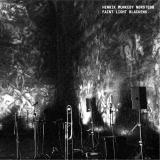
Henrik Munkeby Nørstebø - Faint Light Blackens

On his fourth solo album, and debut work for Nick Klein's Psychic Liberation imprint, Henrik Munkeby Nørstebø presents »Faint Light Blackens«, a negotiation between the atomized instrumentation of the solo trombone is pushed towards a full range wall of sound over the concise sprawl of seven distinct acts on two sides of a vinyl record.

The seven acts that make up the album were developed specifically for recording within Emanuel Vigeland’s »Tomba Emmanuelle«. The fresco within the mausoleum anchors themes of existential weight, ripe with weighted imagery of love, birth, and death. The solemn space is a cavernous acoustic terrain wherein reverberant reverie makes it almost impossible to speak aloud, let alone sing through horn and electronics. This chamber's expanse is baked into the compositional directions employed on »Faint Light Blackens«.

Experientially, the record was produced in a long form performance gesture, with no overdubs. While edited to fit the record format, no additional post production coloring took place. Here Nørstebø shines as an instrumentalist, wherein the symbiosis of the site specific architecture and his sound sources are synced. At once musing and brooding, the gamut of emotive sonic landscapes is at play for a fully dynamic listening experience. The territory in Nørstebø’s vocabulary through interplay with the mausoleum is not vaulted , unlike Vigeland’s urn’ed ashes. On »Faint Light Blackens«, the spirit takes bound beyond the cavern and reanimates the listeners stereo alters for a holistic listening experience of perfectly challenging electroacoustic endeavors.

Henrik Munkeby Nørstebø – acoustic & amplified trombone, monotron, feedback, sound files.
Recorded by Espen Reinertsen October 10. and 11. 2023 in Tomba Emmanuelle, Oslo Norway.
Cover Photos and mix by Henrik Munkeby Nørstebø
Mastered by Helge Sten (Deathprod) at Audio Virus Lab

pre-order now08.05.2026

expected to be published on 08.05.2026

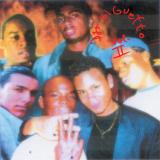
DJs Di Guetto - DJs Di Guetto II

Myth? Legend? No need to pump this up, the music is self evident. As is the crew of Marfox, NK, Nervoso, Fofuxo, Pausas and Jesse, who shaped the universe as we know it. The simplest of elements for maximum (minimal) impact, an imperative burst of energy that perfectly echoes the title of Marfox's first EP: I Know Who I Am.

These are statements of personality directly stamped on the dancefloor. "Hard Tecno" (without the H, yes) embodies the crystal clear intention of the set: to light a fire wherever the beats fall. To make people smile and move. And this was (and is) achieved without the need for obvious smiley culture signposts. The music just came through with fierce enthusiasm. All were youngsters (Nervoso being the elder) in 2007, and youth is definitely a factor in the fearless display of bare bones dance music production. Raw, is it?

A second volume of DJs di Guetto on Príncipe was always going to happen. The tough part was deciding how to organize the bangers on the tracklist without ending up with a quadruple vinyl set. Thus separate volumes 1&2. Volume 1 (2023) was culled from the actual DJs di Guetto compilation (self released in 2006), whereas Volume 2 comes straight from the crew's archives, nearly 100% unreleased tracks produced in 2007.

The crew disbanded as such a long time ago, but the legacy stands as sacred scriptures stand. FL Studio and standard laptop and tower desktop PCs combined as raw materials; a no-fuss approach added by these DJs and producers who sound unequivocally rootsy and primeval, drinking from the source. Also punishingly minimal, dry and alien. Happy-sad, sweet-sour, nice-angry, soft-aggressive. Words fail us. It's 2026, new humans seem to beon the rise but some old ways are still enthralling.

pre-order now08.05.2026

expected to be published on 08.05.2026

Jolanda Moletta - Oceanine

Jolanda Moletta

Oceanine

12inchBNSD098
Beacon Sound
01.05.2026

Oceanine, Jolanda Moletta’s third album and her first for Beacon Sound, is a powerful and ethereal statement of artistic community. Expanding on her previous work, each track represents a collaboration with a different female vocalist, with the foundational elements being generated entirely by her own voice. By turns haunting, enchanting, and inspiring, you won’t want to come up for air once you’ve been pulled under. Representing a
musical practice that is distinctly feminist, this is an album with a longer view in mind, to an age when the altars were to goddesses and women were centered as powerful beings representing the earth’s cycles of regeneration and renewal. Oceanine then, in all its beauty, can be viewed as an album of survival. It is deeply transportive, accessing something that lies within all of us. As the late, great Lithuanian folklorist and archaeologist Marija Gimbutas noted, “We must refocus our collective memory. The necessity for this has never been greater as we discover that the path of 'progress' is extinguishing the very conditions for life on earth.”

Jolanda Moletta is a multimedia artist and one-woman electronic choir. She creates wordless compositions through extended vocal techniques, integrating wearable-controlled live processing, alongside symbolic visuals. Moletta considers her performances to be a collective ritual and creates her Sonic & Visual Spells following the cycles of nature and the moon. Jolanda's 2022 critically acclaimed album Nine Spells was released on the Ambientologist label, followed by Night Caves on Whitelabrecs in 2025. Moletta’s artistic practice is a radical and spiritual journey through sound art, ritual, and the symbolic archaeology of the feminine.

Oceanine is inspired by sirens, water nymphs, and the timeless call of the sea. At its core lies Jolanda’s deep, lifelong connection to the Mediterranean Sea and to the ancient and modern myths and folklore that have emerged from its waters. Growing up by the Mar Ligure, Jolanda was surrounded by stories carried by salt, wind, and waves: legends of sirens, echoes of ancient voices, and the sea as both origin and oracle. This intimate relationship with the Mediterranean is not merely a backdrop, but a living source that shapes Oceanine’s emotional, symbolic, and sonic world.

Each track features a different female vocalist, creating a rich tapestry of voices, styles, and perspectives. This artistic choice not only broadens the album’s sonic palette, but also deepens its narrative core: celebrating the power, beauty, and mystique of feminine energy through myth, history, and sound.

The entire album is built exclusively from the human voice, processed and layered, yet always remaining voice, and nothing else. For each piece, Jolanda invited every vocalist involved to contribute a raw stem: a short, unedited melodic fragment of just a few seconds, inspired by the album’s themes. These intimate vocal seeds became the foundation of each track: the guest artists’ voices appear as brief, melodic stems, while the entire surrounding “orchestral” fabric is created solely from Jolanda’s own layered and processed voice. In this way, Jolanda’s voice becomes the Ocean itself, embracing, absorbing, and carrying the sirens’ calls within a vast, immersive soundscape. Every song is a unique expression of the feminine experience, revealing its depth, complexity, and emotional range, echoing the call of the sea and the many faces of the siren archetype.

The figure of the siren has transformed across centuries. In myths of Ancient Greece and Rome, sirens were hybrid beings, part woman, part bird, whose irresistible songs lured sailors to their doom. During the Middle Ages, the image shifted toward the half-woman, half-fish figure, often associated with temptation and danger. Historically, the voice of women has often been feared. Sirens were considered harbingers of misfortune not simply because they seduced or destroyed, but because they were powerful liminal beings.

In Ancient Greek, sirens functioned as psychopomps: figures who existed between worlds and guided souls, especially between life and death. Their songs were believed to carry forbidden knowledge, including prophetic insight and the ability to reveal truths about fate and the future. The danger of the sirens lay in what they revealed: knowledge that humans were not meant, or ready, to hear.

Oceanine confronts this legacy head-on. The voices heard throughout the album are not merely beautiful: they are dark and luminous, wild and enchanting, magical, soothing, dreamy, and at times fractured or distorted. They whisper, lament, beckon, and enchant. Like sirens, they skim the surface of the water and sink into its depths, hovering on the edge between tenderness and danger, vulnerability and power. They rise toward the sky, dissolve into mist, and return as echoes charged with raw, elemental emotion: voices that seduce, warn, mourn, and remember. They refuse to be reduced to decoration.

Alongside the album’s release in May, Oceanine will also unfold as a visual and performative work through a short art film. The film includes a live session recorded inside a sea cave facing the Mar Ligure, the very coastline where Jolanda spent her childhood, dreaming of sirens and listening to the sea as if it were speaking directly to her. This site-specific performance reconnects the music to its place of origin, allowing the voice to resonate within stone, water, and air, and transforming the cave into both a sanctuary and a threshold between myth and reality.

What if the sirens’ songs were considered dangerous because they carried another truth, an ancient truth long forgotten?

Oceanine embraces the idea that we are still deeply woven into myth. Though we may see ourselves as rational and modern beings, our world is saturated with ancient symbols and archetypes, often distorted, simplified, or stripped of their original meaning. And if those symbols are allowed to shift, if the mirror once held by the siren becomes an invitation to look beyond appearances and into what has been obscured, then we may finally uncover a deeper truth and reclaim the voice that was always ours.

Oceanine is not just an album. It is a reclamation, a spell, and a call from the depths.

pre-order now01.05.2026

expected to be published on 01.05.2026

Cloud Management & Vivien Goldman - Whoops Wrong Planet

Cloud Management return to Altin Village & Mine for a unique collaboration with New York writer and creative polymath Vivien Goldman.

A pairing spanning generations and geography, but with a musical overlap that is quite fitting in both process and result. Cloud Management’s jammy, improvisational approach to their dubby electronics blends well with Goldman’s idiosyncratic vocal style, which has its origins in the early days of post–punk and UK dub experimentalism. Cloud Management blend many historical aspects of German electronic music into something distinctly their own, while retaining a view well beyond those borders or any particular era. This approach fits well with Goldman’s deep multidisciplinary career, not easily defined because of its eclectic abundance across disciplines, yet always orbiting around music as its foundation.

When it comes down to it, these are great tracks created in the same way they sound: loose but refined, circling and turning inwards and outwards, back onto themselves. A dub of a dub of a dub, but never falling too far from the source — the minimalism necessary to deliver a direct, steady resolve and a gripping listen.

The B–Side of the record features three remixes by artists from across the globe, all with strong connections to the front line of dancehall, dub, and electronic music experimentalism. Longtime Equiknoxx member Time Cow from Kingston (Jamaica), delivers a version of »Quick Cover Up« that represents a major overhaul of the original. This remix strips away much of the looseness of the source material and leans into a lush yet slightly darker atmosphere, created by layered synths and a masterful use of underlying percussion and melodic stabs.

Up next are Twin Cities, Minnesota–based Feel Free Hi Fi, who take on »Judge Judge.« The duo tighten things up, overlaying weighty vintage string synths and digi–flute melodies. This version feels designed for smoky, late–night dub sound system sessions, harkening back to dub’s foundations.

Last but not least is London’s Pat Orburn. Stripped way down, the remix rides an interplay between alternating minimalism and a more lo-fi but lush exuberance, somewhat reminiscent of a bossa nova–esque minimal synth sound. This version’s lo–fi pop sensibility provides a fitting contrast and completes an eclectic yet copacetic trio of remixes for the record.

out of Stock

Order now and we will order the item for you at our supplier.


Last In: 30 days ago
Niklas Paschburg - L'Ècho De Bretagne LP
  • 01: Paimpol
  • 02: Marché
  • 03: Le Port
  • 04: À La Maison
  • 05: La Vie Lente
  • 06: Bandes
  • 07: Adieu

A century-old grand piano, a secluded house surrounded by the greenery of Brittany, no internet connection, and a reel-to-reel recorder.L'Écho de Bretagne, the new EP by Niklas Paschburg, set for release from fall 2025 via Nettwerk Music Group, is a solo piano record as essential as it is intense. An album made of silences, space, slowness. A music that doesn't chase impact, but truth.

the album release is march 26th - 2026.

If his previous work, Mexican Alps (2025), marked the first time the German composer and producer created an ambient-electronic album without his instrument of choice, the piano, L'Écho de Bretagne emerges as a direct response to that absence. "It was exactly the lack of piano that brought about the need for this new record, which instead puts that instrument, so vital to me, at the very center, stripping everything else away," Niklas explains.

Born in 1994, Paschburg has shaped over the years a musical path deeply connected to travel, nature, and introspection. From his debutTuur Mang Welten(2016) toOceanic(2018),Svalbard(2020),Panta Rhei(2023), and the aforementionedMexican Alps— alongside soundtracks, remixes, and collaborations with artists like RY X, Hania Rani, Ásgeir, and Bryan Senti — his sound bridges neoclassical, electronic, ambient, and pop-driven composition.

WithL'Écho de Bretagne, the Hamburg-born, Berlin-based musician continues his exploration by seeking solitude in nature, much like he did onSvalbard, but this time with an even more radical choice: disconnecting completely from the internet, and switching off both computer and smartphone for a while, in order to fully immerse himself in his new music. "I rented an old cottage in Paimpol, Brittany, where I knew there was a grand piano," he recounts. "When I got there, I discovered that not only was the piano more than a hundred years old, but it was also of an unknown brand, never restored, and quite difficult to play. But that gave it a unique character, and I didn't give up. Sure, it was an instrument left to its own fate, I couldn't play anything too fast. But how fascinating was that? I'm convinced that setting limits, instead of giving yourself total freedom when composing, can become an extraordinary source of inspiration."

As for the decision to temporarily detach from a life that demands we stay constantly connected, Niklas describes it as both a creative and human experiment. "I had my laptop and phone with me, just in case, but I kept them turned off. That choice made me wantL'Écho de Bretagneto be a fully analog work, even in how it was recorded." A way of clearing the mind. "I don't think I've ever been as calm as I was during those days in Paimpol. Even though I was working on a very specific project and didn't have much time, that period was more relaxing than any vacation."

Not that it was free of hiccups. "I'd borrowed a reel-to-reel recorder small enough to travel with me, but after recording a session on the piano, I realized it wasn't working properly, the sound was distorted, full of crackles. I got worried, because I wasn't near any big city where I could find a technician. Luckily, I figured out the problem was the old tape reels I had brought along. That was the only time I had to go online, to order new ones. But it was just for a moment. I shut everything off again right after." At that point, Niklas was waiting for the new tapes to arrive. He found out, completely by chance, from a local UPS courier that they had been delivered to a nearby village. "Since my phone was off, I couldn't track the shipment. So one day I asked this delivery guy, who didn't know anything about it. But from that point on, we'd see each other daily and talk… That's what being disconnected also means: reconnecting with people around you, even strangers. It was thanks to that courier that I found out where the tapes had ended up. And he even helped me get them back, writing directions for me on a scrap of paper."

But there's another element that makes this new EP unique.L'Écho de Bretagnewas recorded entirely live; its tracks are all improvised, complete with their imperfections. This approach leads to a sound that is pure, profoundly organic, and deeply authentic, intentionally preserved to give the listener the feeling of a live performance happening in their own living room. The touch of fingers on the keys, the breath of the wood, the tension of the vibrating string, all become part of the music. There is no construction, only expression. "Even now, when I listen back to it, I feel that moment I gave myself to step away from everything: from reality, from words, from noise." The result is a collection of suspended melodies and atmospheres, reflecting a state of the soul. A refuge from the rush of time. A pause from the world.

pre-order now24.04.2026

expected to be published on 24.04.2026

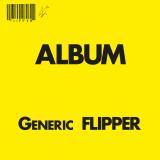
Flipper - Generic Flipper

Generic Flipper, the debut album by Flipper, remains the most absorbing full-length LP to emerge from the early San Francisco punk scene. A constant source of imitation for so-called "noise rock" bands, it has yet to be surpassed in its nihilistic glee.

Recorded between October 1980 and August 1981 and released in 1982 on the indispensable Subterranean Records, this album functions as a chaotic, sticky mass of individual personalities: the magma-like bass eruptions and dual vocals of Will Shatter and Bruce Loose, Ted Falconi's icy guitar scraping and the relentless beat of drummer Steve DePace. At times playful and taciturn, paranoid and absurd, Generic charts a deliberate path that willfully chances destruction.

In early '80s punk, when the hardening default was "faster-shorter-louder," Generic subverts the nascent hardcore scene with a strictly applied regimen of turgid-slower-heavier. The lyrics are bleak, yet unnervingly beautiful. "Ever" sets the tone with trademark restraint – "Ever wish the human race didn't exist? And then realize you're one too?" – while closer "Sex Bomb" is a churning, 8-minute epic with looping bass, saxophone accompaniment and electronic effects of dropping bombs.

Tons of indie bands have attempted to recreate Flipper's mix of acidic guitar, metallic bass sludge and sardonically brilliant lyricism, using the seemingly effortless template they pioneered; however, the effect usually drives listeners right back to Generic. While most of their contemporaries wilt under direct comparison, No Trend, the Butthole Surfers, feedtime and Church Police are a few who can stand the frigid heat.

out of Stock

Order now and we will order the item for you at our supplier.


Last In: 30 days ago
Tara Clerkin Trio - On The Turning Ground

Bristol's Tara Clerkin Trio return to World of Echo and the EP format for a five song collection of quixotic, emotional redolence. But do not mistake their absence for inertia. If their musical output has been a little sparse during those in-between years, limited to a few solo ventures and an astonishing ten minute long piece as a trio, their time has otherwise been richly spent: continuous writing and recording, extensive live performances across Europe and Japan, a cultivation of local and more far-flung artistic connections (musical and otherwise), and a monthly NTS show that, through the voice of others, speaks most obviously to their own unorthodox interests. It's the conflux of that winding activity that leads indirectly to On The Turning Ground, 26 minutes of probing, thoughtful composition that draws from no one specific source. Their inspirations might be centreless, but the trio still possess a very obvious anchor in the form of their hometown. Bristol stands as a city of multitudes, heterogenous and vibrant in such a way as to allow it to renew and remake time and again. Tara Clerkin Trio drink from that same well, duly reflecting a rich musical heritage built on fwd-facing electronic subcultures and experimental urges.

As such, On The Turning Ground finds them subject to their own subtle internal evolution, the pervasive sense that you've caught them mid-bloom, on their way to becoming but never anything but themselves. The two instrumental pieces that bookend the EP stand as a perfect case in point, displaying an increasing mastery of compositional space. Pensive and restrained, 'Brigstow' and 'Once Around' both emanate an interstitial quality that's not so much after- as in-between-hours, miniature dub-folk symphonies held together by the kind of tacit understanding that remains the preserve of only the closest of family units. If those two tracks are shaped by a sense of shifting temporality, then the three vocal-led pieces that comprise the record's core feel like a gentle ossifying of aesthetic into something approaching their own unique form of avant-pop. 'Pop' is, of course, a broadly subjective concept, but there's no avoiding the overt sparkling melodicism of songs like 'Marble Walls' and 'The Turning Ground', undeniable re-directions of that late 90s impulse to bend pop sensibilities into off-centre terrain, to render the familiar new again. This is what Tara Clerkin Trio do, gently pulling the ground from under your feet, turning you to face something you'd not quite seen before. To view the world as they do: sideways, sometimes, all of the time.

out of Stock

Order now and we will order the item for you at our supplier.


Last In: 2 years ago
Guilty Razors - Complete Recordings 1977 - 1978

UILTY RAZORS, BONA FIDE PUNKS.


Writings on the topic that go off in all directions, mind-numbing lectures given by academics, and testimonies, most of them heavily doctored, from those who “lived through that era”: so many people today fantasize about the early days of punk in our country… This blessed moment when no one had yet thought of flaunting a ridiculous green mohawk, taking Sid Vicious as a hero, or – even worse – making the so-called alternative scene both festive and boorish. There was no such thing in 1976 or 1977, when it wasn’t easy to get hold of the first 45s by the Pistols or the Clash. Few people were aware of what was happening on the fringes of the fringes at the time. Malcolm McLaren was virtually unknown, and having short hair made you seem strange. Who knew then that rock music, which had taken a very bad turn since the early 1970s, would once again become an essential element of liberation? That, thanks to short and fast songs, it would once again rediscover that primitive, social side that was so hated by older generations? Who knew that, besides a few loners who read the music press (it was even better if they read it in English) and frequented the right record stores? Many of these formed bands, because it was impossible to do otherwise. We quickly went from listening to the Velvet Underground to trying to play the Stooges’ intros. It’s a somewhat collective story, even though there weren’t many people to start it.
The Guilty Razors were among those who took part in this initial upheaval in Paris. They were far from being the worst. They had something special and even released a single that was well above the national average. They also had enough songs to fill an album, the one you’re holding. In everyone’s opinion, they were definitely not among the punk impostors that followed in their wake. They were, at least, genuine and credible.

Guilty Razors, Parisian punk band (1975-1978). To understand something about their somewhat linear but very energetic sound, we might need to talk about the context in which it was born and, more broadly, recall the boredom (a theme that would become capital in punk songs) coupled with the desire to blow everything off, which were the basis for the formation of bands playing a rejuvenated rock music ; about the passion for a few records by the Kinks or the early Who, by the Stooges, by the Velvet mostly, which set you apart from the crowd.
And of course, we should remember this new wave, which was promoted by a few articles in the specialized press and some cutting-edge record stores, coming from New York or London, whose small but powerful influence could be felt in Paris and in a handful of isolated places in the provinces, lulled to sleep by so many appalling things, from Tangerine Dream to President Giscard d’Estaing...
In 1975-76, French music was, as almost always, in a sorry state ; it was still dominated by Johnny Hallyday and Sylvie Vartan. Local rock music was also rather bleak, apart from Bijou and Little Bob who tried to revive this small scene with poorly sound-engineered gigs played to almost no one.
In the working class suburbs at the time, it was mainly hard rock music played to 11 that helped people forget about their gruelling shifts at the factory. Here and there, on the outskirts of major cities, you still could find a few rockers with sideburns wearing black armbands since the death of Gene Vincent, but it wasn’t a proper mass movement, just a source of real danger to anyone they came across who wasn't like them. In August 1976, a festival unlike any other took place in Mont-de-Marsan – the First European Punk Festival as the poster said – with almost as many people on stage as in the audience. Yet, on that day, a quasi historical event happened, when, under the blazing afternoon sun, a band of unknowns called The Damned made an unprecedented noise in the arena, reminiscent of the chaotic Stooges in their early adolescence. They were the first genuine punk band to perform in our country: from then on, anything was possible, almost anything seemed permissible.

It makes sense that the four+1 members of Guilty Razors, who initially amplified acoustic guitars with crappy tape recorder microphones, would adopt punk music (pronounced paink in French) naturally and instinctively, since it combines liberating noise with speed of execution and – crucially – a very healthy sense of rebellion (the protesters of May 1968 proclaimed, and it was even a slogan, that they weren’t against old people, but against what had made them grow old. In the mid-1970s, it seemed normal and obvious that old people should now ALSO be targeted!!!).
At the time, the desire to fight back, and break down authority and apathy, was either red or black, often taking the form of leafleting, tumultuous general assemblies in the schoolyard, and massive or shabby demonstrations, most of the time overflowing with an exciting vitality that sometimes turned into fights with the riot police. Indeed, soon after the end of the Vietnam War and following Pinochet’s coup in Chile, all over France, Trotskyist and anarcho-libertarian fervour was firmly entrenched among parts of the educated youth population, who were equally rebellious and troublemakers whenever they had the chance. It should also be noted that when the single "Anarchy in the UK" was first heard, even though not many of us had access to it, both the title and its explosive sound immediately resonated with some of those troublemakers crying out for ANARCHY!!! Meanwhile, the left-wing majority still equated punks with reckless young neo-Nazis. Of course, the widely circulated photos in the mainstream press of Siouxsie Sioux with her swastikas didn’t necessarily help to win over the theorists of the Great Revolution. It took Joe Strummer to introduce The Clash as an anti-racist, anti-fascist and anti-ignorance band for the rejection of old-school revolutionaries to fade a little.

The Lycée Jean-Baptiste Say at Porte d’Auteuil, despite being located in the very posh and very exclusive 16th arrondissement of Paris, didn’t escape these "committed" upheavals, which doubled as the perfect outlet for the less timid members of this generation.
“Back then, politics were fun,” says Tristam Nada, who studied there and went on to become Guilty Razors’ frontman. “Jean-Baptiste was the leftist high-school in the neighbourhood. When the far right guys from the GUD came down there, the Communist League guys from elsewhere helped us fight them off.”
Anything that could challenge authority was fair game and of course, strikes for just about any reason would lead to increasingly frequent truancy (with a definitive farewell to education that would soon follow). Tristam Nada spent his 10th and 11th unfinished grades with José Perez, who had come from Spain, where his father, a janitor, had been sentenced to death by Franco. “José steered my tastes towards solid acts such as The Who. Like most teenagers, I had previously absorbed just about everything that came my way, from Yes to Led Zeppelin to Genesis. I was exploring… And then one day, he told me that he and his brother Carlos wanted to start a rock band.” The Perez brothers already played guitar. “Of course, they were Spanish!”, jokes their singer. “Then, somewhat reluctantly, José took up the bass and we were soon joined by Jano – who called himself Jano Homicid – who took up the rhythm guitar.” Several drummers would later join this core of not easily intimidated young guys who didn’t let adversity get the better of them.

The first rehearsals of the newly named Guilty Razors took place in the bedroom of a Perez aunt. There, the three rookies tried to cover a few standards, songs that often were an integral part of their lives. During a first, short gig, in front of a bewildered audience of tough old-school rockers, they launched into a clunky version of the Velvet Underground's “Heroin”. Challenge or recklessness? A bit of both, probably… And then, step by step, their limited repertoire expanded as they decided to write their own songs, sung in a not always very accurate or academic English, but who cared about proper grammar or the right vocabulary, since what truly mattered was to make the words sound as good as possible while playing very, very fast music? And spitting out those words in a language that left no doubt as to what it conveyed mattered as well.
Trying their hand a the kind of rock music disliked by most of the neighbourhood, making noise, being fiercely provocative: they still belonged to a tiny clique who, at this very moment, had chosen to impose this difference. And there were very few places in France or elsewhere, where one could witness the first stirrings of something that wasn’t a trend yet, let alone a movement.

In the provinces, in late 1976 or early 1977, there couldn’t be more than thirty record stores that were a bit more discerning than average, where you could hear this new kind of short-haired rock music called “punk”. The old clientele, who previously had no problem coming in to buy the latest McCartney or Aerosmith LP, now felt a little less comfortable there…
In Paris, these enlightened places were quite rare and often located nex to what would become the Forum des Halles, a big shopping mall. Between three aging sex workers, a couple of second-hand clothes shops, sellers of hippie paraphernalia and small fashion designers, the good word was loudly spread in two pioneering places – propagators of what was still only a new underground movement. Historically, the first one was the Open Market, a kind of poorly, but tastefully stocked cave. Speakers blasted out the sound of sixties garage bands from the Nuggets compilation (a crucial reference for José Perez) or the badly dressed English kids of Eddie and the Hot Rods. This black-painted den was opened a few years earlier by Marc Zermati, a character who wasn’t always in a sunny disposition, but always quite radical in his (good) choices and his opinions. He founded the independent label Skydog and was one of the promoters of the Mont-de-Marsan punk festivals. Not far from there was Harry Cover, another store more in tune with the new New York scene, which was amply covered in the house fanzine, Rock News (even though it was in it that the photos of the Sex Pistols were first published in France).
It was a favorite hang-out of the Perez brothers and Tristam Nada, as the latter explained. “It’s at Harry Cover’s that we first heard the Pistols and Clash’s 45s, and after that, we decided to start writing our first songs. If they could do it, so could we!”
The sonic shocks that were “Anarchy in the UK”, “White Riot” or the Buzzcocks’s EP, “Spiral Scratch” – which Guilty Razors' sound is reminiscent of – were soon to be amplified by an unparalleled visual shock. In April 1977, right after the release of their first LP, The Clash performed at the Palais des Glaces in Paris, during a punk night organised by Marc Zermati. For many who were there, it was the gig of a lifetime…
Of course, Guilty Razors and Tristam were in the audience: “That concert was fabulous… We Parisian punks were almost all dressed in black and white, with white shirts, skinny leather ties, bikers jackets or light jackets, etc. The Clash, on the other hand, wore colourful clothes. Well, the next day, at the Gibus, you’d spot everyone who had been at this concert, but they weren’t wearing anything black, they were all wearing colours.”

It makes sense to mention the Gibus club, as Guilty Razors often played there (sometimes in front of a hostile audience). It was also the only place in Paris that regularly scheduled new Parisian or Anglo-Saxon acts, such as Generation X, Siouxsie and the Banshees, the Slits, and Johnny Thunders who would become a kind of messed-up mascot for the venue. A little later, in 1978, the Rose Bonbon – formerly the Nashville – also attracted nightly owls in search of electric thrills… In 1977, the iconic but not necessarily excellent Asphalt Jungle often played at the Gibus, sometimes sharing the bill with Metal Urbain, the only band whose aura would later transcend the French borders (“I saw them as the French Sex Pistols,” said Geoff Travis, head of their British label Rough Trade). Already established in this small scene, Metal Urbain helped the young and restless Guilty Razors who had just arrived. Guitarist for Metal Urbain Hermann Schwartz remembers it: “They were younger than us, we were a bit like their mentors even if it’s too strong a word… At least they were credible. We thought they were good, and they had good songs which reminded of the Buzzcocks that I liked a lot. But at some point, they started hanging out with the Hells Angels. That’s when we stopped following them.”

The break-up was mutual, since, Guilty Razors, for their part, were shocked when they saw a fringe element of the audience at Metal Urbain concerts who repeatedly shouted “Sieg Heil” and gave Nazi salutes. These provocations, even still minor (the bulk of the skinhead crowd would later make their presence felt during concerts), weren’t really to the liking of the Perez brothers, whose anti-fascist convictions were firmly rooted. Some things are non-negotiable.
A few months earlier (in July 1978), Guilty Razors had nevertheless opened very successfully for Metal Urbain at the Bus Palladium, a more traditonally old-school rock night-club. But, as was sometimes the case back then, the night turned into a mass brawl when suburban rockers came to “beat up punks”.

Back then, Parisian nights weren’t always sweet and serene.

So, after opening as best as they could for The Jam (their sound having been ruined by the PA system), our local heroes were – once again – met outside by a horde of greasers out to get them. “Thankfully,” says Tristam, “we were with our roadies, motorless bikers who acted as a protective barrier. We were chased in the neighbouring streets and the whole thing ended in front of a bar, with the owner coming out with a rifle…”
Although Tristam and the Perez brothers narrowly escaped various, potentially bloody, incidents, they weren’t completely innocent of wrongdoing either. They still find amusing their mugging of two strangers in the street for example (“We were broke and we simply wanted to buy tickets for the Heartbreakers concert that night,” says Tristam). It so happened that their victims were two key figures in the rock business at the time: radio presenter Alain Manneval and music publisher Philippe Constantin. They filed a complaint and sought monetary compensation, but somehow the band’s manager, the skilful but very controversial Alexis, managed to get the complaint withdrawn and Guilty Razors ended up signing with Constantin with a substantial advance.

They also signed with Polydor and the label released in 1978 their only three-track 45, featuring “I Don't Wanna be A Rich”, “Hurts and Noises” and “Provocate” (songs that exuded perpetual rebellion and an unquenchable desire for “class” confrontation). It was a very good record, but due to a lack of promotion (radio stations didn’t play French artists singing in English), it didn’t sell very well. Only 800 copies were allegedly sold and the rest of the stock was pulped… Initially, the three tracks were to be included on a LP that never came to be, since they were dropped by Polydor (“Let’s say we sometimes caused a ruckus in their offices!” laughs Tristam.) In order to perfect the long-awaited LP, the band recorded demos of other tracks. There was a cover of Pink Floyd's “Lucifer Sam” from the Syd Barrett era – proof of an enduring love for the sixties’ greats –, “Wake Up” a hangover tale and “Bad Heart” about the Baader-Meinhof gang, whose actions had a profound impact on the era and on a generation seeking extreme dissent... On the album you’re now discovering, you can also hear five previously unreleased tracks recorded a bit later during an extended and freezing stay in Madrid, in a makeshift studio with the invaluable help of a drummer also acting as sound engineer. He was both an enthusiastic old hippie and a proper whizz at sound engineering. Here too, certain influences from the fifties and sixties (Link Wray, the Troggs) are more than obvious in the band’s music.

Shortly after a final stormy and rather barbaric (on the audience’s side) “Punk night” at the Olympia in June 1978, Tristam left the band ; his bandmates continued without him for a short while.

But like most pioneering punk bands of the era, Guilty Razors eventually split up for good after three years (besides once in Spain, they’d only played in Paris). The reason for ceasing business activities were more or less the same for everyone: there were no venues outside one’s small circuit to play this kind of rock music, which was still frightening, unknown, or of little interest to most people. The chances of recording an LP were virtually null, since major labels were only signing unoriginal but reassuring sub-Téléphone clones, and the smaller ones were only interested in progressive rock or French chanson for youth clubs. And what about self-production? No one in our small safety-pinned world had thought about it yet. There wasn’t enough money to embark on that sort of venture anyway.

So yes, the early days of punk in France were truly No Future!

out of Stock

Order now and we will order the item for you at our supplier.


Last In: 49 days ago
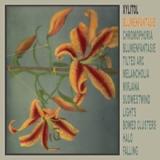
Xylitol - Blumenfantasie LP

Xylitol, aka producer and DJ Catherine Backhouse, shifts up the refinement and musical breadth for her second album Blumenfantasie, the follow-up to her Planet Mu debut Anemones.
With Blumenfantasie, Xylitol wanted “to make space and for the music to float and propel at once”, finding routes through the pointillistic figures, cascading synths and the meditative stillness of kosmische musik and bolder breakbeat programming. She reaches this delicate balance through careful subtraction, hoping “to convey a sense of intimacy and sadness but without sentimentality” which she manages with a feel and sound that's raw and intuitive.

Blumenfantasie rolls through detailed jungle workouts that flutter and bleep, through beatless ambience, taking a rare dip below 160 bpm for the elegiac Mirjana, the album’s most explicit nod to Krautrock with a drum break chopped up from Amon Duul II’s anthemic ‘Archangel’s Thunderbird’, through to Halo, a bare bones grime rhythm that calls to mind the missing link between industrial pioneers Nurse With Wound and Wiley's Eskibeat.

Catherine cast her net to draw in experimental audiovisual duo Sculpture and Reading based post-rock band The Leaf Library as collaborators, pulling the former’s whirling eddies of musique concrète into a slice of sublime aquatic jungle, and the latter’s radiophonic folksong into a dark and disorientating breakbeat workout equally indebted to Source Direct as to Broadcast.
Blumenfantasie moves with a confident, self-effacing fluidity which has been informed by DJ Bunnyhausen’s more regular DJ gigs. She speculates ‘if this album feels more cohesive than its predecessor it's likely because I've been DJing a lot more, with Worthing Techno Militia, with central and eastern european electronica collective Slav to the Rhythm, as well as being part of Italo Disco crew Flex. Moving between these zones seemed to open up hidden pathways between the disparate musical trajectories they represent.'
While Anemones contrasted the rough and the delicate, its successor is an album built for the head, hips and heart, with painterly sounds and a sense of intimacy that encourages deep listening while keeping its eyes on the strobelight and its feet on the dancefloor.

out of Stock

Order now and we will order the item for you at our supplier.


Last In: 49 days ago
Cootie Catcher - Something We All Got MC

There’s an alternate reality where everyone makes a living wage and the cleanest buses you’ve ever seen arrive every other minute. Where the most intense songs are about confessing your love to a crush at the apple orchard, and where gentle feelings and chaotic energy are inseparable best friends. This is the timeline where Cootie Catcher is right at home. This Toronto based four-piece exudes both vulnerability and unbridled excitement, creating a sound that hypercharges the open-hearted tenderness of twee pop with spiraling synths and giddy electronics. New album Something We All Got is the clearest and most vibrant reading of Cootie Catcher’s vision yet, with songs of sweetness, nervousness, and expectancy that beam out unguarded.
After releasing music made primarily in basement recording environments, Something We All Got is the band’s first flirtation with studio recording. The edges are still sharp, however, with some parts assembled from time-honored lo-fi methods and fun, personally-sourced samples seeping into the production. The sound is explosive and upbeat, with euphoric guitars, bubbly synth lines, speedy drums both played and programmed, and all other manner of sound constantly colliding. Cootie Catcher has three songwriters, Sophia Chavez, Anita Fowl, and Nolan Jakupovski, all of whom have distinctive voices but still manage to overlap in their writing on shared concerns like navigating the lines of romantic and platonic relationships, their city’s social scenes, and struggles in both the microcosmic experience of playing in a band and the zoomed-out challenges of living through late-stage capitalism.
Joy still touches every surface of Something We All Got. “Quarter Note Rock” bounces around the room in a fit of jangling guitar chords, scratched samples, and interplay between breakbeat loops and somersaulting live drums. It’s a blast of positivity even with lyrics about how disappointing it can be to meet your heroes. A smiling electro pop instrumental supports lyrics about having to step painfully away from an almost realized love on “Gingham Dress,” a song that subverts themes of domesticity as a backdrop for the dashed wilt of hopeless devotion.
Cootie Catcher rolls down hills and jumps through flaming hoops throughout Something We All Got without ever dumbing down the visceral emotions that drive these songs. There’s a palpable tension between the band’s exhilarating sonics and the raw, often uneasy sentiments expressed, but it’s an integral part of what makes them unique. Rather than hide behind the kind of calculated vagueness that plagues so much of the indie rock landscape in the time of cursed algorithms, Cootie Catcher runs full-speed toward every confusion and excitement, fearlessly direct and embracing the reality they’re in.

pre-order now03.04.2026

expected to be published on 03.04.2026

Passarani - Analog Fingerprints Vol. 0 (2x12")

Analog Fingerprints Vol. 0 is a compilation bringing together the early 2000s works of Marco Passarani under his Analog Fingerprints alias, collecting key tracks originally released on Rome’s Plasmek and Pigna labels.

For Numbers, the story starts long before the label itself. In their formative years, digging in Glasgow’s Rubadub, Passarani’s records felt like dispatches from a future city. Releases on his own Nature Records and on labels such as Generator and Interr-Ference Communications were mind blowing: rooted in Detroit techno, Chicago house and electro, yet pushing somewhere new. Much like fellow travellers Autechre, who would remix him in 2001, Passarani’s music balanced machine funk with restless experimentation.

Information was scarce, and you would hear these records first on the dancefloor or at listening stations in shops like Rubadub. Print fanzines like Ear and early web outposts such as Forcefield offered only fragments. But there was a palpable axis forming between Detroit techno and a new European wave of record labels including Skam, Rephlex, Clone, Viewlexx and Nature itself. It was the sound that defined Saturday nights at Rubadub’s ‘69’ parties in Paisley, just outside of Glasgow.

Passarani’s records, in particular, were instrumental in bringing together the future Numbers co-founders. Richard had already booked him pre-Numbers; meanwhile Calum (Spencer) and Jack (Jackmaster), then 16/17 year olds working alternate Saturdays in Rubadub, were so enamoured with the Roman sound that they travelled to Rome for the Bitz Festival in 2003 to seek out Passarani and Lory D at their source.

The first Analog Fingerprints release landed as a 12” on Plasmek in 2001, following the fractured, IDM-leaning 6 Katun material. For Passarani, the project marked a recalibration. A DJ first and foremost, he had moved into production via early computer setups, from a Commodore Amiga through primitive PC audio, Cubase and Logic, later experimenting with Ableton. The IDM scene had offered a playground for trial and error, but there was always a tension between abstraction and the dancefloor. Analog Fingerprints became the bridge: still intelligent, but with more dance than distance. After years of broken beats and complex arrangements, he wanted directness without surrendering identity.

Working closely with Francesco de Bellis and Mario Pierro in the Pigneto district, the trio formed Pigna as a vehicle for reclaiming a more accessible dance sound, deliberately steering away from the minimal wave beginning to dominate Europe. Sessions were fast, instinctive, often stretching late into the night with friends dropping by. It was a studio as social space, production as collective energy.

“In that constant search for balance, Analog Fingerprints was my way of expressing something closer to the classic dance floor. The track 'Tribute' - a tribute to my favourite early Detroit techno track of all time, 'First Bass' by Separate Minds - came after I realised I had almost lost my connection with the dance floor. The simplest step was to take inspiration from early Chicago and Detroit and twist it in our Roman ‘Pigna’ way. My goal was to create more accessible dancefloor tracks by mixing my unconscious Italo roots with my teenage love for that early US sound, ensuring the result was as far as possible from the minimal sound that was starting to dominate everywhere.” - Marco Passarani

Technically, the Analog Fingerprints tracks span a transitional era: Roland TR-909, SH-101 and Alpha Juno hardware met early software experiments. A Novation Drumstation rack stood in for the unattainable TR-808, syncing with TB-303 and TR-606. Yet the true secret weapon was Jeskola Buzz, a tracker-style modular environment that allowed step-by-step parameter control and strange melodic constructions, later exported into the audio sequencer. Even the lead on ‘Tribute’ came from an early PPG Wave-style plugin. It was hybrid thinking at a moment when digital tools still felt unstable but full of possibility for technologists like Passarani.

Behind the music sat Finalfrontier, a loose Roman collective orbiting Nature and Plasmek. Distribution and production were intertwined; importing obscure records into Italy built connections with like-minded outsiders across Europe and the US. Expensive phone bills and fax machines forged an “electronix network” that linked Rome to Clone, Viewlexx, Skam, Rephlex, Rubadub and Detroit’s Underground Resistance. There was a shared sense of survival and resistance, of operating against commercial systems.

Passarani recalls “The first time I found a sheet of paper inside an Underground Resistance 12” with info about upcoming releases... and a huge picture of Spock on the back. Imagine that: you love the music, you love Star Trek, and there’s someone on the other side of the ocean sharing those same values and sounds. It was the perfect match. We even gave our original company the suffix ‘Finalfrontier’: that says it all.”

Feedback in that era arrived physically: distributor faxes, conversations with visiting DJs, the experience of playing abroad and meeting kids who had connected with the records. Glasgow became a key node in a scattered outlier network. Passarani personally brought the first two Nature releases to Fat Cat in London, playing them in-store. Shortly after, a fax arrived from Rubadub in Glasgow requesting copies.

“I still remember that phone buzz and the fax paper slowly sliding out, with someone I didn’t know saying they wanted 75 copies of Nature 001. Or like the time we got a fax from the Rephlex crew just saying, “Hello Nature Records, Keep up the good work.” That was how we knew the message was getting through. It was a fantastic feeling; just one piece of thermal fax paper as an analog notification - the mood for the entire week would change.” - Passarani

The connection to Glasgow has since stretched across generations. As Passarani reflects, links often fracture as scenes renew themselves, but in Glasgow something different happened. New and old mixed seamlessly. There was a visible trust in what came before, and a willingness to carry it forward rather than discard it. Observed from Rome, it was deeply encouraging.

Analog Fingerprints Vol. 0 captures that moment of exchange: Rome to Glasgow, Detroit to Europe, experiment to dancefloor. It documents an artist recalibrating his sound and a network of scenes discovering one another in real time, connected by vinyl, faxes and shared intent.

out of Stock

Order now and we will order the item for you at our supplier.


Last In: 9 days ago
The Notwist - News from Planet Zombie

With »News from Planet Zombie«, The Notwist return to view after years of exploration and experiment with an album rich in both melancholy and positivity, sketched across a suite of thrilling, fiercely committed pop songs. It’s an album reflecting a chaotic world, but responding with warmth and generosity, to achieve creative and spiritual consolidation. Recorded in their home base of Munich, it reconnects with the security of the local to explore the troubles of the global: a guiding impulse writ large across this album’s eleven songs. It’s also the first studio album since 1995’s »12« that the entire band recorded together in the studio in its expanded live formation.

A new album by The Notwist is always a curious endeavour; their musical language is as consistent and resilient as the contexts for creativity are unpredictable and ever shifting. For »News from Planet Zombie«, the core trio of Markus and Micha Acher and Cico Beck embraced the plural possibilities of writing together, bringing songs to the collective and then arranging, rehearsing and recording that material live, in the studio.

The result is an album that’s energised, fully in ›the now‹, with spectacular moments where you can hear the magic bubbling up in the dynamic between the Achers, Beck, and fellow members Theresa Loibl, Max Punktezahl, Karl Ivar Refseth, and Andi Haberl. If »Teeth« begins »News from Planet Zombie« quietly and reflectively, by »X-Ray« everyone’s supercharged, blasting out future anthems with the collective energy cranked up high. The chiming keys of »Propeller« skim the instrumental’s surface like stones across burbling water; »The Turning« clangs its way into one of the album’s most heartwarming melodies.

»News from Planet Zombie« was recorded over one week at Import Export, a non-profit space for arts and music. You can tell, too; there are some pleasingly rough edges here, as though The Notwist’s striving for hazy perfection means they’re also confident enough to let the songs breathe and mutate between our ears. That openness to chance also takes in guest turns from friends both local and international, reflective of a cosmopolitan Munich: Enid Valu joins in on vocals, while Haruka Yoshizawa guests on taishōgoto and harmonium, Tianping Christoph Xiao on clarinet, and Mathias Götz on trombone.

The Notwist aren’t best known for cover versions, but »News from Planet Zombie« features two: a gorgeous version of Neil Young’s »Red Sun« (from 2000’s »Silver & Gold«), which the group originally developed for a theatre play directed by Jette Steckel, and a take on Athens, Georgia folk-pop gang Lovers’ »How the Story Ends«. They slot into the album’s narrative perfectly, nestling in like old friends, revealing The Notwist as poetic interpreters. Played well, the cover version is both acknowledgement of fellow travellers and act of generosity, and The Notwist nail both aspects here.

And that narrative, the way the album plays out? »News from Planet Zombie« acknowledges the distress of our current geopolitical impasse, while reminding us there are collective ways forward. Fed through the figure of the zombie, Markus Acher explores our anxieties: »In the title and some lyrics I reference B- and horror-movies, which is a reference to the crazy world at the moment, which seems to be like a really bad and unrealistic B-movie.« But there’s a reminder here not to lose the thread entirely, that these things, too, will pass.

»The river here in Munich I often go to has been there forever and will be there long after us,« Acher reflects, pinpointing an important source of succour for him, »always the same but always changing. Very calming, but also always reminding me that like this river time only flows into one direction and you can’t go back. Every moment is very precious.«

Artwork by Marie Vermont

The Notwist:
Markus Acher: vocals, guitar
Micha Acher: bass, sousaphone, euphonium, trumpet
Cico Beck: electronics, keyboards, guitar, recorder, percussion
Theresa Loibl: bassclarinet, clarinet, piano, harmonium, organ
Max Punktezahl: guitar
Karl Ivar Refseth: marimbaphone, vibraphone, glockenspiel, congas, percussion
Andi Haberl: drums, dulcimer
+
Enid Valu: vocals on 1, 2, 3, 4, 5, 7, 9, 10, 11
Haruka Yoshizawa: taishōgoto on 6, harmonium on 9, 10, 11
Tianping Christoph Xiao: clarinet on 4, 10, 11
Mathias Götz: trombone on 4, 10, 11

pre-order now13.03.2026

expected to be published on 13.03.2026

The Notwist - News from Planet Zombie

The Notwist

News from Planet Zombie

12inchMORR207-LPORA
Morr Music
13.03.2026

With »News from Planet Zombie«, The Notwist return to view after years of exploration and experiment with an album rich in both melancholy and positivity, sketched across a suite of thrilling, fiercely committed pop songs. It’s an album reflecting a chaotic world, but responding with warmth and generosity, to achieve creative and spiritual consolidation. Recorded in their home base of Munich, it reconnects with the security of the local to explore the troubles of the global: a guiding impulse writ large across this album’s eleven songs. It’s also the first studio album since 1995’s »12« that the entire band recorded together in the studio in its expanded live formation.

A new album by The Notwist is always a curious endeavour; their musical language is as consistent and resilient as the contexts for creativity are unpredictable and ever shifting. For »News from Planet Zombie«, the core trio of Markus and Micha Acher and Cico Beck embraced the plural possibilities of writing together, bringing songs to the collective and then arranging, rehearsing and recording that material live, in the studio.

The result is an album that’s energised, fully in ›the now‹, with spectacular moments where you can hear the magic bubbling up in the dynamic between the Achers, Beck, and fellow members Theresa Loibl, Max Punktezahl, Karl Ivar Refseth, and Andi Haberl. If »Teeth« begins »News from Planet Zombie« quietly and reflectively, by »X-Ray« everyone’s supercharged, blasting out future anthems with the collective energy cranked up high. The chiming keys of »Propeller« skim the instrumental’s surface like stones across burbling water; »The Turning« clangs its way into one of the album’s most heartwarming melodies.

»News from Planet Zombie« was recorded over one week at Import Export, a non-profit space for arts and music. You can tell, too; there are some pleasingly rough edges here, as though The Notwist’s striving for hazy perfection means they’re also confident enough to let the songs breathe and mutate between our ears. That openness to chance also takes in guest turns from friends both local and international, reflective of a cosmopolitan Munich: Enid Valu joins in on vocals, while Haruka Yoshizawa guests on taishōgoto and harmonium, Tianping Christoph Xiao on clarinet, and Mathias Götz on trombone.

The Notwist aren’t best known for cover versions, but »News from Planet Zombie« features two: a gorgeous version of Neil Young’s »Red Sun« (from 2000’s »Silver & Gold«), which the group originally developed for a theatre play directed by Jette Steckel, and a take on Athens, Georgia folk-pop gang Lovers’ »How the Story Ends«. They slot into the album’s narrative perfectly, nestling in like old friends, revealing The Notwist as poetic interpreters. Played well, the cover version is both acknowledgement of fellow travellers and act of generosity, and The Notwist nail both aspects here.

And that narrative, the way the album plays out? »News from Planet Zombie« acknowledges the distress of our current geopolitical impasse, while reminding us there are collective ways forward. Fed through the figure of the zombie, Markus Acher explores our anxieties: »In the title and some lyrics I reference B- and horror-movies, which is a reference to the crazy world at the moment, which seems to be like a really bad and unrealistic B-movie.« But there’s a reminder here not to lose the thread entirely, that these things, too, will pass.

»The river here in Munich I often go to has been there forever and will be there long after us,« Acher reflects, pinpointing an important source of succour for him, »always the same but always changing. Very calming, but also always reminding me that like this river time only flows into one direction and you can’t go back. Every moment is very precious.«

Artwork by Marie Vermont

The Notwist:
Markus Acher: vocals, guitar
Micha Acher: bass, sousaphone, euphonium, trumpet
Cico Beck: electronics, keyboards, guitar, recorder, percussion
Theresa Loibl: bassclarinet, clarinet, piano, harmonium, organ
Max Punktezahl: guitar
Karl Ivar Refseth: marimbaphone, vibraphone, glockenspiel, congas, percussion
Andi Haberl: drums, dulcimer
+
Enid Valu: vocals on 1, 2, 3, 4, 5, 7, 9, 10, 11
Haruka Yoshizawa: taishōgoto on 6, harmonium on 9, 10, 11
Tianping Christoph Xiao: clarinet on 4, 10, 11
Mathias Götz: trombone on 4, 10, 11

out of Stock

Order now and we will order the item for you at our supplier.


Last In: 78 days ago
John Chowning - Stria

John Chowning

Stria

12inchIMPREC478LP
Important Records
06.03.2026
  • Phonè
  • Turenas
  • Stria
  • Sabelithe

Dr. John Chowning (b. 1934) is a pioneering computer musician, composer and professor who, in 1967, discovered the FM synthesis algorithm. This breakthrough in electronic music allowed for simple, yet rich timbres described as sounding "real." With this discovery, Chowning composed singular, dramatic electronic music and changed the timbre of music forever.

Chowning utilized the potential of computers to synthesize sounds according to programmed instructions. The composer's use of his own FM algorithms, digital synthesis with computers and the new compositional concepts offered by a programmable musical structure combine to create some of the most original and unique electronic music ever created.

The compositions on this LP were realized between 1966 and 1981 and the music on this LP, with the exception of Stria, was originally released on CD in Germany (Wergo, 1988). The version of Stria included here contains a section not included on the Wergo CD. Thus, this version of Stria is complete. This is the first time these purely digital recordings have been released on an analog medium. The original dynamics of these groundbreaking compositions have been preserved on this LP. As a result, listeners are advised to increase volume with caution.

In 1975, John Chowning founded the CCRMA - Center For Computer Research In Music and Acoustics at Stanford University. Through Stanford, Chowning licensed his groundbreaking algorithms to Yamaha resulting in numerous new instruments including the iconic DX series of keyboards. In 1972, his composition Tureens which is included on this LP, was the first to create the illusion of continuous 360-degree space using four speakers.

Technical Notes:

All pieces on this LP are originally quadrophonic. The illusion of moving sound sources is thus projected from the surrounding environment given by four loud-speakers on the stereo-basis.

STRIA was composed using Chowning’s own program to compile the musical structure into note-lists and MUSIC 10 (by D. Poole/Tovar) to generate the sounds in software-synthesis. The original quadrophonic version utilized 12 bits, two different sampling rates being used to accommodate the enormous amount of data on the magnetic disc-packs available at that time. The original sound-data was processed by sampling-rate conversion and digital mixes to achieve the stereo version presented on this LP.

SABELITH and TURENAS were synthesized originally using Smiths’ SCORE and MUSIC 10. However, their format was changed from direct sound-samples to a command stream for a special purpose computer, the System Concepts Digital Synthesizer, designed by Peter Samson, one of the first large-scale digital synthesizers for real-time sound processing - one was designed for CCRMA in the late seventies. For this recording the sounds were recorded directly from the synthesizer computing the samples in real-time.

PHONÈ was realized with the System Concepts Digital Synthesizer using again Chowning’s own program to create the note list.

The master tape of this LP was made directly from the computer system at CCRMA which generated and stored the sound data in digital format. No analog recording was involved at any stage of the production and editing process.

pre-order now06.03.2026

expected to be published on 06.03.2026

Will Long - Seeds To Circumvent Finity

Here it is, finally.. something new, or is it new? A new classic jungle EP consisting of analog synthesizer, sine-wave bass, and direct-from-vinyl drums sampled on a hardware Akai sampler for a classic-style Jungle EP. The first in a series of (?) EPs direct from the source, in a limited vinyl release made for the listener of alternative environments, out-world spaces, and ether-real places, to be found only here.

out of Stock

Order now and we will order the item for you at our supplier.


Last In: 84 days ago
Arthur Russell - Another Thought 2x12"

2026 Repress


Another Thought was the first collection of Arthur Russell’s music to be released after his death in 1992. Released in 1993 on Point Music it marked the beginning of nearly 30 years of work to let the world hear the enormous archive of unreleased recordings Arthur left behind. Be With revisits this first compilation for a new gatefold double vinyl version and a triple-fold digipak CD reissue.

Both versions of Be With’s 2021 reissue of Another Thought have been mastered by Simon Francis and the vinyl cut by Pete Norman. The original artwork has been restored and tweaked at Be With HQ for the gatefold sleeve and the triple-fold digipak, with the essential help of Janette Beckman. Each version comes with an insert reproducing the liner notes and lyrics from the original CD release.

Together with Calling Out Of Context, Soul Jazz’s World of Arthur Russell, and much of the ongoing work of Audika, Another Thought is absolutely essential for even the most casual Arthur Russell collection. In fact we’d argue it’s essential for any fan of non-obvious pop music. This is the only place where you can hear some of Arthur’s most recognisable tunes and it’s an album that absolutely deserves to be kept in press.


We’ll assume that by now you’re all at least a little familiar with the story of Arthur Russell, the farm boy from Iowa who moved to 1970s New York. Arthur Russell the genuine musical genius who died just 40 years old, leaving behind a wealth of music that dwarfed the few 12"s and LPs that were released during his short life.

Although Arthur had been working on an album for Rough Trade during his last years, with the label no-longer operating it was Point Music (Philip Glass and Michael Riesman’s label set up together with Philips) who stepped in to help Arthur’s partner Tom Lee start working out exactly what Arthur had left behind.

Tom suggested that Arthur’s friend Mikel Rouse was the right person to make the first catalogue. Working in Tom and Arthur’s apartment he had only two weeks to go through what turned out to be around 800 tapes.

As Tom explained “at the end of each day he would generally wait for me to come home and I would, to the best of my knowledge, name and identify pieces in question from that day’s work. As he worked Mikel compiled about a dozen cassettes that he thought would present the most finished sounding songs for Don/Point to use. As Don listened he would then suggest and ask me and thus we collaborated on the choices.”

Don is Don Christensen, Another Thought’s producer. With a final selection of songs from recordings made between 1982 and 1990, including sessions with some of Arthur’s regular collaborators Peter Zummo, Steven Hall, Mustafa Ahmed, Elodie Lauten, Julius Eastman, Jennifer Warnes and Joyce Bowden, it was then Don’s job to turn these into a finished album.

Another Thought is a little different from the compilations of Arthur’s music that came out since. In our conversations with Steve Knutson (who founded Audika Records and who manages Arthur’s estate together with Tom), he explained that “more than any project released by Arthur during his lifetime or posthumously by Audika, ‘Another Thought’ is the most worked over. The material was significantly edited and rearranged from the original source tapes”.

If the aim was to release a comprehensive exploration of every facet of Arthur’s music, from the most avant-garde of his avant-garde compositions through to the most disco-not-disco of his disco-not-disco tunes then the project was a spectacular failure. But as a coherent album of non-obvious pop music Another Thought is wonderful.

Starting with the sparse voice-and-cello of the title track, A Little Lost adds some guitar along with the sneaking suspicion that we’re listening to something nowhere near as simple as it first sounds. By the time we get to This Is How We Walk On The Moon - it could be the moment you notice the congas, or the percussion that’s been building behind them, or maybe it’s that blast of trumpet and trombone - we realise we’ve gone from splashing around to being completely submerged in the musical world of Arthur Russell.

From here the album heads off on its journey around the sounds of the left-field contemporary classical music of the time, re-directed towards pop ears, with minor detours through the swirling woozy disco of the half-remembered night before on In The Light Of The Miracle and My Tiger, My Timing. Whether it’s just Arthur, his cello and some bleeps on Just A Blip, or whether he has some vocal help as he does on the bounding Keeping Up, this is difficult music made so, so easy. And through it all is Arthur’s voice and cello. Sometimes drowned in distortion and sometimes clear as a bell, but always there somewhere.

A Sudden Chill finally returns us to the calmer waters we started in and this last track closes the album with a melancholy that’s not surprising given how soon after Arthur’s death the album was put together.

Whilst Another Thought holds together with the consistency of a proper album, there’s still no getting away from the fact that this was put together from audio recorded in different ways, in different places, with different people at different times. Those with keen ears will hear traces of tape hiss, the occasional blown-out note and some digital fuzz, all fingerprints of those original recordings as well as of the 1990s digital equipment that was used to piece Another Thought together.

Add to this Arthur’s obvious pleasure in making music from the sort of sounds that can make microphones, speakers and ears uncomfortable, it’s no surprise that Another Thought isn’t glossy and pristine. Don Christensen’s productions have been careful to not scrub up those original recordings so much that they lose their original vibe, understandable given that Arthur wasn’t around as a guide. We’ve applied a similarly light touch with the mastering for these Be With versions, just working to make sure they sound like they should on both the vinyl and the CD.

Despite the Discogs rumours, Another Thought was never originally released as an LP. So when it came to the sleeve for this Be With vinyl version we took the original CD artwork as a starting point to come up with something that looks like it could have been in the record racks back in 1993.

We have to thank Janette Beckman for helping us reproduce her iconic photograph of Arthur in his newspaper boat hat. One of many photographs she took of Arthur, Janette shot this in her New York studio back in 1986 for a short article in the January ’87 issue of The Face Magazine. Those with eagle-eyes will notice we’ve used an ever-so-slightly different shot from the one that appeared in The Face and then again on the original cover of Another Thought. The original has long since been lost so we’ve worked with what is left in Janette’s archives. And we also have to thank Tom Lee for giving us permission to reproduce his liner notes from the original CD booklet, together with Arthur’s lyrics.

out of Stock

Order now and we will order the item for you at our supplier.


Last In: 4 years ago
Cootie Catcher - Something We All Got LP

There’s an alternate reality where everyone makes a living wage and the cleanest buses you’ve ever seen arrive every other minute. Where the most intense songs are about confessing your love to a crush at the apple orchard, and where gentle feelings and chaotic energy are inseparable best friends. This is the timeline where Cootie Catcher is right at home. This Toronto based four-piece exudes both vulnerability and unbridled excitement, creating a sound that hypercharges the open-hearted tenderness of twee pop with spiraling synths and giddy electronics. New album Something We All Got is the clearest and most vibrant reading of Cootie Catcher’s vision yet, with songs of sweetness, nervousness, and expectancy that beam out unguarded.
After releasing music made primarily in basement recording environments, Something We All Got is the band’s first flirtation with studio recording. The edges are still sharp, however, with some parts assembled from time-honored lo-fi methods and fun, personally-sourced samples seeping into the production. The sound is explosive and upbeat, with euphoric guitars, bubbly synth lines, speedy drums both played and programmed, and all other manner of sound constantly colliding. Cootie Catcher has three songwriters, Sophia Chavez, Anita Fowl, and Nolan Jakupovski, all of whom have distinctive voices but still manage to overlap in their writing on shared concerns like navigating the lines of romantic and platonic relationships, their city’s social scenes, and struggles in both the microcosmic experience of playing in a band and the zoomed-out challenges of living through late-stage capitalism.
Joy still touches every surface of Something We All Got. “Quarter Note Rock” bounces around the room in a fit of jangling guitar chords, scratched samples, and interplay between breakbeat loops and somersaulting live drums. It’s a blast of positivity even with lyrics about how disappointing it can be to meet your heroes. A smiling electro pop instrumental supports lyrics about having to step painfully away from an almost realized love on “Gingham Dress,” a song that subverts themes of domesticity as a backdrop for the dashed wilt of hopeless devotion.
Cootie Catcher rolls down hills and jumps through flaming hoops throughout Something We All Got without ever dumbing down the visceral emotions that drive these songs. There’s a palpable tension between the band’s exhilarating sonics and the raw, often uneasy sentiments expressed, but it’s an integral part of what makes them unique. Rather than hide behind the kind of calculated vagueness that plagues so much of the indie rock landscape in the time of cursed algorithms, Cootie Catcher runs full-speed toward every confusion and excitement, fearlessly direct and embracing the reality they’re in.

pre-order now27.02.2026

expected to be published on 27.02.2026

Yoichi Kamimura & Olli Aarni - Kori no ryoko / Jäämatkailu

Water can retain or wash away memory; flowing or freezing. It gives life and shapes earth, while frozen imprints of an ancient past are waiting to melt – back into sound or fluid motion, or simply to dissipate and disappear. For their split release, Yoichi Kamimura and Olli Aarni offer two distinct reinterpretations of a performance recorded live at the Temppeliaukio Kirkko – a church in Helsinki built directly into solid rock and bathed in natural light – meditating on glacial landscapes and water cycles, using shared field recordings that bifurcate into two sonic visions of “ice journey”.

Yoichi Kamimura’s extensive recordings formed the bedrock of the original performance, notably from time spent on Suomenlinna Island just outside Helsinki in 2021, aiming to capture the remnants of the glacial movements that formed the area’s geology. Elsewhere, the voices of ringed seals, underground waterways of Kyoto, and icy rivers in Lapland from Kamimura’s library float in as well. “The small, charming, and gentle islands floating in the Baltic Sea—some with little cottages and restaurants—reminded me of the drifting ice in the Sea of Okhotsk between Japan and Russia,” describes Kamimura. Fragments of a Christmas choir creep in too, recorded at the church on Suomenlinna Island. Titled Kōri no ryokō , Kaimimura’s reinterpretation of the performance emphasises a shared future across all icy sea regions of the world: thawing ancient memories and the threat of disappearing entirely.

On Jäämatkailu, Olli Aarni presents his own expansive reworking of the same source material, heavily processed alongside his own field recordings from Vantaanjoki river and Suontee lake in Finland. “I was thinking about the processes of erosion, water carving rock, the prehistoric glaciers over the landscape in my own environment,” explains Aarni. The soundscape hums with both intimate details and macrocosmic flow, and a submersible bass rumble hinting at an iceberg far below the tip, morphing at time scales beyond human comprehension.

Side A is composed by Yoichi Kamimura using field recordings of drift ice (Shiretoko, Hokkaido, 2019–2022), the Lake Biwa Canal (Kyoto, 2020), the Therme Vals baths (Vals, 2017), spring water (a fountain next to Saint Benedict Chapel, 2017), a Christmas choir (Suomenlinna Church, Helsinki, 2021), ice in the Juutuanjoki River (Inari, 2021), and recordings from Yoichi’s and Olli’s concert (Temppeliaukion kirkko, Helsinki, 2021), KORG iPolysix, and KORG minilogue xd.

Side B is composed by Olli Aarni using the aforementioned sounds + field recordings of the river Vantaanjoki and the lake Suontee, sampled sounds, and a computer.

out of Stock

Order now and we will order the item for you at our supplier.


Last In: 3 months ago
Helviofox - Rodeado de Batida

At 19, Helviofox adds his signature to the batida template that by now seems to have been in existence since forever. Such is the strength of this primordial fountain, a source of rejuvenation. Also within the literal family: Helvio cites brothers Dadifox and Erycox as main influences.

Curiosity for the sound made him go into production by the time he was 13. A couple of years later (2020) he became co-founder of TLS with E8Prod, Alberfox, DiionyG and other mates. His talent fully developed since then, opening a slight detour that became a new path parallel to the main road.

Lively basslines anchor the beat directly lifted from tradition and clearly channeled to the dancefloor. Strong, well rounded grooves, a spot-on sense of timing and tempo, elegant atmospheres, all part of Helvio's notion of arrangement and his perception of dance music boundaries, stretching them just enough to present a challenge but not as far as to disconnect head and feet and risk losing the floor.

This liminal space between experimentation and popularity is both dangerous and attractive. There is no one formula. Precisely why it still retains plenty of fuel for current and future generations to contribute personal visions.

Lisboa, 2025

out of Stock

Order now and we will order the item for you at our supplier.


Last In: 3 months ago
ELIZABETH DAVIS - FLOWERS

ELIZABETH DAVIS

FLOWERS

12inchSON12-006
SOUTH OF NORTH
13.02.2026

'Flowers', the new EP from Elizabeth Davis, finds itself at the cross-section of many factors. In part, it’s the result of Davis’ obsession with a seminal folk song. But it also coincides with her rediscovery of the voice and language as an instrument. It was recorded during an autumn residency at Sternhagen Gut, the cultural refuge run by Gudrun Gut and Thomas Fehlmann, located deep in the Uckermark countryside halfway between Berlin and the Baltic coast.

The six tracks on 'Flowers' all take Pete Seeger’s ‘60s protest-folk song 'Where Have All The Flowers Gone' as their starting point. However, they veer off in different directions, from vocal loops and deconstructed lyrics, to instrumental drones and glitchy, manipulated rhythm tracks. Like many musicians, Davis has learnt composition by a process of disassembly, analyzing musical works piece by piece, and 'Flowers' began as one such forensic exercise. “But sometimes,” says Davis, “a source is so loaded up on meaning that the studies and experiments can become worthwhile and meaningful works in their own right.” 'Flowers' began to take on a life of its own, raising renewed questions about age-old themes such as war, authorship, translation and historical structures.

Davis is no stranger to cover versions. From studying violin to playing in free jazz and punk bands, interpreting other artists’ works has long been a key part of her musical approach. And since her radio show 'Deep Puddle' recently drew to a close after seven years, her experiments with narration and sound collage have found their way into her musical work once again. For 'Flowers', she cut up the source material (with a nod to Gysin and Burroughs), and reassembled the lyrics, the musical notes, and recordings by different performers, to create uncanny new forms.

But perhaps the biggest influence on 'Flowers' was conversations about music, art and pop subcultures with Gut. These dialogues helped Davis find a balance between far-out sound design experiments and catchy melodies, combining a certain avant-garde element and modern day songcraft. And it’s this sense of conversation, this revisiting of topics and renewal of ideas, that will keep us coming back to 'Flowers' long into the future.

pre-order now13.02.2026

expected to be published on 13.02.2026

Second Phase - Mentasm

Second Phase

Mentasm

12inchRS9109
R&S Records
29.01.2026

Repress!

Second Phase (aka Joey Beltram and Mundo Muzique) are 2 legendary producers whose output shaped an entire generation of ravers, DJs and producers minds.
'Mentasm / Mind To Mind' is one such influential release, literally creating new styles, new directions and impacting on dance music for decades to come. Unique programming and fresh sounds made their records stand out head and shoulders above everyone else's output. 'Mentasm' particularly broke ground with it's now infamous 'hoover sound', influencing house, techno and trance music to come and even spilling over into the nascent hardcore, jungle and D&B scenes where it was often imitated or sampled by producers who wanted that ruff, visceral feel for their own tracks, but didn't know how to create it themselves. A new energy was born and it emanated from this milestone 12". 'Mind To Mind' on the flipside is equally as deadly, but in a deeper, more spaced out realm it maneuvers and pulls into a trippy early morning space, the yin to 'Mentasm's yang. This is a quintessential techno record, a glimpse of innovation from back in the day. File under 'classic'.

This special 2021 edition is reissued by R&S Records from original master sources, remastered by Curve Pusher.

stock from02.06.2026


Last In: 16 days ago
Various - TECH035 - Curated by ANNÉ LP 2x12"

Nastia's imprint launches a new compilation series curated by selected music connoisseurs and crate diggers, with ANNÉ as the debut curator.

Each compilation features handpicked unreleased pieces including an exclusive track by the curator. The release pairs a curated double vinyl with a CD featuring the curator's own mix of the compilation.

For this first edition, ANNÉ has put together a balanced journey that opens with Gaetano Parisio's dynamic old-school energy and closes with The Advent's raw classic techno. Between these two legends, the selection flows seamlessly across the first 12".

The second record takes a more soulful direction, starting with Newa and closing with ANNÉ's own track - a natural way to wrap up the journey she's curated, serving both as a closing piece and the final statement of the compilation.

out of Stock

Order now and we will order the item for you at our supplier.


Last In: 3 months ago
Rochelle Jordan - Through The Wall 2x12"
  • Grace 00:58
  • Ladida 03:43
  • Sum 04:09
  • The Boy 03:34
  • Doing It Too 03:26
  • Never Enough 04:00
  • Words 2 Say 03:50
  • Bite The Bait 04:06
  • ON 2: Something 02:23
  • Ttw 03:57
  • Crave 03:27
  • Get It Off 04:00
  • Sweet Sensation 03:43
  • Eyes Shut 03:09
  • Close 2 Me 04:01
  • I'm Your Muse 03:35
  • Around 03:50
 
1

Rochelle Jordan is proudly stepping into her diva era. To those in the know, the Los Angeles-based British-Canadian singer and songwriter has long been an underground force coaxing together the mutually flirtatious scenes of daring alt-R&B and heart-pumping electronic music. With her longtime creative director/producer KLSH, she’s cultivated a singular marriage of sound — mixing soulful sensuality, house bump, DnB wildness, hip-hop swagger, and pure experimentalism — that’s spread not only through certain circles, but also to the mainstream. At the same time that her gauzy 2014 single “Lowkey” was going viral in 2023 — racking up 21 million streams on Spotify alone — she was in the studio cooking with tastemaking beatsmiths like KAYTRANADA and Sango, quietly preparing to melt dance floors and headphones alike.

Now, as the timelines merge, Jordan is approaching success with the sparkle of a brand new star and the stance of someone who’s earned everything she has. Her new musical chapter aims to carry forward the magic that fans feel in her coquettish vocals and bold soundscapes even as she reaches deeper into her pop bag. The fact that her first single of 2025, the darkly dazzling “Crave,” was produced by Chicago house legend Terry Hunter (Janet Jackson, Mariah Carey, Beyoncé) speaks volumes to this exact moment in Jordan’s ascendent trajectory.

“My goal when I first started making music was to bring back something that I felt had started to fade away for me,” says Jordan. “That certain essence or sound that would give me butterflies in my stomach when I’d listen to music — it would unleash some kind of chemical that would make me feel happy and excitable and curious, something that would make my soul shine. My number one goal is always: How do I give people that feeling when they listen to my music?”

Jordan grew up in Toronto raised by British-Jamaican parents. She remembers hearing one of her older brothers cycling through a variety of music at maximum volume in the room next to hers. “Reggae to soul to drum and bass to garage music to gospel,” Jordan recalls. “It was all intertwining for me at such a young age.” She developed her own sound quietly, and soon met KLSH through MySpace. They traded multiple songs back and forth daily until he flew her out to L.A. to record what would become her debut project, 2011’s R O J O. That collaboration hasn’t faltered since, resulting in sonically surprising, subtly infectious sets like Jordan’s breakthrough 2014 album 1021 (with “Lowkey”) and 2021’s dance-steeped revelation, Play with the Changes.

“If you’re talking about Rochelle Jordan, you’re talking about KLSH,” she says. “It’s one and the same. We come from the same inspiration source.” With him at her side to this day, Jordan is crafting new listening experiences as radiant as refracted light glimmering through a prism — an incredible space from within which to explore love in all its iterations — from romantic infatuation to self-affirmation, and strength in womanhood to pride for what she’s accomplished thus far.

More than a decade into her career, Jordan has arrived at a new stage of life and creativity — she’s a seasoned professional, a fully realized woman, and she’s excited to continue growing. “I know my story isn’t necessarily a new one,” she says. “I look at 2 Chainz, who became 2 Chainz way later on in his life. I look at Tina Turner, who became Tina Turner at 40. I want to be another story of resilience for people.” As she prepares to unveil more of her vision, and fans clamber for a long-awaited fourth album, Rochelle Jordan is casting aside self-doubt, and appreciating and underlining her status as a verifiably influential reigning diva in her one-of-one sonic space.

out of Stock

Order now and we will order the item for you at our supplier.


Last In: 4 months ago
Neil Ardley - Kaleidoscope Of Rainbows LP 2x12"

2LP, 180gm vinyl, “Impex Style” Heavy Duty Outer Sleeve w/Flap, Sealed with Analogue October Records Sticker, Hype Sticker
Abbey Road Half speed master from the original tapes
380 gsm Invercote G Sleeve 300 gsm 12 page insert
4.5/5 RECOMMENDED / Editors Choice in Jazzwise magazine
‘And much as audiophiles will savour the tech achievement of this re-issue, the point is the Kaleidoscope of Rainbows
remains joyous, optimistic music that embraces difference and divergence. It needs celebrating not as a revived fossil but as a timeless artwork. Enjoy. And enjoy again’
RIYL Ian Carr / Nucleus / Weather Report / Clips and Art: https://we.tl/t-PfY9QXSjlt
NEIL ARDLEY – KALEIDOSCOPE OF RAINBOWS The Definitive 2LP Reissue of a Landmark in British Jazz Fusion
Analogue October Records proudly presents the long-awaited reissue of Kaleidoscope of Rainbows, Neil Ardley’s 1976 masterpiece, originally released on Gull Records. Produced by Neil Ardley and recorded at London’s famed Morgan Studios, the sessions were engineered and mixed by Martin Levan, capturing one of the most ambitious and beloved works in British jazz. Following the acclaimed reissues of Courtney Pine’s Journey to the Urge Within (AOR-001-ST) and Neil Ardley’s Harmony of the Spheres (AOR-002-ST)—both praised by the audiophile press including The Tracking Angle—this third release confirms Analogue October as one of today’s most meticulous and exciting reissue labels.
A Suite of Sound and Colour
Commissioned for the 1975 Camden Jazz Festival, Kaleidoscope of Rainbows is structured as a seven-part suite, each movement reflecting a colour of the spectrum. Ardley’s composition weaves together jazz improvisation, progressive rock energy, and orchestral elegance in one of the most imaginative British jazz recordings of the era. Featuring Ian Carr, Barbara Thompson, Tony Coe, Trevor Tomkins, and Geoff Castle, the album is a who’s who of the UK’s vibrant 1970s jazz scene.
Cut at Abbey Road, Pressed at Record Industry
For this definitive edition, Analogue October worked directly from the original Gull master tapes. Mastering was entrusted to Miles Showell at Abbey Road Studios, using his renowned half-speed process to extract every detail and dynamic from Ardley’s score. To give the music the headroom it deserves, the reissue has been expanded to a deluxe 2LP set, pressed on the highest-quality vinyl at Record Industry in Haarlem, Netherlands. The result is a presentation that finally does justice to the scope and brilliance of Ardley’s vision.
Deluxe Package – Restored from the Source
The artwork has been meticulously restored from the original film elements, ensuring a sleeve of unmatched vibrancy and fidelity. Inside, a 12-page booklet printed on heavyweight card features an in-depth essay on Neil Ardley and the making of Kaleidoscope of Rainbows, written by Jazzwise magazine editor Mike Flynn, alongside rare photographs from the period.
Curated and Produced by Craig Crane
As with every Analogue October release, Kaleidoscope of Rainbows has been curated and produced by label founder Craig Crane with a collector’s eye for detail and a deep respect for the music’s legacy. This reissue is not only the definitive vinyl edition of one of the great British jazz fusion albums—it also continues the label’s mission to restore and celebrate the most vital recordings of the era.
Neil Ardley’s Kaleidoscope of Rainbows—vivid, expansive, and timeless—returns as the essential edition for audiophiles and jazz lovers alike.
Retail-ready product description (short form):
Produced by Neil Ardley and recorded in 1976 at London’s Morgan Studios, engineered and mixed by Martin Levan, Kaleidoscope of Rainbows is a cornerstone of British jazz fusion. This definitive 2LP reissue, mastered at Abbey Road by Miles Showell from the original Gull master tapes and pressed at Record Industry (NL), finally gives the music the dynamic headroom it deserves. The deluxe edition includes restored artwork and a 12-page booklet featuring an in-depth essay by Jazzwise editor Mike Flynn.

pre-order now12.01.2026

expected to be published on 12.01.2026

Miles Davis - Agharta LP 2x12"

Miles Davis

Agharta LP 2x12"

2x12inchMOVLP134C
Music On Vinyl
Release unknown
  • A1: (Part I)
  • B1: Prelude (Part Ii)
  • B2: Maiysha
  • C1: Interlude
  • C2: Theme From Jack Johnson

The capstone of Miles Davis’ electric period, Agharta reigns as a funk-rock fireball — a blazing comet streaked energy and elan, a fearless organism feasting on adventure and freedom, a seven-headed Godzilla stomping its way through Osaka, Japan. Recorded on February 1, 1975 at Osaka Festival Hall at the first of a two-show stand, the double album offers an endless abundance of surprises and shifts — as well as a road-proven ensemble whose chemistry and abilities equal that of any of Davis’ celebrated bands. If the true measure of jazz is the capacity to adapt to the moment and challenge perception, Agharta is consummate.

Sourced from the original master tapes, housed in a Stoughton gatefold jacket, and pressed at Fidelity Record Pressing in California, Mobile Fidelity’s numbered-edition 180g 33RPM 2LP set of this epic live release presents it in audiophile sound on a domestic pressing for the first time. Offering greater degrees of separation, detail, and richness than the compressed CD editions and more clarity, openness, and presence than older vinyl copies, this version of the 1975 release helps bring the concert stage to your home. Just make sure your turntable and speakers are up to the challenge of Davis and Co.’s explosive performances — and producing the decibels they demand.

Teeming with vibrant colors, tones, and pace, Mobile Fidelity’s reissue captures the hear-it-to-believe-it flow, sweep, and moodiness of the music. Though the group honors looseness and freedom with religious verve, the specificity and scale rendered by this remaster allows you to detect methods behind the alleged madness that are often otherwise harder to discern. This insight extends to the understated changes in volume, harmonics, and phrasings. In many ways, you can listen as Davis himself did that early February evening as he helped coordinate the overall direction and decided on whether to blow his wah-wah-wired trumpet or take a turn on the organ.

Tellingly, Agharta would likely never have been made if not for Davis’ ventures overseas and, specifically, to the Land of the Rising Sun. Having for years faced a backlash on his native soil for his choices to experiment and blow past all known borders, Davis was welcomed with open arms in Japan. The concert documented on Agharta — as well as the day’s later show, captured on the equally exciting Pangea — stemmed from a sold-out three-week tour that would ultimately mark Davis’ final public appearances for years, as he soon settled into semi-retirement and nursed the wounds connected to an unprecedented stretch of restless and relentless output.

For all the band-fueled merit of Agharta — and there’s plenty, given the cast of saxophonist Sonny Fortune, bassist Michael Henderson, drummer Al Foster, percussionist James Mtume, and guitarists Reggie Lucas and Pete Cosey seemingly blasts off to outer space and travels distant galaxies by the time this minimally edited record runs its course — Davis’ own playing often remains overlooked. As critics Richard Cook and Brian Morton observed, it is “often fantastically subtle, creating surges and ebbs in a harmonically static line, allowing him to build huge melismatic variations on a single note.” He attacks like a man on a mission, out to prove naysayers wrong and bent on trailblazing another new path forward. Convention and skeptics be damned.

Noisy and furious, dark and discordant, abstract and off-balance, radical and intense, abrasive and atmospheric, strangely beautiful and hypnotically eccentric: Agharta evades simple description, and refuses to be pinned down in any established category — rock, jazz, punk, ambient, prog, avante-garde, or otherwise. Shot through with trench-deep grooves, screaming riffs, scalding solos, and free-improv leads, its cosmic thrust comes on as the equivalent of an animated pointillist painting comprised of millions of textured dots, dashes, and dabs that hold your attention so raptly you want to revisit the ideas again and again.

Always steps ahead of everyone else, Davis knew what he was doing even when Agharta debuted in Japan before later hitting U.S. markets. Though “Maiysha” and “Theme from Jack Johnson” are identified in the track listing, the record contains a number of uncredited references to other Davis works, including a nod to “So What.” This decision to bypass labels only adds to the art of the reveal — the rare black magic in which Agharta expertly deals.

pre-order now

This item has not yet been released. You can pre-order the product now.

Van Halen - Fair Warning 2x12"
  • Mean Street
  • Dirty Movies
  • Sinners Swing!
  • Hear About It Later
  • Unchained
  • Push Comes To Shove
  • So This Is Love?
  • Sunday Afternoon In The Park
  • One Foot Out The Door

The song titles on Van Halen's aptly titled Fair Warning don't lie. The likes of "Unchained," "Mean Street," "Push Comes to Shove," "One Foot Out the Door," and more indicate the mood the band channels on its double-platinum 1981 record — the nastiest, darkest, and fiercest album of the group's storied career. For the fourth time in four years, Van Halen throws down the gauntlet to all challengers and emerges victorious.


Sourced from the original analog tapes, pressed on MoFi SuperVinyl at Fidelity Record Pressing, and strictly limited to 5,000 numbered copies, Mobile Fidelity's UltraDisc One-Step 180g 45RPM 2LP set plays with unfettered clarity, dynamics, and immediacy. Benefitting from superb groove definition, an ultra-low noise floor, and dead-quiet surfaces, this vinyl edition captures what went down in the studio with tremendous realism and involving presence.

Taking a more controlled approach in the studio and still completing everything in less than two weeks, Van Halen and producer Ted Templeman relied on studio amplifiers to direct the sound. Further diverging from the live-on-the-floor approach of its earlier albums, the ensemble also employed overdubs to great effect. The result: Dense, stacked architecture that underlines the hard-hitting tenor of the songs — and which comes alive like never before on this reference edition that looks as good as it sounds.

The premium packaging and gorgeous presentation befit the reissue's select status. Housed in a deluxe slipcase, it features special foil-stamped jackets and faithful-to-the-original graphics that illuminate the splendor of the recording. Aurally and visually, it is made for listeners who want to immerse themselves in everything involved with the album, including the iconic cover art adopted from William Kurelek's haunting painting, "The Maze."

Isolated frames from Kurelek's childhood-inspired work — including a man bashing his head into a brick wall, a guy pinning down an adversary as he delivers bare-fist blows to his face and others watch with apparent glee, a boy tied down on a conveyer belt and being sent through the equivalent of a meat saw — adorn the front and back covers. The sunnier visual disposition of Van Halen's prior efforts gives way to something sinister and tortured, traits reflective of the music within. The band members, too, are visually depicted not in glamorous shots but in a serious black-and-white portrait in which the quartet is clad in black leather jackets.

Tough, aggressive, stark: Fair Warning comes on like a series of bare-knuckled punches to the solar plexus and boasts lyrical narratives to match. Though not a concept record, the concise album revolves around themes of roughing it on the streets and struggling to survive amid dim prospects. Singer David Lee Roth reportedly penned many of the initial lyrics after traveling to Haiti and observing extreme poverty. The characters and situations populating Fair Warning reflect hardscrabble existence, last-chance desperation, and underlying danger.

Witness the crazies, poor folks, and hunters of “Mean Street”; the former prom queen turned pornographic actress on “Dirty Movies”; the menace and vice of “Sinners Swing!”; the streetwise hustle of “Unchained”; the isolation and alienation of “Push Comes to Shove”; the desire for escape on “One Foot Out the Door”: A carefree California beach party Fair Warning is not.

Having said he felt angry and frustrated during the sessions, guitarist Eddie Van Halen uses the forceful arrangements as a playground for his seemingly unlimited arsenal. Supported by a crack rhythm section and a hyped-up Roth, he performs with an almost impossible combination of punk-like intensity, technical finesse, lyrical fluidity, and unbridled emotion. The virtuoso was increasingly butting heads with Templeton and seeking a freedom in the studio he believed denied him.

No wonder he plays like a bat out of hell. Listen to the rapid-fire manner in which he slaps the high and low E strings on the 12th fret of his instrument on “Mean Street,” instilling the tune with funk flair and metal-spiked sharpness. For the pouty strut of “Dirty Movies,” Eddie Van Halen contributes slide guitar magic made possible after he sawed off the lower portion of a Gibson SG so he could reach further down the fretboard.

Related intensity, urgency, and daredevil momentum punctuate the surging “Sinner’s Swing!” A heavily flanged, delicately melodic introduction frames the attitudinal “Hear About It Later,” among the most creative arrangements of Van Halen’s career. And do riffs come any bigger or magnetic than those on the high-wire kick of “Unchained”? As for the out-of-left-field “Sunday in the Park,” an instrumental composed on an Electro-Harmonix micro-synthesizer: Who but Eddie Van Halen to supply creep factor in such an ingenious way?

Despite selling fewer quantities than Van Halen’s prior efforts, Fair Warning remains for many diehards the record that epitomizes all of the band’s immense strengths —Roth’s manic energy and tongue-wagging humor, Alex Van Halen’s rhythmic heartbeat-in-your-chest bombast, and Michael Anthony’s lucid bass lines included. Arriving when the New Wave of British Heavy Metal and new-wave movements were taking flight, it signaled a shot across the bow from a band determined to stay a step ahead and provide proof nobody could touch what it delivered.

More than four decades later, Fair Warning still sounds that alarm.

pre-order now

This item has not yet been released. You can pre-order the product now.

Silent Servant - In Memoriam

Silent Servant

In Memoriam

12inchTRESOR362
Tresor
28.11.2025

2025 Repress
Juan Mendez aka Silent Servant is a figure in techno history that needs little introduction. As a member of the Sandwell District collective and the label’s art director he collaborated on works that were responsible for a global focal shift in the genre as their label adapted and challenged the paradigm of minimal techno, taking influence from other sources such as dub, post-punk, and even classical minimalism.

But Mendez’s relationship with music goes back much further than these seminal releases. With In Memoriam, Silent Servant’s latest release on Tresor Records, Mendez writes a deeply personal memoir of a 30-plus year career spent exploring and absorbing the shadowy side of music; a carefully crafted elegy to people, places, and times past and the lasting effect they have on the present.

Across the four tracks, Mendez pays tribute to the earliest Detroit techno and electro, the Belgian EBM movement and the wave music that followed, the monumental dub techno sound from Berlin, and the harder, abrasive sound of the UK at the turn of the last millennium; exploring and referencing the genres that informed his later work. Each track name gives a hint to the timeframe he is revisiting and re-contextualising as the E.P. repurposes the styles that exerted an influence on him.

This E.P. represents a pure distillation of Mendez’s memories whilst also cementing his place in the current and future sound of 21st century techno; aware of where we came from but focused on where we are heading.

out of Stock

Order now and we will order the item for you at our supplier.


Last In: 3 months ago
ORQUESTRA AFRO-BRASILEIRA - 80 ANOS (REMIXED)

Firing remix package of cuts from two legendary album's from Brazil's Orquestra Afro-Brasileira. Feat

Two albums - Obaluayê (1957) and Orquestra Afro-Brasileira (1968) - were enough for Orquestra Afro-Brasileira to mark its history in music forever. Born in 1942 in Rio de Janeiro by its founder Abigail Moura, it remained active until 1970 and, in 2021, was revived by the only living member of the original line-up at the time, Carlos Negreiros, when the third and final album in the orchestra's career, entitled 80 years, was released by Amor in Sound/Night Dreamer. Today (31) the album gets its remix version with tracks signed by names of the caliber of Marcelo D2, Criolo, Pupillo, Emicida, Rael, Cut Chemist, Mexican Institute of Sound, among others.

Aiming to keep the legacy of the Orquestra Afro-Brasileira alive, the album 80 Anos (Remixes) reaffirms the group's relevance as a creative source for different generations of musicians and listeners, based on new interpretations produced by artists who are also fans of the orchestra. According to Mario Caldato Jr., the album's musical director, "it was a great joy when I got to know the work of the Afro-Brazilian Orchestra and, soon after, had the honor of meeting and working with Carlos Negreiros. Producing 80 Anos alongside him was a gift and being able to look back on it, having the remix album to celebrate this legacy, is really wonderful."

For Amor in Sound - Mario and Samantha Caldato's record label - this release faithfully represents their values: Respect for memory, diversity, friendship and the possibility of creating new worlds. Made in a totally collaborative way, the album is born as a historical record, interpreted by great names in current music and, above all, great friends. “Being able to do this is indescribable, the value of relationships makes up and continues the legacy of the Orquestra Afro Brasileira,” says Samantha.

The project brings together Brazilians Criolo, Emicida, Rael, Marcelo D2, Lucio Maia, Pupillo, Rogê, Tropkillaz, Kassin, Pedro Dom, Zilladxg, Nuts, Daniel Ganjaman, Imperatore and Nave, as well as international DJs and producers such as Mix Master Mike, Cut Chemist, Gaslamp Killer, J Rocc, TASO, Mexican Institute of Sound and Mophono.

out of Stock

Order now and we will order the item for you at our supplier.


Last In: 3 months ago
Items per Page:
N/ABPM
Vinyl