Cerca:sound of club brasil

Generi
Tutto
  • 1
THE SOUTHSIDE SOUND SURGEONS - Calling All Dancers / Follow Me (To The Party) (7")

Flying into the new year with the return of The Southside Surgeons - the production team of WeeG & Si Cheeba on the “Echo-Labs” sub label (for collaborations in the Echo Chamber) - with another double header of clubwise 45 action

The A Side “Calling All Dancers” drops a Cosmic-Afro-Boogie sound laced with funky breaks - coming on like Dexter Wansel -vs- Manu Dibango - with a mid 1970s club feel and subtle up to date production.

It certainly lives up to its name, as a rallying call for people to hit the dancefloor, when it’s recently been aired on Test Press up and down the country !

The flipside “Follow Me…” takes you to a late 1970s Brasilian Block Party with a variation on a familiar bass line, cut up with brass stabs and old school rap vocals. It’s proving to be a great party starter with its head-nodding groove and funky chants.

In Stock

Disponibile in Stock e pronto per la spedizione

NOVOS BAIANOS - NOVOS BAIANOS F.C.
  • 1: Sorrir E Cantar Como Bahia
  • 2: So Se Nao For Brasileiro Nessa Hora
  • 3: Cosmos E Damiao
  • 4: O Samba Da Minha Terra
  • 5: Vagabundo Nao É Facil
  • 6: Com Qualquer Dois Mil Réis
  • 7: Os Pingos Da Chuva
  • 8: Quando Você Chegar
  • 9: Alimente
  • 10: Dagmar

Formed in Bahia in the late "60s, Novos Baianos became one of the most iconic groups in Brazilian music. Mixing samba, rock, choro, psychedelia, capoeira rhythms, and communal living, they embodied a new countercultural movement that reshaped MPB. Their albums, especially Acabou Chorare and Novos Baianos F.C., are now considered pillars of modern Brazilian music, inspiring generations of artists in Brazil and worldwide. Originally released in 1973, Novos Baianos F.C. captures the band"s communal lifestyle and fearless experimentation. After the success of Acabou Chorare, the group expanded their sound into a vibrant mix of samba, choro, folk, psychedelia, and electric street-soul. With the unmistakable chemistry of Baby Consuelo, Pepeu Gomes, Moraes Moreira, Paulinho Boca de Cantor,and Dadi, the album radiateswarmth and spontaneity. Recorded in the Baianos" legendary "football club" house, it stands as a joyful snapshot of Brazilian cultural freedom in the early "70s.

pre-ordina ora29.05.2026

dovrebbe essere pubblicato su 29.05.2026

Various - Tchic Tchic: French Bossa Nova 1963-1974  Colored Edition LP 2x12"
  • A1: Les Masques - Il Faut Tenir (1969)
  • A2: Isabelle Aubret - Casa Forte (1971)
  • A3: Christianne Legrand - Hlm Et Ciné Roman (1972)
  • A4: Jean Constantin - Pas Tant D'chichi Ponpon (1972)
  • A5: Billy Nencioli & Baden Powell - Si Rien Ne Va (1969)
  • B1-: Marpessa Dawn - Le Petit Cuica (1963)
  • B2: Jean-Pierre Sabar - Vai Vai (1974)
  • B3: Sophia Loren - De Jour En Jour (1963)
  • B4: Isabelle - Jusqu’à La Tombée Du Jour (1969)
  • B5: Sylvia Fels - Corto Maltesse (1974)
  • C1: Frank Gérard - Comme Une Samba (1972)
  • C2: Ann Sorel - La Poupée Des Favellas (1971)
  • C3: Charles Level - Un Enfant Café Au Lait (1971)
  • C4: Andrea Parisy - Les Mains Qui Font Du Bien (1970)
  • C5: Audrey Arno - Quand Jean-Paul Rentrera (1969)
  • C6: Aldo Frank - T’as Vu Ce Printemps (1970)
  • D1: Christianne Legrand - Cent Mille Poissons Dans Ton Filet (1972)
  • D2: Clarinha - Lemenja (1970)
  • D3: Hit Parade Des Enfants - Aquarela (1976)
  • D4: Jean-Pierre Lang - Tendresse (1965)
  • D5: Magalie Noël - Une Énorme Samba (1970)
  • D6: Françoise Legrand - La Lune

Ever since the late 1950s bossa-nova revolution, Brazil’s influence on French music has been undeniable. Pierre Barouh, Georges Moustaki and a vast array of lesser known artists, all made the Musica Popular Brasileira (MPB) an axis of promotion at the service of a cool and metaphysical, modern and mixed Brazilian lifestyle. Some were seduced by the poetic languors of the bossa, some were looking for fun, and others just loved the American hybridization of jazz-bossa, jazz-samba.


What is bossa nova? One of its creators, Joao Gilberto said: "Its style, cadence, everything is samba. At the very start, we didn't call it bossa nova, we sang a little samba made up of a single note - Samba de uma nota so .... The discussion around the origins of bossa nova is therefore useless”. It is nevertheless useful to remember that these magnificent Brazilian songs, which the guitarist describes as samba, were shifted and balanced around improbable chords. "I like things that lean, the in-betweens that limp with grace," said Pierre Barrouh, quoting Jean Cocteau.


With emotion, arrangements for violin and supple guitar licks, bossa nova rapidly changed. A transformation that can be heard in the Tchic, tchic, French Bossa Nova 1963-1974 compilation, the result of a cultural reappropriation, which traveled through the United States and supplemented itself in France.

A musical revolution that has remained significant, bossa nova was born in Rio. From 1956 to 1961, Brazil lived through its golden years. In five years, the country had invented its modernist style. Elected president in 1956, Juscelino Kubitschek de Oliveira, an elegant man with a broad forehead, brandished a promising slogan: "Fifty years of progress in five years". He quickly got to work. Not worried about increasing debt, he launched the project for a new federal capital, Brasilia, designed by the communist architect Oscar Niemeyer. Volkswagen opened state-of-the-art factories and created the “fusquinha”, the Beetle. In Rio, the Vespa made its first appearance. The Arpoador Surf Club crew run into the “girl” from Ipanema, Helô Pinheiro - the tanned garota ("chick"), between a flower and mermaid, who at 17 walked by the Veloso bar, where the fiery author and composer, Tom Jobim and Vinicius de Moraes, were getting drunk on whiskey. From then on, bossa symbolized cool.

In 1958, Joao Gilberto recorded Chega de Saudade, which the directors of Philips denied, calling it "music for fagots". The marketing director, who believed in it, secretly pressed 3000 78-inch vinyls and distributed them at schools around Rio, creating a tidal wave.

American jazzmen then took over. In particular, trumpeter Dizzy Gillespie and guitarist Charlie Byrd. In November 1962, the Brazilian Ministry of Foreign Affairs funded a "Bossa-Nova" concert at Carnegie Hall in New York, inviting the genre’s pioneers. Unprepared, the show soon turned to disaster. But the troupe was invited to the White House by Jackie Kennedy. The first lady loved "the new beat" and in particular Maria Ninguem, a song by Carlos Lyra, later covered by Brigitte Bardot.

In Brazil, the 1964 military coup quickly ended this euphoria. The destructive atmosphere that ensued pushed many Brazilian musicians to leave, if not to exile. Thus, Tom Jobim, Sergio Mendes and Joao Gilberto arrived to the United States. In New York, Joao Gilberto met saxophonist Stan Getz. At the time, he was married to the Bahianese Astrud Weinert Gilberto, who had a German father. She had never sung before, but she knew how to speak English. Getz therefore asked her to replace her husband on The Girl From Ipanema. The Getz/Gilberto record with Tom Jobim on piano, was released in March 1964. Phil Ramone, the "pope of pop" was in charge of sound.

Bossa nova arrived in Paris through the classic “guitar-voice” channel (Pierre Barouh, Baden Powell, Moustaki…) But France loved jazz and Paris had already welcomed its American contributors. All these good people were to pass through Saint-Germain-des-Prés. The cabaret l'Escale became the Mecca of Latin American sound where one could find Pierre Barrouh and his friends, such as the Camara Trio, samba-jazz aces, whose only record was published by the Saravah label. With a band strangely called Les Masques (a band that included Nicole Croisille and Pierre Vassiliu, among others), the Camara Trio recorded an interesting Brazilian Sound, including the track Il faut tenir which is present on this tasty compilation of rarities.

Other enlightened musicians can also be found on the compilation, such as Jean-Pierre Sabar (songwriter for Hardy, Auffray, Leforestier ...) and the French pop rock organist Balthazar. In 1975, Sabar recorded Aurinkoinen Musiikkimatka on a Finnish label, which featured the crazy Vai, Vai, included on this record. We are now following the footsteps of Brazilian electronic musicians such as Sergio Mendes, Eumir Deodato or Marcos Valle who created funk and disco sounds on their keyboards and synthesizers. A style that influenced Véronique Sanson when she wrote Jusqu’à la Tombée de la nuit in 1969 for Isabelle de Funès, the niece of Louis and a great friend of Michel Berger - Sanson did end up singing this track on her 1992 Sans Regret record.


The pinnacle of exoticism and travel, Sylvia Fels’ Corto Maltese includes bongos, sea mist and ocean sounds. The title was taken from Jacky Chalard’s concept album written in 1974, Je suis vivant, mais j’ai peur (I am alive, but I am scared), based on Gilbert Deflez’s science fiction novel.


However, bossa nova extended the scope of popularity. "In the 1970s, I was a fan of Sergio Mendes, Getz / Gilberto. I fell in love with this music that I knew because I had been an orchestral singer, " explained Isabelle Aubret, who in 1971 delivered a composite record of covers by the very funky Jorge Ben, Orfeu Negro, Tom Jobim, Vinicius de Morais and Jean Ferrat. "I recorded this album for Meys Records in Paris, far from Brazil, with wonderful musicians, François Raubert, Roland Vincent, Alain Goraguer...". The latter wrote the arrangements for Casa Forte, a very percussive title borrowed from Edu Lobo, one of the initiators of the bossa who spent time in California. "Jazz and bossa came together and produced very rhythmic music. I love singing, it allows me to dream, to have fun, to feel a high on stage, and these songs brought me joy, made me swing, my singing felt like a dance.”


The world tours of French singers and their desire for the tropics, often brought them to Rio with its hills, forests, caipirinhas and tanned bodies. There are surprises though, like this Iemenja (Iemenja is the goddess of the sea in the Afro-Brazilian candomblé religion). Not unlike the composer and musician Jean-Pierre Lang, based in Sao Paulo, Claire Chevalier taught Brazil to Brazil. In 1970, the singer and painter published a 45-inch vinyl, Mon mari et mes amants (My husband and my lovers), under the improbable pseudonym of Clarinha (little Claire). She was then living in Rio, with her husband, Joël Leibovitz, who founded a band called Azimuth, and who owned a record label specialized in "sambas enredos" songs for samba school parades.


For its B side, she asked Pierre Perret to come up with lyrics for a song composed by Carlos Imperial: "Oh goddess of the sea, o goddess Iemenja, I bring a white rose to adorn your long hair ..." . "Perret came to see us, and we had fun, remembers Joël Leibovitz. We wrote Lemenja for fun, we recorded it at the Havaí studio, behind the Central do Brasil the central station. Erlon Chaves, the arranger who worked with Elis Regina, joined us" adding his share of Afro-Brazilian percussions and funky brass to the mix.

There is a common misunderstanding in Franco-Brazilian history: that bossa, admittedly hedonistic, is perceived as funny, even though the poets who wrote the texts are often philosophizing on the human condition. Its French interpreters pull it towards a carnival inspired universe, far removed from its fundamental essence. Thus, Jean Constantin covered the famous Samba da minha terra, an ode to the art of samba written by the classic Bahian composer Dorival Caymmi, renaming it with the enticing title of Pas tant de tchi tchi pompon: "On your pier there is no tchi tchi / when you arch your back, you know everything is alright ”(lyrics by Gérard Calvi). This expedited bossa aims for the absurd, but retains a certain elegance.

Indeed, Jean Constantin was not an idiot, the rather large man had a huge mustache and liked fantasy, (Les pantoufles à papa, Le pacha, inspired by cha-cha-cha-cha, salsa and jazz) but he was also the lyricist of Mon manège à moi interpreted by Edith Piaf, the composer of Mon Truc en plume by Zizi Jeanmaire and the soundtrack of François Truffaut’s 400 Blows. Le Poulpe, published in 1970, from which this bossa is extract, was arranged by Jean-Claude Vannier, an accomplice of Serge Gainsbourg’s Melody Nelson. In short: "There is enough of samba / By looking at the parasol / Because my poor cabeza / Is going to die in the sun".

Even the American actress Marpessa Down, who was at the heart of the bossa nova revolution with her role as Euridyce in Marcel Camus’ film Orfeu Negro, winner of the 1959 Cannes Palme d'or, fed the clichée with Je voudrais parler au petit cuica - "Tell me how you manage to always make people want to dance / It's true, I must admit that I cannot resist your magic" - in consequence, once can hear the cuica, a little drum inherited from the Bantu.


But bossa nova had many angles. Societal, of course, pushing actresses who were symbols of women's liberation like Brigitte Bardot, Jeanne Moreau, or Sophia Loren to engage in the exercise of accelerated bossa. In February of 1963, Sophia Loren made a record in French in Rome, Je ne t'aime plus, featuring the song De jour en jour, a bossa written by two Italians, Armando Trovajoli and Tino Fornai, which was released a little later by Barclay. Bossa accompanied the 1960s, a decade of moral liberation. Ann Sorel, who interpreted La Poupée des favellas, caused a sensation with L’amour à plusieurs, a provocative song written by Frédéric Bottom and Jean-Claude Vannier. As for the actress Andrea Parisy, she displayed her bourgeois cheekiness in Marcel Carné's Les Tricheurs before interpreting Les mains qui font du bien. And Magalie Noël, the friend of Boris Vian, who sung Johnny fais-moi mal, was hired to sing Une énorme Samba, composed by Alain Goraguer (arranger to Gainsbourg, Bobby Lapointe and Jean Ferrat) with lyrics by Frédéric Botton.

But in the end, of what wood is bossa nova made of? The answer is given by Christianne Legrand, daughter of Raymond the conductor, and sister to Michel the composer: "With me, with jà" - jà means "immediately" in Portuguese. In 1972, the singer, an expert in vocal jazz and a member of the Double Six, published Le Brésil de Christianne Legrand. Two songs included on the Tchic Tchic compilation that demonstrate how bossa, jazz, funk, rock, etc. work like a swiss army knife: the music is used to denounce broken systems, or miracles, HLM et ciné roman, Cent mille poissons dans ton filet, two songs from the O Cafona soundtrack, a successful telenovela broadcast, at the time in black and white, on TV Globo. The first was adapted in French by the fighter and friend of the Legrand tribe, Agnès Varda. The second is content with a play on words, jostling them into a summer fun.


Véronique Mortaigne

pre-ordina ora17.04.2026

dovrebbe essere pubblicato su 17.04.2026

VINCE GUARALDI / BOLA SETE - From All Sides (Original Jazz Classics Series) LP
  • A1: Choro (Remastered 2026)
  • A2: Menino Pequeno Da Bateria (Remastered 2026)
  • A3: Ginza (Remastered 2026)
  • A4: The Girl From Ipanema (Remastered 2026)
  • B1: A Taste Of Honey (Remastered 2026)
  • B2: Ballad Of Pancho Villa (Remastered 2026)
  • B3: Little Fishes (Remastered 2026)
  • B4: Mambeando (Remastered 2026)

Der Pianist Vince Guaraldi und der brasilianische Gitarrist Bola Sete begegneten sich zum ersten Mal
während eines Aufenthalts im Club Trois Couleurs in San Francisco – eine schicksalhafte Begegnung, die
eine fruchtbare kreative Partnerschaft begründete, die schließlich West Coast Jazz mit Bossa Nova und
afro-brasilianischen Rhythmen verbindet.
Das 1964 aufgenommene Album „From All Sides“ war die zweite Zusammenarbeit des Duos (insgesamt
gab es drei) und gilt als eines ihrer entspanntesten und fröhlichsten Werke. Das Album ist mühelos und
eskapistisch und gleitet von einer federleichten Interpretation von „The Girl from Ipanema“ zum temperamentvollen Galopp von „Ballad of Poncho Villa“.
Während Guaraldi vor allem für seine zeitlosen Peanuts-Soundtracks gefeiert wird, werden langjährige Hörer
hier melodische Fäden erkennen, die später in diesem beliebten Universum wieder auftauchten. Adaptionen
des wehmütigen „Menino Pequeno da Bateria“ (später überarbeitet als „Little Drummer Boy“) und des
unbeschwerten „Choro“ erschienen später jeweils auf „A Charlie Brown Christmas“ (1965) und „He’s Your
Dog, Charlie Brown“ (1968).
Diese Neuauflage des Albums erscheint als Teil der Original Jazz Classics Series auf 180-Gramm-Vinyl,
gepresst bei RTI, mit vollständig analogem Mastering von den Originalbändern bei Cohearent Audio und
einer Tip-On-Hülle, die das Original-Artwork originalgetreu nachbildet.

pre-ordina ora27.02.2026

dovrebbe essere pubblicato su 27.02.2026

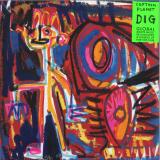
Captain Planet - DIG LP 2x12"

Global Sounds for Modern Dancefloors. Das sechste Album des DJ/Produzenten Captain Planet aus L.A. fängt den globalen Spirit seiner berühmten DJ-Sets ein. Clubs & Festivals rund um den Planeten feiern Captain Plant für seine Fähigkeit, afrikanische, lateinamerikanische und karibische Traditionen mit Hip-Hop, Dancehall und Electro-Funk zu fusionieren. Mit jahrzehntelanger Erfahrung liefert er einen vielseitigen und verbindenden Sound, der die Dancefloors weltweit zum Beben bringt. DIG vereint Sänger aus Brasilien, Kolumbien, Haiti, Nigeria, Ghana und Angola und verwebt ihre Traditionen zu bass- und drumslastigen Tracks mit mitreißender Energie. Die Top-Single "Tony's House" ist eine Neubearbeitung von Tony Allens "Afrodisco Beat", das gefühlvolle Outro "Mi Calor" featuret den langjährigen Koop-Partner Chico Mann.

In stock dal09.06.2026


Last In: 53 days ago
Ximo & Judy - Via Brasil 7"

Ximo & Judy

Via Brasil 7"

7"-VinylSE004SP
Sound Essence
28.07.2025

One of the most outstanding Bossa Disco Jazz productions from West Germany at the beginning of the 80s! This masterpiece captivate with their stylistic perfection and journey from brazilian Bossa Nova to Jazz with a boogieesque Disco influence. Its still on of the most DJ spinned Bossa Jazz dancefloor tunes from W.-Germany in the last 30 years!

The two highly talented, creative and sensitive artists Judy (Jude Enxuto) and Ximo (Ximo Gregorio) had lived in Germany since 1980 and performing in several clubs, small art stages and festivals.
In 1982 they recorded their Debut album "Via Brasil" in Frankfurt am Main. It was released in the same year by the small private record label called Rillenschlange. In the meantime coveted by music lovers, collected by vinyl connoisseurs and and happy to play in DJ sets, the great composition of the Brazilian Izio Gross will be an absolute Evergreen and catchy tune remain. This music production is one of the most essential productions of this genres from West Germany and has more than earned its place on the Sound Essence label. An absolute groovy Bossa Jazz Trip and Tip!

non in magazzino

Ordina ora e ordineremo l'articolo per te presso il nostro fornitore.


Last In: 10 months ago
Balaphonic - Resolution Revolutions

Danny Ward’s 30-year career has been far from predictable. While best known for the musical eclecticism of his Dubble D project, the dance floor-focused nous of his work as Moodymanc and as a member of the groundbreaking 20:20 Soundsystem, Ward’s bulging CV also includes stints drumming for artists as diverse as Fila Brazillia, Rae & Christian, and The Pharcyde, to Jazz luminaries Mat Halsall and Nat Birchall, alongside countless collaborations (Flora Purim and Nightmares on Wax to name but a couple) and numerous evenings spent adding live percussion to DJ sets at iconic Leeds club night Back To Basics.

Now the long-serving Manchester musician and producer has a new project to share via NuNorthern Soul: Balaphonic. Inspired by a mixture of lockdown-era studio experiments, online collaborations, his long-held love for Afro-Cuban and Afro-Brazilian rhythms and a desire to do things differently, Resolution Revolutions is a gorgeously sonically detailed and immersive album that takes Ward’s musical output to a whole new level.

Like many musicians, Ward used the forced lockdowns of the global COVID-19 pandemic to retreat to his basement studio and make music. Focusing on utilising all of the acoustic and electronic tools at his disposal – not least his beloved percussion instruments – Ward took the opportunity not only to draw on a wide range of musical influences and ideas, but also rhythms, grooves and time signatures. As well as composing new tracks from scratch, he also revisited older compositions with fresh eyes and ears.

The results are simply stunning. Ward sets his stall out via the exotic, slow-burn Balearic warmth of ‘Sunflowers in Dub (Deep Summer Mix)’, where echoing whistles, harmonica motifs, sitar sounds, and cascading piano motifs rise above dub-wise bass and seductive, soft-focus beats. The heady, eyes closed vibe continues on the sunrise-ready awakening of ‘Disorganics (All Strings Mix)’, a samba-soaked summer shuffle rich in sparkling acoustic guitars and infectious Latin percussion, and the fretless bass-sporting Afro-Cuban yearning of ‘Six Fingers’.

As Resolution Revolutions progresses, Ward’s deep love of club-adjacent and dancefloor-focused rhythms subtly comes to the fore. There’s ‘Udders’, a hybrid – and hypnotising – fusion of chopped-up South American percussion, marimba-style melodic motifs, looped bass and spacey electronics, and Ocean Waves Brasil collaboration ‘Oxum’, a mid-tempo Afro-Brazilian deep house number wrapped in deliciously dreamy chords and gentle acid lines.

Similarly impressive and inspired is closing cut ‘Bloco Manco’, where Ward peppers a delay-laden Latin beat and a deep, weighty, dancehall style bassline in waves of echoing hand percussion and restless timbales patterns. Stripped-back, raw and seriously sub-heavy, it provides a jaw-dropping conclusion to one of Ward’s most perfectly formed albums yet.

a A1: Sunflowers In Dub Deep Summer Mix
[b] A2: Disorganics [All Strings Mix]

non in magazzino

Ordina ora e ordineremo l'articolo per te presso il nostro fornitore.


Last In: 12 months ago
Charles Petersohn - Children Of Zu Zu EP

Six track EP full of warm deep house music, spacy jazz not jazz, african and brasil rhythms, plus a portion of psychedelic funk poetry.

‚Children Of Zu Zu‘ is Charles Petersohn‘s restart after his previous label release from 18 years ago, besides some experiments on Bandcamp and SoundCloud. On this EP sound merges into each other, is producing an organic flow. Smooth deep house, different kinds of jazz and jazznotjazz, african rhythms, Brasil batucada, psychedelic funk poetry, inspired by Dr. John and most of all the space music and afrofuturist philosophy of Sun Ra and his Arkestra. Soundscapes and atmos in the background of each song give the music a deeper feel. It took its time to get the music ready. There was the desire of having Web Web pianist Roberto di Gioia in the music, took months. But it was worth waiting. Roberto planted some magic moments in to it. On other hand Charles is hyper critic with his own sound. If jumping into to arena again, there should be something special. When he will be okay with every inch of his sonic work, then its done! ‚Children Of Zu Zu‘ became a collage of thick, warm and smooth housemusic, spacy Ambient Jazz and two dancefloor tools with a deep Afro and Brasil feel.

Here we go with six tracks full of love, full of dreams and full of space.

"Children Of Zu Zu" ist Charles Petersohns Neustart nach seiner letzten Label-Veröffentlichung vor 18 Jahren mit dem Pianisten Jasper van't Hof bei "Jaro". Deep House Music, Jazz Not Jazz, afrobrasilianische Jazz-Grooves, Ambient Jazz, eine von New Orleans Legende Dr. John inspirierte spirituelle Botschaft, einen Gesang von Frauen und Mädchen aus Samoa vom "British Commonwealth Sound Archive" und nicht zuletzt die intergalaktische Poesie von Sun Ra und seinem Arkestra. Soundscapes im Hintergrund fast aller Tracks versetzen die Musik jeweils an einen fiktiven Ort. Es hat seine Zeit gedauert, bis die Musik fertig war. Der Wunsch, den Web Web Pianisten Roberto Di Gioia für die Musik zu gewinnen, schien fast unmöglich. Seine Teilnahme verzögerte sich um mehrere Monate, denn Roberto ist ein vielbeschäftigter Musiker und Produzent. Am Ende hat sich das Warten gelohnt. Er hat der Musik einige magische Momente beschert. Auf der anderen Seite ist Charles mit seinem eigenen Material meist überkritisch. "Wenn ich mich parallel zu so vielen großartigen Musikern und Produzenten überall in der Welt und darüber hinaus mit einer eigenen Botschaft in die Welt begebe, muss das schon etwas Besonderes werden!" Nach endlosen Sessions in seinem Mini-Studio ist 'Children Of Zu Zu' um einiges mehr geworden, als er sich vorgenommen hat. Statt zwei, sind es am Ende sechs Tracks und zwei Bonus-Versionen voller Liebe, voller Träume und voller Space, innerspace und outerspace, geworden. Musik für den Dancefloor, für Jazz Clubs, Chill Zones und obendrein für Kinderzimmer!

non in magazzino

Ordina ora e ordineremo l'articolo per te presso il nostro fornitore.


Last In: 8 months ago
Various - Mondo Ritmo

Various

Mondo Ritmo

12inchINVINC37
Invisible, Inc.
17.10.2024

Following on from last years's "Mondo Organico" compilation, the latest Invisible Inc compilation EP "Mondo Ritmo" sets its sights firmly on rhythm and percussion.

Featuring a global array of artists hailing from Argentina to Senegal and everywhere in between, the influences and styles featured include latin, afro, dub, dancehall, experimental, acid and more.
Proven and tested dancefloor bombs are Mytron & Balam's opening track "Cabasa Loca" which label boss GK Machine has been spinning at his Wrong Party nights and elsewhere for the last 6 months or so...and the house/dancehall hybrid floor filler "Wicked Can't Run" by LA producer Tom Chasteen (Exist Dance/Dub Club) featuring legendary Jamaican DJ and toaster U Brown, and mixed by equally legendary producer/keyboardist David Harrow who first came to our attention through his regular keyboard contributions to all things On-U Sound related in the 1980s.

The rest of the tracks may not be peak time bangers but they are sure to please the more esoteric and adventurous dancefloors out there...it's an honour to have on board Calypso Records head honcho Thomass Jackson, Thomash (Voodoohop) and GATS (Suçuarana / Curuba) who together as Changa Boys bring in Senegalese drummer Ndiaxo dal Jaam, and last but not least a certain Machine with assistance on percussion from the mysterious Congo Caveman.

non in magazzino

Ordina ora e ordineremo l'articolo per te presso il nostro fornitore.


Last In: 19 months ago
PALMS TRAX PRESENTS... - THE SOUND OF LOVE INTERNATIONAL #006 LP 2x12"

Love International and Test Pressing commemorate yet another cracking festival with the latest instalment in their collaborative compilation series for their LIXTP label. For The Sound Of Love International #006 they’ve chosen Jay Donaldson aka Palms Trax as their selector. He’s a regular at Love International.

The Berlin-based DJ, known for his eclectic sets and long-running NTS show "Cooking With Palms Trax," delivers a diverse selection of tracks gathered from his global journeys.

The majority of the tracks included were self-released / privately pressed and in many cases the often mysterious artists’ only recorded outings. So, in putting this together Palms Trax has unearthed hidden gems, creating a magical, floor-filling journey through music.

non in magazzino

Ordina ora e ordineremo l'articolo per te presso il nostro fornitore.


Last In: 3 months ago
Novos Baianos - Futebol Clube (1973) LP

2024 Restock

(180 gram pressing) A great 70s album by Os Novos Baianos - a wonderfully youthful group that was one of the bright spots in Brazilian music after the Tropicalia years. Titles include "Sorrir E Cantar Como Bahia", "Dagmar", "Vagabundo Nao E Facil", "Cosmos E Damiao", "Com Qualquer Dois Mil Reis", and "Os Pingo Da Chuva".

A great 70s album by Os Novos Baianos - a wonderfully youthful group that was one of the bright spots in Brazilian music after the Tropicalia years. The band had a style that mixed folksy percussion with honest personal songwriting, plus occasional touches of elements gleaned from the larger influences in Brazilian rock at the time. The album has a sound that's a lot more intimate than later work, with some especially great work on guitar and bandolim, and great production on the band's vocals. Titles include "Sorrir E Cantar Como Bahia", "Dagmar", "Vagabundo Nao E Facil", "Cosmos E Damiao", "Com Qualquer Dois Mil Reis", and "Os Pingo Da Chuva".

non in magazzino

Ordina ora e ordineremo l'articolo per te presso il nostro fornitore.


Last In: 22 months ago
Data Assault - Dor e Miséria

Directly from Brazil, Data Assault steps up to deliver a fast paced 5 track EP, featuring a remix from the outstanding Martinelli. The artist has a solid career of sonic experimentations that are fueled by a radical stance, with productions that inevitably find their way into clubs and sound systems all around the globe. Besides producing his own parties that have been making waves in the local scene in Brasilia.

"Dor e Miseria" is inspired by the Brazilian socio-political disaster which occured from 2018 to 2022, bringing beats treated with lots of compression and distortion, accompanied with aggressive vocal chops and melancholic pads. His fierce production style is joined by Martinelli, who's remix completes the picture and makes an interpretation that delivers everything with a simple approach, combining 808 drums, funky basslines and an impeccable percussive movement.

"Movida Pelo Odio" e "Euforia Sinistra" discharge influences from the dirtiest beats of Grime and 8-Bar Techno, with aggressive synths interspersed by acidic elements that dominate the sonic image of the EP. The last track "Furia Funk" closes with heavily compressed and saturated 909 drums, and 303 acid lines screaming loudly.

non in magazzino

Ordina ora e ordineremo l'articolo per te presso il nostro fornitore.


Last In: 16 months ago
Les Masques - Brasilian Sound LP

At the end of the 60s and early 70s Brazil was a dream. It was fashionable everywhere in Europe and therefore in France too. One thinks of 'Samba Saravah' from the Un homme et une femme OST, Françoise Hardy and her record produced by Tuca, Isabelle Aubret and her 'Casa Forte' or France Gall with 'Zozoi'. Three Brazilian musicians exiled in France, Edson Lobo (bass), Fernando Martins (piano) and Nelson Serra (drums) form the Trio Camara. They met a group of friends who loved Brazilian music, all professional musicians, but who wanted to remain anonymous, hence the name of the band : Les Masques (The Masks)…

Claude Germain (Les double six), José Bartel, Marie Vassiliu, Pierre Vassiliu … Indeed the singers forming Les Masques are from being unknown. In 1969 they entered Studio Davout with le Trio Camara to record "Brasilian Sound". Composed of 11 tracks, it is a superb album, masterfully produced and recorded, a gripping record to listen in one go and transports us in atmospheres both dreamy and naïve which belong to that period. Produced in 500 copies on CBS, 'Brazilian Sound' was not, unfortunately, a success and it is today impossible to find the original French pressing (which sounds much better than the Canadian pressing released at the same time). This reissue on Le Très Groove Club is welcome, so that 50 years after its release, a larger audience can discover this beautiful record, echo of a once and for all past era.

pre-ordina ora08.09.2023

dovrebbe essere pubblicato su 08.09.2023

MILTON NASCIMENTO - ULTIMO TREM

Following the release of Milton Nascimento’s Maria Maria, Far Out Recordings proudly presents Nascimento’s 1980 follow up. With the success of Maria Maria in 1976 behind them, Nascimento reunited with his writing partner Fernando Brant in 1980 to produce another ballet, ‘Ultimo Trem (Last train)’. This time, they chose to tackle a more contemporarily relevant subject, the impact of the closure of a train line that connected certain towns and cities in the North East of Minas Gerais to the coast. “The military government shut down the route and the whole region began to fade away,” explains Milton. “I love train rides” adds the composer, “But today there are almost no trains to Brazil. So when I go to the US and Europe, any time I can, I go by train. The longer the journey the better.”

Featuring much of the same all-star line-up as Maria Maria – including legendary Brazilian musicians Naná Vasconcelos, João Donato, Paulinho Jobim and members of Som Imaginário, amongst many others, like Maria Maria, the album holds what Milton himself considers to be the definitive versions of some of his most beloved tracks, including 'Saídas E Bandeiras' and 'Ponte de Areia'.

The title track, ‘Ultimo Trem’ – performed exquisitely by Zezé Mota with a choir and piano – is a mournful lament about the human consequences of the axed line. The ballet brought great media attention to the campaign against closure. “Most of Fernando’s lyrics have some political tone,” says Milton, “This one helped the area a lot because the politicians grew concerned about the subjects.”

Fernando’s and Milton’s shared passion for the sounds, smells and memories of trains, inspired the soundtrack for the production which premièred in 1980. ‘A Viagem (The trip)’, launched with a train’s steam whistle, sees Milton’s guitar moving to a train’s rhythm. In contrast to the usual lyricism, ‘Bicho Homen (Beastly man)’ and ‘Decreto (Degree)’ are atypically upbeat and funky, their vocals a mesh of wordless male voices resembling the then fashionable Swingles Singers’ renderings of Bach. ‘E Daí? (And so what?)’, and ‘Olho d’Agua (Water’s Eye)’ were both drawn from ‘Clube Da Esquina’. ‘Olho d’Agua’ is mellow and delicate and Milton’s homage to the great voices of Brazil whilst ‘E Daí? (And so what?)’ is a stunning mosaic of voices. The unusual ‘O Velho (The Old Man)’ conjures up an image of an old shaman singing alone into the wind against the cries of nature. Perhaps the most affecting songs are Nascimento’s ‘Itamarandiba’ and ‘Oração (Prayer)’. The latter is a cry for a change in the situation whilst ‘Itamarandiba’ ends with an upbeat, whirling Hammond organ and guitar timepiece. The closing track ‘Ponta de Areia (Sand Edge)’, was based on one of Fernando’s newspaper stories and became one of Milton’s most famous pieces, covered by musicians across the planet, including Wayne Shorter and Earth, Wind and Fire. It reappeared as a ghostly 45-seconds memory on the ‘Milton e Gil’ album, his millennial collaboration with Gilberto Gil.

After 27 years of being locked inside contracts and record company legalities, these sublime songs were finally released in 2003 as a double CD package, along with Maria Maria. Set for its first ever vinyl release for this year’s Record Store Day, on limited edition red vinyl, Ultimo Trem sounds as fresh and relevant now as when Brazilian music was still a South American secret.

non in magazzino

Ordina ora e ordineremo l'articolo per te presso il nostro fornitore.


Last In: 5 years ago
CLUB  INTERNACIONAL - 02

Side A: Band' Azul - Melo Do Fricote
Licensed From Top Tape Musica Ltda ©1982

Side B: Octavio Burnier - Que Nem Sol
Licensed From Top Tape Musica Ltda ©1980

Club Internacional unearth more long lost Brasilian grooves from the archives of Rio imprint Top Tape for lovers and collectors around the globe.

This edition kicks off with the funk-driven sounds of Melo Do Fricote by Band' Azul.
Fusing rapturous vocals, guitar and horns this track originally appeared in 1982 and was the band's only 45 single release.
Here it is in its original format at last.

The flip side features the much more established artist and celebrated guitarist Octavio Burnier. As one half of Burnier & Cartier he produced one of the most sought after LPs in Brasilian music in 1974, which became like gold dust to collectors of Brasilian music. It was recently reissued by the excellent Mr Bongo to the relief of all lovers of Brasilian sounds.

In this later solo track 'Que Nem Sol', Burnier demonstrates his exquisite guitar playing as well as his talents as a composer and singer.
A seriously delicious slice of soft boogie funk it was released only on 45 single on the Top Tape label back in 1980, and again has never been repressed.

Club Internacional hopes you enjoy bringing these long lost, blissful funk vibes back to life via this limited edition vinyl 45 pressing.

non in magazzino

Ordina ora e ordineremo l'articolo per te presso il nostro fornitore.


Last In: 5 years ago
CLUB INTERNACIONAL - 01

Club Internacional dig deep to launch their new global reissue series in style with two long lost cuts from Rio-based label Top Tape. First up is Jose da Silva aka Zeca Do Trombone.
A massively respected instrumentalist, he has worked his trade over the years with many of Brazil's leading artists such as Tim Maia, Milton Nascimento, Elizeth Cardoso, Beth Carvalo, Martino Da Vila, Gonzaguinha and Carlos Dafe amongst others.
He also produced a very much sought after LP in 1976 alongside Roberto Sax which was finally re-released this year on Mad About Records. Tema Do Brisa dates from a few years later in 1978 and is Zeca's only solo 45 single. Never released on digital and never reissued on vinyl before, it is with great pleasure that Club Internacional re-launch this psychedelic jazz and heavily funk influenced gem with its still stunningly fresh sounding drum patterns to a new generation of listeners. Fans of jazz, funk, rare groove and Brazilian music in general will appreciate the strong vibes of this original track and be delighted to finally have this record in their hands. The track represents a unique moment in the career of a great musician fully in control of his instrument and more than willing to test its musical boundaries. Zeca continues to play out as an artist regularly in Brasil right up to the present time.
On the flip side, Sambacanas, or Os Sambacanas as they were sometimes also known, were a group of Samba musicians recorded by the Sao Paulo based producer Julio Nagib.
Although they were mostly known for a samba covers LP entitled 'Sucessos Da Juventude Em Tempo De Samba' (re-released in the UK under the title 'Fly Me To Brazil'), this song, Panga, Danga, Panga, was the A side of their only 45 single release for Top Tape which came out in 1976. Again this track has never been re-released before in its 45 single version, and has not been made available digitally. A beautiful example of raw and simple Batucada-style Brazilian samba music infused with Latin funk vibes, it features excellent vocals and percussion including the berimbau and cuica. Club Internacional hopes you enjoy this journey back to rediscover these very different, but wonderful, long lost sounds of Brazil on this limited edition vinyl 45 pressing to add to your record collection. Each Club Internacional edition may take some time, but it will be worth the wait!

non in magazzino

Ordina ora e ordineremo l'articolo per te presso il nostro fornitore.


Last In: 20 months ago
Various - Displaced Soundtracks Vol.2 2x12"

Continuing on the thematic thread of soundtracking an imaginary short movie, label founder DJ Tennis aka Manfredi Romano, asks some of the greatest contemporary club producers to take on the task of interpreting this idea in their own unique style. Romano explains that 'the score is a translation of our imagination, memories and emotions into music, with no protocols.' Opening the soundtrack, Vatican Shadow swaps his thunderous techno for a more cosmic and gentle approach, setting the tone for an equally serene soundscape from London based DJ and producer Midland. Japanese Future Terror head honcho, DJ Nobu, layers dense cerebral textures exuding the punk spirit of Life and Death. A similar rule defying energy can be heard by Ninos De Brazil who fuse carnival percussions with straight up old school techno. Both Scuba and Uchi bring the futuristic synths of a space age tomorrow we've all been waiting for. German producer Isolee interprets the task with his minimal productions and Italian producer Cosmo closes the compilation with Psychedelic Soundscapes turning into a distorted gabber missile. As the decade edges closer to it's decade anniversary, Romano proves yet again that Life and Death is a label which evolves through each reincarnation of itself, never failing to impress.

non in magazzino

Ordina ora e ordineremo l'articolo per te presso il nostro fornitore.


Last In: 5 years ago
Mantequilla Y Su Conjunto - Mantequilla Y Su Conjunto
  • A1: La Tuna Club (S. Mantequilla' Font)
  • A2: Azul Trompeta (S. Mantequilla' Font)
  • A3: Whisky Jazz (S. Mantequilla' Font)
  • A4: Jamboree (S. Mantequilla' Font)
  • A5: Blue Note (S. Mantequilla' Font)
  • A6: Full De Ases (S. Mantequilla' Font)
  • B1: Moanin' (Timmons)
  • B2: Not Problem (Marray)
  • B3: Blues 3/4 (S. Mantequilla' Font)
  • B4: Atmosfera (S. Mantequilla' Font)
  • B5: Vat 69 (S. Mantequilla' Font)
  • B6: Balada (S. Mantequilla' Font)

Salvador Font studied violin, clarinet, composition and harmony at the Conservatori Municipal de Barcelona, but very soon started to gain notoriety as a saxophonist in the rich jazz scene of 1940s Barcelona. Font would soon be playing tenor sax and clarinet in the Orquesta Gran Casino. He was in his early twenties and his hot swing technique was already praised through the citiy's scene, he would grow to be considered the best saxophonist in Spain by playing in many orchestras and combos, among them: José Puertas', Antonio Vilá's Virgina, Bonet de San Pedro's band, Pierre Michel, El Lirio Campestre, Los Marios, Luis Rovira y su orquesta, Orquesta brasileña Fon-Fon, Jaime Camino, Los Embajadores, Italo Leone's... With these and others, Font toured constantly, visiting many countries and even staying on some for long seasons: Mexico, Morocco, Switzerland, Egypt... Hungarian violinst of Turkish ancestry Kurt Dogan gave him the "Mantequilla" surname - he felt "Mantequilla" (which means "butter") fit Font's mellow yet swinging improvisation style.

Mantequilla y su conjunto

In the early sixties, "Mantequilla" had the chance to lead his own combo, Mantequilla y su conjunto, with which he was to record the three splendid EPs that are compiled on the present album. All these 7" have become elusive collector pieces in the record market, with sellers demanding from 200 to as much as 950 euros per copy.

In 1961 "Mantequilla" was at his best moment, his gigs at the Jamboree Jazz Cava had brought him back to the first line of Barcelona's jazzmen after he had been working abroad for a long time, and was approached by the Belter label to record an EP. On the sessions he was accompanied by Manolo Mercedes on trumpet, Pedro Ferré on piano, Rafael Lizandra on double bass and Rafael Verdura on Drums. The material chosen for the disc were four original compositions by Salvador Font which had a high West Coast flavour all over: "La Tuna Club", "Whisky Jazz" and "Jamboree" named after famous jazz clubs and "Azul Trompeta", dedicated to Manolo Mercedes.

In late 1962, after spending some time in Madrid working as members of the Italo Leone combo, "Mantequilla" and pianist Manuel Gas came back to Barcelona for the recording of the second "Mantequilla" EP, also on Belter. We find again Manolo Mercedes on trumpet, Pedro Ferré on piano and Rafael Lizandra on double bass, the drummer this time was José Farreras. Another news is that Manuel Gas also sat on piano and vibraphone. The songs chosen for the occasion were two tunes from the Art Blakey Jazz Messengers repertoire: Bobby Timmons' classic "Moanin'" and the Jacques Marray track "No Problem" from the soundtrack of the Les liaisons dangereuses film (mispelled "Not Problem" on the sleeve and label), plus the Salvador Font penned "Blue Note" and "Full de ases" - on "Full de ases" "Mantequilla" trades his sax for the violin, which he also mastered under high influence from Stephane Grapelli. The record was released on Belter in early 1963 and showed "Mantequilla" adding a certain aggressivity to his sound, in a soloist style which has been compared to that of tenor saxophonists Barney Wilen or Benny Golson.

1965 was the year of release of Mantequilla y su conjunto's third EP, now on the Discophon label. Mercedes and Farreras are again present in the recording sessions, joined by Ricardo Miralles on piano and Enrique Ponsa on double bass. Four original Font compositions make up the fantastic EP: "Blues 3/4", "Atmósfera", "Vat 69" and "Balada".

There would be a further EP on Belter, released in 1971 as Mantequilla Group it was a cash-in operation to take some redits of the ye-yé discothèque phenomenon, it gets quite afar in style from the jazz works of Mantequilla y su conjunto, so we just left it aside for the present edition.

"Mantequilla"'s career would continue, in 1968 he would settle in Majorca and form a swing band with Bonet de San Pedro and Manuel Bolao. He played in local orquestras and also with first class world acts like Gerry Mulligan, Tete Montoliu, Errol Gardner, a.o. He was even approached by Henry Mancini to play sax on The Pink Panther Theme in a gig Mancini did with his orchestra in Palma de Mallorca in 1975, He also joined his son Salvador Font (a demanded drummer himself who has played with Máquina!, Orquestra Mirasol, Música Urbana, Gary Burton Quartet, Georgie Fame, and many others) and his peers Carles Benavent, Emili Baleriola, Josep Mas 'Kitflus' and Jordi Bonell with whom he recorded his acclaimed "Mantequilla" album in 1987.

Now, for the first time ever, the legendary three ultra rare and imposible to find EPs by Mantequilla y su conjunto are compiled in a lavish vinyl LP with remastered sound, featuring liner notes and photos and a fantastic period inspired, three backflaped, front laminated sleeve. It is a stricly limited edition of only 500 copies and they are expected to sell out very soon, do not miss your chance of getting yours - it may be the last chance of chasing the Mantequilla sound on vinyl at a reasonable price!


l

non in magazzino

Ordina ora e ordineremo l'articolo per te presso il nostro fornitore.


Last In: 7 years ago
Gui Boratto - Pentagram LP 2x12"

Gui Boratto

Pentagram LP 2x12"

2x12inchKOM387
Kompakt
15.06.2018

It's been over 10 years since the release of Gui Boratto's breakthrough full length debut 'Chromophobia'. As to what its title suggests, he shook up the techno game with a contrast of lushly coloured minimal grooves and melody, whilst many will recall that the album included the highlight single Beautiful Life' which became a dance floor anthem for that era. Four albums in and countless EPs and remixes under his belt, the Brazilian producer's unique savoir-faire in carving out a functional album out of diversely routed singles and features is back at it on his fifth studio LP, 'Pentagram'. Here Gui Boratto lays down a nuanced 12-track narrative that reinvigorates his signature sound into a refreshingly different perspective that feels all too familiar - including the return of Beautiful Life' vocalist (and Gui Boratto's wife) Luciana Villanova on the single "Overload".

Through his signature kaleidoscopic approach, Boratto delivers an album built as a far-reaching hub-and-spoke system, broadly inclusive as can be. From the opening cut, 'The Walker' - hot on the trail of Tears For Fears 'Elemental' (one of Boratto's "favourite 80's bands") - to the hi-NRG euphoria of 'Forgotten' and its pounding tech alter ego 'Forgive Me'. "I was going into 2 different directions", Boratto says, "the typical indie- electronic-rock' Boratto kind of production like It's Majik' or Like You' and a much more techno approach." He goes on, "I decided to split them into two twin sister songs. When I play live I always put these two songs together."

The Brazilian Producer further embraces the pop-friendly essence of his past work on tracks like 'The Phoenix', featuring vocalist Nathan Berger, and 'Overload', both melding acidulous synthlines with laser-precise breaks, vox hooks and drops calibrated for extended radio and club use, although sieved through his distinctive rainbow-hued musical prism. For the symbolists out there, the album's pared-down closer '618' duration accidentally happens to equate the proportions of the said pentagram. "Coincidence" Boratto questions, and capsulises, "not so ufanista and supporter of Brazilian neo-concretism, but I guess the brazilian sculptor Lygia Clark also inspired me a lot. Not the meaning of her sculptures, but the shape of the hinge of most of her work. I've wanted to transmit the scientific pentagram's point of view. It's not a religious kind of thing."

Whereas 'Spur' (a field-tested 808 and 909-heavy "purist track", "very, very old school" Boratto insists) and 'Alcazar' are sheer smooth-edged four-to- the-floor epics, the album also shares its lot of startling moments, such as with the John Barry'esque 'Scene 2' (with a hint of Amon Tobin, 'Easy Muffin' style, throw in) and its refined string-laden buildup, 100% fitted for a 007 opening credit sequence, or with 'Hallucination' (feat B.T.) and the further James Holden-ish title-track 'Pentagram' (think 'The Idiots Are Winning'), "one of those exercises I did when I got my Buchla modular synth" Boratto analyses, "I think I've used more then 30 different snares, with different delays and reverbs. The whole song is alive". And so is 'Pentagram' in its entirety: alive and definitely just as manifold and hopeful as its architectonics are the stuff of science and dreams all at once.

Es ist zehn Jahre her seit der Veröffentlichung von Gui Borattos bahnbrechendem Debütalbum - Chromophobia . So wie der Titel vermuten ließ, war das Album mit seinen kontrastreichen Minimalgrooves und den üppig gefärbten Melodien ein Schocker im besten Sinne. Ihr erinnert euch sicher noch an die Hit-Single - Beautiful Life , eine Dancefloor-Hymne aus dieser Zeit. Nach vier Alben und unzähligen EPs und Remixen ist das einmalige Savoir-faire des brasilianischen Produzenten, aus vielfältigen Singles und Features stimmige Alben zu schaffen, auch auf seinem fünften Studioalbum - Pentagram zu hören. Hier legt Gui Boratto ein Zwölf-Track-Narrativ vor, das seine Handschrift auf erquickende Weise wiederbelebt. Wiederbelebt wird auch die Stimme von - Beautiful Life (die der Frau Gui Borattos gehört) auf dem Stück - Overload .

Durch seinen charakteristisch kaleidoskopischen Ansatz liefert Boratto ein Album, das gebaut ist wie die Speichen deines Fahrrads, von dem Opener - The Walker - direkt auf der Spur von Tears For Fears - Elemental (einer von Borattos - favourite 80's bands ) - zur Hi-NRG-Euphorie von - Forgotten und seinem stampfenden Counterpart - Forgive Me . - Ich bin in zwei unterschiedlichen Richtungen gegangen , sagt Boratto: - den typischen ,Indie-Electronic-Rock'-Weg wie in - It's Majik oder - Like You und den Techno-Weg. Er fügt hinzu: - Ich hab mich entschieden jedem Track seinen Zwillings-Track an die Seite zu stellen. Immer wenn ich live spiele lege ich die zwei Stücke zusammen.

Der brasilianische Produzent erschließt weiter die Pop-Essenz seiner vergangenen Arbeit auf Tracks wie - The Phoenix (feat. Nathan Berger) und - Overload . Beide kombinieren zwitschernde Synthi-Melodien mit lasergenauen Breaks, Hooklines, Drops und sind wie gemacht für die Rotation und den Club. Und für die Symbolisten da draußen: die Länge des reduzierten Closers - 618 beträgt zufälliger Weise genau die Proportionen des besagten Pentagramms. - Fügung , fragt Boratto und fasst zusammen: - Ich bin kein Anhänger des brasilianische Neo-Konkretismus , aber ich glaube die brasilianische Künstlerin Lygia Clark hat mich sehr inspiriert. Nicht die Bedeutung ihre Skulpturen aber die Form der meisten ihrer Arbeiten. Ich wollte den wissenschaftlichen Blickwinkel auf das Pentagramm übersetzen. Nicht im religiösen Sinne oder so."

Während - Spur (ein erprobter - purist track auf der Basis von 808 und 909, - sehr, sehr old school , wie Boratto betont) und - Alcazar glatte Vierviertel-Epen sind, hält das Album auch Überraschungsmomente bereit. Z.B. das John Barryschen - Scene 2 (auch eine Spur von Amon Tobins - Easy Muffin ist darin zu hören) und seinem Streicher-Aufbau, der hundertprozentig geeignet wär für eine Eröffnungssequenz in einem Bond-Film. Auch - Hallucination (feat. B.T.) oder der James-Holden-hafte Titeltrack - Pentagram (wir denken da an - The Idiots Are Winning ) wäre da zu nennen. - Einer dieser Übungen, die ich gemacht habe, als ich meinen Buchla-Modular-Synthesizer bekommen habe, war , erinnert sich Boratto, - mehr als 30 verschiedene Snares, Delays und Reverbs zu verwenden. Der ganze Song sollte am Leben sein. Und so ist - Pentagram im Ganzen: lebendig und sicher genau so vielfältig wie sein Bauplan, der auch der Wissenschaft und den Träumen zugrundeliegt.

non in magazzino

Ordina ora e ordineremo l'articolo per te presso il nostro fornitore.


Last In: 3 years ago
Toyz On Acid, Matt Nowak - Introducing

Mit seinem 4. Release ' Introducing' auf Zaijenroots präsentiert Matt Nowak ein herausragendes DJ Tool für ein breites internationales Publikum der Elektronischen Tanzmusik. So verschieden wie die Künstler selbst, so verschieden sind die 4 Tracks. Toyz on Acid - Hawaiien Teacher, Das mysteriöse Duo mit einprägsamen Namen kreierte eine narrative Techno Hymne, die mit Sicherheit in die tiefsten Tiefen der Darkrooms der Clubwelt vordringen wird. Eine punchige Sp1200 Kickdrum und ein düsteres Rauschen wird immer wieder unerwartet mit futuristischen Sounds und einem treibendem Shaker begleitet. Ein innovativer Dancefloor Kracher! Must have! Heroine from Venus mit Sabine Hoffmann ist eine acosmische Reise mit treibendem Breakbeat und knackigen Snaredrums. Warme sphärische Synthsounds unterstreichen die anmutige und heroische Stimmung dieses Tracks. Matt Nowak und Apoena aus Brasilien haben mit Dub Rout' einen Big Room tauglichen Dub Techno mit Primetime Qualität geschaffen, der sicherlich kein Tanzbein still stehen lässt. Durchgehende Hats und eine extrem punchige Bassdrum machen diesen Track zum perfekten DJ Tool. Happy Handsome von Matt und SRA SRA rundet die Platte sehr gelungen ab. Ein melanchoilisch, treibender Techno Track, nach Zaijenroots Manier. Die klatschende Snaredrum und deepe Moog- Bassline, bringt die nötige Wärme auf den Techno Dance Floor zurück, die heute leider so oft fehlt.

non in magazzino

Ordina ora e ordineremo l'articolo per te presso il nostro fornitore.


Last In: 7 years ago
  • 1
Articoli per pagina:
N/ABPM
Vinyl