
non in magazzino
Ordina ora e ordineremo l'articolo per te presso il nostro fornitore.
Last In: 4 years ago
Ordina ora e ordineremo l'articolo per te presso il nostro fornitore.

Bathurst is pleased to announce the return of The Motion Orchestra with their new single Sonorous taken from their forthcoming album All One set for release in 2020.
Formed in 2017, this studio project consists of Alexander Bednasch on Double-Bass, Mark Matthes on Violins, Andy Sells on Drums and David Hanke on electronics and production. Though influenced heavily by Neo-Classical and Jazz sensibilities they occupy a musical space that sits in neither sphere, with a compositional style that deftly fuses the orchestral and electronic worlds.
Their debut single – All One was a gorgeous piece inspired by the notion that everything comes from the same source, the same starting point. And it was well received, garnering support from BBC 6Music and Bandcamp Weekly.
Second single Sonorous is just as elegant as their first offering and looks set to continue the upward trajectory the band are currently on. Starting witha repeated electronic motif, it incorporates piano chord harmonics, tasteful bass notes, and swirling jazz drum patterns that interplay wonderfully with beautiful string arrangements, altogether creating a truly captivating character.
The release is comprised of both the original version as well as a the arrangement without the drums. The Motion Orchestra is currently in the process of producing their live show for performances of the debut album.
Ordina ora e ordineremo l'articolo per te presso il nostro fornitore.

'Sonorous Waves' is the new label run by Roberto Bosco. ... A label born to give free rein to his creativity and to release new stuff and unreleased music. Now you can listen to this first EP, which is part of the series 'Il Crononauta'. Music allows to escape and travel, somehow even over time!
Ordina ora e ordineremo l'articolo per te presso il nostro fornitore.
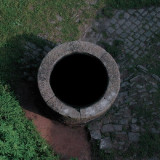
The album opens with the ominous guitar-driven Hollow Sky, accompanied by its haunting music video's verdant vistas. The song, with Iceglass ghostly vocals, shimmers with that sounds like an Omnichord flittering like sonic firefly lights and brooding bass. This perfectly scores the less traveled wanderings through the dark wooden path of Dante's perdition, leading to the titular well that graces the album cover. The Crater opens with an unsettling riff and bass, with low, repetitive frequencies on the synth create a sense of unease. Here, Iceglass recounts a fatalistic requiem for the king of romance that is cataclysmic and leaves a scar upon the earth. With Fall Industrial Wall, once again, Iceglass channels a silky and Nico-like emotive deadpan; against a dirgelike melody backed by minimal synth, bass, and drum. Almost medieval and plaintive, with its folk droning horns, deep and shallow in their resonance. This song is anachronistic, setting the scene of ruins centuries-old with crumbling edifices strewn about like memories lost in time. With the poetic lyrics of The Chamber do we find the eponymous abyss. Here, dualities are laid bare; besides love, there is heartbreak, and without this sorrow, what meaning would there be to love if one knows not what it is to lose? This song encapsulates the idea that love is heartbreak, and love lost is reaching the deepest chamber of the heart. This is carried through a sombre horn, minimalist drum machine, and deliberate bassline overlaid with Iceglass german and english lyrics. The Well is led in with a softly distorted bassline overlaid with eerie banshee howls give way to Iceglass otherworld vocal refrain, echoing through time as if emanating from a hole in the ground, and encircling that hole is a garden of woe and despair. The sinfully seductive song The Moor features a captivating SAX SOLO courtesy of Perseas; a welcome shift in tone, juxtaposed well with the intensity of Iceglass tenebrous vocal purr. This hitherto unexplored foray into dark sensuality takes the song into sordid mid 80s territory, bringing to mind a dusky drive along a serpentine road, with equally haunting instrumentations straddling time with icy fire. Broken Characters is an acoustic folk interlude featuring Selofan's Dimitris Pavlidis on guitar. Here we find a more gentle approach with its earnest and romantic lyrics. The song's melodic hook is a soft caress along with the forlorn horn elements highlighting Iceglass at her most Nico-sounding vocal yet, singing the sorrowful truth that most artists are indeed broken characters. Chimerical opens with dirgelike synth organs. The chill of winter has befallen the lamentations sung by Iceglass carried by haunting chord progressions and minimal percussion, plaintively beseeching the song's subject to remain elusive, idealistic, and a dreamer. After an album highlighting more Jill than Jack, our male protagonist finally makes his ascent in the sonorous and breathtaking Dark Hill, a masterful march of sweeping synth horns, and trepidatious drum machine with William Maybelline's bellowing voice cracking like thunder, rattling the atmosphere like his heart against his ribs. Spirals swirls in a cautionary knell of cathedral-esque droning synth dirge, with Icarian lyrics shining like a sombre ray of hope; like the sun's rays creeping into the darkest of places. The song, minimalist in its tight percussion, echoes with the solace of Larissa Iceglass vocal litany; invoking elements of the supernatural, almost like a Casio preset sequenced to the beating of an angel's wings.
dovrebbe essere pubblicato su 27.03.2026

A cocktail of rebellious queer vocal fragments, deceptive percussive granules and swaying hammered vibrations, upsammy and Valentina Magaletti's first collaboration trembles with suspense. The seeds of 'Seismo' were sown following a commission from Amsterdam's Rijksmuseum to soundtrack an exhibition of work from the Museum Boijmans van Beuningen in Rotterdam and the duo didn't want to approach their collaboration flippantly. So, wandering the museum's maze of rooms, they recorded various improvised percussive sounds with their arsenal of microphones, using the space to inform various rhythms and textures that were sculpted later into electroacoustic vignettes. This was just the starting point, though; as Magaletti and upsammy began performing together, the project evolved and 'Seismo' began to take shape. The duo had struck on a salient aesthetic concept, using mostly digital and acoustic mallet instruments to blur the boundary between their roles and create friction between the synthetic and the authentic. And the finished record is a phantasmagoric push-and-pull between its various conflicting elements: harmony and dissonance, randomness and predictability, openness and constraint. 'Seismo' isn't the first time that upsammy has studied her environment in search of revelation. On her acclaimed second album, 2024's 'Germ in a Population of Buildings', the Amsterdam-based DJ, producer and multidisciplinary artist erected her complex, unorthodox rhythms and eerie melodies around a modernist frame of field recordings collected in various cityscapes, countering heavyweight basslines with subtle, microscopic sounds. London-based Italian vanguard Magaletti, meanwhile, has applied her unique logic to innumerable projects at this point, working with everyone from batida icon Nídia and hardcore-dub outfit Moin to French writer Fanny Chiarello and British bass scientist Shackleton. For years she's approached the drums with criticism, attempting to challenge any preconceptions, something that's most visible on 2020's 'A Queer Anthology of Drums'. And both artists' thoughtful perspectives are welded together seamlessly on 'Seismo', a dizzying suite of eight eccentric statements that's fragile but never insecure, gauzy but not indistinct. An unnerving sense of space characterizes 'It Comes to an End' as Magaletti's in situ improvisations herald for upsammy's microscopic glitches and chiming pitch-bent melodies. It's almost unbalancing to witness the track's impossible dimensionality, the interplay between reverberant marimba hits and bone-dry synths, or percussion that's been recorded and processed in consciously different settings. A new architecture emerges in the sound itself that the two artists scan and explore meticulously, testing its boundaries with undulating hybridized rhythms on the invigorating 'Superimposed' and offsetting the powdery drums with liquified smacks and alien voices. The duo's vibrations are knotted with piano flourishes on 'Hyperlocalize', balanced with artificial clanks and clangs that disappear into the track's sonorous atmosphere, replaced by whispers and half-hallucinated insectoid chirps. 'Seismo' is an album that feeds off the energy generated by its juxtapositions: the tension and anticipation that's melted by rapid, hyperactive movement and the finely drawn rhythms disrupted by a layer of indistinct, barely perceptible microsounds. It's a collaboration that sounds like two minds challenging each other but not wrestling, each peering from their own distinct vantage point and imagining a third landscape shaped by optimistic, queer vibrations.
dovrebbe essere pubblicato su 10.04.2026
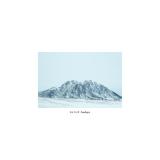
London-based musician, composer, and NTS resident Kit Grill presents his extraordinary new album 'Andøya', inspired by a solo residency on the eponymous Norwegian island, a profoundly dramatic territory situated in the Vesterålen archipelago, inside the Arctic circle.
With evocative, sonorous ambient, drone, minimalism, experimentalism, and modern classical music, Grill captures the environmental essence of a remarkable region; an isolated Nordic landscape of small coastline villages, raw peatlands and sublime mountain ranges, surrounded by wide, open views of the Arctic ocean.
Drawn from his experience on solitary excursions around the island - hiking, exploring, and encountering the locals - 'Andøya' is a beautifully stark, stirring exploration of acoustic phenomena, seclusion in nature, and the expressive power of unique landscapes. For Grill, the trip entailed a surreal day-night cycle, and his experience has had far-reaching, existential implications, both for his practice and his perspective:
"On the 8th January 2025 I travelled to the Norwegian island of Andøya, in the Arctic Circle for a three week solo residency. Surrounded by sea, snow, and mountains, I lived in isolation and travelled around the island each day documenting the landscape. At 10am, the background light of the sun beneath the horizon would light the day and in the 4 hour window of light, I would hike into the mountains and explore the wilderness. It was a profound experience that changed the way I thought about sound, solitude, and what it means to be alone in nature."
"Since returning, I created a body of music informed by that time to try and capture the vastness and unpredictability of the Arctic landscape. The album moves through the sensory extremes: ice cracking, storms forming and fading, the rumble of tectonic plates, waves crashing, harsh winds, trudging through snow, and the sharpness of freezing air. The album aims to reflect both the landscape itself and the shifting emotions that came with living in isolation and the Arctic environment. The music and photography serve as a recorded diary of my time there, documenting the experience."
dovrebbe essere pubblicato su 10.04.2026
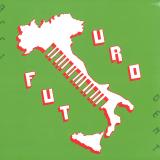
Influences and inspirations come from far and wide. Sometimes they can be household names or pioneers. Other times, they can be lesser-known outfits; less known, but no less influential. Futuro belong to the latter category for Italo Moderni.
Javier and Raúl are two Spanish synthesizer sorcerers who are steeped in the traditions of italo disco and the analogue sounds of the 1980s. While Italo Moderni was still in its infancy, Futuro were a shining light with a young upstart by the name of Adrian Marth even making videos for their tracks. From these beginnings, a mutual respect and friendship developed. Now, the circle is complete with the six tracks making their way onto Accidenti; an EP that marks Futuro’s debut on Italo Moderni.
The collection showcases the breadth of Futuro’s sound. With all instrumentation played through classic analogue machines, the six works journey through neon-streaked city nights, deep uncharted jungle and sun-kissed beaches. Drawing on the music of Rimini, silver screen soundtracks and arcade innocence, this is an EP that remembers and reimagines the 1980s. Intent is immediately set, with the tense and textured “L’assalto” delivering movie score synth stabs alongside crisp percussion. “Matador” is pure elegance, panpipe playfulness countered by glacial refrains and shimmering key shifts. “Iguazu” transports the listener to the wildlife and wilderness of the Amazon; cascading chords glisten as the canopy sings. Futuro takes to the skies with the sonorous swoops of “Il sogno dell’aviatore” before the lovelorn landing of “Fantasma d’amore”, a sumptuous synthesizer serenade of unrequited romance. To close, we’re firmly on the ground for “Sotto le stelle.” Under these sparkling stars, glimmering notes glow with warmth in a finale fitting for such an EP.
And, it is fitting to finally have Futuro on Italo Moderni. A group that has inspired and will continue to do so well into the future. An accidental discovery, mutual respect and a partnership rooted in a love of synthesizers has brought Accidenti into being.
Disponibile in Stock e pronto per la spedizione

The writer Max Sebald often pondered over the nature of human memory, specifically, how our thoughts and desires - and their results - overlap and mutate over time. In A Place in the Country, he writes of the significance of what see as “similarities, overlaps and coincidences”. Are they the “delusions” of the self and senses, or manifestations of “an order underlying the chaos of human relationships, ... which lies beyond our comprehension”?
Song of the Night Mists, the new album by post-classical composer Stefan Wesołowski, often feels it draws on Sebald’s premise.
On a simpler plane, the one where the market dictates the neatly ordered information we consume, Song of the Night Mists can be described thus: recorded in the main by Stefan Wesołowski in Gdańsk, both in his studio and in Saint Nicholas' Basilica, the album incorporates acoustic instruments - piano, violin, double bass - and classic synthesizers such as the Roland Jupiter-8, the Soviet Polivoks. A Roland Space Echo RE-150 tape delay was also pressed into service as an instrument. We also hear the basillica’s organ and field recordings from the Tatra Mountains. Other musicians were Maja Miro, who played the flute parts on ‘Glacial Troughs’ and brother Piotr Wesołowski, who played the organ on ‘Wilhelm Tombeau’. Sound engineer was Marcin Nenko, who was also on hand to record the basilica organ parts. The album was mixed in New York by Al Carlson (Oneohtrix Point Never, Jessica Pratt, Zola Jesus, Lady Gaga, and Liturgy) and Rafael Anton Irisarri handled the mastering.
Ostensibly, Song of the Night Mists is the last in a trilogy, following on from albums Liebestod (2013) and Rite of the End (2017). All three deal with existential matters such as love, death, decay and “an ultimate end”; apocalyptic and Promethean in spirit, and betraying very human conceits. The Sebaldian nature of the new record starts to make itself felt when Wesołowski talks of how he used sampling. One element is unexpected, that of sampling himself: “I go back to dozens of my own unused sketches and recordings, treating them as raw material to cut, slow down, reverse, and transform in every possible way.” Memory as sound, to be reemployed by the listener through their own imaginings.
Another set of samples made by Wesołowski plays another role. These are field recordings, originally created for an audio illustration of the formation of the Tatra Mountains, and used in a film by sound designer Michał Fojcik. Wesołowski: “You can hear cracking ice, streams, footsteps in the snow and the wind, and a real avalanche, recorded from the inside.” The “Tatra connection” on the album is also found in samples referencing composer Karol Szymanowski. The album’s title alludes to a poem about the mountains by Polish poet, Kazimierz Przerwa-Tetmajer.
Wesołowski’s Tatra recordings are “about a world without humans - about the fact that the world existed, was beautiful, and had meaning long before people arrived, and for the vast majority of its history, it was a place without us.” Wesołowski, using one iteration of the natural world, plays out in sound Sebald’s idea of another order, underlying the chaos of human relationships lying beyond human comprehension.
These feelings play themselves out on the five album tracks. Sonorous and rich, they illustrate tectonic shifts we have no control over. Wesołowski hints that the overall sound is a “meditation on the metaphysics of the non-human set against the spirituality that human presence has brought into it.” In that light, the opening number, ‘Core’, with its slow build, and crackling and straining sound effects, create an effect of the earth groaning into life in a creation myth. Once the piano part raps out a simple melody and modulated tonguing trumpet samples add to the overall atmosphere, the listener can certainly find a cue in the “spiritual”, or “human” side of the story. Human versus nature: from the strains and harmonic muscle stretches of the second number, ‘Glacial Troughs’, through to the powerful and filmic ‘Stalagmite’ and heart-on-sleeve romance expressed in closer, ‘Wilhelm Tombeau’, we listeners are cast as Friedrich’s wanderer, looking out over a landscape that will appear only if we engage with it.
Formations of melody appear incrementally, almost appearing by chance - like hidden footings in the rock shelves to give us something to grasp onto. Rhythms are used sparsely: the prolonged percussive taps on ‘Glacial Troughs’ are an anomaly and maybe there to give pace to the album to come; essentially to keep the listener strapped in. Elsewhere, percussion is used as an aid to mood, the two thudding, timpani-style passages on ‘Peak’ there to offset the short, beautiful, kosmische passage that splits them.
Elements of the borderline religious spirit that drove German electronic music in the late 1960s and 1970s also find a place on Song of the Night Mists. The swells and recessions of the organ find their emotional climax on ‘Wilhelm Tombeau’, a track which summons up echoes of the “mountain magic” vistas created by Popol Vuh or Tangerine Dream, especially with the slightly atonal wobble of the Mellotron that counters it.
This is a dramatic album, but it does feel a strangely short, or curtailed listen on ending, evoking the feeling one gets when waking from a dream, and, for all its incipient grandeur, a track like ‘Stalagmite’, for instance, ends on a minor note. Wesołowski admits that Song of the Night Mists is born of the all too human process of temptation, doubt and recalibration - Sebaldian overlaps and coincidences forming something that must live another life, away from its creator. In Wesołowski’s words, the album is “a newborn foal must stand up and walk right after birth.” Now it is yours to ponder.
Disponibile in Stock e pronto per la spedizione

In the late 1980s, Klaus Wiese (Popol Vuh) deepened his connection with Tibetan culture. The result is a series of works solely dedicated to the universal purity of the Singing Bowls. Uranus, perhaps the most rigorous of these, is an intense meditation on the trans-personal sphere of the VI chackra. The music becomes like a single harmonic chant, the reflection of a constant flow of divine light, which transforms the psyche and dilates the secret passages of the heart. In the galaxy of pure sound, the accumulated overtones offer the intrepid listener the access to a prismatic, fluoriscence-rich consciousness. The ego thus becomes the sonorous composer of itself, of the vital circle flooded with beneficial acoustic vibrations. In this sense, Uranus, originally published on tape (Aquamarin Verlag/1988), also marks a parallel with the same research by Henry Wolff & Nancy Hennings or Nada Himalaya's Deuter.
Questo articolo non è stato ancora rilasciato. È possibile pre-ordinare il prodotto ora.

Slow-moving finger-picked ambient folk straddling the synthetic and organic divide – that is “The Ending Was A Typical Part”, the first album by the Zurich-based duo Gūsū. It combines the tradition of playing the guzheng with electronic instruments, allowing different yet harmonious worlds to collide.
The collaboration between Xueyan Chen and Nicolas Balmer alias Gūsū was born out of their shared musical explorations in 2022 and has evolved into a dialogue of sound. Chen’s guzheng, an instrument deeply linked to Chinese history, resonates with improvised and self-composed melodies, freeing its pentatonic scale from its traditional bounds. Her playing is underscored with the cryptic hum of Balmer’s modular synthesizers, the deep bass and layered textures that combine the organic with the electronic. Together they create a sonorous exploration of identity, displacement and unity.
Xueyan Chen has been playing the Guzheng since her early childhood. With her moving to Zurich, Switzerland she started reimagining its historical identity through improvisation and self-composed melodies. With this approach, Chen emancipates the instrument from its classical heritage, weaving a contemporary and deeply personal narrative. Nicolas Balmer meanwhile brings a contrasting yet complementary dimension with modular synthesizers, bass guitar, and electronic textures. His layered soundscapes amplify and distort the Guzheng’s pentatonic timbres, enveloping them in mysterious tones and expansive harmonics.
Disponibile in Stock e pronto per la spedizione

Following up on the 2024 released remix album You Are Dreaming! Random Numbers continues its presentation of La Serpiente’s immersive output with Elaphe Dione: The first full-length album of the multifaceted producer and a matured imprint of his distinct sound. The record includes five tracks and a digital bonus exhibiting a sonorous marriage between post-industrial esotericism and club-ready psychedelia; A labyrinth of elaborate sound design coiling around sharp rhythms, adorned by fractured voices spawned in obscure worlds. With sensibility towards granular detailing amidst a powerful cascading flow, La Serpiente’s versatile sonic arrangements coalesce into music that always breathes – A drifting current of enchantment materializing as a release that is both ornamental and symbolic in its vision.
Disponibile in Stock e pronto per la spedizione

“Shelter Twins”, the musical encounter of likeminded friends Mirlaqi & Yann Longchamp, is devoted to meaningful grooves to be savored on the dancefloor or at home. With vibes ranging from oriental nu beat to deep house and pianistic dnb, the six tracks weave an authentic sonorous journey. Thanks to its dramatic tones combined to a banging nu beat dynamics, “Le Jardin Noir” opens the album with style. Follows the eponymous track “Shelter Twins”, a fast paced deep house banger from outer space. “L’Autre Monde” closes the A-side with a more percussive beat. The B-side focuses on more introspective tones with Exil, a pianistic liquid drum and bass, Le Dernier Voyage, a heart-breaking ambient trip and Phendrana Memories, a final leap into dream house.
With the beautiful cover created by fainek, this album marks the entrance into Wise Bird’s mythology.
Disponibile in Stock e pronto per la spedizione

There’s nothing that brings us greater pleasure at Bordello A Parigi than celebrating the inspirational. Alex Virgo’s debut with us is just that. “The Promise” combines the instrumental elegance of Virgo with the smokey vocals of Olugbenga Adelekan, a musician whose trailblazing work with Metronomy has been beyond influential.
A puttering motor of cow bells, hi-hats and steady kicks are the motor of this double dipped disco delight. Bright melodies support Adelekan’s lyrics, lyrics that promise that “things will come easier” from a track guaranteed to put a smile on faces. Those vocals hand the stage over to the musical composition for the instrumental version, those bold and brilliant bars spilling happiness through speaker cones.
Kicks give way to ascending astral notes in the joy of “Event Horizon”. Key stabs pierce deep sonorous drifts as disco echoes mingle with sci-fi daydreams and the floor in this addictive finale.
Disponibile in Stock e pronto per la spedizione

Damian Lazarus’ Crosstown Rebels imprint announces, ‘Portrait of the Obscure’, the stunning new album from Oceanvs Orientalis.
Following three superb singles on the label across the past four months, the nine-track LP offers a comprehensive exploration of the Instanbul-based talent’s rich, globally-infused and captivating sound, with the project set for release on 26th April 2024.
Safak Oz Kutle, known as Oceanvs Orientalis, is a producer and live performer based in Istanbul. His musical style intricately weaves together diverse sonic tapestries of wide-spanning genres and cultures, and through his creative fusion of these influences, he crafts an immersive world that takes you far away from the usual club music references. His music serves as a celebration of his musical heritage, and this has never been truer than on his superb new album ‘Portrait of the Obscure’, which again pushes traditional boundaries within the electronic sphere. Set for release on 26th April via Damian Lazarus’ renowned and celebrated Crosstown Rebels imprint, the nine-track LP project features a showcase of solo and collaborative material alongside close friends such as Tooker, Idil Mese and Tilahun Gessesse, delivering a journey into the creative mind of one of
the scene’s most intriguing talents.
The bold and riveting project kicks off with the captivating synthscapes, fluttering strings and plucked bass of the gorgeous ‘Pulse Antique’, before ‘Ministry Of Midnight’ cuts loose on more jumbled rhythms and intricate organic lines warmed with wordless vocals. Next up are two of the lead
singles - the tense and intricate house sonics of ‘Neutrality’ and the haunting atmospheres and ethereal synth lines of ‘IL Lupo’ featuring Tooker, while ‘Conritmo’ continues to bring exotic new string sounds, leftfield melodies and warped bass to this most vibrant exploration of candle-lit house sounds. ‘Soul of Calypso’ blisses out on far-sighted cosmic chords with sonorous bells and late-night spoken word musings that add all-new character to the innovative grooves. Then comes the laid-back, jazz-infused house of ‘Heart Pieces’ feat. Idil Mese, a deep and jazzy jungle shuffler
in ‘Mercury’ and the playful horns and lumpy, dub-wise swagger of ‘Lanchi Biye’.
An album project encompassing its title perfectly, ‘Portrait of the Obscure’ is just that - a magnificent snapshot of the unique musical mind of Oceanvs Orientalis.
Disponibile in Stock e pronto per la spedizione
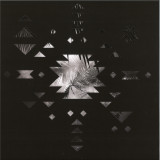
What comprises a dream?
An astral plane of our own making where thoughts, love, and desires of the inner mind abound with irreverence - ripe with connection & perspective beyond constraints of time, set, and setting.
Azu Tiwaline exists within the wonders of these interstitial worlds, diving deeper towards inner sanctums of mystic imagination, sublime intrigue, & profound understanding on her second full length LP “The Fifth Dream”.
Released again through her beloved partnership with I.O.T Records, “The Fifth Dream” finds Azu painting an expansive vision towards unified multitudes, mercurial realities, & abundant inner sanctums.
Where her first album “Draw Me a Silence” was a loving ode to her family & upbringing in the form of an elegant diptych, “The Fifth Dream" is the enactment of actualizing her roots into new routes, taking her multifaceted identity into new means of communication towards herself, the world, & the cosmic unknowns that surround her.
Throughout The Fifth Dream’s 54-minute runtime, we hear all elements of the uniquely transcendental sound that Azu is beloved for worldwide. “Antennae Opening”, “Blowing Flow”, & “Amen Dub” embody her talents for tectonic, dubwise soundscapes that channel the innately maternal elements of bassweight into bold & abstracted pulsations, indebted to the most psychedelic & body activating ends of dubstep.
Still attuned to the spatial awareness of dub sonics but giving way to the hypnotic syncopation & synaptic frequencies of techno, “Reptilian Waves”, “Long Hypnosis”, & “Mei Long” bring forth her spectacular expertise for entheogenic rave rhythms - guiding us warmly towards trance-inducing hyper states of dance & delight. Fluctuating between an adventurous velocity and enveloping stasis, the expansive abyssal planes of “Golden Dawn”, “Night in Palm Tree”, & “Canope Imaginaire” conjures a wondrously invigorating rhythmic enlightenment & celestial comprehension - simultaneously moving us forward, inwards, & outwards through Azu’s uniquely omnidirectional & kaleidoscopic musical visions.
Adorned with sampled field recordings of her deeply inspiring home in the desert of El Djerid in South Tunisia, Azu opens a portal into the synergistic inner sanctums of being, self, and the world around us that’s essential to her work as an artist - from the macro levels of humanity’s naturally intimate connection to the Earth we share, down to each of our own micro levels of culture, ancestry, and belonging. All of this is alchemized through a combination of timeless Saharan knowledge & modern cybernetic tools, creating new dimensions of bewitching, euphonious sonic energy. This is music that gives back as much as the listener wants to give themselves unto it - detailed and layered, orbiting a steady core as ethereal swirls and intonations of the natural world embrace us warmly within a spellbinding journey.
8 of the album’s 9 tracks feature a deep level of collaboration from innovative Franco-Iranian percussionist Cinna Peyghamy. Cinna’s use of Tombak, the principle drum of Iranian music throughout time, is beautifully sonorous - channeling the passion of centuries of Southwest Asian rhythm & expression into his own personalized flourishes, with Azu adding her own electrifying frequencies & undiluted artistic freedom to their shared interplay. This profoundly communicative diasporic essence is transmuted between Azu & Cinna, their expression, & the listener. Both are music lovers, intimately connected to their respected Iranian and Tunisian cultures - concurrently acknowledging the wisdom of their resonant pasts, while proudly bringing the sounds of their heritage into the present & future.
“The Fifth Dream” embodies a cosmic anodyne for those feeling caught in between life’s abyssal inbetweens, whilst aiming for a consonant awareness of where our home truly lies in the swells of life’s spiritual maelstrom. This dream belongs at once to none & to many, that of a common language unified in concentric depth - finding beauty in all aspects of our world, and ultimately, within oneself.
Disponibile in Stock e pronto per la spedizione

Home is a powerful concept with an abstract definition. This solo album takes those subjective ideas and unifies them under one roof. Evolving from Jerve’s #dailypiano posts in 2019, ‘The Soundtrack of My Home’ relays thoughts and improvisations that trace his journey from childhood home to adult and now, father. Nurturing a mood or feeling, each song begets a sonorous story of someone close to him, expressed through the language of piano playing.
Jerve makes use of his hands as a human step sequencer, often programming two or more motifs of varying lengths in a polymetric fashion. These melodic patterns and arpeggios evolve at varying rates but grow around clear progressions with standard 8-bar forms.
The first track - ‘Kjetil’ enters with an earnest, gentle and endearing character - like a young river near its source. As with such a river, it will grow to varied sizes throughout the album but must begin as a humble expression from the source. The following titles sketch his interpretations of the people that have made up his home.
There is a theme across the album that unites the songs, so much so that differentiating tracks can at times be difficult. Though, Jerve punctuates this overarching mood with a few distinct structures, as found in tracks ‘Karoline’ (wife), ‘Espen’ (brother) and ‘Sven’ (father). ‘Turid’ (daughter) and ‘Jon Eirik’ (brother) seem less directive and welcome more intrigue, reminiscent of a curious child wandering through the dappled light of a forest.
‘Iben’ (daughter) and ‘Eivor’ (daughter) have a hypnotic, three-pointed melodic structure that leaves the listener suspended; transfixed - while ‘Sussi’ (cat) carries unique momentum and suitably feline autonomy. ‘Mette’ (mother) has a mood of ascending, like that of a child's upward gaze at their maternal carer. Utterly nuanced in structure, Jerve leaves ample space for subjective interpretation and allows the listener to weave their own life into the tones.
As expected from the founder of Dugnad rec - this album signifies a deeply personal sentiment. Sometimes we are forced to confront the music and other times, we are left to wonder. Here, we find a balance and unity that allows little thoughts and worries to drift away, bringing us warmly to rest in the present. The LP edition's bonus track features producer/performer extraordinaire Stian Balducci, drawing a line to the next chapter of piano-based music from Dugnad rec: TOKYO TAPES: PIANO RECYCLE.
Disponibile in Stock e pronto per la spedizione

2022 Repress
In future times, culture historians will refer to Gabor Schablitzki aka Robag Wruhme as a creator of a singular techno sound, a rock in the murky sea of arbitrary musical dullness that befell mankind in the early 21st century.
Furthermore, a lesser known quality of Schablitzki will be praised and explored: He was a relentless wordsmith, a deeply passionate inventor of elegant idioms that enriched German language. Take ‘Freggelswuff’ or ‘Wemmel’ as shining examples.
It’s within this context that a certain cultural artefact released on a Cologne based record label called KOMPAKT (which towards the end of the 21st century made a hardly publicised turn to manufacturing CO2-neutral wall plug systems) that went by the sonorous title ‘Topinambur’ has to be mentioned. Legend has it that Schablitzki claimed to have created the word ‘Topinambur’, unknowingly that local farmers have been marketing a root tuber under the same name since it got imported from America in 1610 AD. The following tenacious copyright lawsuit between Schablitzki and a large agricultural consortium lasted for many years. It isn’t considered as a highpoint in Schablitzki’s turbulent life but it still serves a staircase wit that is passed on from generation to generation amongst Black Forest moonshiners.
Kulturhistoriker künftiger Generationen werden Gabor Schablitzki alias Robag Wruhme als Schöpfer eines singulären Techno-Sounds preisen, als einen Fels in der Brandung der im frühen 21. Jahrhundert vorherrschenden Beliebigkeit. Als DJ und Produzent war ein Meister des deepen Abrisses, werden sie weiterhin formulieren, obschon es weitere 136 Jahre dauern wird, bis die subkulturelle Bedeutung des Wortes 'Abriss' zweifelsfrei geklärt werden konnte.
Es wird aber auch eine weitere einzigartige Qualität Gabor Schablitzkis hervorgehoben werden: Er war ein unermüdlicher Wortschöpfer, der die deutsche Sprache um elegante Idiome wie Freggelswuff oder Wemmel bereicherte. In diesem Zusammenhang findet meist eine Veröffentlichung des Kölner Labels KOMPAKT (welches im ausklingenden 21. Jahrhundert einen wenig bemerkenswerten Wandel zum Hersteller von CO2-neutralen Dämmstoffdübeln vollzog) Erwähnung. Diese Veröffentlichung erschien unter dem klangvollen Namen "Topinambur" und die Legende besagt, dass Schablitzki behauptete auch hier der Nachwelt eine neue Wortschöpfung hinterlassen zu haben, nicht wissend, dass europäische Landwirte bereits seit 1610 A.D. unter diesem Namen ein aus Amerika importiertes Knollengewächs vermarkteten. Der sich daran anschliessende Copyright-Streit zwischen Schablitzki und einem mächtigen Agrarkonzern, zählte nicht zu den rühmlichen Episoden seines bewegten Lebens, sorgt aber seit Generationen als Treppenwitz unter Schwarzwälder Schnapsbrennern für viel Geschmunzel.
Disponibile in Stock e pronto per la spedizione

Zeitkratzer director Reinhold Friedl and his ensemble present new compositions, grounded on Domenico Scarlatti's piano sonata F-minor K.466. Commissioned by the dance company Rubato and dedicated to Mario Bertoncini (1932-2019).
Little is known about Domenico Scarlatti (1685-1757). His music is, so to speak, left to its own devices: free, cheeky, playful, sonorous, surprising. Harmonically strolling again and again into unforeseen regions, the ear leads, not the theory; and also the fingers get their right: playful and haptic it goes. Scarlatti explained, "since nature has given me ten fingers and my instrument provides employment for all, I see no reason why I should not use all ten of them."
Freedom, friction and listening pleasure instead of convention: "He knew quite well that he had disregarded all the rules of composition in his piano pieces, but asked whether his deviation from the rules offended the ear? He believes there is almost no other rule than that of not offending the only sense whose object is music - the ear."
Reinhold Friedl applied this principle and composed the music for a choreography by dance company Rubato. Dance music drawn from Scarlatti, who was so inspired by dance music. The material of the piano sonata F-minor K.466 is twisted anew in all its richness, shifted back and forth, declined, frozen, noisified, sound structures extracted, floating. Those who know the sonata, will more than smell it’s shadows. Dedicated to Mario Bertoncini (Gruppo di Improvvisazione Nuova Consonanza) who was particularly fond of K.466, on which all the music presented here is grounded.
"Wild flowers", Barbara Zubers had once called Scarlatti's music. Let them bloom.
Ordina ora e ordineremo l'articolo per te presso il nostro fornitore.

Take Brian Jackson and Gil Scott-Heron’s iconic track “The Bottle”, add a sublime vocal performance from UK soul legend Omar, and put it in the hands of house music pioneers Masters At Work—and you get a version that’s both timeless and urgent, filled with joy, fire, and social consciousness, and built for the dancefloor. Driven by Masters At Work’s signature attention to detail, and elevated by the calibre of the musicians and vocalists involved, this reimagining of “The Bottle” evolved into something truly epic. In fact, the final mix turned out too long to fit on Brian Jackson’s upcoming 3LP album, Now More Than Ever—but everyone agreed: fans had to hear it in its full glory.
So here it is, released exactly as intended on this twin 12" vinyl and digital EP. Also included are exclusive versions of: “Winter in America” featuring sonorous vocals from Rich Medina “New York City”, reimagined as a deeply soulful, downtempo groove featuring Cindy Mizelle, Dawn Tallman, and Ramona Dunlap This EP is a love letter to the role of music in Black Liberation, reconnecting the powerful legacy of Brian Jackson and Gil Scott-Heron with the voices and vision of 2025. A powerful taste of what’s to come on Now More Than Ever—but also a vital standalone statement, delivered by legends at the top of their game
Ordina ora e ordineremo l'articolo per te presso il nostro fornitore.
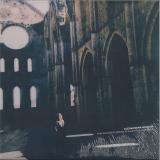
Furthering the passionate exploration of cinema that has guided her two previous LPs - 2017’s ‘Fassbinder Wunderkammer’ and 2020’s ‘I Should Have Been a Gardener’ - the Milanese guitarist/composer, Alessandra Novaga, returns to Die Schachtel with ‘The Artistic Image Is Always a Miracle’, two sides off shimmering, tense compositions – culminating as one of her most creatively ambitious and conceptually rich outings to date – freely inspired by the life and work of the Russian director Andrej Tarkovsky and the music of Johann Sebastian Bach.
Classically trained at the Musik Akademie in Basel, Switzerland, over the last decade Alessandra Novaga has emerged as one of the leading figures within northern Italy’s thriving new, experimental, and improvised music scene, rendering striking solo efforts, in addition to collaborations with Loren Connors, Stefano Pilia, Elliott Sharp, Nicola Ratti, Paula Matthusen, Sandro Mussida, Kid Millions, Travis Just, Francesco Gagliardi, and others. Remarkably ambitious and forward thinking, her approach to the guitar embarks upon a relentless deconstruction and rethinking of her instrument’s unique properties through distinct applications of structure, resonance, space, and tone, creating in a deeply personal and emotive music, seeking narrative and meaning within the abstractions of sound.
In 2017, with the LP, ‘Fassbinder Wunderkammer’, issued by Setola Di Maiale, Novaga embarked upon the exploration of her love of film. Having begun with Rainer Werner Fassbinder, this was followed in 2020 by Die Schachtel’s release of ‘I Should Have Been a Gardener’, a deeply intimate mediation on the life and work of Derek Jarman. Rather than focusing on a fixed point of inspiration or a single film to work from, these pieces achieve a form of abstract portraiture, distilling elements drawn from these filmmaker’s life and work into ambient networks of texture and tonality. ‘The Artistic Image Is Always a Miracle”’ freely inspired by the Russian director Andrej Tarkovsky and the music of Johann Sebastian Bach, finds Novaga radically expanding her sonic palette within this approach.
The seeds of ‘The Artistic Image Is Always a Miracle’ can be traced to a conversation that Novaga had with Alan Licht (contained in the highly regarded Common Tones: Selected interviews with artists and musicians 1995–2020, Blank Forms, 2021), relating to the connections between music and cinema, which led her to consider Andrej Tarkovsky’s use of Bach's music within a symbiotic framework: how the music illuminates the imagism of the films, and the film illuminates new dimensions of the music. Slowly developing over the subsequent years, the resulting album comprises six individual works, some of which draw directly upon pieces of Bach’s music that Tarkovsky used in his films – specifically 'Erbarme dich, Mein Gott', 'Das alte Jahr vergangen ist', and 'Ich ruf zu dir, Herr Jesu Christ' - while others draw upon the sensibilities and moods evoked in the imagination by the director’s films.
As a point of departure and illumination into the process and spirit that underscored the creation of the album, Novaga points toward a passage in Tarkovsky’s "Sculpting in Time”:
“Art is born and takes hold wherever there is a timeless and insatiable longing for the spiritual, for the ideal: that longing which draws people to art. Modern art has taken a wrong turn in abandoning the search for the meaning of existence in order to affirm the value of the individual for its own sake. What purports to be art begins to look like an eccentric occupation for suspect characters who maintain that any personalized action is of intrinsic value simply as a display of self-will. But in artistic creation the personality does not assert itself, it serves another, higher and communal idea.”
‘The Artistic Image Is Always a Miracle’ can be understood as a realisation of the collectivism of which Tarkovsky speaks, in the service of something far beyond the expression of self. Encountering Novaga moving into fairly uncharted waters, three of the album’s pieces incorporate the human voice we encounter the voices of others: that of the poet Arsenij Tarkovsky, the director’s father; a singer from Bach’s ‘Erbarme dich, Mein Gott’, capturing a broadcast in an underground parking lot, and Novaga’s own, rendering the melody from Bach’s “Ich ruf zu dir, Herr Jesu Christ”. Roughly alternating between solo excursions on guitar and bristling electroacoustic pieces, over the course of the album’s two sides Novaga weaves one of her most abstract and ambitious bodies of recordings to date, shifting between the complex tonal mediations generated by the six strings of her instrument, and phycological densities activated by the expanded pallet of sonority made possible by the tactics and approaches of musique concrète.
An immersive, deeply engaging meeting of beauty and melancholy within a labyrinth of voices and ideas, ‘The Artistic Image Is Always a Miracle’ transfigures the life and work of Andrej Tarkovski – one of the greatest auteurs in the history of cinema – into a singular, experimental statement of collective truth. Belonging to recent, ambitious stream of contemporary new music releases on Die Schachtel that’s already included Novaga’s ‘I Should Have Been a Gardener’, Stefano Pilia’s ‘Spiralis Aurea’, Jim O'Rourke & Giovanni Di Domenico’ ‘Immanent In Nervous Activity’, Claudio Rocchetti’s ‘Labirinto Verticale’, and Damāvand’s ‘As Long As You Come To My Garden’, among others, ‘The Artistic Image Is Always a Miracle’ is available on as a limited edition of 300 dark turquoise vinyl LPs released on June 21, 2024. The LP, designed by Bruno Stucchi / dinamomilano, comes with an 8-pages insert illuminated by Alessandra’s text as well as the lovely and intense photographs of Matilde Piazzi.
Ordina ora e ordineremo l'articolo per te presso il nostro fornitore.

Black Truffle is thrilled to present the first ever solo Donso n’goni recording from octogenarian Swedish multi-instrumentalist Christer Bothén. Active in the Swedish jazz and improvisation scene since the 1970s, often heard on bass clarinet, Bothén travelled to Mali in 1971, eventually making his way to the Wassoulou region in the country’s south where he encountered the Donso n’goni, the sacred harp of the hunter caste of Wassoulou society. Though playing the instrument has traditionally been restricted to those who belong to the hunters’ brotherhood, Bothén found an enthusiastic teacher in Brouema Dobia, who, after many months of intensive one-on-one lessons, gave Bothén his blessing to play the instrument both traditionally and in his own style. Returning to Sweden, he would go on to pass on what he had learned to Don Cherry and play the Donso n’goni in a wide variety of inventive settings, including the driving Afro-jazz-fusion of his Trancedance (reissued as BT118).
The seven pieces of Christer Bothén Donso n’goni offer up a stunning showcase of Bothén’s work on this remarkable instrument, heard entirely unaccompanied, except for the final piece where he is joined on a second Donso n’goni by his student and collaborator, the virtuoso bassist Kansan/Torbjorn Zetterberg, and Marianne N’Lemvo Linden on the metal Karanjang scraper. Recorded in three sessions in Stockholm between 2019 and 2023 in richly detailed high fidelity, the instrument’s buzzing, sonorous bass strings make an immediate, overwhelming sonic impression. Hyper-focused on hypnotically repeating pentatonic patterns, the seven pieces are at once relentlessly single-minded and endlessly rich in subtle variations. The concentrated listening environment turns small details, such as the deployment of the instrument’s segesege rattle on two of the pieces, into major events. Six of the seven pieces are traditional, with Bothén contributing the remaining ‘La Baraka’, but the line between tradition and the individual talent is imaginary here: as Bothén explained in a recent interview with The Wire’s Clive Bell, ‘I play traditional and untraditional, and I play the music forward and backward’. While the traditional Wassoulou pieces provide the rhythmic and harmonic elements, Bothén’s individuality as a performer is alive in every moment, felt acutely in boundless variations of attack, improvisational flourishes, and unexpected accelerations and decelerations. Captured entirely live and bristling with spontaneity, this music is undeniably the product of almost half a decade of Bothén’s devotion to the Donso n’goni and its traditional music.
Accompanied by detailed new liner notes by Bothén and stunning colour photos from his time in Mali, Christer Bothén Donso n’goni is a stunning document of a remarkable instrument, played with an almost spiritual intensity by one of contemporary music’s great explorers.
Ordina ora e ordineremo l'articolo per te presso il nostro fornitore.

Night Keeper is a collaborative album by New York City-based artist Aaron Landsman and former Swans guitarist Norman Westberg that is based on the former's eponymous play. Westberg recorded it together with performer Jehan O. Young for the Swiss Hallow Ground label, with Landsman serving as the record’s producer. The original piece was first performed in the Spring of 2023 at The Chocolate Factory Theater in Queens and filled the stark industrial space with spoken text, choreography, projections, and music in dim light and, occasionally, complete darkness. Westberg and Young afterwards brought it to the studio to record it as a two-part
album in whose course his textural sounds, based on loops and samples, set the stage for her soothing, sonorous vocal performance. »Night Keeper« is a performance inspired by sleeplessness and the wanderings of the human mind at night—about time and memory.
Westberg and Young elegantly capture its essence in these roughly 44 minutes with a somnambulic album, letting sound and meaning flow into each other. The initial spark for Night Keeper was a run of almost sleepless nights in different neighbourhoods of a city that is perpetually insomniac. Instead of trying to force himself to go back to sleep by any means necessary, Landsman started writing down his thoughts. As he explains in the liner notes—accompanying the music along with drawings made by audience members during the performances—he started listening to the particular way in which the voice in his head navigates time and language. Accordingly, the texts that Young reads on the record form a diverse collection of specific moments, imagining different speakers and evoking different
situations. Westberg complements, accentuates, and juxtaposes these with different means. Ominous drones, soaring melodies, rhythmic bass sounds: the guitarist, whose latest release for Hallow Ground was 2021’s First Man In The Moon with Polish double bassist Jacek Mazurkiewicz, conjures up distinct sound worlds in which Young can let Landsman’s scenes unfold to gripping effect.
Landsman makes it clear that »Night Keeper« was intended as an invitation to »stay up, look out the window, let what’s happening outside spark reveries or predictions« or even take it on a stroll through the neighbourhood—at night, of course. Much like the original piece, this album is then one dedicated to wandering around, both mentally and physically.
dovrebbe essere pubblicato su 11.04.2025
Entering its 26th year of activity, the morphing, Los Angeles based experimental outfit, Sissy Spacek, joins Shelter Press with Entrance, among the project's most captivating outings to date. Encountering the duo of John Wiese and Charlie Mumma joined in various configurations by an incredible cast of collaborators - Tim Barnes, Marco Fusinato, Aaron Hemphill, Brad Laner, Katsura Mouri, Ralf Wehowsky, and C Spencer Yeh - collectively transformed into a series a deeply intimate and delicate gestures of musique concrète, Entrance radically repositions the possibilities presented by group improvisation outside of time and place. Founded at the end of the last millennium, the Los Angeles based project, Sissy Spacek, initially emerged from the knotted, fiery context 1990s American noise and grindcore, producing sheets of visceral sonority that quickly set the scene on its head. Going through numerous evolutions, before eventually settling as a duo of John Wiese and Charlie Mumma - joined by a rotating and often recurring cast collaborators - over the last 25 years the band has continuously entered states of evolution that have defied the expectations of its own context, seeding the sonic extremes noise with subtle and sophisticated approaches to free improvisation and musique concrète. Fiercely positioning its efforts within the outer reaches of contemporary experimental music, while resisting the constraints of a singular sound or proximity, Wiese regards Sissy Spacek as being primarily centred around the practice of musique concrète and the pursuit of extremes. From its earliest releases - collage treatments of material gathered from the band's full throttle practice sessions - the project's conceptual framework has continuously evolved within a deeply engaged process of experimentation, not only reworking tactical approaches, but also definitions and perception regarding the location and action of their work. In recent years, this has led to an increasingly varied and diverse output. Percolating within, is a thread marked by a striking sense of delicacy and intimacy, driving forward while doubling as an unexpected challenge, in real time, to perceptions connected to the band's past. Entrance is the most recent of these. Embarking upon the four compositions that comprise the finalized four sides of Entrance, Wiese and Mumma enlisted longstanding collaborators, Tim Barnes, Marco Fusinato, Aaron Hemphill, Brad Laner, Katsura Mouri, and C Spencer Yeh, as well as new initiate, Ralf Wehowsky (of the seminal German electronic noise collective P16.D4), requesting a contribution of sounds from each, determined by a general set guidelines that dictated certain qualities the given sonorities, while allowing for the expression of each player's distinct creative voice. The sets of resulting recordings were then chopped, harvested, manipulated, and reassembled as the four tape compositions that make up the album - Web Of Unfolding Appearance, Figure Of Reflected Light, Trancher And The Inheritors, True Dimension (From The Opaque - Spike) - each blurring the lines of authorship and clear creative proximity in remarkable ways. Where historical gestures of musique concrète tend to draw upon non-instrumental sound sources - regarding its sonorous material as raw elements, unburdened by inherent meaning or association, to be transformed and imbued with musicality - Sissy Spacek turns this position on its head. Entrance comprises works of musique concrète that not only draw upon instrumental sound sources, with all their possible meanings or associations, but also individual characters and personalities of their players, crediting each resulting piece to its respective configuration of contributors. As such, Entrance is an effort of sound collage defined by a rare sense of intimacy and humanity: four pieces that often take on the resemblance of group improvisation, but have, in fact, been assembled outside of time and place. Bent under the ever-present hand of Wiese's tape treatments and manipulation, each of the album's four compositions unfurl startling states of sonic abstraction and percolating texture, marked by a striking sense of hard-shifting structure, that culminate as tense, driven manifestations of ambient music: scrapes, squeals, rattles feedback, rolling drums, bouncing tones, whispers, bent electronics, electric artefacts, and seemingly everything else under the sun, configured into immersive, sublime mediations in sound from the most improbable events.
dovrebbe essere pubblicato su 04.04.2025

Perila returns with a contemplative spiritual successor to her album »7.37/2.11«, which was also released on Vaagner’s sister label A Sunken Mall back in 2022.
Featuring a collection of 8 pieces produced between 2021 and 2023, the album carries a serene vulnerability that underpins each work, drawing the listener in while gently grounding them amidst a drifting, ephemeral motion of echoing voices, droning guitars and sonorous soundscapes. Like a whispered conversation in the quiet moments of the day.
Perila has once again created a world unto itself, one that doesn’t need to be understood but simply felt. If anything, it’s an album that brings us back to the present, reminding us that the chaotic disarray of the world outside can be addressed and mitigated through our internal landscape. By embracing imperfection and forging new paths, »The Air Outside Feels Crazy Right Now« is a testament towards Perila’s ability to turn fragility into a powerful form of strength.
Ordina ora e ordineremo l'articolo per te presso il nostro fornitore.
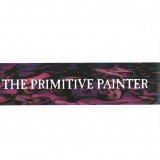
Apollo / R&S are delighted to welcome back The Primitive Painter, aka the duo of Roman Flügel and Jörn Elling Wuttke for a timely reissue of their 1994 lost classic self-titled album of sonorous IDM.
Growing up in Frankfurt, in the 80s and 90s the duo met at an indie rock club in their home town of Darmstadt, bonding over their shared obsession with the first wave of acid, Chicago house and early Detroit techno as well as their patronage of now iconic Frankfurt club nights like The Omen or Dorian Gray or the infamous Delirium Record shop run by scene stalwarts Ata (Robert Johnson) and Heiko MSO (Playhouse).
Taking inspiration from the likes of The Black Dog and Transmat as well as seminal compilations such as Planet E’s Intergalactic Beats and Warp’s Artificial intelligence compilation the duo honed their inventive take on the Detroit techno blueprint under the monicker Acid Jesus, debuting on their freshly minted Klang Elektronik label. The label was started in conjunction with Ata and Heiko after Fluegel & Wuttke (regular patrons of the Delirium store) pressed a demo on them, muttering the immortal line; “Please listen to the tape, we are big Mr. Fingers fans.”
Through the mid ’90s the project flourished giving rise to a classic album and a brace of singles that number amongst the best of the era’s techno, winning them a influential fans most notably Sven Väth, David Holmes and Andrew Weatherall who invited them to play live at one of the legendary Sabresonic parties in London.
Alongside the success of the Acid Jesus project, the duo found great inspiration in outside of the club, including an ambient happening when the KLF came to play Frankfurt; “There were live sheep eating grass on stage while they played at Mark Spoon’s club XS”, as well as cinematic influence from the likes of Jim Jarmush and Wim Wenders. It was however the euphonic IDM grandeur of Apollo Recordings self titled compilation of 1993 that really got their creative juices flowing: “It was a ten track compilation with artists like David Morley, Model 500, Aphex Twin which still sounds so good today,” Jörn enthuses. “ It was really the trigger to go away from the Detroit sound and more towards the big melodies of B12 etc.”
Deciding to make their tribute to this style of music the duo turned out 10 tracks of gauzy, melodious electronica in a white hot fever, one after another over the ensuing months. Settling on a name for the new project they picked ‘The Primitive Painters’ taking inspiration from the band Felt. “We are both children of the C86 movement,” explains Jörn. “this attitude of noisy art school influenced rock like Primal Scream, MBV, The Jesus & Mary Chain really inspired us to take a DIY approach to our music.”
They sent the resulting demo cassette to Renaat at R&S / Apollo. “We really had no expectations,” Jörn explains. “So we were shocked and delighted when we received a fax saying that he wanted to release it”.
The resulting release was bungled by an R&S mix up that attributed the album to the duo’s own Klang Elektronik label which confused both fans and distributors alike, denying the release the critical boost and attention that it so richly deserved. Accordingly the release slipped out without much fanfare, with a chastened Fluegel & Wuttke returning to their Acid Jesus activities which would eventually lead to their blockbusting success as Alter Ego.
Over the ensuing years the reputation of The Primitive Painter album has only grown, with second hand copies (only 500 vinyl were pressed) changing hands for exorbitant amounts on Discogs, leading us to this opportune moment of a richly deserved ‘first’ release on the label for which the project was started, Apollo / R&S.
“This really brings us full circle,” says Jörn. “Apollo / R&S meant and means so much to us as artists and so it was bittersweet to not have the official release - to put that right all these years later feels really good.”
This new vinyl release comes in re-created original gatefold artwork and includes all original 10 tracks (Stoned Soul Picnic was previously on the CD only).
Ordina ora e ordineremo l'articolo per te presso il nostro fornitore.

“Where is this? It looks like the grounds of a shrine. Like a deep, dark, forest. I'm wandering around. I can't get over the feeling that I've been to this place before. The temple and the tower look much bigger than usual, and I feel as if I were lost in a world of immensity. It's very dark with no sky up above, like being in the depths of the Earth. Anyway, it's a world I know.” - Leisure, the Sonorous Dream
For schuttle’s next unearthly contribution, we invite you to slip into the reassuring comforts of the simulated realm. Herein lies an open invitation to all of those tentative travellers willing to join us as we revel in four slices of post-biological optimism.
The world building begins with “Splan”. schuttle’s navigation vessel hovers steadily above a fractal landscape until a divine arp propels us skywards. We burst through the latent cloudsphere to marvel at the boundless synergy of the interlocking polygons. The sunburst gradient barely has time to load before an oscillating wriggle plunges us into a strangely familiar stomping ground. Hedonistic NPCs begin spawning at random, splurging joyful machine funk at each other before walking gleefully into walls. Finally, with a little help from a well known toad, schuttle unleashes the full might of his Mana on the nascent gathering.
We dock next in ‘Melonweed Musick’. Our vessel gently stirring the reeds as we descend into the marshland. The potent aroma of the swamp fills our nostrils, various apparitions seem to wriggle into view. What have we been inhaling? No time to consider, the loose murk of the breakbeat is starting to take effect and it’s all we can do to keep one foot squelching after the other. As we submit wholeheartedly to the sheer depth and clarity of the bassline, a kindly angel sweeps above the sphagnum, spraying a succession of cleansing chords over our slimy bodies. Refreshed with some useful navigation advice we continue.
In ‘Kitchen Sync’ our craft’s speedometer is tickled up to a cruising 120bpm. The world outside our window begins to swim with colour, prickly forms materialise then dissipate around us. The familiar shape of our old friend, the high priest 303 appears before us, steadying the ship. Its resonant flame warming our hearth, and our hearts too. Then begins a beautiful communion of the domestic and the otherworldly, through the interplay of acid under glimmering keys. Provoking within us an uncontrollable desire to open our curtains, to cast off our slippers and embrace the infinite morrow.
Our voyage concludes with ‘Inspo 2000’. Scintillating landing lights guide us toward our destination, our descent beckoned by woody and playful percussion. We tumble through the troposphere, our landing cushioned by the buoyancy of the gated chords, the kicks juicing what's left of our dwindling fuel supply. A luxurious breakdown brings the ground into focus. Perhaps this is home? The simulation is now so accurate that it seems pointless to question it, it is a world we have always known.
Ordina ora e ordineremo l'articolo per te presso il nostro fornitore.

Second VHF solo LP from the Pelt/Black Twigs mainstay, following 2022’s acclaimed “Evening Measures.” “April is Passing” builds on the striking solo Hardanger-style fiddle performances on the previous LP to take the music even further out, with deep drones and extended techniques defining a vocabulary that is Americana-adjacent, but a unique and special sound that Mike is pursuing almost alone. Joined on selected tracks by Cara Gangloff’s Sruti and Kaily Shenker’s sonorous Cello, the all-original, all-live performances are resonant with both overt melody and a cloud of thick string overtones, whether on the more upbeat tunes like “Ironto Dancer” or the epic 11+ minute LP closer “Helen’s Song.” “September Air” is a mournful slow build, the fiddle embroidering a minor-key melody over the drone of the Surti box and a low cello counter point. “A Fallen Palace of Snowville” is a solo performance where the additional sympathetic strings of the hardanger fiddle are strongly heard as a ghostly accompaniment, as Mike’s elegant melody switches back and forth from minor to major. “Helen’s Song” closes side 2 with a complex, ever-changing swirl of melodic and harmonic invention, with Mike’s keening, languorous bowing leading the way through multiple moods and sounds.
dovrebbe essere pubblicato su 21.02.2025

Prolific Norwegian trumpeter and ECM veteran Arve Henriksen returns with Estonian guitarist/composer Robert Jürjendal in tow, matching his idiosyncratic shakuhachi-style melodic condensations with Jürjendal's glassy electro-acoustic soundscapes and sonorous percussion.
Henriksen releases a lot but is remarkably reliable; his playing is so versatile that hearing it dematerialise into different ensembles and individual methodologies is always a treat. Jürjendal is a veteran guitarist, but doesn't approach his instrument from a purely classical standpoint, taking a Fripp-inspired path towards texture, processing and looping his sounds until they're barely recognisable. The duo share a similar love for Hassell's Fourth World ambience, and here inject new life into that mood.
Jürjendal's percussion is impressive: he offsets cascades of oddly-tuned electronics on 'Tuonela' with booming, ritualistic tom hits that punctuate Henriksen's melancholy phrases; and on the brilliant 'Ancient Bells', plays a set of gongs and gamelan-style instruments, creating swirling hammered tonal clusters that quiver beneath Henriksen's echoed-out, spirited improvisations. It's not always that corporeal, either; on 'A Remarkable Flow', he loops guitar phrases, creating gentle vibrations that rumble in the background while he mirrors Henriksen's pitchy zig-zags with high-pitched oscillator vamps.
Even on the peaceable 'Miraculous Lake', discreet kalimba loops set a celestial tempo that anchors the duo's gaseous soundscapes. And although they veer towards end-credits loveliness on the Göttsching-influenced 'Reunion Hymn', it’s balanced by the album's darker passages, like 'Rebirth' and 'Another Me'. On the latter, Henriksen's trumpet is transformed into a voice-like warble, while Jürjendal replies with glacial E-bowed drones that resonate creepily alongside his lysergic FM pads.
dovrebbe essere pubblicato su 21.02.2025

The hornsman instrumental has a long legacy in the realms of reggae music. Don Drummond, Tommy McCook, Vin Gordon, Rico Rodriguez, Eddie Tan Tan. The list players behind this tradition could go on and on. The notes they played across eras from ska to rock steady to the deepest dubwise steppers bellow through the wind and the wire like a Warrior Charge ….
…It is within this tradition that Ital Counselor’s next weighty contribution to the musical world of QUALITY reggae fits…
…From the very first sonorous note emanating from the mighty Soothsayer’s Horn Section the listener can tell the Dub Organiser means business. That’s right. Once again, the Ital Counselor teams up with Chris Lane of Fashion Records for a cantankerous churning steppers meant to burn out all weak heart sound who try come test.
As evidenced from this 12”s namesake, the humble Soul Dragon Temple of Tone Sound System and IC partners in crime out of Philadelphia, USA, the Soul Dragon Anthem breaths some serious fire. The hard hard rhythm churns relentlessly while the bassline rolls like Dragon’s breath calling all in the dance to spring heel skank straight through all four cuts.
The Dub Organiser stirs a cauldron of dense dub at points conjuring aspects of Lee Perry’s classic Black Ark sound while maintaining his own distinctive spin on the mystical mixing arts. Shards of sound echo and delay. Mr. Lane takes the bassline to aquatic depths as the DRAGON DIVES DEEP……Cut 1…Cut 2…Cut 3…Cut 4…
This one is dedicated to all home town hi-fi’s forwarding reggae and sound system culture outernationally. So without further ado, all soundman and woman worth your salt it is time to DROP the needle on this track. Watch the Dragon FLY and let the Dub Organiser and the Soothsayer Horn’s “Soul Dragon Anthem” BREATH FIRE through your SPEAKER BOX!!!!!!
dovrebbe essere pubblicato su 14.02.2025
Fred Ventura and Rafał Lachmirowicz, aka Also Playable Mono, have teamed up, All We Need being the pairing’s audio vision of italo disco.
Steady kicks and cascading cowbells pave the way for an infectious synthline before a vocoder-enveloped Ventura smoulders with a burning intensity. Bold chords and pulsating rhythms are at the robotic heart of “System Breakdown On Wikileaks”. Bombastic and brilliant, this electrified disco dreadnaught swings with the power of a wrecking ball; a power that only amplifies the track’s impacting message of our very civilisation’s future. Scaling notes spiral ever higher in the addictive groove of “In The Night”, A.P.Mono’s computerised words adopting the mantle of his machines. Circling samples introduce “The News”. Rhythms are clean and tight, snapping at the tails of soaring synthwork with Ventura’s smoky social commentary, coupled with the silken and sonorous Chelsea Muller, offering something better for us all.
Ordina ora e ordineremo l'articolo per te presso il nostro fornitore.

Earquake 1996 is the 6th part of the nineties cycle by Wolfgang Voigt, released as a double vinyl series on Profan. Besides the Mike Ink remix of one of his biggest techno hits Love Inc. R.E.S.P.E.C.T., Wolfgang Voigt dedicates this edition mainly to his most dust-dry, stoic, abstract-grooving minimal designs of that time. These are pieces with such sonorous, idiosyncratic names as Logorrhoee and Intoleratio, which enchant us back into a minimal techno cosmos of a very special kind.
It may be collected
Earquake 1996 ist der 6te Teil, des als Doppelvinyl Reihe auf Profan erscheinden Neunziger Jahre Zyklus von Wolfgang Voigt. Neben dem Mike Ink Remix eines seiner grössten Technohits Love Inc. R.E.S.P.E.C.T., widmet sich Wolfgang Voigt auf der vorliegenden Ausgabe vor allem seinen staubtrockensten, stoisch, abstrakt-groovenden Minimalentwürfen jener Zeit. Es sind Stücke mit so klangvoll-eigenwilligen Namen wie Logorrhoee und Intoleratio, die uns zurückverzaubern in einen Minimaltechno-Kosmos der ganz besonderen Art.
Es darf gesammelt werden
Ordina ora e ordineremo l'articolo per te presso il nostro fornitore.

Dischi Fantom’s Sussurra Luce series, blurring the boundaries between text, music and voice, returns with their fifth instalment, an expanded version of Hanne Lippard’s “Talk Shop”. Sculpting a fascinating bridge between radically experimental sound practice, conceptual art, and sound poetry, across its two sides the Berlin based multidisciplinary artist taps an almost dada sensibility, delivering a suite of poems and texts where singular words and sentences are looped and repeated creating a sensory experience of the efficiency and stress found in our private as well as public life.
Roughly a year ago, we had the pleasure of exploring the first two releases from Dischi Fantom’s emerging Sussurra Luce series, Ginevra Bompiani, Caterina Barbieri, and Tomoko Sauvage’s “Il Calore Animale” and Francesco Cavaliere’s “Zoomachia Disc 1”. An extension of the Milan based cultural platform Fantom’s broad and diverse activities (exhibitions, installations, performances, etc.) across numerous artistic disciplines, the series, curated by Francesco Cavaliere and Massimo Torrigiani, delves into the “science of imagination”, working with contemporary authors to explore and blur the boundaries between text, music and voice. Now the brilliant series returns with its latest entry, the Berlin based multidisciplinary artist Hanne Lippard’s “Talk Shop”. Released in a limited edition of 200 copies and coming with an LP-sized booklet, it combines orality and textuality with the idea of loop and repetition to explore the notion of time, and it’s a stunning gesture of performative poetics that plums a startling range of subjects through its sonorous forms.
Working across the fields of text, vocal performance, sound installation, printed objects and sculpture, for more than a decade Hanne Lippard has deployed language as the raw material for her work. Working within a practice that rests at the juncture of the spoken and written word, drawing upon content appropriated from the public sphere (found text) intertwined with her own words, Lippard’s work investigates how the rise in digital communication and mediation reprograms our relationship to language, presenting the subsequent fragility of language - its flaws, oddities, and potential for misinterpretation - and its attempts to convey meaning and sense.
“Talk Shop”, the fifth instalment of Dischi Fantom’s Sussurra Luce series and Lippard’s third recorded release - building upon the ground of 2020's “Work”, issued by Collapsing Market, and 2021's “PigeonPostParis”, released by Boomkat Editions - began as a live performance. Combining orality and textuality with the idea of loop and repetition to explore the notion of time, its relationship with the world of work today, and its personification through the experience of the human body - anonymity as the spearhead of the digital economy - the conceptual underpinnings of the piece depart from the notion that the human voice has become commodified by the ubiquitous nature of contemporary productivity, and intertwined with the mechanics of capital - the voices of satnavs, smart speakers and voicemail systems - while the written word has become increasingly anonymous online.
Addressing vocal anonymity as a spearhead of the digital economy, Lippard’s “Talk Shop” - regarded by the artist as “a compilation of poems and texts where singular words and sentences are looped and repeated creating a sensory experience of the efficiency and stress found in our private as well as public life” - taps an almost dada sensibility through its unexpected layers of meanings drawn from a maximalized approach to the potential of the human voice, creating an engrossing and challenging listen from the first sounding to the last, that continues to reveal itself and unfold with every return.
Sculpting a fascinating bridge between radically experimental sound practice, conceptual art, and sound poetry, it culminates as one of the most strikingly singular creative gestures we’re likely to encounter this year. Highly recommended and not to be missed.
Hanne Lippard (Milton Keynes, 1984) explores the social forms that govern discourse. Her artistic practice, which mainly takes the form of reading and sound installations, investigates the voice as an instrument of emancipation and alienation in times of hyper-connectivity. By mixing personal thoughts and appropriating texts from advertising, slogans and newspaper articles, the text becomes a mix of private and public that regains inventiveness and authorship through the use of the voice, becoming a body of its own. Her recent artistic research has focused on the use of the female body as a container of sounds, on the conscious and unconscious automation of speech and language.
dovrebbe essere pubblicato su 15.11.2024

After winning three leading Belgian music awards with Humo's Rock Rally, De Nieuwe Lichting and Sound Track, girl band BLUAI is expanding its horizons. On their debut album Save It For Later, the trio leaves for a road trip through the sonorous areas populated by the likes of Big Thief, Pinegrove, Haim, and Alabama Shakes.
Save It For Later is a record not unlike a Polaroid picture. Belgian songwriter Catherine Smet captures the memories of her youth in lyrics with a perfume of Americana, country pop, and indie folk. The stories areset in her native Flanders, but close your eyes, and galloping horses on a ranch in Mississippi form the backdrop of BLUAI's debut album.
Catherine Smet (vocals, guitar), Mo Govaerts (drums), and Caitlin Talbut (bass) joined forces with producer Willem Ardui (blackwave.) for this record. BLUAI's instrumentation was expanded with banjo, twelve-string guitar, and lap steel. Engineer Tobie Speleman received 'Nashville tuning' as a briefing. BLUAI thus shifts the focus from indie rock to Americana and breaks open the band's frame of reference, with influences ranging from Maggie Rogers to Alabama Shakes to The Japanese House.
Save It For Later is the creation of a group that came together two years after the formation of BLUAI, found a common drive, and is now cruising at full speed. BLUAI is here to stay.
dovrebbe essere pubblicato su 08.11.2024

This Autumn sees the release of Gavin Friday’s much-awaited new album, Ecce Homo, his first in over thirteen years, and via BMG. It is a work that heralds a fuller, more sonorous, form of expression for this ever-evolving artist, one that transcends the prescribed conventions of genre, breaks new ground and brooks no compromise. Where loss, filial grief, remorse and existential disquiet were the more conspicuous tenets of Friday’s 2011 release, catholic, the presiding spirit of Ecce Homo is altogether freer, less shackled, and sovereign — indomitable, too. Self-tyranny and its capitulations have here been sublimated into strength and enduring triumph. The credo is that of a man beheld, yes, but never beholden. Recorded in Dublin and London, Ecce Homo is produced by Dave Ball (of Soft Cell), Michael Heffernan and Riccardo Mulhall. Featuring the singles ‘Ecce Homo’ and ‘The Church of Love’, the album will be available as a Limited Edition 1LP Transparent Blue, 1CD & Digital.
dovrebbe essere pubblicato su 25.10.2024

The debut recording from the duo of multi-award-winning Scottish author David Keenan and Bruce Russell, the guitarist from the greatest underground rock band of the late 20th century, New Zealand’s The Dead C, was recorded live in Christchurch, NZ, as part of the WORD festival in August 2023. A series of live improvised settings that pair readings from Keenan’s monolithic and critically-acclaimed modernist masterpiece, Monument Maker (White Rabbit 2021), with guitar and electronics from Russell, the music takes off on the kind of post-VU fantasy of punk-primitive free music posited by Russell in projects like A Handful of Dust while expanding on Russell’s no-technique blues w/scalpel sharp riffs and aformal blats of pure electricity that match the religious eroto-mania of the text. Keenan reads w/shamanistic intensity and with a sonorous, incantatory rhythm, while Russell conjures the very ghost of the book straight out of the air. Think the early Patti Smith/Lenny Kaye spoken word/guitar jams informed by religious painting, Bach cantatas, Pierre Reverdy, Goya, Charles Olson, Arthur Doyle and Rudolph Grey. Features full colour photography by musician and artist Heather Leigh taken in-situ during the writing of Monument Maker in France in 2018. Bruce Russell is a practitioner in sound, who for forty years has been a member of The Dead C and A Handful of Dust. He mixes rock, electro-acoustics, noise and improvisation in equal measures. Also directed two of New Zealand’s vanguard independent labels, Xpressway and Corpus Hermeticum. His solo guitar practice reconfigures the blues as a form of improvisational auto-destruction. He is also a writer and his next book is titled ‘Rock’n’roll: my part in its downfall’. David Keenan is the author of six novels; This is Memorial Device (Faber & Faber) which won the London Magazine Prize for Debut Fiction and was shortlisted for the Gordon Burn Prize; For the Good Times (Faber & Faber), which won the Gordon Burn Prize and was shortlisted for the Encore Award for Second Novels; Xstabeth (White Rabbit), which was shortlisted for the Dublin Literary Prize; The Towers The Fields The Transmitters (White Rabbit); Monument Maker (White Rabbit), which was a Rough Trade Book of the Year; and Industry of Magic & Light (White Rabbit). Edna O’Brien has said of him “I sometimes think David Keenan dreams aloud. His prose has the effortless, enigmatic, unsettling quality of dreams… reading him feels like being cut open to the accompanying sound of ecstatic music.”
dovrebbe essere pubblicato su 25.10.2024

Carla Boregas is a Brazilian musician, composer and sound artist. By merging synthetic and acoustic instrumentation and techniques, Boregas builds up sonic scenarios driven by an invisible force, where the sensation of presence and discovery lies between density and delicacy. Her work spans composition, improvisation, performance, sound installation and radio art, and aims to transport the listener to different subjective perspectives of time and space, to invoke memories and to reflect about the nature-human relationship.
Carla Boregas writes: "Using a Tascam Portastudio 4-track cassette recorder, I invited three musicians to improvise alone with the sound recording of the sea that I did in Massaguaçu, the place where I used to live in Brasil. The recorder that I used had a defect in one of its tracks, therefore I could only invite two musicians – Vinicius Cajado (double bass) and Réka Csiszér (cello), plus the sea in another track. While listening to the tracks together, I felt a deep sense of absence ("ausência" in Portuguese). Perhaps due to their sonorous answers surrounded by the tape hiss? Because that's one of the symbolic meanings of the ocean? Maybe "saudades do mar, de estar ao seu outro lado"? Who knows – listening can be something very mysterious. Afterwards I played with and interweaved them all: the sonorous sea, Vinicius Cajado, Réka Csiszér and the absence - "Absência Tape" is the final result." – Carla Boregas, Berlin, 8 August 2024.
dovrebbe essere pubblicato su 04.10.2024

Alliyah Enyo’s genius 2022 ‘Echo's Disintegration’ album infused William Basinski's "Disintegration Loops" with choral smoke, and she now returns with an even more immersive followup alongside ambient enigma and Kelela producer Florian T M Zeisig, making heady and translucent loop-finding vocal soundscapes.
In 2022, Enyo worked with the Edinburgh Sculpture Workshop on an epic two-hour composition made from tape loops inspired by selkies, mythical creatures in Celtic folklore. Contemplating memory, grief and time itself, Enyo devised a "sonorous myth" installation and performance that drowned her voice in the deep sea, using echo to help parallel the communication of humpback whales. It was powerful enough for her to net the award for Sonic Arts at the Scottish Awards for New Music last year, and it's this material that she revisits here, entering into a dialog with Berlin-based producer Florian T M Zeisig, here adopting a new avatar - Angel R.
On the A-side, Enyo distills two hours of the original composition into 11 haunted fragments that ooze in and out of each other like a dream. Reworked at Glasgow's Green Door studio, she sculpts her voice into weightless Radigue-style incantations, leaning into the tape loops' corroded inconsistencies. Enyo's voice becomes the selkie's song: wordless echoes that sound as if they're being dragged slowly towards the sea bed. There are remnants of folk forms in there; we hear traces of church music and Celtic ballads - but she obscures her influences with dubbed reverb, distortion and repetition. Phrases disappear and re-appear, time becomes a loop, best absorbed in a single sitting to properly perceive its graceful, sinking bliss. By the end of the side, Enyo’s vocals are completely waterlogged, dimmed against Robin Guthrie-like shimmers, all brassy, blurred incantations emanating from the depths of a floatation tank.
Florian T M Zeisig responds on the B-side with three flooded, longer-form pieces that will appeal to anyone who devoured his album of corroded Enya loops a couple of years ago. Enyo's voice is now reduced to a whisper, blistered and gauzy expressions that float over dense pads on 'Untitled I' before getting lost in the weeds completely on the muggy 'Untitled II'. On the closing 'Gates of Heaven', he sculpts Enyo's voice until it's just an illusory, hypnotic reflection, slow-fading into the aether.
dovrebbe essere pubblicato su 05.09.2024

With extensive practical and academic understanding of the ‘remix’ process, Stian Balducci takes on the role of audio architect in this refined and redesigned remix album.
His meticulous approach has not replaced, but built upon Kjetil Jerve’s piano material and boasts a thorough dedication to mood and timbre through-out. The outcome combines new strokes of colour and delicately layered textures, offering fresh perspectives to an old canvas. The aural landscape takes shape in progressive, parabolic pulsations, coupled with sparse, rhythmic heart-throbs that embody the faint silhouettes of drum reverberations. This atmospheric landscape is complimented with subtle, pensive keys from Kjetil’s piano recordings that add emotional depth to the work and pay diligent tribute to the free structures of jazz.
The final project may be understood as a window, giving view to life’s sentient and evocative themes, without ever infringing on their delicacy. The sonic progressions tap into nature’s cycles through meditative repetition and offer the listener some brief respite from innate human habits of over-thinking.
As the contents of the album unfold, we are taken reassuringly by the hand to familiar, foreign lands, filled with curious sonorous tales and subtle insights that shed light on a world of deeper perception.
In keeping with the communal ethos of Dugnad Rec, ‘Tokyo Tapes: Piano Recycle’ reflects a thoughtful exchange between Stian and Kjetil. Stian professed that the project went ahead with just one rule: “to work only with the original source material, no external samples or sound sources”. This puritan approach spotlights a shared characteristic between them; namely, a unified desire to explore vibrations and a wholistic dedication to sound experimentation.
Ordina ora e ordineremo l'articolo per te presso il nostro fornitore.

Biomes are little worlds of organic relationships, full of struggles, symbiosis, and sheer obsolete noise. In "De Silenti Natura," Henrique Vaz is meticulously crafting synthetic auditory biomes, sprouting from their own fuzzy logic. Unfolding across two distinct acts, the Brazilian artist interprets and replicates the complex, often ambiguous sounds of (un)natural environments, creating imaginary systems to inhabit over two sides of tape. The soundscape of the first side and title track is entirely algorithmically synthesized, with no samples used, leveraging Supercollider for real-time sound generation. The environment thus built is a flourishing one, seemingly unable to escape its own grandeur as insect-like buzzing and crackles expands into mountain ranges and forests of erupting sonorous drama. The second side introduces 'hydrophone' water synthesizers, submerged in a goldfish bowl to interface with the unfurling waves of electronic chords, creating a unique blend of damp and unwieldy sloshing movements, prismatically scattered into a luscious soundscape, and resembling everything from the bridge of a starship to the echoed drip-drip of stalactites.
Both sides of the album slowly unwrap and uncrinkle, revealing layers of hisses, distant digital choirs, warm enveloping chords, and juddering bleeps. Despite their unwieldy and strange nature, myriad elements convey a familiar sense of environment, flitting between the blossoming of new (manmade) life and the doom and destruction of the (real) world.
As the ringing of bells (fully synthetic; no samples were used) hove into view during the closing movement of side one, a simulacrum cacophony of voices is ushered in. It’s a reminder of the holy nature of sound itself, beamed into our heads intangibly. The flipside’s water ritual, frantically dunking ‘water synthesizers’ to birth swooping melodies and yawning tones, is jabbing at sleeping giants. It’s pushing and pulling the stars in the night sky into place. It’s both a simple act of beautiful creation, and a storm in a teacup.
Ordina ora e ordineremo l'articolo per te presso il nostro fornitore.
Ibrahim Alfa Jnr has been making and releasing techno ever since he was just 17 years of age. At that time he had already been playing piano for over a decade and since then he has secured a master's degree in the sonic arts. He is a live act and DJ who has played across the world and now lands on the Swiss label Acquit Records. This new and translucent red 12" opens with the sonorous bells and drones of 'Red Lights' over crispy, metallic, broken techno drums. 'Eternity' is another brash bit of broken beat techno, 'Rattle' does just that and 'Metal Mikey' cuts loose on some spangled synths and tribal drumming. 'Commodities' is a low-key drum track that will make 'floors jack.
Ordina ora e ordineremo l'articolo per te presso il nostro fornitore.
