Suche:sonora tropical

Styles
Alle
  • 1
Chicha Libre - ¡Sonido Amazonico! LP 2x12"

2024 Repress.

Chicha Libre’s debut album, Sonido Amazonico is finally available on vinyl in Europe. The double album contains all original tracks first published as a CD back in 2008. The vinyl edition is comprised of 3 sides of music, and a fourth side with an etching of iconic Venezuelan saint Jose Gregorio.

Chicha, Peruvian psychedelic cumbia, was first popularized outside of Peru by a compilation released by Chicha Libre's own Olivier Conan and entitled "The Roots of Chicha." The music proved popular around the world, being championed by people such as Elijah Wood, Matt Groening, Alex Kapranos and director Almadovar.

The Brooklyn band Chicha Libre started out as a tribute to Peruvian pioneers but quickly evolved into an original project which MTV has called “one of the world's preeminent Tropical Psychedelic band”. Indeed, while they remain true to their Chicha roots, Chicha Libre's quickly took a more psychedelic turn drawing from its members' alternative background.

Made up of Mexican, Venezuelan, French and American the band used surf guitar, organ sounds and Latin percussion to play a mixture of borrowed and homegrown sounds – but its music remains a freeform reinvention, not an exercise in nostalgic duplication.

The re-release coincides with the release of a new EP “Tequila y Aguardiente”, in collaboration with Son Rompe Pera and La Sonora Mazuren.

Auf Lager

Bei uns am Lager und sofort versandfertig

La Sonora Mazuren - Magnetismo Anima LP

La Sonora Mazuren is the latest addition to the already rich indie-tropical scene out of Bogotá, Colombia. Deeply rooted in the popular sounds and rhythms of South America, the group draws from cumbia, chicha, guaracha, champeta and other styles mostly from Ecuador, Colombia and Peru.

Far from being folklorists or revivalists, La Sonora Mazuren combines synthesizers and electric guitars with accordion and percussion to create a futuristic style indebted to early pioneers such as Polibio Mayorga or Bogota’s own Eblis Alvarez, of Meridian Brothers fame, who also produced their debut album.

The result is a psychedelic feast reminiscent of the golden years of Tropicalia.

Their first album, Bailando con Extraños, got them many accolades in Europe, in France in particular where the band toured in the fall of 23 and again in the summer of 24.

Their follow up album, Magnetismo Animal, was mostly tracked in rural Normandy, during one of their European tours, and completed in Bogotá. Barbès Records (Roots of Chicha, Chicha Libre, Chico Trujillo) will be releasing it in the fall.

Franz Mesmer and his theory of animal magnetism provide the running theme for their new album. A collection of songs linked by the idea of a shared trance-inducing energy, channeled through rhythms and sound experiments. Musical inspiration for the album come from Colombian gaita, vallenato and cumbia, Peruvian huayno and chicha, Ecuadorian Sanjuanitos - a panoply of Afro-Andean traditions filtered through a futuristic vision of dance music that melds percussion-heavy polyrhythms and psychedelic sounds.

Band members are all active on the new tropical Bogotá scene. Keyboardist and accordionist Ivan Medellin and bassist Nicolas Eckardt are members of cult band Romperayo. Percussionists and singers Giovanna Mogollón and Diana

Sanmiguel are also 2/3 of popular trio LA PERLA.

Auf Lager

Bei uns am Lager und sofort versandfertig

MARTÍN LOPEZ Y SUS ESTRELLAS - COCINANDO LP

In 1969, singer and police lieutenant Pedro Gregorio López started recording a series of instrumental tracks and songs on the MAG record label in Peru, ranging from guaracha to cumbia, all cooked with musical eclecticism and simmered to appeal to a wide audience. Many of these musical ingredients combined on the 1971 album entitled "Cocinando", in reference to the similarities between Peruvian cooking and tropical music. López began his career as a singer and orchestra conductor many years earlier, when he joined the backing singers for Lucho Macedo's Sonora. After completing his police training, he adopted the stage name Martín López, in order to preserve the anonymity his job required. Between 1969 and 1971 Martín López y sus Estrellas recorded all the tracks comprised on this album, including salsa, guarachas, rumbas, chichas and boleros, proving their knowledge and mastery of the tropical music lexicon. It is not surprising since the orchestra was made up of the most talented label’s session stars: including the double bassist Joe di Roma, singer Pablo Villanueva "Melcochita", percussionists Ñiko Estrada and Coco Lagos, and trumpeter Tito Chicoma. "Cocinando" is an epic historical treasure that captures the explosive impact of the tropical music movement on Peruvian culture.

Auf Lager

Bei uns am Lager und sofort versandfertig

TONO Y SUS SICODELICOS - MISTER BOOGALOO LP

In 1967, Disperú commissioned trumpeter Toño Reyes to form a band and record an album with a series of songs that reflected the latest tropical music trends, in his own inimitable style. “Mister Boogaloo” combines the influences received from the likes of Mexican drummer Leo Acosta and the emerging Nuyorican boogaloo scene. First time reissue, including its original striking psychedelic artwork and remastered sound. In the few years that the Disperú record label was operative, it managed to open its doors to emerging artists, who were often ignored by the major labels but would go on to leave their mark on Peruvian popular music. In 1967, Disperú commissioned trumpeter Toño Reyes to form a band he called Toño y sus Sicodélicos. During the recording sessions for this album they performed a series of songs that reflected the latest tropical music trends, in his inimitable style. Instrumentals such as 'Mr. Boogaloo', 'El Guayacol', 'La Anticuchera', 'La Peinadora' and 'La Fiesta es Mañana' are versions that follow the lines traced by the Mexican composer and drummer Leo Acosta. In the early sixties, based in Los Angeles, Acosta played with the orchestras of Harry James, Sammy Davis Jr, Tony Bennett, Herb Alpert, and Dámaso Pérez Prado. Mid-decade, Acosta turned to the novel sounds of boogaloo, which immediately caught the attention of young South Americans. The song 'Borinque Bella' is another cover version, originally recorded by The TNT Band, based in New York. Another noteworthy influence on the album is the blind Venezuelan organist Tulio Enrique León, who performed cumbias and guarachas enhanced by his Hammond organ, as is the case of 'Chin chin'. Songs in vogue at the time complete the album. The best known is perhaps 'Es la Lluvia que cae', popularized in Spanish in 1967 by Los Iracundos. ‘Tequila' and 'No te bote', by The Champs and

Sonora Matancera, respectively, were also classics on Lima's radio stations. 'Las hojas secas', by the Mexicans Los Zignos, was so popular that it was even covered by Peruvian rock groups such as Los Steivos and Los 007. The success reaped by Toño y sus Sicodélicos took them straight to another record company, and the group’s records were also re-released in neighboring countries, always with striking psychedelic cover illustrations. First time reissue!

Auf Lager

Bei uns am Lager und sofort versandfertig

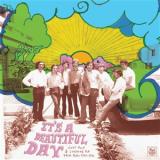
VARIOUS - IT'S A BEAUTIFUL DAY
  • Seabird
  • Estoy Brillando
  • Yo No Sé Señor
  • Cariño Grande
  • A Beautiful Day
  • Something Going
  • The World Is Getting Worst
  • We Wish To Be Listened
  • Mujer
  • Guess I'm Going Away
  • Tiempo En El Sol
  • It's A Sin To Go Away

"It's a Beautiful Day" brings together 12 outstanding songs recorded between 1971 and 1976, reminiscent of sunshine pop, psych folk and soft rock with Peruvian touches, taken from extremely hard to find records, some of them reissued here on vinyl for the first time. A mindblowing look at a really stunning musical moment in Peru. Unusual instruments and exceptional vocal play also feature in the ten original songs and two cover versions, all performed by Lima-based groups. MAG has been, since its foundation in 1953, an essential label in the music scene of Peru, allowing the development of the careers of both tropical artists and musicians of other genres. At the head was Don Manuel Antonio Guerrero, its founder, whose name comes from the acronym of the label itself (M.A.G.). In 2021 MAG was acquired by the Spanish company Distrolux SL, owner of the Munster and Vampisoul record labels, after years of previous collaborations in which some of the most emblematic titles in the catalog were already reissued for the international market: Nils Jazz Ensemble, Sonora Casino, Traffic Sound, Al Valdez, Pax... Following our recent release "14 MAGníficos Bailables", comprising some of the best tropical music on MAG, this new compilation brings together 12 songs recorded between 1971 and 1976, reminiscent of sunshine pop, folk psych and soft rock but with Peruvian touches. The lyrics range from youthful reflections, environmental awareness, paradigm changes to all shades of love that the youth of the day experienced. Unusual instruments and exceptional vocal play also feature in the ten original songs and two cover versions, all performed by Lima-based groups.

vorbestellen31.10.2025

erscheint voraussichtlich am 31.10.2025

Various - Dolores: Salsa & Guaracha From 70's French West Indies

In Guadeloupe, many people think that jazz and ka music are like a ring and a finger. To some extent, the same could be said about so called Latin music and the music played in the French West Indies.

Both aesthetics were born in the Caribbean and bear so many connections that they can easily be considered cousins. In constant dialogue, there are lots of examples of their fruitful alliance and have been for a while. The English country dance that used to be practiced in European lounges came to be called kadrille in Martinique and contradanza in Cuba. They both featured additional percussion instruments inherited from the transatlantic deportation. Drawing from shared feelings about the same traumatized identity – later to be creolized – it would be hard not to assume that they were meant to inspire each other. The golden age of the orchestras that graced the Pigalle nights during the interwar period further proves the point. As soon as the 1930s, Havana-born Don Barreto naturally mixed danzón and biguine music in a combo based at Melody's Bar. In the following decade, Félix Valvert, a conductor who was born and raised in Basse-Terre in Guadelupe, also worked wonders in Montparnasse with La Coupole, which was an orchestra made up of eclectic musicians. Afro- Caribbean performers of various origins were often hired on rhythm and brass sections in jazz bands, which used to enliven the typical French balls of the capital. In the 1930s and onwards, Rico’s Creole Band was one of them.


Martinican violinist-clarinettist Ernest Léardée, who would become the king of biguine music as well as the main figure of French Uncle Ben's TV commercials (a dark stigma of post-colonial stereotypes), had musicians from the whole Caribbean sphere play at his Bal Blomet – and they all enchanted "ces Zazous-là" (according the words of Léardée's biguine-calypso piece). In les Antilles (French for French West Indies), music history started to speed up in the 1950s, when trade expanded and radio stations grew bigger. The Guadelupean and Martiniquais youth tuned in their old galena radio sets to South American and Caribbean music. As for the women traders, les pacotilleuses, they bought and sold goods across different islands (the "passing of items through various hands" was thought to be most pleasurable) and brought back countless sounds in their luggage. Such was the case of Madame Balthazar, who once returned from Puerto Rico with the first 45rpm and 33rpm to ever enter Martinique.

Out of this adventure was created the famous Martinican label La Maison des Merengues, a music business she opened and undertook with her husband and which proved to be a major landmark. At the end of the 1950s, in Puerto Rico, Marius Cultier competed in the Piano International Contest playing a version of Monk's Round 'Midnight. He won the first prize and this distinction foreshadowed everything that was to come. Cultier, the heretic Monk of jazz, was quickly praised for writing superb melodies, always tinged with a twist that conferred a unique sound to his music. It didn't take long for the gifted self-taught musician to get to play with Los Cubanos, making a name for himself thanks to his impressive maestria on merengues.

The rest is history. Besides, in the late 1950s, Frantz Charles-Denis, born into the upper middle class in Saint-Pierre and better known by his first name Francisco, went back home after working at La Cabane Cubaine – a club located rue Fontaine where he had caught the Latin fever. Francisco's music was therefore heavily marked by his Cuban cousins' influence, which gave the combos he led a specific style and also led to renewal. Things were swinging hard in La Savane, located in the main square in Fort-de-France. He set up the Shango club close by and tested out the biguine lélé there, a new music formula spiced up with Latin rhythms. Soon afterwards, fate had him fly to Puerto Rico and Venezuela.

As for percussionist Henri Guédon (percussions were only a part of his many talents), he was born in Fort-de-France in May 22nd 1944, the day marking the celebration of the abolition of slavery. As an old man, he could remember that in " his father's Teppaz, a lot of hectic 6/8 music was constantly playing...". In the opening lines of his Lettre à Dizzy, a small illustrated collection of writings published by Del Arco, he highlighted the huge impact that cubop had on him as a teenage boy, around 1960. He eventually turned out to be the lider maximo in La Contesta, a big band steeped in Latin jazz. He was also the one who originated the word zouk to describe music which brought the sound of the New York barrio to Paris. It was the culmination of a journey that started in Sainte-Marie: "a mythical place for bélé, the equivalent of Cuban guaguancó". In the early 1960s, the tertiary economy developed to the detriment of agriculture. Yet rural life was where roots music emerged in Martinique and in Guadeloupe.

Record companies played a major part in the process of Latin versions sweeping across the islands – before reaching everywhere else. Producer Célini, boss of the great Aux Ondes label, and Marcel Mavounzy, both the head of Émeraude records - a firm which was founded in 1953 - as well as the brother of famous saxophonist Robert Mavounzy, were big names to bear in mind. Although there were many of them - all of whom are featured on this record - Henri Debs was definitely the major figure in the recording adventure. He proved to be so influential that he even got compared to Berry Gordy. In the mid 1950s, when he acquired his first Teppaz, he worked on his first compositions: a bolero and a chachacha. Then, he became the one man who made people discover Caribbean music, from calypso to merengue. He was among the first ones to rush out to San Juan, Puerto Rico, to buy records and distribute them through a store run by one of his brothers in Fort-de-France. He had members of the Fania All Star come and perform there, which he was madly proud about. He was also the first one to pay attention to Haitian music, such as compas direct and various other rhythms which would soon flood the market. As a result, many of the combos hitting his legendary studio would end up boosted by widespread "Afro-Latin" rhythms. However, he never denied his identity: gwo ka drums were given a major role, although they were instruments which had long been banned from the "official" music spheres. The present selection bears witness to such a creative swarming. Here are fourteen tracks of untimely yet unprecedented cross-fertilization: all types of music rooted in the Creole archipelago have found their way, whatsoever, to the tracklisting. Whether originating from the city or being more rural, they all go back to what Edouard Glissant, in an interview about the place of West Indian music in the Afro-American scope, called "the trace of singing, the one which got erased by slavery." "It is so in jazz, but also in reggae, calypso, biguine, salsa... This trace also manifests through the drums, whether Guadelupean, Dominican, Jamaican or Cuban... None of them being quite the same. They all point to the idea of a trace, seeking it out and connecting to each other through it. This is the hallmark of the African diaspora: its ability to create something new, in relation to itself, out of a trace. It may be the memory of a rhythm, the crafting of a drum, a means of expression which doesn't resort to an old language but to the modalities of it." The opening track features one of the emblematic orchestras of this aesthetic identity, criscrossing many music types from the archipelago. The 1974 Ray Barretto guajira – Ray Barretto was a major New York drummer influenced by Charlie Parker and Chano Pozzo – is magnificently performed by Malavoi, a legendary Fayolais group (i.e from Fort-de-France). Additionally, the compilation ends on a piece by Los Martiniqueños de Francisco. It symbolically closes the circle as it is a genuine potomitan of Martinique culture which also functions as a tireless campaigner for Afro-Caribbean music. Practicing the danmyé rounds (a kind of capoeiria) to the rhythm of the bèlè drum, it delivers a terrific Caterete, a kind of champeta of Afro- Colombian obedience which was originally composed by Colombian Fabián Ramón Veloz Fernández for the group Wgenda Kenya. The icing on the cake is Brazilian Marku Ribas, who found refuge in Martinique in the early 1970s, bringing his singing to the last trance-inducing track. These two "versions" convey the whole tone of a selection composed of rarities and classics of the tropicalized genre, swarming with tonic accents and convoluted rhythms. It is the sort of cocktail that the West Indians never failed to spice up with their own ingredients. For instance, the Los Caraïbes cover of Dónde, a famous Cuban theme composed by producer Ernesto Duarte Brito, has a typical violin and features renowned Martinique singer Joby Valente and his piquant voice.


The track used to be – or so we think – their only existing 45rpm. The meaningful Amor en chachachá by L'Ensemble Tropicana, a band which included Haitian musicians among whom was composer and leader Michel Desgrotte, also recalls how Latin music was pervasive in the tropics in the mid-1960s. They were the ones keeping people dancing at Le Cocoteraie in Guadelupe and La Bananeraie in Martinique. Around the same time, another "foreign" band, Congolese Freddy Mars N'Kounkou's Ryco Jazz, achieved some success on both islands by covering Latin jazz classics – such as their adaptation of Wachi Wara, a "soul sauce" by Dizzy Gillespie and Chano Pozo whose interweaving of strings and percussions can have anyone hit the dancefloor. How can you resist Dap Pinian indeed, a powerful guaguancó by Eugene Balthazar, performed by the Tropicana Orchestra and published by the Martinique-founded La Maison des Merengues? It also acts as a symbol of the maelstrom at work. Going by the name Paco et L'orchestre Cachunga, Roger Jaffory used to play guaguancó too: his Fania-inspired Oye mi consejo is one example of his style. Baila!!!!! Dancing was also one of the Kings' focus points. Oriza is a Puerto Rican bomba and a "classic" originally composed by Nuevayorquino trumpeter Ernie Agosto, which reserves major space for brasses, giving it a special sheen.

Emerging from the New York barrios crucible was also La Perfecta, a Martinique group originating from Trinidad, whose name directly references the totemic Eddie Palmieri figure as well as his own band, also called La Perfecta. Here they borrow Toumbadora from Colombian producer and composer Efraín Lancheros and interpret it by emphasizing percussions, which set fire to the track even more than the wind instruments. The same goes for Martinique's Super Jaguars, who use Tatalibaba – a composition by Cuban guitarist Florencio "Picolo" Santana which was made famous by Celia Cruz & La Sonora Matencera – as a pretext for sending their cadences into a frenzy. In a more typically salsa vein, the Super Combo, a famous Guadelupean orchestra from Pointe-Noire that was formed around the Desplan family and had Roger Plonquitte and Elie Bianay on board, adapt Serana, a theme by Roberto Angleró Pepín, a Puerto Rican composer, singer and musician also known for his song Soy Boricua. Here again, their vision comes close to surpassing the original. In the 1970s, L'Ensemble Abricot provided a handful of tracks of different syles, hence reaching the pinnacle of the art of achieving variety and giving pleasure. They played boleros, biguines, compas direct, guaguancó and even a good old boogaloo - the type they wanted to keep close to their hearts for ever, "pour toujours", as they sang along together in one of their songs. Léon Bertide's Martinican ensemble excelled at the boogaloo which had been composed by Puerto Rican saxophonist Hector Santos for the legendary El Gran Combo.


Three years later, in 1972, Henri Guédon, with the help of Paul Rosine on the vibraphone, tackled the Bilongo made famous by Eddie Palmieri. Such a classic!!!!! And so were the Aiglons, the band from Guadelupe: choosing to execute Pensando en tí, a composition by Dominican Aniceto Batista, on a cooler tempo than the original, they noticeably used a wonderfully (un)tuned keyboard in place of the accordion. On the high-value collectible single – the first one released by Les Aiglons under the Duli Disc label – there is a sticker classifying the track under the generic name "Afro". Now that is what we call a symbol. Jacques Denis

nicht am Lager

Bestelle jetzt und wir bestellen den Artikel für dich beim Lieferanten.


Last In: vor 77 Tagen
VARIOUS - MAGNIFICO BOOGALOO LP 2x12"
 
22

These two vinyl records showcase the legacy left by the boogaloo movement in Peru between 1966 and 1975. They comprise twenty-two songs by seventeen artists who recorded on the remarkable local label MAG more than five decades ago and now invite today’s new generations to dance body and soul to these re-releases. You will find outstanding tracks by the likes of Tito Chicoma, Melcochita, Los Kintos, Otto Rojas, Coco Lagos among many others. MAG was one of the most important and prolific labels in Peru and, though it also was involved in releasing a lot of other types of music, its specialty was the tropical variety, which coincidentally, DJs and collectors seem to crave most. Peru developed a major boogaloo scene in the mid-60s, far from the genre’s place of origin, New York, where iconic songs like 'Bang Bang' and 'El Pito', fused soul and funk with Latin sounds, conquering dance halls and winning extensive radio airplay. The music trend soon spread to Caribbean countries and from there made the geographical leap to the city of Lima. 'El Pito', the collective creation of the Joe Cuba Sextet, was particularly popular. Shorn of overelaborate arrangements, the improvisation and spontaneity of the song resonated with the young generation who were avid for new music after the U.S. placed an embargo on the distribution of Cuban music. In July 1966, Rebeca Llave´s label, Disperú, released the 45 RPM of 'El Pito' (and Joe Cuba's LP), promoting the single in the most prestigious newspaper in the country: El Comercio. The press information stated that the record had sold seventy thousand copies in New York and fifty thousand in Los Angeles. That same year local dance versions by the bands of Alfredo Linares (MAG) and Lucho Macedo (El Virrey) were released, followed by another by the band of the Argentinean musician Enrique Lynch who was based in Peru (Sono Radio). These records were a hit with a new generation that embraced Lucho Macedo's band and the garage rock of Los York's with equal enthusiasm. Although Joe Bataan claimed that boogaloo was killed off at the end of the sixties by the labels and their veteran musicians (who conspired against the new generation of singers), Pete Rodriguez, Richie Ray and the Lebrón Brothers continued to release boogaloo records in Peru, but salsa music soon took over.

nicht am Lager

Bestelle jetzt und wir bestellen den Artikel für dich beim Lieferanten.


Last In: vor 14 Monaten
Chicha Libre - Tequila Y Aguardiente LP

Chicha Libre' first release in 10 years is an EP recorded in Mexico City and Bogotá with special guests Mexican sensation Son Rompe Pera and Colombian retro-futurist tropical band La Sonora Mazuren. The EP include covers of the classic Tequila! and Caminito de mi Tierra, first recorded by Ecuadorian cult composer Polibio Mayorga The B side consists of remixes of both those tunes in Rebajada and Rustico mode. The title of the release refers to Mexico’s Colombia’s national drinks. Both songs were remixed by Olivier Conan with Bryce Goggin.

nicht am Lager

Bestelle jetzt und wir bestellen den Artikel für dich beim Lieferanten.


Last In: vor 20 Monaten
Various - CUMBIA CUMBIA CUMBIA!!! VOL.1 (2x12")
 
24
auch erhältlich

Vol. 2

Vol.3


A selection of 24 Colombian cumbia bangers for the dance floor from the deep vaults of Discos Fuentes, the most emblematic and best remembered label in the golden age of the genre. An invitation to enjoy and be amazed, above and beyond ethnographic and academic concerns. Double LP. The historical origins of cumbia in Colombia are nebulous and imprecise. The mythology surrounding it suggests an ancient past when Amerindian, African and European musical sounds were mixed together. The main record companies in Colombia such as Discos Fuentes, Discos Tropical, Sonolux, Zeida-Codiscos, Silver, Ondina, Discos Atlantic, Vergara and Curro were created between Barranquilla, Medellín, Cartagena and Bogotá from 1936 to 1954. All of them, without exception, recorded Colombian tropical music that over the years was given different names such as porro, gaita, fandango, paseaito, merecumbé, mapalé, bullerengue or, of course, cumbia. This first volume in the series “Cumbia Cumbia Cumbia!!!” comprises 24 Colombian cumbia bangers for the dance floor from the deep vaults of Discos Fuentes, the most emblematic and best remembered label in the golden age of the genre. This is complemented by a selection of cumbias recorded by the label Discos Tropical, which sold most of its catalog to Discos Fuentes in 1990. Discos Fuentes concentrated on recording cumbias played on the accordion and by orchestras and ensembles. The label produced a prodigious number of albums devoted to cumbias between 1962 and 1979, which served to define ambiguous stereotypes, rooted as much in authenticity and modernity as in demure sensuality and joyful nostalgia. “Cumbia Cumbia Cumbia!!!” combines well-known classics and rarities that are difficult to find in their original formats. An invitation to enjoy and be amazed, above and beyond ethnographic and academic concerns.

nicht am Lager

Bestelle jetzt und wir bestellen den Artikel für dich beim Lieferanten.


Last In: vor 11 Monaten
SONORA MAZUREN - BAILANDO CON EXTRAÑOS

La Sonora Mazuren is the latest addition to the already rich indie-tropical scene out of Bogotá, Colombia. Deeply rooted in the popular sounds and rhythms of South America, the group draws from cumbia, chicha, guaracha, champeta and other styles mostly from Ecuador, Colombia and Peru.

Far from being revivalists or folklorists, the group combines synthesizers and electric guitars with accordion and percussion to create a style indebted to early pioneers such as Polibio Mayorga or Bogota’s own Eblis Alvarez, of Meridian Brothers fame, who also produced their new album. The result is a psychedelic feast reminiscent of the golden years of tropicalia.

nicht am Lager

Bestelle jetzt und wir bestellen den Artikel für dich beim Lieferanten.


Last In: vor 21 Monaten
Djalma Corrêa - Espontaneamente se Tenta: Aventuras Sonoras de Djalma Correa LP 2x12"

"Espontaneamente se Tenta: Aventuras Sonoras de Djalma Corrêa is an album of deeply exploratory pieces by legendary percussionist and composer Djalma Corrêa. This double-LP set features previously unreleased recordings that cover a wide range of sonic experiments, revealing an unknown side of the prolific and groundbreaking Brazilian artist. Most of the tracks on this album were digitized for the first time – directly from the original tapes – and were compiled in collaboration with Corrêa just before he passed.

The result is a wild and unsettling collage that shows us just how original and intense Corrêa could be: from the unorthodox electroacoustic piece Evolução (Para Fita e Filme), which channels ancestral African inspirations to create a sonic cosmogonical narrative, to the proto-mixtape Exemplo de Sintetizadores, in which he transitions from transcendental drones to astral cha-cha-chas.

While the compilation might seem disjointed at first listen, it is in fact the most accurate translation or representation of his central concept: spontaneous music. Djalma's relationship with sound was always guided by his fearless approach to listening, and by his audacious and dynamic interaction with both musicians and equipment, which enabled him to work across a wide array of genres: from jazz to completely abstract music, always through a personal DIY ethic.

Corrêa developed a strong bond with experimentalist and inventor Walter Smetak, with whom he shared a studio during his formative years at Universidade Federal da Bahia. Suite Contagotas, featured in this collection, is no less than a sonic materialization of that bond: an experiment revolving around dripping water and its randomness – a tentative exploration of the ideas and possibilities envisioned by Smetak for his audacious, albeit unrealized, Estúdio OVO.

Djalma, however, is best known for his studio work in historical albums, including many by Caetano Veloso, Gilberto Gil and Jorge Ben, and for his own polyrhythmic opus Baiafro. The last track is an early recording called Bossa 2000 dC, first performed by Djalma at the 1964 Nós, Por Exemplo concert, an event which is often cited as marking the beginning of the Tropicalia movement. At the time, he was the only artist in the lineup using electronic devices to create sounds, e.g. medical oscillators and contact mics to augment his percussive palette.

The artwork is an amalgamation of material found in the Djalma Corrêa Archive (currently managed by his son Caetano Corrêa) and other material created during the period in which the record was being put together. The intention is to guide the listeners through this possibly tempestuous soundscape, giving them additional resources so that they may draw their own meanings and make their own sense of this extremely immersive and original experience – which is like nothing we've ever heard before."

vorbestellen01.06.2024

erscheint voraussichtlich am 01.06.2024

VARIOUS - CUMBIA CUMBIA CUMBIA!!! VOL.2 LP 2x12"
 
28
auch erhältlich

Vol.1

Vol.3


A selection of 28 Colombian cumbia bangers for the dance floor from the deep vaults of Codiscos and associated labels Costeño, Zeida and Famoso, all of them originally released between 1962 and 1983.

“Cumbia Cumbia Cumbia!!!” combines well-known classics and rarities that are difficult to find in their original formats. An invitation to enjoy and be amazed, above and beyond ethnographic and academic concerns.

The historical origins of cumbia in Colombia are nebulous and imprecise. The mythology surrounding it suggests an ancient past when Amerindian, African and European musical sounds were mixed together.

The main record companies in Colombia such as Discos Fuentes, Discos Tropical, Sonolux, Zeida-Codiscos, Silver, Ondina, Discos Atlantic, Vergara and Curro were created between Barranquilla, Medellín, Cartagena and Bogotá from 1936 to 1954. All of them, without exception, recorded Colombian tropical music that over the years was given different names such as porro, gaita, fandango, paseaito, merecumbé, mapalé, bullerengue or, of course, cumbia.

After digging deep into the overwhelming archive of Discos Fuentes in our previous volume, this second instalment in the series “Cumbia Cumbia Cumbia!!!” comprises 28 Colombian cumbia bangers for the dance floor from the deep vaults of Codiscos and associated labels Costeño, Zeida and Famoso, all of them originally released between 1962 and 1983. Legally established on July 1, 1950, Zeida (later Codiscos) was one of the companies that consolidated Medellín as the epicenter of the Colombian recording industry in the central decade of the last century.

“Cumbia Cumbia Cumbia!!!” combines well-known classics and rarities that are difficult to find in their original formats. An invitation to enjoy and be amazed, above and beyond ethnographic and academic concerns.

nicht am Lager

Bestelle jetzt und wir bestellen den Artikel für dich beim Lieferanten.


Last In: vor 20 Monaten
Mau Gatiyo y Los Años Maravillosos - 420, Reloj

Introducing the next release in Names You Can Trust's long-running collaboration with the prolific and symbiotic musical universe of Bogotá, Colombia. Mau Gatiyo y Los Años Maravillosos formed in 2021, arising from the very same fertile ground of the Teusaquillo neighborhood that has spawned many records and musical mischievousness. At the heart of this experimental movement is what can only be described asTropicanibalismo, where a deep hunger for the roots of Colombian tropical music are only satiated by dissecting it, consuming it and ultimately creating something new again as some kind of untraditional, unholy, and yet referential form of musical sustenance.

Within this concept, there's a clear lineage of inspired and visionary artists that have been featured throughout NYCT's record catalog for the last 15 years that includes luminaries Frente Cumbiero, Meridian Brothers, and Romperayo. Each of these artists' tentacles have touched several parallel projects from their talented neighbors and friends, and whether through production, playing, engineering, or mixing, these collaborations have heavily contributed to a very fruitful and colorful scene that could only exist within Colombia's capital, while also gaining notoriety in the nooks and crannies of northern latitudes like New York, Chicago, and Los Angeles.

Mau Gatiyo, a talented accordian player and vocalist, together with his group (translated as The Wonder Years), is precisely one of these projects, a collective that has found their calling in the echoes of thevallenatosandcumbiasthat once populated the nation's airwaves throughout the 20th century. It's a traditional format that has always lent itself to storytelling, whether it be anecdotes about daily life, or using one's voice to raise uncomfortable questions in protest against the system. This is where Mau Gatiyo's poetic, almostnew wavetimbre finds a lane of its own, straddling a 2020s societal landscape under the guise of ostensibly old-time accordion music.

The debut 7-inch from the group, an excerpt from their recently released album Baño Unisex, was recorded at Mambo Negro studios by Ivan Medellin (La Sonora Mazurén) and mixed by Eblis Alvarez of Meridian Brothers, both familiar names and contributors to the NYCT catalog. Alvarez himself, who has emerged in recent years as an international beacon of this new tropical avant-garde, is no stranger to flipping traditional styles on their head, or at least respectfully off-kilter. Mau Gatiyo y sus Años Maravillosos proves to be another great vessel for this veryBogotano expression, draping the classical playing of its group members in a modern day cosmopolitan expression of righteousness, both outwardly in their dashing, performative fashion sense, and lyrically with their cheeky "420, Reloj"ganja-tune promotion – or even their outward dissenter objections to paramilitary and firearm power in "Poder Militar."

Ultimately, these songs lie at the crossroads where two cultural eras connect and become something unique, a protestation one with performance, dance, and artistic expression. This cathartic ritual of protest has a storied history in music, and these two new entries into the NYCT catalog will hopefully find their place amongst a modern day canon, or at the very least, have your feet moving and your head nodding in just approval.

vorbestellen10.05.2024

erscheint voraussichtlich am 10.05.2024

Various - Discomoda Salsa De Venezuela 1964-1977
 
21

Established in 1948 by César Roldán, Discomoda is one of the earliest record labels of Venezuela and the oldest family operated label in the country. Home to one of the most complete folkloric and popular music catalogues of Venezuela, the label also invested heavily in Afro-Caribbean and tropical rhythms that became popular in the 60s and 70s.

In the 1960s and before the Salsa era truly kicked off, Venezuela had a significant dance orchestra and big band movement. Unlike local record competitors dedicated to selling foreign productions, Discomoda achieved its leading position by recording the most important national bands, including Los Megatones de Lucho, Orquesta Sonoramica and Super Combo Los Tropicales; all featured in this compilation.

Later on, surrounding the festivities for the 400th anniversary of Caracas in 1967, the word "Salsa", which had been recently coined by famed radio host Phidias Danilo Escalona, was formalized to identify an Afro-Caribbean musical style with growing popularity in Venezuela and beyond. By then, the country was among the top 20 music markets in the world, with the local label Discomoda leading the way, responsible for one out of every five records sold in the country.

With the prolonged celebrations approaching due to the 400 years of the city, Discomoda and other labels began to capitalize on this new musical style by betting on both established and new local bands, such as Nelson y sus Estrellas, Los Kenya, Principe y su Sexteto and Los Satélites. As a result, this would kick off what could be considered a golden era of Salsa in Venezuela and which lasted until the mid-70s.

As we approach the 80s and with the emergence of new musical styles and bigger multi-national record labels funded by larger pockets, a lot of the previously popular bands begin to disband or choose to leave the country. Nonetheless, a few artists, like Rodrigo Mendoza, La Renovación and Grupo Yakambu, were still pushing out quality music.

We are thrilled and honored to celebrate one of Venezuela's and, equally, Latin America's most significant record labels, and to share a slice of their enduring influence in advancing Venezuelan-made Salsa music.

nicht am Lager

Bestelle jetzt und wir bestellen den Artikel für dich beim Lieferanten.


Last In: vor 23 Monaten
BETICO Y SU SORONA SALAS - BAILE UD. CON BETICO SALAS LP

First solo LP by the talented Peruvian artist Betico Salas, lead trumpet player of the great Sonora de Lucho Macedo, one of the best ensembles playing Cuban repertoires in the early '60s. This 1966 album features Alfredo Linares on piano and sonero vocals by Benny del Solar, and combines a mix of guarachas, guanguancó and even cumbias. Betico Salas would later release two more albums and become a legendary trumpet player in Peruvian musical history. First time reissue.- DETAILS: Alfredo Linares on piano and sonero vocals by Benny del Solar stand out on this album. Benny del Solar sings lead vocals on the cumbia of Argentine origin 'Nos vamos a casar'; the Colombian 'Lo que pasa es que la banda está borracha', a continental hit since the early sixties; the guaracha 'A los muchachos de Belén', by Puerto Rican musician Tito Rodríguez; the guaracha 'Ritmo del amor'; the elegant Cuban guaguancó 'Así namá', also well known for Tito Rodríguez's rendition; and the cumbia 'Qué le digo a mi mujer'. Singer, César Gonzales, who would have an extensive career in Peruvian tropical music, sang lead vocals in the guaguancó by the Sonora Matancera 'Lindo Omelenko' and the bolero 'El árbol', a hit for the singer Roberto Ledesma, also recorded that same year by Peruvians Carmita Jiménez, Anamelba, Raul del Mar and Lucho Macedo himself, who decided to sing for his new record label. The mythical singer Johnny Arce, years later known as Mr. Macondo, also appears on the album on the two guarachas: 'La renga', a composition by Esther Forero, known as La novia de Barranquilla; and 'Yo soy candela', a composition by the Colombian Ray Rodríguez. Finally, 'La chola' is a cumbia by Peruvian composer Tomás Benítez; and 'Mambo Jazz' is a version of the descarga 'Yayi's instant mambo', an innovative instrumental track performed by Puerto Rican Willie Rosario, who recorded it in the United States at the start of 1966 with his own orchestra. Betico Salas would later release two more albums and become a legendary trumpet player in Peruvian musical history.

nicht am Lager

Bestelle jetzt und wir bestellen den Artikel für dich beim Lieferanten.


Last In: vor 2 Jahren
ALFREDO GUTIERREZ Y LOS CAPORALES DEL MAGDALENA - ASI ES... CON SALSA! LP

First time reissue of a legendary and undeservedly obscure salsa collector’s album from 1969. Led by rebel accordionist Alfredo Gutiérrez and featuring singer Lucho Pérez of Sonora Dinamita fame, “Así es… Con salsa!” is just that: raw, heavy duty NYC salsa performed through a Colombian “Costeño” tropical filter, with trombone, accordion and deep bass. Contains three hot bonus tracks in the same style and insert with liner notes. “¡Así es… Con salsa!”, by Colombia’s Alfredo Gutiérrez y Los Caporales del Magdalena, is a legendary collector’s album, yet still undeservedly obscure (and perhaps sonically surprising) for the uninitiated. It’s an experimental mash-up of seemingly disparate genres from different origins that on paper would seem to be at cross purposes. Yet at the same time the release is a masterpiece of raw pan-Latin fusion from the dawn of Colombian salsa that holds its own as a bonafide heavy duty pioneering record of the genre, despite its outsider status. Probably the most shocking musical element is Alfredo Gutiérrez’s fiery accordion, an unexpected instrument in the idiom of salsa, as it’s usually associated with the tropical music of Gutiérrez’s Caribbean home region of Sucre. Gutiérrez has always been a provocateur, never shying away from the controversial or outlandish, which has earned him the richly deserved sobriquet, “El Rebelde Del Acordeón” (The Rebel of The Accordion). Gutiérrez started Los Caporales in 1968 as a rival to Discos Fuentes supergroup Los Corraleros de Majagual, and the band had made three popular albums prior to “¡Así es… Con salsa!”, yet most of the repertoire on those records consisted of typical Colombian tropical and coastal rhythms and genres, none were purposely devoted to the newly minted genre of salsa. From the start, Gutiérrez lays down a salsa manifesto when the album kicks off with ‘Guadelupe no va’, a four-minute workout with pile-driving force that demonstrates the uncompromising power of this 14 piece orchestra. The listener is instantly hooked by the rawness of the sound, the bouncy energy, heavy brass and piano arrangements and the looseness of the improvisational sections. Gutiérrez was given the green light by Codiscos A&R head Humberto Moreno to dedicate an album to New York style salsa, giving more prominence to the voice and compositions of Lucho Pérez, an already proven expert in Cuban genres who previously had been only one among many vocalists in the band. Several tunes on the record are remakes of older compositions by Lucho Pérez from his early tenure with Discos Fuentes group La Sonora Dinamita, the new versions are much more raw and menacing, as if put through a Bronx filter. The band was made up of Codiscos’ regular stable of ace studio musicians from Medellín for the recording date. The album was both a success and also not abnormal in its mixing of salsa and costeño Colombian sounds, as there were several other similar hybrid records by other artists at the time. Both the desperation of the lyrics (about not being able to afford anything) and Lucho Pérez’ forceful delivery leave an indelible impression of street wise authenticity, which is backed up by the fact that both band members grew up poor

nicht am Lager

Bestelle jetzt und wir bestellen den Artikel für dich beim Lieferanten.


Last In: vor 3 Jahren
MITA Y SU MONTE ADENTRO - ARECIBO

From a young age, La Perla, Callao-born guitarist Oswaldo "Mita" Barreto was a fan of Cuban artists like Celina y Reutilio and Los Compadres, whose records were a staple in the port city homes. He soon learned to distinguish the sound of the Cuban tres on these records (the chordophone from rural areas of Cuba). At the age of 18, he had already mastered the instrument, although he had never seen a Cuban musician play one live until that point. At the beginning of 1969 (according to the record company's archives), his fame led him to record his first 45 RPM singles for the MAG label, which were compiled in an LP by the end of the year entitled "Arecibo", after a song dedicated to the Puerto Rican city of the same name. For these recordings he was accompanied by a group of musician friends, all linked to the tropical music scene in Callao, Peru. The album opens with two Cuban guarachas from the 1950s: 'Mango mangüé' by El Gran Fellove, whose compositions were popularized across the Americas thanks to the voice of Celia Cruz and the Sonora Matancera; and 'El yoyo' by Antonio Sánchez Reyes, another international hit performed by Cortijo y su Combo. Both songs were recorded by Mita in May 1969.

nicht am Lager

Bestelle jetzt und wir bestellen den Artikel für dich beim Lieferanten.


Last In: vor 3 Jahren
Various - 14 MAGFICOS BAILABLES LP

This sampler compiles 14 killer tropical tracks for the dance floor, all taken from the vaults of Peru's MAG records, including cumbias to descargas, boogaloo to salsa. Classic songs such as 'Arroz Con Coco' or 'Aprieta (Oye Como Va),' and also obscure recordings like the stunning 'Ritmo Veregua' by Tito Chicoma or the totally under-the-radar -recorded in Lima- 'Mi Son Combinado' by Cuba's legendary Orquesta Revé. MAG will turn 70 in 2023 and is a pivotal label in Peruvian music, mainly focused on tropical rhythms although its extensive catalogue also includes rock, pop and jazz recordings. This compilation celebrates the recent addition of Discos MAG to the Vampisoul family, where the best and most elusive titles from the MAG archive will become available again. MAG has been, since its foundation in 1953, an essential label in the music scene of Peru, allowing the development of the careers of both tropical artists and musicians of other genres. At the head was Don Manuel Antonio Guerrero, its founder, whose name comes from the acronym of the label itself (M.A.G.). In 2021 MAG was acquired by the Spanish company Distrolux SL, owner of the Munster and Vampisoul record labels, after years of previous collaborations in which some of the most emblematic titles in the catalog were already reissued for the international market: Nils Jazz Ensemble, Sonora Casino, Traffic Sound, Al Valdez, Pax_ "14 MAGníficos" is a 14-track compilation that celebrates a new era in the history of the label, now under the Vampisoul umbrella, with a selection of astonishing dance floor-oriented gems. This is also a perfect introduction to MAG, showcasing the amazing musical variety sported by the Peruvian label throughout the years. The comp includes juicy Cuban songs like 'Mi Son Combinado', an outstanding original taken from the extremely scarce LP recorded by Cuba's finest Orquesta Revé for MAG in Lima, and the explosive guaracha 'Tin Marin' by Los Kintos, a group lead by guitarist Pancho Acosta. Also classic songs such as 'Arroz Con Coco' or 'Aprieta (Oye Como Va),' and obscure recordings like the stunning 'Ritmo Veregua' by Tito Chicoma.

nicht am Lager

Bestelle jetzt und wir bestellen den Artikel für dich beim Lieferanten.


Last In: vor 3 Jahren
La Sonora Mazurén - Charanga Mazurén

For over a decade, Names You Can Trust has presented a variety of new music that has grown from a prolific network of talented musicians in Colombia's capital city. Frente Cumbiero, Romperayo, La Boa, and Meridian Brothers are some of the important names to have reached a well-deserved global audience. The scene itself in Bogotá has been on the cutting edge for some time, and this new generation of musical spirit has naturally become a beacon in the tropical music community, not only as a standard bearer for honoring tradition but as well as the ability to flip that tradition on its head, with thoughtful modern and technological experimentations. The good news is that there are no signs of this particular renaissance slowing down, as some of these marquee names in the aforementioned list have expanded their creative output as producers, engineers and mixers.

In this case, Meridian Brothers creator and musical savant, Eblis Álvarez lends his expertise to a new emerging septet of tropicalistas, La Sonora Mazurén, named after a northern neighborhood in Bogotá. The group's mission is best described as an exploration into the many influences of tropical music that have thrived in Colombia for decades. Thinkcumbia,chicha,charangaandvallenatoto name a few, and that's where we land on with the group's debut single for NYCT. It's an apt illustration of the band's range, starting with the A-side's quintessential "Charanga Mazurén," a throwback to pure dancefloor accordion bliss, a pulse that is synchronized with the aura of Colombia's legends such as Landero, Meza, or Gutiérrez. The B-side "Cachicha" is a take on the all-importantchicha, which has become an inescapable and essential part of Peru's nationalcumbia, and likewise a staple within Colombia's borders since the advent of the popular style on record back in the day. That tradition continues here, the familiar pluck of the psychedelic guitars mixed with an array of synthesized sonics, the palette of Peru mixed with that of producer Álvarez's wizardry and the group's talented players.

nicht am Lager

Bestelle jetzt und wir bestellen den Artikel für dich beim Lieferanten.


Last In: vor 2 Jahren
VARIOUS - THE AFROSOUND OF COLOMBIA VOL.3 LP (2x12")
 
26

Third volume in our series of Afro-Latin sounds from the golden period of the seminal Discos Fuentes label in Colombia. An outstanding selection of 26 hard-to find-tracks, many reissued for the first time, covering a wide array of Afro-rooted genres, with an stronger focus on the music's folkloric origins than in previous volumes, comprising recordings by the likes of Michi Sarmiento, Wganda Kenya, The Latin Brothers, Los Corraleros De Majagual, Peregoyo_ It's been a few years, but Vampisoul is back with the next installment of Colombian tropical bangers from the deep vaults of Discos Fuentes. The term Afrosound denotes an always exciting, sometimes surprising soundtrack chronicling the embrace, development, dissemination, and commercialization of the country's rich Afro-Coastal musical heritage over more than four decades. It is the proud sound of African-rooted culture translated, transformed, and transmitted through the commercial enterprise of Discos Fuentes, and this third collection offers an even more diverse and chronologically wide-ranging array of tracks than the previous two volumes, with an even stronger focus on the music's folkloric origins. The unifying factor this time is the same: African roots or influences and the period of experimentation, self-expression, upheaval, rebellion, and rebirth in the industry, nurtured by the label and its stable of musicians, song-writers, producers, and engineers. Although this volume does not list Fruko Y Sus Tesos in the track-by-track credits, the presence of Julio Ernesto Estrada Rincón can be felt throughout, with the first half setting the stage for his artistic birth, schooling and eventual emergence at the label, and the second half featuring bands that he was an integral part of or had a hand in creating, producing, and composing for. And with that said, we dedicate this collection to Fruko: long may he reign as The King of Afrosound. This incredible stream of black gold adorned and enriched the public airways of Cali, Buenaventura, Cartagena, Baranquilla, to become a symbol of pride and part of Colombia's collective identity. It includes an extended booklet with notes by compiler Pablo Yglesias aka DJ Bongohead.

nicht am Lager

Bestelle jetzt und wir bestellen den Artikel für dich beim Lieferanten.


Last In: vor 3 Jahren
KARAMANDUKA Y MELCOCHITA - ACABO CON LIMA HUYO PA NUEVA YORK LP

This mega-rare 1969 album pays tribute to the Bronx and Brooklyn neighborhoods where young Latinos had invented the boogaloo a few years earlier. This record highlights the quality of Peruvian boogaloo and the talent of musicians such as pianist Otto de Rojas and percussionist Coco Lagos. First time reissue. In the mid-sixties, when young Latino musicians in New York fused Afro-Cuban rhythms with rock, soul and jazz, they had no idea that their boogaloo bang bang would reverberate just as strong and loud in a distant South American country. From 1955, La Sonora Macedo, took Cuban music to every corner of Peru, backed the leading musicians of the Peruvian tropical universe, such as Ñiko Estrada, Joe di Roma, the double bass player Pepe Hernández, and the trumpet players Tito Chicoma and Charlie Palomares. All diehard fans of Cuban music, always alert to any new artist arriving from the island. In the early sixties, light rock, doo-wop, ballads, Italian songs and bossa nova paraded across Lima's stages, making performances by Cuban bands, previously so frequent, a thing of the past. Moreover, the unanimous success of the Beatles from 1964 onwards, gave the impression that music from the English-speaking world would dominate the rest of the decade. But this was not the case. In large part because of Manuel Guerrero's good relations with U.S Latino labels, such as Alegre Records, which released the initial recordings by Johnny Pacheco and Charlie Palmieri, allowing listeners in Lima to follow the development of the salsa movement almost from the beginning. MAG was undoubtedly the best representative of these new sounds. In 1969, the LP "Acabo con Lima, huyo pa' Nueva York" was released on this label, a project which brought together three figures from Lima's show business world: Manuel Antonio Guerrero, owner and founder of MAG, who wasn't shy of joining in on the chorus and percussion during recordings, Pablo Villanueva "Melcochita", a multifaceted artist from a talented musical family from the popular district of La Victoria, was responsible for the vocals and percussion on the album. And the third Lima show business figure in this project was the musician, singer and comedian Alberto Montroy Laostervened, who gained fame in the sixties while still in his twenties for his imitation of Cantinflas, the Mexican actor. Alberto bore a devilish resemblance to Cantinflas, not only in his gestures but also physically. Under the name of Pepe Moreno "Karamanduka" he also went on to record songs abroad such as "El boogaloo de Cantinflitas". "Acabo con Lima, huyo pa' Nueva York" was immediately re-released in other countries, highlighting the quality of Peruvian boogaloo and talent of musicians such as pianist Otto de Rojas and percussionist Coco Lagos, who feature prominently on the album. Songs such as 'Vuela mi descarga', 'Peruvian boogaloo' and 'Peruvian guajira', pay tribute to the Bronx and Brooklyn, neighborhoods where young Latinos had invented the boogaloo a few years earlier.

nicht am Lager

Bestelle jetzt und wir bestellen den Artikel für dich beim Lieferanten.


Last In: vor 3 Jahren
SONORA CASINO - TROMPETEROS LP

Sonora Casino

TROMPETEROS LP

12inchVAMPILP211
Vampisoul
07.06.2022

First ever reissue of one of the most sought after titles in the catalogue of Peruvian's label MAG, in high demand not only among Latin music collectors but also among those interested in the most exotic and experimental psychedelic sounds around. - It includes 'Astronautas a Mercurio', a cosmic descarga full of electronic effects, filtered voices and fierce guitars with wah wah and raw distortion, as well as guarachas, cumbias and descargas. - Details: Hugo Macedo was a member of the first sonora in Peru, directed by his brother: the Sonora de Lucho Macedo. His brothers were the singers of the band while he performed as a timbalero. After nine years he founded the Sonora Casino of Hugo Macedo in 1964, later incorporating his wife, Lucía "Pochita" Rivera as a vocalist. "Trompeteros" was released on the Peruvian record label MAG in 1972. Previously, the Sonora Casino had already recorded several albums for Philips since the mid-60s. At the time their repertoire was fed by rhythms such as cha cha cha, bolero, guaracha... Their MAG period would start in 1970 with the album "Pochita y la Sonora Casino de Hugo Macedo" in which Hugo Macedo's wife was granted with an important visual presence on the front cover, with a similar follow-up on "Trompeteros", creating some confusion since vocalist Pachito Nalmy was the actual main singer on the record. The vocalist, who hails from Callao, demonstrates here a great vocal versatility as captured on songs like 'Guajira del amor', with a heavy rhythm that will surely delight boogaloo lovers, or the bolero number 'Pasa, pasa', being both songs own compositions of the multitalented Nalmy. Guarachas, descargas and cumbias complete the offering of this fantastic album, one of the strongest tropical LPs in the MAG catalogue. But the real banger here is the almost magical 'Astronauts to Mercury', a cosmic descarga full of electronic effects, filtered voices and fierce guitars with wah wah and raw distortion, closer to the sound of any psychedelic recording than the classic tropical sound of La Sonora Casino, and right next to those elements, an impressive brass section that boosts the intensity of the song to the highest levels. It is not surprising that "Trompeteros" has become in recent years a highly sought-after album not only by Latin music collectors but also by those after the most exotic and experimental psychedelic sounds around... Pablo Iglesias aka DJ Bongohead

nicht am Lager

Bestelle jetzt und wir bestellen den Artikel für dich beim Lieferanten.


Last In: vor 3 Jahren
Los Palteados & La Sonora Roza - Hit Internacional

From a fascinating yet relatively undiscovered era of experimental music in Peru's capital city Lima, this never before released split single features two of the foremost musical minds of modern day tropical, electronic and ambient roots music. One song each was plucked from the archives of mutual friends Los Palteados (Tomas Tello) & La Sonora Roza (Efraín Rozas / La Mecánica Popular), offering a rare glimpse into the musicians' respective productions and group projects at the onset of the 21st century. The pair of selected recordings each have their own hypnotic sensibility, yet both remain blissfully approachable experimentations in the beloved styles of cumbia & descarga.

nicht am Lager

Bestelle jetzt und wir bestellen den Artikel für dich beim Lieferanten.


Last In: vor 4 Jahren
WALTER SMETAK - SMETAK

Walter Smetak

SMETAK

12inchBUHR144
BUH RECORDS
04.06.2021

HIGHLIGHTS An emblematic figure of the Brazilian avant-garde and a key part of the cultural climate that made the rise of tropicália possible, Walter Smetak was a Swiss musician and inventor of instruments who developed his career in Brazil. "Smetak" (1974), his debut album, was produced by Caetano Veloso and Roberto Santana, and had the support of Gilberto Gil. It sums up a personal universe that combines Afro-Brazilian ritual traditions, theosophy, microtonal studies, collective improvisation and the use of unconventional musical instruments. Liner notes by Caetano Veloso. DESCRIPTION Walter Smetak was a Swiss cellist, composer, inventor of musical instruments, sculptor and writer who developed his career in Salvador, Brazil, and became an emblematic figure of the Bahian avant-garde and a key part of the cultural climate that made the rise of tropicália possible. Since 1969, he has carried out various workshops of experimental music at University of Bahia. His music was materialized in two albums: "Smetak" (1974) and "Interregno" (1980). "Smetak" was produced by Caetano Veloso and Roberto Santana, with the support of Gilberto Gil. There he unfolded a radical sound universe, based on the investigation of Afro-Brazilian ritualistic traditions, microtonality studies and collective improvisational open processes, always under the influence of theosophy, which he discovered in Brazil, and which allowed him to generate a symbolism represented in the construction of his own unconventional instruments, many of them of a sculptural nature, made with unusual materials such as PVC pipes, pumpkins and polystyrene foam, which he called plásticas sonoras. Around 150 instruments were created by Smetak, many of them in a surrealist style. They have been exhibited on various occasions in museums and galleries. His music was often based on graphic scores, many of them of great beauty. In addition to Smetak, Caetano Veloso and Roberto Santana, musicians such as Gereba, Tuzé Abreu, Djalma Correa, Capenga, among others, participated in the recording of this album. The author of one of the most important studies on Smetak, Marco Scarassatti, has written on the work of the Swiss-Brazilian artist: "His original and metaphysical work goes beyond any mysticism created around his figure. He investigated the relationship between sound and light, space and form, microtonality, collective improvisation, as a sound alchemist, a multimedia and unplugged prophet-visionary. While transforming matter, Smetak transformed himself and many of those around him." This reissue reproduces the much sought after original 1974 edition, published by Phillips. It includes the catalog of instruments used, adds a brochure with new photos and presents the remastered audio. The liner notes were written by Caetano Veloso. This project is part of Incidencias Sonoras: COINCIDENCIA experimental music & sound art platform, by the Swiss Arts Council Pro Helvetia.

vorbestellen04.06.2021

erscheint voraussichtlich am 04.06.2021

Various - Soul Jazz Records Presents Cuba 3x12"
 
23

‘Cuba: Music and Revolution’ is a new album compiled by Gilles Peterson and Stuart Baker (Soul Jazz Records) that explores the many new styles that emerged in Cuba in the 1970s as Jazz, Funk, Brazilian Tropicalia and even Disco mixed together with Latin and Salsa on the island as Cuban artists experimented with new musical forms created in the unique socialist state of Cuba.
The album comes as a deluxe double CD and heavyweight triple vinyl, complete with extensive sleeve notes, jam-packed with heavy basslines, synth and WahWah guitar funk combined with the heavyweight percussion, powerful brass lines and the all-encompassing Latin rhythms of Cuban music known throughout the world.
The album is released to coincide with the massive new deluxe large format book ‘Cuba: Music and Revolution: Original Cover Art of Cuban Music: Record Sleeve Designs of Revolutionary Cuba 1959-90’, which is also compiled by Gilles Peterson and Stuart Baker (Soul Jazz Records) and which features the music and record designs of Cuba, made in the 30-year period following the Cuban Revolution.
The music on this album features legendary Cuban groups such as Irakere, Los Van Van and Pablo Milanés, as well as a host of lesser known artists such as the radical Grupo De Experimentación, Juan Pablo Torres and Algo Nuevo, Grupo Monumental and Orquesta Ritmo Oriental, groups whose names remain largely unknown outside of Cuba owing to the now 60-year old US trade embargo which remains in place today and which prevents trade with Cuba - and thus most Cuban records were only ever available in Cuba or in ex-Soviet Union states.
The music on this album reflects the most cutting-edge of Cuban groups that were recording in Cuba in the 1970s and 1980s - who were all searching for a new Cuban identity and new musical forms that reflected both the Afro-Cuban cultural heritage of a nation that gave birth to Latin music - and its new position as a socialist state. Most of the music featured on this album has never been heard outside of Cuba.
Both Gilles Peterson and Stuart Baker have been involved in Cuban music for more than two decades - Gilles Peterson with his many Havana Cultura projects for his Brownswood label and Stuart Baker with a number of Soul Jazz Records albums recorded in Cuba. This Soul Jazz Records album is released in conjunction with Egrem, the Cuban state record company, and has been put together after the many crate-digging trips that both compilers have made on the streets of Havana and beyond in Cuba stretching over a 20-year period, searching out rare and elusive original Cuban vinyl records.
Press - Reviews & features in Mojo, The Wire, The Guardian, The Times, The Telegraph, Pitchfork, Irish Times, The Observer, Clash, Vice, Metro, Record Collector, Uncut, Independent, Q.

nicht am Lager

Bestelle jetzt und wir bestellen den Artikel für dich beim Lieferanten.


Last In: vor 4 Jahren
ALFREDO LINARES Y SU SONORA - Yo Traigo Boogaloo

Long sought after by collectors, DJs and lovers of hard salsa and boogaloo alike, 'Yo Traigo Boogaloo' is now lovingly reissued in replica form with the original cover art, remastered from the studio tapes, reproducing that magical MAG studio sound for today's aficionados to enjoy like it was 1969 all over again. Alfredo Linares is a globetrotting pianist, composer, bandleader and producer from Peru with a long, prolific career in latin music. His long sought after by DJs and collectors of hard salsa and boogaloo alike, 'Yo Traigo Boogaloo' is now lovingly reissued in replica form with the original cover art, remastered from the studio tapes, reproducing that magical MAG studio sound for today's aficionados to enjoy like it was 1969 all over again. Details: Alfredito "Sabor" Linares is a globetrotting pianist, composer, bandleader and producer from Lima, Peru with a long, prolific career in hot Latin music spanning more than half a century. Though Linares has come to recent international fame through his work with William "Quantic" Holland, he was already quite popular and famous in his adopted countries of Colombia and Venezuela in the 1970s and 80s during the salsa boom. However, his career began in Lima, backing timbalero Ñico Estrada at age 17 in 1961, and Alfredito's first notable recording as a sideman was a few years later on the now legendary 'El Combo de Pepe' album for IEMPSA/Odeon. Subsequently Linares would advance his career by recording two fabulous records under his own capable leadership as Alfredo Linares Y Su Sonora at the end of the decade for the MAG label. These releases capitalized on recent developments in New York Latin music, namely Latin jazz, boogaloo, descarga (jam session) and what would later be marketed as "salsa" with roots in the Cuban guaguancó and guaracha genres. One can hear direct inspiration coming from Joe Cuba, Ricardo Ray, and Eddie Palmieri, especially on the first album, 'El Pito', and yet by the second record, there are plenty of original tunes as well. More importantly there is a 'swing' and assertiveness to the playing (and arrangements) that prove every bit as authentic, tough and danceable as their New York inspirations. As Linares himself recounts, "In that era, we fought against a generation that was half-blind, because the people who understood what we were doing were few. We had to fight hard for our space in Perú, that's where the swing comes from." That special 'swing' also emanated from Linares' ace backing band, which happened to be a talented stable of MAG studio musicians who all understood Cuban and jazz music: percussionists Mario Allison and Coco Lagos, bassist Joey di Roma, Kiko Fuentes and Carlos Muñoz on lead vocals and Melcochita on coro (vocal chorus). According to Linares, the studio band was "open-ended, some musicians came some days, others on other days_Nilo Espinoza on saxophone, Betico Salas and Tito Chicoma on trumpets. Otto de Rojas played piano, and so did Charlie Palomares, who played vibraphone. Another good musician was guitarist Carlos Hayre." Though the recordings were cut "live in the studio" and many were basically composed on the spot, the intrinsic strength and maturity of the performances on 'Yo Traigo Boogaloo' stand the test of time as one of Peru's most important contributions to tropical music across the decades, establishing Alfredito Linares as a master of the idiom and serving as a harbinger for great things to come for him in Colombia and Venezuela. Long sought after by collectors, DJs and lovers of hard salsa and boogaloo alike, 'Yo Traigo Boogaloo' is now lovingly reissued in replica form with the original cover art, remastered from the studio tapes, reproducing that magical MAG studio sound for today's aficionados to enjoy like it was 1969 all over again. Pablo E Yglesias DJ Bongohead of Peace & Rhythm

nicht am Lager

Bestelle jetzt und wir bestellen den Artikel für dich beim Lieferanten.


Last In: vor 5 Jahren
ROBERTO DE LA BARRERA Y SU SONORA - SE FORMÓ LA SALSA

Pianist Roberto de la Barrera was arguably the first musician from Cartagena, Colombia to record music that would later be labeled "tropical" and "salsa" with his own group in the early to mid-1960s. He took the piano seat in the Discos Fuentes house orchestra and was also an arranger on several releases.

In 1970 he recorded his third album for the label, "Se formó la salsa", featuring an irresistible mix of Colombian and Cuban flavors, sometimes within the same tune, and often with that wonderful raw, loose, improvisational quality associated with the "descarga" jam sessions of Cachao and others a decade before.

Roberto de la Barrera was a pioneer in introducing modern Latin sounds from Havana, New York and San Juan. Sadly, his contributions in bringing salsa to the Caribbean region of Colombia and hence the rest of the country have gone largely unheralded, but hopefully this reissue will help set things straight.

Presented in facsimile artwork and pressed on 180g vinyl. Part of Vampisoul's reissue series of classic Fuentes LPs.

nicht am Lager

Bestelle jetzt und wir bestellen den Artikel für dich beim Lieferanten.


Last In: vor 5 Jahren
  • 1
Artikel pro Seite:
N/ABPM
Vinyl