pre-ordina ora22.04.2026
dovrebbe essere pubblicato su 22.04.2026
dovrebbe essere pubblicato su 22.04.2026
dovrebbe essere pubblicato su 22.04.2026
dovrebbe essere pubblicato su 22.04.2026
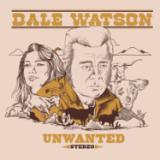
With Texas- sized defiance and drive, he's spent four decades flying the flag for his own brand of honky-tonk, outlaw country, western swing, and rockabilly. That signature sound has a name -- "Ameripolitan" -- and its originator is Watson himself: a singer, songwriter, guitarist, producer, actor, cultural architect, and rulebreaking traditionalist for the modern world, championing the traditions that fly in the face of the homogenous mainstream. With Unwanted, he fires another doublebarreled shotgun blast of country twang and honky- tonk bang fueled by the heartaches, hard- won lessons, and high- speed thrills of a life largely logged on the road. Singing with a booming voice that could cut through the chaos of a packed dancehall, Watson runs the show like a roots-rock ringleader. He salutes his vices on the galloping "Willie Waylon and Whiskey," reflects upon a lifetime of loss with the gorgeous ballad "If You Really Loved Me (Outlive Me)," and gets wistfully contemplative on "Life is Like a Song." Entirely written and produced by Watson, Unwanted is the sound of an Ameripolitan diehard with plenty of life left in the tank, speeding toward a horizon of his own making.
dovrebbe essere pubblicato su 24.04.2026
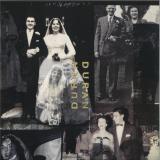
“Duran Duran” aka “The Wedding Album” released in 1993 was a return to form for the band, charting in the top10 on both the UK and US album charts and spawning the world-wide hit’s ‘Ordinary World’ and ‘Come Undone’
Following in 1995, “Thank You” was an album of covers featuring songs written by Led Zeppelin, Bob Dylan, The Doors, Lou Reed and Elvis Costello. The album charted in the top20 of both UK and US charts.
Originally squeezed onto 1LP, both albums are highly sought after as neither have been re-pressed on vinyl since their original release. They are now spread across 140g 2LPs for the best sound. CDs will now be in paper sleeves as opposed to jewel cases.
“The Wedding Album” has a newly embossed sleeve and includes a 12” art card, and “Thank You” features a gatefold sleeve with a fold out poster replicating the original release.
Ordina ora e ordineremo l'articolo per te presso il nostro fornitore.
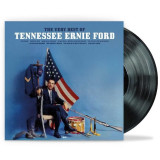
Tennessee Ernie Ford, will go down in music history for his bestknown song ‘Sixteen Tons’. Penned by country legend Merle
Travis, it put Ford at the top of the Billboard chart for seven
weeks in late 1955-early 1956, selling a million copies in just
three weeks. It was also Capitol Records’ first Number 1 of the
rock era. He also hosted a Thursday-night variety show, which
ran for nearly five years, and had several big hits in the US and
UK. His music endures, and this vinyl collection of his very best
songs is testament to a unique performer.
dovrebbe essere pubblicato su 13.06.2025

The promise of a Florry show, a now familiar caravan that has been honed over ambitiously trekked zig zags across America and Europe since the release of Dear Life Records debut The Holey Bible, is the redemptive promise and prodigal joy of rock and roll guitar music. Bred in the crackling warmth of the Philadelphia DIY scene, and forged with the alloys of community action, queer liberation and bedroom poetry, bandleader Francie Medosch and her absolute unit of collaborators have put in the work of sharpening their homespun tools to take up the mantle of the great lip-puckering rock and roll tradition pioneered by the likes of The Band and the Rolling Stones, but with proudly displayed Aimee Mann and Yo La Tengo bumper stickers on the rusty frame of the truck. At any second, the wheels could come off but they are steering just fine. For 'Sounds Like' Florry's sophomore effort as a fully realized band, Medosch and co. decamped to Drop of Sun studios in the nest of the Blue Ridge Mountains to record with Asheville wunderkind Colin Miller, a critical voice behind the records of MJ Lenderman, Wednesday and Merce Lemon and a powerful songwriter in his own right. Three powerhouse days in late 2023 solidified writing work done by the band earlier that summer in the now defunct Haw Creek compound under Miller's guiding suggestion. The result is a portrait of a ripping band cresting towards the height of their powers, uniquely equipped to capture a wildly loving, barn-burning camcorder clip of a turbulent trip with your best friends, without dipping into nostalgia bait. Lyrically, Medosch's utterances are both careful and excessive, the product of sifting through the rubble of classic good-time media, and finding what works for both her and her community to reach the heights of abandon. "The Jackass theme song was actually a really big influence on the new album" The expansive personnel and continent spanning footprint of Florry casts a wide net for this community. Florry the band rolls deep in the heard of North American DIY, featuring Jon Cox (Sadurn, Son of Barb) on pedal steel, John Murray on electric guitar, Collin Dennen on bass, Will Henriksen on fiddle, Katya Malison (Doll Spirit Vessel) on Vox, and Joey Sullivan (Bark Culture) on drums. Medosch's recent move to Burlington Vermont entrenches the Philly born project firmly within the ranks of fellow alt-country upstarts Lily Seabird and Greg Freeman, and gives them a vantage just outside of Pennsylvania at the thresholds of New England and the Midwest. There is a new life breathed into this music that confirms Florry as equally rooted in place work, and at home on the vast roads of America. For listeners who fell in love with Florry's infectious charm on sweeping tours with the likes of Kurt Vile, Real Estate, MJ Lenderman, Greg Freeman and Fust, 'Sounds Like', provides a refreshing memento of the band that surely left them smiling. If the support behind 'The Holey Bible' provided validation for the insistent vision of these young artists, 'Sounds Like' finds them reveling in and honing their vocabulary. Praise from outlets like Pitchfork, Stereogum, Paste, and Brooklyn Vegan touched on the potential of their wild idiosyncrasies, and accurately predicted that their next steps would see them continuing to write their own story, like a 10 car pileup that you can't take your eyes off if you tried. Florry proves that they can let the car spin just out of control whenever they want, and you are welcome to ride shotgun while Medosch does donuts in the WaWa parking lot. The ceiling, it turns out, is truly the roof.
dovrebbe essere pubblicato su 23.05.2025

The promise of a Florry show, a now familiar caravan that has been honed over ambitiously trekked zig zags across America and Europe since the release of Dear Life Records debut The Holey Bible, is the redemptive promise and prodigal joy of rock and roll guitar music. Bred in the crackling warmth of the Philadelphia DIY scene, and forged with the alloys of community action, queer liberation and bedroom poetry, bandleader Francie Medosch and her absolute unit of collaborators have put in the work of sharpening their homespun tools to take up the mantle of the great lip-puckering rock and roll tradition pioneered by the likes of The Band and the Rolling Stones, but with proudly displayed Aimee Mann and Yo La Tengo bumper stickers on the rusty frame of the truck. At any second, the wheels could come off but they are steering just fine. For 'Sounds Like' Florry's sophomore effort as a fully realized band, Medosch and co. decamped to Drop of Sun studios in the nest of the Blue Ridge Mountains to record with Asheville wunderkind Colin Miller, a critical voice behind the records of MJ Lenderman, Wednesday and Merce Lemon and a powerful songwriter in his own right. Three powerhouse days in late 2023 solidified writing work done by the band earlier that summer in the now defunct Haw Creek compound under Miller's guiding suggestion. The result is a portrait of a ripping band cresting towards the height of their powers, uniquely equipped to capture a wildly loving, barn-burning camcorder clip of a turbulent trip with your best friends, without dipping into nostalgia bait. Lyrically, Medosch's utterances are both careful and excessive, the product of sifting through the rubble of classic good-time media, and finding what works for both her and her community to reach the heights of abandon. "The Jackass theme song was actually a really big influence on the new album" The expansive personnel and continent spanning footprint of Florry casts a wide net for this community. Florry the band rolls deep in the heard of North American DIY, featuring Jon Cox (Sadurn, Son of Barb) on pedal steel, John Murray on electric guitar, Collin Dennen on bass, Will Henriksen on fiddle, Katya Malison (Doll Spirit Vessel) on Vox, and Joey Sullivan (Bark Culture) on drums. Medosch's recent move to Burlington Vermont entrenches the Philly born project firmly within the ranks of fellow alt-country upstarts Lily Seabird and Greg Freeman, and gives them a vantage just outside of Pennsylvania at the thresholds of New England and the Midwest. There is a new life breathed into this music that confirms Florry as equally rooted in place work, and at home on the vast roads of America. For listeners who fell in love with Florry's infectious charm on sweeping tours with the likes of Kurt Vile, Real Estate, MJ Lenderman, Greg Freeman and Fust, 'Sounds Like', provides a refreshing memento of the band that surely left them smiling. If the support behind 'The Holey Bible' provided validation for the insistent vision of these young artists, 'Sounds Like' finds them reveling in and honing their vocabulary. Praise from outlets like Pitchfork, Stereogum, Paste, and Brooklyn Vegan touched on the potential of their wild idiosyncrasies, and accurately predicted that their next steps would see them continuing to write their own story, like a 10 car pileup that you can't take your eyes off if you tried. Florry proves that they can let the car spin just out of control whenever they want, and you are welcome to ride shotgun while Medosch does donuts in the WaWa parking lot. The ceiling, it turns out, is truly the roof.
dovrebbe essere pubblicato su 23.05.2025

Ordina ora e ordineremo l'articolo per te presso il nostro fornitore.

Idas viertes Album wurde finanziert von Capitol, in 14 Studios aufgenommen, vom New Yorker Label Tiger Style veröffentlicht und ging im Jahr-2000-Trubel unter. Die 14 Songs von "Will You Find Me" sind ein unermüdliches Kompendium und Ode an Schlaf, Sex, nächtliche Gespräche und andere bettlägerige Aktivitäten. Diese erweiterte Deluxe Edition zum 25-jährigen Jubiläum kommt in der Vinylausgabe mit 34 Outtakes, alternativen Abmischungen, 4-Spur-Demos und Covers aus dem umfangreichen Fundus der Band, die sich thematisch über vier LPs verteilt. Das begleitende 24-seitige Booklet dokumentiert Ida's Major Label Album, das es nie gab, mit atemberaubenden Fotos und einem ausführlichen Essay von Douglas Wolk.
dovrebbe essere pubblicato su 25.04.2025

Transparent Cloudy Clear "This Water" Vinyl. Idas viertes Album wurde finanziert von Capitol, in 14 Studios aufgenommen, vom New Yorker Label Tiger Style veröffentlicht und ging im Jahr-2000-Trubel unter. Die 14 Songs von "Will You Find Me" sind ein unermüdliches Kompendium und Ode an Schlaf, Sex, nächtliche Gespräche und andere bettlägerige Aktivitäten. Diese erweiterte Deluxe Edition zum 25-jährigen Jubiläum kommt in der Vinylausgabe mit 34 Outtakes, alternativen Abmischungen, 4-Spur-Demos und Covers aus dem umfangreichen Fundus der Band, die sich thematisch über vier LPs verteilt. Das begleitende 24-seitige Booklet dokumentiert Ida's Major Label Album, das es nie gab, mit atemberaubenden Fotos und einem ausführlichen Essay von Douglas Wolk.
dovrebbe essere pubblicato su 25.04.2025

Lordi's The Monsterican Dream, released in 2004, is the Finnish hard rock band’s second studio album, cementing their signature blend of heavy metal, theatrical horror themes, and anthemic choruses. Packed with powerful tracks like "Blood Red Sandman," "My Heaven Is Your Hell," and "Would You Love a Monsterman?," the album showcases Lordi's knack for creating hard-hitting, catchy songs with a monstrous edge.
Produced by Hiili Hiilesmaa, The Monsterican Dream features dynamic guitar riffs, haunting keyboard melodies, and Mr. Lordi's commanding vocals, delivering a darker and heavier tone compared to their debut. The album's horror-inspired themes and energetic performances helped the band gain a stronger foothold in the international rock and metal scene.
For fans of theatrical hard rock and heavy metal, The Monsterican Dream is a must-listen, offering an unforgettable experience that highlights Lordi’s unique artistry and showmanship.
The Monsterican Dream is available as a limited edition of 666 individually numbered copies on crystal clear & transparent green marbled vinyl
dovrebbe essere pubblicato su 25.04.2025

Andrew Duhon has a knack for telling the kind of stories that clearly cost the writer something to tell- the kind of honesty that feels noble and never half hearted. When a song written by a stranger heals you, even in the smallest way, that's a connection beyond entertainment, and that is the journey Andrew Duhon sets out on from his home in Louisiana. His songs are about recognizing our story as much as they are about telling his, and his coast to coast pursuits have given him a clearer view of the American Landscape than most are privy to. Still, after years of voyaging off to every corner of the country, a new sensation arises with each return home to New Orleans. From that familiar return comes The Parish Record, a snapshot of life venturing from and returning to one of America's purest cultural vignettes, and the beauty, conflict, and stories that come with it. The Parish Record was recorded at Dockside Studios in Maurice, LA, where deep in Cajun country sits a wood-panel barn engulfed in oak and cypress trees along the slow butterscotch bayou pace of the Vermillion River. In this isolated hub of Acadiana, Andrew Duhon embarked with his trio of most trusted musicians - Myles Weeks (James Hunter Six, Eric Lindell) on Bass, Jim Kolacek (Feufollet) on Drums, and Daniel Walker (Heart, Ann Wilson, Amy Ray) on Keys - to harness of the sound and feeling of their surroundings. "I wanted this record to feel like home. It wasn't time to get out of town or try out something new on this one. It was about believing in the songs from where the songs came from," Duhon says.
dovrebbe essere pubblicato su 04.04.2025

2023 was a whirlwind year for Oracle Sisters. The trio—Julia Johansen, Chris Willatt, and Lewis Lazar—followed the release of their debut album Hydranism with a globe-spanning tour that captivated fans and critics alike. From the highways between Knoxville and Nashville to sold-out clubs in rain-soaked Seattle, and festival stages across the UK, they logged countless hours on the road. Their journey was a tapestry of exhaustion and exhilaration, falling apart, brawls and disputes, love and acceptance. By the year’s end, just two days before Christmas, they found themselves in Tokyo, reflecting on the fleeting nature of time and the fragments of inspiration gathered along the way. It was there the seeds for their next album, Divinations, began to sprout. Composing as a true trio for the first time, Oracle Sisters pieced together sketches formed during stolen moments on tour. These fragments coalesced into Divinations, an album shaped by the band’s nomadic existence. The recording sessions spanned cozy Parisian studios, a barn in northern France, and the storied Valentine Studios in Los Angeles. Their creative process embraced experimentation—swapping primary instruments, playing with toy drum machines, and crafting melodies on quirky tools like the OP-1 and a baby Casio keyboard. This spirit of discovery lent the album a sense of spontaneity and wonder. At its core, Divinations channels mysticism and timeless storytelling. The band’s songwriting draws on diverse influences, from the surrealist poetry of Baudelaire and Rimbaud to the introspective philosophies of Carl Jung. Musically, echoes of Talking Heads, Air, and Leonard Cohen resonate throughout the album and tracks like “Riverside” delve into existential questions— “How far are you going? Is it more than money can buy?” Elsewhere on the album “Marseille,” born in the city that gave the song its name, kicks off as a trance with lyrics that play between the sincere and desperate self-help affirmations, we give ourselves while trying to find a bridge between our individual lives and a universal feeling. Lead-single “Alouette” is Oracle Sisters at their most direct; propelled by a driving bassline and exuberant strings, the track summons the sound of 80’s, 90’s, and early 2000’s rock n roll as they sing about “getting out of dodge, finding a pirate ship and sailing home.” Inspired by the book Caliban and the Witch, “Blue Left Hand” is a lyrical tapestry weaving together history, philosophy, and cultural critique. The lyrics, “It’s in the harbor of every page / It’s in the corner of the playwright’s stage / And every player and every fake / And every witch that we burned at the stake,” reflect on the forces that shaped the capitalist society we know today. Across Divinations’ 11 tracks it’s not only geographic boundaries that were crossed but also the boundaries of time and circumstance. While their work may not consciously reflect specific worldly events, they seek to embrace the universal and offer a space for healing. “Good music would make sense to a farmer in 17th century France as it would to a pastry chef in Slovenia in the 21st century,” shares Lazar. “It’s not written for any temporal powers that be. It’s about expressing our common humanity and taking it from there.” This intuitive approach fuels Oracle Sisters creative process - whether composing in a frozen French farmhouse or performing live with an ever-expanding lineup of collaborators, the band remains committed to exploring the unknown. Through Divinations, they hope to leave listeners feeling transcendent, levitating on waves of intuition and discovery.
dovrebbe essere pubblicato su 14.02.2025

Like a passenger riding shotgun on a road trip, The Villagers Companion offers its own unique perspective and story to tell. Featuring tracks recorded alongside last year’s acclaimed villagers, TVC captures the miles between the start and destination—the faded gas station pit stops, the plastic saint statue stuck to the dashboard for safe travels or luck. It embodies the essence of the journey without the burden of driving—the experience of the ride itself.
The album takes us through the heart of Califone’s magic: reverb-drenched piano chords, electronic whirs, and layers of experimental noise. Guided by Tim Rutili’s abstract, fragmented lyrics—both strange and familiar—delivered through his warm, well-worn vocals, it creates an experience as evocative as it is haunting. Often passing through what seem to be the spaces between radio frequencies, the stations never meant to be heard. Crackles of static, feedback loops, and fleeting signals bloom into meditative moments, with each sound given space to breathe, unravel, and shimmer in slow decay. The result resonates deeply, transforming what might be noise into something profound, hypnotic, and totally immersive.
As with villagers, Rutili and company continue to explore what it means to get lost while surrounded by modern technology. Like a ghost in a machine or a whispered prayer stuck in a telephone line, Califone adds soul—be it damned or saved. And they do so with the kind of transformative magic granted perhaps only to artists a quarter of a century into their craft. The kind that turns a photograph into a tableau, or any darkened space with a microphone into a makeshift confessional. A song into a hymn, and a hymn into a soundtrack to a life.
dovrebbe essere pubblicato su 14.02.2025

Like a passenger riding shotgun on a road trip, The Villagers Companion offers its own unique perspective and story to tell. Featuring tracks recorded alongside last year’s acclaimed villagers, TVC captures the miles between the start and destination—the faded gas station pit stops, the plastic saint statue stuck to the dashboard for safe travels or luck. It embodies the essence of the journey without the burden of driving—the experience of the ride itself.
The album takes us through the heart of Califone’s magic: reverb-drenched piano chords, electronic whirs, and layers of experimental noise. Guided by Tim Rutili’s abstract, fragmented lyrics—both strange and familiar—delivered through his warm, well-worn vocals, it creates an experience as evocative as it is haunting. Often passing through what seem to be the spaces between radio frequencies, the stations never meant to be heard. Crackles of static, feedback loops, and fleeting signals bloom into meditative moments, with each sound given space to breathe, unravel, and shimmer in slow decay. The result resonates deeply, transforming what might be noise into something profound, hypnotic, and totally immersive.
As with villagers, Rutili and company continue to explore what it means to get lost while surrounded by modern technology. Like a ghost in a machine or a whispered prayer stuck in a telephone line, Califone adds soul—be it damned or saved. And they do so with the kind of transformative magic granted perhaps only to artists a quarter of a century into their craft. The kind that turns a photograph into a tableau, or any darkened space with a microphone into a makeshift confessional. A song into a hymn, and a hymn into a soundtrack to a life.
dovrebbe essere pubblicato su 14.02.2025

Celebrate a decade of Going To Hell with this exclusive 10th-anniversary collector"s White and Purple Marble LP housed in a Gatefold Sleeve. Going To Hell is the second album from New York City rock band The Pretty Reckless. It went straight into number 5 on the Billboard 200 upon release, as well as #8 on the Official UK Albums Chart, becoming the band"s first Top 10 album in the US and UK. This collector"s piece merges the visual and sonic essence of The Pretty Reckless designed for those who live and breathe rock & roll.
dovrebbe essere pubblicato su 07.02.2025

Celebrate a decade of Going To Hell with this exclusive 10th-anniversary collector"s item. Features include material-wrapped cover with a debossed logo, a stunning 32-page spread of rare behind-the-scenes photos capturing one of the decade"s most iconic album covers, and the album in the UK and Europe-exclusive Gold and Purple Marble Vinyl. Going To Hell is the second album from New York City rock band The Pretty Reckless. It went straight into number 5 on the Billboard 200 upon release, as well as #8 on the Official UK Albums Chart, becoming the band"s first Top 10 album in the US and UK. This collector"s piece merges the visual and sonic essence of The Pretty Reckless designed for those who live and breathe rock & roll.
dovrebbe essere pubblicato su 07.02.2025

If you feel like motoring down the highway at 100 miles per hour breathing in pure rock n roll exhaust then look no further– Rowdy is here to kick out the jams and rev up with their self-titled debut LP Rowdy! These seasoned rockers are dealing out a heavy dose of song-forward classic garage punk that sounds like a mixed bag of Joan Jett singing for Teengenerate and Roky Erikson and The Aliens covering Oblivions. This is no surprise as Rowdy is formed by members of legendary Austin band Hex Dispensers and Scotland's Goldie Dawn, (Hex Dispensers, major contributors to the Texas garage punk scene). Rowdy’s sound runs the gamut with catchy 77 punk tunes like “All in My Head”- with its huge chorus, anthemic doo-wop tinged songs like “Fine Mystery, and bluesy garage rippers like “Cost Of It”. The recording is raw and punchy, dripping with overdriven twangy guitars, a steadfast, tight rhythm section, and blown out vocals. This record is pure rock n roll madness! Pop this Rowdy on in your headphones, shotgun a Steel Reserve, and you’ll be on your motorcycle doing donuts on your highschool principal’s lawn in no time.
dovrebbe essere pubblicato su 29.11.2024

Crystal Clear Vinyl. Hamartia is the fatal flaw leading to the downfall of a tragic hero or heroine. A narrative tool often determining a character's arc (or fate) underpinning many of our favorite stories in film, literature, and music. Meredith Johnston, the singer-songwriter-producer at the heart of indie project Warm Human, borrowed the term for the title of her latest LP, and her first for Sooper Records. Hamartia finds Johnston probing the depths of her fatal flaw, self-hatred, without skimping on the catchy hooks and bracingly frank lyricism. "This whole album is pop music for deranged people" she says. Johnston wrote and produced the album with Chicago composer and producer Conor Mackey (Lynyn, Monobody, NNAMDI). Together, the pair crafted an album that draws liberally from its diverse influences, incorporating down-tempo electronics, drum n' bass, indie rock, synth pop, and elegant, unstructured soundscapes. Hamartia finds humanity in electronic music, with warm synths, guitars, and shape-shifting vocal stacks frequently creating a one-woman choir. Hamartia is buoyed by the best music of Warm Human's career, from the probing "Father Father" to the insightful "My Moods!!" and the musical dish session "Love 2 Hate." Inspired by Portishead, Sheryl Crow, Frou Frou and others, the LP can be both wryly funny and incisive in the span of a single couplet ("I asked for space and you gave me the moon," she sings on "My Moods!!" adding, "I'm riding shotgun with my shit attitude"). Hamartia is a perfect pop soundtrack for our current moment because its irresistible hooks and quotable lyrics are the opposite of empty escapism-they're an invitation to acknowledge your own struggles and flaws. To get in touch with your hamartia. Recommended if you like: Imogen Heap, Sylvan Esso, Madonna, Portishead, Frou Frou, Sophie, Postal Service, Sheryl Crow.
dovrebbe essere pubblicato su 11.10.2024

Before Shotgun Willie, Willie Nelson had struggled to gain widespread recognition as a solo artist, despite having written many successful songs for other artists. Nelson's big break came when he signed with Atlantic Records in 1973. The pivotal moment in his career came after Atlantic Records executive Jerry Wexler, known for his work with artists like Ray Charles and Aretha Franklin, took an interest in Nelson's music. Wexler saw potential in Nelson's unique approach to country music and signed him to the label. With the creative freedom offered by Atlantic Records, Nelson was able to record Shotgun Willie with the artistic freedom he had long desired. The album's unconventional sound and honest lyrics resonated with both critics and fans.
Shotgun Willie marked a new beginning for Willie Nelson's career, and it set the stage for his subsequent albums and his emergence as one of the most influential and iconic figures in the history of country music. The recording was one of the first albums of outlaw country — a new subgenre of country music and an alternative to the conservative restrictions of the Nashville sound, the dominant style in the genre at the time
The album — the first to feature Nelson with long hair and a beard on the cover — gained him the interest of younger audiences. It peaked at No. 41 on Billboard's Top Country Albums and the songs "Shotgun Willie" and "Stay All Night (Stay A Little Longer)" peaked at Nos. 60 and 22 on Hot Country Songs respectively.
We are so pleased to bring you this deluxe 180-gram 45 RPM 2LP Analogue Productions (Atlantic 75 Series) reissue of the timeless Willie Nelson classic, Shotgun Willie. Cue it up and prepare to be transported!
dovrebbe essere pubblicato su 31.08.2024

Needle Mythology, the label founded by music writer, author and broadcaster Pete Paphides, is thrilled to announce the signing of the eagerly anticipated debut album by London singer-songwriter and renowned DJ Iraina Mancini. Iraina’s singular pop vision will be known to regular listeners of 6 Music, where her singles ‘Undo The Blue’, ‘Deep End’, ‘Shotgun’ and ‘Do It (You Stole The Rhythm)’ have all been enthusiastically embraced. Iraina's obsession with music stretches back into her early childhood, much of which was spent absorbing her parents’ collection of old 45s, in particular her dad’s Northern Soul records – an alternative education which meant that, by her early 20s, she was a familiar presence in the DJ booth at many discerning London club nights. Her love of French ye-ye, British freakbeat, Brazilian bossa nova, soul, and Turkish psych will be well-known to regular listeners of her Soho Radio show. Having always sung from a young age, Iraina embarked on a string of collaborators such as Jagz Kooner (Sabres Of Paradise), Sunglasses For Jaws (Miles Kane) and Simon Dine (Paul Weller, Noonday Underground) which truly saw her find her metier as a songwriter, conjuring melodies that stand shoulder to shoulder alongside her impeccable influences. Iraina describes her first single for Needle Mythology ‘Cannonball’ as “a celebration of that moment when you meet someone you really fall for and it knocks you for six. It can be a bit scary, but you’ve just got to go with what your intuition is telling you.” Written with Simon Dine, the vertiginous heart-in-mouth abandon of the song perfectly mirrors the circumstances that brought it into being. Iraina cites Jacqueline Taïeb’s 1967 single 7h du Matin as an early inspiration for the song: “There’s such a great energy about that song. Her vocal is amazing and all those stops and starts that grab your attention.” “This is an artist I absolutely love, one of our rising stars at 6Music.“ Lauren Laverne BBC 6Music “Iraina seizes on the best aspects of the past, blurring those impeccable 60s and 70s influences with a touch of modernity.” Clash “Full of femme fatale poise and swooning chanteuse flourishes.” The Times
dovrebbe essere pubblicato su 07.06.2024

Auch im deutschsprachigen Raum spätestens seit dem massiven ESC-Hit "Calm After The Storm" (mit The Common Linnets) vor exakt 10 Jahren eine feste Größe, verbindet die niederländische Singer-Songwriterin Ilse DeLange ihre Country-Wurzeln fürs neue Kapitel mit einer massiven Dosis zeitgenössischem Pop und druckvollem Rock , um zwischendurch auch Eighties-, Indie- und Electro-Elemente aufblitzen zu lassen.
dovrebbe essere pubblicato su 25.05.2024

Lightnin’ Hopkins was one of the greatest and most popular authentic blues artists. This collection covers singles released by Lightnin’ Hopkins between 1947 and 1952. They weren’t his first recordings but they were the first released under his own name.
Although he did record with other musicians and even with full bands it’s these acoustic classics that best illustrate his art and they are some of the most endearing blues tracks ever recorded.
Includes the popular songs “Katie Mae Blues” and his biggest chart hit “Shotgun Blues”.
A true genius of the genre this Lightnin’ Hopkins release by Jasmine is a must have for blues and R&B fans.
Fully detailed liner notes.
Limited edition press on 140 gram colour red/black marbled vinyl.
dovrebbe essere pubblicato su 08.03.2024

The debut album from accomplished guitarist and songwriter Jason Isbell, formerly of Drive By Truckers (DBT), is reissued with 4 unreleased tracks from the original recording sessions. The addition of those 4 extra songs finds Sirens Of The Ditch clocking in at 15 total tracks. Sirens Of The Ditch's mystical quality can be partially attributed to the FAME recording studio (Aretha Franklin, Duane Allman, Otis Redding) in Isbell’s hometown of Muscle Shoals, AL where the album was recorded. Co-produced by Isbell and Patterson Hood (DBT), Sirens Of The Ditch features Isbell singing lead vocals and playing guitar throughout, joined by Shonna Tucker (Formerly of DBT) on Bass and Brad Morgan (DBT) on drums. Several musicians pop in for cameos including Spooner Oldham and David Hood (Patterson's father) on "Down In A Hole", John Neff (Formerly of DBT) on "Dress Blues" and Patterson himself guests on "Shotgun Wedding". "a strong debut, full of the kind of confident, charismatic songwriting that just can't be taught." - Pitckfork “Isbell could be roots rock’s Flannery O’Connor.” - Spin
dovrebbe essere pubblicato su 17.11.2023

Willie Nelson - Greatest Hits jetzt auf CD und Vinyl erhältlich, anlässlich des 90. Geburtstags von Willie Nelson und seiner Aufnahme in die Rock & Roll Hall of Fame am 3. November. Diese Greatest Hits Compilation enthält Titel aus allen Epochen seiner Karriere, von den frühen 60er Jahren bis zu seinen letzten, mit einem Grammy ausgezeichneten Alben.
Ordina ora e ordineremo l'articolo per te presso il nostro fornitore.

BRIT Award-winning, multi-platinum selling musician George Ezra today announces his hugely anticipated new album Gold Rush Kid, due for release on 10th June via Columbia Records.
“The Gold Rush Kid? That’s me,” says George, reflecting on the title of his third record – a 12-strong suite of marvellous, transporting, elevational songs, that more than anything “sound like me. That’s what ties them together.”
After two blockbuster albums – Wanted On Voyage (2014) and Staying At Tamara’s (2018), both of which reached number 1 in the UK and sold millions around the world, and the latter of which earned him his first number 1 single in ‘Shotgun’ and won him the 2019 Brit Award for British Male Solo Artist – it was time to return to heart and hearth, with an album written and produced entirely in London with longstanding collaborator Joel Pott.
dovrebbe essere pubblicato su 05.05.2023

dovrebbe essere pubblicato su 14.04.2023
Easy Weapons was the debut from North Carolina’s Public Acid. Originally self-released by the band in 2018 in a criminally small press of 300, LVEUM is proud to finally get it back in print. PUBLIC ACID’s debut is an extremely ugly, powerfully distorted record. Taking cues from the outer fringes of both Japanese and Italian hardcore punk and combining it with the weirdness of early primitive black metal, pushing the feedback, noise and performing intensity in to the red from the first note. PUBLIC ACID execute very idiosyncratic song writing. Full of memorable riffs that twist and turn on a constantly out of control ride, which gives it a very urgent feeling of confusion and chaos. The ferocity and out-there-ness of luminaries ala G.I.S.M. or PARABELLUM, and the immediacy of WRETCHED, NERORGASMO or SHOTGUN SOLUTION in the hell of a modern sui-generis punk album.
dovrebbe essere pubblicato su 13.01.2023
New pressing of the old RSD LP , now on black vinyl. An essential vinyl release of the Throwing Muses’ mainstay’s 2016’s CD and essay book that featured stories from “her life's most perception-altering junctures” (NPR). “As memoirs, her albums are so intensely personal... as art, they’re arguments for the value of unapologetic individuality” Pitchfork. “This music reminds you how alone you are; it consoles you through its insolubility, comforts you by jabbing you in the chest and letting you know how complex the struggle is, how inaccessible we are to each other but just how universal our pain can be.” The Wire. This sonically rich and fragmented record references to Hersh’s past material and sees her perform on guitar, bass, drums, piano, horns and cello. There’s a mysticism and sense of life wonderment throughout ‘Wyatt At The Coyote Palace’ that also has death as a central theme rather than the contemplation of death itself it’s reaching the end of something and beginning a new life. Tracklist: Side A. 1 Bright 2 Bubble Net 3 In Stitches 4 Secret Codes 5 Green Screen 6 Hemmingway's Tell. Side B. 7 Detox 8 Wonderland 9 Day 3 10 Diving Bell 11 Killing Two Birds 12 Guadalupe. Side C. 13 American Copper 14 August 15 Some Dumb Runaway 16 From the Plane 17 Sun Blown 18 Elysian Fields. Side D. 19 Soma Gone Slapstick 20 Cooties 21 Christmas Underground 22 Between Piety and Desire 23 Shaky Blue Can 24 Shotgun
dovrebbe essere pubblicato su 18.11.2022

Phoxjaw return with their second studio album ‘notverynicecream’, to be released November 11th via Hassle Records.
Written mostly in various states of lockdown, the album addresses themes of depression, addiction, nihilism, nostalgia and suffering, served in a sugary cone. The most eclectic and schizophrenic Phoxjaw release to date, combining progressive and punishing sonics, with hyper glossy pop influences whilst still retaining the organic noisey elements that Phoxjaw have made a signature.
dovrebbe essere pubblicato su 11.11.2022

Phoxjaw return with their second studio album ‘notverynicecream’, to be released November 11th via Hassle Records.
Written mostly in various states of lockdown, the album addresses themes of depression, addiction, nihilism, nostalgia and suffering, served in a sugary cone. The most eclectic and schizophrenic Phoxjaw release to date, combining progressive and punishing sonics, with hyper glossy pop influences whilst still retaining the organic noisey elements that Phoxjaw have made a signature.
dovrebbe essere pubblicato su 11.11.2022

As the sun sets on a quaint East Nashville house, a young man bares a piece of his soul. Facing the camera, sporting a silky suit jacket/shirt/slacks/fingerless gloves ensemble that announces "singer" before he's even opened his mouth, Lee Tracy Johnson settles onto his stage, the front yard. He sways to the dirge-like drum machine pulse of a synth-soaked slow jam, extends his arms as if gaining his balance, and croons in affecting, fragile earnest, "I need your love… oh baby…"
Dogs in the yard next door begin barking. A mysterious cardboard robot figure, beamed in from galaxies unknown and affixed to a tree, is less vocal. Lee doesn't acknowledge either's presence. He's busy feeling it, arms and hands gesticulating. His voice rises in falsetto over the now-quiet dogs, over the ambient noise from the street that seeps into the handheld camcorder's microphone, over the recording of his own voice played back from a boombox off-camera. After six minutes the single, continuous shot ends. In this intimate creative universe there are no re-takes. There are many more music videos to shoot, and as Lee later puts it, "The first time you do it is actually the best. Because you can never get that again. You expressing yourself from within."
"I Need Your Love" dates from a lost heyday. From some time in the '80s or early '90s, when Lee Tracy (as he was known in performance) and his music partner/producer/manager Isaac Manning committed hours upon hours of their sonic and visual ideas to tape. Embracing drum machines and synthesizers – electronics that made their personal futurism palpable – they recorded exclusively at home, live in a room into a simple cassette deck. Soul, funk, electro and new wave informed their songs, yet Lee and Isaac eschewed the confinement of conventional categories and genres, preferring to let experimentation guide them.
"Anytime somebody put out a new record they had the same instruments or the same sound," explains Isaac. "So I basically wanted to find something that's really gonna stand out away from all of the rest of 'em." Their ethos meant that every idea they came up with was at least worth trying: echoed out half-rapped exhortations over frantic techno-style beats, gospel synth soul, modal electro-funk, oddball pop reinterpretations, emo AOR balladry, nods to Prince and the Fat Boys, or arrangements that might collapse mid-song into a mess of arcade game-ish blips before rallying to reach the finish line. All of it conjoined by consistent tape hiss, and most vitally, Lee's chameleonic voice, which managed to wildly shape shift and still evoke something sincere – whether toggling between falsetto and tenor exalting Jesus's return, or punctuating a melismatic romantic adlib with a succinct, "We all know how it feels to be alone."
"People think we went to a studio," says Isaac derisively. "We never went to no studio. We didn't have the money to go to no studio! We did this stuff at home. I shot videos in my front yard with whatever we could to get things together." Sometimes Isaac would just put on an instrumental record, be it "Planet Rock" or "Don't Cry For Me Argentina" (from Evita), press "record," and let Lee improvise over it, yielding peculiar love songs, would-be patriotic anthems, or Elvis Presley or Marilyn Monroe tributes. Technical limitations and a lack of professional polish never dissuaded them. They believed they were onto something.
"That struggle," Isaac says, "made that sound sound good to me."
In the parlance of modern music criticism Lee and Isaac's dizzying DIY efforts would inevitably be described as "outsider." But "outsider" carries the burden of untold additional layers of meaning if you're Black and from the South, creating on a budget, and trying to get someone, anyone within the country music capital of the world to take your vision seriously. "What category should we put it in?" Isaac asks rhetorically. "I don't know. All I know is feeling. I ain't gonna name it nothing. It's music. If it grabs your soul and touch your heart that's what it basically is supposed to do."
=
Born in 1963, the baby boy of nine siblings, Lee Tracy spent his earliest years living amidst the shotgun houses on Nashville's south side. "We was poor, man!" he says, recalling the outhouse his family used for a bathroom and the blocks of ice they kept in the kitchen to chill perishables. "But I actually don't think I really realized I was in poverty until I got grown and started thinking about it." Lee's mom worked at the Holiday Inn; his dad did whatever he had to do, from selling fruit from a horse drawn cart to bootlegging. "We didn't have much," Lee continues, "but my mother and my father got us the things we needed, the clothes on our back." By the end of the decade with the city's urban renewal programs razing entire neighborhoods to accommodate construction of the Interstate, the family moved to Edgehill Projects. Lee remembers music and art as a constant source of inspiration for he and his brothers and sisters – especially after seeing the Jackson 5 perform on Ed Sullivan. "As a small child I just knew that was what I wanted to do."
His older brother Don began musically mentoring him, introducing Lee to a variety of instruments and sounds. "He would never play one particular type of music, like R&B," says Lee. "I was surrounded by jazz, hard rock and roll, easy listening, gospel, reggae, country music; I mean I was a sponge absorbing all of that." Lee taught himself to play drums by beating on cardboard boxes, gaining a rep around the way for his timekeeping, and his singing voice. Emulating his favorites, Earth Wind & Fire and Cameo, he formed groups with other kids with era-evocative band names like Concept and TNT Connection, and emerged as the leader of disciplined rehearsals. "I made them practice," says Lee. "We practiced and practiced and practiced. Because I wanted that perfection." By high school the most accomplished of these bands would take top prize in a prominent local talent show. It was a big moment for Lee, and he felt ready to take things to the next level. But his band-mates had other ideas.
"I don't know what happened," he says, still miffed at the memory. "It must have blew they mind after we won and people started showing notice, because it's like everybody quit! I was like, where the hell did everybody go?" Lee had always made a point of interrogating prospective musicians about their intentions before joining his groups: were they really serious or just looking for a way to pick up girls? Now he understood even more the importance of finding a collaborator just as committed to the music as he was.
=
Isaac Manning had spent much of his life immersed in music and the arts – singing in the church choir with his family on Nashville's north side, writing, painting, dancing, and working various gigs within the entertainment industry. After serving in the armed forces, in the early '70s he ran The Teenage Place, a music and performance venue that catered to the local youth. But he was forced out of town when word of one of his recreational routines created a stir beyond the safe haven of his bohemian circles.
"I was growing marijuana," Isaac explains. "It wasn't no business, I was smoking it myself… I would put marijuana in scrambled eggs, cornbread and stuff." His weed use originated as a form of self-medication to combat severe tooth pain. But when he began sharing it with some of the other young people he hung out with, some of who just so happened to be the kids of Nashville politicians, the cops came calling. "When I got busted," he remembers, "they were talking about how they were gonna get rid of me because they didn't want me saying nothing about they children because of the politics and stuff. So I got my family, took two raggedy cars, and left Nashville and went to Vegas."
Out in the desert, Isaac happened to meet Chubby Checker of "The Twist" fame while the singer was gigging at The Flamingo. Impressed by Isaac's zeal, Checker invited him to go on the road with him as his tour manager/roadie/valet. The experience gave Isaac a window into a part of the entertainment world he'd never encountered – a glimpse of what a true pop act's audience looked like. "Chubby Checker, none of his shows were played for Black folks," he remembers. "All his gigs were done at high-class white people areas." Returning home after a few years with Chubby, Isaac was properly motivated to make it in Music City. He began writing songs and scouting around Nashville for local talent anywhere he could find it with an expressed goal: "Find someone who can deliver your songs the way you want 'em delivered and make people feel what you want them to feel."
One day while walking through Edgehill Projects Isaac heard someone playing the drums in a way that made him stop and take notice. "The music was so tight, just the drums made me feel like, oh I'm-a find this person," he recalls. "So I circled through the projects until I found who it was.
"That's how I met him – Lee Tracy. When I found him and he started singing and stuff, I said, ohhh, this is somebody different."
=
Theirs was a true complementary partnership: young Lee possessed the raw talent, the older Isaac the belief. "He's really the only one besides my brother and my family that really seen the potential in me," says Lee. "He made me see that I could do it."
Isaac long being a night owl, his house also made for a fertile collaborative environment – a space where there always seemed to be a new piece of his visual art on display: paintings, illustrations, and dolls and figures (including an enigmatic cardboard robot). Lee and Issac would hang out together and talk, listen to music, conjure ideas, and smoke the herb Isaac had resumed growing in his yard. "It got to where I could trust him, he could trust me," Isaac says of their bond. They also worked together for hours on drawings, spreading larges rolls of paper on the walls and sketching faces with abstract patterns and imagery: alien-like beings, tri-horned horse heads, inverted Janus-like characters where one visage blurred into the other.
Soon it became apparent that they didn't need other collaborators; self-sufficiency was the natural way forward. At Isaac's behest Lee, already fed up with dealing with band musicians, began playing around with a poly-sonic Yamaha keyboard at the local music store. "It had everything on it – trumpet, bass, drums, organ," remembers Lee. "And that's when I started recording my own stuff."
The technology afforded Lee the flexibility and independence he craved, setting him on a path other bedroom musicians and producers around the world were simultaneously following through the '80s into the early '90s. Saving up money from day jobs, he eventually supplemented the Yamaha Isaac had gotten him with Roland and Casio drum machines and a Moog. Lee was living in an apartment in Hillside at that point caring for his dad, who'd been partially paralyzed since early in life. In the evenings up in his second floor room, the music put him in a zone where he could tune out everything and lose himself in his ideas.
"Oh I loved it," he recalls. "I would really experiment with the instruments and use a lot of different sound effects. I was looking for something nobody else had. I wanted something totally different. And once I found the sound I was looking for, I would just smoke me a good joint and just let it go, hit the record button." More potent a creative stimulant than even Isaac's weed was the holistic flow and spontaneity of recording. Between sessions at Isaac's place and Lee's apartment, their volume of output quickly ballooned.
"We was always recording," says Lee. "That's why we have so much music. Even when I went to Isaac's and we start creating, I get home, my mind is racing, I gotta start creating, creating, creating. I remember there were times when I took a 90-minute tape from front to back and just filled it up."
"We never practiced," says Isaac. "See, that was just so odd about the whole thing. I could relate to him, and tell him about the songs I had ideas for and everything and stuff. And then he would bring it back or whatever, and we'd get together and put it down." Once the taskmaster hell bent on rehearsing, Lee had flipped a full 180. Perfection was no longer an aspiration, but the enemy of inspiration.
"I seen where practicing and practicing got me," says Lee. "A lot of musicians you get to playing and they gotta stop, they have to analyze the music. But while you analyzing you losing a lot of the greatness of what you creating. Stop analyzing what you play, just play! And it'll all take shape."
=
"I hope you understood the beginning of the record because this was invented from a dream I had today… (You tell me, I'll tell you, we'll figure it out together)" – Lee Tracy and Isaac Manning, "Hope You Understand"
Lee lets loose a maniacal cackle when he acknowledges that the material that he and Isaac recorded was by anyone's estimation pretty out there. It's the same laugh that commences "Hope You Understand" – a chaotic transmission that encapsulates the duality at the heart of their music: a stated desire to reach people and a compulsion to go as leftfield as they saw fit.
"We just did it," says Lee. "We cut the music on and cut loose. I don't sit around and write. I do it by listening, get a feeling, play the music, and the lyrics and stuff just come out of me."
The approach proved adaptable to interpreting other artists' material. While recording a cover of Whitney Houston's pop ballad "Saving All My Love For You," Lee played Whitney's version in his headphones as he laid down his own vocals – partially following the lyrics, partially using them as a departure point. The end result is barely recognizable compared with the original, Lee and Isaac having switched up the time signature and reinvented the melody along the way towards morphing a slick mainstream radio standard into something that sounds solely their own.
"I really used that song to get me started," says Lee. "Then I said, well I need something else, something is missing. Something just came over me. That's when I came up with 'Is It What You Want.'"
The song would become the centerpiece of Lee and Isaac's repertoire. Pushed along by a percolating metronomic Rhythm King style beat somewhere between a military march and a samba, "Is It What You Want" finds Lee pleading the sincerity of his commitment to a potential love interest embellished by vocal tics and hiccups subtlely reminiscent of his childhood hero MJ. Absent chord changes, only synth riffs gliding in and out like apparitions, the song achieves a lingering lo-fi power that leaves you feeling like it's still playing, somewhere, even after the fade out.
"I don't know, it's like a real spiritual song," Lee reflects. "But it's not just spiritual. To me the more I listen to it it's like about everything that you do in your everyday life, period. Is it what you want? Do you want a car or you don't want a car? Do you want Jesus or do you want the Devil? It's basically asking you the question. Can't nobody answer the question but you yourself."
In 1989 Lee won a lawsuit stemming from injuries sustained from a fight he'd gotten into. He took part of the settlement money and with Isaac pressed up "Saving All My Love For You" b/w "Is It What You Want" as a 45 single. Isaac christened the label One Chance Records. "Because that's all we wanted," he says with a laugh, "one chance."
Isaac sent the record out to radio stations and major labels, hoping for it to make enough noise to get picked up nationally. But the response he and Lee were hoping for never materialized. According to Isaac the closest the single got to getting played on the radio is when a disk jock from a local station made a highly unusual announcement on air: "The dude said on the radio, 107.5 – 'We are not gonna play 'Is It What You Want.' We cracked up! Wow, that's deep.
"It was a whole racist thing that was going on," he reflects. "So we just looked over and kept on going. That was it. That was about the way it goes… If you were Black and you were living in Nashville and stuff, that's the way you got treated." Isaac already knew as much from all the times he'd brought he and Lee's tapes (even their cache of country music tunes) over to Music Row to try to drum up interest to no avail.
"Isaac, he really worked his ass off," says Lee. "He probably been to every record place down on Music Row." Nashville's famed recording and music business corridor wasn't but a few blocks from where Lee grew up. Close enough, he remembers, for him to ride his bike along its back alleys and stumble upon the occasional random treasure, like a discarded box of harmonicas. Getting in through the front door, however, still felt a world away.
"I just don't think at the time our music fell into a category for them," he concedes. "It was before its time."
=
Lee stopped making music some time in the latter part of the '90s, around the time his mom passed away and life became increasingly tough to manage. "When my mother died I had a nervous breakdown," he says, "So I shut down for a long time. I was in such a sadness frame of mind. That's why nobody seen me. I had just disappeared off the map." He fell out of touch with Isaac, and in an indication of just how bad things had gotten for him, lost track of all the recordings they'd made together. Music became a distant memory.
Fortunately, Isaac kept the faith. In a self-published collection of his poetry – paeans to some of his favorite entertainment and public figures entitled Friends and Dick Clark – he'd written that he believed "music has a life of its own." But his prescience and presence of mind were truly manifested in the fact that he kept an archive of he and Lee's work. As perfectly imperfect as "Is It What You Want" now sounds in a post-Personal Space world, Lee and Isaac's lone official release was in fact just a taste. The bulk of the Is It What You Want album is culled from the pair's essentially unheard home recordings – complete songs, half-realized experiments, Isaac's blue monologues and pronouncements et al – compiled, mixed and programmed in the loose and impulsive creative spirit of their regular get-togethers from decades ago. The rest of us, it seems, may have finally caught up to them.
On the prospect of at long last reaching a wider audience, Isaac says simply, "I been trying for a long time, it feels good." Ever the survivor, he adds, "The only way I know how to make it to the top is to keep climbing. If one leg break on the ladder, hey, you gotta fix it and keep on going… That's where I be at. I'll kill death to make it out there."
For Lee it all feels akin to a personal resurrection: "It's like I was in a tomb and the tomb was opened and I'm back… Man, it feels so great. I feel like I'm gonna jump out of my skin." Success at this stage of his life, he realizes, probably means something different than what it did back when he was singing and dancing in Isaac's front yard. "What I really mean by 'making it,'" he explains isn't just the music being heard but, "the story being told."
Occasionally Lee will pull up "Is It What You Want" on YouTube on his phone, put on his headphones, and listen. He remembers the first time he heard his recorded voice. How surreal it was, how he thought to himself, "Is that really me?" What would he say to that younger version of himself now?
"I would probably tell myself, hang in there, don't give up. Keep striving for the goal. And everything will work out."
Despite what's printed on the record label, sometimes you do get more than one chance.
Ordina ora e ordineremo l'articolo per te presso il nostro fornitore.

As the sun sets on a quaint East Nashville house, a young man bares a piece of his soul. Facing the camera, sporting a silky suit jacket/shirt/slacks/fingerless gloves ensemble that announces "singer" before he's even opened his mouth, Lee Tracy Johnson settles onto his stage, the front yard. He sways to the dirge-like drum machine pulse of a synth-soaked slow jam, extends his arms as if gaining his balance, and croons in affecting, fragile earnest, "I need your love… oh baby…"
Dogs in the yard next door begin barking. A mysterious cardboard robot figure, beamed in from galaxies unknown and affixed to a tree, is less vocal. Lee doesn't acknowledge either's presence. He's busy feeling it, arms and hands gesticulating. His voice rises in falsetto over the now-quiet dogs, over the ambient noise from the street that seeps into the handheld camcorder's microphone, over the recording of his own voice played back from a boombox off-camera. After six minutes the single, continuous shot ends. In this intimate creative universe there are no re-takes. There are many more music videos to shoot, and as Lee later puts it, "The first time you do it is actually the best. Because you can never get that again. You expressing yourself from within."
"I Need Your Love" dates from a lost heyday. From some time in the '80s or early '90s, when Lee Tracy (as he was known in performance) and his music partner/producer/manager Isaac Manning committed hours upon hours of their sonic and visual ideas to tape. Embracing drum machines and synthesizers – electronics that made their personal futurism palpable – they recorded exclusively at home, live in a room into a simple cassette deck. Soul, funk, electro and new wave informed their songs, yet Lee and Isaac eschewed the confinement of conventional categories and genres, preferring to let experimentation guide them.
"Anytime somebody put out a new record they had the same instruments or the same sound," explains Isaac. "So I basically wanted to find something that's really gonna stand out away from all of the rest of 'em." Their ethos meant that every idea they came up with was at least worth trying: echoed out half-rapped exhortations over frantic techno-style beats, gospel synth soul, modal electro-funk, oddball pop reinterpretations, emo AOR balladry, nods to Prince and the Fat Boys, or arrangements that might collapse mid-song into a mess of arcade game-ish blips before rallying to reach the finish line. All of it conjoined by consistent tape hiss, and most vitally, Lee's chameleonic voice, which managed to wildly shape shift and still evoke something sincere – whether toggling between falsetto and tenor exalting Jesus's return, or punctuating a melismatic romantic adlib with a succinct, "We all know how it feels to be alone."
"People think we went to a studio," says Isaac derisively. "We never went to no studio. We didn't have the money to go to no studio! We did this stuff at home. I shot videos in my front yard with whatever we could to get things together." Sometimes Isaac would just put on an instrumental record, be it "Planet Rock" or "Don't Cry For Me Argentina" (from Evita), press "record," and let Lee improvise over it, yielding peculiar love songs, would-be patriotic anthems, or Elvis Presley or Marilyn Monroe tributes. Technical limitations and a lack of professional polish never dissuaded them. They believed they were onto something.
"That struggle," Isaac says, "made that sound sound good to me."
In the parlance of modern music criticism Lee and Isaac's dizzying DIY efforts would inevitably be described as "outsider." But "outsider" carries the burden of untold additional layers of meaning if you're Black and from the South, creating on a budget, and trying to get someone, anyone within the country music capital of the world to take your vision seriously. "What category should we put it in?" Isaac asks rhetorically. "I don't know. All I know is feeling. I ain't gonna name it nothing. It's music. If it grabs your soul and touch your heart that's what it basically is supposed to do."
=
Born in 1963, the baby boy of nine siblings, Lee Tracy spent his earliest years living amidst the shotgun houses on Nashville's south side. "We was poor, man!" he says, recalling the outhouse his family used for a bathroom and the blocks of ice they kept in the kitchen to chill perishables. "But I actually don't think I really realized I was in poverty until I got grown and started thinking about it." Lee's mom worked at the Holiday Inn; his dad did whatever he had to do, from selling fruit from a horse drawn cart to bootlegging. "We didn't have much," Lee continues, "but my mother and my father got us the things we needed, the clothes on our back." By the end of the decade with the city's urban renewal programs razing entire neighborhoods to accommodate construction of the Interstate, the family moved to Edgehill Projects. Lee remembers music and art as a constant source of inspiration for he and his brothers and sisters – especially after seeing the Jackson 5 perform on Ed Sullivan. "As a small child I just knew that was what I wanted to do."
His older brother Don began musically mentoring him, introducing Lee to a variety of instruments and sounds. "He would never play one particular type of music, like R&B," says Lee. "I was surrounded by jazz, hard rock and roll, easy listening, gospel, reggae, country music; I mean I was a sponge absorbing all of that." Lee taught himself to play drums by beating on cardboard boxes, gaining a rep around the way for his timekeeping, and his singing voice. Emulating his favorites, Earth Wind & Fire and Cameo, he formed groups with other kids with era-evocative band names like Concept and TNT Connection, and emerged as the leader of disciplined rehearsals. "I made them practice," says Lee. "We practiced and practiced and practiced. Because I wanted that perfection." By high school the most accomplished of these bands would take top prize in a prominent local talent show. It was a big moment for Lee, and he felt ready to take things to the next level. But his band-mates had other ideas.
"I don't know what happened," he says, still miffed at the memory. "It must have blew they mind after we won and people started showing notice, because it's like everybody quit! I was like, where the hell did everybody go?" Lee had always made a point of interrogating prospective musicians about their intentions before joining his groups: were they really serious or just looking for a way to pick up girls? Now he understood even more the importance of finding a collaborator just as committed to the music as he was.
=
Isaac Manning had spent much of his life immersed in music and the arts – singing in the church choir with his family on Nashville's north side, writing, painting, dancing, and working various gigs within the entertainment industry. After serving in the armed forces, in the early '70s he ran The Teenage Place, a music and performance venue that catered to the local youth. But he was forced out of town when word of one of his recreational routines created a stir beyond the safe haven of his bohemian circles.
"I was growing marijuana," Isaac explains. "It wasn't no business, I was smoking it myself… I would put marijuana in scrambled eggs, cornbread and stuff." His weed use originated as a form of self-medication to combat severe tooth pain. But when he began sharing it with some of the other young people he hung out with, some of who just so happened to be the kids of Nashville politicians, the cops came calling. "When I got busted," he remembers, "they were talking about how they were gonna get rid of me because they didn't want me saying nothing about they children because of the politics and stuff. So I got my family, took two raggedy cars, and left Nashville and went to Vegas."
Out in the desert, Isaac happened to meet Chubby Checker of "The Twist" fame while the singer was gigging at The Flamingo. Impressed by Isaac's zeal, Checker invited him to go on the road with him as his tour manager/roadie/valet. The experience gave Isaac a window into a part of the entertainment world he'd never encountered – a glimpse of what a true pop act's audience looked like. "Chubby Checker, none of his shows were played for Black folks," he remembers. "All his gigs were done at high-class white people areas." Returning home after a few years with Chubby, Isaac was properly motivated to make it in Music City. He began writing songs and scouting around Nashville for local talent anywhere he could find it with an expressed goal: "Find someone who can deliver your songs the way you want 'em delivered and make people feel what you want them to feel."
One day while walking through Edgehill Projects Isaac heard someone playing the drums in a way that made him stop and take notice. "The music was so tight, just the drums made me feel like, oh I'm-a find this person," he recalls. "So I circled through the projects until I found who it was.
"That's how I met him – Lee Tracy. When I found him and he started singing and stuff, I said, ohhh, this is somebody different."
=
Theirs was a true complementary partnership: young Lee possessed the raw talent, the older Isaac the belief. "He's really the only one besides my brother and my family that really seen the potential in me," says Lee. "He made me see that I could do it."
Isaac long being a night owl, his house also made for a fertile collaborative environment – a space where there always seemed to be a new piece of his visual art on display: paintings, illustrations, and dolls and figures (including an enigmatic cardboard robot). Lee and Issac would hang out together and talk, listen to music, conjure ideas, and smoke the herb Isaac had resumed growing in his yard. "It got to where I could trust him, he could trust me," Isaac says of their bond. They also worked together for hours on drawings, spreading larges rolls of paper on the walls and sketching faces with abstract patterns and imagery: alien-like beings, tri-horned horse heads, inverted Janus-like characters where one visage blurred into the other.
Soon it became apparent that they didn't need other collaborators; self-sufficiency was the natural way forward. At Isaac's behest Lee, already fed up with dealing with band musicians, began playing around with a poly-sonic Yamaha keyboard at the local music store. "It had everything on it – trumpet, bass, drums, organ," remembers Lee. "And that's when I started recording my own stuff."
The technology afforded Lee the flexibility and independence he craved, setting him on a path other bedroom musicians and producers around the world were simultaneously following through the '80s into the early '90s. Saving up money from day jobs, he eventually supplemented the Yamaha Isaac had gotten him with Roland and Casio drum machines and a Moog. Lee was living in an apartment in Hillside at that point caring for his dad, who'd been partially paralyzed since early in life. In the evenings up in his second floor room, the music put him in a zone where he could tune out everything and lose himself in his ideas.
"Oh I loved it," he recalls. "I would really experiment with the instruments and use a lot of different sound effects. I was looking for something nobody else had. I wanted something totally different. And once I found the sound I was looking for, I would just smoke me a good joint and just let it go, hit the record button." More potent a creative stimulant than even Isaac's weed was the holistic flow and spontaneity of recording. Between sessions at Isaac's place and Lee's apartment, their volume of output quickly ballooned.
"We was always recording," says Lee. "That's why we have so much music. Even when I went to Isaac's and we start creating, I get home, my mind is racing, I gotta start creating, creating, creating. I remember there were times when I took a 90-minute tape from front to back and just filled it up."
"We never practiced," says Isaac. "See, that was just so odd about the whole thing. I could relate to him, and tell him about the songs I had ideas for and everything and stuff. And then he would bring it back or whatever, and we'd get together and put it down." Once the taskmaster hell bent on rehearsing, Lee had flipped a full 180. Perfection was no longer an aspiration, but the enemy of inspiration.
"I seen where practicing and practicing got me," says Lee. "A lot of musicians you get to playing and they gotta stop, they have to analyze the music. But while you analyzing you losing a lot of the greatness of what you creating. Stop analyzing what you play, just play! And it'll all take shape."
=
"I hope you understood the beginning of the record because this was invented from a dream I had today… (You tell me, I'll tell you, we'll figure it out together)" – Lee Tracy and Isaac Manning, "Hope You Understand"
Lee lets loose a maniacal cackle when he acknowledges that the material that he and Isaac recorded was by anyone's estimation pretty out there. It's the same laugh that commences "Hope You Understand" – a chaotic transmission that encapsulates the duality at the heart of their music: a stated desire to reach people and a compulsion to go as leftfield as they saw fit.
"We just did it," says Lee. "We cut the music on and cut loose. I don't sit around and write. I do it by listening, get a feeling, play the music, and the lyrics and stuff just come out of me."
The approach proved adaptable to interpreting other artists' material. While recording a cover of Whitney Houston's pop ballad "Saving All My Love For You," Lee played Whitney's version in his headphones as he laid down his own vocals – partially following the lyrics, partially using them as a departure point. The end result is barely recognizable compared with the original, Lee and Isaac having switched up the time signature and reinvented the melody along the way towards morphing a slick mainstream radio standard into something that sounds solely their own.
"I really used that song to get me started," says Lee. "Then I said, well I need something else, something is missing. Something just came over me. That's when I came up with 'Is It What You Want.'"
The song would become the centerpiece of Lee and Isaac's repertoire. Pushed along by a percolating metronomic Rhythm King style beat somewhere between a military march and a samba, "Is It What You Want" finds Lee pleading the sincerity of his commitment to a potential love interest embellished by vocal tics and hiccups subtlely reminiscent of his childhood hero MJ. Absent chord changes, only synth riffs gliding in and out like apparitions, the song achieves a lingering lo-fi power that leaves you feeling like it's still playing, somewhere, even after the fade out.
"I don't know, it's like a real spiritual song," Lee reflects. "But it's not just spiritual. To me the more I listen to it it's like about everything that you do in your everyday life, period. Is it what you want? Do you want a car or you don't want a car? Do you want Jesus or do you want the Devil? It's basically asking you the question. Can't nobody answer the question but you yourself."
In 1989 Lee won a lawsuit stemming from injuries sustained from a fight he'd gotten into. He took part of the settlement money and with Isaac pressed up "Saving All My Love For You" b/w "Is It What You Want" as a 45 single. Isaac christened the label One Chance Records. "Because that's all we wanted," he says with a laugh, "one chance."
Isaac sent the record out to radio stations and major labels, hoping for it to make enough noise to get picked up nationally. But the response he and Lee were hoping for never materialized. According to Isaac the closest the single got to getting played on the radio is when a disk jock from a local station made a highly unusual announcement on air: "The dude said on the radio, 107.5 – 'We are not gonna play 'Is It What You Want.' We cracked up! Wow, that's deep.
"It was a whole racist thing that was going on," he reflects. "So we just looked over and kept on going. That was it. That was about the way it goes… If you were Black and you were living in Nashville and stuff, that's the way you got treated." Isaac already knew as much from all the times he'd brought he and Lee's tapes (even their cache of country music tunes) over to Music Row to try to drum up interest to no avail.
"Isaac, he really worked his ass off," says Lee. "He probably been to every record place down on Music Row." Nashville's famed recording and music business corridor wasn't but a few blocks from where Lee grew up. Close enough, he remembers, for him to ride his bike along its back alleys and stumble upon the occasional random treasure, like a discarded box of harmonicas. Getting in through the front door, however, still felt a world away.
"I just don't think at the time our music fell into a category for them," he concedes. "It was before its time."
=
Lee stopped making music some time in the latter part of the '90s, around the time his mom passed away and life became increasingly tough to manage. "When my mother died I had a nervous breakdown," he says, "So I shut down for a long time. I was in such a sadness frame of mind. That's why nobody seen me. I had just disappeared off the map." He fell out of touch with Isaac, and in an indication of just how bad things had gotten for him, lost track of all the recordings they'd made together. Music became a distant memory.
Fortunately, Isaac kept the faith. In a self-published collection of his poetry – paeans to some of his favorite entertainment and public figures entitled Friends and Dick Clark – he'd written that he believed "music has a life of its own." But his prescience and presence of mind were truly manifested in the fact that he kept an archive of he and Lee's work. As perfectly imperfect as "Is It What You Want" now sounds in a post-Personal Space world, Lee and Isaac's lone official release was in fact just a taste. The bulk of the Is It What You Want album is culled from the pair's essentially unheard home recordings – complete songs, half-realized experiments, Isaac's blue monologues and pronouncements et al – compiled, mixed and programmed in the loose and impulsive creative spirit of their regular get-togethers from decades ago. The rest of us, it seems, may have finally caught up to them.
On the prospect of at long last reaching a wider audience, Isaac says simply, "I been trying for a long time, it feels good." Ever the survivor, he adds, "The only way I know how to make it to the top is to keep climbing. If one leg break on the ladder, hey, you gotta fix it and keep on going… That's where I be at. I'll kill death to make it out there."
For Lee it all feels akin to a personal resurrection: "It's like I was in a tomb and the tomb was opened and I'm back… Man, it feels so great. I feel like I'm gonna jump out of my skin." Success at this stage of his life, he realizes, probably means something different than what it did back when he was singing and dancing in Isaac's front yard. "What I really mean by 'making it,'" he explains isn't just the music being heard but, "the story being told."
Occasionally Lee will pull up "Is It What You Want" on YouTube on his phone, put on his headphones, and listen. He remembers the first time he heard his recorded voice. How surreal it was, how he thought to himself, "Is that really me?" What would he say to that younger version of himself now?
"I would probably tell myself, hang in there, don't give up. Keep striving for the goal. And everything will work out."
Despite what's printed on the record label, sometimes you do get more than one chance.
Ordina ora e ordineremo l'articolo per te presso il nostro fornitore.

BRIT Award-winning, multi-platinum selling musician George Ezra today announces his hugely anticipated new album Gold Rush Kid, due for release on 10th June via Columbia Records.
“The Gold Rush Kid? That’s me,” says George, reflecting on the title of his third record – a 12-strong suite of marvellous, transporting, elevational songs, that more than anything “sound like me. That’s what ties them together.”
After two blockbuster albums – Wanted On Voyage (2014) and Staying At Tamara’s (2018), both of which reached number 1 in the UK and sold millions around the world, and the latter of which earned him his first number 1 single in ‘Shotgun’ and won him the 2019 Brit Award for British Male Solo Artist – it was time to return to heart and hearth, with an album written and produced entirely in London with longstanding collaborator Joel Pott.
dovrebbe essere pubblicato su 10.06.2022

Motown Collected brings together the biggest names in the rich history of this legendary label. From very early singles to the artists that made Motown a household name for decades to come and the cross-over pop success of the late 70's and 80's. Featuring legendary artists like Marvin Gaye, Stevie Wonder, The Supremes, Jackson Five, Smokey Robinson and The Commodores, as well as gems from the likes of Marv Johnson, Barrett Strong, The Marvelettes and Tom Clay and pop superstars Rick James, Michael Jackson, Diana Ross, Lionel Richie and Debarge: just a selection of the 33 incredible tracks featured on Motown Collected.
dovrebbe essere pubblicato su 08.04.2022

Tape
The Forbidden Dance label is marking their first year of existence and with already top-notch names (Vick Lavender, Alton Miller, The Mechanical Man) with the first three releases, they are celebrating the one year mark with another global gem, disco and house finest - Ilija Rudman!
Where Wild Horses Go is conveying an unquestionable sense of 80's electro and synth boogie filled with smooth and heavily reverberated rhythmics drenched in strong snares. Aligned with catchy and spaced-out disco pads, the album is riddled with ever strong analogue elements processed in a light, quirky and summerish way but with enough groove in some tracks easily applicable on the dancefloors in the late hours.
Dead Horse Gang is a brainchild music band/brand by Ilija Rudman dedicated to cinematic dance concept laying on the Los Angeles funk attitude, Art Of Noise perception of sound and raw 12-bit grooves making a statement of mid 80's culture with surf vibe of California summer.
"Dead Horse Gang Music is more than music, it's a way of life, a way of thinking, a path to a maximum freedom of the one, who can accept it."
-Ilija Rudman
Ordina ora e ordineremo l'articolo per te presso il nostro fornitore.

The classic debut LP by Dub Narcotic Sound System, originally released on K Records and unavailable on vinyl for 25 years. The oddball indie-funk collective Dub Narcotic Sound System was spearheaded by vocalist Calvin Johnson, the former frontman of the legendary Beat Happening as well as the founder of the famed K Records label. Named in honor of Johnson's own Olympia, WA-based basement studio Dub Narcotic, the project was begun in 1994 with a rapid-fire series of funk-, rap-, and reggae-influenced singles including "Bite," "Fuck Shit Up," "Booty Run," and "Shake-a-Puddin'"; from the outset Johnson was the group's sole constant member, although over the course of subsequent releases, including the EPs Industrial Breakdown, Ridin' Shotgun, and Ship to Shore, the revolving lineup grew to include Olympia scenesters like Lois Maffeo as well as Larry Butler, Todd Ranslow, and Brian Weber, all three members of the hip-hop unit Dead Presidents. The first Dub Narcotic Sound System full-length, Rhythm Record, Vol. One: Echoes From the Scene Control Room, appeared in 1995; later efforts included 1996's Boot Party and 1998's Out of Your Mind. Sideways Soul, a collaboration with Jon Spencer Blues Explosion, followed in 1999. Trouser Press wrote that "when not delving deep into the usual sorts of ambient studio trickery, the songs hit a '60s R&B stride, bathing in the stoned soul picnic ambience with uplifting spirit."
Ordina ora e ordineremo l'articolo per te presso il nostro fornitore.

Here is the second volume of Serge Gainsbourg's complete vinyl collection which traces the artist's career from 1971 to 1987. In order to provide the best sound quality, the original mixed tapes were entrusted to the sound engineer Miles Showell ( responsible for the reissues of the Rolling Stones, Queen, etc.) who did the mastering at Abbey Road studio with Half Speed Master technology. 180 gram vinyl box.Reviews and Ads –, London Macadam, Mojo, Sunday Times, R2
dovrebbe essere pubblicato su 03.12.2021

Bachman-Turner Overdrive, very often simply referred to as BTO, were a Canadian rock band active in three different intervals from 1973 until 2018, with the latest incarnation performing under the name of Bachman & Turner. The original line-up consisted of Randy Bachman (lead guitar, lead vocals), Fred Turner (bass guitar, lead vocals), Tim Bachman (guitar, vocals) and Robbie Bachman (drums).
MOV proudly presents new Collected compilation albums in collaboration with Universal Music. Collected is a compilation featuring the band’s greatest songs released between 1973 and 1996. Some of the hits included are “Let It Ride”, “You Ain’t Seen Nothing Yet”, “Hey You”, “Down to the Line” and their rendition of the traditional folk song “The House of the Rising Sun”.
Whether you’re a new listener or a long-time fan of Bachman-Turner Overdrive, this compilation is essential and captures the band’s early career beautifully. The Collected package comes with liner notes and photos.
dovrebbe essere pubblicato su 20.08.2021
