Search:social noise

Styles
All
Years of Denial - Suicide Disco Vol. 2 (LP 2x12")

2026 REPRESS + DOWNLOAD

Years Of Denial is back on Veyl with their second LP 'Suicide Disco Vol. 2'. The follow up to 2019’s 'Suicide Disco', the duo makes a triumphant return, elevating their distinct sound which fuses dark wave, goth, newbeat, post-punk, EBM, and techno. The LP features 12 tracks all written and produced at Ark of Noise studio, located miles away from the polluted noise of social turbulences, immersed in isolation, creative indulgence, and poetic writing.
From the start, 'Art Break' provides the perfect warm-up, gently cleansing the palette and re-introducing us to Barkosina’s lustful vocals with a slow-burning pace that only marks the beginning. 'Wrong' picks things up, injecting a dose of body music for an infectious piece that bleeds into 'La Pendue' which keeps the energy rising. Next up, 'Mr. Guillotine' delivers a razor sharp edge, carving out a fresh post-punk feel which then brings us to the brooding, 'Never Satisfied'.
'Lover’s Crime' marks the halfway point of the record and one of the album’s standout tracks. Undeniably seductive with an ominous feel, the pair keep this mood going with 'City Lights' and then smash things open with 'Dancing With Demons'. After the devious message sent with 'The Letter', we are submerged in the romantic melancholia of 'Death Of A Lover' and 'Regarding the Pain of Others' before closing things out with 'Social Anxiety' which features vocals by longtime collaborator Broken English Club. The result is an immersive journey through the pair’s self described, Suicide Disco sound, and further builds on the Years of Denial form and legacy.

pre-order now29.05.2026

expected to be published on 29.05.2026


Last In: 3 months ago
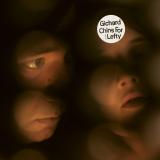
GICHARD - Chins For Lefty (LP)

Chins For Lefty is the debut album and first recording by Gichard, a new duo chronicling the absurdities of end-stage capitalism and mouldering social rituals from their vantage point in Glasgow, Scotland. Recorded primarily in the band’s home studio straight to tape, Chins For Lefty combines gorgeous, ramshackle melody, DIY kosmische punk, drum machine + synth and, in vocalist/lyricist Lisa Jones, an absurdist commentator on the human condition as it navigates the anxieties of the modern world. Instrumentalist Chas Lalli’s swirling music accompaniment stitches an evocative mix of musical styles, the ragged wind beneath the lyrics’ wings.

Although the duo first collaborated in their previous group Dragged Up, their disparate musical and artistic backgrounds make for an alluring mix in Gichard. Lalli has spent the last 20 years in the Glasgow underground, most notably in the noise rock group VOM, while Lisa Jones’s practice was in poetry and spoken word. Beginning as co vocalist in her previous band, in Gichard her lyrics are centre stage; the vision concocted alongside Lalli amounts to a total world-build.

Chins For Lefty scans almost like a novel, with each track elucidating a skewed universe that bears only some resemblance to the one you and I partake in. Like all works of fiction Gichard’s songs are rooted in reality and the lived experiences of its authors, but here characters are exaggerated, social mores and habits are pulled apart to reveal their inherent alienness. Universal emotions are laid bare, the bright light of anxious examination searching out every hairline fracture in our relationships. Distorted and cracked, the mirror that Gichard hold up to our world is also pretty damn funny.

Opener Cholesterol Test launches an expansive, cosmic guitar and synth intro that belies the Tascam-tape recorder it was recorded onto, like a Chromatics cut substituting anxiety for overt sexuality. Here Jones intones an apology to a non-responsive recipient, in the medium of a long voice note forensically deconstructing an interaction from the night before. Over punk guitars and shuffling, lo-fi drum machine splutters, the narrator in Asking The Apes “prefers things to people” before being taken hostage in the city zoo to confess an obsession which consumes the protagonist, ending with the immortal two liner “I sleep in a cocoon of old newspapers at the end of your street / And I think I have been fired from my job,” On album standout Posthumous Hologram, the narrator is faced with a human simulacra, in this case an undead pop star; the face of the encroaching technological singularity. Yes, it does requests, it can do My Way in 200 different language options. But what are the implications? While you’re left pondering, the alternating deadpan verse delivery and undeniably catchy chorus keep you company.

By the time Break Up With Johnny Dogbirth rattles into view, the band are satirising a suburban inanity blown up to cartoon proportions, soundtracked with a drawled musicality that recalls Rowland S. Howard’s post-Birthday Party balladeering. This approach is furthered on Human Resources: over an angular guitar+bass track, Jones’s short story recalls Dry Cleaning’s erudite lyrical post punk. On Soft Face, Lalli’s guitar and drum machine are swathed in echo and delay, as Jones dissects dating rituals with a west of Scotland drollness. Hamming It Up brings a porcine perspective in a short story that begins with the line “I was breastfeeding discreetly in the service station. She didn’t mind.” What follows is a passage punctured with canned laughter and a narrative involving tribute acts, modern farming techniques.

Brilliant first single Your Private Hell closes the album, the closest the group get to earnest perhaps, filtered through a surreal central Scottishness. While Your Private Hell might seem like a sardonic take down of romance, perhaps it’s the very distillation of love in all its awkwardness, selflessness and weirdness. Here there’s a distinctive Glasgow-ness to this doomed romance: the protagonist falls for an outsider, offers them cheap jarred hot dogs and carbolic soap (the infamous, excoriating soap dished out in schools and government buildings throughout Scotland), offers to cover up a murder, stalks them in the all-night Spar. It’s a short story of intrigue, murder and the irresistible pull of self-sacrifice to share in someone else’s suffering. If that’s not love, what is it? You can see this vision mapped out in black and white on their video for 'Your Private Hell'.

pre-order now29.05.2026

expected to be published on 29.05.2026

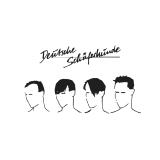
DEUTSCHE SCHÄFERHUNDE - KEIN ABSCHIED EP

“Nimm die rosa Brille … sag was Du siehst … alles viel besser”

44 years after its original release, one of the most idiosyncratic DIY minimal electronics / synth / new wave records of the early ’80s returns: the legendary 7” by German group DEUTSCHE SCHÄFERHUNDE (engl. German shepherds)—now remastered and reissued for the first time as a one-sided 12” on Anna Logue Records. Recorded in the winter of 1981/82 between rehearsal space, provincial disco and bar nights, and a humble four-track setup, these tracks capture the raw spirit of a generation that simply started creating—no formal training, but plenty of attitude. Minimalist, uncompromising, and inspired by krautrock, punk, new wave, electronic music and dub, the songs move between raw electronics, percussive noise, new wave experimentation, and sharp social commentary. „Rosa Brille“ (rose coloured glasses) in particular feels as urgent today as it did back then—a track that has lost none of its relevance, „Gasmasken“ tells of gas masks dancing in the woods to the sound of sirens, and a timeless Holger Czukay/Jah Wobble inspired „Mein Herz“ (my heart).

Originally pressed in a small run of just 500 copies and later becoming a sought-after collector’s item now worth 200€, the record now returns in a carefully crafted edition featuring a laser-printed reverse side and additional materials such as original lyric sheets and articles, postcard and poster. DEUTSCHE SCHÄFERHUNDE thrived on paradox—a provocative name paired with a clear stance, and lyrics that still resonate today. Shaped by Cold War tension, political unease, and youthful rebellion, their sound refused to fit into any neat category. Only few other bands, such as Der Musikant, Im Namen des Volkes, Thorax Wach, Klinisch Sauber oder Stephan Eicher spielt Noise Boys come to mind.

This release is more than a reissue—it’s a document of its time that still hits with full force.

12″ features: limited to 400 copies, hand-numbered, one-sided 180g black vinyl, laser-etched B-side, outer sleeve printed on reverse side of the board, printed inner sleeve with original lyrics sheets and original articles, DIN A3 poster, double-sided postcard

pre-order now29.05.2026

expected to be published on 29.05.2026

Raymond MacDonald & Christian Ferlaino - A Jig in the Future

"All the tracks on this release come from a live concert at Sharmanka, a beautiful and unique museum of kinetic sculptures in Glasgow, and throughout the record, the sounds of the sculptures moving and emitting noises are incorporated into the music performed. The four pieces presented are entirely improvised. There was no discussion beforehand of what instruments or what approach would be taken, and each piece evolved as a musical negotiation as the performers individually made choices about what instruments to play and how to support and meet each other within the unfolding musical narrative. While Macdonald and Ferlaino both share a lifetime of work with their chosen primary instrument, the saxophone, they also share a passion for exploring other instruments and objects for their sonic and socio-creative potential. This record foregrounds both these aspects of their work: they use saxophones, but also incorporate bells, toys, bagpipes, accordions, percussion instruments and voice.
"Raymond MacDonald is a saxophonist and composer with an extensive career in music, cross-disciplinary arts and academia. He has played on and released over 100 albums, toured and broadcast worldwide and has composed music for film, television, theatre, radio and art installations. He is a founding member of the Glasgow Improvisers Orchestra, and his work is informed by a view of improvisation as a social, collaborative, and uniquely creative process that provides opportunities to develop new ways of engaging musically.
"Christian Ferlaino is an Italian saxophonist, bagpipe player, improviser, composer and ethnomusicologist. He composes for ensembles of improvisers, both from the jazz and improvised music scene, as well as for contemporary music ensembles. His work explores the relationships between composition and improvisation, and the expressive potential of improvised music. His musical research also focuses on creatively engaging with the sonic and musical realm of Calabria, with special attention to its performing techniques and approach to sound and music generation."

pre-order now30.05.2026

expected to be published on 30.05.2026

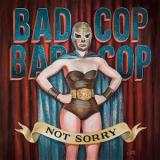
BAD COP/BAD COP - NOT SORRY
  • 1: Nightmare
  • 2: Anti Love Song
  • 3: Here's To You
  • 4: Cheers
  • 5: Joey Lawrence
  • 6: Sugarcane
  • 7: I'm Alright
  • 8: Old Dogs
  • 9: Like, Seriously?
  • 10: Rip You To Shreds
  • 11: The Wood
  • 12: Firewater
  • 13: Support

The 2015 debut album from female punk super-group back in print on new burgundy colour vinyl! NOT SORRY is the first full-length album from all female super-group BAD COP BAD COP. Aptly titled, NOT SORRY brazenly blasts out some of the most vibrant pop-punk around today. Laden with catchy hooks, three-part harmonies that'd make The Beach Boys jealous, and tons of attitude, all 13 tracks showcase BAD COP BAD COP's uncanny ability to blend aggressive instrumentation with polished vocals. A quick glance at the band's collective resume (Compton SF, The Radio Sweetheart, The D'Maggs, The City, Angry Amputees, and Cunt Sparrer) will disabuse any doubters of the notion that BCBC can't hand with the boys. From front to back, NOT SORRY brings the rock. Tracks like "Old Dogs", "Nightmare", & "Support", display the bands' hard playing style and strong sense of melody. One listen to NOT SORRY and you'll know why BAD COP BAD COP have generated so much buzz! "This badass bunch of melodic punk rock ladies have been releasing infectious 7" records for a couple years that just play too damn quickly... The album dashes by like a vacation_over sooner than you'd like." _New Noise Magazine "California's Bad Cop Bad Cop lay down the law with an incredible authority: the tunes are concise and compact melodic punk blazers, filled with equal amounts of bite and sugar-sweet harmony." _Alternative Press "These songs are full of three-part harmonies that can make Bad Religion's Greg Graffin and Brett Gurewitz retroactively jealous, and they're catchy enough that they could easily fit onto any of the early Fat Music comps." _Dying Scene Produced by Fat Mike (NOFX) & Davey Warsop (Suedehead) For Fans of: NOFX, Dance Hall Crashers, Masked Intruder Ongoing social media push via artist and label channels Social Media and Digital marketing campaign See Bad Cop Bad Cop on tour in Europe

pre-order now26.06.2026

expected to be published on 26.06.2026

Makeshift Art Bar - Marionette EP LP
  • A1: Chocolate
  • A2: Crows
  • B1: Discipline
  • B2: Servant
also available

Red Vinyl


Newly signed to indie heavyweights Heist or Hit (Westside Cowboy, Her’s) EP two: ‘Marionette’ has been produced by Daniel Fox (Sprints, Melts, Psychotic Monks, Naked Lungs, Nerves, Ronan Group) and it’s set to be seminal. A set text for future musicians with aspirations of innovation. “The theme of the marionette is present throughout each song, involving some aspect of a power struggle and a lack of control within oneself.” Opener ‘Chocolate’ bounces in on a synth line as slippery and hyperactive as anything Aphex Twin ever cooked up. Crispy offbeat electronic cymbals play counterpoint to atonal guitars and pugilistic drumming before the track dry-wretches its way into a nauseating cacophony of euphoria. It’s a tale of crippling social anxiety and a preference for an unflattering, lonely reality. The muted guitar pluck in the intro to ‘Crows’ is the sonic equivalent of biting one’s nails. An anxious, involuntary tic that speaks to the theme of guilt, especially surrounding digital culture: “children can watch what they please, just with viewer discretion.” The track lurches between textures, weaving themselves in and out of focus. Guitars blare like sirens, interrupting paranoid urban centres at 2am, while the bass sounds like the inside of an insomniac’s head on day four of a REM drought.

The metallic intent of ‘Discipline’ squats on the chest as though Steve Albini is your sleep paralysis demon. The pain of accountability spews from the industrial regularity of the beat, apt to the narrative of a soldier coming to terms with the lies that made him commit atrocious, violent acts. EP closer ‘Servant’ starts like a Spectrum loading screen. Dial-up modem-coded, it pauses for moments of white-noise-vomit and existential bloops. Fitting for a more abstract take on the idea of the power struggle filtered through religious imagery and self-awareness of one’s own actions, coupled with an inability to exert control over them. The band pile on the textures with sadistic glee until the evil is exorcized and the modem melts. Connection severed. Across the EP, vocalist Joseph has a tendency to hyper-fixate on themes of control and unhappiness. Creating rooms in which doom and isolation ricochet. Not that it’s all bad news “we like to think that by shedding light on the negative, it commands a sense of hope.” Influenced as much by the liminal-space horror and uncanny dread of Silent Hill as the existentialist theatre of The Twilight Zone or the absurdity of Twin Peaks, they occupy a space between unease and impulse. Makeshift Art Bar are not a band interested in being liked. They’re a band interested in being necessary. There’s so much eating and drinking in their work that multiple listens simply don’t satisfy; something new reveals itself on each return visit. Audacious. Idiosyncratic. Vital. A young band carrying identity, defiance and an uncompromising vision as if it isn’t a rare cargo.

pre-order now26.06.2026

expected to be published on 26.06.2026

Makeshift Art Bar - Marionette EP LP

Newly signed to indie heavyweights Heist or Hit (Westside Cowboy, Her’s) EP two: ‘Marionette’ has been produced by Daniel Fox (Sprints, Melts, Psychotic Monks, Naked Lungs, Nerves, Ronan Group) and it’s set to be seminal. A set text for future musicians with aspirations of innovation. “The theme of the marionette is present throughout each song, involving some aspect of a power struggle and a lack of control within oneself.” Opener ‘Chocolate’ bounces in on a synth line as slippery and hyperactive as anything Aphex Twin ever cooked up. Crispy offbeat electronic cymbals play counterpoint to atonal guitars and pugilistic drumming before the track dry-wretches its way into a nauseating cacophony of euphoria. It’s a tale of crippling social anxiety and a preference for an unflattering, lonely reality. The muted guitar pluck in the intro to ‘Crows’ is the sonic equivalent of biting one’s nails. An anxious, involuntary tic that speaks to the theme of guilt, especially surrounding digital culture: “children can watch what they please, just with viewer discretion.” The track lurches between textures, weaving themselves in and out of focus. Guitars blare like sirens, interrupting paranoid urban centres at 2am, while the bass sounds like the inside of an insomniac’s head on day four of a REM drought.

The metallic intent of ‘Discipline’ squats on the chest as though Steve Albini is your sleep paralysis demon. The pain of accountability spews from the industrial regularity of the beat, apt to the narrative of a soldier coming to terms with the lies that made him commit atrocious, violent acts. EP closer ‘Servant’ starts like a Spectrum loading screen. Dial-up modem-coded, it pauses for moments of white-noise-vomit and existential bloops. Fitting for a more abstract take on the idea of the power struggle filtered through religious imagery and self-awareness of one’s own actions, coupled with an inability to exert control over them. The band pile on the textures with sadistic glee until the evil is exorcized and the modem melts. Connection severed. Across the EP, vocalist Joseph has a tendency to hyper-fixate on themes of control and unhappiness. Creating rooms in which doom and isolation ricochet. Not that it’s all bad news “we like to think that by shedding light on the negative, it commands a sense of hope.” Influenced as much by the liminal-space horror and uncanny dread of Silent Hill as the existentialist theatre of The Twilight Zone or the absurdity of Twin Peaks, they occupy a space between unease and impulse. Makeshift Art Bar are not a band interested in being liked. They’re a band interested in being necessary. There’s so much eating and drinking in their work that multiple listens simply don’t satisfy; something new reveals itself on each return visit. Audacious. Idiosyncratic. Vital. A young band carrying identity, defiance and an uncompromising vision as if it isn’t a rare cargo.

pre-order now26.06.2026

expected to be published on 26.06.2026

Chlär - Modern Survival

2025 Repress

Chlar returns to his Primal Instinct label with 'Modern Survival'

Following the widely praised Funk Assault (Chlar & Alarico) 'Minimum One Post A Week' EP, which kicked off the Primal Instinct label last summer and won the support of the likes of Rodhad, Tasha, and Luke Slater, as well as routine plays from Sarah Story on BBC Radio 1, Chlar now returns to his imprint with solo venture 'Modern Survival'. While the first Primal Instinct release saw references to artist urges and behaviours on social media, this next instalment explores a modern recontextualisation of humanity's hierarchy of needs in yet another high-concept EP.

First up, 'Internet Soulmate' boasts a crunchy bassline as its drum work chugs along the track playfully. The groove twists and turns before the hypnotic and tribal 'Supermarket Hunting' continues with sounds of nature, loopy rhythm and syncopated bleeps.

On the B-side's 'Body Control Officer', human-made grooves intertwine with machine-like thrum, synths whirring and zapping, while 'Competitive Influencing' takes off with rolling percussion, subtle whistles and distorted vocal one-shots. Closing out another stellar offering from the Primal Instinct frontman, Chlar brings the dark 'Scout My Algorithm', a brooding slow-burner offset by smooth arpeggio snippets and warped slices of digital noise.

"In an era where technology entwines our everyday existence, where the virtual realm shapes our interactions, and where the pursuit of influence takes centre stage comes an EP that delves deep into the modern tapestry of human existence. 'Modern Survival' is not merely a collection of songs and visual clips, but a poignant reflection on the intricate dance between our primal instincts and the brave new world we navigate today. The EP invites listeners on a journey of self-discovery and reflection, prompting them to ponder the fundamental essence of our existence in an environment of fast-paced technological evolution." - Chlar

In Stock

On Stock and ready to ship

Stephan Eicher - Spielt Noise Boys

2025 Reissue.


Münchenbuchsee, a suburb of Bern, Switzerland. Stephan Eicher is the youngest of three children. His father, a radio and TV repairman, is also a jazz violinist and a sound tinkerer in his spare time. In the family home's converted fallout shelter turned studio, Mr. Eicher experiments with homemade sequencers, tortures handcrafted drum machines, and abuses reel-to-reel tape recorders—all under the fascinated gaze of young Stephan.

The boy quickly develops a musical curiosity, exploring sound through various experiments and wanderings. Alongside his younger brother Martin, Stephan crafts audio plays on a homemade multi-track recorder (essentially several cassette decks hooked together!), which they write, record, add sound effects to, and perform for family and friends. Just a couple of nice kids, really...

Then comes 1972, and Lou Reed's Transformer album changes everything for the Eicher kids. For 13-year-old Stephan, it's a revelation—especially "Vicious", the opening track, which he plays on repeat for months. He convinces his father to buy him an electric guitar. Not stopping there, his father also builds him a tube amp using an old radio.

Then comes adolescence. A rough one. Stephan leaves home at 16 and moves to Zurich. With obvious artistic talent, he persuades his art teacher to help him get into F+F, a radical, alternative art school—despite his young age. Accepted, he starts learning video techniques, determined to become a filmmaker.

At F+F, Stephan organizes Dada-style happenings and concerts with a group of friends known as the Noise Boys. Among them: one of his teachers on bass, Veit Stauffer on drums (who would later found ReR/Recommended Records), his girlfriend Sacha on vocals, and Stephan on guitar. In one of their early performances, they release a remote-controlled mouse covered in dull razor blades into the audience to create panic and chaos. Keeping with this aggressive, confrontational spirit, they once played a concert while wearing headphones blasting Tristan and Isolde, trying to perform their own songs simultaneously—to maximize the cacophony. The goal was always the same: clear the room.

Their “songs,” if you can call them that, followed suit. Take "Hungeriges Afrika", for instance—performed entirely with power drills and some drum feedback.

To make ends meet, Stephan returns to Bern on weekends to work as a waiter at the Spex Club, the city’s main punk venue. On September 16, 1980, during a show by proto-electro group Starter, the police raid the club and arrest everyone. Stephan, who manages to avoid arrest, seizes the opportunity to “borrow” Starter’s gear left behind. He suddenly finds himself in possession of a Roland Promars synth, a Korg MS20, and a gorgeous CR78 drum machine, which he runs through a Big Muff distortion pedal to get that perfect gritty sound.

He then sets out to reinterpret some Noise Boys tracks, reworking them during impromptu sessions recorded on a dictaphone (yes, a dictaphone—now the lo-fi sound makes more sense, doesn’t it?). He ironically titles the resulting cassette "Stephan Eicher spielt Noise Boys" ("Stephan Eicher plays Noise Boys"). This gem features seven tracks, which are the ones reissued here.

Back in Zurich, he visits his friends Andrew Moore and Robert Vogel, who have a DIY cassette duplication setup. They make 25 copies of Stephan Eicher spielt Noise Boys for Stephan and his friends. Robert encourages him to visit Urs Steiger of Off Course Records and play him the tape.

Without much hope, Stephan shows up at Urs’s office. But Urs is instantly hooked and suggests releasing a 7” single. Due to space constraints, they reluctantly drop two of the seven tracks ("Hungeriges Afrika" and "One Second"). As for the musical score featured on the cover—it was randomly chosen and remains a mystery to this day. Calling all music theory nerds!

The 7-inch is pressed in 750 copies and released in the first week of December 1980—a date Stephan remembers well, as it’s the same week John Lennon was killed. Smartly, Urs sends a promo copy to François Murner, Switzerland’s answer to John Peel, who hosts a show on alternative station Sounds. Murner falls in love with the record and starts giving it airtime. To Stephan’s surprise, sales follow—and people actually seem interested in his music.

Even this modest underground success scares Stephan a bit. He stops making music for a year and moves to Bologna, where he works as a programmer at Radio Città, a feminist radio station.

Meanwhile, Stephan’s younger brother Martin, who’s also involved in the punk scene, joins the band Glueams as a singer and guitarist. Glueams, named after the fanzine run by two of its members (drummer Marco Repetto and bassist GT), eventually rebrands as Grauzone. Stephan is invited to their shows to project hacked Super 8 visuals live on stage.

Urs Steiger, now working on a compilation titled Swiss Wave – The Album, asks Grauzone to contribute alongside bands like Liliput, Jack and the Rippers, The Sick, and Ladyshave (Fall 1980).

For the album, Martin tasks Stephan with producing their recording sessions. Under Stephan's artistic direction, two tracks emerge: "Raum" and "Eisbär". During "Eisbär", Martin plays a minimalist bass line borrowed from post-punk band The Feelies (just an open string). Drummer Marco Repetto struggles to keep time. Later that evening, unhappy with the takes, Stephan builds a four-bar drum loop from a ¼-inch tape and uses it instead of the flawed original. He then adds bleepy synths and wind sounds to complete the track’s icy vibe before handing it over to Urs.

The Swiss Wave – The Album compilation is released quietly at first, but things snowball thanks to "Eisbär", which eventually becomes a smash hit—selling over 600,000 singles.

Meanwhile, Stephan plays in a rockabilly band called SMUV (named after Switzerland’s social security agency) and begins producing artists, including the debut album of Starter (1981), which includes a more pop-oriented version of "Minijupe".

By early 1982, Stephan starts spending time with the post-punk girl band Liliput (formerly Kleenex). They’re older than him, and he happily drives them around in his Renault Major, acting as their roadie.

By 1983, Grauzone—signed to the major label EMI, which turned out to be a misstep—is falling apart. Stephan begins to pivot toward a more mainstream pop sound with his debut solo album Les Chansons Bleues.

But that... is already another story.

In Stock

On Stock and ready to ship

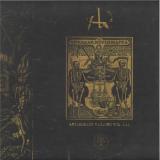
VARIOUS - ANTIKHRIST VISIONS VOL. III EP

INDUSTRIAS MEKANIKAS is back with the third instalment of the ANTIKHRIST VISIONS saga. This release is particularly symbolic: it’s the ninth in the catalogue, marked by the infernal numerology that runs right through the whole series. It’s a descent into a sonic underworld, where noise becomes ritual and pleasure is just pure agony.

The artist tasked with opening this new chapter of the saga is the mighty Óscar Mulero, an essential figure on the national electronic scene and one of our biggest international ambassadors, whose career has left a deep mark on contemporary music. Here, with Faceless, he delves into dark, precise, and devastating electro territory; a spiritual machine that dictates the pulse of chaos.

Next up, we’ve got Pressurized Modulator with Reddrum: hard, crunchy, industrial electro, absolutely buzzing with electrical tension and twisted sonic matter.
Closing out the A-side is Jacko Volvone (aka Hoax Believers) with Quieren Cerrar Las Fábricas: a track that expertly blends electro, techno, and post-punk echoes, resulting in a tense, distorted, and combative sound, like a working-class echo shouting from the abyss.

Flipping over, the B-side opens with Hanging Nuts (made up of Waje Martín, Fake Robotik, and Ruben Montesco). They unleash a murky descent of filthy, distorted, primal electro, slashed through with guitars and raw, guttural vocals: a genuine chant from beyond the grave. The second cut marks the debut of Techselektah & Phil Fork with Champagne No Potable: a raging street anthem packed with fury, energy, and social criticism, where Spanish vocals emerge amidst EBM structures that have that ‘80s spirit, reinterpreted with today’s raw edge. And the big finish is down to HBK1 alongside Rigor Mortis, with Instinto Caníbal: a full-on explosion of electro-industrial and EBM that awakens the body’s most primitive urges.

Antikhrist Visions Vol. III is a sonic summoning from the lands of Hades: ritualistic matter, organic sound, and primal force. A testament to pleasure and torment—Tormento do Gostar—etched into the vinyl as if it were molten iron.

Memento Mori.

In Stock

On Stock and ready to ship

Patricia Wolf - See-Through LP

Patricia Wolf

See-Through LP

12inchBALMAT03B
Balmat
05.03.2026

Following her debut album, I’ll Look for You in Others (Past Inside the Present), earlier this year, Patricia Wolf joins Spain’s Balmat label with See-Through, her second album. See Through finds the Portland, Oregon musician and field recordist continuing to develop her signature style of ambient, balancing radiant soundscaping with a carefully expressive sensibility. But the new album is also marked by an important difference. Where I’ll Look for You in Others was largely written in response to the death of a loved one, See-Through represents a kind of rebirth.

“After a long period of grief, I had been hoping to find my way to a place of lightness, peace, playfulness, curiosity, and sensuality again,” Wolf says. “What I was surprised and pleased to find is that for the most part, I had.”

She wrote and recorded many of the album’s songs quickly, in preparation for an August 2021 broadcast on the online radio platform 9128 Live. Excited for the opportunity to play live after more than a year of the pandemic, Wolf decided to write all new material for the event, working with a lean setup of Octatrack, Roland Synth Plus 10, Make Noise 0-Coast, and Novation Summit. (In fact, Wolf was the first sound designer invited to create patches for the Summit.) She also picked up an acoustic guitar that her brother had loaned her. “I decided to take the surrealist approach of ‘pure psychic automatism’ to see what poured out of me,” she recalls. “Woodland Encounter,” “Under a Glass Bell,” “The Grotto,” “The Mechanical Age,” “The Flaneur,” and “Psychic Sweeping” are all products of those sessions; the through line holding them together is their exploratory spirit and clarity
of vision.

Other songs, like “A Conversation With My Innocence,” “Recalibration,” and “Psychic Sweeping,” wrestle with the traumas of the preceding year. Though they may linger on the heaviness of loss, Wolf says, “What I discovered is that a stronger archetype had grown inside me to steer my emotions and thoughts to a better place.” Likewise, “Wistfulness” and “Upward Swimming Fish”—her first experiments with VST synthesizers—balance the bittersweet embrace of melancholy with the freedom to choose happiness.

“Pacific Coast Highway,” the album’s lone song with drums, might at first seem like an outlier. But it also signals Wolf’s interest in finding a fusion between the introspection of ambient and the togetherness of beat-oriented music. “Experiencing loss and isolation is what drove me into gentler territories of sound,” she says, “but I want to start making more beat-oriented music. After an extended period of loss and isolation, I’m ready to experience more joyous and social things.”

Listeners with keen ears might recognize the album’s closing song, “Springtime in Croatia”: A different mix of the song originally appeared on the 2021 digital compilation secondnature & friends Vol. II, from the Seattle label secondnature. This marks its first appearance on vinyl, however, and its spiritual home is undoubtedly here, at the close of See-Through. As the bookending answer to the opening “Woodland Encounter”—another song in which field recordings play a crucial role—it closes the circle of an album that is itself keyed to the steadily turning cycles of life.

In Stock

On Stock and ready to ship

Eagles - Hotel California LP 2x12"
  • Hotel California
  • New Kid In Town
  • Life In The Fast Lane
  • Wasted Time
  • Wasted Time (Reprise)
  • Victim Of Love
  • Pretty Maids All In A Row
  • Try And Love Again
  • The Last Resort

The moment the instantly recognizable intertwined guitar passage on the title track to the Eagles' Hotel California begins, the record's genius becomes obvious all over again. Ranked the 118th Greatest Album of All Time by Rolling Stone, certified by RIAA as the third best-selling LP in history, and considered the foundation on which the Golden State's mid-‘70s music scene was built, the 1976 landmark is a music staple immune to shifts in trends, eras, and styles. Fearlessly addressing the chaos and consequences of American life, its songs remain strikingly prescient and gain creedence with each passing day.

Mastered from the original analogue master tapes, pressed on MoFi SuperVinyl, and limited to 17,500 numbered copies, Mobile Fidelity's UltraDisc One-Step 180g 45RPM 2LP vinyl box set ensures you will want to permanently check into and never leave this particular Hotel California. Up to the herculean task of standing head and shoulders above all prior reissues, this collectible edition plays with extreme clarity, organic richness, tube-like warmth, massive dynamics, and microscopic levels of detail. You'll be able to practically smell the colitas and feel the breeze in your hair. Songs come across with an epic sweep and feature immersive, front-to-back soundstages that allow the music unprecedented air, roominess, and separation. As for the noise floor? It's basically as invisible as the spirits that waft in the corridors of the unforgettable title song.

Aesthetically, the premium packaging and presentation of the UD1S Hotel California pressing befit its esteemed status. Housed in a deluxe box, it features gorgeous foil-stamped jackets and faithful-to-the-original graphics that illuminate the splendour of the recording. From every angle, this UD1S reissue exists as a curatorial artefact meant to be preserved, touched, and examined. It is made for discerning listeners that prize sound quality and production, and who desire to fully immerse themselves in the art – and everything involved with the album, from the renowned cover art to the meticulous finishes.

Indeed, the opportunity to zero in on all the particulars of the 26-million-selling Eagles record dubbed "a legitimate rock masterpiece" by vaunted Los Angeles Times scribe Robert Hilburn has never been better. A global phenomenon that marked the band debut of guitarist-singer Joe Walsh, Hotel California continues to resonate and connect with listeners of all generations taken by its narrative depth, stark directness, picturesque melodies, daring majesty, and ardent emotionalism. Adorned with a breathtaking exterior photograph of the Beverly Hills Hotel that serves as the simultaneously haunting and alluring cover art, and rounded out by a rear-cover shot of the Lido Hotel lobby that reinforces a notion that teeters between permanence and transience, Hotel California is brilliantly tied to a specific place that functions as a universally understood metaphor for the American Dream.

Confronting the darker undercurrents and oft-ignored constructs attached to that romantic notion, the record's songs revolve around a host of shared themes: excess, mobility, stability, illusion, fame, destruction, and idealism included. Notably, Hotel California appeared at a crucial junction in American history: During the country's bicentennial and amid escalating controversies related to the Vietnam War, energy crisis, and governmental corruption. That the Eagles manage to channel such cultural, social, and economical matters into a cohesive, stately, big-picture statement is alone a stupendous feat. That the album's reach, boldness, vitality, accessibility, and understated intensity have never waned make it a marvel.

Reflecting on Hotel California 40 years after its original release, and indirectly explaining its enduring appeal and increasing relevance, singer-songwriter Don Henley confirmed the record pertains to the "loss of innocence, the cost of naiveté...the difficulties of balancing loving relationships and work, trying to square the conflicting relationship between business and art; the corruption in politics, the fading away of the Sixties dream of ‘peace, love and understanding.'"

It can be argued that Henley and company squarely hit on and drove home those ideas in the surreal title track, chart-topping "Life in the Fast Lane," and grand "The Last Resort" alone. But that would miss the forest for the trees. Experienced as an unbroken whole, complete with the pristinely shot imagery and physical grooves, Hotel California unfolds like a geography-conscious saga by James Michener and plays like colour-saturated movie shot on 70mm film by Martin Scorsese. It's about our collective and individual decisions – and the shape of our past, present, and future. And, just like that conjured by our imaginations, Hotel California continues to take on a life of its own.

More About Mobile Fidelity UltraDisc One-Step and Why It Is Superior
Mobile Fidelity Sound Lab's UltraDisc One-Step (UD1S) technique bypasses generational losses inherent to the traditional three-step plating process by removing two steps: the production of father and mother plates, which are created to yield numerous stampers from each lacquer that is cut. For UD1S plating, stampers (also called "converts") are made directly from the lacquers. Since each lacquer yields only one stamper, multiple lacquers need to be cut. Mobile Fidelity's UD1S process produces a final LP with the lowest-possible noise floor. The removal of two steps of the plating process also reveals musical details and dynamics that would otherwise be lost due to the standard multi-step process. With UD1S, every aspect of vinyl production is optimized to produce the best-sounding vinyl album available today.

MoFi SuperVinyl
Developed by NEOTECH and RTI, MoFi SuperVinyl is the most exacting-to-specification vinyl compound ever devised. Analogue lovers have never seen (or heard) anything like it. Extraordinarily expensive and extremely painstaking to produce, the special proprietary compound addresses two specific areas of improvement: noise floor reduction and enhanced groove definition. The vinyl composition features a new carbonless dye (hold the disc up to the light and see) and produces the world's quietest surfaces. This high-definition formula also allows for the creation of cleaner grooves that are indistinguishable from the original lacquer. MoFi SuperVinyl provides the closest approximation of what the label's engineers hear in the mastering lab.

pre-order now

This item has not yet been released. You can pre-order the product now.

Harry Chapin - Verities & Balderdash LP
  • 1: Cat’s In The Cradle
  • 2: I Wanna Learn A Love Song
  • 3: Shooting Star
  • 4: 30,000 Pounds Of Bananas
  • 5: She Sings Songs Without Words
  • 6: What Made America Famous?
  • 7: Vacancy
  • 8: Halfway To Heaven
  • 9: Six String Orchestra

How enduring is the signature song from Harry Chapin’s Verities & Balderdash? So timeless that it became the subject of a 2025 documentary in which artists from multiple generations weigh in on its impact on their lives and craft. “Cat’s in the Cradle” doubtlessly remains the main event on the singer-songwriter’s 1974 album. The legendary opening track also serves as a guidepost for the bold personal and social material that follows — as well as the gorgeous folk-rock arrangements that underpin the New York native’s most commercially successful work.

Sourced from the original master tapes, pressed at Fidelity Record Pressing, housed in a Stoughton jacket complete with a four-page insert, and strictly limited to 3,000 numbered copies, Mobile Fidelity’s 180g 33RPM LP of Verities & Balderdash presents Chapin’s fourth full-length in audiophile quality for the first time on vinyl. Captured during a golden era for sonics and production, the Top 5 effort features remarkable tonal balance, instrumental separation, and organic naturalism. Those valued aspects come into supreme focus on this reissue, which plays with dead-quiet surfaces and a low noise floor.

The newfound clarity, openness, and imaging underscore the lasting appeal of Chapin’s tender deliveries, soulful timbre, and careful phrasing. Every word comes across with incredible realism, while his underrated guitar playing occupies its own distinctive space. Also notable: The extension of the tasteful string accents; airiness of the backing vocals; depth and shape of the spare bass lines; and width and depth of the soundstaging. When on “Six String Orchestra” Chapin calls out names of instruments, they appear like magic, the band performing feet from you. Chapin has never sounded so lifelike on record.

Certified double platinum, Verities & Balderdash resonated with the times and public. “Cat’s in the Cradle” reached No. 1 on the chart on its way to being inducted into the Grammy Hall of Fame. The romantic ballad “I Wanna Learn a Love Song” flirted with the Top 40 and wrapped listeners in the equivalent of a cozy blanket. The record’s other single, the mini-epic “What Made America Famous?,” helped establish Chapin as one of the country’s most incisive and insightful commentators.

Verities & Balderdash teems with situational devices and topical matters. Chapin observes everything from the polarization of the nation to changes in moral standards and cultural priorities. He investigates pressing themes without ever turning preachy or elevating himself above the matters at hand. On “Halfway to Heaven,” whose coda races to the finish and ranks as the most urgent moment on the record, Chapin inhabits the mind of his frustrated protagonist akin to an eagle-eyed novelist.

Conveying emotions that range from melancholic to carefree, Chapin is as much of a singer as a storyteller. He assumes the voice of multiple characters within a single narrative. During the quirky “30,000 Pounds of Bananas,” a tale based on a delivery-truck accident in 1965, Chapin alters his delivery, pronunciation, and diction to become an old man reflecting on the mishap and mess. The tempo, too, adjusts to match the speed of the vehicle Chapin describes.

Adorned with timely laugh tracks to reinforce the bittersweet humor, the stripped-down “Six String Orchestra” takes everything up another notch, with Chapin intentionally missing guitar notes or playing a broken passage to illustrate the failures of the hopeful protagonist who doesn’t have what’s required to make it as an artist.

Chapin, of course, did not have any such problem. The lynchpin of a career cut short by a tragic traffic incident, Verities & Balderdash is Exhibit A of the savvy craft, feeling, and perspective he lent to American music.

pre-order now

This item has not yet been released. You can pre-order the product now.

LINGUINI - SILENCE IS GOLDEN

"Silence Is Golden" fits perfectly into a musical landscape marked by experimentation and social anger.
The album presents itself not just as a collection of songs, but as a sonic experience that pushes the listener to be overwhelmed by the power of its sounds and a sometimes dystopian nihilism. Incessant riffs alternate with moments of introspection, creating an interesting mix of noise and hardcore punk.

In Stock

On Stock and ready to ship

High Pass Filter - Nice Coordinated Outfit LP 2x12"

Nice Coordinated Outfit is a journey through history to a time before the internet and social media and before inner city gentrification, when Fitzroy was the beating heart of Australia's avant-garde music and culture. Musically, it showcases the band's incredible range from deep minimal dub to bizarre electronica with elements of shoegaze and experimental noise.

Back then, High Pass Filter were the kings of the Fitzroy underground. Dark, weird improvisers who aimed for something new each performance. Whilst electric guitars and rock n roll dominated Australian airwaves and stages, High Pass Filter were pioneering a sonic revolution in the shadows. The band's indefinable sound saw them sharing lineups with artists from hardcore and punk luminaries like Fugazi and The Boredoms and to dub heavyweights such as Lee Scratch Perry and The Mad Professor.

In Stock

On Stock and ready to ship

THE DSM IV - NEW AGE PARANOIA LP

**Debut album from former 'Eighties Matchbox B Line Disaster' front man Guy McKnight's new band.** **ORANGE MARBLE COLOURED VINYL - VERY LIMITED!!** The DSM IV’s debut album, “NEW AGE PARANOIA,” is an impressive collection of stories, beats, guitars, and noise. The album seamlessly weaves together sobering but dream-filled songs that explore the ways in which our collective minds are influenced by mass media, entertainment industries, and social media. Formed by Guy McKnight of critically acclaimed and cult favourite The Eighties Matchbox B-Line Disaster. The DSM IV has a dark sound that blends noise-rock, synth-pop and industrial, that delivers a unique musical experience. Their music is cacophonous and epic, featuring rich textures and melodic hooks that keep listeners captivated. The band’s powerful soundscapes, combined with their thought-provoking lyrics, create a mesmerizing atmosphere that both entertains and encourages introspection. The album prompts important questions about our society, such as what’s driving the normalization of a narcissistic culture that prioritizes personal desires over altruism. It delves into the ways in which technology, social media, and mass media shape our collective psyche and affect our relationships with ourselves and each other. The DSM IV’s music offers a timely and compelling commentary on these issues. The DSM IV is a band that creates music with a powerful message that resonates with people who feel that a kinder world is possible. Their songs are both nasty and nice, reflective and entertaining. With “NEW AGE PARANOIA,” The DSM IV has crafted an album that will captivate and inspire listeners, while also prompting deeper reflection on our society’s values and priorities.

In Stock

On Stock and ready to ship

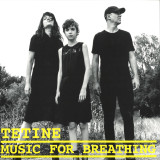
Tetine - Music For Breathing LP

We've been writing new material as a trio since the first lockdown in the spring of 2020. 
An organic and electro-acoustic impulse that translates both mine and Eliete's need of self-archiving, 
re-inventing and auto-cannibalising Tetine's past, present and

future in order to explore other aural 
landscapes and modes of composing intuitively, while at the same time, re-experiencing moments of our 
trajectory as a hybrid organism. 


Music For Breathing was born as a respiratory, meditative, and improvisatory piece of DIY 
tropical-mutant-punk "chamber music" written for cello, voice, piano, organ and electronics. 
The work responds to the suspended acts of breathing and vertigos experienced in contemporary polluted
 environments in political, social and philosophical transitions, whilst investigating the 
secret ontologies of inanimate objects and architectures, as well 
as the echoes and ethics of modes of operating things. 


Recorded during the intense period of heatwaves that hit London between July and August 2022, in 
a small studio set up in our flat's kitchen - so that we could capture the acoustic instrumentation 
(in particular, for the recording of cellos) without much

noise interference from the street - 
this vinyl version of the album comprises of 5 distinct yet complementary reflective movements. 


Musically and lyrically, it explores the atmospherics and syntaxes of time and space, voice, rhythm, 
as well as themes such as hearing loss, menopause, pollution and respiration. It builds an expanded suite of unexpected 
electro-acoustic textures through repetition, minimalistic motives, simple melodies, chromatic 
developments, free counterpoint and atonalism. Conceived as an ode to the poetics of slowness, 
the sounds you hear give continuity to the music we composed for the performance-film 
The Ether - Prelude No.1 over the first lockdown in 2020 as it simultaneously explores the warmth, 
melodiousness and power of the cello in conjunction with electronics. 
Music For Breathing evokes this transitory moment: a place and time where language runs out, 
communication and information lose their functions, sound and meaning do not correspond. Facts do not correspond to contexts. Spaced Out in Paradise. The last degree of the structure, the 
loss of memory. The lost voice.


The album also features our 12-year-old daughter Yoko Afi on cello and vocals. It reflects 
a period of free sound experimentation influenced both by romantic composers of the late
 19th / early 20th centuries and contemporary electronic music. The pieces you hear were composed, arranged, and recorded 
with the joy and melancholy of "those who do not know". In other words, "with the arrogance 
of a second childhood" as Derek Jarman once put it. 'Agile and candid as a child'(1).

1) Manifesto da Poesia Pau-Brasil, Oswald de Andrade, Correio da Manhã, 18 de Março de 1924.

In Stock

On Stock and ready to ship

Guilty Razors - Complete Recordings 1977 - 1978

UILTY RAZORS, BONA FIDE PUNKS.


Writings on the topic that go off in all directions, mind-numbing lectures given by academics, and testimonies, most of them heavily doctored, from those who “lived through that era”: so many people today fantasize about the early days of punk in our country… This blessed moment when no one had yet thought of flaunting a ridiculous green mohawk, taking Sid Vicious as a hero, or – even worse – making the so-called alternative scene both festive and boorish. There was no such thing in 1976 or 1977, when it wasn’t easy to get hold of the first 45s by the Pistols or the Clash. Few people were aware of what was happening on the fringes of the fringes at the time. Malcolm McLaren was virtually unknown, and having short hair made you seem strange. Who knew then that rock music, which had taken a very bad turn since the early 1970s, would once again become an essential element of liberation? That, thanks to short and fast songs, it would once again rediscover that primitive, social side that was so hated by older generations? Who knew that, besides a few loners who read the music press (it was even better if they read it in English) and frequented the right record stores? Many of these formed bands, because it was impossible to do otherwise. We quickly went from listening to the Velvet Underground to trying to play the Stooges’ intros. It’s a somewhat collective story, even though there weren’t many people to start it.
The Guilty Razors were among those who took part in this initial upheaval in Paris. They were far from being the worst. They had something special and even released a single that was well above the national average. They also had enough songs to fill an album, the one you’re holding. In everyone’s opinion, they were definitely not among the punk impostors that followed in their wake. They were, at least, genuine and credible.

Guilty Razors, Parisian punk band (1975-1978). To understand something about their somewhat linear but very energetic sound, we might need to talk about the context in which it was born and, more broadly, recall the boredom (a theme that would become capital in punk songs) coupled with the desire to blow everything off, which were the basis for the formation of bands playing a rejuvenated rock music ; about the passion for a few records by the Kinks or the early Who, by the Stooges, by the Velvet mostly, which set you apart from the crowd.
And of course, we should remember this new wave, which was promoted by a few articles in the specialized press and some cutting-edge record stores, coming from New York or London, whose small but powerful influence could be felt in Paris and in a handful of isolated places in the provinces, lulled to sleep by so many appalling things, from Tangerine Dream to President Giscard d’Estaing...
In 1975-76, French music was, as almost always, in a sorry state ; it was still dominated by Johnny Hallyday and Sylvie Vartan. Local rock music was also rather bleak, apart from Bijou and Little Bob who tried to revive this small scene with poorly sound-engineered gigs played to almost no one.
In the working class suburbs at the time, it was mainly hard rock music played to 11 that helped people forget about their gruelling shifts at the factory. Here and there, on the outskirts of major cities, you still could find a few rockers with sideburns wearing black armbands since the death of Gene Vincent, but it wasn’t a proper mass movement, just a source of real danger to anyone they came across who wasn't like them. In August 1976, a festival unlike any other took place in Mont-de-Marsan – the First European Punk Festival as the poster said – with almost as many people on stage as in the audience. Yet, on that day, a quasi historical event happened, when, under the blazing afternoon sun, a band of unknowns called The Damned made an unprecedented noise in the arena, reminiscent of the chaotic Stooges in their early adolescence. They were the first genuine punk band to perform in our country: from then on, anything was possible, almost anything seemed permissible.

It makes sense that the four+1 members of Guilty Razors, who initially amplified acoustic guitars with crappy tape recorder microphones, would adopt punk music (pronounced paink in French) naturally and instinctively, since it combines liberating noise with speed of execution and – crucially – a very healthy sense of rebellion (the protesters of May 1968 proclaimed, and it was even a slogan, that they weren’t against old people, but against what had made them grow old. In the mid-1970s, it seemed normal and obvious that old people should now ALSO be targeted!!!).
At the time, the desire to fight back, and break down authority and apathy, was either red or black, often taking the form of leafleting, tumultuous general assemblies in the schoolyard, and massive or shabby demonstrations, most of the time overflowing with an exciting vitality that sometimes turned into fights with the riot police. Indeed, soon after the end of the Vietnam War and following Pinochet’s coup in Chile, all over France, Trotskyist and anarcho-libertarian fervour was firmly entrenched among parts of the educated youth population, who were equally rebellious and troublemakers whenever they had the chance. It should also be noted that when the single "Anarchy in the UK" was first heard, even though not many of us had access to it, both the title and its explosive sound immediately resonated with some of those troublemakers crying out for ANARCHY!!! Meanwhile, the left-wing majority still equated punks with reckless young neo-Nazis. Of course, the widely circulated photos in the mainstream press of Siouxsie Sioux with her swastikas didn’t necessarily help to win over the theorists of the Great Revolution. It took Joe Strummer to introduce The Clash as an anti-racist, anti-fascist and anti-ignorance band for the rejection of old-school revolutionaries to fade a little.

The Lycée Jean-Baptiste Say at Porte d’Auteuil, despite being located in the very posh and very exclusive 16th arrondissement of Paris, didn’t escape these "committed" upheavals, which doubled as the perfect outlet for the less timid members of this generation.
“Back then, politics were fun,” says Tristam Nada, who studied there and went on to become Guilty Razors’ frontman. “Jean-Baptiste was the leftist high-school in the neighbourhood. When the far right guys from the GUD came down there, the Communist League guys from elsewhere helped us fight them off.”
Anything that could challenge authority was fair game and of course, strikes for just about any reason would lead to increasingly frequent truancy (with a definitive farewell to education that would soon follow). Tristam Nada spent his 10th and 11th unfinished grades with José Perez, who had come from Spain, where his father, a janitor, had been sentenced to death by Franco. “José steered my tastes towards solid acts such as The Who. Like most teenagers, I had previously absorbed just about everything that came my way, from Yes to Led Zeppelin to Genesis. I was exploring… And then one day, he told me that he and his brother Carlos wanted to start a rock band.” The Perez brothers already played guitar. “Of course, they were Spanish!”, jokes their singer. “Then, somewhat reluctantly, José took up the bass and we were soon joined by Jano – who called himself Jano Homicid – who took up the rhythm guitar.” Several drummers would later join this core of not easily intimidated young guys who didn’t let adversity get the better of them.

The first rehearsals of the newly named Guilty Razors took place in the bedroom of a Perez aunt. There, the three rookies tried to cover a few standards, songs that often were an integral part of their lives. During a first, short gig, in front of a bewildered audience of tough old-school rockers, they launched into a clunky version of the Velvet Underground's “Heroin”. Challenge or recklessness? A bit of both, probably… And then, step by step, their limited repertoire expanded as they decided to write their own songs, sung in a not always very accurate or academic English, but who cared about proper grammar or the right vocabulary, since what truly mattered was to make the words sound as good as possible while playing very, very fast music? And spitting out those words in a language that left no doubt as to what it conveyed mattered as well.
Trying their hand a the kind of rock music disliked by most of the neighbourhood, making noise, being fiercely provocative: they still belonged to a tiny clique who, at this very moment, had chosen to impose this difference. And there were very few places in France or elsewhere, where one could witness the first stirrings of something that wasn’t a trend yet, let alone a movement.

In the provinces, in late 1976 or early 1977, there couldn’t be more than thirty record stores that were a bit more discerning than average, where you could hear this new kind of short-haired rock music called “punk”. The old clientele, who previously had no problem coming in to buy the latest McCartney or Aerosmith LP, now felt a little less comfortable there…
In Paris, these enlightened places were quite rare and often located nex to what would become the Forum des Halles, a big shopping mall. Between three aging sex workers, a couple of second-hand clothes shops, sellers of hippie paraphernalia and small fashion designers, the good word was loudly spread in two pioneering places – propagators of what was still only a new underground movement. Historically, the first one was the Open Market, a kind of poorly, but tastefully stocked cave. Speakers blasted out the sound of sixties garage bands from the Nuggets compilation (a crucial reference for José Perez) or the badly dressed English kids of Eddie and the Hot Rods. This black-painted den was opened a few years earlier by Marc Zermati, a character who wasn’t always in a sunny disposition, but always quite radical in his (good) choices and his opinions. He founded the independent label Skydog and was one of the promoters of the Mont-de-Marsan punk festivals. Not far from there was Harry Cover, another store more in tune with the new New York scene, which was amply covered in the house fanzine, Rock News (even though it was in it that the photos of the Sex Pistols were first published in France).
It was a favorite hang-out of the Perez brothers and Tristam Nada, as the latter explained. “It’s at Harry Cover’s that we first heard the Pistols and Clash’s 45s, and after that, we decided to start writing our first songs. If they could do it, so could we!”
The sonic shocks that were “Anarchy in the UK”, “White Riot” or the Buzzcocks’s EP, “Spiral Scratch” – which Guilty Razors' sound is reminiscent of – were soon to be amplified by an unparalleled visual shock. In April 1977, right after the release of their first LP, The Clash performed at the Palais des Glaces in Paris, during a punk night organised by Marc Zermati. For many who were there, it was the gig of a lifetime…
Of course, Guilty Razors and Tristam were in the audience: “That concert was fabulous… We Parisian punks were almost all dressed in black and white, with white shirts, skinny leather ties, bikers jackets or light jackets, etc. The Clash, on the other hand, wore colourful clothes. Well, the next day, at the Gibus, you’d spot everyone who had been at this concert, but they weren’t wearing anything black, they were all wearing colours.”

It makes sense to mention the Gibus club, as Guilty Razors often played there (sometimes in front of a hostile audience). It was also the only place in Paris that regularly scheduled new Parisian or Anglo-Saxon acts, such as Generation X, Siouxsie and the Banshees, the Slits, and Johnny Thunders who would become a kind of messed-up mascot for the venue. A little later, in 1978, the Rose Bonbon – formerly the Nashville – also attracted nightly owls in search of electric thrills… In 1977, the iconic but not necessarily excellent Asphalt Jungle often played at the Gibus, sometimes sharing the bill with Metal Urbain, the only band whose aura would later transcend the French borders (“I saw them as the French Sex Pistols,” said Geoff Travis, head of their British label Rough Trade). Already established in this small scene, Metal Urbain helped the young and restless Guilty Razors who had just arrived. Guitarist for Metal Urbain Hermann Schwartz remembers it: “They were younger than us, we were a bit like their mentors even if it’s too strong a word… At least they were credible. We thought they were good, and they had good songs which reminded of the Buzzcocks that I liked a lot. But at some point, they started hanging out with the Hells Angels. That’s when we stopped following them.”

The break-up was mutual, since, Guilty Razors, for their part, were shocked when they saw a fringe element of the audience at Metal Urbain concerts who repeatedly shouted “Sieg Heil” and gave Nazi salutes. These provocations, even still minor (the bulk of the skinhead crowd would later make their presence felt during concerts), weren’t really to the liking of the Perez brothers, whose anti-fascist convictions were firmly rooted. Some things are non-negotiable.
A few months earlier (in July 1978), Guilty Razors had nevertheless opened very successfully for Metal Urbain at the Bus Palladium, a more traditonally old-school rock night-club. But, as was sometimes the case back then, the night turned into a mass brawl when suburban rockers came to “beat up punks”.

Back then, Parisian nights weren’t always sweet and serene.

So, after opening as best as they could for The Jam (their sound having been ruined by the PA system), our local heroes were – once again – met outside by a horde of greasers out to get them. “Thankfully,” says Tristam, “we were with our roadies, motorless bikers who acted as a protective barrier. We were chased in the neighbouring streets and the whole thing ended in front of a bar, with the owner coming out with a rifle…”
Although Tristam and the Perez brothers narrowly escaped various, potentially bloody, incidents, they weren’t completely innocent of wrongdoing either. They still find amusing their mugging of two strangers in the street for example (“We were broke and we simply wanted to buy tickets for the Heartbreakers concert that night,” says Tristam). It so happened that their victims were two key figures in the rock business at the time: radio presenter Alain Manneval and music publisher Philippe Constantin. They filed a complaint and sought monetary compensation, but somehow the band’s manager, the skilful but very controversial Alexis, managed to get the complaint withdrawn and Guilty Razors ended up signing with Constantin with a substantial advance.

They also signed with Polydor and the label released in 1978 their only three-track 45, featuring “I Don't Wanna be A Rich”, “Hurts and Noises” and “Provocate” (songs that exuded perpetual rebellion and an unquenchable desire for “class” confrontation). It was a very good record, but due to a lack of promotion (radio stations didn’t play French artists singing in English), it didn’t sell very well. Only 800 copies were allegedly sold and the rest of the stock was pulped… Initially, the three tracks were to be included on a LP that never came to be, since they were dropped by Polydor (“Let’s say we sometimes caused a ruckus in their offices!” laughs Tristam.) In order to perfect the long-awaited LP, the band recorded demos of other tracks. There was a cover of Pink Floyd's “Lucifer Sam” from the Syd Barrett era – proof of an enduring love for the sixties’ greats –, “Wake Up” a hangover tale and “Bad Heart” about the Baader-Meinhof gang, whose actions had a profound impact on the era and on a generation seeking extreme dissent... On the album you’re now discovering, you can also hear five previously unreleased tracks recorded a bit later during an extended and freezing stay in Madrid, in a makeshift studio with the invaluable help of a drummer also acting as sound engineer. He was both an enthusiastic old hippie and a proper whizz at sound engineering. Here too, certain influences from the fifties and sixties (Link Wray, the Troggs) are more than obvious in the band’s music.

Shortly after a final stormy and rather barbaric (on the audience’s side) “Punk night” at the Olympia in June 1978, Tristam left the band ; his bandmates continued without him for a short while.

But like most pioneering punk bands of the era, Guilty Razors eventually split up for good after three years (besides once in Spain, they’d only played in Paris). The reason for ceasing business activities were more or less the same for everyone: there were no venues outside one’s small circuit to play this kind of rock music, which was still frightening, unknown, or of little interest to most people. The chances of recording an LP were virtually null, since major labels were only signing unoriginal but reassuring sub-Téléphone clones, and the smaller ones were only interested in progressive rock or French chanson for youth clubs. And what about self-production? No one in our small safety-pinned world had thought about it yet. There wasn’t enough money to embark on that sort of venture anyway.

So yes, the early days of punk in France were truly No Future!

out of Stock

Order now and we will order the item for you at our supplier.


Last In: 48 days ago
HYPER GAL - Our Hyper LP

HYPER GAL

Our Hyper LP

12inchLPGRA169C
Skin Graft
10.04.2026

HYPER GAL are restless. Since 2019, Kansai’s minimalist duo has been in persistent, perpetual motion.

In January of 2024, SKiN GRAFT Records introduced HYPER GAL to western audiences, giving the previously self-released album “Pure” a worldwide release. It was followed by “After Image”; a new full-length record; in September of that same year. In short order HYPER GAL left Japan to embark on a month-long European tour, performing at festivals such as Left of the Dial in Rotterdam and Le Guess Who? in Utrecht.

Consisting of Koharu Ishida (vocals) and Kurumi Kadoya (drums), HYPER GAL craft a sound all their own, characterized by avant-garde rhythms, looping landscapes, and hypnotic vocals. Their music resists traditional genre boundaries to carve out a truly singular sonic space.

With their fourth album “Our Hyper”, HYPER GAL thrust their sound into a deeper, harder core. Songs unfold into surprising shapes, embracing shadowy turns emboldened by a heavier low-end, while unearthing sharp takes on Japan’s harsh noise roots. The drums have grown even more acrobatic and unorthodox, while the vocals take on new colors, shifting from mesmerizing repetition to melodic, pop-tinged expression.

The album’s artwork is no less adventurous and features masks created by contemporary artist Tokiyoshi Akina and photographed in the band’s own hands, signaling resistance to the performative dualities of social media and a commitment to authenticity.
Despite the lean, unadorned two-piece setup, HYPER GAL’s music attains an intense and unmistakable presence - an unwavering momentum driven by an unrelenting intent. “Our Hyper” is HYPER GAL amplified.

"With each release they appear as mirage sculptors, using simple tools (drums, keyboards, vocals) in craft of multi-genre spanning work which only becomes more captivating the simpler their execution becomes...”
– MYSTIFICATION

pre-order now10.04.2026

expected to be published on 10.04.2026

Marnie Weber - Returning Home: The Music of Marnie Weber LP
  • A1: Tiger, Tiger
  • A2: Nude In Solitude
  • A3: Songs Hurt Me
  • A4: The Ship Song
  • B1: Moans
  • B2: The Passionate One
  • B3: Shanghai My Heart
  • B4: In The Meadow

You probably have at least one friend who is completely obsessed with Marnie Weber. Her dark, punk-infused humour and fearless embrace of eccentric feminine power archetypes combine with gut-punch viscerality and a strange beauty that is anything but pretty.” Village Voice “This neo-gothic fairytale wavers between happiness and sadness, amusement and tragedy, attraction and repulsion.” The White Review “Weber reaches a new scale for her work…The sentimentality and romance at its root fearlessly sets it apart.” BOMB “Wild multimedia works that often dwell on the ghostly and the monstrous. Think: Fairy tales gone seriously awry.” LA Times Acclaimed LA multidisciplinary artist and musician Marnie Weber collects highlights from a long and storied career on Returning Home: The Music of Marnie Weber, a collection of neo-goth art-pop that steers between kankyō ongaku pop songs, noise-rock, and haunted fairytale darkness. The career of Marnie Weber (b. 1959) began with gigs paid in beer at an LA trucker bar in 1977. Her band, Party Boys, formed when Weber was then 19 and had just left home. By the early 80’s, the band began regularly performing at LA’s fabled Al’s Bar, sharing the stage with generational talents that passed over its beer-drenched floors. L7, Beck, Arto Lindsay, Ry Cooder, The Fall, Fear, Hole, Hüsker Dü, Social Distortion, Nirvana, The Residents, Sonic Youth, Urge Overkill, Jesus Lizard, the Misfits, among plenty more, played to audiences that included Bret Easton Ellis, Steve Buscemi, Tommy Lee, Bill Murray, Al Pacino, Sean Penn, and Chloe Sevigny.

pre-order now27.03.2026

expected to be published on 27.03.2026

RUHR - Live Rough Tracks

RUHR

Live Rough Tracks

12inchHERTZ098
Kernkrach
30.01.2026

RUHR is a project born between Verona and Berlin, mixing rough analog synth sounds inspired by the beginning of the minimal noise experimental wave in the 70's and the need of violent dance moves coming from the repetitive structures of early EBM. Minimal aestethic, High Contrasts and screamed dadaistic/political lyrics portrait a vision of sensual industrial soundscape and the need of social riot.

pre-order now30.01.2026

expected to be published on 30.01.2026

Backengrillen - Backengrillen LP
 
2
also available

Yellow Vinyl


“The GRILL will fucking rule things…” – Backengrillen’s debut album out in January "Backengrillen's music is a paean to chaos and destruction. The basic idea is to take a death/doom metal, or noiserock riff and play it until it loses meaning and then break it apart like a ravenous cat would a tiny forest mouse. It's filled to the brim with the self-hatred endemic to the province of Västerbotten from whence the member’s hail. The record was written on a Thursday during their first ever rehearsal, performed live on a Friday and recorded on a Saturday, so what you're hearing is raw, stupid, gut instinct music played by seasoned purveyors of hardcore punk, metal, free jazz, noise et cetera. Record no 2 is in the making, less stupid, more ugly. Stay tuned and fuck the pigs." - Backengrillen, November 2025 Backengrillen is a new ensemble with their roots in HC, punk, noise and free Jazz. All members from Umeå, with roots in the original version of Refused – and one with starting points in the jazz-rock ensemble Nirvana (1980). With a solid and yet varied background in the creativities of Refused, TEXT, INVSN, Fire Orchestra, The International Noise Conspiracy, The End, Serpent, The Thing, Final Exit and other classic jazz combos we will now start our journey of 4 colliding locomotives, creating a new form of beauty and energy. Antifascist, antiracists free form death – jazz – in the memory of Lars Lystedt – Backengrillen arrives with new perspectives on jazz. And punk. In-your-face HC jazz inspired by The Cramps, Little Richard, Albert Ayler, Polly Bradfield, Entombed, John Zorn, Misfits, Stooges, Lars Gullin, Can and much more. Backengrillen’s self-titled debut album is out on January 23rd, 2026 on vinyl, CD, and digitally on Bandcamp via Svart Records. Backengrillen Dennis Lyxzén – vocal and effects Mats Gustafsson – saxophones, flutes and live electronics Magnus Flagge – bass David Sandström – drums and electronics

pre-order now23.01.2026

expected to be published on 23.01.2026

Backengrillen - Backengrillen LP

Backengrillen

Backengrillen LP

12inchSVART349LPB1
Svart Records
23.01.2026
 
2
also available

Black Vinyl


“The GRILL will fucking rule things…” – Backengrillen’s debut album out in January "Backengrillen's music is a paean to chaos and destruction. The basic idea is to take a death/doom metal, or noiserock riff and play it until it loses meaning and then break it apart like a ravenous cat would a tiny forest mouse. It's filled to the brim with the self-hatred endemic to the province of Västerbotten from whence the member’s hail. The record was written on a Thursday during their first ever rehearsal, performed live on a Friday and recorded on a Saturday, so what you're hearing is raw, stupid, gut instinct music played by seasoned purveyors of hardcore punk, metal, free jazz, noise et cetera. Record no 2 is in the making, less stupid, more ugly. Stay tuned and fuck the pigs." - Backengrillen, November 2025 Backengrillen is a new ensemble with their roots in HC, punk, noise and free Jazz. All members from Umeå, with roots in the original version of Refused – and one with starting points in the jazz-rock ensemble Nirvana (1980). With a solid and yet varied background in the creativities of Refused, TEXT, INVSN, Fire Orchestra, The International Noise Conspiracy, The End, Serpent, The Thing, Final Exit and other classic jazz combos we will now start our journey of 4 colliding locomotives, creating a new form of beauty and energy. Antifascist, antiracists free form death – jazz – in the memory of Lars Lystedt – Backengrillen arrives with new perspectives on jazz. And punk. In-your-face HC jazz inspired by The Cramps, Little Richard, Albert Ayler, Polly Bradfield, Entombed, John Zorn, Misfits, Stooges, Lars Gullin, Can and much more. Backengrillen’s self-titled debut album is out on January 23rd, 2026 on vinyl, CD, and digitally on Bandcamp via Svart Records. Backengrillen Dennis Lyxzén – vocal and effects Mats Gustafsson – saxophones, flutes and live electronics Magnus Flagge – bass David Sandström – drums and electronics

pre-order now23.01.2026

expected to be published on 23.01.2026

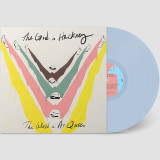
The God In Hackney - The World In Air Quotes

'The World in Air Quotes' is a genre-shifting style-melting kaleidoscope of art-rock, jazz, techno, folk & industrial. The God In Hackney sound like very little else from the early 2020's and whilst 'The World In Air Quotes' innovative progenitors are manifold - Eno, Coil, The Durutti Column, 1980s ECM jazz to name a few - it sounds beholden to none of them.

The God In Hackney's first album 'Cave Moderne' was Andrew Weatherall's album of the year for NTS Radio.

The God In Hackney's second LP, 'Small Country Eclipse', was album of 2020 for critic Sukhdev Sandhu of The Colloquium for Unpopular Culture: "Mordant music: stuttering, dread, black humour. A record that felt truly independent, beholden to no genre, out of step with all centres and signposted nodes."


'The World In Air Quotes' is The God In Hackney's 3rd album and their most musically emotive and lyrically inventive to date. It's an album that resonates with feelings about climate change, isolation, extinction, the social impact of technology, the flattening of history—and illuminates the darkness with imaginative rhythm, melody, noise & poetry. Songs range from widescreen, anthemic rock, to strange intricately arranged jazz-influenced songs, to abstract, textural electronic pieces. There's a strain of dark and surreal comedy too that runs through the lyrics and some of the choices the band makes in their sounds and arrangements.

The core God in Hackney quartet of Andy Cooke, Dan Fox, Ashley Marlowe and Nathaniel Mellors has expanded to include American multi-instrumentalists and composers Eve Essex (Eve Essex & The Fabulous Truth, Das Audit, Peter Gordon & Love of Life Orchestra, Peter Zummo, Liturgy) and Kelly Pratt (Father John Misty, David Byrne/St Vincent, Beirut, and Lonnie Holley among many others), signalling a new and ambitious direction for the band.

The album cover features original artwork by Iranian-American artist Tala Madani, recently the subject of a career survey exhibition at the Museum of Contemporary Art, Los Angeles.

Advertising:

The Wire, Maggot Brain

Reviews & features:

Maggot Brain - forthcoming feature

Hi-Fi+ Magazine - album review in April 2023 issue

Dereck Higgins (You Tube review)

Sonosphere - interview / feature

Weirdo Shrine - interview

It's Psychedelic Baby - interview

Spettacolo (Italy) - feature.

Ghettoblaster Magtazine (USA) - feature

Airplay:

Gilles Peterson - BBC Radio 6 Music

Steve Lamacq - BBC Radio 6 Music

Dublab - playlisted & featured in Dublab Recommends (Los Angeles)

Cian Ó Cíobháin - RTE Raidió na Gaeltachta (Ireland)

WFMU - playlisted

Resonance FM - The Wire presents Adventures In Sound & Music

Human Pleasure Radio (New Zealand)

Pete Wiggs & James Papademetie - The Seance (Repeater Radio, Sine FM & others)

Peter Hollo's Utility Fog - FBI Radio (Australia)

Jonathan Lethem & Sam Sousa on Radio Free Aftermath (KSP Claremont 88.7)

Life Elsewhere

WRPB Princeton

In Memory of John Peel

Mike Watt's Watt from Pedro Show

out of Stock

Order now and we will order the item for you at our supplier.


Last In: 4 months ago
LES RALLIZES DENUDES - '77 LIVE LP 3x12"

Beautifully remastered and presented 3LP set of exceptional Kanzai psych. Truly classic and very essential business. This stuff melts your heart, brain and face simultaneously..

Temporal Drift presents the first-ever officially sanctioned reissue of celebrated Japanese cult band Les Rallizes Dénudés’ three albums, originally compiled and released in limited quantities on CD in 1991. Led by the enigmatic Takashi Mizutani, Les Rallizes Dénudés has gained an almost mythical status the world over with their delicate balancing act between transcendent psychedelia and pure sonic assault, maintaining its status as an underground phenomenon throughout their three decade existence and beyond.

‘67-’69 STUDIO et LIVE, MIZUTANI / Les Rallizes Dénudés, and ‘77 LIVE are the only albums released during Les Rallizes Dénudés’ lifetime, between its formation in 1967 at Doshisha University in Kyoto to its last-ever show in 1996 at Club Citta in Kawasaki. Produced by Mizutani, the three discs collectively provide a window into the (in)famously impenetrable band’s first decade of existence.

‘77 LIVE is an explosive live set from Tokyo that captures the glorious noise of the Rallizes at their full potential. Recorded on March 12, 1977 at Tachikawa Social Education Hall in Tachikawa, Tokyo, ‘77 LIVE showcases Mizutani’s unmistakable, overdriven, feedback-drenched guitar, played on a newly purchased Gibson SG, soon to become his signature ax. Includes wholly transformed versions of “Memory is Far Away” and “The Last One” reaching the kind of highs that no unsuspecting listener could have imagined coming from Mizutani or the Rallizes just a few years prior, as heard on ‘67-’69 STUDIO et LIVE and MIZUTANI / Les Rallizes Dénudés.

Produced in collaboration with The Last One Musique, the new label set up by former members and associates of Les Rallizes Dénudés, ‘77 LIVE features newly remastered audio by former Rallizes member Makoto Kubota and new liner notes by Yuasa Manabu.

out of Stock

Order now and we will order the item for you at our supplier.


Last In: 4 months ago
Evan Parker & Bill Nace - Branches

Evan Parker & Bill Nace

Branches

12inchROKU043
OTOroku
21.11.2025

For his last solo record ‘Through a Room’, Bill Nace shifted his usual saturated guitar sound and added tapes, hurdy gurdy, doughnut pipe, bird calls and the mysterious Japanese taishōgoto. Setting up for the final night of his three day residency at OTO with only the taishōgoto soundchecked, Nace hoped that Parker would arrive with his small soprano as its opposite. “I’ve been interested in state change, you know, playing until there’s a shift in time.” Known for his development of multiphonics to produce a constantly shifting pattern, Evan Parker has evolved an instantly recognizable sound - his work the soprano most distinct. Happily, it was the soprano Evan brought with him and as soon as the two start to play they entwine - taking off in a double helix of keys and reed primed for endless reconfiguration. Space warps under the velocity of playing, the pitch rising unrelentingly. It felt like unending lift off in the room, sheer energy until the last note makes remember your feet have been on the floor the whole time. Total time bending shredding.


"They had never played together before. They had never even met each other before this springtime 2024 concert at London’s Café Oto.

Evan Parker, circular breathing maestro of the saxophone, a legend in the universe that is Free Improvisation since the late 1960s and Bill Nace, one of the most intriguing experimental “noise” guitarists of the 1990s/2000s underground scene.

For those of us who have been enamored by the live and documented work of both these gents, this Café Oto duo was a must-hear event. It could have gone anywhere musically and that would have been totally fine. Particularly with Evan having a history of being thrown into a variety of challenging collaborations throughout his career, employing the learned elegance of trust in his own sensitivity to listening, responding, leading, following, sparring, intertwining, dialoguing, creating in the instant and, essentially, dignifying the non-hierarchical grace of chance.

The aesthetics of socialist consideration in Evan Parker’s playing, in his community of expanded and personal technique, for a younger player such as Bill Nace, strikes an exemplary model. This notion of respect would be entirely the reason Nace, when offered a residency at the most critical “new music” room in England, would request to play in duo with Parker.

Bill Nace came to prominence mostly during the apex of experimental music activity in and around Western Massachusetts in the early days of the aughts, with a focus on visual art and free improvisation guitar action. He could be found in the daytime hours, his head hanging down over a notepad, penning fine-tuned illustrations and abstract line drawings, while in the evenings he’d be attending any number of basement noise gigs, many of which he’d be participating in. His guitar style came across as being informed as much as by the physicality of his writing utensils in friction to the page as it was to his hearing and redefining of radical recordings ranging anywhere from the Black Unity Group to Black Flag.

Utilizing various metal files and other small cylindrical objects Bill would allow his guitar and amplifier to be in tandem with the improvisatory movements of his body as the instrument balanced, intentionally and, at times, precariously, upon his lap. The performances came across thrilling and daring and they would be mostly in the context of venues nothing more than a low-ceilinged damp and dank New England basement, a clutch of people hanging onto rusty pipes or sitting up on dilapidated washer/dryer machines, the shards of Bill’s “file guitar” sounds ringing out like the most alive music on Earth.

By the time Bill reached Café Oto in early 2024 he had relocated to Philadelphia all the while releasing a succession of collaborative LPs on his Open Mouth label to present his developing progression of solo and collaborative work. He also would find himself considerably engaged with playing the electric taishōgoto, a keyboard-activated string instrument from Japan which can exist as a one, two, four, five, or six string oblong sound object. Bill’s approach to the taishōgoto would not be too unlike his approach to the traditional electric guitar, though no outboard implements such as files, sticks, and rocks are utilized. The similarity would lie wholly with Bill’s full immersion of high velocity action-playing where, with the taishōgoto, an electric drone beauty occurs. The flurry of sonics and resultant harmonics emanating from the amplifier (which Bill opts to dial into with borderline loud-as fuck volume settings) furthers the meta-mantra properties of the instrument in an astounding display of drone dynamism.

This sound world of Bill’s two-stringed taishōgoto on this Café Oto night worked beautifully with Evan Parker’s improvisatory saxophone conceptions. The duology achieved instant lift off at ground zero only to find it’s eventual finale as if it were organically ordained. Time seemingly morphed from its ancient human construct of control, rendered inconsequential to the torrential transcendence of the room wildly activated by the magic resonance of the multi-directional pan-spatial sonance of the music as if it were some beatific blessing. It was one of those nights where art as a liberating force of spirit gifted the listeners with an offering of exaltation and joy. It was entirely mystical and mind blowing. A night of Total Music."

Thurston Moore, London, 2025

pre-order now21.11.2025

expected to be published on 21.11.2025

Fetish 69 - Purge LP 2x12"

Fetish 69

Purge LP 2x12"

2x12inch912008337209
Noise Appeal Records
24.10.2025
  • A1: Kickback 3:17
  • A2: Born Invisible 3:28
  • A3: Hatefriends 3:38
  • A4: Headgun-Minddrill 4:46
  • B1: Adrenalizer 3:31
  • B2: Release 3:40
  • B3: Tools 5:09
  • B4: Pushing The Cranium 3:21
  • C1: Purifier 6:07
  • C2: Targets 3:05
  • C3: Waiting Room 2:54
  • D1: Sinkhole 2:20
  • D2: Purge 8:20
  • D3: Feed The Tumors 3:03

FETISH 69 sind beinahe zurück - roh, radikal und einzigartig. Mit dieser streng limitierten Doppel-LP erscheint endlich ein echtes Juwel der österreichischen Underground-Geschichte. Das 1996er, nur auf CD erschienene Album "Purge", wird erstmals auf Vinyl erscheinen. Enthalten ist der bislang unveröffentlichte Track "Feed The Tumors", gepresst auf 180g-Vinyl im edlen Gatefold-Cover mit Download-Code. Das Artwork stammt von keinem Geringeren als Joe Coleman (The Waiting Room, 1990) - ein Stück Kunstgeschichte inklusive. Für Fans von Industrial, Hardcore und düsterer Ästhetik ein absolutes Must-have.Fakten: Doppel-LP, Gatefold - 180g Vinyl - Download-Code - Artwork: Joe Coleman - inkl. unveröffentlichter Track "Feed The Tumors"Marketing: Social-Media-Kampagne & YouTube-Release des Videos zu "Kickback".

pre-order now24.10.2025

expected to be published on 24.10.2025

RON GALLO - Checkmate

RON GALLO

Checkmate

12inchLPKRS8351IE
Kill Rock Stars
17.10.2025
  • The Very Last Day Of Recording The Album That Became Checkmate, Ron Gallo Wrote And Recorded The Title Track. Which, In His Words, Half-Jokingly, Is ""My First True Love Song That Also Happens To Be The Best Love Song Ever Written"". It Encapsulates The Entire Purpose Of The Album Which Takes His Previous Motto - ""The World Is Fucked, But The Universe Is Inside You"" And Changes It To ""The World Is Ending, What Can I Hold On To?
  • After Years Of Navigating Artistic Reinvention And Resisting Change, Ron Gallo Arrives At His Latest Album, Checkmate, With A Newfound Clarity And Sense Of Purpose. Stripped Down And Direct, Checkmate Marks A Reset: A Shedding Of Old Selves, Old Anger, And The Need For Introspection. Social Commentary Has Always Been A Driving Force Behind Gallo’s Music, And Checkmate Finds The Bridge Between Personal Inner Dialogues And Cultural Analysis, Grasping The Vulnerability He Once Avoided
  • What Remains Here Is Distilled: Raw Thoughts About Love, Identity, And Survival In A Collapsing World. Gallo Calls It “A Process To Kill Off My Old Self,” A Release From Years Of Hiding, Whether It’s Behind A Comic Veil Or A Wall Of Instruments And Noise. With Checkmate, He Finds Himself Aligned With A New Audience Who Have Found His Music Through Social Media Riffs Turned Viral Smashes, 7Am Songs, Who Come With No Preconceived Notions—Only A Desire To Connect. The Personal Vulnerability Found In These Songs Are Far More Relatable Than Gallo Could Have First Imagined. Inner Dialogues We All Seem To Be Having, But Struggling To Find The Words For, Until Now
pre-order now17.10.2025

expected to be published on 17.10.2025

RON GALLO - Checkmate

RON GALLO

Checkmate

12inchLPKRS835
Kill Rock Stars
17.10.2025
  • 1: Checkmate
  • 2: Fantasy
  • 3: Feel-It-All Phase
  • 4: Free Advice
  • 5: Giant Silent Disco
  • 6: Gun To My Head
  • 7: I've Already Won
  • 8: One Catch Of The Eye
  • 9: Somebody God Would Want To Chill With
  • 10: Too Tired To Love You
  • 11: Trampoline

"The very last day of recording the album that became checkmate, Ron Gallo wrote and recorded the title track. Which, in his words, half-jokingly, is ""my first true love song that also happens to be the best love song ever written"". It encapsulates the entire purpose of the album which takes his previous motto - ""The world is fucked, but the universe is inside you"" and changes it to ""The world is ending, what can I hold on to?"".

After years of navigating artistic reinvention and resisting change, Ron Gallo arrives at his latest album, checkmate, with a newfound clarity and sense of purpose. Stripped down and direct, checkmate marks a reset: a shedding of old selves, old anger, and the need for introspection. Social commentary has always been a driving force behind Gallo’s music, and checkmate finds the bridge between personal inner dialogues and cultural analysis, grasping the vulnerability he once avoided.

What remains here is distilled: raw thoughts about love, identity, and survival in a collapsing world. Gallo calls it “a process to kill off my old self,” a release from years of hiding, whether it’s behind a comic veil or a wall of instruments and noise. With checkmate, he finds himself aligned with a new audience who have found his music through social media riffs turned viral smashes, 7am Songs, who come with no preconceived notions—only a desire to connect. The personal vulnerability found in these songs are far more relatable than Gallo could have first imagined. Inner dialogues we all seem to be having, but struggling to find the words for, until now."

pre-order now17.10.2025

expected to be published on 17.10.2025

AVA LUNA - AVA LUNA

AVA LUNA

AVA LUNA

12inchWVLPC1276
Western Vinyl
15.10.2025

Das selbstbetitelte Album von Ava Luna markiert eine fundierte und introspektive Entwicklung für das Quartett aus Brooklyn. Die Band, die nun aus Carlos Hernandez, Julian Fader, Ethan Bassford und Felicia Douglass besteht, kehrt nach einer längeren Pause mit einem reduzierten Sound zurück, der sich auf Schlagzeug, Bass und zwei Gesangsstimmen konzentriert. Dieser Back-to-Basics-Ansatz, eine Abkehr vom ,kosmischen" Gefühl ihres Vorgängeralbums ,Moon 2", hat seine Wurzeln in gemeinsamen Erfahrungen in NYC und den Rhythmen des Alltags. Themen wie Erschöpfung, Gemeinschaft und fragile Freude tauchen in Songs wie ,Lasting Impression" über die Arbeitsmüdigkeit und ,Math Money Job", einem spielerischen Gesang über Wiedersehen und Verkörperung, auf. Julians Schlagzeug und Ethans Bass Themen wie Erschöpfung, Gemeinschaft und prekäre Freude tauchen in Tracks wie ,Lasting Impression" über Arbeitsmüdigkeit und ,Math Money Job", einem verspielten Gesang über Wiedersehen und Verkörperung, auf. Julians Schlagzeug und Ethans Bass treiben das Album an, das teilweise vom rohen Sampling-Stil von Soul Coughing inspiriert ist, der in Tracks wie ,Frame of Us" zu hören ist. Gesanglich bewegen sich Carlos und Felicia wie eine Einheit - sie verschmelzen, harmonieren und fragmentieren mit Absicht, besonders in ,Archive". Obwohl im Kern minimalistisch, ist der Sound des Albums üppig und strukturiert, angereichert durch Congas von Reggae-Legende Larry McDonald, Klavier, Samples und Gitarren-Noise. Songs wie ,Social Diving" und ,My Walk" spiegeln persönliche und urbane Geschichten wider, während ,Your Man" und ,Fancy" von Widerstandsfähigkeit und Würde erzählen. Das Ergebnis ist Ava Luna in ihrer ehrlichsten und raffiniertesten Form - ein Porträt von NYC und einer Band, die sich noch immer weiterentwickelt und nichts von ihrer Dringlichkeit eingebüßt hat.

out of Stock

Order now and we will order the item for you at our supplier.


Last In: 7 months ago
THRICE - HORIZONS / WEST

"Horizons/West" (2025) completes the thematic arc begun with "Horizons/East" (2021), pairing personal reflection with sweeping sonic ambition. Self-produced by the band, engineered by guitarist Teppei Teranishi, mixed by Scott Evans, and mastered by Matthew J. Barnhart, "Horizons/West"balances cinematic tones with spacious atmosphere. Teranishi calls it "less dense," while vocalist Dustin Kensrue sees it as their first sequel-two halves of a larger emotional and political panorama. Blending post-rock textures from their earlier albums "Beggars" and "Major/Minor", with rhythmic complexity from "Horizons/East", the band sharpens its edge without losing nuance. Kensrue"s vocals shift from whisper to roar, anchoring meditations on perception, memory, and social influence. "Horizons/West" looks inward while never ignoring the larger world - urging listeners not to adopt beliefs, but to interrogate them. After more than two decades, Thrice continues building catharsis from chaos, and clarity from noise.

pre-order now03.10.2025

expected to be published on 03.10.2025

THRICE - HORIZONS / WEST

THRICE

HORIZONS / WEST

12inch281294
Epitaph Europe
03.10.2025
also available

Black Vinyl


"Horizons/West" (2025) completes the thematic arc begun with "Horizons/East" (2021), pairing personal reflection with sweeping sonic ambition. Self-produced by the band, engineered by guitarist Teppei Teranishi, mixed by Scott Evans, and mastered by Matthew J. Barnhart, "Horizons/West"balances cinematic tones with spacious atmosphere. Teranishi calls it "less dense," while vocalist Dustin Kensrue sees it as their first sequel-two halves of a larger emotional and political panorama. Blending post-rock textures from their earlier albums "Beggars" and "Major/Minor", with rhythmic complexity from "Horizons/East", the band sharpens its edge without losing nuance. Kensrue"s vocals shift from whisper to roar, anchoring meditations on perception, memory, and social influence. "Horizons/West" looks inward while never ignoring the larger world - urging listeners not to adopt beliefs, but to interrogate them. After more than two decades, Thrice continues building catharsis from chaos, and clarity from noise.

pre-order now03.10.2025

expected to be published on 03.10.2025

Datacide - Datacide Nineteen

Datacide

Datacide Nineteen

BooksDATACIDE19
Datacide
30.09.2025

Pandemic, war, inflation, apocalyptic scenarios about climate change and artificial intelligence, all connected with widespread bonkers conspiracy narratives and growing fascist sentiments – in this crisis environment we re-emerge with a new issue.

What may appear like a ‘normal’ datacide issue – which it is indeed – is however also a part of a broader strategy. We’ve been busy expanding activities into the field of videos, documentaries and interviews. The very first signs of this are visible on our Noise & Politics YouTube channel.

There will be much more.

Datacide nineteen is now at the printers and will be available for the first time at the Hekate event at Forte Prenestino in Rome on October 6/7.

Subscribers, depending where they are based, will receive their copies soon after.

General distribution will commence later in October, our aim is to have the issue available in all the most important radical bookstores around Europe by early November. If you are interested to resell datacide in your area, please get in touch!

We will also have a table at the Radical Bookfair in London on November 4th, presenting the new magazine along with older issues.

With this issue we pick up the story where we left it with the last one. We’re unfolding a countercultural panorama, this time beginning in the mid-20th century with Howard Slater exploring the beginnings of the Electronic Disturbance Zone, multiple reflections of 1948 via the 1990s, sonic adumbrations of new social relations.

Christoph Fringeli then introduces us to a document from 1967 where situationist ideas popped up in the Extra-Parliamentary Opposition in West Berlin, in a text called Vietnam, the Third World and the Self-Deception of the Left, which contains a détournement of the Address to Revolutionaries of Algeria and of all Countries published by the Situationist International the previous year.

From 1967 we move on to 1978 with Ian Trowell, in an excerpt from his forthcoming book ‘Throbbing Gristle – An Endless Discontent’, tracking the movements of Throbbing Gristle as they play their first gig up north at the aptly named Wakefield Industrial Training College. Uncanny overlaps of the timelines of TG’s operation and The Yorkshire Ripper’s killing spree reveal themselves.

The time window from the 90s to the present day is illuminated by Nihil Fist, as we’re printing the interview previously published in video form on our YouTube channel.

This issue then moves into ficticious territory with stories and poetry by Joke Lanz, Dan Hekate, Howard Slater and Riccardo Balli. Book and record reviews follow, as do the charts and a short report of our wider activities since the last issue.

Please pre-order your copy now (6 euro incl. Shipping in Europe, 8 euro elsewhere) or, even better, take out a subscription (standard subscription for only 23 euros for 4 issues (Europe) or 3 issues (rest of the world) – or our super-subscription which includes also records, t-shirts, books and digital items.

Or just make a donation if you can’t be bothered with print, but want to support our work.

pre-order now30.09.2025

expected to be published on 30.09.2025

ZIUR - EYEROLL LP

Ziur

EYEROLL LP

12inchHKLP53
Nyege Nyege Tapes
16.07.2025

Black Vinyl LP. The world has changed, we shouldn't try and pretend otherwise. While we were shut away in isolation our routines shifted, social patterns evolved, and our hopes and dreams were twisted into cobwebs we're still trying to wipe from our fingers. Ziúr tentatively approached this on her last album Antifate, an ambitious and complex hybrid pop fever dream that looked back to a Medieval escapist fantasy as the scent of revolution seemed to hum in the air. But when restrictions were eased, she found herself staring down a discombobulated society that had trapped itself in a spiral of microwaved nostalgia and detached, narcotic repetition. Eyeroll then is Ziúr's musical panacea, a tincture to wake us from our creative slumber and prompt external connection and reflection. It's a polyphonous hex that demands human interaction, and Ziúr's hand-picked alliance of collaborators - Elvin Brandhi, Abdullah Miniawy, Iceboy Violet, Juliana Huxtable, Ledef, and James Ginzburg - each provide distinct voices that together herald a bewildering sonic epoch. Ziúr's palette had to evolve to match the scope of the project, but it was pure necessity that informed the album's defining tone. Recording mostly at night, Ziúr was conscious of the noise she was making so developed a unique way to record organic percussion. Using a set of rototoms - low profile tunable drums - she scratched, scraped and gently tapped the skins to build up the undulating and unstable rhythmic backdrop for each track. It's the first sound we hear on the opener 'Eyeroll', rattling like lost marbles against Elvin Brandhi's primal croaks and screams. And when Brandhi's twisted articulations form words, Ziúr matches the energy with chaotic thuds and serrated blasts of saturated electronics. "I roll the shittiest cigarette," she squeals like she's about to start a mosh pit at Paris's GRM Studios. Without pause, Abdullah Miniawy takes over on 'Malikan', building on the promise of material with Simo Cell, Carl Gari and HVAD with corrosive trumpet blasts and charged, politically incendiary Arabic vocals. Inspired by pre-Islamic poetry and the Qu'ranic chanters he heard growing up in Saudi Arabia and Egypt, he spins labyrinthine stories that cross between the worlds, breaking down physical and spiritual borders simultaneously. Miniawy's scope is expanded even further on his second collaboration, 'If The City Burns I Will Not Run'. "If it rains and the city drowns," he utters over gaseous electronics, "I will not run away, but I will be anxious for the heart of one close to me." After a supple vocal turn from Manchester's Iceboy Violet on 'Move On' and a surreal interlude from poet- DJ-artist-theorist Juliana Huxtable on '99 Favor Taste', Brandhi returns with two more hyperactive collaborations: ,'Nontrivial Differential' and 'Cut Cut Quote'. On the former she slices into Ziúr's skeletal jazz eruptions, screaming and crooning interchangeably, fluxing between the rap battle and the cabaret. The latter is completely different meanwhile, with Brandhi settling into her role as front-woman and groaning dizzying improvised passages that sound like grunge crossed with psychedelic no-wave. Brandhi's spiky musical history has prepared her well for this collaboration; she's a prolific producer and has been using her voice spontaneously since debuting with father-daughter improv duo Yeah You in the mid 2020s. She's found an ideal foil in Ziúr, a producer who matches her restless energy and willingness to bend formality, and leaves an indelible mark on Eyeroll. But the album's most tender moments are from Ziúr herself, who winds the album down on 'Hasty Revisionism', growling over collapsible beats and cascading strings, and comes to an unexpected conclusion with country coda 'Lacrymaturity'. Its feverish amalgamation of country music and euphoric, experimental electronics might seem incongruous at first, but in context with the rest of the album is the only possible conclusion. With Eyeroll Ziúr is making a firm statement about togetherness, humanity, and the renewal of hope when all seems lost. By bringing together such a wide but philosophically harmonic team of collaborators, she's conducted a body of work that speaks to the creative fringe in no uncertain terms. Now's the time to throw away what you think you know, and build bridges you didn't think you need. Now's the time for action. She may have spent her entire career avoiding the solipsistic trappings of "queer art", but by assembling a communal statement that questions so many normative assumptions about music, politics, and beyond, Ziúr has chanced upon her queerest album yet. Cringe? Eyeroll.

out of Stock

Order now and we will order the item for you at our supplier.


Last In: 10 months ago
THY BURDENS - Drunken Prayer
  • Selfishness Of Man
  • Just A Closer Walk With Thee
  • When They Ring Them Golden Bells
  • Rock Of Ages
  • Bedside Of A Neighbor
  • Tramp On The Street
  • Ezekiel Saw The Wheel
  • Soldier Of The Cross
  • Long Ago, Far Away
  • Thy Burden Is Greater Than Mine

Thy Burdens is a natural evolution of the Drunken Prayer catalog. The album is an homage to the fiery, sublime music of the church that means so much to the musicians who worked on it. Musically it's hard country-soul with horns, shouting and a lot of groove. The songs vary between the evergreen and the obscure. Represented here are tributes across the landscape: Thomas Dorsey, Martha Carson, Snooks Eaglin, Ralph Stanley, The Zion Travellers, Leon Payne, The Dixie Hummingbirds, Hank Williams, Odetta, Dylan, and traditionals that are too old to credit. The project was spearheaded by Drive-By Truckers' bassist Bobby Matt Patton who cut his teeth playing in fiery Pentecostal church bands around north Alabama, and Morgan Geer (Drunken Prayer) who learned a lot of the hymns they recorded from his great grandmother and father in Mobile, AL. This all started when Bobby Matt met Morgan at a shared gig in Chapel Hill, NC, where they found themselves instant friends and kindred spirits. After talking for a while the idea for this album was born. The inspiration, other than purely rocking the hell out, was a pull to get to the core values of the old songs. The incontrovertibly true and inconceivably vast principles of kindness, right and wrong, and social justice: Cosmic Gospel. Morgan started using the moniker "Drunken Prayer" after a chance conversation with Tom Waits on the importance of gospel music, regardless of religious beliefs. There are a handful of Drunken Prayer albums, all with semi-religious overtones and imagery, but this one is the first that's all gospel - a prophecy revealed. Thy Burdens was recorded at Dial Back Sound, Patton's studio in Water Valley, MS. There may be some ghosts but there's nothing haunted about this music. It's a joyful noise

pre-order now06.06.2025

expected to be published on 06.06.2025

Ches Smith - Clone Row

I must admit to being a sucker for two-guitar bands. Ok, Hendrix pulled off a trio. But I don’t care what anybody says: The Yardbirds were a better band than anything that came out of them (Ok, maybe not Zep. But Cream?).

Maybe the reason I go back so far in my references is that, within the two-guitar band format, original new roles are difficult and rare. There’s the classic (socially problematic and often boring) “rhythm/lead” solution. There’s the JB’s or Nile Rodgers’ chicken pickin’ vs comping solution (which avoids chordal clashes by relegating one of the guitars to the role of single-note percussion instrument). There’s Ornette’s Prime Time division between Bern Nix’s rolled-off “jazz” tone and Charles Ellerbee’s trebly wah. Almost everything else is a variation on one of these.


In Ches Smith’s record Clone Row, each piece is built around a different concept for guitar interaction. The delightful and gifted weirdness of Mary Halvorson’s playing is counterpointed, contrasted, unisoned with, played off, juxtaposed (that is to say, enters every relationship possible) with Liberty Ellman’s equally amazing sound palette, chops, and imagination. This definitely ain’t your father’s guitar band.
The overall vibe of the record—despite Halvorson’s occasional noise outbursts or Ellman’s distorted guitar lines (see Mixed Fridge) is neither punk/funk, nor Zorn-ish metal—and certainly not the looser parameters of Ornette’s improvised harmolodics. Smith’s vibraphone playing, Halvorson’s guitar tone (whammy pedal squiggles aside), the brilliant electronics, and (most of all) the compositions themselves are somehow strangely West Coast cool. It’s as if I’m hearing a Jim Hall concert in which one of us did a lot of mushrooms, or (dare I write this?) some post-punk post-Dave Brubeck post-trip-hop experiment with classical form.

This recording is, most of all, about Ches as composer. He’s picked up a lot on his long, strange trip of the last few decades. The Haitian funkiness of his work with We All Break is audible—but deeply buried, encoded in the polyrhythms (check out Heart Breakthrough). His long-running side musician collaborations with John Zorn and Tim Berne are also evident but sublimated here into something new.

Not that improvising is absent. Check out the compelling collective statements in Sustained Nightmare and Ready Beat. Check out the brilliant interplay and bass soloing on Abrade With Me (a Weather Report for the age of extreme weather?) Nick Dunston is my favorite bassist of the new generation, and he plays brilliantly throughout. And Ches’ drumming here has all the groove, energy, and incredible range that have kept him in demand from Saturday night Vodou services to jazz and new music recording sessions (…the thinking man’s rock barbarian?).
The sus chords in Abrade With Me do build, for a moment, towards a fusion type of climax...but just at the moment I was gritting my teeth in anticipated defense against some horrible synth solo, the drums drop out, and we’re transported to the ambient lounge at the rave, and we suddenly understand we’re in the hands of a composer with the power to transport us just about anywhere.
So, this is a composer’s record most of all; a composer’s record performed by musicians who happen to be great improvisers. Ches Smith builds here on his reputation as a gifted new voice with an important vision, while showcasing some of the most creative musicians of our time.

pre-order now06.06.2025

expected to be published on 06.06.2025

Watchtower - Energetic Disassembly - O-MIX (LP)
  • Violent Change
  • Asylum
  • Tyrants In Distress
  • Social Fears
  • Energetic Disassembly
  • Argonne Forest
  • Cimmerian Shadows
  • Meltdown

Als Watchtower im Jahre 1985 ihr Debütalbum "Energetic Disassembly" veröffentlichen, stellen sie die Metal-Welt auf den Kopf. Das Material setzt völlig neue Maßstäbe. Innovativer (und extremer) geht zu dieser Zeit niemand zu Werke. Unbeholfene Stilbeschreibungen wie "Jazz Metal" oder "Techno Thrash" werden kreiert. Ursprünglich werden Watchtower im Mai 1982 in Austin, Texas, aus der Taufe gehoben. In jenem Monat schließt sich Sänger Jason McMaster Bassist Doug Keyser, Schlagzeuger Rick Colaluca sowie Gitarrist Billy White an. In ihrem frühen Stadium zeigen sich Watchtower stark von der NWOBHM inspiriert und spielen Songs von Iron Maiden, Angel Witch und Raven nach - dazu natürlich etliche Nummern der kanadischen Prog-Götter Rush. In der Folge entwickelt die Band sukzessive ihren individuellen Stil und nimmt Demos mit eigenen Stücken auf. Aber die Plattenfirmen wollen nicht anbeißen. Aus diesem Grunde entschließt man sich dazu, auf dem eigenen Label Zombo Records das wegweisende Album "Energetic Disassembly" zu veröffentlichen (gepresst werden 3.500 LPs und 1.000 Kassetten).
"Ich kann mich noch lebhaft daran erinnern, wie ich Demokassetten an Fanzines verschickt habe und nahezu täglich Briefe mit Tapetradern ausgetauscht wurden," erinnert sich Sänger Jason Mc Master heute. "Ich erhielt u.a. Briefe von Gene Hoglan, Mike Portnoy, Jason Newsted und sogar Alan Tecchio Die Reaktionen waren fantastisch, aber wir klangen einfach so andersartig. Die Labels wussten nicht, wie sie uns seinerzeit hätten vermarkten sollen. Waren wir zu extrem? Ich denke schon." Pünktlich zum 40. Jubiläum von "Energetic Disassembly" erscheint über High Roller Records nicht nur eine De-Luxe-Edition des originalen Albums, sondern auch eine neue Abmischung. Die Re-Mixes wurden im Jahre 2009 von Jared Tuten, einem engen Freund von JasonMcMaster, in den Top Hat Studios angefertigt. Als Sahnehäubchen gesellen sich dazu vier Bonus-Stücke: eine Art Drum-Soundcheck namens "Rick On Parade", das kurze Gitarren-Instrumental "BW115" sowie frühe Fassungen von zwei Songs, die später auf dem zweiten Watchtower-Album landen sollten, hier aber noch mit Jason McMaster am Gesang - "Instruments Of Random Murder" und "The Eldritch". Jason McMaster verließ Watchtower im Jahre 1988 in Richtung Dangerous Toys. Sein Nachfolger war Alan Tecchio (von Hades). Zusammen mit ihm wurde 1989 in West-Berlin das zweite Album "Control And Resistance" für Noise Records aufgenommen.

pre-order now30.05.2025

expected to be published on 30.05.2025

Watchtower - Energetic Disassembly - RE-MIX (LP)
  • Asylum (2024 Remix)
  • Meltdown (2024 Remix)
  • Tyrants (2024 Remix)
  • Argonne Forest (2024 Remix)
  • Energetic Disassembly (2024 Remix)
  • BW115: (2024 Remix)
  • Violent Change (2024 Remix)
  • Rick On Parade (2024 Remix)
  • Social Fears (2024 Remix)
  • Cimmerian Shadows (2024 Remix)
  • Instruments Of ... (2024 Remix, Bonus Song)
  • The Eldritch (2024 Remaster, Bonus Song)

Als Watchtower im Jahre 1985 ihr Debütalbum "Energetic Disassembly" veröffentlichen, stellen sie die Metal-Welt auf den Kopf. Das Material setzt völlig neue Maßstäbe. Innovativer (und extremer) geht zu dieser Zeit niemand zu Werke. Unbeholfene Stilbeschreibungen wie "Jazz Metal" oder "Techno Thrash" werden kreiert. Ursprünglich werden Watchtower im Mai 1982 in Austin, Texas, aus der Taufe gehoben. In jenem Monat schließt sich Sänger Jason McMaster Bassist Doug Keyser, Schlagzeuger Rick Colaluca sowie Gitarrist Billy White an. In ihrem frühen Stadium zeigen sich Watchtower stark von der NWOBHM inspiriert und spielen Songs von Iron Maiden, Angel Witch und Raven nach - dazu natürlich etliche Nummern der kanadischen Prog-Götter Rush. In der Folge entwickelt die Band sukzessive ihren individuellen Stil und nimmt Demos mit eigenen Stücken auf. Aber die Plattenfirmen wollen nicht anbeißen. Aus diesem Grunde entschließt man sich dazu, auf dem eigenen Label Zombo Records das wegweisende Album "Energetic Disassembly" zu veröffentlichen (gepresst werden 3.500 LPs und 1.000 Kassetten).
"Ich kann mich noch lebhaft daran erinnern, wie ich Demokassetten an Fanzines verschickt habe und nahezu täglich Briefe mit Tapetradern ausgetauscht wurden," erinnert sich Sänger Jason Mc Master heute. "Ich erhielt u.a. Briefe von Gene Hoglan, Mike Portnoy, Jason Newsted und sogar Alan Tecchio Die Reaktionen waren fantastisch, aber wir klangen einfach so andersartig. Die Labels wussten nicht, wie sie uns seinerzeit hätten vermarkten sollen. Waren wir zu extrem? Ich denke schon." Pünktlich zum 40. Jubiläum von "Energetic Disassembly" erscheint über High Roller Records nicht nur eine De-Luxe-Edition des originalen Albums, sondern auch eine neue Abmischung. Die Re-Mixes wurden im Jahre 2009 von Jared Tuten, einem engen Freund von JasonMcMaster, in den Top Hat Studios angefertigt. Als Sahnehäubchen gesellen sich dazu vier Bonus-Stücke: eine Art Drum-Soundcheck namens "Rick On Parade", das kurze Gitarren-Instrumental "BW115" sowie frühe Fassungen von zwei Songs, die später auf dem zweiten Watchtower-Album landen sollten, hier aber noch mit Jason McMaster am Gesang - "Instruments Of Random Murder" und "The Eldritch". Jason McMaster verließ Watchtower im Jahre 1988 in Richtung Dangerous Toys. Sein Nachfolger war Alan Tecchio (von Hades). Zusammen mit ihm wurde 1989 in West-Berlin das zweite Album "Control And Resistance" für Noise Records aufgenommen.

pre-order now30.05.2025

expected to be published on 30.05.2025

Watchtower - Energetic Disassembly - O-MIX (LP)
  • Violent Change
  • Asylum
  • Tyrants In Distress
  • Social Fears
  • Energetic Disassembly
  • Argonne Forest
  • Cimmerian Shadows
  • Meltdown

Als Watchtower im Jahre 1985 ihr Debütalbum "Energetic Disassembly" veröffentlichen, stellen sie die Metal-Welt auf den Kopf. Das Material setzt völlig neue Maßstäbe. Innovativer (und extremer) geht zu dieser Zeit niemand zu Werke. Unbeholfene Stilbeschreibungen wie "Jazz Metal" oder "Techno Thrash" werden kreiert. Ursprünglich werden Watchtower im Mai 1982 in Austin, Texas, aus der Taufe gehoben. In jenem Monat schließt sich Sänger Jason McMaster Bassist Doug Keyser, Schlagzeuger Rick Colaluca sowie Gitarrist Billy White an. In ihrem frühen Stadium zeigen sich Watchtower stark von der NWOBHM inspiriert und spielen Songs von Iron Maiden, Angel Witch und Raven nach - dazu natürlich etliche Nummern der kanadischen Prog-Götter Rush. In der Folge entwickelt die Band sukzessive ihren individuellen Stil und nimmt Demos mit eigenen Stücken auf. Aber die Plattenfirmen wollen nicht anbeißen. Aus diesem Grunde entschließt man sich dazu, auf dem eigenen Label Zombo Records das wegweisende Album "Energetic Disassembly" zu veröffentlichen (gepresst werden 3.500 LPs und 1.000 Kassetten).
"Ich kann mich noch lebhaft daran erinnern, wie ich Demokassetten an Fanzines verschickt habe und nahezu täglich Briefe mit Tapetradern ausgetauscht wurden," erinnert sich Sänger Jason Mc Master heute. "Ich erhielt u.a. Briefe von Gene Hoglan, Mike Portnoy, Jason Newsted und sogar Alan Tecchio Die Reaktionen waren fantastisch, aber wir klangen einfach so andersartig. Die Labels wussten nicht, wie sie uns seinerzeit hätten vermarkten sollen. Waren wir zu extrem? Ich denke schon." Pünktlich zum 40. Jubiläum von "Energetic Disassembly" erscheint über High Roller Records nicht nur eine De-Luxe-Edition des originalen Albums, sondern auch eine neue Abmischung. Die Re-Mixes wurden im Jahre 2009 von Jared Tuten, einem engen Freund von JasonMcMaster, in den Top Hat Studios angefertigt. Als Sahnehäubchen gesellen sich dazu vier Bonus-Stücke: eine Art Drum-Soundcheck namens "Rick On Parade", das kurze Gitarren-Instrumental "BW115" sowie frühe Fassungen von zwei Songs, die später auf dem zweiten Watchtower-Album landen sollten, hier aber noch mit Jason McMaster am Gesang - "Instruments Of Random Murder" und "The Eldritch". Jason McMaster verließ Watchtower im Jahre 1988 in Richtung Dangerous Toys. Sein Nachfolger war Alan Tecchio (von Hades). Zusammen mit ihm wurde 1989 in West-Berlin das zweite Album "Control And Resistance" für Noise Records aufgenommen.

pre-order now30.05.2025

expected to be published on 30.05.2025

Ten Years Lost - Natural Sciences X Embryo : Flesh Renewed BOXSET
 
28

Boxset w/ 12" + 7" + Tape + Magazine, Posters

Embryo Issue 5 - Interviews and Mix series Exome
Quiet Husband
Jim KirkwoodSvartvit
Trenchfoot
Necropolis Festival White Centipede Noise Cryptworm Hyperdonitia
Crawl of Time
Night Terror Records Disengagement
Snet
Ineffable Slime
Marie Queau
Personal Hell

Natural Sciences Recs started in 2015 before mutating into the Embryo magazine series. Flesh Renewed marks ten years of the label with the fifth issue of Embryo. A light into the gutter of the fringe underground, through new tracks from the labels catalogue, 100 pages of interviews by labels and artists kicking against the grain and ties forged from the 80’s tape network. We invite you to witness the next stage of the evolution.


e A1. Osiris - Starlight Scorpio 1989 - 7"
f B1. SEEMEN - Floating Gently 1989 - 7"

out of Stock

Order now and we will order the item for you at our supplier.


Last In: 12 months ago
Items per Page:
N/ABPM
Vinyl