Cerca:sister zo

Generi
Tutto
Aroma Di Amore - Koudvuur

First-time reissue of Aroma Di Amore's 3rd album, originally released in 1987.

Aroma Di Amore is/was Belgian’s premier cult band. Since the early eighties ADA innovatively combined electronics with rock. With a mix of razor-sharp Flemish lyrics and unconventional song structures the group earned a cult status in Belgium and abroad. 40 years later they conclude their career with a few last concerts and a vinyl box set spanning the years 1983-1987.

At the notorious Rock Rally of 1982 Aroma Di Amore stands out with their wonderful handling of the Flemish language, a deep bass, typical cold new wave drums, biting guitar riffs with the occasional flavor of absolute madness. Frontman Jos Verlooy adopts the stage name Elvis Peeters. The explanation for this remarkable pseudonym choice: in 1977 – the period of the singer's musical awakening – one of the two famous rocking Elvises (not Costello, but Presley) succumbs to his pill addiction. So, dixit Verlooy, there is an Elvis vacant. A banal surname belongs next to that exotic first name. A combination that breathes rock 'n' roll, according to the singer.

His companion Gerry Vergult – who very much determines the sound with his metallic riffs, somewhat indebted to Jean-Marie Aerts – adopts the stage name Fred Angst. Completely in line with the depressing zeitgeist of the 1980s. Gerry eats and breathes music. Besides composing most of ADA’s songs, he records & self-produces a few fantastic dark en loner solo minimal wave tracks as Fred Angst. He is still musically active, more towards the electronic leftfield nowadays under the moniker Zool.

It is clear from an early age that companion Elvis Peeters possesses the gift of the word. As an adolescent he published the punkzine “Dus”. The punk spirit stimulates Peeters. He begins to transform the poetry that he has been entrusting to paper for some time into song lyrics. It is on a whim and without any stage experience that punk friends Peeters and Angst register for the Rock Rally as Aroma di Amore. On a bed of post-punk and cold wave (Joy Division, Wire and Sisters of Mercy are the main influences), they initially let out playful, minimalist and nonsensical slogans such as "Doe De Mafia" (1982) and "Gorilla Dans De Samba" (1983). Later on, the tone becomes more serious, although Peeters' choice of words continues to show a penchant for absurdism and sarcasm. No one in Dutch songwriting imitates this verbal elasticity, certainly at that time.

The numerous songs about war are downright horrifying. In the 1980s, an arms race is underway. When the Belgian government decides to install nuclear missiles in 1981, Aroma di Amore asks for one minute of silence in the hall during performances. In "Lauwe Oorlog" (1983), Peeters exposes the core of his unrest: “paraat voor de parade / de vrede wordt begraven / met militaire eer”. To this day, the frontman of AdA still proudly wears his at least 30 year old 'atomic energy, no thanks!' button.

In 1984 Aroma releases Koude Oorlog on the new and independent Brussels label Play It Again Sam. The traditional press and radio ignore the record, but in the alternative circuits the mini-album does not go unnoticed, and the group starts to build a solid fan base, resulting in more and more offers for gigs. There's also interest in the Netherlands, and due to the international contacts of PIAS, the record also ends up in France, Switzerland, Spain and Canada.

Encouraged by this modest success, the group returns to the studio for a 12" single. With new group member Frits De Cauter on sax, they record "Voor De Dood". To this day, Voor De Dood remains the most popular AdA song, as evidenced by the countless compilations on which the song has appeared.

AdA goes to the Netherlands to record their next album “De Sfeer Van Grote Dagen”. The people from Nasmak have built a new studio in Eindhoven and one of the members, Theo Van Eenbergen (later Henry Rollins), will be the producer. “De Sfeer Van Grote Dagen” is the group's most adventurous album, and the reviews are again unanimously favorable. However, sales are disappointing and PIAS proposes to recruit Chris Reed of Red Lorry Yellow Lorry and record a new single with him. "Zonder Omzien" is recorded at the prestigious Pyramid Studio. However, PIAS is waiting to release the album and in the meantime AdA is recording a number of extra tracks with producer Ludo Camberlin, including "Koekoek In De Stad". Towards the end of the year, Lo and Elvis travel to Africa for a few months and as a result the group comes to a standstill. In this period, Zonder Omzien is released.

At the beginning of 1986, Peeters and Meulen return, and Andrea Smits leaves the group. Luc Pillards is hired as a replacement, and when Ludo Camberlin presents himself as a new label boss and producer (Anything But Records), they start recording their first full album for the label. “Harde Feiten" kicks in immediately, and the group is back up to cruising speed. In the first week of release, the record even appears in the bestseller list of the record stores.

At the beginning of 1987 the recordings for the second album start, this time in a production by Peeters and Angst themselves. Shortly after the shooting, AdA goes to Switzerland for a short but successful tour, with Men 2nd and Cas & Organized Crime as support act. "Koudvuur" is published in the autumn and considered to be their strongest record so far by the group, the reactions are rather low. Both the reviews in the press and the sales are disappointing and put a damper on the joy. Nevertheless, the group is invited to perform in Valencia, Spain, where they have an unexpected success.

MUTANT SOUNDS BLOG

Aroma Di Amore have always been outsiders, even within the confinement of the alternative rock circuit. Their peculiar blend of raw guitars, electronics, Dutch lyrics and unconventional song structures was too hybrid for many. Those howewer who, without prejudice, would lend an ear to the band's music, discovered an energetic, authentic and uncompromising collective that stood above all trends. While so many Belgian "connaisseurs" had their doubts about the possibilities of international recognition for a band singing in Dutch, Aroma Di Amore toured France, Switzerland and Spain; their records figured in alternative charts from Poland to Canada.

From beginning to end the nucleus of Aroma Di Amore consisted of Elvis PEETERS, who in a inimitable, possessed way delivered his highly original lyrics, and Fred ANGST, guitarist mastering the heaviest riffs as well as refined tapestries of sound. Furthermore, the line-up varied throughout the band's carreer with:- H.K. (Guitarist from 1982 until 1983)- Andrea SMITS (Organ from 1982 until 1985)- Luc PILLARDS (Synthsizer in 1986)- Jan WANDELAAR (Guitar and synthesizer in 1986)- Pulcherie (Saxophone in 1983)- Wout DOCKX (Bass from 1987 until 1988)and especially- Lo MEULEN (Bass from 1983 until 1987)and the late Frits DE CAUTER (Saxophone from 1984 until 1986)contributing to the music.

pre-ordina ora02.12.2022

dovrebbe essere pubblicato su 02.12.2022

Aroma Di Amore - Zonder Omzien

First-time reissue of Aroma Di Amore's 4th EP, originally released in 1986.

Aroma Di Amore is/was Belgian’s premier cult band. Since the early eighties ADA innovatively combined electronics with rock. With a mix of razor-sharp Flemish lyrics and unconventional song structures the group earned a cult status in Belgium and abroad. 40 years later they conclude their career with a few last concerts and a vinyl box set spanning the years 1983-1987.

At the notorious Rock Rally of 1982 Aroma Di Amore stands out with their wonderful handling of the Flemish language, a deep bass, typical cold new wave drums, biting guitar riffs with the occasional flavor of absolute madness. Frontman Jos Verlooy adopts the stage name Elvis Peeters. The explanation for this remarkable pseudonym choice: in 1977 – the period of the singer's musical awakening – one of the two famous rocking Elvises (not Costello, but Presley) succumbs to his pill addiction. So, dixit Verlooy, there is an Elvis vacant. A banal surname belongs next to that exotic first name. A combination that breathes rock 'n' roll, according to the singer.

His companion Gerry Vergult – who very much determines the sound with his metallic riffs, somewhat indebted to Jean-Marie Aerts – adopts the stage name Fred Angst. Completely in line with the depressing zeitgeist of the 1980s. Gerry eats and breathes music. Besides composing most of ADA’s songs, he records & self-produces a few fantastic dark en loner solo minimal wave tracks as Fred Angst. He is still musically active, more towards the electronic leftfield nowadays under the moniker Zool.

It is clear from an early age that companion Elvis Peeters possesses the gift of the word. As an adolescent he published the punkzine “Dus”. The punk spirit stimulates Peeters. He begins to transform the poetry that he has been entrusting to paper for some time into song lyrics. It is on a whim and without any stage experience that punk friends Peeters and Angst register for the Rock Rally as Aroma di Amore. On a bed of post-punk and cold wave (Joy Division, Wire and Sisters of Mercy are the main influences), they initially let out playful, minimalist and nonsensical slogans such as "Doe De Mafia" (1982) and "Gorilla Dans De Samba" (1983). Later on, the tone becomes more serious, although Peeters' choice of words continues to show a penchant for absurdism and sarcasm. No one in Dutch songwriting imitates this verbal elasticity, certainly at that time.

The numerous songs about war are downright horrifying. In the 1980s, an arms race is underway. When the Belgian government decides to install nuclear missiles in 1981, Aroma di Amore asks for one minute of silence in the hall during performances. In "Lauwe Oorlog" (1983), Peeters exposes the core of his unrest: “paraat voor de parade / de vrede wordt begraven / met militaire eer”. To this day, the frontman of AdA still proudly wears his at least 30 year old 'atomic energy, no thanks!' button.

In 1984 Aroma releases Koude Oorlog on the new and independent Brussels label Play It Again Sam. The traditional press and radio ignore the record, but in the alternative circuits the mini-album does not go unnoticed, and the group starts to build a solid fan base, resulting in more and more offers for gigs. There's also interest in the Netherlands, and due to the international contacts of PIAS, the record also ends up in France, Switzerland, Spain and Canada.

Encouraged by this modest success, the group returns to the studio for a 12" single. With new group member Frits De Cauter on sax, they record "Voor De Dood". To this day, Voor De Dood remains the most popular AdA song, as evidenced by the countless compilations on which the song has appeared.

AdA goes to the Netherlands to record their next album “De Sfeer Van Grote Dagen”. The people from Nasmak have built a new studio in Eindhoven and one of the members, Theo Van Eenbergen (later Henry Rollins), will be the producer. “De Sfeer Van Grote Dagen” is the group's most adventurous album, and the reviews are again unanimously favorable. However, sales are disappointing and PIAS proposes to recruit Chris Reed of Red Lorry Yellow Lorry and record a new single with him. "Zonder Omzien" is recorded at the prestigious Pyramid Studio. However, PIAS is waiting to release the album and in the meantime AdA is recording a number of extra tracks with producer Ludo Camberlin, including "Koekoek In De Stad". Towards the end of the year, Lo and Elvis travel to Africa for a few months and as a result the group comes to a standstill. In this period, Zonder Omzien is released.

At the beginning of 1986, Peeters and Meulen return, and Andrea Smits leaves the group. Luc Pillards is hired as a replacement, and when Ludo Camberlin presents himself as a new label boss and producer (Anything But Records), they start recording their first full album for the label. “Harde Feiten" kicks in immediately, and the group is back up to cruising speed. In the first week of release, the record even appears in the bestseller list of the record stores.

At the beginning of 1987 the recordings for the second album start, this time in a production by Peeters and Angst themselves. Shortly after the shooting, AdA goes to Switzerland for a short but successful tour, with Men 2nd and Cas & Organized Crime as support act. "Koudvuur" is published in the autumn and considered to be their strongest record so far by the group, the reactions are rather low. Both the reviews in the press and the sales are disappointing and put a damper on the joy. Nevertheless, the group is invited to perform in Valencia, Spain, where they have an unexpected success.

MUTANT SOUNDS BLOG

Aroma Di Amore have always been outsiders, even within the confinement of the alternative rock circuit. Their peculiar blend of raw guitars, electronics, Dutch lyrics and unconventional song structures was too hybrid for many. Those howewer who, without prejudice, would lend an ear to the band's music, discovered an energetic, authentic and uncompromising collective that stood above all trends. While so many Belgian "connaisseurs" had their doubts about the possibilities of international recognition for a band singing in Dutch, Aroma Di Amore toured France, Switzerland and Spain; their records figured in alternative charts from Poland to Canada.

From beginning to end the nucleus of Aroma Di Amore consisted of Elvis PEETERS, who in a inimitable, possessed way delivered his highly original lyrics, and Fred ANGST, guitarist mastering the heaviest riffs as well as refined tapestries of sound. Furthermore, the line-up varied throughout the band's carreer with:- H.K. (Guitarist from 1982 until 1983)- Andrea SMITS (Organ from 1982 until 1985)- Luc PILLARDS (Synthsizer in 1986)- Jan WANDELAAR (Guitar and synthesizer in 1986)- Pulcherie (Saxophone in 1983)- Wout DOCKX (Bass from 1987 until 1988)and especially- Lo MEULEN (Bass from 1983 until 1987)and the late Frits DE CAUTER (Saxophone from 1984 until 1986)contributing to the music.

pre-ordina ora02.12.2022

dovrebbe essere pubblicato su 02.12.2022

Lee Tracy & Isaac Manning - Is it What You Want

As the sun sets on a quaint East Nashville house, a young man bares a piece of his soul. Facing the camera, sporting a silky suit jacket/shirt/slacks/fingerless gloves ensemble that announces "singer" before he's even opened his mouth, Lee Tracy Johnson settles onto his stage, the front yard. He sways to the dirge-like drum machine pulse of a synth-soaked slow jam, extends his arms as if gaining his balance, and croons in affecting, fragile earnest, "I need your love… oh baby…"

Dogs in the yard next door begin barking. A mysterious cardboard robot figure, beamed in from galaxies unknown and affixed to a tree, is less vocal. Lee doesn't acknowledge either's presence. He's busy feeling it, arms and hands gesticulating. His voice rises in falsetto over the now-quiet dogs, over the ambient noise from the street that seeps into the handheld camcorder's microphone, over the recording of his own voice played back from a boombox off-camera. After six minutes the single, continuous shot ends. In this intimate creative universe there are no re-takes. There are many more music videos to shoot, and as Lee later puts it, "The first time you do it is actually the best. Because you can never get that again. You expressing yourself from within."

"I Need Your Love" dates from a lost heyday. From some time in the '80s or early '90s, when Lee Tracy (as he was known in performance) and his music partner/producer/manager Isaac Manning committed hours upon hours of their sonic and visual ideas to tape. Embracing drum machines and synthesizers – electronics that made their personal futurism palpable – they recorded exclusively at home, live in a room into a simple cassette deck. Soul, funk, electro and new wave informed their songs, yet Lee and Isaac eschewed the confinement of conventional categories and genres, preferring to let experimentation guide them.

"Anytime somebody put out a new record they had the same instruments or the same sound," explains Isaac. "So I basically wanted to find something that's really gonna stand out away from all of the rest of 'em." Their ethos meant that every idea they came up with was at least worth trying: echoed out half-rapped exhortations over frantic techno-style beats, gospel synth soul, modal electro-funk, oddball pop reinterpretations, emo AOR balladry, nods to Prince and the Fat Boys, or arrangements that might collapse mid-song into a mess of arcade game-ish blips before rallying to reach the finish line. All of it conjoined by consistent tape hiss, and most vitally, Lee's chameleonic voice, which managed to wildly shape shift and still evoke something sincere – whether toggling between falsetto and tenor exalting Jesus's return, or punctuating a melismatic romantic adlib with a succinct, "We all know how it feels to be alone."

"People think we went to a studio," says Isaac derisively. "We never went to no studio. We didn't have the money to go to no studio! We did this stuff at home. I shot videos in my front yard with whatever we could to get things together." Sometimes Isaac would just put on an instrumental record, be it "Planet Rock" or "Don't Cry For Me Argentina" (from Evita), press "record," and let Lee improvise over it, yielding peculiar love songs, would-be patriotic anthems, or Elvis Presley or Marilyn Monroe tributes. Technical limitations and a lack of professional polish never dissuaded them. They believed they were onto something.

"That struggle," Isaac says, "made that sound sound good to me."

In the parlance of modern music criticism Lee and Isaac's dizzying DIY efforts would inevitably be described as "outsider." But "outsider" carries the burden of untold additional layers of meaning if you're Black and from the South, creating on a budget, and trying to get someone, anyone within the country music capital of the world to take your vision seriously. "What category should we put it in?" Isaac asks rhetorically. "I don't know. All I know is feeling. I ain't gonna name it nothing. It's music. If it grabs your soul and touch your heart that's what it basically is supposed to do."

=

Born in 1963, the baby boy of nine siblings, Lee Tracy spent his earliest years living amidst the shotgun houses on Nashville's south side. "We was poor, man!" he says, recalling the outhouse his family used for a bathroom and the blocks of ice they kept in the kitchen to chill perishables. "But I actually don't think I really realized I was in poverty until I got grown and started thinking about it." Lee's mom worked at the Holiday Inn; his dad did whatever he had to do, from selling fruit from a horse drawn cart to bootlegging. "We didn't have much," Lee continues, "but my mother and my father got us the things we needed, the clothes on our back." By the end of the decade with the city's urban renewal programs razing entire neighborhoods to accommodate construction of the Interstate, the family moved to Edgehill Projects. Lee remembers music and art as a constant source of inspiration for he and his brothers and sisters – especially after seeing the Jackson 5 perform on Ed Sullivan. "As a small child I just knew that was what I wanted to do."

His older brother Don began musically mentoring him, introducing Lee to a variety of instruments and sounds. "He would never play one particular type of music, like R&B," says Lee. "I was surrounded by jazz, hard rock and roll, easy listening, gospel, reggae, country music; I mean I was a sponge absorbing all of that." Lee taught himself to play drums by beating on cardboard boxes, gaining a rep around the way for his timekeeping, and his singing voice. Emulating his favorites, Earth Wind & Fire and Cameo, he formed groups with other kids with era-evocative band names like Concept and TNT Connection, and emerged as the leader of disciplined rehearsals. "I made them practice," says Lee. "We practiced and practiced and practiced. Because I wanted that perfection." By high school the most accomplished of these bands would take top prize in a prominent local talent show. It was a big moment for Lee, and he felt ready to take things to the next level. But his band-mates had other ideas.

"I don't know what happened," he says, still miffed at the memory. "It must have blew they mind after we won and people started showing notice, because it's like everybody quit! I was like, where the hell did everybody go?" Lee had always made a point of interrogating prospective musicians about their intentions before joining his groups: were they really serious or just looking for a way to pick up girls? Now he understood even more the importance of finding a collaborator just as committed to the music as he was.

=

Isaac Manning had spent much of his life immersed in music and the arts – singing in the church choir with his family on Nashville's north side, writing, painting, dancing, and working various gigs within the entertainment industry. After serving in the armed forces, in the early '70s he ran The Teenage Place, a music and performance venue that catered to the local youth. But he was forced out of town when word of one of his recreational routines created a stir beyond the safe haven of his bohemian circles.

"I was growing marijuana," Isaac explains. "It wasn't no business, I was smoking it myself… I would put marijuana in scrambled eggs, cornbread and stuff." His weed use originated as a form of self-medication to combat severe tooth pain. But when he began sharing it with some of the other young people he hung out with, some of who just so happened to be the kids of Nashville politicians, the cops came calling. "When I got busted," he remembers, "they were talking about how they were gonna get rid of me because they didn't want me saying nothing about they children because of the politics and stuff. So I got my family, took two raggedy cars, and left Nashville and went to Vegas."

Out in the desert, Isaac happened to meet Chubby Checker of "The Twist" fame while the singer was gigging at The Flamingo. Impressed by Isaac's zeal, Checker invited him to go on the road with him as his tour manager/roadie/valet. The experience gave Isaac a window into a part of the entertainment world he'd never encountered – a glimpse of what a true pop act's audience looked like. "Chubby Checker, none of his shows were played for Black folks," he remembers. "All his gigs were done at high-class white people areas." Returning home after a few years with Chubby, Isaac was properly motivated to make it in Music City. He began writing songs and scouting around Nashville for local talent anywhere he could find it with an expressed goal: "Find someone who can deliver your songs the way you want 'em delivered and make people feel what you want them to feel."

One day while walking through Edgehill Projects Isaac heard someone playing the drums in a way that made him stop and take notice. "The music was so tight, just the drums made me feel like, oh I'm-a find this person," he recalls. "So I circled through the projects until I found who it was.

"That's how I met him – Lee Tracy. When I found him and he started singing and stuff, I said, ohhh, this is somebody different."

=

Theirs was a true complementary partnership: young Lee possessed the raw talent, the older Isaac the belief. "He's really the only one besides my brother and my family that really seen the potential in me," says Lee. "He made me see that I could do it."

Isaac long being a night owl, his house also made for a fertile collaborative environment – a space where there always seemed to be a new piece of his visual art on display: paintings, illustrations, and dolls and figures (including an enigmatic cardboard robot). Lee and Issac would hang out together and talk, listen to music, conjure ideas, and smoke the herb Isaac had resumed growing in his yard. "It got to where I could trust him, he could trust me," Isaac says of their bond. They also worked together for hours on drawings, spreading larges rolls of paper on the walls and sketching faces with abstract patterns and imagery: alien-like beings, tri-horned horse heads, inverted Janus-like characters where one visage blurred into the other.

Soon it became apparent that they didn't need other collaborators; self-sufficiency was the natural way forward. At Isaac's behest Lee, already fed up with dealing with band musicians, began playing around with a poly-sonic Yamaha keyboard at the local music store. "It had everything on it – trumpet, bass, drums, organ," remembers Lee. "And that's when I started recording my own stuff."

The technology afforded Lee the flexibility and independence he craved, setting him on a path other bedroom musicians and producers around the world were simultaneously following through the '80s into the early '90s. Saving up money from day jobs, he eventually supplemented the Yamaha Isaac had gotten him with Roland and Casio drum machines and a Moog. Lee was living in an apartment in Hillside at that point caring for his dad, who'd been partially paralyzed since early in life. In the evenings up in his second floor room, the music put him in a zone where he could tune out everything and lose himself in his ideas.

"Oh I loved it," he recalls. "I would really experiment with the instruments and use a lot of different sound effects. I was looking for something nobody else had. I wanted something totally different. And once I found the sound I was looking for, I would just smoke me a good joint and just let it go, hit the record button." More potent a creative stimulant than even Isaac's weed was the holistic flow and spontaneity of recording. Between sessions at Isaac's place and Lee's apartment, their volume of output quickly ballooned.

"We was always recording," says Lee. "That's why we have so much music. Even when I went to Isaac's and we start creating, I get home, my mind is racing, I gotta start creating, creating, creating. I remember there were times when I took a 90-minute tape from front to back and just filled it up."

"We never practiced," says Isaac. "See, that was just so odd about the whole thing. I could relate to him, and tell him about the songs I had ideas for and everything and stuff. And then he would bring it back or whatever, and we'd get together and put it down." Once the taskmaster hell bent on rehearsing, Lee had flipped a full 180. Perfection was no longer an aspiration, but the enemy of inspiration.

"I seen where practicing and practicing got me," says Lee. "A lot of musicians you get to playing and they gotta stop, they have to analyze the music. But while you analyzing you losing a lot of the greatness of what you creating. Stop analyzing what you play, just play! And it'll all take shape."

=

"I hope you understood the beginning of the record because this was invented from a dream I had today… (You tell me, I'll tell you, we'll figure it out together)" – Lee Tracy and Isaac Manning, "Hope You Understand"

Lee lets loose a maniacal cackle when he acknowledges that the material that he and Isaac recorded was by anyone's estimation pretty out there. It's the same laugh that commences "Hope You Understand" – a chaotic transmission that encapsulates the duality at the heart of their music: a stated desire to reach people and a compulsion to go as leftfield as they saw fit.

"We just did it," says Lee. "We cut the music on and cut loose. I don't sit around and write. I do it by listening, get a feeling, play the music, and the lyrics and stuff just come out of me."

The approach proved adaptable to interpreting other artists' material. While recording a cover of Whitney Houston's pop ballad "Saving All My Love For You," Lee played Whitney's version in his headphones as he laid down his own vocals – partially following the lyrics, partially using them as a departure point. The end result is barely recognizable compared with the original, Lee and Isaac having switched up the time signature and reinvented the melody along the way towards morphing a slick mainstream radio standard into something that sounds solely their own.

"I really used that song to get me started," says Lee. "Then I said, well I need something else, something is missing. Something just came over me. That's when I came up with 'Is It What You Want.'"

The song would become the centerpiece of Lee and Isaac's repertoire. Pushed along by a percolating metronomic Rhythm King style beat somewhere between a military march and a samba, "Is It What You Want" finds Lee pleading the sincerity of his commitment to a potential love interest embellished by vocal tics and hiccups subtlely reminiscent of his childhood hero MJ. Absent chord changes, only synth riffs gliding in and out like apparitions, the song achieves a lingering lo-fi power that leaves you feeling like it's still playing, somewhere, even after the fade out.

"I don't know, it's like a real spiritual song," Lee reflects. "But it's not just spiritual. To me the more I listen to it it's like about everything that you do in your everyday life, period. Is it what you want? Do you want a car or you don't want a car? Do you want Jesus or do you want the Devil? It's basically asking you the question. Can't nobody answer the question but you yourself."

In 1989 Lee won a lawsuit stemming from injuries sustained from a fight he'd gotten into. He took part of the settlement money and with Isaac pressed up "Saving All My Love For You" b/w "Is It What You Want" as a 45 single. Isaac christened the label One Chance Records. "Because that's all we wanted," he says with a laugh, "one chance."

Isaac sent the record out to radio stations and major labels, hoping for it to make enough noise to get picked up nationally. But the response he and Lee were hoping for never materialized. According to Isaac the closest the single got to getting played on the radio is when a disk jock from a local station made a highly unusual announcement on air: "The dude said on the radio, 107.5 – 'We are not gonna play 'Is It What You Want.' We cracked up! Wow, that's deep.

"It was a whole racist thing that was going on," he reflects. "So we just looked over and kept on going. That was it. That was about the way it goes… If you were Black and you were living in Nashville and stuff, that's the way you got treated." Isaac already knew as much from all the times he'd brought he and Lee's tapes (even their cache of country music tunes) over to Music Row to try to drum up interest to no avail.

"Isaac, he really worked his ass off," says Lee. "He probably been to every record place down on Music Row." Nashville's famed recording and music business corridor wasn't but a few blocks from where Lee grew up. Close enough, he remembers, for him to ride his bike along its back alleys and stumble upon the occasional random treasure, like a discarded box of harmonicas. Getting in through the front door, however, still felt a world away.

"I just don't think at the time our music fell into a category for them," he concedes. "It was before its time."

=

Lee stopped making music some time in the latter part of the '90s, around the time his mom passed away and life became increasingly tough to manage. "When my mother died I had a nervous breakdown," he says, "So I shut down for a long time. I was in such a sadness frame of mind. That's why nobody seen me. I had just disappeared off the map." He fell out of touch with Isaac, and in an indication of just how bad things had gotten for him, lost track of all the recordings they'd made together. Music became a distant memory.

Fortunately, Isaac kept the faith. In a self-published collection of his poetry – paeans to some of his favorite entertainment and public figures entitled Friends and Dick Clark – he'd written that he believed "music has a life of its own." But his prescience and presence of mind were truly manifested in the fact that he kept an archive of he and Lee's work. As perfectly imperfect as "Is It What You Want" now sounds in a post-Personal Space world, Lee and Isaac's lone official release was in fact just a taste. The bulk of the Is It What You Want album is culled from the pair's essentially unheard home recordings – complete songs, half-realized experiments, Isaac's blue monologues and pronouncements et al – compiled, mixed and programmed in the loose and impulsive creative spirit of their regular get-togethers from decades ago. The rest of us, it seems, may have finally caught up to them.

On the prospect of at long last reaching a wider audience, Isaac says simply, "I been trying for a long time, it feels good." Ever the survivor, he adds, "The only way I know how to make it to the top is to keep climbing. If one leg break on the ladder, hey, you gotta fix it and keep on going… That's where I be at. I'll kill death to make it out there."

For Lee it all feels akin to a personal resurrection: "It's like I was in a tomb and the tomb was opened and I'm back… Man, it feels so great. I feel like I'm gonna jump out of my skin." Success at this stage of his life, he realizes, probably means something different than what it did back when he was singing and dancing in Isaac's front yard. "What I really mean by 'making it,'" he explains isn't just the music being heard but, "the story being told."

Occasionally Lee will pull up "Is It What You Want" on YouTube on his phone, put on his headphones, and listen. He remembers the first time he heard his recorded voice. How surreal it was, how he thought to himself, "Is that really me?" What would he say to that younger version of himself now?

"I would probably tell myself, hang in there, don't give up. Keep striving for the goal. And everything will work out."

Despite what's printed on the record label, sometimes you do get more than one chance.

non in magazzino

Ordina ora e ordineremo l'articolo per te presso il nostro fornitore.


Last In: 3 years ago
Lee Tracy & Isaac Manning - Is it What You Want LP

As the sun sets on a quaint East Nashville house, a young man bares a piece of his soul. Facing the camera, sporting a silky suit jacket/shirt/slacks/fingerless gloves ensemble that announces "singer" before he's even opened his mouth, Lee Tracy Johnson settles onto his stage, the front yard. He sways to the dirge-like drum machine pulse of a synth-soaked slow jam, extends his arms as if gaining his balance, and croons in affecting, fragile earnest, "I need your love… oh baby…"

Dogs in the yard next door begin barking. A mysterious cardboard robot figure, beamed in from galaxies unknown and affixed to a tree, is less vocal. Lee doesn't acknowledge either's presence. He's busy feeling it, arms and hands gesticulating. His voice rises in falsetto over the now-quiet dogs, over the ambient noise from the street that seeps into the handheld camcorder's microphone, over the recording of his own voice played back from a boombox off-camera. After six minutes the single, continuous shot ends. In this intimate creative universe there are no re-takes. There are many more music videos to shoot, and as Lee later puts it, "The first time you do it is actually the best. Because you can never get that again. You expressing yourself from within."

"I Need Your Love" dates from a lost heyday. From some time in the '80s or early '90s, when Lee Tracy (as he was known in performance) and his music partner/producer/manager Isaac Manning committed hours upon hours of their sonic and visual ideas to tape. Embracing drum machines and synthesizers – electronics that made their personal futurism palpable – they recorded exclusively at home, live in a room into a simple cassette deck. Soul, funk, electro and new wave informed their songs, yet Lee and Isaac eschewed the confinement of conventional categories and genres, preferring to let experimentation guide them.

"Anytime somebody put out a new record they had the same instruments or the same sound," explains Isaac. "So I basically wanted to find something that's really gonna stand out away from all of the rest of 'em." Their ethos meant that every idea they came up with was at least worth trying: echoed out half-rapped exhortations over frantic techno-style beats, gospel synth soul, modal electro-funk, oddball pop reinterpretations, emo AOR balladry, nods to Prince and the Fat Boys, or arrangements that might collapse mid-song into a mess of arcade game-ish blips before rallying to reach the finish line. All of it conjoined by consistent tape hiss, and most vitally, Lee's chameleonic voice, which managed to wildly shape shift and still evoke something sincere – whether toggling between falsetto and tenor exalting Jesus's return, or punctuating a melismatic romantic adlib with a succinct, "We all know how it feels to be alone."

"People think we went to a studio," says Isaac derisively. "We never went to no studio. We didn't have the money to go to no studio! We did this stuff at home. I shot videos in my front yard with whatever we could to get things together." Sometimes Isaac would just put on an instrumental record, be it "Planet Rock" or "Don't Cry For Me Argentina" (from Evita), press "record," and let Lee improvise over it, yielding peculiar love songs, would-be patriotic anthems, or Elvis Presley or Marilyn Monroe tributes. Technical limitations and a lack of professional polish never dissuaded them. They believed they were onto something.

"That struggle," Isaac says, "made that sound sound good to me."

In the parlance of modern music criticism Lee and Isaac's dizzying DIY efforts would inevitably be described as "outsider." But "outsider" carries the burden of untold additional layers of meaning if you're Black and from the South, creating on a budget, and trying to get someone, anyone within the country music capital of the world to take your vision seriously. "What category should we put it in?" Isaac asks rhetorically. "I don't know. All I know is feeling. I ain't gonna name it nothing. It's music. If it grabs your soul and touch your heart that's what it basically is supposed to do."

=

Born in 1963, the baby boy of nine siblings, Lee Tracy spent his earliest years living amidst the shotgun houses on Nashville's south side. "We was poor, man!" he says, recalling the outhouse his family used for a bathroom and the blocks of ice they kept in the kitchen to chill perishables. "But I actually don't think I really realized I was in poverty until I got grown and started thinking about it." Lee's mom worked at the Holiday Inn; his dad did whatever he had to do, from selling fruit from a horse drawn cart to bootlegging. "We didn't have much," Lee continues, "but my mother and my father got us the things we needed, the clothes on our back." By the end of the decade with the city's urban renewal programs razing entire neighborhoods to accommodate construction of the Interstate, the family moved to Edgehill Projects. Lee remembers music and art as a constant source of inspiration for he and his brothers and sisters – especially after seeing the Jackson 5 perform on Ed Sullivan. "As a small child I just knew that was what I wanted to do."

His older brother Don began musically mentoring him, introducing Lee to a variety of instruments and sounds. "He would never play one particular type of music, like R&B," says Lee. "I was surrounded by jazz, hard rock and roll, easy listening, gospel, reggae, country music; I mean I was a sponge absorbing all of that." Lee taught himself to play drums by beating on cardboard boxes, gaining a rep around the way for his timekeeping, and his singing voice. Emulating his favorites, Earth Wind & Fire and Cameo, he formed groups with other kids with era-evocative band names like Concept and TNT Connection, and emerged as the leader of disciplined rehearsals. "I made them practice," says Lee. "We practiced and practiced and practiced. Because I wanted that perfection." By high school the most accomplished of these bands would take top prize in a prominent local talent show. It was a big moment for Lee, and he felt ready to take things to the next level. But his band-mates had other ideas.

"I don't know what happened," he says, still miffed at the memory. "It must have blew they mind after we won and people started showing notice, because it's like everybody quit! I was like, where the hell did everybody go?" Lee had always made a point of interrogating prospective musicians about their intentions before joining his groups: were they really serious or just looking for a way to pick up girls? Now he understood even more the importance of finding a collaborator just as committed to the music as he was.

=

Isaac Manning had spent much of his life immersed in music and the arts – singing in the church choir with his family on Nashville's north side, writing, painting, dancing, and working various gigs within the entertainment industry. After serving in the armed forces, in the early '70s he ran The Teenage Place, a music and performance venue that catered to the local youth. But he was forced out of town when word of one of his recreational routines created a stir beyond the safe haven of his bohemian circles.

"I was growing marijuana," Isaac explains. "It wasn't no business, I was smoking it myself… I would put marijuana in scrambled eggs, cornbread and stuff." His weed use originated as a form of self-medication to combat severe tooth pain. But when he began sharing it with some of the other young people he hung out with, some of who just so happened to be the kids of Nashville politicians, the cops came calling. "When I got busted," he remembers, "they were talking about how they were gonna get rid of me because they didn't want me saying nothing about they children because of the politics and stuff. So I got my family, took two raggedy cars, and left Nashville and went to Vegas."

Out in the desert, Isaac happened to meet Chubby Checker of "The Twist" fame while the singer was gigging at The Flamingo. Impressed by Isaac's zeal, Checker invited him to go on the road with him as his tour manager/roadie/valet. The experience gave Isaac a window into a part of the entertainment world he'd never encountered – a glimpse of what a true pop act's audience looked like. "Chubby Checker, none of his shows were played for Black folks," he remembers. "All his gigs were done at high-class white people areas." Returning home after a few years with Chubby, Isaac was properly motivated to make it in Music City. He began writing songs and scouting around Nashville for local talent anywhere he could find it with an expressed goal: "Find someone who can deliver your songs the way you want 'em delivered and make people feel what you want them to feel."

One day while walking through Edgehill Projects Isaac heard someone playing the drums in a way that made him stop and take notice. "The music was so tight, just the drums made me feel like, oh I'm-a find this person," he recalls. "So I circled through the projects until I found who it was.

"That's how I met him – Lee Tracy. When I found him and he started singing and stuff, I said, ohhh, this is somebody different."

=

Theirs was a true complementary partnership: young Lee possessed the raw talent, the older Isaac the belief. "He's really the only one besides my brother and my family that really seen the potential in me," says Lee. "He made me see that I could do it."

Isaac long being a night owl, his house also made for a fertile collaborative environment – a space where there always seemed to be a new piece of his visual art on display: paintings, illustrations, and dolls and figures (including an enigmatic cardboard robot). Lee and Issac would hang out together and talk, listen to music, conjure ideas, and smoke the herb Isaac had resumed growing in his yard. "It got to where I could trust him, he could trust me," Isaac says of their bond. They also worked together for hours on drawings, spreading larges rolls of paper on the walls and sketching faces with abstract patterns and imagery: alien-like beings, tri-horned horse heads, inverted Janus-like characters where one visage blurred into the other.

Soon it became apparent that they didn't need other collaborators; self-sufficiency was the natural way forward. At Isaac's behest Lee, already fed up with dealing with band musicians, began playing around with a poly-sonic Yamaha keyboard at the local music store. "It had everything on it – trumpet, bass, drums, organ," remembers Lee. "And that's when I started recording my own stuff."

The technology afforded Lee the flexibility and independence he craved, setting him on a path other bedroom musicians and producers around the world were simultaneously following through the '80s into the early '90s. Saving up money from day jobs, he eventually supplemented the Yamaha Isaac had gotten him with Roland and Casio drum machines and a Moog. Lee was living in an apartment in Hillside at that point caring for his dad, who'd been partially paralyzed since early in life. In the evenings up in his second floor room, the music put him in a zone where he could tune out everything and lose himself in his ideas.

"Oh I loved it," he recalls. "I would really experiment with the instruments and use a lot of different sound effects. I was looking for something nobody else had. I wanted something totally different. And once I found the sound I was looking for, I would just smoke me a good joint and just let it go, hit the record button." More potent a creative stimulant than even Isaac's weed was the holistic flow and spontaneity of recording. Between sessions at Isaac's place and Lee's apartment, their volume of output quickly ballooned.

"We was always recording," says Lee. "That's why we have so much music. Even when I went to Isaac's and we start creating, I get home, my mind is racing, I gotta start creating, creating, creating. I remember there were times when I took a 90-minute tape from front to back and just filled it up."

"We never practiced," says Isaac. "See, that was just so odd about the whole thing. I could relate to him, and tell him about the songs I had ideas for and everything and stuff. And then he would bring it back or whatever, and we'd get together and put it down." Once the taskmaster hell bent on rehearsing, Lee had flipped a full 180. Perfection was no longer an aspiration, but the enemy of inspiration.

"I seen where practicing and practicing got me," says Lee. "A lot of musicians you get to playing and they gotta stop, they have to analyze the music. But while you analyzing you losing a lot of the greatness of what you creating. Stop analyzing what you play, just play! And it'll all take shape."

=

"I hope you understood the beginning of the record because this was invented from a dream I had today… (You tell me, I'll tell you, we'll figure it out together)" – Lee Tracy and Isaac Manning, "Hope You Understand"

Lee lets loose a maniacal cackle when he acknowledges that the material that he and Isaac recorded was by anyone's estimation pretty out there. It's the same laugh that commences "Hope You Understand" – a chaotic transmission that encapsulates the duality at the heart of their music: a stated desire to reach people and a compulsion to go as leftfield as they saw fit.

"We just did it," says Lee. "We cut the music on and cut loose. I don't sit around and write. I do it by listening, get a feeling, play the music, and the lyrics and stuff just come out of me."

The approach proved adaptable to interpreting other artists' material. While recording a cover of Whitney Houston's pop ballad "Saving All My Love For You," Lee played Whitney's version in his headphones as he laid down his own vocals – partially following the lyrics, partially using them as a departure point. The end result is barely recognizable compared with the original, Lee and Isaac having switched up the time signature and reinvented the melody along the way towards morphing a slick mainstream radio standard into something that sounds solely their own.

"I really used that song to get me started," says Lee. "Then I said, well I need something else, something is missing. Something just came over me. That's when I came up with 'Is It What You Want.'"

The song would become the centerpiece of Lee and Isaac's repertoire. Pushed along by a percolating metronomic Rhythm King style beat somewhere between a military march and a samba, "Is It What You Want" finds Lee pleading the sincerity of his commitment to a potential love interest embellished by vocal tics and hiccups subtlely reminiscent of his childhood hero MJ. Absent chord changes, only synth riffs gliding in and out like apparitions, the song achieves a lingering lo-fi power that leaves you feeling like it's still playing, somewhere, even after the fade out.

"I don't know, it's like a real spiritual song," Lee reflects. "But it's not just spiritual. To me the more I listen to it it's like about everything that you do in your everyday life, period. Is it what you want? Do you want a car or you don't want a car? Do you want Jesus or do you want the Devil? It's basically asking you the question. Can't nobody answer the question but you yourself."

In 1989 Lee won a lawsuit stemming from injuries sustained from a fight he'd gotten into. He took part of the settlement money and with Isaac pressed up "Saving All My Love For You" b/w "Is It What You Want" as a 45 single. Isaac christened the label One Chance Records. "Because that's all we wanted," he says with a laugh, "one chance."

Isaac sent the record out to radio stations and major labels, hoping for it to make enough noise to get picked up nationally. But the response he and Lee were hoping for never materialized. According to Isaac the closest the single got to getting played on the radio is when a disk jock from a local station made a highly unusual announcement on air: "The dude said on the radio, 107.5 – 'We are not gonna play 'Is It What You Want.' We cracked up! Wow, that's deep.

"It was a whole racist thing that was going on," he reflects. "So we just looked over and kept on going. That was it. That was about the way it goes… If you were Black and you were living in Nashville and stuff, that's the way you got treated." Isaac already knew as much from all the times he'd brought he and Lee's tapes (even their cache of country music tunes) over to Music Row to try to drum up interest to no avail.

"Isaac, he really worked his ass off," says Lee. "He probably been to every record place down on Music Row." Nashville's famed recording and music business corridor wasn't but a few blocks from where Lee grew up. Close enough, he remembers, for him to ride his bike along its back alleys and stumble upon the occasional random treasure, like a discarded box of harmonicas. Getting in through the front door, however, still felt a world away.

"I just don't think at the time our music fell into a category for them," he concedes. "It was before its time."

=

Lee stopped making music some time in the latter part of the '90s, around the time his mom passed away and life became increasingly tough to manage. "When my mother died I had a nervous breakdown," he says, "So I shut down for a long time. I was in such a sadness frame of mind. That's why nobody seen me. I had just disappeared off the map." He fell out of touch with Isaac, and in an indication of just how bad things had gotten for him, lost track of all the recordings they'd made together. Music became a distant memory.

Fortunately, Isaac kept the faith. In a self-published collection of his poetry – paeans to some of his favorite entertainment and public figures entitled Friends and Dick Clark – he'd written that he believed "music has a life of its own." But his prescience and presence of mind were truly manifested in the fact that he kept an archive of he and Lee's work. As perfectly imperfect as "Is It What You Want" now sounds in a post-Personal Space world, Lee and Isaac's lone official release was in fact just a taste. The bulk of the Is It What You Want album is culled from the pair's essentially unheard home recordings – complete songs, half-realized experiments, Isaac's blue monologues and pronouncements et al – compiled, mixed and programmed in the loose and impulsive creative spirit of their regular get-togethers from decades ago. The rest of us, it seems, may have finally caught up to them.

On the prospect of at long last reaching a wider audience, Isaac says simply, "I been trying for a long time, it feels good." Ever the survivor, he adds, "The only way I know how to make it to the top is to keep climbing. If one leg break on the ladder, hey, you gotta fix it and keep on going… That's where I be at. I'll kill death to make it out there."

For Lee it all feels akin to a personal resurrection: "It's like I was in a tomb and the tomb was opened and I'm back… Man, it feels so great. I feel like I'm gonna jump out of my skin." Success at this stage of his life, he realizes, probably means something different than what it did back when he was singing and dancing in Isaac's front yard. "What I really mean by 'making it,'" he explains isn't just the music being heard but, "the story being told."

Occasionally Lee will pull up "Is It What You Want" on YouTube on his phone, put on his headphones, and listen. He remembers the first time he heard his recorded voice. How surreal it was, how he thought to himself, "Is that really me?" What would he say to that younger version of himself now?

"I would probably tell myself, hang in there, don't give up. Keep striving for the goal. And everything will work out."

Despite what's printed on the record label, sometimes you do get more than one chance.

non in magazzino

Ordina ora e ordineremo l'articolo per te presso il nostro fornitore.


Last In: 3 years ago
VARIOUS - TODO MUERE SBXV LP

Sacred Bones is an independent record label and publishing company based in Brooklyn, NY that started over 15 years ago in the basement of a record store and has gone on to become a critically respected label that is synonymous with forward-thinking music and culture and won the 2020 Libera Award for Label of the Year. With over 300 releases under our belt, we've had the distinct pleasure to work with legendary artists the likes of Mort Garson, Patti Smith, Trent Reznor, and the late Genesis P-Orridge, as well as fostered the respective music careers of film directors David Lynch, John Carpenter, and Jim Jarmusch. We've also released career-defining albums by newer artists like Zola Jesus, SPELLLING, Molchat Doma, Marissa Nadler, Amen Dunes, and Jenny Hval, all while retaining our cult underground through smaller curated releases from some of the best punk and experimental artists. Our fifteenth anniversary as a label will be honored with several events and an exciting vinyl repress collection but the crown jewel of this year's celebration is the compilation Todo Muere that features beloved artists from our roster covering their favorite songs that we have released over the years. The compilation features innovative pairings, like punk stalwarts Institute covering art pop sensation SPELLLING, and matches made in heaven like Marissa Nadler's gorgeously eerie cover of David Lynch's already eerie song "Cold Wind Blowin." Some songs are sister renditions with their own imaginative touch like Constant Smiles' cover of Jenny Hval while others, like the Zola Jesus song performed by Thou, Mizmor and Emma Ruth Rundle take on entirely different genres. And while each song on the comp stands on its own as a testament to the many song writing and song performance talents housed on the Sacred Bones roster, the compilation as a whole was sequenced as a cohesive whole deserving prime placement on any record shelf.

non in magazzino

Ordina ora e ordineremo l'articolo per te presso il nostro fornitore.


Last In: 3 years ago
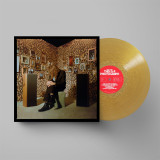
MORBY, KEVIN - THIS IS A PHOTOGRAPH LP

"This Is A Photograph", MORBYs siebtes Album, ist ein Loblied auf die Americana, das Leben und Tod und Blut auf der Leinwand zum Ausdruck bringt. Der kreativ gestärkte Songwriter hat es geschafft, seine besten Songs, seine besten Gesangsleistungen, seine prägnantesten Texte und seine üppigsten Arrangements auf "This Is A Photograph" zu vereinen. Dies ist zweifellos sein bisheriges Hauptwerk. Die Geschichte beginnt im Januar 2020, als MORBY im Keller seines Elternhauses in Kansas City geistesabwesend in einer Kiste mit alten Familienfotos blättert. Nur Stunden zuvor war sein Vater bei einem Familienessen vor seinen Augen zusammengebrochen und musste ins Krankenhaus gebracht werden. In dieser Nacht spürte MORBY noch immer den Schock und die Angst, die ihm in den Knochen steckten. Also sah er sich die Bilder an, bis ihm eines davon ins Auge sprang: sein Vater als junger Mann, stolz und stark und voller Selbstvertrauen, der mit freiem Oberkörper auf einer Wiese posiert. "In the photo he looks young and full of confidence, puffing his chest out at the camera as if he were looking for a fight," erklärt MORBY. "It was not lost on me that this was the same chest, just hours before, I had seen the ambulance put a stethoscope against as he lay on the kitchen floor of my sisters house." Während sein Vater wieder zu Kräften kam, grübelte er über diese Gedanken nach. Und dann machte er sich auf den Weg nach Memphis. Er zog in das Peabody Hotel und verbrachte seine Tage damit, den Träumern, die er bewunderte, Tribut zu zollen und sich vor ihnen zu verneigen; er ging hinunter zum Ufer des Mississippi, zu der Stelle, an der JEFF BUCKLEY sein Ende fand. Er schlenderte durch das Viertel, in dem JAY REATARD seinen letzten Tag verbrachte, und fuhr dann am Stax-Zelt vorbei, um seine Stimmung kurz aufzuheitern. Dann fuhr er an Graceland vorbei, bevor er den Highway 61 überquerte und die Geister zu sich rufen ließ, um seine eigenen Träume zu gestalten. Abends kehrte er in sein Zimmer zurück und hielt seine Ideen auf einem behelfsmäßigen Aufnahmegerät fest, das nur aus seiner Gitarre und einem Mikrofon bestand. Die schwermütigen Songs, die zu all dem passen, was er gesehen hatte, sprudelten nur so aus ihm heraus. Wiederum leitete Sam Cohen (der "Singing Saw" und "Oh My God" produziert hatte) das Projekt. Sie begannen in Cohens Studio im Bundesstaat New York, das sich noch im Bau befand, zusammen mit dem Schlagzeuger Nick Kinsey, und arbeiteten langsam an den Songs, da die Reise der Aufnahme der Start-Stopp-Qualität von 2021 selbst entsprach, mit magischen Momenten, die in die prekären Navigationen eingestreut waren. Mit der Zeit füllte sich die Besetzung. Der ehemalige Tournee-Pianist Oliver Hill sowie seine Mutter Meg und seine Schwester Charlotte sorgten für die Streicher. Die Tourneeleute Cochemea Gastelum (Saxophon), Jared Samuel (Orgel) und Alecia Chakour (Gesang, Tamburin) stießen zu den Sessions hinzu, ebenso wie Eric Johnson (Banjo). Und neue Mitstreiter*innen wie Schlagzeuger Josh Jaeger (Schlagzeug, Perkussion), Brandee Younger (Harfe), Makaya McCraven (Schlagzeug), Cassandra Jenkins (Gesang) und sogar Tim Heidecker und Alia Shawkat (die schrägen Lacher auf "Rock Bottom") fügten sich in das entstehende Bild ein. Und passenderweise fanden die letzten Sessions live in Memphis in Sam Philips Recording Co. statt, das von seinem Sohn Jerry Philips geleitet wird und das Erbe des ursprünglichen Sun Records Studios fortführt.

pre-ordina ora13.05.2022

dovrebbe essere pubblicato su 13.05.2022

MORBY, KEVIN - THIS IS A PHOTOGRAPH LP

"This Is A Photograph", MORBYs siebtes Album, ist ein Loblied auf die Americana, das Leben und Tod und Blut auf der Leinwand zum Ausdruck bringt. Der kreativ gestärkte Songwriter hat es geschafft, seine besten Songs, seine besten Gesangsleistungen, seine prägnantesten Texte und seine üppigsten Arrangements auf "This Is A Photograph" zu vereinen. Dies ist zweifellos sein bisheriges Hauptwerk. Die Geschichte beginnt im Januar 2020, als MORBY im Keller seines Elternhauses in Kansas City geistesabwesend in einer Kiste mit alten Familienfotos blättert. Nur Stunden zuvor war sein Vater bei einem Familienessen vor seinen Augen zusammengebrochen und musste ins Krankenhaus gebracht werden. In dieser Nacht spürte MORBY noch immer den Schock und die Angst, die ihm in den Knochen steckten. Also sah er sich die Bilder an, bis ihm eines davon ins Auge sprang: sein Vater als junger Mann, stolz und stark und voller Selbstvertrauen, der mit freiem Oberkörper auf einer Wiese posiert. "In the photo he looks young and full of confidence, puffing his chest out at the camera as if he were looking for a fight," erklärt MORBY. "It was not lost on me that this was the same chest, just hours before, I had seen the ambulance put a stethoscope against as he lay on the kitchen floor of my sisters house." Während sein Vater wieder zu Kräften kam, grübelte er über diese Gedanken nach. Und dann machte er sich auf den Weg nach Memphis. Er zog in das Peabody Hotel und verbrachte seine Tage damit, den Träumern, die er bewunderte, Tribut zu zollen und sich vor ihnen zu verneigen; er ging hinunter zum Ufer des Mississippi, zu der Stelle, an der JEFF BUCKLEY sein Ende fand. Er schlenderte durch das Viertel, in dem JAY REATARD seinen letzten Tag verbrachte, und fuhr dann am Stax-Zelt vorbei, um seine Stimmung kurz aufzuheitern. Dann fuhr er an Graceland vorbei, bevor er den Highway 61 überquerte und die Geister zu sich rufen ließ, um seine eigenen Träume zu gestalten. Abends kehrte er in sein Zimmer zurück und hielt seine Ideen auf einem behelfsmäßigen Aufnahmegerät fest, das nur aus seiner Gitarre und einem Mikrofon bestand. Die schwermütigen Songs, die zu all dem passen, was er gesehen hatte, sprudelten nur so aus ihm heraus. Wiederum leitete Sam Cohen (der "Singing Saw" und "Oh My God" produziert hatte) das Projekt. Sie begannen in Cohens Studio im Bundesstaat New York, das sich noch im Bau befand, zusammen mit dem Schlagzeuger Nick Kinsey, und arbeiteten langsam an den Songs, da die Reise der Aufnahme der Start-Stopp-Qualität von 2021 selbst entsprach, mit magischen Momenten, die in die prekären Navigationen eingestreut waren. Mit der Zeit füllte sich die Besetzung. Der ehemalige Tournee-Pianist Oliver Hill sowie seine Mutter Meg und seine Schwester Charlotte sorgten für die Streicher. Die Tourneeleute Cochemea Gastelum (Saxophon), Jared Samuel (Orgel) und Alecia Chakour (Gesang, Tamburin) stießen zu den Sessions hinzu, ebenso wie Eric Johnson (Banjo). Und neue Mitstreiter*innen wie Schlagzeuger Josh Jaeger (Schlagzeug, Perkussion), Brandee Younger (Harfe), Makaya McCraven (Schlagzeug), Cassandra Jenkins (Gesang) und sogar Tim Heidecker und Alia Shawkat (die schrägen Lacher auf "Rock Bottom") fügten sich in das entstehende Bild ein. Und passenderweise fanden die letzten Sessions live in Memphis in Sam Philips Recording Co. statt, das von seinem Sohn Jerry Philips geleitet wird und das Erbe des ursprünglichen Sun Records Studios fortführt.

pre-ordina ora13.05.2022

dovrebbe essere pubblicato su 13.05.2022

CEMENTO ATLANTICO - ROTTE INTERROTTE LP

Cemento Atlantico is the first recording project by the Italian DJ/producer Alessandro “ToffoloMuzik” Zoffoli, conceived between 2020 and 2021, in an orphaned silence from wandering and social sharing due to the lockdown in this Pandemic era. To be released on vinyl, CD and all digital platforms starting from July 29th, 2021 via Bronson Recordings, the album Rotte Interrotte was born from the need to translate the travel experiences of recent years into music: Morocco, Vietnam, Peru, Cambodia, Colombia, India, Guatemala, Myanmar. At the edge of the world. The sound that fills everyday life is often seen as a foregone background, in reality all its connotations can be explored and ordered to create a melody. Without a shadow of a doubt, the threshold of auditory attention rises by being sent, immersed in cultures and countries other than your own. Among those coordinates, Cemento Atlantico has kidnapped fragments, samples and field recordings from nature, history, road and sacred places. Emotions engraved in the mind with occasional recording means, subsequently manipulated through electronics and rhythmic construction creating a truly unique and contemporary sound and of cultural melting-pot. Zoffoli has written and produced the record (then mastered by Giovanni Versari), also taking care of its artwork. Cemento Atlantico’s logo is made up of the initials “C” and “A”: “The letter ‘A’ indicates the first Ocean I crossed, the Atlantic one, while the letter” C “- represented by a crescent Moon, with no political or religious reference – symbolizes rebirth, the growth of a project or the advent of a new life in many ancient and modern cultures“. Trip hop, dubstep and chillout are intertwined with world music and ethnic elements, as if the starting point was Bristol, rather than Cesenatico, and the arrival point was all to be soundtracked, all to be explored. Following the first extract Umm Bulgares, the new singles taken from the album are Beat ’em Bang, Amazonienne, Blade Runner Zero and El congreso de los Fantasmas. More than an album, Rotte Interrotte is a casket of stories set in time with your eyes closed, in the deep belief that through sound you can imagine the world without seeing it.

pre-ordina ora25.02.2022

dovrebbe essere pubblicato su 25.02.2022

Foxes - The Kick

Foxes

The Kick

12inchPIASR5089LP
PIAS RECORDINGS CATALOGUE
11.02.2022

“The record was written from a place of wanting to
escape the walls of my own apartment, I wrote it
imagining freedom and dancing and people being
able to hold each other again. I spent so much
time on zoom day and night just writing words and
melodies and before I knew it I’d written an albums
worth of material. I felt a wild and animalistic
feeling of needing and wanting to socialise again
come out whilst writing and the feelings just didn’t
stop. I felt like being in my apartment and being so
isolated made me really dig deep into my mind and
my imagination just ran wild. Most of the music is a
celebration but some of the music comes from a
painful place, of loss and heartbreak. I felt trapped
and almost like my insides were dancing but I
couldn’t express it, but in writing it allowed me to
feel free again. This record feels like a new start
and the ability to come back to life after such a
strange time of us all being alone.” - Foxes

pre-ordina ora11.02.2022

dovrebbe essere pubblicato su 11.02.2022

Various - The Wolfpack 3x12"

Various

The Wolfpack 3x12"

3x12inchLONEWOLF006
Lonewolf
23.09.2021

EYA's sister label Lonewolf celebrates 2 years of activity with a 3x 12"!The VA explores a wide range of electronic music styles...from ambient to techno,breaks,electro,acid and more! 'The Wolfpack'will be a must in every record bag and vinyl collection!Music by Innershades,Es-Q,Matthew Dexter,Dom,Zolaa,Intareality,Tadan,Paradise City Breakers,NND,Cool and Frank,Patient Better Drivers.

non in magazzino

Ordina ora e ordineremo l'articolo per te presso il nostro fornitore.


Last In: 3 years ago
LIGHTMAN JARVIS ECSTATIC BAND - BANNED

Yves Jarvis and Romy Lightman are a pair of idiosyncratic and restlessly creative artists. In the past decade, Jarvis's ever-expanding swatch have earned international acclaim, while Lightman's twin-sister-led band Tasseomancy has transfixed listeners since the late 2000s. The Lightman Jarvis Ecstatic Band marks the duo's first collaboration, slingshotting both musicians out of their comfort zones into spellbinding territories of lysergic folk and impressionistic rock. Banned was recorded in the tranquil environment of the Tree Museum, an outdoor art gallery in rural Ontario, Canada, hosting residencies for contemporary sculptors over the past 20 years. The pair credit its 200 acres of natural spaces intermingling with human-made creations as the fuel for their unfettered process. Recorded over two weeks in a free-flowing stream of improvisation, the album finds Lightman on synthesizer with Jarvis on drums and guitar, as their voices weave together into an electrified pastoral tapestry. For both musicians, the creation offered a chance to challenge themselves: Jarvis defying his solitary practice to record with another person, while open jams provided Lightman an alternative to her preference for thoroughly composed songwriting. "This album is a loose manifesto in our shared vision for a way of being," says Lightman. "It's about our relationship and the dynamics in that. There's an epicness to it and tension at times. It's like the ways particles collide. There's an alchemical aspect to it with these base components slamming together."

pre-ordina ora25.06.2021

dovrebbe essere pubblicato su 25.06.2021

ARETHA FRANKLIN - KNEW YOU WERE WAITING: THE BEST OF

Released on the We Are Vinyl label via CMG - chronicles Aretha's RCA and Arista recordings. An excellent retrospective of the 'Queen's' last act showcasing Aretha's 80's work in all its glory. The crisp, synth heavy soul pop sound of her later career remains essential to this day. Originally released in 2012 this latest edition adds Aretha’s powerful cover of Adele's 'Rolling In The Deep' to the original tracklist, which also includes "Who's Zoomin Who?", "Sisters Are Doin' It", "A Deeper Love", "I Knew You Were Waiting...", "Jumpin' Jack Flash", "Freeway Of Love", "Jimmy Lee" and more. An 18 track album pressed on standard black vinyl with download code. Marketing.

pre-ordina ora18.06.2021

dovrebbe essere pubblicato su 18.06.2021

VARIOUS - THE LORDS OF SALEM (O.S.T.)

- The complete film music available for the first time on vinyl - 180 Gram "Satanic Rite" Colored Vinyl - Exclusive liner notes by Rob Zombie - 16 Page Booklet featuring unreleased photography - Bonus Black Metal live album by Count Corgan pressed to 180 gram black vinyl with B-Side etching // Waxwork Records is proud to present Rob Zombie's THE LORDS OF SALEM Original Motion Picture Soundtrack. Available for the very first time on vinyl and pressed to 180 gram "Satanic Rite" colored vinyl, the music of THE LORDS OF SALEM features The Velvet Underground, Rick James, Rush, Leviathan the Fleeing Serpent, John 5, and more. THE LORDS OF SALEM is a 2012 American supernatural horror film written, produced, and directed by Rob Zombie. The film stars Sheri Moon Zombie (The Firefly Trilogy), Meg Foster (They Live), Bruce Davison (X-Men), Dee Wallace (E.T., The Hills Have Eyes), and Patricia Quinn (The Rocky Horror Picture Show). The plot focuses on a troubled female disc jockey, Heidi (Sheri Moon Zombie), who is a recovering drug addict living in Salem, Massachusetts. Her life becomes entangled with a coven of ancient Satan-worshipping women after receiving a strange wooden box and listening to the album inside it by a band named "The Lords". The soundtrack features classic songs by The Velvet Underground, Lou Reed, Manfred Mann's Earth Band, and several more. The score features original cues by John 5 and Griffin Boice. In line with other Zombie soundtracks, the album features intermittent dialogue tracks from the movie. Waxwork is thrilled to present the debut vinyl release of THE LORDS OF SALEM as a deluxe album package featuring 180 gram "Satan Rite" colored vinyl (Blood Red and Blue Butterfly effect with White Splatter), exclusive liner notes by Rob Zombie, new and original art by Robert Sammelin, a 12"x12" 16-page booklet including unreleased set photography from Zombie's personal archive, a heavyweight art print, printed inner sleeves, and old-style tip-on gatefold jackets with satin coating. Also included is a bonus black metal album by Count Gorgann entitled Corpse Eater: Satanic Misery Live for the Dead. This bonus album features a 2015 live recording at Black Forest Discothek and is pressed to 180-gram black vinyl with an etched B-Side.

pre-ordina ora04.06.2021

dovrebbe essere pubblicato su 04.06.2021

GROUND - JIN 03 EP

Ground

JIN 03 EP

12inchJIN03
禁 JIN Records
21.05.2021

JIN 03 EP presents a 4 track EP from Osaka's Ground. True to his unique soul that's reminiscent of a nomad, traversing the planet, befriending kindred spirits found in humans and various environments, this EP presents 4 pieces of unique grooves that ranges from the more euphoric vibe to both daytime & night time of a winter season surrounding a temple.

On A side "Osakacid" comes in two versions : A1 original version is a slow motion acidic tripper under the winter street of Osaka city lights. Long Flight Version features Mayuko, 1/2 of ambient, electronica duo Synth Sisters. Soothing melody layered with Ground's goofy acidic flavor compliments perfectly with each other.

B1 turns to the pure creative side of Ground. "Stone Bridge" is based on a local bridge that connects to a temple nearby his country side home outside of Osaka. Mystic and minimalistically punchy, this cut digs deep into the soulful side of Ground's ever nomadic approach. B2 comes in a complete shock: Ground's longtime friends in Thailand - Mogambo twists up "Stone Bridge" into a psychedelic, GOA fused floor shaker that takes you to an imaginary zone of raving inside the temple late into early morning.

non in magazzino

Ordina ora e ordineremo l'articolo per te presso il nostro fornitore.


Last In: 3 years ago
POWELL - ON THE FEET OF A WIND

'Endlessly strange and formlessly mesmerising' - The Quietus. 'on the feet of a wind' is a wild assemblage of carbonated synthetic music from Powell and a sister record to 'flash across the intervals' and 'multiply the sides' - two albums already released in 2020. Recalling Xenakis, Parmegiani and Hecker but with the smile/smirk of vintage Powell, the record is released via a folder, a new music and film platform created by Powell, Michael Amstad and Marte Eknæs that bundles up music, film, image, text and other forms of madness into folders that are shared/expanded online.The release is accompanied by a 'Hi-sensitive' film directed by Amstad and Eknæs entitled 'flares, currents'. The film contains a recombined live version of 'rise, world unfold', the musical series that concludes this album. a folder is a collection of disorienting works of experimental film, ambiguous texts, and other assorted media set to the most brazenly strange and formlessly mesmerising musical structures of Powell's career. It's also a work of artistic assemblage, without fixed notions of time. Tarkovsky once described his filmmaking as "sculpting in time," and a folder exists in a similar kind of "zone;" it is a project continuously added to, subtracted from, abstracted, and injected into the glut of cyberspace like a slow moving pathogen that refuses to be defined or categorised. Shunning titles in favour of oblique category markers, films like a34 present a mosaic of images of biological forms and sublime landscapes set to super-synthetic, carbonated compositions. All of this signals an artist liberated from the confines of the narrow branding signifiers an electronic musician can find themselves in. While it is aware of its place in cyberspace, this project also connects to something primordial and awesome. "Xenakis talked about creating universes with sound," says Powell, "and we are all free to create our own worlds in life, art - whatever. This is what happened to me in a way: I have been in this world for three years or something, and I don't really want to leave. The folder is a refuge.'

pre-ordina ora12.02.2021

dovrebbe essere pubblicato su 12.02.2021

The Master Scratch Band - The Breakwar

The Master Scratch Band was first break-dance / hip-hop / electro funk band in Yugoslavia in 1984. The band members were Zoran Vracevic, Zoran Jevtic and Milutin Stoisiljevic, previously known as Data and Sizike. Jugoton, the biggest label in Yugoslavia, published Data 7'' and MSB's 'Degout' 12'' with limited edition cassette containing two bonus tracks. Impossible to find on the collectors market, Fox & His Friends team in collaboration with Jugoton / Croatia Records is releasing a full, complete version of the rare "The Breakwar" tape, with tracks "Tonight" and "Pocket" never pressed on vinyl. All tracks are sourced from original studio tapes. With the kind help of Zoran Vracevic on credit list and liner notes, this is now the ultimate Master Scratch Band album, released originally in a year 1984 when break-dance was in the peak of its popularity in Yugoslavia. While Data was synthpop, Sizike mellow synth-disco recorded in private studio, this release is pure breaks and hip-hop electro, done old-school way in one of the best studios in Yugoslavia, Enco Lesic's 'Druga maca' in Belgrade. MSB used impressive electronic gear and were helped by huge list of famous musicians and guests: Duca Markovic from hit-show 'Hit meseca' (Yugoslavian Top Of The Pops); Japanac on bass, Max Vincent of Max & Intro on synths, Dudu Vudu from Du-Du-A, Goranka Matic as photographer and many more. MSB sampling technique and choices are unique: from obscure industrial records to freestyle; from found-sounds to cut-up breaks and even real prank-calls. This is document of time that still sounds fresh and needs to find it's new, young audience of hip-hop history researchers, break-dancers, b-boys, b-girls and DJ's. When you know that it's produced in 1984 Yugoslavia, far away, but actually, so close to its USA & EU brothers and sisters, it's even more mind-boggling. Thanks to Fox & His Friends and Jugoton CR collaboration, this gem is waiting for your freezes, footwork and electric boogie moves. ----- Equipment used: Commodore 64 Computer, Roland MC-4B Microcomposer, Prophet Pro-One, RSF Cobol II Expander, Korg Mono-Poly Synthesizer, PPG Wave 2.3 Synthesizer, PPG Waveterm Computer, Boss DE-200 Digital Delay, Drumtraks Digital Drum Machine, Roland TR-808 Rhythm Composer, Electro Harmonix Vocoder, Linn Drum MKII, Juno 60, SH-101, SVC-350, VP-330 Vocoders, Polysix & MS10, Simmons drum module.

non in magazzino

Ordina ora e ordineremo l'articolo per te presso il nostro fornitore.


Last In: 66 days ago
Onipa - We No Be Machine

Onipa

We No Be Machine

2x12inchSTRUT217LP
STRUT
30.03.2020

Afro futurist sensations Onipa unleash their debut album, combining Afro grooves, electronics and fierce energy for an effervescent celebration of cultural and musical encounters.ONIPA means ‘human’ in Akan, the ancient language of the Ashanti people of Ghana. It’s a message of connection through collaboration: from Ghana to London, our ancestors to our children, Onipa brings energy, groove, electronics, Afro-futurism, dance and fire! Born out of deep collaboration between long-time friends K.O.G (Kweku of Ghana of KOG and the Zongo Brigade) and Tom Excell (MD, guitarist and writer of acclaimed jazz/ soul afrobeat pioneers Nubiyan Twist), the group features KOG on vocals, balafon and percussion, Tom Excell on guitar, percussion and electronics, Dwayne Kilvington (Wonky Logic) on synths and MPC and Finn Booth (Nubiyan Twist) on drums.

The group have worked closely with Ghanaian star Wiyaala who features on three tracks, singing in the Sisaala language from the North of Ghana. The album also features collaborations with South African rapper Spoek Mathambo, Lesotho star Morena Leraba, Ghanaian percussion master Afla Sackey and Tanzanian sisters Pendo & Leah Zawose, each adding their own flavour to the project. “Through the musical prisms of London and Ghana our influences join together to create, a fundamental thread of traditional African rhythms, instrumentation and storytelling, interwoven with electronics, urban soundscapes and synth bass. We use technology, but it should never use us, our music is live and about deep human connection.” (Onipa)

non in magazzino

Ordina ora e ordineremo l'articolo per te presso il nostro fornitore.


Last In: 6 years ago
Various - Soul Jazz Records presents Bunny Lee: Dreads Enter the Gates with Praise - The Mighty Striker Shoots

Johnny Clarke & King Tubby & Dillinger & Prince Jazzbo feat. Tommy McCook & The legendary Aggrovators & The Mighty Diamonds - Soul Jazz Records presents Bunny Lee: Dreads Enter the Gates with Praise - The Mighty Striker Shoots the Hits!

Soul Jazz Records presents this new collection featuring the heavy 70s roots reggae of Bunny
Lee - a living legend, one of the last of the great Jamaican record producers who helped shape
and define reggae music in the 1970s from a small island sound into an internationally
successful musical genre.
From teenage fan to young record plugger for Duke Reid, Sir Coxsone and other early
pioneering Jamaican musical entrepreneurs, Lee has spent his whole professional life inside the
Kingston music industry. In the 1970s he rose up to become one of the major record producers
in Jamaica alongside Lee 'Scratch' Perry and the other 'small axe' producers who broke the
dominance of the 'big tree' producers that had ruled Jamaican music in the 1960s.
Featuring some of the heaviest Jamaican artists, including Johnny Clarke, King Tubby, Dillinger,
Prince Jazzbo, Tommy McCook, The legendary Aggrovators (featuring Sly and Robbie), The
Mighty Diamonds and more, the album is a rollercoaster ride of rare, deep and classic 1970s
roots, dub and DJ sounds.
During this era, 'flying cymbals', crashing reverbs, dark echoing thunderclap gunshots and
other 'implements of sound' filled his record productions as Bunny Lee explored the outer limits
of dub with his friend King Tubby in the mix on wild versions that accompanied any 45. A
Bunny Lee record provides a creative and mysterious hidden guide to reggae music itself, a
double-sided three-minute intangible history lesson etched in wax.
Bunny Lee was one of the first Jamaican producers to travel to England in the late 1960s, at
the beginning of the nascent British reggae music industry as record companies such as
Trojan, Pama and others began licensing Jamaican music in the UK to supply the expanding
West Indian communities living up and down England. Lee encouraged other Jamaican
producers to do the same, including Lee Perry, Harry J and Niney The Observer and also
became a conduit between the British music industry and numerous younger Island-based
producers - a frequent flyer reggae ambassador, a musical courier exchanging tapes for
royalties.
Bunny Lee's first recordings in the late 1960s were mainly rock steady but as the 70s
approached the music soon began to mutate and slow down into 'reggae' as the sound became
heavier, more rootsy and the sound itself began to change with the explosion of dub.
Lee was at the forefront to this dramatic musical shift into roots reggae and by this time had
become a major producer, capable of working with whoever he chose as world-famous singers,
DJs and musicians lined up to work with the charismatic man. Lee also employed a fluid but
stable set of crack session musicians who he named The Aggrovators.
Most of the recordings featured here come from the mid 70s, a time when Bunny Lee was
definitely in the zone, releasing heavyweight singles at an almost unstoppable rate. Bunny
Lee's career stretches over five decades and he has upwards of 2,000 production credits on
vinyl.
This album comes with extensive sleevenotes, an interview with Bunny Lee and exclusive
photography. The album is available as a CD pack with 24-page booklet, massive triple LP vinyl
with digital download code, house inner and full notes, as well as digital album.

non in magazzino

Ordina ora e ordineremo l'articolo per te presso il nostro fornitore.


Last In: 7 years ago
Original Soundtrack - Breaking Bad (Music From The Original Series  (5x10" Box set)
 
41

First time on vinyl
10th Anniversary of the Breaking Bad TV Series
5 x 10' vinyl in 5 different jackets, 1 relating to each season
Each 10' is the same colour, Strictly Limited Edition Albuquerque Crystal Coloured (transparent with a hint of turquoise) Vinyl!
Lift off box-set with Breaking Bad logo on front with special drip-off varnish
Exclusive Breaking Bad Poster & Pollos Hermanos plastic ID badge
Booklet with exclusive pictures and extensive liner notes by Thomas, the musical supervisor of Breaking Bad
One run only of this very exclusive BOX-SET
Individually numbered the manufacturing qty for Worldwide is est 4000 with 800 for the UK - we could get some more
PLEASE ORDER BY 12.00 TUESDAY 25 SEPT TO BE GUARANTEED YOUR QTY
Available worldwide
Weight ESTIMATED 950g
All the essential Breaking Bad songs by Badfinger, Calexico, Far East Movement, America, Fever Ray, Apparat, Whitey, Knife Party, The Peddlers and others
Various dialogies by Walter, Jesse, Skyler, Mike, Gus, Saul and many more
This release will be heavily promoted on social media, including the social media accounts of Breaking Bad (facebook, over 11 million followers!!!).

MOV proudly presents the OST - BREAKING BAD (MUSIC FROM THE ORIGINAL SERIES) 5 x 10' BOX-SET!

A TOP PRIORITY RELEASE with WORLDWIDE RIGHTS!

So far only the score music has been released on vinyl and now finally, for the very very first time, the original soundtrack music is released on vinyl!

Breaking Bad is widely regarded as one of the greatest television series of all time and celebrates its 10th anniversary in 2018.

The legion of fans have been waiting for this to be released for a long time. There will be a huge demand for this exclusive BOX-SET!

This release was never released in any other format (CD, vinyl, digital) before and will only be available on vinyl!

OST - BREAKING BAD (MUSIC FROM THE ORIGINAL SERIES) is presented in a beautiful Lift off box-set with Breaking Bad logo on front with special drip-off varnish. The box-set includes a selection of defining songs, devided in five 10' records on coloured vinyl, each representing a season with accessory artwork. The numbered box-set also includes a booklet, poster and Pollos Hermanos plastic ID Badge. Next to all essential Breaking Bad songs by Badfinger, Calexico, Far East Movement, America, Fever Ray, Apparat, Whitey, Knife Party, The Peddlers and others, the 10' records also include various dialogies by Walter, Jesse, Skyler, Mike, Gus, Saul and many more. The box-set is a ONE-RUN-ONLY and is STRICTLY LIMITED!

Breaking Bad is an American neo-western crime drama television series created and produced by Vince Gilligan. The show originally aired on the AMC network for five seasons, from January 20, 2008 to September 29, 2013. The series tells the story of Walter White (Bryan Cranston), a struggling and depressed high school chemistry teacher diagnosed with lung cancer. Together with his former student Jesse Pinkman (Aaron Paul), White turns to a life of crime by producing and selling crystallized methamphetamine to secure his family's financial future before he dies, while navigating the dangers of the criminal world. The title comes from the Southern colloquialism "breaking bad", meaning to "raise hell" or turn toward crime. Breaking Bad is set and filmed in Albuquerque, New Mexico.

Walter's family consists of his wife Skyler (Anna Gunn) and children, Walter, Jr. (RJ Mitte) and Holly (Elanor Anne Wenrich). The show also features Skyler's sister Marie Schrader (Betsy Brandt), and her husband Hank (Dean Norris), a Drug Enforcement Administration (DEA) agent. Walter hires lawyer Saul Goodman (Bob Odenkirk), who connects him with private investigator and fixer Mike Ehrmantraut (Jonathan Banks) and in turn Mike's employer, drug kingpin Gus Fring (Giancarlo Esposito). The final season introduces the characters Todd Alquist (Jesse Plemons) and Lydia Rodarte-Quayle (Laura Fraser).

Breaking Bad is widely regarded as one of the greatest television series of all time. By the time the series finale aired, it was among the most-watched cable shows on American television. The show received numerous awards, including 16 Primetime Emmy Awards, eight Satellite Awards, two Golden Globe Awards, two Peabody Awards, two Critics' Choice Awards and four Television Critics Association Awards. For his leading performance, Cranston won the Primetime Emmy Award for Outstanding Lead Actor in a Drama Series four times, while Aaron Paul won the Primetime Emmy Award for Outstanding Supporting Actor in a Drama Series three times; Anna Gunn won the Primetime Emmy Award for Outstanding Supporting Actress in a Drama Series twice. In 2013, Breaking Bad entered the Guinness World Records as the most critically acclaimed show of all time.

non in magazzino

Ordina ora e ordineremo l'articolo per te presso il nostro fornitore.


Last In: 7 years ago
Paulor - Paulor Ep

Following a first vinyl appearance on You And Your Hippie Friends' 'A Very Nice Combinado Volume Dos' (YAYHF 03) earlier this year, Mexican producer PAULOR aka Paulo Rodriguez gets ready for his first solo outing with Hippie Dance's sister label.

Curated by Rebolledo, the imprint has established an impressive talent pool within only three releases, including both veteran and upcoming talent such as Sebastien Bouchet, El Güero, Zombies In Miami, Beyou, Roman Flügel and more. It's a testament to the label's chiselled vision that an idiosyncratic and diverse group such as this is able to sustain individual approaches to electronic music while weaving a coherent sonic tapestry from all its ingredients, the whole quite organically being more than the sum of its parts.

Now, it's up to PAULOR to flesh out his own sound cosmos on You And Your Hippie Dance's latest 12' drop, presenting a concoction of salt-caked beats, riffing guitars and flexing bass that evokes a sense for space and untouched, psychedelic landscapes not unlike Rebolledo's very own desert funk vignettes. After 'La Race' (his contribution to 'A Very Nice Combinado Volume Dos') and the 'Discótico Desértico' remix for Rebolledo's 'Mondo Re-Alterado' (HIPPIE DANCE 10 LP) started making the rounds in tastemaker DJ sets, PAULOR caught a major moment of inspiration while performing at Monterrey's TOPAZDeluxe - which lead to the husky, hypnotic cut PAULOR'S BLUES, pièce de résistance and headstone in one, as it set the scene and also birthed enough follow-up tracks to naturally grow into a cohesive, full-blown EP.

From echo-drenched, beatless opener NEBLINA to the percussion-infused intrigue of DELIRIO EN CARRETERA, the athletic pop minimalism of AMIGOS or the slow burn of brooding mystery shuffle LUCES CALLING, PAULOR creates a unique, atmospheric sound panorama that excites minds and bodies alike. Adorned with a starry night sky, the record's cover artwork couldn't be more fitting - it's a dominant musical vista in PAULOR's work, whose vantage point is not necessarily a specific place (although all tracks were recorded in Xalapa), but a feeling of exquisite duality: the feeling of being lost between the stars, lonely and connected at the same time, a speck of dust and the center of the universe.

non in magazzino

Ordina ora e ordineremo l'articolo per te presso il nostro fornitore.


Last In: 4 years ago
Rich NxT - Modern Dialect Ep

As one of FUSE's original residents, Rich NxT played a major part in the brand's evolution, helping take it from that Sunday morning afters to being one of the most respected event brands and labels on the planet

Ever since the age of 10, Rich NxT has been involved in creating his own music. Thanks to his early training as both a drummer and keyboardist, NxT has an inherent musicianship fully apparent in his sound and style of production. Taking influence from the London rave scene of the early 90s spanning drum n bass and jungle and later the minimal and tech-house scenes of Europe, NxT's output found a platform on the now world-class FUSE London label (launched in 2011). A core artist for the label, with five solo EPs and a collaboration alongside Seb Zito, Rich NxT has been integral to FUSE's trademark sound with his debut EP 'Bristle' and 'Quixotic' EP two of the labels defining moments. NxT and Zito's chemistry in the studio is clear with a further two collaborations on FUSE sister label Infuse. Alongside his own productions, NxT's remix catalogue includes Seb Zito's 'Never' with Enzo Siragusa and his original breakthrough remix of Jon Maker's 'Seeker', which was championed by tINI and many other leading DJs in the minimal house scene.

By the end of 2016, a residency at Amnesia Ibiza with HYTE x FUSE alongside dates at Off Week in Barcelona and several stand out events on FUSE's 8th birthday tour including an epic after hours set at Berlin's Hoppetosse proved NxT is on top of his game. NxT also launched his own imprint NxT Records that year, another platform for his own consistently quality output. Several releases down the line, NxT's distinctive style layered with intricate percussion, obscure synths and ethereal pads combined with punchy snares and atmospheric vocals is marking out the producer and label as a prime source for DJs and vinyl lovers. 2017 sees the launch of a second vinyl only imprint What NxT, a home for musical discoveries that end up buried deep in his own record bag. Featuring both emerging talent and established artists from the UK and beyond, What NxT All roads lead to the rave.

non in magazzino

Ordina ora e ordineremo l'articolo per te presso il nostro fornitore.


Last In: 16 months ago
Bill Wyman - White Lightnin' - The Solo Albums Vinyl Box 4x12"
  • I Wanna Get Me A Gun
  • Crazy Woman
  • Pussy
  • Mighty Fine Time
  • Monkey Grip Glue
  • What A Blow
  • White Lightnin
  • I'll Pull You Thro
  • It's A Wonder
  • A Quarter To Three
  • Gimme Just One Chance
  • Soul Satisfying
  • Apache Woman
  • Every Sixty Seconds
  • Get It On
  • Feet
  • Peanut Butter Time
  • Wine And Wimmen
  • If You Wanna Be Happy
  • What's The Point
  • No More Foolin
  • Ride On Baby
  • A New Fashion
  • Nuclear Reactions
  • Visions
  • Jump Up
  • Come Back Suzanne
  • Rio De Janeiro
  • Girls
  • Seventeen
  • (Si, Si) Je Suis Un Rock Star
  • If I Was A Doo Doo Doo
  • Like A Knife
  • Stuff (Can't Get Enough)
  • Leave Your Hat On
  • This Strange Effect
  • Mama Rap
  • She Danced
  • Fear Of Flying
  • Affected By The Towns
  • Blue Murder (Lies)

This box contains all four solo albums by Bill Wyman, the first Rolling Stone to release a solo record. The first two (from 1974
and 1976, both issued on Rolling Stones Records) were made the help of a galaxy of musical friends like Lowell George, Dr John,
Joe Walsh, Van Morrison, the Pointer Sisters, Danny Kortchmar, Dallas Taylor, Leon Russell, Bob Welch and Nicky Hopkins.
- The eponymous third album was home to Bill's 1981 big hit single (Si Si) Je Suis Un Rock Star' as well as follow-up hits
Come Back Suzanne', A New Fashion' and Visions, while fourth album Stuff' appeared in 1992, originally in Japan only.
- The albums are now issued on vinyl for the first time since their original release (and 'Stuff' on vinyl for the first time ever),
gathered together in a beautiful rigid slipcase. The new inner sleeves feature all the lyrics and the musician credits.

pre-ordina ora15.05.2017

dovrebbe essere pubblicato su 15.05.2017

Articoli per pagina:
N/ABPM
Vinyl